Every country has a comfort food that defines the culture and traditions. For Balkan countries it is Burek or Borek.
But first history lesson….
Burek, or Borek if you want to get fancy, started as one hungry camper’s dream, thanks to the nomadic Turks from Central Asia who thought, “Why settle for boring old bread on our long hikes?” Imagine them on their epic adventures saying, “Let’s deep-fry some dough and call it Burga!” And just like that, the ancestor of Burek popped into existence. As these traveling Turks carried their Burgas everywhere, they magically transformed into all kinds of tasty filled and layered goodies called Borek. For a crazy 500 years, the Ottoman Empire took this yummy snack on a wild ride through the Balkans. Even after the empire packed up and moved on, this lovable dish is still the big boss in the Balkans. Cooked over campfires, it went everywhere from Beijing to Barcelona, and from Modena to the Maghreb. Sure, it might have made its way to fancy tables of khans and kings, but honestly, it’s still the ultimate symbol of good vibes through all sorts of chaotic migrations, conquests, and crazy food adventures!
What is in a name….
Burek can be enjoyed at any time of the day and is popular in Mediterranean, Middle Eastern, Eastern European, and Western Asian cuisines. It has many names, including Borek, Bourekas, Pita, and Banista, and comes in various shapes like triangles, swirls, cigars, and round pies. In Croatia, Montenegro, and Serbia, cheese-filled Burek is known as Burek sa Sirom, while in Bosnia and Herzegovina, it’s called Sirnica. In Bulgaria and Macedonia, it’s referred to as Banitsa sas Sirene. Regardless of its name, shape, or filling, this tasty dish will continue to evolve.
Burek of Bosnia and Herzegovina….
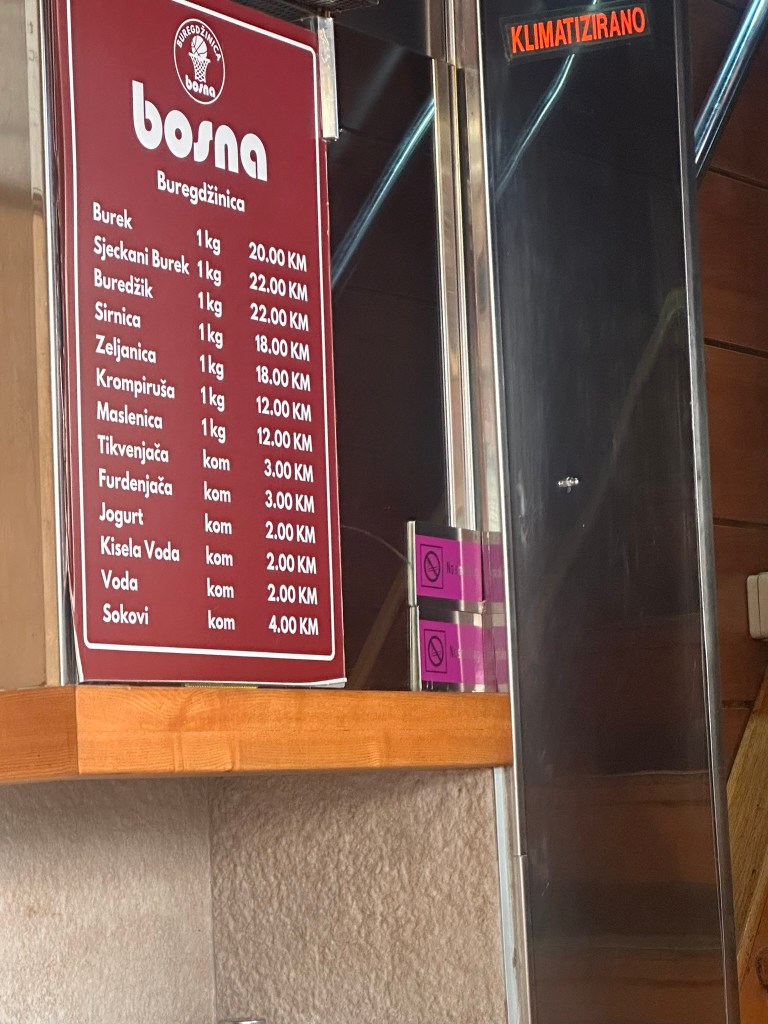
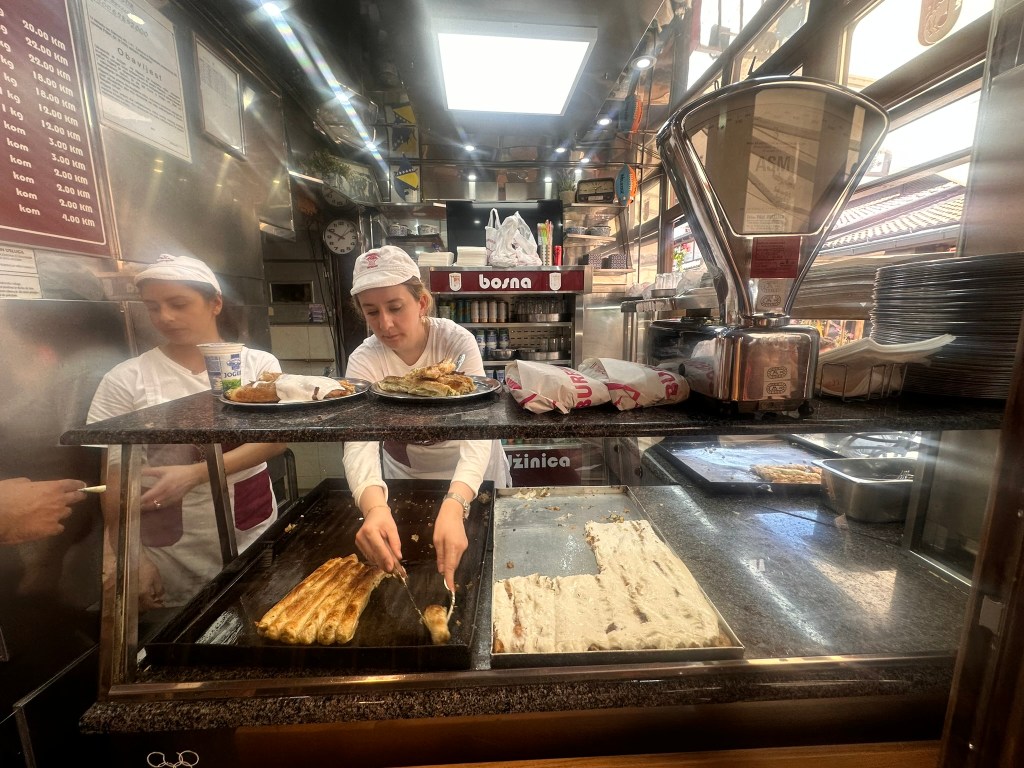
Burek is made of layers of thin dough filled with different savory ingredients. Although it comes from Turkey, it has become a proud part of Bosnian cuisine. Many people believe that only the burek with ground beef can be called burek, but there are other types with different fillings, like sirnica (cottage cheese), zeljanica (spinach), and krompiruša (potatoes). On first day in Sarajevo, after waking up at 5 AM due to jet lag, I wandered around and found Pekara (Pekara- Bosnian word for Bakery) that served fresh and warm Burek. When I asked for cheese Burek, I was told that there is no such thing as Cheese Burek and what I wanted was Sirnica. Croatians are much more forgiving on the name, and I could get a cheese burek without any issues.
Burek is often baked in a spiral shape, especially in bakeries, while traditional restaurants usually serve it as a pie cut into pieces. It’s very popular throughout the Balkans, but in Bosnia and Herzegovina, it holds special cultural value. There are local sayings that suggest if a woman makes good burek, she is ready for marriage. In 2012, Lonely Planet included Bosnian burek in their book about the best street food in the world.
If you walk around Sarajevo, you’ll find many wonderful bakeries/Pekaras, each showing a glimpse of Bosnian culture. From flaky pastries to fresh bread, the bakery scene here is lively and varied, showcasing the area’s rich food history. Whether you want a savory burek or a sweet snack with your coffee, Sarajevo’s bakeries have something for everyone.
Best places to enjoy Burek
Buregdzinica Bosna
Bravadziluk 11 Old Town, Sarajevo 71000 Bosnia and Herzegovina
Located in the heart of old city, we stopped here on our food tour and tried few different versions, and my favorite version was one with the potato filling or krompiruša. I loved it so much that I went back to the restaurant and got it for dinner that night. This is restaurant is very busy and is more like a fast-food joint but food is amazing.
Right next to this restaurant, there is another restaurant that is famous for Ćevapi- grilled meat sausages, that are staple of Balkan Cuisine. We didn’t try this as most of us are vegetarians, but you can try two of the best Bosnian food right next to each other.
St Burek-Split, Croatia
Domaldova 13 21000 Split
This place was featured in Somebody feed Phil on Netflix and serves some amazing Burek. It is close to old city and near to lot of other good food places including Gelateria Emiliana (another place featured in Somebody feed Phil) and amazing place to try various Gelatos.
Final thoughts
Food scene in Bosnia as well as Croatia is amazing with local wines as well as various traditional dishes. We had a wonderful time tasting various traditional dishes including Burek and lots of gelato. I don;t we had one bad meal in the 9 days we were Balkans and I sometime crave the fresh breads and Potato burek I had in Sarajevo.
Bosnia and Herzegovina is a fascinating country located in Southeastern Europe on the Balkan Peninsula. It is known for its rich history, diverse culture, and stunning natural landscapes. It was part of the Yugo Slovakia before becoming independent country in 1990s.
Visit Bosnia and Herzegovina… a land where history whispers through ancient streets, where untouched nature beckons explorers, and where tradition and modernity merge in a rich cultural tapestry. Here, travelers can wander through Sarajevo, a city shaped by diverse influences—its charming old bazaar, Ottoman-era mosques, and echoes of resilience creating an atmosphere unlike any other. Or, step into the breathtaking landscapes that define the country, from the emerald waters of the Una River to the soaring peaks of the Dinaric Alps.
Bosnia and Herzegovina’s allure extends beyond its postcard-worthy scenery—its warmth lies in its people, its flavors, and its centuries-old stories. Whether admiring the iconic Stari Most in Mostar, savoring a cup of strong Bosnian coffee, or losing yourself in the tranquil beauty of its medieval villages, every moment here feels like an invitation to slow down and embrace something truly special.
Bosnia and Herzegovina is a hidden gem in the heart of the Balkans, offering a unique blend of natural beauty, rich history, and diverse culture. Here are some compelling reasons to visit:
Less Crowded: Unlike some of its more touristy neighbor like Croatia, Bosnia and Herzegovina offers a more relaxed and authentic travel experience without the crowds especially in June- We were there from June 11th through 21st and we found Croatia to be very crowded even in early June while Bosnia was much less so.
Stunning Natural Landscapes: From the majestic mountains and medieval castle ruins to the impressive waterfalls like Kravica and raftable rivers like Neretva, the country’s natural beauty is breathtaking. We loved white water rafting on Neretva in Konjic and drive from Sarajevo to Mostar – a scenic route next to Neretva River and some beautiful hills and valleys.
Historical and Cultural Richness: Explore the Ottoman-era architecture in Sarajevo, the iconic Stari Most bridge in Mostar, and the Austro-Hungarian influences throughout the country including the city hall in Sarajevo
Affordable Travel: Bosnia and Herzegovina is known for its affordability, offering great value for money in terms of accommodation, dining, and tours. We found that Bosnia was almost 1/3 cheaper than Croatia.
Warm Hospitality: The locals are known for their warmth and friendliness, making visitors feel welcome and at home. We were fortunate to stay with a Bosnian family and experienced warm hospitality and kindness firsthand.
Adventure Opportunities: Whether it’s hiking in the mountains, skiing in the winter, or diving off the Stari Most bridge in Mostar, there’s plenty for adventure seekers. We loved the white-water rafting and zip lining adventures
Delicious Cuisine: Enjoy traditional dishes like burek, cevapi, and baklava, along with excellent local wines from the Herzegovina region. The wines were the best surprise of the Herzegovina region. We enjoyed some delicious wines that were made with locally grown grapes.
Unique Blend of East and West: The country’s history as a crossroads of different empires has created a fascinating mix of Eastern and Western influences, visible in its architecture, culture, and food
Unique things to know about Bosnia:
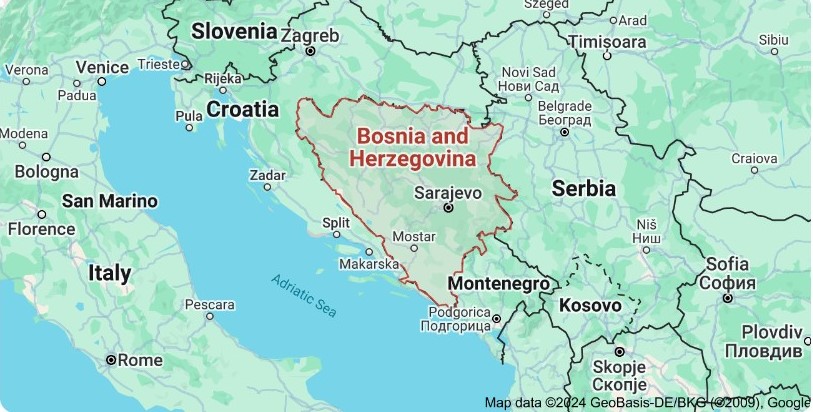
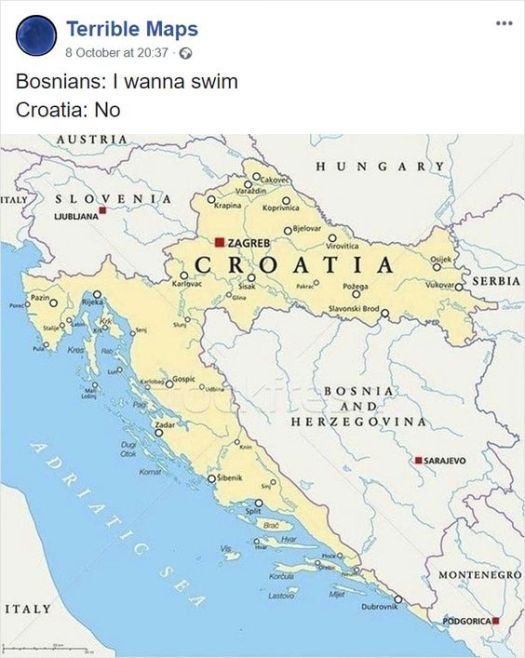
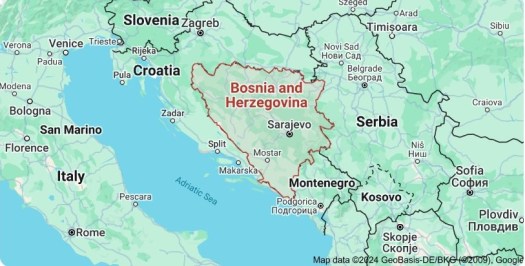
When we were planning the trip to Balkans, someone shared this amusing map with me that says Bosnian’s wanting to swim but Croatians are saying no as there is thin strip of Croatia that prevents Bosnia from having access to Adriatic sea. But in reality, there is town of Neum-the only town situated along Bosnia and Herzegovina’s 20-kilometre (12 mi) coastline, making it the country’s only access to the Adriatic Sea and splits Croatia into 2.
This is the result of Treaty of Karlowitz in 1699, a peace agreement that ended the Great Turkish War (1683-1699) between Austria, Poland, Venice, and Russia on one side and the Ottoman Empire on the other side. The Republic of Ragusa (Dubrovnik) tried to safeguard itself against Venetian expansion by giving a small section of its land to the Ottomans, which resulted in this geographical arrangement.
Historical and Cultural Landmarks
Stari Most (Old Bridge): A UNESCO World Heritage site in Mostar, symbolizing the connection between different cultures and religions. Most popular attraction in Bosnia and can be visited from Croatia as a day trip
Sarajevo: The capital city, known for its unique blend of Ottoman, Austro-Hungarian, and modern architecture. Key sites include the Latin Bridge, where the assassination of Archduke Franz Ferdinand took place, sparking World War I.
Tito’s Bunker: A secret underground bunker built during the Cold War era, located near the town of Konjic.
Blagaj Tekke: A beautiful Dervish monastery located at the source of the Buna River, near a stunning cliff.
Gazi Husrev-beg Mosque: One of the most important Islamic structures in the Balkans, located in Sarajevo
Natural Attractions
Kravica Waterfalls: A stunning series of waterfalls located near the town of Ljubuški.
Mount Trebević: Offers breathtaking views of Sarajevo and is a popular spot for hiking and outdoor activities.
Skakavac Waterfall: One of the highest waterfalls in the Balkans, located near Sarajevo.
Jajce– Home to Pliva lakes and charming watermills
Bihac– Home to Una National Park
Currency
The Bosnia and Herzegovina convertible mark (abbreviated as KM and coded as BAM) is the official currency of Bosnia and Herzegovina. It was introduced in 1998
Electric Outlet
In Bosnia and Herzegovina, the power plugs and sockets used are of Type F or Type C. These sockets have two round pins with two earth clips on the side. The standard voltage is 230 V and the frequency is 50 Hz
We did both Bosnia and Croatia as part of this trip but you can spend entire 10 days in Bosnia. Some of the other parts of Bosnia that are beautiful and can be visited in 10 days include Jajce, Bihac/Una national Park and Banja Luka.
The Galápagos Islands are often celebrated for their sea lions basking on beaches and penguins darting through turquoise waters. Yet tucked away on Floreana Island is a tradition. This tradition speaks not of wildlife, but of human longing. It is the world’s most unconventional postal service. A Barrel of Letters and Longing Back in 1793,…
In the middle of Copenhagen’s King’s Garden, where locals picnic under lime trees and cyclists glide past in quiet loops, Rosenborg Castle rises like a fairytale frozen in brick and copper. Built by King Christian IV in the early 17th century, this petite Renaissance palace feels intimate compared to Denmark’s grander castles — but don’t…
Nestled on three small islets in the shimmering Castle Lake of Hillerød, Frederiksborg Castle is breathtaking. It is one of Denmark’s most cherished treasures. The grand Renaissance architecture and lush gardens offer a stunning backdrop. I visited this place as part of a day tour with Hamet tours. I felt like I could have spent…
🌊 Discovering Helsingør (Elsinore), Denmark Perched on Denmark’s northeastern shore, Helsingør is best known as the home of Kronborg Castle—immortalized by Shakespeare as Hamlet’s Castle—but the city itself offers far more than its fortress. Its Old Town is one of Europe’s best-preserved historic centers, with cobblestone streets, colorful facades, and centuries-old houses that trace back…
Perched dramatically on the coast of Helsingør, Denmark, Kronborg Castle is more than just a fortress—it’s a stage for history, legend, and literature. Known worldwide as the setting of Shakespeare’s Hamlet, this Renaissance masterpiece has guarded the narrow strait of Øresund since 1585, watching over the entrance to the Baltic Sea with commanding views across…
Roskilde, once the capital of Denmark, is a city steeped in history and alive with culture. Nestled along the scenic Roskilde Fjord, it’s famous for its Viking past, royal cathedral, and world-renowned music festival. Whether you’re here for a day trip or a longer stay, Roskilde blends ancient stories with modern experiences in a way…
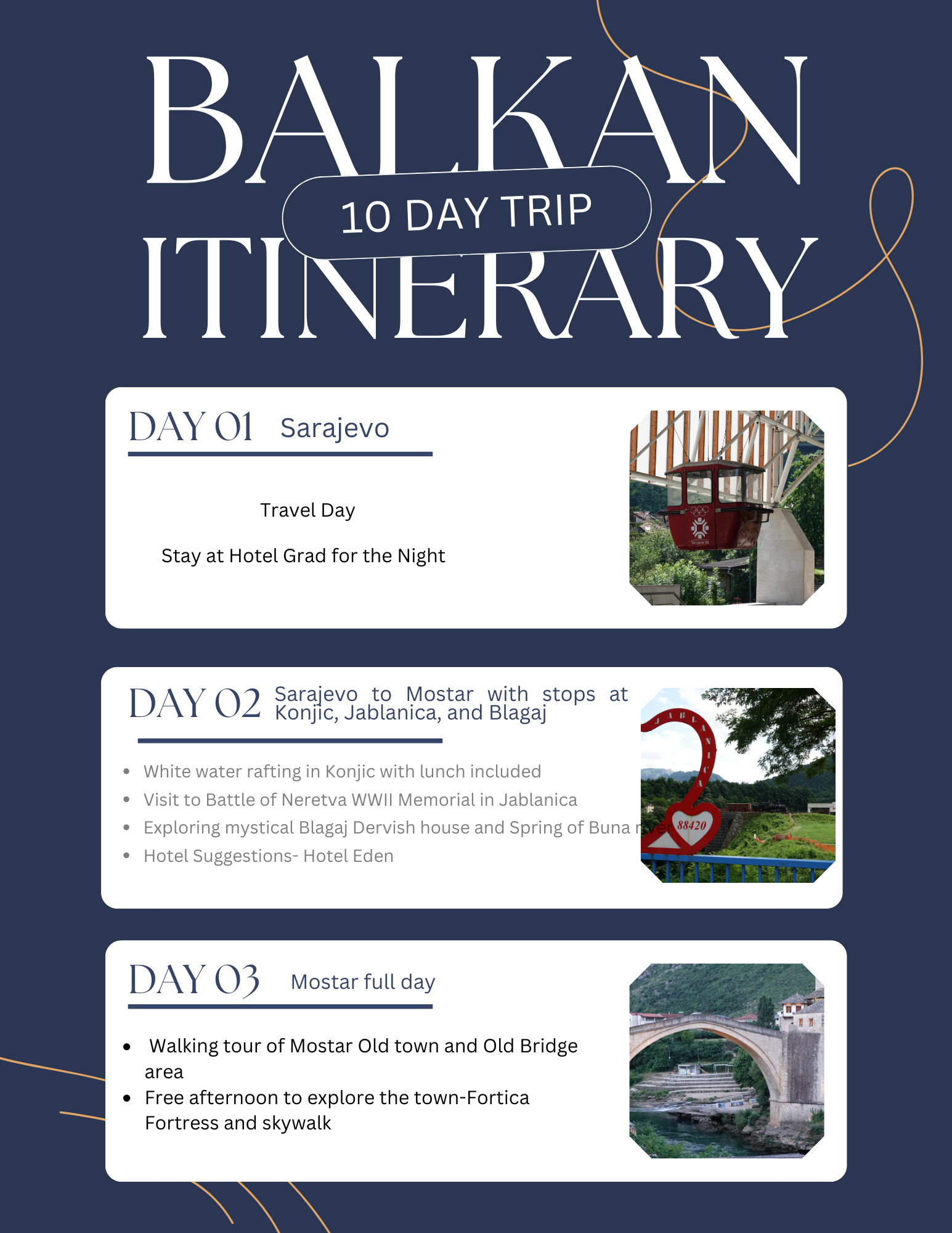
Day Notes- Long day but amaizng place to visit and stop ( Could have moved the visit to Blagaj tekke to day 3. Lunch was provided by the white water rafting compnay -typical bosnian lunch with Sauasages, vegeables and bread. This was prefect way to spend travellign from Sarajevo to Mostar. The drive is beautiful with Naretva river following the road entire way with valley and mountians.
Dinner at Restoran Labirint in old town Mostar with amaizng views of Mostar bridge
Stay- At Friend’s house 10 min from old town.
Hotel suggesitons- Shangri La Mansion, Kriva Cuprija, Eden Villa, Pansion Cardak
Day 3 : Mostar
Walking tour of old town and old bridge area
Free afternoon to explore the city- Fortica fortress and sky walk.
Lunch – Urban Taste of Orient -old town (Great views of Mostar bridge)
Dinner- CAFFE SLASTICARNICA ALDI 2 ( We ate with the host family at this resturant and it is not in the touristy area and this is where locals go to eat)
Day notes: Mostar is an amazing town with lots of history and it is worth to spend a day here rather than do a day trip from Croatia
Day 4 :Mostar to Split via West Herzegovina
Morning departure from Mostar- Stop at Buna Canals
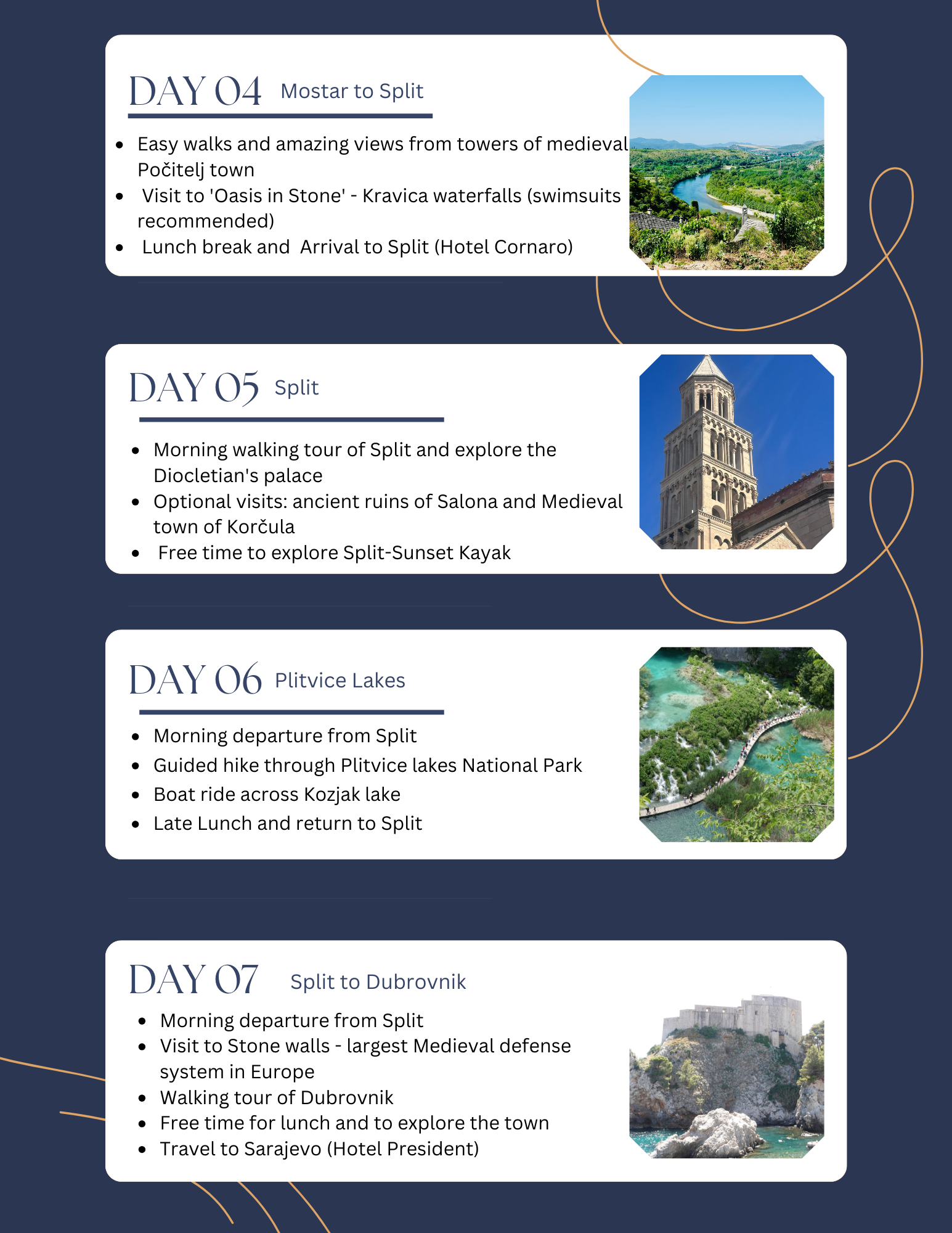
Easy walks and amazing views from towers of medieval Počitelj town
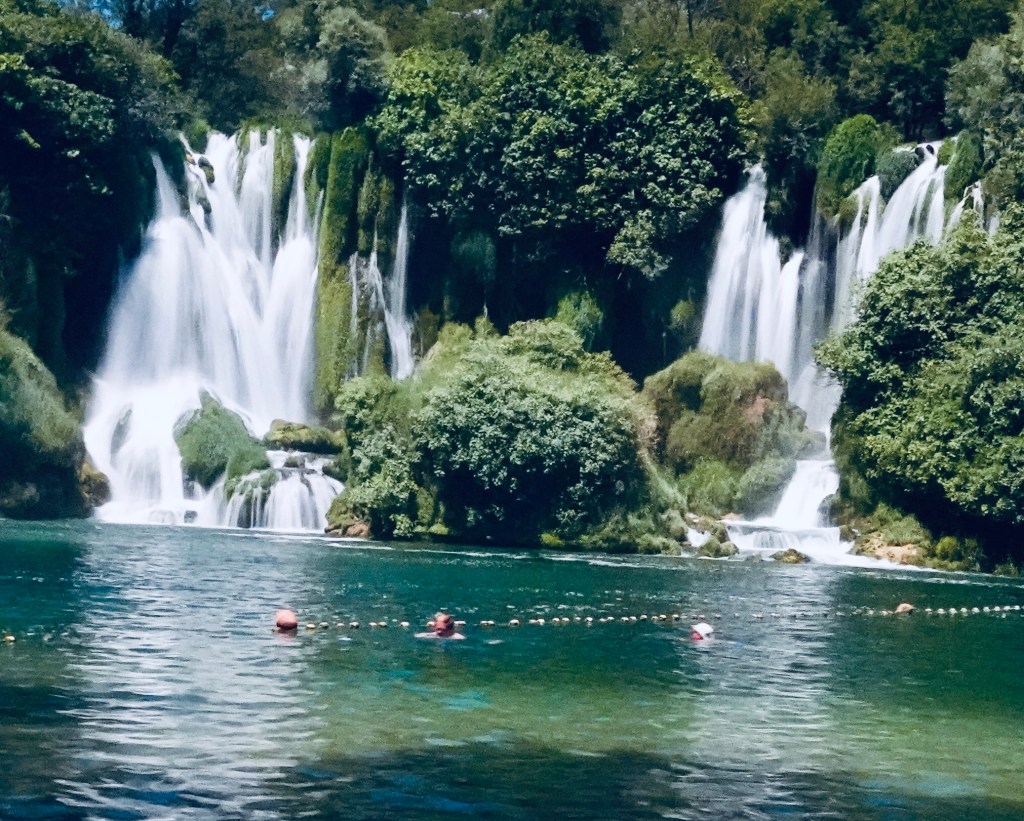
Visit to ‘Oasis in Stone’ – Kravica waterfalls (swimsuits recommended)
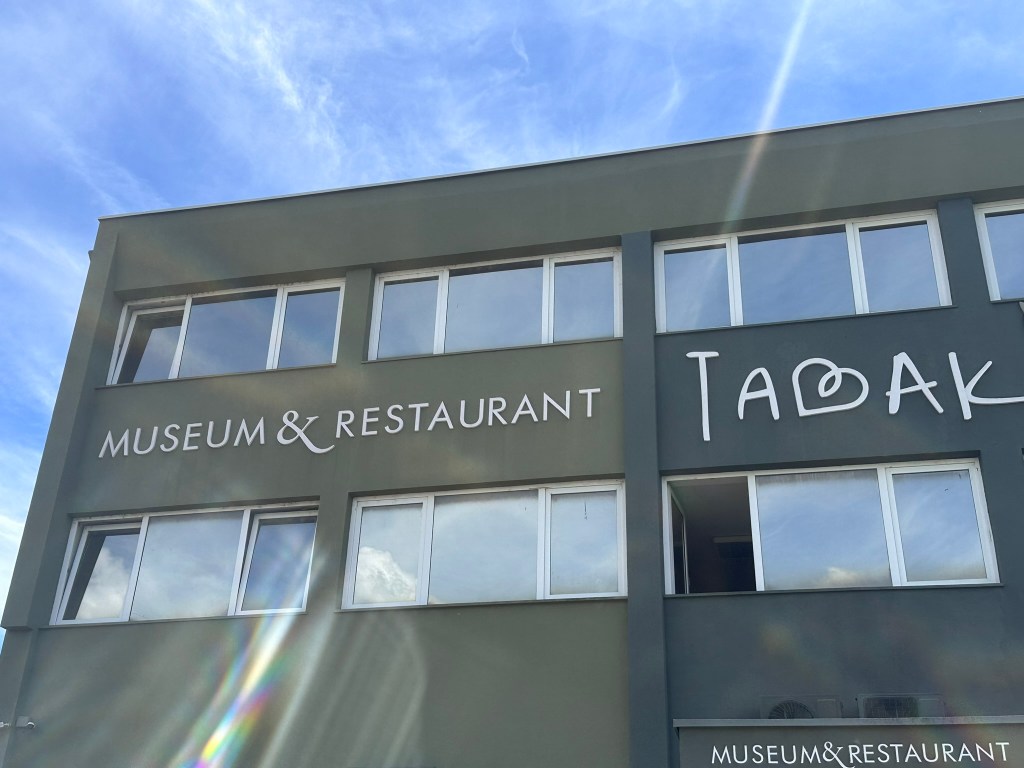
Lunch- At Tabak Museum and Restaurant (Best food we had while in Bosnia)
Dinner- In Split old town. Random taco and sandwich place
Stay – Cornaro hotel in Split old town
Day Notes : Both Počitelj and Kravica are great places to visit. Stop at Buna canals was not on the itinerary and it was one best places we stopped.
Day 5 : Split
Morning walking tour of Split
Free time to explore the Diocletian’s palace
Free time to explore Split- Sea Kayaking with Snorkeling and cliff jumping
Lunch- Old town split
Dinner- Rooh (Indian Resturant)
Day notes- Sea Kayaking was really good add. After kakaying for couple of hours, we spent sometime on the beach drinking wine that kayaking company provided.
Day notes : This was a long day but worth it. If I have redo, I would go and stay near Plitivce night before and get to the park first thing in the morning.
Day 7 : Split to Dubrovnik
Morning departure from Split
Visit to Stone walls – largest Medieval defense system in Europe
Walking tour of Dubrovnik
Free time for lunch and to explore the town
Return to Sarajevo
Lunch- Random place in Dubrovnik.
Dinner- Gas station on the way to Sarajevo
Stay – Hotel President- Sarajevo
Day Notes- Another long day. I would not suggest doing Dubrovnik as a day trip from Split. If I have redo, I would stay a night in Dubrovnik and do the city walls early in the morning. Overall, Dubrivnik was my least favorite places visited during this trip. It was over corwded even in June and just didn’t feel like it was authentic.
Day 8 :Sarajevo
Sarajevo walking tour with additional tasting of the local cuisine
Free time to explore the city
Lunch- Part of the tour
Dinner- Lots of great places in old town
Day notes- Old town Sarajevo is beautiful with lots of history and great places to eat. We didn’t have a bad meal once during our stay in Sarajevo
Day 9 : Sarajevo
MTB ride, Trebvik Mountain and Bob sled Track
Free time to explore the city
Day Notes : Bob Sled track is really interesting as well as just taking time to walk around the city. There is so much to do and see
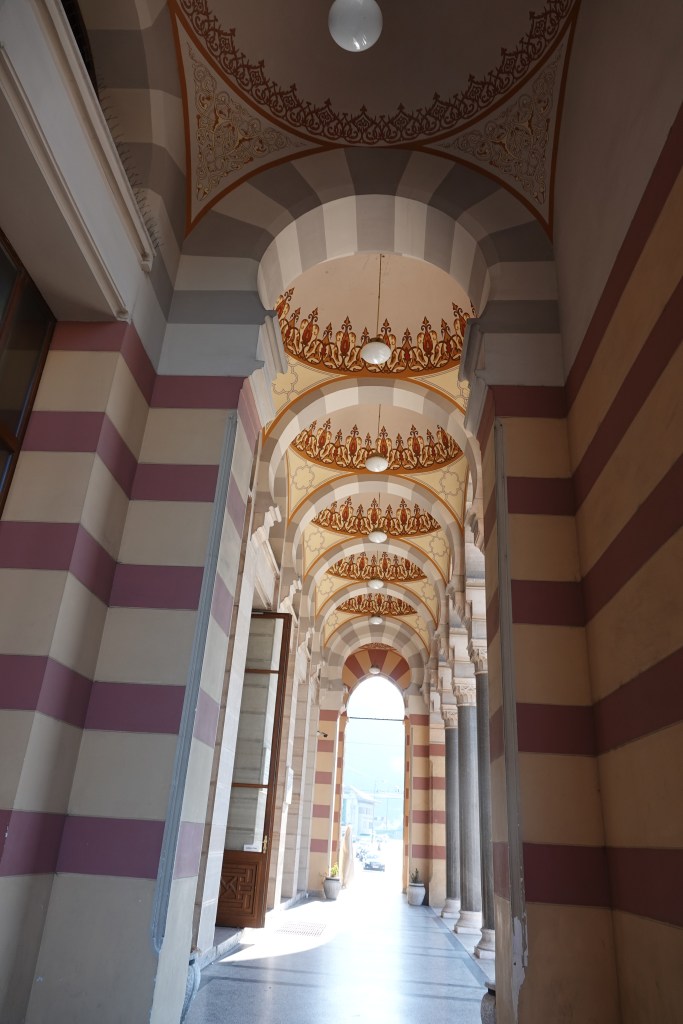
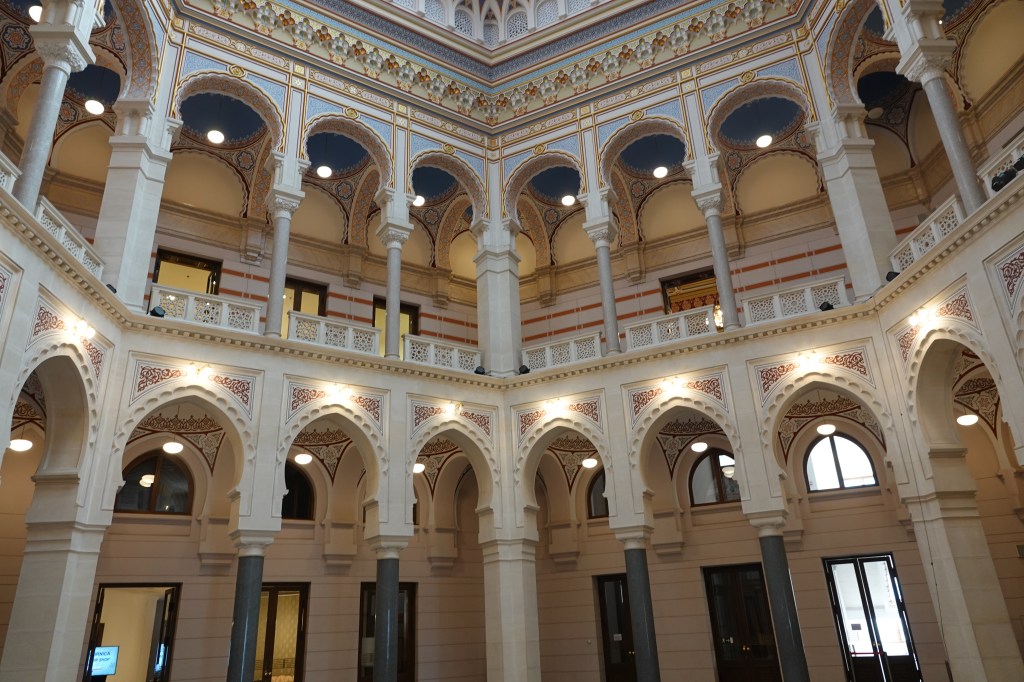
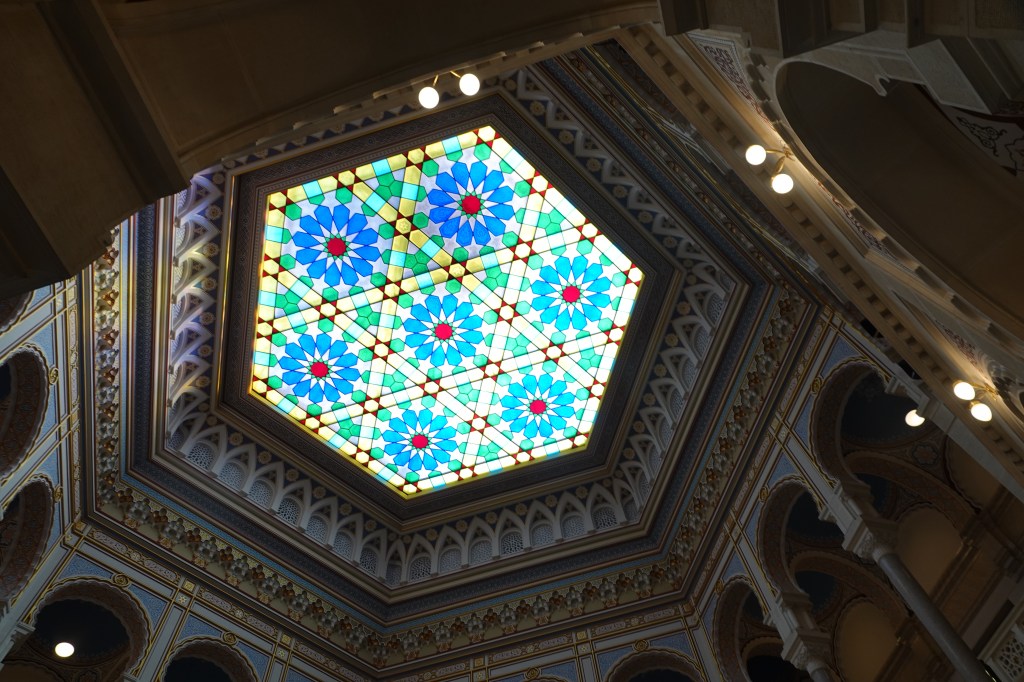
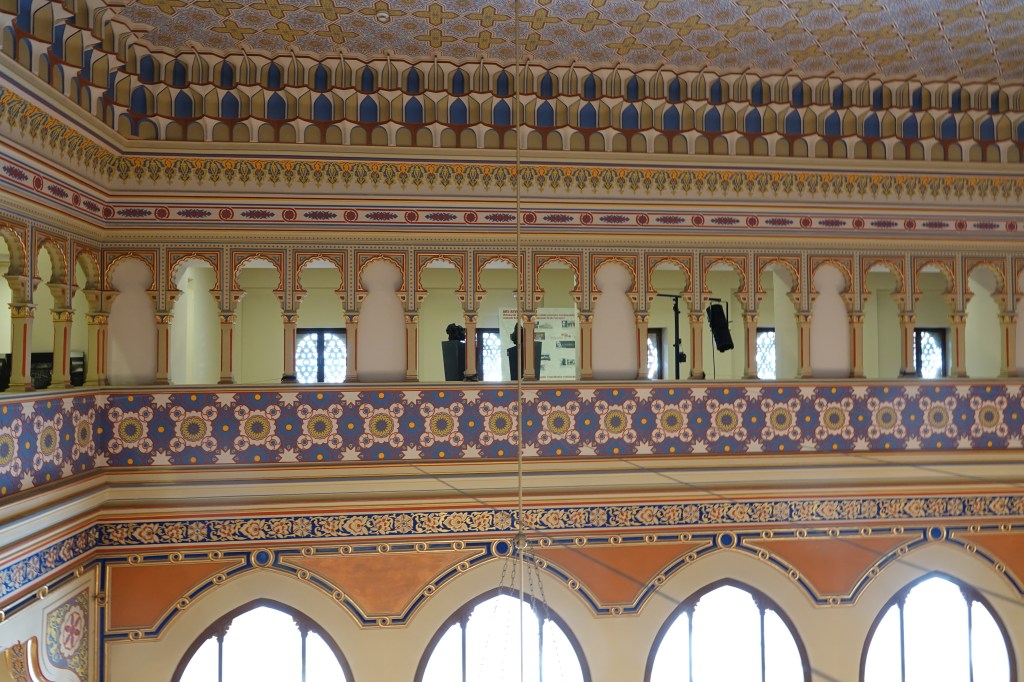
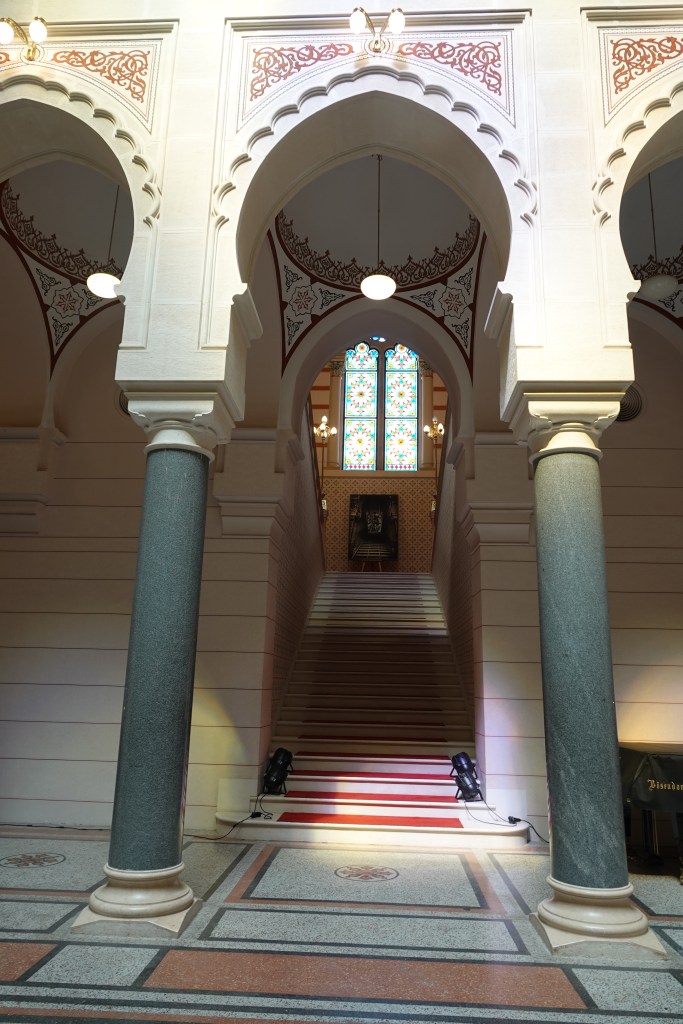
From the time I saw photos of the roof of front hall of Sarajevo city hall, I have been intrigued by this building. On our 1st day stay in Sarajevo I woke at 6 AM to and wondered around the old town and landed up in front of the city hall around 7AM. The building wasn’t even open but when I peeked in, the guard ushered me in and let me take couple of photos of the ceiling. I went back around 9 when it opened and spent next few hours walking around and admiring the architecture and history of the building as well as its role as the symbol of culture, history and resilience of Sarajevo.
History of Vijećnica
The construction of the Sarajevo City Hall, also known as Vijećnica, was a significant architectural endeavor that symbolized the Austro-Hungarian influence in the region. The Austro-Hungarian administration, upon assuming control of the Bosnian region in 1878, embarked on an ambitious modernization program aimed at transforming the infrastructure and institutions of the area. In addition to the construction of the City Hall, efforts were made to develop and enhance vital elements of the region’s infrastructure, encompassing the building of roads and railways to facilitate transportation, as well as the establishment of educational institutions to foster the intellectual growth of the population.
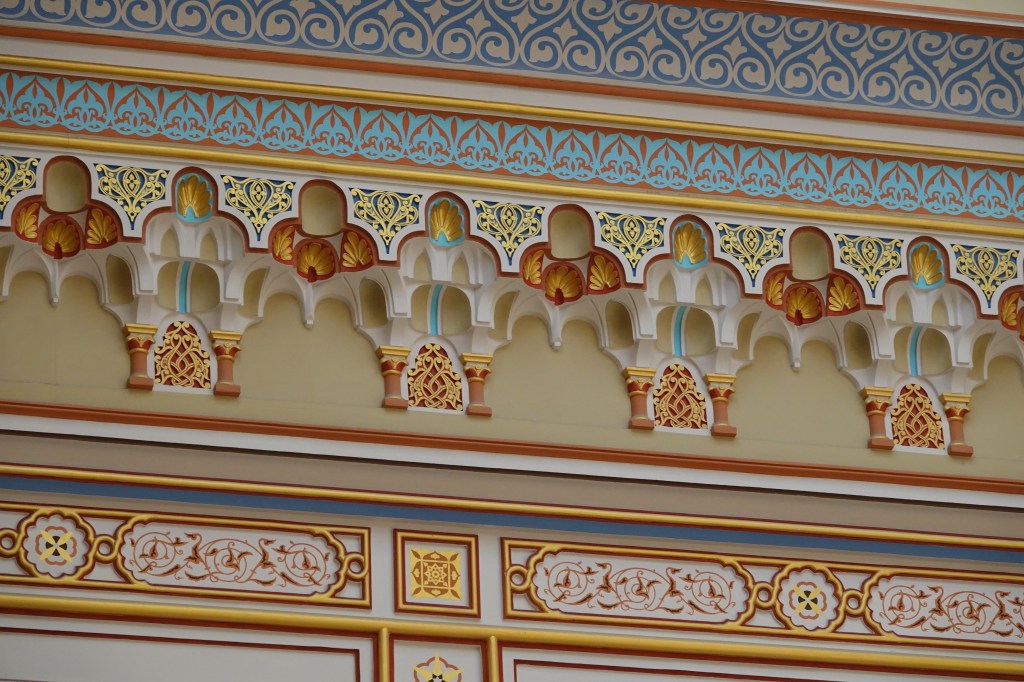
Alexandar Wittek designed City Hall in Neo-Moorish style, making multiple trips to Cairo to study similar buildings. After Wittek’s alleged mental illness and suicide (some ascribe this to the design and challenges of the city hall), Ćiril M. Iveković took over the project, making some adjustments and completing it in 1894.
In 1947 the city hall was converted into Academy of Sciences and Arts, and as well as the main library and served as the library until 1992. During the siege of Sarajevo in 1992, the city hall was heavily damaged and about 2 million books, magazines and other articles were forever lost. Since then, the city hall has been restored to its original glory and is now open to public to visit.
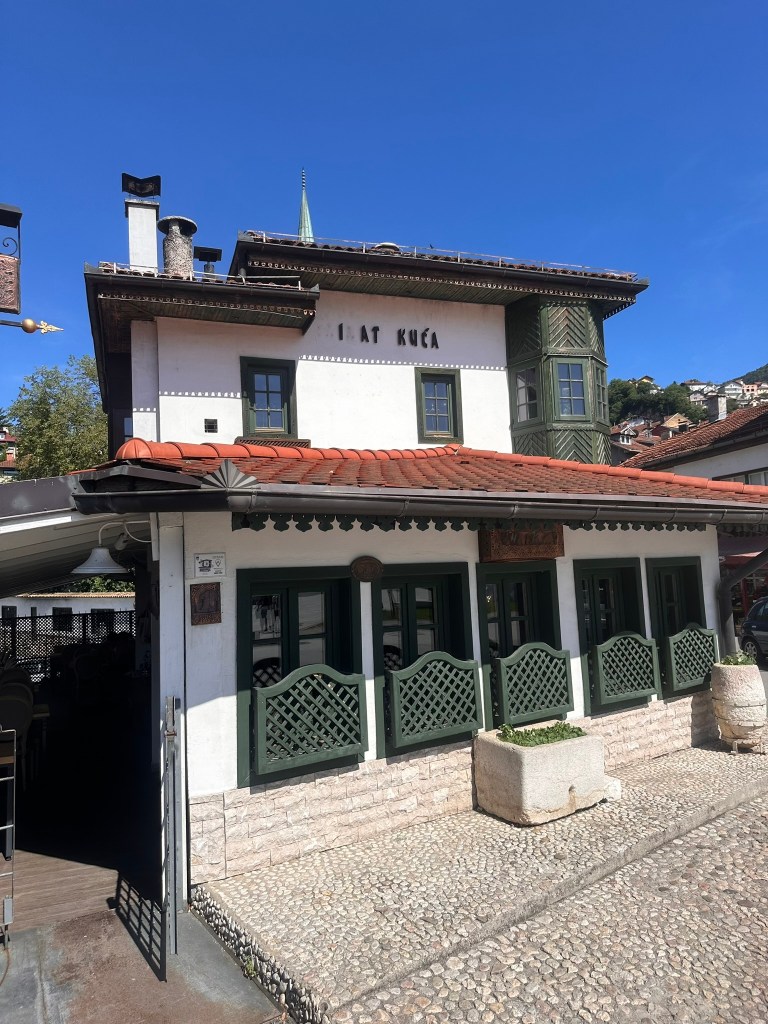
There is another interesting piece of history associated with city hall and stubbornness of Bosnians. There is house/restaurant across the city hall near the Sarajevo sign and it is known as Inat Kuca – house of spite. Definitely check it out when you at city hall and get a rakija and enjoy the view.
Apart from the beautiful architecture of the building there is a permanent museum at the basement level of the building. The theme of the museum is Sarajevo 1914-2014″, which deals with life in Sarajevo during the last century. Visitors can explore various exhibition spaces dedicated to the city’s history, literature, art and archaeology. Museum also has the exhibition “Sarajevo Town Hall once again”, by Nedžad Mulaomerović, which tells the story of the restoration of the Town Hall, which lasted almost two decades.
Entrance fee
There is an entrance fee for the city hall. Ticket prices: – Single ticket 10 KM – Group ticket 10+ (more than 10 participants) 8 KM. For more information check out the city hall website: https://www.vijecnica.ba/en/home
Final thoughts
The city hall of Sarajevo is one of my favorite building for its architecture as well as its historical significance
On our trip to Bosnia, we were fortunate enough to stay with a Bosnian family in Mostar. We stayed with them for 2 nights and heard war stories and had dinner with them at a local restaurant. The host house was located about 10 min uphill from the old stone bridge of the Mostar, the main attraction in the city. Like rest of the country, Mostar was also affected by the war in 1990s and our host family’s house was completely destroyed. The was on Mostar was between the between the Bosnian Croats and Bosniaks (Bosnian Muslims) and 30 year later the town is still divided into Christian and Muslim parts. During the war, the famous bridge that stood for 400 years was destroyed by the Croats and has been since re-built with international help.
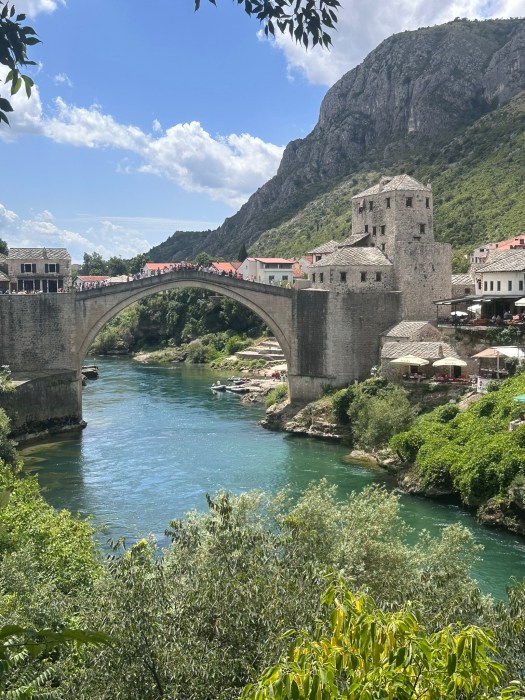
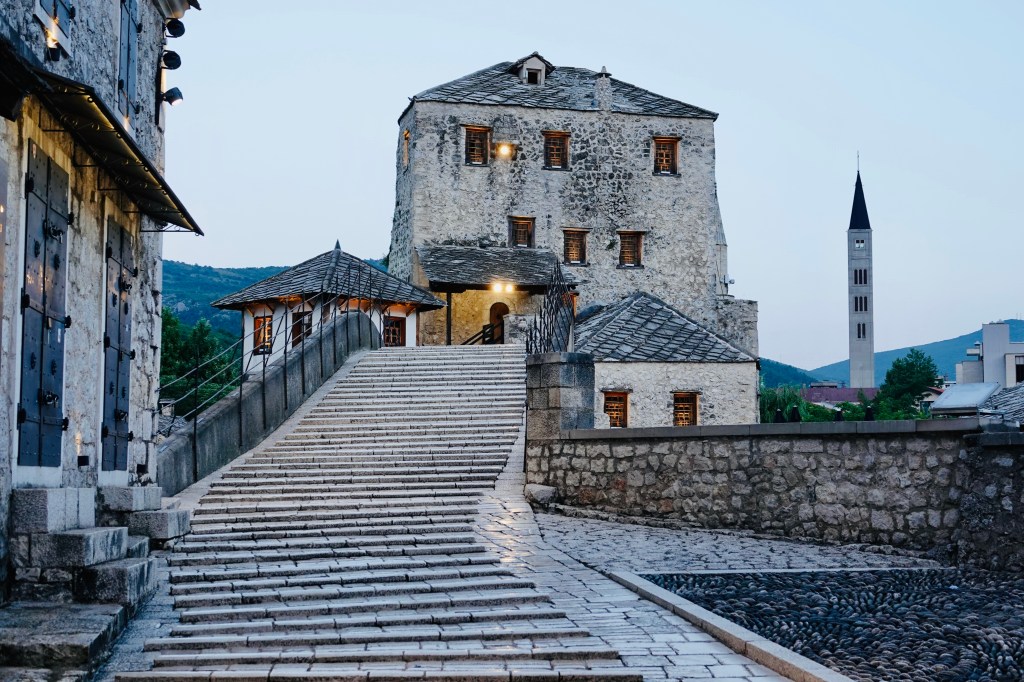
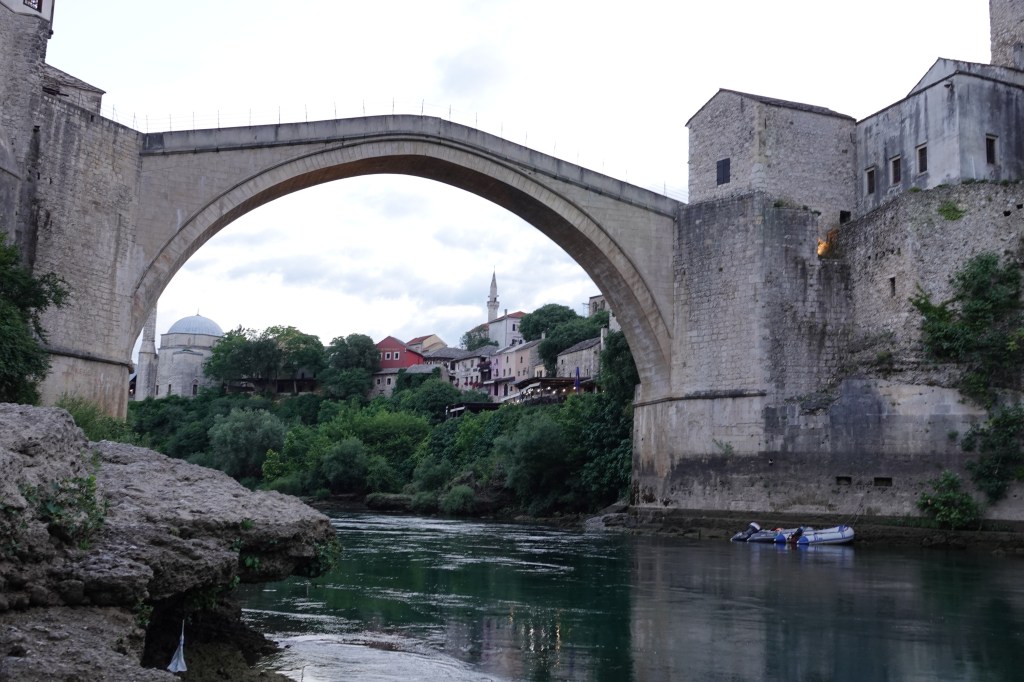
The city of Mostar gets its name from the old stone bridge – Star Mosti (literal meaning old bridge). The bridge, a masterpiece of Ottoman Turkish architecture, was commissioned by none other than Suleiman the Magnificent, and designed by Mimar Hayruddin, a student of the famous Mimar Sinan, the architect of Istanbul’s many famous landmarks. Building of the bridge started in 1557 and completed 9 years later. Simple yet elegant, the bridge consists of a single 30-meter-wide and 24-meter-high arc, connecting the steep riverbanks of Neretva River. Two towers protect the entrances to the bridge.
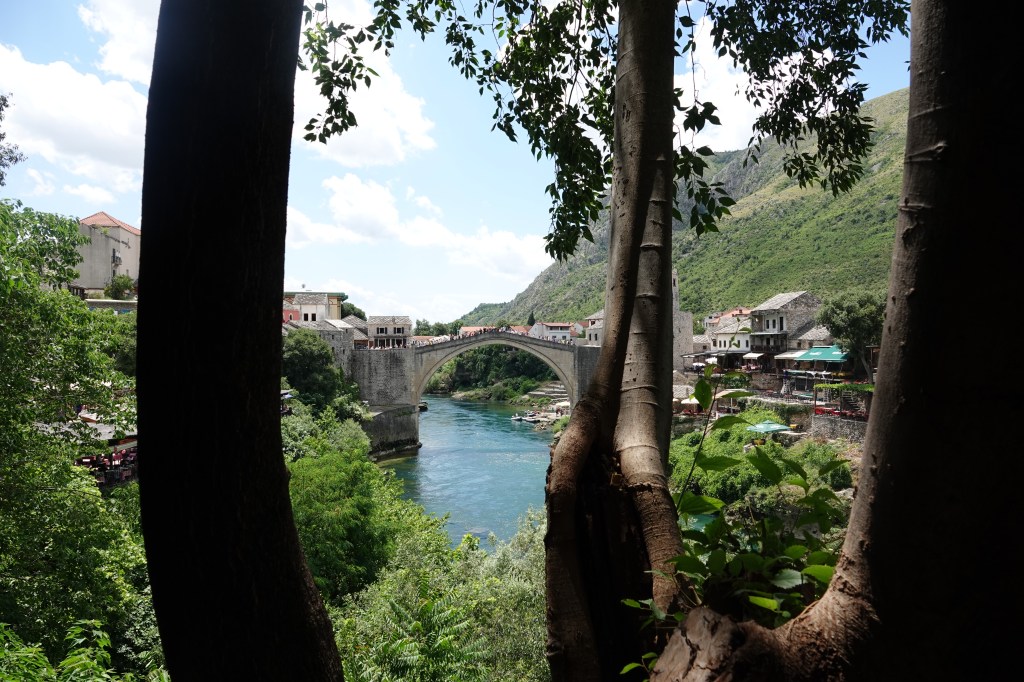
Most people visit Mostar as a day trip from Dubrovnik or Split, Croatia and during the daytime, the old town is filled with day trippers. Since we were staying in Mostar, we were able to visit the bridge both early morning (5.30 AM -thank you Jetlag) and late at night. If you want to take the picture of the bridge without tons of people, early morning is your best bet. The best places to get a good picture is either to cross the bridge and go down to the beach area or from one of the many restaurants around. We found that Urban taste of Orient had really good views as well as good food.
View from Urban taste of Orient
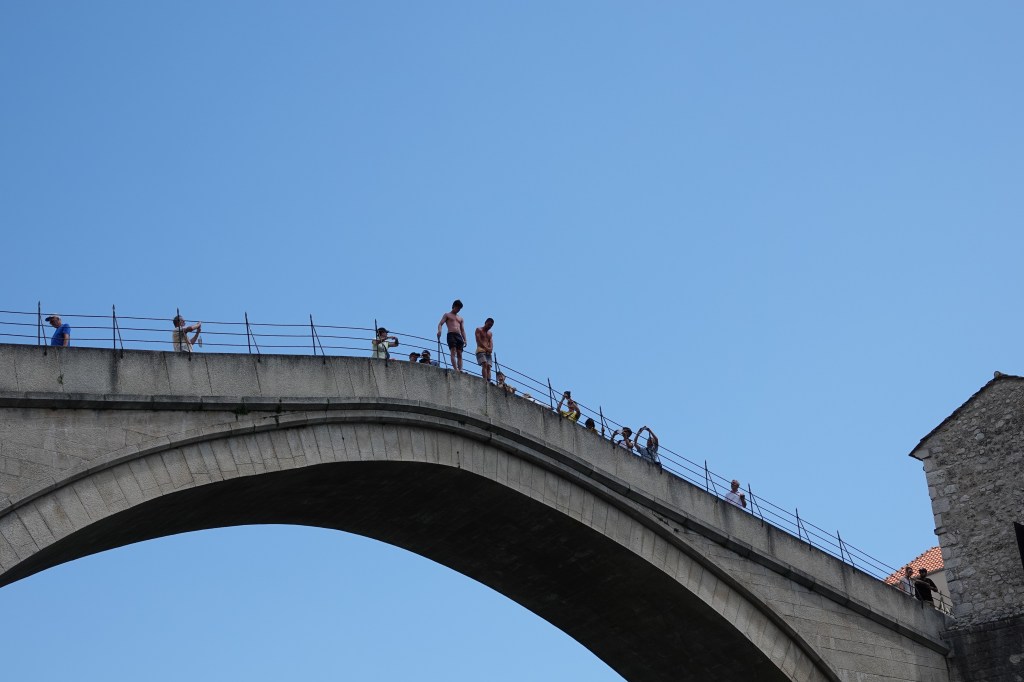
One of the popular things to do at the bridge is to watch/participate in diving from the bridge. Local dive club collects money from the tourist and jump from the bridge into the river. Once in a while, a tourist would join the fun and jump from the bridge. You have to pay 25 euros and practice few times from lower platform before you can jump. We watched at least 3 dives from Urban Cafe while eating lunch.
Divers getting ready to jump
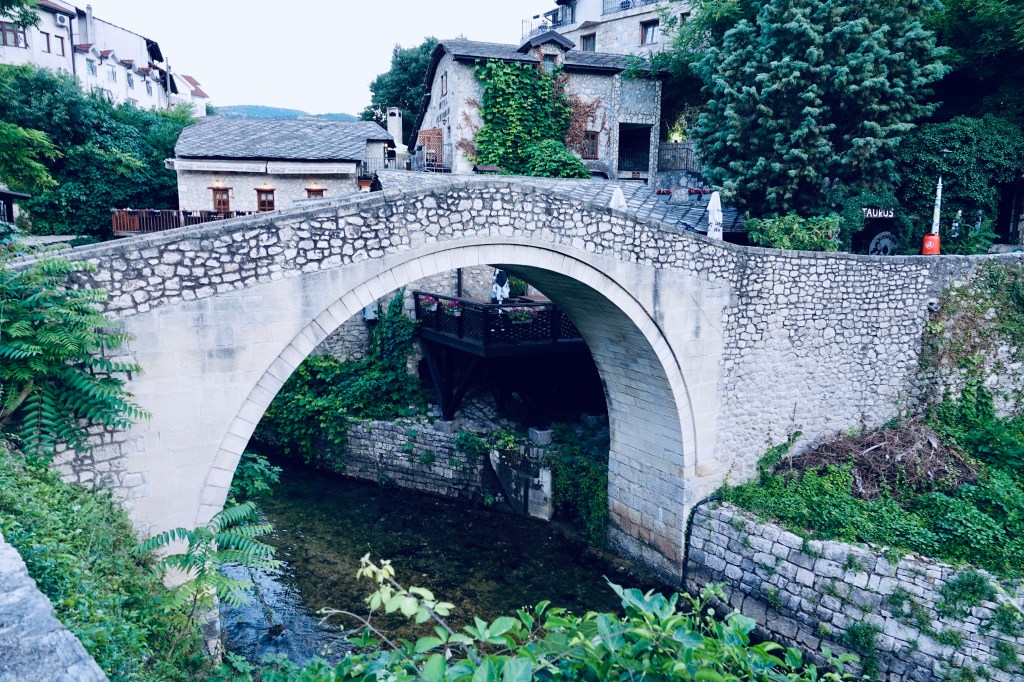
Kriva Cuprija- Crooked bridge of Mostar
Crooked bridge of Mostar
The area near the Old Bridge of Mostar is home to another historic structure known as the Kriva Cuprija, or the Crooked Bridge. This quaint bridge spans the Rabobolja creek, a right-bank tributary of the Neretva River. Although the precise date of its construction and the identity of its builder remain unknown, the bridge embodies a timeless charm.
Similar to the Stari Most, the Kriva Cuprija is a small stone bridge with a single arch. Its arch forms a perfect semicircle, measuring 8.56m in width and 4.15m in height. The frontage and vault consist of regular stone cubes arranged in horizontal layers along the vault. The space between the vault, frontal walls, and footpath is filled with cracked stone, while the bridge footpath and surrounding roads are adorned with cobblestones, mirroring the town’s main thoroughfares. Stone steps on either side of the bridge allow access from the lower terrain.
Tragically, the floods of December 2000 ravaged this iconic structure, highlighting the vulnerability of historic landmarks to natural disasters. The bridge was rebuilt with support from UNESCO.
Old Bazar Kujundžiluk and Coppersmiths of Mostar
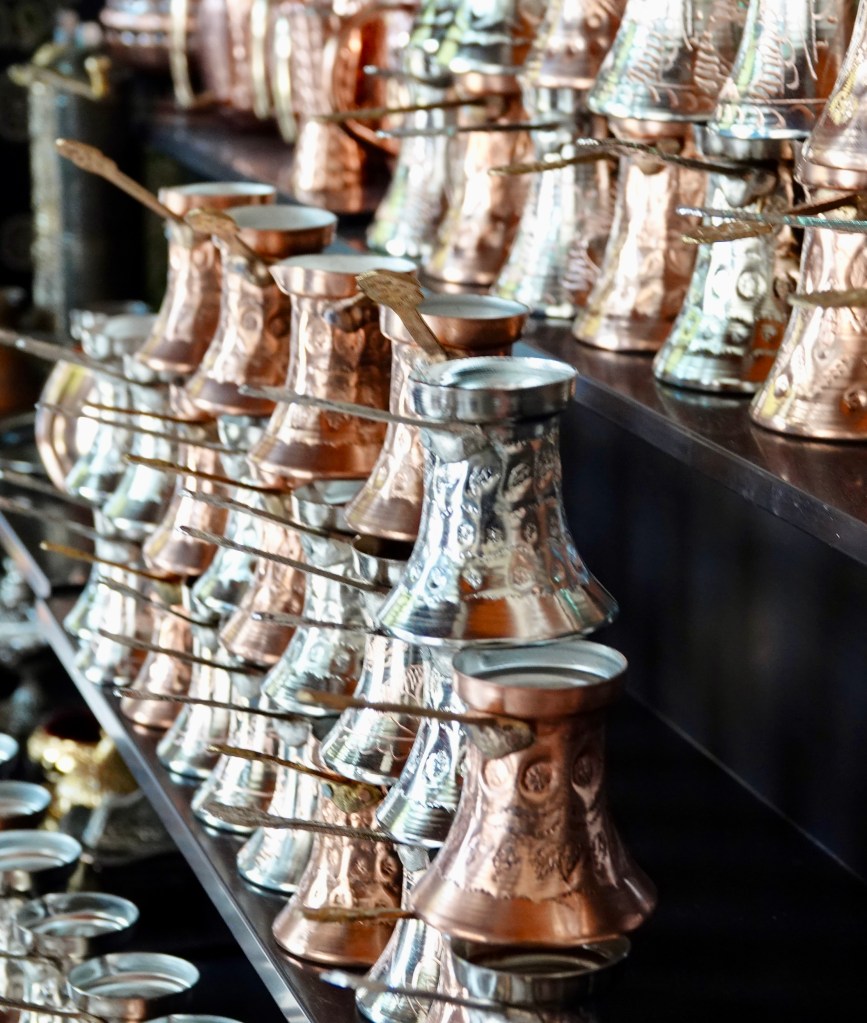
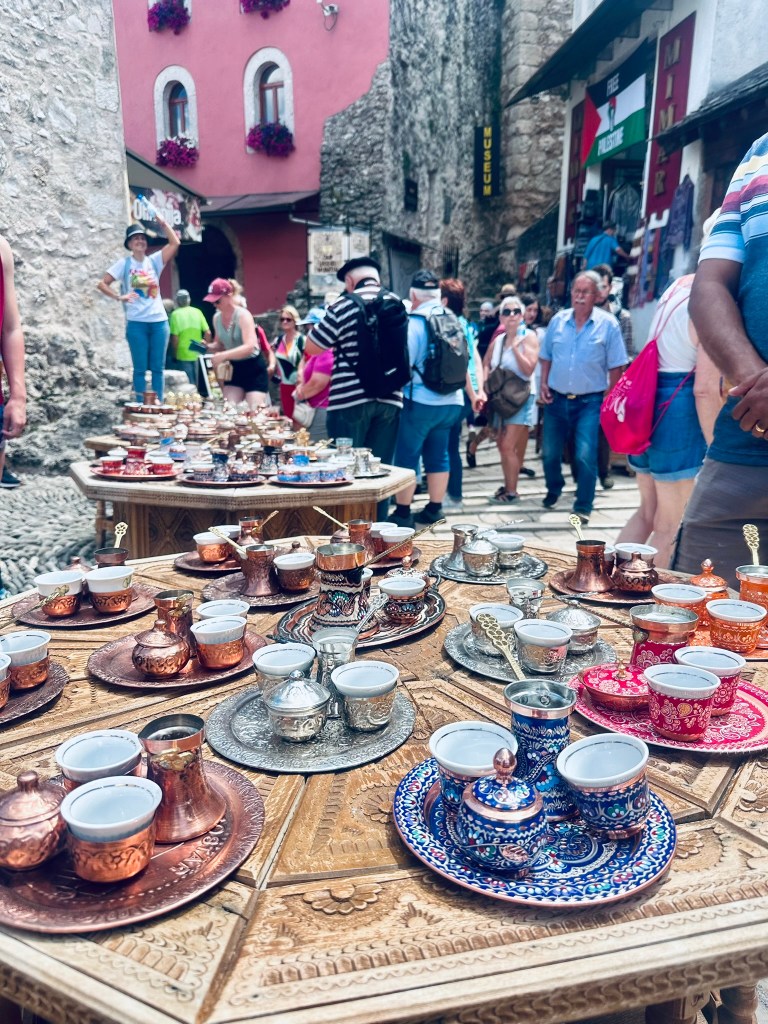
The Old Bazaar Kujundziluk has a rich history, serving customers since the 16th century. Located in the oldest part of Mostar, it offers charming, cobbled streets for visitors to explore. The area is renowned for its vibrant sights, lively sounds, and historic buildings, providing an authentic and captivating experience. The colorful old buildings, tinted in shades of red, blue, green, and yellow, tell stories of Mostar’s past. If you want to buy any copper souvenirs this is the place to buy it.
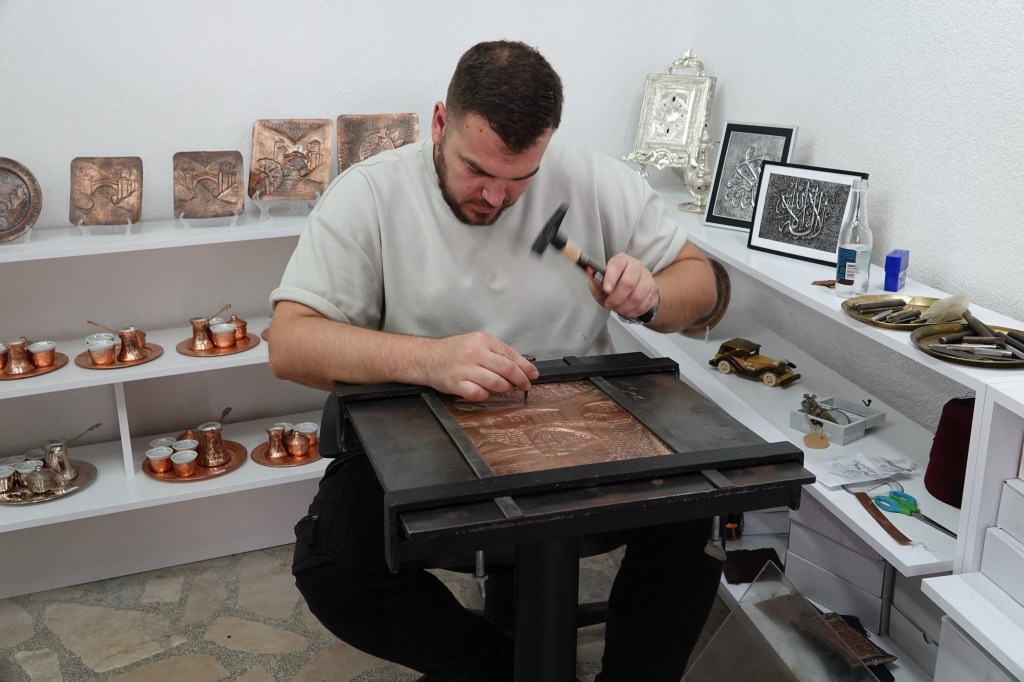
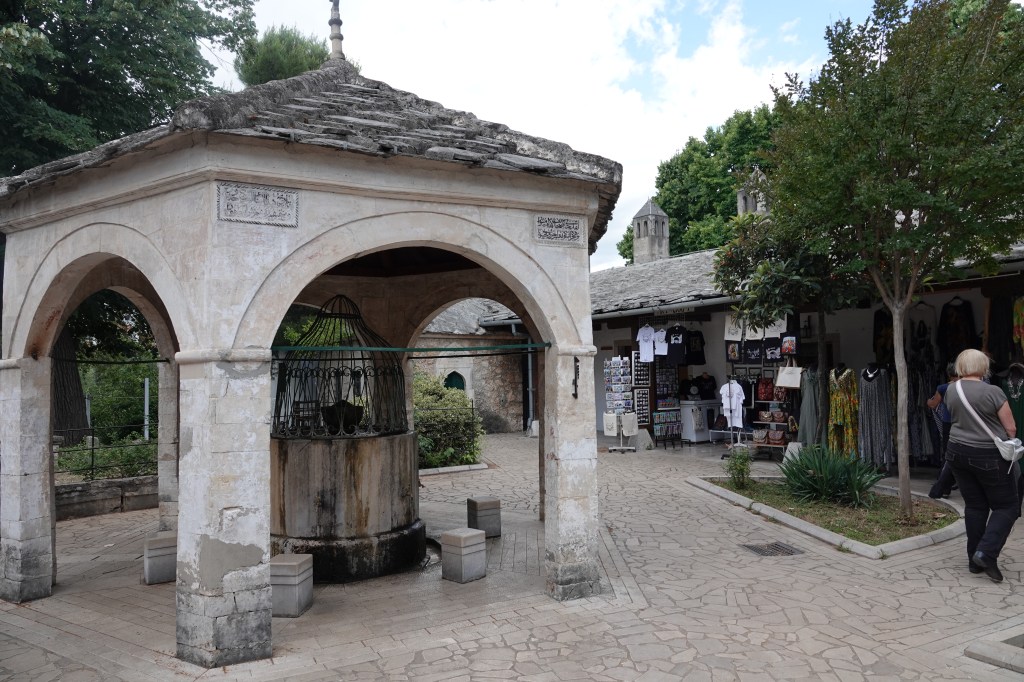
Pro tip- According to our guide, listen to the “Chink” ” Chink” noise of the copper smith working in the shop to know that you are buying an authentic, handmade item not mass-produced cheap knockoff. We found a shop in the courtyard of Koski Mehmed Pasha Mosque where the owner was working with his tools and had some really cool stuff.
Coppersmith working on his craft
Koski Mehmed Pasha Mosque
Constructed in the 17th century during the Ottoman era, the Koski Mehmed Pasha Mosque stands as a masterpiece of the esteemed Ottoman architect, Adžem Esir Ali. It is a highlight of Mostar for two main reasons: its significant historical importance and cultural symbolism, and the unique chance it offers visitors to ascend the minaret for breathtaking panoramic views of the city, encompassing the Stari Most and the charming old town.
As a functioning place of worship, the mosque welcomes visitors outside the designated prayer times. An entrance fee of €7 is applicable.
Catholic Church and the Franciscan Monastery
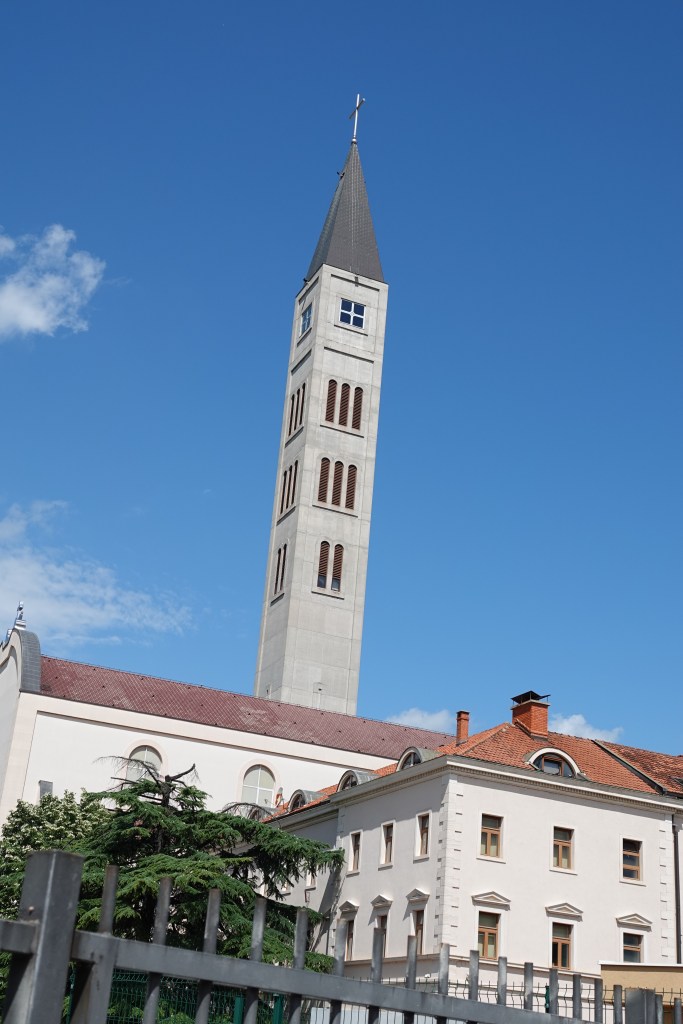
The Mostar Peace Bell Tower (Mostarski Zvonik Mira) is one of the first landmarks of Mostar we noticed as it dominates the landscape of Mostar. The bell tower of the church is the highest construction in the city, boosting 107m of height and you take an elevator will to more than halfway up, to 45 meters of the 75-meter-high viewing area, providing a panoramic 360-degree view. You can walk up the remaining 30 meters.
The Fortica Fortress and skywalk
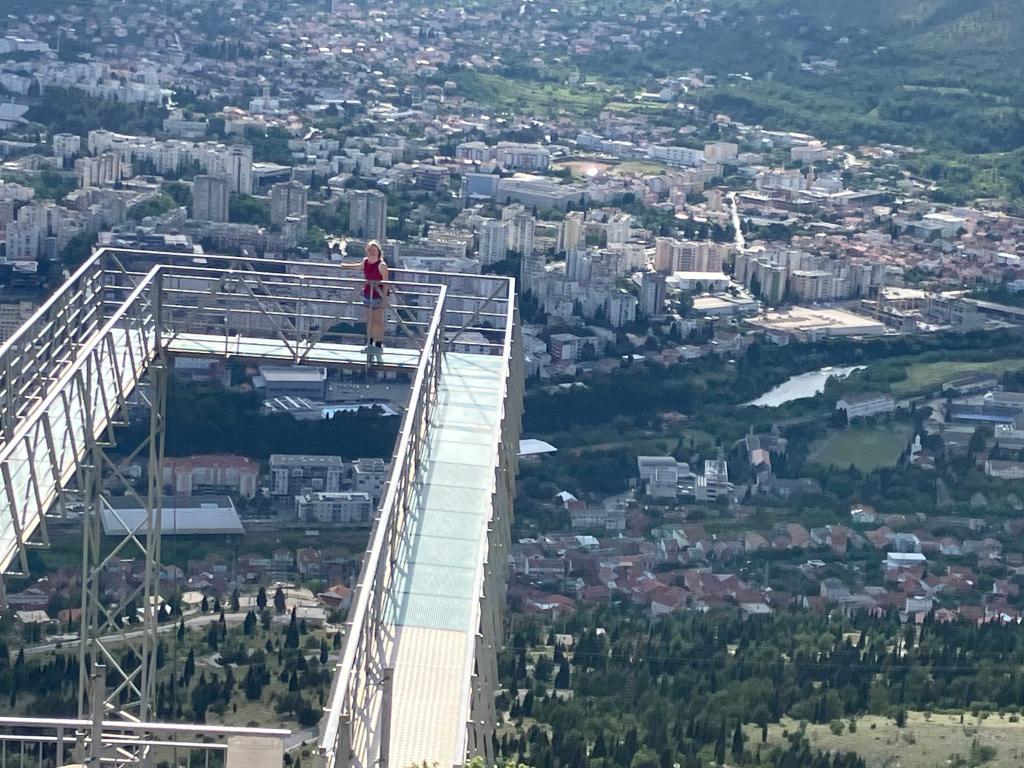
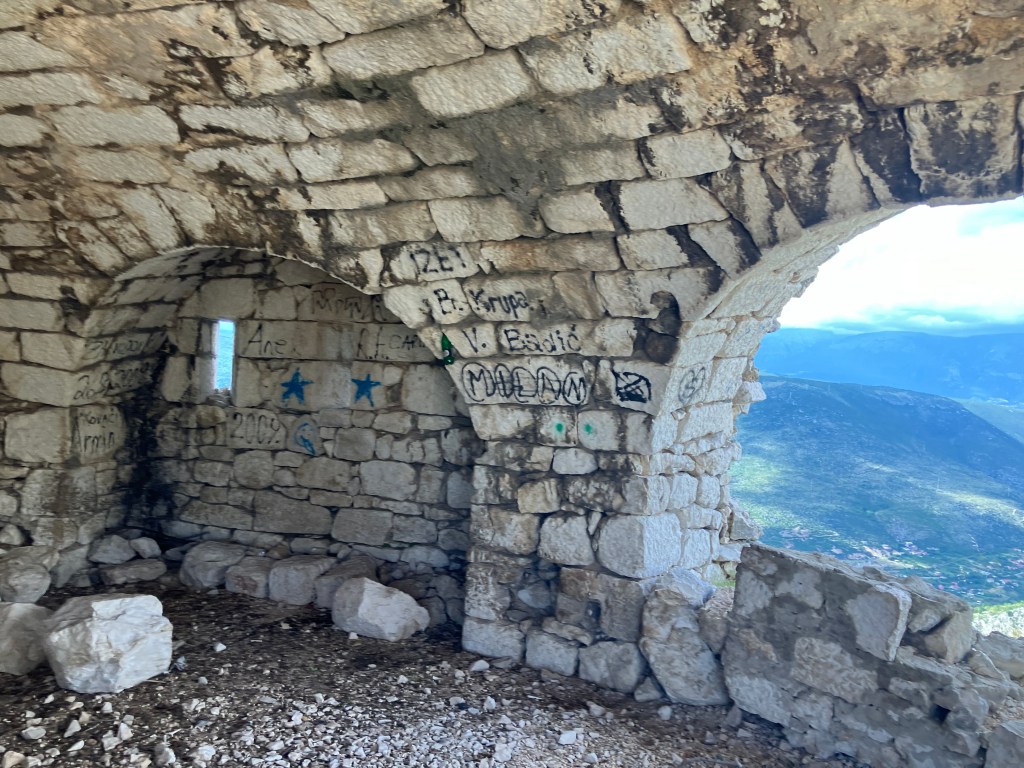
Skywalk in Fortica Park is a new attraction in Mostar with a 35-meter-long transparent walkway with panoramic views of Mostar. It is located on Fortica hills which have ruins of medieval fortress that you can explore. Fortica park also has the longest zipline in Bosnia but unfortunately the day we were there, it was too windy to operate. You will also see the “I love Mostar” sign here.
Church of Holy Trinity
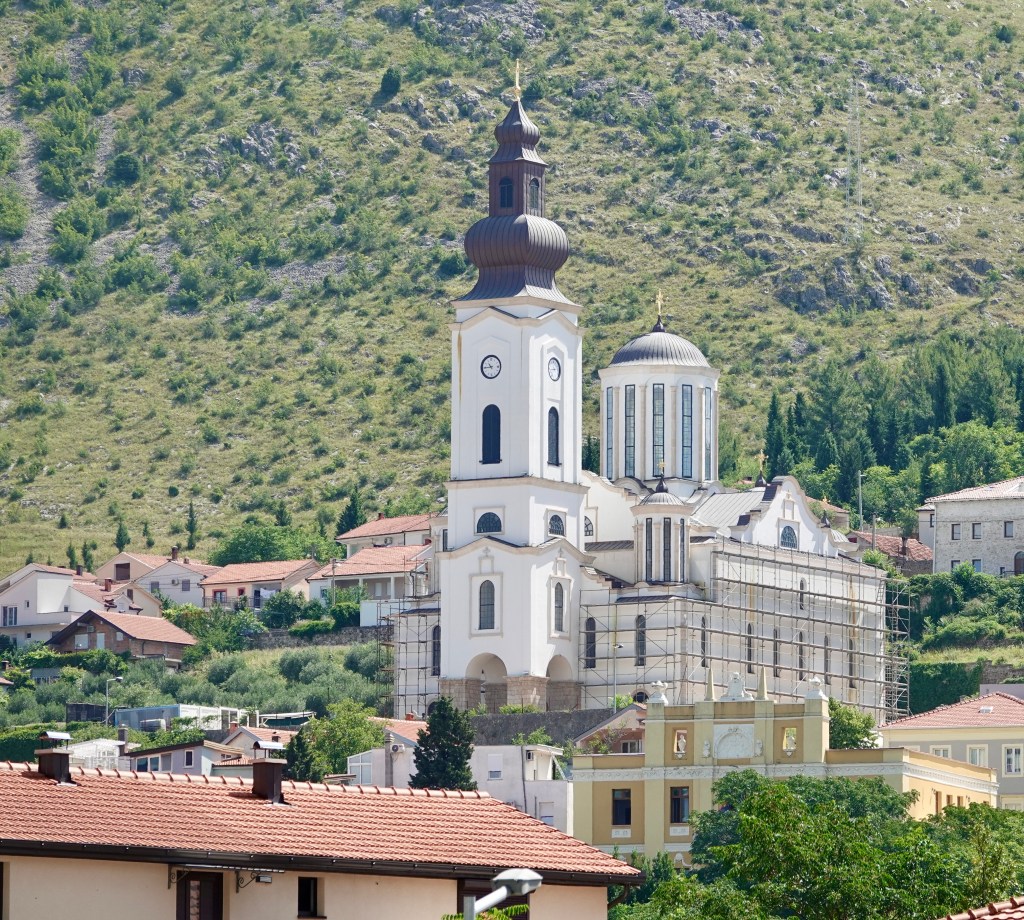
The Church of the Holy Trinity, often referred to simply as the Church of Mostar, stood as a symbol of religious and cultural significance in the region. Its architectural grandeur and historical importance made it a focal point for both the Orthodox community and the broader local population. With its roots reaching back to the Ottoman Empire and the patronage of Sultan Abdulaziz, the church’s heritage intertwined with the complex tapestry of the Balkans’ history. The turbulent times of the Bosnian War in the 1990s brought significant upheaval to the region, leading to extensive destruction of cultural and religious landmarks, including the Church of the Holy Trinity.
The commitment to restoring the Cathedral of the Holy Trinity began in 2010, offering hope for the future of Mostar and its people. Three anonymous friends donated three large clocks to be placed on the church tower’s three sides, each featuring different numerals – Arabic, Roman, and Slavic – symbolizing harmony among the city’s faiths. As the cathedral’s restoration neared completion, adherents of three faiths – a Muslim Bosnian, a Catholic Croat, and an Orthodox Serb – demonstrated the city’s continued interfaith tolerance.
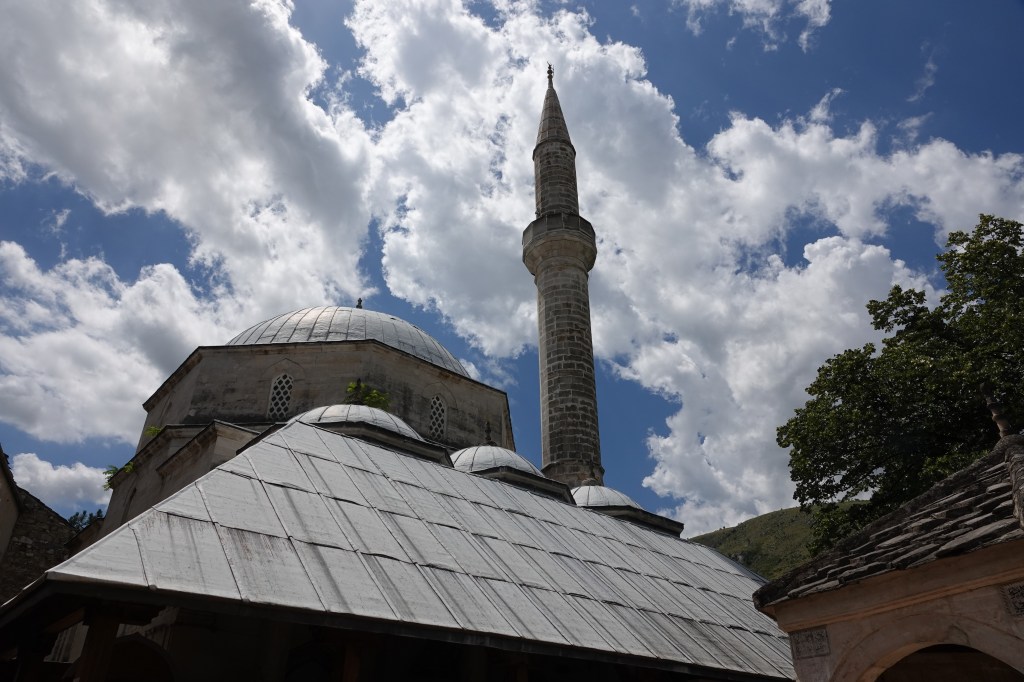
Karađoz Bey Mosque
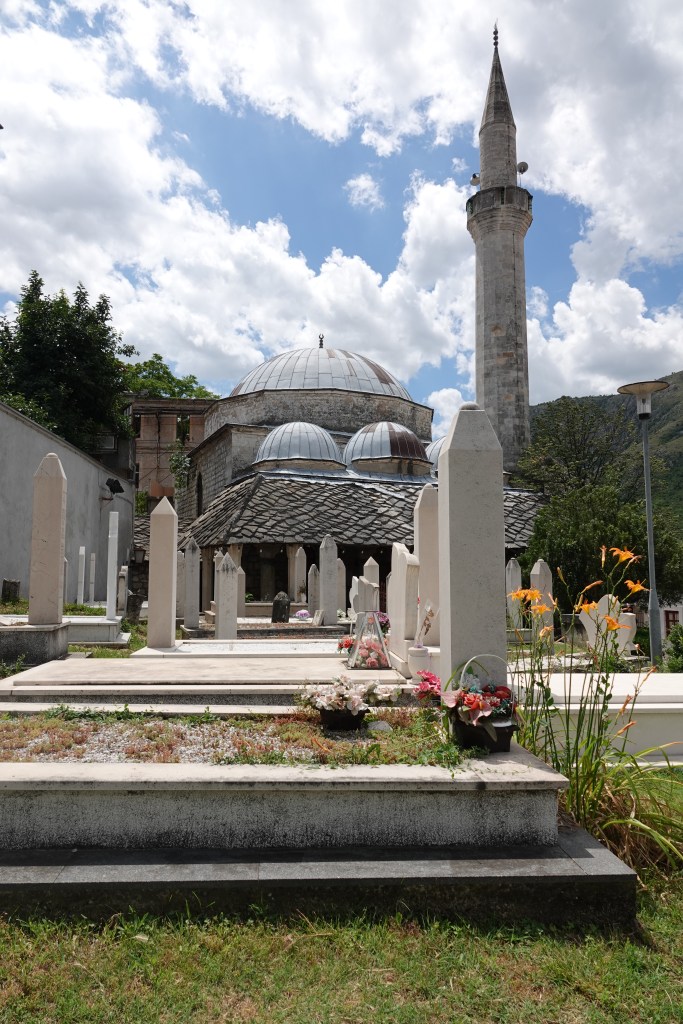
The historical significance of this charming 16th-century mosque cannot be overstated. Steeped in the rich cultural tapestry of Mostar, it not only offers visitors a stunning viewpoint of the city from its minaret but also serves as a testament to the enduring legacy of its founder, Karađoz Bey.
The ties to the region’s past are palpable, as Karađoz Bey, the mosque’s founder, was the brother of a former Herzegovina governor. Despite having endured substantial damage during World War II, the mosque stands as a resilient symbol of architectural and historical preservation. In fact, the well-preserved structure, coupled with the inviting portico that provides shade and seating for visitors, makes it a compelling stop for those embarking on a leisurely exploration of Mostar.
Adding to its allure is the presence of the oldest Muslim cemetery in Mostar, situated behind the mosque. This sacred space exudes an air of reverence and tranquility, offering visitors the opportunity to reflect on the passage of time and the enduring traditions of the local community.
For those considering a visit, it’s worth noting that there is an entrance fee of approximately 5 Bosnian marks, with an additional fee for accessing the minaret’s viewpoint.
Overall, the 16th-century mosque and its surroundings encapsulate the essence of Mostar’s historical and cultural heritage, inviting visitors to partake in an enriching journey through time and tradition.
Mostar and surrounding area are a must visit for anyone visiting Balkans. Rich with history and nature, as well as amazing cuisine, Mostar and entire Bosnia and Herzegovina exceeded my expectations and has become one of my favorite countries to visit
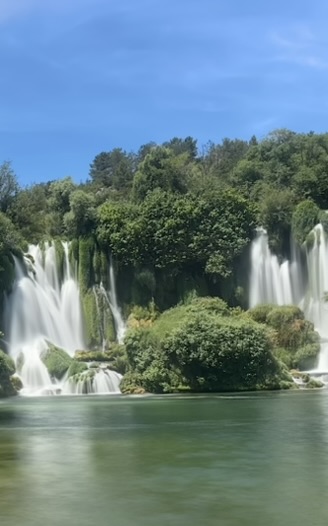
Kravica Waterfall located on the Trebižat River around 40 kilometers from Mostar and about three kilometers from the town of Ljubuški in Herzegovina. This is another great stop on the way to Croatia from Bosnia or as day trip from Mostar, Dubrovnik or Split. We stopped here on our way to Split and Mostar and spent couple of hours enjoying the beautiful waterfalls and swimming in the crystal-clear waters. The waterfall at the top has the shape of a semicircle about 120 meters wide, and is composed of travertine.
The trail to Kravica Waterfalls is relatively short and accessible. It’s about a 10-15 minute walk from the parking area to the falls. The path is well-marked and mostly downhill, making it an easy and enjoyable hike
On the way to the waterfalls
Opening times and entrance fee
The Kravica Nature Park is open every day from 7 am to 10 pm in the summer months and from 7 am to 7 pm in the winter months. The park offers visitors a range of facilities, including parking, train, toilets, changing rooms, restaurants, and more. Swimming and sunbathing are also popular activities here, as well as renting a boat. There are also souvenir shops on site for those looking to take home a little piece of Kravica.
The price of entry to the Kravica site is divided into three categories, namely: adults, groups of students from 7 to 18 years of age and children up to 7 years of age. The price of one entrance ticket for an adult is 20 KM and for students from 7 to 18 years of age is 10 KM and children up to the age of 7 are entitled to free
Kravica Nature Park Train Ride
Kravica Nature Park has its own mini train that takes visitors on a tour of the park. The train ride is a great way to see all that the Nature Park has to offer, and it’s perfect for those who don’t want to walk. The train ride lasts about 5 minutes and makes stops at several points in the park, including the waterfall itself. A train ride is a great option for those with children, as it’s a fun way for them to explore the park.
Tabak Museum and Restaurant
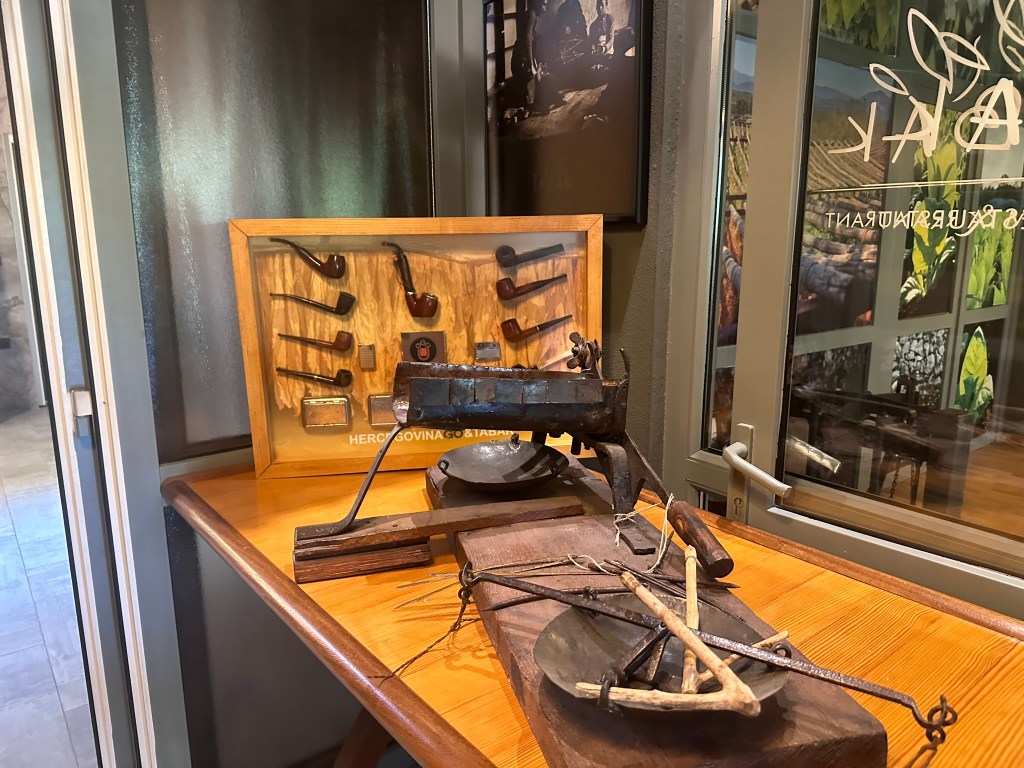
After spending a few hours at the Kravica waterfalls, we decided to stop at the Tabak Museum and Restaurant for lunch. The restaurant is located about a 10-minute drive from the waterfalls in Ljubuški, at 18 Fra. Nikola Ivanković Street, in the Heart of Herzegovina. The food at this place was amazing with local dishes for both meat eaters as well as vegetarians.
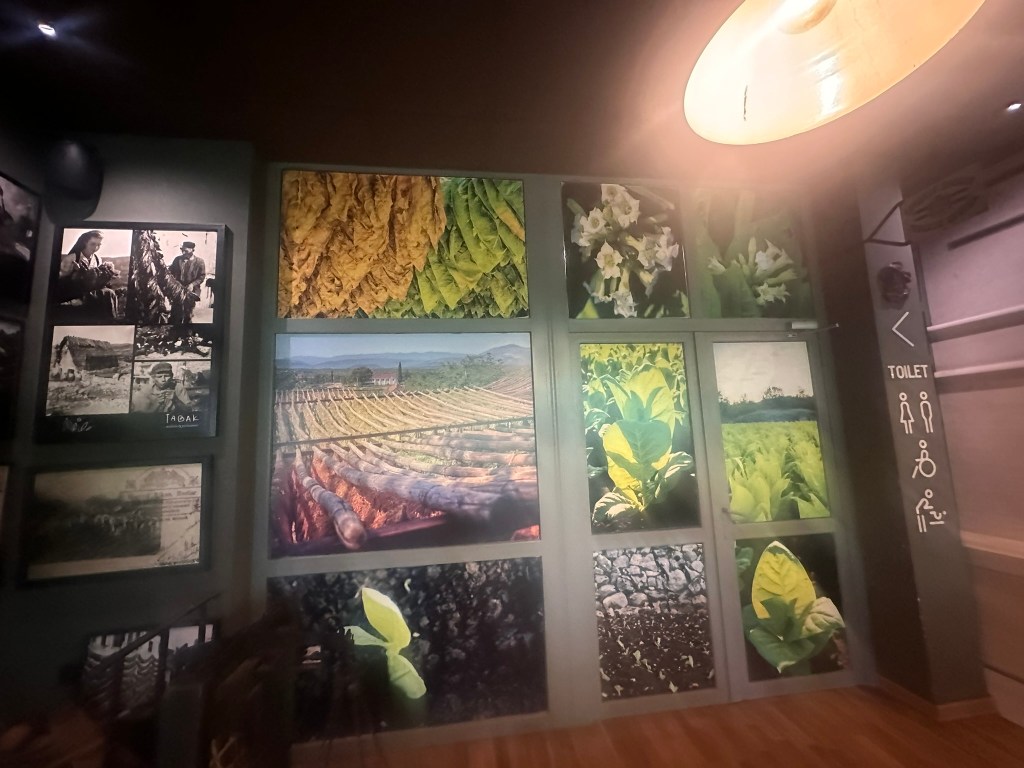
The added attraction of this place is that it serves both a restaurant and a museum, providing guests with an opportunity to indulge in a diverse menu while immersing themselves in the rich history of the region. Visitors can enjoy a dining experience that showcases local flavors, making it a perfect spot for those looking to savor authentic cuisine. The museum aspect adds an educational element, allowing patrons to learn more about the local heritage and traditions. The Tabak Museum and Restaurant is a delightful destination for tourists seeking both good food and a glimpse into the cultural tapestry of Ljubuški.
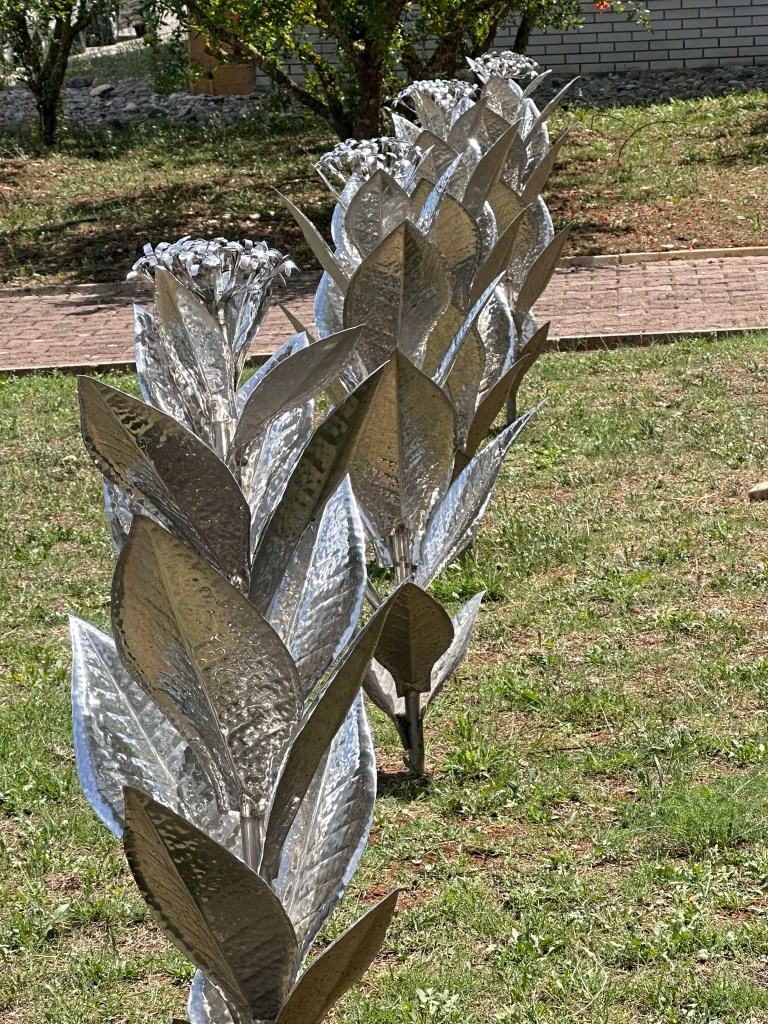
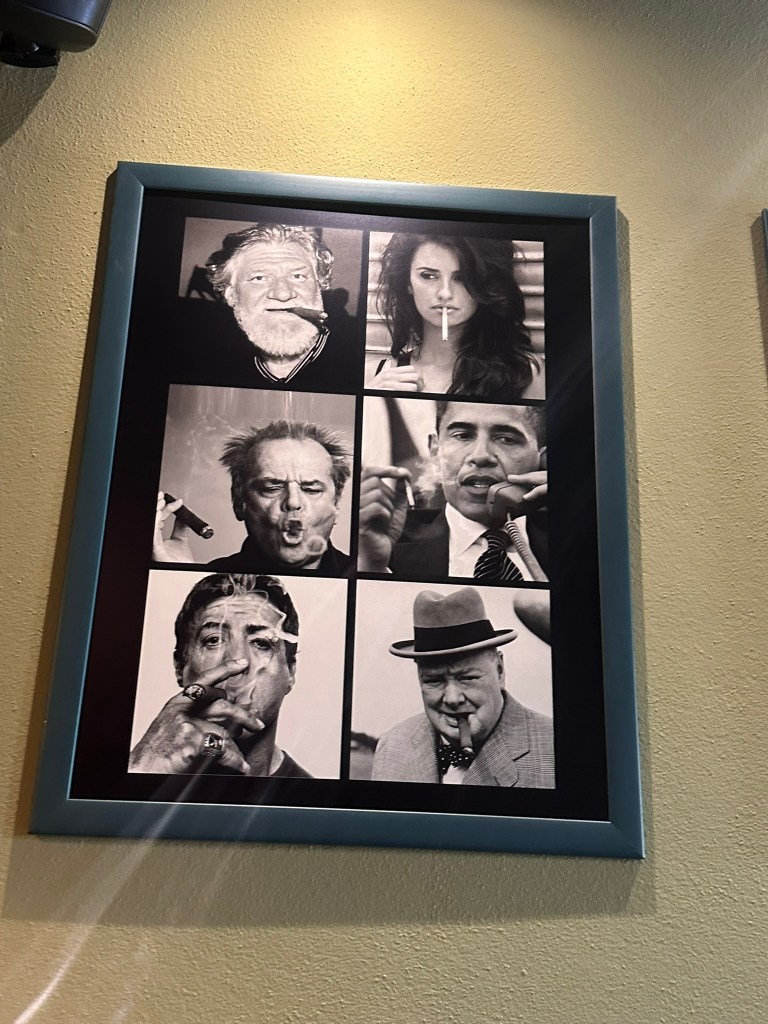
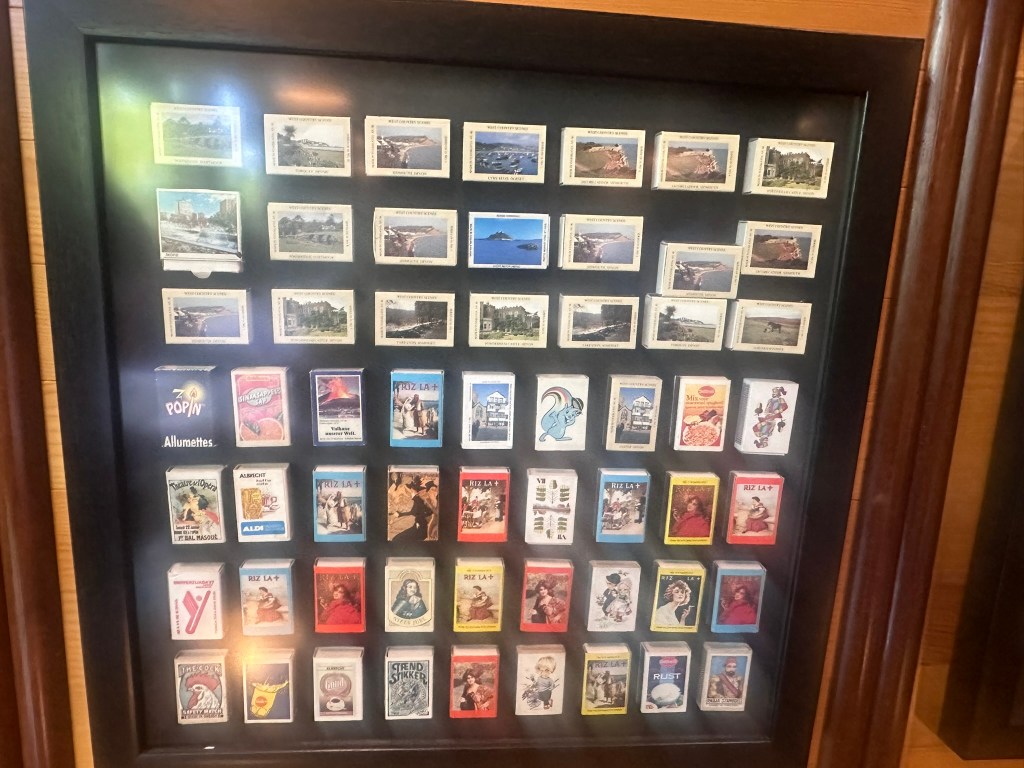
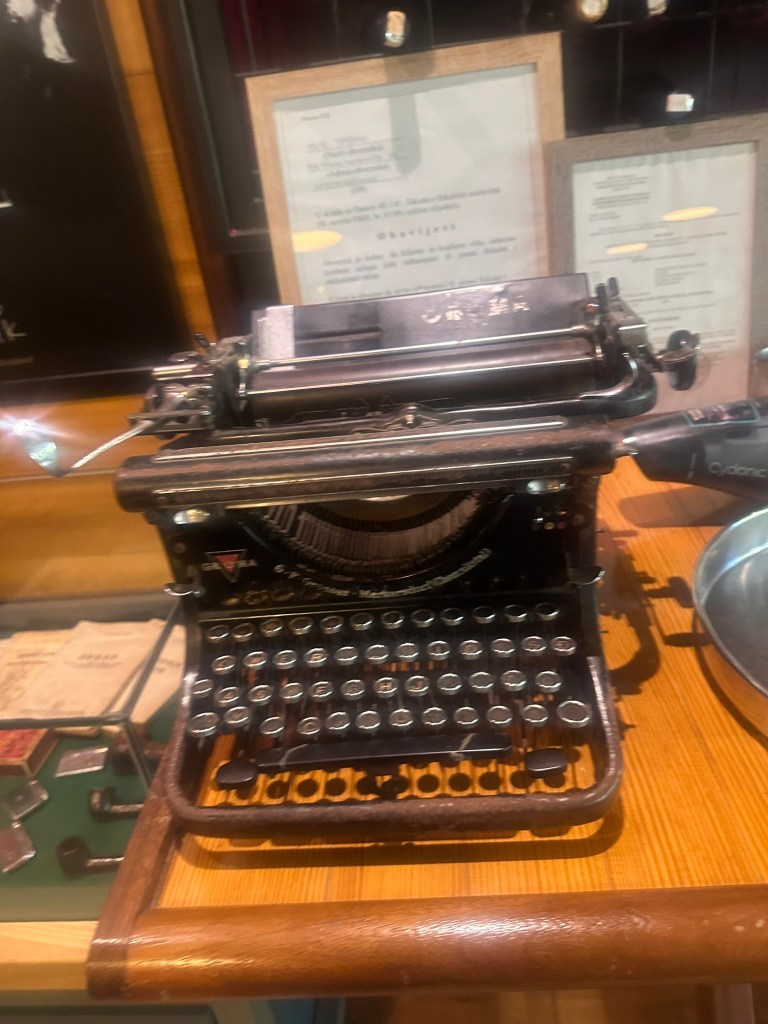
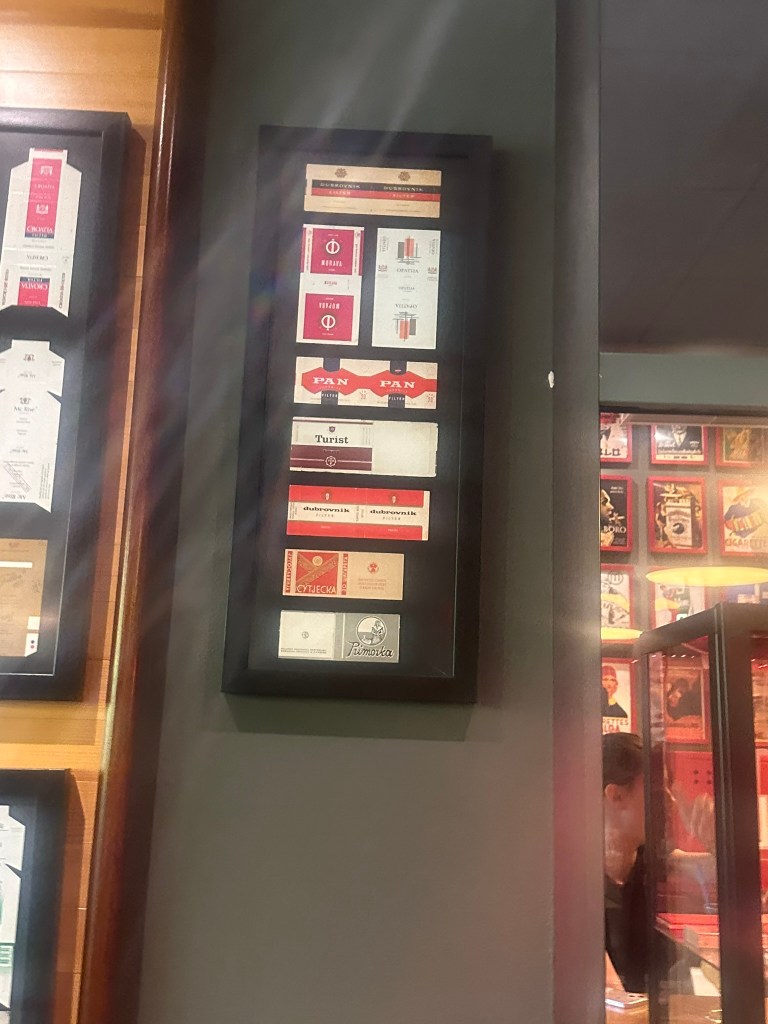
The restaurant and museum is located in the last tobacco factory in Herzegovina where you can see the world history of tobacco including photos of world-famous smokers, tobacco advertising, cuban cigars history, the influence of Austria-Hungary on the areas, information about tobacco factories, cigarette and tobacco packaging, smoking accessories including match books, as well as numerous literatures on the topic of tobacco. Tobacco users today can see all possible cigarettes and matches from this area in one place. From “Opatija” to “Croatia”f From “Drina” to “Vardar”, later the banned “Filter 170”, whose packaging most closely resembled “Marlboro”, to the partisan “Zeta” of the “Boris Kidrič” Tobacco Plant from Gjilan, then “Benston”, “Lord”, “Ibar”, “Drava”… and finally domestic products “Ljubuški, Look and Blend”. It is a fascinating place that also serves great food. Everyone in our group really enjoyed this place.
Istanbul is one of my favorite cities for a stopover and it is easy to do 1-2 day stop over through Turkish airlines Istanbul stopover program. We have utilized this program by Turkish airlines twice, once in April 2023 on our way to Egypt and again in June 2024, on our way to Bosnia. You can check this blog post for more details on how to do a layover in Istanbul. On both visits, we stopped at Hagia Sophia, a place that fascinated me since I read about it in Wonders of the World. In 2023, we were able to go to the ground floor of Hagia Sophia while 2024, ground floor was only for praying Turkish nationals/Muslims while 2nd floor is open to all.
Consecrated to Holy Wisdom of God (Sophia) by Emperor Justinian in 537, Hagia Sophia was largest church in the world at that time. The emperor’s dream was to build a church that surpassed Temple of Jerusalem in splendor. Before being rebuilt in 537, Hagia Sophia has been rebuilt several times due to fire damage. The original church at this site was built by Constantine I in 325, on the foundation of a pagan temple and it was damaged in fires in 404, and again in 415. After being rebuilt by Justinian in 537, Hagia Sophia stood as a monument for Byzantine era engineering and ingenuity and has stood the test of time even though there have been some damages due to earthquake. The building now standing is the 6th century edifice with some modifications added due to the political and religious transformation that Istanbul/Constantinople underwent.
After the Turkish conquest of Constantinople in 1453, Mehmed II had it repurposed as a mosque, with the addition of a wooden minaret (tower used for the summons to prayer), a great chandelier, a mihrab (niche indicating the direction of Mecca), and a minbar (pulpit). Hagia Sophia served as mosque until 1934, when it was converted to a museum by the first president of Turkey, Mustafa Kemal Atatürk. However, in 2020, it was reclaimed back as a mosque and now serves as functional mosque again.
Mosaics of Hagia Sophia
Hagia Sophia, with its awe-inspiring architectural design, has captured the imagination of visitors for centuries. Beyond its magnificent exterior, the interior of this iconic structure is adorned with a breathtaking array of artistic masterpieces. The intricate gold-plated, silver-plated, glass, terracotta, and colored stone mosaics add a layer of exquisite detail, each telling a unique story. Notably, the original ceiling mosaics dating back to the 6th century are adorned with intricate floral and geometric motifs, offering a glimpse into the rich historical tapestry of this remarkable edifice.
Dome of Hagia Sophia
Iconoclasm and Mosaics of Hagia Sophia: Iconoclasm, a period marked by the destruction of religious images and artifacts, had a significant impact on the mosaics of Hagia Sophia. During the period of Leo III and following byzantine kings from 746 to 827, all the pictorial depictions of Christ and the saints were removed and replaced with simple motifs. The best example of the iconoclast movement can be found in another church in Istanbul Hagia Irene -within the walls of Topkapi palace. The apse of Hagia Irene is decorated with a simple cross which iconoclast found acceptable.
Simple cross of Hagia Irene-Iconoclast image
The transition from plant-based and geometric mosaics to figured mosaics reflects the changing religious and cultural landscape during tumultuous time. Despite the challenges posed by the Iconoclast period, the tradition of mosaic art continued to evolve, yielding a rich tapestry of artistic expression that spans several centuries. The mosaics from the 9th to 13th centuries, alongside those from the 6th century, provide a captivating glimpse into the history and artistic prowess of Hagia Sophia, showcasing the enduring legacy of mosaic craftsmanship in this iconic structure. The Virgin and Child mosaic that can be seen in the apse of Hagia Sophia was made after the Iconophiles came back to power in 847.
Apse mosaic: Virgin and Child
With its stunning golden background and intricate details, the mosaic of the Virgin and Child holds a significant place in the rich tapestry of Byzantine art within the walls of the Hagia Sophia. Situated in a quarter-dome on the eastern side, occupying the space that once was the church’s apse, this mosaic stands as a testament to the artistic and spiritual significance attributed to it. It is widely believed that the mosaic visible today is a reconstruction of an earlier work, believed to have been dismantled by iconoclasts. The origins of this masterpiece can be traced back to the ninth century, during the reign of the emperors Michael III and Basil I, showcasing the enduring legacy of Byzantine art and culture. Furthermore, the mosaic underwent extensive restoration during the 14th century, following the substantial damage inflicted by earthquakes, marking a testament to the resilience and commitment to preserving this invaluable cultural heritage. Initially, the Virgin Mary was flanked by depictions of the archangels Gabriel and Michael within majestic arches, yet today only Gabriel remains, adding an air of mystery and intrigue to this cherished artwork.
Soon after Constantinople was sacked by Sultan Mehmed II’s Ottoman forces in 1453, the Hagia Sophia was turned into a mosque, symbolizing the shift in power and religious influences in the region. The conversion of the Hagia Sophia into a mosque led to significant structural and decorative changes, including the plastering over of Christian mosaics and frescoes during the reign of Sultan Suleiman I in the next century. The transformation of the Hagia Sophia continued over the centuries, with notable renovations such as the installation of an ornate mihrab, or niche pointing towards Mecca, as part of a major renovation of the mosque by the Swiss-Italian architect brothers Gaspare and Giuseppe Fossati in 1847-49. This architectural addition now stands below the depiction of the Virgin and Child, creating a juxtaposition of Islamic and Christian elements within the revered space. Despite the alterations to the original artwork, the enduring historical and cultural significance of the Hagia Sophia remained evident. The preservation and restoration efforts of American archaeologist Thomas Whittemore from 1935 to 1939 brought to light the hidden beauty of the mosaics, contributing to a renewed appreciation of the site’s artistic and historical value. Whittemore’s access to the Hagia Sophia was facilitated by his friendship with the first president of the Turkish Republic, Mustafa Atatürk, who played a pivotal role in the secularization of the country and the transformation of the Hagia Sophia into a museum, thereby shaping its identity as a symbol of cultural pluralism and historical continuity.
Both in April 2023, and June of 2024, we couldn’t see the Virgin Mary and the archangel Gabriel mosaic as it is located in the direction Muslims face while praying, or Qiblah and is covered with curtains during prayer time. We were able to get a peak of it from the upper gallery when we were there in June of 2024. The intricate detail of the mosaic, depicting biblical scenes and figures, is truly remarkable. In the mosaic, Mary is enthroned, and she puts her right hand on shoulder of the Child Christ who is seated in her lap. Her left hand holds a handkerchief, which is on Christ’s knee. There is a decorated inscription which is mostly erased around them, which says: “The images which impostors cast down here pious emperors have again set up’’.
Mosaic Of Emperor Leo VI
The mosaic of Emperor Leo VI, also known as Leo the Wise, is a breathtaking masterpiece located above the imperial gate in Hagia Sophia, serving as a vivid testament to the rich history and cultural significance of the Byzantine Empire. We saw this remarkable artwork during our visit in April 2023, when non-praying tourists were allowed access to the main floor of the mosque, allowing us to marvel at the intricate details and symbolism within the mosaic.
Emperor Leo VI’s reign over the Byzantine Empire, spanning from 886 to 912, was marked by both political prowess and personal controversy. His marriages sparked scandal and condemnation within Byzantium, as they deviated from established tradition, leading to dispute and disapproval from certain church leaders. The mosaic encapsulates these tumultuous aspects of Leo’s life, offering a visual narrative of the challenges he encountered in gaining recognition for his multiple marriages from the church.
Within the stunning mosaic, you can see the portrayal of Emperor Leo VI engaged in prayer to Jesus, a poignant representation of the emperor’s reverence and his quest for divine guidance amidst the complexities of his reign. The script held by Jesus in the mosaic reads “Peace be upon you. I am the light of the world,” serves as a powerful testament to the spiritual themes woven into the artwork, echoing the enduring significance of faith and divine illumination in the life and reign of Emperor Leo VI.
Mosaic of Emperors Justinian and Constantine
The mosaic located over the South door in the vestibule holds significant historical and artistic value, dating back to the 10th century. It is believed to have been created to commemorate the Russians’ retreat from Constantinople in 971 or the defeat of the Bulgars by Basil in 1018. The rich imagery of the mosaic features iconic figures such as Justinian, Christ, Mary, and Constantine, providing a vivid portrayal of historical and religious significance.
Mary is depicted seated, holding Child Christ and a handkerchief, draped in a maphorion with a hood, while “The Mother of God’’ monograms surround them, adding a layer of sacred symbolism to the mosaic. Interestingly, Child Christ is shown making a blessing gesture with a larger hand, symbolizing divine authority and grace. The portrayal of the two most famous Byzantine emperors, Justinian and Constantine, adds an intriguing political and cultural dimension to the artwork.
Emperor Justinian is depicted on the left side presenting his architectural masterpiece, the Hagia Sophia, to the Virgin and Child, while Emperor Constantine appears on the right, presenting his own masterpiece, Constantinople, to the holy family. The attention to detail in the depiction of the emperors’ attire is remarkable, from their gold embellished crowns with pearls and emeralds to their imperial clothes and leather shoes—all lavishly adorned.
Justinian’s portrayal exhibits signs of age, with wrinkles on his face, and is accompanied by the inscription: ‘’Justinian, Emperor of Illustrious Memory’’. In contrast, Constantine appears youthful and emotive, with an inscription around him declaring: ‘’Constantine, the great Emperor amongst the saints’’. This detailed portrayal of the emperors not only adds historical context but also captures the essence of their individual reigns and contributions to Byzantine history and culture.
Deesis Mosaic of Christ
The Deesis Mosaic of Christ is situated in the south gallery on the upper floor of Hagia Sophia. Dating back to the 13th century, this mosaic is considered one of the finest examples of Byzantine art, portraying the Judgment Day, a popular theme in Byzantine religious art. It exemplifies the flourishing of the arts and a growing interest in naturalism in the latter centuries of the Byzantine Empire. Emperor Michael VIII Palaiologos, credited with reclaiming the Byzantine capital, is likely responsible for the installation of this monumental new mosaic, possibly as part of a larger restoration project in Hagia Sophia. The Deesis, a traditional representation of the Virgin Mary and St. John the Baptist imploring Christ for the salvation of mankind, holds significant importance in Byzantine art as a pioneer of the Renaissance period, characterized by its soft tones, intense humanity, and emotional realism in the figures’ faces. At the center of the Deesis Mosaic is Christ Pantocrator, flanked by the Virgin Mary on the left and John the Baptist on the right, beseeching Jesus for mercy for the people on the Day of Judgment. The vivid colors and the emotive expressions on the characters’ faces contribute to the mosaic’s success, leading the Deesis in Hagia Sophia to be considered the revival of Byzantine mosaic art. This monumental mosaic portrays Christ, the Virgin Mary, and John the Baptist in a scale that reflects their significance in Byzantine culture, with Christ at the center bearing the Greek abbreviation “IC XC”, the Virgin Mary to his right labeled “MP ΘY”, and John on his left as “Saint John the Forerunner,” each symbolizing the Son of God, the Mother of God, and the prophet who prepared the way for Christ’s ministry.
Emperor Constantine IX and Empress Zoe Mosaic
Emperor Constantine IX and Empress Zoe Mosaic is one of the most striking mosaics in the south gallery. This remarkable artwork depicts the intertwining stories of Byzantine emperor Constantine IX Monomachos and Empress Zoe. Zoe, being the only heir after her father’s death, had a significant role in determining the emperor by virtue of her marriage. Her marital history, which includes the mysterious deaths of her first two husbands and her subsequent marriage to Constantine Monomachus, sparked public controversy, as he brought his mistress Maria Skleraina to the palace. The mosaic is believed to have been created in honor of Zoe’s first or second marriage, with the man’s face being later altered. Although not immediately evident in photographs, close inspection of the mosaic reveals the damage around the man’s face and the narrowing of the longer family name “Monomachos” to fit the frame. Inscriptions on the mosaic emphasize Zoe’s piety and the family’s contributions to the church. Discovered in 1934 by the Byzantine Institute, The Zoe Mosaic offers valuable insight into the life of Empress Zoe. The mosaic’s portrayal of Zoe, regardless of her actual age, conveys a sense of piety and generosity, as depicted by her holding an inscribed scroll signifying contributions to the church. The inscription around her reads: ‘’Zoe, the most pious Augusta’’. The Emperor’s face in the mosaic is that of her third husband, Constantine XI, depicted wearing a crown with hanging pearls and holding a purse, known as a pokombion. The mosaic also features a larger figure of Christ, dressed in a chiton, signifying benediction with his right hand while holding an ornamented Holy Book with his left hand.
Emperor John Komnenos II and Irene Mosaic
Situated at the southern endpoint of the historical site, the magnificent mosaic panel dates back to the 13th century, serving as a timeless testament to the art and heritage of the era. This remarkable piece is reminiscent of the Zoe Panel in its portrayal of the “imperial offering to Mary and Christ”, capturing the attention of visitors with its intricate details and symbolism. The Virgin Mary, a central figure in the composition, is depicted in a manner that emphasizes her humility, portrayed smaller than the Emperor and Empress. Her tender expression and the endearing depiction of Christ the Child seated on her lap, making a benediction with his right hand and holding a roll in his left, evoke a sense of reverence and devotion. The artistic rendition showcases Mary accompanied by the monograms of “Mother of God” (MP OV) in a humanistic style, while Christ is adorned with a cruciform nimbus, adding to the spiritual significance of the scene.
The Empress Eirene, a figure of regal grace and benevolence, is portrayed with distinctive physiognomy, characterized by her blonde hair and attire befitting her lofty status. Holding a scroll of parchment, symbolizing a noble donation to the Great Church, she exudes an aura of generosity and piety. The intricate details of her royal red garment, adorned with jewelry and gold, along with her majestic imperial crown and pear-shaped earrings, reflect the opulence of the imperial court. The accompanying inscription “Eirene, the most pious Augusta” further emphasizes her devout nature and esteemed position. Similarly, John II Komnenos, the illustrious son of Alexios Komnenos, is depicted with utmost reverence and grandeur as he presents a money purse to Mary and Christ. His royal attire, adorned with jewels, and the distinguished cap-shaped crown known as “camelaucum” signify his noble lineage and authority. The accompanying inscription eloquently describes him as “John in Christ the God, faithful king born in the purple, Autocrat of Romans, the Komnenos”, highlighting his significant role in the imperial heritage. To the right of Empress Eirene and Emperor Komnenos, a panel is allocated to their son, Alexios, representing a poignant portrayal of the young prince. The mosaic captures Alexios at approximately 17 years of age, immortalizing his presence in a moment of youth and regal poise. However, the somber undertones of the depiction become evident, as the selected tesserae in the mosaic reflect a melancholic tone, foreshadowing the untimely demise of the young prince. The panel, believed to be from a later period than that of his parents, showcases distinct artistic styles, further enriching the historical narrative and artistic evolution of the era.
Other significant things to see at Hagia Sophia
Calligraphy Roundells
After the Ottomans conquered Constantinople and transformed Hagia Sophia into an Imperial Mosque, the decorations inside Hagia Sophia changed to calligraphic representations of god’s name, rather than literal depictions of the human figure. In the Islamic tradition, only Allah has the power to create life, and so they did not create artistic depictions of the human form. In the Images below, calligraphy can be seen used as grand decorations in the interior of Hagia Sophia. The calligraphic panels in Hagia Sophia are the works of master calligraphers, such as Kazasker Mustafa İzzet Efendi. His work in the dome inscriptions is not just calligraphy; it’s poetry in motion, a fluid dance of script that speaks volumes about the artistic and spiritual ethos of the Ottoman era.
Sultan’s chamber
Situated to the left of the mihrab, Sultan’s lodge is where the Sultan would perform his prayers. Nobody is sure who built it or when it was built, but historians speculate that its construction may have been commissioned by a prominent ruler of the time. The architectural details of the lodge, including the intricate carvings and ornate decorations, suggest a significant level of craftsmanship and attention to detail.
Omphalion
In 1935, Mustafa Kemal Atatürk turned Hagia Sophia into a museum and had the carpets removed to reveal the marble floors, allowing visitors to see the Omphalion, the spot where Byzantine emperors were coronated. Most of the floor is again covered by carpet but you can see part of the marble floor near the mihrab
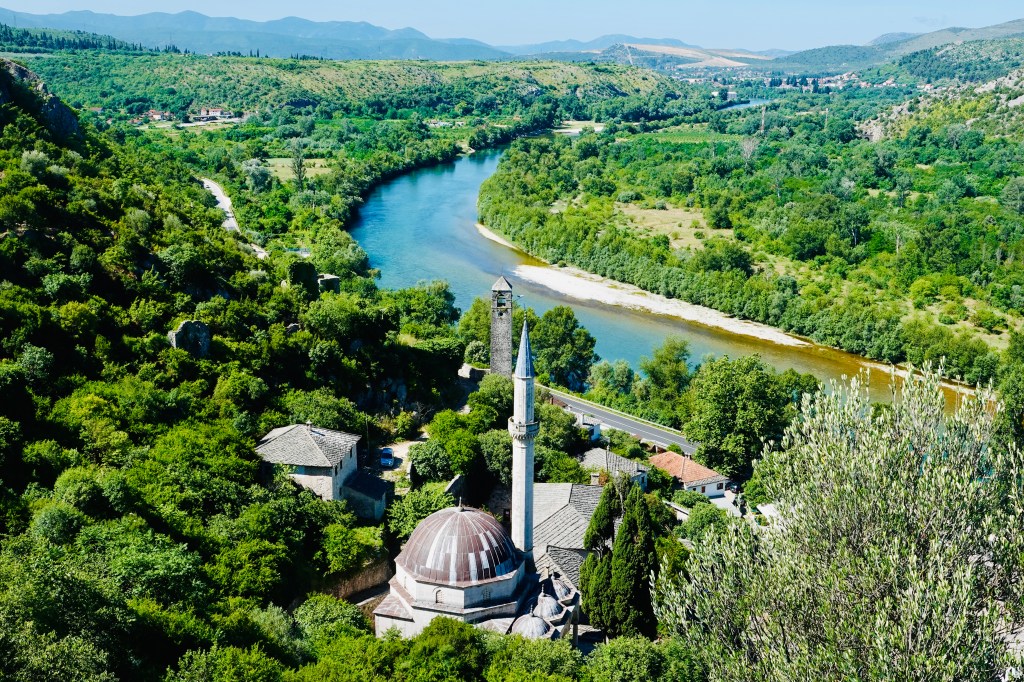
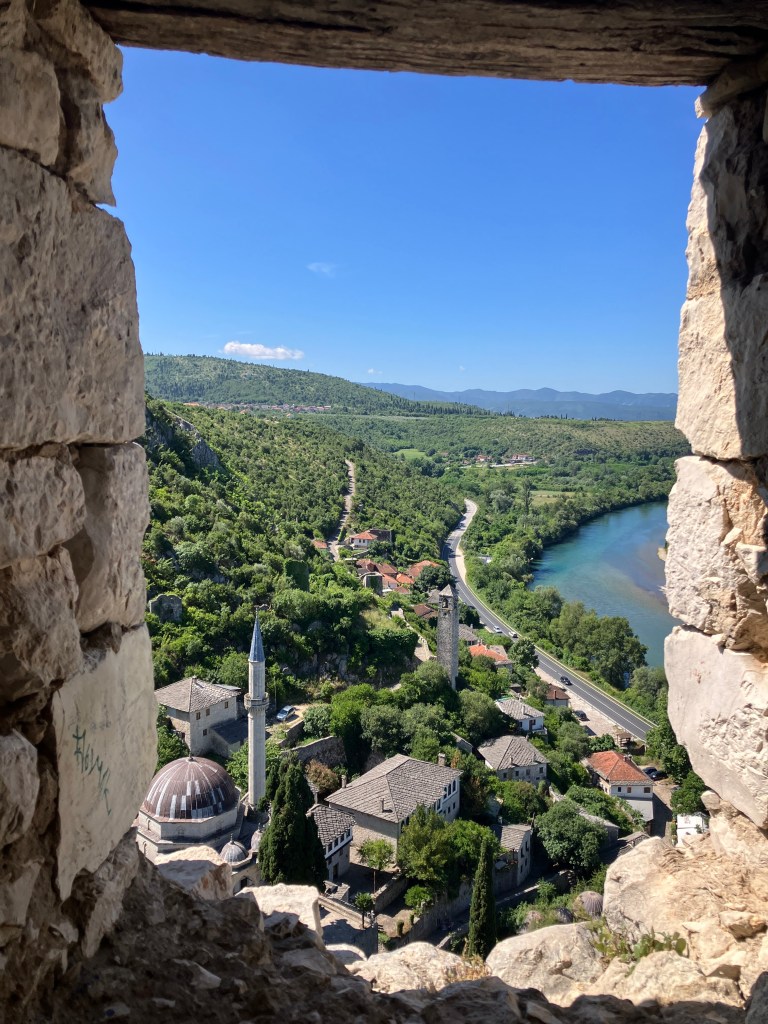
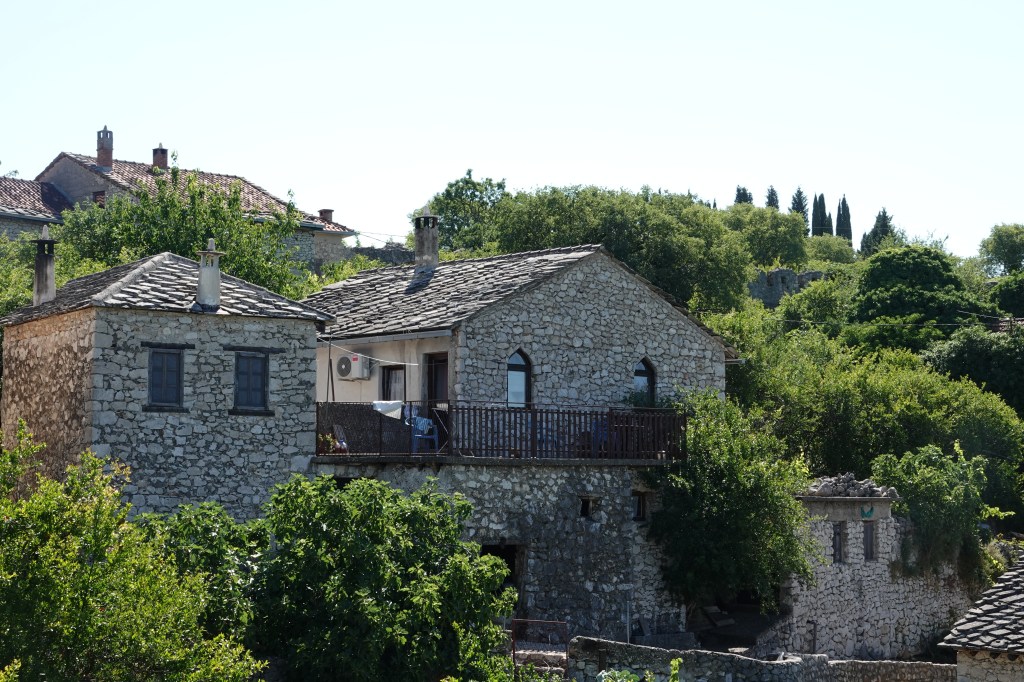
Pocitelj, a small village in the Herzegovina region of Bosnia and Herzegovina, is famous for its well-preserved Ottoman-era architecture and UNESCO World Heritage List status. It’s about 30 kilometers south of Mostar, and the easiest way to reach it is by car via the E73 highway.
Pocitelj has a history of over 600 years and is an important cultural and historical site in Bosnia and Herzegovina. In the 16th century, the village came under Ottoman rule, leading to the construction of buildings such as the Hadzi-Alija mosque, the Sahat-kula (clock tower), and the Gavrankapetanovic-Kuca (Gavrankapetanovic house) which represent typical ottoman styled architecture.
Main landmarks of Pocitelj
Hadzi-Alija Mosque was built in 1563, is considered to be one of the oldest mosques in Bosnia and Herzegovina. The mosque’s distinctive stone walls and minaret are typical of Ottoman-era architecture. We didn’t go inside the mosque but according to our guide, pre-covid, people were allowed inside and hopefully they will open it to public soon.
Sahat-kula (Clock Tower), built in the 17th century, is an iconic landmark in Pocitelj. Standing at over 20 meters tall, this stone tower served as a way for villagers to tell time. Despite the missing clock face, visitors can still climb to the top to enjoy stunning views of the surrounding countryside. Unfortunately, the clock face was melted for its metal during the war time.
Gavrankapetanovic-Kuca is a prime model of Ottoman-era residential architecture from the 17th century. It boasts traditional stone walls, a red-tile roof, and well-preserved interior showcasing original furniture and decor used by the family.
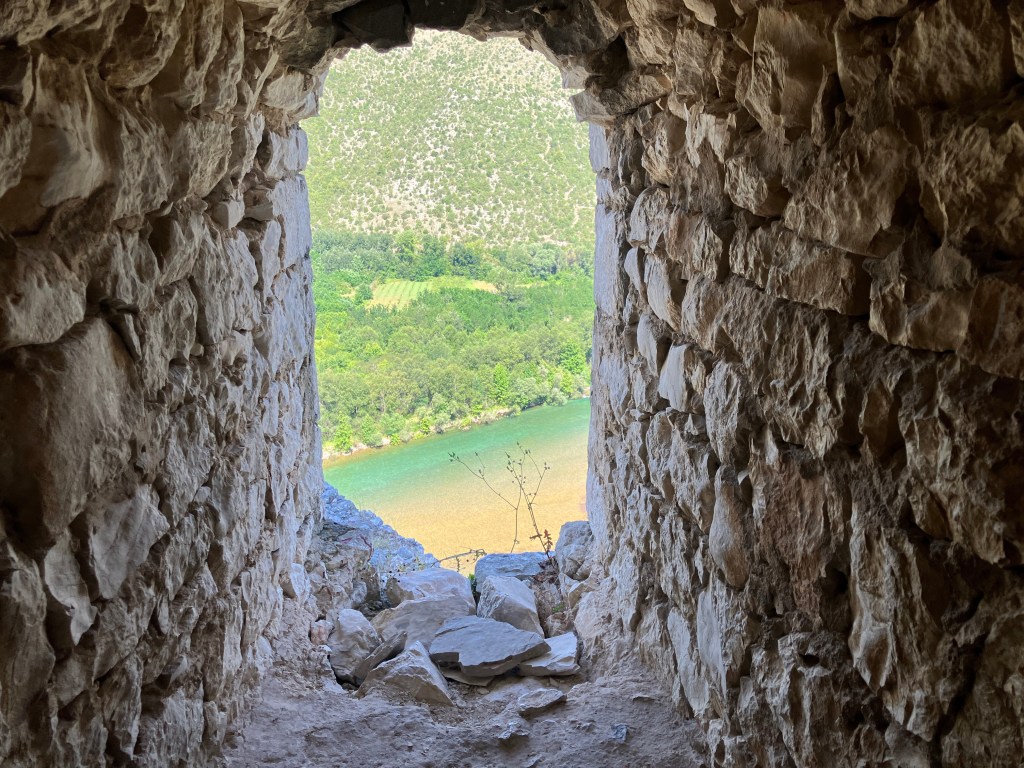
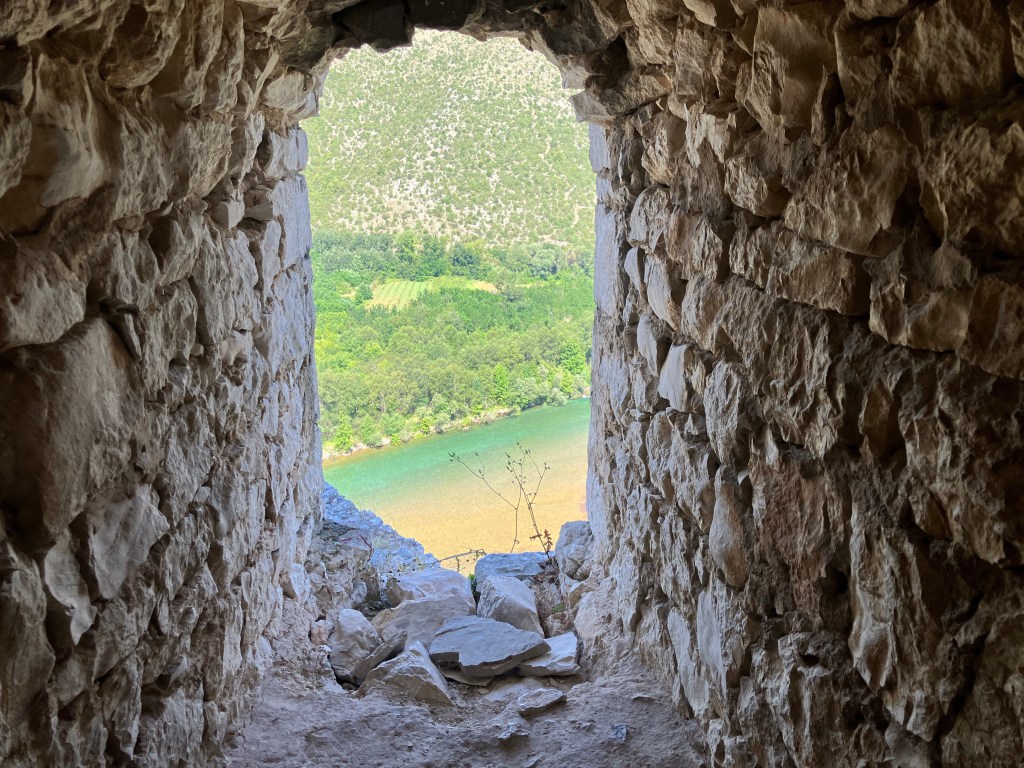
Citadel or the fortress – The stone walls of the fortress are intact, and you can climb to the top to get an amazing view of the valley and surrounding areas
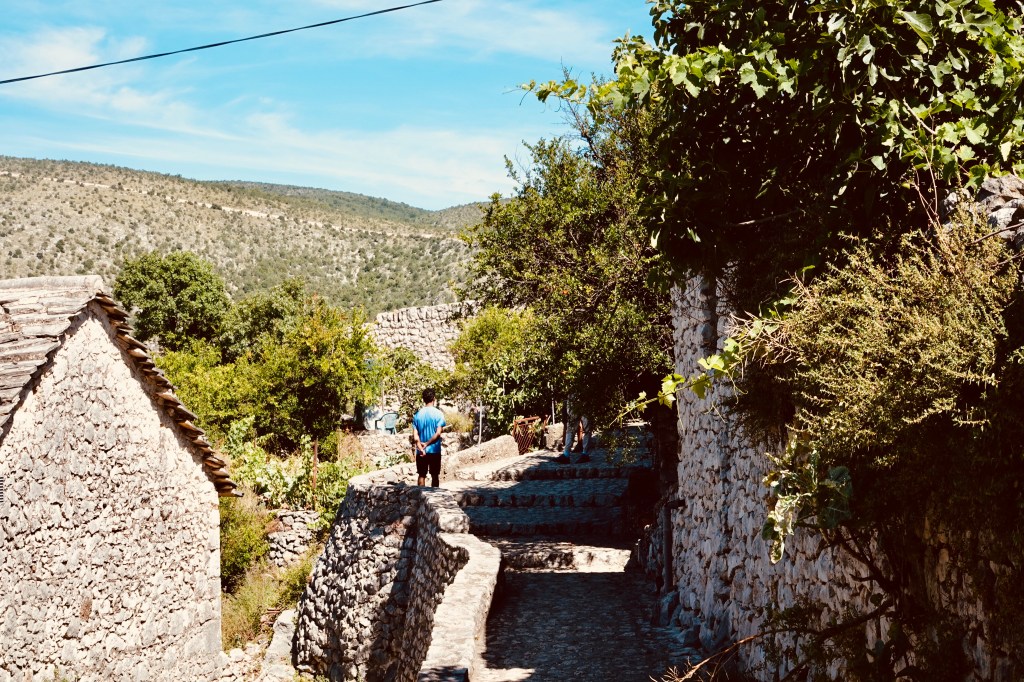
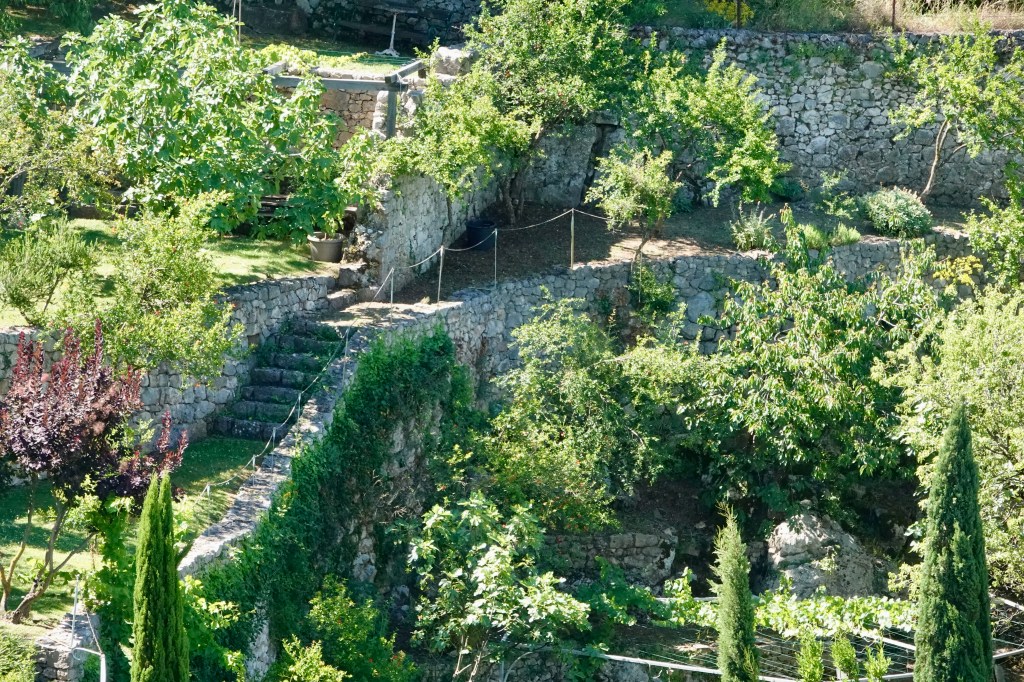
Houses -There are still about 20 families that live in the village and call it home. We stopped by one such home that sold home grown figs, pomegranate juice, honey etc. Just walking around village gives you fascinating glimpse ottoman era
Final thoughts:
Village of Počitelj is a great stopping point on your way from Dubrovnik to Mostar or as a day trip from Mostar before heading to Kravica waterfalls. You can spend 1-2 hours roaming around the village.
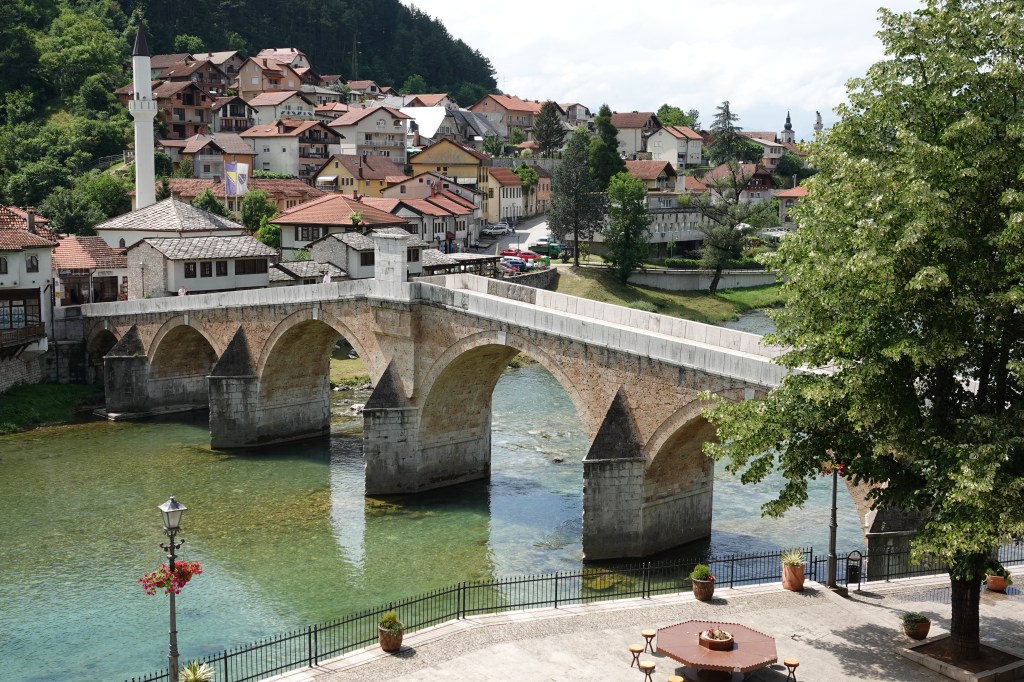
Konjic is the town that connects Herzegovina with Bosnia and our guide jokingly said that Konjic is the “&” in Bosnia & Herzegovina. We visited Konjic on our Bosnia trip and did white water rafting in the Neretva River. Konjic like other cities in Bosnia, blends history, and nature especially popular for white water rafting and in fact when we were inn Konjic, they were holding the European rafting championships on the river.
Built in 1682, the Old Bridge in Konjic is one of the most beautiful bridges from the Ottoman period in Bosnia and Herzegovina. The bridge, made of stone and consisting of six arches, is considered the point where Herzegovina merges with Bosnia. Alongside Mostar’s Old Bridge, Trebinje’s Arslanagića Bridge, and the Mehmed-paša Sokolović Bridge in Višegrad, the Old Bridge in Konjic is a significant cultural and historical monument of the country, declared a national monument of Bosnia and Herzegovina. Unfortunately, the original Old Stone Bridge was demolished on March 3, 1945, during the withdrawal of the German army, and a wooden structure stood in its place for a long time, serving as a crossing over the Neretva River. In 1962, the bridge was reconstructed with a concrete structure, restoring it to its original state. The renovated bridge was reopened on June 16, 2009, with the assistance of the Government of the Republic of Turkey.
Boracko lake
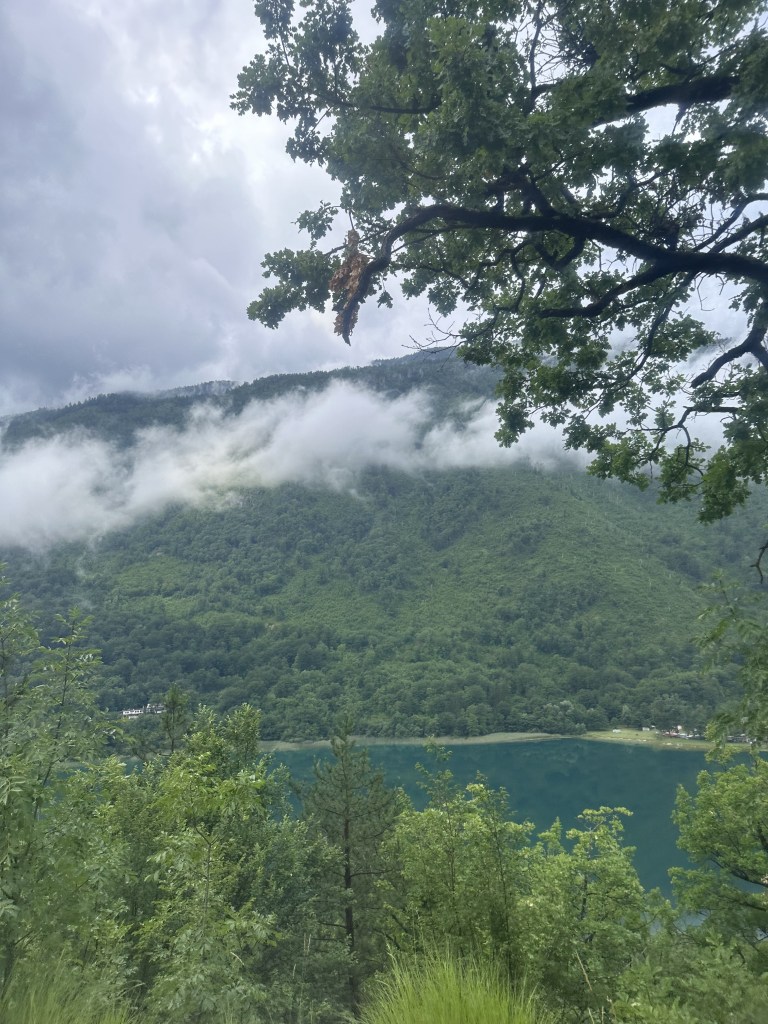
Located about 20 kilometres from Konjic, Boračko Lake is a glacial lake that lies at the base of Mount Prenj. We stopped here on the way to our white water rafting start point but I would definitely love to go back and explore this lake more. There are some bed and breakfast places near the lake and it is supposedly really beautiful in fall season. For more on this lake, check out this blog
White water rafting on Neretva River
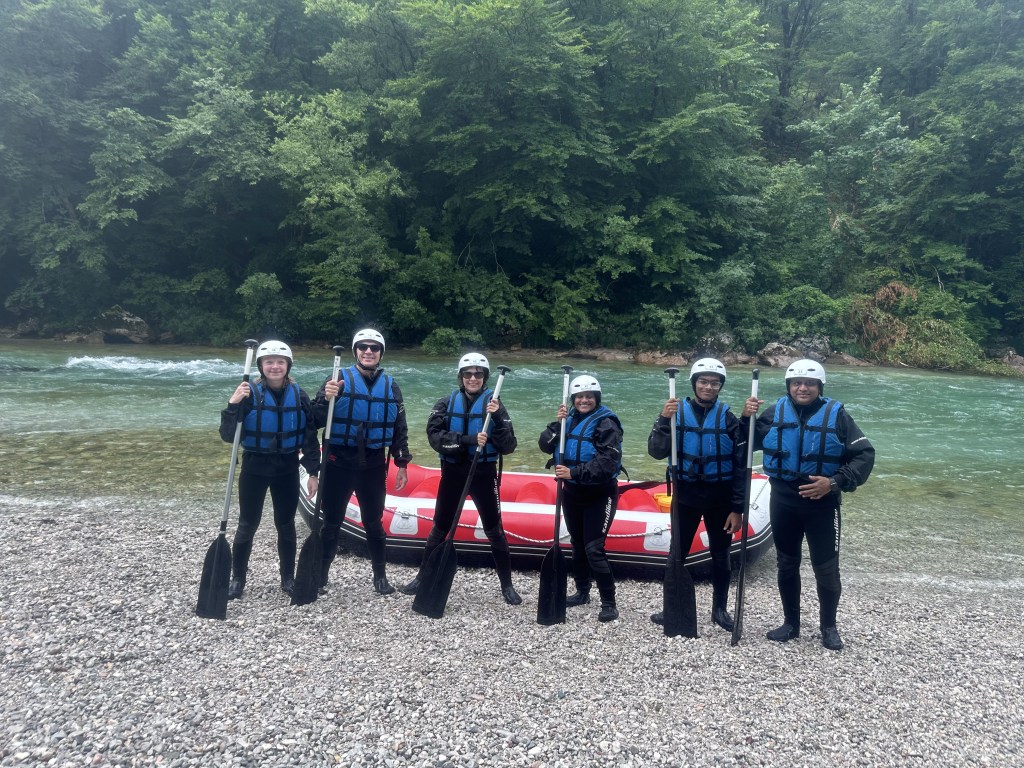
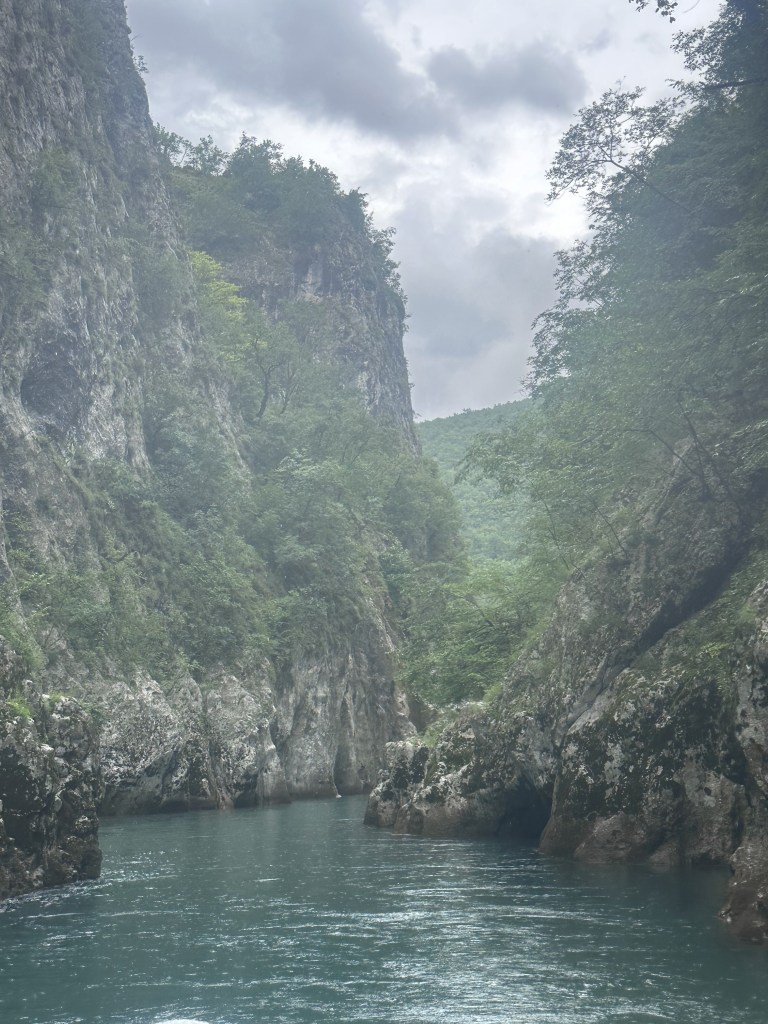
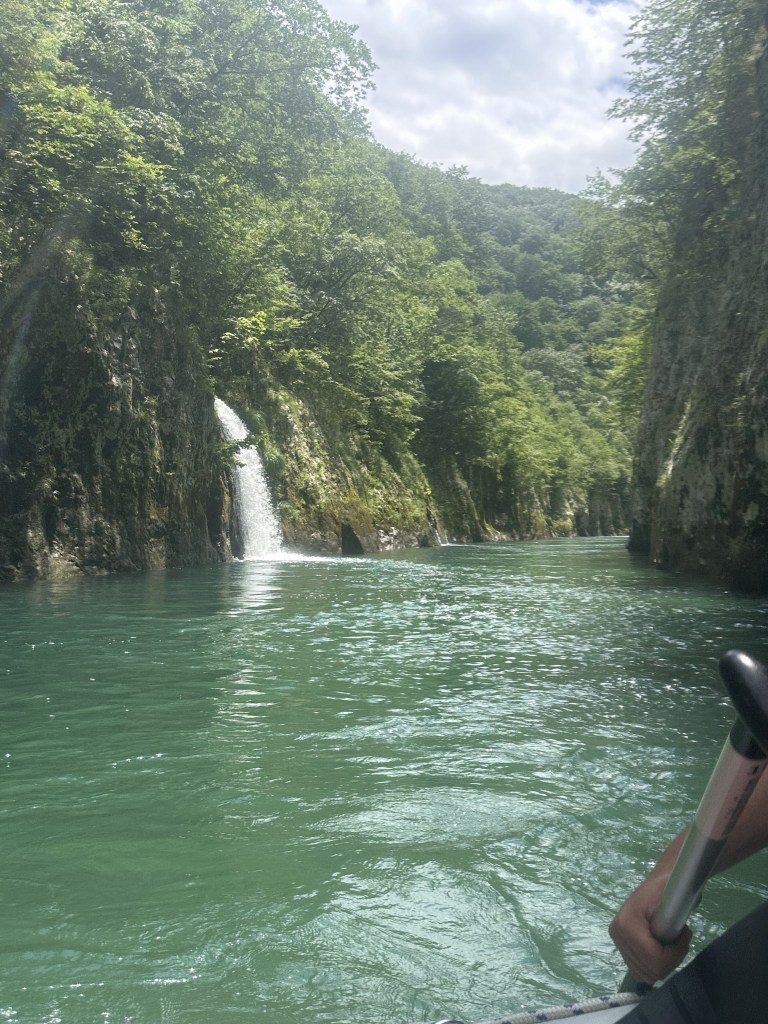
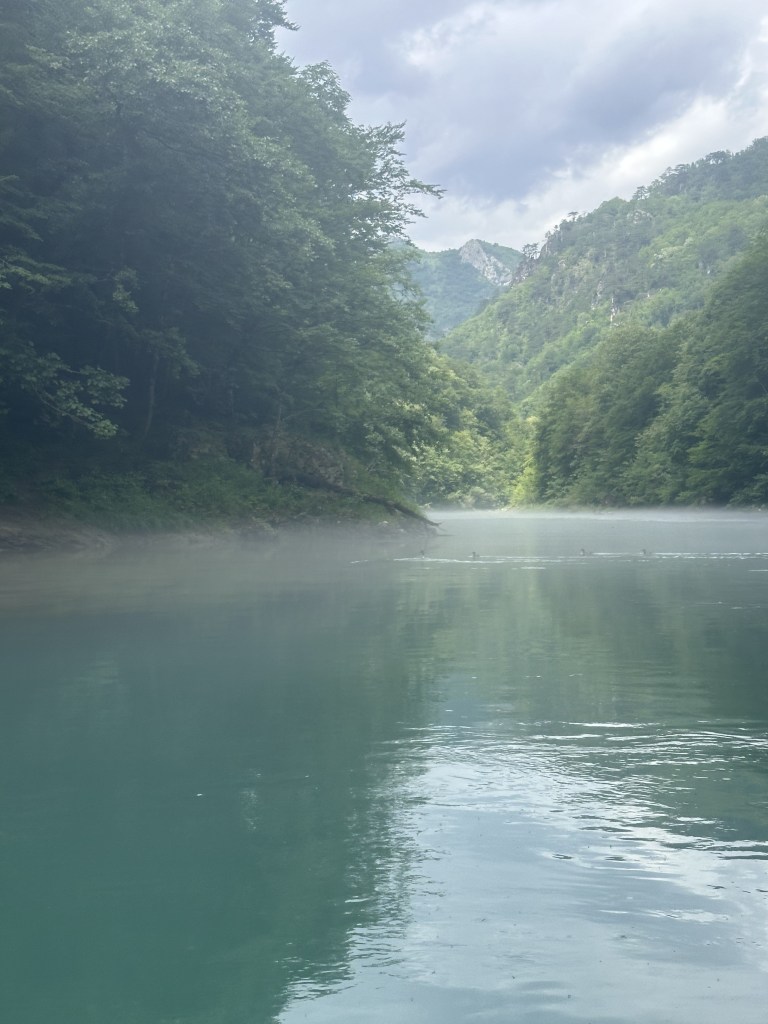
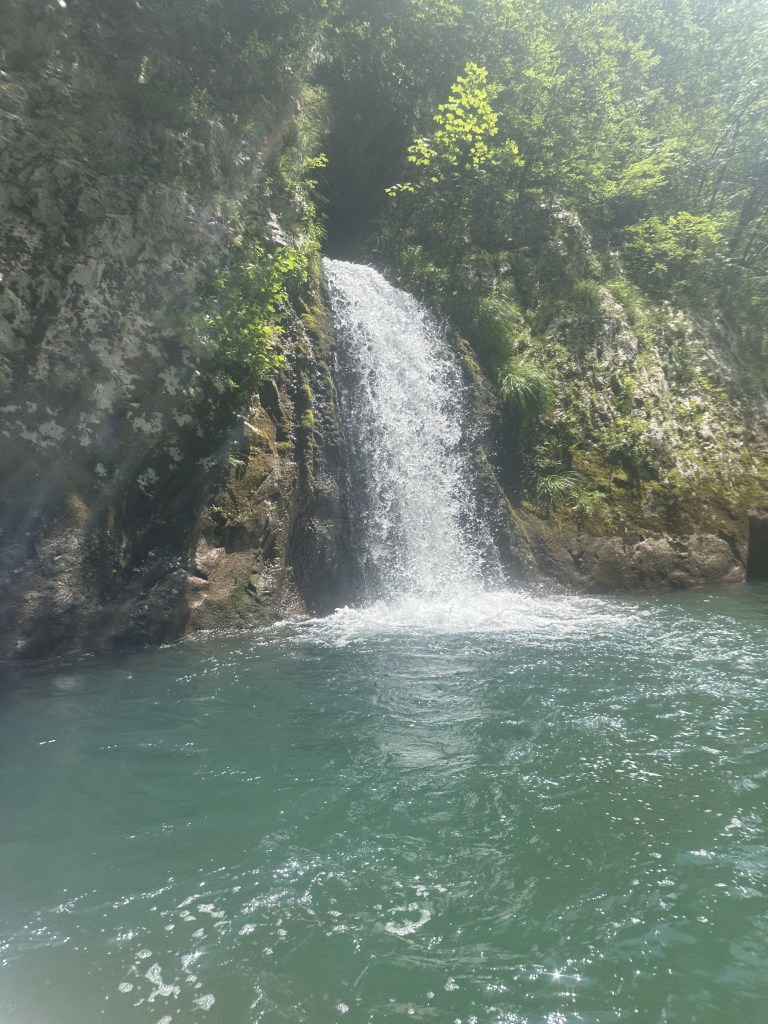
Rafting on the Neretva River is a popular activity in Konjic, and we did ours through Visit Konjic rafting company. There are several providers, and they all seem to follow the same route. When we did our rafting in mid-June, 2024, we were on the only ones on the entire 22 km path, but our guide informed us that during peak season of July and August, there might be as many as 100 rafts on the water. We enjoyed having this amazing canyon to ourselves and felt like the scenery is right out of middle earth with lush green tress, waterfalls and beautiful canyons. During June, the rapids were level II and III and very manageable.
The white rafting take place in 26 kilometers long, the Rakitnica canyon that separates the Bjelašnica and Visočica mountains and connects Bosnia and Herzegovina and is one of the deepest canyons in Europe. Most rafting tours start from village of Glavatičevo and end near the bridge of Konjic.
A typical itinerary for white water rafting looks like below and since we did this during off season, we started around 11 AM.
Arrival to Rafting Base Camp – Once we reached the base camp, we were given wet suits and changed into water shoes. After the safety briefing, off we went to the starting point in a minivan.
Departure towards the rafting start location in Glavaticevo -It takes about and hour to reach the starting point at village of Glavatičevo. The drive is beautiful and goes through the beautiful mountains. On the way to the village, we stopped at the Boracko Lake lookout point for photos.
Rafting start at – 12:00 After ariving to start point in Glavaticevo,we got in the rafts and started our descent towards Rakitnica Canyon where we did a 30 min stop for some snacks and swim.
Rakitnica Canyon Swim Stop -The first leg of the journey ended when we reached to the point where Rakitnica tributary river meets Neretva. This place is beautiful and we appreciated the crystal-clear waters and surrounding mountains.
Second leg of the Journey – 14:30 After a nice relaxing swim stop, we started on our second leg and arrived back at the base camp around 3.30PM. After a warm shower and a change of clothes, we had traditional Bosnian lunch made by the hosts.
Starting pointRakitnica river joining Nerevta river Waterfall in the canyon
Tito’s bunker on Zlatar mountain
Officially named the “Armijska Ratna Komanda” (ARK D-o), Tito’s bunker was built between 1953 and 1979. It served as an atomic shelter to protect the military command and 350 members of President Tito’s government in the event of a nuclear attack during the Cold War. It is now a museum and visit it when you are in Konjic
Final Thoughts
Konjic is a beautiful place and has lots to do. We did a day trip from Sarajevo, but you can definitely spend couple of days here to truly appreciate all Konjic has to offer.
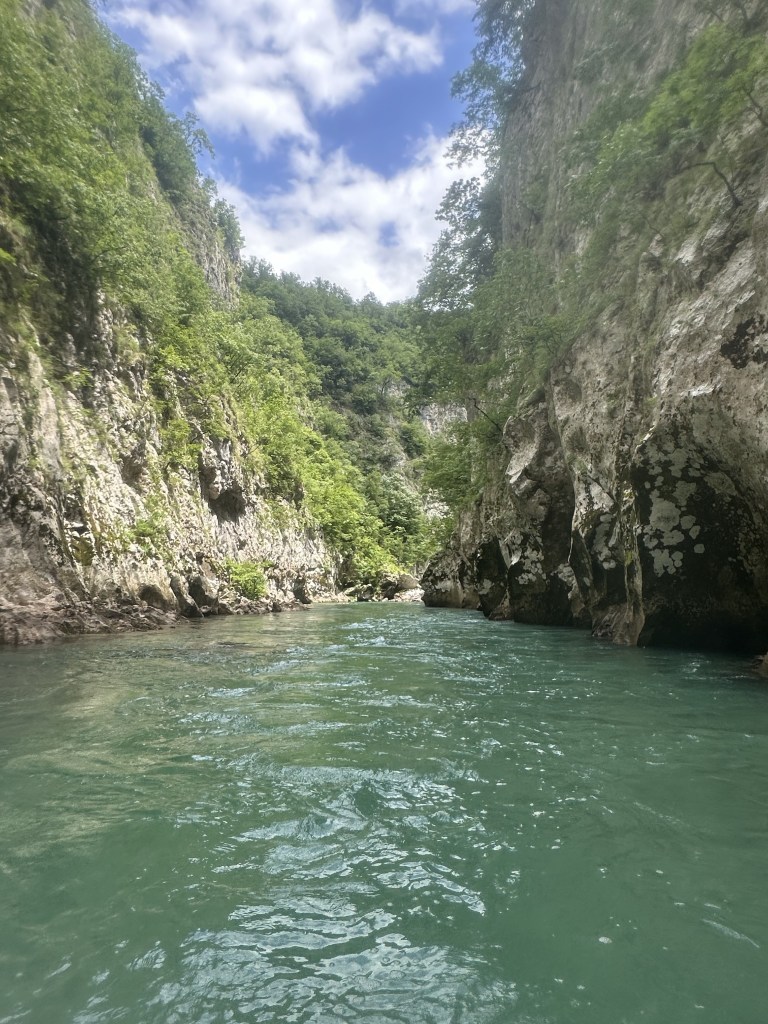
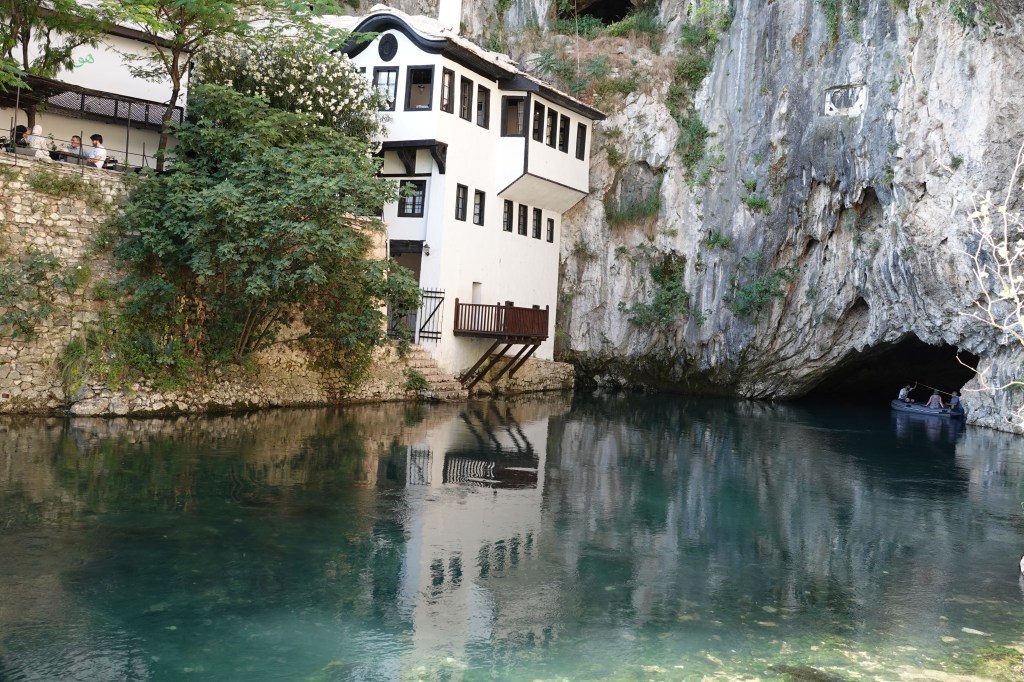
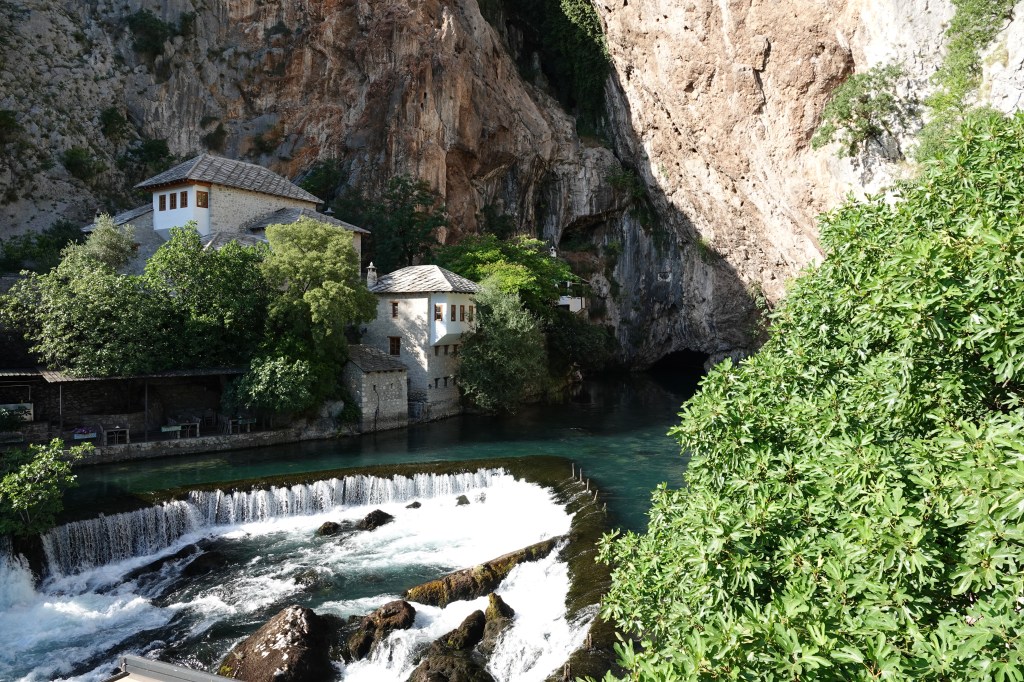
The village of Blagaj na buni is located about 10 km (6 miles) from Mostar that could be reached by bus or car. The main attraction of the village is the Tekke or Tekkja – a place of spiritual retreat and reflection for Dervish monks. The unique feature of this Tekke is that it is built on a solid rocky soil at the right side of the source of the Buna River. A very high cliff stretches above the Tekija (240 meters high). On top of the cliff, you can see the remains of Stjepan Vukcic-Kosaca’s fort-town from the Middle Ages. The Buna River that flows adjacent to the monastery emerges from under the massive Karst stone formation after traveling over 19 kms underground.
Spring of Buna River
Blagaj Tekke the dervish retreat
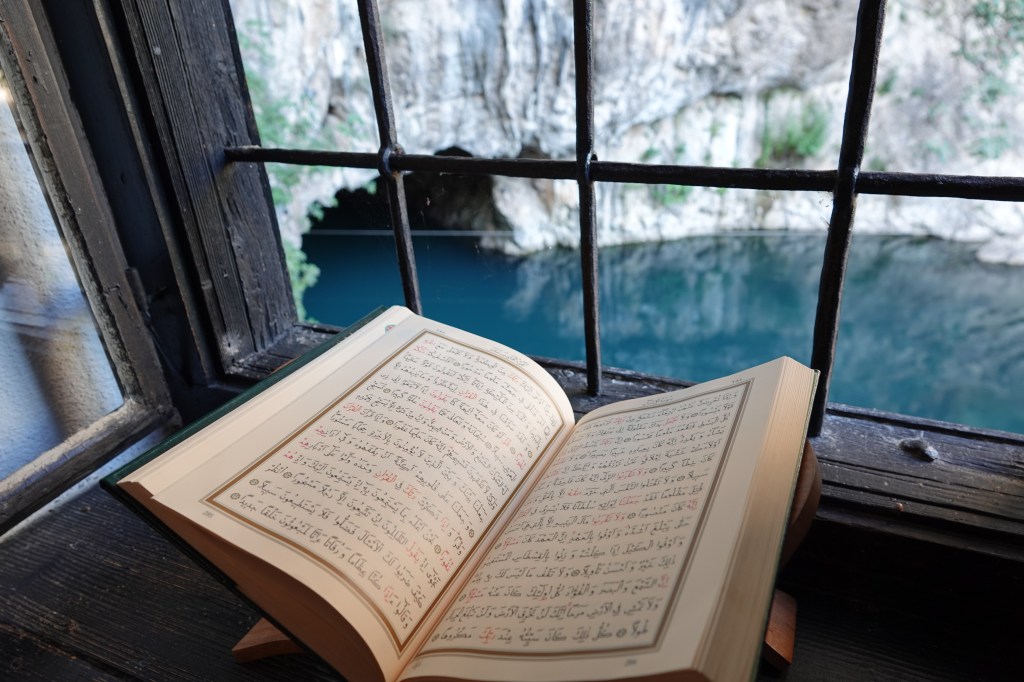
The primary purpose of the structure was to serve as a dervish Zikr praise-chanting (praising God and His names) venue and a retreat, and it is still active religious complex with Zikir praise chanting happening 3 times a week. The tekke was built around 1520 and it features elements of both Ottoman architecture and Mediterranean style. The dervishes follow a mystical strand of Islam in which the peaceful contemplation of nature plays a part, hence the Tekke’s idyllic positioning next to the river.
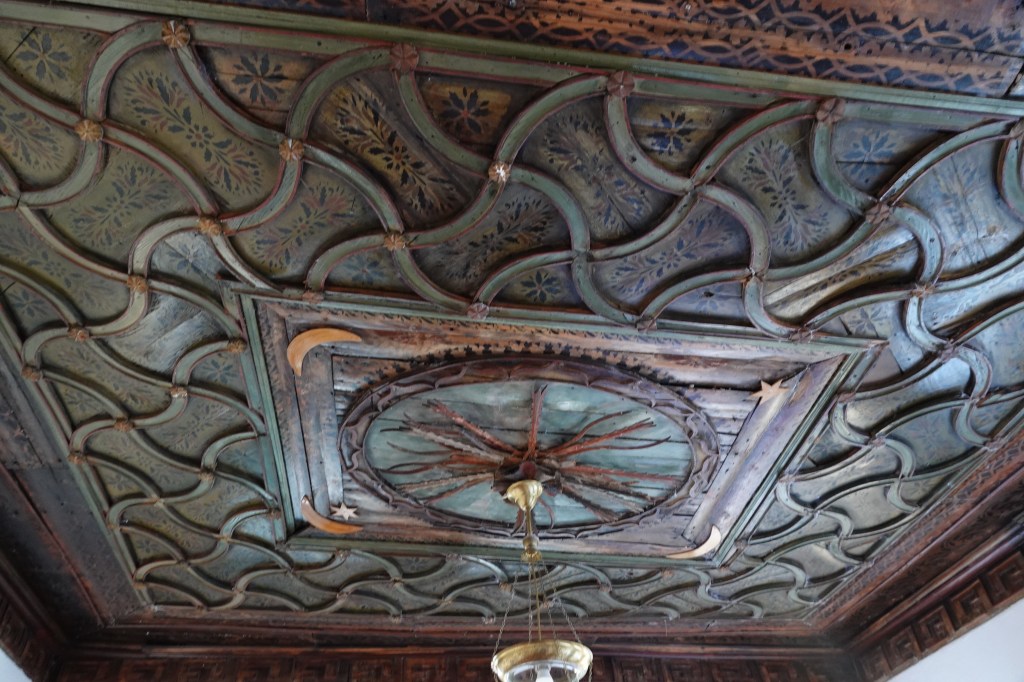
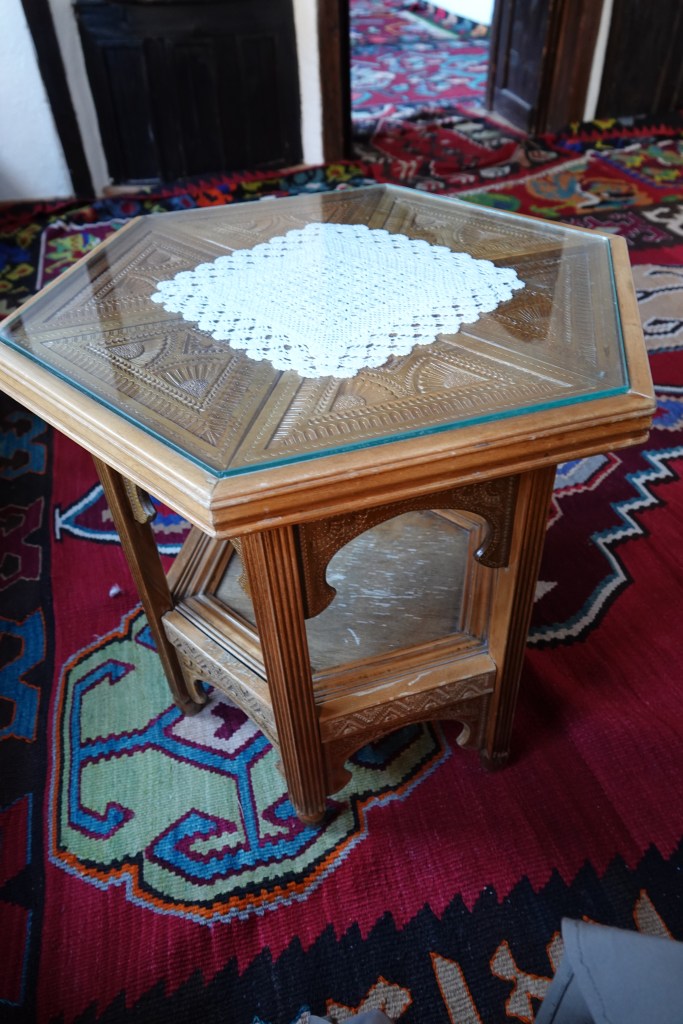
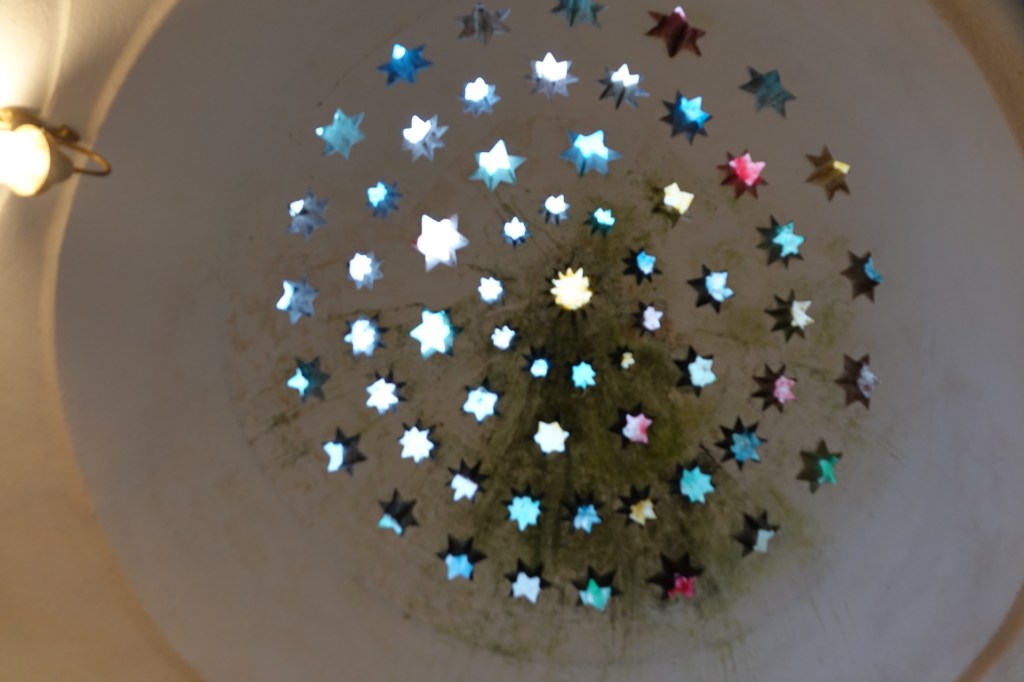
You can go inside the building by paying 10 marks and there are several different rooms including a kitchen, guest house, hammam, a room for praying, tombs, and a courtyard. There are some interesting features including the perforated dome in the hammam and beautiful wooden ceiling of semahana, or the room used to perform zikr (religious chanting).
Best place to take photos of the Tekke
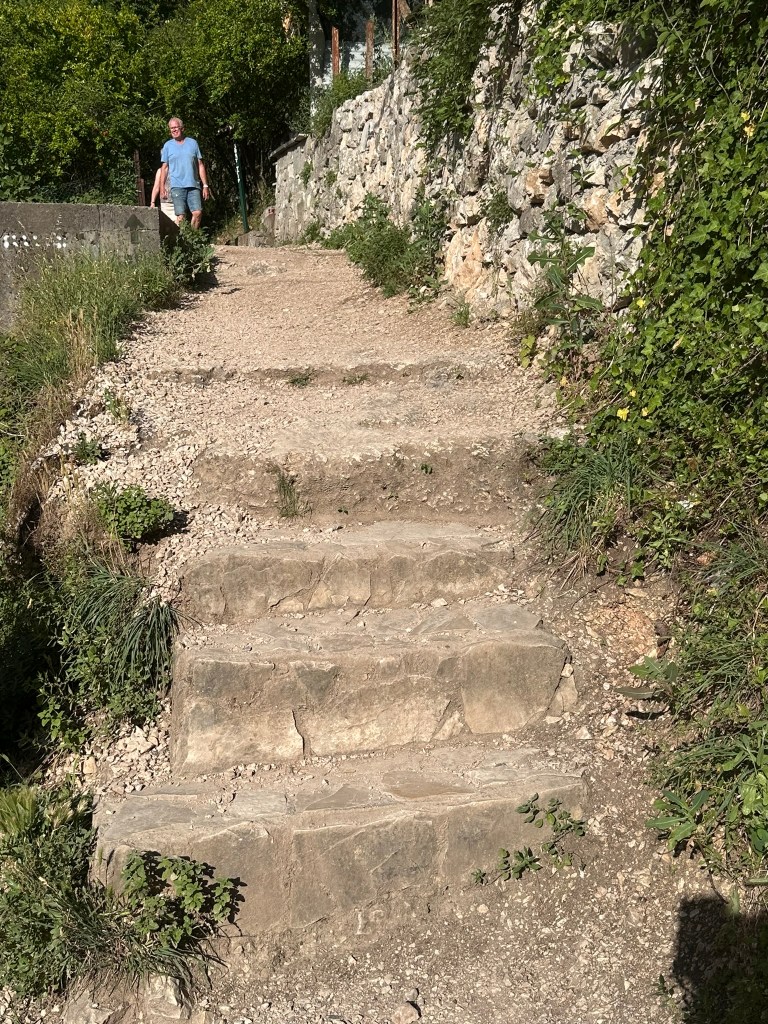
To get the iconic reflection of the Tekke in the water, you need to get the other side of the river. Cross-over the first bridge and walk behind the restaurants until you see a set of stairs that lead to the viewpoint.
Stairs leading to other side of the river to get the iconic photos
Entrance fee
There is an entrance fee to go inside the Tekke- It is 10 marks/ 4-5 euros. Women are expected to cover their head and arms as well as wear long skirts. These are provided free of cost at the entrance.
Other things to do around Blagaj
There are several restaurants around Blagaj and you can get traditional food and drinks and enjoy the peaceful surroundings.















 Peaks to Palaces