The Ultimate Teotihuacรกn Guide: Which of the 5 Gates Should You Choose?

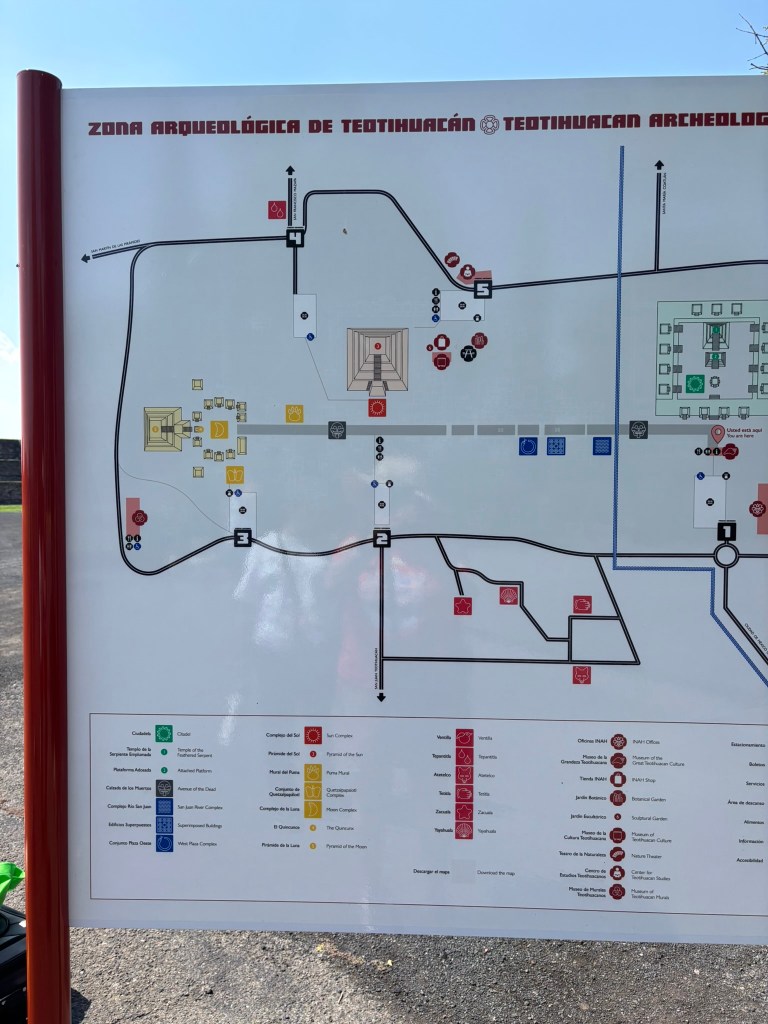
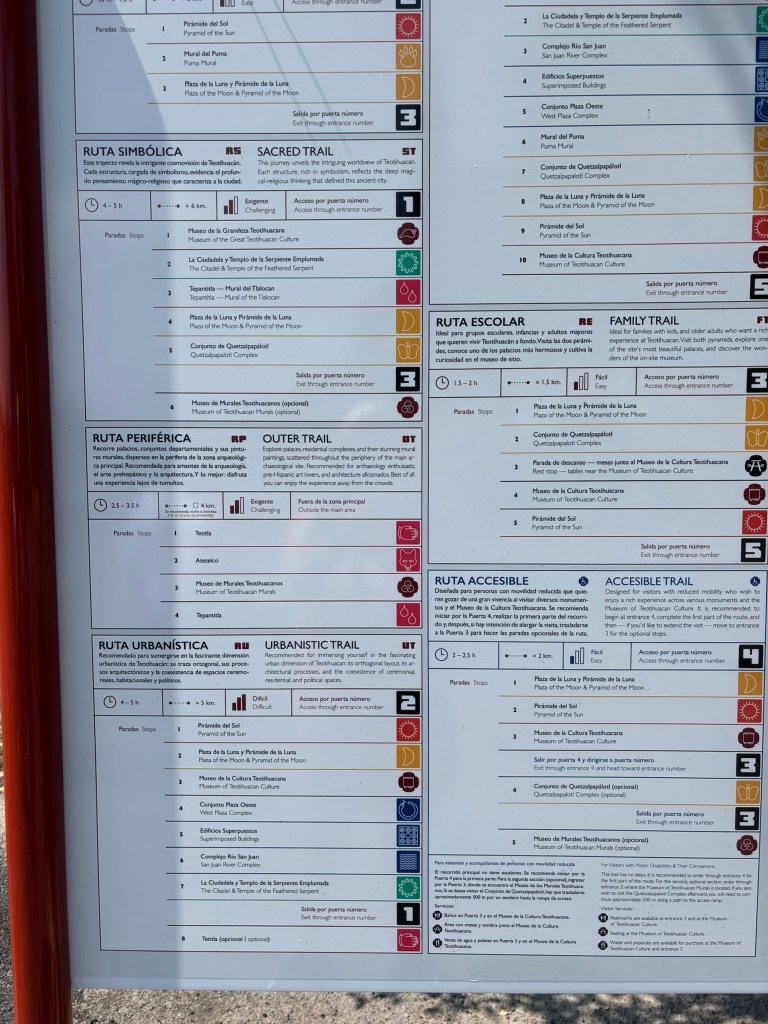
Planning a day trip to the ancient pyramids of Teotihuacรกn can feel overwhelming, especially when you realize this massive UNESCO World Heritage site stretches over two miles. Most travelers donโ€™t realize that the complex has five distinct gated entrances (puertas). Picking the wrong gate means adding miles of walking under an intense, shade-free Mexican sun. Whether you are arriving by car, taking a public bus from Mexico City, or chasing the morning hot-air balloons, choosing the right starting point will save your feet and maximize your time. My overall pick would be Gate 5, which lets you enter near the middle of the complex and puts you close to La Gruta restaurant for lunch after the visit.


What is at each of the 5 Gates?

Gate Key Nearby Landmarks & AttractionsBest Used For
Gate 1La Ciudadela (The Citadel), Temple of the Feathered Serpent (Quetzalcรณatl), and the main site museum.Public bus arrivals and starting the classic, linear chronological walk.
Gate 2The lower section of the Avenue of the Dead, centered directly in front of the colossal Pyramid of the Sun.A direct approach to the main pyramid
Gate 3The northern end of the complex, immediate access to the Pyramid of the Moon and the Quetzalpapรกlotl Palace.Drivers looking for quick parking near the northern plaza and avoiding the crowd bottleneck.
Gate 4The rear of the Pyramid of the Moon, the Jaguar Palace, and the spectacular Teotihuacรกn Mural Museum.Independent art lovers or specialized tours focusing heavily on the preserved paint fragments and ancient palaces.
Gate 5The eastern side of the complex, offering a direct pathway leading right up to the Pyramid of the Sun.Early risers watching the hot air balloons or anyone staying overnight in the neighboring town. This entrance is also close to the famous nearby cave restaurant, La Gruta, where you can grab lunch.

The Verdict: Which Entrance is the Best?

The “best” gate depends completely on your travel style and how you plan to navigate the ancient city.

My choice, even though we took Gate 1 on this trip, would be Gate 5

  • The Overall Best Choice for Backpackers & Public Transit Users: Gate 1
    If you take the public bus from Mexico City’s Autobuses del Norte terminal, this is where you will naturally be dropped off. It forces a long walk, but starting here allows you to experience the site as the ancients didโ€”walking linearly down the Avenue of the Dead from the Temple of Quetzalcรณatl straight toward the great northern pyramids. We did follow this path for our visit. The only drawback is the long walk back to the parking lot in the hot sun after visiting the Pyramid of the Moon
  • The Best Choice for Photographers & Early Birds: Gate 5
    If you manage to arrive right at the 9:00 AM opening time, entering through Gate 5 puts you in prime position. It provides the shortest path to the Pyramid of the Sun, letting you experience its massive scale in peace before the massive tour bus crowds pour in from the city. As a bonus, it aligns perfectly with the path of early-morning hot air balloons floating over the landscape. This entrance is also close to La Gruta, the famous cave restaurant.

Practical information for visiting

Admission to the Teotihuacรกn pyramids is completely free on Sundays for all Mexican nationals and legal foreign residents.

To claim free entry on Sunday, you must present a valid official ID (such as an INE card, passport, or official residency card) at the ticket booth.

General Entrance Fees (Non-Sundays)

If visiting Monday through Saturday, the National Institute of Anthropology and History (INAH) enforces the following standard ticket prices:

  • Mexican Nationals & Legal Residents: $105 MXN
  • Foreign Visitors: $210 MXN

Everyday Free Admission Categories

Regardless of the day of the week, entry remains entirely free for the following individuals (proof of status required):

  • Children under 13 years old
  • Mexican students and teachers with a valid institutional ID
  • Senior Mexican citizens holding an INAPAM card
  • Persons with disabilities

A Warning for Sunday Travelers

While Sunday free admission saves money, it also means Sunday is consistently the most crowded and hectic day of the week. Long lines form quickly at all five gates, and the paths fill up with local families and large tour groups. If you plan to go on a Sunday, it is highly recommended to arrive exactly at the 8:00 AM opening time to beat both the massive crowds and the intense midday su
Podcast Episode: Mexico City Through Food And Art

Pip: Peaks to Palaces has been to Mexico City, and apparently the city does not let you leave without feeding you something ancient, showing you something sinking, and handing you an obsession you didn't ask for.

Mara: Sandy covers a lot of ground here โ€” the culinary landscape for a vegetarian navigating a meat-heavy capital, the layered history inside the Metropolitan Cathedral, and the enduring artistic collision between Frida Kahlo and Diego Rivera.

Pip: Three themes, one city, and somehow all of them connect back to things built on top of other things.

Mara: That's actually a fair summary of Mexico City's entire identity. Let's start with the food.

Eating Well in a Meat-Heavy Capital

Pip: The premise here is genuinely interesting โ€” Mexico City has a reputation as a carnivore's paradise, but there's a case to be made that its deepest culinary traditions are anything but.

Mara: The post makes exactly that case. The setup for local colleagues as guides is key โ€” the writing puts it this way: "Having native speakers clearly explain your ovo-lacto-vegetarian preferences to the restaurant staff gives you complete peace of mind, so you can relax and fully enjoy your meal without worrying about hidden meat broth or unexpected lard."

Pip: So the real travel hack isn't a restaurant app โ€” it's knowing someone who can say "no lard" with authority.

Mara: And that local access unlocks places like Restaurante El Cardenal, where the vegetarian path runs through a huauzontle omelet โ€” an ancient Aztec herb the Spanish actually banned under penalty of physical punishment, secretly preserved by indigenous farmers for centuries.

Pip: That's a remarkable thing to order for breakfast without knowing the backstory.

Mara: The bakery post, "Crumb Trails Through Time," adds another layer โ€” the historic panaderรญas of the Zรณcalo aren't just charming stops, they're built on colonial-era ruins, and one of them, Pastelerรญa El Molino, turns out to be the exact birthplace of Grupo Bimbo, now the largest commercial baking company on Earth.

Pip: From a neighborhood pastry counter to thirty-five countries. The conchas were apparently load-bearing.

Mara: And Cantina La Ribera rounds out the restaurant coverage โ€” high-energy, live Lucha Libre mariachi, and a kitchen that built a bespoke vegetarian menu on the spot, including a spicy carrot tostada that wasn't on the menu at all.

Pip: From ancient grains to tableside Crepes Suzette on a fire cart โ€” that's a full arc. Speaking of things built on top of other things, the cathedral is next.

The Cathedral That Refused to Sink

Pip: The Metropolitan Cathedral is framed not just as a landmark but as a physical record of conquest โ€” stone pulled from Aztec temples, repurposed to build the church that replaced them.

Mara: The post puts it plainly: "If you look closely at some of the older exterior walls today, you are looking at the very stones that once formed the temples of Aztec gods."

Pip: Architecture as a receipts archive.

Mara: And the building kept accumulating history. Construction ran from 1573 to 1813 โ€” nearly two hundred fifty years โ€” which is why the structure moves through Gothic foundations, Baroque facades, and a Neoclassical dome in a single visit.

Mara: What's striking is that the cathedral is still actively fighting gravity. Built on the soft clay lakebed of ancient Lake Texcoco, different sections sank at different rates, and a massive 1990s engineering rescue involved threading high-tensile steel cables through the stone columns to pull the leaning walls back inward.

Pip: A five-hundred-year-old building in a structural corset. The interior adds the Altar of the Kings in Churrigueresque gold leaf, fourteen guild-sponsored side chapels, and a brass pendulum on the nave floor that tracks the building's ongoing tilt in real time.

Mara: The pendulum is a genuinely strange and wonderful detail โ€” a live instrument measuring centuries of slow collapse, right there on the floor where visitors walk. From stones pulled from Aztec temples to steel cables holding the arches together, the cathedral earns the post's description of it as a monument that mirrors the city's own endurance.

Pip: That endurance theme carries directly into Coyoacรกn.

Frida's Universe, Diego's Shadow

Pip: The Frida and Diego coverage asks a pointed question โ€” how does a woman history treated as a footnote end up completely eclipsing the man who was supposed to be the giant?

Mara: The Casa Azul guide is the anchor here, and the post on how Frida's art eclipsed Diego's empire maps the full arc. The Blue House is where it becomes visceral โ€” as the writing describes it, the mirror above Frida's daybed is "the exact glass her mother installed, which allowed Frida to paint her soul through self-portraiture while completely immobilized."

Pip: She turned confinement into the most portable artistic identity of the twentieth century.

Mara: The wardrobe exhibition โ€” sealed by Diego's instruction until 2004 โ€” makes that concrete: hand-painted plaster corsets, steel spinal braces, and a prosthetic leg encased in a red leather boot embroidered with Chinese silk and tiny bells. The post calls it "the ultimate testament to a woman who refused to hide her scars."

Pip: The broader piece on tracing their footsteps through the city adds the San รngel twin houses โ€” two separate concrete towers connected by a single rooftop bridge, designed so either of them could lock the door when things got unbearable.

Mara: The architecture is almost too literal as a metaphor, but it holds. And the post's conclusion lands cleanly: Diego painted the history of Mexico on grand public walls; Frida painted the history of the human soul on small, intimate panels. The city still reflects both, but one of them draws the longer lines.


Pip: Mexico City as a destination where the food has a pre-Hispanic backstory, the cathedral is held together by engineering ingenuity, and the most famous house is a cobalt-blue fortress that outlasted an empire.

Mara: There's more from Peaks to Palaces ahead โ€” same instinct for the history underneath the surface, wherever the next destination lands.

Anjanadri Hill & Anegundi: A Journey Through Myth, Memory, and Timeless Landscapes

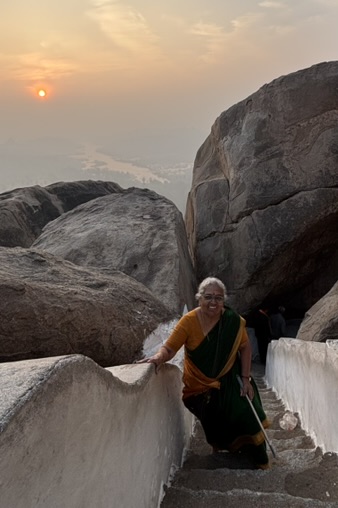
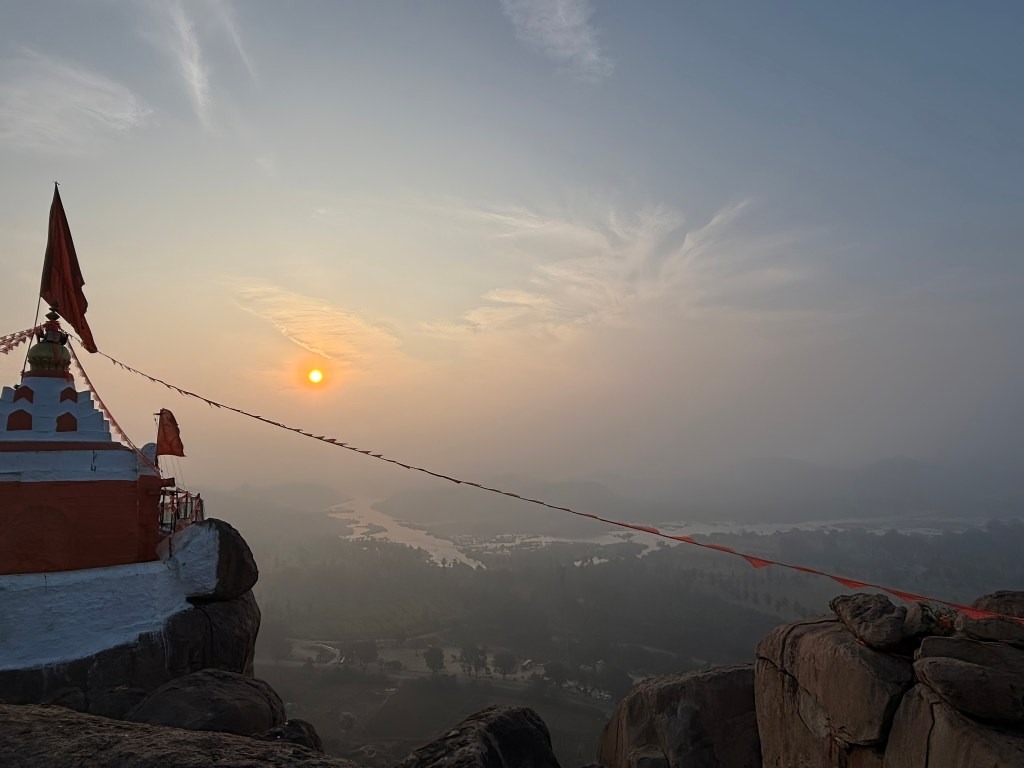
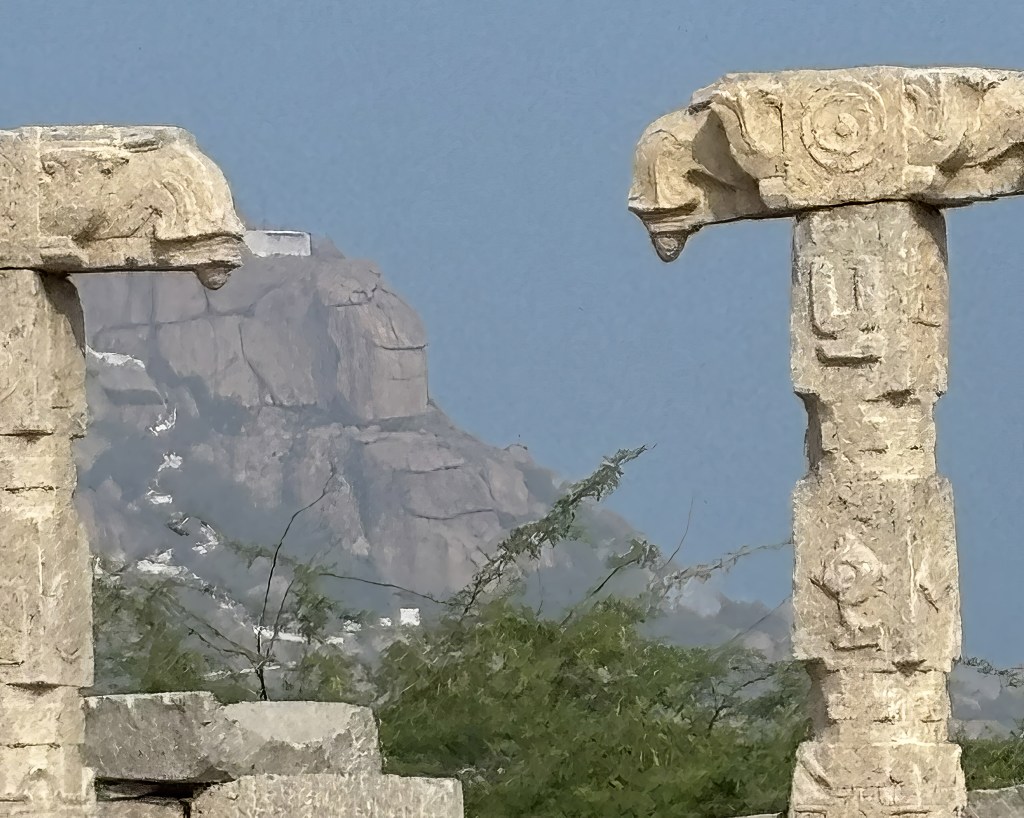
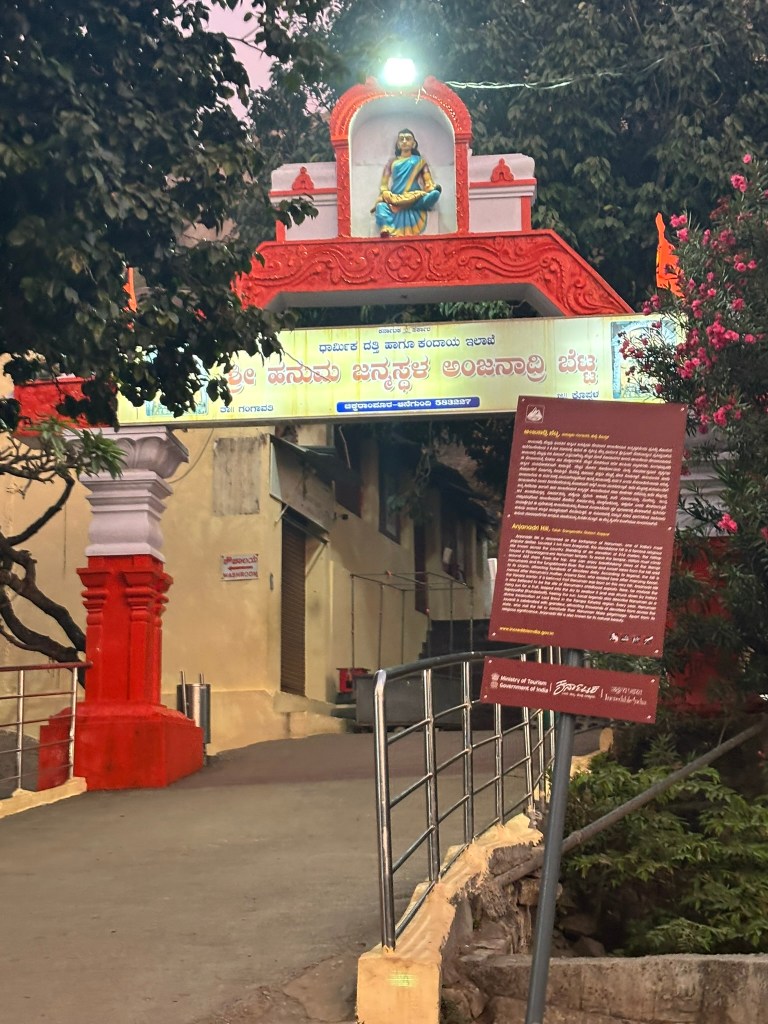
Visiting Anjanadri Hill and the ancient village of Anegundi is like stepping into a living epic. The Ramayana breathes through the hills. The Vijayanagara Empire whispers through fort walls. The Tungabhadra River carries centuries of stories in its gentle curves. We visited Anjanadri Hill for sunrise. It was a foggy morning, and visibility wasn’t that great. Still, we enjoyed the hike and visiting the temple.

  1. Anjanadri Hill: Birthplace of Lord Hanuman
    1. The Climb
    2. The Temple at the Peak
    3. The View
  2. Anegundi: The Ancient Heart of Kishkindha
  3. A Legacy Older Than Empires
  4. Gagan Mahal: Where the Royals Took Refuge
  5. A Geological Wonder: One of the Oldest Plateaus on Earth
    1. Prehistoric Traces
  6. Pampa Sarovara: A Sacred Lake of the Ramayana

Anjanadri Hill: Birthplace of Lord Hanuman

Rising above the boulder-strewn plains of Anegundi, Anjanadri Hill is one of the most sacred sites in the Ramayana trail. The hill is believed to be the birthplace of Lord Hanuman. It is named after his mother, Anjana, and has been a pilgrimage site for centuries.

The Climb

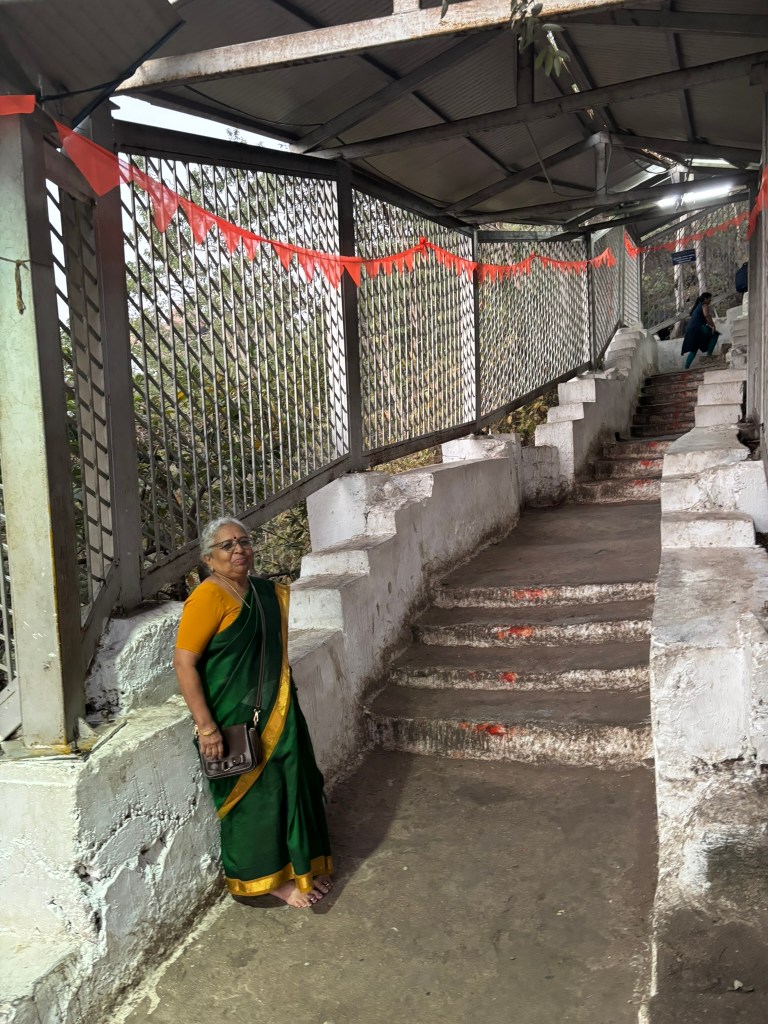
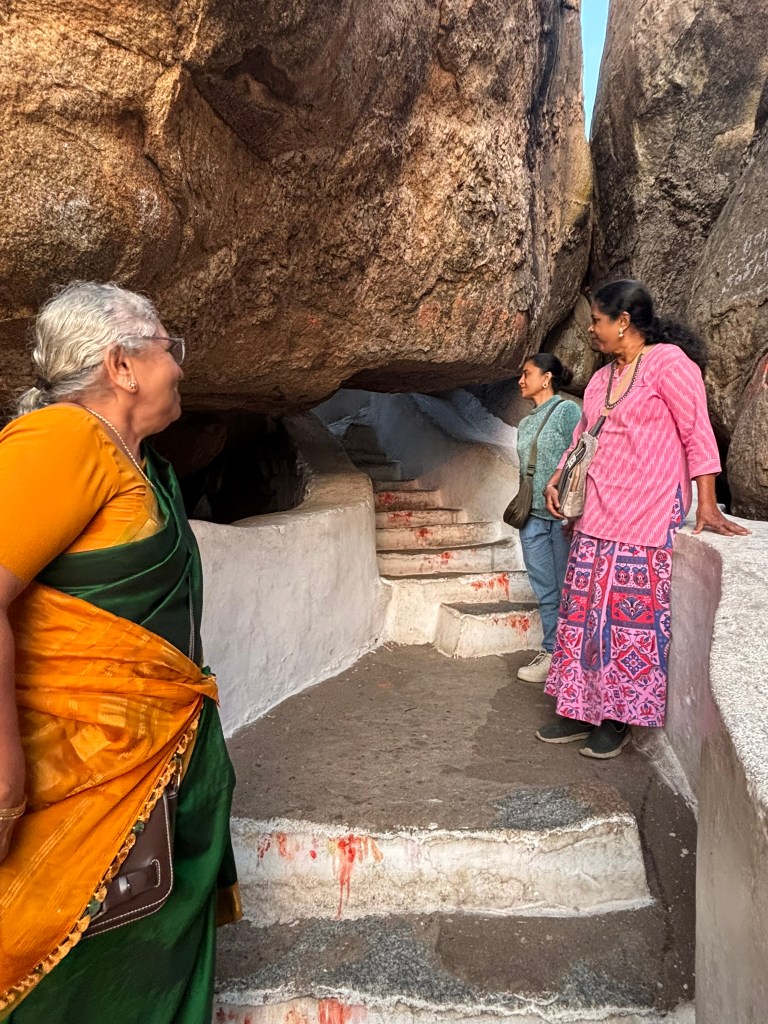
Reaching the summit means ascending 570+ steep steps, but the journey is part of the experience. As you climb, the world opens up around you. You see paddy fields glowing in the sun. Coconut groves sway in the breeze. The Tungabhadra River shimmers like a silver ribbon. Pilgrims chant Hanumanโ€™s name, bells ring softly in the wind, and the granite landscape glows in warm hues.

Halfway through, you need to bend to go under the boulders

The Temple at the Peak

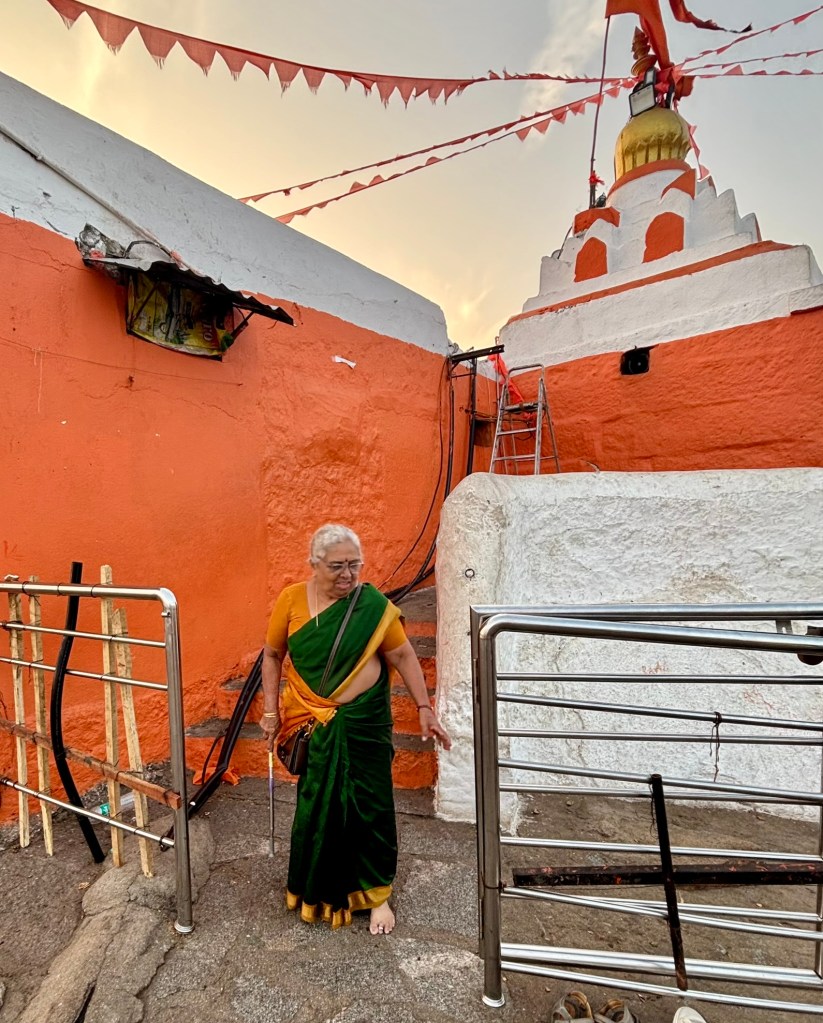
At the top stands a 16th-century white-washed temple, simple yet powerful in its presence.

  • A rock-carved idol of Hanuman forms the sanctum.
  • Shrines dedicated to Rama and Sita stand nearby.
  • Saffron flags flutter against the sky, adding to the spiritual energy of the place.

The View

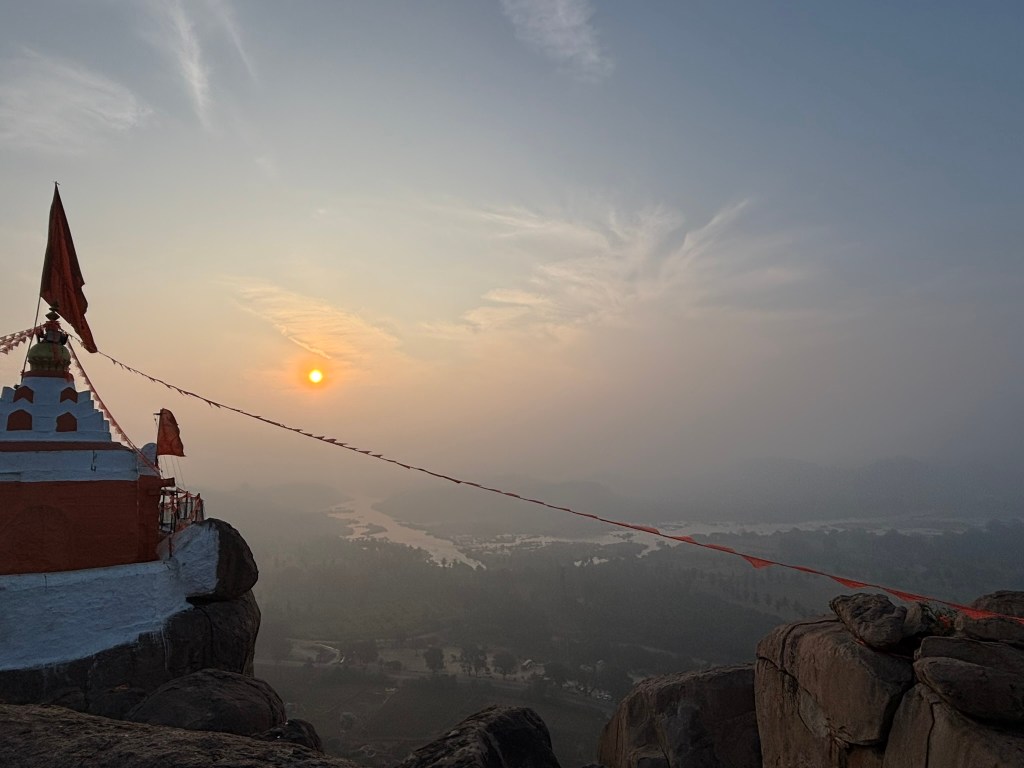
From the summit, you get a 360-degree panorama of Hampiโ€™s ruins. You can also see banana plantations and the surreal boulder hills that define this UNESCO World Heritage Site. Sunrise and sunset here are unforgettableโ€”moments when the land feels suspended between myth and reality. Unfortunately, the day we went up the hill, it was very foggy to truly appreciate the scene before us.

Anegundi: The Ancient Heart of Kishkindha

Across the river from Hampi lies Anegundi. It is a village older than Hampi. Anegundi is believed to be the cradle of Kishkindha, the monkey kingdom of Vali and Sugriva. This is where mythology, geology, and royal history converge in a landscape that feels untouched by time.

A Legacy Older Than Empires

Anegundiโ€™s history stretches back to the 3rd century BCE, when it was part of the Ashoka Empire. Over the centuries, it saw the rise of the Satavahanas, Kadambas, Chalukyas, Rashtrakutas, and other royal dynasties that ruled Hampi and the surrounding area . By the 10th century, it became a fortified settlement. Later, it served as the mother city of the Vijayanagara Empire.

Even today, the 19th generation of Krishnadevarayaโ€™s descendants lives here, keeping the royal lineage alive.

We didn’t have time to explore Anegundi, but if you do, the following places are worth visiting.

Gagan Mahal: Where the Royals Took Refuge

In the heart of Anegundi stands Gagan Mahal, the 16th-century palace that once housed the royal family during turbulent times. Painted in a warm yellow-ochre hue, the palace blends Indo-Islamic architecture with vernacular charm.

  • Four slender towers rise above its faรงade.
  • Arched windows and carved balconies overlook the village.
  • A central pool and ancient drainage system reveal ingenious cooling techniques.

Walking through its halls, you can almost hear the echoes of queens, ministers, and royal children who once lived here.

A Geological Wonder: One of the Oldest Plateaus on Earth

Anegundi sits on a plateau believed to be over four billion years old, making it one of the oldest exposed geological formations on Earth. Its landscapeโ€”endless boulders, wind-sculpted hills, and ancient rock sheltersโ€”feels primordial.

Prehistoric Traces

  • Maurya Mane reveals early settlement patterns.
  • Onake Kindi showcases prehistoric rock paintings and engravings.

These sites add archaeological depth to a region already rich in myth and history.

Vernacular Architecture That Still Breathes

A walk through Anegundiโ€™s narrow lanes is a walk through living heritage.

  • Homes have two-foot-thick stone walls that keep interiors cool.
  • Carved wooden doors show motifs passed down through generations.
  • Skylights, pillared verandahs, and flat terraces show a design language shaped by climate and craft.

This is architecture that isnโ€™t preserved in museumsโ€”it is lived in, cherished, and passed on.

Anegundi Fort: Echoes of a Warrior Past

Within the ancient fort walls lie the Durga Temple and the Ganesha Cave Temple, both steeped in centuries of worship. Local lore says Vijayanagara kings sought blessings here before going to war.

Walking through the fortโ€™s gateways, you feel the weight of historyโ€”soldiers marching, priests chanting, kings preparing for battle.

Pampa Sarovara: A Sacred Lake of the Ramayana

One of Anegundiโ€™s most sacred sites is Pampa Sarovara, one of the five holy lakes in Hindu tradition. This is believed to be where Shabari met Lord Rama, offering him berries with pure devotion.

The lake, surrounded by hills and shrines, feels serene and timelessโ€”a place where mythology feels close enough to touch.

The Revival of Anegundi

Anegundi is not just a relic of the pastโ€”it is a thriving example of sustainable rural tourism.

  • Organic farming initiatives
  • Performing arts education
  • Revival of banana-fibre crafts
  • Adventure activities around Sanapur Lake

Much of this transformation is led by The Kishkinda Trust, which has helped preserve Anegundiโ€™s heritage while empowering local communities.

As the sun sets over the ancient plateau, Anegundi glows in shades of gold. Its temples, boulders, and riverbanks illuminate like a living chronicle of Indiaโ€™s past.

๐Ÿ“ฎ Post Office Bay, Floreana: The Galรกpagosโ€™ Stampless Secret

The Galรกpagos Islands are often celebrated for their sea lions basking on beaches and penguins darting through turquoise waters. Yet tucked away on Floreana Island is a tradition. This tradition speaks not of wildlife, but of human longing. It is the worldโ€™s most unconventional postal service.

A Barrel of Letters and Longing

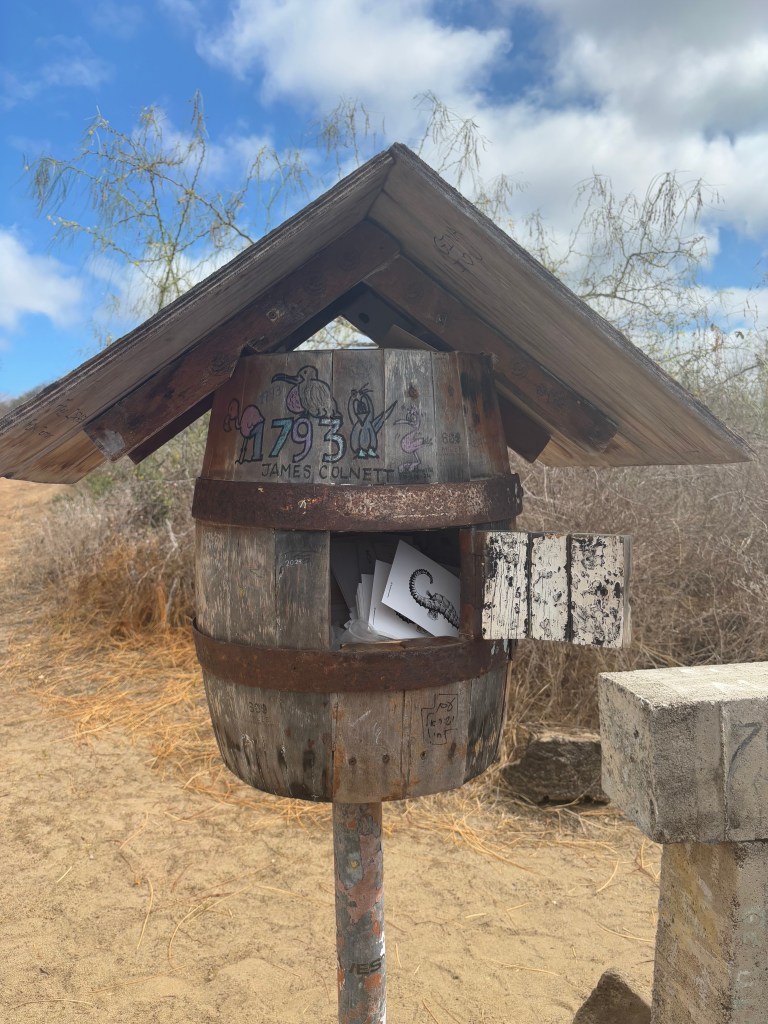
Back in 1793, British whalers, weary from years at sea, devised a system to reach loved ones across oceans. They left a wooden whiskey barrel on Floreana Island, a pit stop already prized for its fresh water and giant tortoises. Sailors could drop off letters and, in turn, pick up mail addressed to destinations near their own ports of call.

It was a slow systemโ€”sometimes letters arrived years after being writtenโ€”but it worked. Captain David Porter recorded the practice in 1813, describing โ€œHathawayโ€™s Postofficeโ€ nailed to a pot. Later explorers noted fishermen bottling notes and carrying them back to America, often after feasting on Floreanaโ€™s tortoises. By the time Charles Darwin arrived in 1835, the tortoises had been hunted to extinction, but the barrel remained.

The Honor System Lives On

Two centuries later, the tradition still thrives. Today, Post Office Bay is a simple wooden barrel covered in postcards, notes, and keepsakes from travelers. Driftwood painted with names and dates surrounds the site, a collage of human connection across time.

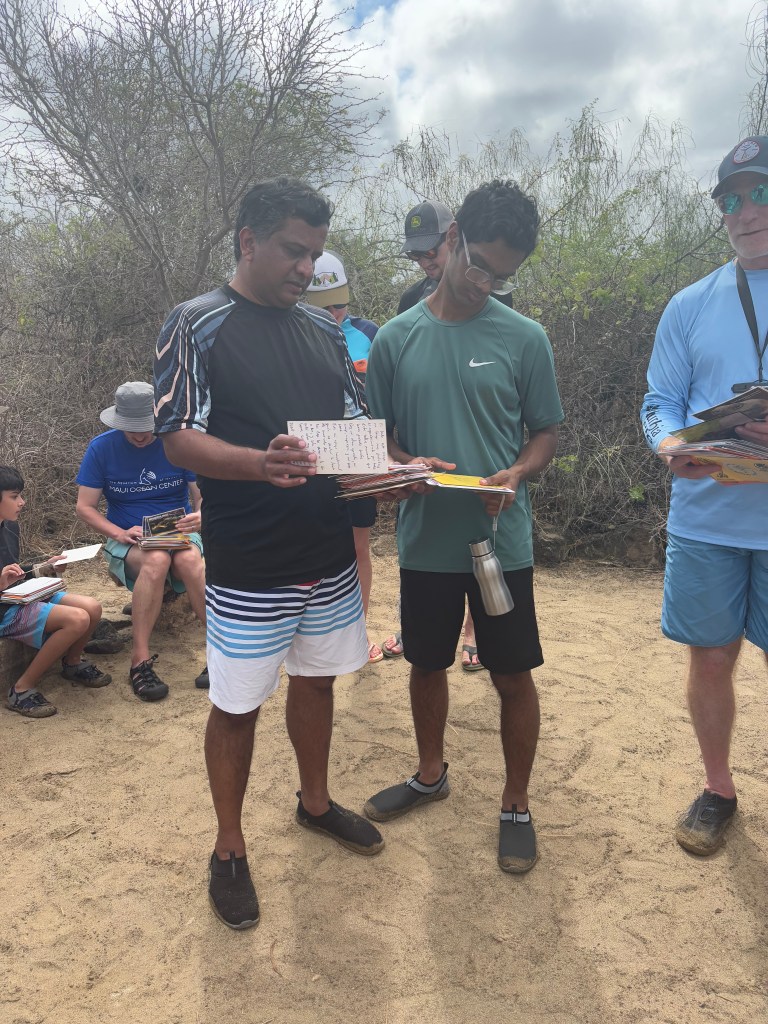
Visitors are encouraged to leave their own postcardsโ€”no stamps required, just a clearly written address and a little faith. The true magic lies in rummaging through the barrel. If you find a letter destined for somewhere near your home, youโ€™re entrusted to deliver it, preferably by hand. Tour guides insist that dropping it in a mailbox is โ€œcheating.โ€

Stories abound of travelers embracing this responsibility. In 2011, a couple spent three years hand-delivering 22 letters to recipients in 17 countries. Each delivery became a moment of serendipity, a reminder that travel is as much about people as places.

Visiting Post Office Bay Today

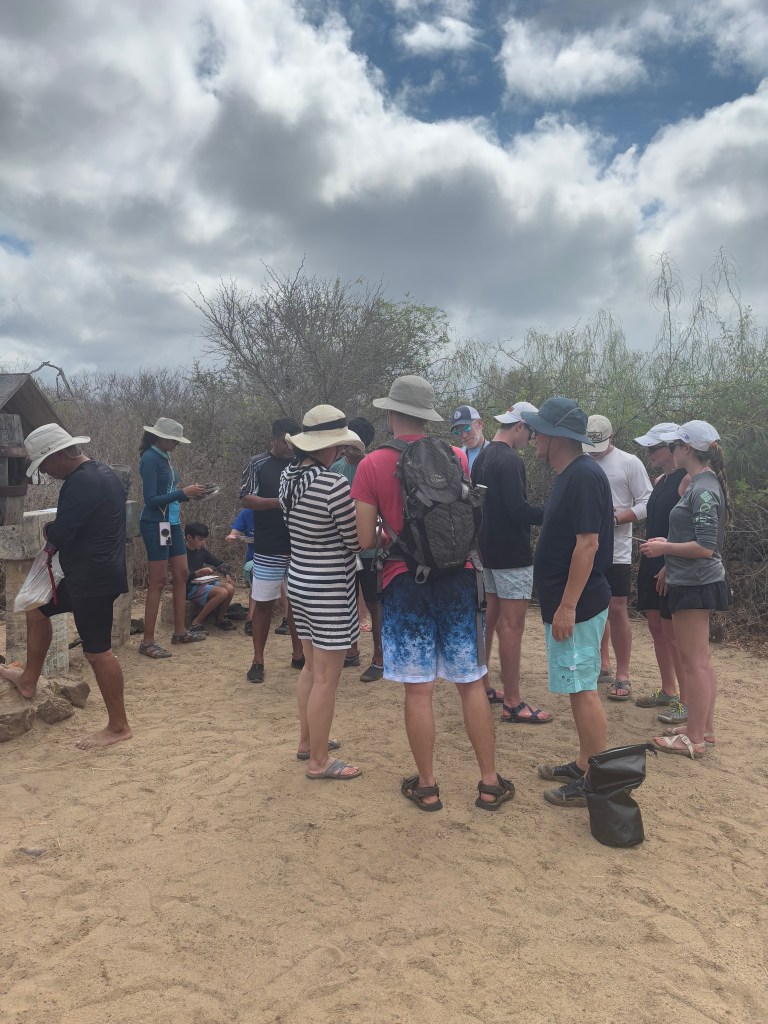
Post Office Bay sits on the northern coast of Floreana Island, accessible only via Galapagos cruise itineraries. The barrel is still there, weathered but resilient, surrounded by graffiti, stickers, and driftwood tributes. We visited this post office as part of our Galapagos cruise. We left a few postcards for our friends. We also took some postcards that had addresses in Georgia and delivered them.

Why Floreana?

Floreana was always a logical choice. It offered one of the few fresh water sources in the archipelago, along with abundant tortoises (until their tragic extinction). For whalers, it was a natural pit stop, a place to replenish supplies and leave behind letters filled with hope.

A Tradition of Trust

Post Office Bay is more than a quirky tourist stopโ€”itโ€™s a living testament to human connection. Imagine the lonely sailor, penning words to family he might not see for years. Imagine the joy of a recipient, surprised by a letter hand-delivered across continents.

In a world of instant communication, Post Office Bay reminds us of the romance of patience. It also reminds us of trust and strangers helping strangers. It is history you can touch, a tradition you can join, and a story still unfolding in the islands.

Exploring the Breathtaking Views of Bรธur and Mรบlafossur

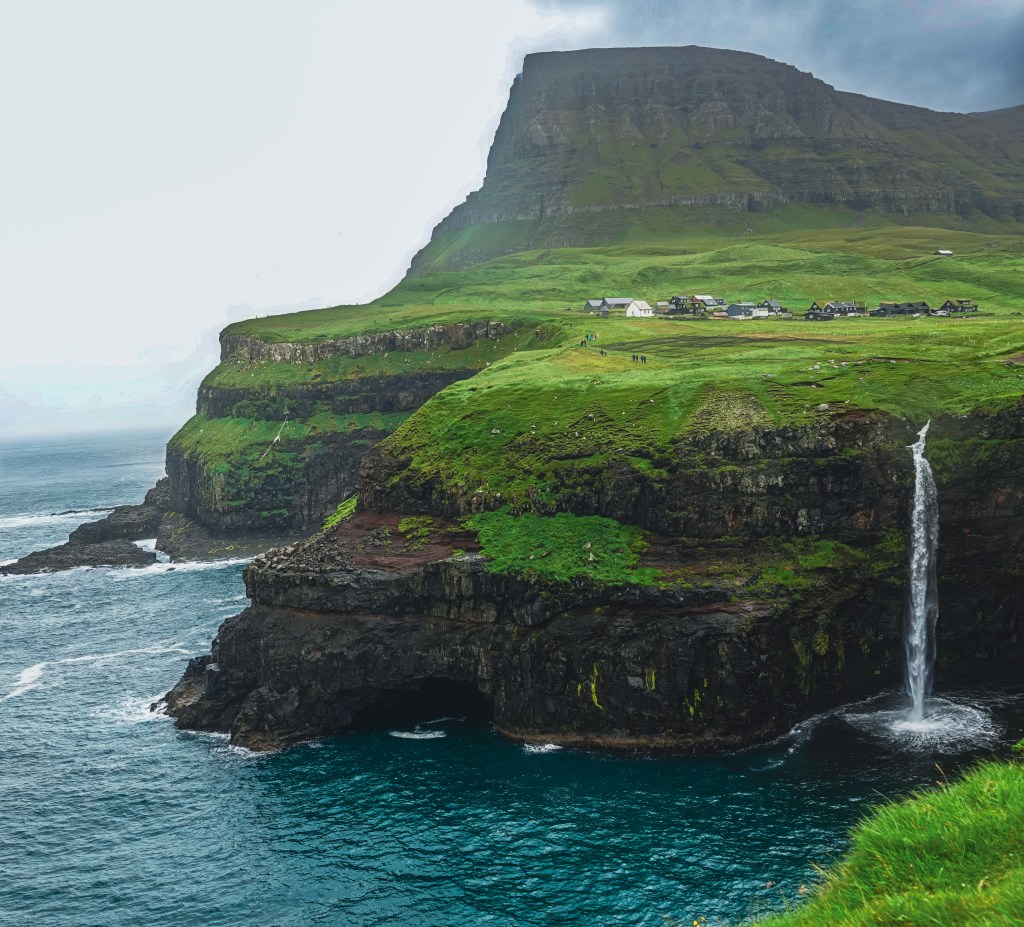
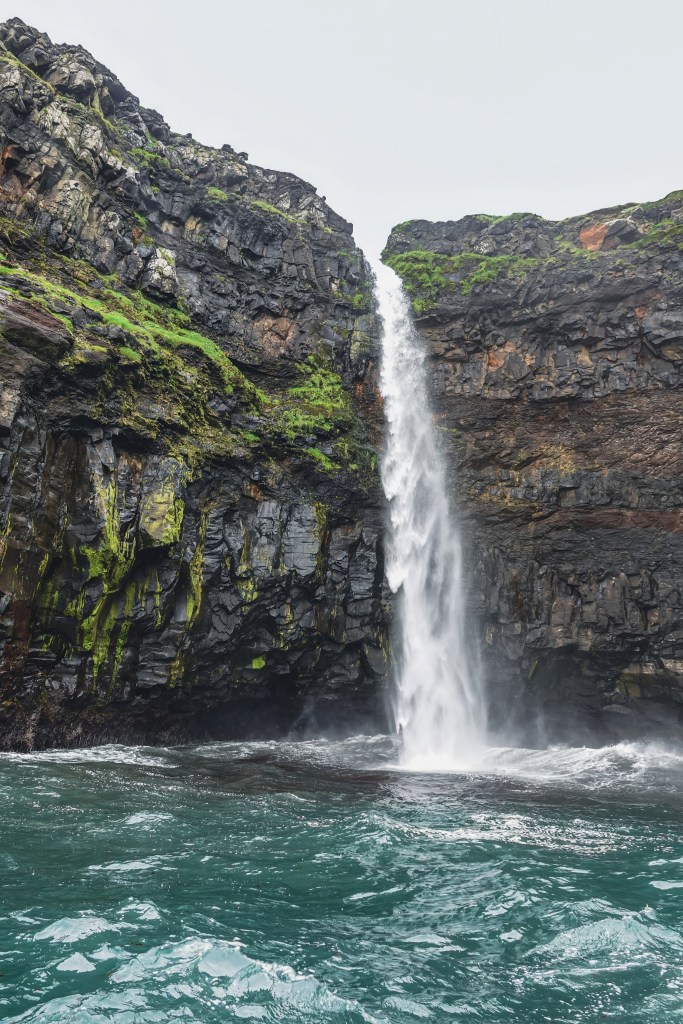
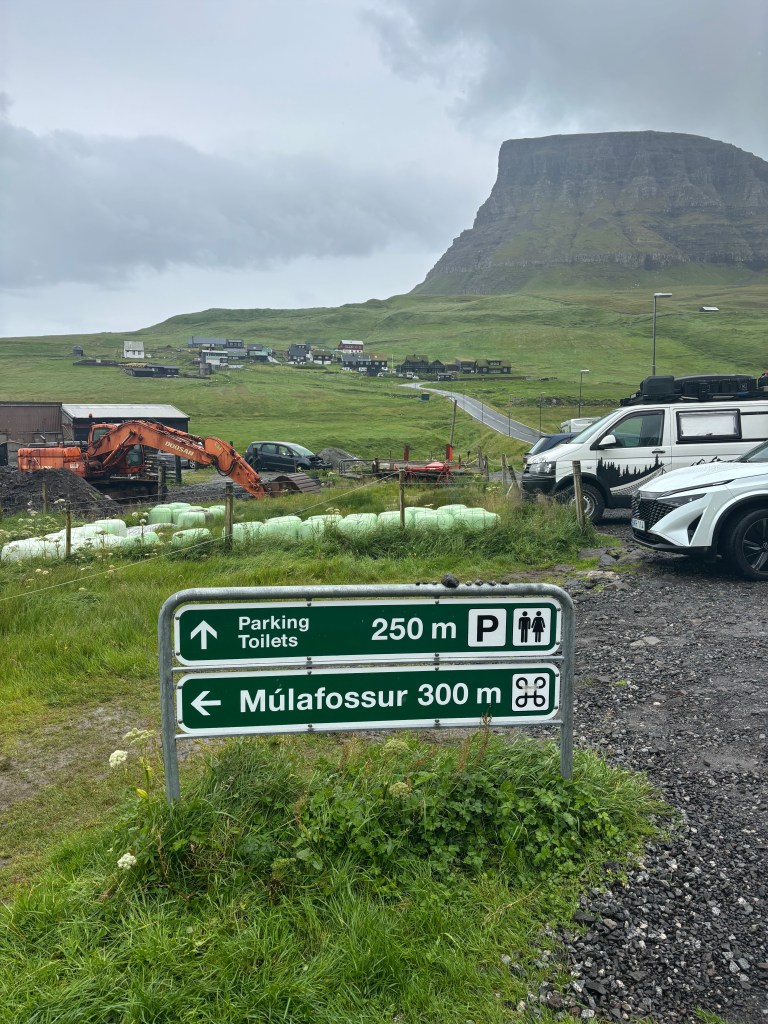
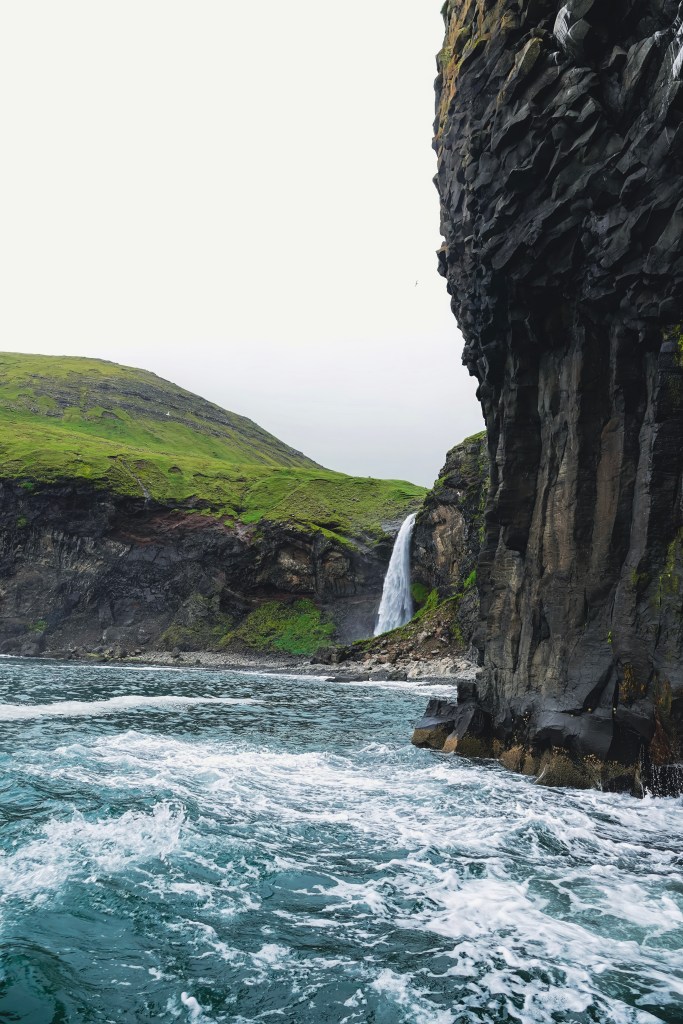
Mรบlafossur Waterfall is a dreamy waterfall tucked away on the rugged western edge of Vรกgar Island in the Faroe Islands. The waterfall plunges dramatically into the Atlantic Ocean, surrounded by cliffs and a tiny, charming village of Gรกsadalur. I got to see the waterfall twice. First, I saw it from the ocean when I was on the Classic Drangarnir Sea Arch Boat Tour. Then, I saw it again from the land after visiting the Lake above the ocean. I also visited the village of Bรธur. It is one of my favorite villages in the entire Faroe Islands. Both the sea views and the land views offer different perspectives of both the waterfall and the villages.

Mรบlafossur: The Promontory Waterfall

With a drop of 60 meters (200 feet), Mรบlafossur is the Faroe Islandsโ€™ most iconic natural wonder. Its name translates to โ€œPromontory Waterfall.โ€ The name is fitting as it cascades off a cliffside directly into the tempestuous sea below.

Gรกsadalur: The Goose Valley

Gรกsadalur was once accessible only by hiking over the steep mountain passes. Now, the village welcomes visitors through the Gรกsadalstunnilin tunnel(Built in 2006). This makes the journey far easierโ€” but no less magical. With about 20 residents and 25 houses, this remote village offers a rare glimpse into traditional Faroese life. You can actually stay in this village. There are 2 options. One is Mรบlafossur Cottages, located next to the stream. The other one is Hjalgrรญmsstova, part of the modern sheep farm Gรกsadalsgarรฐu.

The name Gรกsadalur means โ€œGoose Valley,โ€ and the charm here is undeniable. A cozy cafรฉ and guesthouse serve locally sourced lunches, cakes, and coffee. These treats are perfect for warming up after a brisk walk to the waterfall.

Mountains That Guard the Valley

Gรกsadalur is cradled between two majestic peaks:

  • Eysturtindur (โ€œThe Peak to the Eastโ€) rises to 715 meters (2346 feet)
  • รrnafjall, the highest mountain on Vรกgar, reaches 722 meters (2368 feet)

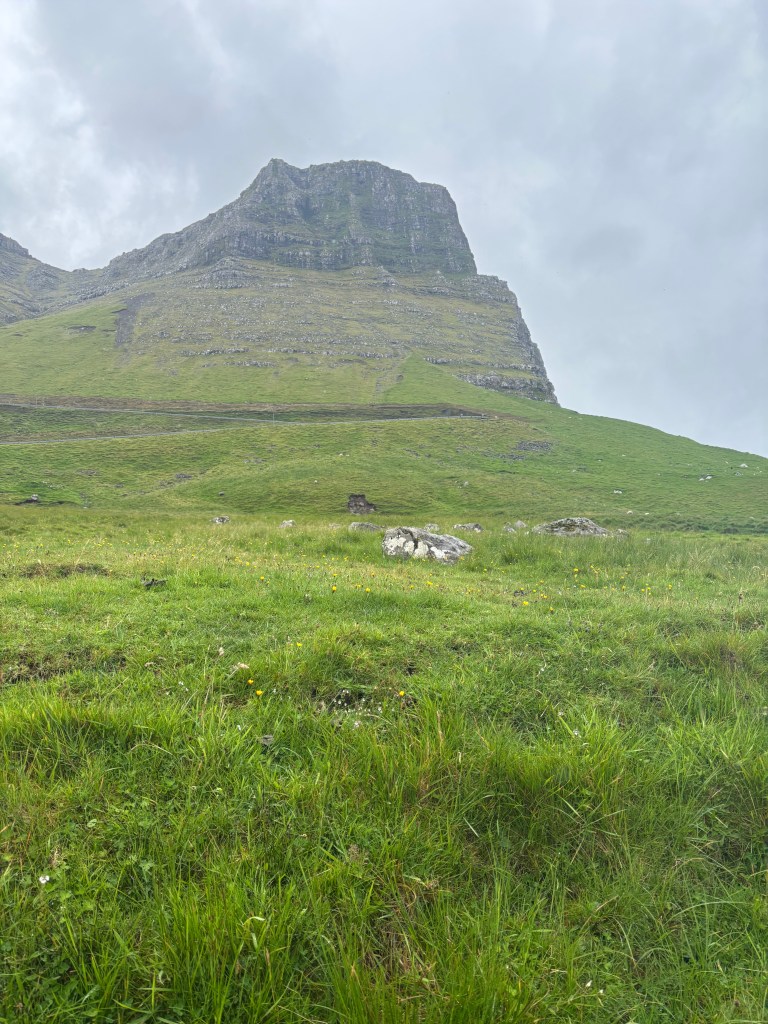
These mountains not only add drama to the landscape but also serve as silent sentinels, watching over the village and its waterfall.

When to Visit

Gรกsadalur and Mรบlafossur can be visited year-round. Summer offers longer daylight hours and milder weather, while winter cloaks the village in mist and mystery. No matter the season, the waterfallโ€™s roar and the villageโ€™s quiet beauty promise a moment of awe.

Whether you’re chasing waterfalls or seeking solitude, Mรบlafossur and Gรกsadalur deliver both. You can combine a visit to the village and the waterfall with a visit to the village of Bรธur

Bรธur: The Coastal Hamlet with Legendary Views

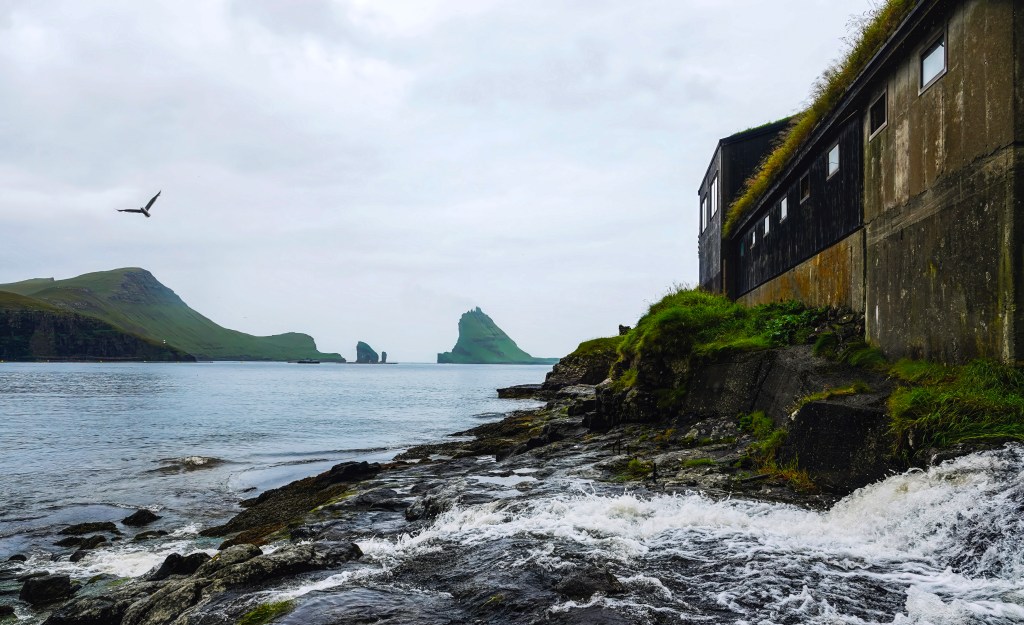
Bรธur is just a short drive from Vรกgar Airport. It lies along the same stretch of coast as Gรกsadalur. Bรธur is a tiny village steeped in history and natural beauty. Around 70 residents live in Bรธur. It is famous for its picturesque turf-roofed houses. These houses are clustered near a small beach and a charming 19th-century church.

From Bรธur, visitors enjoy breathtaking views of the jagged islets Tindhรณlmur and Drangarnir, iconic sea stacks that have inspired countless photographs and paintings. The villageโ€™s peaceful atmosphere and scenic surroundings make it a favorite stop on Faroe Islands sightseeing tours. Village of Bรธur, has couple of restaurants and cafes that you could and enjoy a meal. We stopped here and had a picnic lunch on the black sand beach after out visit to the Mulafossur and took some great photos of Drangarnir from the beach.

Public Transport & Driving

  • From Vรกgar Airport: Both Bรธur and Gรกsadalur are easily accessible by car, making them ideal stops for travelers. The drive to Bรธur takes about 15 minutes, allowing you to enjoy stunning views along the way. Continuing on to Gรกsadalur adds another 5 minutes. This brings the total travel time to 20 minutes through the scenic Gรกsadalstunnilin tunnel. The tunnel offers a unique experience as you pass beneath the mountains.
  • Road Conditions: Roads are well-maintained but narrow and winding. Drive cautiously, especially in foggy or wet conditions.
  • Parking: Designated parking areas are available near both villages. From the Gรกsadalur parking lot, itโ€™s a short walk to the Mรบlafossur viewpoint.
  • By Bus:
    • Bus 300 from Vรกgar Airport to Sรธrvรกgur
    • Bus 350 from Sรธrvรกgur to Bรธur (runs 3x/day on weekdays)

How to Visit: By Boat

  • Boat Tours: Several local operators offer boat tours from Sรธrvรกgur or Vรกgar harbor. These tours cruise along the coast and give stunning views of Mรบlafossur, Drangarnir, and Tindhรณlmur from the sea.
  • Highlights:
    • See Mรบlafossur waterfall from below as it crashes into the ocean.
    • Sail past dramatic cliffs and sea stacks.
    • Spot puffins and seabirds nesting on nearby islets.
  • Season: Most boat tours run from May to September, weather permitting.

The Postmanโ€™s Trail: A Historic Hike Between Bรธur and Gรกsadalur

Before the tunnel was built in 2004, Gรกsadalur was completely isolated, accessible only by boat on calm days or by foot over the mountains. The most famous route was the Postmanโ€™s Trail, a rugged path that connected Bรธur to Gรกsadalur.

  • Distance: ~5 miles round-trip
  • Duration: 3.5 to 4.5 hours
  • Difficulty: Moderate to challenging (steep climbs, uneven terrain)
  • Trailhead: Just past Bรธur, near the tunnel entrance (look for cairns and a narrow dirt path)
  • Summits Nearby: Mt. Rรณgvukollur (464 m) and Knavin (485 m) offer optional detours with panoramic views

The postman hiked this trail three times a week, delivering mail to Gรกsadalurโ€™s residents. Along the way, he would pass dramatic cliffs and windswept ridges. He would eventually descend into the valley where Mรบlafossur Waterfall roars into the sea. It was a view he knew well.

Today, hikers can retrace his steps and experience the Faroe Islands as they were before modern roads. Itโ€™s a journey through history, solitude, and raw nature.

Where to Stay: Gรกsadalur & Bรธur

Whether youโ€™re seeking solitude by the sea or a warm cottage nestled beneath misty mountains, both villages offer unforgettable accommodations.

๐ŸŒฟ Gรกsadalur Stays

  • Lundi Cottage โ€“ Turf Cottage by Mรบlafossur Waterfall A guest favorite on Airbnb, this charming turf-roofed cottage sits right beside the famous waterfall. Expect sheep, birds, and highland cows as neighbors, plus views that feel like a painting.
  • Mรบlafossur Cottages These well-crafted holiday homes offer spacious interiors, warm ambiance, and unbeatable proximity to the waterfall. Ideal for relaxing after a day of hiking or sightseeing.
  • Gรกsadalur Apartments @ World Famous Waterfall Air-conditioned apartments with balconies and full amenities, located steps from the waterfall. A perfect blend of comfort and location.
  • Nearby Options in Sรธrvรกgur & Sandavรกgur If Gรกsadalur is fully booked, nearby towns offer excellent alternatives:
    • Guesthouse Hugo โ€“ Cozy, social atmosphere with sea views
    • Cottages by the Sea โ€“ Waterfront serenity with mountain views
    • Giljanes Camping & Hostel โ€“ Budget-friendly with shared kitchen and lounge

๐Ÿก Bรธur Stays

  • The View to Drangarnir, Tindhรณlmur & Mykines These are a cluster of four traditional Faroese turf-roofed houses. They are built to blend into the landscape. These homes offer panoramic views of the famous sea stacks and are among the highest-rated stays in the Faroe Islands.
  • Airbnb Options in Bรธur Bรธur features several unique rentals with rustic charm and modern amenities. Many offer full kitchens, cozy living spaces, and direct views of the ocean and nearby islets.
  • Nearby Sรธrvรกgur Accommodations Just a short drive away, Sรธrvรกgur offers:
    • Lรธรฐupackhouse โ€“ Historical Warehouse โ€“ A renovated 100-year-old harbor house
    • Perlan Apartments โ€“ Sea-view apartments with full kitchens
    • Pouls Airport Guesthouse โ€“ Convenient for travelers, with car rental options included

Skarรฐsรกfossur: The Hidden Waterfall of Vรกgar

While Mรบlafossur steals the spotlight, Skarรฐsรกfossur is just a short distance away. It is a lesser-known but equally breathtaking waterfall. It tumbles from the cliffs onto a small black stone beach. This secluded cascade is positioned between Bรธur and Gรกsadalur. It offers a more intimate and wild experience for those willing to seek it out.

Location & Landscape

  • Coordinates: Roughly 2 km west of Bรธur, near the tunnel entrance to Gรกsadalur
  • Setting: Rugged cliffs, black stone beach, and panoramic views of Tindhรณlmur, Drangarnir, and the skerry Akranessker
  • Wildlife: Puffins and seals are often spotted in the area

The waterfall is best viewed after rainfall, when its flow is strongest and most dramatic.

Best Way to Visit: By Boat

Because the land surrounding Skarรฐsรกfossur is private property, the best and most respectful way to see it is from the sea:

  • Boat Tours: Depart from Sรธrvรกgsfjรธrรฐur and cruise past Skarรฐsรกfossur, Drangarnir, and Tindhรณlmur
  • Experience: Boats can get close enough to hear the crashing water and feel the spray
  • Recommended Tour: Drangarnir Boat Tour includes Skarรฐsรกfossur as a highlight

Land Access: A Rugged Adventure

While not officially marked, adventurous hikers sometimes approach the area from land:

  • Trailhead: Just before the tunnel to Gรกsadalur, near Bรธur
  • Route: Hike down toward the ocean, aiming for the skerry Akranessker
  • Terrain: No visible path; grassy fields used for sheep herding, rocky coastline, and steep descents
  • Caution: Slippery rocks and private landโ€”respect boundaries and avoid trespassing

Bluegate โ€“ Drangarnir & Mรบlafossur Boat Tour

Highlights: Aย 60โ€“75ย minuteย tourย originatesย fromย Sรธrvรกgurย marina. On this boat tour you will visitย Bรธurย village,ย Mรบlafossurย waterfall,ย Tindhรณlmurย islet,ย andย theย Drangarnirย seaย stacks. Weatherย permitting,ย guestsย mayย sailย throughย Drangarnir’sย seaย arch.ย Smallย boatย sizeย  (12ย passengers)ย ensuresย aย personalย experience.ย In the summer months, you may be able to see some puffins.

๐Ÿ“Œ Meeting Point: Sรธrvรกgur marina

โ˜Ž๏ธ Phone: 780800

๐ŸŒย Website:ย bluegate.fo

Seatravelย โ€“ย Exclusiveย Drangarnirย Boatย Tours

Highlights:1.5ย hourย toursย fromย Sรธrvรกgurย toย Drangarnir,ย Mรบlafossur,ย Tindhรณlmur,ย andย Akrans.ย Focusesย onย intimateย smallย groupsย (maxย 16ย passengers),ย guidedย byย experiencedย captains.ย 

๐Ÿ“Œ Meeting Point: Sรธrvรกgur marina

๐ŸŒ Website: seatravel.fo

Final thoughts

Exploring Mรบlafossur and the village of Gรกsadalur is like stepping into a living postcardโ€”where natureโ€™s drama meets quiet village charm. From the iconic waterfall plunging into the Atlantic to the serene beauty of Bรธur and the tucked-away Skarรฐsรกfossur, this corner of the Faroe Islands offers a rare blend of accessibility and mystery.

Whether you’re chasing waterfalls, hiking cliffside trails, or simply soaking in the silence, this guide is your invitation to slow down and let the landscape speak. The Faroe Islands arenโ€™t just a destinationโ€”theyโ€™re a mood, a rhythm, a reminder that the most unforgettable places are often the ones that feel untouched.

So pack your layers, charge your camera, and bring your sense of wonder. Gรกsadalur and its neighbors are waiting.

The Wabi-Sabi Legacy of Quรฉbec City’s Cannonball Tree

After roaming around the old Quebec city, my friend and I took a break on a bench in front of Chรขteau Frontenac. A sculpture that stood in the middle drew my attention. I had been in Qubec city for a couple of days. I spent a lot of time taking photos of the Chรขteau Frontenac and Place d’Armes public park. In the middle of the park is a Gothic fountain on which stands the Faith Monument (monument de la Foi) and this statue is next to the Faith Monument. Somehow, I had missed the statue until that moment. I decided to take a photo and try to find more information. I couldn’t find much in my quick Google search. But something about the sculpture seemed familiar, and I had a nagging feeling that I had seen it somewhere before.

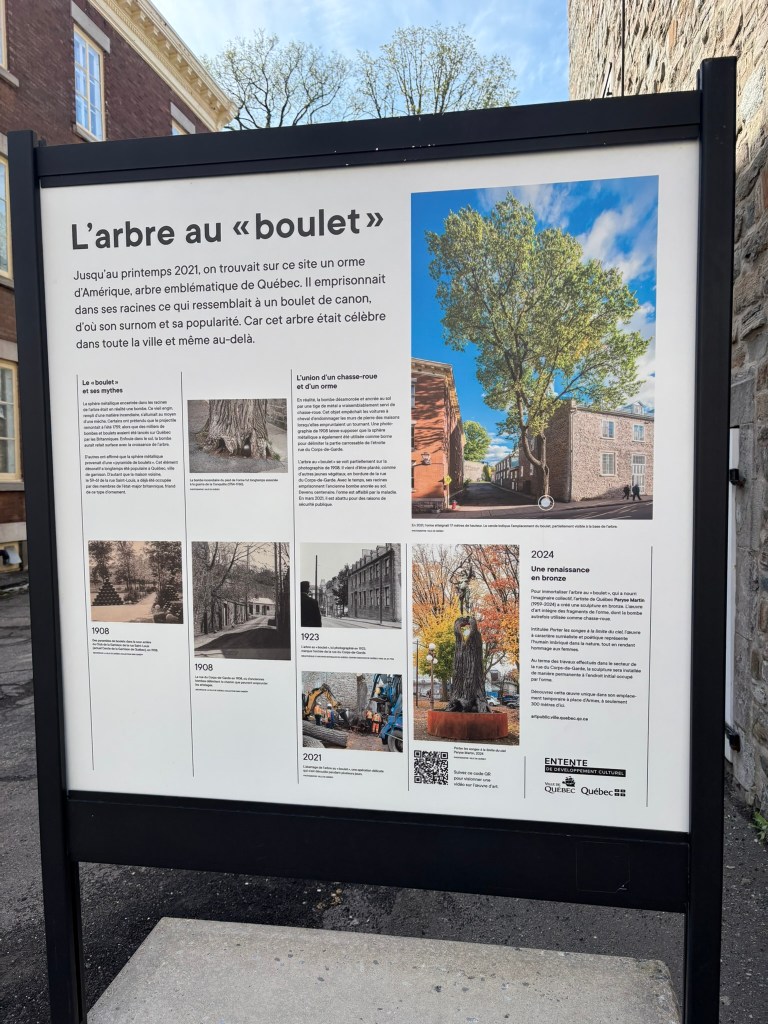
After coming home, I was downloading the photos. I saw a picture of a sign. I had taken it in front of one of the old houses on rue St-Louis that morning. This was before I saw the sculpture. The sign had the photo of the sculpture. Since everything was in French, I didn’t understand what it was until I used Google Translate.

Story of Ball and the Chain Tree

Just beyond the grandeur of Chรขteau Frontenac, where cobblestones echo with centuries of footsteps, a tree once stood. It held a secret in its heart. Locals called it the Cannonball Treeโ€”Lโ€™Arbre au Boulet. It was an American elm that had cradled a rusting iron sphere for over a century. Legend has it that the cannonball was a relic from the 1759 Battle of the Plains of Abraham. Truth or not, the story stuck, and so did the awe.

Time, as it always does, wore the tree down. Disease crept in. The roots weakened. And in 2021, the city bid farewell. But not with silenceโ€”with reverence.

The cannonball was carefully removed by the Canadian Armed Forces, and the treeโ€™s trunk was preserved. Today, in front of Chรขteau Frontenac, a sculpture standsโ€”crafted from the very wood that once held history in its bark. Itโ€™s not polished to perfection. The grain is rough, the form organic. It doesnโ€™t try to erase the pastโ€”it honors it.

This is wabi-sabi in its purest form: the beauty of what remains after loss. A tree that once bore the weight of war now offers a place for reflection. Tourists pause, not just for photos, but for silence. For story. For the reminder that even in decay, there is dignity.

Quรฉbec City didnโ€™t just lose a tree. It gained a monument to impermanence.

Embracing Imperfection: The Story of Stumpy the Cherry Tree

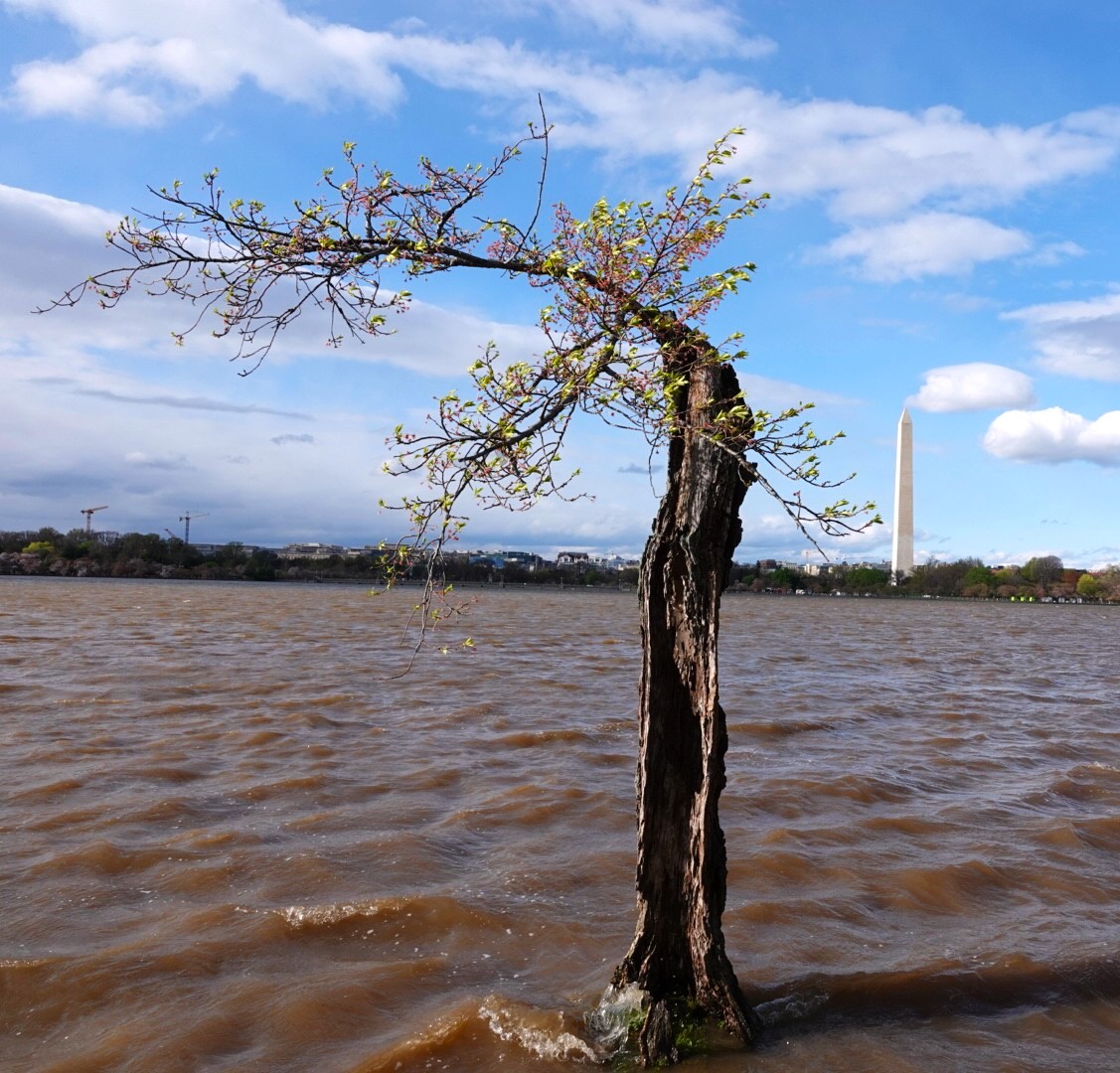
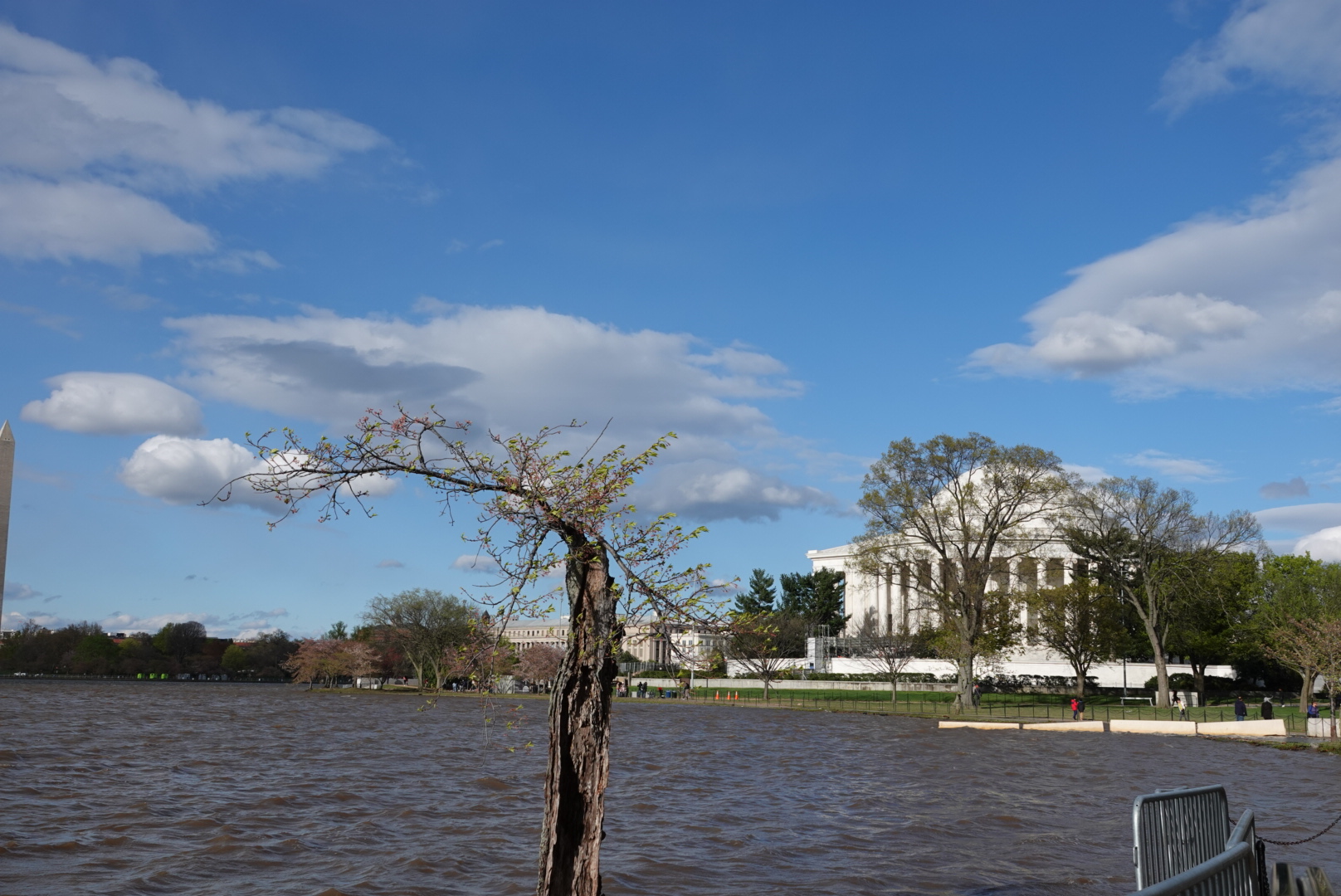
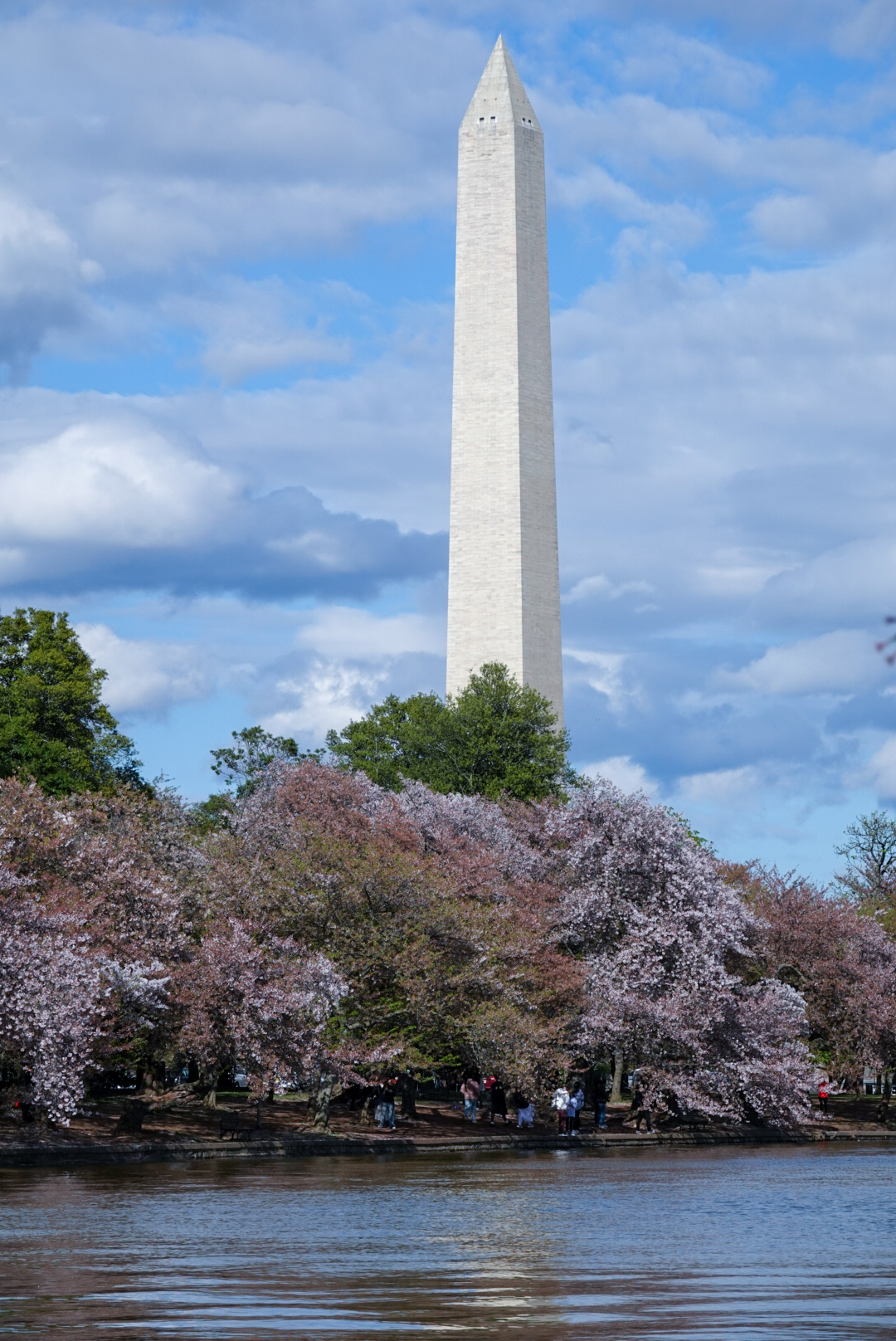
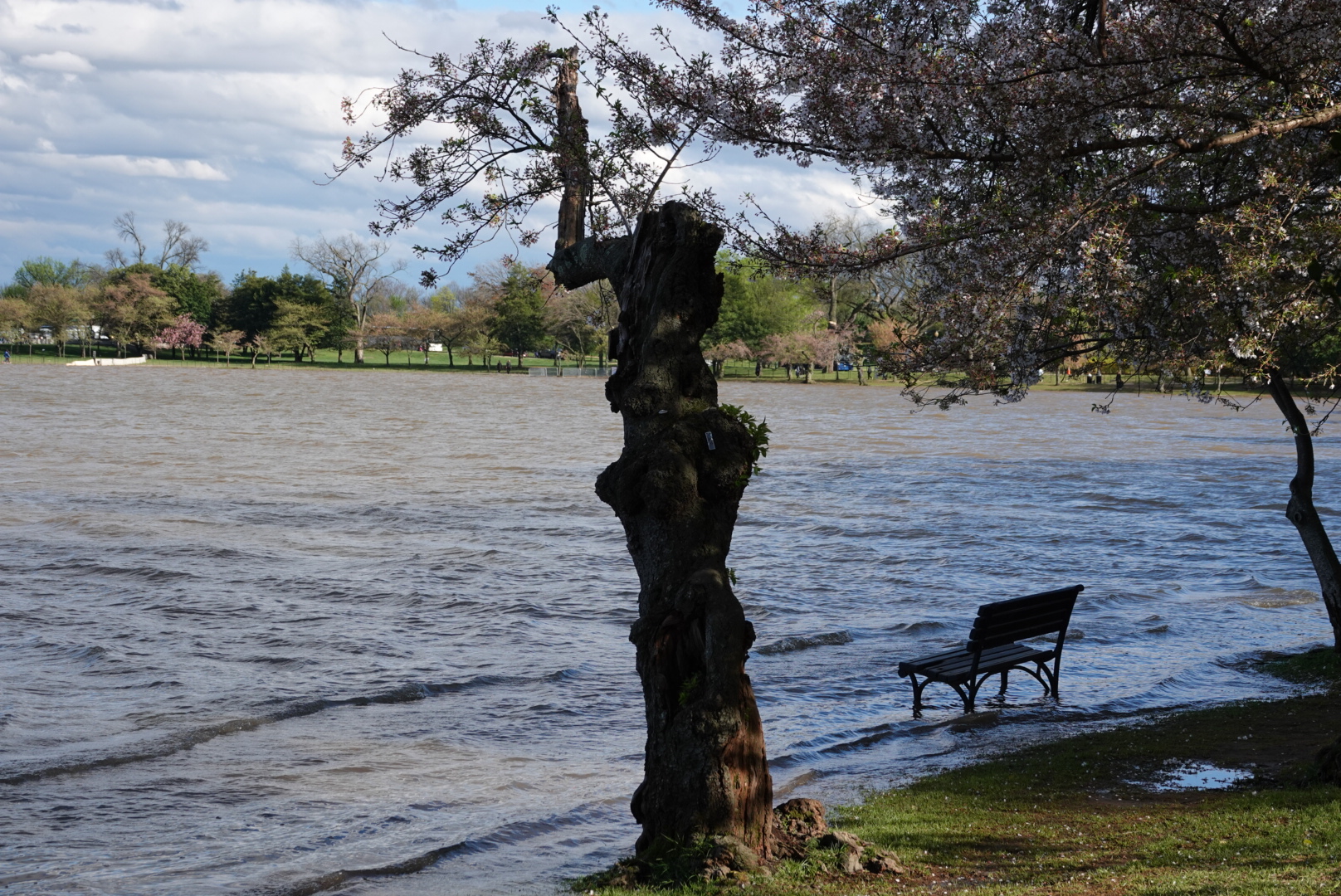
In the heart of Washington, D.C., nestled along the Tidal Basin, stood a tree that looked more like a memory than a monument. Stumpy, as he came to be known, was a Yoshino cherry treeโ€”gnarled, hollowed, and barely clinging to life.

Stumpy was one of thousands of Cherry trees gifted by Japan in 1912, a symbol of friendship. But over time, rising tides and sinking land turned the basin into a twice-daily flood zone. Stumpy, rooted too close to the seawall, endured years of waterlogging, sun-scalding, and fungal decay. By the time he captured the publicโ€™s imagination, he had only a few flowering branches left. His trunk was more air than wood. But oh, how he bloomed. During the pandemic, a photo of Stumpy appeared on Reddit. It had a caption comparing his condition to a love life gone awry. Something about that imageโ€”a tree so clearly broken, yet defiantly blossomingโ€”resonated. People began to visit. They left flowers, poems, even bottles of whiskey. Stumpy became a folk hero, a symbol of resilience, and a quiet reminder that beauty doesnโ€™t need perfection

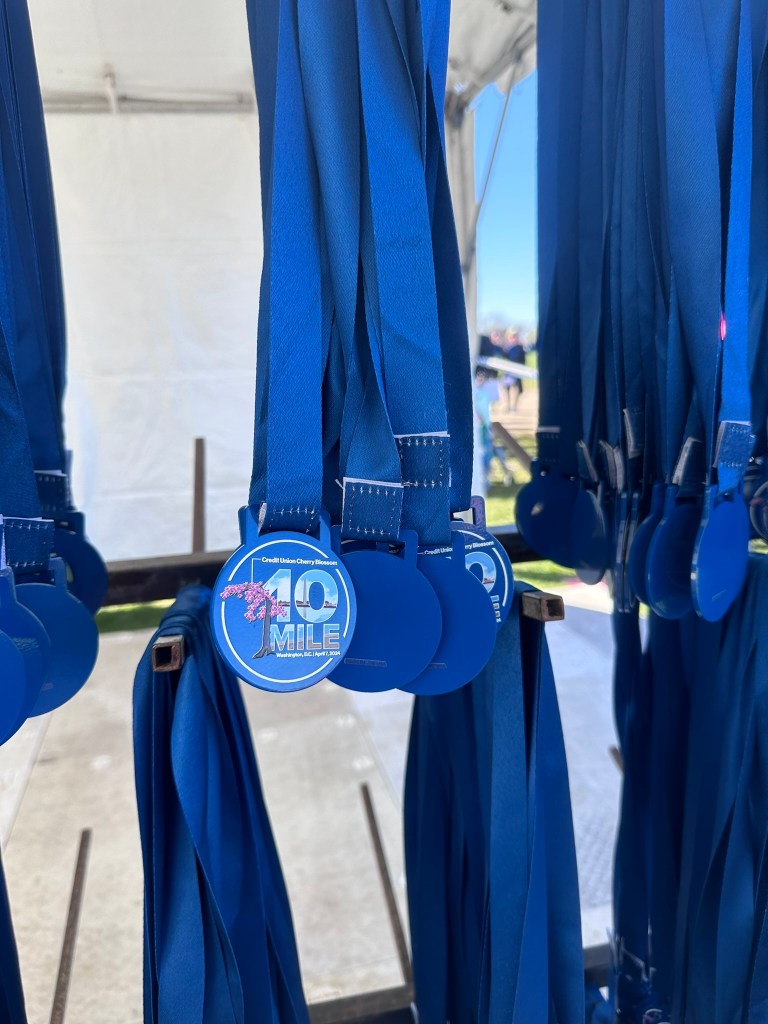
In May 2024, Stumpy was removed to make way for seawall repairs. But his story didnโ€™t end thereโ€”it evolved. Since 2024, Stumpy has been honored as the mascot of the Credit Union Cherry Blossom Ten Mile Run. I got to see Stumpy before he was removed and managed to snap a few photos of him in 2024 April before running the Cherry Blossom race. I also received a medal with Stumpy on it after finishing the race. Even though Stumpy is gone, his legacy lives on through his clones and his role as the official mascot.

Wabi-Sabi teaches us to embrace the imperfect, the transient, the quietly profound. Stumpy was all of thatโ€”and more. He didnโ€™t stand tall or symmetrical. He stood anyway. And now, even in his absence, he leads the race.

Stopping by the woods on a snowy evening

Whose woods these are I think I know.   

His house is in the village though;   

He will not see me stopping here   

To watch his woods fill up with snow.   

My little horse must think it queer   

To stop without a farmhouse near   

Between the woods and frozen lake   

The darkest evening of the year.   

He gives his harness bells a shake   

To ask if there is some mistake.   

The only other soundโ€™s the sweep   

Of easy wind and downy flake.   

The woods are lovely, dark and deep,   

But I have promises to keep,   

And miles to go before I sleep,   

And miles to go before I sleep.

Robert Frost

I read this poem by Robert Frost as part of high school class. On a literal level, this a very simple poem describing the beauty and tranquility of a snow covered trees and appreciating the solitude in the nature. Being grown up in Southern India and not having seen snow or snow covered trees, I was still able to appreciate the message and imagery of the poem as Robert frost’s paints a beautiful scene with his simple yet powerful words. The full impact of the scenery didn’t hit me until I moved to Wisconsin, and then to Northeast of US where there were many snowy evenings and mornings and I always appreciated the calmness snow brought and serenity it created.

The last stanza of the poem stayed with me as its meaning seemed deep even as a teenaged but like an onion, this poem has many layers and meaning of the poem becomes deeper as you peel the layers of the simple lines. The true meaning of the poem didn’t dawn on me until I was walking around one late afternoon in the Finnish Lapland. I don’t know about you but my mind never stops chattering and continuously thinks about various things I need to do, past mistakes and events, worries about the future and everything else under the sun. But on that day, surrounded by snowy woods and not another soul anywhere close, my mind became quite. It wasn’t eerie quite that chills you to the bone but a serene and peaceful feeling that enveloped me. For few minutes nothing mattered and I had no thoughts and no chatter. On a philosophical level, this poem is about the juxta positioning of responsibilities and escaping the realities of the world- a constant struggle between practical and ideal. The snowy woods represent the ideal world of here and now and encompasses the true nature of mindfulness while the bell on the horse is a reality check that draws back to your responsibilities. I have been practicing mindfulness for a little while now and until that moment in the woods, I never truly experienced what it means to be present.

Potatoes to Pisco Sours- A gastronomical experience of Peruvian cuisine

โ€œYou have to taste a culture to understand itโ€ โ€“

 Deborah Cater

One of the greatest perks of travelling is the opportunity taste different cuisines and there is no better way to understand a country than through their food. Peruvian cuisine is very unique and considered to be one of best gastronomical experiences. Known as the Creole food due to the multi-cultural influences including Spanish, Chinese, Italian, African and of course Incan culture, Peruvian cooking incorporates various cooking techniques and ingredients from various parts of the world creating a colorful tapestry of flavors and taste. No matter which part of Peru you are, you can try unique cuisine from that area. The touristy places like Olly, Machu Picchu, Cusco, and Lima have restaurants that offer potatoes (Incan cuisine) to stir fry (Chinese influence) to Ceviche that is almost synonymous with Peru.

Potatoes are now universal but originated in Peru and spread around the world when Spaniards brought it to rest of the world. Peru is supposed to have around 3000 variety of potatoes and when we were there, we ordered Potatoes with every one of our meals with Pisco Sour. It became an on-going joke with the kids that I would order Potatoes and Pisco Sours in every restaurant, and I did.

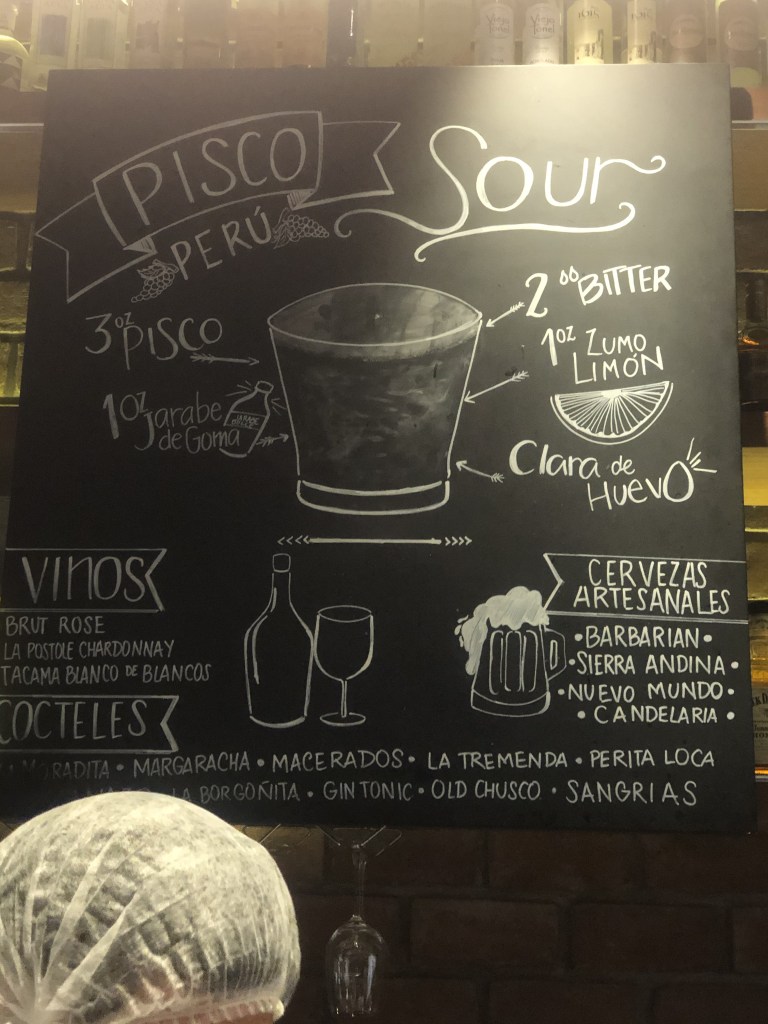
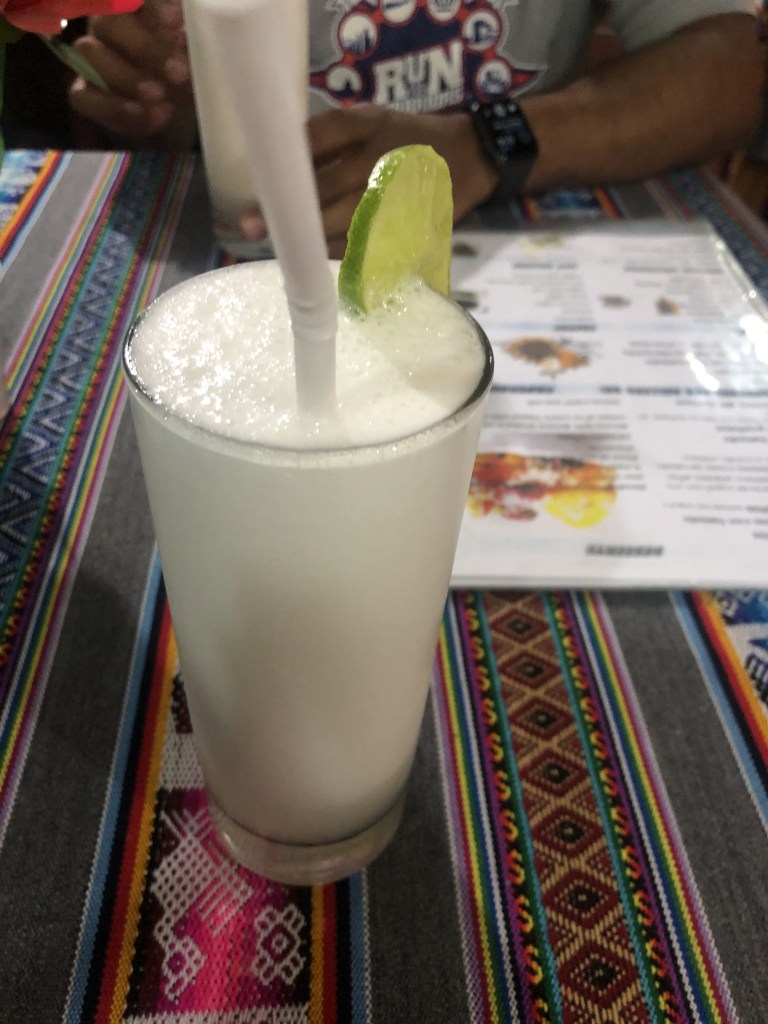
Pisco Sour: Pisco sour is the national drink of Peru and it is made with a grape brandy (Pisco), lime juice, egg whites and bitters. Like all other dishes of Peru, this drink has a complex flavor with sour, sweet and bitter notes. I prefer Chilian version of pisco sours over the Peruvian version, but you should at least try it to see what the fuss is all about.

Ceviche : You can’t miss the national dish of Peru- Ceviche which is made with raw fish/shrimp or squid infused with lemon juice and served with local spices and hot Peruvian Chile, Plantain chips. As vegetarians, we didn’t try the traditional Ceviche but were able to try vegan version with Mushrooms at the Green Point Restautant in Cusco. This restaurant is so good that you will forget you are earing vegan food and mushroom Ceviche with toasted corn and sweet potato definitely hits the spot.

Arroz chaufa : This dish is made with either white or brown rice, vegetables and meat which are stir fried together is a good representation of Chifa cuisine a blend of Chinese-Peruvian hybrid cuisine. Chifa cuisine is an example of cross cultural influences of Peruvian cuisine through Asian immigration in 19th century.

Chica Morada : Chicha morada is a traditional Peruvian purple corn drink that is not only beautiful to look at but really tasty. You can find it in every restaurant as well as a street food. San Pedro Market in Cusco is a good place to try this drink.

Cuy: No Peruvian cuisine scene is complete without mentioning Cuy- the fried Guinea pig. I prefer Guinea pigs as pets but in Peru, it is considered as a delicacy and if you are the adventurous type and want to try it, you try it pretty much in every place including food stall in San Pedro market.

I would highly recommend a food tour if you are in Lima and want to try some of the bold, tasty, and unique, multi-cultural cuisines of Peru. You can find multiple options here . Bon Appetite and happy travels!!!