
On our trip to Bosnia, we were fortunate enough to stay with a Bosnian family in Mostar. We stayed with them for 2 nights and heard war stories and had dinner with them at a local restaurant. The host house was located about 10 min uphill from the old stone bridge of the Mostar, the main attraction in the city. Like rest of the country, Mostar was also affected by the war in 1990s and our host family’s house was completely destroyed. The was on Mostar was between the between the Bosnian Croats and Bosniaks (Bosnian Muslims) and 30 year later the town is still divided into Christian and Muslim parts. During the war, the famous bridge that stood for 400 years was destroyed by the Croats and has been since re-built with international help.
Things to do in Mostar
Stari Most – The old bridge
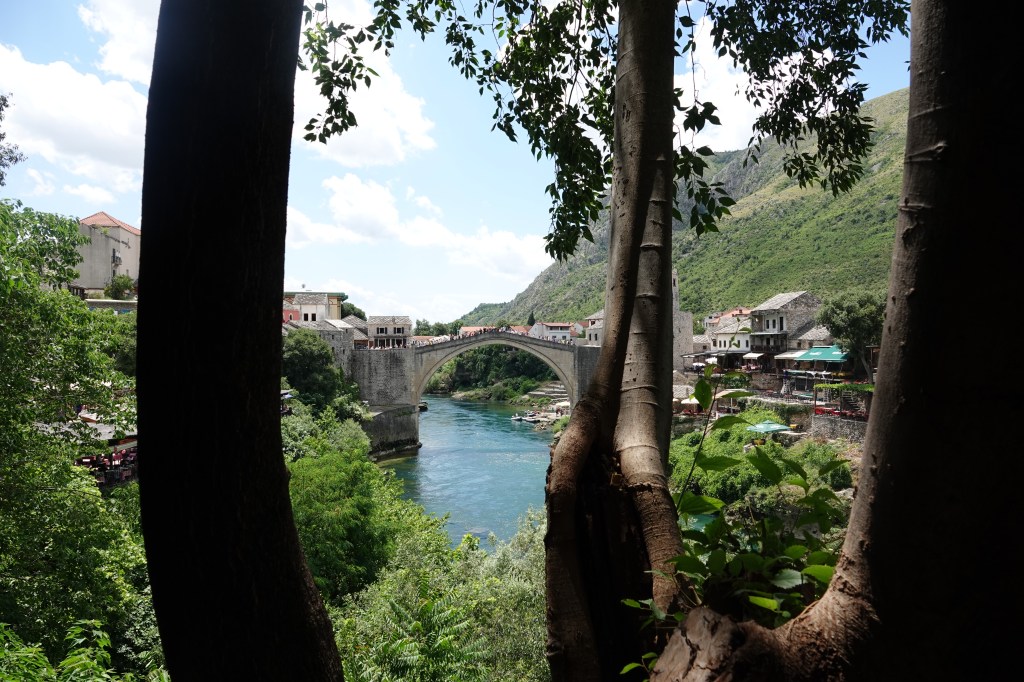
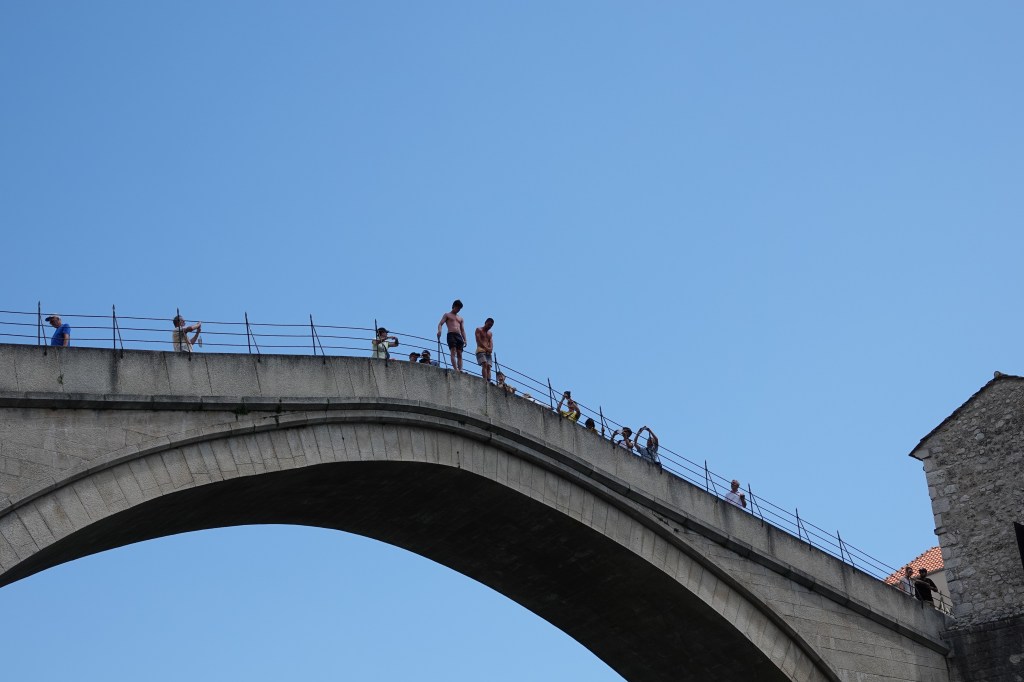
The city of Mostar gets its name from the old stone bridge – Star Mosti (literal meaning old bridge). The bridge, a masterpiece of Ottoman Turkish architecture, was commissioned by none other than Suleiman the Magnificent, and designed by Mimar Hayruddin, a student of the famous Mimar Sinan, the architect of Istanbul’s many famous landmarks. Building of the bridge started in 1557 and completed 9 years later. Simple yet elegant, the bridge consists of a single 30-meter-wide and 24-meter-high arc, connecting the steep riverbanks of Neretva River. Two towers protect the entrances to the bridge.
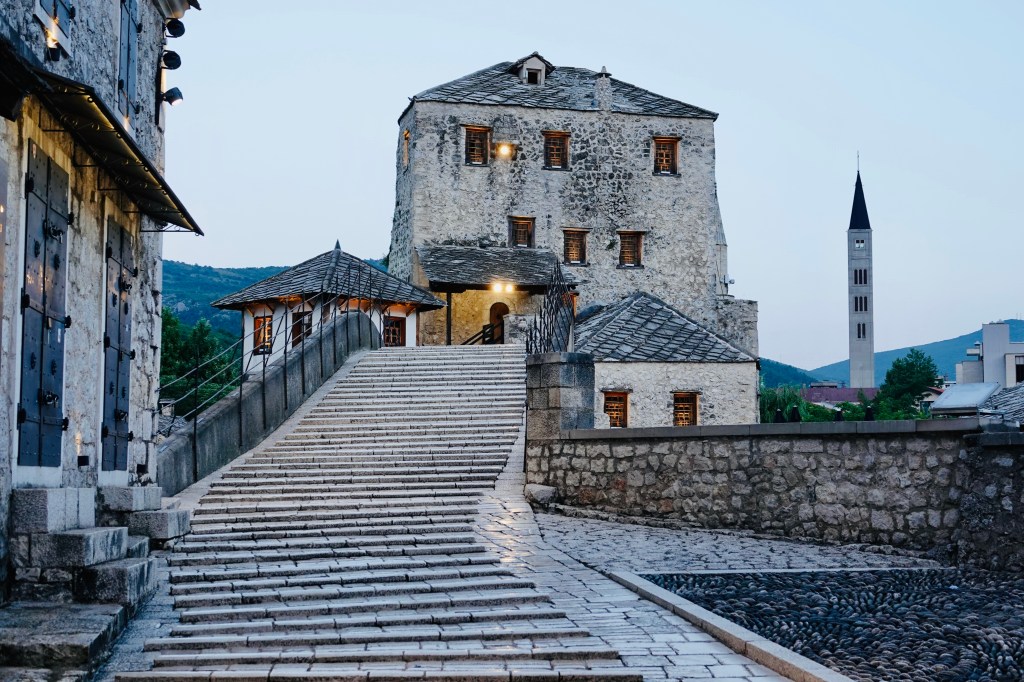
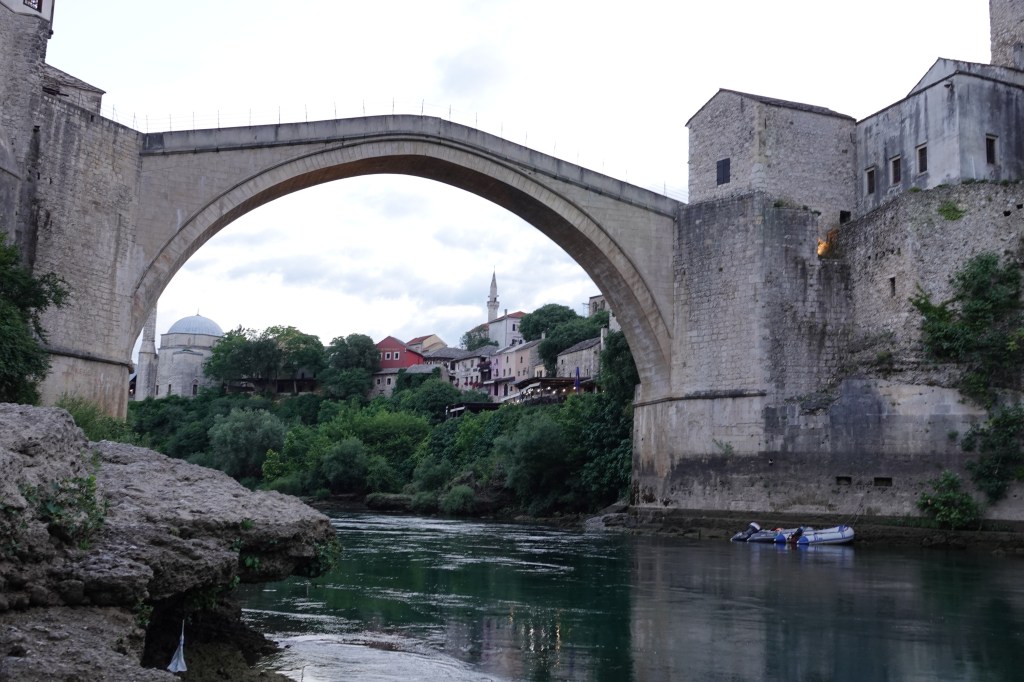
Most people visit Mostar as a day trip from Dubrovnik or Split, Croatia and during the daytime, the old town is filled with day trippers. Since we were staying in Mostar, we were able to visit the bridge both early morning (5.30 AM -thank you Jetlag) and late at night. If you want to take the picture of the bridge without tons of people, early morning is your best bet. The best places to get a good picture is either to cross the bridge and go down to the beach area or from one of the many restaurants around. We found that Urban taste of Orient had really good views as well as good food.
One of the popular things to do at the bridge is to watch/participate in diving from the bridge. Local dive club collects money from the tourist and jump from the bridge into the river. Once in a while, a tourist would join the fun and jump from the bridge. You have to pay 25 euros and practice few times from lower platform before you can jump. We watched at least 3 dives from Urban Cafe while eating lunch.
Kriva Cuprija- Crooked bridge of Mostar
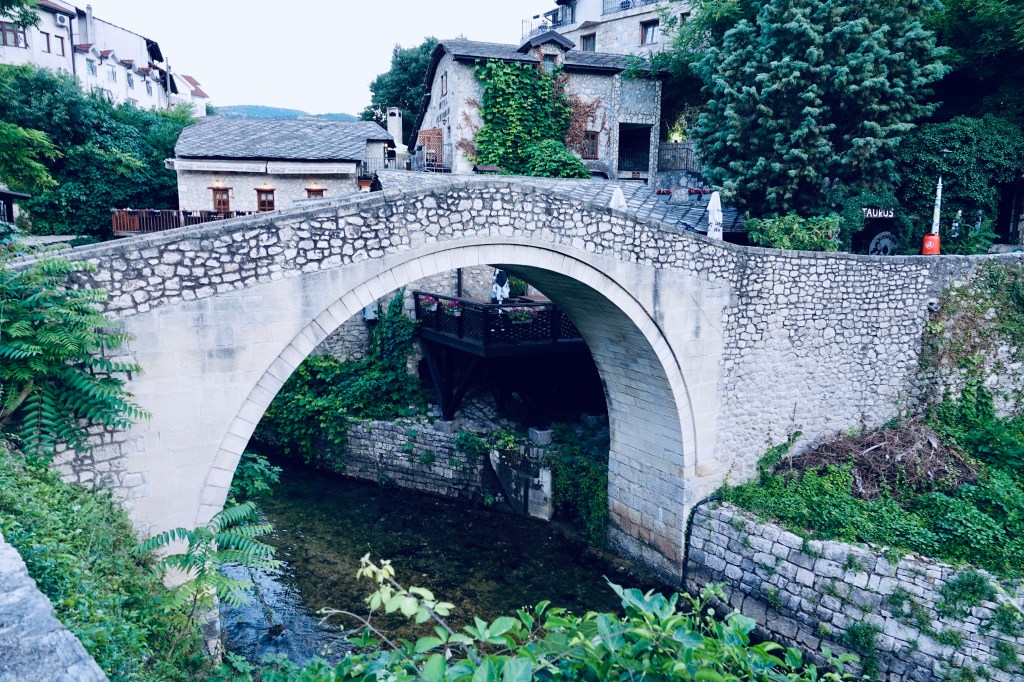
The area near the Old Bridge of Mostar is home to another historic structure known as the Kriva Cuprija, or the Crooked Bridge. This quaint bridge spans the Rabobolja creek, a right-bank tributary of the Neretva River. Although the precise date of its construction and the identity of its builder remain unknown, the bridge embodies a timeless charm.
Similar to the Stari Most, the Kriva Cuprija is a small stone bridge with a single arch. Its arch forms a perfect semicircle, measuring 8.56m in width and 4.15m in height. The frontage and vault consist of regular stone cubes arranged in horizontal layers along the vault. The space between the vault, frontal walls, and footpath is filled with cracked stone, while the bridge footpath and surrounding roads are adorned with cobblestones, mirroring the town’s main thoroughfares. Stone steps on either side of the bridge allow access from the lower terrain.
Tragically, the floods of December 2000 ravaged this iconic structure, highlighting the vulnerability of historic landmarks to natural disasters. The bridge was rebuilt with support from UNESCO.
Old Bazar Kujundžiluk and Coppersmiths of Mostar
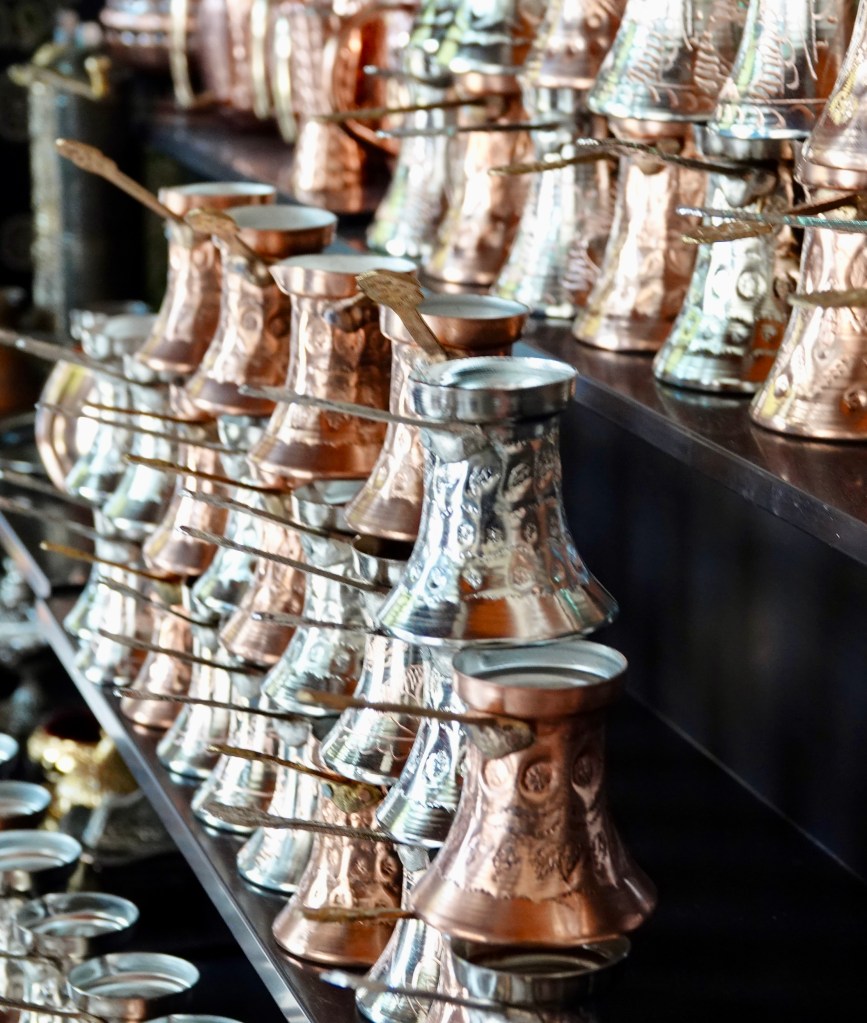
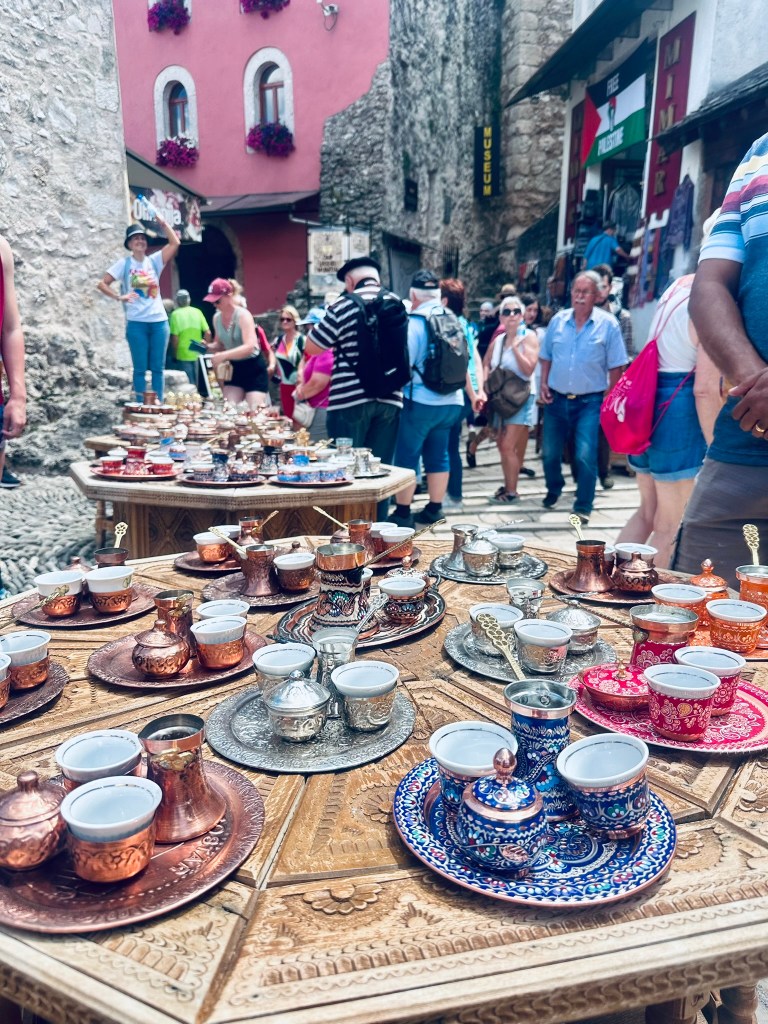
The Old Bazaar Kujundziluk has a rich history, serving customers since the 16th century. Located in the oldest part of Mostar, it offers charming, cobbled streets for visitors to explore. The area is renowned for its vibrant sights, lively sounds, and historic buildings, providing an authentic and captivating experience. The colorful old buildings, tinted in shades of red, blue, green, and yellow, tell stories of Mostar’s past. If you want to buy any copper souvenirs this is the place to buy it.
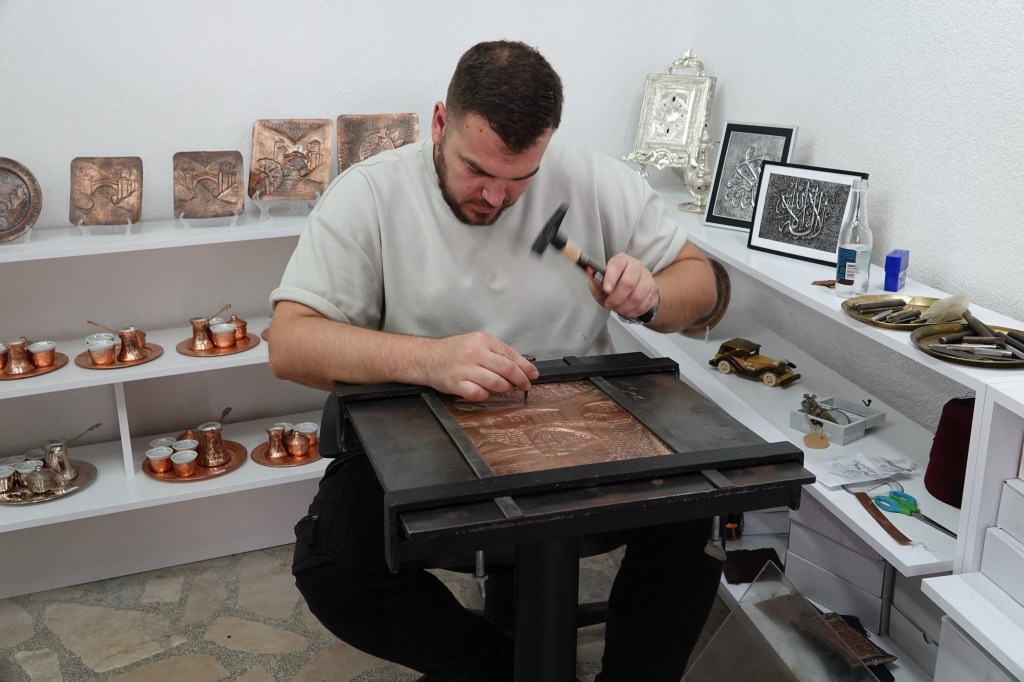
Pro tip- According to our guide, listen to the “Chink” ” Chink” noise of the copper smith working in the shop to know that you are buying an authentic, handmade item not mass-produced cheap knockoff. We found a shop in the courtyard of Koski Mehmed Pasha Mosque where the owner was working with his tools and had some really cool stuff.
Koski Mehmed Pasha Mosque
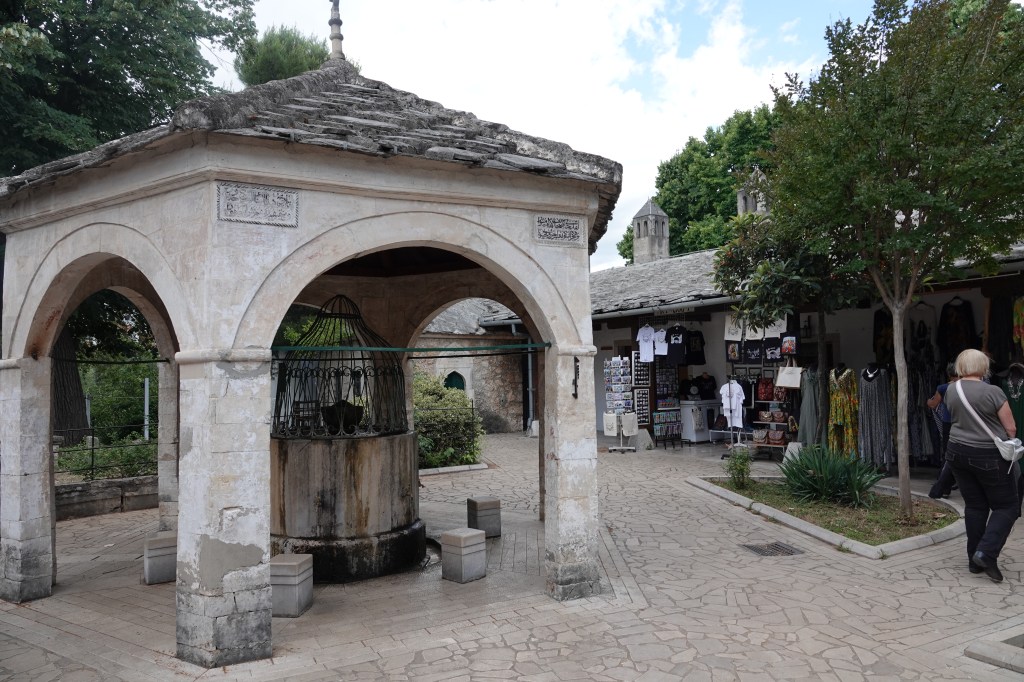
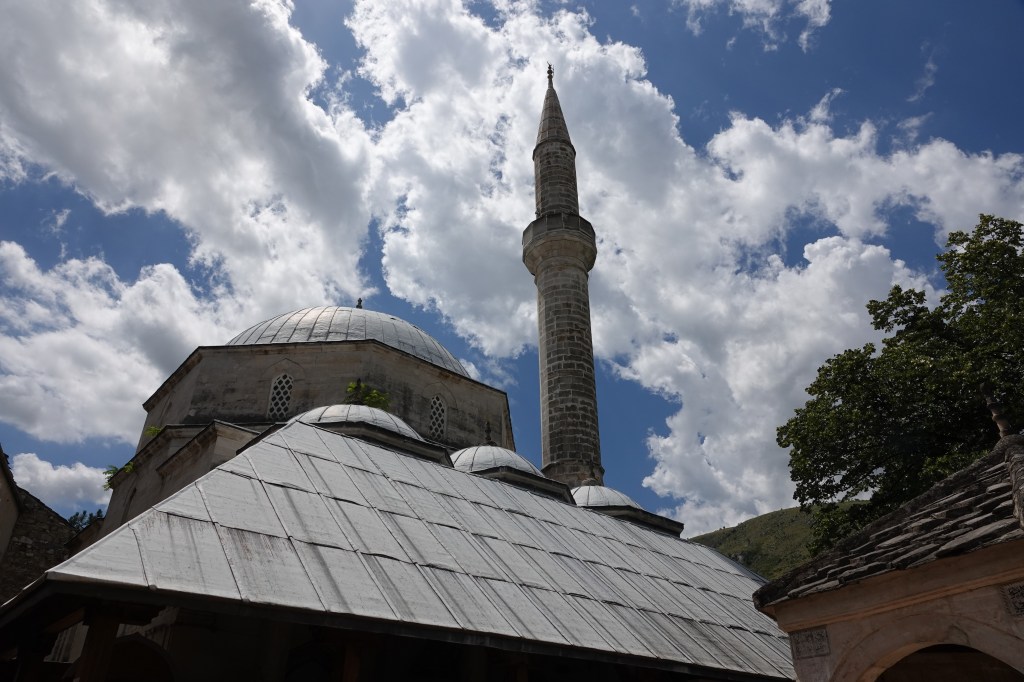
Constructed in the 17th century during the Ottoman era, the Koski Mehmed Pasha Mosque stands as a masterpiece of the esteemed Ottoman architect, Adžem Esir Ali. It is a highlight of Mostar for two main reasons: its significant historical importance and cultural symbolism, and the unique chance it offers visitors to ascend the minaret for breathtaking panoramic views of the city, encompassing the Stari Most and the charming old town.
As a functioning place of worship, the mosque welcomes visitors outside the designated prayer times. An entrance fee of €7 is applicable.
Catholic Church and the Franciscan Monastery
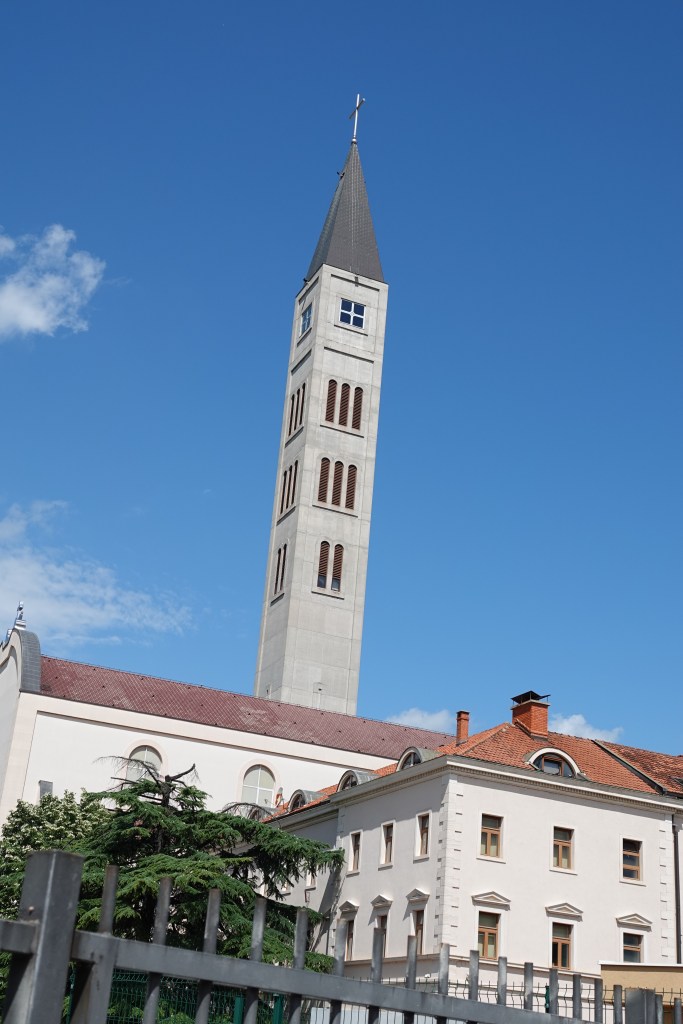
The Mostar Peace Bell Tower (Mostarski Zvonik Mira) is one of the first landmarks of Mostar we noticed as it dominates the landscape of Mostar. The bell tower of the church is the highest construction in the city, boosting 107m of height and you take an elevator will to more than halfway up, to 45 meters of the 75-meter-high viewing area, providing a panoramic 360-degree view. You can walk up the remaining 30 meters.
The Fortica Fortress and skywalk
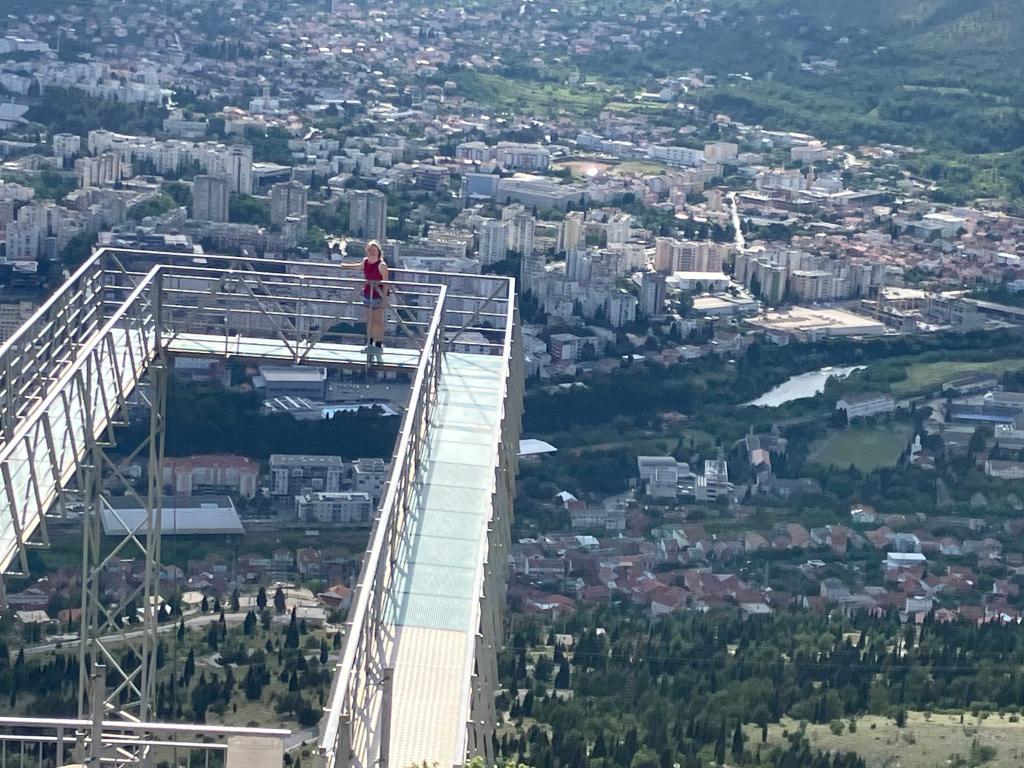
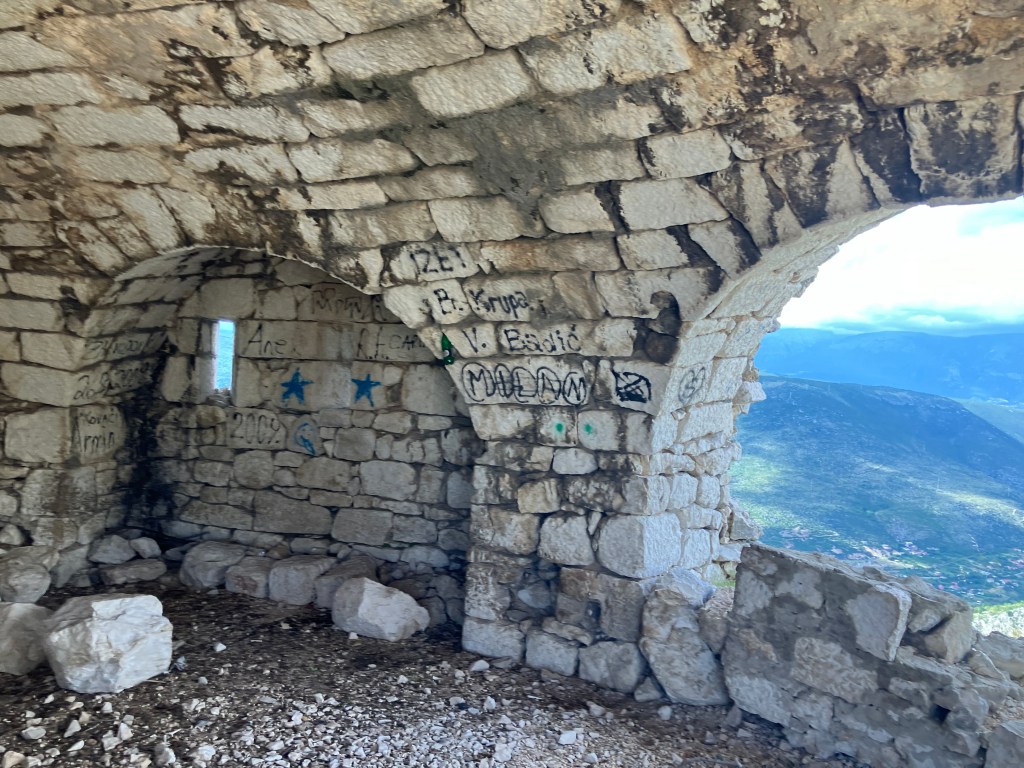
Skywalk in Fortica Park is a new attraction in Mostar with a 35-meter-long transparent walkway with panoramic views of Mostar. It is located on Fortica hills which have ruins of medieval fortress that you can explore. Fortica park also has the longest zipline in Bosnia but unfortunately the day we were there, it was too windy to operate. You will also see the “I love Mostar” sign here.
Church of Holy Trinity
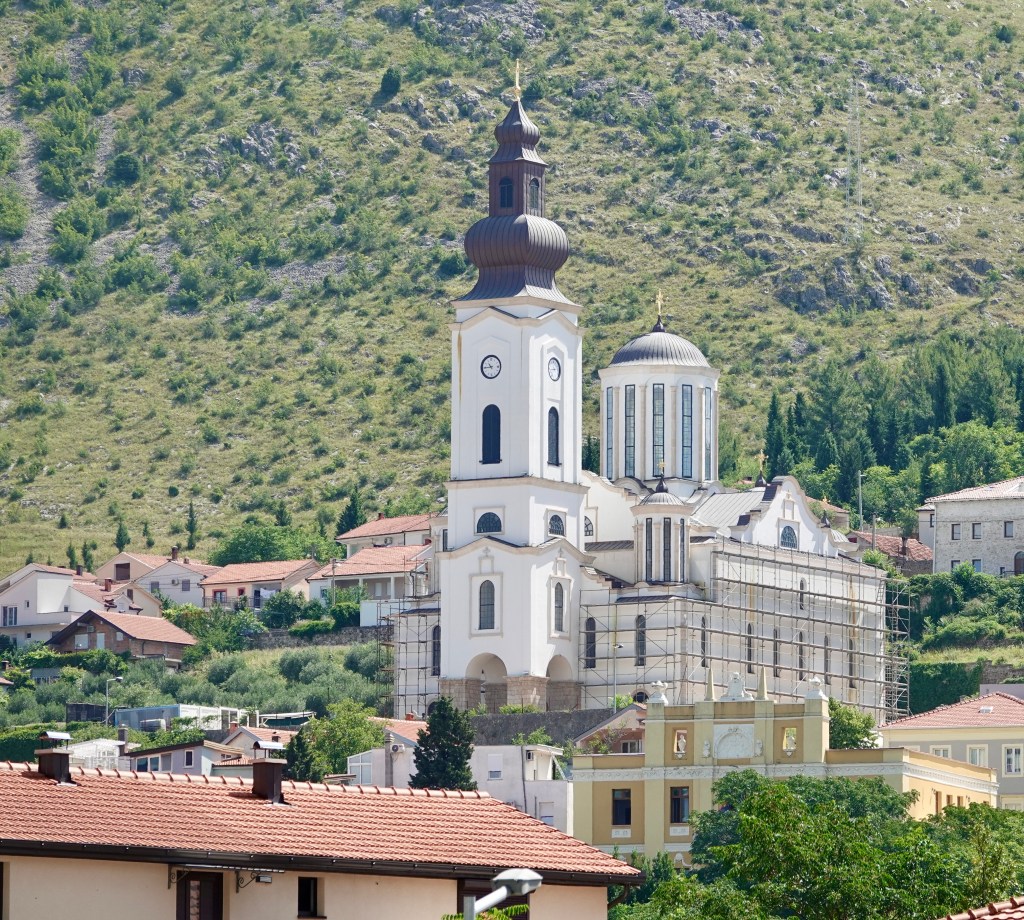
The Church of the Holy Trinity, often referred to simply as the Church of Mostar, stood as a symbol of religious and cultural significance in the region. Its architectural grandeur and historical importance made it a focal point for both the Orthodox community and the broader local population. With its roots reaching back to the Ottoman Empire and the patronage of Sultan Abdulaziz, the church’s heritage intertwined with the complex tapestry of the Balkans’ history. The turbulent times of the Bosnian War in the 1990s brought significant upheaval to the region, leading to extensive destruction of cultural and religious landmarks, including the Church of the Holy Trinity.
The commitment to restoring the Cathedral of the Holy Trinity began in 2010, offering hope for the future of Mostar and its people. Three anonymous friends donated three large clocks to be placed on the church tower’s three sides, each featuring different numerals – Arabic, Roman, and Slavic – symbolizing harmony among the city’s faiths. As the cathedral’s restoration neared completion, adherents of three faiths – a Muslim Bosnian, a Catholic Croat, and an Orthodox Serb – demonstrated the city’s continued interfaith tolerance.
Karađoz Bey Mosque
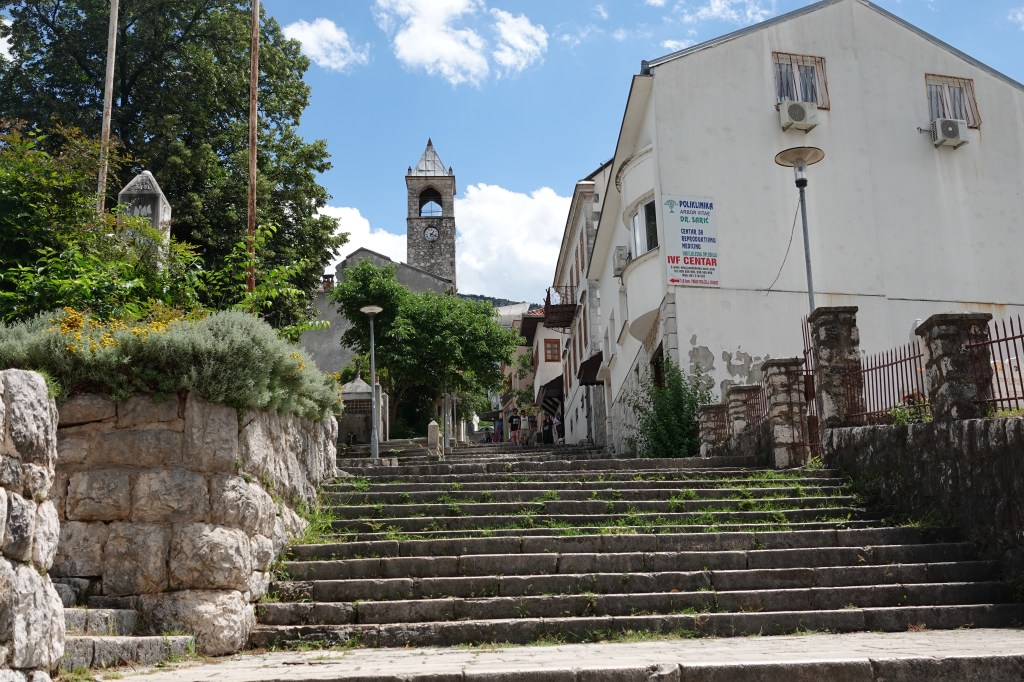
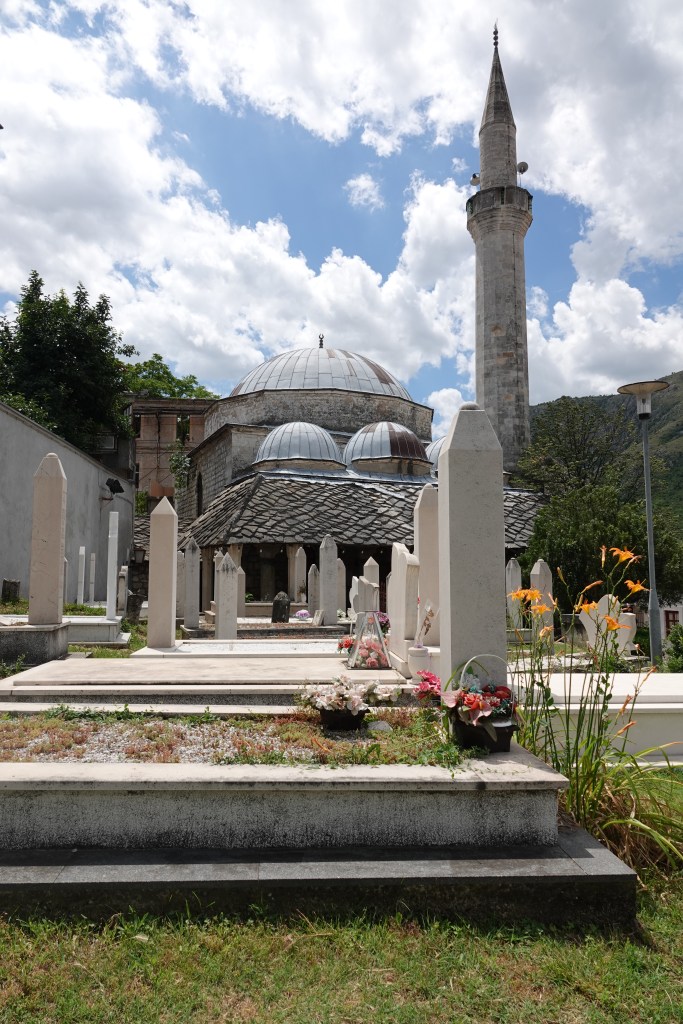
The historical significance of this charming 16th-century mosque cannot be overstated. Steeped in the rich cultural tapestry of Mostar, it not only offers visitors a stunning viewpoint of the city from its minaret but also serves as a testament to the enduring legacy of its founder, Karađoz Bey.
The ties to the region’s past are palpable, as Karađoz Bey, the mosque’s founder, was the brother of a former Herzegovina governor. Despite having endured substantial damage during World War II, the mosque stands as a resilient symbol of architectural and historical preservation. In fact, the well-preserved structure, coupled with the inviting portico that provides shade and seating for visitors, makes it a compelling stop for those embarking on a leisurely exploration of Mostar.
Adding to its allure is the presence of the oldest Muslim cemetery in Mostar, situated behind the mosque. This sacred space exudes an air of reverence and tranquility, offering visitors the opportunity to reflect on the passage of time and the enduring traditions of the local community.
For those considering a visit, it’s worth noting that there is an entrance fee of approximately 5 Bosnian marks, with an additional fee for accessing the minaret’s viewpoint.
Overall, the 16th-century mosque and its surroundings encapsulate the essence of Mostar’s historical and cultural heritage, inviting visitors to partake in an enriching journey through time and tradition.
Things to do around Mostar
Blagaj Tekke- A peaceful oasis

Buna Canals- Where river Neretva kisses River Buna

Village of Počitelj

Kravica Waterfalls- Oasis in Stone

Final Thoughts
Mostar and surrounding area are a must visit for anyone visiting Balkans. Rich with history and nature, as well as amazing cuisine, Mostar and entire Bosnia and Herzegovina exceeded my expectations and has become one of my favorite countries to visit
 Peaks to Palaces