📮 Post Office Bay, Floreana: The Galápagos’ Stampless Secret

The Galápagos Islands are often celebrated for their sea lions basking on beaches and penguins darting through turquoise waters. Yet tucked away on Floreana Island is a tradition. This tradition speaks not of wildlife, but of human longing. It is the world’s most unconventional postal service.

A Barrel of Letters and Longing

Back in 1793, British whalers, weary from years at sea, devised a system to reach loved ones across oceans. They left a wooden whiskey barrel on Floreana Island, a pit stop already prized for its fresh water and giant tortoises. Sailors could drop off letters and, in turn, pick up mail addressed to destinations near their own ports of call.

It was a slow system—sometimes letters arrived years after being written—but it worked. Captain David Porter recorded the practice in 1813, describing “Hathaway’s Postoffice” nailed to a pot. Later explorers noted fishermen bottling notes and carrying them back to America, often after feasting on Floreana’s tortoises. By the time Charles Darwin arrived in 1835, the tortoises had been hunted to extinction, but the barrel remained.
The Honor System Lives On

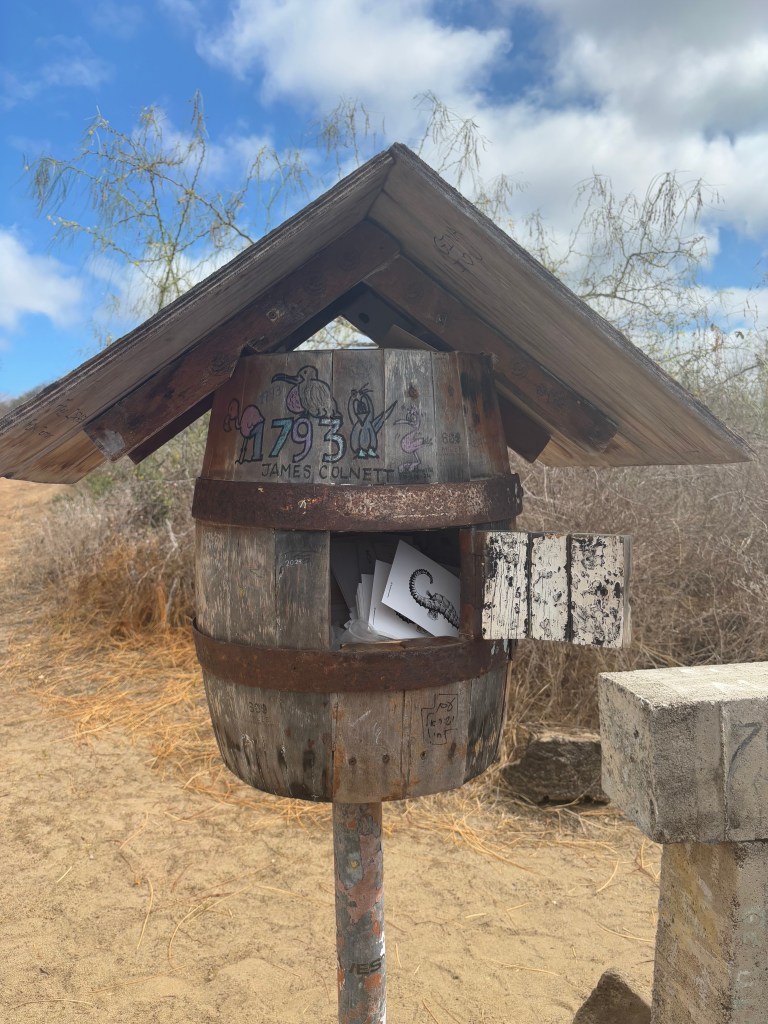
Two centuries later, the tradition still thrives. Today, Post Office Bay is a simple wooden barrel covered in postcards, notes, and keepsakes from travelers. Driftwood painted with names and dates surrounds the site, a collage of human connection across time.

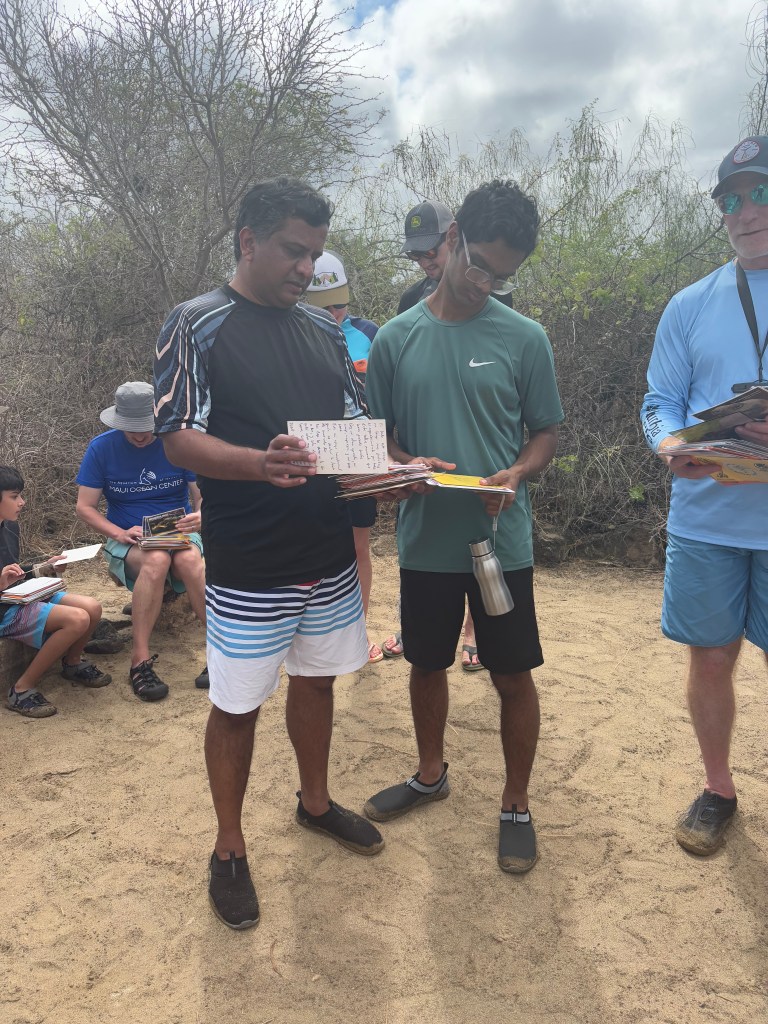
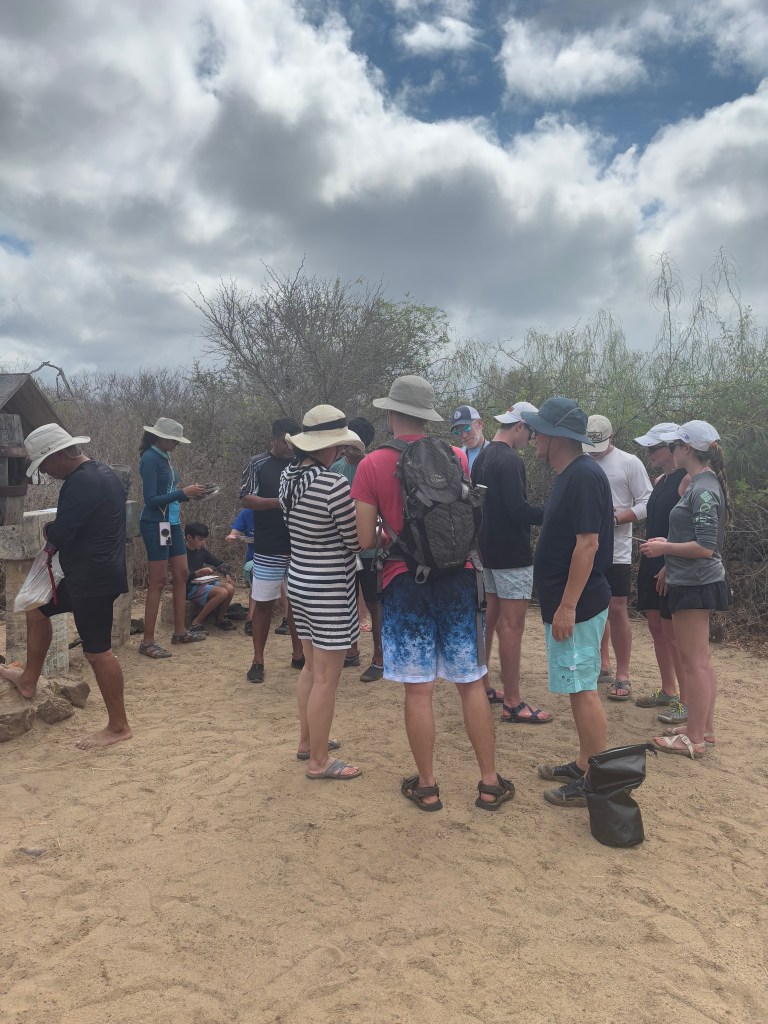
Visitors are encouraged to leave their own postcards—no stamps required, just a clearly written address and a little faith. The true magic lies in rummaging through the barrel. If you find a letter destined for somewhere near your home, you’re entrusted to deliver it, preferably by hand. Tour guides insist that dropping it in a mailbox is “cheating.”

Stories abound of travelers embracing this responsibility. In 2011, a couple spent three years hand-delivering 22 letters to recipients in 17 countries. Each delivery became a moment of serendipity, a reminder that travel is as much about people as places.

Visiting Post Office Bay Today

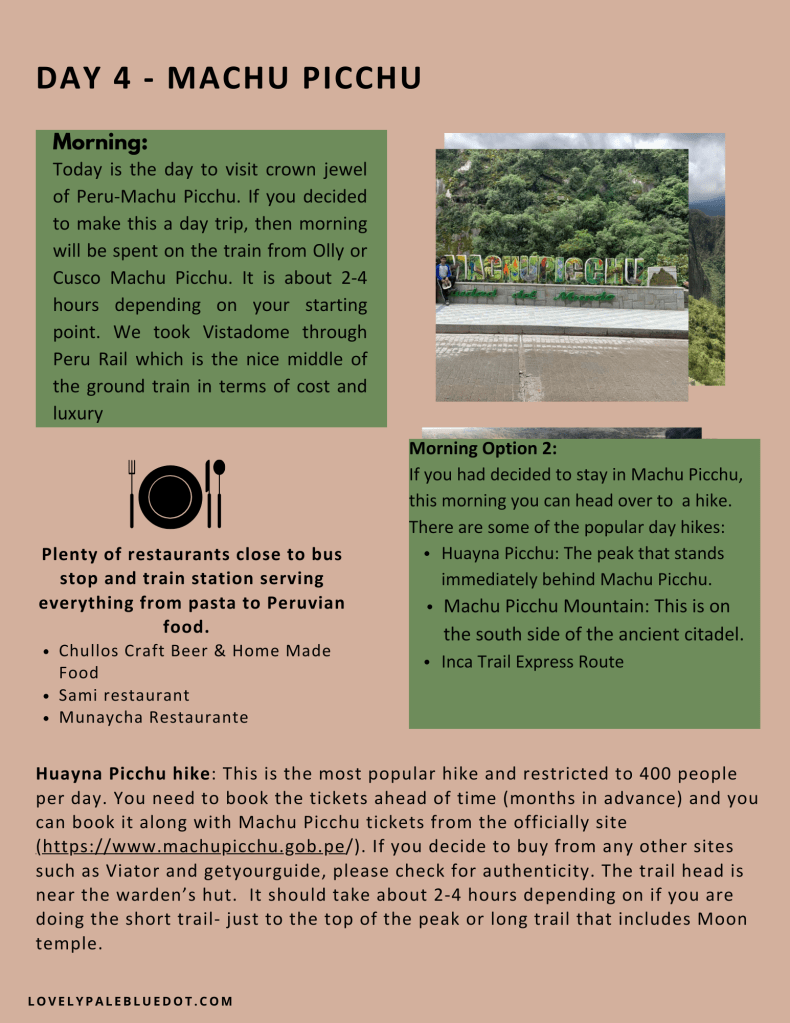
Post Office Bay sits on the northern coast of Floreana Island, accessible only via Galapagos cruise itineraries. The barrel is still there, weathered but resilient, surrounded by graffiti, stickers, and driftwood tributes. We visited this post office as part of our Galapagos cruise. We left a few postcards for our friends. We also took some postcards that had addresses in Georgia and delivered them.

Why Floreana?

Floreana was always a logical choice. It offered one of the few fresh water sources in the archipelago, along with abundant tortoises (until their tragic extinction). For whalers, it was a natural pit stop, a place to replenish supplies and leave behind letters filled with hope.

A Tradition of Trust

Post Office Bay is more than a quirky tourist stop—it’s a living testament to human connection. Imagine the lonely sailor, penning words to family he might not see for years. Imagine the joy of a recipient, surprised by a letter hand-delivered across continents.

In a world of instant communication, Post Office Bay reminds us of the romance of patience. It also reminds us of trust and strangers helping strangers. It is history you can touch, a tradition you can join, and a story still unfolding in the islands.

Exploring the Breathtaking Views of Bøur and Múlafossur

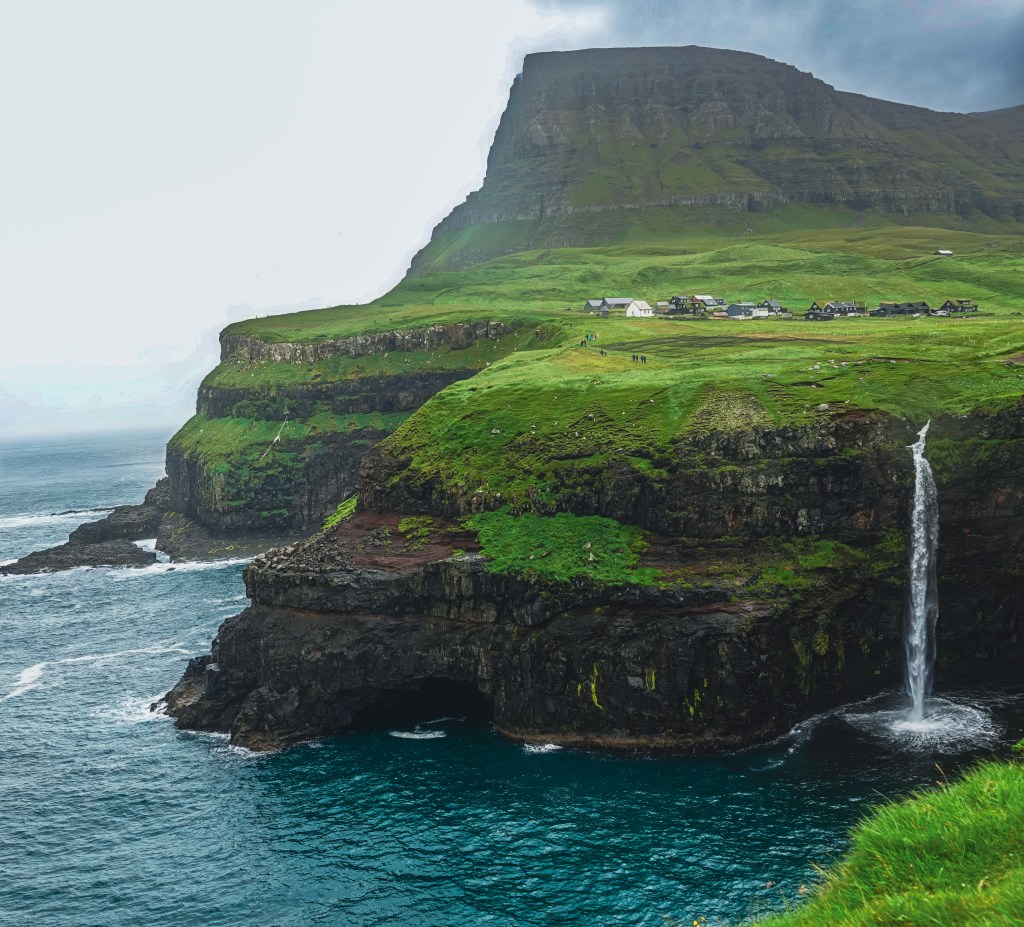
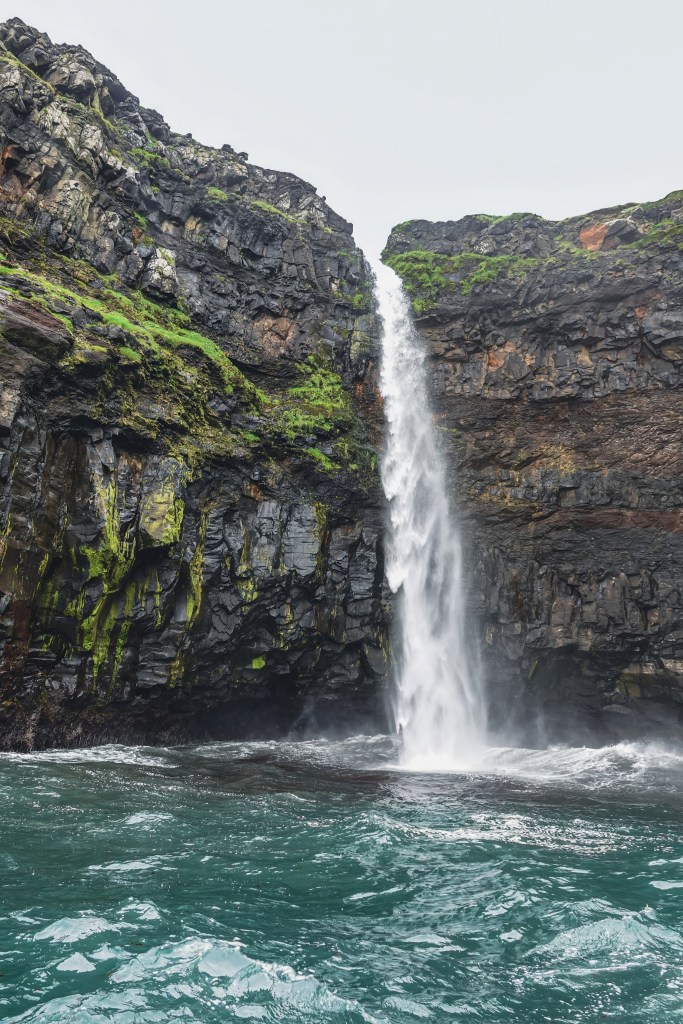
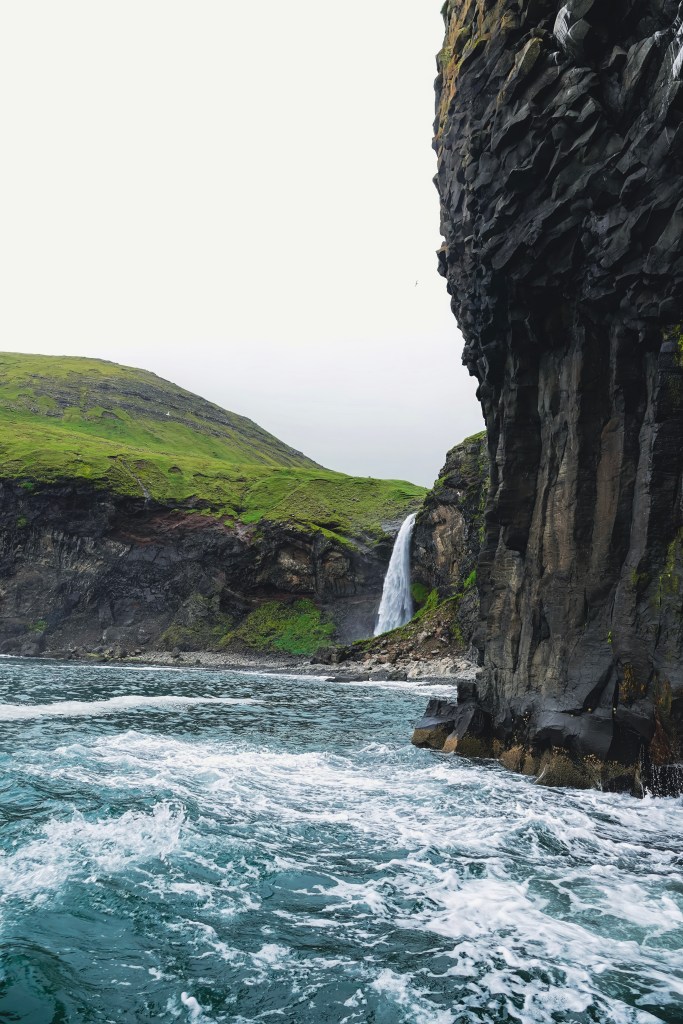
Múlafossur Waterfall is a dreamy waterfall tucked away on the rugged western edge of Vágar Island in the Faroe Islands. The waterfall plunges dramatically into the Atlantic Ocean, surrounded by cliffs and a tiny, charming village of Gásadalur. I got to see the waterfall twice. First, I saw it from the ocean when I was on the Classic Drangarnir Sea Arch Boat Tour. Then, I saw it again from the land after visiting the Lake above the ocean. I also visited the village of Bøur. It is one of my favorite villages in the entire Faroe Islands. Both the sea views and the land views offer different perspectives of both the waterfall and the villages.

Múlafossur: The Promontory Waterfall

With a drop of 60 meters (200 feet), Múlafossur is the Faroe Islands’ most iconic natural wonder. Its name translates to “Promontory Waterfall.” The name is fitting as it cascades off a cliffside directly into the tempestuous sea below.

Gásadalur: The Goose Valley

Gásadalur was once accessible only by hiking over the steep mountain passes. Now, the village welcomes visitors through the Gásadalstunnilin tunnel(Built in 2006). This makes the journey far easier— but no less magical. With about 20 residents and 25 houses, this remote village offers a rare glimpse into traditional Faroese life. You can actually stay in this village. There are 2 options. One is Múlafossur Cottages, located next to the stream. The other one is Hjalgrímsstova, part of the modern sheep farm Gásadalsgarðu.

The name Gásadalur means “Goose Valley,” and the charm here is undeniable. A cozy café and guesthouse serve locally sourced lunches, cakes, and coffee. These treats are perfect for warming up after a brisk walk to the waterfall.

Mountains That Guard the Valley

Gásadalur is cradled between two majestic peaks:

  • Eysturtindur (“The Peak to the East”) rises to 715 meters (2346 feet)
  • Árnafjall, the highest mountain on Vágar, reaches 722 meters (2368 feet)

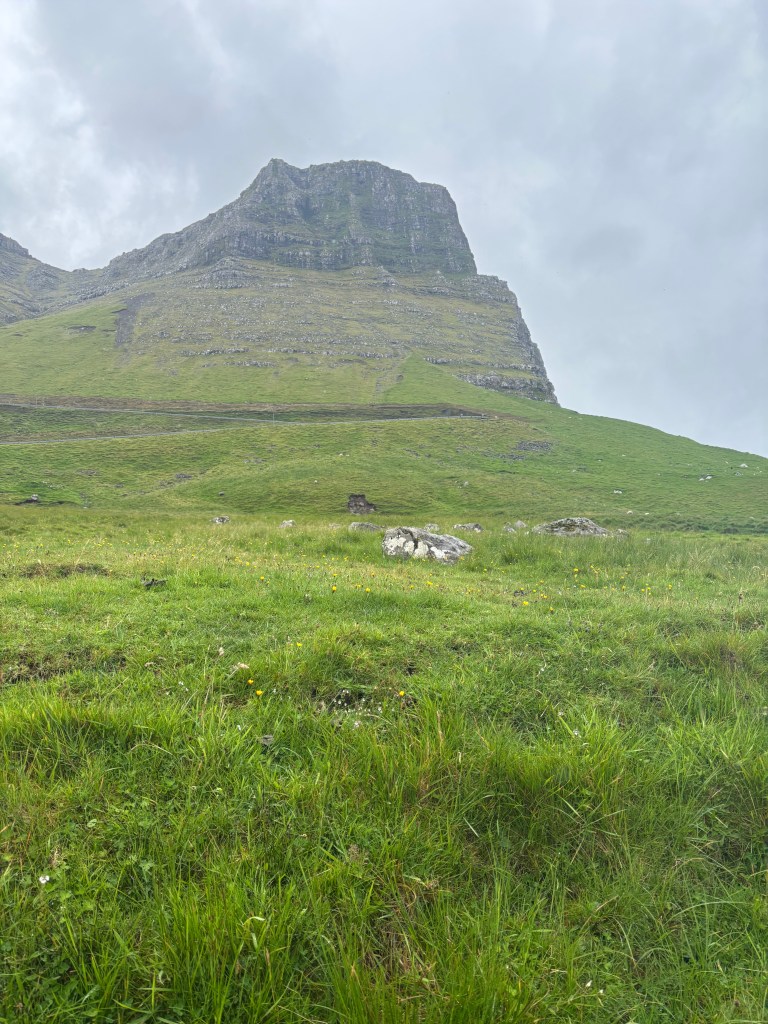
These mountains not only add drama to the landscape but also serve as silent sentinels, watching over the village and its waterfall.

When to Visit

Gásadalur and Múlafossur can be visited year-round. Summer offers longer daylight hours and milder weather, while winter cloaks the village in mist and mystery. No matter the season, the waterfall’s roar and the village’s quiet beauty promise a moment of awe.

Whether you’re chasing waterfalls or seeking solitude, Múlafossur and Gásadalur deliver both. You can combine a visit to the village and the waterfall with a visit to the village of Bøur

Bøur: The Coastal Hamlet with Legendary Views

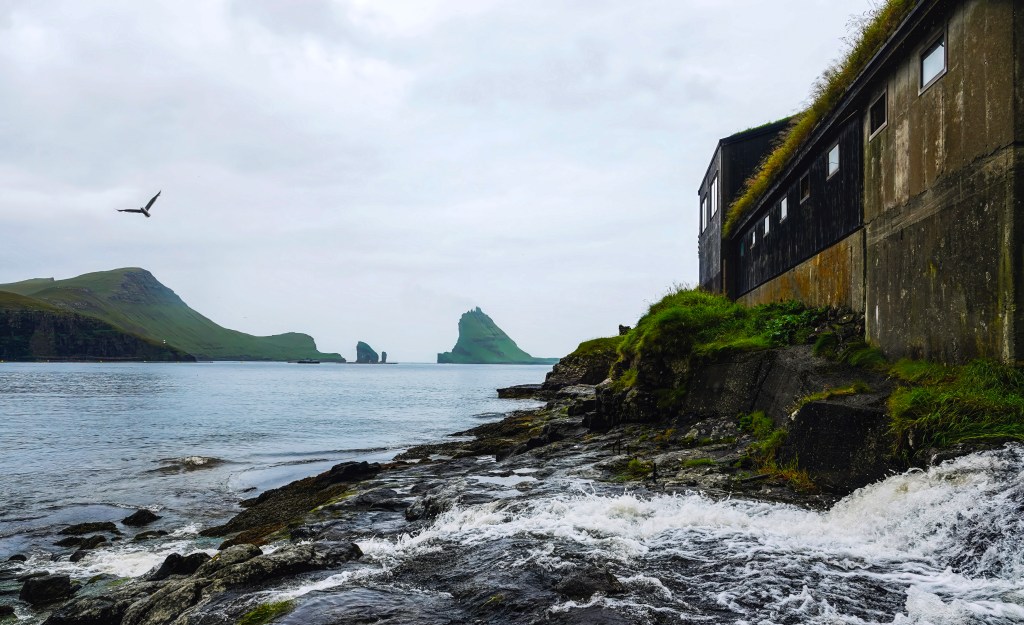
Bøur is just a short drive from Vágar Airport. It lies along the same stretch of coast as Gásadalur. Bøur is a tiny village steeped in history and natural beauty. Around 70 residents live in Bøur. It is famous for its picturesque turf-roofed houses. These houses are clustered near a small beach and a charming 19th-century church.

From Bøur, visitors enjoy breathtaking views of the jagged islets Tindhólmur and Drangarnir, iconic sea stacks that have inspired countless photographs and paintings. The village’s peaceful atmosphere and scenic surroundings make it a favorite stop on Faroe Islands sightseeing tours. Village of Bøur, has couple of restaurants and cafes that you could and enjoy a meal. We stopped here and had a picnic lunch on the black sand beach after out visit to the Mulafossur and took some great photos of Drangarnir from the beach.

Public Transport & Driving

  • From Vágar Airport: Both Bøur and Gásadalur are easily accessible by car, making them ideal stops for travelers. The drive to Bøur takes about 15 minutes, allowing you to enjoy stunning views along the way. Continuing on to Gásadalur adds another 5 minutes. This brings the total travel time to 20 minutes through the scenic Gásadalstunnilin tunnel. The tunnel offers a unique experience as you pass beneath the mountains.
  • Road Conditions: Roads are well-maintained but narrow and winding. Drive cautiously, especially in foggy or wet conditions.
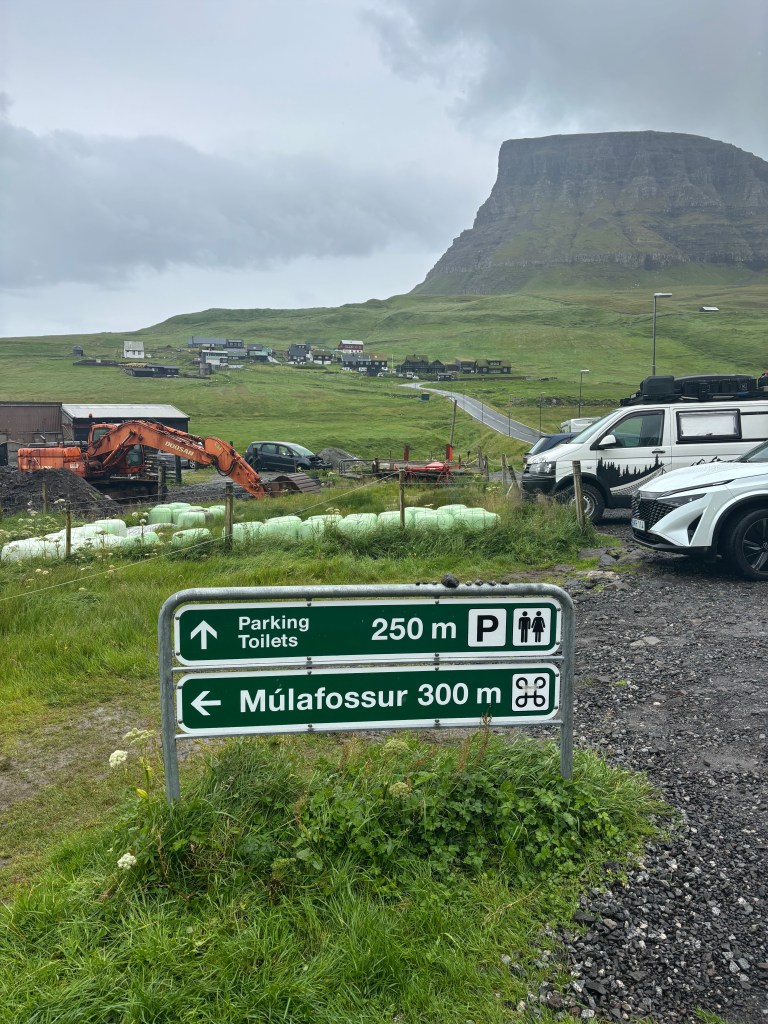
  • Parking: Designated parking areas are available near both villages. From the Gásadalur parking lot, it’s a short walk to the Múlafossur viewpoint.
  • By Bus:
    • Bus 300 from Vágar Airport to Sørvágur
    • Bus 350 from Sørvágur to Bøur (runs 3x/day on weekdays)

How to Visit: By Boat

  • Boat Tours: Several local operators offer boat tours from Sørvágur or Vágar harbor. These tours cruise along the coast and give stunning views of Múlafossur, Drangarnir, and Tindhólmur from the sea.
  • Highlights:
    • See Múlafossur waterfall from below as it crashes into the ocean.
    • Sail past dramatic cliffs and sea stacks.
    • Spot puffins and seabirds nesting on nearby islets.
  • Season: Most boat tours run from May to September, weather permitting.

The Postman’s Trail: A Historic Hike Between Bøur and Gásadalur

Before the tunnel was built in 2004, Gásadalur was completely isolated, accessible only by boat on calm days or by foot over the mountains. The most famous route was the Postman’s Trail, a rugged path that connected Bøur to Gásadalur.

  • Distance: ~5 miles round-trip
  • Duration: 3.5 to 4.5 hours
  • Difficulty: Moderate to challenging (steep climbs, uneven terrain)
  • Trailhead: Just past Bøur, near the tunnel entrance (look for cairns and a narrow dirt path)
  • Summits Nearby: Mt. Rógvukollur (464 m) and Knavin (485 m) offer optional detours with panoramic views

The postman hiked this trail three times a week, delivering mail to Gásadalur’s residents. Along the way, he would pass dramatic cliffs and windswept ridges. He would eventually descend into the valley where Múlafossur Waterfall roars into the sea. It was a view he knew well.

Today, hikers can retrace his steps and experience the Faroe Islands as they were before modern roads. It’s a journey through history, solitude, and raw nature.

Where to Stay: Gásadalur & Bøur

Whether you’re seeking solitude by the sea or a warm cottage nestled beneath misty mountains, both villages offer unforgettable accommodations.

🌿 Gásadalur Stays

  • Lundi Cottage – Turf Cottage by Múlafossur Waterfall A guest favorite on Airbnb, this charming turf-roofed cottage sits right beside the famous waterfall. Expect sheep, birds, and highland cows as neighbors, plus views that feel like a painting.
  • Múlafossur Cottages These well-crafted holiday homes offer spacious interiors, warm ambiance, and unbeatable proximity to the waterfall. Ideal for relaxing after a day of hiking or sightseeing.
  • Gásadalur Apartments @ World Famous Waterfall Air-conditioned apartments with balconies and full amenities, located steps from the waterfall. A perfect blend of comfort and location.
  • Nearby Options in Sørvágur & Sandavágur If Gásadalur is fully booked, nearby towns offer excellent alternatives:
    • Guesthouse Hugo – Cozy, social atmosphere with sea views
    • Cottages by the Sea – Waterfront serenity with mountain views
    • Giljanes Camping & Hostel – Budget-friendly with shared kitchen and lounge

🏡 Bøur Stays

  • The View to Drangarnir, Tindhólmur & Mykines These are a cluster of four traditional Faroese turf-roofed houses. They are built to blend into the landscape. These homes offer panoramic views of the famous sea stacks and are among the highest-rated stays in the Faroe Islands.
  • Airbnb Options in Bøur Bøur features several unique rentals with rustic charm and modern amenities. Many offer full kitchens, cozy living spaces, and direct views of the ocean and nearby islets.
  • Nearby Sørvágur Accommodations Just a short drive away, Sørvágur offers:
    • Løðupackhouse – Historical Warehouse – A renovated 100-year-old harbor house
    • Perlan Apartments – Sea-view apartments with full kitchens
    • Pouls Airport Guesthouse – Convenient for travelers, with car rental options included

Skarðsáfossur: The Hidden Waterfall of Vágar

While Múlafossur steals the spotlight, Skarðsáfossur is just a short distance away. It is a lesser-known but equally breathtaking waterfall. It tumbles from the cliffs onto a small black stone beach. This secluded cascade is positioned between Bøur and Gásadalur. It offers a more intimate and wild experience for those willing to seek it out.

Location & Landscape

  • Coordinates: Roughly 2 km west of Bøur, near the tunnel entrance to Gásadalur
  • Setting: Rugged cliffs, black stone beach, and panoramic views of Tindhólmur, Drangarnir, and the skerry Akranessker
  • Wildlife: Puffins and seals are often spotted in the area

The waterfall is best viewed after rainfall, when its flow is strongest and most dramatic.

Best Way to Visit: By Boat

Because the land surrounding Skarðsáfossur is private property, the best and most respectful way to see it is from the sea:

  • Boat Tours: Depart from Sørvágsfjørður and cruise past Skarðsáfossur, Drangarnir, and Tindhólmur
  • Experience: Boats can get close enough to hear the crashing water and feel the spray
  • Recommended Tour: Drangarnir Boat Tour includes Skarðsáfossur as a highlight

Land Access: A Rugged Adventure

While not officially marked, adventurous hikers sometimes approach the area from land:

  • Trailhead: Just before the tunnel to Gásadalur, near Bøur
  • Route: Hike down toward the ocean, aiming for the skerry Akranessker
  • Terrain: No visible path; grassy fields used for sheep herding, rocky coastline, and steep descents
  • Caution: Slippery rocks and private land—respect boundaries and avoid trespassing

Bluegate – Drangarnir & Múlafossur Boat Tour

Highlights: A 60–75 minute tour originates from Sørvágur marina. On this boat tour you will visit Bøur village, Múlafossur waterfall, Tindhólmur islet, and the Drangarnir sea stacks. Weather permitting, guests may sail through Drangarnir’s sea arch. Small boat size  (12 passengers) ensures a personal experience. In the summer months, you may be able to see some puffins.

📌 Meeting Point: Sørvágur marina

☎️ Phone: 780800

🌐 Website: bluegate.fo

Seatravel – Exclusive Drangarnir Boat Tours

Highlights:1.5 hour tours from Sørvágur to Drangarnir, Múlafossur, Tindhólmur, and Akrans. Focuses on intimate small groups (max 16 passengers), guided by experienced captains. 

📌 Meeting Point: Sørvágur marina

🌐 Website: seatravel.fo

Final thoughts

Exploring Múlafossur and the village of Gásadalur is like stepping into a living postcard—where nature’s drama meets quiet village charm. From the iconic waterfall plunging into the Atlantic to the serene beauty of Bøur and the tucked-away Skarðsáfossur, this corner of the Faroe Islands offers a rare blend of accessibility and mystery.

Whether you’re chasing waterfalls, hiking cliffside trails, or simply soaking in the silence, this guide is your invitation to slow down and let the landscape speak. The Faroe Islands aren’t just a destination—they’re a mood, a rhythm, a reminder that the most unforgettable places are often the ones that feel untouched.

So pack your layers, charge your camera, and bring your sense of wonder. Gásadalur and its neighbors are waiting.

The Wabi-Sabi Legacy of Québec City’s Cannonball Tree

After roaming around the old Quebec city, my friend and I took a break on a bench in front of Château Frontenac. A sculpture that stood in the middle drew my attention. I had been in Qubec city for a couple of days. I spent a lot of time taking photos of the Château Frontenac and Place d’Armes public park. In the middle of the park is a Gothic fountain on which stands the Faith Monument (monument de la Foi) and this statue is next to the Faith Monument. Somehow, I had missed the statue until that moment. I decided to take a photo and try to find more information. I couldn’t find much in my quick Google search. But something about the sculpture seemed familiar, and I had a nagging feeling that I had seen it somewhere before.

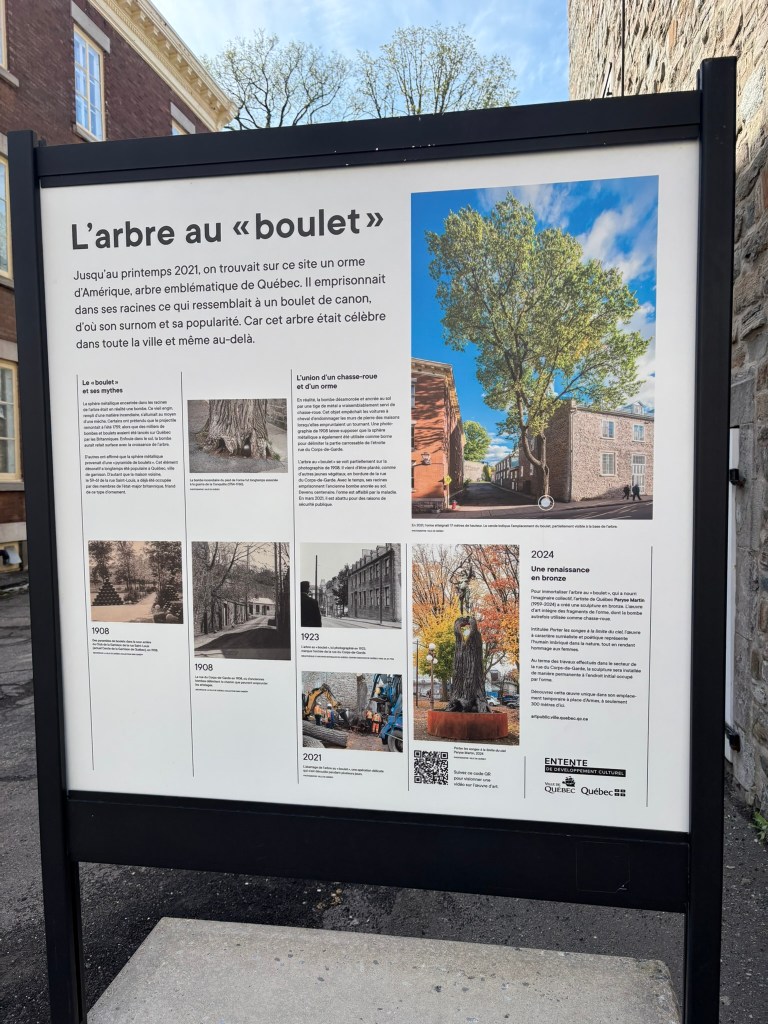
After coming home, I was downloading the photos. I saw a picture of a sign. I had taken it in front of one of the old houses on rue St-Louis that morning. This was before I saw the sculpture. The sign had the photo of the sculpture. Since everything was in French, I didn’t understand what it was until I used Google Translate.

Story of Ball and the Chain Tree

Just beyond the grandeur of Château Frontenac, where cobblestones echo with centuries of footsteps, a tree once stood. It held a secret in its heart. Locals called it the Cannonball Tree—L’Arbre au Boulet. It was an American elm that had cradled a rusting iron sphere for over a century. Legend has it that the cannonball was a relic from the 1759 Battle of the Plains of Abraham. Truth or not, the story stuck, and so did the awe.

Time, as it always does, wore the tree down. Disease crept in. The roots weakened. And in 2021, the city bid farewell. But not with silence—with reverence.

The cannonball was carefully removed by the Canadian Armed Forces, and the tree’s trunk was preserved. Today, in front of Château Frontenac, a sculpture stands—crafted from the very wood that once held history in its bark. It’s not polished to perfection. The grain is rough, the form organic. It doesn’t try to erase the past—it honors it.

This is wabi-sabi in its purest form: the beauty of what remains after loss. A tree that once bore the weight of war now offers a place for reflection. Tourists pause, not just for photos, but for silence. For story. For the reminder that even in decay, there is dignity.

Québec City didn’t just lose a tree. It gained a monument to impermanence.

Embracing Imperfection: The Story of Stumpy the Cherry Tree

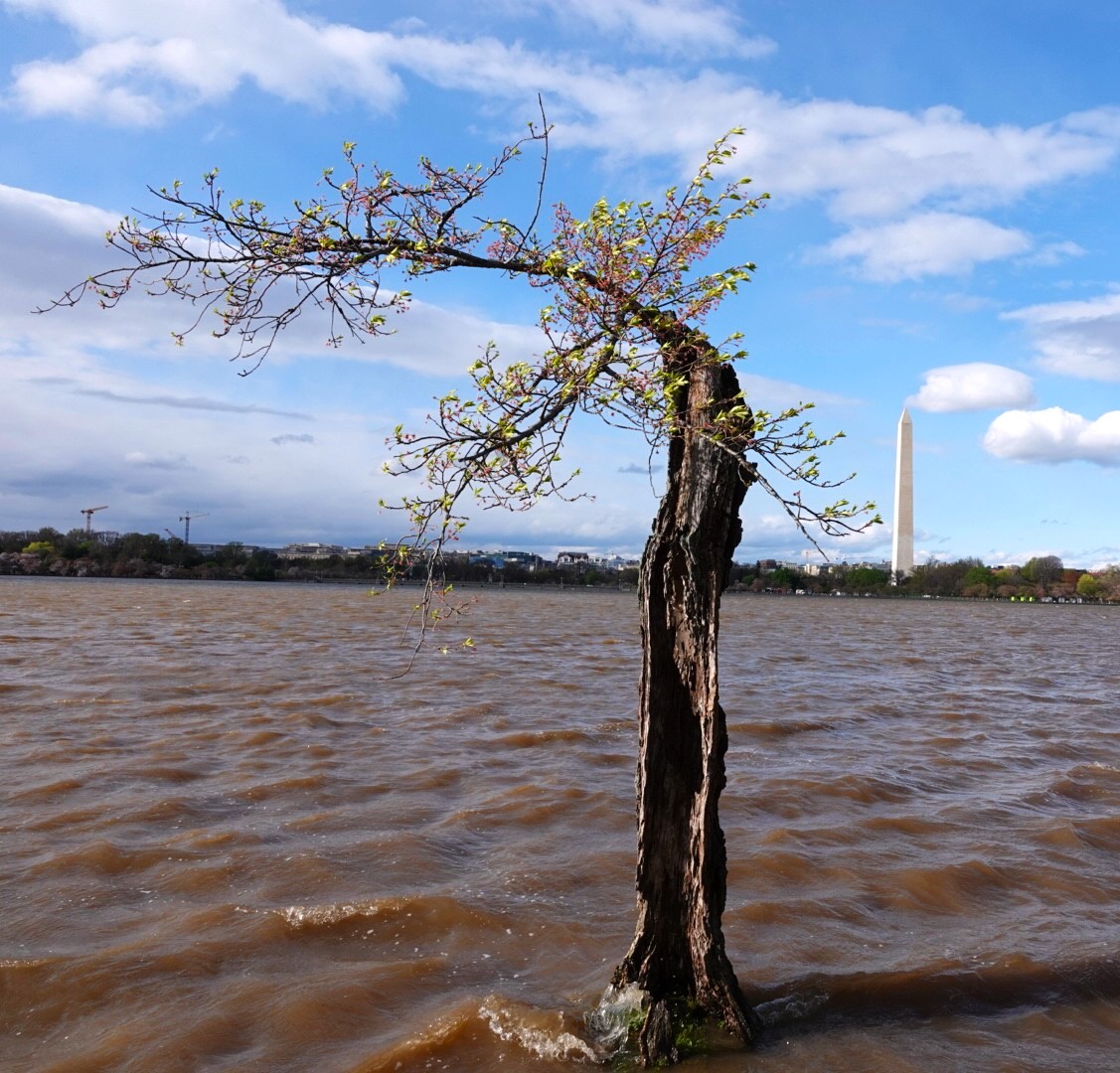
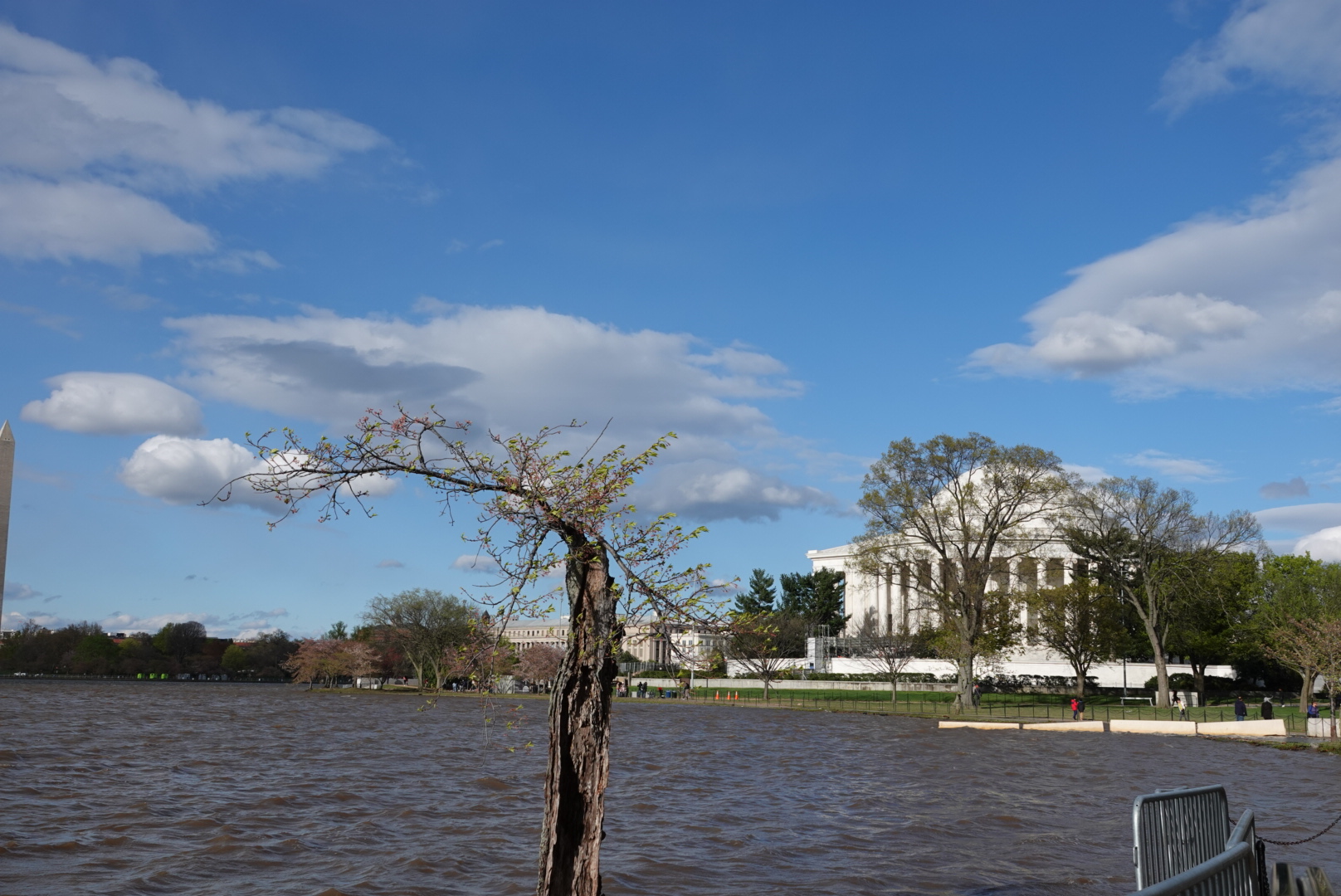
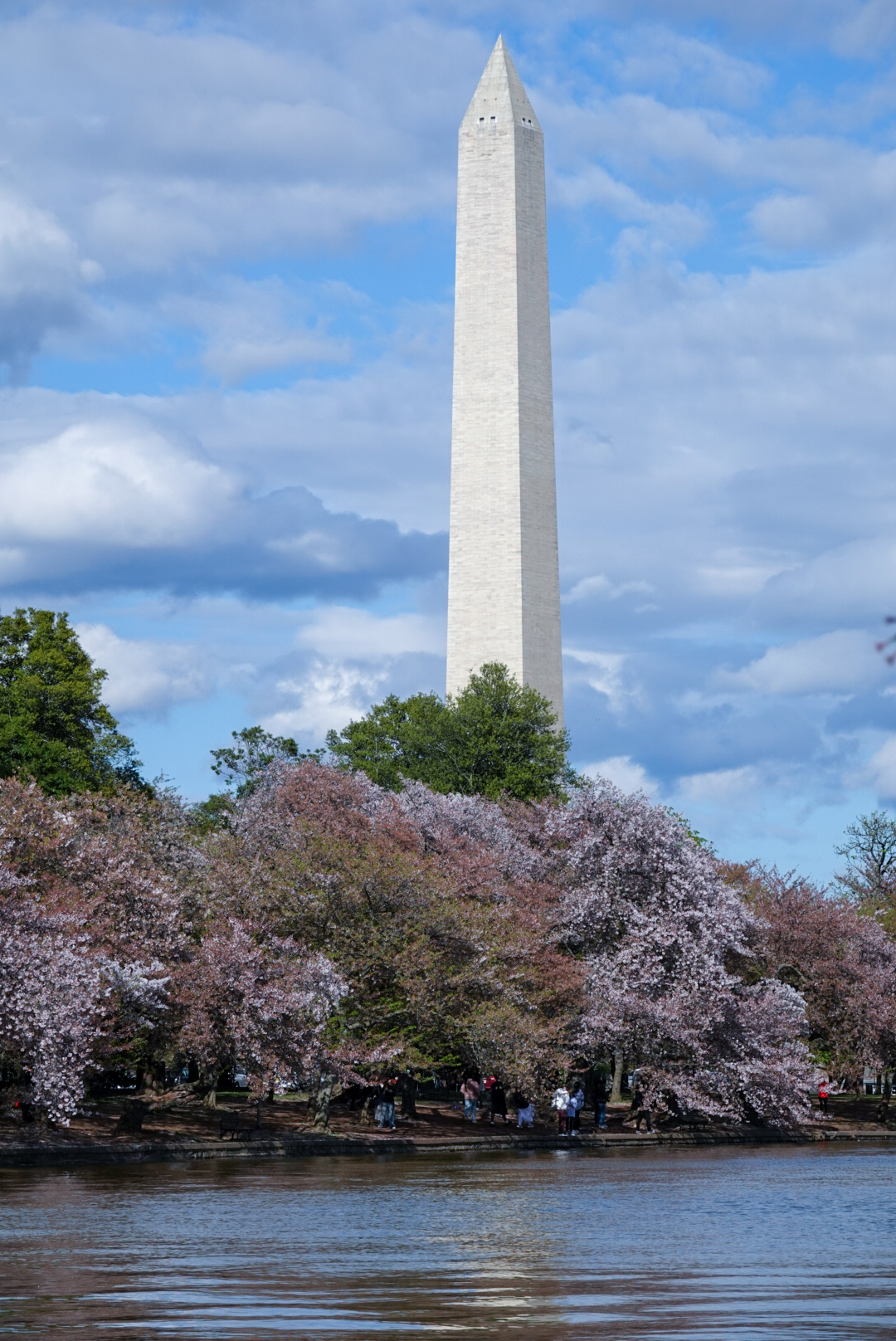
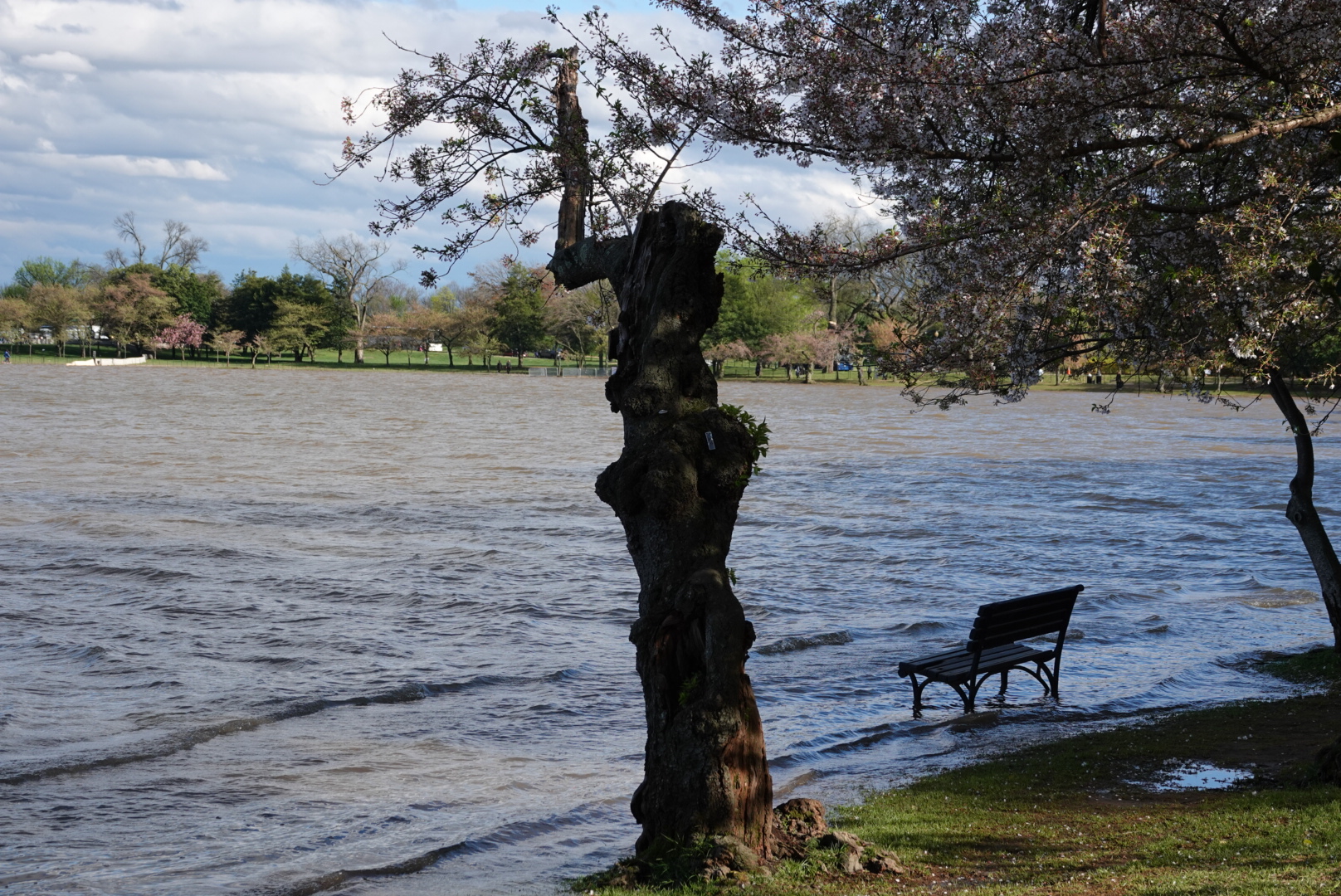
In the heart of Washington, D.C., nestled along the Tidal Basin, stood a tree that looked more like a memory than a monument. Stumpy, as he came to be known, was a Yoshino cherry tree—gnarled, hollowed, and barely clinging to life.

Stumpy was one of thousands of Cherry trees gifted by Japan in 1912, a symbol of friendship. But over time, rising tides and sinking land turned the basin into a twice-daily flood zone. Stumpy, rooted too close to the seawall, endured years of waterlogging, sun-scalding, and fungal decay. By the time he captured the public’s imagination, he had only a few flowering branches left. His trunk was more air than wood. But oh, how he bloomed. During the pandemic, a photo of Stumpy appeared on Reddit. It had a caption comparing his condition to a love life gone awry. Something about that image—a tree so clearly broken, yet defiantly blossoming—resonated. People began to visit. They left flowers, poems, even bottles of whiskey. Stumpy became a folk hero, a symbol of resilience, and a quiet reminder that beauty doesn’t need perfection

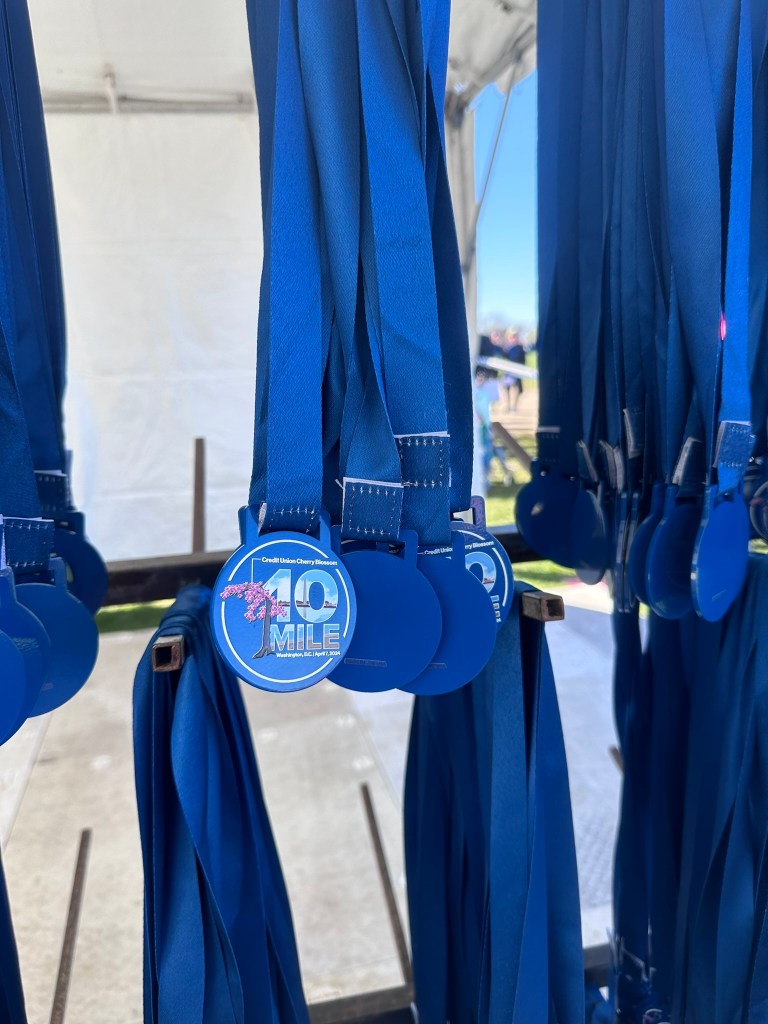
In May 2024, Stumpy was removed to make way for seawall repairs. But his story didn’t end there—it evolved. Since 2024, Stumpy has been honored as the mascot of the Credit Union Cherry Blossom Ten Mile Run. I got to see Stumpy before he was removed and managed to snap a few photos of him in 2024 April before running the Cherry Blossom race. I also received a medal with Stumpy on it after finishing the race. Even though Stumpy is gone, his legacy lives on through his clones and his role as the official mascot.

Wabi-Sabi teaches us to embrace the imperfect, the transient, the quietly profound. Stumpy was all of that—and more. He didn’t stand tall or symmetrical. He stood anyway. And now, even in his absence, he leads the race.

Stopping by the woods on a snowy evening

Whose woods these are I think I know.   

His house is in the village though;   

He will not see me stopping here   

To watch his woods fill up with snow.   

My little horse must think it queer   

To stop without a farmhouse near   

Between the woods and frozen lake   

The darkest evening of the year.   

He gives his harness bells a shake   

To ask if there is some mistake.   

The only other sound’s the sweep   

Of easy wind and downy flake.   

The woods are lovely, dark and deep,   

But I have promises to keep,   

And miles to go before I sleep,   

And miles to go before I sleep.

Robert Frost

I read this poem by Robert Frost as part of high school class. On a literal level, this a very simple poem describing the beauty and tranquility of a snow covered trees and appreciating the solitude in the nature. Being grown up in Southern India and not having seen snow or snow covered trees, I was still able to appreciate the message and imagery of the poem as Robert frost’s paints a beautiful scene with his simple yet powerful words. The full impact of the scenery didn’t hit me until I moved to Wisconsin, and then to Northeast of US where there were many snowy evenings and mornings and I always appreciated the calmness snow brought and serenity it created.

The last stanza of the poem stayed with me as its meaning seemed deep even as a teenaged but like an onion, this poem has many layers and meaning of the poem becomes deeper as you peel the layers of the simple lines. The true meaning of the poem didn’t dawn on me until I was walking around one late afternoon in the Finnish Lapland. I don’t know about you but my mind never stops chattering and continuously thinks about various things I need to do, past mistakes and events, worries about the future and everything else under the sun. But on that day, surrounded by snowy woods and not another soul anywhere close, my mind became quite. It wasn’t eerie quite that chills you to the bone but a serene and peaceful feeling that enveloped me. For few minutes nothing mattered and I had no thoughts and no chatter. On a philosophical level, this poem is about the juxta positioning of responsibilities and escaping the realities of the world- a constant struggle between practical and ideal. The snowy woods represent the ideal world of here and now and encompasses the true nature of mindfulness while the bell on the horse is a reality check that draws back to your responsibilities. I have been practicing mindfulness for a little while now and until that moment in the woods, I never truly experienced what it means to be present.

Potatoes to Pisco Sours- A gastronomical experience of Peruvian cuisine

“You have to taste a culture to understand it” –

 Deborah Cater

One of the greatest perks of travelling is the opportunity taste different cuisines and there is no better way to understand a country than through their food. Peruvian cuisine is very unique and considered to be one of best gastronomical experiences. Known as the Creole food due to the multi-cultural influences including Spanish, Chinese, Italian, African and of course Incan culture, Peruvian cooking incorporates various cooking techniques and ingredients from various parts of the world creating a colorful tapestry of flavors and taste. No matter which part of Peru you are, you can try unique cuisine from that area. The touristy places like Olly, Machu Picchu, Cusco, and Lima have restaurants that offer potatoes (Incan cuisine) to stir fry (Chinese influence) to Ceviche that is almost synonymous with Peru.

Potatoes are now universal but originated in Peru and spread around the world when Spaniards brought it to rest of the world. Peru is supposed to have around 3000 variety of potatoes and when we were there, we ordered Potatoes with every one of our meals with Pisco Sour. It became an on-going joke with the kids that I would order Potatoes and Pisco Sours in every restaurant, and I did.

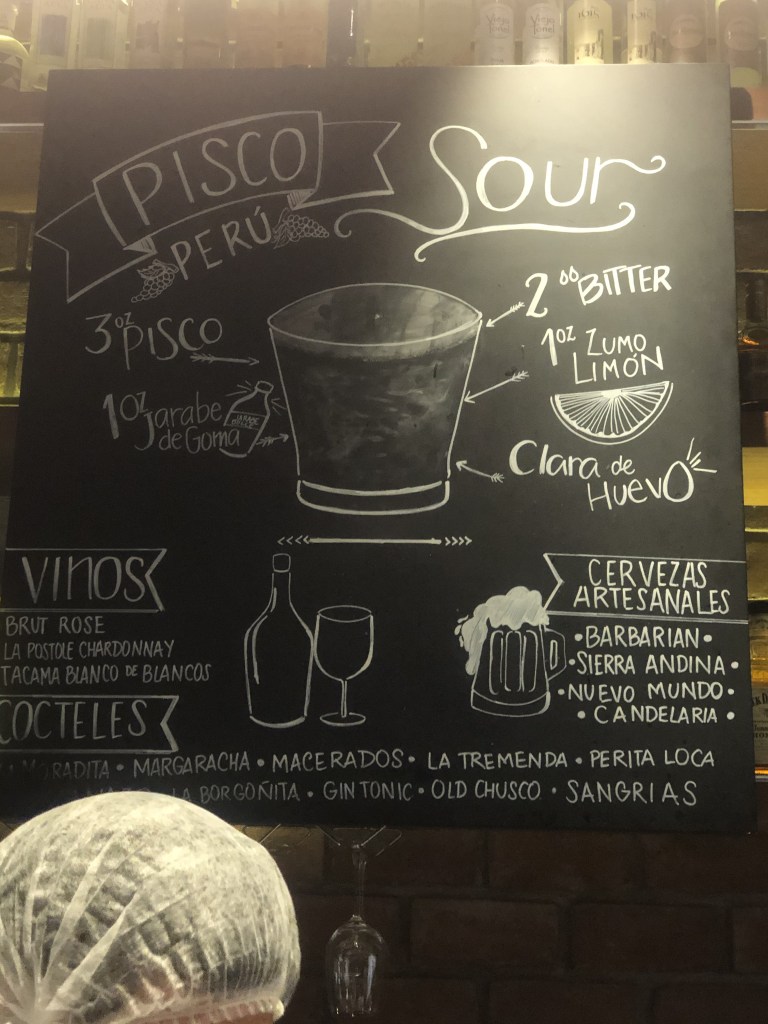
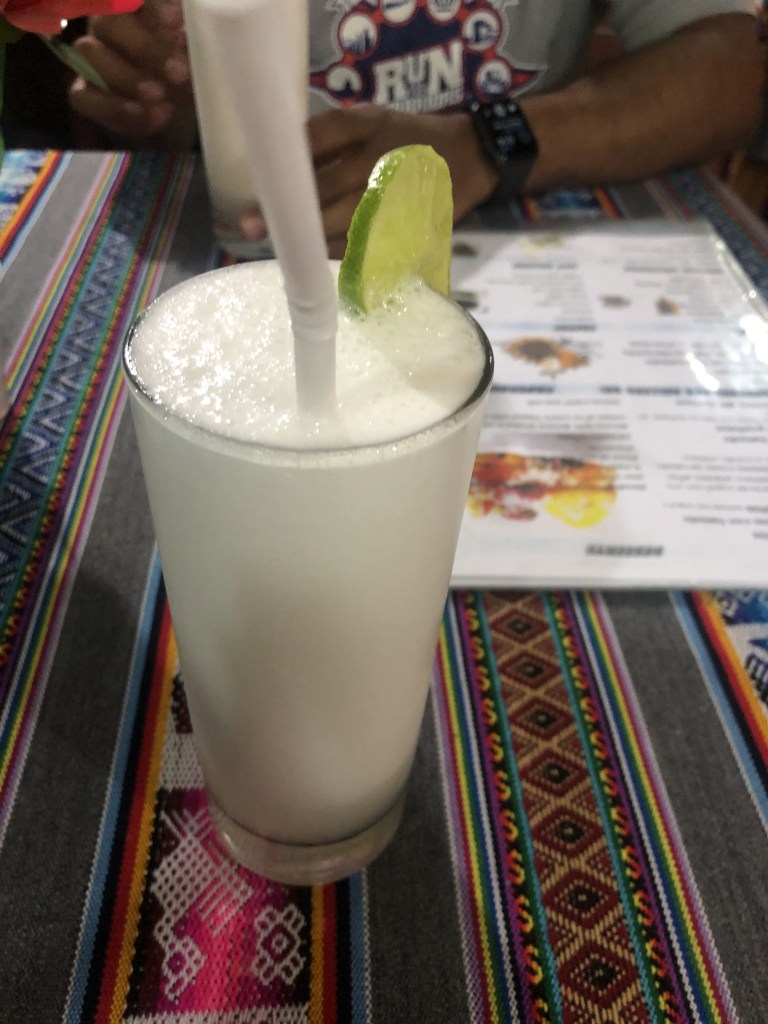
Pisco Sour: Pisco sour is the national drink of Peru and it is made with a grape brandy (Pisco), lime juice, egg whites and bitters. Like all other dishes of Peru, this drink has a complex flavor with sour, sweet and bitter notes. I prefer Chilian version of pisco sours over the Peruvian version, but you should at least try it to see what the fuss is all about.

Ceviche : You can’t miss the national dish of Peru- Ceviche which is made with raw fish/shrimp or squid infused with lemon juice and served with local spices and hot Peruvian Chile, Plantain chips. As vegetarians, we didn’t try the traditional Ceviche but were able to try vegan version with Mushrooms at the Green Point Restautant in Cusco. This restaurant is so good that you will forget you are earing vegan food and mushroom Ceviche with toasted corn and sweet potato definitely hits the spot.

Arroz chaufa : This dish is made with either white or brown rice, vegetables and meat which are stir fried together is a good representation of Chifa cuisine a blend of Chinese-Peruvian hybrid cuisine. Chifa cuisine is an example of cross cultural influences of Peruvian cuisine through Asian immigration in 19th century.

Chica Morada : Chicha morada is a traditional Peruvian purple corn drink that is not only beautiful to look at but really tasty. You can find it in every restaurant as well as a street food. San Pedro Market in Cusco is a good place to try this drink.

Cuy: No Peruvian cuisine scene is complete without mentioning Cuy- the fried Guinea pig. I prefer Guinea pigs as pets but in Peru, it is considered as a delicacy and if you are the adventurous type and want to try it, you try it pretty much in every place including food stall in San Pedro market.

I would highly recommend a food tour if you are in Lima and want to try some of the bold, tasty, and unique, multi-cultural cuisines of Peru. You can find multiple options here . Bon Appetite and happy travels!!!

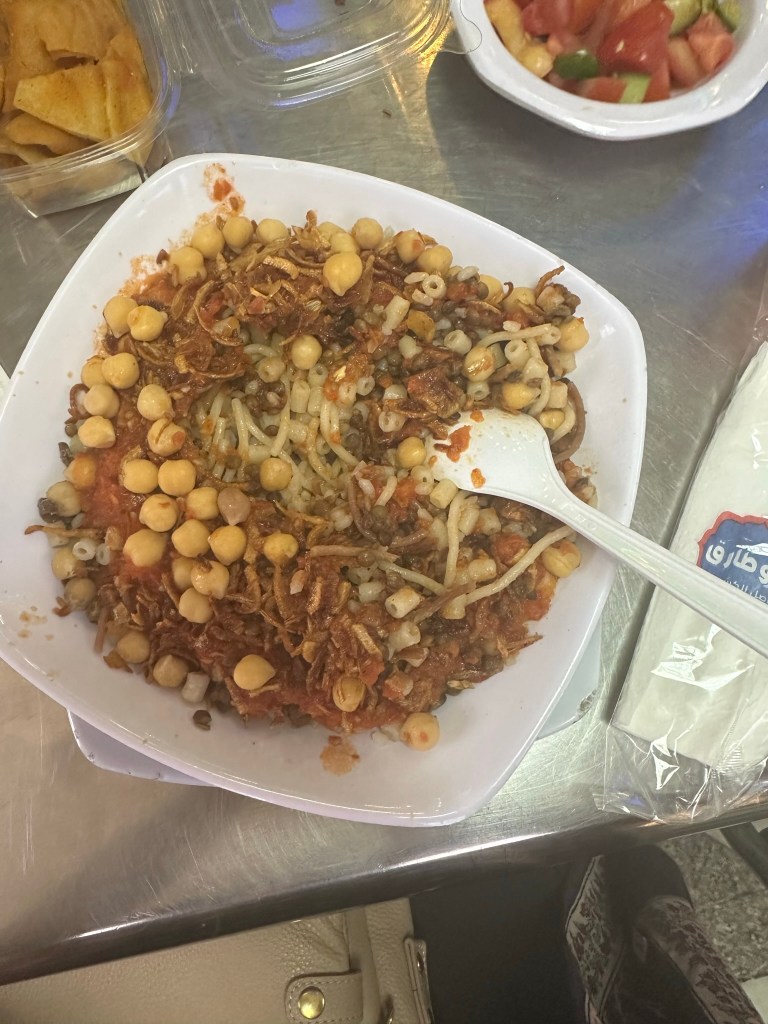
Koshary- A comforting bowl of street food of Egypt

Most of us know that authentic food experiences come from hole in the wall kind of places such as the best tortilla I ever had at no name place in Toluca, Mexico made by a kind abuela or the best Indian food from a rest stop somewhere between Delhi and Agra. Eating Koshary is similar experience you can have either as a street food in Cairo and in our case a restaurant in the middle of the industrial area near Tahrir square. We went in search of dish which recommended to us by my sister-in-law who ate it in Cairo. She urged us to not miss eating it and it exceeded our expectations with combination of textures and flavors that are very unique and bold yet gives the feeling of comfort food.

Koshary is considered an Egyptian national dish and is a poor man’s food. It is made out of staples including rice, lentils, pasta and garnished with fried onions and chickpeas. It is similar to middle eastern dish mujadara. Its unique flavor comes from garlic vinegar and zesty tomato sauce. When entered Abu Tareek restaurant, we asked for a menu and we were told “Small, Medium, or Large”. In other words, this restaurant serves only 1 dish, and you chose your size. Our waiter was friendly and more than happy to demonstrate how to make the dish by adding various things as the dish comes in a bowl with lentils, rice, and past and you add sauces and garnish based on your taste.

Making Koshary at Abu Tareek

I would highly recommend tasting it in Egypt if you get a chance.

A different Perspective

From Palace to prison- heartbreak and love story of Shah Jahan

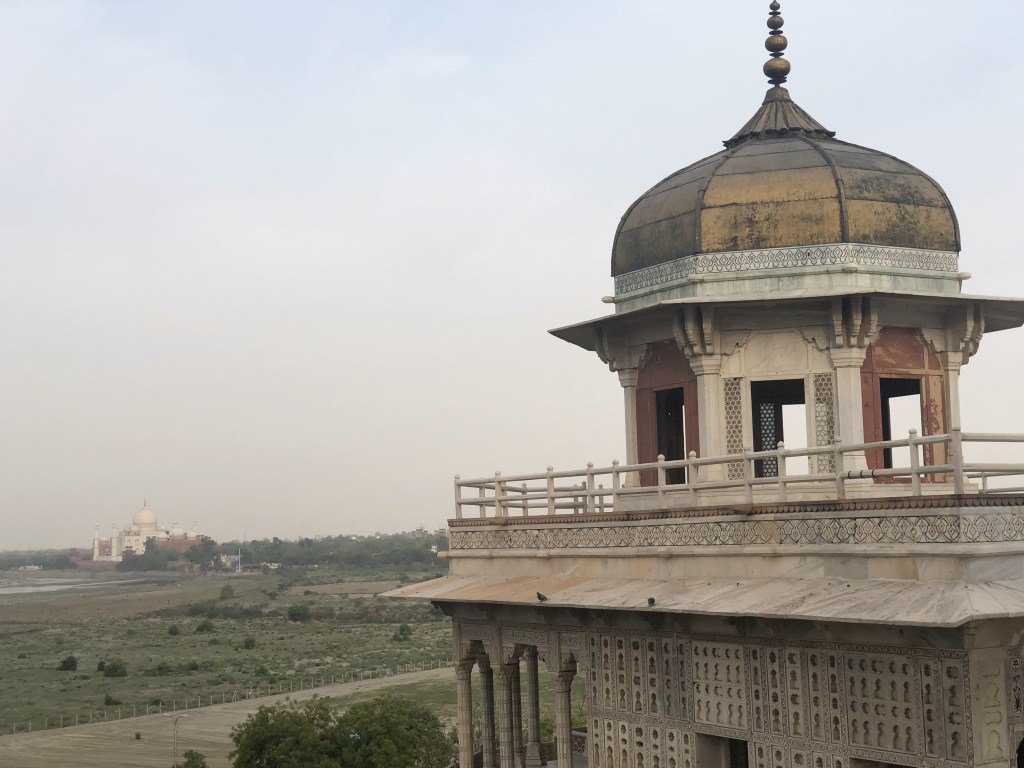
Shah Burj with Taj Mahal in the background


Fort of Agra is located little over a mile from the more famous monument in Agra- The Taj Mahal. With in this powerful fortress of red sandstones lies the imperial city of Moghuls. It was established by the Mughal emperor Akbar when Agra was the Mughal capital and served as royal residence and seat of government. There are several points of historical significance within the fort and for more information read this blog (The phrase Palace to Prison is also borrowed from the same blog).

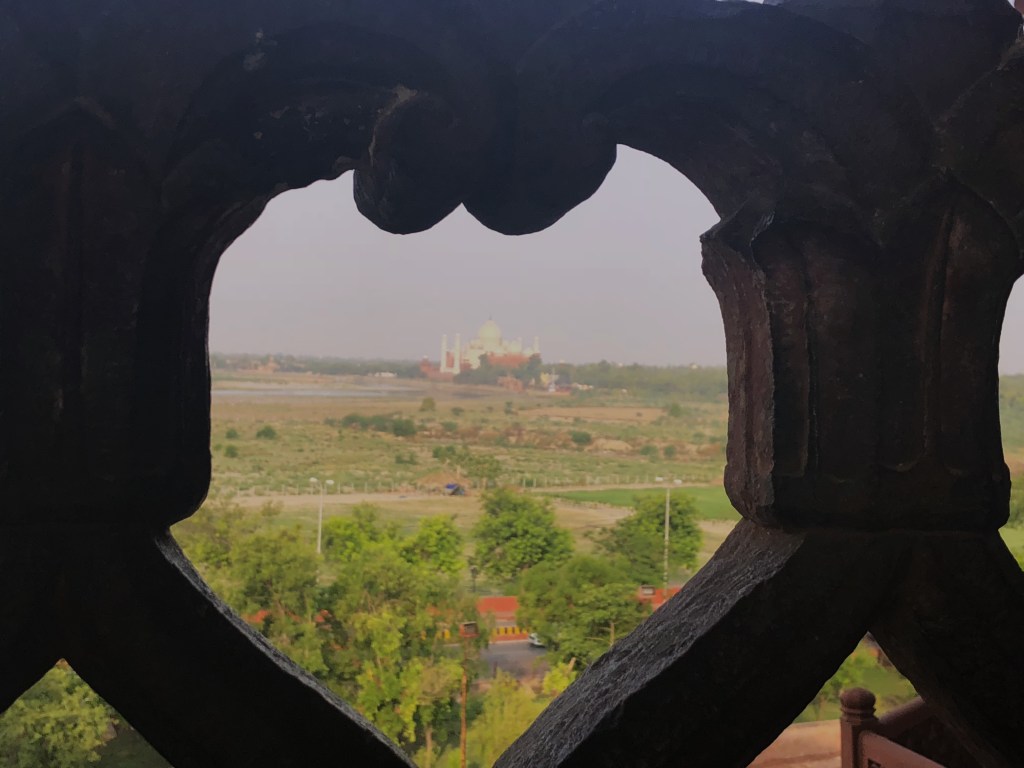
One of the most fascinating story from Fort of Agra is the Shah Burj, also known as Mathammam referring to the octagonal plan of the building. Shah Burj is a small palace overlooking the Yamuna river within Agra Fort and has spectacular view of Taj Mahal and Yamuna revier. Shah Burj was originally built by Akbar, who used it for jharokha-e-darshan, a ‘window’ from which the emperor would provide his subjects a daily morning view of himself, to reassure them of his safety and well-being.

Shah Burj was rebuilt by Shah Jahan between 1632 and 1640 who put his own signature on the building. It is a marble octagonal tower which stands in close proximity to Diwan-i-Khas, was built by Shah Jahan for his wife, Mumtaz Mahal. Taj mahal was also built by Shah Jahan as a mausoleum for Mumtaz Mahal and stands as a symbol of undying love and devotion.

Shah Burj

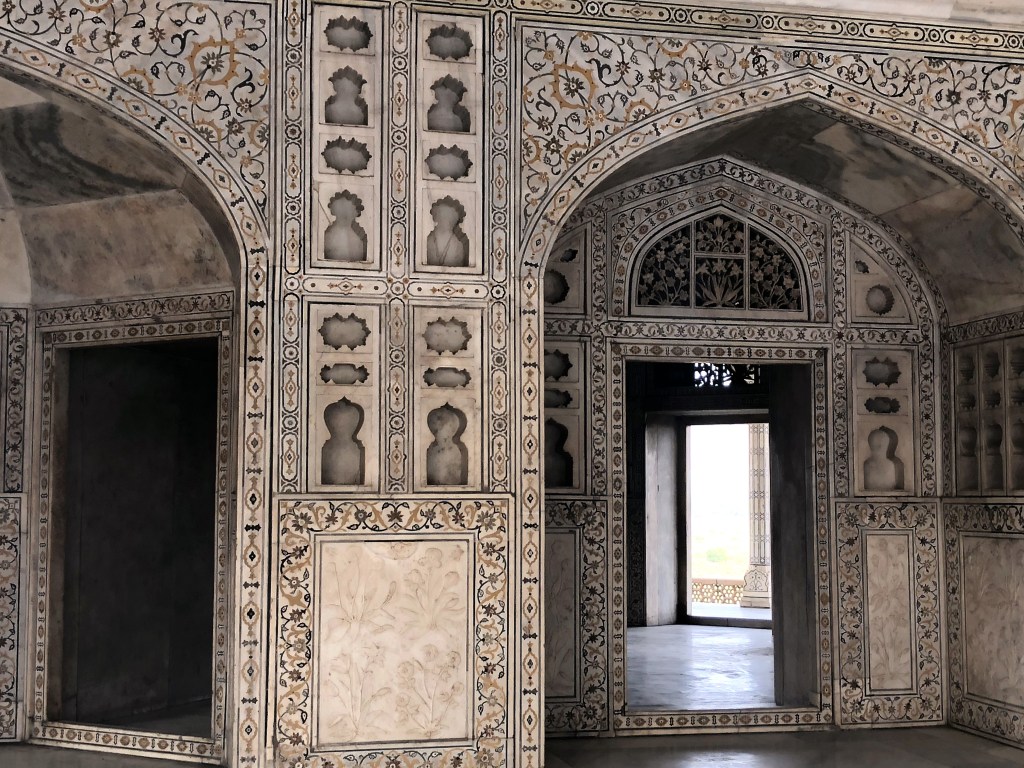
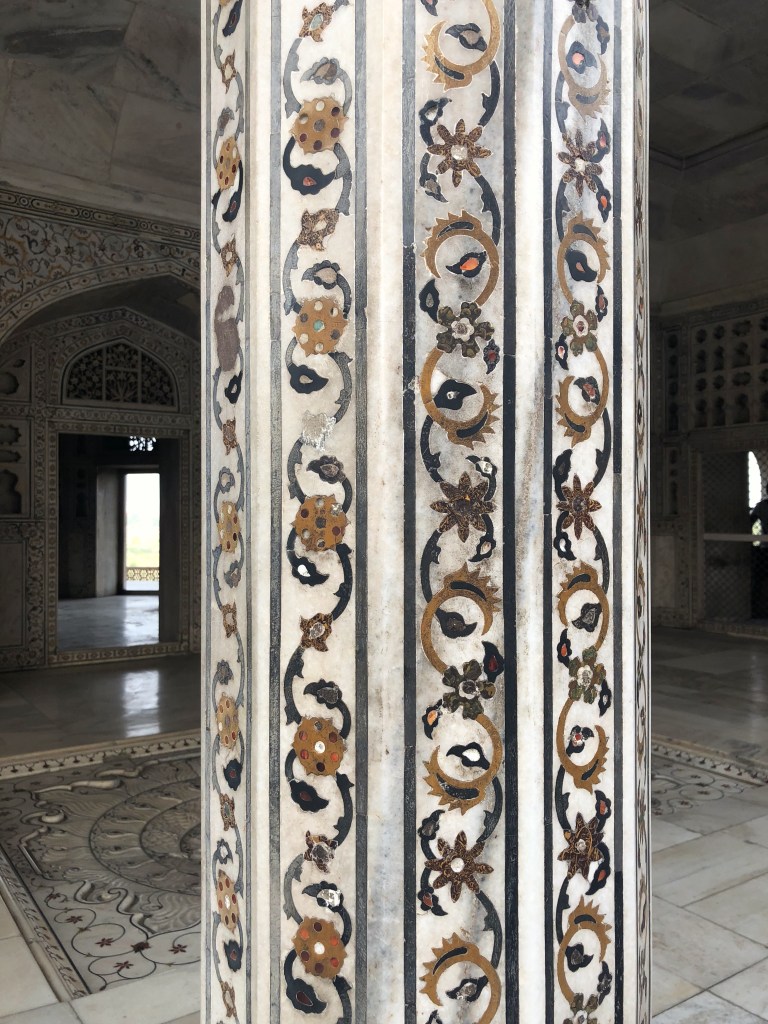
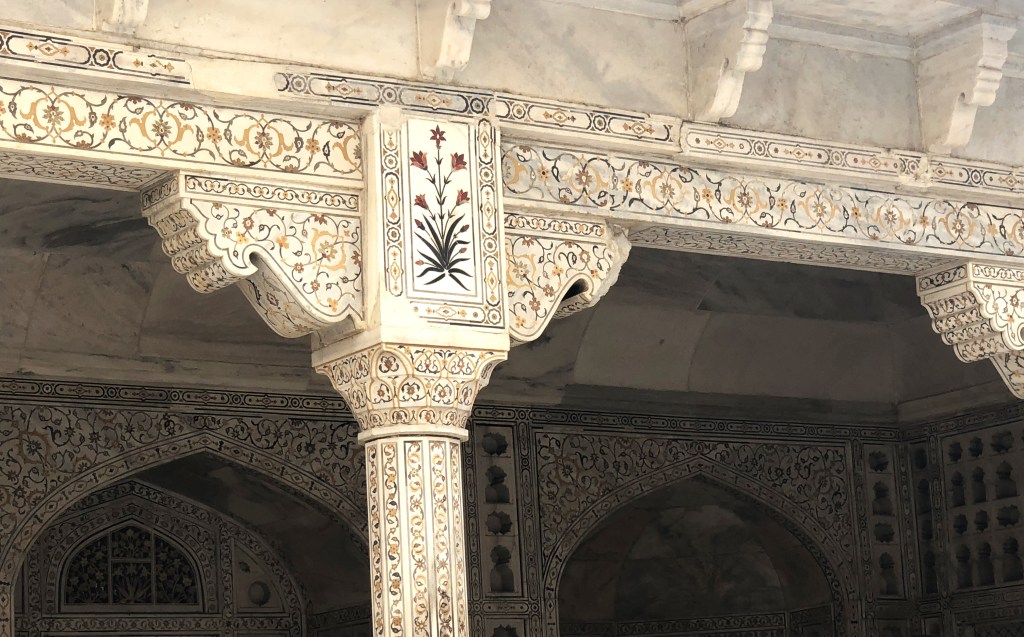
The dome of the building is topped by a gilded tower and the floor of the chamber is paved with marble so as to resemble a “pachisi” board ( Pachisi- traditional Indian cross and circle board game). The rooms are paved with light marble up to the top of the ceiling along with an open pavilion with a shallow lotus-shaped tank on the floor, featuring a water jet in the center. Floors, walls and ceiling are covered with delicate carvings.

Shah Burj Carvings
Interior of Shah Burj
Carvings on the column

There are several stories related to Shah Burj, one of these is that it was here that Shah Jahan, along with his daughter, Jahanara Begum, spent his remaining days after being imprisoned by his son and successor, Aurangzeb. In 1658 Shah Jahan became ill, and immediately all three of his sons started making a bid for power and Aurangzeb was able to seize Agra Fort and imprisoned his dad in the fort. The last thing Shah Jahan would have thought when designing and building this wonderful palace is that it would become his prison years later. It is said that during his final years of imprisonment in the chambers beside the Burj, Shah Jahan was supposed to have looked longingly out at the distant view of the Taj Mahal he had built for his empress Mumtaj. In January 1666 Shah Jahan passed away, and was buried next to his wife, Mumtaz Mahal, at the Taj Mahal.

A time for everything

Lake Moraine is a glacially fed lake in Banff National Park and is situated in the valley of Ten Peaks. Lake Moraine is the only lake I visited twice when I was in Banff. First time I took a shuttle around 6.30AM and spent about 2 hours on the rock pile appreciating the azure blue color with ten peaks in the background. Second time I went during sunrise and had a very different view and colors as the sun lit up the valley of the ten peaks with pinks and gold.

         I missed going to Banff with brother and sister in 2001 and always regretted missing on that trip.  When we finally decided to go in 2023, the trip was riddled with changes. Original plan has to be scrapped as it didn’t fit our schedule and I had rescheduled entire trip 2 weeks before the original date.  When I looked at the weather forecast for the week we were going, it seemed likely that it is going to rain entire week and then threat of wildfires. There was no guarantee that we will have clear skies. I planned to go to Moraine Lake every day of our trip as our scheduled sunrise shuttle was on the last day and I didn’t want to take a chance of not seeing this lake in its fully glory.  As it turned out that we had perfect weather for the whole time we were in Banff and the day we went to see sunrise, we had a “Blue bird” day with perfect blue skies.

        As much as we like control things, we have no control over anything especially things like weather and we need learn to enjoy and appreciate each moment as it is presented to us- a lesson I am trying to learn and practice. I am grateful for the opportunities to appreciate true beauty of our world by letting go of expectations and practicing mindfulness, focusing on present moment.