Exploring the Breathtaking Views of Bøur and Múlafossur

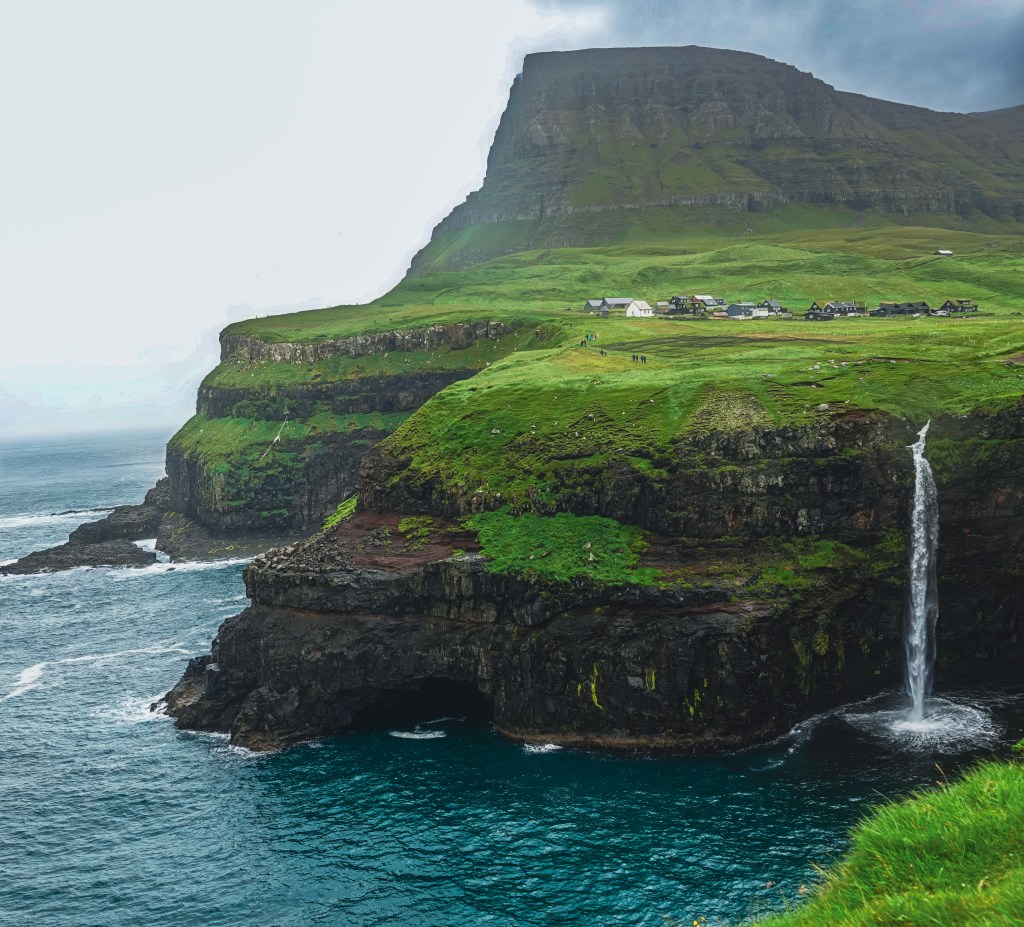
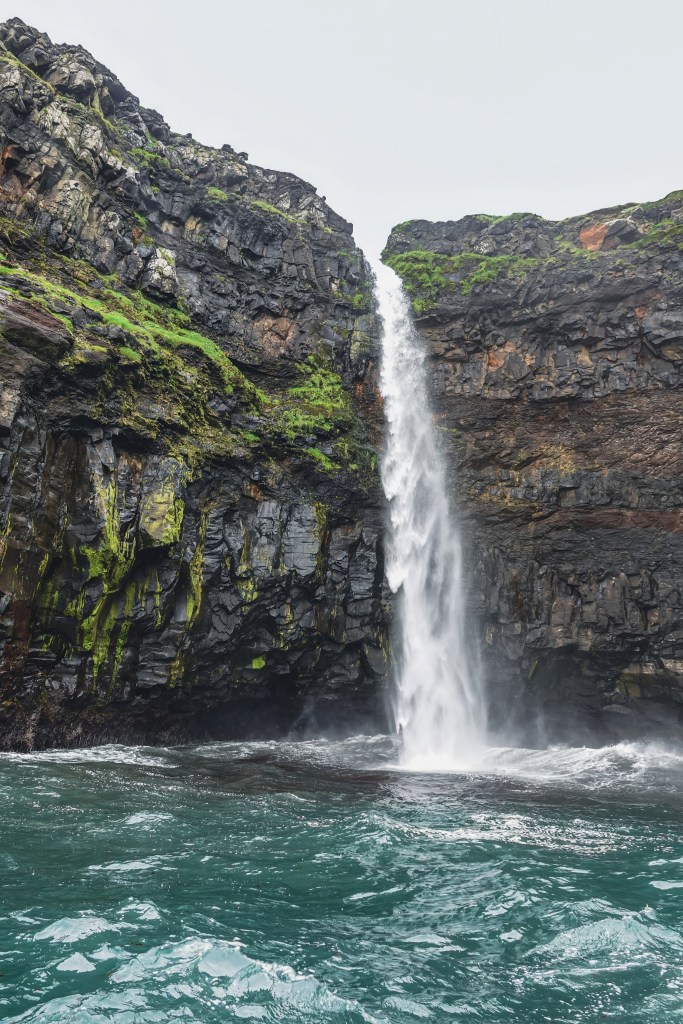
Múlafossur Waterfall is a dreamy waterfall tucked away on the rugged western edge of Vágar Island in the Faroe Islands. The waterfall plunges dramatically into the Atlantic Ocean, surrounded by cliffs and a tiny, charming village of Gásadalur. I got to see the waterfall twice. First, I saw it from the ocean when I was on the Classic Drangarnir Sea Arch Boat Tour. Then, I saw it again from the land after visiting the Lake above the ocean. I also visited the village of Bøur. It is one of my favorite villages in the entire Faroe Islands. Both the sea views and the land views offer different perspectives of both the waterfall and the villages.

Múlafossur: The Promontory Waterfall

With a drop of 60 meters (200 feet), Múlafossur is the Faroe Islands’ most iconic natural wonder. Its name translates to “Promontory Waterfall.” The name is fitting as it cascades off a cliffside directly into the tempestuous sea below.
Gásadalur: The Goose Valley

Gásadalur was once accessible only by hiking over the steep mountain passes. Now, the village welcomes visitors through the Gásadalstunnilin tunnel(Built in 2006). This makes the journey far easier— but no less magical. With about 20 residents and 25 houses, this remote village offers a rare glimpse into traditional Faroese life. You can actually stay in this village. There are 2 options. One is Múlafossur Cottages, located next to the stream. The other one is Hjalgrímsstova, part of the modern sheep farm Gásadalsgarðu.

The name Gásadalur means “Goose Valley,” and the charm here is undeniable. A cozy café and guesthouse serve locally sourced lunches, cakes, and coffee. These treats are perfect for warming up after a brisk walk to the waterfall.
Mountains That Guard the Valley

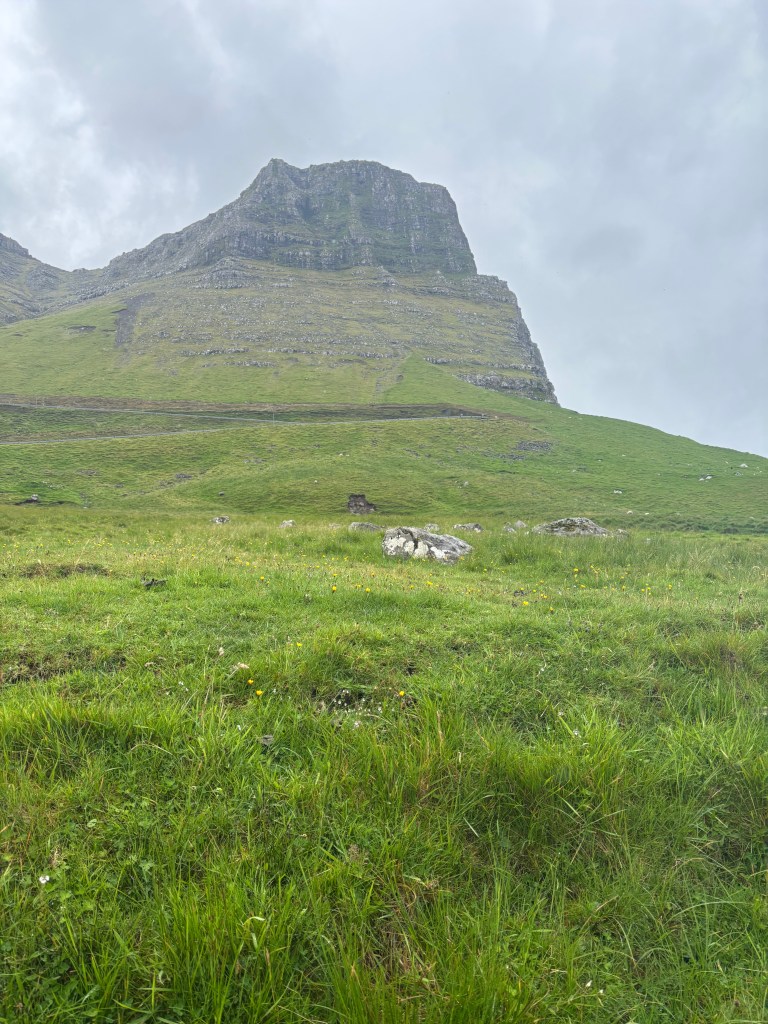
Gásadalur is cradled between two majestic peaks:

  • Eysturtindur (“The Peak to the East”) rises to 715 meters (2346 feet)
  • Árnafjall, the highest mountain on Vágar, reaches 722 meters (2368 feet)

These mountains not only add drama to the landscape but also serve as silent sentinels, watching over the village and its waterfall.

When to Visit

Gásadalur and Múlafossur can be visited year-round. Summer offers longer daylight hours and milder weather, while winter cloaks the village in mist and mystery. No matter the season, the waterfall’s roar and the village’s quiet beauty promise a moment of awe.

Whether you’re chasing waterfalls or seeking solitude, Múlafossur and Gásadalur deliver both. You can combine a visit to the village and the waterfall with a visit to the village of Bøur

Bøur: The Coastal Hamlet with Legendary Views

Bøur is just a short drive from Vágar Airport. It lies along the same stretch of coast as Gásadalur. Bøur is a tiny village steeped in history and natural beauty. Around 70 residents live in Bøur. It is famous for its picturesque turf-roofed houses. These houses are clustered near a small beach and a charming 19th-century church.

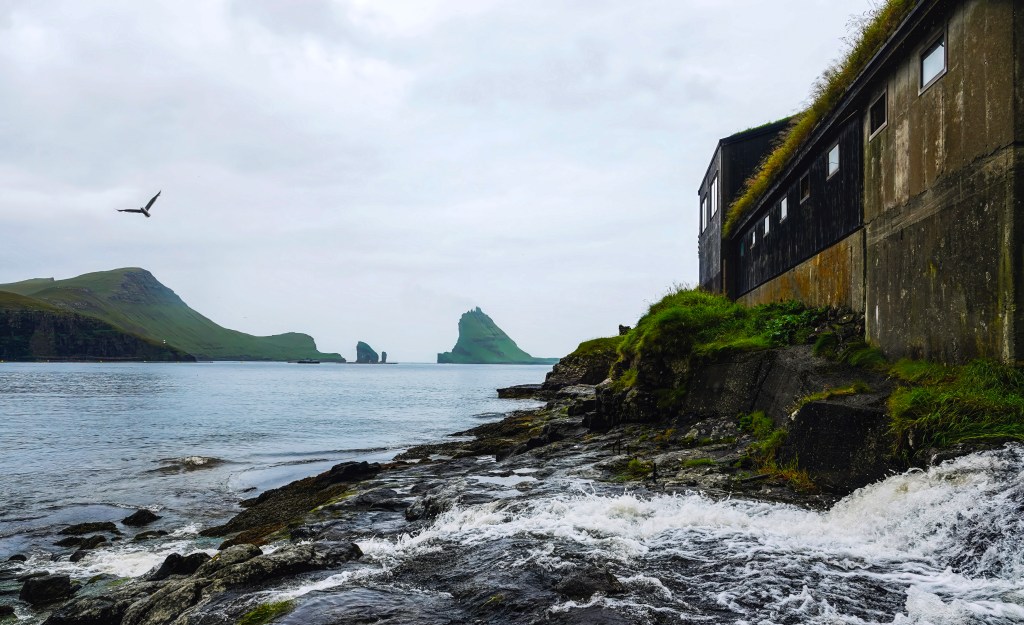
From Bøur, visitors enjoy breathtaking views of the jagged islets Tindhólmur and Drangarnir, iconic sea stacks that have inspired countless photographs and paintings. The village’s peaceful atmosphere and scenic surroundings make it a favorite stop on Faroe Islands sightseeing tours. Village of Bøur, has couple of restaurants and cafes that you could and enjoy a meal. We stopped here and had a picnic lunch on the black sand beach after out visit to the Mulafossur and took some great photos of Drangarnir from the beach.
Public Transport & Driving

  • From Vágar Airport: Both Bøur and Gásadalur are easily accessible by car, making them ideal stops for travelers. The drive to Bøur takes about 15 minutes, allowing you to enjoy stunning views along the way. Continuing on to Gásadalur adds another 5 minutes. This brings the total travel time to 20 minutes through the scenic Gásadalstunnilin tunnel. The tunnel offers a unique experience as you pass beneath the mountains.
  • Road Conditions: Roads are well-maintained but narrow and winding. Drive cautiously, especially in foggy or wet conditions.
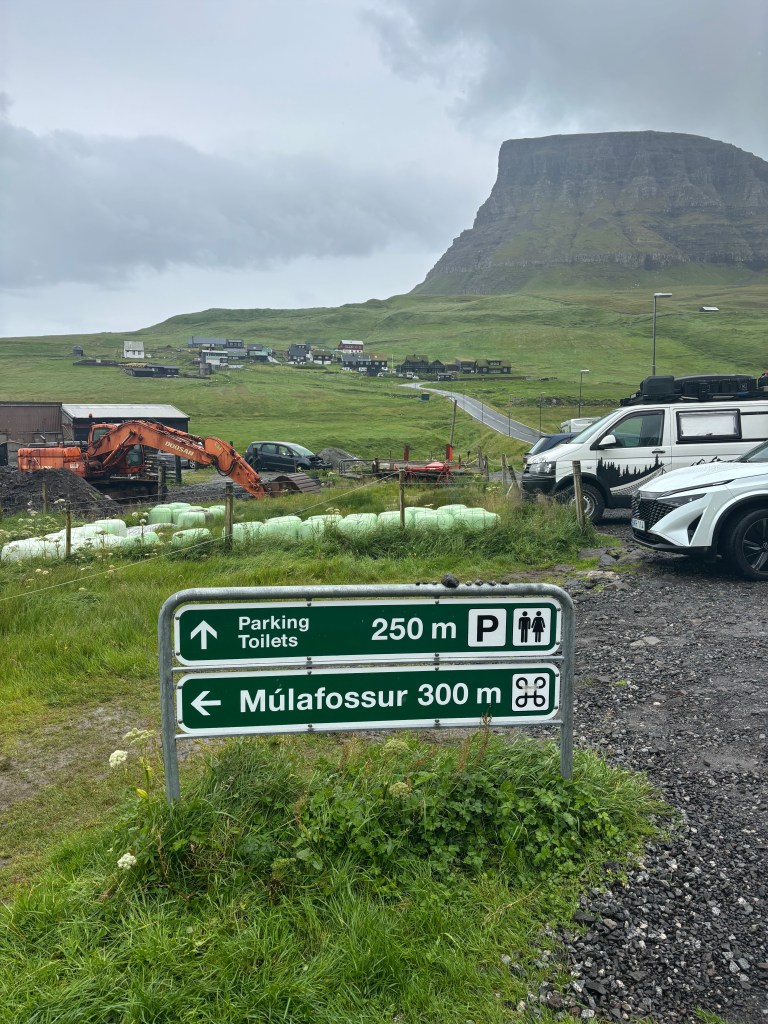
  • Parking: Designated parking areas are available near both villages. From the Gásadalur parking lot, it’s a short walk to the Múlafossur viewpoint.
  • By Bus:
    • Bus 300 from Vágar Airport to Sørvágur
    • Bus 350 from Sørvágur to Bøur (runs 3x/day on weekdays)

How to Visit: By Boat

  • Boat Tours: Several local operators offer boat tours from Sørvágur or Vágar harbor. These tours cruise along the coast and give stunning views of Múlafossur, Drangarnir, and Tindhólmur from the sea.
  • Highlights:
    • See Múlafossur waterfall from below as it crashes into the ocean.
    • Sail past dramatic cliffs and sea stacks.
    • Spot puffins and seabirds nesting on nearby islets.
  • Season: Most boat tours run from May to September, weather permitting.

The Postman’s Trail: A Historic Hike Between Bøur and Gásadalur

Before the tunnel was built in 2004, Gásadalur was completely isolated, accessible only by boat on calm days or by foot over the mountains. The most famous route was the Postman’s Trail, a rugged path that connected Bøur to Gásadalur.

  • Distance: ~5 miles round-trip
  • Duration: 3.5 to 4.5 hours
  • Difficulty: Moderate to challenging (steep climbs, uneven terrain)
  • Trailhead: Just past Bøur, near the tunnel entrance (look for cairns and a narrow dirt path)
  • Summits Nearby: Mt. Rógvukollur (464 m) and Knavin (485 m) offer optional detours with panoramic views

The postman hiked this trail three times a week, delivering mail to Gásadalur’s residents. Along the way, he would pass dramatic cliffs and windswept ridges. He would eventually descend into the valley where Múlafossur Waterfall roars into the sea. It was a view he knew well.

Today, hikers can retrace his steps and experience the Faroe Islands as they were before modern roads. It’s a journey through history, solitude, and raw nature.

Where to Stay: Gásadalur & Bøur

Whether you’re seeking solitude by the sea or a warm cottage nestled beneath misty mountains, both villages offer unforgettable accommodations.

🌿 Gásadalur Stays

  • Lundi Cottage – Turf Cottage by Múlafossur Waterfall A guest favorite on Airbnb, this charming turf-roofed cottage sits right beside the famous waterfall. Expect sheep, birds, and highland cows as neighbors, plus views that feel like a painting.
  • Múlafossur Cottages These well-crafted holiday homes offer spacious interiors, warm ambiance, and unbeatable proximity to the waterfall. Ideal for relaxing after a day of hiking or sightseeing.
  • Gásadalur Apartments @ World Famous Waterfall Air-conditioned apartments with balconies and full amenities, located steps from the waterfall. A perfect blend of comfort and location.
  • Nearby Options in Sørvágur & Sandavágur If Gásadalur is fully booked, nearby towns offer excellent alternatives:
    • Guesthouse Hugo – Cozy, social atmosphere with sea views
    • Cottages by the Sea – Waterfront serenity with mountain views
    • Giljanes Camping & Hostel – Budget-friendly with shared kitchen and lounge

🏡 Bøur Stays

  • The View to Drangarnir, Tindhólmur & Mykines These are a cluster of four traditional Faroese turf-roofed houses. They are built to blend into the landscape. These homes offer panoramic views of the famous sea stacks and are among the highest-rated stays in the Faroe Islands.
  • Airbnb Options in Bøur Bøur features several unique rentals with rustic charm and modern amenities. Many offer full kitchens, cozy living spaces, and direct views of the ocean and nearby islets.
  • Nearby Sørvágur Accommodations Just a short drive away, Sørvágur offers:
    • Løðupackhouse – Historical Warehouse – A renovated 100-year-old harbor house
    • Perlan Apartments – Sea-view apartments with full kitchens
    • Pouls Airport Guesthouse – Convenient for travelers, with car rental options included

Skarðsáfossur: The Hidden Waterfall of Vágar

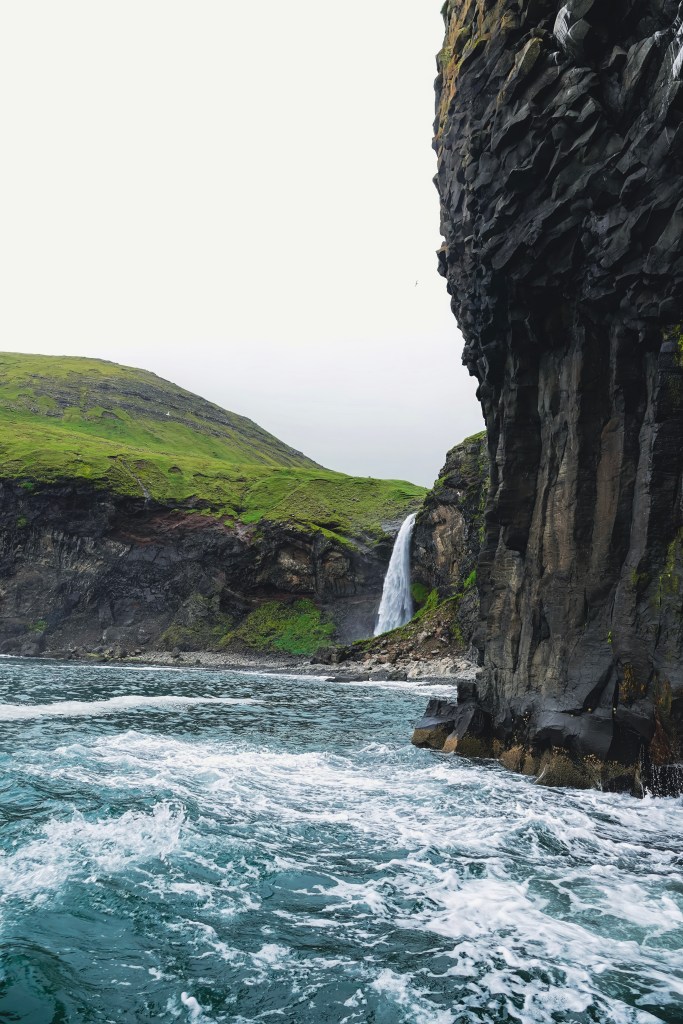
While Múlafossur steals the spotlight, Skarðsáfossur is just a short distance away. It is a lesser-known but equally breathtaking waterfall. It tumbles from the cliffs onto a small black stone beach. This secluded cascade is positioned between Bøur and Gásadalur. It offers a more intimate and wild experience for those willing to seek it out.
Location & Landscape

  • Coordinates: Roughly 2 km west of Bøur, near the tunnel entrance to Gásadalur
  • Setting: Rugged cliffs, black stone beach, and panoramic views of Tindhólmur, Drangarnir, and the skerry Akranessker
  • Wildlife: Puffins and seals are often spotted in the area

The waterfall is best viewed after rainfall, when its flow is strongest and most dramatic.

Best Way to Visit: By Boat

Because the land surrounding Skarðsáfossur is private property, the best and most respectful way to see it is from the sea:

  • Boat Tours: Depart from Sørvágsfjørður and cruise past Skarðsáfossur, Drangarnir, and Tindhólmur
  • Experience: Boats can get close enough to hear the crashing water and feel the spray
  • Recommended Tour: Drangarnir Boat Tour includes Skarðsáfossur as a highlight

Land Access: A Rugged Adventure

While not officially marked, adventurous hikers sometimes approach the area from land:

  • Trailhead: Just before the tunnel to Gásadalur, near Bøur
  • Route: Hike down toward the ocean, aiming for the skerry Akranessker
  • Terrain: No visible path; grassy fields used for sheep herding, rocky coastline, and steep descents
  • Caution: Slippery rocks and private land—respect boundaries and avoid trespassing

Bluegate – Drangarnir & Múlafossur Boat Tour

Highlights: A 60–75 minute tour originates from Sørvágur marina. On this boat tour you will visit Bøur village, Múlafossur waterfall, Tindhólmur islet, and the Drangarnir sea stacks. Weather permitting, guests may sail through Drangarnir’s sea arch. Small boat size  (12 passengers) ensures a personal experience. In the summer months, you may be able to see some puffins.

📌 Meeting Point: Sørvágur marina

☎️ Phone: 780800

🌐 Website: bluegate.fo

Seatravel – Exclusive Drangarnir Boat Tours

Highlights:1.5 hour tours from Sørvágur to Drangarnir, Múlafossur, Tindhólmur, and Akrans. Focuses on intimate small groups (max 16 passengers), guided by experienced captains. 

📌 Meeting Point: Sørvágur marina

🌐 Website: seatravel.fo

Final thoughts

Exploring Múlafossur and the village of Gásadalur is like stepping into a living postcard—where nature’s drama meets quiet village charm. From the iconic waterfall plunging into the Atlantic to the serene beauty of Bøur and the tucked-away Skarðsáfossur, this corner of the Faroe Islands offers a rare blend of accessibility and mystery.

Whether you’re chasing waterfalls, hiking cliffside trails, or simply soaking in the silence, this guide is your invitation to slow down and let the landscape speak. The Faroe Islands aren’t just a destination—they’re a mood, a rhythm, a reminder that the most unforgettable places are often the ones that feel untouched.

So pack your layers, charge your camera, and bring your sense of wonder. Gásadalur and its neighbors are waiting.
Tales from Balkan- Top 12 things to do in Sarajevo

I didn’t expect to love Sarajevo as much as I did but I fell in love with this city. We spent last 2 days of our Balkan Itinerary in Sarajevo before flying home. We stayed at President hotel which is right in the center of the town at the edge of old market and walkable distance to all the main attractions in Sarajevo. We took “food and history” walking tour of the old town and enjoyed some local cuisine along with the history of the town.

  1.  Sebilj Fountain- Symbol of Sarajevo
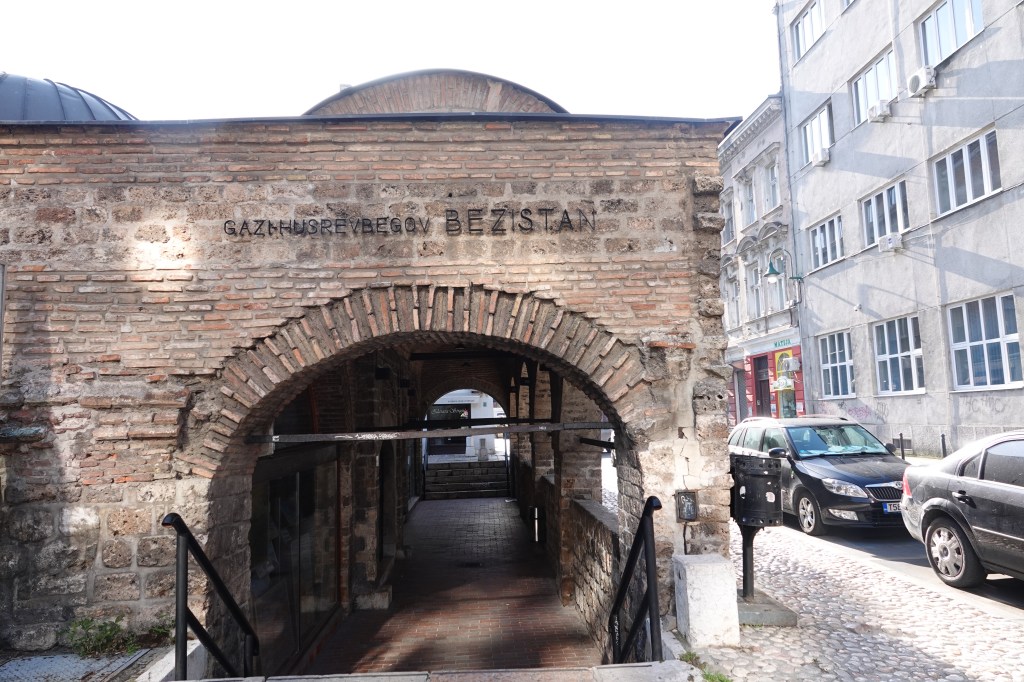
  2. Gazi Husrev Bey’s Bezistan (covered bazaar) and Tašlihan-stone inn
  3. Morića Han
  4. Gazi Husrev-beg ‘Beys’ Mosque
  5. Latin Bridge and World war I
  6. East meets West sign
  7. Mount Trebevic and Bobsled track
  8. Sunset at Yellow fortress
  9. Old Bazar and copper Street
  10. Tunnel of Hope
  11. Skakavac waterfalls and MTB
  12. Park Bosanski Stećak i Zastava- Park with 7 flags
  13. Final thoughts

 Sebilj Fountain- Symbol of Sarajevo

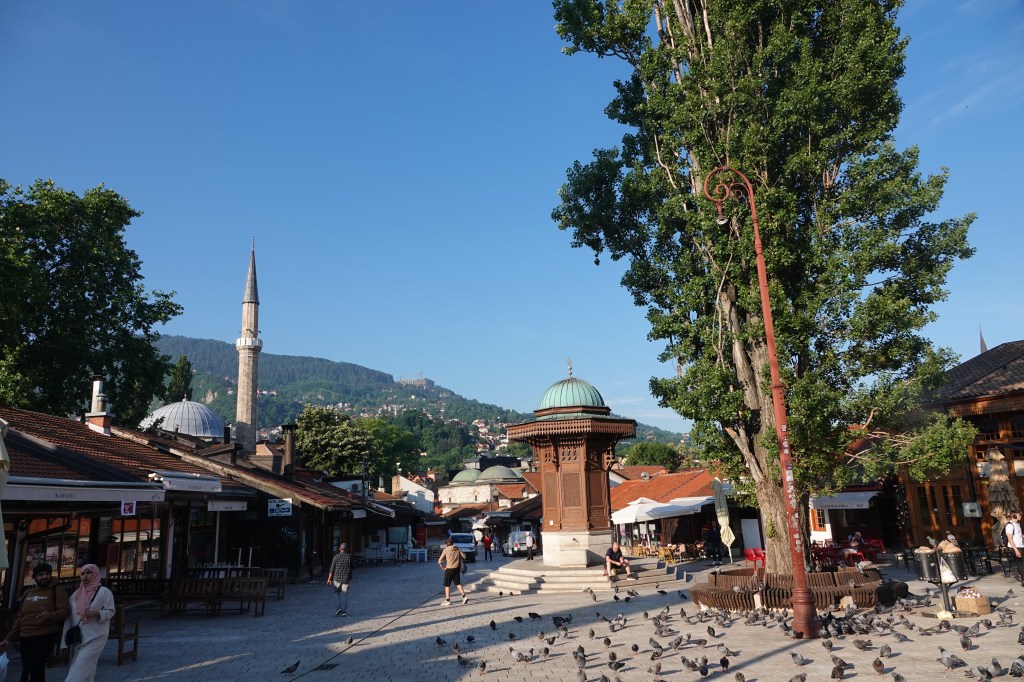
You can’t walk through old town Sarajevo without seeing the wooden water fountain known as Sebilj. The locals call this place as pigeon square, and it is used as meeting spot. Sebilj meaning a place where water is given is and intended to provide free water to travelers and locals stood as a symbol of hospitality. It originally built in 1753 in Otteman -style by Mehmed Pasha Kukavica, and was relocated to current location by Austrian architect Alexander Wittek in 1891. According to local legend “Whoever drinks water from any of Sarajevo’s fountains and spouts will come to Sarajevo”.

Gazi Husrev Bey’s Bezistan (covered bazaar) and Tašlihan-stone inn

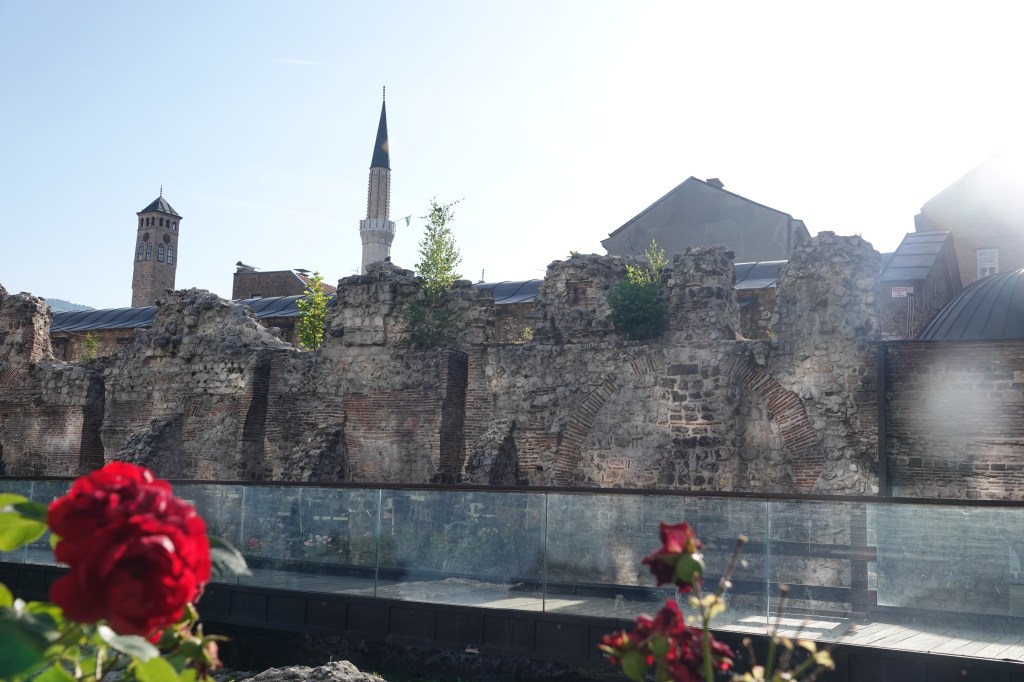
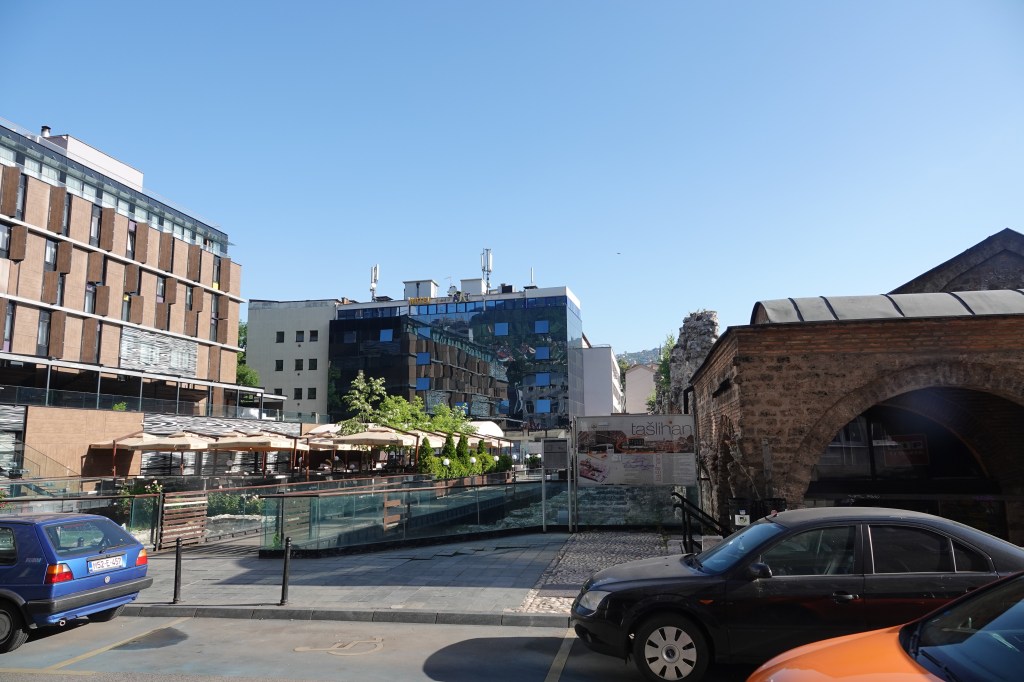
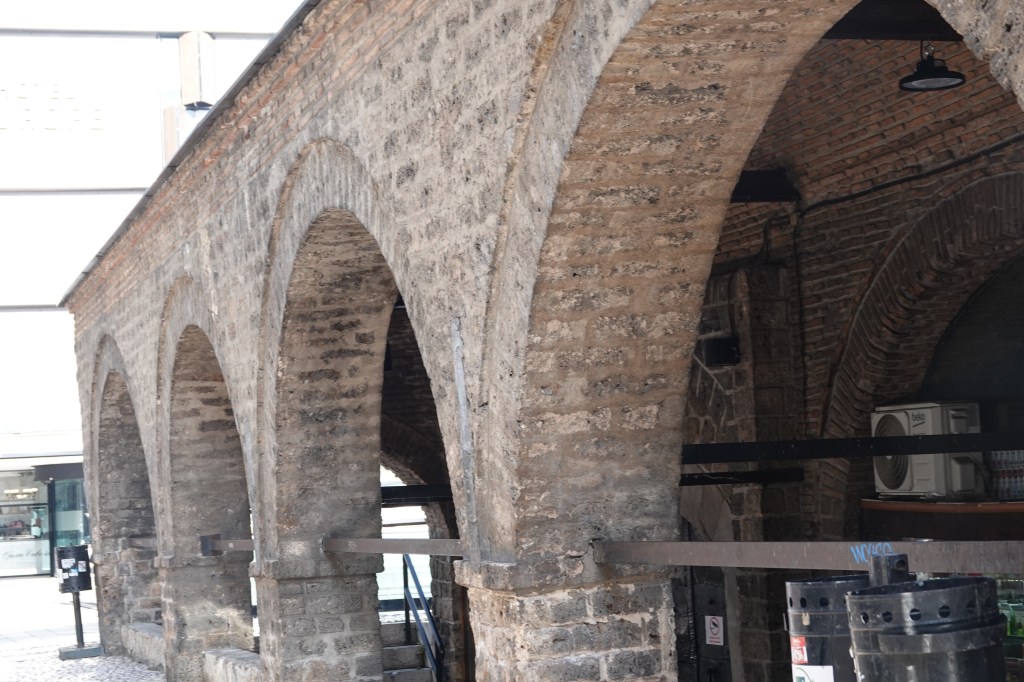
Located together, the Bezistan and Tašlihan were built in 1540 and 1543, funded by the Ottoman Governor, Gazi Husrev Bey.

During the Ottoman era, Bezistan housed textile shops, while the outdoor shops on Gazi Husrev Bey Street belonged to the metalworkers’ čaršija, where gold and silver jewelry were made and sold. The bazaar has four entrances, two from Gazi Husrev Bey’s Street, one on Ferhadija, and another on Zelenih beretki.

Tašlihan was one of three caravanserais in Sarajevo, providing accommodation for travelers and horses. Caravanserais were large fort-like structures that could accommodate entire caravans, including pack horses and merchants. They typically had one entrance, which was locked at night. The open courtyard was used for loading and unloading goods, often paved with cobblestones, and included a well or fountain.

Morića Han

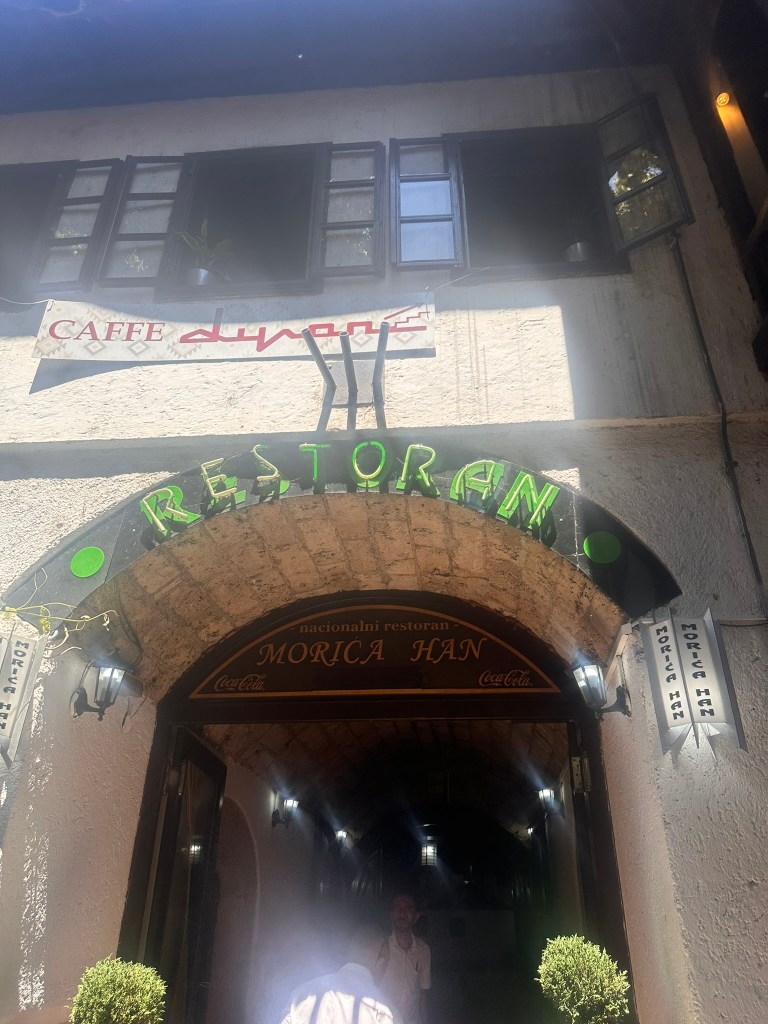
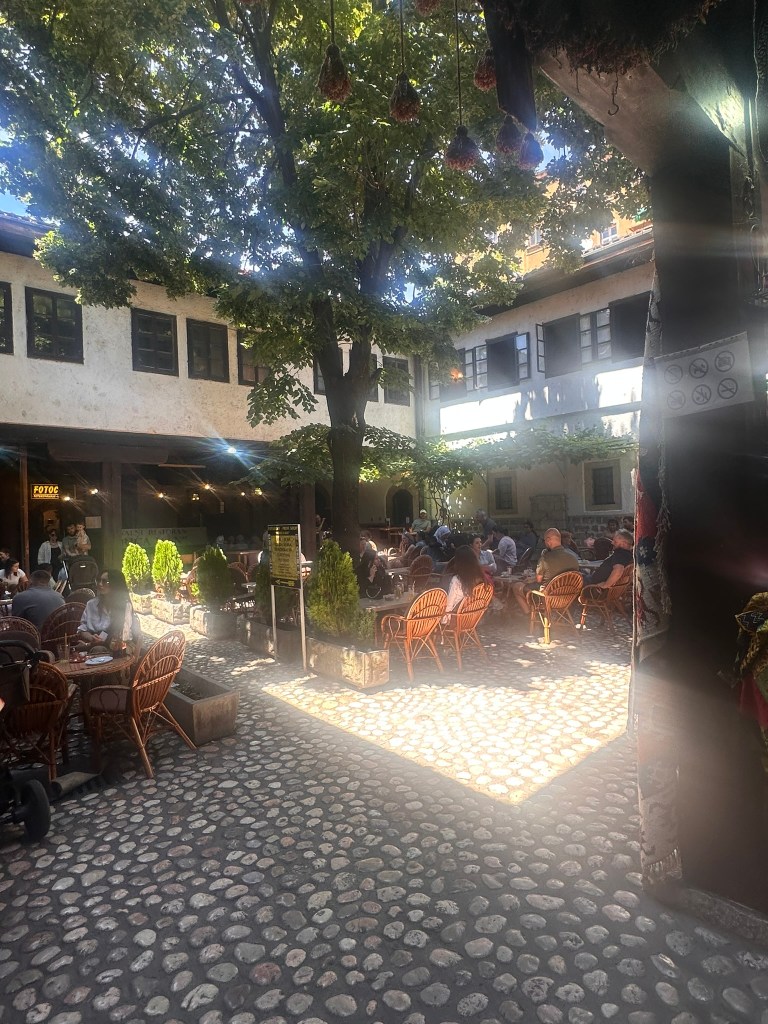
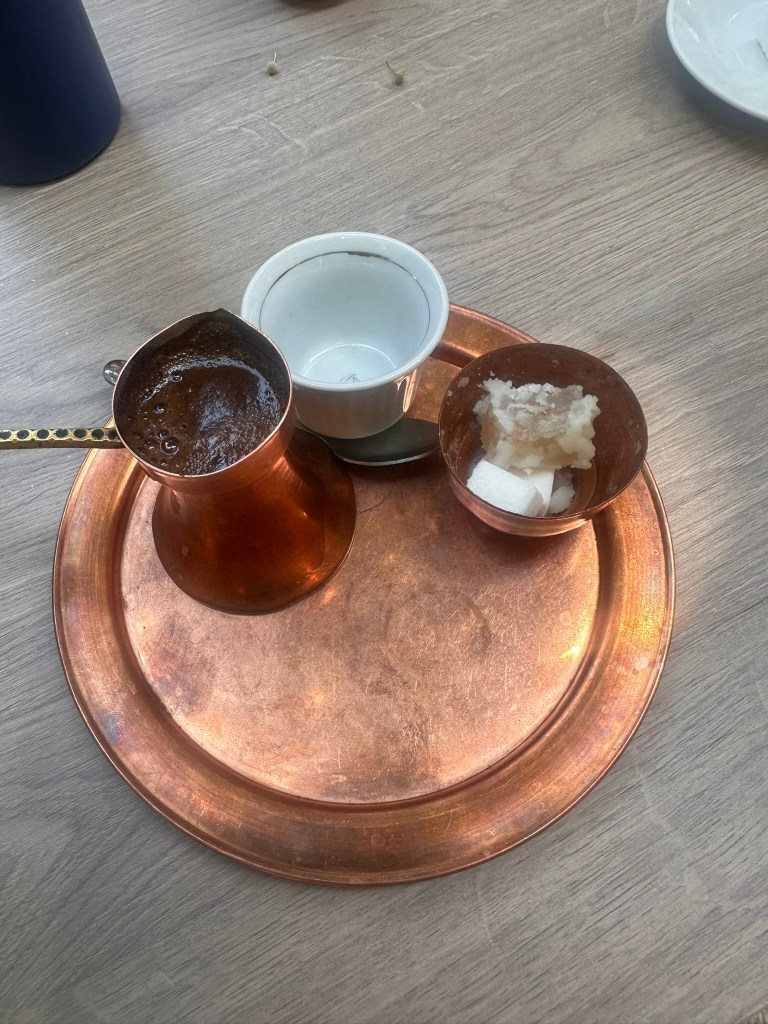
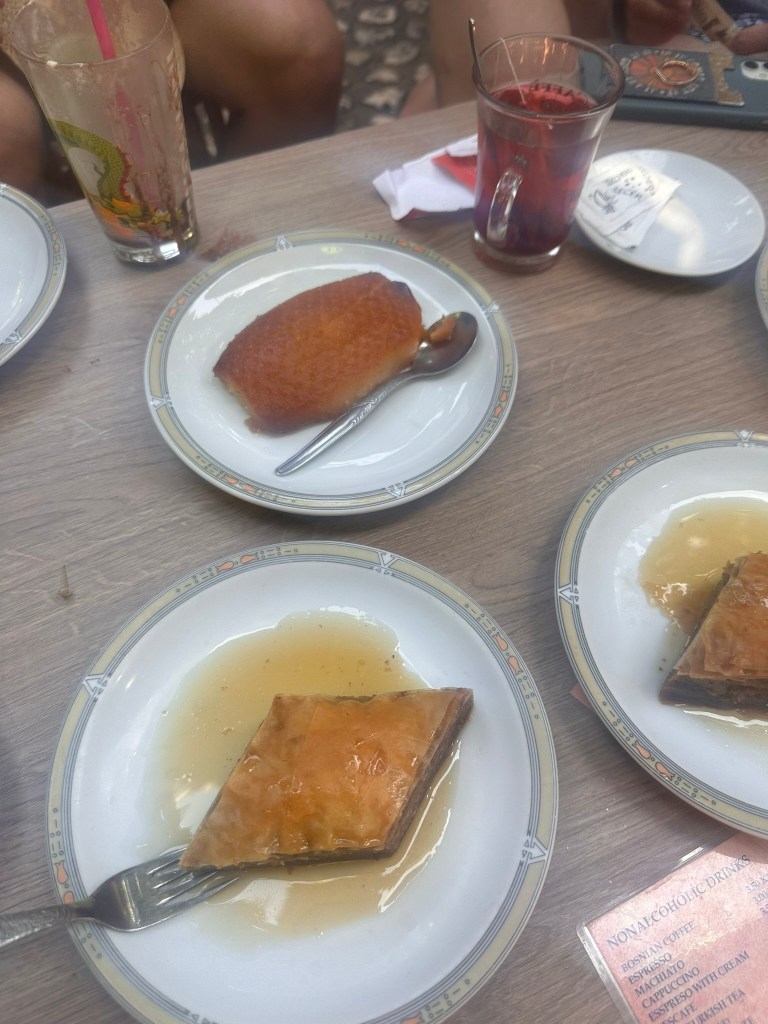
We stopped at Morića Han during our food tour and enjoyed Bosnian coffee and sweets. It’s a beautiful place to relax, drink coffee, and watch people. The inn was built in the heart of Baščaršija between the 16th and 17th centuries as part of an endowment established by Gazi Husrev Bey. The inn’s sleeping quarters could accommodate a caravan with 300 travelers and 70 horses. The room of the innkeeper was right above the main entrance, and the ground level was used for horses and goods. Upstairs, there were rooms for the travelers and a large coffeehouse.

The inn was also a gathering place for the Sarajevo elite and artisans, and its coffeehouse is even mentioned in sevdalinka lyrics. Morića Han is named after Mustafa Aga Morić, son of Ibrahim Aga, one of the famous Morić brothers. Today, Morića Han is home to a few cafés and shops, as well as a restaurant serving traditional Bosnian food.

Gazi Husrev-beg ‘Beys’ Mosque

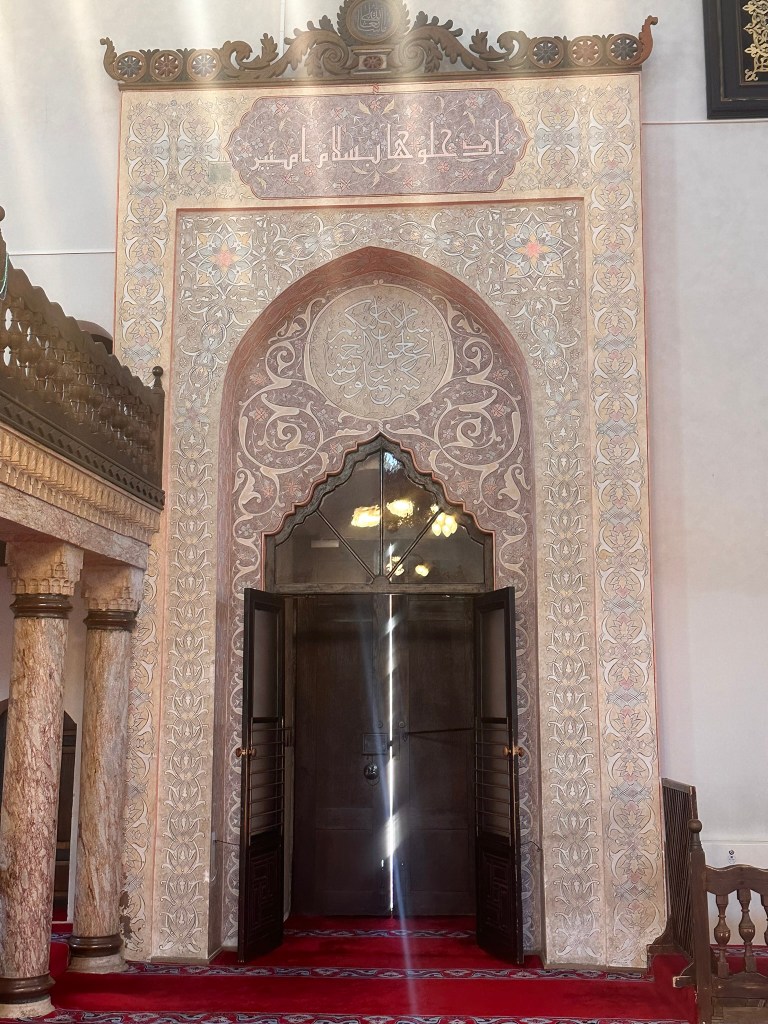
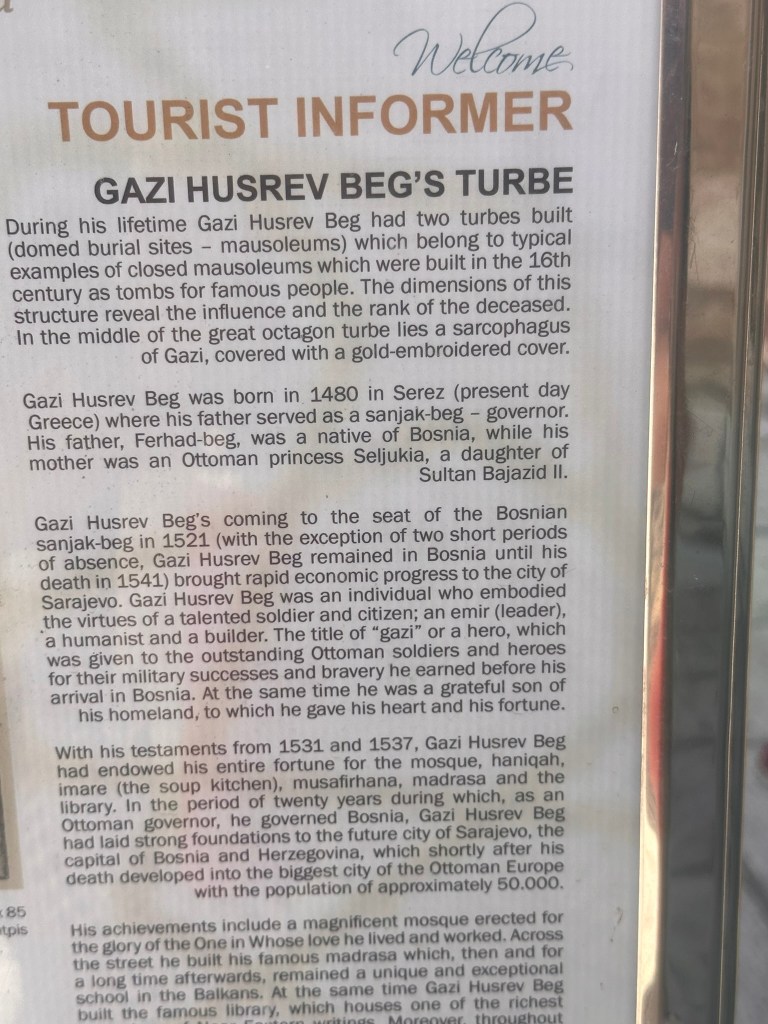
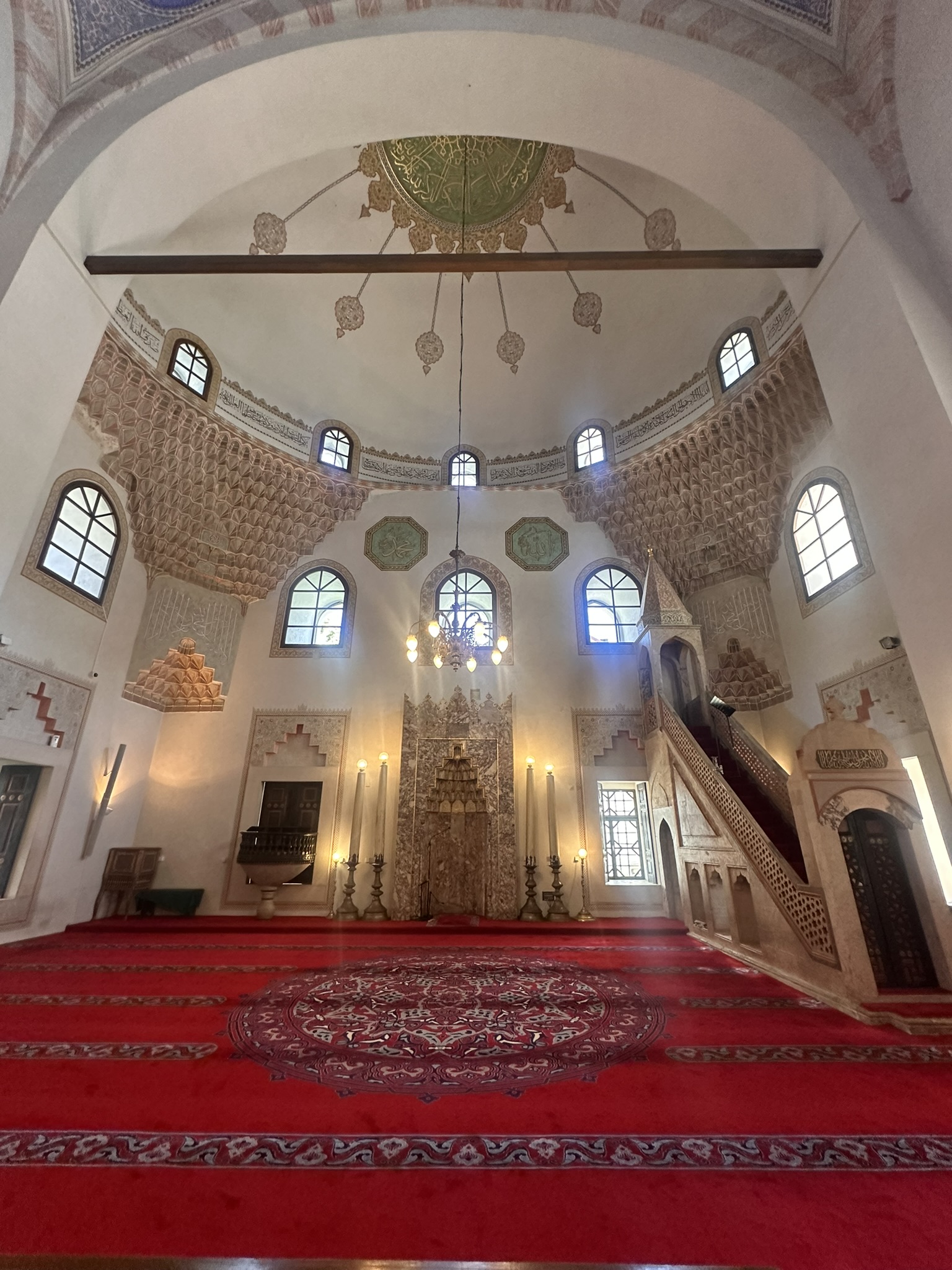
Huzrev-Beg bey, a prominent figure in the Ottoman Empire, held the position of governor (sanjak-bey) of the Sanjak of Bosnia and made significant contributions to the cultural and commercial advancements in the city. His influence extended to the construction of mosques, schools, markets, administrative facilities, and public baths, shaping the early development of the region. One of his enduring legacies is the Gazi Husrev-beg Mosque, an architectural marvel completed in the 16th century, characterized by exquisite Ottoman design. Even today, this mosque stands as one of the largest in Bosnia and Herzegovina.

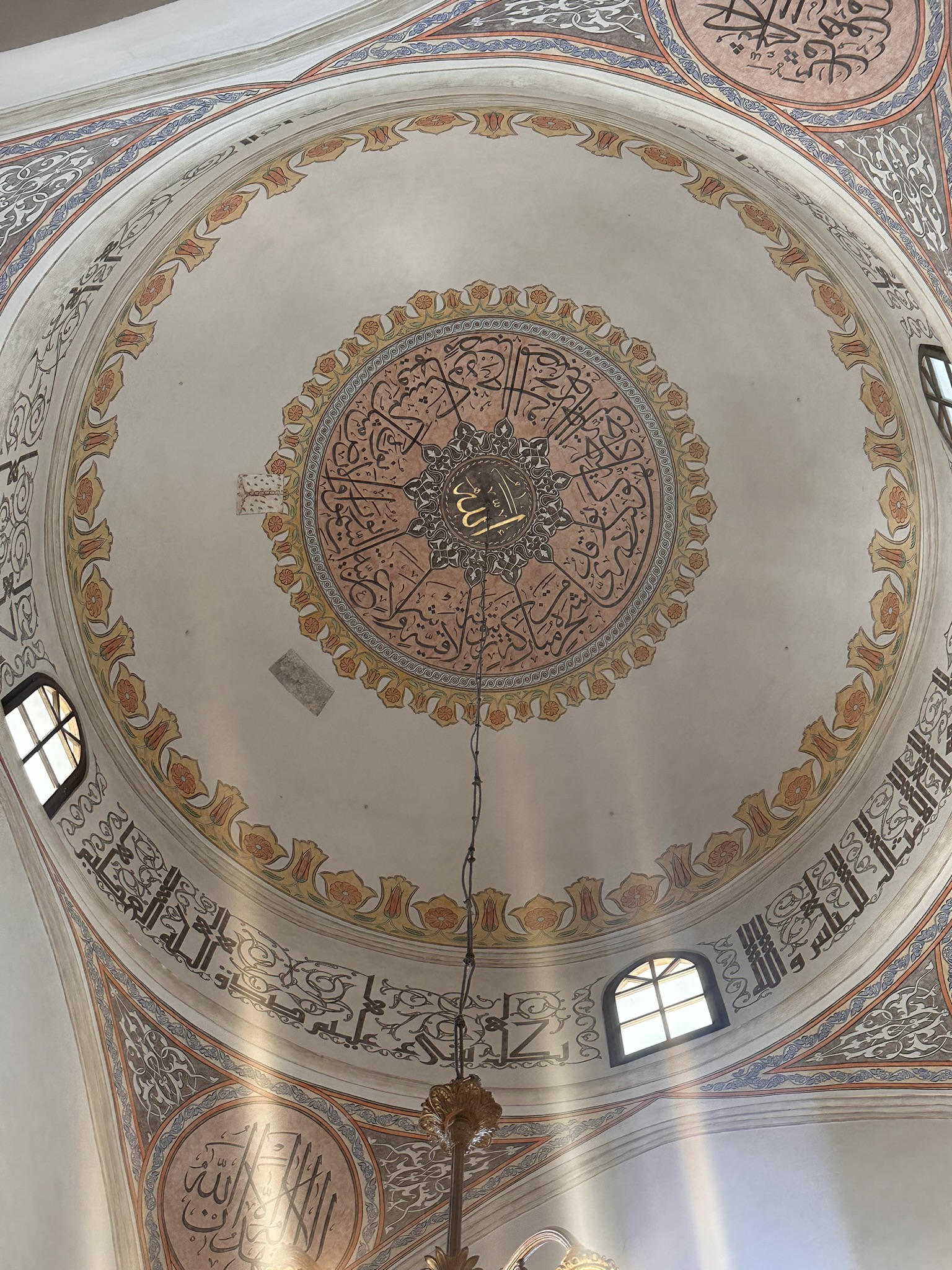
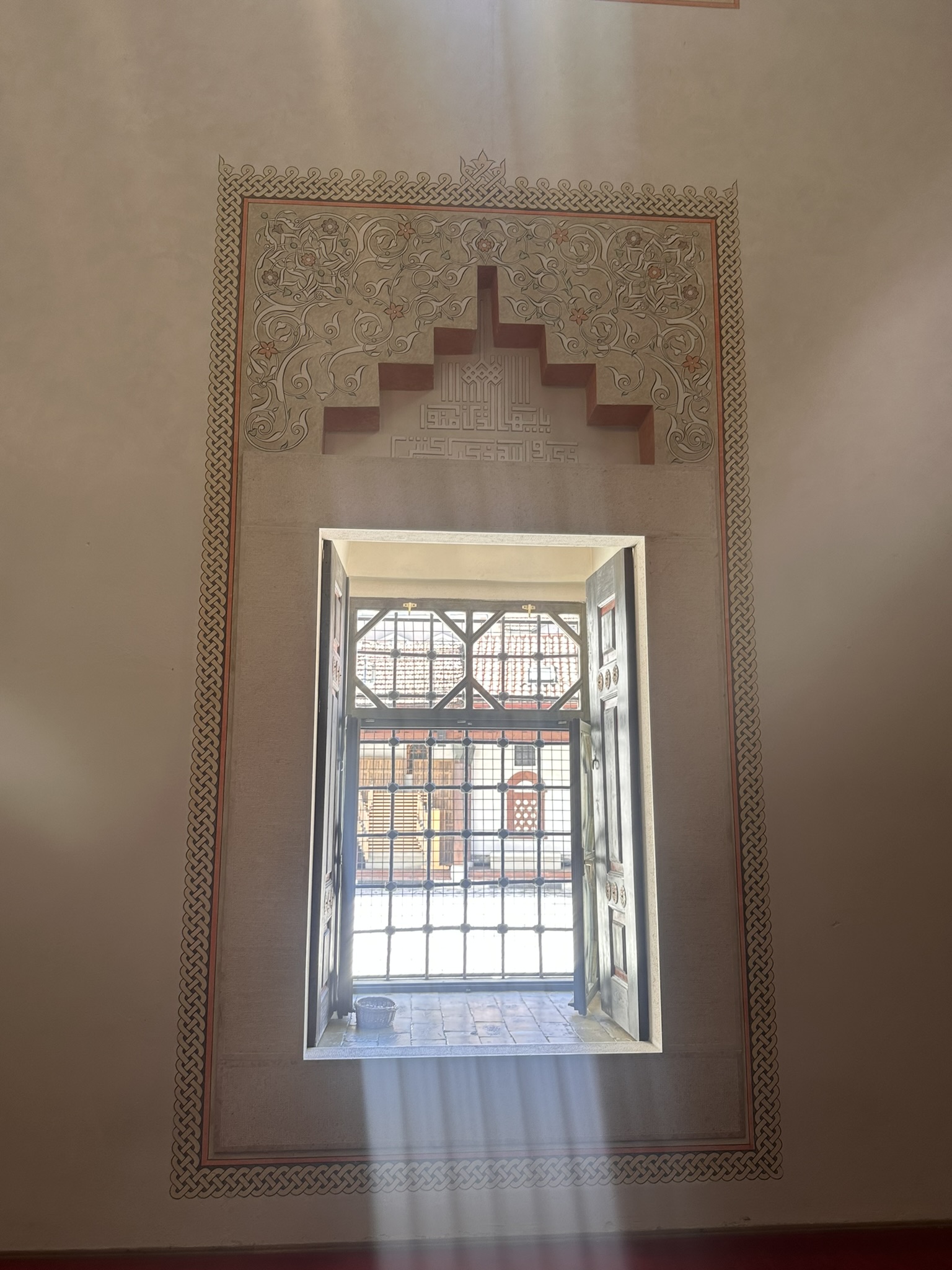
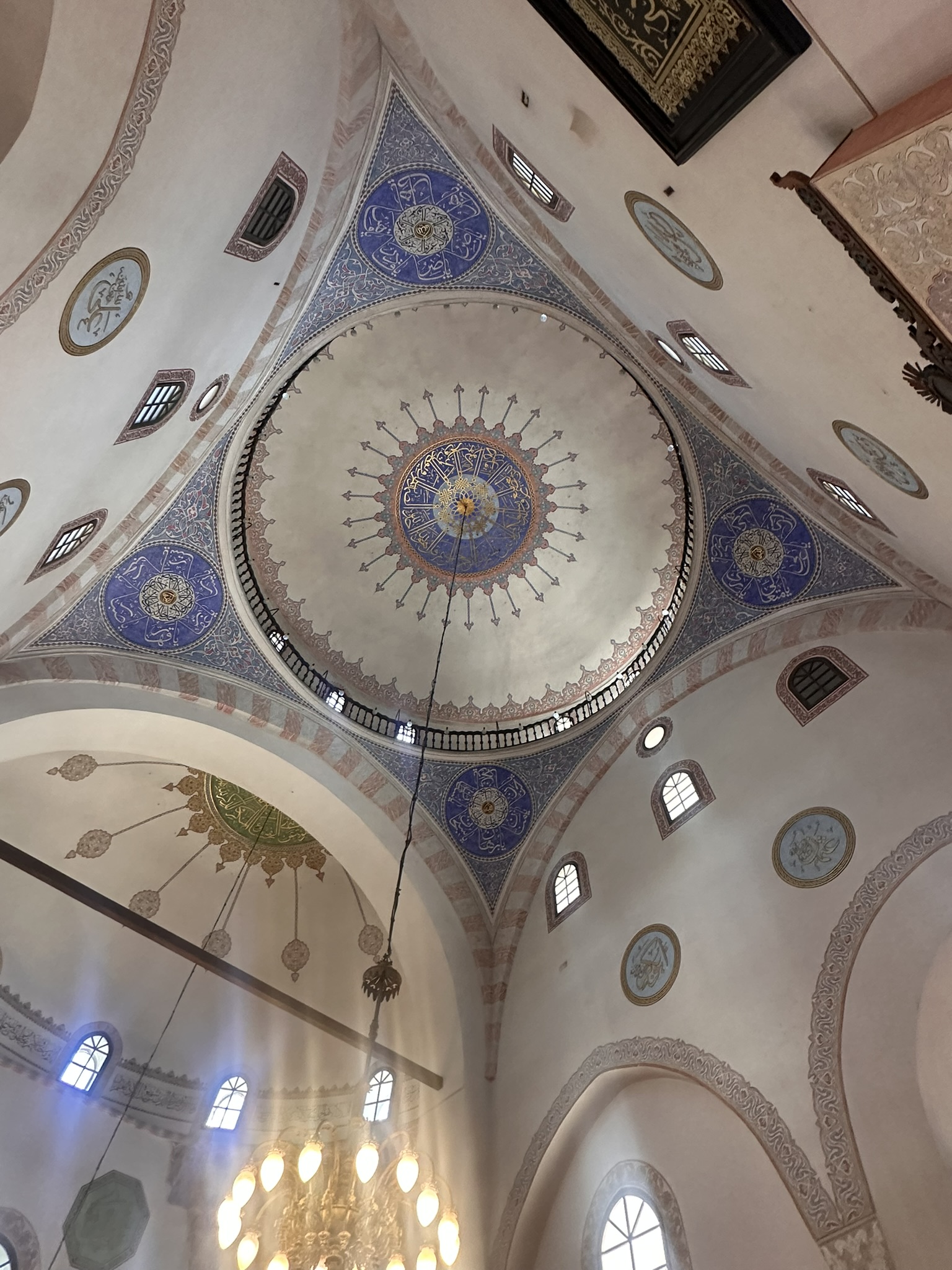
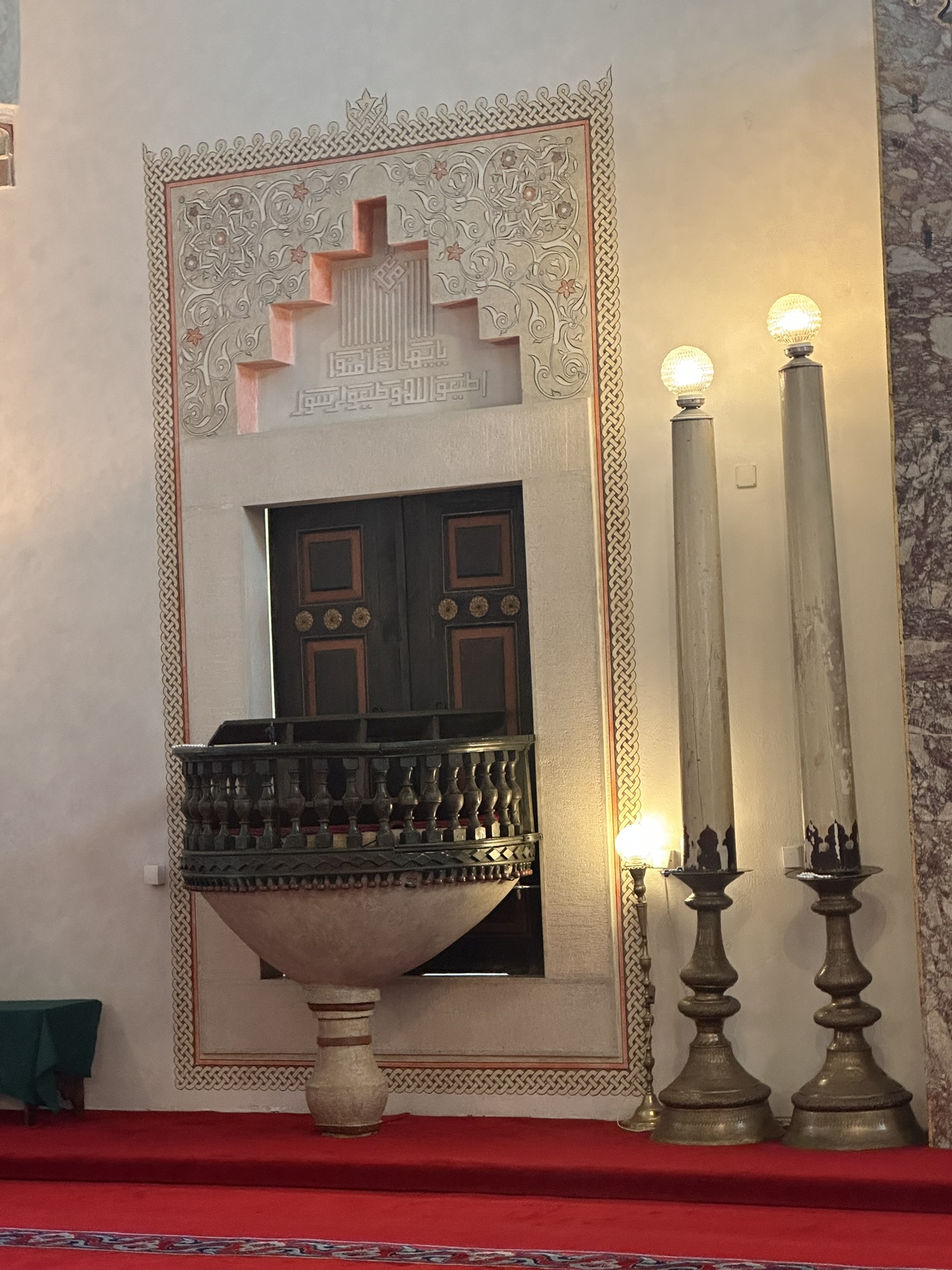
The Gazi Husrev-beg Mosque has witnessed remarkable historical milestones, including being the first mosque in the world to be electrified in 1898. The interior of the mosque is adorned with intricate wooden panels on the dome and adorned with captivating decorative paintings, offering a glimpse into its rich artistic heritage. Despite enduring significant damage during the siege of Sarajevo, extensive reconstruction efforts have preserved its original style, albeit altered from its former grandeur. It remains an enduring symbol of cultural and architectural significance.

  • Gazi Bev Mosque

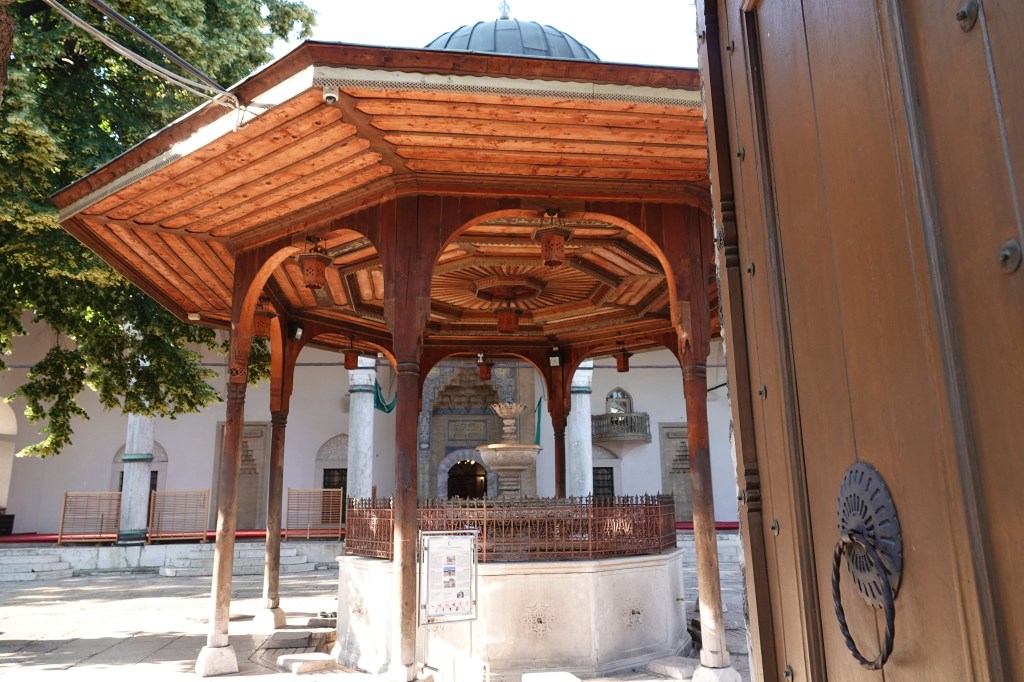
This is an active mosque and visitors are not allowed during prayer times. The exterior of the mosque features several tombs, including that of Gazi Husrev Beg himself, along with the resting places of other influential early residents of the city. Furthermore, the adjacent decorative garden and school complex (madrassa) offer additional insights into the historical significance of the area. The madrassa houses a small museum that sheds light on Huzrev-Beg’s life and his pivotal role in the city’s development, providing visitors with a deeper understanding of this remarkable historical figure and the era in which he lived.

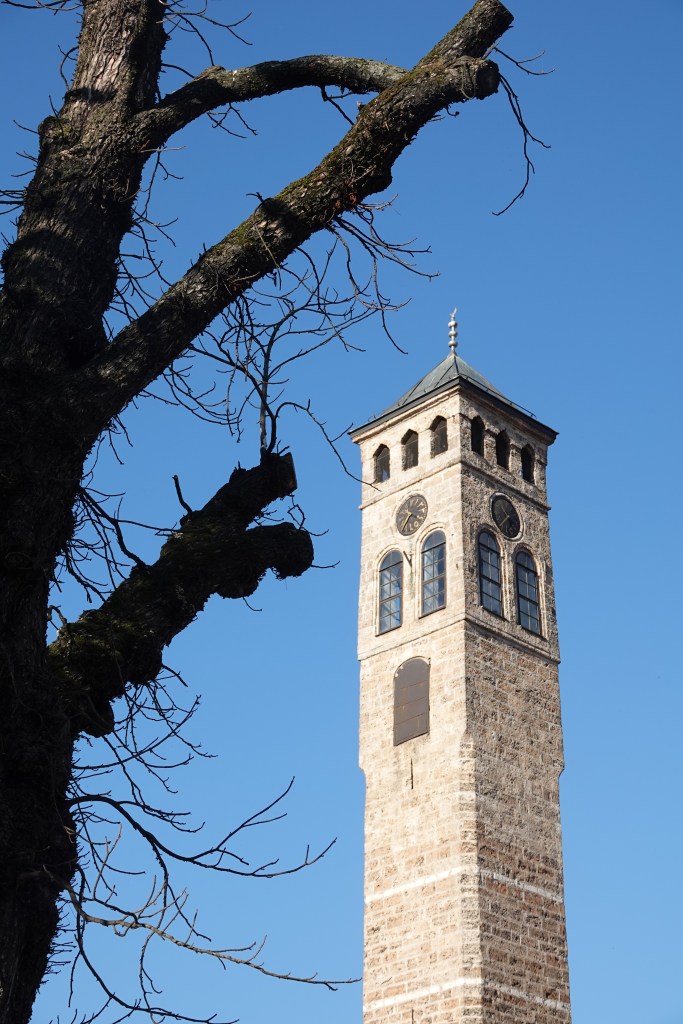
Do not forget to check Sahat kula right next to the Hazi beg mosque. To know more about this clock tower, check out this blog post

Latin Bridge and World war I

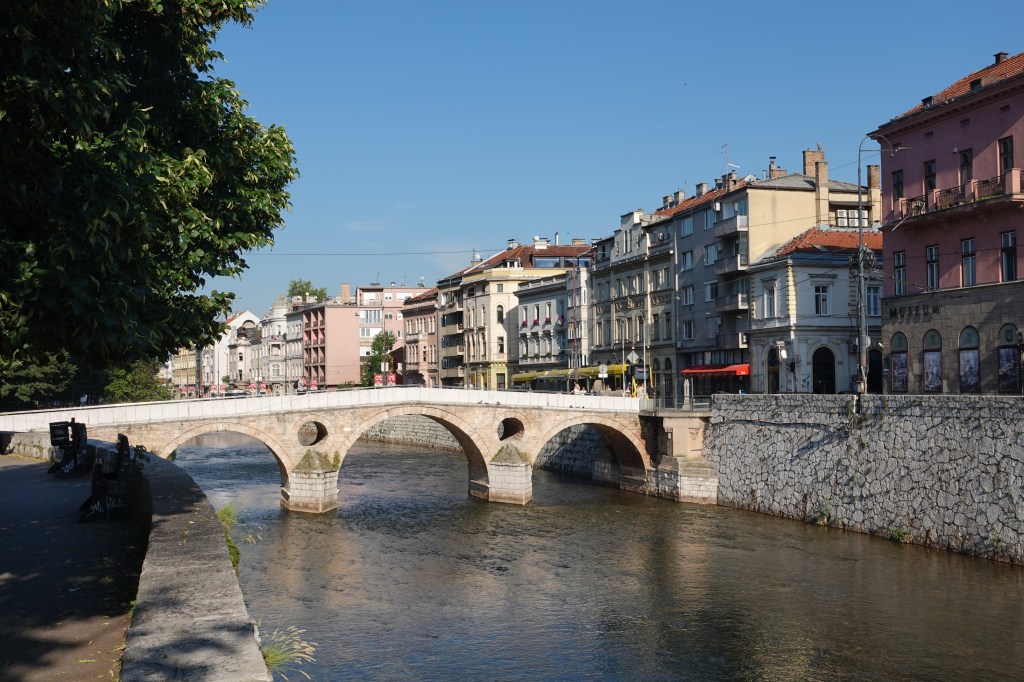
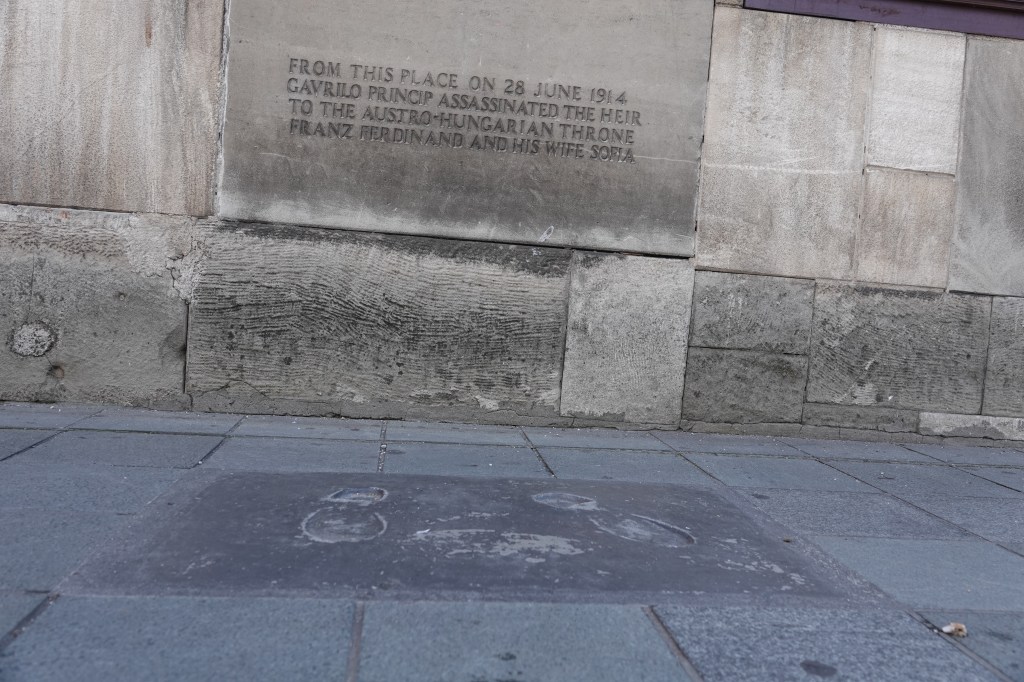
The Latin Bridge is not only a beautiful Ottoman-era bridge over the Miljacka River in Sarajevo, but also a place of immense historical significance. It was at this very location that the Archduke Franz Ferdinand of Austria and his wife, Sophie, were tragically assassinated on June 28, 1914. This event, carried out by Gavrilo Princip, a Bosnian Serb nationalist, is widely recognized as the catalyst that triggered the outbreak of World War I, leading to a chain of events that would change the course of history.

Originally built in the 16th century, the bridge got its name “Latin Bridge” because it connected the right bank of the Miljacka with the Catholic quarter of the city, known as “Latinluk”. During the Yugoslav era, it was renamed “Princip’s Bridge” in honor of Gavrilo Princip. Standing on the Latin Bridge today, one can’t help but feel the weight of the events that transpired here and the impact they had on the world. It serves as a somber reminder of the power of historical events and the influence they continue to have on our lives.

East meets West sign

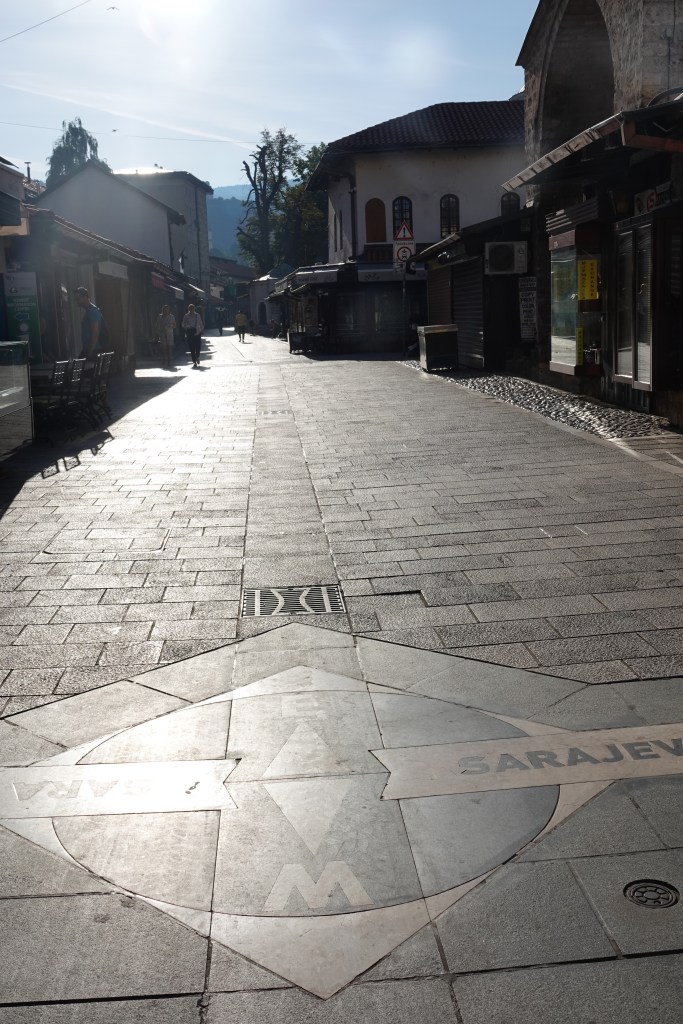
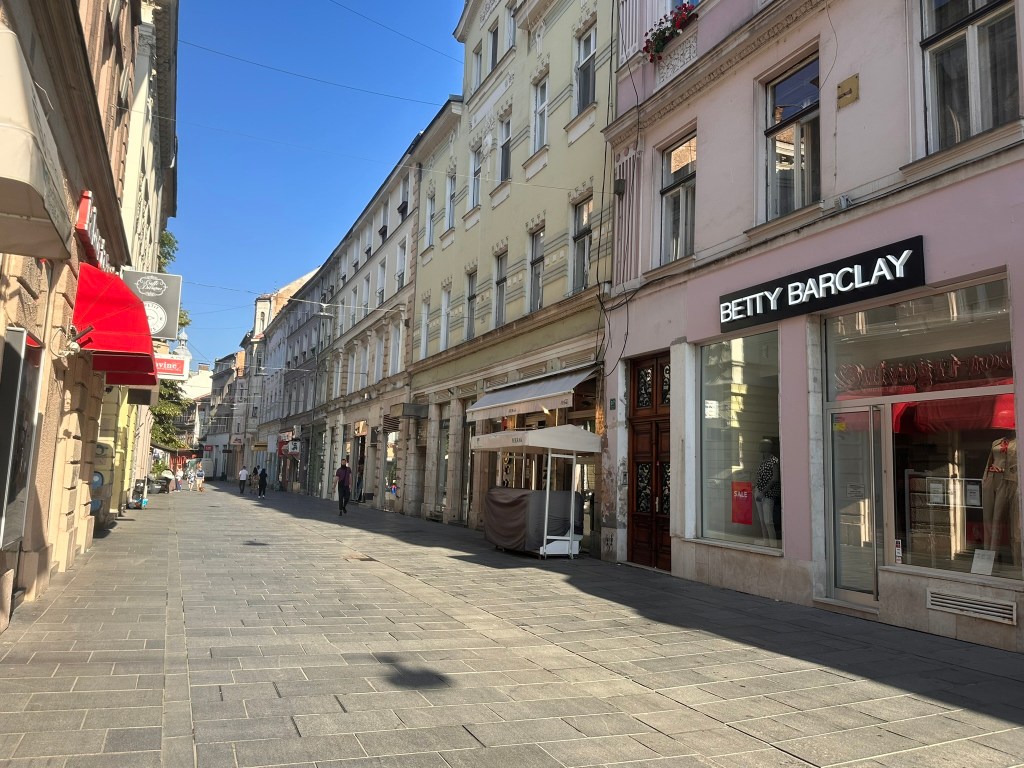
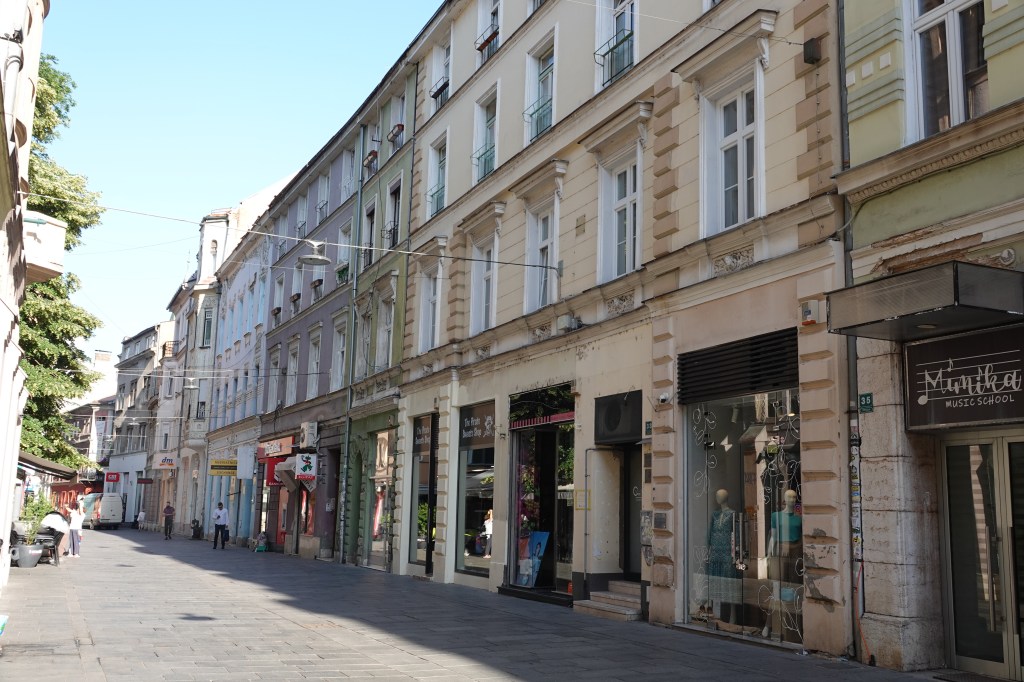
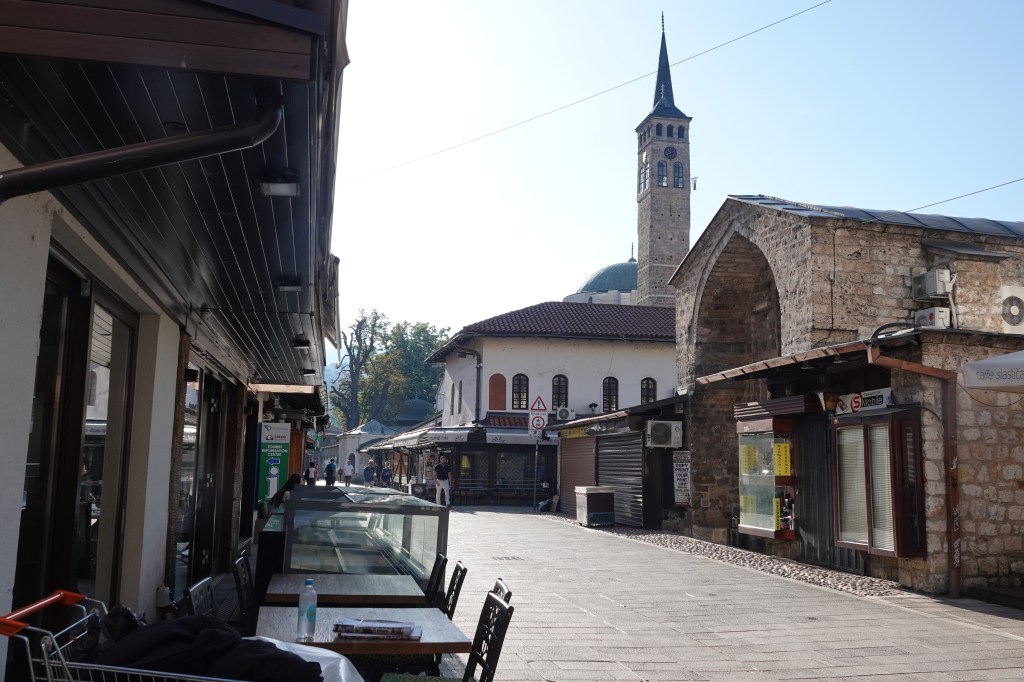
In Sarajevo, the “East Meets West” sign is located on the main pedestrian street, Ferhadija. This spot serves not only as a literal marker but also as a symbolic representation of the diverse cultural tapestry that characterizes this remarkable city. Here, you can visually experience the profound cultural transition between the eastern influences of the Ottoman Empire and the western styles introduced during the Austro-Hungarian period.

When you stand at this spot and look westward, you’ll encounter a bustling scene filled with modern, western-style architecture and contemporary shops. This area reflects a lifestyle that embraces modernity and is characterized by sleek storefronts, cafes, and vibrant urban life.

Turning to face east, you’ll be greeted by the enchanting sights of the old Ottoman bazaar, a place steeped in history and tradition. This section of the city showcases its mosques with towering minarets including Gazi Bev Mosque, ornamental architecture, and the captivating sights and sounds of bustling oriental shops serving coffee and selling copper stuff. This vibrant marketplace bursts with life, evoking the rich history and culture that have coexisted and evolved through centuries in this extraordinary city.

Mount Trebevic and Bobsled track

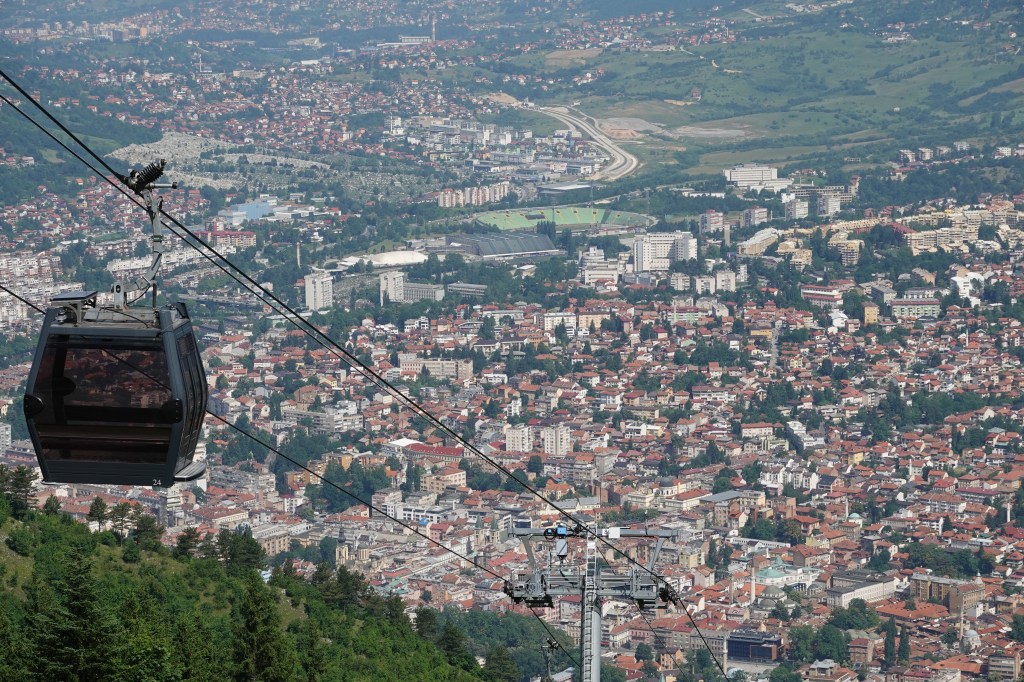
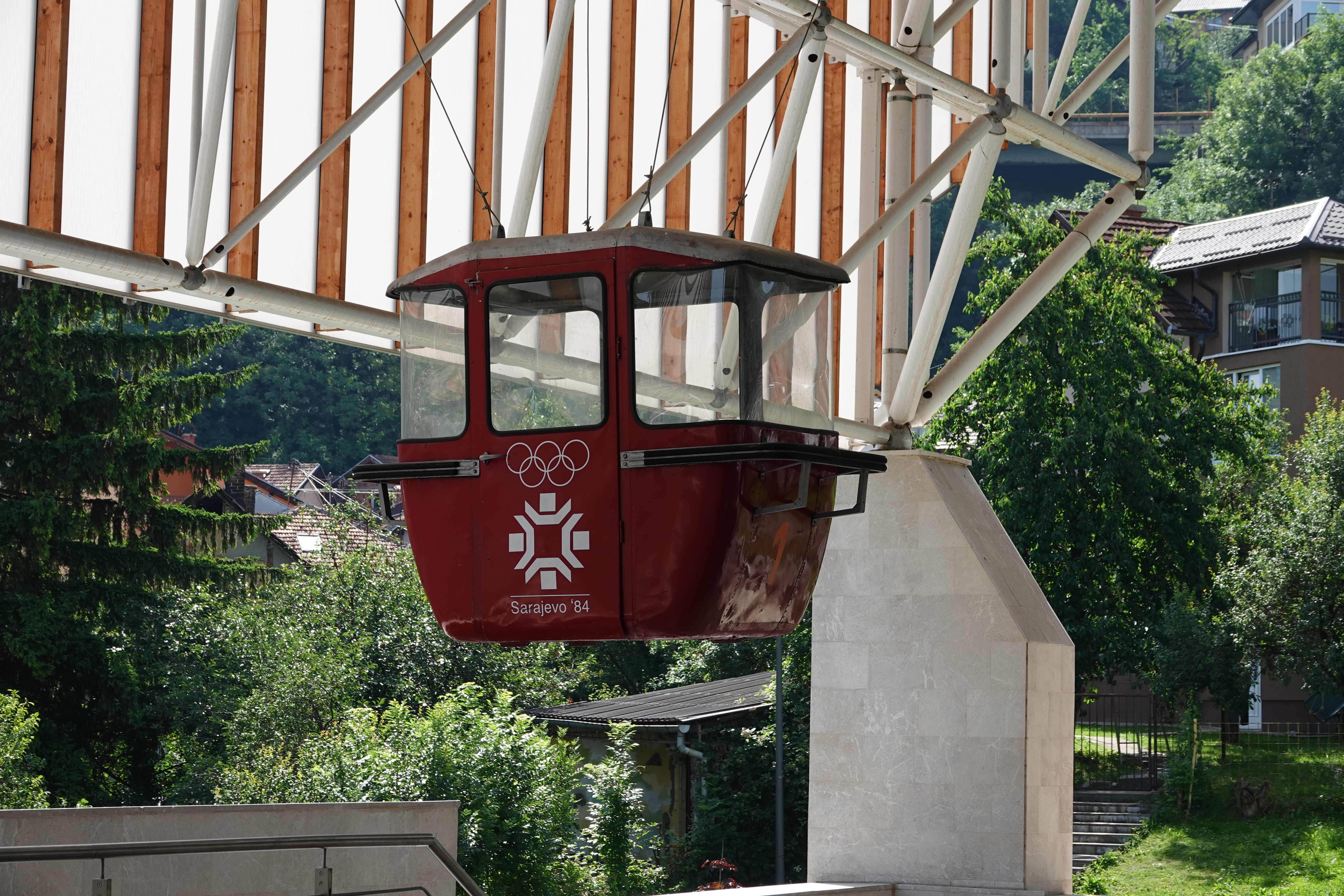
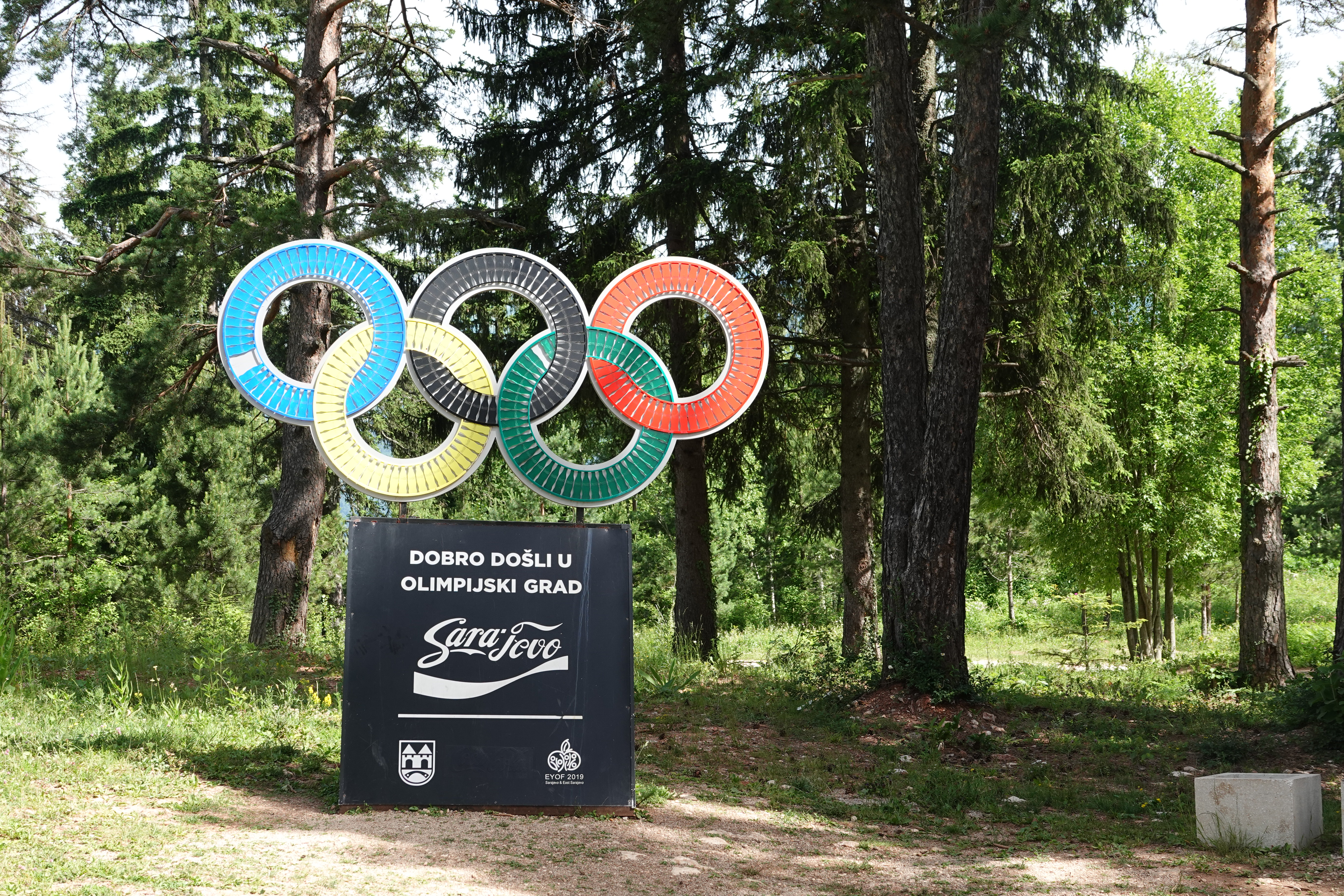
Mount Trebević, situated near Sarajevo in central Bosnia and Herzegovina, rises to 1,627 meters and is part of the Dinaric Alps. It is celebrated for its natural beauty and outdoor activities such as hiking, climbing, mountain biking, and skiing. The mountain was significant during the 1984 Winter Olympics, hosting events like bobsledding, and is a protected area that conserves its rich biodiversity. A key attraction is the Trebević Cable Car, which offers spectacular views of Sarajevo. Additionally, the area features notable quartz and calcite crystal deposits, some displayed in the National Museum of Bosnia and Herzegovina.
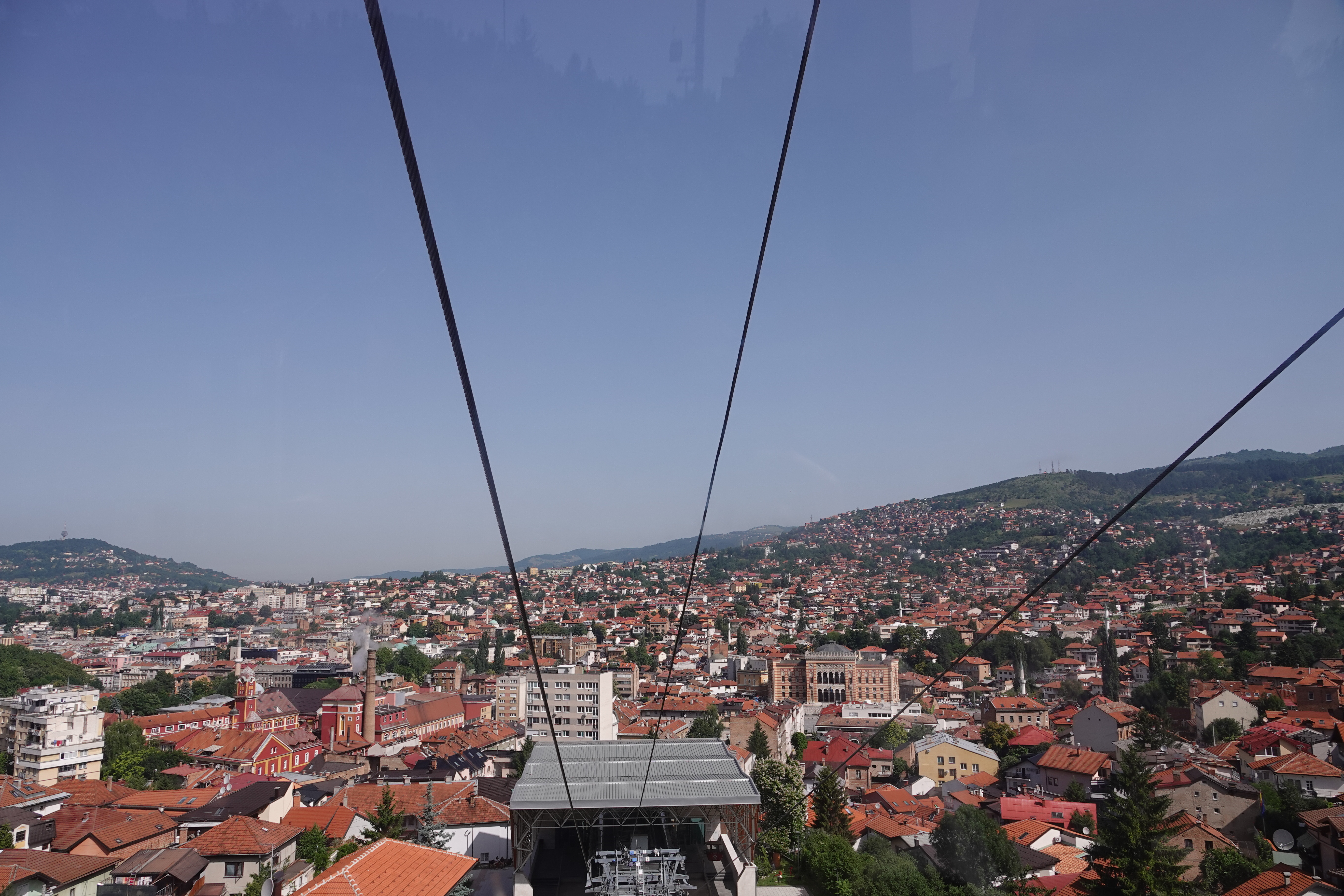
Sarajevo Cable Car

The Sarajevo cable car, connecting the Old Town with Trebević mountain, opened on May 3, 1959, initially serving 400 passengers per hour. It fell into disrepair over the years and was destroyed during the Bosnian War (1992-1995). After reconstruction in 2017-2018, it reopened on April 6, 2018, featuring 33 modern gondolas that transport 1,200 passengers per hour, with a journey time of about 9 minutes. The views from the gondola are spectacular and we took the cable car up the mountain but walked down using the bob sled track.

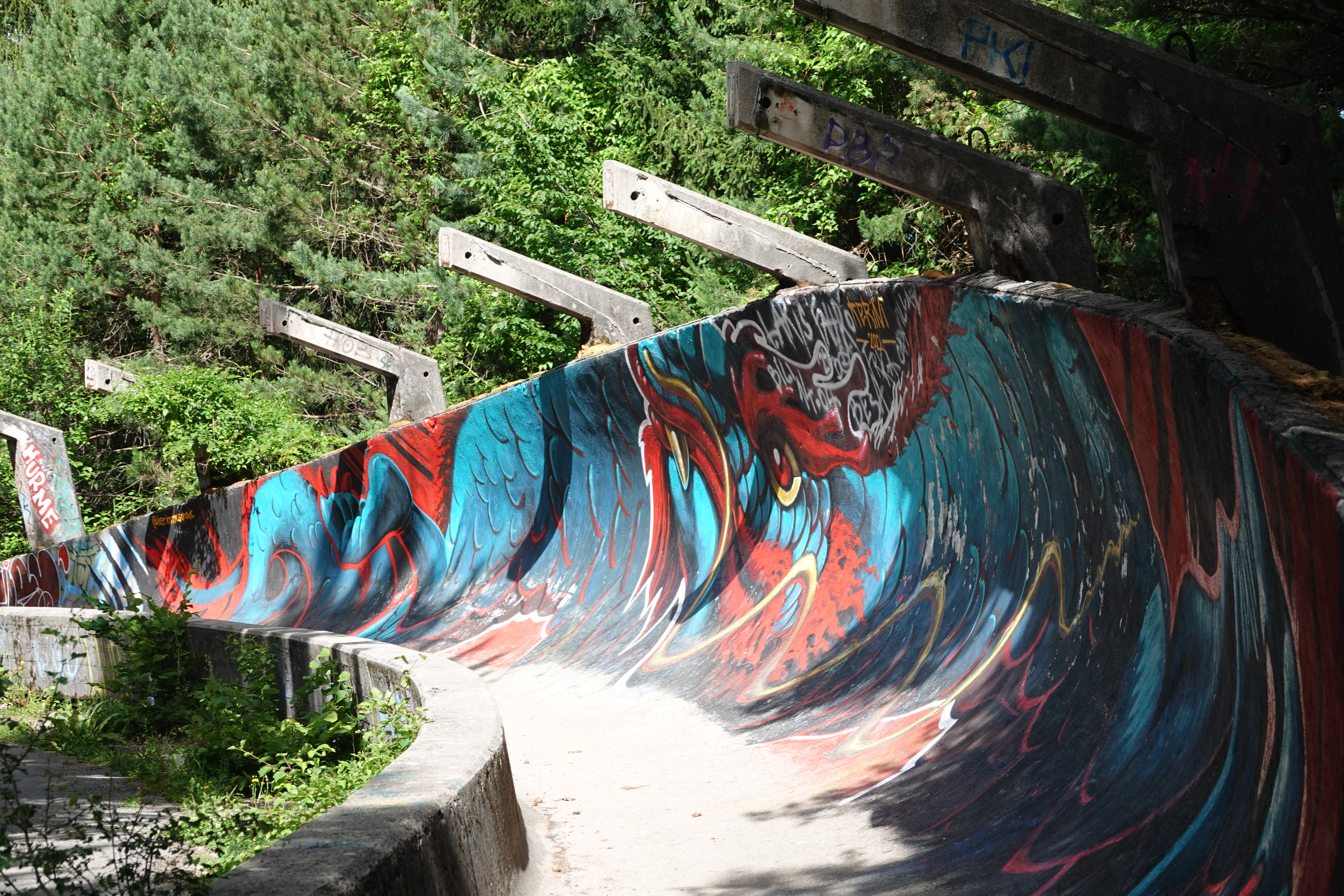
BobSled track

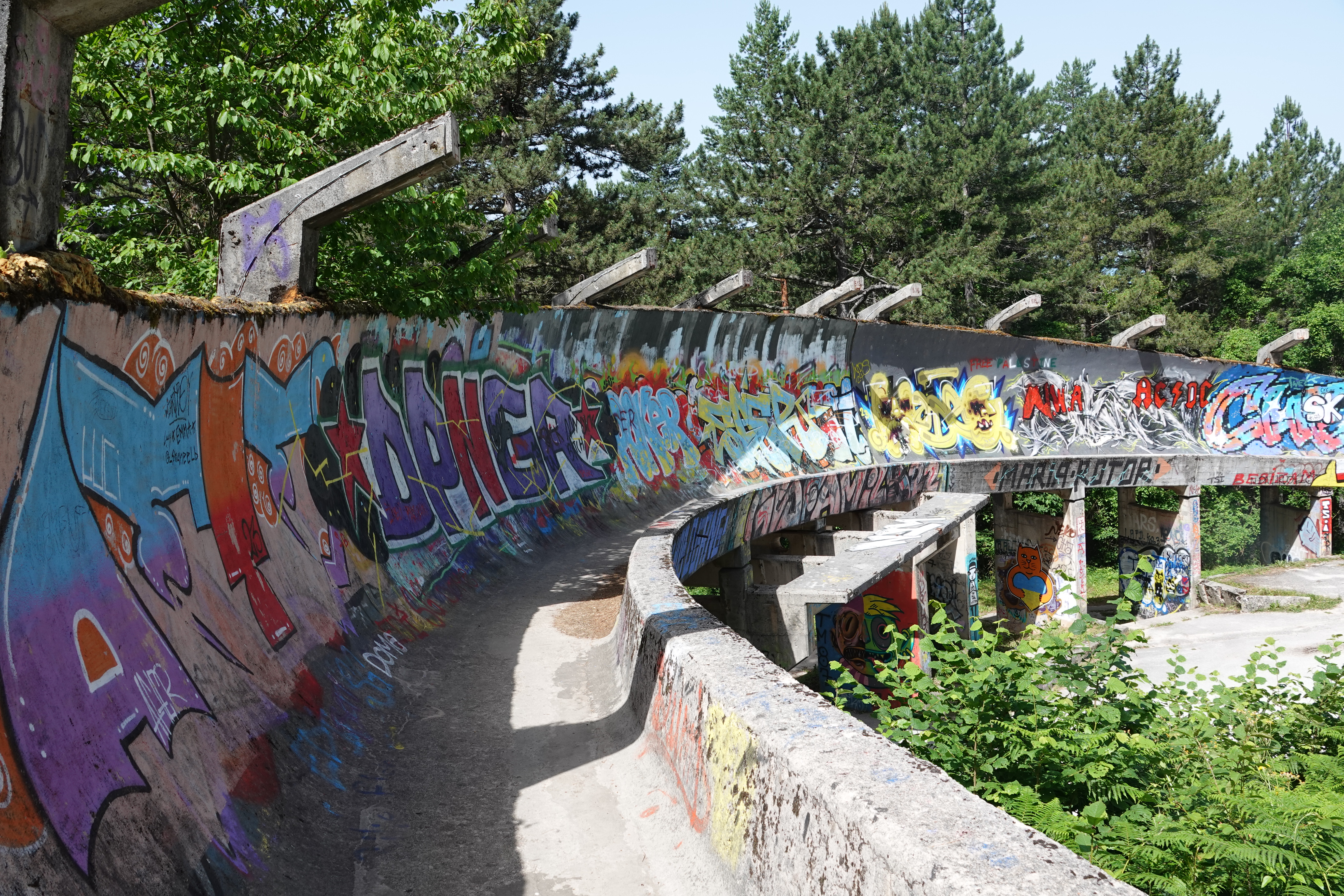
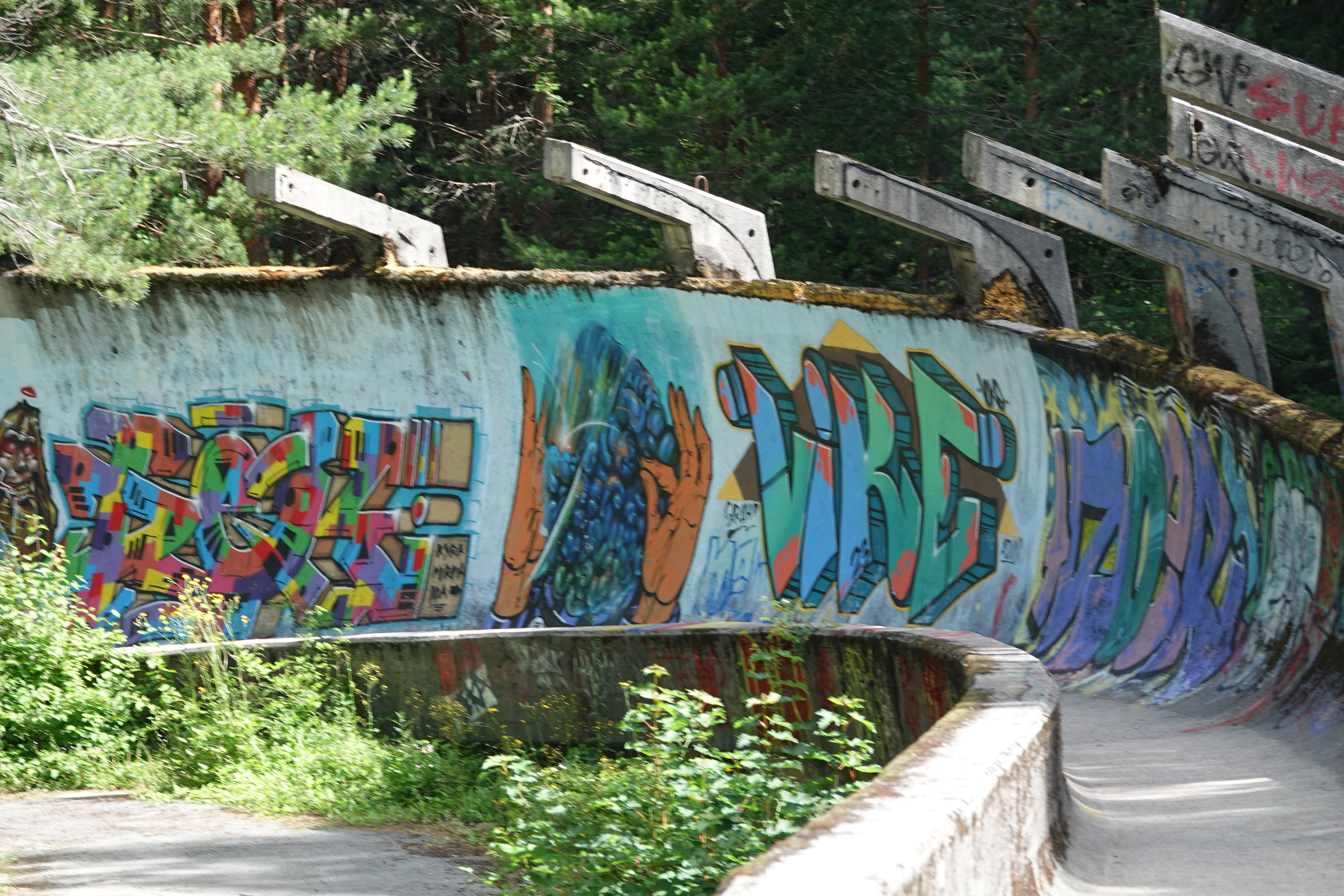
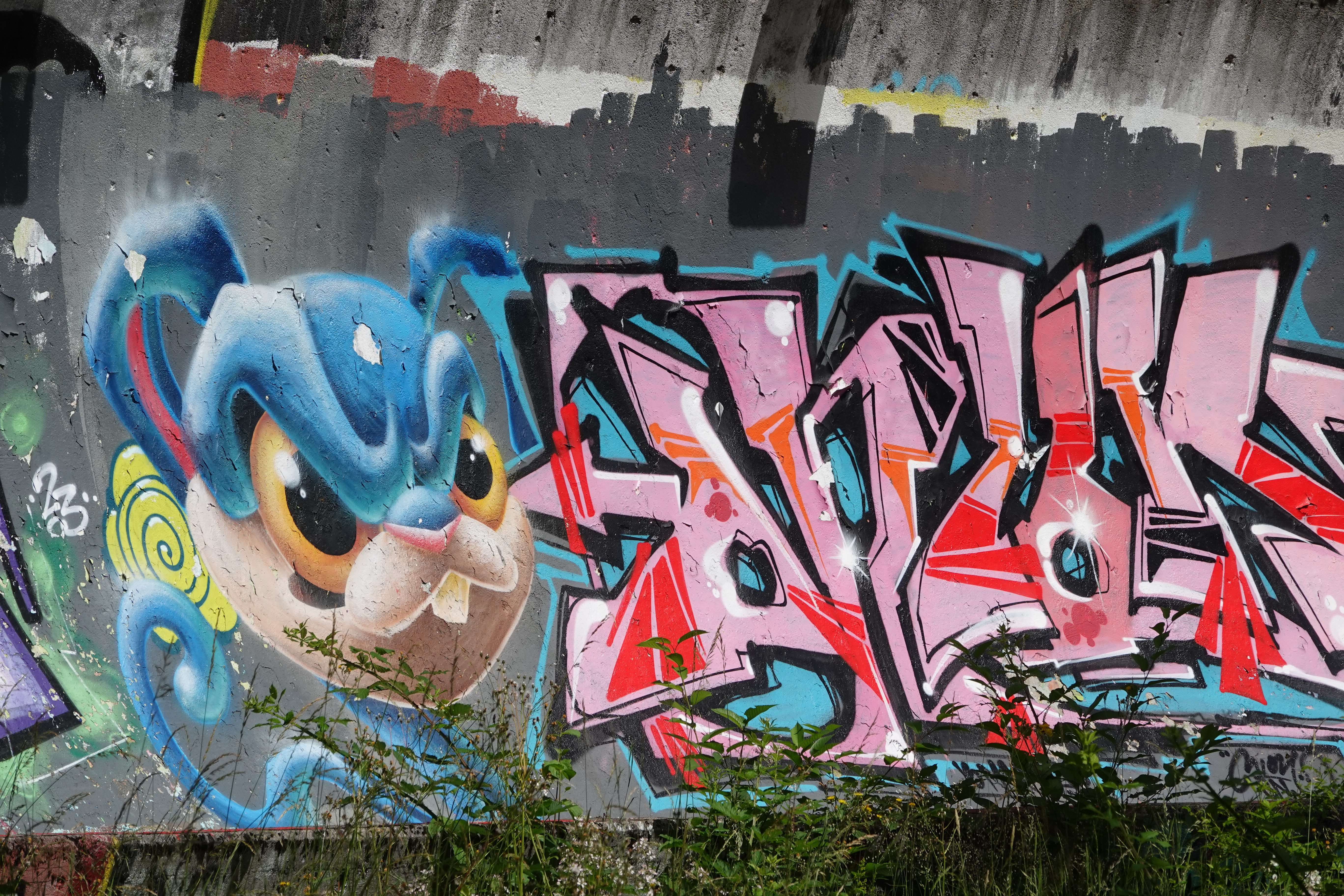
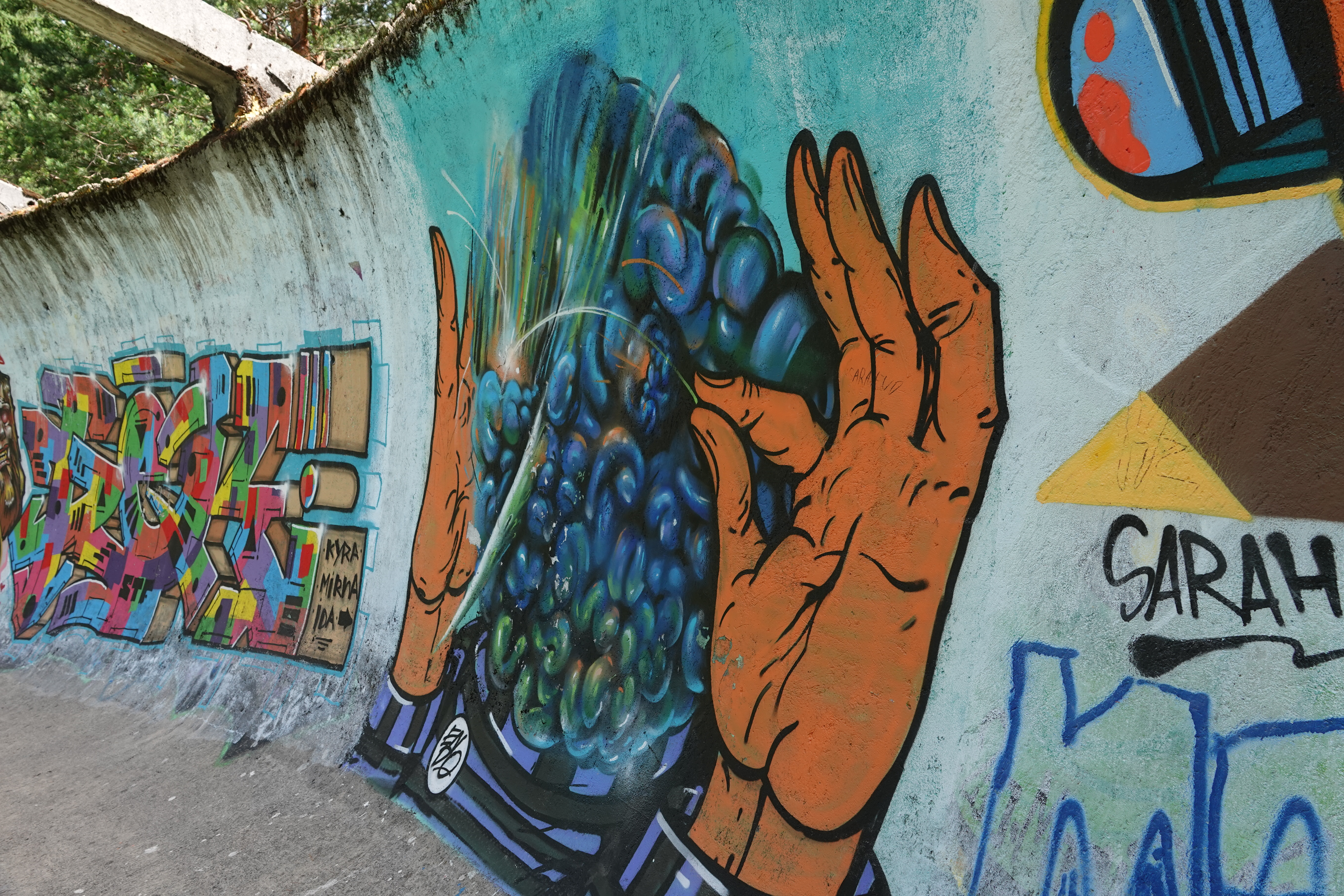
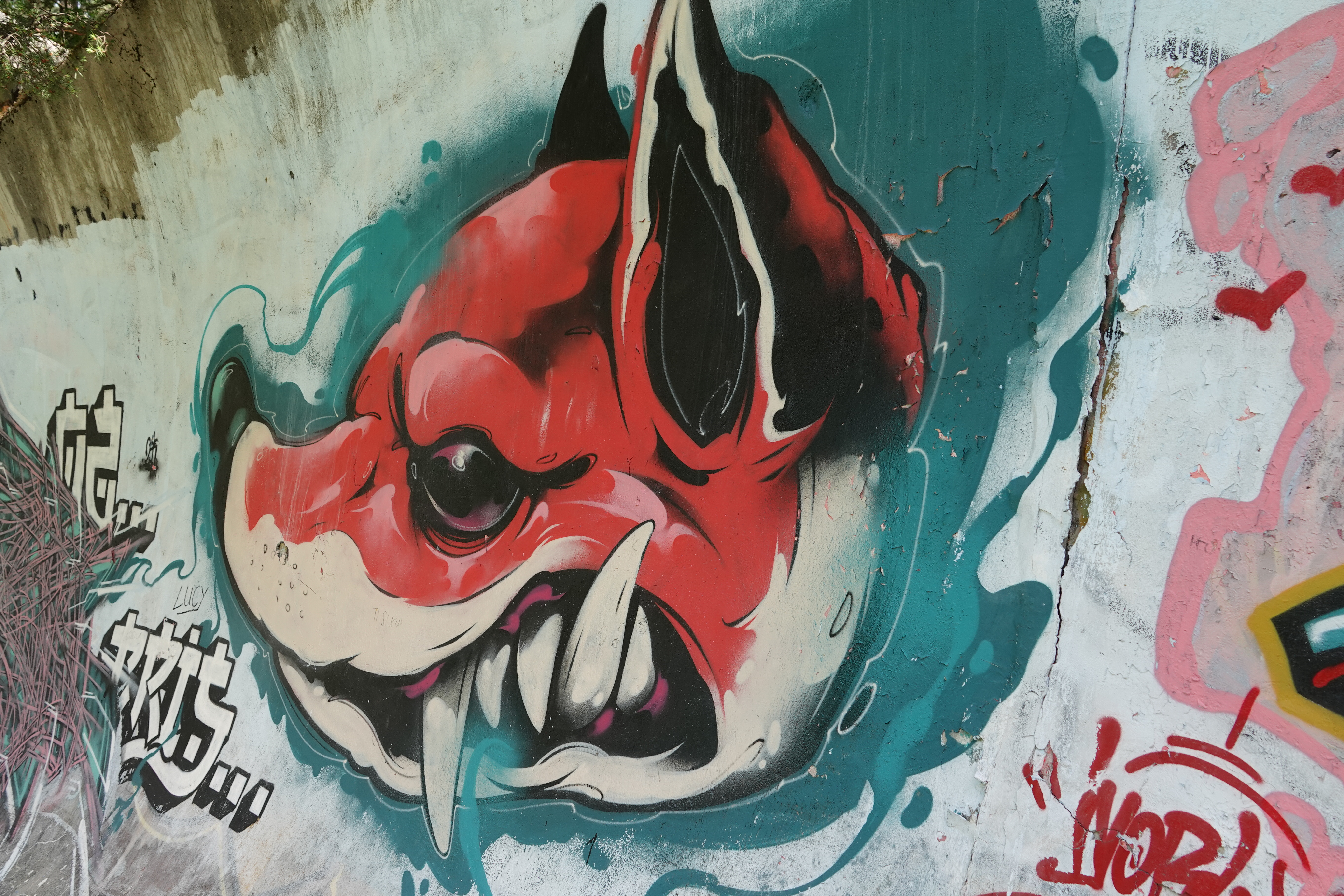
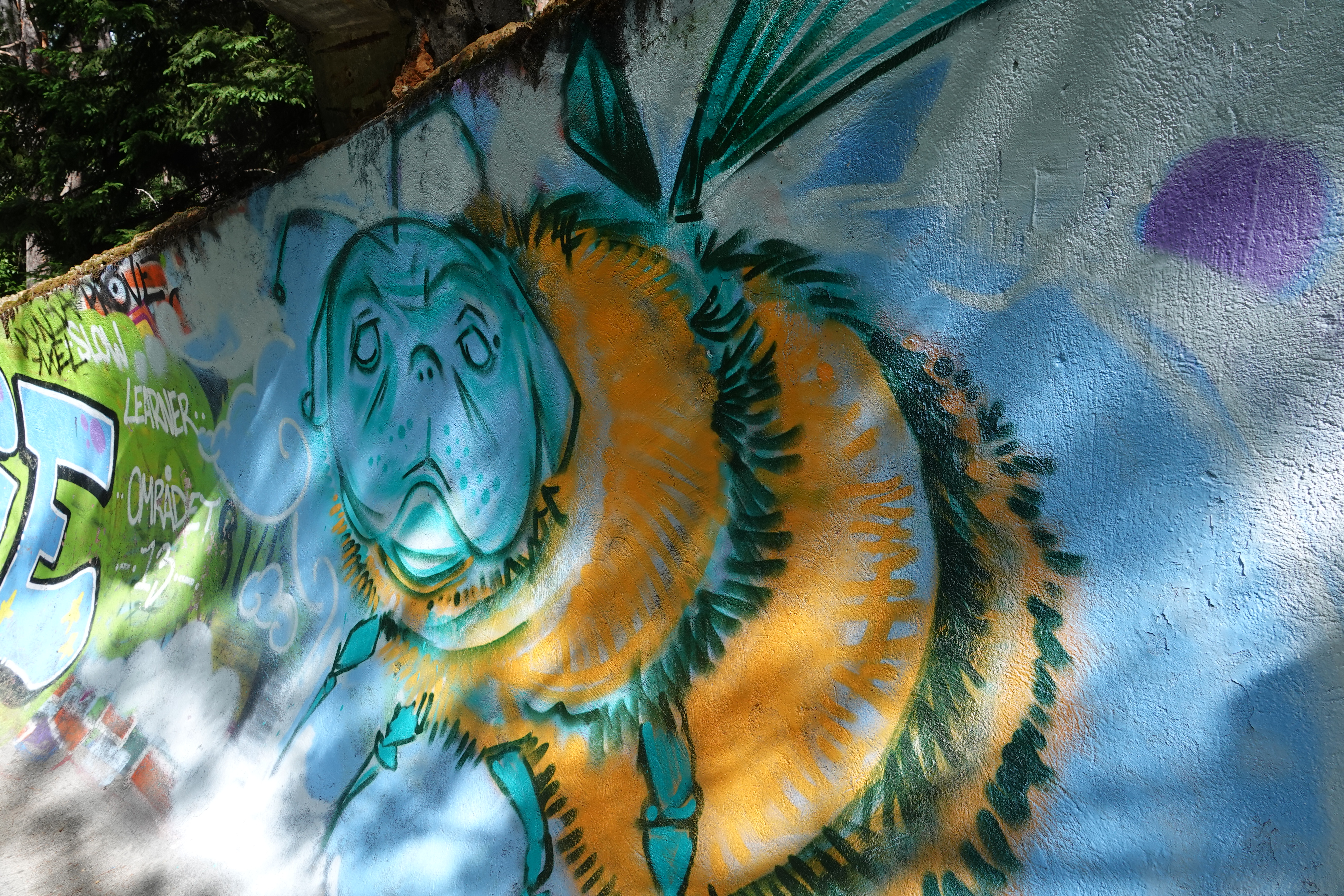
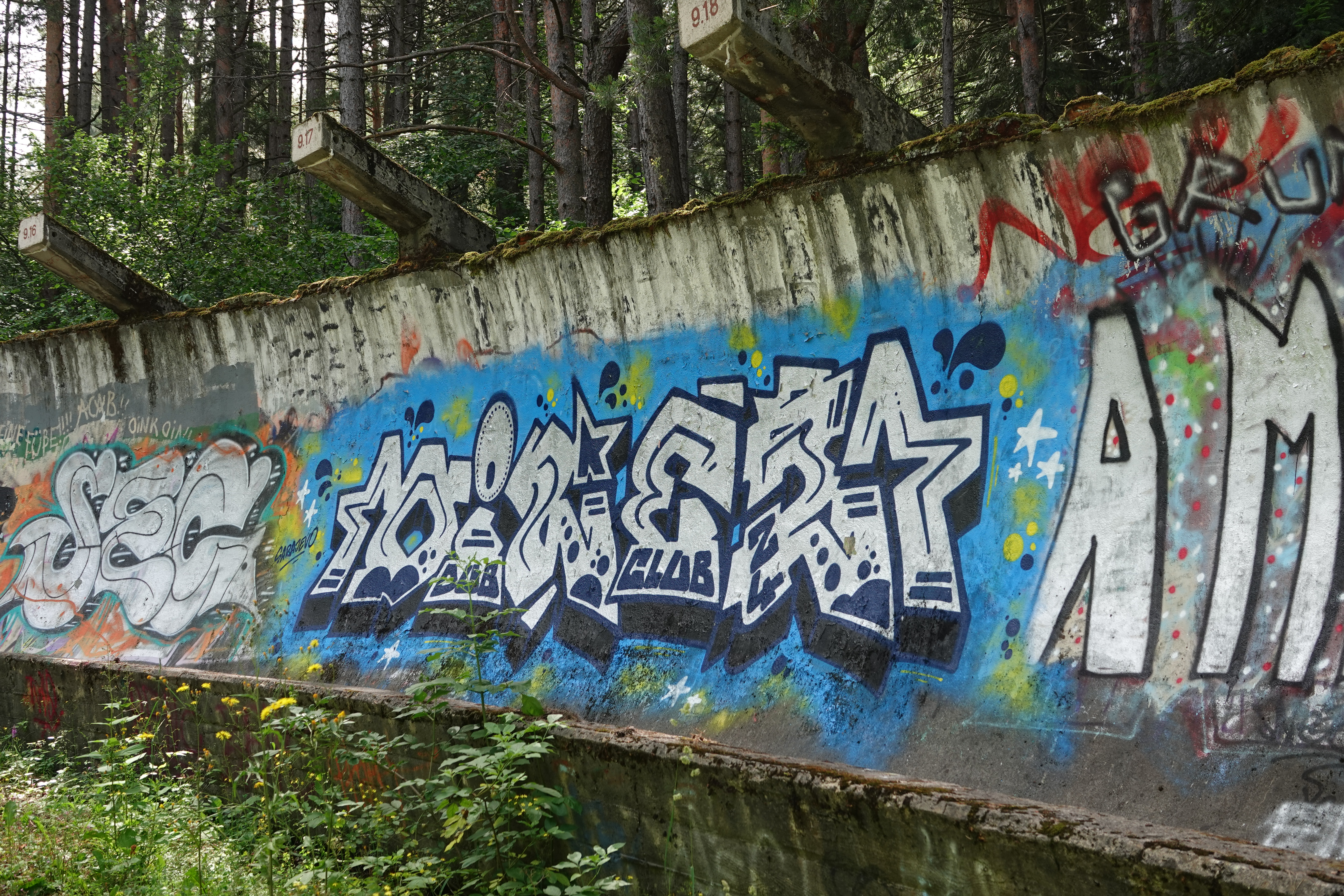
Trebević hosted bobsleigh and luge events during the XIV Winter Olympic Games in Sarajevo in 1984. After being awarded the Olympics in 1977, the construction of a bobsleigh and luge track began in 1981 and was completed in 1982 at a cost of 5.5 million Yugoslav dinars. The events attracted significant crowds, with 20,000 spectators at the luge and 30,000 at the bobsled competitions. Following the Olympics, the track was used for World Cup events until the outbreak of the Yugoslav wars in 1991, which severely damaged the track as it was repurposed for military use. Today, it has become a canvas for graffiti artists and it is fun to walk down this track with amazing views of Sarajevo and very interesting graffities and it took us about 90 min walk down.

Sunset at Yellow fortress

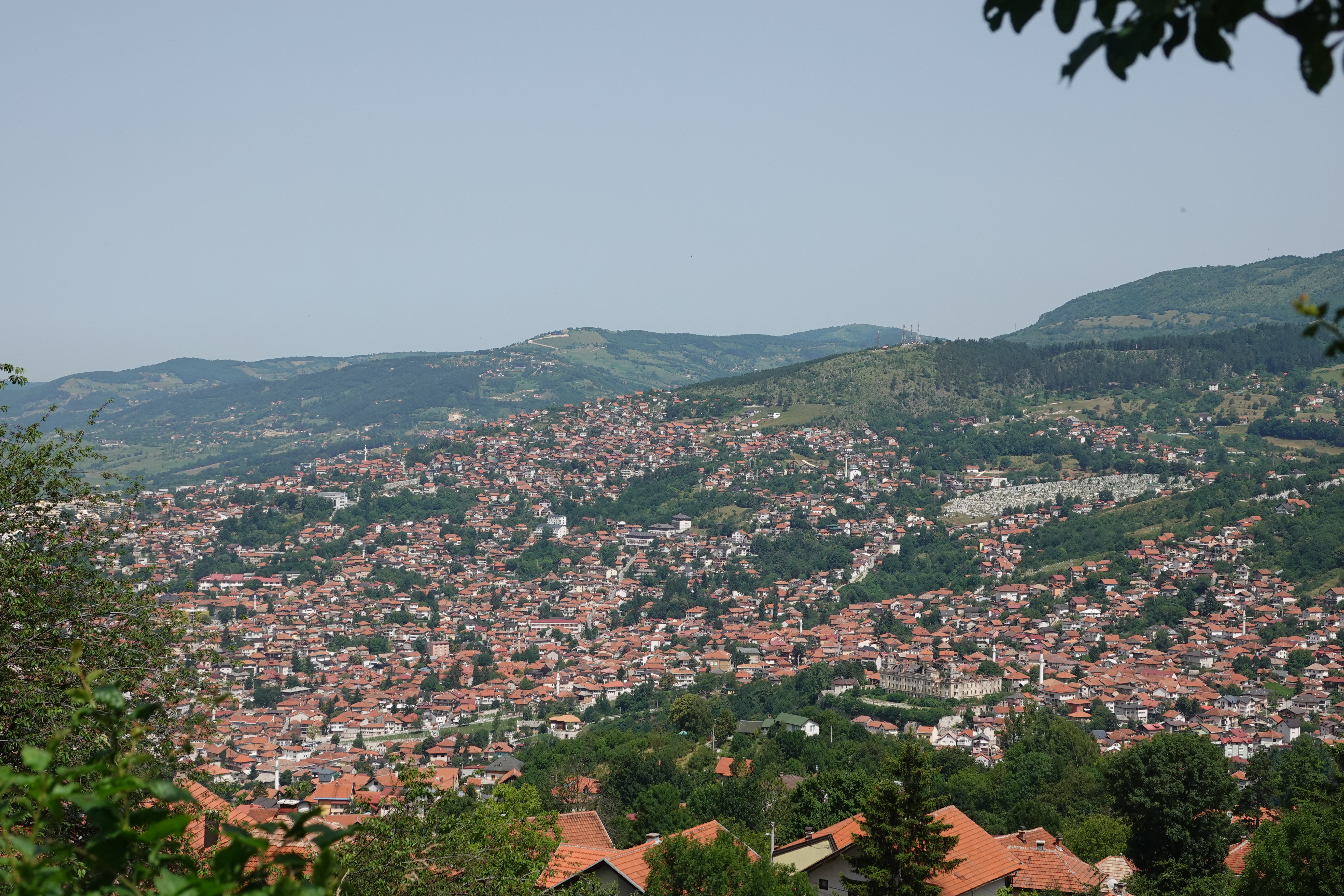
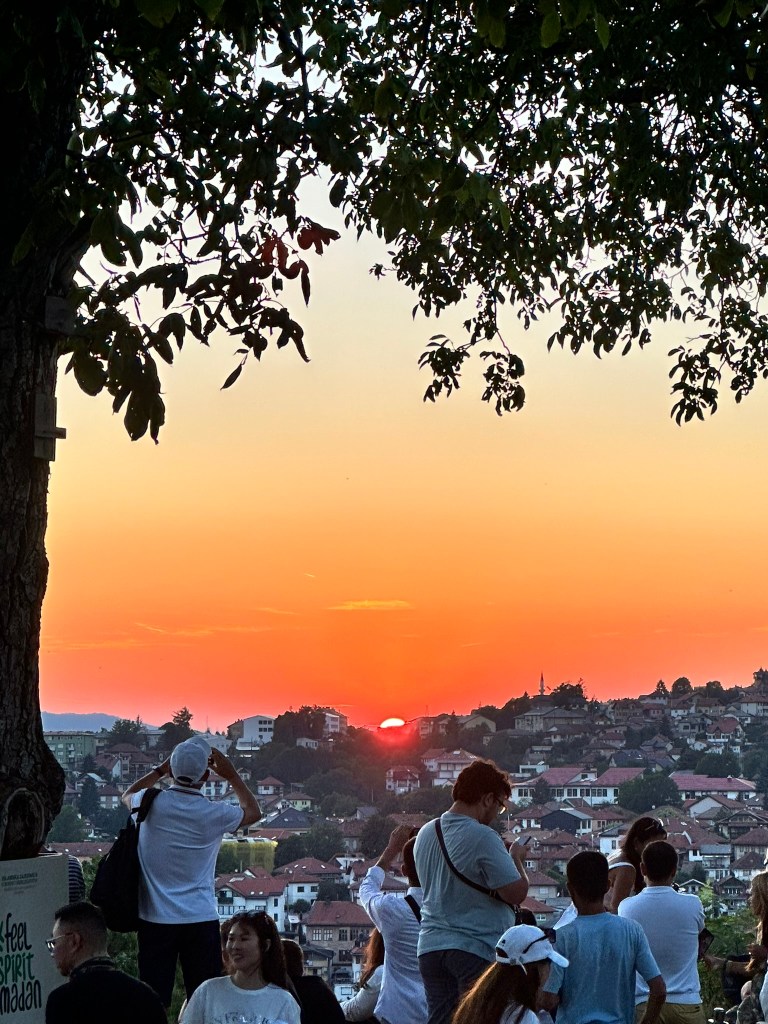
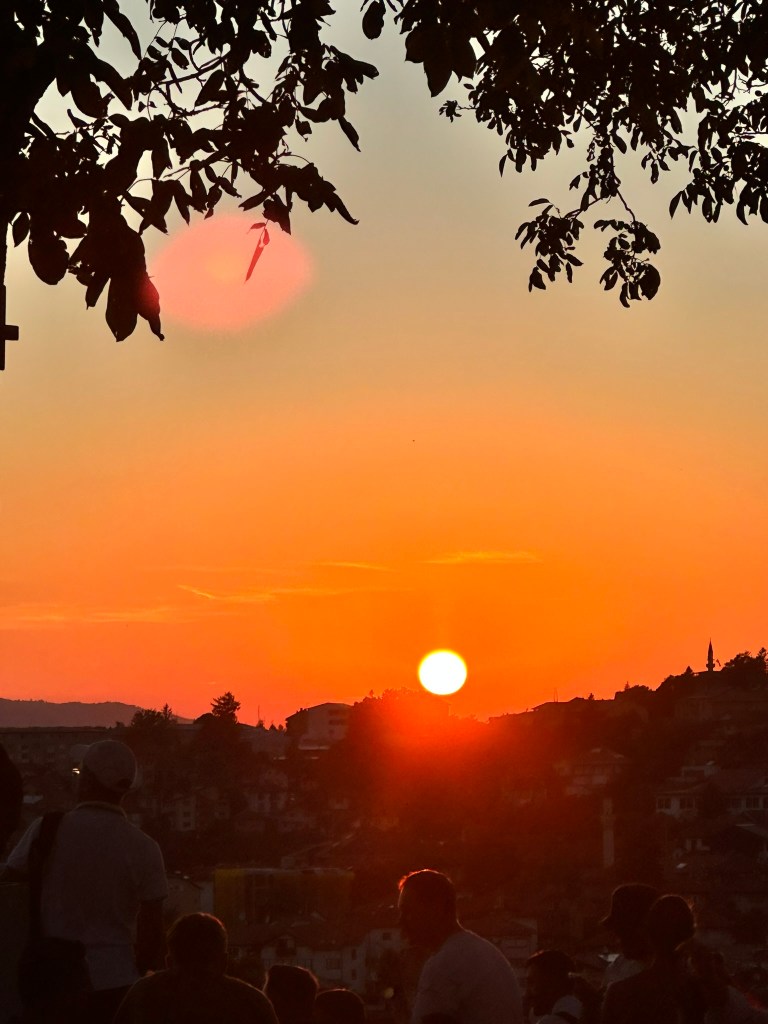
Yellow Fortress offers stunning views of Sarajevo and is a perfect spot to watch the sunset. Located on the Jekovac cliff, also known as Jekovačka tabija, it is part of the old town’s defensive ramparts. The climb to the fort provides a unique experience with panoramic views and sounds. Built in 1809 from rough stone, it has seven exterior faces that are 10 meters high, with the north side reaching 27.5 meters. There are stairs and a building for soldiers on the north side, while the southwest side features a Muslim cemetery.

Old Bazar and copper Street

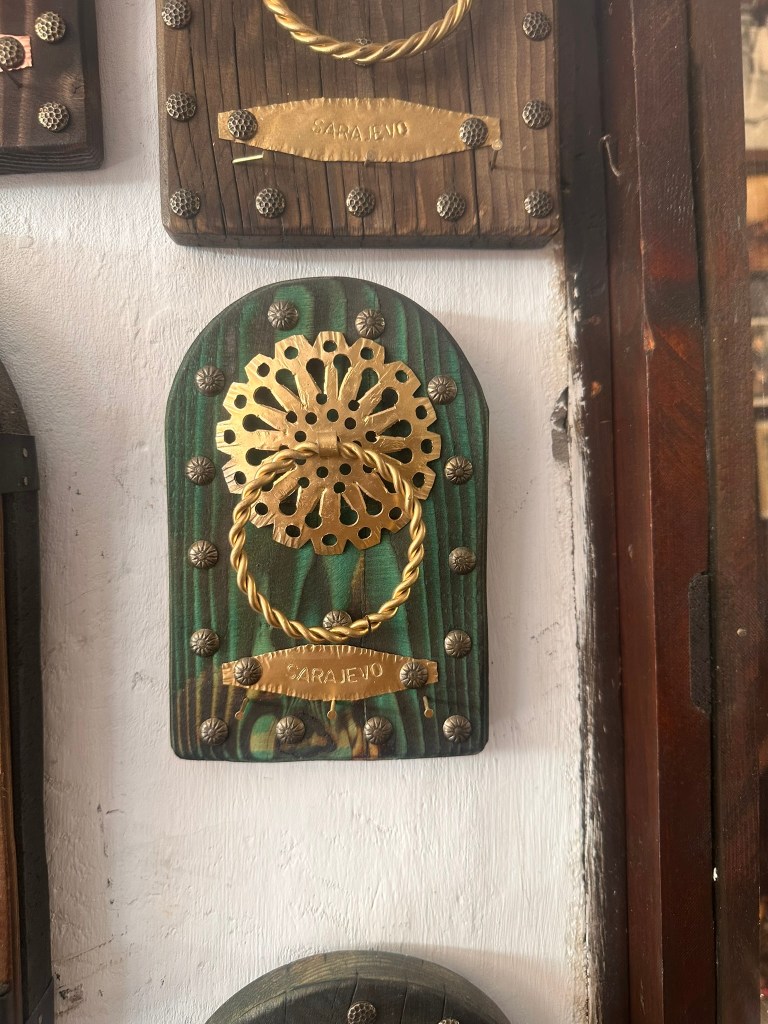
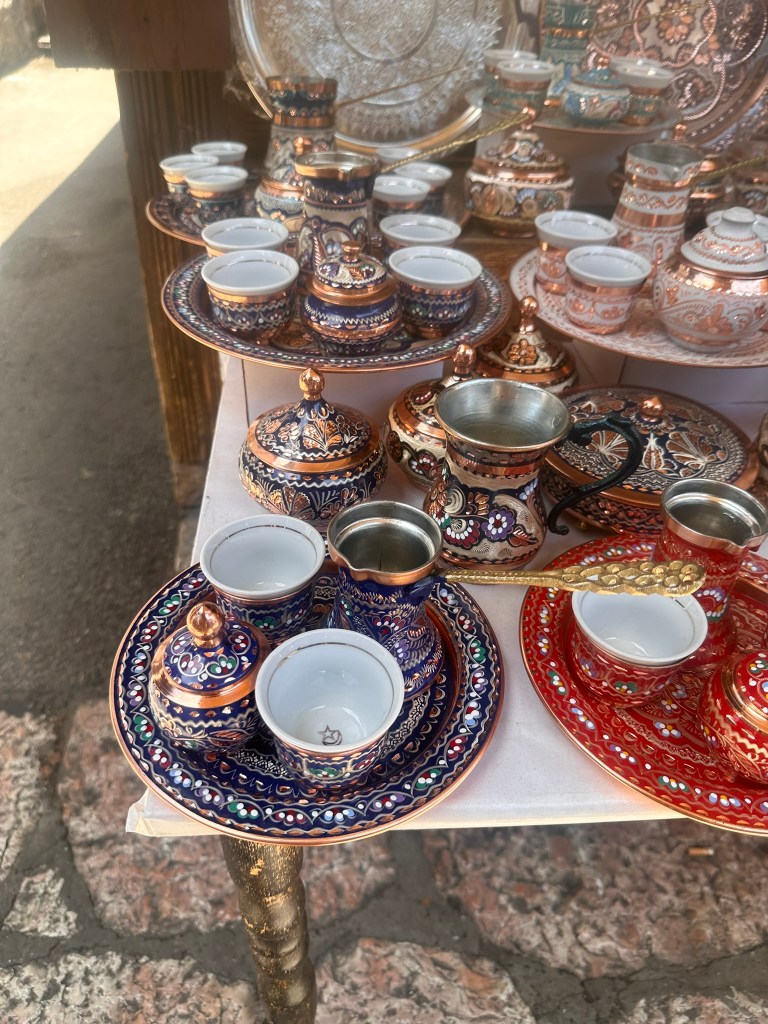
Sarajevo features its own Coppersmith Street in the old bazaar, known as Kazandžiluk, which is one of the oldest streets in Baščaršija. Here, visitors can find traditional handmade copper items such as coffee pots, tea sets, grinders, and lamps, as well as antiques from the past. A section of the shop serves as a museum dedicated to Ottoman Sarajevo. Kazandžiluk has existed since the 16th century, originally established as a center for crafts and trade.

Tunnel of Hope

From July 1993 to February 1996, the Sarajevo War Tunnel served as the sole connection between besieged Sarajevo and the outside world. It took over six months to construct the 800-meter-long tunnel using basic tools, with light provided by homemade “war candles.” Completed on July 30, 1993, the tunnel restored access to essential resources like phone lines, food, and electricity. After the war, 20 meters of the tunnel were preserved as part of a museum showcasing artifacts from the Siege of Sarajevo, which was the longest siege in modern history.

Skakavac waterfalls and MTB

On day 2 of our stay in Sarajevo, our group decided to split up and some of us went to Mount Trebević and bob sled track while others decided to be more adventurous and did Mountain biking up to Skakavac waterfalls using this tour.

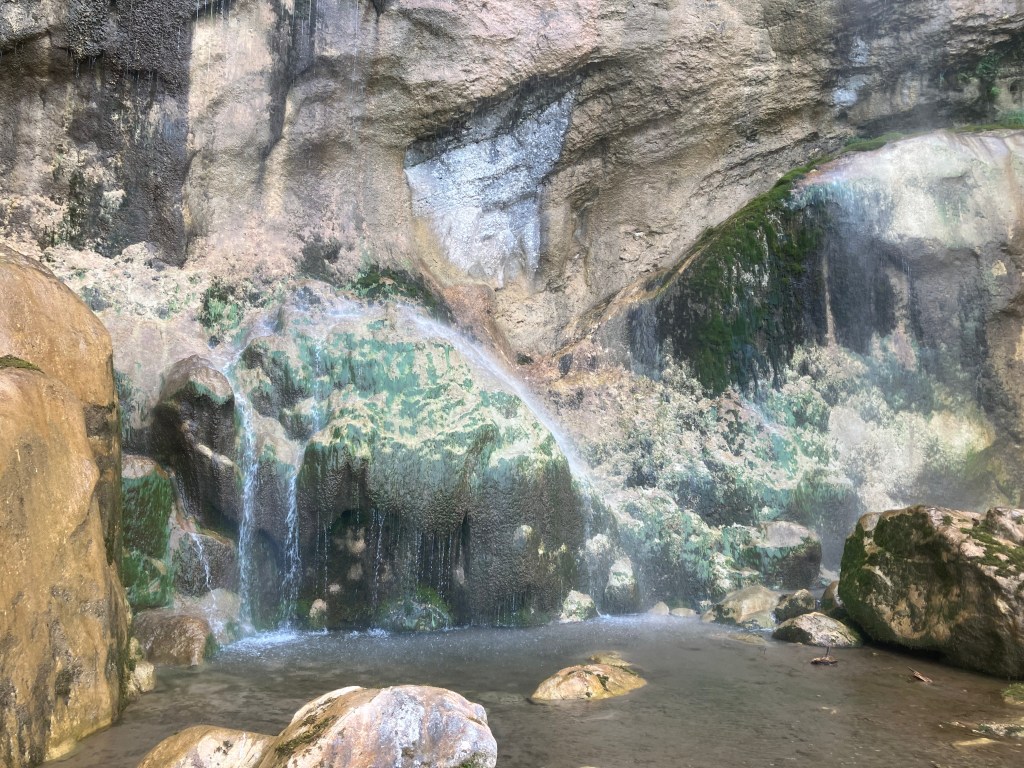
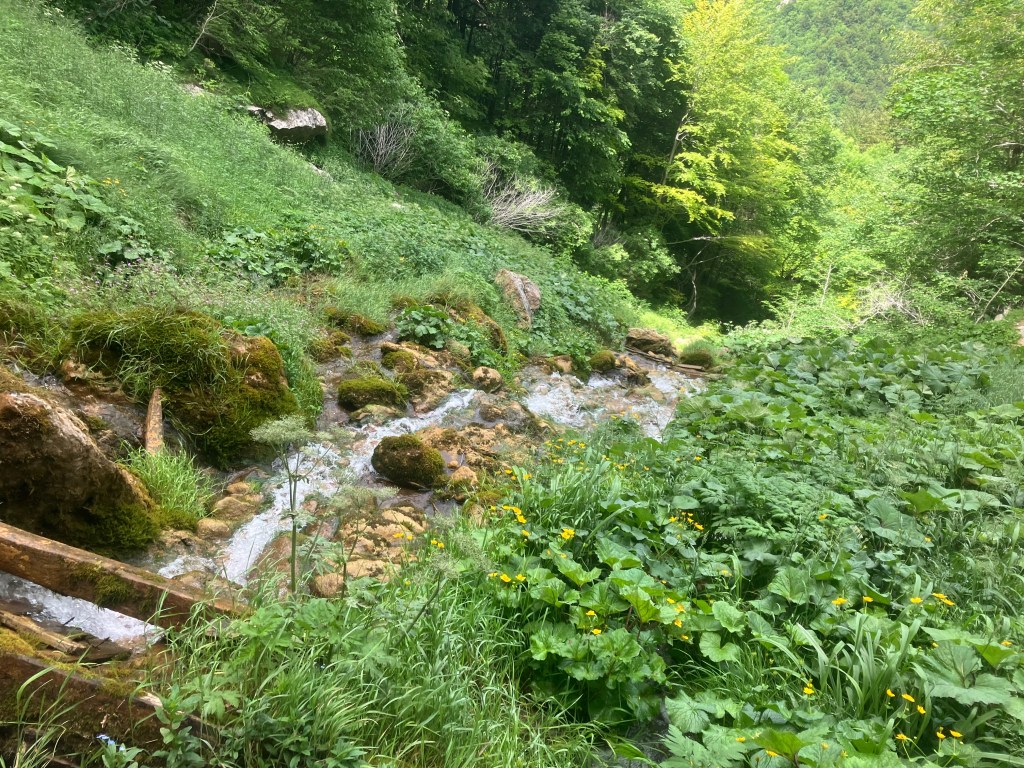
Skakavac waterfalls is located about 12 kilometers northeast of Sarajevo, above the village of Nahorevo and it is one of the tallest in the Balkans, with a height of 98 meters (322 feet). The ride up was tough but beautiful

Park Bosanski Stećak i Zastava– Park with 7 flags

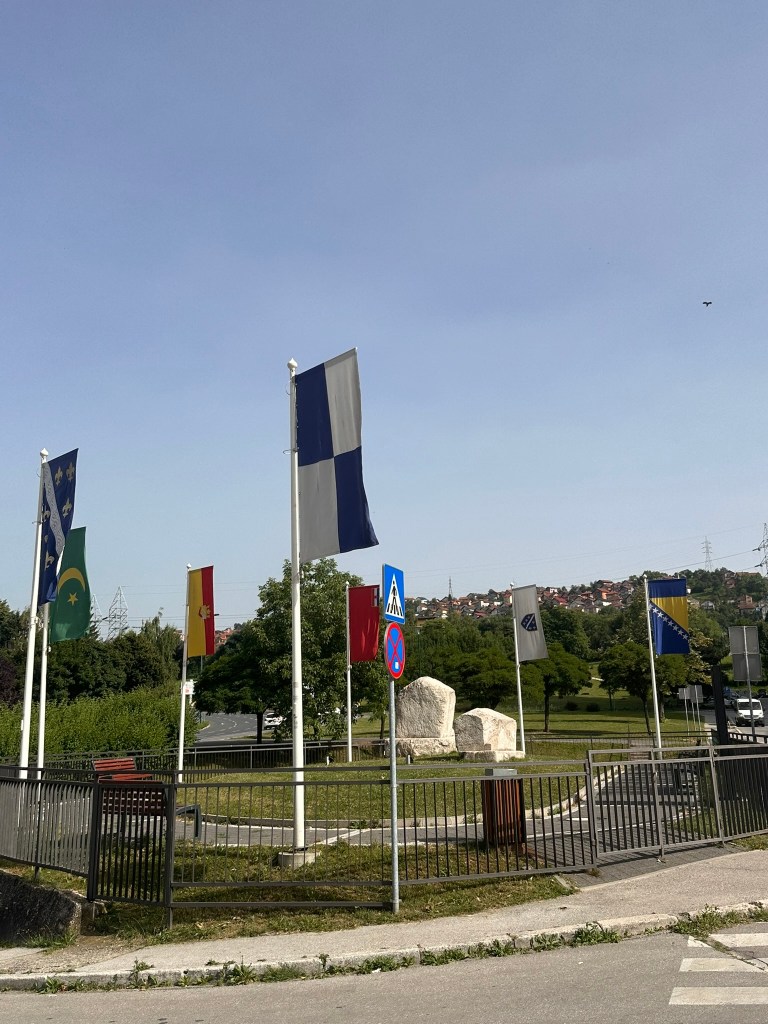
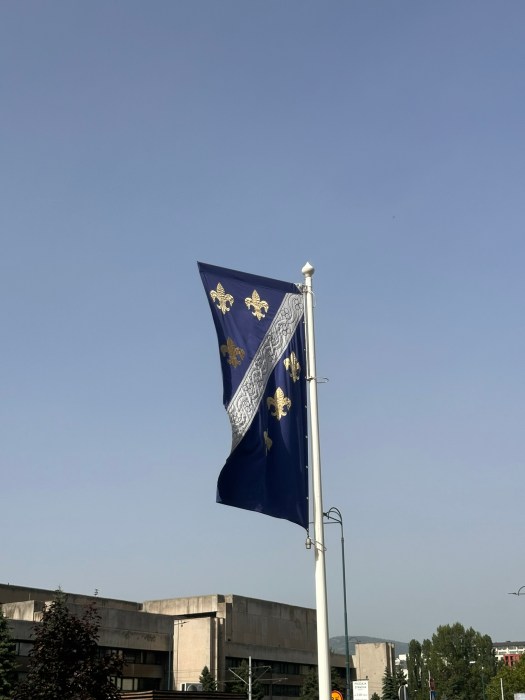
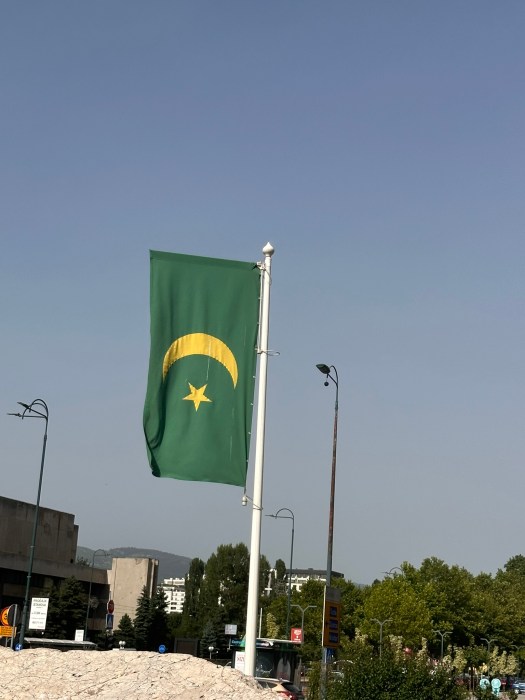
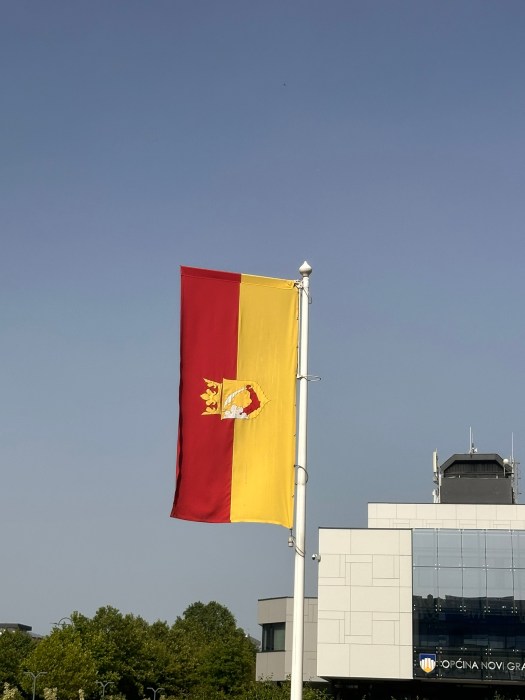
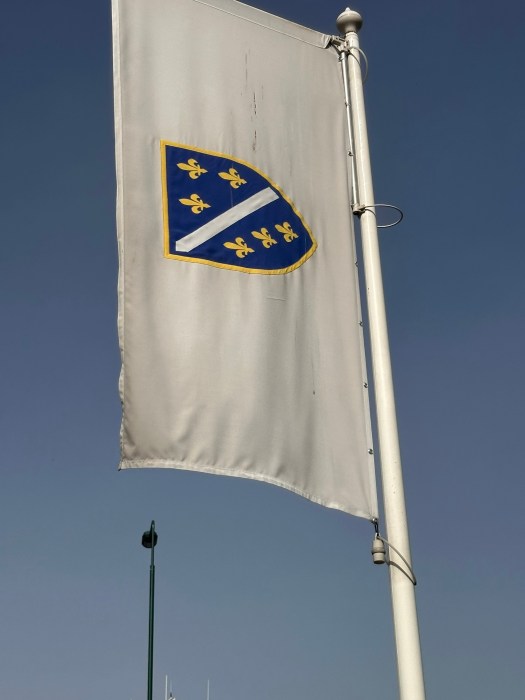
Park Bosanski Stećak i Zastava is a fascinating historical site located at Trg solidarnosti 2 in Sarajevo, Bosnia and Herzegovina. It is not close to the old town of Sarajevo, which provides a serene escape from the bustling tourist areas. We had to take the tram to get to this park, which added an element of adventure to our journey. This park celebrates the rich cultural heritage of the region and features a remarkable collection of medieval tombstones known as stećci, each telling its own story through intricately carved designs and symbols. These tombstones not only reflect the artistic traditions of medieval Bosnia and Herzegovina but also represent the spiritual beliefs and societal values of the time. In addition to the stećci, the park also showcases seven flags that symbolize different historical periods of Bosnia and Herzegovina, each representing the nation’s diverse history and resilience. This combination of historical artifacts and symbols, along with the peaceful surroundings, makes the park a unique place to explore the country’s past while also allowing visitors to reflect on the enduring legacy of its cultural identity.

The 7 flags represent:

  1. Medieval Bosnia – Representing the Kingdom of Bosnia.
  2. Ottoman Empire – Reflecting the period of Ottoman rule.
  3. Austro-Hungarian Empire – Marking the Austro-Hungarian occupation.
  4. Kingdom of Yugoslavia – Symbolizing the interwar period.
  5. Socialist Federal Republic of Yugoslavia – Representing the socialist era.
  6. Republic of Bosnia and Herzegovina – The flag used during the Bosnian War.
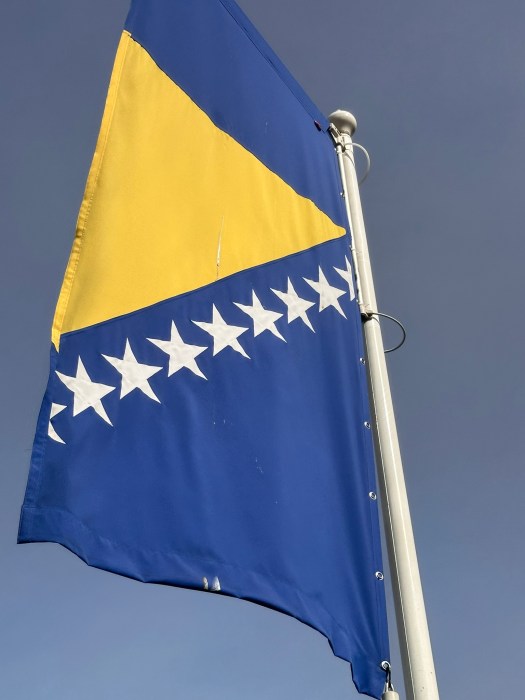
  7. Current Flag of Bosnia and Herzegovina – The modern-day flag.

Final thoughts

You can easily spend couple of days in Sarajevo appreciating everything the city has to offer. We spent the first day walking the old town, watching sunset at the yellow fortress and second day at Mount Trebevic, and walking around the rest of Sarajevo. The city also has a great food scene and several restaurants in the old town area serve traditional Bosnian coffee and Burek. The food scene of Bosnia/Sarajevo needs its own blog post. All in all, spending at least 2 days in Sarajevo is worth it.

Tales from Balkans-Village of Počitelj, the historic stone city

Pocitelj, a small village in the Herzegovina region of Bosnia and Herzegovina, is famous for its well-preserved Ottoman-era architecture and UNESCO World Heritage List status. It’s about 30 kilometers south of Mostar, and the easiest way to reach it is by car via the E73 highway.

Pocitelj has a history of over 600 years and is an important cultural and historical site in Bosnia and Herzegovina. In the 16th century, the village came under Ottoman rule, leading to the construction of buildings such as the Hadzi-Alija mosque, the Sahat-kula (clock tower), and the Gavrankapetanovic-Kuca (Gavrankapetanovic house) which represent typical ottoman styled architecture.

Main landmarks of Pocitelj

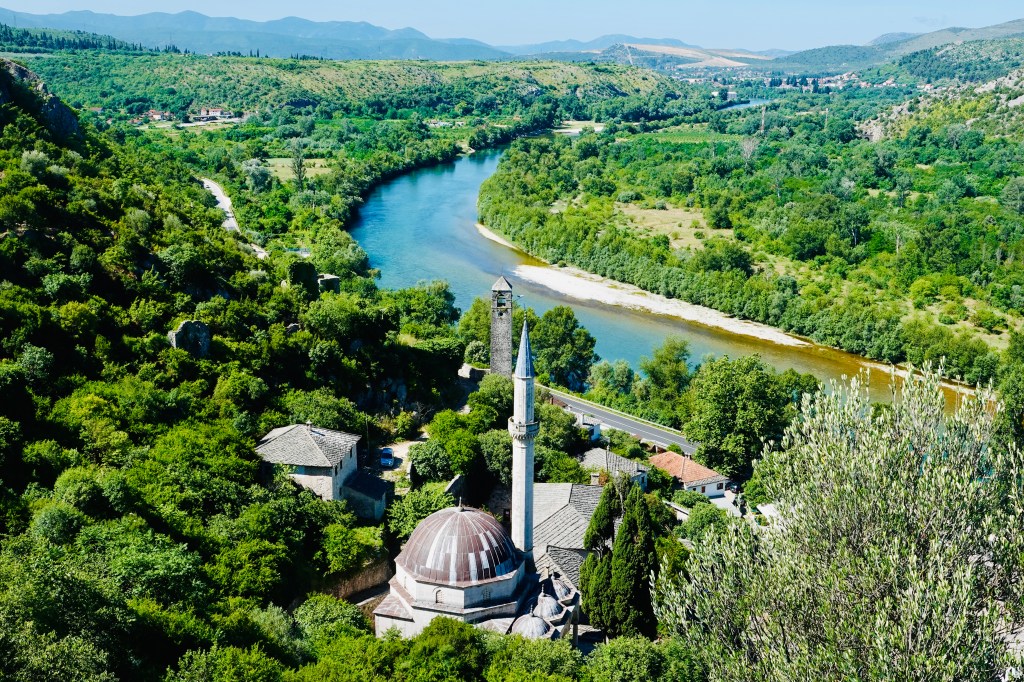
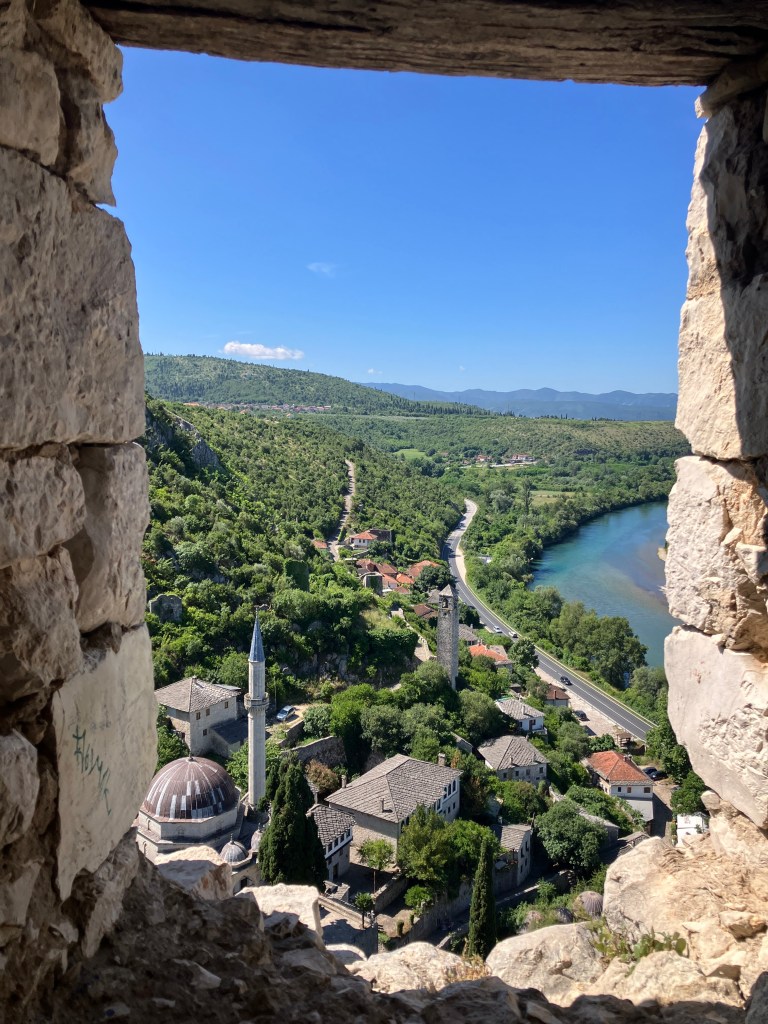
Hadzi-Alija Mosque was built in 1563, is considered to be one of the oldest mosques in Bosnia and Herzegovina. The mosque’s distinctive stone walls and minaret are typical of Ottoman-era architecture. We didn’t go inside the mosque but according to our guide, pre-covid, people were allowed inside and hopefully they will open it to public soon.

Sahat-kula (Clock Tower), built in the 17th century, is an iconic landmark in Pocitelj. Standing at over 20 meters tall, this stone tower served as a way for villagers to tell time. Despite the missing clock face, visitors can still climb to the top to enjoy stunning views of the surrounding countryside. Unfortunately, the clock face was melted for its metal during the war time.

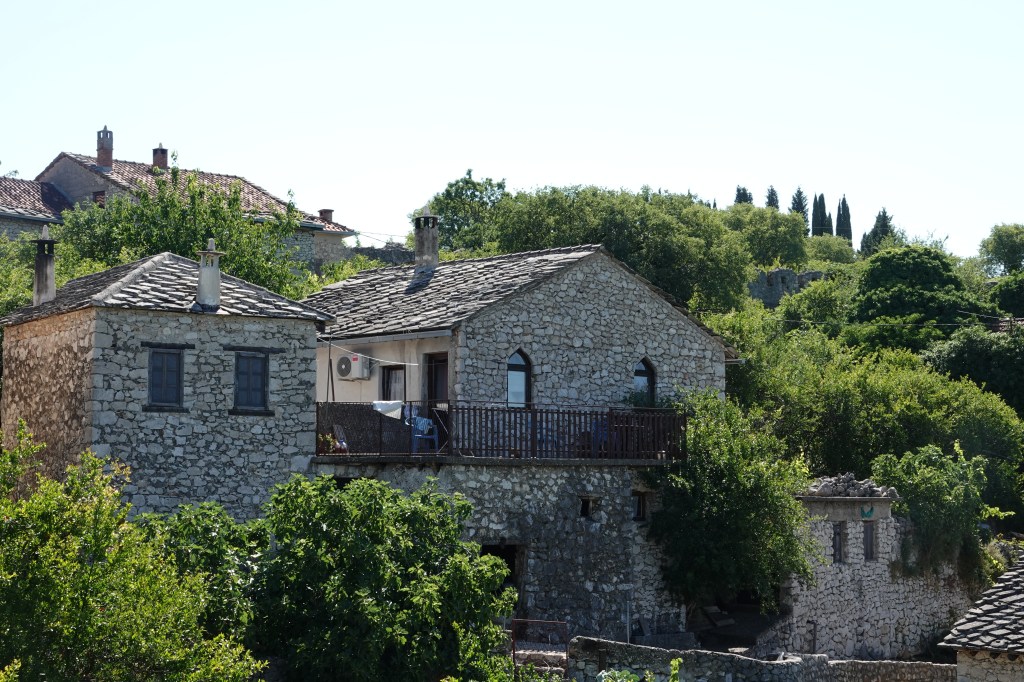
Gavrankapetanovic-Kuca is a prime model of Ottoman-era residential architecture from the 17th century. It boasts traditional stone walls, a red-tile roof, and well-preserved interior showcasing original furniture and decor used by the family.

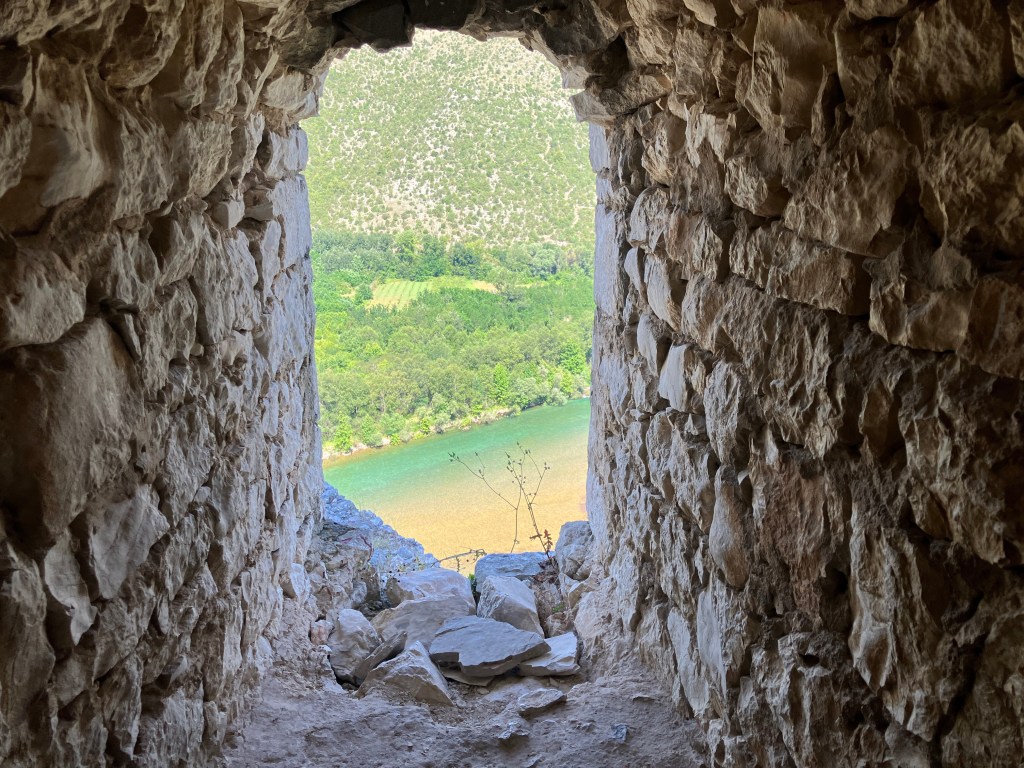
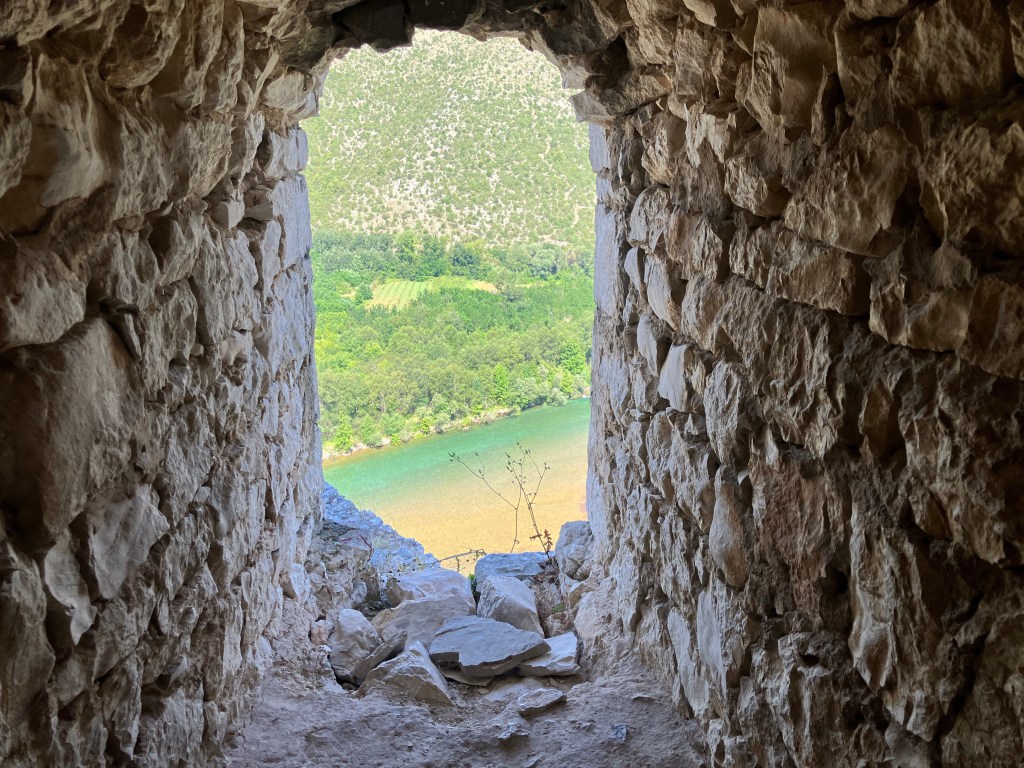
Citadel or the fortress – The stone walls of the fortress are intact, and you can climb to the top to get an amazing view of the valley and surrounding areas

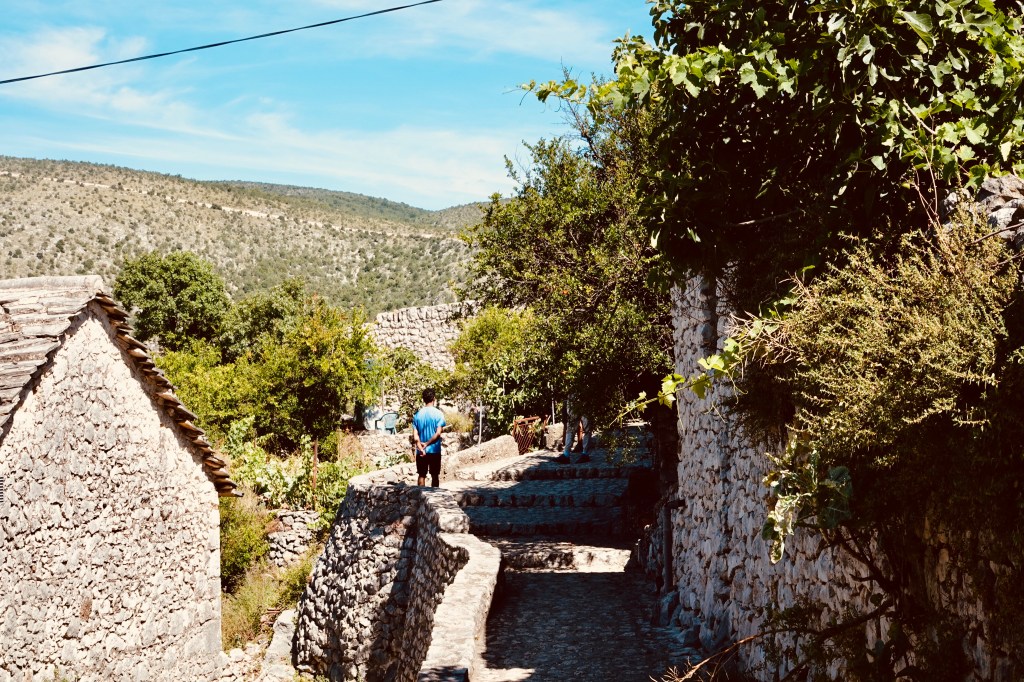
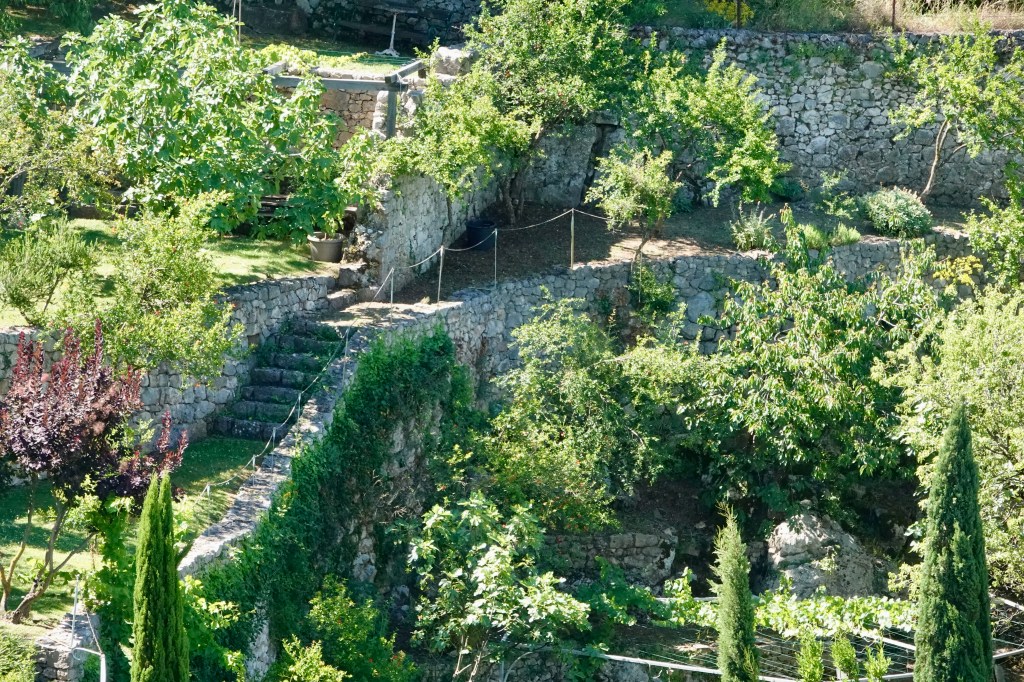
Houses -There are still about 20 families that live in the village and call it home. We stopped by one such home that sold home grown figs, pomegranate juice, honey etc. Just walking around village gives you fascinating glimpse ottoman era

Final thoughts:

Village of Počitelj is a great stopping point on your way from Dubrovnik to Mostar or as a day trip from Mostar before heading to Kravica waterfalls. You can spend 1-2 hours roaming around the village.

Christmas in Costa Rica- a 9-day itinerary to La Fortuna and Manuel Antonio

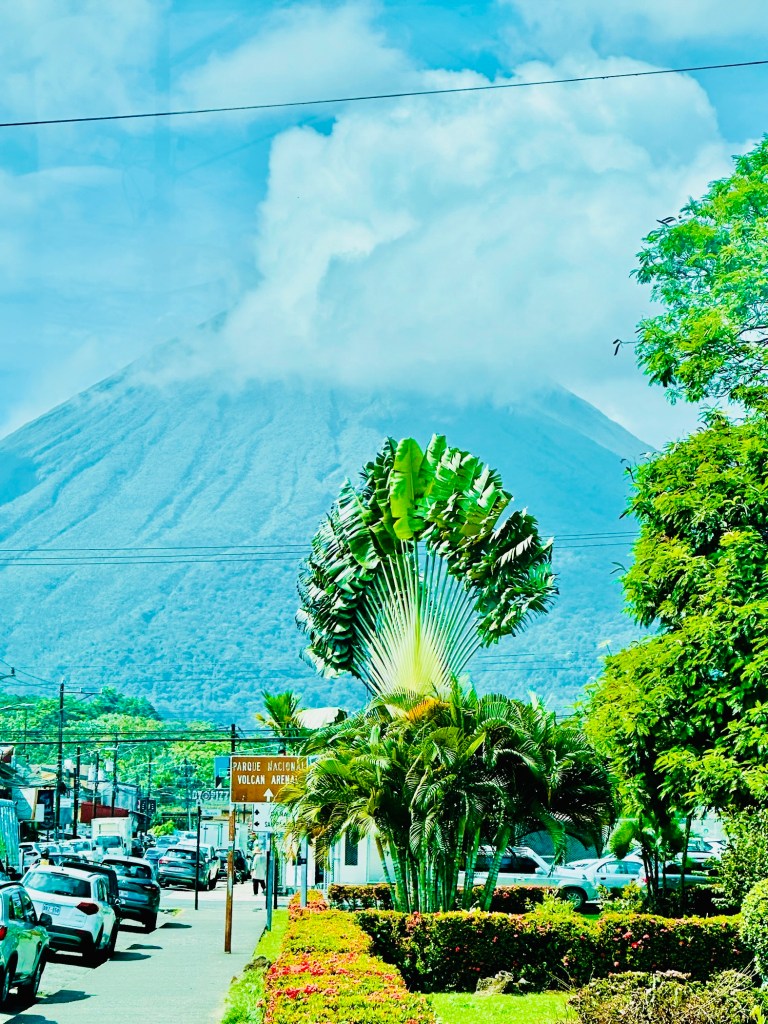
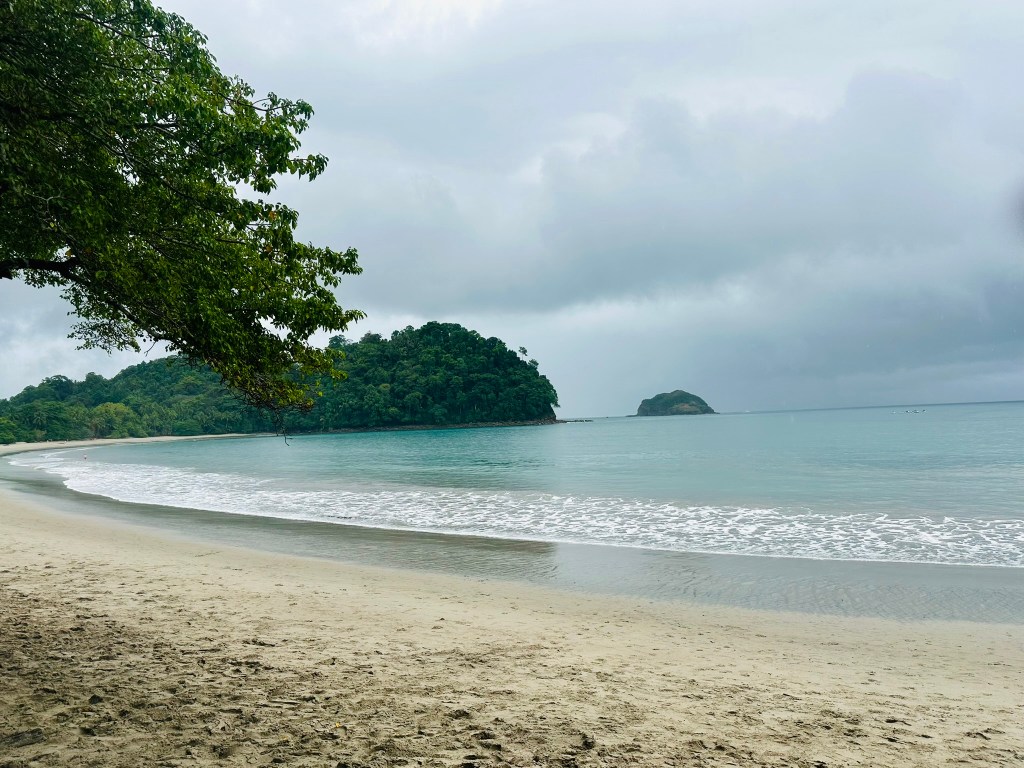
Costa Rica… a paradise of lush rainforests, golden beaches, and vibrant biodiversity, where nature lovers and thrill-seekers alike find their haven. Here, travelers can immerse themselves in the lively streets of San José, filled with rich history, bustling markets, and welcoming locals. Or, venture beyond the capital into the heart of the country’s breathtaking wilderness—where towering volcanoes, misty cloud forests, and exotic wildlife create a mesmerizing world waiting to be explored.

Costa Rica’s magic is undeniable—from the dazzling Pacific and Caribbean coastlines to the serene beauty of its national parks, home to sloths, toucans, and colorful frogs. Whether riding the waves in Tamarindo, ziplining through Monteverde’s treetops, or savoring the country’s renowned coffee, every moment here is an invitation to adventure and relaxation. Pura vida is more than a saying—it’s a way of life that welcomes visitors with open arms and unforgettable experiences.

  1. Our Itinerary
  2. Some facts about Costa Rica
  3. Where to fly?
  4. Places to go in Costa Rica
  5. Some practical Information
  6. Further reading
  7. Related Posts

Our Itinerary

Downloadable version of our Itinerary for 9 day Christmas trip below

Some facts about Costa Rica

  • Costa Rica is located in Central America, connecting North and South America. It borders Nicaragua to the north and Panama to the south.
  • The country is divided into seven provinces – San José (capital), Alajuela, Cartago, Heredia, Puntarenas, Guanacaste and Limón) and most popular destination include : San Jose, La Fortuna, Monteverde, Tamarindo, Nosara, Samara, Jaco, Manuel Antonio, Uvita, Drake Bay (See the map below)
  • Costa Rica doesn’t have an army as of Dec. 1, 1948 and very stable democratic country.
  • Official language- Spanish
  • Official currency- Colón (plural colones) (¢)

Where to fly?

There are 2 main airports and few small local airports –

SJO Aeropuerto Internacional Juan Santamaría – In San Jose (Capital)Juan Santamaría International Airport (Code: SJO) is the country’s main airport, located in Alajuela.

Daniel Oduber International Airport in Liberia (Code: LIR) good airport for travelling Guanacaste, Monteverde and La Fortuna

Places to go in Costa Rica

Costa Rica has so many places that you will be overwhelmed to choose one or two places to visit. I found Costa Rica might be a place we will have to visit more than once to cover the entire country. If you just want to see our itinerary, check here .

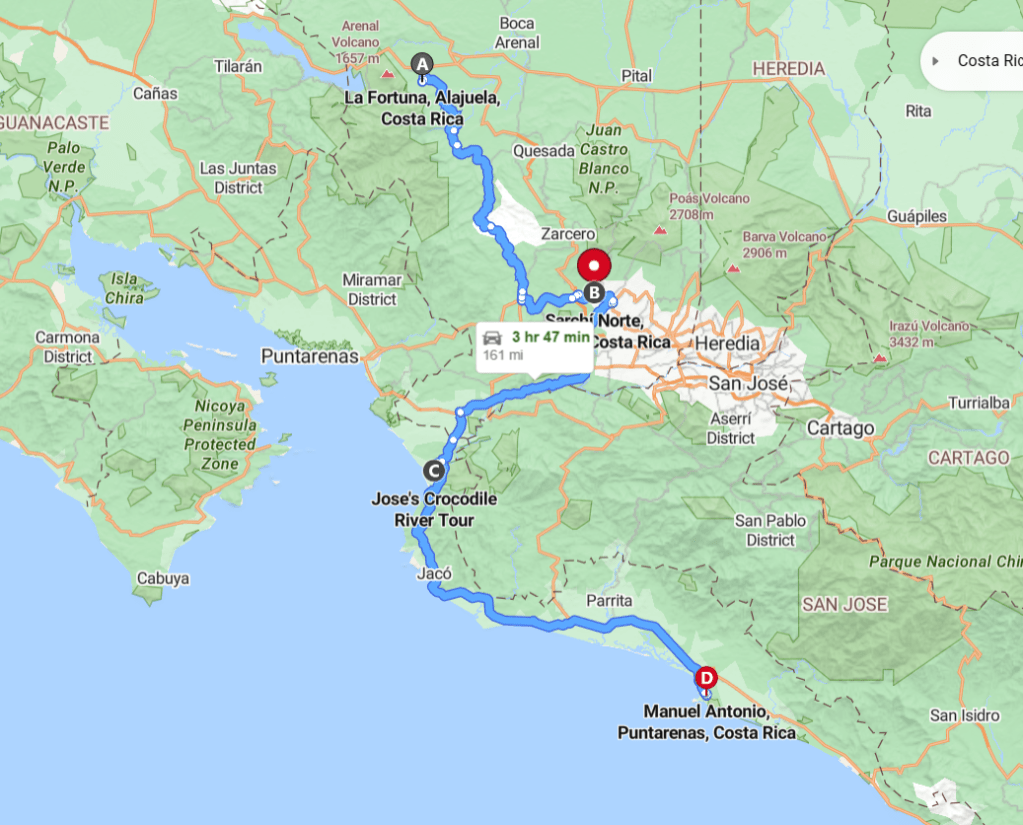
Even though a small country, it takes long time to travel from place to place due to mountainous, curvy, single lane roads. For instance, to travel from La Fortuna to Manuel Antonio, it took us almost 6 hours and it is 136 miles (218 km) apart and we were told that we were lucky that it took us only that much time (Hotel staff estimated anywhere between 6-9 hours). Keeping this in mind, we decided to choose 2 places to visit for our first trip- La Fortuna and Manuel Antonio (2 green flags on the map above)

Most popular locations include:

Central Costa Rica Culture and nature

San Jose – Culture, Museum, Airport, Restaurants

Poas volcano: most visited volcano in the Central Valley. Good stopping point between San Jose and La Fortuna

La Paz Waterfalls : La Paz Waterfall Garden is the another popular stop between San Jose and La Fortuna. This park has 5 waterfalls and an animal sanctuary.

Northern costa Rica Outdoor adventure and Wild animals

La Fortuna / Monteverde – Best place for outdoor adventures

Distance from airport: Both San Jose airport and Liberia airport are about 2-3 hours.

Most people choose either La Fortuna or Monteverde for rainforest experience and some people do both places to experience rainforest and cloud forest (The cities are 80 miles apart). It takes about 5-6 hours to get to Monteverde from La Fortuna as you have either take a ferry to cross Lake Arenal or drive around Lake Arenal. This is the info from costa Rica Travel blog and if you want to include both La Fortuna and Monteverde in your travels, please check out this blog for details of travel between the two cities.

Rio Celeste – Another great place to visit near La Fortuna with a blue waterfall and lots of wild life. My review of this place is here

Central Pacific Costa RicaBeaches and Nature

Quepos/Manuel Antonio – Beaches, Snorkeling, Surfing, Sports Fishing, Wild animals, Mangrove Kayaking.
We dedicated day 5 for the long drive from La Fortuna to Manuel Antonio. There is not too much to do between these places other than stopping at Sarchi (https://www.atlasobscura.com/articles/colorful-oxcarts-costa-rica) to visit the last factory that makes Ox Cart. We stopped at the Río Tárcoles Crocodile Bridge which is near Jaco, and you can see lots of crocodiles in the river. There are few shops and restaurants here and it’s a good place to stretch your legs.

Guanacaste - Beaches, Surfing lessons,

Some popular spots in this area include Gulf of Papagayo, Tamarindo, Playa Conchal and Ricon De la Vieja National park- famous for natural hot springs and mud baths.

Nicoya PeninsulaPristine beaches and yoga retreats

Santa Teresa– Beautiful beaches that are great for surfing. This town along with Malpais and Montezuma are in the blue zone where longevity of people is very high.
Playa Samara- Lovely beach town and famous for horse riding. Popular place for expats.

Nosara – Epicenter of Yoga retreats and epitome of Pura Vida lifestyle.

Osa PeninsulaNature lovers and Photographers dream

Remote part of the Costa Rica on the pacific side and hence less touristy but home to Corcovado National Park which has 13 types of ecosystems and has amazing wildlife with over 40 species of frogs, 25 lizard’s species, crocodiles and 400 bird species. This is next my list to visit when we go back to Costa Rica

Drake Bay – Stunning destination for all water related actives including Snorkeling, Kayaking, scuba diving etc. Also great place for bird watching and hiking

Uvita– Famous for “The whale tail beach” as well as tropical rain forest. Good place to see humpback whales and other activities including waterfall visit, horseback riding etc.

Caribbean Coast Less touristy and chill vibe

Not as popular as the pacific coast , Carribean coast has its own vibe and blend of Latin and Carribean cultures. Some of the popular spots include :

Puerto Viejo – known for its stunning beaches, abundant wildlife and delicious food, this town gives the laid back feel that Caribbeans are known for. You can also visit Cahuita National Park to see monkeys, Sloths and birds.

Tortuguero National park– Located on the northeast side of the Caribbean coast, this national park is one of the best places in the world to see Giant Green Sea Turtles lay their eggs and to watch as the baby turtles hatch and make their way to the sea during the turtle season (June to October).

Some practical Information

  • Best season to visit is during dry season from December to April. We went at the end of December and still got rain almost every day for at least couple of hours.
  • Caribbean coast has very different season and less developed. Good time to see turtles hatching is between July to October
  • Nature and wildlife- Hiring guides help to see more animals but I also found that by paying attention to little noises (ruffling of leaves) or just looking up to the treetops helps a lot.
  • Tico time- Pack lot of patience. The Pura Vida life style is followed on the roads too. Driving from one location to another takes longer than you think due to one lane roads and getting behind slow moving trucks.
  • Popular locations such as La Fortuna, Manuel Antonio are very well connected but if you plan to go to remote locations such as Drake Bay, do some research.
  • Colones and dollars are accepted every where but it might be cheaper to use colones
  • Some essential things to pack- Dry bag or waterproof pouch, Light rain jacket, Water sandals or shoes, Bug spray, Binoculars, Sunscreen.
  • Like any other place, there are pick pocketers, and thieves that take your stuff if you leave it alone. Lock your vehicles and hide your valuables.

Further reading


   Pura Vida!!!!

Monkey Business- Types of monkeys in Costa Rica and where to see them

If you love monkeys, Costa Rica is the place to see them. We were fortunate to see 3 out of the 4 kinds of monkeys you could see in CR.

There are 4 different species of monkeys you can see in Costa Rica.

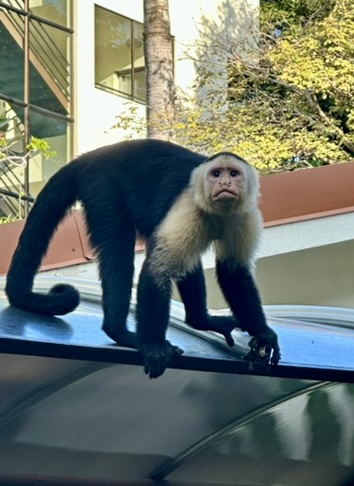
  1. Capuchino monkey
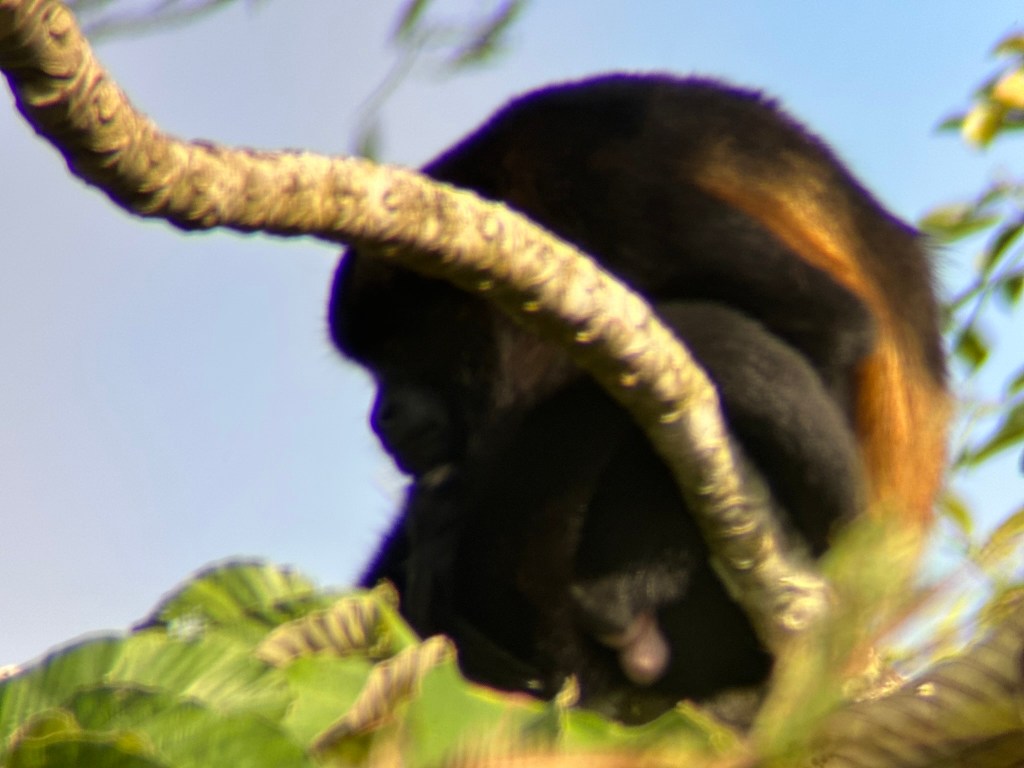
  2. Howler monkeys
  3. Spider monkeys
  4. Squirrel monkeys
  5. Best places to see monkeys in Costa Rica

Capuchino monkey

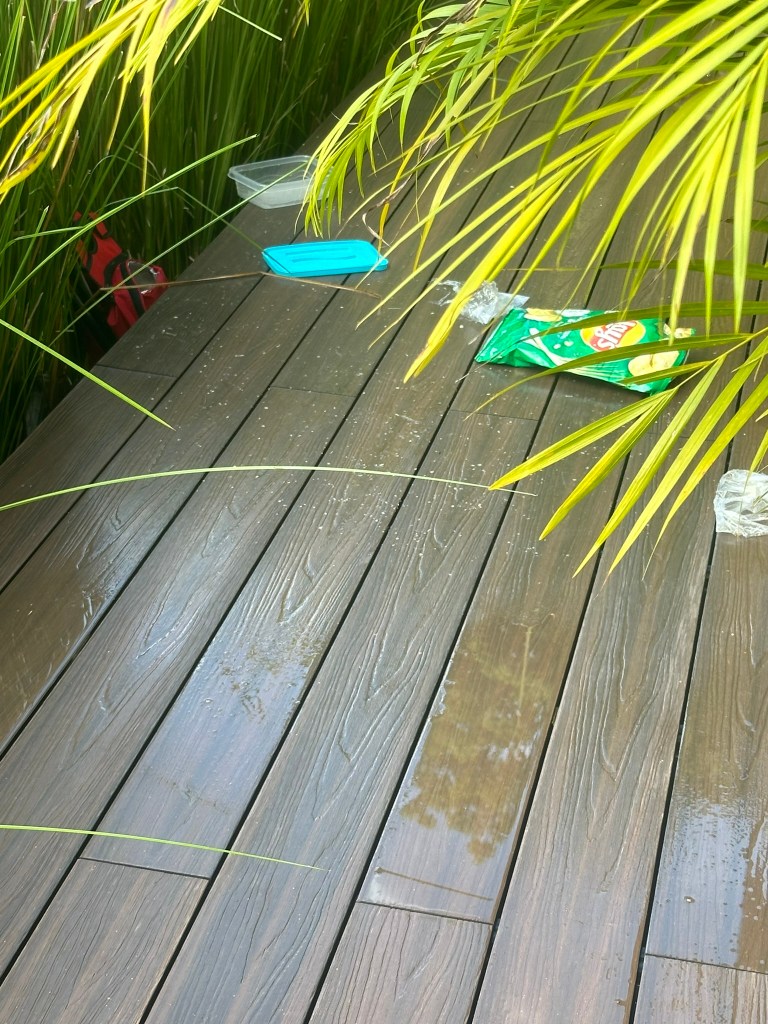
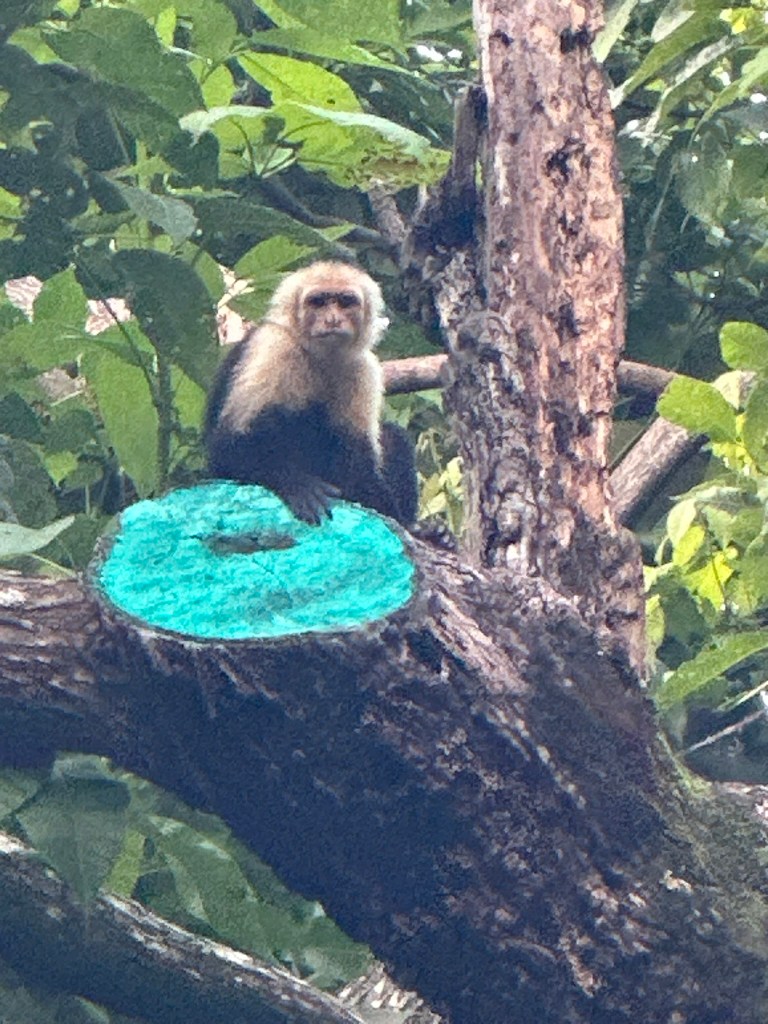
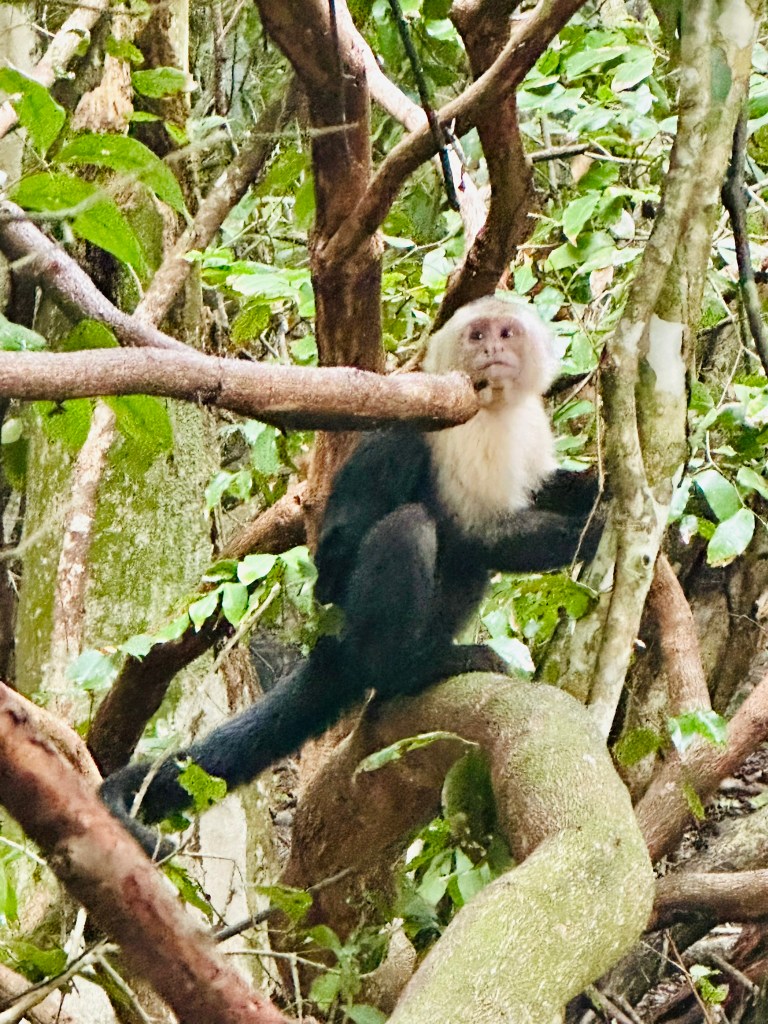
Most common ones we saw are the white-faced cappuccino monkeys and our guide called them mafia monkey as they roam in groups and steal food and other items from people. These monkeys are aggressive and not afraid of people. Parador nature resort had a bunch of them that would hang out by the pool and come near rooms and take anything they can. People staying next to us had left their backpack out in the night, and these monkeys tore it open, and took the chips bag and opened a Tupper ware container and ate whatever was in it.

Howler monkeys

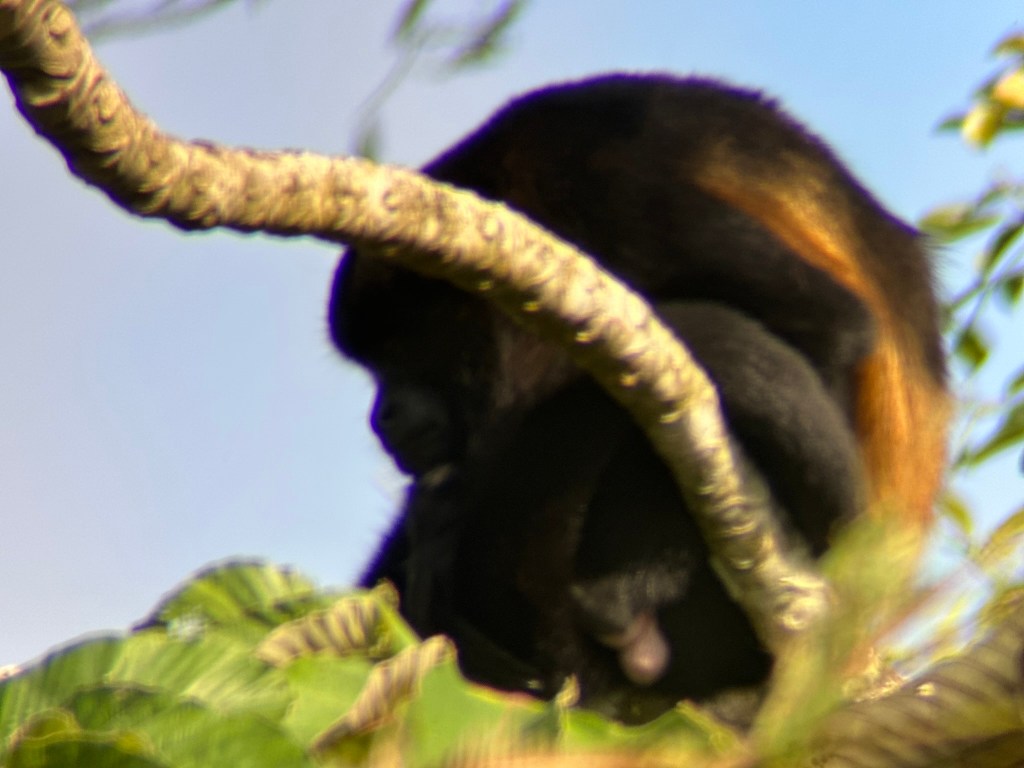
More than seeing these monkeys, you can’t escape their howl which sounds like a roar. We saw few these monkeys in Manuel Antonio but heard them pretty much every morning in the hotel. when we were at Manuel Antonio park it started raining, we heard bunch of angry howler monkeys and were told by the guide that they hate rain which led to teenager asking, ” then why do they live in rainforest where it rains everyday?”

Spider monkeys

We were lucky to see a family of spider monkeys hanging around in Mistico Hanging bridges and gave us show from jumping from tree to tree and showing off their agility. Our guide was able to hear these monkeys before spotting them as they make lot of noise on the tree branches, and it is good practice to pay attention to sounds as you go through rain forests as it is much better way to spot different animals. After 9 days in Costa Rica, I got better at spotting monkeys by paying attention to twigs breaking, rustling leaves and branches. Spider monkeys are one of the most agile species in Costa Rica and their name comes from the disproportionately long limbs and a long tail. We were able to take some good videos of these monkeys (Watch it full screen or pic-in-pic to see the whole video)

Spider Monkey

Squirrel monkeys

These are only type of monkeys we didn’t see in Costa Rica even though our hotel in Manuel Antonio and the national park had these monkeys but unlike the white-faced monkeys they weren’t roaming around in groups when we were there. These monkeys have very distinct type black facial mask and red-backed fur and pretty small compared to other monkeys found in Costa Rica.

Monkeys and Green rope way – One of things I noticed in the Manuel Antonio area and in the Parador hotel was the green ropes/bridges hanging from tree to tree. These are constructed for sloths and monkeys cross from tree to tree and to buildings without coming down to the road thus avoiding potential threats from cars, dogs, and other predators. Its quite neat to see and I caught a Cappachino money using one in the hotel

Monkey on Sky bridge

Best places to see monkeys in Costa Rica

Manuel Antonio National Park– This is park where you are guaranteed to see both monkeys and sloths. All four species are supposed to live this National park and we were able to see Howler and White-faced monkeys here. The Parador nature hotel in Manuel Antonio has abundance of these monkeys in their grounds and roam around the hotel. One of the guests was even able to see squirrel money in this hotel during our stay when it jumped on the balcony to get food as they were eating their lunch.

Corcovado National Park This is another national park best suited to see all 4 species of monkeys and 2 species of sloth. Hiring a guide would improve the experience.

Arenal volcano and mistico hanging bridges – We were able to see both spider monkeys and howler monkeys here.

Checking off Bucket list- 7-day trip to Egypt Itinerary- Planning guide

Steps for Egypt trip planning:

  • Where: Cairo, Aswan, and Luxor
  • When: High season (cooler season) October to April. May is a shoulder season.
  • How many days: Minimum 6 full days but will be a busy schedule. Need at least 2 days in each place and travel time between the cities. 7-8 days would be ideal.
  • How: Book with a travel group or self-guided- Land or Nile cruise
  • Budget: $1,500-$2,500 per person for 6-7 days (Including flight, hotel, food, and transportation from US. Ave flight- $800-$1,500 per person, Hotels-$300-$ 600 per night, Nile cruise- $800-$1500 ave per person for 4 days (Based on April 2023 Cost))
  • Other details: Visa for Egypt (Check here for details)

Must visit places :

  • Egyptian Museum
  • Pyramids of Giza
  • Luxor temple
  • Karnak temple
  • Valley of kings
  • Hatshepsut temple
  • Edfu temple
  • Kom Ombu temple
  • Aswan Philae temple
  • Abu Simble
  • Boat/Faluka ride in Aswan

Good to do:

  • Easting Koshary in Cario
  • Dinner cruise
  • Camel ride
  • Hot air balloon ride in Luxor
  • Eating Nubian food in Aswan (Hot pot)
  • Unfinished Obelisk in Aswan
  • Visiting Nubian Village
  • Dandera temple
  • Alendria
  • Memphis

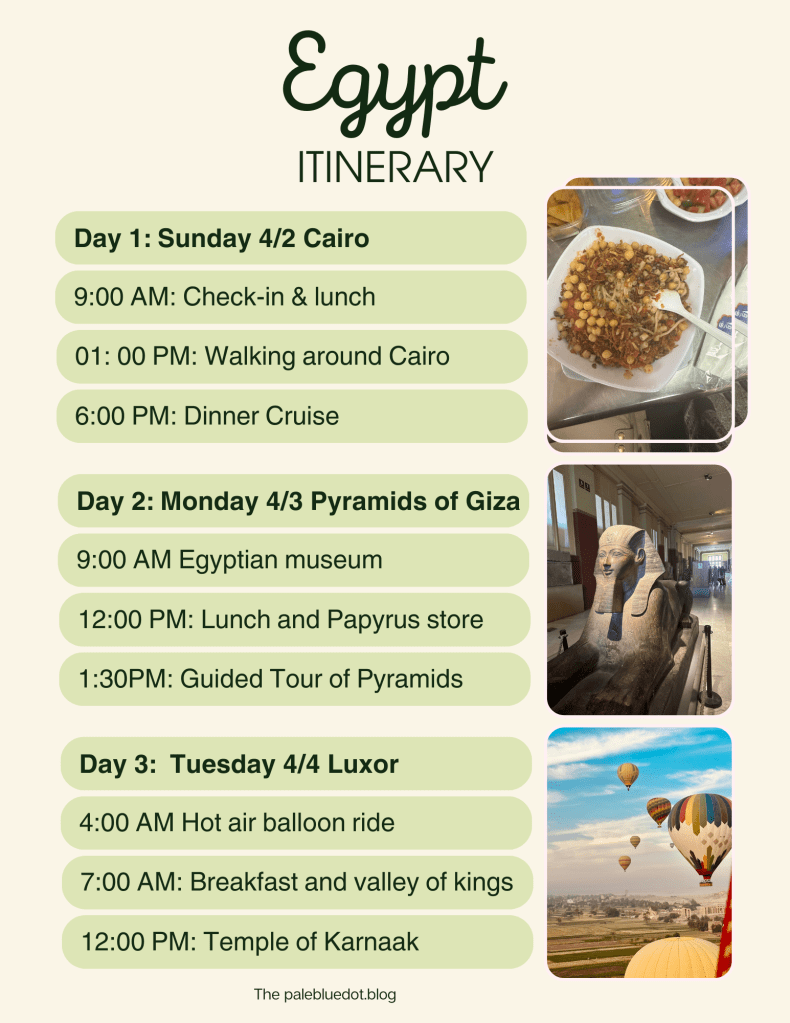
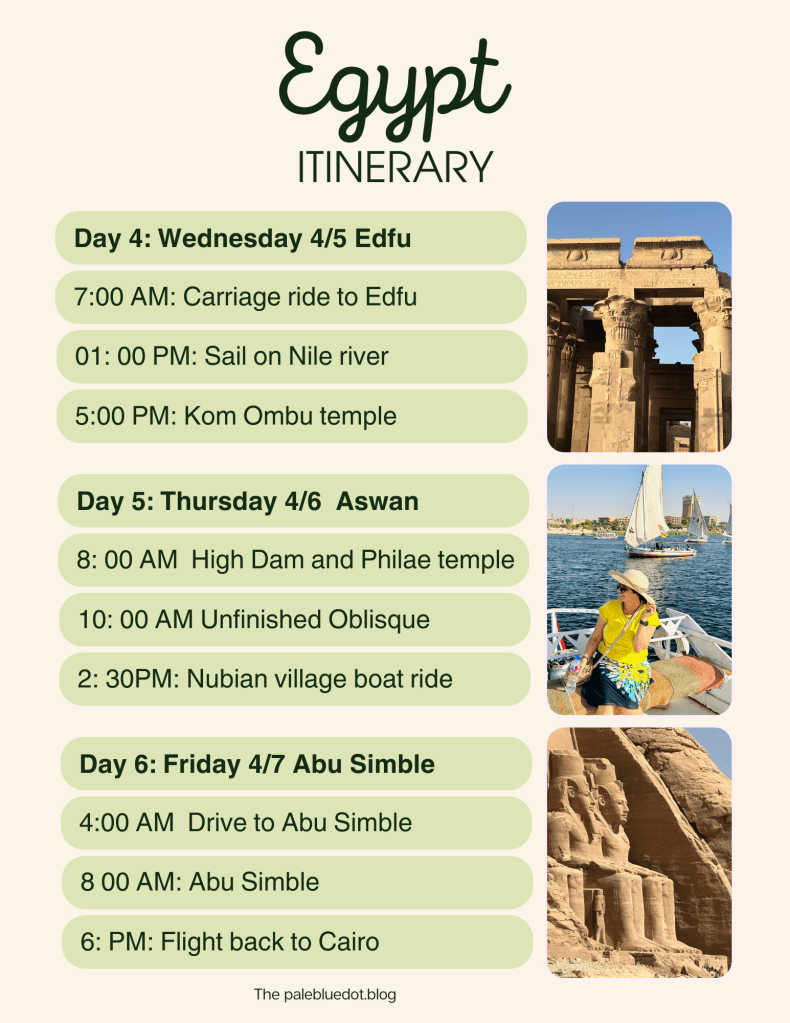
Download the itinerary here