Every country has a comfort food that defines the culture and traditions. For Balkan countries it is Burek or Borek.
But first history lesson….
Burek, or Borek if you want to get fancy, started as one hungry camper’s dream, thanks to the nomadic Turks from Central Asia who thought, “Why settle for boring old bread on our long hikes?” Imagine them on their epic adventures saying, “Let’s deep-fry some dough and call it Burga!” And just like that, the ancestor of Burek popped into existence. As these traveling Turks carried their Burgas everywhere, they magically transformed into all kinds of tasty filled and layered goodies called Borek. For a crazy 500 years, the Ottoman Empire took this yummy snack on a wild ride through the Balkans. Even after the empire packed up and moved on, this lovable dish is still the big boss in the Balkans. Cooked over campfires, it went everywhere from Beijing to Barcelona, and from Modena to the Maghreb. Sure, it might have made its way to fancy tables of khans and kings, but honestly, it’s still the ultimate symbol of good vibes through all sorts of chaotic migrations, conquests, and crazy food adventures!
What is in a name….
Burek can be enjoyed at any time of the day and is popular in Mediterranean, Middle Eastern, Eastern European, and Western Asian cuisines. It has many names, including Borek, Bourekas, Pita, and Banista, and comes in various shapes like triangles, swirls, cigars, and round pies. In Croatia, Montenegro, and Serbia, cheese-filled Burek is known as Burek sa Sirom, while in Bosnia and Herzegovina, it’s called Sirnica. In Bulgaria and Macedonia, it’s referred to as Banitsa sas Sirene. Regardless of its name, shape, or filling, this tasty dish will continue to evolve.
Burek of Bosnia and Herzegovina….
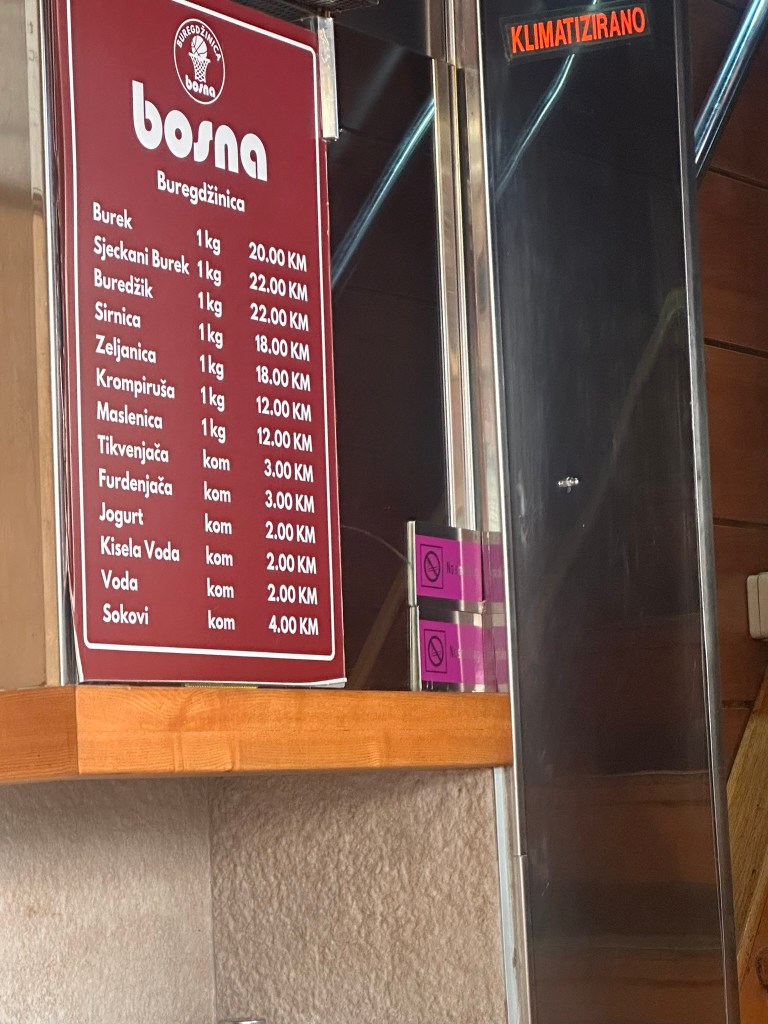
Burek is made of layers of thin dough filled with different savory ingredients. Although it comes from Turkey, it has become a proud part of Bosnian cuisine. Many people believe that only the burek with ground beef can be called burek, but there are other types with different fillings, like sirnica (cottage cheese), zeljanica (spinach), and krompiruša (potatoes). On first day in Sarajevo, after waking up at 5 AM due to jet lag, I wandered around and found Pekara (Pekara- Bosnian word for Bakery) that served fresh and warm Burek. When I asked for cheese Burek, I was told that there is no such thing as Cheese Burek and what I wanted was Sirnica. Croatians are much more forgiving on the name, and I could get a cheese burek without any issues.
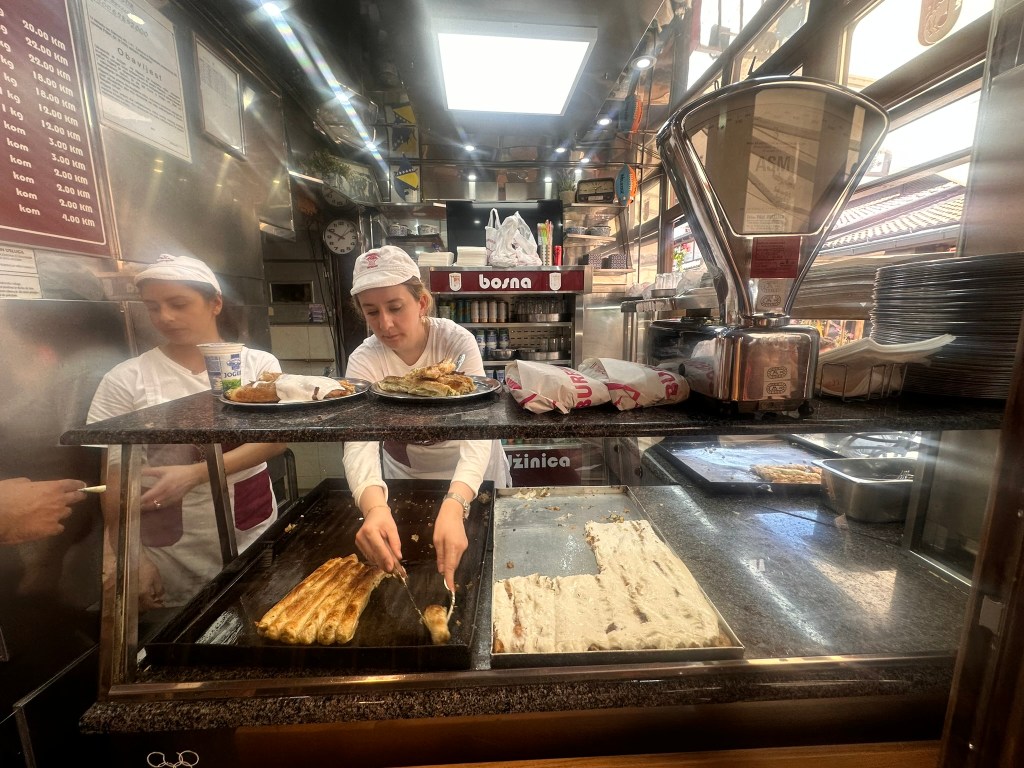
Burek is often baked in a spiral shape, especially in bakeries, while traditional restaurants usually serve it as a pie cut into pieces. It’s very popular throughout the Balkans, but in Bosnia and Herzegovina, it holds special cultural value. There are local sayings that suggest if a woman makes good burek, she is ready for marriage. In 2012, Lonely Planet included Bosnian burek in their book about the best street food in the world.
If you walk around Sarajevo, you’ll find many wonderful bakeries/Pekaras, each showing a glimpse of Bosnian culture. From flaky pastries to fresh bread, the bakery scene here is lively and varied, showcasing the area’s rich food history. Whether you want a savory burek or a sweet snack with your coffee, Sarajevo’s bakeries have something for everyone.
Best places to enjoy Burek
Buregdzinica Bosna
Bravadziluk 11 Old Town, Sarajevo 71000 Bosnia and Herzegovina
Located in the heart of old city, we stopped here on our food tour and tried few different versions, and my favorite version was one with the potato filling or krompiruša. I loved it so much that I went back to the restaurant and got it for dinner that night. This is restaurant is very busy and is more like a fast-food joint but food is amazing.
Right next to this restaurant, there is another restaurant that is famous for Ćevapi- grilled meat sausages, that are staple of Balkan Cuisine. We didn’t try this as most of us are vegetarians, but you can try two of the best Bosnian food right next to each other.
St Burek-Split, Croatia
Domaldova 13 21000 Split
This place was featured in Somebody feed Phil on Netflix and serves some amazing Burek. It is close to old city and near to lot of other good food places including Gelateria Emiliana (another place featured in Somebody feed Phil) and amazing place to try various Gelatos.
Final thoughts
Food scene in Bosnia as well as Croatia is amazing with local wines as well as various traditional dishes. We had a wonderful time tasting various traditional dishes including Burek and lots of gelato. I don;t we had one bad meal in the 9 days we were Balkans and I sometime crave the fresh breads and Potato burek I had in Sarajevo.
Bosnia and Herzegovina is a fascinating country located in Southeastern Europe on the Balkan Peninsula. It is known for its rich history, diverse culture, and stunning natural landscapes. It was part of the Yugo Slovakia before becoming independent country in 1990s.
Visit Bosnia and Herzegovina… a land where history whispers through ancient streets, where untouched nature beckons explorers, and where tradition and modernity merge in a rich cultural tapestry. Here, travelers can wander through Sarajevo, a city shaped by diverse influences—its charming old bazaar, Ottoman-era mosques, and echoes of resilience creating an atmosphere unlike any other. Or, step into the breathtaking landscapes that define the country, from the emerald waters of the Una River to the soaring peaks of the Dinaric Alps.
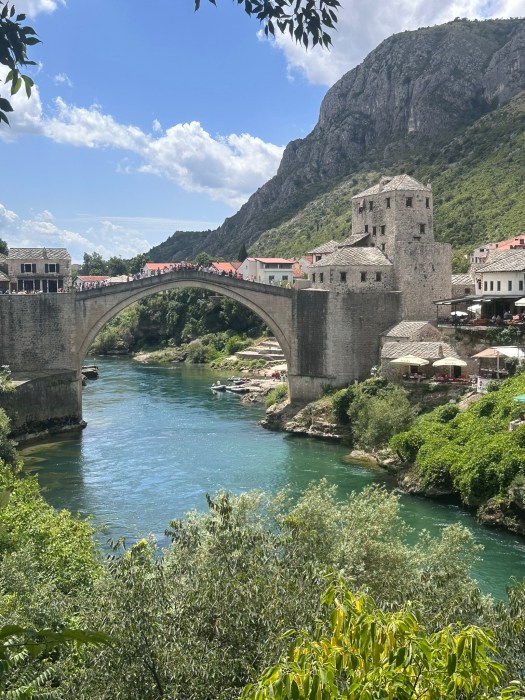
Bosnia and Herzegovina’s allure extends beyond its postcard-worthy scenery—its warmth lies in its people, its flavors, and its centuries-old stories. Whether admiring the iconic Stari Most in Mostar, savoring a cup of strong Bosnian coffee, or losing yourself in the tranquil beauty of its medieval villages, every moment here feels like an invitation to slow down and embrace something truly special.
Bosnia and Herzegovina is a hidden gem in the heart of the Balkans, offering a unique blend of natural beauty, rich history, and diverse culture. Here are some compelling reasons to visit:
Less Crowded: Unlike some of its more touristy neighbor like Croatia, Bosnia and Herzegovina offers a more relaxed and authentic travel experience without the crowds especially in June- We were there from June 11th through 21st and we found Croatia to be very crowded even in early June while Bosnia was much less so.
Stunning Natural Landscapes: From the majestic mountains and medieval castle ruins to the impressive waterfalls like Kravica and raftable rivers like Neretva, the country’s natural beauty is breathtaking. We loved white water rafting on Neretva in Konjic and drive from Sarajevo to Mostar – a scenic route next to Neretva River and some beautiful hills and valleys.
Historical and Cultural Richness: Explore the Ottoman-era architecture in Sarajevo, the iconic Stari Most bridge in Mostar, and the Austro-Hungarian influences throughout the country including the city hall in Sarajevo
Affordable Travel: Bosnia and Herzegovina is known for its affordability, offering great value for money in terms of accommodation, dining, and tours. We found that Bosnia was almost 1/3 cheaper than Croatia.
Warm Hospitality: The locals are known for their warmth and friendliness, making visitors feel welcome and at home. We were fortunate to stay with a Bosnian family and experienced warm hospitality and kindness firsthand.
Adventure Opportunities: Whether it’s hiking in the mountains, skiing in the winter, or diving off the Stari Most bridge in Mostar, there’s plenty for adventure seekers. We loved the white-water rafting and zip lining adventures
Delicious Cuisine: Enjoy traditional dishes like burek, cevapi, and baklava, along with excellent local wines from the Herzegovina region. The wines were the best surprise of the Herzegovina region. We enjoyed some delicious wines that were made with locally grown grapes.
Unique Blend of East and West: The country’s history as a crossroads of different empires has created a fascinating mix of Eastern and Western influences, visible in its architecture, culture, and food
Unique things to know about Bosnia:
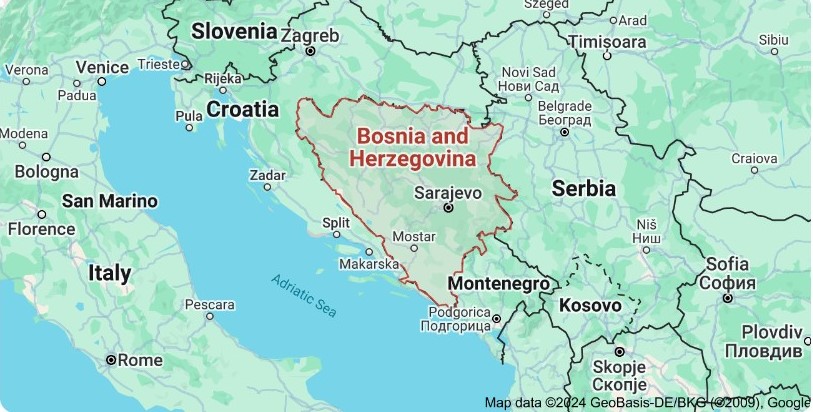
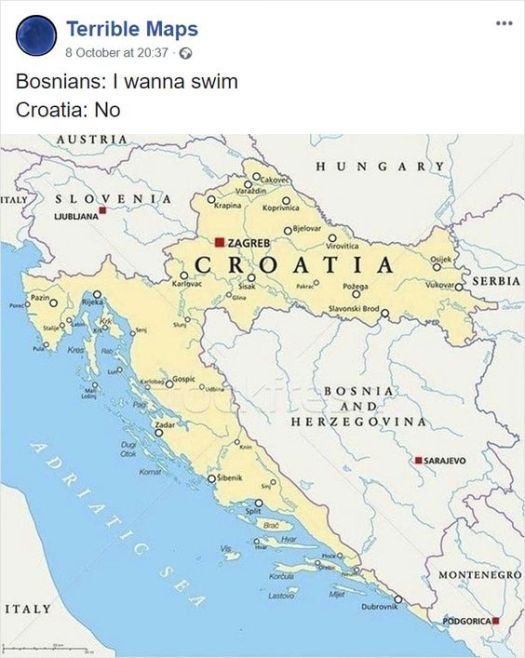
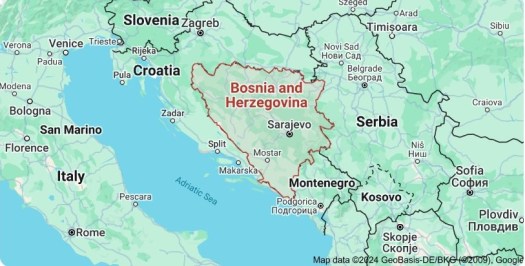
When we were planning the trip to Balkans, someone shared this amusing map with me that says Bosnian’s wanting to swim but Croatians are saying no as there is thin strip of Croatia that prevents Bosnia from having access to Adriatic sea. But in reality, there is town of Neum-the only town situated along Bosnia and Herzegovina’s 20-kilometre (12 mi) coastline, making it the country’s only access to the Adriatic Sea and splits Croatia into 2.
This is the result of Treaty of Karlowitz in 1699, a peace agreement that ended the Great Turkish War (1683-1699) between Austria, Poland, Venice, and Russia on one side and the Ottoman Empire on the other side. The Republic of Ragusa (Dubrovnik) tried to safeguard itself against Venetian expansion by giving a small section of its land to the Ottomans, which resulted in this geographical arrangement.
Historical and Cultural Landmarks
Stari Most (Old Bridge): A UNESCO World Heritage site in Mostar, symbolizing the connection between different cultures and religions. Most popular attraction in Bosnia and can be visited from Croatia as a day trip
Sarajevo: The capital city, known for its unique blend of Ottoman, Austro-Hungarian, and modern architecture. Key sites include the Latin Bridge, where the assassination of Archduke Franz Ferdinand took place, sparking World War I.
Tito’s Bunker: A secret underground bunker built during the Cold War era, located near the town of Konjic.
Blagaj Tekke: A beautiful Dervish monastery located at the source of the Buna River, near a stunning cliff.
Gazi Husrev-beg Mosque: One of the most important Islamic structures in the Balkans, located in Sarajevo
Natural Attractions
Kravica Waterfalls: A stunning series of waterfalls located near the town of Ljubuški.
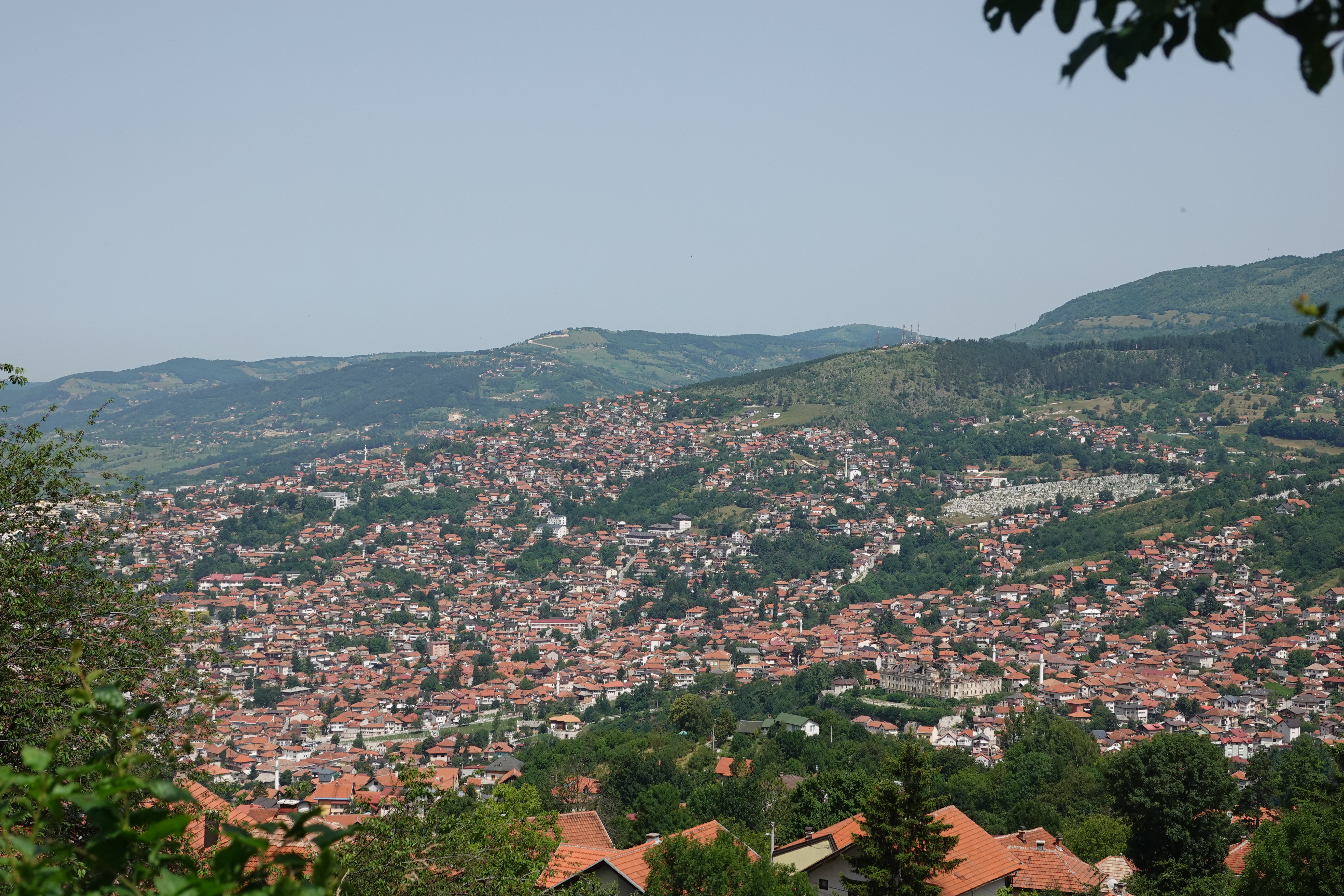
Mount Trebević: Offers breathtaking views of Sarajevo and is a popular spot for hiking and outdoor activities.
Skakavac Waterfall: One of the highest waterfalls in the Balkans, located near Sarajevo.
Jajce– Home to Pliva lakes and charming watermills
Bihac– Home to Una National Park
Currency
The Bosnia and Herzegovina convertible mark (abbreviated as KM and coded as BAM) is the official currency of Bosnia and Herzegovina. It was introduced in 1998
Electric Outlet
In Bosnia and Herzegovina, the power plugs and sockets used are of Type F or Type C. These sockets have two round pins with two earth clips on the side. The standard voltage is 230 V and the frequency is 50 Hz
We did both Bosnia and Croatia as part of this trip but you can spend entire 10 days in Bosnia. Some of the other parts of Bosnia that are beautiful and can be visited in 10 days include Jajce, Bihac/Una national Park and Banja Luka.
Visit the Galápagos island of Española between December to April, and you may witness one of the most extraordinary courtship rituals in the natural world. Each spring, nearly the entire global population of waved albatrosses—tens of thousands of birds—returns to this remote island to reunite with lifelong partners, raise a single chick, and perform a…
Boobies—named after the Spanish word bobo—meaning “clumsy”—boobies earned their name from their slightly awkward, waddling gait on land. The Galapagos Islands are home to three different species of boobies, which include the blue-footed, red-footed, and Nazca boobies. Each species possesses its own remarkable traits and behaviors, making them a highlight for wildlife enthusiasts. Their unique coloring not only helps…
Arriving at Evolve Back, Hampi feels like stepping into a living chapter of the Vijayanagara Empire. We traveled overnight on the Hampi Express from Bengaluru. We reached Hospet at 7 AM. A warm smile and a private car from the resort awaited me at the station. As we drove through banana plantations and paddy fields,…
Hampi, a mesmerizing UNESCO World Heritage Site in Karnataka is a blend of surreal boulder-strewn landscapes and ancient history. Once the thriving capital of the 14th-century Vijayanagara Empire, it was one of the world’s largest cities. This was before its devastating fall in 1565. I grew up in this part of the country. I had often heard the…
Our itinerary was 4 days, covering Hampi, Badami, Aihole, and Pattadakal. We made Hampi our base and stayed at Evolve Back, Hampi. The hotel is one of the best in terms of accommodation, food, and service. My review of Evolve back will be a separate blog post. Arrival: Night Train to Hospet We boarded the…
Visiting Anjanadri Hill and the ancient village of Anegundi is like stepping into a living epic. The Ramayana breathes through the hills. The Vijayanagara Empire whispers through fort walls. The Tungabhadra River carries centuries of stories in its gentle curves. We visited Anjanadri Hill for sunrise. It was a foggy morning, and visibility wasn’t that…
I didn’t expect to love Sarajevo as much as I did but I fell in love with this city. We spent last 2 days of our Balkan Itinerary in Sarajevo before flying home. We stayed at President hotel which is right in the center of the town at the edge of old market and walkable distance to all the main attractions in Sarajevo. We took “food and history” walking tour of the old town and enjoyed some local cuisine along with the history of the town.
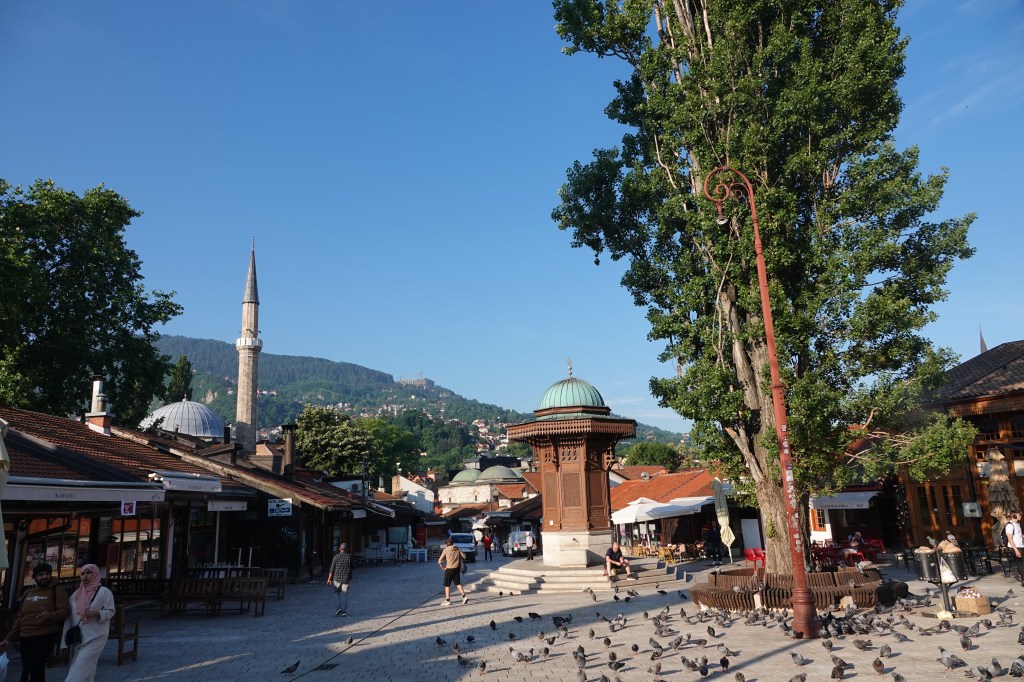
You can’t walk through old town Sarajevo without seeing the wooden water fountain known as Sebilj. The locals call this place as pigeon square, and it is used as meeting spot. Sebilj meaning a place where water is given is and intended to provide free water to travelers and locals stood as a symbol of hospitality. It originally built in 1753 in Otteman -style by Mehmed Pasha Kukavica, and was relocated to current location by Austrian architect Alexander Wittek in 1891. According to local legend “Whoever drinks water from any of Sarajevo’s fountains and spouts will come to Sarajevo”.
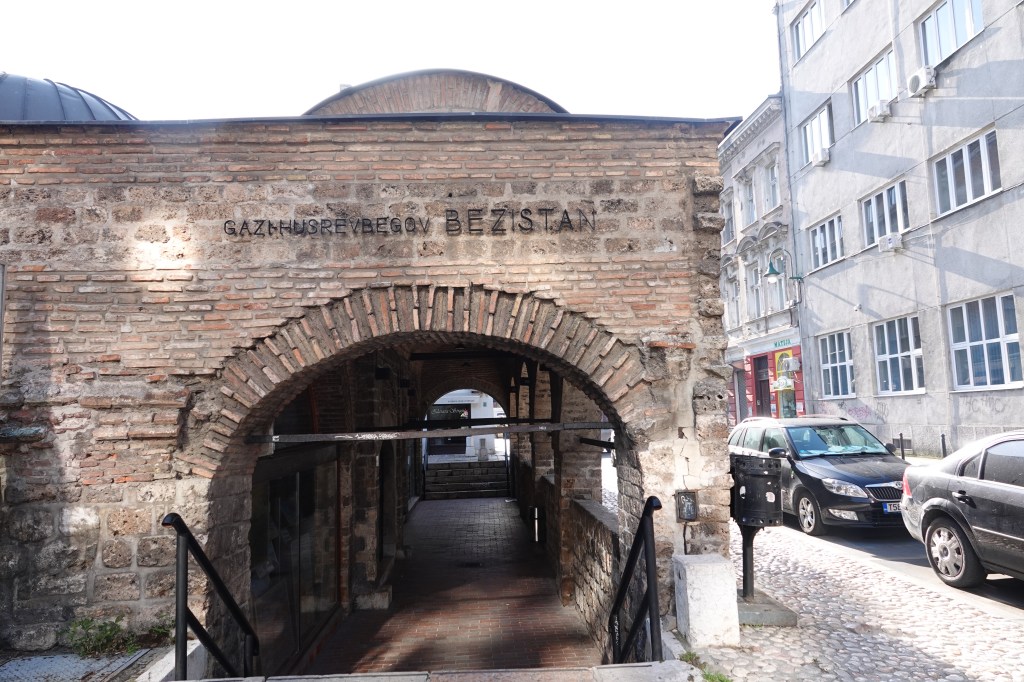
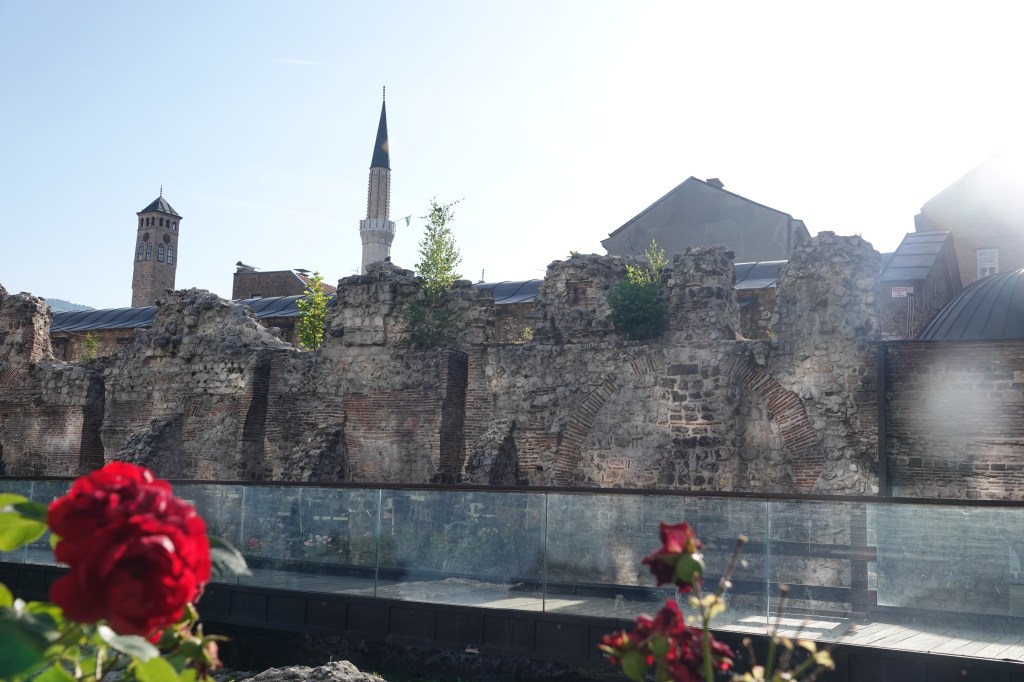
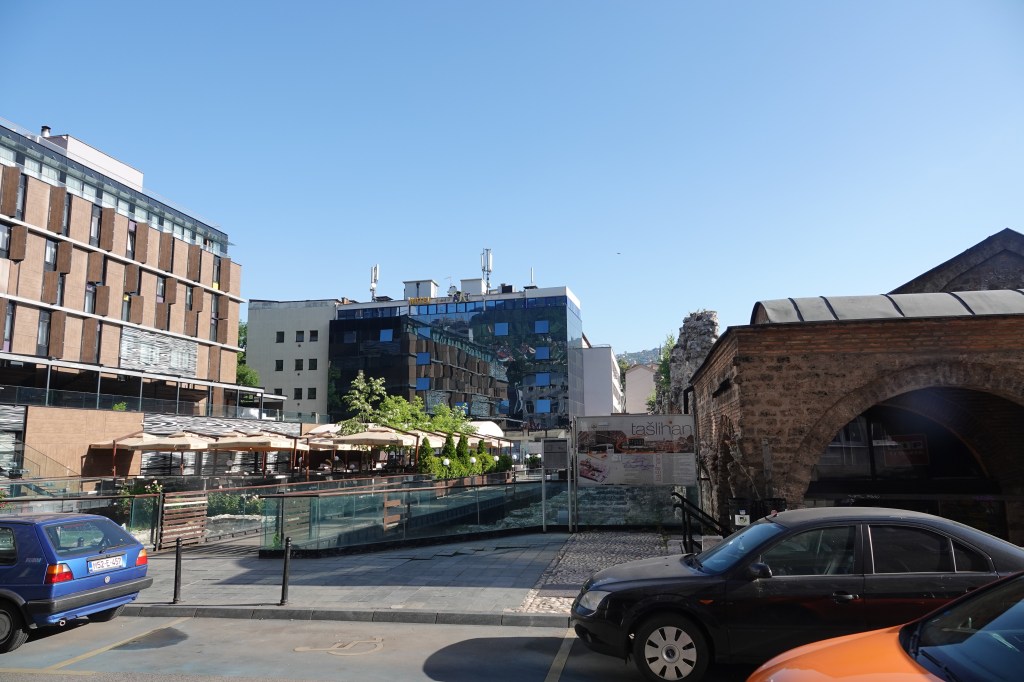
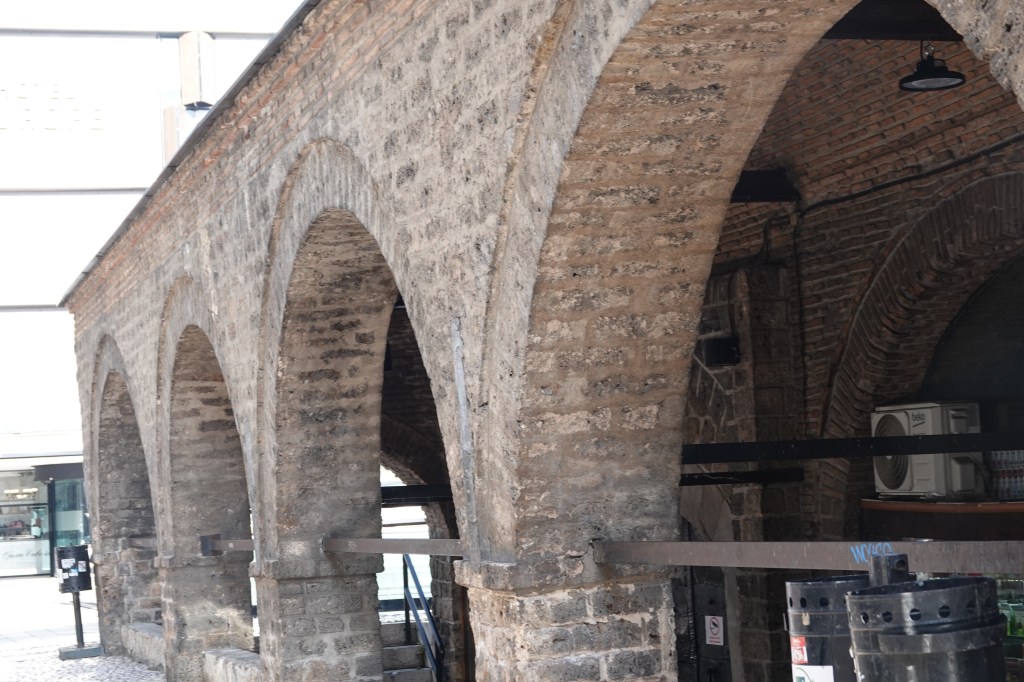
Gazi Husrev Bey’s Bezistan (covered bazaar) and Tašlihan-stone inn
Located together, the Bezistan and Tašlihan were built in 1540 and 1543, funded by the Ottoman Governor, Gazi Husrev Bey.
During the Ottoman era, Bezistan housed textile shops, while the outdoor shops on Gazi Husrev Bey Street belonged to the metalworkers’ čaršija, where gold and silver jewelry were made and sold. The bazaar has four entrances, two from Gazi Husrev Bey’s Street, one on Ferhadija, and another on Zelenih beretki.
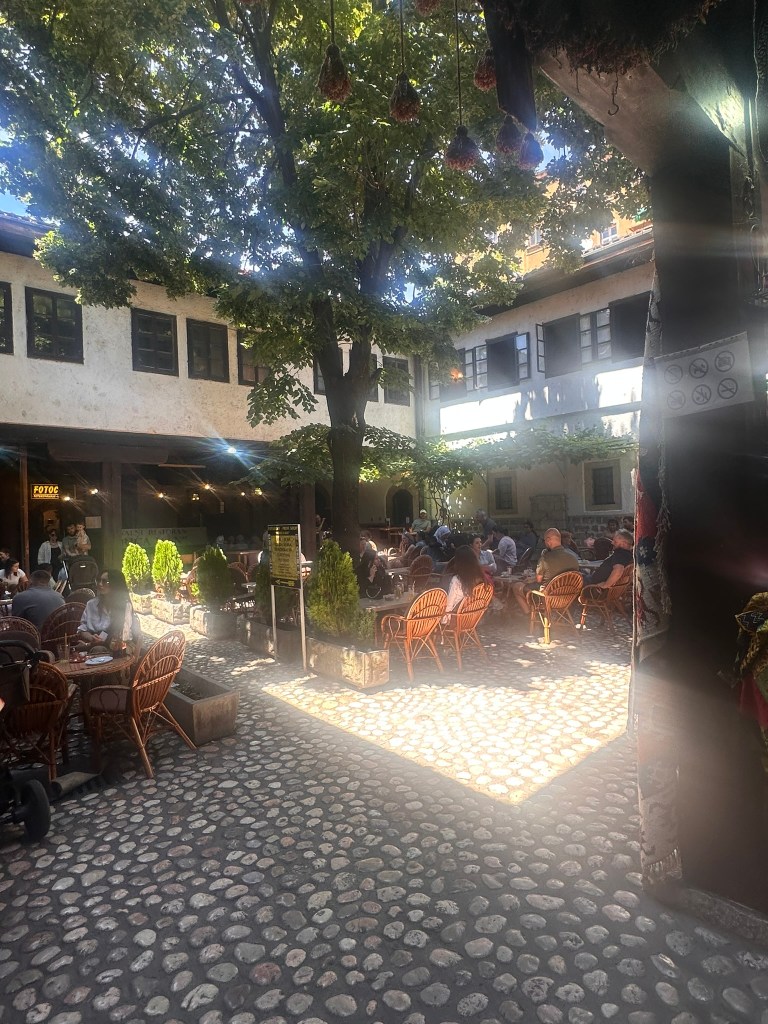
Tašlihan was one of three caravanserais in Sarajevo, providing accommodation for travelers and horses. Caravanserais were large fort-like structures that could accommodate entire caravans, including pack horses and merchants. They typically had one entrance, which was locked at night. The open courtyard was used for loading and unloading goods, often paved with cobblestones, and included a well or fountain.
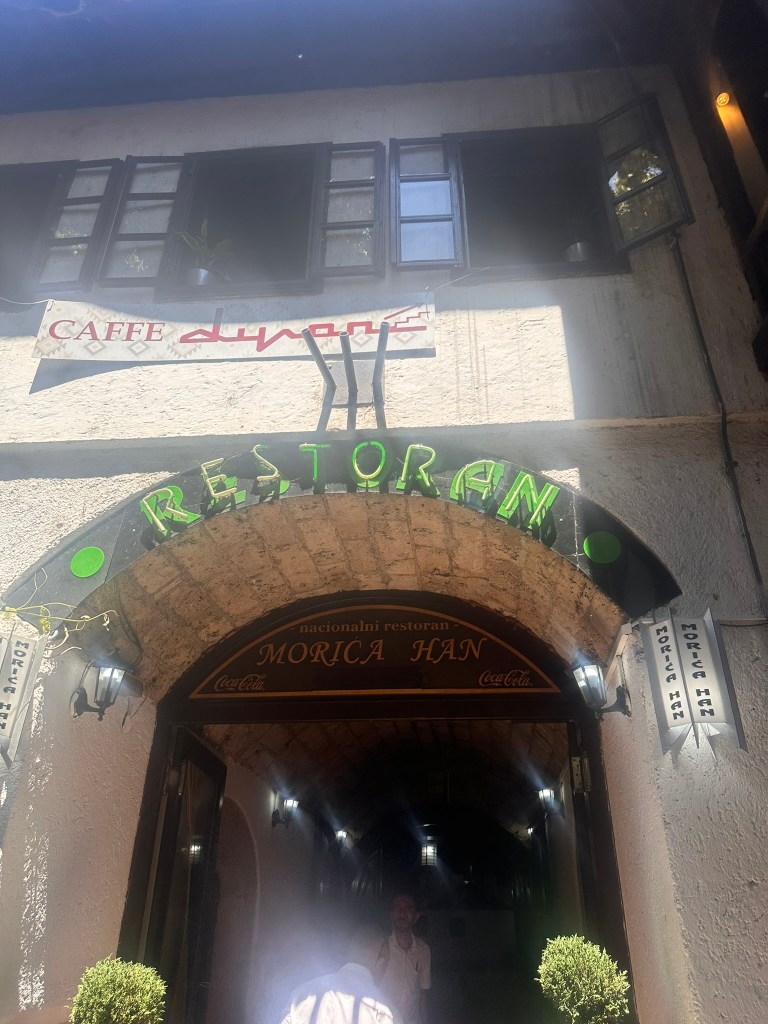
Morića Han
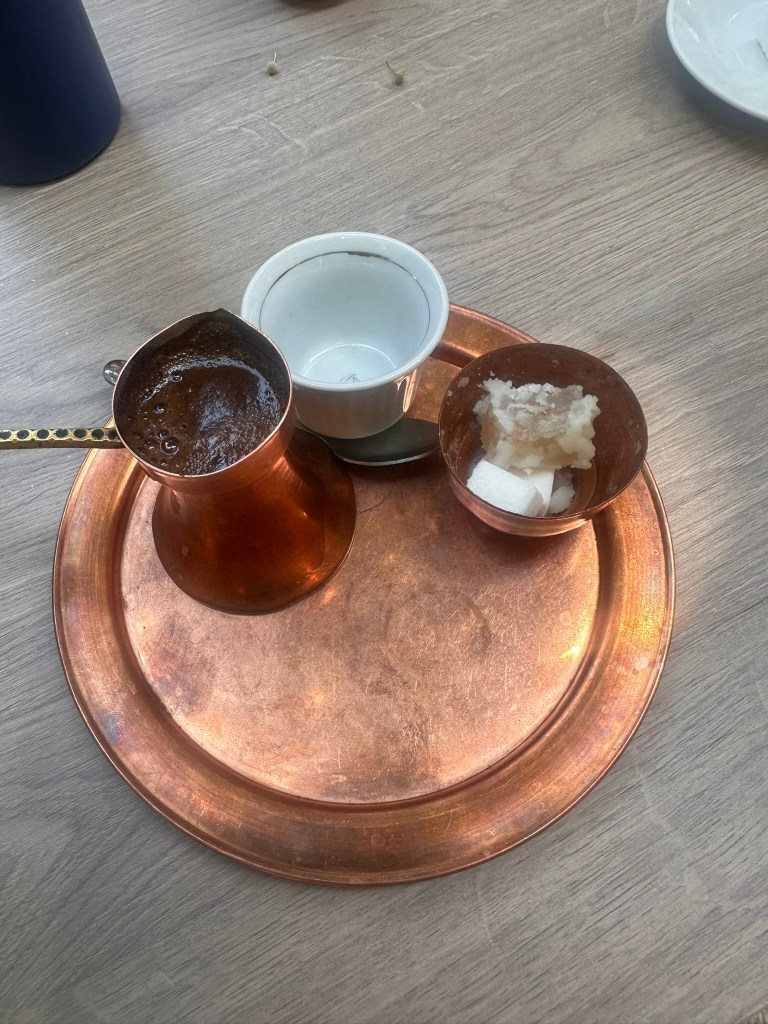
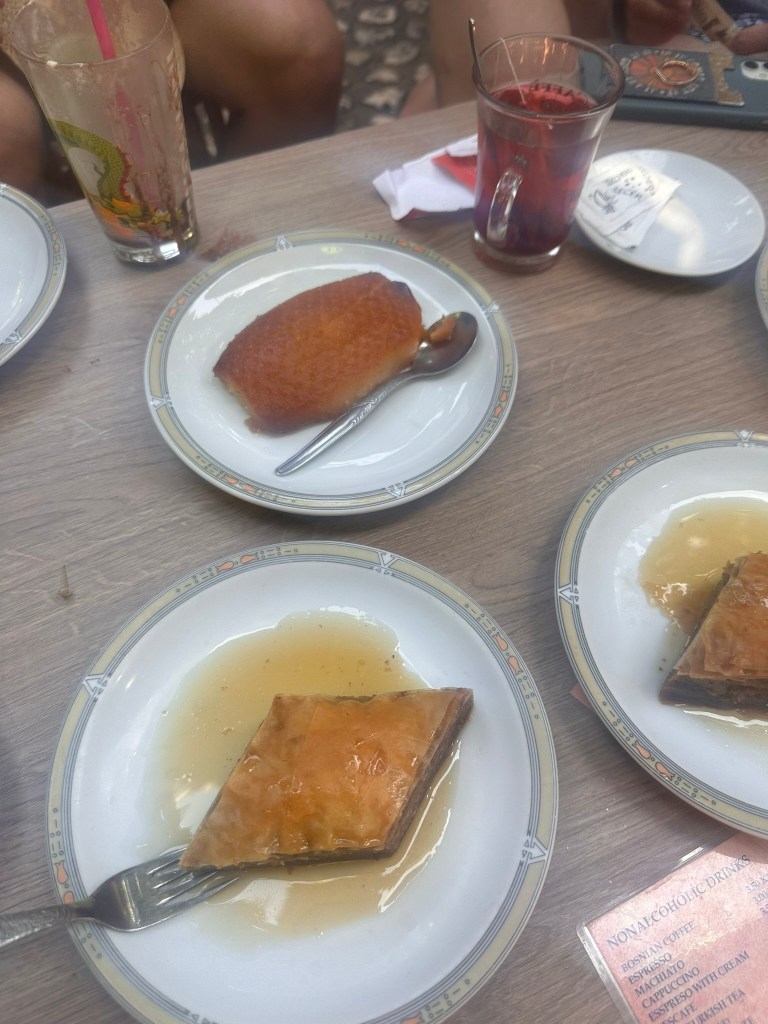
We stopped at Morića Han during our food tour and enjoyed Bosnian coffee and sweets. It’s a beautiful place to relax, drink coffee, and watch people. The inn was built in the heart of Baščaršija between the 16th and 17th centuries as part of an endowment established by Gazi Husrev Bey. The inn’s sleeping quarters could accommodate a caravan with 300 travelers and 70 horses. The room of the innkeeper was right above the main entrance, and the ground level was used for horses and goods. Upstairs, there were rooms for the travelers and a large coffeehouse.
The inn was also a gathering place for the Sarajevo elite and artisans, and its coffeehouse is even mentioned in sevdalinka lyrics. Morića Han is named after Mustafa Aga Morić, son of Ibrahim Aga, one of the famous Morić brothers. Today, Morića Han is home to a few cafés and shops, as well as a restaurant serving traditional Bosnian food.
Gazi Husrev-beg ‘Beys’ Mosque
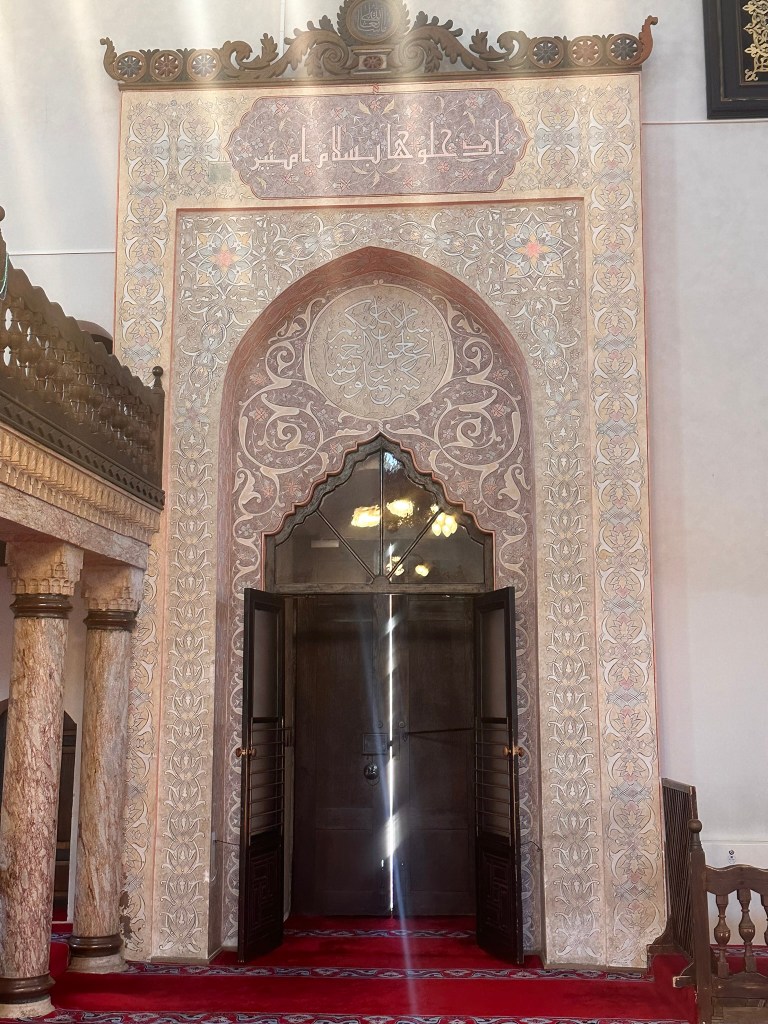
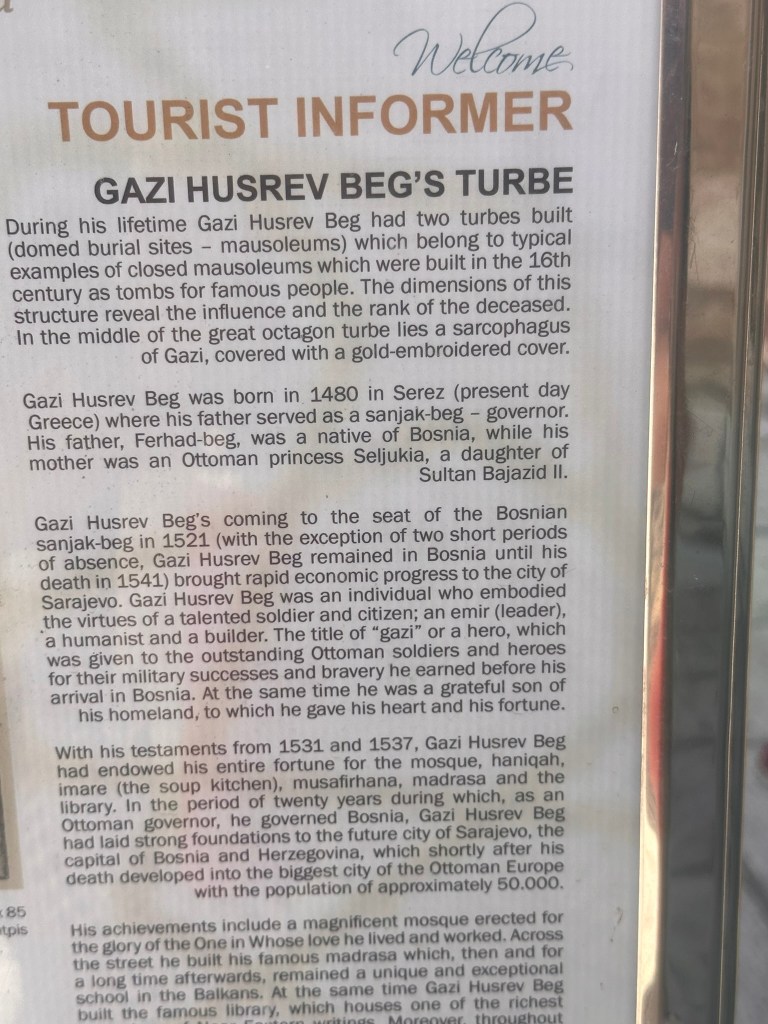
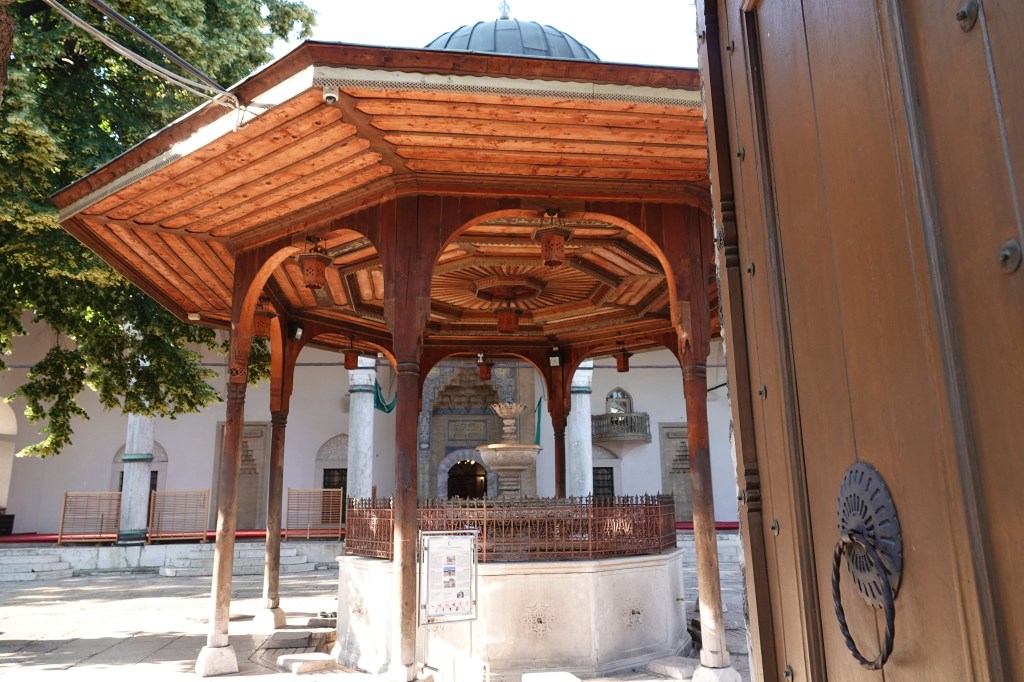
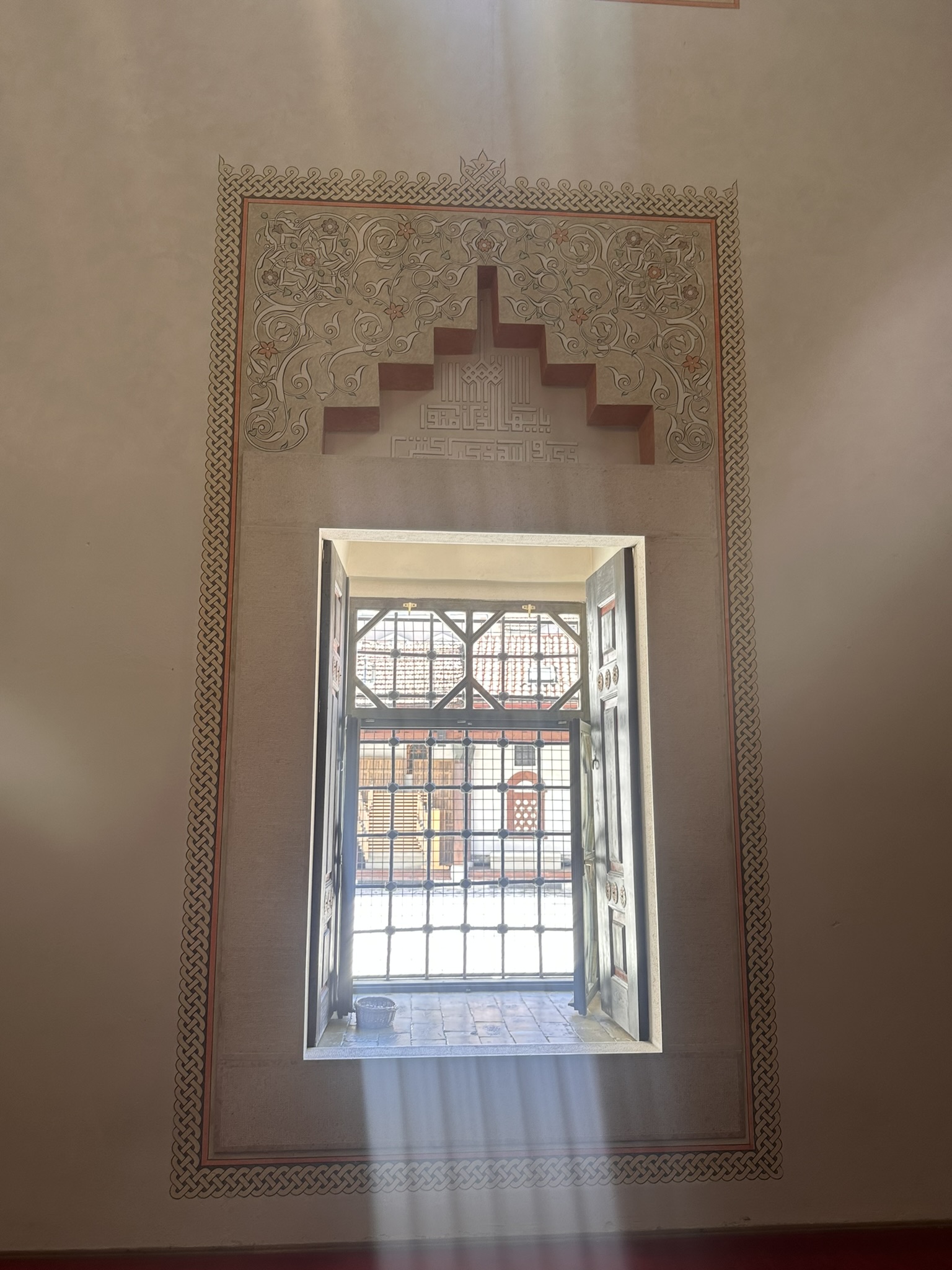
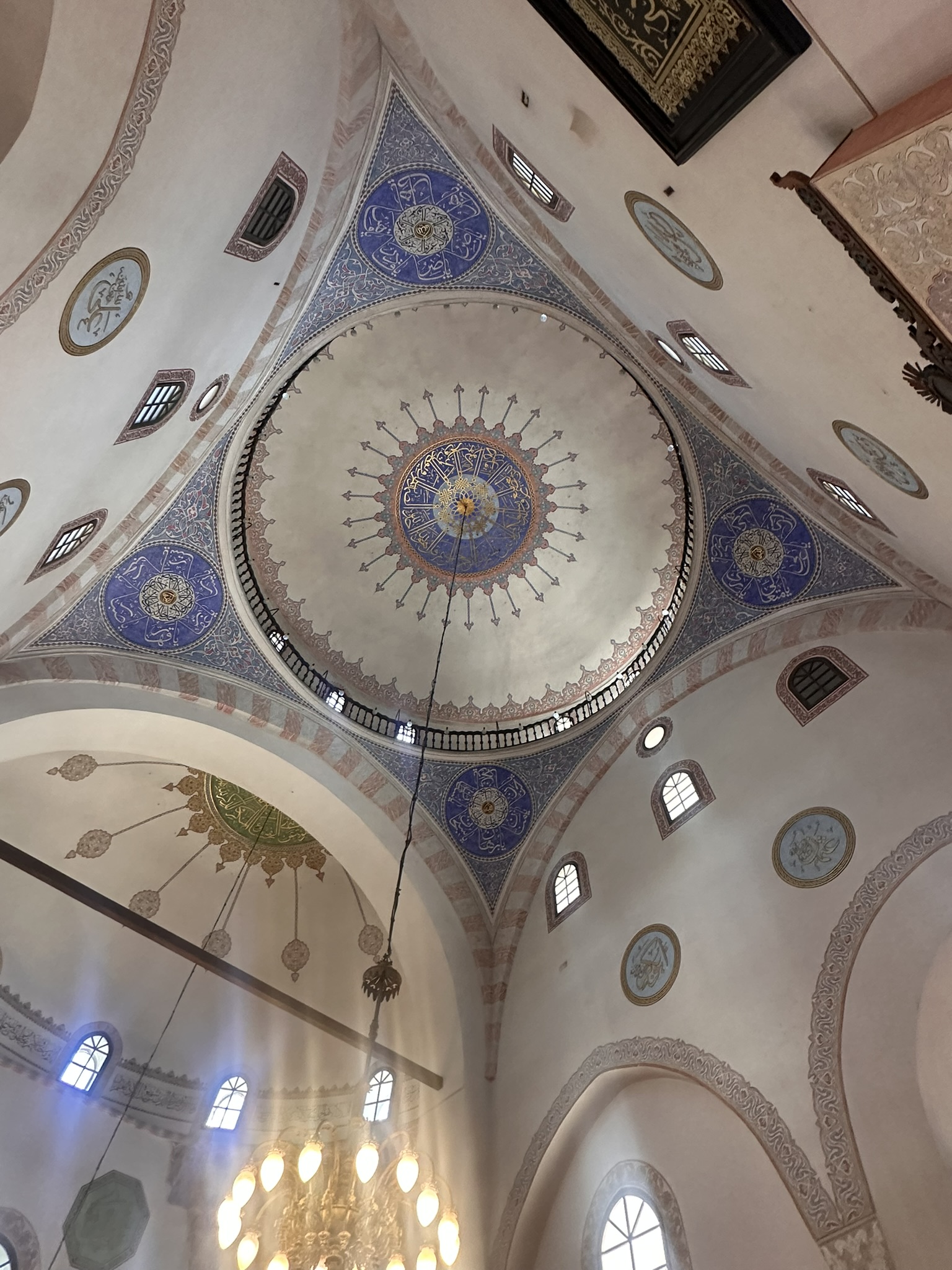
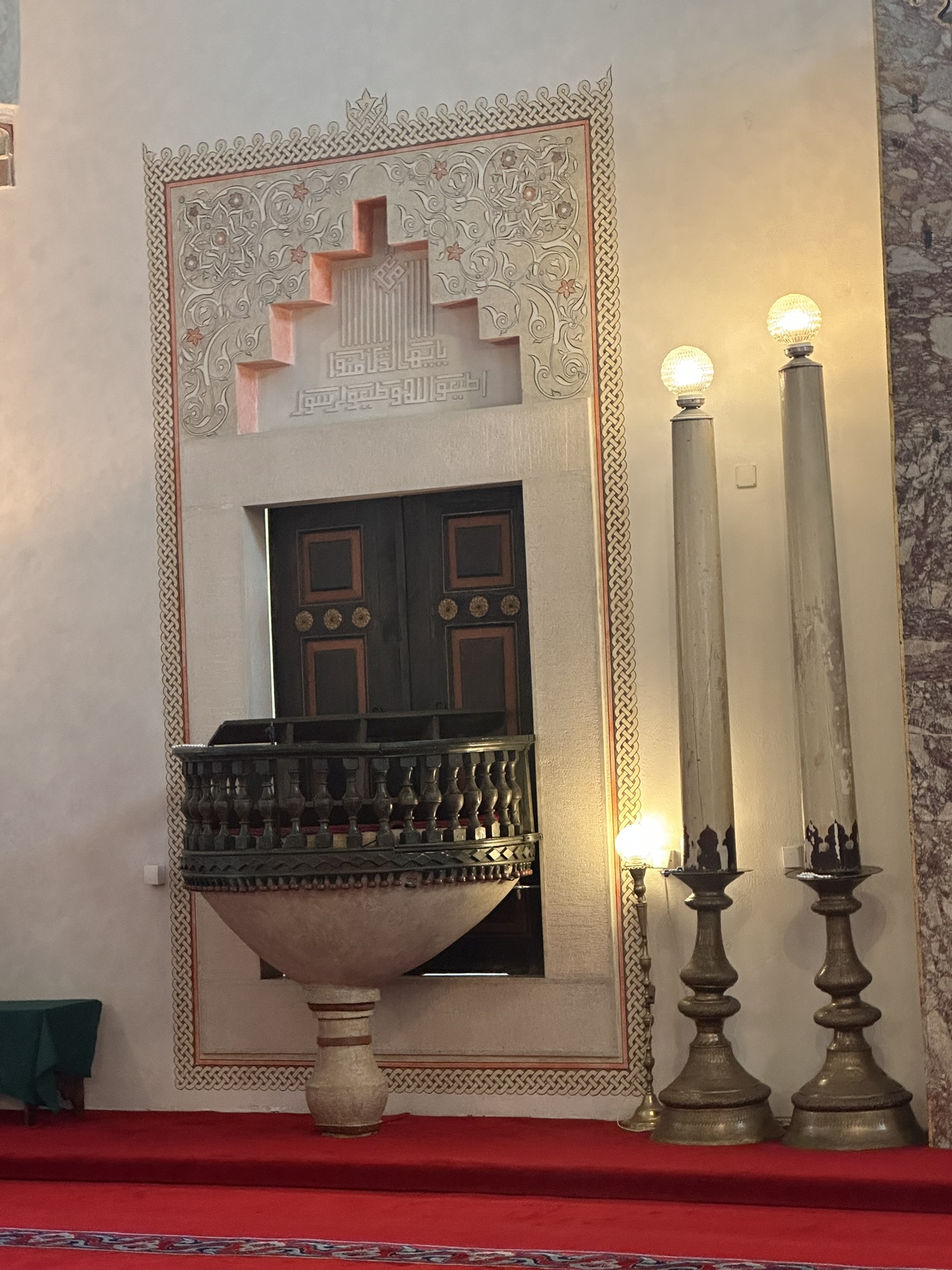
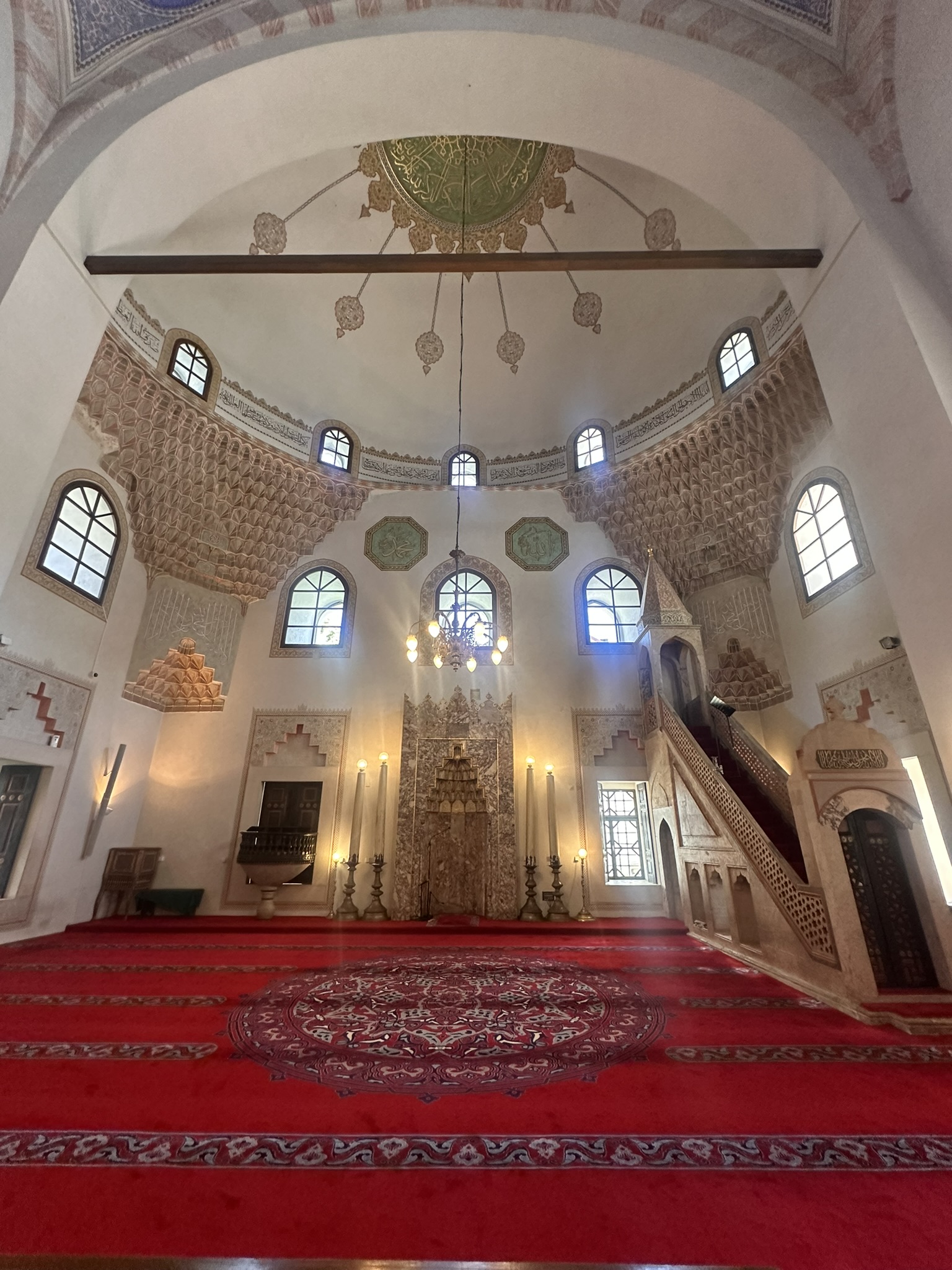
Huzrev-Beg bey, a prominent figure in the Ottoman Empire, held the position of governor (sanjak-bey) of the Sanjak of Bosnia and made significant contributions to the cultural and commercial advancements in the city. His influence extended to the construction of mosques, schools, markets, administrative facilities, and public baths, shaping the early development of the region. One of his enduring legacies is the Gazi Husrev-beg Mosque, an architectural marvel completed in the 16th century, characterized by exquisite Ottoman design. Even today, this mosque stands as one of the largest in Bosnia and Herzegovina.
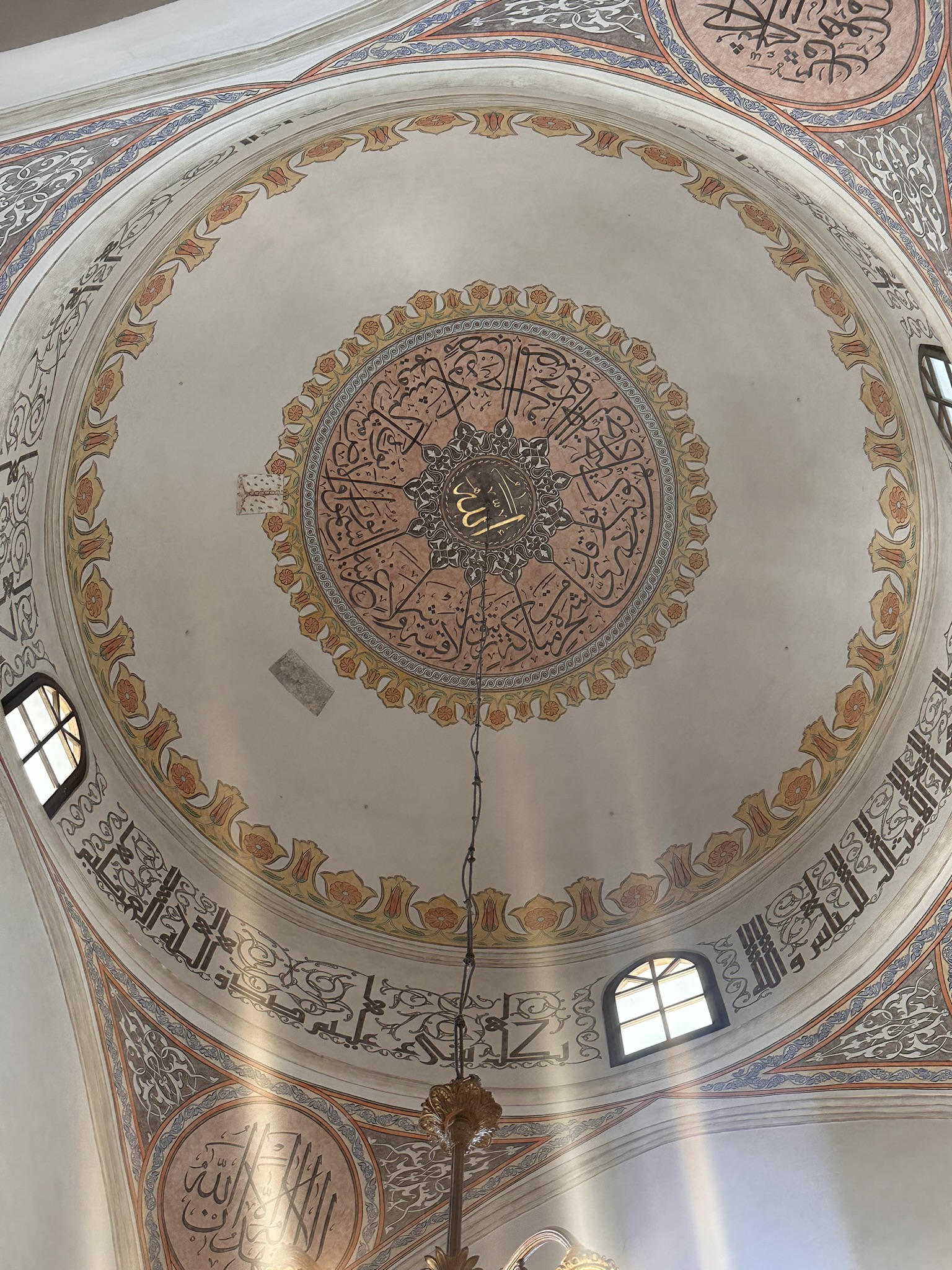
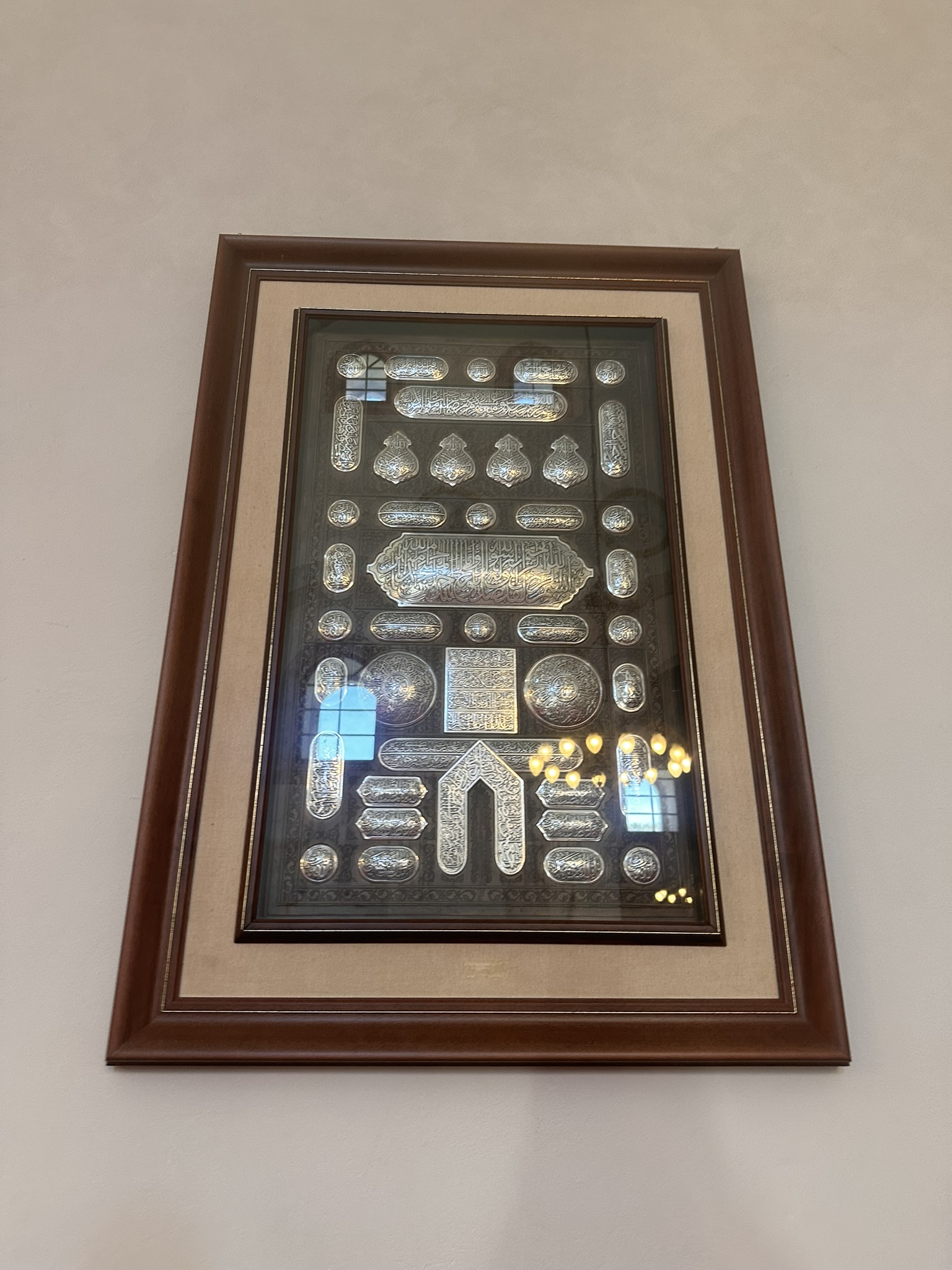
The Gazi Husrev-beg Mosque has witnessed remarkable historical milestones, including being the first mosque in the world to be electrified in 1898. The interior of the mosque is adorned with intricate wooden panels on the dome and adorned with captivating decorative paintings, offering a glimpse into its rich artistic heritage. Despite enduring significant damage during the siege of Sarajevo, extensive reconstruction efforts have preserved its original style, albeit altered from its former grandeur. It remains an enduring symbol of cultural and architectural significance.
This is an active mosque and visitors are not allowed during prayer times. The exterior of the mosque features several tombs, including that of Gazi Husrev Beg himself, along with the resting places of other influential early residents of the city. Furthermore, the adjacent decorative garden and school complex (madrassa) offer additional insights into the historical significance of the area. The madrassa houses a small museum that sheds light on Huzrev-Beg’s life and his pivotal role in the city’s development, providing visitors with a deeper understanding of this remarkable historical figure and the era in which he lived.
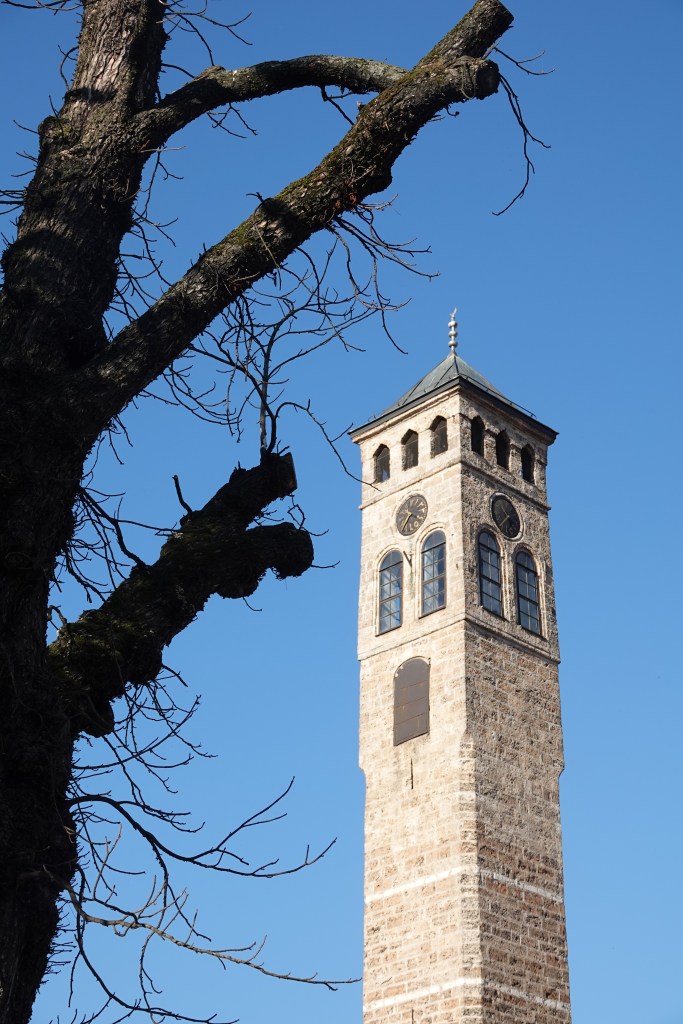
Do not forget to check Sahat kula right next to the Hazi beg mosque. To know more about this clock tower, check out this blog post
Latin Bridge and World war I
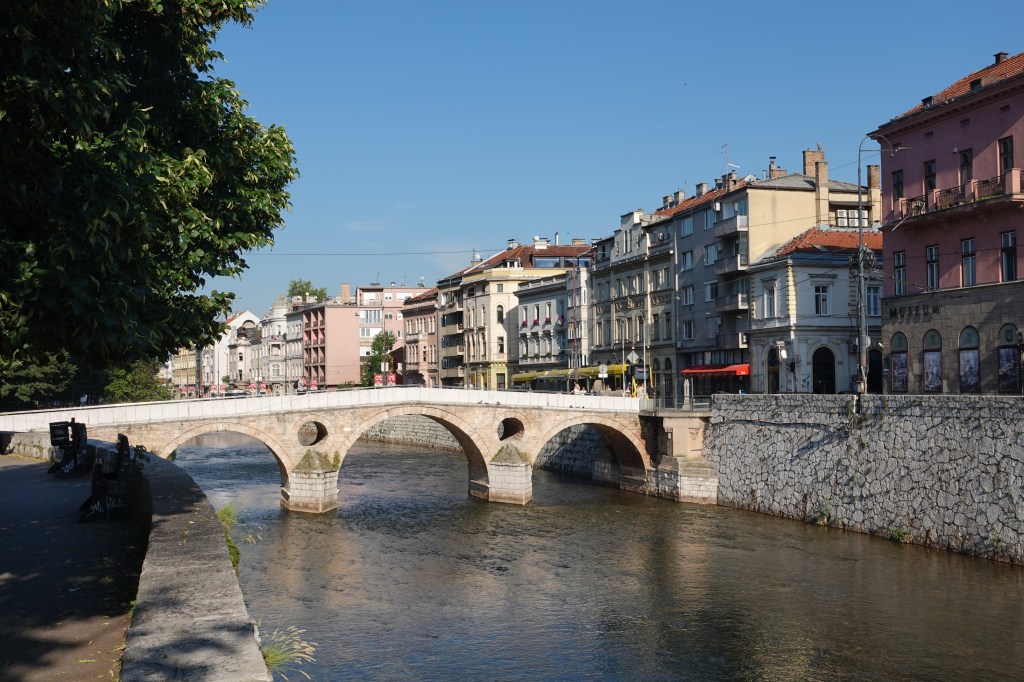
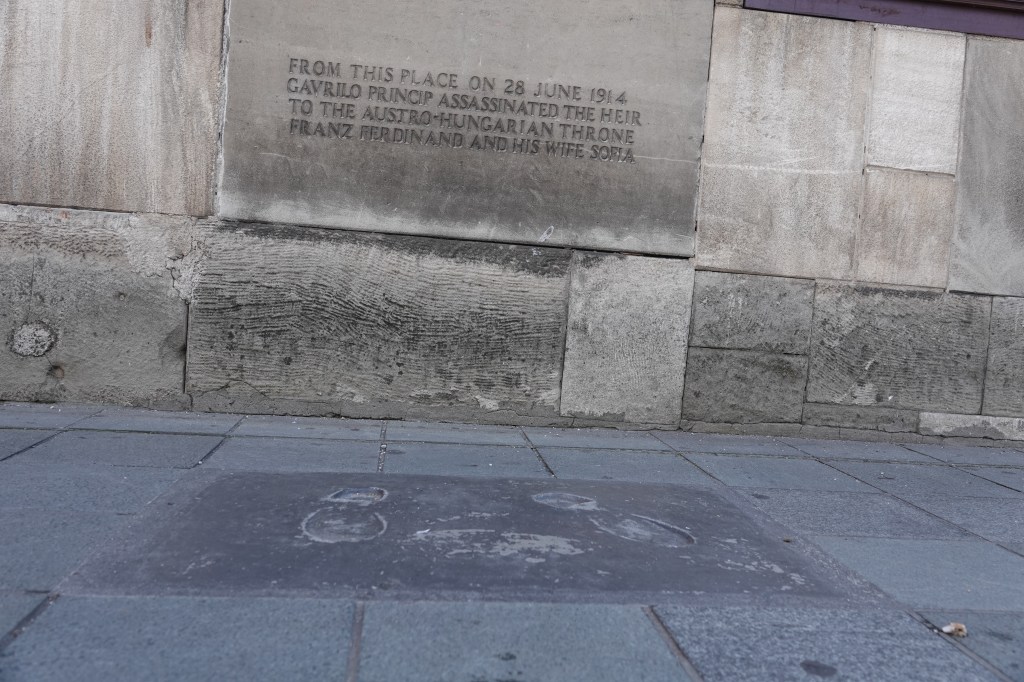
The Latin Bridge is not only a beautiful Ottoman-era bridge over the Miljacka River in Sarajevo, but also a place of immense historical significance. It was at this very location that the Archduke Franz Ferdinand of Austria and his wife, Sophie, were tragically assassinated on June 28, 1914. This event, carried out by Gavrilo Princip, a Bosnian Serb nationalist, is widely recognized as the catalyst that triggered the outbreak of World War I, leading to a chain of events that would change the course of history.
Originally built in the 16th century, the bridge got its name “Latin Bridge” because it connected the right bank of the Miljacka with the Catholic quarter of the city, known as “Latinluk”. During the Yugoslav era, it was renamed “Princip’s Bridge” in honor of Gavrilo Princip. Standing on the Latin Bridge today, one can’t help but feel the weight of the events that transpired here and the impact they had on the world. It serves as a somber reminder of the power of historical events and the influence they continue to have on our lives.
East meets West sign
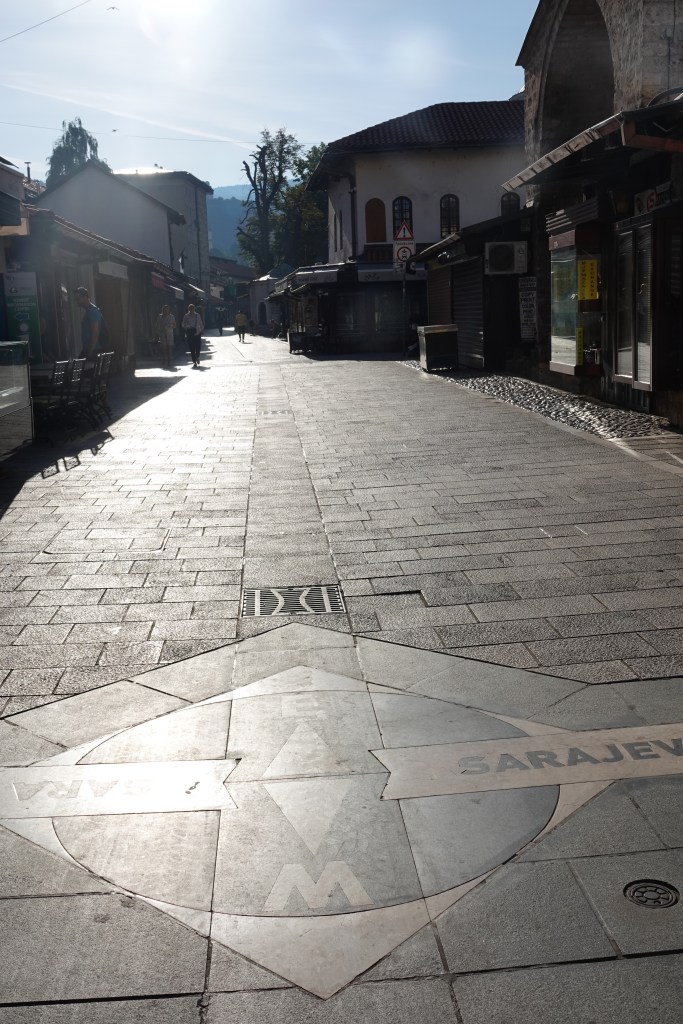
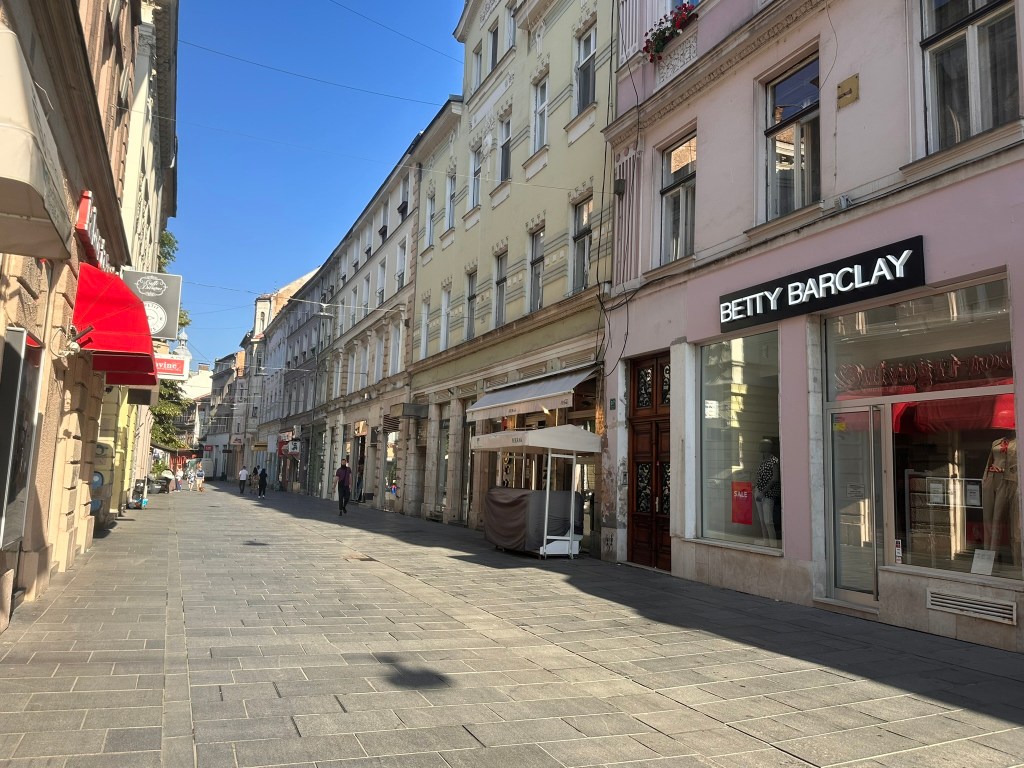
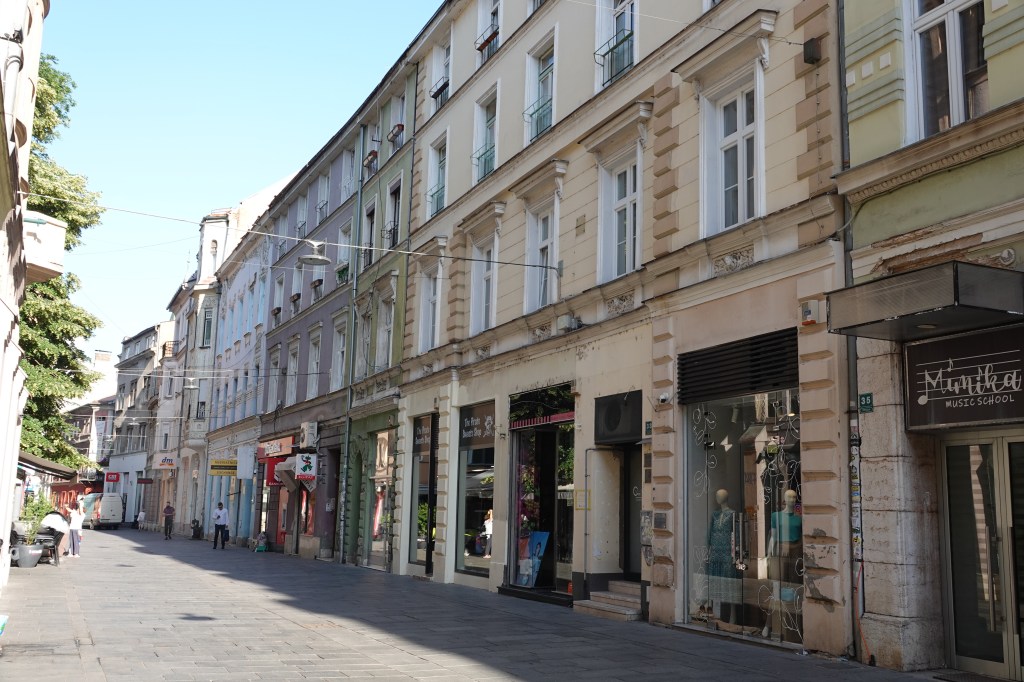
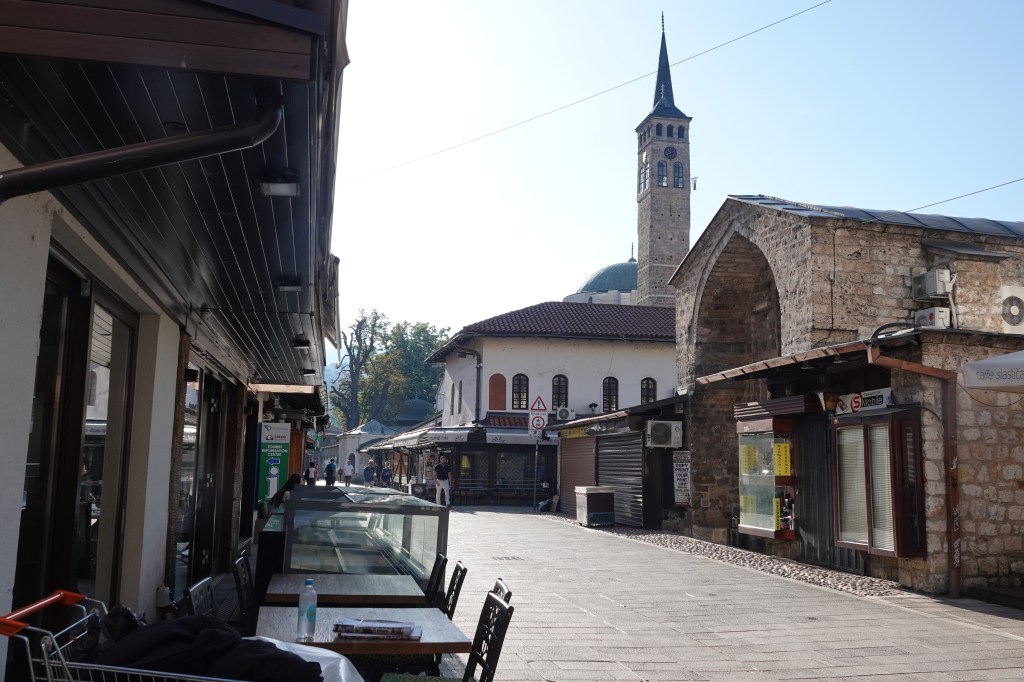
In Sarajevo, the “East Meets West” sign is located on the main pedestrian street, Ferhadija. This spot serves not only as a literal marker but also as a symbolic representation of the diverse cultural tapestry that characterizes this remarkable city. Here, you can visually experience the profound cultural transition between the eastern influences of the Ottoman Empire and the western styles introduced during the Austro-Hungarian period.
When you stand at this spot and look westward, you’ll encounter a bustling scene filled with modern, western-style architecture and contemporary shops. This area reflects a lifestyle that embraces modernity and is characterized by sleek storefronts, cafes, and vibrant urban life.
Turning to face east, you’ll be greeted by the enchanting sights of the old Ottoman bazaar, a place steeped in history and tradition. This section of the city showcases its mosques with towering minarets including Gazi Bev Mosque, ornamental architecture, and the captivating sights and sounds of bustling oriental shops serving coffee and selling copper stuff. This vibrant marketplace bursts with life, evoking the rich history and culture that have coexisted and evolved through centuries in this extraordinary city.
Mount Trebevic and Bobsled track
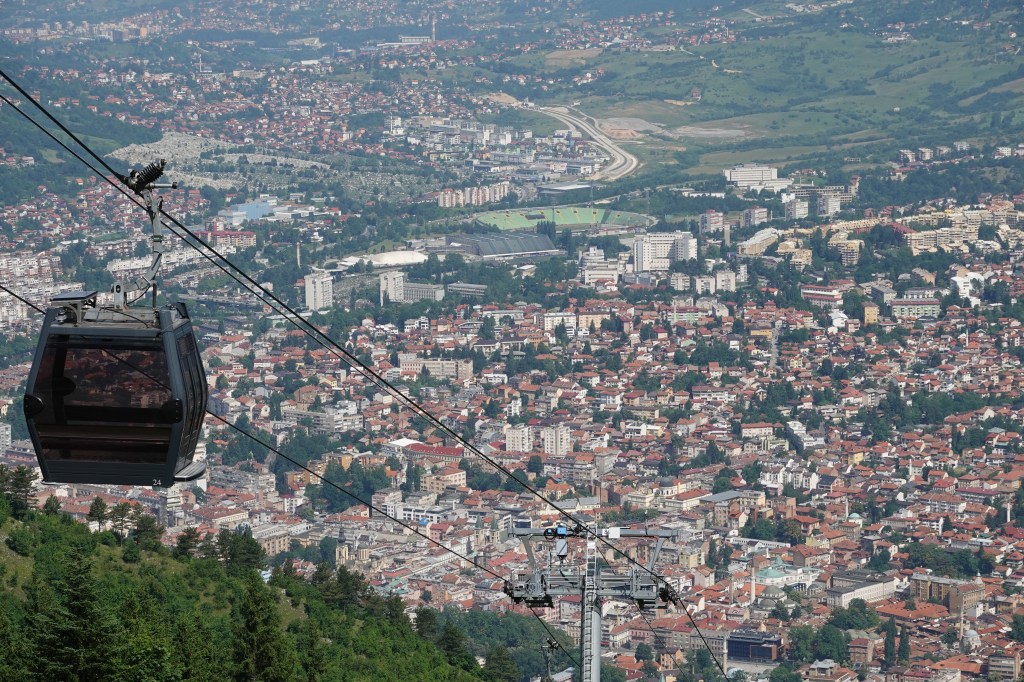
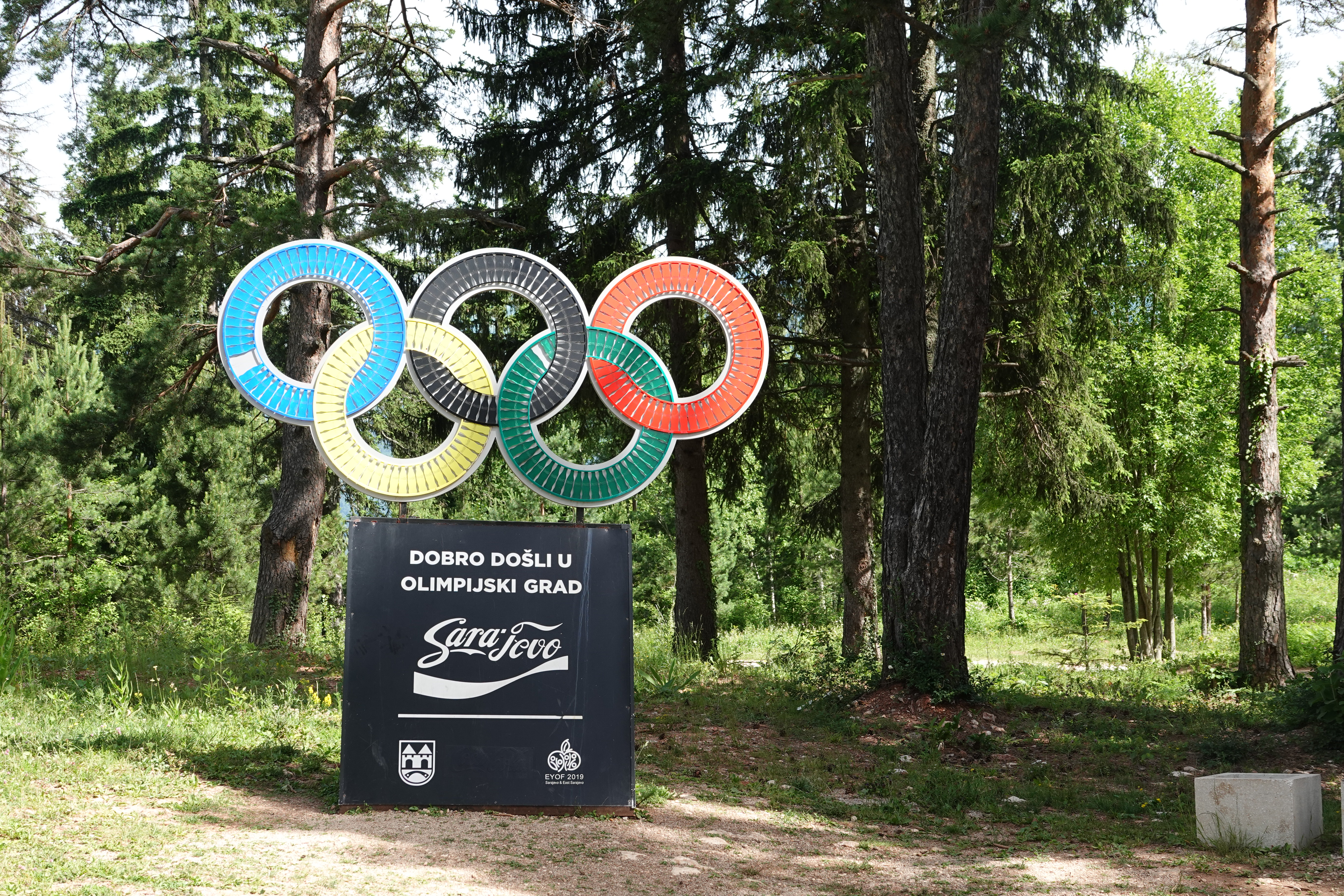
Mount Trebević, situated near Sarajevo in central Bosnia and Herzegovina, rises to 1,627 meters and is part of the Dinaric Alps. It is celebrated for its natural beauty and outdoor activities such as hiking, climbing, mountain biking, and skiing. The mountain was significant during the 1984 Winter Olympics, hosting events like bobsledding, and is a protected area that conserves its rich biodiversity. A key attraction is the Trebević Cable Car, which offers spectacular views of Sarajevo. Additionally, the area features notable quartz and calcite crystal deposits, some displayed in the National Museum of Bosnia and Herzegovina.
Sarajevo Cable Car
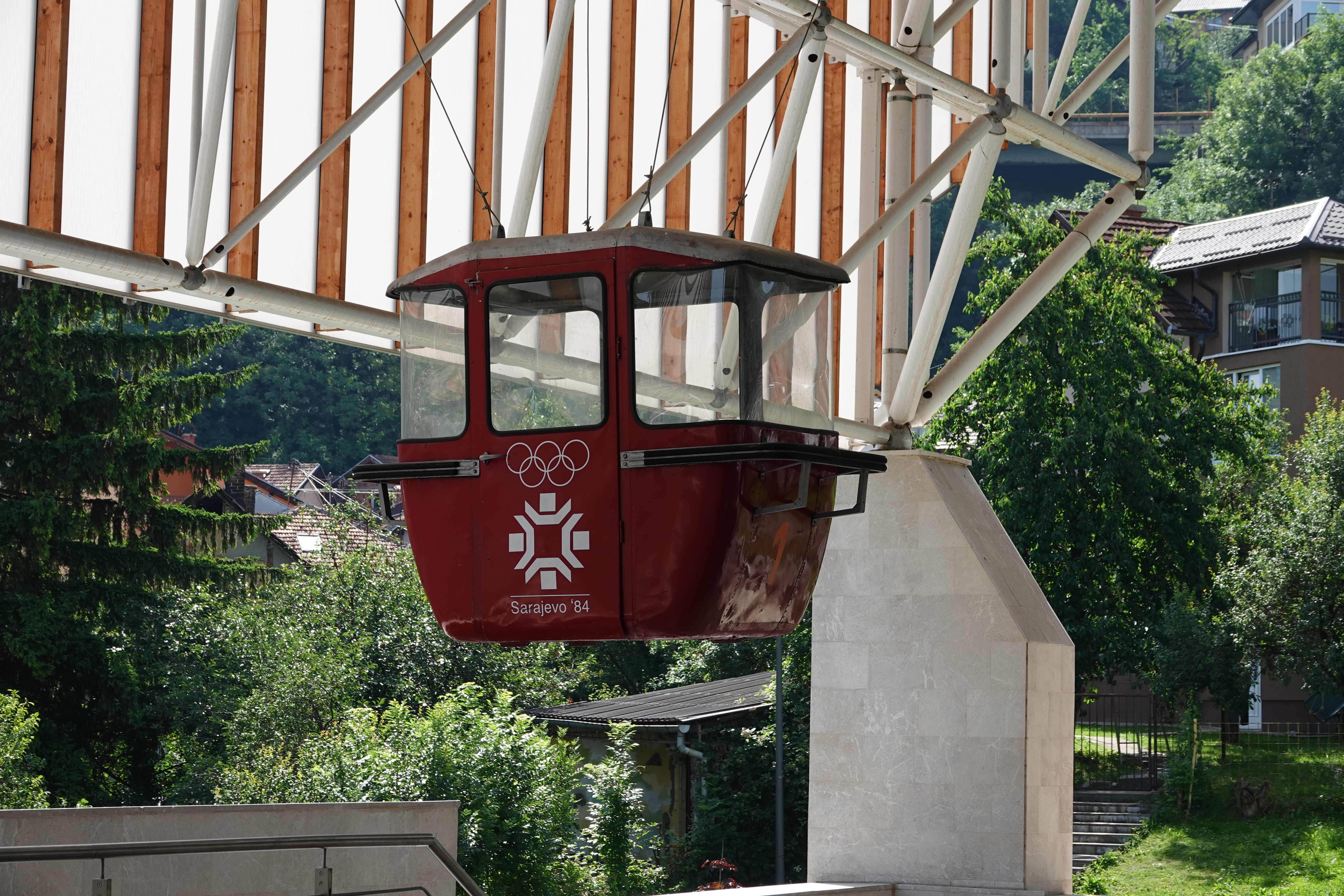
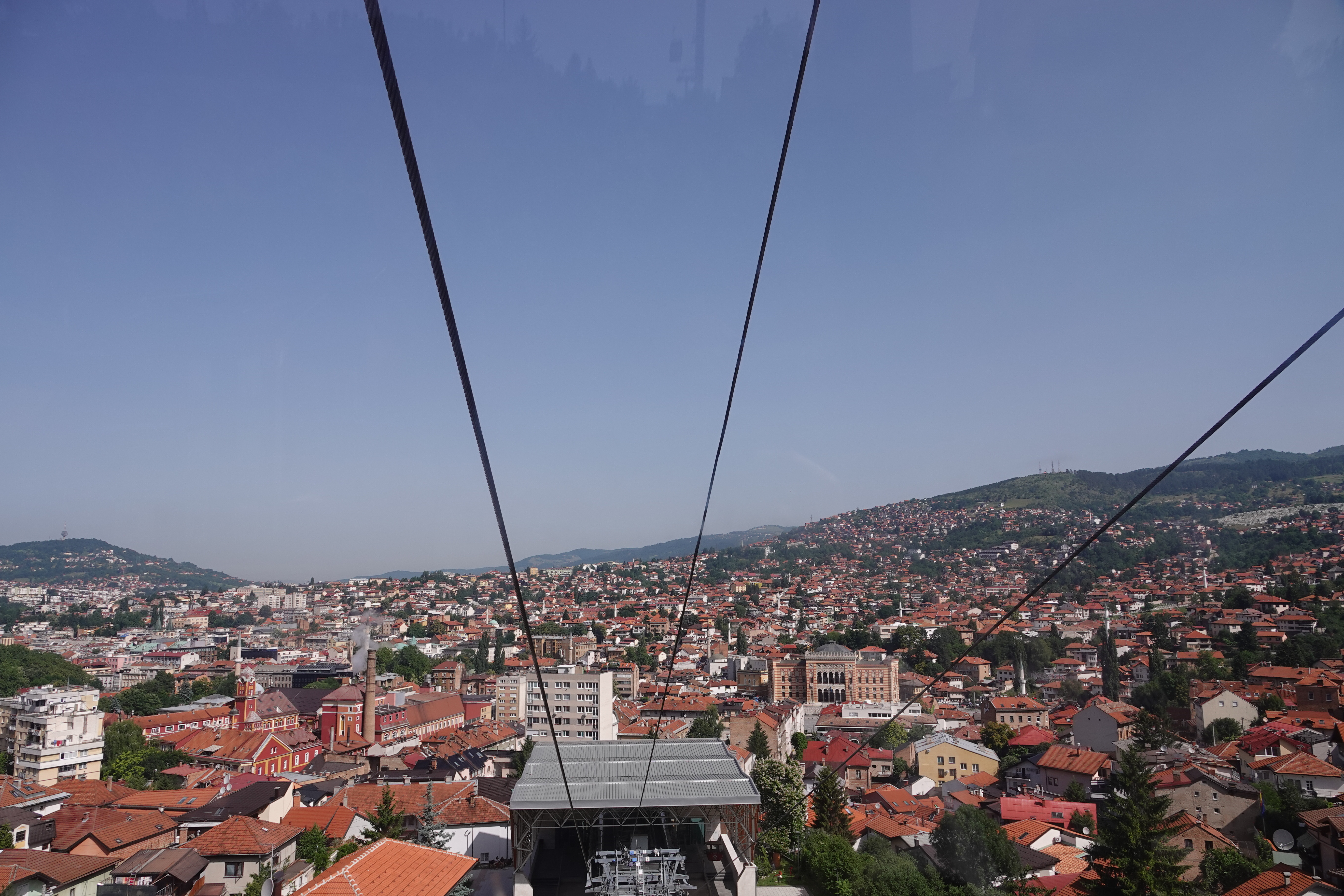
The Sarajevo cable car, connecting the Old Town with Trebević mountain, opened on May 3, 1959, initially serving 400 passengers per hour. It fell into disrepair over the years and was destroyed during the Bosnian War (1992-1995). After reconstruction in 2017-2018, it reopened on April 6, 2018, featuring 33 modern gondolas that transport 1,200 passengers per hour, with a journey time of about 9 minutes. The views from the gondola are spectacular and we took the cable car up the mountain but walked down using the bob sled track.
BobSled track
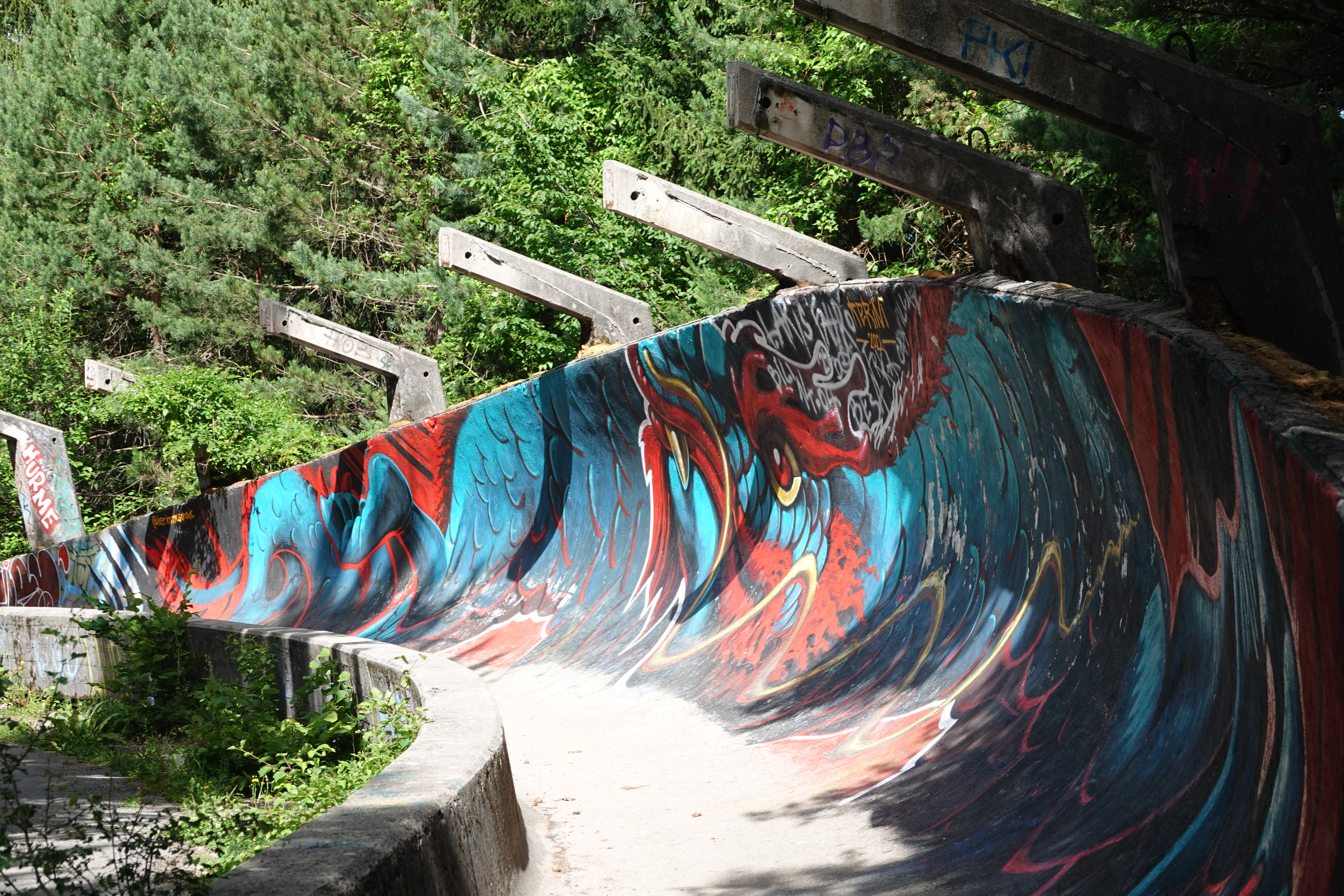
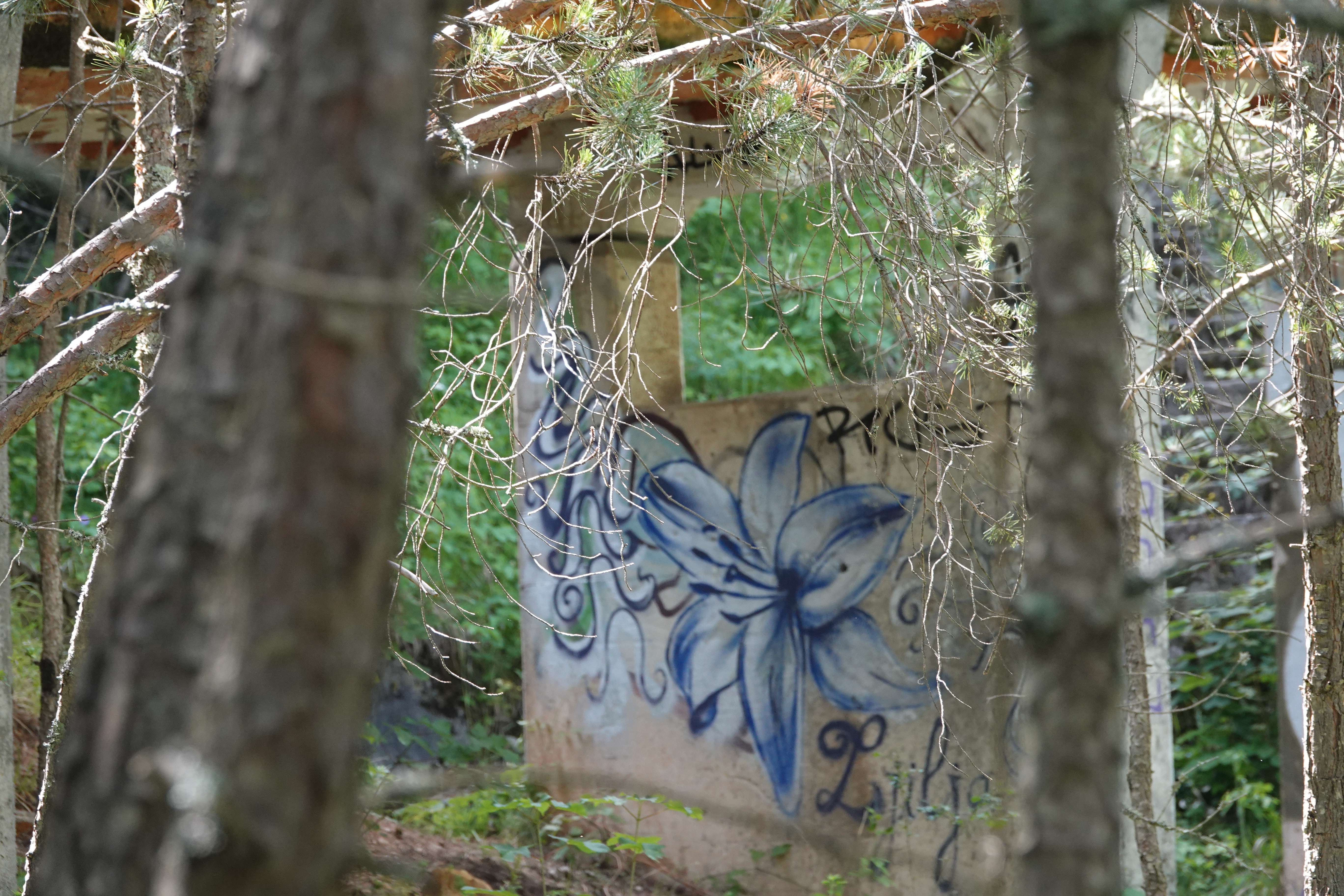
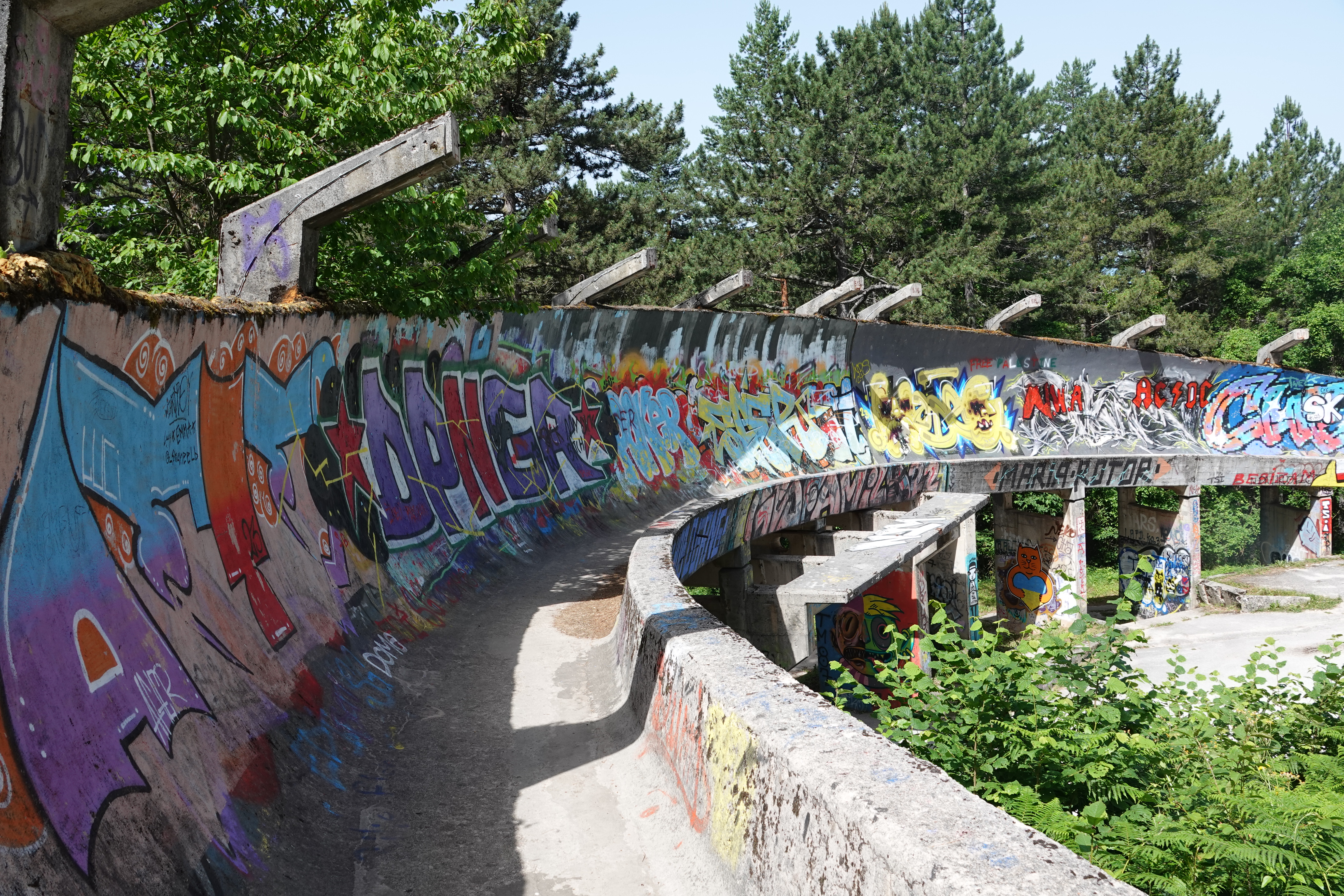
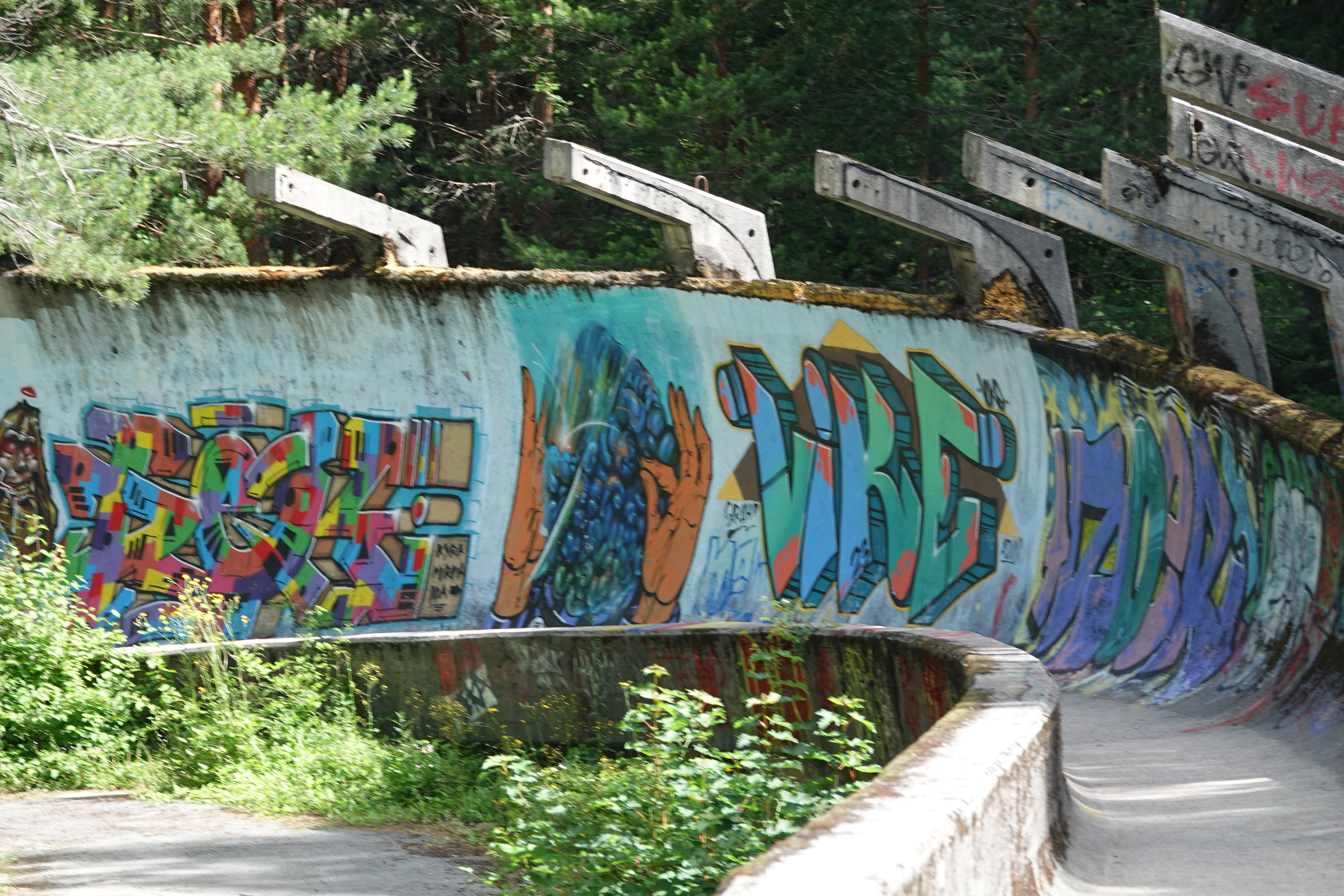
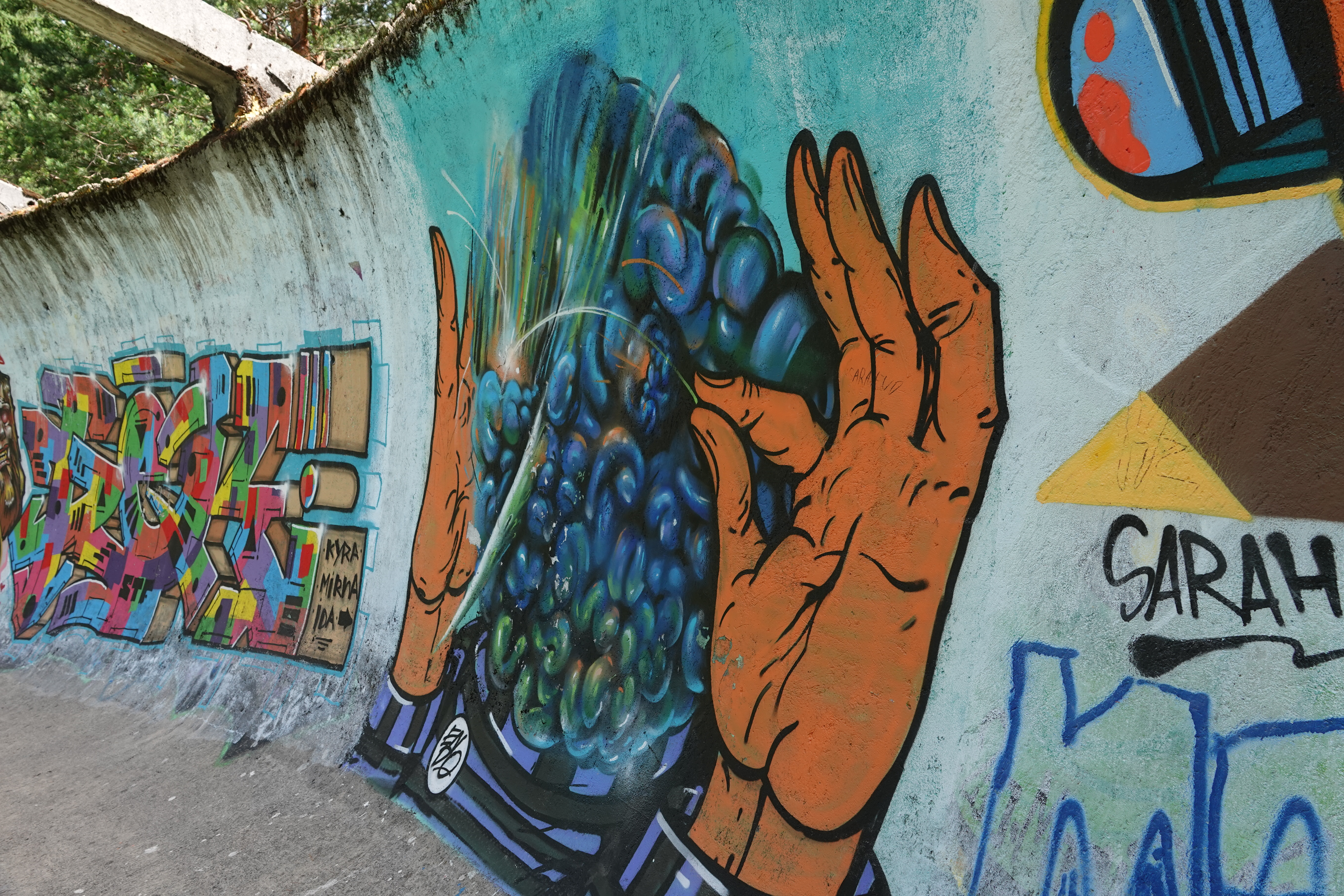
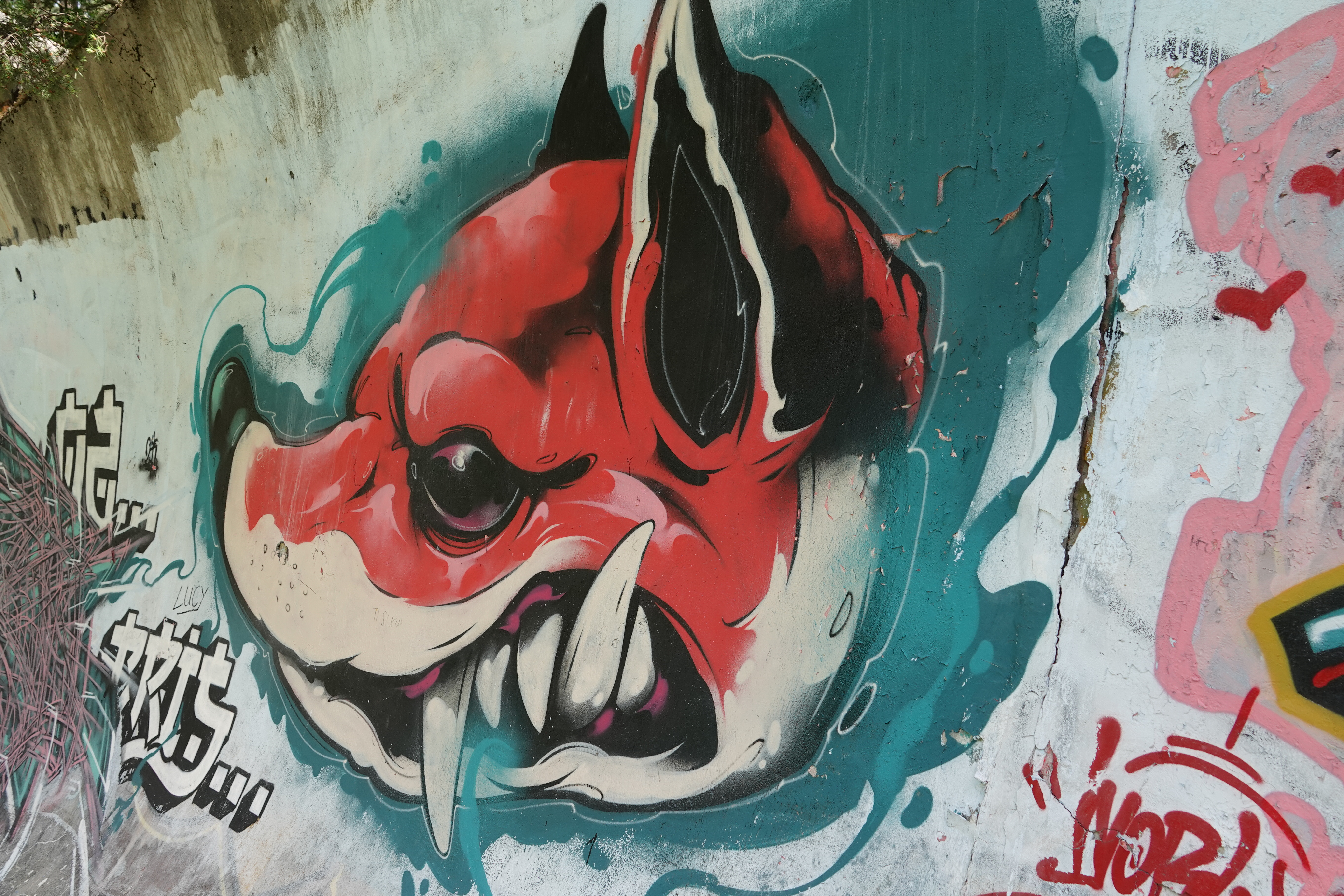
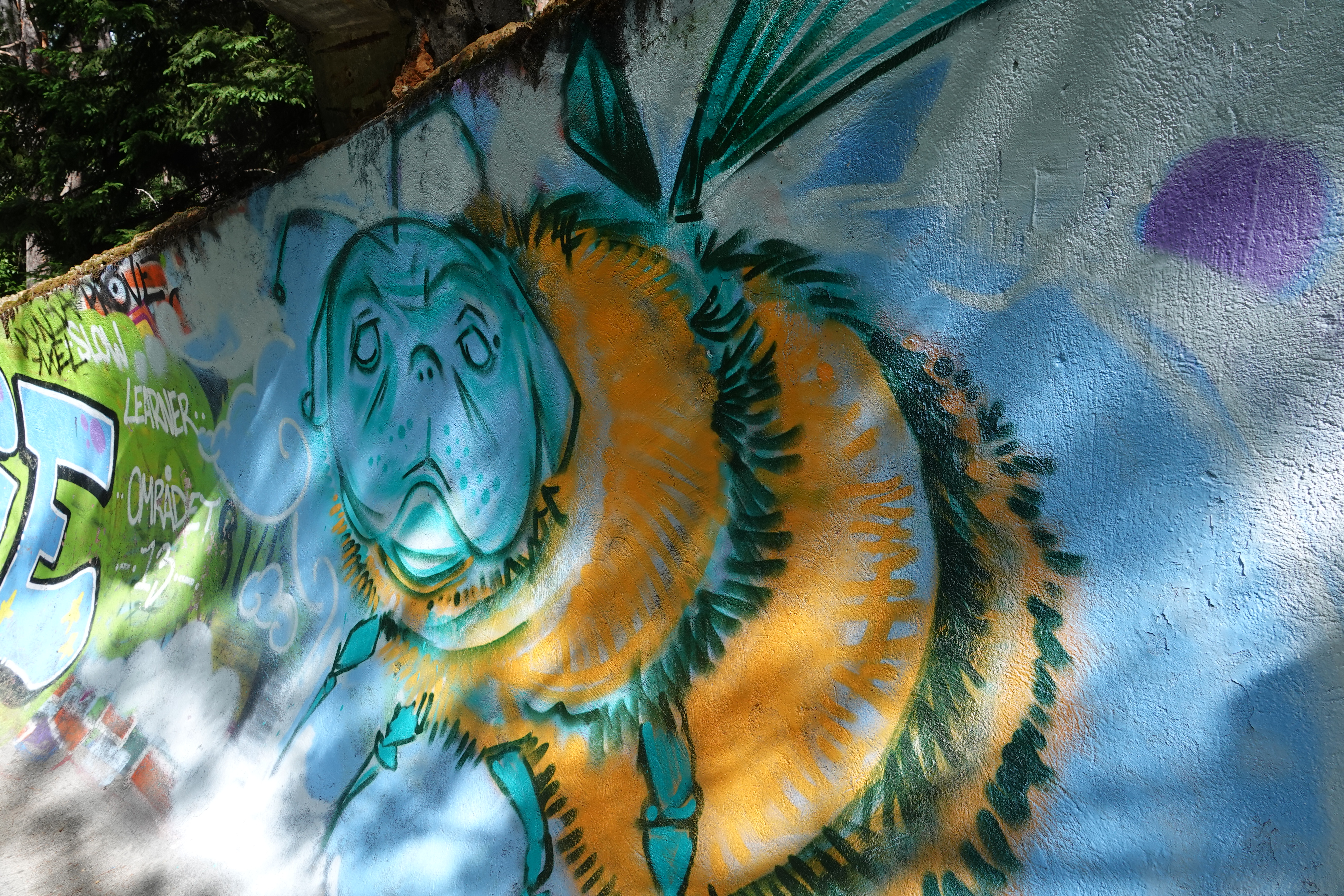
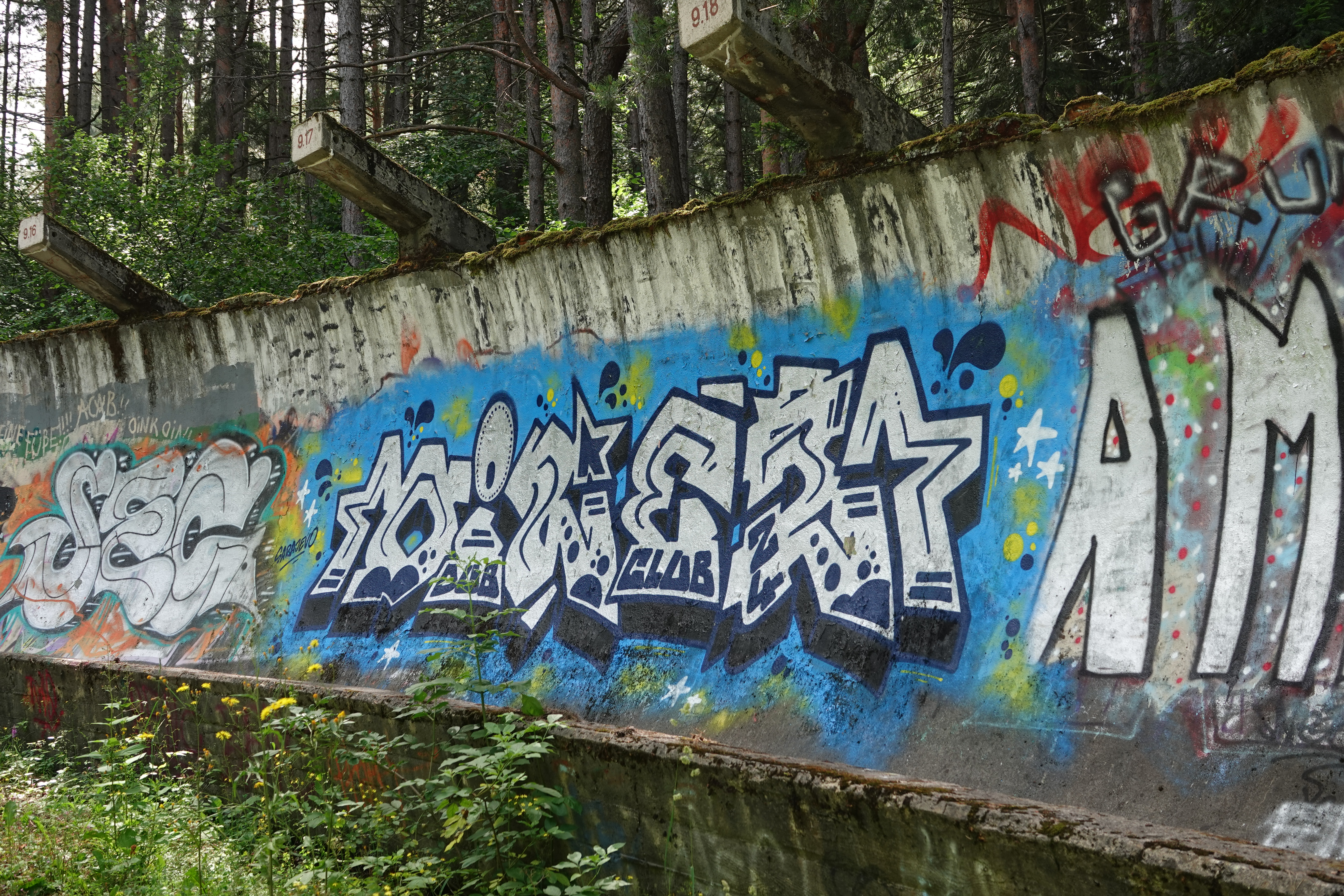
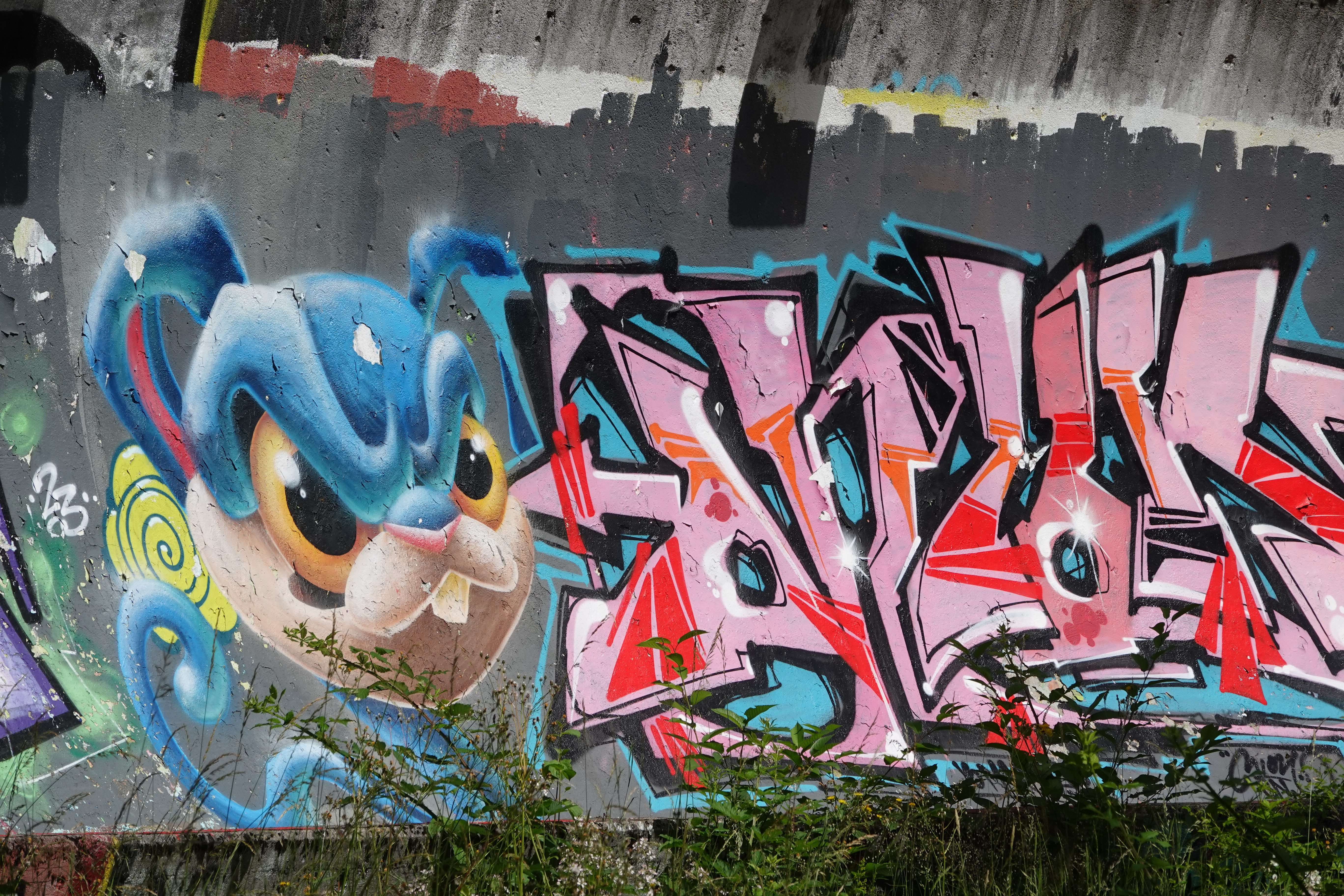
Trebević hosted bobsleigh and luge events during the XIV Winter Olympic Games in Sarajevo in 1984. After being awarded the Olympics in 1977, the construction of a bobsleigh and luge track began in 1981 and was completed in 1982 at a cost of 5.5 million Yugoslav dinars. The events attracted significant crowds, with 20,000 spectators at the luge and 30,000 at the bobsled competitions. Following the Olympics, the track was used for World Cup events until the outbreak of the Yugoslav wars in 1991, which severely damaged the track as it was repurposed for military use. Today, it has become a canvas for graffiti artists and it is fun to walk down this track with amazing views of Sarajevo and very interesting graffities and it took us about 90 min walk down.
Sunset at Yellow fortress
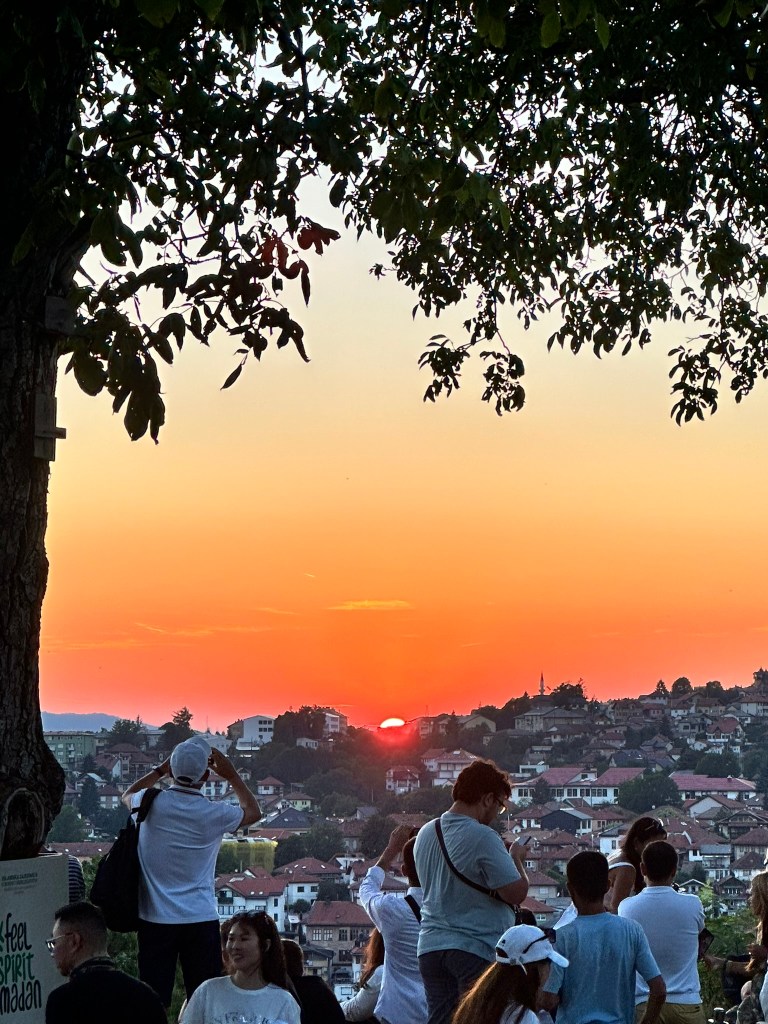
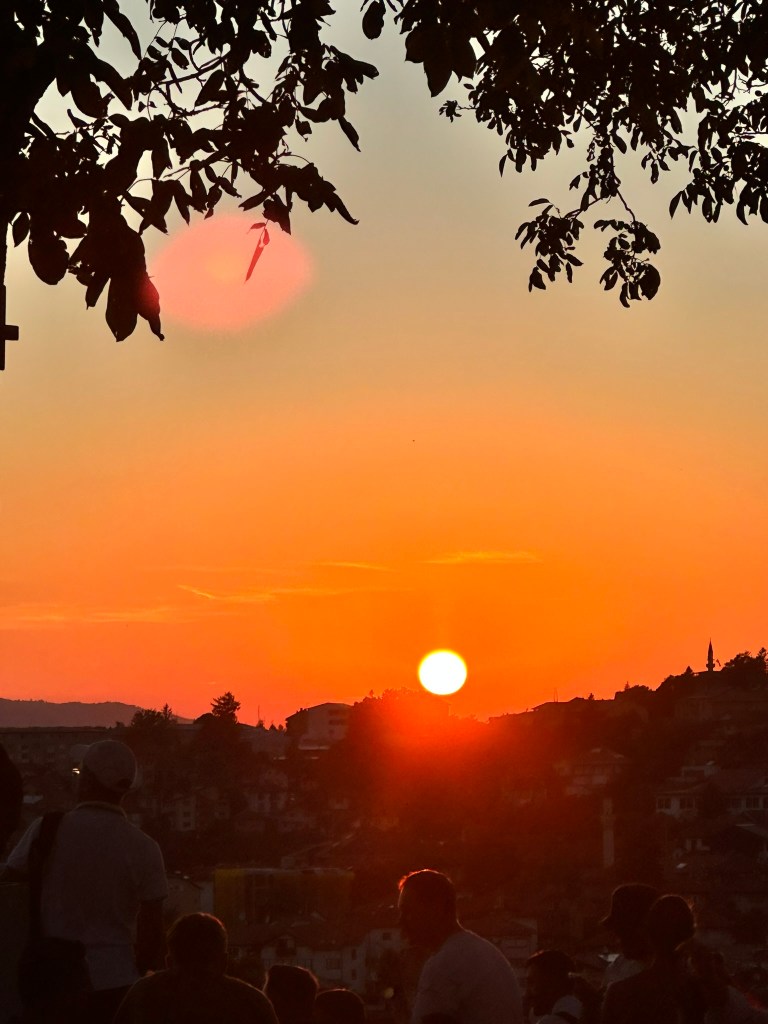
Yellow Fortress offers stunning views of Sarajevo and is a perfect spot to watch the sunset. Located on the Jekovac cliff, also known as Jekovačka tabija, it is part of the old town’s defensive ramparts. The climb to the fort provides a unique experience with panoramic views and sounds. Built in 1809 from rough stone, it has seven exterior faces that are 10 meters high, with the north side reaching 27.5 meters. There are stairs and a building for soldiers on the north side, while the southwest side features a Muslim cemetery.
Old Bazar and copper Street
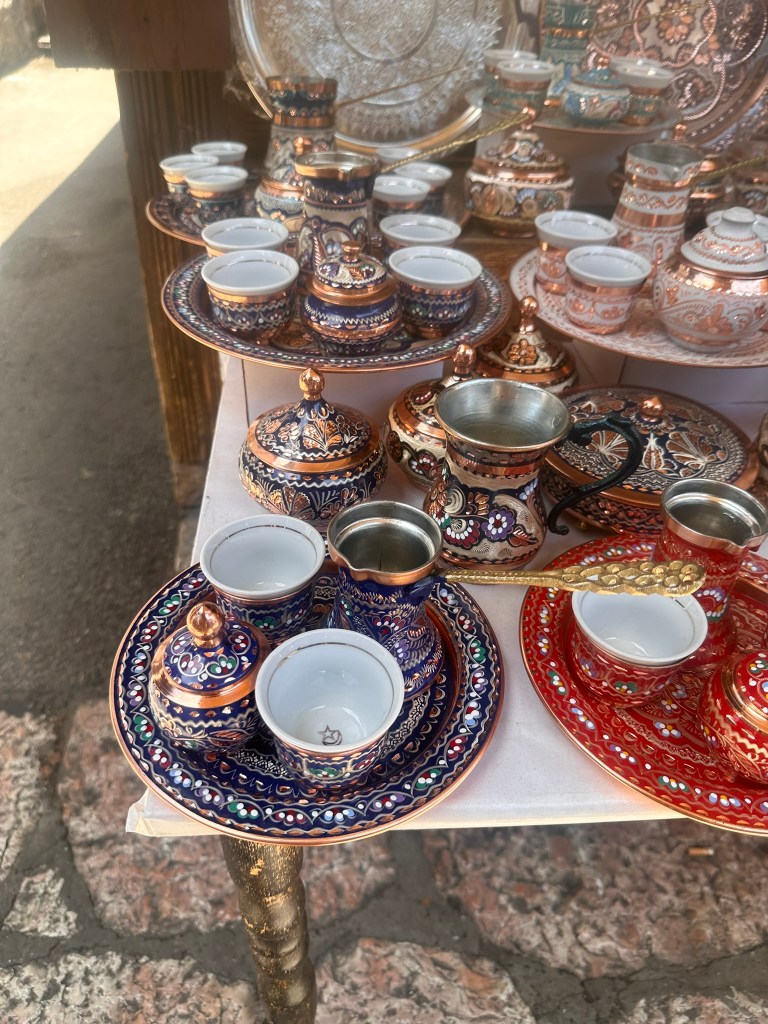
Sarajevo features its own Coppersmith Street in the old bazaar, known as Kazandžiluk, which is one of the oldest streets in Baščaršija. Here, visitors can find traditional handmade copper items such as coffee pots, tea sets, grinders, and lamps, as well as antiques from the past. A section of the shop serves as a museum dedicated to Ottoman Sarajevo. Kazandžiluk has existed since the 16th century, originally established as a center for crafts and trade.
Tunnel of Hope
From July 1993 to February 1996, the Sarajevo War Tunnel served as the sole connection between besieged Sarajevo and the outside world. It took over six months to construct the 800-meter-long tunnel using basic tools, with light provided by homemade “war candles.” Completed on July 30, 1993, the tunnel restored access to essential resources like phone lines, food, and electricity. After the war, 20 meters of the tunnel were preserved as part of a museum showcasing artifacts from the Siege of Sarajevo, which was the longest siege in modern history.
Skakavac waterfalls and MTB
On day 2 of our stay in Sarajevo, our group decided to split up and some of us went to Mount Trebević and bob sled track while others decided to be more adventurous and did Mountain biking up to Skakavac waterfalls using this tour.
Skakavac waterfalls is located about 12 kilometers northeast of Sarajevo, above the village of Nahorevo and it is one of the tallest in the Balkans, with a height of 98 meters (322 feet). The ride up was tough but beautiful
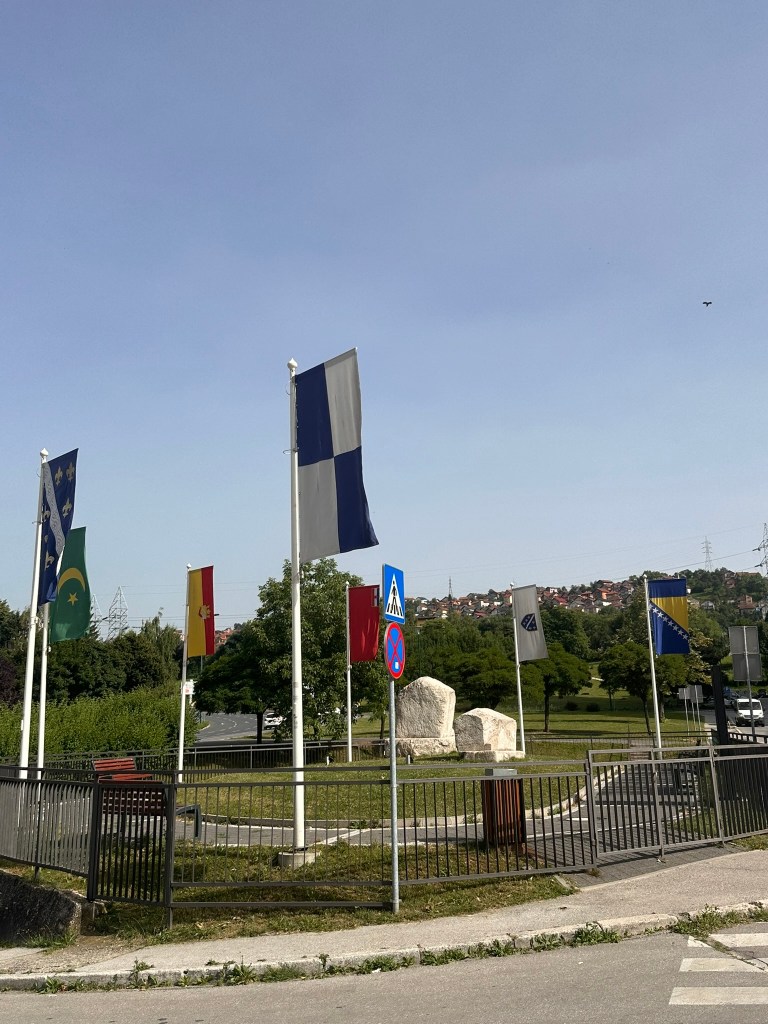
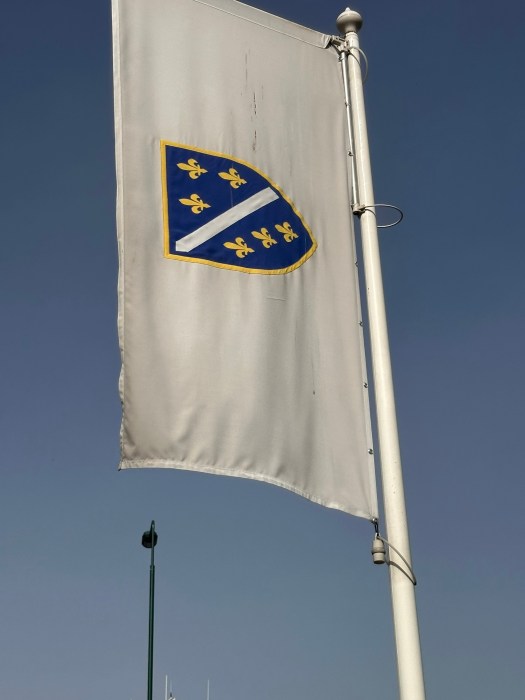
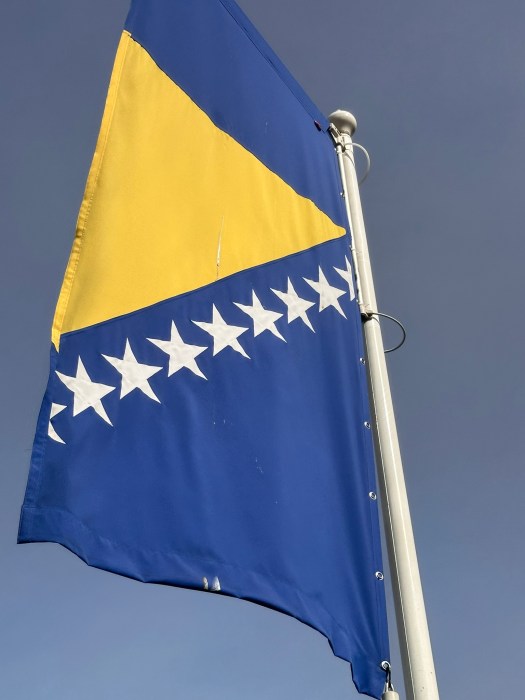
Park Bosanski Stećak i Zastava– Park with 7 flags
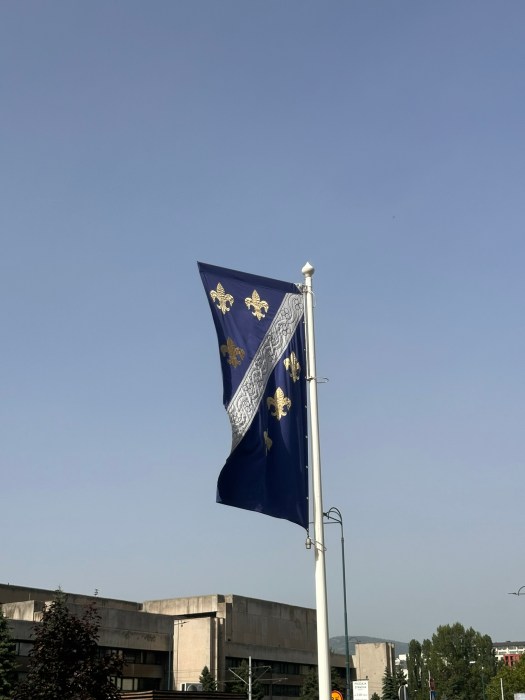
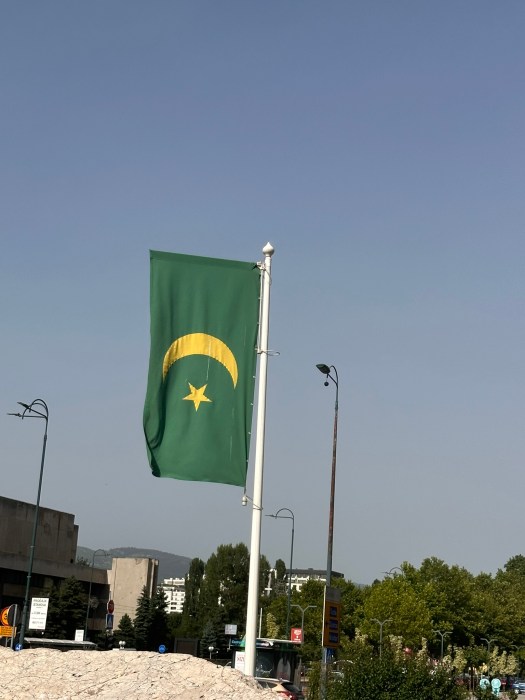
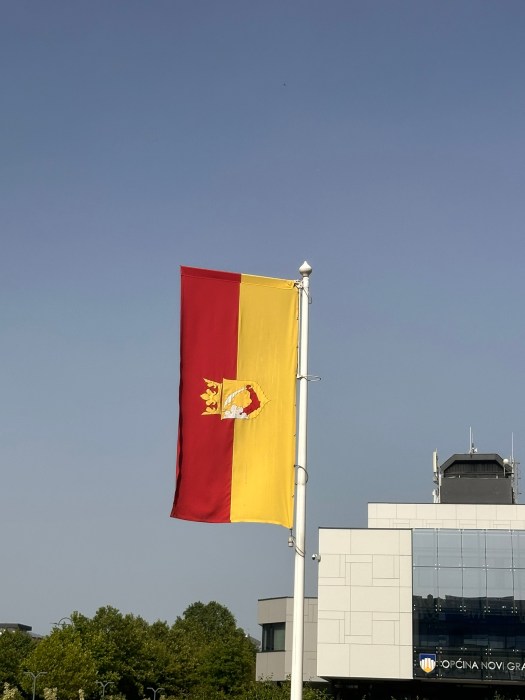
Park Bosanski Stećak i Zastava is a fascinating historical site located at Trg solidarnosti 2 in Sarajevo, Bosnia and Herzegovina. It is not close to the old town of Sarajevo, which provides a serene escape from the bustling tourist areas. We had to take the tram to get to this park, which added an element of adventure to our journey. This park celebrates the rich cultural heritage of the region and features a remarkable collection of medieval tombstones known as stećci, each telling its own story through intricately carved designs and symbols. These tombstones not only reflect the artistic traditions of medieval Bosnia and Herzegovina but also represent the spiritual beliefs and societal values of the time. In addition to the stećci, the park also showcases seven flags that symbolize different historical periods of Bosnia and Herzegovina, each representing the nation’s diverse history and resilience. This combination of historical artifacts and symbols, along with the peaceful surroundings, makes the park a unique place to explore the country’s past while also allowing visitors to reflect on the enduring legacy of its cultural identity.
The 7 flags represent:
Medieval Bosnia – Representing the Kingdom of Bosnia.
Ottoman Empire – Reflecting the period of Ottoman rule.
Austro-Hungarian Empire – Marking the Austro-Hungarian occupation.
Kingdom of Yugoslavia – Symbolizing the interwar period.
Socialist Federal Republic of Yugoslavia – Representing the socialist era.
Republic of Bosnia and Herzegovina – The flag used during the Bosnian War.
Current Flag of Bosnia and Herzegovina – The modern-day flag.
Final thoughts
You can easily spend couple of days in Sarajevo appreciating everything the city has to offer. We spent the first day walking the old town, watching sunset at the yellow fortress and second day at Mount Trebevic, and walking around the rest of Sarajevo. The city also has a great food scene and several restaurants in the old town area serve traditional Bosnian coffee and Burek. The food scene of Bosnia/Sarajevo needs its own blog post. All in all, spending at least 2 days in Sarajevo is worth it.
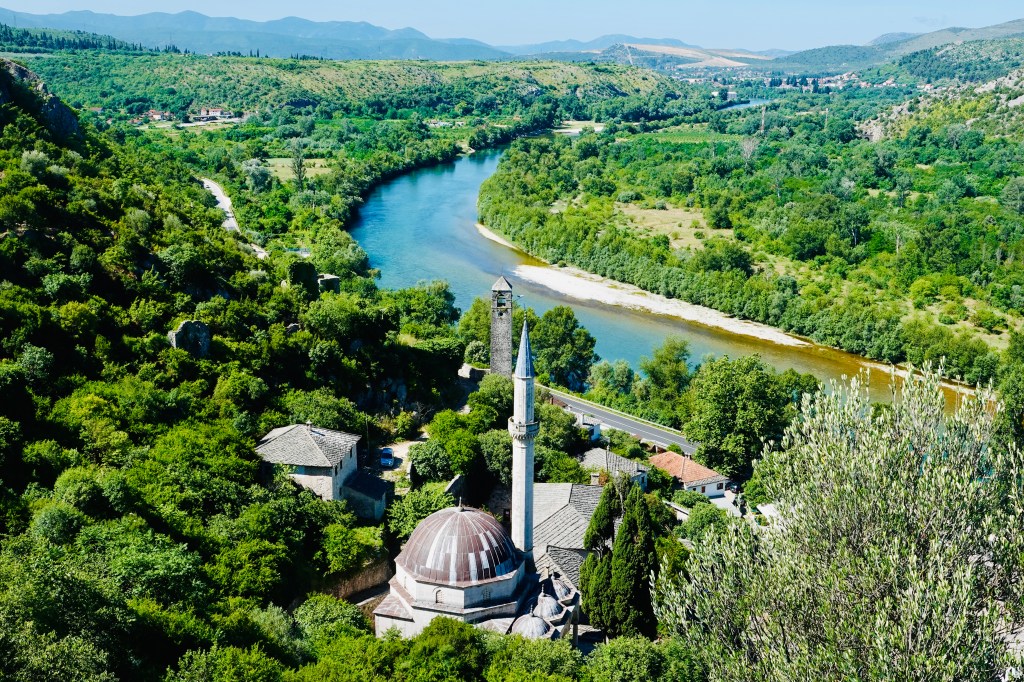
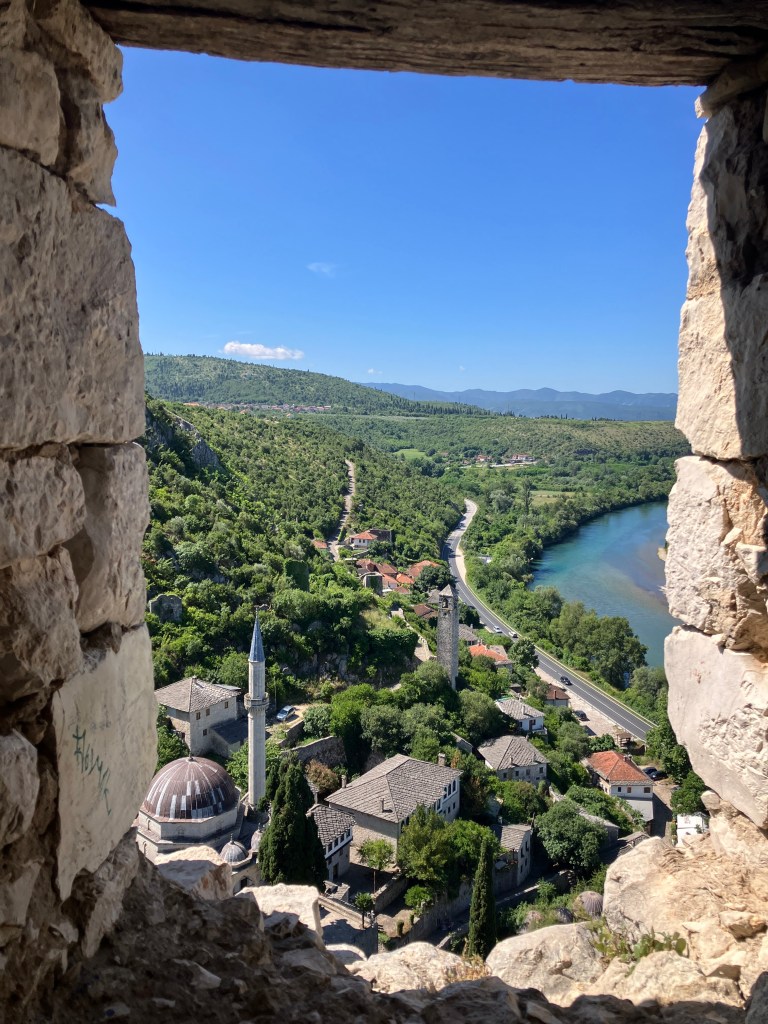
Pocitelj, a small village in the Herzegovina region of Bosnia and Herzegovina, is famous for its well-preserved Ottoman-era architecture and UNESCO World Heritage List status. It’s about 30 kilometers south of Mostar, and the easiest way to reach it is by car via the E73 highway.
Pocitelj has a history of over 600 years and is an important cultural and historical site in Bosnia and Herzegovina. In the 16th century, the village came under Ottoman rule, leading to the construction of buildings such as the Hadzi-Alija mosque, the Sahat-kula (clock tower), and the Gavrankapetanovic-Kuca (Gavrankapetanovic house) which represent typical ottoman styled architecture.
Main landmarks of Pocitelj
Hadzi-Alija Mosque was built in 1563, is considered to be one of the oldest mosques in Bosnia and Herzegovina. The mosque’s distinctive stone walls and minaret are typical of Ottoman-era architecture. We didn’t go inside the mosque but according to our guide, pre-covid, people were allowed inside and hopefully they will open it to public soon.
Sahat-kula (Clock Tower), built in the 17th century, is an iconic landmark in Pocitelj. Standing at over 20 meters tall, this stone tower served as a way for villagers to tell time. Despite the missing clock face, visitors can still climb to the top to enjoy stunning views of the surrounding countryside. Unfortunately, the clock face was melted for its metal during the war time.
Gavrankapetanovic-Kuca is a prime model of Ottoman-era residential architecture from the 17th century. It boasts traditional stone walls, a red-tile roof, and well-preserved interior showcasing original furniture and decor used by the family.
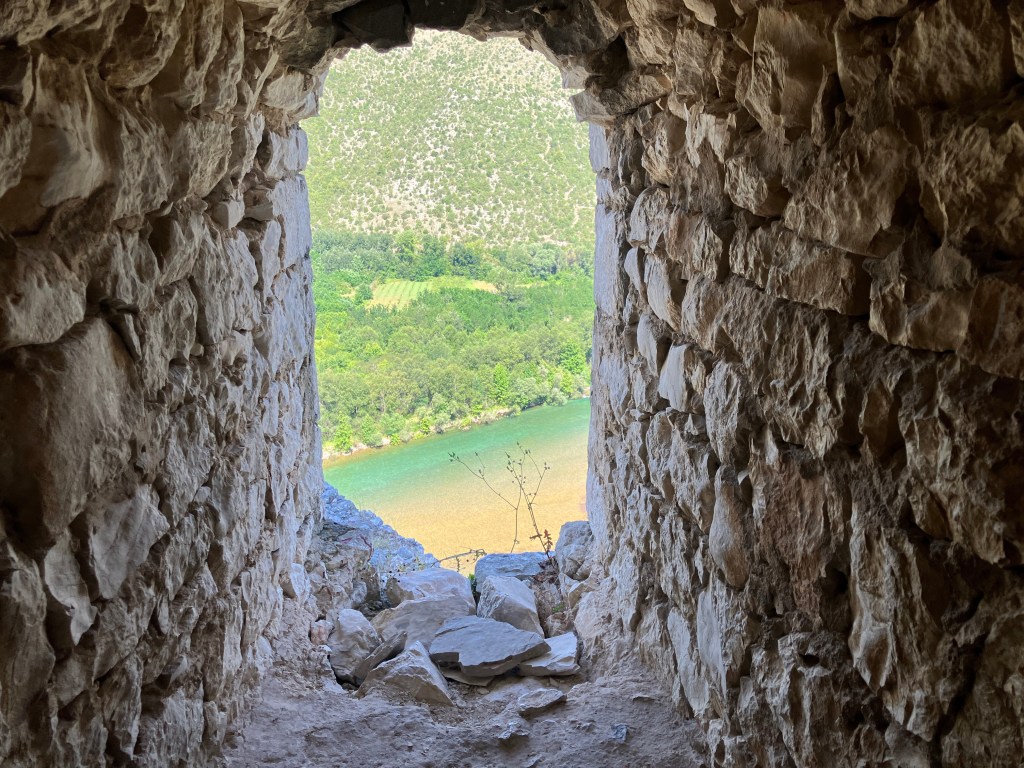
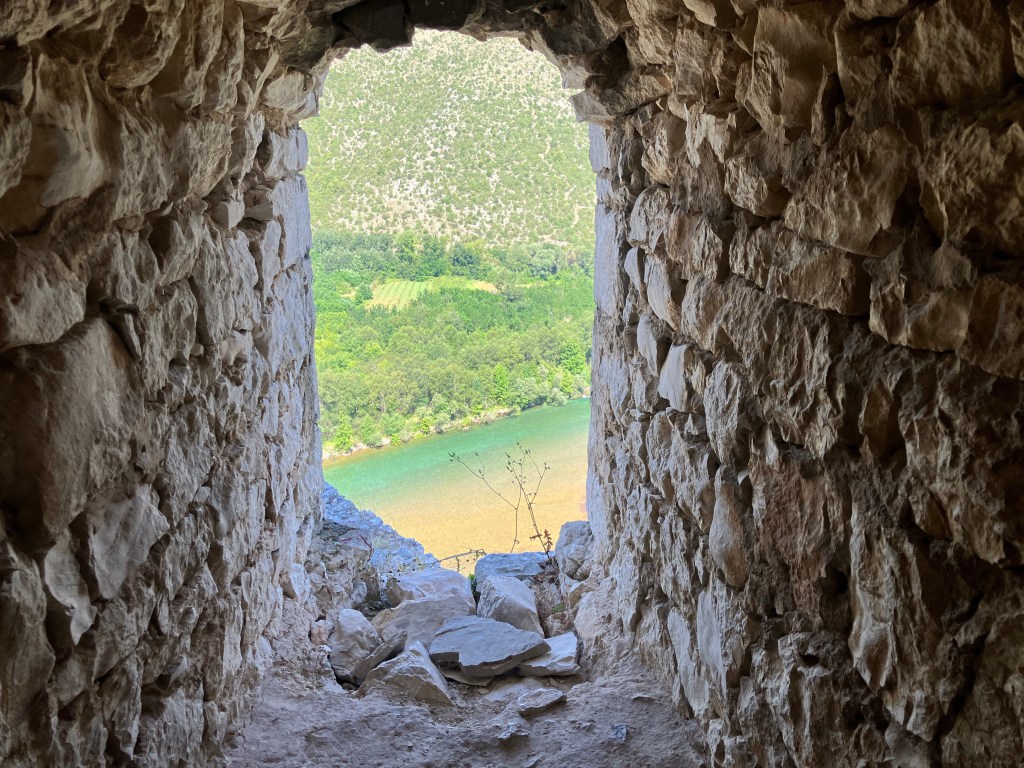
Citadel or the fortress – The stone walls of the fortress are intact, and you can climb to the top to get an amazing view of the valley and surrounding areas
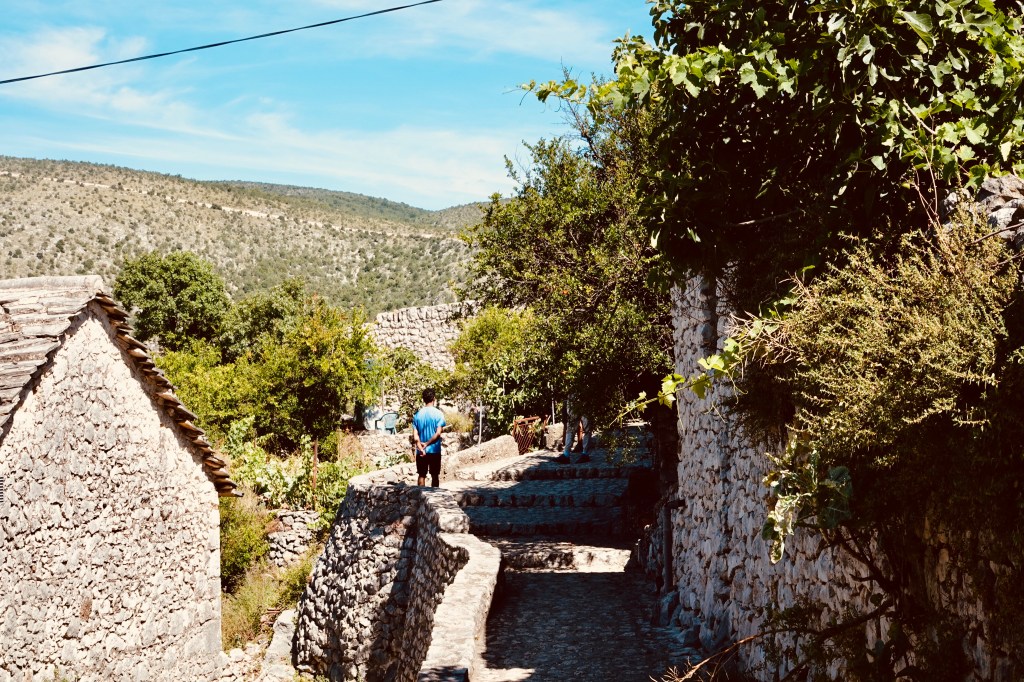
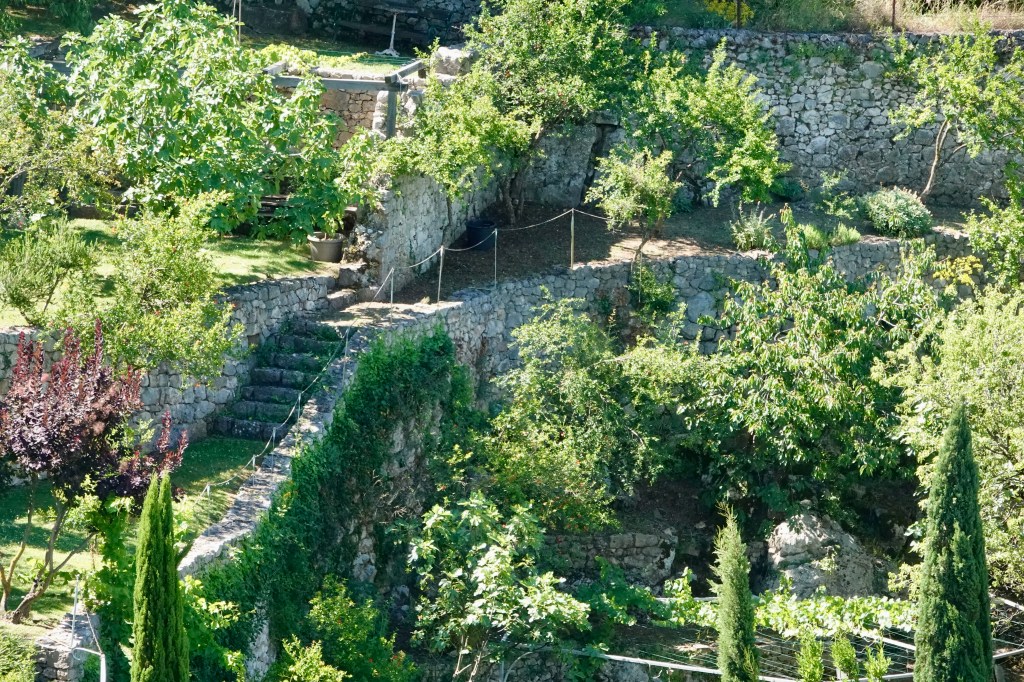
Houses -There are still about 20 families that live in the village and call it home. We stopped by one such home that sold home grown figs, pomegranate juice, honey etc. Just walking around village gives you fascinating glimpse ottoman era
Final thoughts:
Village of Počitelj is a great stopping point on your way from Dubrovnik to Mostar or as a day trip from Mostar before heading to Kravica waterfalls. You can spend 1-2 hours roaming around the village.
The Bosnian War (1992–95) had a significant impact on the cultural landscape of Bosnia and Herzegovina. As a former Yugoslav republic with a multiethnic population comprising Bosniaks (Bosnian Muslims), Serbs, and Croats, the war sparked bitter fighting among these groups and involvement from the Yugoslav army. The resulting death toll of over 100,000 people, mostly Bosniaks, left emotional scars and deep ethnic and political divides across the region. Despite the suffering, we found Bosnians to be generous and kind people. The war has certainly influenced their perspective on life, as our guide mentioned that many Bosnians prefer to work until they have enough money to live a comfortable life rather than being rich.
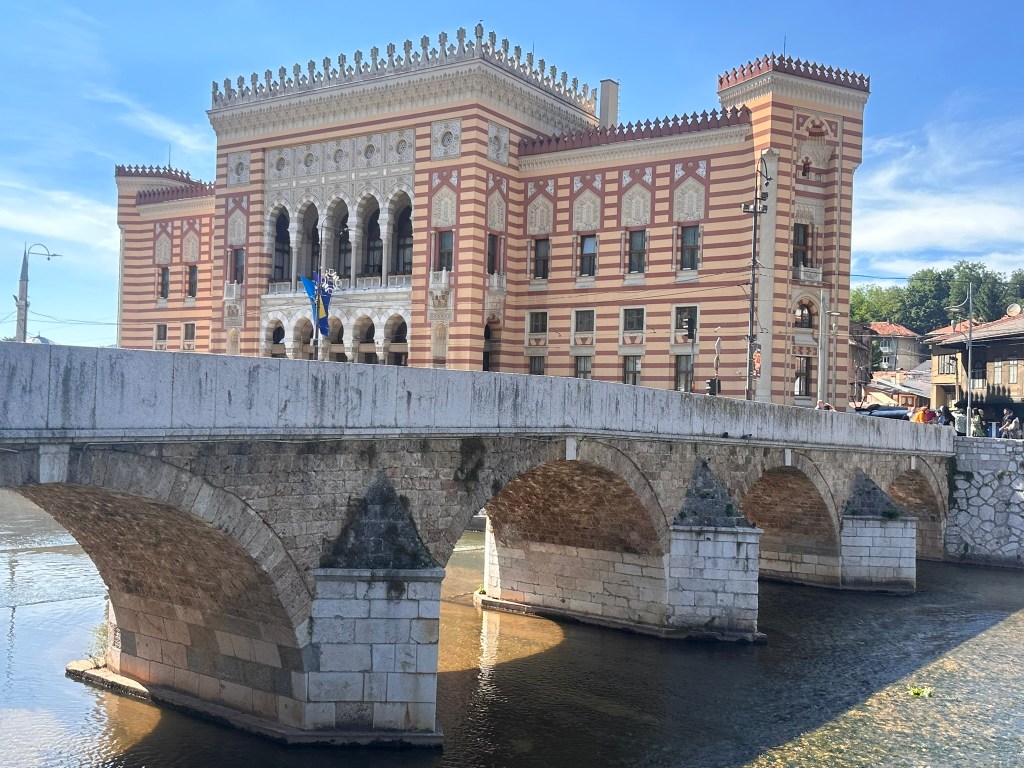
During our time in Bosnia, the impact of the war was evident everywhere. The destruction caused by the conflict was unmistakable, particularly with iconic structures like the 427-year-old Mostar stone bridge, which was destroyed during the war and subsequently rebuilt. Additionally, the Sarajevo city hall, once the national library, fell victim to fire in 1992, resulting in the destruction of two million books, articles, and magazines that had reflected the multicultural life of the region under the Ottoman and Austro-Hungarian empires.
Sarajevo roses- Everything but a flower
During the siege of Sarajevo from 1992 to 1995, the city endured relentless bombardment by enemy forces. On average, over 300 shells rained down on the city each day, reaching a devastating peak of 3,777 shells on July 22nd, 1993. When mortar rounds struck concrete surfaces, they left behind distinctive fragmentation patterns resembling flowers, which were later filled with red resin, earning them the name “Sarajevo Roses.” These marks serve as silent memorials people who lost their lives at each location during the siege. Scattered across Sarajevo, these blood-like stains stand as a poignant reminder of the war and the city’s resilience. For more information about the Siege of Sarajevo, you can visit Memories of a War.
Approximately 200 Sarajevo Roses were originally present throughout the city, but due to lack of upkeep and the rebuilding of the city, only about 28 remain. Despite the difficulty of being so close to reminders of death every day, it is important to remember what happened in Sarajevo. You can find one of these roses in front of the Sacred Heart Cathedral, another one close to City Hall, and one near the entrance of the Tunnel of Hope.
Sarajevo Rose at Sacred Heart Cathedral
Mortar holes in Mostar
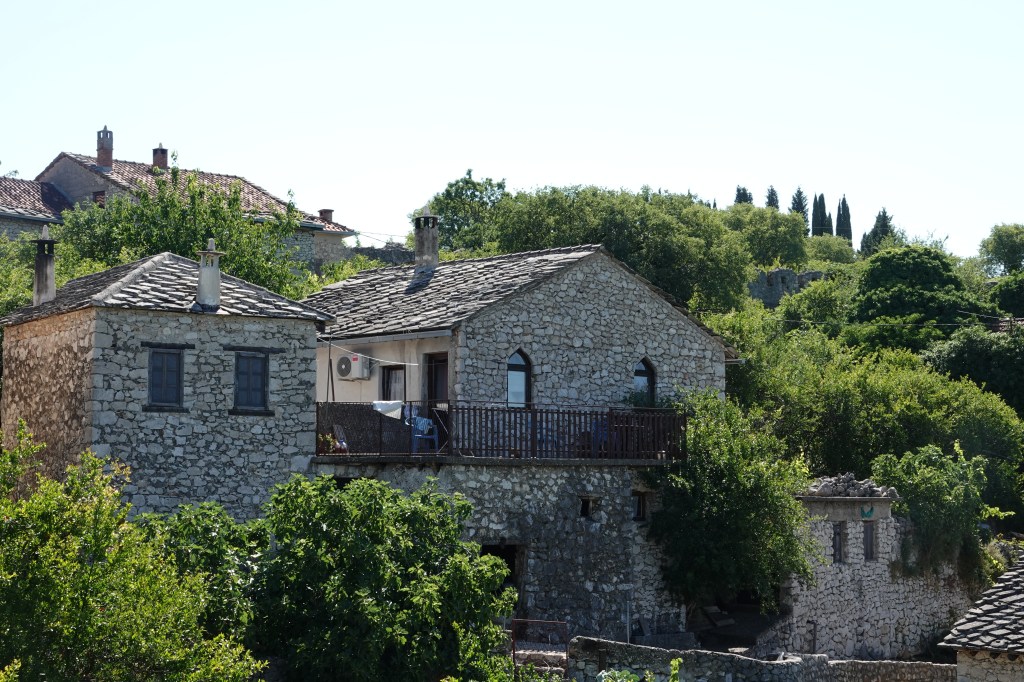
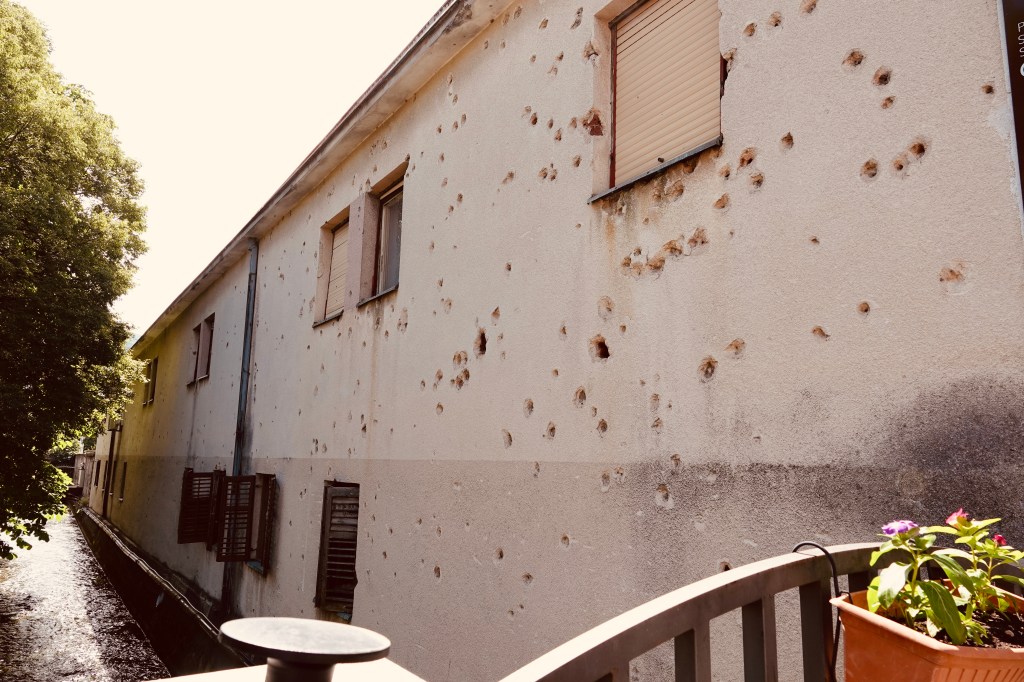
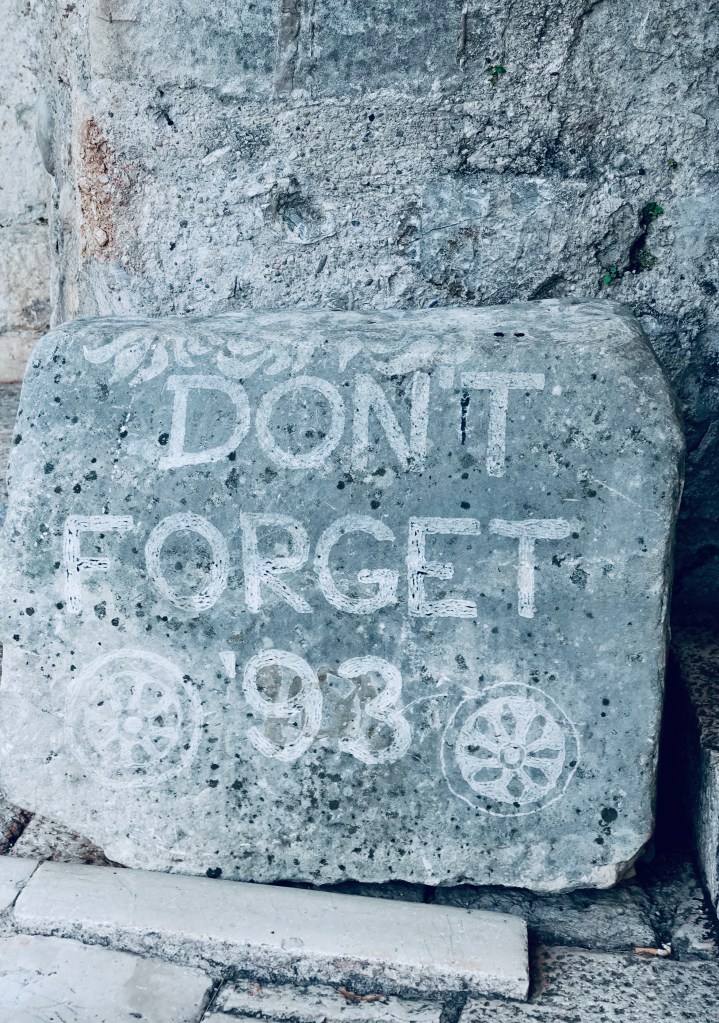
The battles scars in Mostar are much more visible compared to Sarajevo. Decades after the ending of the war, there are still many empty and abandoned buildings. Ther are many building in the old town Mostar close to the bridge that was riddled with holes from the mortar attached, and visible bomb damage. Near the stone bridge, there is a rock wit inscription that stats Don’t forget 93 referring to the war on the Onescukova street that served as the war frontline.
Stories told by our guides
Most of the guides that we hired were old enough to remember the war and lived through it. One of our guides, Stefan, who spent three days with us in Croatia, told us that he was only two years old when the war happened, but he lost his father during the conflict. Growing up without a fatherly figure to guide him, Stefan got into a lot of trouble with his friends from school. He mentioned that not having a father wasn’t that unusual and he wasn’t treated as anything special, as most of his classmates also had lost their patents in the war.
In Mostar, we stayed in a house owned by friends of friends who fled to Atlanta, US during the war, and the house was completely demolished. The family rebuilt the house, and we were fortunate to stay with them and hear first-hand about their war experiences and how it had completely changed their lives. The host had worked as a hotel manager in Mostar before the war, and the hotel was completely destroyed. He took us to a local restaurant right across from the damaged hotel, which is finally being rebuilt.
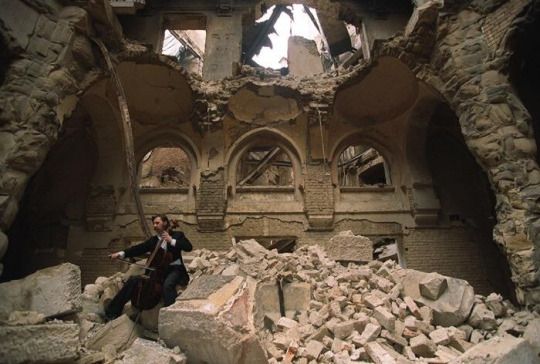
“Christmas Eve/Sarajevo 12/24”
Photo: Cellist Vedran Smailovic in the bombed National Library in Sarajevo Credit: Michael Evstafiev/AFP/Getty Images
Vedran Smailovic brought hope to Sarajevo during very difficult time in Bosnian war. In 1992, a group of people waiting to buy bread in a market were hit by mortar shells, resulting in 22 deaths. Vedran Smailovic, a well-known cellist in the city, was deeply affected by this event. The following day, he went to the spot, which was covered in flowers as a tribute, and started playing his cello. He hadn’t planned it, but he did it instinctively, and as people gathered around him, there was a sense of healing. He played there for 22 days, in honor of the 22 who had been killed, performing the same piece, Albinoni’s Adagio in G minor. Despite the presence of snipers on the hills, the cellist continued to play, risking his life. For another two years, he played at various locations in the city, amidst the ruins, dressed in a white shirt and black tailcoat, as if he were on stage in an orchestra. He soon became a symbol of courage for Sarajevo and the world. This story has been immortalized by Trans-Siberian Orchestra’s “Christmas Eve / Sarajevo” – iconic instrumental piece tells the story of Vedran Smailović during Bosnian war. I have this heard this song so many times during Christmas and didn’t realize it based on Vedran until I was visited Sarajevo. If you want to, you can watch the Trans-Siberian song /video here
All these stories are poignant reminders of horrors of war and effect on the cultural fabric of the country and its people. They also show the resiliency of the people and perseverance of hope despite unimaginable horrors.
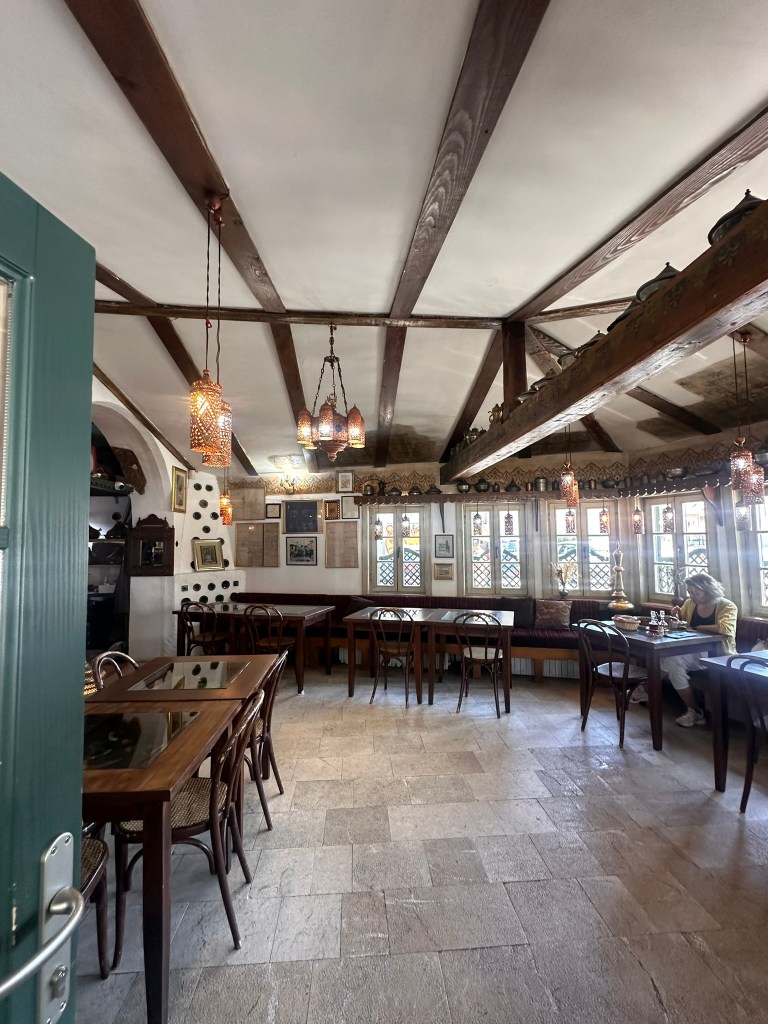
Right opposite to the City hall in Sarajevo, across the bridge there is a unique Bosnian restaurant named Inat Kuća, or “House of Spite”. More than being just an oddly named restaurant, this place was once a house that belonged to a Bosnian man named Benderija. I decided to check out this place out of pure curiosity and sat outside the patio and drank Rakija and people watched.
Inside the house of Spite restaurant
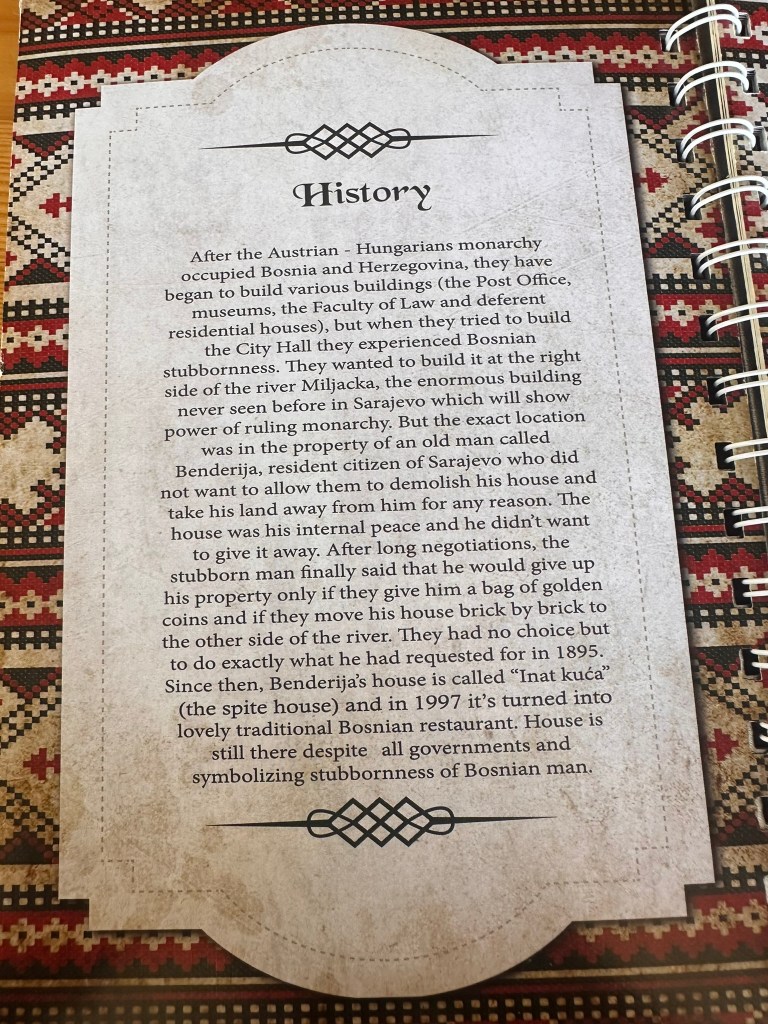
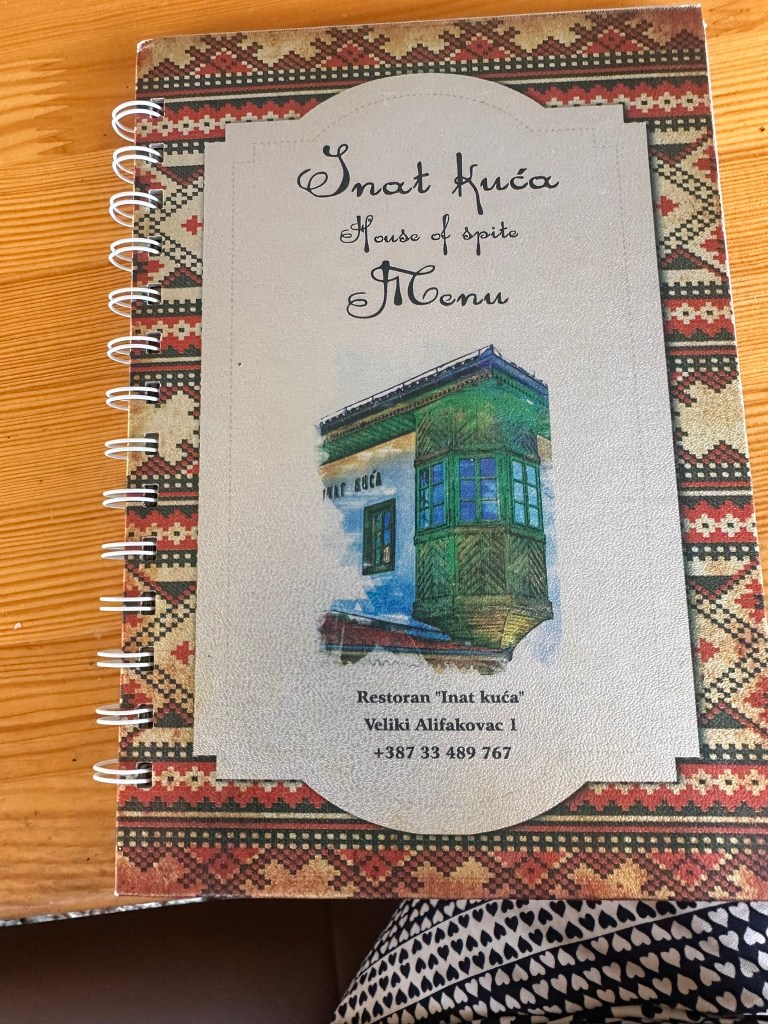
The restaurant menu also talks about the history of the place and why it is called house of spite. As the story goes, the house was originally located across the river where the current city hall resides. In the late 19th century, Austria-Hungary was transforming Sarajevo into a model colony. As part of this makeover, they began constructing a magnificent city hall. However, an elderly Bosnian man Benderija stood in their way. Despite generous offers, he refused to let them demolish his house. After lengthy negotiations between the old man and the city (with even the Austro-Hungarian Minister of Finances getting involved) until finally, in 1895, he agreed to sell his property for the extravagant price of a sackful of gold ducats, but with one condition: the authorities would have to move his Ottoman-era house, brick by brick, and rebuild it on the other side of the river.
According to our guide, the old man spent every day of the move sitting in the middle of a nearby bridge, smoking cigarettes and watching the workers transport each brick across the river. When the house was finally rebuilt, it was aptly named Inat Kuća, or the House of Spite.
City hall from house of Spite
The food and drink were really good and views are definitely worth it to visit this place.










 Peaks to Palaces