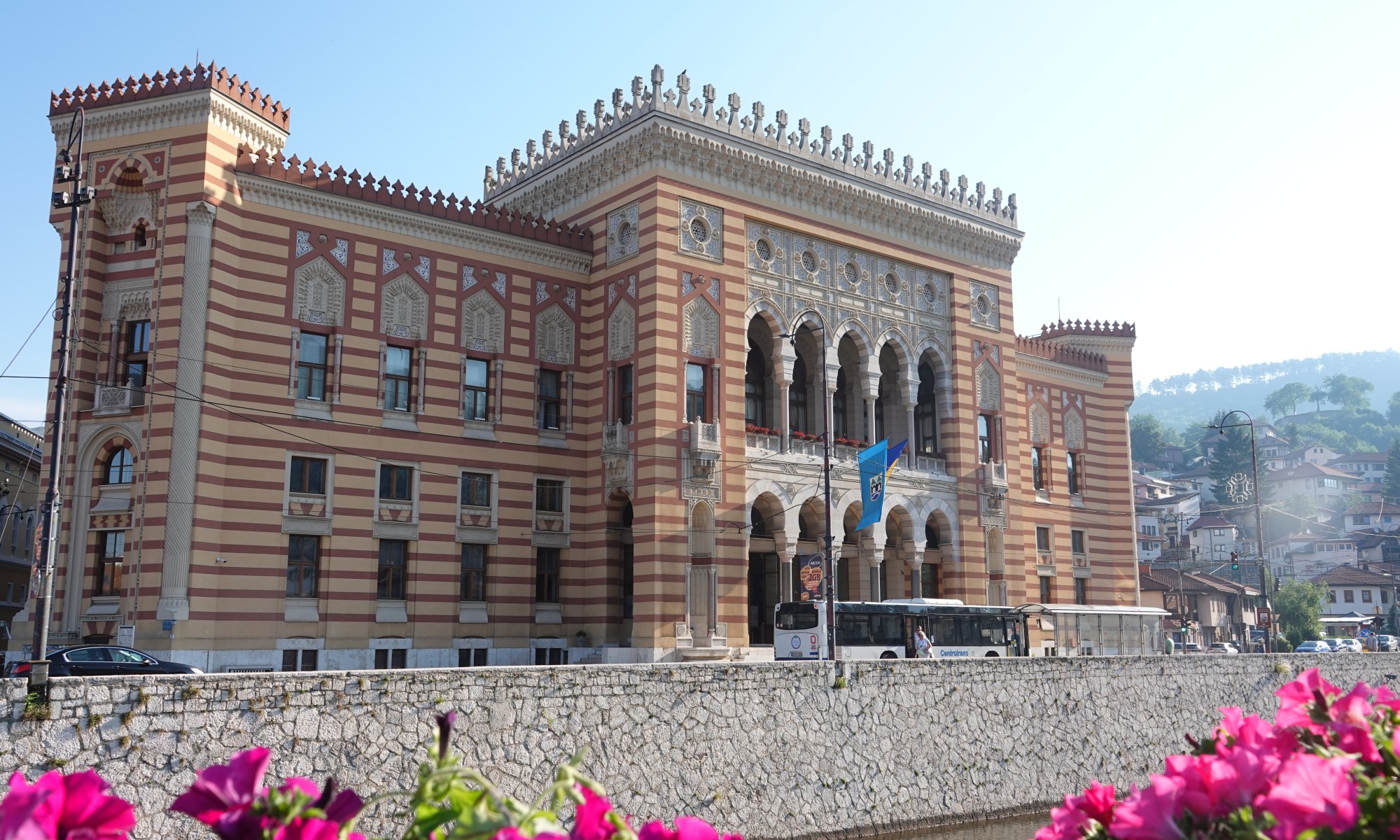
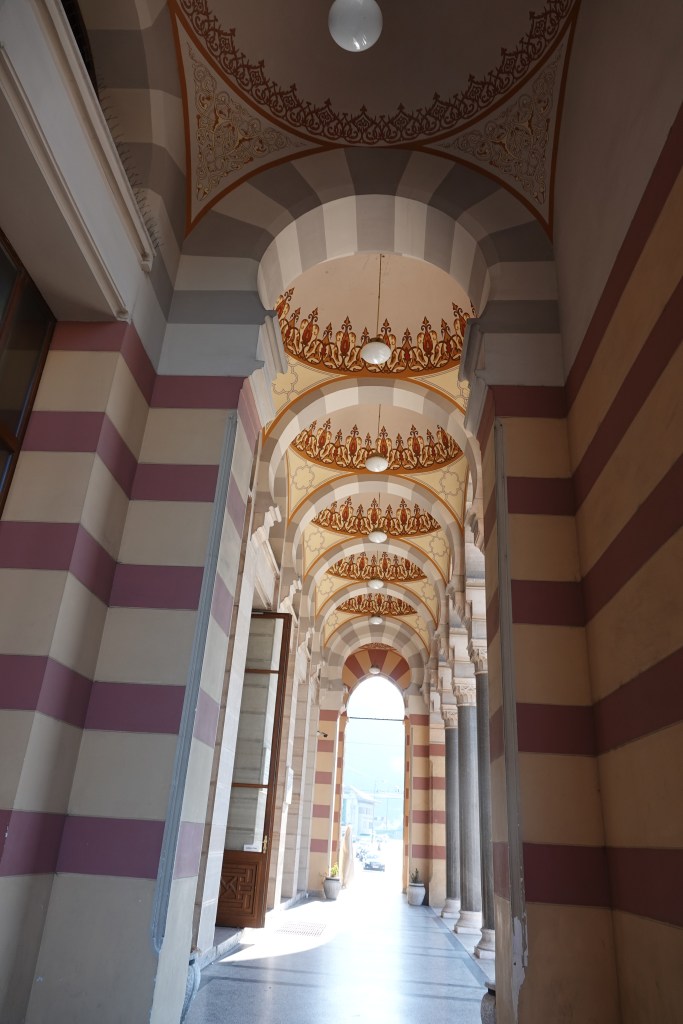
From the time I saw photos of the roof of front hall of Sarajevo city hall, I have been intrigued by this building. On our 1st day stay in Sarajevo I woke at 6 AM to and wondered around the old town and landed up in front of the city hall around 7AM. The building wasn’t even open but when I peeked in, the guard ushered me in and let me take couple of photos of the ceiling. I went back around 9 when it opened and spent next few hours walking around and admiring the architecture and history of the building as well as its role as the symbol of culture, history and resilience of Sarajevo.
History of Vijećnica
The construction of the Sarajevo City Hall, also known as Vijećnica, was a significant architectural endeavor that symbolized the Austro-Hungarian influence in the region. The Austro-Hungarian administration, upon assuming control of the Bosnian region in 1878, embarked on an ambitious modernization program aimed at transforming the infrastructure and institutions of the area. In addition to the construction of the City Hall, efforts were made to develop and enhance vital elements of the region’s infrastructure, encompassing the building of roads and railways to facilitate transportation, as well as the establishment of educational institutions to foster the intellectual growth of the population.
Alexandar Wittek designed City Hall in Neo-Moorish style, making multiple trips to Cairo to study similar buildings. After Wittek’s alleged mental illness and suicide (some ascribe this to the design and challenges of the city hall), Ćiril M. Iveković took over the project, making some adjustments and completing it in 1894.
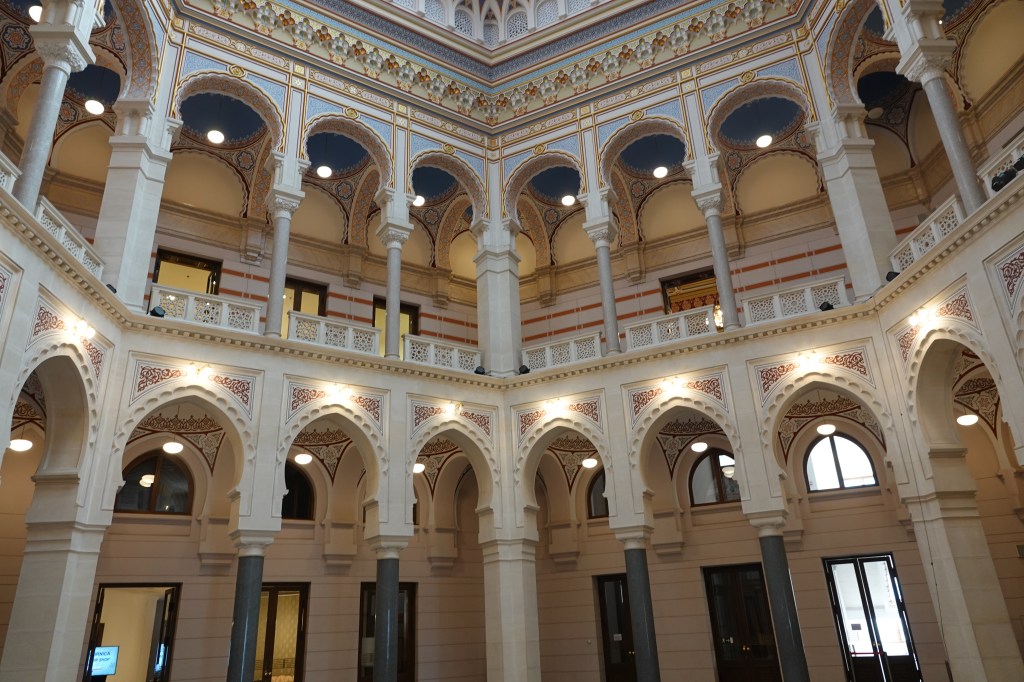
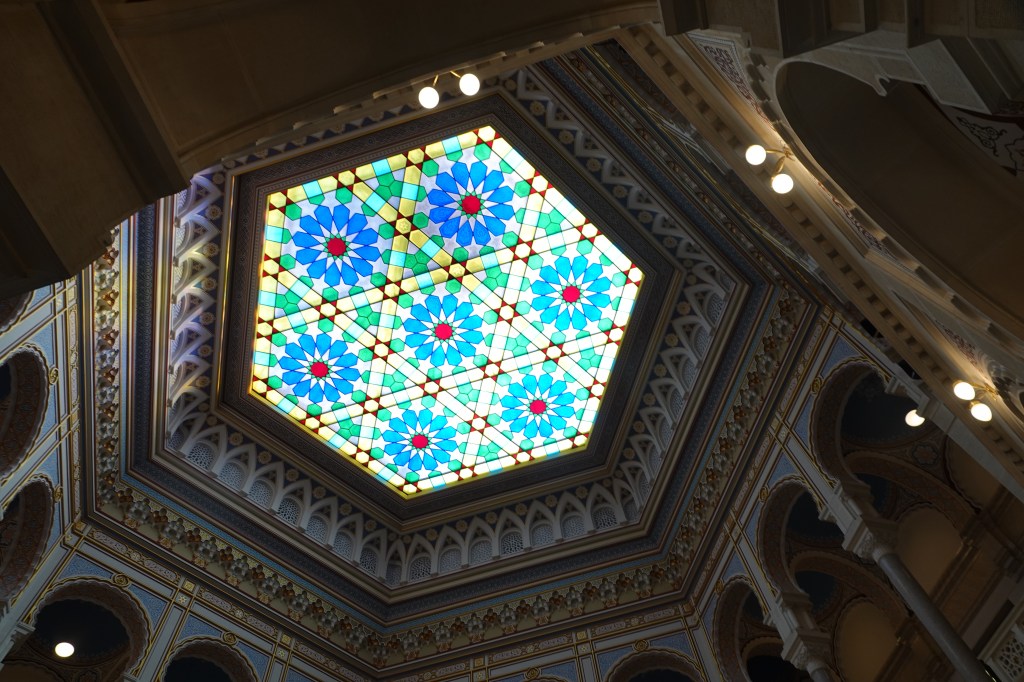

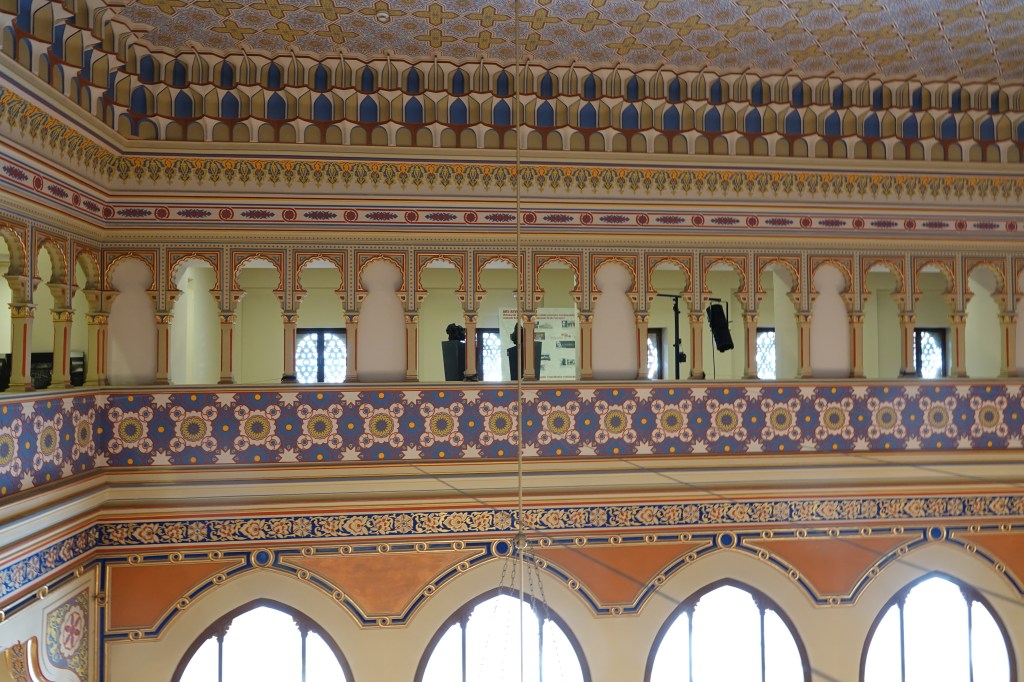
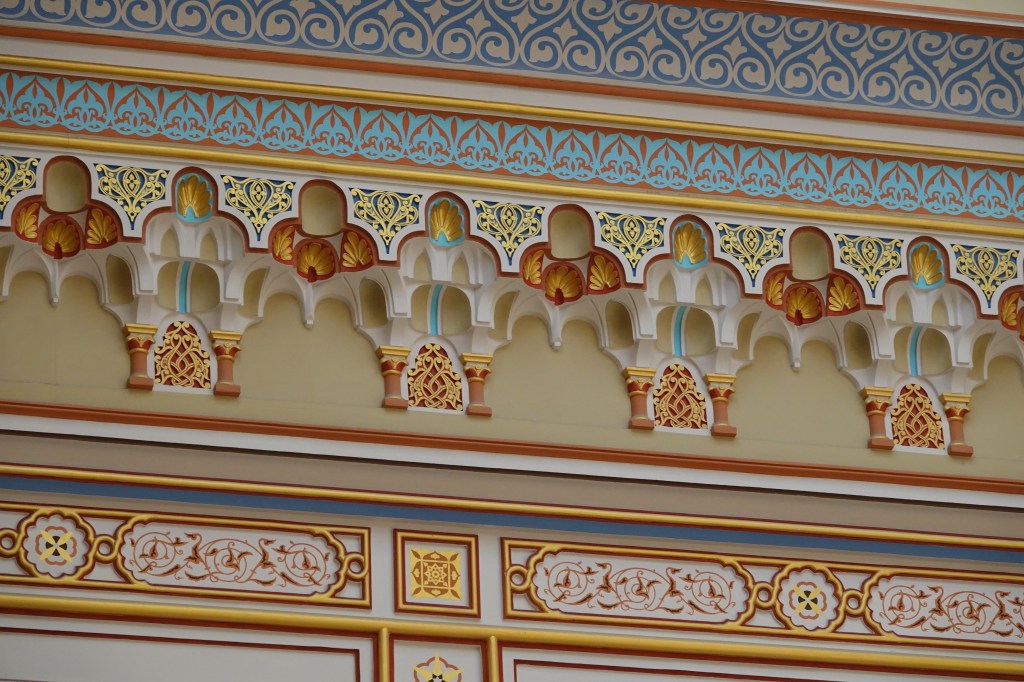
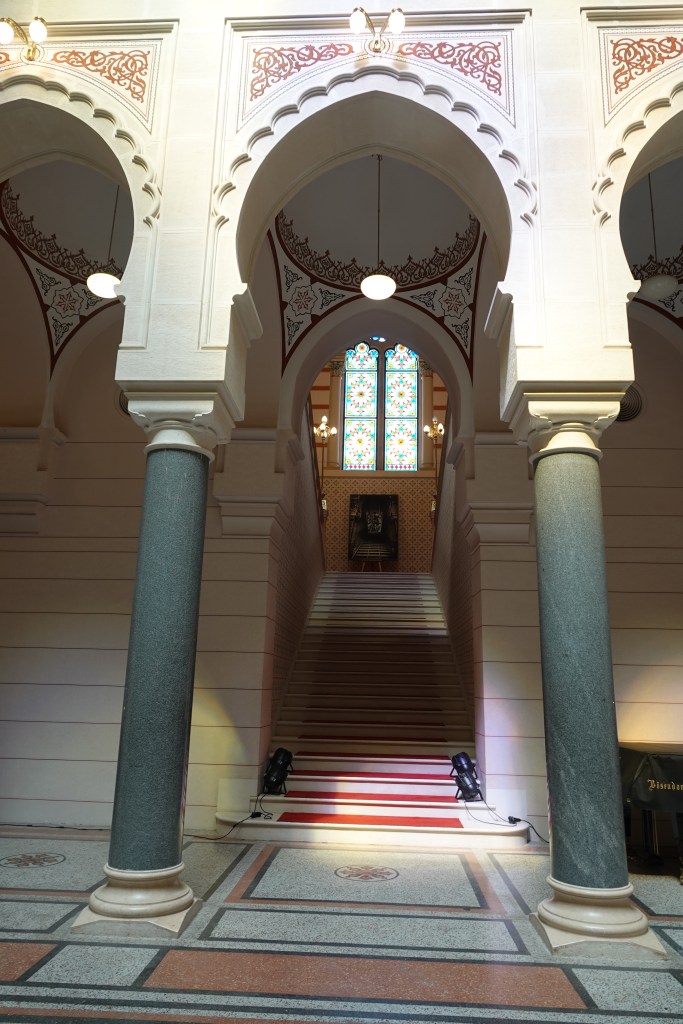
In 1947 the city hall was converted into Academy of Sciences and Arts, and as well as the main library and served as the library until 1992. During the siege of Sarajevo in 1992, the city hall was heavily damaged and about 2 million books, magazines and other articles were forever lost. Since then, the city hall has been restored to its original glory and is now open to public to visit.
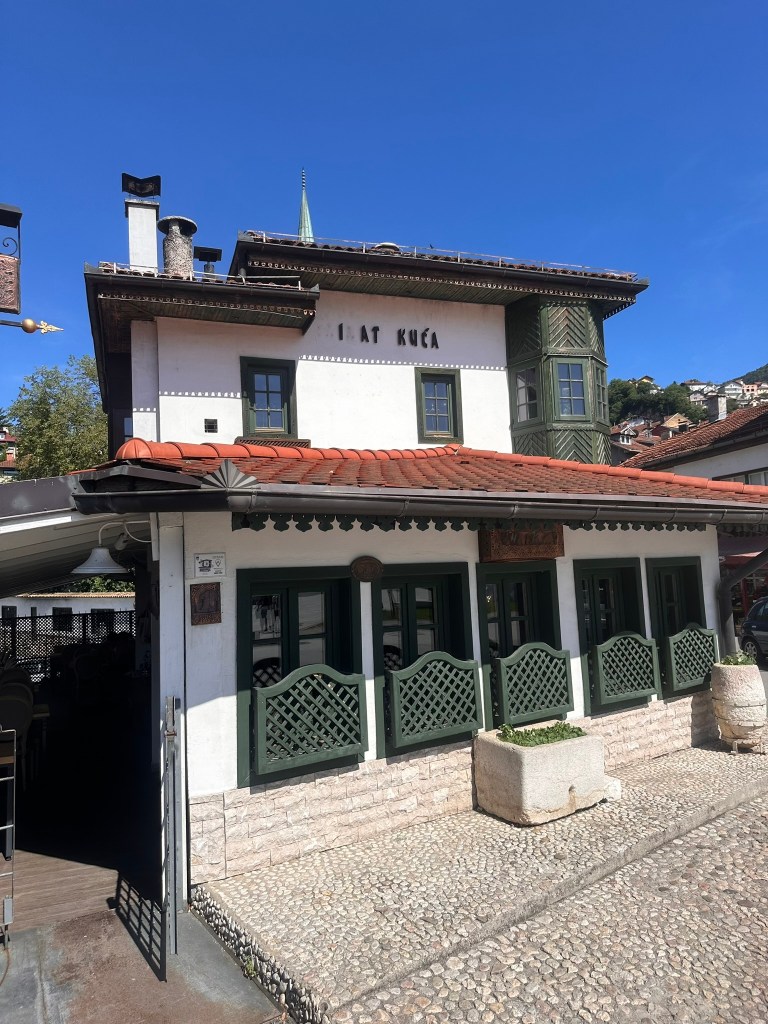
There is another interesting piece of history associated with city hall and stubbornness of Bosnians. There is house/restaurant across the city hall near the Sarajevo sign and it is known as Inat Kuca – house of spite. Definitely check it out when you at city hall and get a rakija and enjoy the view.
Tales from Balkan: Inat Kuća, or “House of Spite”- Symbol of Bosnian stubbornness
Inside the city hall
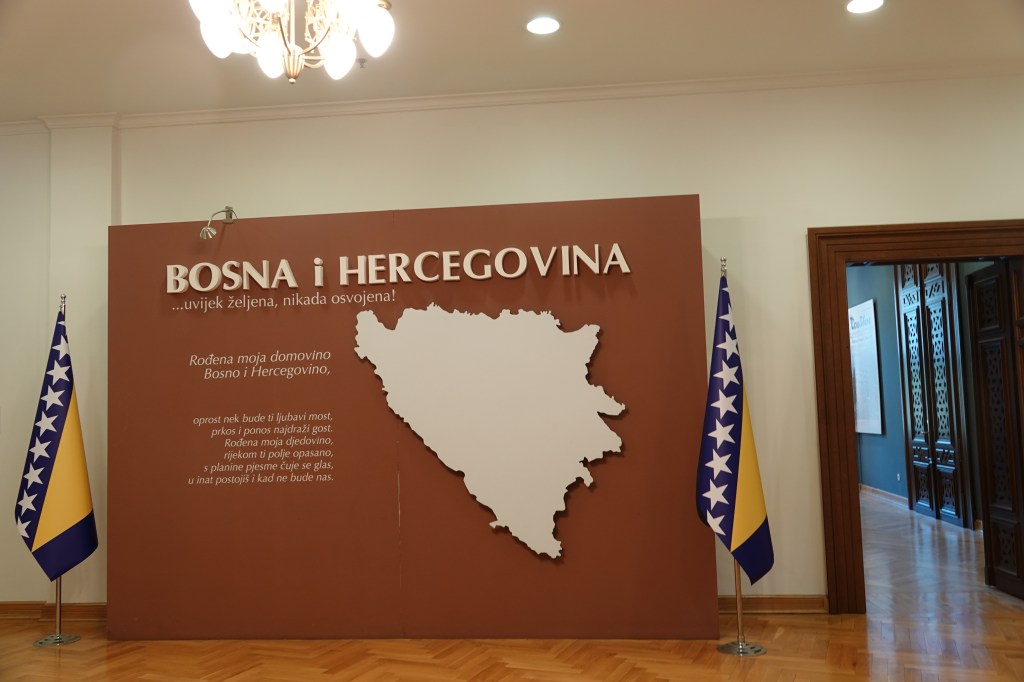
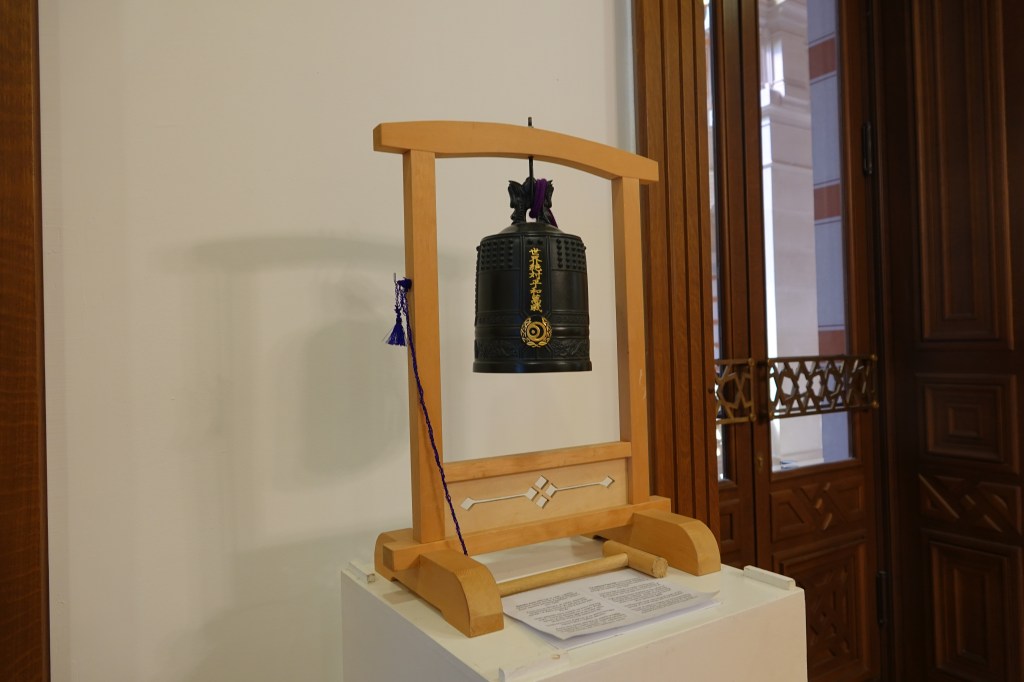
Apart from the beautiful architecture of the building there is a permanent museum at the basement level of the building. The theme of the museum is Sarajevo 1914-2014″, which deals with life in Sarajevo during the last century. Visitors can explore various exhibition spaces dedicated to the city’s history, literature, art and archaeology. Museum also has the exhibition “Sarajevo Town Hall once again”, by Nedžad Mulaomerović, which tells the story of the restoration of the Town Hall, which lasted almost two decades.
Entrance fee
There is an entrance fee for the city hall. Ticket prices: – Single ticket 10 KM – Group ticket 10+ (more than 10 participants) 8 KM. For more information check out the city hall website: https://www.vijecnica.ba/en/home
Final thoughts
The city hall of Sarajevo is one of my favorite building for its architecture as well as its historical significance
 Peaks to Palaces