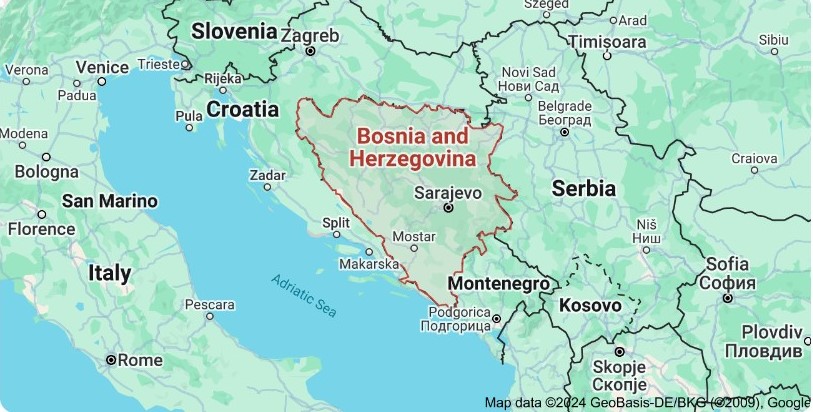
Bosnia and Herzegovina is a fascinating country located in Southeastern Europe on the Balkan Peninsula. It is known for its rich history, diverse culture, and stunning natural landscapes. It was part of the Yugo Slovakia before becoming independent country in 1990s.
Visit Bosnia and Herzegovina… a land where history whispers through ancient streets, where untouched nature beckons explorers, and where tradition and modernity merge in a rich cultural tapestry. Here, travelers can wander through Sarajevo, a city shaped by diverse influences—its charming old bazaar, Ottoman-era mosques, and echoes of resilience creating an atmosphere unlike any other. Or, step into the breathtaking landscapes that define the country, from the emerald waters of the Una River to the soaring peaks of the Dinaric Alps.
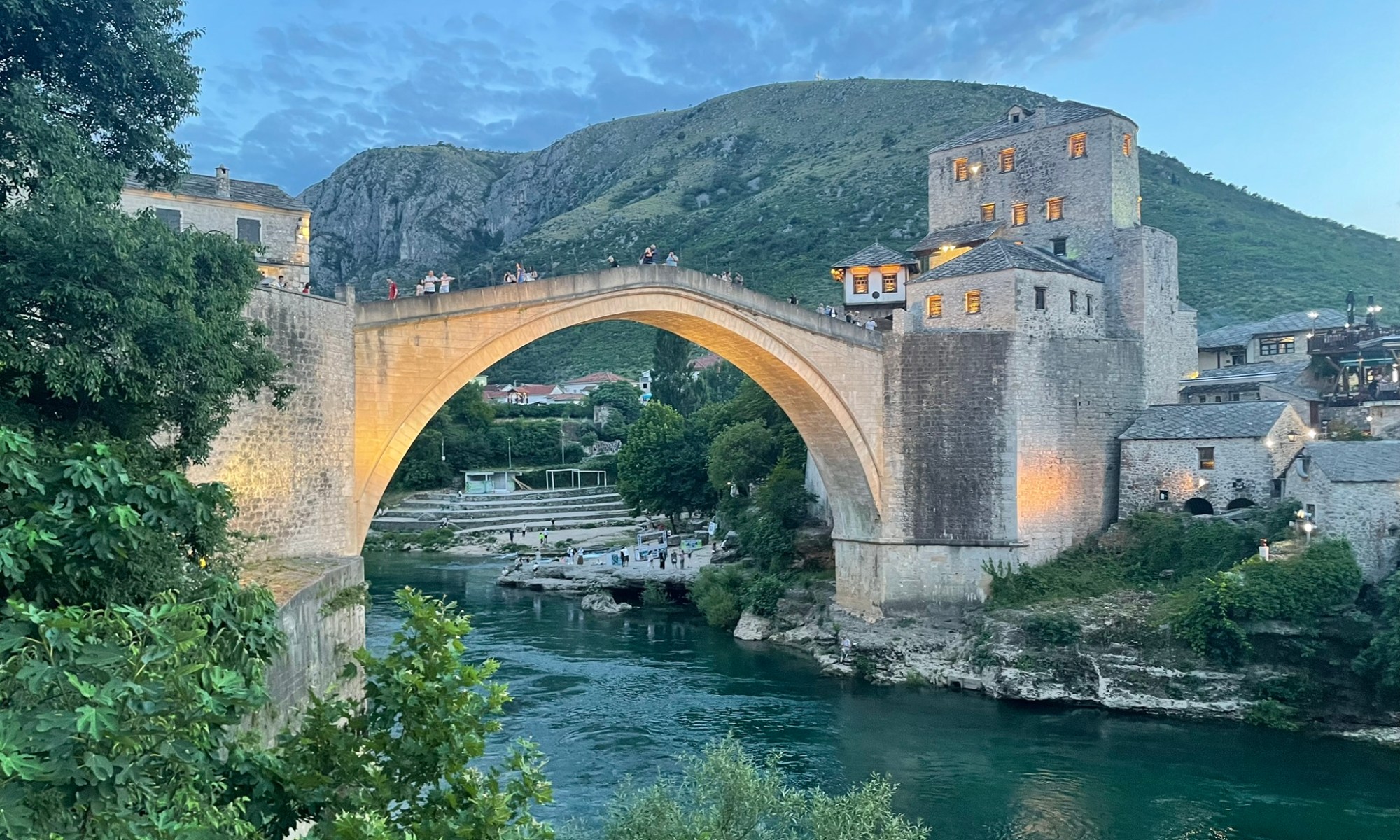
Bosnia and Herzegovina’s allure extends beyond its postcard-worthy scenery—its warmth lies in its people, its flavors, and its centuries-old stories. Whether admiring the iconic Stari Most in Mostar, savoring a cup of strong Bosnian coffee, or losing yourself in the tranquil beauty of its medieval villages, every moment here feels like an invitation to slow down and embrace something truly special.
- Why visit Bosnia and Herzegovina
- Historical and Cultural Landmarks
- Natural Attractions
- Currency
- Itinerary
- Related Posts
- From the blog
Why visit Bosnia and Herzegovina
Bosnia and Herzegovina is a hidden gem in the heart of the Balkans, offering a unique blend of natural beauty, rich history, and diverse culture. Here are some compelling reasons to visit:
- Less Crowded: Unlike some of its more touristy neighbor like Croatia, Bosnia and Herzegovina offers a more relaxed and authentic travel experience without the crowds especially in June- We were there from June 11th through 21st and we found Croatia to be very crowded even in early June while Bosnia was much less so.
- Stunning Natural Landscapes: From the majestic mountains and medieval castle ruins to the impressive waterfalls like Kravica and raftable rivers like Neretva, the country’s natural beauty is breathtaking. We loved white water rafting on Neretva in Konjic and drive from Sarajevo to Mostar – a scenic route next to Neretva River and some beautiful hills and valleys.
- Historical and Cultural Richness: Explore the Ottoman-era architecture in Sarajevo, the iconic Stari Most bridge in Mostar, and the Austro-Hungarian influences throughout the country including the city hall in Sarajevo
- Affordable Travel: Bosnia and Herzegovina is known for its affordability, offering great value for money in terms of accommodation, dining, and tours. We found that Bosnia was almost 1/3 cheaper than Croatia.
- Warm Hospitality: The locals are known for their warmth and friendliness, making visitors feel welcome and at home. We were fortunate to stay with a Bosnian family and experienced warm hospitality and kindness firsthand.
- Adventure Opportunities: Whether it’s hiking in the mountains, skiing in the winter, or diving off the Stari Most bridge in Mostar, there’s plenty for adventure seekers. We loved the white-water rafting and zip lining adventures
- Delicious Cuisine: Enjoy traditional dishes like burek, cevapi, and baklava, along with excellent local wines from the Herzegovina region. The wines were the best surprise of the Herzegovina region. We enjoyed some delicious wines that were made with locally grown grapes.
- Unique Blend of East and West: The country’s history as a crossroads of different empires has created a fascinating mix of Eastern and Western influences, visible in its architecture, culture, and food
Unique things to know about Bosnia:
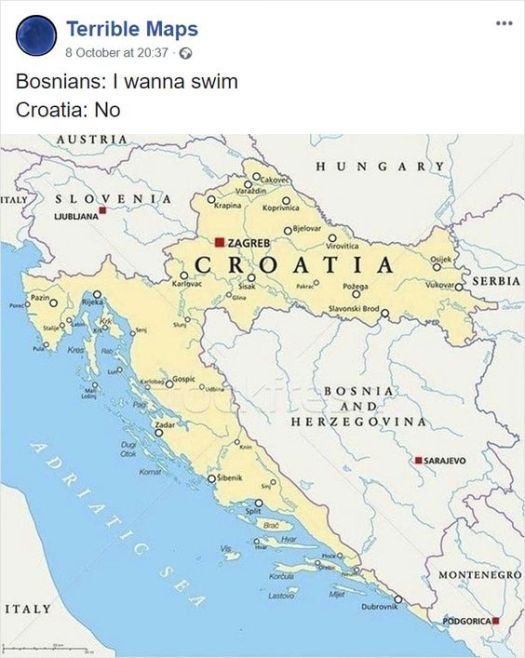
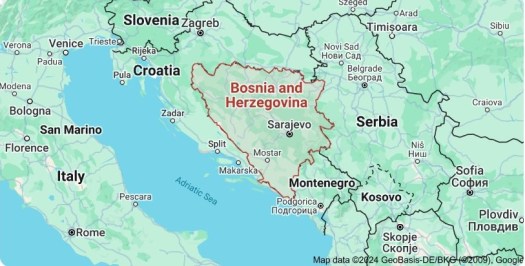
When we were planning the trip to Balkans, someone shared this amusing map with me that says Bosnian’s wanting to swim but Croatians are saying no as there is thin strip of Croatia that prevents Bosnia from having access to Adriatic sea. But in reality, there is town of Neum-the only town situated along Bosnia and Herzegovina’s 20-kilometre (12 mi) coastline, making it the country’s only access to the Adriatic Sea and splits Croatia into 2.
This is the result of Treaty of Karlowitz in 1699, a peace agreement that ended the Great Turkish War (1683-1699) between Austria, Poland, Venice, and Russia on one side and the Ottoman Empire on the other side. The Republic of Ragusa (Dubrovnik) tried to safeguard itself against Venetian expansion by giving a small section of its land to the Ottomans, which resulted in this geographical arrangement.
Historical and Cultural Landmarks
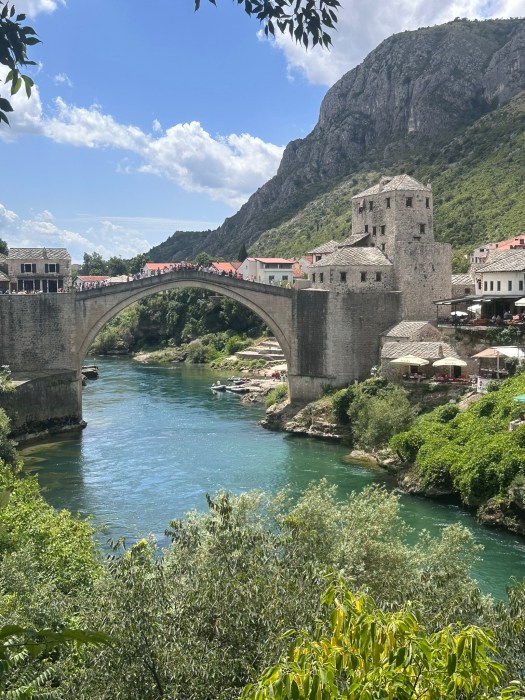
- Stari Most (Old Bridge): A UNESCO World Heritage site in Mostar, symbolizing the connection between different cultures and religions. Most popular attraction in Bosnia and can be visited from Croatia as a day trip
- Sarajevo: The capital city, known for its unique blend of Ottoman, Austro-Hungarian, and modern architecture. Key sites include the Latin Bridge, where the assassination of Archduke Franz Ferdinand took place, sparking World War I.
- Tito’s Bunker: A secret underground bunker built during the Cold War era, located near the town of Konjic.
- Blagaj Tekke: A beautiful Dervish monastery located at the source of the Buna River, near a stunning cliff.
- Gazi Husrev-beg Mosque: One of the most important Islamic structures in the Balkans, located in Sarajevo
Natural Attractions
- Kravica Waterfalls: A stunning series of waterfalls located near the town of Ljubuški.
- Mount Trebević: Offers breathtaking views of Sarajevo and is a popular spot for hiking and outdoor activities.
- Skakavac Waterfall: One of the highest waterfalls in the Balkans, located near Sarajevo.
- Jajce– Home to Pliva lakes and charming watermills
- Bihac– Home to Una National Park
Currency
The Bosnia and Herzegovina convertible mark (abbreviated as KM and coded as BAM) is the official currency of Bosnia and Herzegovina. It was introduced in 1998

Electric Outlet

In Bosnia and Herzegovina, the power plugs and sockets used are of Type F or Type C. These sockets have two round pins with two earth clips on the side. The standard voltage is 230 V and the frequency is 50 Hz
Itinerary
We did both Bosnia and Croatia as part of this trip but you can spend entire 10 days in Bosnia. Some of the other parts of Bosnia that are beautiful and can be visited in 10 days include Jajce, Bihac/Una national Park and Banja Luka.
Related Posts
From the blog
Waved Albatross of Española: A Once‑in‑a‑Lifetime Wildlife Encounter
Visit the Galápagos island of Española between December to April, and you may witness one of the most extraordinary courtship rituals in the natural world. Each spring, nearly the entire global population of waved albatrosses—tens of thousands of birds—returns to this remote island to reunite with lifelong partners, raise a single chick, and perform a…

Punta Pitt Wildlife Guide: Home of the Red‑, Blue‑, and Nazca Boobies
Boobies—named after the Spanish word bobo—meaning “clumsy”—boobies earned their name from their slightly awkward, waddling gait on land. The Galapagos Islands are home to three different species of boobies, which include the blue-footed, red-footed, and Nazca boobies. Each species possesses its own remarkable traits and behaviors, making them a highlight for wildlife enthusiasts. Their unique coloring not only helps…
A Royal Retreat at Evolve Back, Hampi: Where Luxury Meets the Soul of Vijayanagara
Arriving at Evolve Back, Hampi feels like stepping into a living chapter of the Vijayanagara Empire. We traveled overnight on the Hampi Express from Bengaluru. We reached Hospet at 7 AM. A warm smile and a private car from the resort awaited me at the station. As we drove through banana plantations and paddy fields,…
Hampi the city lost of Splendor- Spending 4 days in Hampi and the surrounding areas
Hampi, a mesmerizing UNESCO World Heritage Site in Karnataka is a blend of surreal boulder-strewn landscapes and ancient history. Once the thriving capital of the 14th-century Vijayanagara Empire, it was one of the world’s largest cities. This was before its devastating fall in 1565. I grew up in this part of the country. I had often heard the…
Hampi Itinerary: Sacred Trails, Ancient Kingdoms & River Magic
Our itinerary was 4 days, covering Hampi, Badami, Aihole, and Pattadakal. We made Hampi our base and stayed at Evolve Back, Hampi. The hotel is one of the best in terms of accommodation, food, and service. My review of Evolve back will be a separate blog post. Arrival: Night Train to Hospet We boarded the…
Anjanadri Hill & Anegundi: A Journey Through Myth, Memory, and Timeless Landscapes
Visiting Anjanadri Hill and the ancient village of Anegundi is like stepping into a living epic. The Ramayana breathes through the hills. The Vijayanagara Empire whispers through fort walls. The Tungabhadra River carries centuries of stories in its gentle curves. We visited Anjanadri Hill for sunrise. It was a foggy morning, and visibility wasn’t that…
 Peaks to Palaces
sangat menarik..membuka wawasan
LikeLike