The Birds of Asa Wright: A Photo Journal from the Veranda

I came to Trinidad for business and ended up with a memory card full of birds. Over three days at Asa Wright Nature Center, I barely had to chase anything. Most of these photos came from the veranda, a coffee or rum punch within reach, and a forest that kept putting on a show.

The Hummingbirds: 15 Feeders, Hundreds of Birds

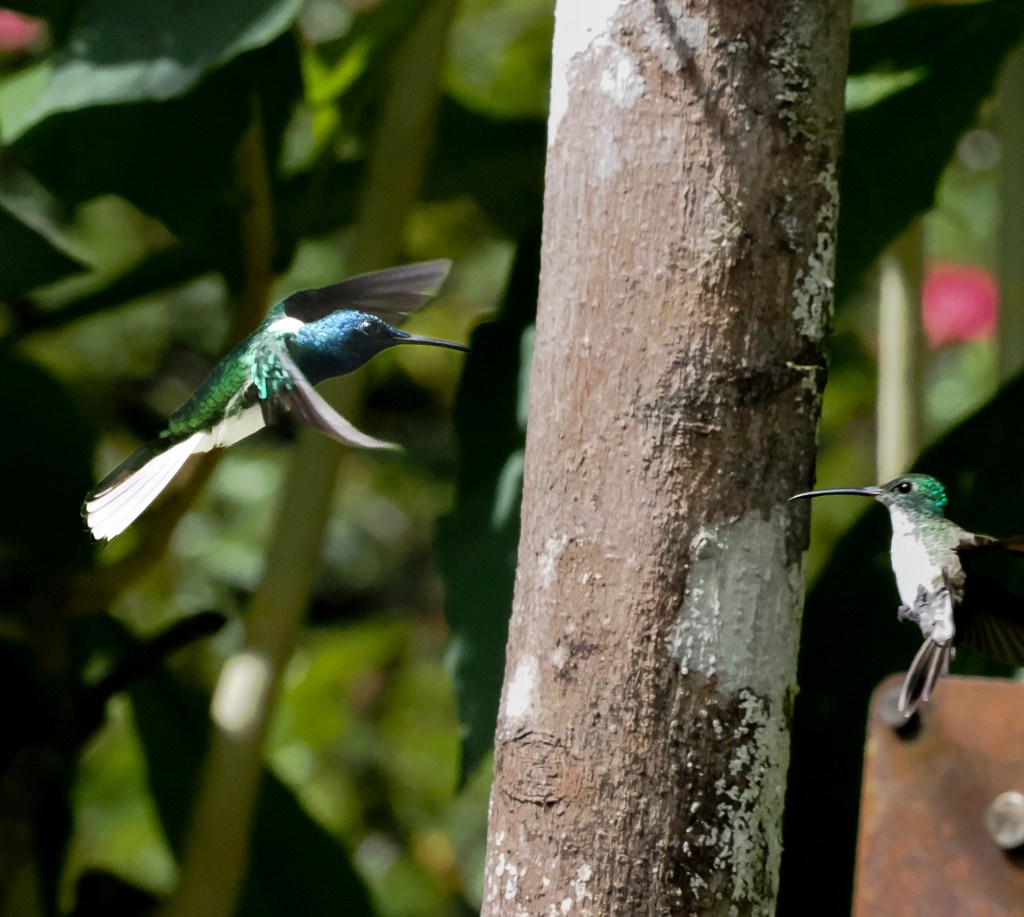
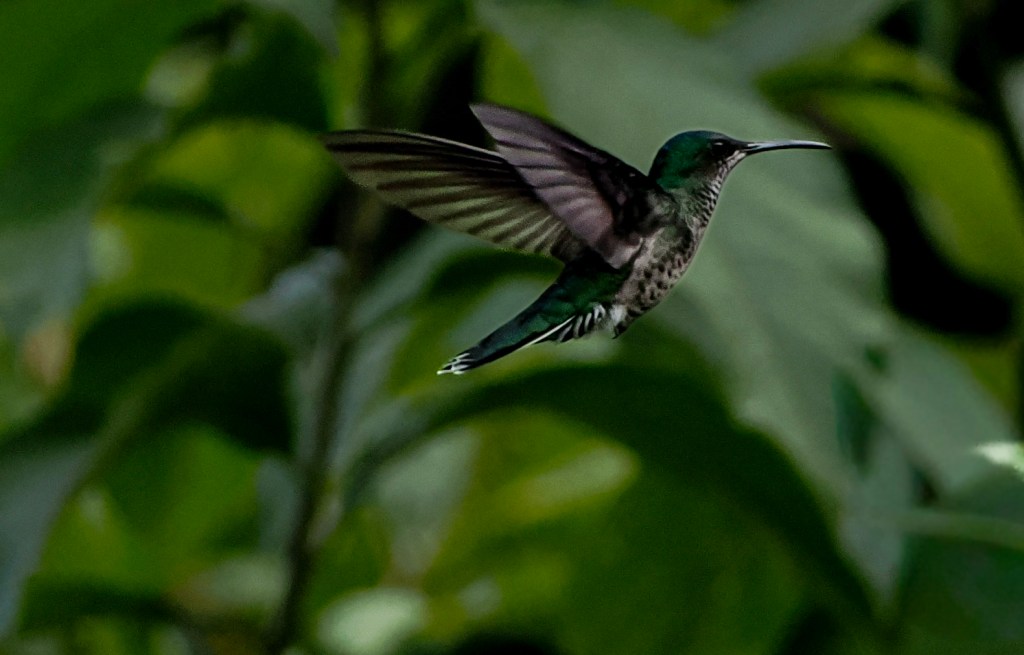
Below the veranda hang 15 feeders, and the buzzing never stops. Over three days, I photographed dozens of different kinds of hummingbirds. Here are a few of my favorites.
The Lesson I Learned: Be Patient

At first glance, the feeders belong to one species. White-necked Jacobins dominate, swarming the perches and chasing everything else away. If you leave after ten minutes, you’ll think that’s all there is.

Don’t leave. Sit still, keep your camera ready, and wait. Between the jacobin dogfights, the rarer birds slip in: the hermits, the starthroat, the violetear. By day three I could tell most of them apart at a glance, which I couldn’t have done without the center’s naturalist guides. They were incredibly helpful, naming every bird I pointed my lens at.

The White-necked Jacobin: Three Looks at One Species

The jacobin is the face of Asa Wright’s feeders. I took 100s of photos of these and captured three different plumages.
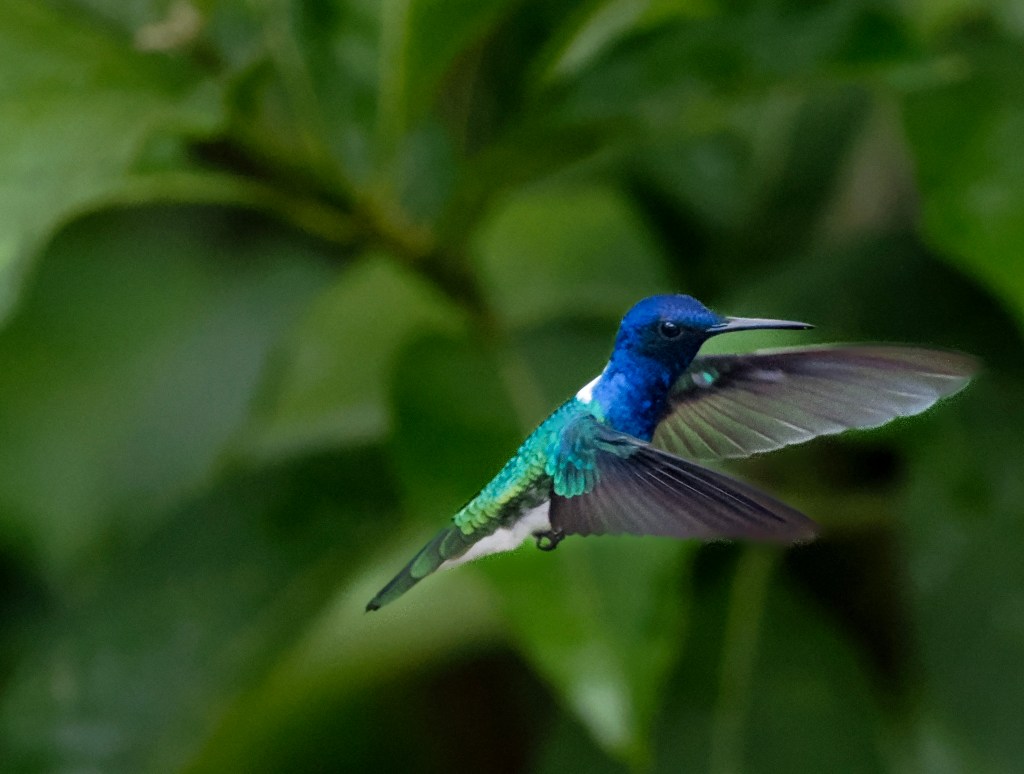
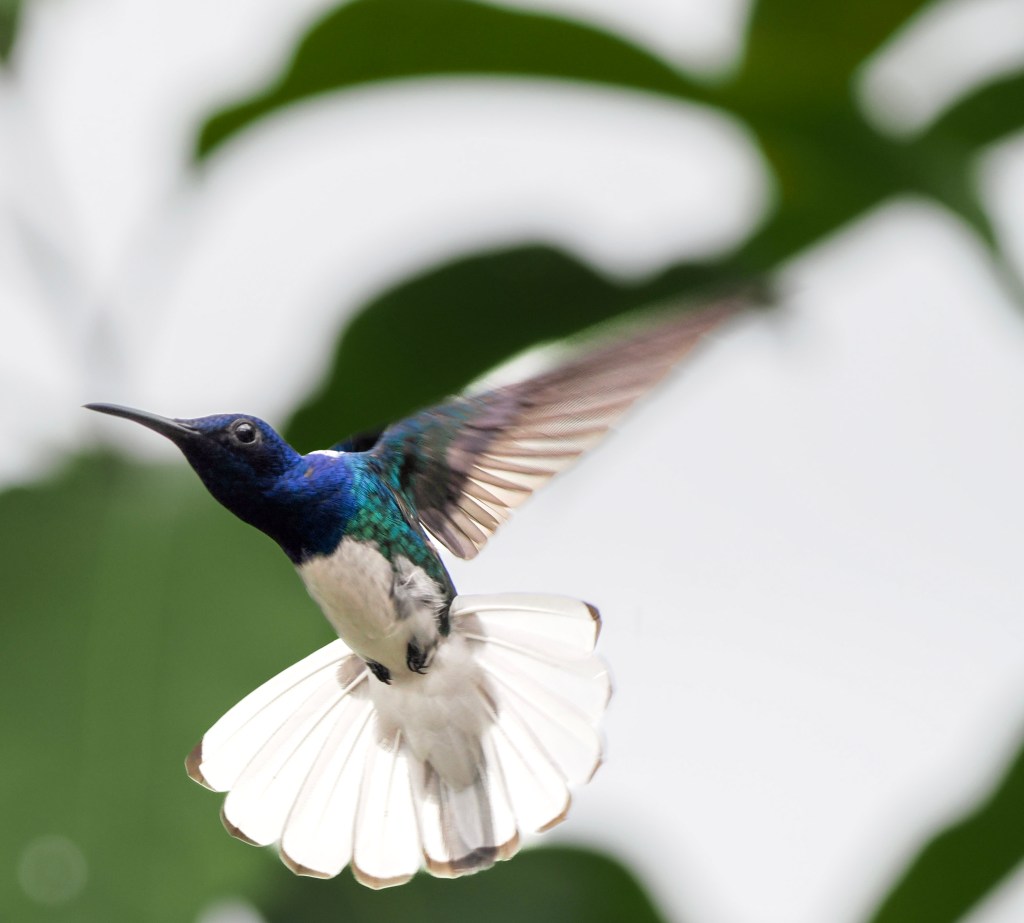
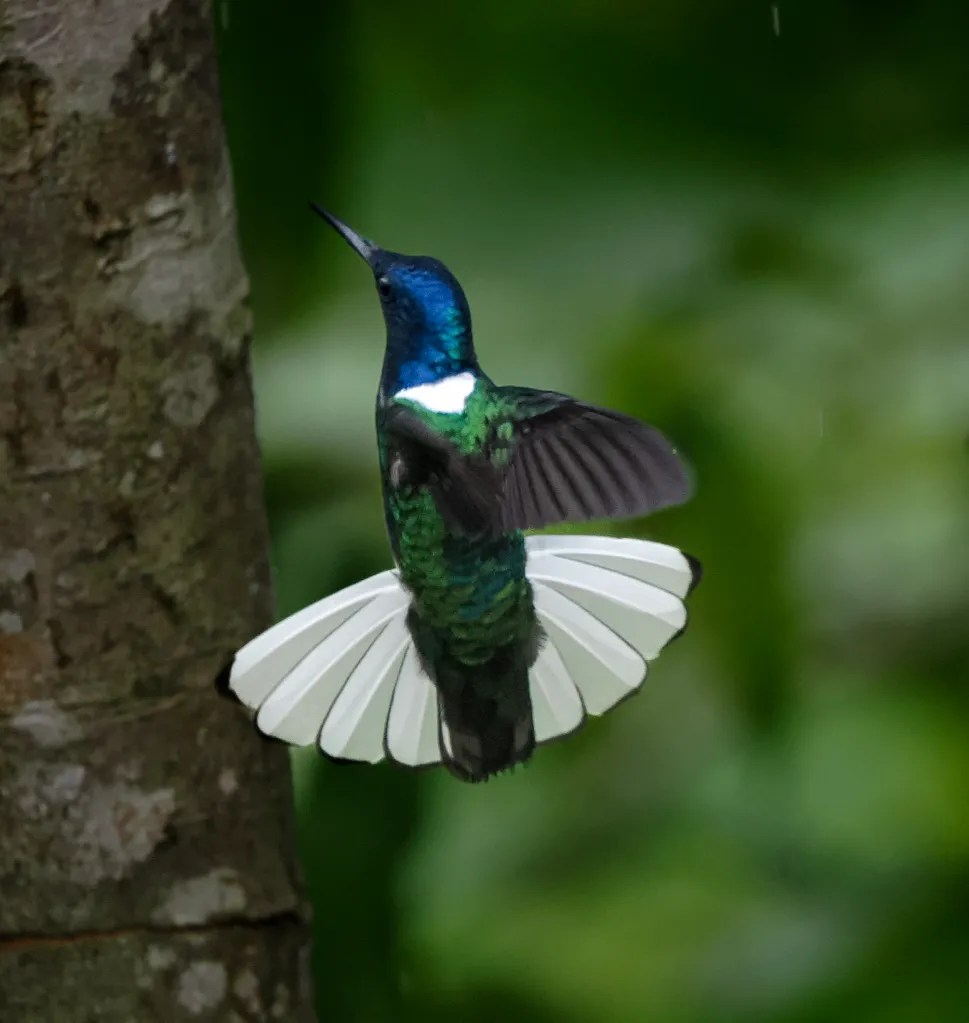
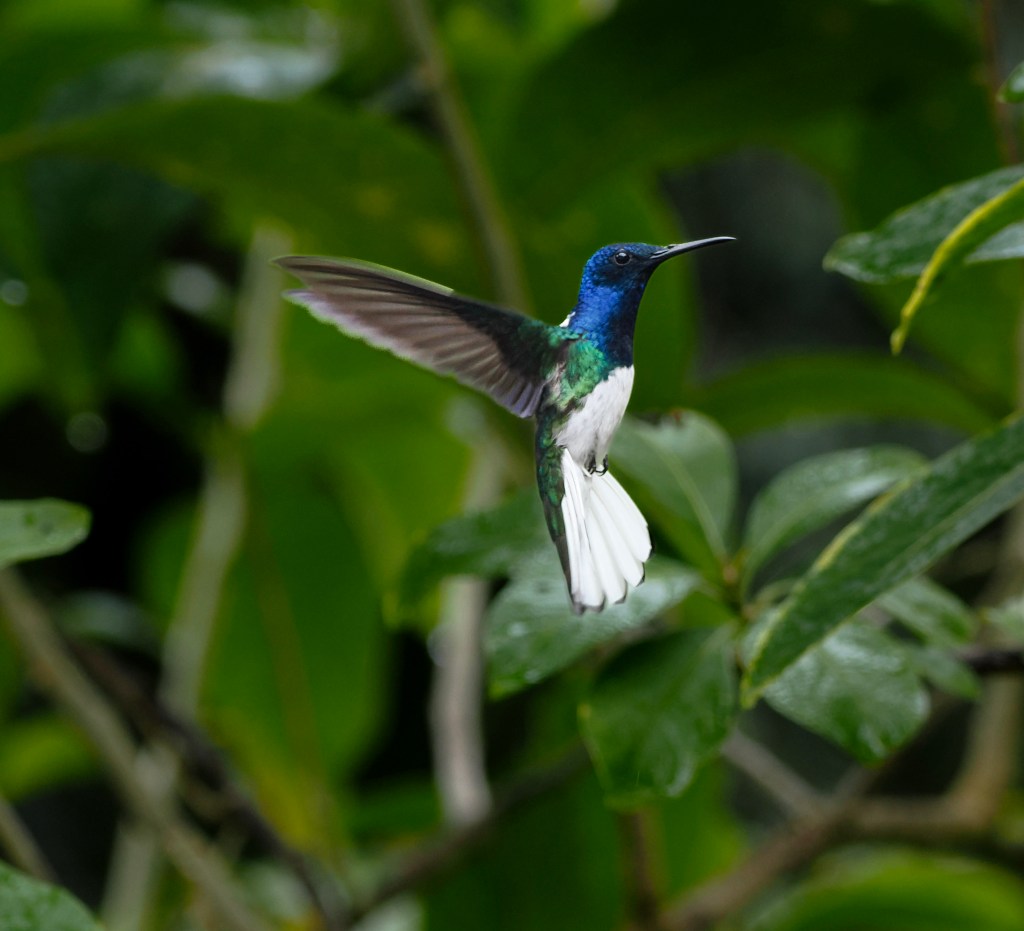
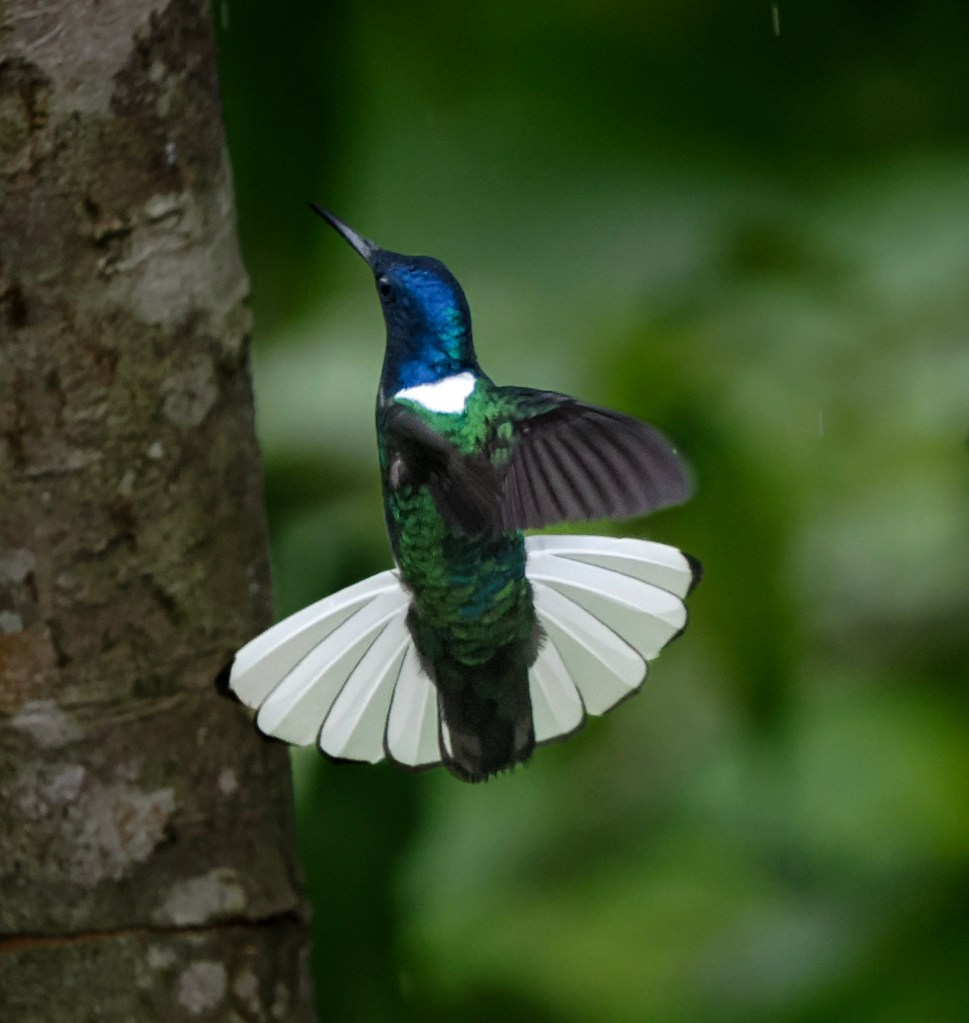
Male White-necked Jacobin. This is my best shot of the trip. He hovers with his tail fanned into a white spread, and his deep blue head, white throat patch, and emerald back glow against the green forest.
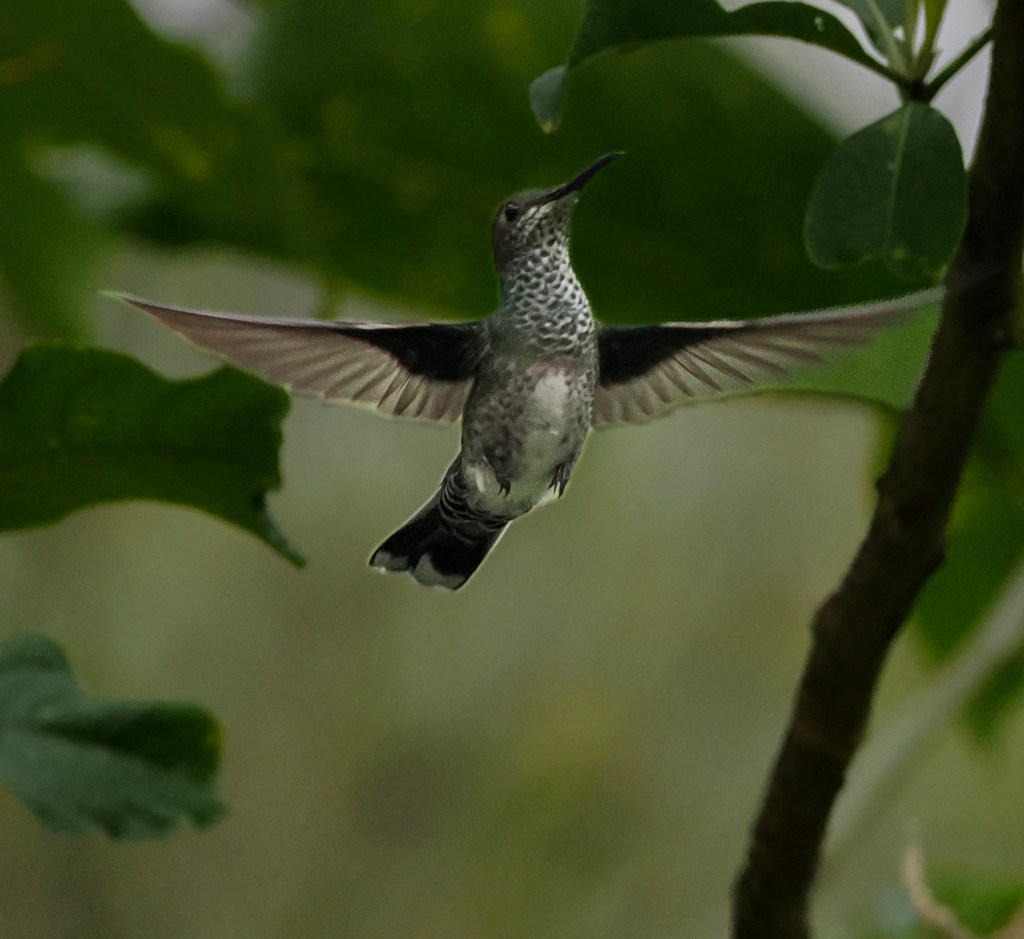
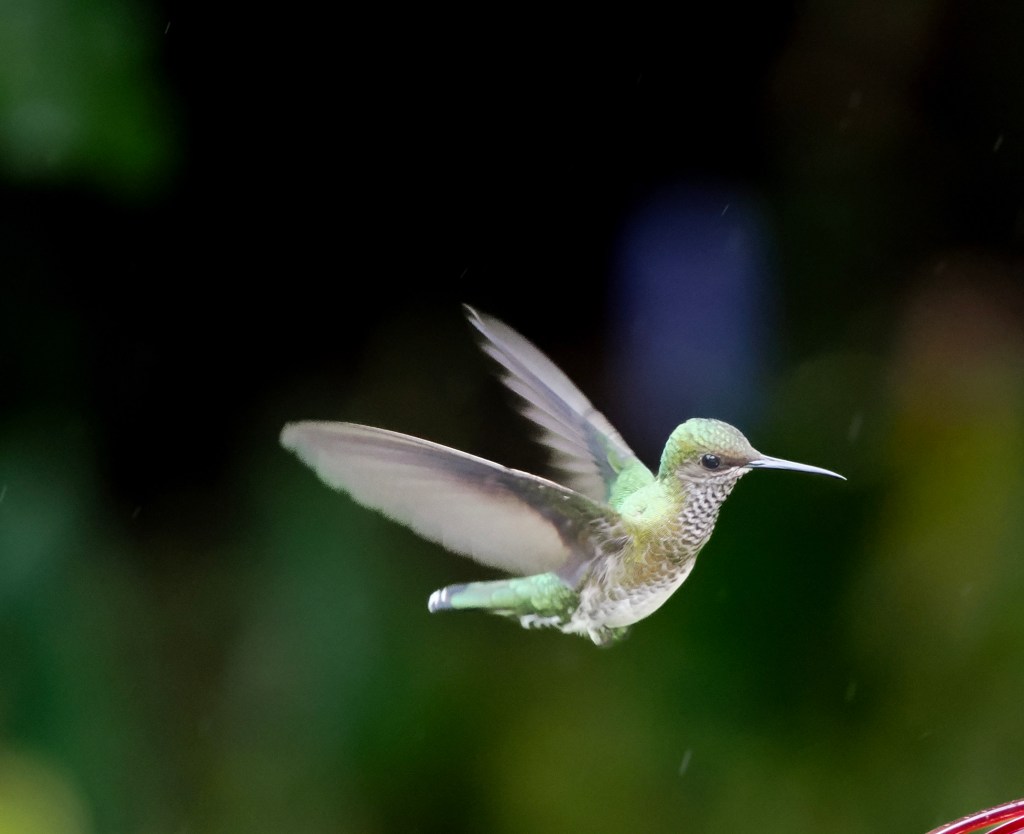
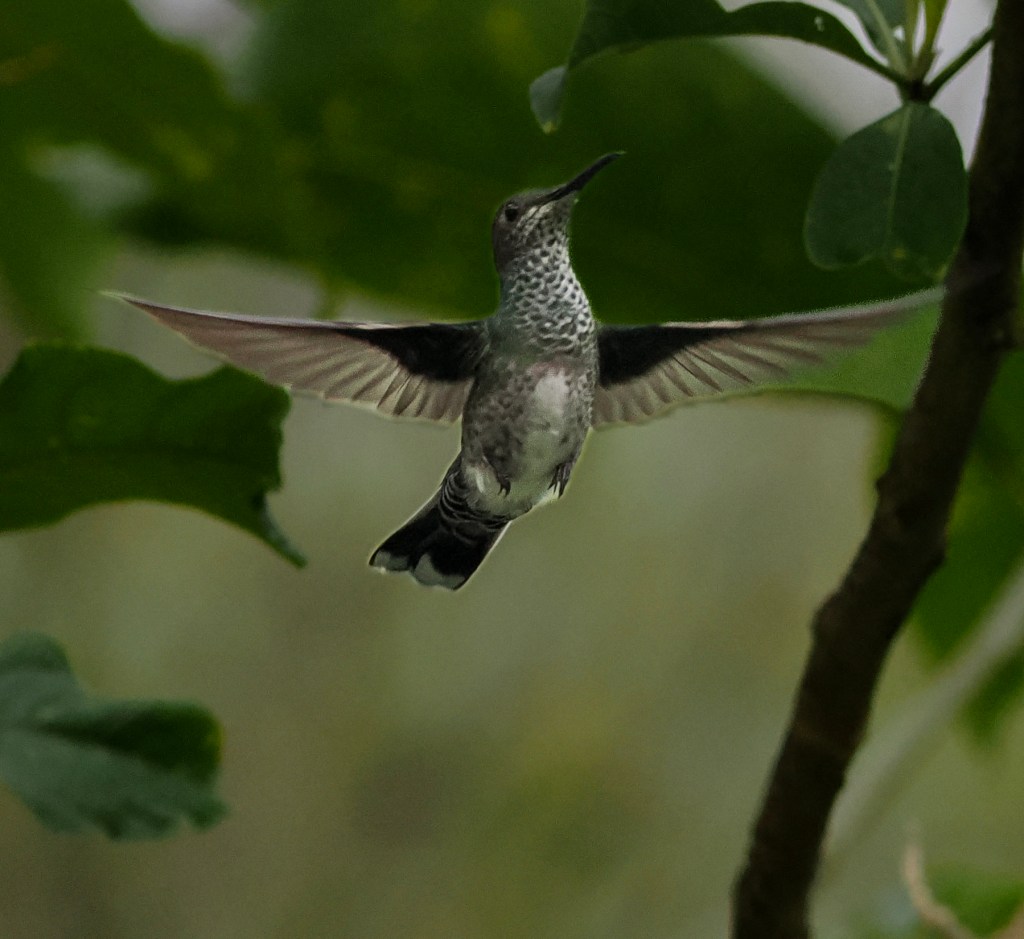
Female White-necked Jacobin. She looks nothing like the male. She is greyish-green with a heavily spotted throat, a pale belly, and a tail tipped in white, and she is easy to mistake for a different species at first.
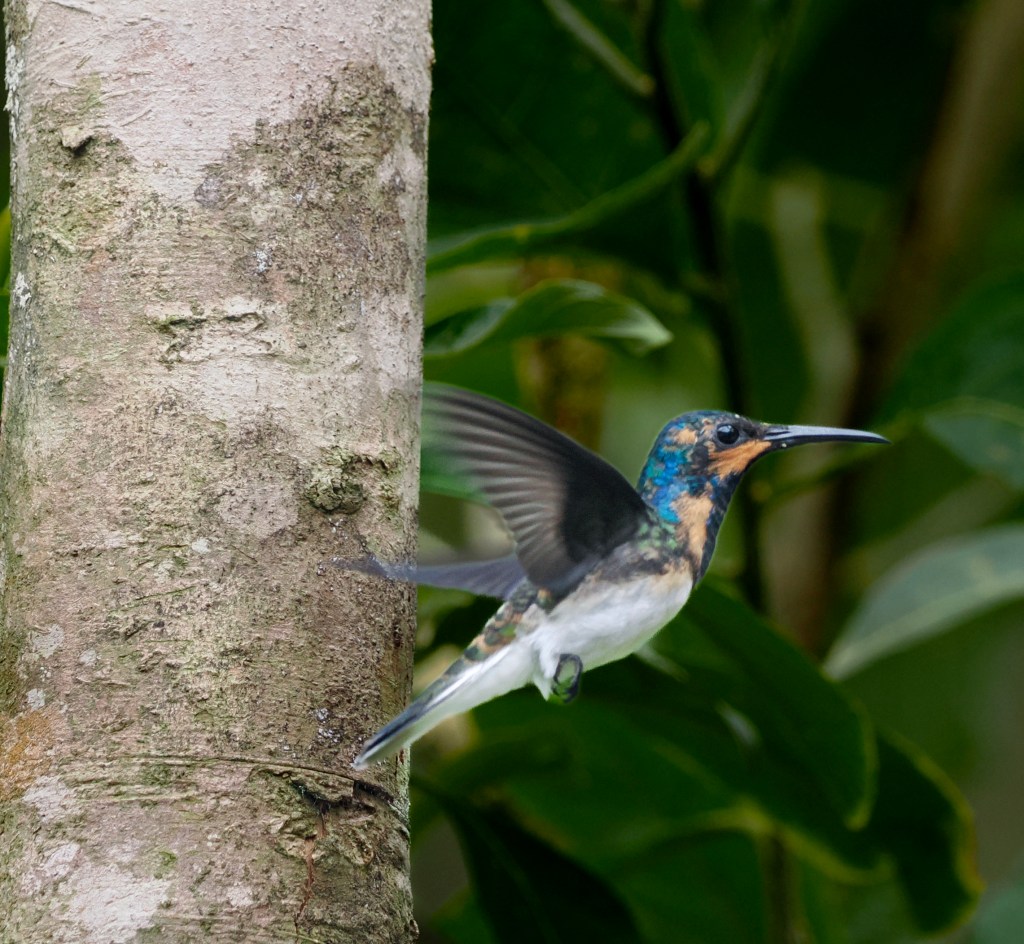
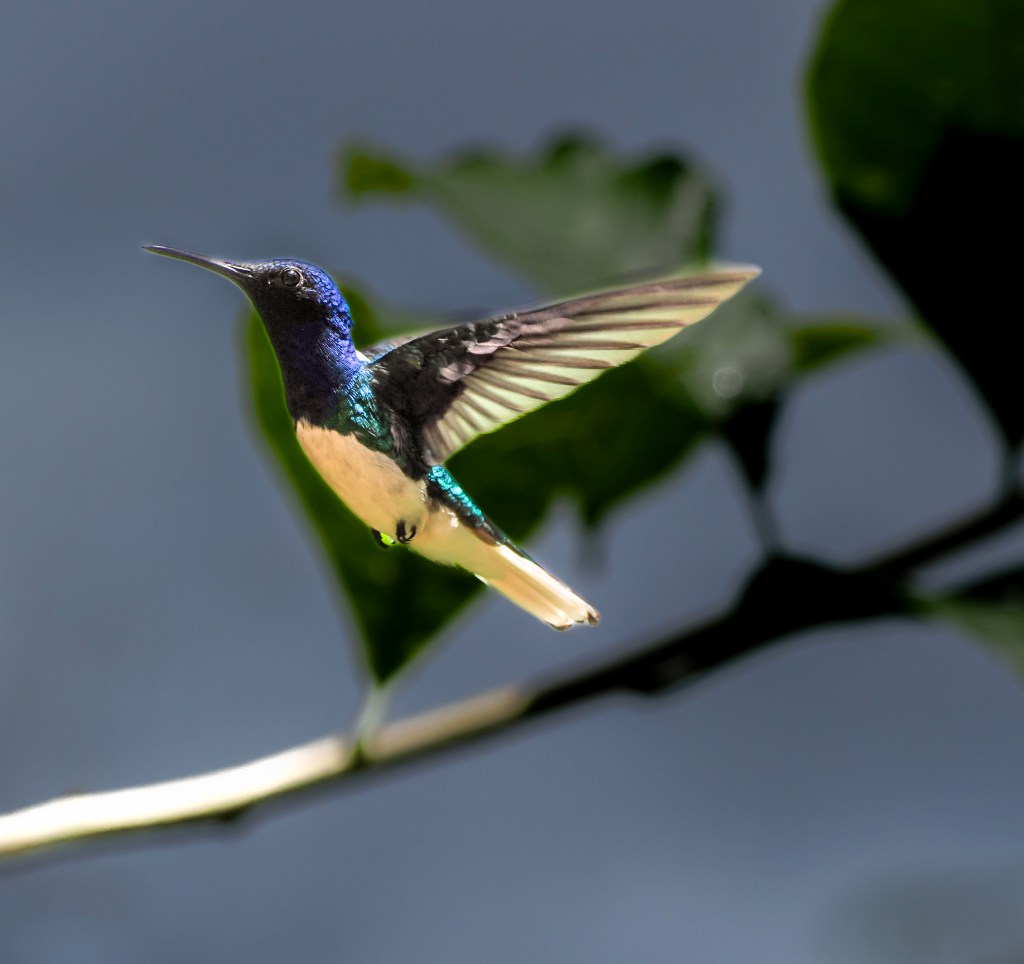
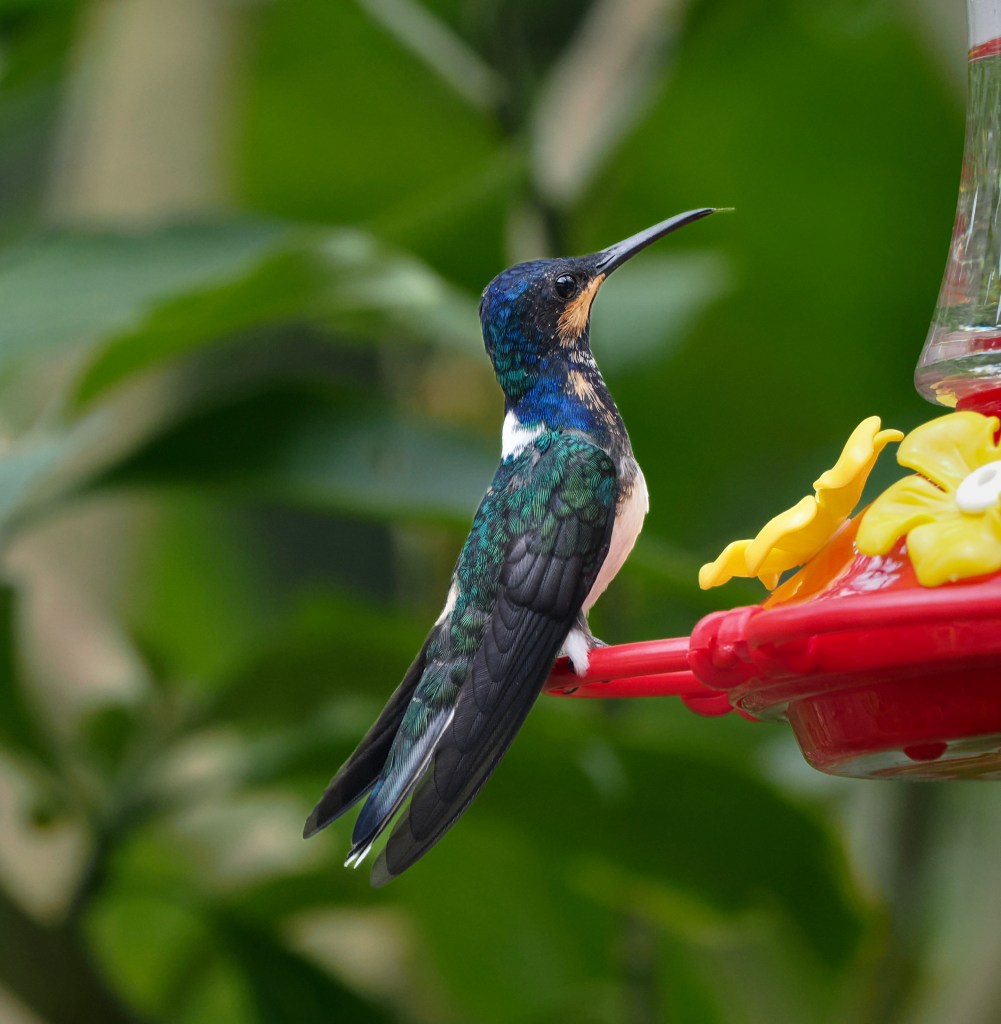
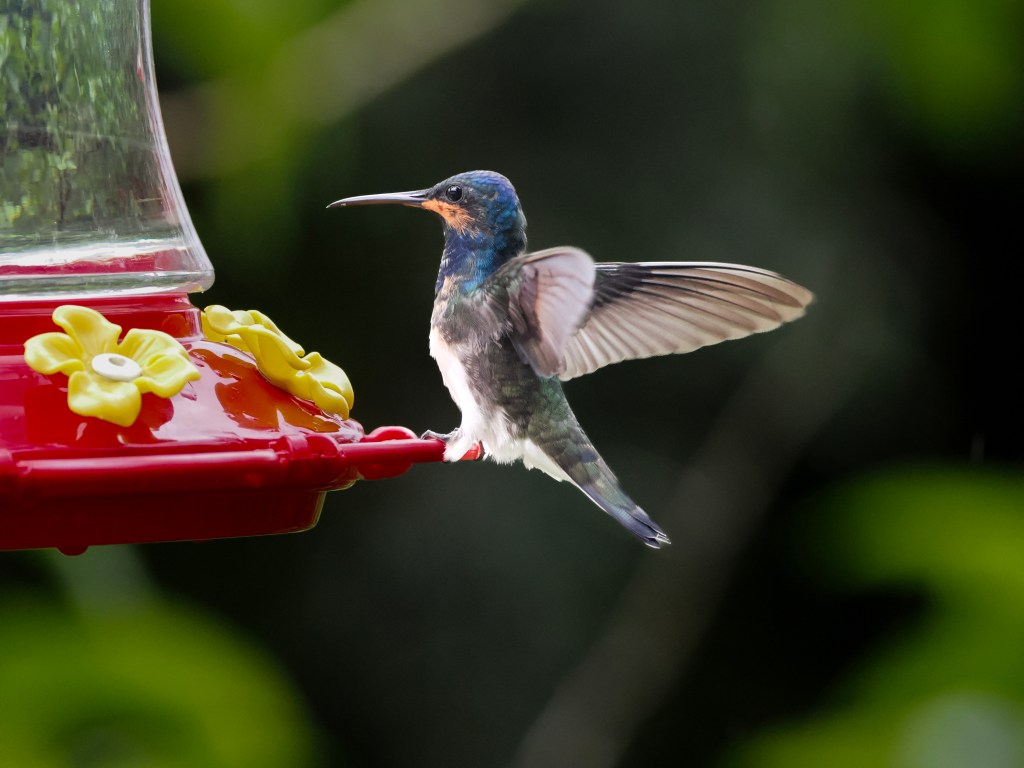
Juvenile White-necked Jacobin. The young male is a patchwork of blue head feathers, buff-orange throat patches, a clean white belly, and scattered green. He is still growing into his adult look.
The Hermits: The Reward for Patience

Hermits are quieter, browner, and harder to photograph than the jacobins, with long curved bills and a habit of darting in and out.

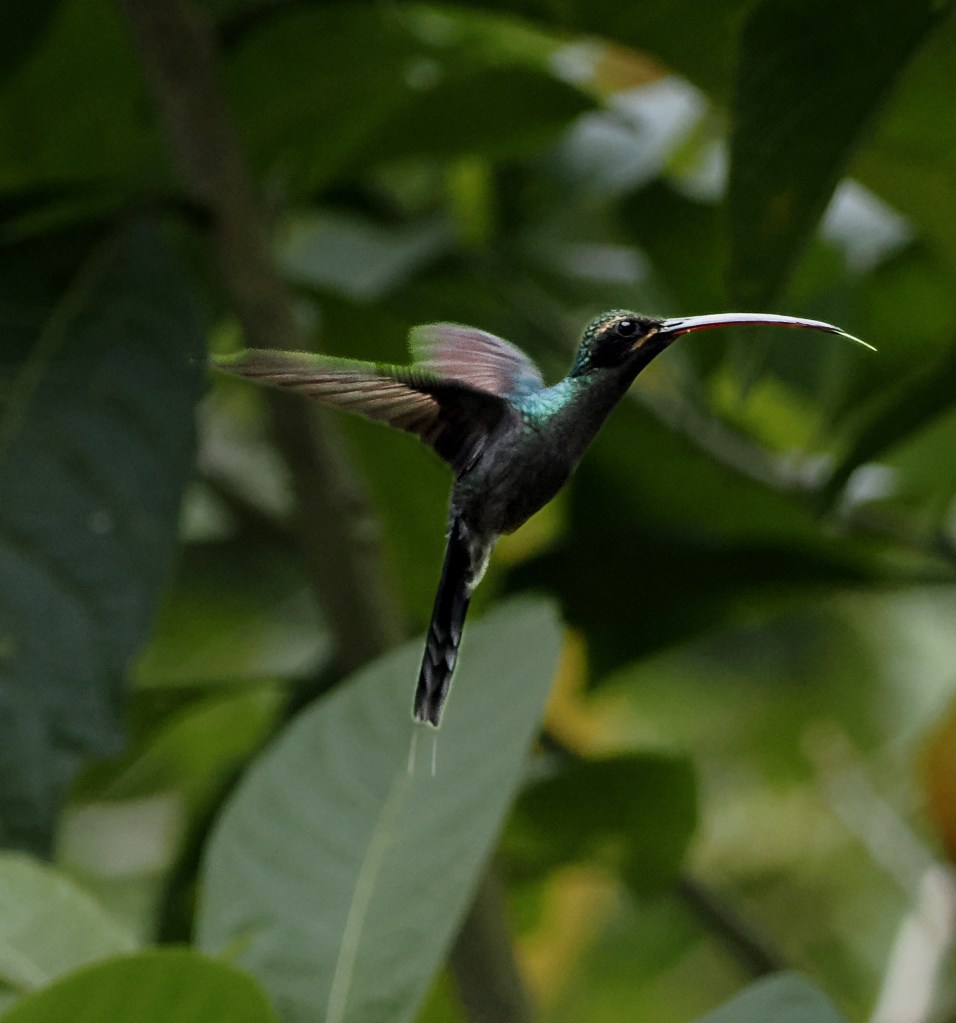
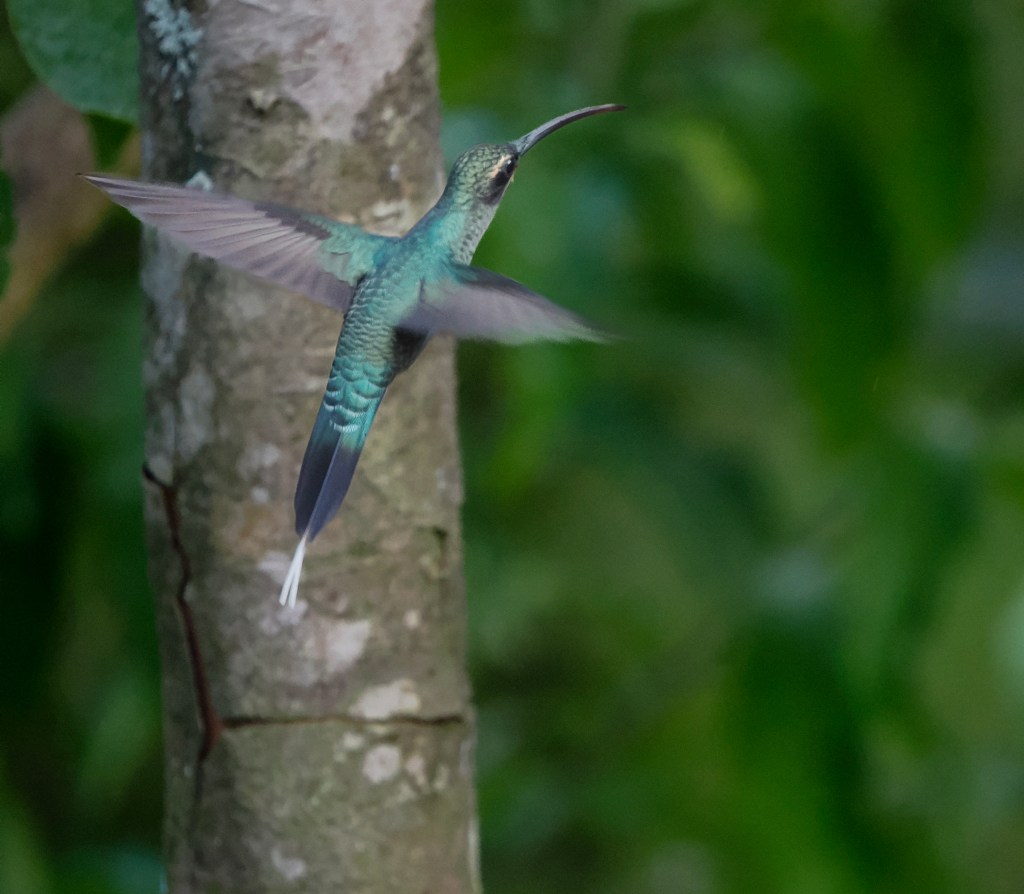
Green Hermit. t. Mine hovered in dim forest light, showing a long, curved bill with a red base, a dark body, and a long, dark tail.
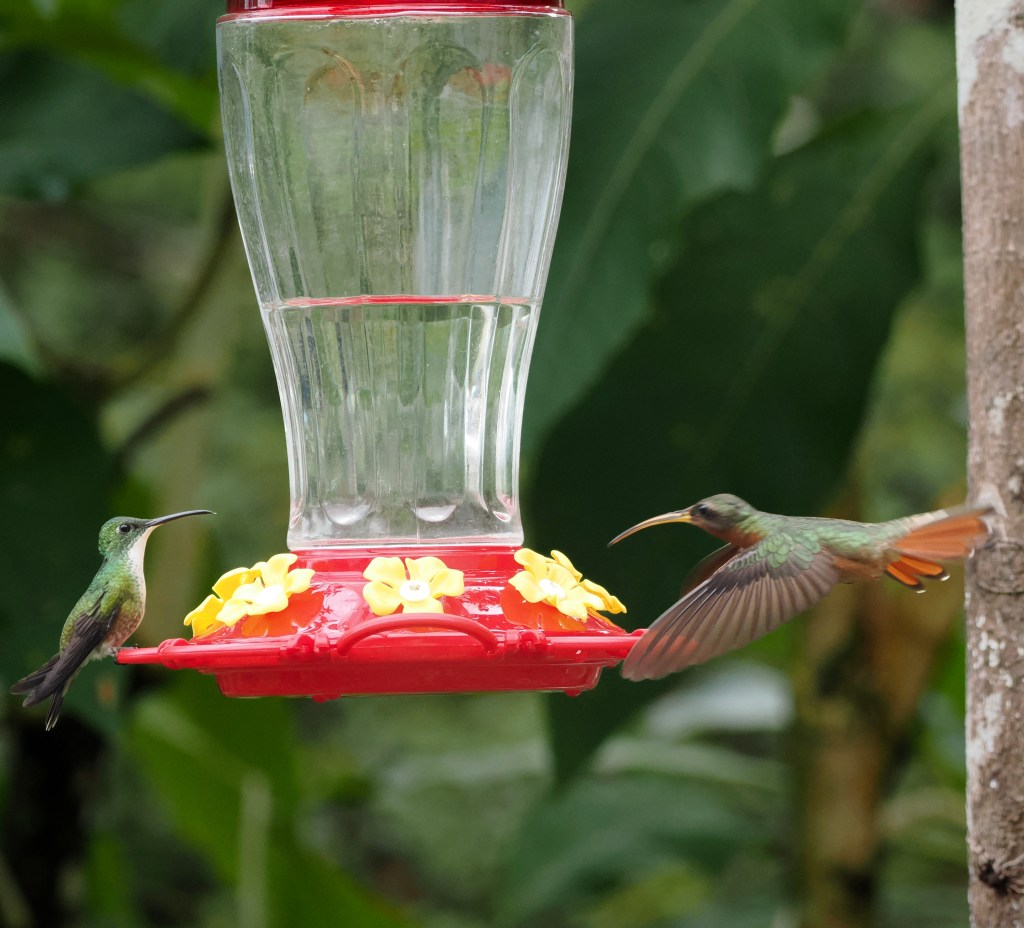
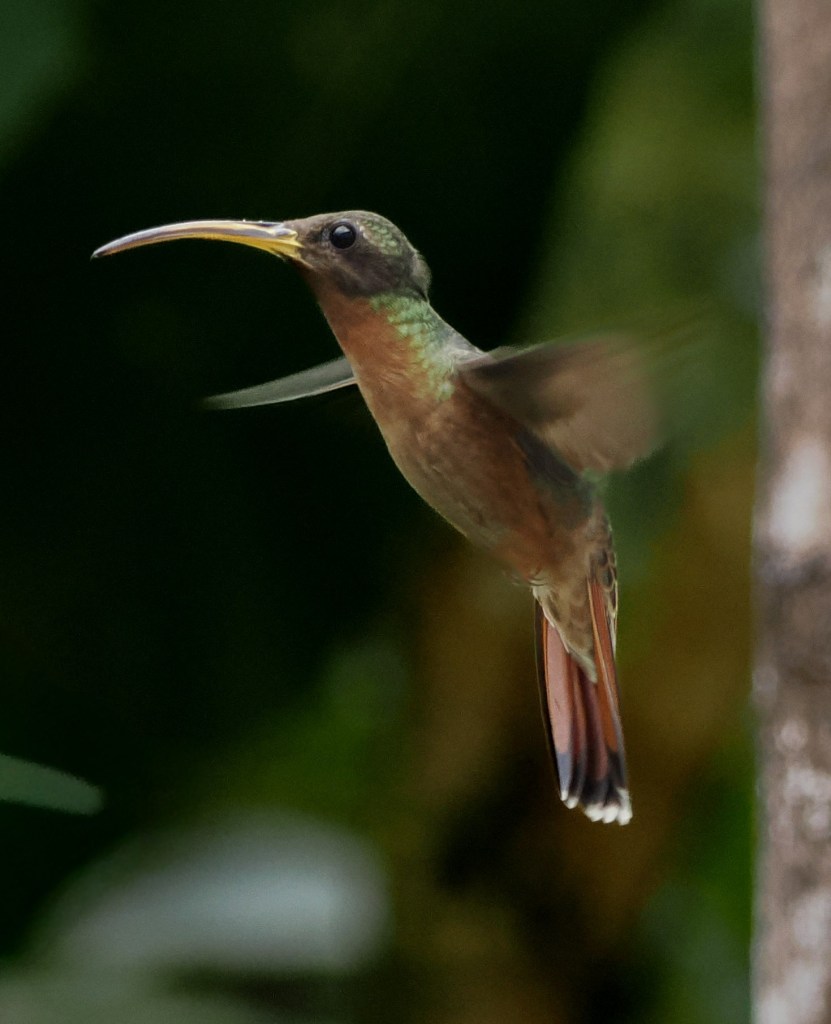
Rufous-breasted Hermit. I caught one in mid-flight at a feeder, bill curved like a sickle and its orange tail flared, while a White-chested Emerald watched from the perch.
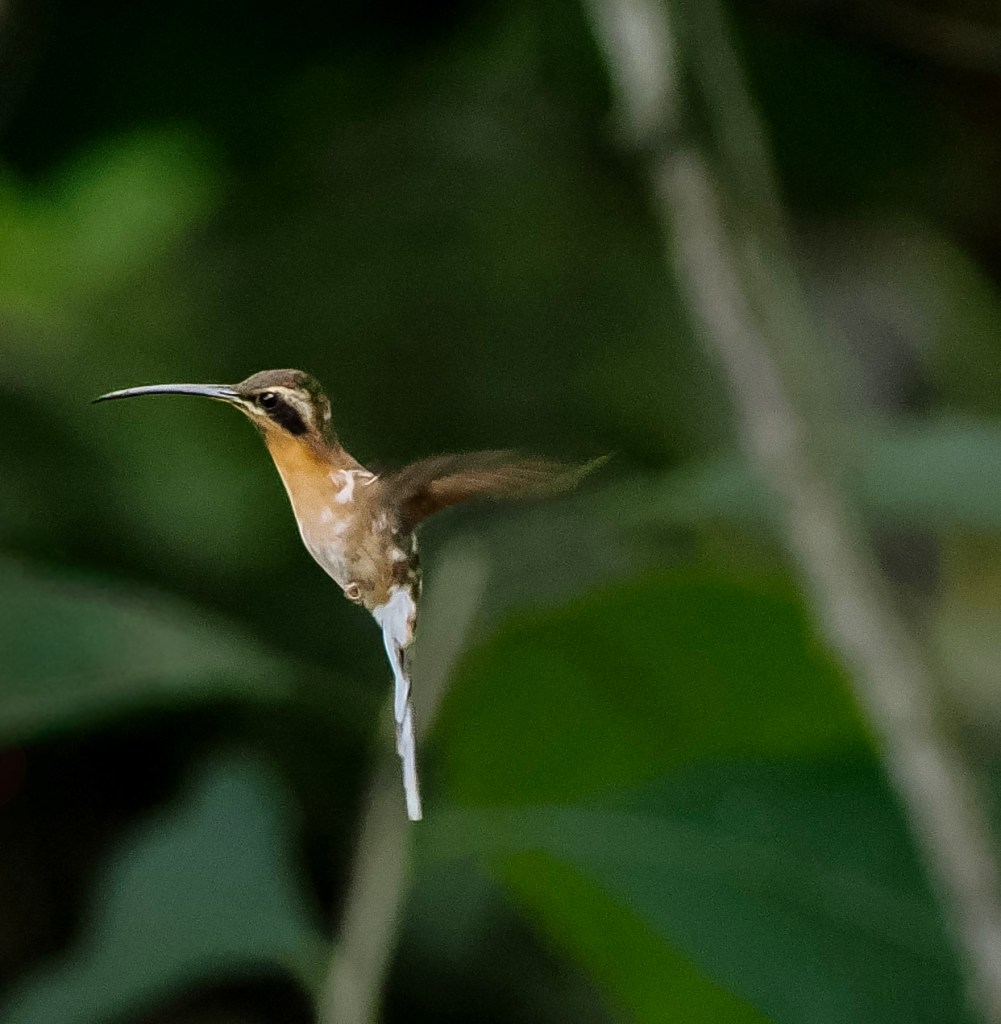
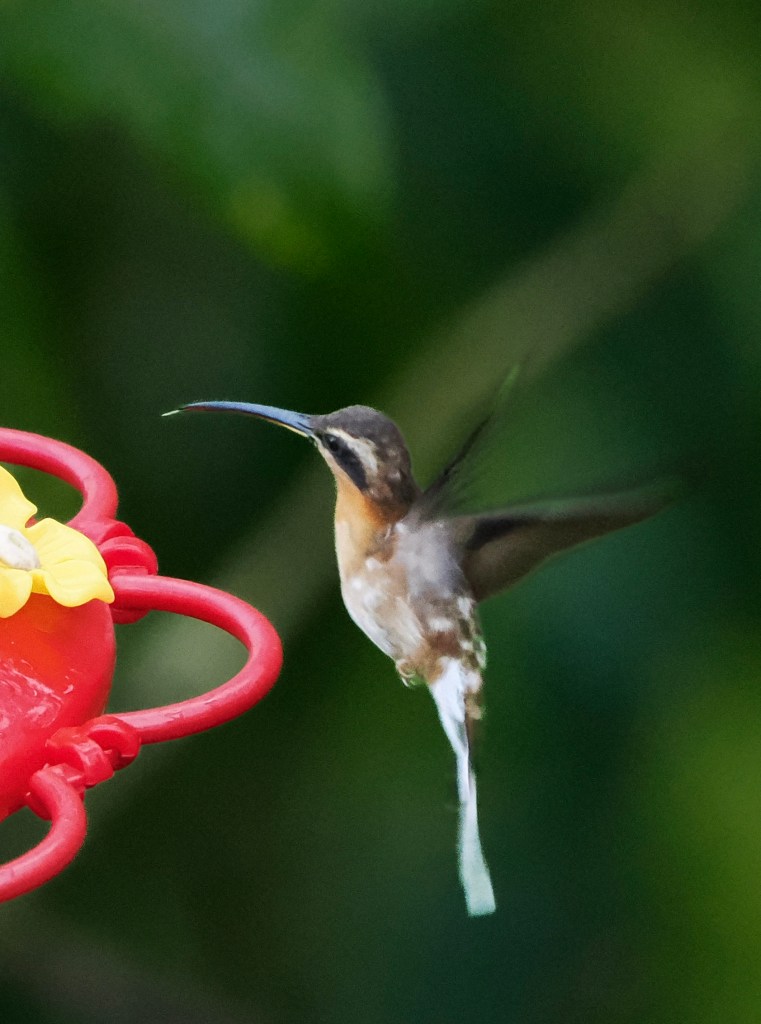
Little Hermit. Small and delicate, with a buff throat, a dark mask, and a white-centered tail. It was the hardest of the hermits to photograph because it never held still.
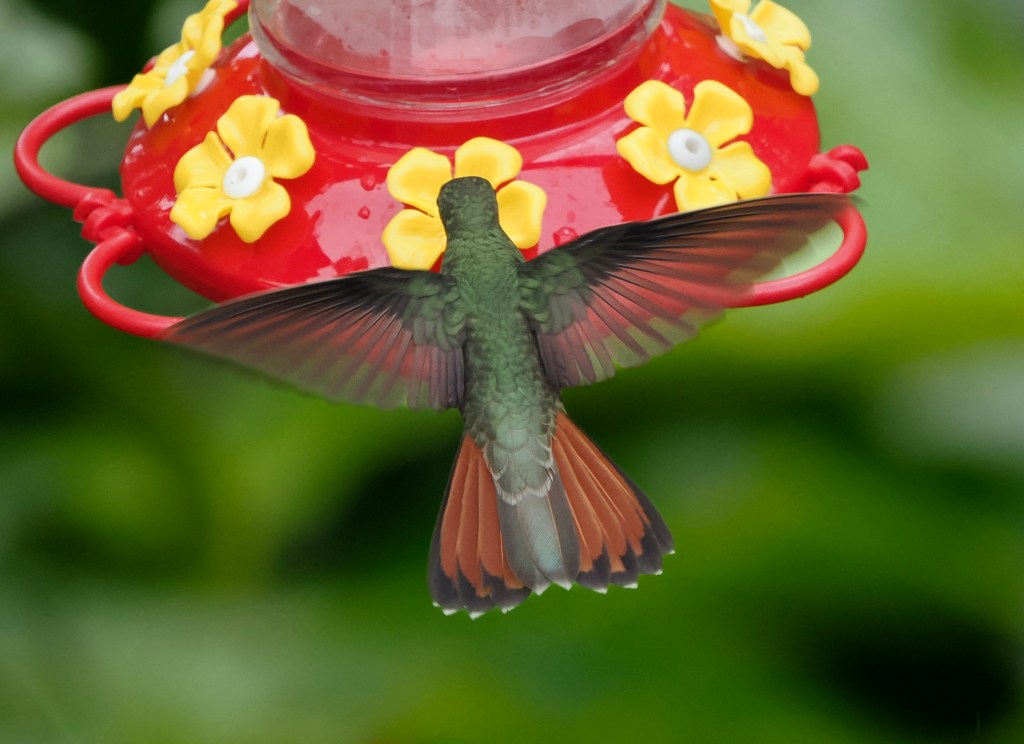
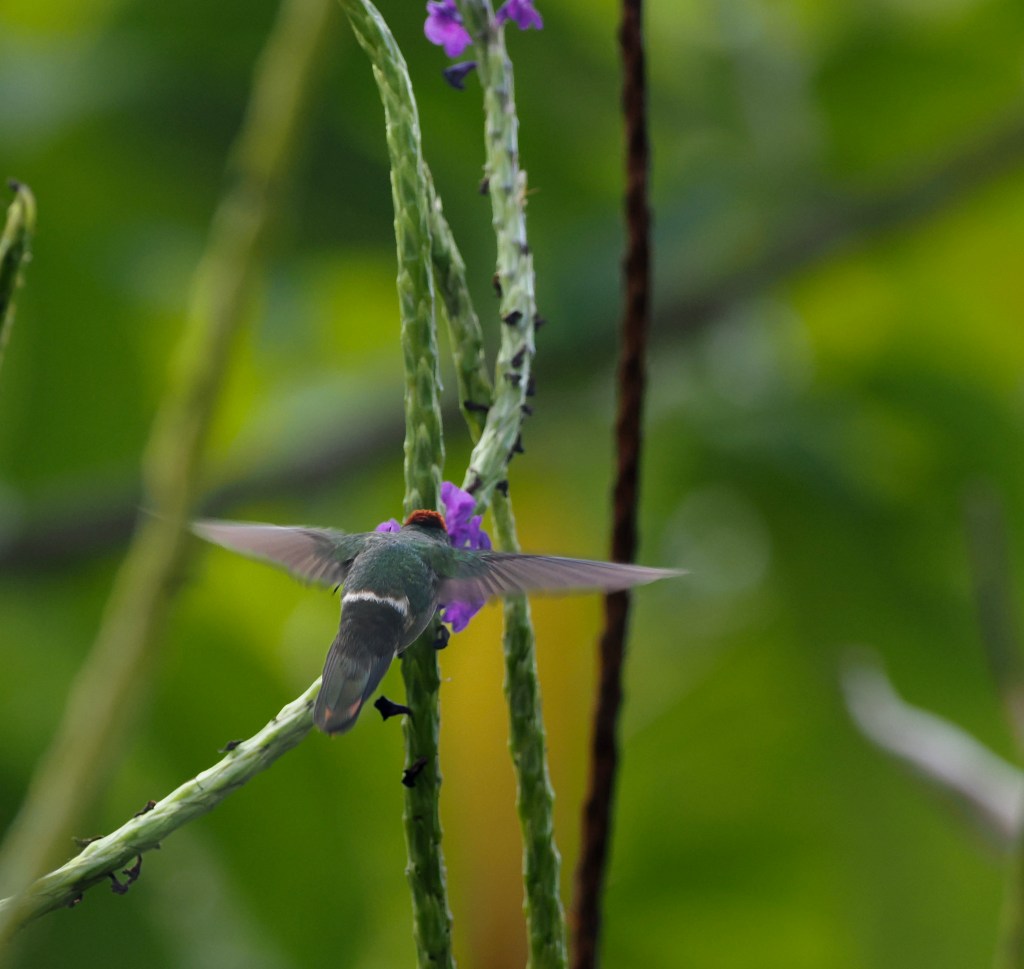
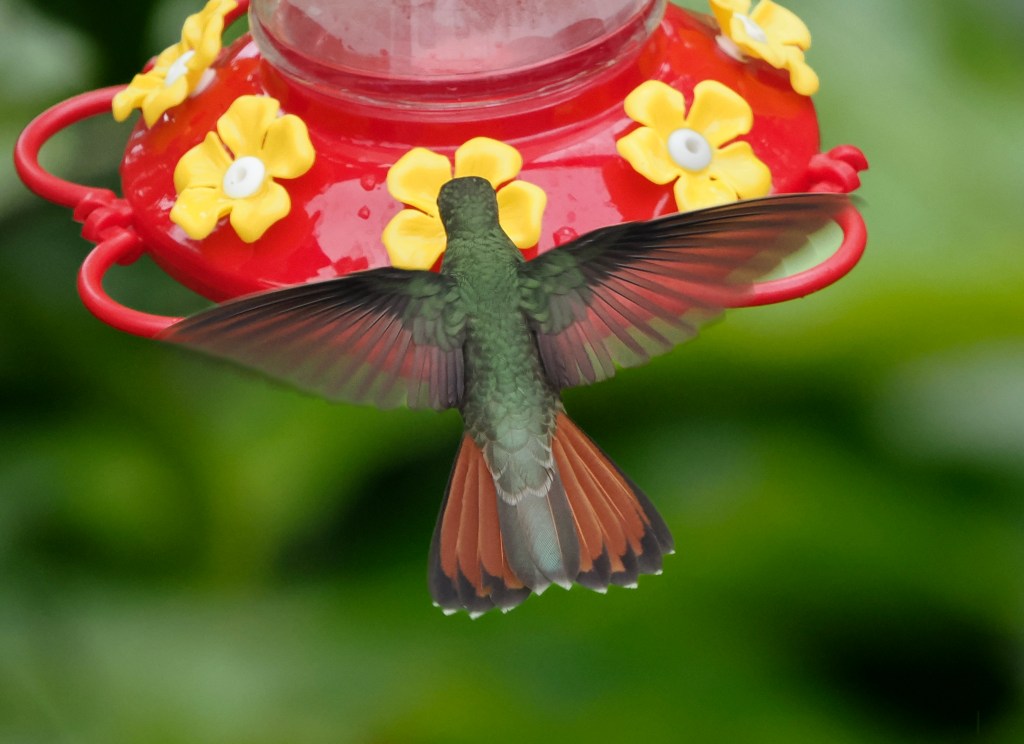
Rufous-tailed Hummingbird. I got a shot of this one from behind at a feeder, wings spread and a rust-colored tail fanned open like a skirt.
The Showstoppers

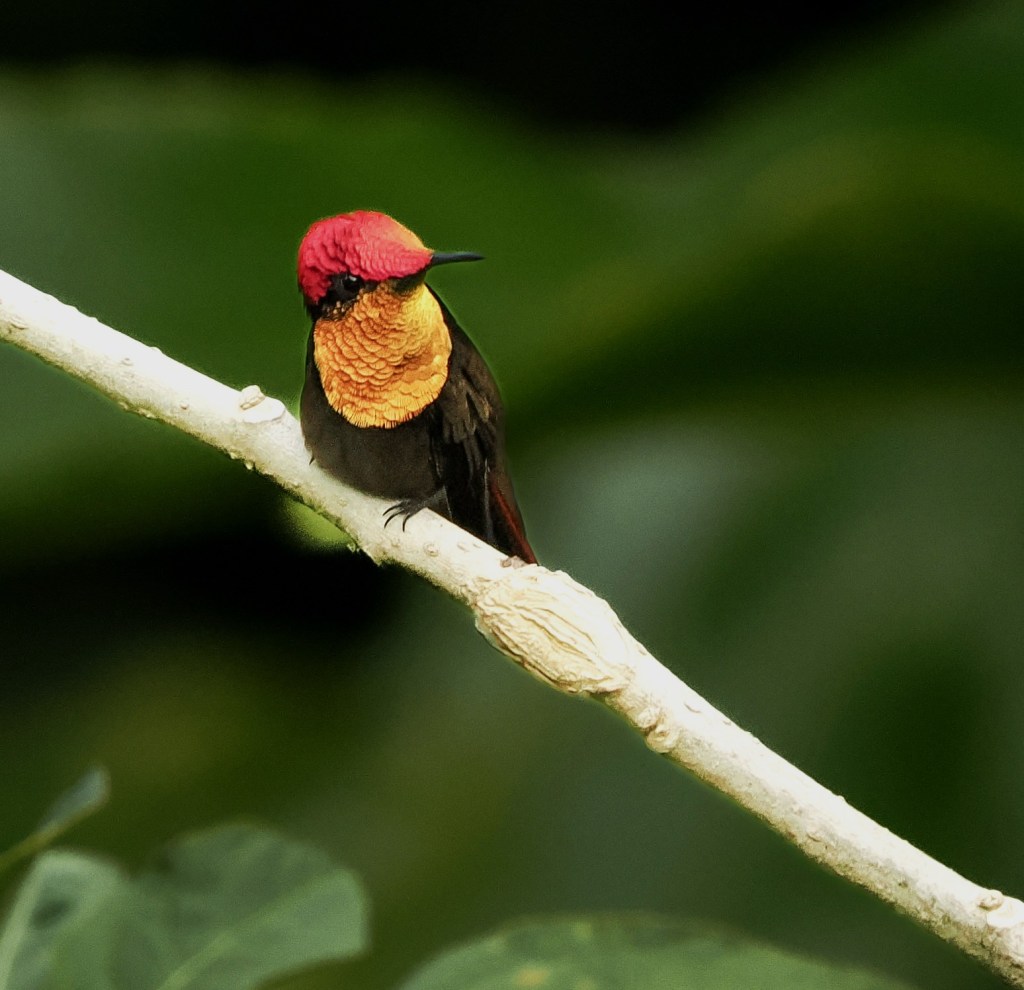
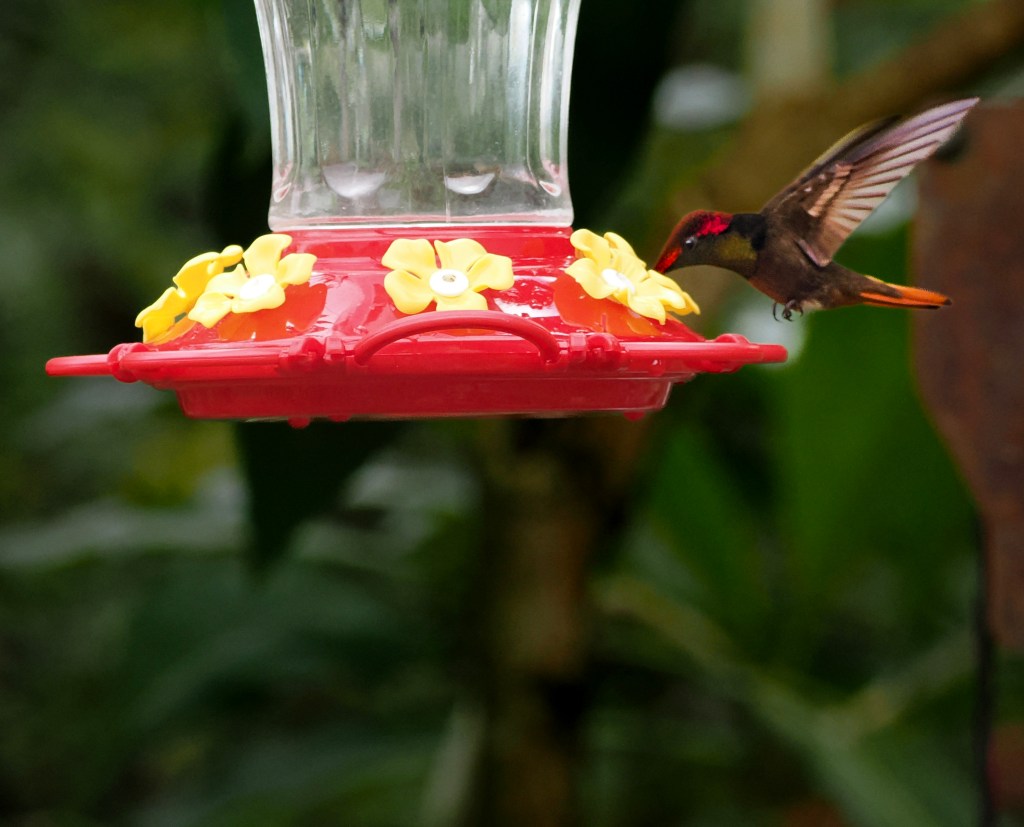
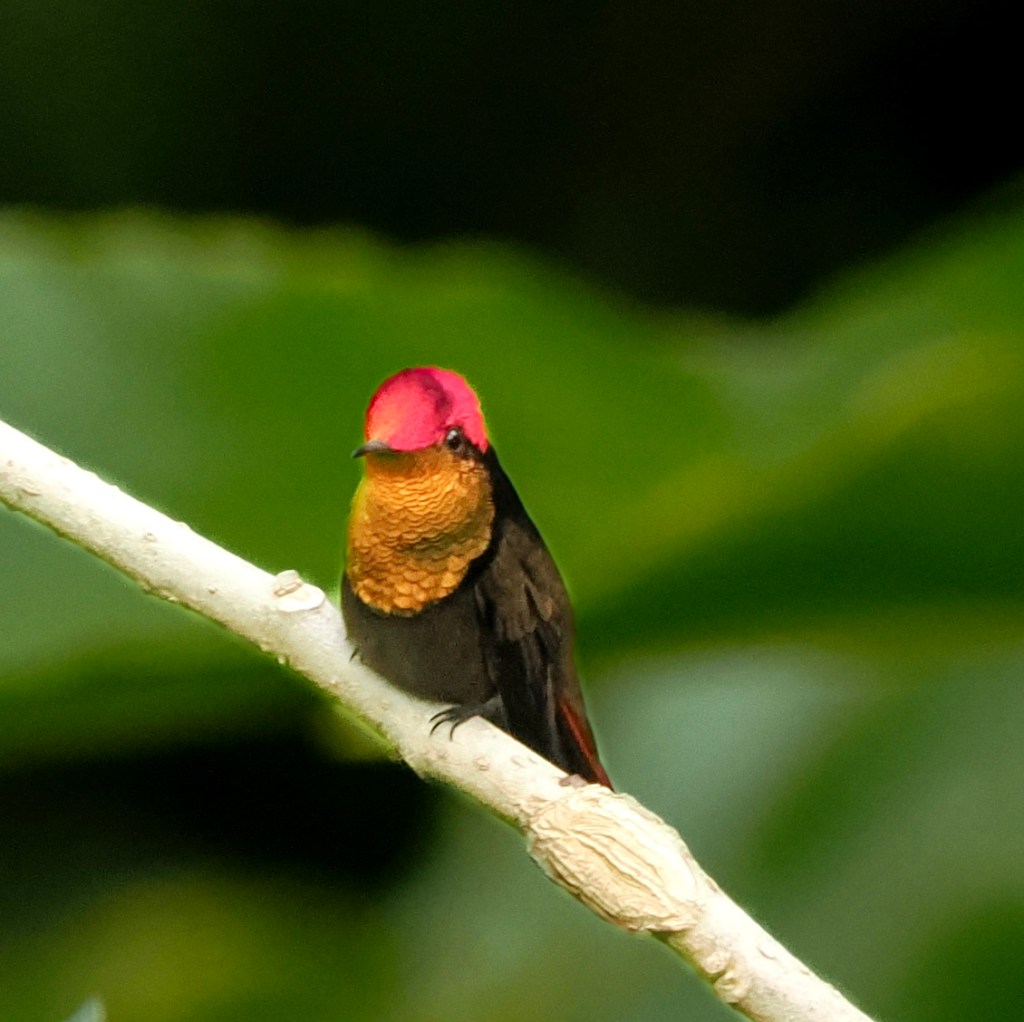
Ruby-topaz Hummingbird. This was the one that got away, sort of. I never managed a good flight shot with its tail spread. I did photograph it perched on a branch, and it is still unforgettable: a ruby-red crown, a golden-orange throat, and a dark body, like a tiny jewel.
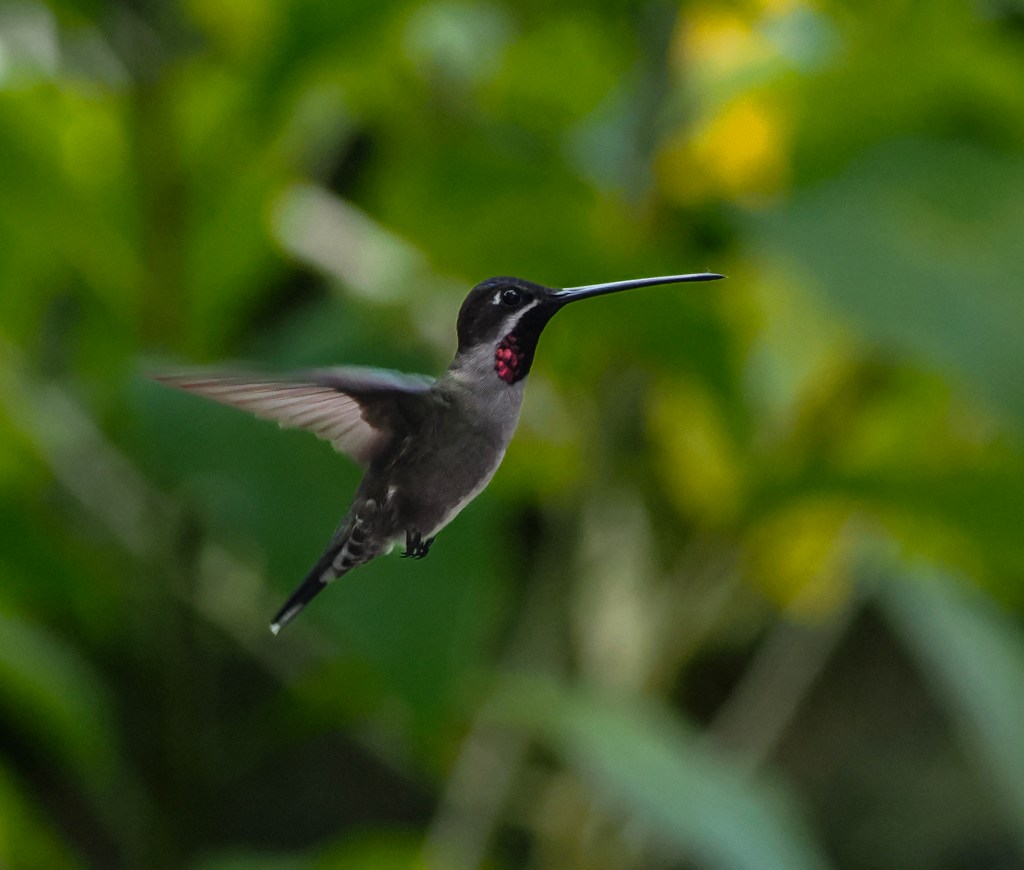
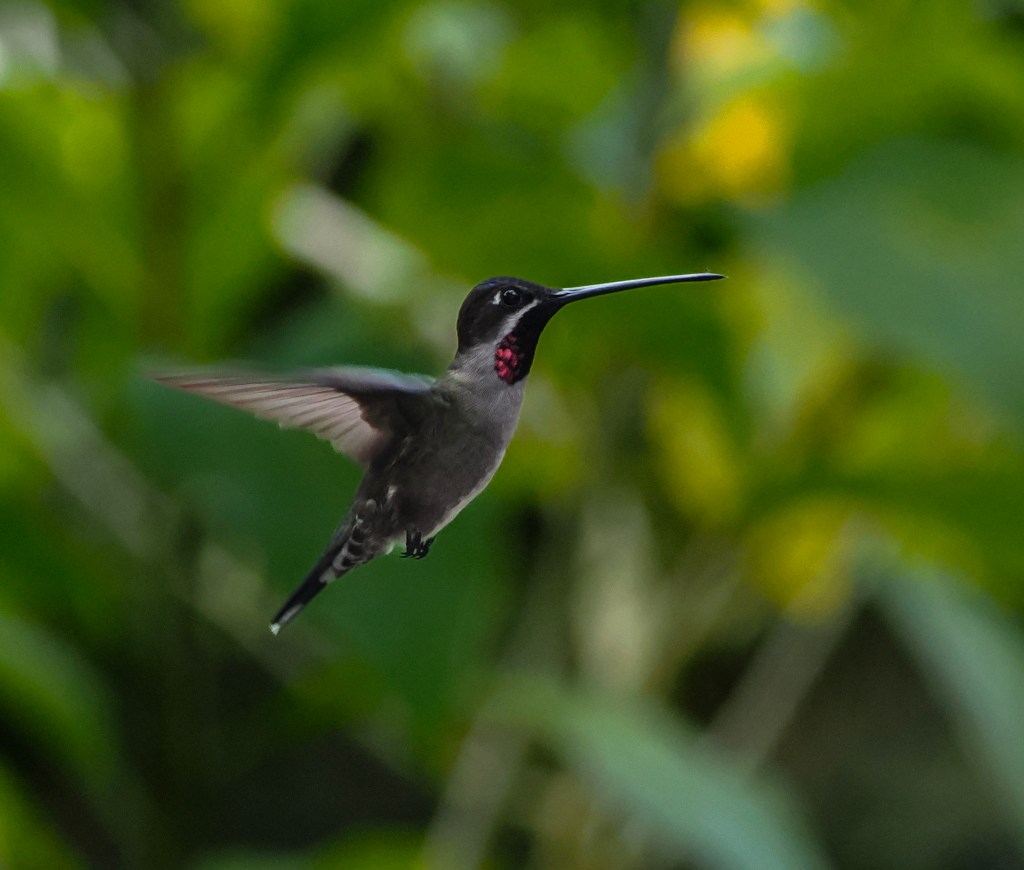
Long-billed Starthroat. A male in flight with a magenta-red throat patch, a bold white stripe behind the eye, and a long, straight bill, hence the name. The throat looks dull until the light catches it, then flashes red.
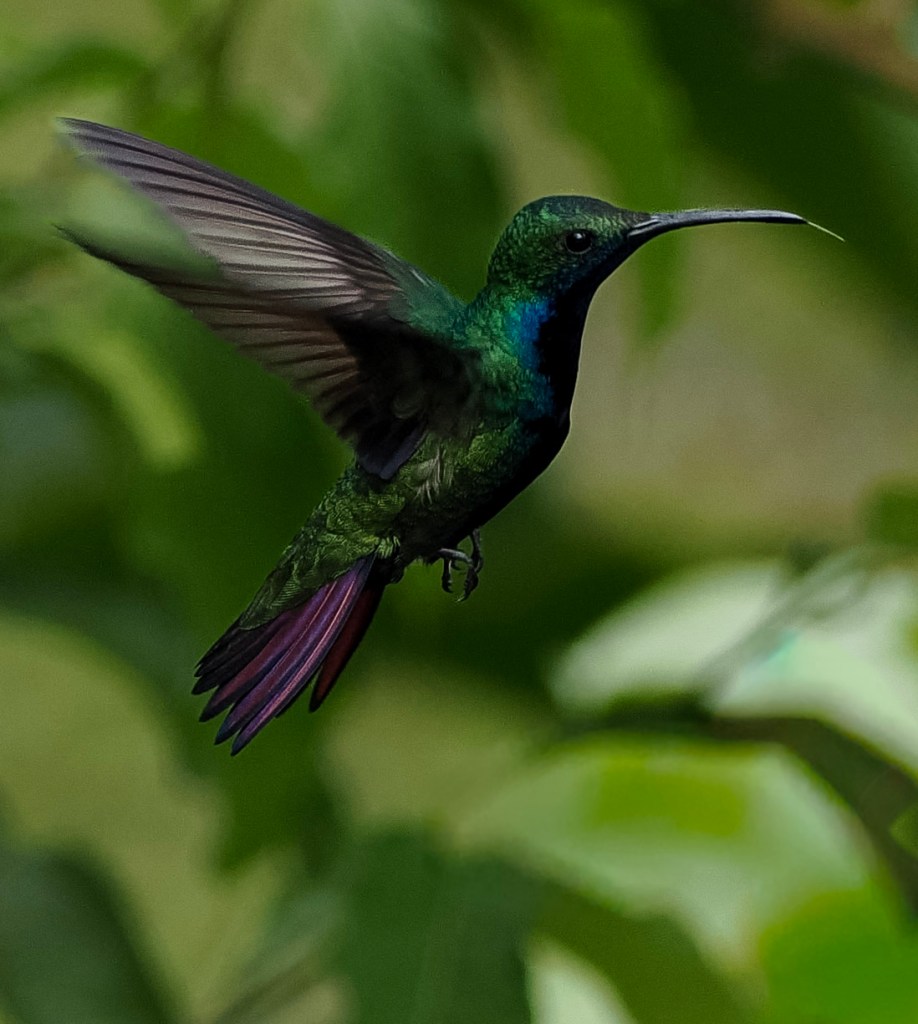
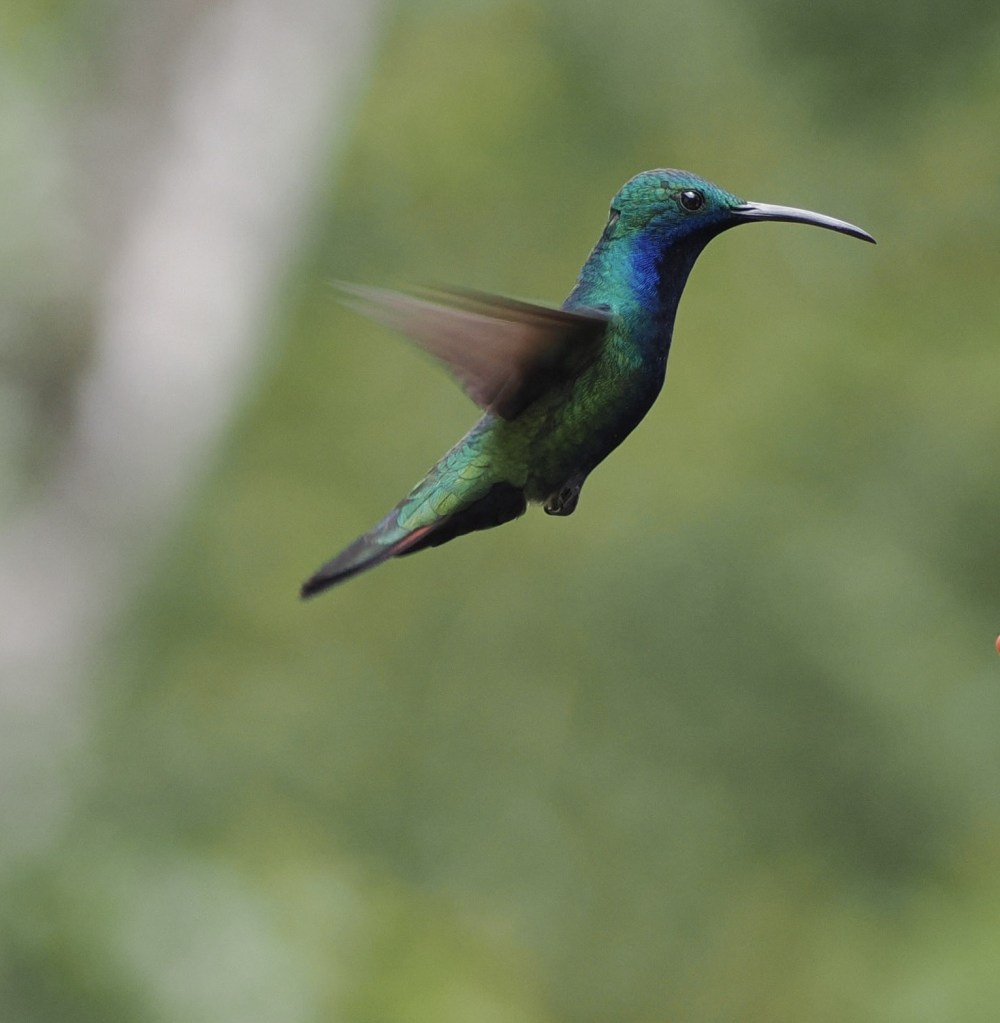
Black-throated Mango. My photo shows a long curved bill, a blue patch against a black throat, and a purple tail.
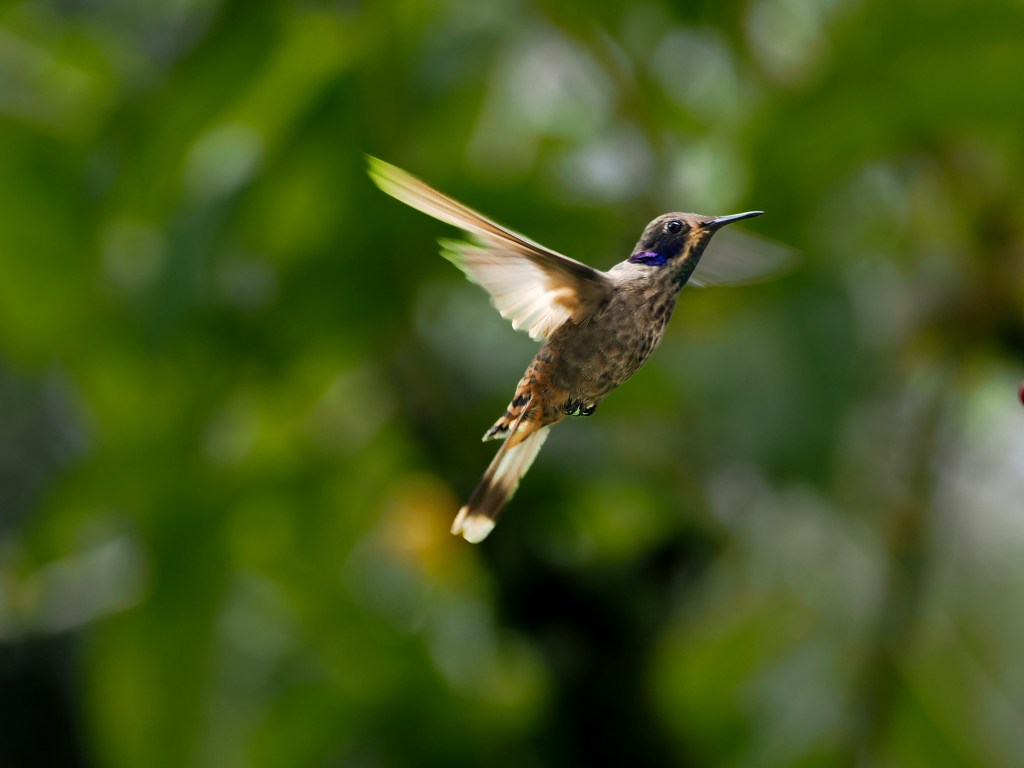
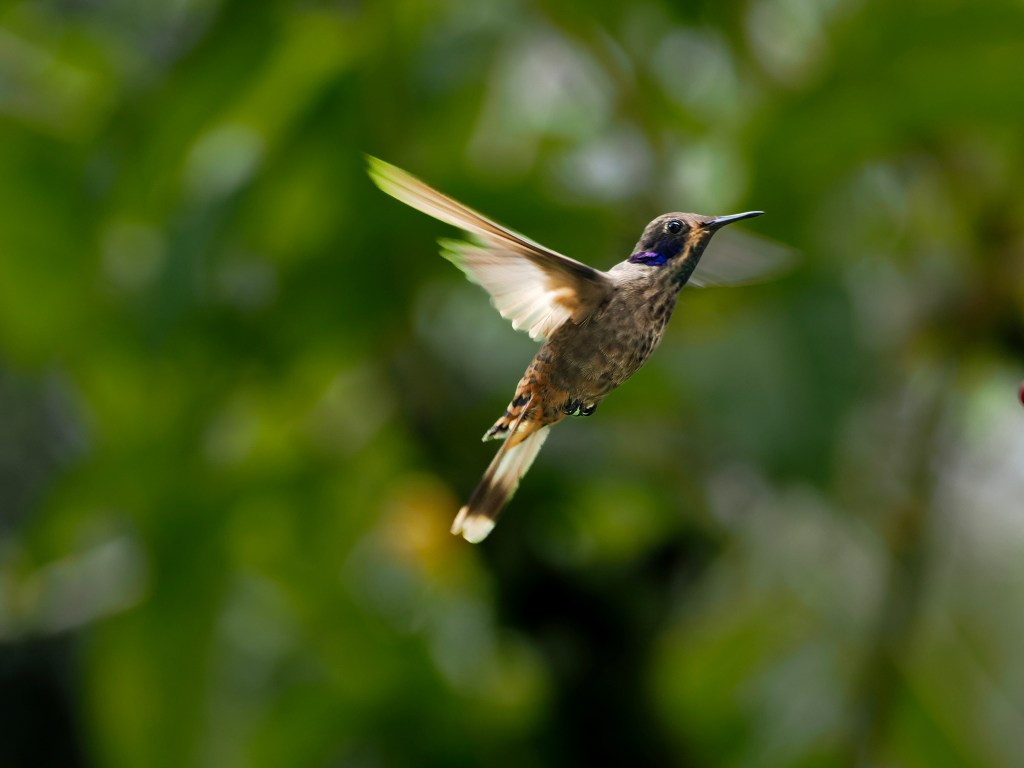
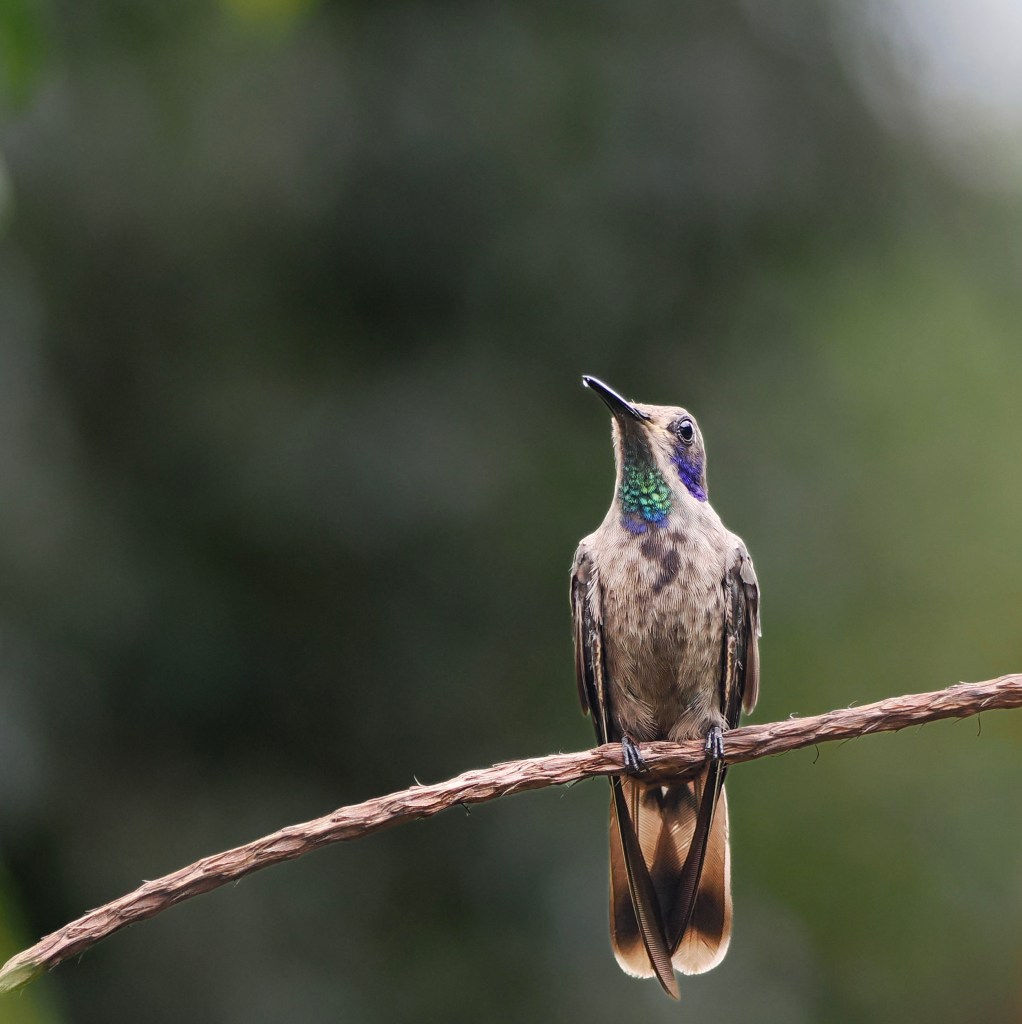
Brown Violetear. The quiet one. It is mostly soft brown and mottled, but a violet “ear” patch and a flash of green at the throat catch the light. I photographed it both in flight and perched calmly on a vine.
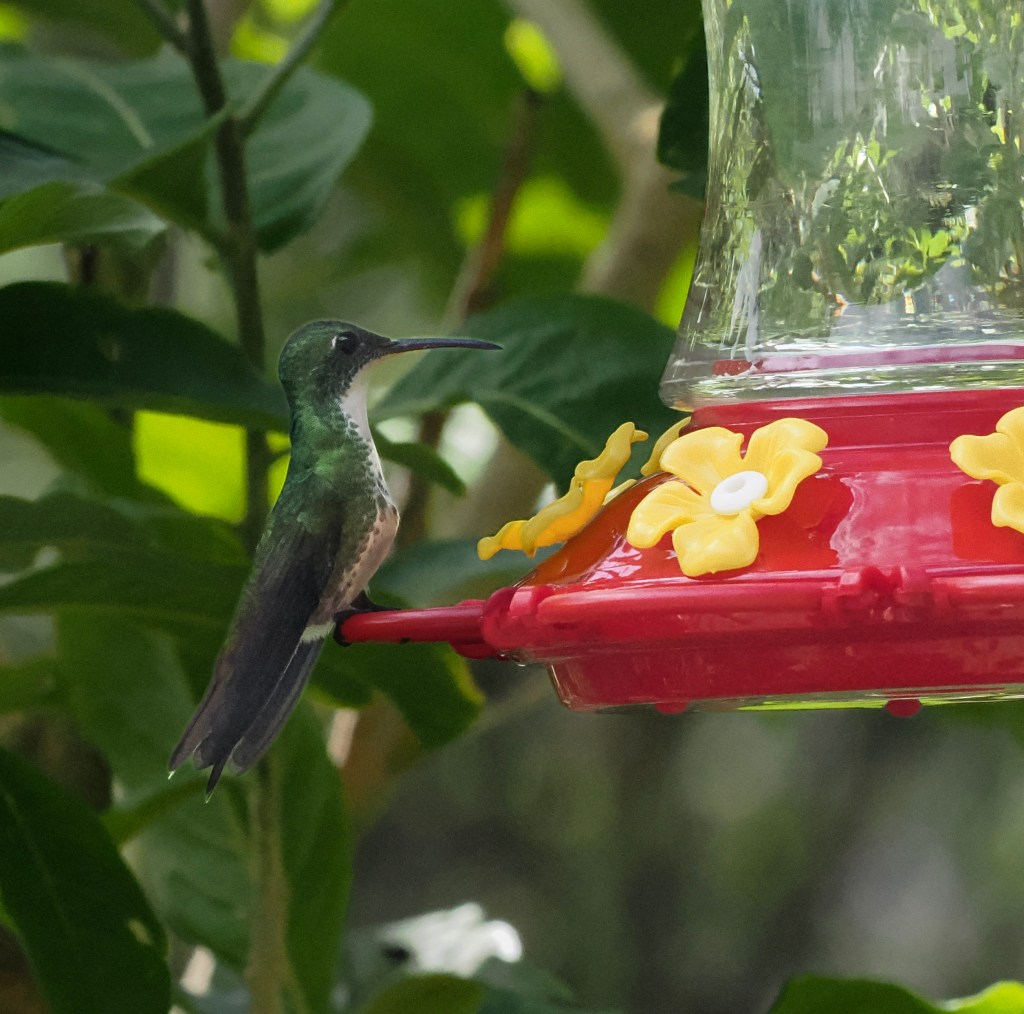
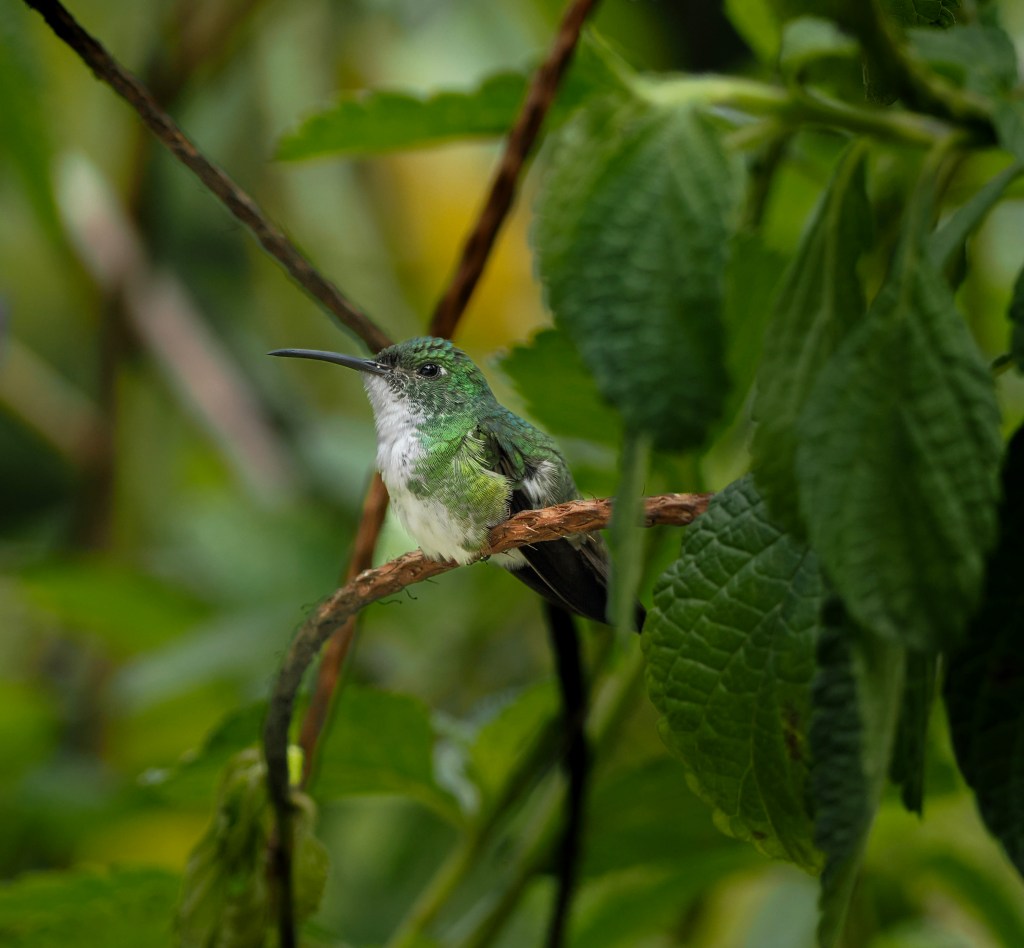
White-chested Emerald. A small, elegant green hummingbird with a clean white throat and chest. I photographed it perched on a branch.
The Rare One That Never Came to the Feeders: Tufted Coquette

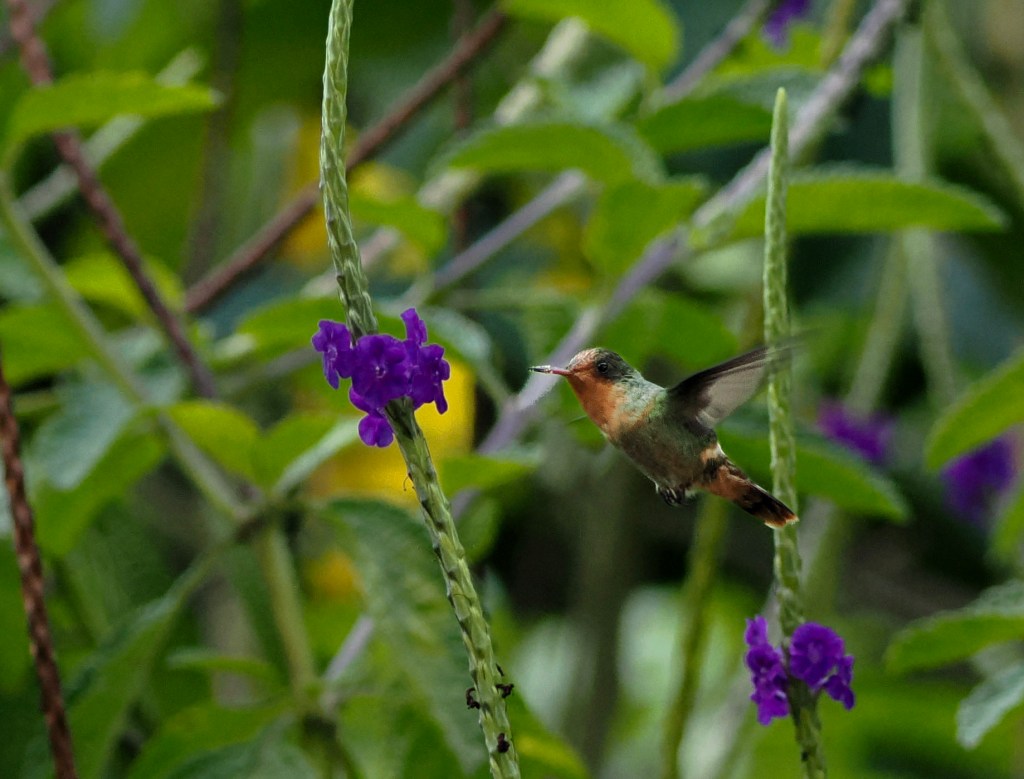
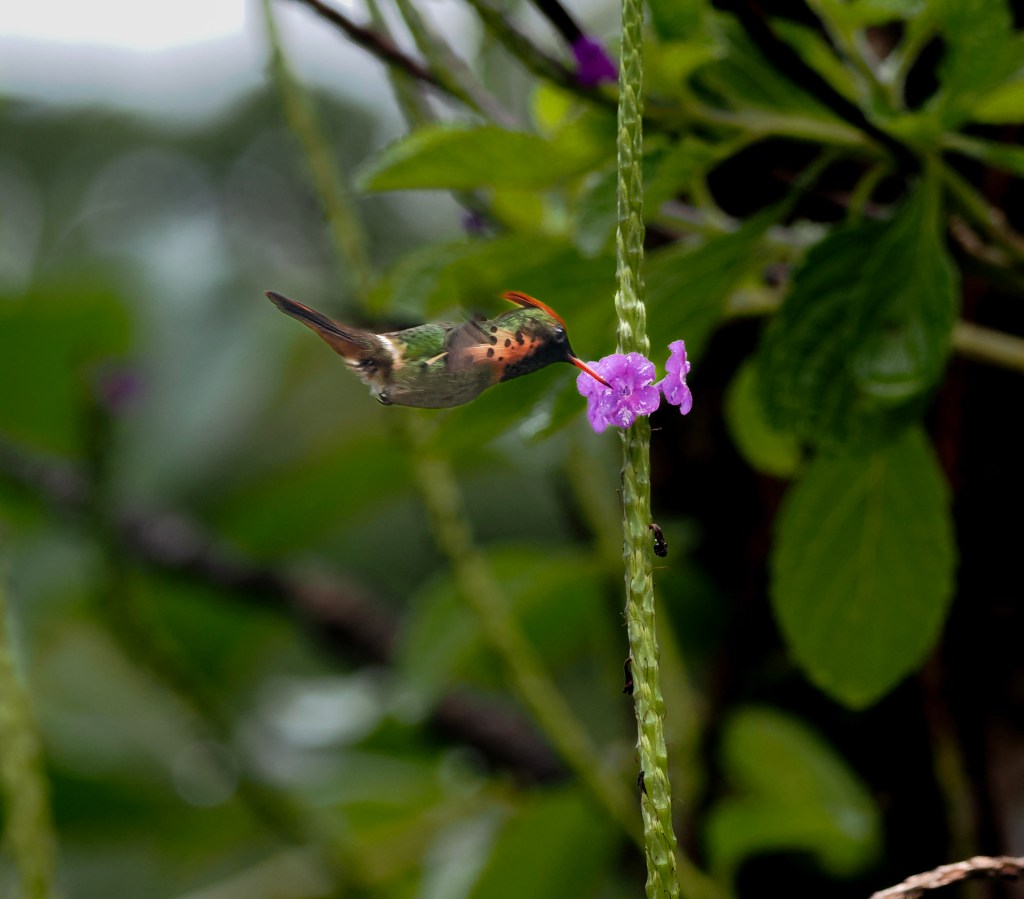
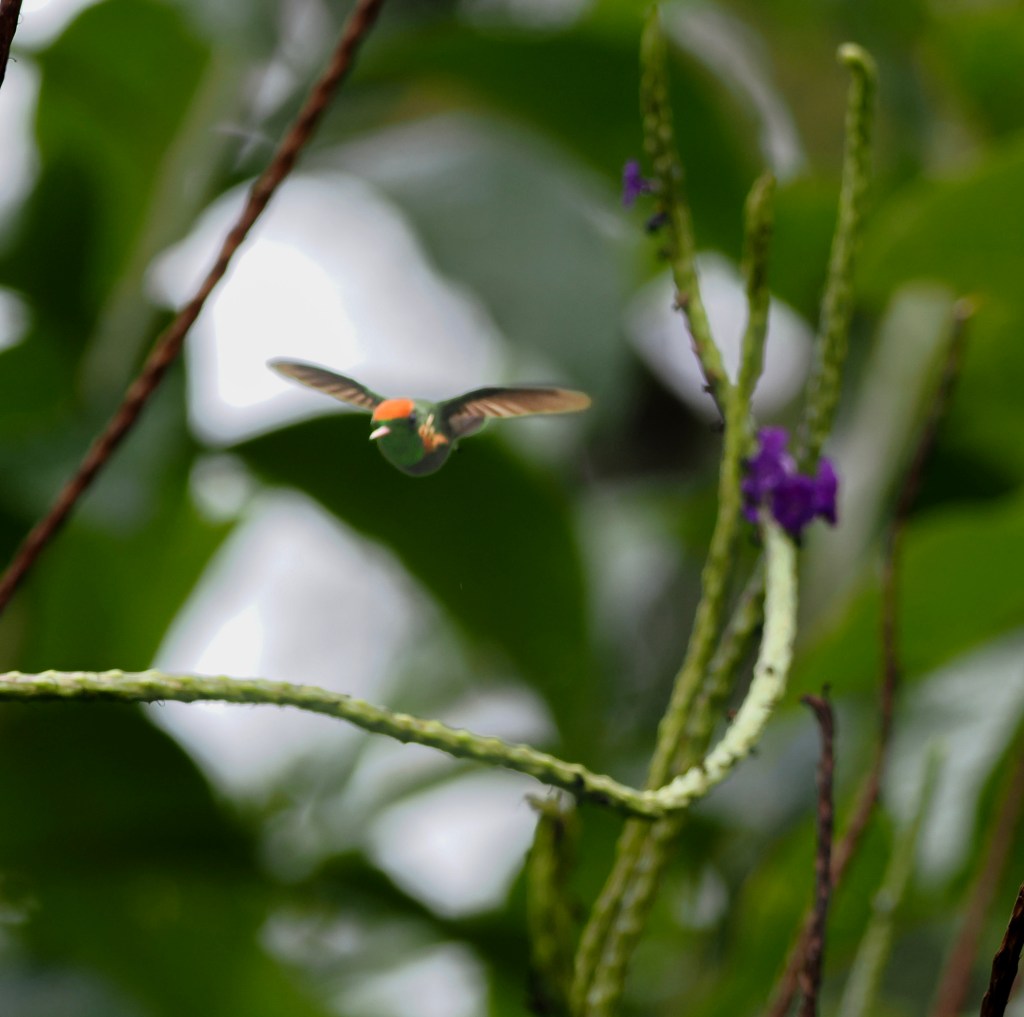
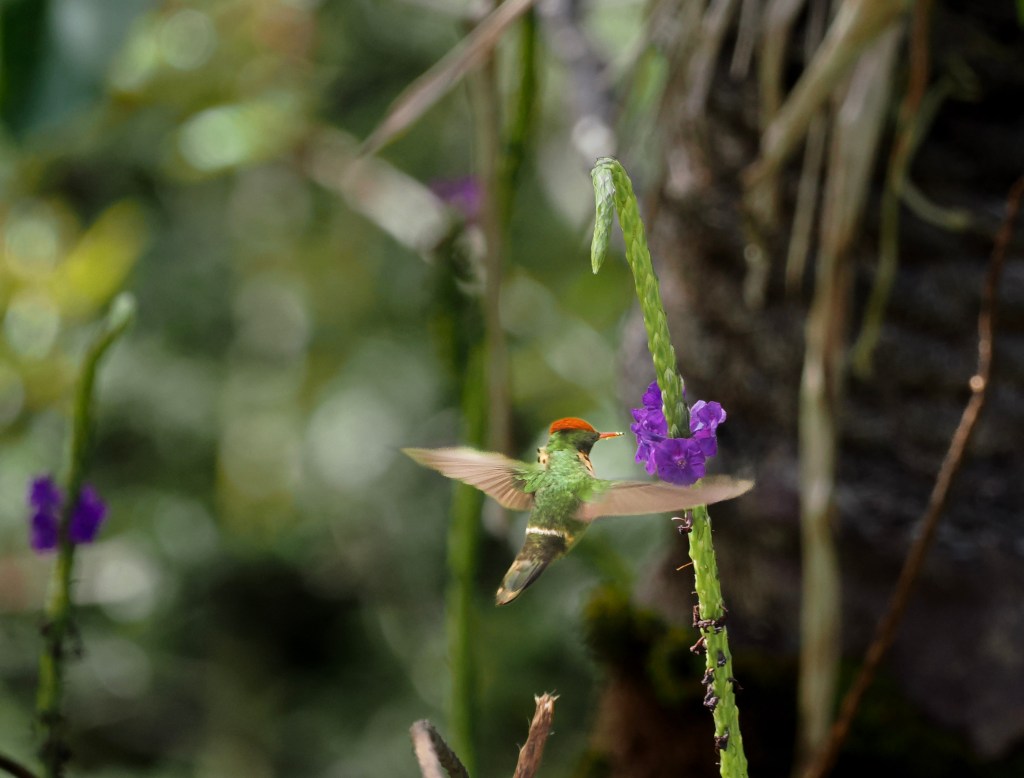
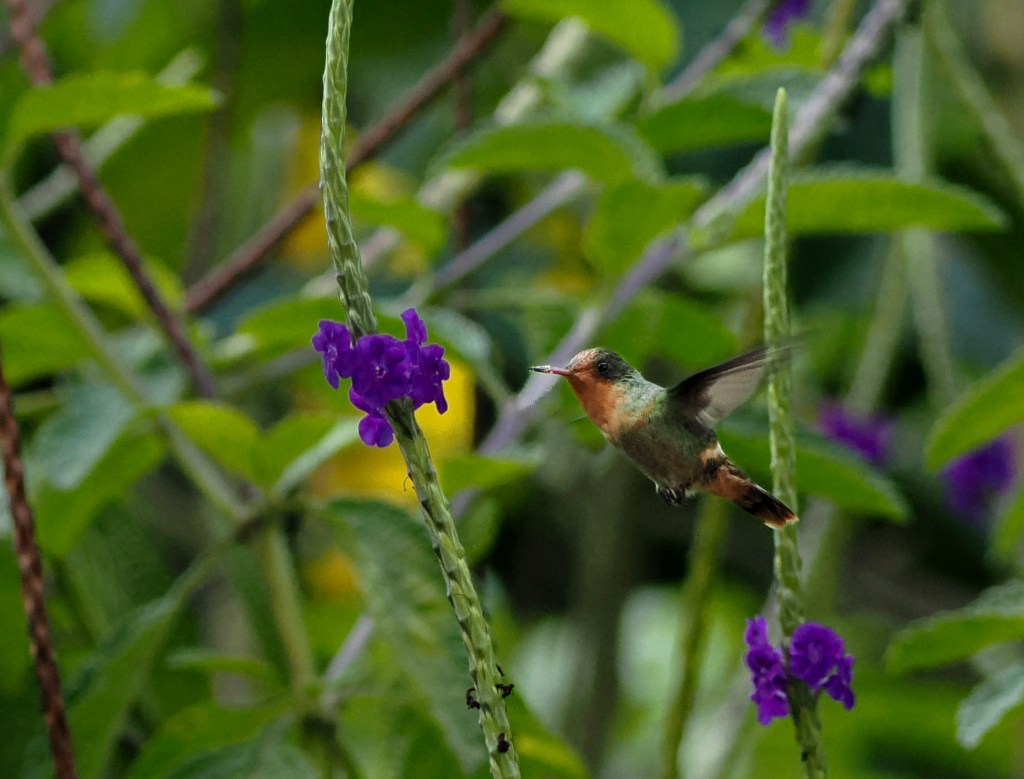
The Tufted Coquette is one of the rarest hummingbirds you can see at Asa Wright, and it never visited the feeders. I found it hovering at the purple flowers growing near them. It is tiny, with an orange face and throat and a rusty tail, and I was lucky to be watching the flowers at the right moment. It’s a good reminder to look beyond the feeders: the garden flowers have visitors too.
The Fruit Feeders: Color on Every Plate

The banana feeders were just as busy:

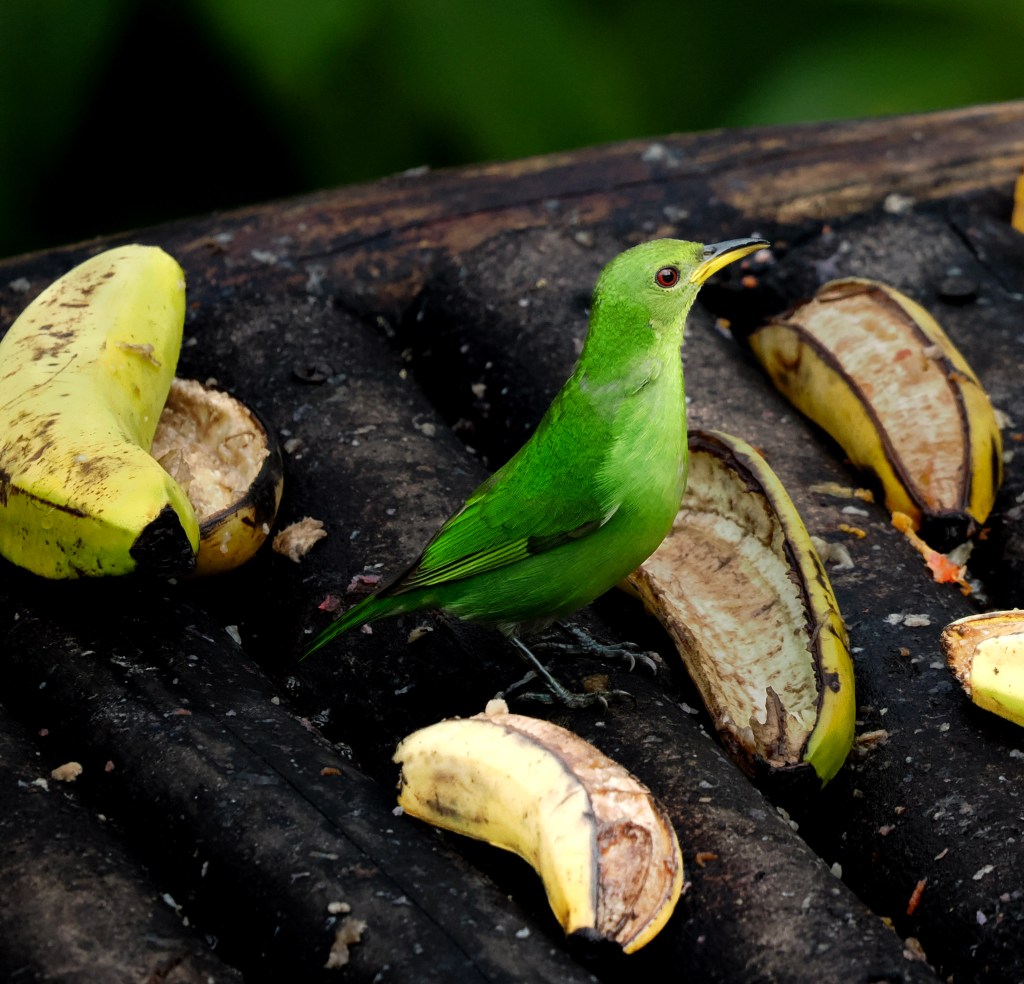
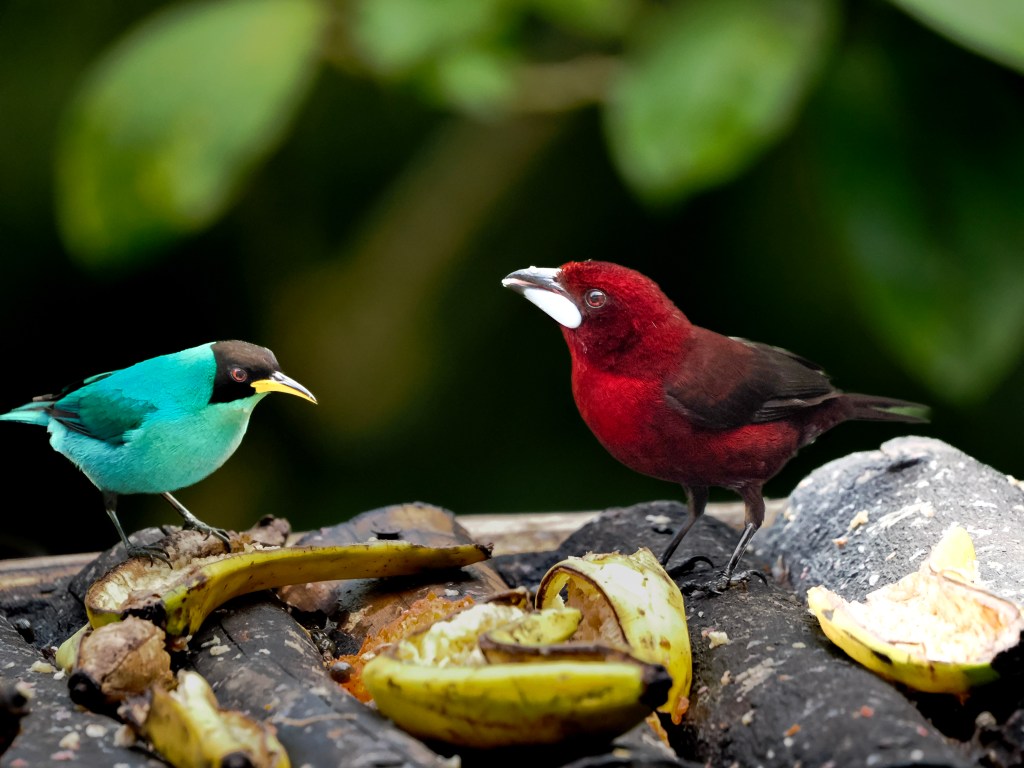
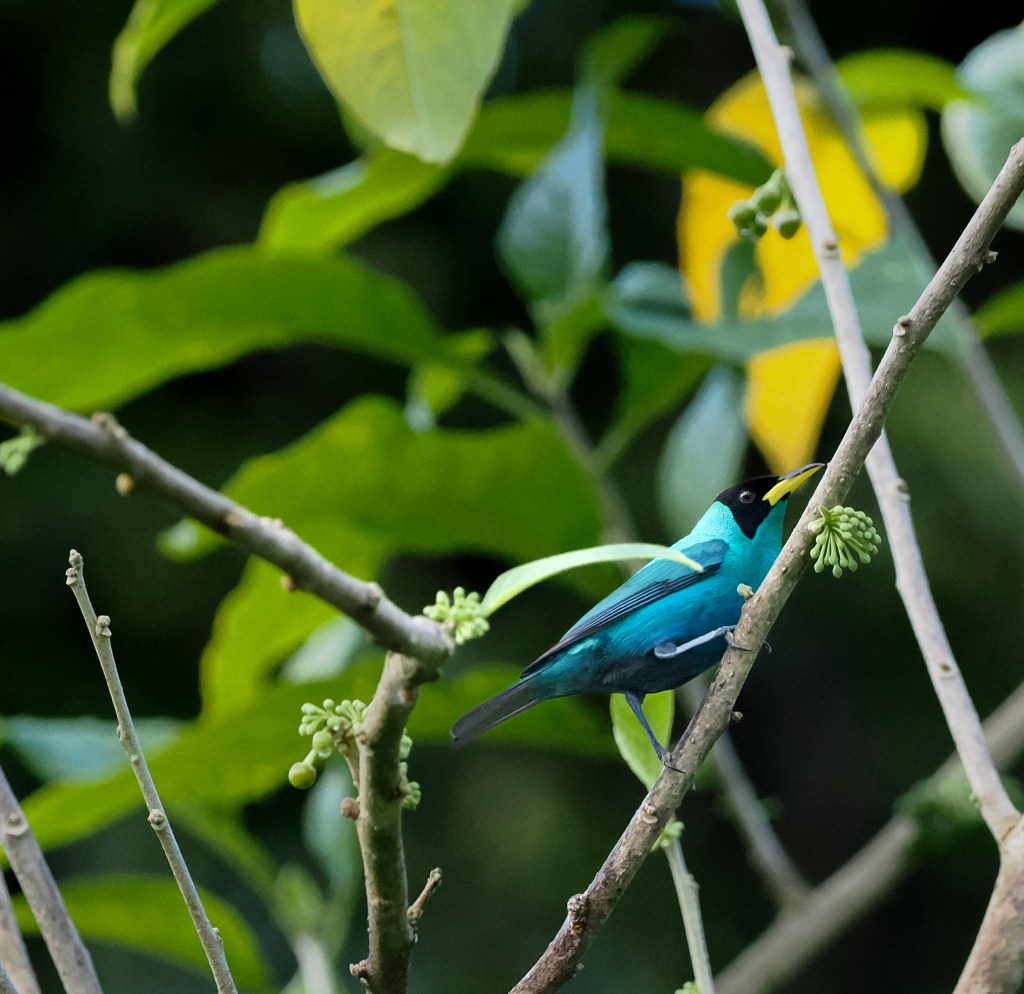
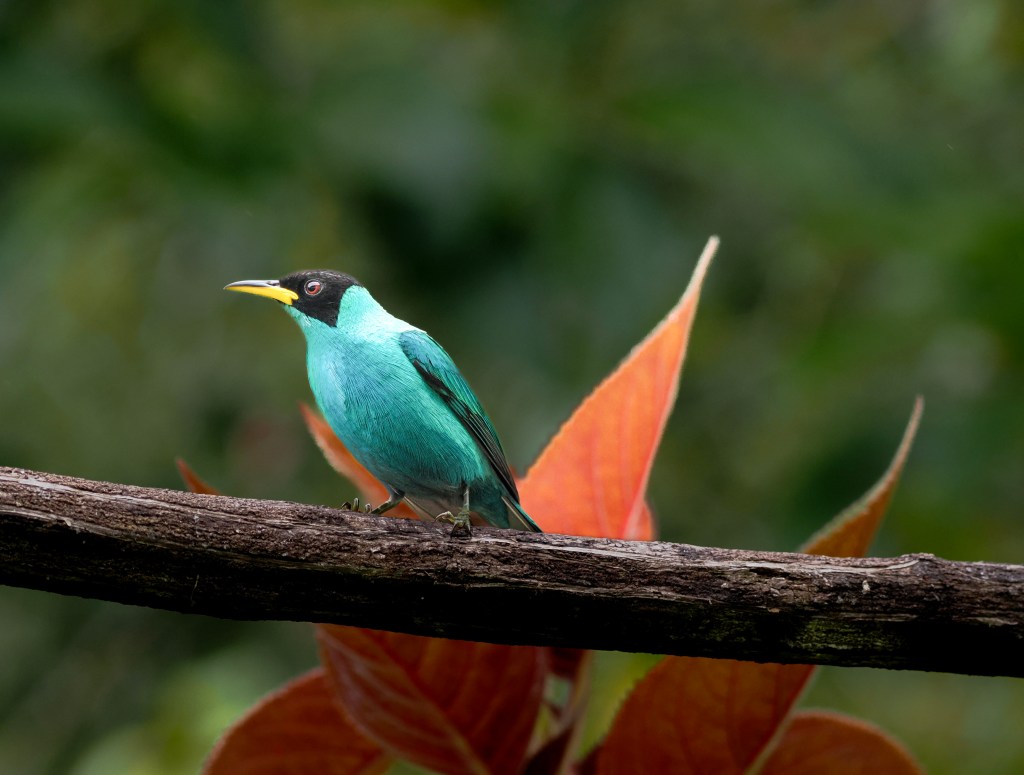
  • Green Honeycreeper: the male is turquoise with a black hood and yellow bill. The female is leaf green.
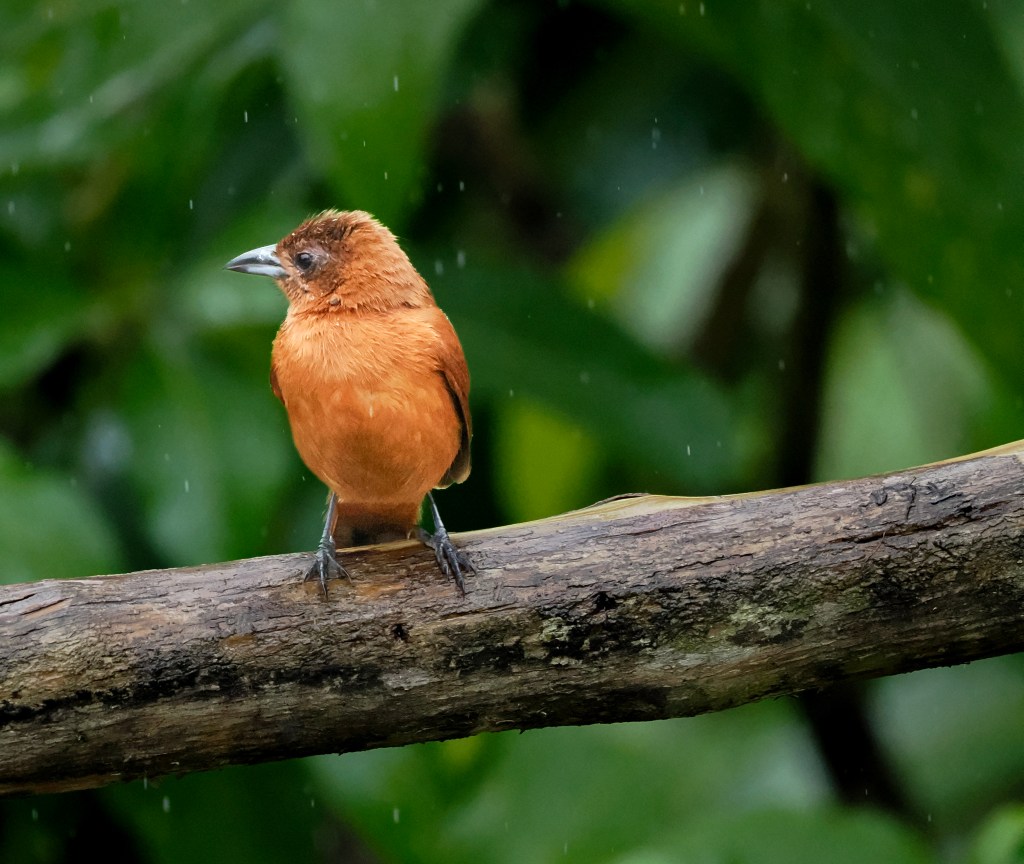
  • Silver-beaked Tanager: a deep crimson bird with a silvery bill, shown here facing off with a honeycreeper.
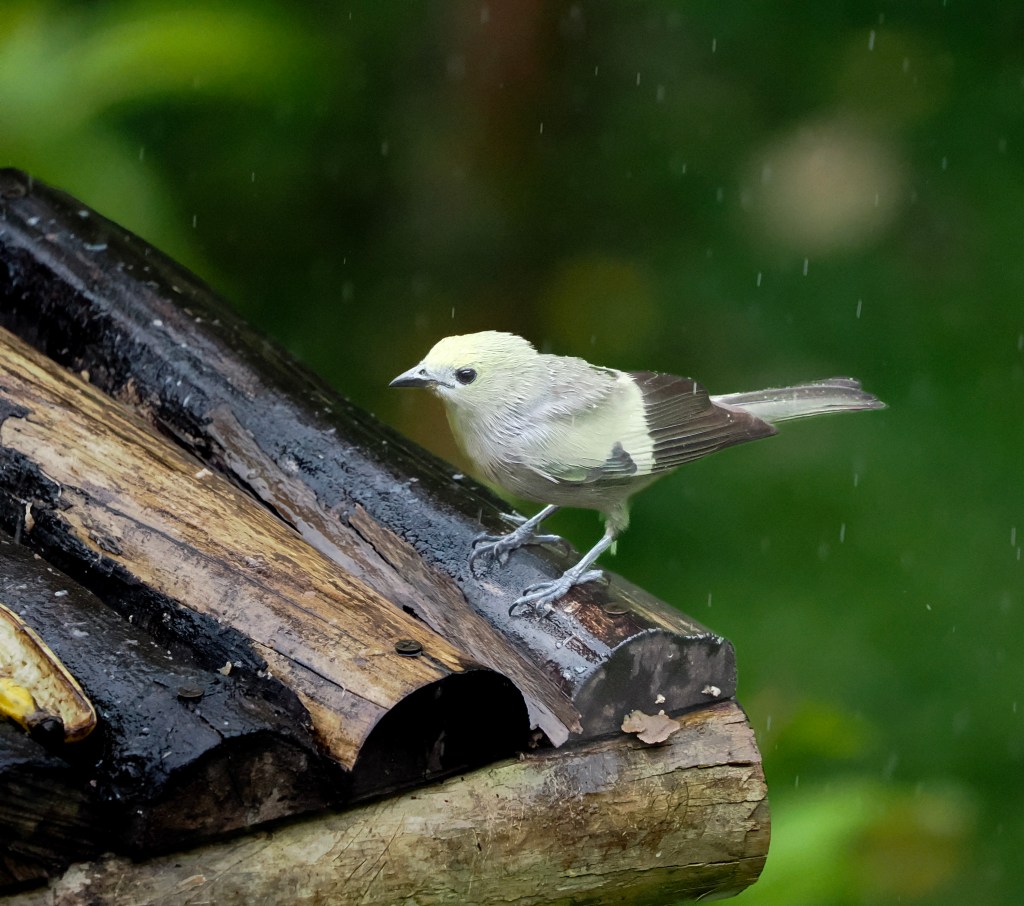
  • Palm Tanager: I caught one perched on a wet log in the rain.
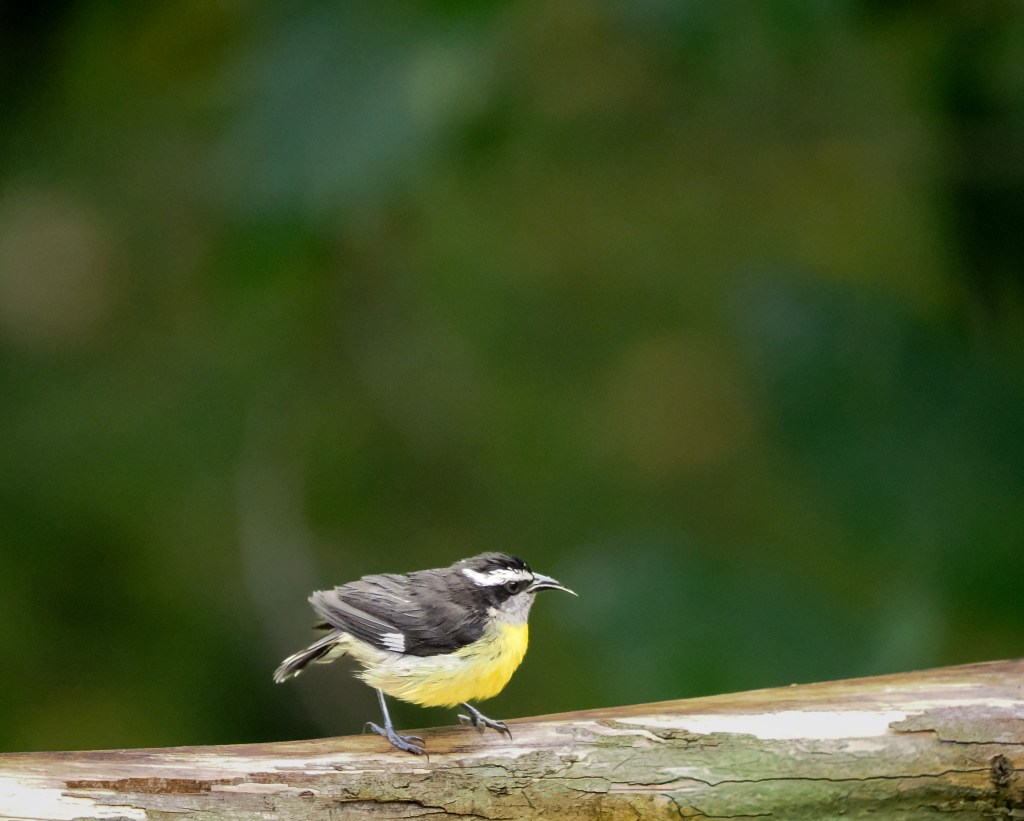
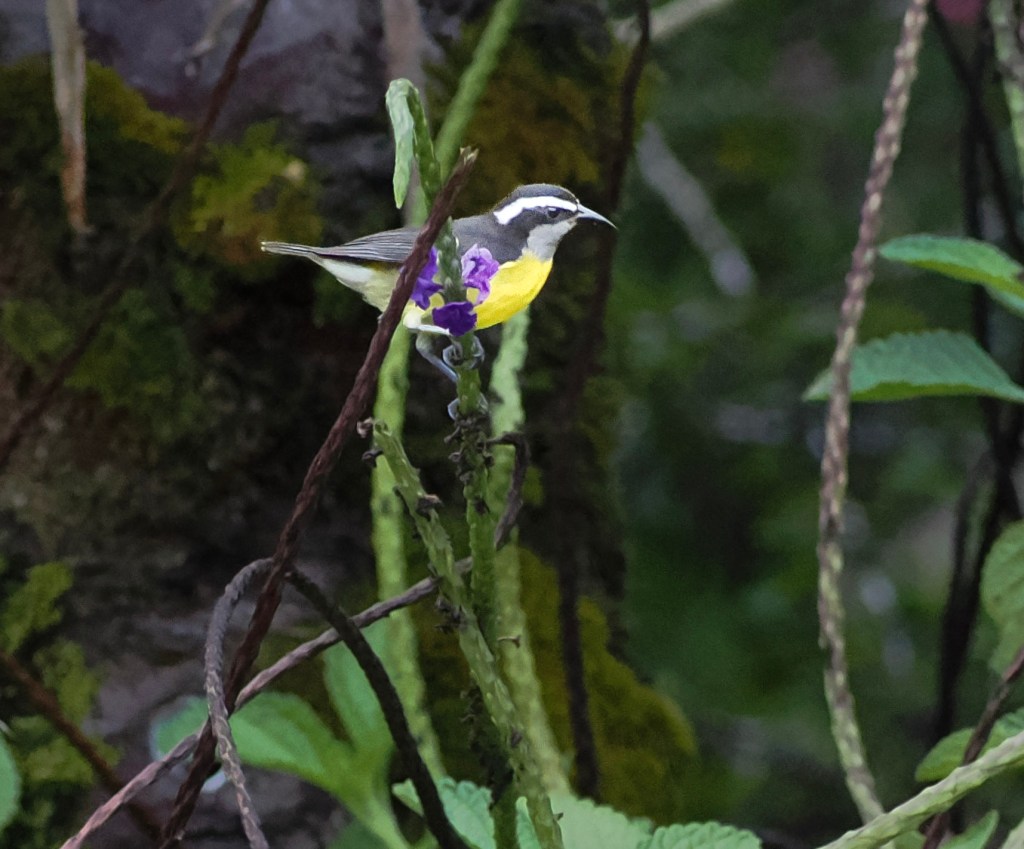
  • Bananaquit: tiny, yellow-bellied, and bold. It visits the feeders and the purple flowers around the veranda.
  • Crested Oropendola: it came face to face with my lens, banana on its bill, blue eyes blazing. It was my favorite performer. When the males call, they swing forward on the perch like a pendulum.
Forest Birds from the Veranda and Trails

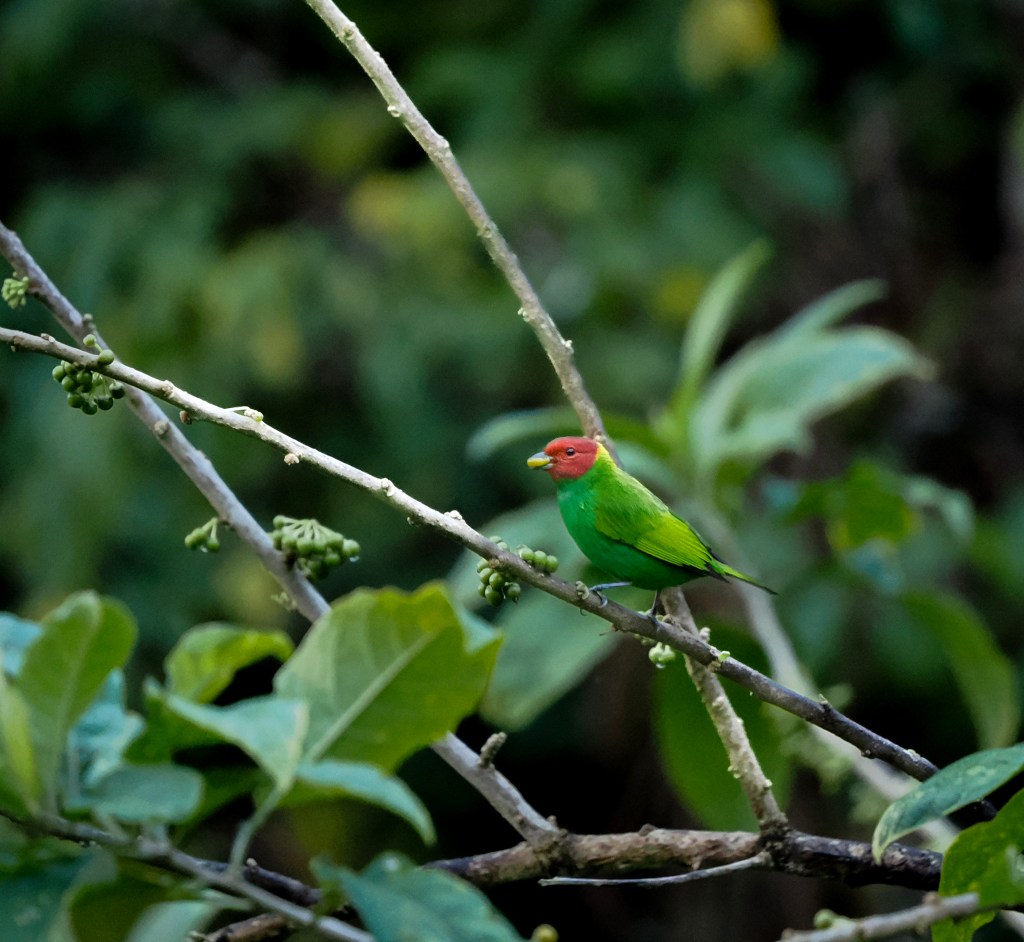
  • Bay-headed Tanager: a green body with a rusty-red head, perched in the fruiting trees.
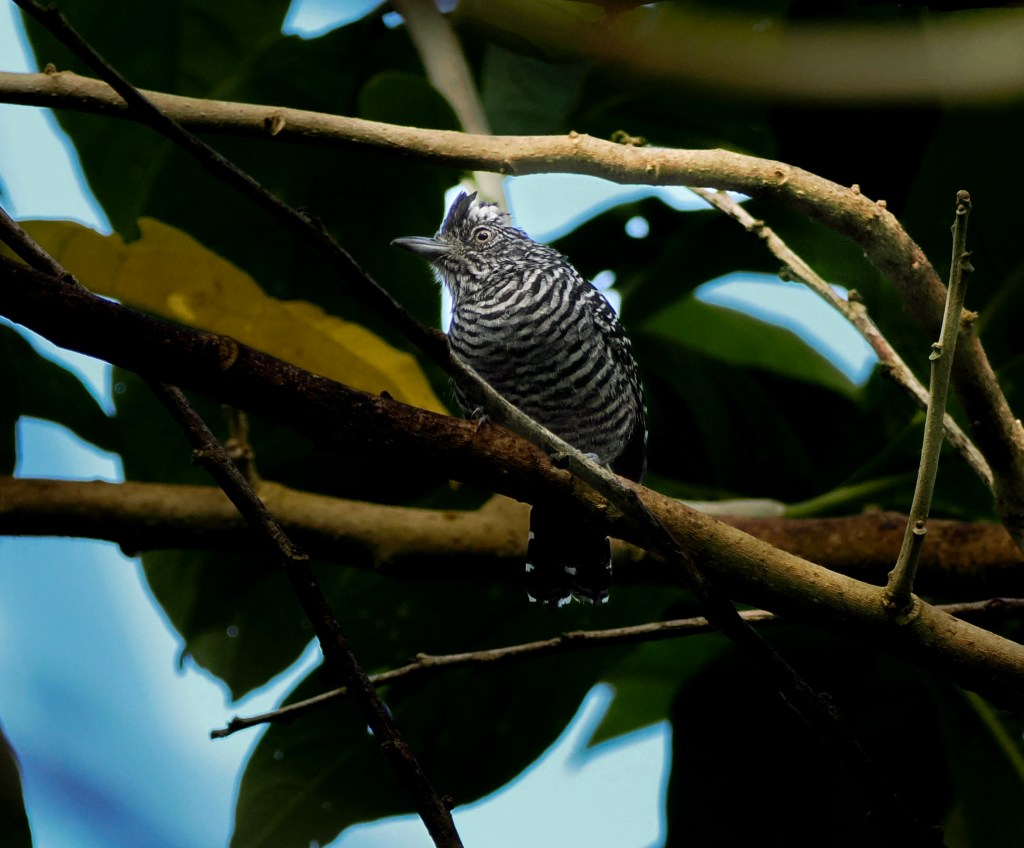
  • Barred Antshrike: black-and-white stripes and a little crest, hiding in the foliage.
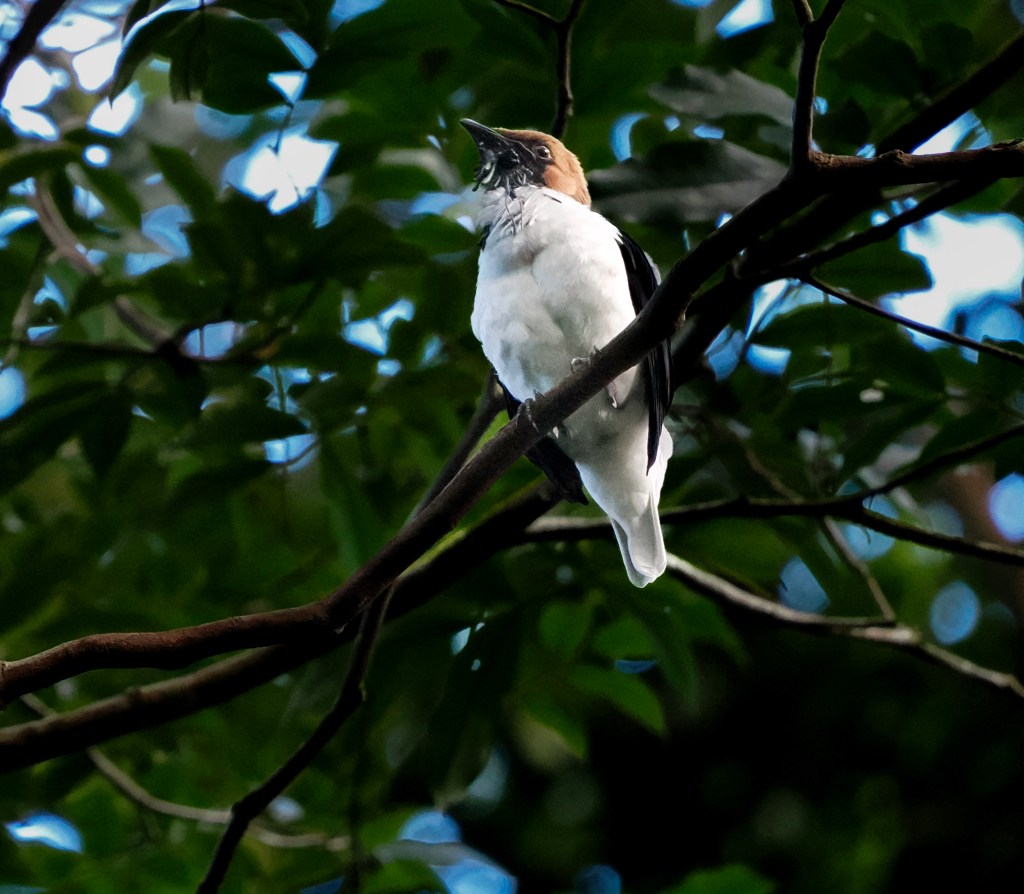
  • Bearded Bellbird (the “anvil bird”): a brown head, a white body, and a black beard of wattles. Its call sounds like a hammer striking an anvil. Birdingplaces notes the bellbird can often be seen from the veranda.
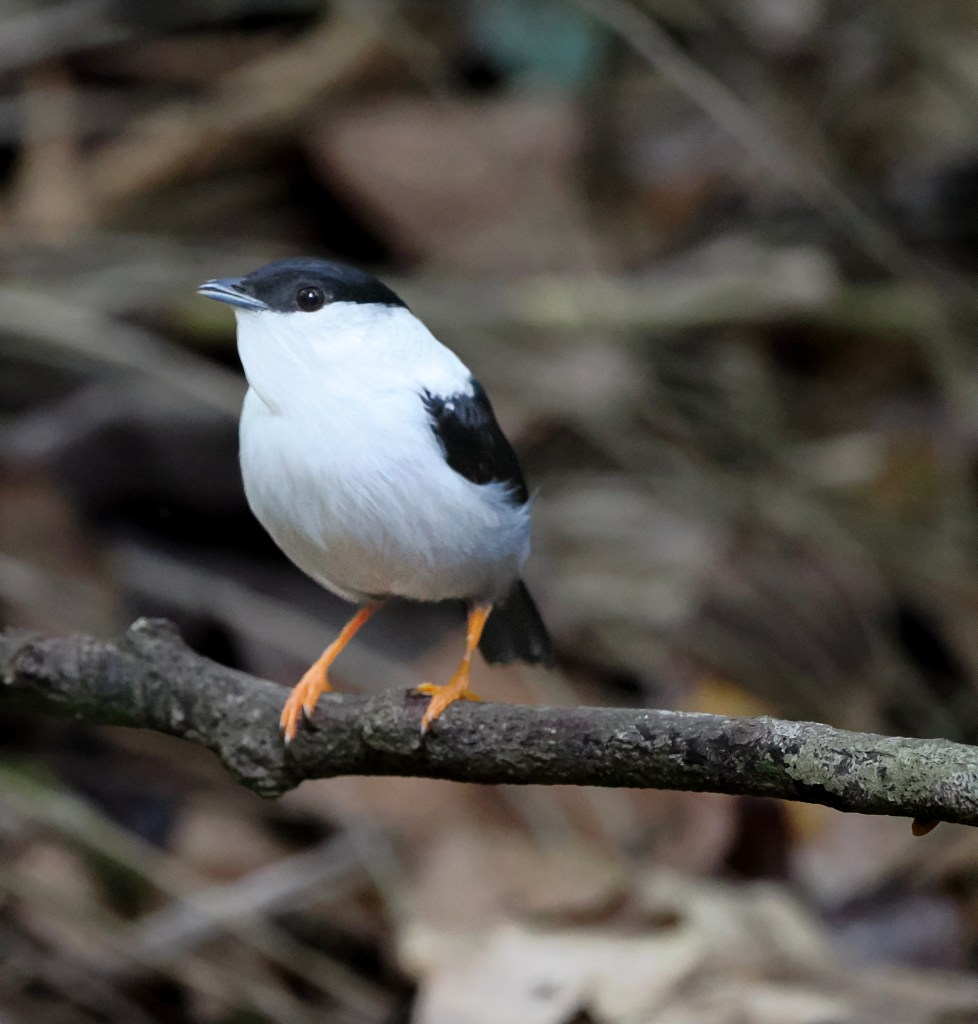
  • White-bearded Manakin: a black cap, a white body, and orange legs. I love how the male tidies his display area to impress the female, like a tiny landscaper trying to win a date.
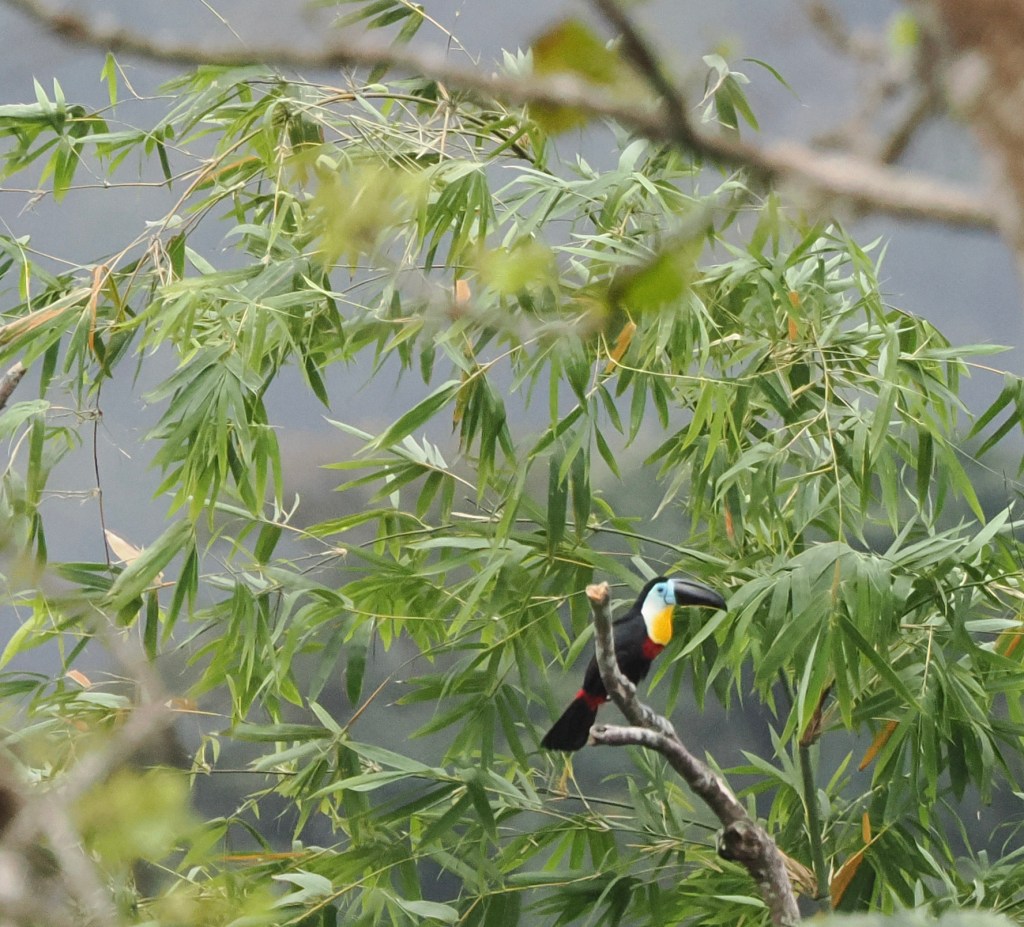
  • Channel-billed Toucan: perched on a bare branch against the misty hills, with pale blue skin around the eye and an orange-yellow breast.
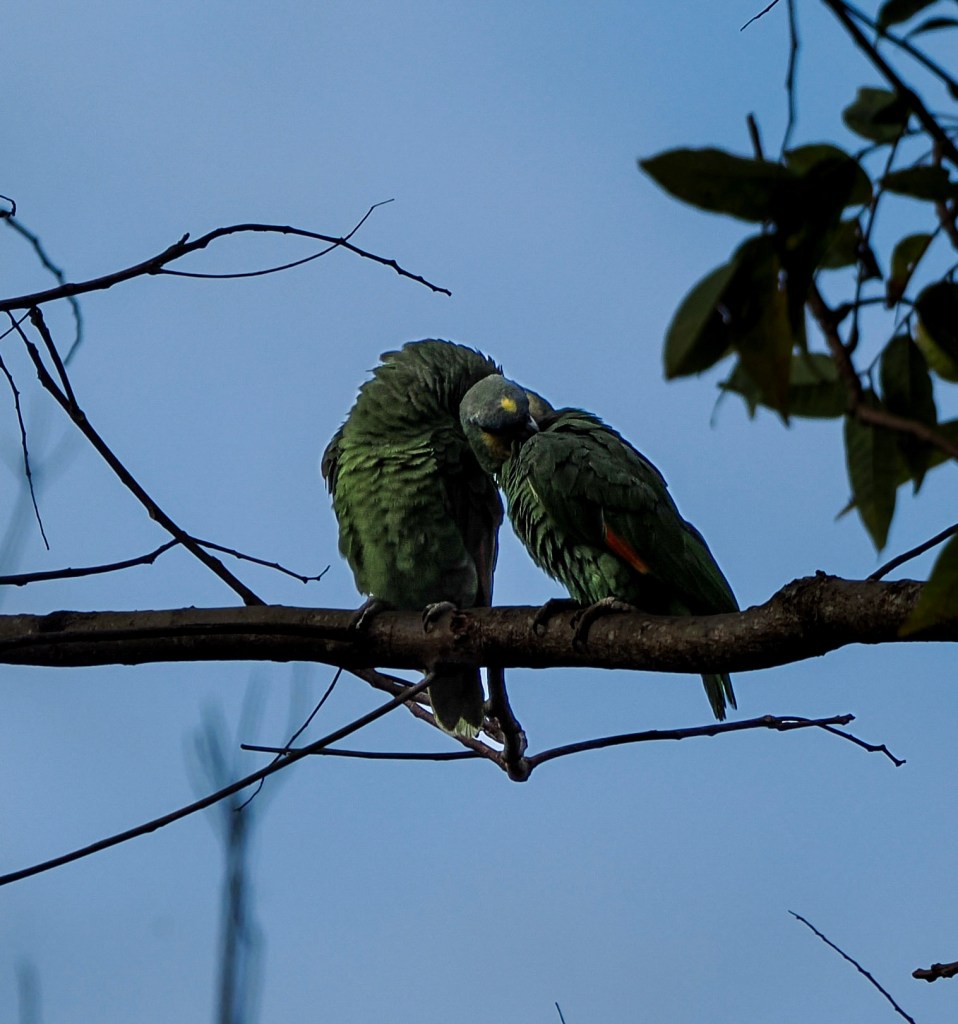
  • Orange-winged Parrot: a pair preening each other at dusk, with a flash of orange on the wing.

The Oilbirds

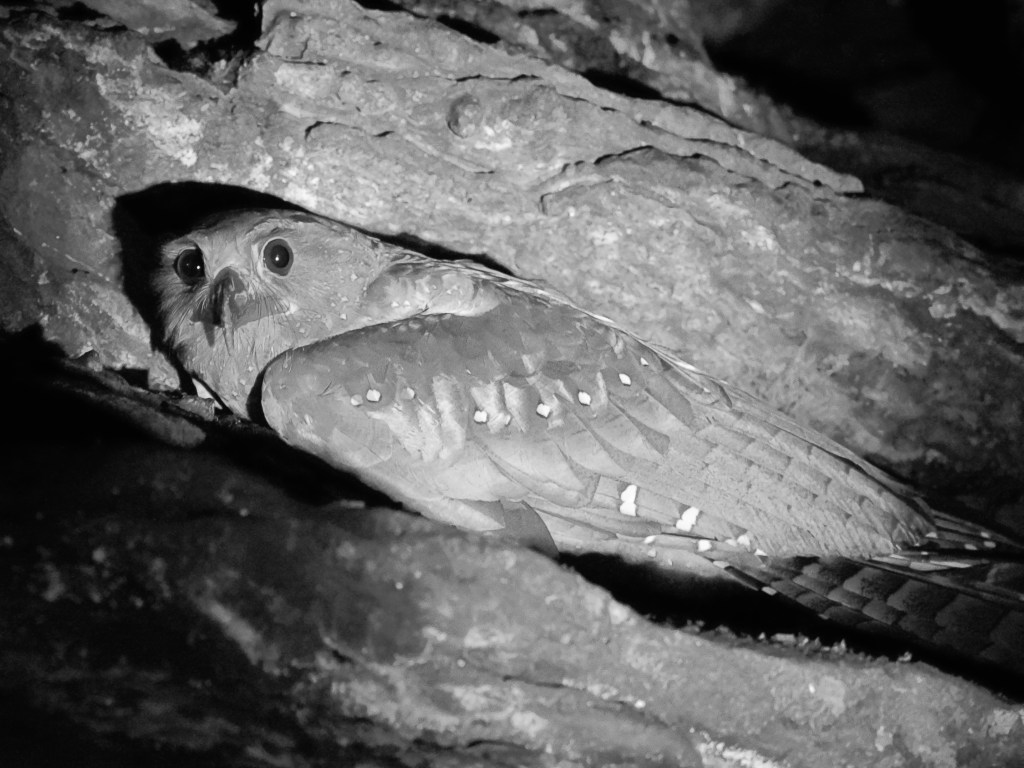
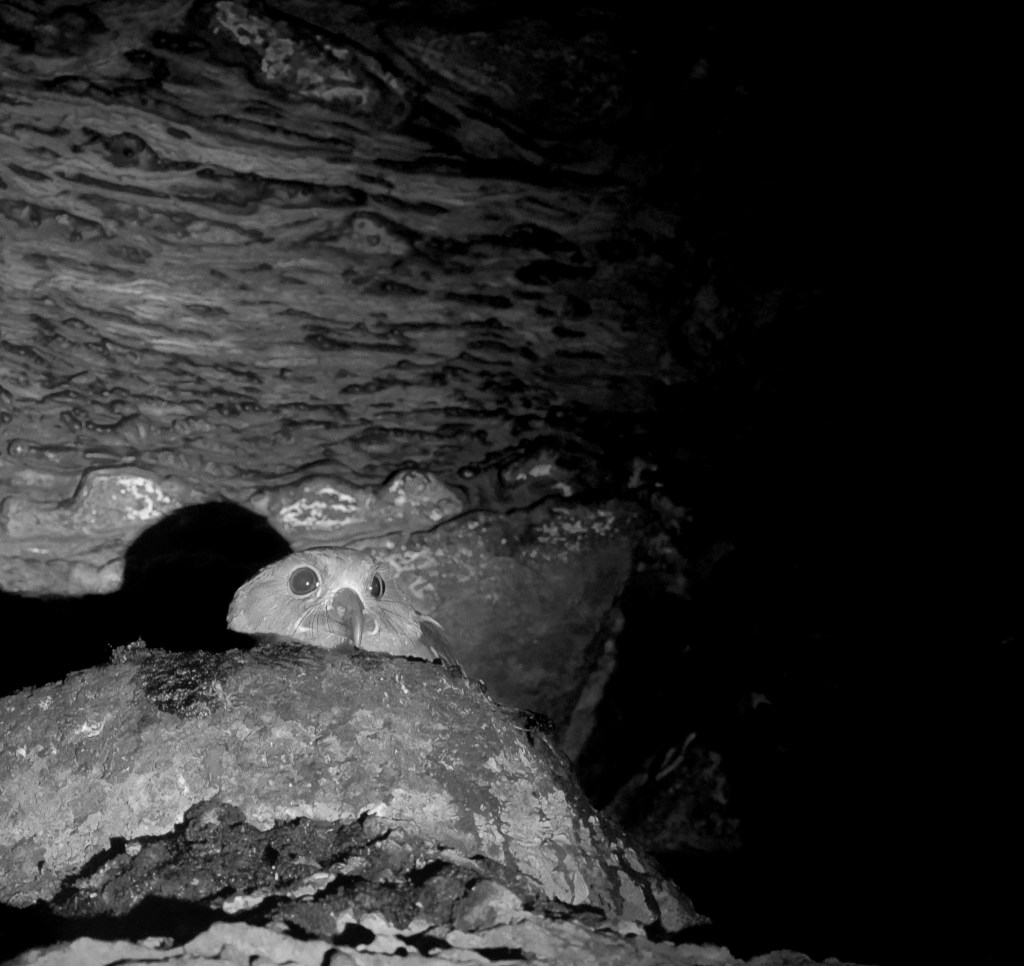
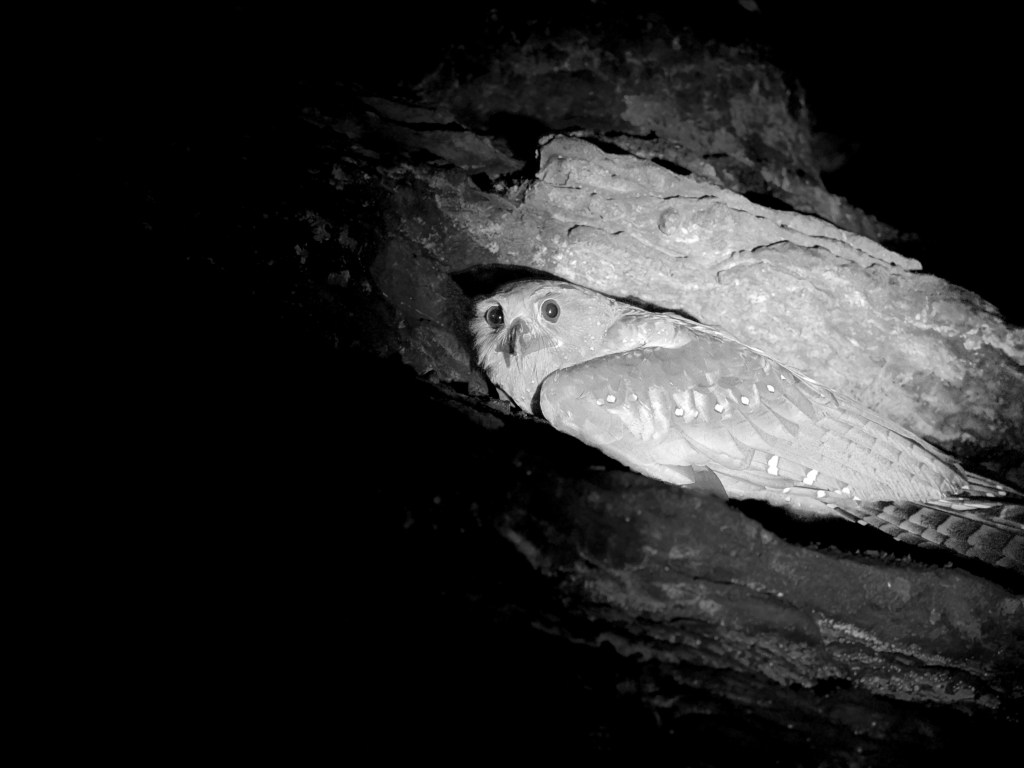
And yes, I saw the oilbirds. They are nocturnal fruit-eaters that navigate in the dark by echolocation, which is rare among birds. Asa Wright is one of the best-known places in the world to see them. The trail to the roost requires a guide, which is a good thing, because guides know how to approach without disturbing them. Seeing one peering out of its rocky roost was worth the trip on its own.

Why Asa Wright Is So Good for Birding

  • The veranda is the show. You can see more from one chair than on a long trail.
  • The in-house guides are excellent. The morning walk led to species I would have walked past on my own.
  • The habitats are varied. The rainforest, garden, feeders, and nearby Caroni Swamp each add different birds to your list.
  • The setting is remarkable. It’s quiet and tucked away, yet only 45 to 60 minutes from Piarco Airport.

Tips for Photographing Birds at Asa Wright

  • Use a fast shutter speed for hummingbirds, around 1/2000s or faster, to freeze the wings. If you want a little wing blur, as in the mango shot, slow down a bit.
  • Expect rain and low light. A fast lens or higher ISO helps.
  • Bring a long lens, but the feeders put many birds within reach of a standard zoom.
  • Sit still. The best shots came after I stopped moving.
  • Ask the guides where the bellbirds and manakins are calling that day.

Final Thoughts

I came to Trinidad for business and left with some of my best travel memories. Asa Wright gave me a quiet, beautiful base, helpful people, great food, and about two dozen species photographed without ever leaving the grounds. If you’re headed to Trinidad, even for work, carve out a few days here
Scarlet Ibis at Sunset: Visiting Caroni Swamp in Trinidad

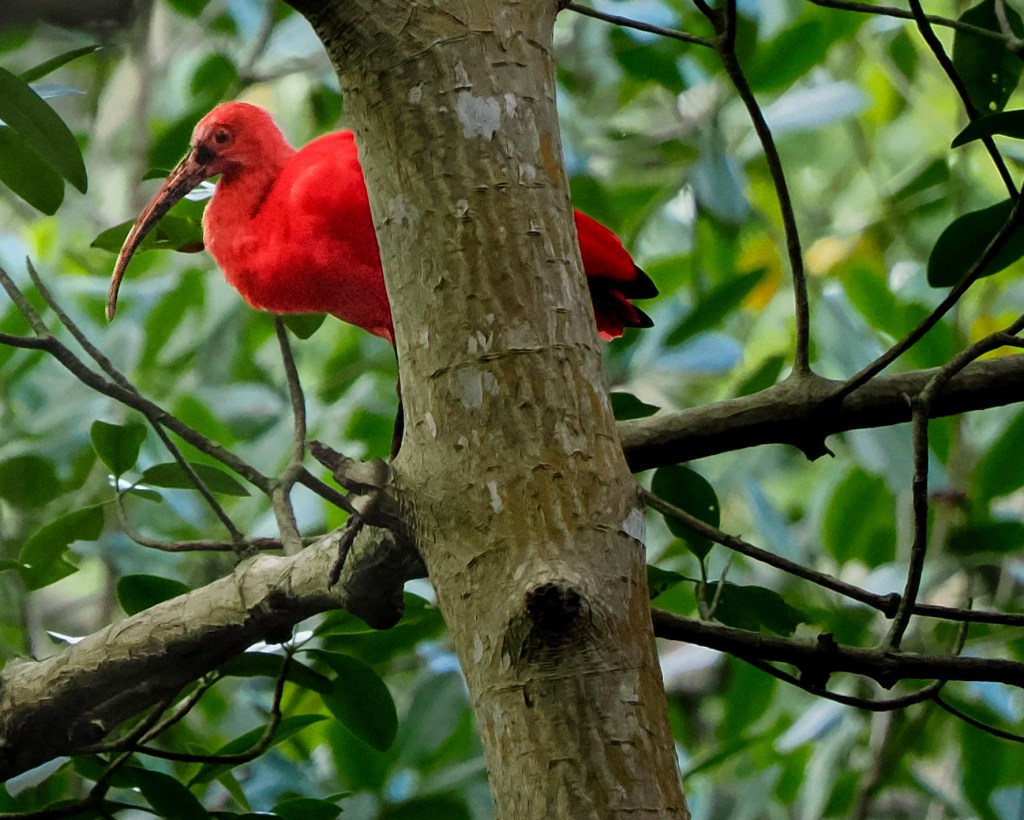
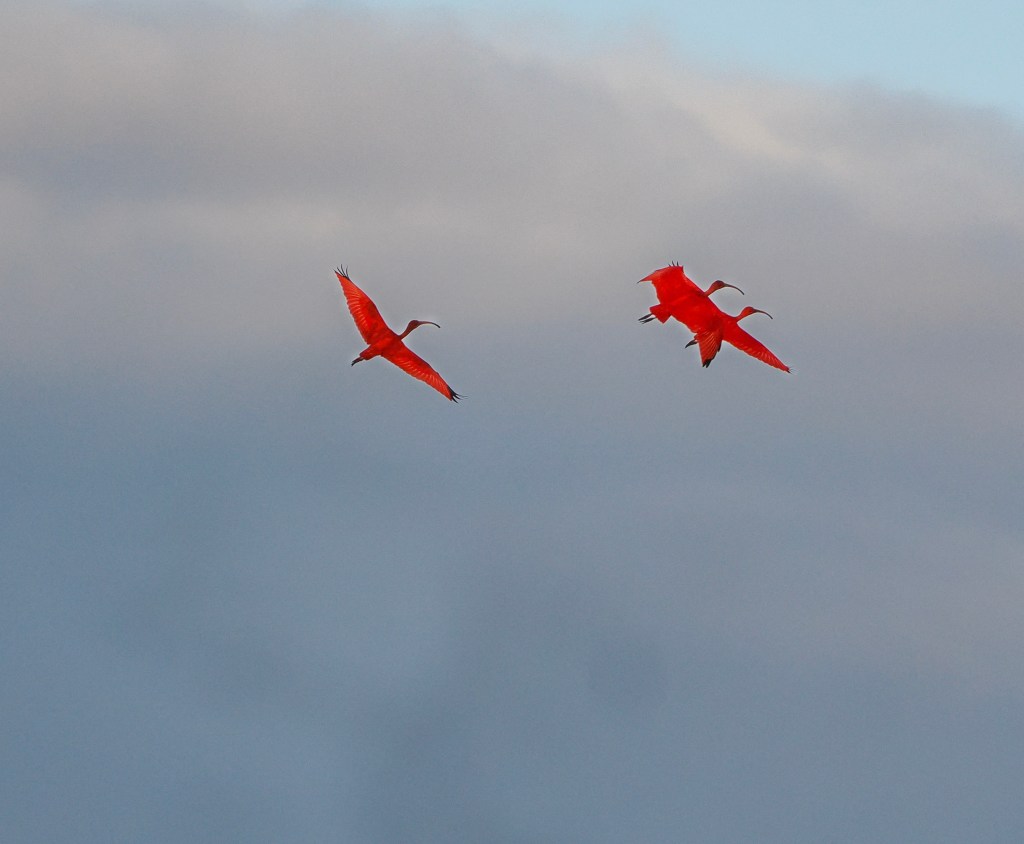
Of all the wildlife I saw in Trinidad, the moment I’d looked forward to most was the one the island is famous for: watching scarlet ibis flying home to roost in Caroni Swamp.

What Is Caroni Swamp?

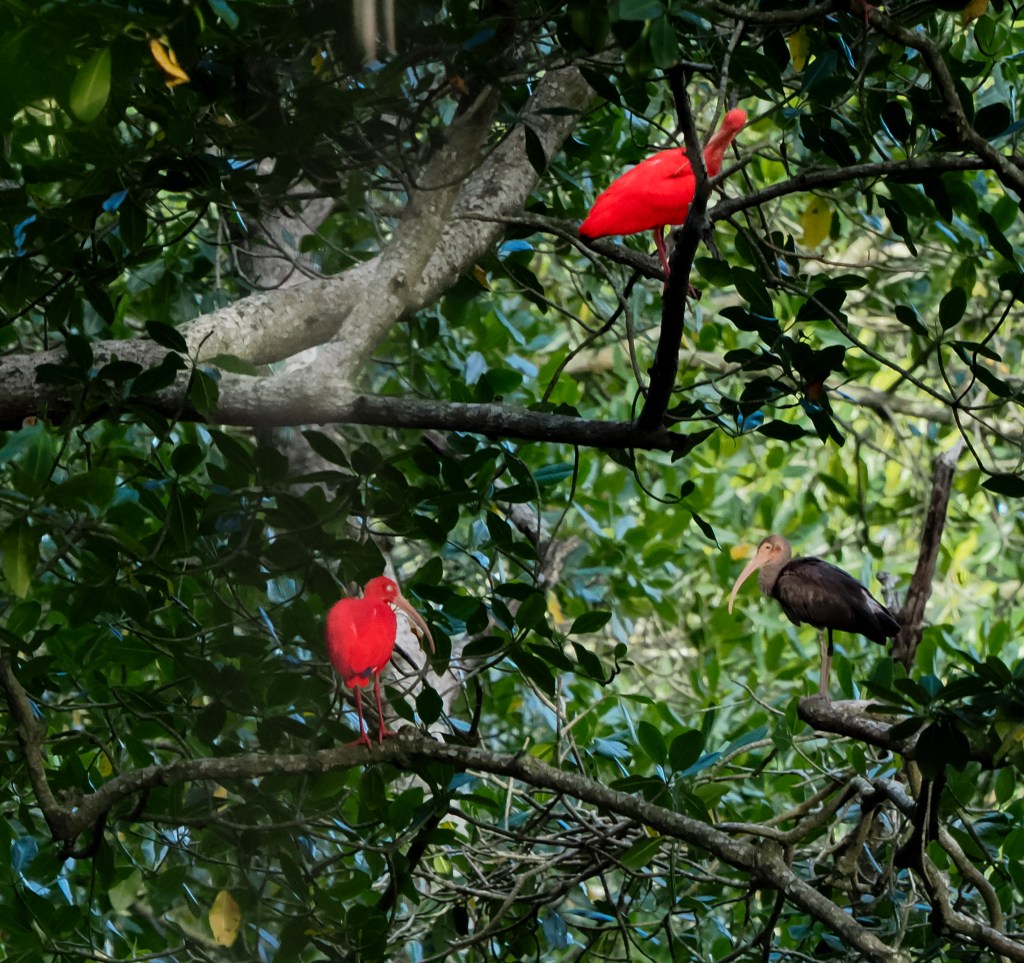
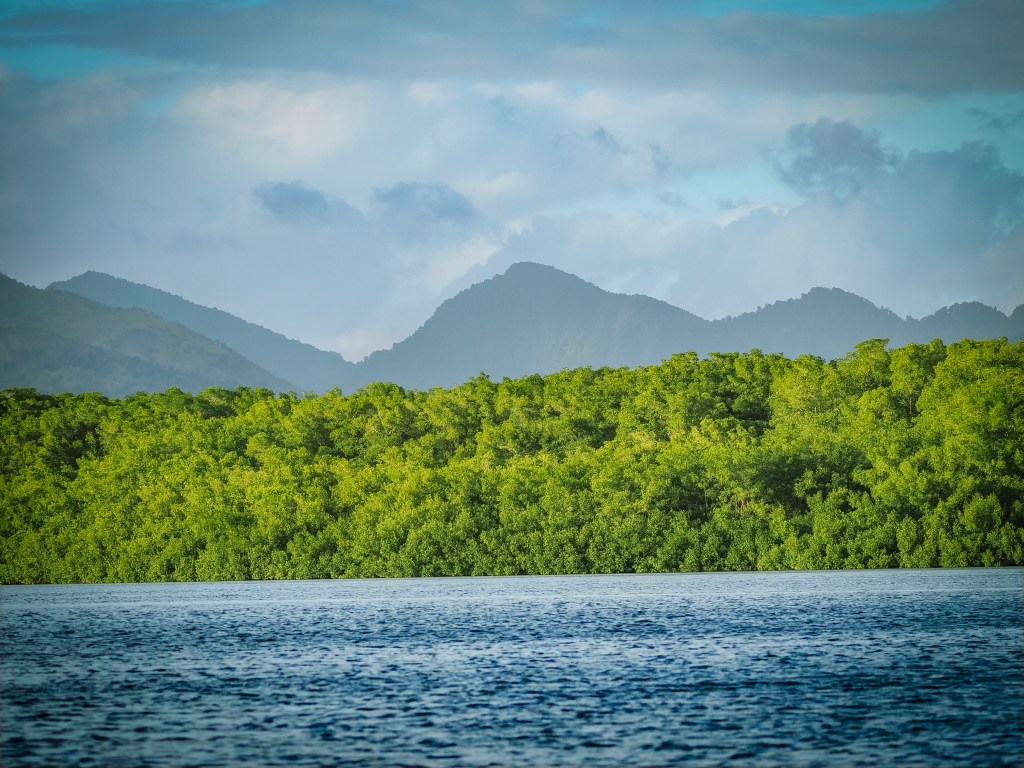
Caroni Swamp is a sprawling mangrove wetland on Trinidad’s west coast, where the Caroni River meets the Gulf of Paria, just south of the capital, Port of Spain. It not too far awy from Port of Spain and can be visited in an afternoon. It’s a maze of lagoons and narrow channels shaded by mangrove roots, and it’s home to more than 100 bird species, along with snakes, crabs, fish, and mammals. The big draw is the scarlet ibis, Trinidad and Tobago’s national bird. Thousands return to the swamp each evening to spend the night in the mangroves.

More About Caroni Swamp

A Protected Wetland of International Importance

Caroni Swamp covers more than 5,600 hectares of mangrove forest and herbaceous marsh, cut through by countless channels and by brackish and saline lagoons. It’s the second-largest mangrove wetland in Trinidad and Tobago, and it has been a Ramsar site, a wetland recognized as internationally important, since 1971. It’s also an important nursery and shelter for fish, crabs, and oysters, and its mangroves help protect the nearby coast.

The Ibis’s Daily Commute

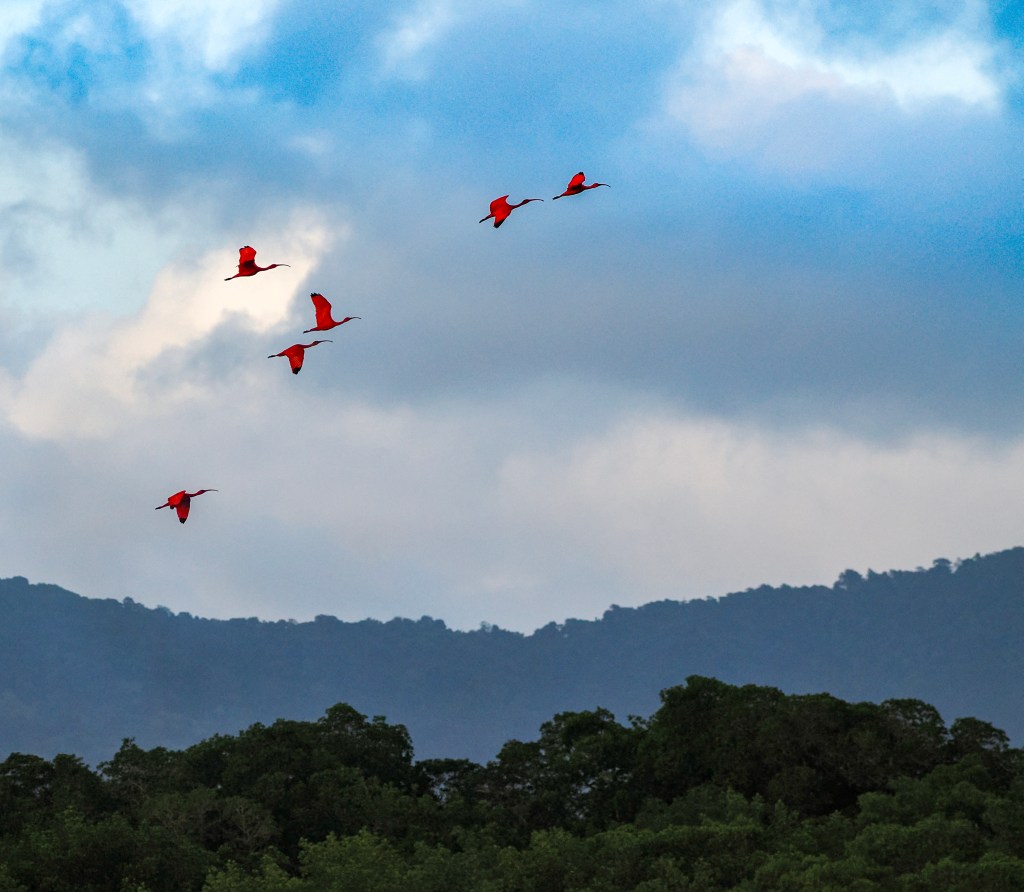
What fascinated me most is that scarlet ibis don’t actually spend the day in the swamp. They fly across the Gulf of Paria to feed on the Venezuelan mainland, roughly 11 miles away, then return at the end of the day to roost in the mangroves. That’s why the best time to see them is dusk, and why the show takes place every evening instead of all day.

Wildlife Beyond the Ibis

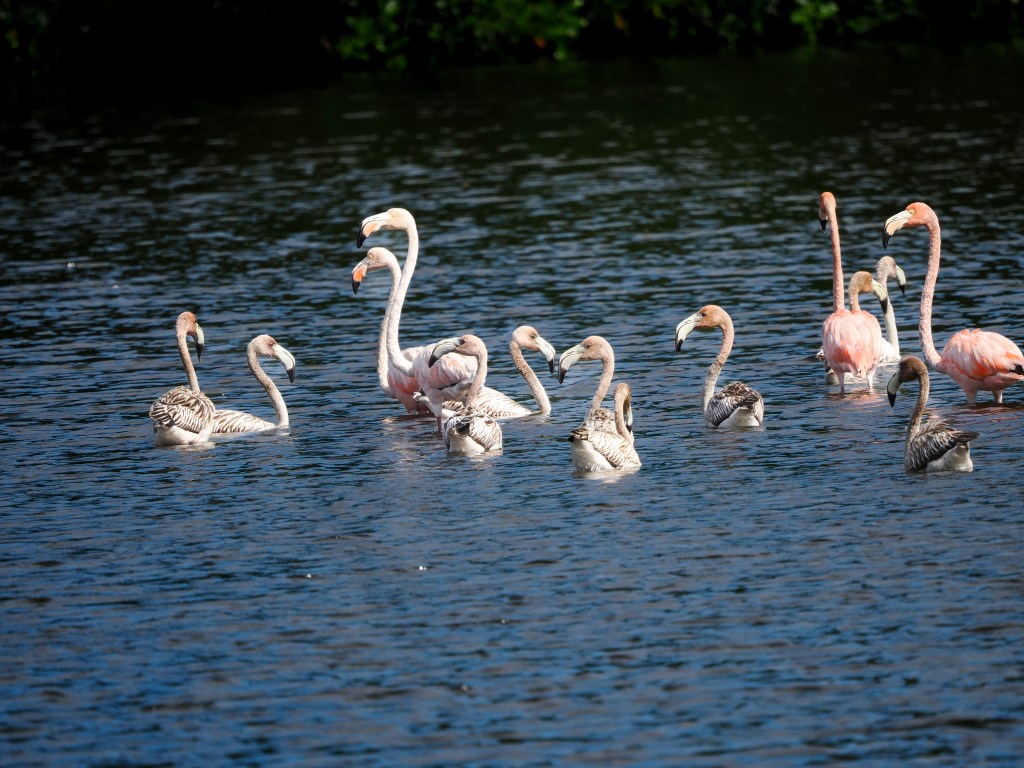
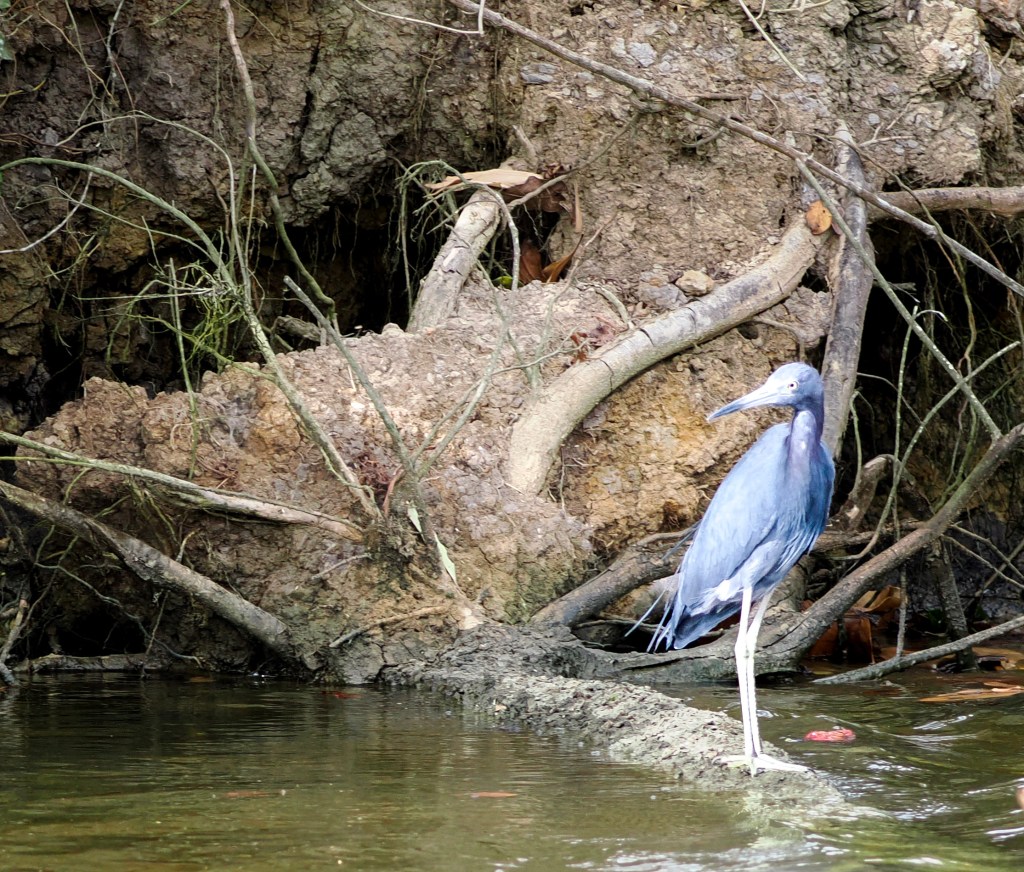
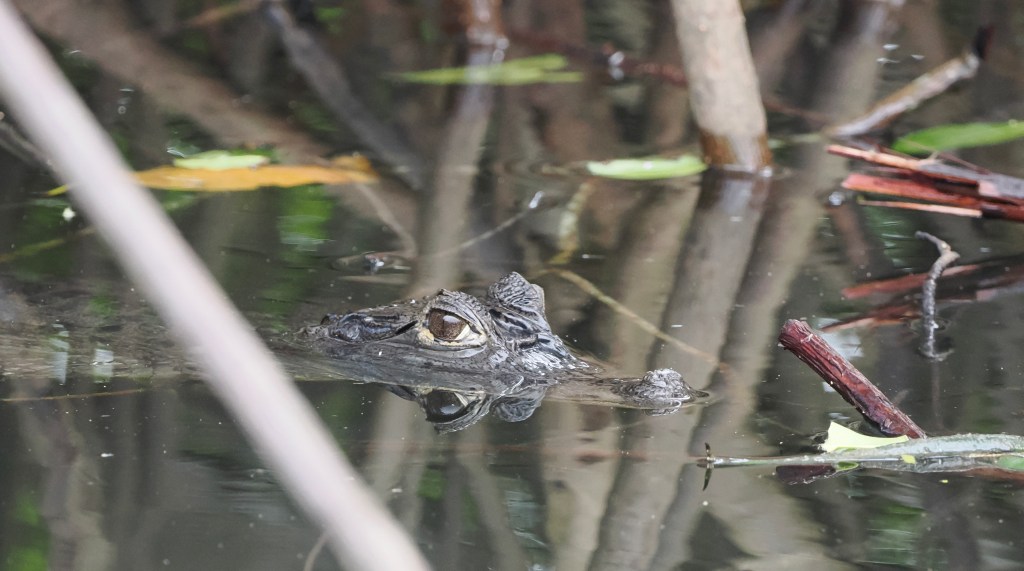
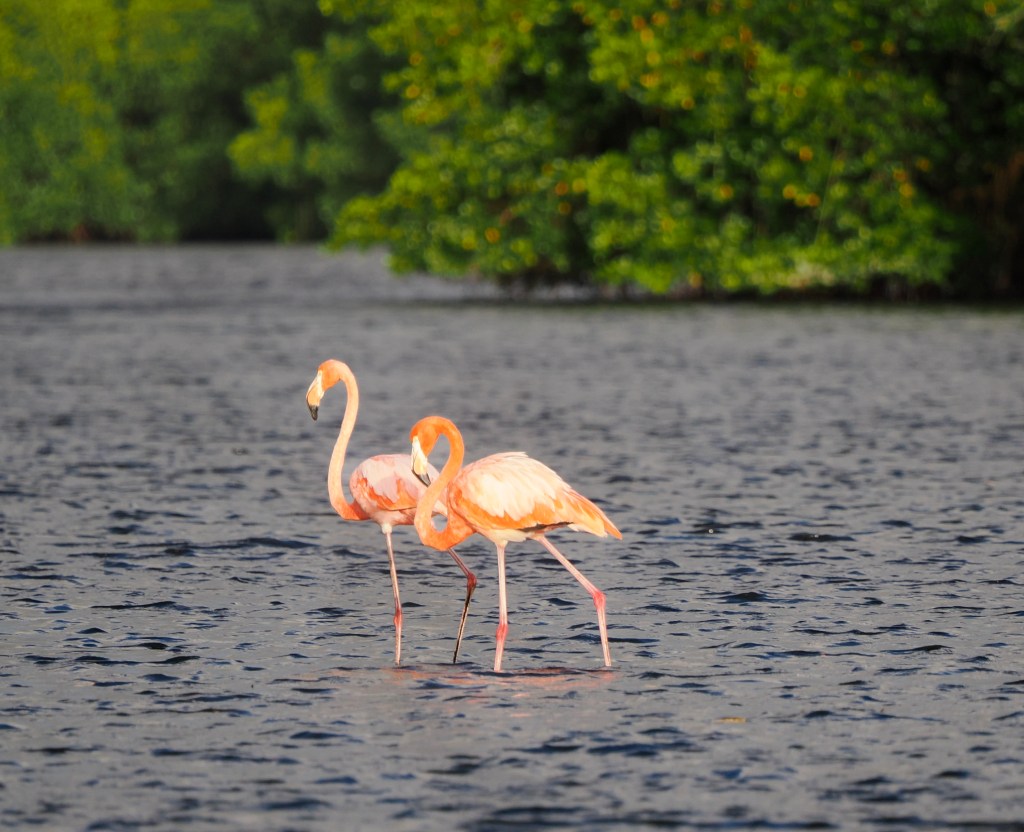
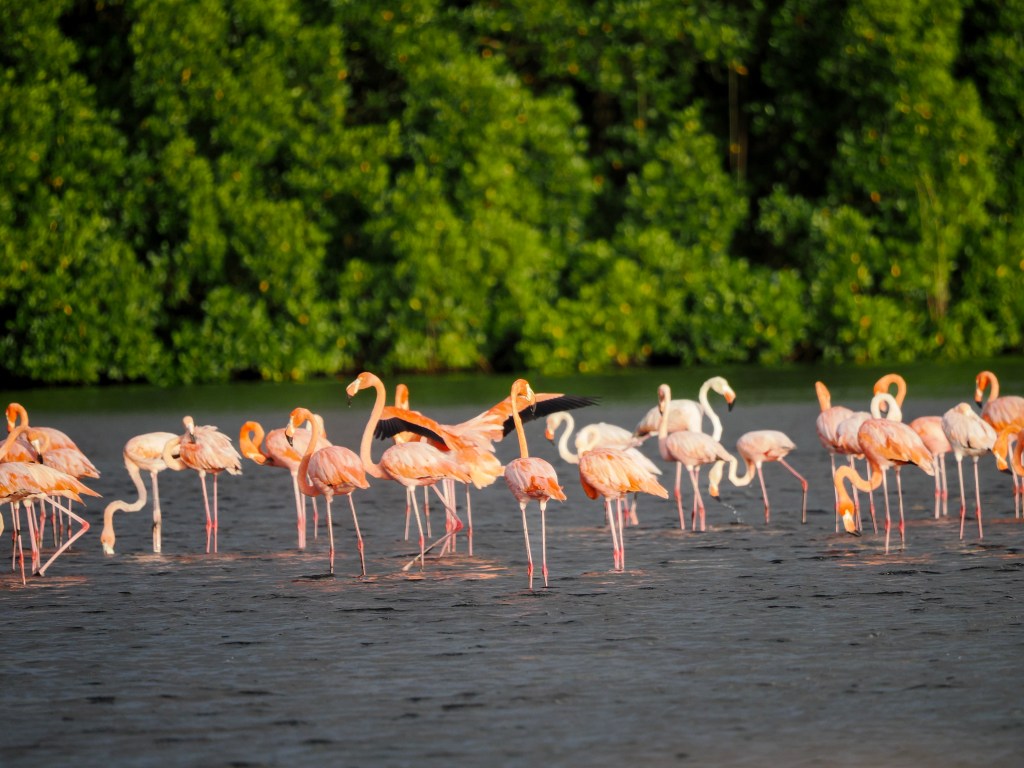
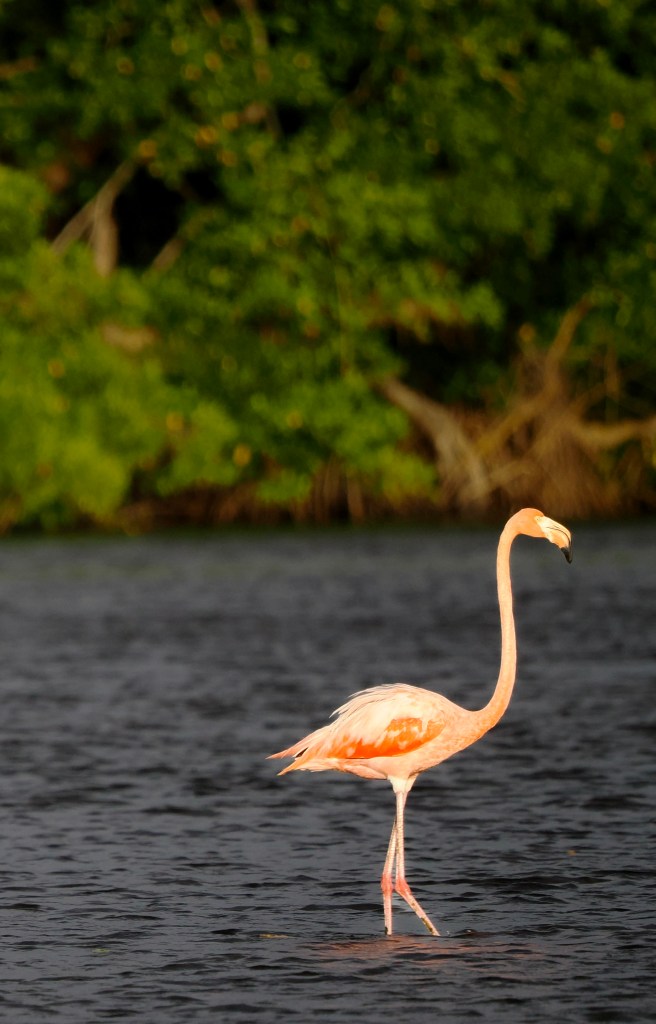
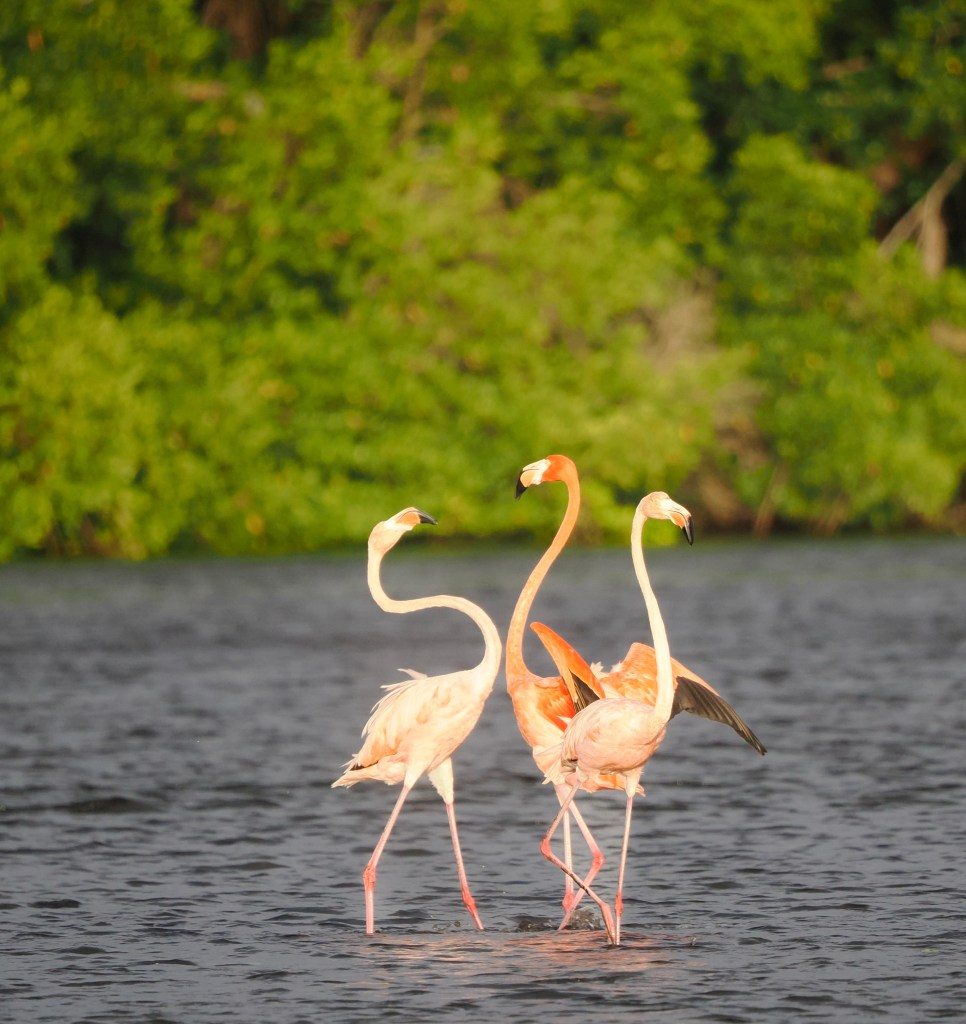
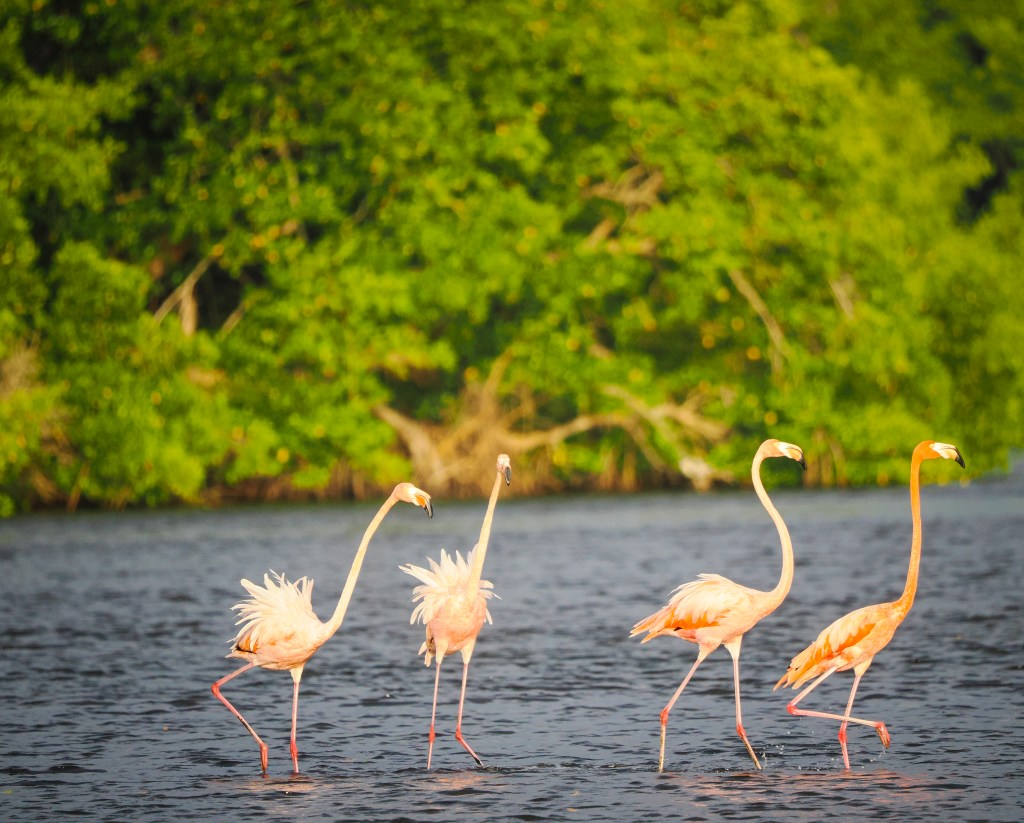
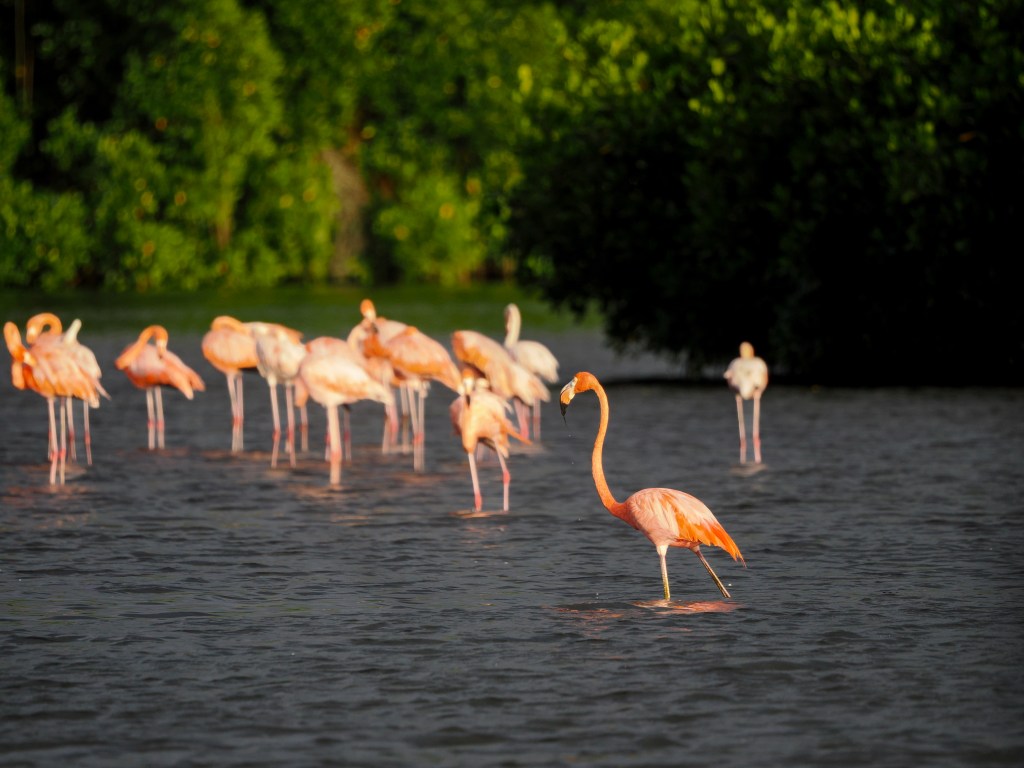
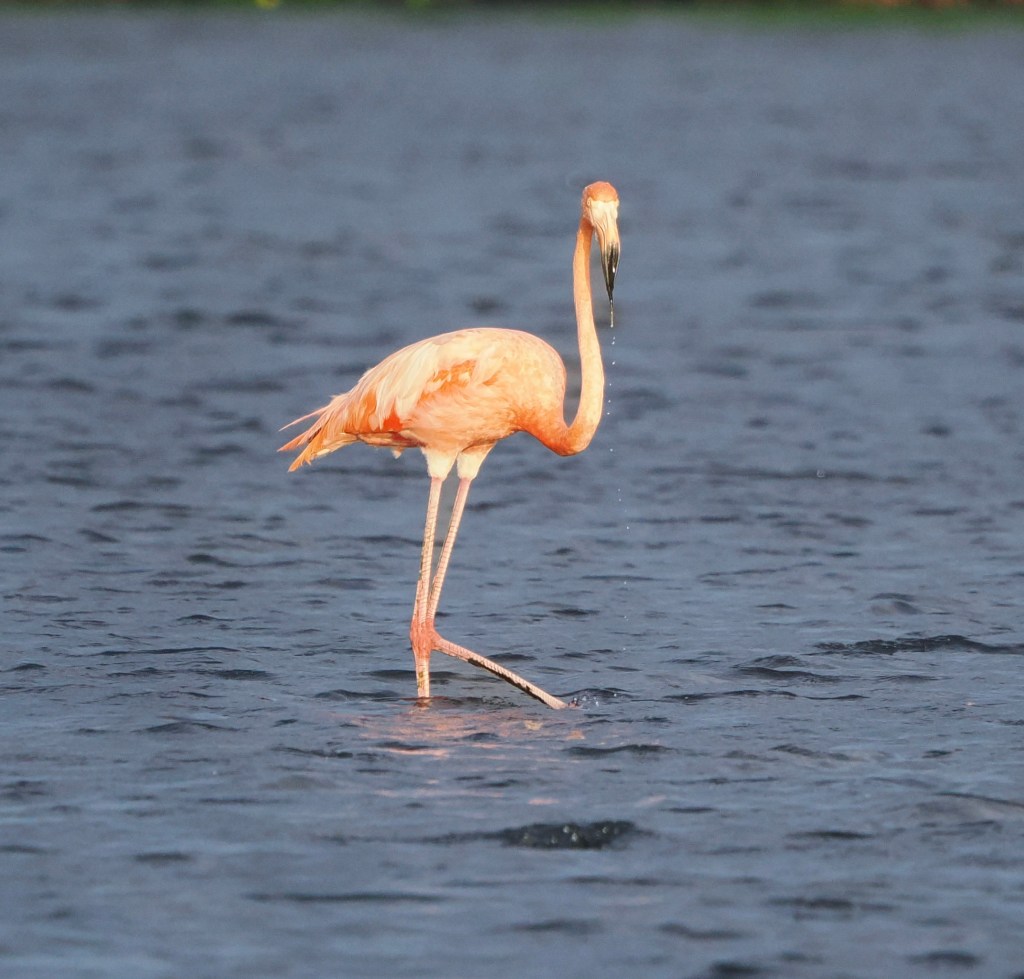
The swamp has more than 100 recorded bird species, and some sources put the number well above that. Besides the ibis, you can see herons, egrets, cormorants and terns, and in recent years American flamingos have been spotted here too, which fits with what I saw. Red, black and white mangroves line the waterways, with tiny oysters clinging to their roots. Cook’s tree boas, spectacled caimans and silky anteaters are regular sightings on tours.
Conservation and Protecting the Ibis

The scarlet ibis is Trinidad and Tobago’s national bird, and swamp tour operators help protect it. Long-established operators talk a lot about conservation and education, and they push for stronger enforcement of laws that protect the ibis from poachers. Pollution and climate change remain ongoing concerns for the swamp, so be a careful visitor: keep your trash with you, stay seated, and keep your voice down around the birds.

When to Go

Dusk is the best time of day, since that’s when the ibis return. Trinidad’s dry season, from January through the end of May, is generally recommended. Tours usually last about two to three hours. Sunscreen and bug spray are a good idea whatever the time of year.

Setting Up the Trip

I was staying at the Asa Wright Nature Center, so I asked the staff to arrange my Caroni Swamp outing. That made it simple: no hunting for operators or working out transport on my own. If you’re based at a lodge, ask them first.

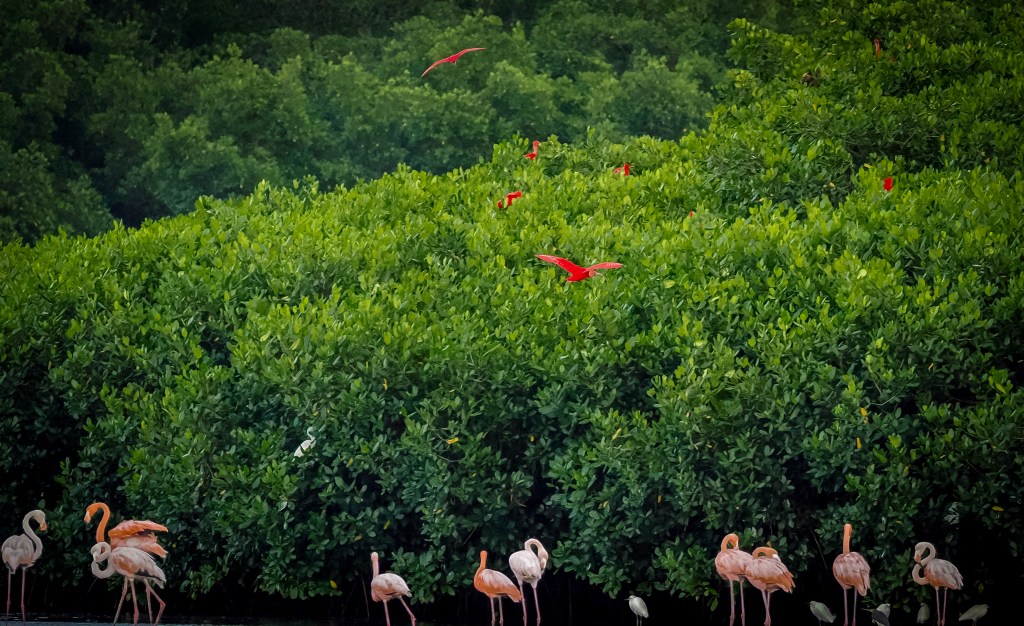
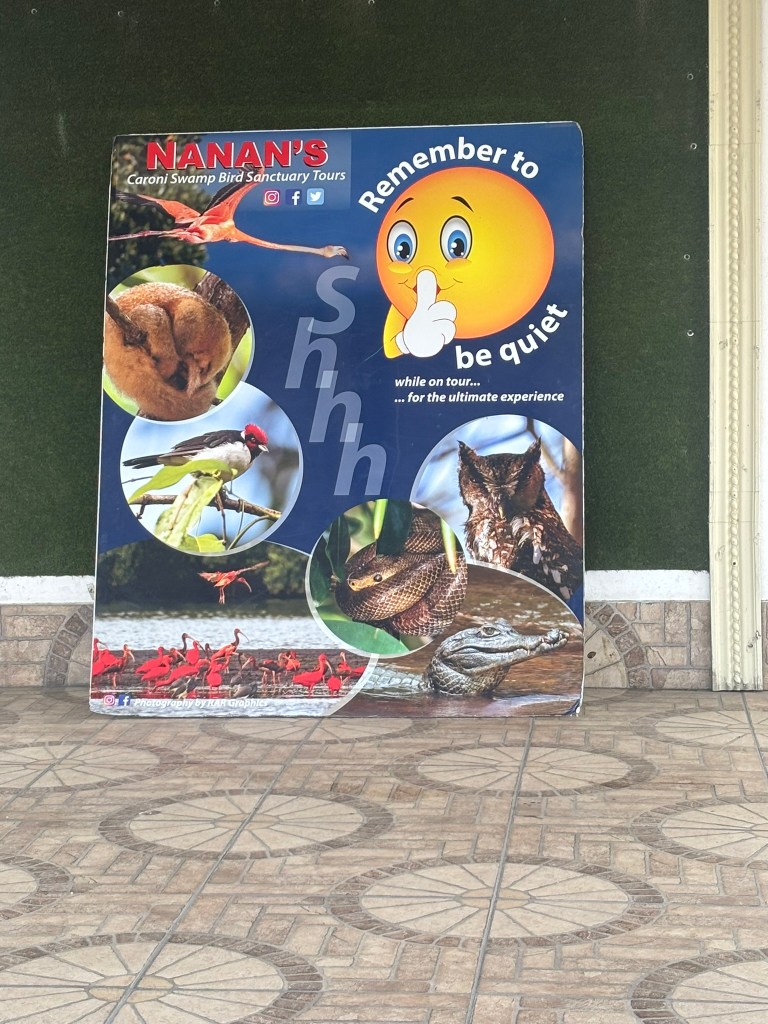
Two companies run boat tours in the swamp. I booked with the one you reach as soon as you enter (Nanan’s Bird Sanctuary Tours). The other is further down the road. I’d been told that scarlet ibis sometimes gather around the second company’s launch area at low tide, and since I arrived early, I drove over to take a look. The people there were very kind and showed me where the ibis might turn up. There were none that day, but I did see flamingos, which I hadn’t expected.
My tip: arrive early. It gives you time to look around, ask questions, and get settled before the boat leaves.

Out on the Water

The boat ride took a couple of hours. Tours like this typically leave in the late afternoon so that you’re on the water in time for sunset, and our guide steered us through the quiet channels, pointing out wildlife I would have missed on my own.

Here’s some of what we saw:

  • Cook’s tree boas: these swamp snakes were curled up asleep on low-hanging branches.
  • Spectacled caimans: resting along the muddy banks.
  • Anteaters: two of them, balled up asleep in a tree.
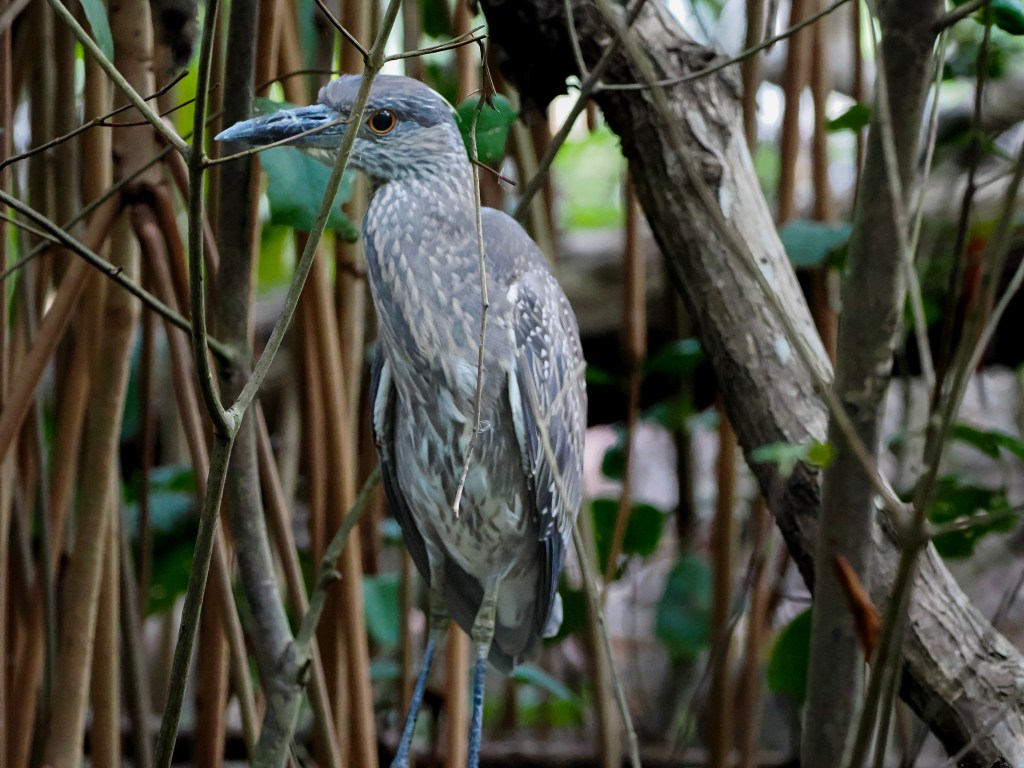
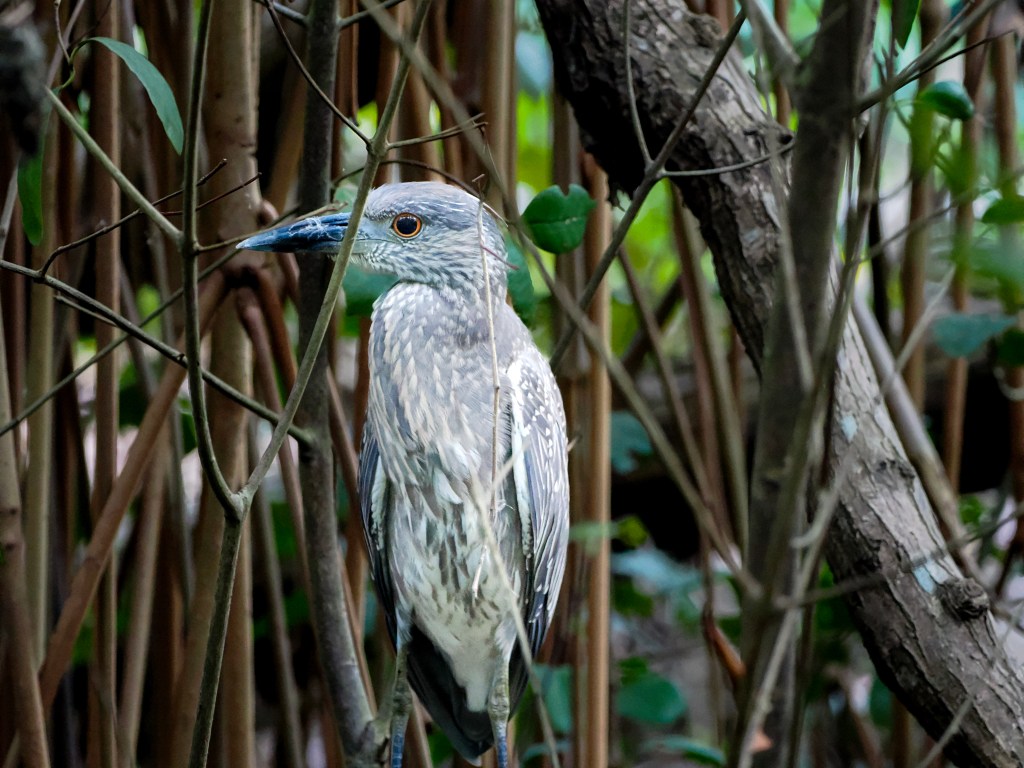
  • Herons and egrets: including a juvenile yellow-crowned night heron perched among the mangrove roots.
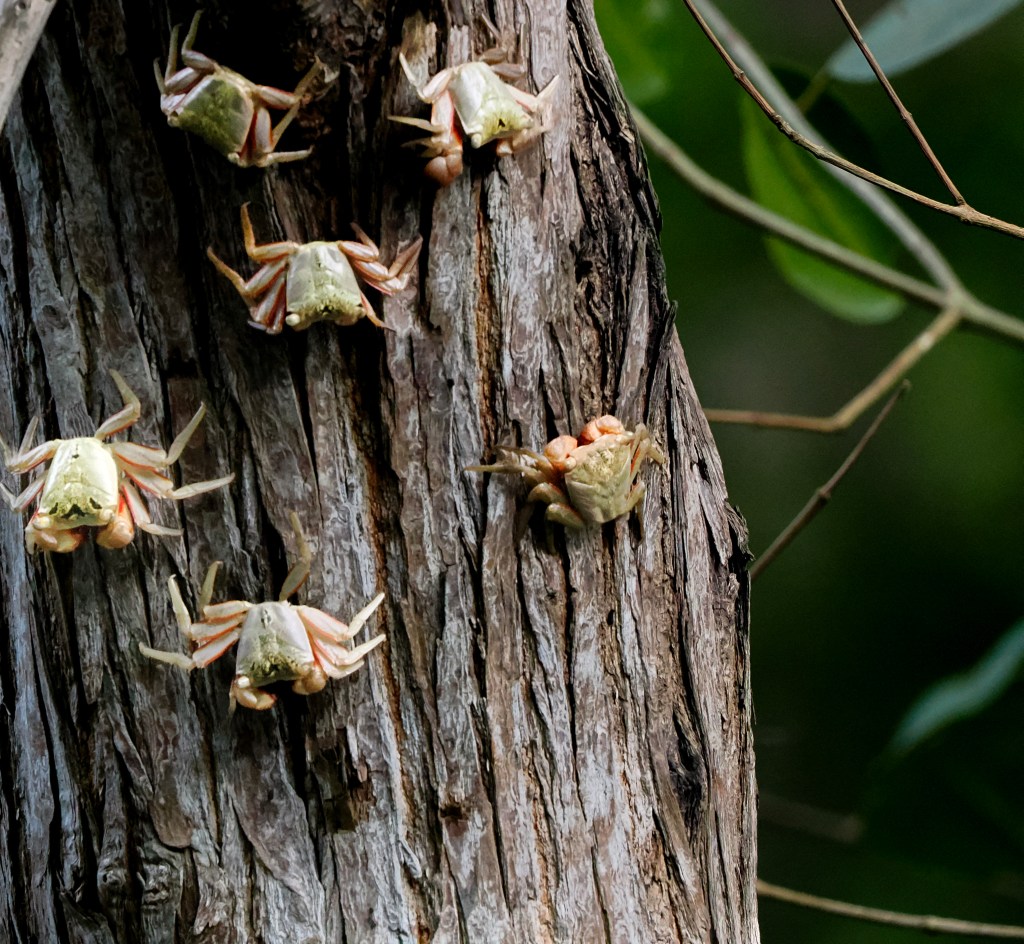
  • Crabs: climbing the mangrove trunks.
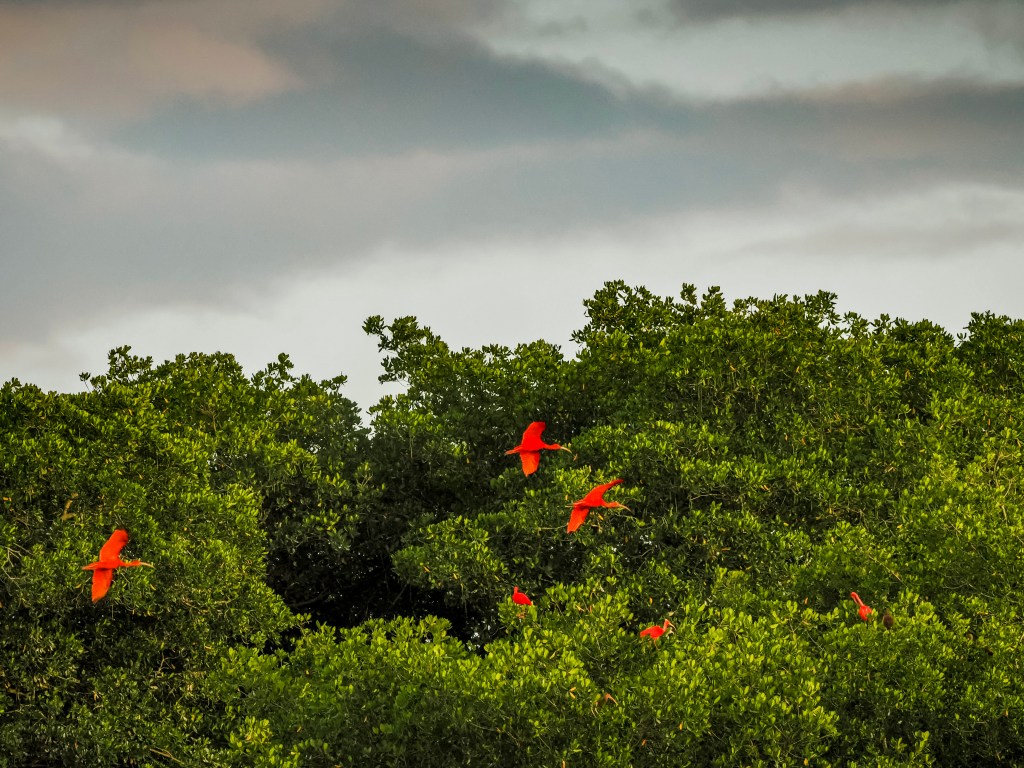
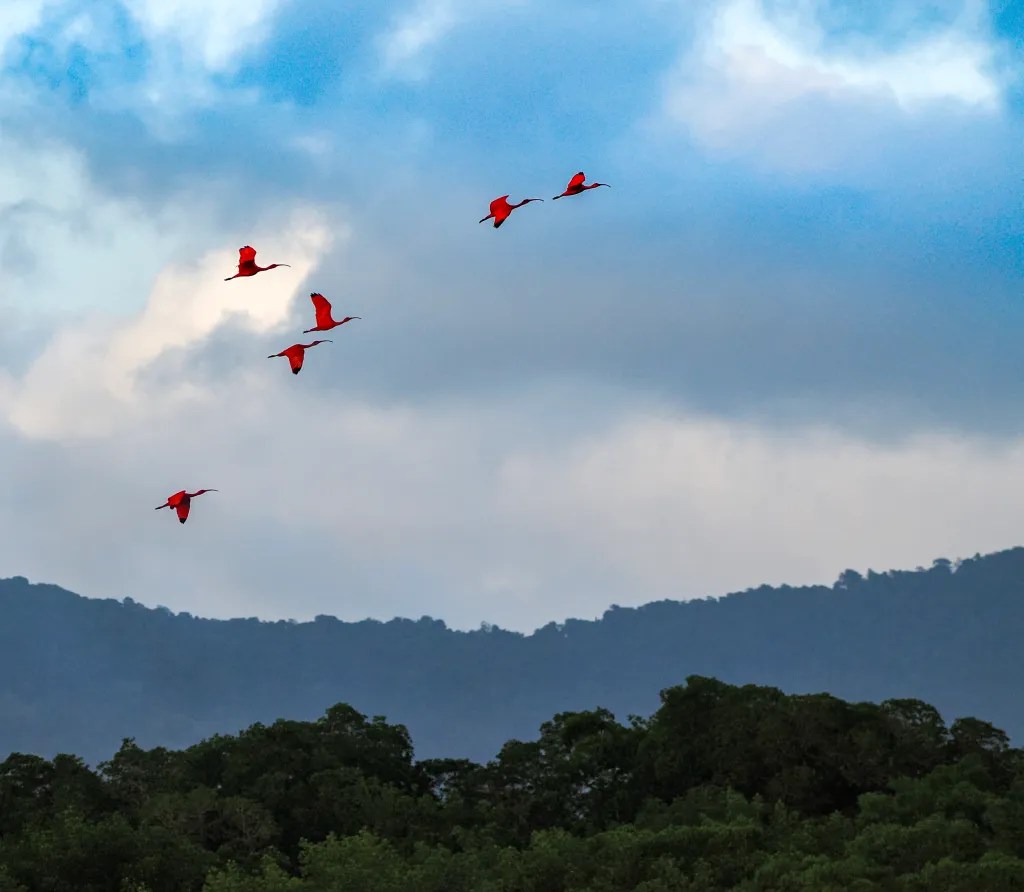
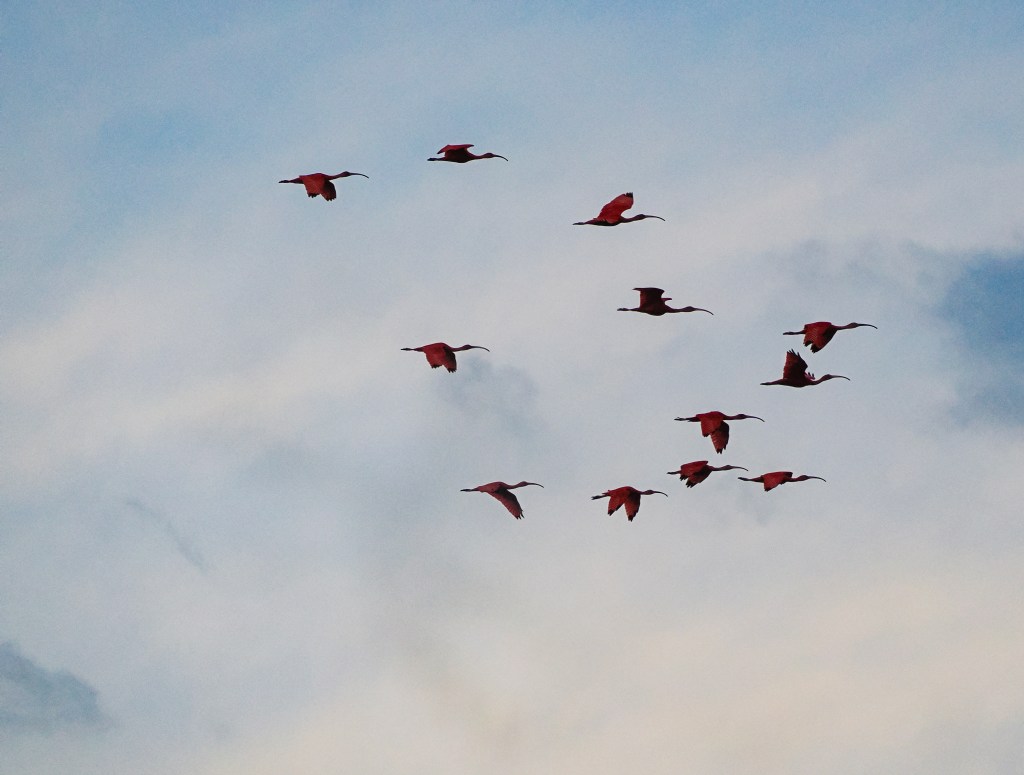
  • A few scarlet ibis: perched in the trees well before sunset.

The Main Event: Scarlet Ibis Coming Home

The highlight came when our boat docked, and we waited for the ibis and other birds to come home for the night. The light softened, the swamp quieted down, and a group of flamingos in the shallow water kept us entertained while we watched the sky. I feel like felmigoes added to the whole scene and made it more beatiful. I took tons of photos of Flemingoes (more than the Ibis) .

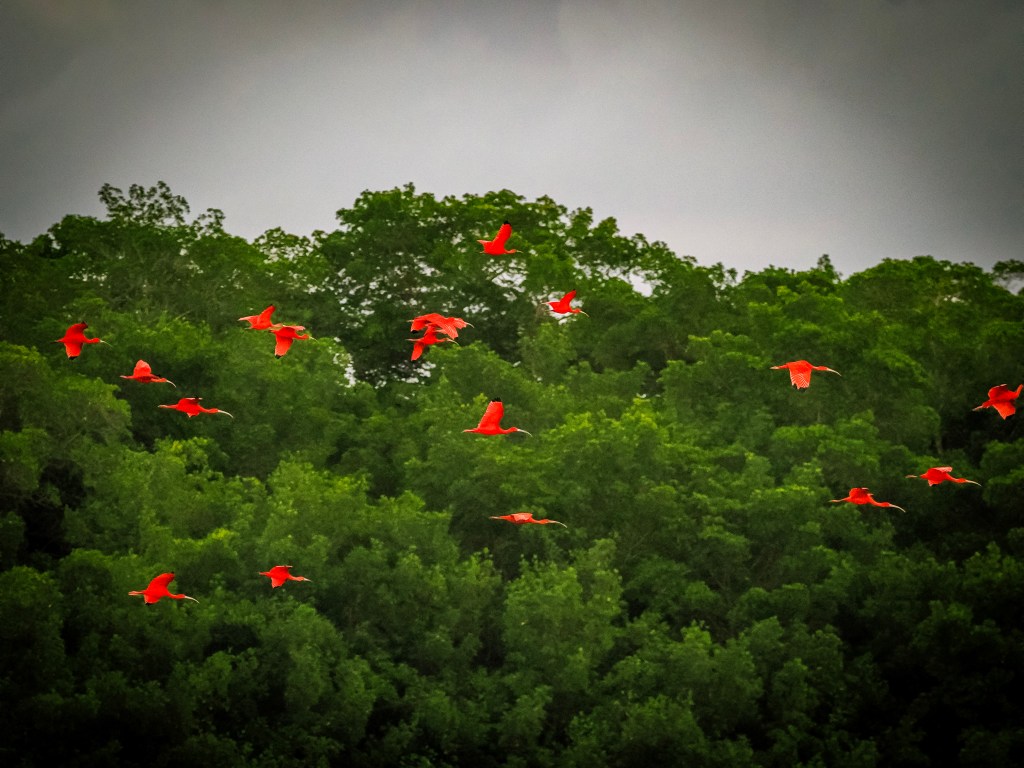
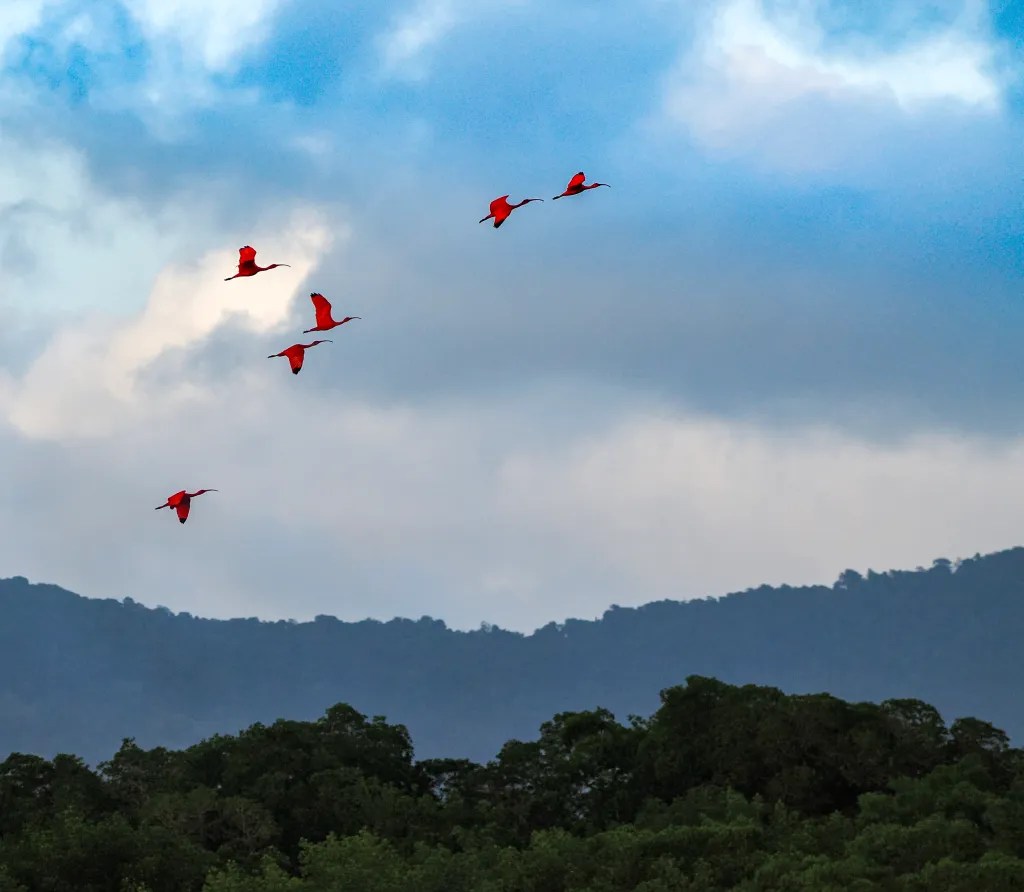
Then the first ibis appeared. The ibises typically return in waves around sunset, with the exact timing shifting slightly throughout the year. First a handful, then more, flying low over the mangroves in bright red against the evening sky, their vibrant plumage creating a stunning contrast with the deepening hues of twilight. It’s a sight photographs don’t fully capture, as the intricate details of their movement and the delicate interplay of light and shadow are best appreciated in person. They perch on the green trees, their presence enhancing the landscape’s natural beauty, and the whole scene reminded me of Christmas with greens and reds.

Tips for Your Own Caroni Swamp Trip

  • Ask your lodge to book it. It saves effort and helps you coordinate the timing.
  • Pick the late-afternoon tour. It’s the one that lines up with the ibis returning at dusk.
  • Arrive early. You can look around the other launch area, as I did, or just settle in.
  • Don’t count on seeing ibis at the launch. I was told they gather there at low tide, but none showed up on my visit.
  • Bring a zoom lens or binoculars. Many of the best moments are at a distance.
  • Pack insect repellent and a light layer. It’s a swamp, and the evenings can be buggy.
  • Be patient and quiet. The birds are worth the wait.

Final Thoughts

Watching scarlet ibis return to Caroni Swamp was one of the highlights of my Trinidad trip, and the snakes, caimans, and flamingos along the way made it even better. If you’re visiting Trinidad, make time for a sunset boat tour. It’s easy to arrange and unforgettable.

In search of oilbird: Visiting Trinidad’s Famous Dunston Cave at Asa Wright Nature Centre

Planning to see oilbirds in Trinidad? Here’s my first-person guide to the Dunston Cave colony at Asa Wright Nature Center, why you need a multi-day stay, and what to expect.

I’ve seen a lot of birds on my travels, but none quite like the oilbird. Weird, loud, nocturnal, and fruit-eating, it is the kind of creature that makes you wonder why evolution got so creative. Here’s how I got to see the colony at the Asa Wright Nature Center in Trinidad’s Northern Range, and everything I’d tell a friend before they go.

What Is an Oilbird (and Why the Strange Name)?

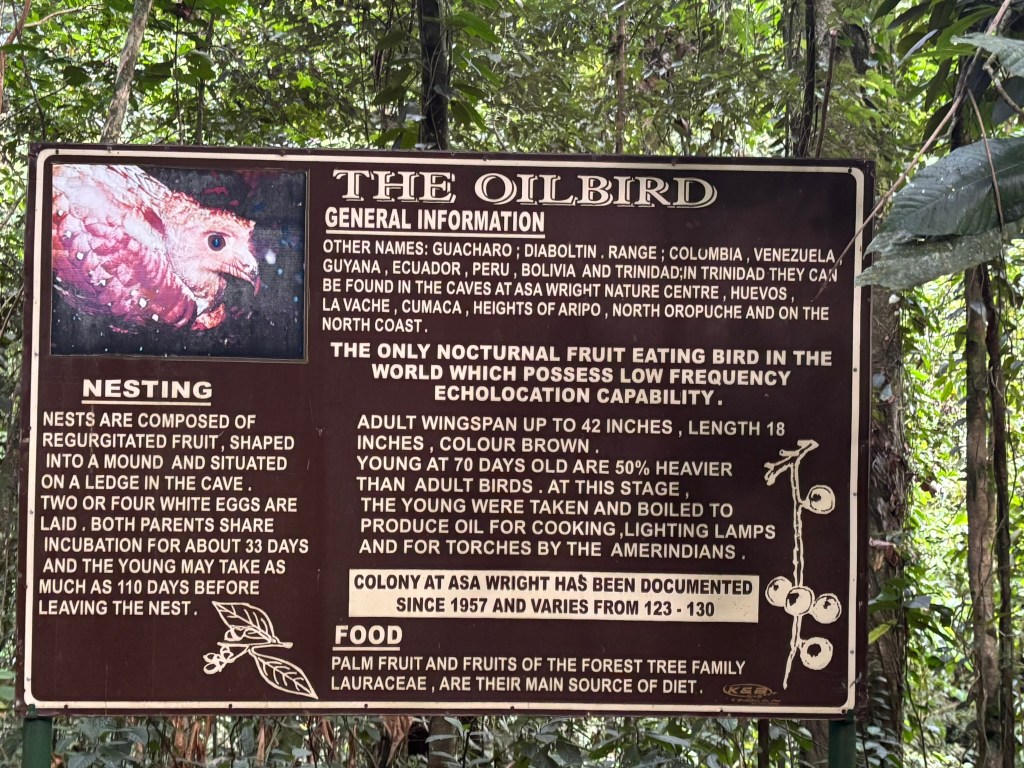
The oilbird, also called the guacharo or, in Trinidad, the diablotin (“little devil”), is a large brown bird with a wingspan of up to about 42 inches and a body length of around 18 inches. Its scientific name is Steatornis caripensis, and its range stretches across Colombia, Venezuela, Guyana, Ecuador, Peru, Bolivia and Trinidad.

The name comes from a grim bit of history. In 1799, the scientist Alexander von Humboldt documented how Venezuelan Indians and monks were collecting the extremely fat young chicks from their nests and boiling them down for cooking oil and torch fuel. At around 70 days old, the chicks can be 50 percent heavier than their parents. Amerindian peoples also used the rendered oil for lamps. Today, Trinidad has at least five oilbird colonies, and every one is protected by law.

Why You Need to Stay at Least 3 Days

Here’s the practical part that surprised me: you can’t just turn up and wander into the cave. The oilbirds are reclusive, and to avoid disturbing them, the caves can only be visited with a guide from the nature centre. Access is built around guests staying at the property, so I planned a stay of at least three days. That gave me time to settle in, join the guided walks, and get a slot for the cave visit without rushing.

My tip: book your stay well ahead and ask about the cave visit when you reserve. Three nights also lets you enjoy the rest of the centre’s rainforest birdlife, which is a bonus you won’t regret.

The Walk to Dunston Cave

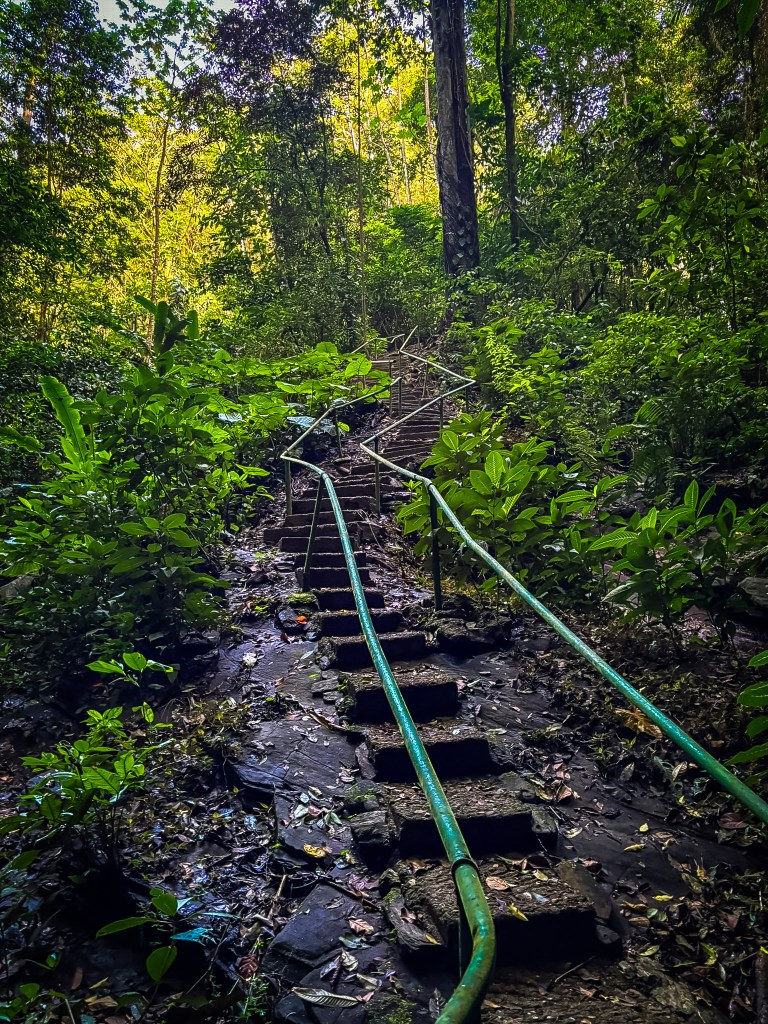
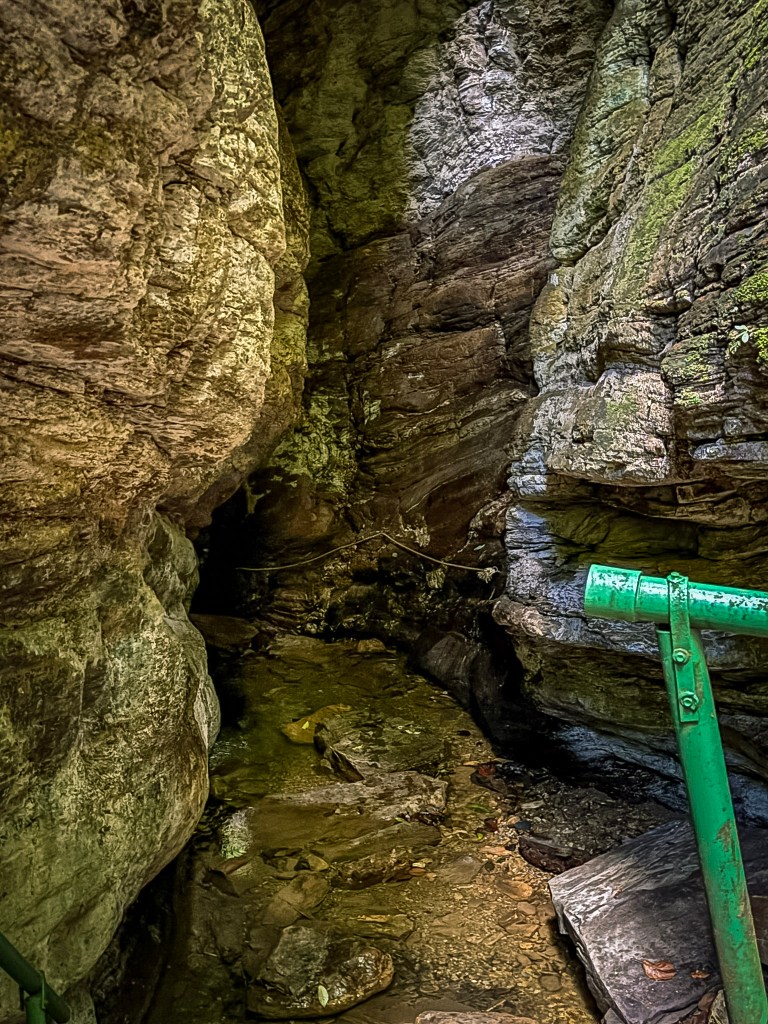
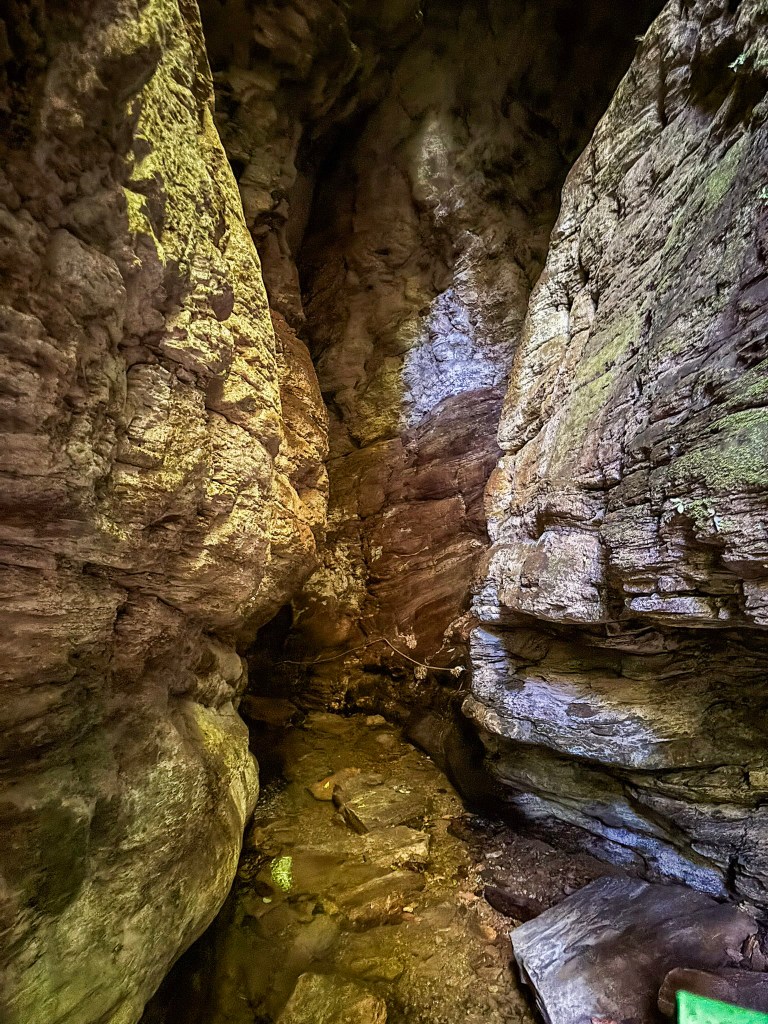
After a short orientation from our guide, we set off along the forest trail. Our guide first asked us to change into shoes that could get wet, and the walk that followed was beautiful. The rainforest around Asa Wright is dense and green, dripping with leaves the size of dinner plates, and the air gets cooler and damper as you approach the cave. Our guide explained the rules: stay quiet, keep lights low, and respect the birds. This is a working breeding colony, not a show.

Coming Face to Face with the Colony

Nothing quite prepares you for it. Our guide used a red light to illuminate the birds, and in that dim glow I could see them sitting on ledges in the rock, strange-looking with hooked beaks and big dark eyes. The sign at the centre says the colony has been documented since 1957 and varies from about 123 to 130 birds, though I’ve also seen figures of 150 or more quoted for the cave, so numbers clearly shift over time.

The nests were fascinating. They’re built mostly from regurgitated fruit, shaped into low mounds on cave ledges, and reused year after year. I could see the piles of fruit the birds had collected the night before. Females lay two to four white eggs, and both parents share incubation for about 33 days. The young are slow to develop and may stay in the nest for 110 days or more.

If the birds get disturbed, they let you know. Oilbirds scream, snarl and chuck in a way that sounds like a nightmare soundtrack, and the screams are truly ear-piercing. If I hadn’t known about the birds and had wandered into that dark cave on my own, I would have been scared to death, and I now understand how the bird earned its nickname, the little devil. It’s easy to see why Amerindians called them guacharos, “the ones that wail and mourn,” and why Trinidadians settled on diablotin. Watch the vidoe I took inside as we entered and you can hear the screams of the birds.

Because the birds are so easily disturbed, we didn’t stay long. I quickly took a couple of photos in the red light, and then we headed back out and left the colony in peace.

Fruit-Eating Birds That Use Echolocation

This is the part that blew my mind. Oilbirds are the only nocturnal fruit-eating birds in the world, and they also use low-frequency echolocation to find their way through the dark, much like bats. They can detect an object about eight inches across in total blackness. They aren’t blind either: their eyes are well adapted for low light, and they use sight whenever there’s enough of it.

At dusk they leave the cave to forage, mainly on palm fruits and the fruits of trees in the laurel family, and they may travel many miles in a night to feed. Then they return to the cave before daylight. It’s a very different life from the daytime birds I’m used to.

Practical Tips for Your Visit

  • Go with the guide. It’s required, and it protects the birds.
  • Stay at least three days so you can secure a cave visit around the guided schedule.
  • Keep noise and light to a minimum. Silence is your best camera accessory.
  • Bring sturdy shoes and rain gear. The trails are humid and can be slippery.
  • Be patient. Let your eyes adjust to the dim light and you’ll see far more.

Final Thoughts

Seeing the oilbirds at Asa Wright was one of the most memorable wildlife experiences I’ve had. The birds are odd, noisy, and absolutely unforgettable, and the setting in Trinidad’s Northern Range makes the whole experience feel like a step back in time. If you’re planning a trip to Trinidad and you love nature, put Dunston Cave at the very top of your list.

Waved Albatross of Española: A Once‑in‑a‑Lifetime Wildlife Encounter

Visit the Galápagos island of Española between December to April, and you may witness one of the most extraordinary courtship rituals in the natural world. Each spring, nearly the entire global population of waved albatrosses—tens of thousands of birds—returns to this remote island to reunite with lifelong partners, raise a single chick, and perform a mating dance so intricate and theatrical that it feels choreographed by nature itself. With wingspans stretching up to eight feet, these are the largest birds in the Galápagos, yet their grace in the air contrasts beautifully with their endearing awkwardness on land. For travelers, seeing them here—on the only major breeding ground they have left—is nothing short of magical.

A Date With the Albatross: When to Plan Your Trip

The waved albatrosses follow a strict seasonal rhythm, and timing your visit is essential.

  • Late March – April (Arrival): The birds return to their only major breeding site on Española Island. Males typically arrive first to claim nesting spots, followed shortly by females.
  • April – June (Courtship & Egg Laying): This is the peak time to witness their famous courtship dance, which involves bill-clapping, bowing, and honking. Most eggs are laid during this window.
  • June – August (Incubation): Parents take turns incubating a single large egg for about two months. You can see many birds sitting on nests during this time.
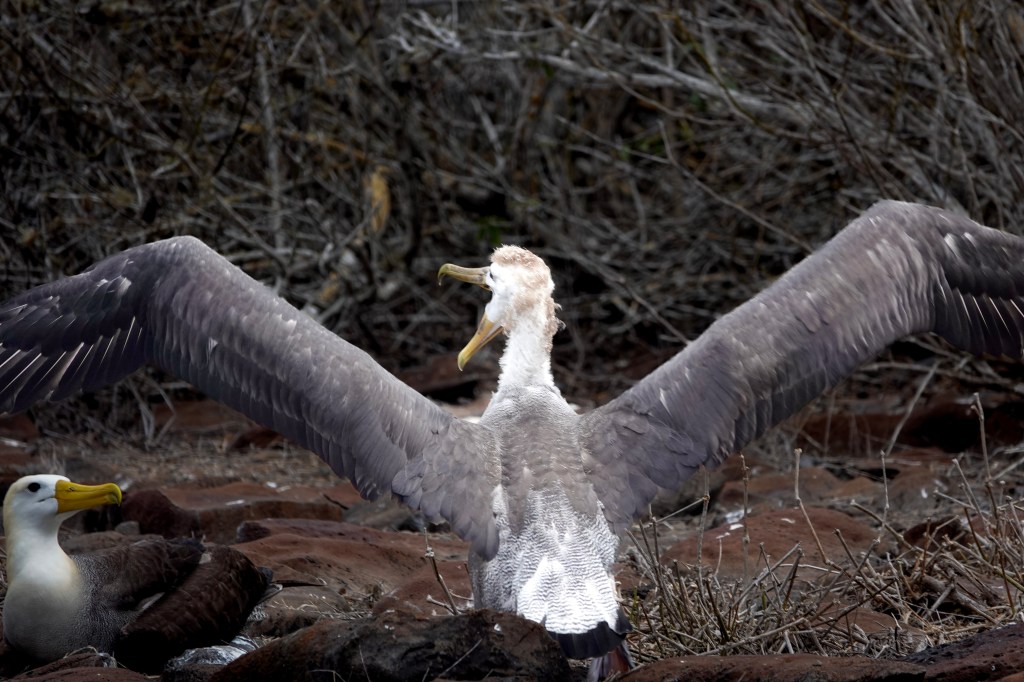
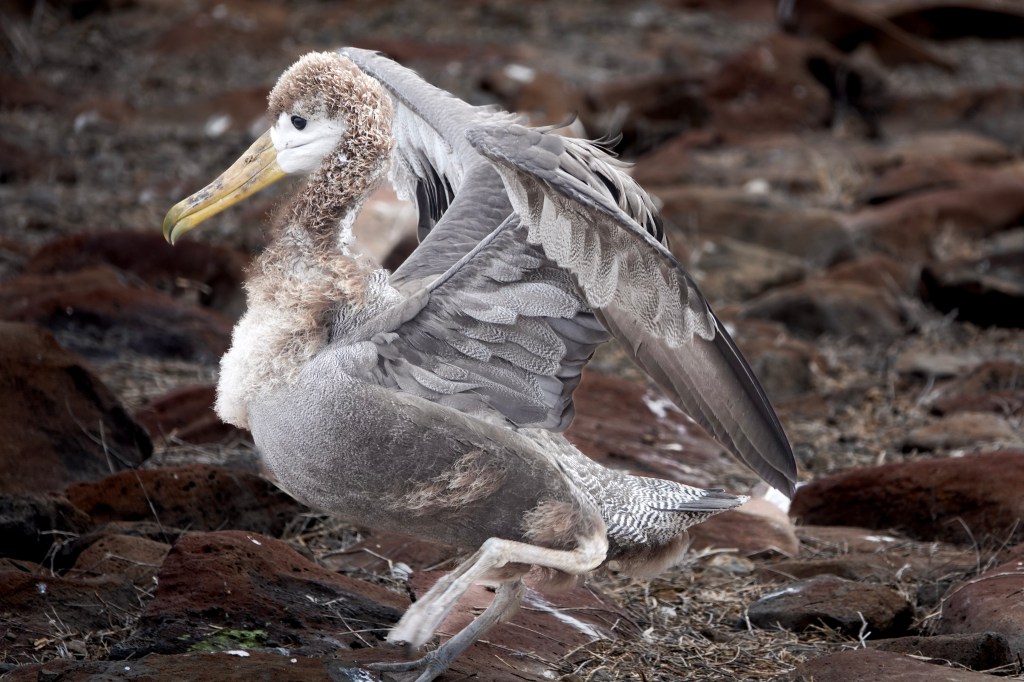
  • August – November (Chick Rearing): Chicks hatch and are fed a nutrient-rich oily substance by their parents. By late in this period, large, fluffy, brown chicks are visible across the colony.
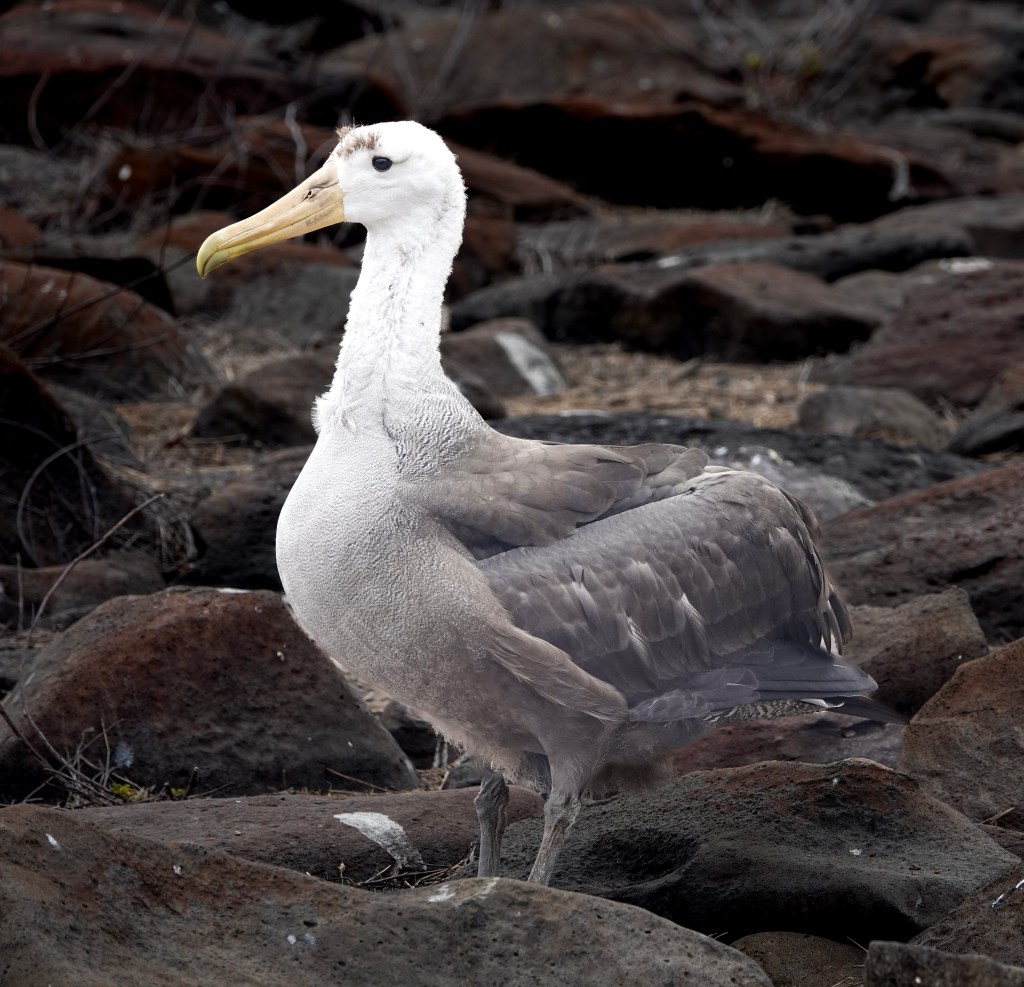
  • December – early January (Fledging & Departure): Young birds take their first flights, often wobbling to the cliffs for take-off. By mid-January, the colony is usually deserted as they head to the coasts of Ecuador and Peru

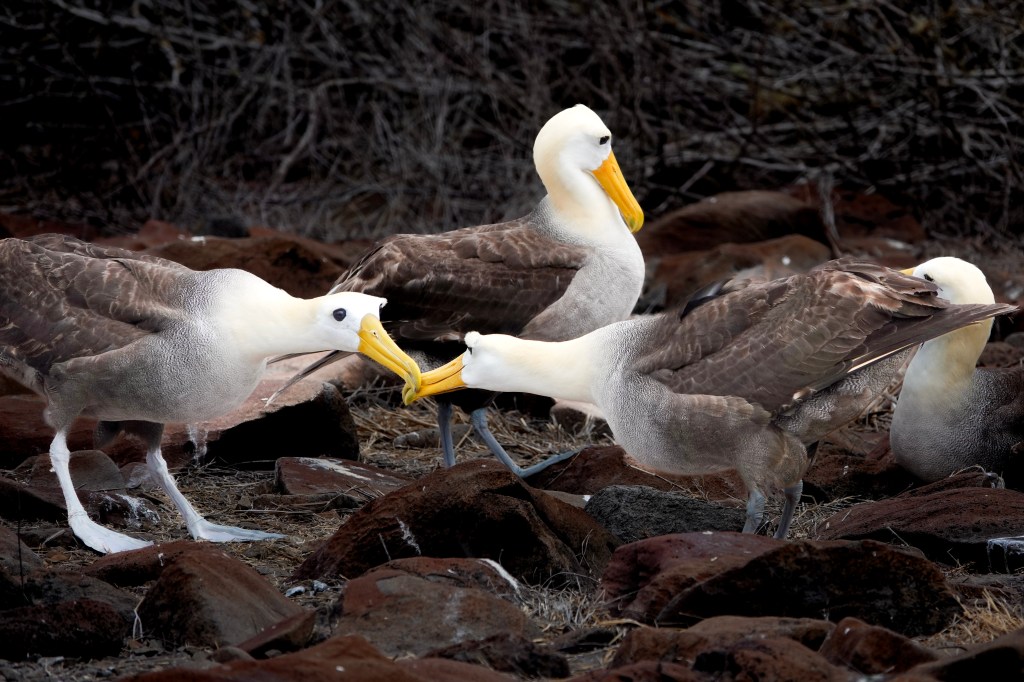
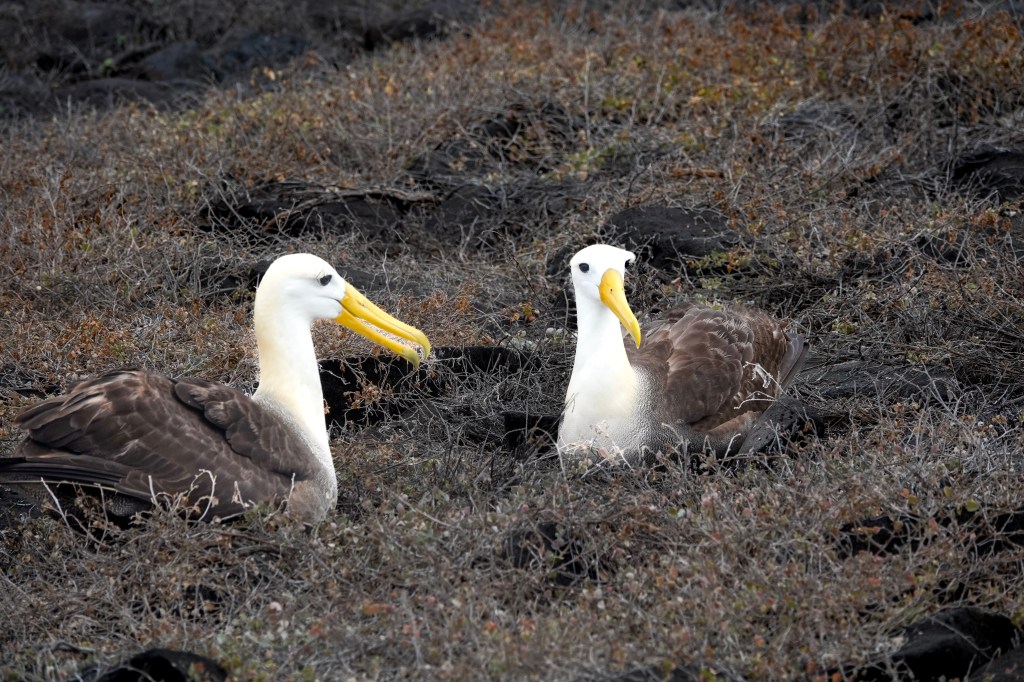
We were at the Waved Albatross nests on Española Island (specifically at Punta Suarez) at the end of December. We not only saw the young chicks learning to fly, but also saw the courtship dance (Vidoe below)

Choosing the Right Cruise: Why an Eastern Itinerary Matters

Because waved albatrosses breed only on Española Island, your cruise route determines whether you’ll see them at all.

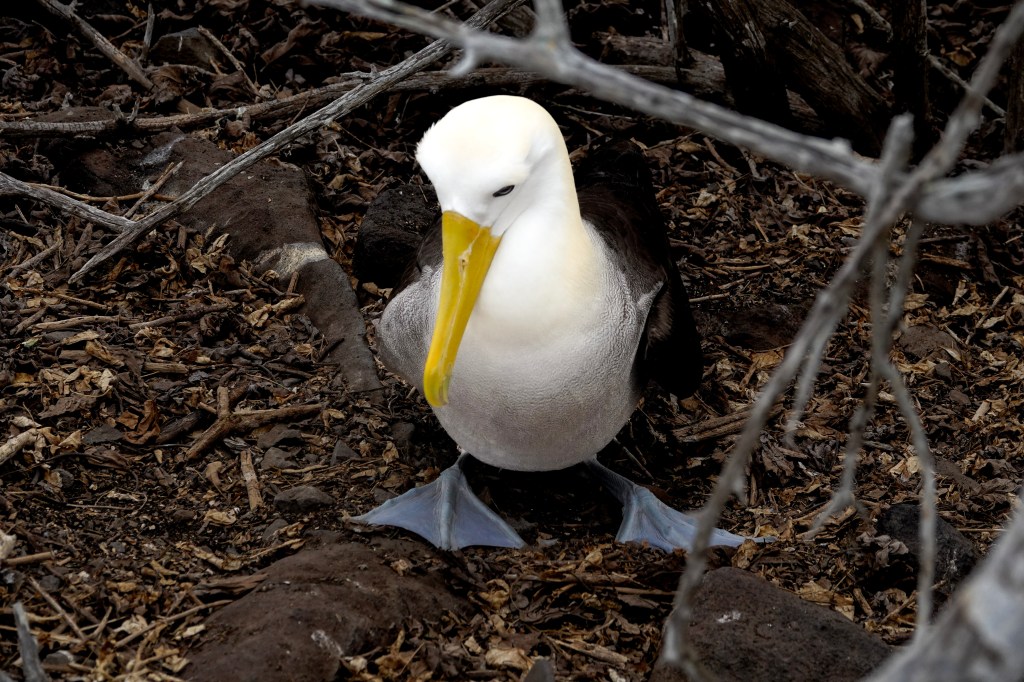
The landing at Punta Suárez is rugged and dramatic, with blowholes, cliffs, and colonies of seabirds swirling overhead. But nothing prepares you for the moment you see your first albatross waddling across the lava rock, its oversized bill and blue‑tinted feet giving it a charmingly awkward elegance.

Meet the Waved Albatross: The Ocean’s Master Glider

The waved albatross (Phoebastria irrorata) is a study in contrasts—both powerful and delicate, comical and majestic.

  • Wingspan: Up to 2.5 meters (8 feet), the largest in the Galápagos
  • Appearance: White head with a creamy yellow crown and neck, chestnut‑brown body, white underwings, and a long, dull‑yellow bill
  • Namesake: The subtle wave‑like pattern on the adults’ wings
  • Lifestyle: Exceptional gliders, spending years at sea without touching land
  • Diet: Fish, squid, and invertebrates—often scavenged near fishing boats or stolen from boobies

Despite their size, they move with surprising grace in the air, riding ocean winds for hours without flapping. On land, however, they transform into endearing, slightly clumsy characters—true to the Spanish root of “bobo,” meaning “foolish,” a name shared with their booby neighbors.

The Courtship Dance: One of Nature’s Most Theatrical Rituals

If there is one wildlife behavior that defines the waved albatross, it is their courtship dance—a ritual so intricate and expressive that it feels choreographed.

Pairs face each other, leaving just enough space to stretch their long necks. Then the performance begins:

  • Bill circling
  • Bill clacking
  • Hollow wooden tapping sounds
  • Exaggerated head sways
  • Honking
  • Bowing
  • A waddle that borders on comedic
  • And the occasional cow‑like “moo”

For new pairs or those that failed to breed the previous year, the dance can last hours—sometimes days. It is a test of compatibility, trust, and lifelong partnership.

Because waved albatrosses are monogamous, this ritual is not just courtship—it is a reaffirmation of a bond that may last decades.

Life on Española: Nesting, Parenting, and the Long Journey Ahead

Once bonded, the pair lays a single egg directly on bare ground. They take turns incubating it for nearly two months. After hatching:

  • Chicks join “nursery groups” while parents forage
  • Adults return to feed them a nutrient‑rich oily liquid
  • Young albatrosses fledge at around 5.5 months
  • They then spend up to six years at sea before returning to Española to find a mate

With only one chick per year and threats from fishing, pollution, and habitat changes, the species remains vulnerable—making every successful breeding season a triumph.

Why Española Is the Only Place to See Them

Nearly the entire global population—estimated at 50,000–70,000 individuals—returns to Española each year. A tiny secondary colony exists on Isla de la Plata off mainland Ecuador, but with fewer than 20 breeding pairs, Española remains the heart of the species.

This exclusivity makes your visit feel even more special. You’re not just seeing a bird—you’re witnessing a species in its ancestral home, performing rituals unchanged for millennia.

Final Thoughts: A Wildlife Encounter Worth Crossing Oceans For

Standing on the cliffs of Española, watching thousands of waved albatrosses reunite, dance, nest, and soar, you feel the pulse of the Galápagos in its purest form. It’s a reminder of how fragile and extraordinary these islands are—and why they continue to inspire travelers, naturalists, and storytellers alike.

If your Galápagos journey is about connection, wonder, and witnessing nature at its most theatrical, then timing your trip to meet the waved albatross is an experience you’ll never forget.

Punta Pitt Wildlife Guide: Home of the Red‑, Blue‑, and Nazca Boobies

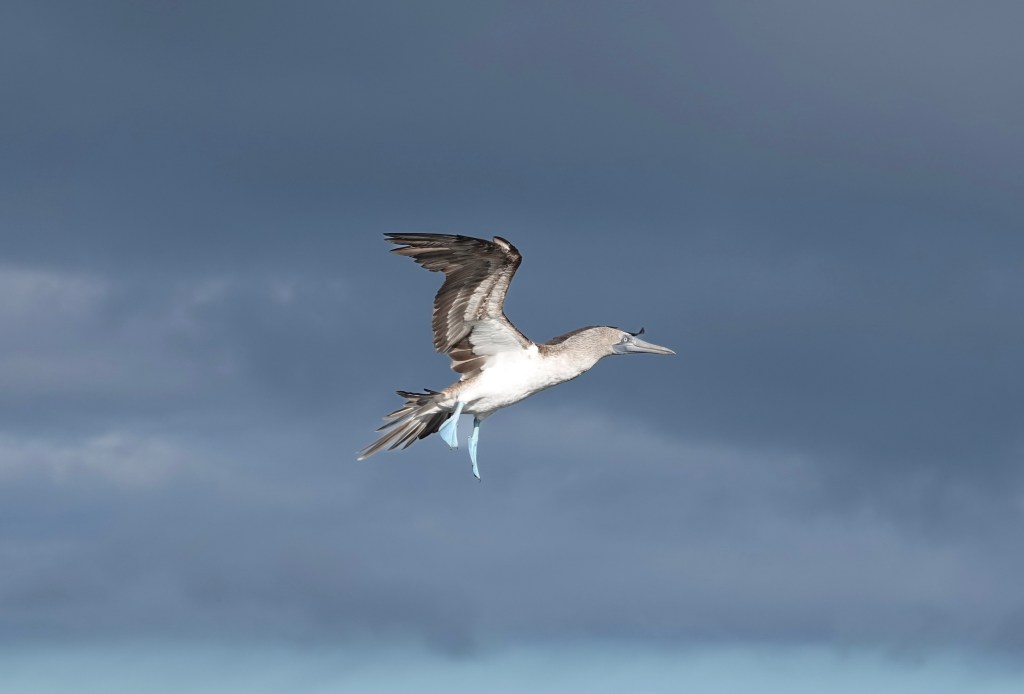
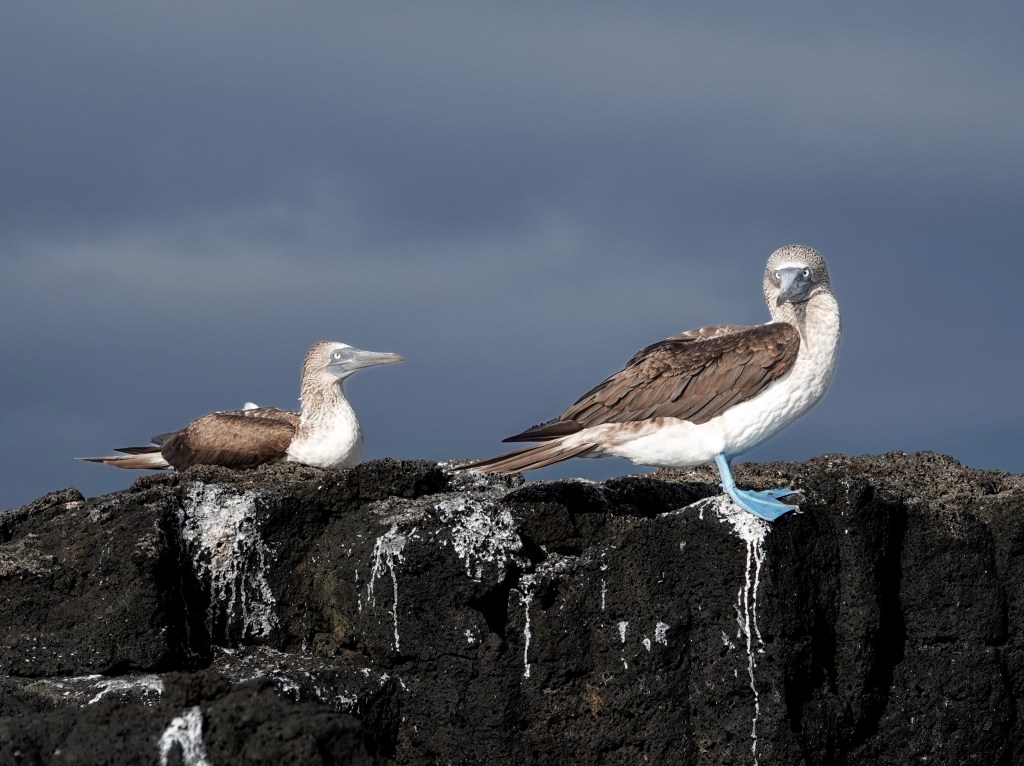
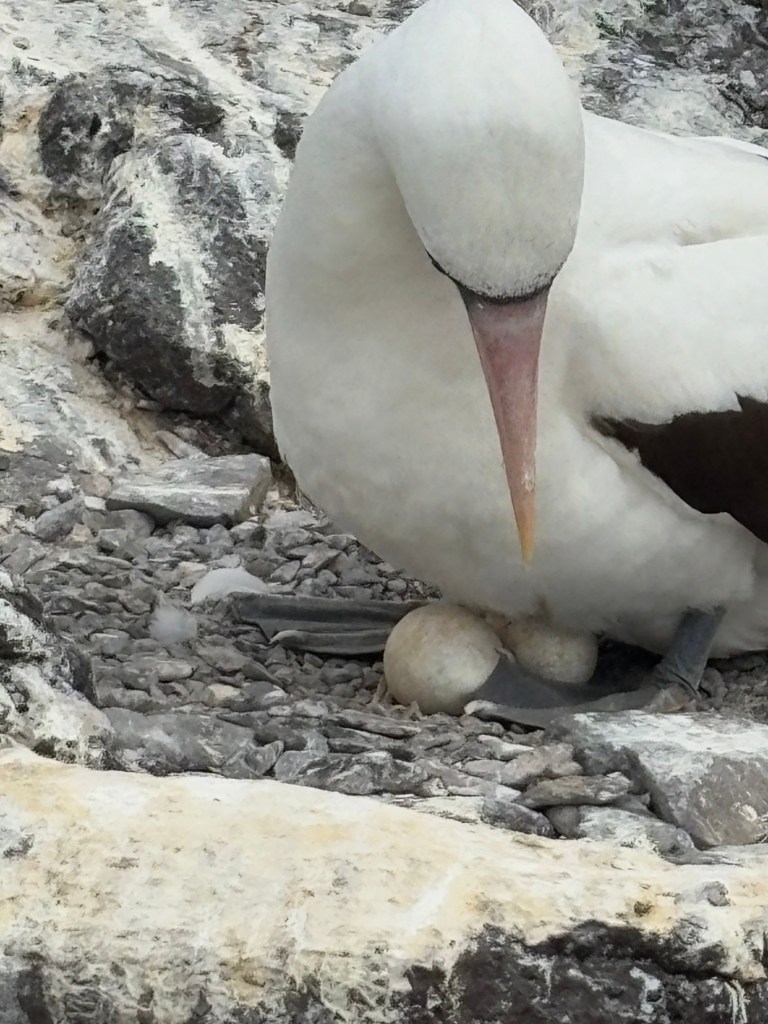
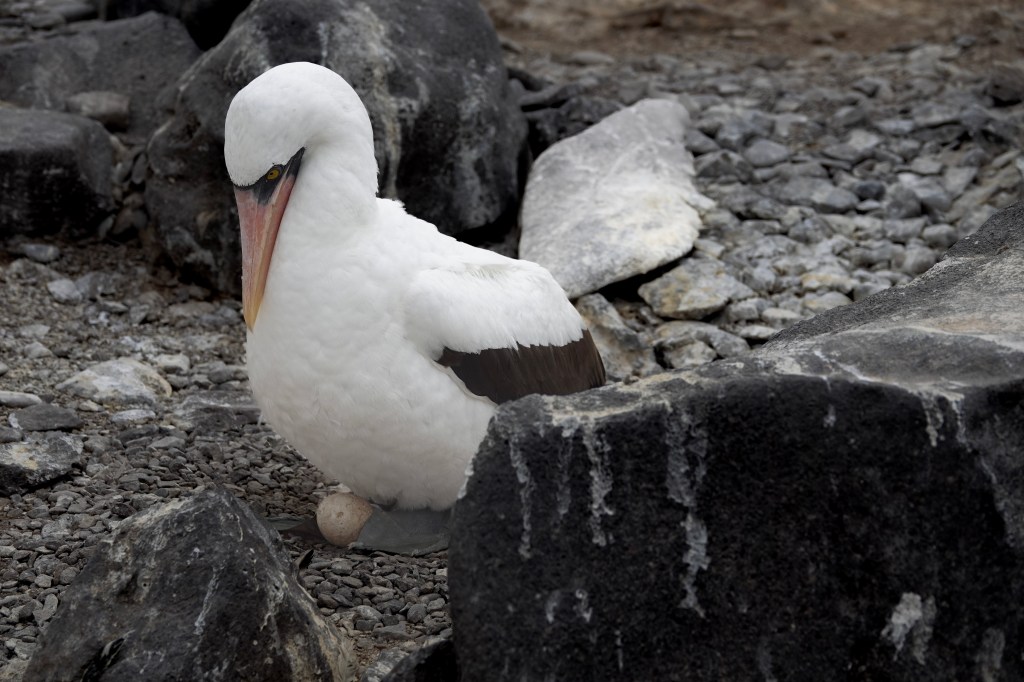
Boobies—named after the Spanish word bobo—meaning “clumsy”—boobies earned their name from their slightly awkward, waddling gait on land. The Galapagos Islands are home to three different species of boobies, which include the blue-footed, red-footed, and Nazca boobies. Each species possesses its own remarkable traits and behaviors, making them a highlight for wildlife enthusiasts. Their unique coloring not only helps in distinguishing between the species but also plays a role in courtship displays, where vivid colors attract mates and signify health. Observing these dazzling birds in their natural habitat provides a rare glimpse into their daily lives, from their fascinating mating rituals to their playful interactions with one another. It is well worth the journey to the Enchanted Isles of the Galapagos to witness these fascinating and captivating species found throughout the archipelago, which bring vibrancy and life to the rugged landscapes, enhancing the overall allure of this UNESCO World Heritage site.

Punta Pitt, located on San Cristóbal Island, is an iconic destination in the Galápagos, known for being the only place where you can observe all three species of boobies: the blue-footed booby, the red-footed booby, and the Nazca booby. This site, with its unique biodiversity and stunning landscapes, attracts nature and wildlife enthusiasts, making it a must-see stop for anyone visiting the archipelago.

The Three Boobies of Punta Pitt

Because of its unique geographical location and abundant food supply, these species coexist without competition, each utilizing a different nesting niche

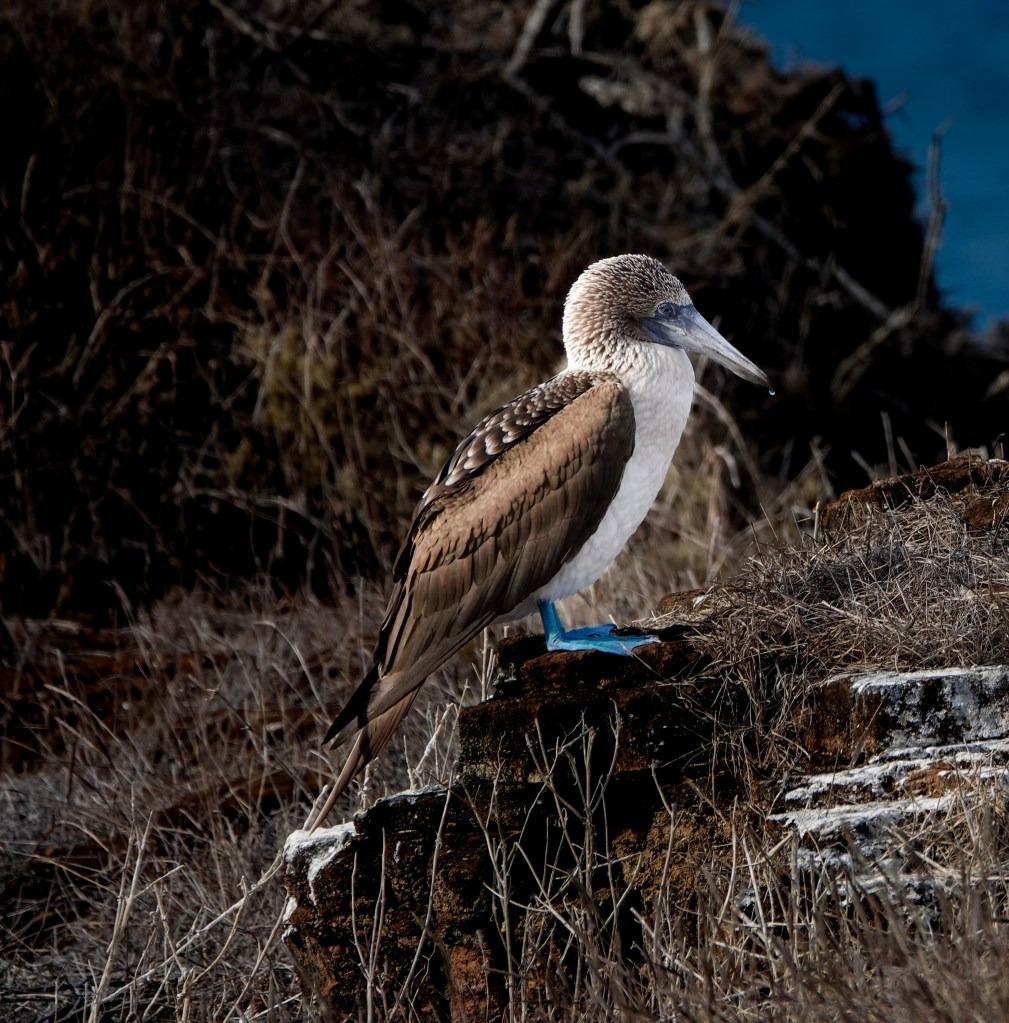
  • Blue-footed Boobies: Typically nest further inland on the ground, away from the cliffs.
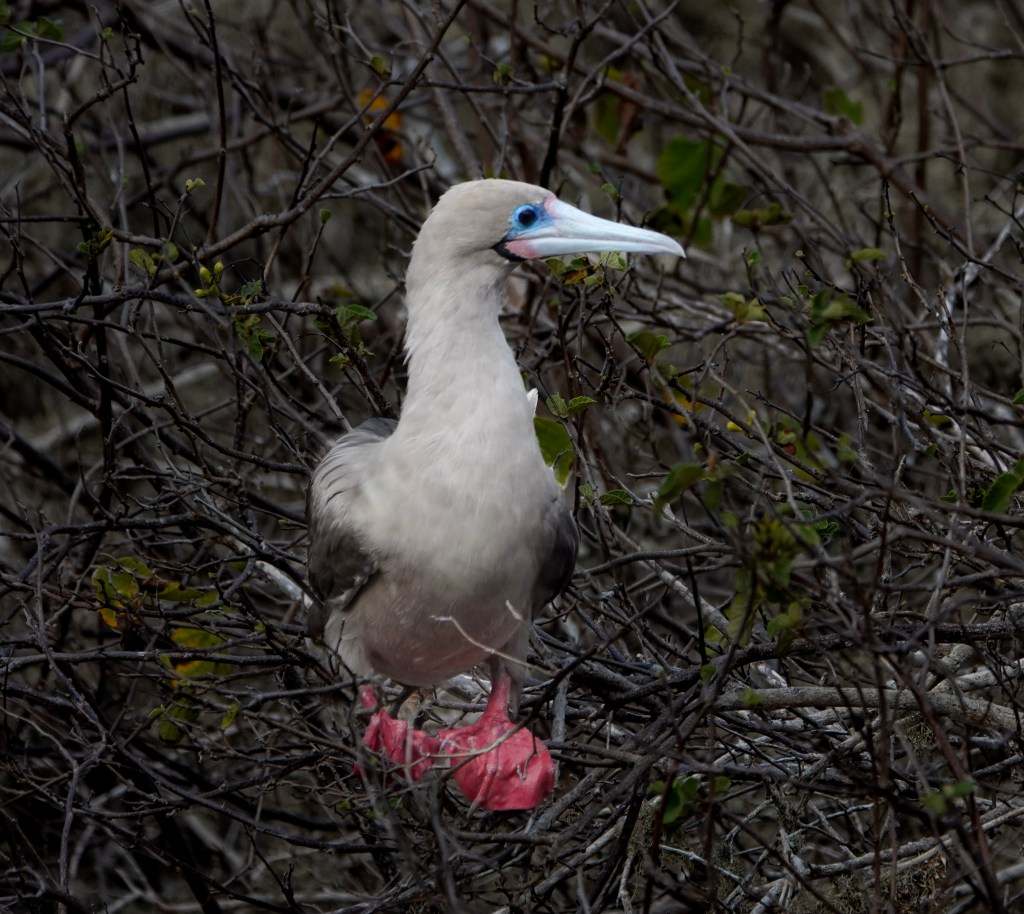
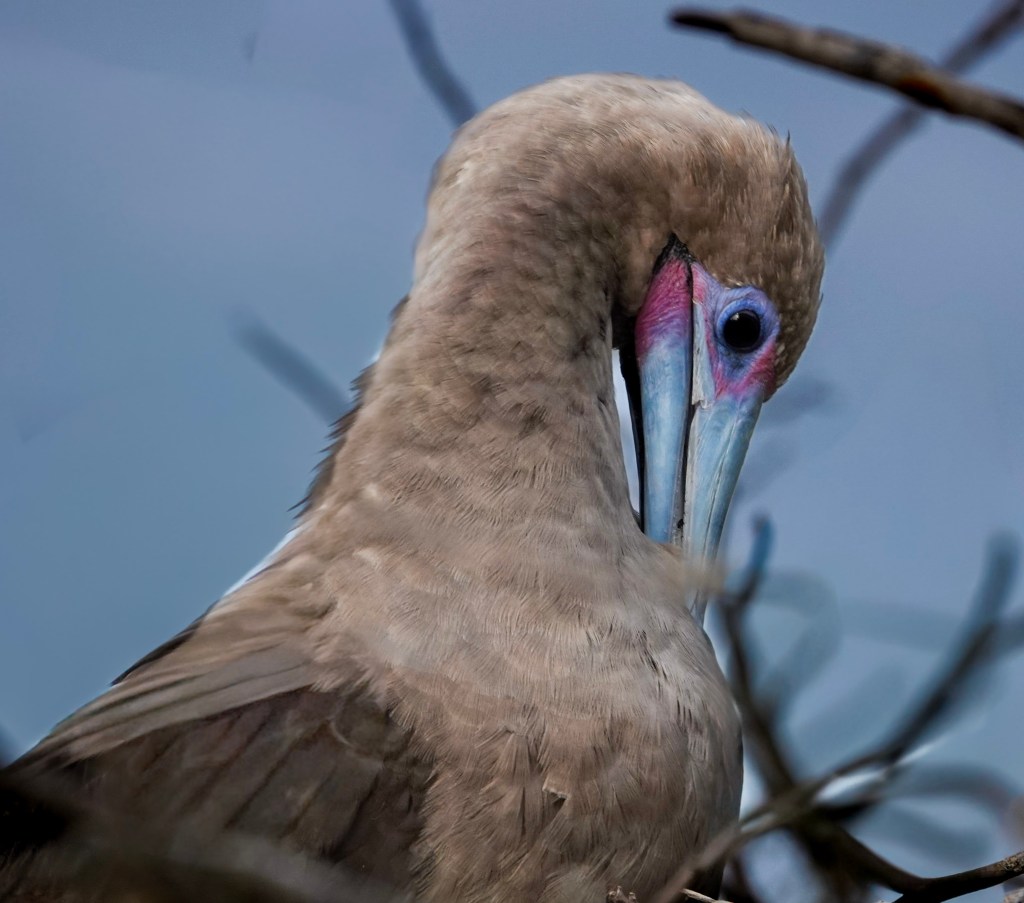
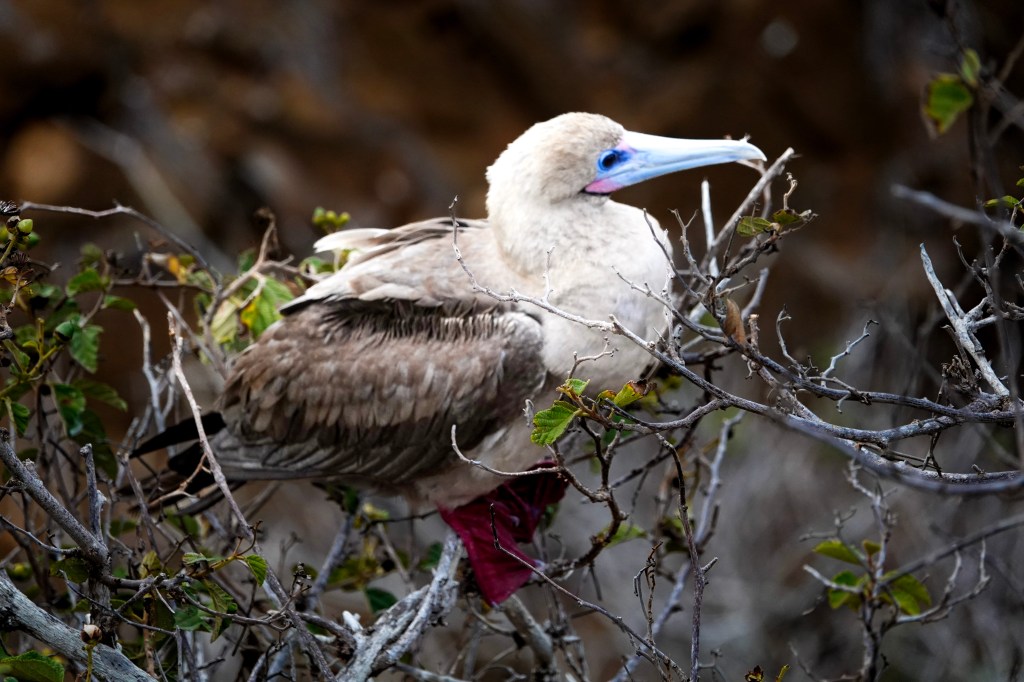
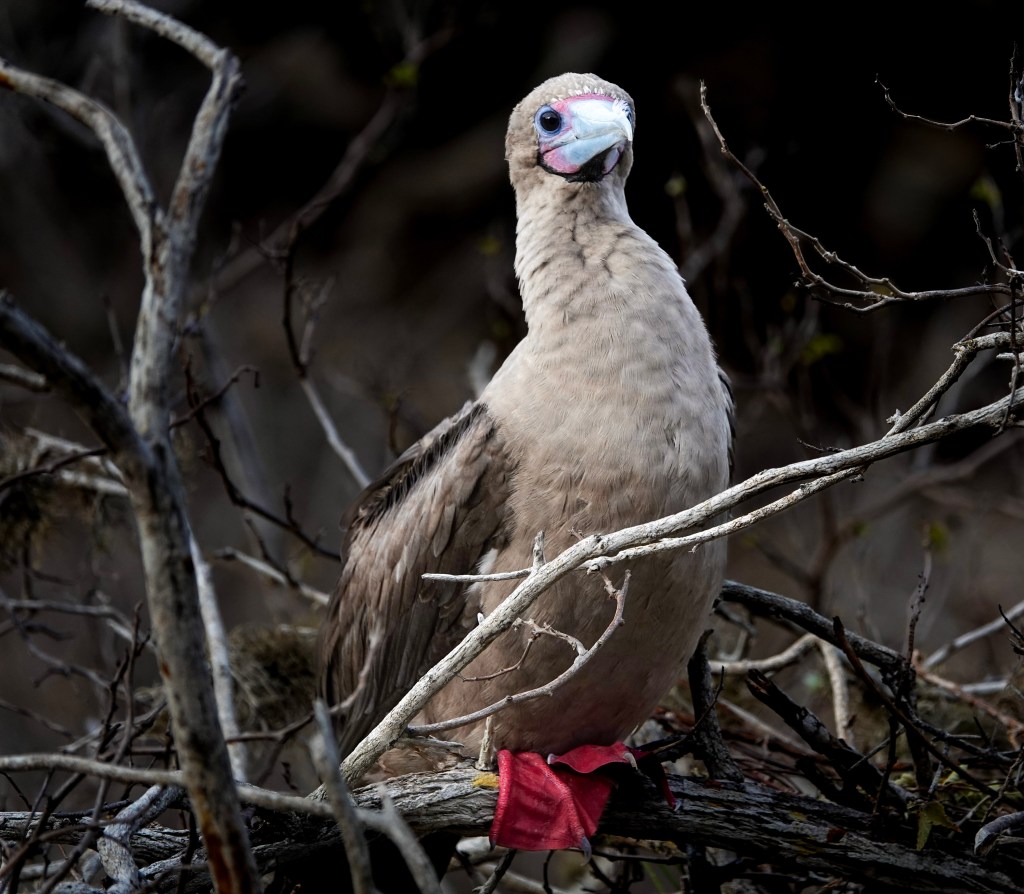
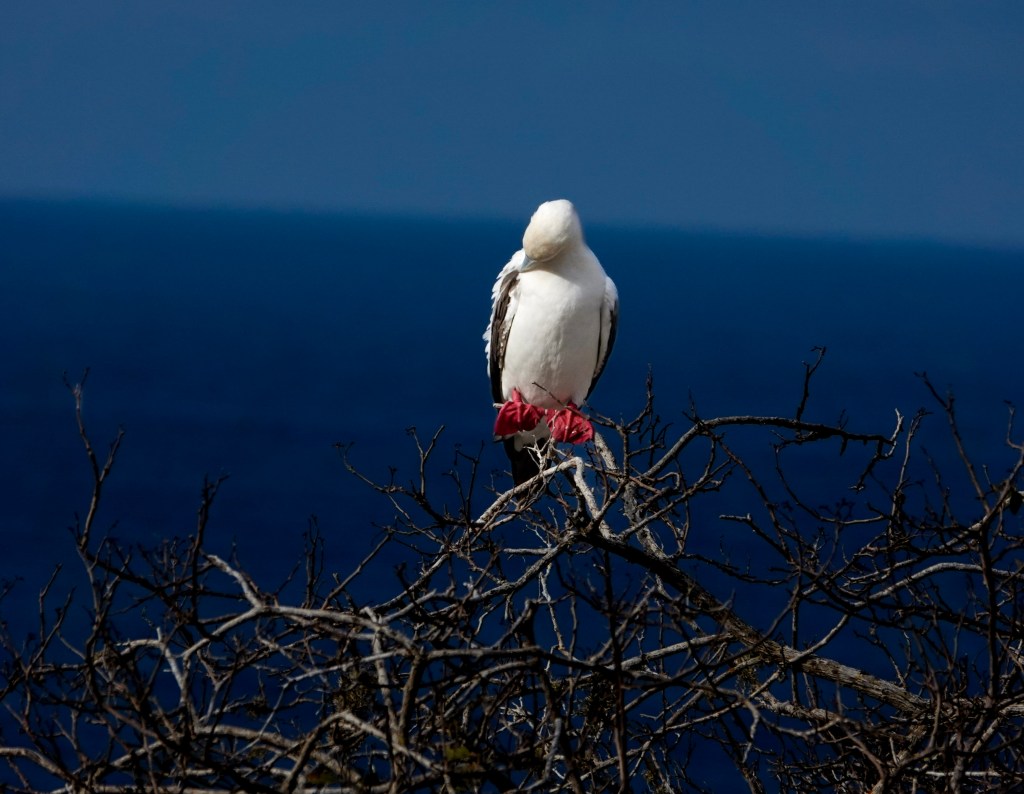
  • Red-footed Boobies: The rarest of the three in the archipelago, they are uniquely distinguished by their ability to nest in trees and shrubs, such as Palo Santo.
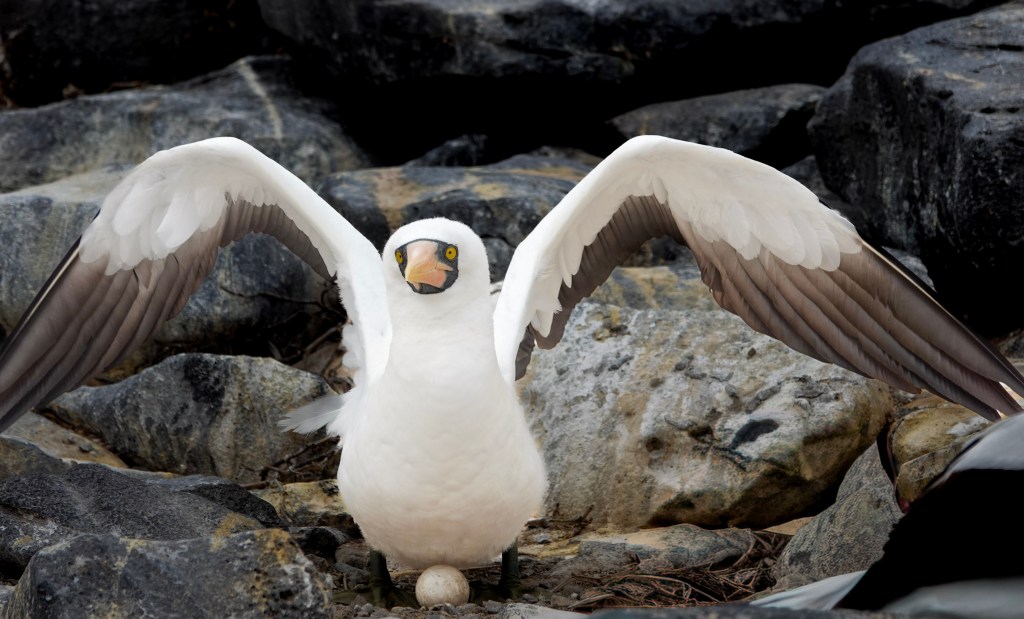
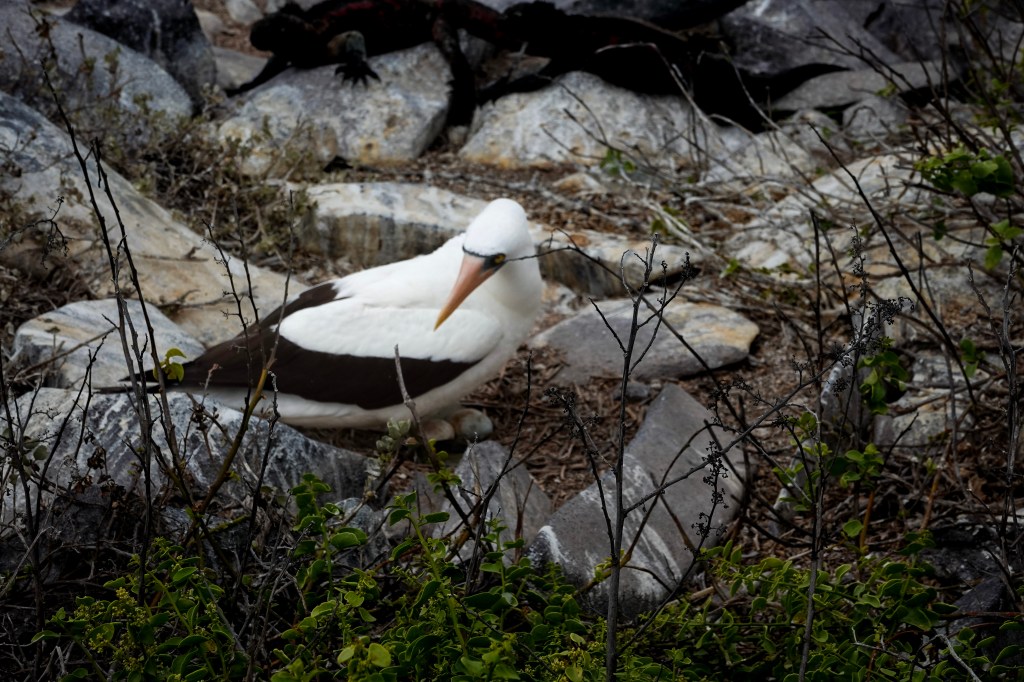
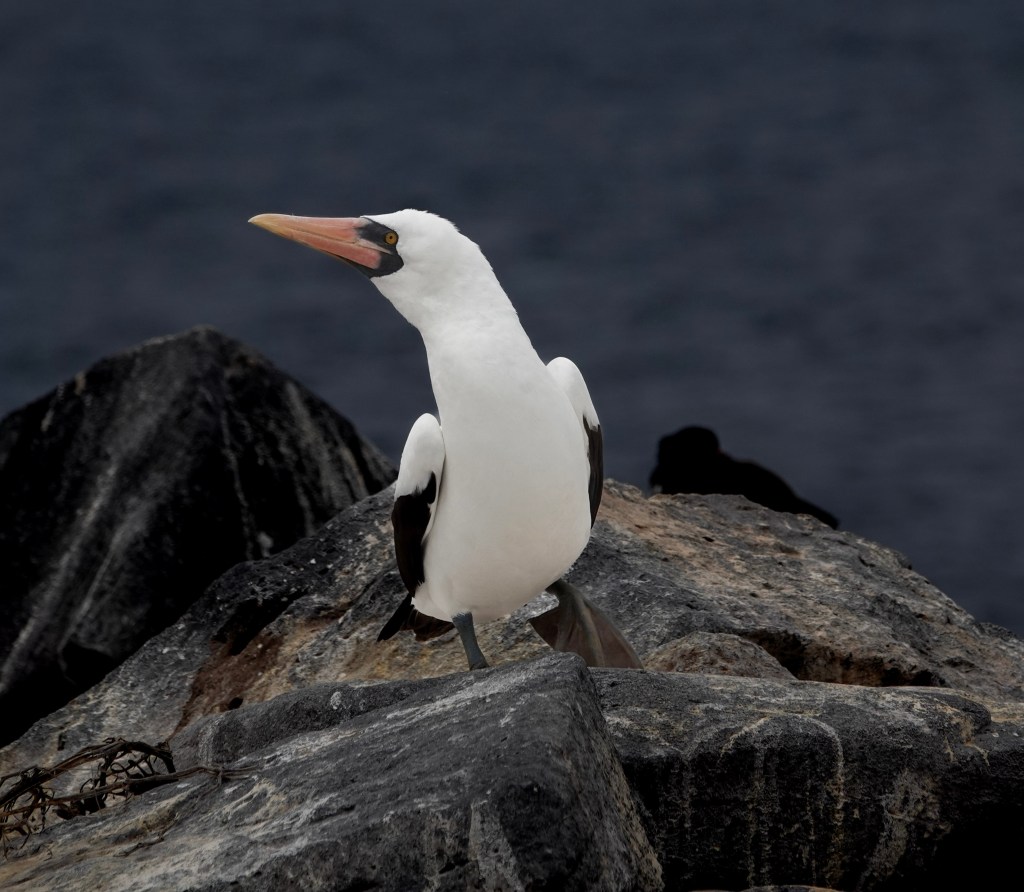
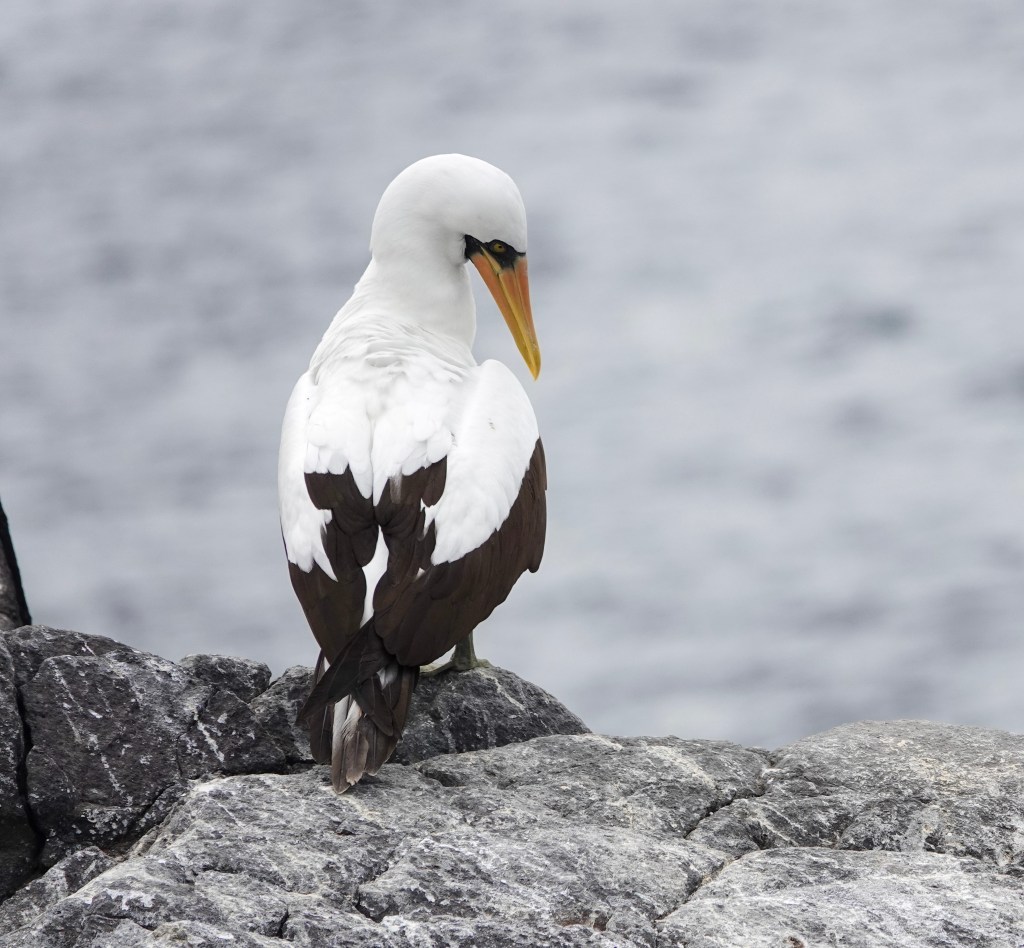
  • Nazca Boobies: Also known as Masked Boobies, they prefer nesting directly along the cliff edges

Visiting Punta Pitt

How to Get There: You can visit via a Galápagos cruise or a day tour departing from Puerto Baquerizo Moreno on San Cristóbal. The boat ride takes approximately 1.5 to 2 hours each way. The cruise we were on had a planned stop at Punta Pitt in the late afternoon, when the birds were returning home after a day at sea. We got to see all 3 bobbies here, but the red-footed booby was definitely the highlight.

  • The Experience: Most tours involve a wet landing on an “olivine” beach (greenish-tinted sand) inhabited by a bachelor colony of sea lions. From there, you’ll hike a steep, rocky trail (approx. 1.5–2 hours) to reach the clifftop nesting sites.
  • Best Time to Visit: While wildlife is present year-round, June to November is generally the best period to see booby mating displays and peak nesting activity. 

Red Footed Bobby (Sula sula)

The red-footed booby is the tiniest of the boobies found on Galapagos, and it quickly proves that the nickname only tells half the story. The smallest of the Galápagos boobies is also the most agile: capable of soaring more than 90 miles over open ocean, diving up to 130 feet for fish, and using its vivid red webbed feet to propel itself underwater with surprising speed. Unlike most web-footed birds, red-footed boobies perch in trees and shrubs, giving them a unique silhouette against the island vegetation. Travelers can spot them at Punta Pitt on San Cristóbal and in large colonies on Genovesa Island, two of the best wildlife-viewing sites in the archipelago.

Blue footed Booby (Sula nebouxii)

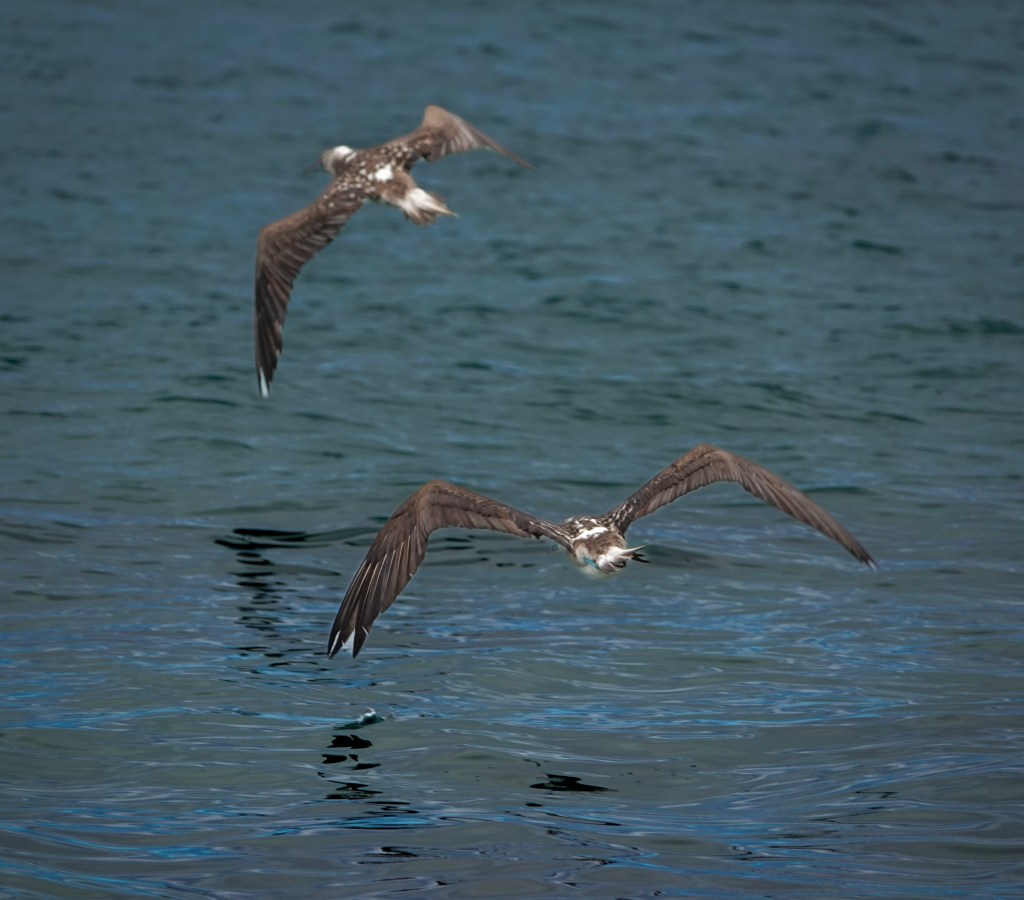
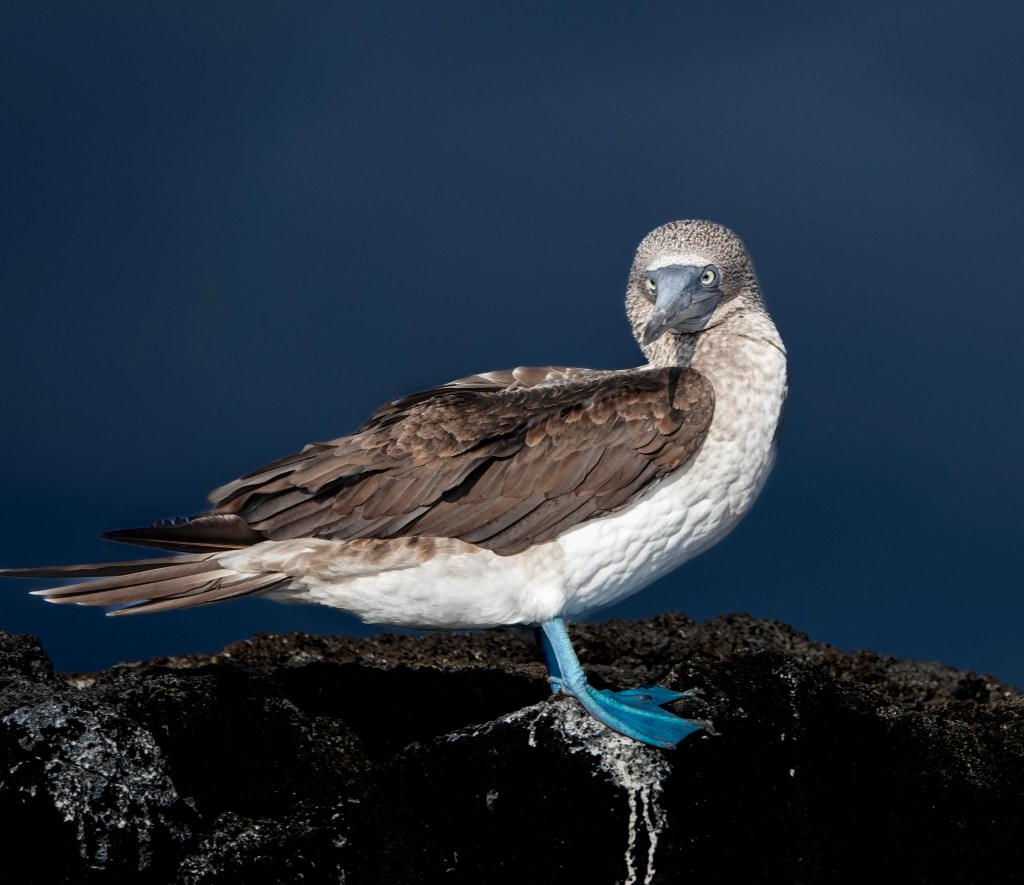
The most iconic of the trio, the blue-footed booby also carries the “bobo” name thanks to its comical walk—but its brilliant turquoise feet are anything but silly. Their color comes from a carotenoid-rich diet, and during courtship, those feet become the star of an elaborate mating dance. Males lift each foot in an exaggerated strut, showing off their brightest blues; females respond by mirroring the steps, followed by bill clacking and whistles if they approve. Beyond their charm, blue-footed boobies are extraordinary hunters, spotting fish from high above and plunging into the water at speeds approaching 60 mph. Because they have no natural predators in the Galápagos, they’re wonderfully unbothered by humans and can be seen on nearly every major island—a delight for photographers and wildlife lovers alike.

Nazca Booby (Sula granti)

The largest of the Galápagos boobies, the Nazca booby also inherited the “bobo” nickname for its land-bound awkwardness, though its sleek white plumage, orange bill, and black-tipped wings give it a striking, almost regal presence. This species is best known for a dramatic behavior called obligate siblicide: parents lay two eggs, but only the stronger chick survives, ensuring that enough resources are available for one healthy fledgling. Despite this harsh strategy, Nazca boobies are captivating to watch as they glide effortlessly over the ocean and nest in dense colonies along the cliffs. They are most commonly seen on Punt Pitt, Genovesa Island, and Española Island, where visitors can observe their nesting sites up close along marked trails.

Final thoughts

In a place as wild and wondrous as the Galápagos, the boobies embody everything that makes these islands unforgettable—quirky charm, fearless curiosity, and evolutionary brilliance on full display. Whether it’s the red-footed booby perched improbably in a shrub, the blue-footed booby performing its turquoise‑footed dance, or the regal Nazca booby guarding its cliffside nest, each species offers a glimpse into the archipelago’s untamed spirit. Spotting even one is a delight but encountering all three feels like a true Galápagos rite of passage. For travelers who come seeking wildlife encounters found nowhere else on Earth, the boobies are a joyful reminder of why these Enchanted Isles continue to inspire wonder long after the journey ends.