Quick Summary
What we did : Spent 3 days driving around Torre Del Paine doing short hikes, and stopping at various viewpoints
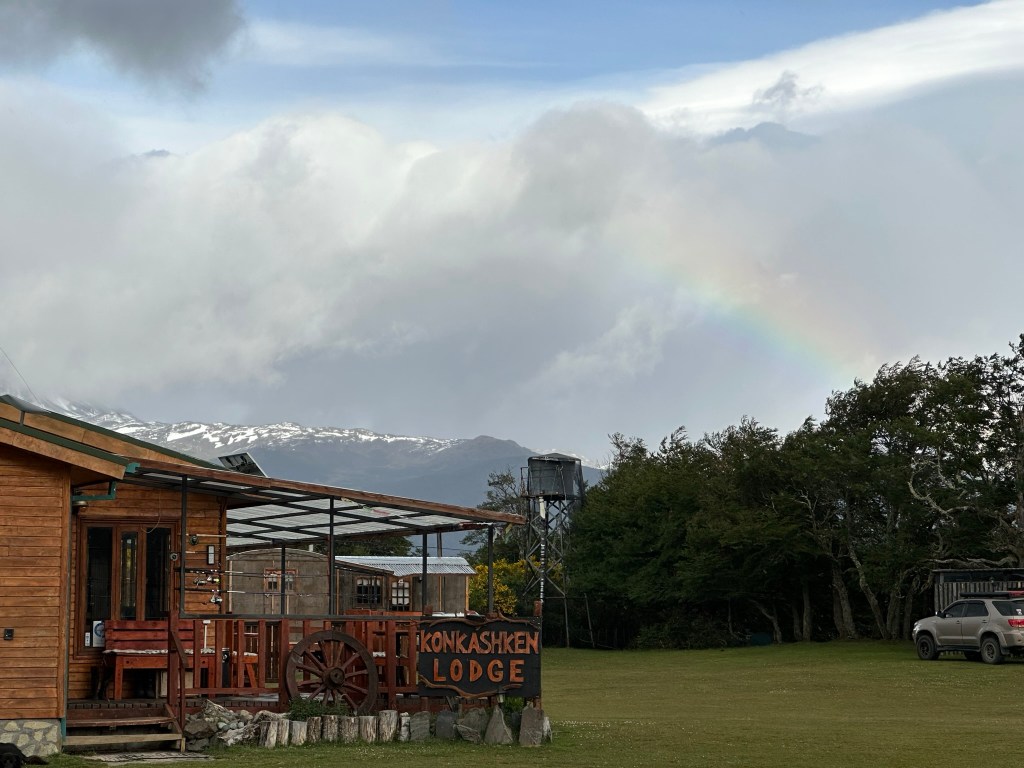
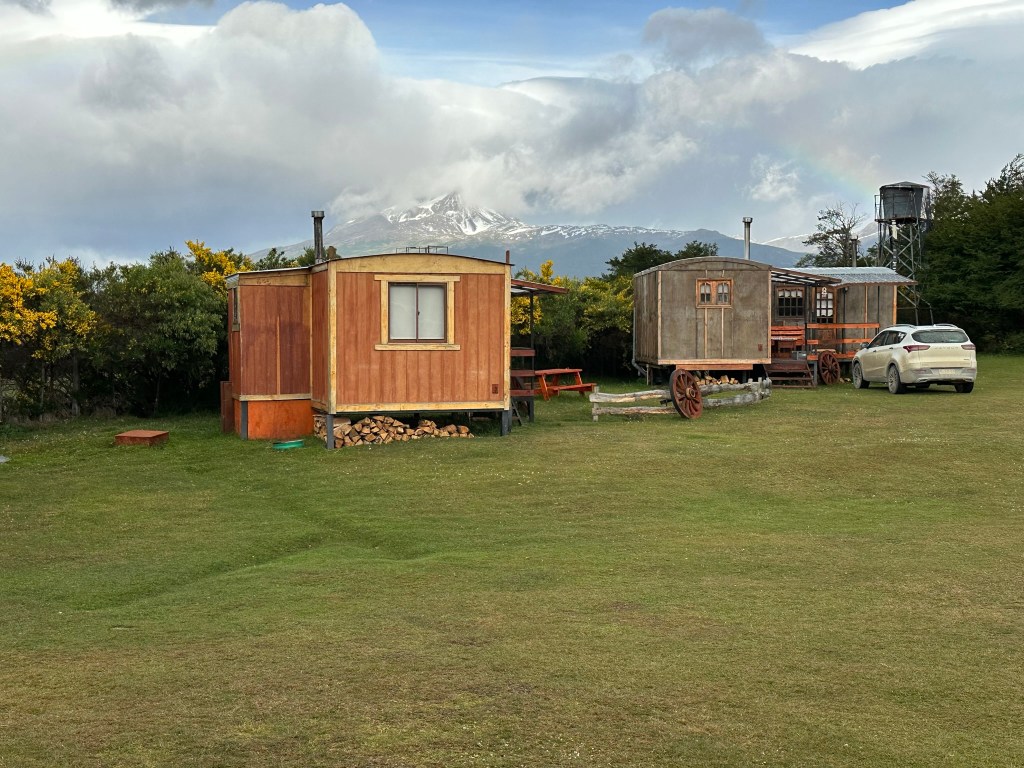
Where we stayed : Just outside the park in cabins called Konkashaken Lodge.
Where we ate: There are not many restaurants in the remote area of the park. We cooked our food in the cabin for breakfast and dinner. We had purchased bread, peanut butter, wine, pasta, pasta sauce, and snacks from a supermarket in Puerta Natales before making our way to Torre del Paine. We ate lunch at Lake Pehoe restaurant one day and at the REFUGIO TORRE CENTRAL on day 2.
What to take: Even though we were in Torre Del Paine in December, which is summer in the Southern Hemisphere, we needed our Winter jackets, gloves, hats, layers, etc. Pack for all weather conditions the weather changes quickly
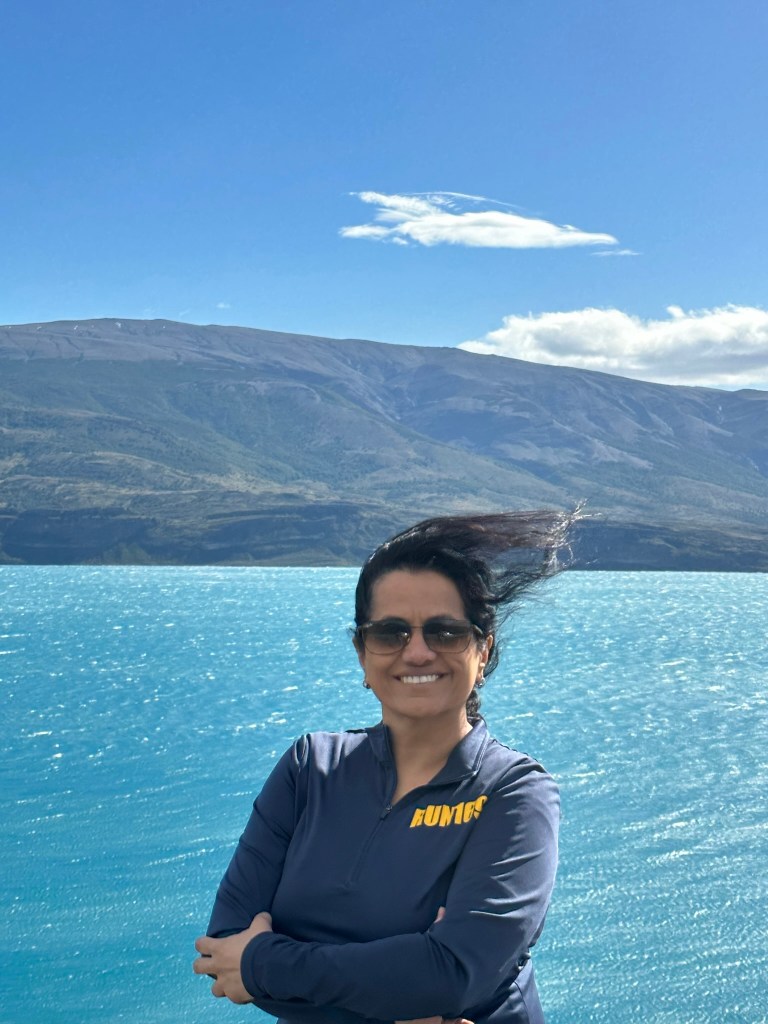
Special Notes : Torre del Paine is truly remote and lacks many facilities. We rented a car from Puerto Natales and bought groceries and supplies before heading out to the park. There are no gas stations in the park, and we purchased enough gas to make it back to Puerto Natales from our hotel owner. Other thing that really surprised us is the wind and no matter what you have heard about Torre Del Paine, we were not prepared for the hurricane force winds. Bellow picture was taken last day, and I call it ” Torre Del Paine Hair, Don’t care”
Patagonia and Torre Del Paine
Welcome to one of the most beautiful places on Earth. Patagonia is a large region shared by Argentina and Chile in the south. Though it crosses two countries, it feels like its own unique place. You can spend a few days visiting Torres del Paine National Park as part of a longer journey through South America. Or, you could explore Patagonia for two weeks, taking in the highlights of both the Chilean and Argentinian parts. If you want to see quieter, less-known areas like Aysén, you could spend weeks traveling in Patagonia.
Torres del Paine National Park, the jewel of Chilean Patagonia, features stunning landscapes with sharp peaks, bright blue lakes, glaciers, and lots of wildlife, all set against wide-open grasslands. Although it can get busy, I believe Torres del Paine is the top attraction in Patagonia. It showcases the area’s wild beauty with its rolling, windy grasslands mixed with mountains, lakes, and glaciers.
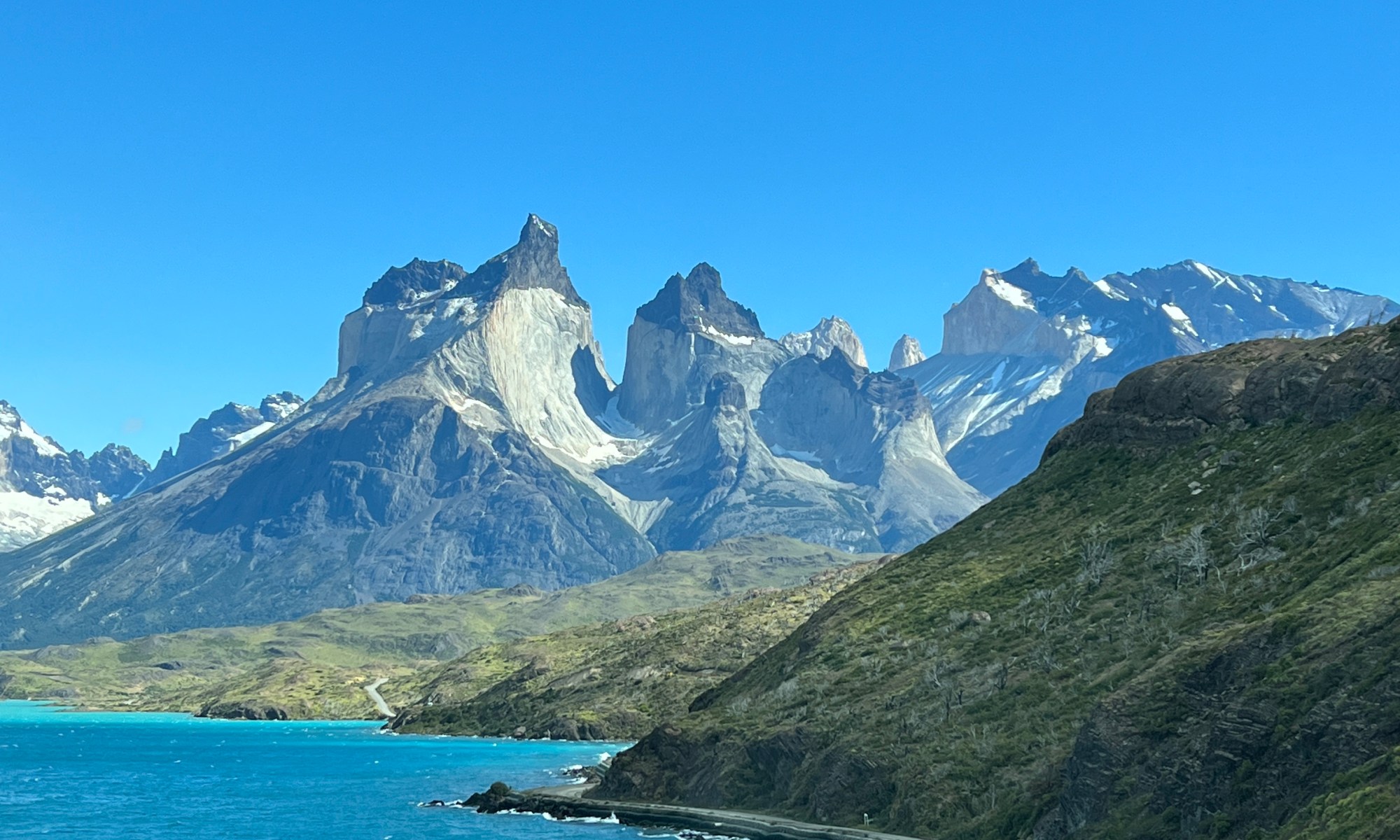
The three tall granite towers, known as the torres of the Paine Massif, are the park’s main highlight. You can see them from almost anywhere in the park. They are surrounded by the twisted black formations of the cuernos (horns) and the rugged summit of Paine Grande Mountain.
If you don’t see the Torres right away because of fog or rain, don’t worry. Patagonia can have four seasons in one day. The best time to visit is summer (December-February), the windiest period. Though the wind can make taking pictures or hiking difficult, bad weather usually passes quickly. The Torres is impressive any time of year. In winter (June-August), they look magically covered in snow. At other times, they stand tall as dark gray rock pillars.
- Patagonia and Torre Del Paine
- How to reach Torre Del Paine
- Where to stay at Torre Del Paine
- Miradors /View points
- Final thoughts
Most people visit Torre Del Paine for its amazing hiking trials. We visited Torres del Paine National Park during Christmas of 2022 for 3 days. You can still enjoy this national park’s amazing views even if you’re not a hiker. We rented a car and drove around the park, which allowed us to explore at our own pace. We stayed just outside the park and visited various viewpoints on day one and day two, and we were planning to take a Gray Glacier boat trip on day three.
Even though we are not serious hikers, we enjoyed walking on flat paths with stunning views and minimal effort. Each lookout gave us a new perspective of the beautiful park, from mountains to clear lakes, making our trip worthwhile. I recommend against visiting for just one day, as the weather in Torre Del Paine is unpredictable. When we visited, the first two days were cloudy and rainy, but we still saw amazing scenery. Heavy winds started on the afternoon of day two, keeping us inside our cabins. On day three, we woke up to sunshine and clear skies, but the wind continued, preventing us from going on the Gray Glacier boat trip. We chose to revisit some viewpoints since the wind had cleared the skies, and day three ended up being the sunniest day of our visit.

How to reach Torre Del Paine
Torres del Paine National Park has two main airports: Puerto Natales (PNT) and Punta Arenas (PUQ). There are no direct international flights, so travelers must connect through Santiago. Both airports are about 3½ hours from Santiago by air, with LATAM operating the flights. Most travelers prefer Punta Arenas for its more frequent flights, as Puerto Natales has usually only one flight a day during high season, which leads to higher prices. From Punta Arenas, it takes about three hours by bus to reach Puerto Natales, followed by more travel time to the national park.
Travel from the Airport to the Park:
- From Punta Arenas, you can take a bus or drive to Puerto Natales (about 3 hours), and then continue to the park (another 2 hours).
- From Puerto Natales, buses and private transfers are available to the park entrance.
Inside the Park: Once at the park, you can explore by bus, rental car, or even boat. The park has multiple entry points, so plan your route based on your itinerary.
We flew to Port Natales and rented a car to drive to Torre del Paine. More detailed information can be found here .
Where to stay at Torre Del Paine
There are several budget-friendly options in and around the park, but it’s best to book months in advance due to limited availability. For accommodation details, check here. When we looked 8-10 months ahead, we struggled to find affordable options, but we eventually found a great place just outside the park at Konkashken Lodge. This lodge is unique and is located by the Serrano River. This is very simple accommodation with no restaurant on site and we cooked most of our meals in the room that had an attached kitchen.
You can contact the owner at reservas@konkashkenlodge.com to make a reservation.
Miradors /View points
Since we weren’t planning long hikes, we used the 3 days in Torre Del Paine by driving around the park and stopping at various Miradors or viewpoints. Following are some of our favorite viewpoints that require zero or minimal hiking to enjoy.
Rio Serrano and Torre Del National Park sign viewpoint
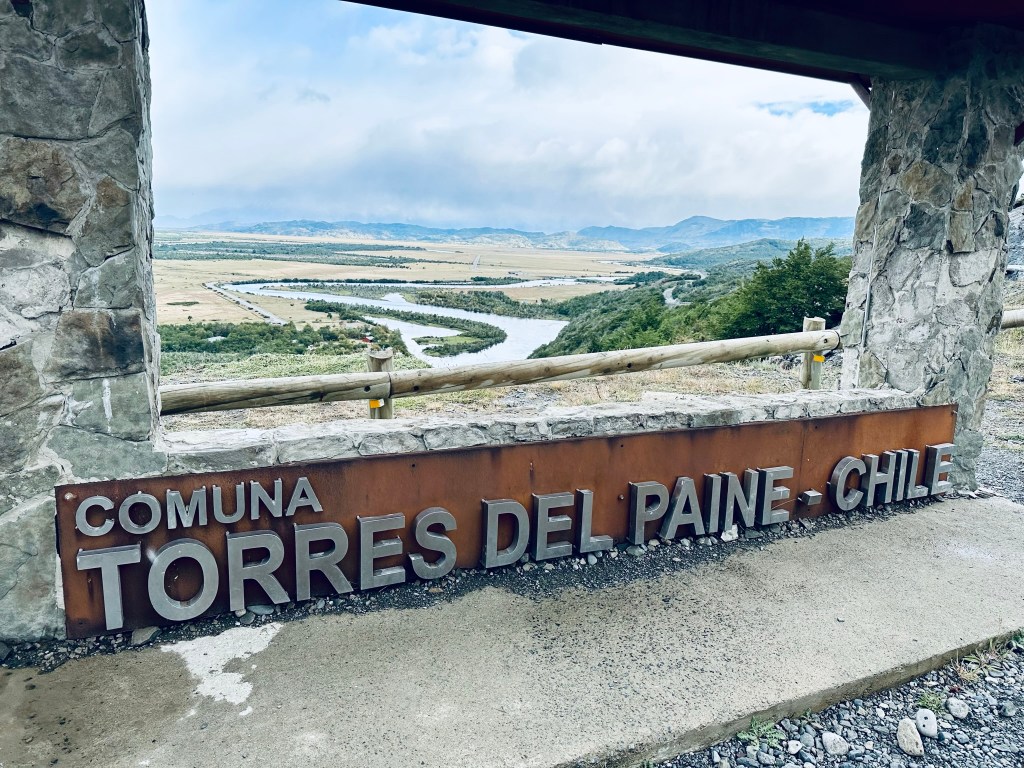
Our first view of the amazing park was on our way to the Konkashken lodge. We stopped on route 292 to enjoy the stunning view of Rio Serrano and the village below. The river curved through the landscape, and we spotted the first of many rainbows we would see over the next three days. This is a great spot for sunrise photos, too.

Views from Konkashaken lodge and Rio Serrano
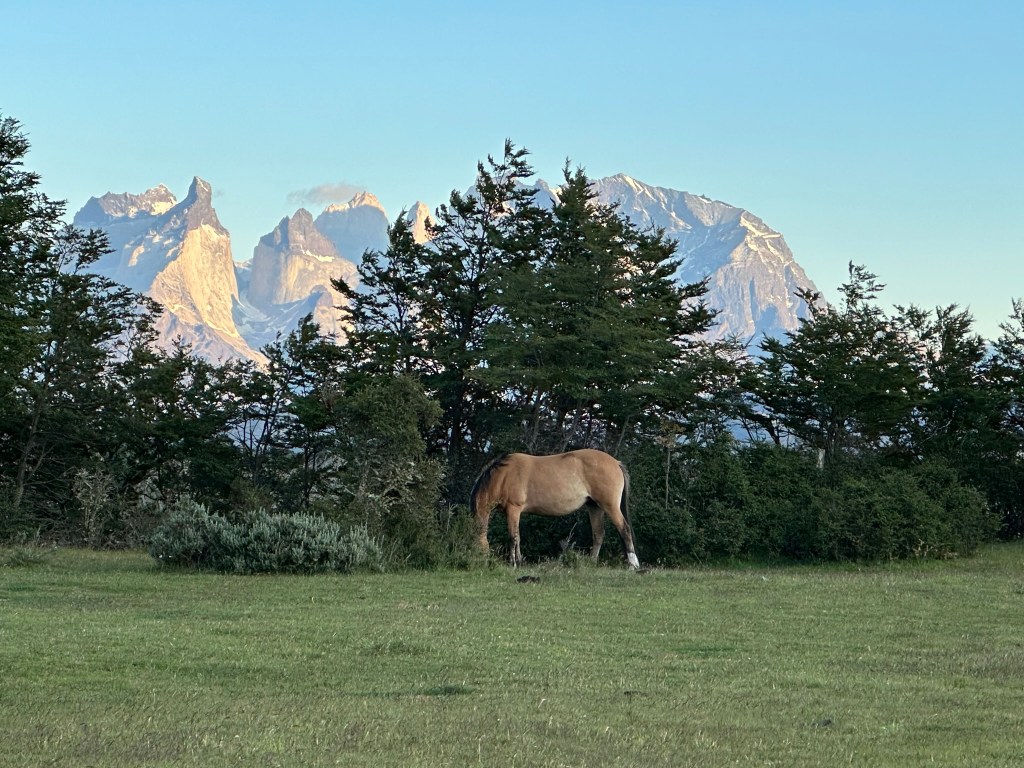
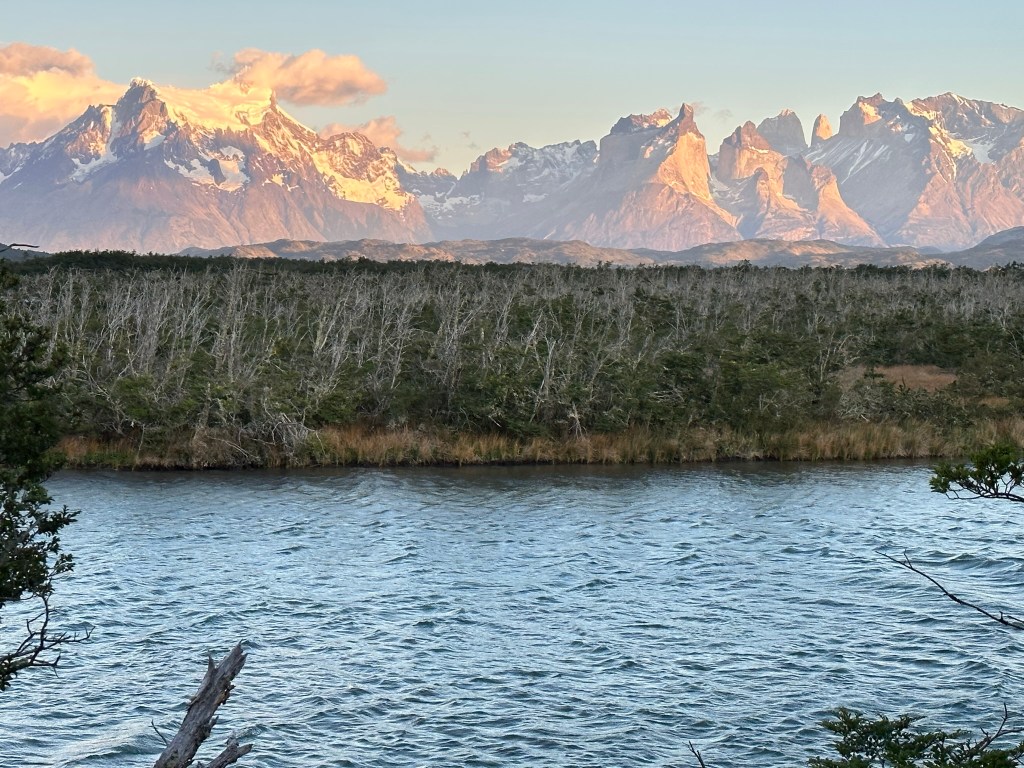

The Konkeshken lodge is by the Rio Serrano and surrounded by horse farms, where locals often go horseback riding or hunting with their dogs. On day 3, we had a sunny morning, and I walked to the river to enjoy the stunning view of the snowy Torre del Paine mountains and horses grazing nearby. The lodge owner has large dogs, and on that day, I saw the biggest dog I’ve ever encountered, which I initially thought was a wolf. It turned out to be the owner’s dog’s sibling just visiting from the neighboring farm.
Lago Pehoe view from Hosteria Pehoe
Lago Pehoe sits at the center of Torres del Paine National Park and is considered to be one of the 10 most beautiful lakes in the world. You have wonderful views of the Paine Grande Mountain and the Cuernos (horns) del Paine from the lake. Pehoe is a Tehuelche word meaning ‘hidden’ and is pronounced “pay-oh-way.” We stopped at the parking lot for Hosteria Pehoe, which is located on an island and can be accessed by a bridge. The parking lot is right off ruta Y-150 and near Mirador Cóndor. We had an amazing lunch at the restaurant in Hosteria Pehoe with views of Lake Pehoe and Los Cuernos. We stopped here multiple times during our 3-day visit for the beautiful views and food. You can hike part or all of the Mirador condor trail, which is a 2.4-km round-trip route and offers the most magnificent views of Lake Pehoé, the Southern Patagonian Ice Field and the Sierra Baguales.
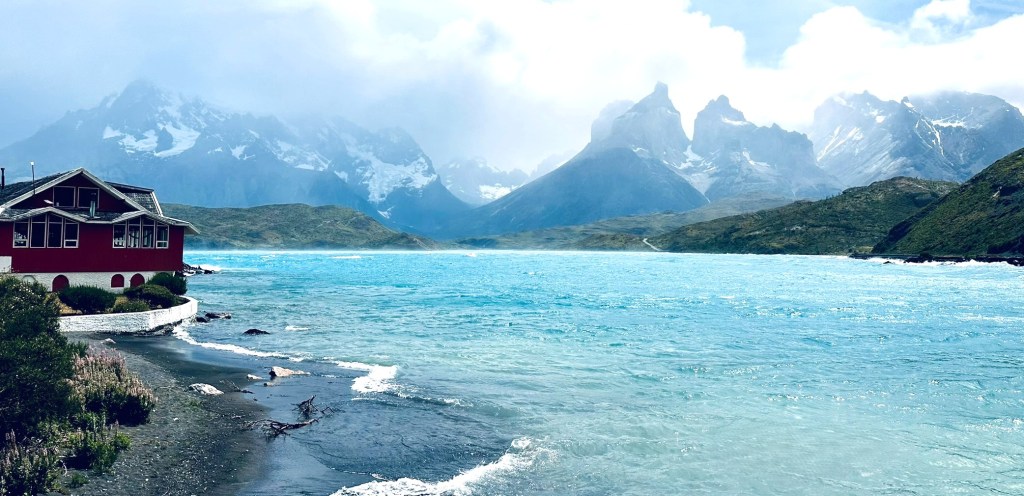
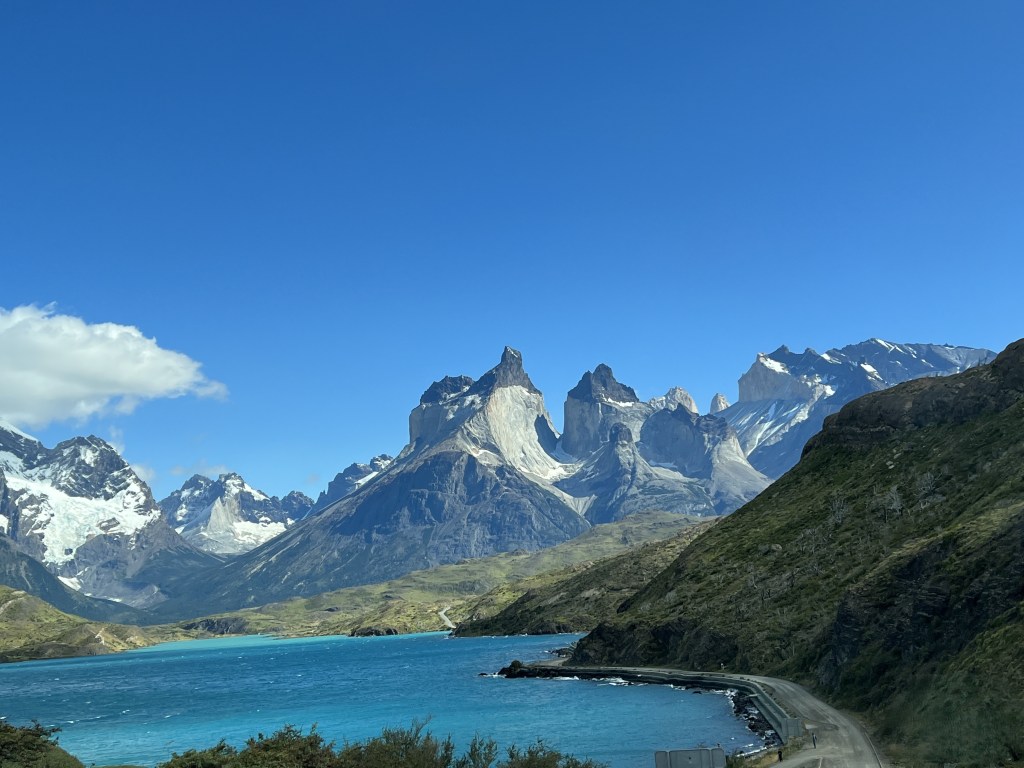
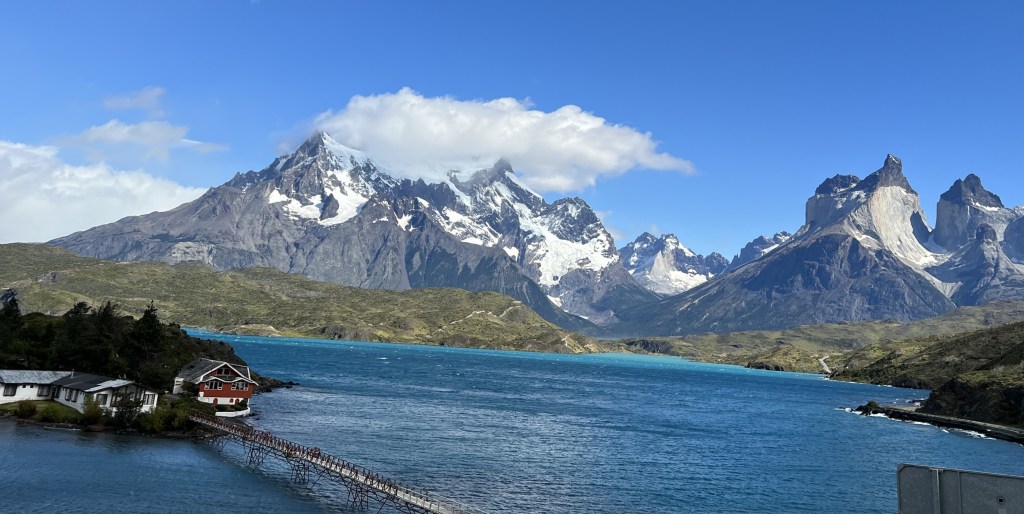
Salto Grande view point
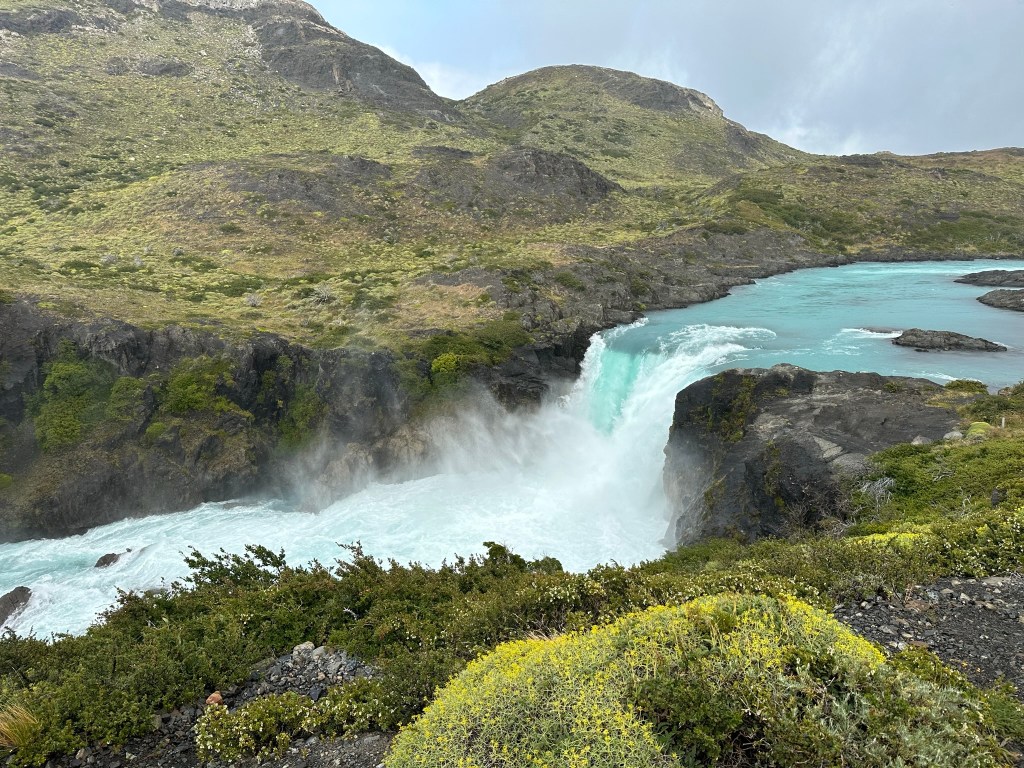
As you drive along Ruta Y-150 toward Lake Nordenskjöld, you can see Salto Grande waterfall. There’s a place to stop and admire Lago Pehoe with Salto Grande behind it. We paused to take a quick photo of a lovely rainbow that appeared with Salto Grande in the background, but it vanished within minutes.
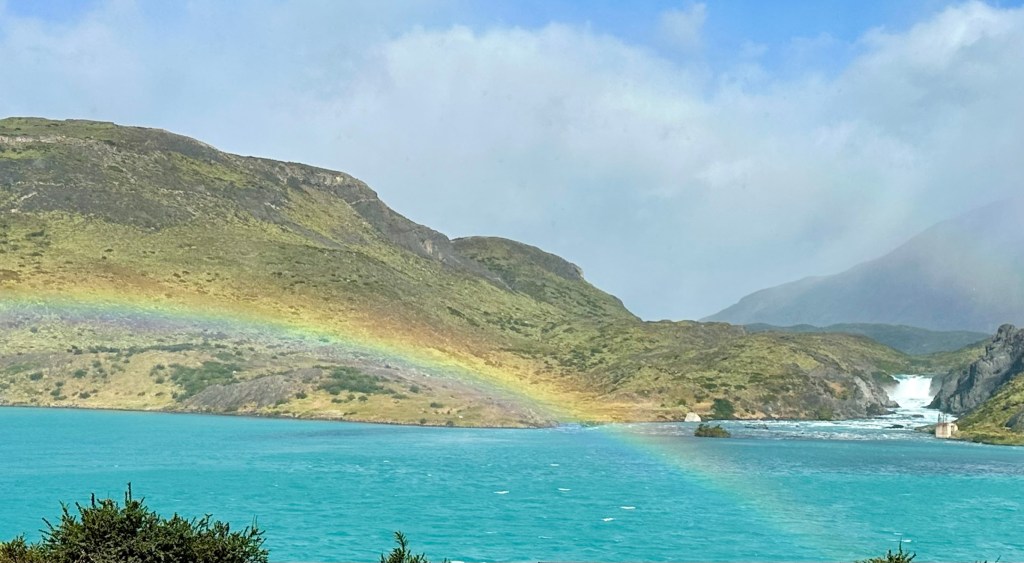
The lookout for Salto Grande waterfall is along Ruta Y-150, with a marked parking lot nearby. Just two kilometers from the main road, it offers a view of the impressive water flow from Lake Nordenskjöld. The area shows signs of the 2011 fire, with burned trees and eroded soil, but the view is still beautiful.
Mirador Nordenskjold
Continuing down Ruta 150, next stop was mirador Nordenskjold. There is marked parking lot and couple of minutes of walk leads to spectular view of Lake Nordenskjold

Cascade Del Paine
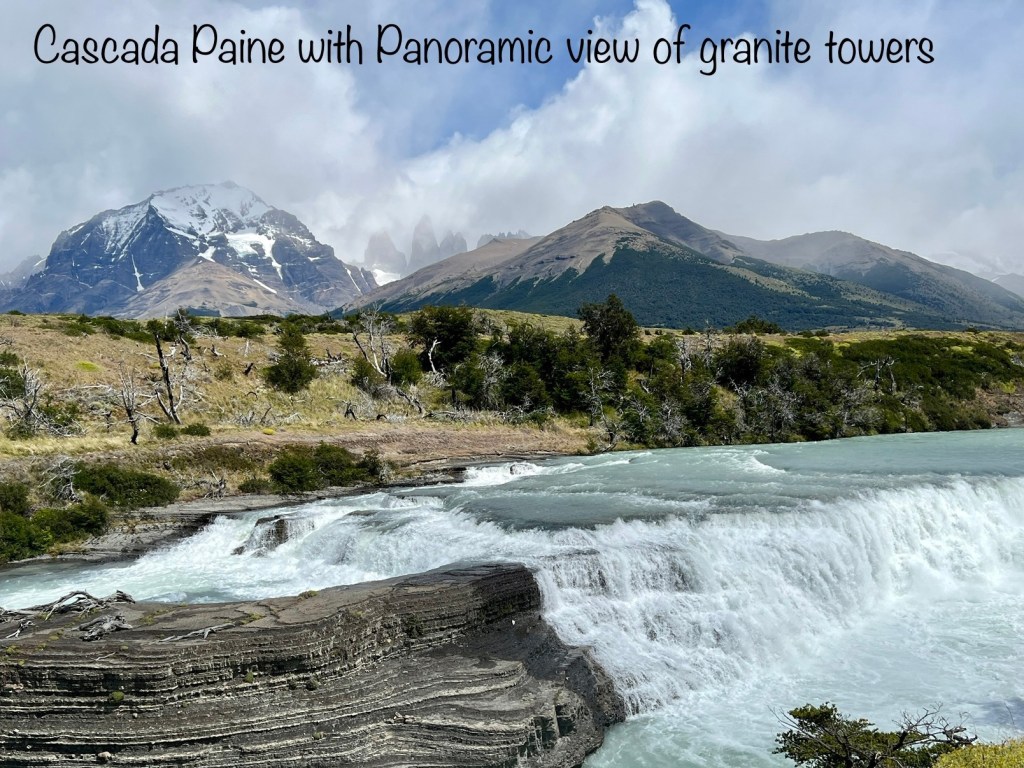
As we proceeded down Ruta 150, we reached a fork that divides the road into Ruta 150 and Ruta 156. We took Ruta 156 to Lago Azul, and our first stop was Cascade Del Paine. This is my absolutely favorite spot in the entire national park. The Cascada del Río Paine is a stunning waterfall in Torres del Paine National Park, Chile. It offers breathtaking views of the Paine River and the iconic Torres del Paine peaks in the background. This natural wonder is a popular spot for photography and a must-visit for nature enthusiasts exploring Patagon
Laguna Azul
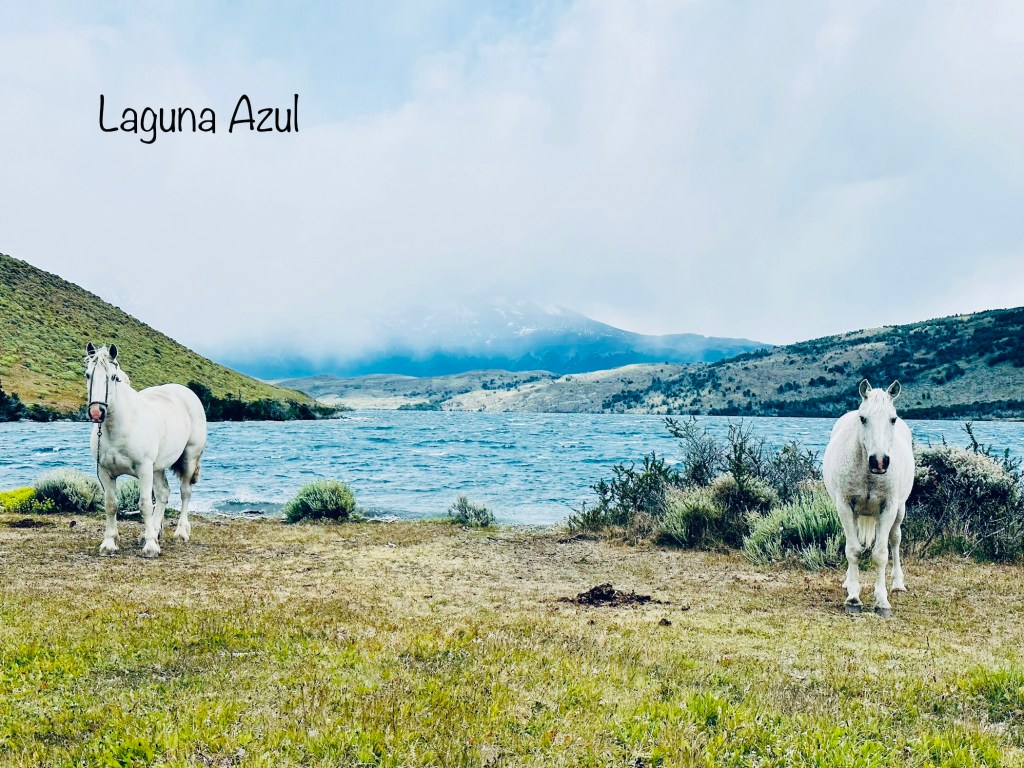
Laguna Azul, or “Blue Lagoon,” is a beautiful lake in Torres del Paine National Park, Chile. It is known for its bright blue waters that mirror the surrounding scenery, including the famous Torres del Paine peaks. This area is great for wildlife lovers, as you can spot guanacos, birds, and other local animals in the wild.

Laguna Amarga
Laguna Amarga, located in Torres del Paine National Park, Chile, is a fascinating lagoon known for its high salt content, which gives its waters a bitter taste—hence the name “Amarga,” meaning “bitter” in Spanish. The lagoon’s evaporation process leaves a soft white layer of salt on its shores, strikingly contrasting with the vibrant blue waters. This lagoon is also a prime spot for observing flamingos during summer, adding to its charm. Its strategic viewpoint offers breathtaking views of the iconic Torres del Paine peaks, making it a favorite among photographers

Lago Grey and Grey Glacier
Lago Grey is a magnificent lake fed by ancient glaciers, where the imposing Grey Glacier flows in, creating a breathtaking scene filled with icebergs and striking blue ice. This area is renowned for its enchanting and colossal icebergs that calve dramatically from the base of the Grey Glacier, crafting a visually stunning landscape. The vibrant hues of blue and white against the rocky terrain provide a striking contrast, making it a photographer’s paradise. There are various exhilarating ways to explore this pristine lake and the majestic glacier surrounding it, and we eagerly chose to embark on an adventure by boat. However, to our dismay, the winds were brutally strong that day, leading to the unfortunate cancellation of our highly anticipated boat trip, and we just had to see the glacier and lake from the Hotel Grey.
Various ways to explore Grey glacier
- Boat Trips: Boat tours navigate the lake, allowing visitors to get close to the glacier and icebergs. For timing and tickets, check here. The boat trips start from Hotel Lago grey .
- Hiking: The W Trek and Full Circuit hikes offer awe-inspiring views of the lake and glacier.
- Kayaking: Paddle amongst the lake’s sculpted icebergs.
- Ice Hiking: Don crampons and ice axes to explore the glacier.
Mirador Lago Del Torro
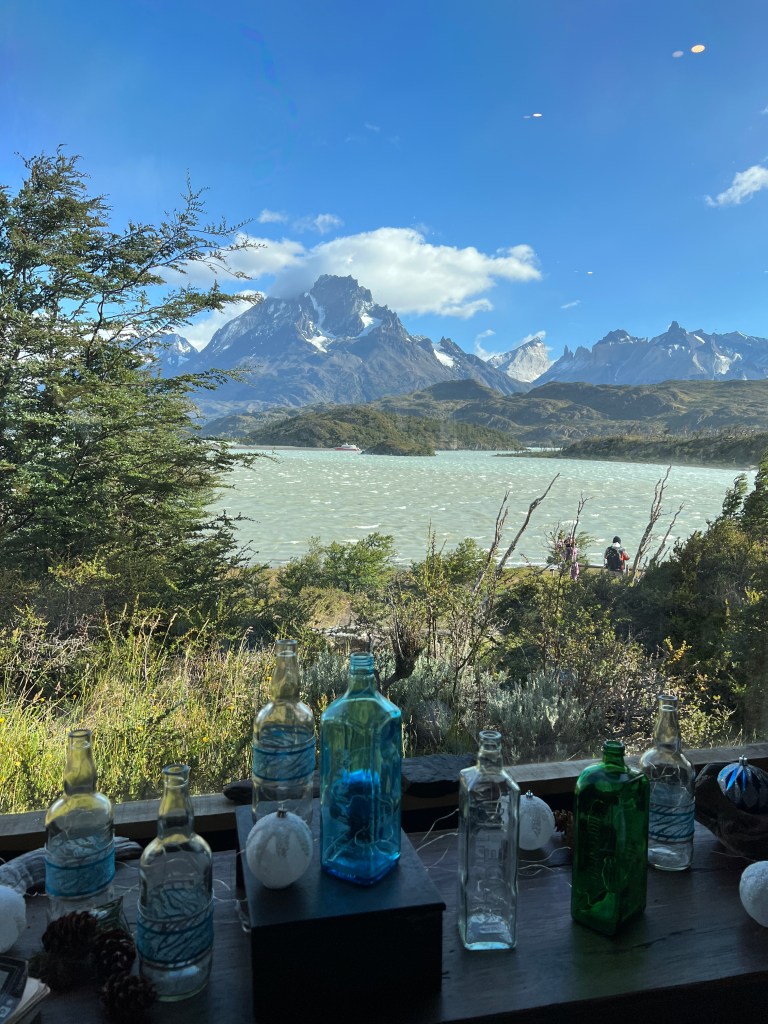
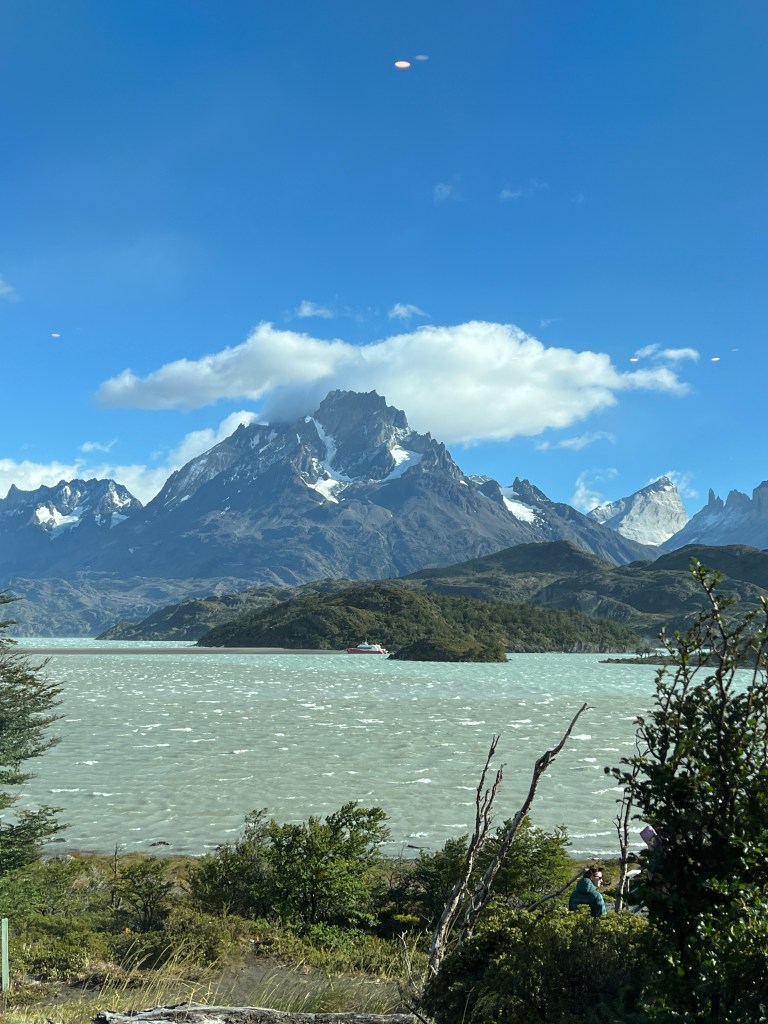
The Toro Lake is the biggest lake in the region and most of it is located outside the borders of Torres del Paine national park. We stopped here just off the Ruta Y-290 on our way to Puerta Natales, after our cancelled Grey glacier boat trip. The vibrant blue waters of Toro Lake contrasted beautifully with the rugged mountains in the background, creating a breathtaking view that felt almost surreal.

Milodon Caves
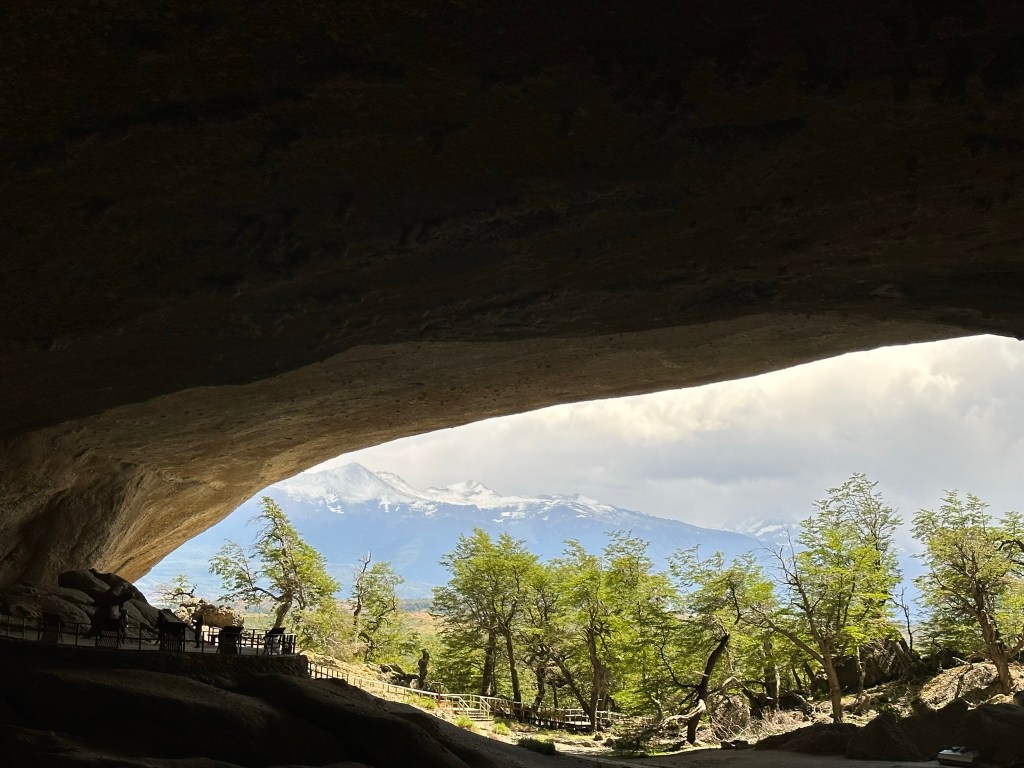
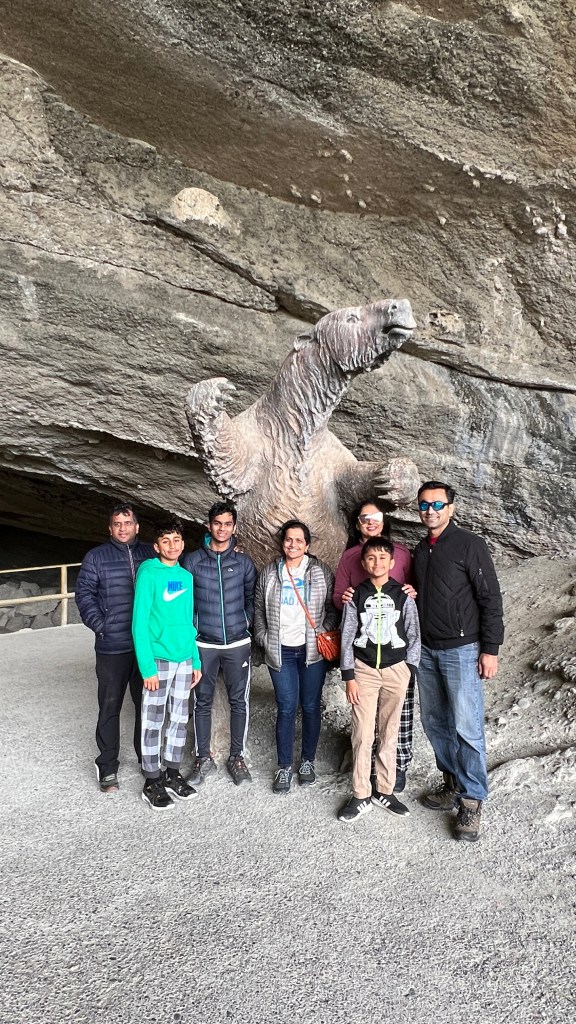
Usually when you depart from Puerto Natales, on the way to Torres del Paine National Park, you begin your adventure by visiting the Milodon Cave Natural Monument, which is located 26 km from Puerto Natales. This remarkable site is comprised of three distinct caverns nestled within a stunning landscape, featuring a fascinating rocky conglomerate known as “Silla del Diablo.” As you explore the cave, you can marvel at its impressive features and learn about the prehistoric creatures that once roamed the area, including the legendary Milodon, an enormous herbivorous mammal. After delving into the rich history and natural beauty of this unique monument, you can then continue your journey to the majestic Torres del Paine National Park, where breathtaking scenery and diverse wildlife await your discovery.
Final thoughts
Torre Del Paine is an incredible place to visit, and nothing truly prepares you for the breathtaking beauty of this stunning location. It is one of the most unique places I have ever explored, offering a diverse landscape that ranges from soaring peaks to shimmering lakes, making it a paradise for nature lovers. Patagonia’s weather is notoriously unpredictable, with the potential for all four seasons in a single day, which adds an element of excitement and challenge to your visit. While two days are sufficient if you are not hiking and just looking to take in the sights, extending your stay to three days provides you with the best chance to fully embrace the magnificence of this region. This extra time can be invaluable, especially in case of unforeseen circumstances, such as the windstorm we experienced during our trip, which temporarily altered our plans but also gave us a deeper appreciation for the raw power of nature that this area represents.
 Peaks to Palaces