Moonbows and rainbows- 2 days in Iguazu falls

“Waterfalls are exciting because they have power, they have rainbows, they have songs, and they have boldness and craziness!”

Unknown

If you ever find yourself in Argentina or Brazil and have couple of days, Iguacu falls should be on your must to do list. Some quick facts about Iguacu falls:

  • It is the largest/biggest waterfall system in the world and it is taller than Niagara Falls and wider than Victoria falls
  • It forms the international border between Argentina and Brazil
  • Made of up to 275 individual waterfalls, it is a visual feast and stunningly beautiful sight
  • Brazilian side has 20% of the falls and you get more panoramic views while 80% falls on Argentinian side and you can get up close and personal with waterfalls.
  1. Where is Iguacu falls?
  2. Iguazu falls from Brazilian side and staying at Hotel Das Cataratas
  3. Full moon experience/ Full moon walk at Iguazu falls
  4. Devil’s throat/Garganta del Diablo- Brazil
  5. Macuco Safari Boat ride
  6. Iguazu Falls – Argentina
  7. Best time to visit
  8. Final thoughts

Where is Iguacu falls?

There are 2 national parks- one on Argentinian side and other on the Brazilian side.

Brazil- airport and city close to the national park is Foz do Iguaçu/Cataratas InternationalAirport (IATA: IGU,), is the airport serving the city of Foz do Iguaçu, Brazil which is a good base for seeing Brazilian side of the falls.

Unlike Niagara Falls, there is only one hotel inside the park Hotel Das Cataratas. There are plenty of options in the town of Foz do Iguacu for all budget ranges. My review of the hotel Das Cataratas is below and in my opinion, it is one the best hotel in terms of location and amenities.

Argentina- airport and city close to the Argentinian side is Cataratas del Iguazú International Airport and is located in the town of Puerto Iguazú and is a good base for Argentinian side of the falls

Just like Brazilian side, is only one hotel inside Argentinean Park Gran Meliá Iguazú and multiple options on the town of Puerto Iguazu for all budget ranges.

Iguazu falls from Brazilian side and staying at Hotel Das Cataratas

When I found myself in Sao Paolo for with a free weekend on a work trip, I decided to use this time to go on a solo trip to Iguazu falls and decided to splurge and stay in Das Cataratas, the only hotel inside the national park. I had worked with the concierge at the hotel and planned to entire stay including picking up from the airport to drop off back to airport after 2-night stay at the hotel. Das Cataratas is one of the best hotels I have ever stayed, and this turned out to be the best solo trip I have ever taken.

Hotel Das Cataratas : staying at this 1950s style hotel complete with a pink Volkswagen minivan in the front, is such a unique and exquisite experience. The hotel staff is amazing, and I was fortunate to get upgraded to a partial fall view room and spent my time in the room just enjoying the sound of waterfalls and all the tranquility of the rainforest. The rooms are impeccable with attention to detail and comes with a 2 pairs Havaianas to use and take with you. The hotel has 3 restaurants/bar on site serving traditional brazilin dishes to unique drinks. One of the main advantages of staying at this hotel is the access to waterfalls after the park is shut down for the visitors. I was fortunate to spend 45 minutes at the Devil’s throat without anyone else around enjoying and appreciating the sunrise. Also, the Ipe restaurant on-site has one the best breakfast buffets and serves traditional Feijoada lunch on Saturdays and is a great way to enjoy this traditional and relaxing lunch experience. There is spa on site along with 2 swimming pools complete with resident coati named Louis.

Full moon experience/ Full moon walk at Iguazu falls

I flew from Sao Paolo to Foz De Iguazu and was picked up from the airport by the driver arranged by the hotel. The drive from airport to the hotel was about 30 minutes and on the way the driver mentioned that I should do moon light walk to the falls that night. 4-5 days of every month, you can do night walk to the devils’ throat at the Iguazu falls to see the lunar rainbow or moon bow. If you are not staying at the Das Cataratas hotel, you have options to do this tour with this company and they pick up from both Brazil and Argentina hotels and takes you to Argentinian side of the falls. Based on my experience, it doesn’t look like you can do the moon tour on the brazilin side and only exclusive to guests at Das Cataratas and when I did the moon walk, there were only about 20 people from the hotel.

Moon bow/Silver rainbow is considered to be one of the world’s rarest
natural phenomena. On full moon nights, moonlight gets reflected in the spray of the waterfall, forming rainbows or moon bows. We left the hotel around 10 PM armed with flashlights and water bottles with our guide. We walked to the Devil’s throat and first watched the rainbows from the top of the falls before walking down to the lower level and up close to the Devil’s throat. This is an experience that I will never forget and to such an incredible experience. I don’t think phots can do justice, but I took as many as I could.
Downloadable version of the map

Brazil side of the waterfall trial is not very long and can be done in 1-2 hours.

  • Park Hours: 9 am to 5 pm
  • Cost: Park entrance BR $86, Speedboat ride: BR $386, Optional Buffet BR $59
  • From the visitor center, these are the points of interest, and you can take bus from any stop all day long- The visitor center, Hiking trial (9 Km long), Macuco safari, Belmond Hotel, Devil’s throat.

You have 2 options to see the waterfall- either private tour such as this or do it yourself. You can take an uber to main entrance of the park and then take the bus from the visitor center. You buy your tickets on-line here and you have few options you cam chose from:

Traditional tour BR $86 (About USD 15)-The tour includes round trip internal transport (12km inside the Park), trail to the falls (1km walking), elevator, footbridge and lookouts.

You can add buffet lunch and speedboat ride to this tour at extra cost.

Dawn at the waterfall BR $195 (USD40)– This tour starts at the first viewpoint in front of the Hotel das Cataratas and ends at Porto Canoas, with breakfast served from 7:30 to 9:30. Visitors can also start the adventure at Espaço Naipi, with direct access to the elevator. The place offers one of the most privileged views of the Brazilian side of Iguassu National Park.

Access hours: from 6:00 to 7:00.

Tour schedule: from 6:00 to 8:00.

Breakfast at the Porto Canoas Restaurant: from 7:30 to 9:30.

Experience available every Tuesday, Thursday, and Saturday. (Source: https://tickets.cataratasdoiguacu.com.br/)

Devil’s throat/Garganta del Diablo- Brazil

Devil’s throat is the most spectacular part of the Iguazu falls on the Brazil side. I found that Devil’s throat is better on Brazil side than on the Argentinian side. There are 2 levels you can see the Devils’ throat from Brazilian side- The top of the falls and bottom of the falls with a wooden pathway. Devil’s throat is where half of the river falls down the plateau plunging about 80 meter or 263 ft creating thunderous roar and a spectacular view. I was fortunate to go to the Devil’s throat early in the morning (took the pathway that is directly opposite to Belmond hotel and walked to the Devil’s throat) and watched the birds great dusky swifts directly flying into the falls. These dusky swifts have nests behind the waterfalls and rocky cliffs and hundreds of them flying around in the morning. If you want to experience the waterfalls without a big crowd, dawn at the waterfalls is great way to do it or staying at Das Cataratas works too.(https://tickets.cataratasdoiguacu.com.br/produto/6157)

Pro-tip : You will get drenched at the bottom part of the walkway and it is advisable to have a poncho

Belmond hotel viewpoint: This is a beautiful view point and usually doesn’t get as crowded as the Devils’ throat. You can take the short walkway and see various panoramic viewpoints of the falls and double cascades of the waterfalls. Staying at the hotel gave me an opportunity to get a drink from the bar and walk down the path at sunset. The drink I chose is called Pink Celebration and is created by the bar to celebrate the waterfalls.

Macuco Safari Boat ride

This a must do on the Brazil side and will take about 3-4 hours and you will get a very different perspective of the falls. The tour starts with a ride in the electric jeep and guide will explain various plants and point out animals as you go through the rain forest. This is followed by walk through the jungle and finally to the boat dock. Ther are 2 options for the boat ride- Dry or wet. Both options you will be get wet but in the wet ride, you will be dunked under the waterfalls. Before getting on the boat, you will be taken to the locker room where you can leave your stuff including your cell phone. The tour operator records the entire trip on a go pro as well as you get buy pictures and videos at the end. Many people brought their photos and took pictures and didn’t seem to have any issues getting wet. The dry tour also follows the same path but you will not go under the falls but still get sprayed with water. If you are staying at the Belmond, the hotel drops off and picks you up from the starting point and also give you fresh towels to take with you as well as drying service for your clothes when you come back (I have been forever spoiled by the level of service this hotel offers).

Macuco Safari-speed boat ride

Iguazu Falls – Argentina

Argentinian side of falls gives you up-close and intimate encounter with the waterfalls. If you are staying on the Brazilian side, there are several tour operators that will take you to Argentinian side on a day trip. If you are really pinched for time, there are tour options such as this one that will take you to both sides of the falls in a day, but it is recommended to spend a day on each side of the falls. Since this trip was my splurge trip, I had asked the hotel Das Cataratas to organize my trip to Argentinian side and they took care of everything including the visa process at the border. Crossing the border is the biggest time consumer and taxis and private tours have a separate line and seem to move faster than the personal car line. There is no way to predict the time required cross the border but early in the morning seems to be better than later in the day. I left the hotel with my guide and car at 8 AM and we crossed the border and were at the Argentinian side of the falls by 9.30 AM.

Map Source : https://iguazufalls.com/map/

Argentinean side of the Iguazu falls in much larger and has more things to do. You can easily spend a day here.

  • Park hours : 8AM to 4.30 PM
  • Entrance fee :$10,000 Pesos
  • Stops on the jungle train : The upper and lower circuit, and Devil’s throat as well as ferry ride to San Martin Island a

The jungle train or tern de la Selva, is the best way to get to the different points of interest and cost is included in your entry ticket but need to get a free ticket at the station that puts you into a group that boards the train. The train every 30 minutes. The Jungle Train has 3 stops in the park:

Estacion Central: the first stop by the entrance of the park called central station.

Estacion Cataratas is the second stop and you can access trails of the Upper and Lower Circuit from this stop

Estacion Garganta: The last stop on the train and leads to the Devil’s throat trail.

  • The Upper Circuit is shorter and just half a mile and will take around an hour. It has catwalks leading you on top of the falls with views over the nearly 200 foot high waterfalls. It’s very impressive.
  • The Lower Circuit can take 2-3 hours to explore, with multiple viewpoints and paths. This is where you can catch the free ferry to San Martin Island (depending on water levels). You can also pay for a speedboat ride right up to and under one of the falls.

Devils’ throat : We started out visit with Devil’s throat and got off at the last station. It is over a kilometer for pathway leading to the Devil’s throat and you get the cross the river on this pathway. You will hear the roar of the falls before seeing it and it is a sight to behold. You will get wet at this spot from the mist and you can’t really get a good picture without your camera getting drenched.

Upper Circuit : The upper circuit is about 1.75 km and very flat most of the way. You get a panoramic view of the falls and best view is the San Martin viewpoint with an incredible view of the falls and a great location to get some incredible photos.

Lower circuit : This trail will take about take 2-3 hours to explore, with multiple viewpoints and paths and is 1.7KM long with some stairs. This is where you can catch the free ferry to San Martin Island -depending on water levels. Like the Brazilian side, you can also pay for a speedboat ride that will take you under the waterfalls.

Helicopter ride: if you can afford it, the good way to get the full effect of the waterfalls from the sky. I didn’t do this as I am afraid of heights and didn’t wanted to ride the helicopter but there are several options such as this one.

Best time to visit

I visited the falls in the middle of august and it was able to enjoy the falls without many crowds. Best time to visit is April to May and from September to October when the temperature is milder and crowds are less.

Final thoughts

Both sides of the falls are unique, but I liked the brazilin side because of the Das Cataratas hotel stay and access to waterfalls after hours. Devil’s throat is more spectacular on the Brazilian side as you can see the panoramic fall while Argetninain side you will hear the roar of falls. Both sides give you an opportunity to get close to the waterfalls if you do the boat ride. Visiting Iguazu falls on either side is definitely worth it, and you can visit both sides if you have time to get a full experience. You will see lots of wildlife and butterflies on both sides of the falls.

Potatoes to Pisco Sours- A gastronomical experience of Peruvian cuisine

“You have to taste a culture to understand it” –

 Deborah Cater

One of the greatest perks of travelling is the opportunity taste different cuisines and there is no better way to understand a country than through their food. Peruvian cuisine is very unique and considered to be one of best gastronomical experiences. Known as the Creole food due to the multi-cultural influences including Spanish, Chinese, Italian, African and of course Incan culture, Peruvian cooking incorporates various cooking techniques and ingredients from various parts of the world creating a colorful tapestry of flavors and taste. No matter which part of Peru you are, you can try unique cuisine from that area. The touristy places like Olly, Machu Picchu, Cusco, and Lima have restaurants that offer potatoes (Incan cuisine) to stir fry (Chinese influence) to Ceviche that is almost synonymous with Peru.
Potatoes are now universal but originated in Peru and spread around the world when Spaniards brought it to rest of the world. Peru is supposed to have around 3000 variety of potatoes and when we were there, we ordered Potatoes with every one of our meals with Pisco Sour. It became an on-going joke with the kids that I would order Potatoes and Pisco Sours in every restaurant, and I did.

Pisco Sour: Pisco sour is the national drink of Peru and it is made with a grape brandy (Pisco), lime juice, egg whites and bitters. Like all other dishes of Peru, this drink has a complex flavor with sour, sweet and bitter notes. I prefer Chilian version of pisco sours over the Peruvian version, but you should at least try it to see what the fuss is all about.

Ceviche : You can’t miss the national dish of Peru- Ceviche which is made with raw fish/shrimp or squid infused with lemon juice and served with local spices and hot Peruvian Chile, Plantain chips. As vegetarians, we didn’t try the traditional Ceviche but were able to try vegan version with Mushrooms at the Green Point Restautant in Cusco. This restaurant is so good that you will forget you are earing vegan food and mushroom Ceviche with toasted corn and sweet potato definitely hits the spot.

Arroz chaufa : This dish is made with either white or brown rice, vegetables and meat which are stir fried together is a good representation of Chifa cuisine a blend of Chinese-Peruvian hybrid cuisine. Chifa cuisine is an example of cross cultural influences of Peruvian cuisine through Asian immigration in 19th century.

Chica Morada : Chicha morada is a traditional Peruvian purple corn drink that is not only beautiful to look at but really tasty. You can find it in every restaurant as well as a street food. San Pedro Market in Cusco is a good place to try this drink.

Cuy: No Peruvian cuisine scene is complete without mentioning Cuy- the fried Guinea pig. I prefer Guinea pigs as pets but in Peru, it is considered as a delicacy and if you are the adventurous type and want to try it, you try it pretty much in every place including food stall in San Pedro market.

I would highly recommend a food tour if you are in Lima and want to try some of the bold, tasty, and unique, multi-cultural cuisines of Peru. You can find multiple options here . Bon Appetite and happy travels!!!

Machu Picchu and beyond- 7-day itinerary to Peru’s most enchanting sites

The best education you will ever get is travelling. Nothing teaches you more than exploring the world and accumulating experiences.

Anonymous

Peru one of most famous South American country because of its rich ancient history, stunning landscapes, and a very diverse culture. Machu Picchu is almost synonymous with Peru but there is more to Peru than this ancient citadel. As of any of my travel blogs, if you just want to see the itinerary and some practical information, check out here. (It’s like to jump to recipe in food blog without all the background story). If you want to read my personal narrative, continue below.

This was trip planned by my brother and his family and we decided to tag along with them. My brother and sister-in-law do a great job researching and planning the trips and going with them is like having personal guides. We went to Peru in November of 2019 and little did we know that we will not travel again together or on our own until December of 2022 when finally, covid related travel restrictions were eased.

The Plan :

The plan involved flying from US to Lima and from Lima to Cusco on Sunday and reaching Ollantaytambo by 11 AM on Sunday but as it happens sometimes, well laid plans go awry. When we reached Lima airport, we had to transfer from Internatinal to domestic and go through whole process of re-checking in the baggage and going through the security. The 2 hours between the international flight to our Cusco flight wasn’t enough to actually go through immigration and rechecking the bag. We learned 2 valuable lessons that day that we follow on all our weeklong international trips- everyone takes carryon bags and back packs (No checked bags) and leave at least 3-4 hours space between international and domestic flights especially if you don’t know the airport well. We were rebooked for next morning flight to Cusco, we found hotel near the airport and spent an un-planned day in Lima. There are couple of hotels near the airport including this Wyndham one with free breakfast.

Day 1: Unplanned Lima stop

We deiced to make the best lemonade out of the lemons thrown at by travel gods and spent the day exploring Lima. After checking into our hotel, we asked the front desk for recommendations and were told to go to Miraflores which is an upscale shopping and residential district. One of the most popular activities to do in Miraflores is stroll down the 6ish mile Malecon- an elevated wide walkway that has phenomenal views of Pacific Ocean.

Parque del Amor: Along the path on Miraflores, there is a beautiful park called Parque del Amor or The Love Park with a huge statue of kissing couple and beautiful mosaic wall. With the views of Pacific Ocean and lots of flowers this park, it is popular site for picnic and dates, and you will see plenty of people sitting on the benches and enjoying the scenery.

Another site you will not miss as you walk down the Malecon are the paragliders. Miraflores in one of the most popular spots for paragliders as the beautiful views and geographical features, makes it a best place for paragliding as sea breeze that directly hits the cliffs and then rises, creating a continuous upward current that is ideal for paragliders.

Other activities along this path include surfing, shopping, and plethora of restaurants with great views and even greater Peruvian food.

After spending the day eating, shopping, and walking around, we called it a night as our flight to Cusco was at 4 AM next morning.

Day 2 : Maras, Moray, and chinchero

We reached a hotel in Ollantaytambo with very early morning flight from Lima (1.5 hours) and car ride from Cusco to Ollantaytambo (1.5 hours). The road to Ollantaytambo from Cusco is beautiful with snow covered peaks and babbling brooks. We stopped at multiple places just to take in the scenery and appreciate beauty of the surroundings. We had pre-booked a transport from Cusco through Taxidatum and it was seamless.

You can either have Cusco or sacred valley- Ollantaytambo or Urubamba as your base. We chose Ollantaytambo as our base as it gives you time to acclimatize to altitude as Ollanta is about 9,100 ft, whereas Cusco is at over 11,100 ft. If you suffer from altitude sickness (which I do), then you will take couple of days to acclimatize and you need to take it easy for few days. I had really bad headaches for couple of days and by the time we made it to Machu Picchu on Wednesday, I was feeling much better.

Staying in Sacred valley: We chose Tambo de Ollantay as our hotel as it is right in the middle of the city with walking distance to the ruins, train station as well as the plaza. The owner Dona Maria is wonderful, warm and friendly lady and she cooks your breakfast to order. Breakfast is included in the price (About $40-50 per night in Nov 2019) and includes fresh squeezed juices, eggs and warm bread. Our rooms were facing the babbling brook behind the property, and we woke up to view of ruins of Ollantaytambo through the window. There are several hotels on this street -Av. Ferrocarril, s/n, Ollantaytambo and you can’t beat the location. See here for more options.

Another great town to stay is Urubamba and it has hotels at all price ranges including this Marriott luxury hotel and Belmond Rio Sagrado.

Maras: First stop of the day after a heaty breakfast was Maras and its ancient salt mines. These salt mines date back to pre-Incan times, meaning the local families have owned these sales mines for hundreds of years. There are more than 500 hexagonal ponds that are fed by a small saltwater spring that originates in the sounding mountains and the water is evaporates in the ponds and salt is harvested. There are various grades of salts, and you can try them on site as well as in various products including chocolates and bath salts.

Moray Agricultural terraces: Second stop on this trip was the visually stunning Maray ruins that are few miles away from Moras. There are several theories as to why these terraces were constructed including possible alien landing site, but most accepted theory is that these terraces are created as agriculture research stations. The concentric circles look like an amphitheater and known to have a vast temperature range (up to 15 C) from top to the bottom thus creating microclimates where Incas could study impact of temperature and other conditions on crops. The more I learn about the ancient cultures, more I am impressed with their ingenuity as well as their advanced knowledge of engineering and Technology. Whatever is the reason behind these marvelous terraces, they are definitely stunning to see.

ChincheroThe birthplace of rainbow: Last stop on day 1 was Chinchero also known as the birthplace of rainbow in honor of the colorful fabrics that are produced in this town. Walking into the town feels like stepping back in time as many traditions of Incas are well preserved in this town. We started the tour by visiting one of the many textile centers where you can learn about traditional process of making the colorful textile using natural dyes and alpaca wool.

The demonstration included making red dye or the carmine color from Cochineal insect that grows on cactus leaves (White stuff on the photo above is thousands of insects known as Cochineal) and the insects are killed by immersing in hot water to general bright red dye. The red color of the insect can then be manipulated by adding minerals to the water bring various shades of red, orange, purple etc. The carmine color has been used by Aztecs and Mayans for centuries for dyeing the fabric as well as making long lasting lipstick! I am not sure what to think about this and seeing the live insect being boiled to death and then putting the dye made from them on lips is bit too much for me, but carmine color is very widely used in food and cosmetics and now you know how it is made!

If you happened to be in Chinchero on a Sunday, then you can go to the colorful Sunday market which is the biggest market in Sacred valley, and you can buy all kinds of foods including corn, potatoes, and high-quality handmade fabric.

Chinchero was also the home to the Royal estate of the 10th Inca King, Tupac Yupanqui, and place of Tupac is located within the extensive archaeological complex. In this complex, you will also find the Church of Our Lady of Montserrat, built in the 17th century and considered as the oldest roman catholic church in Peru.

Day 3: Ollantaytambo

Day 3 of the trip we decided to stay local and explore the town of Ollantaytambo (Olly) which is known for being a living Inca city with cobbled stone streets, temples, and local people still maintaining the Incan traditions. Walking through this town feels like you have stepped back in time and some of parts of the village still has the water canals or aqueduct system, which is still fully operational today with running water gives the town an old-time charm. The town plaza is the center piece of the town and has some great restaurants and shops.

The face of Wiracocha and other master pieces of Ollantaytambo: The Ollantaytombo ruins built 3500 years ago (supposedly older than Machu Picchu) and full of mystery and intrigue and considered to be one the marvels of architecture and engineering. The main sites to take in at these ruins are:

The royal house of sun– Made of very large, superimposed terraces.

The temple of the Sun: An impressive un-finished monolith formed of 6 huge perfectly polished rocks that form the western wall and a true engineering marvel and one of main mysteries of this place. According to the legend, these rocks were transported from the nearby quarry using the river. How these were transported to the top the fortress is still a question. The purpose of the sun temple is supposed to serve as a calendar and had specific purpose specially on the summer and winter solstice.

Enclose of the ten niches and monumental gate : A wall consisting of 10 stone canvases and another engineering marvel with how precisely these have been placed. This architecture style here is similar to one used in Qoricancha in Cusco and most of the structure was destroyed during the Spanish conquest. This construction is located at the end of the upper group of platforms. Its walls are constituted by two stone canvases polished with great precision.

The Bath of the Ñusta: is a beautiful fountain made of a single stone and are known as the places of worship could be found in the main cities of the Inca Empire.

The face of wirocha and Store house: Standing on top of the Ollantaytambo, you can see the ruins of the old store houses that served as granary. The guides also point out a face carved in the mountain which is supposed to be deity of Wirocha who the creator of everything. You can climb to the granary and face of Wirocha from the other side of the town. We didn’t see any faces but who are we question Incan wisdom?

Day 4: Machu Picchu- The long journey

The crown jewel of Peru takes some effort to reach, and it can be over whelming. You will need train tickets to Aguas Calientes from either Cusco or Olly, entrance tickets to Machu Pichu, and bus tickets to Machu Picchu from Aguas Calientes Here is step by step what you need to do:

  • As soon as you book your Peru trip, figure out which day you would like to go to Machu Picchu and book the train tickets. You can either book from Olly or from Cusco. You can book one way trip and catch the earliest train back and not have to hurry from Machu Picchu ruins. Return tickets are much more easier to get directly from the train station. You can also book round trip tickets.
  • There are 2 main train services that go to Machu Picchu (There is no road connecting Machu Picchu to any of the cities) – Inca Rail and Peru Rail (Check this blog for everything you need to know about taking the train to Machu Picchu).
  • We took the Vistadome through Peru rail leaving Olly in the morning and came back to Olly by the evening train. Vistadome is the middle of the pack train in terms of luxury and has large panoramic windows and informative audio about the highlights seen on the way. During each trip, passengers are served snacks and refreshments and is a really nice way to reach the gateway to Machu Pichu-Aguas Calientes train station.
  • If you are going in high season (June to August), you should buy Machu Picchu tickets as soon as possible. You can buy these tickets directly from here. We got the one for general admission with circuito 1, 2 3, or 4. Choose the time based on what time your train reaches and give at least 1-2 hours as you still have to catch a bus. (More info on the tickets here. You don’t have to buy from this company, but I found them to have most comprehensive information. You can buy your tickets directly from the Peru cultural ministry). We bought only Machu Picchu tickets and not for hiking any of the mountains around it. Decide before buying what you want to do.
  • Aguas Calientes to Machu Pichu– Once you reach the Agus Calientes, next step is to catch a bus to Machu Picchu. The bus stop is located opposite to the train station after crossing all the artisan markets, and you can buy the tickets on site. You don’t need to purchase beforehand. The buses leave every 5-10 minutes, and it takes about 30 min reach the gate of Machu Picchu. (More information on the bus service check here)

Machu Picchu-The lost Incan city : Considered as one the modern seven wonders of the world, Machu Picchu is the one of the most visited destinations in America. The city was rediscovered by Hiram Bingham in 1911 and has about 196 tourist spots. We hired a guide at the entrance (negotiate the price before hiring) and she took us all the important sites.

Guard House or watchman’s hut– After entering the city, this is the first site you will see. This is the perfect place to get a fantastic view over the whole city and take the panoramic photos. You will see Llamas/Alpacas roaming freely around here .

  • Temple of the Sun-This is a semi-circular structure and during the summer solstice, the sun shines through a temple window and aligns with both the boulder within and the tip of a nearby mountain peak. Another Incan ingenuity and marvel.

  • Temple of the three windows, the windows of the universe– Originally built with 5 windows, only 3 of them remain now. These 3 windows represent each part of the world: The underground (Uku-Pacha) the heaven (Hanan-Pacha) and the present or the actual time (Kay-ok Pacha). These windows also represent the rise of the sun

  • Terraces : Terraces used by the Inca to grow food for people living in the urban area.
  • Main Gate of the City: The main gate is a stone doorway that separates the agricultural sector from the urban sector. The main gate frames Huayna peak perfectly as Incas valued framed views of the surrounding mountains, taking great measures to align doorways and window to these surroundings.

Like Ollantaytambo ruins, one of the amazing things about Machu Picchu is the engineering feat that was achieved as these buildings were built without use of mortar. The rocks are perfectly cut and aligned together and have stood the test of the time and earthquakes.

Day 5 : Pisac and Cochahausi Animal Sanctuary

After a long day 4, we checked out our hotel in Ollantaytambo and travelled to Cusco via Pisac. Pisac has its own charm and has ruins that are well preserved and a world-famous Sunday market. By day 5, kids were getting bored of seeing ruins and after seeing olly and Machu Picchu, this was little bit of letdown. My suggestion would be to pick 2-3 ruins and skip the rest as it becomes very redundant.

Next stop on the way to Cusco was the Cochahaui Animal Sanctuary (https://www.santuariocochahuasi.com/) and this was a super duper hit with the kids and adults. We got to see lot of rescued animals and spent a fun morning here and would highly suggest visiting this place.

Day 6 : Cusco and Ziplining

We decided to make an easy day today and started the day off with zip lining with Cusco Zipline. The activity takes place about 35km (or 22 miles) outside of Cusco, in the village of Racchi. This village is located in the Sacred Valley region and you will get to go through the ravines, river, and canyons. This was lot of fun and highly recommend this activity to anyone.

Rest of the day we spent in Cusco walking around Plaza de Armas and eating lunch at this plant based Peruvian cuisine- The Green Point. Vegetarian/vegan are not, this place has amazing food and drinks and I highly recommend trying this place out. Plaza de Armas is vibrant place with wide stone pathways and home to 2 important buildings- Cusco Cathedral and Jesuit Iglesia de la Companía de Jesús. Other fun things do is to have coffee or pisco sour on one many restaurants around the plaza that overlooks into the plaza. There are lots of vendors selling anything from Alpaca wool, day trips, to massages. Getting Peruvian massage is a good way to spend the afternoon after climbing all those ruins for past 4-5 days. Check this blog out for fun things to do around the plaza de Armas in Cusco and you can easily spend a day walking around here.

Another fun thing to do near Plaza De Armas is the San Pedro market. I went early in the morning and had fun time watching people set up their shops. It’s a local market with row of stalls selling bread, meat, cheese, Peruvian art and crafts. This is a good place to buy any wool or other Peruvian stuff but remember to bargain.

Day 7: Cusco and Tipon

This is our last day in Cusco and Peru, and we decided to spend the day by visiting Sacsayhuaman (humorously known as Sexy Woman) in Cusco. It is not too far away from Plaza De Armes and great way to spend 1/2 day. By day 7, kids were really tired of going to see ruins and were not very keen on seeing one more ruin, but Sacsayhuaman had so many Ilamas’ roaming around the grounds, it made them happy. Please refer to my travel guide on my take for visiting Incan ruins. After seeing a few, they will all start to look the same and I would suggest picking 3 to 4 ruins that are unique and different from each other.

Sacsayhuaman is an Incan fortress and best thing to do here is to freely roam the area seeing the plazas, altars, doorways, steps, wall, terraces, towers, aqueducts and giant boulders. You will get a really nice view of Cusco town and admire the Incan architecture and engineering

Tipon- Tipon is about 22km from Cusco but with traffic felt like it was 100 km away. Tipon ruins are one of the most intact irrigation systems in the Inca world, and you can see the ingenuity of the Incan engineering with canals and fountains that are being fed by melting ice from the top of the mountain. You can spend half a day to full day here depending on your interest, but we spent only couple of hours as everyone was tired of seeing ruins. This site is definitely unique, and you will probably appreciate more if you haven’t already seen other Incan ruins. One thing that stood out for me with this site visit was it felt so far away from Cusco, and we couldn’t get any vegetarian food. There were plenty of restaurants serving fried Cuy and if you want to try this Peruvian delicacy, this will be a good place. We landed up buying Fruit cake, chips and other snacks from a roadside store and ate it as lunch. For more detailed description of the place and what you can do here check out this blog as I feel like we were so tired by the end of our trip that I took only 1 photo of this place and wouldn’t do justice this place.

Final thoughts:

  • 7 days is enough time to spend in Peru if you are planning to see the most amazing Incan ruins.
  • You can either make Cusco or Ollantaytambo/ Urubamba as your base and do this trip as most of the places. Cusco is more vibrant city with various accommodations and if you plan to add Lake Titicaca and Puno/Uros- the floating Village (2 days trip) and Rainbow Mountain (day trip from Cusco, then Cusco is a better base. Machu Picchu is about 4 hours and can be done as a long day trip.
  • Ollantaytambo is closer to Machu Picchu and lower altitude and hence better location to acclimatize to altitude and much quieter and cheaper than Cusco. Machu Picchu can be a day trip from Olly and if you are planning to do the Incan Trail to Machu Picchu, it starts in Olly.
  • Please see the trip planning post to see different itinerary options based on our experience.
  • Peru should be on your to-do list Culinary, Culture, and amazing Nature experience. Check my post about Food and Drinks of Peru here.

Koshary- A comforting bowl of street food of Egypt

Most of us know that authentic food experiences come from hole in the wall kind of places such as the best tortilla I ever had at no name place in Toluca, Mexico made by a kind abuela or the best Indian food from a rest stop somewhere between Delhi and Agra. Eating Koshary is similar experience you can have either as a street food in Cairo and in our case a restaurant in the middle of the industrial area near Tahrir square. We went in search of dish which recommended to us by my sister-in-law who ate it in Cairo. She urged us to not miss eating it and it exceeded our expectations with combination of textures and flavors that are very unique and bold yet gives the feeling of comfort food.

Koshary is considered an Egyptian national dish and is a poor man’s food. It is made out of staples including rice, lentils, pasta and garnished with fried onions and chickpeas. It is similar to middle eastern dish mujadara. Its unique flavor comes from garlic vinegar and zesty tomato sauce. When entered Abu Tareek restaurant, we asked for a menu and we were told “Small, Medium, or Large”. In other words, this restaurant serves only 1 dish, and you chose your size. Our waiter was friendly and more than happy to demonstrate how to make the dish by adding various things as the dish comes in a bowl with lentils, rice, and past and you add sauces and garnish based on your taste.

Making Koshary at Abu Tareek

I would highly recommend tasting it in Egypt if you get a chance.

Checking off bucket list- 7-day trip to Egypt

I know travel planning can be overwhelming and if you just want to see the itinerary and recommendations for hotels and some practical information, check out here (It’s like the link jump to the recipe on food blogs).

As far as I remember, I always wanted to be an archeologist. Not sure if it was the love of history or the romanticizing of the begone days, but I wanted to explore life as lived by people before us. Egypt has been on my backet list for a while now and finally we decided to go visit.

The plan: The 3 key cities that you need to visit in Egypt are: Cairo, Luxor, and Aswan. You need at least 2 days in each city to cover all the historical sites. You have option to do either land or river cruise from Luxor to Aswan (or Aswan to Luxor). We decided to do a Neil cruise from Luxor to Aswan and we felt like we got best of both worlds. You can add Alexandria, Memphis, and Hurghada and Sham El-Sheikh if have more time but 1 week seemed just enough to cover the key sites.

This is the first and only trip where we had a tour company organize the entire trip. We used this company and had a really good experience and every detail including getting picked up from the airport to dropping off to Cairo airport at the end of the trip was taken care of by the tour company. We met few people from various other tour groups on the cruise and this and this company seemed have very similar tours as ours. There are plenty of tour companies offering this type of service in Egypt and you can read the reviews before deciding the right one for your needs. A few people have done a self-guided tour and it is very doable if you know how to deal with tour guides, taxies, etc. but on the flip side, self-guided tour will give you lots of flexibility and may work out cheaper if you plan it properly.

Day 1: Cairo and dinner cruise

We landed in Cairo around 8.30AM on Sunday morning and were out of immigration by 9.30ish. Representative from the tour group met us before immigration and helped to get our bags and brought us our van. We were taken to Hilton Ramses and our guide met us in the lobby to talk to us about the plan for the day. We liked this hotel and its location as it was walking distance to Egyptian museum, Nile River and my favorite restaurant- Koshary Abou Tarek . Details about the restaurant and my review of the Egyptian national dish Koshary/Koshari can be found here.

Day 1 was kind of free day and scheduled had us booked for Light and Sound show at the pyramids. Based on personal reviews from my sister-in-law, we had decided to skip the show, but our guide informed us that the show was cancelled and instead of that we were going on a dinner cruise with entertainment -Sufi and belly dancing. We really enjoyed this dinner cruise especially the Sufi dancer was exceptional. Similar dinner cruises can be found on here .

We spent afternoon walking around Cairo and seeing non-touristy side of Cairo and had lunch at Abou Tarek. We felt pretty safe and didn’t run into any issues while walking around Cairo.

Day 2 : Egyptian Museum and Pyramids of Giza

Pro-tip for visiting Egyptian museum:
Museum opens at 9 AM and as soon as you enter at 9, go to the second floor. Most tour groups will go first floor. Second floor is where King Tut’s artifacts and other cool stuff is located. You will 3-45 min when you can leisurely look at the artifacts before everyone else comes to the second floor
The museum is supposed to move closer to Pyramids in 2023. If this happens, then you can visit both museum and pyramids in one area.

as per our tour guide

As we stayed walking distance from Egyptian museum, we were in front of the door before the museum opened and there was already a long line. As instructed by our guide we went to second floor of the museum.

King Tutankhamun and artifacts from his tomb

The second floor of Egyptian museum holds the golden treasures discovered in the tomb of King Tut by Howard Carter in 1922. The actual mummy of King Tut can seen in Valley of the kings Tomb #62 which we got to see when we went Luxor. There were more than 5000 objects found in the tomb of King Tut and this discovery of the tomb is considered to be one of the most spectacular discovery in the history of archeology. Photography is not allowed in the King Tut’s hall but you can take pictures everywhere else and there are tons of historical artifacts in the museum, and you can easily spend the entire day and we spent about half a day at the museum and felt like we got a good overview.

Some of my favorite things/artifacts from the museum are the silver coffin of King Psusennes (Only silver coffin in the history of Pharaohs), King Tut’s gold and jeweled throne, and my absolute favorite judgment before Osiris papyrus. I liked this papyrus and the meaning behind it so much that I bought my own copy from the papyrus store.

In 2023, the Egyptian museum is supposed to move closer to Pyramids of Giza. If you want to stay close to both pyramids and museum, this Mariott hotel is supposed to be good and close to the entrance to the pyramids as well as amazing views of pyramids from the hotel.

If you plan to buy any papyrus stuff, there are several stores near the Pyramids of Giza. They will show the process of making papyrus and you can buy your favorite artwork, or your name written in Hierographic letters. Like everything else (other than gold and perfume), you can bargain. Rule of thumb that locals use is if the item $100, you start at $25. If you get it for $25, you got a great deal. Most of the time, you should be prepared pay somewhere between 40-50% of original price.

A local guide in Egypt

Pyramids of Giza and Giza necropolis

Anyone visiting Egypt, Pyramids of Giza are on top of the list and one of the only seven ancient wonders of the world still standing. The Great Pyramid of Giza, also known as the Pyramid of Khufu is the oldest of the three main pyramids on the Giza plateau and was built around 2570 BC. Since I dreamt seeing these for such a long time, I might have shed a tear or two of happiness when I was standing in front of the pyramids. It is mind blowing to think that a building almost 5000 years old still standing and tells a story of lives of the kings and pharaohs. Depending on what you want to do here, you need about half a day . If you plan to do a self-guided tour, this blog has all the information you need. Top things to do at the Pyramids of Giza are:

  • Pyramids of Khufu, Khafre, and Menkaure- The 3 main pyramids
  • Go inside one of the pyramids to see chamber of the kings- Skipped this based on reviews from other travelers and not suggested if you are claustrophobic
  • Visit Panoramic Point- Where most iconic photos are taken
  • Ride a camel – We skipped this.
  • Visit Sphinx
  • Visit the Valley Temple
  • Watch the Sound and Light Show- Skipped and went to dinner cruise.

Pro Travel tip: Take precaution and don’t engage with any vendors if you are not planning to buy. They are very aggressive and will follow you around. Don’t let them put any head gear on you and you will be stuck with paying whatever they ask. We skipped camel rides as we had heard that the animals are not treated well but lots of people were riding them and enjoying. Please negotiate the price before getting on the camel

Day 3: Luxor-Nile River cruise, Hot air balloon ride, Valley of kings, Hatshepsut temple, Karnak temple

We flew on the evening of day 2 from Cairo to Luxor and made it our Nile cruise – Esmeralda. Most Nile cruises start on either on Monday or Tuesday from Luxor and sail down to Aswan by Thursday and Friday. Most cruises are either 3 nights or 4 nights. We found that 4 nights were perfect without feeling hurried. If you are doing road trip, you can avoid the cruise crowd by going to places like Abu Simble on Friday. In my opinion, Nile cruise is the best way to see all the temples in and around Luxor and Aswan and most cruises include all the key stops with added (extra fee) activities. The cruise ships vary, and you can book from cheap to really expensive. If you want to take the luxury cruise, Oberoi is supposed to be the best cruise on Nile. Since our tour company booked the cruise, we didn’t have a choice on the cruise ship, but we found Esmeralda to be pretty good. The staff was very accommodating, and chef made special vegetarian dishes when we didn’t have enough option in the buffet. If want to do more research on the cruise options, this blog has lots of good information.

Top things to do in Luxor:

  • Luxor Sunrise hot air balloon ride (was not included in our tour and we added it as extra)
  • Valley of kings
  • Hatsheptsut temple
  • Karnak Temple
  • Luxor temple
  • Light and sound show in Karnak temple
  • Edfu temple
  • Kom Ombu temple

We had only 24 hours in Luxor, and it felt little bit rushed. I would suggest spending at least 2 days in Luxor. We did a lot in the 24 hours we had and started the day early at 4AM to get the hot air balloon ride (Luxor hot air balloon rides don’t have the best reputation in terms of safety, but we didn’t feel unsafe at any point of time). We took a small boat from where our cruise ship was docked to other side of the river and drove about 10-15 min to reach a field where all the action for hot air balloon rides was going on. Even leaving at 4 AM, we missed the sunrise ride but still the experience was worth it. As we floated above the ancient city of Luxor, we had an amazing view of the valley of the queens, the desert, temple of Hatshepsut. The ride was about 45-60 minutes long and absolutely worth waking up early.

Temple of HatshepsutThe queen who ruled as a king

Hatshepsut was one of the first female pharaohs of Egypt and her story resonated with me as she stood as symbol of female empowerment and as she was erased from all history until recently make one wonder but her impact remains as Hatshepsut’s temple is one of the world’s most striking architectural masterpiece. The eldest daughter of King Thutmose, Hatshepsut first assumed the role of queen regent during the 18th dynasty after the death of her husband, Thutmose II. Although her stepson, Thutmose III , was supposed to be the king, Hatshepsut assumed the role of king and ruled for 20 years had one of the most prosperous and peaceful rules in Egypt’s history.

Valley of Kings – the resting place of Pharaohs

Valley of the kings is on the west bank of the Nile River while city of the Luxor is on the east bank- living in the east as sun rises and bury the dead on west where sun sets. If you are starting in one of the hotels of the Luxor, then you will have to take a boat to cross to east to the west bank.

  • Valley of the kings is where 18th, 19th and 20th dynasties of Pharoh’s are buried in elaborate caves. After a while, Pharoah’s realized that instead of protecting the wealth, pyramids were actually attracting looters and hence they started building burial chambers in the caves.
  • There are 62 tombs so far excavated and they range anywhere from a simple pit to elaborate tombs such as of Rameses V and VI.
  • Ticket for the general admission comes with entry to 3 tombs and based on recommendations from our guide we bought tickets for King Tuts and Rameses V and VI tombs which have most elaborately decorated walls that have been preserved for 3000 years.

Karnak Temple

This was my absolute favorite temple on the entire trip and if you want to see Light and sound show, this would be the perfect place. We didn’t have enough time in Luxor to spend more time at this temple (3-4 hours is good) and if we go back to Egypt, we will plan on spending couple of full days in Luxor. Some of the interesting facts about Karnak:

  • It is a complex of several temples built over a period of 2000 years and considered to be one of the most sacred places in all of Egypt.
  • Great Hypostyle Hall in Karnak temple is considered to be one of the most amazing monuments of ancient Egypt and consists of 16 rows of a total of 134 massive columns (10 meters tall) and covers an area of about 5,000 square meters.
  • Queen Hatshepsut erected 2 massive obelisks, which were the tallest in the world upon completion. She was planning to erect the biggest Obelisk which broke during construction and can be seen in Aswan quarry as the unfinished obelisk.
  • My favorite feature of the temple is the sphinx row.

Day 4 : Edfu and Kom ombu temple

Edfu temple: After overnight sailing from Luxor, this was our first stop in the morning of day 2 on the Nile cruise. If you are taking a road route, it would be better to hire a driver and guide through your hotel or on your own from companies like Egypt Tailor Made. This temple and Kom Ombo temple can be your stopping points on the way to Aswan and can be covered in about half-a -day.

From the Nile cruise, we took a carriage ride to the Edfu temple. Since all cruises have the same itinerary, it was a mad house with caravan of horse carriages going to the temple in the morning.

Some interesting facts of Edfu temple:

  • This temple is dedicated to the god Horus, the ancient Egyptians sacred hawk depicted by a man with a hawk’s head. A colossal statue of Horus in his falcon form dominates the temple.
  • The Temple of Horus is the most completely preserved temple in Egypt and must visit on your way to Aswan
  • Recipe room- multiple recipes of the ancient perfumes instructed on the walls and it is fascinating to see these intact recipes and according to our guide, you can use these recipes to make modern perfumes.
  • The holy boat room- “Holy Boat “is scared barques of miniature boat-like shrines treated as temporary resting places for the gods. The main attraction at Edfu temple is this holy boat room.

Kom Ombu temple :Next stop on the cruise was Kom Ombu temple which we reached by 4 pm in the evening. This temple is right on the bank of Nile and it is breath-taking view as you sail into the harbor.

  • The temple is unusual in that it is dedicated to two gods who were worshipped in the two halves of the temple.
  • The main god of the northern half of the temple is Horus, the ancient Egyptian god of the sky, hunting, and war.
  • The southern part of the Temple of Kom Ombo is dedicated to Sobek, the ancient Egyptian god of fertility. Often represented as a man with a crocodile head, Sobek is also regarded as the creator of the world.
  • My favorite feature of this temple is the well-preserved Almanac showing important events and festivals.
  • There is a crocodile museum on site with mummified crocodiles that have been excavated in the surrounding area. We decide to skip it.

Day 4 on the cruise was a relaxing day with most of the day spent on the upper deck of the cruise. The main entertainment was the relentless and enterprising vendors coming next to the river boat on small boats and throwing their wears up the top deck in plastic bags and people from the cruise haggling with them and buying towels, galabeyas and other goods. Even if you don’t buy anything, it is fun to watch these vendors and their creative selling tactics.

Day 5: Aswan and Nubian village

Next stop on the cruise was Aswan which is our final stop and boat was docked here for 2 days. We were supposed to leave early morning (4AM) to go Abu Simble but there was an issue with the vehicle, and we rescheduled it to next day (Friday). Some of the other tour groups left at 2 AM as it is a 2.5- 3 hour ride to Abu Simble. If you are not taking the cruise, then you can either drive to Abu Simble from Aswan or take a short flight or do an overnight stay in Abu Simble. I wish we had stayed over in Abu Simble as watching the sun come up and light the temple of Abu simble is supposed to be amazing. Thursday is the day most cruise ships reach Aswan and go to Abu Simble, it turned out that Friday was a better day to go as the other groups told us that there were about 2000+ people in Abu Simble on that Thursday and it was very hard to appreciate the temple with so many people. Friday was lot less crowded, and we were able to enjoy the temple peacefully.

Of all places visited, Aswan was my favorite place. Couple of things that we really enjoyed in Aswan are :

  • Boat ride to Nubian village with stop at Nubian cafe- This was not included in our tour itinerary and at the recommendation of our guide, we decided to do this and had an amazing time.
  • Nubian food- Clay pot lunch at Nubian restaurant in Abu Simble. My picky eater teenager said it was one of the best dishes he has ever eaten.

Philae temple or Temple of Isis : As out trip to Abu Simble was rescheduled, we decided to go see all the things Aswan had to offer which included Philae temple, Aswan Dam, Unfinished Obelisk, and Nubian village

  • Philae temple is located on the island of Agilkia Island and you will have to take a boat to reach the temple.
  • The current temple complex was started by 30th-dynasty pharaoh Nectanebo but influence of Greek, Roman and Byzantine periods can be seen  in the temple
  • In the first room of the temple, you’ll find eight columns that were separated from the court by screens. Many Coptic crosses and Greek inscriptions are found inside this room, which reveals the transformation of the temple into a Christian place during the Byzantine age.
  • it is considered to be the last of the ancient temples constructed in the classical Egyptian style. It was built to honor the goddess Isis and serves as an amazing example of the cult that was built around the story of  Isis and Osiris.
  • This temple has lots of cats and kittens and they stay here as the temple is on an island.

Nubian village boat ride :

This was my favorite activity of the entire cruise and most colorful one too. More than visiting the village, we enjoyed the ride and looking at the colorful houses and walking through the local bazars. I am lukewarm about the actual visit to Nubian house and seeing the crocodile but the scenery on the way to the village was beautiful including Agah Khan’s mausoleum and elephantine island. Halfway through the boat ride, Nubian folk singers embarked the boat and song and danced which was really great.

  • Nubians are the original inhabitants of the central Nile Valley, in northern Sudan and the southern tip of Egypt.
  • The Nubian houses were built based on the Nubian architecture by using mud bricks which are a mixture of natural elements such as clay, water, hay, and sand.
  • Nubian Villages are painted in a rainbow of colors and each color represents various parts of nature such as blue for ocean, yellow for desert, green for tree etc.
  • Crocodiles have a significant role in Nubian culture and kept as pets and Taliman to protect the houses from evil eye.
  • One of the most colorful houses I saw were perched on a hill facing Nile River and I took about 50 photos of this place. Later our guide told us that those colorful houses are actually a hotel, and you can spend night there getting an authentic Nubian experience. You can check out the rates here (Kato Dool Wellness Resort).

Day 6 : Abu Simble

The larger than life twin temples at Abu Simble is bound to take your breath away. These twin temples are dedicated to King Ramses II and his wife Queen Nefertari and carved out of rock cliffs.

There are 3 ways to reach Abu Simble- by air, by road or by water. There is direct flight connecting Aswan to Abu Simble and will take about 7 hours round trip including seeing the temple and bus service to Abu Simble is included in the airfare. Egypt air is the only airliens that flies to Abu Simble. There are several cruises (3/4 day) that starts from Aswan and end in Abu Simble. Check here for some suggestions. We chose the road as our Cruise ship was docked in Aswan. It took us about 3.5 hours to reach Abu Simble and we left cruise ship at 4AM with a stop for breakfast around 7.30. The entire trip took about 10 hours including lunch.

There are 2 temples at Abu Simble complex- The great temple and small temple

  • The temples of Abu Simbel were by Ramesses II, one of the most powerful rulers of ancient Egypt. The Great Temple of Abu Simbel is dedicated to the gods Amon-Ra, Ra-Harakhti, and Ptah.
  • The Small Temple is dedicated to Queen Nefertari, the beloved and favorite wife of Ramesses II. One notable feature of this temple is the statue of Nefertari is the same height as that of her husband indicating that king considered his wife to be equal to him. You don’t see this very often in Egyptian temples as wives and children are usually portrayed as small figures near the feet of the pharaoh.
  • The Abu Simble (meaning father of Simble) came about as the Swiss explorer Burckhardt was led to the site by a boy named Simbel in 1813 CE and the site was then named after him. Burckhardt, however, was unable to uncover the site, which was buried in sand up to the necks of the grand colossi and later mentioned this experience to his friend and fellow explorer Giovanni Belzoni. It was Belzoni who uncovered and first excavated (or looted) Abu Simbel in 1817 CE and it is considered likely that it was he, not Burckhardt, who was led to the site by the young boy and who named the complex after him. As with other aspects regarding Abu Simbel (such as the date it was begun), the truth of either version of the story is open to interpretation and all that is known is that the original name for the complex, if it had a specific designation, has been lost .(From World History site and information by our tour guide)
  • With the construction of the Aswan High Dam, rising water levels threatened to flood the temples of Abu Simbel. In the 1960’s, in an initiative spearheaded by UNESCO, with a multi-national team of archaeologists, the entire complex was moved to its present location.

Inner sanctuary of Abu Simble and its significance: In the sanctuary inside the Temple of Ramesses II (Great Temple) at Abu Simbel are rock-cut sculptures of four seated figures: Ra-Horakhty, the deified king Ramesses, and the gods Amun Ra and Ptah. The architects of ancient Egypt in the 13th century BCE aligned the temple so that on October 22 and February 22, the sun’s rays enter into the sanctuary to illuminate the sculptures on the wall, except for the statue of Ptah, the god associated with the underworld, which remains in shadow.

World History

With Abu Simble visit, our six-day trip to Egypt came to a close. We flew out of Aswan to Cairo on Friday night and boarded our flight back to US on Saturday morning.

Final thoughts:

  • Egypt is a country of so much history and everyone must visit at least once
  • Egypt reminded me of India in terms of people and traffic and I would not drive on my own here.
  • It is definitely easier to do the trip with a tour company.
  • As much as we enjoyed Nile cruise, if we go back, we will probably do road trip as it gives more control on our time
  • Would definitely spend at least 2 days in Luxor and add few other things to our itinerary including The Dendera Temple complex.

Istanbul not Constantinople- A city where east meets west

Istanbul is truly an amazing place where cultures colloid together and perfect city for layovers. We had 15 hour layover in Istanbul on our way to Cairo, Egypt and decided to use this time to see some major historical sites of Istanbul. More information on Istanbul Layover can be found in post here and it outlines all your options. We went with option 3 and this is our experience of visiting following places:

  • Hippodrome/SultanAahmet Square
  • Hagia Sophia: Church, Mosque & Museum 
  • Basilica cistern
  • Arasat Bazar
  • Bosphorus Cruise

Hippodrome/Sultan Ahmet Square

The main attraction in Sultanahmet square is the Obelisk of Theodosius. It has a long history and originates in Aswan of Egypt (Pharoh Thutmose III) before being re-erected in Istanbul by Theodosius. Hippodrome used to be the place where people would gather to watch chariot race and is associated with Constantinople’s days of glory as an imperial capital. The other attraction is the German Fountian at the opposite end of the hippodrome. It was constructed to commemorate the second anniversary of German Emperor Wilhelm II’s visit to Istanbul in 1898 and was built in Germany, then transported piece by piece and assembled in its current site in 1900.

Area around hippodrome is hopping with shops, vendors selling roasted corn on the cob, Turkish simit (Turkish bagel) and a great place to spend people watching.

Hagia Sophia: Church, Mosque & Museum 

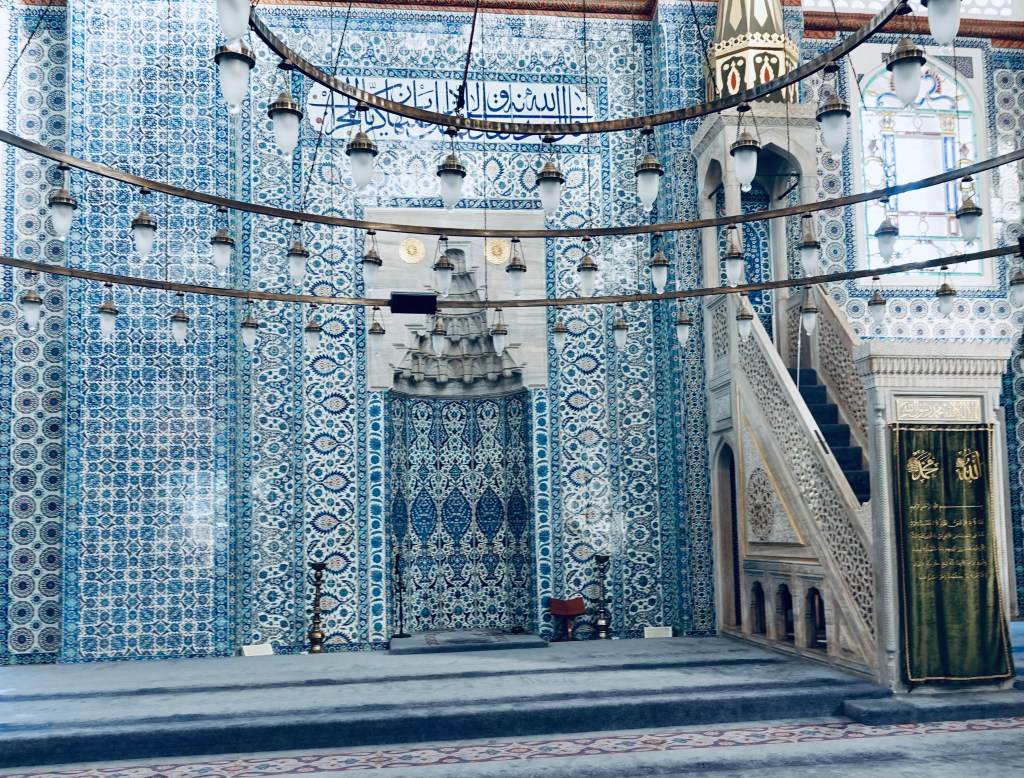
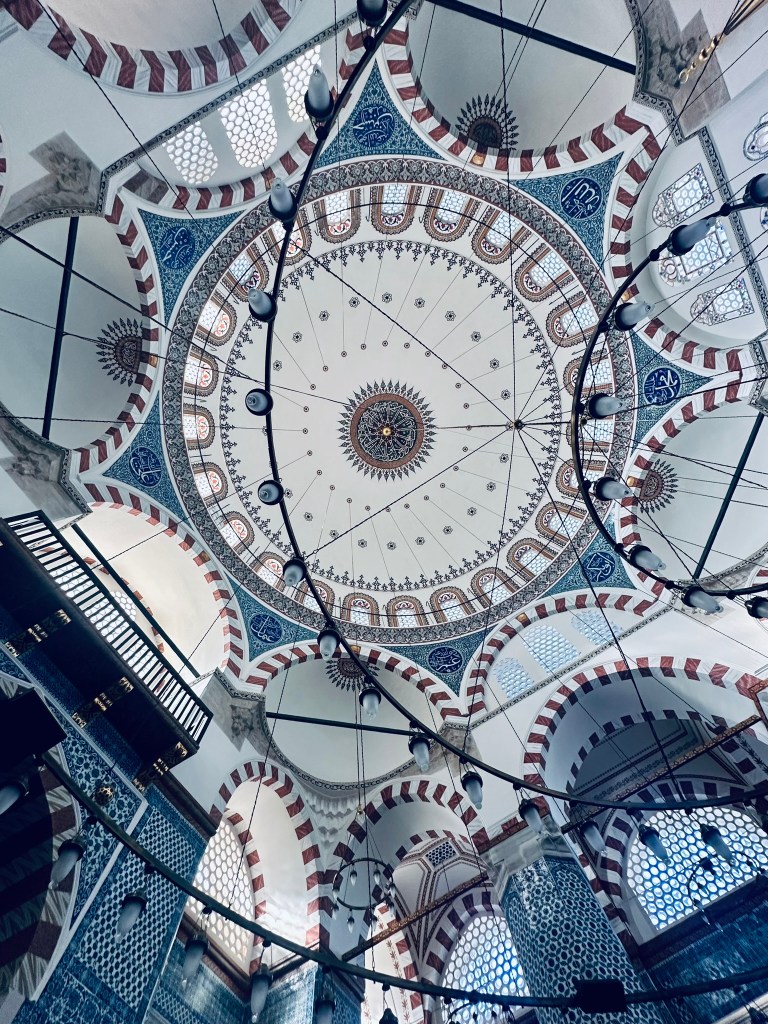
There is no other monument more iconic than Hagia Sophia in Istanbul, where 1500 years of Christian and Islamic history can be seen side-by-side. Once the great cathedral of Constantinople and later an imperial mosque of the Ottoman Empire, this center of worship for Christians and Muslims was a museum for few years and now is back to being a active Mosque. Since it is an active mosque right now, you need to have long pants or skirts, and women must cover their heads with a scarf or a hat. Also, as it is mosque covered in carpet, you’ll take your shoes off before entering the mosque (Plan accordingly).

Key sights at Hagia Sophia:

  • Church/ Mosque- Imperial gate golden mosaic. It represents the emperor Leo VI bowing down before Christ Pantocrator, giving His blessing and holding in His left hand an open book. The text on the book reads as follows: “Let peace and safety be with you. I am the peace and glorious light of universe” (Photo 4)
  • This church was built to face Jerusalem; mosques faced Mecca. When Hagia Sophia became a mosque, they couldn’t move the church, but they could move the focal point of the praying. The prayer niche is just a bit off-center and faces Mecca (Photo 9)
  • The Virgin and Child mosaic, 9th century CE, The mosaic is located in the apse semi-dome of Hagia Sophia. In the mosaic Mary is enthroned and she puts her right hand on the shoulder of the Child Christ who is seated in her lap (Photo 10)
  • Sultan lodge: This lodge was used by Sultan to join the rituals without being seen by public and it was also to protect the Sultan from possible assassins. The grills of the lodge are carved marble in Turkish rococo style, and the columns carrying the lodge are Byzantine.

There are few other artifacts in Hagia Sophia referring to its church days including this architrave of 12 sheep that represents the twelve apostles of Christ and this can be seen in the garden.

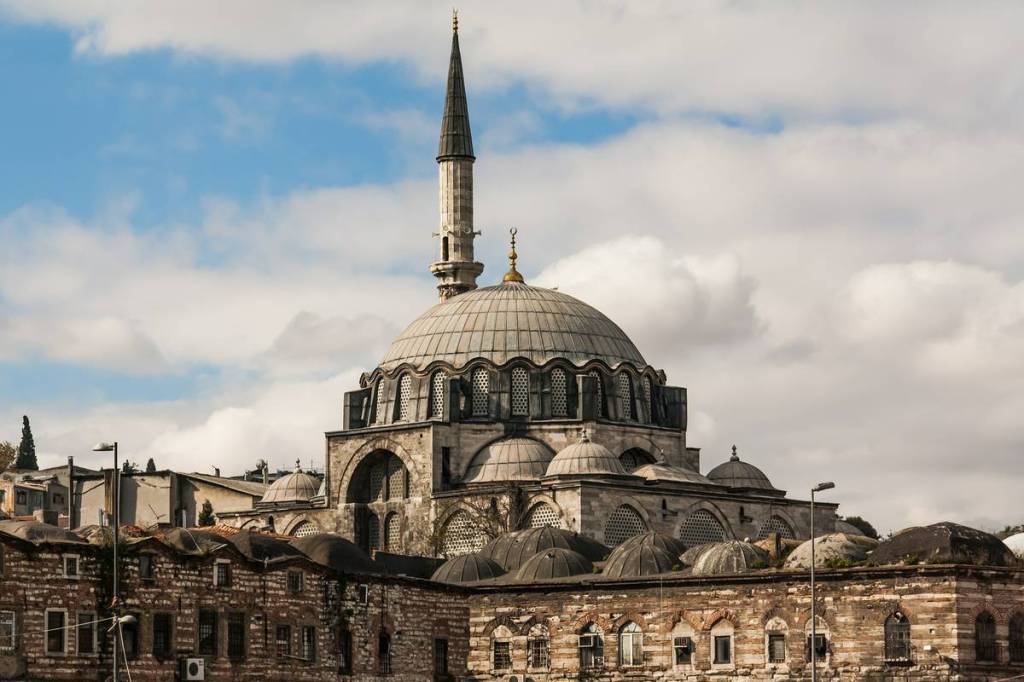
Blue mosque : Blue mosque was closed for renovation when we visited in April 2023 which means we will have to go back to see it again soon. We were able to see it from outside.

Basilica cistern : There are hundreds of cisterns under the Historical Peninsula of Istanbul which were used as water storage facilities to ensure drinking water supply during war. The most famous cistern is Basilica Cistern and has a very unique architecture as it is built using reused columns from the ancient Greek era and hence you will see columns with head of Medusa. For more info on these cisterns, see this blog. It was highlight of our trip to tour basilica cistern and it is fascinating to see new age art installations among really old Greek era columns. If you are visiting Hagai Sophia, I highly recommend seeing this as it is walking distance from Hagia Sophia

Arasat Bazar

Grand bazar is the most famous shopping place in Istanbul, and you can walk to Grand Bazar from Hagia Sohia. There are couple of ways to get to Grand bazar- either walk through Nuruosmaniye Street or take the tram (More info here). It is huge and very easy to get lost. We decided to visit Asrsat Bazar -a charming little bazar close to Hagia Sophia and bought one of the best Turkish delights I have ever eaten in a little shop. Arasat bazar gives you all the experience of grand Bazar without overwhelming the senses. Spice bazar is another good place if you want to buy spices and other food items.

Bosphorus Cruise:

Bosphorus strait divides Turkey into Asian Turkey and European Turkey making it into an Intercontinental country. You can be in 2 continents within few minutes within the same country. We didn’t have enough time to take the cruise but our guide took us on a passenger ferry so that we can see the Asian side of Turkey. It was beautiful night to be on the cruise and we walked around a bit before stopping by Sekerci Cafe . This place is amazing if you have a sweet tooth and has every imaginable candy and store get decorated for various festivals. We got to see it in its glory decorated for Ramadan.

Final thoughts: Layover tour is Istanbul is totally worth it and we are hoping to go back to Istanbul on our next trip to Africa or India. We found Turkish people to very friendly, and welcoming. The food especially Turkish delight is amazing and history and culture inspiring and spending even few hours is worth it see this amazing city. There is lot more to see in Istanbul than we could cover in 7 hours and we are hoping to go back on our next adventure to visit more places.

Long layover in Istanbul airport- How to spend layover time in Istanbul- Updated June, 2024

This an update based on our experience while travelling to Bosnia and Herzegovina with 26 hour stopover in Istanbul. Since the last stopover which we did in April of 2023, there are few updates for the Stay/Tour Istanbul program by Turkish airlines

  • US Citizens/ Green card holders do not need to apply for visa beforehand (Change from 2023)
  • When booking tickets on Turkish airline webpage, you can choose the option of Stopover, whether you want to stopover on departure or return and how many days you would like to stopover (Yellow highlights)
  • US based traveler can get up to 2 nights free hotel for economy class and 3 nights for business class.
  • You can pre-select your hotel (once you have your tickets) based on where you want to stay. Once your tickets are booked, you can choose the hotel under the option “Experience ” and “Stopover” tab. You can enter your ticket # or reservation code and you can choose the hotel options based on the dates of your stay. We were able pre-book our hotel almost 2 months before our travel. Makes it much easier to plan and we decided to book in Faith district (Hotel Grand Yavuz)

Istanbul is truly magical city where East meets West in both literal and cultural sense. If you are travelling to anywhere in Africa or Europe or middle east, you might have few hours of layover in Istanbul. If you want to utilize the layover time effectively and get most of it, there are few of options.

Option 1- free tour Istanbul with Turkish airlines. More info below on this and only possible if you book through Turkish airlines and you will see tourIstanbul on the lisitng

Option 2- free hotel stay with Turkish airlines stay Istanbul program. You can either visit some highlights on your own or through a paid guided tour. More details below .

Options 3: Guided tour. Any airline as long as you have enough time in between your flights

Option 4: Self-guided tour- choose your adventure. If you want to read our experience, check here

Option 1: Turkish airline Tour Istanbul- Free tour

If you have a layover in Istanbul, Turkish airlines has a complementary service called Tour Istanbul. Here are the requirements to avail this service :

  • Your travel must be booked with Turkish airlines- both legs of the travel
  • You need to get an e-visa before getting on the tour. E-visa can be obtained here. ( when we applied 2 weeks before our trip, we got visa almost instantaneously)- No need for visa for American Citizens and Green card holders- Updated in 2024
  • Your layover should be between 6-24 hours
  • There are 7 different tours to chose and what tour you can go on depends on your time of arrival. They offer full day tours and half day tours.
  • You don’t need to prebook the tour. Just head out to “ Hotel Desk” which you will find after going through customs and immigration. You will have to walk quite bit to reach hotel desk. You stop before getting out of the airport and Hotel desk is located opposite to arrival gate between door 13 and 14 ( you can also use this handy map to get to hotel desk
  • If you have luggage you can leave at the “Left Luggage” for a fee. This is not a free service, and they charge by hour. There are multiple left luggage places and there is one conveniently located next to “Hotel Desk”
  • Depending on the tour, breakfast or dinner provided free of cost. The tour doesn’t cost you any money.
  • Tour is offered 7 days a week and check here for updated information

Option 2: Stopover program by Turkish airlines

  • Stop over in istsnbul is a free accommodation by Turkish airlines in partner hotels!
  • Stopover in Istanbul is only available for passengers connecting from Istanbul Airport (IST); departure and return flights must be via Istanbul.
  • Stopover in Istanbul is only available for flights operated by Turkish Airlines.
  • To benefit from Stopover in Istanbul, there must be at least 20 hours of transit time between the two flights.
  • To take advantage of this service, passengers must apply at least 72 hours before the first flight via the e-mail address of the country of departure- Webpage has been updated and you can pre-book your hotel on the experiences tab on the Turkish airlines webpage -2024 update
  • Within the scope of this service, Economy Class passengers can stay 1 night free of charge in a 4-star hotel and Business Class passengers can stay 2 nights free of charge in a 5-star hotel.
  • Visa fees, travel costs around the city, and travel costs between the airport and hotel are borne by the passenger.
  • Economy Class passengers starting their journey from the United States can benefit from our Stopover service for 2 nights; Business Class passengers can benefit from our Stopover service for 3 nights.
  • Please refer to this webpage for all the details and reach out to Turkish airlines for your eligibility. Contact email for Turkish airlines for hotel if you are traveling from USA : freehotelusa@thy.com. For each country there is a different email and more details can be found here

You can only choose either tour Istanbul or stay Istanbul with Turkish airlines. You can’t do both on the same trip.

Option 3: Private guided tour

This is our experience at 15 hour layover in Istanbul on our way to Cairo in April 2023. We decided to not take Tour Istanbul option, as our flight was reaching at 2.30 and we weren’t sure we will make it to 4.30 tour. We organized the guided tour through Istanbul layover tours and we had the best experience with them. Our flight was delayed by an hour and Leif (owner/ contact) kept in touch through WhatsApp and we had a smooth transfer and tour. Our guide was Alp who made this tour incredible. He was knowledgeable, friendly, and truly amazing. When he found out we were vegetarians through the tour operator, he had gone to The Hagia Sophia area day before and found a restaurant that served vegetarian food before our visit. Highly recommend Alp and this tour company for Istanbul visit. Here are the places we visited:

  • Hippodrome/Sultanahmet Square
  • Hagia Sophia- went inside the mosque and got guided tour of the place
  • Blue mosque ( Closed for construction in April 2023) and we saw it from outside
  • Basilica Cistern- the largest of several hundred ancient cisterns that lie beneath the city of Istanbul.
  • Arasta bazar- Grand bazar was closed by the time we finished everything else. So decided to check out Arasta bazar with our guide. Had the best Turkish delight and great overall experience of the turkish bazar.
  • Dinner at Feugo cafe and restaurant- really good Turkish food
  • Bosporus strait-forms part of the continental boundary between Asia and Europe, and divides Turkey Europe side and Asian side. We took a ferry to Asian side and walked around

The tour lasted from about 7 hours and we were picked and dropped off to the airport. Hoping to go back to Istanbul in our next layover to check out Blue Mosque and other highlights of Istsnbul with same company as they can customize the tour based on your need. We also booked Yotel airside which is inside the airport so that we can stay inside airport and get to our connecting flight at 8Am. It was 5 min walk from the hotel to our gate.

Option 4: Self guided tour

If you decide take option 2 with Turkish airlines or like us you want to do the tour the way you want, you can do a self- guided tour. After doing the guided tour, we realized that it is pretty easy to cover the key highlights on your own. Here are my recommendations to cover the highlights.

– There are several options to get from airport to city center. Choose what is convenient for you and here are some options.

– once you are city center, some highlights can be reached by walking. Here is a handy map by Istanbul clues of the city center. Other highlights can be reached by tram which runs frequently (need to have money/ coins to pay once you board or you can buy a pass). For more information about the trams please check this website

Hotels and other options within the airport

Istanbul airport has several options for resting or sleeping at the airport. Yotel is one option and you can rent by the hour. YOTEL is the only hotel located at IST Airport. It has two locations: one LANDSIDE (before immigration and passport control) and one AIRSIDE (in the transit area, accessible only with a valid boarding pass). Airside is better if you have an early flight and you would have done the immigration night before and you can getup and go. Reach out to the hotel for any questions (If you want to make an hourly or multi-night booking please contact istanbul.reservation@yotel.com or call +90 212 942 6666.

Second option is Istanbul Airport Sleeping Cabins -IGA Sleep Pods and you can rent these by hour. You can get more info on these pods here

Third option is IGA lounge, and you can access it for free if you have Priority pass or pay for access (Check IGA webpage for cost). This is one of the best lounges we have been to, and it has a huge selection for food and other amenities

Checking off Bucket list- 7-day trip to Egypt Itinerary- Planning guide

Steps for Egypt trip planning:

  • Where: Cairo, Aswan, and Luxor
  • When: High season (cooler season) October to April. May is a shoulder season.
  • How many days: Minimum 6 full days but will be a busy schedule. Need at least 2 days in each place and travel time between the cities. 7-8 days would be ideal.
  • How: Book with a travel group or self-guided- Land or Nile cruise
  • Budget: $1,500-$2,500 per person for 6-7 days (Including flight, hotel, food, and transportation from US. Ave flight- $800-$1,500 per person, Hotels-$300-$ 600 per night, Nile cruise- $800-$1500 ave per person for 4 days (Based on April 2023 Cost))
  • Other details: Visa for Egypt (Check here for details)

Must visit places :

  • Egyptian Museum
  • Pyramids of Giza
  • Luxor temple
  • Karnak temple
  • Valley of kings
  • Hatshepsut temple
  • Edfu temple
  • Kom Ombu temple
  • Aswan Philae temple
  • Abu Simble
  • Boat/Faluka ride in Aswan

Good to do:

  • Easting Koshary in Cario
  • Dinner cruise
  • Camel ride
  • Hot air balloon ride in Luxor
  • Eating Nubian food in Aswan (Hot pot)
  • Unfinished Obelisk in Aswan
  • Visiting Nubian Village
  • Dandera temple
  • Alendria
  • Memphis

Download the itinerary here

2 days in Iguazu falls-Brazil and Argentina- Trip planning guide

This itinerary is from Brazil side. This can be reversed and done from Argentinian side too. Overall, 2 full days are enough to do both sides and get the best out of the trip.

Hotel : Das Cataratas A Belmond Hotel-The only hotel inside the park on Brazilian side

Activities : Organized by concierge of the hotel

Download the itinerary here

Related posts: