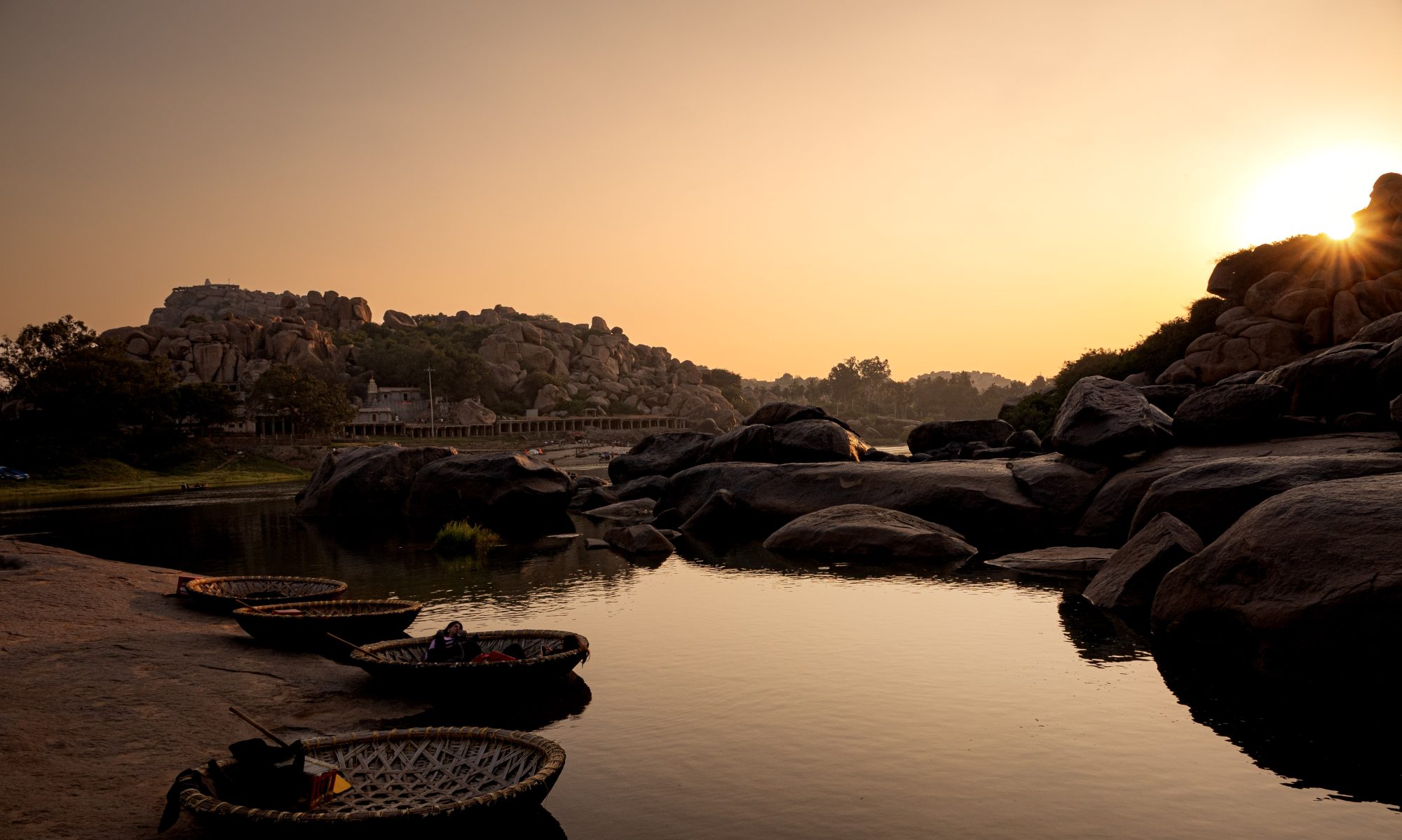
Waved Albatross of Española: A Once‑in‑a‑Lifetime Wildlife Encounter

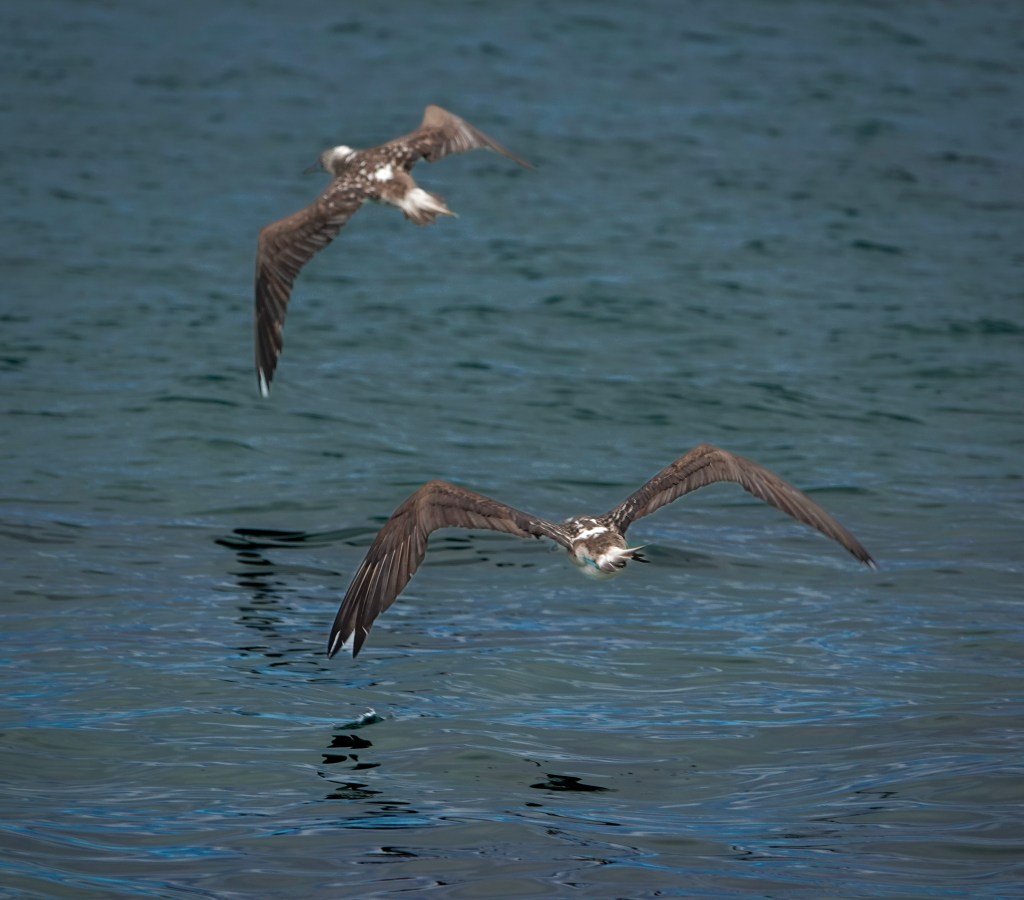
Visit the Galápagos island of Española between December to April, and you may witness one of the most extraordinary courtship rituals in the natural world. Each spring, nearly the entire global population of waved albatrosses—tens of thousands of birds—returns to this remote island to reunite with lifelong partners, raise a single chick, and perform a mating dance so intricate and theatrical that it feels choreographed by nature itself. With wingspans stretching up to eight feet, these are the largest birds in the Galápagos, yet their grace in the air contrasts beautifully with their endearing awkwardness on land. For travelers, seeing them here—on the only major breeding ground they have left—is nothing short of magical.

A Date With the Albatross: When to Plan Your Trip

The waved albatrosses follow a strict seasonal rhythm, and timing your visit is essential.

  • Late March – April (Arrival): The birds return to their only major breeding site on Española Island. Males typically arrive first to claim nesting spots, followed shortly by females.
  • April – June (Courtship & Egg Laying): This is the peak time to witness their famous courtship dance, which involves bill-clapping, bowing, and honking. Most eggs are laid during this window.
  • June – August (Incubation): Parents take turns incubating a single large egg for about two months. You can see many birds sitting on nests during this time.
  • August – November (Chick Rearing): Chicks hatch and are fed a nutrient-rich oily substance by their parents. By late in this period, large, fluffy, brown chicks are visible across the colony.
  • December – early January (Fledging & Departure): Young birds take their first flights, often wobbling to the cliffs for take-off. By mid-January, the colony is usually deserted as they head to the coasts of Ecuador and Peru

We were at the Waved Albatross nests on Española Island (specifically at Punta Suarez) at the end of December. We not only saw the young chicks learning to fly, but also saw the courtship dance (Vidoe below)

Choosing the Right Cruise: Why an Eastern Itinerary Matters

Because waved albatrosses breed only on Española Island, your cruise route determines whether you’ll see them at all.

The landing at Punta Suárez is rugged and dramatic, with blowholes, cliffs, and colonies of seabirds swirling overhead. But nothing prepares you for the moment you see your first albatross waddling across the lava rock, its oversized bill and blue‑tinted feet giving it a charmingly awkward elegance.

Meet the Waved Albatross: The Ocean’s Master Glider

The waved albatross (Phoebastria irrorata) is a study in contrasts—both powerful and delicate, comical and majestic.

  • Wingspan: Up to 2.5 meters (8 feet), the largest in the Galápagos
  • Appearance: White head with a creamy yellow crown and neck, chestnut‑brown body, white underwings, and a long, dull‑yellow bill
  • Namesake: The subtle wave‑like pattern on the adults’ wings
  • Lifestyle: Exceptional gliders, spending years at sea without touching land
  • Diet: Fish, squid, and invertebrates—often scavenged near fishing boats or stolen from boobies

Despite their size, they move with surprising grace in the air, riding ocean winds for hours without flapping. On land, however, they transform into endearing, slightly clumsy characters—true to the Spanish root of “bobo,” meaning “foolish,” a name shared with their booby neighbors.

The Courtship Dance: One of Nature’s Most Theatrical Rituals

If there is one wildlife behavior that defines the waved albatross, it is their courtship dance—a ritual so intricate and expressive that it feels choreographed.

Pairs face each other, leaving just enough space to stretch their long necks. Then the performance begins:

  • Bill circling
  • Bill clacking
  • Hollow wooden tapping sounds
  • Exaggerated head sways
  • Honking
  • Bowing
  • A waddle that borders on comedic
  • And the occasional cow‑like “moo”

For new pairs or those that failed to breed the previous year, the dance can last hours—sometimes days. It is a test of compatibility, trust, and lifelong partnership.

Because waved albatrosses are monogamous, this ritual is not just courtship—it is a reaffirmation of a bond that may last decades.

Life on Española: Nesting, Parenting, and the Long Journey Ahead

Once bonded, the pair lays a single egg directly on bare ground. They take turns incubating it for nearly two months. After hatching:

  • Chicks join “nursery groups” while parents forage
  • Adults return to feed them a nutrient‑rich oily liquid
  • Young albatrosses fledge at around 5.5 months
  • They then spend up to six years at sea before returning to Española to find a mate

With only one chick per year and threats from fishing, pollution, and habitat changes, the species remains vulnerable—making every successful breeding season a triumph.

Why Española Is the Only Place to See Them

Nearly the entire global population—estimated at 50,000–70,000 individuals—returns to Española each year. A tiny secondary colony exists on Isla de la Plata off mainland Ecuador, but with fewer than 20 breeding pairs, Española remains the heart of the species.

This exclusivity makes your visit feel even more special. You’re not just seeing a bird—you’re witnessing a species in its ancestral home, performing rituals unchanged for millennia.

Final Thoughts: A Wildlife Encounter Worth Crossing Oceans For

Standing on the cliffs of Española, watching thousands of waved albatrosses reunite, dance, nest, and soar, you feel the pulse of the Galápagos in its purest form. It’s a reminder of how fragile and extraordinary these islands are—and why they continue to inspire travelers, naturalists, and storytellers alike.

If your Galápagos journey is about connection, wonder, and witnessing nature at its most theatrical, then timing your trip to meet the waved albatross is an experience you’ll never forget.

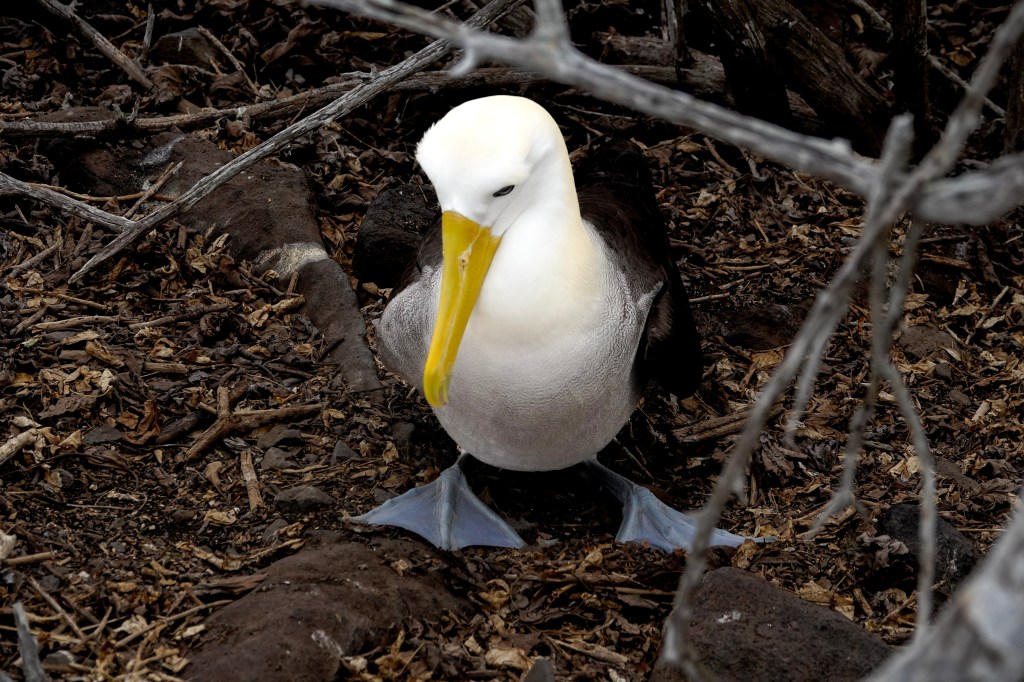
Punta Pitt Wildlife Guide: Home of the Red‑, Blue‑, and Nazca Boobies

Boobies—named after the Spanish word bobo—meaning “clumsy”—boobies earned their name from their slightly awkward, waddling gait on land. The Galapagos Islands are home to three different species of boobies, which include the blue-footed, red-footed, and Nazca boobies. Each species possesses its own remarkable traits and behaviors, making them a highlight for wildlife enthusiasts. Their unique coloring not only helps in distinguishing between the species but also plays a role in courtship displays, where vivid colors attract mates and signify health. Observing these dazzling birds in their natural habitat provides a rare glimpse into their daily lives, from their fascinating mating rituals to their playful interactions with one another. It is well worth the journey to the Enchanted Isles of the Galapagos to witness these fascinating and captivating species found throughout the archipelago, which bring vibrancy and life to the rugged landscapes, enhancing the overall allure of this UNESCO World Heritage site.

Punta Pitt, located on San Cristóbal Island, is an iconic destination in the Galápagos, known for being the only place where you can observe all three species of boobies: the blue-footed booby, the red-footed booby, and the Nazca booby. This site, with its unique biodiversity and stunning landscapes, attracts nature and wildlife enthusiasts, making it a must-see stop for anyone visiting the archipelago.

The Three Boobies of Punta Pitt

Because of its unique geographical location and abundant food supply, these species coexist without competition, each utilizing a different nesting niche

  • Blue-footed Boobies: Typically nest further inland on the ground, away from the cliffs.
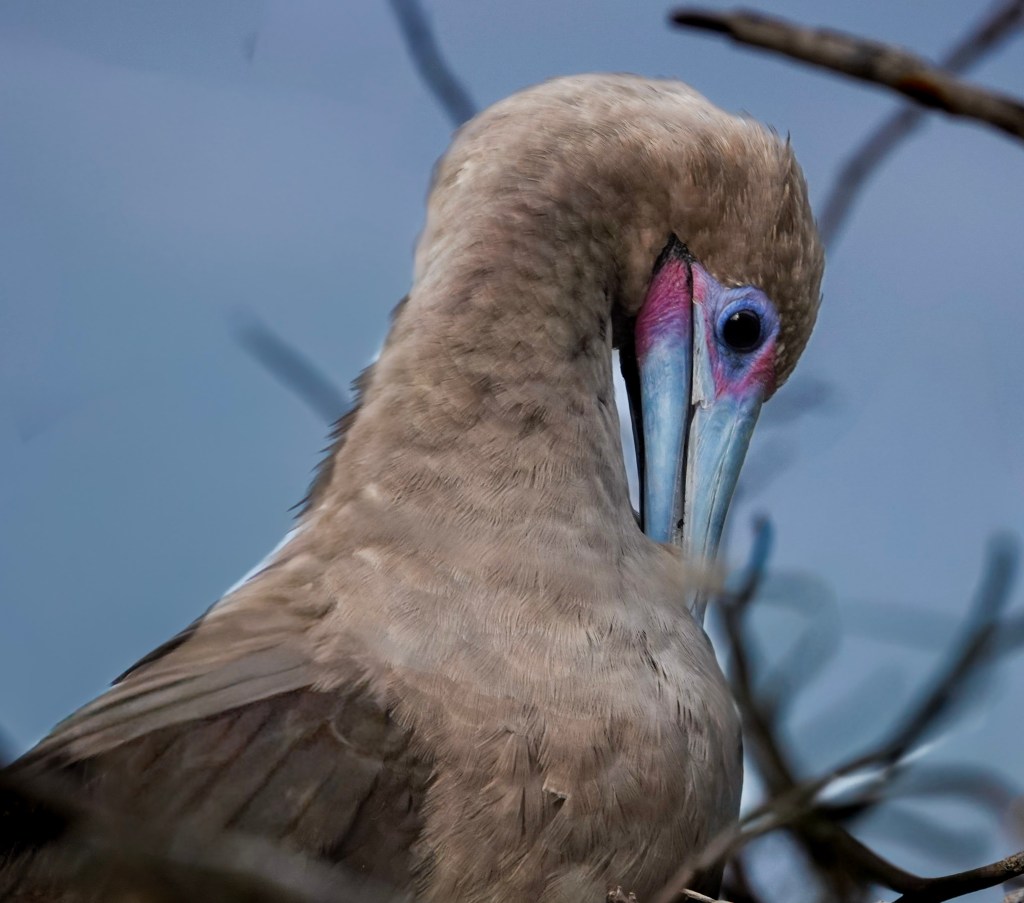
  • Red-footed Boobies: The rarest of the three in the archipelago, they are uniquely distinguished by their ability to nest in trees and shrubs, such as Palo Santo.
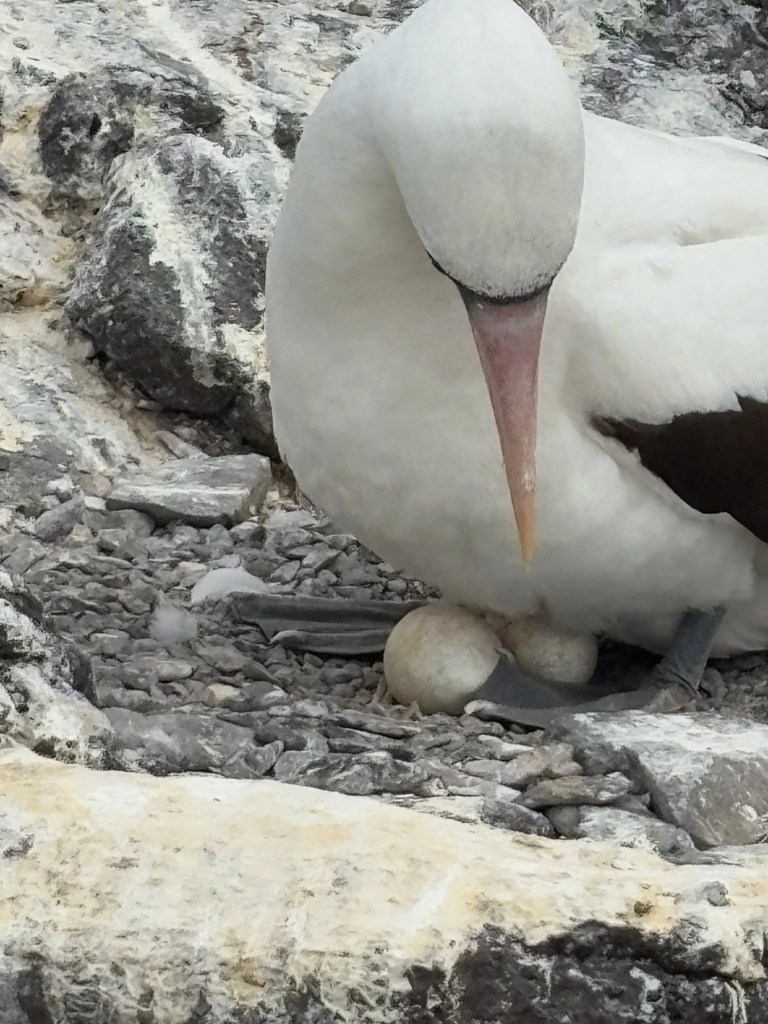
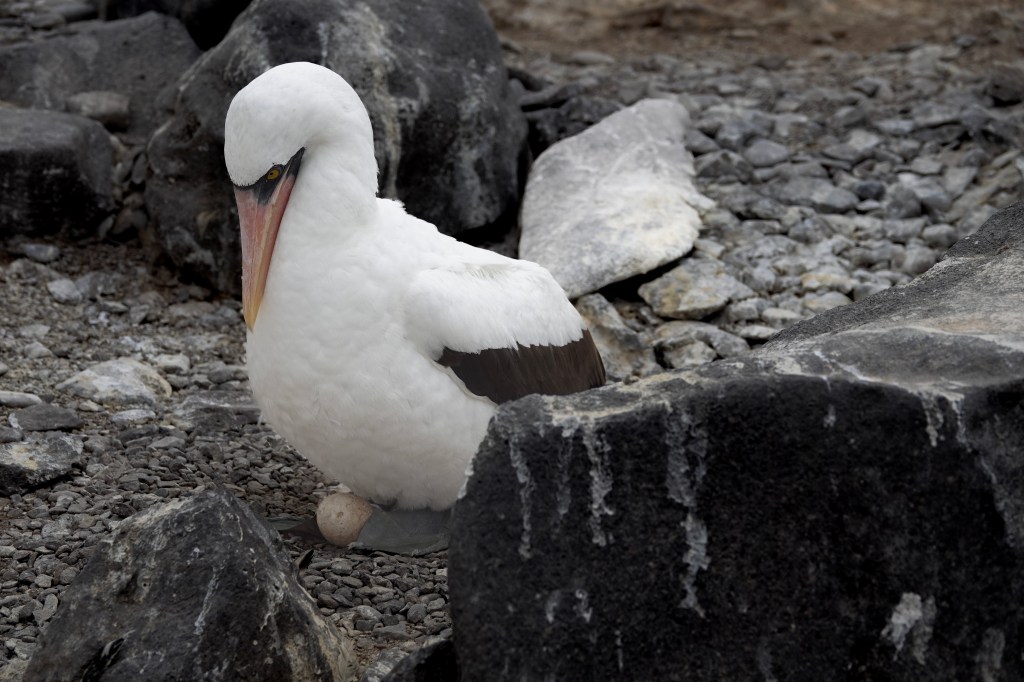
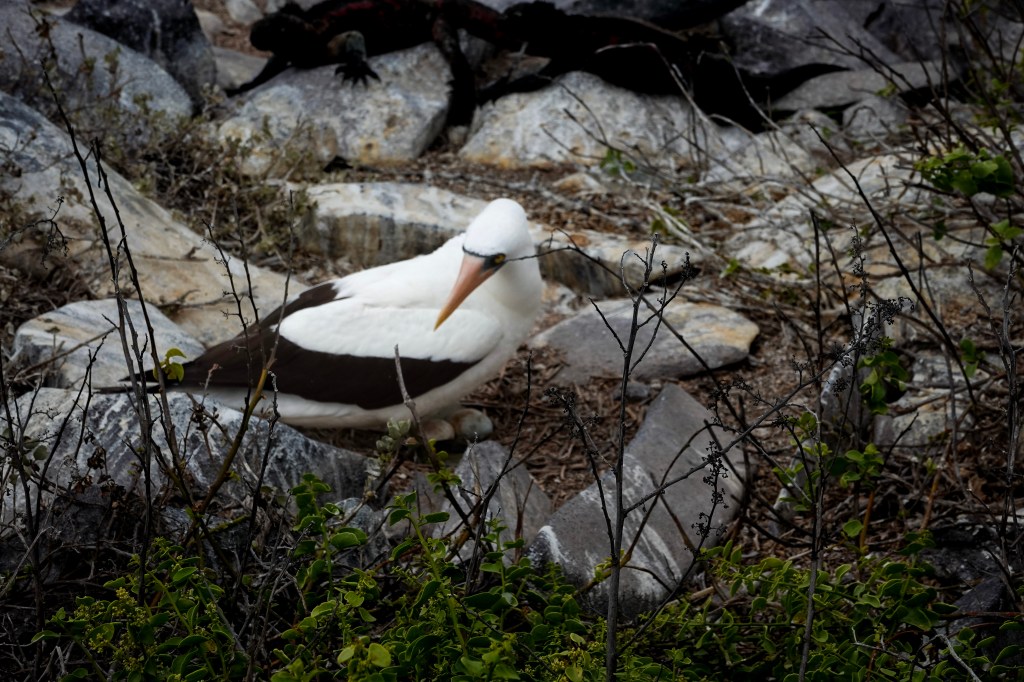
  • Nazca Boobies: Also known as Masked Boobies, they prefer nesting directly along the cliff edges

Visiting Punta Pitt

How to Get There: You can visit via a Galápagos cruise or a day tour departing from Puerto Baquerizo Moreno on San Cristóbal. The boat ride takes approximately 1.5 to 2 hours each way. The cruise we were on had a planned stop at Punta Pitt in the late afternoon, when the birds were returning home after a day at sea. We got to see all 3 bobbies here, but the red-footed booby was definitely the highlight.

  • The Experience: Most tours involve a wet landing on an “olivine” beach (greenish-tinted sand) inhabited by a bachelor colony of sea lions. From there, you’ll hike a steep, rocky trail (approx. 1.5–2 hours) to reach the clifftop nesting sites.
  • Best Time to Visit: While wildlife is present year-round, June to November is generally the best period to see booby mating displays and peak nesting activity. 

Red Footed Bobby (Sula sula)

The red-footed booby is the tiniest of the boobies found on Galapagos, and it quickly proves that the nickname only tells half the story. The smallest of the Galápagos boobies is also the most agile: capable of soaring more than 90 miles over open ocean, diving up to 130 feet for fish, and using its vivid red webbed feet to propel itself underwater with surprising speed. Unlike most web-footed birds, red-footed boobies perch in trees and shrubs, giving them a unique silhouette against the island vegetation. Travelers can spot them at Punta Pitt on San Cristóbal and in large colonies on Genovesa Island, two of the best wildlife-viewing sites in the archipelago.

Blue footed Booby (Sula nebouxii)

The most iconic of the trio, the blue-footed booby also carries the “bobo” name thanks to its comical walk—but its brilliant turquoise feet are anything but silly. Their color comes from a carotenoid-rich diet, and during courtship, those feet become the star of an elaborate mating dance. Males lift each foot in an exaggerated strut, showing off their brightest blues; females respond by mirroring the steps, followed by bill clacking and whistles if they approve. Beyond their charm, blue-footed boobies are extraordinary hunters, spotting fish from high above and plunging into the water at speeds approaching 60 mph. Because they have no natural predators in the Galápagos, they’re wonderfully unbothered by humans and can be seen on nearly every major island—a delight for photographers and wildlife lovers alike.

Nazca Booby (Sula granti)

The largest of the Galápagos boobies, the Nazca booby also inherited the “bobo” nickname for its land-bound awkwardness, though its sleek white plumage, orange bill, and black-tipped wings give it a striking, almost regal presence. This species is best known for a dramatic behavior called obligate siblicide: parents lay two eggs, but only the stronger chick survives, ensuring that enough resources are available for one healthy fledgling. Despite this harsh strategy, Nazca boobies are captivating to watch as they glide effortlessly over the ocean and nest in dense colonies along the cliffs. They are most commonly seen on Punt Pitt, Genovesa Island, and Española Island, where visitors can observe their nesting sites up close along marked trails.

Final thoughts

In a place as wild and wondrous as the Galápagos, the boobies embody everything that makes these islands unforgettable—quirky charm, fearless curiosity, and evolutionary brilliance on full display. Whether it’s the red-footed booby perched improbably in a shrub, the blue-footed booby performing its turquoise‑footed dance, or the regal Nazca booby guarding its cliffside nest, each species offers a glimpse into the archipelago’s untamed spirit. Spotting even one is a delight but encountering all three feels like a true Galápagos rite of passage. For travelers who come seeking wildlife encounters found nowhere else on Earth, the boobies are a joyful reminder of why these Enchanted Isles continue to inspire wonder long after the journey ends.

Hampi the city lost of Splendor- Spending 4 days in Hampi and the surrounding areas

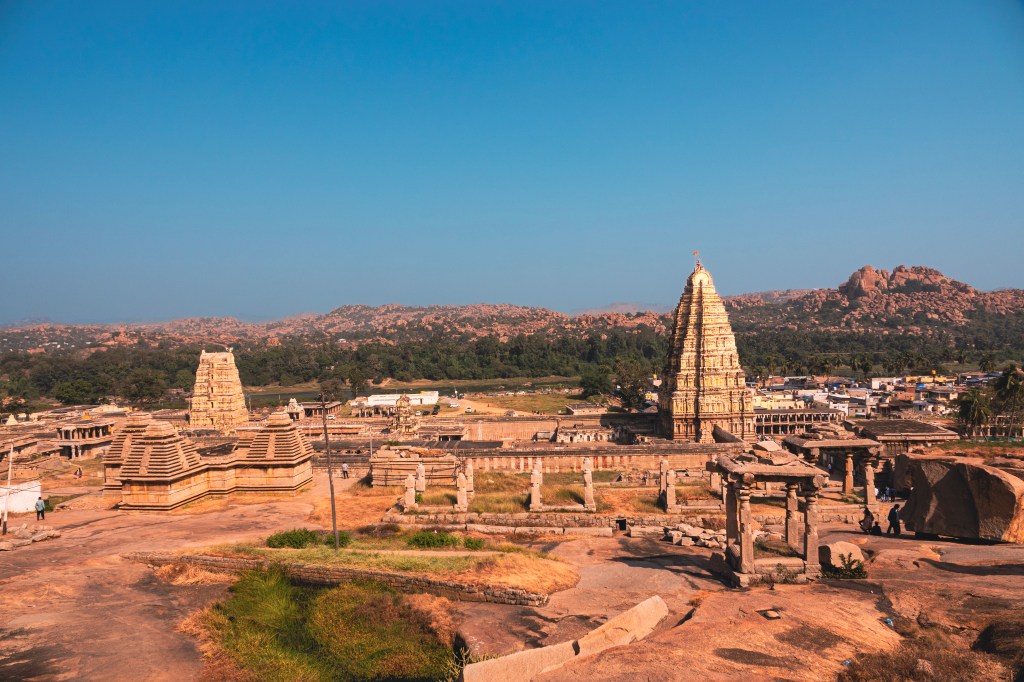
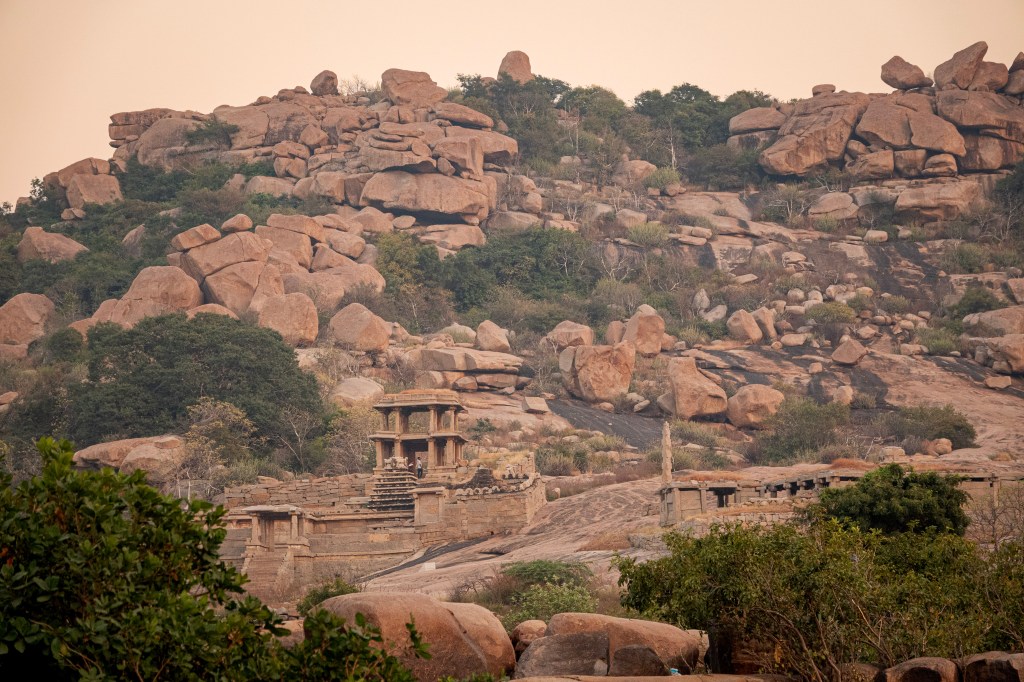
Hampi, a mesmerizing UNESCO World Heritage Site in Karnataka is a blend of surreal boulder-strewn landscapes and ancient history. Once the thriving capital of the 14th-century Vijayanagara Empire, it was one of the world’s largest cities. This was before its devastating fall in 1565. I grew up in this part of the country. I had often heard the ruins somberly called “Halu Hampi” (literally “Ruined Hampi” or “Destroyed Hampi” in the local language). This term shows the city’s tragic transformation. It changed from a “City of Victory” to a sprawling “City of Ruins.” This change followed its six-month pillage by the Deccan Sultanates. Today, you can wander through the remnants of once-grand bazaars. You can witness the iconic Stone Chariot at the Vitthala Temple. You can explore the active Virupaksha Temple. All of these stand as hauntingly beautiful testaments to a lost golden age.

  1. Quick Architectural Glossary: Vijayanagara Temples
  2. Our Itinerary
    1. Virupaksa Trail
      1. Urga Narasimha / Lakshmi Narasimha temple and Badava Linga
      2. Sasivekalu and Kadalekalu Ganesha
      3. Hemakuta hill
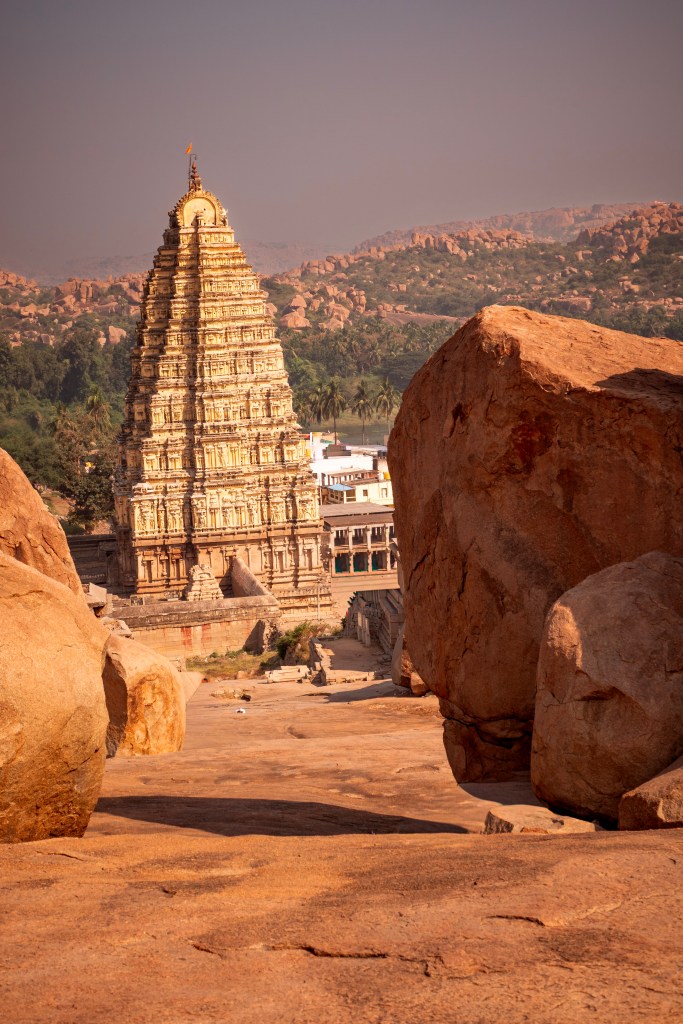
      4. Virupaksha Temple
      5. Sri Krishna temple
    2. Thungabhadra Trail
    3. Vittala Trail
    4. Raya Trail
      1. Hazara Rama temple
    5. ANEGUNDI TRAIL
    6. Geology of Hampi: An Ancient Landscape Sculpted by Time
      1. A Foundation Older Than Time
      2. The Deccan Traps Connection
      3. Inselbergs: Hampi’s Signature Land forms
      4. A Landscape Shaped by Nature and Culture
      5. A Geological Backdrop to an Empire
    7. Final thoughts

Quick Architectural Glossary: Vijayanagara Temples

Gopura

The monumental gateway tower marking the entrance to a temple complex. Usually built of stone at the base and brick above, often decorated with stucco figures.

Mandapa

A pillared hall used for gatherings, rituals, and processions.

  • Open mandapa: airy, columned pavilion.
  • Enclosed mandapa: walled hall with doorways and side porches.

Sanctuary / Garbhagriha

The innermost chamber housing the main deity. Usually small, dark, and accessed through a series of mandapas.

Pradakshina Patha

The circumambulatory passage around the sanctuary, sometimes unlit, used for ritual clockwise movement.

Kuta Roof

A square‑to‑domed roof form used in South Indian temple architecture. In Hampi, it appears on smaller shrines and early structures like the Durgadevi shrine.

Shikhara / Vimana

The tower above the sanctuary.

  • Dravida vimana: stepped, pyramidal tower typical of the south.
  • Brick shikhara: often seen in Vijayanagara temples, decorated with plaster sculptures.

Bazaar Street

A long, colonnaded avenue aligned with major temples, once lined with shops and festival pavilions. Krishna Temple and Virupaksha both have prominent bazaar streets.

Colonnade

A row of stone pillars supporting a roof or canopy. In Hampi, colonnades frame bazaar streets, temple tanks, and enclosure walls.

Tank / Pushkarini

A sacred water reservoir associated with ritual bathing and temple ceremonies. Often surrounded by pillared corridors and pavilions.

Inscribed Slab

A stone record set up by kings or patrons, documenting victories, donations, or temple endowments. The Krishna Temple inscription of Krishnadevaraya is a key example.

Peripheral Shrines

Small subsidiary temples placed along the inner corners or walls of a larger complex, dedicated to attendant deities or guardian figures.

Outer Enclosure

The larger walled compound surrounding the main temple. In the Krishna Temple, this includes a unique six‑domed granary structure.

Stucco Sculpture

Plaster figures applied to brick towers, often depicting deities, dancers, warriors, or mythological scenes. Many Vijayanagara gopuras once had elaborate stucco decoration.

Our Itinerary

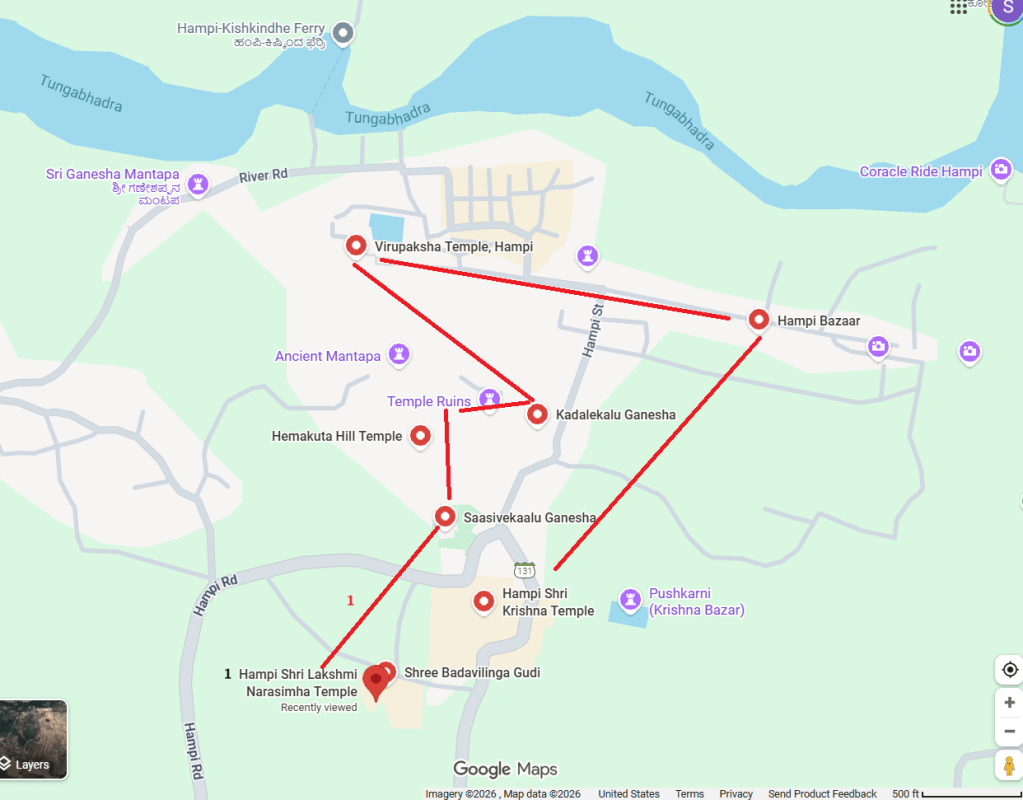
The entire city of Hampi is indeed huge. It’s possible to wander around the suburbs of the city for hours without bumping into anyone else. Seeing everything in Hampi would take several days. However, two to three days are enough to see the major monuments without it being repetitive. We saw Hampi in 4 segments with our guide. I will blog about each segment and its key monuments separately. Here is how we divided our itinerary of Hampi

Virupaksa Trail

This trail includes Virupaksha Temple, Hampi Bazaar, and Manmantha Tank. Other sites are Kampilaraya Temple, Sasivekalu Ganesha, and Kadalekalu Ganesha. The trail also covers the Krishna Temple, Lakshmi Narasimha, and the Badavi Linga. All of these are close together and can be done in 3-4 hours. We started at the Shri Lakshmi Nagashima temple and finished at the Krishna temple.

Here are more details and my commentary on each of these monuments, along with some photographs

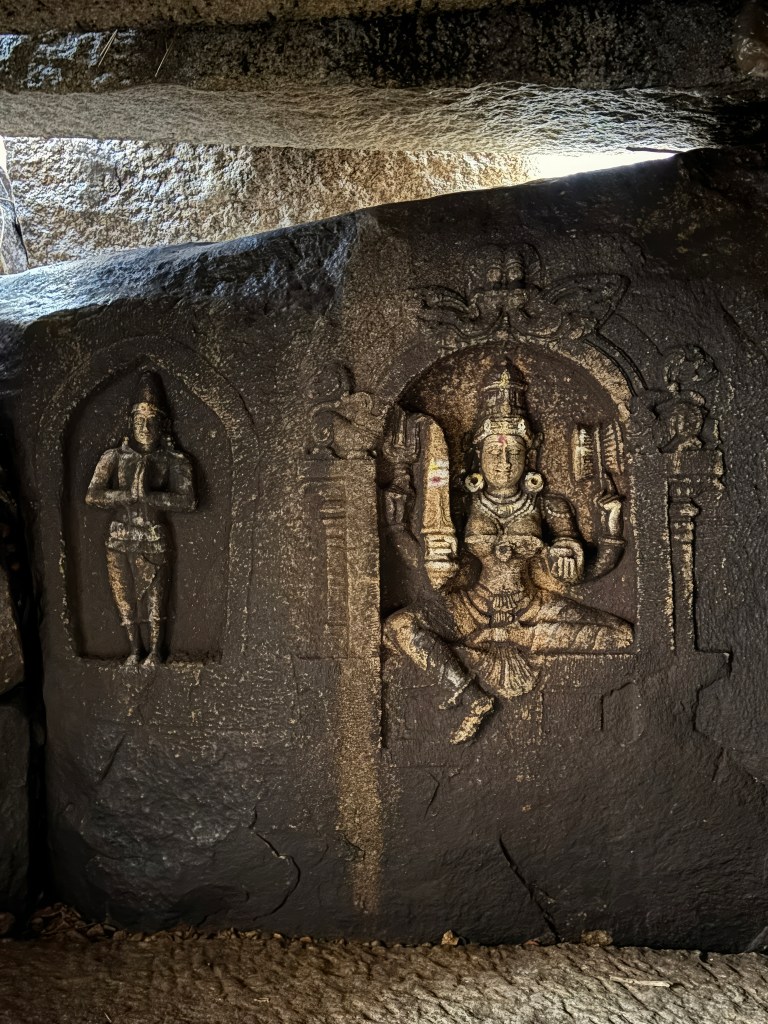
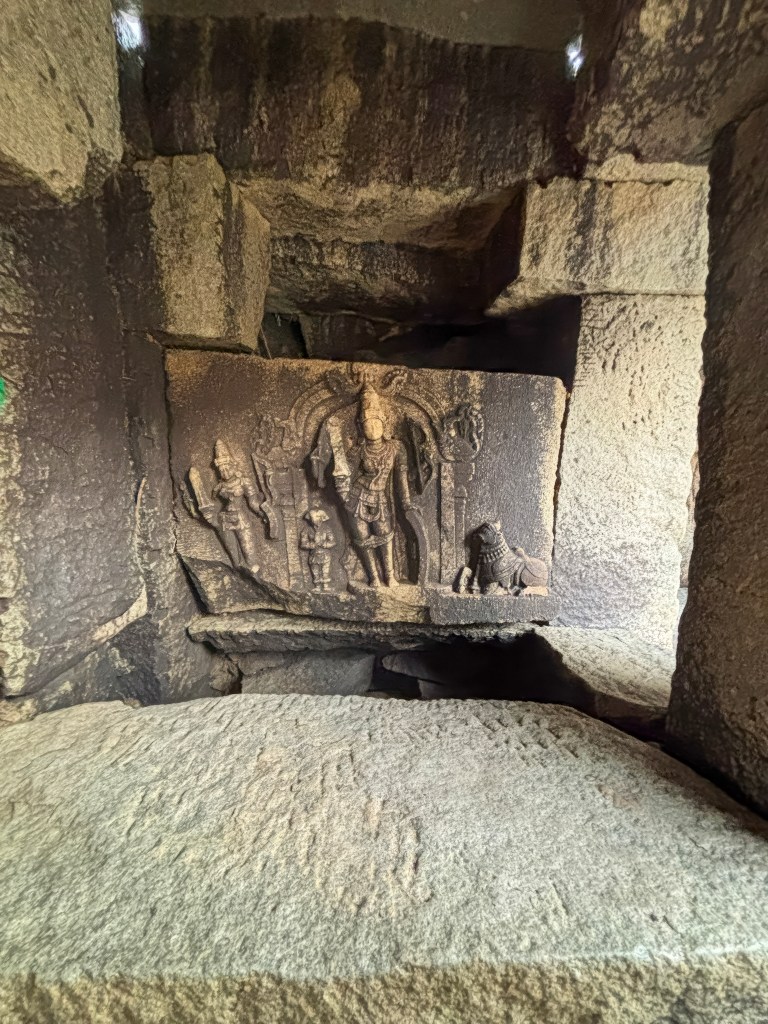
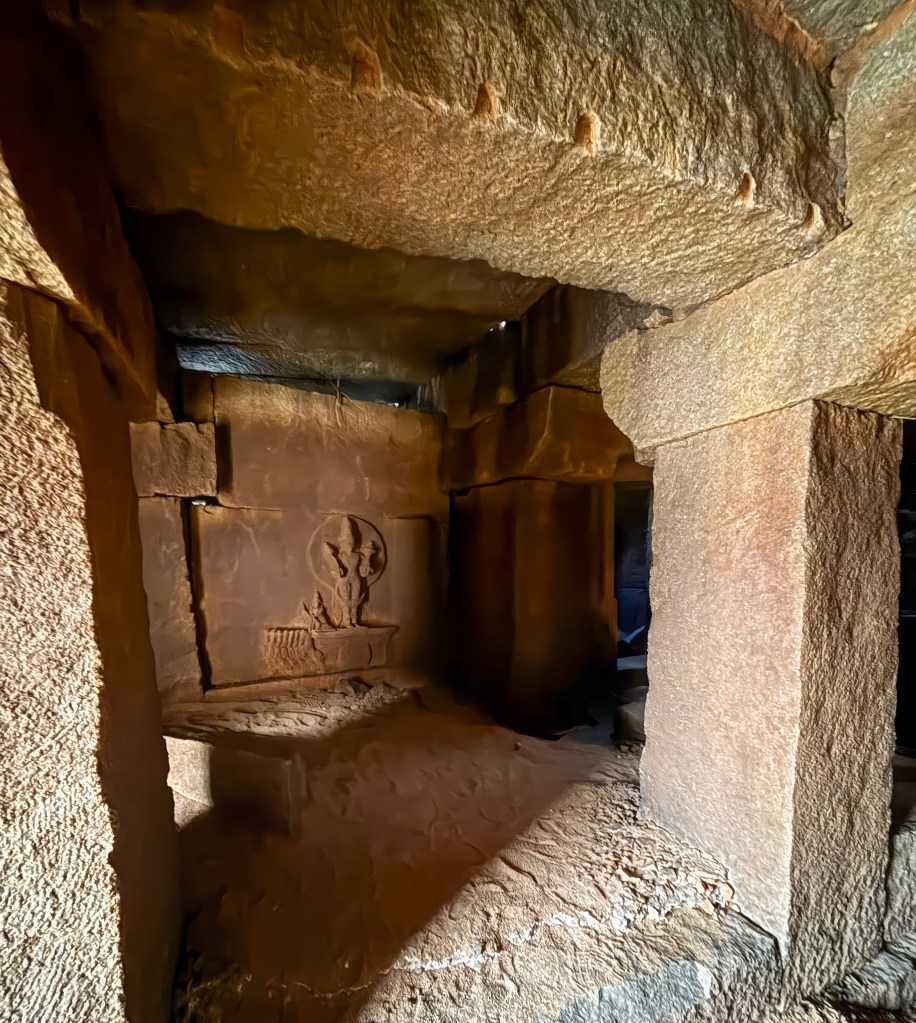
Urga Narasimha / Lakshmi Narasimha temple and Badava Linga

Sasivekalu and Kadalekalu Ganesha

Hemakuta hill

Virupaksha Temple

Sri Krishna temple

Thungabhadra Trail

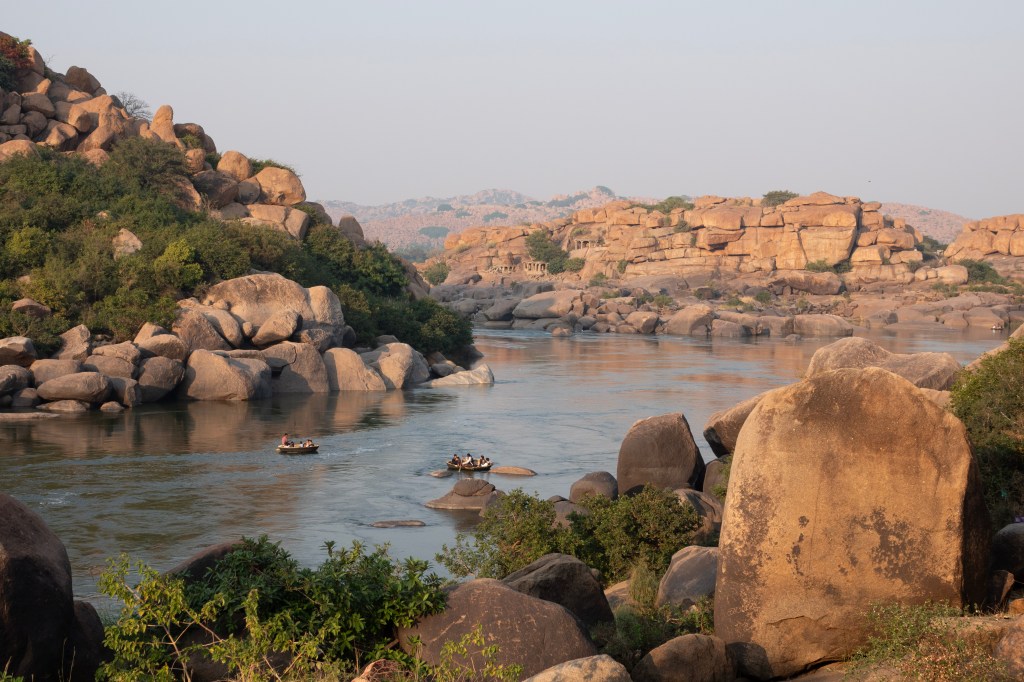
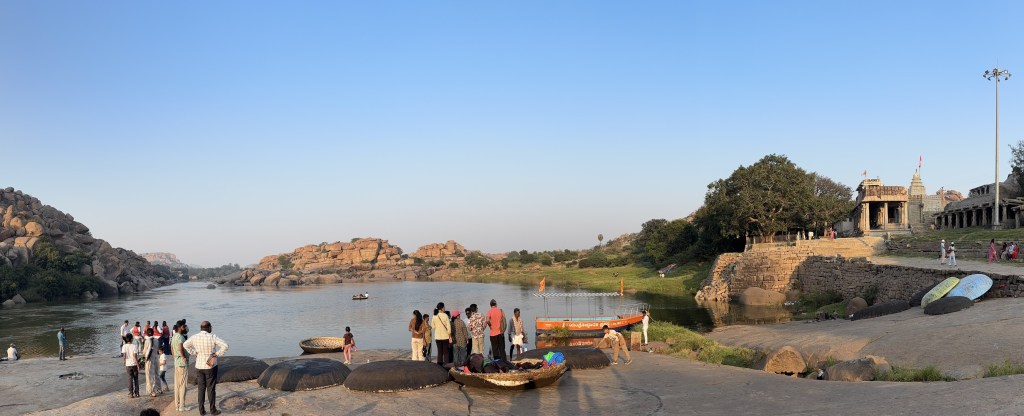
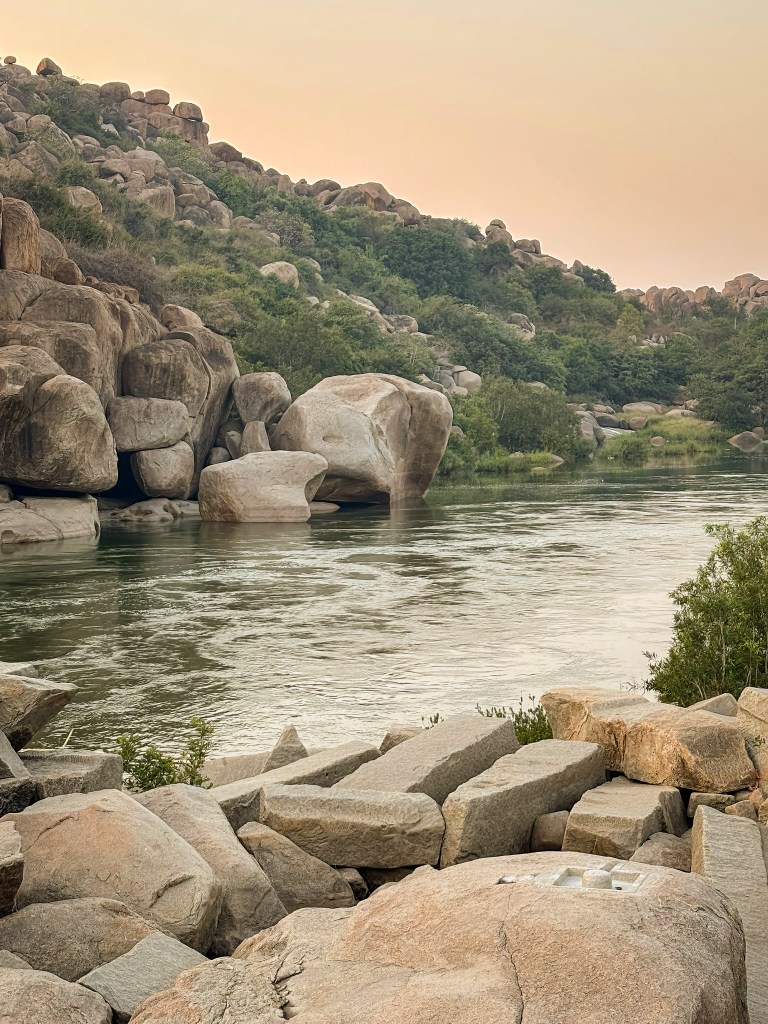
After the morning visit to Virupaksha trail, we took a much-needed break and had lunch. We headed back out around 3.30 PM to start our evening itinerary at Chakra Thirtha. We visited the riverside ruins and took a coracle ride. This was the highlight for me on this trip.

Vittala Trail

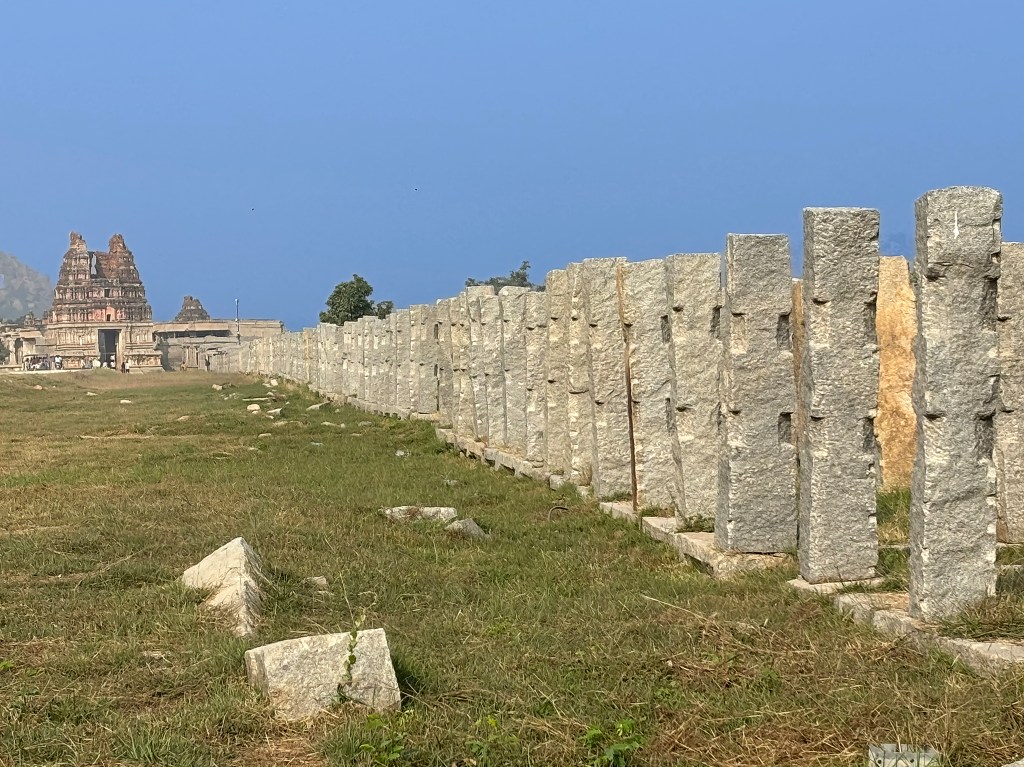
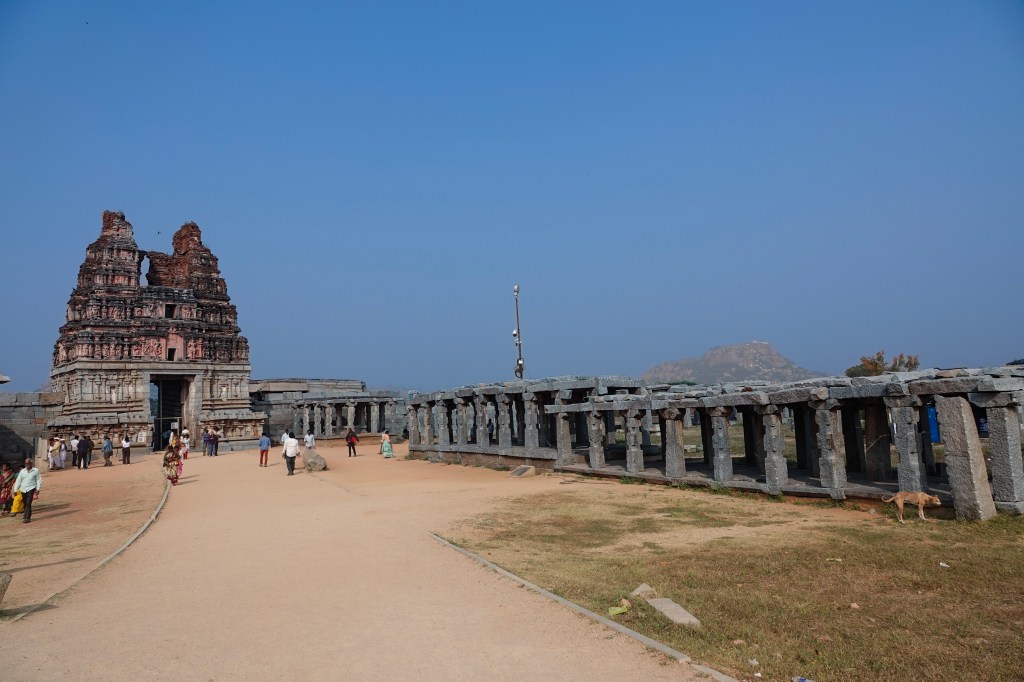
Walk through the ancient market and temples of Vithalapura – a Hampi suburb known for the famous Vijaya Vithala temple that houses the renowned

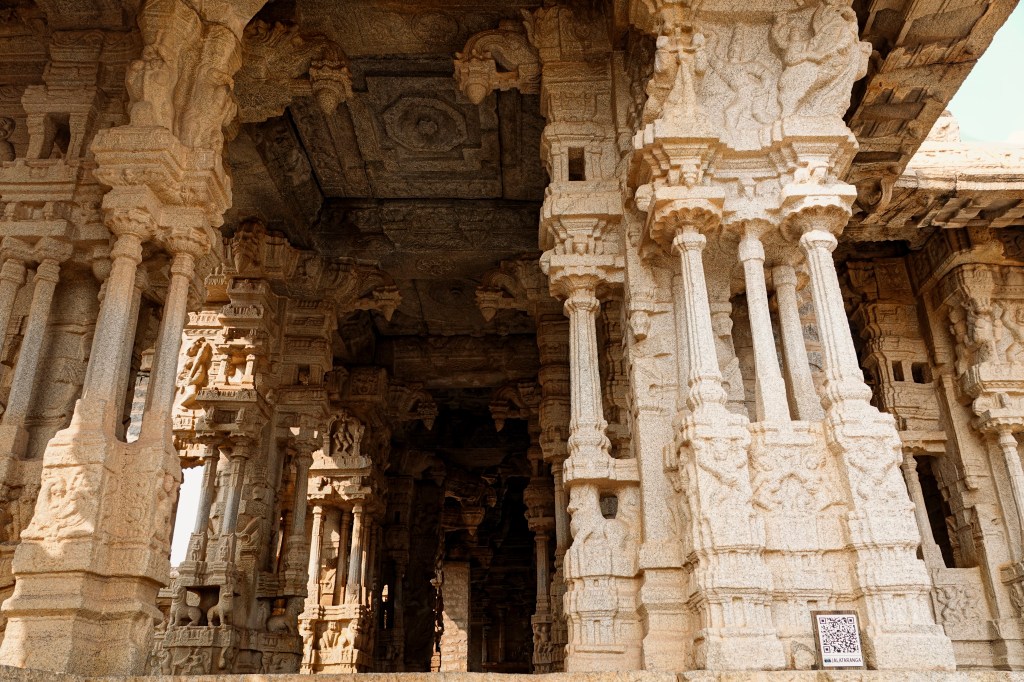
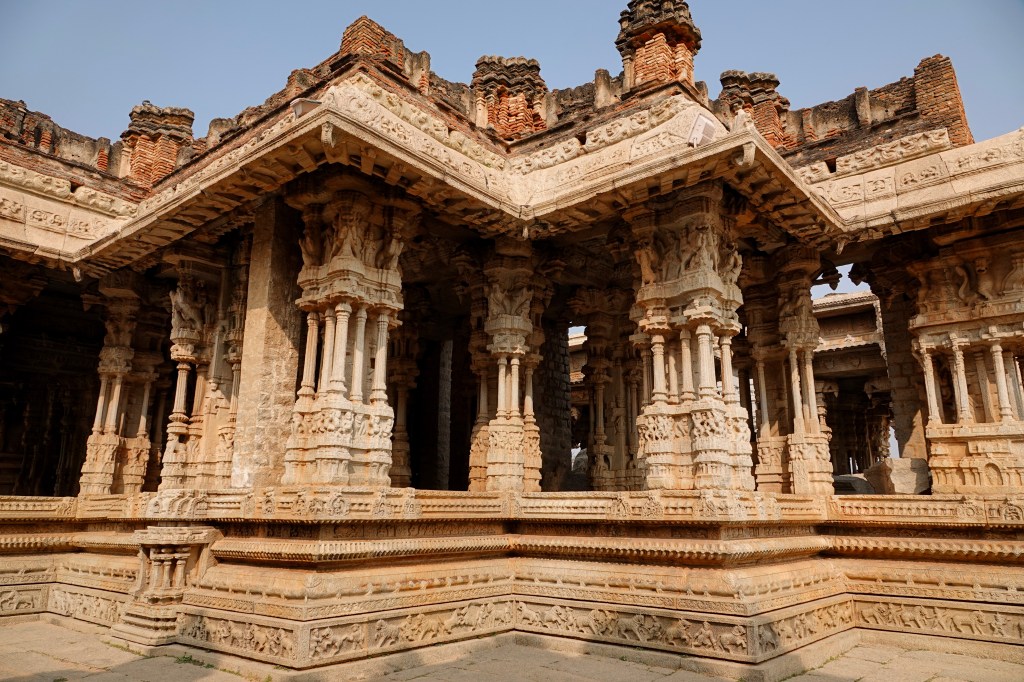
Stone Chariot and musical pillared mantapa.

Monuments Covered: Gejja Mantapa, Kudure Gombe Mantapa, Vithalapura Bazaar, Kalyani, Vijaya Vithala Temple

Raya Trail

This trail takes you back 500 years to the life and times of the Rayas or Kings of the Vijayanagara Empire. Learn about their lifestyle, culture, social and political lives while you gaze upon the royal city’s magnificent architecture.

Monuments Covered: Devaraya’s Palace, Royal Mint, Audience Hall, Secret Chamber, Stepped Tank, Mahanavami Dibba (Great Platform), Hazara Rama Temple, Queen‘s Bath & Palaces, and Elephant Stables

Hazara Rama temple

ANEGUNDI TRAIL

Venture across the Tungabhadra River to where the story of Hampi first began. Discover fortified villages and medieval forts. Explore sacred lakes and ancient temples. Experience a mesmerizing landscape of paddy fields and rock formations dating back 2.5 billion years.

Geology of Hampi: An Ancient Landscape Sculpted by Time

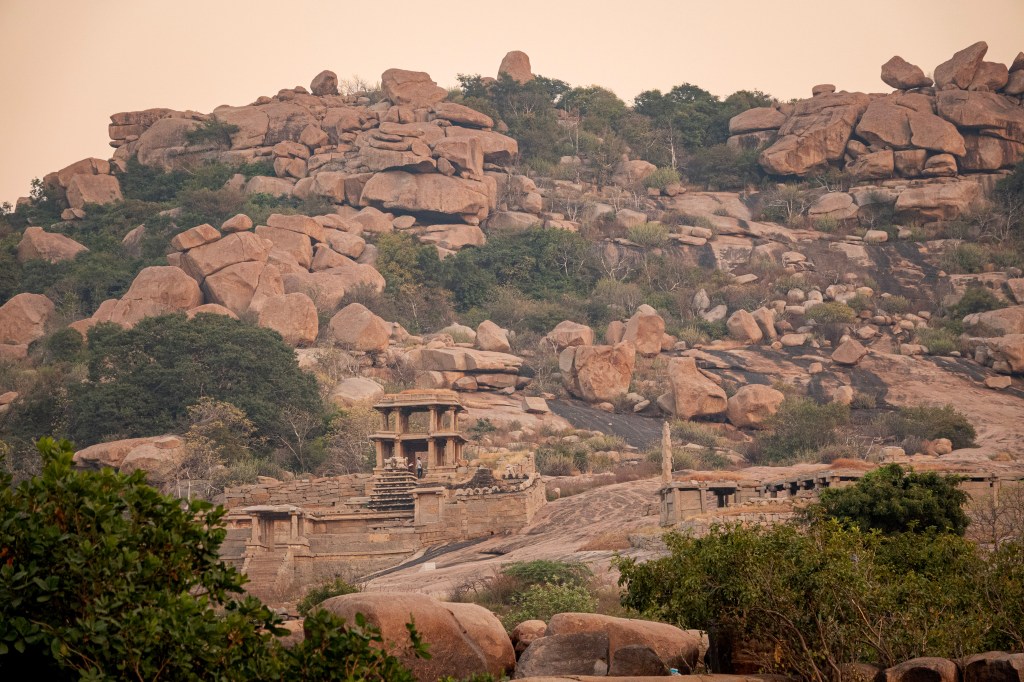
Hampi’s landscape looks almost mythical at first sight. Endless piles of rounded boulders are balanced impossibly on one another. They stretch across farmlands and river valleys like the remnants of a forgotten world. Yet the true story of this terrain is even more astonishing, rooted in billions of years of Earth’s geological history.

A Foundation Older Than Time

Hampi sits atop the Dharwar Craton. It is one of the oldest and most stable pieces of continental crust on the planet. It was formed between 3.6 and 2.5 billion years ago. This ancient foundation underlies parts of Karnataka, Goa, and Andhra Pradesh. It provides the bedrock upon which Hampi’s granite hills stand.
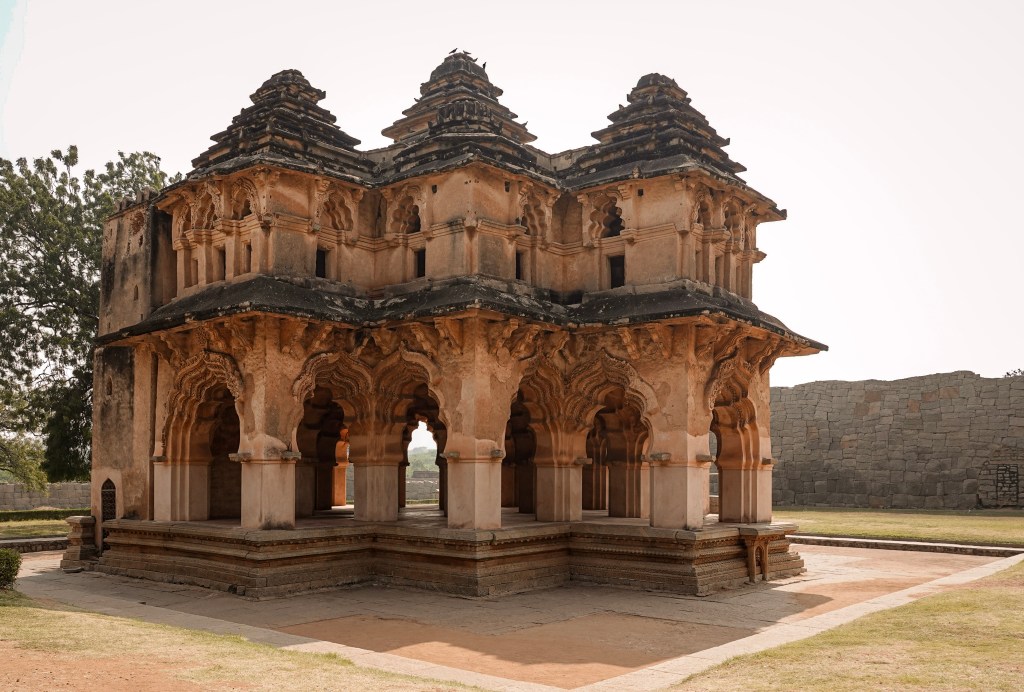
The Deccan Traps Connection

Geographically, the region lies on the broader Deccan Traps, one of the world’s largest volcanic provinces. These traps were created around 66 million years ago. At that time, the Indian Plate drifted over the Réunion hotspot. This movement produced vast layers of basalt that cooled into step‑like formations. The term “traps” itself comes from the Swedish word for “stairs.”
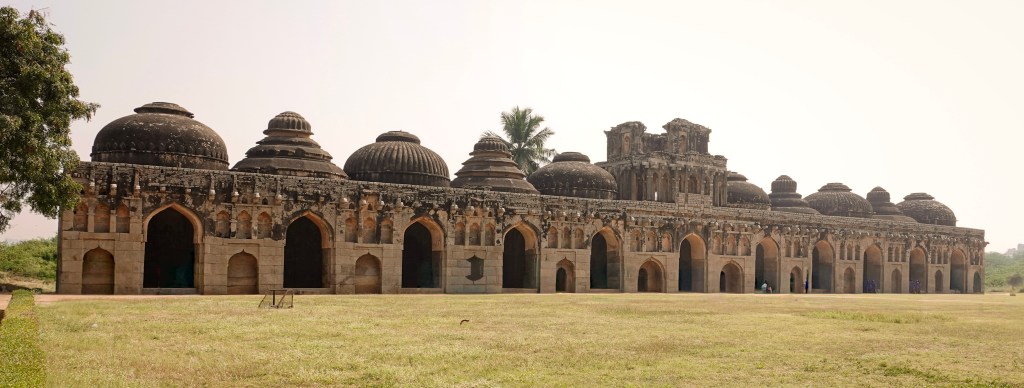
Inselbergs: Hampi’s Signature Land forms

Despite the volcanic origins of the Deccan Traps, Hampi’s dramatic boulder hills are not volcanic cones or remnants of eruptions. Instead, they are inselbergs — “island mountains” formed through deep, prolonged weathering of granite. Over tens of thousands of years, rainwater seeped into cracks in the rock, breaking it down from within.

  • Corestones (rounded granite blocks) remained intact.
  • Grus (weathered material) eroded away.
  • What remained were the surreal piles of rounded boulders we see today.

This slow sculpting created the balancing rocks, tors, koppies, and nubbins that define Hampi’s skyline. These formations look precarious, but they have stood for millennia.

A Landscape Shaped by Nature and Culture

While inselbergs elsewhere are often remote and untouched, Hampi’s have been part of human life for thousands of years.

  • Iron Age settlements used the runoff from these hills for farming.
  • Pastoral communities grazed animals here, enriching the soil with seed‑rich droppings.
  • Temples, shrines, and hill forts were built atop the granite outcrops.
  • Vijayanagara architects quarried local stone to build their empire’s monuments.

This interplay of geology and culture makes Hampi unique: a place where natural history and human history are inseparable.

A Geological Backdrop to an Empire

The Vijayanagara Empire chose Hampi as its capital in the 14th century for several reasons. It wasn’t solely for its sacred associations. The fertile river valley was also a factor. The inselbergs provided natural fortification, strategic vantage points, and an endless supply of building material. The same granite that weathered into ancient boulders became the pillars, mandapas, and chariots of Hampi’s architectural wonders.

Hampi’s geology is not just a backdrop. It is the silent architect of the region’s culture, mythology, biodiversity, and imperial legacy.

Final thoughts

Hampi is worth visiting if you love history and architecture. I didn’t expect to fall in love with Hampi, but I walked away with 500+ photographs and memories. I can’t wait to go back and explore more.

Hampi Itinerary: Sacred Trails, Ancient Kingdoms & River Magic

Our itinerary was 4 days, covering Hampi, Badami, Aihole, and Pattadakal. We made Hampi our base and stayed at Evolve Back, Hampi. The hotel is one of the best in terms of accommodation, food, and service. My review of Evolve back will be a separate blog post.

  1. Arrival: Night Train to Hospet
  2. 🌅 Morning: Virupaksha Trail (4–5 hours)
  3. 🌇 Evening: Tungabhadra Trek + Coracle Ride at Sunset
  4. 🌄 Morning: Vittala Trail
  5. 🏰 Evening: Raya Trail (3-4 hours)
  6. 🌅 Morning: Sunrise Hike to Anjanadri Hill
  7. 🧵 Late Morning: Banana Silk Saree Shopping in Anegundi
  8. 🚆 Afternoon: Departure from Hospet
  9. Suggested Itinerary:1,2, and 3-day in Hampi

Arrival: Night Train to Hospet

We boarded the Hampi Express from Bengaluru. We reached Hospet at 7AM. A car and driver from Evolve Back, Hampi were there to pick us up. After a scenic 30‑minute drive through banana plantations and boulder hills, we arrived at the resort. The resort is a luxurious homage to Vijayanagara architecture. All the excursions were arranged with the hotel and the driver, and were pulled off perfectly by the hotel staff. We had a guide at each experience. They told us about the history. They also helped us take the perfect photos.

Day 1 — Virupaksha Trail & Tungabhadra Sunset

🌅 Morning: Virupaksha Trail (4–5 hours)

A perfect introduction to Hampi’s sacred core — mythology, early temple architecture, and sweeping boulder views.

Stops include:

  • Ugra Narasimha — the fierce monolith of Vishnu
  • Hemakuta Hill — scattered shrines and panoramic views
  • Krishna Temple — elegant Vijayanagara carvings
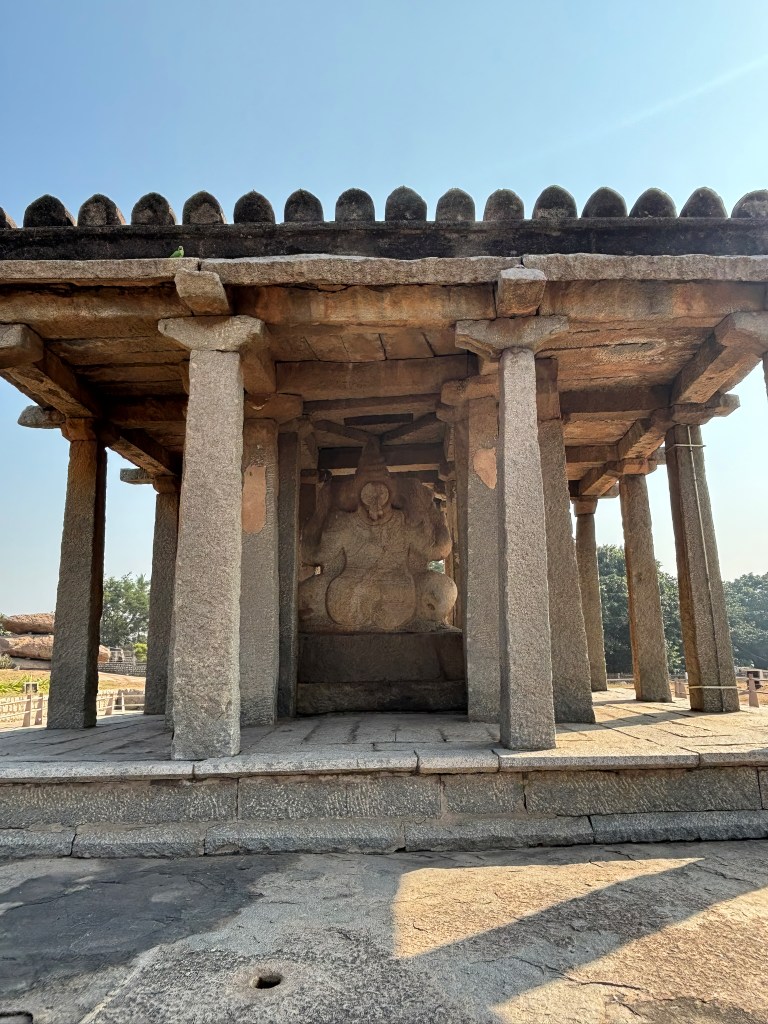
  • Sasivekalu Ganesha — mustard‑seed Ganesha
  • Kadalekalu Ganesha — peanut‑shaped Ganesha carved from a single boulder
  • Virupaksha Temple — Hampi’s living temple, active since the 7th century

This trail sets the tone for Hampi — a landscape where geology, devotion, and empire intertwine.

🌇 Evening: Tungabhadra Trek + Coracle Ride at Sunset

A gentle riverside walk that reveals Hampi’s quieter, more contemplative side. This was our favorite experience, and I would highly recommend doing a coracle ride at sunset

Highlights:

  • Coracle ride at sunset — drifting past boulders glowing gold
  • Kotilinga Temple — a riverside shrine carved directly into rock
  • Riverside ruins — pavilions, carvings, and ancient steps leading into the water

The river feels almost mythical at dusk — a perfect ending to your first day.

Day 2 — Day Trip to Badami, Pattadakal & Aihole (12 hours)

A full-day excursion into the cradle of Chalukyan architecture. This journey includes rock-cut caves, early temple experiments, and UNESCO-listed masterpieces. We left Hampi at 6AM and were back at the resort by 6PM. A long day, but really worth it. If you can afford a 5 day Itinerary, plan to do this visit on day 4. Stay overnight at Badami and continue the visit on day 5.

🪨 Badami

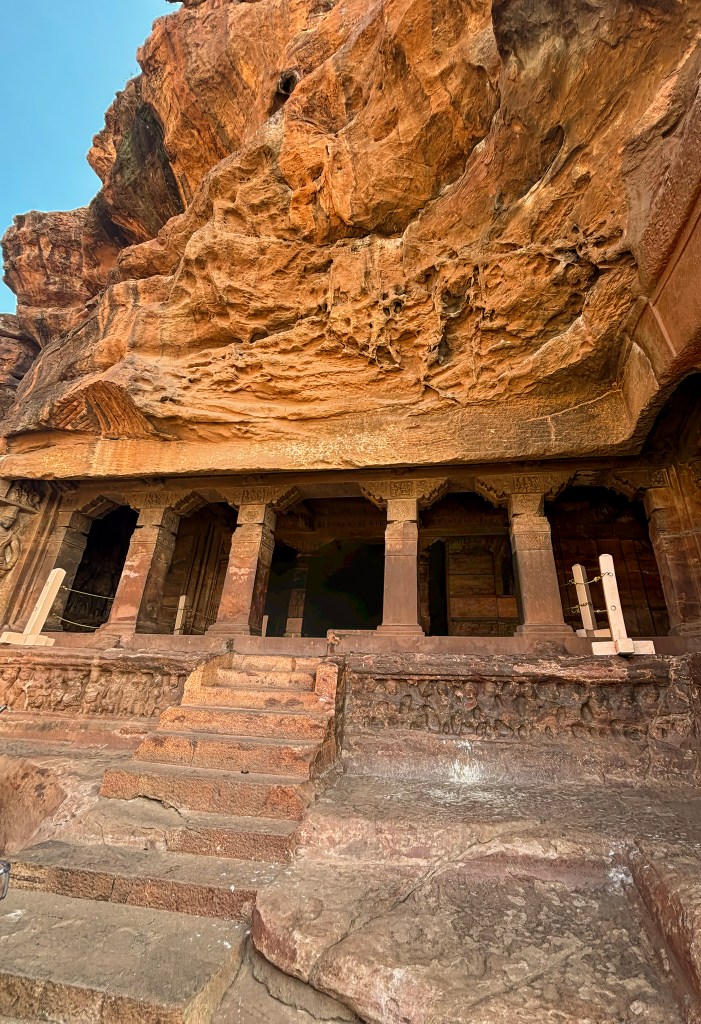
  • Cave temples carved into red sandstone cliffs
  • Sculptures of Vishnu, Shiva, and Jain Tirthankaras
  • Agastya Lake shimmering below the cliffs

🛕 Pattadakal (UNESCO World Heritage Site)

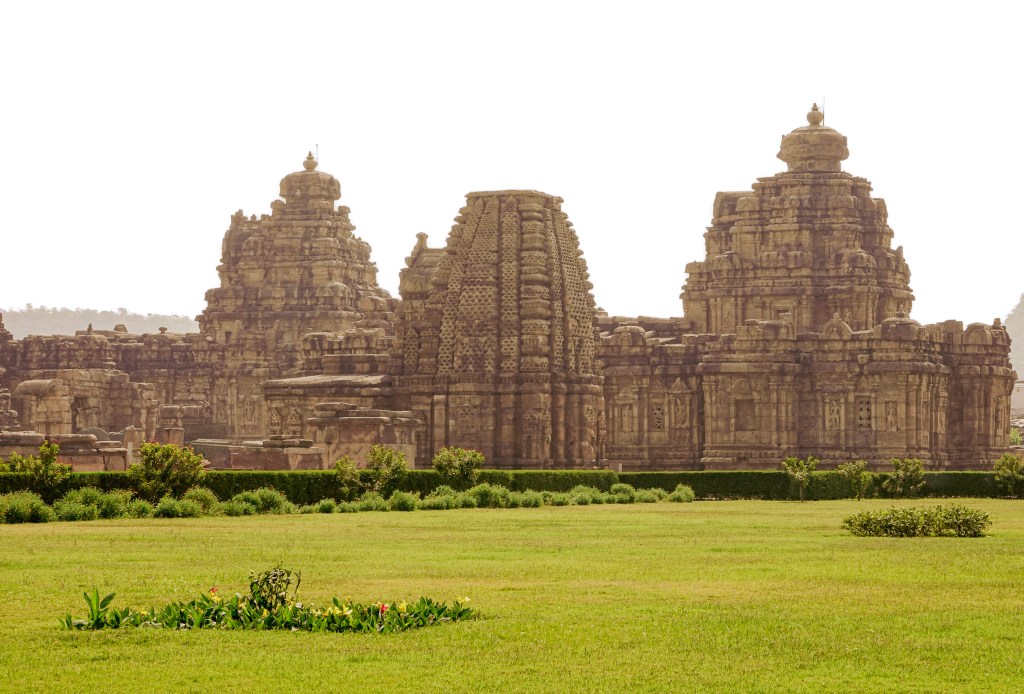
  • A harmonious blend of Dravidian & Nagara styles
  • Virupaksha Temple, Mallikarjuna Temple, and more

🏛️ Aihole

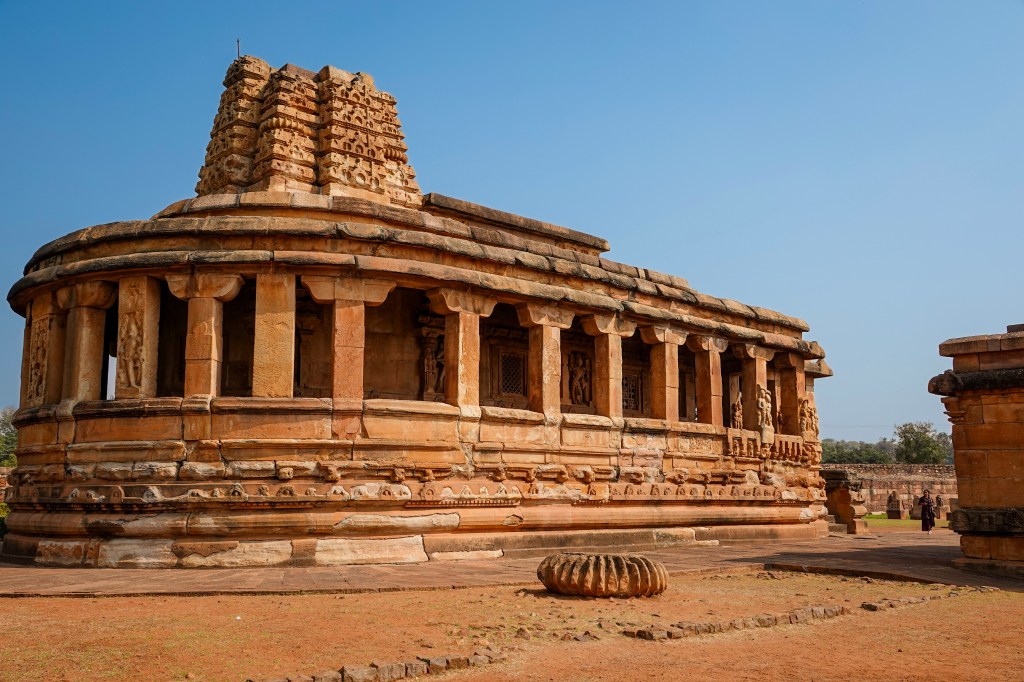
  • Known as the “Cradle of Indian Temple Architecture”
  • Durga Temple, Lad Khan Temple, and dozens of early experiments in stone

You return to Evolve Back by evening, carrying with you the story of how temple architecture evolved before reaching its zenith in Hampi.

Day 3 — Vittala Trail and Raya Trail(3-4 hours)

🌄 Morning: Vittala Trail

A deep dive into the architectural brilliance of the Vijayanagara Empire.

Stops include:

  • Vittala Temple — the empire’s finest monument
  • Stone Chariot — Hampi’s most iconic structure
  • Musical Pillars — resonant columns carved from single stones
  • Riverside walk — mandapas, carvings, and quiet river views

This trail is a photographer’s dream — long corridors, ornate carvings, and the river shimmering nearby.

🏰 Evening: Raya Trail (3-4 hours)

Explore the imperial heart of the Vijayanagara capital.

Stops include:

  • Royal Enclosure — Mahanavami Dibba, Stepped Tank
  • Queen’s Bath — Indo‑Islamic elegance
  • Lotus Mahal — delicate arches and domes
  • Hazara Rama Temple — Ramayana carved in stone

This trail reveals the administrative, ceremonial, and residential world of the Vijayanagara royals.

Day 4 — Anjanadri Sunrise, Banana Silk Shopping & Departure

🌅 Morning: Sunrise Hike to Anjanadri Hill

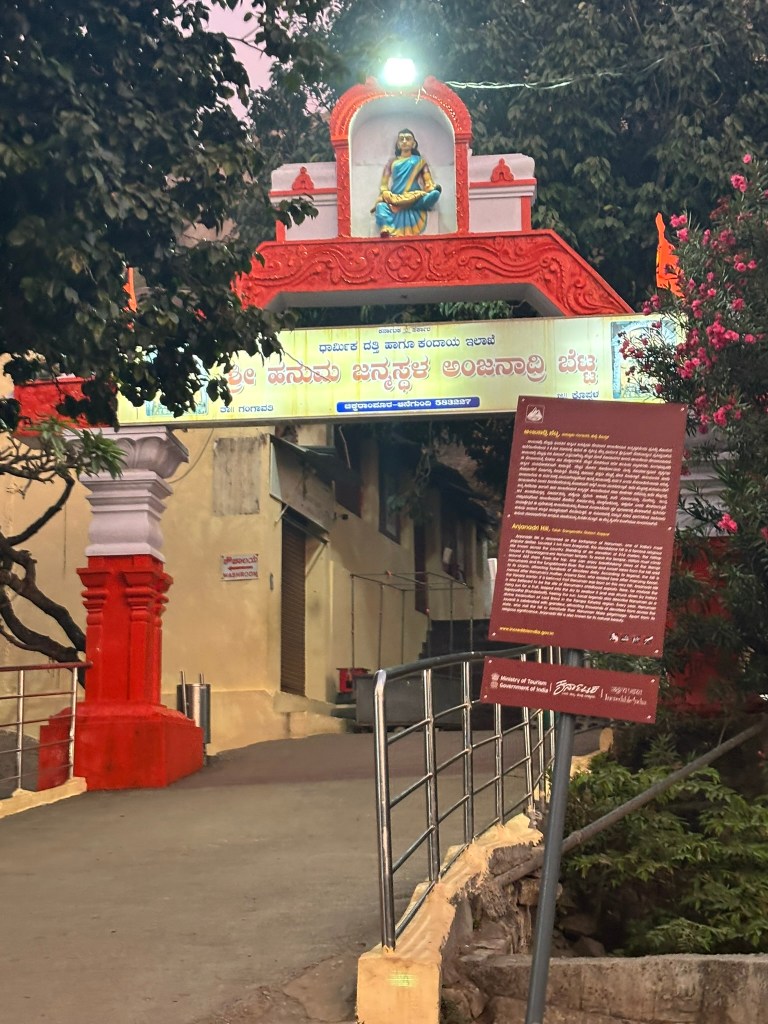
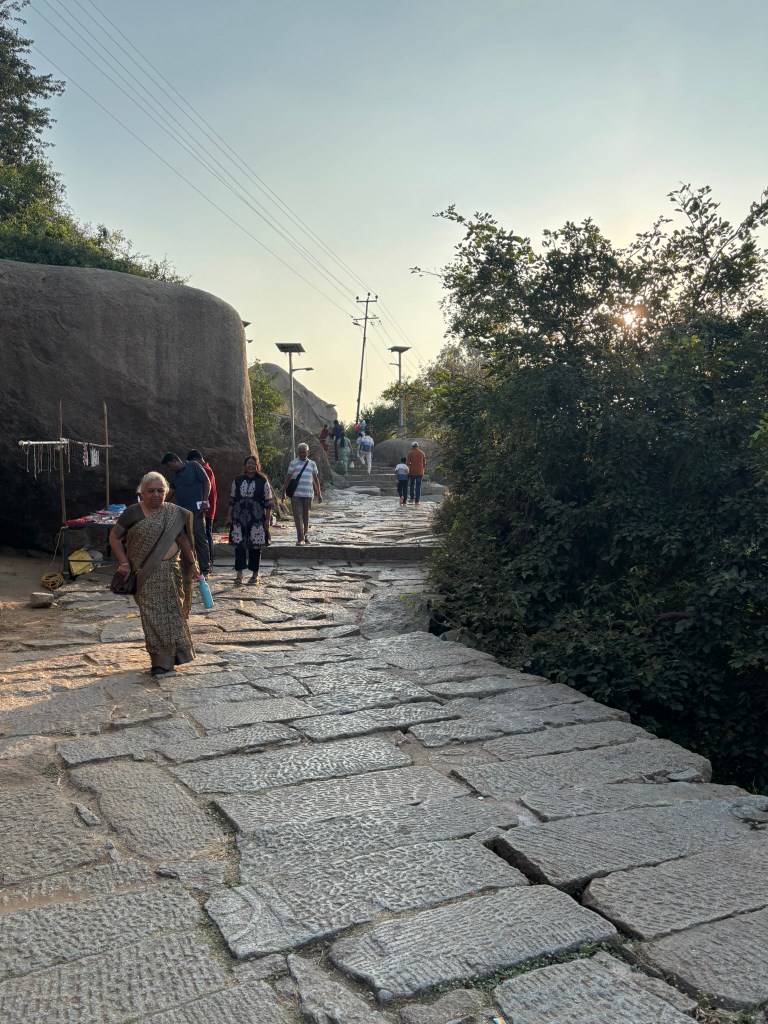
Cross to Anegundi before dawn and climb 570+ steps to the birthplace of Lord Hanuman.

At the summit:

  • A 16th‑century Hanuman temple
  • Shrines to Rama and Sita
  • A breathtaking 360° view of Hampi’s boulder landscape

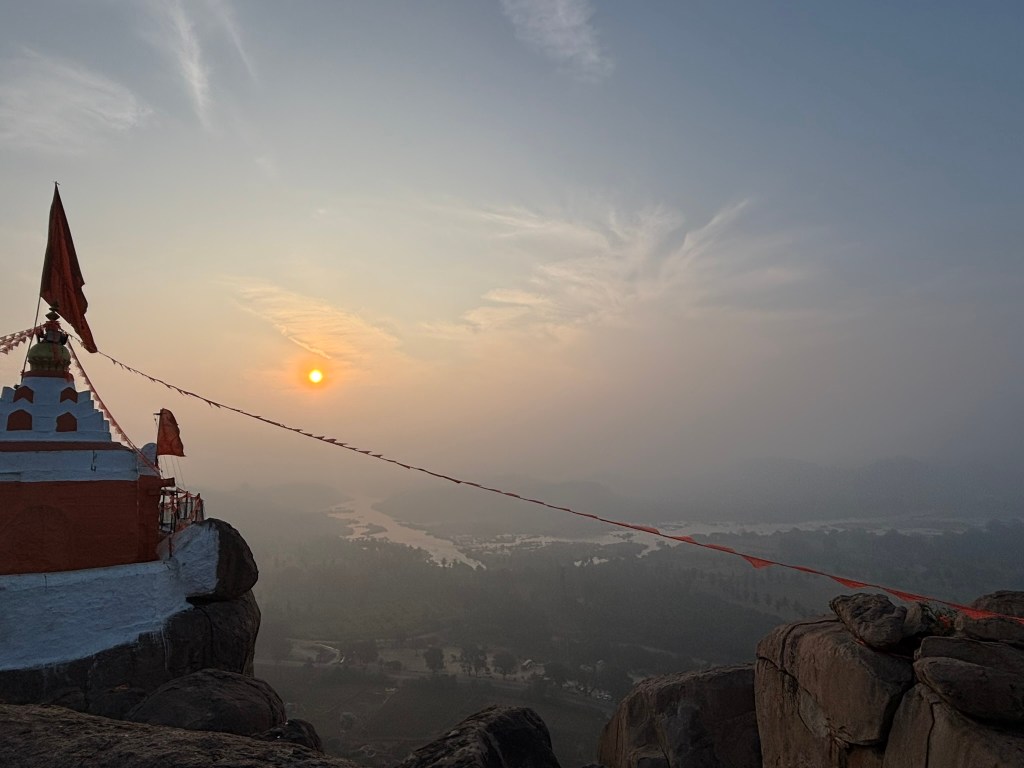
The sunrise here is supposed to be unforgettable. The granite hills turn pink and gold. Below, the Tungabhadra glimmers. We had a foggy morning and did not get to fully appreciate the landscape

🧵 Late Morning: Banana Silk Saree Shopping in Anegundi

Anegundi is known for its banana‑fibre weaving tradition, revived by local women’s collectives.

  • Shop for banana silk sarees, stoles, and handcrafted textiles
  • Meet artisans and learn about the weaving process

🚆 Afternoon: Departure from Hospet

We took 2.30 PM train back to Bengaluru, carrying with us the stories of empires, epics, rivers, and rocks that shaped Hampi.

Suggested Itinerary:1,2, and 3-day in Hampi

1 day Itinerary- If you just have 1 day to spend in Hampi, this is my suggestion. It will be a long day with an early-morning start. You can hit all the must visit spots, and get an idea of what Hampi has to offer. I believe Hemakuta Hill and Vitalla temple are must-do. Don’t miss Hazara Rama temple either. The Royal enclosure is also essential, as well as the Coracle (Teppa) ride in Hampi.

Start the day at Hema Kuta hill and visit Virupaksha temple. Then visit Vitalla temple. In the afternoon, visit the Royal enclosure and Hazara Rama temple. End the day with a coracle ride at sunset from Chakra Thirtha.

2 day Itinerary- Same places, but much more relaxed, and you linger at various spots

3 Day itinerary – This will give you enough time to enjoy the various spots. You can also add Anegunddi and Anjanadri hill to the mix.

Anjanadri Hill & Anegundi: A Journey Through Myth, Memory, and Timeless Landscapes

Visiting Anjanadri Hill and the ancient village of Anegundi is like stepping into a living epic. The Ramayana breathes through the hills. The Vijayanagara Empire whispers through fort walls. The Tungabhadra River carries centuries of stories in its gentle curves. We visited Anjanadri Hill for sunrise. It was a foggy morning, and visibility wasn’t that great. Still, we enjoyed the hike and visiting the temple.

  1. Anjanadri Hill: Birthplace of Lord Hanuman
    1. The Climb
    2. The Temple at the Peak
    3. The View
  2. Anegundi: The Ancient Heart of Kishkindha
  3. A Legacy Older Than Empires
  4. Gagan Mahal: Where the Royals Took Refuge
  5. A Geological Wonder: One of the Oldest Plateaus on Earth
    1. Prehistoric Traces
  6. Pampa Sarovara: A Sacred Lake of the Ramayana

Anjanadri Hill: Birthplace of Lord Hanuman

Rising above the boulder-strewn plains of Anegundi, Anjanadri Hill is one of the most sacred sites in the Ramayana trail. The hill is believed to be the birthplace of Lord Hanuman. It is named after his mother, Anjana, and has been a pilgrimage site for centuries.

The Climb

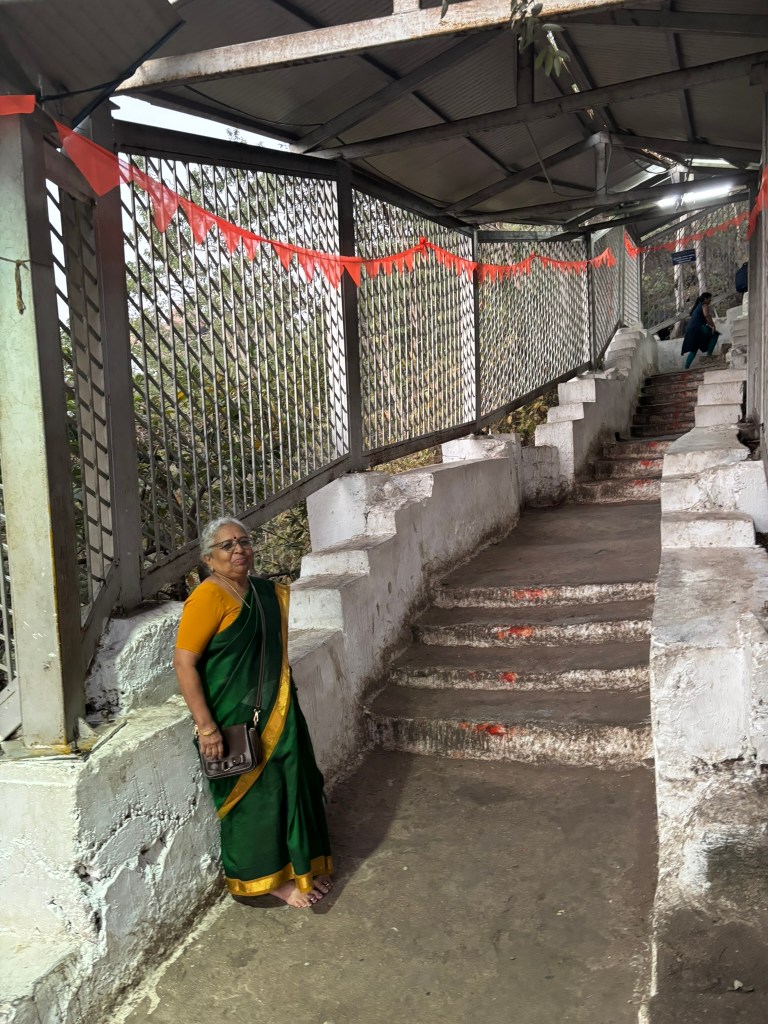
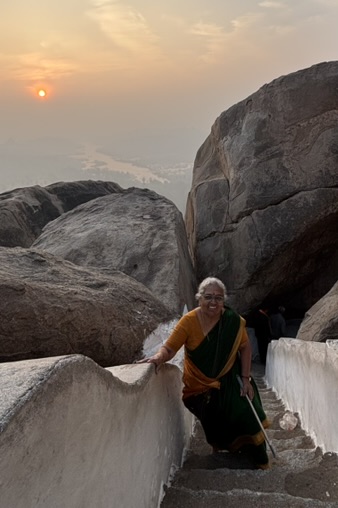
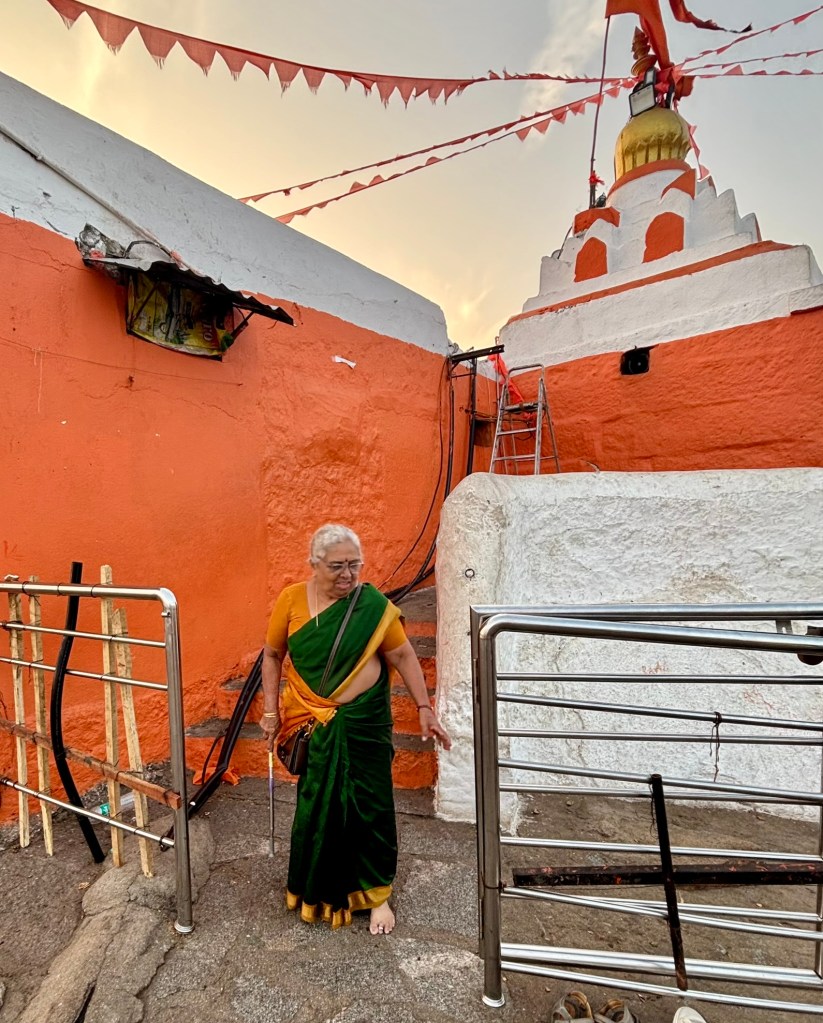
Reaching the summit means ascending 570+ steep steps, but the journey is part of the experience. As you climb, the world opens up around you. You see paddy fields glowing in the sun. Coconut groves sway in the breeze. The Tungabhadra River shimmers like a silver ribbon. Pilgrims chant Hanuman’s name, bells ring softly in the wind, and the granite landscape glows in warm hues.

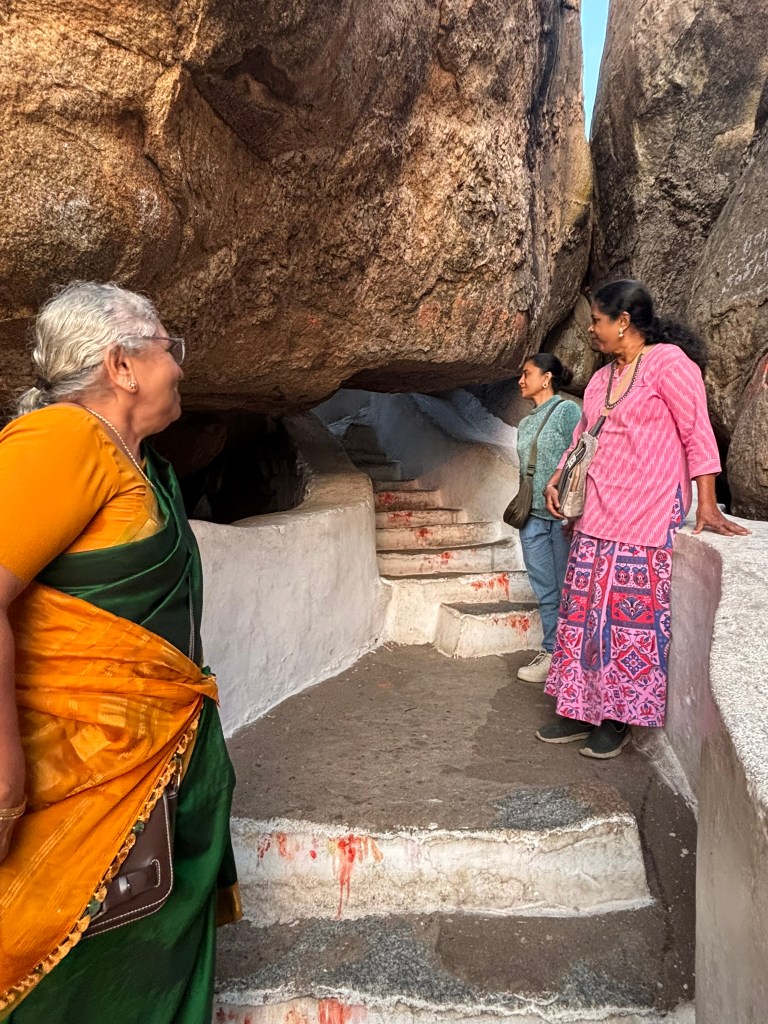
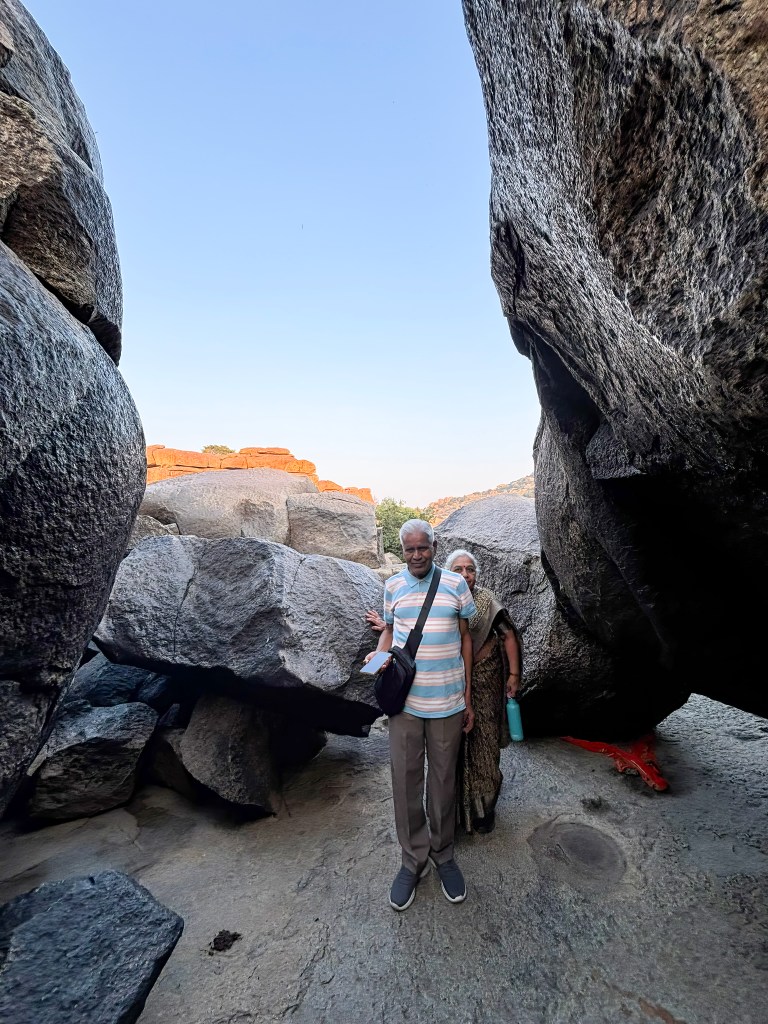
Halfway through, you need to bend to go under the boulders

The Temple at the Peak

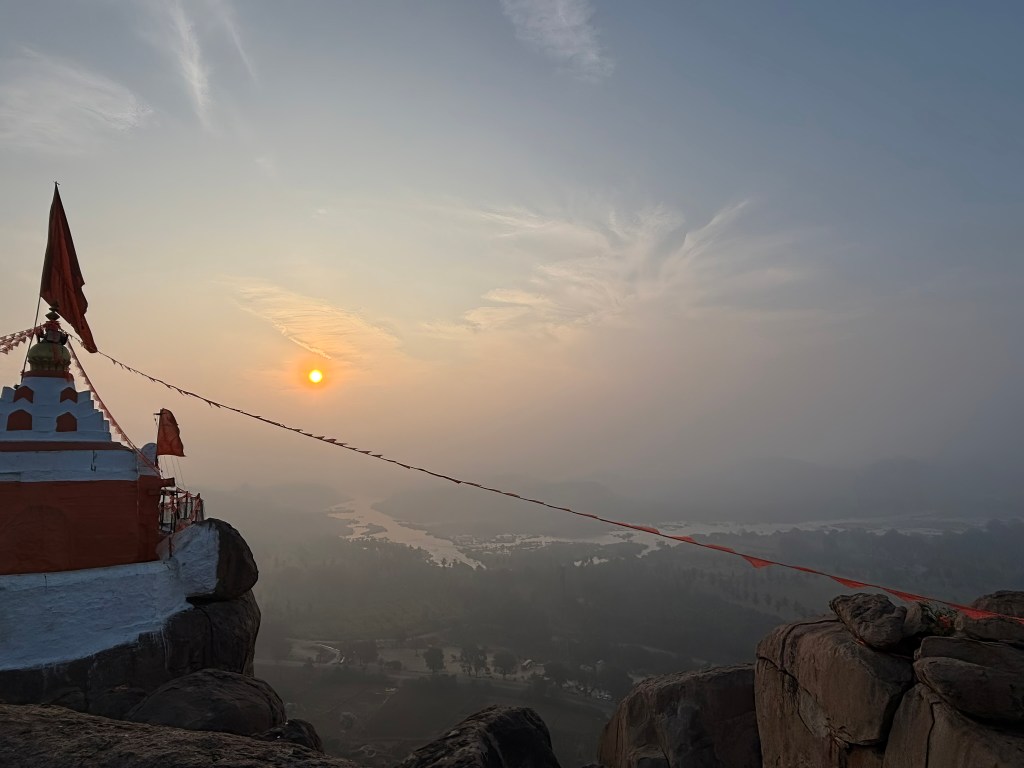
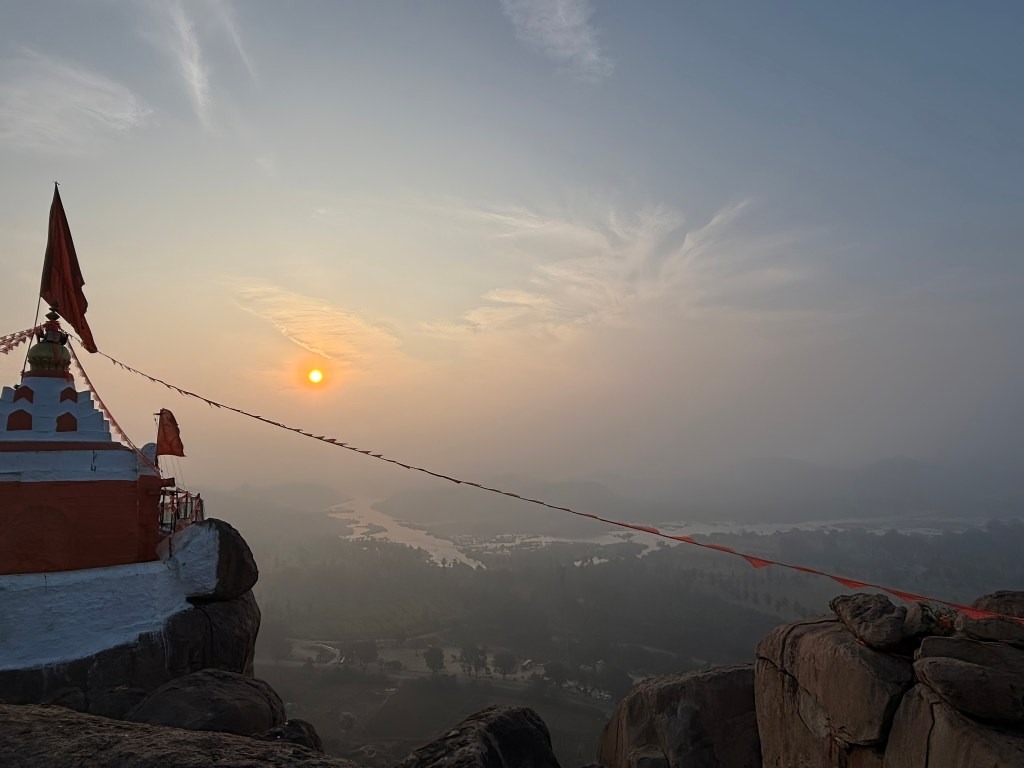
At the top stands a 16th-century white-washed temple, simple yet powerful in its presence.

  • A rock-carved idol of Hanuman forms the sanctum.
  • Shrines dedicated to Rama and Sita stand nearby.
  • Saffron flags flutter against the sky, adding to the spiritual energy of the place.

The View

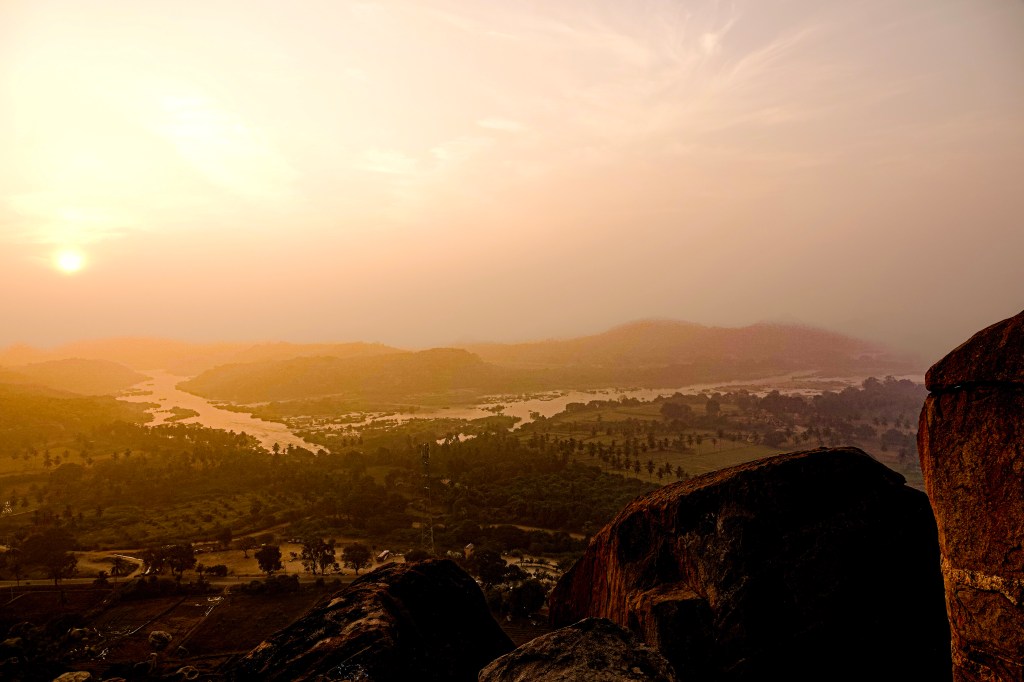
From the summit, you get a 360-degree panorama of Hampi’s ruins. You can also see banana plantations and the surreal boulder hills that define this UNESCO World Heritage Site. Sunrise and sunset here are unforgettable—moments when the land feels suspended between myth and reality. Unfortunately, the day we went up the hill, it was very foggy to truly appreciate the scene before us.

Anegundi: The Ancient Heart of Kishkindha

Across the river from Hampi lies Anegundi. It is a village older than Hampi. Anegundi is believed to be the cradle of Kishkindha, the monkey kingdom of Vali and Sugriva. This is where mythology, geology, and royal history converge in a landscape that feels untouched by time.

A Legacy Older Than Empires

Anegundi’s history stretches back to the 3rd century BCE, when it was part of the Ashoka Empire. Over the centuries, it saw the rise of the Satavahanas, Kadambas, Chalukyas, Rashtrakutas, and other royal dynasties that ruled Hampi and the surrounding area . By the 10th century, it became a fortified settlement. Later, it served as the mother city of the Vijayanagara Empire.

Even today, the 19th generation of Krishnadevaraya’s descendants lives here, keeping the royal lineage alive.

We didn’t have time to explore Anegundi, but if you do, the following places are worth visiting.

Gagan Mahal: Where the Royals Took Refuge

In the heart of Anegundi stands Gagan Mahal, the 16th-century palace that once housed the royal family during turbulent times. Painted in a warm yellow-ochre hue, the palace blends Indo-Islamic architecture with vernacular charm.

  • Four slender towers rise above its façade.
  • Arched windows and carved balconies overlook the village.
  • A central pool and ancient drainage system reveal ingenious cooling techniques.

Walking through its halls, you can almost hear the echoes of queens, ministers, and royal children who once lived here.

A Geological Wonder: One of the Oldest Plateaus on Earth

Anegundi sits on a plateau believed to be over four billion years old, making it one of the oldest exposed geological formations on Earth. Its landscape—endless boulders, wind-sculpted hills, and ancient rock shelters—feels primordial.

Prehistoric Traces

  • Maurya Mane reveals early settlement patterns.
  • Onake Kindi showcases prehistoric rock paintings and engravings.

These sites add archaeological depth to a region already rich in myth and history.

Vernacular Architecture That Still Breathes

A walk through Anegundi’s narrow lanes is a walk through living heritage.

  • Homes have two-foot-thick stone walls that keep interiors cool.
  • Carved wooden doors show motifs passed down through generations.
  • Skylights, pillared verandahs, and flat terraces show a design language shaped by climate and craft.

This is architecture that isn’t preserved in museums—it is lived in, cherished, and passed on.

Anegundi Fort: Echoes of a Warrior Past

Within the ancient fort walls lie the Durga Temple and the Ganesha Cave Temple, both steeped in centuries of worship. Local lore says Vijayanagara kings sought blessings here before going to war.

Walking through the fort’s gateways, you feel the weight of history—soldiers marching, priests chanting, kings preparing for battle.

Pampa Sarovara: A Sacred Lake of the Ramayana

One of Anegundi’s most sacred sites is Pampa Sarovara, one of the five holy lakes in Hindu tradition. This is believed to be where Shabari met Lord Rama, offering him berries with pure devotion.

The lake, surrounded by hills and shrines, feels serene and timeless—a place where mythology feels close enough to touch.

The Revival of Anegundi

Anegundi is not just a relic of the past—it is a thriving example of sustainable rural tourism.

  • Organic farming initiatives
  • Performing arts education
  • Revival of banana-fibre crafts
  • Adventure activities around Sanapur Lake

Much of this transformation is led by The Kishkinda Trust, which has helped preserve Anegundi’s heritage while empowering local communities.

As the sun sets over the ancient plateau, Anegundi glows in shades of gold. Its temples, boulders, and riverbanks illuminate like a living chronicle of India’s past.

Hazara Rama Temple: The Storybook Heart of Hampi’s Royal Centre

A few metres south of the Zenana Enclosure, along an unpaved stretch of road that still carries the quiet hum of history, stands one of the most extraordinary monuments in the Royal Centre—the Hazara Rama Temple, or the “Temple of a Thousand Ramas.” Though modest in scale compared to Hampi’s grander shrines, this temple was the royal chapel of the Vijayanagara kings, a sacred space where mythology, statecraft, and devotion intertwined.

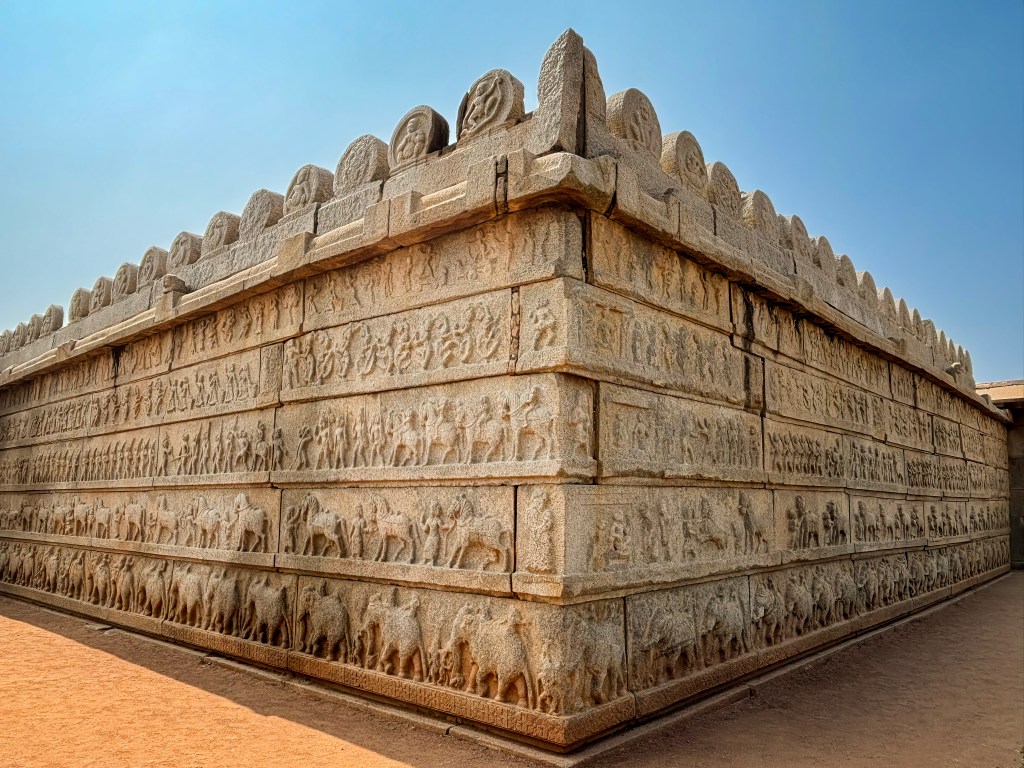
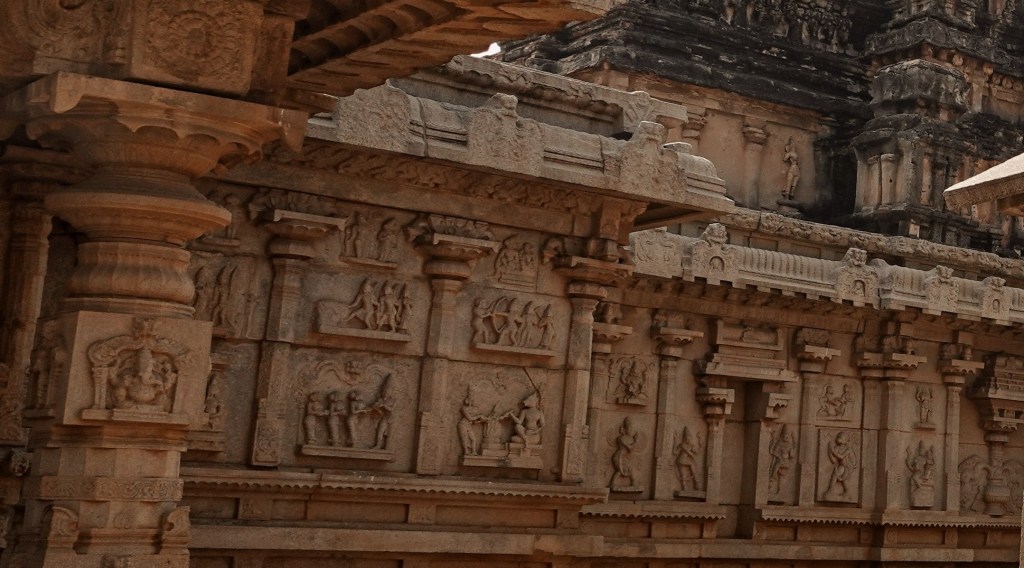
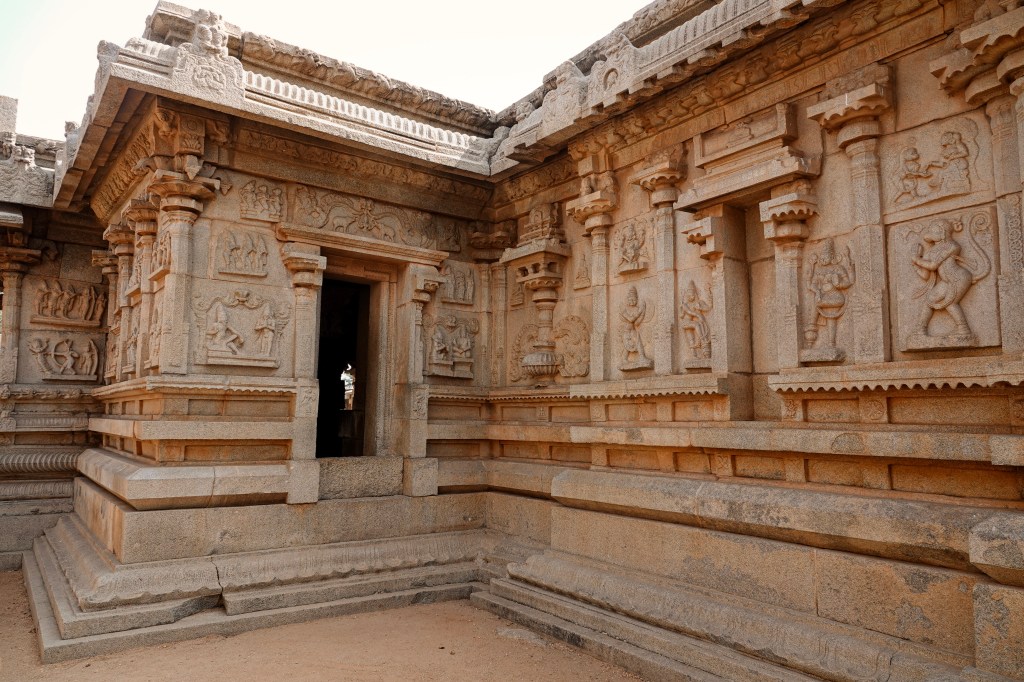
Consecrated in the early 15th century by Devaraya I, the temple is a masterpiece of narrative sculpture. Its outer compound walls are wrapped in long, continuous friezes—almost like ancient graphic novels—depicting royal processions, military regiments, elephants, horses led by Muslim attendants, dancers, musicians, and scenes from the exuberant Vasantotsava festival. Each figure is carved with such individuality that no two animals or soldiers look alike. These processions all move toward seated kings, mirroring the descriptions of the Mahanavami festival found in contemporary chronicles. Standing before these walls, you feel as though you’re watching the empire come alive in stone.

Entering through the eastern gateway—simple, pavilion-like, and towerless—you’re greeted by fierce carvings of Bhairava and Mahishasuramardini on the columns. To your right, the inner walls continue the storytelling with beautifully preserved Ramayana panels, arranged to be read from left to right and bottom to top. It’s rare to find such a clear, intentional narrative sequence in temple art, and it makes the Hazara Rama Temple feel almost like a sacred library.

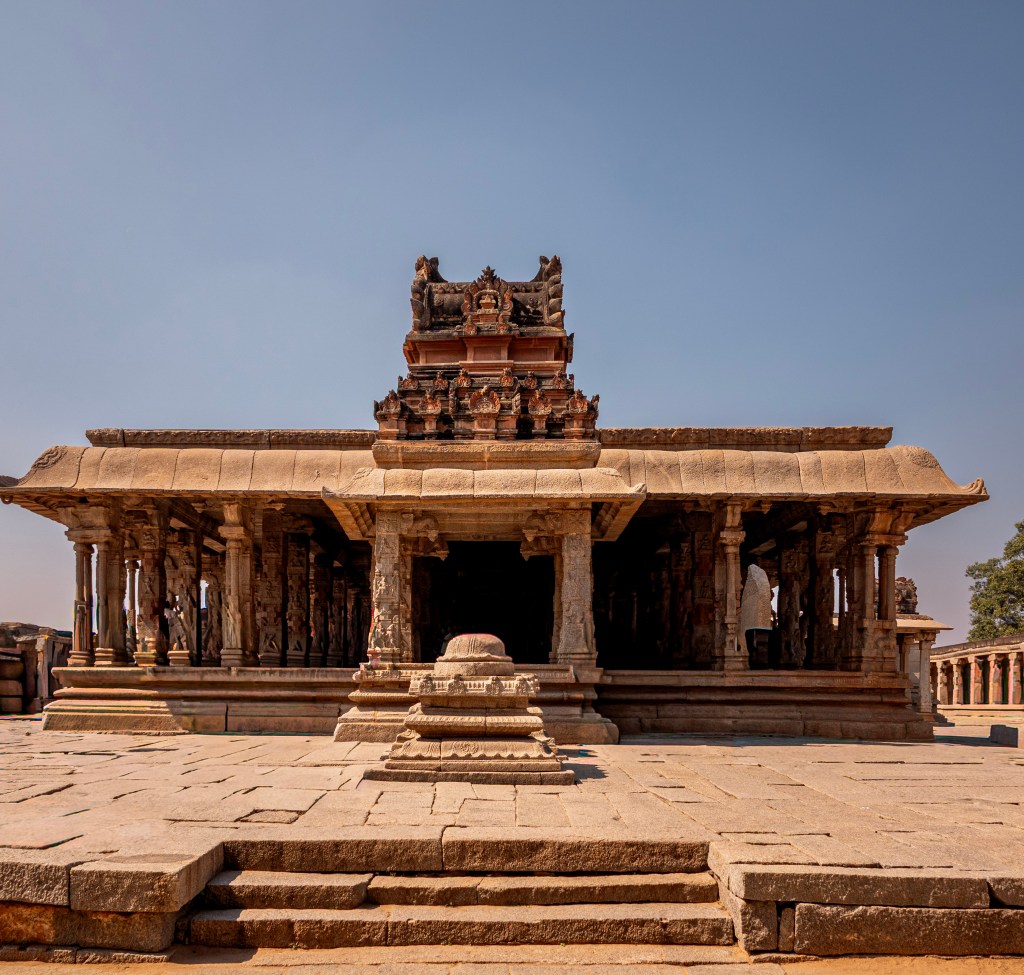
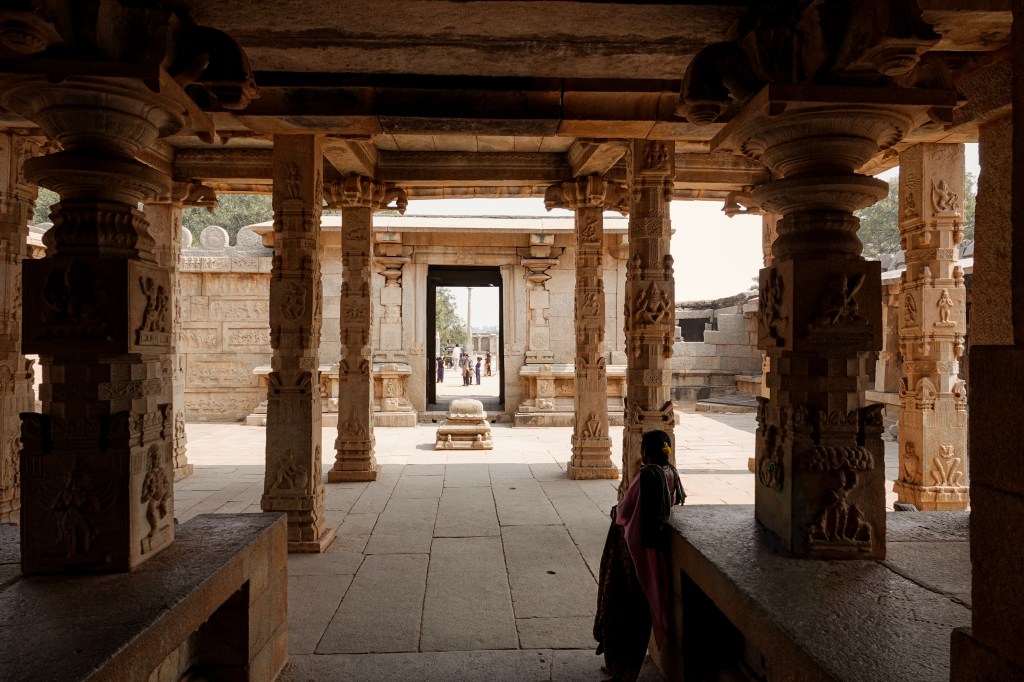
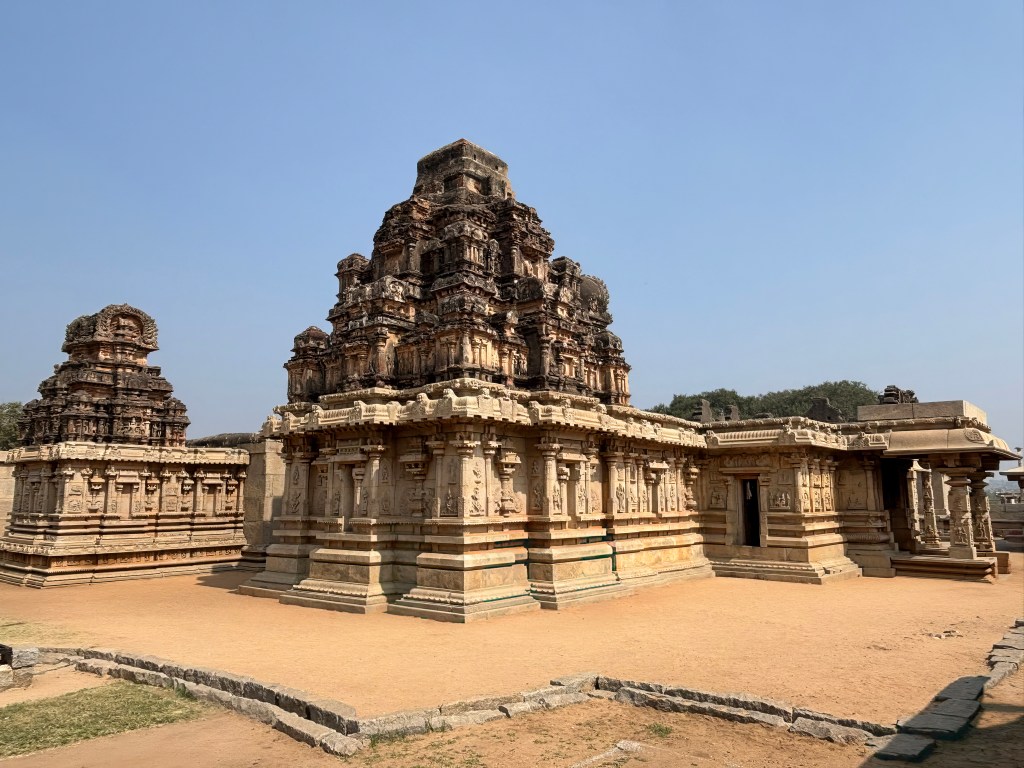
At the heart of the complex stands the main shrine, approached through a 16th‑century open mandapa whose brick parapet once shimmered with plaster sculptures of gods and royal patrons. The original closed mandapa behind it features squat pillars topped with double capitals—classic Vijayanagara design. A Sanskrit inscription near the doorway proclaims that Devaraya I was protected by Goddess Pampa, linking the king’s authority to the sacred landscape of Hampi.

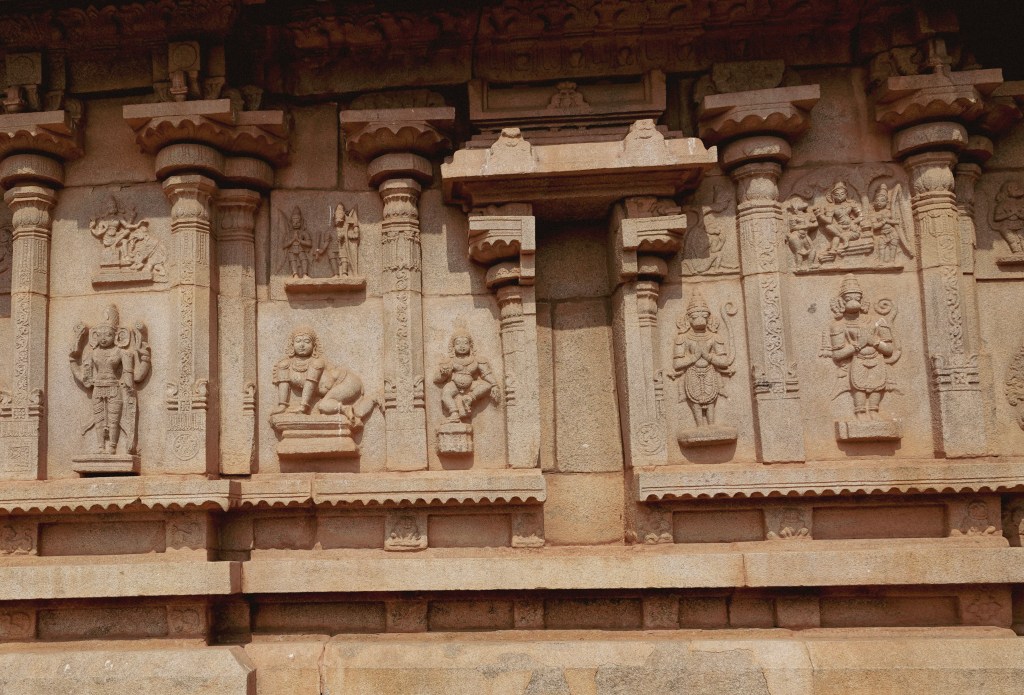
The mandapa walls are the true highlight: 108 Ramayana scenes carved in three tiers, unfolding clockwise around the hall. The story begins with Valmiki narrating the epic and Dasharatha’s fire sacrifice, and ends with Rama’s coronation at Ayodhya. Key moments are placed at corners and doorways—Ravana transforming from a mendicant into a ten‑headed demon, Hanuman leaping across the ocean, and Sita offering her hair‑jewel to Hanuman. These carvings are intimate, expressive, and astonishingly detailed, making the temple one of the finest Ramayana storytelling sites in India.

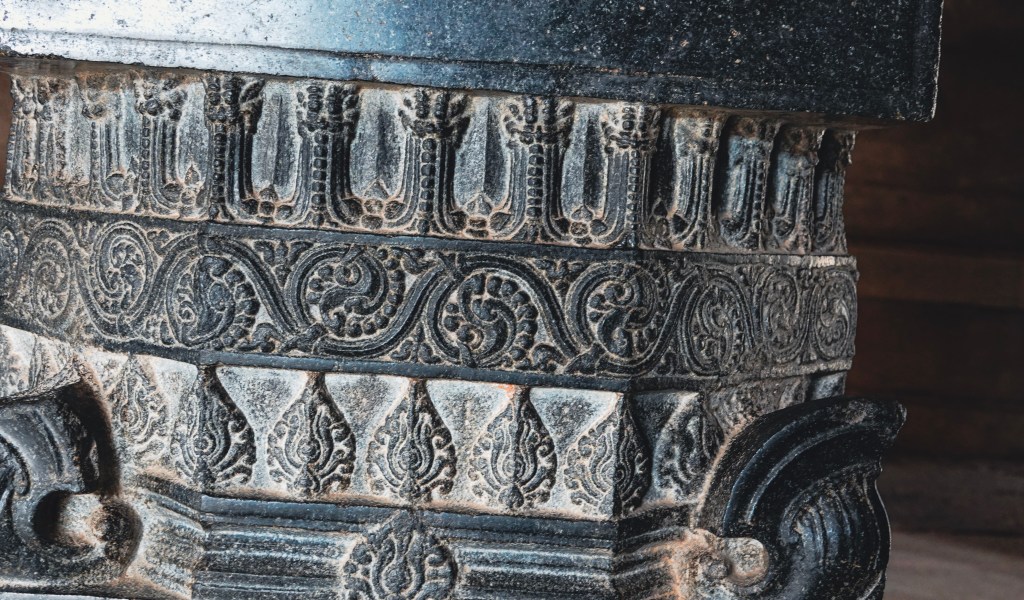
Inside, the mandapa is more restrained, but four polished dolerite columns stand like sentinels, each covered with intricate carvings of the 24 aspects of Vishnu. The sanctuary itself is empty now, save for a pedestal with three holes—once anchoring the images of Rama, Lakshmana, and Sita that have long since disappeared.

Within the compound is a second, smaller temple with twin sanctuaries, likely dedicated to Narasimha and Lakshmi. Its brick towers, with kuta and shala roofs, are better preserved than the main shrine’s, and its walls carry additional Ramayana and Narasimha reliefs. A 16th‑century mandapa and hall were later added, partially obscuring some of the original carvings.

What makes the Hazara Rama Temple even more remarkable is its alignment with the surrounding sacred landscape. Stand in the center of the mandapa and look north—you’ll see Matanga Hill, a site tied to the Ramayana. Look east, and Malyavanta Hill frames the doorway, another hill steeped in epic lore. These alignments were intentional, reinforcing the temple’s role as the symbolic and spiritual axis of the royal city.

Visiting the Hazara Rama Temple is like stepping into a living manuscript—one where stone becomes storytelling, mythology becomes memory, and the royal past of Vijayanagara unfolds in scenes so vivid they seem ready to move.

Hampi royal quatres Exploring the Royal Heart of Hampi: Zenana Enclosure, Queen’s Bath, Lotus Mahal, Elephant Stables & Mahanavami Dibba

Walking into the Royal Centre of Hampi feels like stepping into the private world of the Vijayanagara kings—a world of power, ceremony, elegance, and architectural experimentation. While the temples of Hampi speak of devotion, the royal centre reveals how the empire lived, governed, celebrated, and showcased its grandeur. The Zenana Enclosure, often misunderstood as the women’s quarters, is the perfect starting point for this journey.

  1. Queen’s Bath: A Royal Spa in Ruins
  2. Zenana Enclosure: A Royal Retreat, Not a Women’s Quarters
  3. Lotus Mahal: The Jewel of the Enclosure
  4. Watchtowers & Hidden Corners
  5. Elephant Stables: Grandeur for the Empire’s Gentle Giants
  6. The Parade Ground & Martial Court
  7. Mahanavami Dibba: The Empire’s Grand Stage
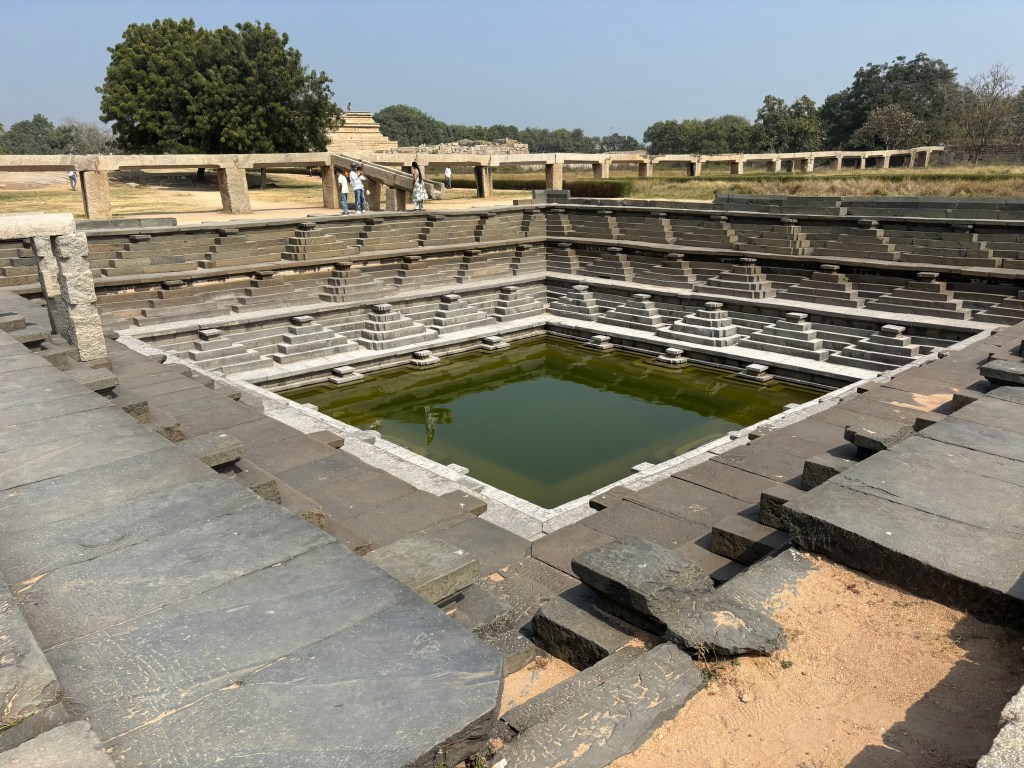
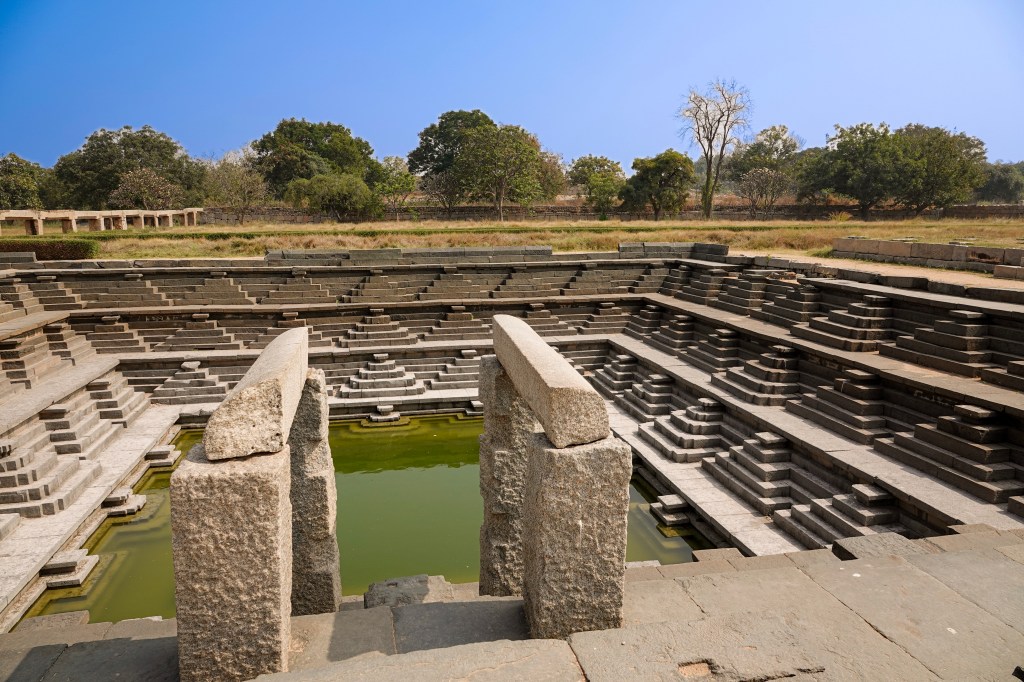
  8. The Stepped Tank: Geometry, Grace, and the Genius of Vijayanagara Engineering
  9. A Walk Through Power, Beauty & Imagination

Queen’s Bath: A Royal Spa in Ruins

We started our day’s trip at Queen’s Bath and continued to the royal enclosure and lotus mahal area and ended our journey at Hazara Rama temple (which will be covered in a separate blog). If you’re short on time, then I would suggest visiting Queen’s Bath, Lotus Mahal, and Stepwell from this area.

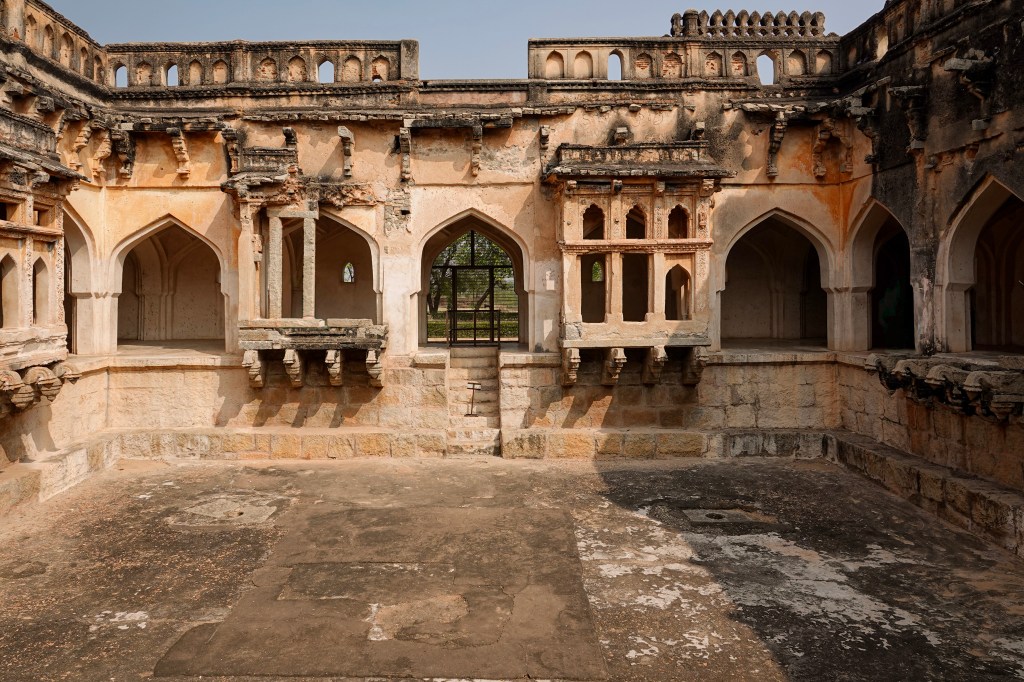
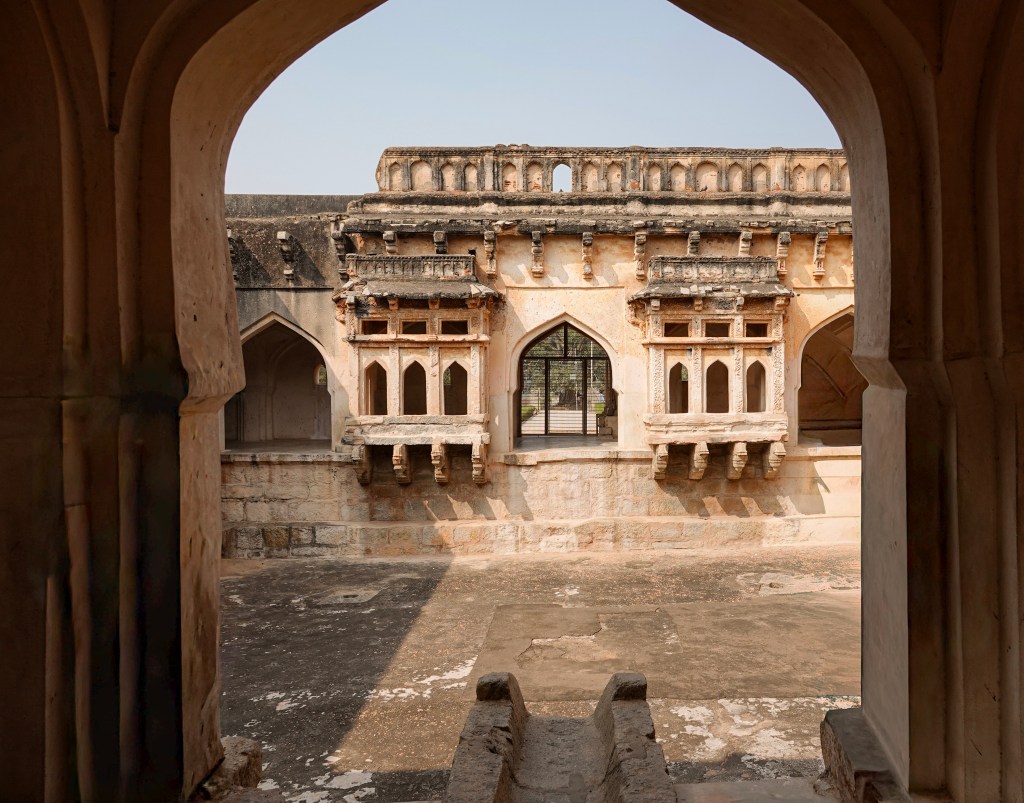
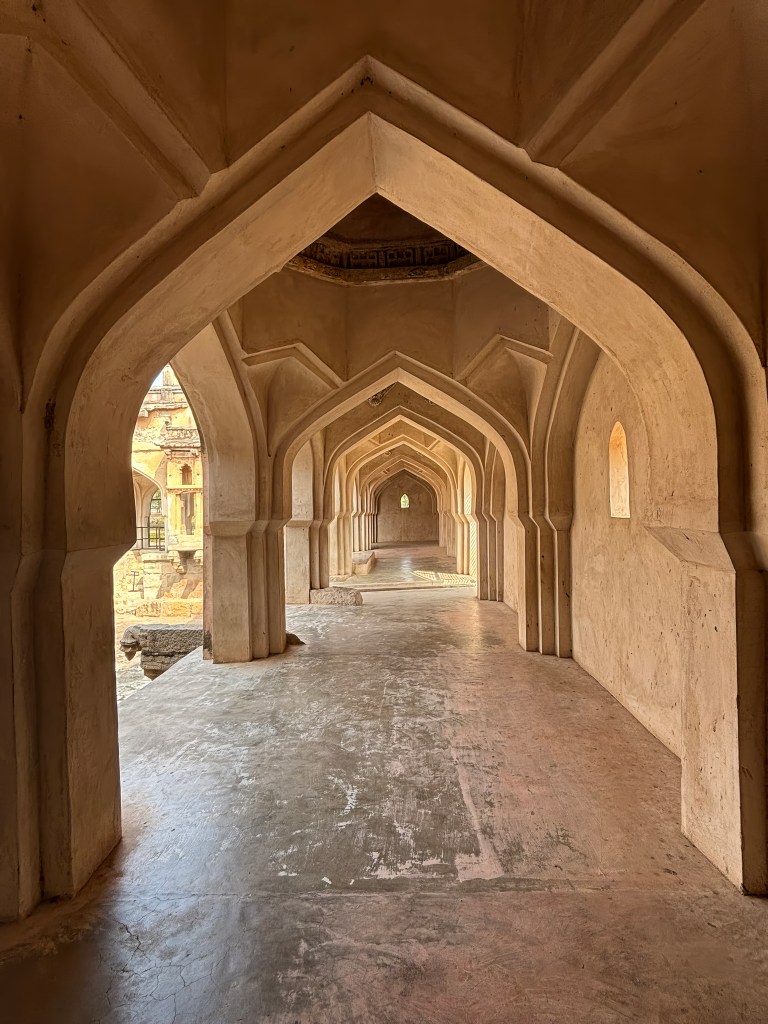
Despite its romantic name, the Queen’s Bath was likely never an exclusive bathing space for royal women. Instead, it functioned as a refined pleasure pavilion for male courtiers and their companions—a social and recreational space rather than a secluded retreat. From the outside, the structure appears almost austere, with plain, unadorned walls that give little hint of the elegance within. Step inside, however, and the atmosphere transforms. A graceful arcaded corridor wraps around a large square pool, its ceilings decorated with ornate vaults of varying designs. Delicate balconies with arched windows once projected over the water, their plasterwork now lost to time but still easy to imagine in their original finery. Historical watercolours show that the bath once had towers rising above the roofline, adding to its architectural drama. Surrounding the pavilion is a water channel that once fed the pool, and not far away lie the remnants of a collapsed aqueduct—part of the sophisticated hydraulic system that supplied the entire royal centre. Even in its ruined state, the Queen’s Bath captures the leisurely grace of courtly life and the Vijayanagara empire’s mastery of water architecture

Zenana Enclosure: A Royal Retreat, Not a Women’s Quarters

Despite its name, the Zenana Enclosure was unlikely to have housed royal women. Its proximity to the elephant stables and the parade grounds suggests a more administrative or ceremonial function—perhaps used by commanders or the king himself. The enclosure is a large, high‑walled quadrangle built with beautifully jointed granite blocks that taper elegantly toward the top. As you walk through its quiet interior, you’ll notice how the space is dotted with structures of different styles, each revealing a different layer of Vijayanagara courtly life.

To the north stands a long, vaulted hall—plain on the outside except for tiny ventilation holes. It may once have been an armoury, treasury, or even a gymnasium where courtiers trained. Its double‑curved eaves, naga‑hood rafters, and perforated parapet show how even utilitarian buildings were crafted with artistic flair.

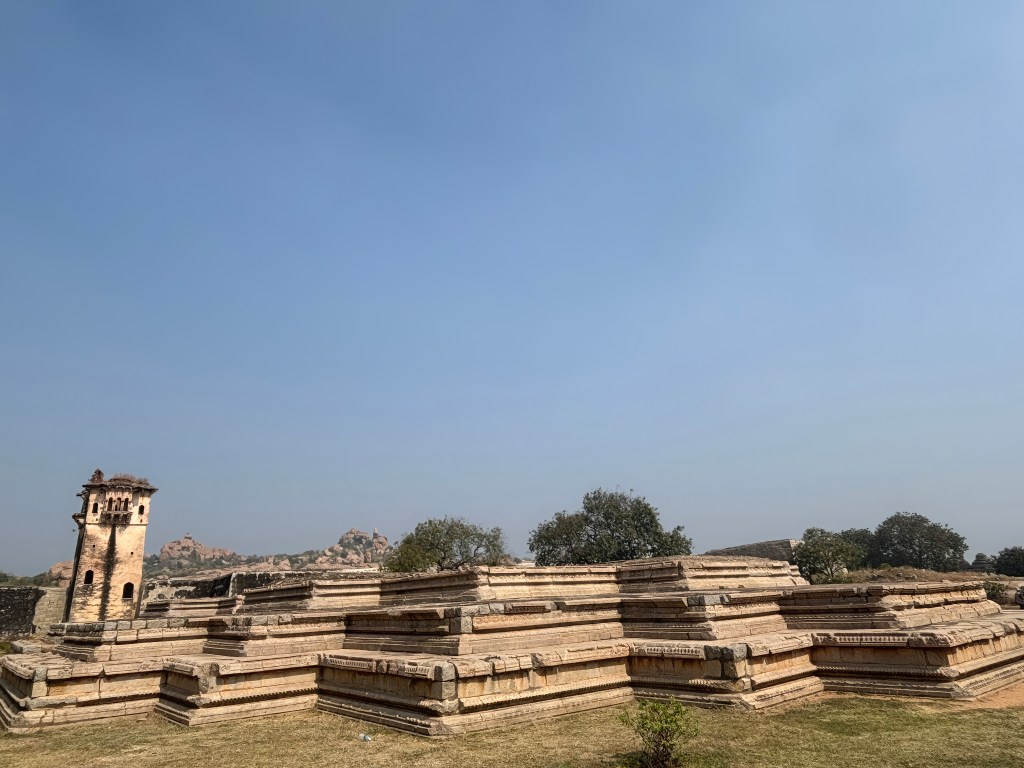
Nearby are the excavated remains of two palaces. One sits on an ornate triple‑layered basement; the other is set within a rectangular pool, its base carved with charming boating scenes. These ruins hint at the refined lifestyle and architectural experimentation that defined the Vijayanagara court.

Lotus Mahal: The Jewel of the Enclosure

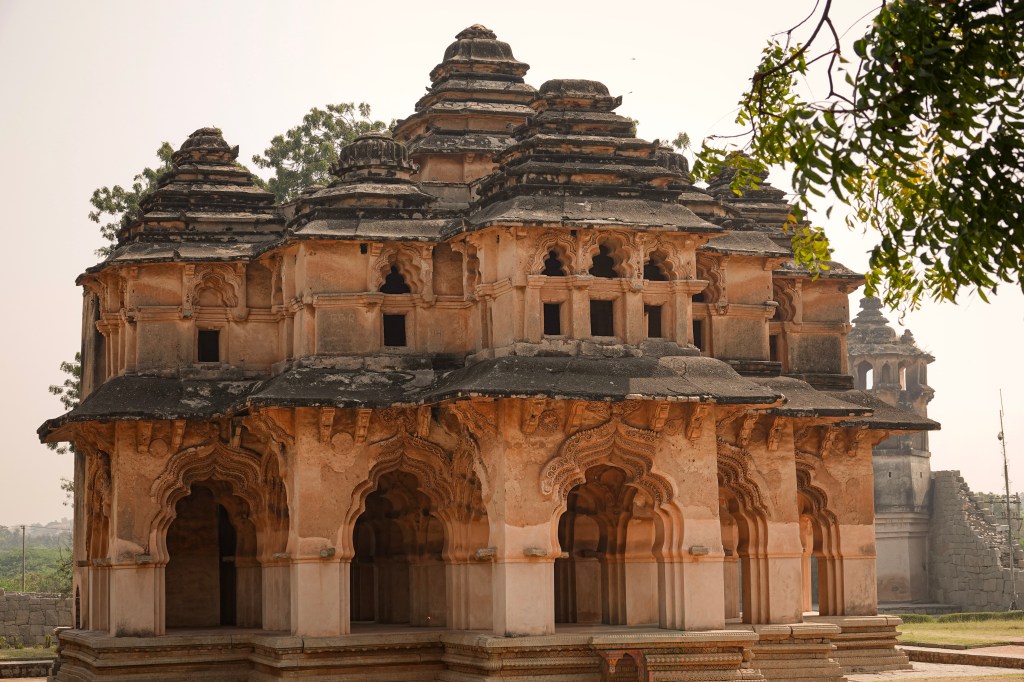
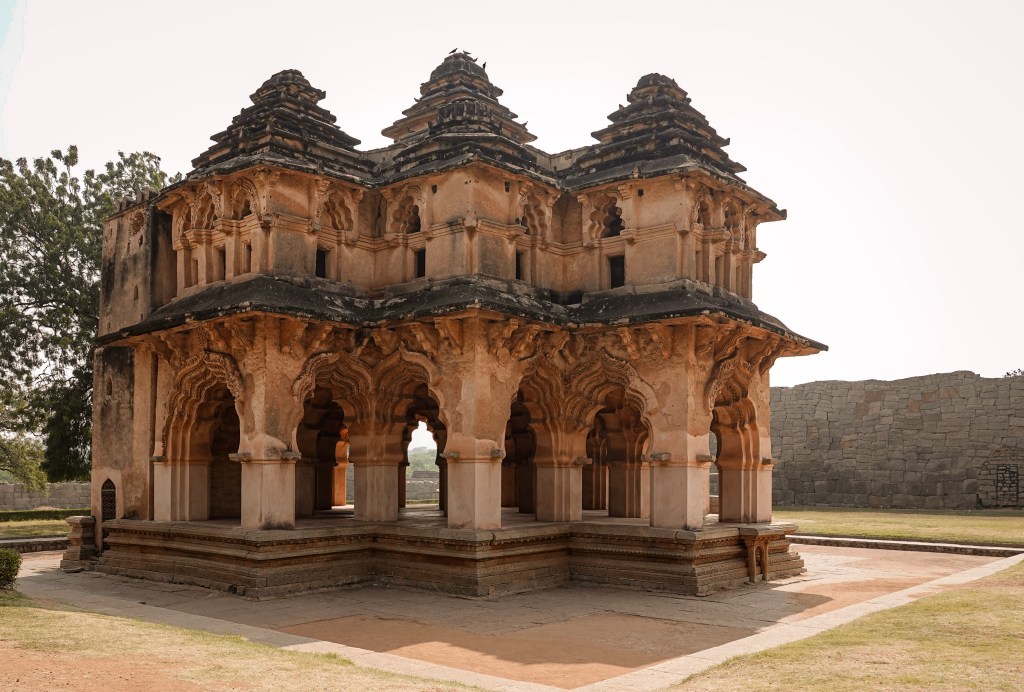
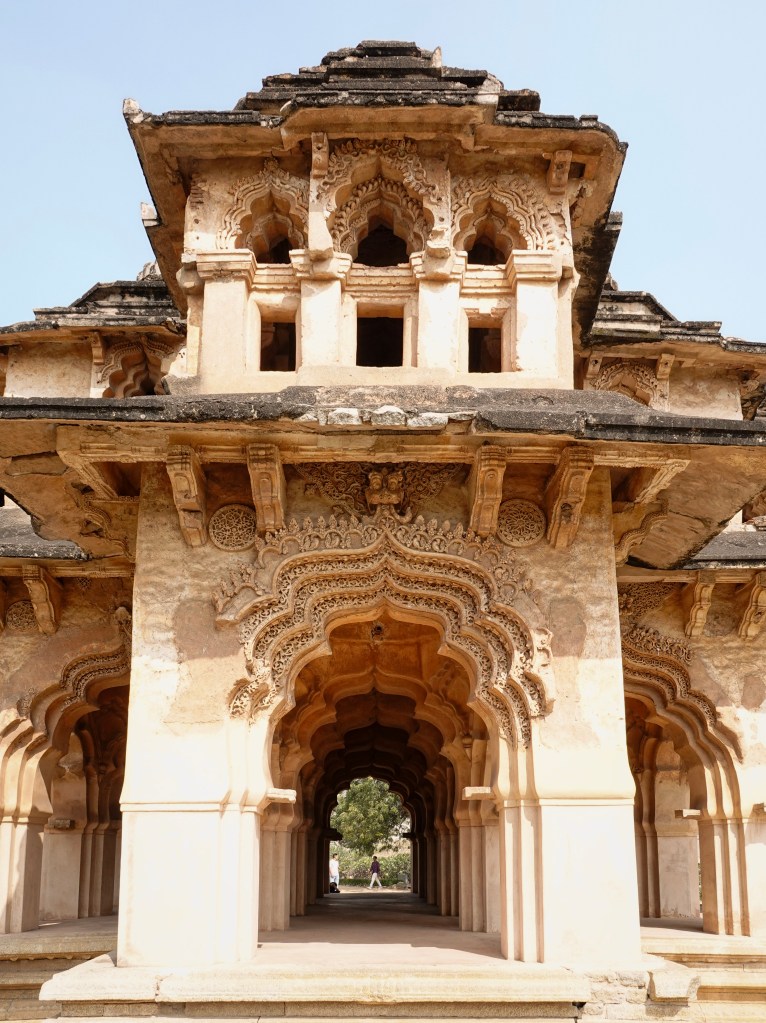
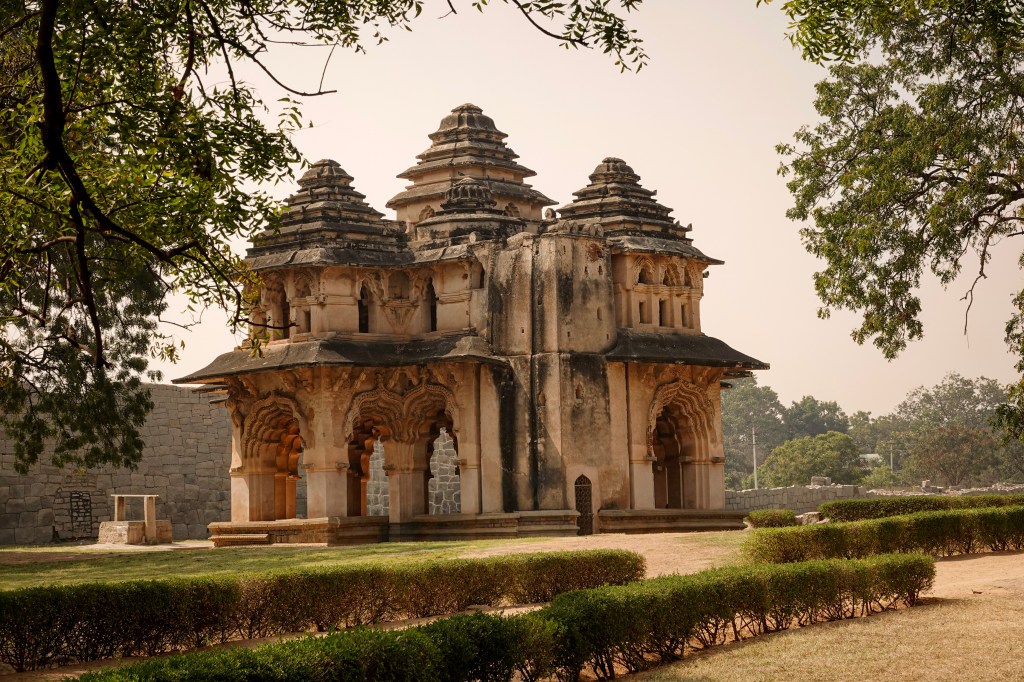
The Lotus Mahal is the star of the Zenana Enclosure—a graceful, airy pavilion that blends temple architecture with Indo‑Islamic design. Its name may be romantic, but its purpose was likely practical: a council chamber or meeting hall, as shown in an 18th‑century map.

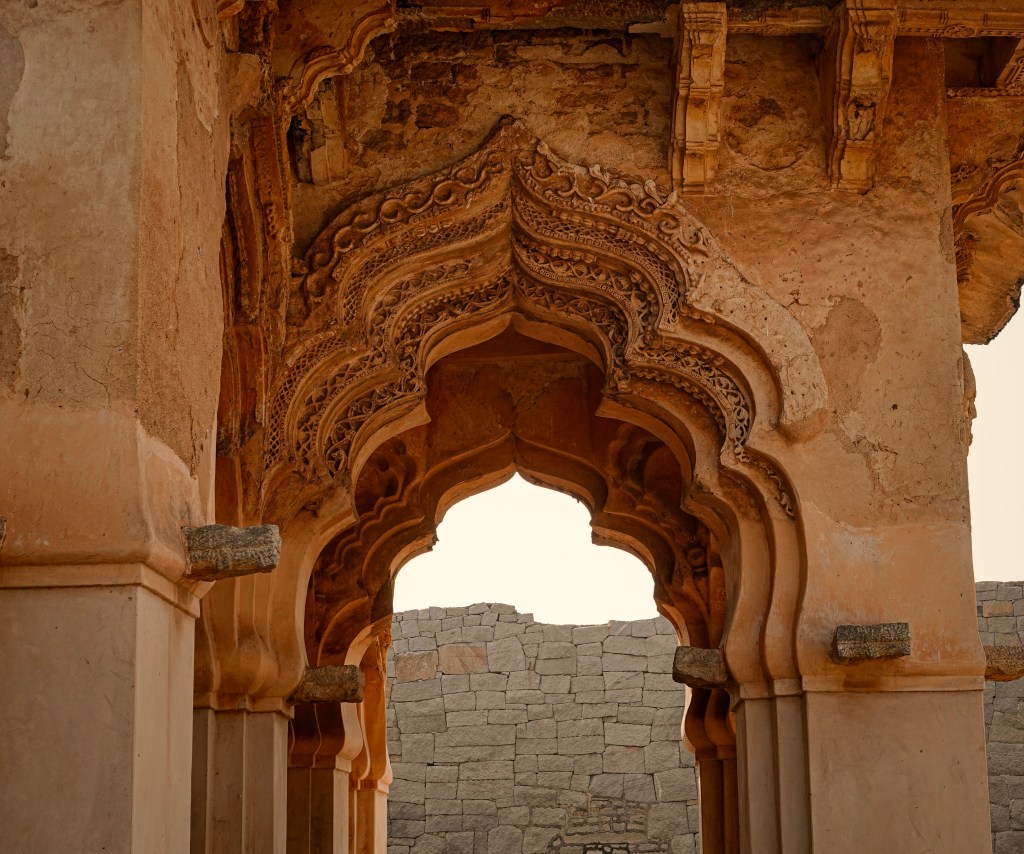
The structure sits on a square, mandala‑like plan with symmetrical projections on all four sides. The stone basement, double‑curved eaves, and pyramidal towers echo Dravidian temple architecture, while the lobed arches, plaster ornamentation, and domed ceilings reflect Sultanate influences. This fusion creates a building that feels both delicate and dignified, a perfect example of Vijayanagara’s inventive courtly style.

Climb the awkward little staircase tower attached to one corner, and you can almost imagine the upper chamber once filled with ministers, scribes, and royal advisors.

Watchtowers & Hidden Corners

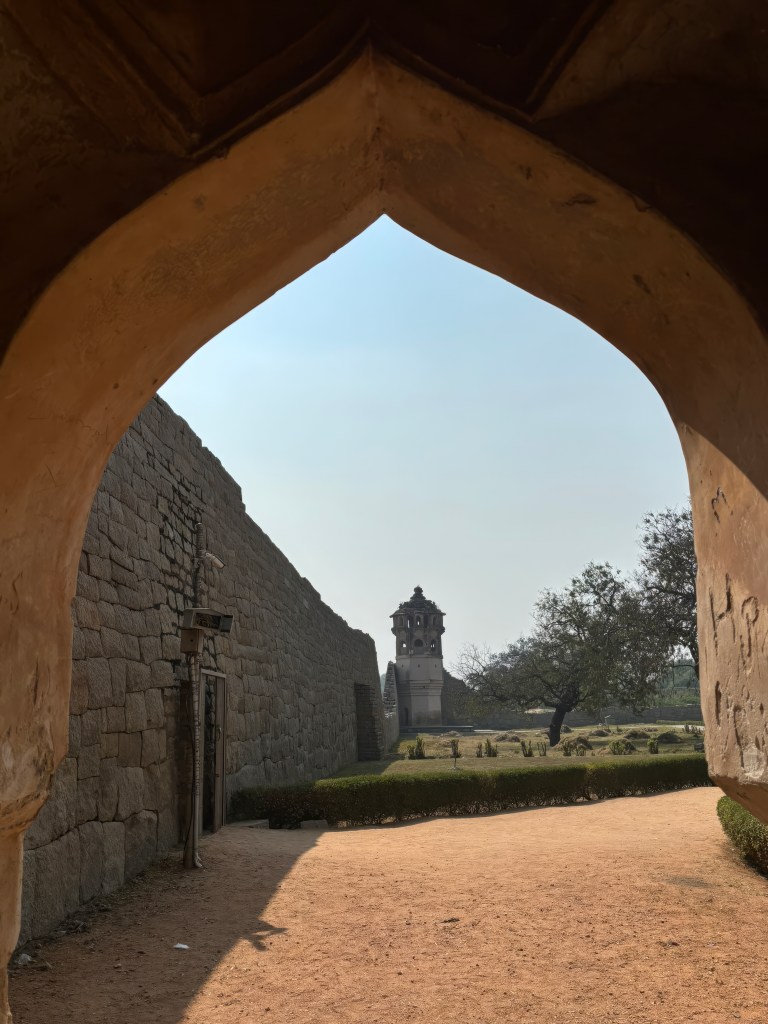
Three watchtowers—two intact, one partly ruined—stand guard along the enclosure walls. Like the Lotus Mahal, they mix temple‑style eaves with Islamic arches and domes. Their presence reinforces the idea that this was a protected administrative zone rather than a secluded women’s space.

Scattered around the enclosure are the remains of a granary, a deep water tank, and foundations of smaller internal compounds. Each fragment adds another brushstroke to the picture of a bustling royal precinct.

Elephant Stables: Grandeur for the Empire’s Gentle Giants

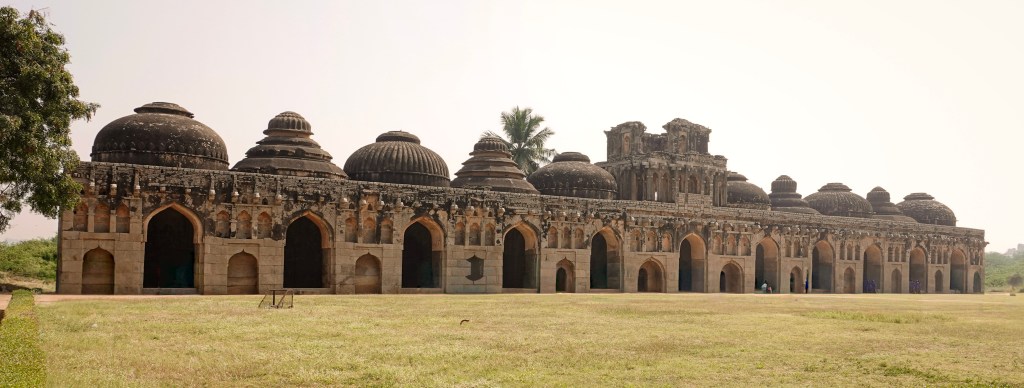
Step out of the Zenana Enclosure through a modest eastern doorway, and the landscape opens into a vast parade ground. On the far side stands one of Hampi’s most iconic structures: the Elephant Stables.

This long, majestic row of eleven chambers once housed the royal elephants—each chamber large enough for two animals. The alternating domes and twelve‑sided vaults create a rhythmic skyline, while the central raised pavilion (now missing its tower) may have been used by musicians during royal processions.

The stables are a masterclass in symmetry, scale, and Indo‑Islamic fusion. Standing before them, it’s easy to imagine the thunder of elephants, the beat of drums, and the spectacle of royal parades.

The Parade Ground & Martial Court

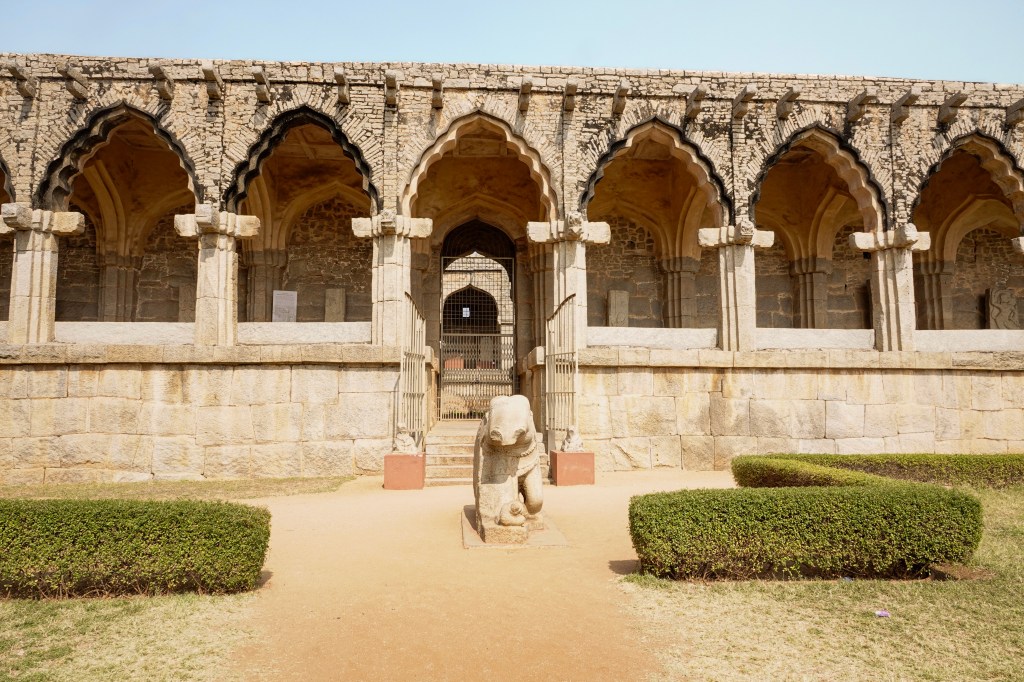
North of the stables is another impressive structure: a long gallery with eleven pointed arches. This elevated platform likely served as a grandstand for watching parades, martial sports, and animal displays. Its interior courtyard—open to the sky and surrounded by arcades—mirrors the vaulted hall inside the Zenana Enclosure, suggesting a shared architectural vocabulary.

The west side of the parade ground holds the ruins of a two‑storey gateway with massive elephant balustrades lying nearby. Rubble on the north and south edges hints at additional service buildings that once supported the royal retinue.

Mahanavami Dibba: The Empire’s Grand Stage

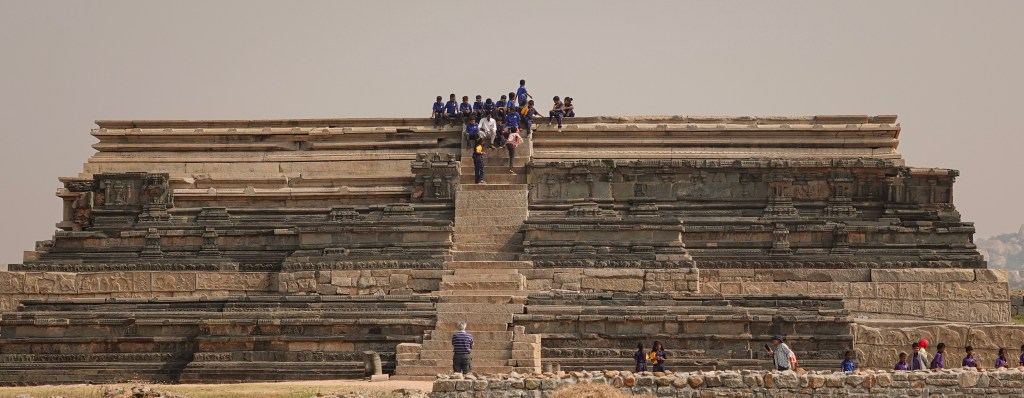
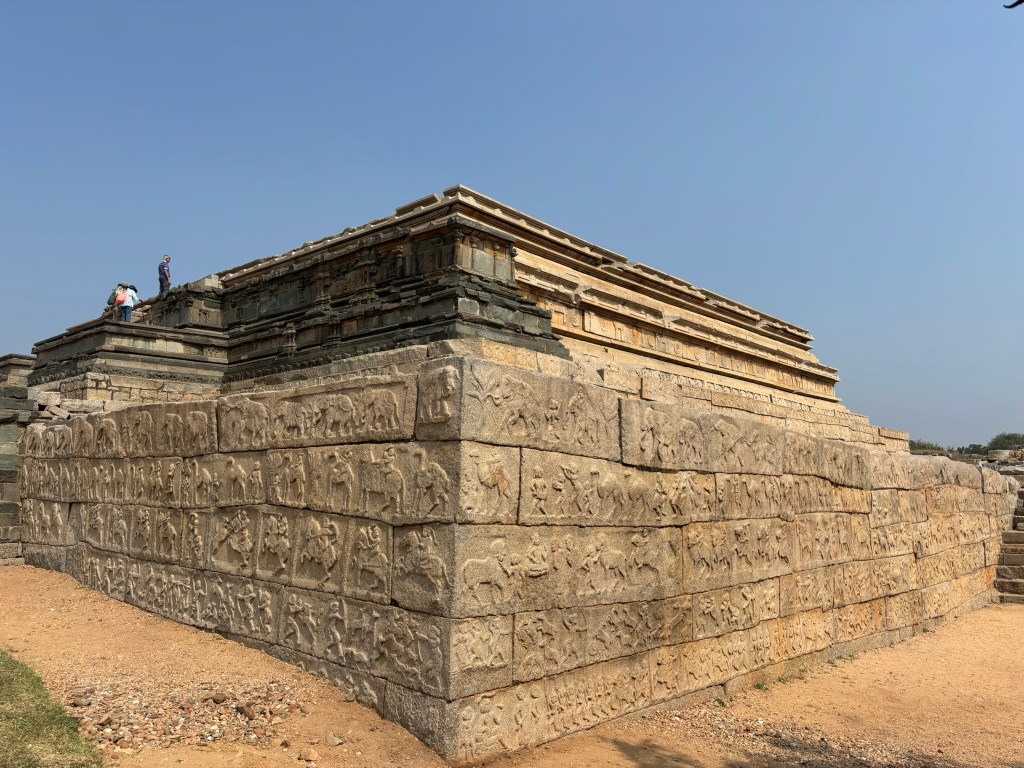
Further south lies the most dramatic structure in the Royal Centre: the Mahanavami Dibba, a massive, multi‑tiered platform used for royal ceremonies, festivals, and public displays of power.

The lower granite tiers date back to the 14th century and are carved with lively scenes—kings receiving visitors, wrestling matches, hunting expeditions, dancers, musicians, and even foreign envoys with pointed hats. Elephants, horses, camels, and mythical creatures parade across the stone, capturing the cosmopolitan energy of the Vijayanagara empire.

Climb the double staircase to the top, and you’ll stand where the king once presided over the grand Mahanavami festival, watching processions, sacrifices, and performances unfold below. The view from the summit offers a sweeping panorama of the royal centre—palaces, tanks, gateways, and the rugged boulder hills beyond.

The Stepped Tank: Geometry, Grace, and the Genius of Vijayanagara Engineering

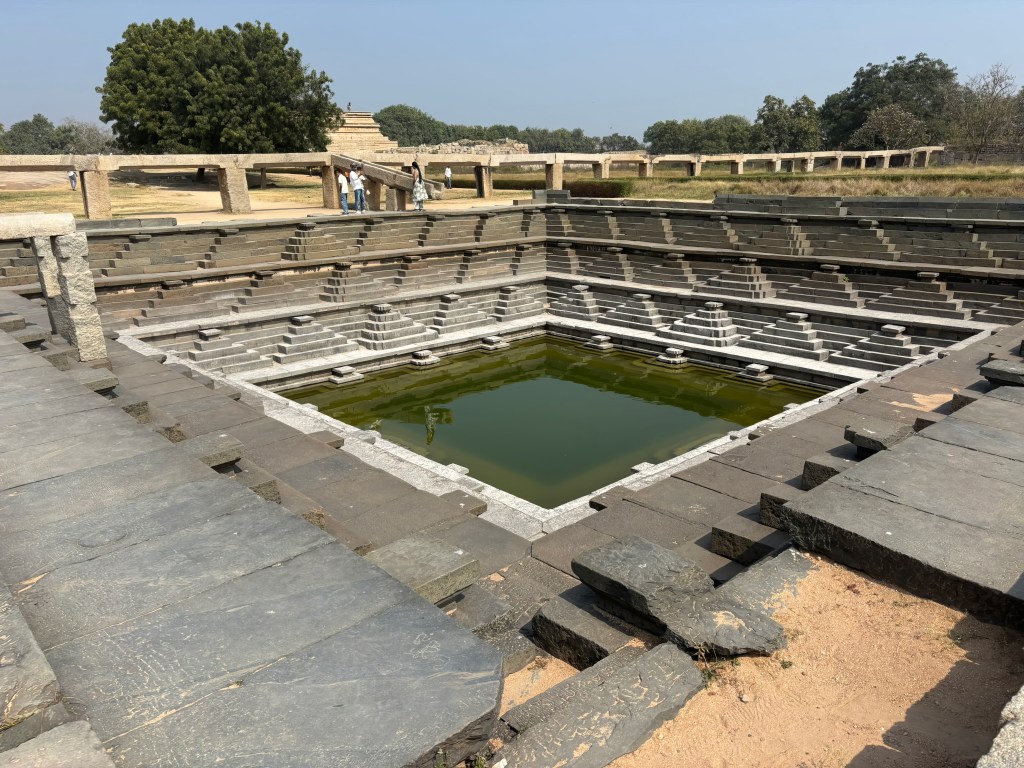
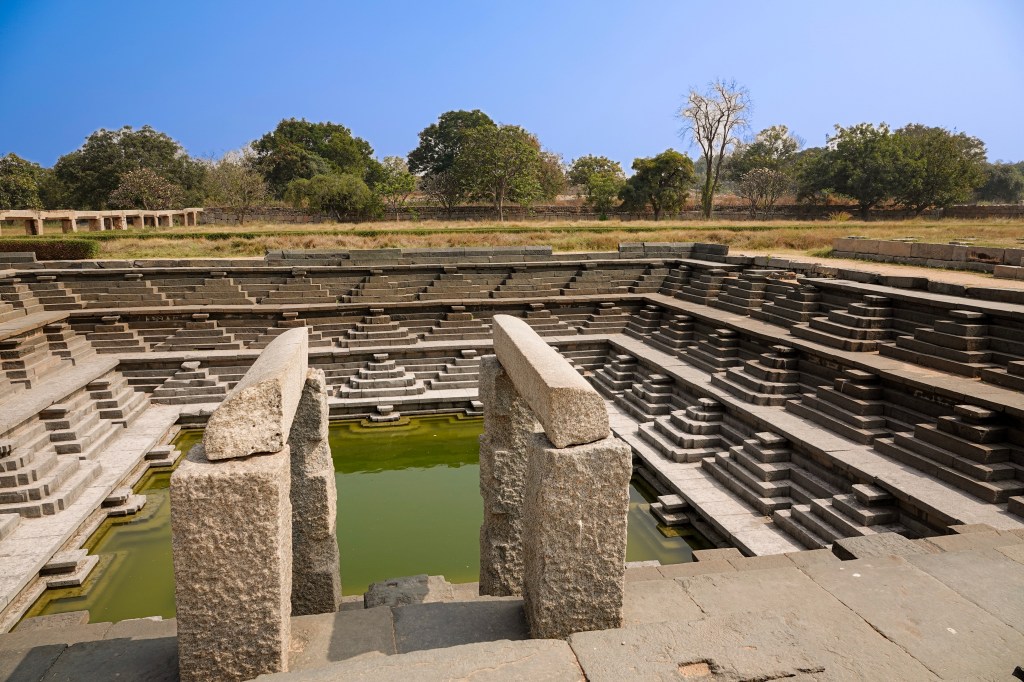
Tucked within the royal quarters is one of Hampi’s most mesmerizing structures—a perfectly proportioned stepped tank that feels like a piece of sacred geometry carved into the earth. Its crisp, symmetrical tiers descend in a rhythmic pattern toward a pool of still green water, creating a play of light and shadow that shifts with every passing hour. Unlike the massive public tanks found elsewhere in the city, this one was clearly meant for the royal household, fed by an intricate network of stone aqueducts that once carried water from distant sources. Standing at its edge, framed by the tall stone pillars that guard its entrance, you can almost imagine the quiet rituals, the ceremonial ablutions, and the everyday rhythms of palace life that once unfolded here. The tank’s precision and elegance reveal not just engineering brilliance but an aesthetic sensibility that valued harmony, balance, and beauty in even the most functional spaces.

A Walk Through Power, Beauty & Imagination

Visiting the Zenana Enclosure and its surrounding monuments is like walking through the architectural imagination of the Vijayanagara empire. Each structure—whether a palace basement, a watchtower, a stable, or a ceremonial platform—reveals a different facet of royal life. Together, they form a vivid portrait of a kingdom that valued beauty, strength, innovation, and spectacle.

The Majestic Stone Chariot and Musical Pillars of Hampi

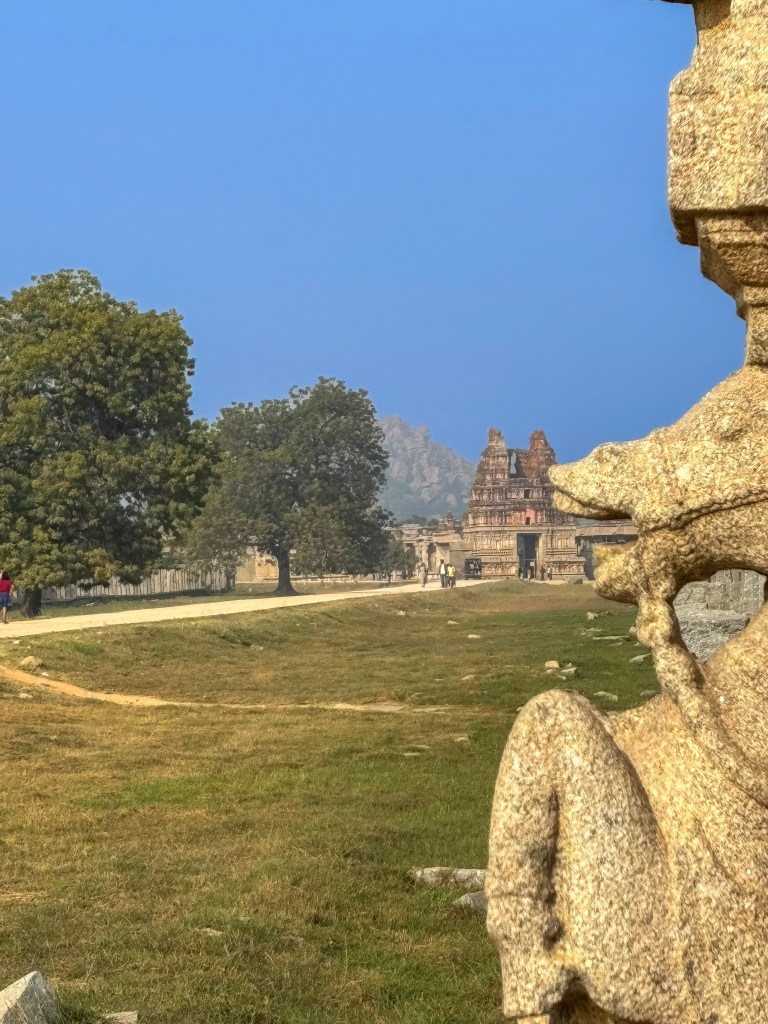
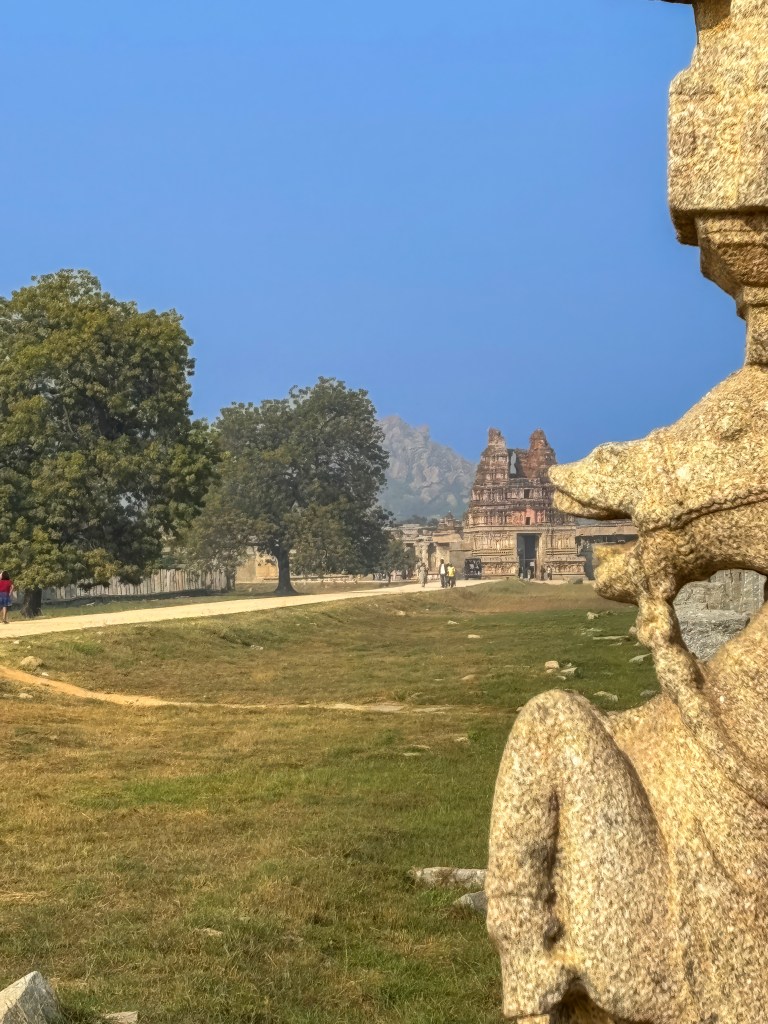
Some monuments are impressive, but Vitthala Temple truly captivates. If you have just a few hours in Hampi, this is the must-see spot. The temple embodies what Hampi represents and showcases remarkable Vijayanagar architecture.

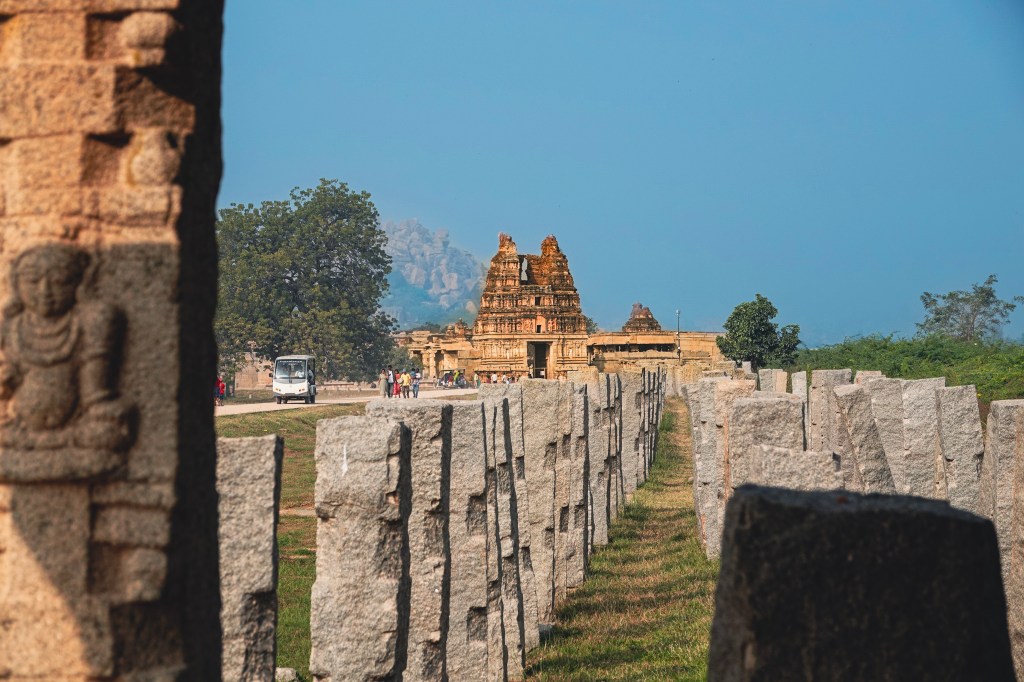
Pushkarani and Horse mantapa

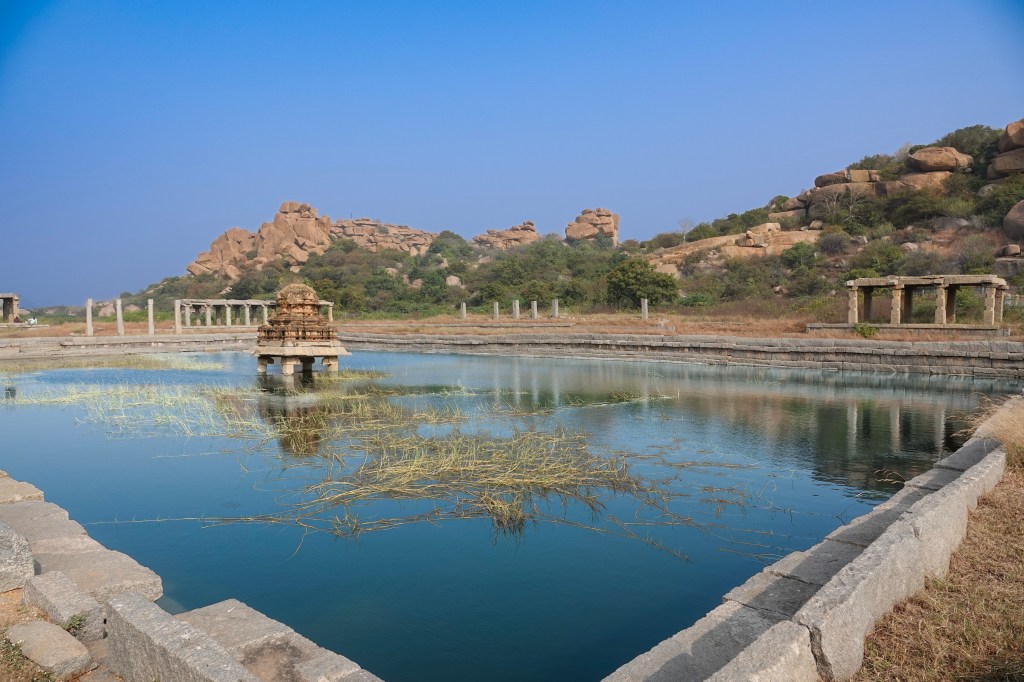
On the walk toward the Vijaya Vittala Temple, the landscape quietly opens up to one of Hampi’s most graceful water monuments—the Vittala Pushkarani. Tucked beside the northern stretch of the Vittala Bazaar, this stone‑stepped tank once anchored the ritual life of the temple and its bustling marketplace. Built during the height of the Vijayanagara Empire, it features a delicate central mantapa rising from the water, a signature of sacred reservoirs across the region.

Pushkarani is a good place to take panoramic photos of temple and surrounding areas.

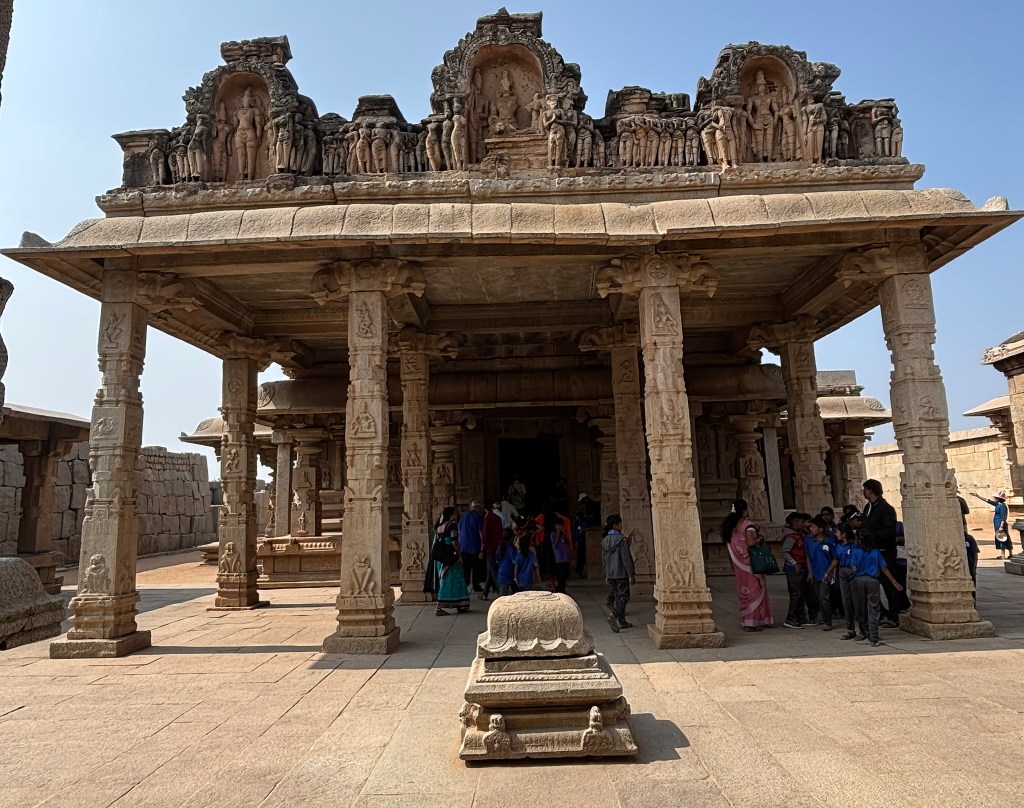
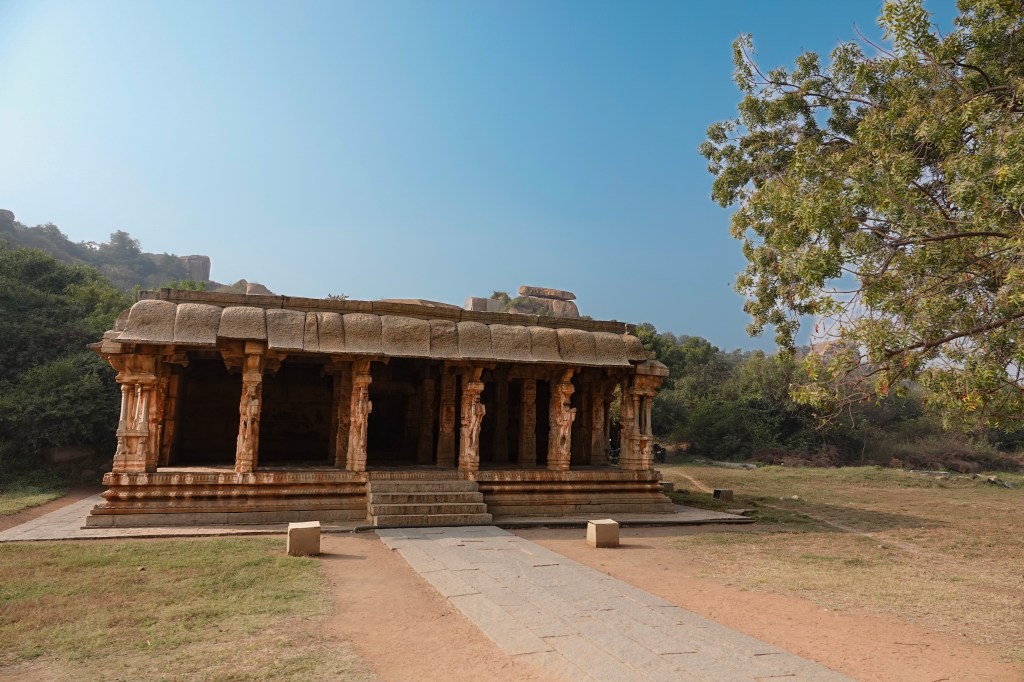
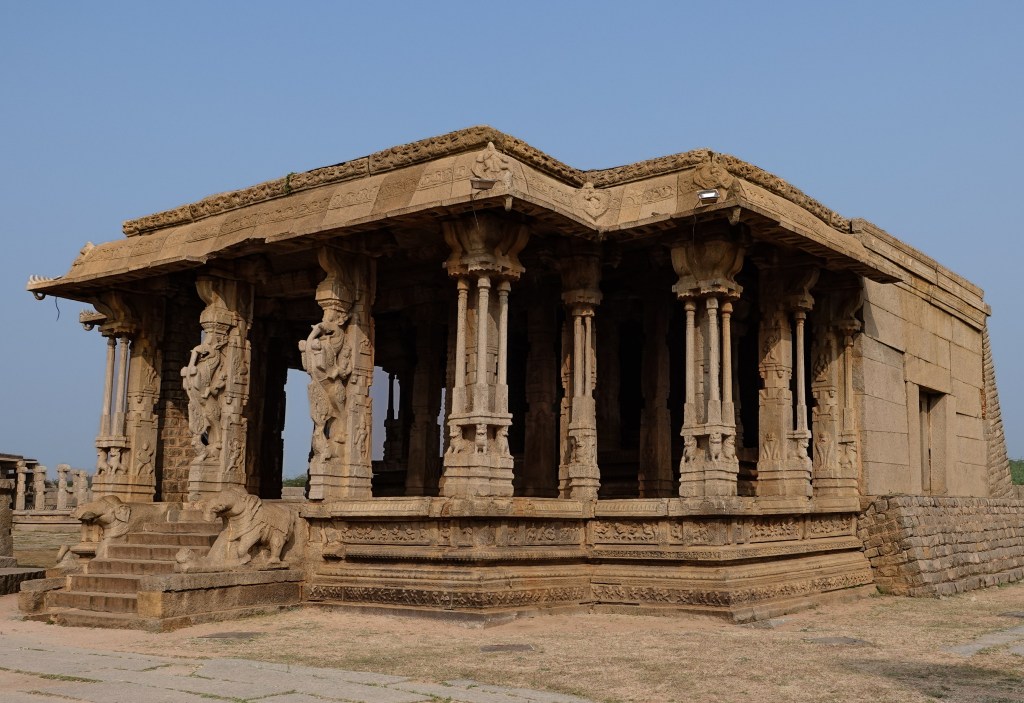
A little before the road bends toward the grand Vijaya Vittala Temple, the Kuduregombe Mantapa appears like a quiet sentinel of the past. This three‑sided pillared pavilion, built during the Vijayanagara Empire, takes its name from the striking horse‑rider sculptures carved onto its front pillars—kudure meaning horse and gombe meaning doll or figure. . Though its original purpose remains a mystery, its strategic placement along this ceremonial route hints at a role in the vibrant temple life that once animated these streets.

A Temple Wrapped in Mystery and Majesty

Unlike many Vijayanagara monuments, the Vitthala Temple’s earliest history is surprisingly elusive. No inscription tells us who commissioned it or why. What we do know is that successive rulers expanded it. These include emperors, queens, commanders, and courtiers. They continued to embellish it through the 16th century.

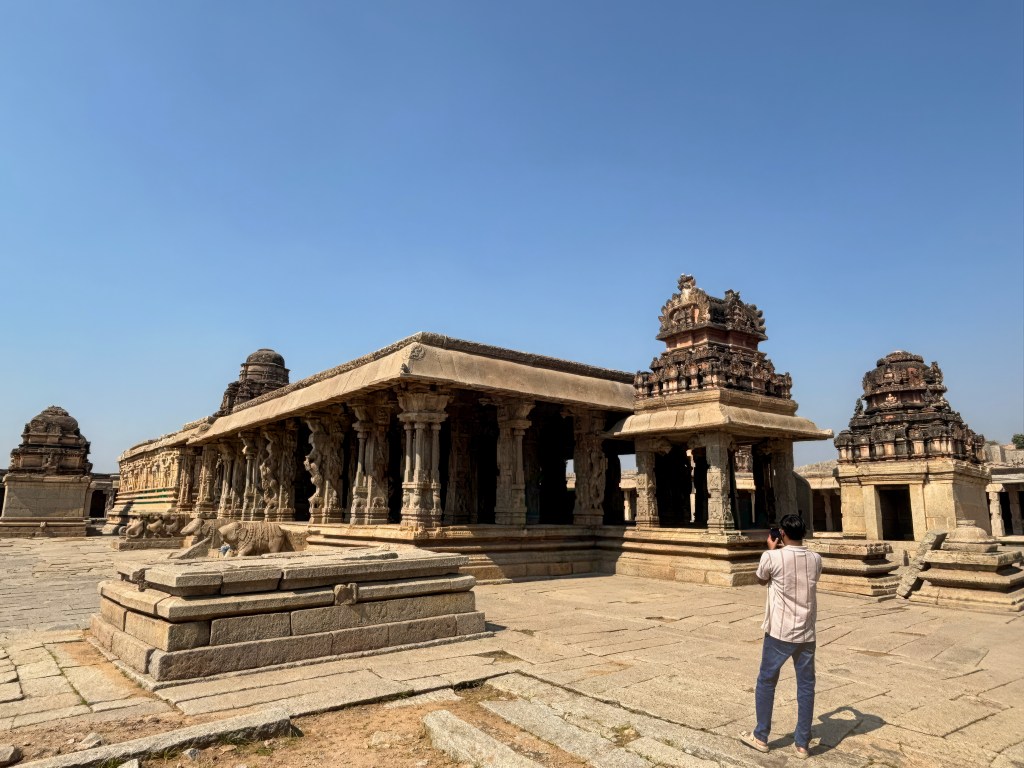
The temple sits within a vast rectangular courtyard, framed by three gopuras. Two of these—on the east and north—were built in 1513 CE by the queens of Krishnadevaraya. He was one of the empire’s most celebrated rulers. The southern gopura, more ornate and later in date, completes the triad.

Inside, the temple unfolds in layers:

  • A restored enclosed mandapa leading to a sanctuary (now empty, its ceiling charred from the fires of 1565).
  • A 1554 CE open mandapa was added by a military commander of Emperor Sadashiva. It showcases some of the most intricate stonework in South India.
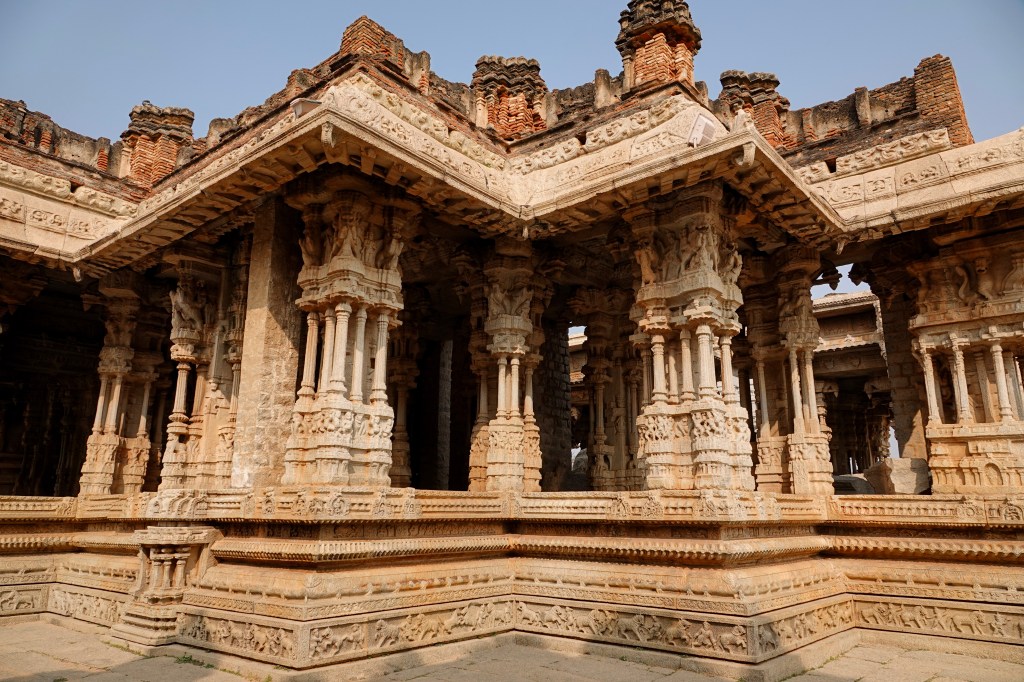
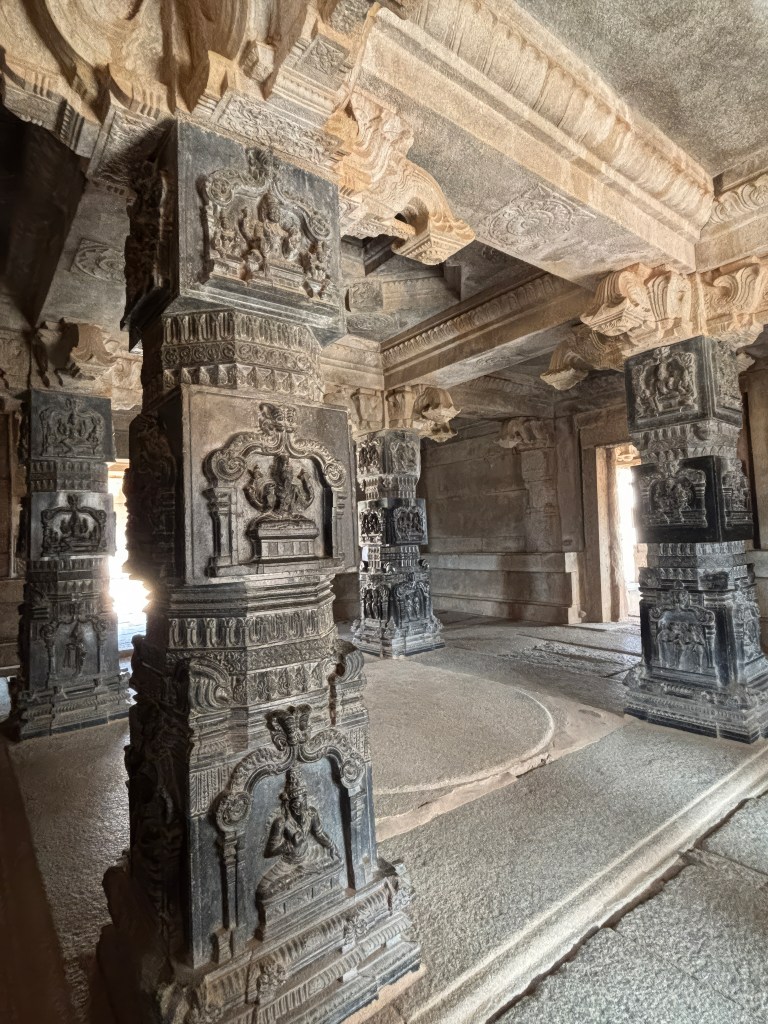
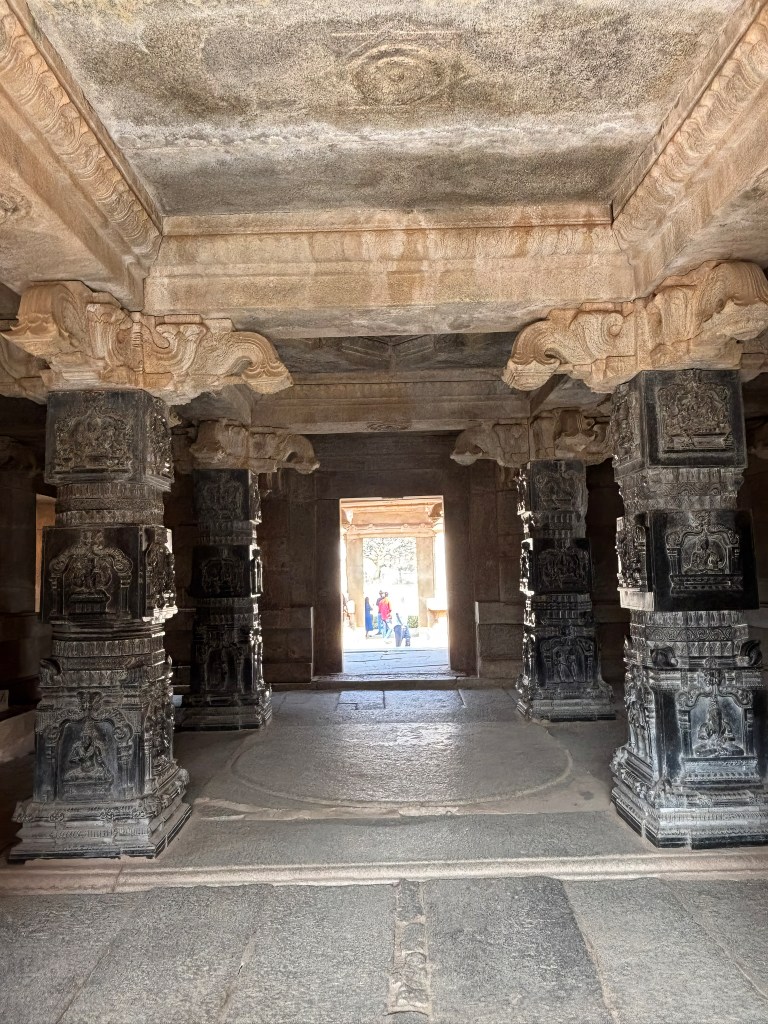
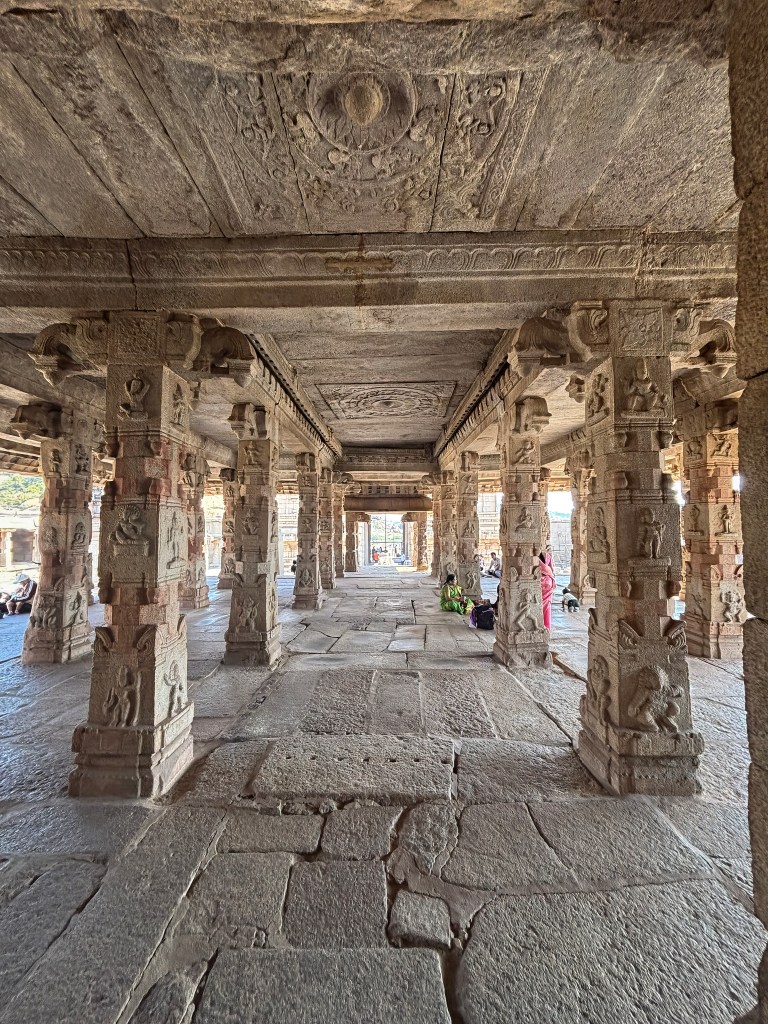
  • Four spacious halls are supported by piers. These piers are carved from single granite blocks. Each pier is a sculptural marvel of yalis, musicians, warriors, and mythic beings.

The Stone Chariot: Hampi’s Crown Jewel

If Hampi had a single emblem, it would be this.

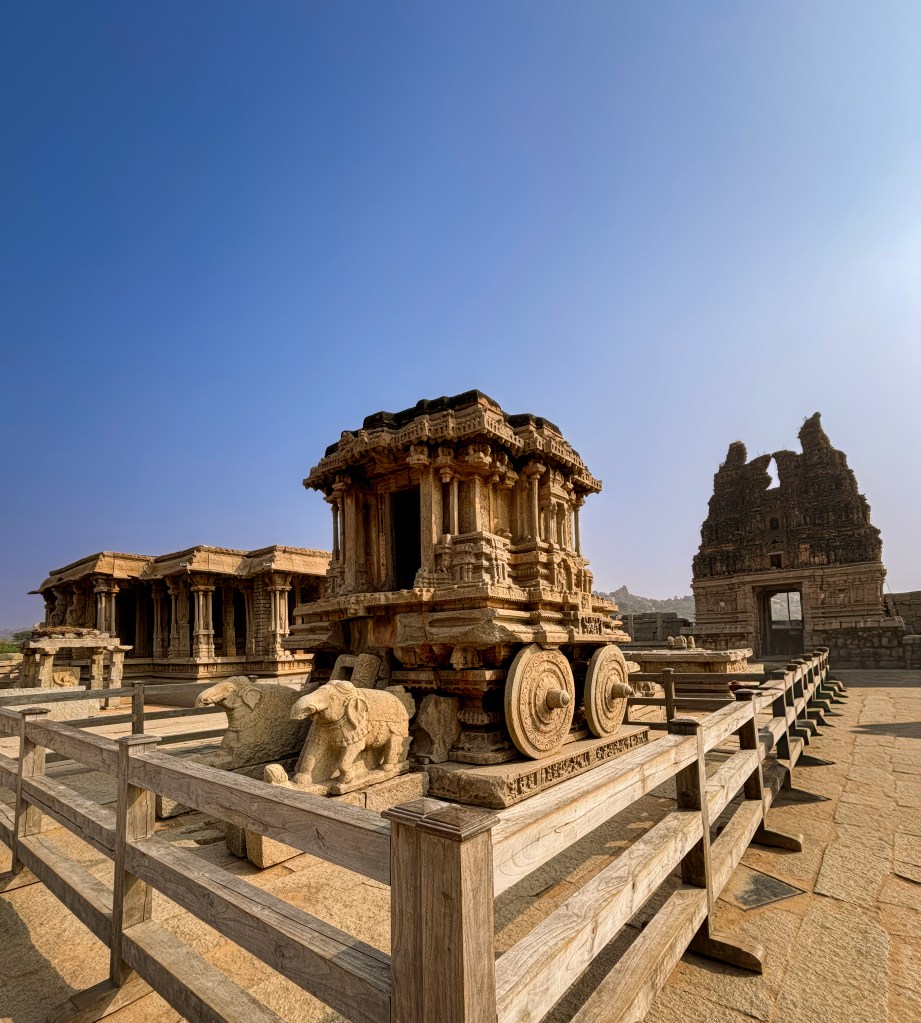
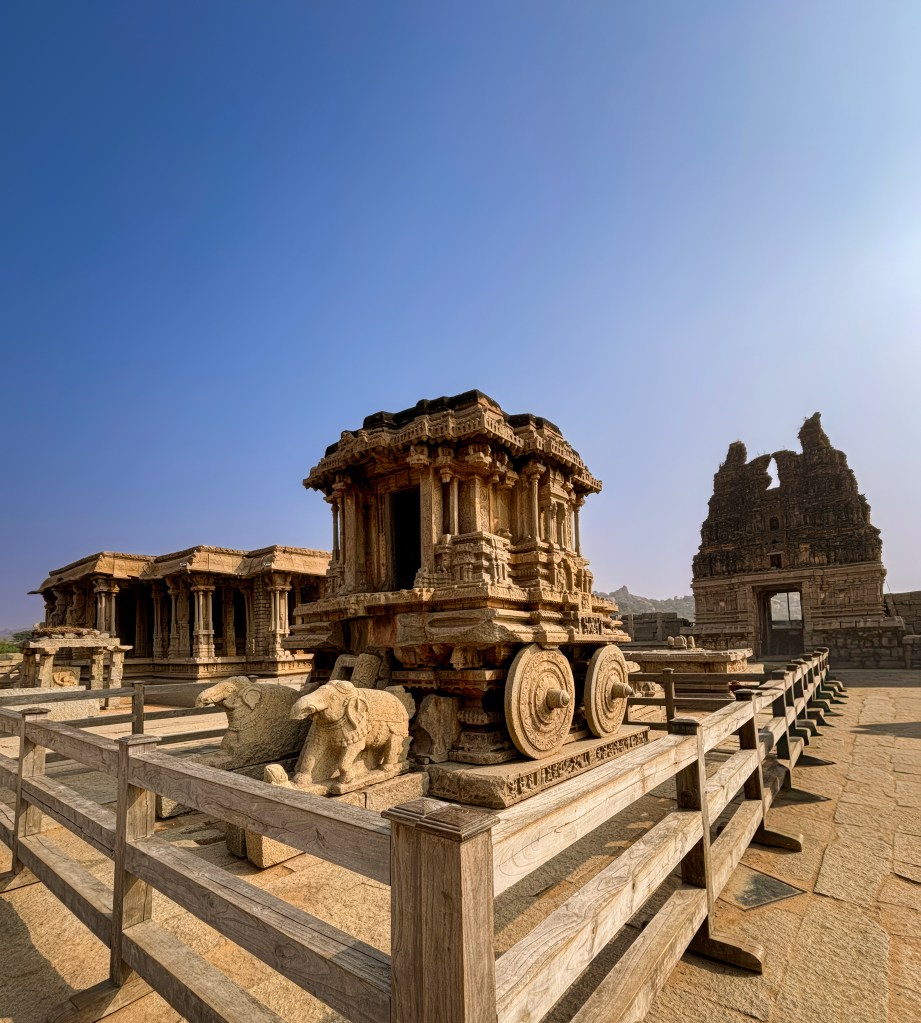
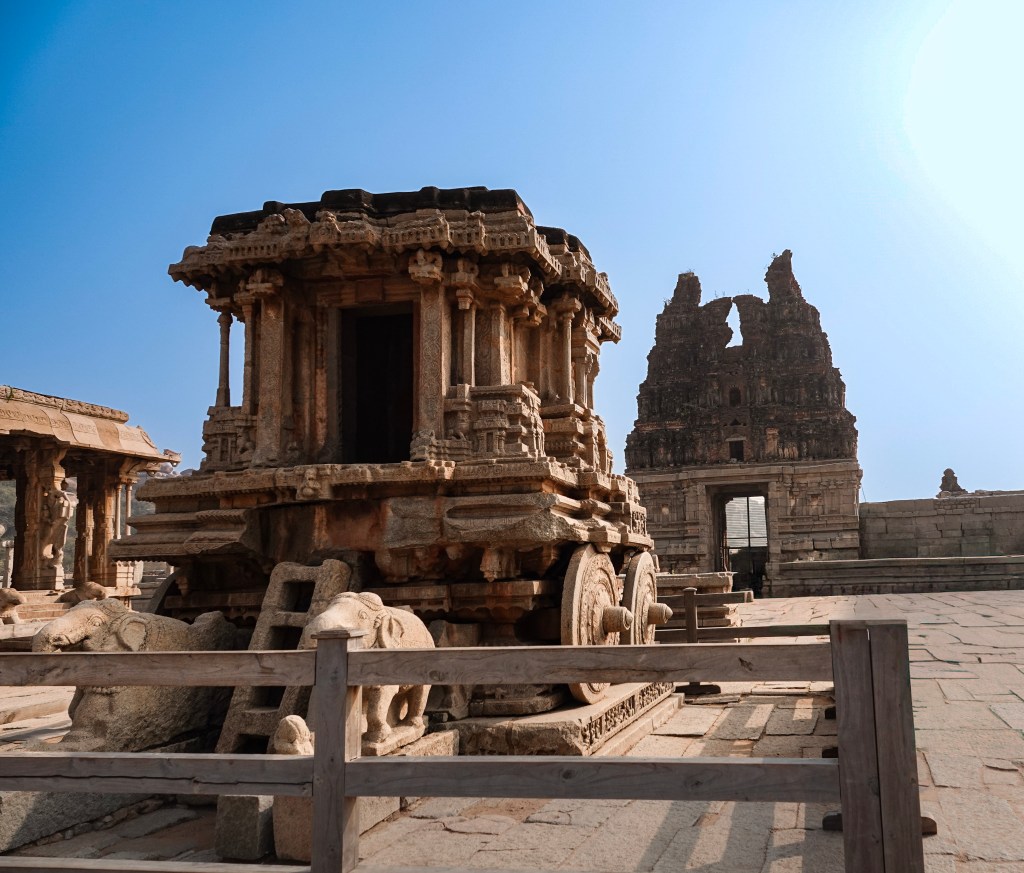
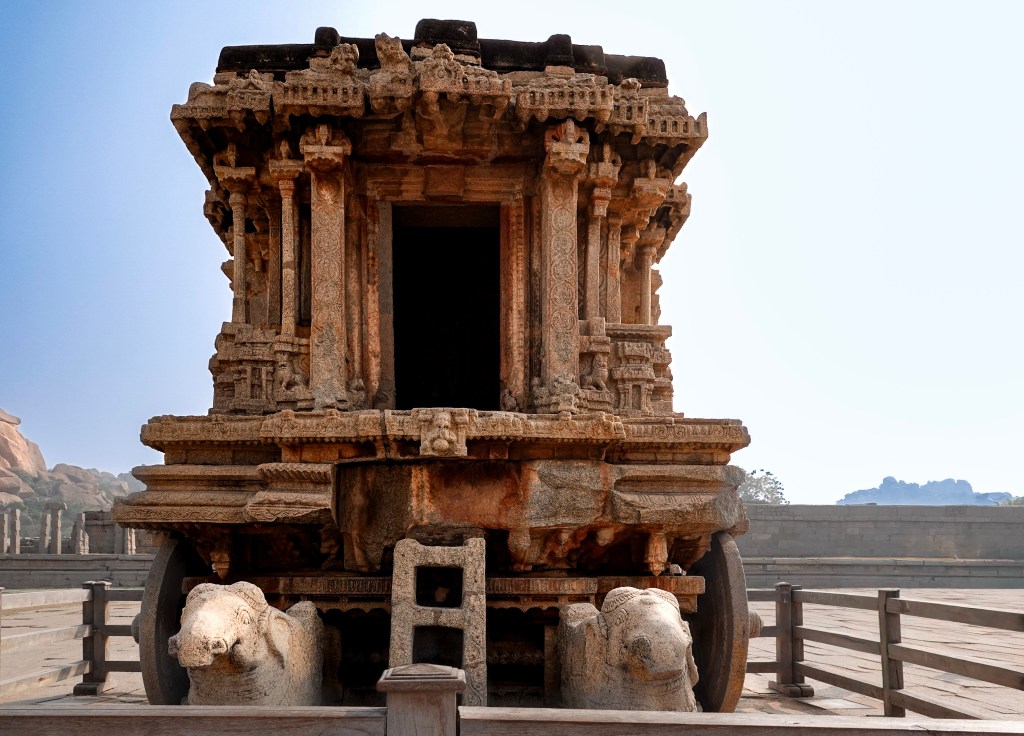
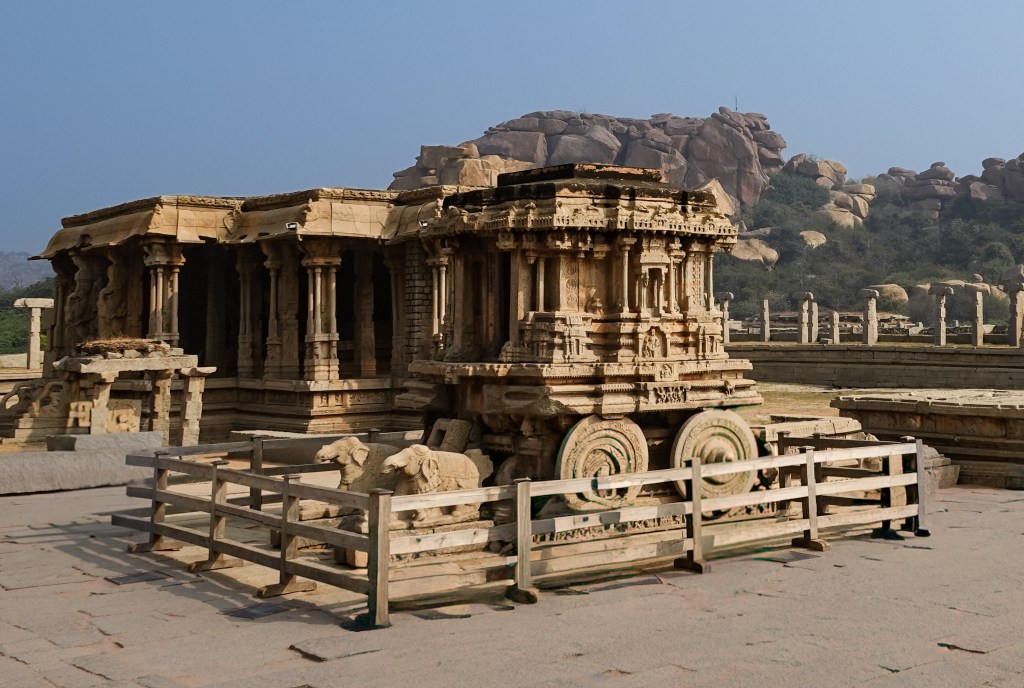
The Stone Chariot, dedicated to Garuda (the divine mount of Vishnu), stands proudly in front of the temple. Its image graces the ₹50 currency note, a testament to its national significance.

Commissioned during the reign of Deva Raya II, the chariot was inspired by the iconic Sun Temple at Konark. Though damaged during the empire’s fall, it remains breathtaking:

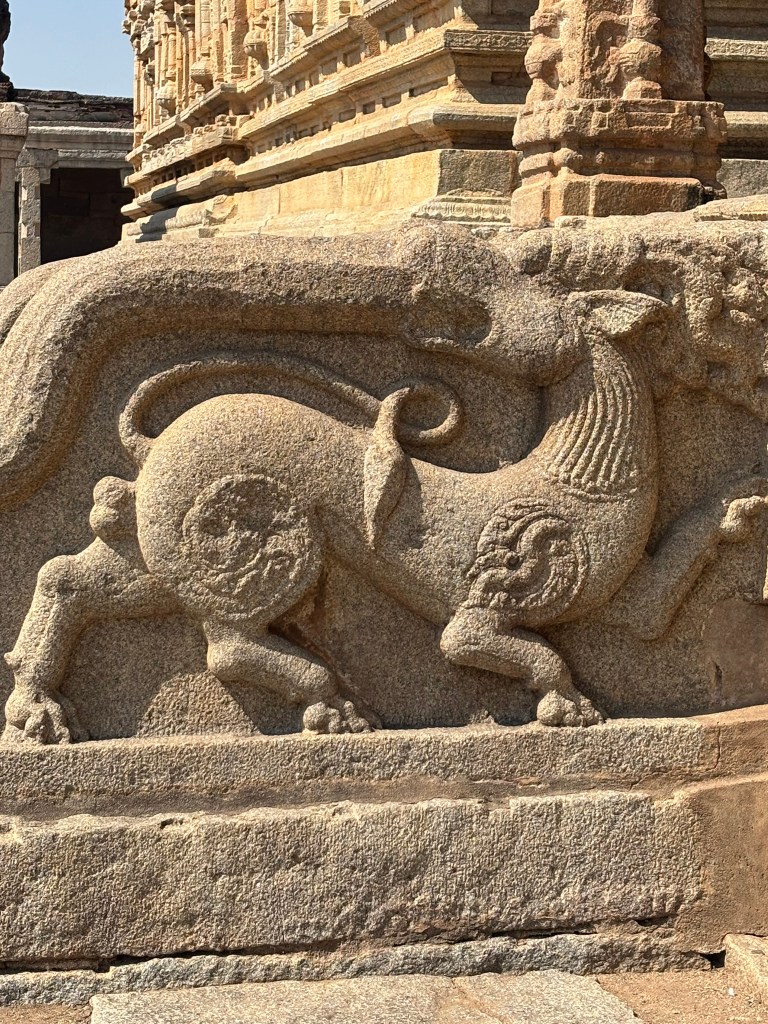
  • Two massive elephants guard the front (originally horses—look closely and you’ll still see their carved tails).
  • The wheels, though fixed, are carved with astonishing precision.
  • The shrine above once carried a brick tower, visible in 19th-century photographs but removed during colonial-era repairs.

Architectural historians—from James Fergusson to George Michell—have celebrated this chariot as one of India’s finest sculptural achievements.

A Symphony in Stone: The Musical Pillars

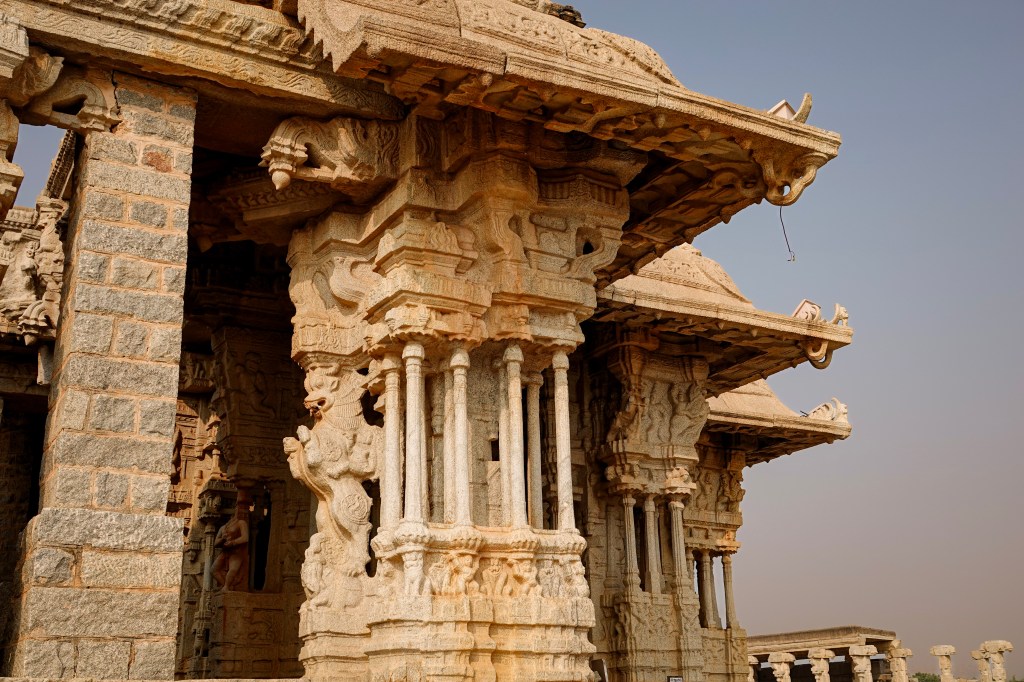
Step into the open mandapa, and you’ll encounter the legendary 56 musical pillars—the SaReGaMa pillars.

Each main pillar is surrounded by seven slender colonettes. When tapped lightly, these emit resonant tones. Contrary to popular belief, they do not form a full musical scale, but their acoustic magic is undeniable. Even the British, captivated by this phenomenon, attempted to study and “decode” the pillars during the colonial period. When I visited this place about 30 years ago, guides were allowed to show how the music pillars worked, but since then, the entire hall has been off-limits to visitors. Now you can use the QR codes to hear the music each pillar can make.

Walking the Ancient Path Along the Tungabhadra

After exploring the mandapas, musical pillars, and the iconic Stone Chariot, the journey continues along a serene footpath that runs parallel to the Tungabhadra River. This trail once connected the sacred heart of Vitthalapura with the riverbanks, and even today it feels like stepping into a quiet corridor of history.

As you leave the Vitthala Temple complex, you pass through a double-storeyed pavilion-like gateway—a structure that once marked an important threshold in the sacred geography of Hampi. Just before this gateway stands one of the most intriguing relics of royal ritual: the Kings’ Balance.

The Kings’ Balance: A Ritual of Generosity and Power

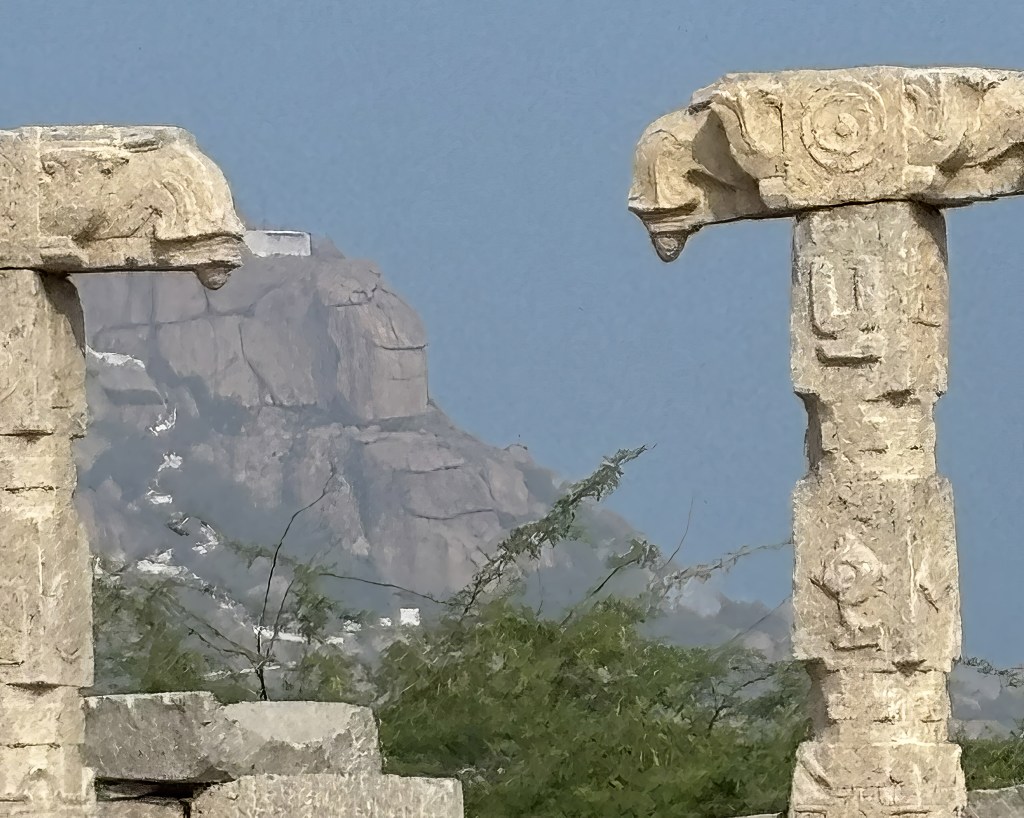
The Kings’ Balance (Tulapurusha Dana) is a simple yet powerful structure—two tall stone posts connected by a lintel, with a stone ring designed to hold a metal chain. According to tradition, the Vijayanagara emperors would stand on one side of the balance and be weighed against gold, grain, or precious stones. The offerings were then distributed to temple brahmins and the needy.

Whether every emperor actually performed this ritual remains a matter of debate, but the symbolism is unmistakable: a king’s worth measured not in power, but in generosity.

Standing here, with the river murmuring nearby and the ruins glowing in the sun, it’s easy to imagine the grandeur of those ceremonies—the crowds, the chants, the shimmering offerings, and the deep sense of devotion that shaped life in Vijayanagara.

Purandara Mantapa and the Ancient Aqueduct: Echoes of Devotion and Engineering

As the riverside path continues, the landscape opens into a quiet clearing where the Purandara Mantapa stands—a simple yet deeply evocative pavilion overlooking the Tungabhadra. This spot is closely associated with Purandara Dasa, the 16th‑century saint‑composer often hailed as the “Father of Carnatic Music.” Local tradition holds that he composed many of his devotional songs right here, seated by the river, his melodies carried by the breeze across the sacred centre of Hampi.

A little further along, you’ll encounter the remains of an ancient aqueduct, a remarkable example of Vijayanagara engineering. Built to channel water from the river to nearby temples, tanks, and residential quarters, this stone-lined structure once formed part of an intricate hydraulic network that sustained life in the capital. Though now broken in places, the aqueduct still reveals the precision and planning that defined the empire—its elevated channels, carved supports, and carefully graded slopes silently narrating a story of innovation and urban sophistication.

Final thoughts

Visiting the Vijaya Vittala Temple feels less like touring a monument and more like stepping into a living memory of the Vijayanagara Empire. Every carved pillar, every quiet mandapa, every stretch of the ancient bazaar road whispers stories of devotion, artistry, and a city that once pulsed with life. The walk itself—past the Kuduregombe Mantapa, the serene Pushkarani, and the boulder‑studded landscape—builds a sense of anticipation that the temple’s iconic Stone Chariot and musical pillars then reward in full. Even in silence, the complex hums with an energy that lingers long after you leave. It’s the kind of place that stays with you, not just as a photograph, but as a feeling—of wonder, of history, and of being momentarily connected to something timeless.

Off the beaten path in Hampi- Chakra Thirtha, Coracle ride and riverside temple ruins

There are places in Hampi where history feels loud—grand mandapas, towering gopuras, bazaars that once echoed with royal processions. And then there are places where history whispers. Chakratirtha is a rare spot. Mythology, river, stone, and silence unite in a way that feels almost otherworldly.

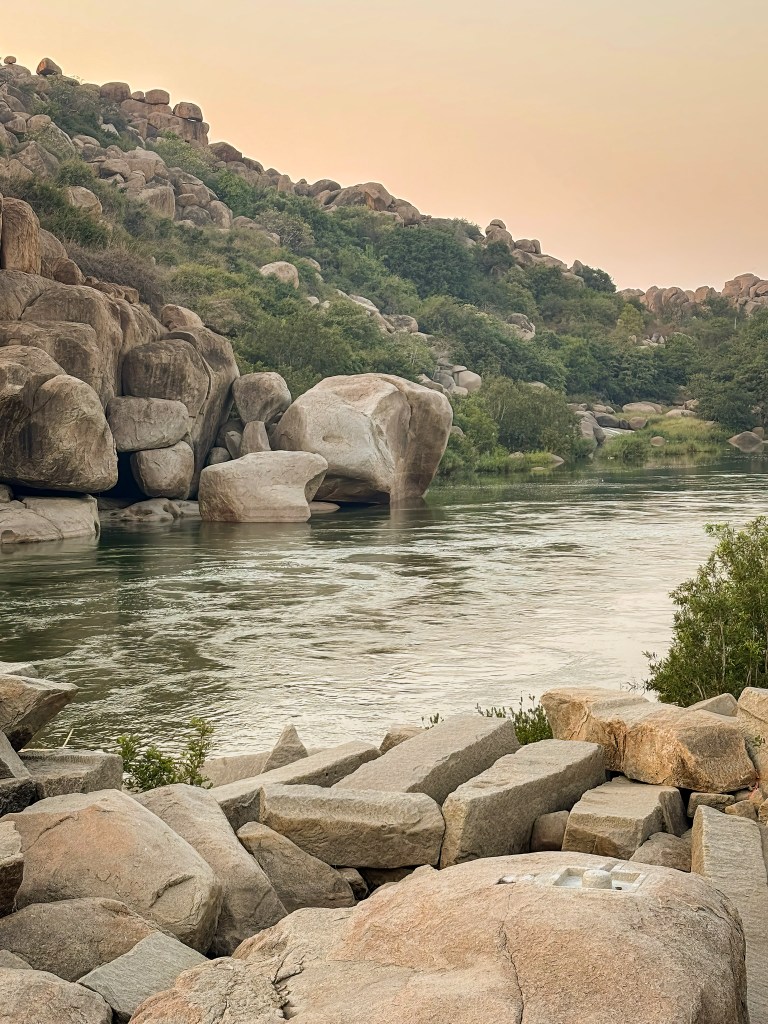
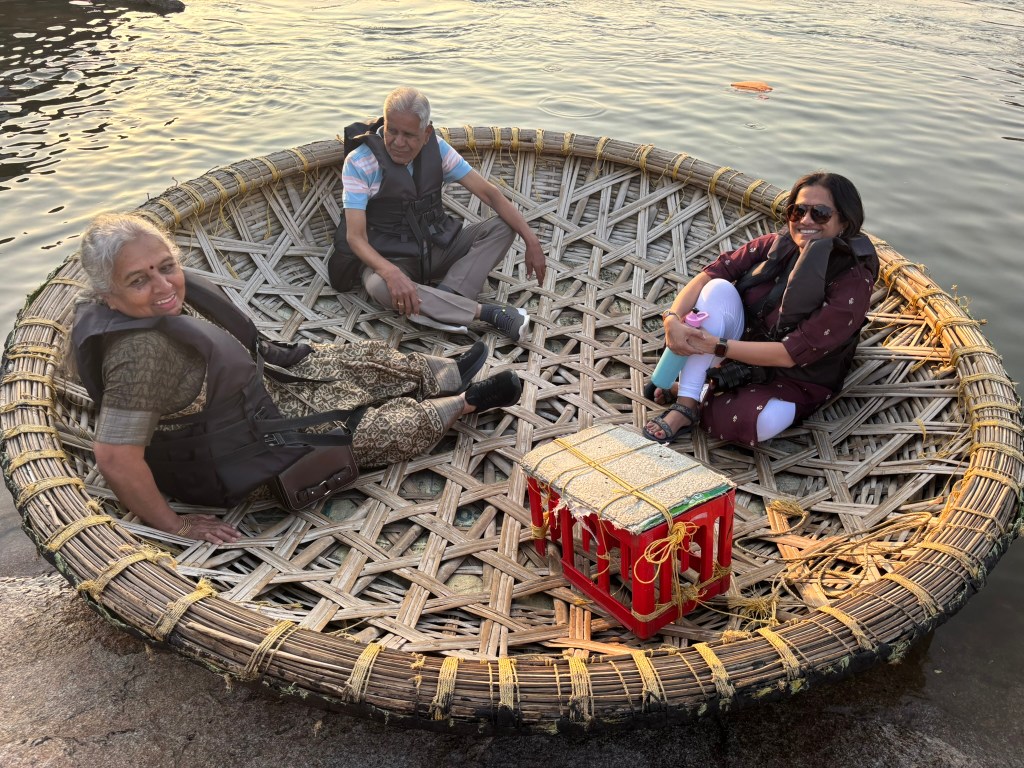
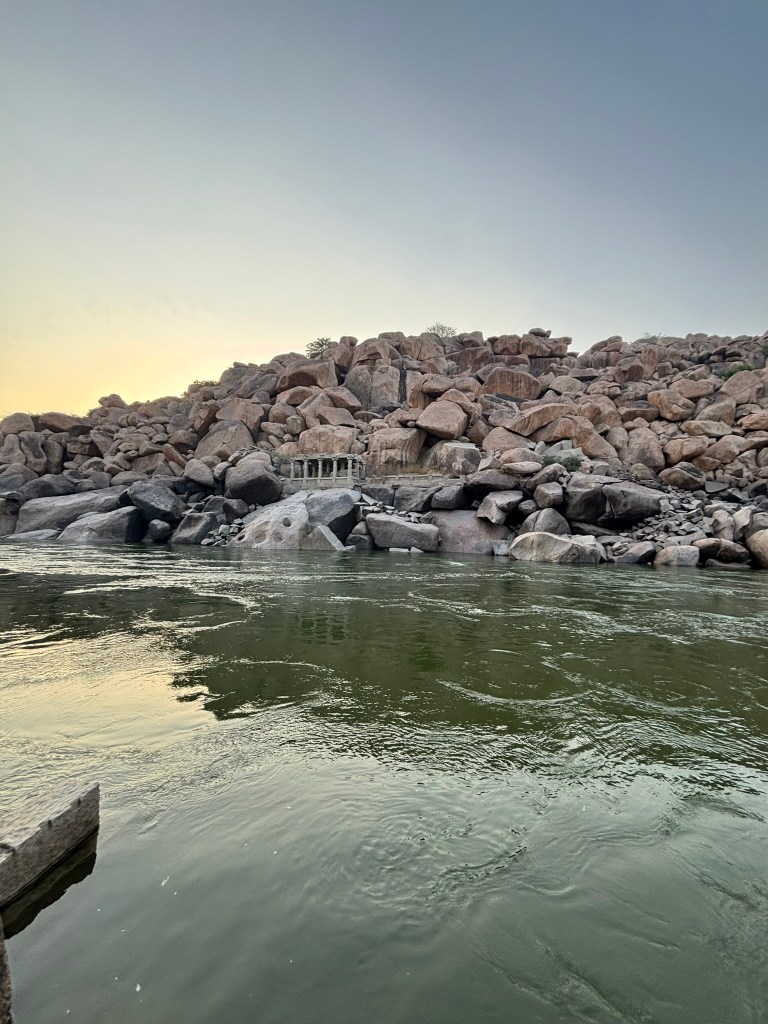
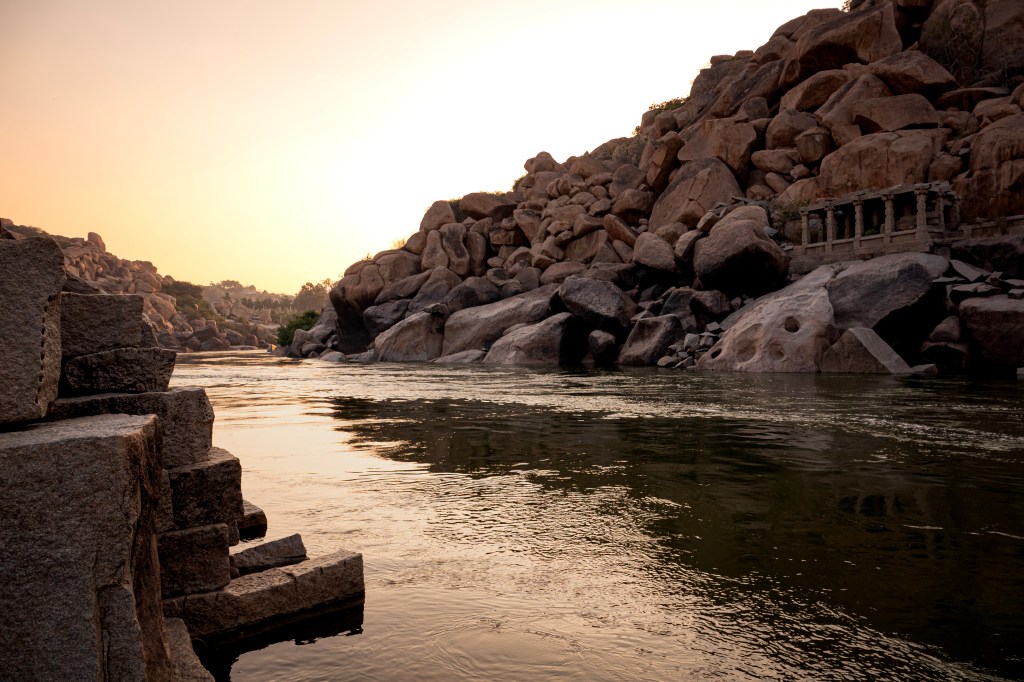
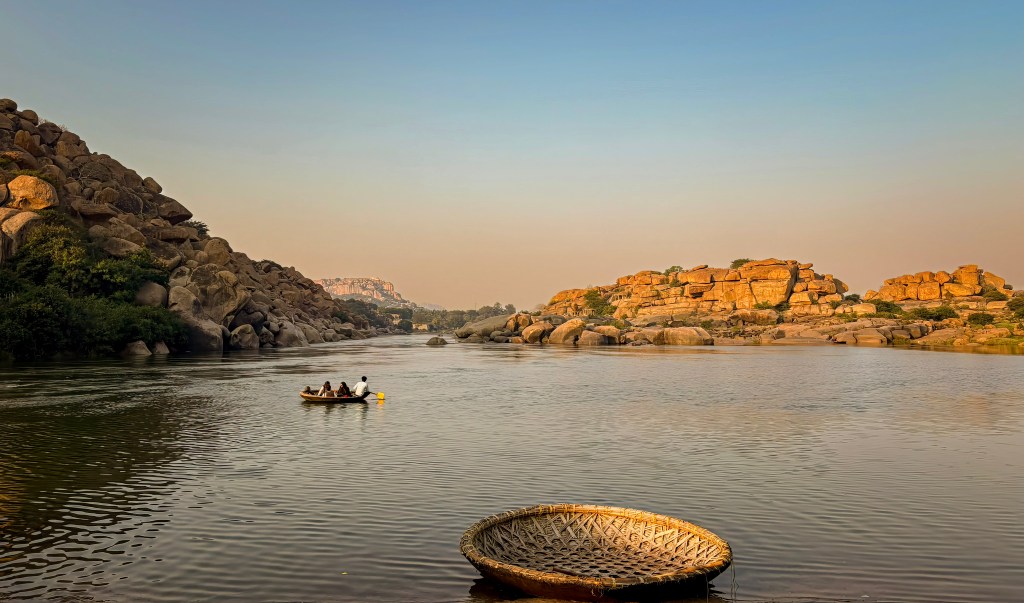
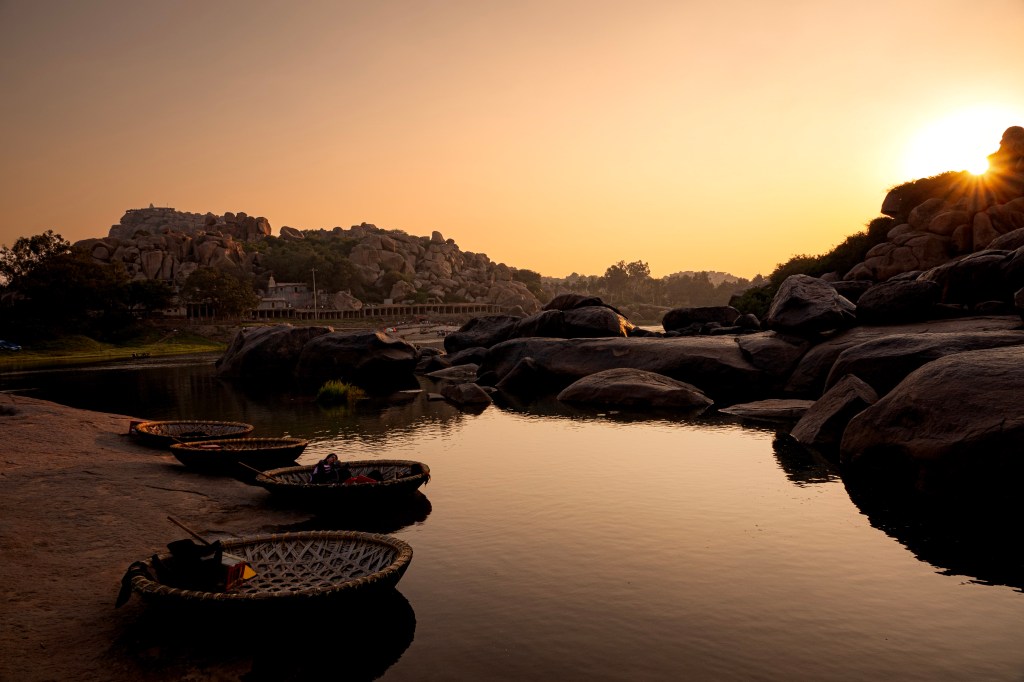
The coracle ride and a visit to the river ruins weren’t part of our itinerary. Nevertheless, they turned out to be among our best experiences. I highly suggest taking a guided tour of the ruins, as there are no markings or directions. Also, we rented the entire theppa, which made it easier to do what we wanted. Sunset is the best time for this visit

  1. Chakratirtha Where the River Swirls with Legends
  2. Setting Off on the Coracle: A Journey Into Stillness
  3. Stopping at the Secret Shrines Along the River
    1. 🕉️ Sahasralinga: A Thousand Lingas in Stone
    2. 🛌 Anantasayana: Vishnu in Eternal Repose
  4. Other river ruins worth visiting
  5. Narasimha Temple: A Quiet Shrine Revealed by the River
  6. The Kampabhupa Pathway: Echoes of Ancient Pilgrims
  7. Final thoughts

Chakratirtha Where the River Swirls with Legends

Chakratirtha—literally “the sacred water body that swirls”—sits at the valley point between Matanga Hill and Rishyamukha Hill. Here, the Tungabhadra narrows, bends, and gathers force, creating a natural whirlpool that locals believe carries divine imprints. On auspicious days, pilgrims report seeing the forms of Rama, Sita, and Lakshmana in the swirling waters.

This is also the spot where, according to legend, Lord Shiva handed the Sudarshana Chakra to Lord Vishnu. The river, ever in motion, is said to echo that cosmic exchange.

Pilgrims still take a holy dip here before climbing the steps to the Kodandarama Temple—a shrine carved into a massive boulder. At the Kodandarama temple, Rama stands with a bow in hand. Sita is to his left. Lakshmana and Hanuman are by his side. The nearby ancient pavilions are weathered yet dignified. They have sheltered generations of devotees. People have paused here to rest or pray. Others have simply breathed in the place’s sanctity.

Setting Off on the Coracle: A Journey Into Stillness

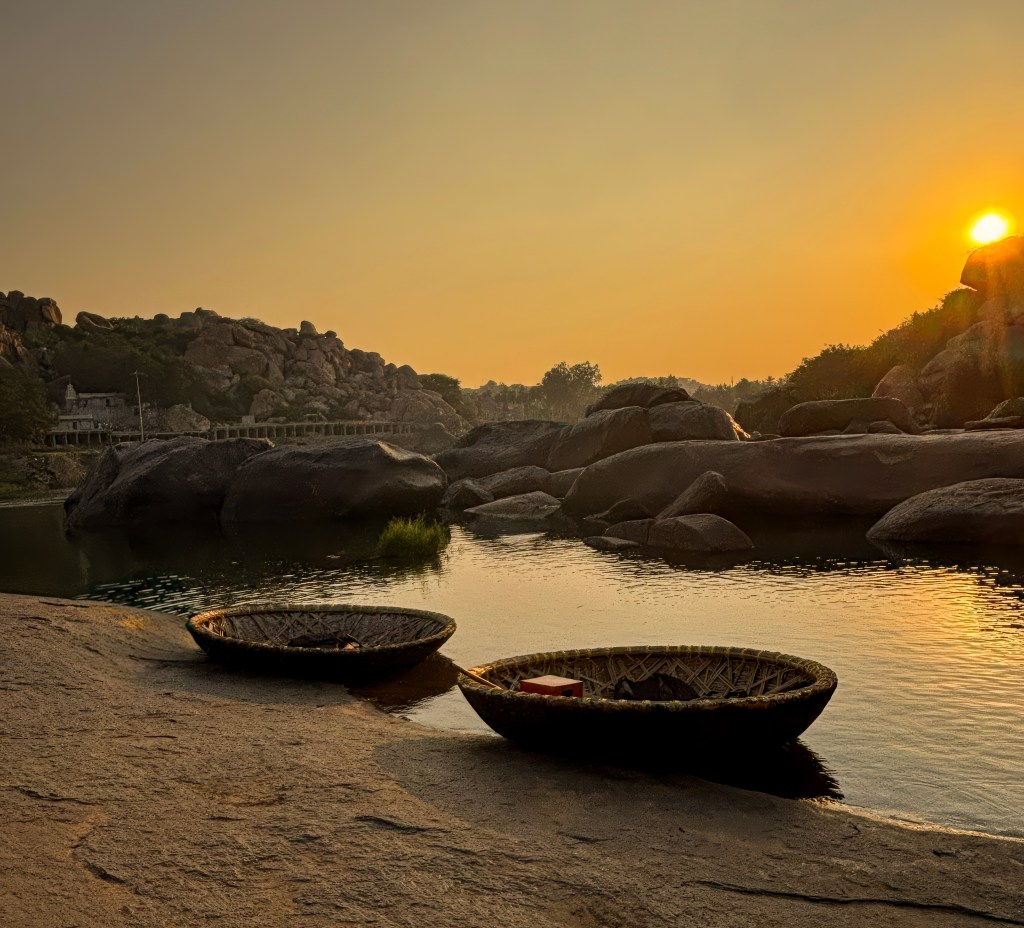
From the flat rocky bank—etched with Shiva lingas, footprints, and devotional carvings—you’ll spot coracles drying in the sun. These round bamboo boats, tar‑coated and impossibly light, are your gateway to one of Hampi’s most serene experiences.

There’s no motor, no rush—just the rhythmic dip of the oar and the soft lap of water against bamboo. It’s the kind of silence that makes you notice everything. You see the shimmer of weeds drifting downstream. You notice the play of light on boulders. You hear the faint echo of temple bells carried by the wind.

A coracle ride at Chakra Tirtha is one of Hampi’s most iconic experiences, blending ancient transportation with spiritual sightseeing. Locally known as Teppa or Dongi, these circular boats have glided across the Tungabhadra River for centuries

The Chakra Tirtha Experience

The ride at Chakra Tirtha is highly scenic. It navigates a narrow, boulder-strewn stretch of the river.

  • Key Highlights: Rides typically pass the Anantashayana Vishnu carving. It features a massive reclining Vishnu relief. You will see the Sahasra Linga, comprising 1,008 Shiva Lingas carved into a single rock bed. The rides also showcase diverse riverside ruins.
  • Cost & Duration: A 30-minute ride typically costs ₹500 per person. A full-hour ride (covering more ruins and islands) costs ₹800 to ₹1,000. We hired the entire coracle for 3 of us. We paid approximately 6000 per hour. It was a more intimate guided tour with the boatman. I was pleasantly surprised to see life jackets being provided for this ride.
  • The “Spin”: For an adventurous touch, boatmen often give the coracle a high-speed spin in the water upon demand. 

History of the Theppa or Coracle

The coracle is one of the world’s oldest boat designs, used for over 2,000 years for fishing

  • Ancient Origins: In the 16th century, the Portuguese traveler Domingo Paes marveled at these “round basket-boats.” He noted their ability to carry up to 20 people.
  • Strategic Design: The circular, bowl-like shape was perfected for Hampi’s unique environment. It allows the boat to run aground. This prevents capsizing, making it ideal for the river’s strong currents and shallow, rocky beds.
  • Traditional Construction:
    • Frame: A lattice of split bamboo or willow shoots.
    • Skin: Historically made of animal hides (bullock or horse), modern coracles now use heavy-duty plastic or PVC sheets.
    • Waterproofing: The exterior is coated with bitumen (tar) or resin to guarantee total water tightness.
  • Legacy: During the Vijayanagar Empire, they were vital for transporting grains, construction materials for temples, and ferrying pilgrims to holy sites

Stopping at the Secret Shrines Along the River

The beauty of the Chakratirtha coracle ride is that it doesn’t just take you across the river. It takes you into Hampi’s hidden spiritual landscape.

🕉️ Sahasralinga: A Thousand Lingas in Stone

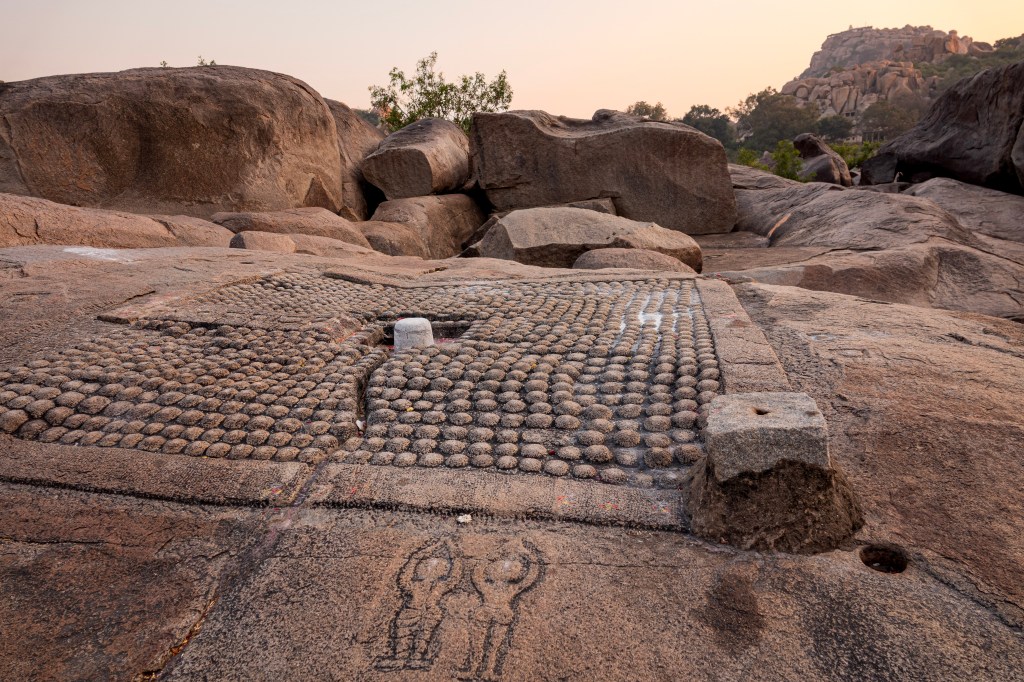
You glide a short distance downstream and come to a quiet stretch of riverbank. Our coracle stopped here. We were guided towards the hidden temples. The first of these is Sahasra Linga or Koti linga. Reaching this location required some boulder-hopping, and there is no clear direction. I don’t think we would have found this place without our boatman leading the way.

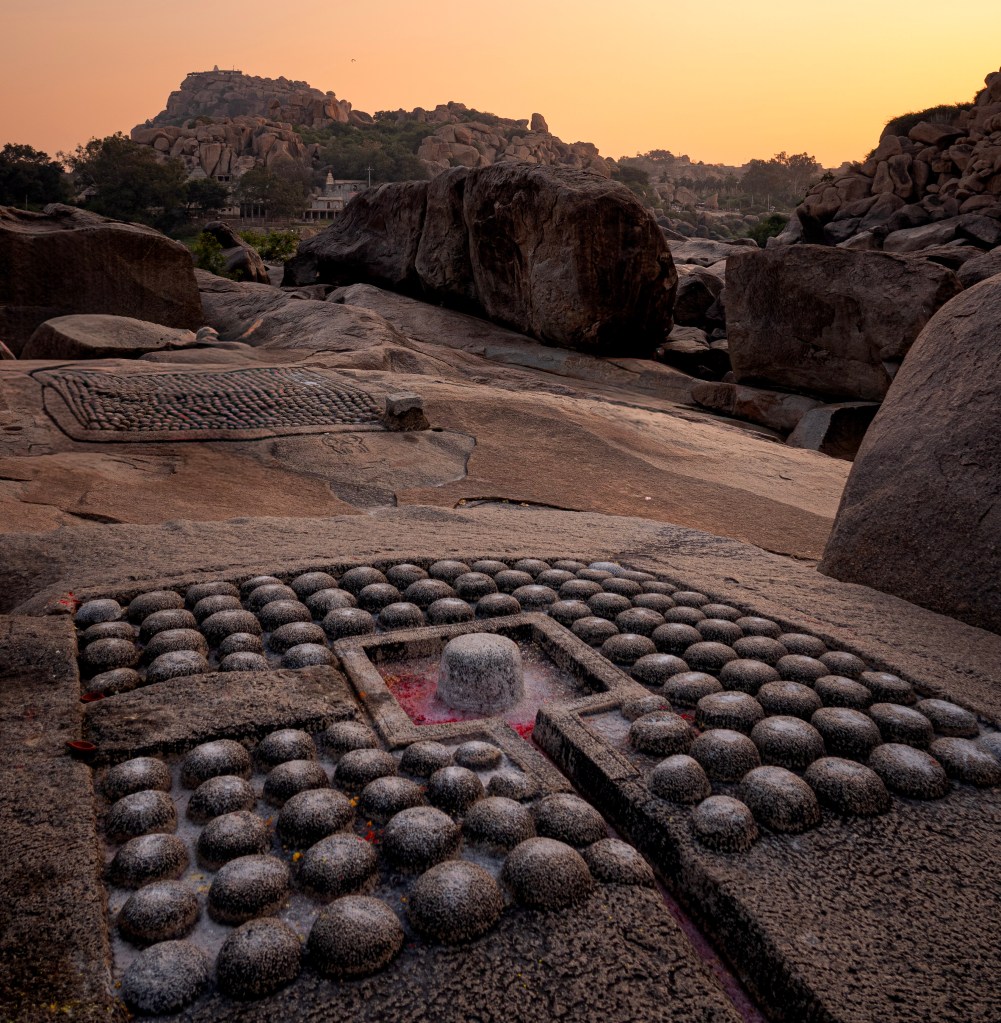
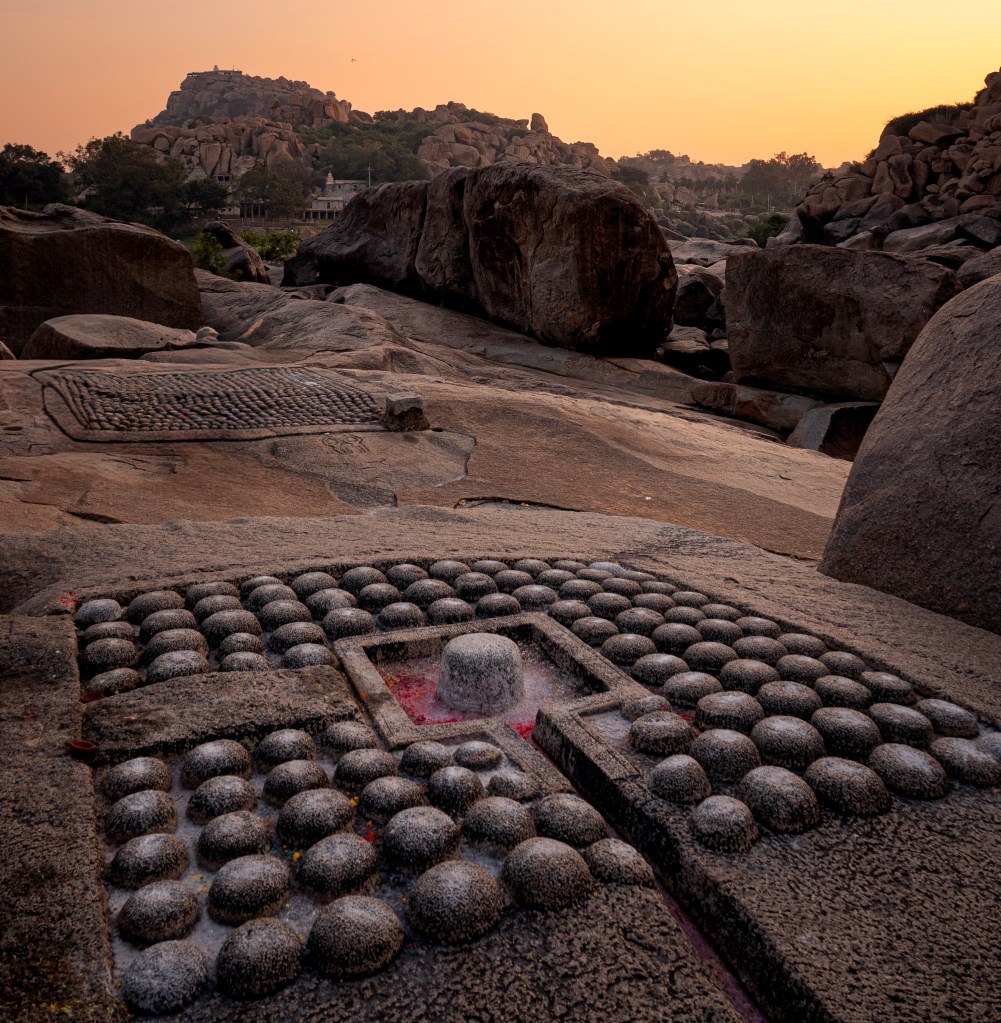
Sahasra Linga is a significant rock-cut site. It features two primary groups of lingas: one set of 108 and a larger, symmetrical grid of 1,008.

Location & Access

  • Proximity: It is located a short distance (approx. 400–500 meters) east of the Chakra Tirtha bathing ghat, along the southern bank of the Tungabhadra River.
  • Accessibility: Reaching the site by land requires a challenging trek over uneven boulders.
  • Visibility: The carvings are best viewed during the dry season (December to May). River levels are low during this time. Many carvings can become submerged during the monsoon.

Why were lingas carved into the rock bed? I wasn’t able to find a clear answer to the origin of these remarkable carvings. Some researchers suggest that the carvings date back to the Vijayanagara Empire. These intricate designs were likely meant for worship and reflection in an open-air sanctuary. The second theory is that these lingas might have been crafted by devotees. They could have created them as a form of devotion and reverence. Additionally, our guide mentioned that a sage created these carvings. He wanted to offer a convenient alternative for worshipers who could not visit the famous Koti Lingas spread across Hampi.

Symbolism: The number 1,008 is spiritually significant, corresponding to the Shiva Sahasranama (the thousand names of Lord Shiva).

🛌 Anantasayana: Vishnu in Eternal Repose

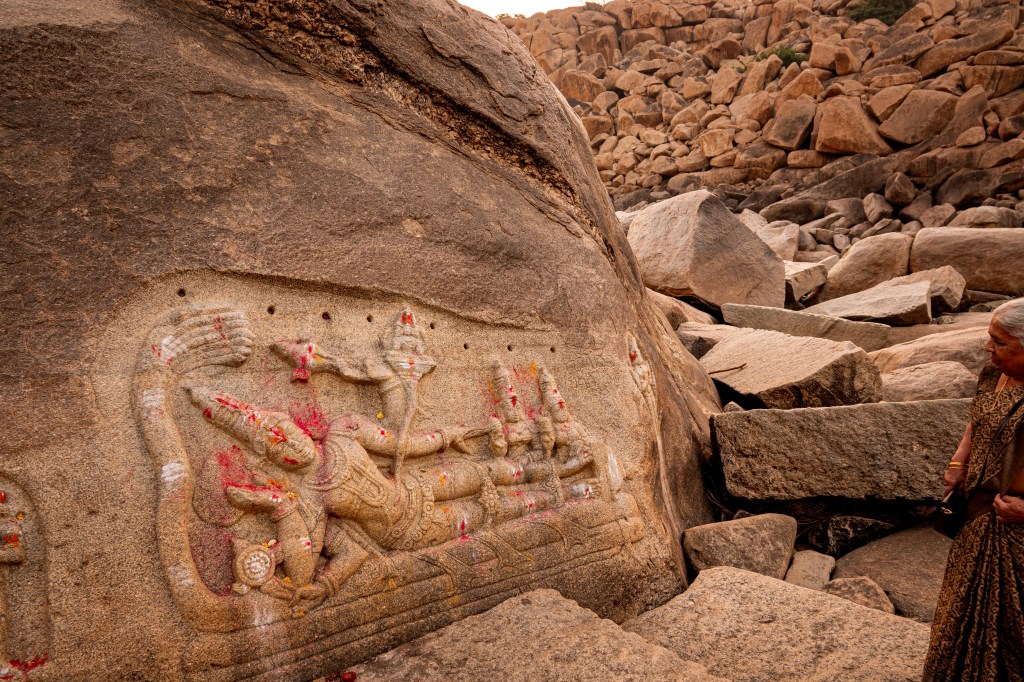
Further along the river, tucked between boulders and half-hidden by the landscape, is one of Hampi’s most peaceful carvings. It is Anantasayana, the reclining Vishnu.

Here, Vishnu rests on the serpent Adishesha, eyes half-closed, the world held in balance by his cosmic sleep. The carving is weathered, softened by centuries of wind and water, but its serenity is unmistakable.

There’s something profoundly calming about arriving here by coracle. You step onto the warm rock. The river flows quietly behind you. Suddenly, the entire scene feels like a meditation.

Other river ruins worth visiting

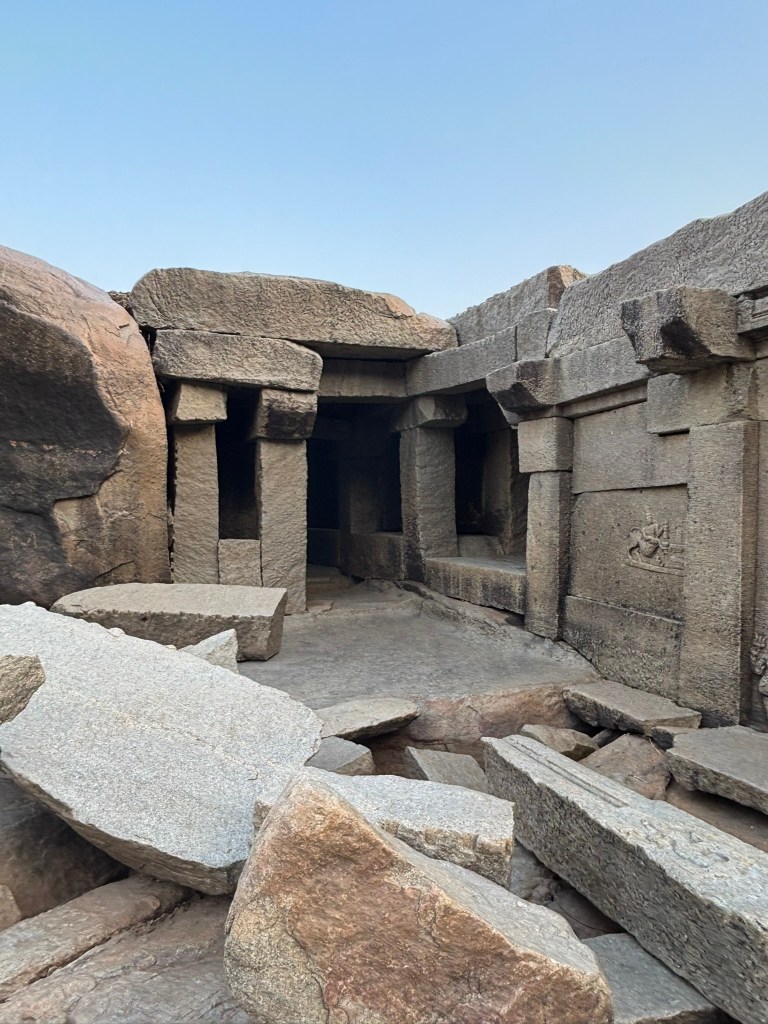
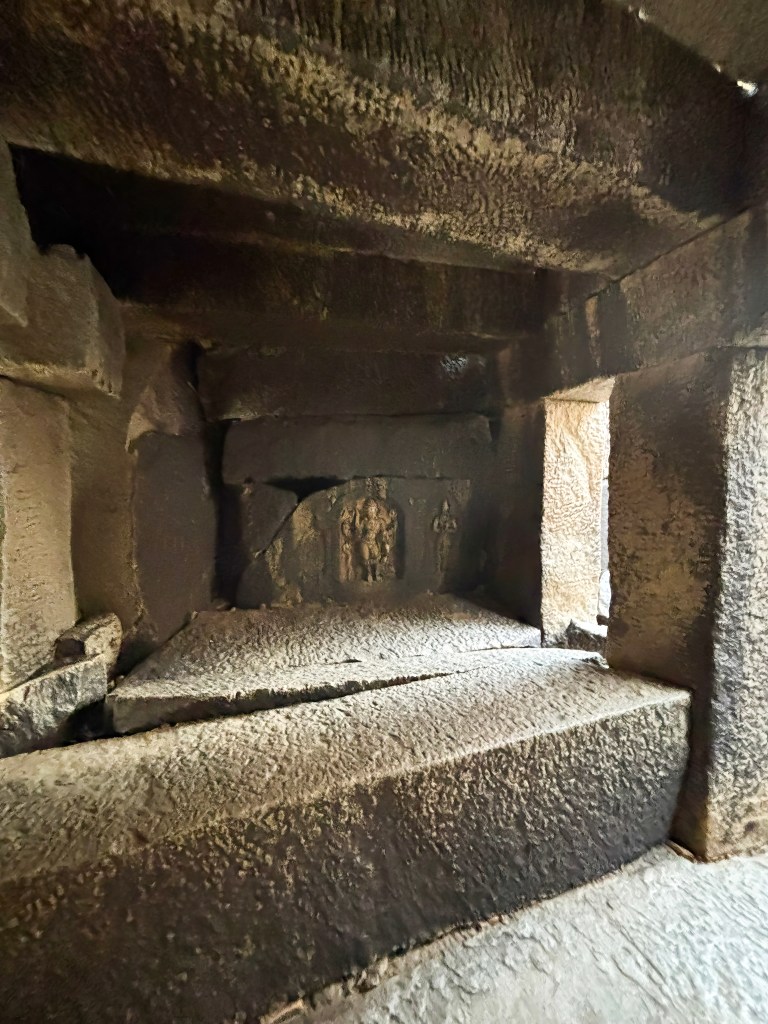
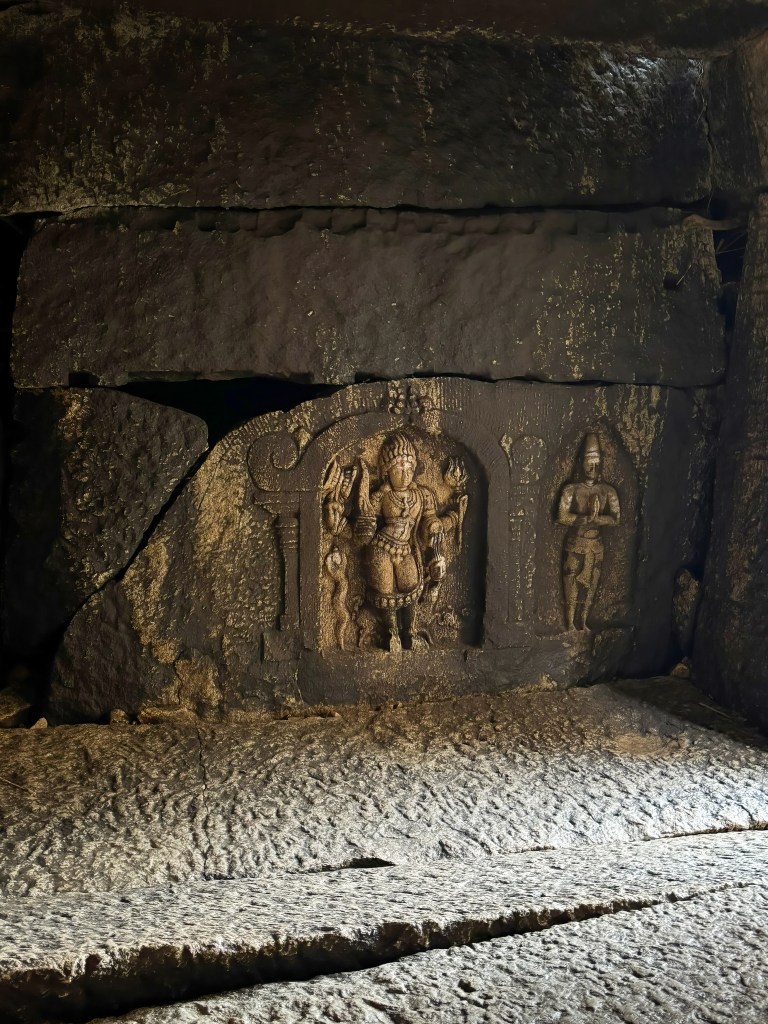
There are also a few other ruins that are worth visiting. One of them is a small sanctuary accessible by crawling under a boulder.

Several gods, including Surya riding on his chariot, are carved into the rock here. You can also see a pavilion built for devotees on the riverbank. Another noteworthy sight is a rock that strikingly resembles an elephant. This natural marvel has captured the imagination of many. Our guide mentioned that the coracle operators, when water levels are low, take passengers under the majestic Elephant Rock. This provides a unique perspective on this ancient marvel. During the monsoon season, though, the temple and its carvings are submerged. It only emerges again with the changing tides and seasons.

Narasimha Temple: A Quiet Shrine Revealed by the River

You can also visit the Narashimha temple on the same coracle ride. We ran out of time and couldn’t visit the temple. A short walk takes you through scattered boulders and ancient stone steps. They lead you to the temple. Its weathered facade blends seamlessly into the rocky hillside. The temple is a multi-story structure with characteristic Vijayanagara-style pillars. It has three sanctums originally dedicated to different forms of Vishnu: Venugopala, Lakshminarasimha, and Vishnu-Purushottama.

The Kampabhupa Pathway: Echoes of Ancient Pilgrims

As you return toward Chakratirtha, you may notice the broad stone pathway running along the river—the Kampabhupa Pathway. Built in the 14th century by Kampabhupa, son of Vira Harihara Raya, this ancient route once connected Virupaksha Bazaar to the sacred riverbank and onward to Vittalapura.

During high waters, the path disappears completely, as if the river reclaims it for a while. But when visible, it’s a beautiful reminder of the pilgrims who walked this very stretch centuries before you floated past in a coracle.

Final thoughts

A coracle ride at Chakratirtha isn’t just a river crossing—it’s a slow unfolding of Hampi’s quieter stories. The sacred whirlpool, the Kodandarama Temple, the secret shrines of Sahasralinga and Anantasayana, the ancient pavilions and pathways… each stop feels like a page from a living epic.

By the time you return to the rocky bank, the sun warm on your shoulders and the river’s rhythm still in your body, you realize this journey has left its own swirl within you—gentle, sacred, unforgettable.

Krishna Temple, Hampi — A Royal Monument of Victory and DevotionKrishna Temple

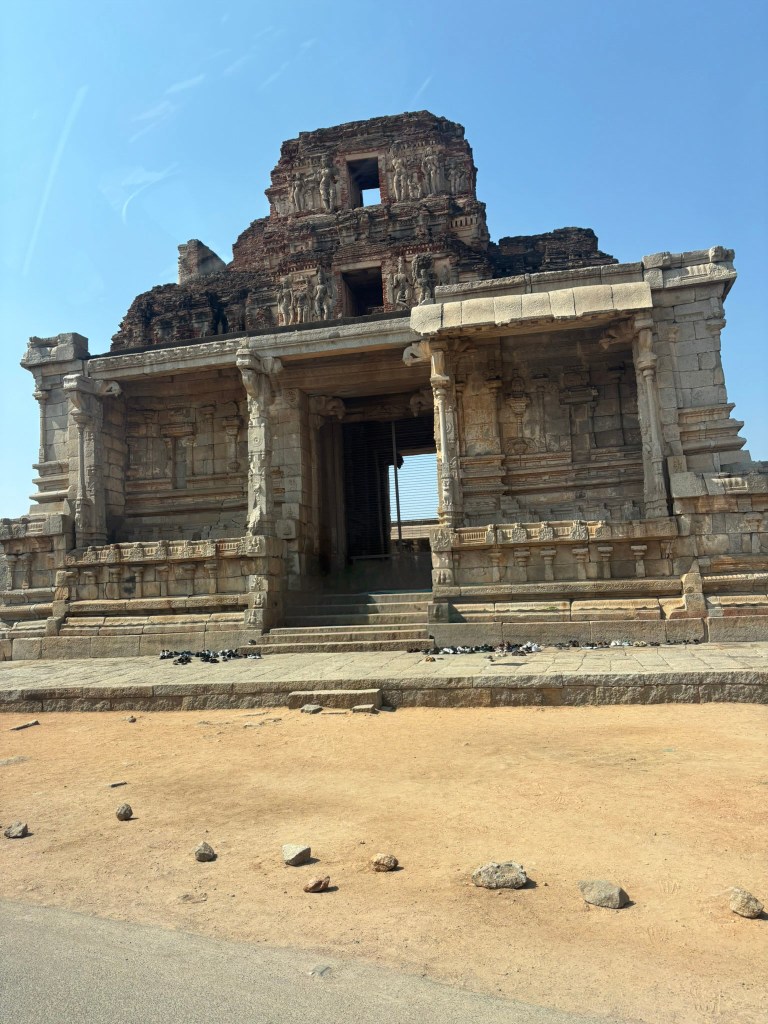
Traveling south from the Virupaksha complex, the road leads to Kamalapura. The landscape then opens into Krishnapura, another historic quarter of Hampi’s sacred center. At its heart stands the Krishna Temple. It is a grand monument commissioned in 1515 CE by the Vijayanagara emperor Krishnadevaraya. This was to commemorate his celebrated victory over the Gajapati rulers of Orissa. The temple once housed a granite icon of the infant Krishna. This icon was seized from the fort at Udayagiri during this campaign. It is now preserved at the Government State Museum in Chennai.

A Temple Anchored in its Urban Landscape

Like other major shrines in Hampi, the Krishna Temple is aligned with a broad bazaar street extending eastward. Today, this street sits at a lower level than the temple itself. Its colonnades are partly engulfed by fields of sugarcane and banana plantations. This setting creates a striking contrast between cultivated greenery and monumental stone.

A few metres north of the bazaar lies a rectangular tank. It is framed by additional colonnades and crowned by a small pavilion that rises from the water. This tank is nestled beneath a rocky overhang. It forms one of the most picturesque corners of the complex. If you have time, this is a good place get some nice photos.

The Grand Gopura: A Royal Statement

The eastern entrance gopura immediately announces the temple’s royal origins. Though now dilapidated, its frontal portico remains impressive for the sheer height of its granite columns. These columns were recently reset during conservation efforts. Above them rises the brick superstructure, only partially preserved, but still bearing traces of plaster sculptures. Among these are battle scenes on the western face. These scenes possibly depict Krishnadevaraya’s Orissa campaign. Later renovations have simplified many of the original figures.

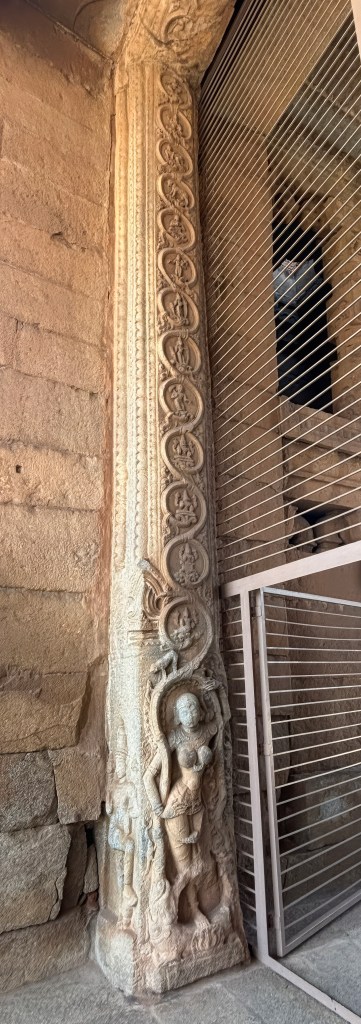
Within the gopura passageway, the doorway jambs are carved with elegant maidens entwined with creepers. A charming hare‑in‑the‑moon motif appears between nagas on the underside of one lintel. This is a delightful detail easily missed by hurried visitors.

Inside the Temple: Mandapas, Shrines, and Royal Inscriptions

A large inscription slab stands at the centre of the walled compound. Krishnadevaraya himself set it up. It records his military exploits and benefactions. The carving is somewhat hastily executed, but the monument remains a valuable historical record of the emperor’s reign.

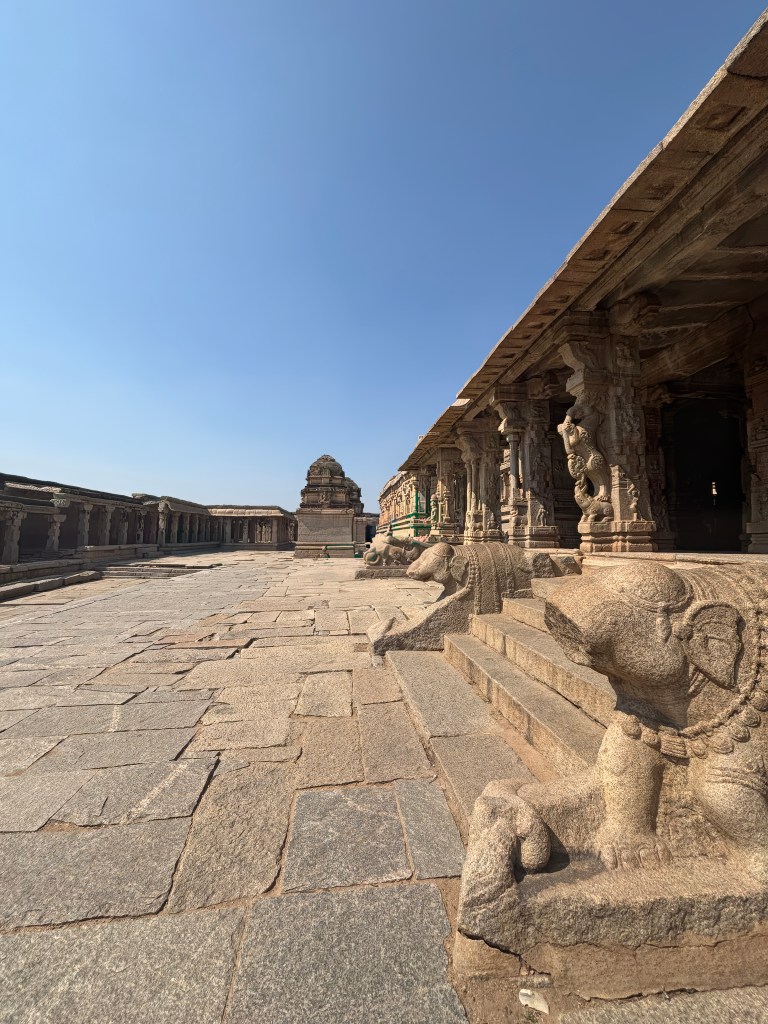
The temple layout follows the classic Vijayanagara sequence:

  • a 25‑bay open mandapa,
  • an enclosed nine‑bay mandapa with side porches,
  • and a towered sanctuary surrounded by an unlit circumambulatory passage.

Minor shrines occupy the outer corners of the enclosure. A double‑sanctuaried goddess temple stands to the north. It adds to the ritual complexity of the site.

Layers of Construction and Adaptation

Along the inner perimeter is a continuous colonnade. It is interrupted on the south side by a passageway. This leads to an earlier pavilion‑like gateway. This older structure became part of the Krishna Temple complex. It was crowned with a brick tower. This illustrates the Vijayanagara habit of integrating pre‑existing buildings into new architectural schemes.

Beyond this lies an outer-walled enclosure, where a curious six‑domed structure stands. The building is built of rubble coated in plaster. It has internal arches and steps leading to the roof. The building features holes in the domes. These are clear evidence that it once served as a granary. Its presence highlights the temple’s significance as a sacred space. It also emphasizes its role as a center of economic and administrative activity.

Final Thoughts on the Krishna Temple

The Krishna Temple is one of those places in Hampi where layers of history feel unusually close to the surface. You sense Krishnadevaraya’s ambition in the soaring gopura. You also feel the devotional pulse that once centered around the now‑empty sanctuary. Even in its ruined state, the complex carries the unmistakable imprint of royal patronage. It is a temple built not only for worship. It commemorates a moment of triumph that shaped the empire’s identity.