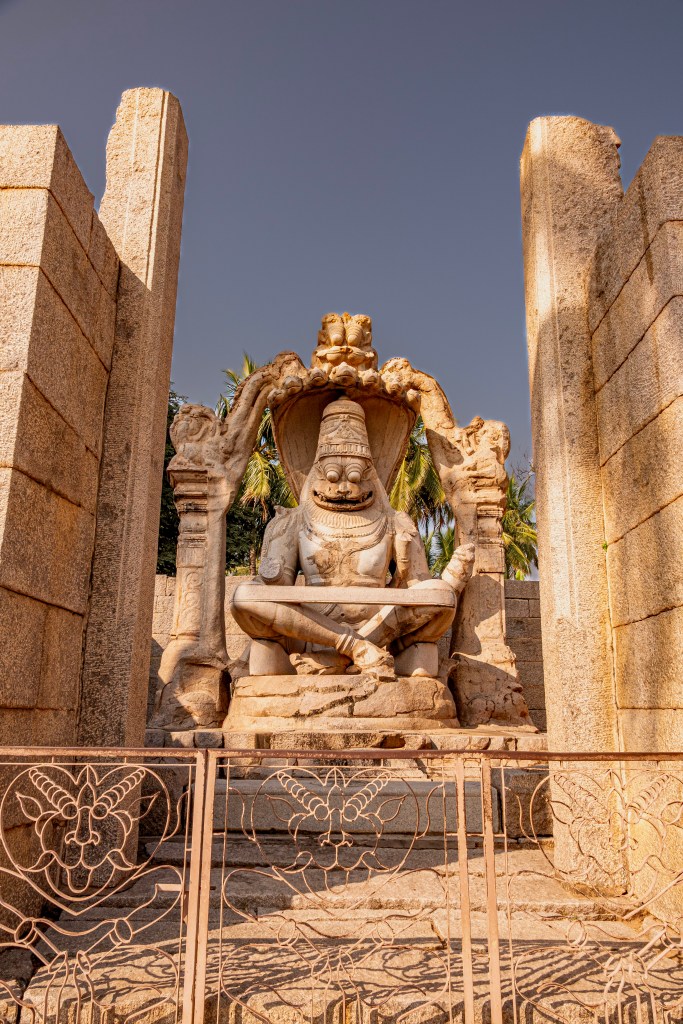
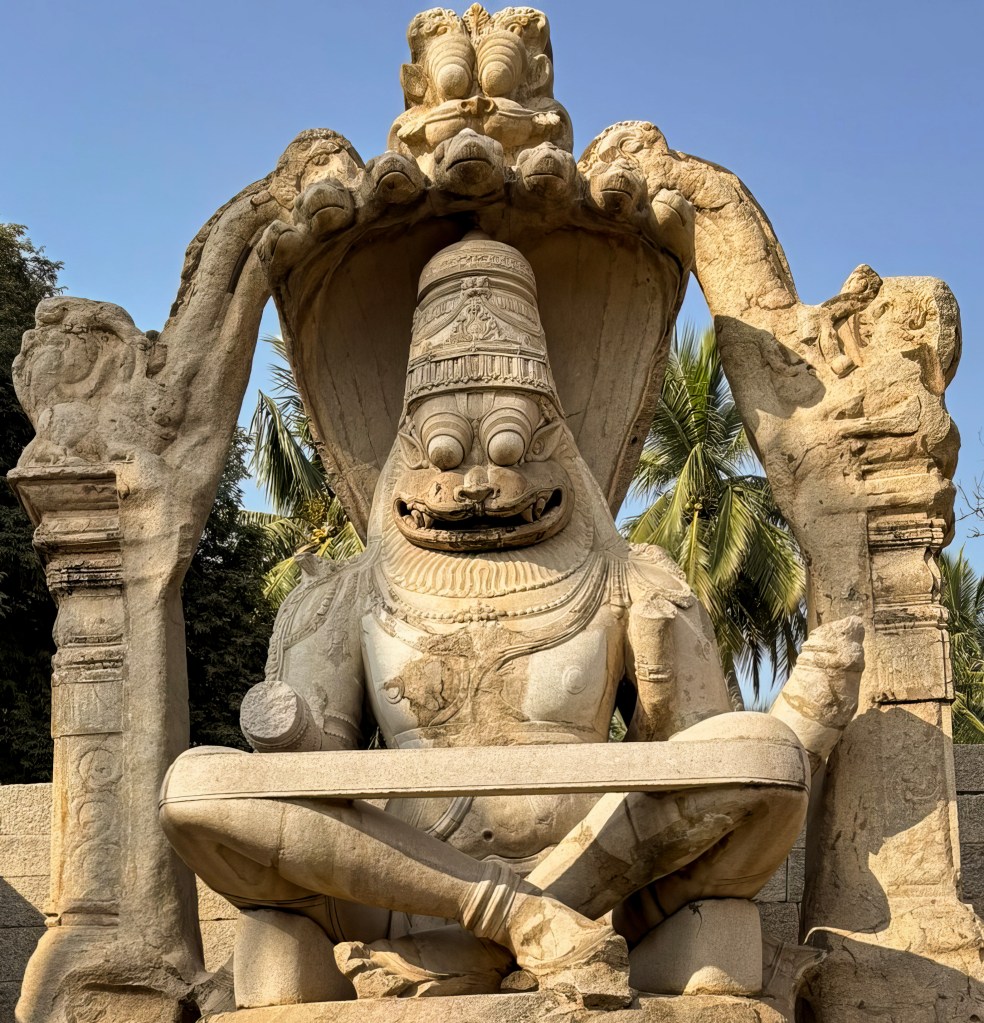
The monolithic Ugra Narasimha statue in Hampi is a massive, 22-foot (6.7m) tall sculpture of Vishnu’s half-man, half-lion incarnation, carved from a single rock in 1528 by order of King Krishnadevaraya, known for its intimidating expression but originally featuring Goddess Lakshmi on his lap, a consort figure destroyed by invaders in 1565. This remarkable statue not only showcases the exceptional craftsmanship of the artisans of that era but also reflects the rich cultural and religious heritage of the Vijayanagara Empire. As visitors approach, they are drawn to the intricate details of Narasimha’s fierce visage, which embodies both strength and protection.
Key Features & History:
Monolithic: Carved from one large granite boulder in 1528.
Size: Stands approximately 6.7 meters (22 feet) tall, making it Hampi’s largest monolithic statue.
Iconography: The statue depicts Narasimha, the half-man, half-lion avatar of Vishnu, seated in a cross-legged yoga posture (Padmasana).
Serpentine Canopy: He is sheltered by the seven hoods of Adishesha (the serpent god), which serve as a canopy over his head.
Makara Torana: The entire sculpture is framed by a Makara torana (an arch featuring mythical crocodile-like creatures) topped with a Kirtimukha (lion-like “face of glory”).
Unique Features: The statue is famed for its large, bulging eyes and fierce expression, symbolizing its “Ugra” (ferocious) form.
Missing Elements: Originally, a smaller statue of Goddess Lakshmi sat on his left lap; today, only her broken hand remains visible on Narasimha’s back due to damage in 1565.
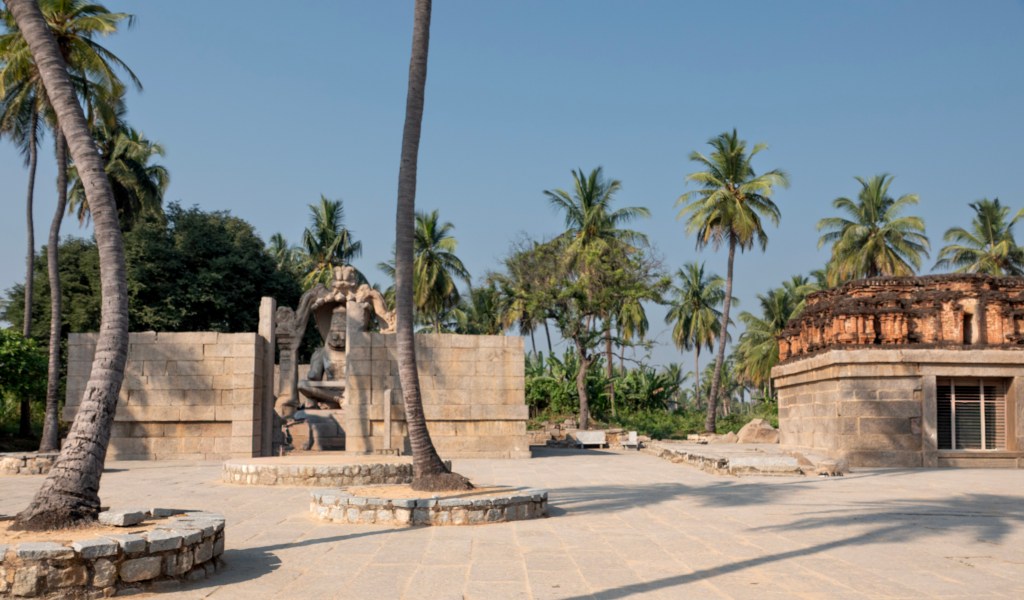
Temple Structure: The original temple chamber has been completely destroyed, leaving the statue exposed to the sky without a roof.
Restoration: The Archaeological Survey of India (ASI) restored the statue, adding knees and a yogapatta (yogic band), leading to its alternative name, Yoga Narasimha.
Location: Found near the Badavilinga Temple at the base of Hemakuta Hill.
Badavalinga Temple
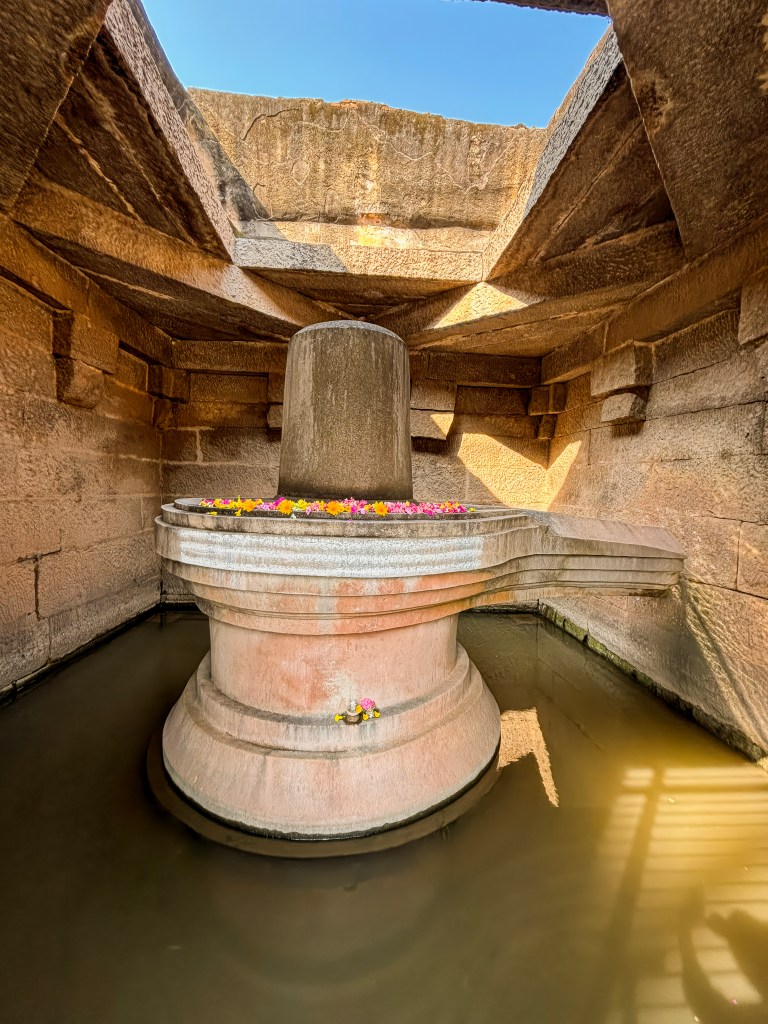
Right next to Laskmi Narashimha temple is the Badavalinga temple that houses largest monlithic Siva Linga in this area. The linga is partially submerged in water which flows thorough aquaduct from Thungabhadra river 1 Km away.
Key Details
Architecture: The 3-meter (10-foot) high Shiva Linga is carved from a single black stone and features a carved mark representing Lord Shiva’s three eyes. The temple chamber lacks a permanent ceiling, allowing natural light to illuminate the Linga.
Location: The temple is located near the popular Lakshmi Narasimha Temple in Hampi, a UNESCO World Heritage site. It’s easily accessible and about 1 km from the town center.
Hours: It is open daily from 6 AM to 6 PM. Some sources mention longer hours from 5 AM to 9 PM.
Entry Fee: There is no entry fee to visit the temple, and photography is allowed.
Legend: The name “Badavilinga” is derived from the local language words Badava (poor) and Linga, as it is believed to have been commissioned by a poverty-stricken peasant woman during the Vijayanagara Empire.
These 2 temples are great starting points for appreciating what Hampi has to offer
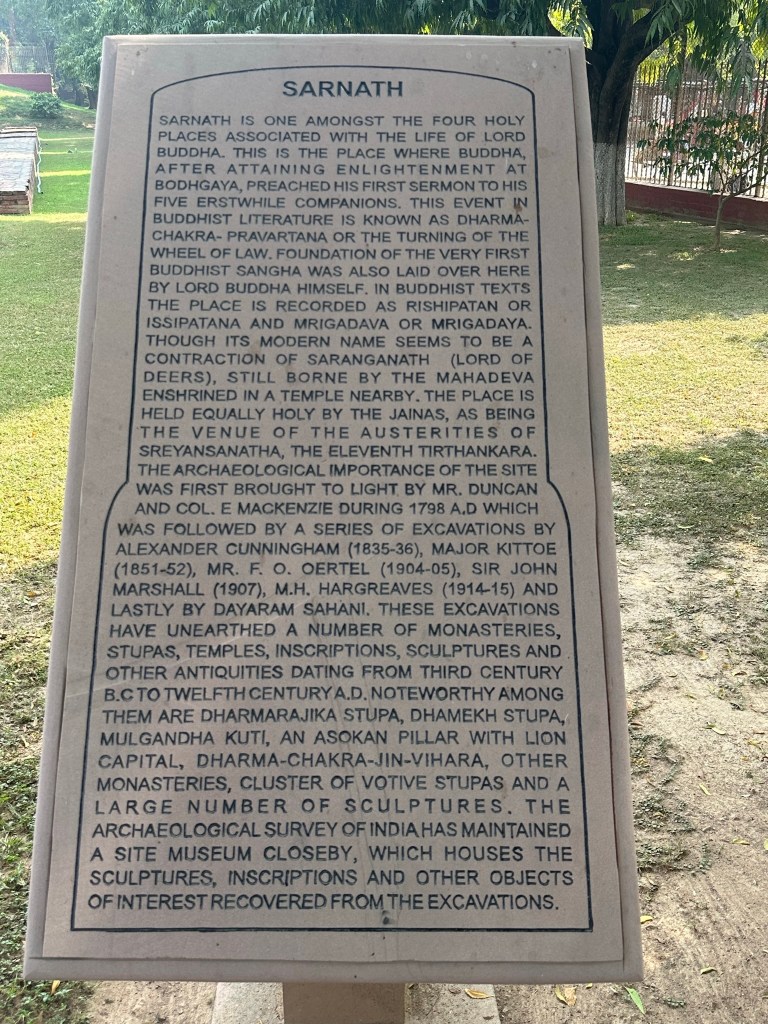
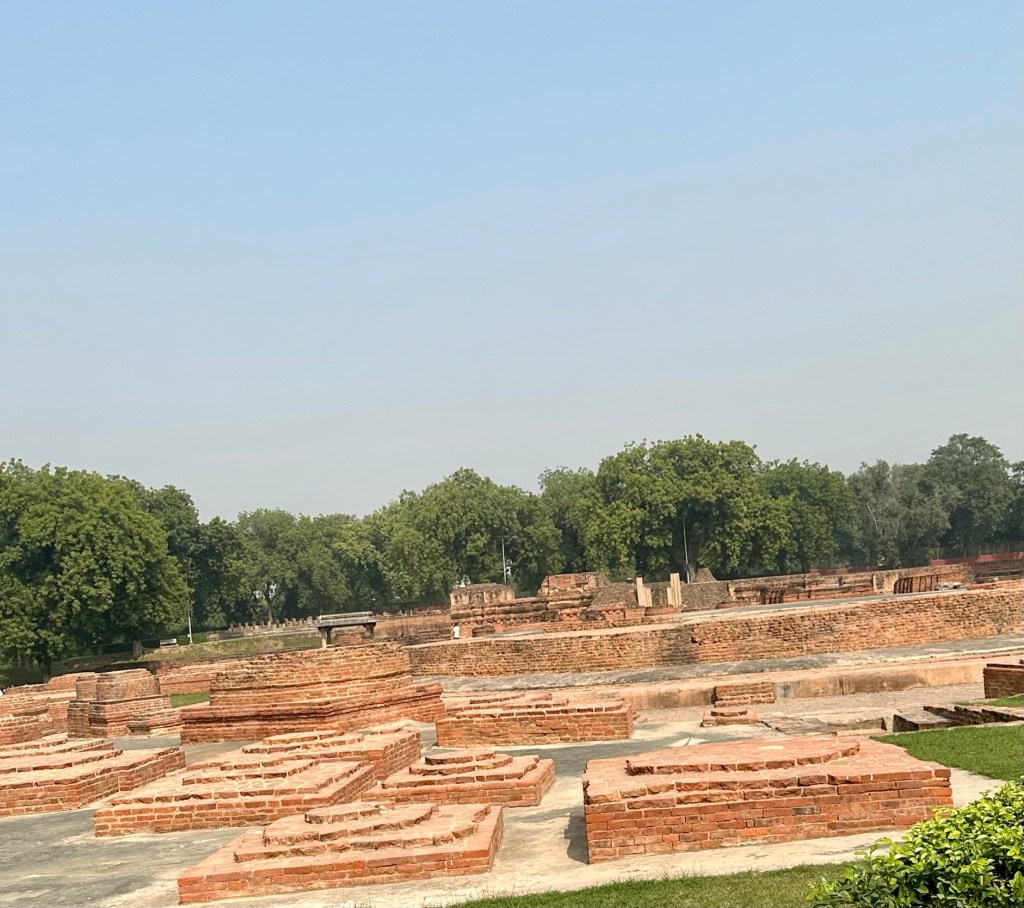
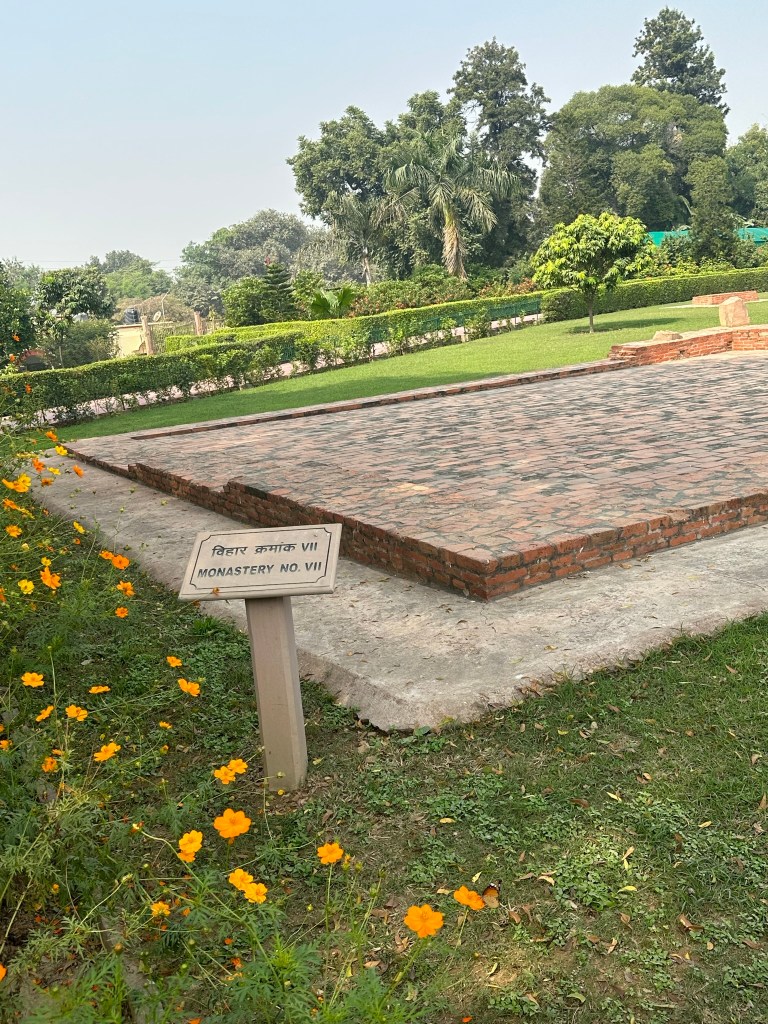
Sarnath, a small town located 10Km outside of Varanasi in India, is considered to be one of the most sacred places for Buddhist pilgrims. After attaining enlightenment in Bodhi Gaya (which is in present day Bihar), Buddha travelled to Varanasi and gave his first sermon to five of his followers, established Sangha (Buddhist monastic community) and set the wheel of Dharma in motion. Sarnath gained more prominence during 3rd century BC when king Ashoka erected several Stupas and monastic complexes and helped to spread Buddhism in India and Southeast Asia.
The Dhamekh Stupa
Buddhist stupas were originally built to house the earthly remains of Buddha and his associates and are almost invariably found at sites sacred to Buddhism. According to world history org, ” A Stupa (literally “heap” or “pile”) is a shrine containing the remains of a holy person and/or artifacts (relics) associated with them, originating in India prior to the 5th century BCE as tombs of holy men and evolving afterwards into sacred sites dedicated to the Buddha (l. c. 563 – c. 483 BCE).Later, stupas were also raised to honor Buddhist arhats (saints), bodhisattvas (enlightened ones), other saintly figures, or local deities”.
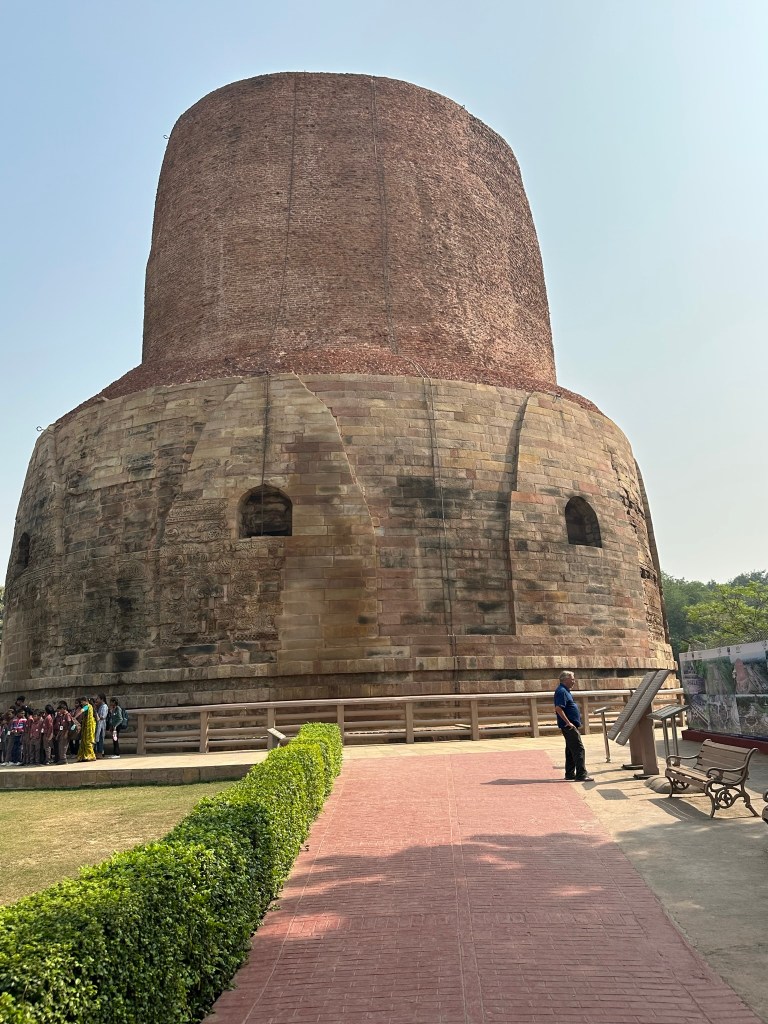
A stupa is a hemispherical structure, with a spire at the top, situated on a base that varies in shape and size and is usually surrounded by a walkway for visitors. The Dhamekh Stupa in Saranath is believed to have been built during the reign of Emperor Ashoka, stands at 33.35 meters in height and is adorned with intricately carved stone panels depicting scenes from Buddha’s life and teachings. Eight niches are provided in the eight direction which are assumed to contain images of Buddha.
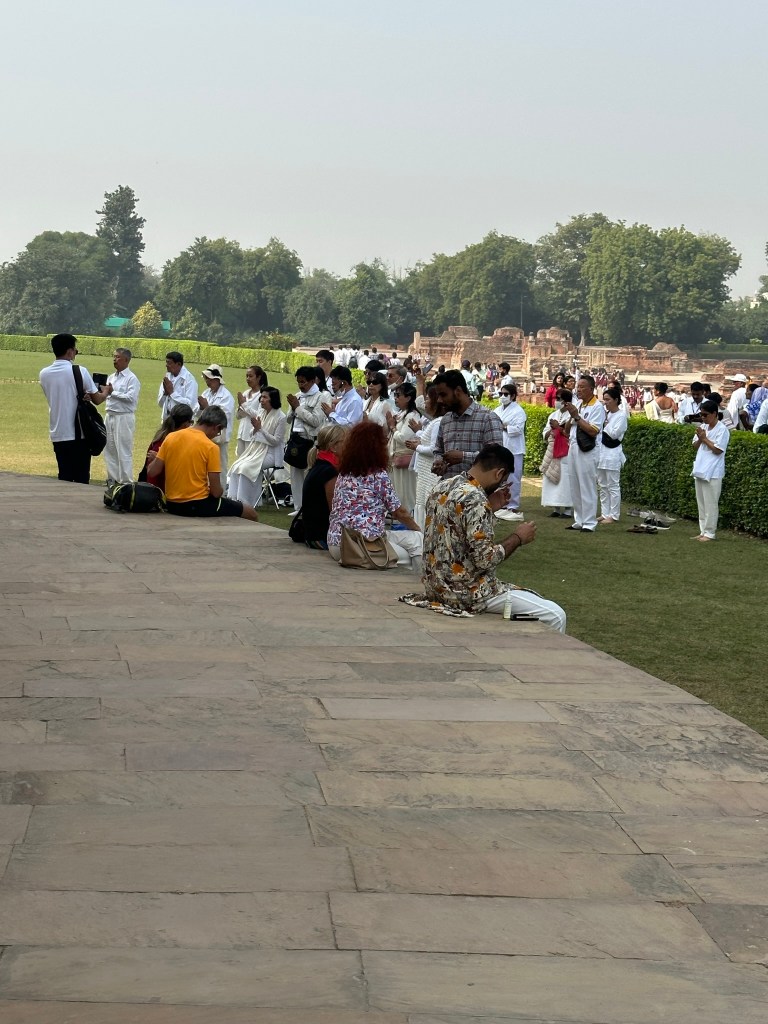
It is very common to see Buddhist pilgrims meditating and praying around this area.
King Ashoka and Lion Capital-the national emblem of India
Ashokan pillar, c. 279 B.C.E. – 232 B.C.E, Vaishali, India (where Buddha preached his last sermon). Photo: Rajeev Kumar, CC: BY-SA 2.5)
Ashoka was the third emperor of Maurya dynasty and ruled between 279-232 BC. After witnessing the death and carnage caused by his army in the war of Kalinga, Ashoka decided to adapt the teachings of Buddha and spread the four noble truths of Buddhism far and wide. One of the ways King Ashoka decided to spread the noble truth of Buddhism is through erecting pillars that are 40-50 ft tall and with edicts/proclamations written on them. The pillars cut from two different types of stone—one for the shaft and another for the capital. The shaft was almost always cut from a single piece of stone. The capital or the top part of the pillar varies and usually have symbol depicting Buddhism or its philosophy.
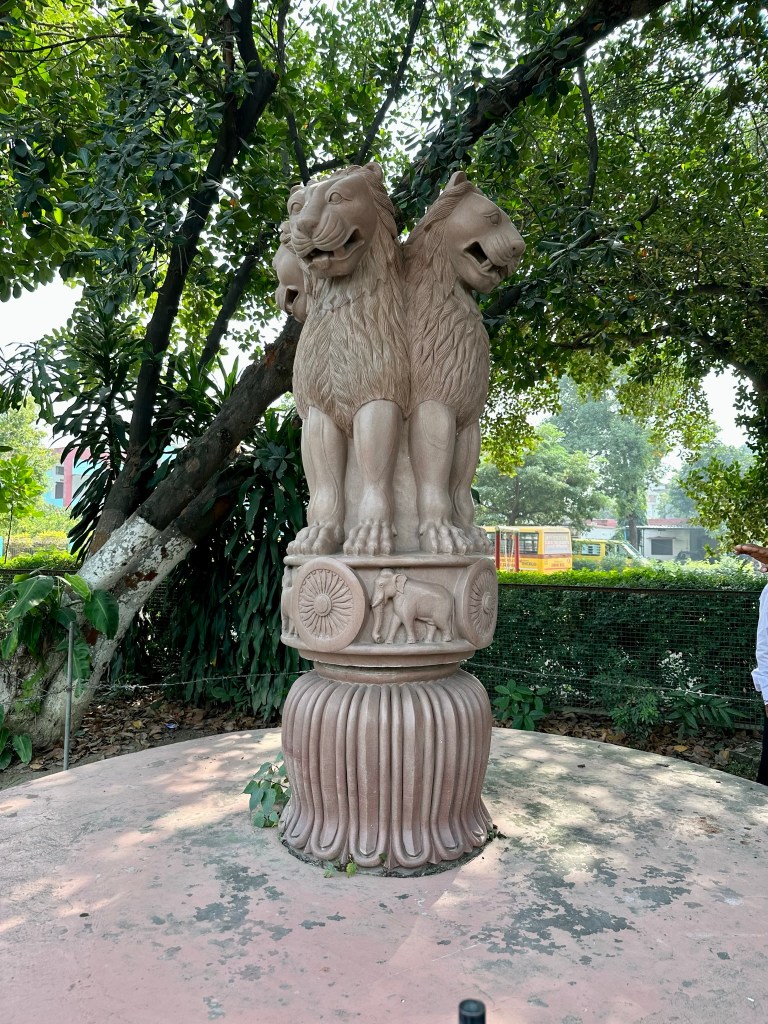
Lotus and lion-Symbolism associated with Ashoka Pillar found at Sarnath.
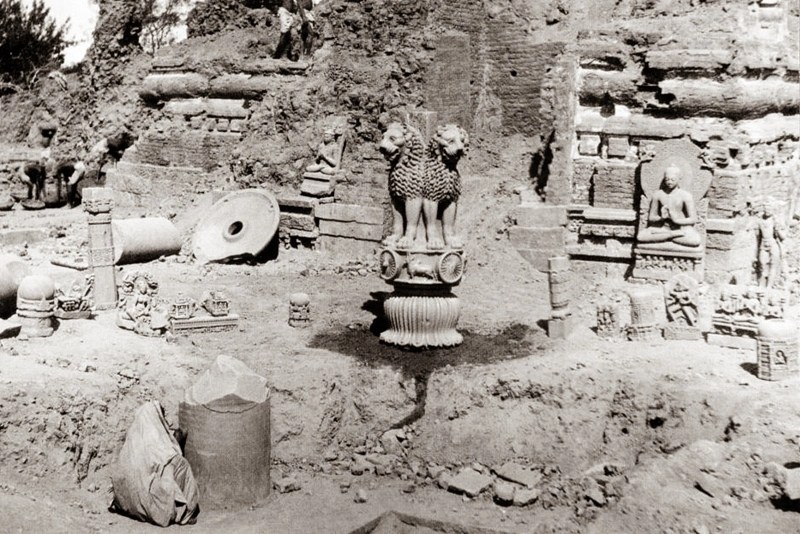
Ashoka Pillar found in Sarnath -excavation photo
One of the most famous Ashoka Pillar is the one found at Sarnath. You can still see the pillar remains where it was originally located while the Capital of the pillar is in display at the museum next door. The symbols from the Capital that was found in Sarnath was adopted as the national emblem of India in 1950 when India became a republic. It is depicted on the one rupee note and the two rupee Indian coin. The Capital of the Ashoka pillar found in Saranath follows the typical style of the Ashoka pillar with a shaft and capital that is made of 3 parts-an inverted lotus flower, base with 4 animals carved in-between wheels , and 4 lions sitting on the top.
The lotus flower usually depicts Buddhist doctrine and is the most common symbol of Buddhism. Buddhism teaches that human life is like the “lotus flower” and the “muddy water” the harsh realities of everyday life. Lotus flower blooms in muddy water and its petals remain unblemished implying that Buddhist practitioner rises above despite the challenges of daily life and moving towards the light of wisdom. The Sarnath Ashoka Pillar lion capital has four lions on the top of the drum each facing in the four cardinal directions. Their mouths are open, roaring or spreading the dharma, the Four Noble Truths, across the land.
Replica of Lion Capital of Sarnath
On the drum of the Capital, there are four circular wheels in the middle is a form of Buddhist Dharma Chakra (also known as the Ashok Chakra). The 24 spokes of the Chakra represent the number of hours in a day. The spokes signify moving forward in life and thus one avoids stagnation of the mind. The four animals depicted alternatively between the chakras are regarded as the guardians of four directions – the lion for the north, the elephant for the east, the horse for the south and the bull for the west. In some Buddhist texts, all these animals have been referred to as symbols for Buddha himself and may be deduced as him carrying forward the tenets of Dharma. In yet another interpretation, these four animals represents the different stages of Lord Buddha’s life. (https://www.culturalindia.net/national-symbols/national-emblem.html)
Other noteworthy things to see around Sarnath:
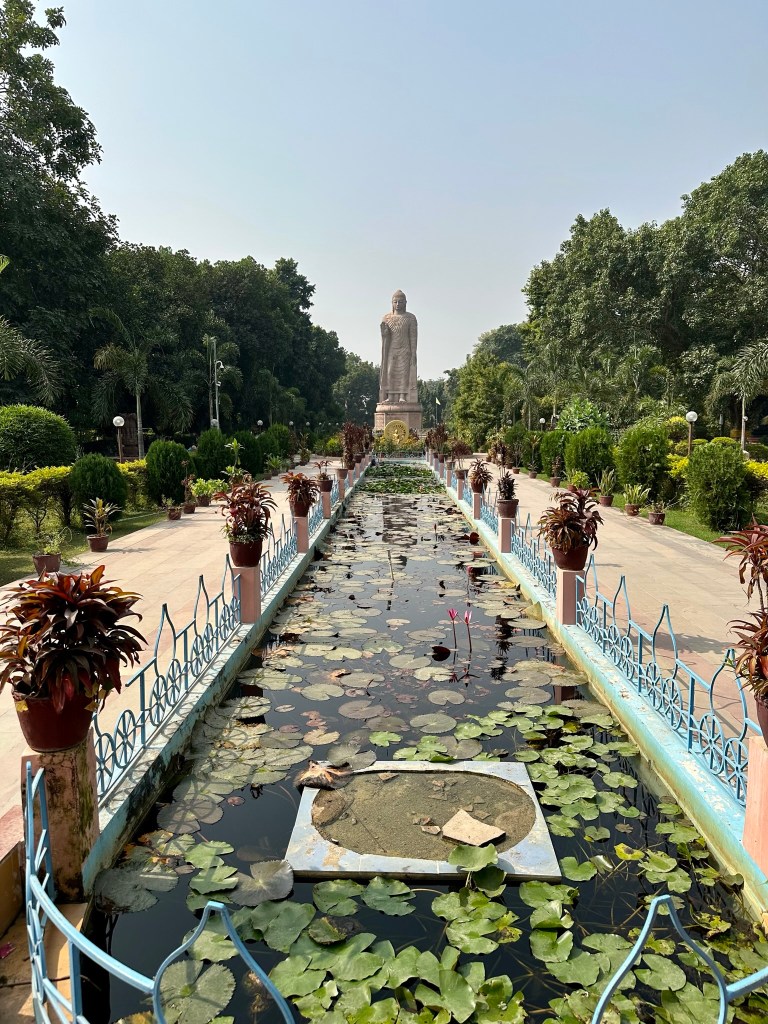
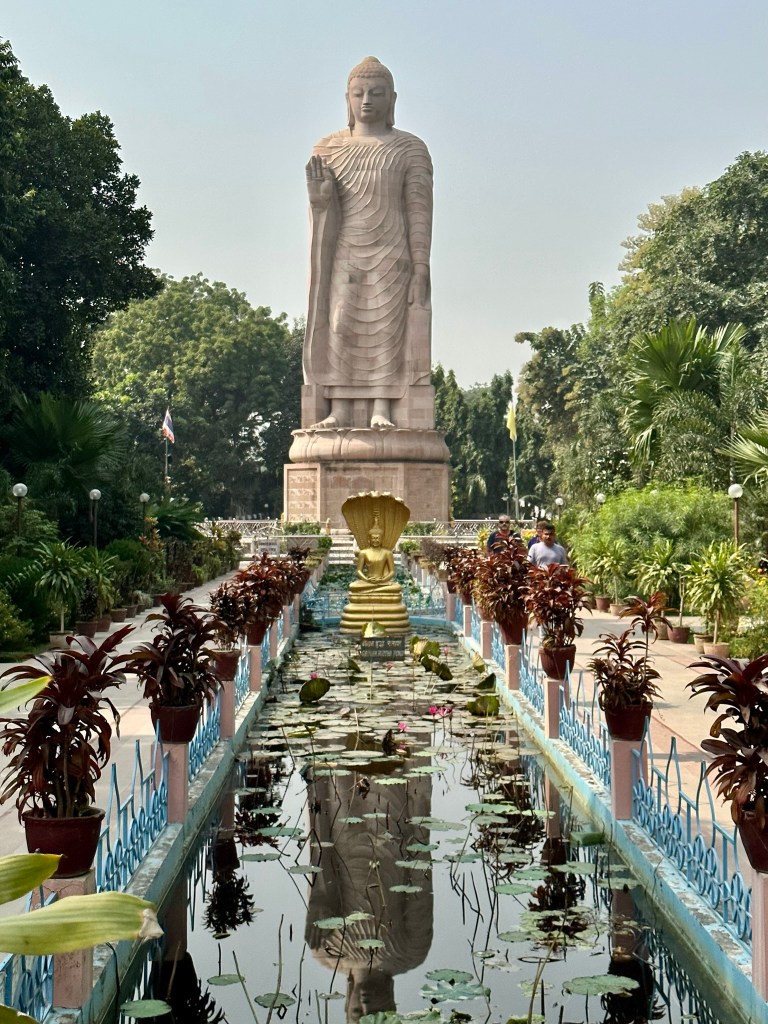
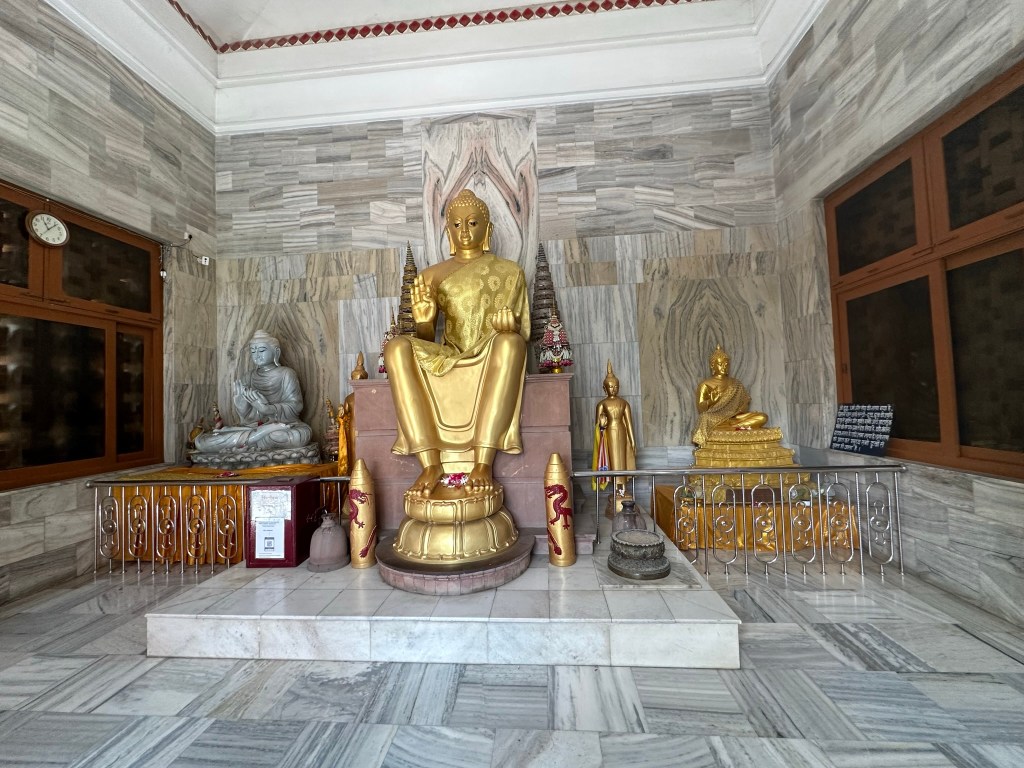
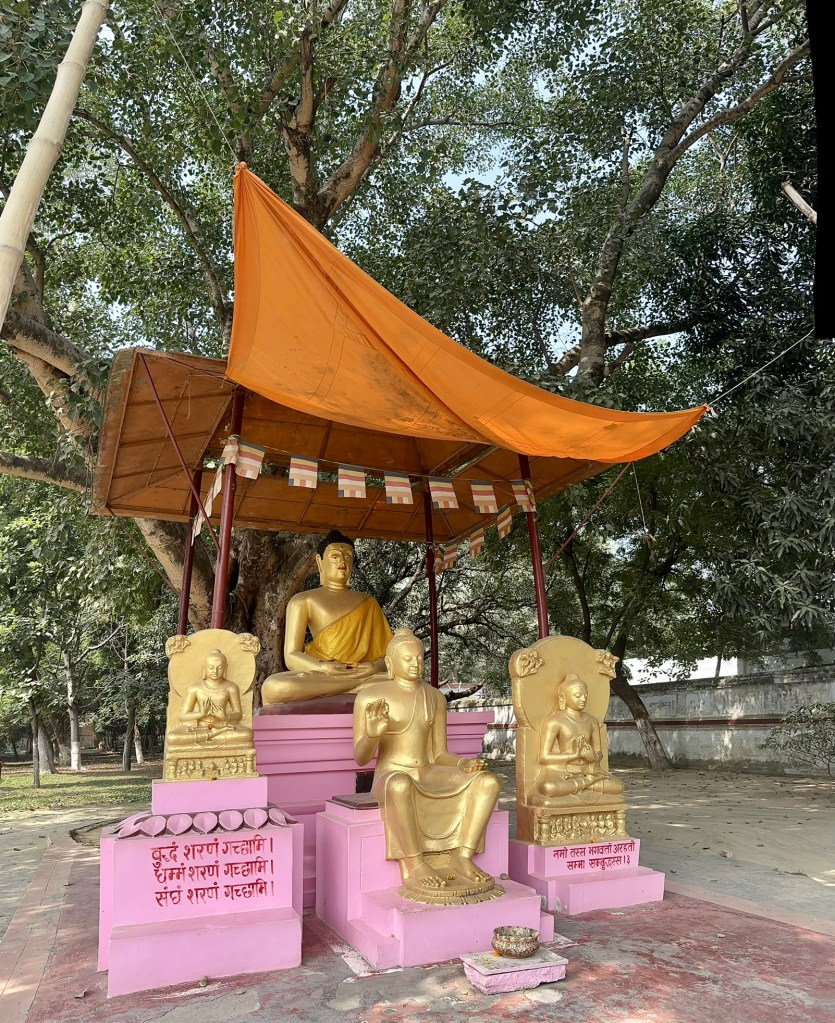
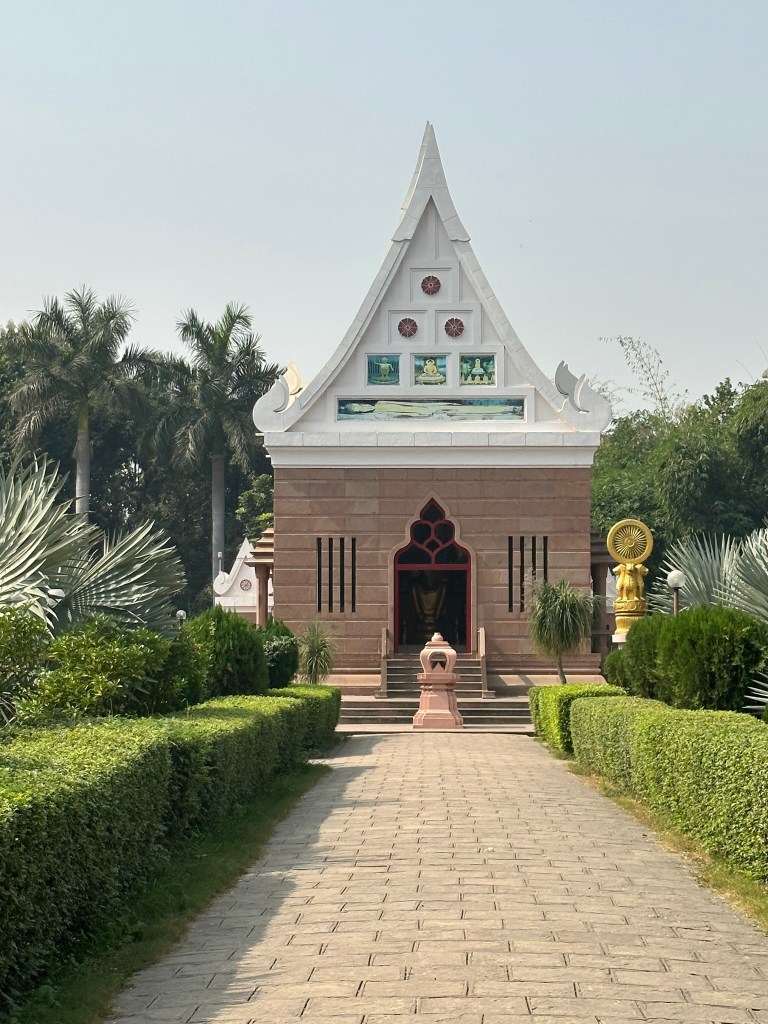
Apart from the archeological site and the museum, there is a beautiful Thai temple with a large standing buddha statue set in a beautiful garden. There are scenes depicting first sermon of Buddha as well as a laughing buddha statue. This place is definitely worth stopping by even for few minutes.
Final thoughts
Saranath is a great place to add to your visit when you are in Varanasi and definitely worth visiting both for historical significance as well as religious significance.
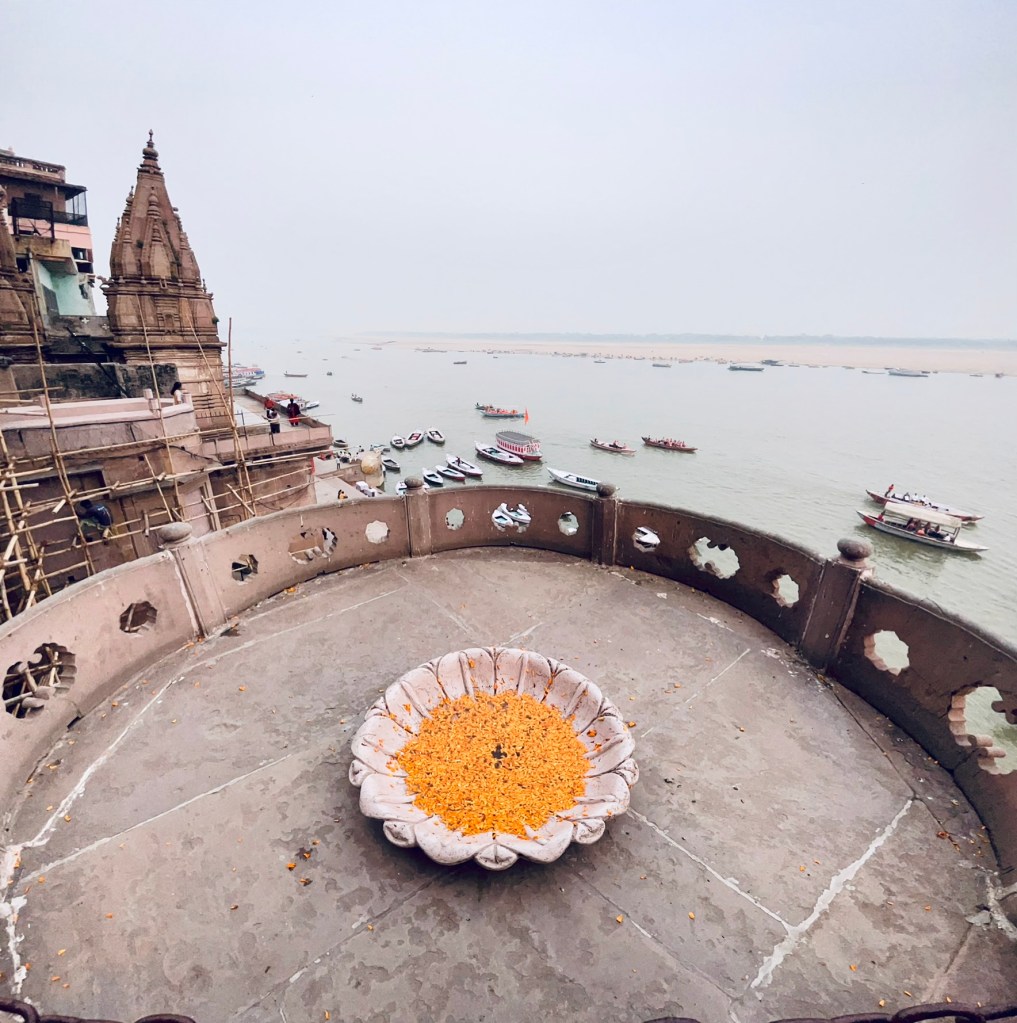
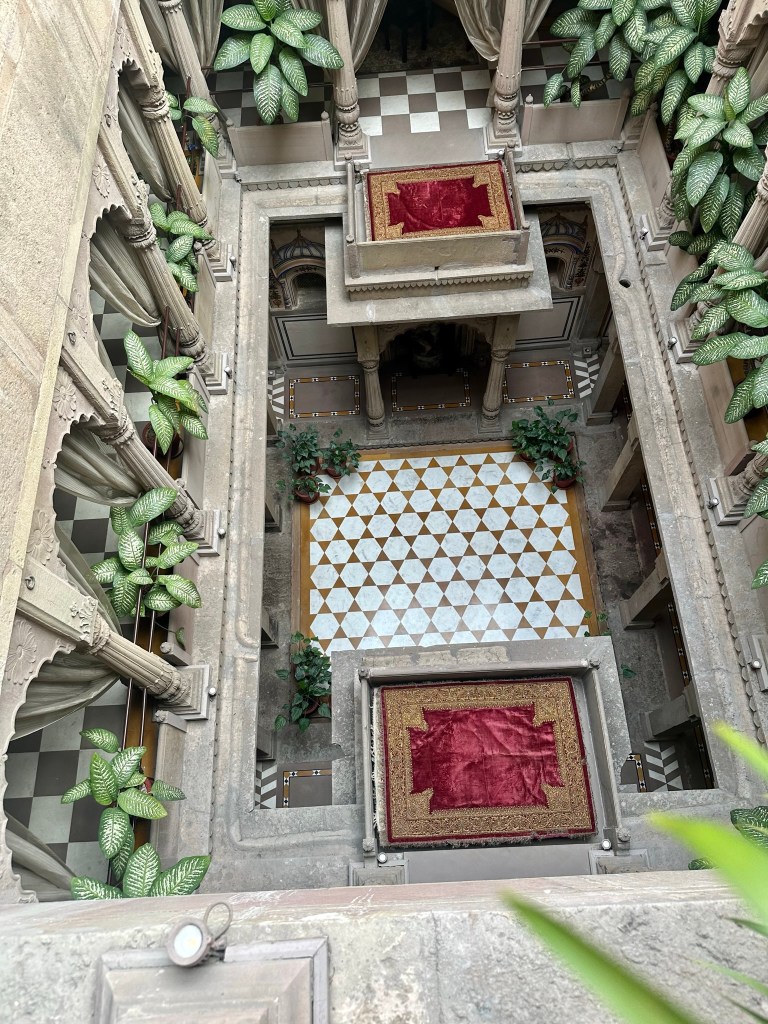
Darbhanga ghat holds special place in Hindu mythology as the legend says that Lord Rama bathed here in the sacred waters of Ganges. The Ghat is dominated by stunning palace that was built in 18th century in Rajput and Mughal style architecture. Later in 20th century, the palace was bought over by Maharaja of Darbhanga and fort underwent extensive renovations, including the installation of South Asia’s first elevator. Today this palace is converted into Birjrama palace hotel by Ganges which seamlessly blends heritage and luxury.
How to get to Brijrama palace:
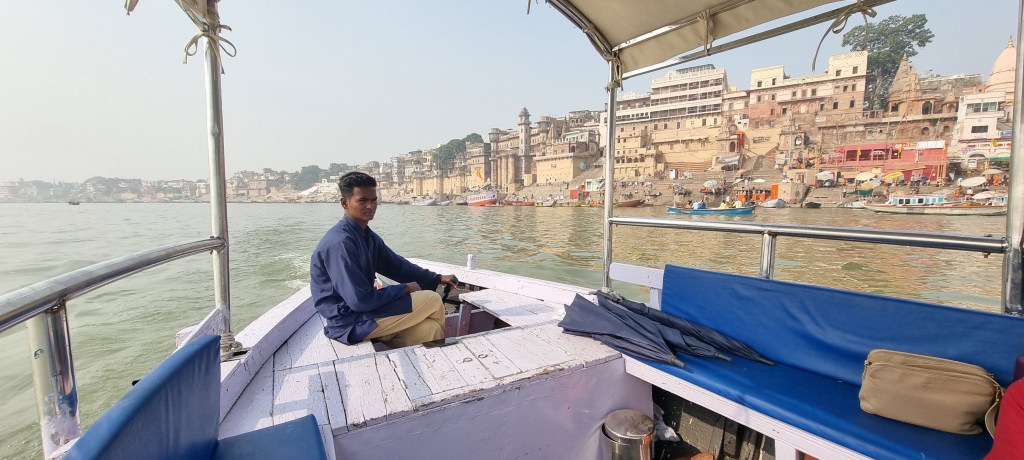
The unique location of Birjrama palace on Darbhanga Ghat provides unique opportunity to get to your hotel by boat. Even though the palace is located very centrally in the heart of Varanasi, close to all main attractions, you can’t reach this place by car. Since the palace is located in Bengali tola surrounded by narrow streets or galies, the best way to reach the palace is by boat. The hotel has multiple boats that can take you to various places within Varanasi, thus avoiding the traffic and also giving you the best view of Varanasi Ghats. The boat rides are free as part of the stay and you can use the boats as needed. We used this service multiple times during our stay including to attend Ganga Aarti, and go to Assi Ghat and surrounding area.
Architecture and interiors of Birjrama palace :
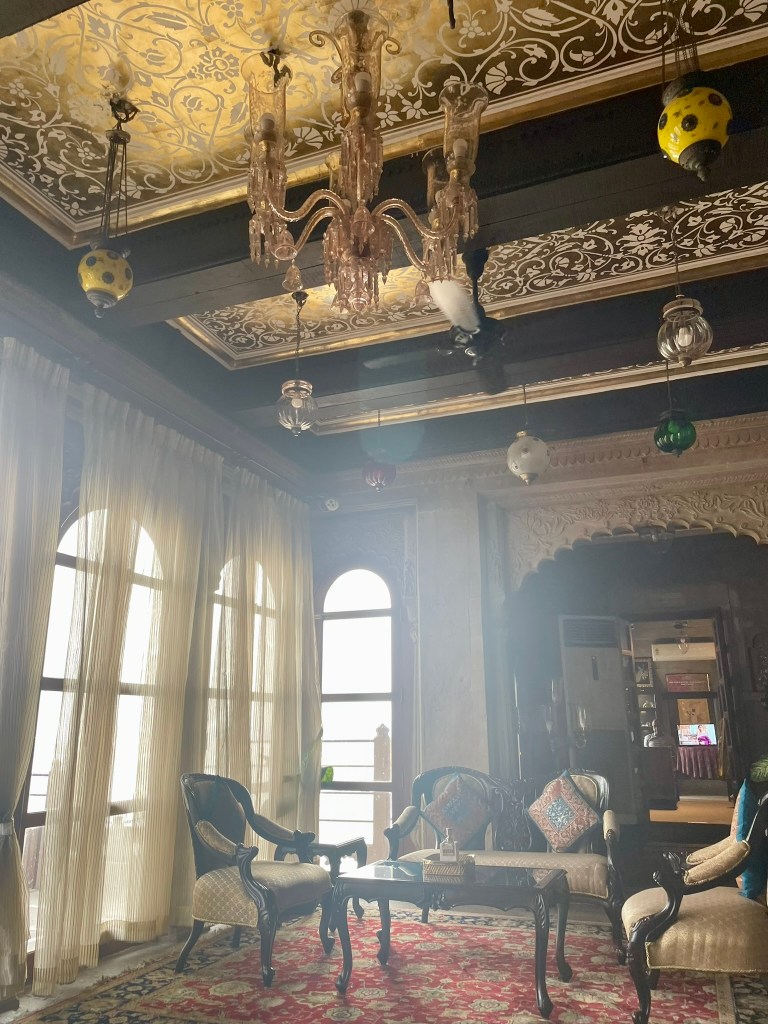
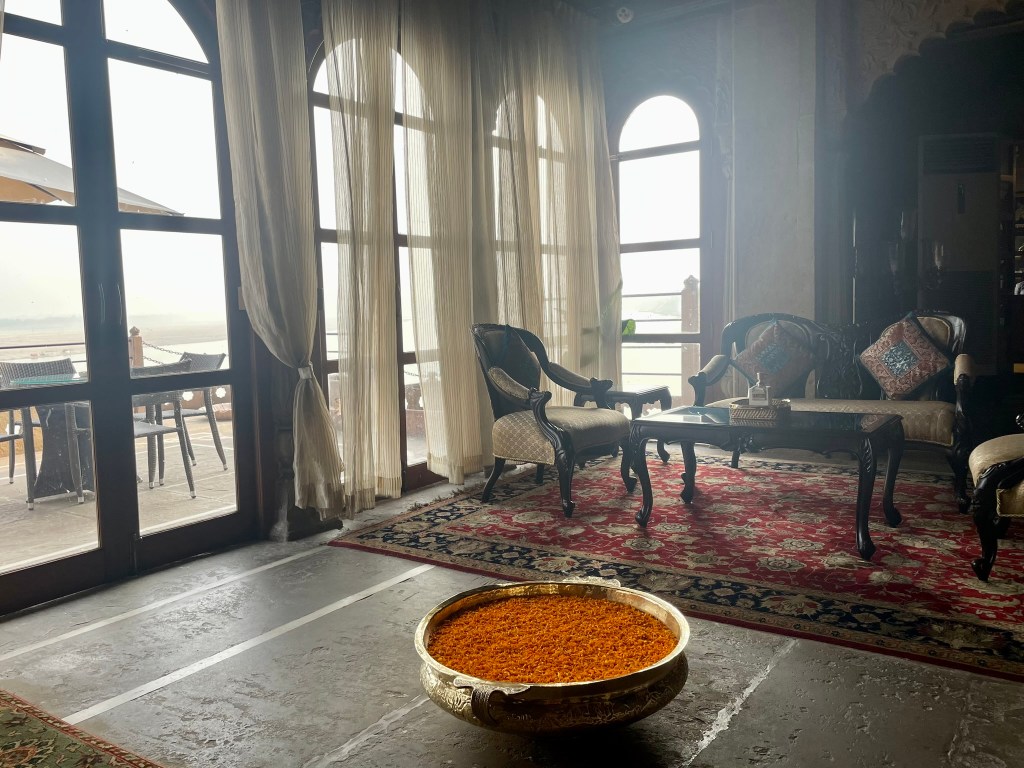
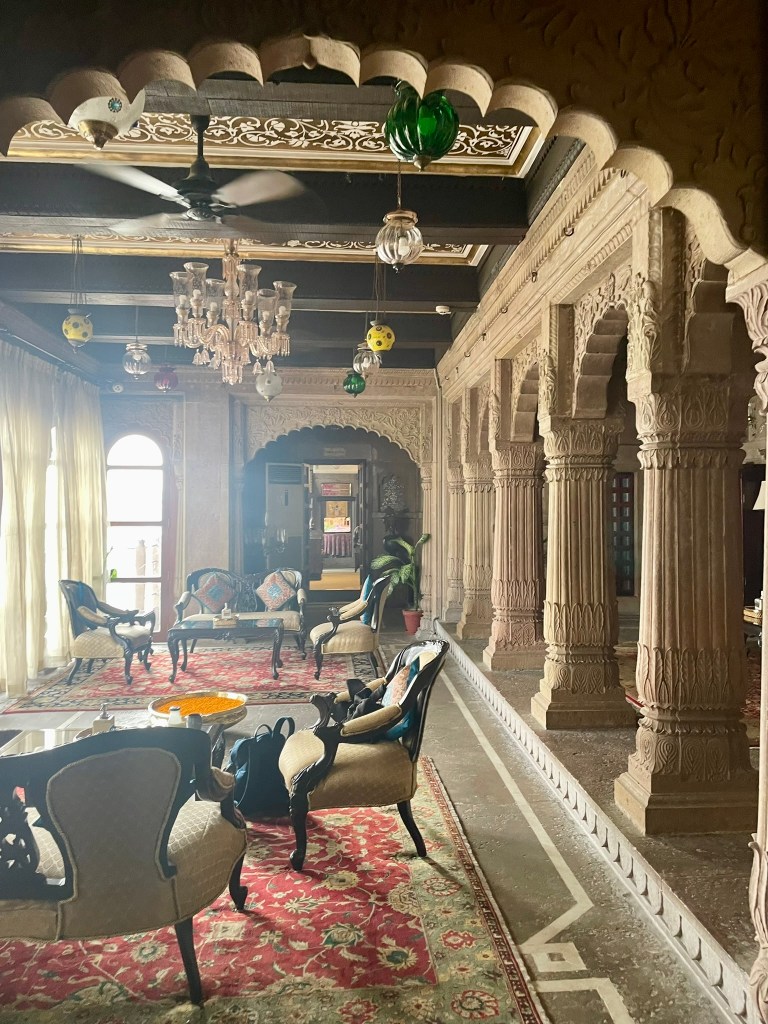
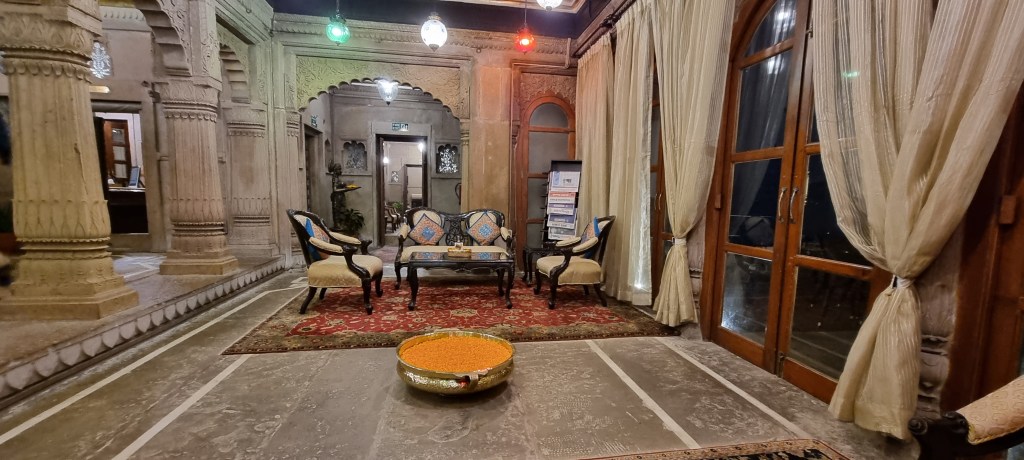
In order to reach the hotel from the ghat, you need to climb about 20 steps and get it to the elevator. You are greeted by a priest who blesses you and hands you flowers and blessings. You enter the elevator which is the first elevator in south east Asia. As you get out of the elevator, you are greeted by ornate sitting room and beautiful view of Ganges from first floor.
Lobby/ Entrance of Birjrama palace
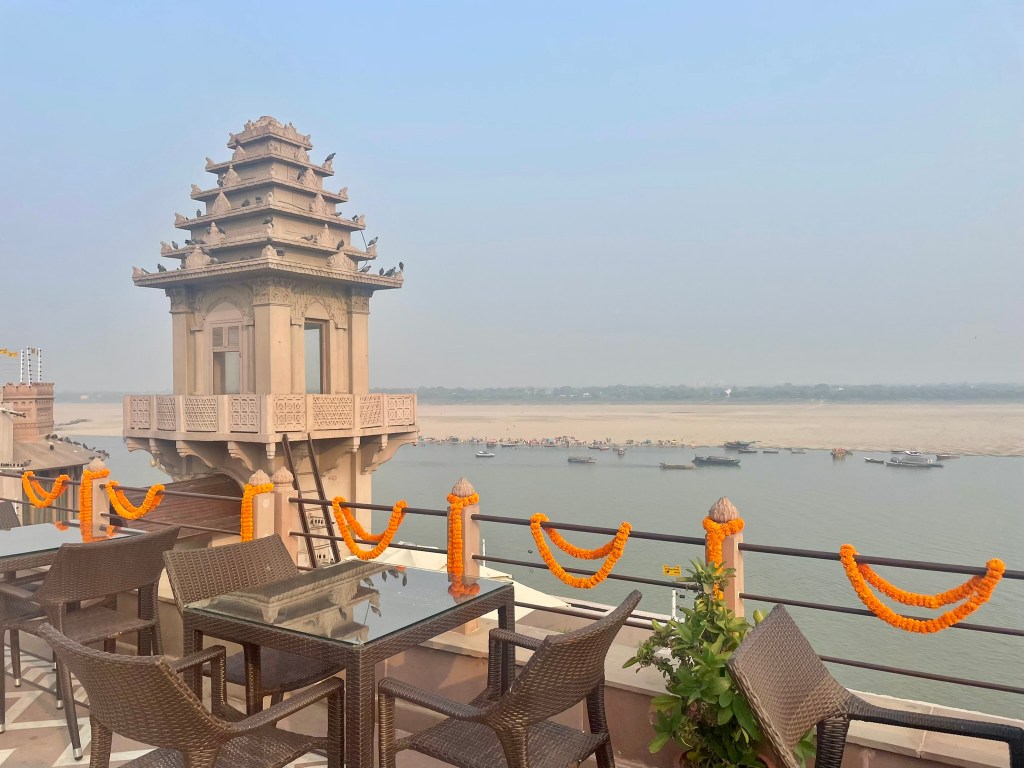
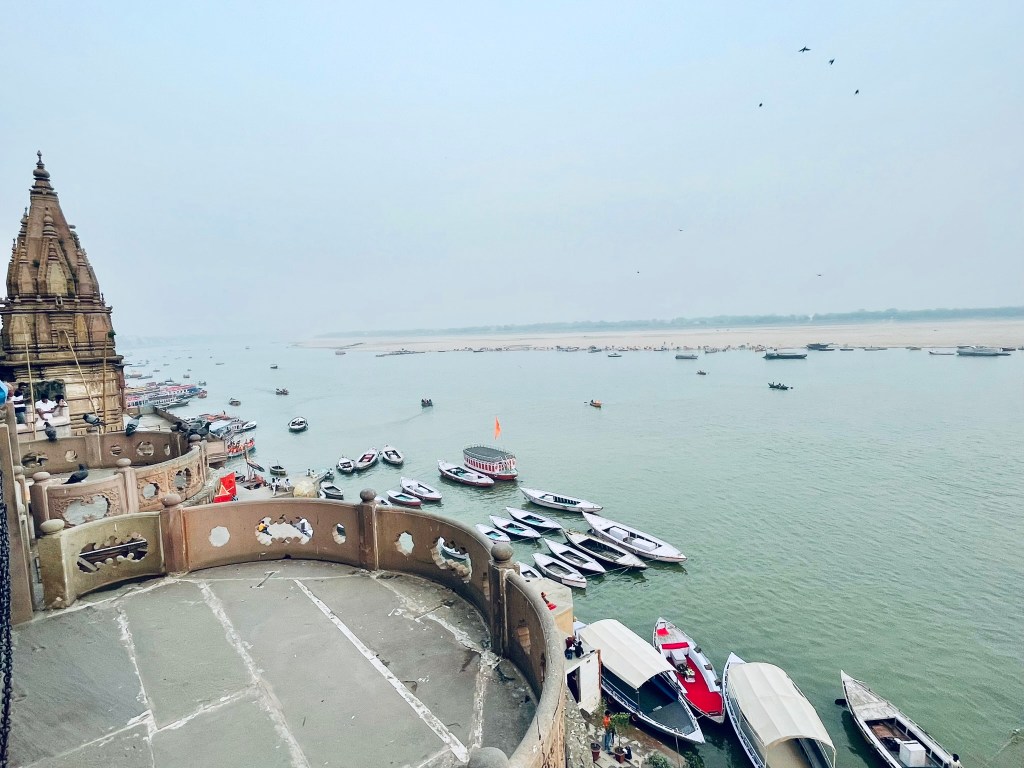
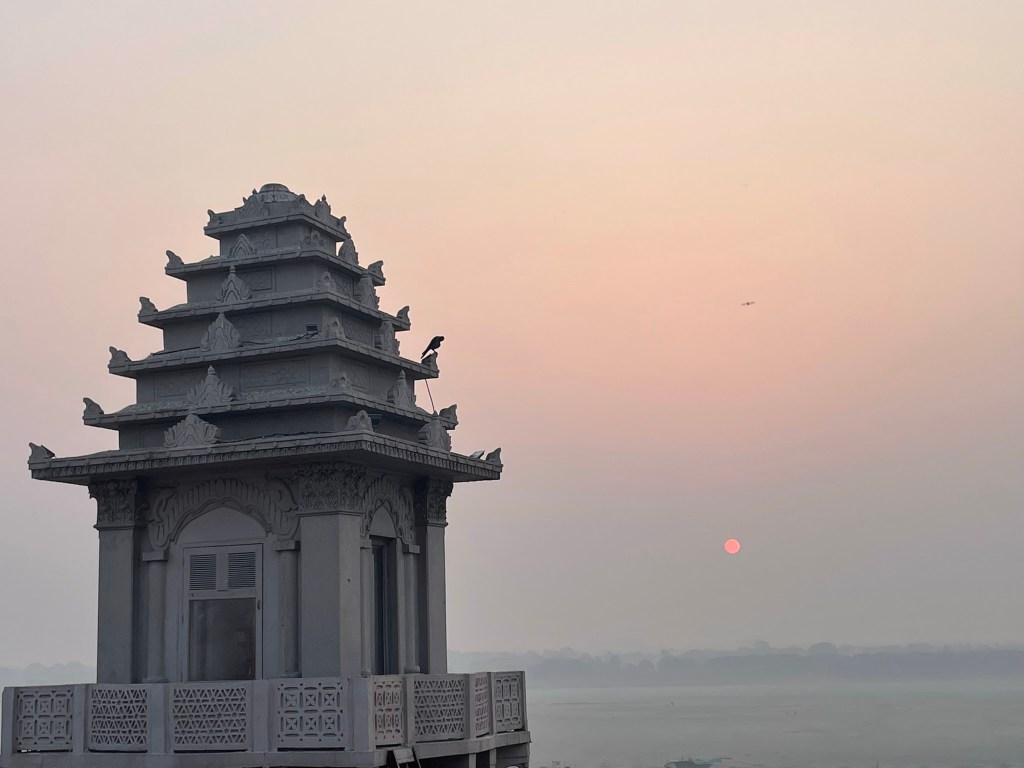
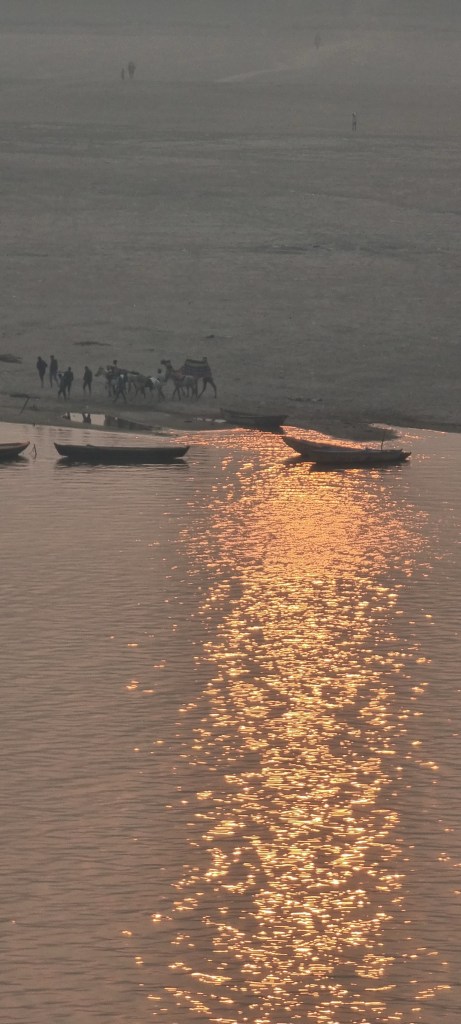
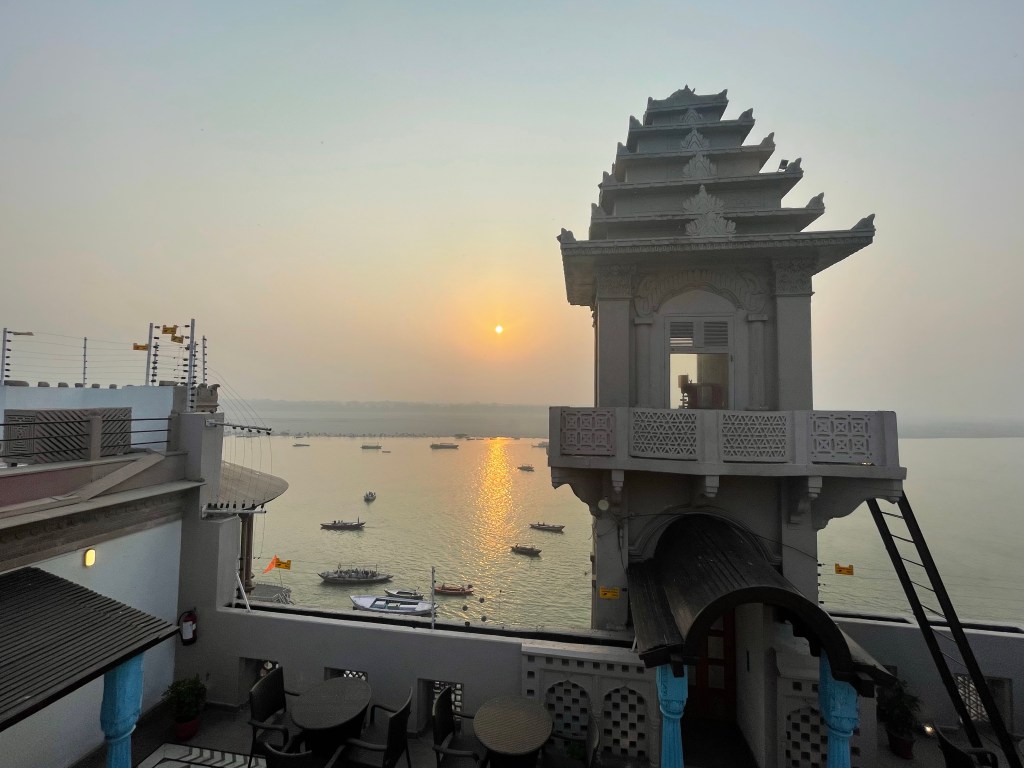
The hotel has 3 floors each with its own balcony/sitting area with breathtaking views of Ganga. We were on 3rd floor and in my opinion, it has the best views and the 3rd floor balcony where they have Yoga classes every morning and high-tea in the evening. We spent every morning watching sunrise over Ganges and enjoying the morning bustle of the ghats.
View from third floor balconyView from first floorSunrise from the 3rd floor
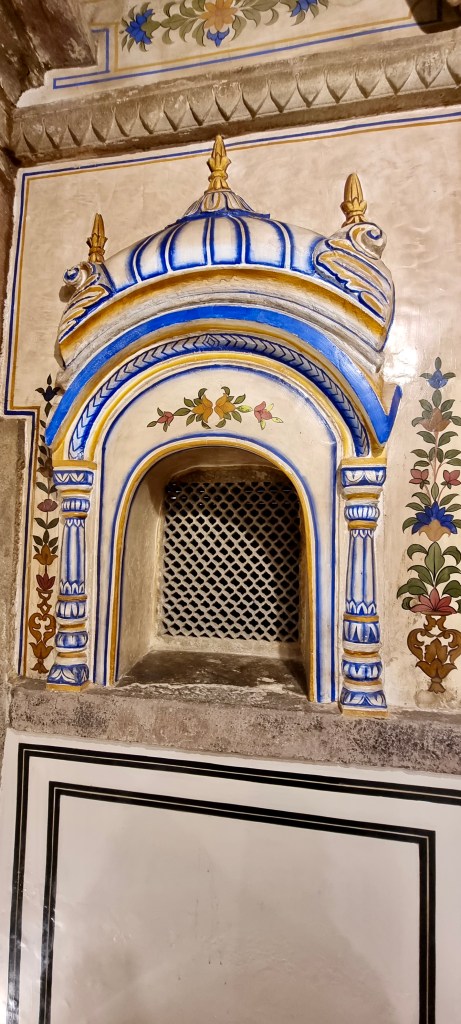
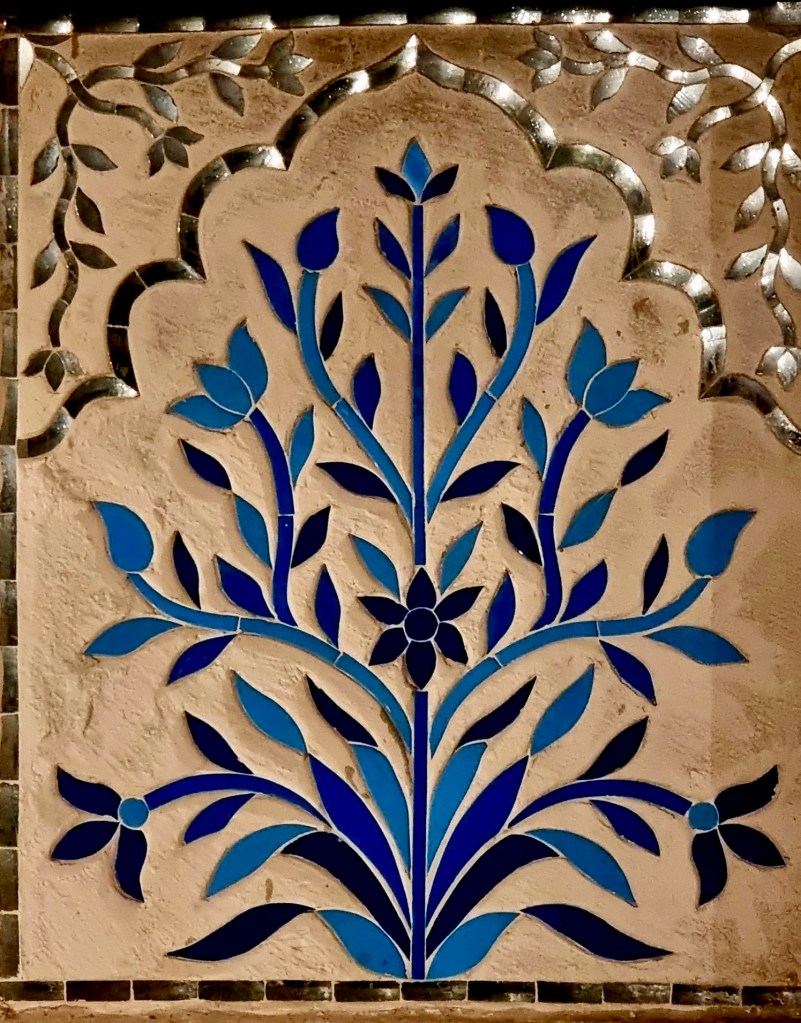
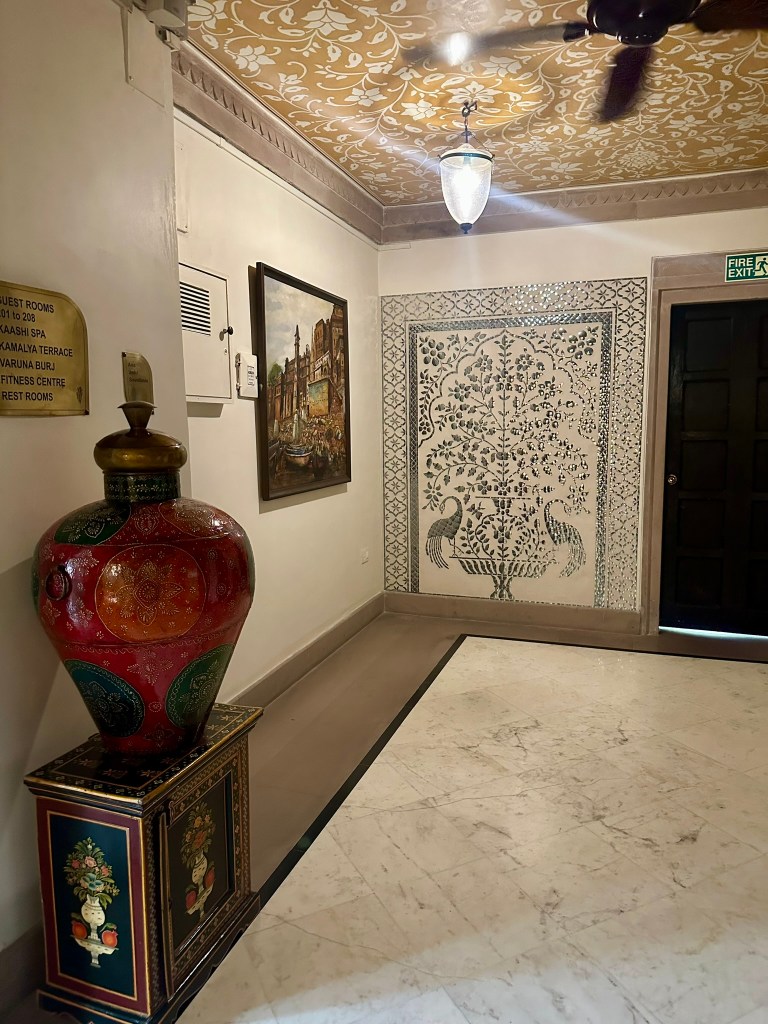
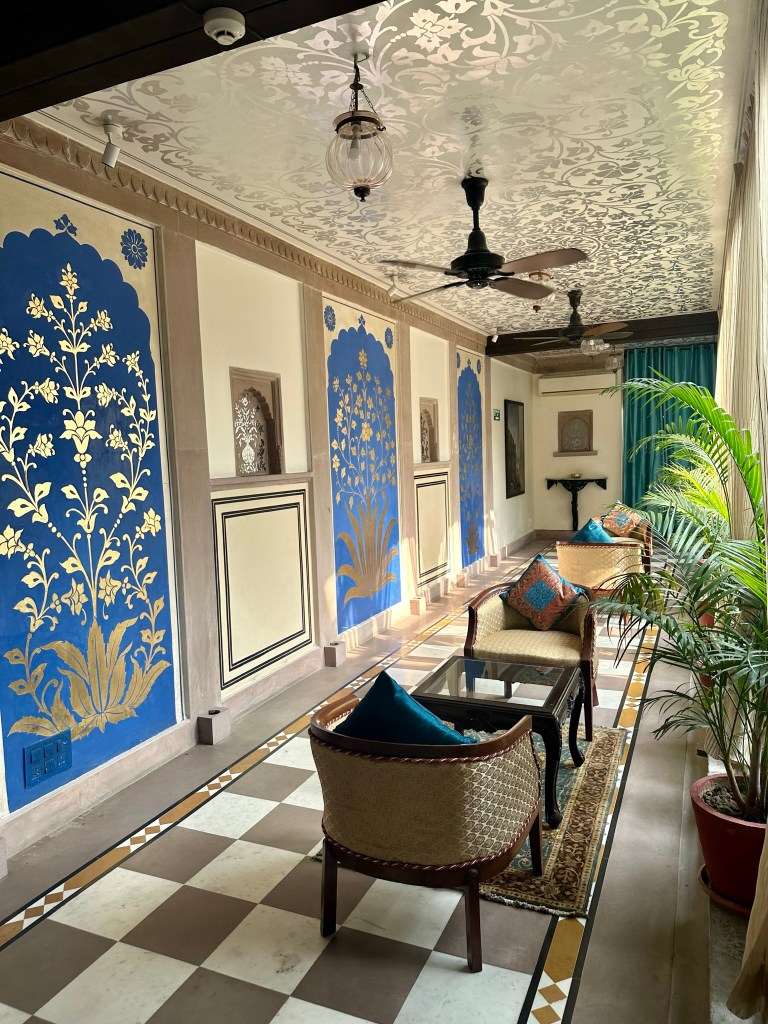
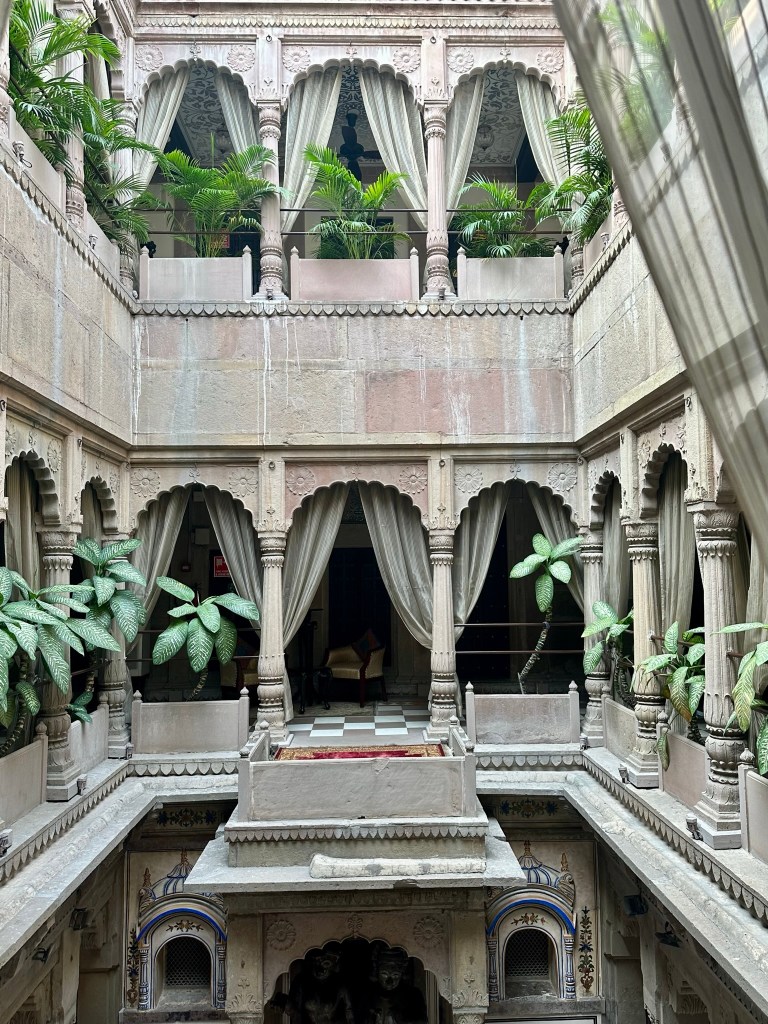
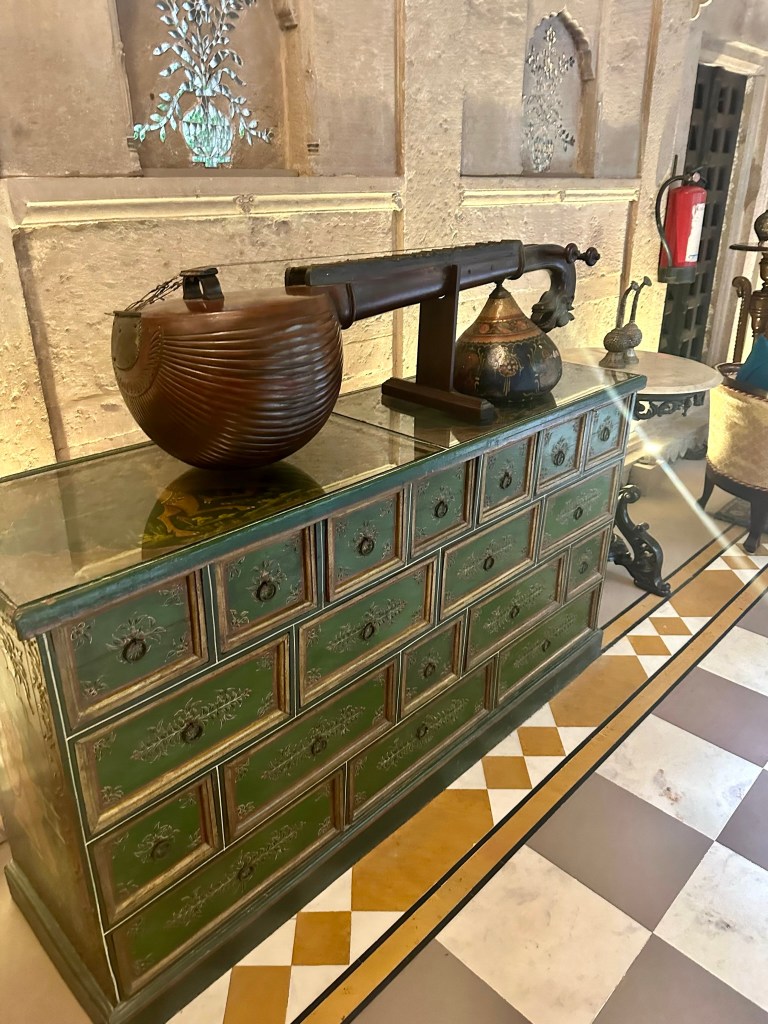
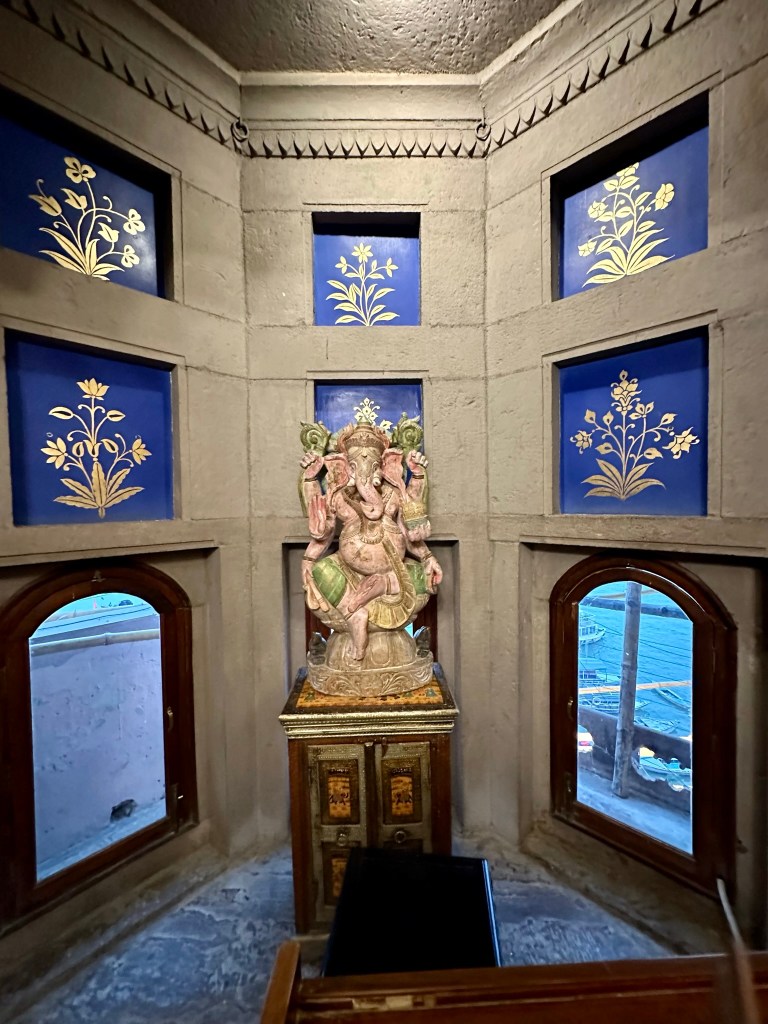
Walking through the palace transports you back to the gilded era with ornate designs on the walls, beautiful sculptures, and spacious court yards. The hotel has done a great job of decorating the palace with its history in mind.
Accommodation Options :
There are 32 rooms in Brijrama palace with several types of rooms:
-Varuna Burj Suite- only 1 suite and it is on 2nd floor with its own entrance. This room boasts 180 view of the river and city and probably one of the most expensive rooms in the palace. We tried to book it but it was sold out for the time we were in Varanasi. It sleeps 3-4 people
– Maharaja Suite- there are 3 suites available and are on 1st floor and sleeps 2-4 people
– Vasundara- 6 available rooms and sleeps 2
– Dhanurdhara- 8 available rooms thar sleeps 2
-Nadidhara room- 14 available rooms that sleeps 2
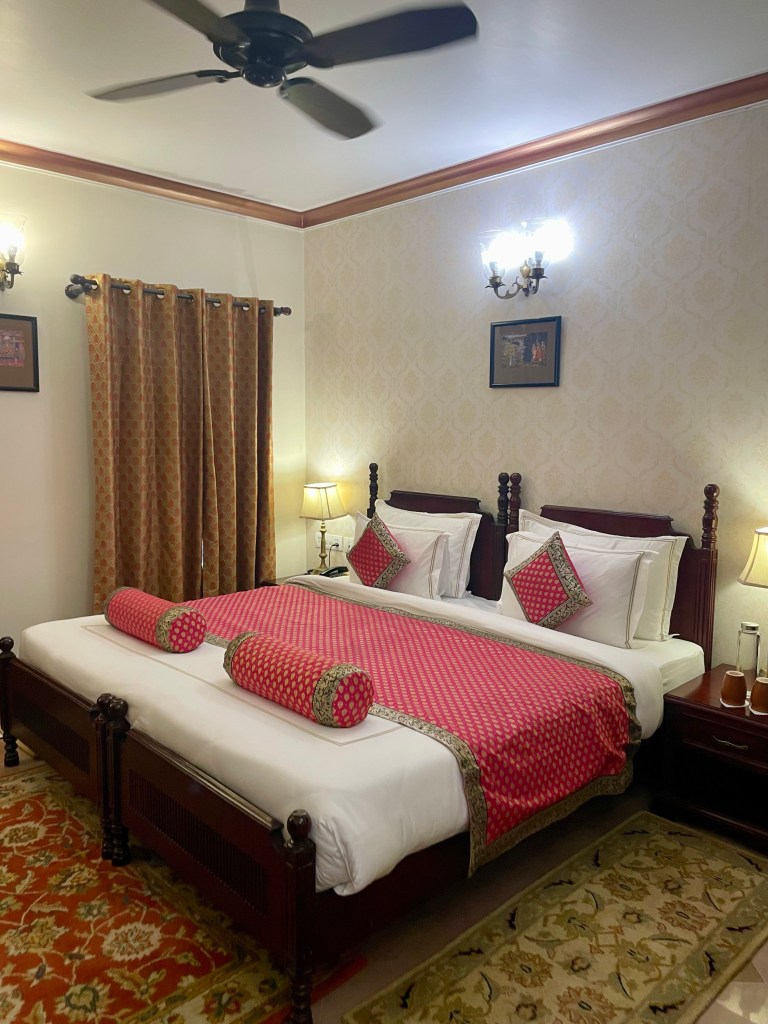
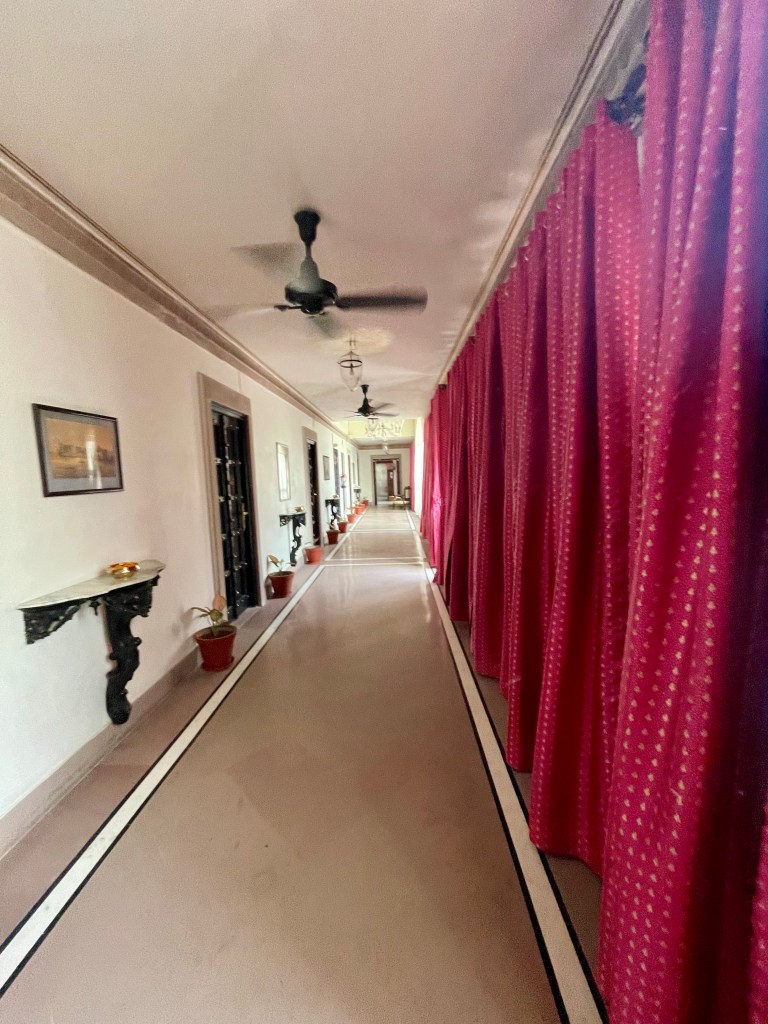
We stayed in the Dhanurdhara room and it was perfect for 2 people. It opens into a well lit corridor that is next to 3rd floor balcony. We absolutely loved the room and the location of the room
Dining at Birjrama place:
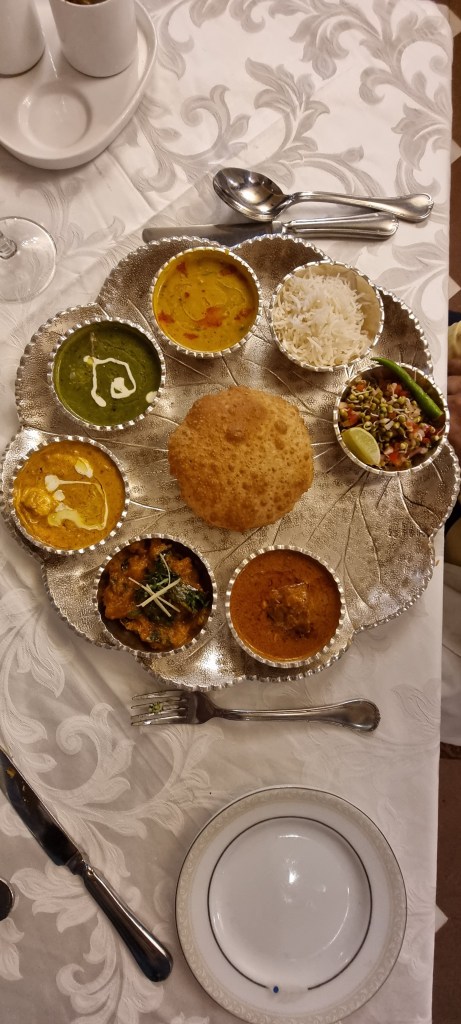
There are 2 dining rooms in Brijrama palace but when we stayed there only Darbhanga dining room was open and it serves only vegetarian food( Because of the location of the hotel on the Ganga River, hotel doesn’t serve meat or alcohol). Breakfast is included the price and it is severed as a buffet with both international and Indian dishes. You can get made to order omelettes for breakfast along with toast, donuts etc. Both north and South Indian breakfast items such as made to order dosa, fresh jelebi as well as kachori are available everyday for breakfast. We are most of the lunch and dinner at the restaurant but they are A la carte and pretty decent. We found found to be lacking spiciness but overall of good quality. For one afternoon, we ordered the Thali, which is a 5 course meal with soup, appetizer( 3 kinds), main meal, a drink, and 3 different desserts. The meal was huge and we struggled to finish it
Activities :
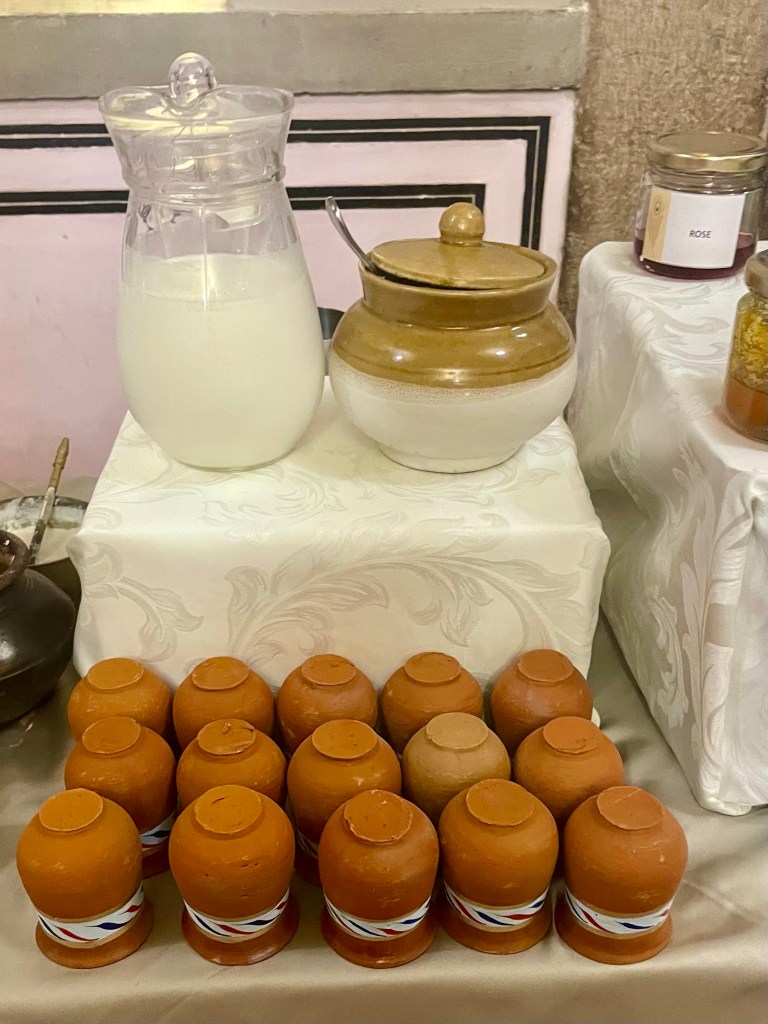
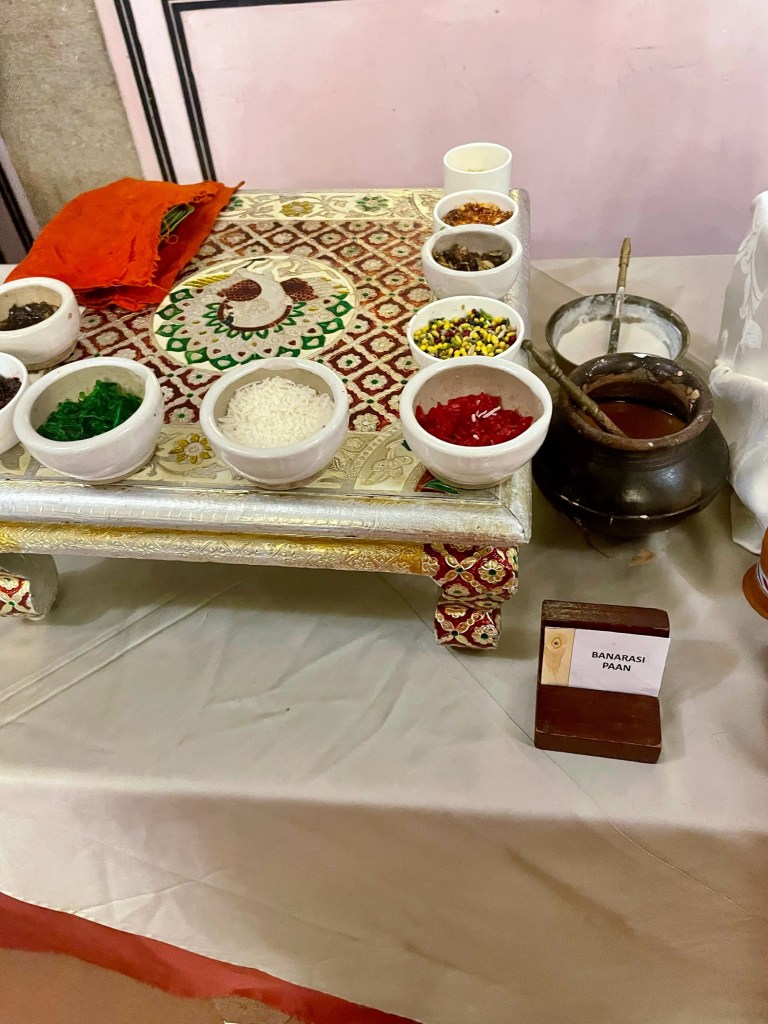
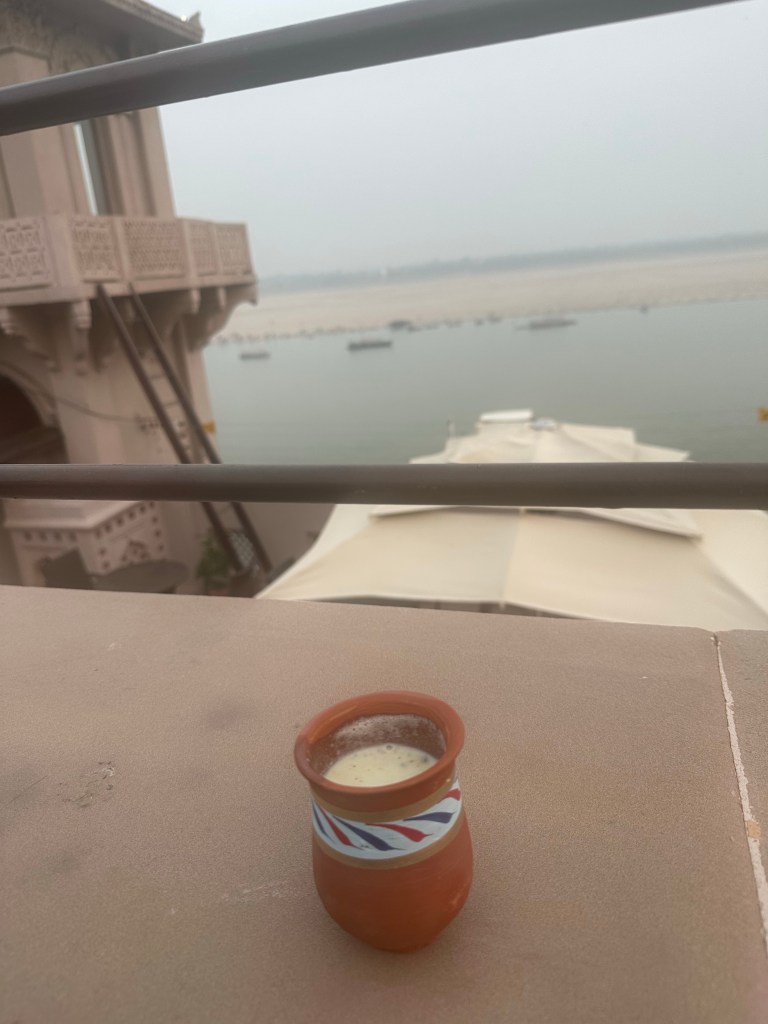
There are several activities are provided as a complimentary service including High tea every evening. This was our favorite activity which included along with Indian Chai served in clay pot, thandai ( specialty of Varanasi), and pan making session.
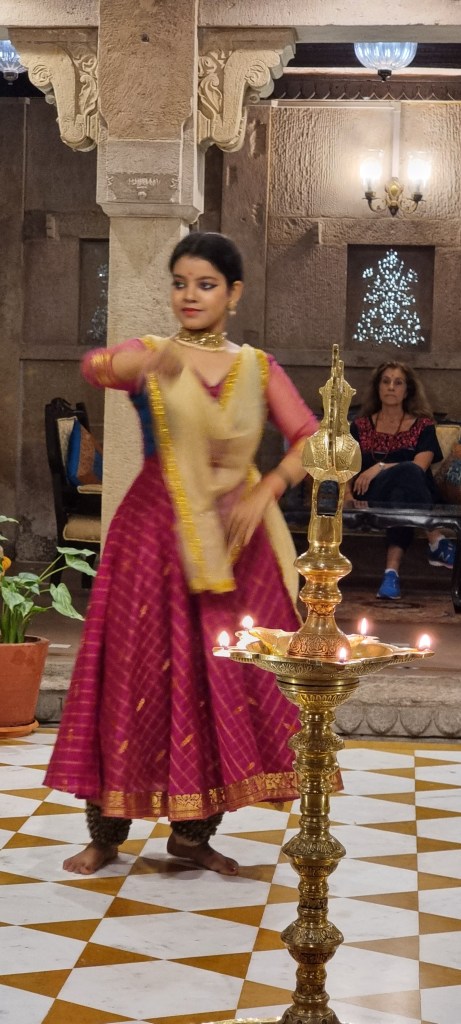
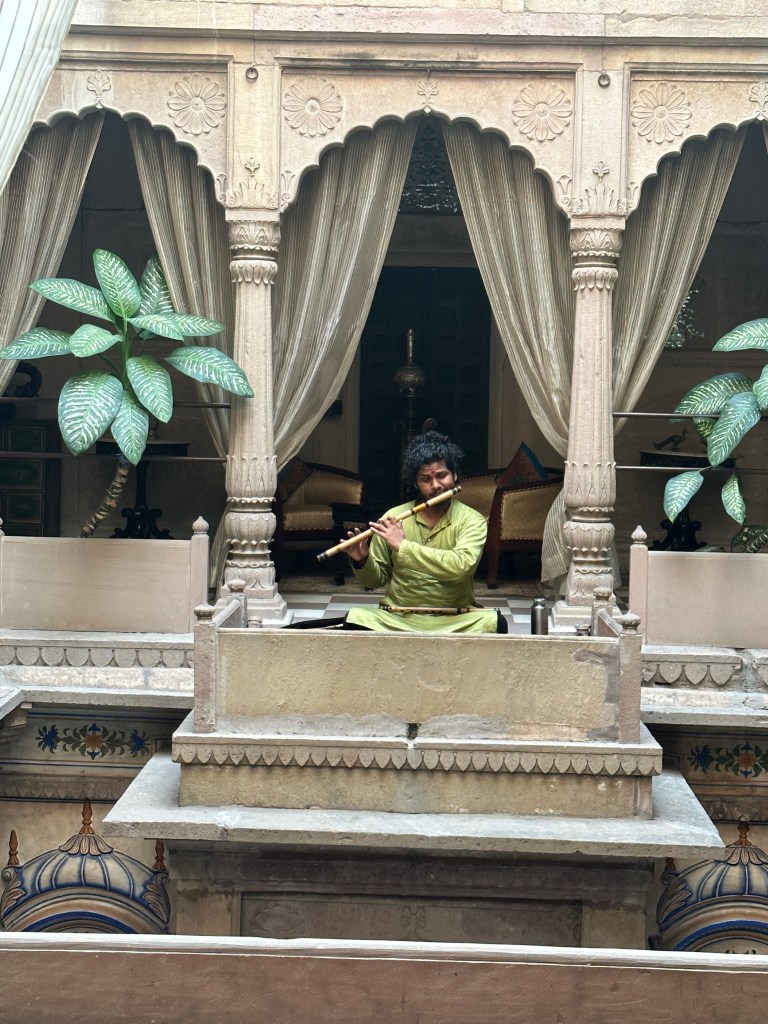
Every morning, you wake up to the sound of flute playing from the center court yard and every evening there was Kathi’s dance performance at the bada angan to showcase local artists and talent. You can get complementary henna by a local artist every afternoon too. Every evening, boat leaves from the ghat to the Ganga Aarti ceremony and you can watch the program sitting in the boat.
Final thoughts
Staying at Brijrama palace is great experience and we enjoyed every minute of it. We were impressed by the service and authenticity of the staff as well as luxury and heritage of the place. More than anything else, location is absolutely stunning and we took too many photos of sunrise. Only con we found was that it was hard to leave the place and go out do anything else as we were too comfortable in our serene palace.
Varanasi where the Ghats hold the secrets of time and the past meets the present on the banks of the holy Ganges.
unknown
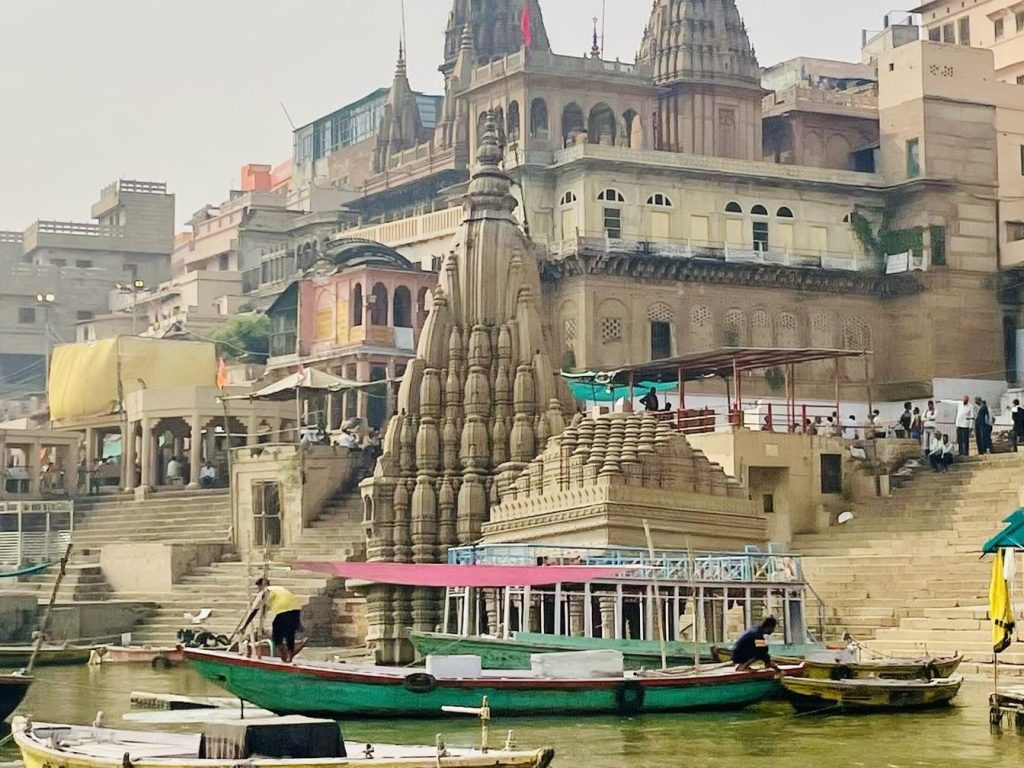
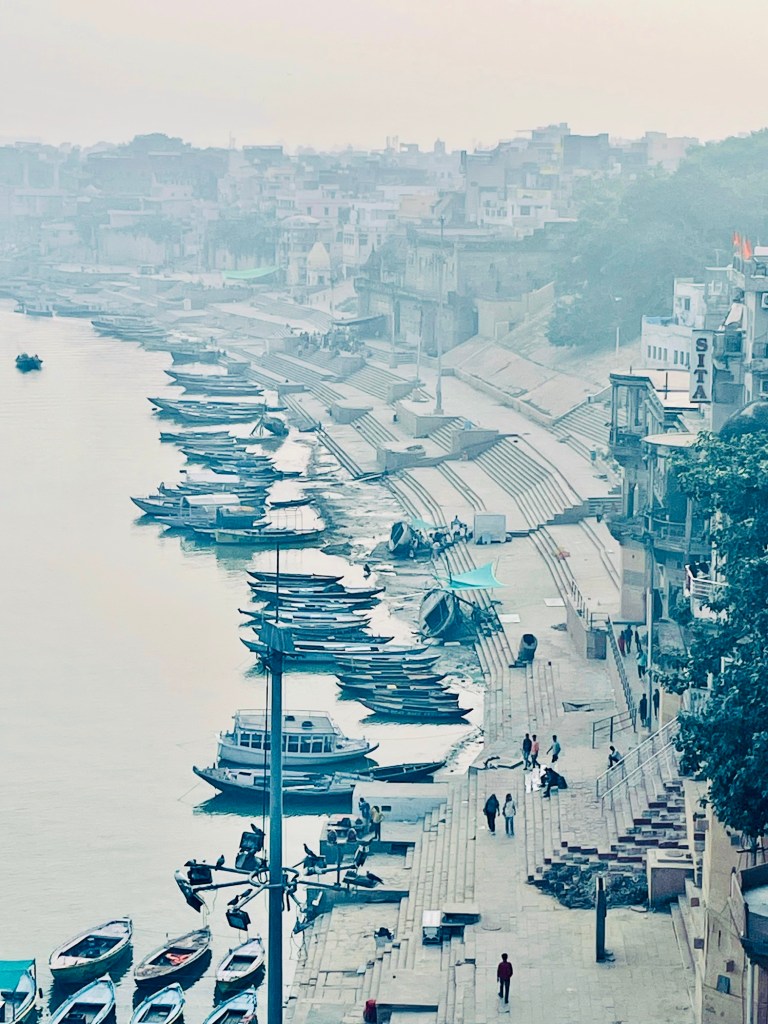
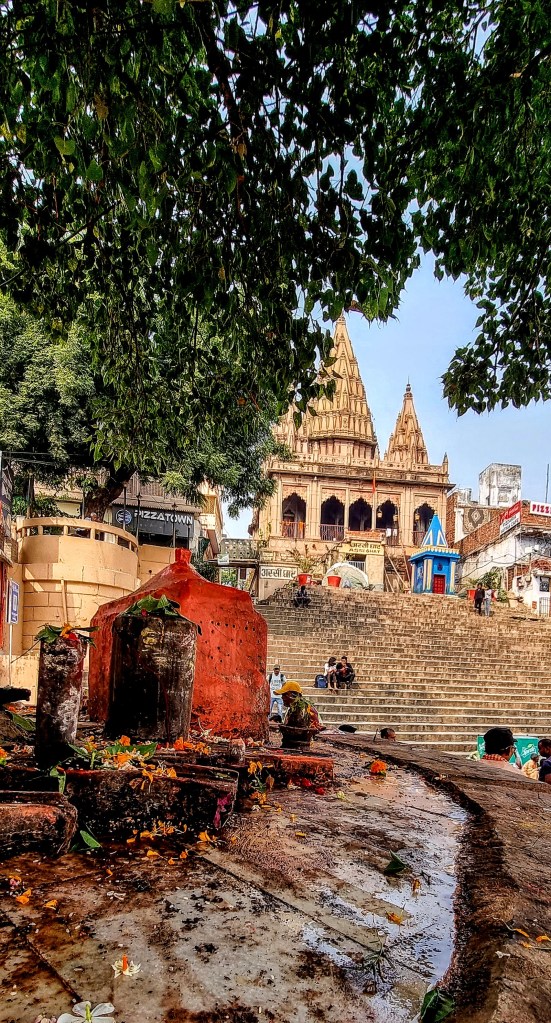
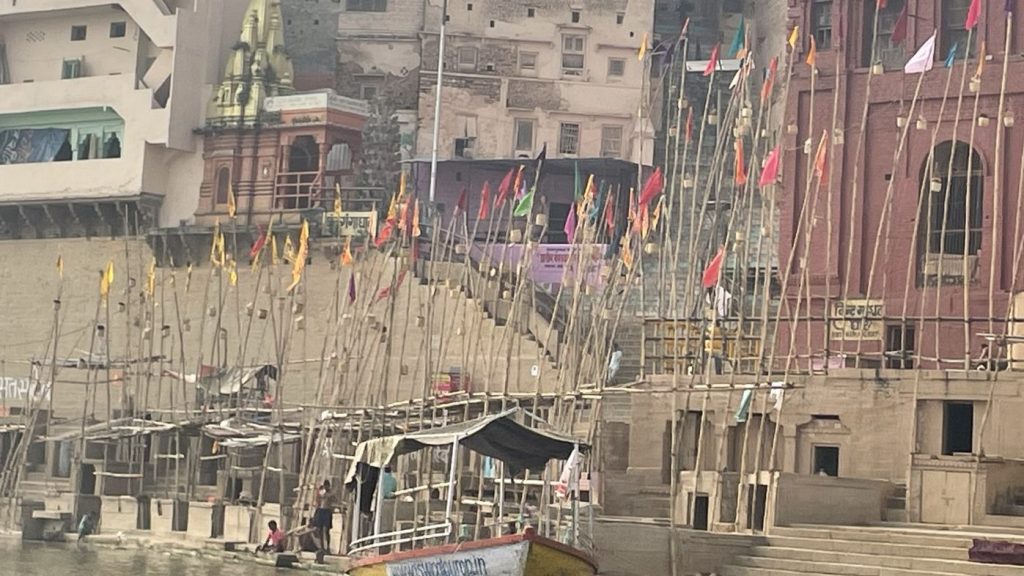
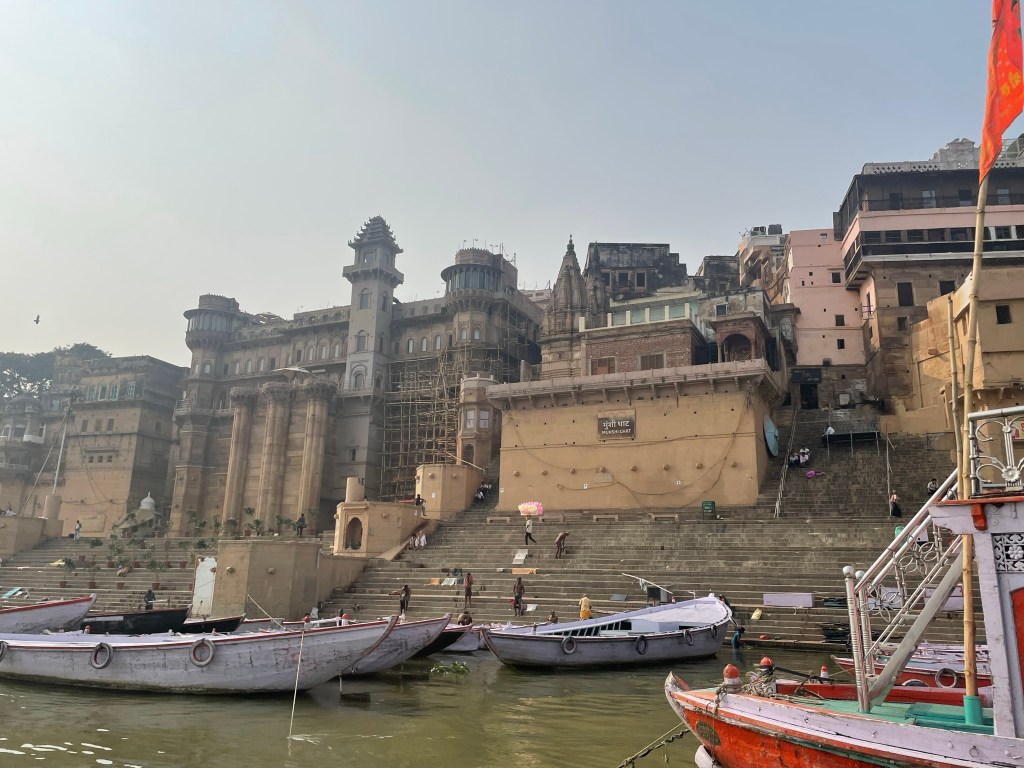
Ghats (pronounced as gots) are series of steps/stairway leading the river and there are at least 84/85 of these in Varanasi (Some say 84 while others say 85. I didn’t count to confirm one way or the other). Best way to see these Ghats is either by walking so you can get up close or by taking a boat ride. Morning boat rides are especially popular as you get to the see the full glory of Varanasi in the early morning sunlight. Most of the ghats are used for everyday bathing to ceremonial rituals, festivals and cremation. If you decide to walk the ghats especially starting at Assi Ghat, you will be following the path taken by ” Panchatirthi” (Five tirthas) pilgrims who travel entire length of the city by the riverbank. These pilgrims stop at 5 ghats (Pancha) and take a dip in Ganga and visit temples on these ghats. Most of the pilgrims end their journey at Vishwanath temple.
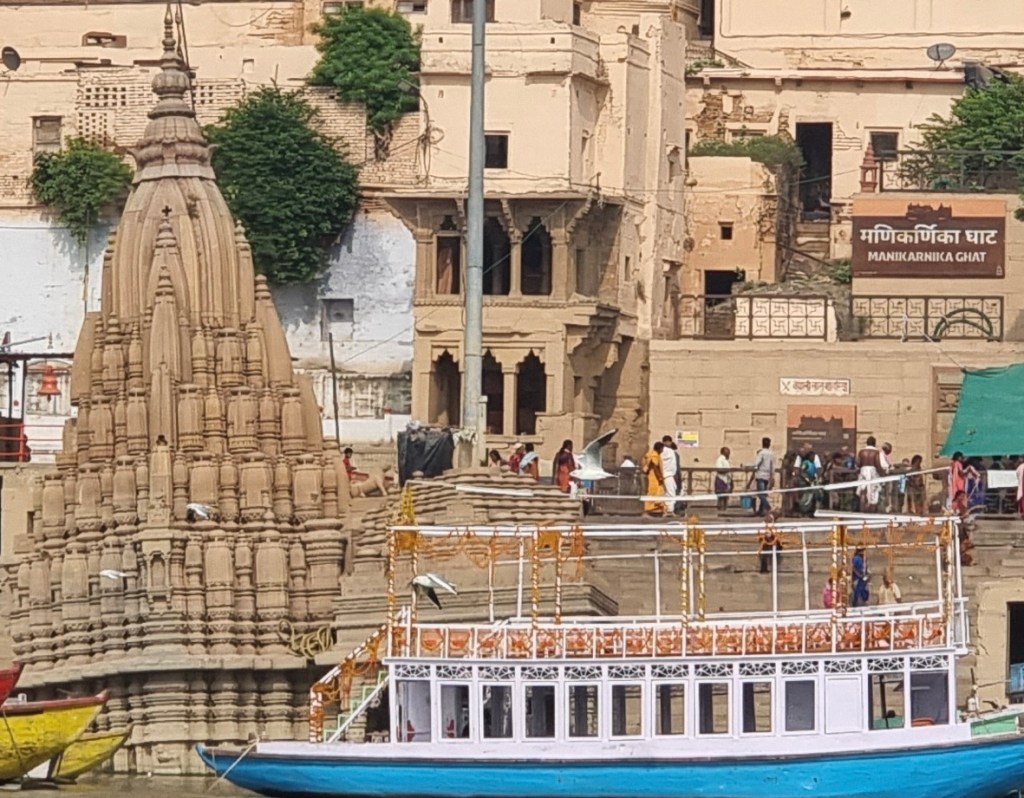
Leaning temple at Manikarnika Ghat
Each ghat in Varanasi has its unique history and significance and tells a fascinating story. Some ghats commemorate notable figures like Tulsidas (Assi Ghat, and Tulsi Ghat), who penned the revered Rama charita manas, serving as a beacon of wisdom for humanity. While others have palatial buildings built by kings that were used as resorts and ritualistic places for special occasions (such as Darbhanga Ghat) while other ghats tell stories of mythological or spiritual significance (Manikarnika Ghat).
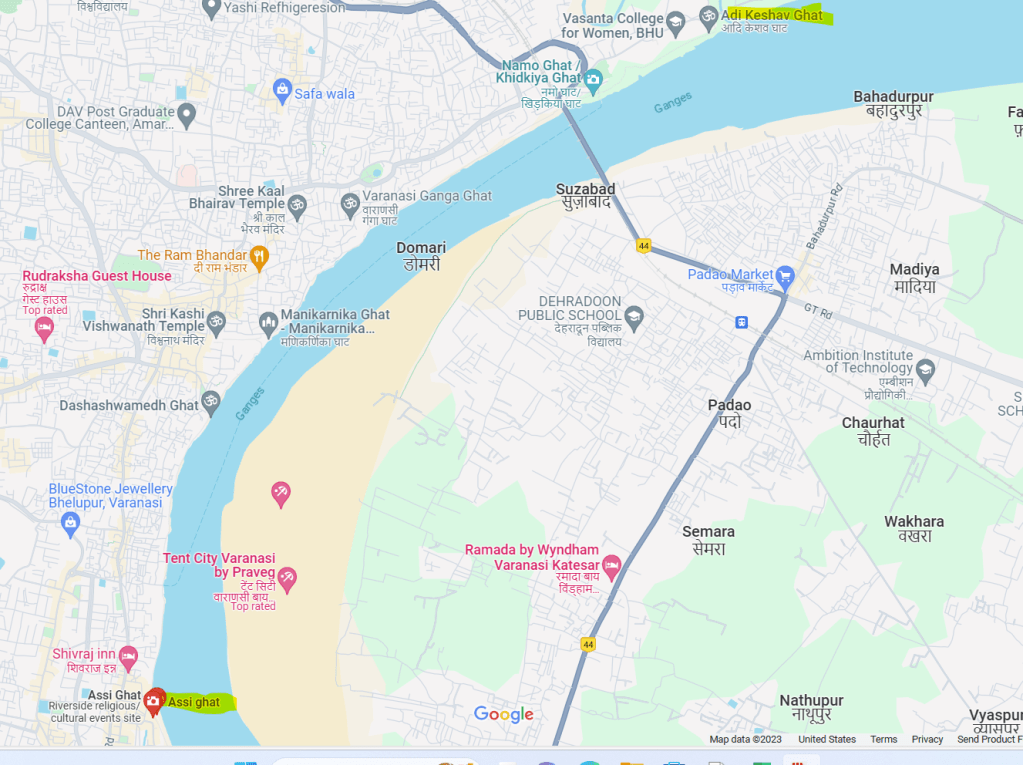
River Ganga forms a crescent shape in Varanasi and with base of crescent is at the Assi ghat and at the tip at the Adi Keshava ghat. This 6.5 Km long river front has 84/85 Ghats/Stairways and taking a holy dip along the Ghat in river Ganga is considered to be sacred. All Ghats feature around 40-60 stone steps and believed to be constructed around 14th century. Each ghat has octagonal raised platforms built for public use and smaller rectangular platforms which are closer to the river built for the use of Brahmins for religious rituals.
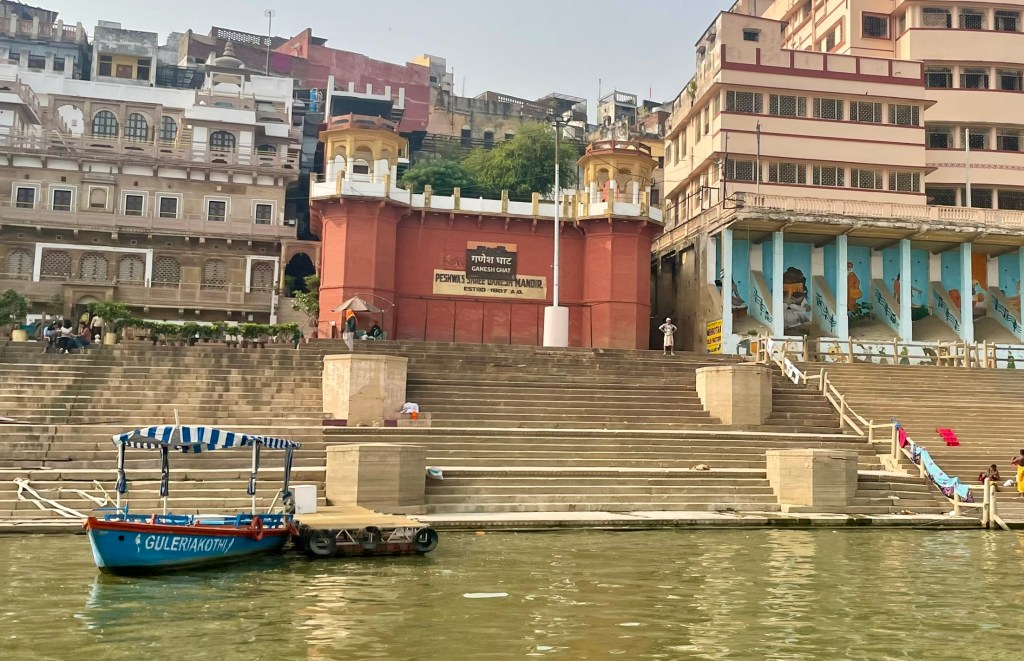
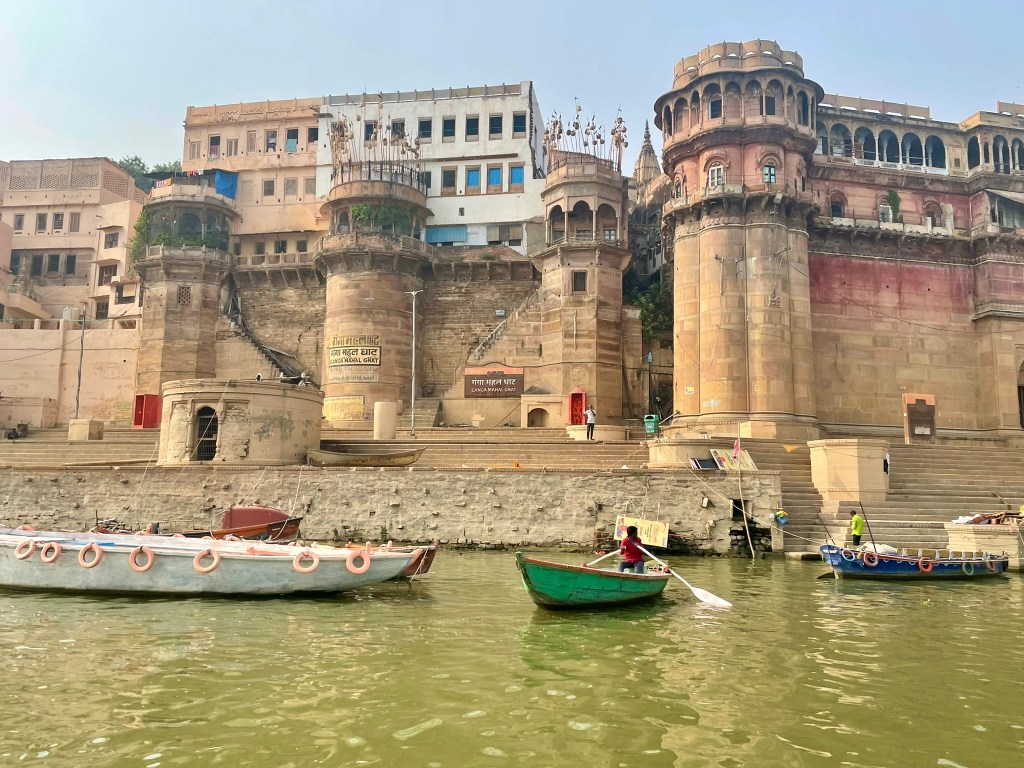
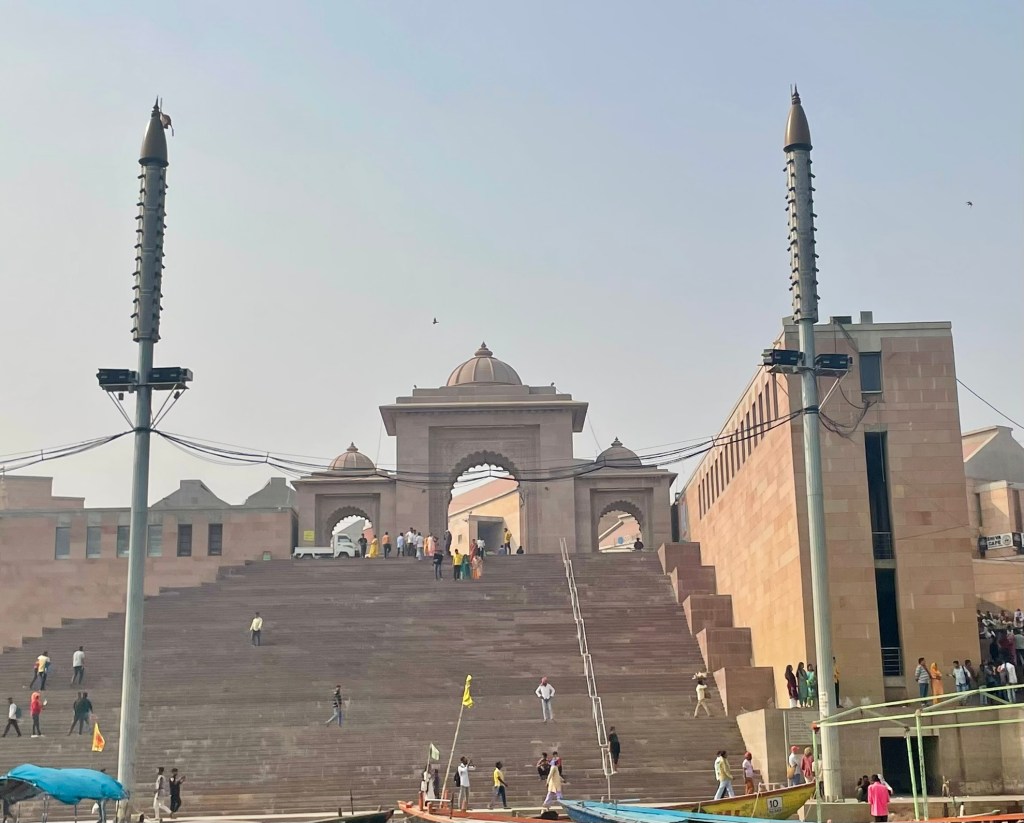
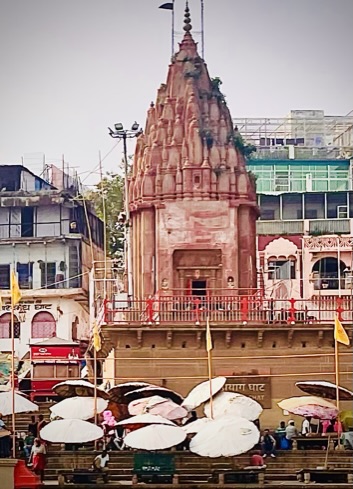
Gaya GhatGanesh GhatGanga Mahal GhatGanga Gate
Few of the most popular ghats include:
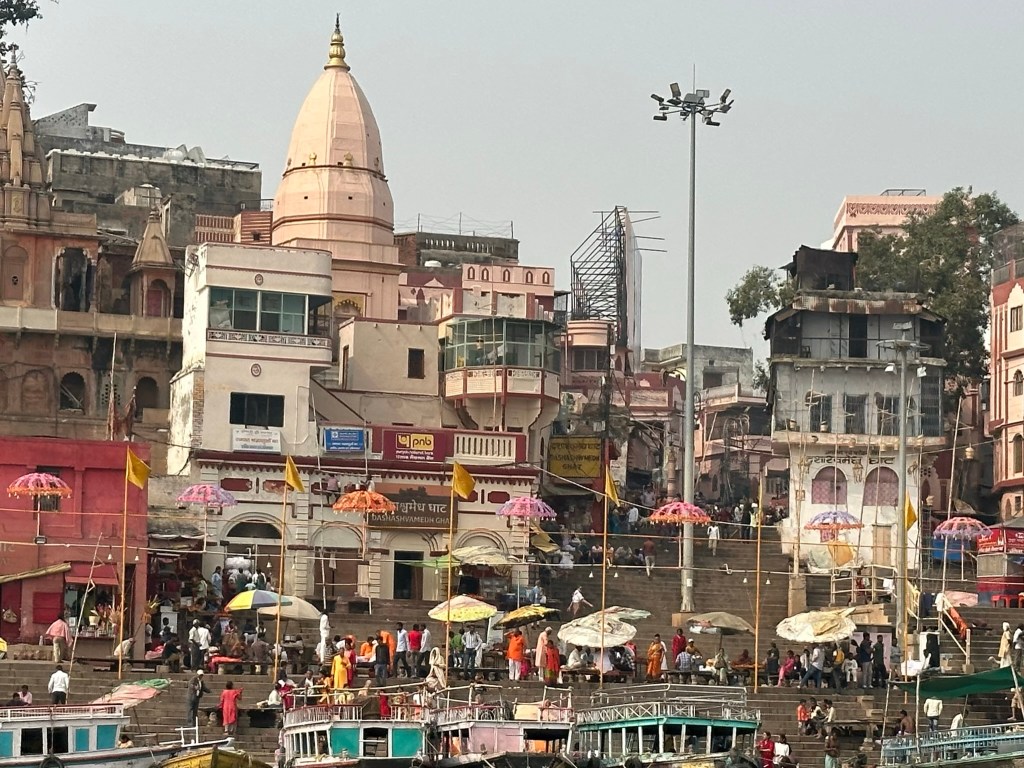
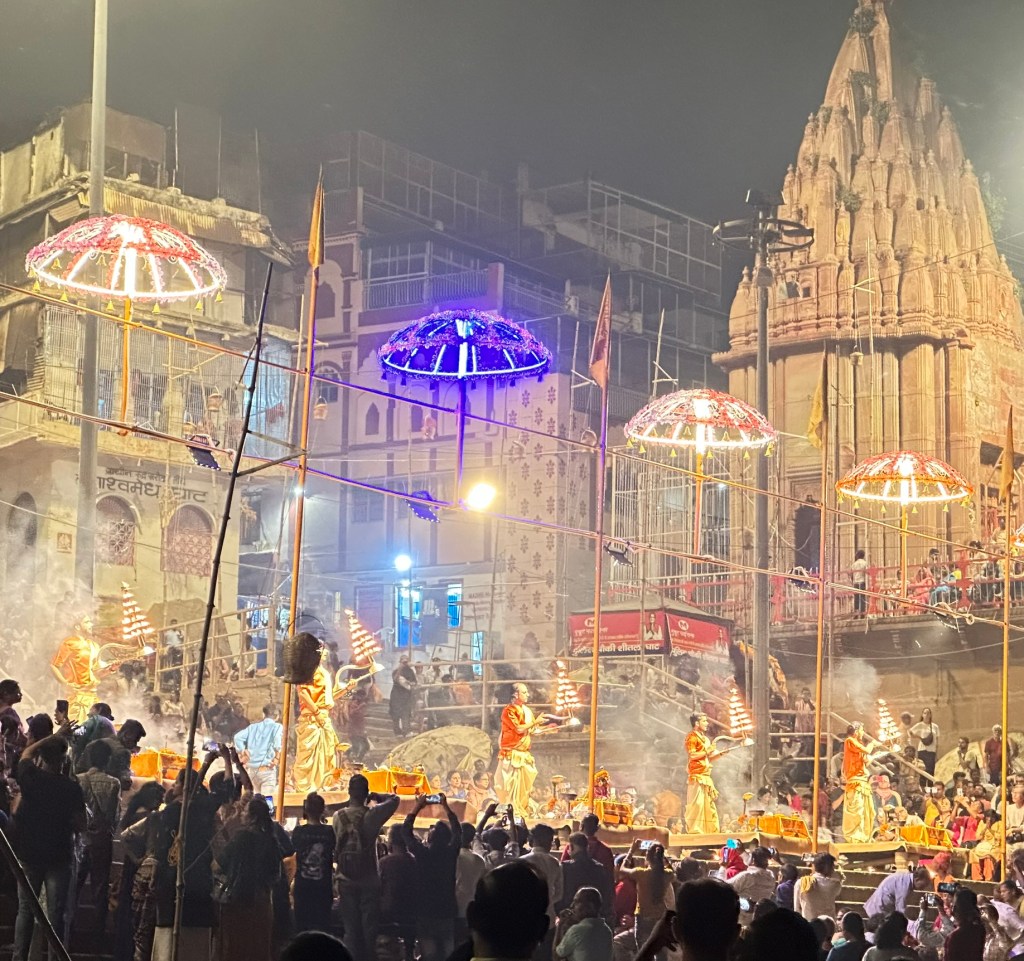
Dashashwamedh Ghat-located close to the Kashi Vishwanath Temple and is one of the busiest and sacred ghats. It is believed that Lord Brahma created it to welcome Lord Shiva and performed the DASA-ASHWAMEDH YAJNA (Literal meaning “Sacrificing ten horses”). This is the Ghat where Ganga Aarti is performed every evening. This is a busy ghat especially in the morning and evening and you will see rows of priests sitting under bamboo umbrellas performing various religious tasks for the pilgrims.
Dashashwamedh GhatGanga Aarti at Dashashwamedh Ghat
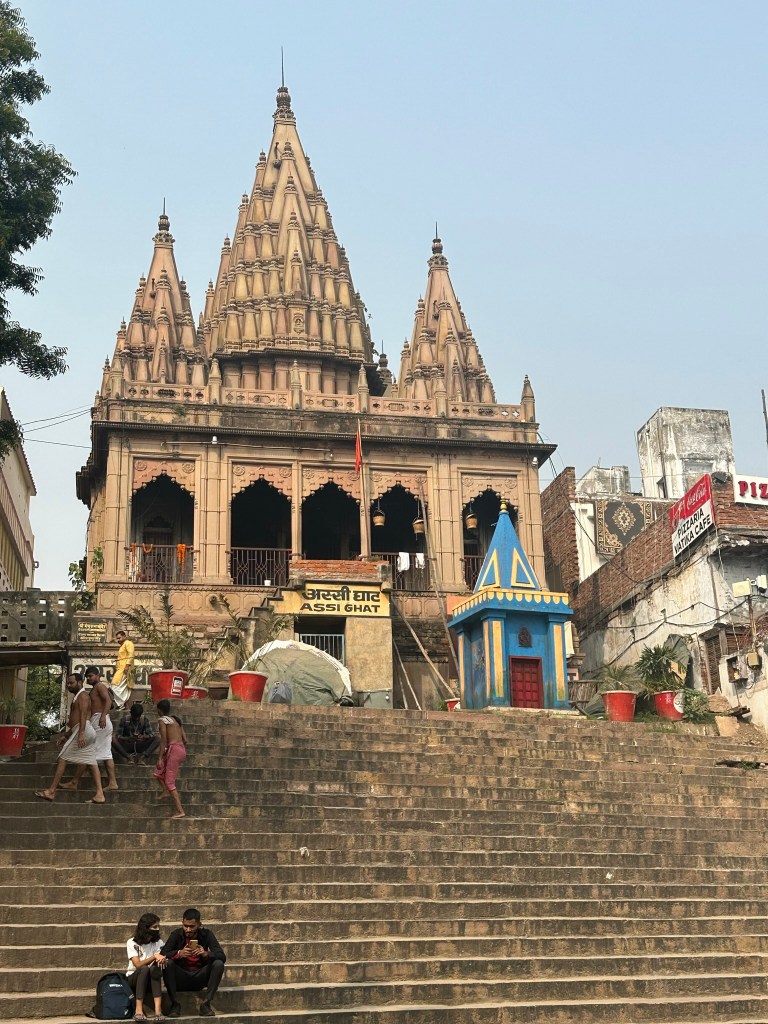
Assi Ghat– Forms the south boundary of the city where river Assi meets Ganga and considered to be the oldest Ghats in Varanasi. It is one of major bathing ghats that still has a clay bank and considered to be one of the most spiritual ghats and bathing here is deemed very auspicious. You cannot miss the imposing Lakshminarayana Pancharatna Mandir on the Ghat and this temple was built by Queen Dulari Radhakunvar, Bihar. Another key feature of this Ghat is an open air shiva temple under the pipal tree that is considred to be “Lord of the confluence of Assi” and worshiped by visitors . Assi Ghat is popular place to visit int the early morning for Subah-e-Banaras Aarti a prayer ceremony offered to both the Sun God and the holy river Ganga. The aarti is an extremely surreal experience and is performed diligently every single day of the year. Check time as it changes depending on the season. If you are near Assi Ghat, check out Lolark Kunda pond dedicated to Sun God.
Assi Ghat
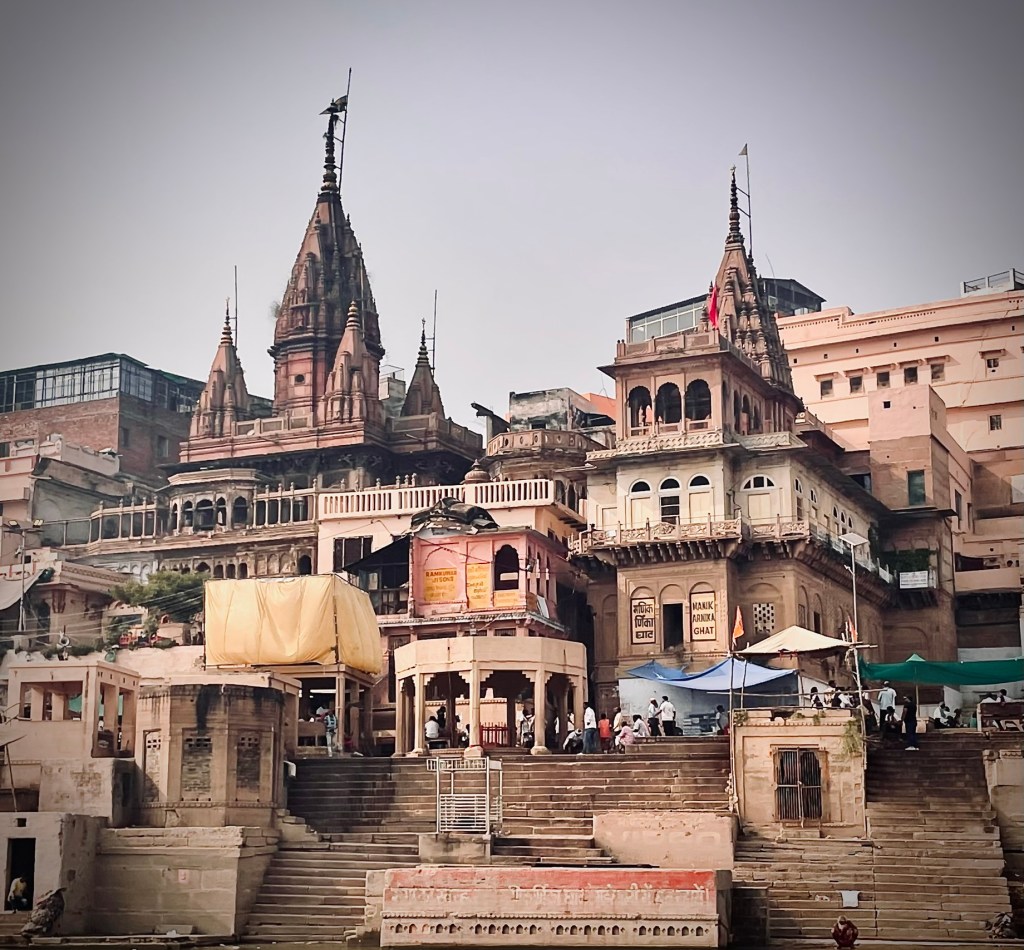
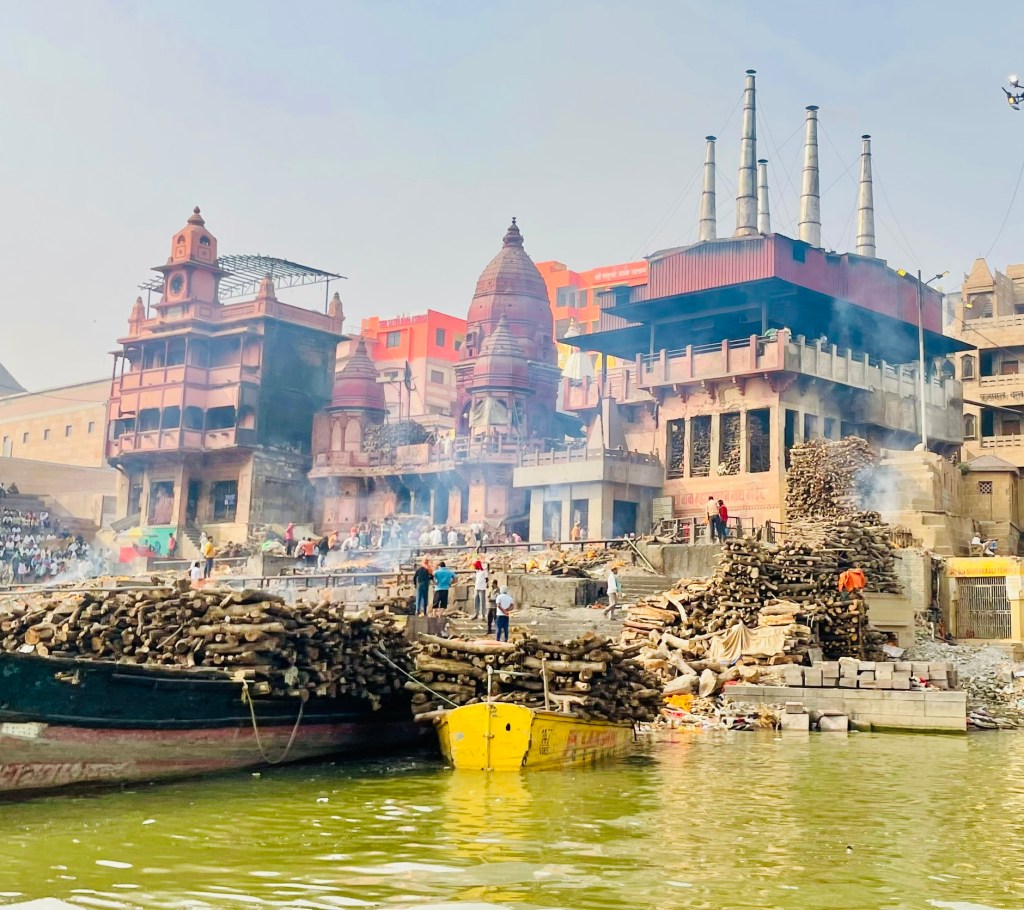
Manikarnika Ghat/Harish Chandra Ghat– These are the 2 Ghats in Varanasi where cremations are performed. Manikarnika ghat being the older of the 2 and primarily uses wood for cremation. Manikarinka Ghat gets its name from the legend, that the ear-ring (Manikarnika) of Lord Shiva or his wife fell here. There is another myth related to the Tarakesvara Temple (Shiva temple at the Ghat), and it is said that this shiva bestows the “prayer of crossing” at the time of the death thus leading to liberation.
Cycle of birth, death and attaining moksha-According to Hindi belief system all living things have a soul or Atman and all living being goes through birth, life, death, and rebirth or reincarnation. Once a living being dies, its soul will be reborn or reincarnated into a different body depending on its karma from its previous life. For example, if a person has good karma in a previous life, then their atman will be reborn or reincarnated into something better than they were previously. A person gains good karma for doing good things in life, such as helping others through following their dharma. A Hindu’s ultimate goal in life is to reach moksha. Moksha means liberation or freedom from samsara, and it can only happen after a Hindu has been reborn many times. If a Hindu gains good karma from many lifetimes, they will have gained ultimate knowledge and have freed themselves from the constraints of the material world. Once this happens, a Hindu’s atman no longer needs to be reborn into another being and is ready to be free from samsara. As a result, the atman will achieve moksha and will be re-joined with Brahman. Hindus come to Banaras from all over India to die, and it is not a feared death. A death in Kashi is liberation (moksha), a release from the worldly cycle of reincarnation. (From https://www.bbc.co.uk/bitesize/guides/zmgny4j/revision/3)
Manikarnika Ghat
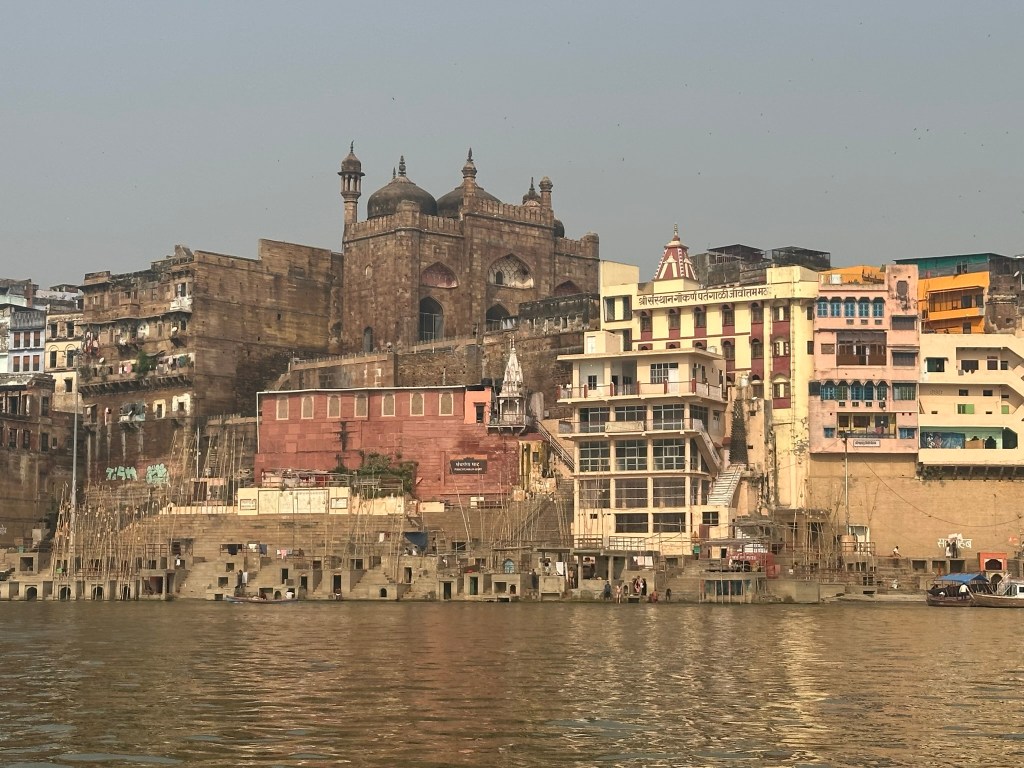
Panchaganga Ghat– This sacred Ghat is located at the confluence of the five holy rivers which is Ganga, Yamuna, Saraswati, Dhutpapa and Kirana. This is magnificent ghat and you will see Alamgir Mosque (locally known Bindu Madhav- Ka- Darera), erected by emperor Aurangzeb, in the background here. Before the mosque, there was a grand temple of Bindu Madav that had been rebuilt in late 16hth century. Like other temples of Varanasi, this temple was destroyed several times between twelfth and sixteen centuries and finally by Aurangzeb to build the mosque to match the grandeur of the previous temple.
Pancha Ganga Ghat
The Panchaganga Ghat has small rooms that open into the river and some of these are used for yoga and meditation. These rows of rooms are usually under water and only visible after the rainy season.
3 sided cubicles for yoga and meditation at Panchaganga Ghat
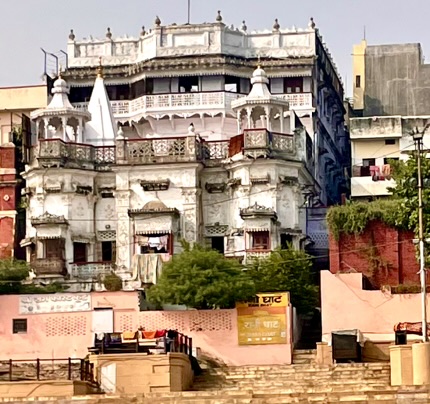
Darbhanga Ghat– We were fortunate to stay in Brijrama palace- a heritage luxury hotel and my review can be read here. Historically, Darbjanga Ghat was named for recoginition of kings of Darbhanga for their support of art and culture. The palace was supposed have been built in 18th century and incorporated both Rajput and Mughal styles. Mythologically, legend says that Lord Rama bathed in this ghat and hence holds a special place.
Birjrama palace hotel at Dharbhanga Ghat
Other ghats that are unique include:
Leaning temple of Scindia and Manikarnika Ghat-Ratneshwar Mahadev temple
Leaning temple-Ratneshwar Mahadev
You can’t miss this leaning temple of Ratneshwar Mahadev when you travel by boat on the Ghats of Varanasi. Located between Manikarnika Ghat and Scindhia Ghat, this temple is supposed to have a nine degree tilt and built so close to river that the part of the temple is under water during rainy season. There are couple of legends associated with why the temple is leaning. One legend tells the story of son building temple to honor his mom and boasting that he had re-payed his debt to his mother. Since it is impossible to re-pay mother’s debt, the temple started to lean.
Rani Ghat with palace/grand house built by queen of Lucknow Muniya Sahiba in 1937
Rani Ghat
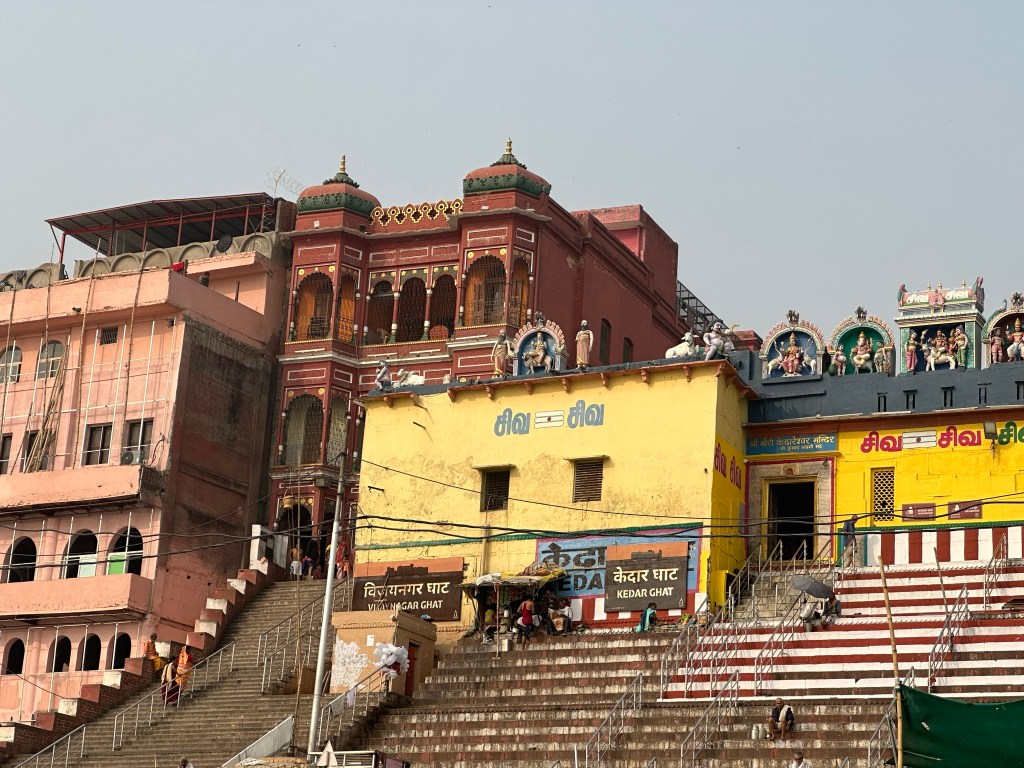
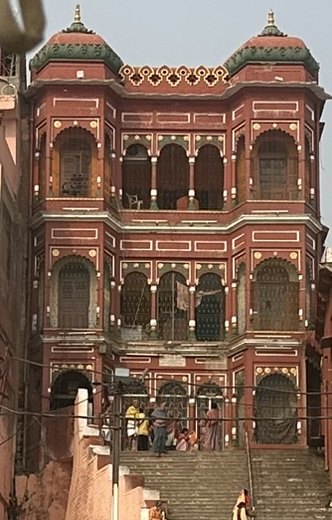
Vijayanagar Ghat– with small palatial building, in south Indian architectural style built by the king of Vijayanagaram in 1890.
Vijayanagara Ghat
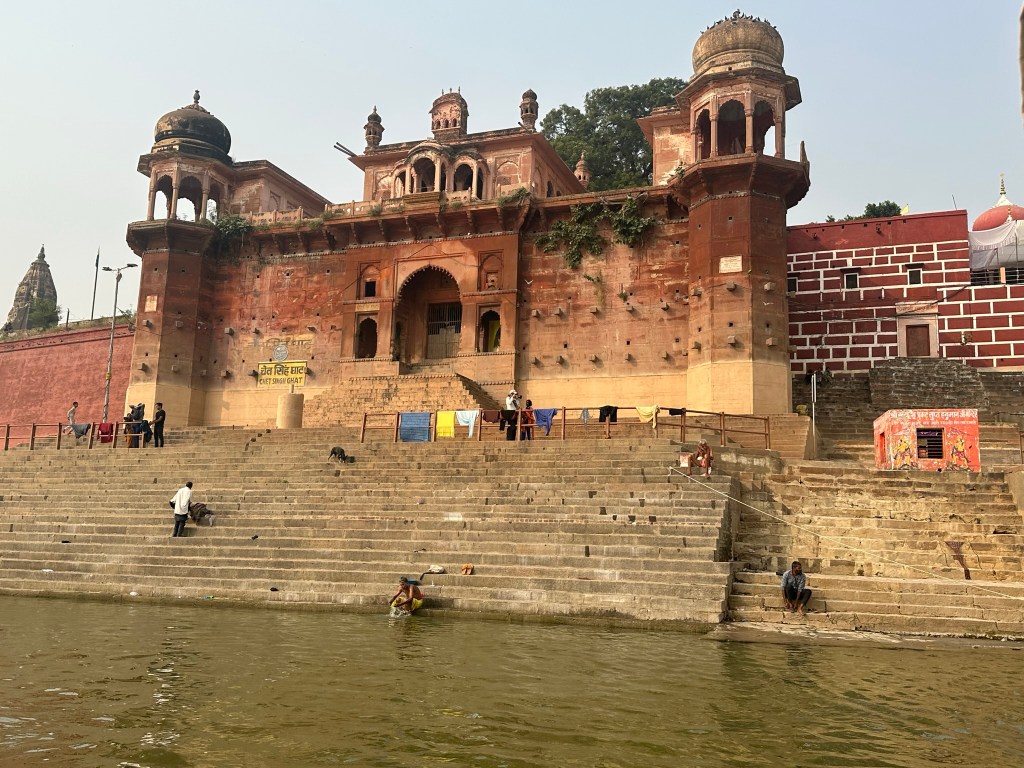
Chet Singh Ghat– Built by Maharaja Chet Singh one of the rulers of Varanasi, this Ghat saw one of the fiercest battles of Indian history fought between the British troops and the army of Raja Chet Singh in 1781 AD. British had the possession of this Ghat until 19th century when King Prabhunarayan Singh had again took the possession of this fort. The northern part of it was donated to Naga group of ascetics who late on built their monasteries and ghats, called Niranjani Ghat and Nirvani Ghat.
Chet Singh Ghat
Jain Ghat- Jain Ghat is a prominent Jain pilgrimage site as Varanasi is believed to birthplace of Suparshvanatha (7th tirthankara) and Parshvanatha (23rd tirthankara). It is believed that the Jain Maharajas used to own these ghats and the Ghat is home to several Jain temples and shrines, including the Shri Parshvanath Digambar Jain Temple, which is dedicated to the 23rd Jain Tirthankara, Parshvanath. Another important temple at the Jain Ghat is the Shri Mahavirji Jain Temple, which is dedicated to Lord Mahavira, the 24th Tirthankara of the Jain religion. The temple is adorned with beautiful paintings and murals that depict scenes from the life of Lord Mahavira.
The ghats of Varanasi have incredible stories to tell and walking or taking boat ride appreciating the beauty and legends is a great way to start journey of Varanasi.













 Peaks to Palaces