Immortalized by Pablo Neruda, a famous Chilean poet, Valparaíso is a port city renowned for its laid-back bohemian vibe and colorful street art. Nestled between steep hills and the Pacific Ocean, Valparaíso is characterized by its colorful houses, creating a picturesque landscape that captures the hearts of locals and visitors alike. The labyrinthine streets are adorned with striking murals and graffiti, reflecting the city’s rich culture and artistic spirit; each artwork tells a story of the community and its history. This lively city not only serves as a hub for artists and musicians but also offers charming cafés and bustling markets, making it an ideal destination for anyone seeking to immerse themselves in the unique, creative atmosphere that pervades Valparaíso.
What we did- Visited and walked the streets of Valparaíso on Christmas Day (Dec 25th, 2022) as a self-guided day trip from Santiago, Chile. Famous for its colorful hillside neighborhoods, winding stairways, and abundance of street art, the port city of Valparaíso is a UNESCO World Heritage Site. Both Valparaiso and Vin Del Mar can be visited on a day trip from Santiago
Where we ate—Since it was Christmas day, few places were open, so we went to a local place with no name but decent vegetarian food. On a regular day, there are many places in the Allegre and Conception areas.
Valparaiso Skyline with Lutheran Church
Ode to Valparaiso
Pablo Neruda, a legendary poet and politician in Chile, had a home in Valpo where he found inspiration away from Santiago. His house, La Sebastiana, is now a museum and can be visited and offers great city views. Neruda’s poem “Oda a Valparaíso” perfectly captures the essence of the vibrant port city. Below is a snippet of the peom in English. For the full peom in Spanish and English check out the page.
Valparaíso, what an absurdity you are, how crazy: a crazy port. What a head of disheveled hills, that you never finish combing. Never did you have time to dress yourself, and always you were surprised by life.
How to get to Valparaiso
We were supposed to visit Valparaíso (or it is commonly known as Valpo) on a guided tour from Santiago, but after waiting 1.5 hours at supposed pick-up spot, we realized the guided tour operator wasn’t going to show up (booked through Viator). Our day was salvaged by the front desk operator at the hotel, who helped us figure out the bus route to Valpo and arranged an Uber to the bus station.
Valparaíso is 72 miles (116 km) from Santiago, and can be travelled by bus or car or guided tour from Santiago.
Bus– There are two main bus companies: Turbus and Pullman. Both buses depart from Terminal de Buses Pajaritos in the center of Santiago and take about 1.40-2.00 hours. We opted to go with Turbus on the way to Valpo and took Pullman on the way back. There is no real difference, and we chose whichever was leaving earliest.
Guided Tours – There are several guided tours available on Viator and GetYourGuide that have day trips from Santiago that include Valpo, Viña del Mar, and Casablanca Valley (wine tasting), such as this one.
Valpo guided tour- if you want an in depth tour of the murals and real behind the scenes story, check out this company and their classic Valpo Street Art Tours is supposed to be really good.
Things to do in Valpo
Walk the streets of Valpo and appreciate the colorful murals and art
Since our plans had changed from guided tour to self-guided tour, we decided just to walk the streets and check out some of the art work. My sister-in-law had done reaseach and knew some of the places to go. The majority of the street art is concentrated in the more tourist-centric district of Cerros Concepcion and Alegre, a short walk from the historic seaport neighborhood. You can take the cobbled tone stairs and steets go up and down the area which are lined by resturants, cafes, and murals.
Plaza Sotomoyer
After getting off the bus, we took a cab to Sotomoyer square to start our tour. This building is in Plaza Sotomoyer and it is one of my favorite buildings in Valpo.
Plaza Sotomoyer, the largest public center in the city and the heart of Barrio Puerto, features significant buildings such as the Monument to the Heroes of Iquique, housing Arturo Prat’s remains, and the Edificio Armada de Chile, formerly the Intendencia. It is also an archaeological site, containing the remains of the first official dock constructed with parts from the captured frigate Esmeralda. Initially named Plaza de la Aduana, then Plaza del Palacio, it was eventually named after 19th-century minister Rafael Sotomayor. On January 23, 1979, it was declared a Typical Chilean Zone, with the Edificio Armada de Chile recognized as a Historical Monument.
Fischer Stair and Gálvez Alley, Valparaiso
Fischer Stair and Gálvez Alley offer a vibrant experience for visitors in the city. Start your ascent from Urriola Street by taking Fischer Stair, also known as Colorful Stairs. As you climb, the bright colors create a visual delight. The lively atmosphere prepares you for the artistic views at the top. To the right on Gálvez Alley, another colorful staircase features lyrics from “Latinoamérica” by Calle 13. In Gálvez Alley, you can enjoy a burst of color and creativity with many murals and drawings perfect for photos. Here, you’ll discover one of the most magical corners of Valparaíso.
La mami de Valparaíso- The little Grandma
The mural of “la mami de Valparaíso,” which features a little grandma watching over the city, is located on Almirante Mont Street on Alegre hill. This significant artwork was created by the French collective Ella & Pitr.
Piano Stairway
One of the most photographed street art piecce is the paino stairway is in Beethoven passage on Concepcion Hill, next to Alegre Hill. It is a beuatiful stairway that is surrounded by several other murals that are worth seeing.
Other noteworthy streets to visit
Templeman Street: Located on Cerro Alegre, this street is a top place to see street art.
Cerro Abajo: This hill is home to colorful art works below the park, down from the retaining wall.
Calle Ecuador: This street is home to a row of houses, each with art in very different styles.
Some of my favorite buildings and art works
Random Mural on Cerro ConcepcionHotel Brighton Hotel AtkinsonValparaíso, Cerro alegrecasa Proa Álvaro Besa (Cerro Alegre)Baburizza Palace
La Sebastiana
We didn’t get the opportunity to see La Sabastiana, the ship-shaped home of Poet Pablo Neruda. Currently the house is a measum and you can check open times and tickets here
Accooding to legend, this was the request Poet had for a house in Valpo and he found it in La Sebastiana.
“I feel the fatigue of Santiago. I want to find a small house in Valparaíso where I can live and write in peace. It has to have certain conditions. It can’t be too high up or too low down. It should be solitary, but not too much. Neighbors, hopefully invisible. They shouldn’t be seen or heard. Original, but not uncomfortable. Very winged, but firm. Neither too big nor too small. Far from everything but close to transportation. Independent, but with shops nearby. It also has to be very cheap. Do you think I can find a house like that in Valparaíso?”
Viña del Mar
Vina Delmar is known as the garden city of Chile and is a vacation town. On Christmas Day, when we visited, there were plenty of Chileans relaxing with friends and family on the beach. One of the main highlights of Vina del Mar is the flower clock, and you climb the stairs behind the clock to get the view of the city.
Final thoughts
Valpo is an interesting place to visit. I am not a big fan of the place maybe because we visited on Christmas day when not too many things were open, but the whole city felt dirty and smelled of pee. The art is interesting, and if we had gotten our guided tour, we probably would have enjoyed it more. I felt that it is a good city to visit as a day trip if you have some extra time on your hands, but it is not a must-visit place
What we did- Program C or route C (5 miles or 8 Km) which is the most comprehensive route covering most the park, lower and upper lakes. Took us about 5 hours to finish
Where we stayed – Split. Did this as a day trip starting at 6 AM from Split and reaching the park around 9.30 AM. Went back to Split the same day which made for a long day.
Where we ate– Park food is expensive and not great. Decided to wait till we got out of the park to eat at restaurant Degenija which has amazing food. If you want to stay close to the park, the hotel might be a great option.
Plitvice lakes has been on my bucket list for few years and when we started planning our Balkan trip, this national park was the main focal point around which entire itinerary was built. Plitvice lakes is Croatia’s oldest and largest national park is renowned for its pristine natural beauty. We visited Plitvice as a day trip from Split but if I had to redo, I would stay close to Plitvice lakes overnight and do it as 2-day trip to be able to do lower lakes one day and upper lake next day and take my time photographing this amazing place.
Plitvice Lakes National Park features 16 emerald, teal, and blue colored lakes that are connected by over 90 cascades and waterfalls, divided into the Upper Lakes and the Lower Lakes. The Upper Lakes consist of twelve lakes formed on dolomite rock, while the four Lower Lakes are situated in limestone, carved into a canyon with dramatic cliffs.
It is very easy to walk around the park with its wooden footbridges and pathways snaking over the lakes and around their shores providing trails for visitors to explore and take in the breathtaking views. You can also take electric boats across the lower lake and a “panoramic train”- a long bus to cover parts of the park. This is not a difficult hike, and we did the program C in about 5 hours with lots of stopping take photos.
Plitvice Lakes National Park is located in central Croatia, near the border with Bosnia and Herzegovina. It’s about 2 hours south of Zagreb and 1.5 hours north of Zadar.
How to Visit:
By Car: You can drive to the park from Zagreb, Zadar, or Split via the E65, E71, and D1 highways. The park has two main entrances: Entrance 1 (North) near the Lower Lakes and Entrance 2 (South) near the Upper Lakes.
Distance from Zadar Airport: 120 km. Travel time: About 1.5 hours
Distance from Zagreb Airport: 140 km. Travel time: About 2 hours
Distance from Split Airport: 230 km. Travel time: 3 to 3.5 hours
Parking facilities: There are 3 visitor parking areas. Parking area P1 is located near Entrance 1 while P2 and P3 are located near Entrance 2.
By Bus: There are intercity buses from Zagreb, Zadar, and Split that drop you off near the entrances. Booking tickets online in advance can help you skip the queue.
Travel Time:
Zagreb to Plitvice Lakes: Between 1 hr 50 minutes to 2 hrs 40 minutes.
Zadar to Plitvice Lakes: Between 1 hr 45 minutes to 2 hrs 40 minutes.
Split to Plitvice Lakes: Between 3 hrs 30 minutes to 5 hrs 50 minutes.
The journey times from these cities depend upon travel routes and any stops along the way.
Tickets and Timing
You can buy tickets from here and it is good to book tickets ahead of time especially during peak season.
The national park is open 365 days a year, though the hours the park is open to the public varies depending on the season. During winter, most hospitality facilities are closed to visitors, and accommodation is available only in Hotel Jezero. Check national park website for current information. During summer, the park is open from 7AM while winter hours vary.
Choosing the right path
The national park has several routes you can take depending on how much time you want to spend and what you want to see. These routes are called programs and national park webpage has maps of each of these programs. There are 8 routes and each cover different part of the park. The most comprehensive routes are Program C and H which as exactly same routes but C start at entrance 1 and H start at entrance 2. We did Program C which is about 5 miles and includes boat ride across the Kozjak and return to the starting point in electric panoramic vehicle.
Below is the details on each of the program and these are taken from the national park webpage.
A Program
Duration – 2 to 3 hours
Trail length- 3.5 KM or 2 miles
Starts at the entrance 1 and it is circular route with opportunity to admire ” Great Waterfall” or Veliki Slap- the largest waterfall in the park as well in Croatia. The path leads on upstream through lower lakes canyon to Kozjak Bridge. You can turn around this point to come back to the entrance
The great waterfall
B Program
Duration – 3 to 4 hours
Trail Length- 4 Km or 2.5 miles
Start at entrance 1 and includes walking the lower lakes and a boat ride across the lake Kozjak followed by ride in Panoramic bus and walk along the top of the canyon to the entrance 1. You will see everything you see in Program A including Great waterfall or Veliki Slap. Walking along the top of the canyon gives you the most iconic view of the Plitivice lake with the wooden walkway and waterfall
Photo taken from the top of the canyon
C Program
Duration – 4 to 5 hours
Trail Length- 8KM or 5 Miles
This is route we took by starting at entrance 1 and this route includes lower and upper lakes, boat ride across Lake Kozjak as well as ride on the panoramic vehicle. We found this to be most comprehensive route that covers most of the park.
E Program
Duration – 2 to 3 hours
Trail Length- 5.1 KM or 3.1 Miles
Starts at entrance 2 and covers upper lakes and includes boat ride across Kozjak lake as well as train ride/Panoramic bus ride back to entrance 2. You will not see the Great waterfall or Veliki Slap on this route but will see Great and Small Prstavci falls as well other smaller falls
F Program
Duration – 3 to 4 hours
Trail length- 4.5 KM or 2.85 Miles
Starting point at the entrance 2 with a boat ride across Lake Kozjac and walk through lower falls to Great water fall or Veliki Slap. Walk back on the canyon top with the views of the iconic photo spots to Panoramic vehicle/bus station to take the bus back to entrance 2
H Program
Duration – 4 to 6 hours
Trail length – 8.9 Km or 5.5 miles
Another comprehensive route that covers most of waterfalls and lakes. This route is opposite of route c with starting point at entrance 2 and walk along upper lakes followed by boat ride on Lake Kozjak , and walk through the lower lakes to Great waterfall or Veliki Slap. Finish by walking on the canyon ridge back to Panoramic vehicle stop to ride back to entrance 2.
K1 Program
Duration – 6 to 8 hours
Trail Length- 16.5 KM or 10.25 Miles
The programme starts at the northern entrance (Entrance 1) and provides a walking tour of a large part of the lake zone in the Plitvice Lakes National Park. Walkers will see the Big Waterfall, pass through the Lower Lakes canyon and along the west coast of Kozjak lake, continue by the Prštavci waterfalls, the biggest and most beautiful waterfalls of the Upper Lakes, and visit the recently opened Tomićevo Pogledalo viewpoint. On the way back, walkers can enjoy the magnificent Upper Lakes and walk along the east coast of Kozjak lake, which is reached by a short electric boat ride. The programme continues with a walk above the east side of the Lower Lakes canyon, all the way back to the starting point at Entrance 1.
K2 Program
Duration – 6 to 8 hours
Trail length-17.5 KM or 11 miles
The programme starts at the south entrance (Entrance 2) and provides a walking tour of a large part of the lake zone in the Plitvice Lakes National Park. Walkers will see the Big Waterfall, pass through the Lower Lakes canyon and along the west coast of Kozjak lake, continue by the Prštavci waterfalls, the biggest and most beautiful waterfalls of the Upper Lakes, and visit the recently opened Tomićevo Pogledalo viewpoint. On the way back, walkers can enjoy the magnificent Upper Lakes and walk along the east coast of Kozjak lake, which is reached by a short electric boat ride. The programme continues with a walk above the east side of the Lower Lakes canyon, all the way back to the starting point at Entrance 2.
Where to stay
There are several lodges close to the national park that are run by the park system and have special deals on tickets as well as accommodations. Check here for more details. This is very convenient way to stay close to the park. There are several other hotels near the national park including this one. We had late lunch at this restaurant attached to this hotel and food was amazing and our guide said that the hotel was equally good.
Final thoughts
Plitvice lake is one of most beautiful national parks I have ever visited, and it is well maintained with crystal clear water and unbelievable beauty. It is hard to capture the beauty of this place in photos but totally worth visiting if you are in Croatia. If I had to redo this trip, I would definitely plan on staying a night close the park and be first one in the park when it opens at 7AM and take time walking through the park as well photograph without crowds.
Before we went to Split, I thought Diocletian’s palace was a walled city with Palace at the center but in reality, the old town of split and the palace are intertwined with each other and it is the living, breathing, vibrant heart of Split. In fact, 3000 people live in the hodgepodge of palace and old city of Split and the winding narrow streets are filled with restaurants, gift shops, homes, cloth lines, flowerpots, ATMs etc. People live, work, and eat in the UNESCO site and is the only inhabited roman ruin. It is fascinating to walk through these streets to realize that you are walking on the same path that Diocletian walked centuries ago but now regular people live here. It is very easy to get lost and I enjoyed getting lost on purpose in the winding streets and popping out of the old town at various locations and discovering fascinating views this palace has to offer (I did this at 7AM and not very many people around and highly recommend doing this).
Top 12 things to see at the old town/Diocletian Palace
There is no entrance fee to see most of the attractions of the Diocletian Palace. It is open to the public 24 hours a day, and if you want to photograph without thousands of people, go either early morning between 6:30 and 8:00 AM or late in the evening (I went at 7 AM and had the place to myself). Most of the main attractions can be done as a self-guided tour and are free, except the cathedral, bell tower, and Jupiter Temple, which have an entrance fee and have set open times.
PeristyleVestibuleBell Tower St. DomniusSphinxTemple of Jupiter Let me pass street Statue of Gregory of NinGolden GateSilver GateIron GateMosaicsCellars of the palace
Peristyle -Central Courtyard of the Palace
Vestibule -The entrance to Diocletian’s private quarters, acting as an anteroom for visitors.
Cathedral and Bell Tower of St. Domnius-Situated in the Peristyle, stands the magnificent Cathedral of St. Domnius, and the bell tower that serves as the symbol of city of Split.
Egyptian Sphinxes-Out of twelve sphinxes Diocletian brought from Egypt, only one is intact and can be seen at the peristyle and the headless one that can be seen Infront of Jupiter temple
Temple of Jupiter– One of the original temples built between 295-305 AD and very close to the peristyle
‘Let me pass’ street-The narrowest street in Split, right next to the temple of Jupiter.
Statue of Grgur Ninski (Bishop Gregory of Nin) – created by renowned Croatian sculptor Ivan Meštrović in 1929 and located near the golden gate
The 4 gates of the palace– Gold, Silver, Iron, and Bronze
Mosaic – A geometric floor mosaic, made by the mosaic workshop from Salona in late 4th and early 5th century
Palace Cellars -‘basements’ or the ‘substructions’, are the underground complex of halls and corridors located underneath the southern section of the Diocletian’s Palace
If you want to orient yourself with the main attractions, here is map that shows main attractions (highlighted in yellow) and bronze gate is located near Reva promenade, and you can use the bell tower as the guide.
A brief history of the palace and the Roman ruler who built it
Diocletian, who was born in Dalmatia in 244 AD, worked his way up in the Roman military and became emperor in 284 AD. His time as ruler included important changes in the Roman Empire as he addressed issues like political chaos, economic problems, and outside threats.
One of his key ideas was the Tetrarchy, which was a system where multiple emperors shared power. Instead of ruling by himself, Diocletian wanted four leaders to help share the load and create stability during tough times. He also reorganized the empire into smaller provinces to make administration easier and improve governance.
Diocletian is best known for the Diocletianic Persecution, a time when Christians faced severe oppression. He viewed Christianity as a threat to traditional Roman values and took major steps to eliminate it, leading to the destruction of churches and the taking of Christian writings. Despite these efforts, the persecution wasn’t completely effective, as Emperor Constantine later introduced religious tolerance for Christians in 324 AD, changing the religious landscape of the empire.
Besides his administrative reforms, Diocletian believed in divine kingship, seeing himself as a living god. This idea is reflected in his building projects. He ordered the construction of a grand palace in Split, which became his retirement home. Known as Diocletian’s Palace, this impressive structure combines Roman, Greek, and Egyptian architectural styles. Built between AD 295 and 305, it used high-quality white limestone from Brač Island and covers about 30,000 square meters (322,917 square feet). The palace was designed to show wealth and power, featuring four main gates, including the prominent “Porta Aurea” and “Porta Ferrea,” representing imperial authority. The complex was divided into different sections, with the south side designated for the emperor’s private living areas and the north side for military personnel and the general public. This thoughtful design highlighted the blend of residential and military functions in the imperial space.
Highlights of the Palace in detail
Peristyle–The Palace’s Central Square
Peristyle at 7AM
Flanked by two rows of Corinthian columns, the Peristyle is the central plaza of Emperor Diocletian’s palace complex, located at the southern entrance. Built in the fourth century, during a time when clothing changed from togas to tunics, it functioned like a Roman town hall, lacking formal speeches. In Split, it also served as the main access to the emperor’s private rooms, marking an important area. Historians call it the ‘buffer zone,’ which represents the space between the busy northern part of the palace—similar to an old industrial park or staff dormitory—and the luxurious southern section where the emperor lived. To the east, there is a mausoleum now used as the Cathedral of Split, and to the west, three smaller Roman temples remain, with only the Temple of Jupiter still standing.
The Peristyle was lively with visitors when we saw it in the afternoon after our tour (I had taken photos at 7 AM, enjoying the lack of crowds). Every day at noon in summer, Croatian students dressed as Roman centurions perform a reenactment of the Roman changing of the guard. Diocletian and his wife Priska, dressed in beautiful gowns and accompanied by their visible Praetorian Guard, stand in the center to greet everyone. Diocletian then gives a welcoming speech in both Latin and English, inviting, “Please come and explore my palace!” At night, the Peristyle becomes a bright and lively place, drawing a mix of locals and tourists who come to enjoy live music or street performances.
Vestibule– antechamber to emperor Diocletian’s private quarters
Ah, the vestibule! It’s not just any waiting room; it was the special area for Emperor Diocletian. Imagine a round room—an architectural wonder with great sound quality, where even the grumpy senators’ voices could be heard clearly. Diocletian’s bedroom was right above this dome, letting him listen in on anyone who approached. He had good reason to be cautious—many Roman emperors didn’t last long. Interestingly, Diocletian was the only one who died of natural causes. Go figure!
For anyone wanting to meet this important emperor, they had to walk through the Golden Gates of the palace, down what is now known as Diocletian’s Street (not as catchy as “Fifth Avenue,” right?), and through the protyron to enter the impressive vestibule. And you thought your daily commute was tough!
From the outside, the vestibule looks like a simple rectangle, but inside, it’s rounded—fancy! It originally had a beautiful dome and a mosaic ceiling that would impress anyone. The walls were made of marble and featured four empty niches where statues once stood. Today, people come to look at the ‘eye’ where the dome used to be, taking photos as if they’re trying out for a travel magazine. And that oculus? It was meant to let the gods peek down at Diocletian’s royal life. It’s said he might have been inspired by the Pantheon in Rome—because who wouldn’t want some divine attention at their parties?
In the summer, the vestibule attracts local klape because of its excellent sound. These a cappella groups perform traditional Dalmatian folk songs, and we got to see and hear them during our walking tour in June 2024.
The a cappella group
The Cathedral of Saint Domnius: From Mausoleum to Christian Landmark
Entrance fee and opening hours
Entrance fee: There are 4 types of tickets for the Cathedral, depending on how many locations of the Cathedral complex you want to visit. Be aware that you need to be dressed properly to enter the cathedral
Purple ticket (11 euro) includes all 5 sites: The Cathedral, Crypt, Baptistery (Temple of Jupiter), Treasury, Bell tower
Blue ticket (7 euro) includes 3 sites: The Cathedral, Crypt, Baptistery
Green ticket (10 euro) includes 3 sites: The Cathedral, Bell tower, Treasury
Red ticket (8 euro) includes 4 sites: The Cathedral, Crypt, Baptistery, Treasury
Split Cathedral opening hours
Summer opening hours (June 1 – October 30): 08:00 – 20:00 / Sunday: 12:00 – 18:00 Winter opening hours (November 1 – June 1): 09:00 – 17:00 / Sunday: 12:00 – 18:00 The ticket office is open until 30 minutes before closing. The Cathedral is closed on religious and public holidays.
One of the most noteworthy aspects of Diocletian’s Palace is its transformation into early Christian architecture. The Cathedral of Saint Domnius, originally constructed as Diocletian’s mausoleum, serves as a prime example of how the palace’s structures evolved over time. The edifice is characterized by its octagonal shape and circular interior, built using substantial limestone blocks, and features a decorative frieze that depicts scenes from the life of the esteemed emperor.
Following Diocletian’s death in 311 AD, the mausoleum remained unutilized until the 7th century, when it was repurposed by Christians into a church dedicated to Saint Domnius, the patron saint of Split. Notably, it was originally built in 305 AD, with Diocletian interred there after his demise. Moreover, the mausoleum’s strategic location facing the Temple of Jupiter, which was Diocletian’s favored deity, enhances its historical significance. Ironically, the Christians altered the site by dismantling the emperor’s sarcophagus and converting his final resting place into a cathedral honoring one of the victims whom Diocletian had executed in the city’s amphitheater.
Additionally, the cathedral underwent renovations that included the incorporation of a choir and a bell tower, as well as various Christian symbols and artworks. Despite these modifications, the building has largely retained its original Roman architectural elements, resulting in a distinctive amalgamation of pagan and Christian styles. This represents a remarkable cultural synthesis.
Bell Tower–The symbol and the centerpiece of Split
Entrance Fee- It can be visited either by purchasing the individual ticket or as part of the all-in-one cathedral complex ticket (See above)
The Bell Tower of St. Domnius in Split, a notable example of Romanesque architecture, was constructed over a period spanning from the 13th to the 16th centuries. Visitors with acrophobia may wish to engage in deep breathing exercises prior to their ascent, as there are 200 steep steps designed to test one’s composure. Approximately halfway up, individuals will encounter a metal step that exhibits a precarious stability, reminiscent of elements from a circus act, challenging conventional notions of safety.
Standing at an impressive height of over 60 meters, the Bell Tower of St. Domnius transcends the status of a typical bell tower; it can be likened to a distinguished model amongst Dalmatian bell towers—both striking and somewhat dramatic. It is believed that construction commenced in the 13th century, yet it appears that work extended over three centuries, suggesting a series of extended intervals. Each level within the tower presents a distinct aesthetic; the lower floors reflect a robust Romanesque design, while the upper levels exhibit characteristics of Gothic and artistic influences.
However, the tower’s exterior underwent an unfortunate transformation at the beginning of the 20th century. This period saw the removal of intricate stone reliefs and sculptures, resulting in a more austere appearance. Additionally, the elegant Renaissance top floor was replaced with a Neo-Gothic style—a decision that seemingly aimed for cohesion but may have appeared excessive. On a positive note, following extensive renovations that included the installation of a new staircase, the bell tower has regained its former glory. Visitors are now encouraged to ascend to the summit and enjoy breathtaking views of the Old Town, all while experiencing a mixture of vertigo and wonder. The experience of climbing the tower proves to be both engaging and memorable.
View from Bell Tower
Egyptian Sphinxes- The oldest denizens of Split
When we think of sphinxes, we often picture ancient Egypt and its great pharaohs. Interestingly, one of these symbols of Egypt has stood for centuries in the heart of Split, at the Peristyle and under the Cathedral of St. Domnius.
This stone masterpiece, made from African black granite, has been in one of Split’s most beautiful squares, a place locals consider the center of the world. It dates back to the time of Pharaoh Thutmose III, making it over 3,000 years old, and is one of the oldest objects in Split. This androsphinx has the body of a lion and a human head, with arms instead of claws, which is unusual for such royal creatures. It also holds a sacrificial bowl, representing a king paying tribute to the gods, a detail not often seen in other sphinxes.
The sphinx arrived thanks to Emperor Diocletian, who was very interested in Egyptian culture. He built his palace in sunny Split and wanted to be buried there, leading to the construction of a mausoleum in his honor.
Diocletian believed in the Egyptian tradition of sphinxes guarding sacred places, so he had twelve brought from Egypt to decorate his palace. He passed away in Split and was buried as he wanted, in the center of the mausoleum, inside a sarcophagus that was later destroyed. This structure has served many purposes over the years but has been the Cathedral of St. Domnius since the mid-7th century, where the remains of Split’s patron saint are kept.
In addition to the sphinx at the Peristyle, there is a headless “companion” in front of the Temple of Jupiter (baptistery) that is also popular. Fragments of other sphinxes, including a red granite head that used to be in Diocletian’s Palace, are displayed in museums and cellars in Split.
Only Intact Sphinx at the PeristyleHeadless Sphinx at the Jupiter temple
Temple of Jupiter/The Baptistry of St John
One of the main attractions in Diocletian’s Palace is the Temple of Jupiter, which now serves as the baptistery of the cathedral. This well-preserved building was originally a Roman temple dedicated to Jupiter, the king of the gods. It highlights the impressive architecture and spiritual importance of Roman religious practices. The temple features its original barrel-vaulted ceiling, showcasing the Romans’ engineering skills, along with a decorative frieze that has intricate carvings of various mythological scenes.
Among the many columns that once supported a grand entrance, only one remains today, standing as a quiet reminder of the passage of time and changes in this sacred space. A notable feature is the black-granite sphinx at the entrance, which was already old when the Romans brought it from Egypt in the 3rd century, representing the cultural exchange of that era. However, its presence became controversial during the early Christian period, as early Christians damaged it, viewing it as a symbol of paganism. This reflects the conflict between the new Christian beliefs and the old traditions. The history, art, and architecture of the Temple of Jupiter make it an interesting spot for visitors at Diocletian’s Palace, helping them understand the region’s rich and complex history.
Temple of JupiterFront door
Let me pass street
Right next to temple of Jupiter is the let me pass street..supposedly the narrowest street in split.
Let me pass street-Right next to temple of JupiterLet me pass street
Let Me Pass Street, or Pusti me proć, is a very narrow street in Split, Croatia, known for being one of the world’s narrowest, measuring just over a meter in some sections. The origins of the street are uncertain, with legends suggesting it was created for transporting goods or providing shade to residents during the summer.
Statue of Grgur Ninski (Bishop Gregory of Nin)and his big toe
Gregory of Nin was a Croatian bishop known for opposing the Catholic Church’s insistence on Latin in services, advocating instead for the use of the national language to enhance understanding of God’s message. He has become a symbol of Croatian culture and independence, with notable statues, including a prominent one in Split. This statue in Split is 28 feet (8.5 meters) tall, designed in 1929 by one of Croatia’s most important artists, Ivan Meštrović. This statue, originally located in Diocletian’s Palace, was relocated in 1941 and now stands outside the Golden Gate. Its unique feature is a gold-colored big toe, which is resulted from people rubbing for good luck regarding births, weddings, and wealth. Each day, many visit to rub the toe before entering the city.
Gates of the Diocletian Palace
The palace has four entrances: three from the land and one from the sea. The main entrance on the north side is called Porta Aurea or the Golden Gate . The east and west entrances are named Porta Argentea or the Silver Gate and Porta Ferrea or the Iron Gate. The sea entrance is Porta Aenea or the Brass Gate .
Gold GateSilver gate Iron Gate
Decumanus Street serves as a vital connector between the east and west entrances of the ancient site, playing a significant role in the flow of both people and goods. It is interesting to note that this street is divided into two distinct sections: the northern side is primarily designated for servants and the storage of military supplies, reflecting the practical needs of the royal household and its operations. Meanwhile, the southern side is reserved for the royal family, symbolizing the grandeur and exclusivity expected of their living quarters.
On the other hand, Cardo Street begins at the impressive Golden Gate, a landmark that marks the entrance to a realm of historical significance. As it stretches towards the magnificent Peristyle, visitors encounter an open area characterized by elegant arches that form a grand entrance to the emperor’s living quarters. The Peristyle itself functions not only as a passageway but also as a magnificent social space where significant events may have taken place.
Flanking the Peristyle are notable architectural remnants, including the emperor’s substantial octagonal tomb, which has since been transformed into the Cathedral. This stunning structure captures the artistic flair of the era, standing out on the left side of the Peristyle. On the right, the iconic Temple of Jupiter further emphasizes the religious significance of the site. However, it is worth mentioning that the Temple of Cybele and the Temple of Venus, which once graced this area, are no longer present, leaving behind only echoes of their historical existence.
To gain entry into the emperor’s luxurious apartment, visitors must traverse through the Peristyle and continue into the Vestibule, a transition space that marks the encounter between public grandeur and private opulence. This journey through these corridors not only highlights the architectural brilliance of the time but also offers a glimpse into the life and surroundings of one of history’s most powerful figures.
Mosaic and other ruins
A geometric floor mosaic, made by the mosaic workshop from Salona in the late 4th and early 5th century, was discovered in 1905 during the demolition of the building located east of the Vestibule and south of the temenos wall. This exquisite mosaic adorned not only the courtyard but also the porch of a Roman building that stood majestically on the north, west, and south sides. The intricate designs and vibrant colors of the mosaic reflected the artistic skills of its makers, showcasing an elaborate pattern that likely served both aesthetic and cultural purposes. The craftsmanship displayed in this mosaic offers a fascinating glimpse into the architectural and artistic practices of the time, revealing the importance of such decorative elements in enhancing the beauty and grandeur of Roman architecture, as well as its role in turning ordinary spaces into visually stunning environments that delighted those who inhabited or visited the building.
Cellars of the Palace
The Cellars of Diocletian’s Palace, found beneath the southern section of the palace, were once the emperor’s private residence. Their design reflects the chambers above, helping researchers understand the architecture. Built on a cliff, the cellars likely aimed to support the southern part of the palace. After the fall of the Roman Empire, they were briefly used before becoming waste pits. Partially filled over time, the cellars were rediscovered in the 19th century and have been excavated since. Today, they are managed by the City Museum and are open to visitors. The cellars have gained popularity recently as key scenes from “Game of Thrones” were filmed here, featuring Meereen, Queen Daenerys Stormborn, and her dragons. The central hall is the only area that can be visited for free. To explore the rest of the substructures, tickets can be purchased at the box office in the west wing and are valid for the entire space. Hours of operation vary by season – the schedule is available on the Split City Museum website.
People Square and Surrounding area
When I was roaming around old town at 7AM, I didn’t know where I was and what I was looking at but liked the old buildings in the random place and took photos of them. Later I did the research to realize that I was in people square. People square is a lively place with magnificent Renaissance and Baroque architecture with charming cafes. Known as Narodni trg in Croatian, it is just a short walk from Diocletian’s Palace . Some of the key buildings things to see in people square include Renaissance clock tower which is one of the oldest buildings in the square and impressive one is perhaps the 15th century Town Hall
People Square
Renaissance clock tower
A Romanesque tower with a Renaissance town clock, dating back to the 15th or 16th century, stands proudly as one of Split’s most cherished symbols. This architectural marvel features a small, but exceptionally beautiful bell tower perched atop, which adds an enchanting silhouette to the city’s skyline. The city clock, remarkable in its design, is uniquely separated into Roman numerals across 24 segments, making it distinctive due to its 24 instead of the typical 12 digits. For centuries, it has been faithfully ticking away the moments on Pjaca, serving as a timeless reminder of the city’s rich history and cultural heritage. Locals and visitors alike gather around this historic site, marveling at its intricate details and the stories it has witnessed, making it not just a functional timepiece, but also a beloved landmark that connects the past with the present in stunning fashion.
Croatian National Theater building
Walking around old town split in the early morning and being lost of on purpose led to me discover several beautiful buildings including the bright yellow building- Croatian National theater building built in 1893
Croatian National Theater
House of Nakic
House Nakić in Split- Built between 1901-1906 as the private house of the furniture dealer Vicko Nakić, this is monumental three-story building with an irregular trapezoidal floor plan with a small inner courtyard and possibly the oldest art Nouveau building in Split. I loved the beautiful design and constrating color of green and yellow
Old town hall
The Gothic-style Old Town Hall is situated in Narodni Square, adjacent to the walls of Diocletian’s Palace. It stands as the sole remaining structure of a complex that was obliterated in 1825, which formerly encompassed the Rector’s Palace, the theater, and the city jail. The building underwent renovation in the neo-Gothic style in 1890. From 1910 until 2005, it served as the ethnographic museum; however, presently, the palace is utilized for temporary exhibitions showcasing works by local artists, as well as for various events. This three-story edifice, during its tenure as the town hall, had its upper levels allocated for administrative functions.
Prokurative Or Republic Square
Prokurative, officially known as Republic Square, is inspired by Italian architecture and resembles St. Mark’s Square in Venice. Located on the Riva, it is named after the arches of the neo-Renaissance buildings that surround it on three sides. The square is open on the south side, offering a lovely view of the harbour and waterfront. The construction of Prokurativa began in the mid-19th century under the mayor Antonio Bajamonti, showcasing Split’s support for Italian tradition. This is reflected in the colonnade and the designs above the windows. The square is a popular spot for cultural events, especially music festivals, and local bars and restaurants attract many residents. During summer, it buzzes with activity thanks to numerous cafés offering various types of food.
Final Thoughts
Split is beautiful city with so much to offer both in terms of great views of Adriatic sea, culture and history. We enjoyed our 3 day stay in Split and surrounding area. Staying close to old town definitely has advantage as you can explore the old town and palace without crowds even during peak summer.
Every country has a comfort food that defines the culture and traditions. For Balkan countries it is Burek or Borek.
But first history lesson….
Burek, or Borek if you want to get fancy, started as one hungry camper’s dream, thanks to the nomadic Turks from Central Asia who thought, “Why settle for boring old bread on our long hikes?” Imagine them on their epic adventures saying, “Let’s deep-fry some dough and call it Burga!” And just like that, the ancestor of Burek popped into existence. As these traveling Turks carried their Burgas everywhere, they magically transformed into all kinds of tasty filled and layered goodies called Borek. For a crazy 500 years, the Ottoman Empire took this yummy snack on a wild ride through the Balkans. Even after the empire packed up and moved on, this lovable dish is still the big boss in the Balkans. Cooked over campfires, it went everywhere from Beijing to Barcelona, and from Modena to the Maghreb. Sure, it might have made its way to fancy tables of khans and kings, but honestly, it’s still the ultimate symbol of good vibes through all sorts of chaotic migrations, conquests, and crazy food adventures!
What is in a name….
Burek can be enjoyed at any time of the day and is popular in Mediterranean, Middle Eastern, Eastern European, and Western Asian cuisines. It has many names, including Borek, Bourekas, Pita, and Banista, and comes in various shapes like triangles, swirls, cigars, and round pies. In Croatia, Montenegro, and Serbia, cheese-filled Burek is known as Burek sa Sirom, while in Bosnia and Herzegovina, it’s called Sirnica. In Bulgaria and Macedonia, it’s referred to as Banitsa sas Sirene. Regardless of its name, shape, or filling, this tasty dish will continue to evolve.
Burek of Bosnia and Herzegovina….
Burek is made of layers of thin dough filled with different savory ingredients. Although it comes from Turkey, it has become a proud part of Bosnian cuisine. Many people believe that only the burek with ground beef can be called burek, but there are other types with different fillings, like sirnica (cottage cheese), zeljanica (spinach), and krompiruša (potatoes). On first day in Sarajevo, after waking up at 5 AM due to jet lag, I wandered around and found Pekara (Pekara- Bosnian word for Bakery) that served fresh and warm Burek. When I asked for cheese Burek, I was told that there is no such thing as Cheese Burek and what I wanted was Sirnica. Croatians are much more forgiving on the name, and I could get a cheese burek without any issues.
Burek is often baked in a spiral shape, especially in bakeries, while traditional restaurants usually serve it as a pie cut into pieces. It’s very popular throughout the Balkans, but in Bosnia and Herzegovina, it holds special cultural value. There are local sayings that suggest if a woman makes good burek, she is ready for marriage. In 2012, Lonely Planet included Bosnian burek in their book about the best street food in the world.
If you walk around Sarajevo, you’ll find many wonderful bakeries/Pekaras, each showing a glimpse of Bosnian culture. From flaky pastries to fresh bread, the bakery scene here is lively and varied, showcasing the area’s rich food history. Whether you want a savory burek or a sweet snack with your coffee, Sarajevo’s bakeries have something for everyone.
Best places to enjoy Burek
Buregdzinica Bosna
Bravadziluk 11 Old Town, Sarajevo 71000 Bosnia and Herzegovina
Located in the heart of old city, we stopped here on our food tour and tried few different versions, and my favorite version was one with the potato filling or krompiruša. I loved it so much that I went back to the restaurant and got it for dinner that night. This is restaurant is very busy and is more like a fast-food joint but food is amazing.
Right next to this restaurant, there is another restaurant that is famous for Ćevapi- grilled meat sausages, that are staple of Balkan Cuisine. We didn’t try this as most of us are vegetarians, but you can try two of the best Bosnian food right next to each other.
St Burek-Split, Croatia
Domaldova 13 21000 Split
This place was featured in Somebody feed Phil on Netflix and serves some amazing Burek. It is close to old city and near to lot of other good food places including Gelateria Emiliana (another place featured in Somebody feed Phil) and amazing place to try various Gelatos.
Final thoughts
Food scene in Bosnia as well as Croatia is amazing with local wines as well as various traditional dishes. We had a wonderful time tasting various traditional dishes including Burek and lots of gelato. I don;t we had one bad meal in the 9 days we were Balkans and I sometime crave the fresh breads and Potato burek I had in Sarajevo.
Bosnia and Herzegovina is a fascinating country located in Southeastern Europe on the Balkan Peninsula. It is known for its rich history, diverse culture, and stunning natural landscapes. It was part of the Yugo Slovakia before becoming independent country in 1990s.
Visit Bosnia and Herzegovina… a land where history whispers through ancient streets, where untouched nature beckons explorers, and where tradition and modernity merge in a rich cultural tapestry. Here, travelers can wander through Sarajevo, a city shaped by diverse influences—its charming old bazaar, Ottoman-era mosques, and echoes of resilience creating an atmosphere unlike any other. Or, step into the breathtaking landscapes that define the country, from the emerald waters of the Una River to the soaring peaks of the Dinaric Alps.
Bosnia and Herzegovina’s allure extends beyond its postcard-worthy scenery—its warmth lies in its people, its flavors, and its centuries-old stories. Whether admiring the iconic Stari Most in Mostar, savoring a cup of strong Bosnian coffee, or losing yourself in the tranquil beauty of its medieval villages, every moment here feels like an invitation to slow down and embrace something truly special.
Bosnia and Herzegovina is a hidden gem in the heart of the Balkans, offering a unique blend of natural beauty, rich history, and diverse culture. Here are some compelling reasons to visit:
Less Crowded: Unlike some of its more touristy neighbor like Croatia, Bosnia and Herzegovina offers a more relaxed and authentic travel experience without the crowds especially in June- We were there from June 11th through 21st and we found Croatia to be very crowded even in early June while Bosnia was much less so.
Stunning Natural Landscapes: From the majestic mountains and medieval castle ruins to the impressive waterfalls like Kravica and raftable rivers like Neretva, the country’s natural beauty is breathtaking. We loved white water rafting on Neretva in Konjic and drive from Sarajevo to Mostar – a scenic route next to Neretva River and some beautiful hills and valleys.
Historical and Cultural Richness: Explore the Ottoman-era architecture in Sarajevo, the iconic Stari Most bridge in Mostar, and the Austro-Hungarian influences throughout the country including the city hall in Sarajevo
Affordable Travel: Bosnia and Herzegovina is known for its affordability, offering great value for money in terms of accommodation, dining, and tours. We found that Bosnia was almost 1/3 cheaper than Croatia.
Warm Hospitality: The locals are known for their warmth and friendliness, making visitors feel welcome and at home. We were fortunate to stay with a Bosnian family and experienced warm hospitality and kindness firsthand.
Adventure Opportunities: Whether it’s hiking in the mountains, skiing in the winter, or diving off the Stari Most bridge in Mostar, there’s plenty for adventure seekers. We loved the white-water rafting and zip lining adventures
Delicious Cuisine: Enjoy traditional dishes like burek, cevapi, and baklava, along with excellent local wines from the Herzegovina region. The wines were the best surprise of the Herzegovina region. We enjoyed some delicious wines that were made with locally grown grapes.
Unique Blend of East and West: The country’s history as a crossroads of different empires has created a fascinating mix of Eastern and Western influences, visible in its architecture, culture, and food
Unique things to know about Bosnia:
When we were planning the trip to Balkans, someone shared this amusing map with me that says Bosnian’s wanting to swim but Croatians are saying no as there is thin strip of Croatia that prevents Bosnia from having access to Adriatic sea. But in reality, there is town of Neum-the only town situated along Bosnia and Herzegovina’s 20-kilometre (12 mi) coastline, making it the country’s only access to the Adriatic Sea and splits Croatia into 2.
This is the result of Treaty of Karlowitz in 1699, a peace agreement that ended the Great Turkish War (1683-1699) between Austria, Poland, Venice, and Russia on one side and the Ottoman Empire on the other side. The Republic of Ragusa (Dubrovnik) tried to safeguard itself against Venetian expansion by giving a small section of its land to the Ottomans, which resulted in this geographical arrangement.
Historical and Cultural Landmarks
Stari Most (Old Bridge): A UNESCO World Heritage site in Mostar, symbolizing the connection between different cultures and religions. Most popular attraction in Bosnia and can be visited from Croatia as a day trip
Sarajevo: The capital city, known for its unique blend of Ottoman, Austro-Hungarian, and modern architecture. Key sites include the Latin Bridge, where the assassination of Archduke Franz Ferdinand took place, sparking World War I.
Tito’s Bunker: A secret underground bunker built during the Cold War era, located near the town of Konjic.
Blagaj Tekke: A beautiful Dervish monastery located at the source of the Buna River, near a stunning cliff.
Gazi Husrev-beg Mosque: One of the most important Islamic structures in the Balkans, located in Sarajevo
Natural Attractions
Kravica Waterfalls: A stunning series of waterfalls located near the town of Ljubuški.
Mount Trebević: Offers breathtaking views of Sarajevo and is a popular spot for hiking and outdoor activities.
Skakavac Waterfall: One of the highest waterfalls in the Balkans, located near Sarajevo.
Jajce– Home to Pliva lakes and charming watermills
Bihac– Home to Una National Park
Currency
The Bosnia and Herzegovina convertible mark (abbreviated as KM and coded as BAM) is the official currency of Bosnia and Herzegovina. It was introduced in 1998
Electric Outlet
In Bosnia and Herzegovina, the power plugs and sockets used are of Type F or Type C. These sockets have two round pins with two earth clips on the side. The standard voltage is 230 V and the frequency is 50 Hz
We did both Bosnia and Croatia as part of this trip but you can spend entire 10 days in Bosnia. Some of the other parts of Bosnia that are beautiful and can be visited in 10 days include Jajce, Bihac/Una national Park and Banja Luka.
Visit the Galápagos island of Española between December to April, and you may witness one of the most extraordinary courtship rituals in the natural world. Each spring, nearly the entire global population of waved albatrosses—tens of thousands of birds—returns to this remote island to reunite with lifelong partners, raise a single chick, and perform a…
Boobies—named after the Spanish word bobo—meaning “clumsy”—boobies earned their name from their slightly awkward, waddling gait on land. The Galapagos Islands are home to three different species of boobies, which include the blue-footed, red-footed, and Nazca boobies. Each species possesses its own remarkable traits and behaviors, making them a highlight for wildlife enthusiasts. Their unique coloring not only helps…
Arriving at Evolve Back, Hampi feels like stepping into a living chapter of the Vijayanagara Empire. We traveled overnight on the Hampi Express from Bengaluru. We reached Hospet at 7 AM. A warm smile and a private car from the resort awaited me at the station. As we drove through banana plantations and paddy fields,…
Hampi, a mesmerizing UNESCO World Heritage Site in Karnataka is a blend of surreal boulder-strewn landscapes and ancient history. Once the thriving capital of the 14th-century Vijayanagara Empire, it was one of the world’s largest cities. This was before its devastating fall in 1565. I grew up in this part of the country. I had often heard the…
Our itinerary was 4 days, covering Hampi, Badami, Aihole, and Pattadakal. We made Hampi our base and stayed at Evolve Back, Hampi. The hotel is one of the best in terms of accommodation, food, and service. My review of Evolve back will be a separate blog post. Arrival: Night Train to Hospet We boarded the…
Visiting Anjanadri Hill and the ancient village of Anegundi is like stepping into a living epic. The Ramayana breathes through the hills. The Vijayanagara Empire whispers through fort walls. The Tungabhadra River carries centuries of stories in its gentle curves. We visited Anjanadri Hill for sunrise. It was a foggy morning, and visibility wasn’t that…
Day Notes- Long day but amaizng place to visit and stop ( Could have moved the visit to Blagaj tekke to day 3. Lunch was provided by the white water rafting compnay -typical bosnian lunch with Sauasages, vegeables and bread. This was prefect way to spend travellign from Sarajevo to Mostar. The drive is beautiful with Naretva river following the road entire way with valley and mountians.
Dinner at Restoran Labirint in old town Mostar with amaizng views of Mostar bridge
Stay- At Friend’s house 10 min from old town.
Hotel suggesitons- Shangri La Mansion, Kriva Cuprija, Eden Villa, Pansion Cardak
Day 3 : Mostar
Walking tour of old town and old bridge area
Free afternoon to explore the city- Fortica fortress and sky walk.
Lunch – Urban Taste of Orient -old town (Great views of Mostar bridge)
Dinner- CAFFE SLASTICARNICA ALDI 2 ( We ate with the host family at this resturant and it is not in the touristy area and this is where locals go to eat)
Day notes: Mostar is an amazing town with lots of history and it is worth to spend a day here rather than do a day trip from Croatia
Day 4 :Mostar to Split via West Herzegovina
Morning departure from Mostar- Stop at Buna Canals
Easy walks and amazing views from towers of medieval Počitelj town
Visit to ‘Oasis in Stone’ – Kravica waterfalls (swimsuits recommended)
Lunch- At Tabak Museum and Restaurant (Best food we had while in Bosnia)
Dinner- In Split old town. Random taco and sandwich place
Stay – Cornaro hotel in Split old town
Day Notes : Both Počitelj and Kravica are great places to visit. Stop at Buna canals was not on the itinerary and it was one best places we stopped.
Day 5 : Split
Morning walking tour of Split
Free time to explore the Diocletian’s palace
Free time to explore Split- Sea Kayaking with Snorkeling and cliff jumping
Lunch- Old town split
Dinner- Rooh (Indian Resturant)
Day notes- Sea Kayaking was really good add. After kakaying for couple of hours, we spent sometime on the beach drinking wine that kayaking company provided.
Day notes : This was a long day but worth it. If I have redo, I would go and stay near Plitivce night before and get to the park first thing in the morning.
Day 7 : Split to Dubrovnik
Morning departure from Split
Visit to Stone walls – largest Medieval defense system in Europe
Walking tour of Dubrovnik
Free time for lunch and to explore the town
Return to Sarajevo
Lunch- Random place in Dubrovnik.
Dinner- Gas station on the way to Sarajevo
Stay – Hotel President- Sarajevo
Day Notes- Another long day. I would not suggest doing Dubrovnik as a day trip from Split. If I have redo, I would stay a night in Dubrovnik and do the city walls early in the morning. Overall, Dubrivnik was my least favorite places visited during this trip. It was over corwded even in June and just didn’t feel like it was authentic.
Day 8 :Sarajevo
Sarajevo walking tour with additional tasting of the local cuisine
Free time to explore the city
Lunch- Part of the tour
Dinner- Lots of great places in old town
Day notes- Old town Sarajevo is beautiful with lots of history and great places to eat. We didn’t have a bad meal once during our stay in Sarajevo
Day 9 : Sarajevo
MTB ride, Trebvik Mountain and Bob sled Track
Free time to explore the city
Day Notes : Bob Sled track is really interesting as well as just taking time to walk around the city. There is so much to do and see
From the time I saw photos of the roof of front hall of Sarajevo city hall, I have been intrigued by this building. On our 1st day stay in Sarajevo I woke at 6 AM to and wondered around the old town and landed up in front of the city hall around 7AM. The building wasn’t even open but when I peeked in, the guard ushered me in and let me take couple of photos of the ceiling. I went back around 9 when it opened and spent next few hours walking around and admiring the architecture and history of the building as well as its role as the symbol of culture, history and resilience of Sarajevo.
History of Vijećnica
The construction of the Sarajevo City Hall, also known as Vijećnica, was a significant architectural endeavor that symbolized the Austro-Hungarian influence in the region. The Austro-Hungarian administration, upon assuming control of the Bosnian region in 1878, embarked on an ambitious modernization program aimed at transforming the infrastructure and institutions of the area. In addition to the construction of the City Hall, efforts were made to develop and enhance vital elements of the region’s infrastructure, encompassing the building of roads and railways to facilitate transportation, as well as the establishment of educational institutions to foster the intellectual growth of the population.
Alexandar Wittek designed City Hall in Neo-Moorish style, making multiple trips to Cairo to study similar buildings. After Wittek’s alleged mental illness and suicide (some ascribe this to the design and challenges of the city hall), Ćiril M. Iveković took over the project, making some adjustments and completing it in 1894.
In 1947 the city hall was converted into Academy of Sciences and Arts, and as well as the main library and served as the library until 1992. During the siege of Sarajevo in 1992, the city hall was heavily damaged and about 2 million books, magazines and other articles were forever lost. Since then, the city hall has been restored to its original glory and is now open to public to visit.
There is another interesting piece of history associated with city hall and stubbornness of Bosnians. There is house/restaurant across the city hall near the Sarajevo sign and it is known as Inat Kuca – house of spite. Definitely check it out when you at city hall and get a rakija and enjoy the view.
Apart from the beautiful architecture of the building there is a permanent museum at the basement level of the building. The theme of the museum is Sarajevo 1914-2014″, which deals with life in Sarajevo during the last century. Visitors can explore various exhibition spaces dedicated to the city’s history, literature, art and archaeology. Museum also has the exhibition “Sarajevo Town Hall once again”, by Nedžad Mulaomerović, which tells the story of the restoration of the Town Hall, which lasted almost two decades.
Entrance fee
There is an entrance fee for the city hall. Ticket prices: – Single ticket 10 KM – Group ticket 10+ (more than 10 participants) 8 KM. For more information check out the city hall website: https://www.vijecnica.ba/en/home
Final thoughts
The city hall of Sarajevo is one of my favorite building for its architecture as well as its historical significance
On our trip to Bosnia, we were fortunate enough to stay with a Bosnian family in Mostar. We stayed with them for 2 nights and heard war stories and had dinner with them at a local restaurant. The host house was located about 10 min uphill from the old stone bridge of the Mostar, the main attraction in the city. Like rest of the country, Mostar was also affected by the war in 1990s and our host family’s house was completely destroyed. The was on Mostar was between the between the Bosnian Croats and Bosniaks (Bosnian Muslims) and 30 year later the town is still divided into Christian and Muslim parts. During the war, the famous bridge that stood for 400 years was destroyed by the Croats and has been since re-built with international help.
The city of Mostar gets its name from the old stone bridge – Star Mosti (literal meaning old bridge). The bridge, a masterpiece of Ottoman Turkish architecture, was commissioned by none other than Suleiman the Magnificent, and designed by Mimar Hayruddin, a student of the famous Mimar Sinan, the architect of Istanbul’s many famous landmarks. Building of the bridge started in 1557 and completed 9 years later. Simple yet elegant, the bridge consists of a single 30-meter-wide and 24-meter-high arc, connecting the steep riverbanks of Neretva River. Two towers protect the entrances to the bridge.
Most people visit Mostar as a day trip from Dubrovnik or Split, Croatia and during the daytime, the old town is filled with day trippers. Since we were staying in Mostar, we were able to visit the bridge both early morning (5.30 AM -thank you Jetlag) and late at night. If you want to take the picture of the bridge without tons of people, early morning is your best bet. The best places to get a good picture is either to cross the bridge and go down to the beach area or from one of the many restaurants around. We found that Urban taste of Orient had really good views as well as good food.
View from Urban taste of Orient
One of the popular things to do at the bridge is to watch/participate in diving from the bridge. Local dive club collects money from the tourist and jump from the bridge into the river. Once in a while, a tourist would join the fun and jump from the bridge. You have to pay 25 euros and practice few times from lower platform before you can jump. We watched at least 3 dives from Urban Cafe while eating lunch.
Divers getting ready to jump
Kriva Cuprija- Crooked bridge of Mostar
Crooked bridge of Mostar
The area near the Old Bridge of Mostar is home to another historic structure known as the Kriva Cuprija, or the Crooked Bridge. This quaint bridge spans the Rabobolja creek, a right-bank tributary of the Neretva River. Although the precise date of its construction and the identity of its builder remain unknown, the bridge embodies a timeless charm.
Similar to the Stari Most, the Kriva Cuprija is a small stone bridge with a single arch. Its arch forms a perfect semicircle, measuring 8.56m in width and 4.15m in height. The frontage and vault consist of regular stone cubes arranged in horizontal layers along the vault. The space between the vault, frontal walls, and footpath is filled with cracked stone, while the bridge footpath and surrounding roads are adorned with cobblestones, mirroring the town’s main thoroughfares. Stone steps on either side of the bridge allow access from the lower terrain.
Tragically, the floods of December 2000 ravaged this iconic structure, highlighting the vulnerability of historic landmarks to natural disasters. The bridge was rebuilt with support from UNESCO.
Old Bazar Kujundžiluk and Coppersmiths of Mostar
The Old Bazaar Kujundziluk has a rich history, serving customers since the 16th century. Located in the oldest part of Mostar, it offers charming, cobbled streets for visitors to explore. The area is renowned for its vibrant sights, lively sounds, and historic buildings, providing an authentic and captivating experience. The colorful old buildings, tinted in shades of red, blue, green, and yellow, tell stories of Mostar’s past. If you want to buy any copper souvenirs this is the place to buy it.
Pro tip- According to our guide, listen to the “Chink” ” Chink” noise of the copper smith working in the shop to know that you are buying an authentic, handmade item not mass-produced cheap knockoff. We found a shop in the courtyard of Koski Mehmed Pasha Mosque where the owner was working with his tools and had some really cool stuff.
Coppersmith working on his craft
Koski Mehmed Pasha Mosque
Constructed in the 17th century during the Ottoman era, the Koski Mehmed Pasha Mosque stands as a masterpiece of the esteemed Ottoman architect, Adžem Esir Ali. It is a highlight of Mostar for two main reasons: its significant historical importance and cultural symbolism, and the unique chance it offers visitors to ascend the minaret for breathtaking panoramic views of the city, encompassing the Stari Most and the charming old town.
As a functioning place of worship, the mosque welcomes visitors outside the designated prayer times. An entrance fee of €7 is applicable.
Catholic Church and the Franciscan Monastery
The Mostar Peace Bell Tower (Mostarski Zvonik Mira) is one of the first landmarks of Mostar we noticed as it dominates the landscape of Mostar. The bell tower of the church is the highest construction in the city, boosting 107m of height and you take an elevator will to more than halfway up, to 45 meters of the 75-meter-high viewing area, providing a panoramic 360-degree view. You can walk up the remaining 30 meters.
The Fortica Fortress and skywalk
Skywalk in Fortica Park is a new attraction in Mostar with a 35-meter-long transparent walkway with panoramic views of Mostar. It is located on Fortica hills which have ruins of medieval fortress that you can explore. Fortica park also has the longest zipline in Bosnia but unfortunately the day we were there, it was too windy to operate. You will also see the “I love Mostar” sign here.
Church of Holy Trinity
The Church of the Holy Trinity, often referred to simply as the Church of Mostar, stood as a symbol of religious and cultural significance in the region. Its architectural grandeur and historical importance made it a focal point for both the Orthodox community and the broader local population. With its roots reaching back to the Ottoman Empire and the patronage of Sultan Abdulaziz, the church’s heritage intertwined with the complex tapestry of the Balkans’ history. The turbulent times of the Bosnian War in the 1990s brought significant upheaval to the region, leading to extensive destruction of cultural and religious landmarks, including the Church of the Holy Trinity.
The commitment to restoring the Cathedral of the Holy Trinity began in 2010, offering hope for the future of Mostar and its people. Three anonymous friends donated three large clocks to be placed on the church tower’s three sides, each featuring different numerals – Arabic, Roman, and Slavic – symbolizing harmony among the city’s faiths. As the cathedral’s restoration neared completion, adherents of three faiths – a Muslim Bosnian, a Catholic Croat, and an Orthodox Serb – demonstrated the city’s continued interfaith tolerance.
Karađoz Bey Mosque
The historical significance of this charming 16th-century mosque cannot be overstated. Steeped in the rich cultural tapestry of Mostar, it not only offers visitors a stunning viewpoint of the city from its minaret but also serves as a testament to the enduring legacy of its founder, Karađoz Bey.
The ties to the region’s past are palpable, as Karađoz Bey, the mosque’s founder, was the brother of a former Herzegovina governor. Despite having endured substantial damage during World War II, the mosque stands as a resilient symbol of architectural and historical preservation. In fact, the well-preserved structure, coupled with the inviting portico that provides shade and seating for visitors, makes it a compelling stop for those embarking on a leisurely exploration of Mostar.
Adding to its allure is the presence of the oldest Muslim cemetery in Mostar, situated behind the mosque. This sacred space exudes an air of reverence and tranquility, offering visitors the opportunity to reflect on the passage of time and the enduring traditions of the local community.
For those considering a visit, it’s worth noting that there is an entrance fee of approximately 5 Bosnian marks, with an additional fee for accessing the minaret’s viewpoint.
Overall, the 16th-century mosque and its surroundings encapsulate the essence of Mostar’s historical and cultural heritage, inviting visitors to partake in an enriching journey through time and tradition.
Mostar and surrounding area are a must visit for anyone visiting Balkans. Rich with history and nature, as well as amazing cuisine, Mostar and entire Bosnia and Herzegovina exceeded my expectations and has become one of my favorite countries to visit
Kravica Waterfall located on the Trebižat River around 40 kilometers from Mostar and about three kilometers from the town of Ljubuški in Herzegovina. This is another great stop on the way to Croatia from Bosnia or as day trip from Mostar, Dubrovnik or Split. We stopped here on our way to Split and Mostar and spent couple of hours enjoying the beautiful waterfalls and swimming in the crystal-clear waters. The waterfall at the top has the shape of a semicircle about 120 meters wide, and is composed of travertine.
The trail to Kravica Waterfalls is relatively short and accessible. It’s about a 10-15 minute walk from the parking area to the falls. The path is well-marked and mostly downhill, making it an easy and enjoyable hike
On the way to the waterfalls
Opening times and entrance fee
The Kravica Nature Park is open every day from 7 am to 10 pm in the summer months and from 7 am to 7 pm in the winter months. The park offers visitors a range of facilities, including parking, train, toilets, changing rooms, restaurants, and more. Swimming and sunbathing are also popular activities here, as well as renting a boat. There are also souvenir shops on site for those looking to take home a little piece of Kravica.
The price of entry to the Kravica site is divided into three categories, namely: adults, groups of students from 7 to 18 years of age and children up to 7 years of age. The price of one entrance ticket for an adult is 20 KM and for students from 7 to 18 years of age is 10 KM and children up to the age of 7 are entitled to free
Kravica Nature Park Train Ride
Kravica Nature Park has its own mini train that takes visitors on a tour of the park. The train ride is a great way to see all that the Nature Park has to offer, and it’s perfect for those who don’t want to walk. The train ride lasts about 5 minutes and makes stops at several points in the park, including the waterfall itself. A train ride is a great option for those with children, as it’s a fun way for them to explore the park.
Tabak Museum and Restaurant
After spending a few hours at the Kravica waterfalls, we decided to stop at the Tabak Museum and Restaurant for lunch. The restaurant is located about a 10-minute drive from the waterfalls in Ljubuški, at 18 Fra. Nikola Ivanković Street, in the Heart of Herzegovina. The food at this place was amazing with local dishes for both meat eaters as well as vegetarians.
The added attraction of this place is that it serves both a restaurant and a museum, providing guests with an opportunity to indulge in a diverse menu while immersing themselves in the rich history of the region. Visitors can enjoy a dining experience that showcases local flavors, making it a perfect spot for those looking to savor authentic cuisine. The museum aspect adds an educational element, allowing patrons to learn more about the local heritage and traditions. The Tabak Museum and Restaurant is a delightful destination for tourists seeking both good food and a glimpse into the cultural tapestry of Ljubuški.
The restaurant and museum is located in the last tobacco factory in Herzegovina where you can see the world history of tobacco including photos of world-famous smokers, tobacco advertising, cuban cigars history, the influence of Austria-Hungary on the areas, information about tobacco factories, cigarette and tobacco packaging, smoking accessories including match books, as well as numerous literatures on the topic of tobacco. Tobacco users today can see all possible cigarettes and matches from this area in one place. From “Opatija” to “Croatia”f From “Drina” to “Vardar”, later the banned “Filter 170”, whose packaging most closely resembled “Marlboro”, to the partisan “Zeta” of the “Boris Kidrič” Tobacco Plant from Gjilan, then “Benston”, “Lord”, “Ibar”, “Drava”… and finally domestic products “Ljubuški, Look and Blend”. It is a fascinating place that also serves great food. Everyone in our group really enjoyed this place.
Istanbul is one of my favorite cities for a stopover and it is easy to do 1-2 day stop over through Turkish airlines Istanbul stopover program. We have utilized this program by Turkish airlines twice, once in April 2023 on our way to Egypt and again in June 2024, on our way to Bosnia. You can check this blog post for more details on how to do a layover in Istanbul. On both visits, we stopped at Hagia Sophia, a place that fascinated me since I read about it in Wonders of the World. In 2023, we were able to go to the ground floor of Hagia Sophia while 2024, ground floor was only for praying Turkish nationals/Muslims while 2nd floor is open to all.
Consecrated to Holy Wisdom of God (Sophia) by Emperor Justinian in 537, Hagia Sophia was largest church in the world at that time. The emperor’s dream was to build a church that surpassed Temple of Jerusalem in splendor. Before being rebuilt in 537, Hagia Sophia has been rebuilt several times due to fire damage. The original church at this site was built by Constantine I in 325, on the foundation of a pagan temple and it was damaged in fires in 404, and again in 415. After being rebuilt by Justinian in 537, Hagia Sophia stood as a monument for Byzantine era engineering and ingenuity and has stood the test of time even though there have been some damages due to earthquake. The building now standing is the 6th century edifice with some modifications added due to the political and religious transformation that Istanbul/Constantinople underwent.
After the Turkish conquest of Constantinople in 1453, Mehmed II had it repurposed as a mosque, with the addition of a wooden minaret (tower used for the summons to prayer), a great chandelier, a mihrab (niche indicating the direction of Mecca), and a minbar (pulpit). Hagia Sophia served as mosque until 1934, when it was converted to a museum by the first president of Turkey, Mustafa Kemal Atatürk. However, in 2020, it was reclaimed back as a mosque and now serves as functional mosque again.
Mosaics of Hagia Sophia
Hagia Sophia, with its awe-inspiring architectural design, has captured the imagination of visitors for centuries. Beyond its magnificent exterior, the interior of this iconic structure is adorned with a breathtaking array of artistic masterpieces. The intricate gold-plated, silver-plated, glass, terracotta, and colored stone mosaics add a layer of exquisite detail, each telling a unique story. Notably, the original ceiling mosaics dating back to the 6th century are adorned with intricate floral and geometric motifs, offering a glimpse into the rich historical tapestry of this remarkable edifice.
Dome of Hagia Sophia
Iconoclasm and Mosaics of Hagia Sophia: Iconoclasm, a period marked by the destruction of religious images and artifacts, had a significant impact on the mosaics of Hagia Sophia. During the period of Leo III and following byzantine kings from 746 to 827, all the pictorial depictions of Christ and the saints were removed and replaced with simple motifs. The best example of the iconoclast movement can be found in another church in Istanbul Hagia Irene -within the walls of Topkapi palace. The apse of Hagia Irene is decorated with a simple cross which iconoclast found acceptable.
Simple cross of Hagia Irene-Iconoclast image
The transition from plant-based and geometric mosaics to figured mosaics reflects the changing religious and cultural landscape during tumultuous time. Despite the challenges posed by the Iconoclast period, the tradition of mosaic art continued to evolve, yielding a rich tapestry of artistic expression that spans several centuries. The mosaics from the 9th to 13th centuries, alongside those from the 6th century, provide a captivating glimpse into the history and artistic prowess of Hagia Sophia, showcasing the enduring legacy of mosaic craftsmanship in this iconic structure. The Virgin and Child mosaic that can be seen in the apse of Hagia Sophia was made after the Iconophiles came back to power in 847.
Apse mosaic: Virgin and Child
With its stunning golden background and intricate details, the mosaic of the Virgin and Child holds a significant place in the rich tapestry of Byzantine art within the walls of the Hagia Sophia. Situated in a quarter-dome on the eastern side, occupying the space that once was the church’s apse, this mosaic stands as a testament to the artistic and spiritual significance attributed to it. It is widely believed that the mosaic visible today is a reconstruction of an earlier work, believed to have been dismantled by iconoclasts. The origins of this masterpiece can be traced back to the ninth century, during the reign of the emperors Michael III and Basil I, showcasing the enduring legacy of Byzantine art and culture. Furthermore, the mosaic underwent extensive restoration during the 14th century, following the substantial damage inflicted by earthquakes, marking a testament to the resilience and commitment to preserving this invaluable cultural heritage. Initially, the Virgin Mary was flanked by depictions of the archangels Gabriel and Michael within majestic arches, yet today only Gabriel remains, adding an air of mystery and intrigue to this cherished artwork.
Soon after Constantinople was sacked by Sultan Mehmed II’s Ottoman forces in 1453, the Hagia Sophia was turned into a mosque, symbolizing the shift in power and religious influences in the region. The conversion of the Hagia Sophia into a mosque led to significant structural and decorative changes, including the plastering over of Christian mosaics and frescoes during the reign of Sultan Suleiman I in the next century. The transformation of the Hagia Sophia continued over the centuries, with notable renovations such as the installation of an ornate mihrab, or niche pointing towards Mecca, as part of a major renovation of the mosque by the Swiss-Italian architect brothers Gaspare and Giuseppe Fossati in 1847-49. This architectural addition now stands below the depiction of the Virgin and Child, creating a juxtaposition of Islamic and Christian elements within the revered space. Despite the alterations to the original artwork, the enduring historical and cultural significance of the Hagia Sophia remained evident. The preservation and restoration efforts of American archaeologist Thomas Whittemore from 1935 to 1939 brought to light the hidden beauty of the mosaics, contributing to a renewed appreciation of the site’s artistic and historical value. Whittemore’s access to the Hagia Sophia was facilitated by his friendship with the first president of the Turkish Republic, Mustafa Atatürk, who played a pivotal role in the secularization of the country and the transformation of the Hagia Sophia into a museum, thereby shaping its identity as a symbol of cultural pluralism and historical continuity.
Both in April 2023, and June of 2024, we couldn’t see the Virgin Mary and the archangel Gabriel mosaic as it is located in the direction Muslims face while praying, or Qiblah and is covered with curtains during prayer time. We were able to get a peak of it from the upper gallery when we were there in June of 2024. The intricate detail of the mosaic, depicting biblical scenes and figures, is truly remarkable. In the mosaic, Mary is enthroned, and she puts her right hand on shoulder of the Child Christ who is seated in her lap. Her left hand holds a handkerchief, which is on Christ’s knee. There is a decorated inscription which is mostly erased around them, which says: “The images which impostors cast down here pious emperors have again set up’’.
Mosaic Of Emperor Leo VI
The mosaic of Emperor Leo VI, also known as Leo the Wise, is a breathtaking masterpiece located above the imperial gate in Hagia Sophia, serving as a vivid testament to the rich history and cultural significance of the Byzantine Empire. We saw this remarkable artwork during our visit in April 2023, when non-praying tourists were allowed access to the main floor of the mosque, allowing us to marvel at the intricate details and symbolism within the mosaic.
Emperor Leo VI’s reign over the Byzantine Empire, spanning from 886 to 912, was marked by both political prowess and personal controversy. His marriages sparked scandal and condemnation within Byzantium, as they deviated from established tradition, leading to dispute and disapproval from certain church leaders. The mosaic encapsulates these tumultuous aspects of Leo’s life, offering a visual narrative of the challenges he encountered in gaining recognition for his multiple marriages from the church.
Within the stunning mosaic, you can see the portrayal of Emperor Leo VI engaged in prayer to Jesus, a poignant representation of the emperor’s reverence and his quest for divine guidance amidst the complexities of his reign. The script held by Jesus in the mosaic reads “Peace be upon you. I am the light of the world,” serves as a powerful testament to the spiritual themes woven into the artwork, echoing the enduring significance of faith and divine illumination in the life and reign of Emperor Leo VI.
Mosaic of Emperors Justinian and Constantine
The mosaic located over the South door in the vestibule holds significant historical and artistic value, dating back to the 10th century. It is believed to have been created to commemorate the Russians’ retreat from Constantinople in 971 or the defeat of the Bulgars by Basil in 1018. The rich imagery of the mosaic features iconic figures such as Justinian, Christ, Mary, and Constantine, providing a vivid portrayal of historical and religious significance.
Mary is depicted seated, holding Child Christ and a handkerchief, draped in a maphorion with a hood, while “The Mother of God’’ monograms surround them, adding a layer of sacred symbolism to the mosaic. Interestingly, Child Christ is shown making a blessing gesture with a larger hand, symbolizing divine authority and grace. The portrayal of the two most famous Byzantine emperors, Justinian and Constantine, adds an intriguing political and cultural dimension to the artwork.
Emperor Justinian is depicted on the left side presenting his architectural masterpiece, the Hagia Sophia, to the Virgin and Child, while Emperor Constantine appears on the right, presenting his own masterpiece, Constantinople, to the holy family. The attention to detail in the depiction of the emperors’ attire is remarkable, from their gold embellished crowns with pearls and emeralds to their imperial clothes and leather shoes—all lavishly adorned.
Justinian’s portrayal exhibits signs of age, with wrinkles on his face, and is accompanied by the inscription: ‘’Justinian, Emperor of Illustrious Memory’’. In contrast, Constantine appears youthful and emotive, with an inscription around him declaring: ‘’Constantine, the great Emperor amongst the saints’’. This detailed portrayal of the emperors not only adds historical context but also captures the essence of their individual reigns and contributions to Byzantine history and culture.
Deesis Mosaic of Christ
The Deesis Mosaic of Christ is situated in the south gallery on the upper floor of Hagia Sophia. Dating back to the 13th century, this mosaic is considered one of the finest examples of Byzantine art, portraying the Judgment Day, a popular theme in Byzantine religious art. It exemplifies the flourishing of the arts and a growing interest in naturalism in the latter centuries of the Byzantine Empire. Emperor Michael VIII Palaiologos, credited with reclaiming the Byzantine capital, is likely responsible for the installation of this monumental new mosaic, possibly as part of a larger restoration project in Hagia Sophia. The Deesis, a traditional representation of the Virgin Mary and St. John the Baptist imploring Christ for the salvation of mankind, holds significant importance in Byzantine art as a pioneer of the Renaissance period, characterized by its soft tones, intense humanity, and emotional realism in the figures’ faces. At the center of the Deesis Mosaic is Christ Pantocrator, flanked by the Virgin Mary on the left and John the Baptist on the right, beseeching Jesus for mercy for the people on the Day of Judgment. The vivid colors and the emotive expressions on the characters’ faces contribute to the mosaic’s success, leading the Deesis in Hagia Sophia to be considered the revival of Byzantine mosaic art. This monumental mosaic portrays Christ, the Virgin Mary, and John the Baptist in a scale that reflects their significance in Byzantine culture, with Christ at the center bearing the Greek abbreviation “IC XC”, the Virgin Mary to his right labeled “MP ΘY”, and John on his left as “Saint John the Forerunner,” each symbolizing the Son of God, the Mother of God, and the prophet who prepared the way for Christ’s ministry.
Emperor Constantine IX and Empress Zoe Mosaic
Emperor Constantine IX and Empress Zoe Mosaic is one of the most striking mosaics in the south gallery. This remarkable artwork depicts the intertwining stories of Byzantine emperor Constantine IX Monomachos and Empress Zoe. Zoe, being the only heir after her father’s death, had a significant role in determining the emperor by virtue of her marriage. Her marital history, which includes the mysterious deaths of her first two husbands and her subsequent marriage to Constantine Monomachus, sparked public controversy, as he brought his mistress Maria Skleraina to the palace. The mosaic is believed to have been created in honor of Zoe’s first or second marriage, with the man’s face being later altered. Although not immediately evident in photographs, close inspection of the mosaic reveals the damage around the man’s face and the narrowing of the longer family name “Monomachos” to fit the frame. Inscriptions on the mosaic emphasize Zoe’s piety and the family’s contributions to the church. Discovered in 1934 by the Byzantine Institute, The Zoe Mosaic offers valuable insight into the life of Empress Zoe. The mosaic’s portrayal of Zoe, regardless of her actual age, conveys a sense of piety and generosity, as depicted by her holding an inscribed scroll signifying contributions to the church. The inscription around her reads: ‘’Zoe, the most pious Augusta’’. The Emperor’s face in the mosaic is that of her third husband, Constantine XI, depicted wearing a crown with hanging pearls and holding a purse, known as a pokombion. The mosaic also features a larger figure of Christ, dressed in a chiton, signifying benediction with his right hand while holding an ornamented Holy Book with his left hand.
Emperor John Komnenos II and Irene Mosaic
Situated at the southern endpoint of the historical site, the magnificent mosaic panel dates back to the 13th century, serving as a timeless testament to the art and heritage of the era. This remarkable piece is reminiscent of the Zoe Panel in its portrayal of the “imperial offering to Mary and Christ”, capturing the attention of visitors with its intricate details and symbolism. The Virgin Mary, a central figure in the composition, is depicted in a manner that emphasizes her humility, portrayed smaller than the Emperor and Empress. Her tender expression and the endearing depiction of Christ the Child seated on her lap, making a benediction with his right hand and holding a roll in his left, evoke a sense of reverence and devotion. The artistic rendition showcases Mary accompanied by the monograms of “Mother of God” (MP OV) in a humanistic style, while Christ is adorned with a cruciform nimbus, adding to the spiritual significance of the scene.
The Empress Eirene, a figure of regal grace and benevolence, is portrayed with distinctive physiognomy, characterized by her blonde hair and attire befitting her lofty status. Holding a scroll of parchment, symbolizing a noble donation to the Great Church, she exudes an aura of generosity and piety. The intricate details of her royal red garment, adorned with jewelry and gold, along with her majestic imperial crown and pear-shaped earrings, reflect the opulence of the imperial court. The accompanying inscription “Eirene, the most pious Augusta” further emphasizes her devout nature and esteemed position. Similarly, John II Komnenos, the illustrious son of Alexios Komnenos, is depicted with utmost reverence and grandeur as he presents a money purse to Mary and Christ. His royal attire, adorned with jewels, and the distinguished cap-shaped crown known as “camelaucum” signify his noble lineage and authority. The accompanying inscription eloquently describes him as “John in Christ the God, faithful king born in the purple, Autocrat of Romans, the Komnenos”, highlighting his significant role in the imperial heritage. To the right of Empress Eirene and Emperor Komnenos, a panel is allocated to their son, Alexios, representing a poignant portrayal of the young prince. The mosaic captures Alexios at approximately 17 years of age, immortalizing his presence in a moment of youth and regal poise. However, the somber undertones of the depiction become evident, as the selected tesserae in the mosaic reflect a melancholic tone, foreshadowing the untimely demise of the young prince. The panel, believed to be from a later period than that of his parents, showcases distinct artistic styles, further enriching the historical narrative and artistic evolution of the era.
Other significant things to see at Hagia Sophia
Calligraphy Roundells
After the Ottomans conquered Constantinople and transformed Hagia Sophia into an Imperial Mosque, the decorations inside Hagia Sophia changed to calligraphic representations of god’s name, rather than literal depictions of the human figure. In the Islamic tradition, only Allah has the power to create life, and so they did not create artistic depictions of the human form. In the Images below, calligraphy can be seen used as grand decorations in the interior of Hagia Sophia. The calligraphic panels in Hagia Sophia are the works of master calligraphers, such as Kazasker Mustafa İzzet Efendi. His work in the dome inscriptions is not just calligraphy; it’s poetry in motion, a fluid dance of script that speaks volumes about the artistic and spiritual ethos of the Ottoman era.
Sultan’s chamber
Situated to the left of the mihrab, Sultan’s lodge is where the Sultan would perform his prayers. Nobody is sure who built it or when it was built, but historians speculate that its construction may have been commissioned by a prominent ruler of the time. The architectural details of the lodge, including the intricate carvings and ornate decorations, suggest a significant level of craftsmanship and attention to detail.
Omphalion
In 1935, Mustafa Kemal Atatürk turned Hagia Sophia into a museum and had the carpets removed to reveal the marble floors, allowing visitors to see the Omphalion, the spot where Byzantine emperors were coronated. Most of the floor is again covered by carpet but you can see part of the marble floor near the mihrab
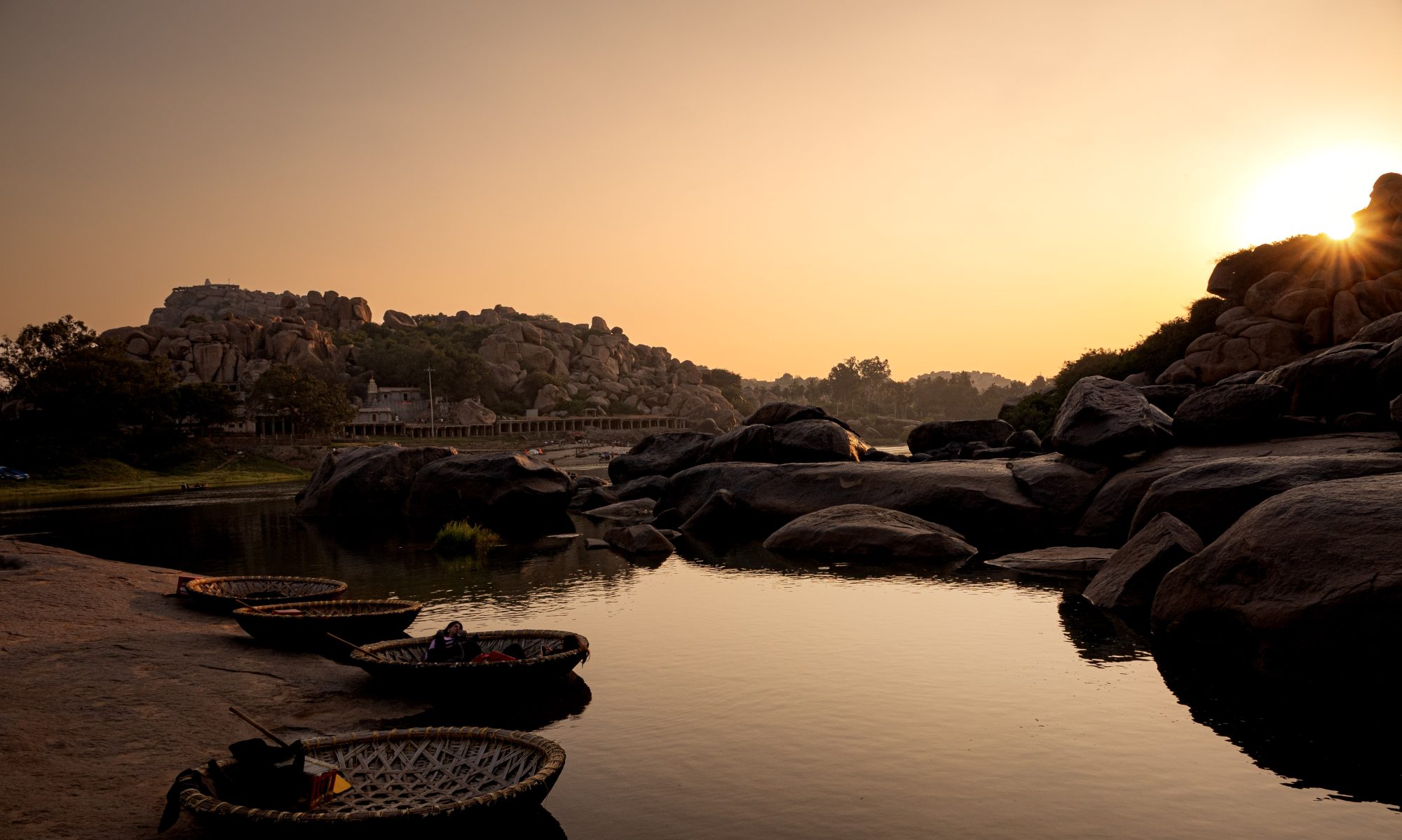
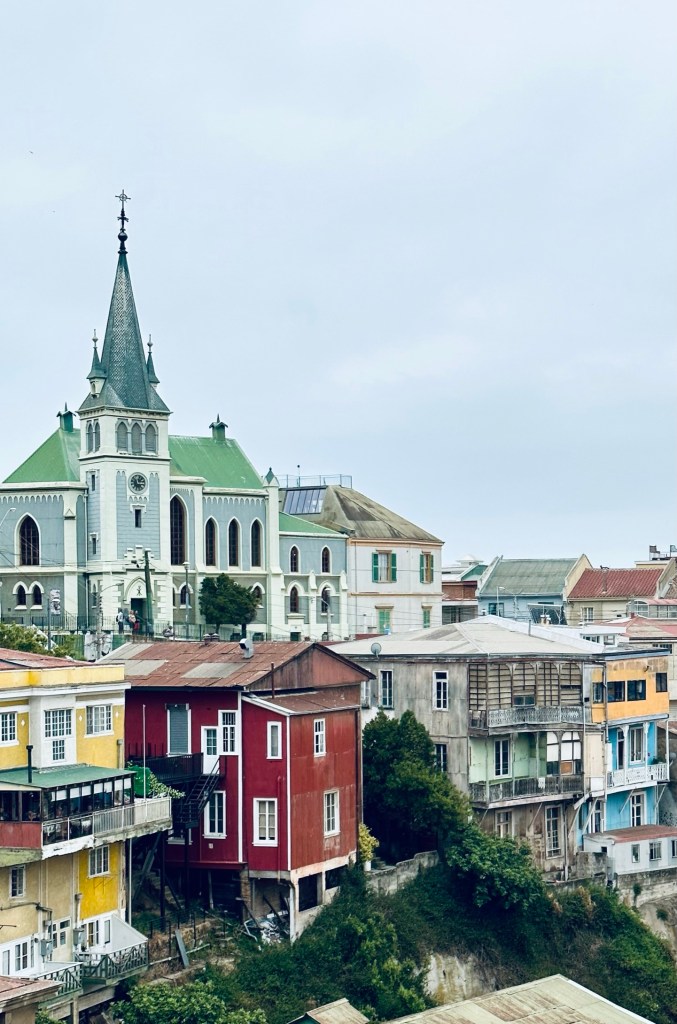
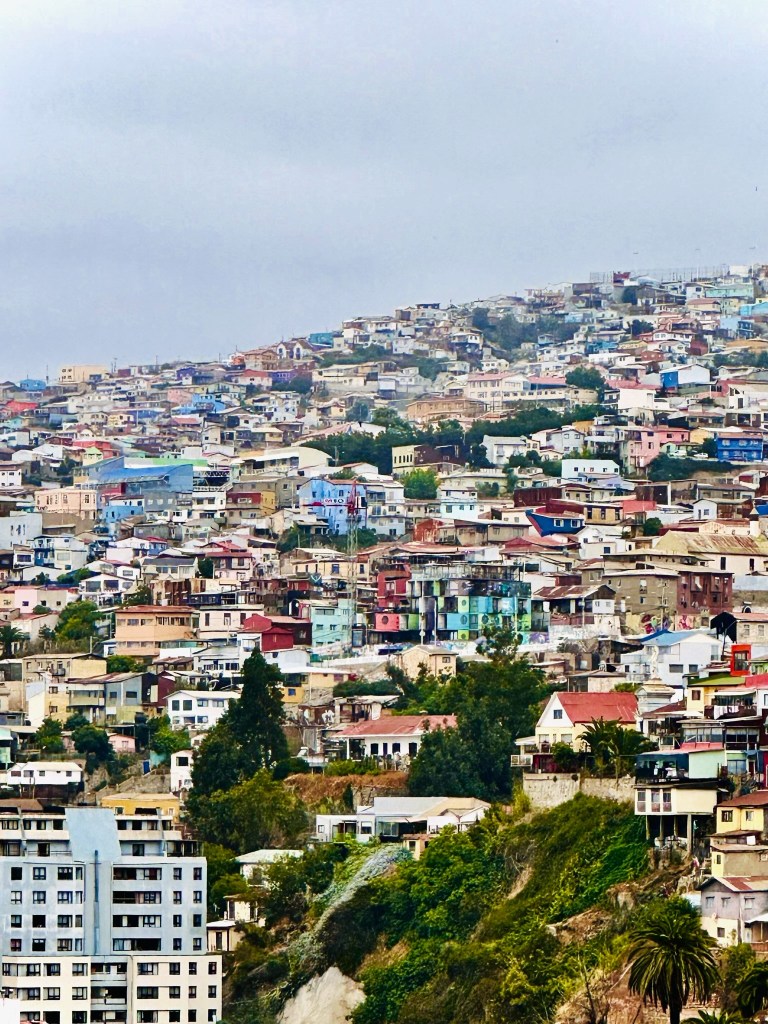
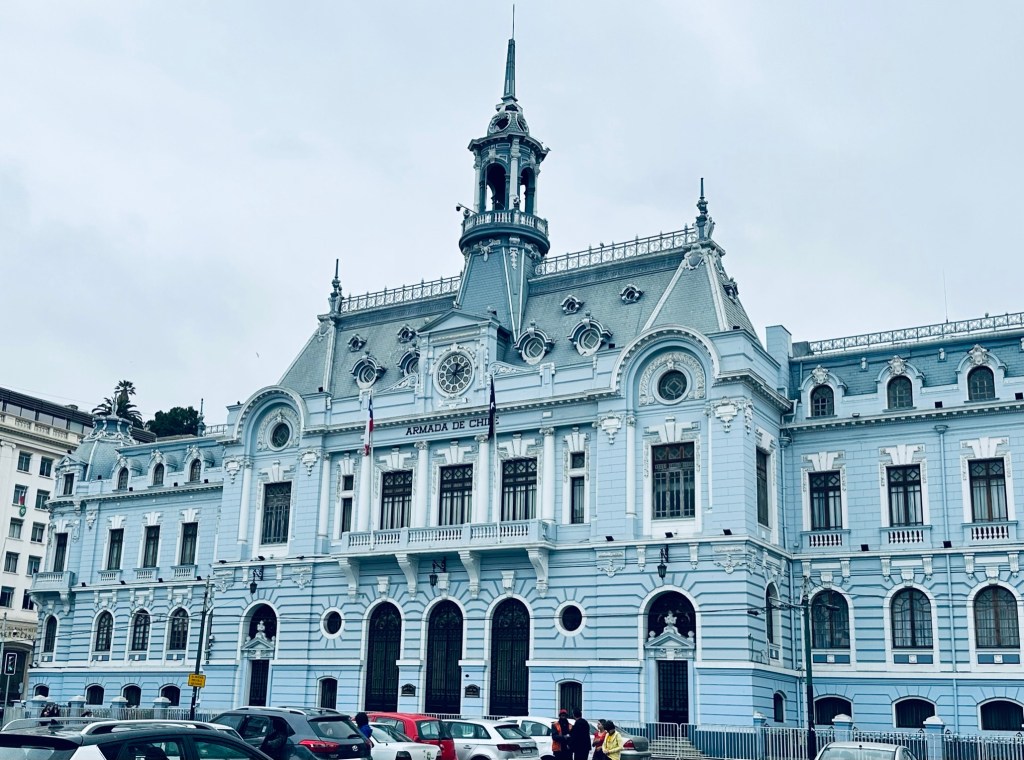
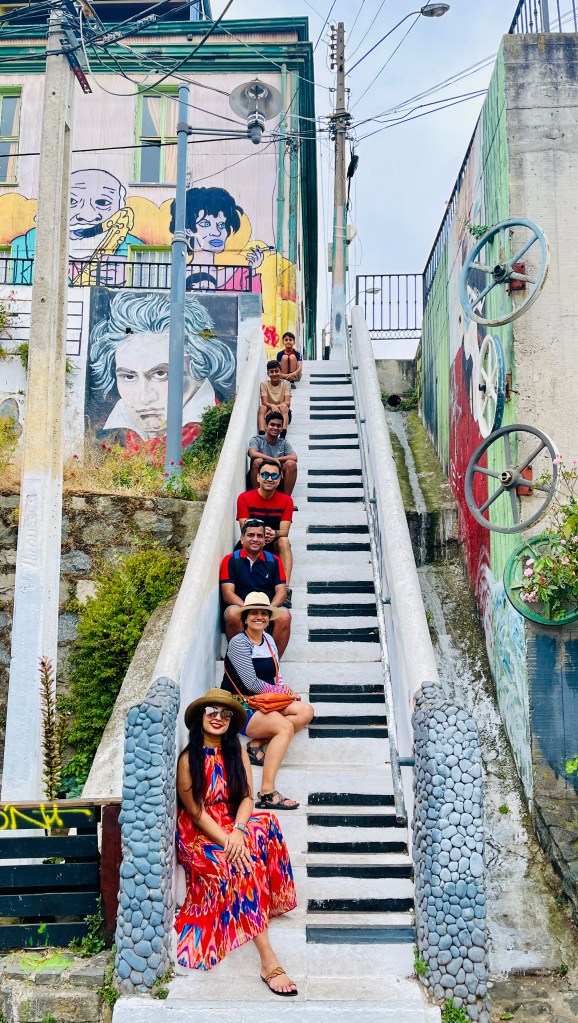
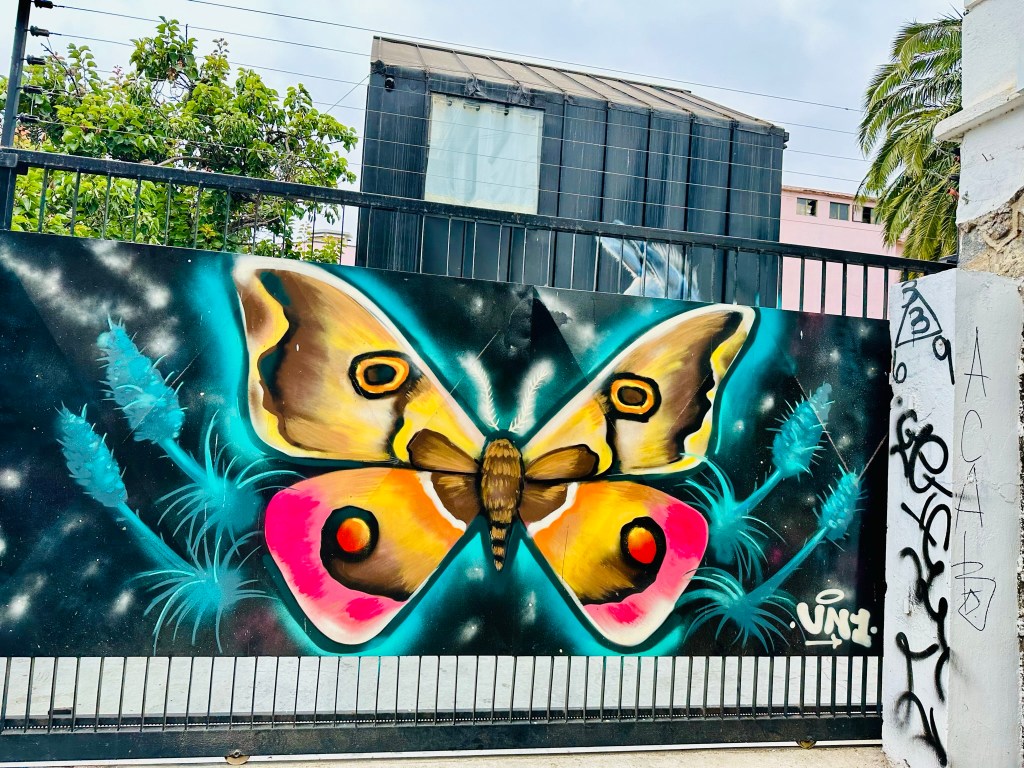
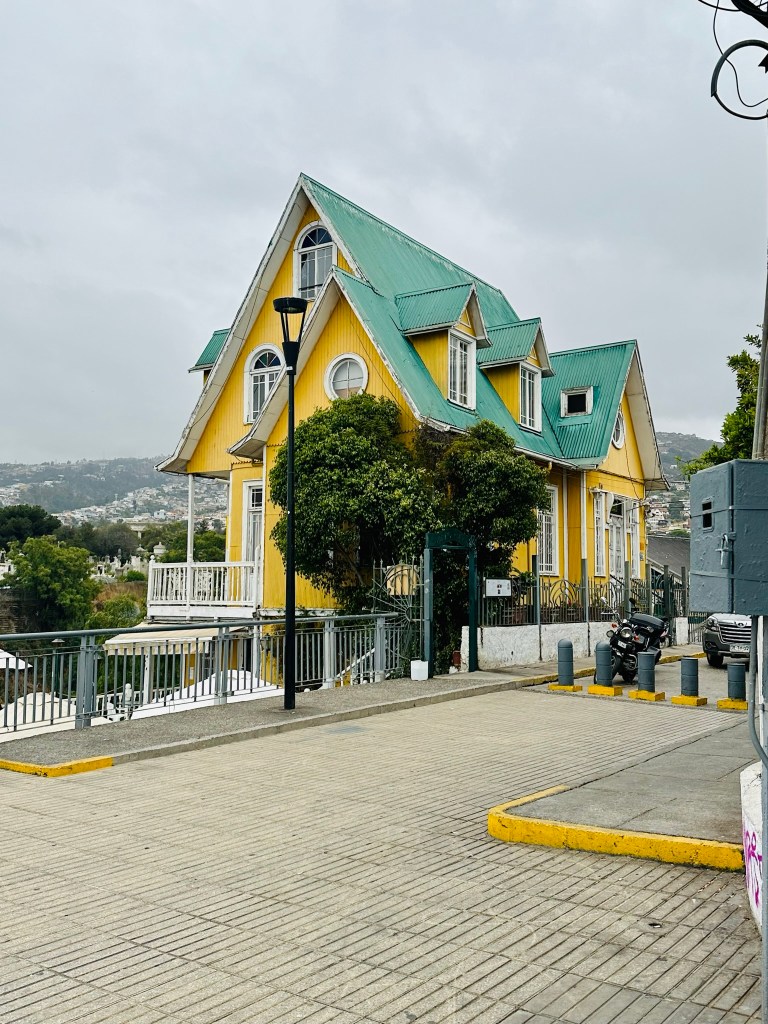
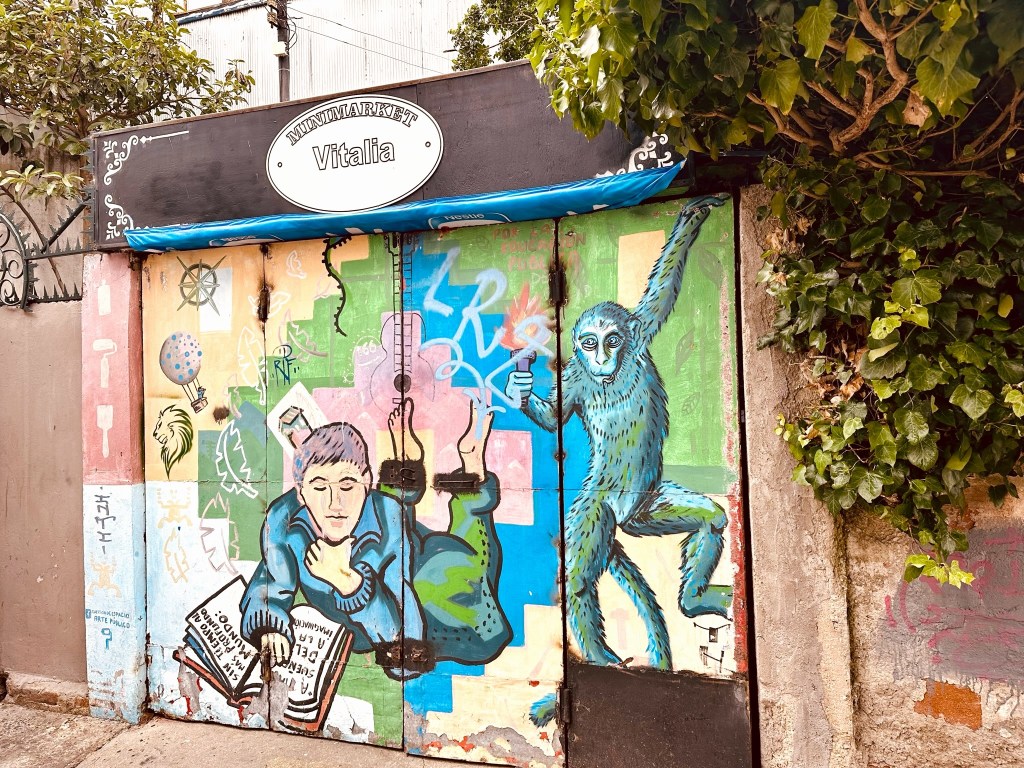
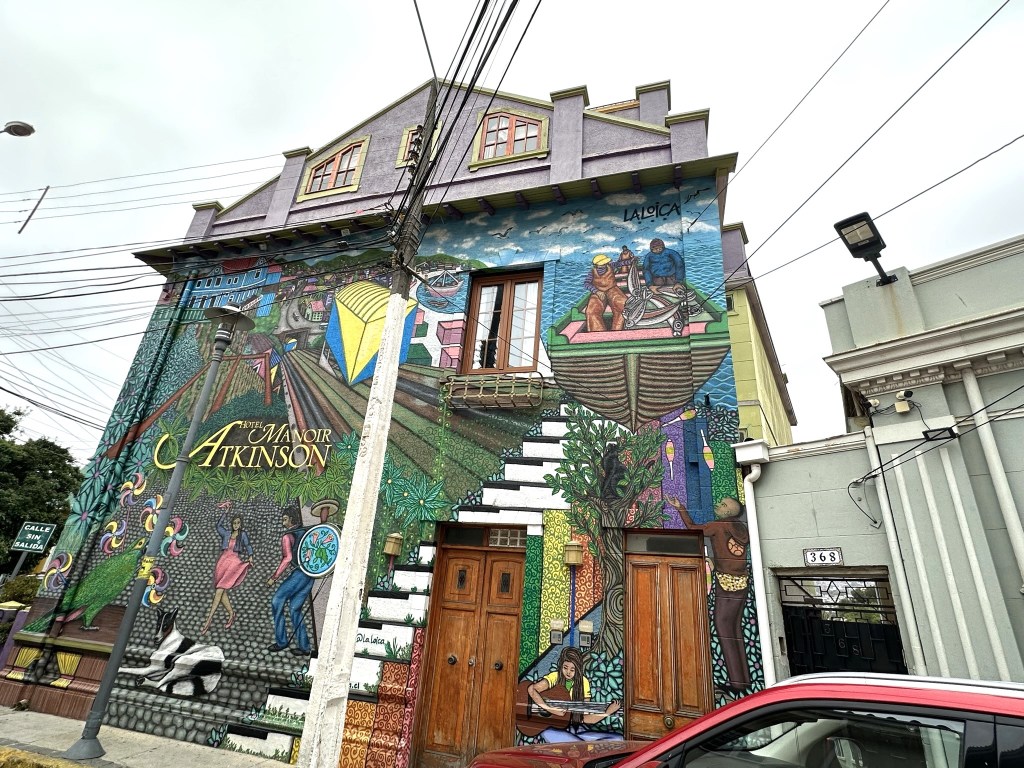
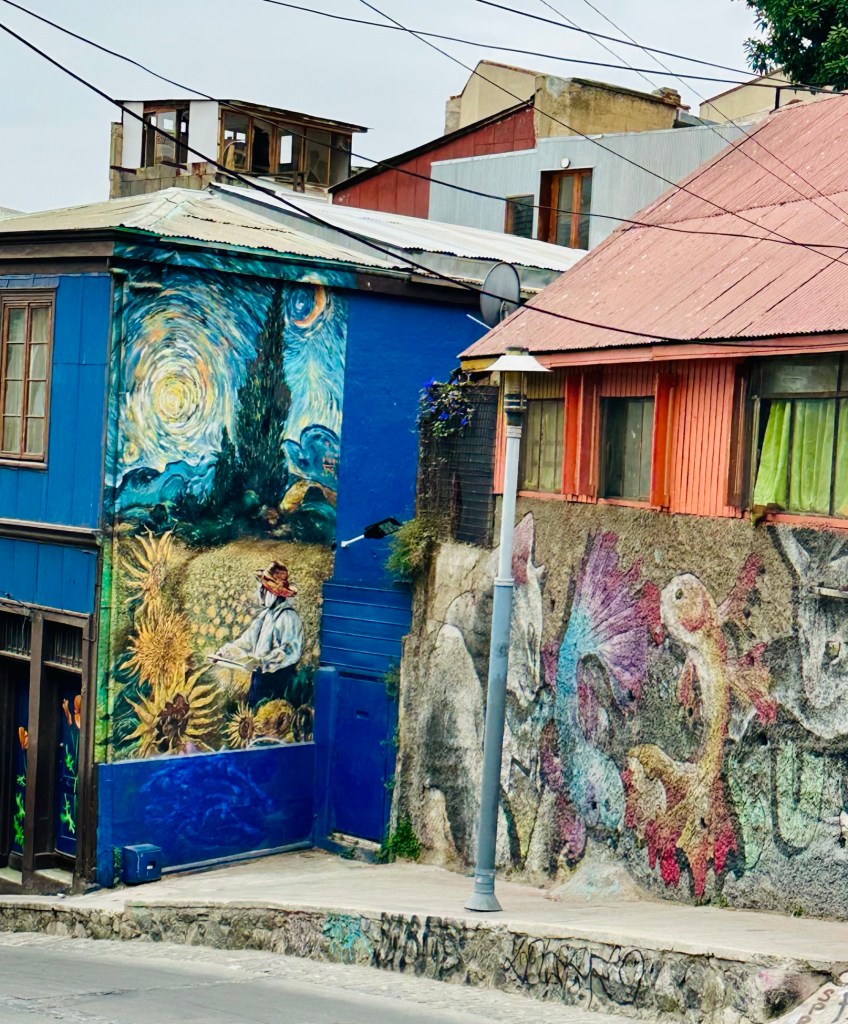
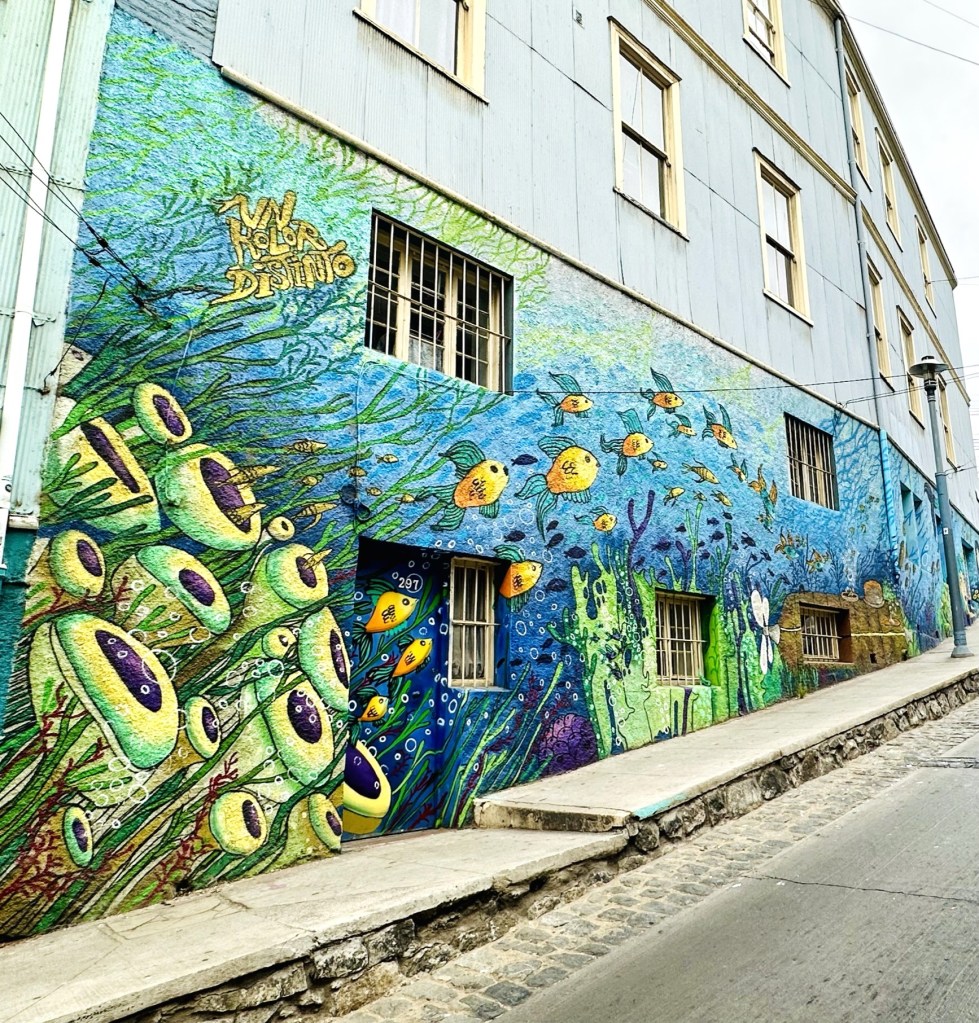
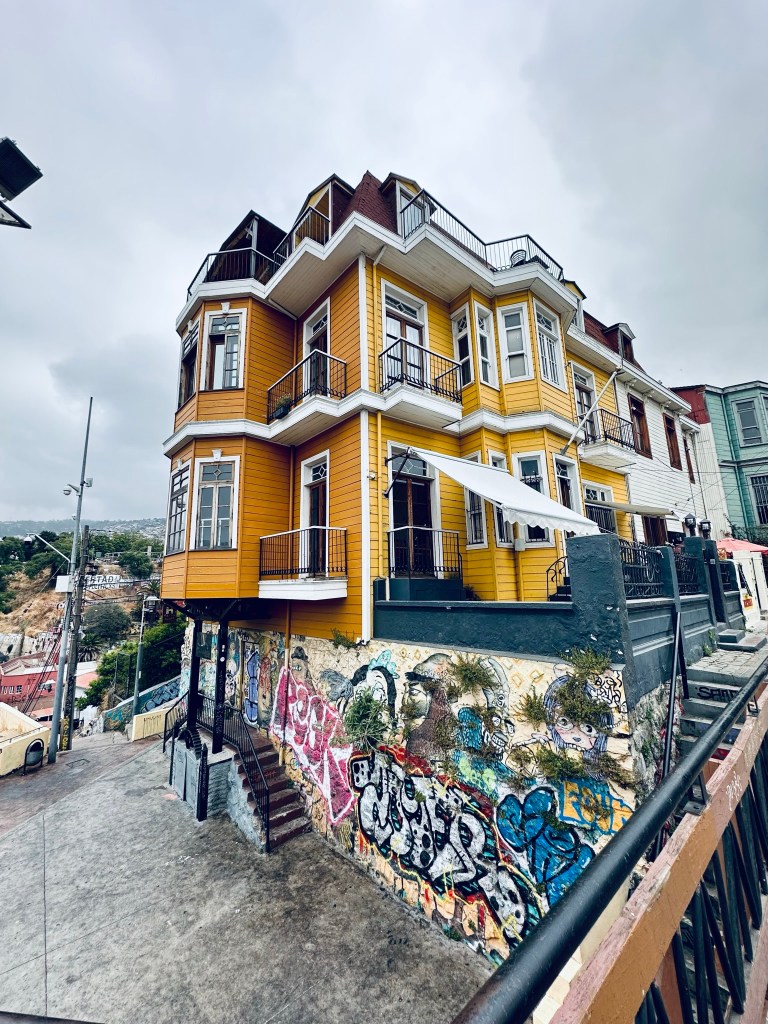
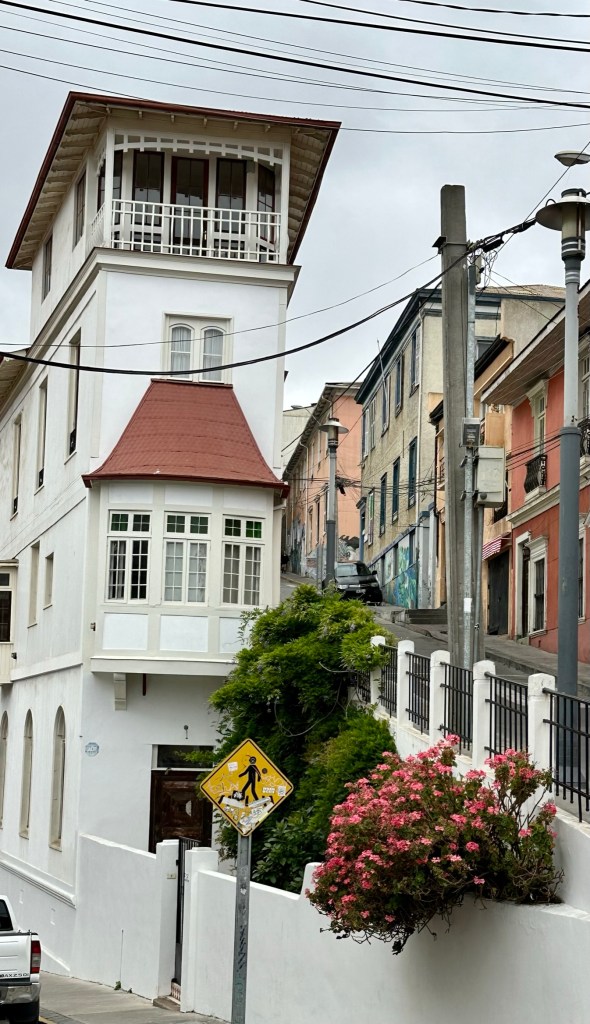
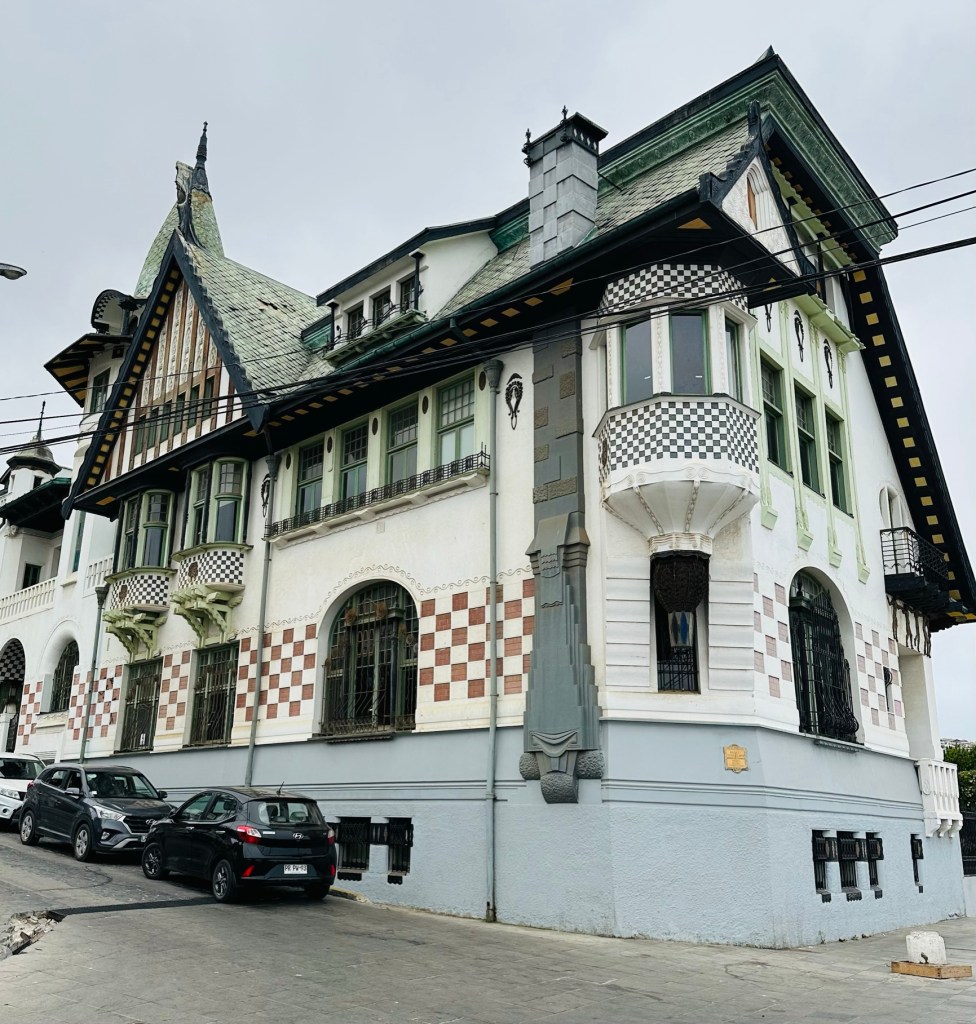
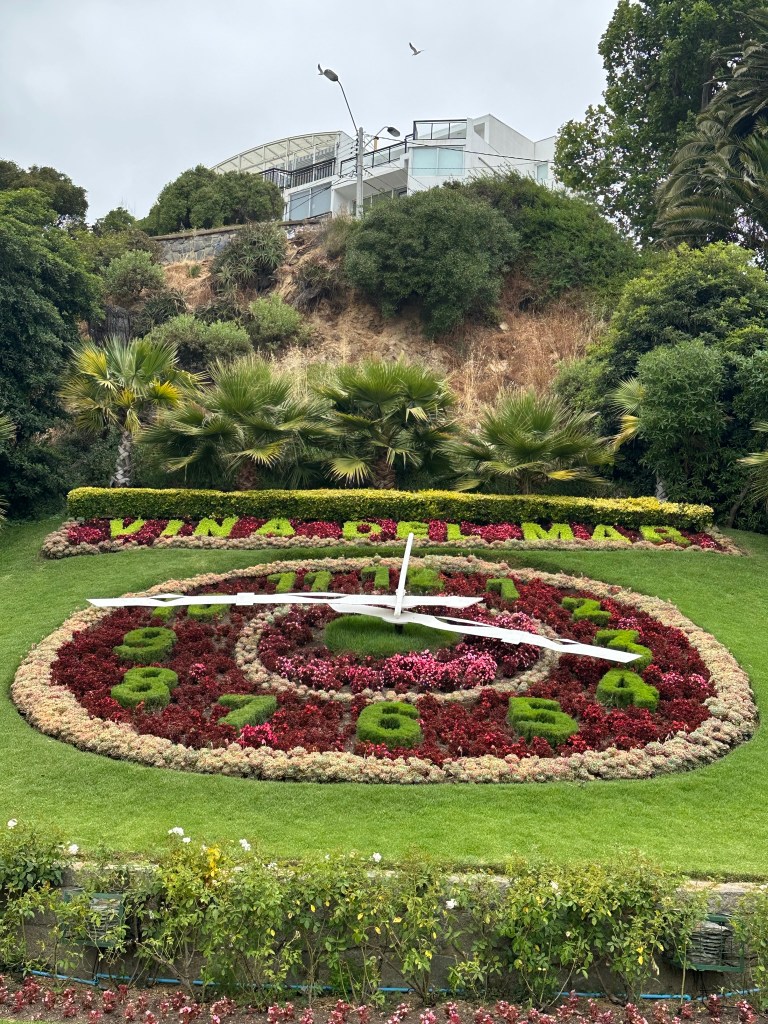
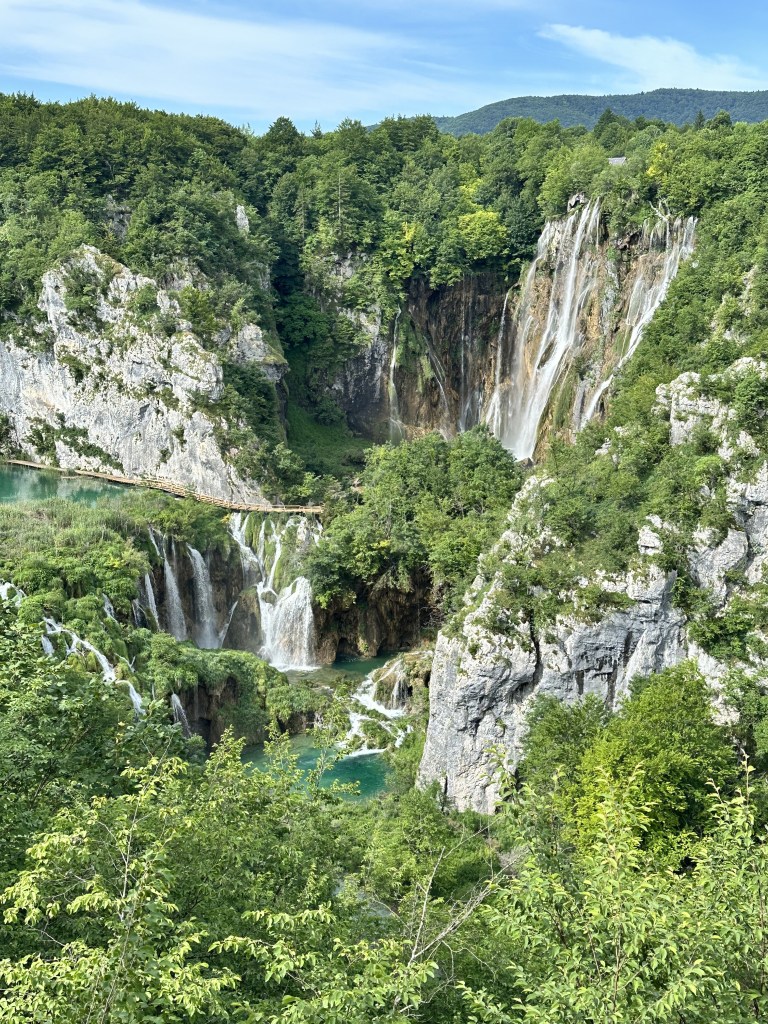
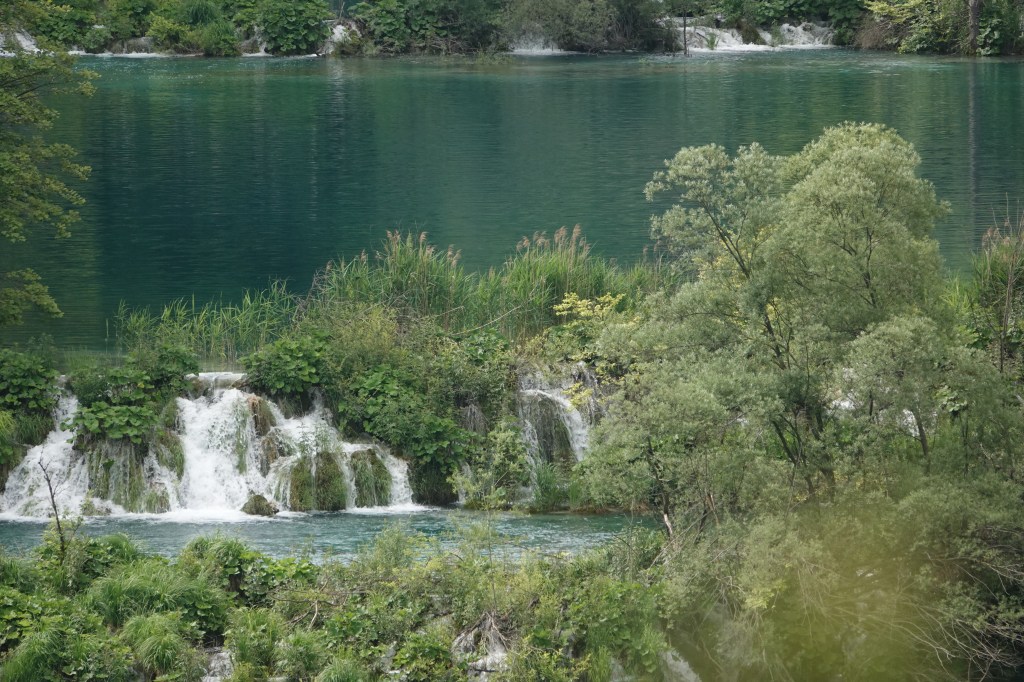
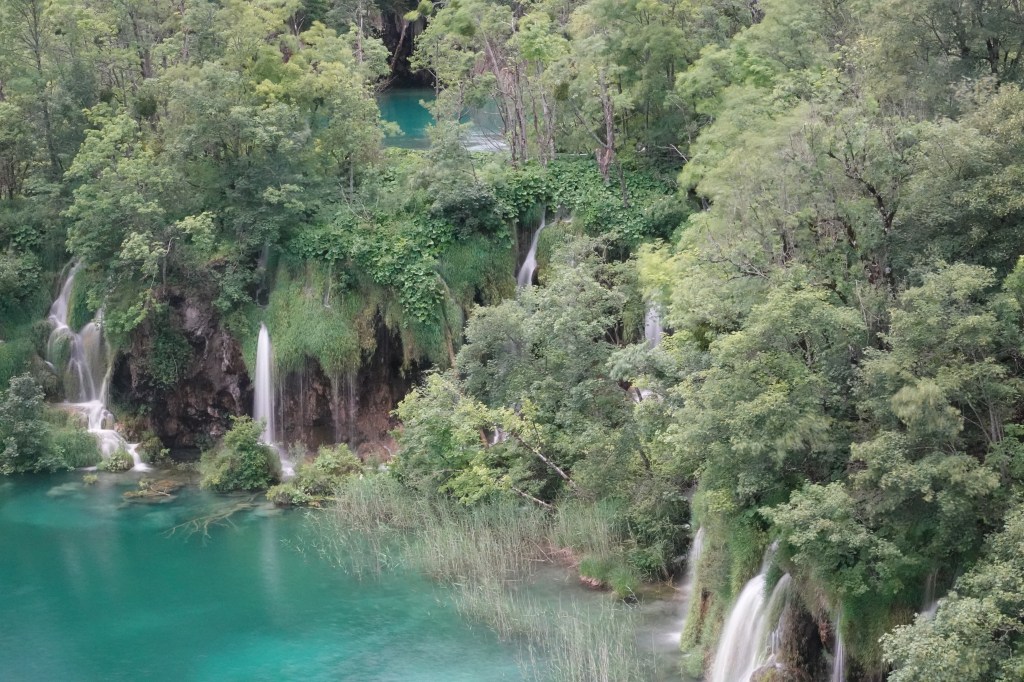
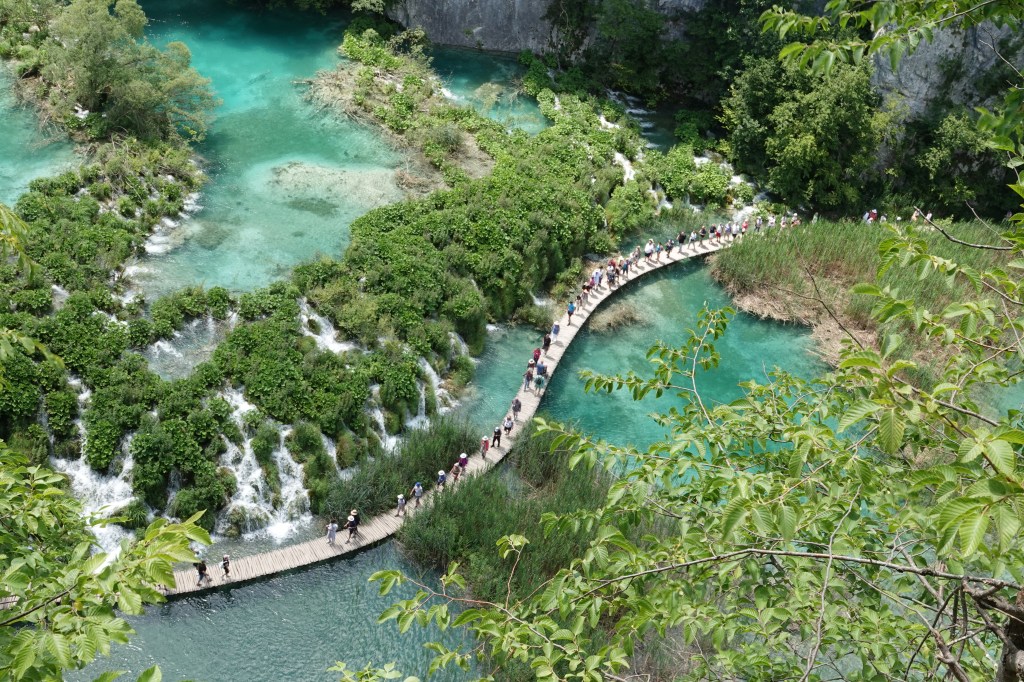
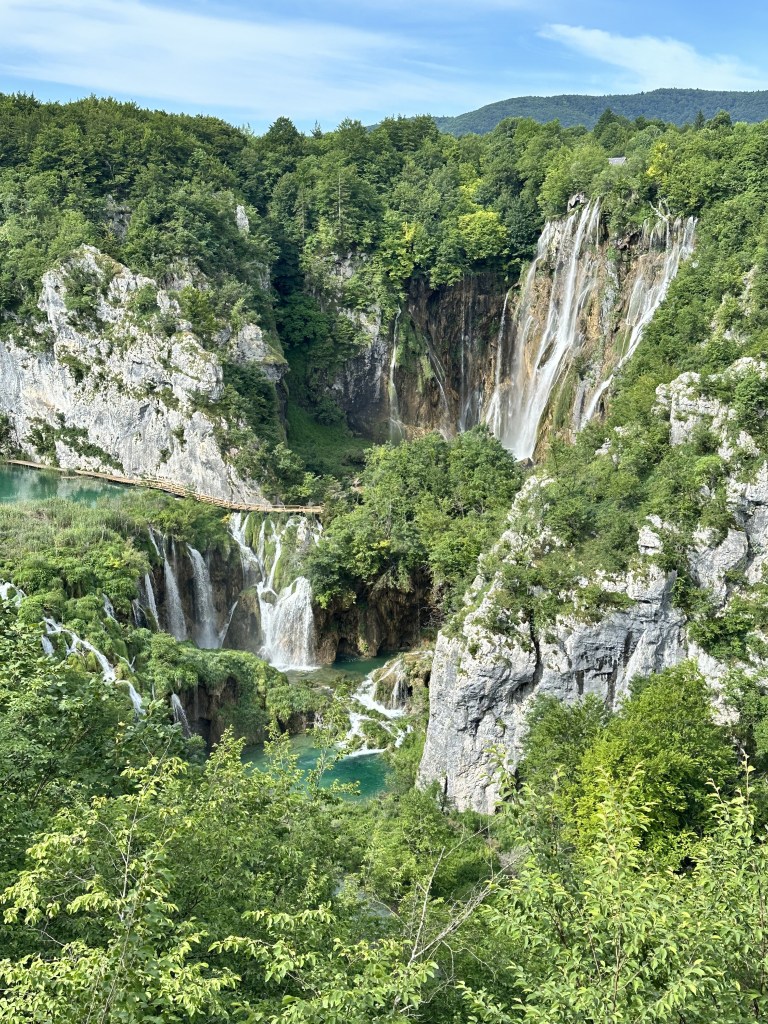
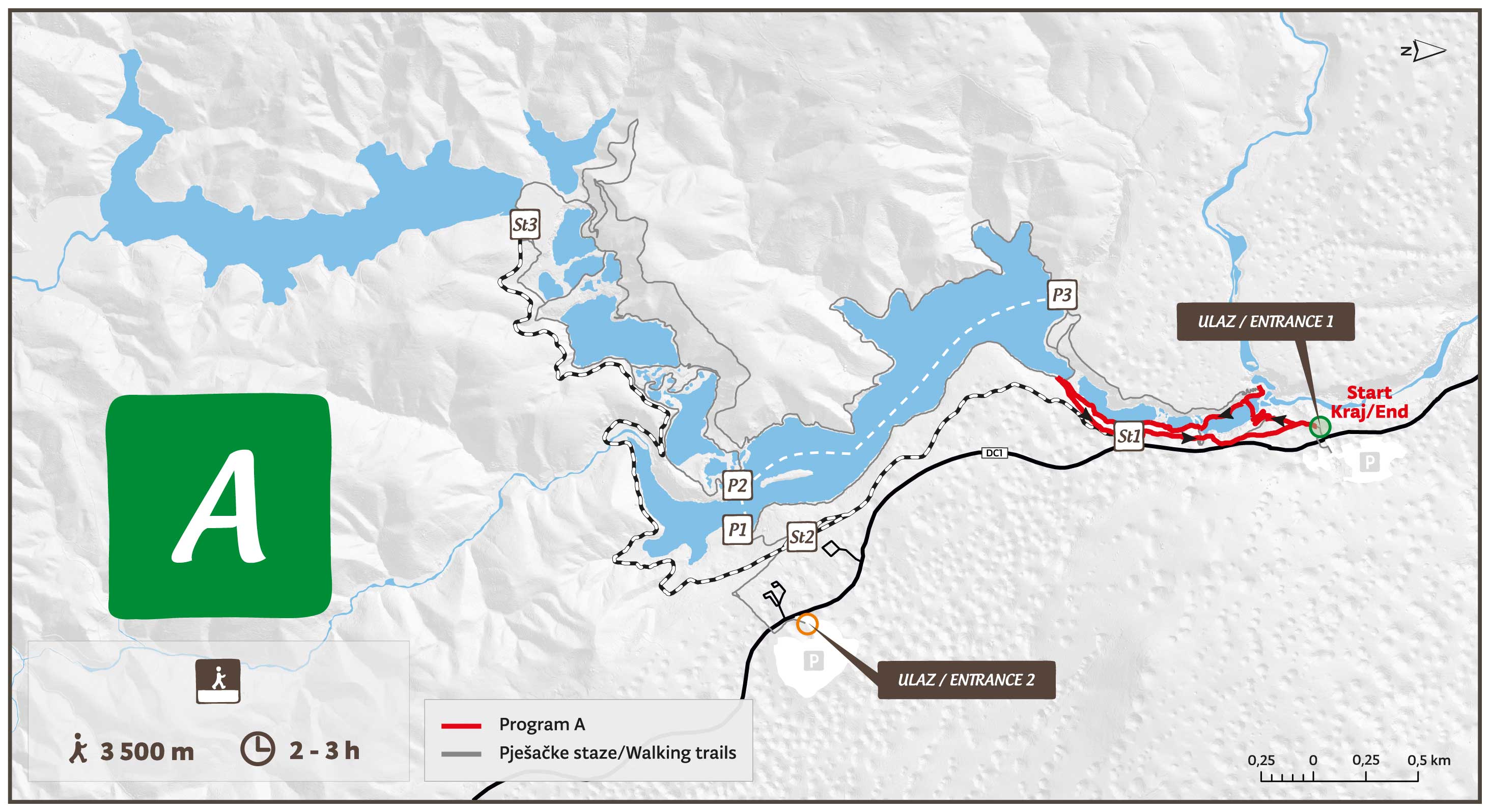
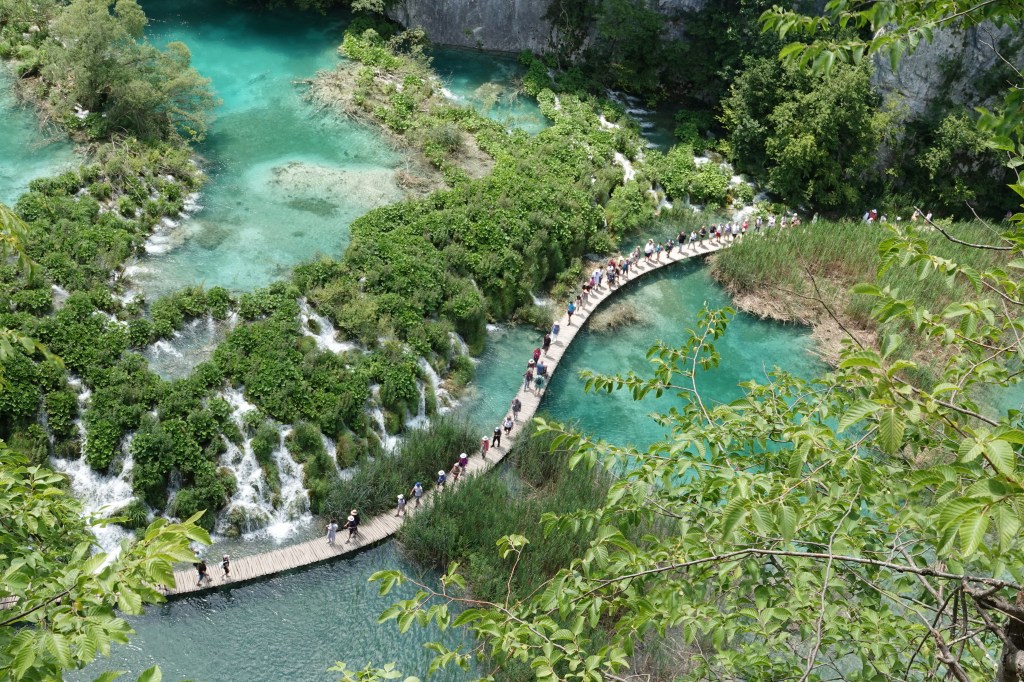
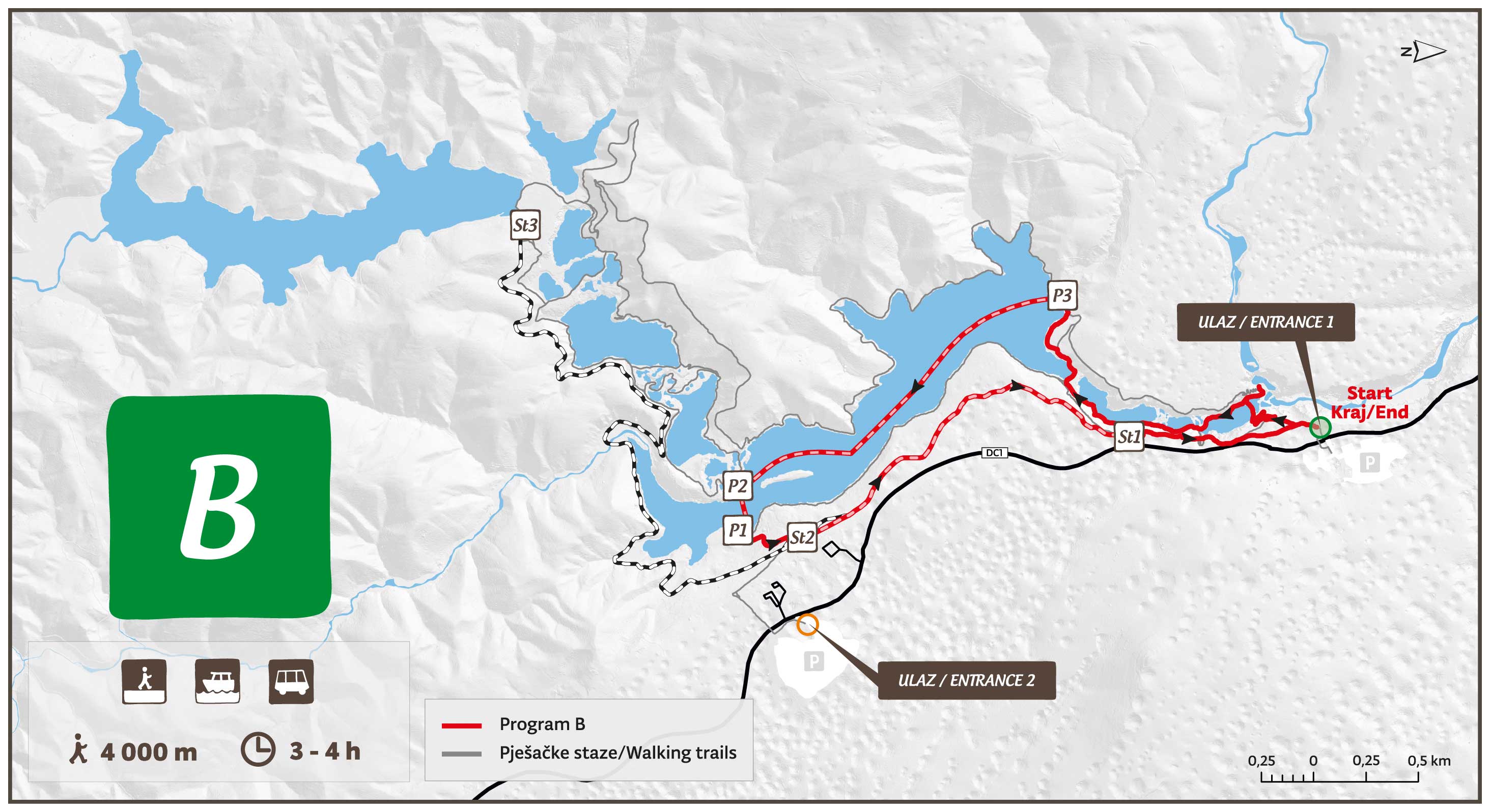
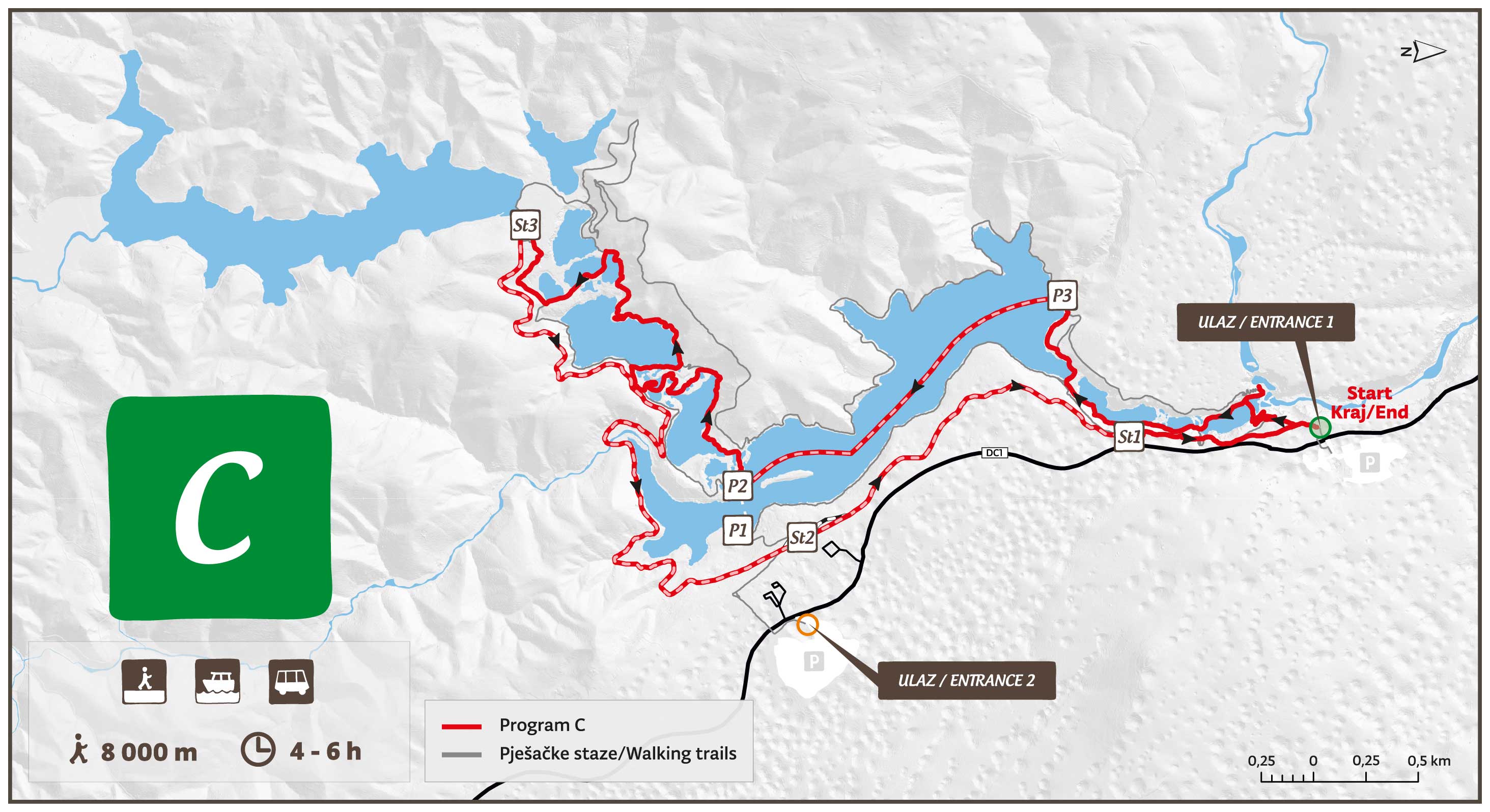
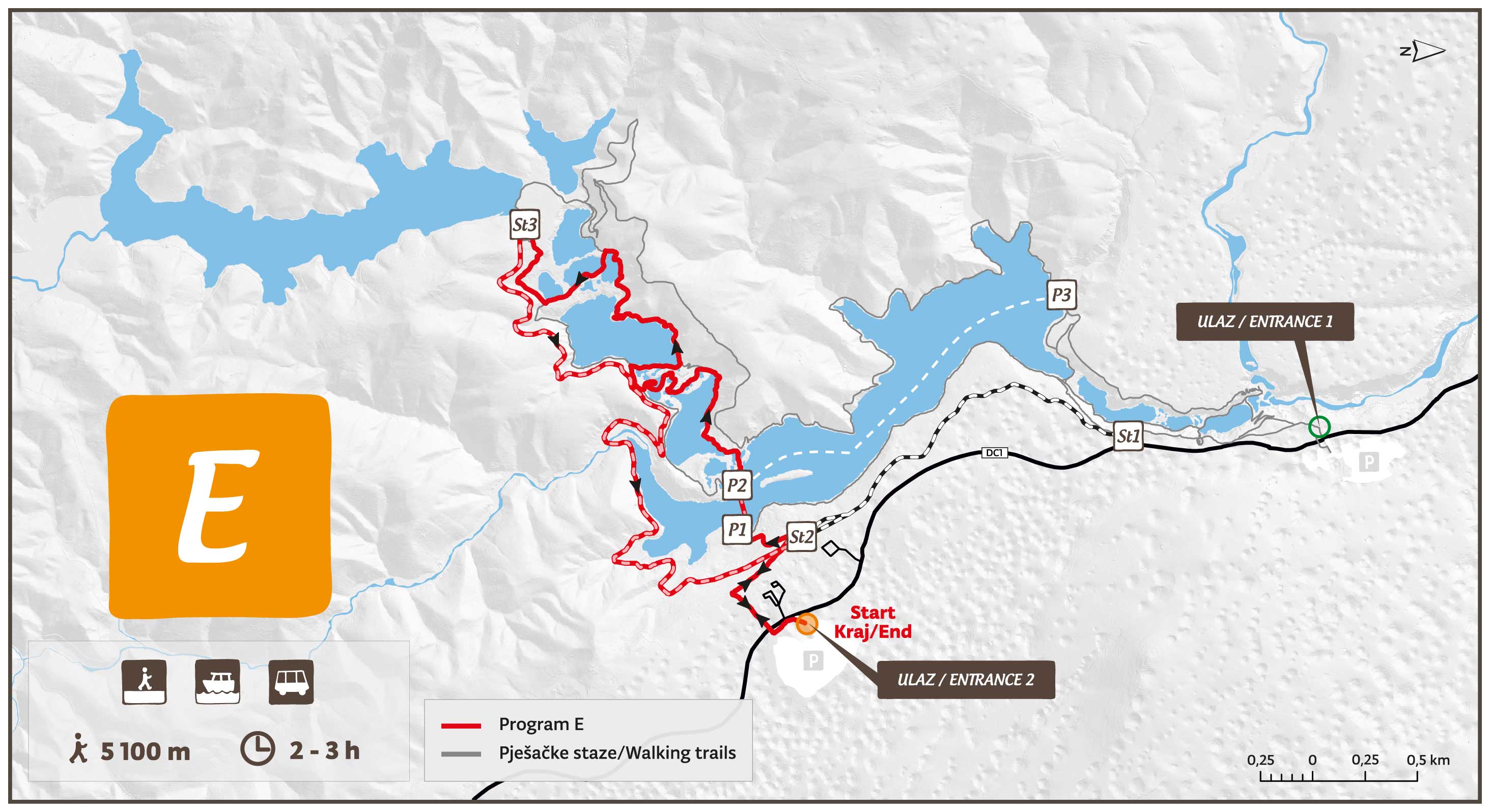
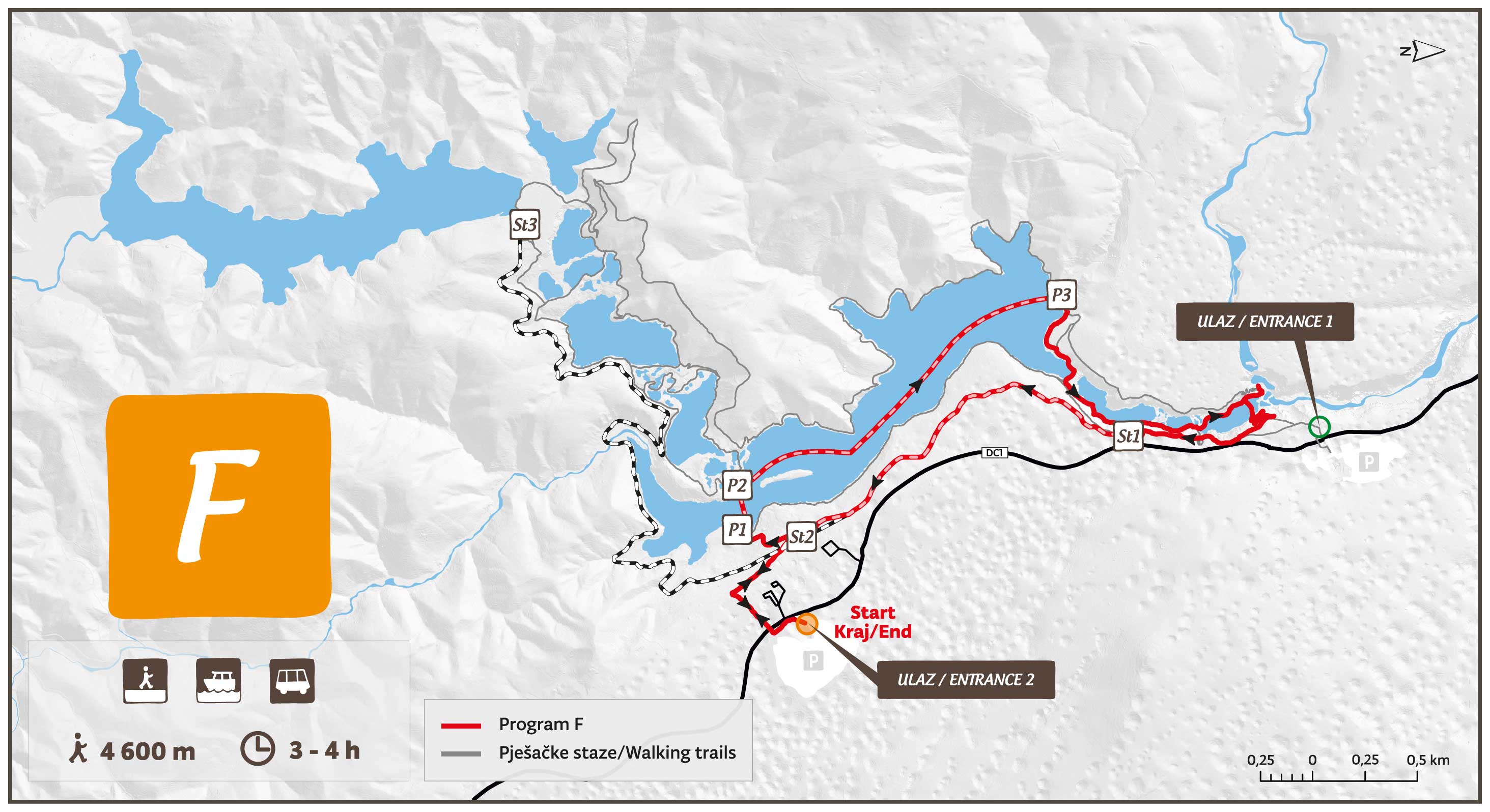


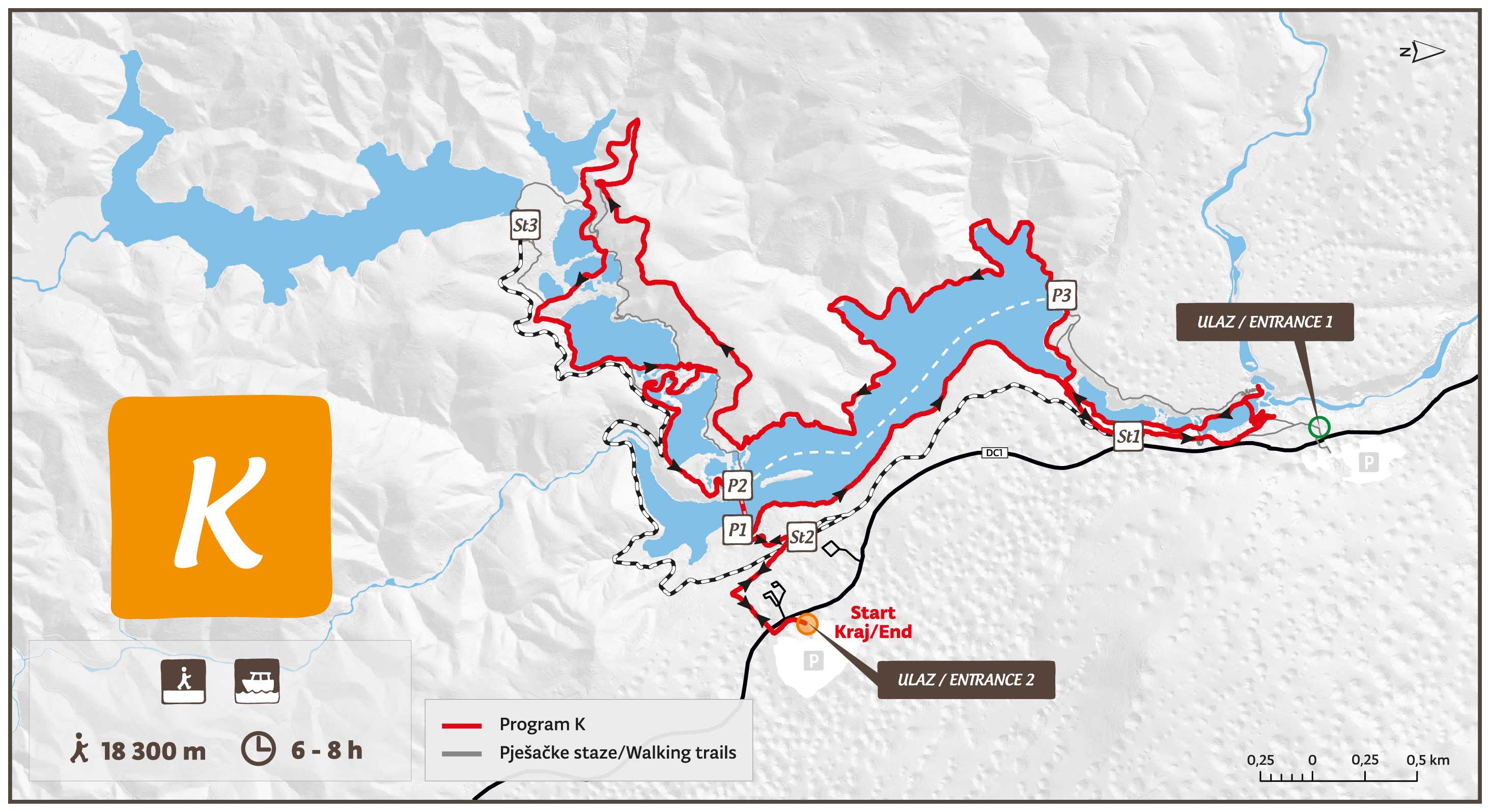
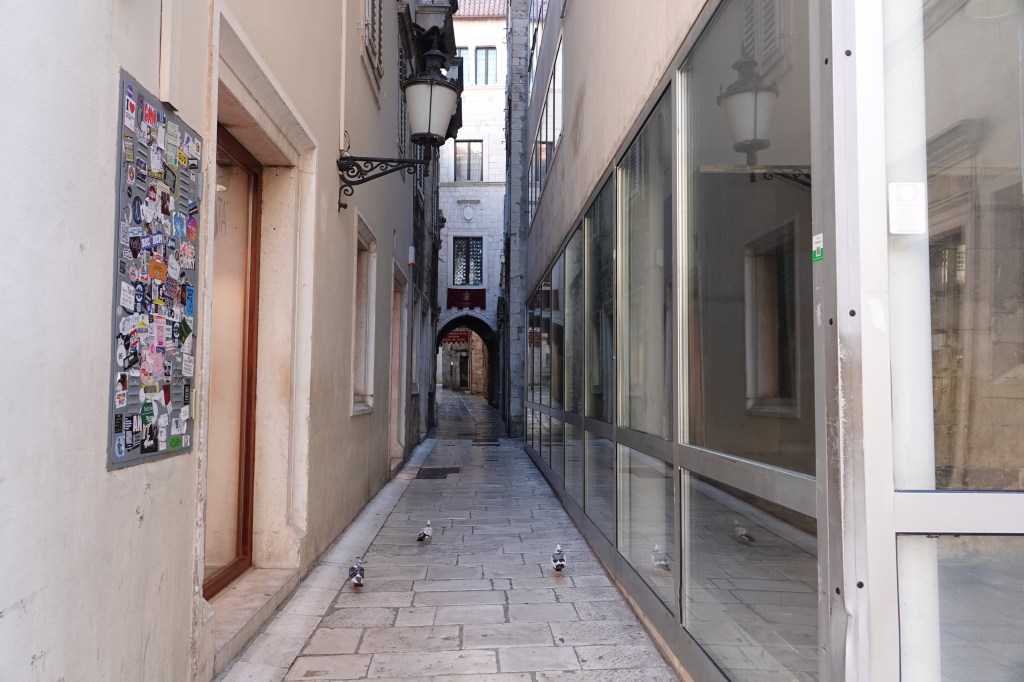

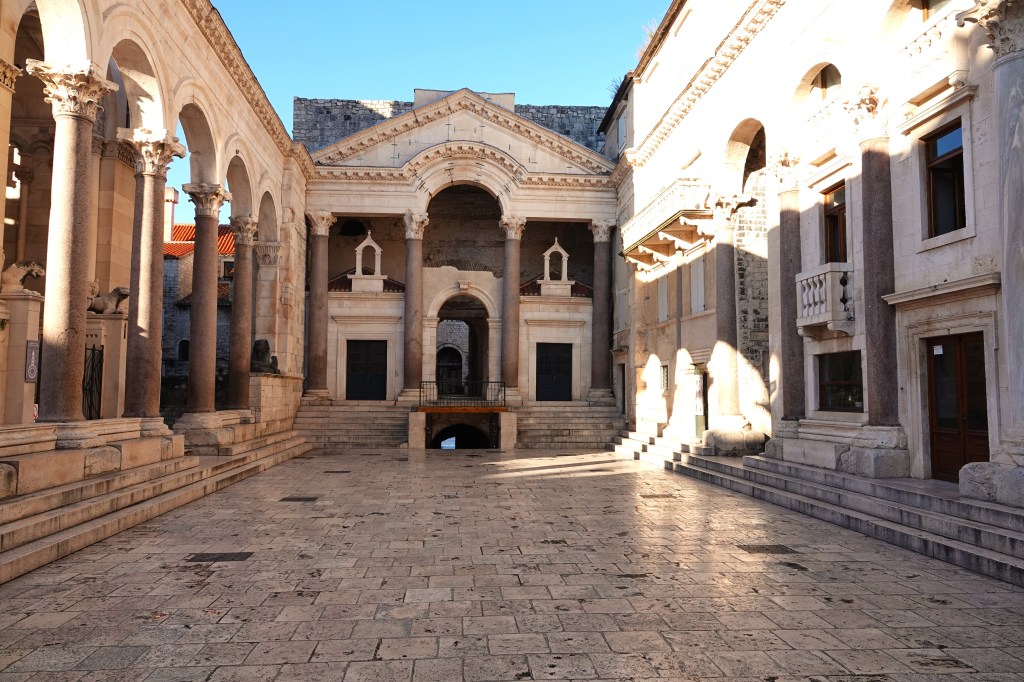
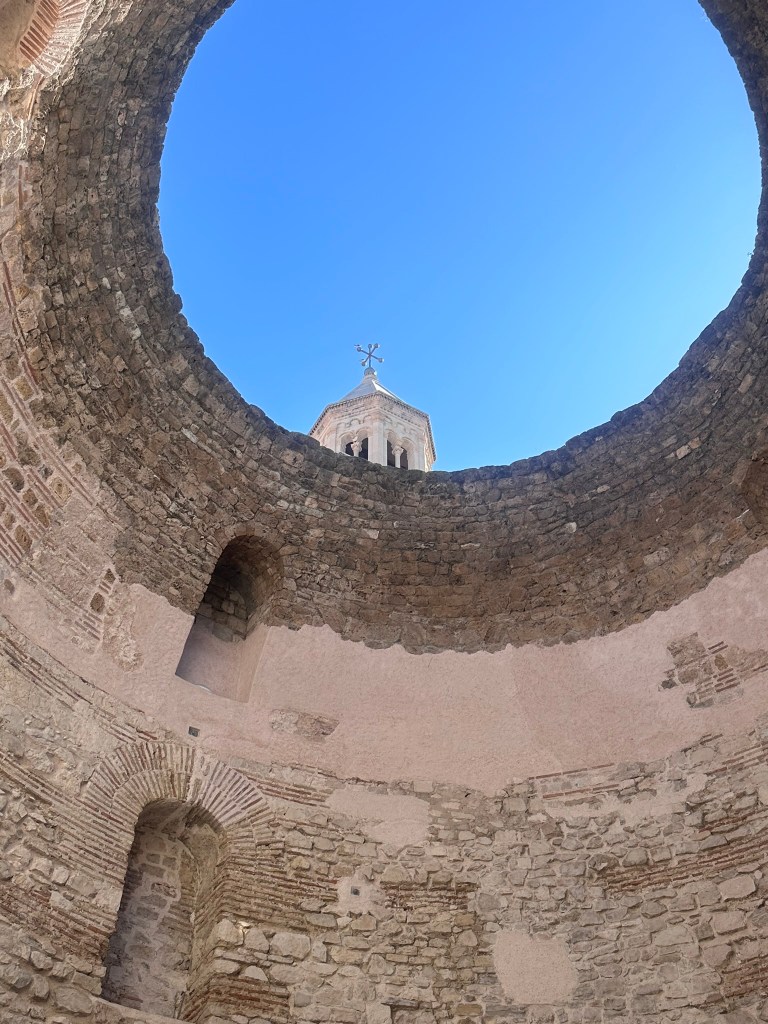
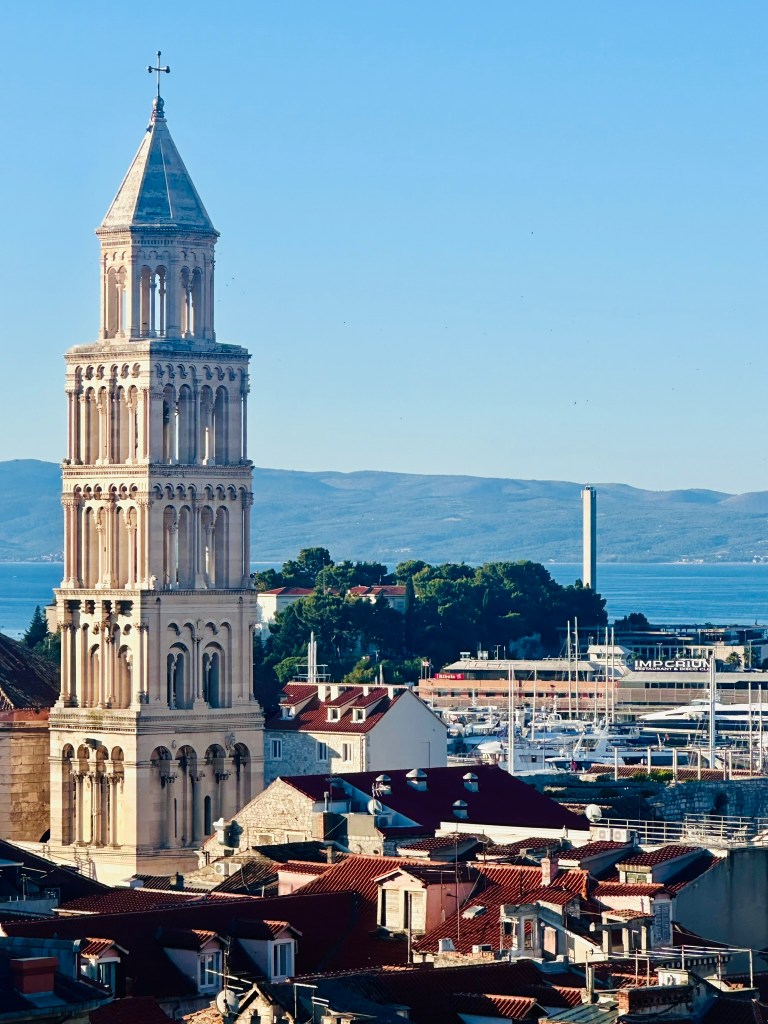

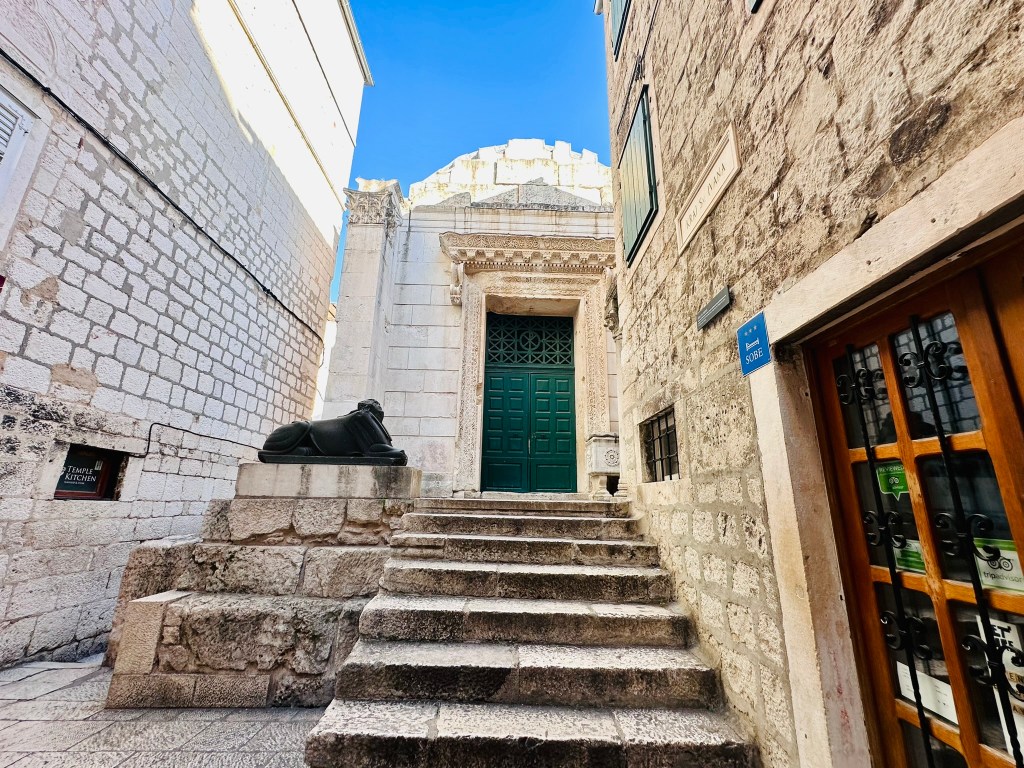
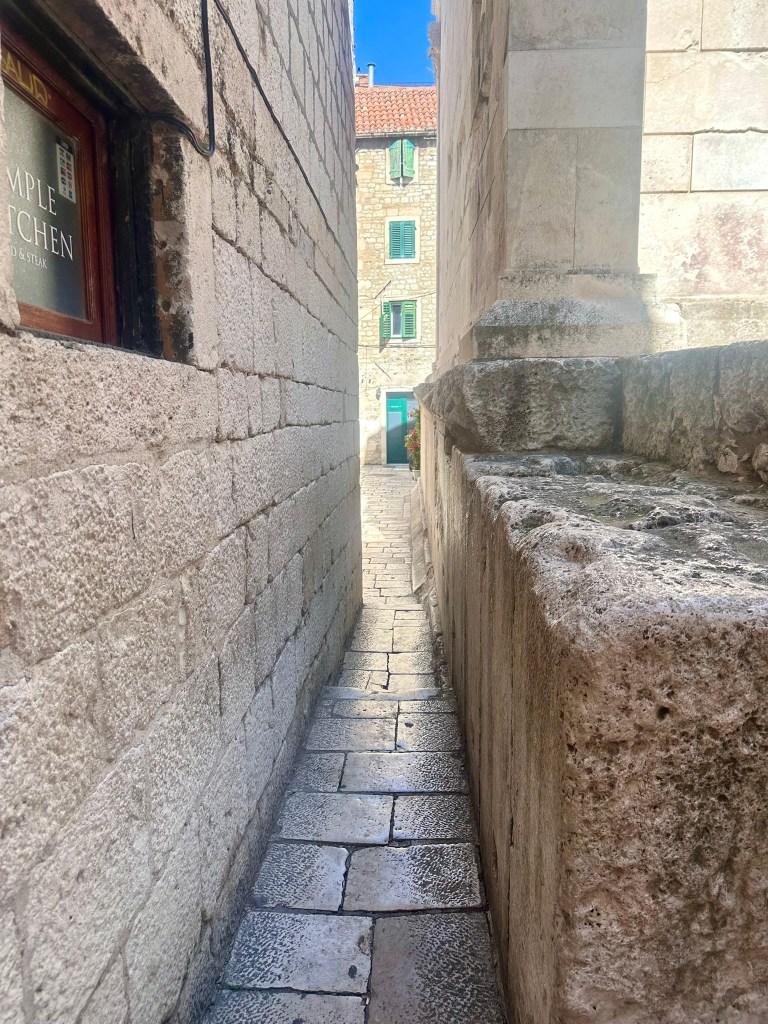
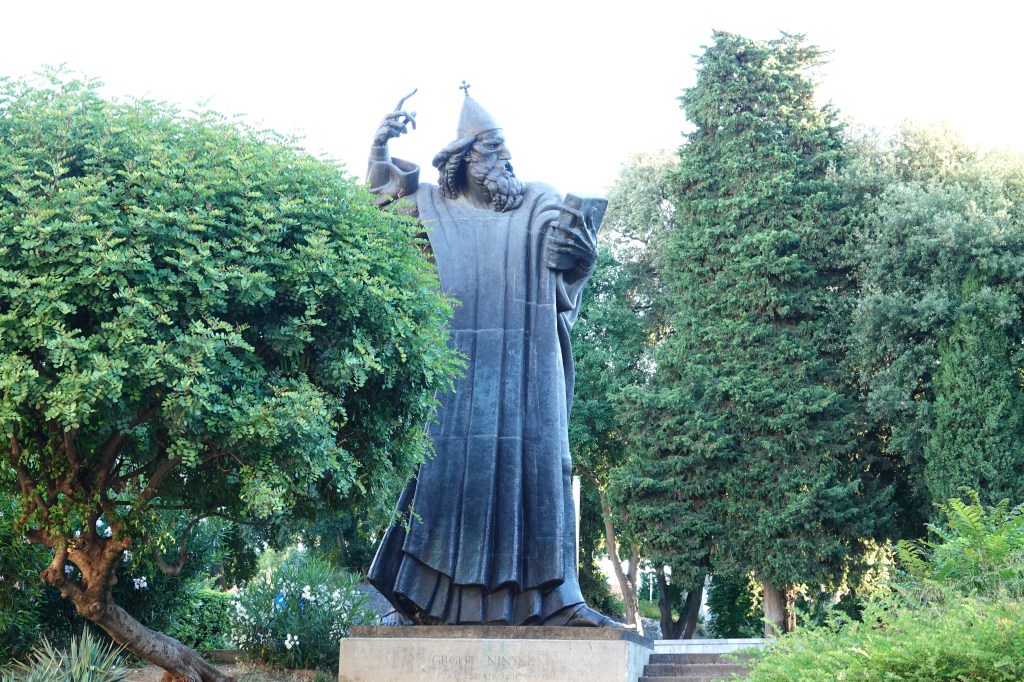
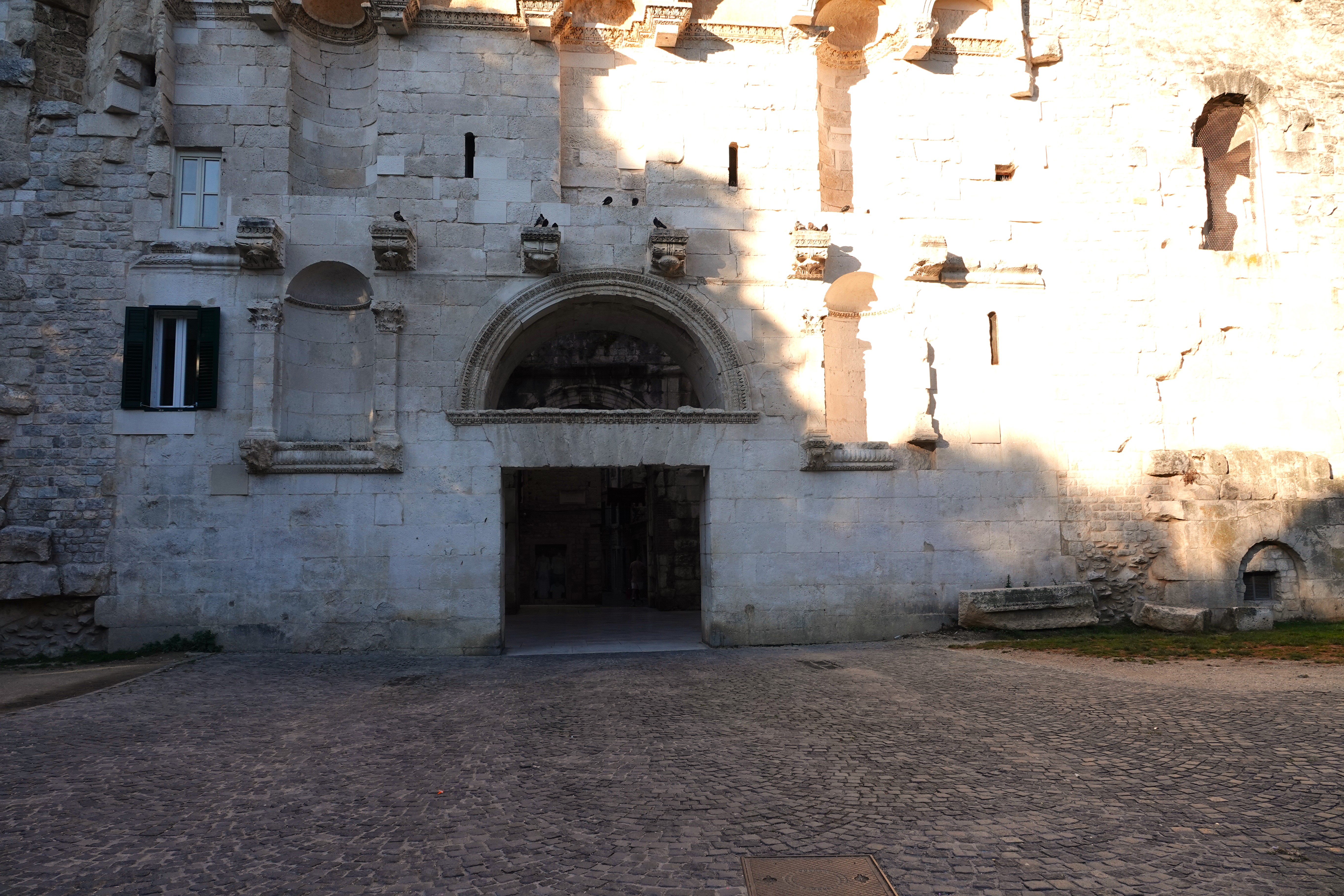
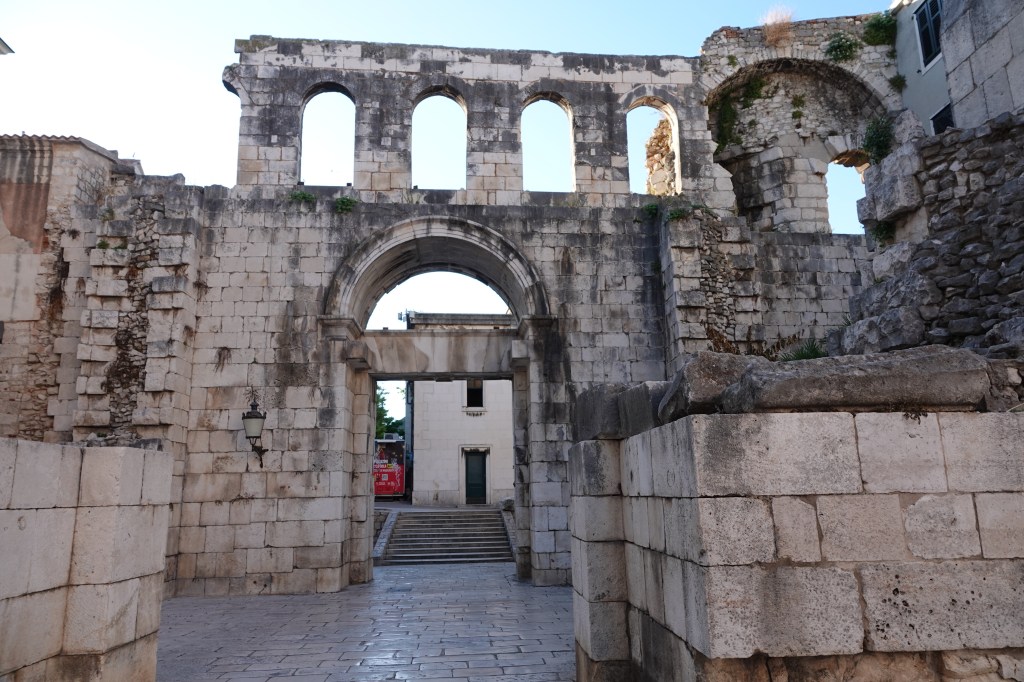
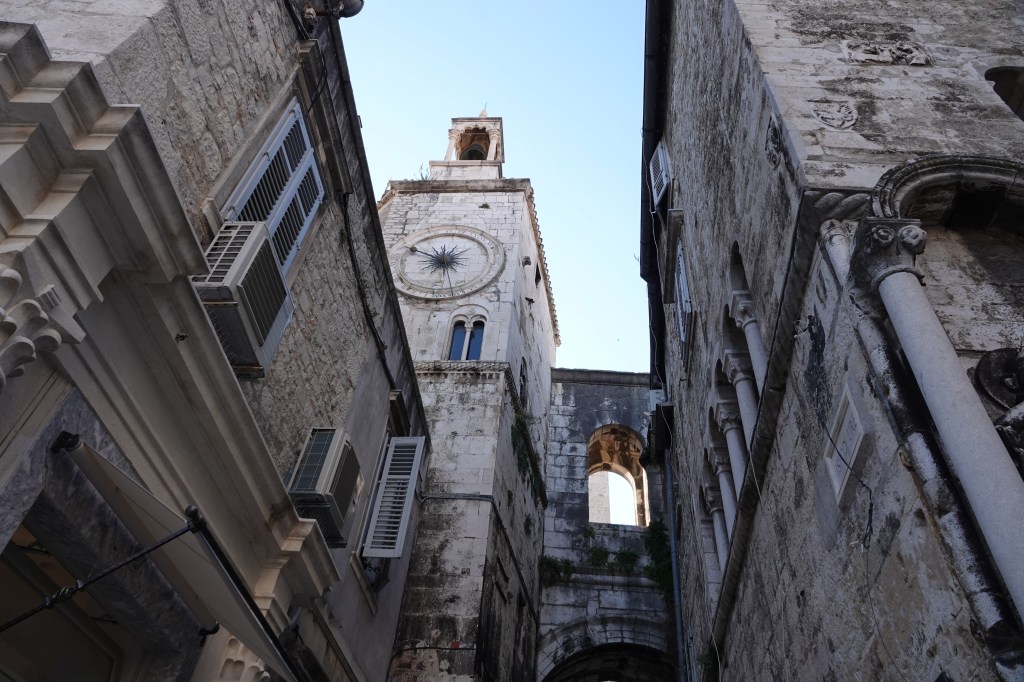

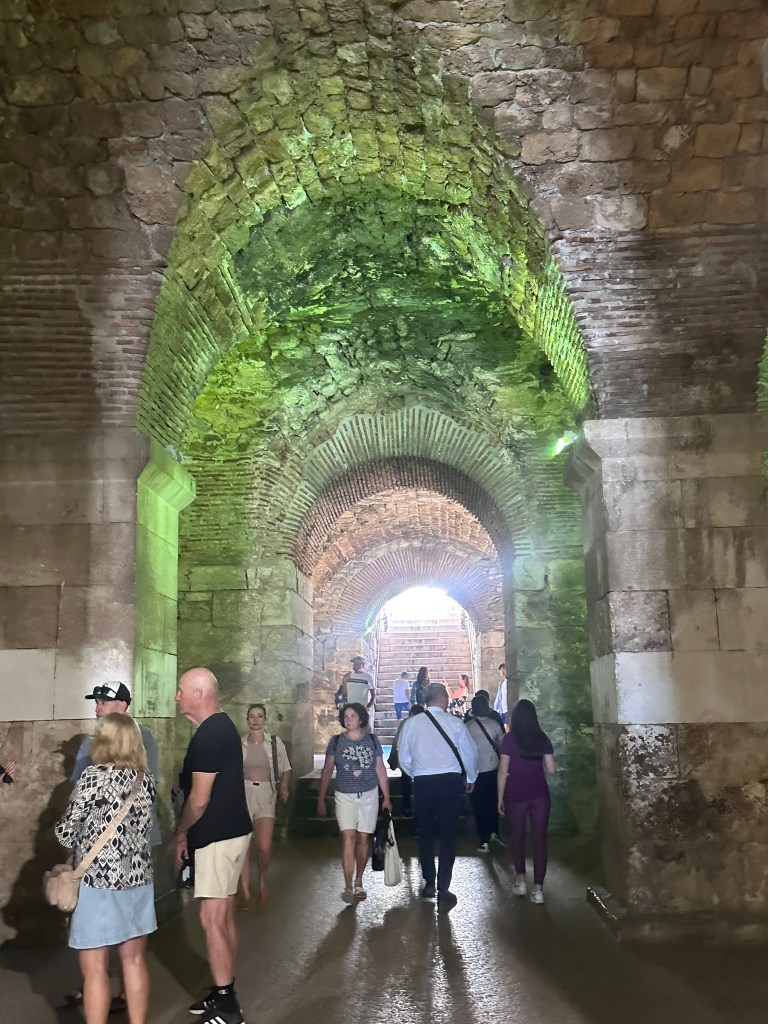

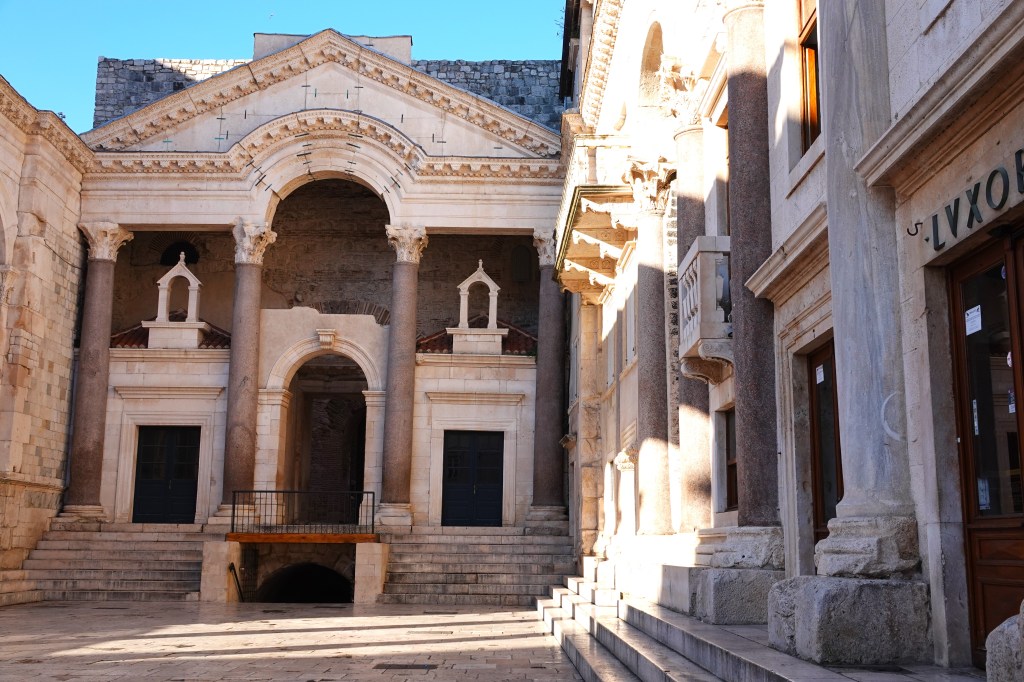
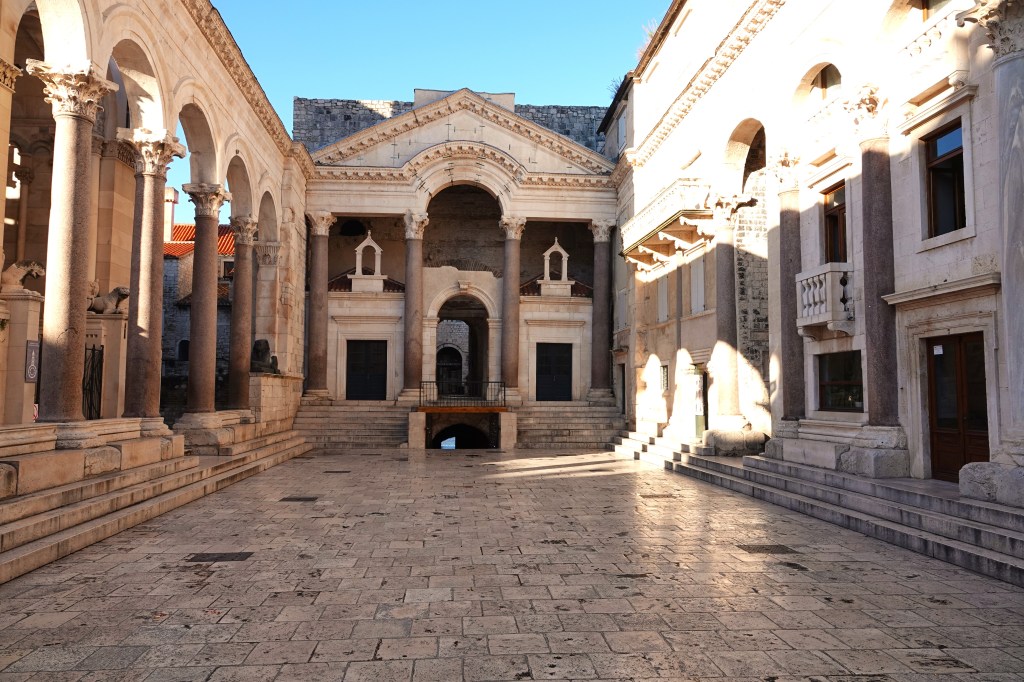
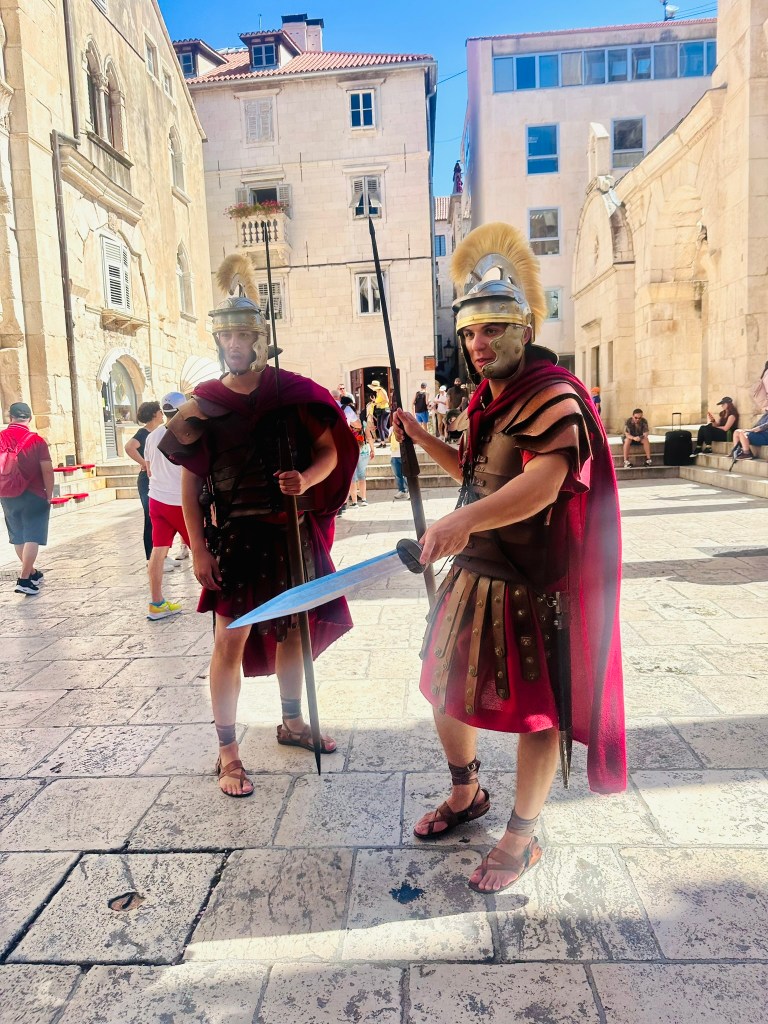
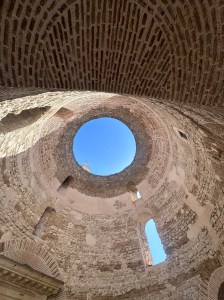

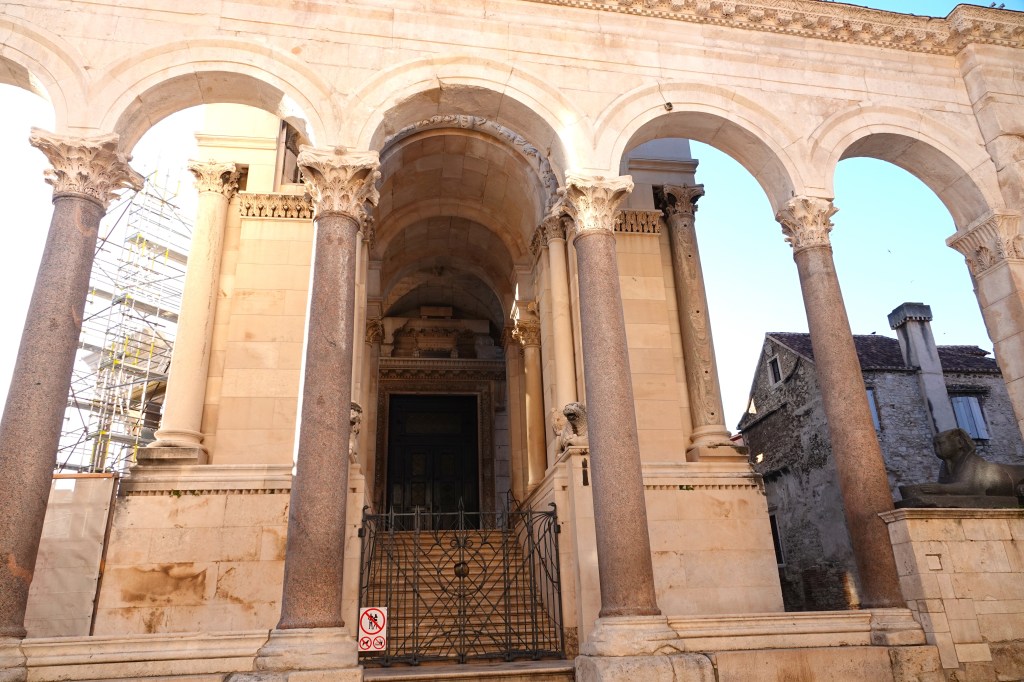
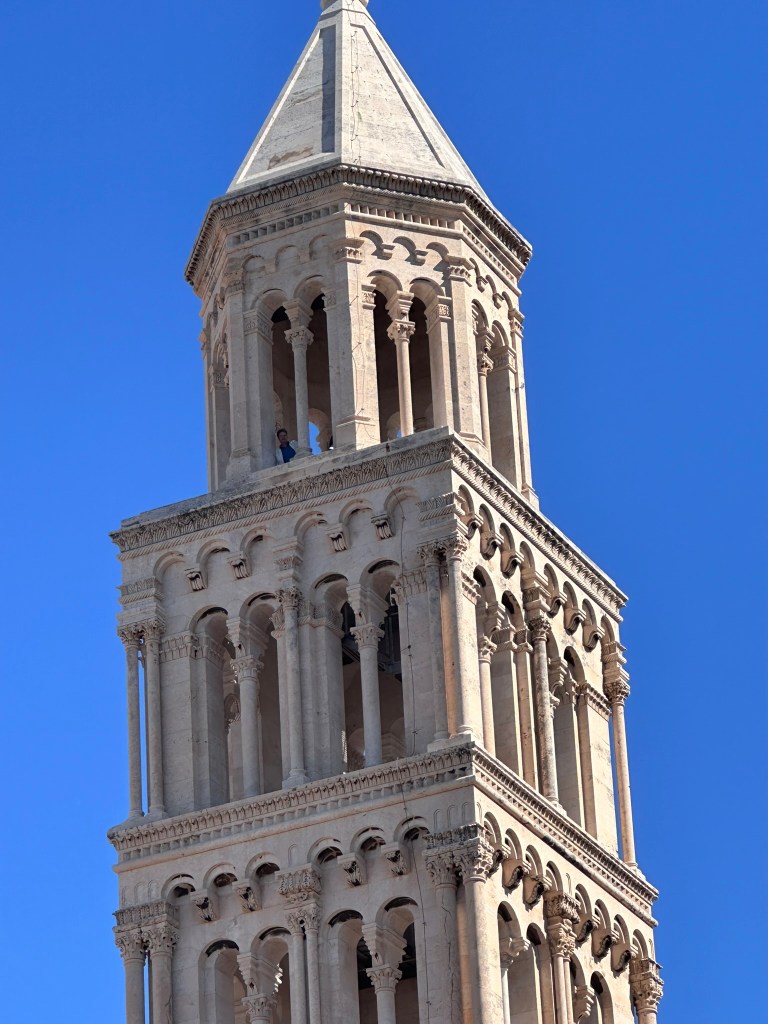

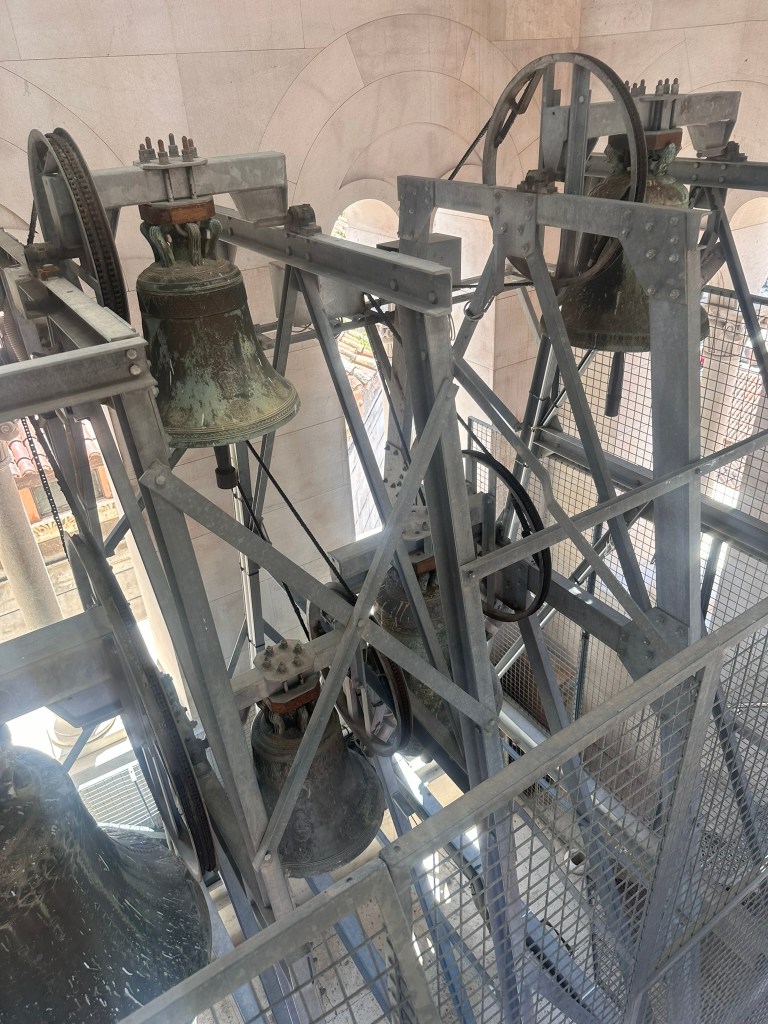


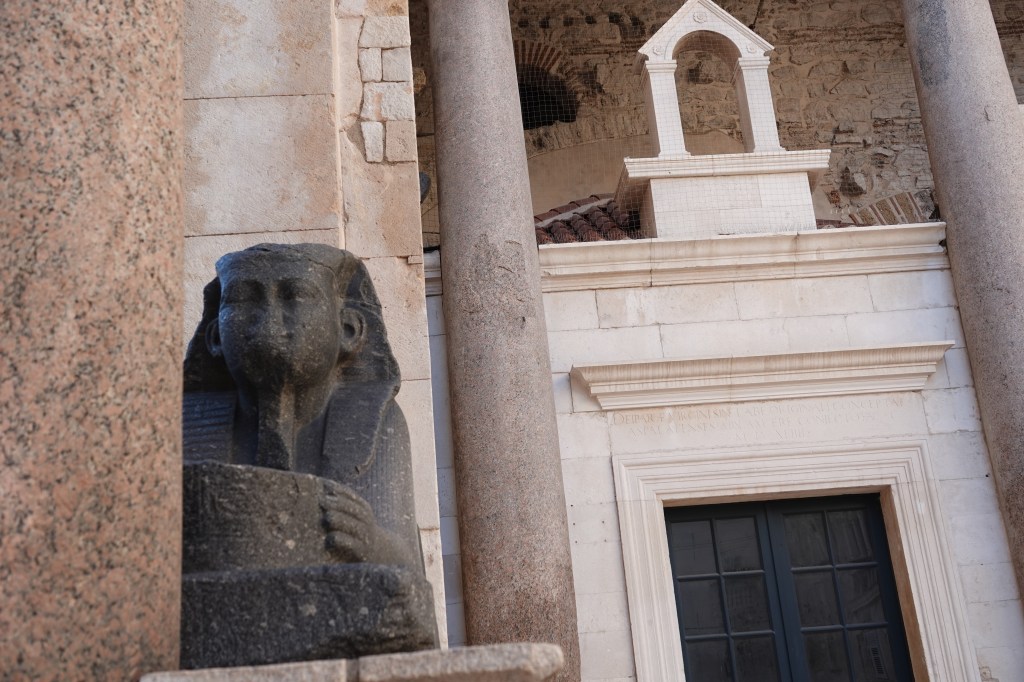
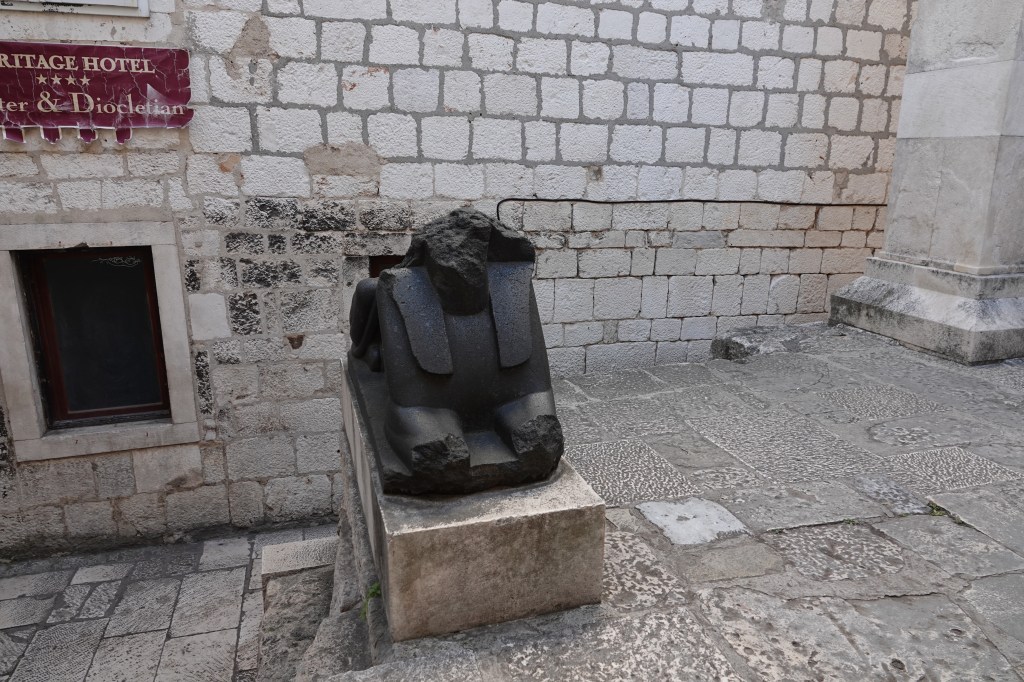
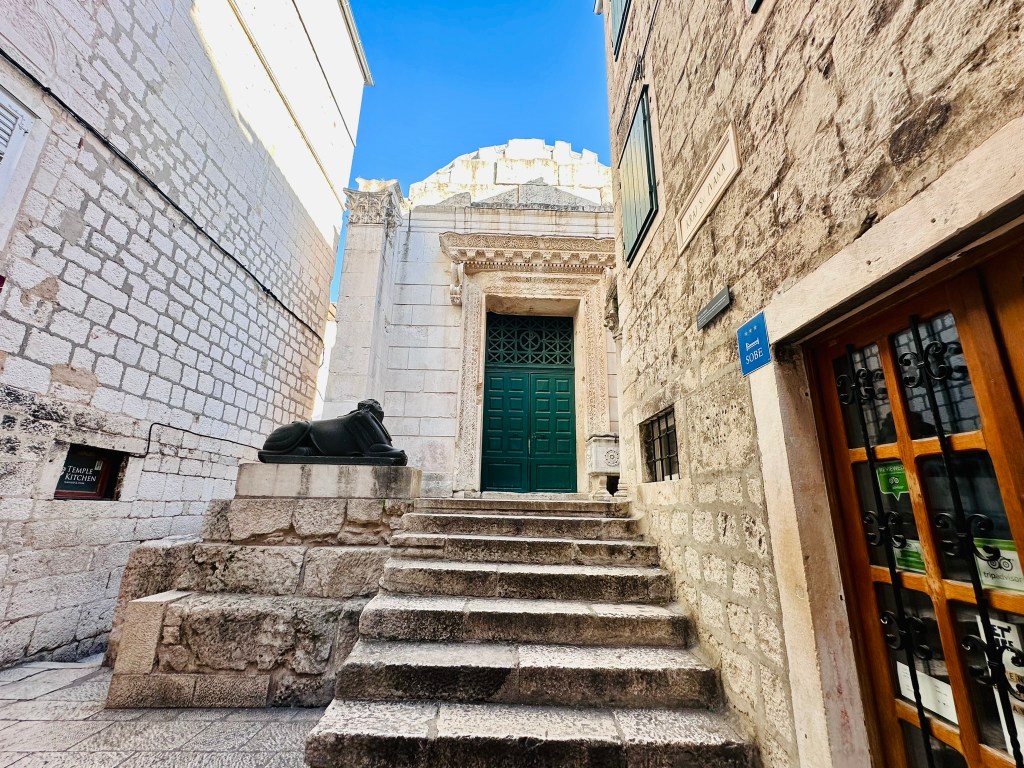

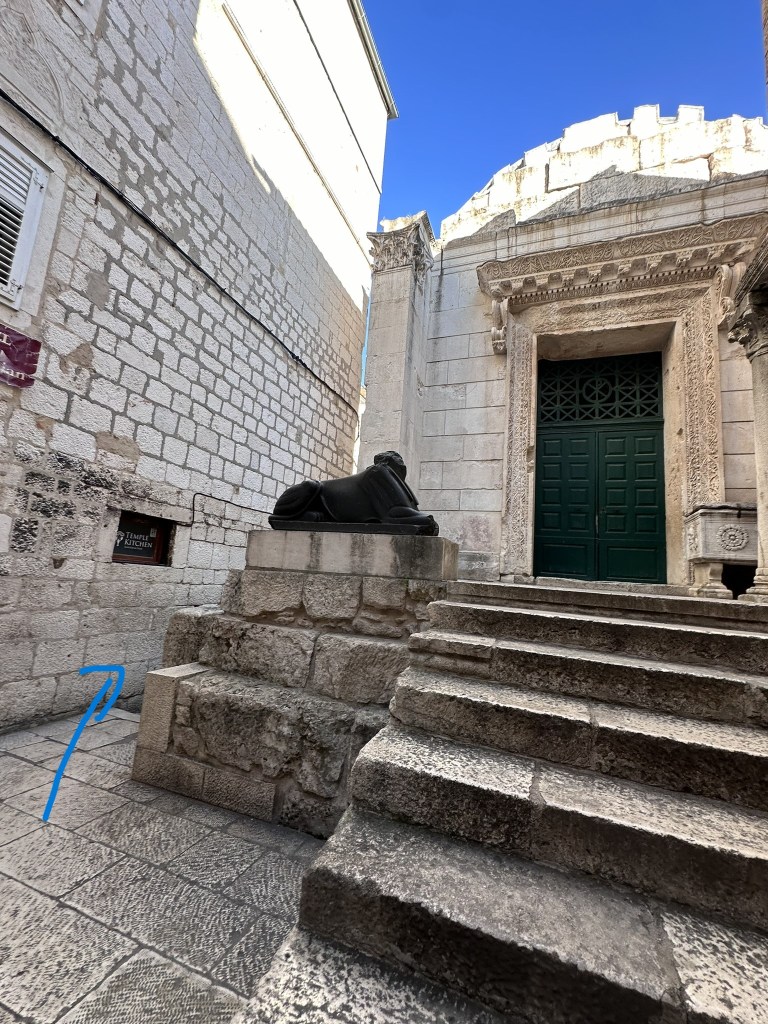
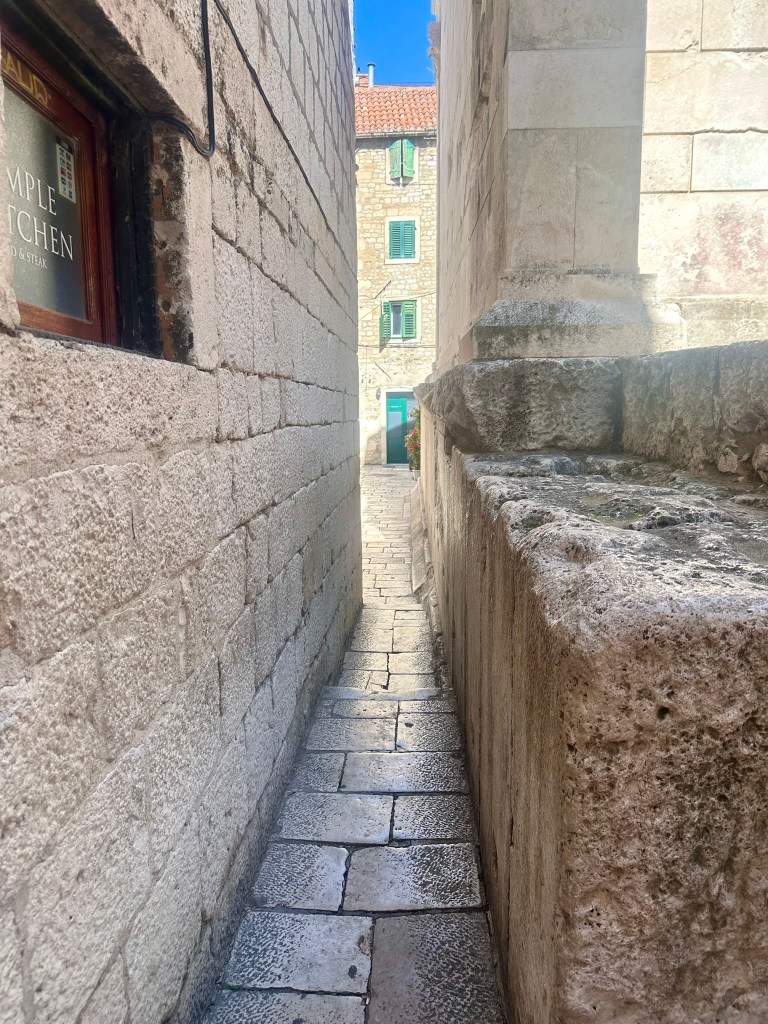
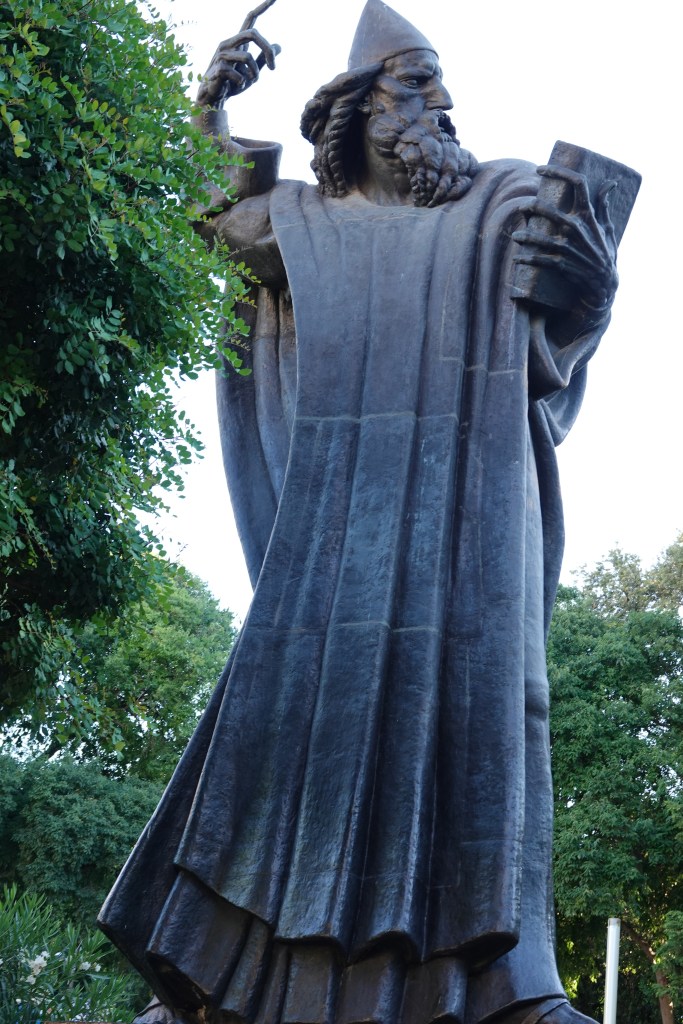
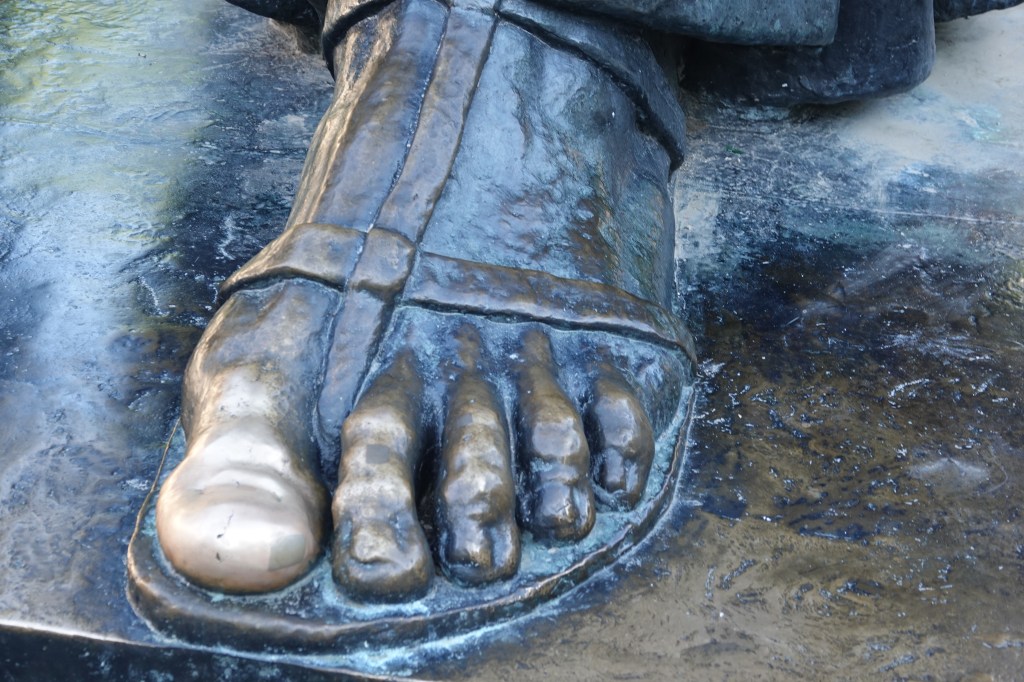
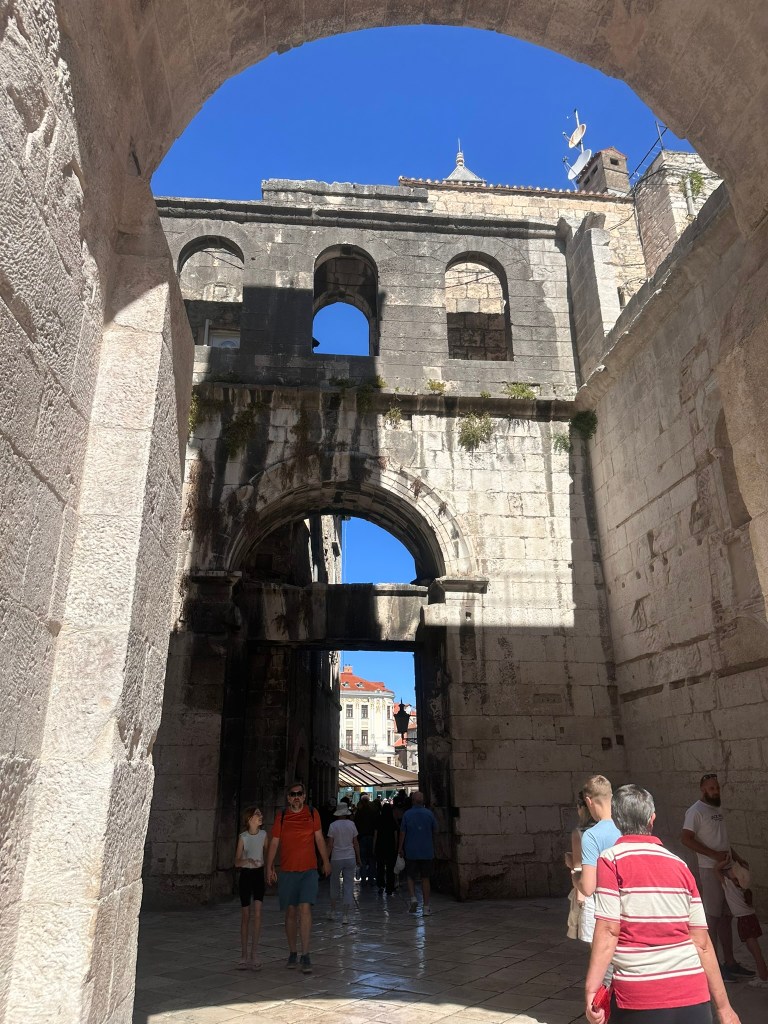
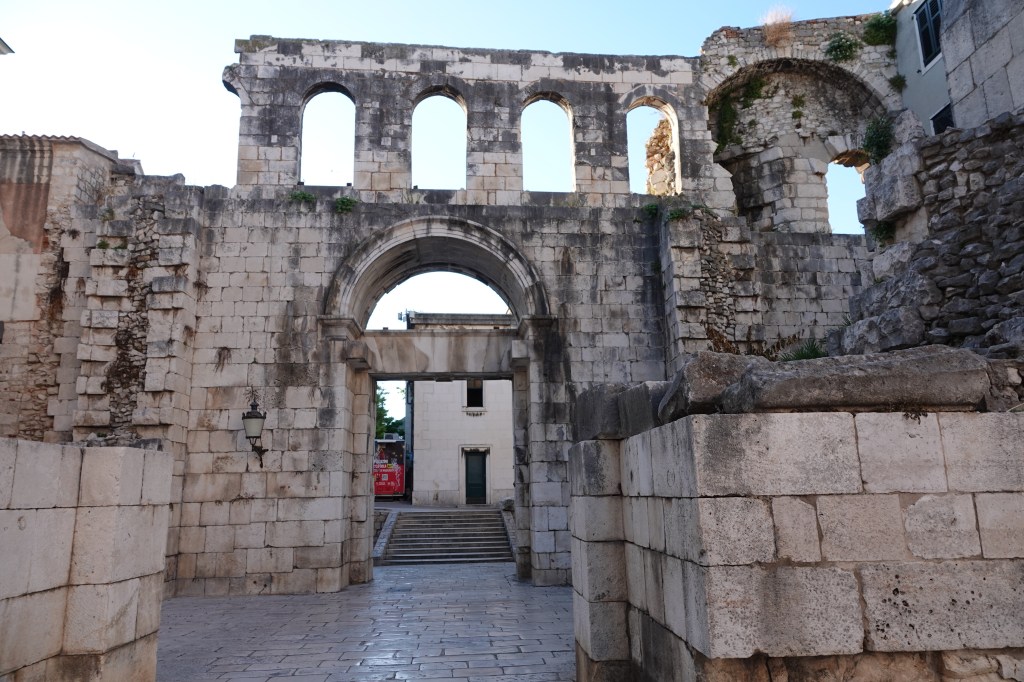
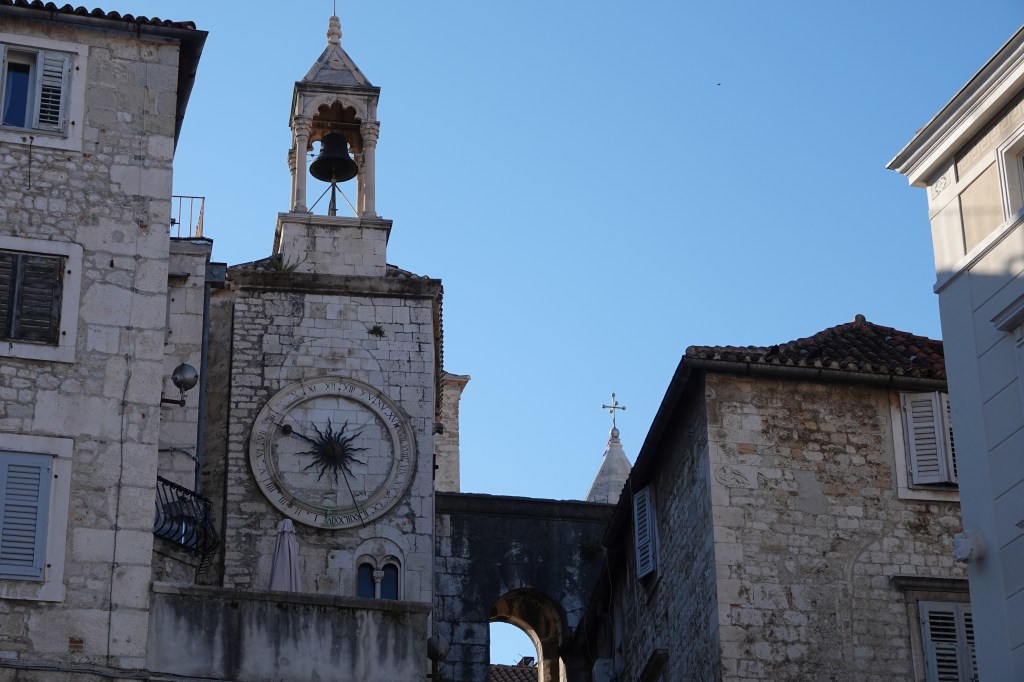

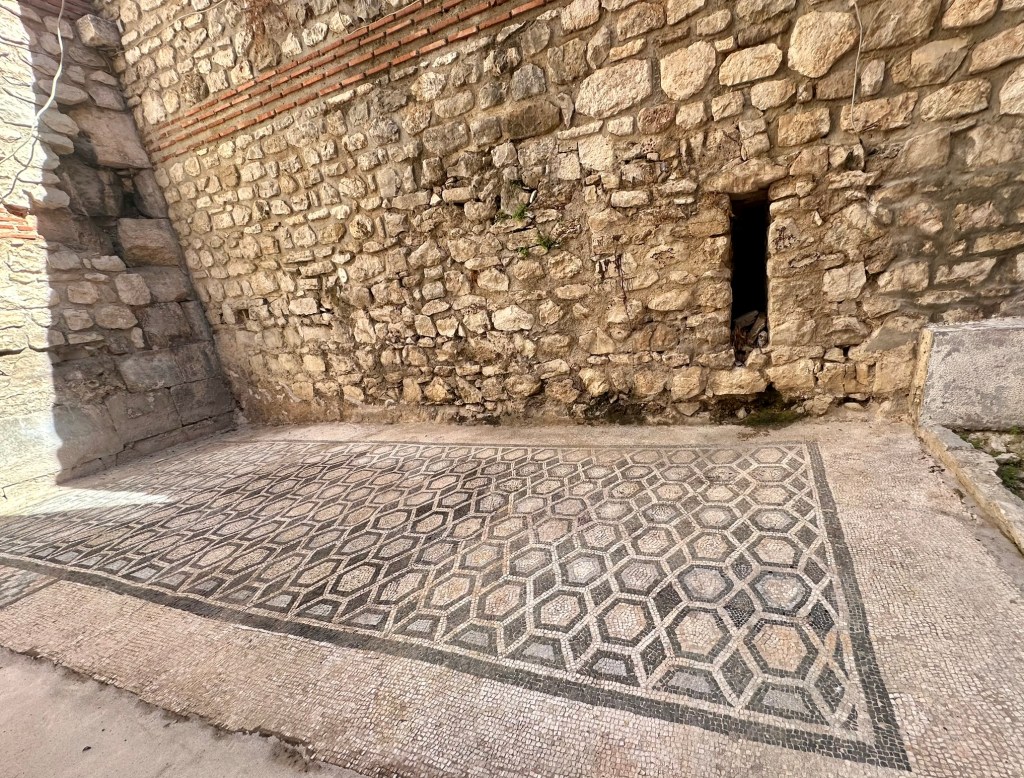
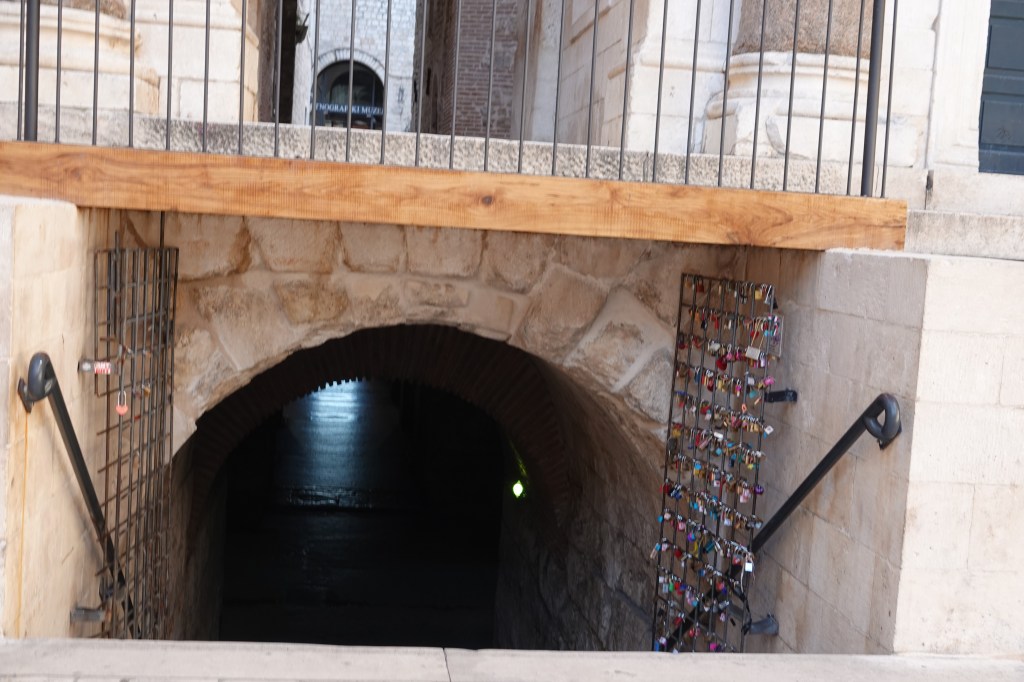
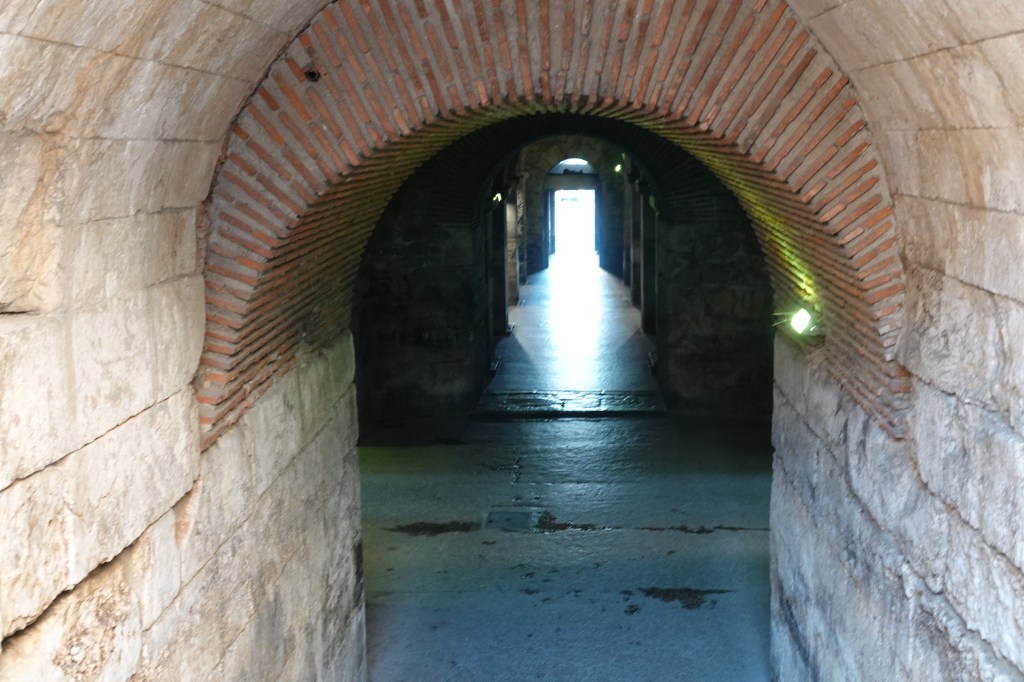
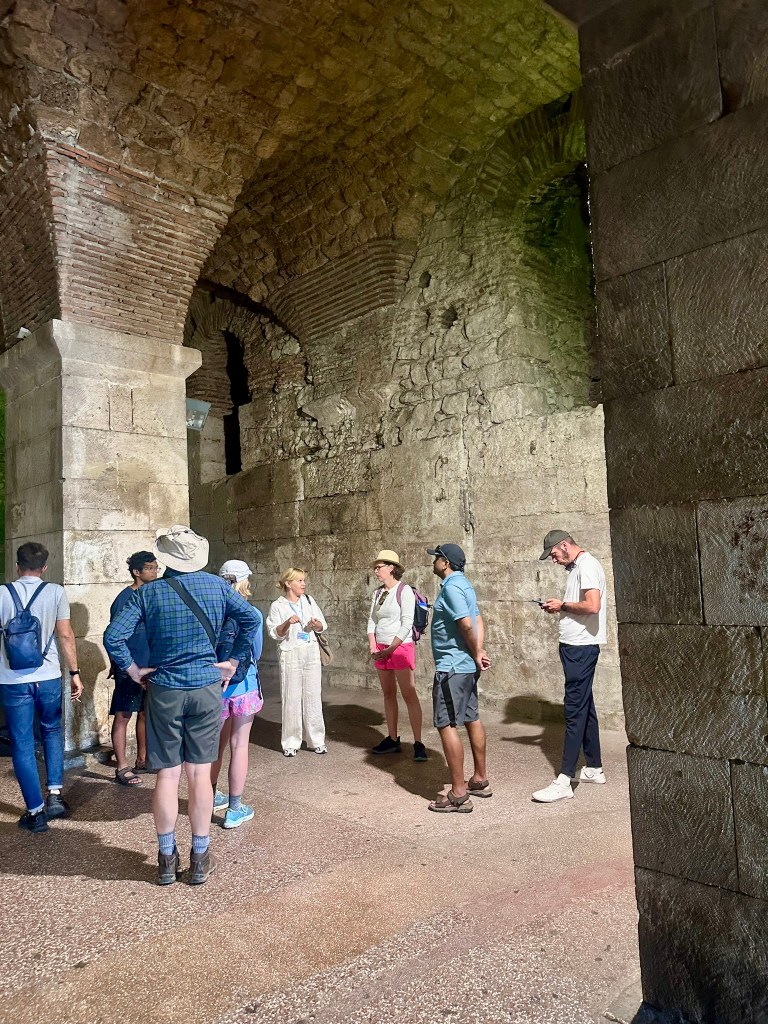
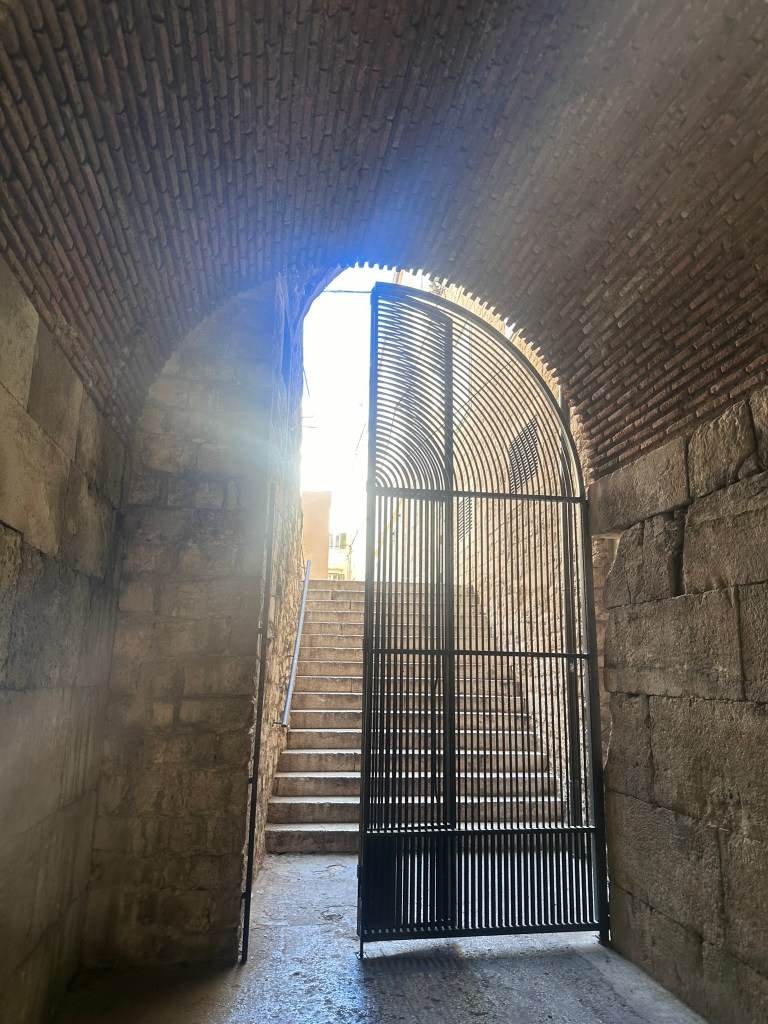
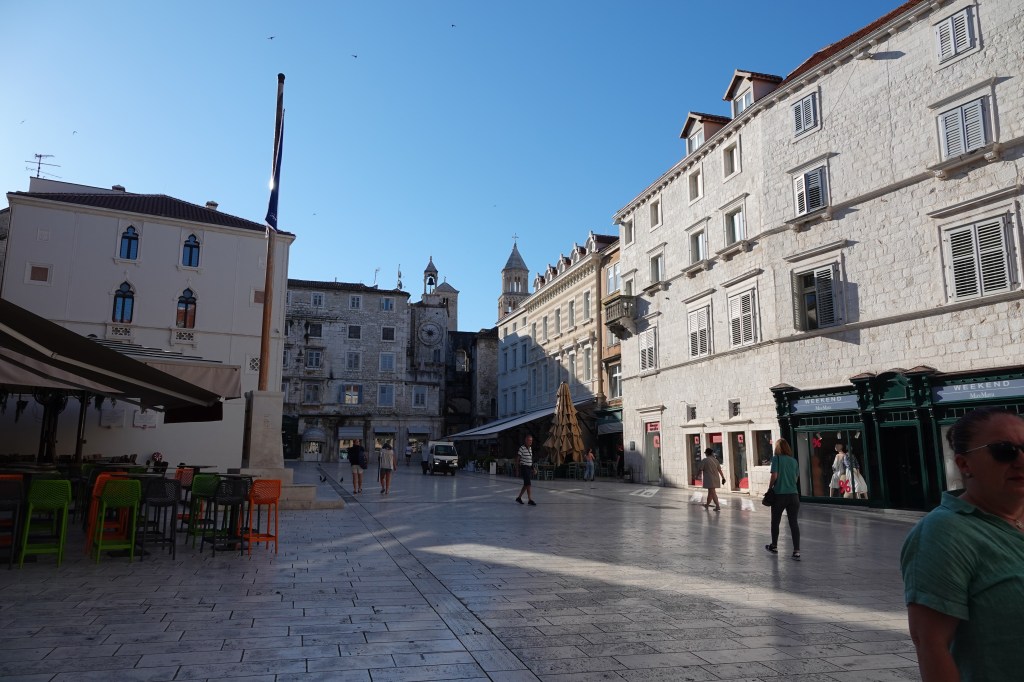
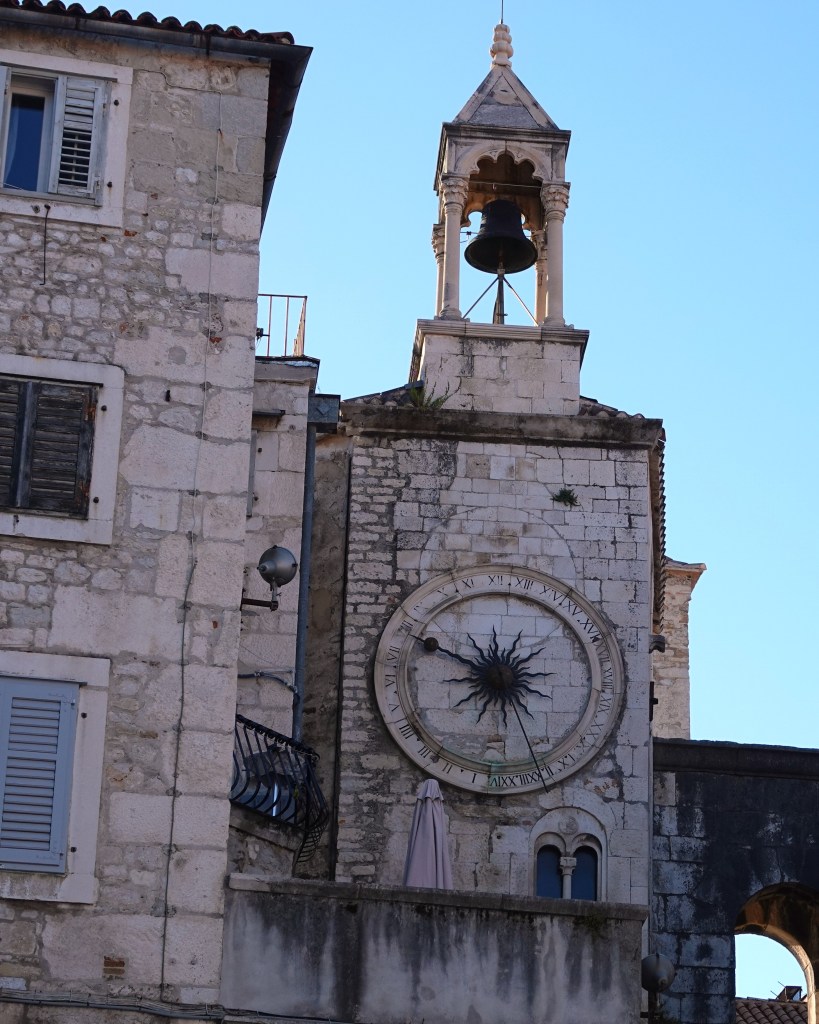
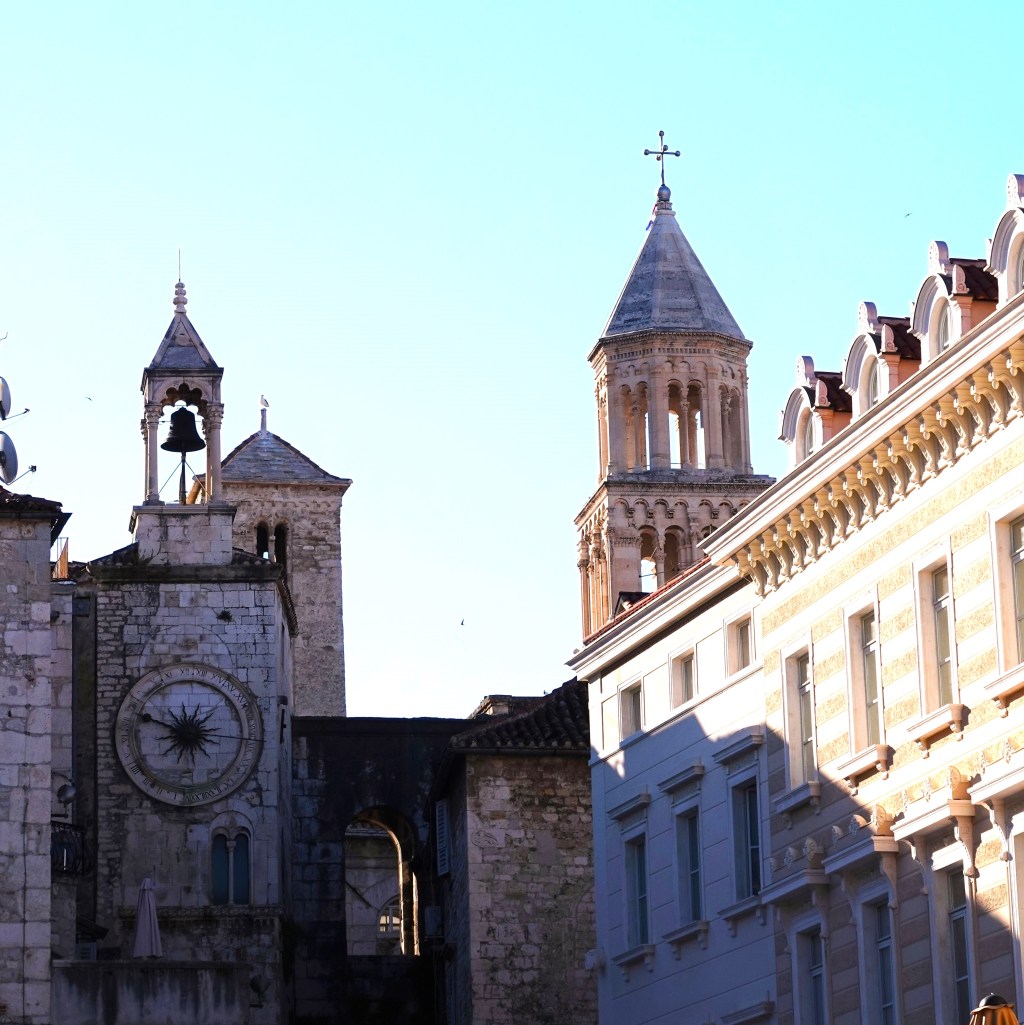
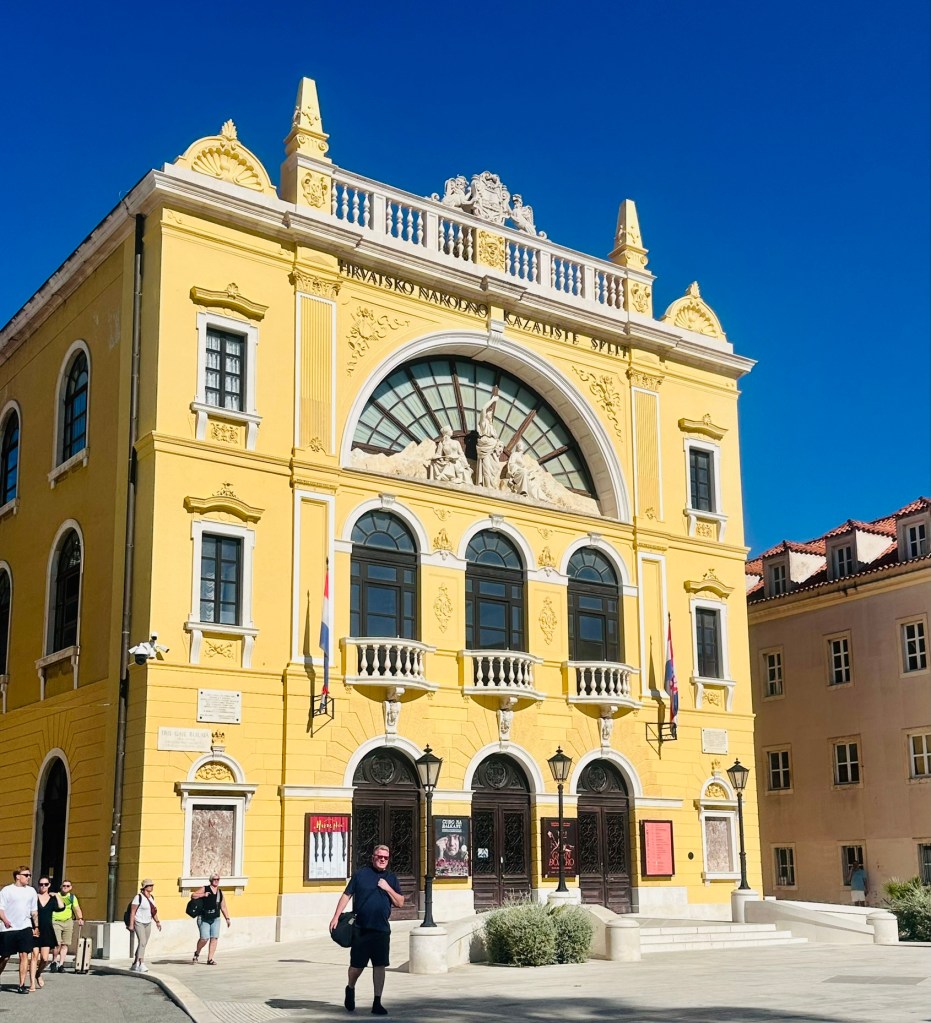
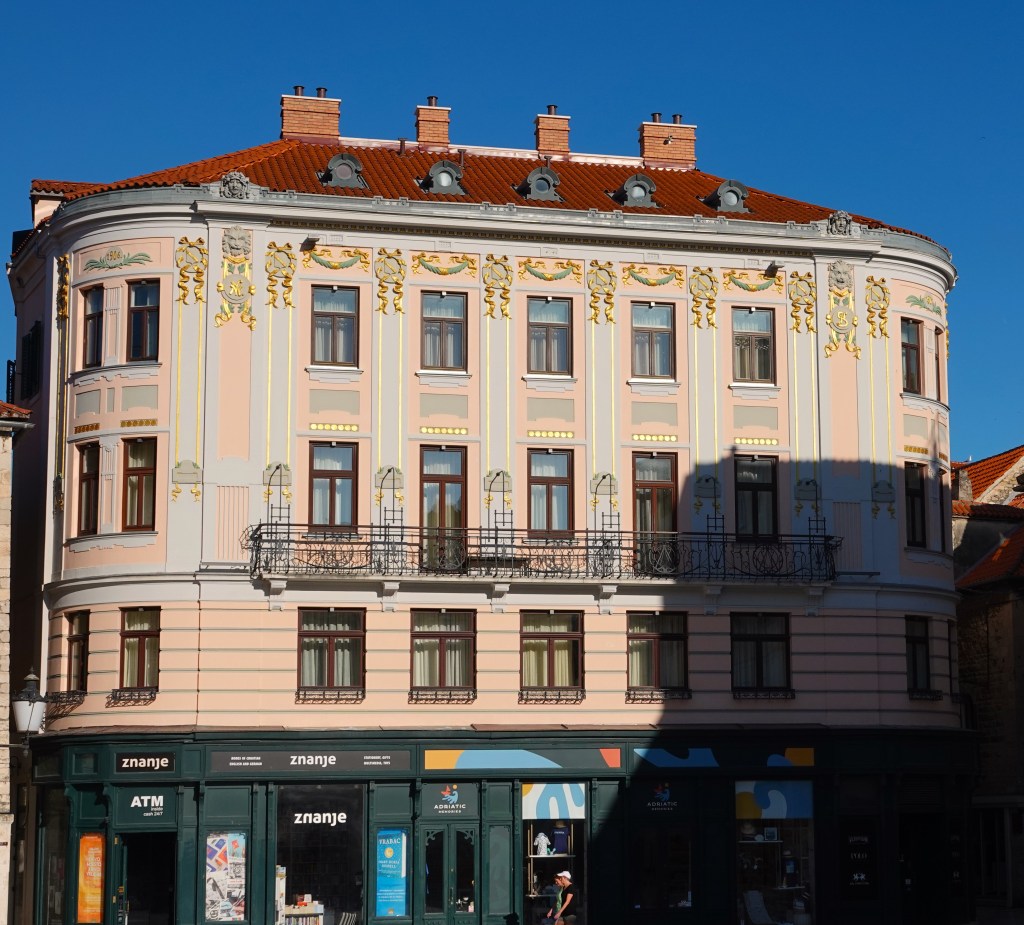
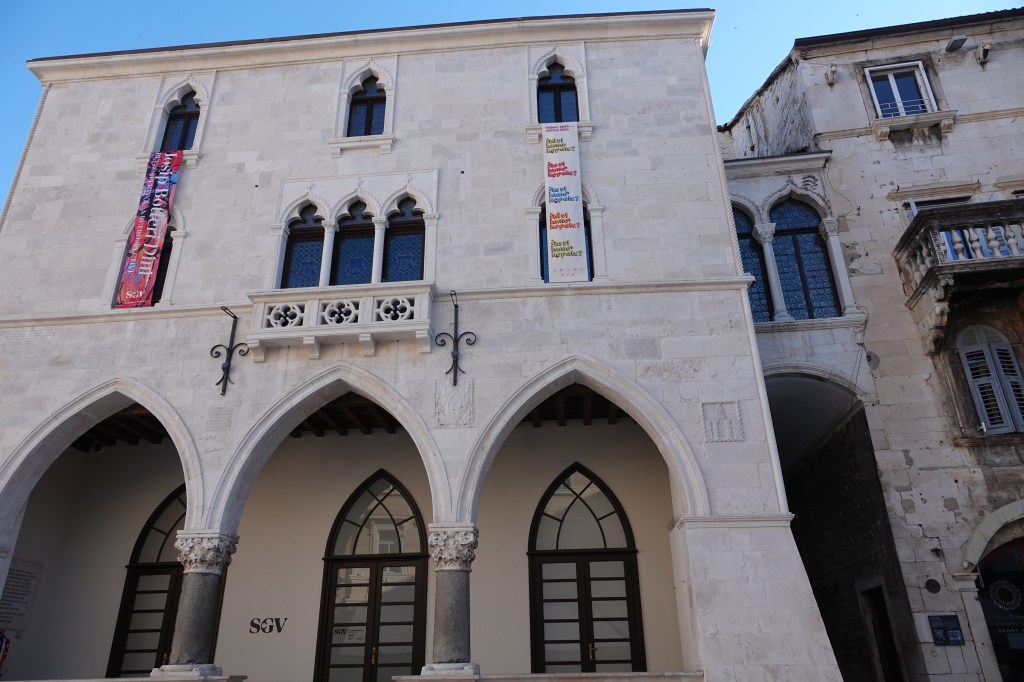
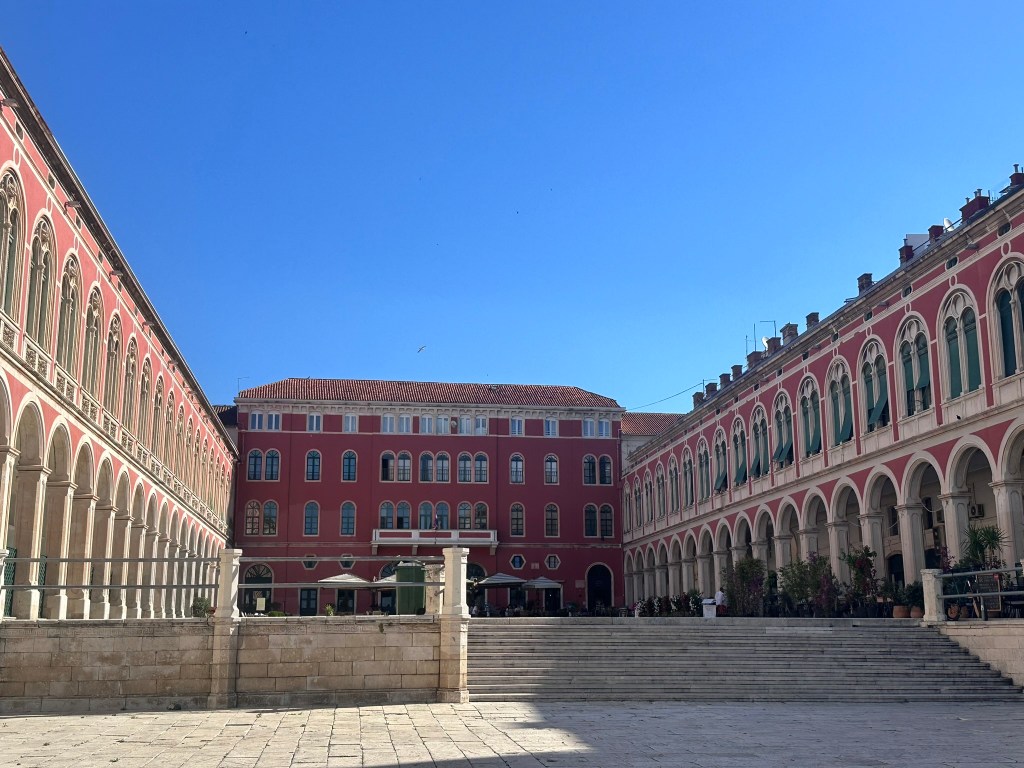
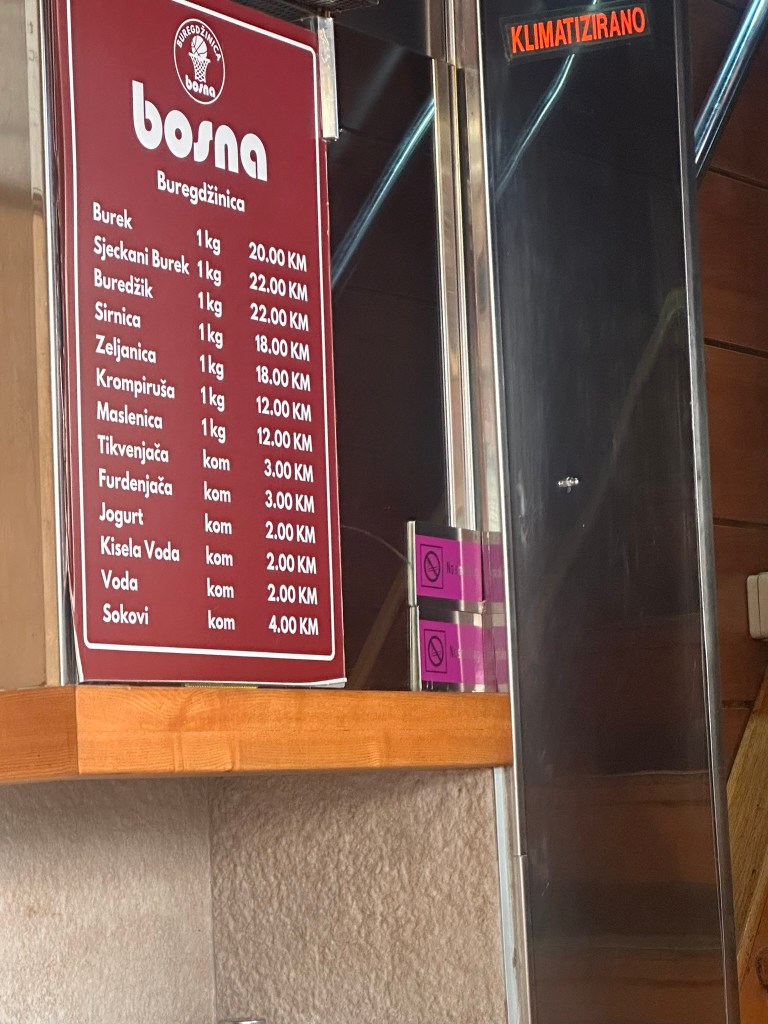
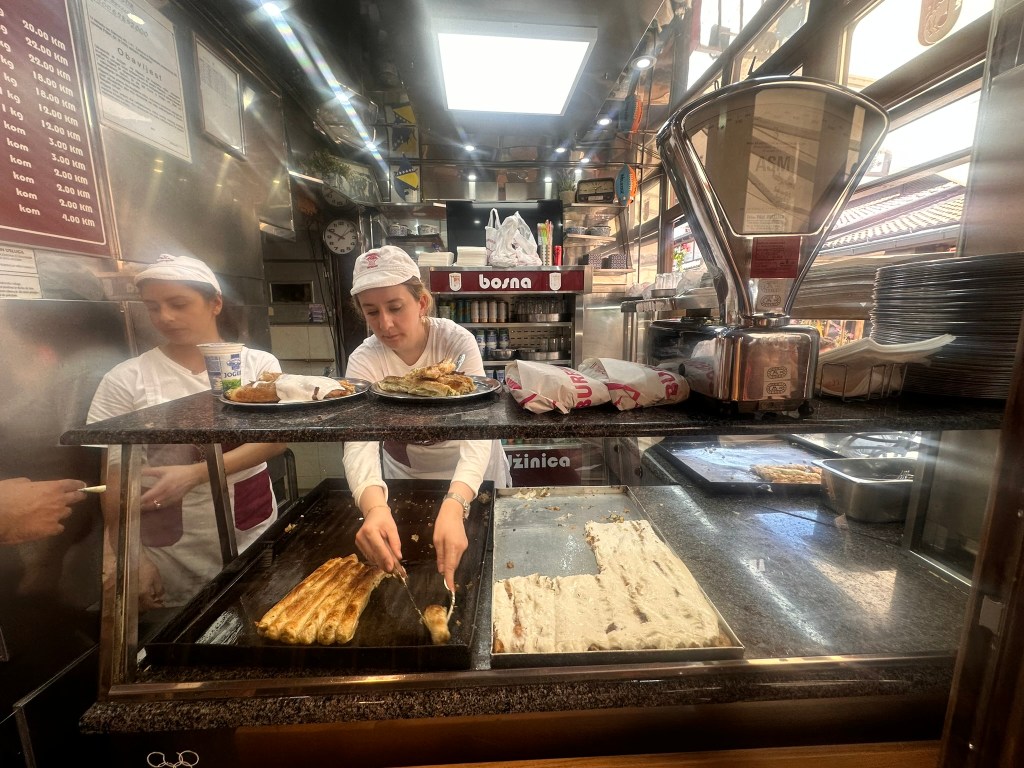
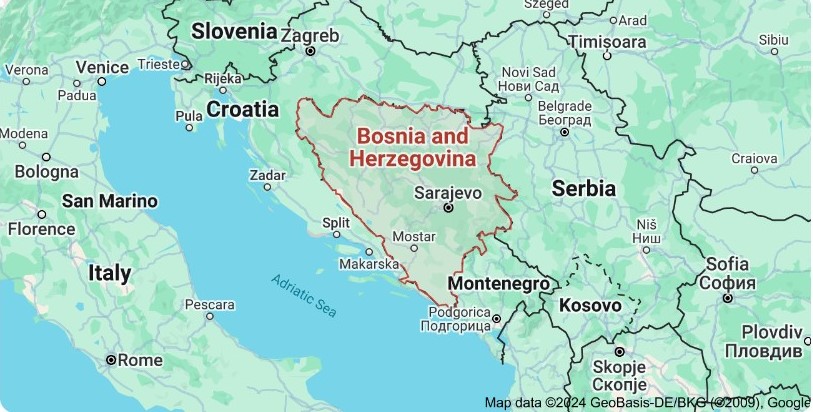

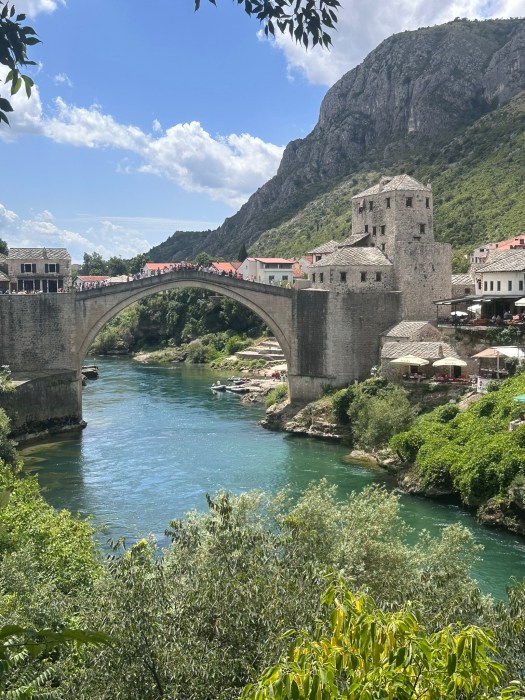



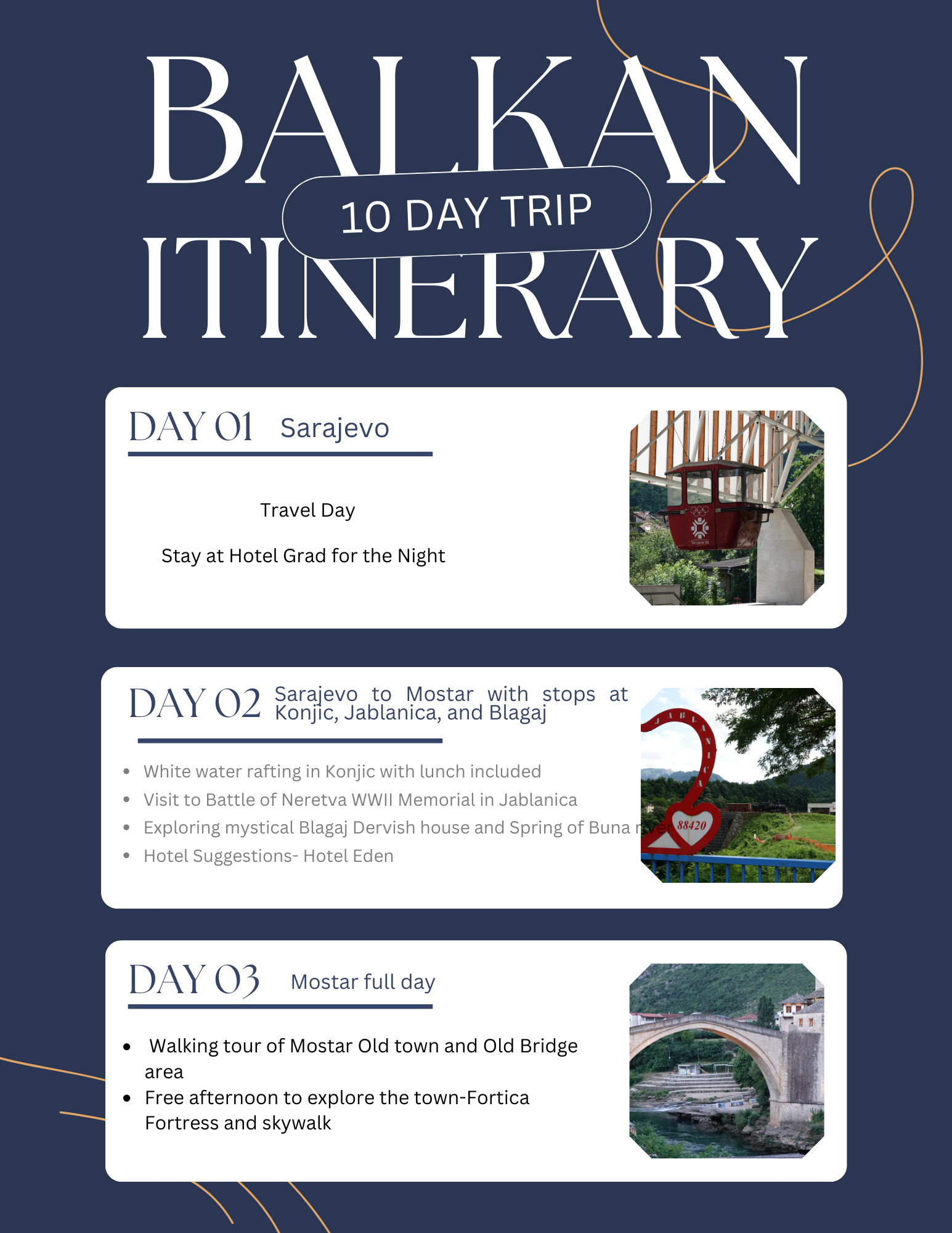
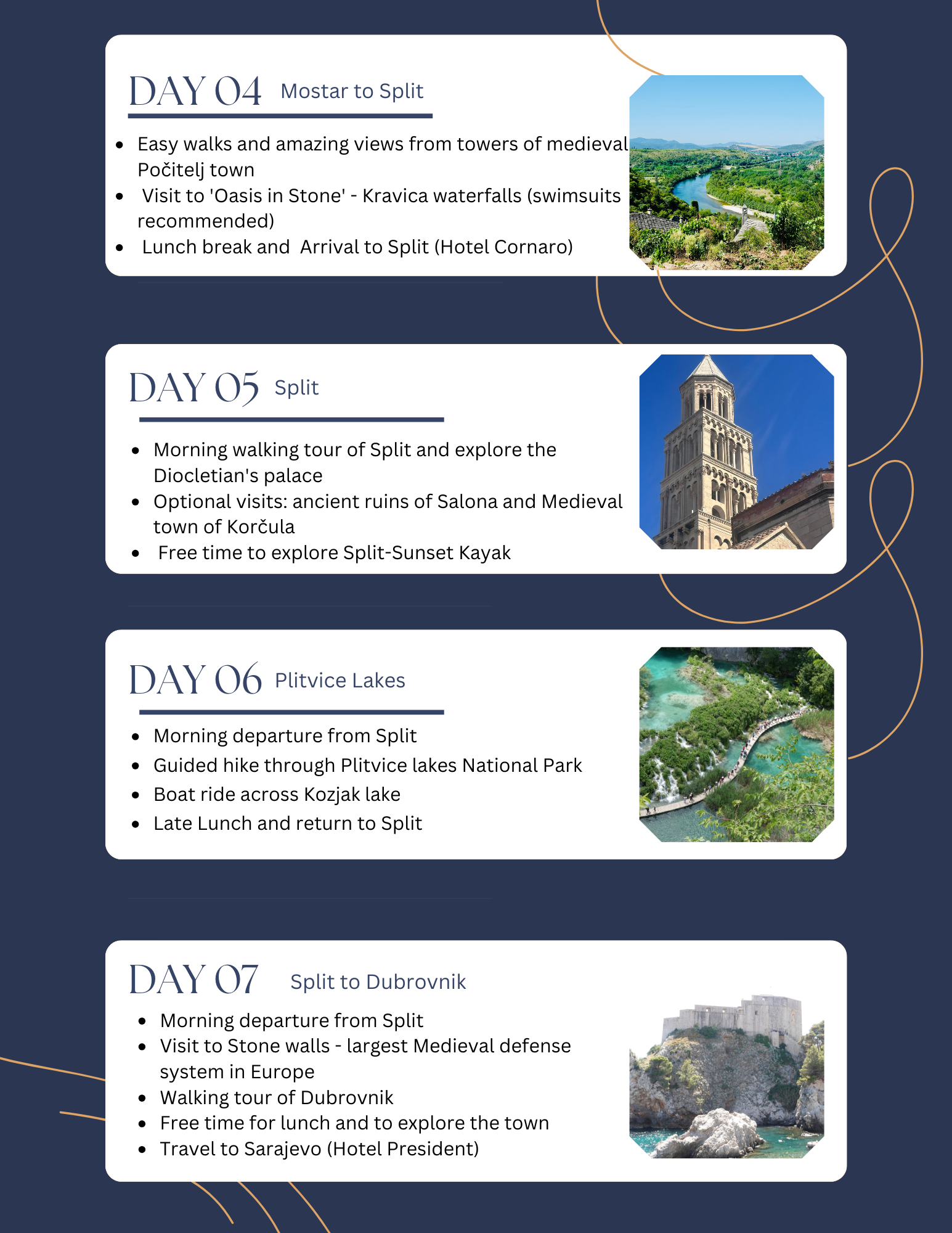
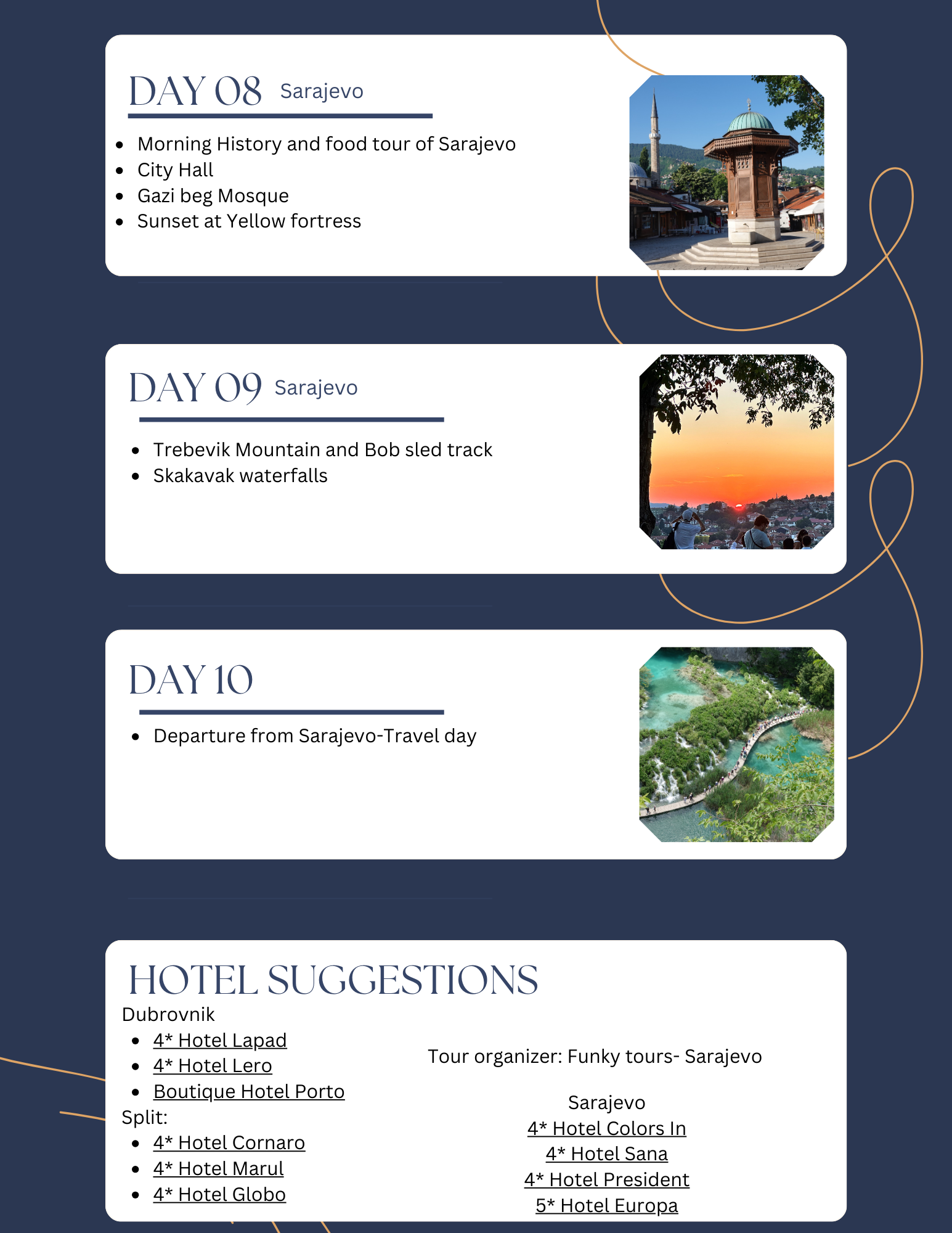
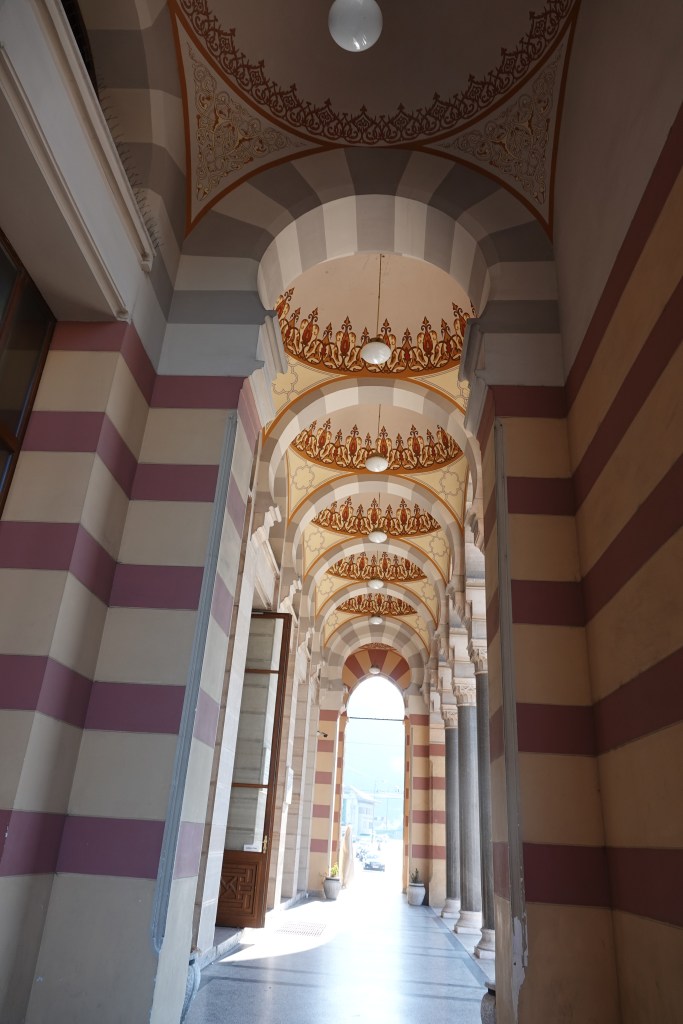
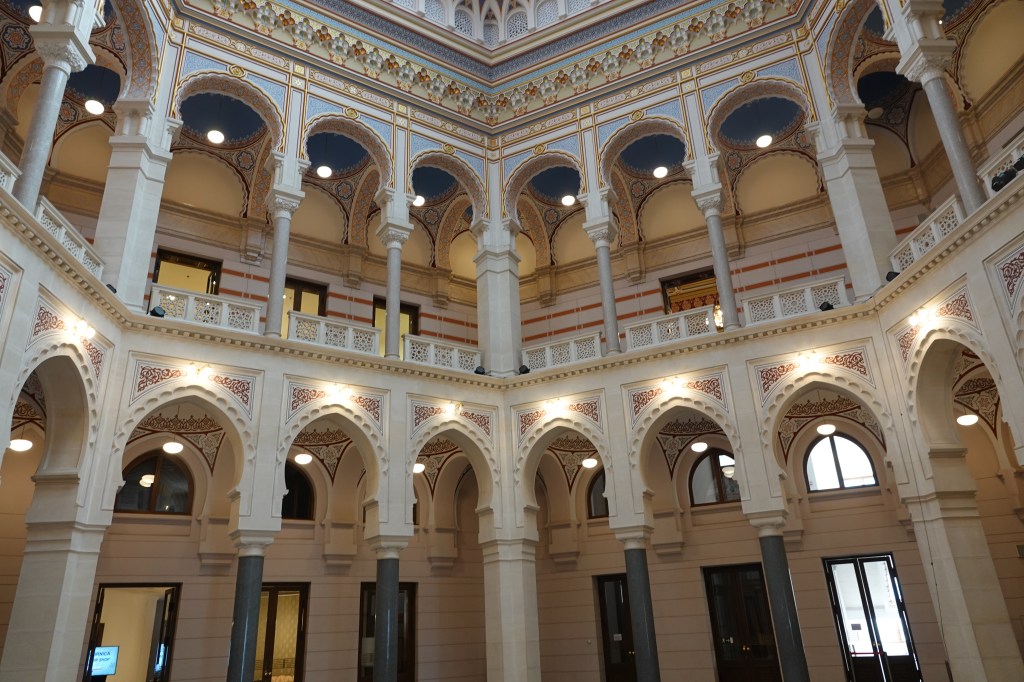
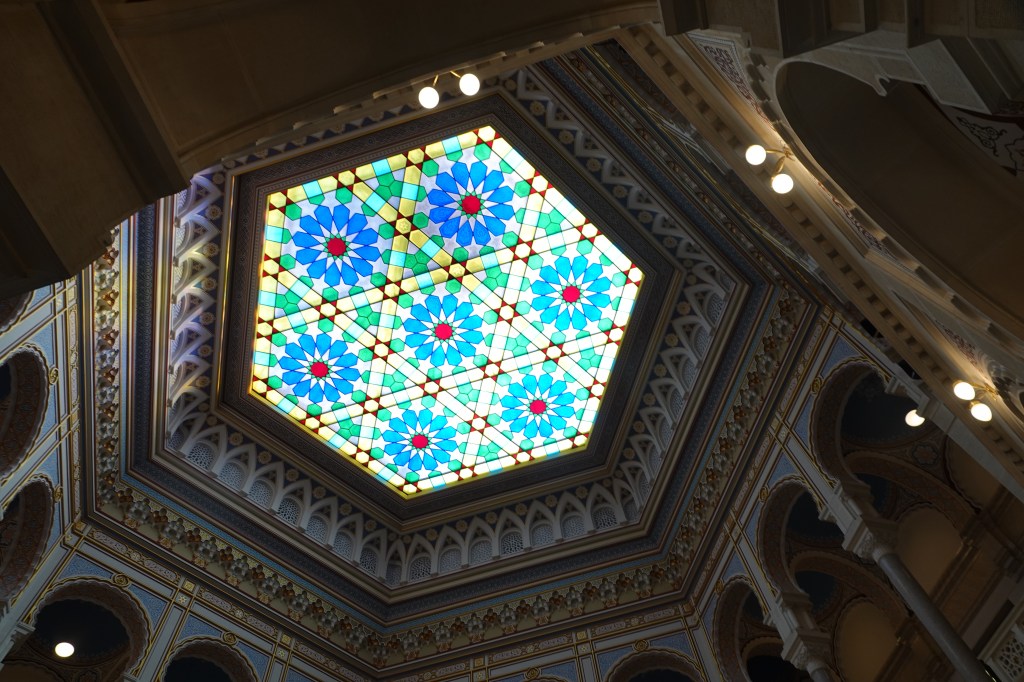

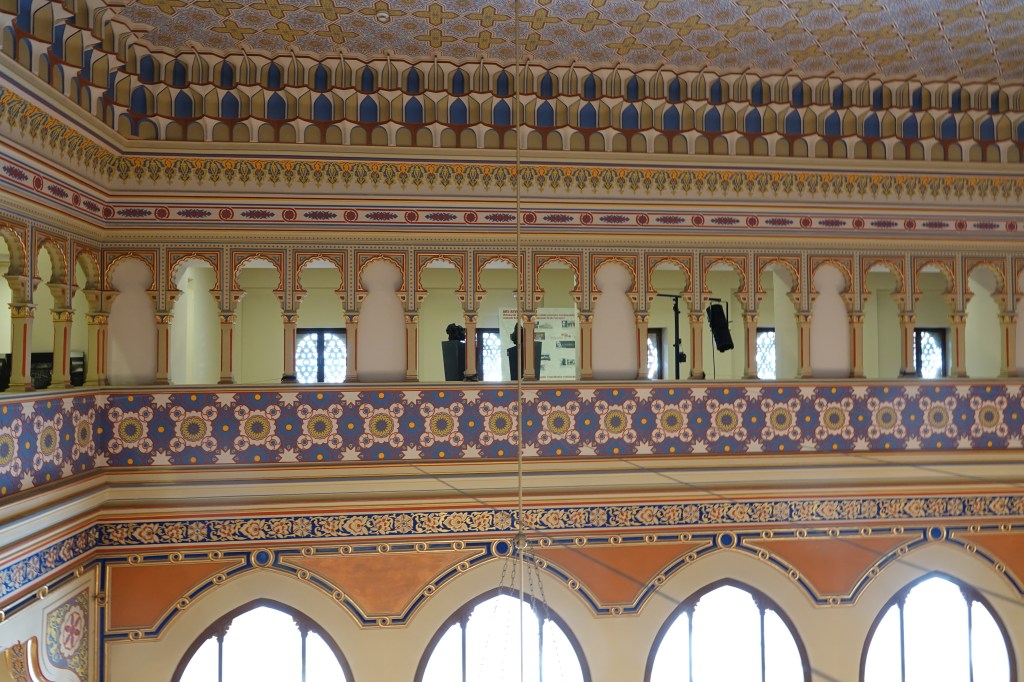
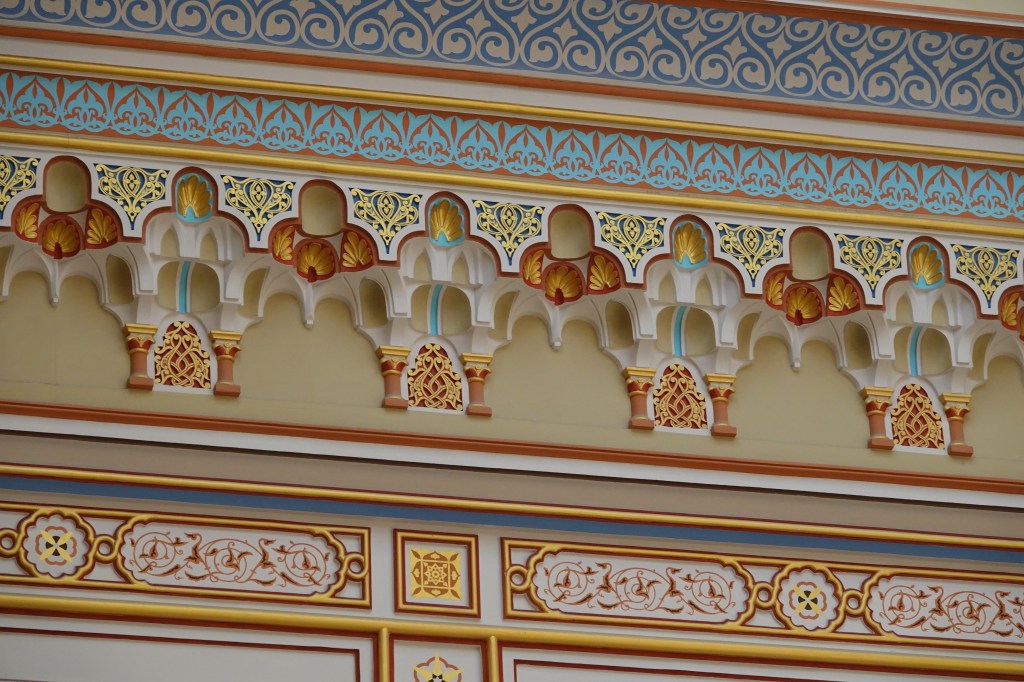
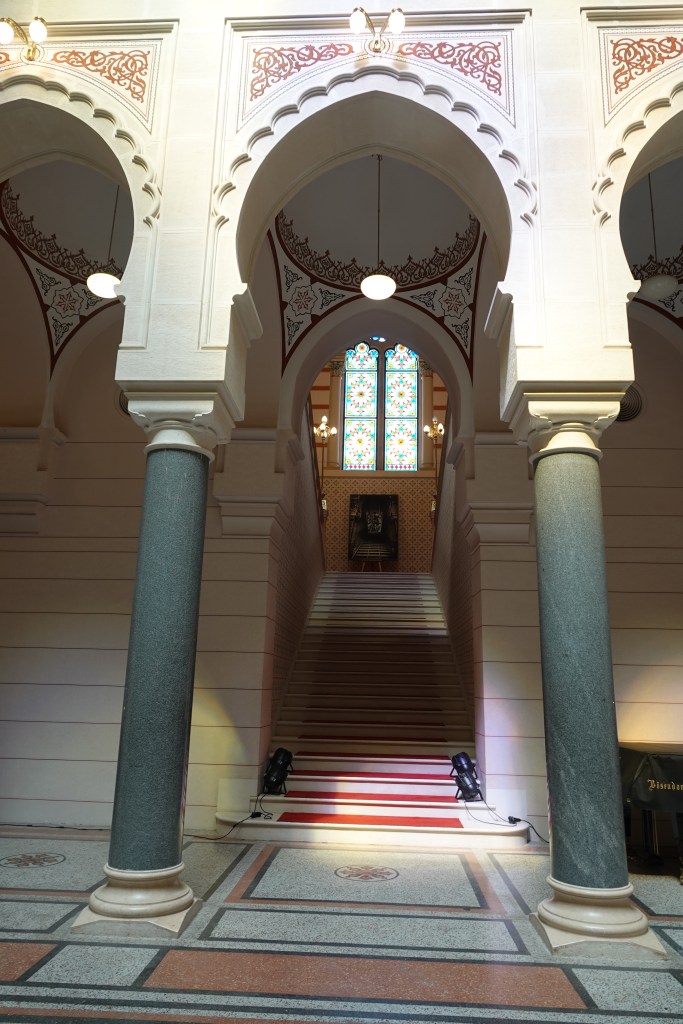
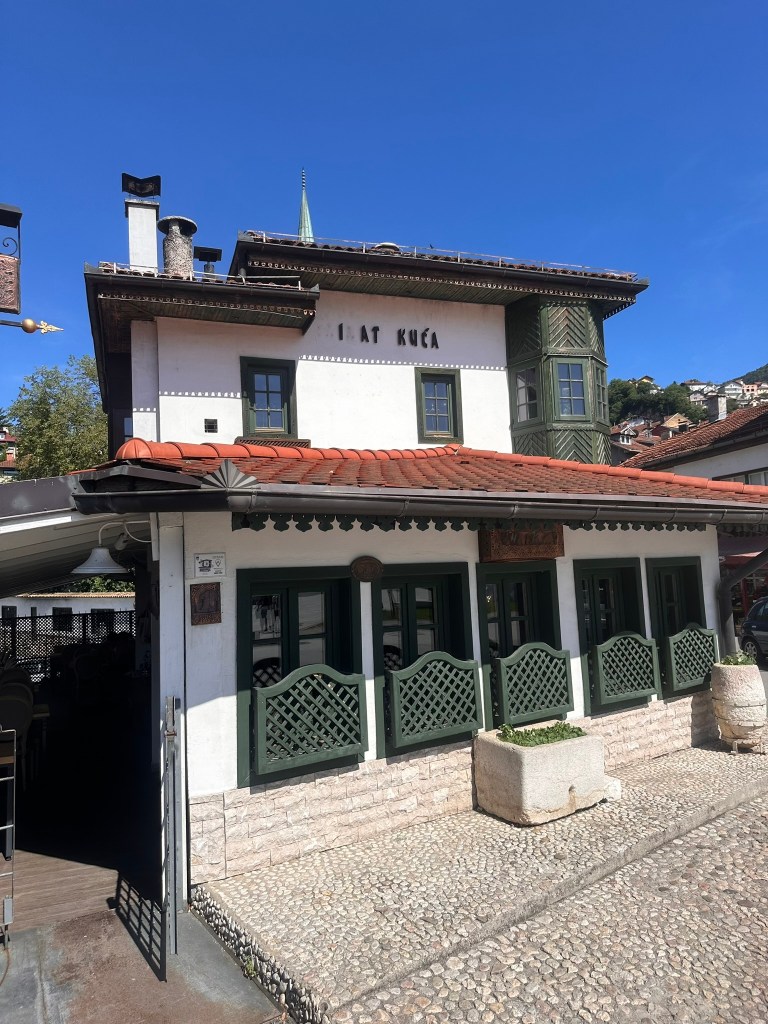
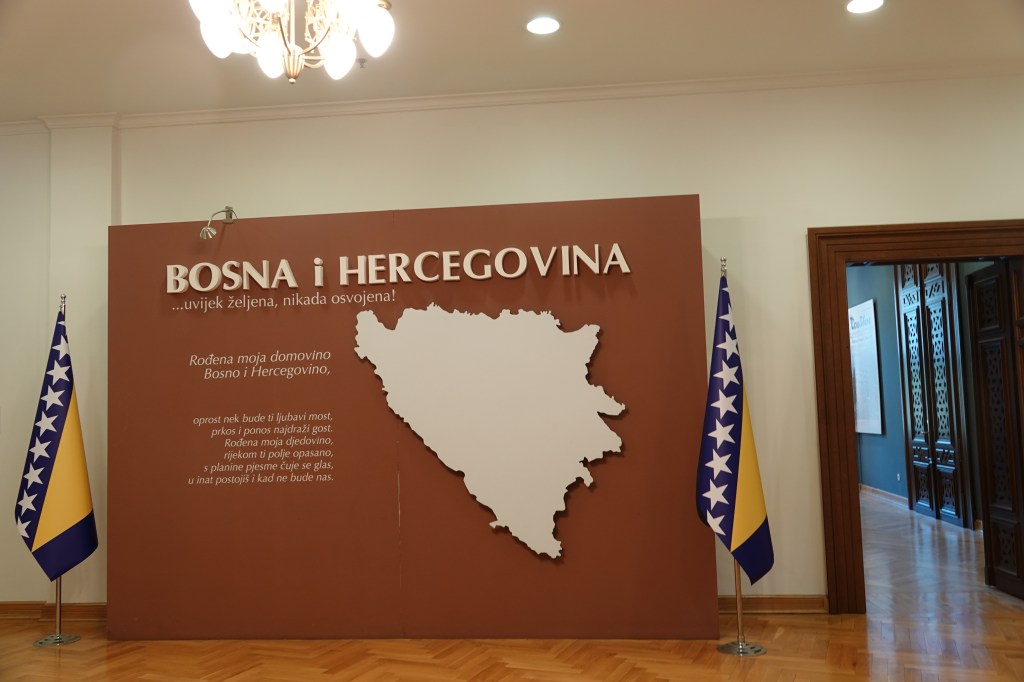
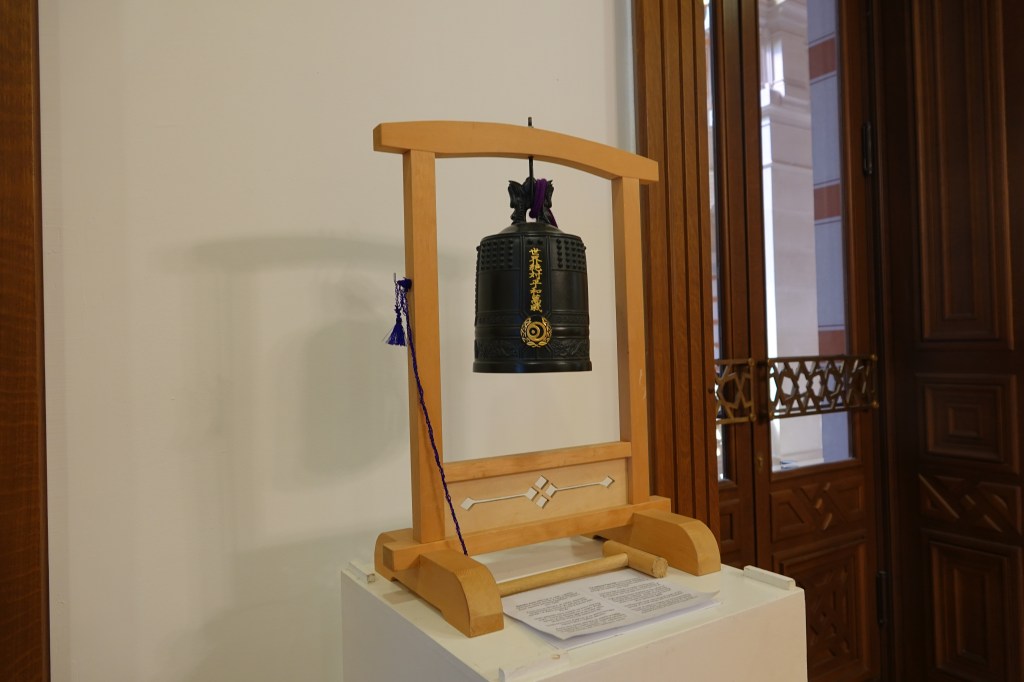
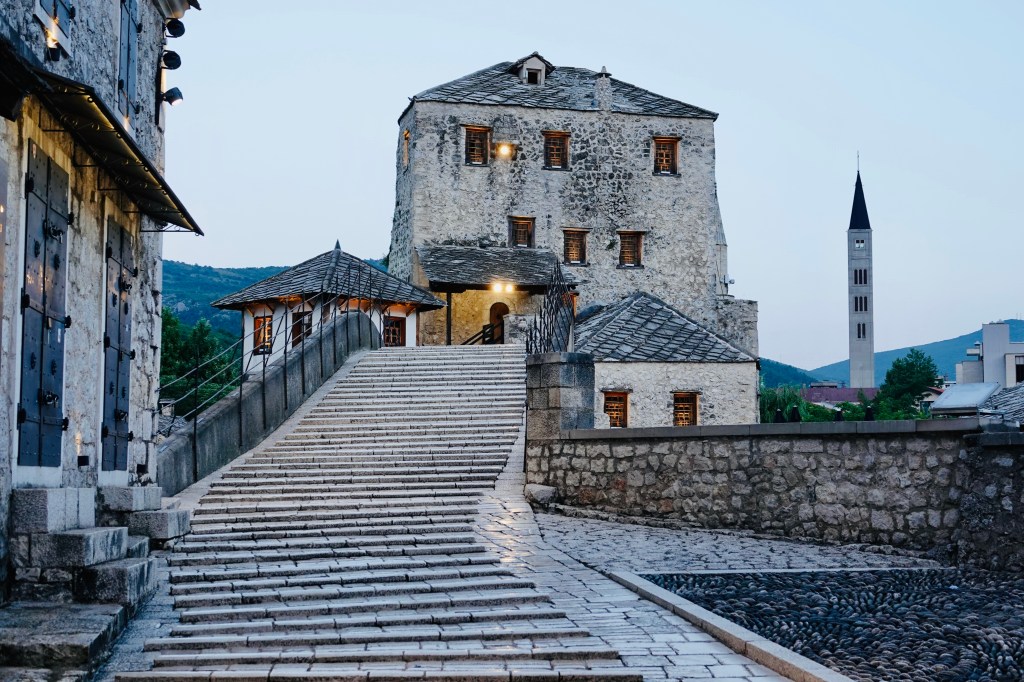
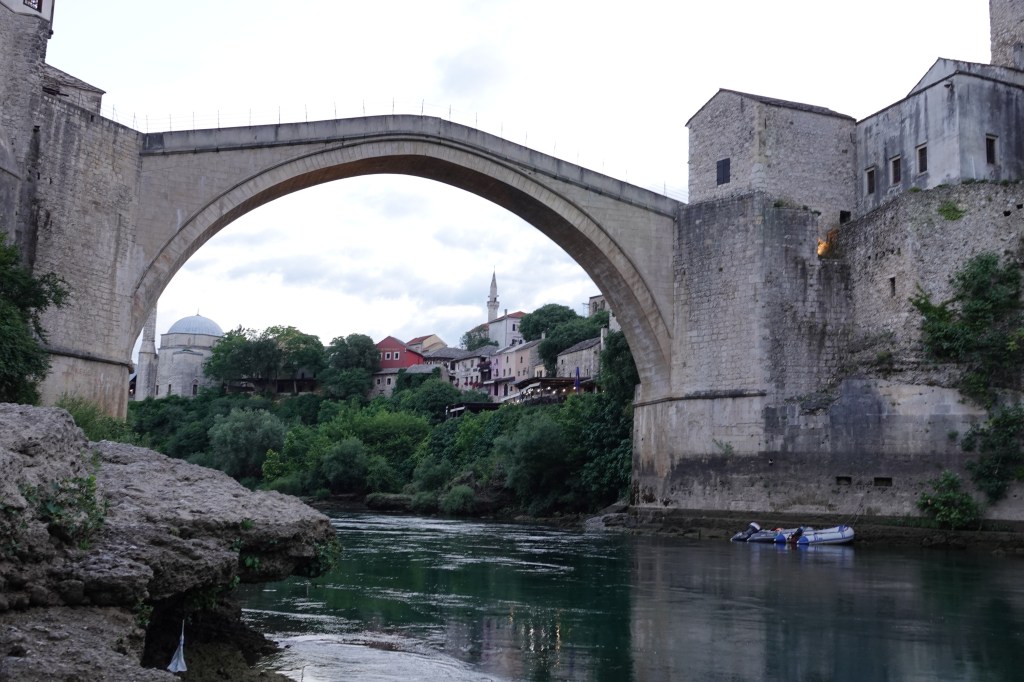
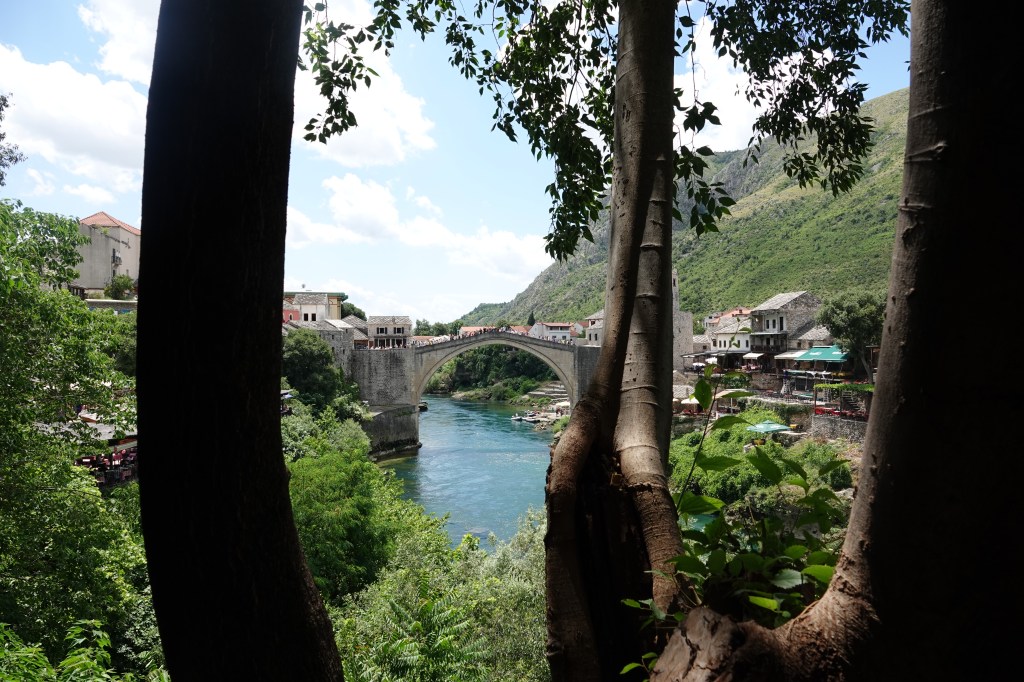
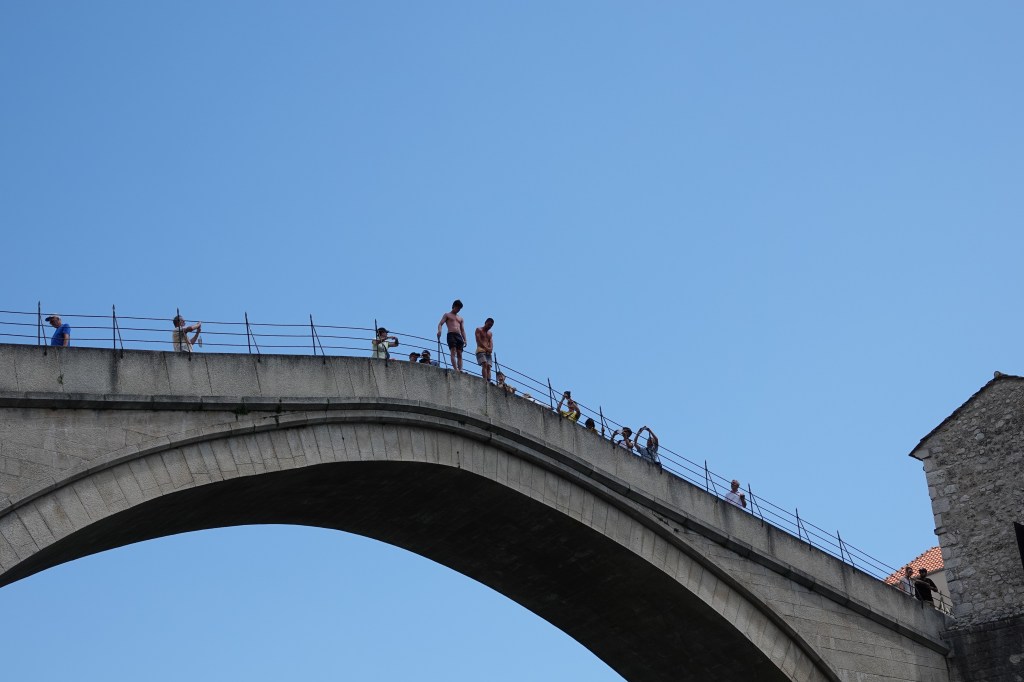
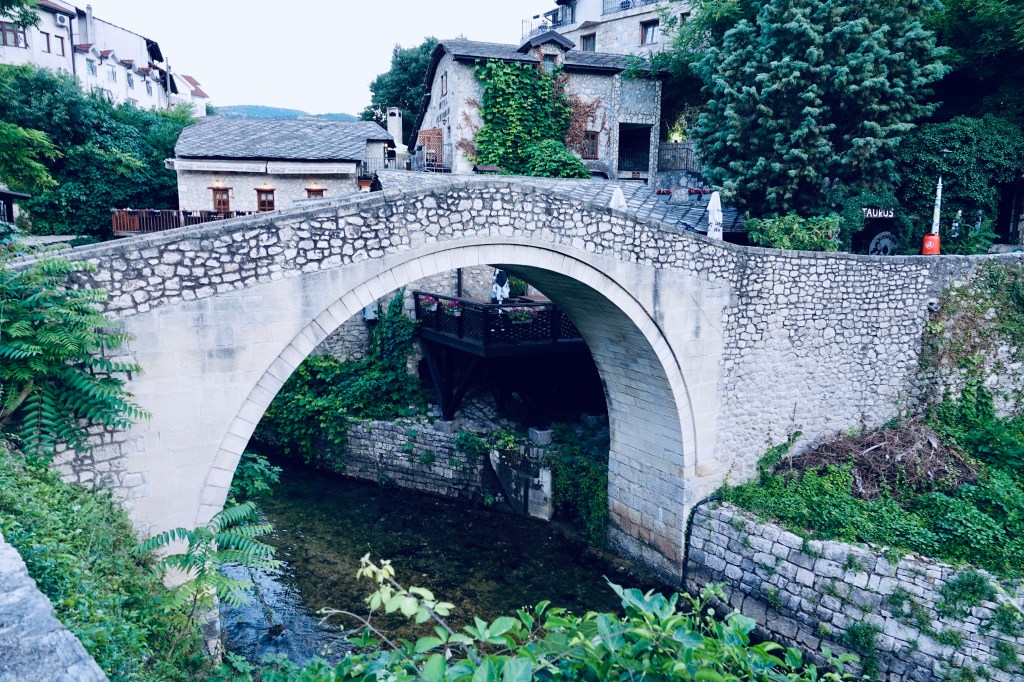
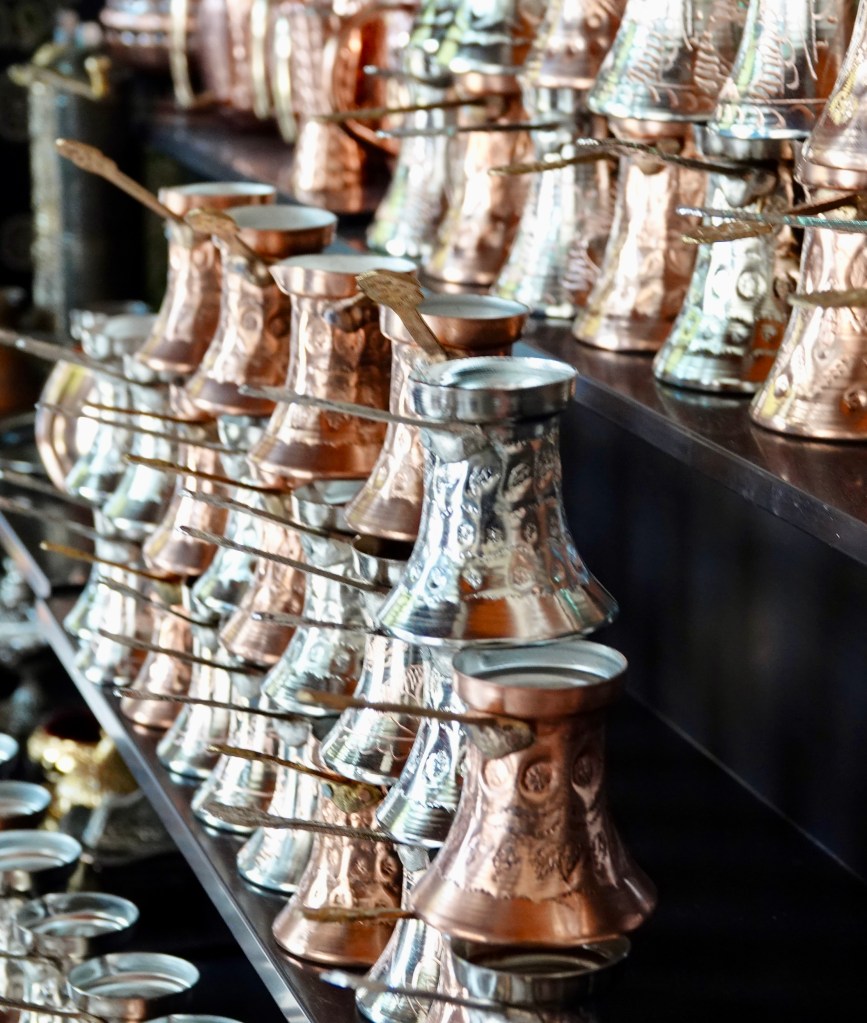
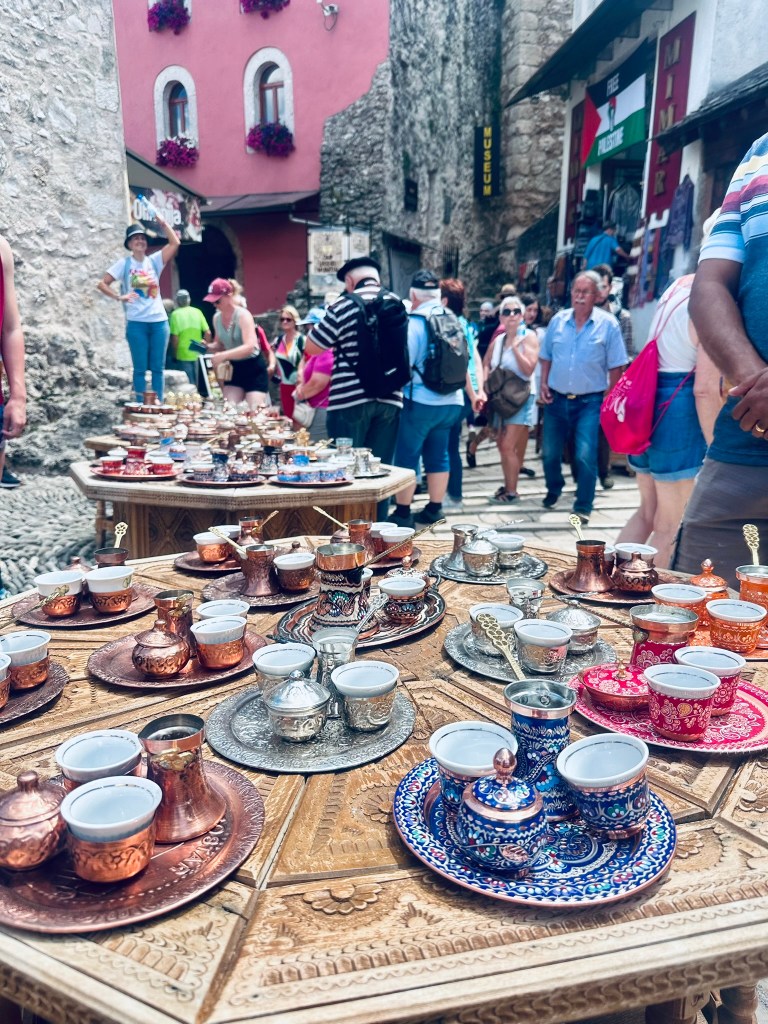
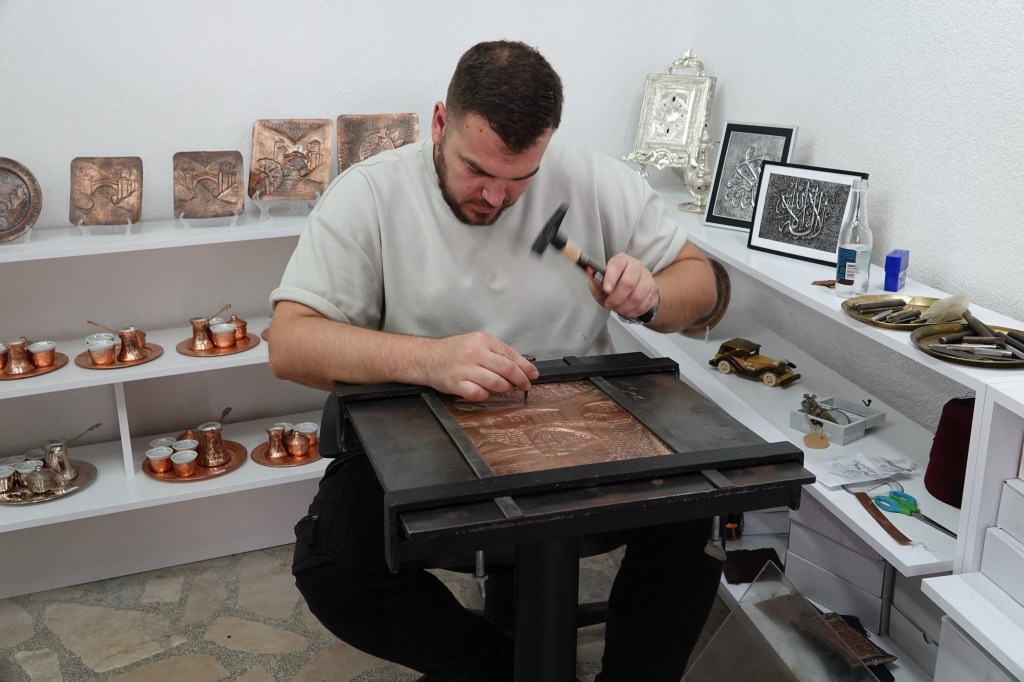
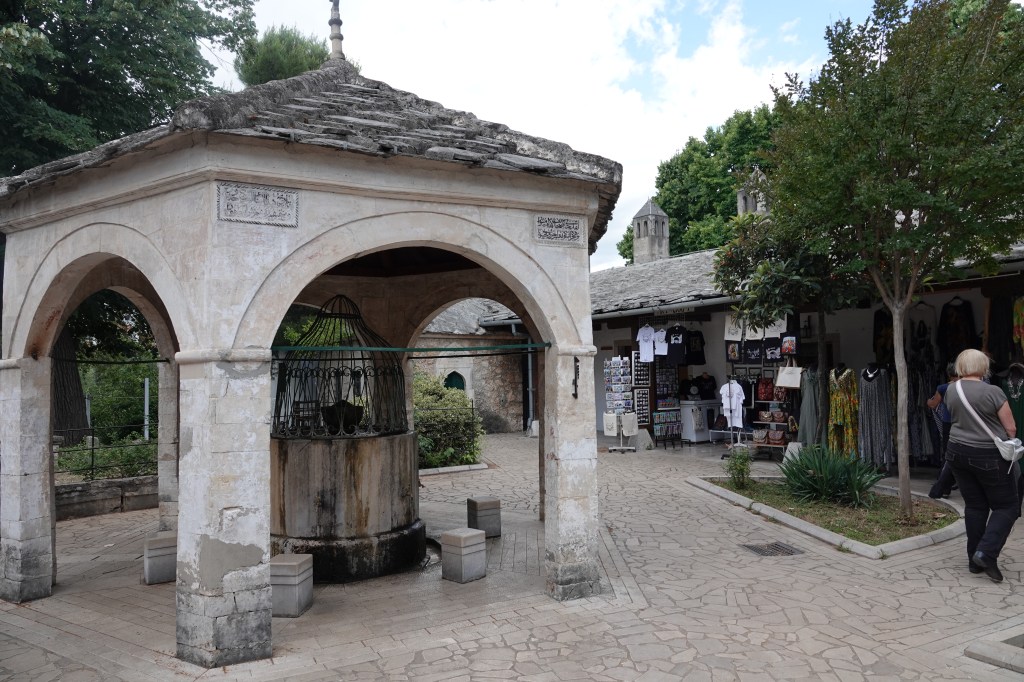
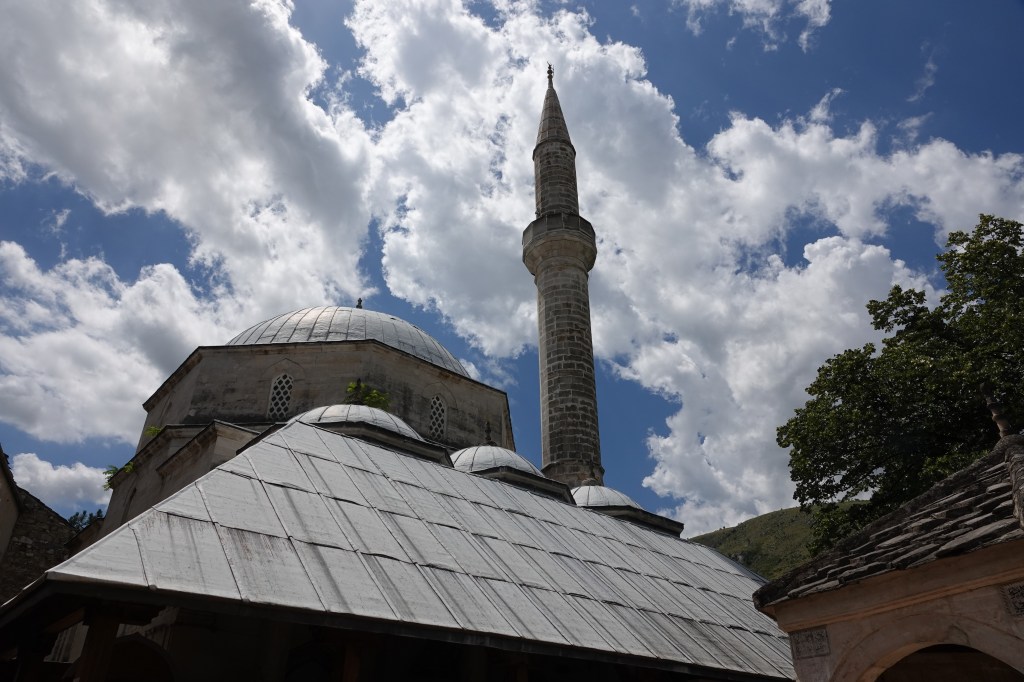
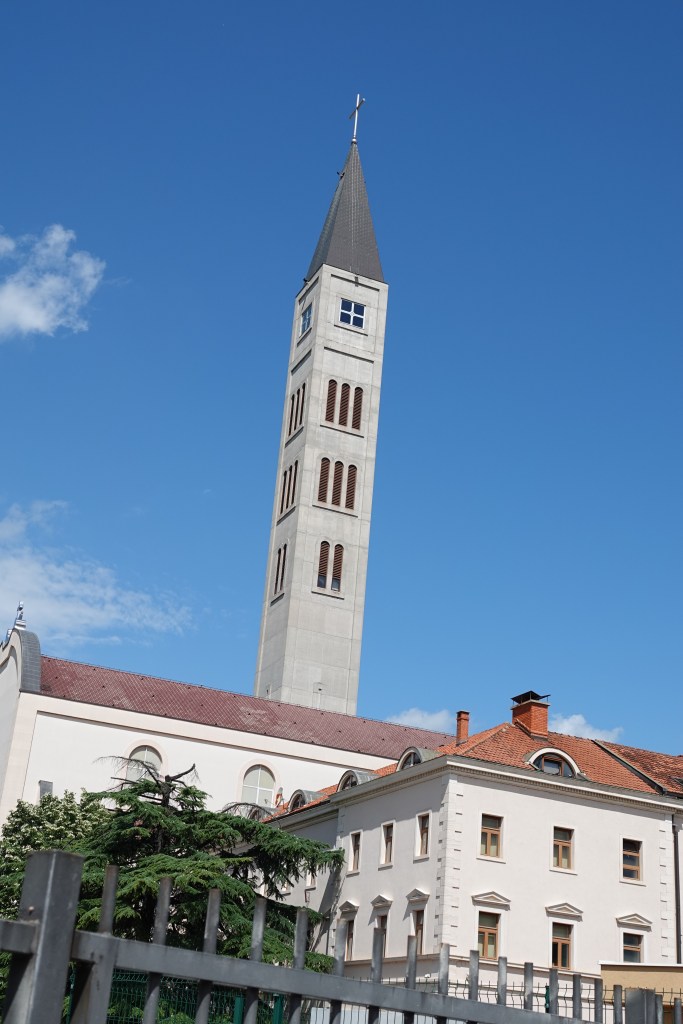
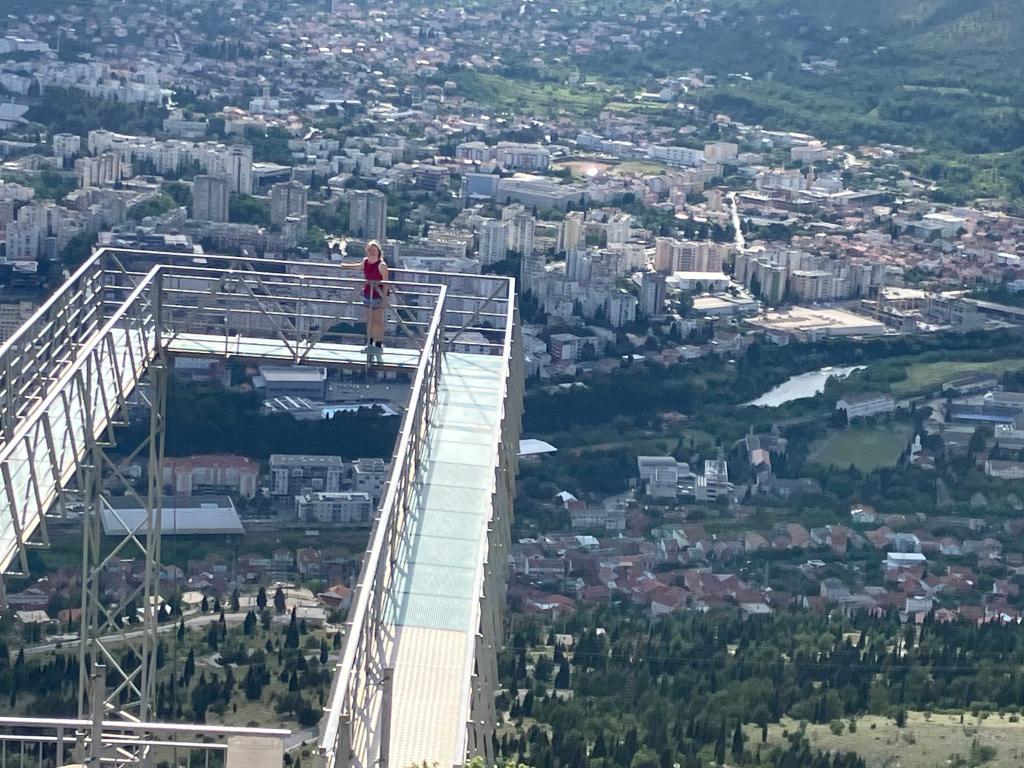
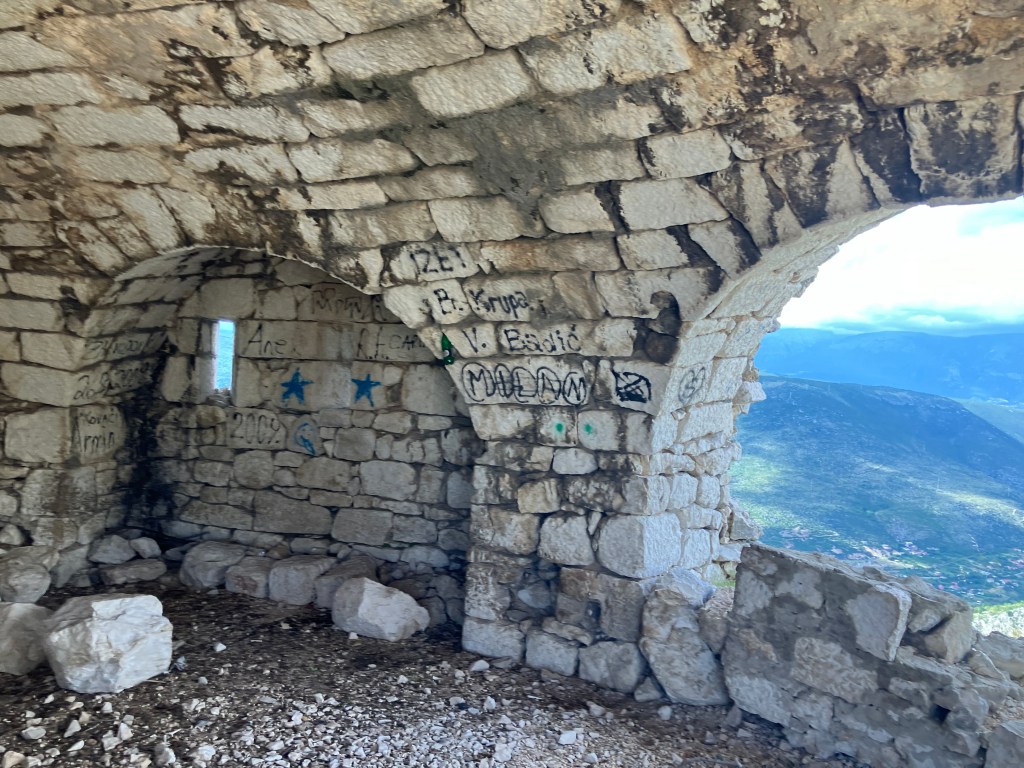
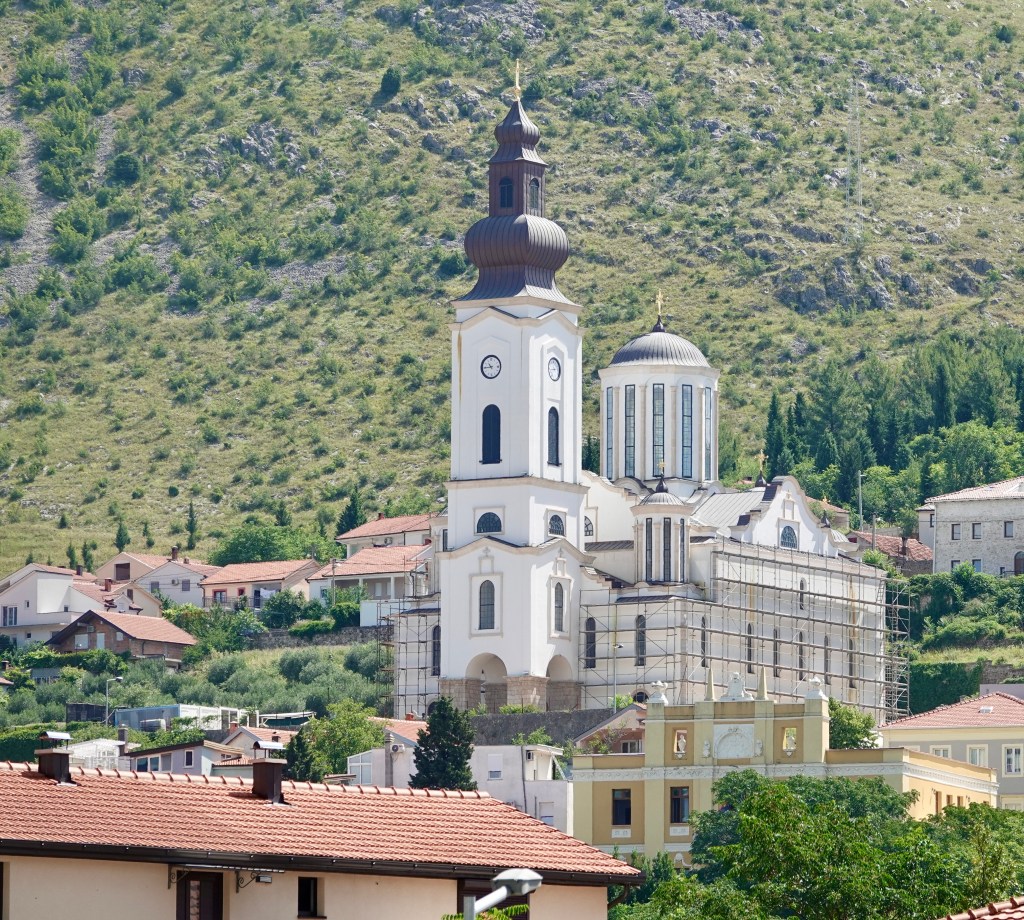
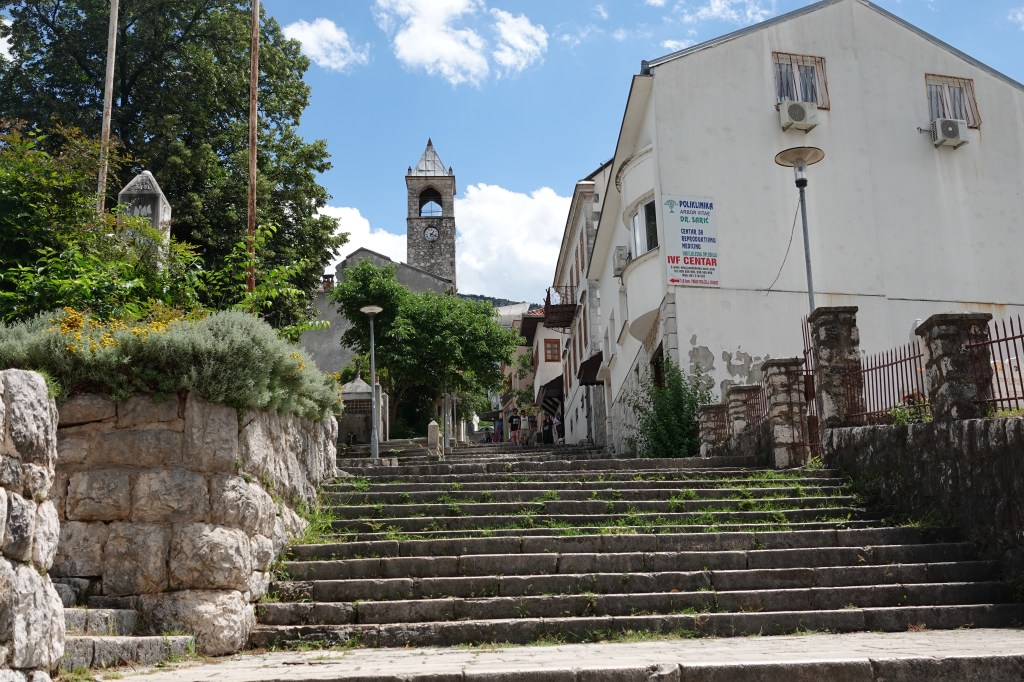
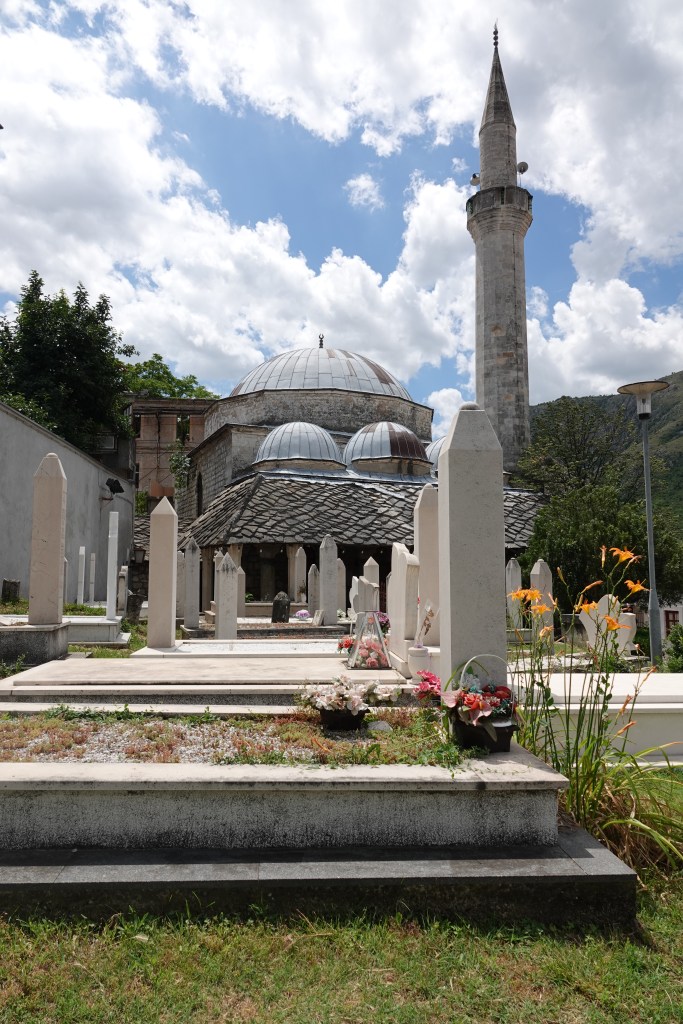


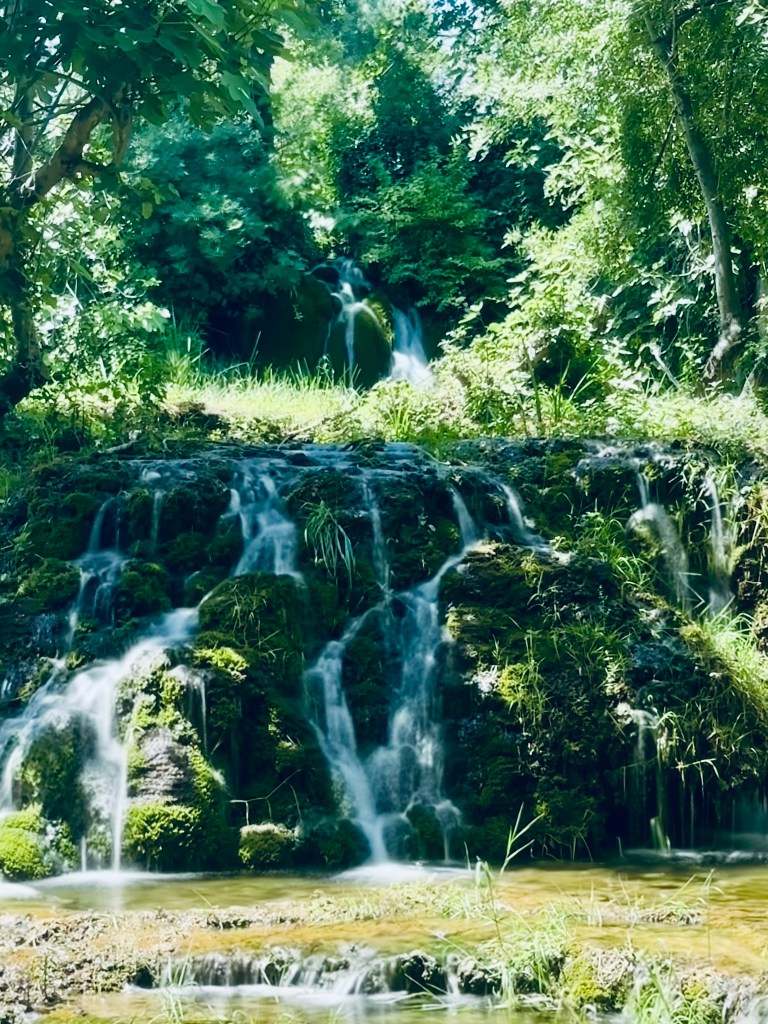
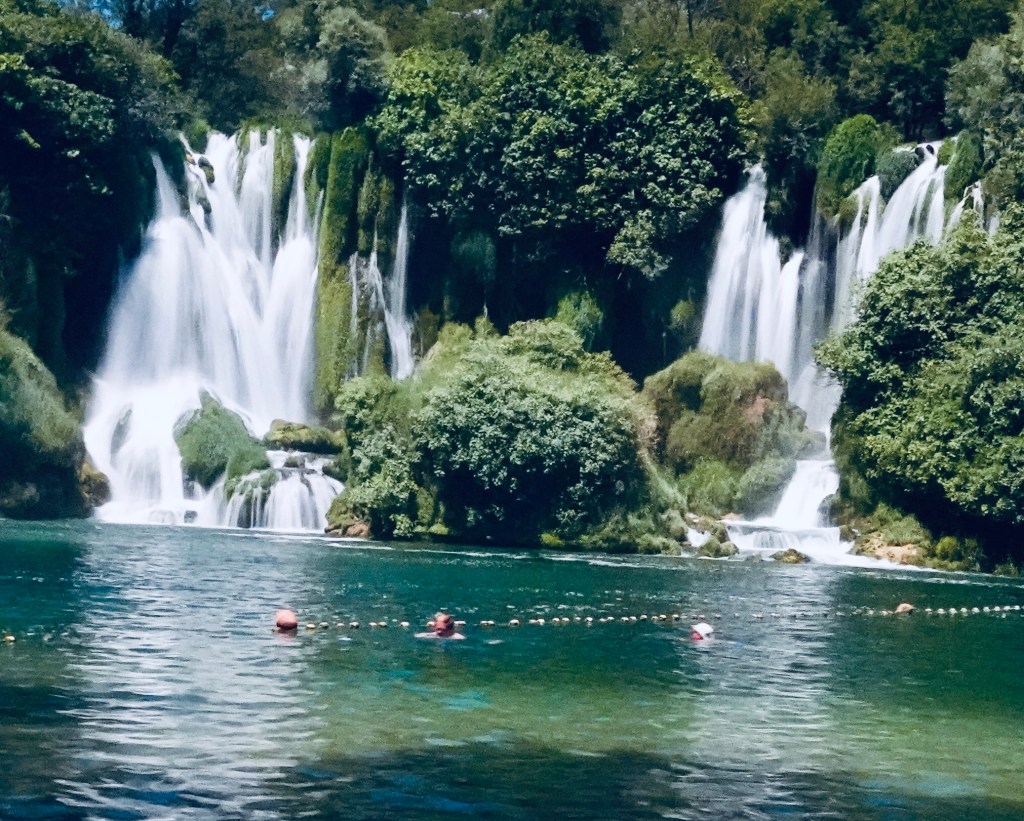


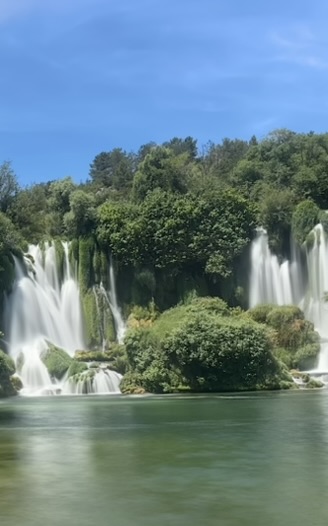
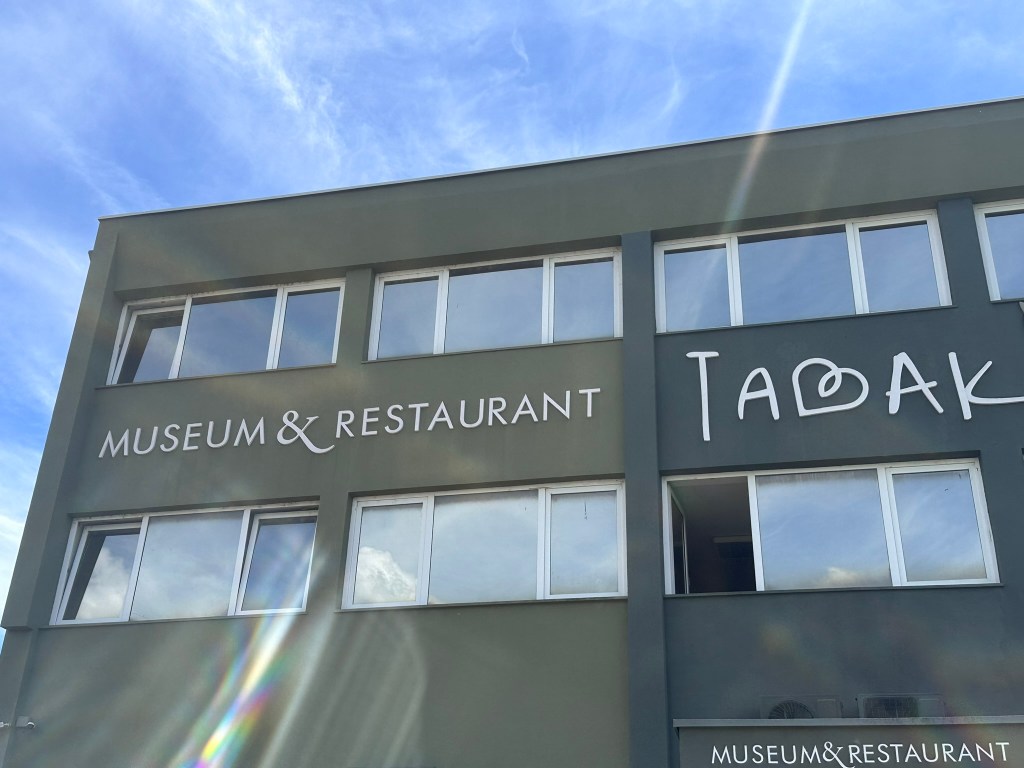
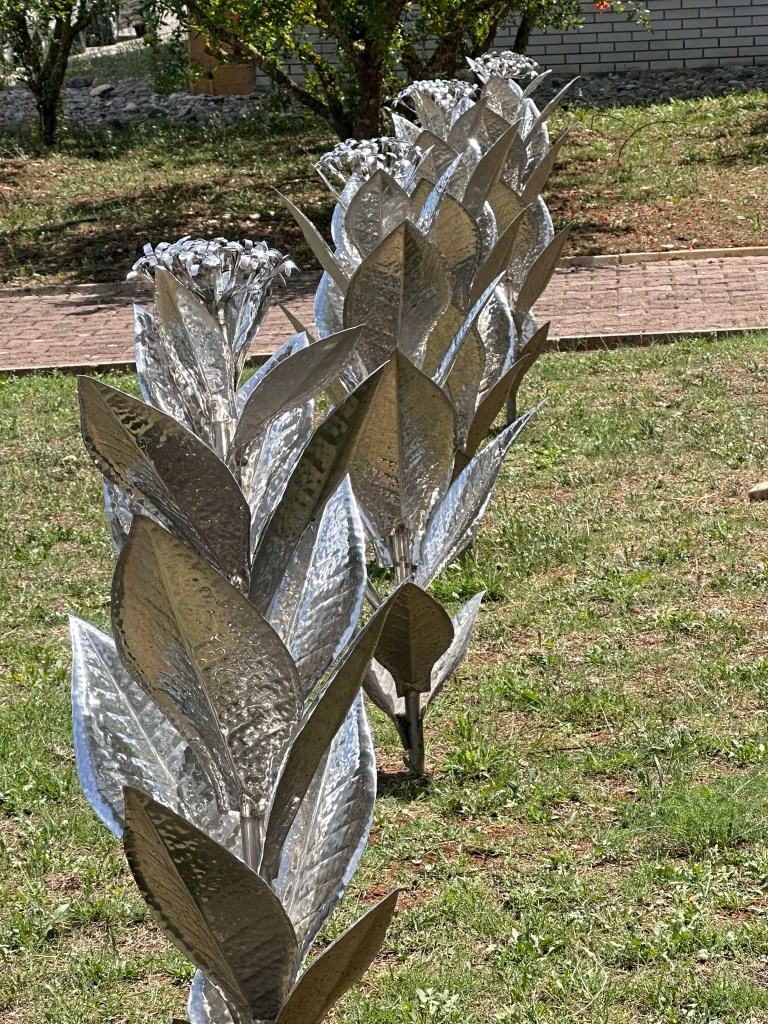
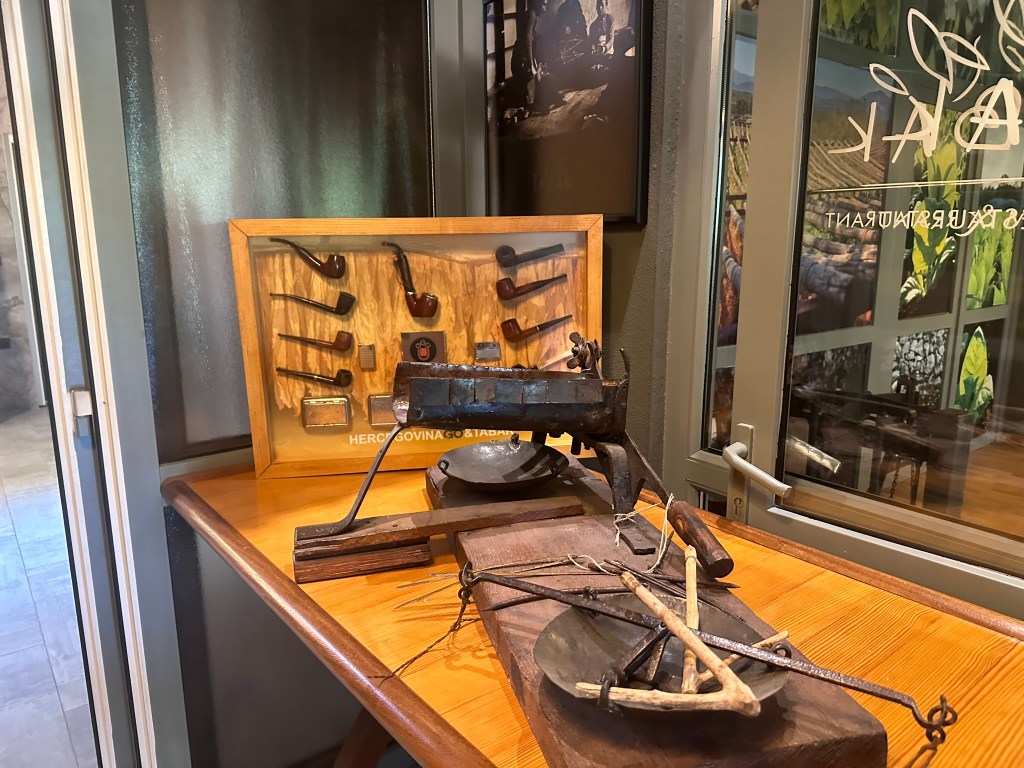
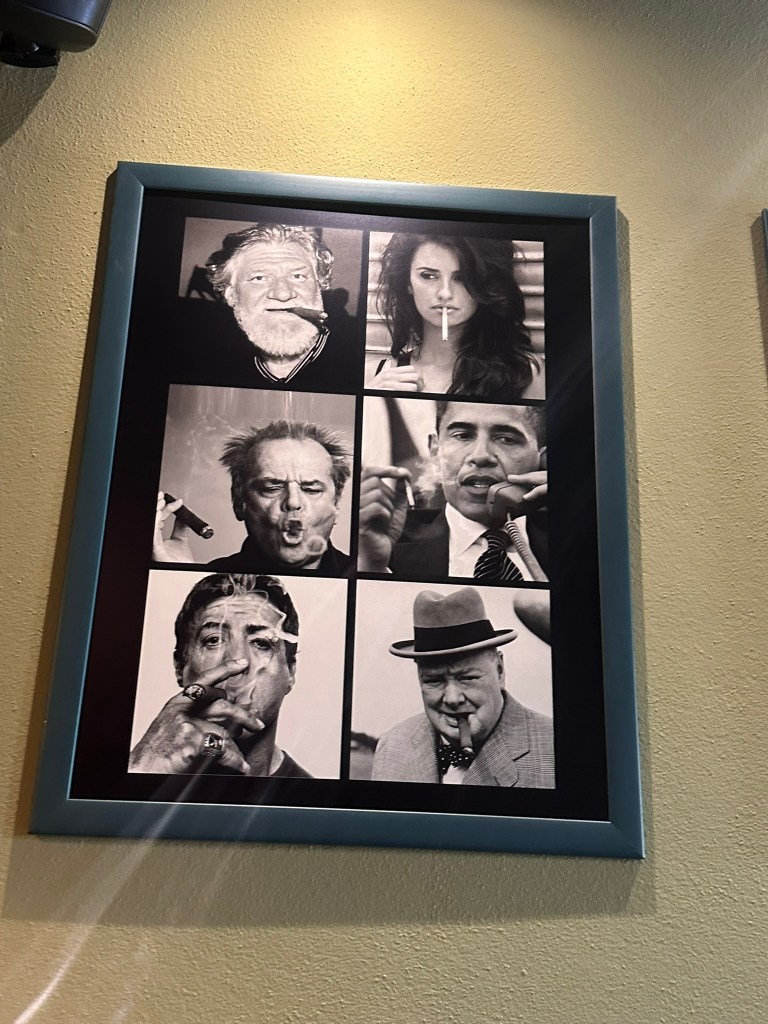
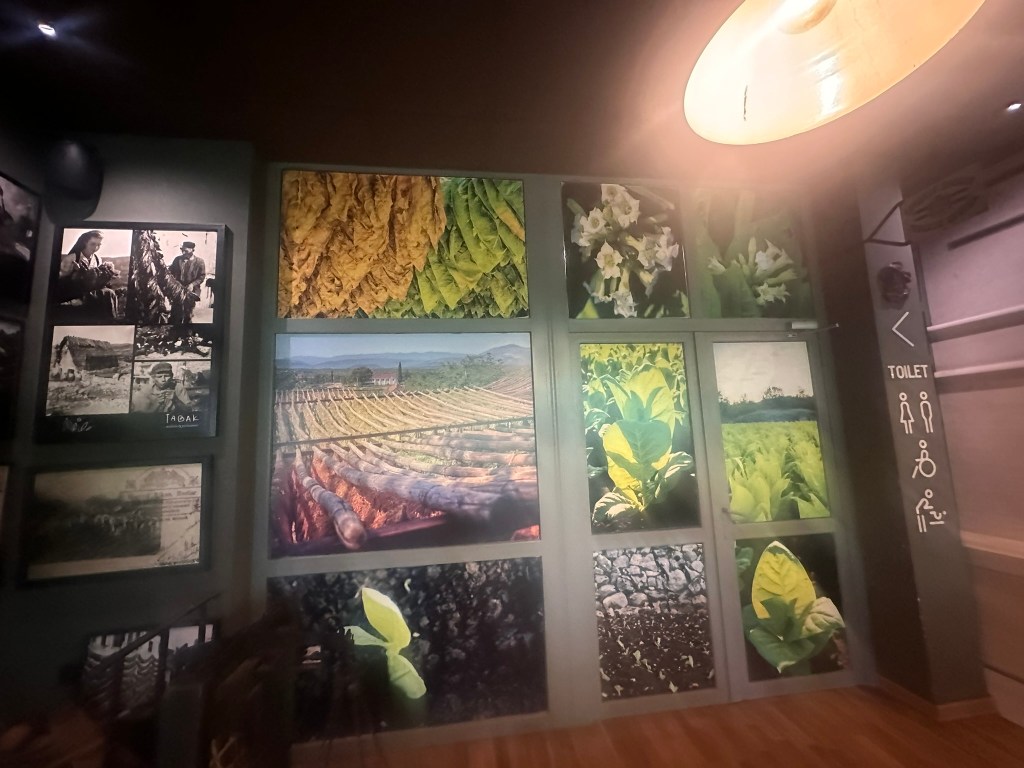

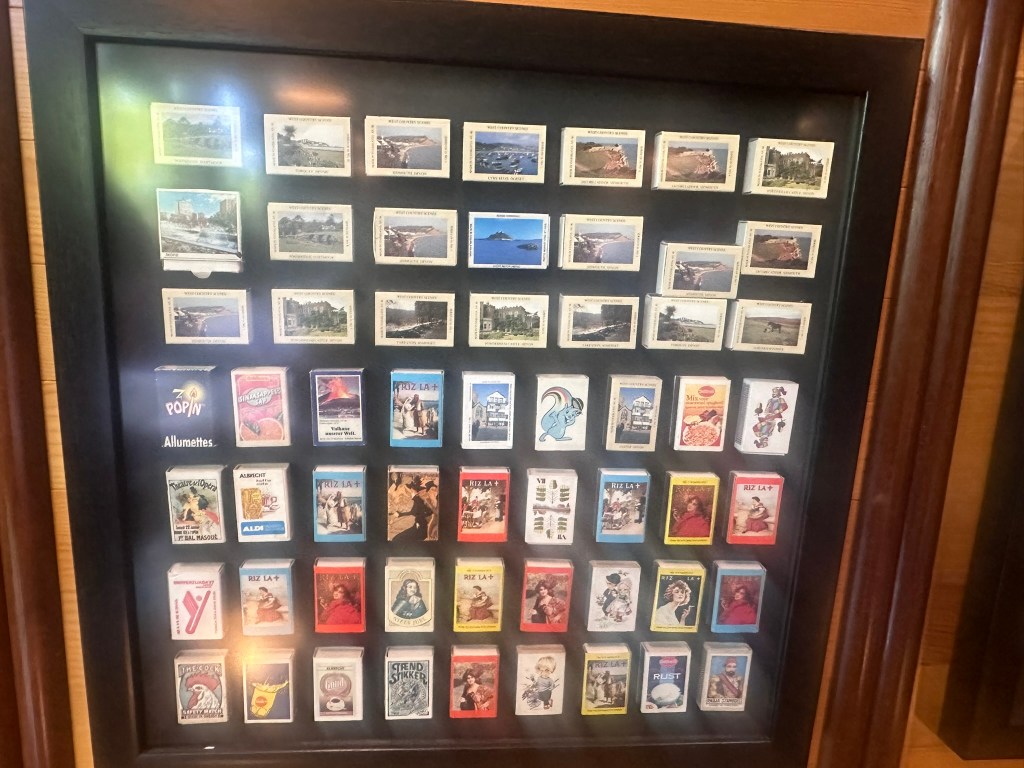
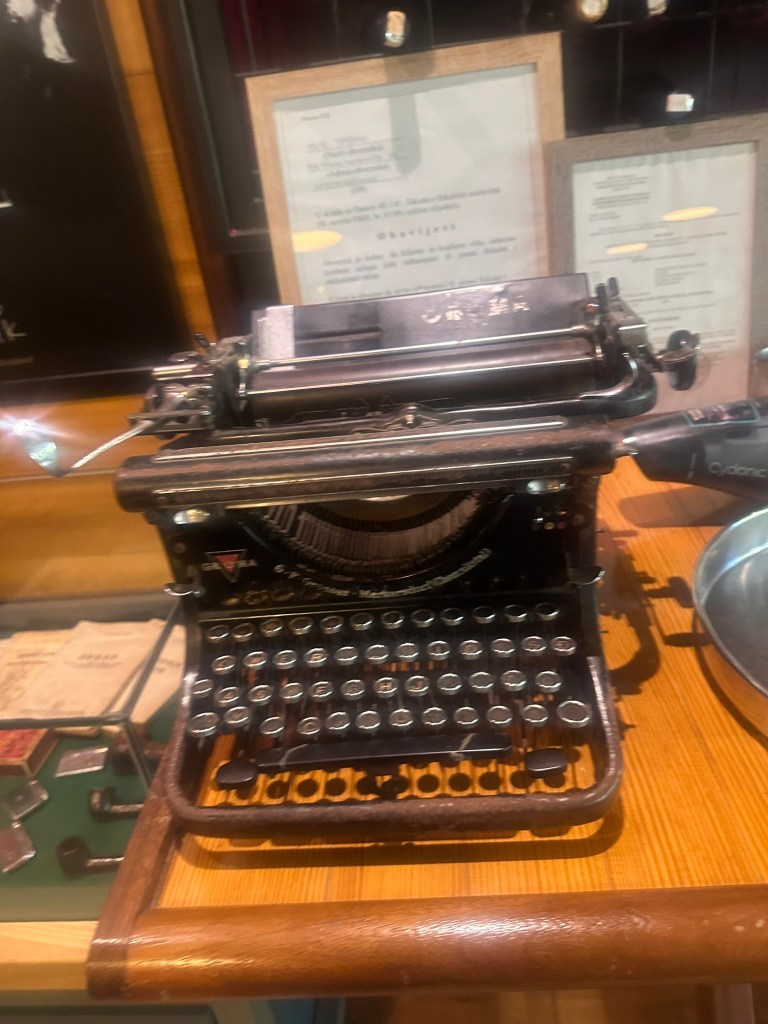
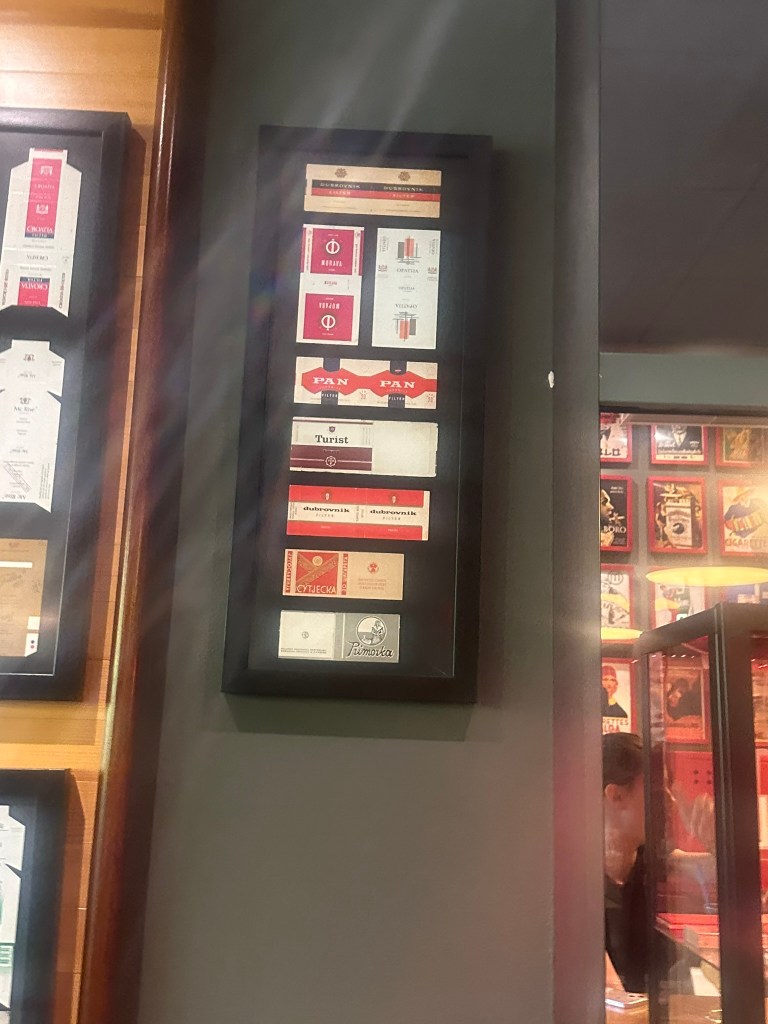


 Peaks to Palaces