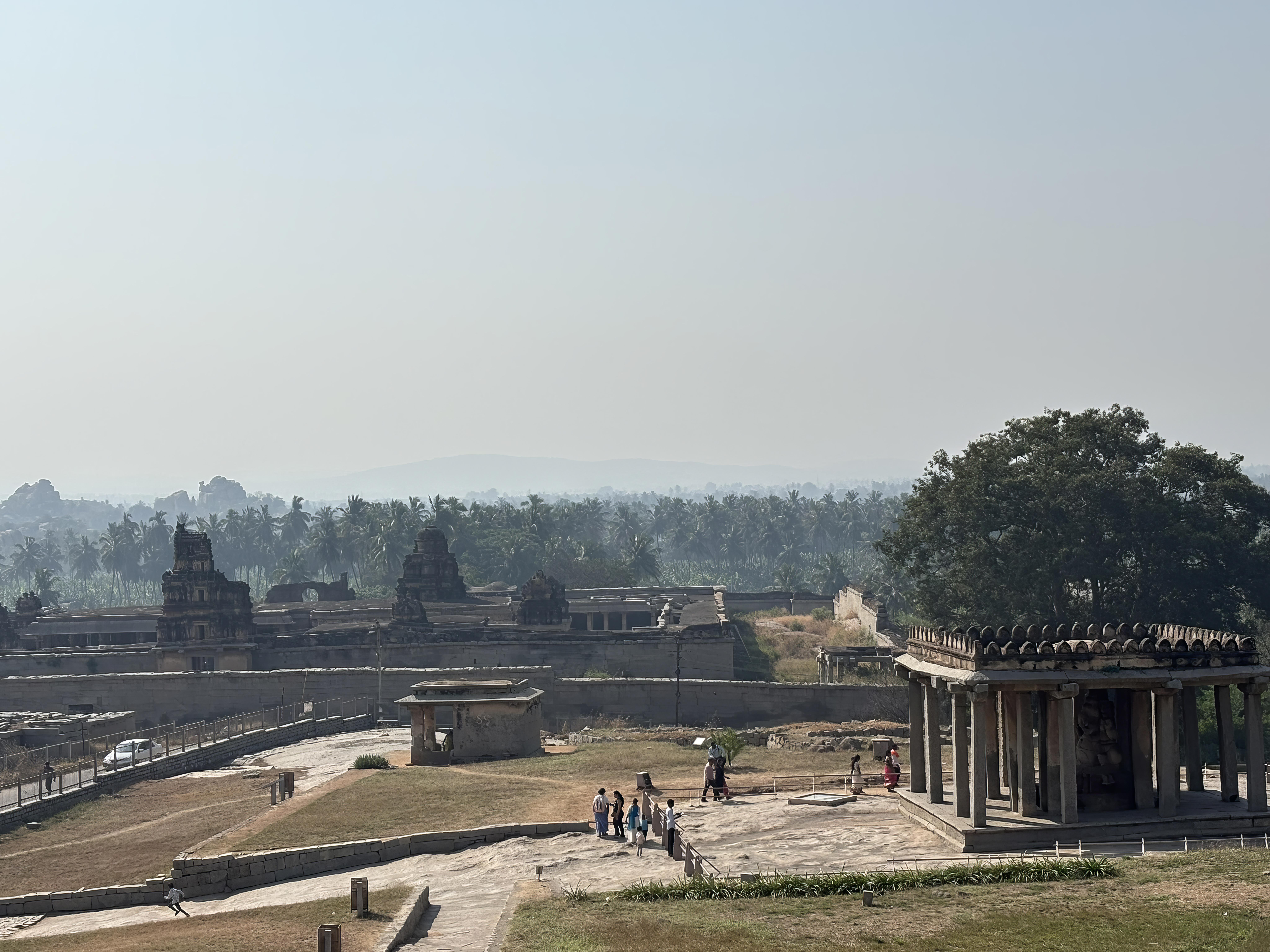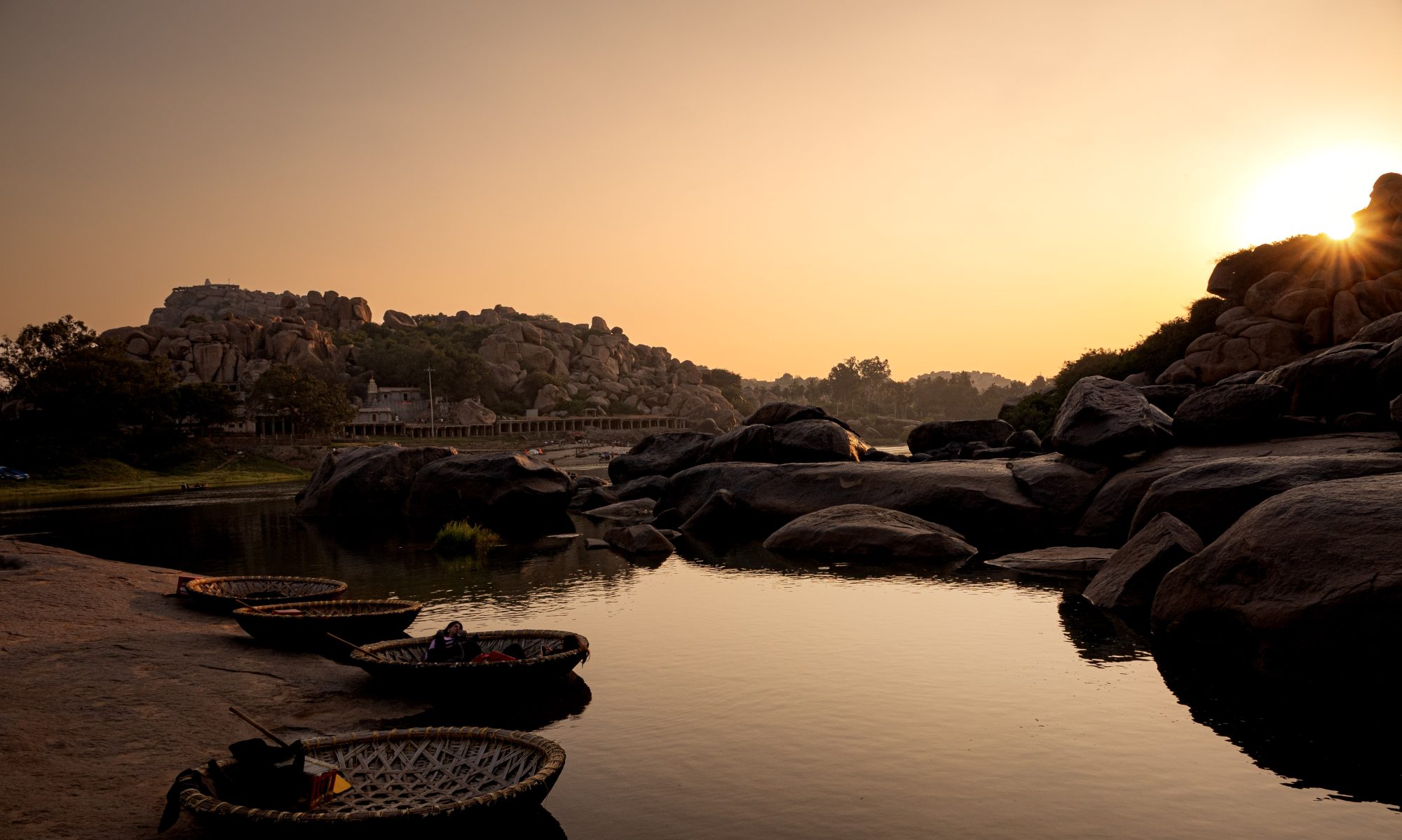
Arriving at Evolve Back, Hampi feels like stepping into a living chapter of the Vijayanagara Empire. We traveled overnight on the Hampi Express from Bengaluru. We reached Hospet at 7 AM. A warm smile and a private car from the resort awaited me at the station. As we drove through banana plantations and paddy fields, I caught the first glimpses of Hampi’s boulder‑strewn hills. The landscape slowly shifted from the ordinary to the mythical. By the time we reached the resort’s grand entrance, I felt as though I had crossed into another era.
A Welcome Steeped in Tradition
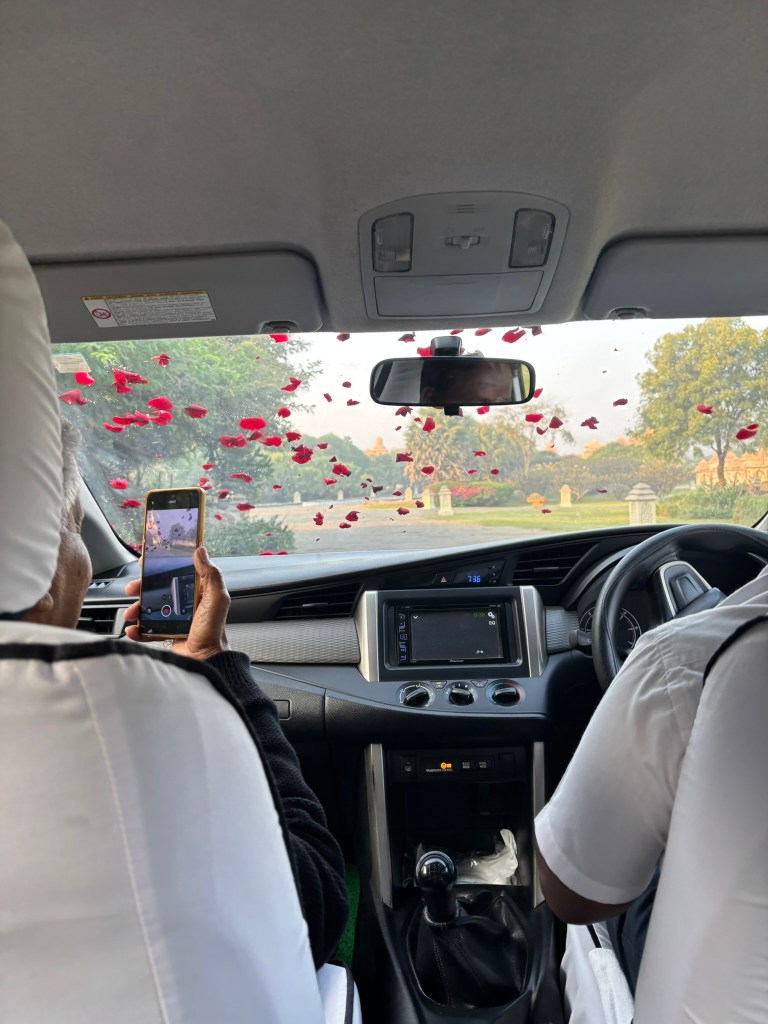
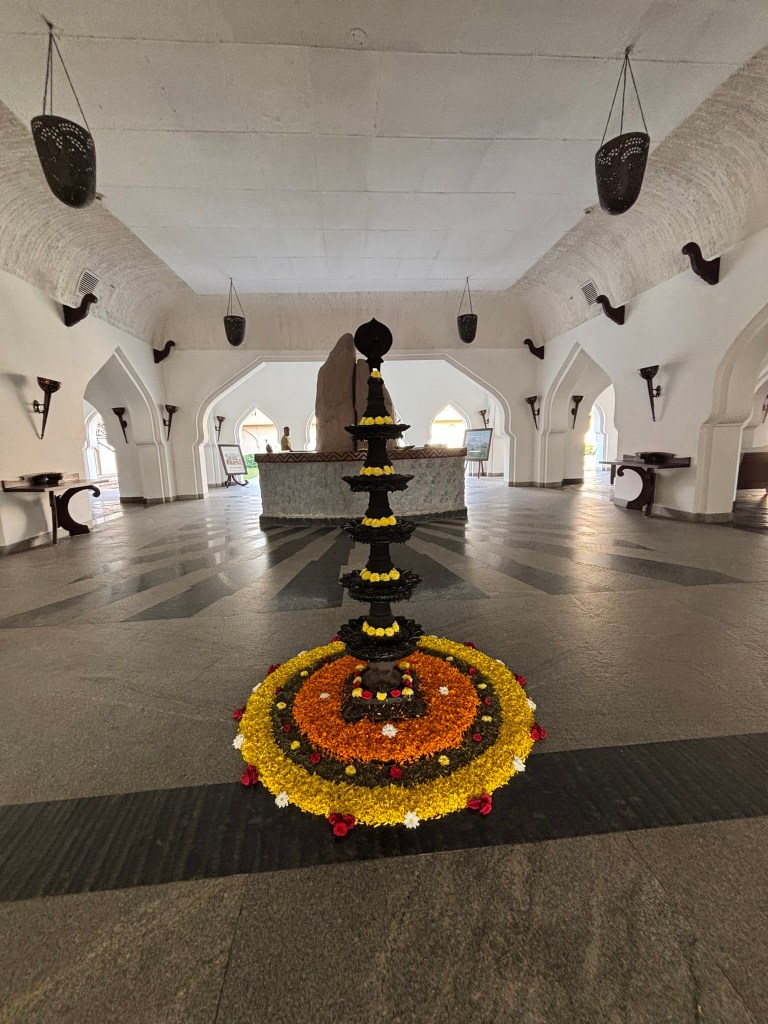
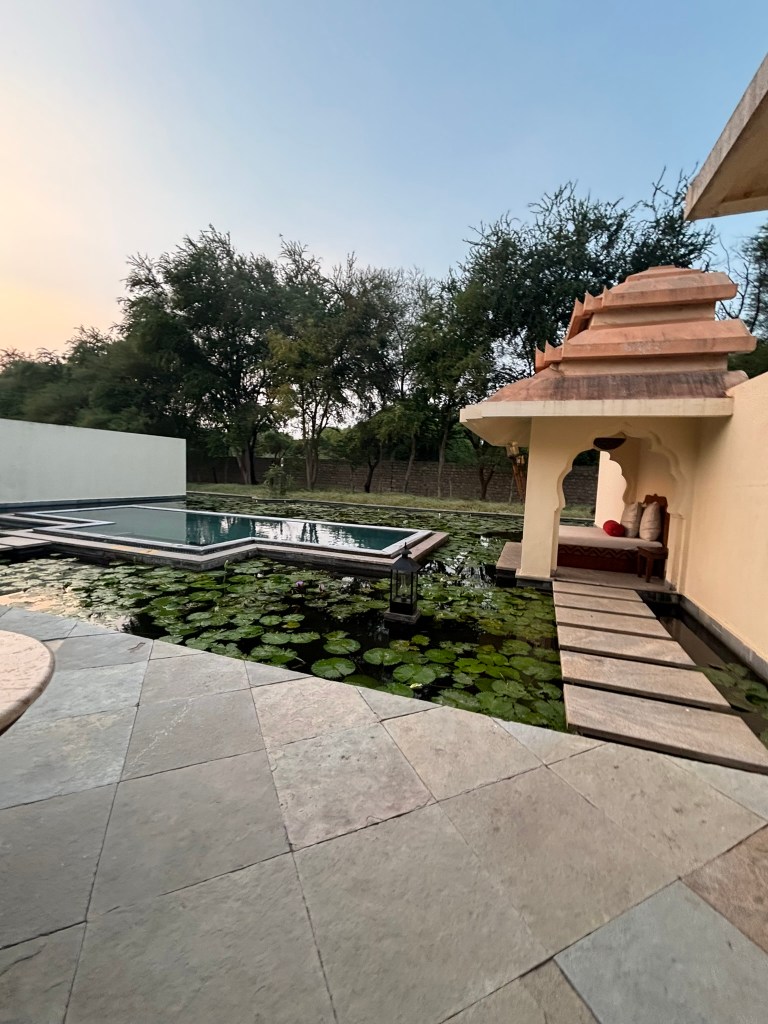
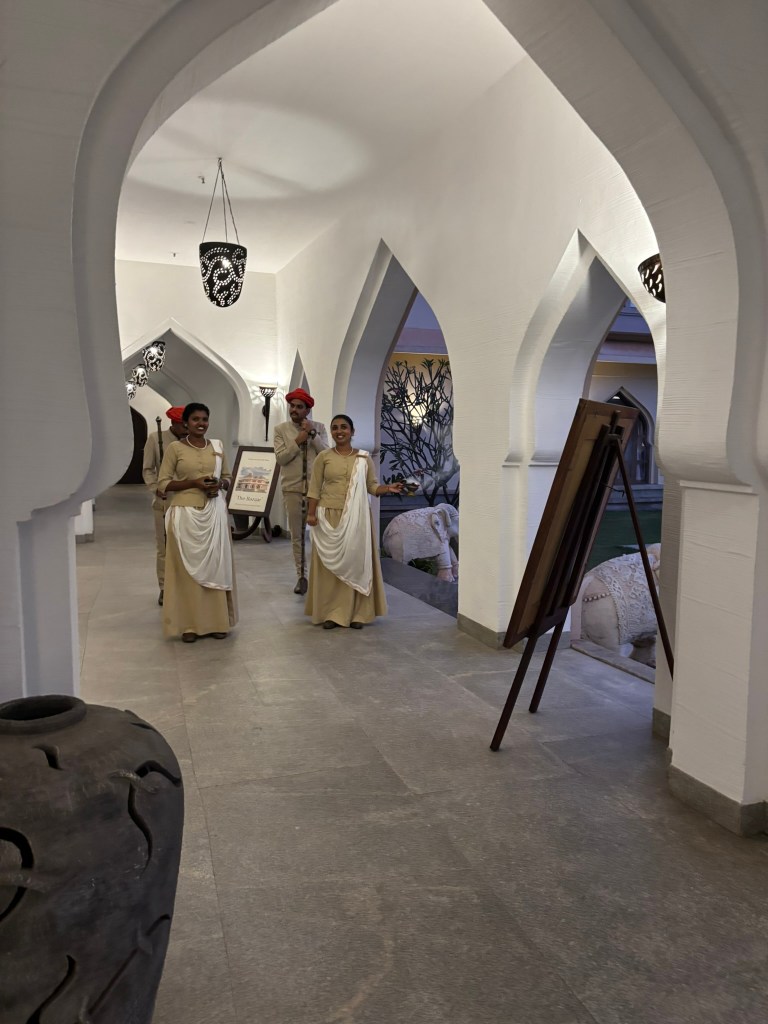
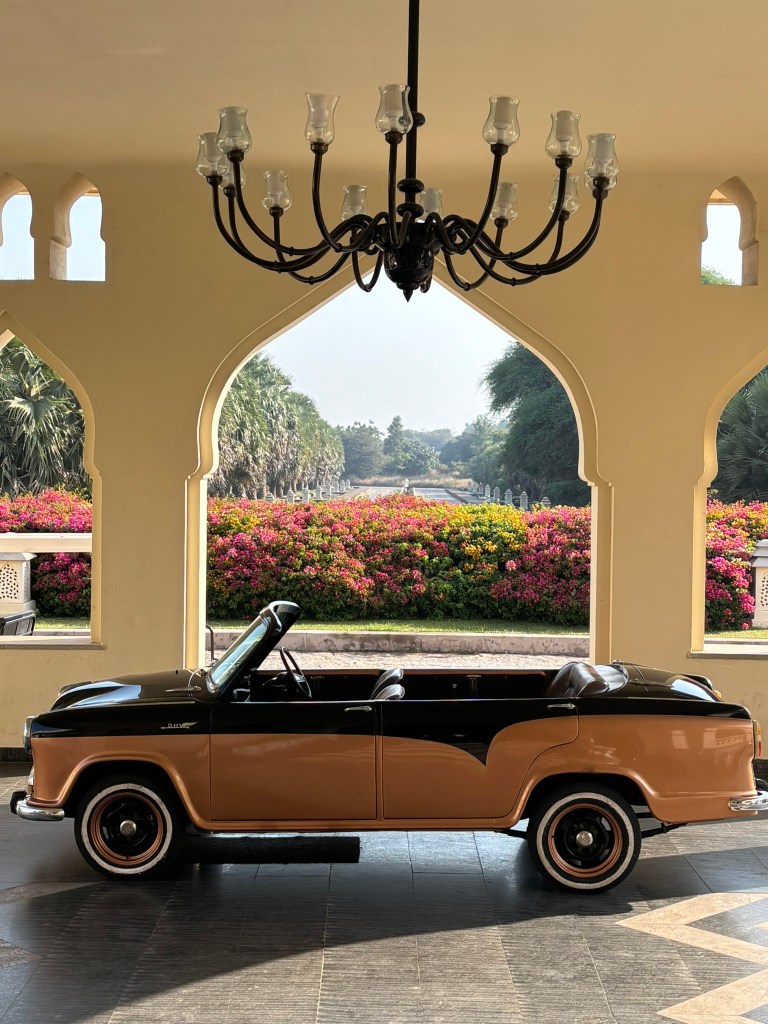
The moment our car stepped into the palatial entrance, we were greeted with a shower of rose petals. A traditional welcome ceremony was held in the hotel’s courtyard, complete with aarti, sandalwood tilak, and warm smiles. The architecture around me echoed the grandeur of the Vijayanagara palaces. There were lotus‑filled water bodies and courtyards that glowed in the morning sun. It felt less like checking into a hotel and more like being welcomed into a royal residence.
Where Heritage Meets Luxury: The Accommodations
Evolve Back offers a range of suites, each inspired by a different facet of Vijayanagara architecture and royal life.
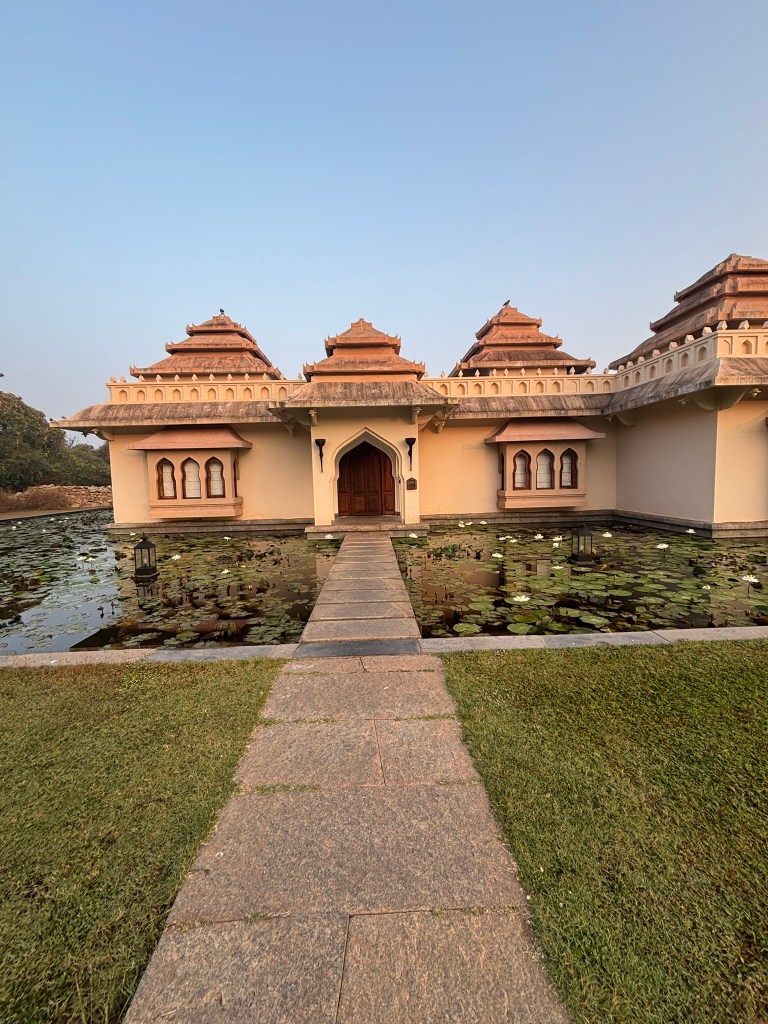
- Jal Mahal is the resort’s most indulgent offering—a water‑surrounded sanctuary inspired by the Zenana Enclosure’s Water Palace. Ideal for families or couples celebrating something special, it blends pavilions, arches, and serene courtyards. Together, they create a private world of luxury.
- Zenana Suites, located in the main palace building, draw inspiration from the Queen’s Quarters. Understated, elegant, and intimate, they are perfect for couples seeking romance in a period setting.
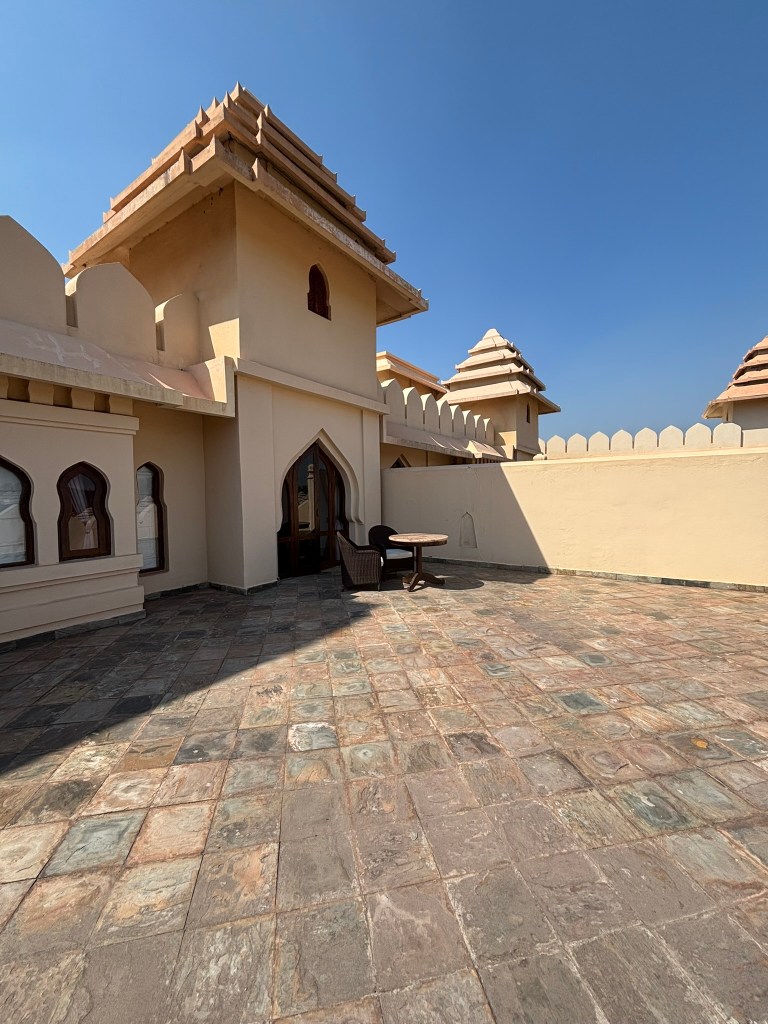
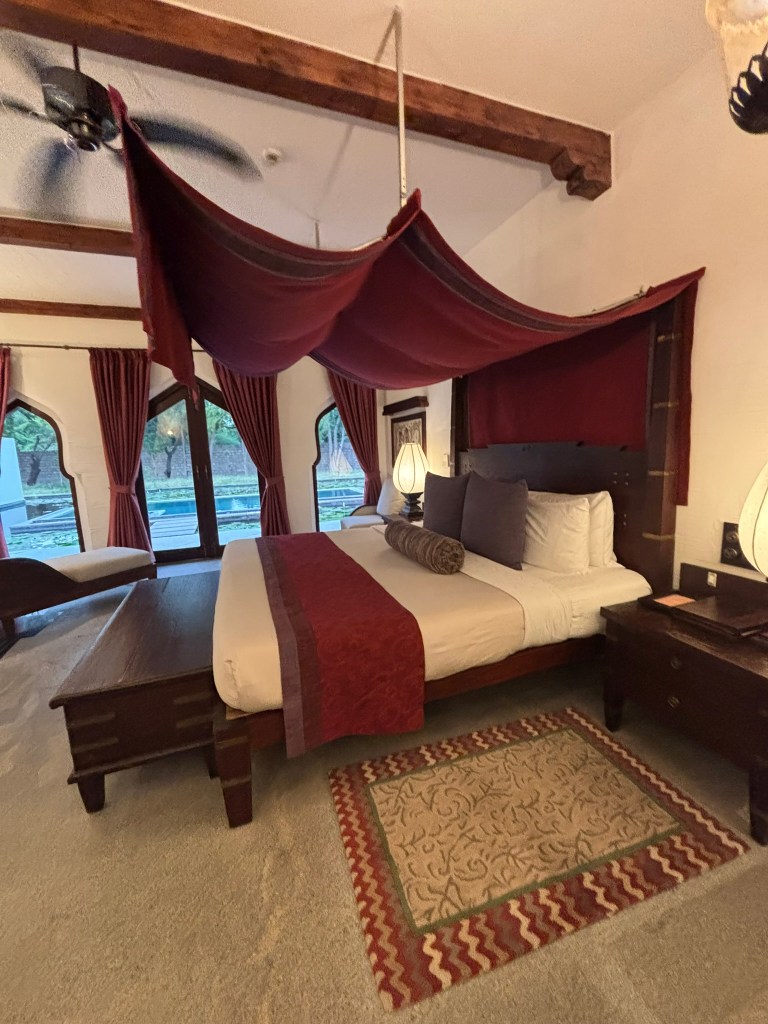
- Nilaya Terrace Suites, where we stayed, offers a beautiful blend of historical elegance and modern comfort. These suites have a private terrace overlooking the boulder hills. They feel like a quiet, elevated retreat. This setting is perfect for travelers who appreciate space, privacy, and a touch of old‑world grandeur.
- Nivasa Suites are refined palace‑style rooms. They are inspired by Vijayanagara’s architectural heritage. They offer a peaceful, luxurious cocoon for those who prefer a more intimate setting.
Each category reflects a different mood. However, all share the same thoughtful craftsmanship. They also share the warm hospitality that defines the Evolve Back experience.
Inside the Nilaya Suite: A Sanctuary of Comfort and Craft
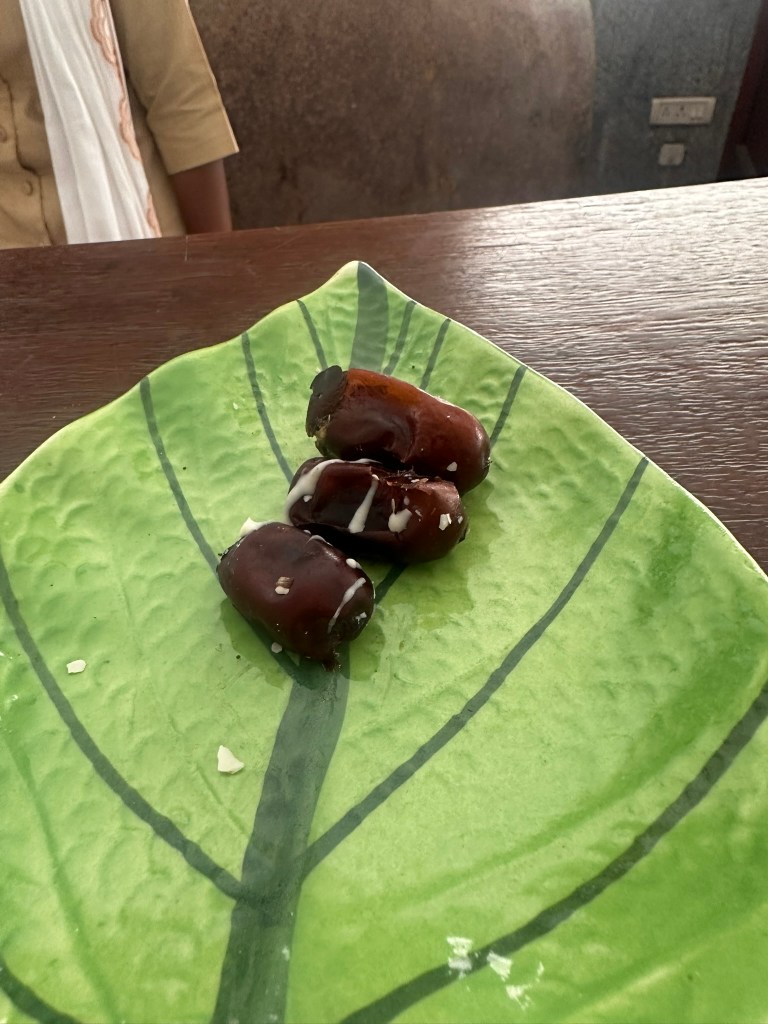
Our Nilaya suite was a serene blend of stone, wood, and soft textiles. It served as an elegant tribute to the gracious living of a bygone era. Polished floors, carved furniture, brass lamps, and warm lighting created an atmosphere that was both regal and comforting. A plate of traditional sweets awaited us on arrival, a thoughtful gesture that made the space feel instantly welcoming. A well‑stocked coffee and tea station with artisanal blends and handcrafted cups made even a simple morning brew feel indulgent.
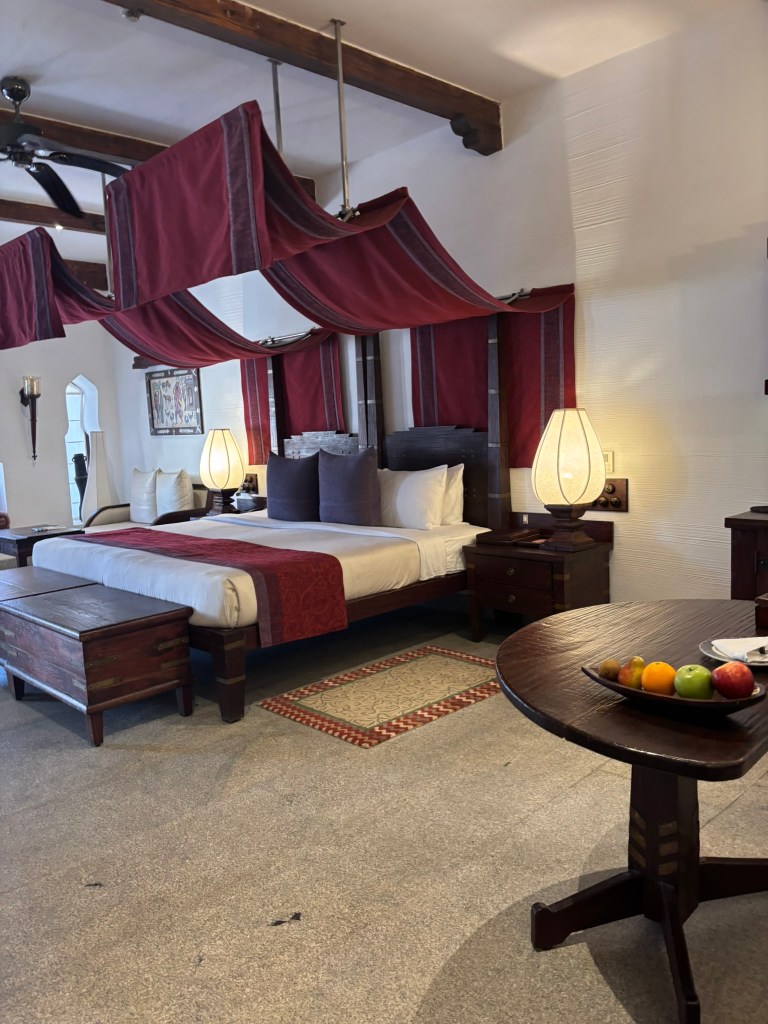
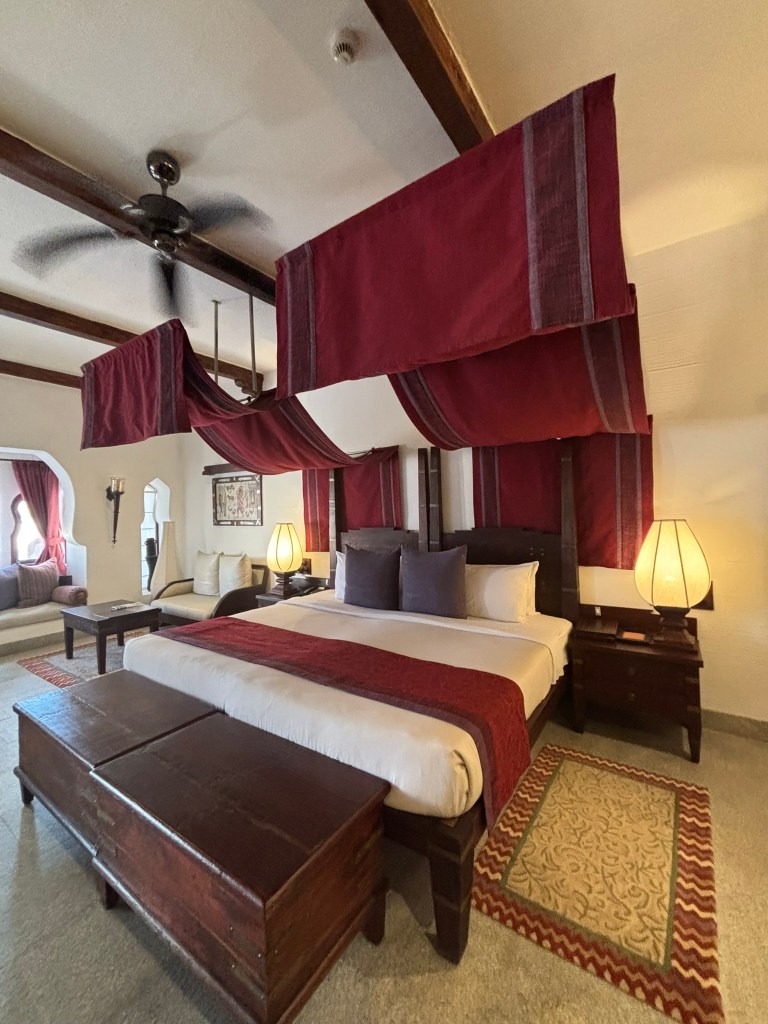
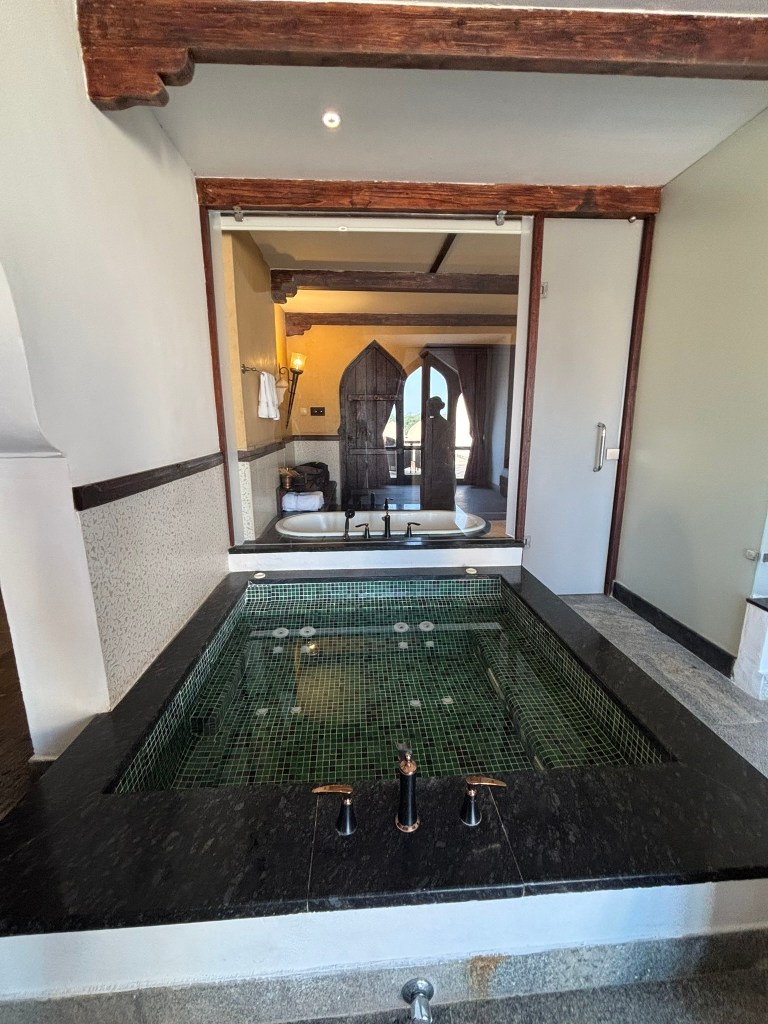
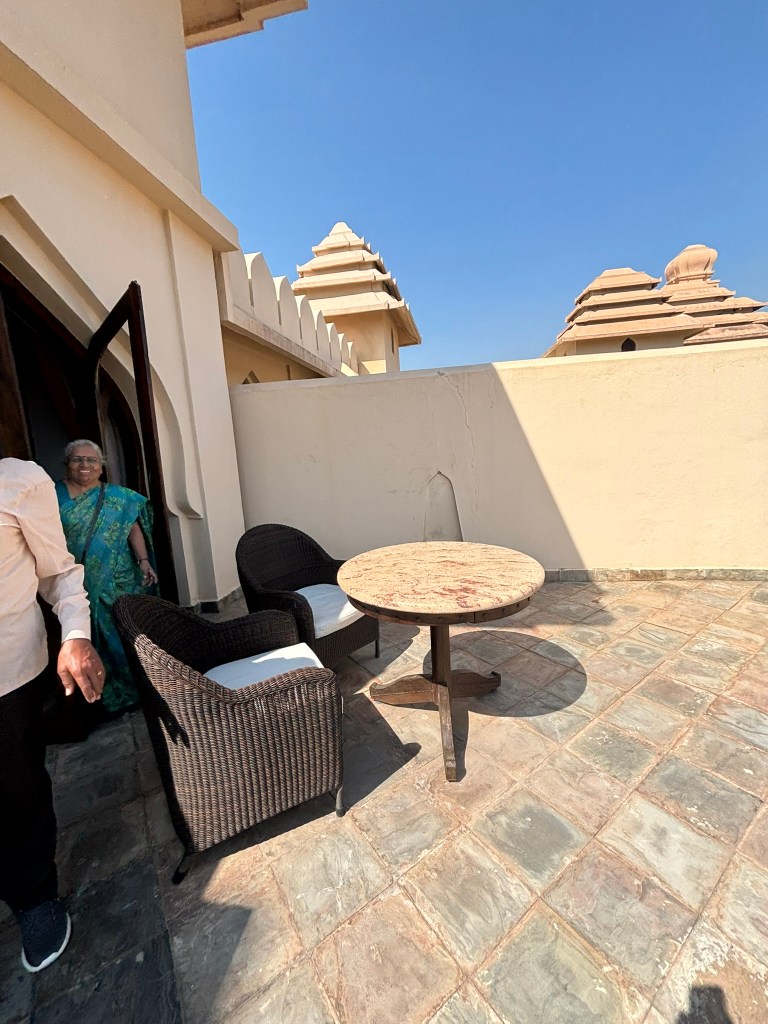
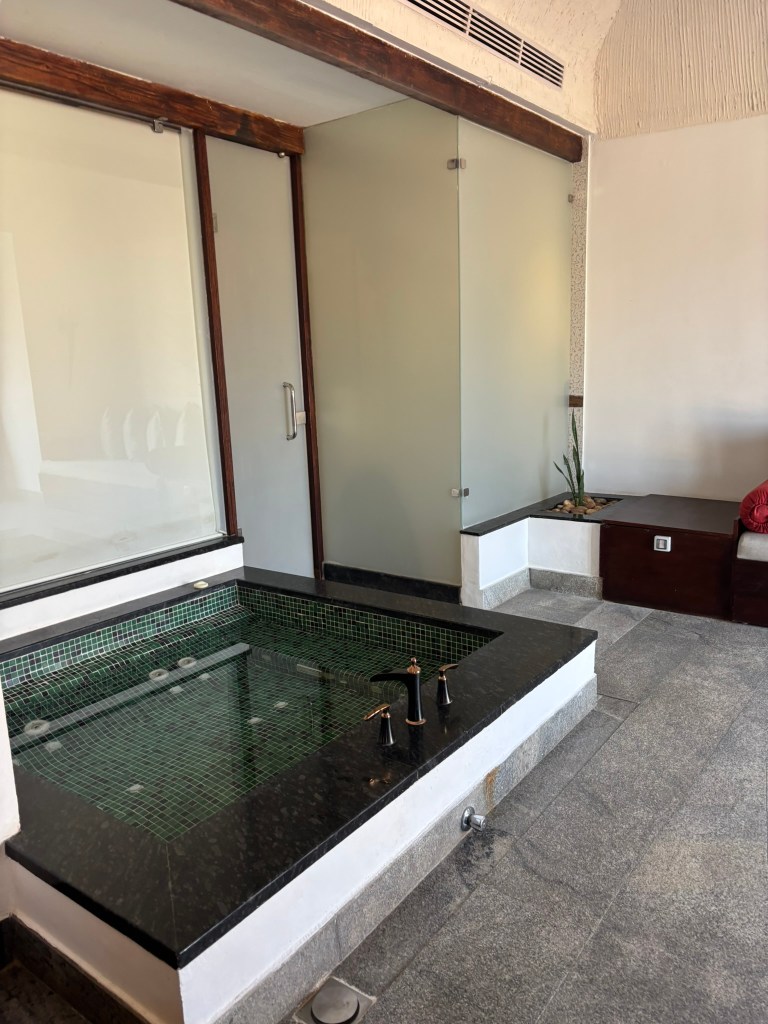
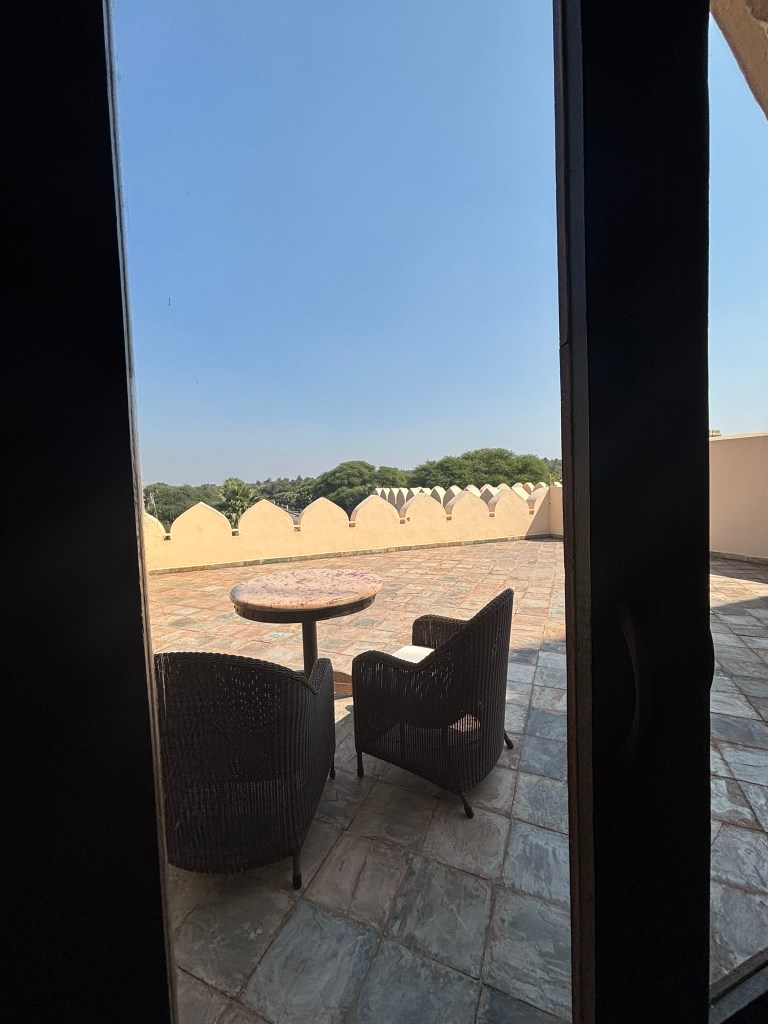
Housekeeping visited daily, leaving the room spotless and subtly refreshed. Fresh flowers added small touches of care. Neatly folded towels enhanced the feeling of being personally tended to. Occasionally, an incense cone was also added. In the evenings, soft lighting gently transformed the room into a peaceful sanctuary. The gentle turndown service made it perfect after long days exploring Hampi’s ruins.
Hawa Mahal: Breeze, Light, and Romance
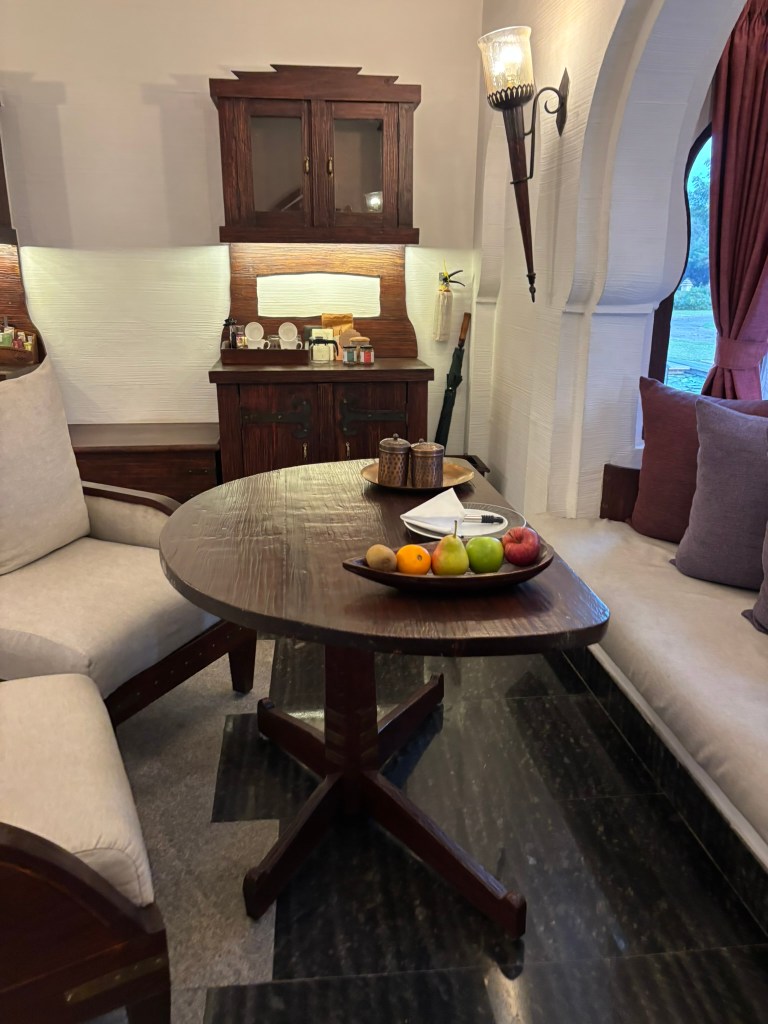
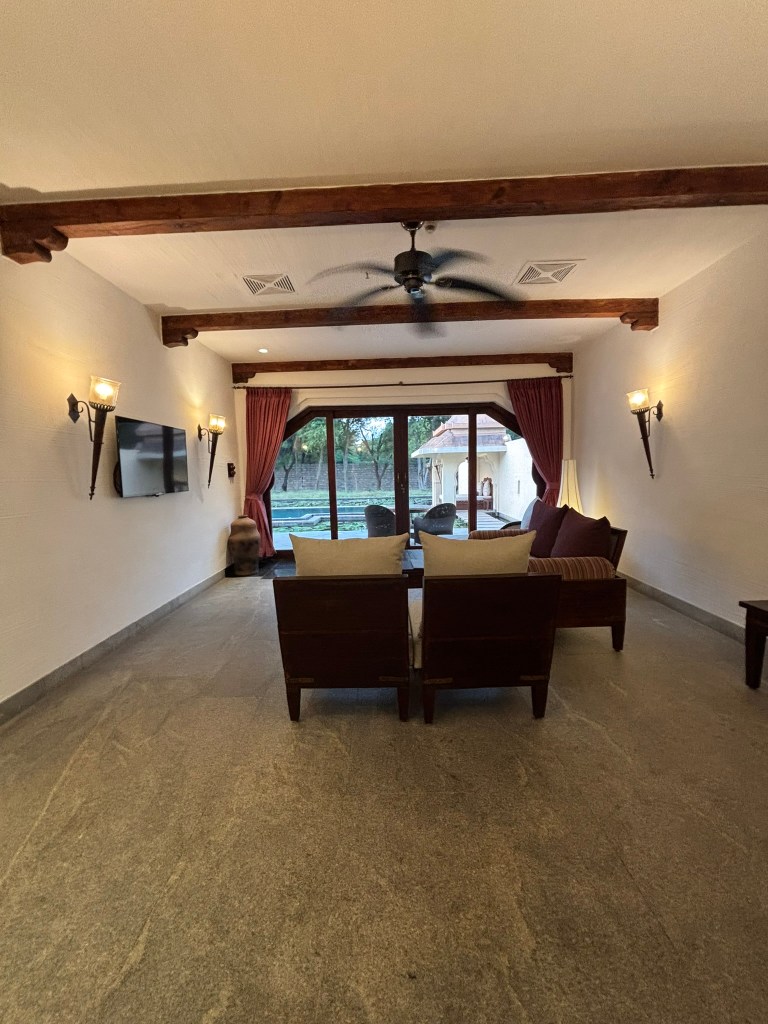
Another category worth mentioning is the Hawa Mahal, a suite designed to capture the softest breeze and the gentlest light. It is inspired by airy palace pavilions. It features jharokha‑style windows and latticed screens. There is also a spacious lounge area that opens to views of the boulder hills. With its four‑poster bed, artisanal amenities, and thoughtful touches, Hawa Mahal is ideal for couples seeking a romantic, intimate retreat. We got to tour one of the suites when it was empty.
Breakfast Like a Maharaja
Breakfast at Evolve Back is a celebration of Karnataka’s culinary heritage. The buffet spread features everything from crisp dosas and soft idlis to banana‑flower vadas, freshly churned butter, and local jaggery. Tropical fruits, homemade preserves, and freshly baked breads add to the feast. The highlight, however, is the filter coffee—rich, aromatic, and served with the kind of pride that only comes from tradition.
Morning Nature Walk: A Quiet Dialogue with the Land
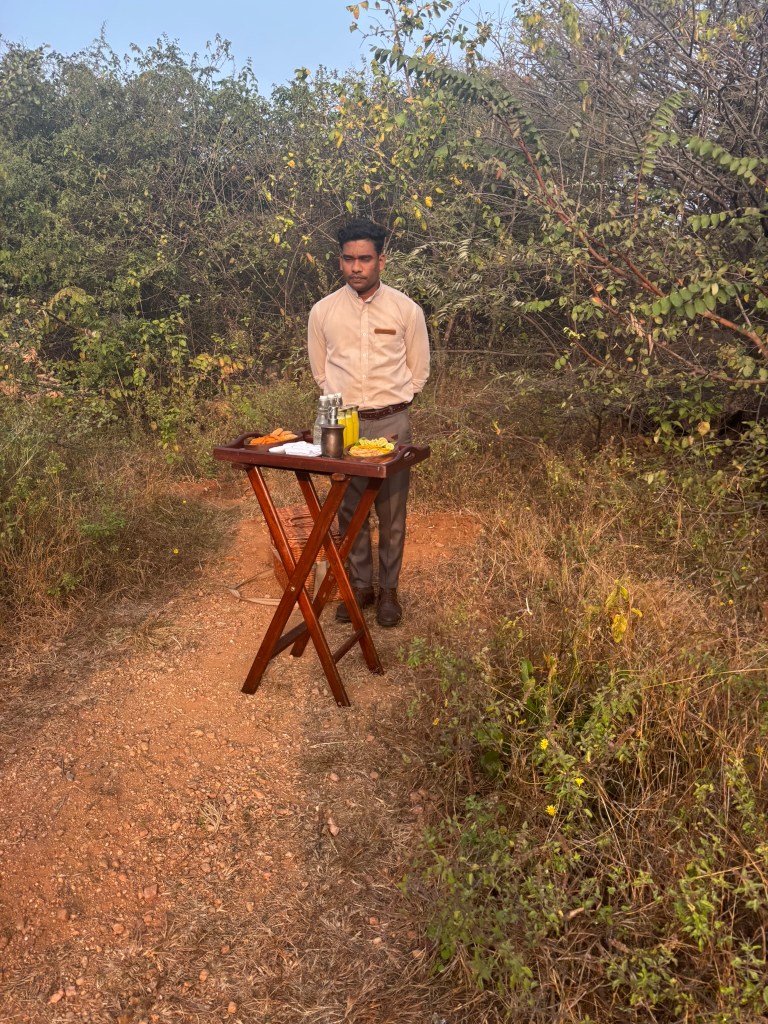
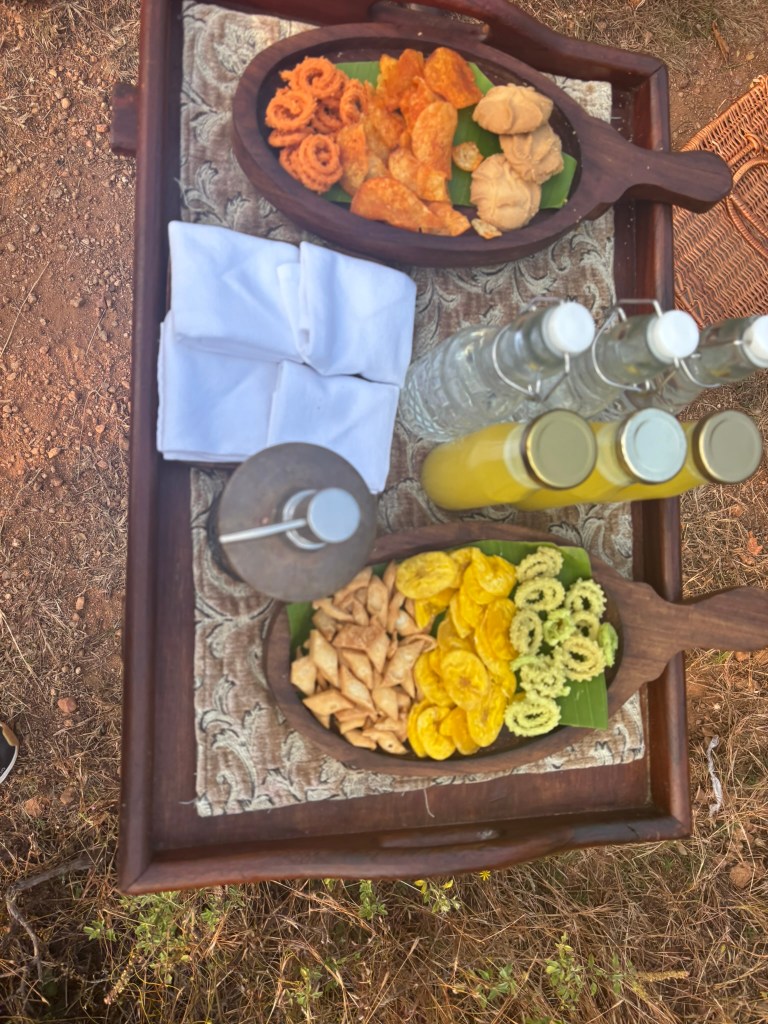
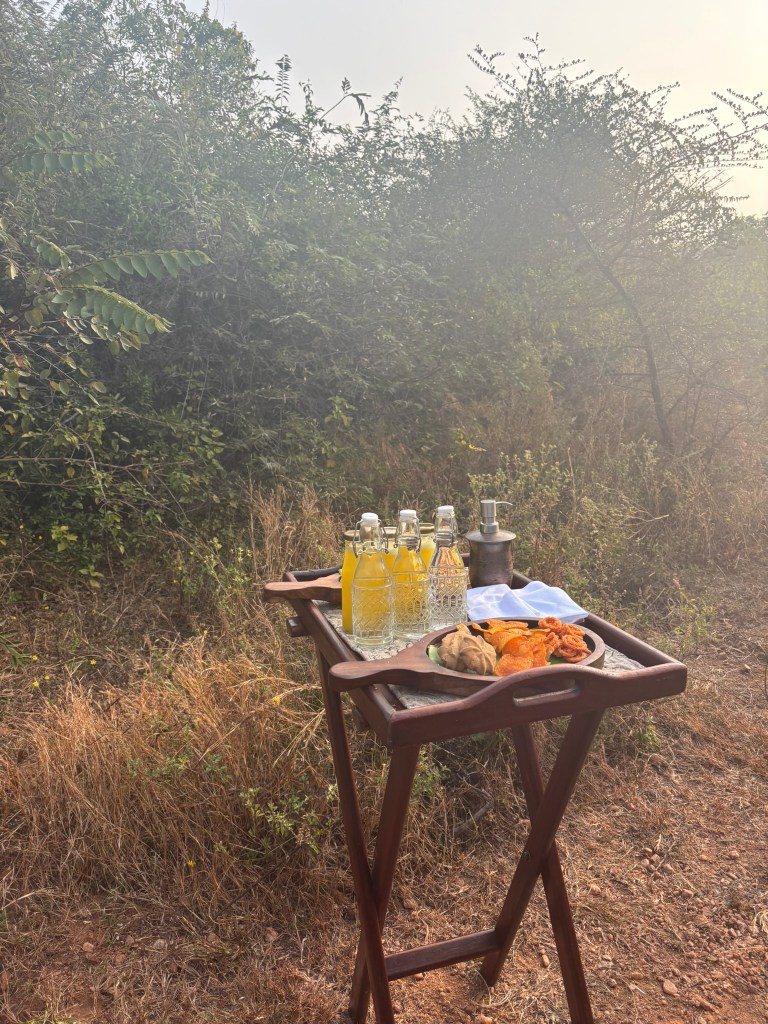
One of the most grounding experiences at the resort is the morning nature walk. Led by a naturalist, the walk takes you through quiet trails lined with neem, tamarind, and wild grasses. As the first light spills over the granite hills, you pause to observe birdlife. You notice tiny wildflowers. You also appreciate the ancient terrain shaped over four billion years. It feels less like an activity and more like a gentle conversation with the land—a mindful beginning to the day. At the end of the nature walk, a surprise awaits in the form of fresh juices and snacks surrounded by birds.
Evenings of Ritual, Music, and Storytelling
Evenings at Evolve Back are nothing short of magical.
The Evening Aarti
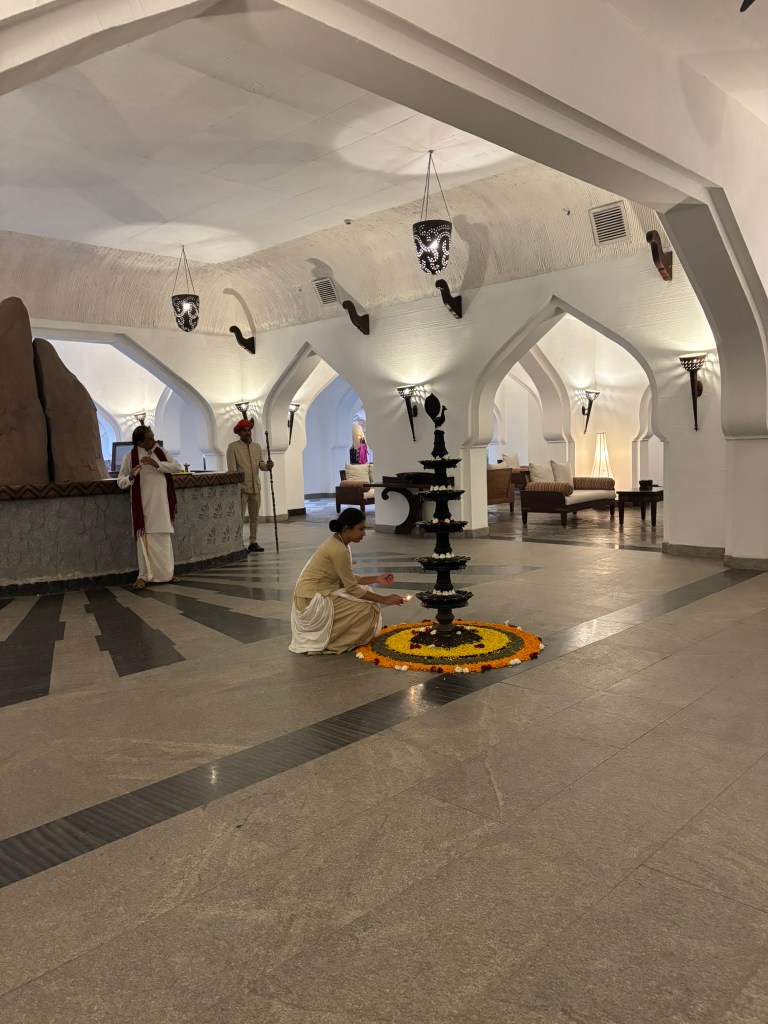
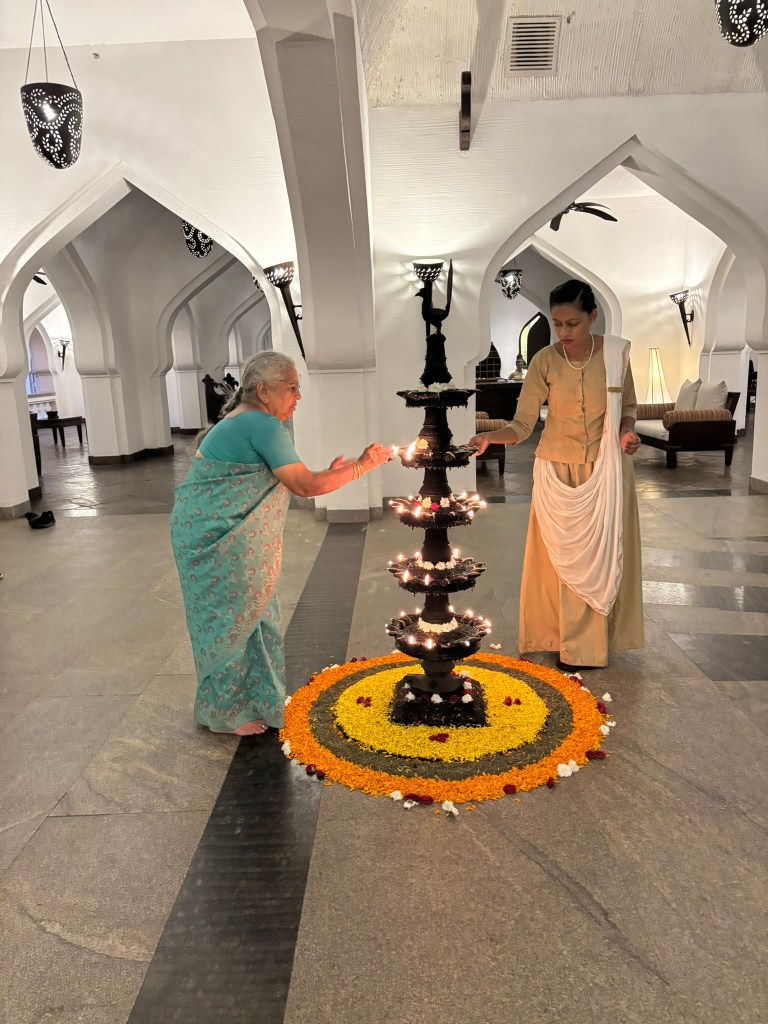
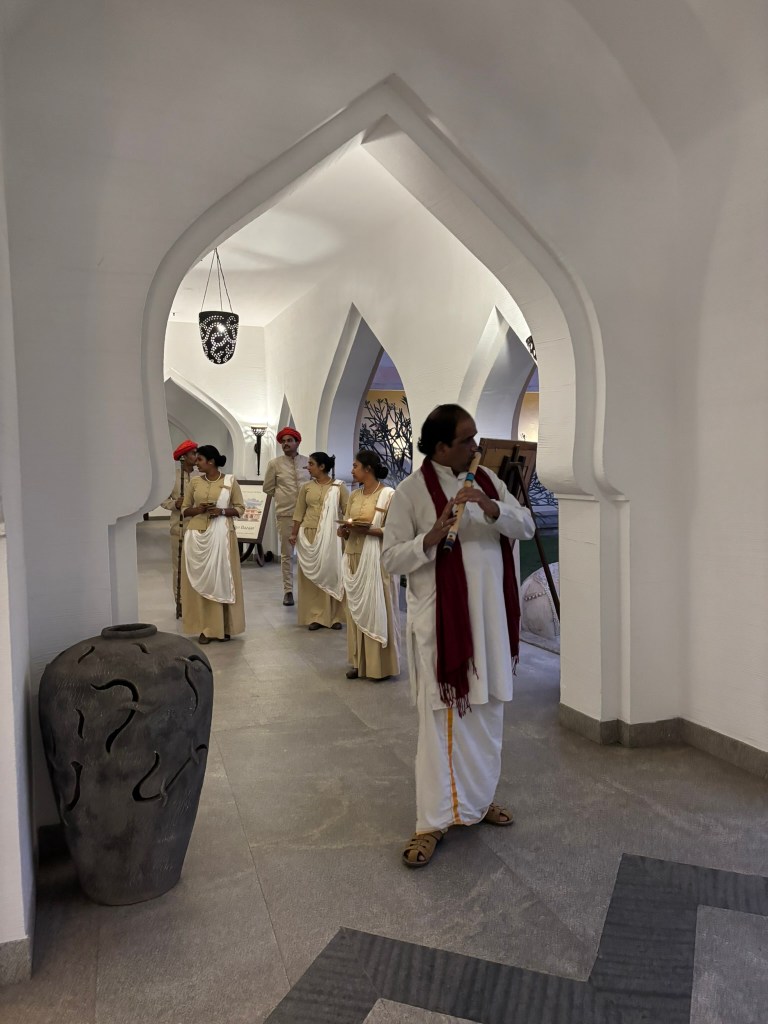
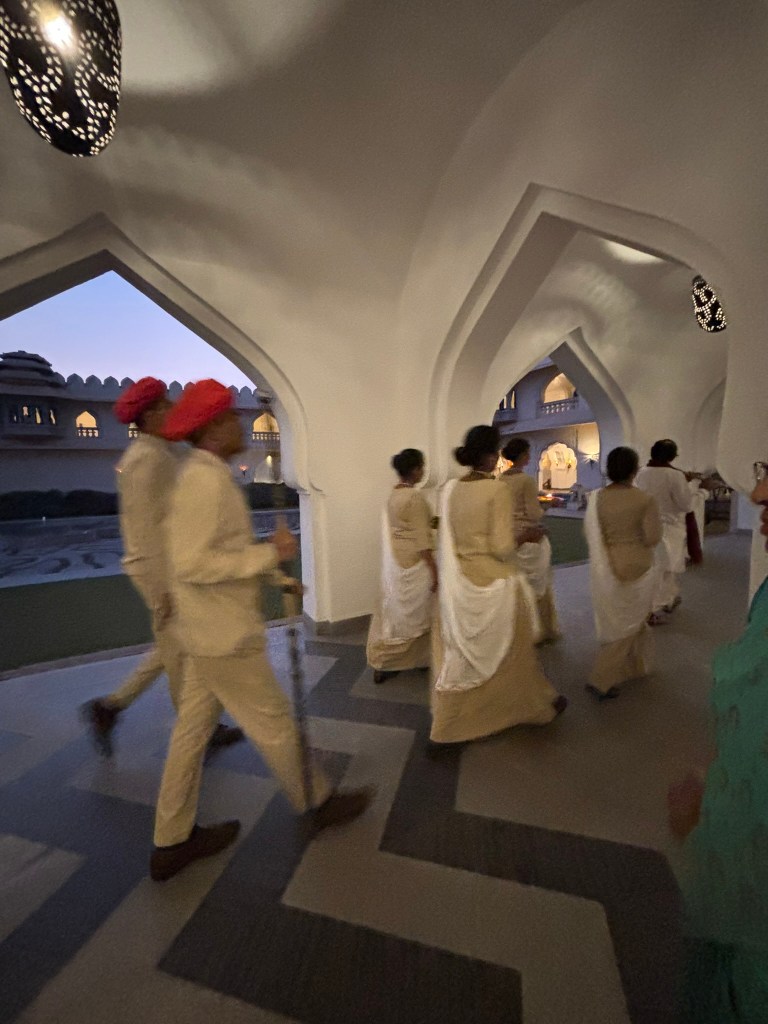
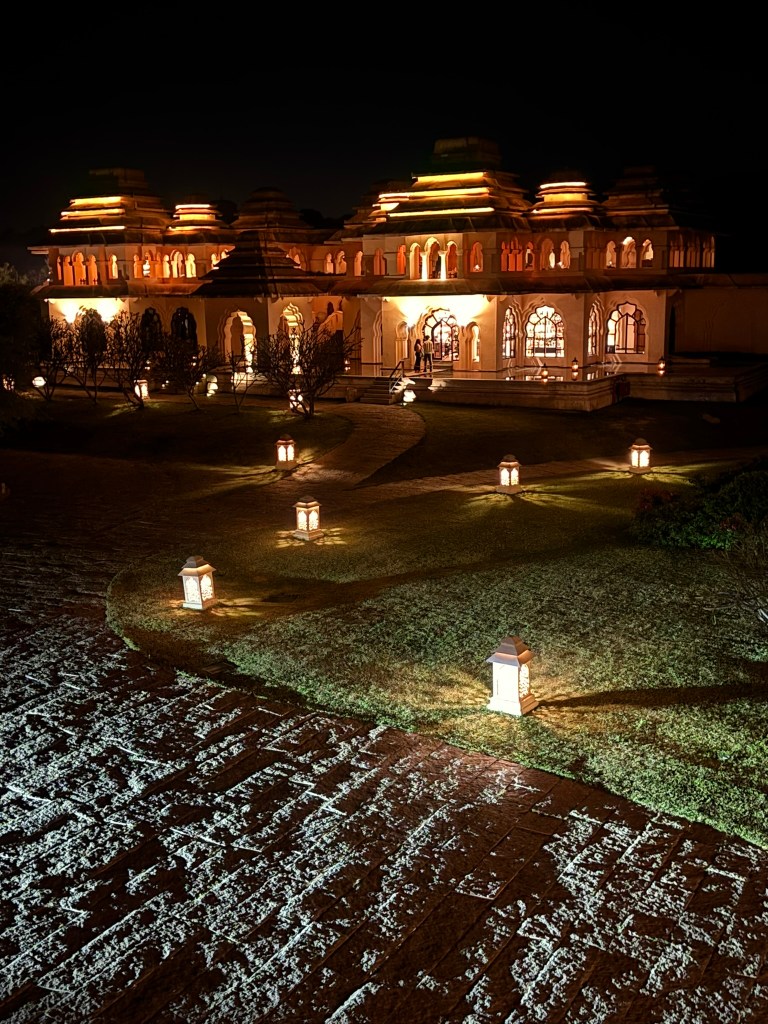
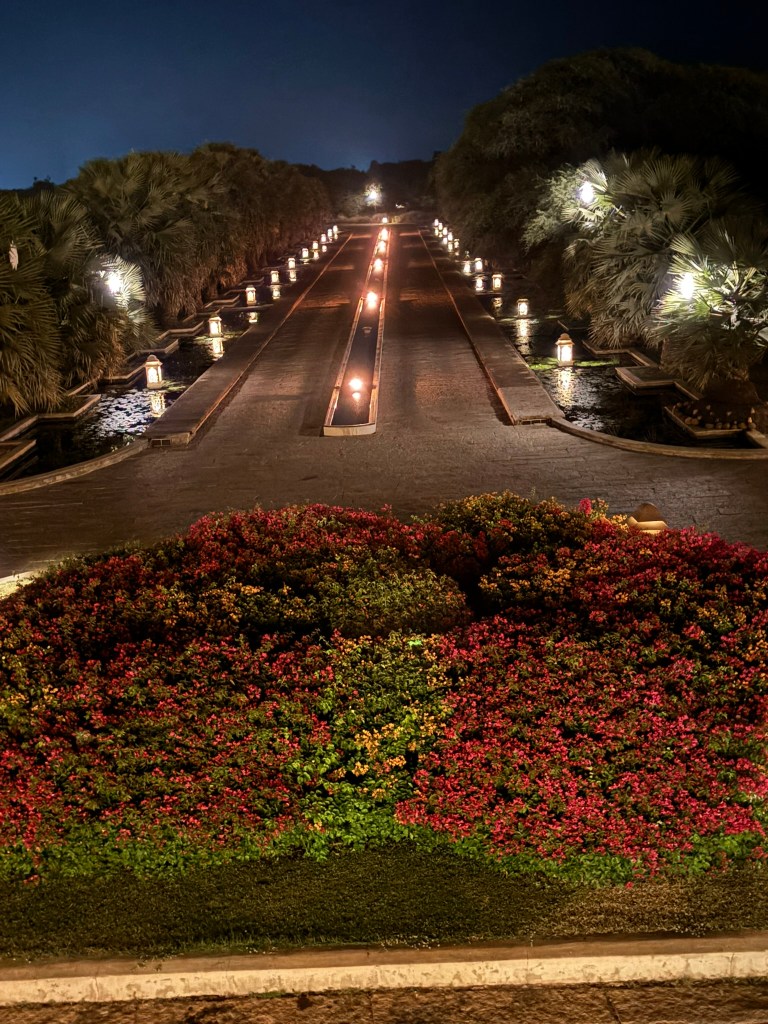
At dusk, guests gather near the central water pavilion for a serene aarti ceremony. The sound of conch shells, temple bells, and chanting creates a cocoon of calm. The flickering lamps reflect in the water like liquid gold.
Music Under the Stars
Soon after, the courtyard fills with the soft strains of live classical music—sitar, flute, veena, or folk percussion. The melodies drift through the arches, mingling with the scent of jasmine and incense.
Story Time
A local historian or storyteller narrates tales of the Vijayanagara Empire—its rise, its glory, its legends. Listening to these stories in a setting inspired by the empire itself is a memorable experience. The memories linger long after the night ends.
Dinner: A Feast of Flavors
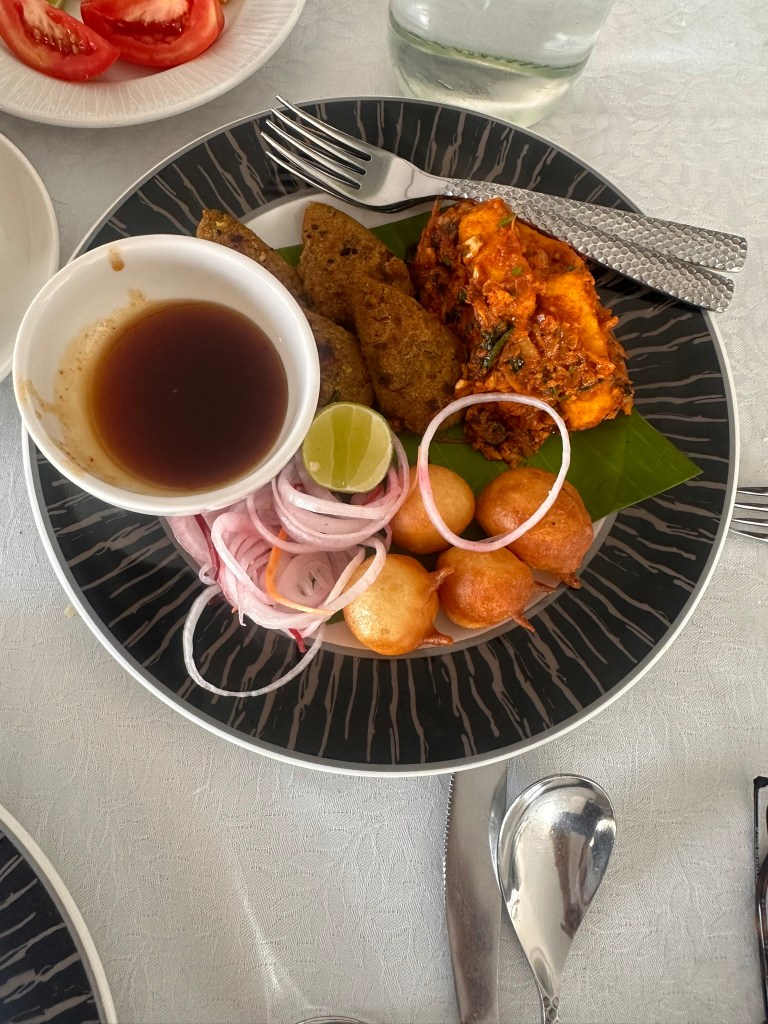
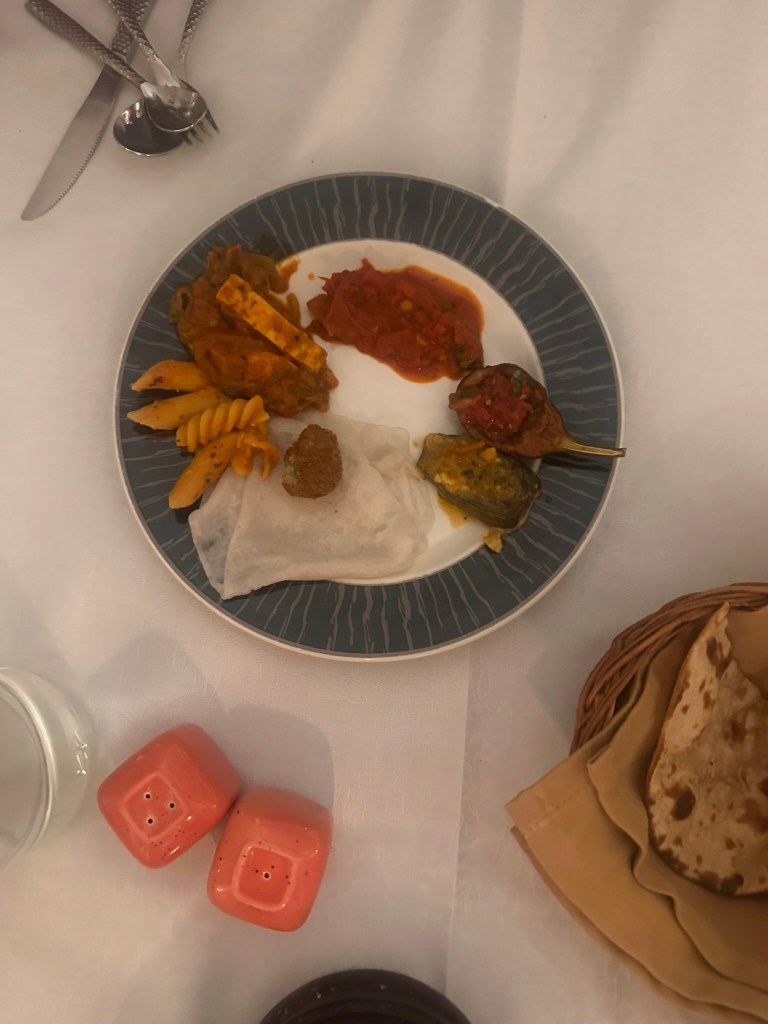
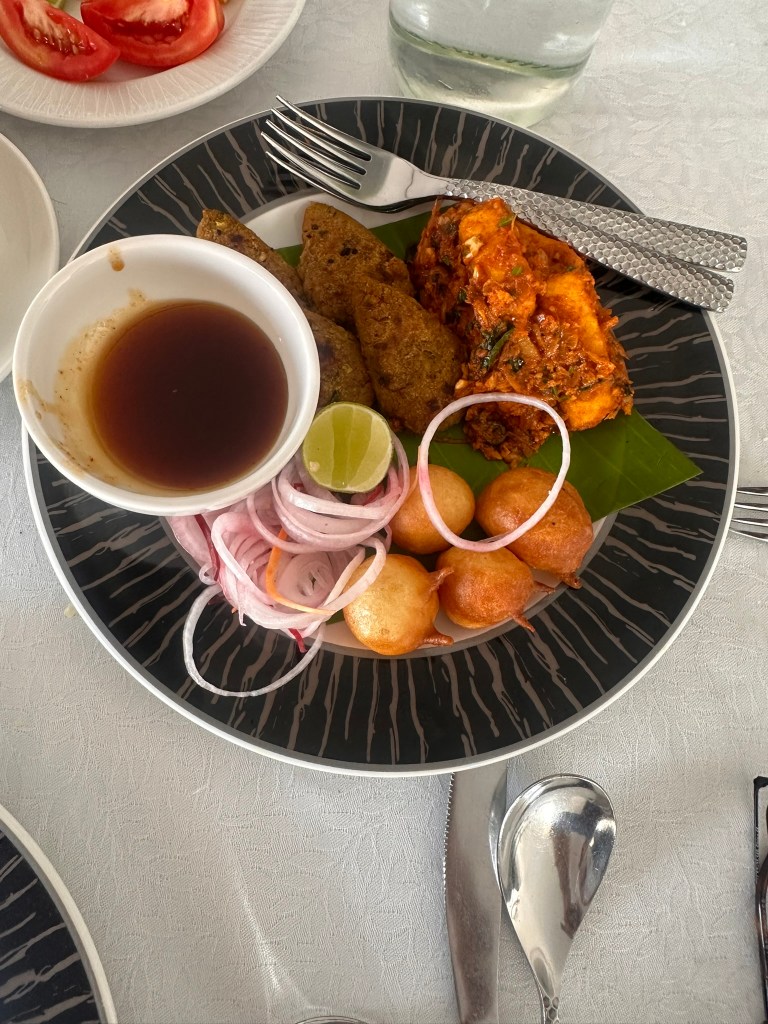
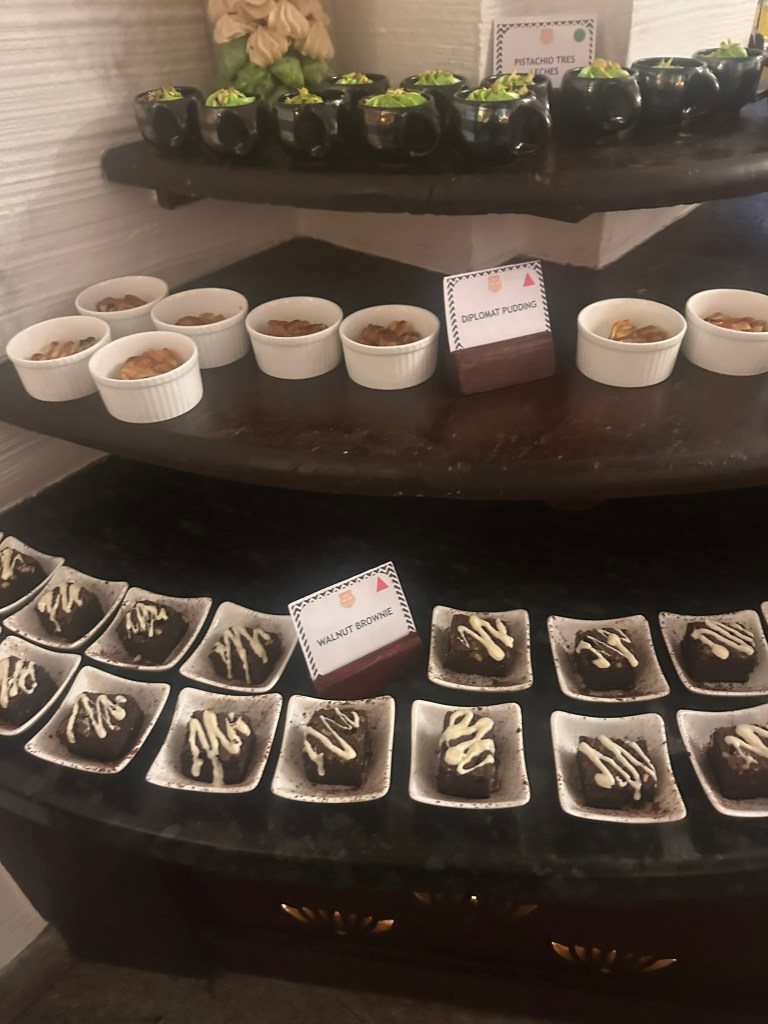
Dinner is a slow, indulgent affair. Whether you choose the fine‑dining restaurant or the open‑air setting, the experience is exquisite. Traditional thalis and regional curries are served. Millet‑based dishes and freshly baked breads are available. Desserts infused with coconut, jaggery, and cardamom make every meal a tribute to Karnataka’s culinary heritage.
Signature Excursions: Exploring Hampi with Experts
Evolve Back curates a series of guided trails that bring Hampi’s history, mythology, and geology to life:
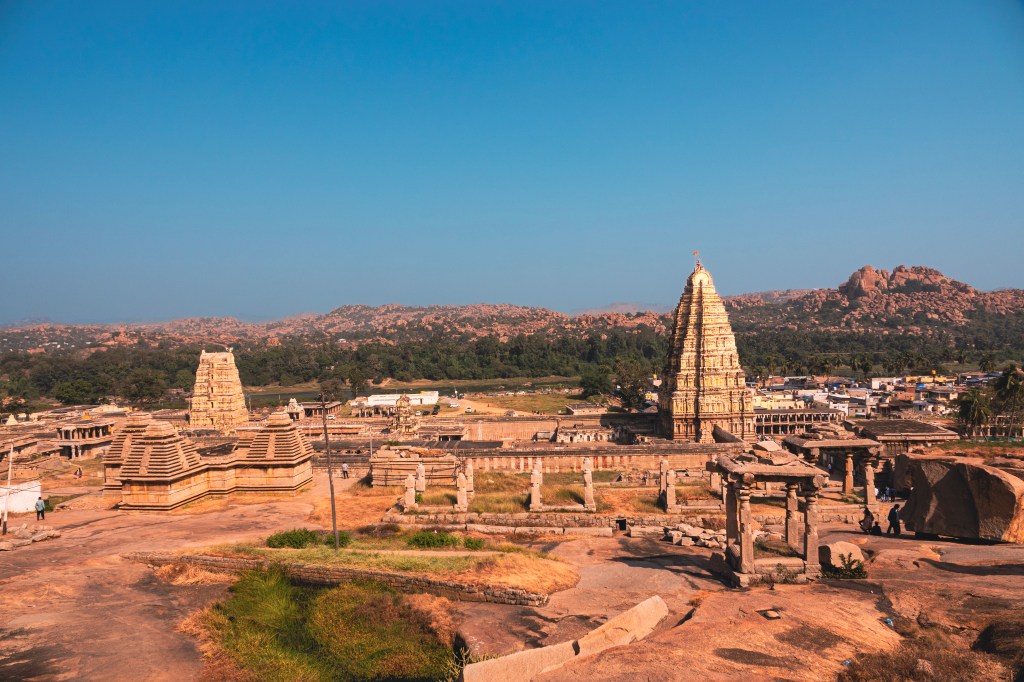
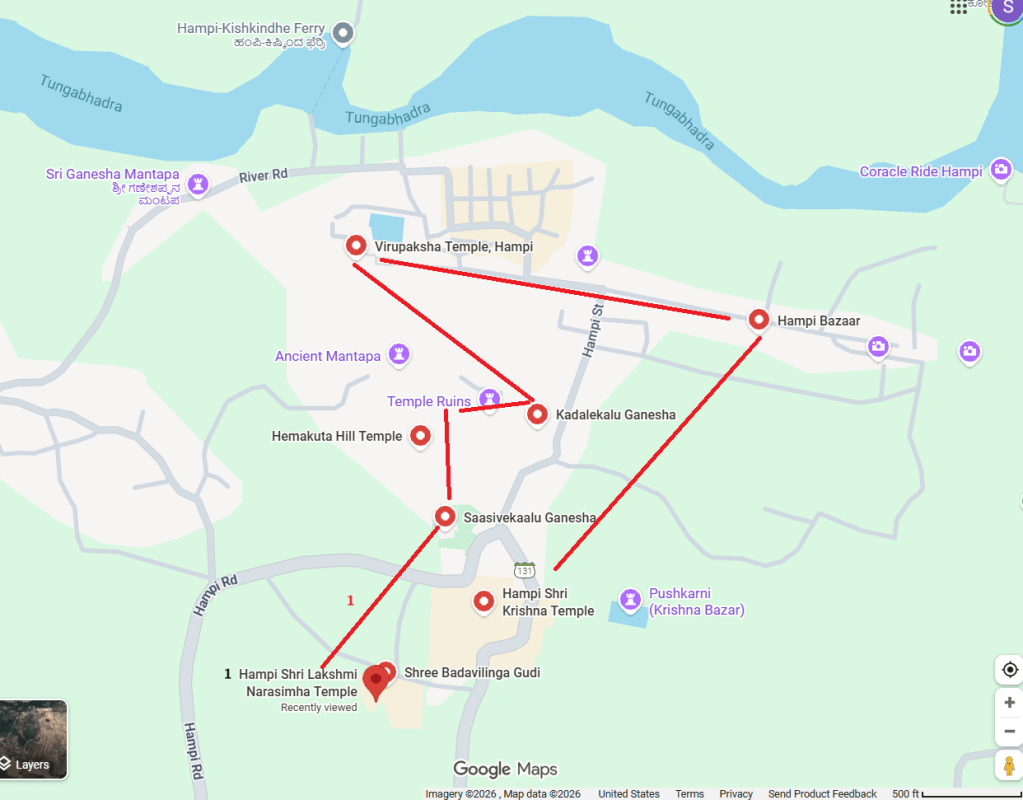
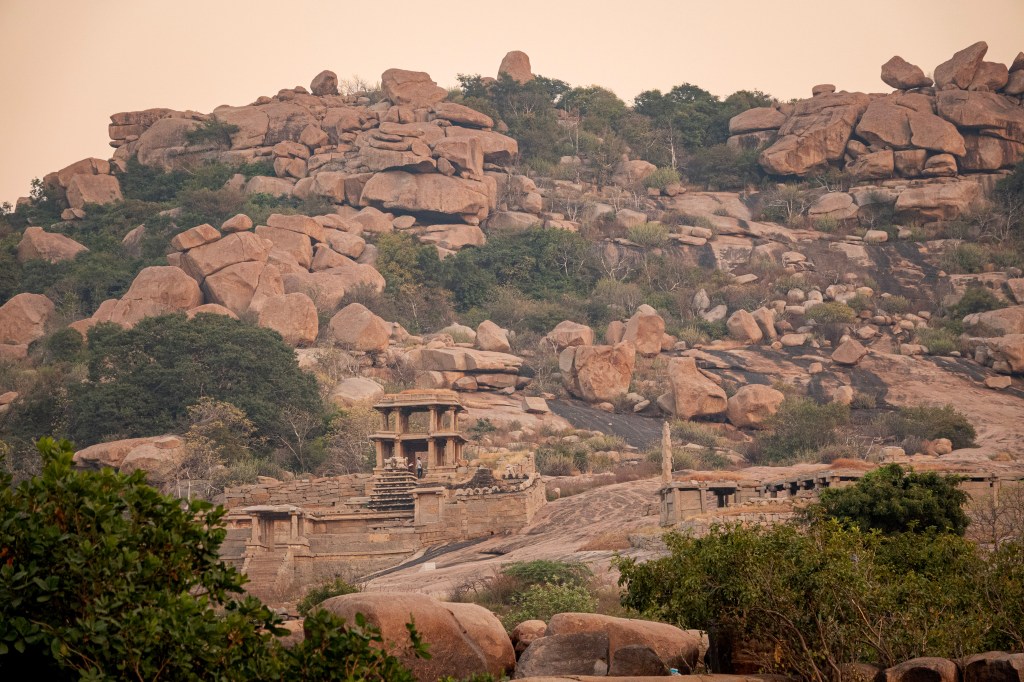
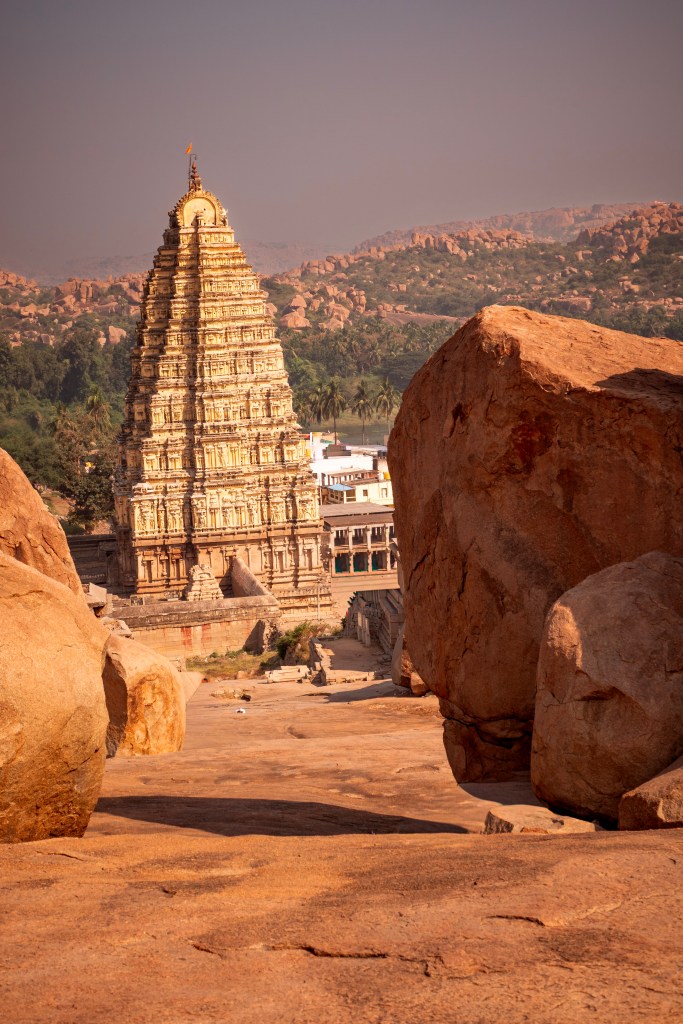
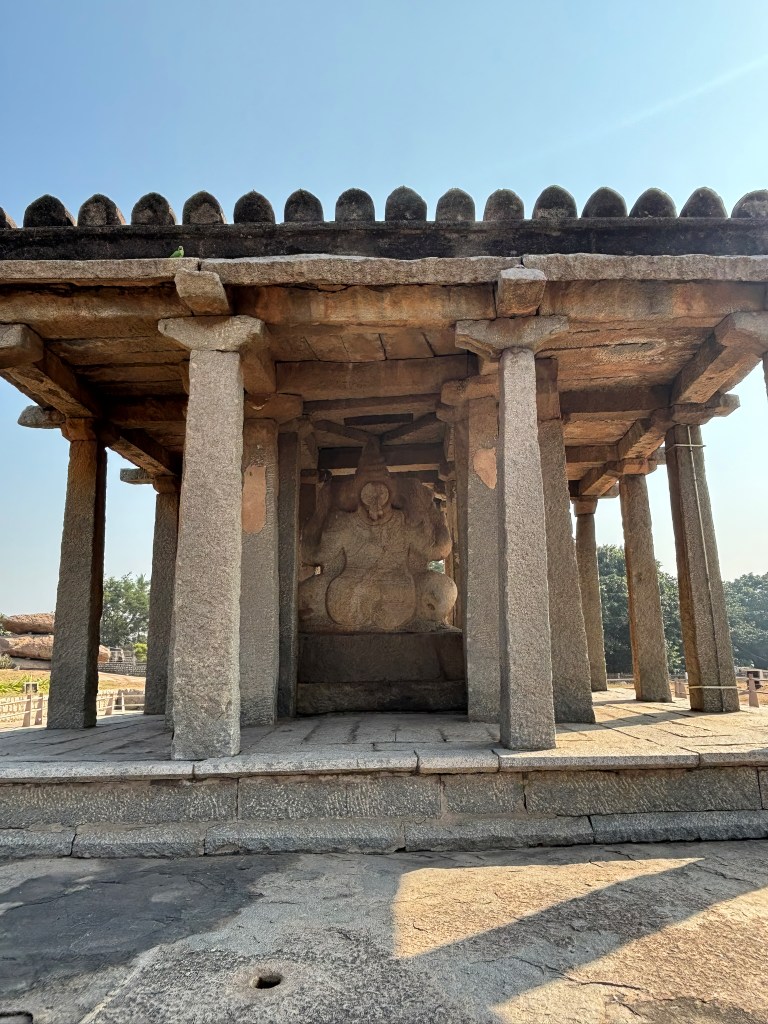
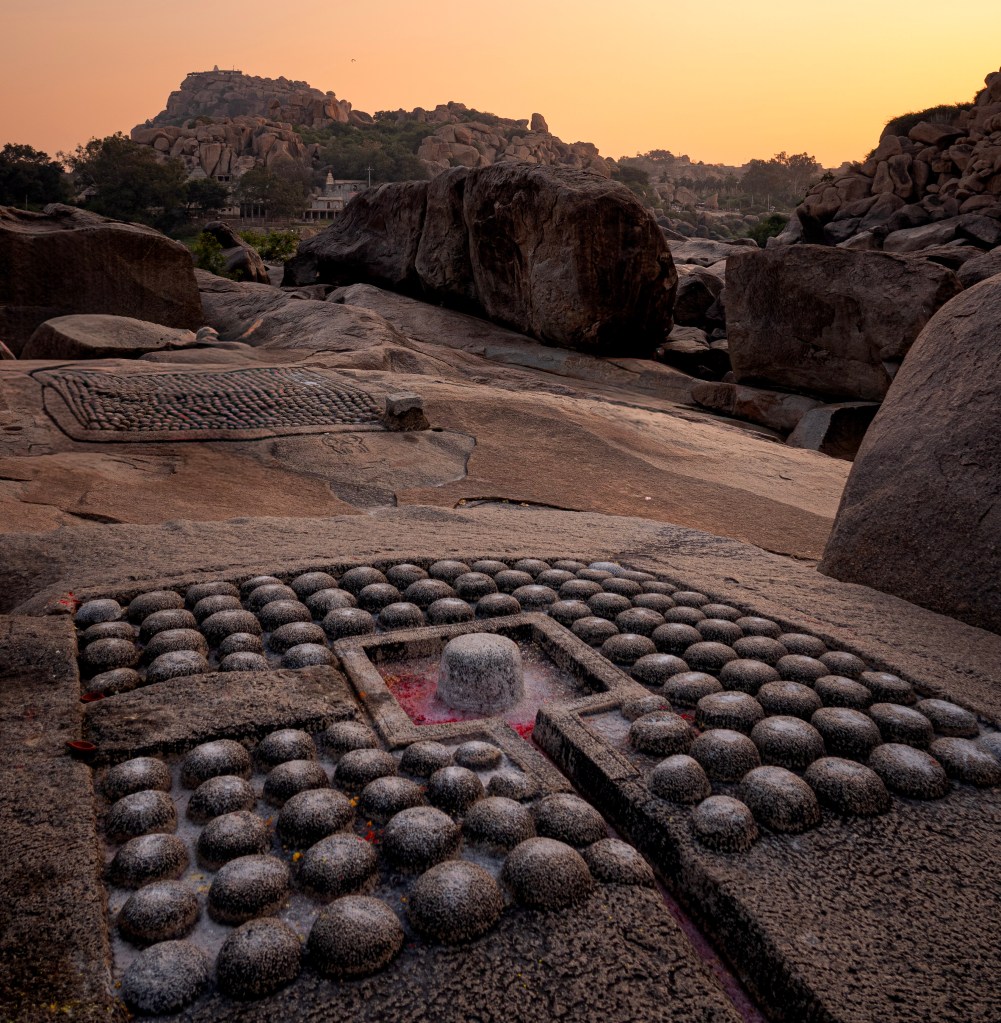
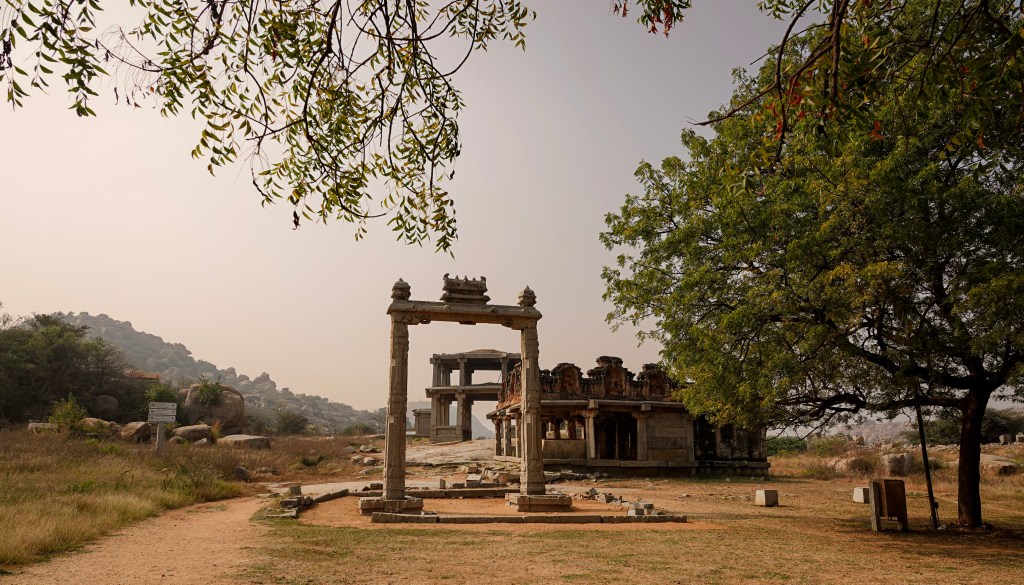
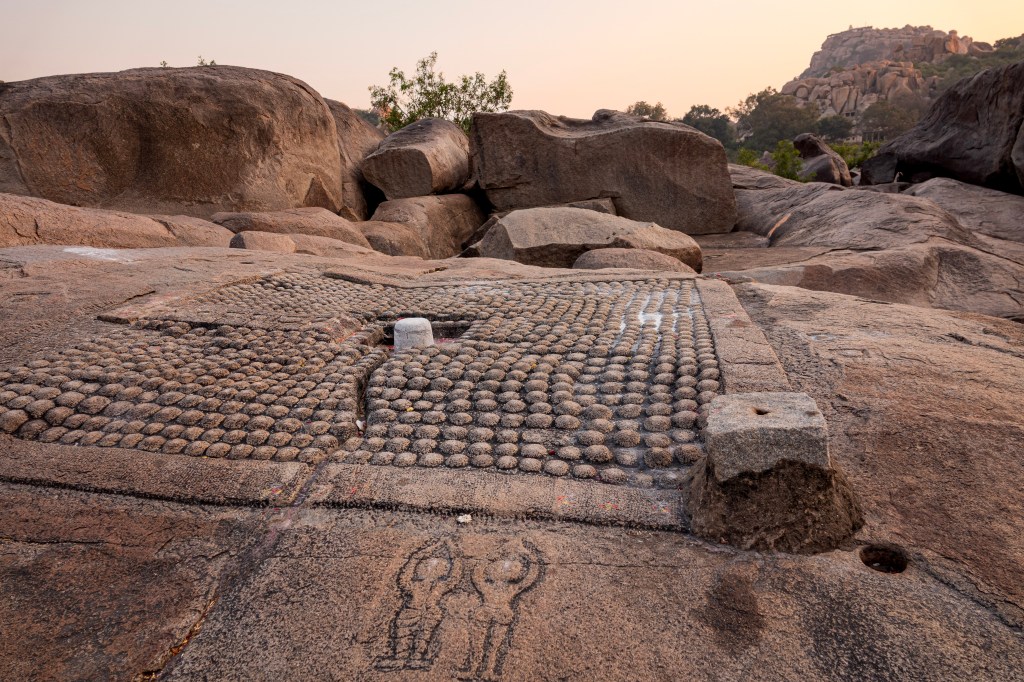
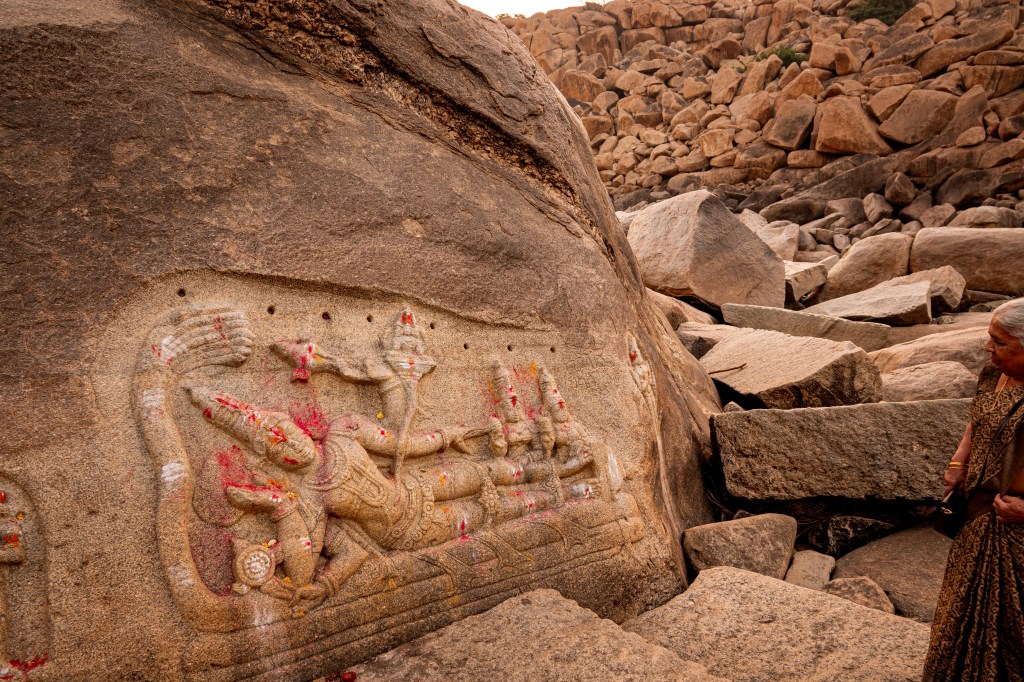
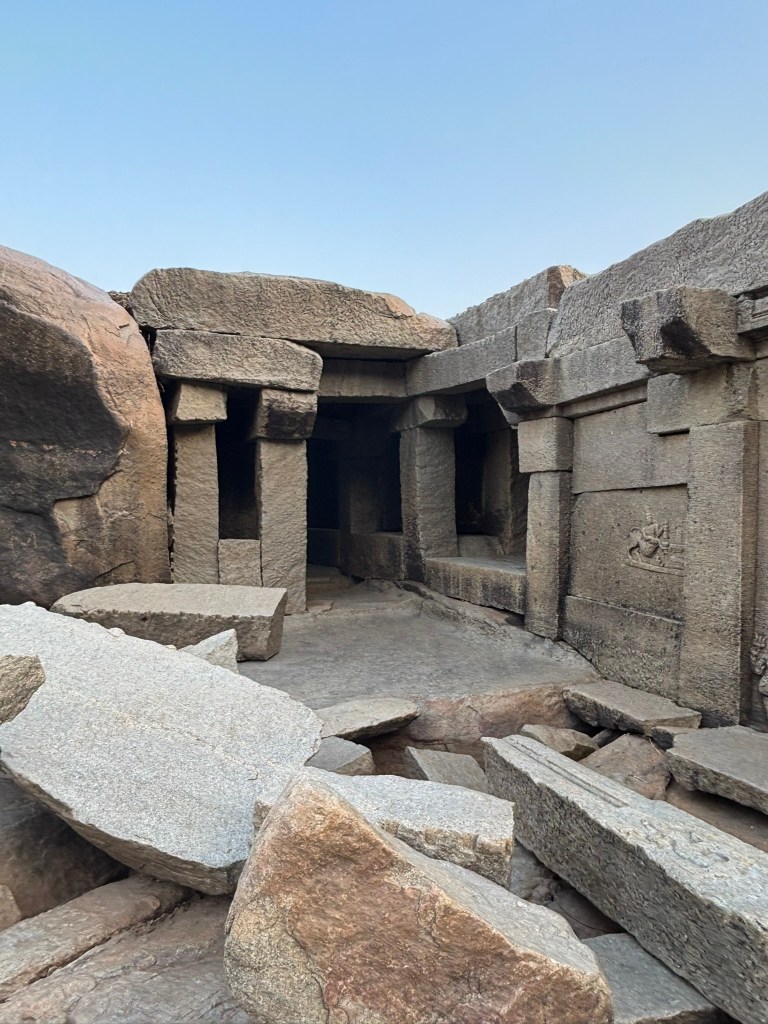
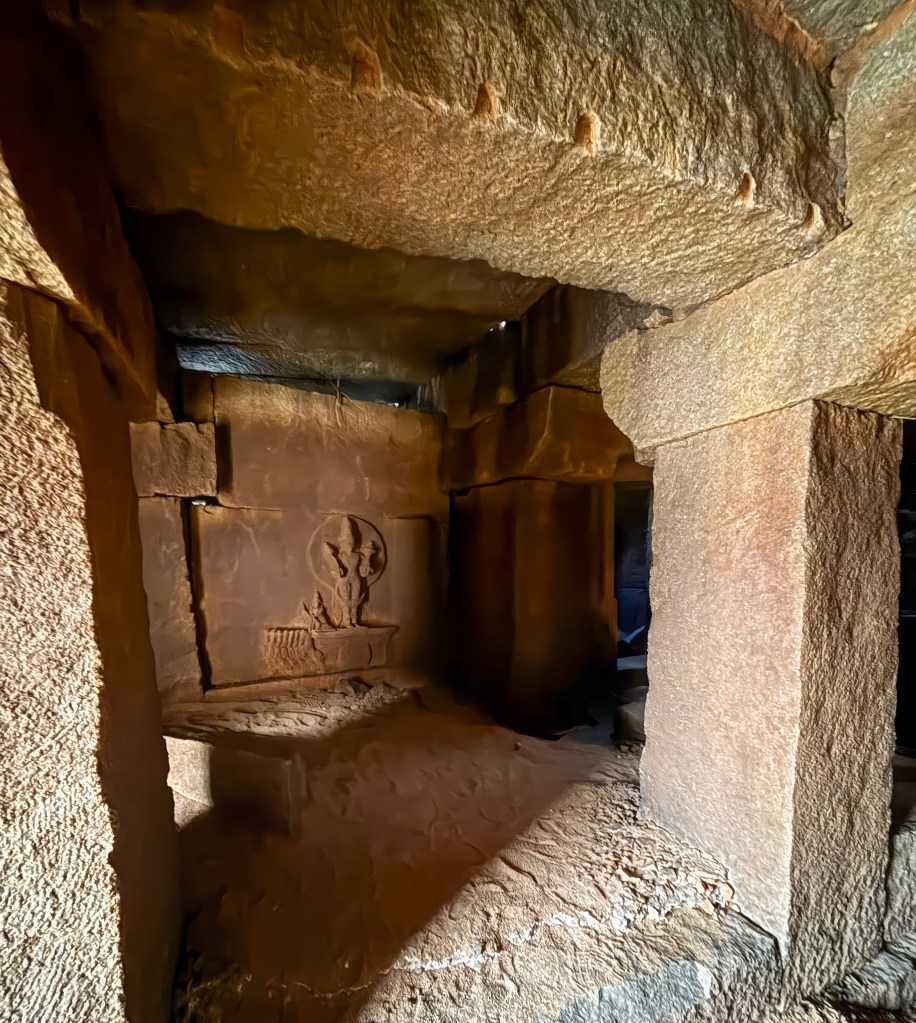
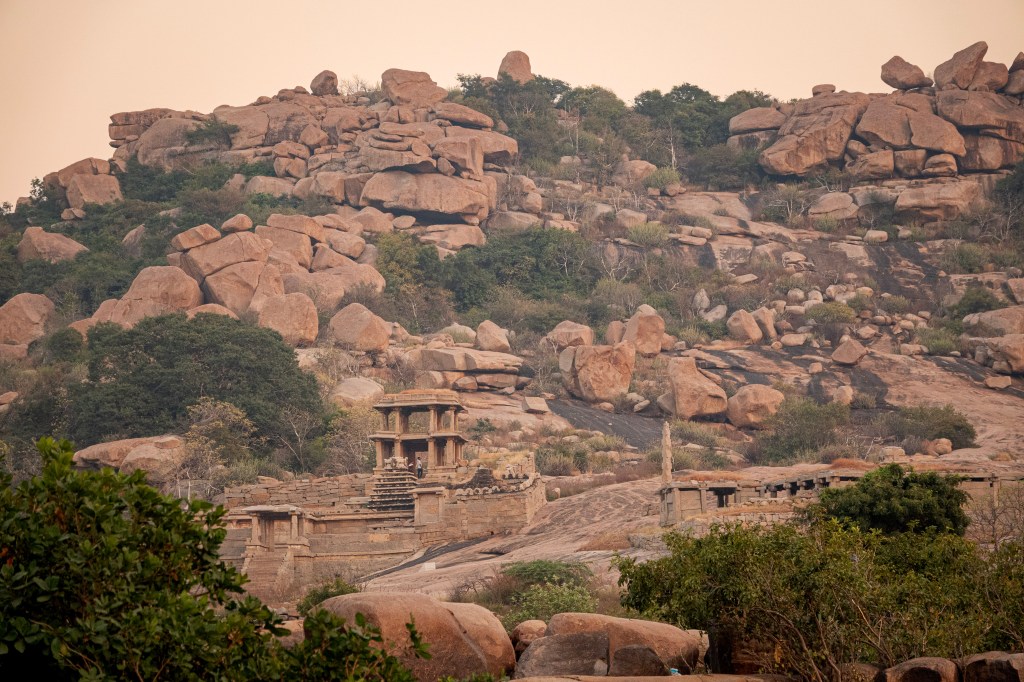
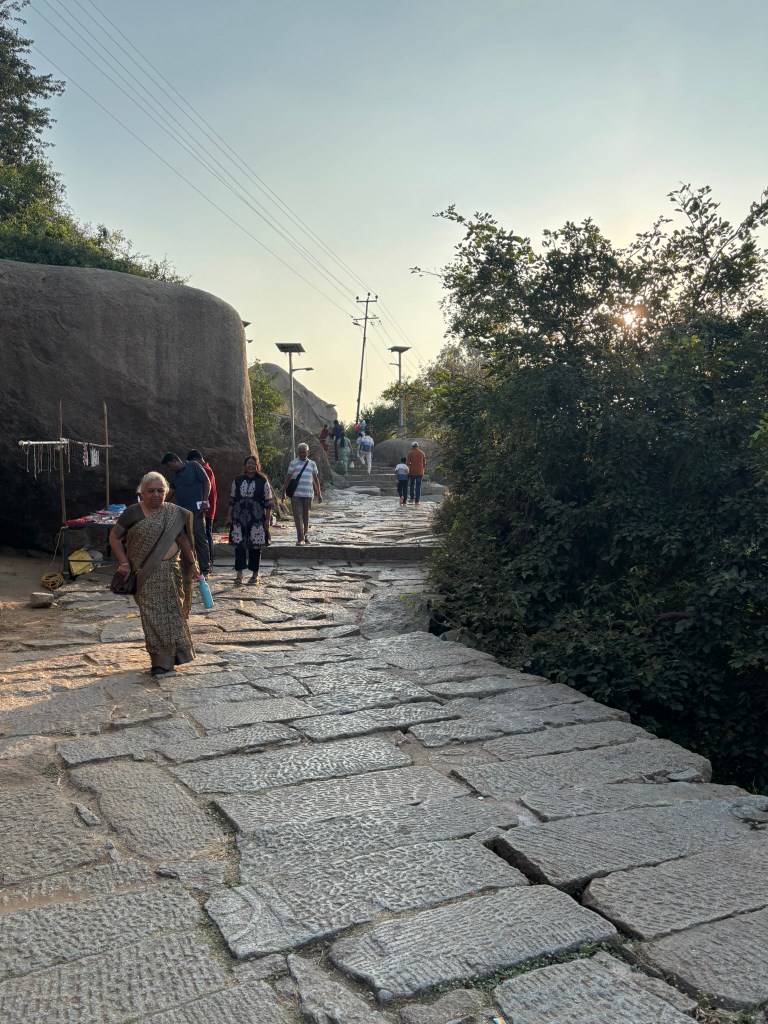
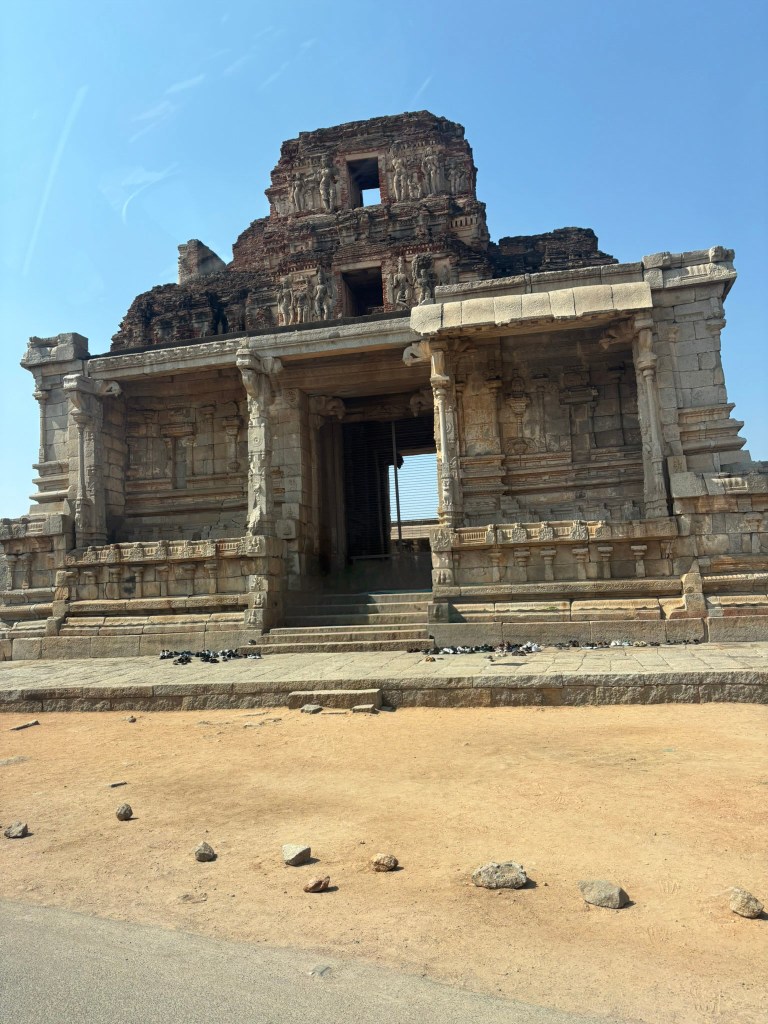
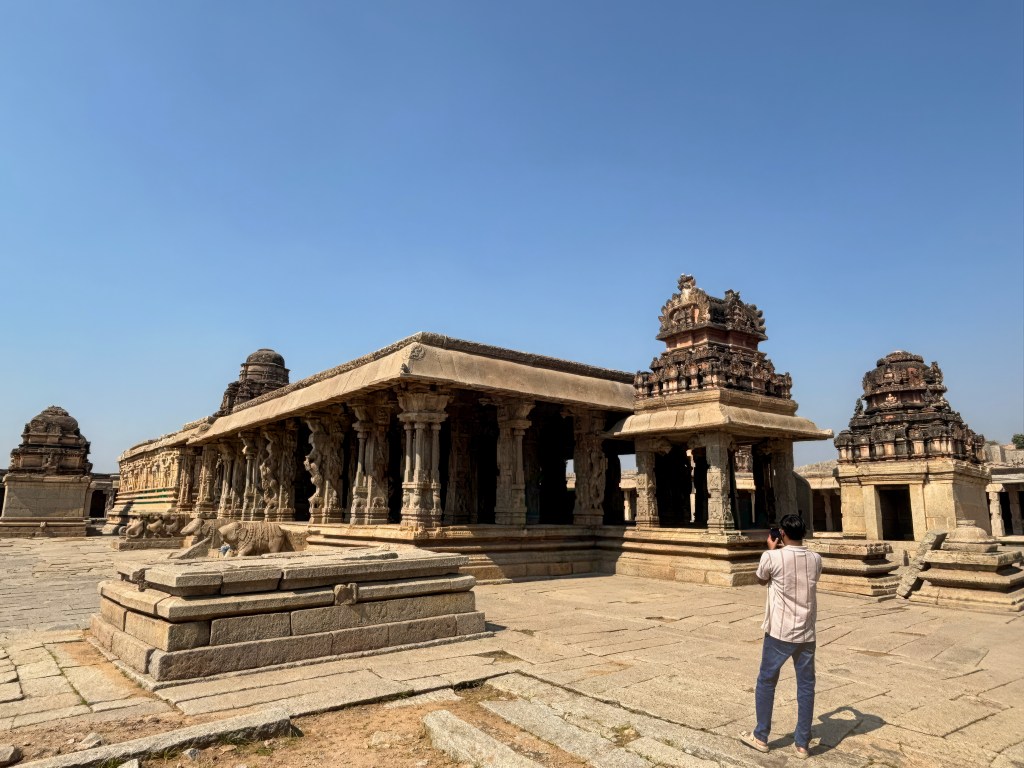
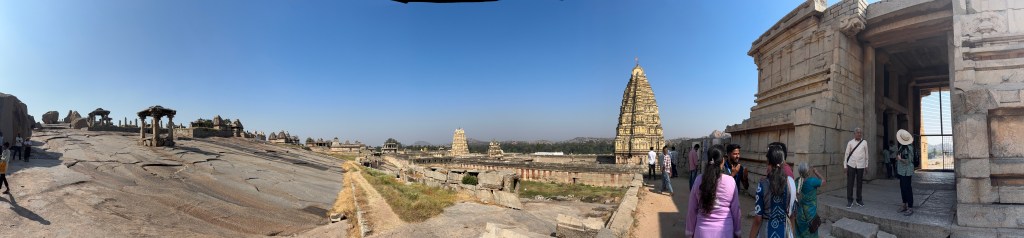
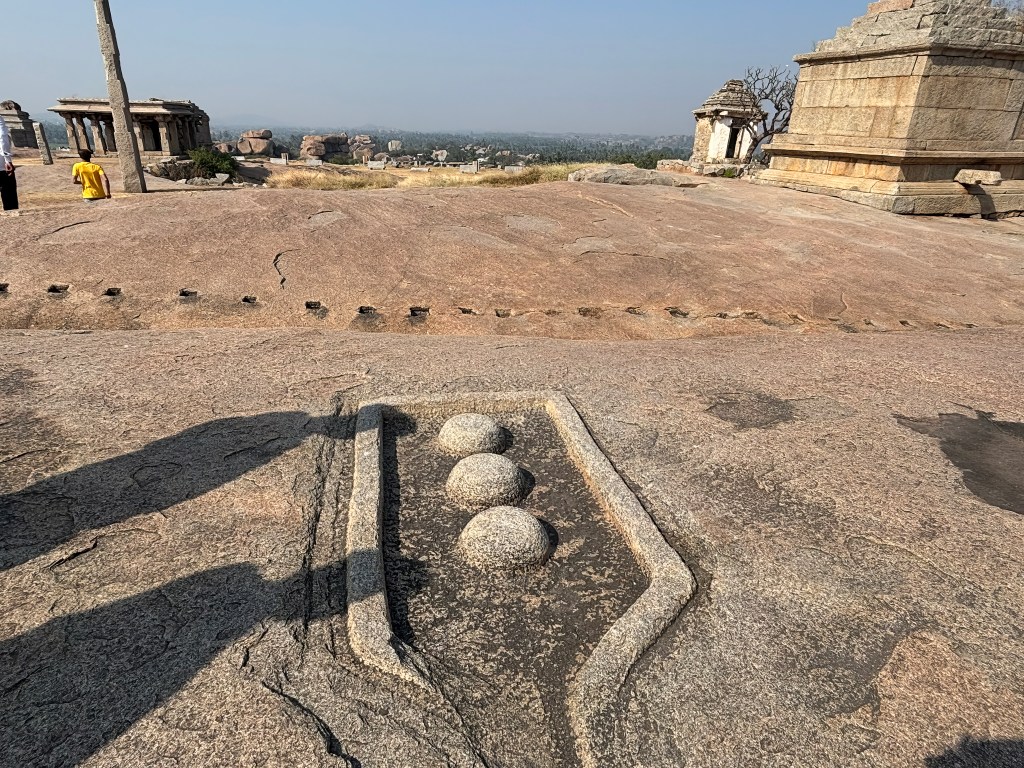
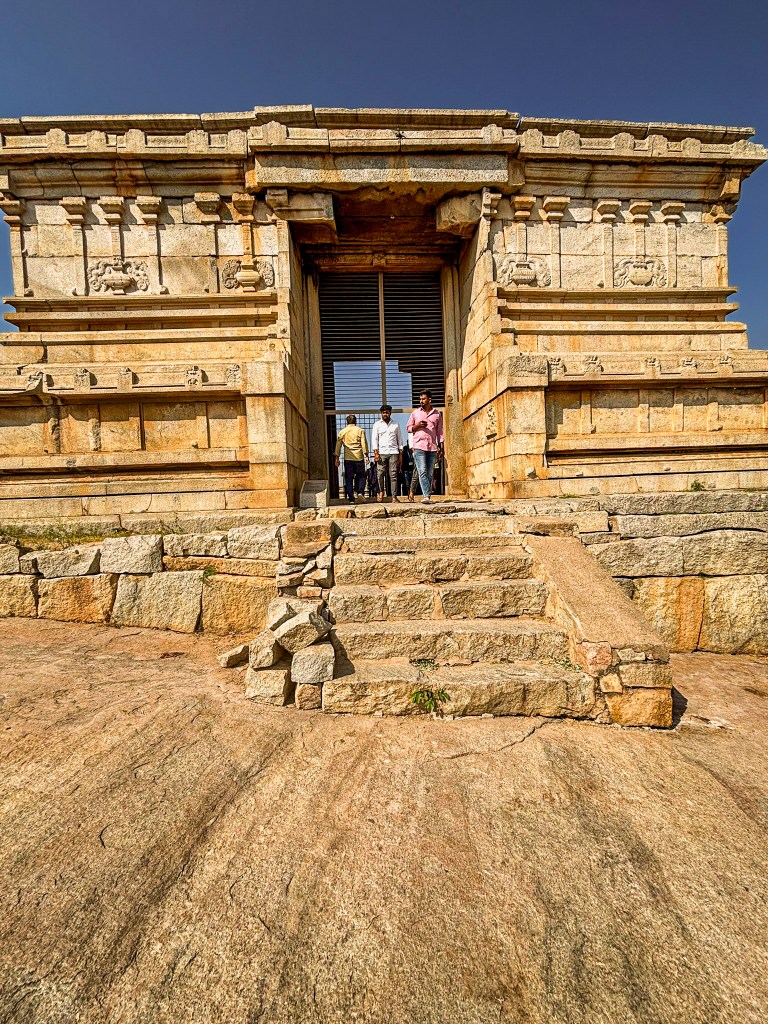
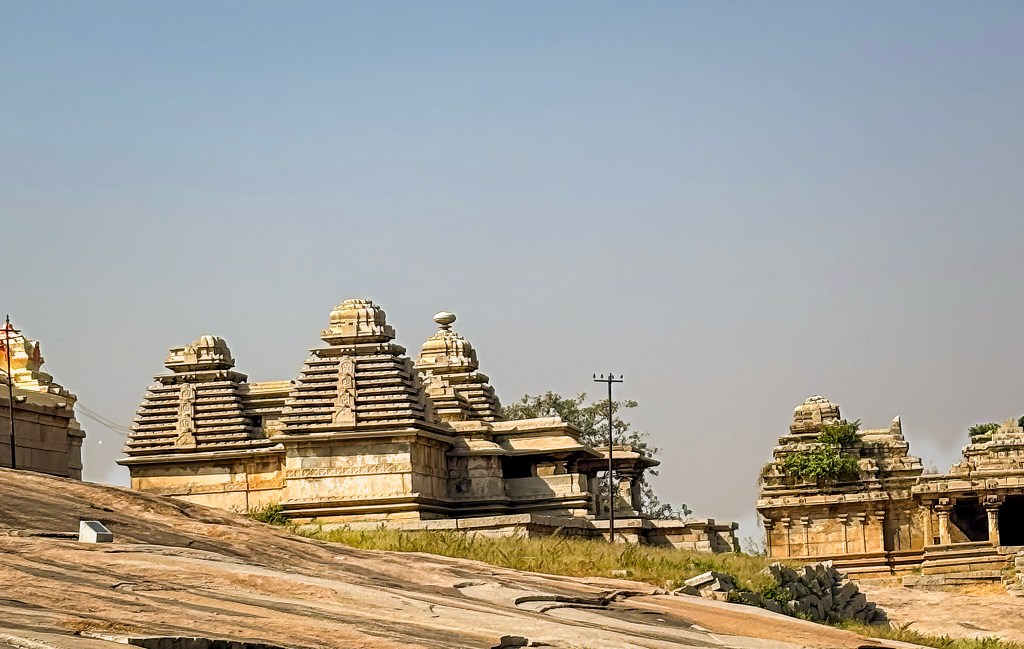
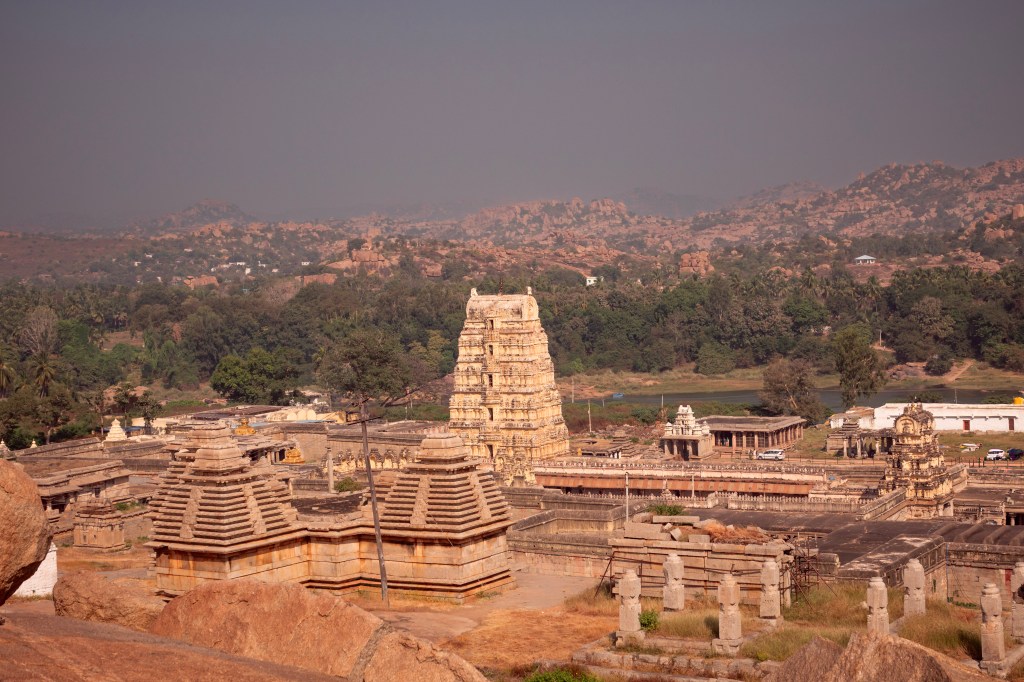
- Virupaksha Trail — Ugra Narasimha, Hemakuta Hill, Krishna Temple, Sasivekalu and Kadalekalu Ganesha, Virupaksha Temple
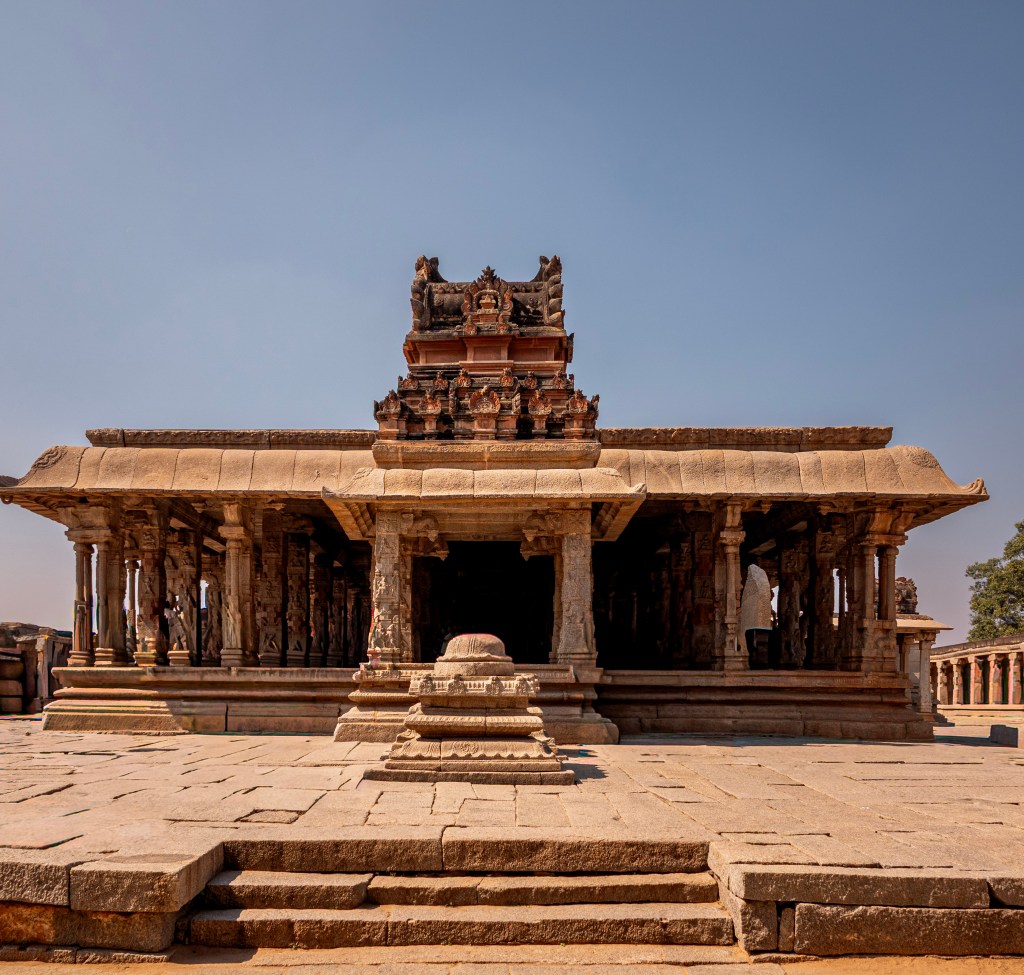
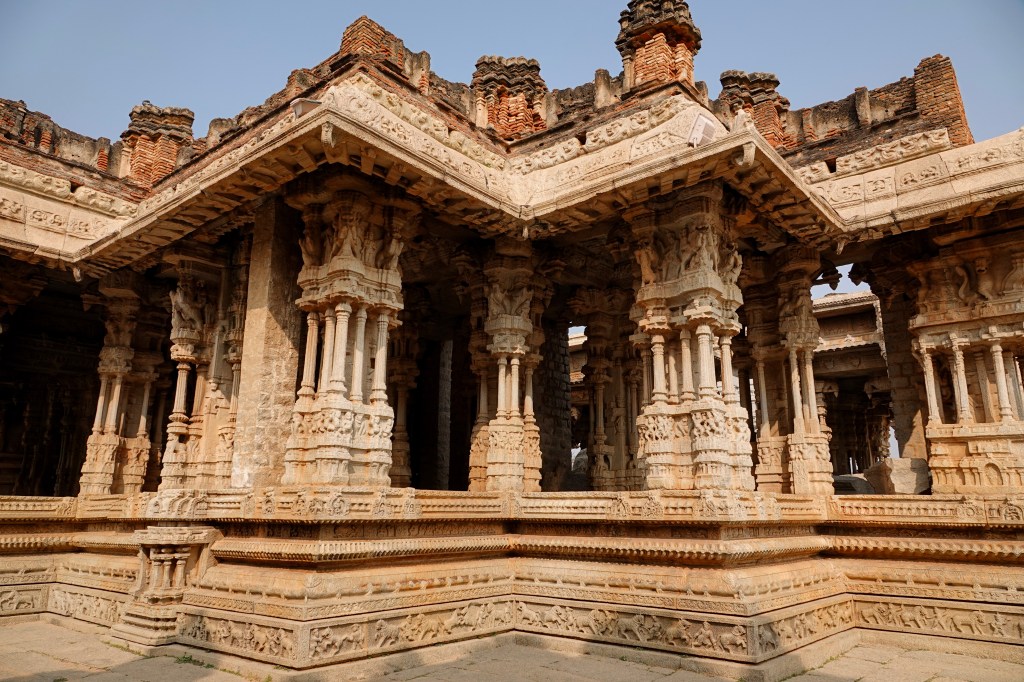
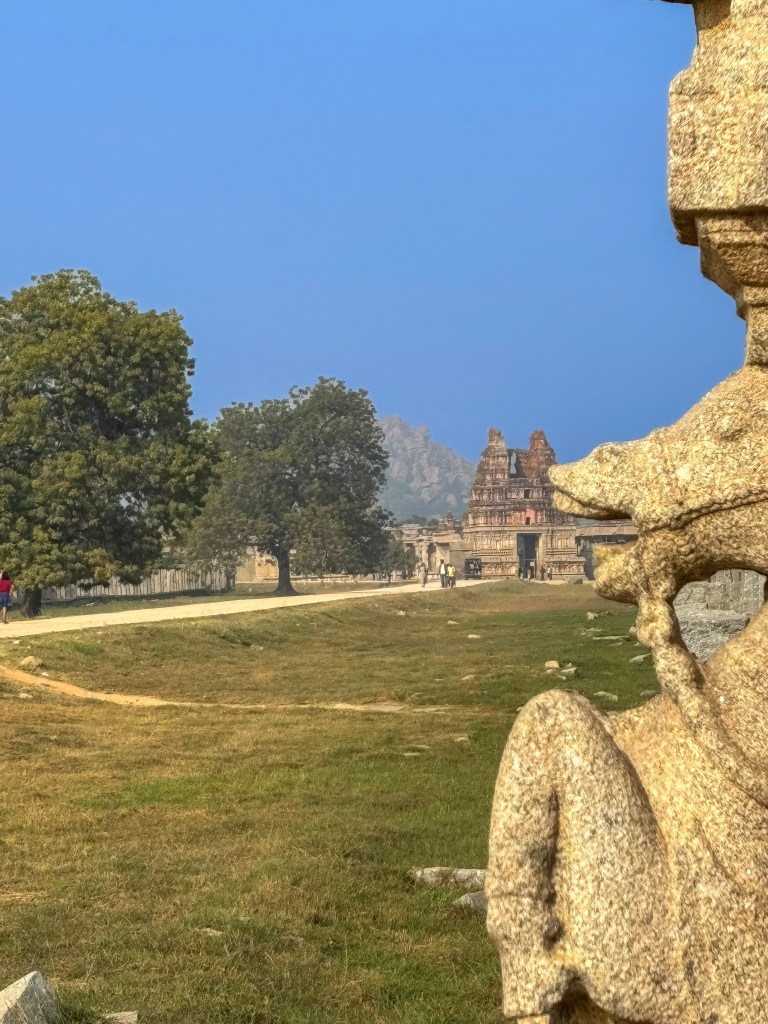
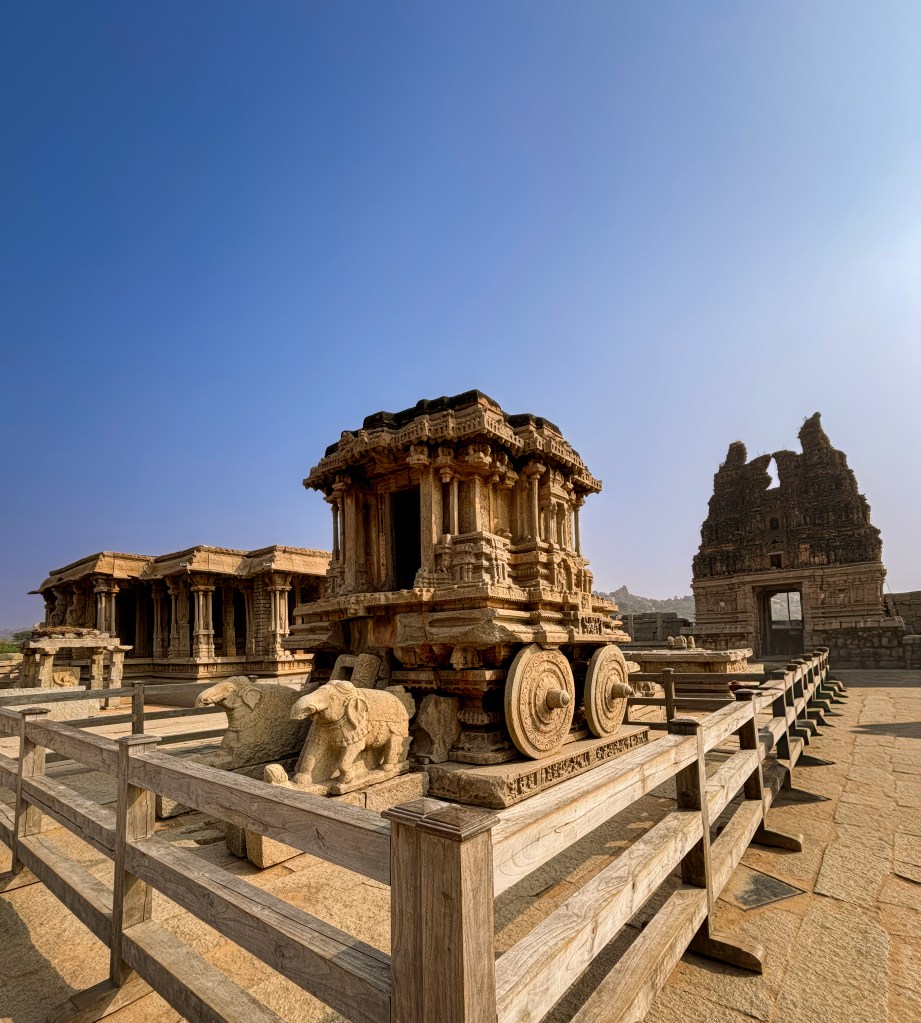
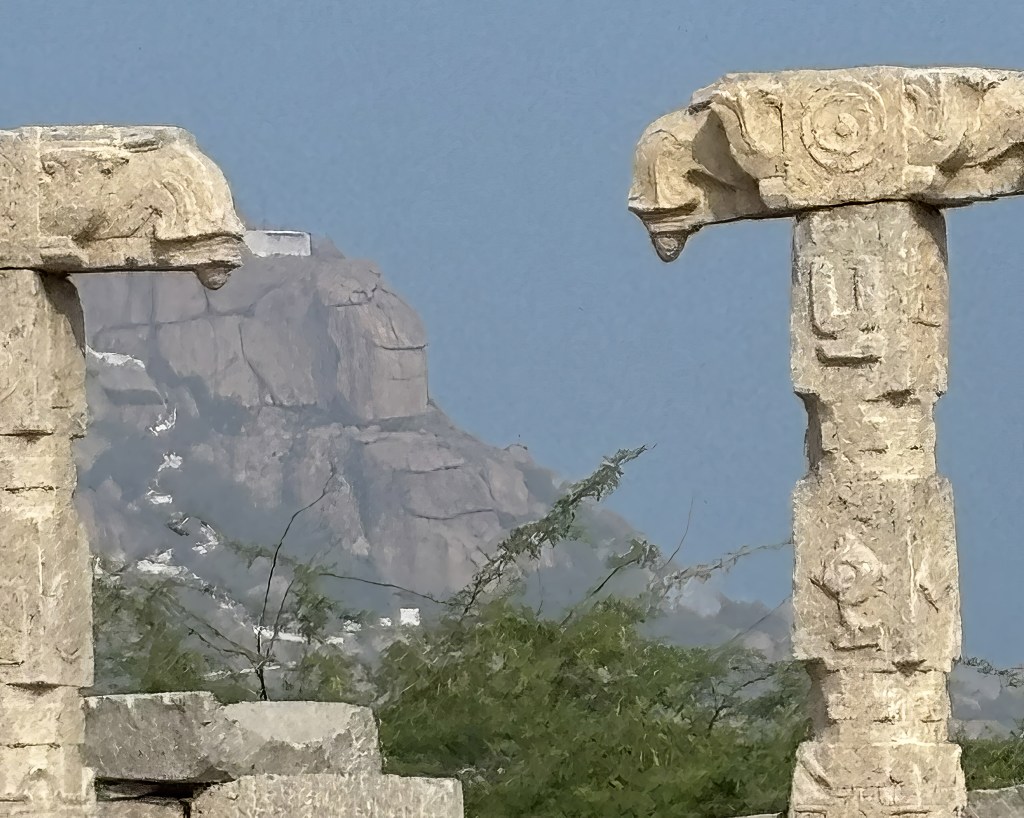
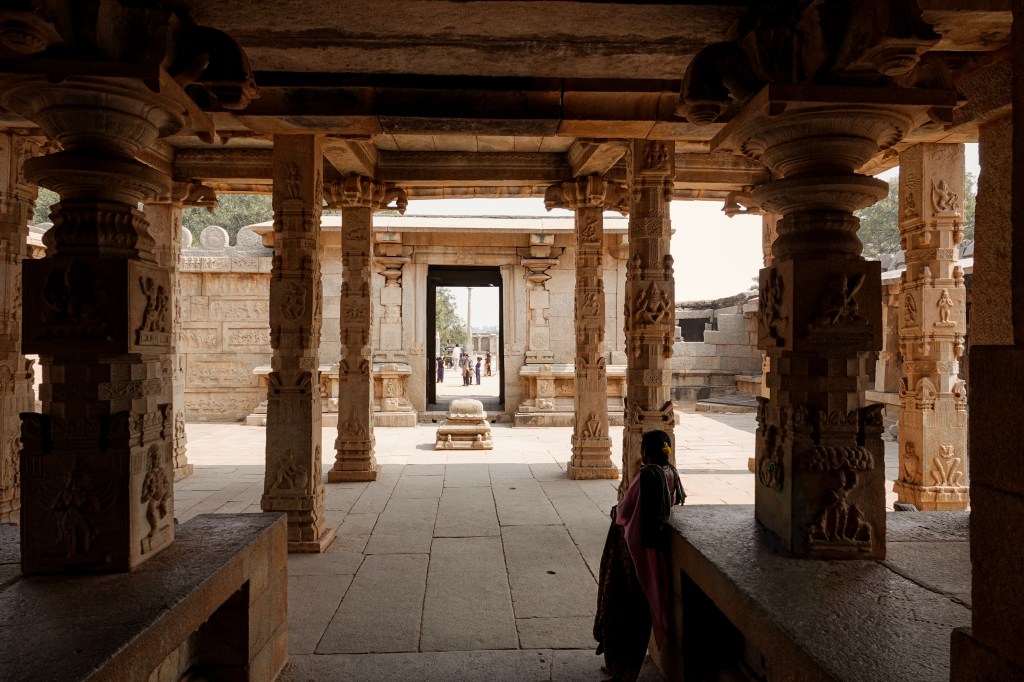
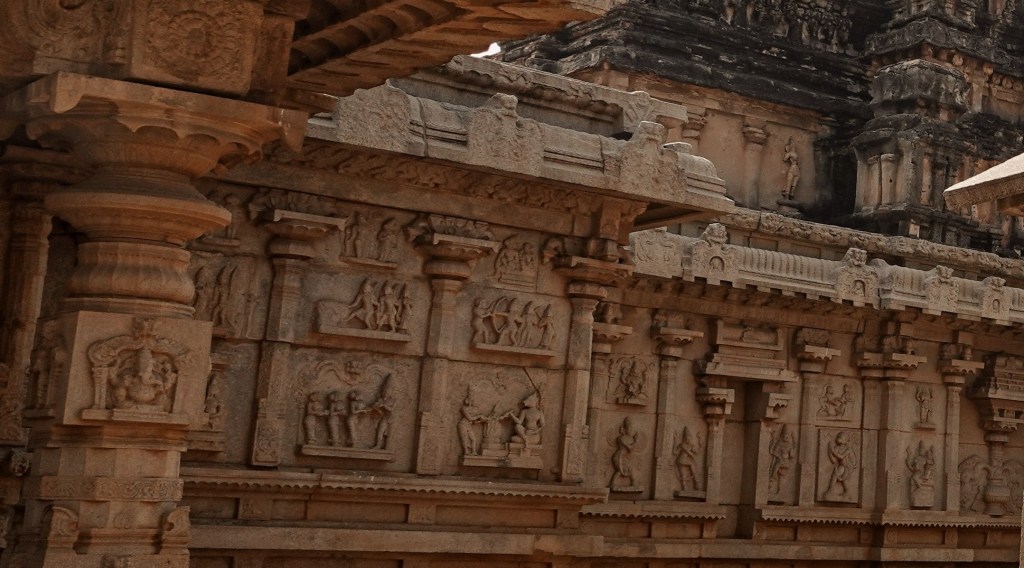
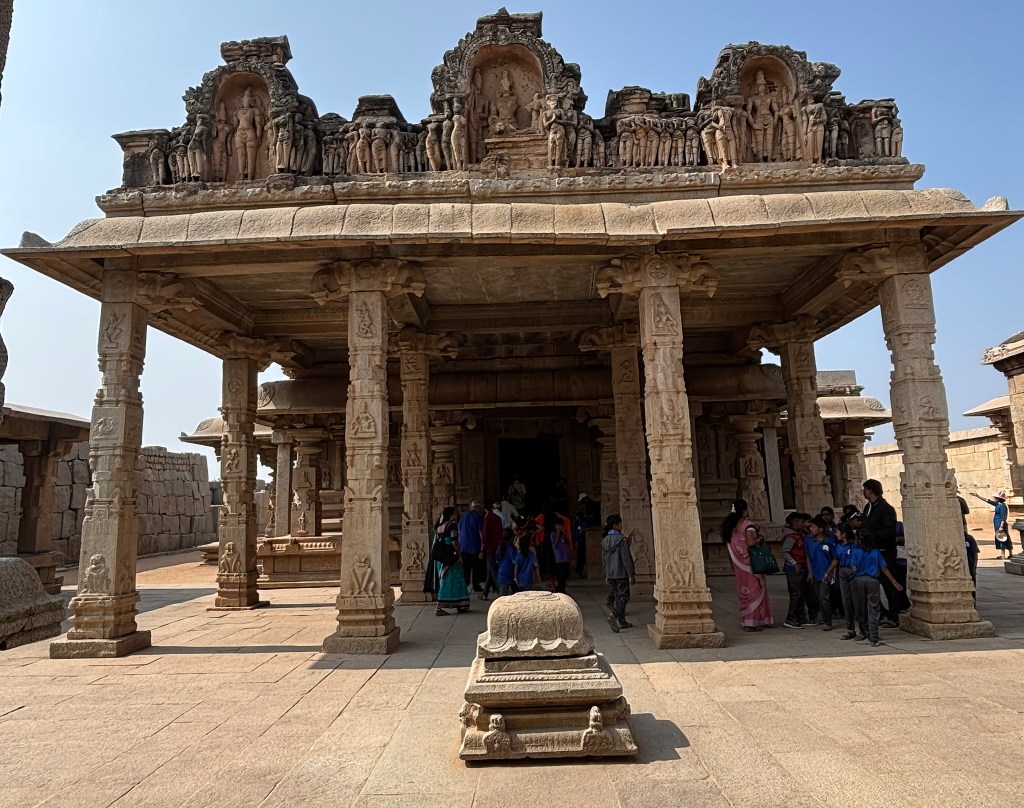
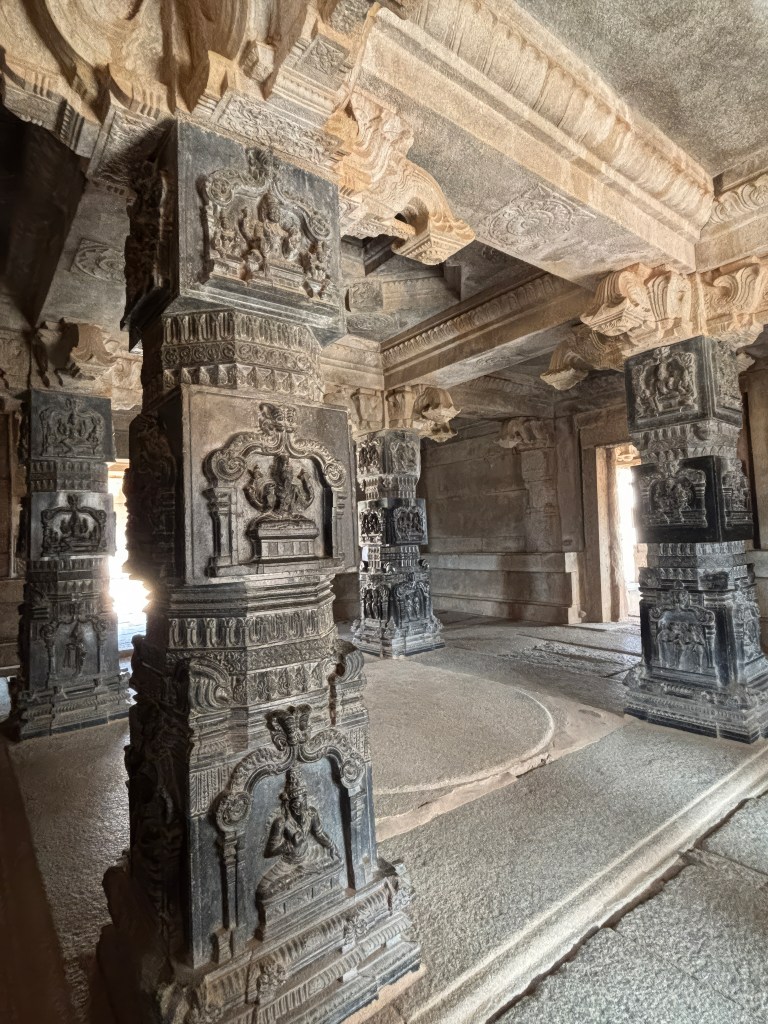
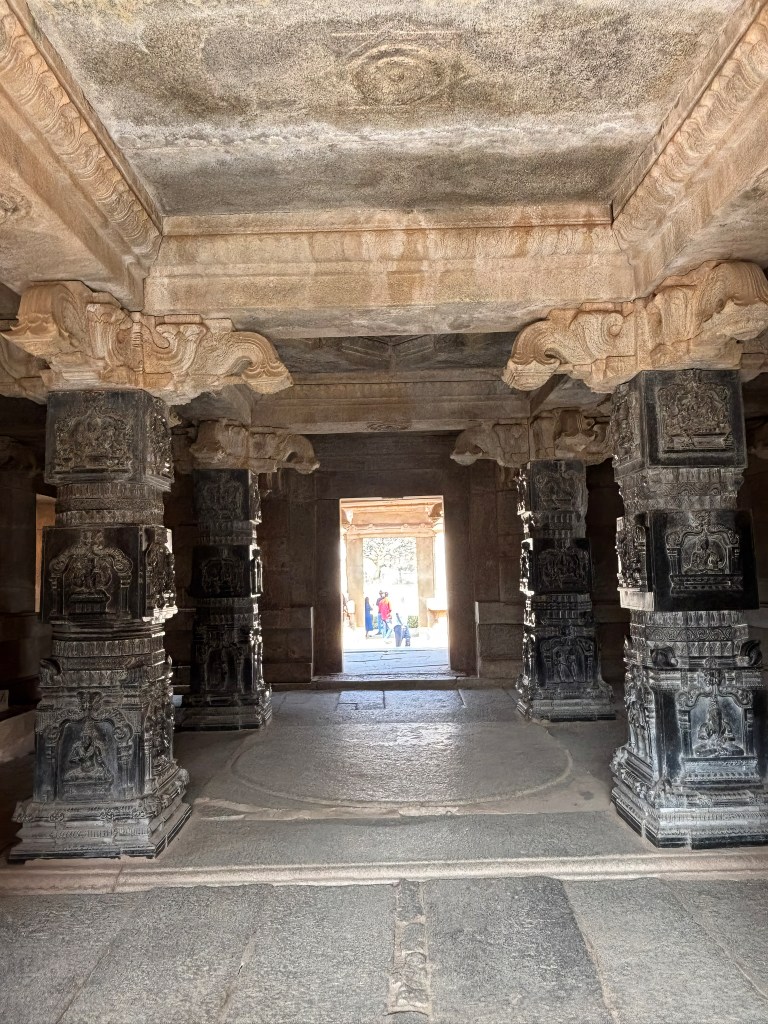
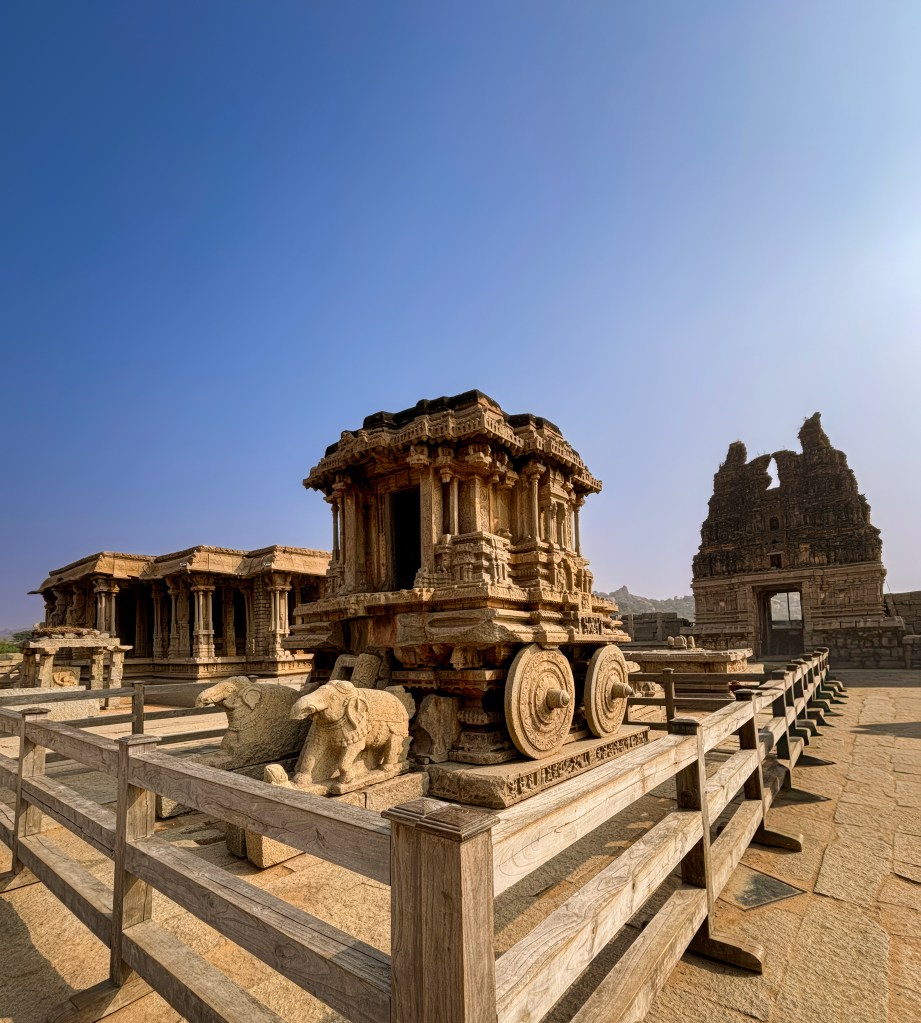
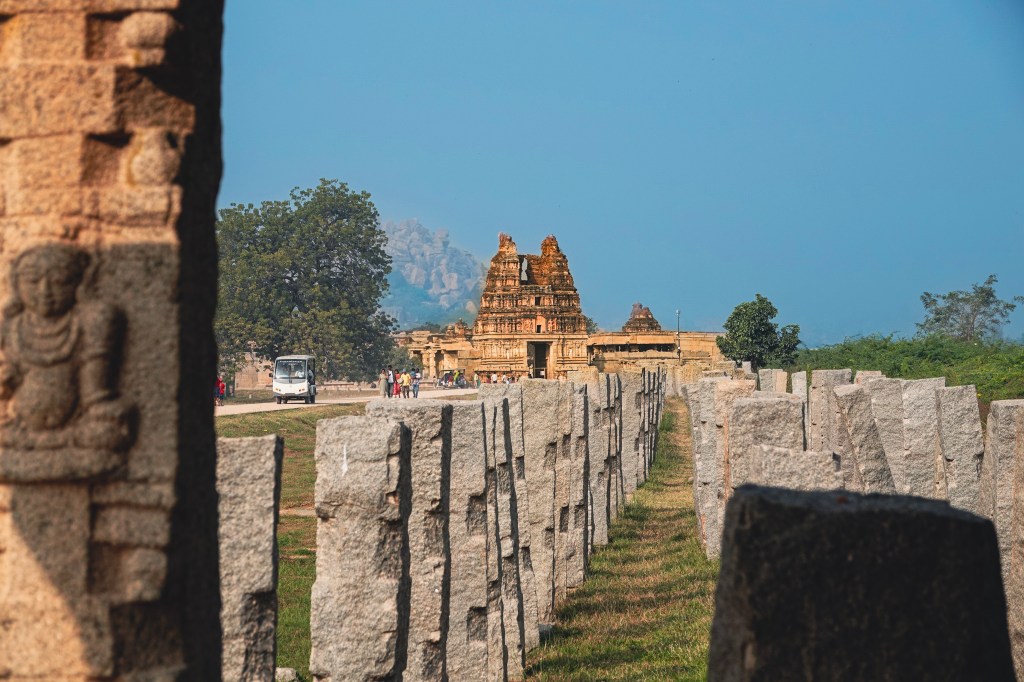
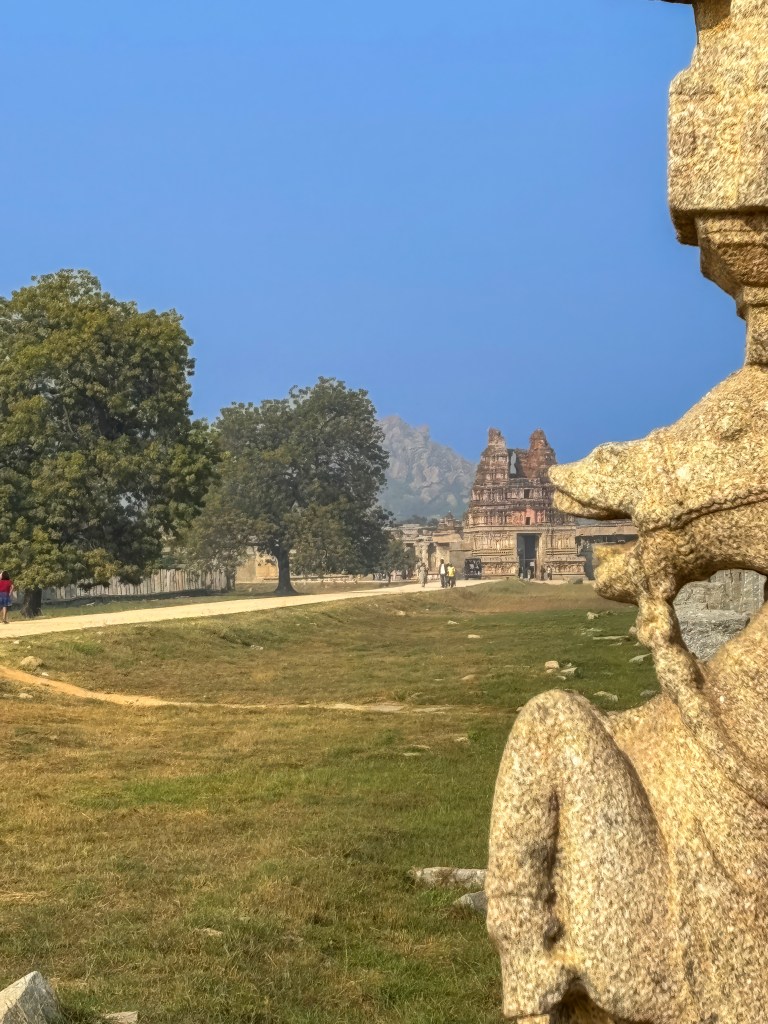
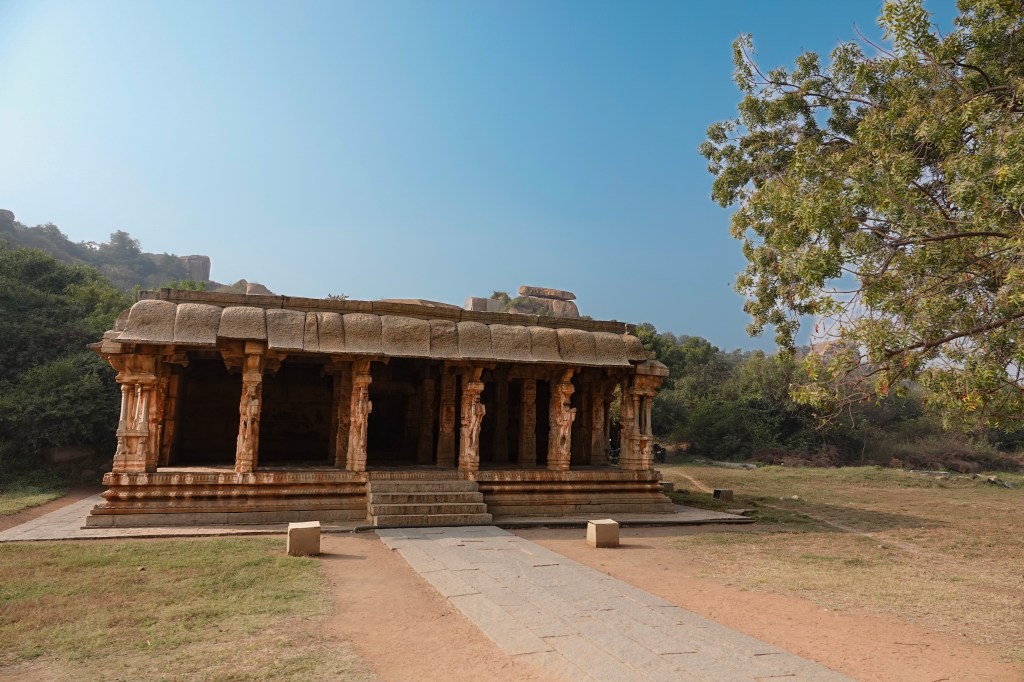
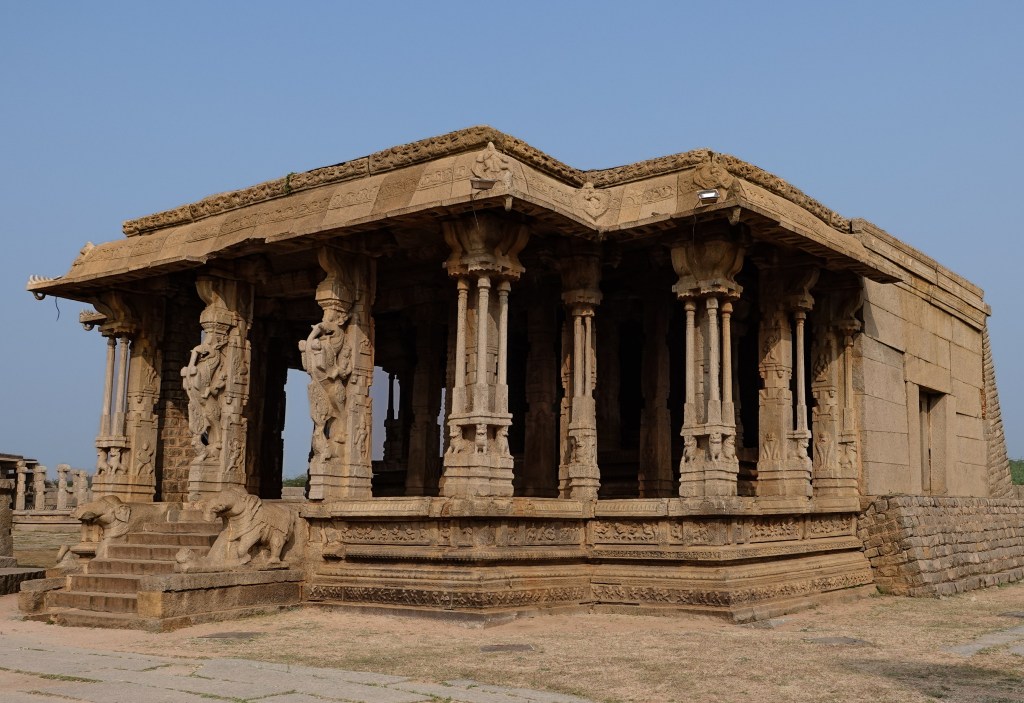
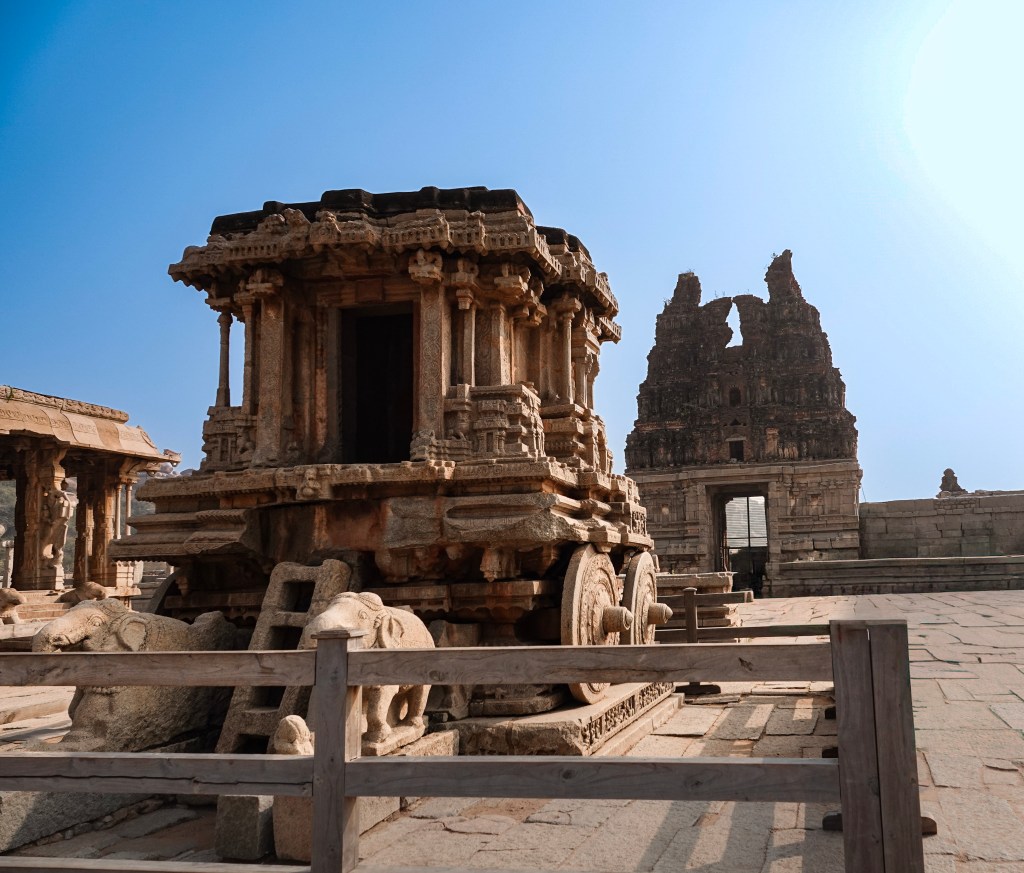
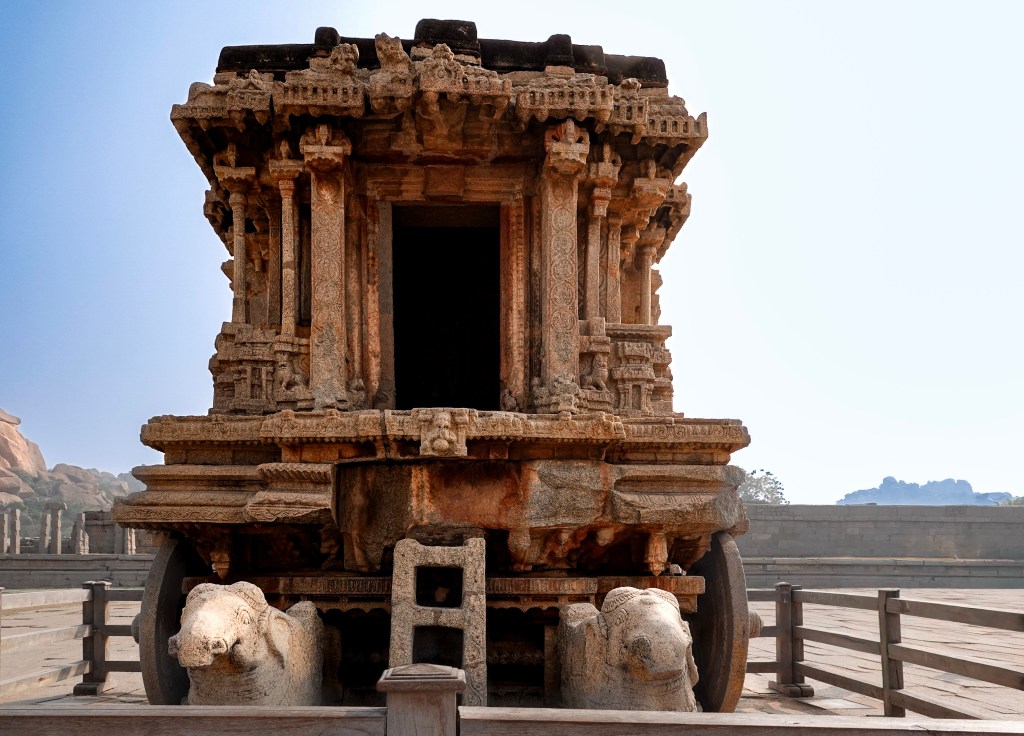
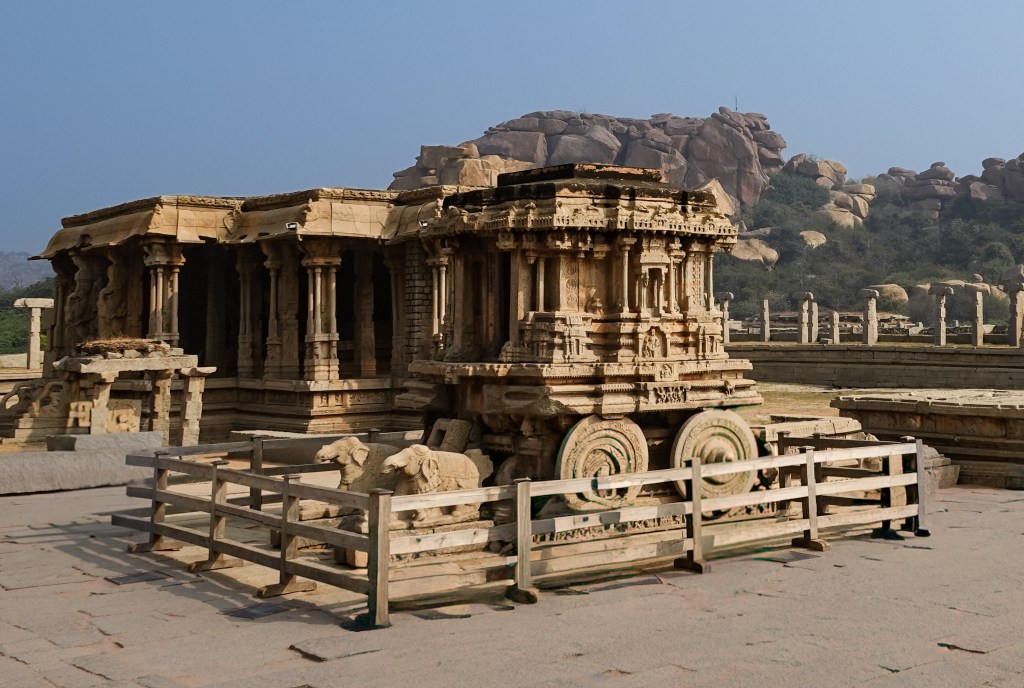
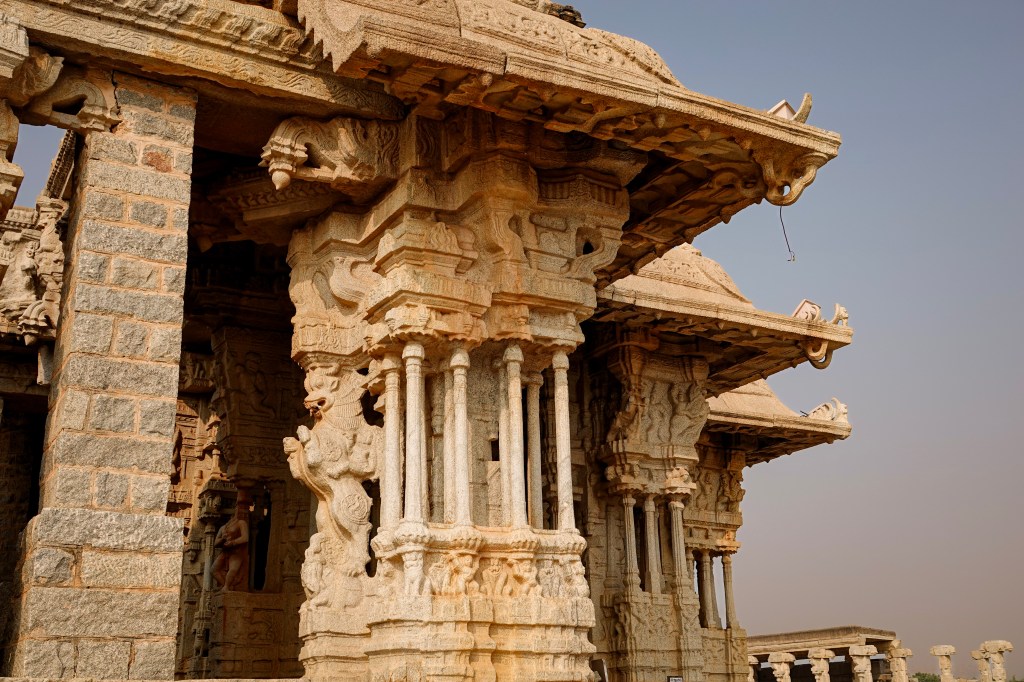
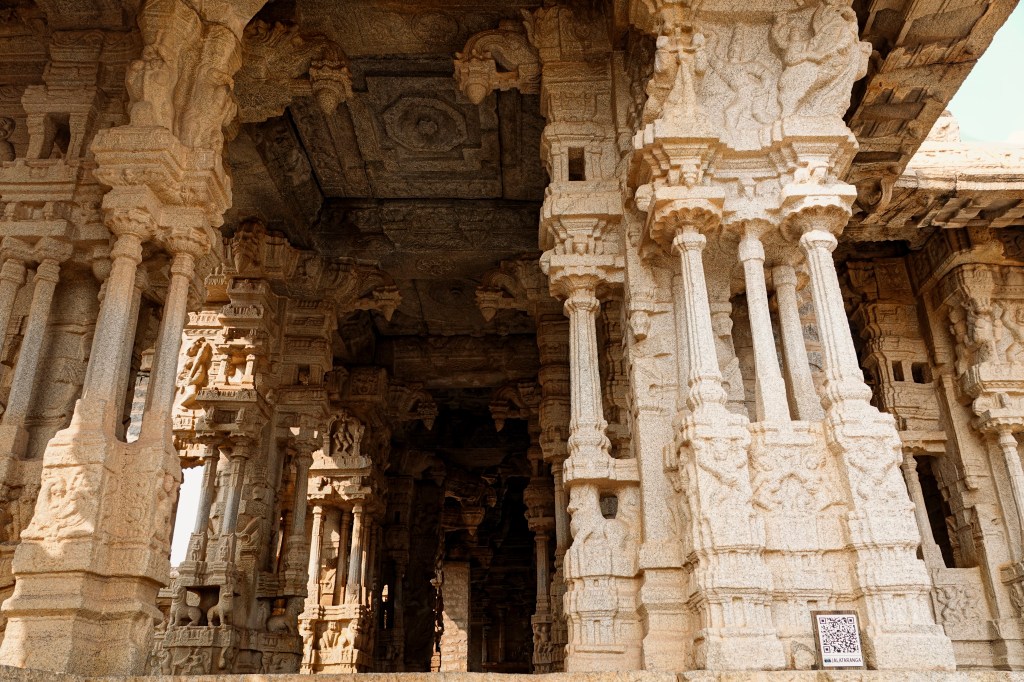
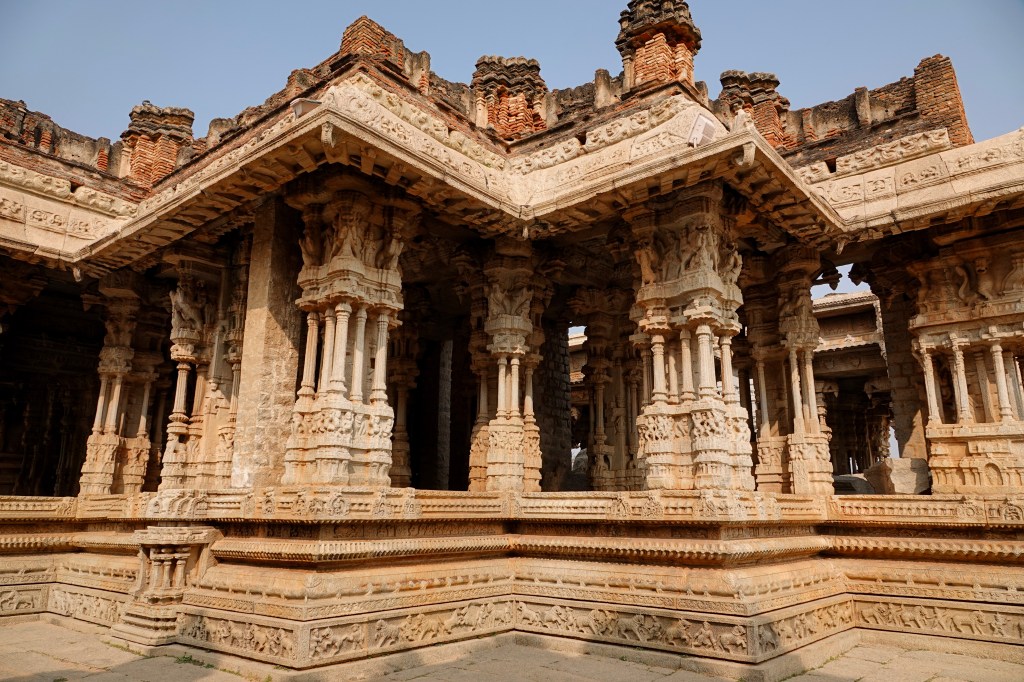
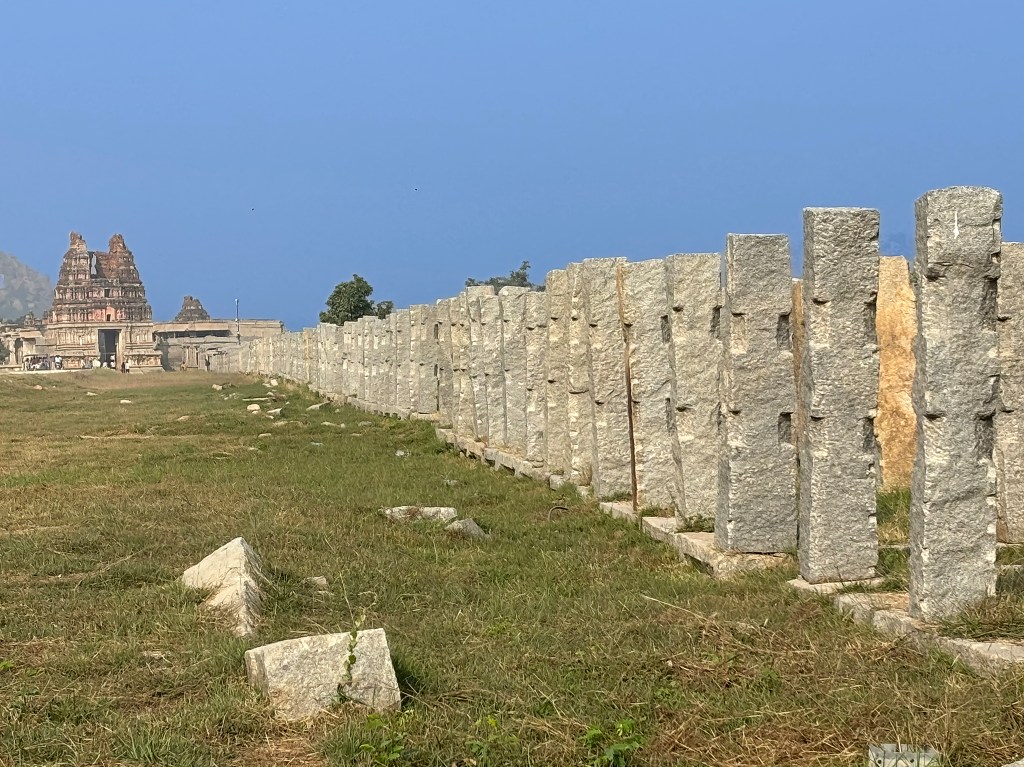
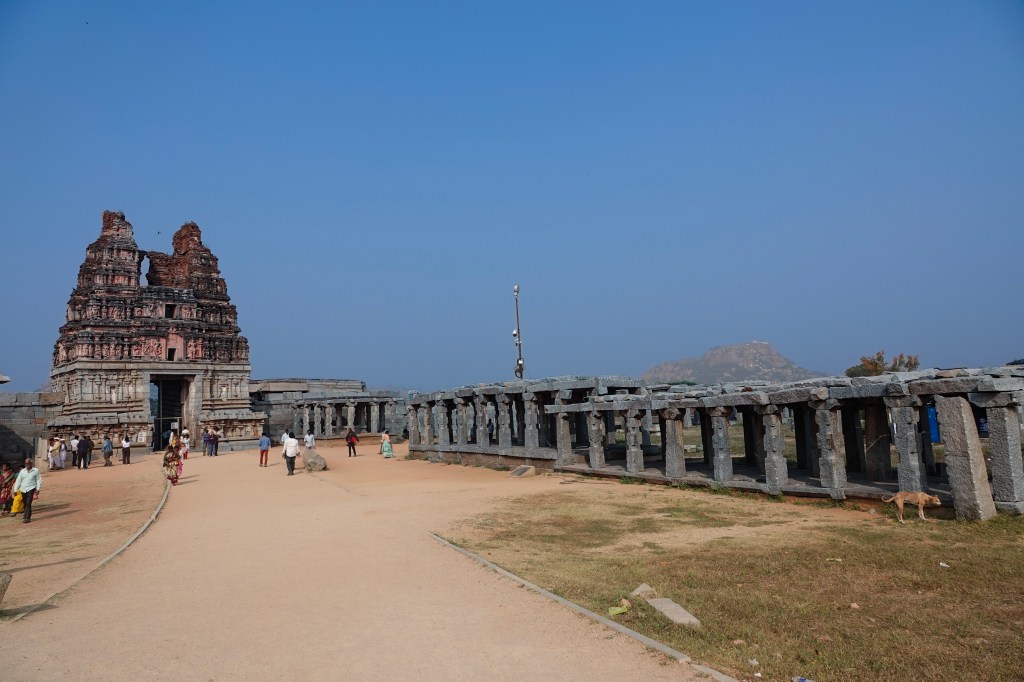
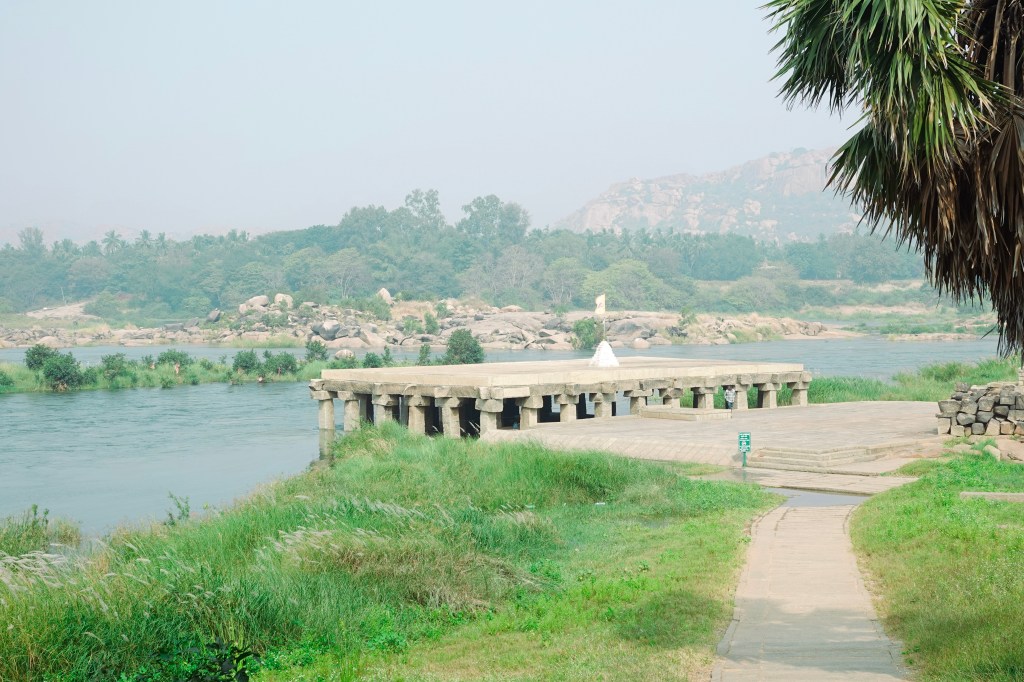
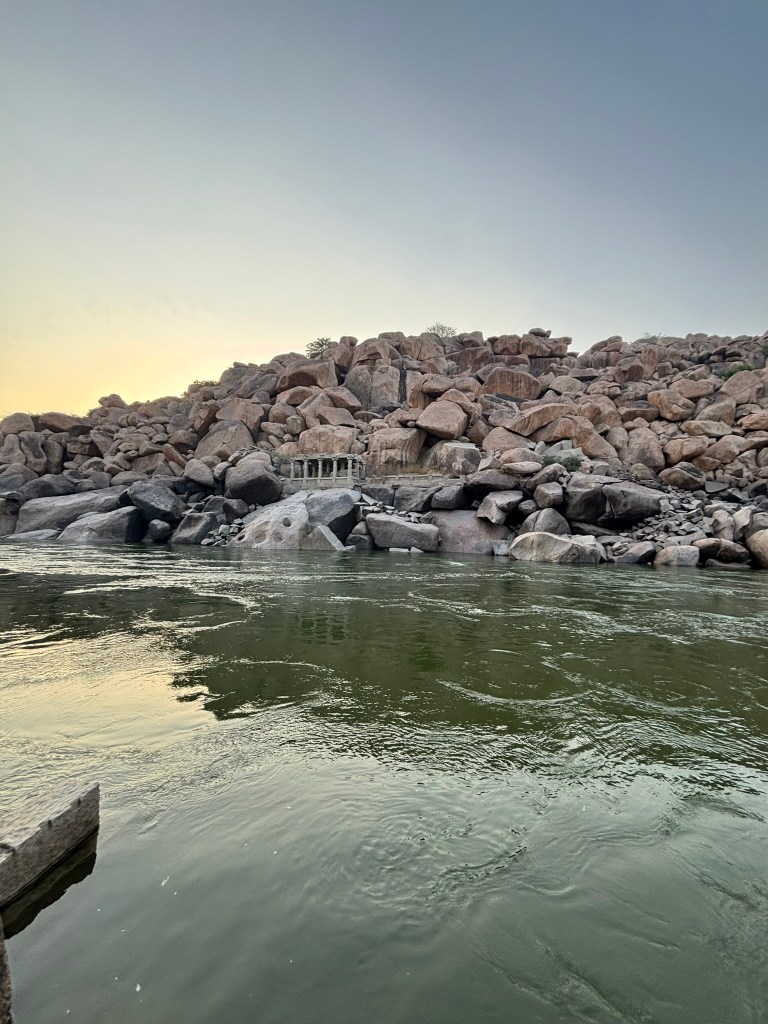
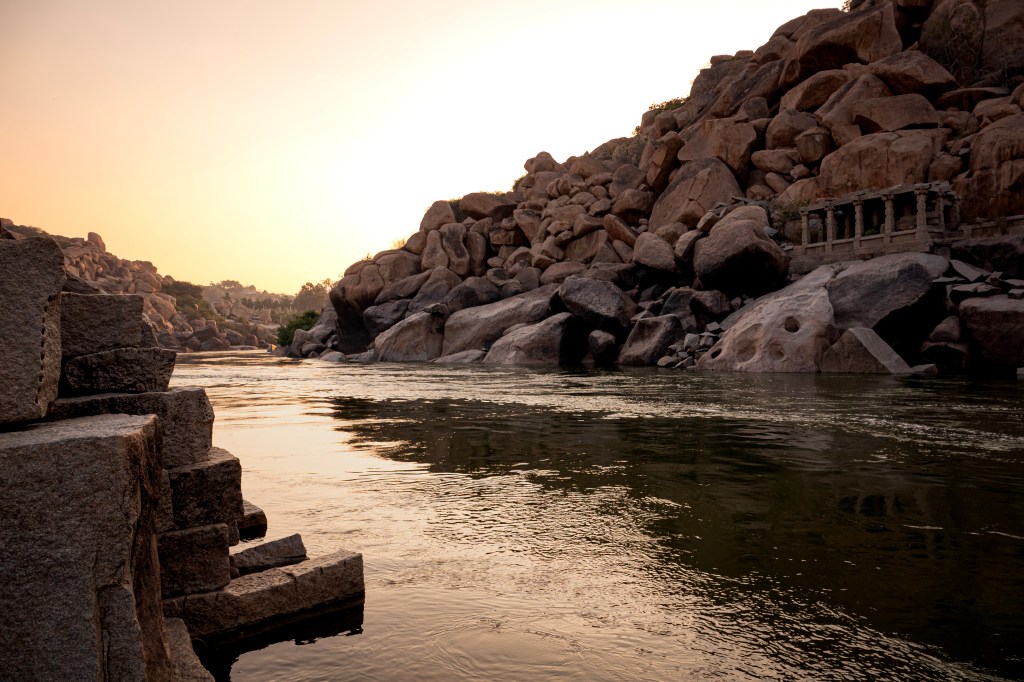
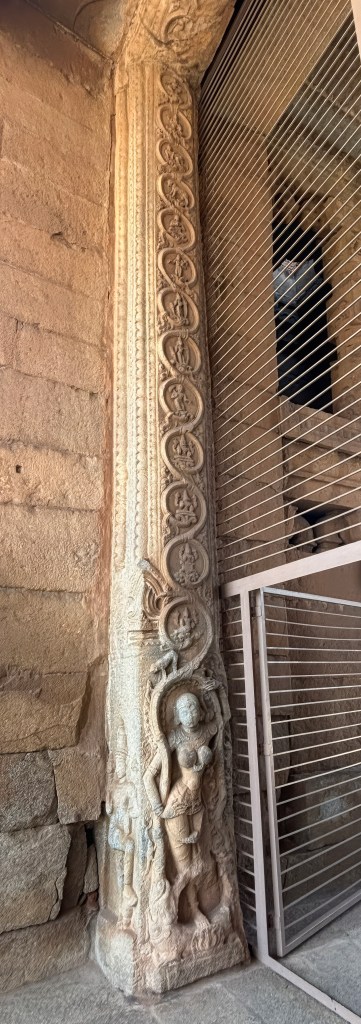
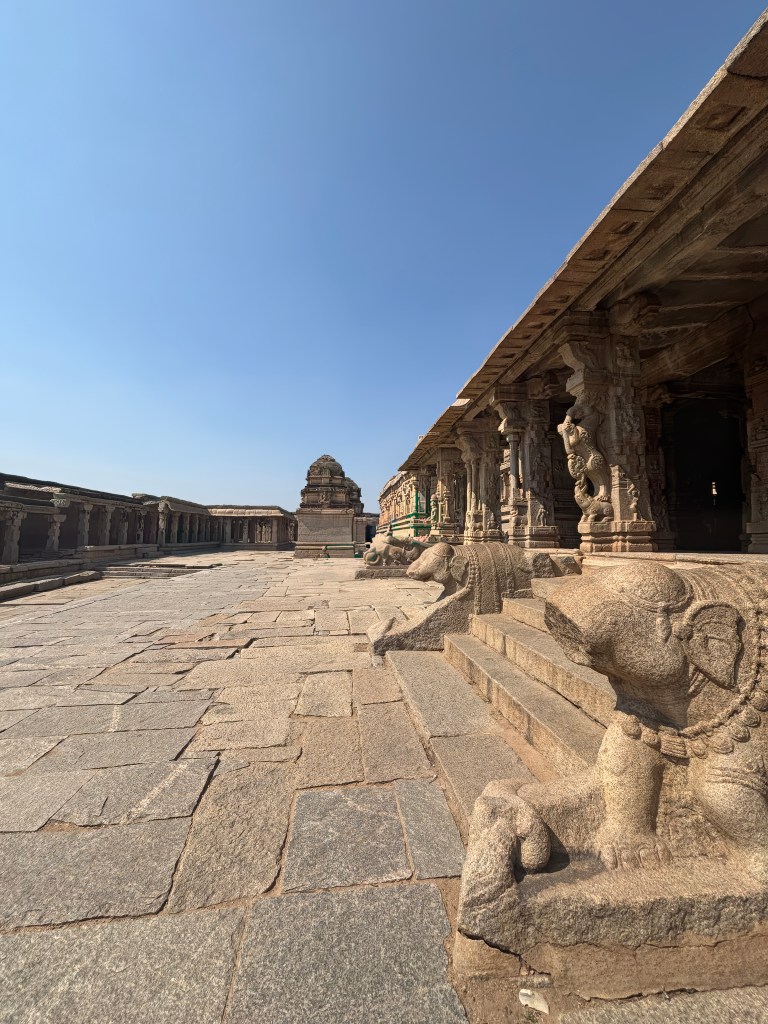
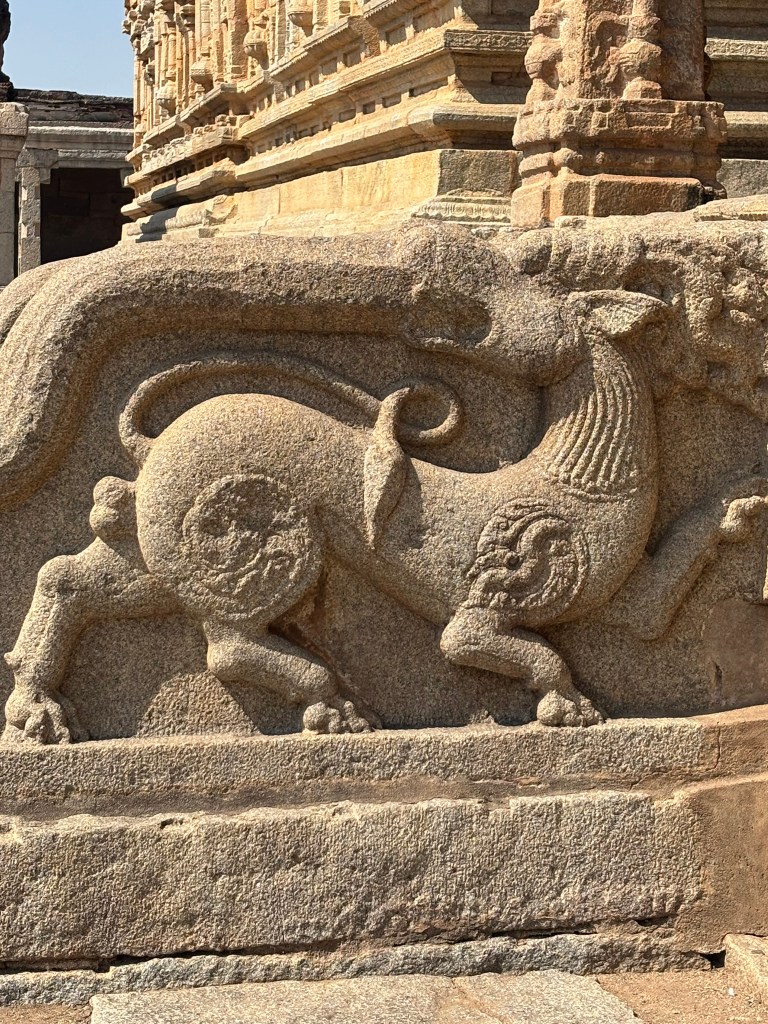
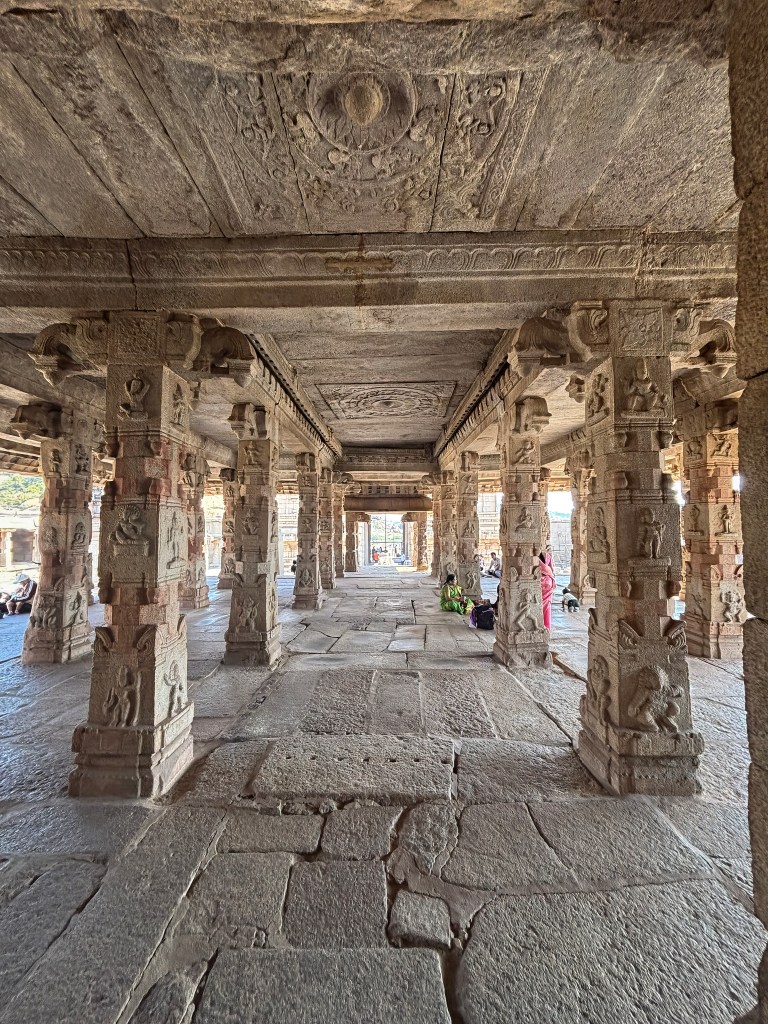
- Vittala Trail — Stone Chariot, musical pillars, riverside mandapas
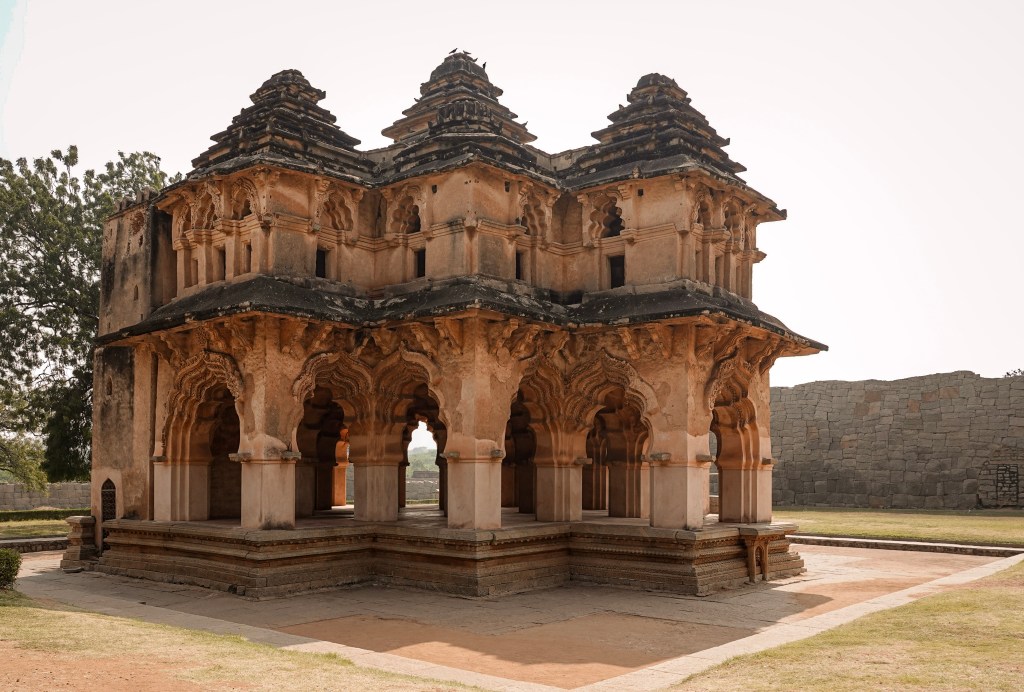
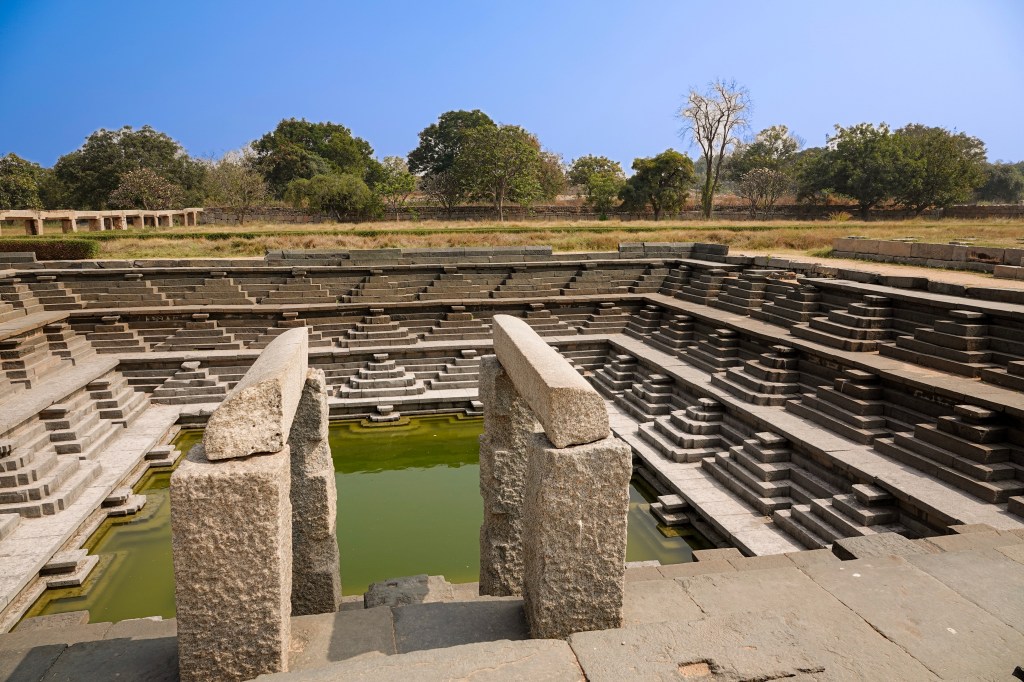
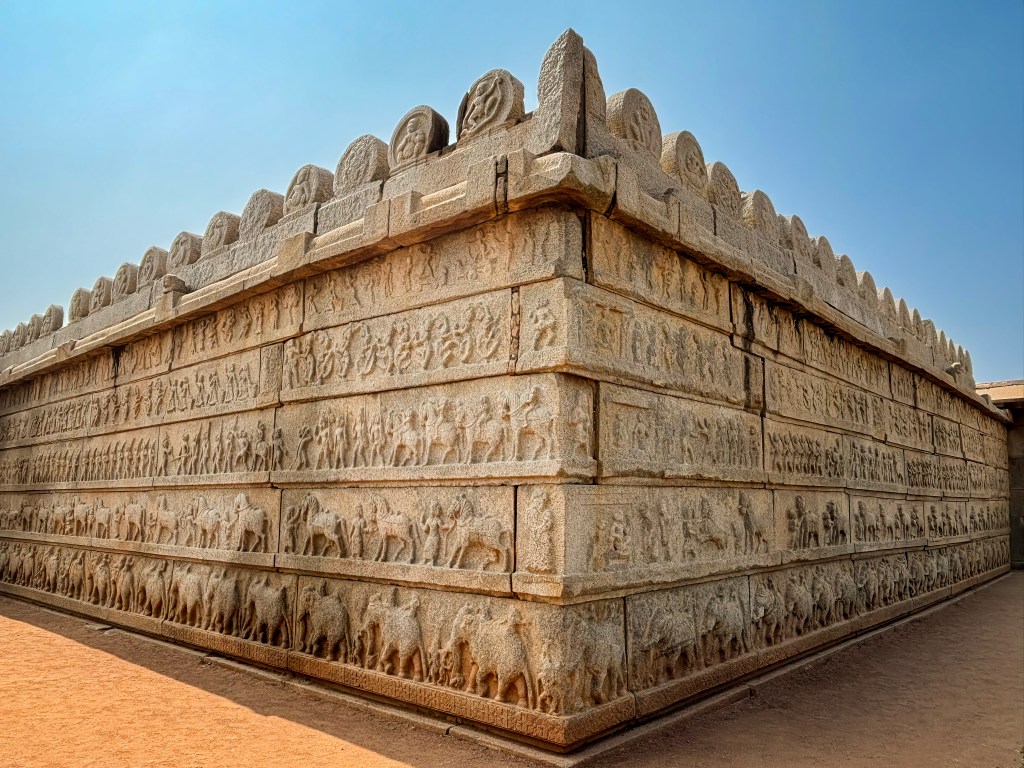
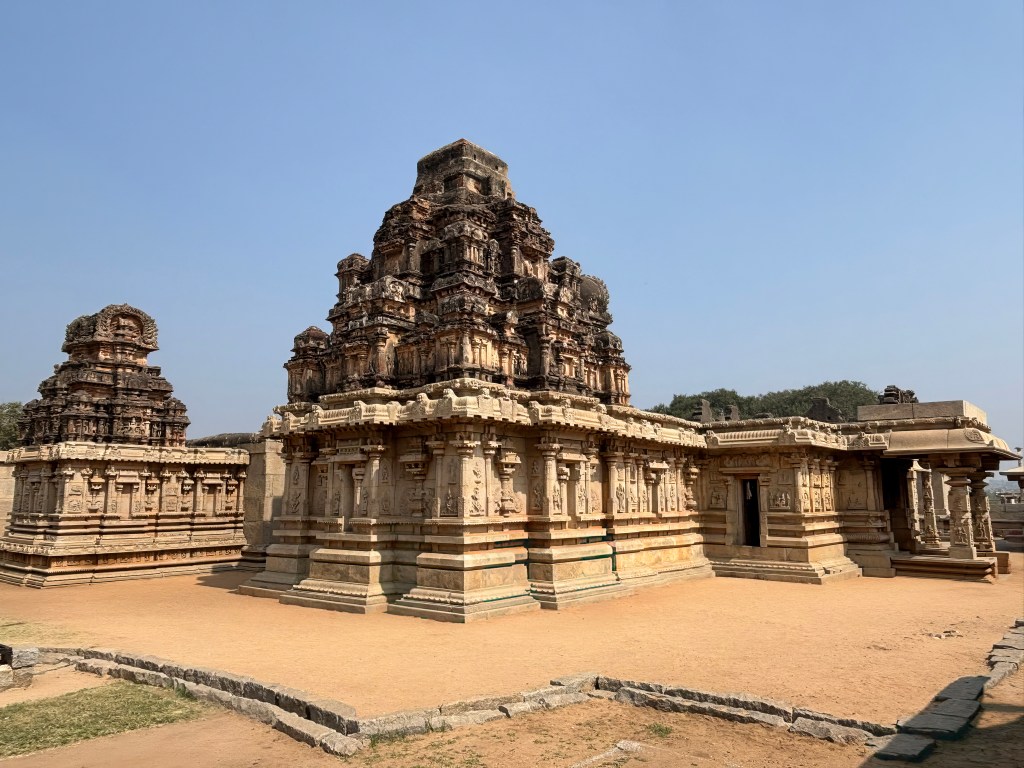
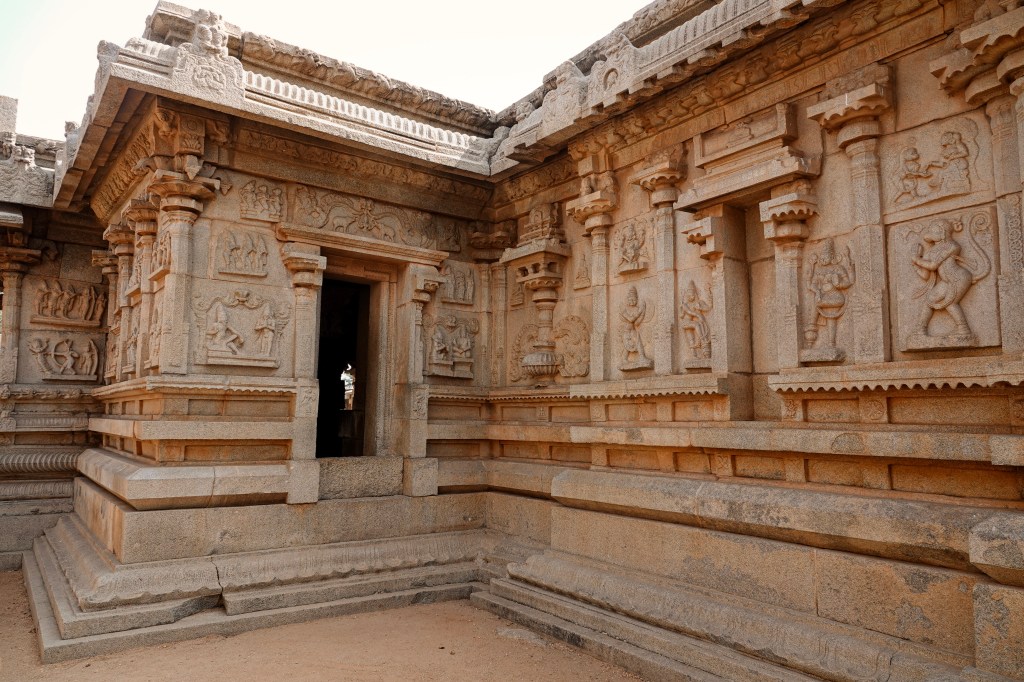
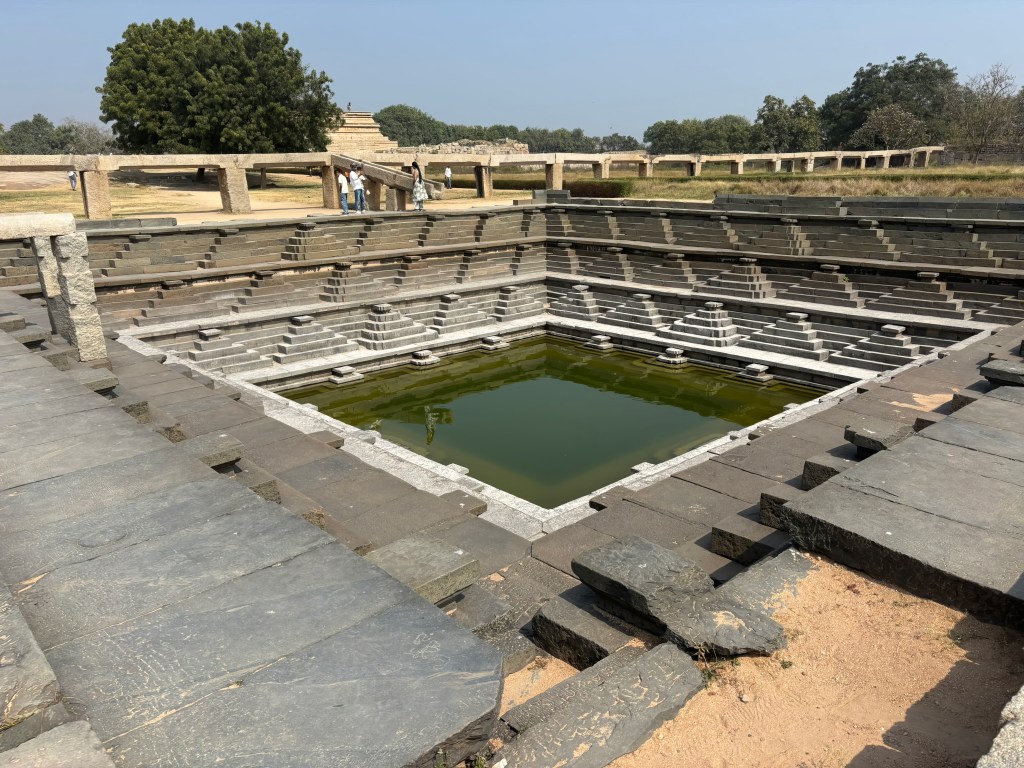
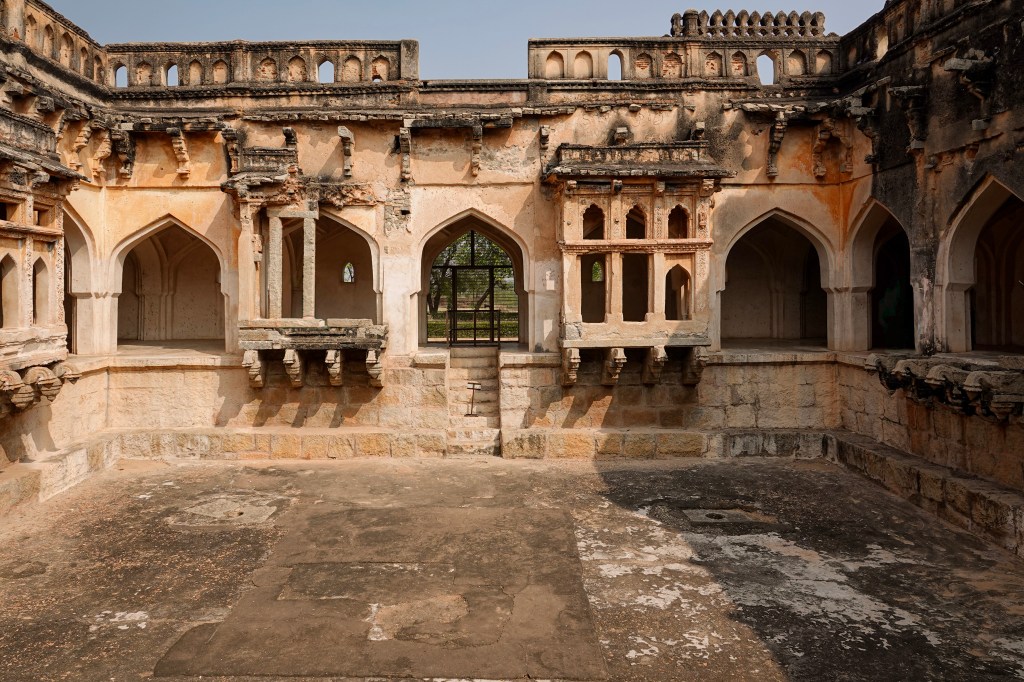
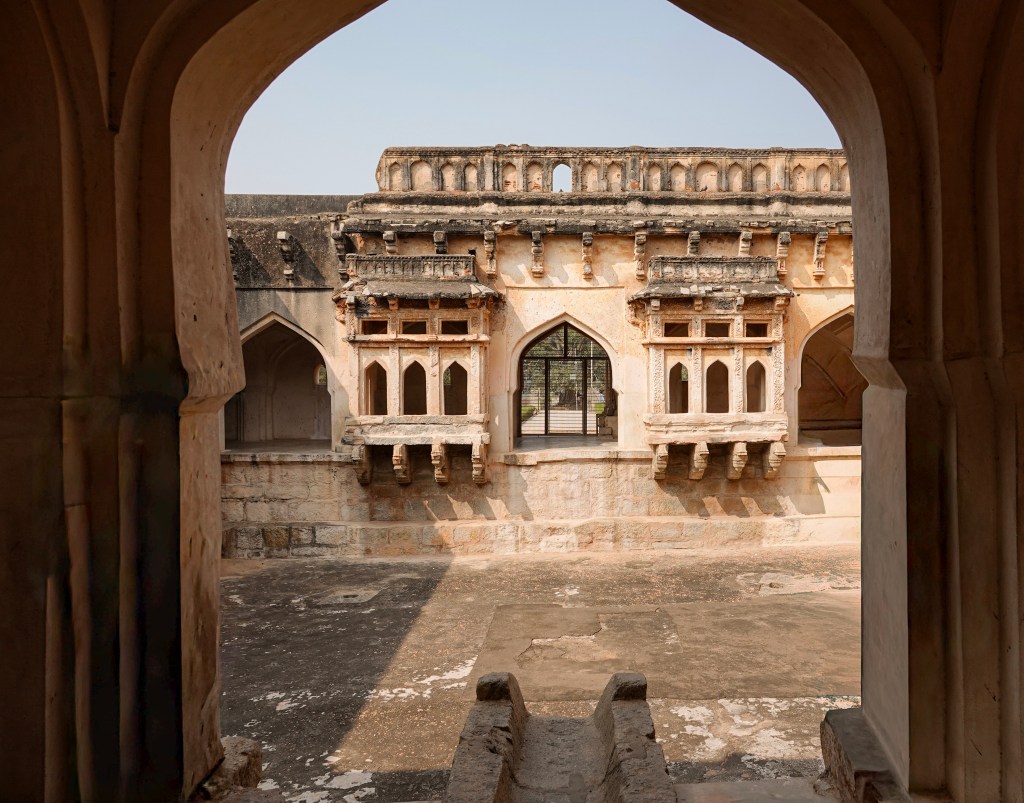
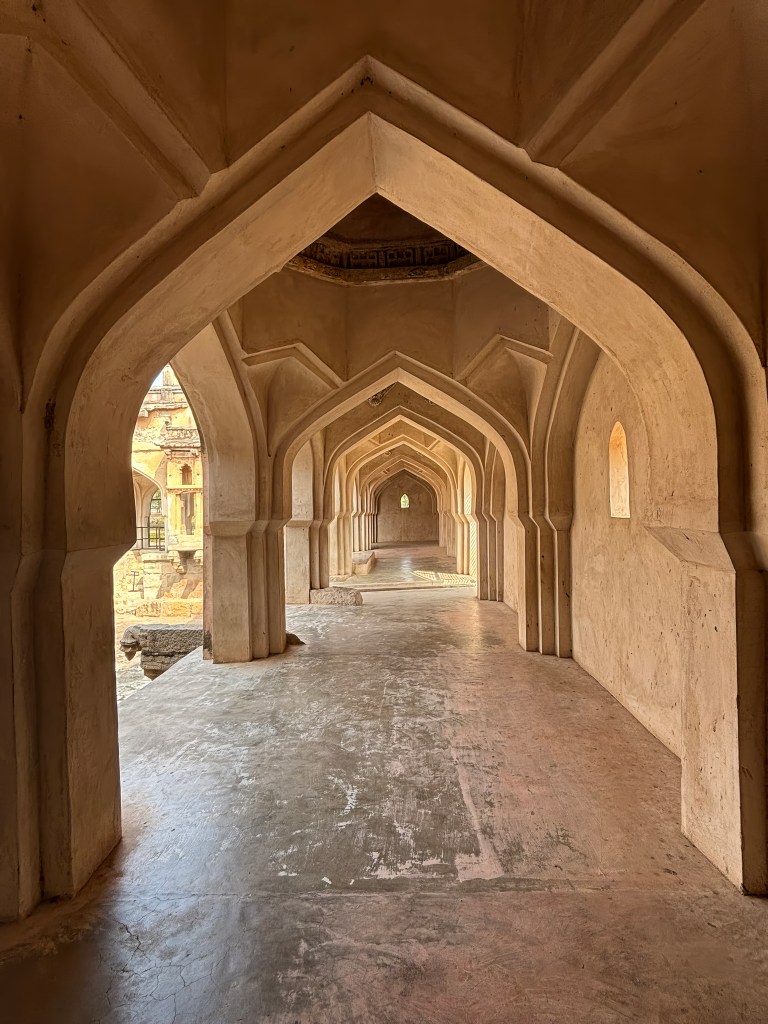
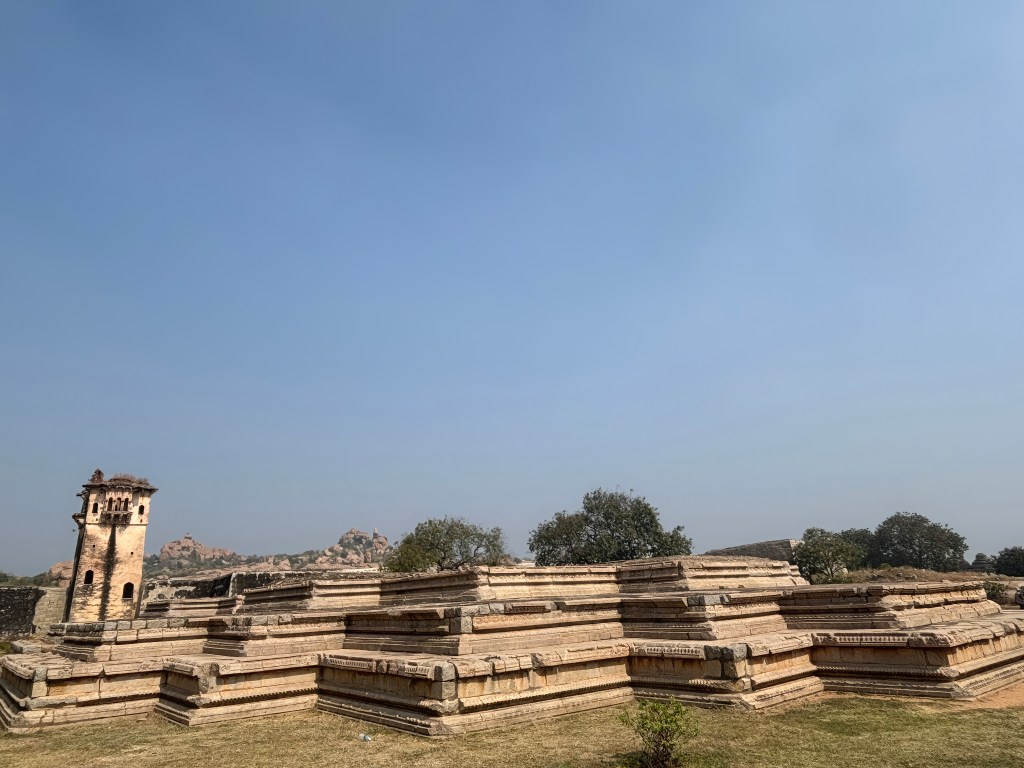
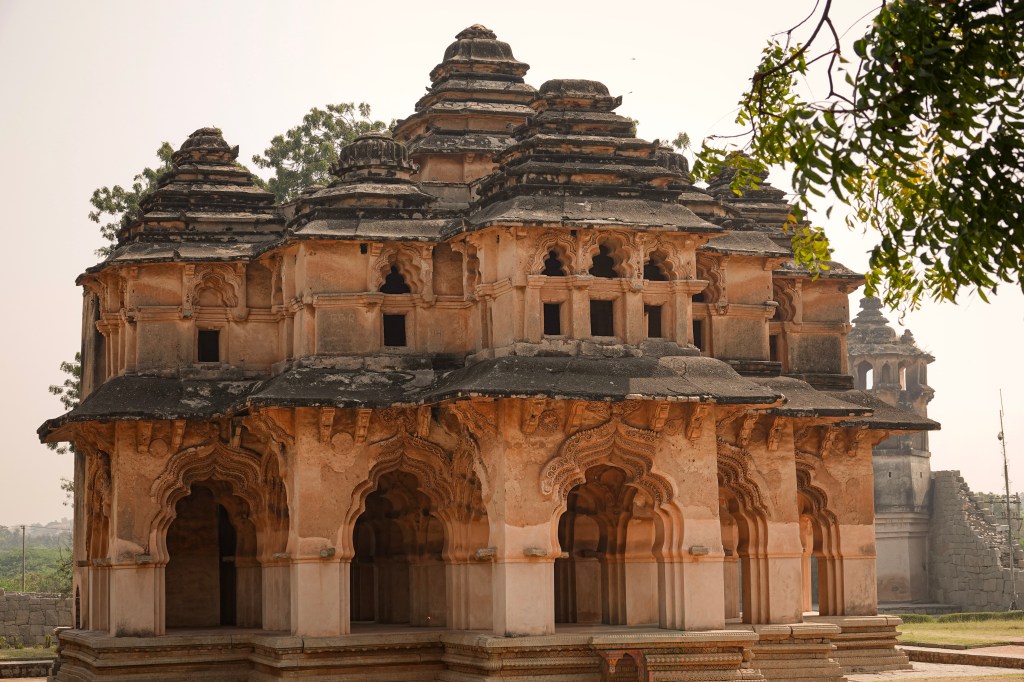
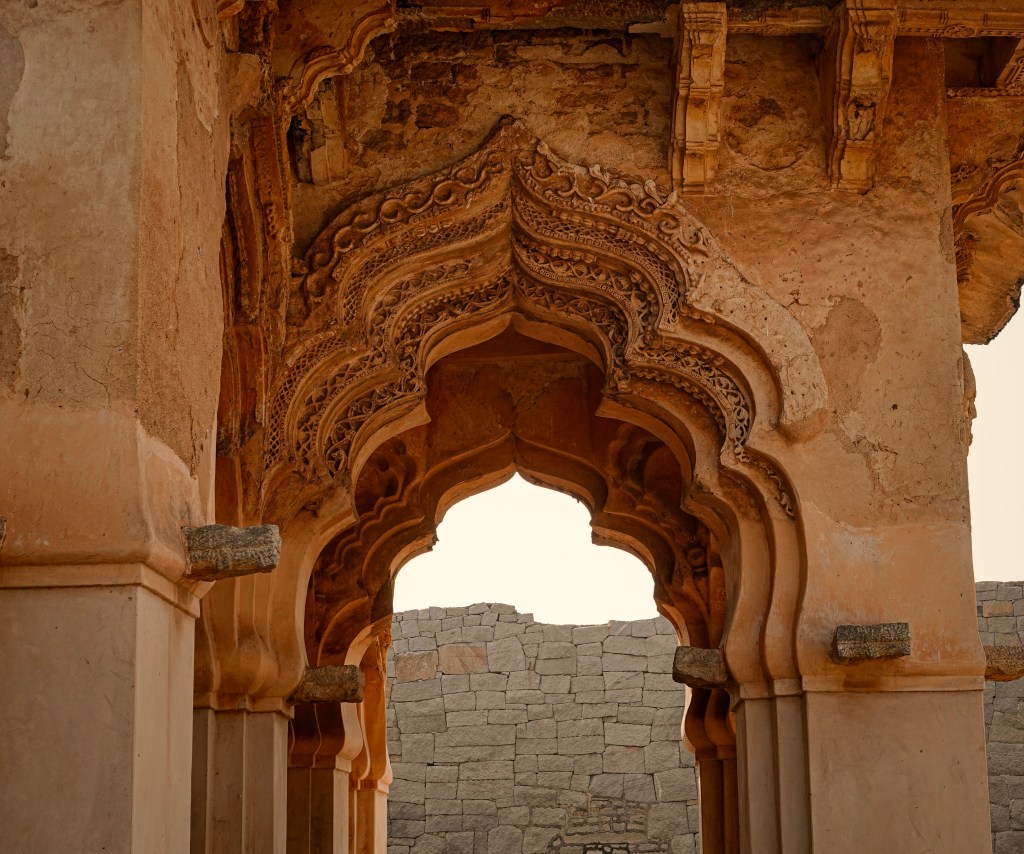
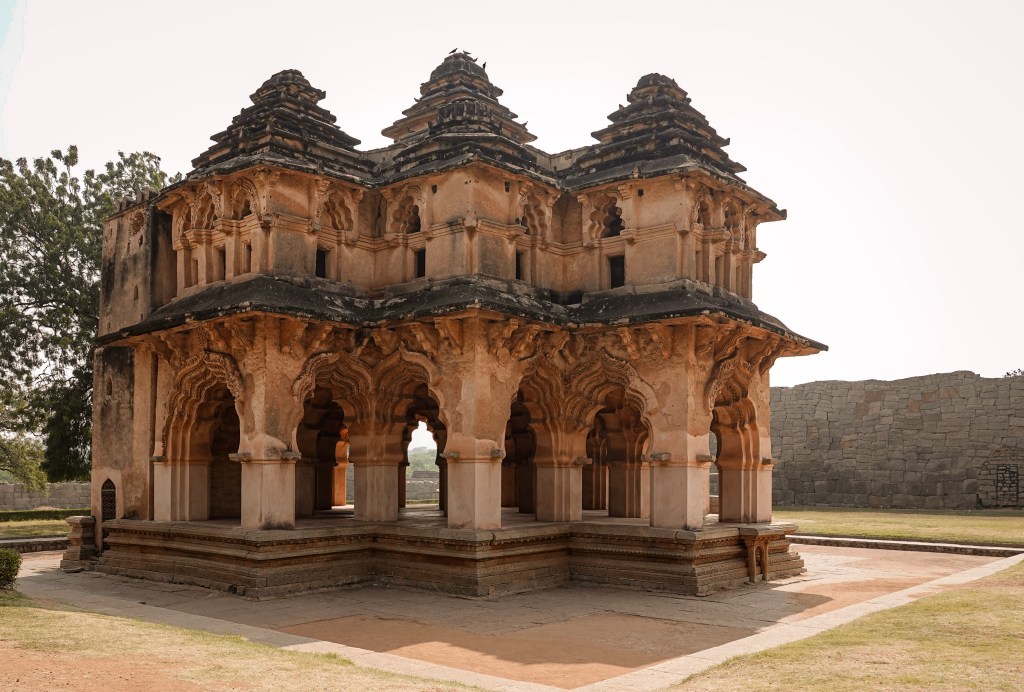
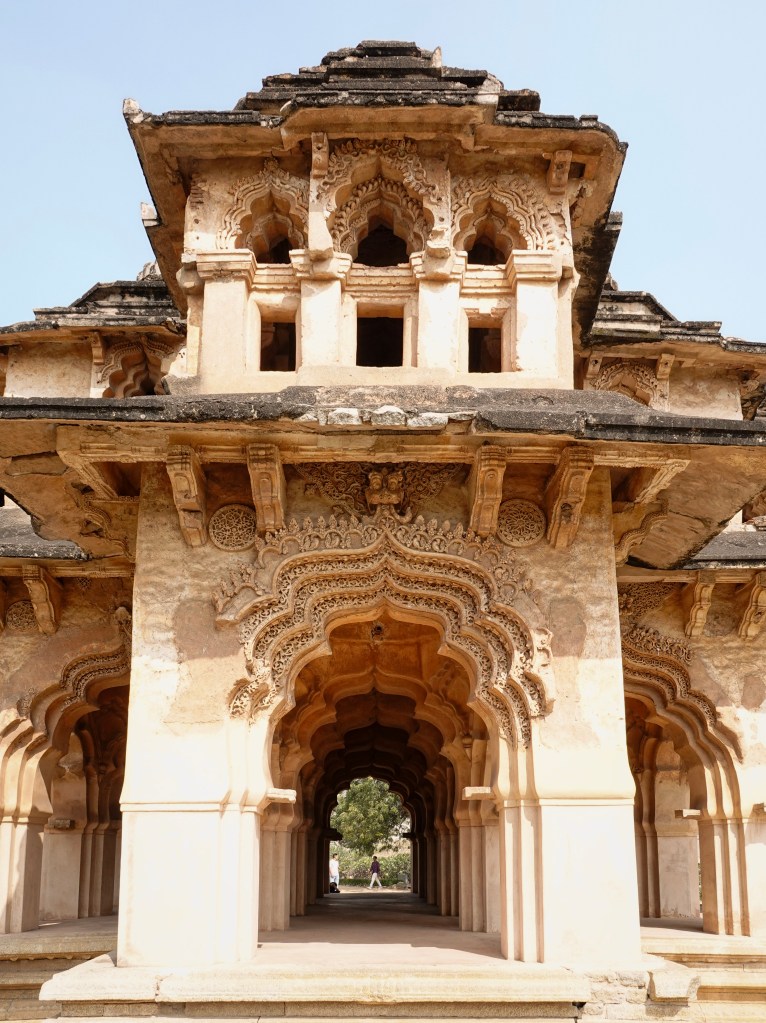
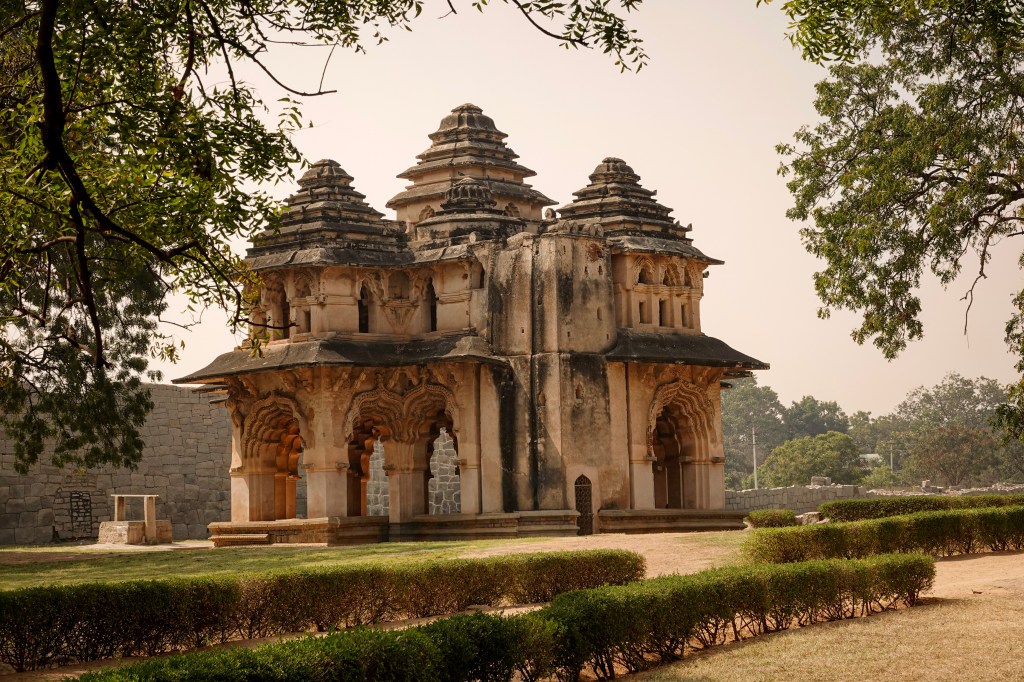
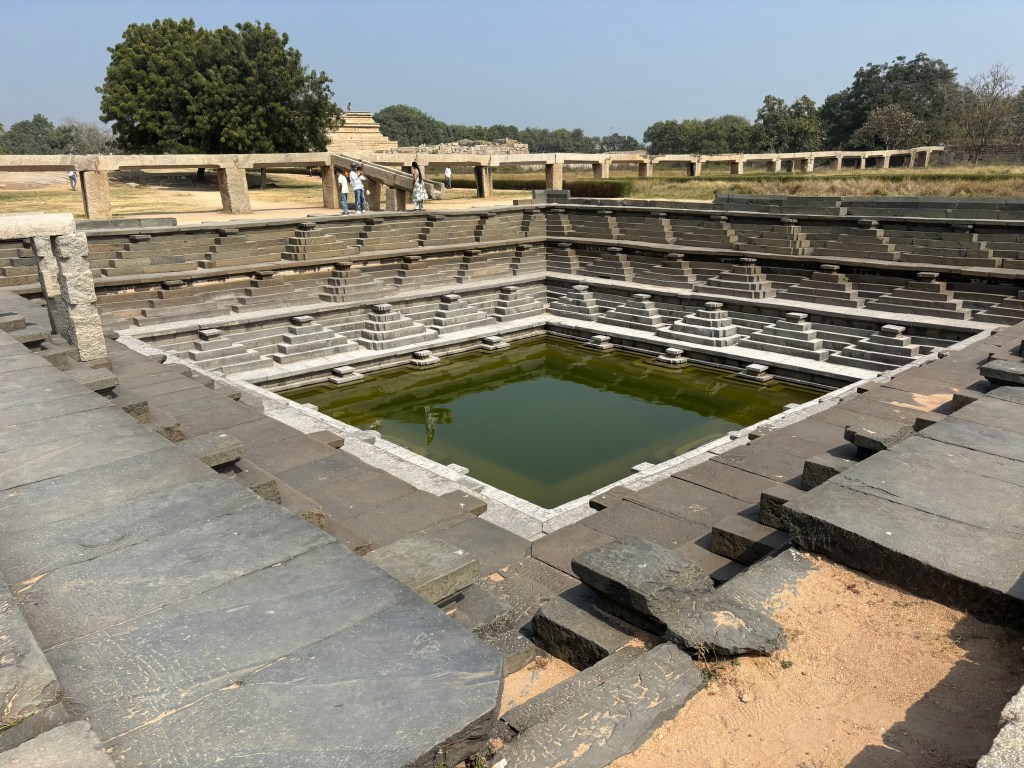
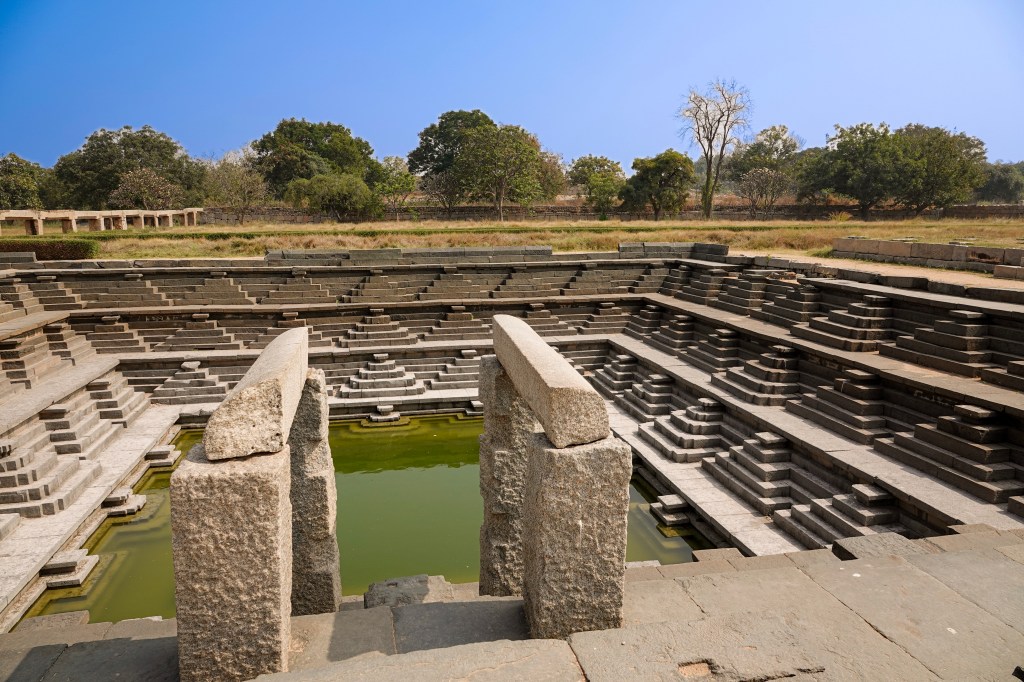
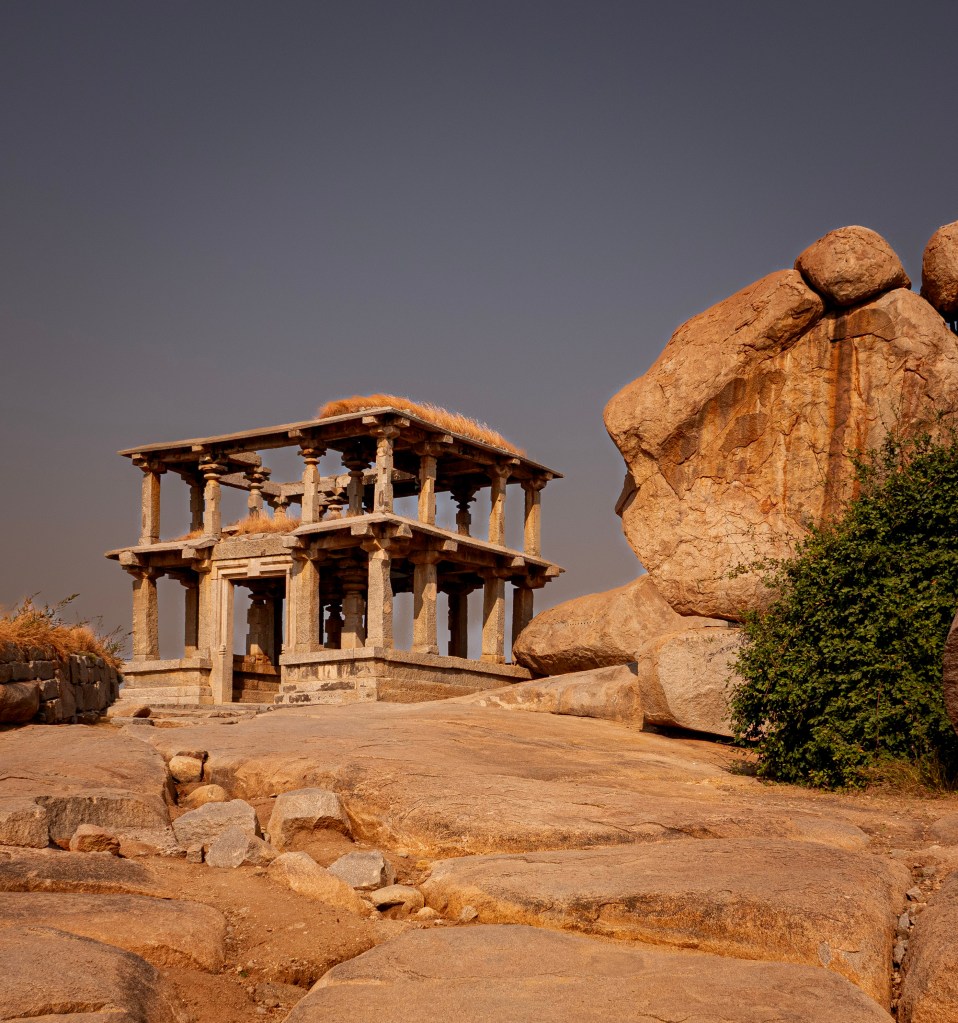
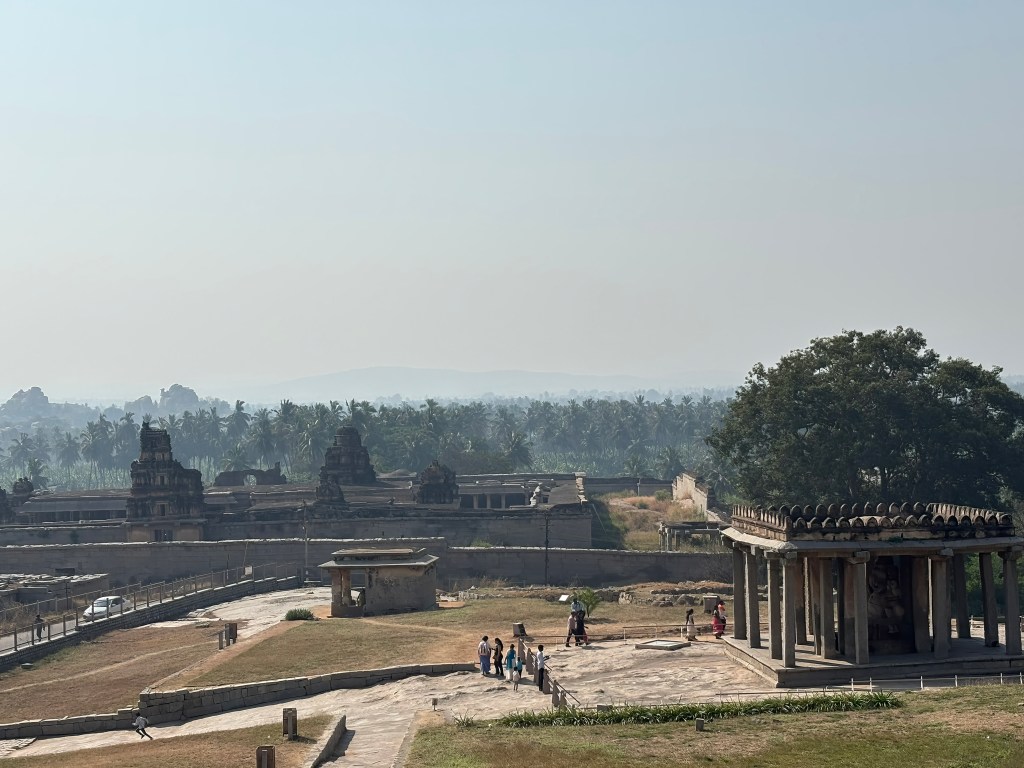
- Raya Trail — Royal Enclosure, Queen’s Bath, Lotus Mahal, Hazara Rama Temple
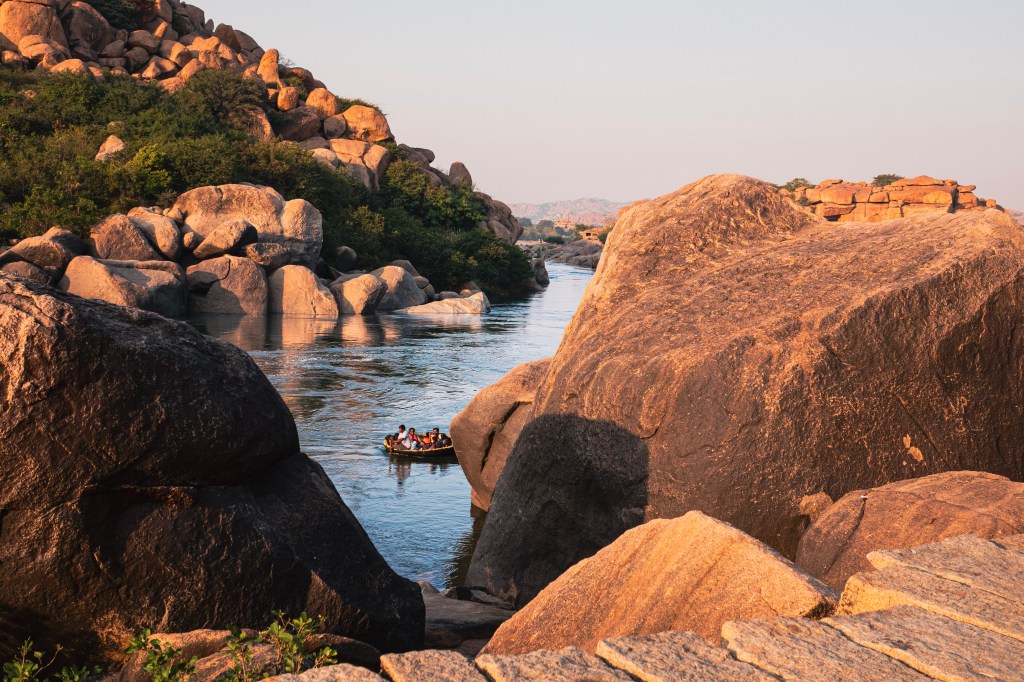
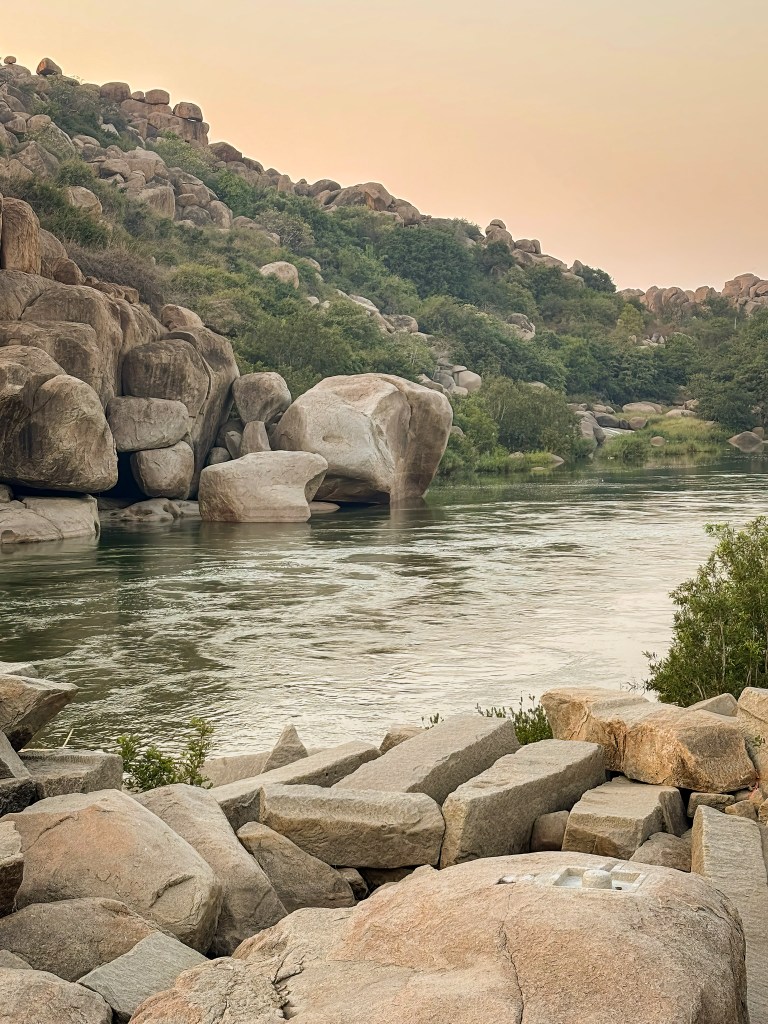
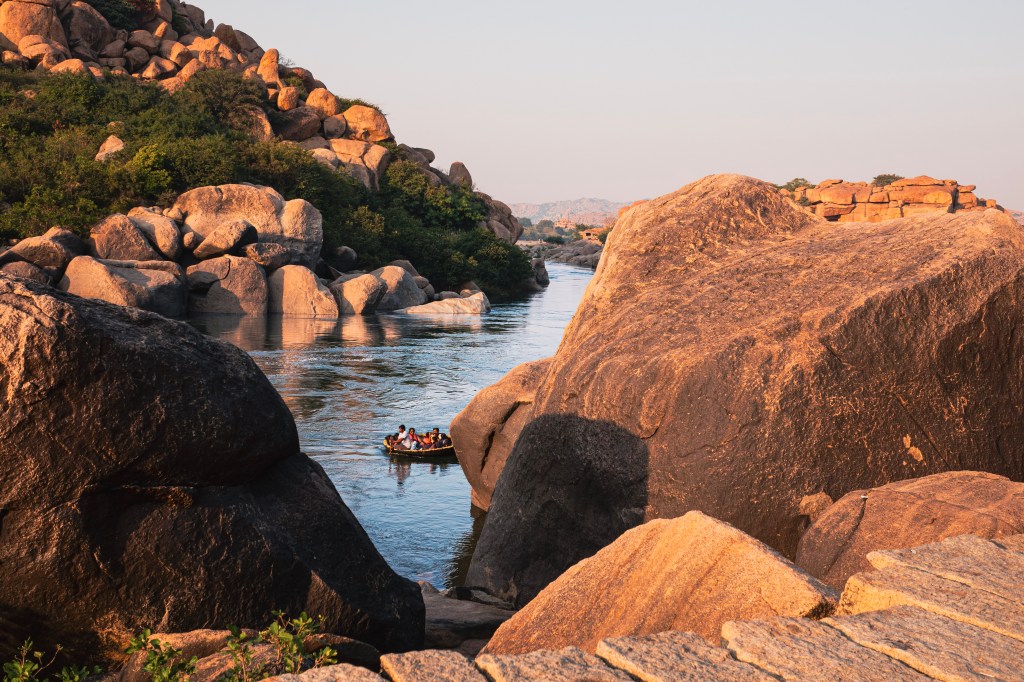
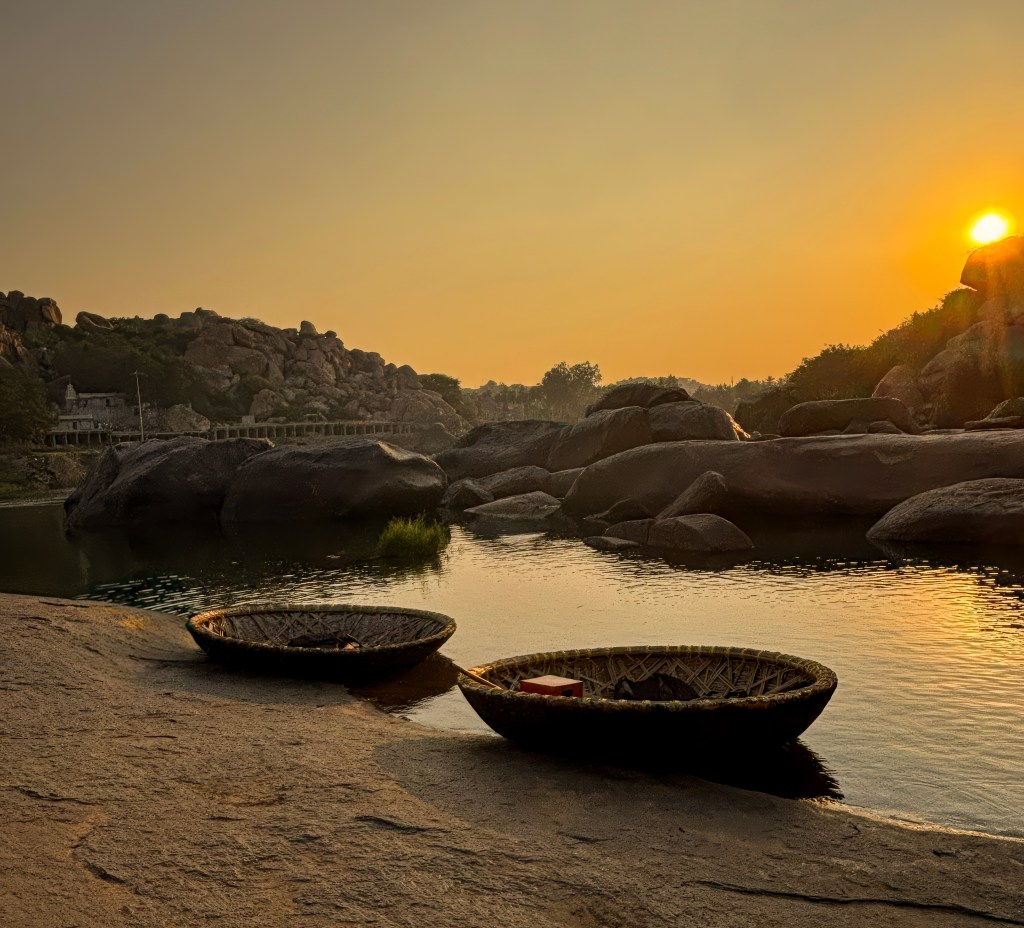
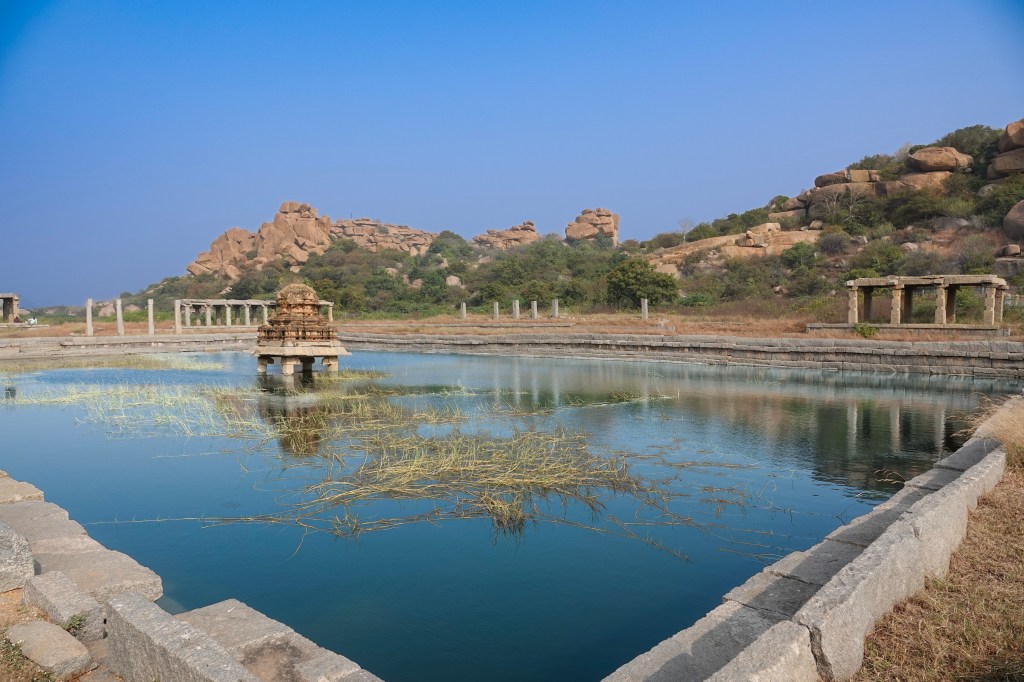
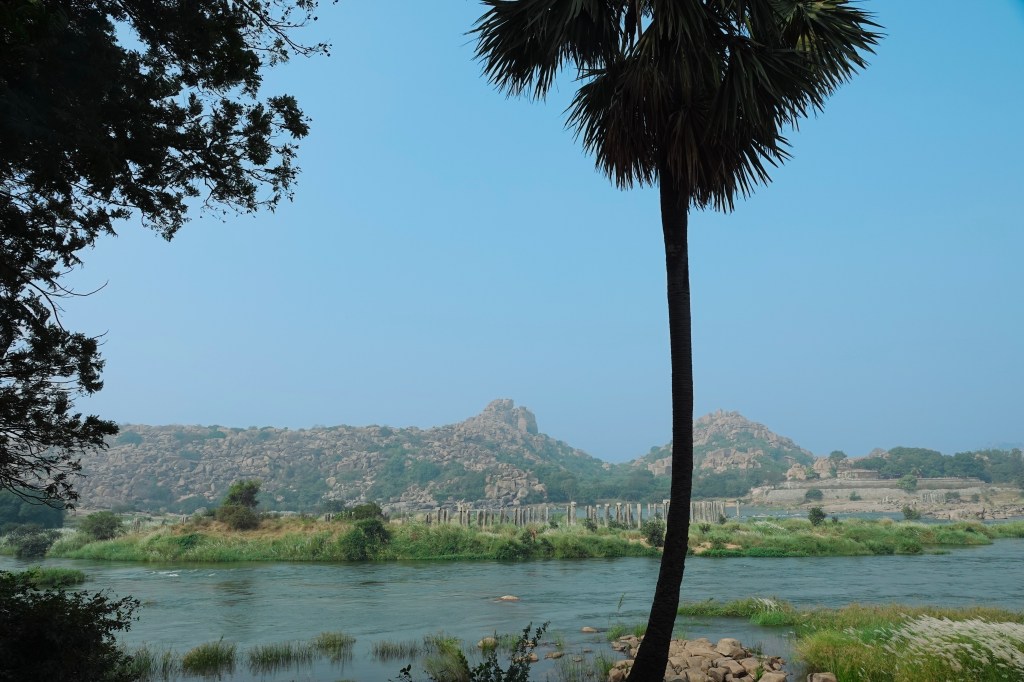
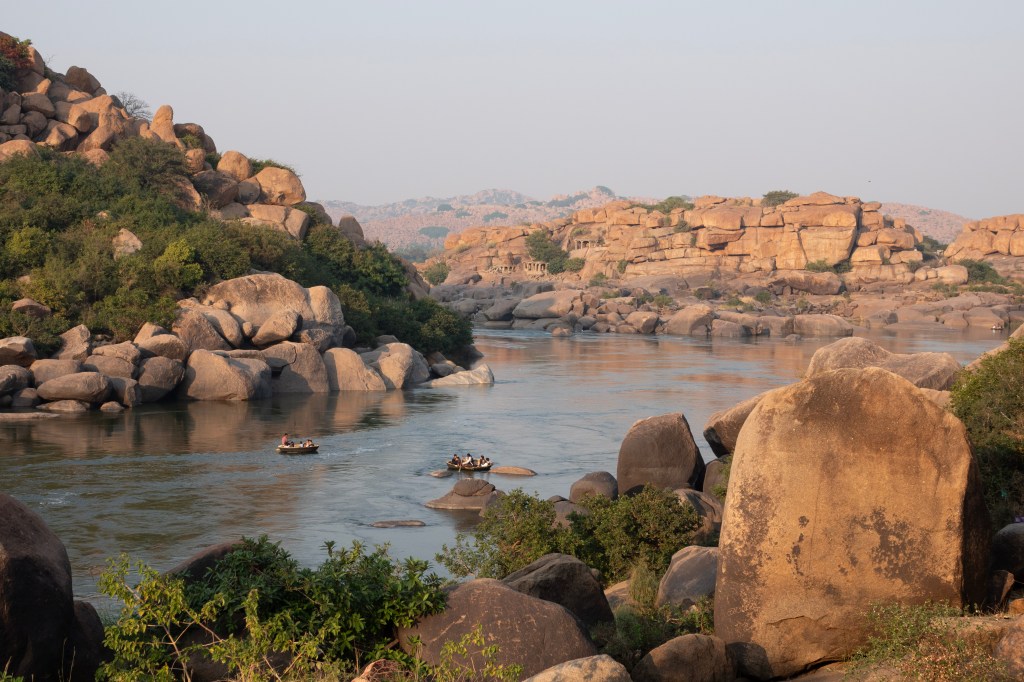
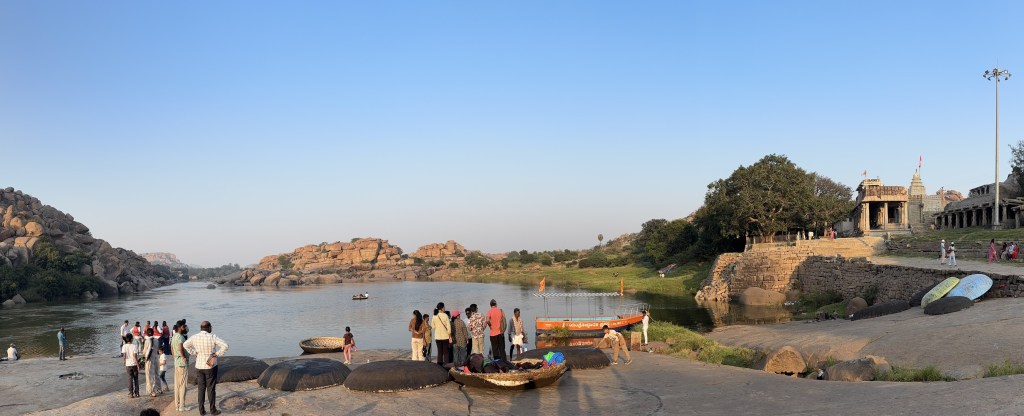
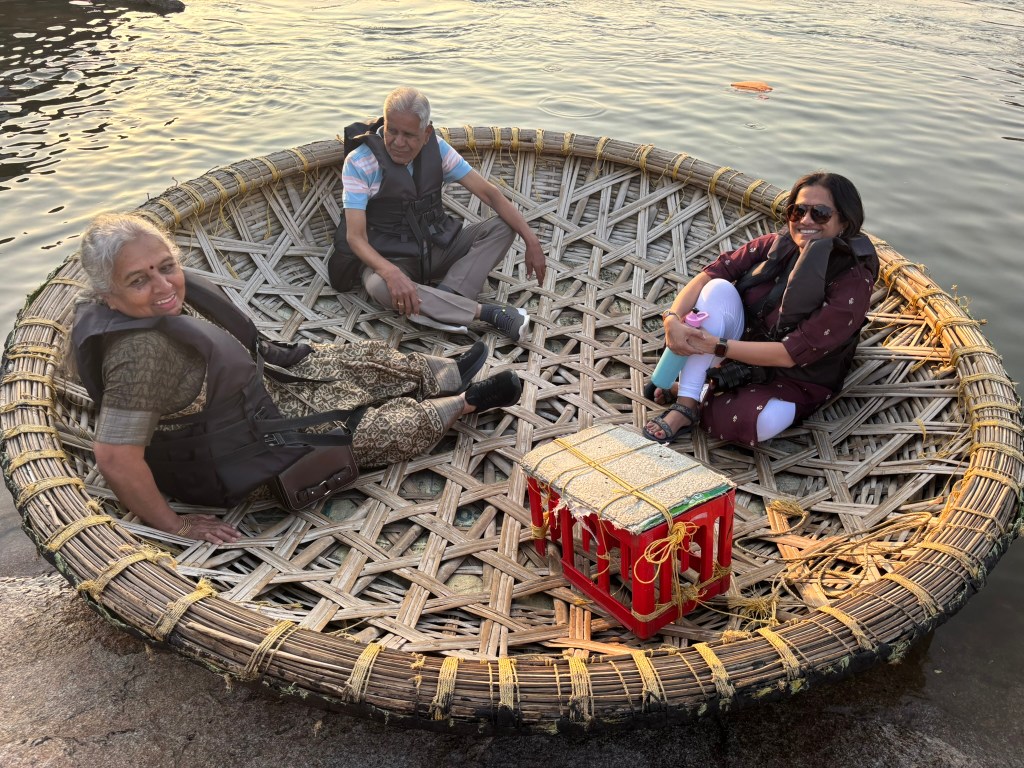
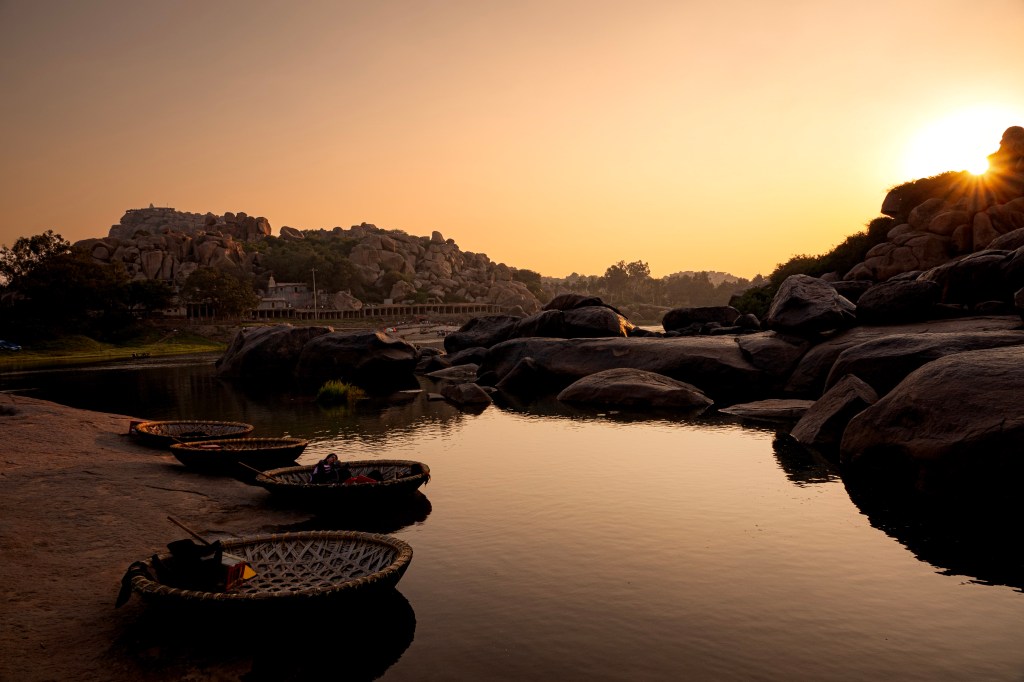
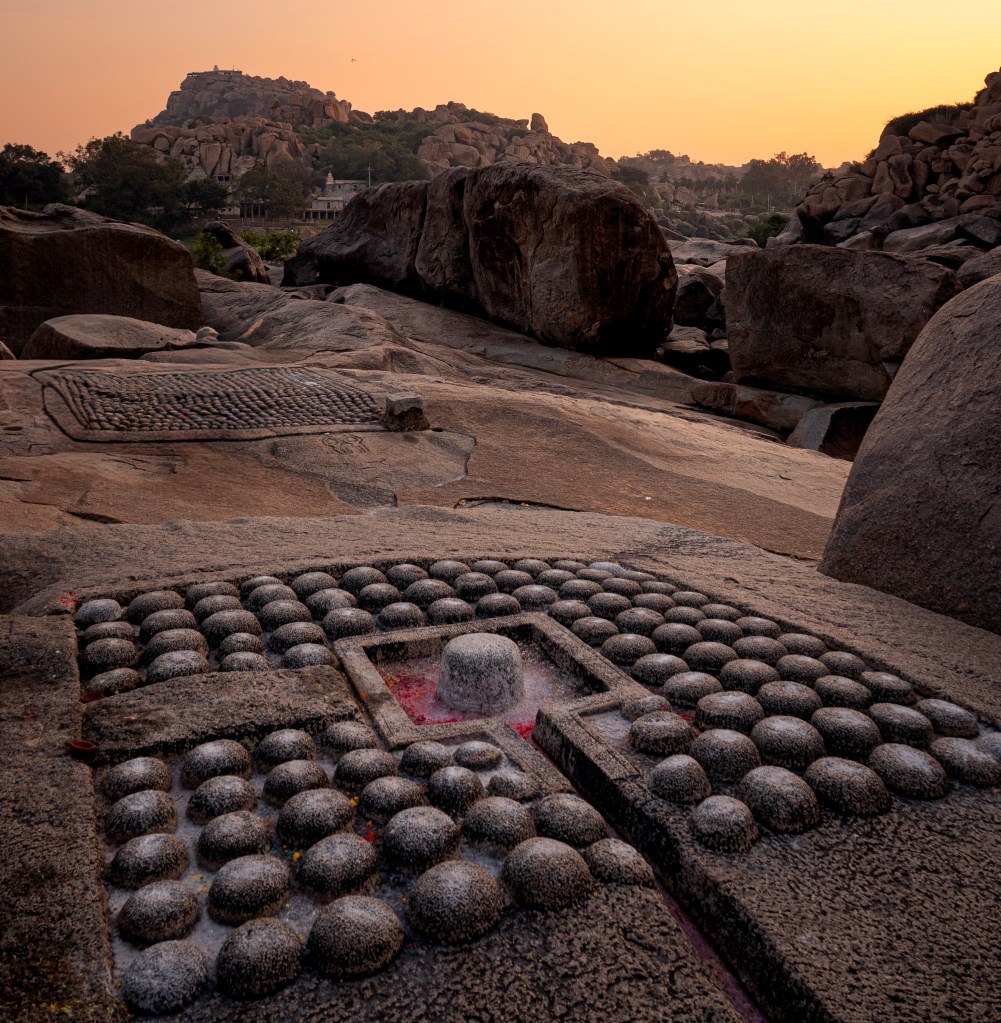
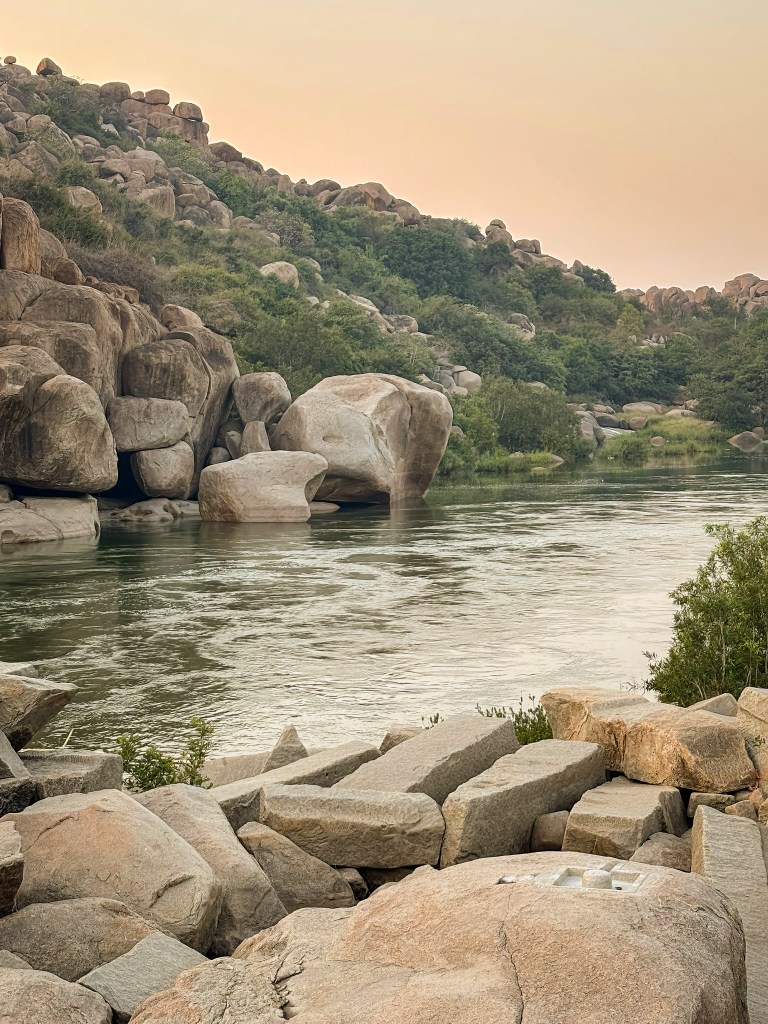
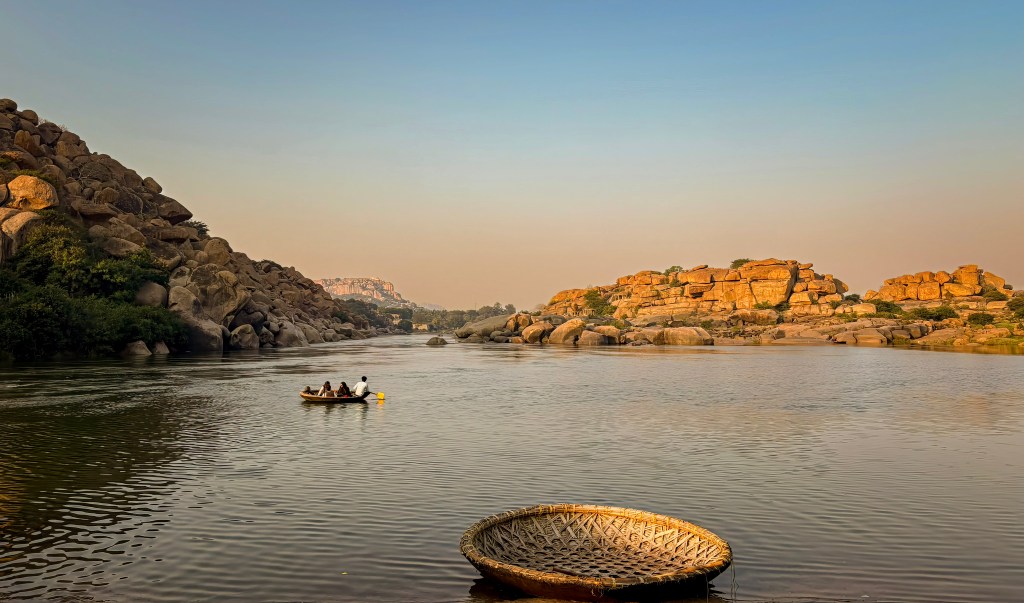
- Tungabhadra Trek & Coracle Ride — sunset coracle ride past Kotilinga Temple and riverside ruins
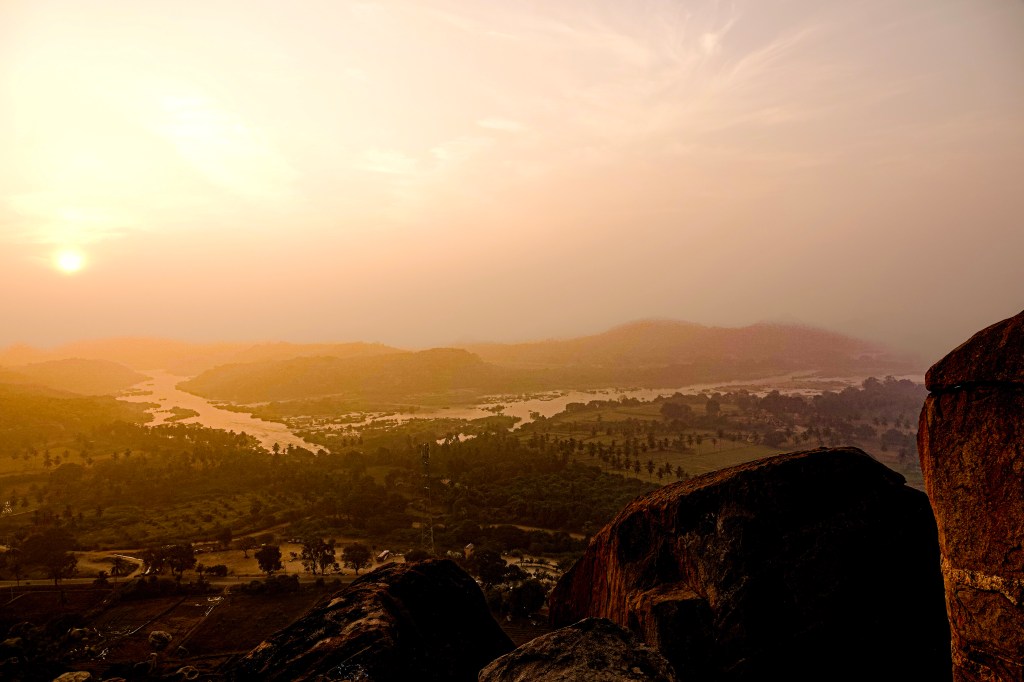
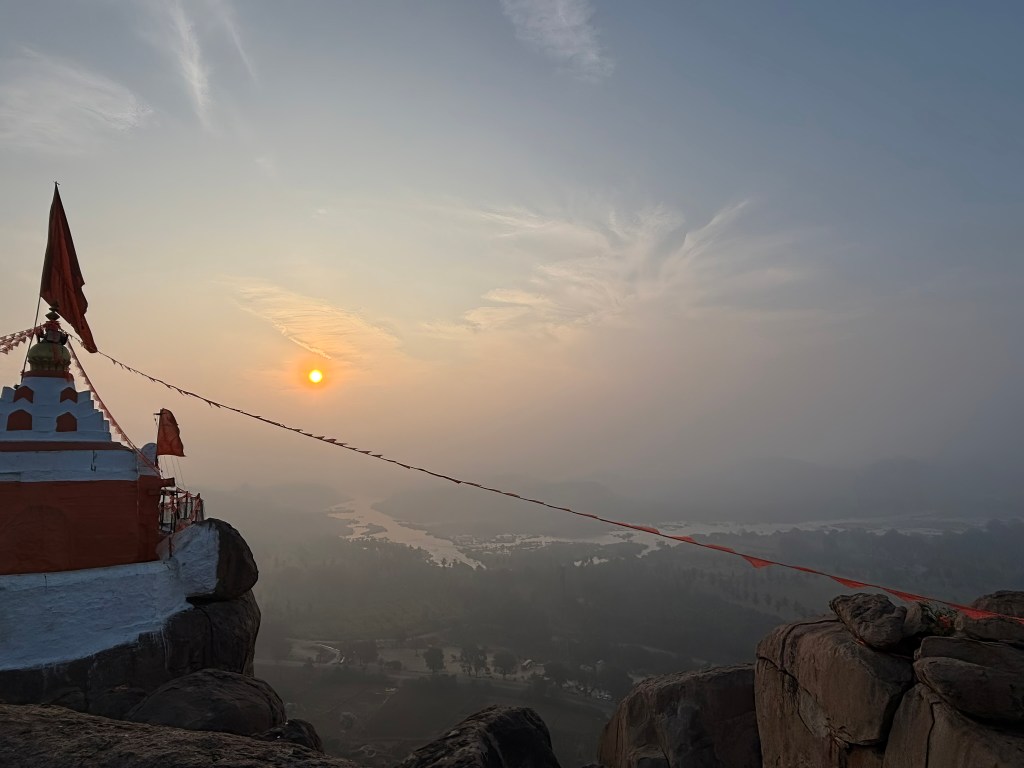
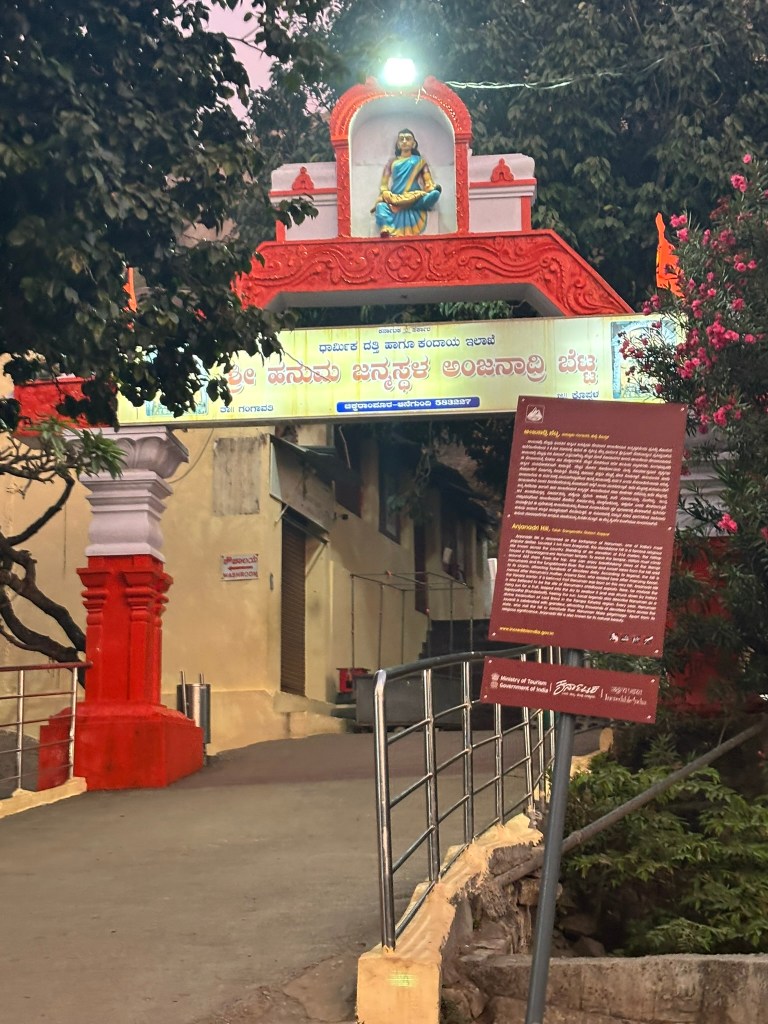
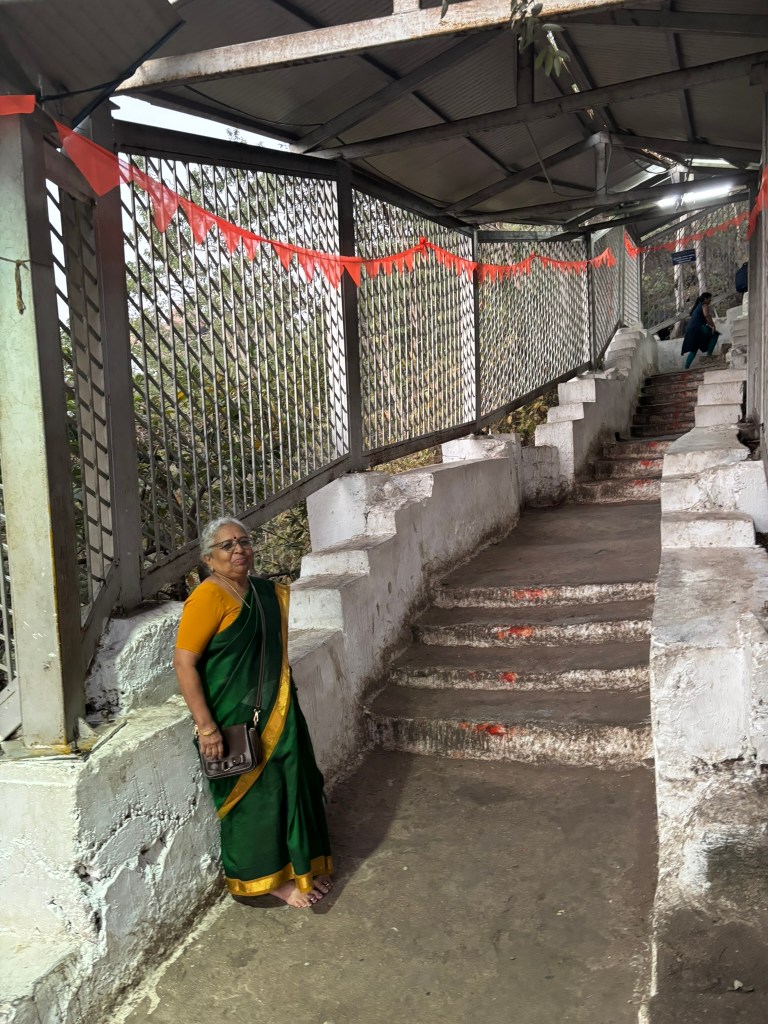
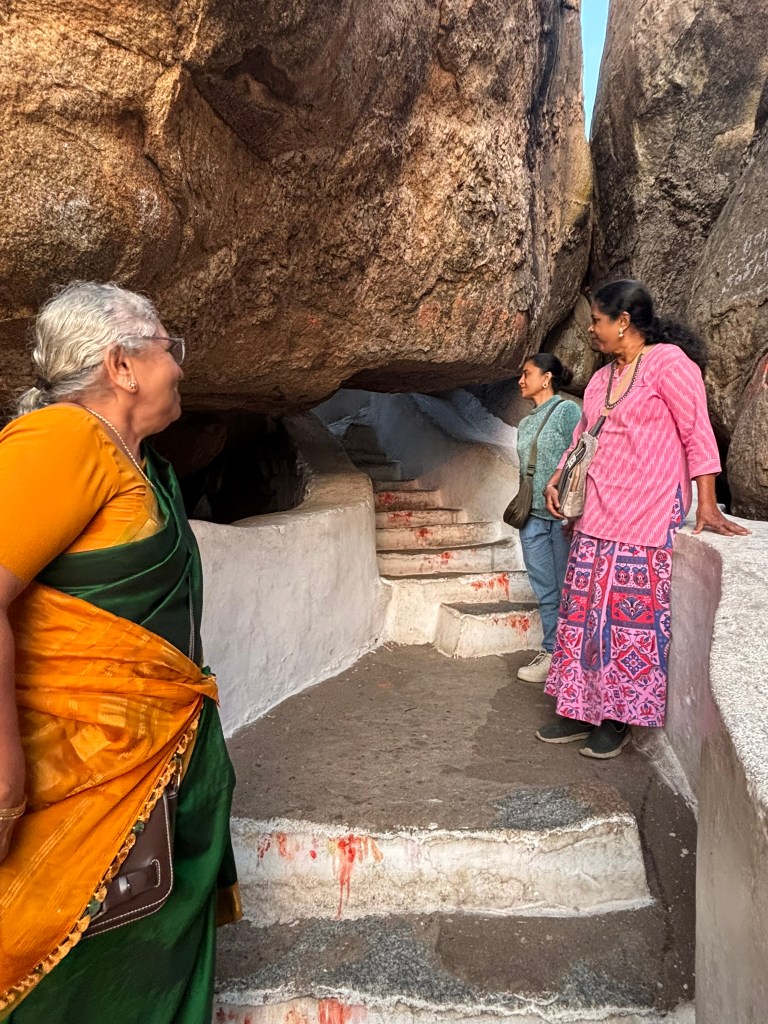
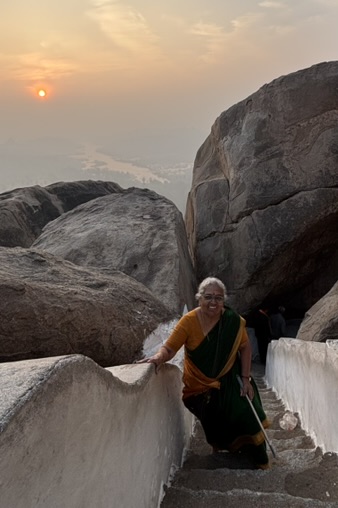
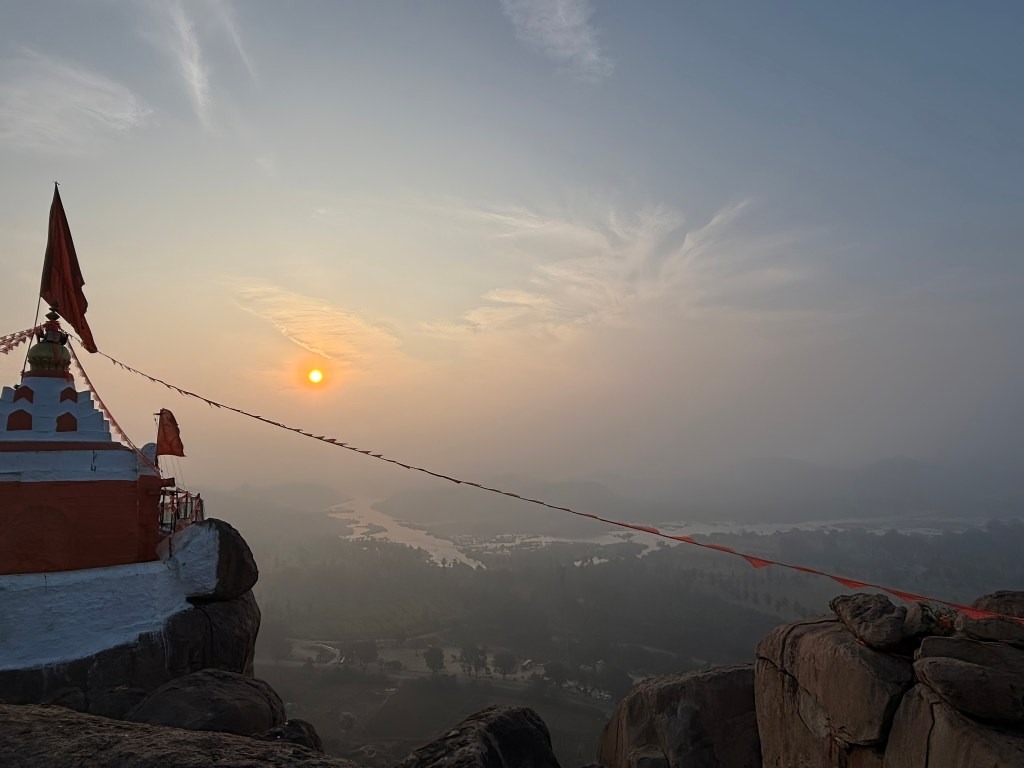
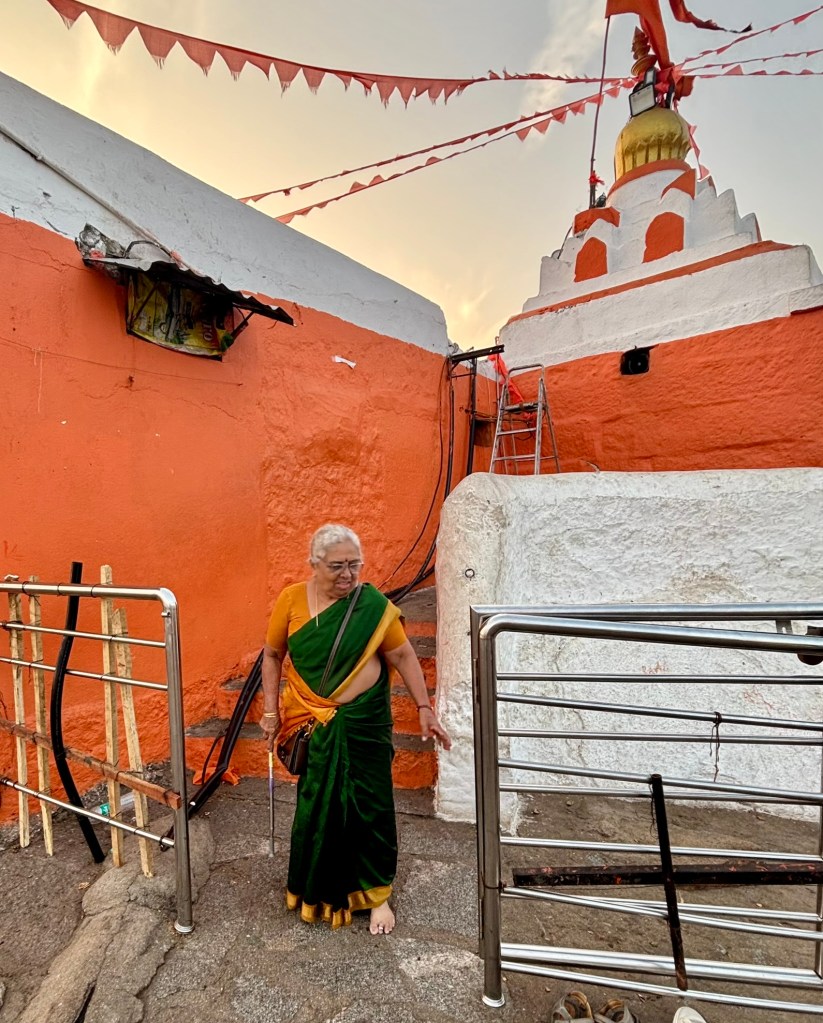
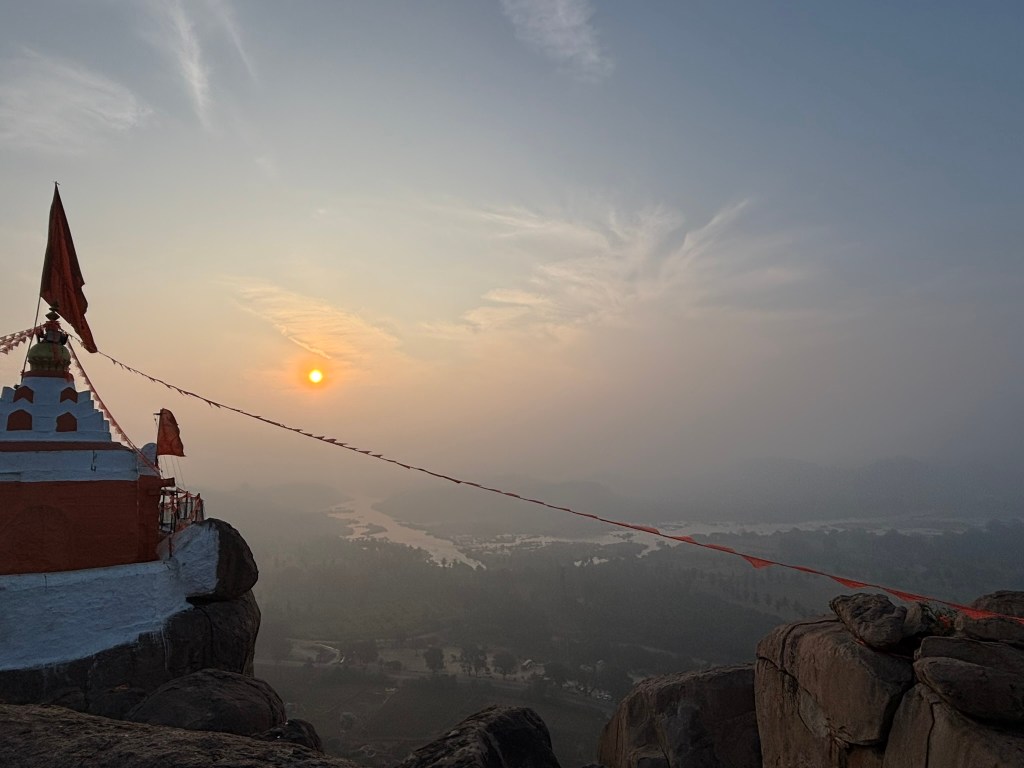
- Anegundi & Anjanadri Hill — sunrise hike to Hanuman’s birthplace, craft clusters, banana‑silk weaving
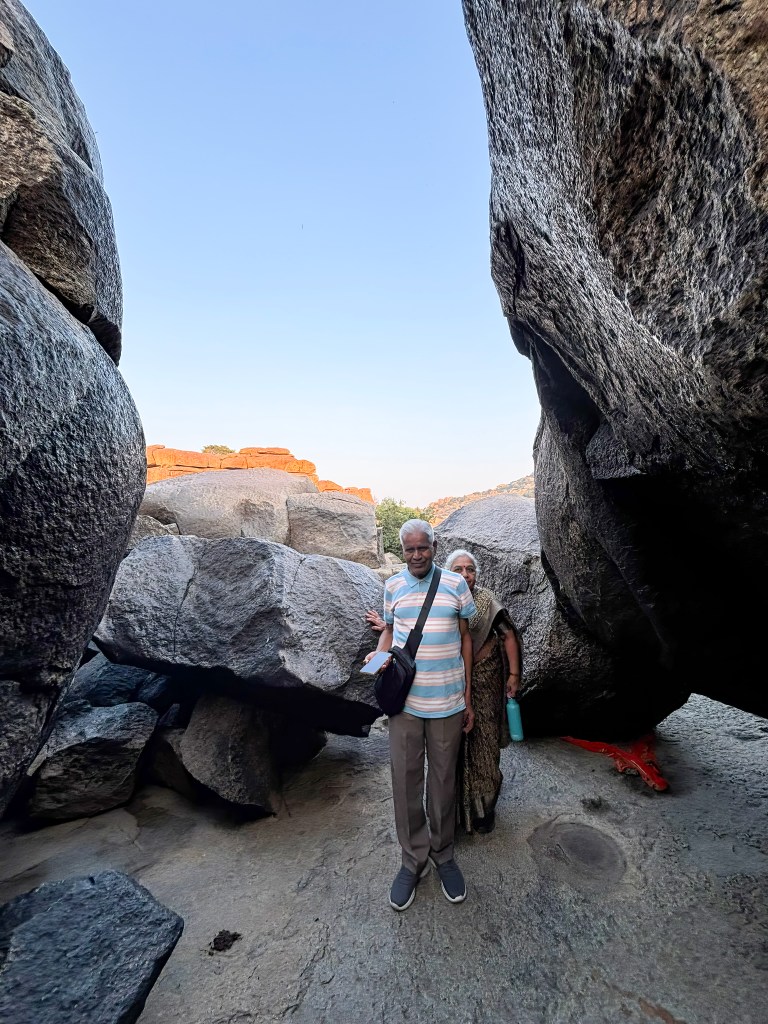
Each trail is led by knowledgeable naturalists and historians who weave together geology, architecture, mythology, and local stories. We completed each of these excursions over 3 days. We had an amazing guide. He made visiting the historic places incredible with his knowledge.
I have written about our experience on each of these trails here
Other amenities
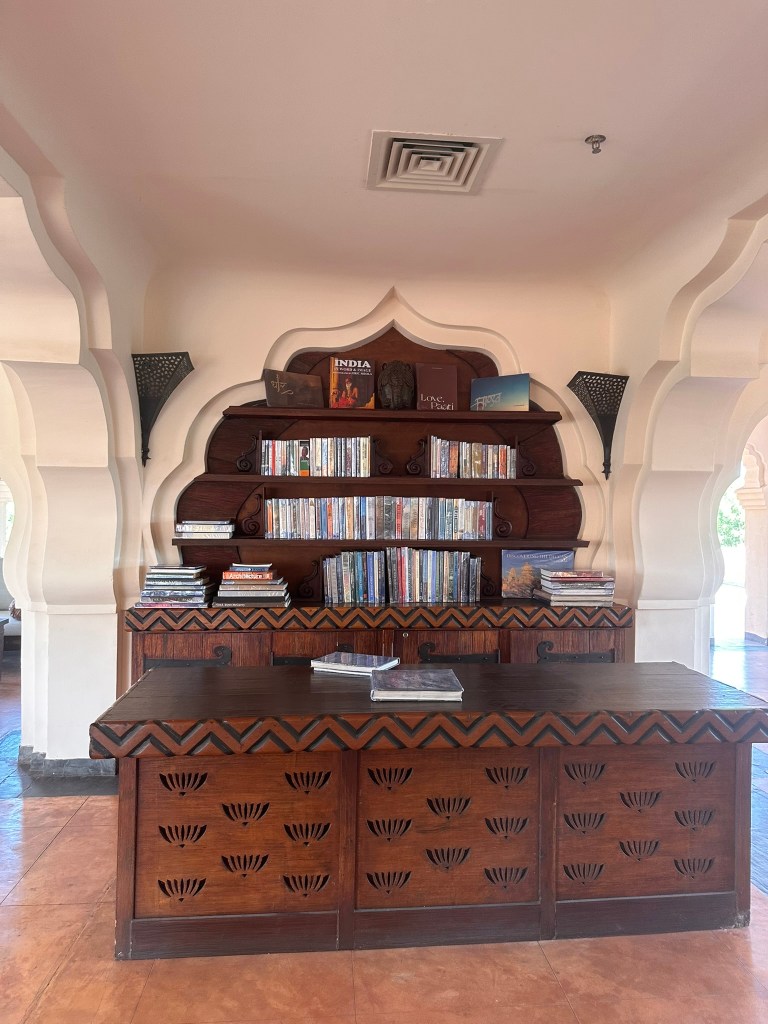
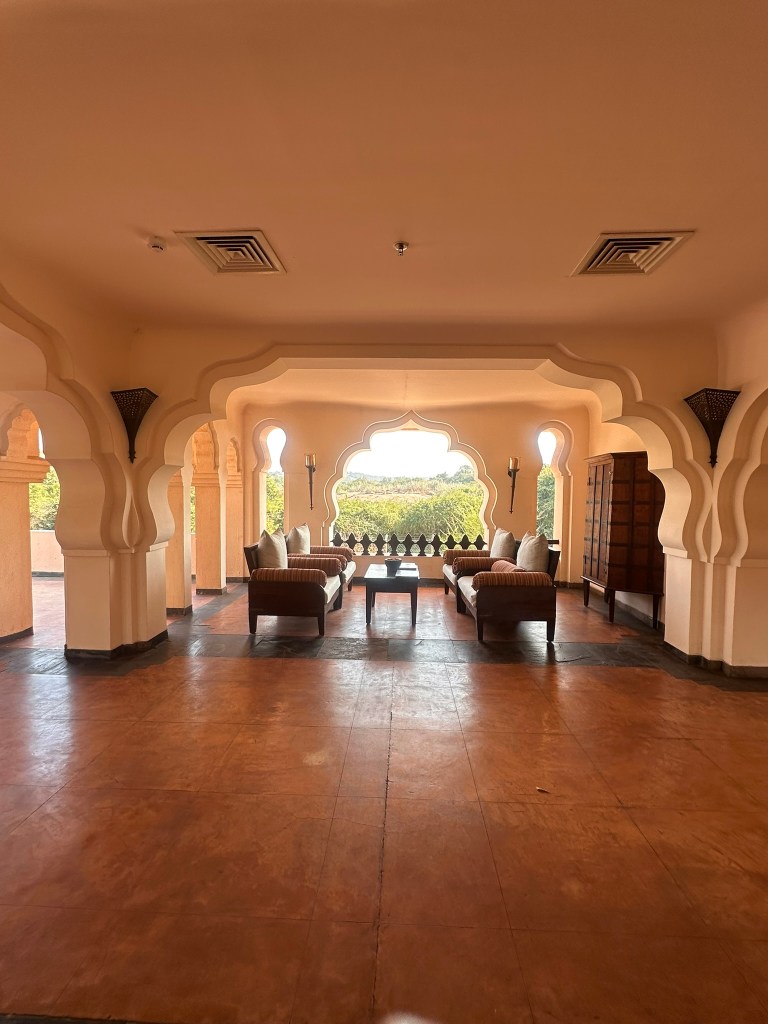
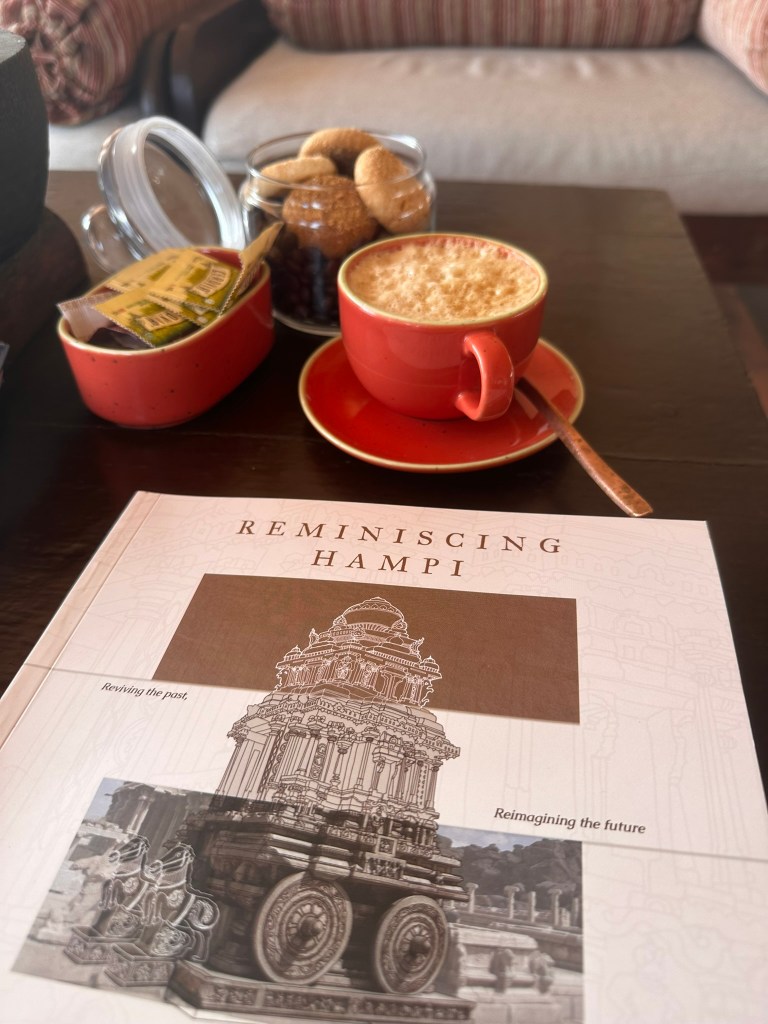
The Evolve Back Hotel has a bookstore, library, and spa. We didn’t have enough time to check out the spa. My favorite place was the library. I would spend my afternoons here after the morning excursions. On the first day I was here, a staff member approached me. They asked if I would like to have coffee or tea. Then, they brought cookies to enjoy with my drink. This is a complimentary service and became my favorite ritual during the stay. The kind of corner invites you to linger. Between the earthy stone architecture and light breeze coming through the open windows, I would get lost in the books. Whether I’m flipping through travel journals or simply soaking in the serene ambiance, this cozy nook has become my go‑to escape, a perfect blend of comfort, culture, and calm amid the grandeur of Hampi’s ancient landscape.
A Stay That Lives in Memory
Evolve Back, Hampi is more than a luxury resort—it is an experience that mirrors the soul of the land. From rose‑petal welcomes to temple‑style aartis, from gourmet meals to immersive trails, every moment is crafted with care. It is a place where history is not merely remembered—it is lived.
 Peaks to Palaces