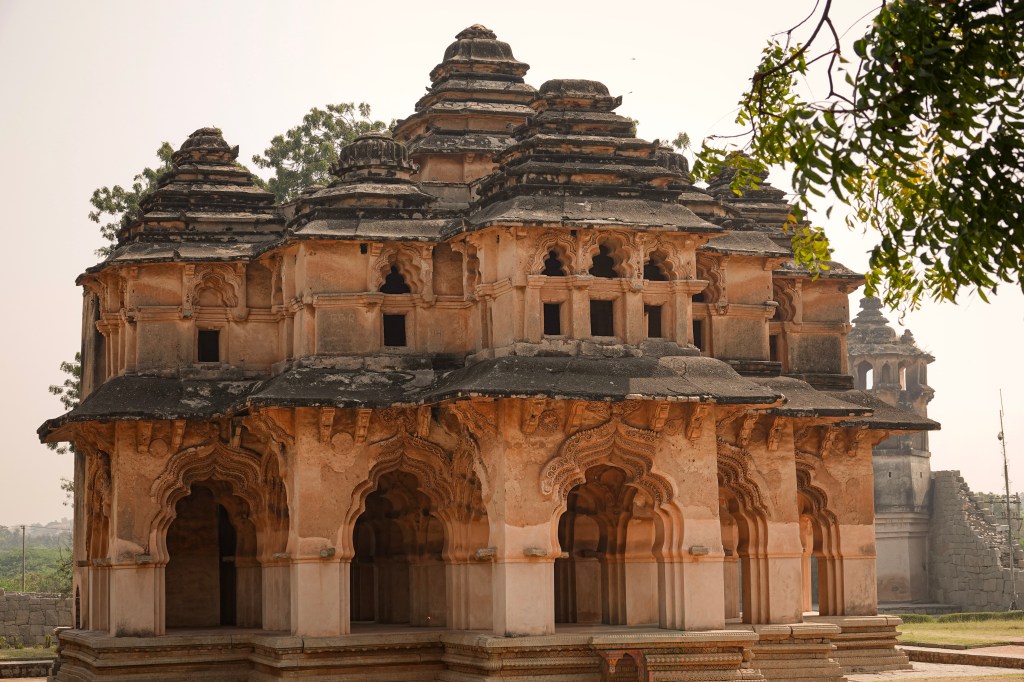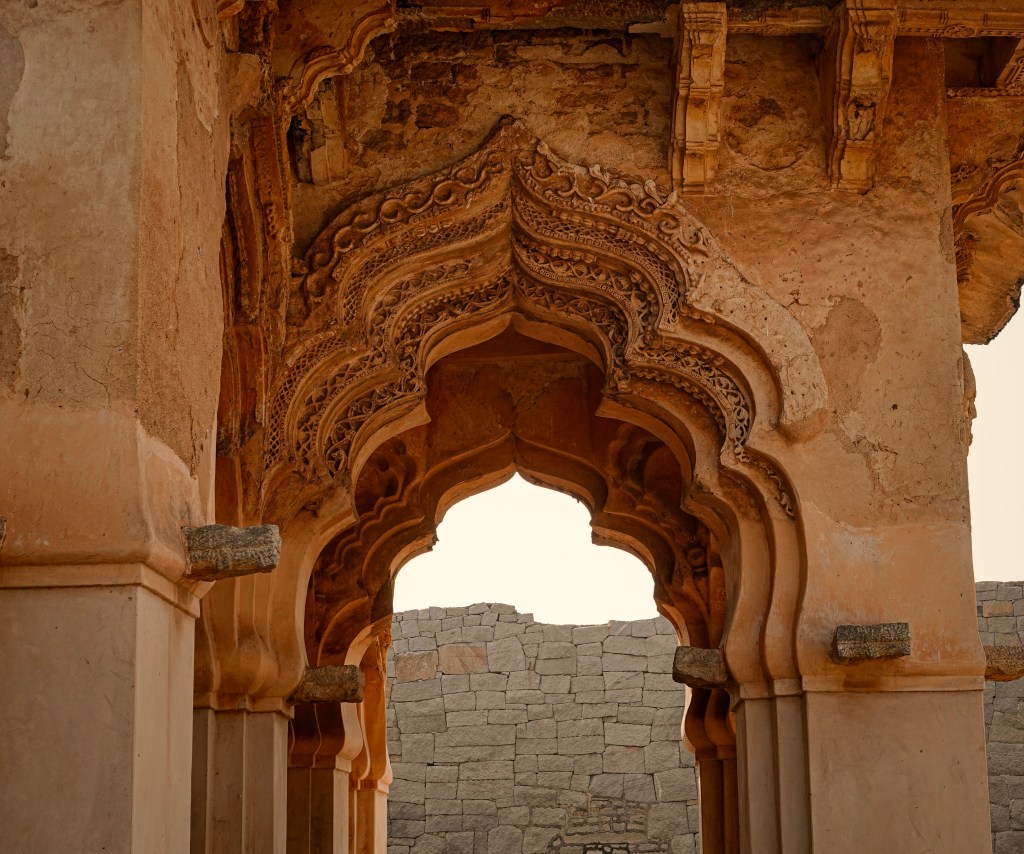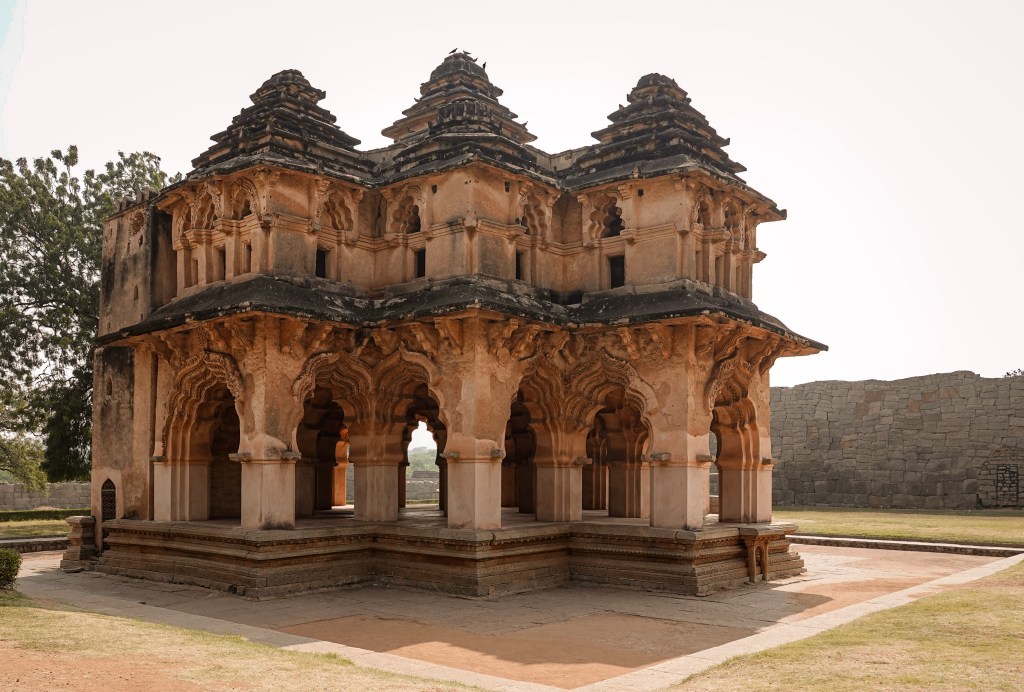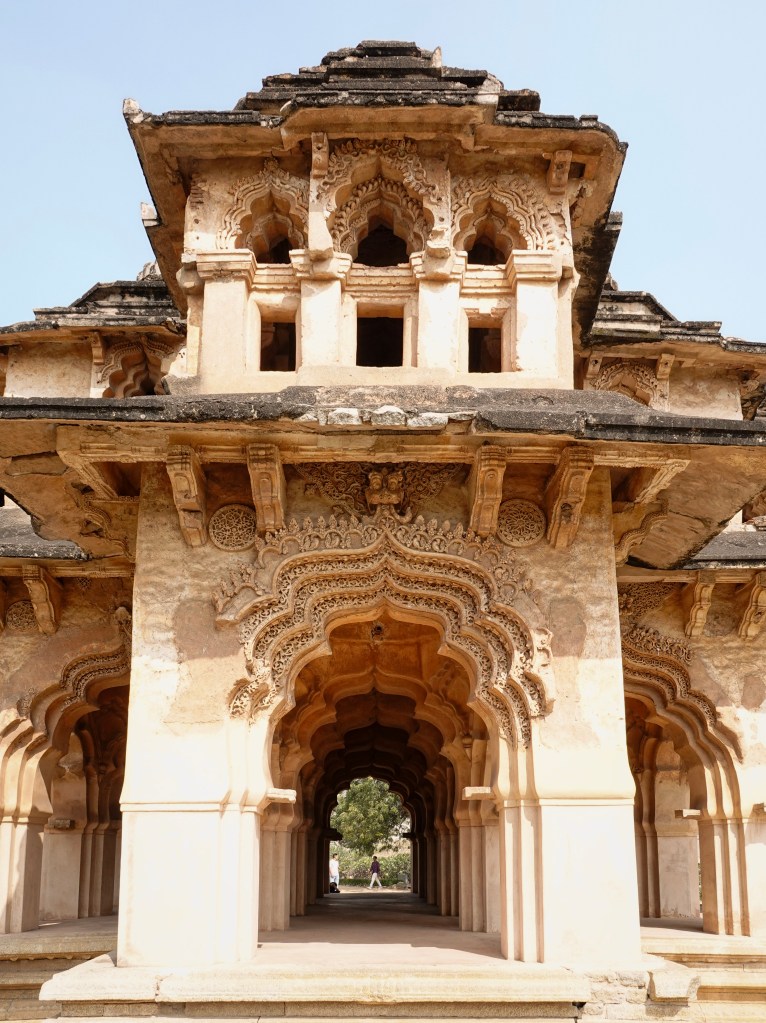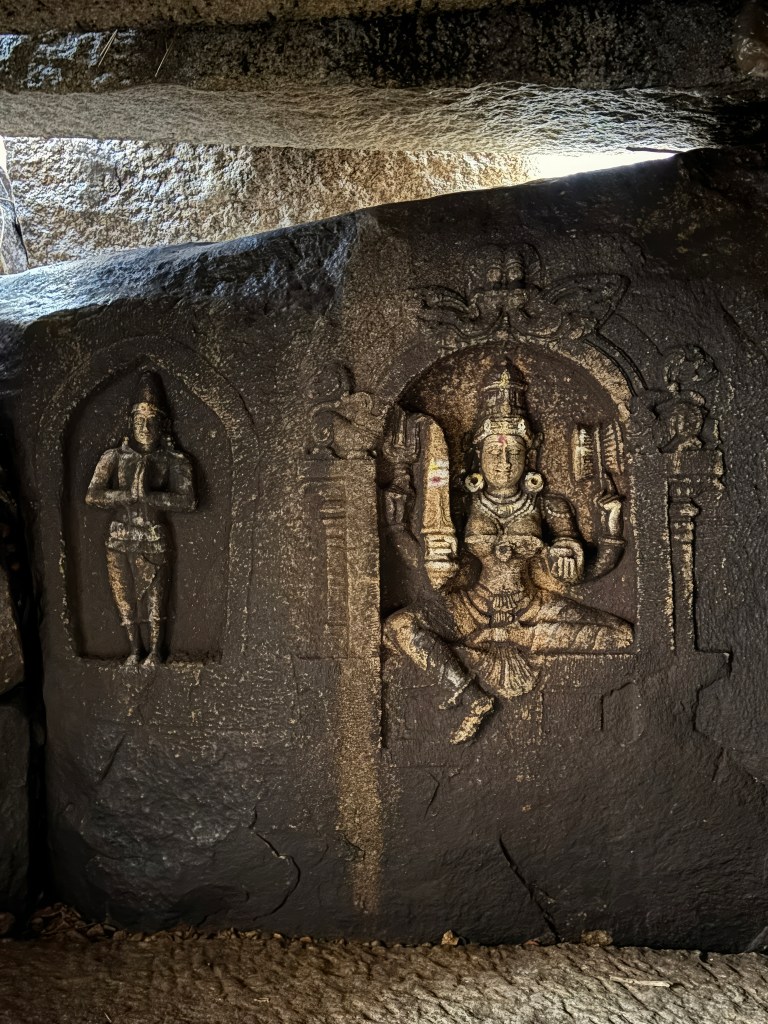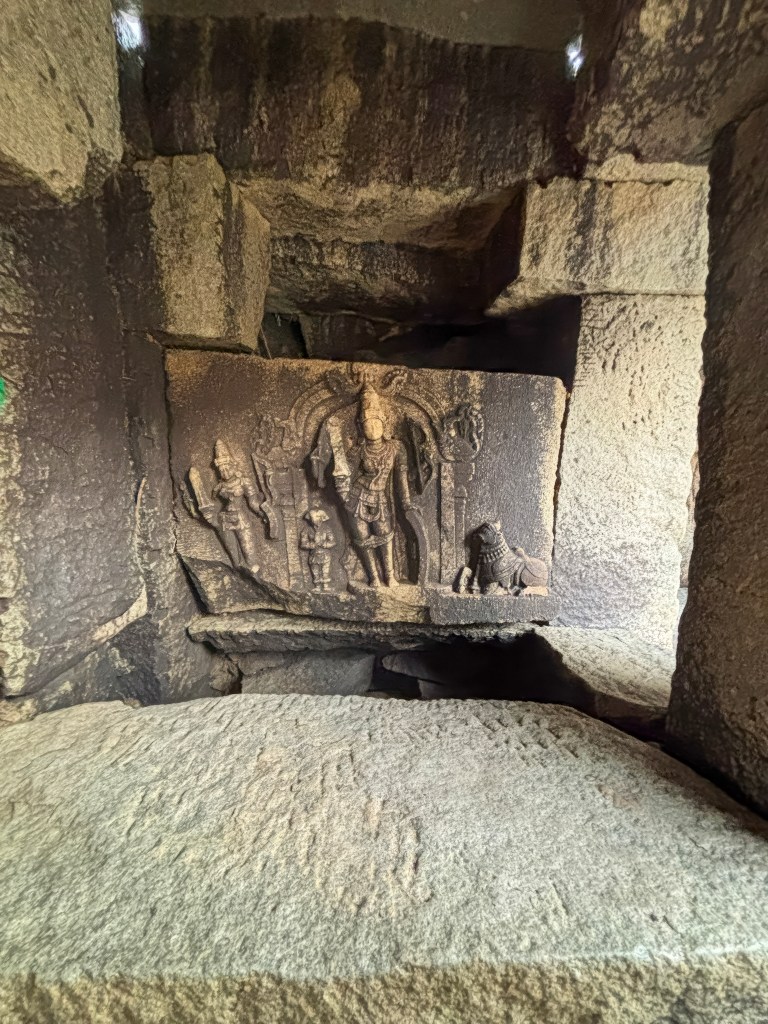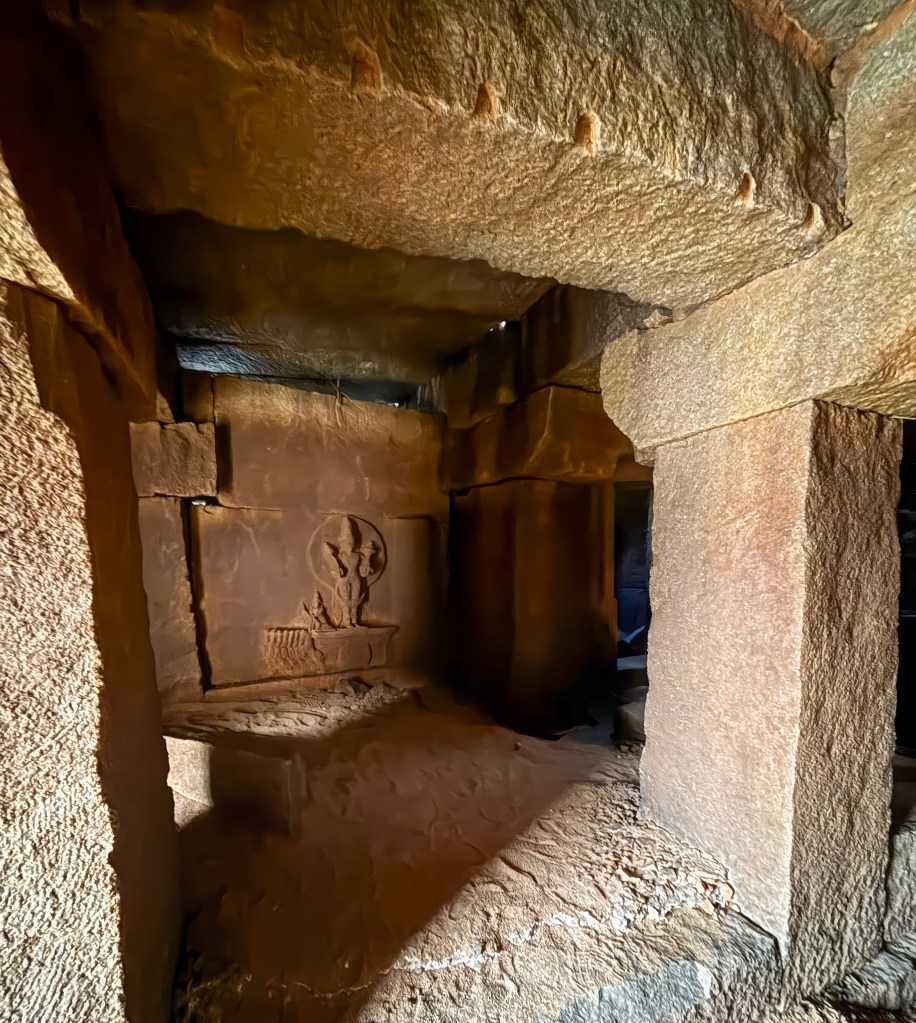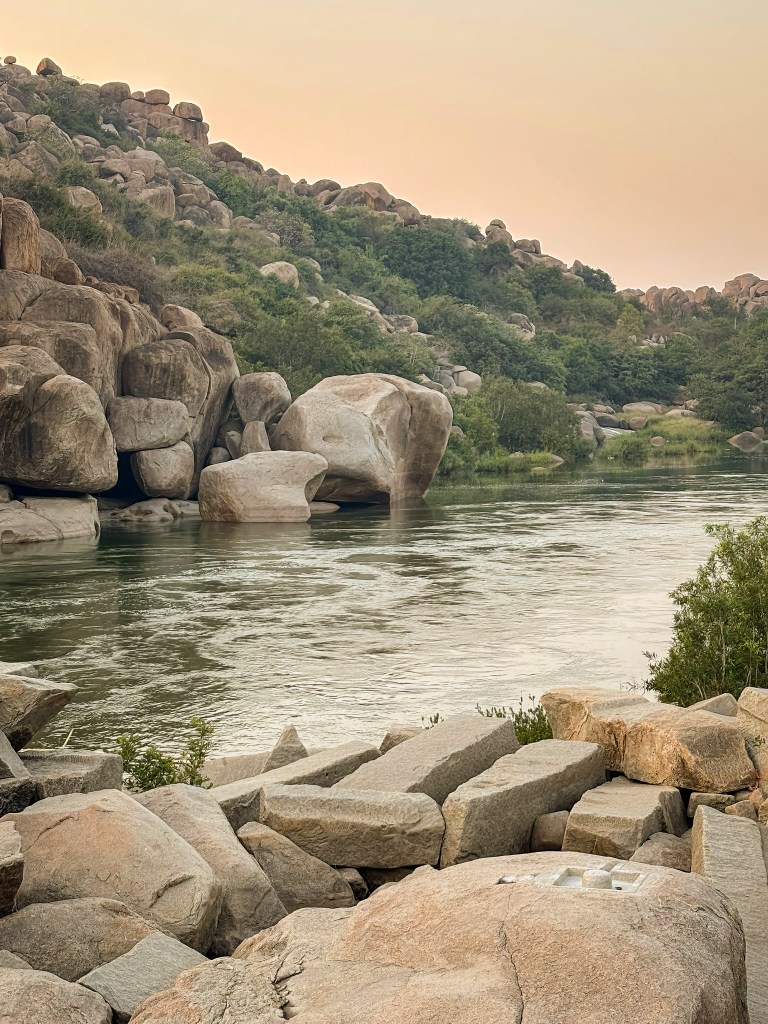
The Majestic Stone Chariot and Musical Pillars of Hampi

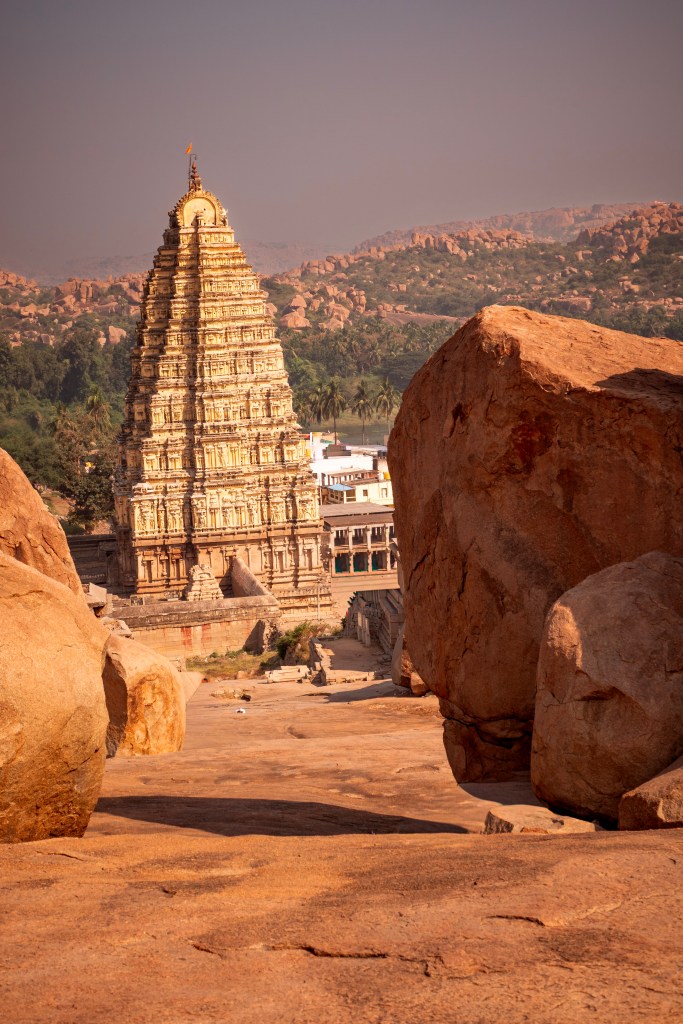
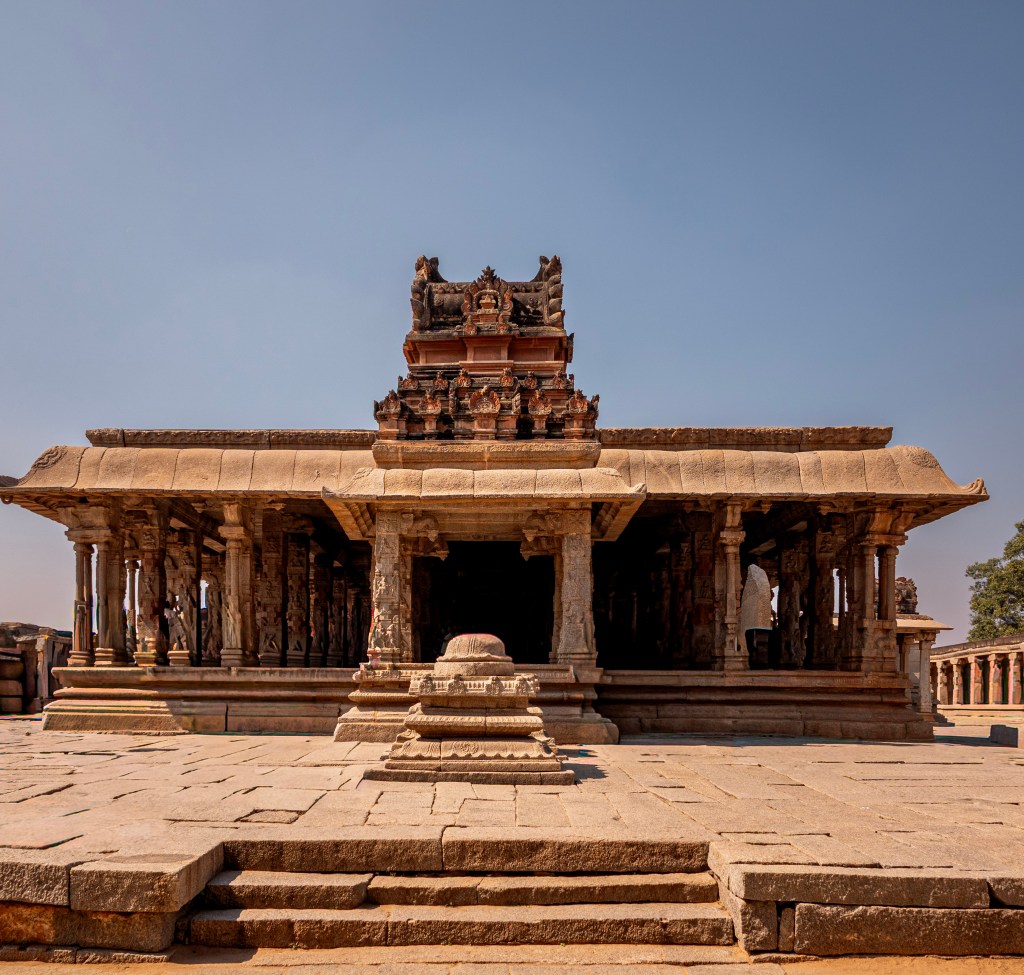
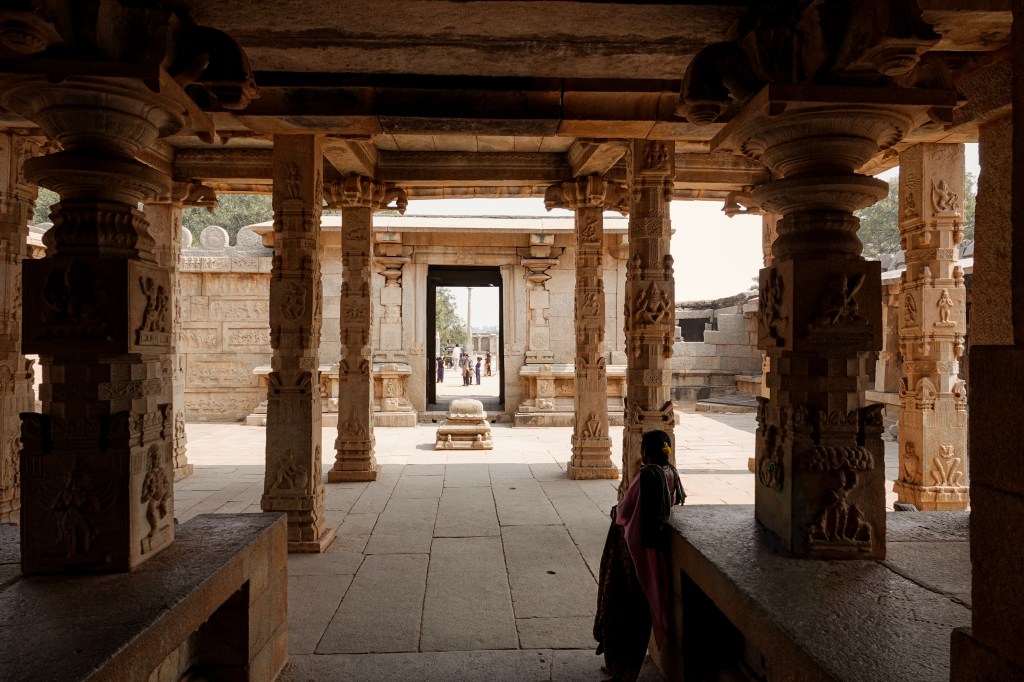
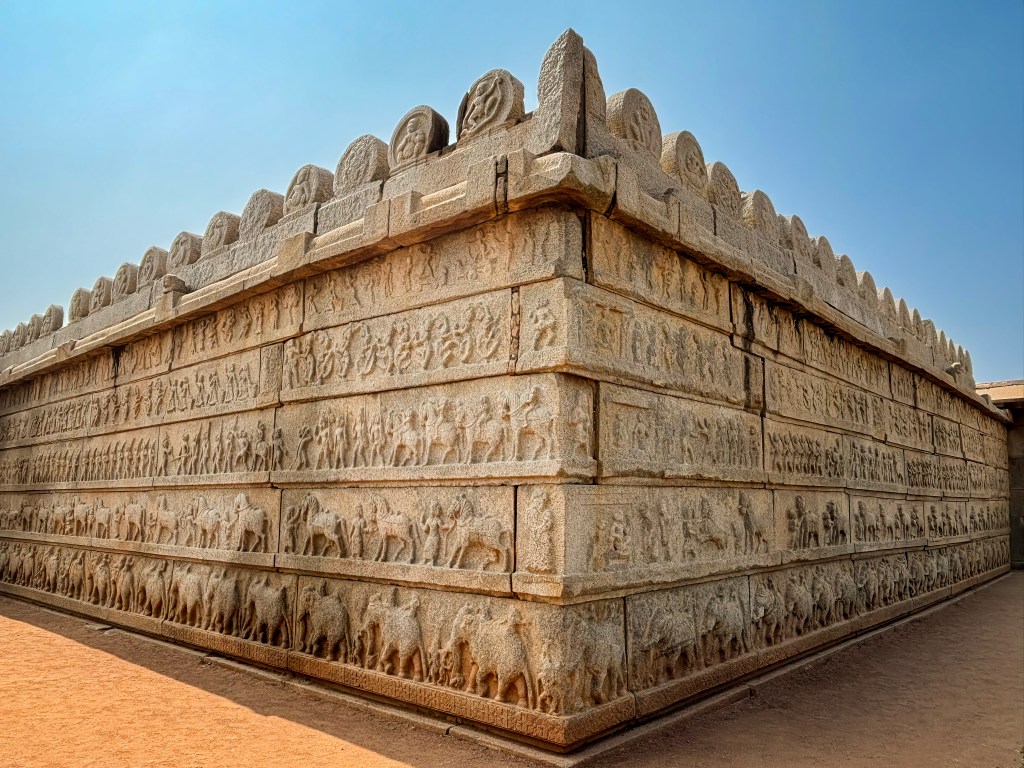
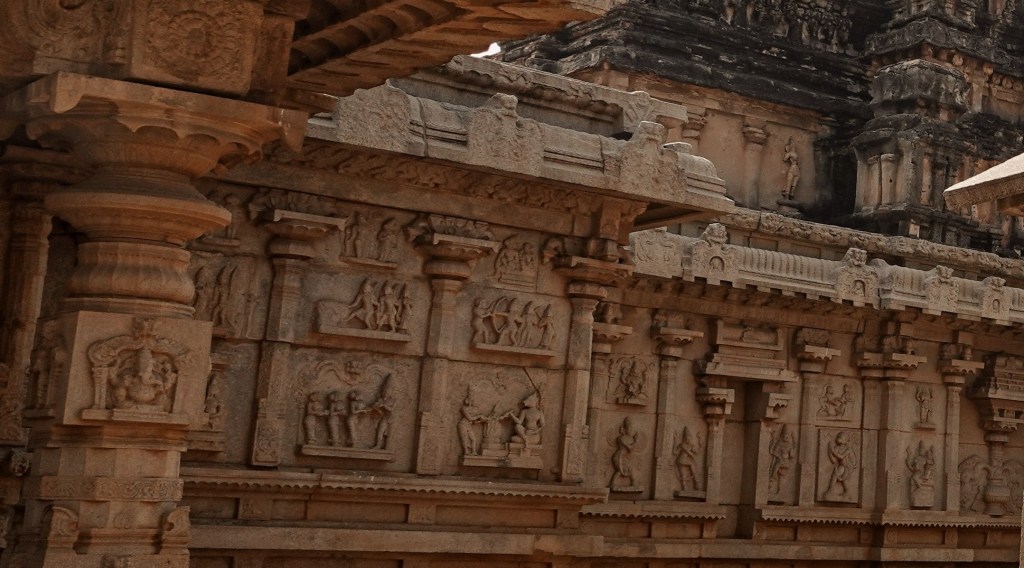
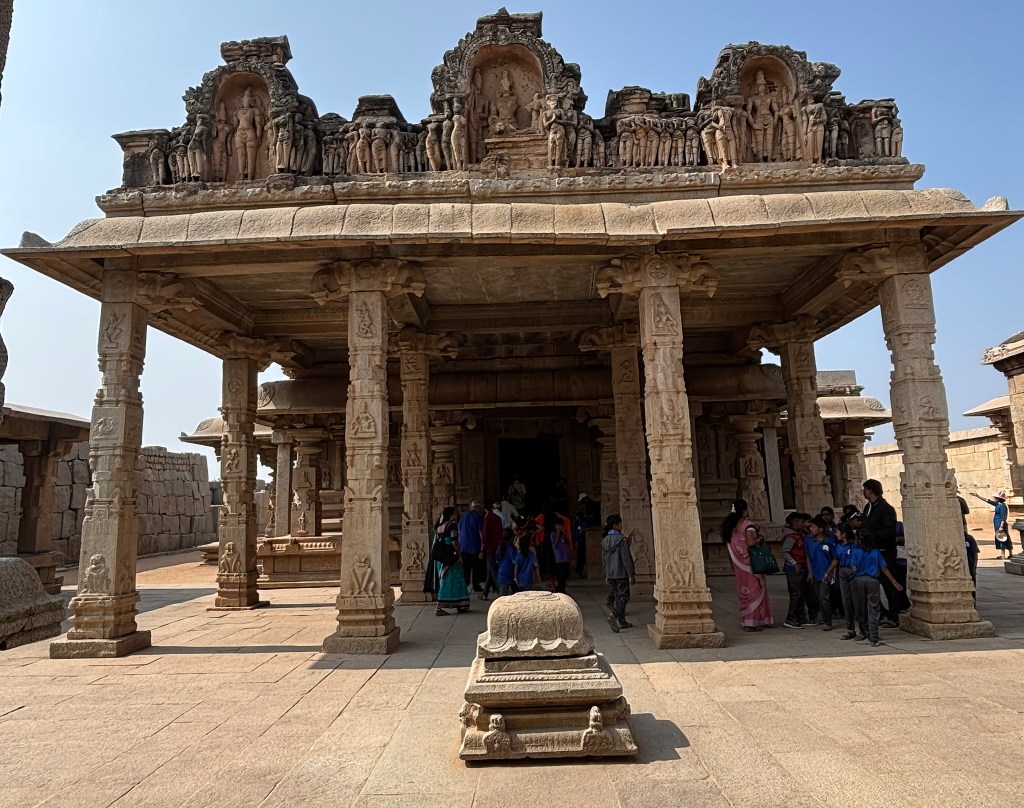
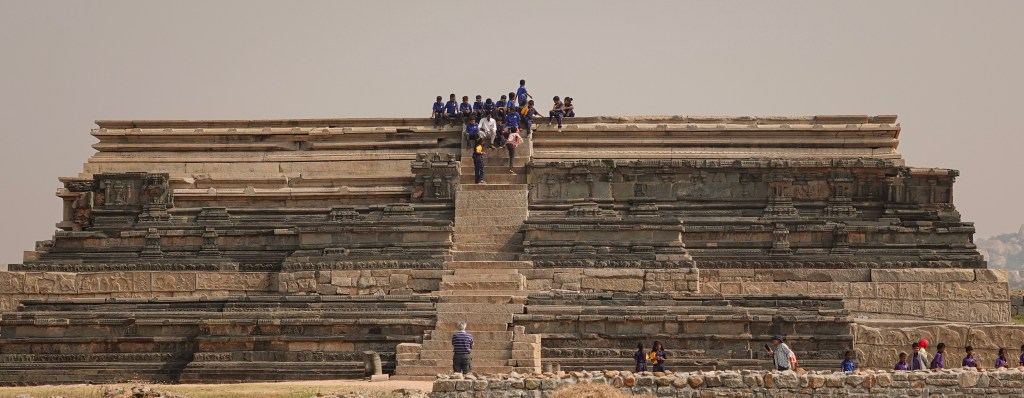
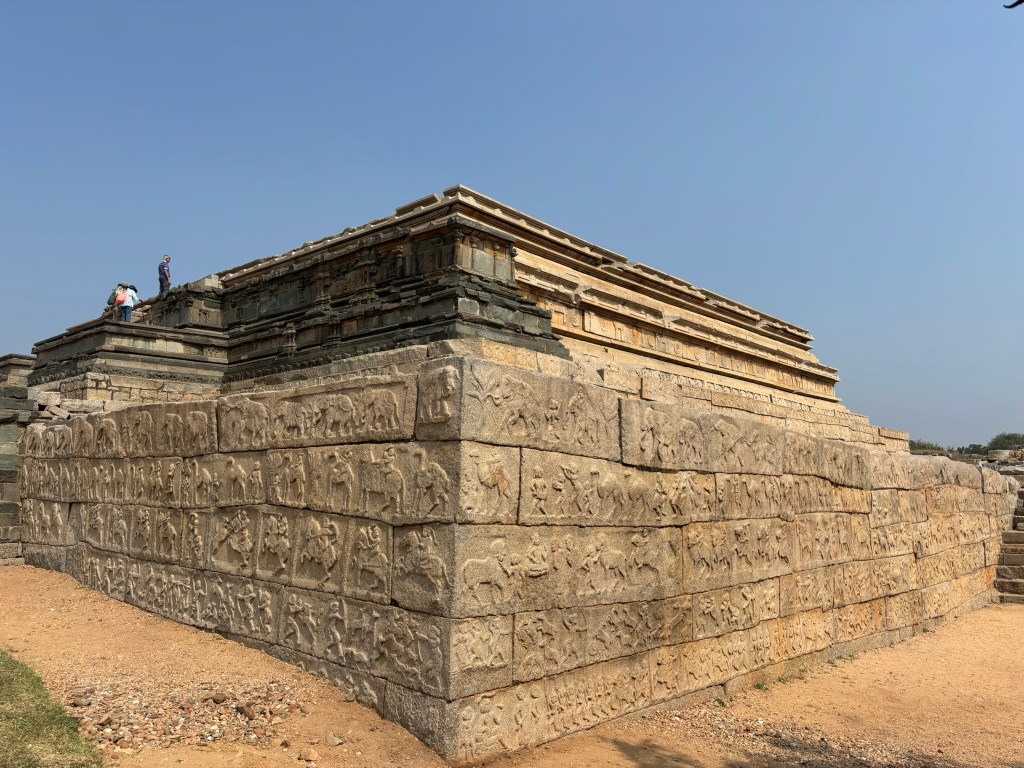
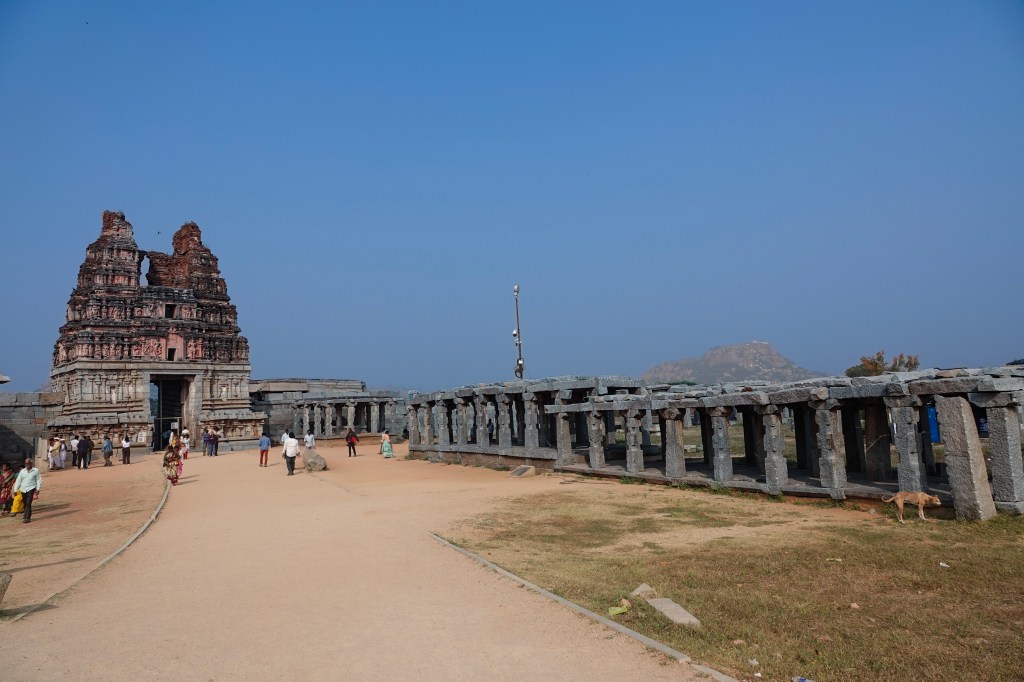
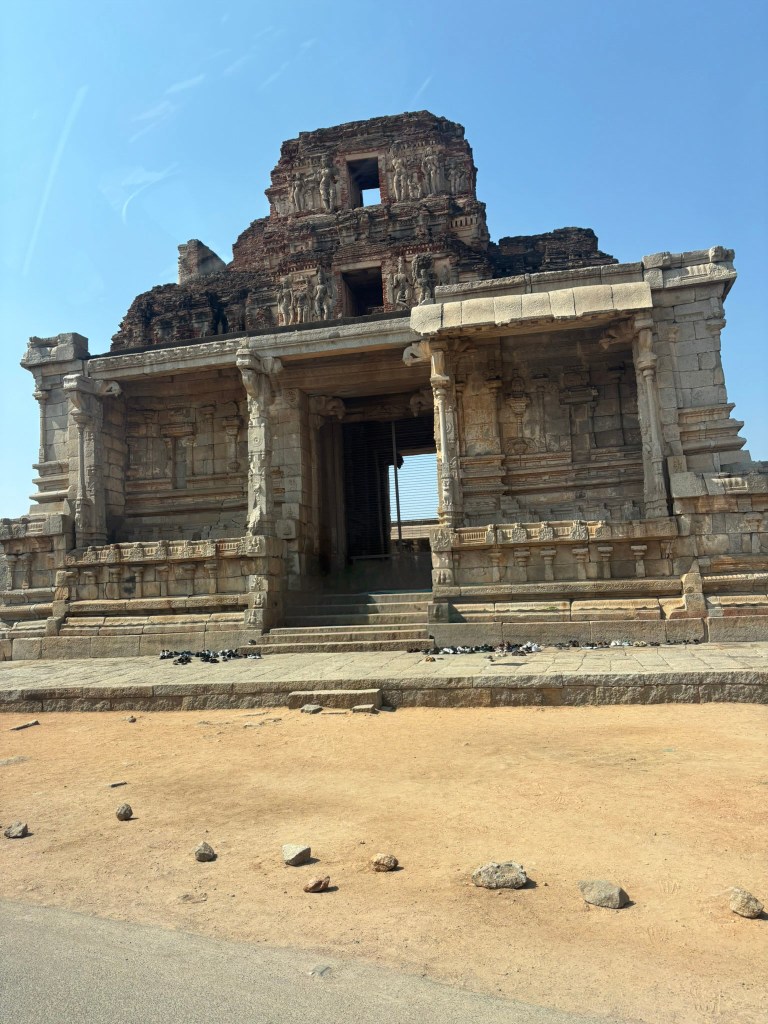
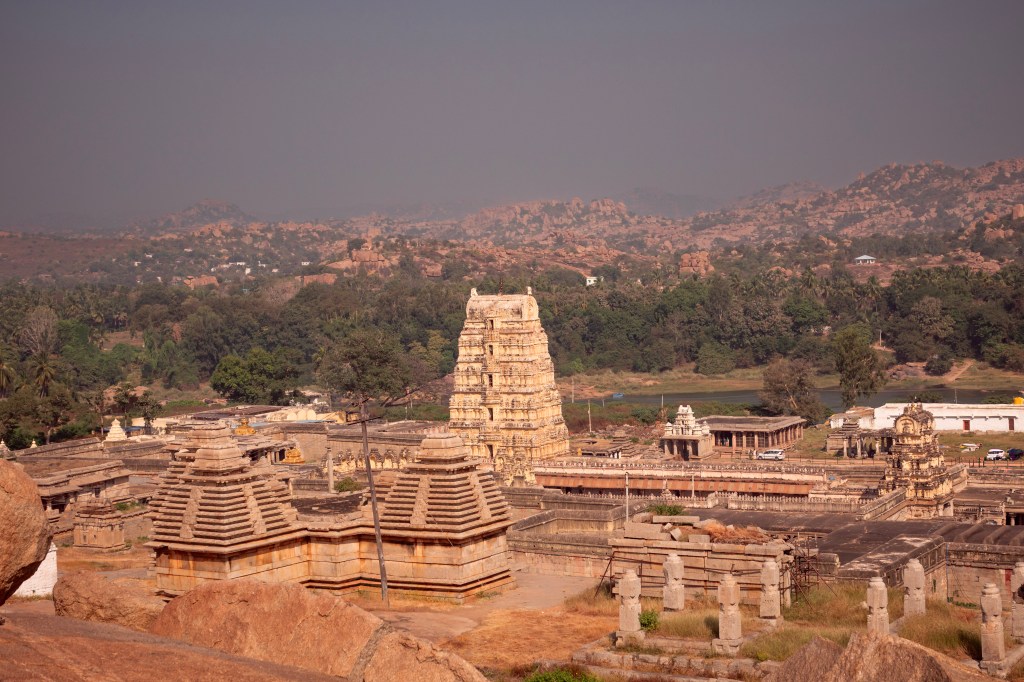
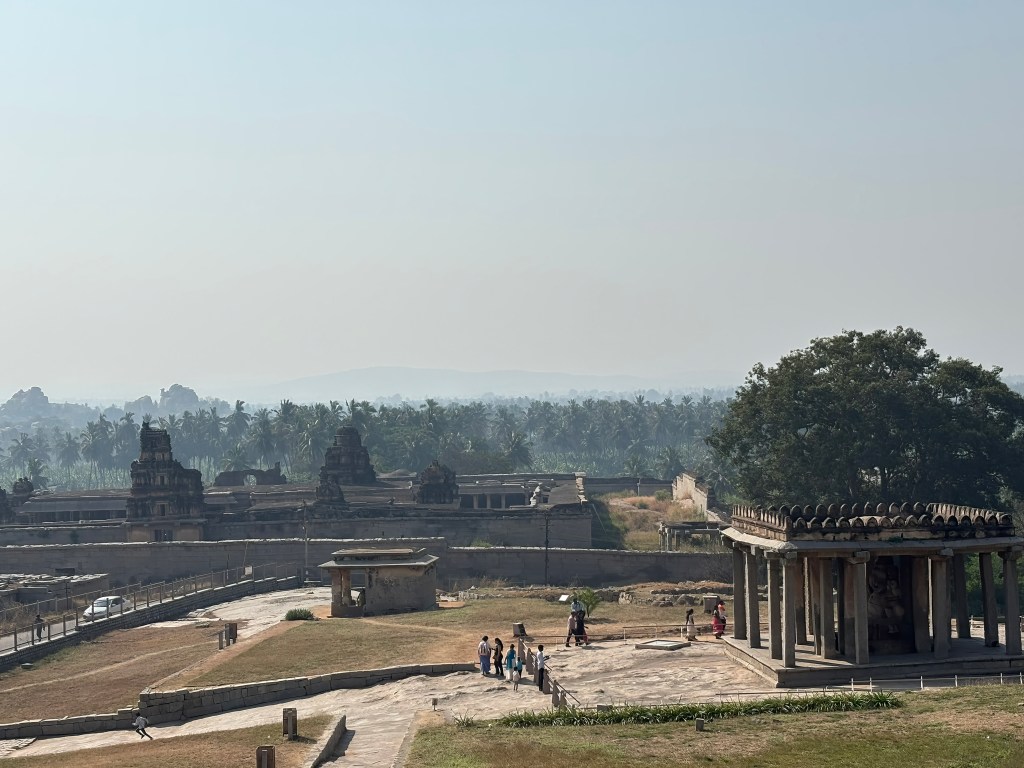
Some monuments are impressive, but Vitthala Temple truly captivates. If you have just a few hours in Hampi, this is the must-see spot. The temple embodies what Hampi represents and showcases remarkable Vijayanagar architecture.

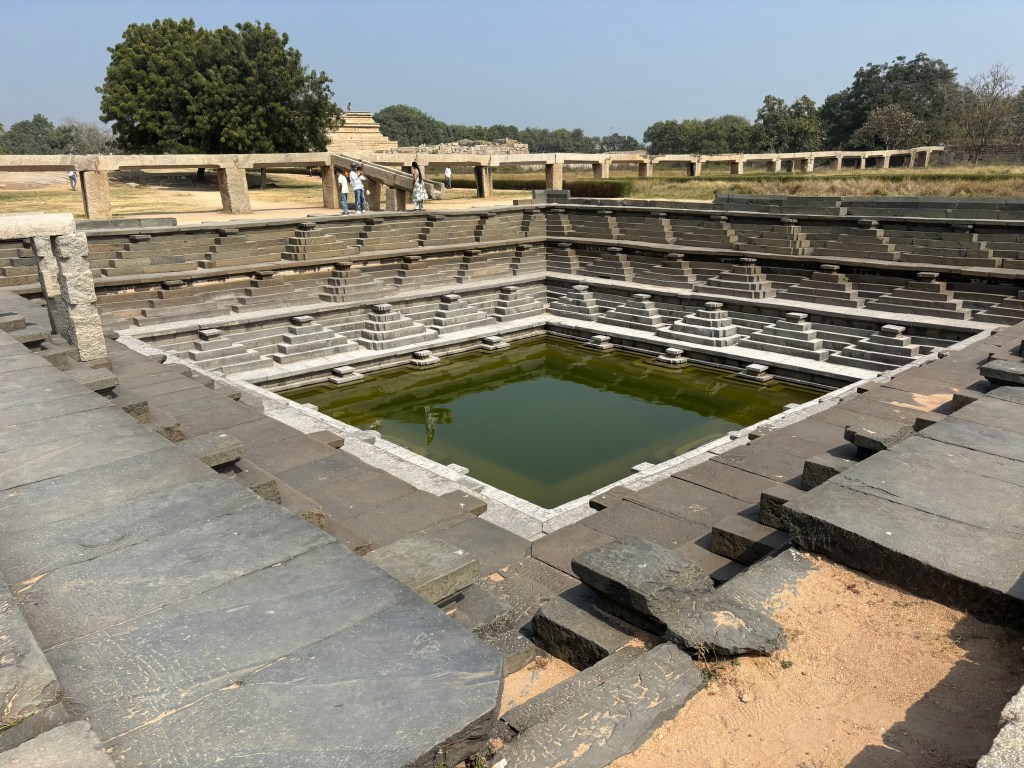
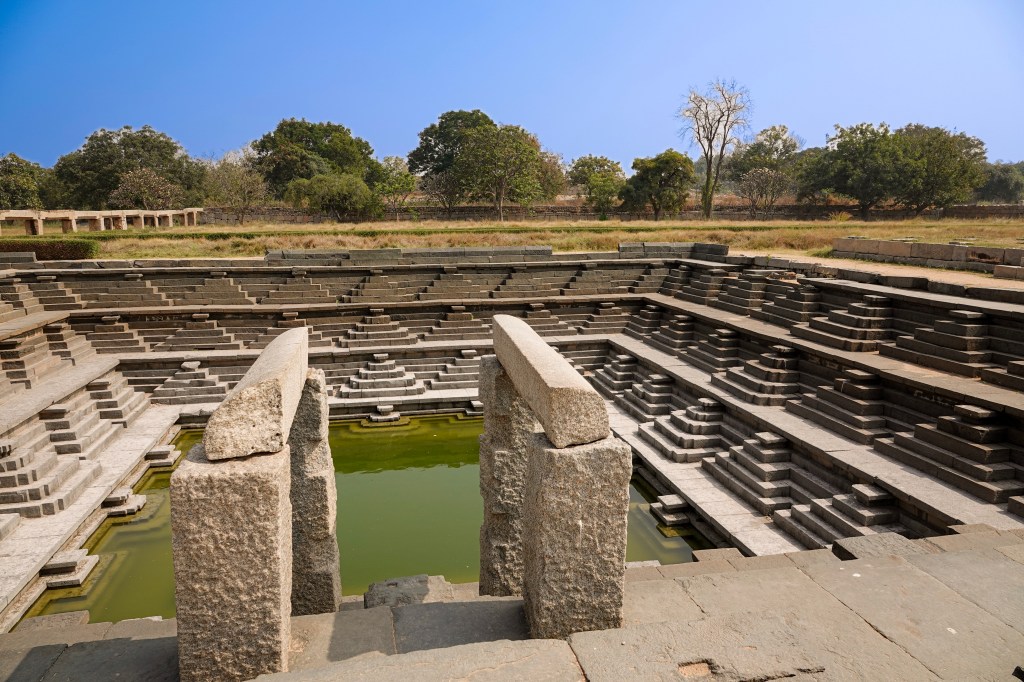
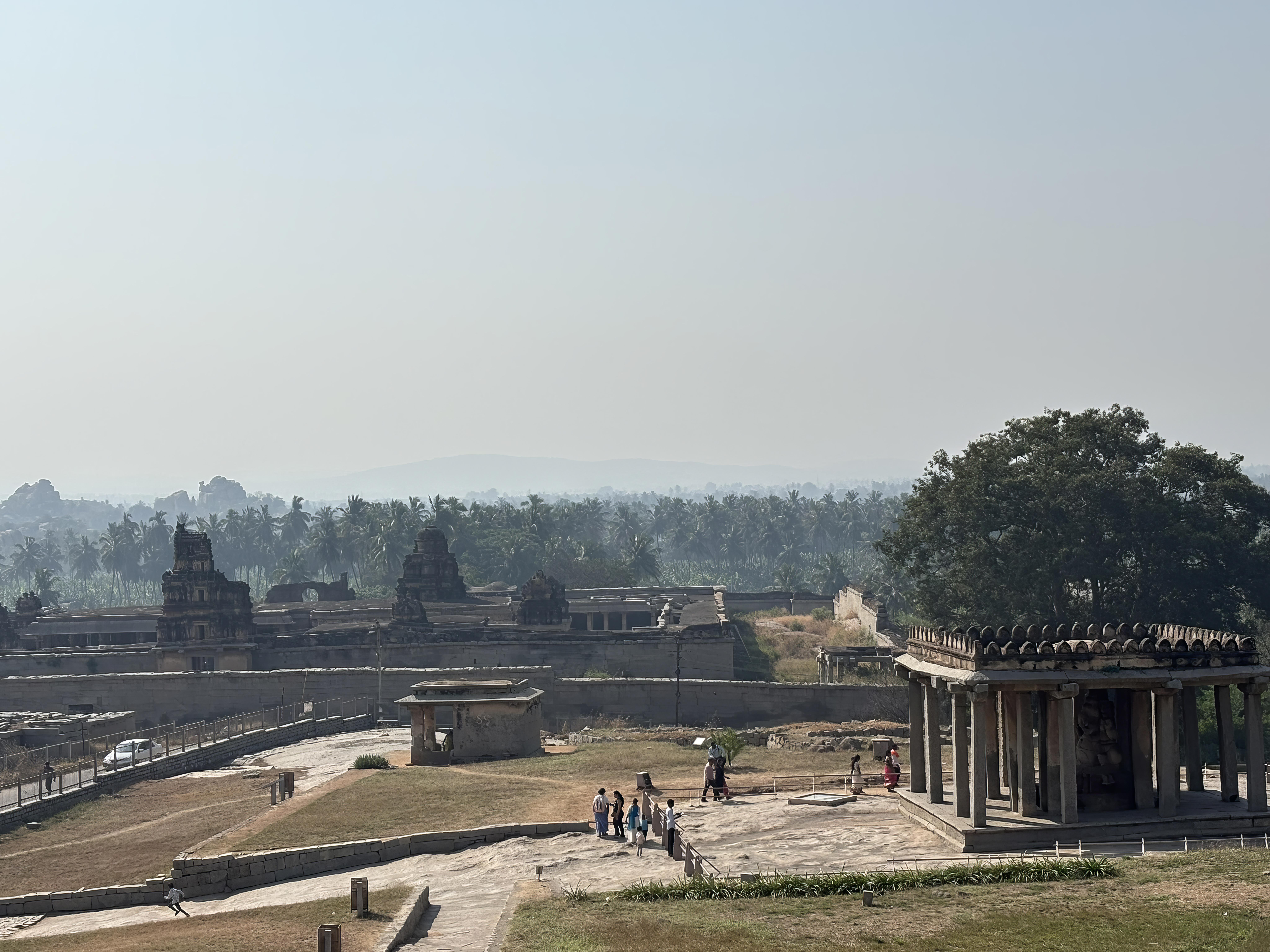
Pushkarani and Horse mantapa

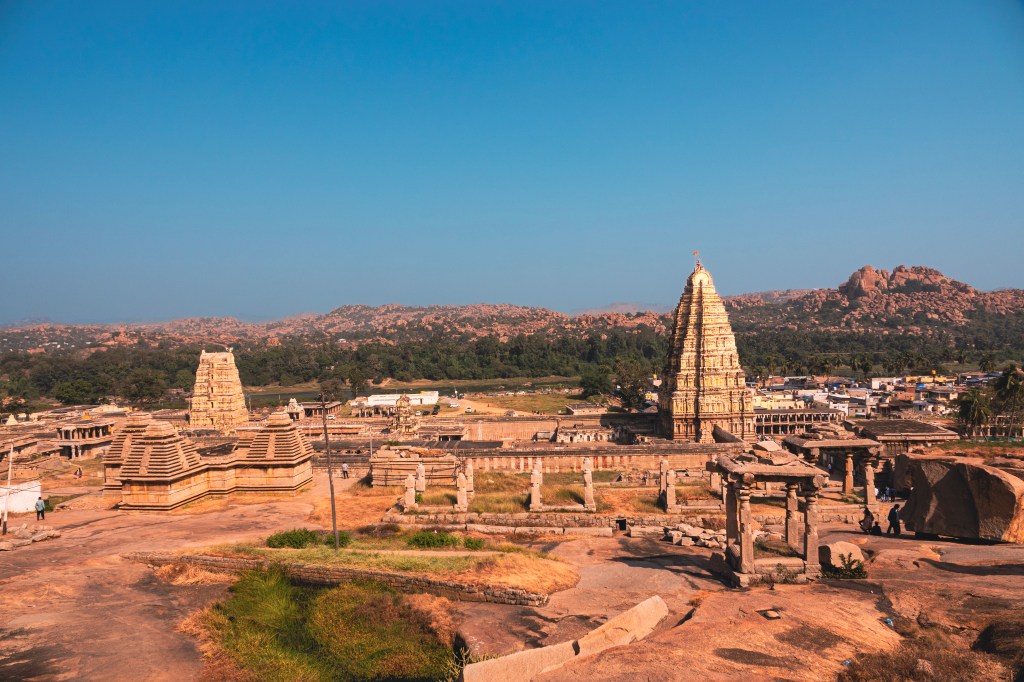
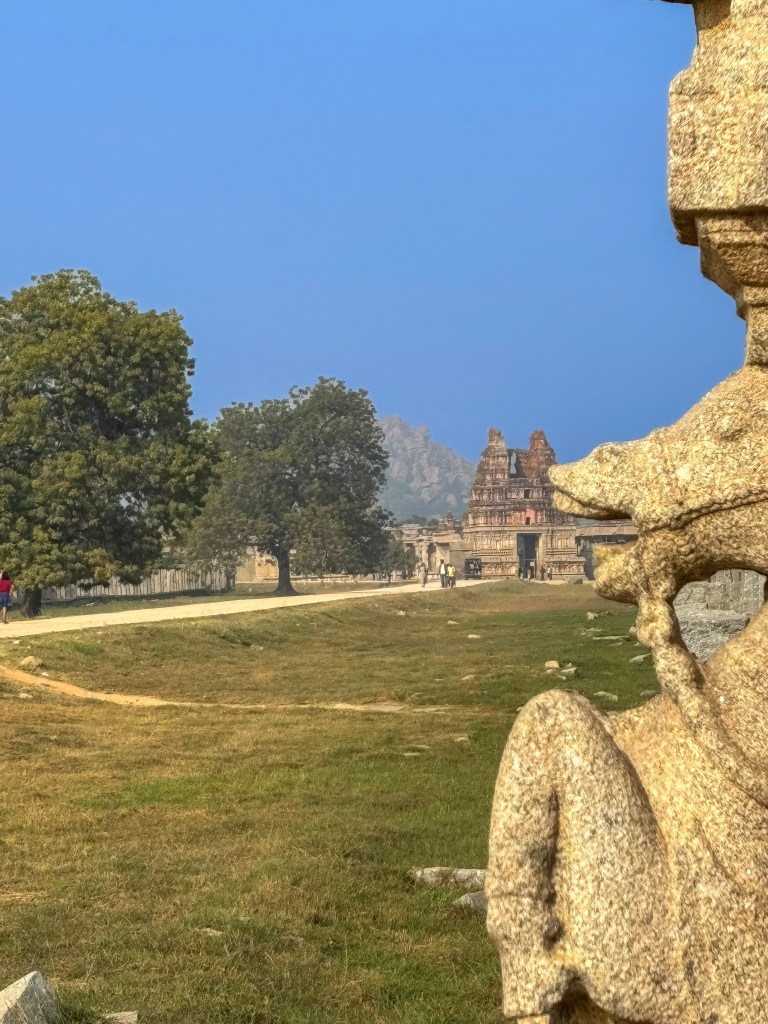
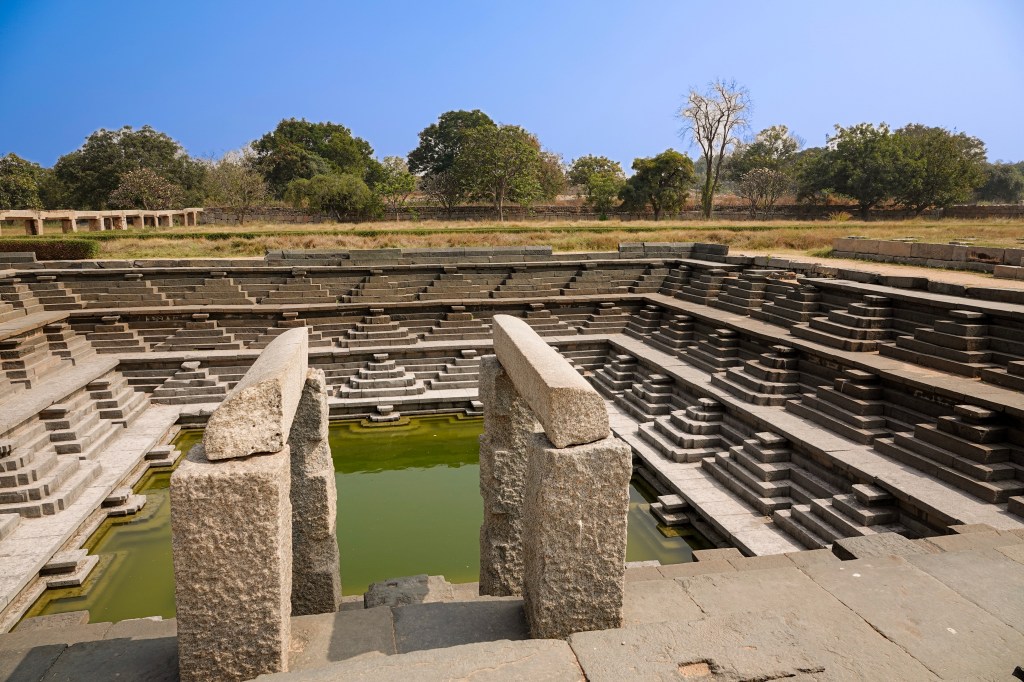
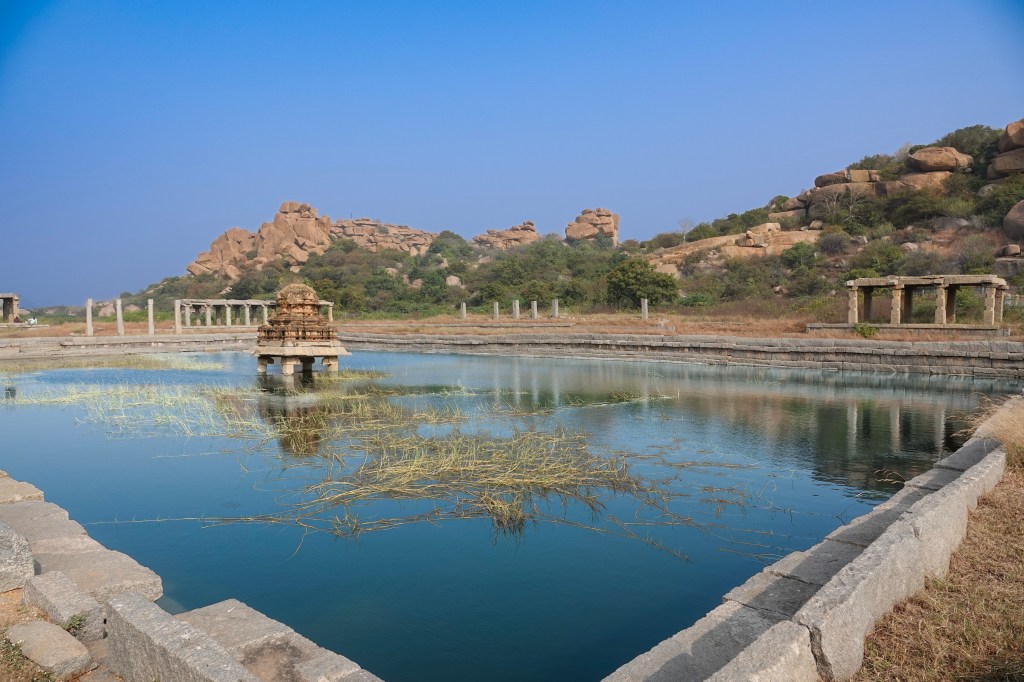
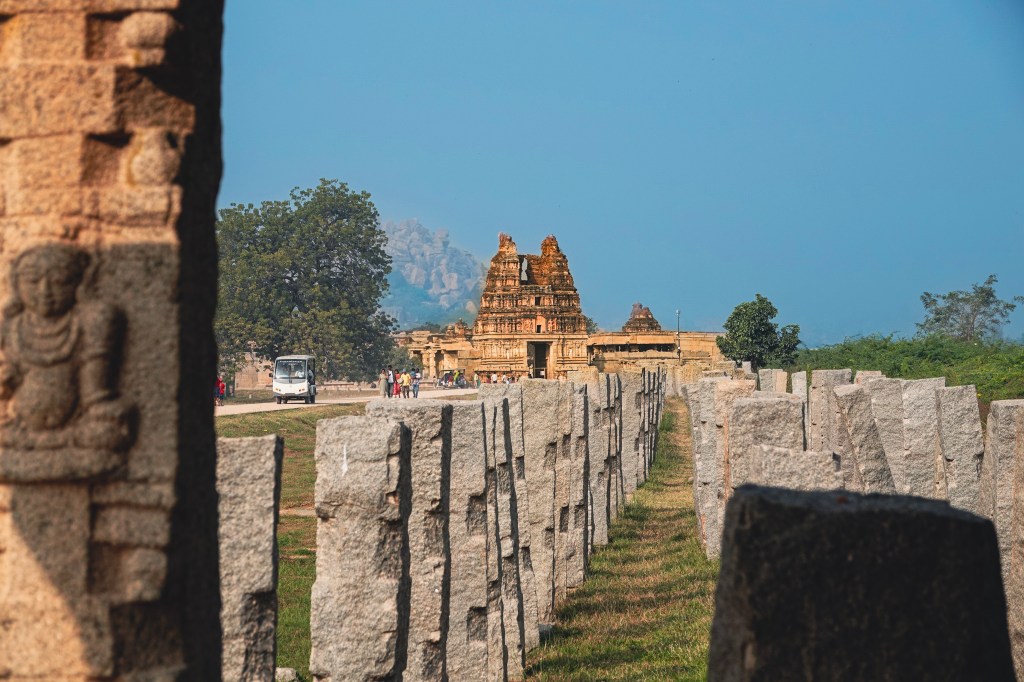
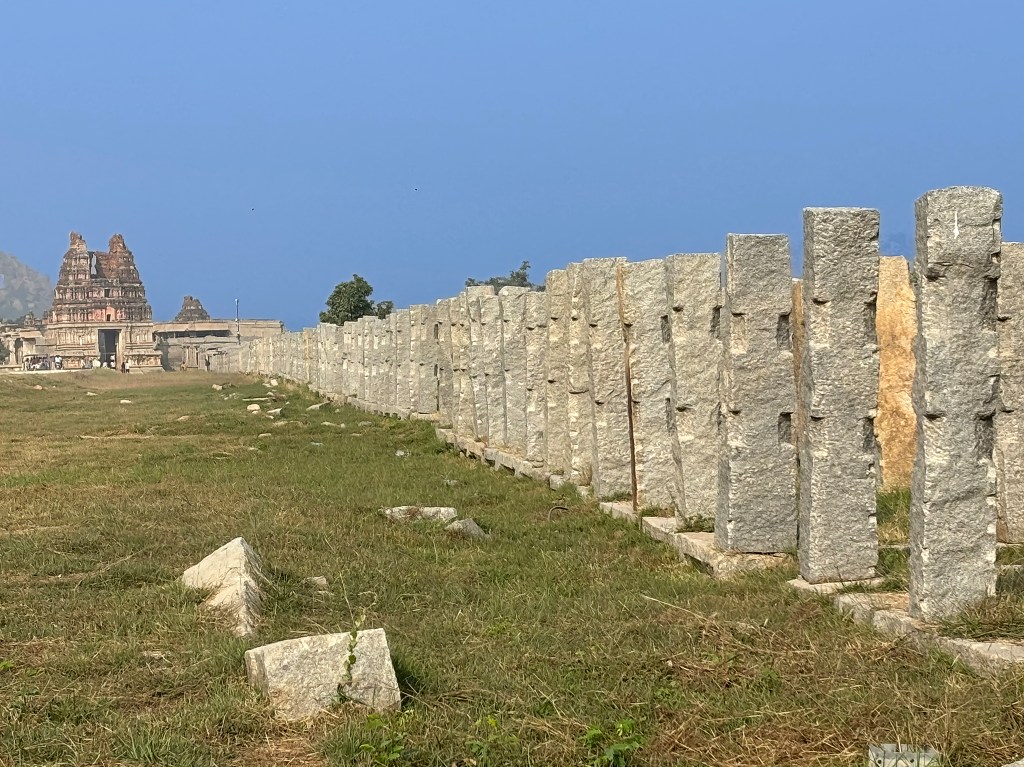
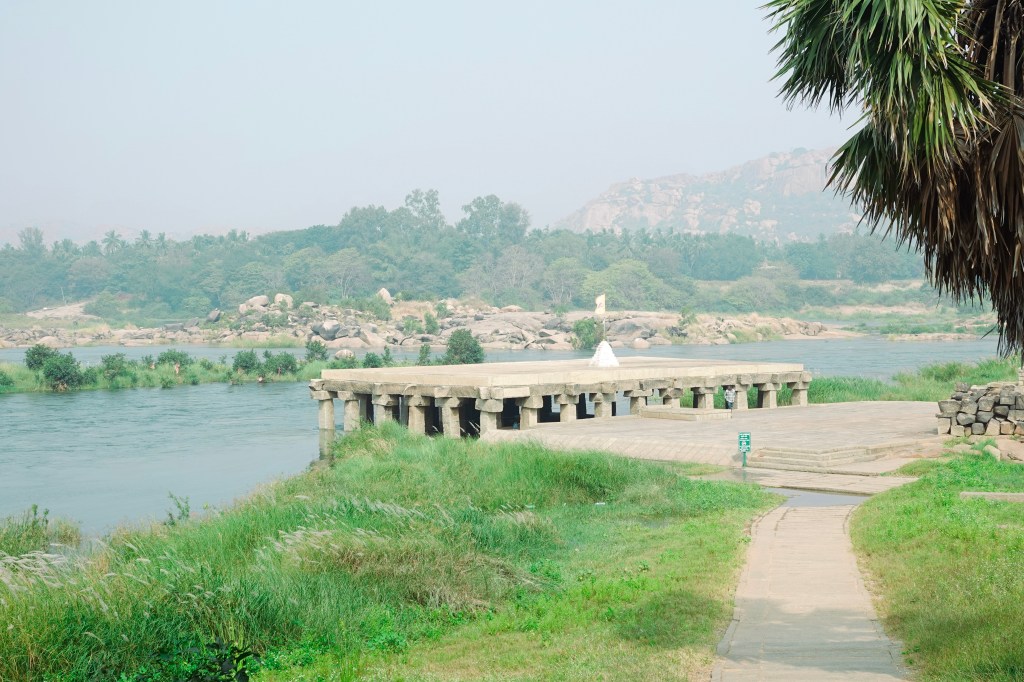
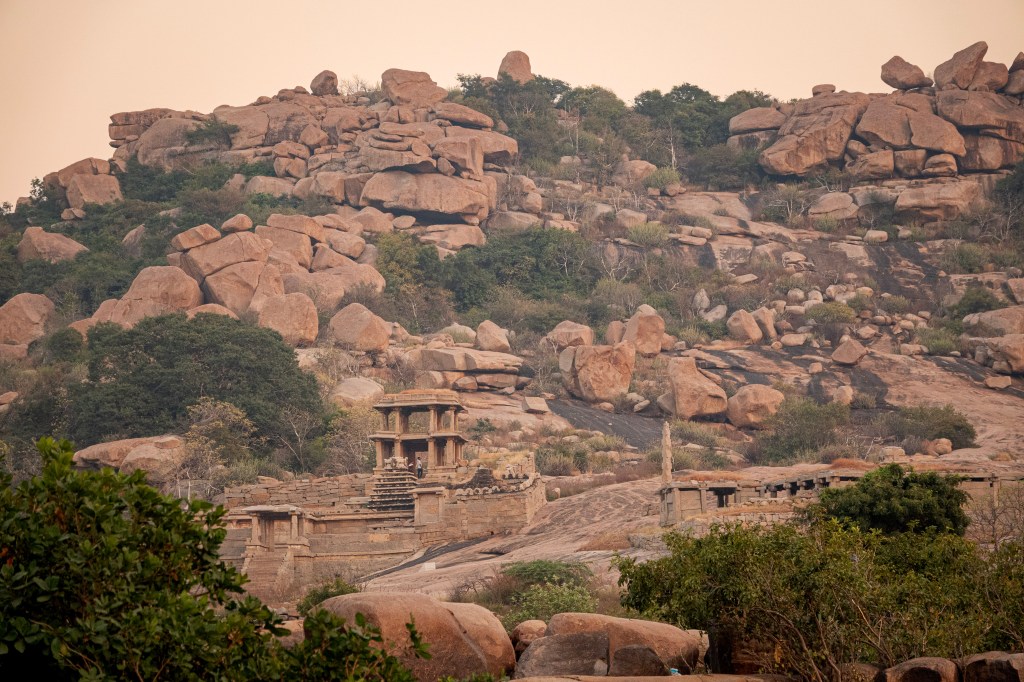
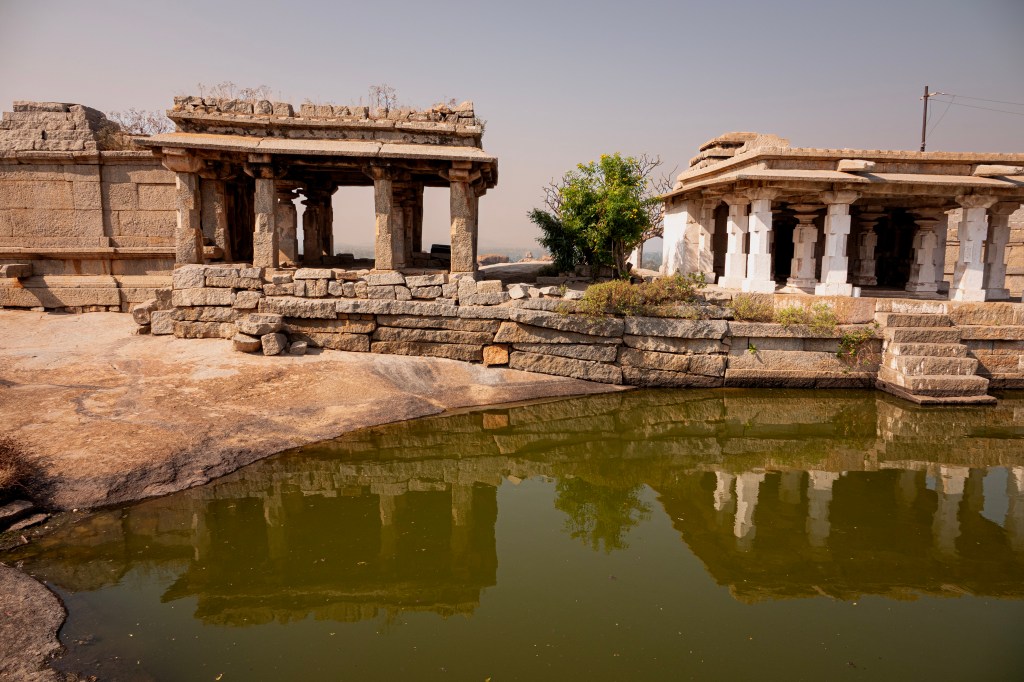
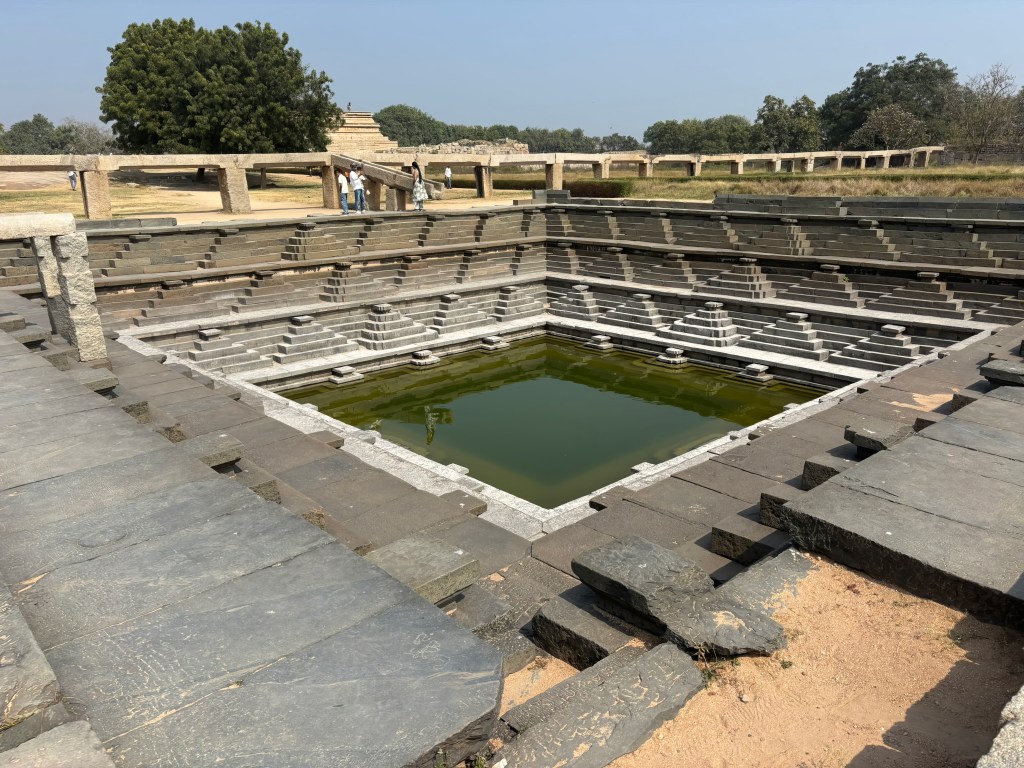
On the walk toward the Vijaya Vittala Temple, the landscape quietly opens up to one of Hampi’s most graceful water monuments—the Vittala Pushkarani. Tucked beside the northern stretch of the Vittala Bazaar, this stone‑stepped tank once anchored the ritual life of the temple and its bustling marketplace. Built during the height of the Vijayanagara Empire, it features a delicate central mantapa rising from the water, a signature of sacred reservoirs across the region.

Pushkarani is a good place to take panoramic photos of temple and surrounding areas.

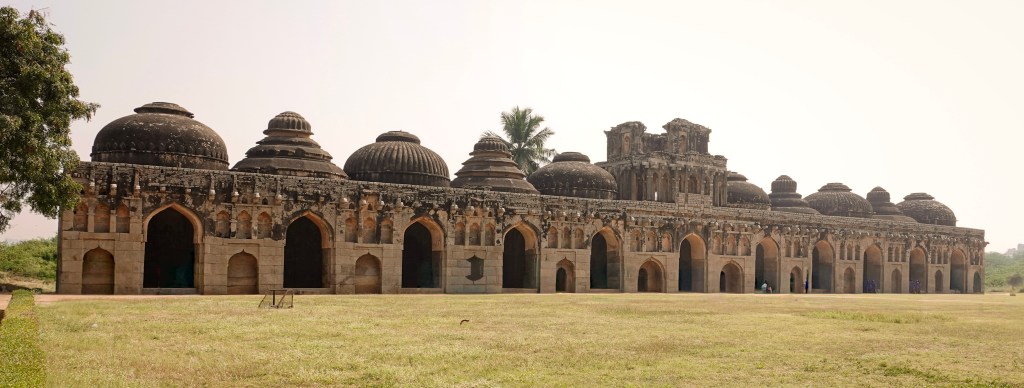
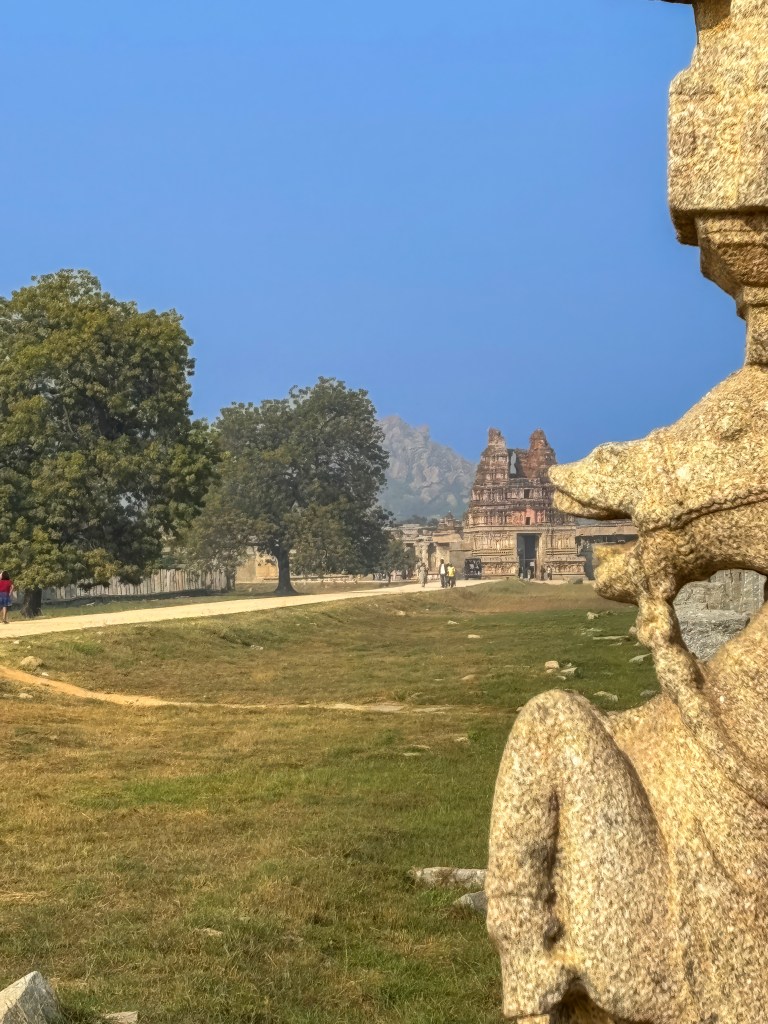
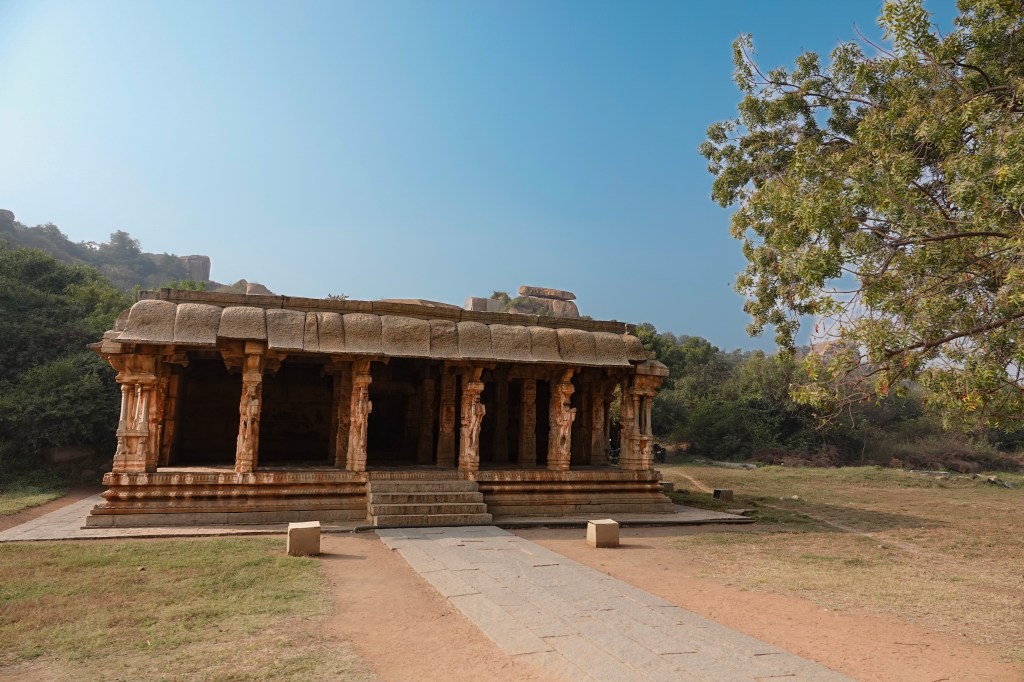
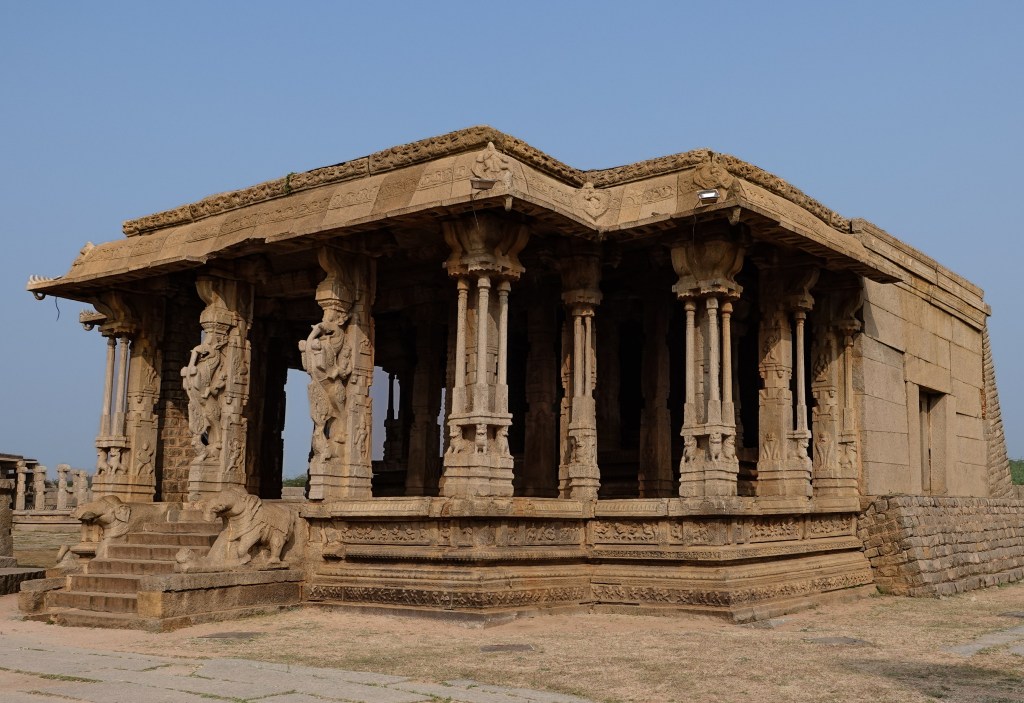
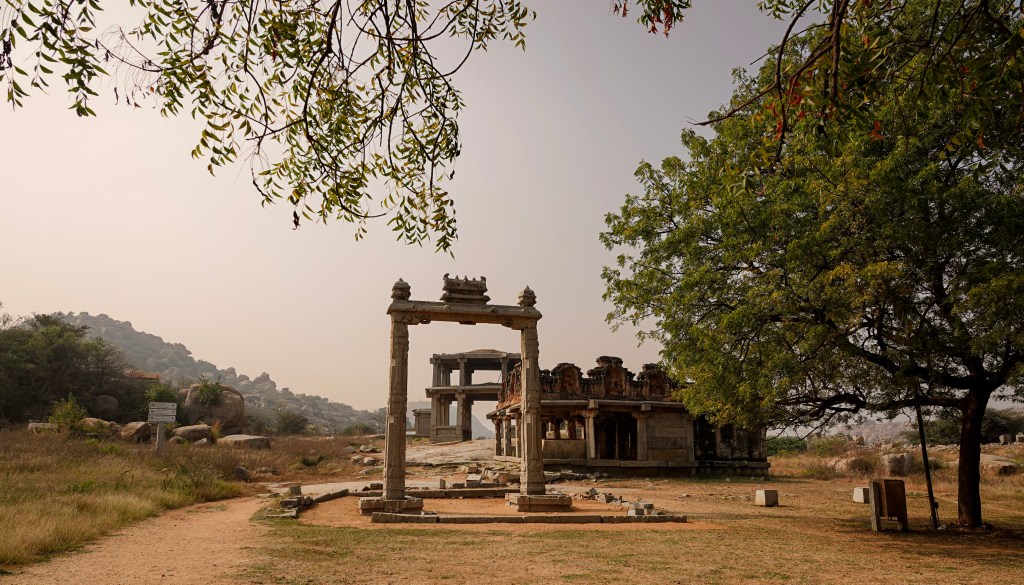
A little before the road bends toward the grand Vijaya Vittala Temple, the Kuduregombe Mantapa appears like a quiet sentinel of the past. This three‑sided pillared pavilion, built during the Vijayanagara Empire, takes its name from the striking horse‑rider sculptures carved onto its front pillars—kudure meaning horse and gombe meaning doll or figure. . Though its original purpose remains a mystery, its strategic placement along this ceremonial route hints at a role in the vibrant temple life that once animated these streets.

A Temple Wrapped in Mystery and Majesty

Unlike many Vijayanagara monuments, the Vitthala Temple’s earliest history is surprisingly elusive. No inscription tells us who commissioned it or why. What we do know is that successive rulers expanded it. These include emperors, queens, commanders, and courtiers. They continued to embellish it through the 16th century.

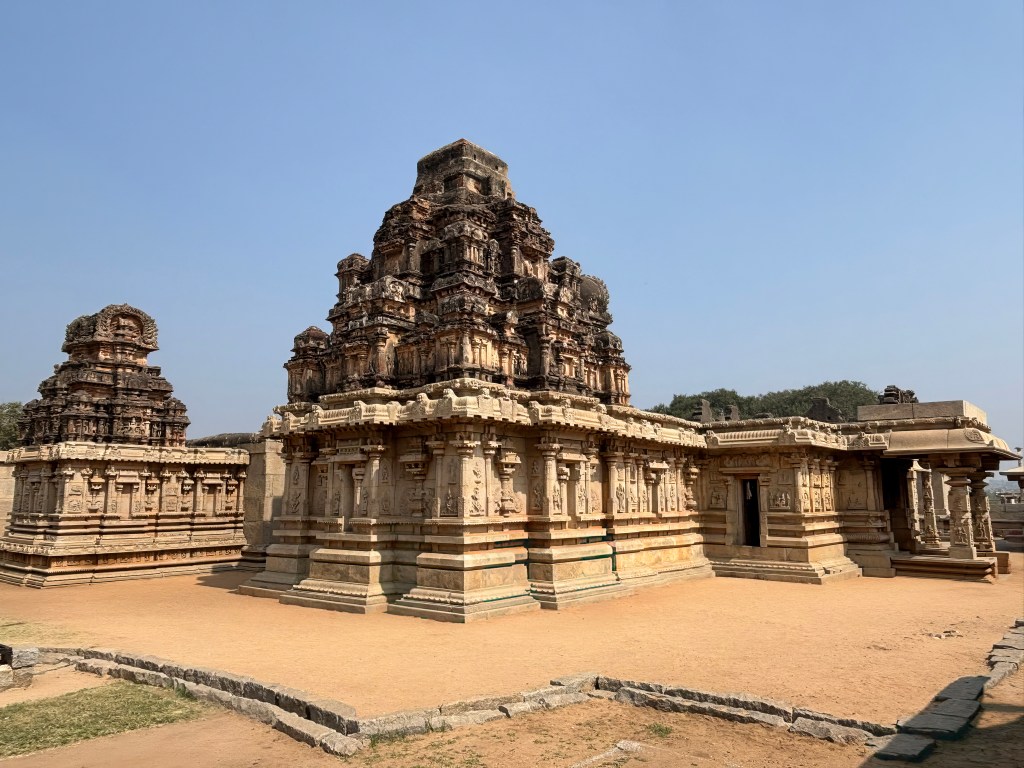
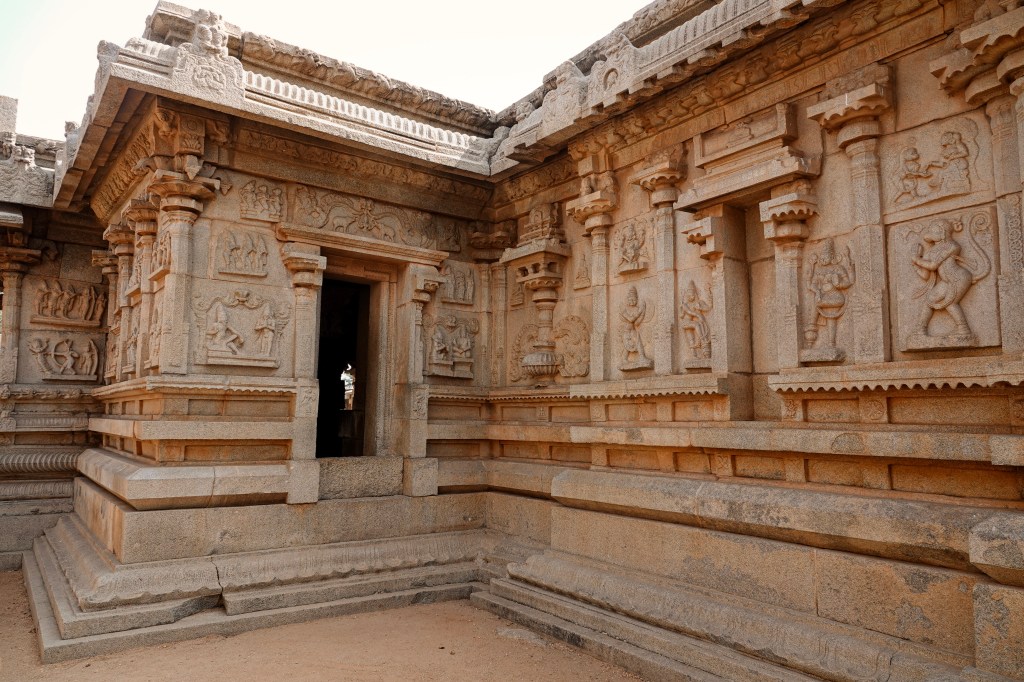
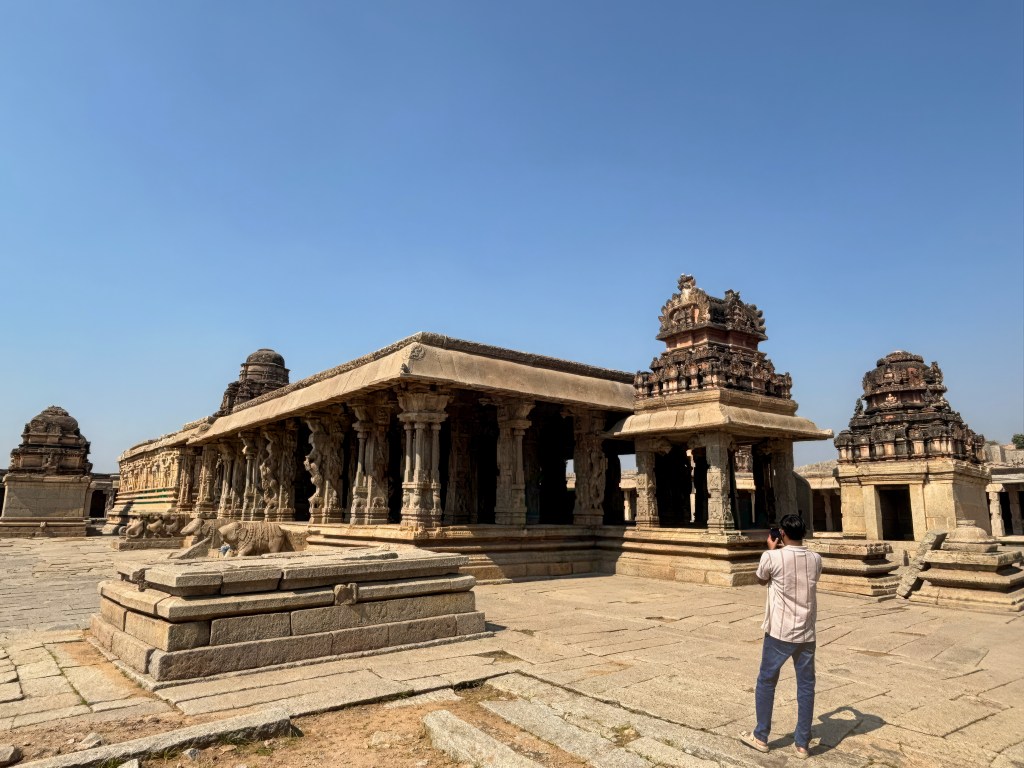
The temple sits within a vast rectangular courtyard, framed by three gopuras. Two of these—on the east and north—were built in 1513 CE by the queens of Krishnadevaraya. He was one of the empire’s most celebrated rulers. The southern gopura, more ornate and later in date, completes the triad.

Inside, the temple unfolds in layers:

  • A restored enclosed mandapa leading to a sanctuary (now empty, its ceiling charred from the fires of 1565).
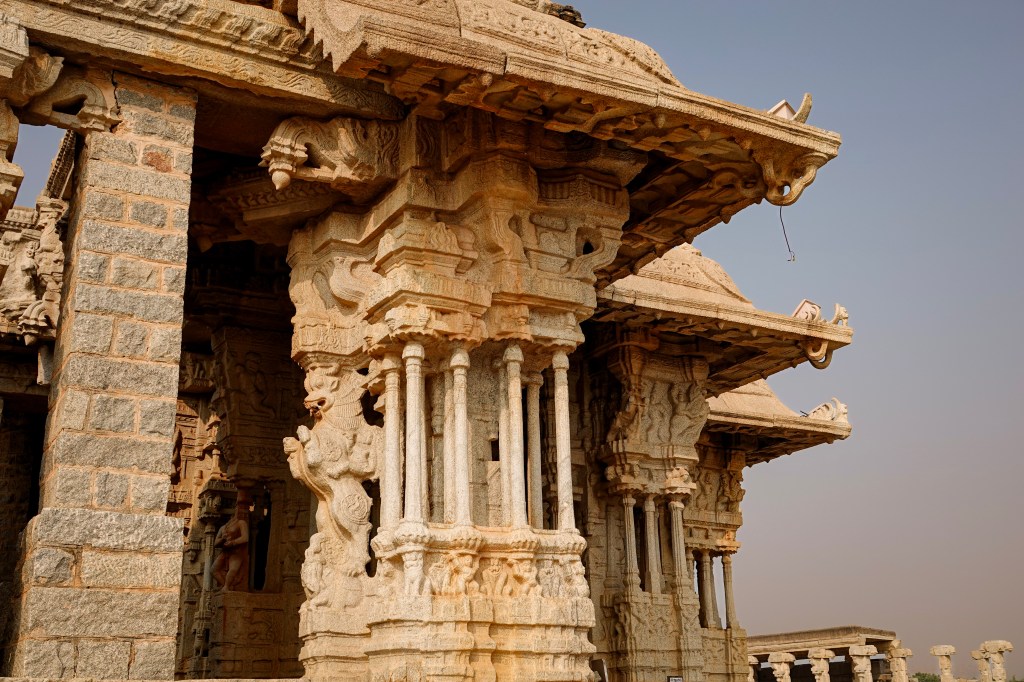
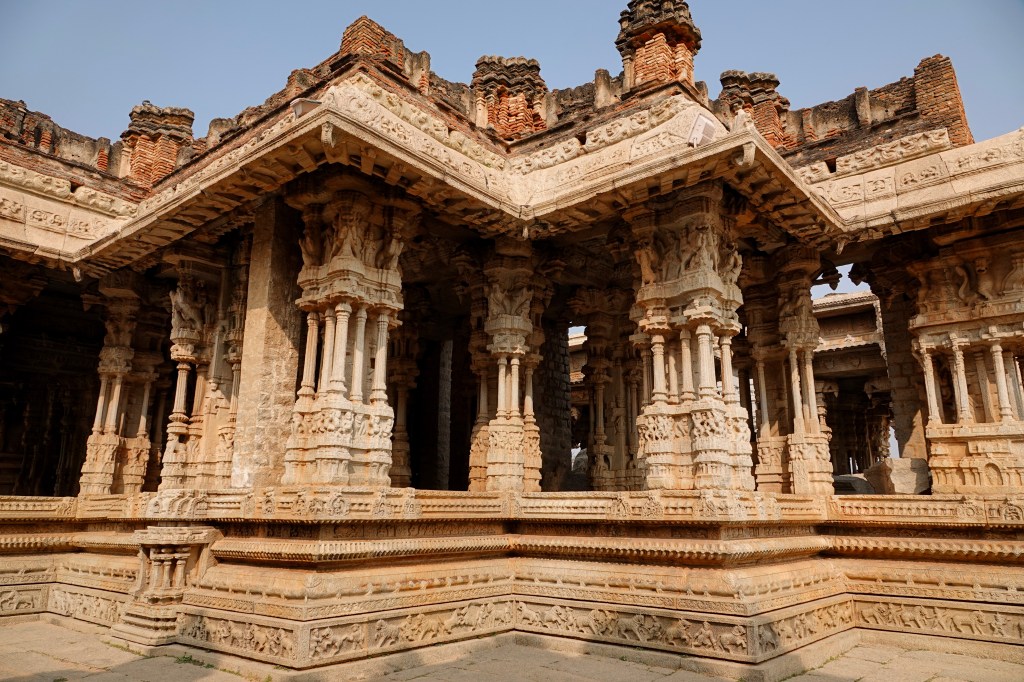
  • A 1554 CE open mandapa was added by a military commander of Emperor Sadashiva. It showcases some of the most intricate stonework in South India.
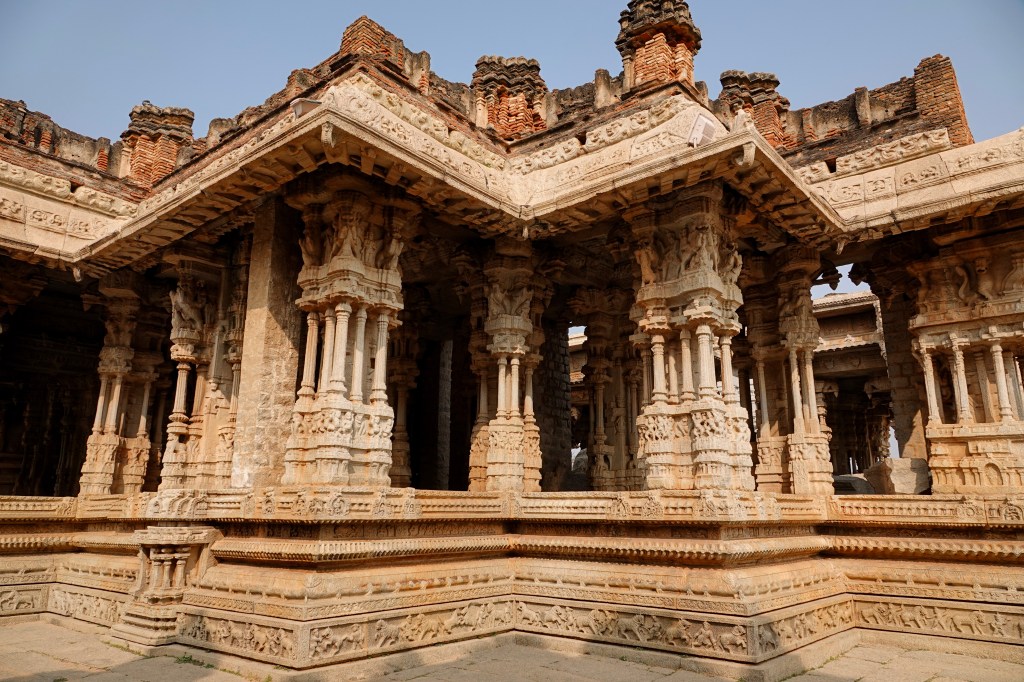
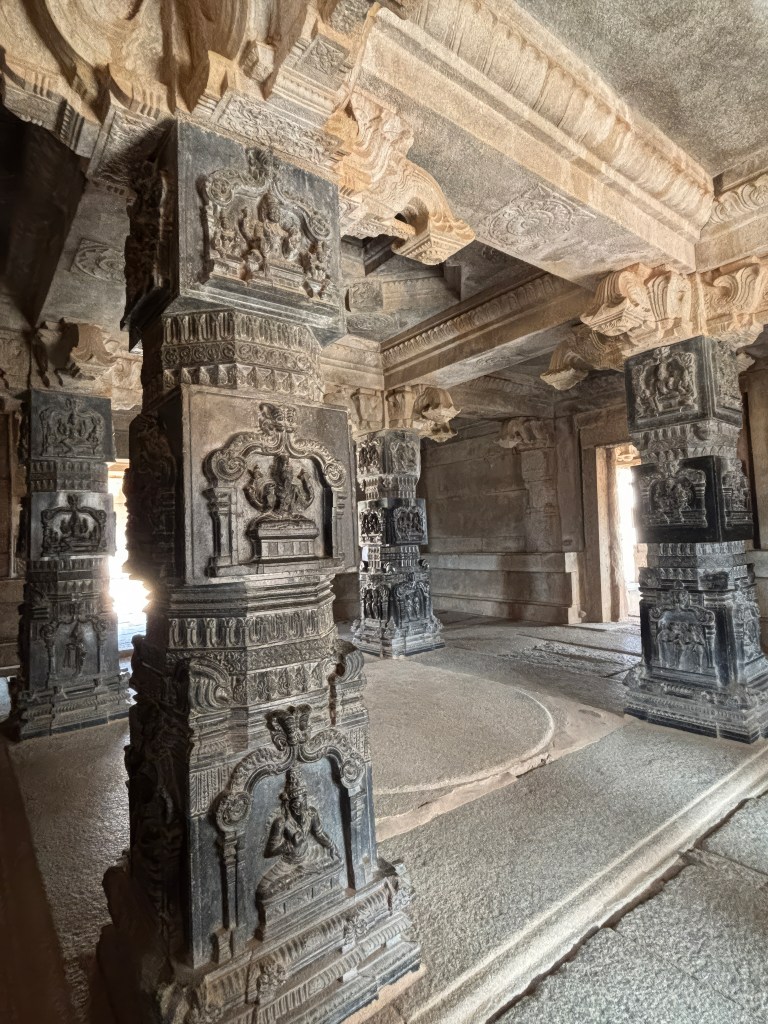
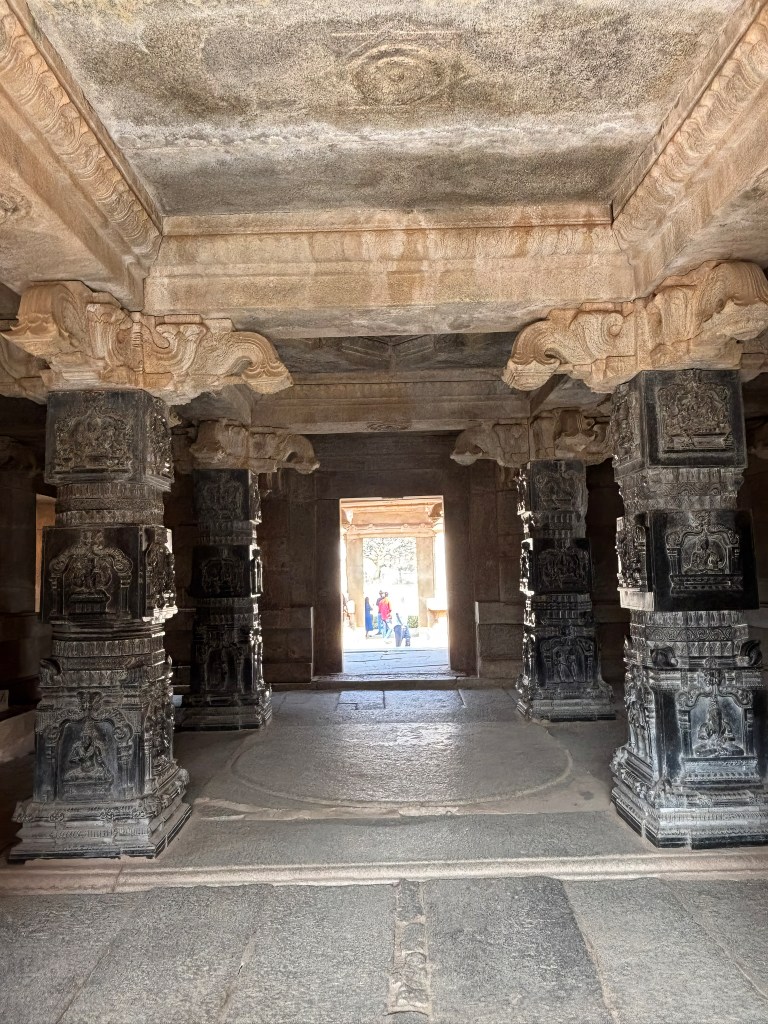
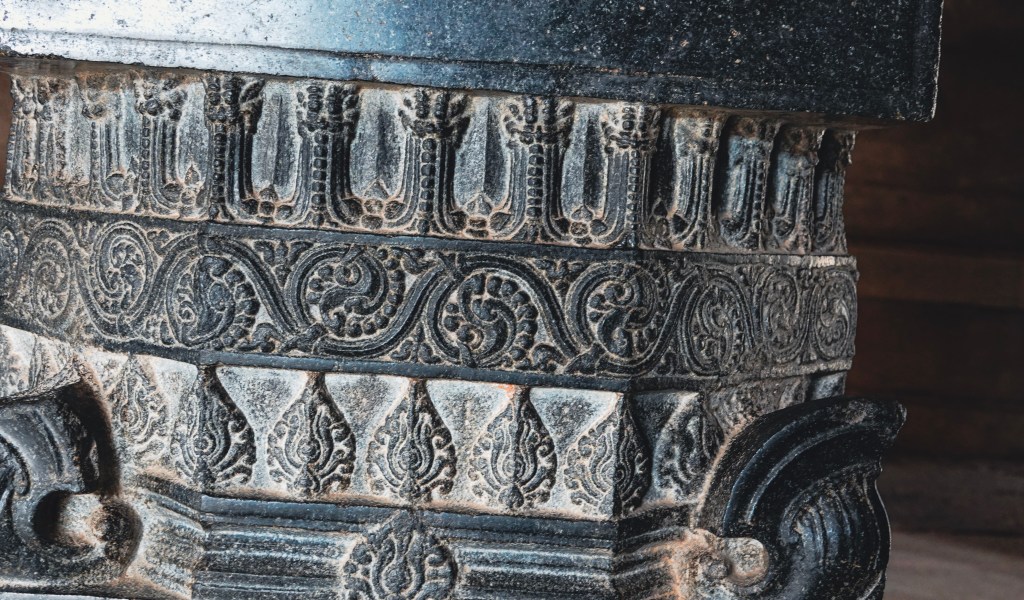
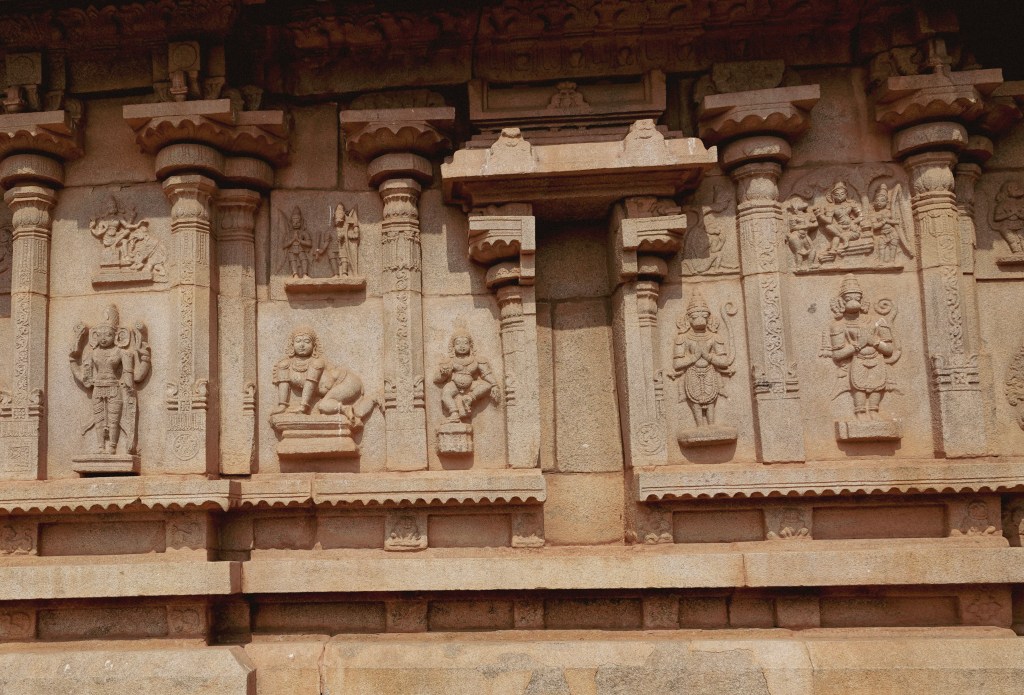
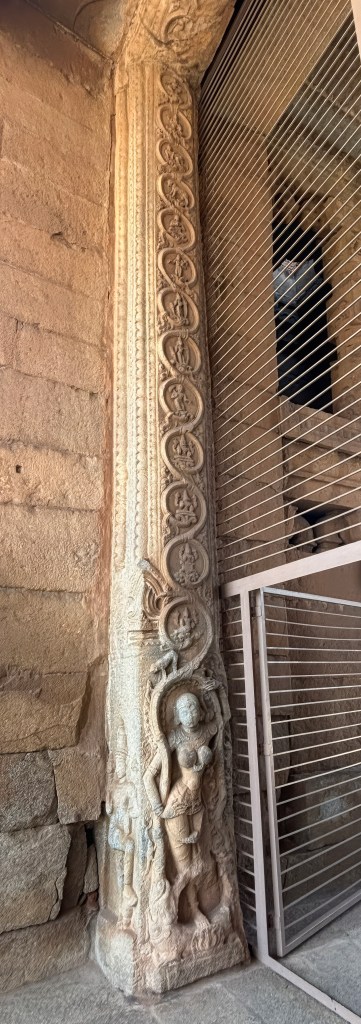
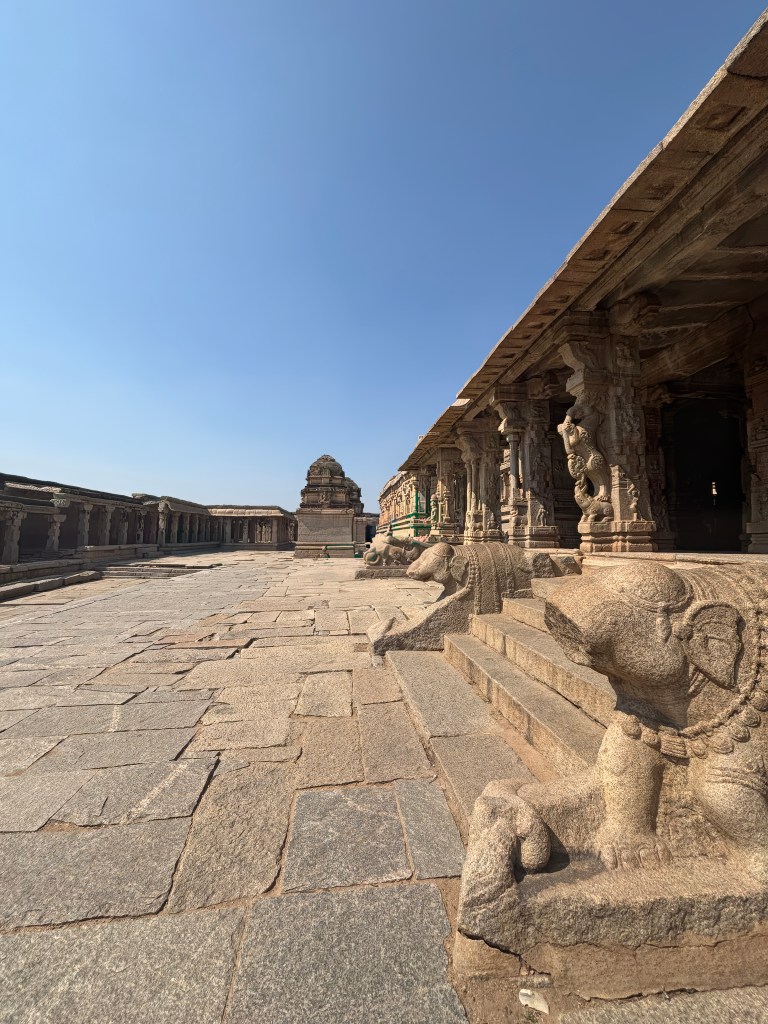
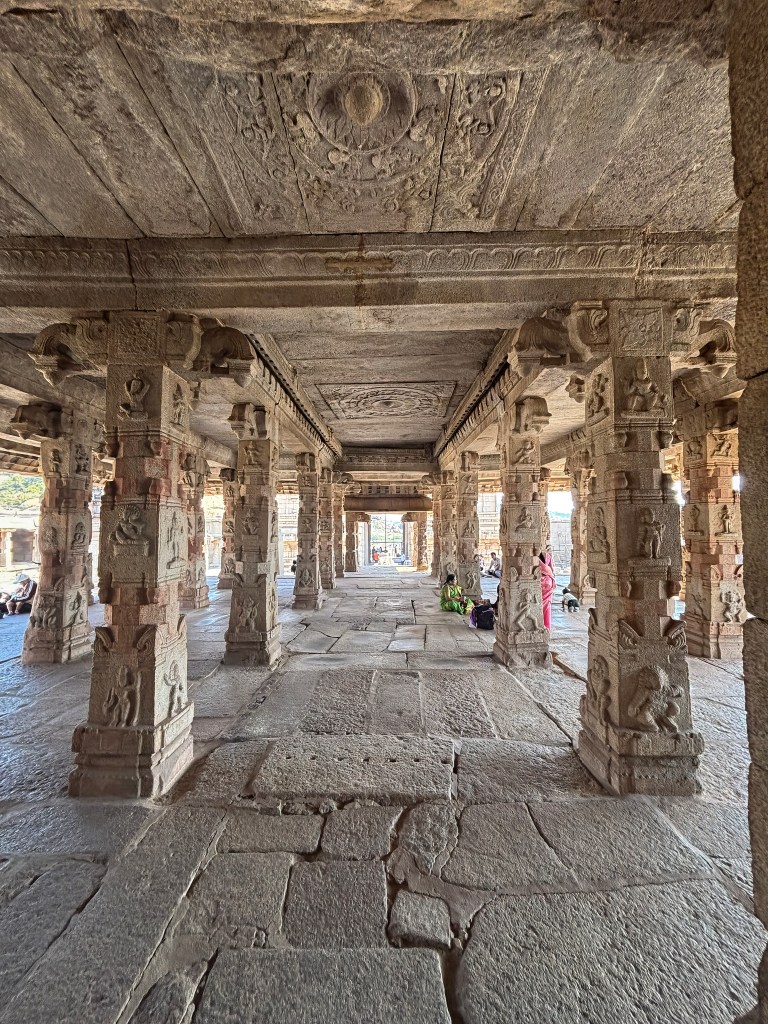
  • Four spacious halls are supported by piers. These piers are carved from single granite blocks. Each pier is a sculptural marvel of yalis, musicians, warriors, and mythic beings.

The Stone Chariot: Hampi’s Crown Jewel

If Hampi had a single emblem, it would be this.

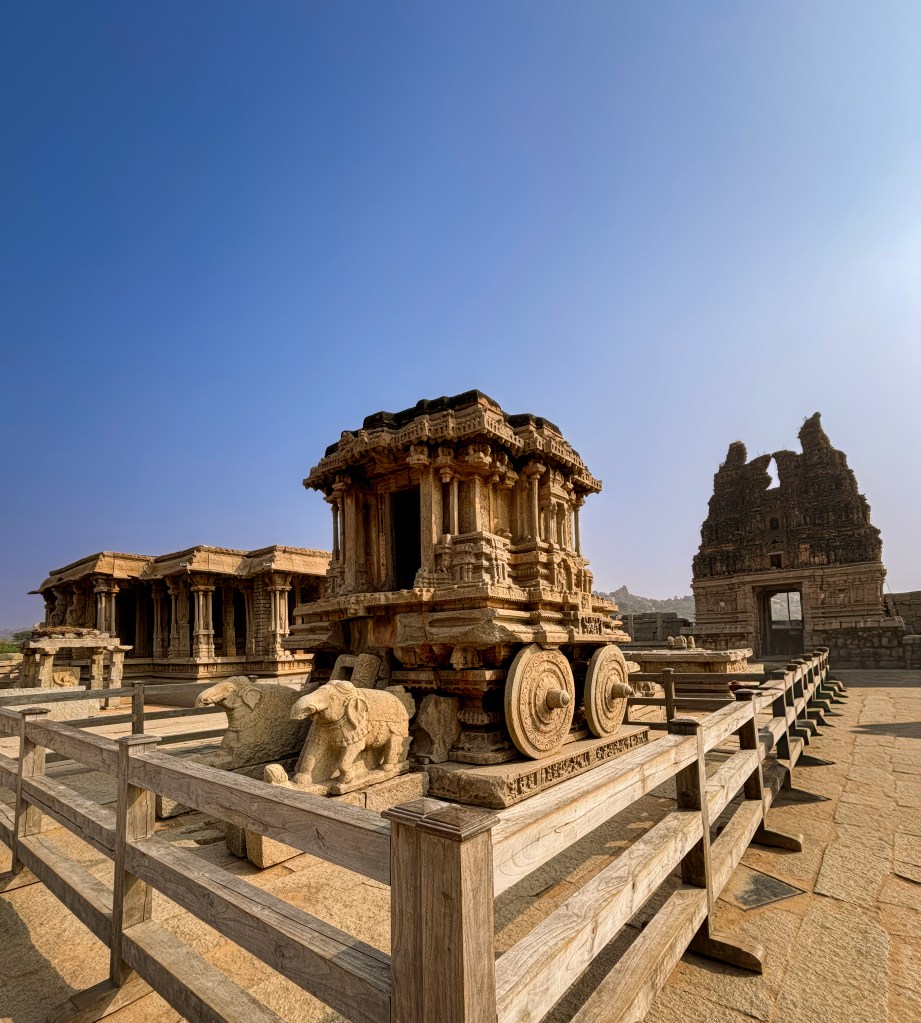
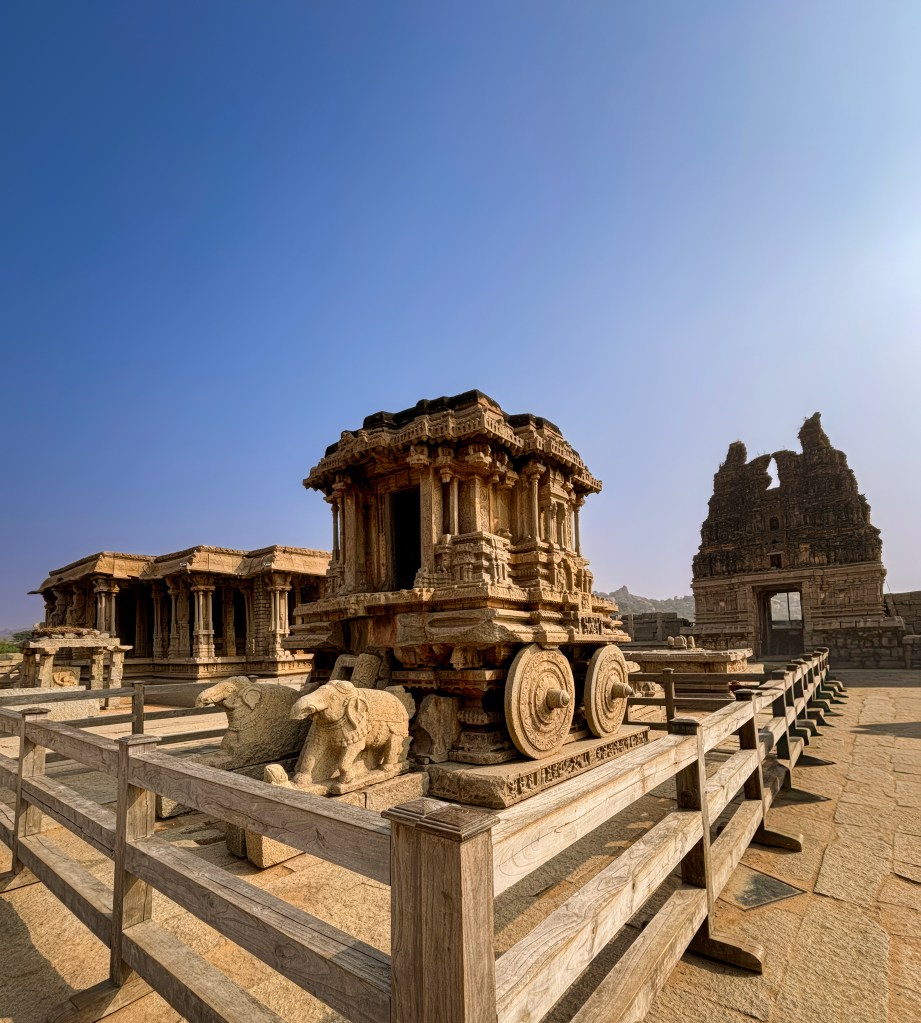
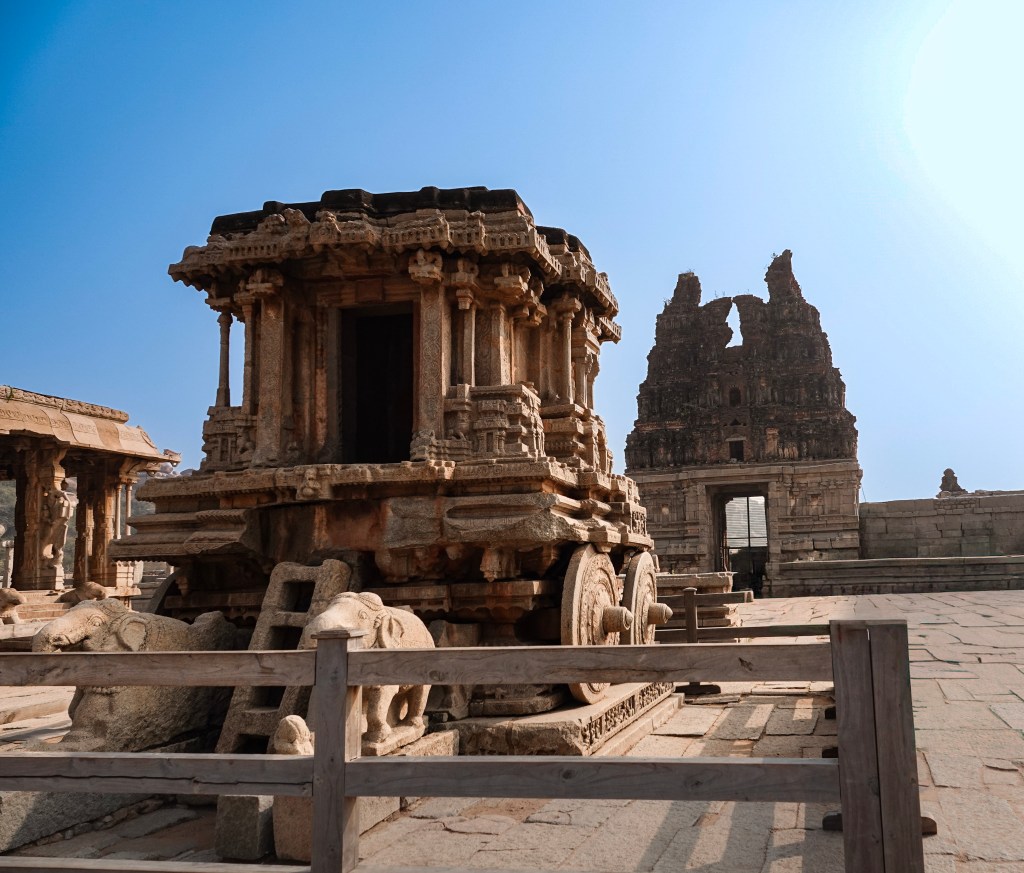
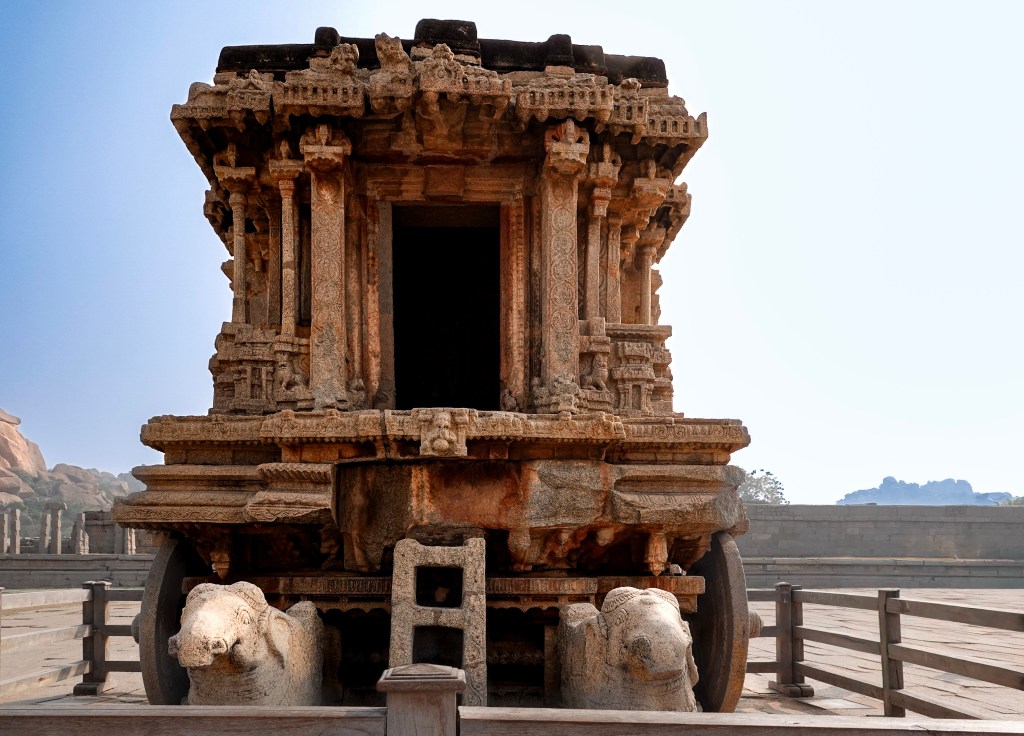
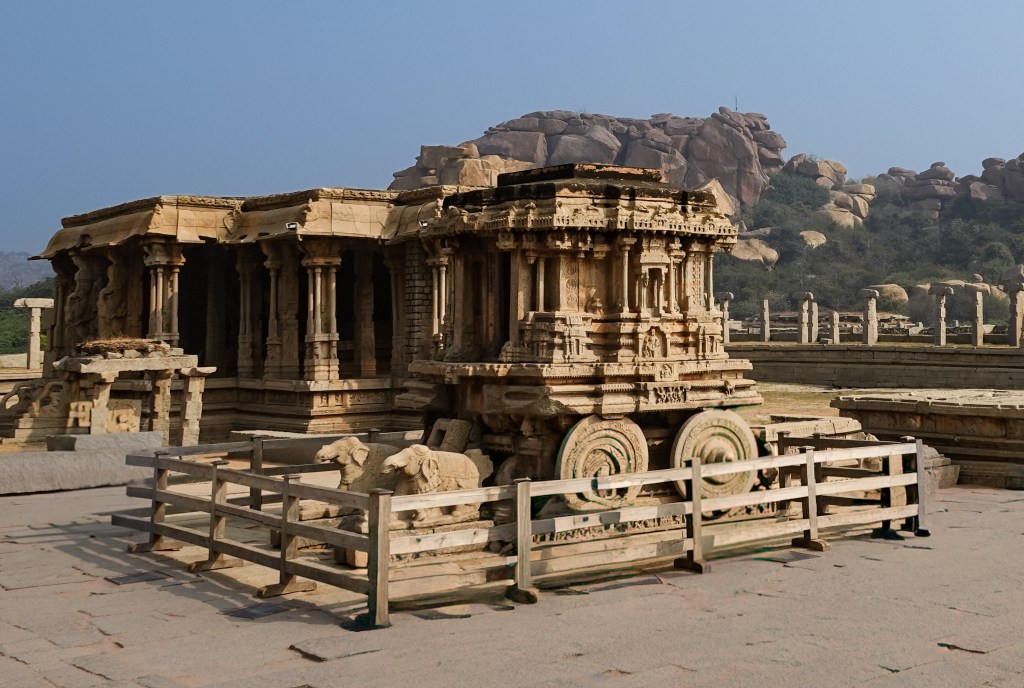
The Stone Chariot, dedicated to Garuda (the divine mount of Vishnu), stands proudly in front of the temple. Its image graces the ₹50 currency note, a testament to its national significance.

Commissioned during the reign of Deva Raya II, the chariot was inspired by the iconic Sun Temple at Konark. Though damaged during the empire’s fall, it remains breathtaking:

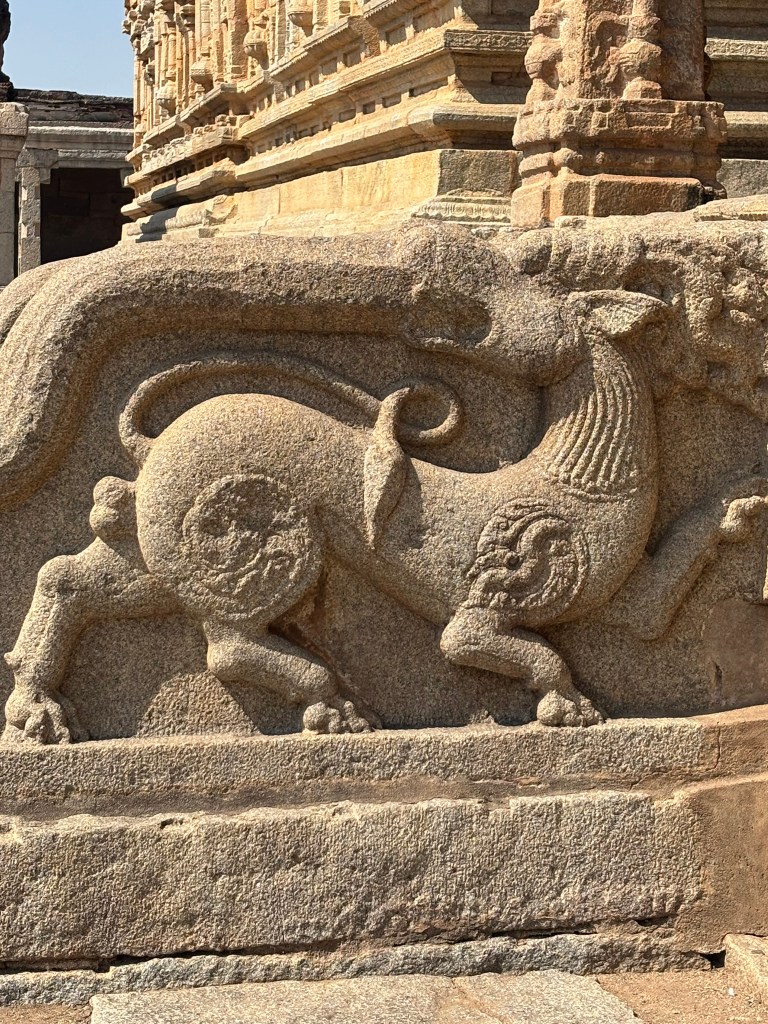
  • Two massive elephants guard the front (originally horses—look closely and you’ll still see their carved tails).
  • The wheels, though fixed, are carved with astonishing precision.
  • The shrine above once carried a brick tower, visible in 19th-century photographs but removed during colonial-era repairs.

Architectural historians—from James Fergusson to George Michell—have celebrated this chariot as one of India’s finest sculptural achievements.

A Symphony in Stone: The Musical Pillars

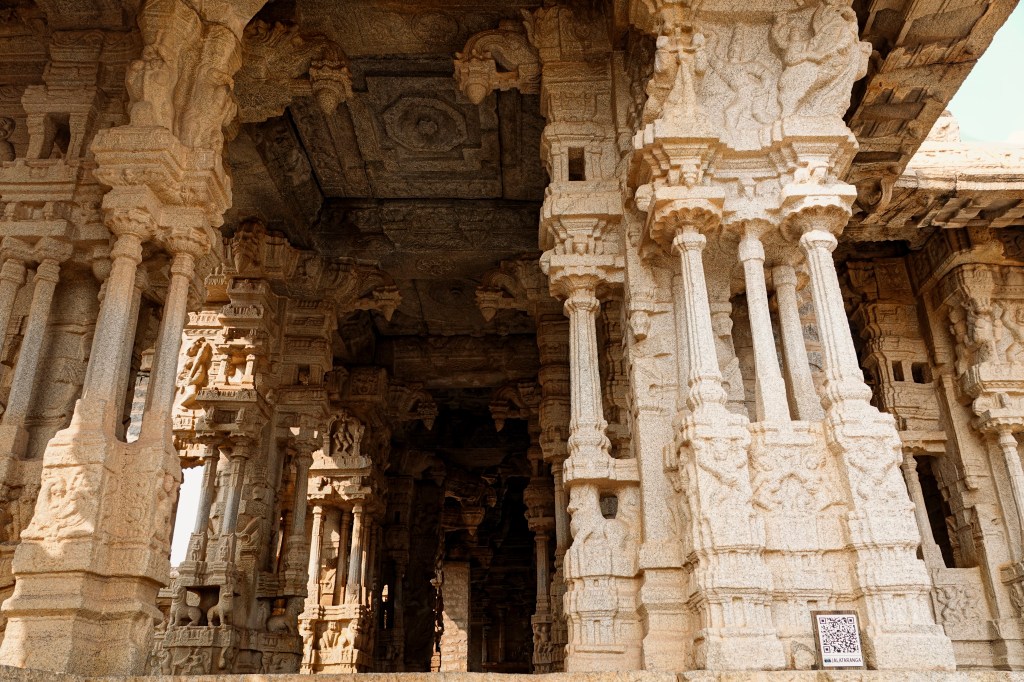
Step into the open mandapa, and you’ll encounter the legendary 56 musical pillars—the SaReGaMa pillars.

Each main pillar is surrounded by seven slender colonettes. When tapped lightly, these emit resonant tones. Contrary to popular belief, they do not form a full musical scale, but their acoustic magic is undeniable. Even the British, captivated by this phenomenon, attempted to study and “decode” the pillars during the colonial period. When I visited this place about 30 years ago, guides were allowed to show how the music pillars worked, but since then, the entire hall has been off-limits to visitors. Now you can use the QR codes to hear the music each pillar can make.

Walking the Ancient Path Along the Tungabhadra

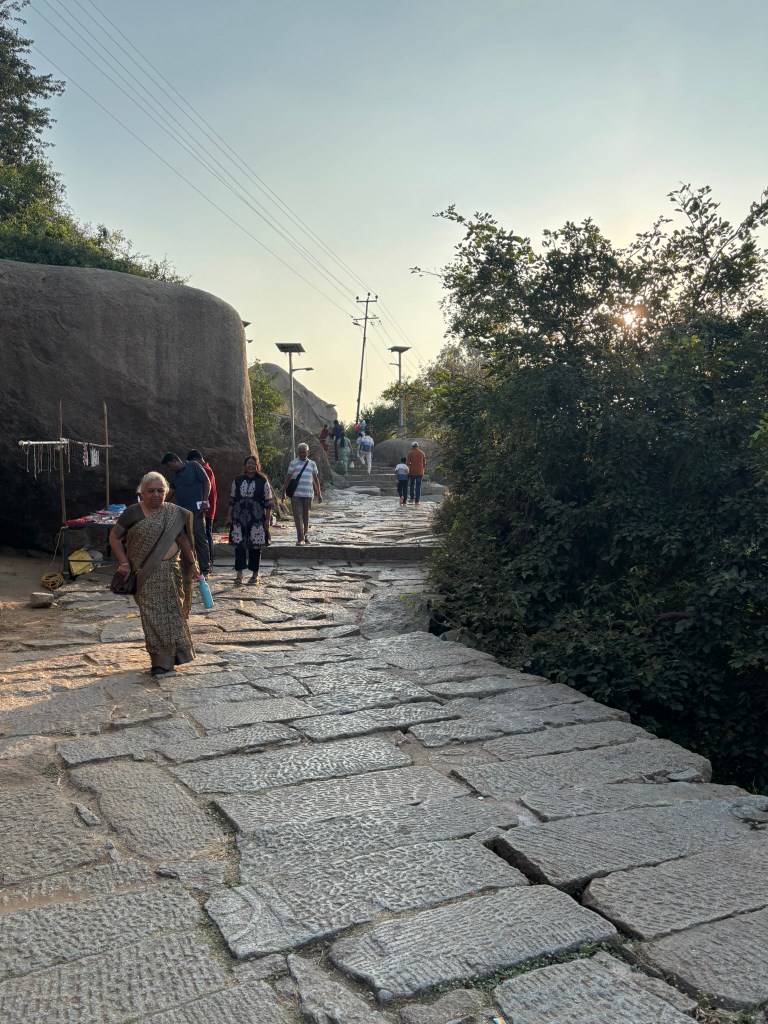
After exploring the mandapas, musical pillars, and the iconic Stone Chariot, the journey continues along a serene footpath that runs parallel to the Tungabhadra River. This trail once connected the sacred heart of Vitthalapura with the riverbanks, and even today it feels like stepping into a quiet corridor of history.

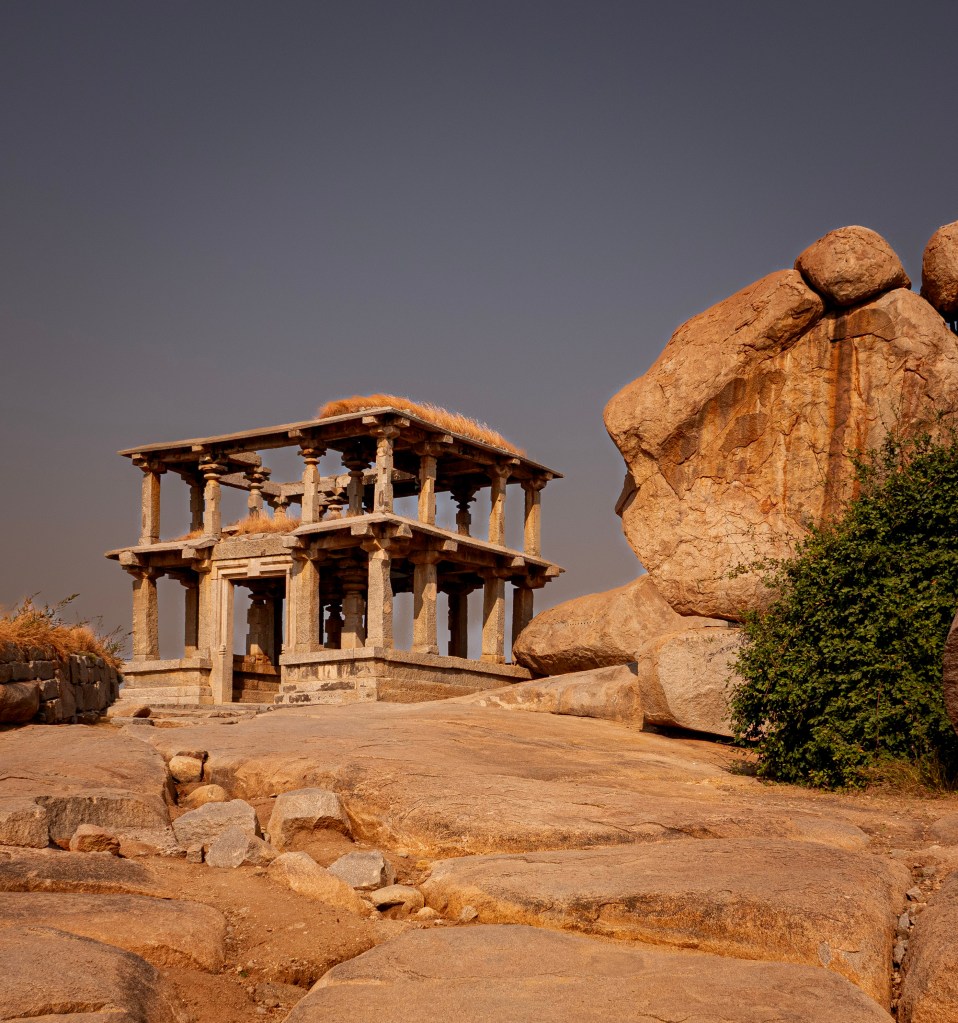
As you leave the Vitthala Temple complex, you pass through a double-storeyed pavilion-like gateway—a structure that once marked an important threshold in the sacred geography of Hampi. Just before this gateway stands one of the most intriguing relics of royal ritual: the Kings’ Balance.

The Kings’ Balance: A Ritual of Generosity and Power

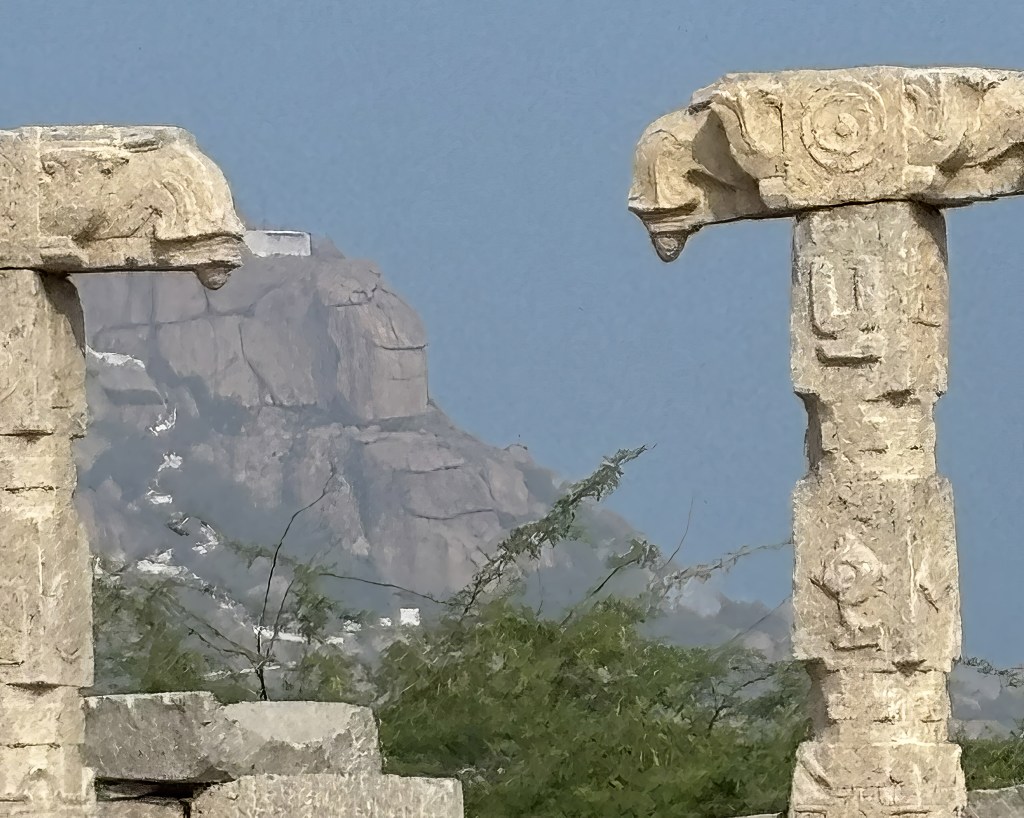
The Kings’ Balance (Tulapurusha Dana) is a simple yet powerful structure—two tall stone posts connected by a lintel, with a stone ring designed to hold a metal chain. According to tradition, the Vijayanagara emperors would stand on one side of the balance and be weighed against gold, grain, or precious stones. The offerings were then distributed to temple brahmins and the needy.

Whether every emperor actually performed this ritual remains a matter of debate, but the symbolism is unmistakable: a king’s worth measured not in power, but in generosity.

Standing here, with the river murmuring nearby and the ruins glowing in the sun, it’s easy to imagine the grandeur of those ceremonies—the crowds, the chants, the shimmering offerings, and the deep sense of devotion that shaped life in Vijayanagara.

Purandara Mantapa and the Ancient Aqueduct: Echoes of Devotion and Engineering

As the riverside path continues, the landscape opens into a quiet clearing where the Purandara Mantapa stands—a simple yet deeply evocative pavilion overlooking the Tungabhadra. This spot is closely associated with Purandara Dasa, the 16th‑century saint‑composer often hailed as the “Father of Carnatic Music.” Local tradition holds that he composed many of his devotional songs right here, seated by the river, his melodies carried by the breeze across the sacred centre of Hampi.

A little further along, you’ll encounter the remains of an ancient aqueduct, a remarkable example of Vijayanagara engineering. Built to channel water from the river to nearby temples, tanks, and residential quarters, this stone-lined structure once formed part of an intricate hydraulic network that sustained life in the capital. Though now broken in places, the aqueduct still reveals the precision and planning that defined the empire—its elevated channels, carved supports, and carefully graded slopes silently narrating a story of innovation and urban sophistication.

Final thoughts

Visiting the Vijaya Vittala Temple feels less like touring a monument and more like stepping into a living memory of the Vijayanagara Empire. Every carved pillar, every quiet mandapa, every stretch of the ancient bazaar road whispers stories of devotion, artistry, and a city that once pulsed with life. The walk itself—past the Kuduregombe Mantapa, the serene Pushkarani, and the boulder‑studded landscape—builds a sense of anticipation that the temple’s iconic Stone Chariot and musical pillars then reward in full. Even in silence, the complex hums with an energy that lingers long after you leave. It’s the kind of place that stays with you, not just as a photograph, but as a feeling—of wonder, of history, and of being momentarily connected to something timeless.

Off the beaten path in Hampi- Chakra Thirtha, Coracle ride and riverside temple ruins

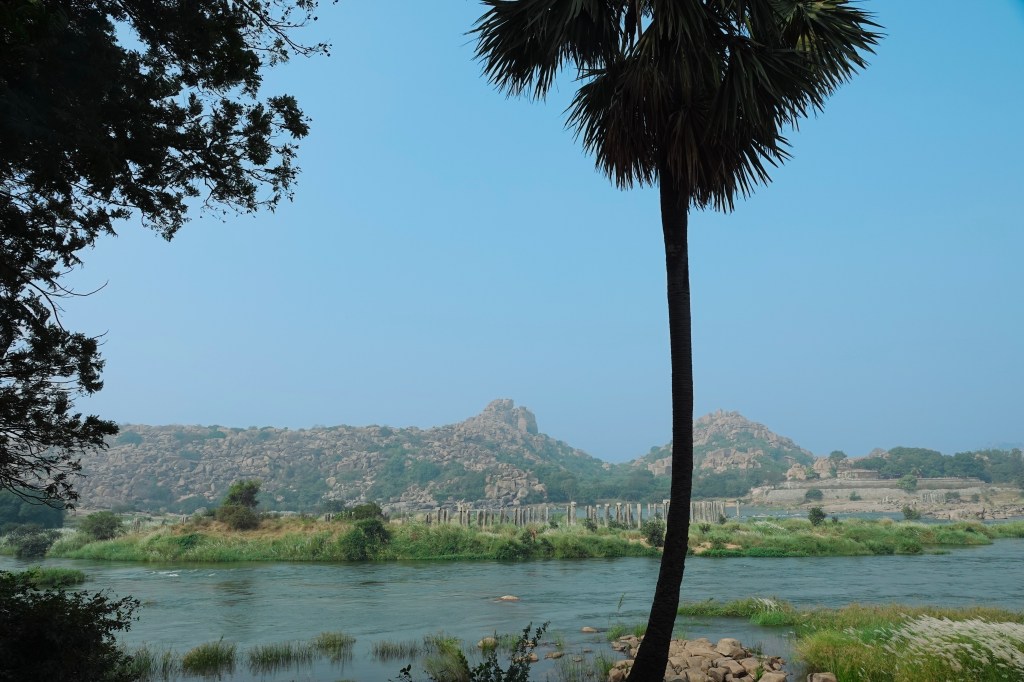
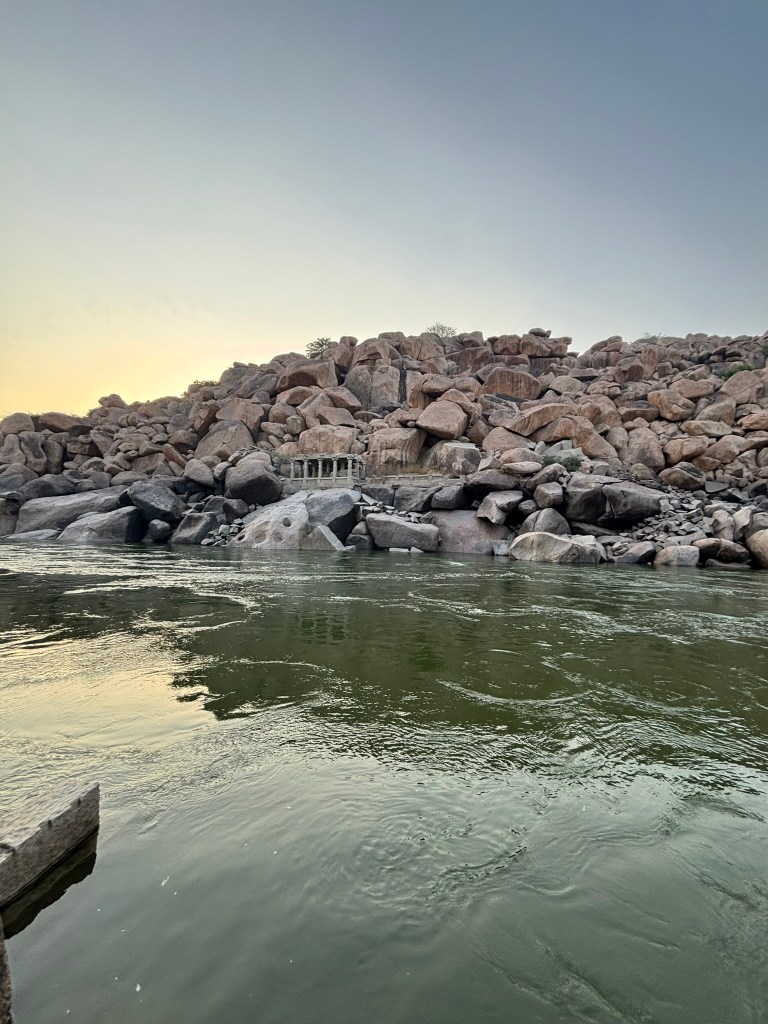
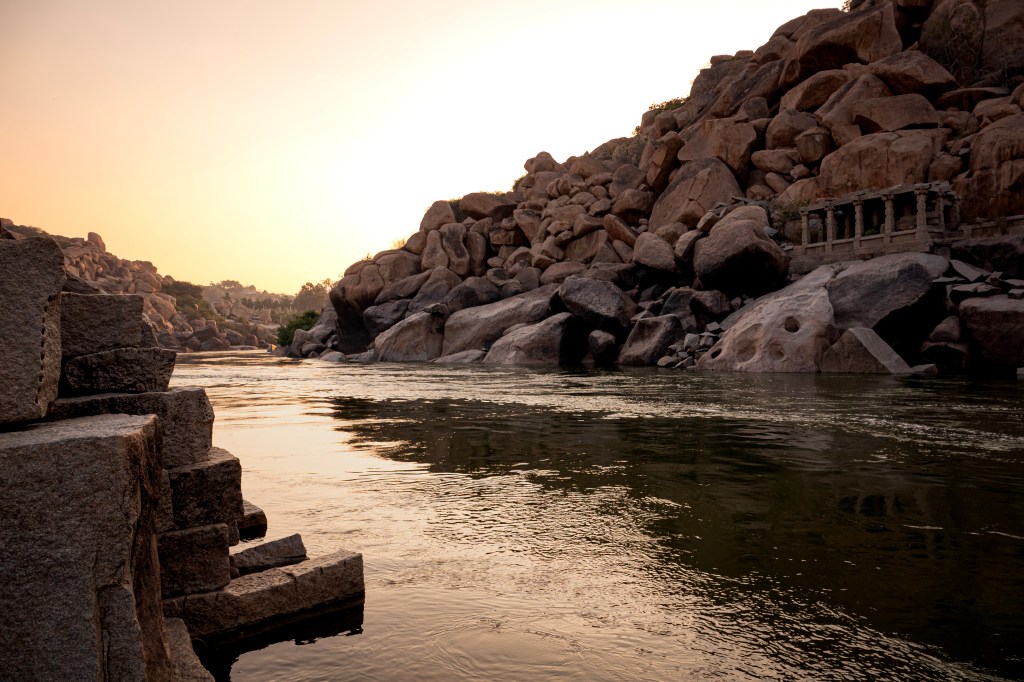
There are places in Hampi where history feels loud—grand mandapas, towering gopuras, bazaars that once echoed with royal processions. And then there are places where history whispers. Chakratirtha is a rare spot. Mythology, river, stone, and silence unite in a way that feels almost otherworldly.

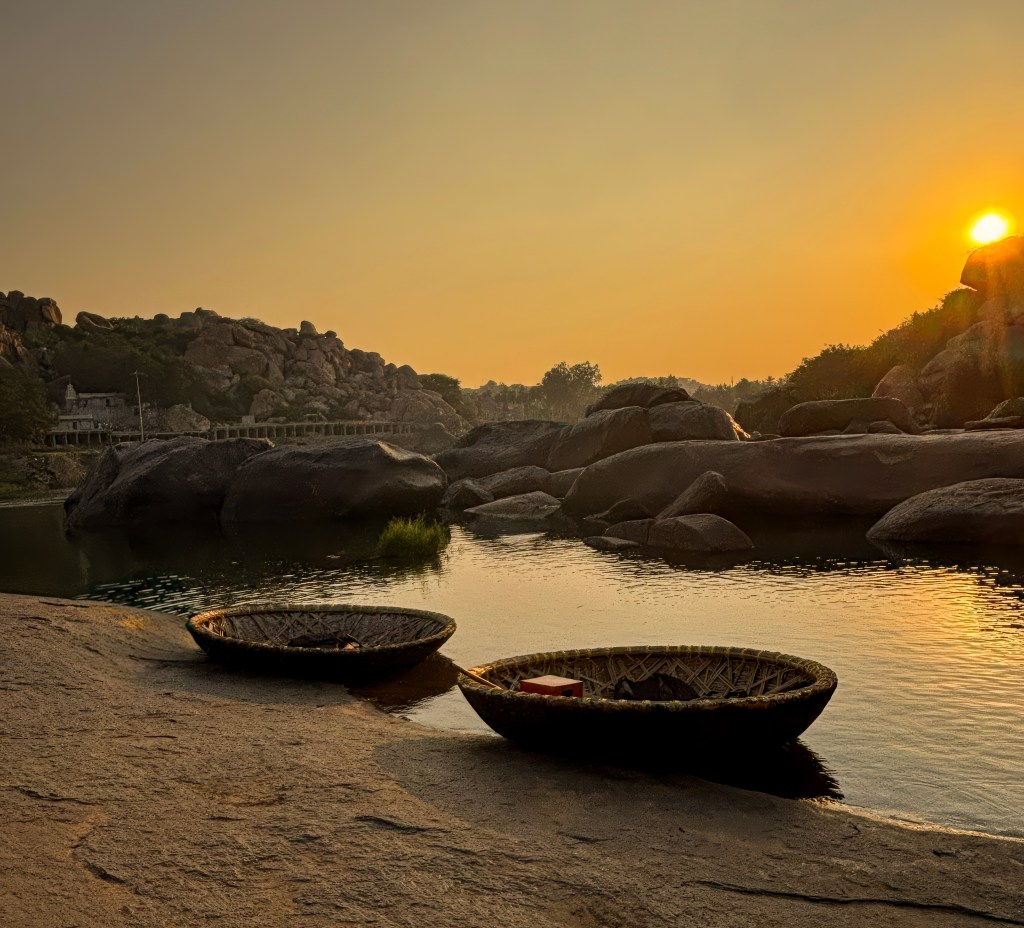
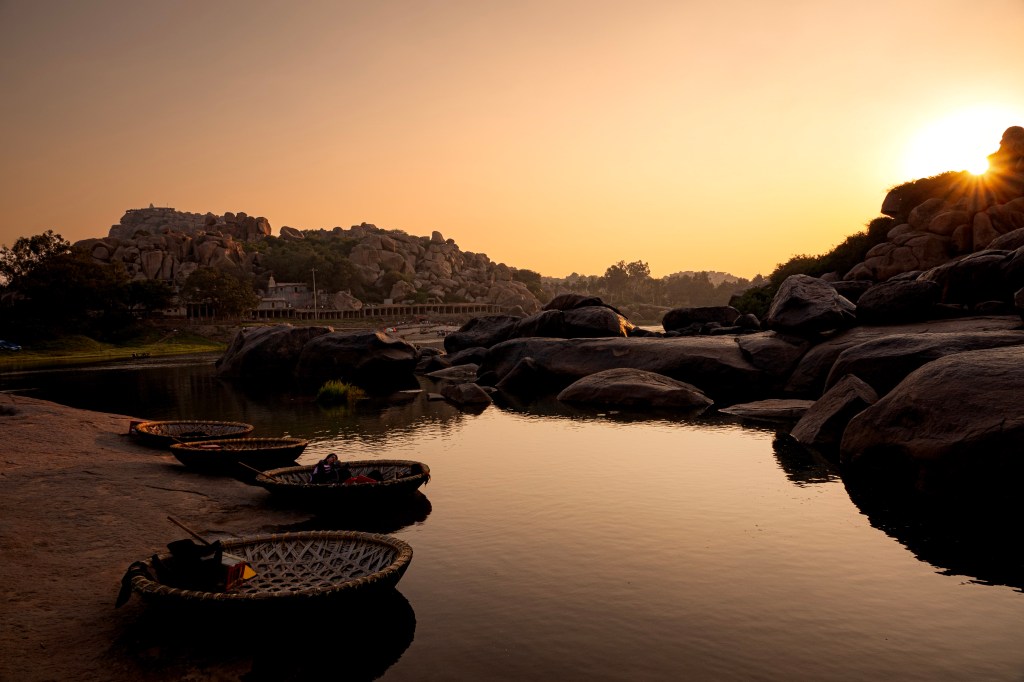
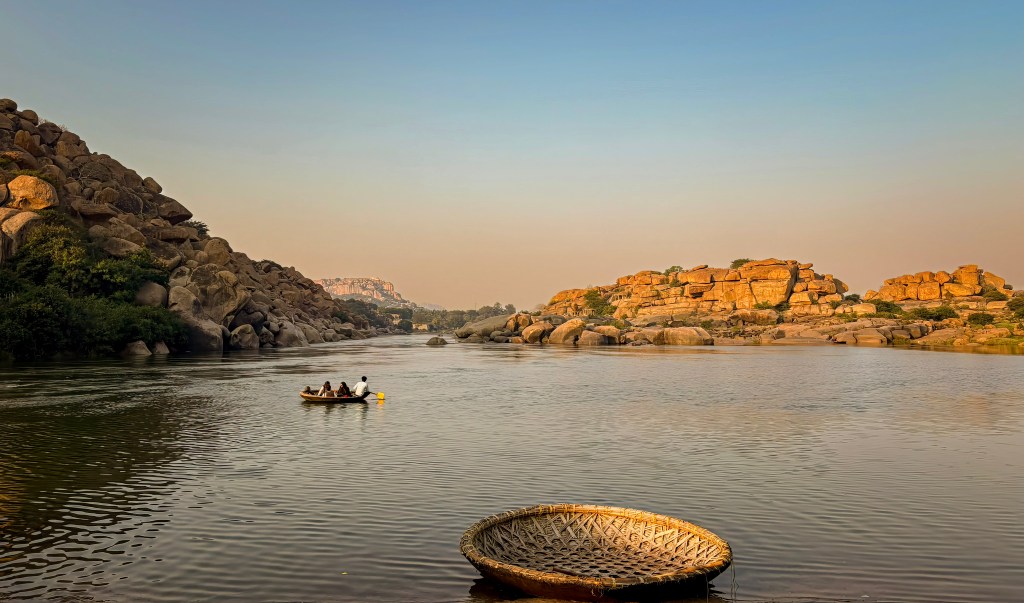
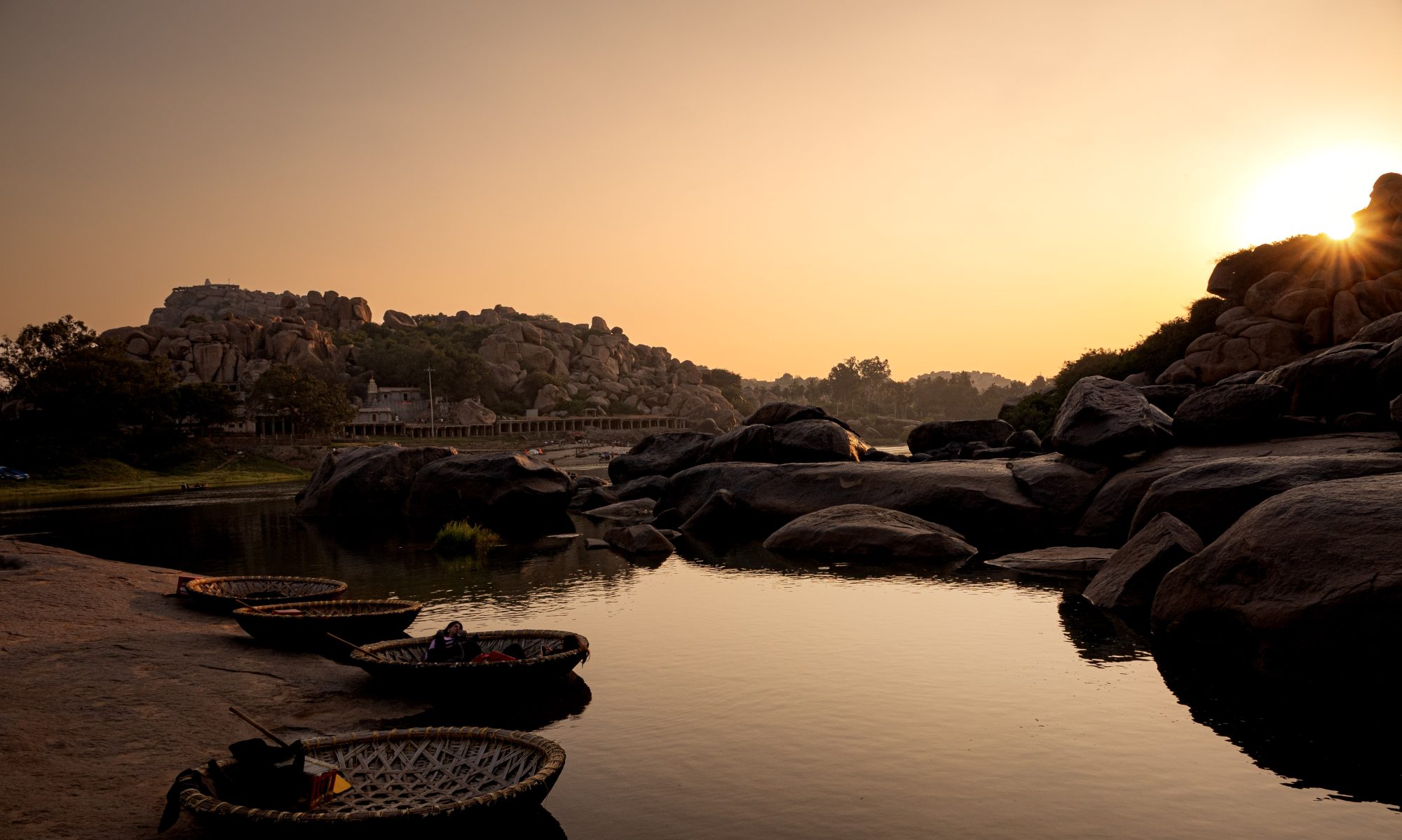
The coracle ride and a visit to the river ruins weren’t part of our itinerary. Nevertheless, they turned out to be among our best experiences. I highly suggest taking a guided tour of the ruins, as there are no markings or directions. Also, we rented the entire theppa, which made it easier to do what we wanted. Sunset is the best time for this visit

  1. Chakratirtha Where the River Swirls with Legends
  2. Setting Off on the Coracle: A Journey Into Stillness
  3. Stopping at the Secret Shrines Along the River
    1. 🕉️ Sahasralinga: A Thousand Lingas in Stone
    2. 🛌 Anantasayana: Vishnu in Eternal Repose
  4. Other river ruins worth visiting
  5. Narasimha Temple: A Quiet Shrine Revealed by the River
  6. The Kampabhupa Pathway: Echoes of Ancient Pilgrims
  7. Final thoughts

Chakratirtha Where the River Swirls with Legends

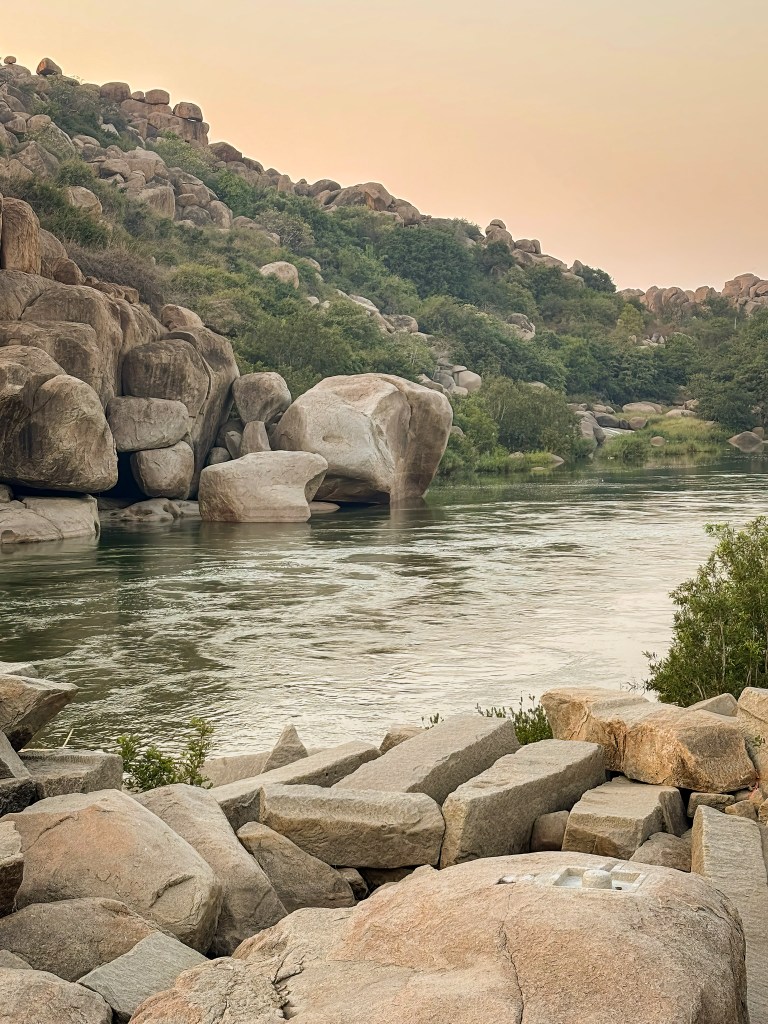
Chakratirtha—literally “the sacred water body that swirls”—sits at the valley point between Matanga Hill and Rishyamukha Hill. Here, the Tungabhadra narrows, bends, and gathers force, creating a natural whirlpool that locals believe carries divine imprints. On auspicious days, pilgrims report seeing the forms of Rama, Sita, and Lakshmana in the swirling waters.

This is also the spot where, according to legend, Lord Shiva handed the Sudarshana Chakra to Lord Vishnu. The river, ever in motion, is said to echo that cosmic exchange.

Pilgrims still take a holy dip here before climbing the steps to the Kodandarama Temple—a shrine carved into a massive boulder. At the Kodandarama temple, Rama stands with a bow in hand. Sita is to his left. Lakshmana and Hanuman are by his side. The nearby ancient pavilions are weathered yet dignified. They have sheltered generations of devotees. People have paused here to rest or pray. Others have simply breathed in the place’s sanctity.

Setting Off on the Coracle: A Journey Into Stillness

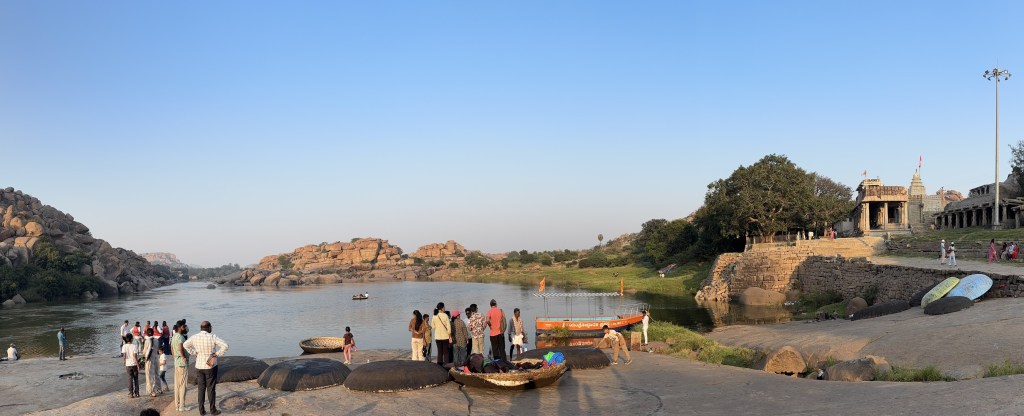
From the flat rocky bank—etched with Shiva lingas, footprints, and devotional carvings—you’ll spot coracles drying in the sun. These round bamboo boats, tar‑coated and impossibly light, are your gateway to one of Hampi’s most serene experiences.

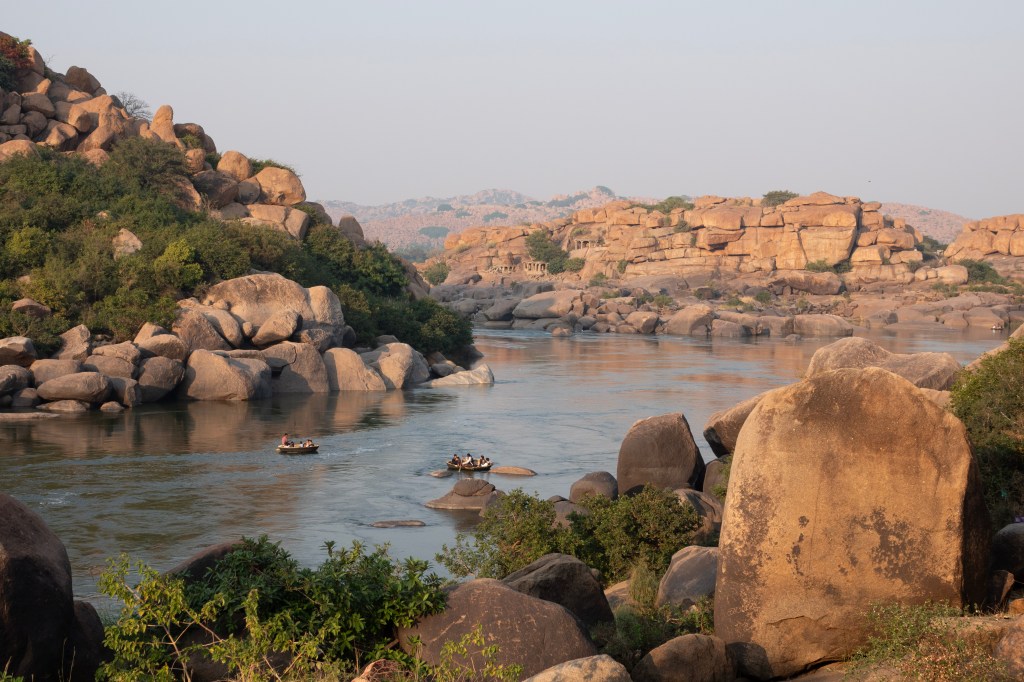
There’s no motor, no rush—just the rhythmic dip of the oar and the soft lap of water against bamboo. It’s the kind of silence that makes you notice everything. You see the shimmer of weeds drifting downstream. You notice the play of light on boulders. You hear the faint echo of temple bells carried by the wind.

A coracle ride at Chakra Tirtha is one of Hampi’s most iconic experiences, blending ancient transportation with spiritual sightseeing. Locally known as Teppa or Dongi, these circular boats have glided across the Tungabhadra River for centuries

The Chakra Tirtha Experience

The ride at Chakra Tirtha is highly scenic. It navigates a narrow, boulder-strewn stretch of the river.

  • Key Highlights: Rides typically pass the Anantashayana Vishnu carving. It features a massive reclining Vishnu relief. You will see the Sahasra Linga, comprising 1,008 Shiva Lingas carved into a single rock bed. The rides also showcase diverse riverside ruins.
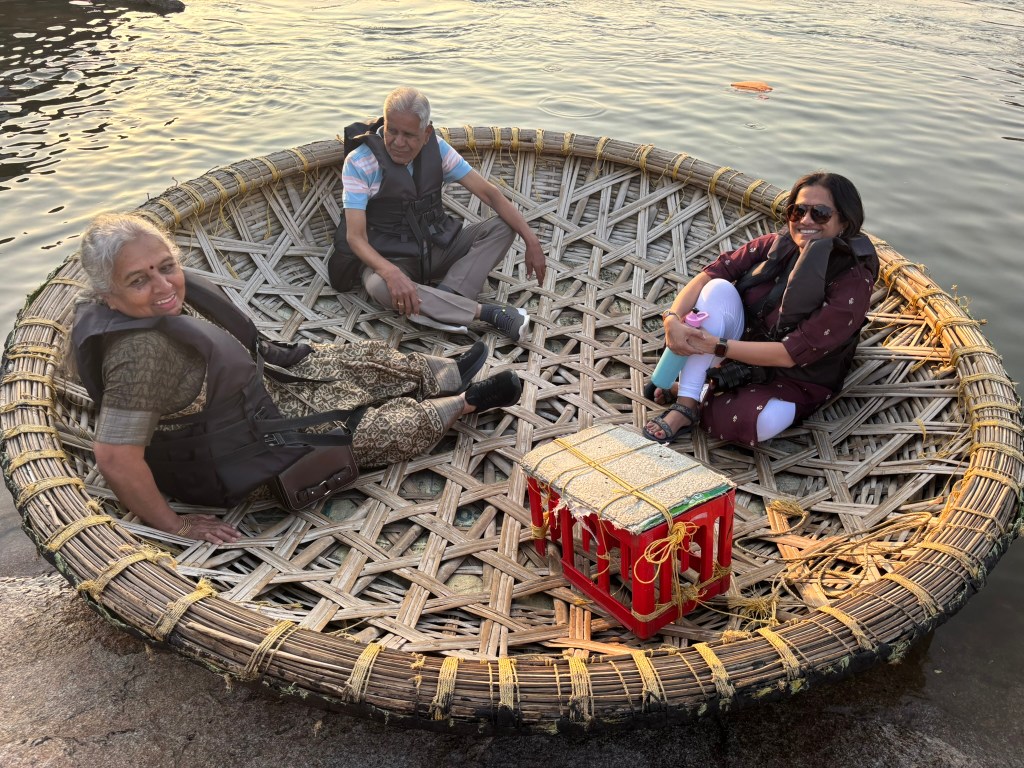
  • Cost & Duration: A 30-minute ride typically costs ₹500 per person. A full-hour ride (covering more ruins and islands) costs ₹800 to ₹1,000. We hired the entire coracle for 3 of us. We paid approximately 6000 per hour. It was a more intimate guided tour with the boatman. I was pleasantly surprised to see life jackets being provided for this ride.
  • The “Spin”: For an adventurous touch, boatmen often give the coracle a high-speed spin in the water upon demand. 

History of the Theppa or Coracle

The coracle is one of the world’s oldest boat designs, used for over 2,000 years for fishing

  • Ancient Origins: In the 16th century, the Portuguese traveler Domingo Paes marveled at these “round basket-boats.” He noted their ability to carry up to 20 people.
  • Strategic Design: The circular, bowl-like shape was perfected for Hampi’s unique environment. It allows the boat to run aground. This prevents capsizing, making it ideal for the river’s strong currents and shallow, rocky beds.
  • Traditional Construction:
    • Frame: A lattice of split bamboo or willow shoots.
    • Skin: Historically made of animal hides (bullock or horse), modern coracles now use heavy-duty plastic or PVC sheets.
    • Waterproofing: The exterior is coated with bitumen (tar) or resin to guarantee total water tightness.
  • Legacy: During the Vijayanagar Empire, they were vital for transporting grains, construction materials for temples, and ferrying pilgrims to holy sites

Stopping at the Secret Shrines Along the River

The beauty of the Chakratirtha coracle ride is that it doesn’t just take you across the river. It takes you into Hampi’s hidden spiritual landscape.

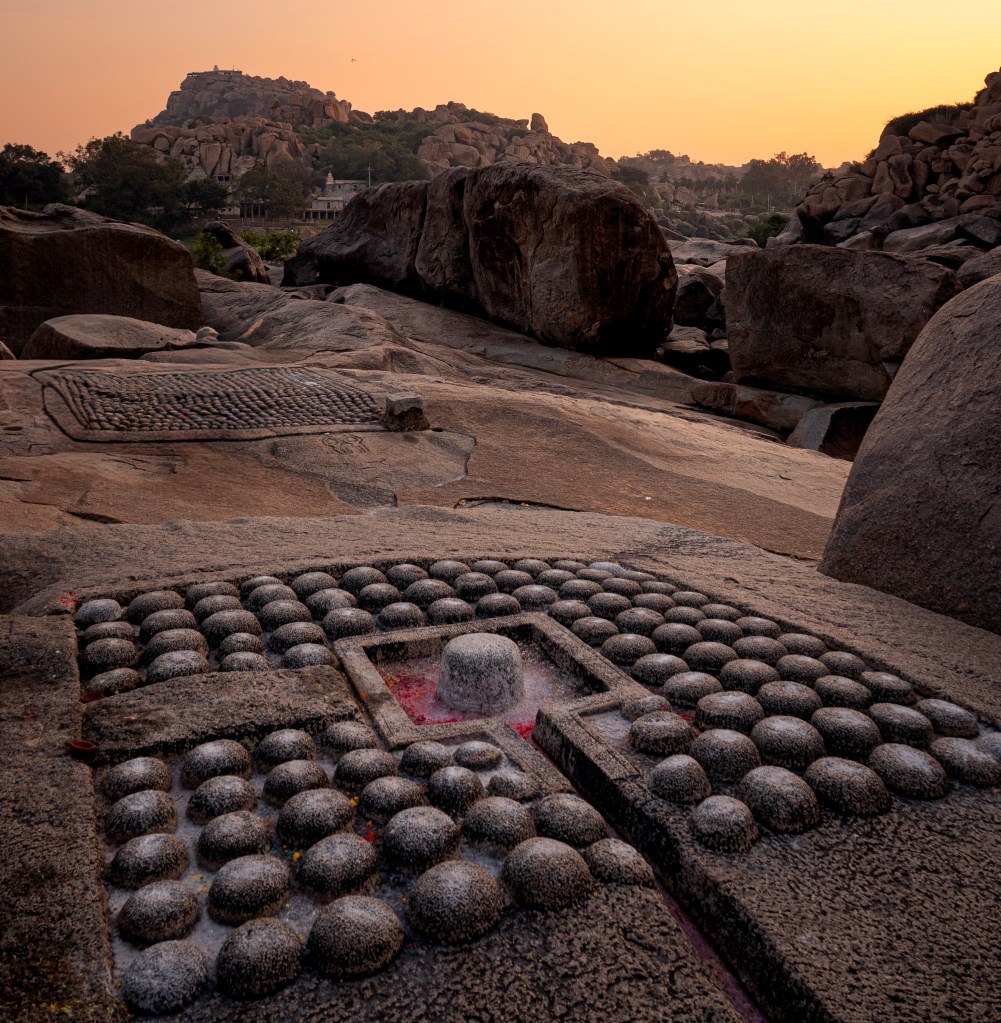
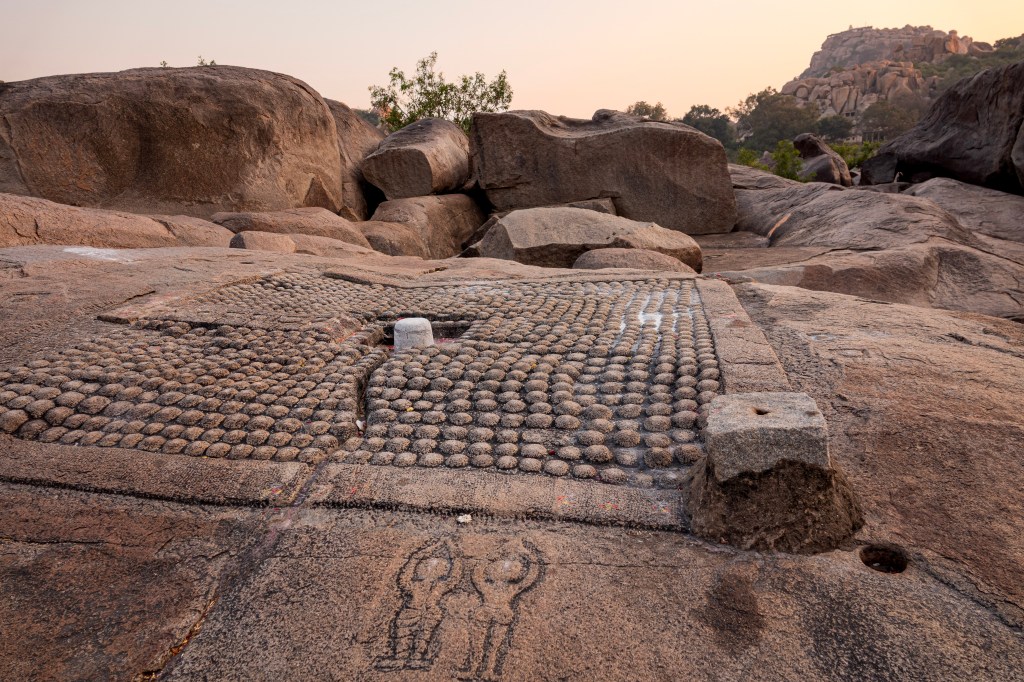
🕉️ Sahasralinga: A Thousand Lingas in Stone

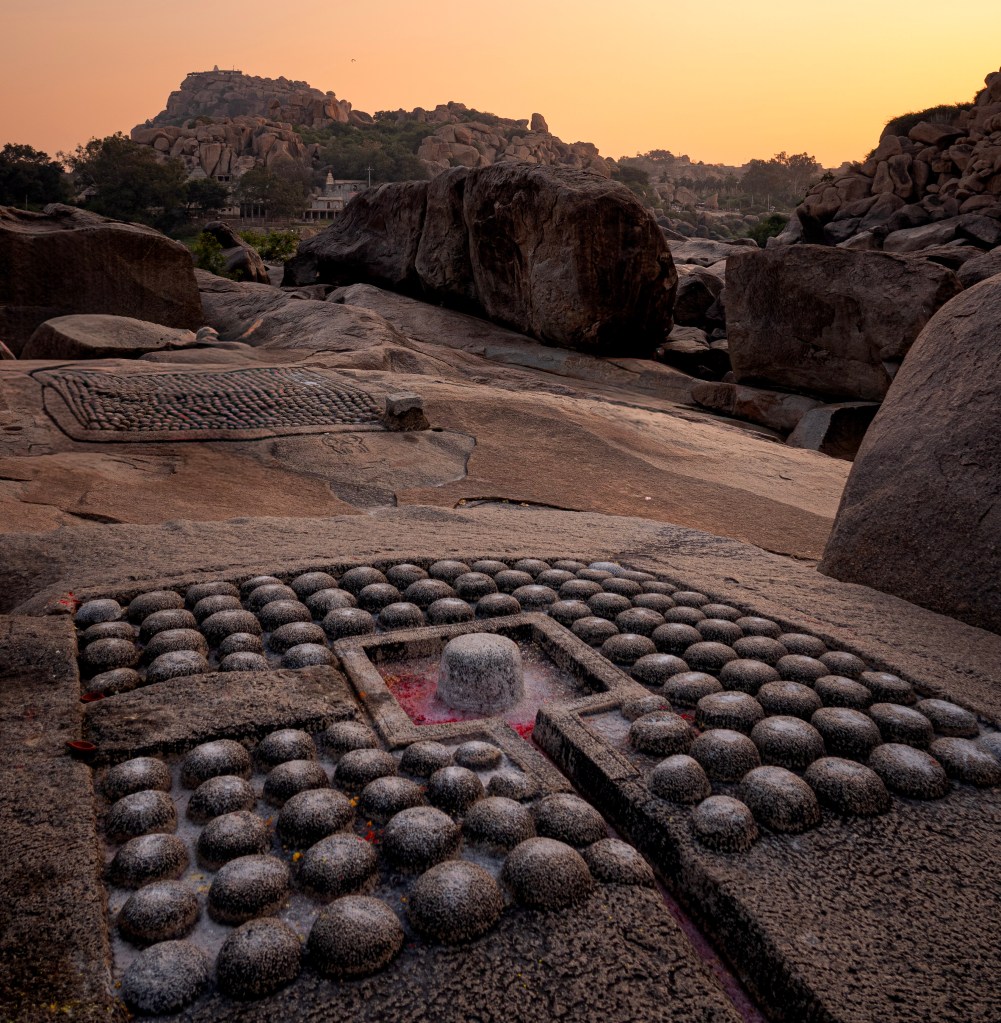
You glide a short distance downstream and come to a quiet stretch of riverbank. Our coracle stopped here. We were guided towards the hidden temples. The first of these is Sahasra Linga or Koti linga. Reaching this location required some boulder-hopping, and there is no clear direction. I don’t think we would have found this place without our boatman leading the way.

Sahasra Linga is a significant rock-cut site. It features two primary groups of lingas: one set of 108 and a larger, symmetrical grid of 1,008.

Location & Access

  • Proximity: It is located a short distance (approx. 400–500 meters) east of the Chakra Tirtha bathing ghat, along the southern bank of the Tungabhadra River.
  • Accessibility: Reaching the site by land requires a challenging trek over uneven boulders.
  • Visibility: The carvings are best viewed during the dry season (December to May). River levels are low during this time. Many carvings can become submerged during the monsoon.

Why were lingas carved into the rock bed? I wasn’t able to find a clear answer to the origin of these remarkable carvings. Some researchers suggest that the carvings date back to the Vijayanagara Empire. These intricate designs were likely meant for worship and reflection in an open-air sanctuary. The second theory is that these lingas might have been crafted by devotees. They could have created them as a form of devotion and reverence. Additionally, our guide mentioned that a sage created these carvings. He wanted to offer a convenient alternative for worshipers who could not visit the famous Koti Lingas spread across Hampi.

Symbolism: The number 1,008 is spiritually significant, corresponding to the Shiva Sahasranama (the thousand names of Lord Shiva).

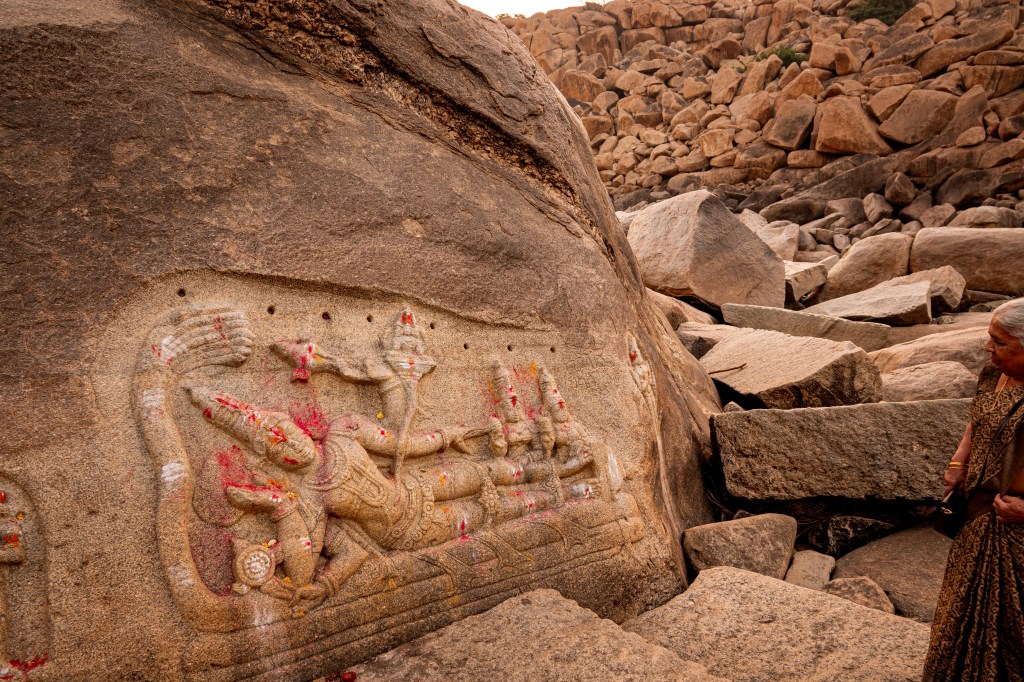
🛌 Anantasayana: Vishnu in Eternal Repose

Further along the river, tucked between boulders and half-hidden by the landscape, is one of Hampi’s most peaceful carvings. It is Anantasayana, the reclining Vishnu.

Here, Vishnu rests on the serpent Adishesha, eyes half-closed, the world held in balance by his cosmic sleep. The carving is weathered, softened by centuries of wind and water, but its serenity is unmistakable.

There’s something profoundly calming about arriving here by coracle. You step onto the warm rock. The river flows quietly behind you. Suddenly, the entire scene feels like a meditation.

Other river ruins worth visiting

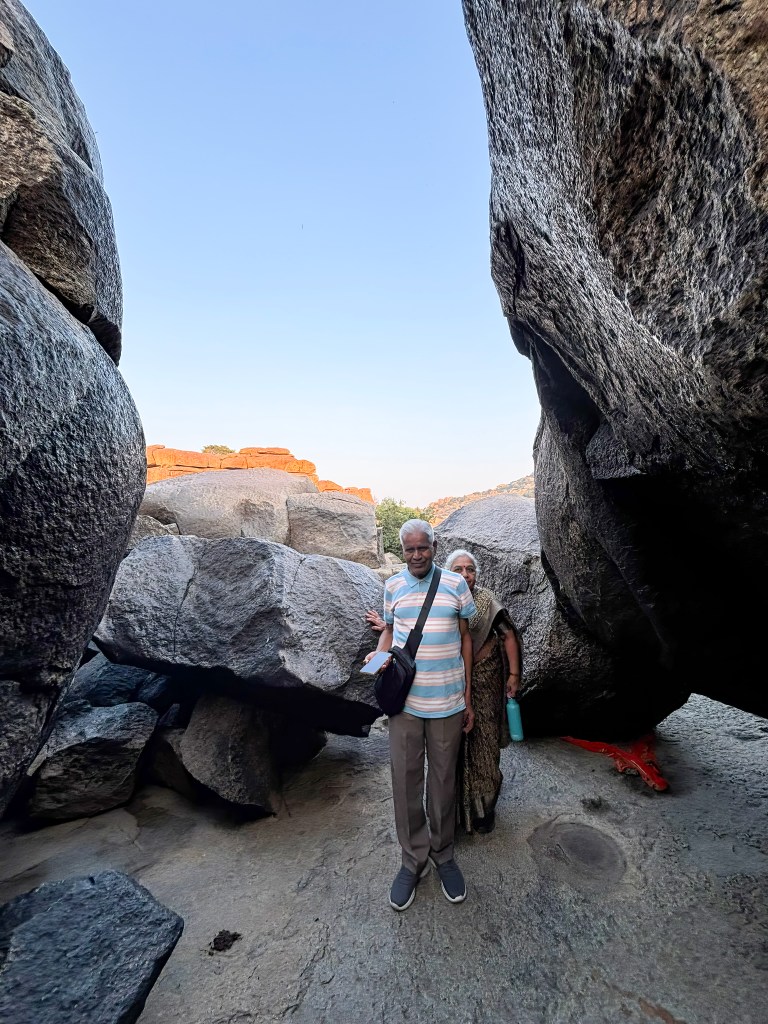
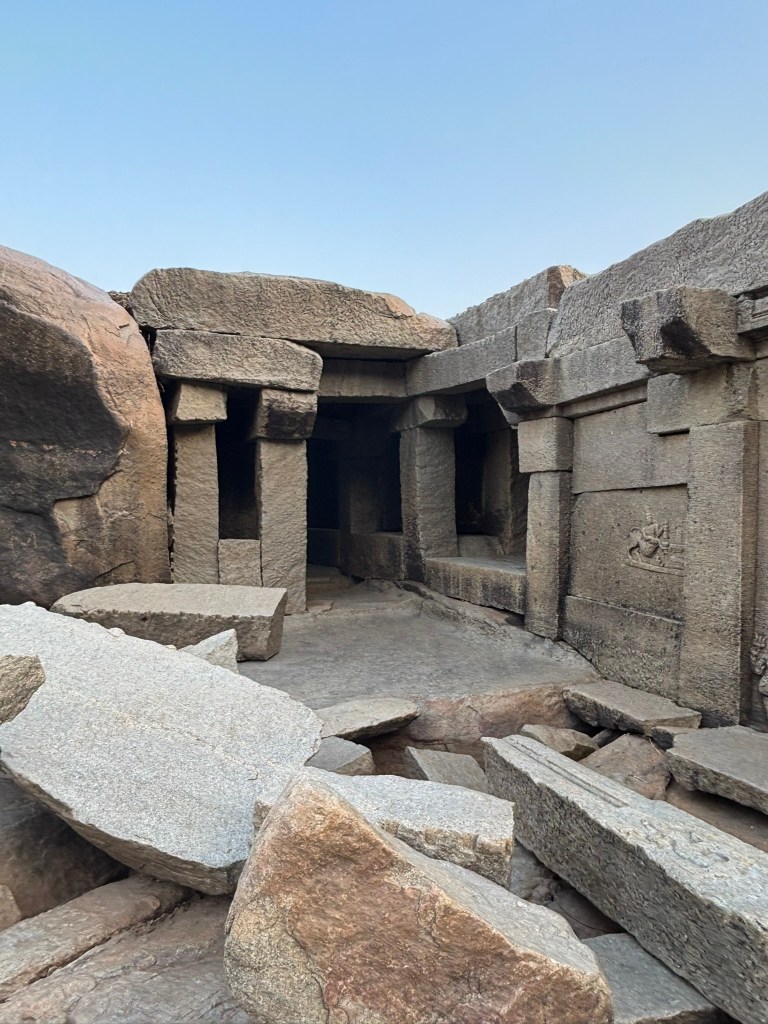
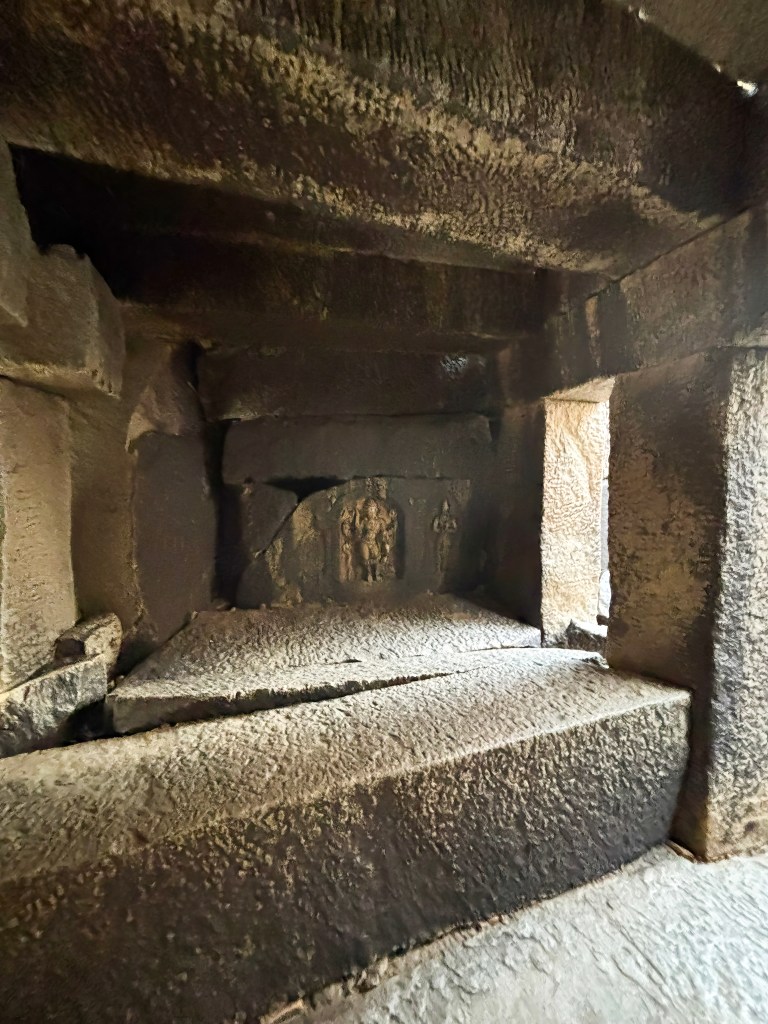
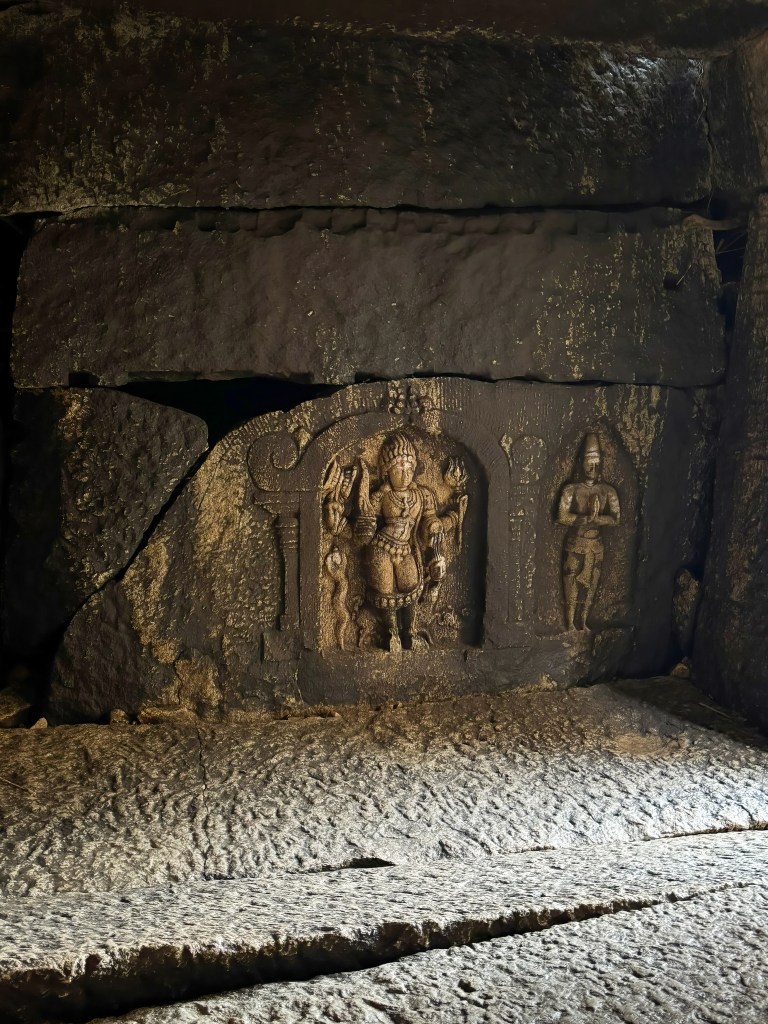
There are also a few other ruins that are worth visiting. One of them is a small sanctuary accessible by crawling under a boulder.

Several gods, including Surya riding on his chariot, are carved into the rock here. You can also see a pavilion built for devotees on the riverbank. Another noteworthy sight is a rock that strikingly resembles an elephant. This natural marvel has captured the imagination of many. Our guide mentioned that the coracle operators, when water levels are low, take passengers under the majestic Elephant Rock. This provides a unique perspective on this ancient marvel. During the monsoon season, though, the temple and its carvings are submerged. It only emerges again with the changing tides and seasons.

Narasimha Temple: A Quiet Shrine Revealed by the River

You can also visit the Narashimha temple on the same coracle ride. We ran out of time and couldn’t visit the temple. A short walk takes you through scattered boulders and ancient stone steps. They lead you to the temple. Its weathered facade blends seamlessly into the rocky hillside. The temple is a multi-story structure with characteristic Vijayanagara-style pillars. It has three sanctums originally dedicated to different forms of Vishnu: Venugopala, Lakshminarasimha, and Vishnu-Purushottama.

The Kampabhupa Pathway: Echoes of Ancient Pilgrims

As you return toward Chakratirtha, you may notice the broad stone pathway running along the river—the Kampabhupa Pathway. Built in the 14th century by Kampabhupa, son of Vira Harihara Raya, this ancient route once connected Virupaksha Bazaar to the sacred riverbank and onward to Vittalapura.

During high waters, the path disappears completely, as if the river reclaims it for a while. But when visible, it’s a beautiful reminder of the pilgrims who walked this very stretch centuries before you floated past in a coracle.

Final thoughts

A coracle ride at Chakratirtha isn’t just a river crossing—it’s a slow unfolding of Hampi’s quieter stories. The sacred whirlpool, the Kodandarama Temple, the secret shrines of Sahasralinga and Anantasayana, the ancient pavilions and pathways… each stop feels like a page from a living epic.

By the time you return to the rocky bank, the sun warm on your shoulders and the river’s rhythm still in your body, you realize this journey has left its own swirl within you—gentle, sacred, unforgettable.

Krishna Temple, Hampi — A Royal Monument of Victory and DevotionKrishna Temple

Traveling south from the Virupaksha complex, the road leads to Kamalapura. The landscape then opens into Krishnapura, another historic quarter of Hampi’s sacred center. At its heart stands the Krishna Temple. It is a grand monument commissioned in 1515 CE by the Vijayanagara emperor Krishnadevaraya. This was to commemorate his celebrated victory over the Gajapati rulers of Orissa. The temple once housed a granite icon of the infant Krishna. This icon was seized from the fort at Udayagiri during this campaign. It is now preserved at the Government State Museum in Chennai.

A Temple Anchored in its Urban Landscape

Like other major shrines in Hampi, the Krishna Temple is aligned with a broad bazaar street extending eastward. Today, this street sits at a lower level than the temple itself. Its colonnades are partly engulfed by fields of sugarcane and banana plantations. This setting creates a striking contrast between cultivated greenery and monumental stone.

A few metres north of the bazaar lies a rectangular tank. It is framed by additional colonnades and crowned by a small pavilion that rises from the water. This tank is nestled beneath a rocky overhang. It forms one of the most picturesque corners of the complex. If you have time, this is a good place get some nice photos.

The Grand Gopura: A Royal Statement

The eastern entrance gopura immediately announces the temple’s royal origins. Though now dilapidated, its frontal portico remains impressive for the sheer height of its granite columns. These columns were recently reset during conservation efforts. Above them rises the brick superstructure, only partially preserved, but still bearing traces of plaster sculptures. Among these are battle scenes on the western face. These scenes possibly depict Krishnadevaraya’s Orissa campaign. Later renovations have simplified many of the original figures.

Within the gopura passageway, the doorway jambs are carved with elegant maidens entwined with creepers. A charming hare‑in‑the‑moon motif appears between nagas on the underside of one lintel. This is a delightful detail easily missed by hurried visitors.

Inside the Temple: Mandapas, Shrines, and Royal Inscriptions

A large inscription slab stands at the centre of the walled compound. Krishnadevaraya himself set it up. It records his military exploits and benefactions. The carving is somewhat hastily executed, but the monument remains a valuable historical record of the emperor’s reign.

The temple layout follows the classic Vijayanagara sequence:

  • a 25‑bay open mandapa,
  • an enclosed nine‑bay mandapa with side porches,
  • and a towered sanctuary surrounded by an unlit circumambulatory passage.

Minor shrines occupy the outer corners of the enclosure. A double‑sanctuaried goddess temple stands to the north. It adds to the ritual complexity of the site.

Layers of Construction and Adaptation

Along the inner perimeter is a continuous colonnade. It is interrupted on the south side by a passageway. This leads to an earlier pavilion‑like gateway. This older structure became part of the Krishna Temple complex. It was crowned with a brick tower. This illustrates the Vijayanagara habit of integrating pre‑existing buildings into new architectural schemes.

Beyond this lies an outer-walled enclosure, where a curious six‑domed structure stands. The building is built of rubble coated in plaster. It has internal arches and steps leading to the roof. The building features holes in the domes. These are clear evidence that it once served as a granary. Its presence highlights the temple’s significance as a sacred space. It also emphasizes its role as a center of economic and administrative activity.

Final Thoughts on the Krishna Temple

The Krishna Temple is one of those places in Hampi where layers of history feel unusually close to the surface. You sense Krishnadevaraya’s ambition in the soaring gopura. You also feel the devotional pulse that once centered around the now‑empty sanctuary. Even in its ruined state, the complex carries the unmistakable imprint of royal patronage. It is a temple built not only for worship. It commemorates a moment of triumph that shaped the empire’s identity.

Exploring Hemakuta Hill: A Journey Through Myth and Architecture

Hemakuta Hill is one of Hampi’s most quietly enchanting landscapes. It’s a place where mythology, early temple architecture, and sweeping granite vistas come together. Rising gently above the Virupaksha Temple complex, this hill holds some of the region’s oldest shrines.

A Sacred Hill of Gold and Fire

Local folklore gives Hemakuta its luminous name. According to mythology, Lord Shiva performed penance on this very hill long ago. This was before he agreed to marry Pampa, who is often identified with Parvati. She was a local goddess whose devotion moved him deeply. When Shiva finally consented to the marriage, it rained gold on the hill. Since hema means gold in Sanskrit, the place became known as Hemakuta, the “Hill of Gold.”

Another legend adds a dramatic layer to this sacred landscape. Kama, the god of love, once tried to distract Shiva from his penance. He wanted to help Pampa win Shiva’s affection. Enraged, Shiva opened his third eye and reduced Kama to ashes right here on Hemakuta. When Kama’s wife Rathi pleaded for mercy, Shiva relented — restoring Kama, but only in spirit, not in physical form. This myth of destruction, compassion, and rebirth deepened Hemakuta’s association with Shiva. It inspired generations to build shrines to him across the hill.

Walking Through Early Vijayanagara History

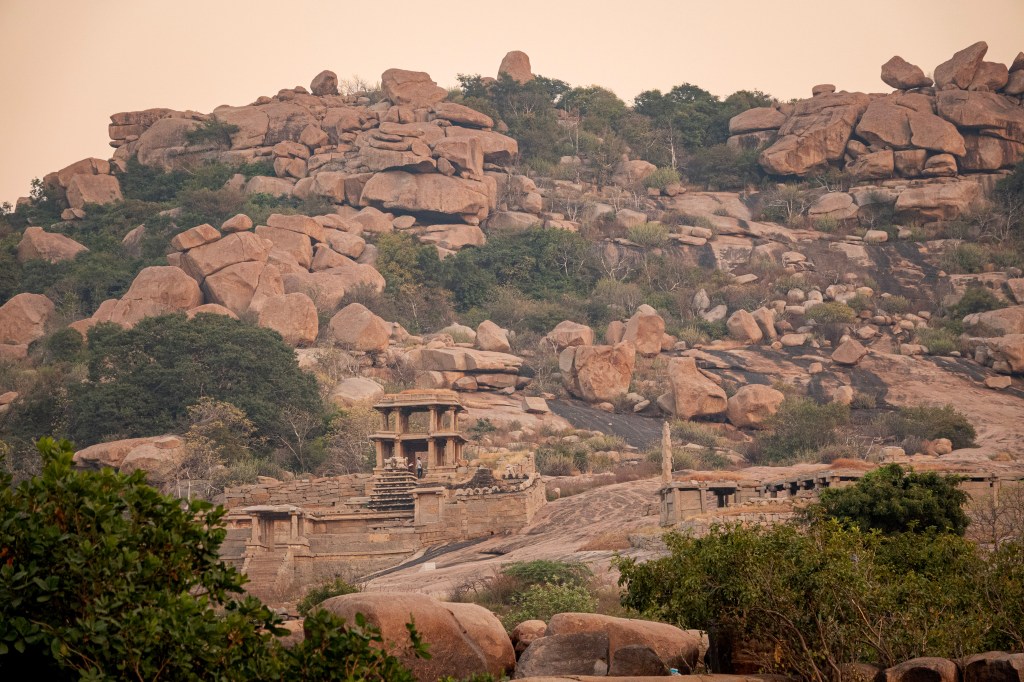
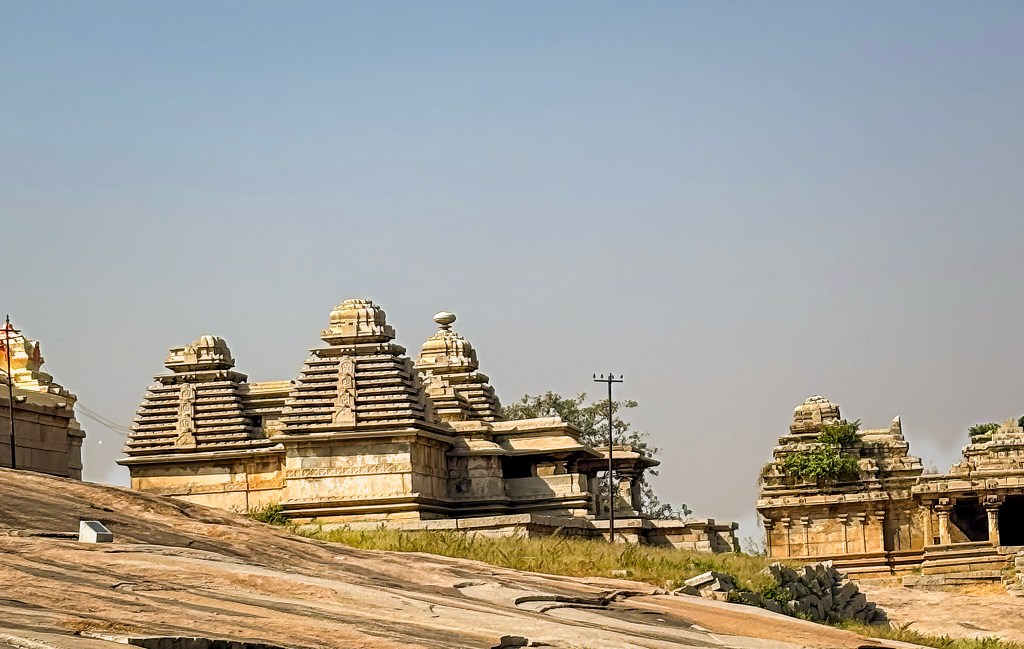
A modest 15th‑century gopura entrance on the western side marks the beginning of the Hemakuta complex. It opens into a fortified zone of small shrines. These shrines are some of the best-preserved examples of pre‑ and early‑Vijayanagara architecture. These temples sit dramatically on a sloping granite shelf.

Centuries ago, a processional path connected the Tungabhadra River to the Virupaksha shrine. It then climbed through a series of pavilion-like gateways to the summit of Hemakuta. When Krishnadevaraya expanded the Virupaksha complex in the early 1500s, this ancient route was severed. The gateways persist, including a striking double-storeyed pavilion near the top. This pavilion offers panoramic views of the Tungabhadra valley.

Architecture of the Hemakuta Group of Temples

The architecture of the Hemakuta temples is unlike anything else in Hampi. They are deeply rooted in the Deccan traditions of the 13th and 14th centuries. Their clean lines and minimal ornamentation often lead visitors to mistake them for Jain temples.

Most of the temples here are compact, triple‑chambered structures crowned with pyramid‑like granite roofs. On the northern side of the hill, several shrines follow the Trikutachala style. Three sanctums are placed perpendicular to one another. They all open into a shared central hall. This layout creates a sense of balance and quiet symmetry, perfectly suited to the contemplative atmosphere of the hill.

The outer walls are almost entirely plain. A delicate horizontal chain of floral motifs is the only interruption. It wraps around the structures. Other signature features include fluted foundations. The curved eaves gently overhang the walls. These details soften the granite’s stark geometry.

As you wander across the hilltop, you’ll encounter dozens of such shrines, scattered across the undulating sheet of rock. The largest and most elaborate clusters lie on the northern slope, facing the Virupaksha Temple complex. These are among the oldest surviving temples in Hampi, predating the Vijayanagara Empire itself.

Sacred Corners and Hidden Gems

Further south, the landscape shifts. A small pond is next to a shrine known as the Mula Virupaksha Temple. This shrine is believed to be older than the grand Virupaksha Temple below. Its whitewashed hall features cubical pillars typical of pre‑Vijayanagara design. The porch opens directly onto the water. This is one of the few shrines on Hemakuta Hill that remains actively worshipped.

Just behind it stands a tiny chamber-like shrine with a pyramid roof, housing an image of Hanuman. This quiet corner is one of the best spots to watch a Hampi sunrise or sunset.

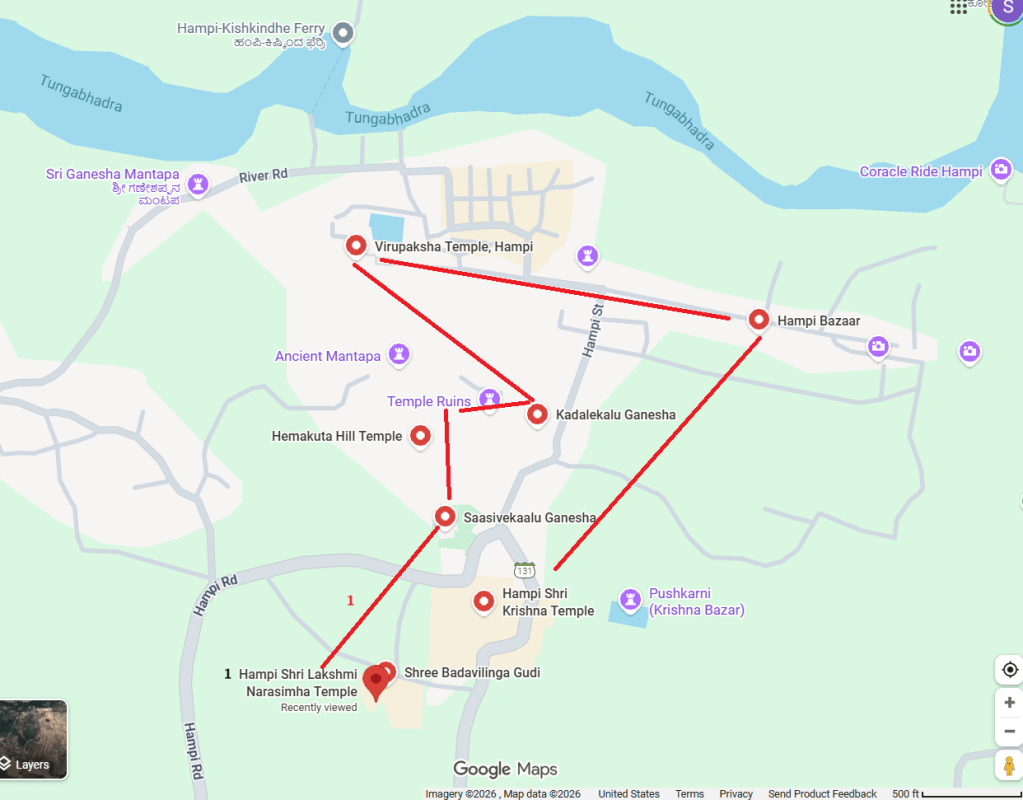
As you continue southward, the hill offers a natural balcony. It overlooks the Krishna Temple and Sasivekalu Ganesha. You can also see the twin monuments of Lakshminarasimha and Badavilinga. Here you’ll also find the two‑storeyed southern gateway, another remnant of the ancient processional path. Several temples in this area feature tall monolithic lamp posts, standing like silent sentinels before the shrines.

Krishna temple and Sasivekalu Ganapathi temple from Hemakuata hill

The entire hill is encircled by an ancient fortification wall. It is now broken in places but still traceable along the granite’s contours. It hints at the strategic and sacred importance Hemakuta once held.

A Hill That Holds Its Stories Lightly

Despite being at the very heart of Hampi, Hemakuta Hill feels surprisingly serene. You can easily spend hours wandering its slopes. Discover shrines tucked between boulders. Absorb the quiet stories etched into every surface.

Hemakuta is not a place of spectacle — it is a place of origins. It is a hill where gods once walked. Kings once prayed there. The earliest architectural whispers of Vijayanagara still linger in the wind.

The Magnificent Ganesha Statues of Hampi: A Cultural Insight

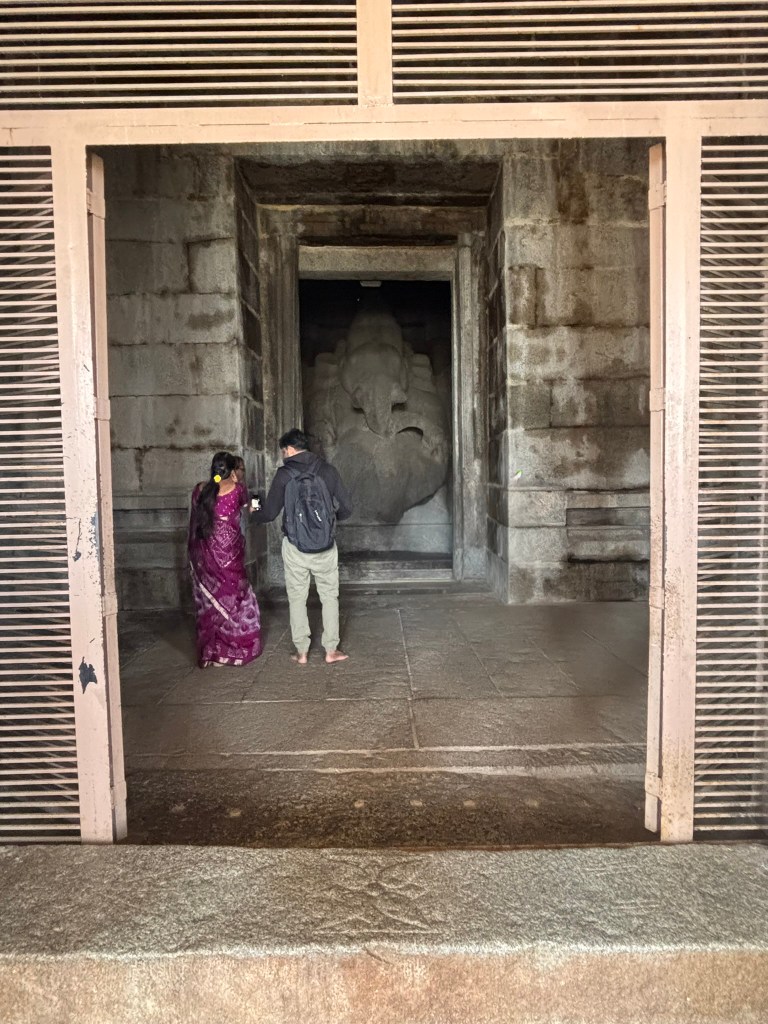
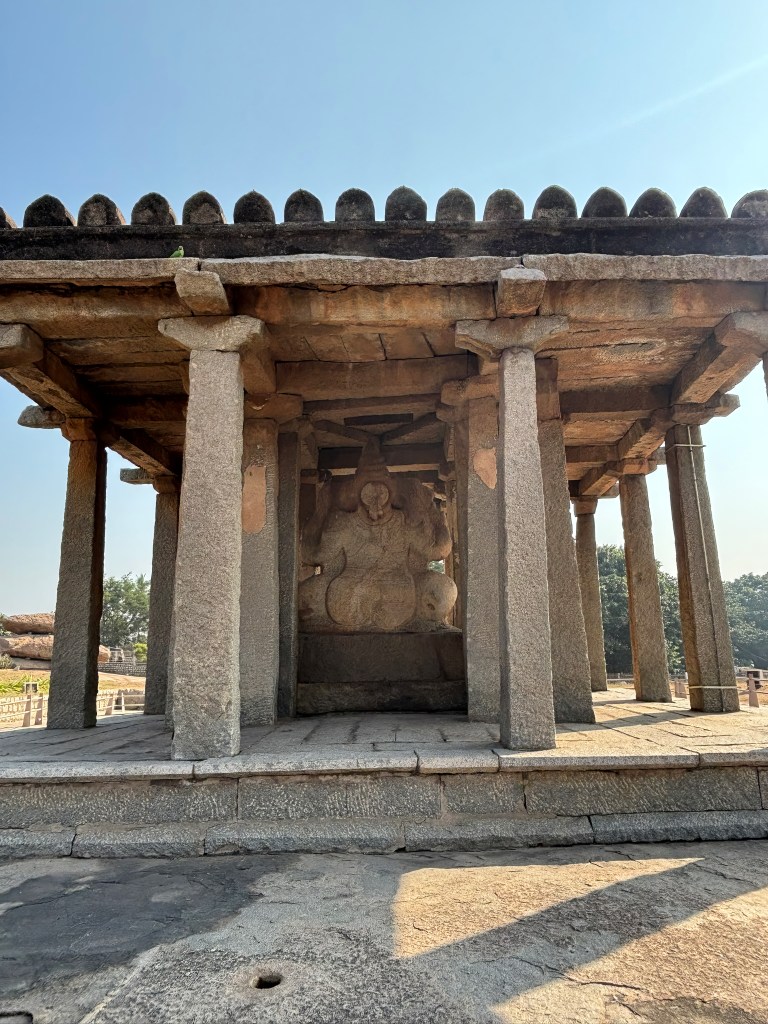
The Sasivekalu and Kadalekalu Ganesha temples are two of Hampi’s most significant monolithic shrines. They are located on the slopes of Hemakuta Hill. Both statues are carved from single granite boulders and exemplify the classical Vijayanagara architectural style.

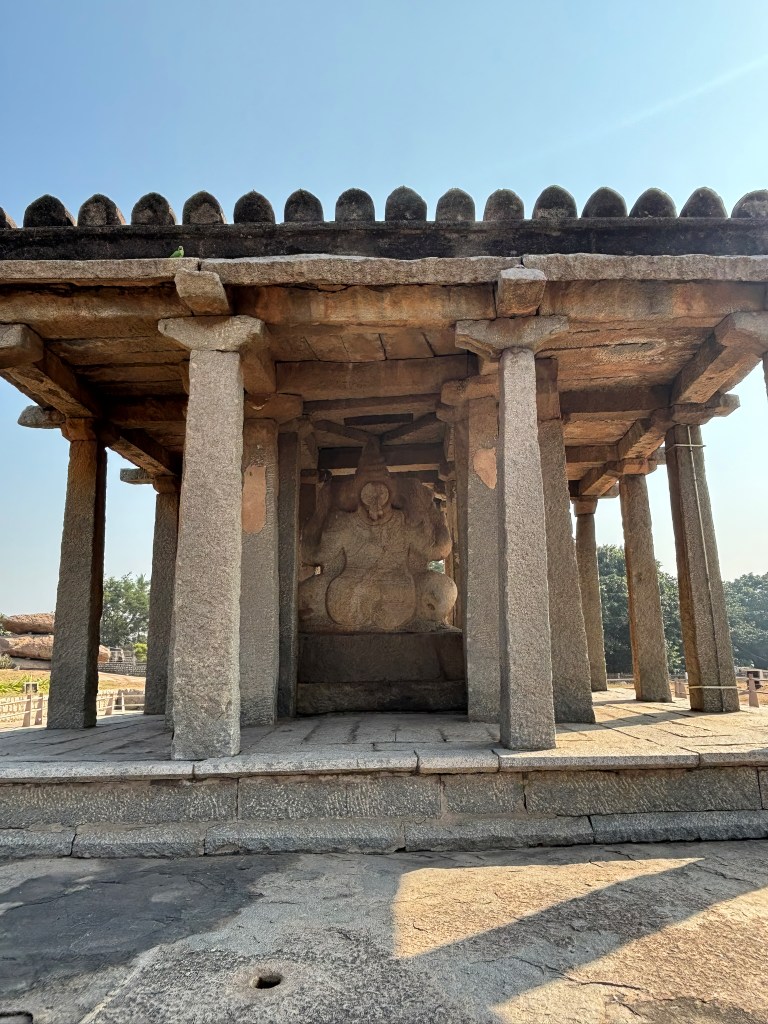
Sasivekalu Ganesha- Meaning Mustard seed Ganesha. Legend has it that it was commissioned by a mustard seed seller and hence the name. Walk behind the open pavilion to see a female form representing the mother of Ganesha.

  • Physicality: Stands 2.4 meters (8 feet) tall.
  • Iconography: Depicts Ganesha with a snake tied around his belly to prevent it from bursting after a large meal. He is seated in a half-lotus posture with four arms holding a goad, noose, broken tusk, and modak. A unique feature on the back depicts a giant hand, suggesting Ganesha is sitting in the lap of his mother, Goddess Parvati.
  • Structure: Housed in an open, 16-pillared mandapa (pavilion) with a brick and mortar roof in the Indo-Saracenic style. 

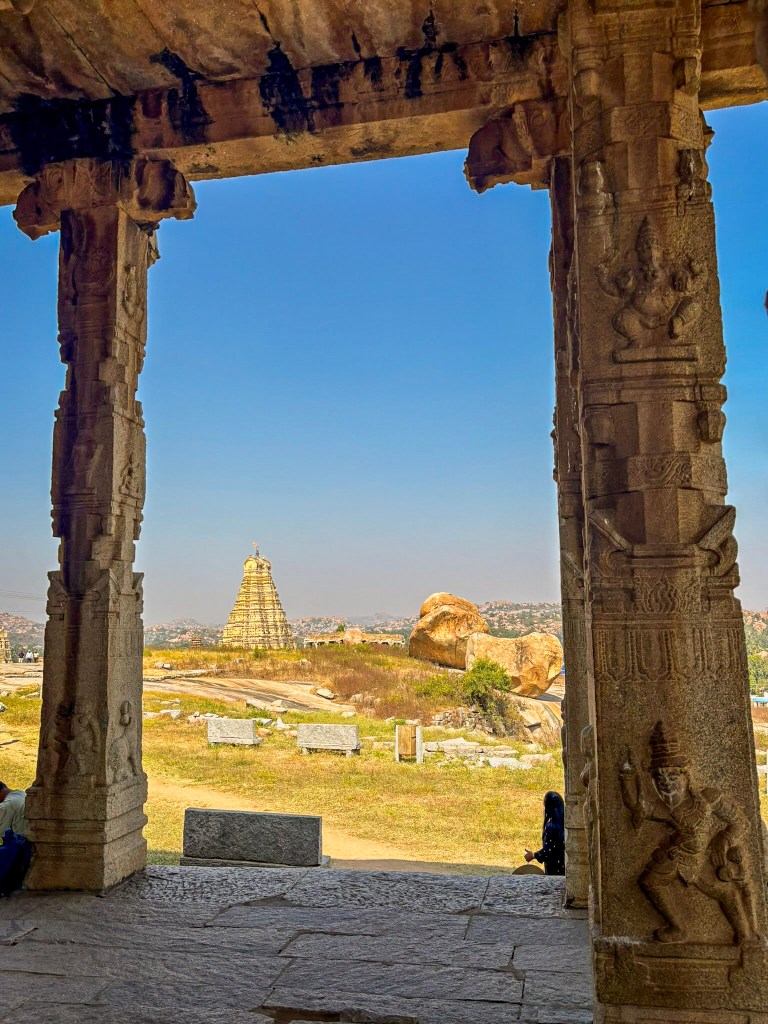
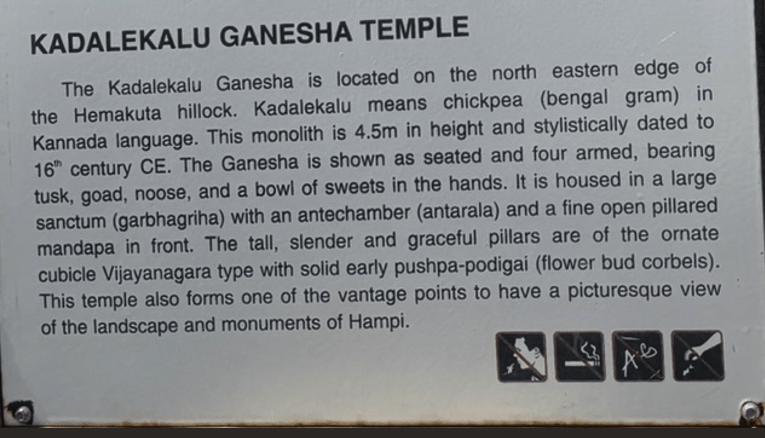
Kadalekalu Ganesha– Meaning Bengal gram Ganesh due to the belly resemblance to Bengal Gram. The open mandapa of this temple has some great views of the surrounding area of Hampi

  • Physicality: Significantly larger at 4.5 meters (15 feet) tall.
  • Iconography: Named for its belly’s resemblance to a Bengal gram (Kadalekalu).
  • Structure: Features a formal temple layout with a large sanctum (garbhagriha) and an open-pillared mandapa with unusually tall, slender granite pillars adorned with intricate mythological carvings

Final Thoughts

Standing before the Sasivekalu and Kadalekalu Ganesha statues, it’s impossible not to feel the quiet power that defines Hampi. These monolithic forms are one modest and intimate, and the other towering and majestic. They capture the spirit of a city that once pulsed with royal ambition and artistic brilliance. What moved me most was how effortlessly Hampi blends myth and landscape, history and humanity. A mustard-seed seller commissioning a deity, a mother’s presence carved subtly into stone, a belly shaped like a Bengal gram—these details remind you that even in an imperial capital, ordinary lives and tender stories shaped the sacred,

Visiting Badami: A Guide to Cave Temples and Beyond

Imagine standing before a wall of fiery red sandstone, where the cliffs don’t just touch the sky—they tell the stories of gods. Welcome to Badami, the 6th-century capital of the Chalukya Empire, where history isn’t found in books, but carved directly into the heart of the mountains.

Carved into dramatic cliffs overlooking the emerald Agastya Lake, the Badami Caves are more than just monuments; they are a masterclass in ancient artistry. From the cosmic dance of Shiva to the serene presence of Jain Tirthankaras and the majestic incarnations of Vishnu, these four rock-cut temples offer a rare window into a time of profound religious harmony.

Are you a history buff chasing the legacy of kings? Maybe you are an art enthusiast marvelling at ceilings that still hold the whispers of ancient paint. You could also be a spiritual seeker seeking peace amid rocky peaks. Badami promises a vibe that is as breathtaking as it is serene. Get ready to explore this “cradle of architecture.” You’ll step into a world where stone truly comes to life. You can add Aihole and Pattadakal to this trip to admire Chalukyan temple architecture.

  1. Where is Badami, and how to reach it
  2. Main Attractions
  3. Badami Cave temples-The Four Iconic Caves
  4. Jamiya mosque
  5. Exploring Agastya Lake
  6. Bhootnatha Temples
  7. Where to stay in Badami
  8. Final thoughts

Where is Badami, and how to reach it

Badami is located in the Bagalkot district of north-central Karnataka, India. It is situated in a ravine between rugged red sandstone cliffs.  You can visit Badami along with Pattadakal and Aihole- the 3 cities known as the “Cradle of Indian temple Architecture” and UNESCO world heritage sites. We visited Badami (and Pattadakal and Aihole) as a day trip from Hampi which makes a perfect 3-5 days trip from Bangalore. I would suggest 2 days in Badami (the only place with decent hotels), if you are a photographer or a history buff. Day 1 spent in Badami and day 2 in Aihole and Pattadakal.

How to Reach Badami

  • By Train: This is the most convenient way to reach the town. Badami Railway Station (BDM) is roughly 5 km from the town center.
    • Direct Connections: Daily trains operate from major cities like BengaluruHyderabadMumbaiPune, and Solapur.
    • Major Trains: Notable services include the Basava Express (from Bengaluru) and the Golgumbaz Express (Mysuru-Solapur).
  • By Air: Badami does not have its own airport.
  • By Road: Badami is well-connected by National and State Highways.
    • From Nearby Cities: You can take Karnataka State Road Transport Corporation (KSRTC) buses from Hubli (100 km). Private buses are also available. Buses are also available from Belgaum (140 km) and Bijapur (120 km).
    • From Bengaluru: Private buses depart in the evening (approx. 10-hour journey).
    • From Hampi: At roughly 140 km away, many visitors hire a taxi or rent a motorbike for a scenic 3.5 to 4-hour drive. 

Main Attractions

  • Badami Cave Temples: The crown jewels of the region, these temples are carved into the cliff face. There are four 6th-century rock-cut temples: three are Hindu and one is Jain. They showcase remarkable sculptures and carvings of deities such as Shiva (as an 18-armed Nataraja) and Vishnu in various avatars. Here is my write up about the caves
  • Jamiya mosque– 17th century mosque erected by Malik Abdul Aziz and displays typical Adil Shah architecture
  • Agastya Lake: This large, man-made lake is known for its purported healing properties. It provides the picturesque foreground to the cave temples and Badami Fort. The area offers tranquil spots for quiet contemplation. It is also ideal for stunning sunset photography.
  • Bhootnatha Temples: Located on the eastern banks of the Agastya Lake, these sandstone temples are dedicated to Lord Shiva. This temple creates a beautiful reflection in the water, especially a striking sight in the early morning or evening light.
  • Badami Fort: The fort is perched on the northern hill. It offers panoramic views of the entire town, the lake, and the surrounding monuments. The trek up passes ancient gateways, granaries, and the well-preserved Malegitti Shivalaya temple.
  • Archaeological Museum: Situated near the cave temples, this museum houses a fascinating collection of sculptures. It also contains artifacts excavated from local sites. These items provide essential historical context for the region’s rich past.

Badami Cave temples-The Four Iconic Caves

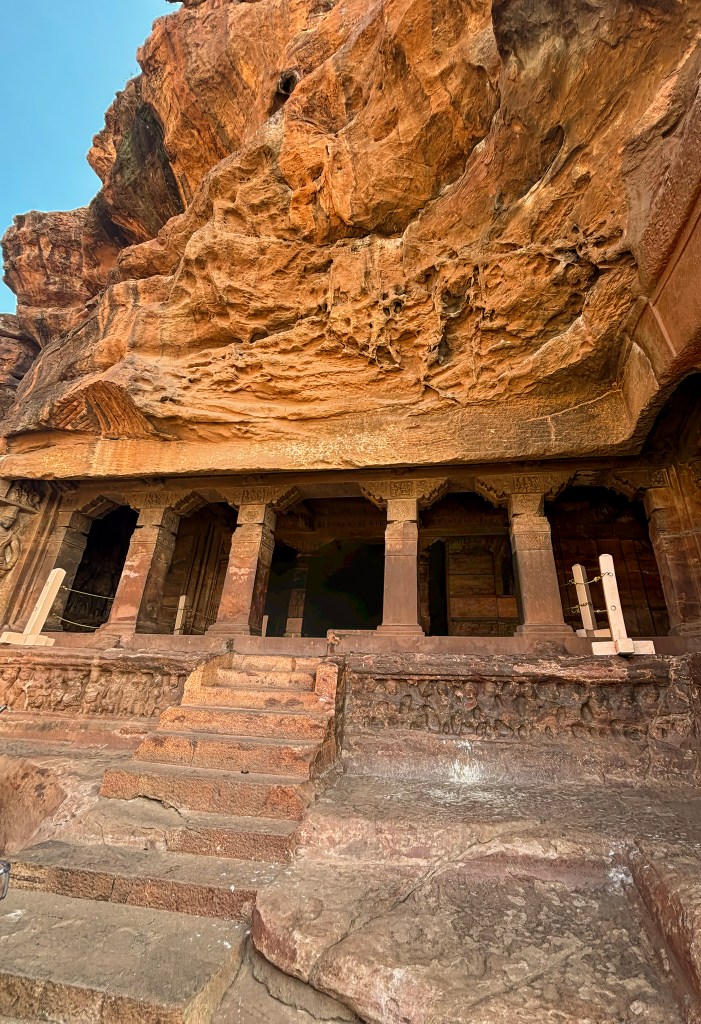
Badami Cave Temples are a stunning complex of four rock-cut shrines. They represent some of the earliest known examples of Hindu and Jain architecture in India. The Chalukya dynasty carved from soft red sandstone cliffs during the 6th and 8th centuries. There are 4 caves to explore, simply labelled Cave 1-4, 1 being at the bottom and 4 at the top. The order in which these caves were carved is unknown. Cave 3 is inscribed, making it one of the earliest dated Hindu cave temples in South India.

  • Cave 1: The lowest cave is dedicated to Lord Shiva.
    • Interesting Fact: It features a massive 5-foot relief of an 18-armed Nataraja (dancing Shiva). If you pair any left arm with any right arm, you can observe a unique dance pose. Altogether, it depicts 81 distinct Bharatanatyam postures.
  • Cave 2 : Dedicated to Lord Vishnu, this cave is smaller but contains dramatic mythological reliefs.
    • Interesting Fact: Look up at the ceiling. You will find a unique wheel-like carving. It features sixteen fish spokes arranged in a square frame.
  • Cave 3: The grandest and most intricately carved of all. This cave is the only one with an inscription. It confirms its exact dedication date (578/579 CE).
      • Interesting Fact: It contains some of the earliest surviving evidence of fresco paintings in India. This includes a faded but beautiful mural of the wedding of Shiva and Parvati.
    • Cave 4 (Jainism): The highest cave was built in the 7th–8th centuries. It provides a peaceful contrast to the Hindu shrines.
        • Interesting Fact: It houses a massive statue of Bahubali in the Kayotsarga (meditating) posture. Vines are intricately carved as if growing around his legs. This symbolises his long period of deep penance.

      To read more: Rock cut temples of Badami

      Jamiya mosque

      It was surprising to see this mosque near the Badami cave temple car park. This is a 17th-century funerary monument was erected by Malik Abdul Aziz in memory of his wife. The prominent feature of the mosque is the red sand stone Domed tomb resembling Gol Gumz of Bijapur. If you have time, it is worth exploring this place that has typical features of Adil Shah architecture (Deccani School of Indo-Islamic architecture)

      Exploring Agastya Lake

      Agastya Lake is a significant man-made reservoir. It has a rich history and has deep mythological roots. Agastya Lake is central to the ancient town of Badami (formerly Vatapi). This town was the capital of the Early Chalukya dynasty. 

      Historical Significance

      • Construction and Purpose: The lake is an artificial reservoir. It is believed to have been constructed during the 5th-7th centuries CE. This construction took place primarily during the Chalukyan period. It served as a strategic water source for the capital city. The city is protected by rugged sandstone cliffs on three sides.
      • Architectural Context: The lake forms the heart of Badami’s architectural landscape. The famous Badami Cave Temples are carved into the red sandstone cliff on its southern side. The Bhootnath temples are situated on its eastern banks. Meanwhile, the Badami Fort is on the northern hill. Together, they create a stunning panoramic view and a cohesive historical circuit. The temples are often reflected in the calm waters, a particularly picturesque sight at sunrise and sunset. 

      Mythological Significance

      • Sage Agastya: The lake is named after the revered Vedic sage Agastya. According to local legend and Hindu Puranas, the sage is credited with bringing the sacred waters to the area.
      • Healing Waters: The water is considered holy. It is widely believed to possess healing properties. Locals have historically used it for bathing to cleanse sins and cure ailments.
      • Mention in Scriptures: The lake finds mention in the ancient Indian epic, the Mahabharata, which describes the religious merit attained by visiting this sacred water body. 

      I had grown up hearing the story of Agastya muni. However, I truly connected the dots only when I was in Badami. The city of Badami, formerly known as Vatapi, is steeped in legend. One significant Puranic tale tells of Agastya Muni and the demon brothers, Vatapi and Ilvala. This tale provides the mythological namesake for this ancient city and the lake.

      The Deadly Deception– According to Hindu mythology, two demon siblings, Ilvala and Vatapi, harboured a deep hatred for sages and Brahmins. They devised a murderous scheme using their shape-shifting and magical powers: 

      • The Trap: Vatapi would transform himself into a goat.
      • The Invitation: Ilvala often disguised himself as a humble host or holy man. He would invite traveling sages to a meal. He served them the cooked meat of his brother (the “goat”).
      • The Resurrection: Once the meal was finished, Ilvala would shout, “Vatapi, come out!”. Using a special mantra or magical ability, Vatapi would then reassemble and tear through the guest’s stomach, killing them instantly. 

      The Encounter with Agastya– The reign of terror ended when they attempted to trick Sage Agastya. He was a revered Rishi known for his immense spiritual power. He was also famous for his legendary digestive capabilities. 

      1. The Feast: Agastya, aware of their intentions through his divine knowledge, accepted their invitation and ate the entire meal.
      2. The Counter-Mantra: Immediately after eating, Agastya rubbed his stomach and uttered the words, “Vatapi Jeernobhava” (Vatapi, be digested).
      3. The End of Vatapi: When Ilvala called for his brother, Agastya calmly informed him that Vatapi had already been digested and would never return.
      4. The Fate of Ilvala: In various versions, a furious Ilvala then attacked the sage and was either reduced to ashes by a single glance from Agastya’s fiery eyes or transformed into a hill. 

      Geographical Connection to Badami -The story is physically immortalised in the landscape of Badami

      • Vatapi Hills: The two red sandstone cliffs that flank the town are believed to represent the two fallen demon brothers.
      • Agastya Lake: The serene man-made lake nestled between these cliffs is named after the sage who freed the region from the demons.
      • Vatapi Ganapatim: This legend is also celebrated in the famous Carnatic song Vatapi Ganapatim, which honours the Ganesha idol supposedly brought from this city to Tamil Nadu following a 7th-century war

      Bhootnatha Temples

      Located on the eastern banks of the Agastya Lake, these sandstone temples are dedicated to Lord Shiva. You can see these cluster temples as you climb the cave temples. This complex offers a tranquil and photogenic spot. The view is particularly beautiful during sunrise or sunset. The surrounding red sandstone cliffs and the lake create a breathtaking backdrop. 

      Architecture and History

      The complex actually comprises two main groups of temples, showcasing the architectural evolution under different Chalukya dynasties: 

      • East Bhootnath Group (Main Temple): This group dates primarily to the 7th-8th centuries CE under the Badami Chalukyas. It is known for its blend of early South Indian Dravidian and North Indian Nagara architectural styles. The open mandapa (hall) of the main temple extends into the lake. This unique design element makes it appear to float during the monsoon season when the water levels are high.
      • North Bhootnath Group (Mallikarjuna Group): Located slightly north and built later, between the 11th-12th centuries CE, these temples feature a distinct stepped, pyramidal superstructure in the Kalyani (Western) Chalukya style

      Where to stay in Badami

      Badami offers a range of accommodation options, from comfortable resorts to budget-friendly guesthouses. The best places to stay are generally close to the town center. They are near major attractions like the Agastya Lake and the Cave Temples. Alternatively, choose places slightly outside the town for a quieter resort experience. We visited Badami from Hampi as a day trip along with Pattadakal and Aihole. It makes for a long day, and you can’t take your time and visit some of the less-visited places. A day trip is good to see the highlights. However, if you want to fully experience the place, I would suggest staying a night. You can explore Badami on day 1. Visit Pattadakal and Aihole on the next day or vice versa. I am hoping to return to Badami. I want to take more detailed photographs and visit other places mentioned here.

      Top Hotel Recommendations

      Sterling Banashree Badami – This is a highly-rated 4-star resort located a little outside the main town. It is ideal for families and couples seeking a tranquil stay. The resort offers modern amenities. It offers a pool, free Wi-Fi, and a restaurant (though some reviews suggest eating in town).

      THE HERITAGE RESORT, Badami – This resort is situated about a 15-minute drive from the main caves. It provides a peaceful atmosphere with spacious, clean rooms amidst greenery. It features a pool and a restaurant serving good vegetarian food.

      HOTEL BADAMI COURT(unit of Shreejit Resorts)- This is a popular mid-range option. It is known for its excellent service. Guests also enjoy good food at the on-site restaurant, Pulikeshi. It is conveniently located close to the railway station and Badami caves, making it easy to access the main sites.

      Hotel Mayura Chalukya Badami – This government-run hotel is a reliable, budget-friendly option. It is known for its good location near the lake and helpful staff. Rooms are basic but clean and the in-house restaurant offers good food at affordable prices.

      Alternative Options

      • Clarks Inn Badami: Located in the heart of Badami, this hotel is a convenient base, within walking distance of the bus stop and some attractions.
      • Homestays and Guesthouses: For a more local and authentic experience, consider homestays like Krishna Villa or Cave View Homestay. They offer a more intimate setting. You have a chance to interact with local families. These can be excellent for budget-conscious travellers.

      Final thoughts

      Badami isn’t just a stop on a heritage trail — it’s a place where time feels layered, textured, and alive. From the moment you stand before the Cave Temples carved into rust‑red cliffs, the town starts to show its rhythm. It’s ancient, contemplative, and deeply human. Wander a little further, and each site adds its own voice. Experience the serene sweep of Agastya Lake. Feel the quiet dignity of the 17th‑century Jamiya Mosque. Admire the mirrored beauty of the Bhootnatha Temples glowing in the evening light. Reach the windswept heights of Badami Fort with its sweeping views of the valley. Badami is must visit for anyone who loves History and architecture.

      Architectural Wonders of Badami Cave Temples

      The Badami Caves are carved into dramatic cliffs overlooking the emerald Agastya Lake. They are more than just monuments; they are a masterclass in ancient artistry. These four rock-cut temples showcase the cosmic dance of Shiva. They also highlight the serene presence of Jain Tirthankaras and the majestic incarnations of Vishnu. Together, they offer a rare window into a time of profound religious harmony.

      The temples are directly carved into the hills. It is astonishing to see the precision and the skill of the artists who carved these sculptures. The intricate details etched into the stone reveal a high level of technical ability. They also show a keen eye for detail. They also demonstrate a deep understanding of the spiritual significance of these structures. Each curve and contour seems to breathe life into the rock, showcasing the artists’ dedication and passion for their craft.

      1. Cave 1-Key Architectural & Artistic Features
        1. The Nataraja Sculpture
        2. Symbolic Deities
        3. Ceiling Art
        4. Structure
      2. Cave 2 Key Architectural & Artistic Features
        1. Trivikrama
        2. Architectural Details of Cave 2
        3. Photo Ops near Cave 2
      3. Cave 3-Key Architectural & Artistic Features
        1. Vishnu as Anantasayana
        2. Trivikrama/Vamana
        3. Varaha
        4. Narasimha
        5. Harihara
        6. Unique Features of Cave 3
      4. Cave 4-Key Architectural & Artistic Features
        1. Architectural & Historical Context
        2. Major Sculptures
      5. Final Thoughts

      Cave 1Key Architectural & Artistic Features

      Cave 1 is the first and lowest of the cave temples. Carved from soft red sandstone, it is primarily dedicated to Lord Shiva

      The Nataraja Sculpture

      The cave’s most iconic feature is a 5-foot-tall relief of Nataraja, the 18-armed dancing Shiva. This masterpiece is noted for its mathematical precision. It depicts roughly 81 Bharatanatyam dance poses through different arm combinations.

      The 81 Poses Explained – The sculpture depicts Shiva performing the Tandava dance. Its most remarkable feature is the arrangement of his 18 arms (9 on each side) in a specific geometric pattern: 

      • Permutation & Combination: Art historians note that by pairing any of the 9 hands on the left with any of the 9 on the right, a dancer can visually derive 81 distinct Bharatanatyam dance poses (karanas).
      • Geometric Precision: The arms are arranged in a pattern that Swiss art historian Alice Boner described as a “cosmic wheel” or time division.
      • Symbolic Gestures: Each hand either holds a symbolic object—such as a drum, trident, serpent, or axe—or is formed into a specific Natya mudra (symbolic hand gesture) used in classical Indian dance. 

      It is advised to have a guide when visiting Badami cave temples. Our guide was able to show us the most important features of each cave, including the Shiva idol and its meaning

      Symbolic Deities

      • Harihara: A 7.75-foot fused sculpture representing half-Shiva and half-Vishnu, flanked by their consorts, Parvati and Lakshmi.
      • Ardhanarishvara: A relief depicting the composite form of Shiva and Parvati as half-male and half-female.
      • Mahishasura Mardini: A striking relief of Goddess Durga slaying the buffalo demon.

      Ceiling Art

      The roof features intricate panels, including a prominent Nagaraja (King of Serpents) motif with a coiled body and human torso.

      Structure

      The temple has a traditional layout. It consists of a pillared verandah (mukha-mandapa), a central pillared hall (maha-mandapa), and a small sanctum (garbhagriha) at the back. The sanctum contains a Shiva Linga.

      Cave 2 Key Architectural & Artistic Features

      Cave 2 of the Badami cave temples, dating to the late 6th or early 7th century CE. It is primarily dedicated to the Hindu god Vishnu. The temple honors Vishnu and his avatars. It is located above and to the east of Cave 1 and is accessed by climbing approximately 64 steps. Cave 2 is the least refined and resembles a smaller version of Cave 3.

      Trivikrama

      The largest relief in the cave depicts the legend of Vishnu in his Trivikrama form. In this depiction, he is portrayed as a giant taking one of three massive steps. These steps are meant to master the earth, abyss, and sky.

      The sculpture depicts Vishnu as Trivikrama, an eight-armed form. Key features visible in the carving include: 

      • The Deity: Vishnu is shown with one foot firmly on the ground. His other foot is raised high in the sky. This depicts him measuring the universe. He is holding various attributes, such as a sword and a shield. 
      • Surrounding Figures: At the bottom left, a figure is believed to be Bali’s son. He is shown holding the lord’s leg in devotion. 

      Explanation of the Legend of Trivikrama

      • Vamana Avatar: The legend describes the dwarf Brahmin Vamana. He is an avatar of Vishnu. Vamana approached the generous Asura King Mahabali during a grand ritual. 
      • Three Steps of Land: Vamana requested just three “feet” or steps of land. Mahabali granted this request despite warnings from his preceptor.
      • Trivikrama Form: Upon receiving the grant, Vamana transformed into the giant, cosmic form of Trivikrama (meaning “three steps”). 
      • Measuring the Universe: With his first step, he covered the entire earth and the netherworlds. With his second step, he covered the heavens. 
      • The Third Step: Overwhelmed, King Mahabali offered his own head for the third step. By doing this, he fulfilled the promise and showed devotion.
      • Varaha: Another prominent sculpture shows Vishnu in his Varaha (boar) avatar. He rescues the Earth Goddess, Bhudevi, from the cosmic ocean and the demon Hiranyaksha.
      • Other Deities: The cave features sculptures related to the birth of Lord Krishna. It also includes his childhood and other figures from the Bhagavata Purana.

      Architectural Details of Cave 2

      • Layout: The cave shares a similar layout to Cave 1. It features a pillared verandah (mukha-mandapa). There is also a central pillared hall (maha-mandapa) and a small, square sanctum (garbhagriha) deep inside
      • Ceiling: The roof features intricate panels with bas-relief carvings. These include a notable “Matsya Chakra” (wheel with sixteen fish spokes). There is also a variety of swastika patterns. Friezes of flying couples (gandharvas and vidyadharas) and the churning of the ocean (Samudra Manthan) are also present.
      • Style: The artwork in Cave 2 is primarily in the northern Deccan style of architecture. Traces of colored paint on the walls and ceiling suggest that the cave was once adorned with fresco paintings. These paintings are similar to those found in Ajanta. 

      Photo Ops near Cave 2

      You get a great view of the lake and the town from Cave 2. Also, you can take a photo of the North fort and the Yellamma temple. You will see a lot of people taking this photo, but if you stand outside cave 2, you get a really nice shot like below

      Cave 3-Key Architectural & Artistic Features

      Cave 3 is the largest of the Badami cave temples. It is most intricately carved and dedicated primarily to Lord Vishnu and his various avatars. It is the only cave with a confirmed dedication date of November 1, 578 CE. This date is recorded in an Old Kannada inscription. Thus, it is the oldest firmly dated Hindu cave temple in the Deccan region. The cave showcases a sophisticated blend of northern Nagara and southern Dravida architectural styles. It features a large pillared veranda (mukha-mandapa) and a main hall (maha-mandapa), leading to a small, empty inner sanctum (garbhagriha). 

      Vishnu as Anantasayana

      A unique sculpture of Vishnu shows him in his Anantasayana sitting in a regal posture. The coiled cosmic serpent, Sheshanaga (Ananta), forms the seat and the hood of the canopy. The carving is detailed with other figures; Vishnu’s consorts, Bhudevi and Sridevi, are seen on either side. Garuda (Vishnu’s vehicle) is seated on the floor to the left. 

      The entire front Veranda is beautiful with great carvings and columns. Don’t forget to look up and appreciate the carvings on the ceiling.

      Trivikrama/Vamana

      A colossal relief depicting Vishnu in his dwarf avatar, Vamana, transforming into Trivikrama to stride across the universe. This is very similar to the one seen in Cave 2.

      Varaha

      A massive carving of Vishnu as a boar rescuing the Earth Goddess, Bhudevi can be seen on the opposite wall of the Anantasayana

      On the wall column next to Varaha is the inscription giving the name of the royal patrons of the monument. This inscription shows that this cave was consecrated on Nov 1st, 578.

      Narasimha

      A standing, eight-armed figure of the man-lion avatar, which is depicted in a benevolent form.

      Harihara

      A powerful seven-foot-tall sculpture of Harihara can be seen in Cave 3.

      Harihara is a composite deity in Hinduism, representing the fused form of Lord Vishnu (Hari) and Lord Shiva (Hara). This specific sculpture portrays the left half as Shiva and the right half as Vishnu. he sculpture is shown with four hands, displaying attributes of both gods. The left side (Shiva’s half) is accompanied by the goddess Parvati, and the right side (Vishnu’s half) is accompanied by the goddess Lakshmi

      Unique Features of Cave 3

      • Fresco Paintings: Traces of ancient fresco paintings, some of the earliest surviving evidence in Indian art, are visible on the ceiling panels, which depict deities like Brahma, Indra, and Varuna.
      • Intricate Pillars: The pillars are highly ornate, featuring detailed carvings of human figures, mythological characters, and mithuna (amorous) couples.
      • Ceiling Art: The ceiling has a “Navaranga” (nine-section) design with a central lotus medallion on the floor below it, surrounded by carvings of the Ashta Dikpalas (guardians of the eight directions)

      Cave 4-Key Architectural & Artistic Features

      Cave 4 is the smallest and highest of the four major rock-cut temples in Badami. Unlike the first three, it is exclusively a Jain temple, illustrating the religious pluralism of the Early Chalukya period.  The less intricate drawings and crude carvings suggests that the cave-temple might be the latest of the series

      Architectural & Historical Context

      • Dating: It was excavated in the late 7th or 8th century CE, significantly later than the Brahmanical caves. Further embellishments were likely added up to the 11th or 12th century.
      • Structure: The cave follows a slightly modified layout with an open verandah (mukhamandapa), an oblong antechamber (ardhamandapa), and a main sanctum (garbhagriha). 

      Major Sculptures

      The cave is renowned for its detailed depictions of Jain Tirthankaras and deities in the Digambara (sky-clad) tradition. 

      Digambara tradition—one of Jainism’s two primary paths. This sect translates to “sky-clad.” It represents the pinnacle of asceticism. Monks renounce all worldly possessions, including clothing. This renunciation demonstrates total detachment from the material self. For travelers, the serene, nude sculptures of Tirthankaras are the most striking evidence of this faith. The legendary Bahubali is depicted in such deep, motionless meditation that vines wind around his limbs. Beyond the stone carvings, the Digambara philosophy emphasizes a life of extreme non-violence (Ahimsa) and spiritual purity, offering a fascinating glimpse into a culture that views the entire universe—the sky itself—as its only garment

      • Lord Mahavira: The central shrine houses the 24th Tirthankara, Mahavira, seated on a lion throne. A 12th-century inscription near this image records the death of a pious woman named Jakkave.
      • Parshvanatha: A life-size relief on the right side of the verandah depicts the 23rd Tirthankara in meditation, protected by a five-headed cobra hood.
      • Bahubali (Gommateshwara): On the left side, Bahubali is shown in the Kayotsarga (standing) posture. This is one of the earliest known representations of Bahubali in South India. It is notable for the vines (madhavi) shown winding around his legs during his long penance.
      • Other Figures: Smaller carvings of all 24 Tirthankaras, along with Jain deities such as PadmavatiIndrabhuti Gautama, and the female monks Brahmi and Sundari, adorn the pillars and walls

      Final Thoughts

      A visit to the Badami Cave Temples is a journey into an underrated gem of Indian architectural history. It offers a rare fusion of natural beauty and ancient human ingenuity. It is highly recommended for history lovers and photographers alike, offering stunning views and intricate carvings that will leave you awestruck.

      Essential Travel Takeaways

      • Plan for a Full Experience: The four main caves can be explored in a couple of hours. However, the area around Badami offers much more. Spend at least a full day in Badami itself. This includes visiting Agastya Lake, the Bhuthanatha Temples, and Badami Fort. Stay for two to three days. Take day trips to the nearby UNESCO World Heritage sites of Aihole and Pattadakal. This will complete the heritage circuit.
      • Optimal Timing is Key: The best time to visit is between October and March. During this period, the weather is cooler and more pleasant for outdoor exploration. For the best light, aim for an early morning visit to the caves. To avoid crowds, consider planning your ascent for the late afternoon. This way, you can catch a mesmerizing sunset over the lake and cliffs.
      • Physical Preparation: Be ready for a physical climb. The caves are accessed by a series of steep, uneven rock-cut steps. Sturdy, comfortable footwear with good grip is essential. There is no wheelchair access. The climb is manageable for most people but requires careful navigation, especially with children or the elderly.
      • Hire a Guide: Hiring a local guide is highly recommended. They can help you truly appreciate the rich history and symbolism. They will also point out the intricate details of the Hindu and Jain carvings.
      • Mind the Monkeys: The area is home to many monkeys. Do not carry food or water bottles openly, as they can be quite cheeky and snatch items from your hands

      Virupaksha & Mallikarjuna: Twin Temples of Pattadakal

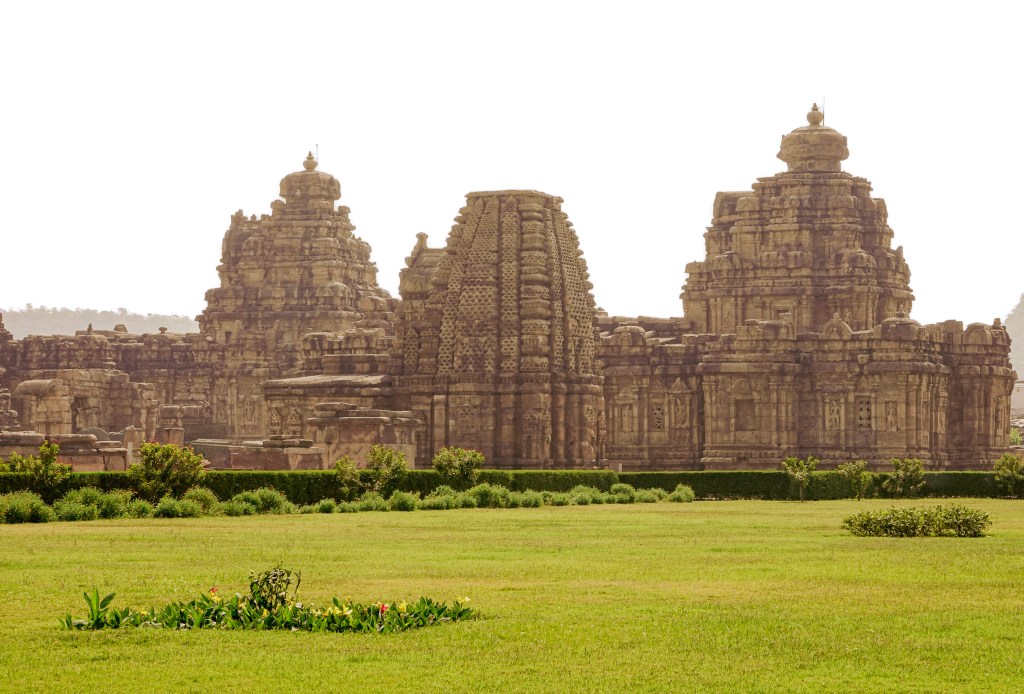
      Deep in the heart of Karnataka, where the Malaprabha River curves gracefully, lies Pattadakal. It is a UNESCO World Heritage site. This site is the spiritual “cradle of Indian temple architecture”. Travelers exploring the Chalukyan heartland will find the Virupaksha and Mallikarjuna temples as the most magnificent chapter of this stone-carved story.

      A Royal Tale of Two Queens

      These “twin” temples were not merely religious structures. They were grand political statements commissioned around 745 CE by two sister queens Lokamahadevi   and Trailokyamahadevi. These masterpieces were built to celebrate their husband, King Vikramaditya II’s victory over the Pallavas. They represent the pinnacle of Dravidian (Southern) architecture in northern Karnataka.

      What to Expect on Your Visit

      • The Masterpiece (Virupaksha): This temple is often hailed as the site’s “crown jewel.” The Virupaksha Temple is the only one in the complex that remains an active place of worship today. Its architectural excellence was so profound that it later inspired the world-famous Kailasa Temple at Ellora.
      • The Delicate Twin (Mallikarjuna): Standing just beside its neighbor, the Mallikarjuna Temple mirrors Virupaksha’s layout. It offers its own unique charm. The charm includes a distinctive hemispherical tower dome. It also has some of the most delicate narrative carvings in the complex.
      • Stone-Carved Epics: Both temples function as stone libraries. As you walk through their pillared halls, you will discover incredibly detailed friezes. These friezes depict scenes from the Ramayana, Mahabharata, and Panchatantra.

      Virupaksha Temple Architecture

      • Style: Primarily Dravidian style, described as a fully developed example that served as a model for later grand temples, including the Kailasa temple at Ellora.
      • Vimana (Tower): Features a tall, four-story tower with a square top (sikhara). The verticality is emphasized by the structure.
      • Plan: It has a large, square plan from the base to the sikhara. The complex is extensive, consisting of a main shrine, a large pillared hall (mandapa) with three porches, a Nandi pavilion, and peripheral sub-shrines enclosed by a compound wall with massive gateways (gopurams).
      • Carvings: Known for highly ornate carvings of Hindu deities and detailed narrative panels from the RamayanaMahabharata, and Panchatantra.
      • Unique Feature: It is the earliest known full temple complex in the Chalukyan series with a fully formed architectural plan. 

      Mallikarjuna Temple Architecture

      • Style: Also built in the Dravidian style, it is a slightly smaller version of the Virupaksha temple.
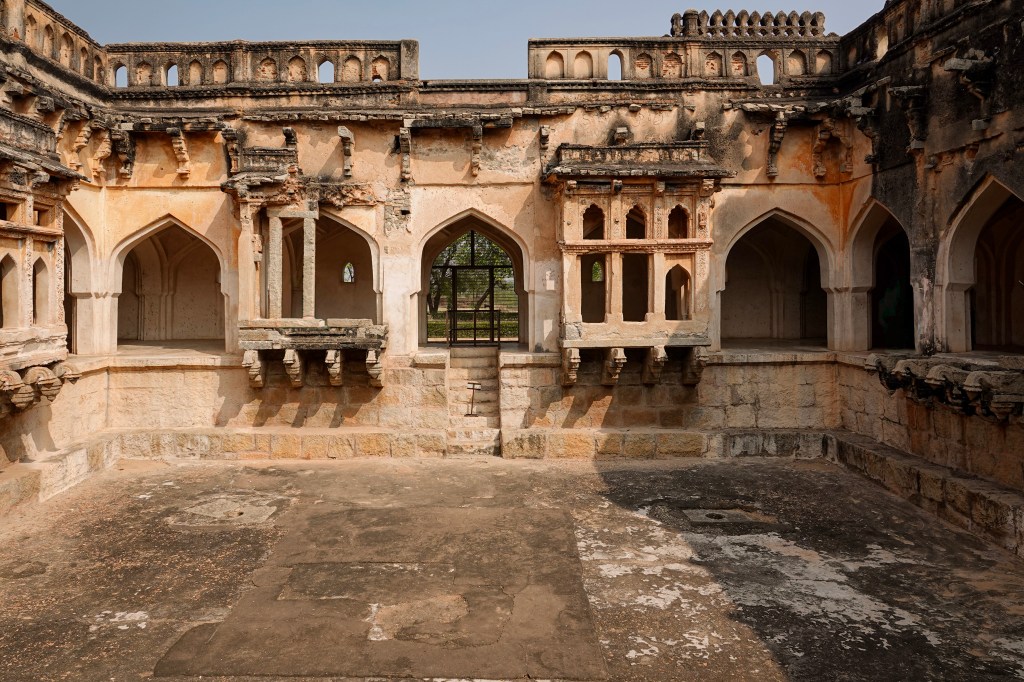
      • Vimana (Tower): It has a four-story tower, but it is crowned with a hemispherical or circular top (griva and sikhara), a key difference from the Virupaksha temple.
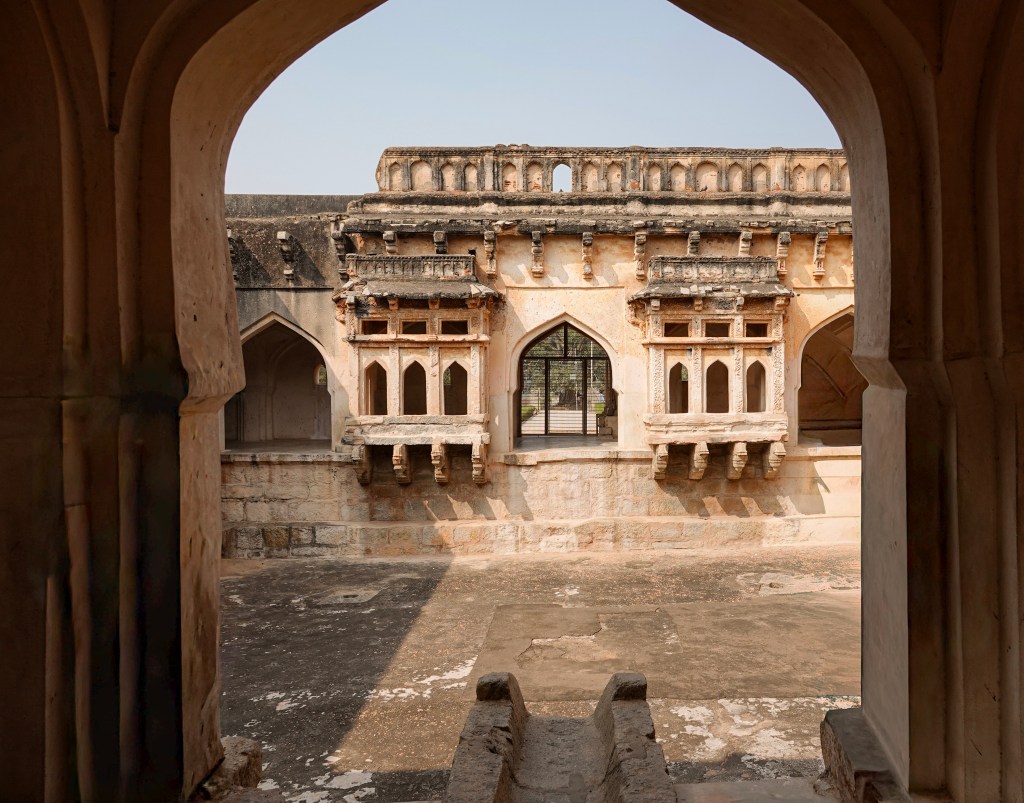
      • Plan: It shares a similar square plan and layout to its twin, including a large pillared hall and a Nandi mandapa.
      • Carvings: The temple features equally rich sculptures and friezes depicting stories from the epics, similar in style to the Virupaksha temple. 

      Both temples represent the peak of Dravidian architecture under the Chalukyas. However, the primary architectural distinction between them is in the shape of their crowning elements. It is square for Virupaksha. It is circular for Mallikarjuna.

      Exploring the Virupaksha Temple

      We spent considerable time walking around the Virupaksha temple, which is dedicated to Shiva. It is the only functioning shrine in the temple complex. It is also among the popular places to visit in Pattadakal. The temple was constructed in 745 AD. Queen Lokamahadevi, consort of the Chalukyan ruler Vikramaditya, built it. She did this to commemorate his victory over the Pallavas of Kanchi.

      The temple is built in the Dravidian style of architecture. It has three mukhamandapas on three sides. There is a large stone gateway on the East towards Malaprabha River. A large pillared hall is followed by a sanctum with a circular path for pradakshinas. The mukhamandapas and the pillars of the hall have wonderful carvings of gods. They also depict scenes from the Ramayana and the Mahabharata.
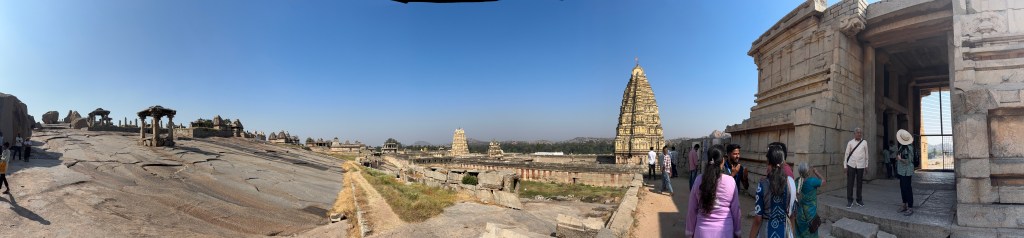
      Innovative Ceiling Design Solutions

      The main highlight is the sculpture of Surya riding a chariot through the clouds. Aruna, his driver, directs the chariot with archers aiming their bows outward to either side. This sculpture is found on the ceiling of the Eastern Mukhamandapa. The details on this intricate carvings are incredible.
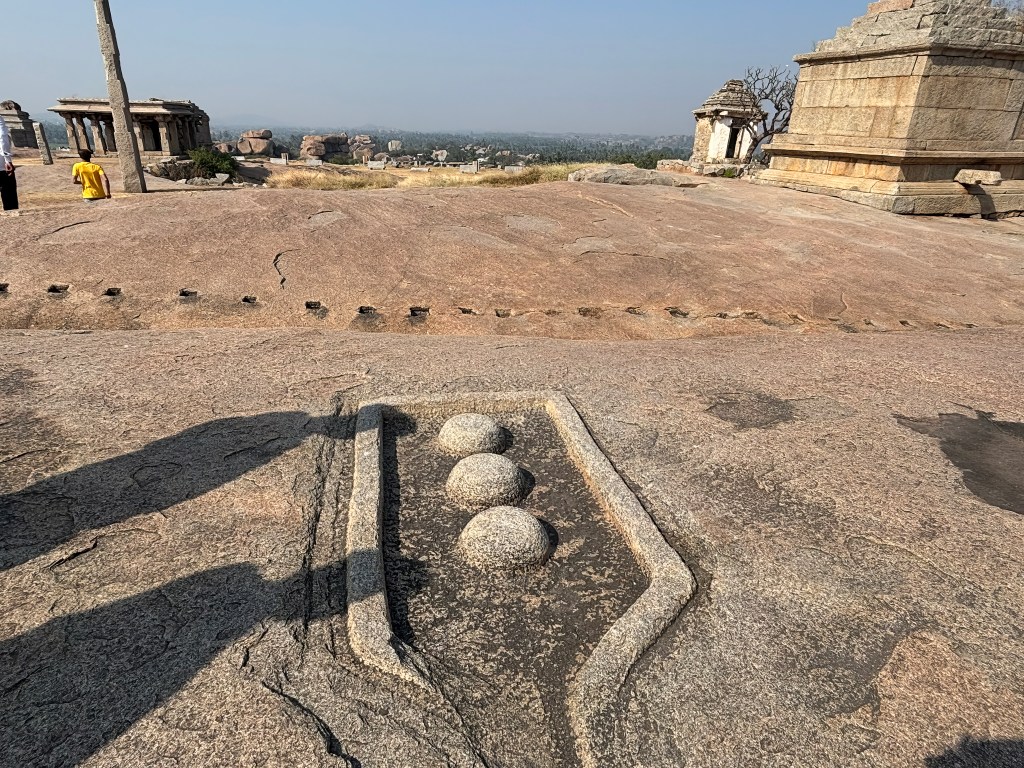
      Sculptural Narratives and Artistic Edges

      Sculptures of various gods and goddesses are prevalent throughout the temple. They include Shiva in different aspects like Nataraja, the dancing Shiva, and Ardhanarishvara, half-Shiva, half-Parvati. There are also Vishnu avatars such as Narasimha and Varaha. Additionally, Durga is depicted slaying the Mahishasura demon. Ganesha and Surya, the Sun god, are also featured.

      Puranic themes and Vedic legends include:

      Shiva and Parvati with Ravana lifting Mount Kailash.

      The churning of the ocean (Samudra Manthan).

      Durga slaying the buffalo demon Mahishasura.

      Ramayana and Mahabharata: Many scenes from the Ramayana and Mahabharata are carved throughout the halls. The carvings also include stories from the Bhagavata Purana and Panchatantra fables on the exterior walls.

      • Ramayana episodes shown include the golden deer incident, the abduction of Sita by Ravana, the fight between Ravana and the demigod Jatayu, and Lakshmana cutting off Shurpanakha’s nose.
      • Mahabharata narratives are also present. For example, there is the confrontation between Arjuna and Karna. Another instance is Bhishma Pitamah lying on a bed of arrows.

      Narrative Friezes: The pillar above illustrates episodes primarily from the Ramayana epic, specifically from the Aranya Khanda section depicting:

      • Shurpanakha confronting Rama and Lakshmana.
      • Lakshmana mutilating Shurpanakha’s nose.
      • Khara and Dushana (demon brothers) fighting Rama and Lakshmana.
      • The demon Maricha in disguise as the golden deer.
      • Ravana approaching Sita’s hut in the disguise of a sage

      These highly detailed carvings provide a vivid glimpse into the craftsmanship and religious worldview of the 8th-century Early Chalukyan period.

      Having a professional guide is advised, as they can show the key structures and share information about various carvings. Below is one of the scenes in the interior mantapa being explained by our guide. The carvings depict scenes from the Hindu epic, the Mahabharata. The middle panel is believed to show Bhishma lying on a bed of arrows. The bottom panel depicts Bhima fighting Duryodhana. 

      Scene from the Mahabharata being explained by the guide

      Monolithic Nandi: A large, black stone sculpture of Nandi, the bull vehicle of Lord Shiva. It is housed in a separate mantapa (hall) in front of the Virupaksha temple entrance. Witnessing the craftsmanship and precision needed to carve a single stone into such a detailed form is astonishing.

      Mallikarjuna Temple

      The Mallikarjuna Temple is also a Shiva temple commissioned by Queen Trailokamahadevi. This temple is similar to the adjacent Virupaksha Temple, but less decorated and weather-worn.

      Structural Layout and Composition

      • Plan: The temple follows an axial layout facing east. It consists of a square garbhagriha (sanctum), an antarala (antechamber), and a large pillared sabha-mandapa (community hall).
      • Entrances: It features three mukhamandapas (entrance porches) located on the eastern, northern, and southern sides.
      • Pradakshina Patha: The sanctum is surrounded by a covered circumambulatory path. This was a well-established tradition by the time of its construction.
      • Nandi Mandapa: A separate, four-pillared pavilion for Nandi stands in front of the main temple complex. However, it is now partially collapsed. 

      Architectural Elements

      • Superstructure (Vimana): The temple has a four-storeyed vimana. The Mallikarjuna’s tower is distinctive for its hemispherical (circular) roof. It differs from the square roof of the nearby Virupaksha Temple. The dome is another unique feature.
      • Tower Cap: The tower is topped by a circular griva (neck). It also has a hemispherical shikhara (dome). The structure is capped with a stupi or kalasha.
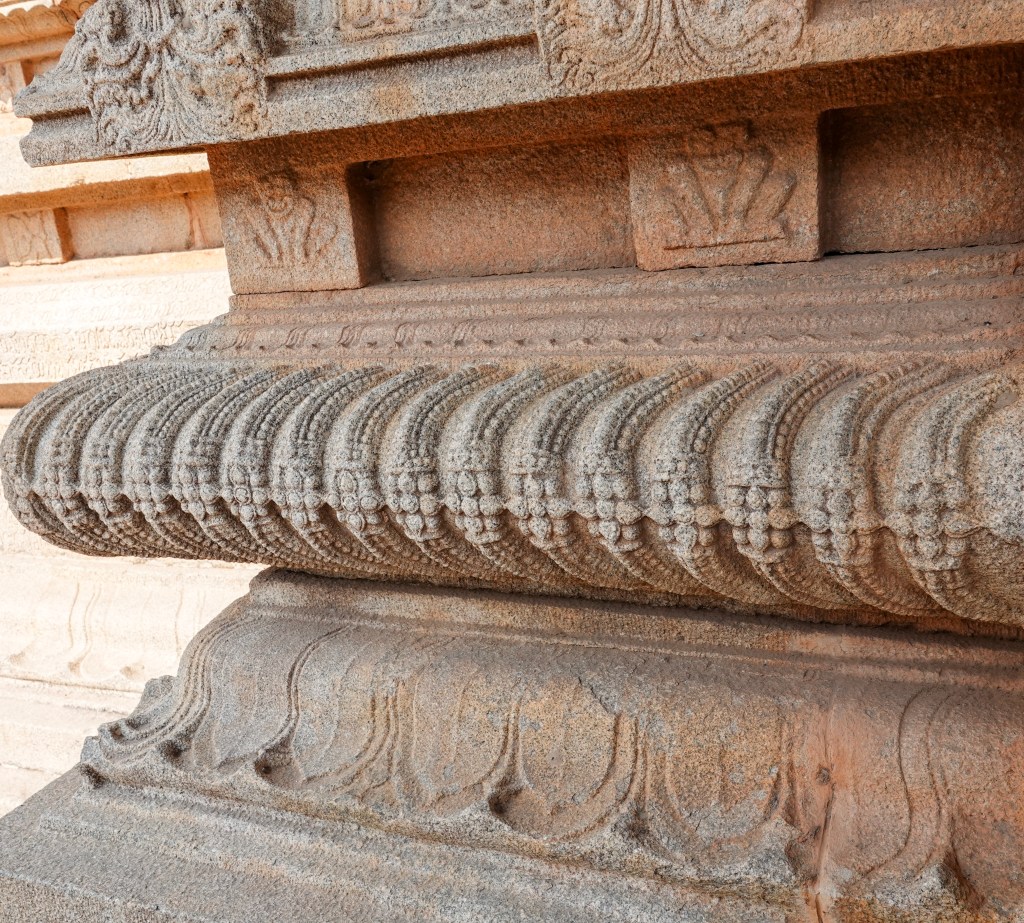
      • Platform (Adhishthana): The structure stands on a high, five-moulded plinth. It is decorated with friezes of animals, including elephants and lions. It also features floral motifs.

      Decorative Innovations

      • Pillars and Ceilings: The 18 pillars of the inner hall are intricately carved. They feature narrative panels depicting scenes from the Ramayana. Some scenes also come from the Mahabharata and Panchatantra. The ceilings are adorned with beautiful figures of Gajalakshmi and Shiva-Parvati with Nandi.
      • Sukanasa: The sukanasa is a prominent arched projection on the front of the tower. It houses a relief of Nataraja (dancing Shiva).
      • External Walls: The exterior walls are divided by pilasters into niches that alternate with perforated windows (pierced stone screens). These niches contain various sculptures of Hindu deities. They also feature detailed friezes of amorous couples (mithuna). Single women are depicted showing diverse emotional expressions. 

      Final thoughts

      The Virupaksha and Mallikarjuna temples stand as the crowning achievements of this historical ensemble. Often called the “twin temples,” they are more than just stone monuments. They are a testament to the artistic rivalry and devotion of two sister-queens, Lokamahadevi and Trailokyamahadevi. Visiting these temples isn’t just about ticking off a UNESCO site. It’s about experiencing the pinnacle of Chalukyan architectural evolution.

      Terminologies used in describing temple architecture

      • Vimana: The pyramidal or stepped-pyramid tower located directly above the main sanctum.
      • Garbhagriha: Literally “womb chamber,” this is the innermost, windowless sanctum housing the primary deity.
      • Gopuram: A monumental, ornate gateway tower providing entry into the temple complex. In later periods, gopurams often became taller than the central vimana.
      • Shikhara: In the Dravida style, this refers specifically to the crowning dome-shaped element at the very top of the vimana. (Note: In North Indian architecture, “Shikhara” refers to the entire tower).
      • Mandapam: Pillared halls or porches used for public rituals, gatherings, or as a transition to the sanctum.
      • Prakaram: The enclosed courtyard or circumambulatory path surrounding the main temple structures.
      • Pushkarini (Kalyani): A ritual bathing tank or reservoir found within the temple complex.
      • Antarala: A vestibular tunnel connecting the mandapa to the garbhagriha. 

      Decorative and Vertical Elements

      • Stupi (Kalasha): The final crowning pot or finial placed on top of the shikhara.
      • Dvarapalas: Fierce “door-keepers” or guardian sculptures flanking the entrance to the sanctum.
      • Adhisthana: The highly decorated base or pedestal on which the entire temple structure stands.
      • Prastara: The entablature or horizontal beam that marks the transition between the walls and the spire.
      • Yali (Vyala): A mythical creature, often with the face of a lion, used as a decorative pillar motif.
      • Nasi: A decorative horseshoe-shaped arch motif, often found on the exterior of the vimana. 

      Exploring Pattadakal: A UNESCO Heritage Site of Chalukyan Architecture

      The second stop in our trip to Badami, Pattadakal, and Aihole was Pattadakal. Aihole is the “cradle” of Chalukyan architecture, showcasing early experimentation with various styles (rock-cut & structural). Pattadakal signifies the mature culmination. This UNESCO site features the convergence of North Indian (Nagara) and South Indian (Dravidian) styles. Pattadakal has large, free-standing temples, like the Virupaksha Temple and are more sophisticated than the earlier designs in Aihole.

      Visit Pattadakal to step back into the golden age of the Chalukya dynasty. This stunning UNESCO World Heritage site is located by the Malaprabha River in Karnataka. The literal meaning of the city’s name in the local language is “City of Coronations.” The city and its temples date back to the 8th century. Back in the day, the site was sacred. It was where kings were crowned. Their queens commissioned temples in gratitude for their husbands’ glorious return from battle. Pattadakal offers a deep insight into India’s artistic and spiritual heritage.

      The Chalukyan rulers were significant patrons of art, fostering a transition from rock-cut to structural temples. At Pattadakal, a royal coronation site, they blended North Indian (Rekha/Nagara) and South Indian (Dravida/Vimana) architectural styles. This work is notable for its unique blend.

      The Rekha Prasad (Nagara) style features tall, curvilinear towers (shikharas). These towers rise from a raised platform (mostly seen in North India). In Pattadakal Galagantha, Kashi Vishveswara, and Jumbulinga temples are examples of the Nagara style. The Dravidian style is most commonly seen in South India. It uses stepped, pyramidal towers (vimanas). These are enclosed by walls with grand gateways (gopurams). The Mallikarjuna, Virupaksha, and Sangameshewara temples are good examples of the Dravidian style.

      Key Temples and Architecture at Pattadakal

      • Oldest Temple: The Sangamesvara temple was built by Vijayaditya. It is the oldest and exhibits a square, Pallava-like Dravidian style. This style has no sukanasika (vestibule projection).
      • Virupaksha Temple: Built by Queen Lokamahadevi, it is the earliest fully developed temple complex at Pattadakal.
        • It features a large, square plan from base to the top (sikhara) and massive gateways (gopuras).
        • Its architecture, which includes the sukanasika, influenced the grand Kailasa temple at Ellora.
      • Mallikarjuna Temple: Built by Queen Trilokyamahadevi immediately after and close to the Virupaksha. It is a smaller, four-story Dravidian temple. The temple has a unique circular top (griva and sikhara).
      • Other Temples: the Kadasiddhesvara, Jambulingeswara, and Galaganatha temples are in the Nagara style.

      Sculptural Art– The sculptures in these temples are known for their grace and detail.  Ceiling panels in the temples depict navagrahas and dikpalas, while wall niches showcase deities like Nataraja, Lingodbhava, and Harihara. Narrative reliefs illustrate episodes from the RamayanaMahabharataBhagavata, and Panchatantra, fitting perfectly within these religious structures.

      Shri Virupaksha Temple

      Queen Lokamahadevi built the largest and most elaborate temple in the complex around 740 CE. She did so to commemorate her husband, King Vikramaditya II’s victory over the Pallavas. This active house of worship features intricate carvings of Hindu deities. It also showcases scenes from the Ramayana and Mahabharata on its pillars. A massive Nandi statue is in the front pavilion.

      Mallikarjuna Temple

      It is located next to the Virupaksha Temple. Queen Trailokyamahadevi (the king’s second queen) built it around the same time. It is a smaller but similarly designed masterpiece. It is known for its exquisite sculptures. These include panels depicting the Rasa Lila of Krishna. They also depict various fables from the Panchatantra.

      Sangameshwara Temple

      The oldest temple in the complex was built by King Vijayaditya between 697 and 733 CE. It is a grand example of early Chalukya Dravidian architecture, though its construction was never fully completed

      Shri Galaganaatha Temple

      This temple is dedicated to Lord Shiva. It is notable for its well-preserved Rekha Nagara-style tower. It also features a striking sculpture of an eight-armed Shiva killing the demon Andhaka.

      Shri Kadasiddeshwara Temple

      The 

      Kadasiddheshwara Temple in the Pattadakal complex is a small, mid-to-late 7th- or early 8th-century Shiva temple. It is significant because it demonstrates the emerging Nagara (North Indian) architectural style. This example is at a site dominated by Dravidian temples.

      Shri Papanaatha Temple

      This large, ornate temple is situated outside the main cluster near the river. It is an excellent example of a fusion of both Nagara and Dravidian architectural styles. Its walls are adorned with detailed narrative friezes from the Ramayana.

      Jain Narayana Temple

      This 9th-century temple is located about a kilometer west of the main complex. It was built by the Rashtrakutas and features the Dravidian style. The temple offers a glimpse into the region’s religious diversity.

      We didn’t get to see Papanaatha or the Jain temple due to time constraints. If you have time, they are definitely worth visiting.

      Final thoughts

      Pattadakal is more than just an archaeological site. It is a “living textbook” of Indian art and architecture. The Pattadakal group of monuments are culmination of centuries of Chalukyan experimentation. The northern Nagara and southern Dravidian styles finally achieved a perfect, harmonious fusion.

      • A Royal Legacy: Standing among these monuments, you are witnessing a 1,300-year-old celebration of victory and devotion. The rivalry of two sister-queens gave us the Virupaksha and Mallikarjuna masterpieces. This rivalry ensures that the legacy of King Vikramaditya II’s triumphs remains etched in stone forever.
      • The Soul of the Malaprabha: The location itself—where the Malaprabha River turns north—adds a layer of spiritual gravity. You may be a history buff or a casual traveler. Either way, the “Stone of Coronation” offers a rare connection to the transition in Indian temple design. It evolved from raw experiment to polished perfection.

      🌾 Aihole: Where Indian Temple Architecture Took Its First Breath

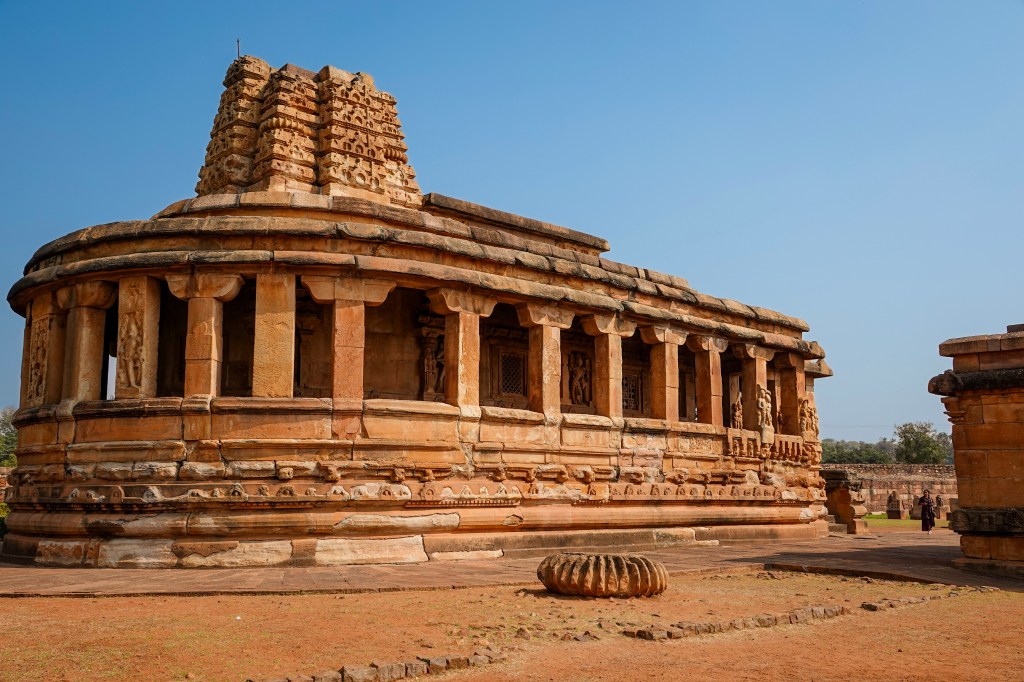
      We visited Aihole as part of our Badami, Pattadakal, and Aihole trip. All three sites are included in a UNESCO World Heritage site. Surrounded by red sandstone in Karnataka, India, Aihole is known for its rich history. Often referred to as the birthplace of Indian temple architecture, this small town features over 125 shrines built between the 4th and 12th centuries. Each shrine represents a part of the Chalukyan architectural journey. Our guide introduced us to Aihole, referred to as the “lab for temple design,” where temple concepts were tested before being refined in Pattadakal and Badami. Together, Badami, Pattadakal, and Aihole are central to Chalukyan heritage. Aihole was the workshop, Badami served as the royal capital in sandstone cliffs, and Pattadakal acted as the grand stage for these architectural achievements. These towns are close to one another, making them perfect for a day trip.

      🏛️Historical Background

      Aihole was originally known as **Ayyavole**, which means “village of monks” in old Kannada. The town is stategically located on the banks of Malaprabha river . The Chalukyas of Badami were the main patrons of the temples at Aihole. They ruled much of South India from their capital at Badami (formerly Vatapi), just 30 km away.

      Badami Chalukyas (543–753 AD)

      • Origin: Established by Pulakeshin I in 543 AD, with its capital at Badami (formerly Vatapi) in present-day Karnataka.
      • Achievements: Known for their contributions to art and architecture, particularly the rock-cut cave temples of Badami and the structural temples at Pattadakal and Aihole, which are considered cradles of Hindu temple architecture.
      • Notable Rulers: Pulakeshin II, who expanded the empire and defeated the Harsha of Kanauj, is among the most notable rulers. His encounters with the Pallavas, particularly the defeat against Narasimhavarman I, marked the dynasty’s decline.

      Cultural Contribution of Chalukyas

      The Badami Chalukyas were instrumental in developing the Deccan style of architecture and patronized Sanskrit and Kannada literature.

      • Carvings and Sculptures: Chalukyan temples are adorned with intricate carvings and sculptures depicting deities, mythological scenes, and everyday life.
      • Shikharas and Vimanas: The shikharas (towers) of Chalukyan temples often feature intricate details and provide a distinctive silhouette. The vimanas, especially in the Dravidian style, are characterised by pyramidal structures.
      • Mandapas: Temples typically have mandapas (pillared halls) with elaborately carved pillars, showcasing a high level of craftsmanship.
      • Deity Sculptures: Chalukyan temples are known for their sculpted images of deities, with intricate details in jewellery, clothing, and expressions.
      • Best examples of Chalukya Architecture: Cave Temples at Badami, Pattadakal-Virupaksha Temple, Mallikarjuna Temple, and others; Aihole (the cradle of Indian architecture); The Lad Khan Temple, Durga Temple, and Ravanaphadi Cave; Lakkundi-Kasivisvesvara Temple; Dravidian Influence: The Mahadeva Temple at Itagi.

      Did you know? Until recent cleaning by the Archaeological Survey of India, houses has built up to and even extended into these historical temples. This is the reason behind many temples in Aihole having unusual names, like Lad Khan temple – a Hindu temple named after an Islamic inhabitant who lived and used this temple as his house.

      📍 Must‑Visit Spots

      • Durga temple complex with Durga Temple – Famous for its apsidal (horseshoe‑shaped) design and sculpted friezes. Lad Khan Temple – One of the earliest stone temples in India. It showcases the transition from wooden prototypes to enduring stone.
      • Meguti Jain Temple – Perched on a hill with inscriptions that help date Chalukyan history.
      • Ravana Phadi Cave – A rock‑cut shrine with expressive Shiva carvings.
      • Huchappayya Matha & Hucchimalli Temple – Early experiments in temple form and ornamentation.
      • Archaeological Museum – A small but insightful collection of sculptures and inscriptions.

      🧭 How to Explore

      • Most major temples are within walking distance of each other.
      • Early mornings and late afternoons offer the best light for photography.
      • Combine Aihole with Badami and Pattadakal for a full Chalukyan heritage circuit.

      🧡 Who Will Love Aihole

      • Architecture lovers
      • History enthusiasts
      • Slow travelers
      • Families looking for an easy, educational outing
      • Photographers chasing warm sandstone textures and quiet landscapes

      Durga complex

      We started off the visit in the Durga complex, which has a ticketed entry. We spent about 90-120 minutes walking through various temples and appreciating their historical significance. We visited the following temples at the Durga complex. I especially loved the unique architecture of the Durga temple and took tons of photos, especially from the back side. Click on the links to read more about each temple. Here are the must-do activities and unique features to observe at each of the temples and the step-well in the Aihole complex: 

      • Durga Temple– Most unique temple with its horse-shoe architecture
        • Observe the unique architecture: This temple is a prime example of experimental Chalukyan architecture, notable for its apsidal or horse-shoe shape that resembles a Buddhist Chaitya hall or the hind part of an elephant (Gajaprishtha).
        • Walk the pillared corridor (pradakshina patha): The temple features a unique ambulatory path running around the inner shrine, lined with pillars and niches containing intricate high-relief sculptures of various Hindu gods and goddesses, including Narasimha, Varaha, Mahishasura Mardini, and Shiva leaning on Nandi.
        • Admire the detailed carvings: Look for the exquisite seven-headed serpent carved on the ceiling at the entrance to the inner shrine and the rich sculptural panels throughout the temple walls and pillars.

      • Appreciate its ancient structure: Dating to around the 5th century, it is one of the oldest temples in Aihole and is significant for its flat roof and mandapa style, showing an early adaptation of wood construction techniques into stone.Explore the inner halls: The temple’s interior is laid out with large, plain pillars arranged to form two concentric squares, and features beautiful lattice-work windows.Spot the Nandi statue: A large Nandi (Shiva’s bull) statue is prominently placed in the center of the main assembly hall (sabha-mandapa) facing the inner sanctum.

      • Suryanarayan Temple
        • View the idol of Surya: Don’t miss the prominent idol of the sun god Surya with his two hands bearing lotuses, standing within an ornate cut-out frame. Also, observe the idol of his wives-Sandhya and Usha at his side.
        • Note the Nagara-style shikhara: Observe the partially preserved North Indian style curvilinear tower above the sanctum.
      • Guadargudi
        • Examine the early design: Believed to be older than the Ladkhan temple, observe its basic, open rectangular structure with a colonnaded veranda, built on an elevated platform slightly below the current ground level of the complex.
        • Look for carvings: Check the outer walls for decorative kalasha (water pot) motifs.
      • Chakragudi. This contrasts with the unique apsidal (semi-circular) plan of the nearby main Durga temple.
        • Study the preserved shikhara: The most notable feature is its well-preserved 7th or 8th century Nagara-style tower, a contrast to the unique plan of the nearby Durga temple.
        • Observe the doorway: The doorway to the sanctum has a carving of Garuda, the vehicle of Lord Vishnu, holding two snakes.
      • Badigargudi-  Look for the specific phamsana (pyramidal) style tower with ornate kudus (arch-like motifs) in the middle.

      Due to a lack of time, we didn’t visit other sites, including the Cave temples. If you have more time in Aihole, I would definitely suggest spending half a day exploring all that Aihole has to offer. Most tourists visit only the Durga complex, which gives you a good understanding of Chalukya-style temple architecture. I am hoping to return to this area and explore some of the other, less-visited temple complexes of Aihole.

      To experience the architectural evolution of the first capital of the Early Chalukyas, start your journey at the iconic Durga Temple complex, the most prominent cluster in Aihole. This ticketed area, maintained by the Archaeological Survey of India, houses the famous Durga Temple—a rare example of an apsidal, sandhara plan—alongside the Aihole Archaeological Museum. The village landscape is dotted with 12 structural temples and several cave shrines, including the Shiva-dedicated Ravanphadi cave and the Meena Basadi cave, whose inclusion of a sukhanasi (vestibule) marked a major step toward future temple forms. On the slopes of Meguti hill, you will find a unique two-story structure where the garbhagrihas are excavated into the rock while the front veranda is built. As you explore, you’ll notice the technical progression from the simple mundamala shikhara of the Konti gudiLadkhan, and Gaudaragudi temples to the more developed Rekha-prasada towers of the Huchhimalli and Huchhapayya temples. Innovations continue at the Meguti temple, which features a pradakshina patha (circumambulation path), and the Mallikarjuna and Galaganatha groups, which represent the specialized Kadamba-Early Chalukya shikhara. While the Nagnath temple at Nagral showcases a Dravidian shikhara, Temple 33 in the Veniyar group introduces the trikutachala (triple-shrine) form that later defined the Rashtrakuta period. This extensive experimentation at Aihole paved the way for the more definite architectural forms seen in Badami and the UNESCO World Heritage site of Pattadakal.

      Final thoughts

      As the first capital of the Early Chalukyas, Aihole serves as a grand “cradle of Indian architecture,” where centuries of experimentation paved the way for the masterpieces of Badami and the UNESCO World Heritage site of Pattadakal. From the unique apsidal design of the Durga Temple and the rock-cut precision of the Ravanphadi cave to the pioneering trikutachala and Rekha-prasada towers, the village offers an unparalleled timeline of structural evolution. Whether you are marvelling at the prehistoric Megalithic Dolmens or finding solitude in the isolated Galaganatha and Ramalinga clusters, a visit to Aihole is a journey through the very soul of ancient craftsmanship. No exploration of Karnataka’s heritage is complete without witnessing these 12 structural temples and sacred caves, which remain a testament to the creative transition from simple rock excavations to the definitive temple forms that would define South Indian history