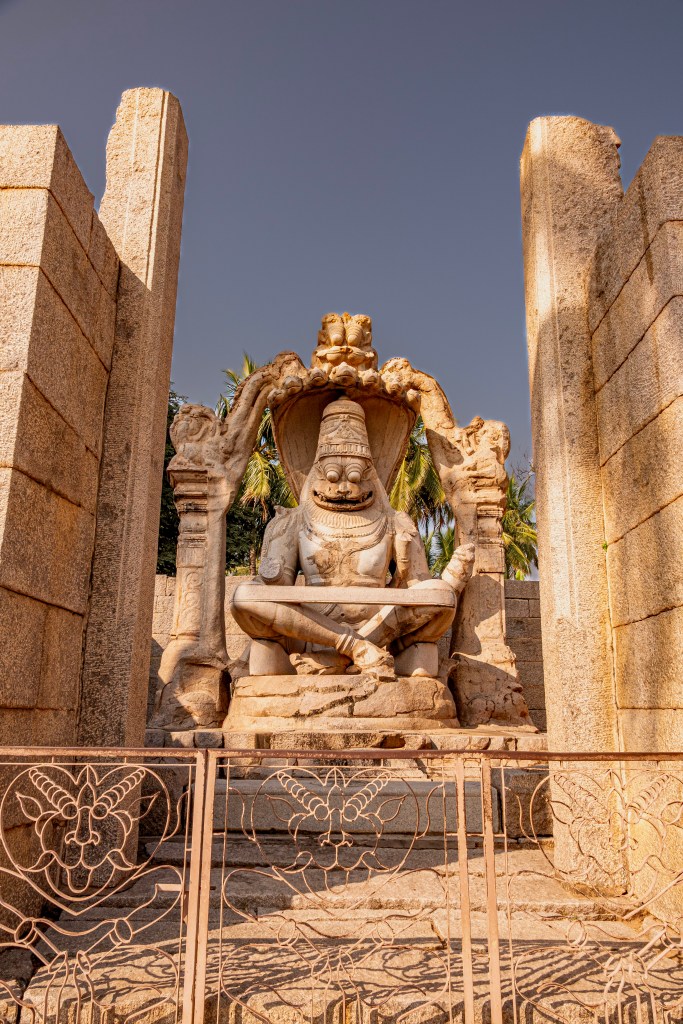
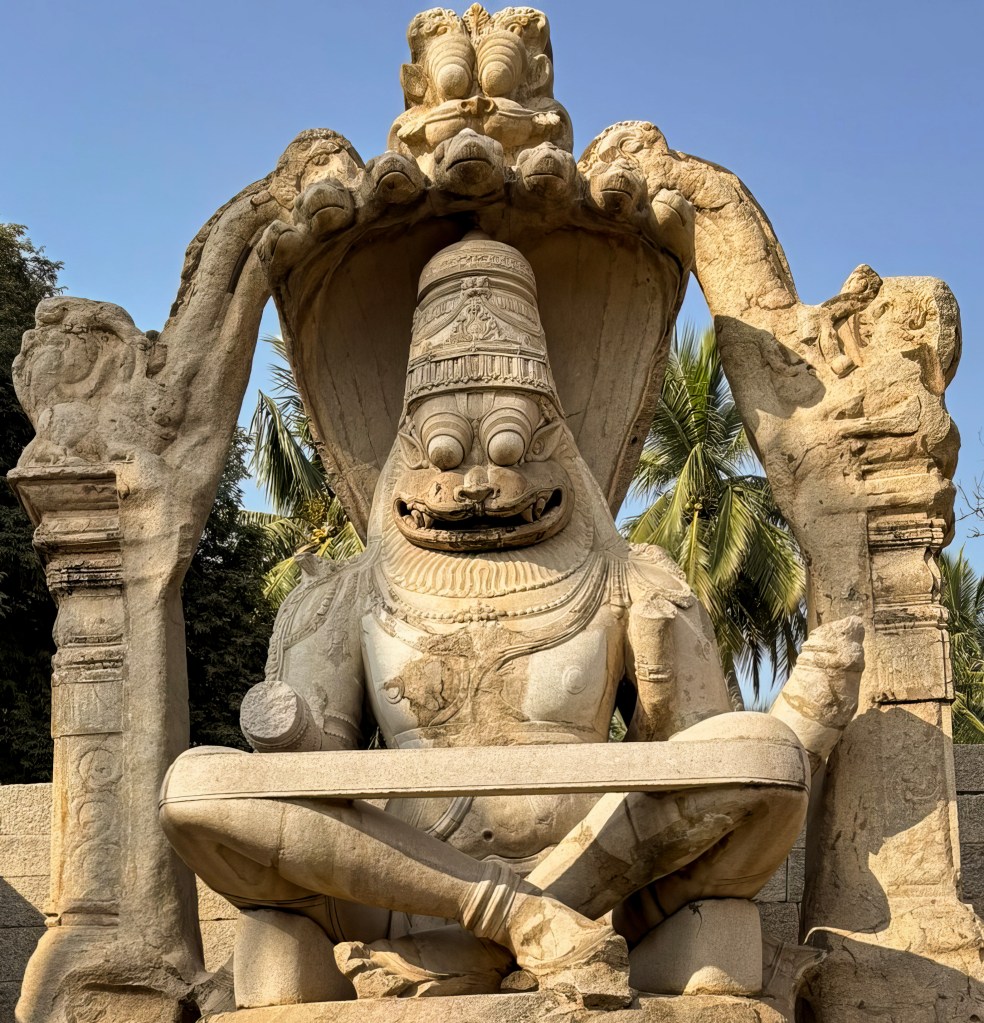
The monolithic Ugra Narasimha statue in Hampi is a massive, 22-foot (6.7m) tall sculpture of Vishnu’s half-man, half-lion incarnation, carved from a single rock in 1528 by order of King Krishnadevaraya, known for its intimidating expression but originally featuring Goddess Lakshmi on his lap, a consort figure destroyed by invaders in 1565. This remarkable statue not only showcases the exceptional craftsmanship of the artisans of that era but also reflects the rich cultural and religious heritage of the Vijayanagara Empire. As visitors approach, they are drawn to the intricate details of Narasimha’s fierce visage, which embodies both strength and protection.
Key Features & History:
- Monolithic: Carved from one large granite boulder in 1528.
- Size: Stands approximately 6.7 meters (22 feet) tall, making it Hampi’s largest monolithic statue.
- Iconography: The statue depicts Narasimha, the half-man, half-lion avatar of Vishnu, seated in a cross-legged yoga posture (Padmasana).
- Serpentine Canopy: He is sheltered by the seven hoods of Adishesha (the serpent god), which serve as a canopy over his head.
- Makara Torana: The entire sculpture is framed by a Makara torana (an arch featuring mythical crocodile-like creatures) topped with a Kirtimukha (lion-like “face of glory”).
- Unique Features: The statue is famed for its large, bulging eyes and fierce expression, symbolizing its “Ugra” (ferocious) form.
- Missing Elements: Originally, a smaller statue of Goddess Lakshmi sat on his left lap; today, only her broken hand remains visible on Narasimha’s back due to damage in 1565.
- Temple Structure: The original temple chamber has been completely destroyed, leaving the statue exposed to the sky without a roof.
- Restoration: The Archaeological Survey of India (ASI) restored the statue, adding knees and a yogapatta (yogic band), leading to its alternative name, Yoga Narasimha.
- Location: Found near the Badavilinga Temple at the base of Hemakuta Hill.
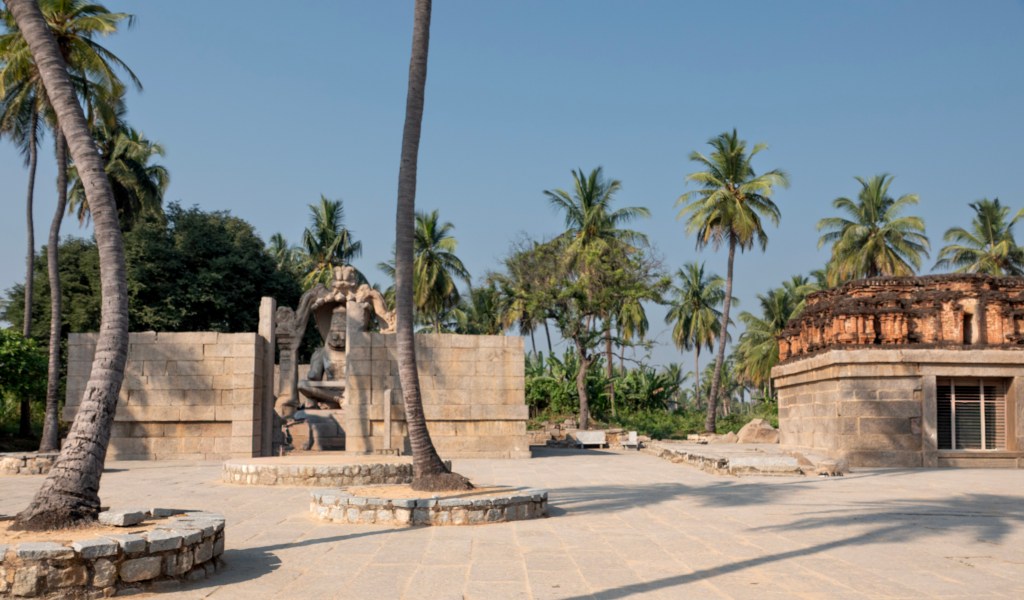
Badavalinga Temple
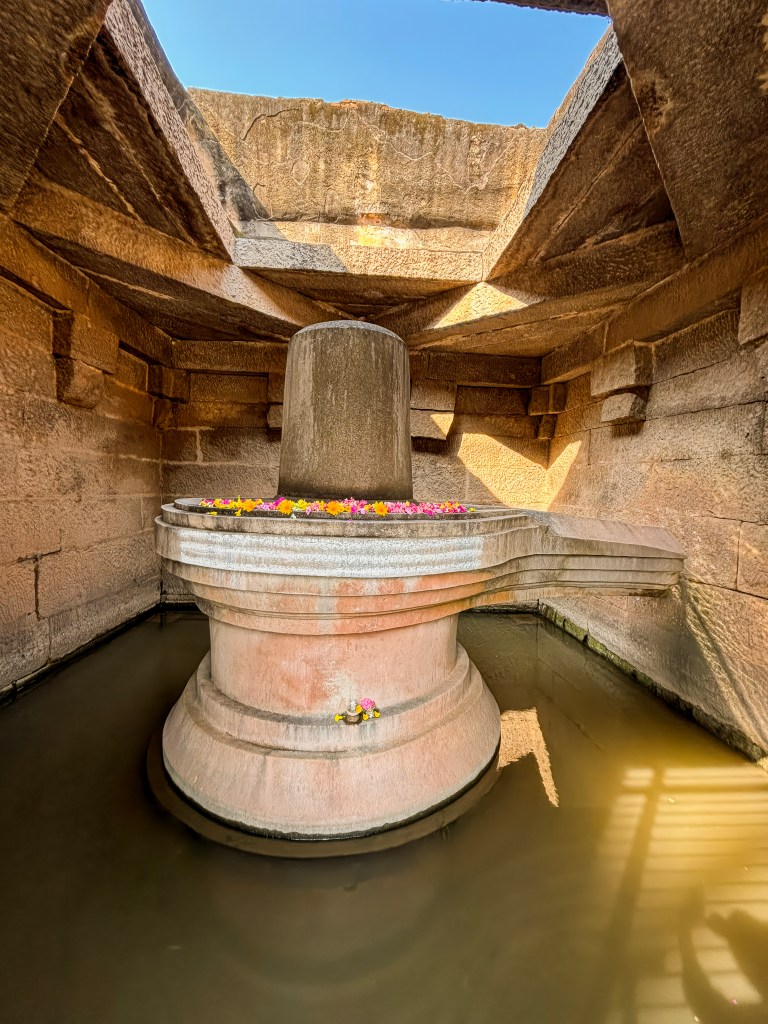
Right next to Laskmi Narashimha temple is the Badavalinga temple that houses largest monlithic Siva Linga in this area. The linga is partially submerged in water which flows thorough aquaduct from Thungabhadra river 1 Km away.
Key Details
Architecture: The 3-meter (10-foot) high Shiva Linga is carved from a single black stone and features a carved mark representing Lord Shiva’s three eyes. The temple chamber lacks a permanent ceiling, allowing natural light to illuminate the Linga.
Location: The temple is located near the popular Lakshmi Narasimha Temple in Hampi, a UNESCO World Heritage site. It’s easily accessible and about 1 km from the town center.
Hours: It is open daily from 6 AM to 6 PM. Some sources mention longer hours from 5 AM to 9 PM.
Entry Fee: There is no entry fee to visit the temple, and photography is allowed.
Legend: The name “Badavilinga” is derived from the local language words Badava (poor) and Linga, as it is believed to have been commissioned by a poverty-stricken peasant woman during the Vijayanagara Empire.
These 2 temples are great starting points for appreciating what Hampi has to offer
 Peaks to Palaces
One Reply to “”