Unlocking the City of the Gods: The Ultimate Guide to the Pyramids of Teotihuacรกn

Rising majestically from the high valley floor just 30 miles northeast of Mexico City, the ancient metropolis of Teotihuacรกn stands as one of the most awe-inspiring archaeological wonders of the ancient world. Flourishing between 100 B.C. and 650 A.D., this massive UNESCO World Heritage site was once home to over 150,000 residentsโ€”making it the largest city in the pre-Columbian Americas and one of the largest cities anywhere on Earth at its peak.

Centuries after its mysterious collapse, the Aztecs discovered the empty stone city and named it Teotihuacรกnโ€””the place where men become gods.” They believed the structures were so monumental that only divine beings could have built them.

Today, walking down its central axis, the Avenue of the Dead, transports travelers back in time to an era when this metropolis controlled trade routes stretching from the Gulf Coast to Guatemala. To help you navigate this massive open-air museum, here is a detailed breakdown of the legendary structures that anchor the complexโ€”plus the mysteries that still haunt its empty streets.
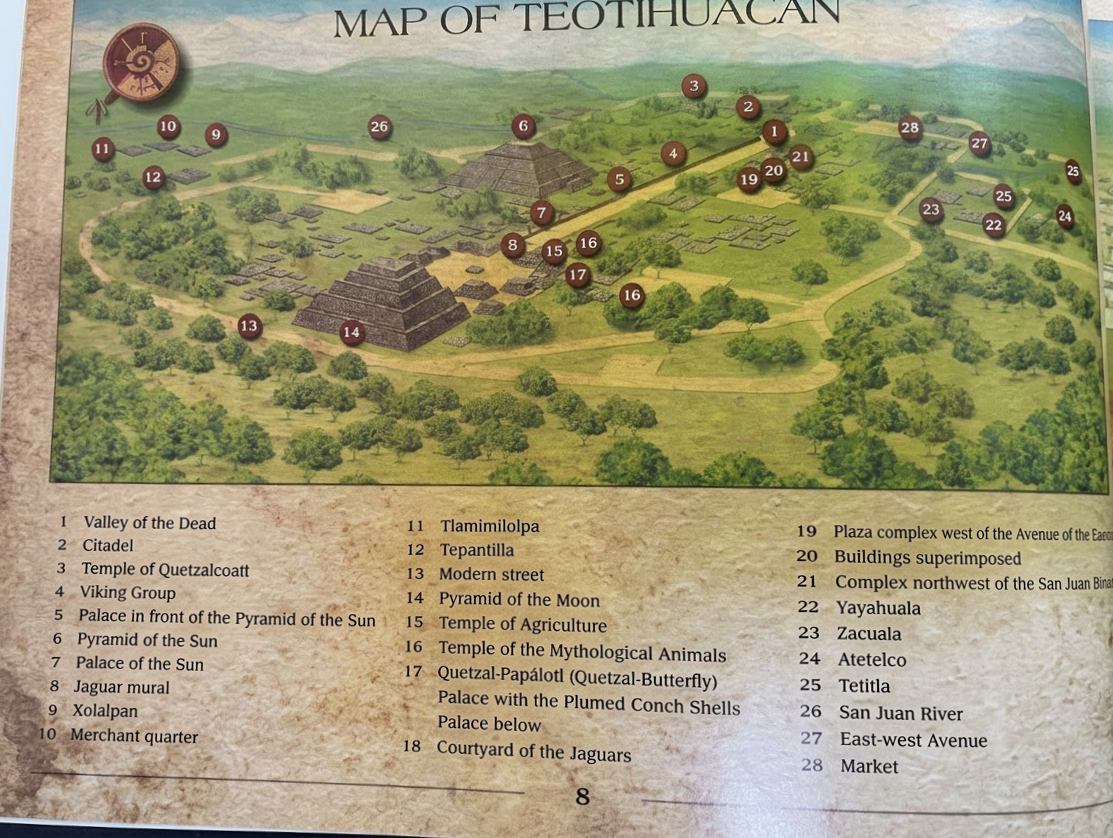
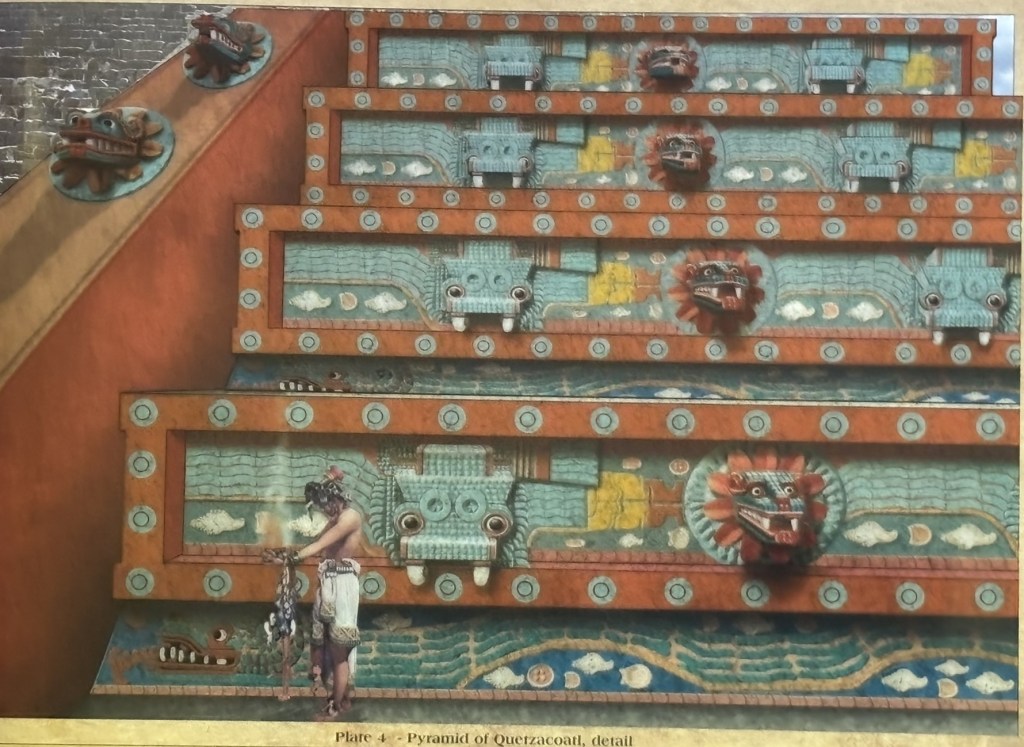
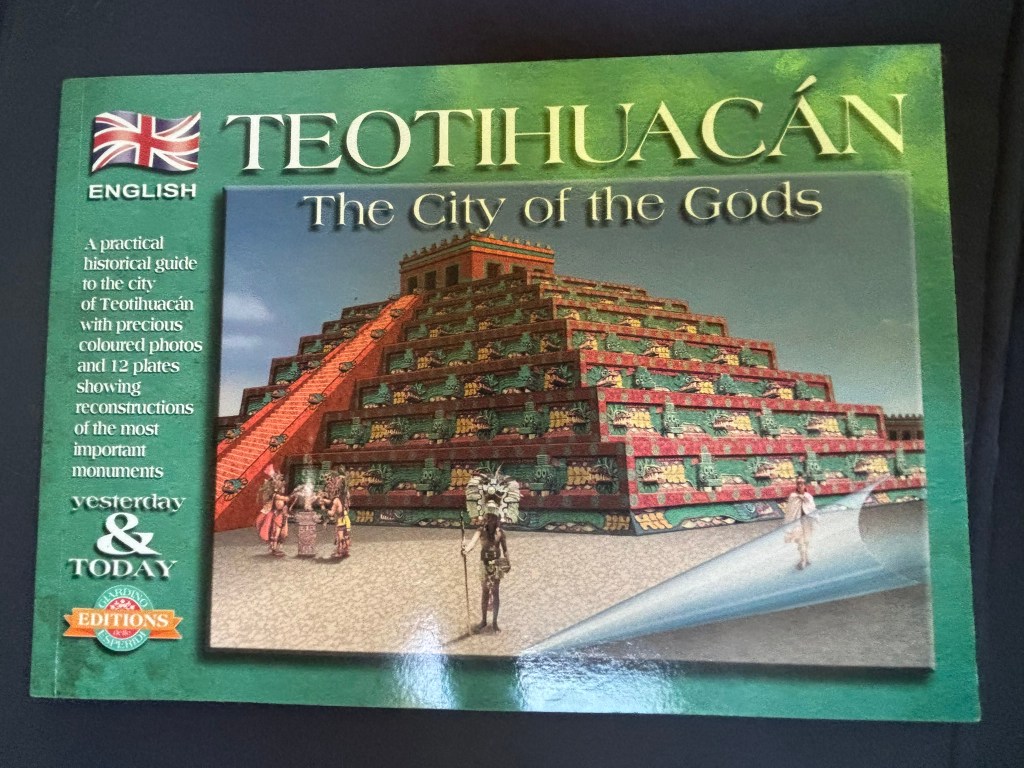
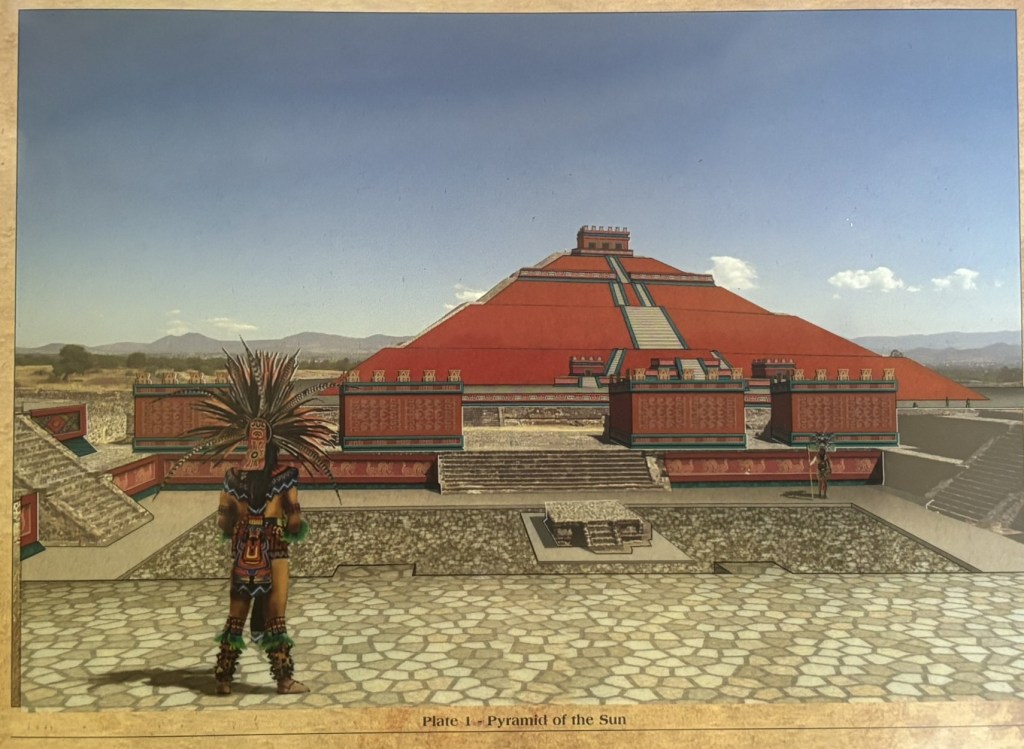
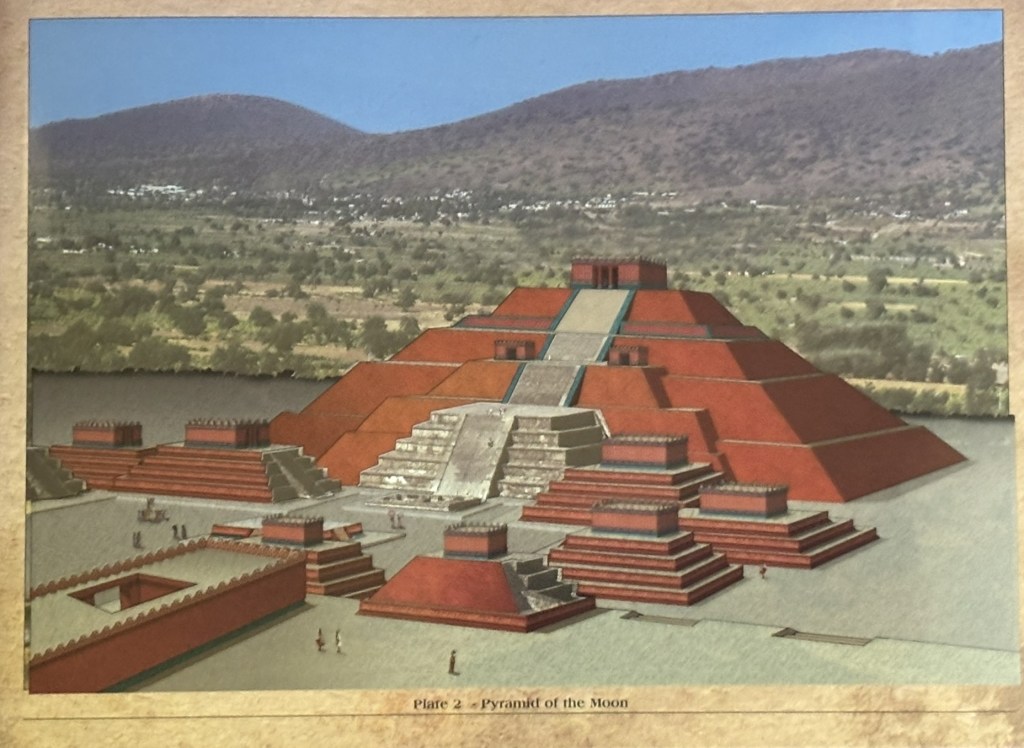
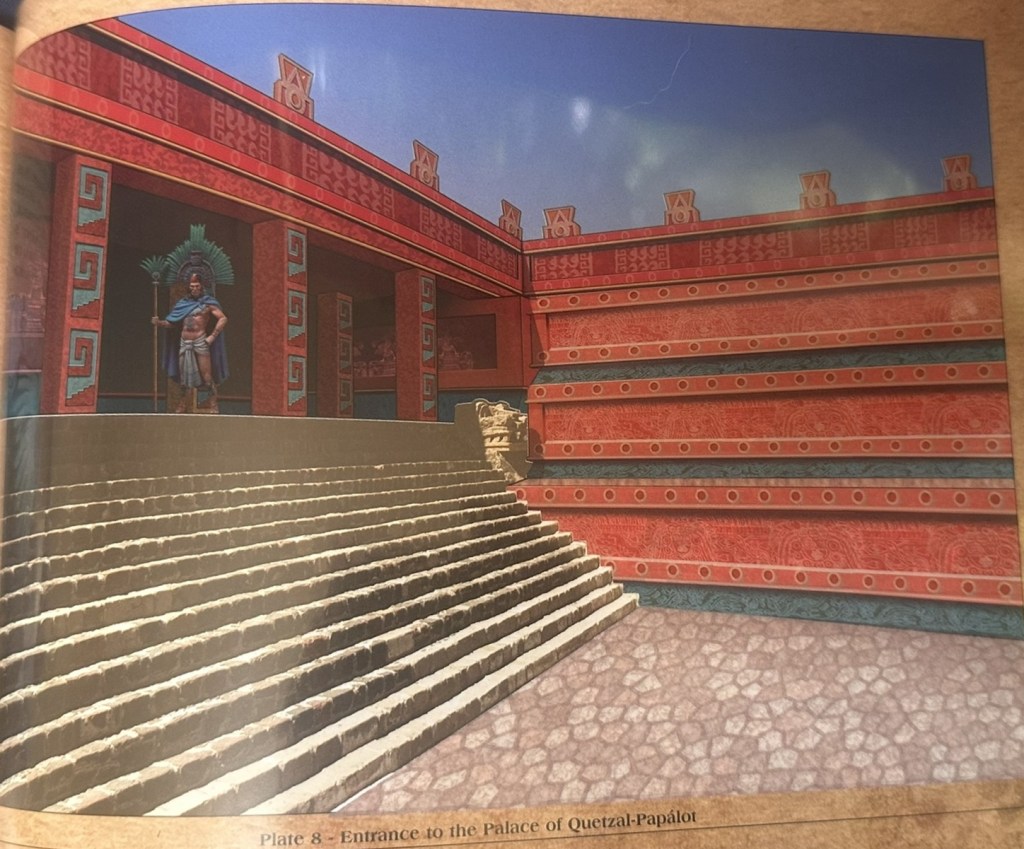
Pro-tip: Before exploring the pyramids, be sure to visit the Museum of Anthropology in Mexico City. This visit will provide you with essential historical context, enhancing your understanding of the pyramids’ importance and the significance of various structures. The book shown below can be purchased at the Anthropology museum and shows how various structures looked and the significance of each. Alternatively, consider hiring a knowledgeable guide at the pyramids to gain invaluable insights into the historical relevance of this remarkable site.
  1. A Brief History of Teotihuacan- A Civilization Without a Name
  2. The Avenue of the Dead: The City’s Ceremonial Spine
  3. The Three Legendary Pyramids
    1. 1. The Temple of the Feathered Serpent (La Ciudadela)
    2. 2. The Pyramid of the Sun
    3. 3. The Pyramid of the Moon
  4. Beyond the Pyramids: What Else to See
    1. The Palace of Quetzalpapรกlotl
    2. Superimposed buildings
    3. Puma Mural
  5. The Residential Quarters: Life Beyond Ceremony
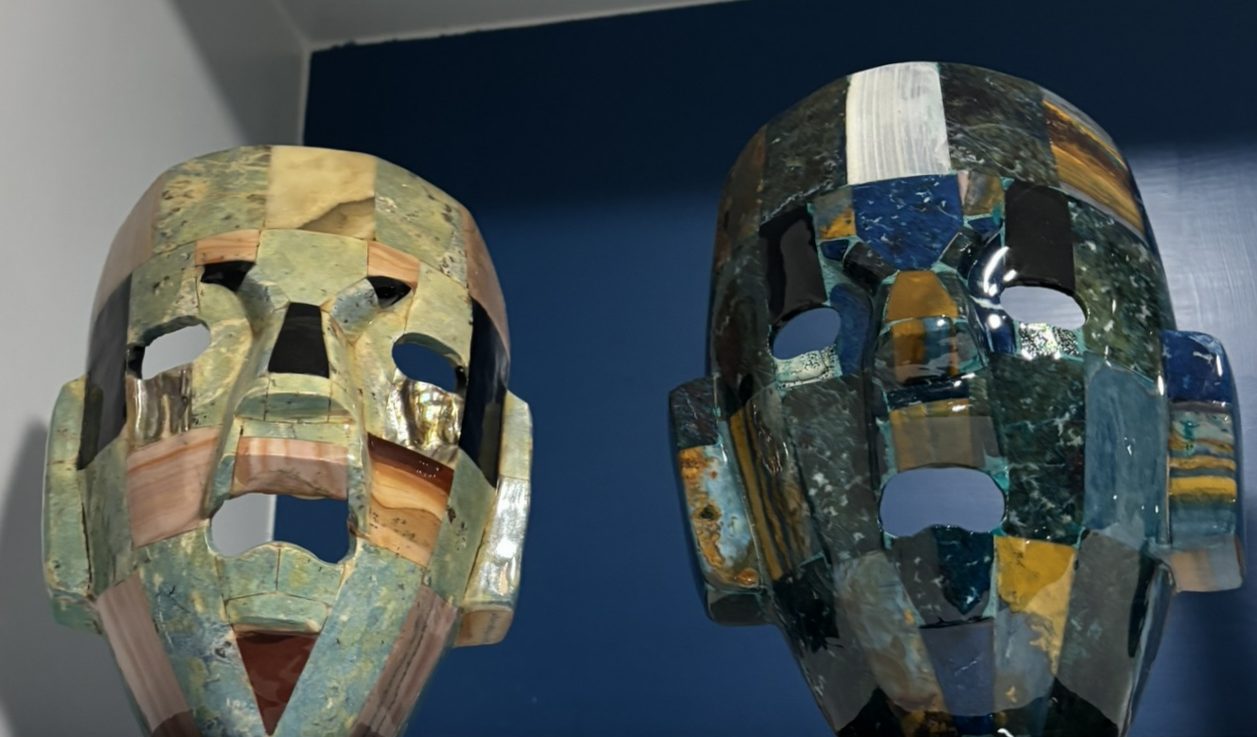
  6. The Mystery of Teotihuacan Funerary Masks
  7. The Site Museums
  8. The Great Mystery: What Happened to Teotihuacรกn?
    1. Internal Revolt
    2. Environmental Catastrophe
    3. Foreign Invasion
    4. Volcanic Disruption
  9. Essential Visitor Logistics (2026)
  10. Final Thoughts

A Brief History of TeotihuacanA Civilization Without a Name

Teotihuacan emerged in the Basin of Mexico around the first century B.C. and grew rapidly over the following centuries into one of the largest and most influential cities in the ancient world. At its height – likely around 450 A.D. – it may have housed between 150,000 and 200,000 people, making it not only the largest city in the pre-Columbian Americas but also a major cosmopolitan center whose influence reached far beyond central Mexico through trade, religion, military presence, and artistic exchange.

Although the city is known today by the Aztec name Teotihuacan, its original inhabitants left behind no clearly deciphered written history, no recorded royal biographies, and no confirmed original name for the city, which means we still do not know exactly what its people called themselves, what language they primarily spoke, or how they identified ethnically. What archaeology has revealed, however, is extraordinary: a highly organized urban civilization with a carefully planned grid layout, apartment-style residential compounds, distinct ethnic neighborhoods that likely included Zapotec, Maya, and Gulf Coast migrants, advanced engineering such as citywide drainage systems and the deliberate rerouting of the San Juan River, and a cultural legacy that shaped art, architecture, religion, and politics across Mesoamerica for centuries.

Even after decades of excavation, Teotihuacan remains as compelling for what is still unknown as for what has already been uncovered – a monumental city that continues to feel less like a closed historical chapter and more like an enduring and magnificent puzzle.

The Avenue of the Dead: The City’s Ceremonial Spine

The Avenue of the Dead is the grand ceremonial road that runs through the heart of Teotihuacan, linking its most important plazas, pyramids, and architectural complexes. The name comes from later Nahua peoples, who believed the ruins lining the road were burial mounds. In reality, the avenue served as the structural and symbolic backbone of the city, organizing the surrounding streets, squares, and multi-family residential compounds. Stretching for almost 5 kilometers and measuring roughly 50 meters wide, it was the main axis of urban and ceremonial life – a place walked by residents, pilgrims, traders, and visiting elites alike.

It may also have served as a major processional route, reinforcing Teotihuacan’s importance as a religious, political, and economic center. One of the most memorable experiences here is acoustic rather than visual: many visitors stop in the middle of the avenue and clap, only to hear the sound bounce back in a strange, sharp chirping echo. Some describe it as a quack, others as a birdlike call. The effect likely comes from the stepped architecture of the surrounding pyramids and platforms, which scatter sound waves in unusual ways. Whether intentional or accidental, it adds to the feeling that Teotihuacan was designed not just to impress the eye, but to shape the entire sensory experience of ritual space.

Guide showing the quacking noise in the middle of avenue of the dead

The Three Legendary Pyramids

1. The Temple of the Feathered Serpent (La Ciudadela)

Located at the southern end near Gate 1, the Temple of the Feathered Serpent sits inside a massive, sunken courtyard known as La Ciudadela (The Citadel). While smaller than its northern neighbors, this pyramid is the most intricately decorated and politically significant structure on the site.

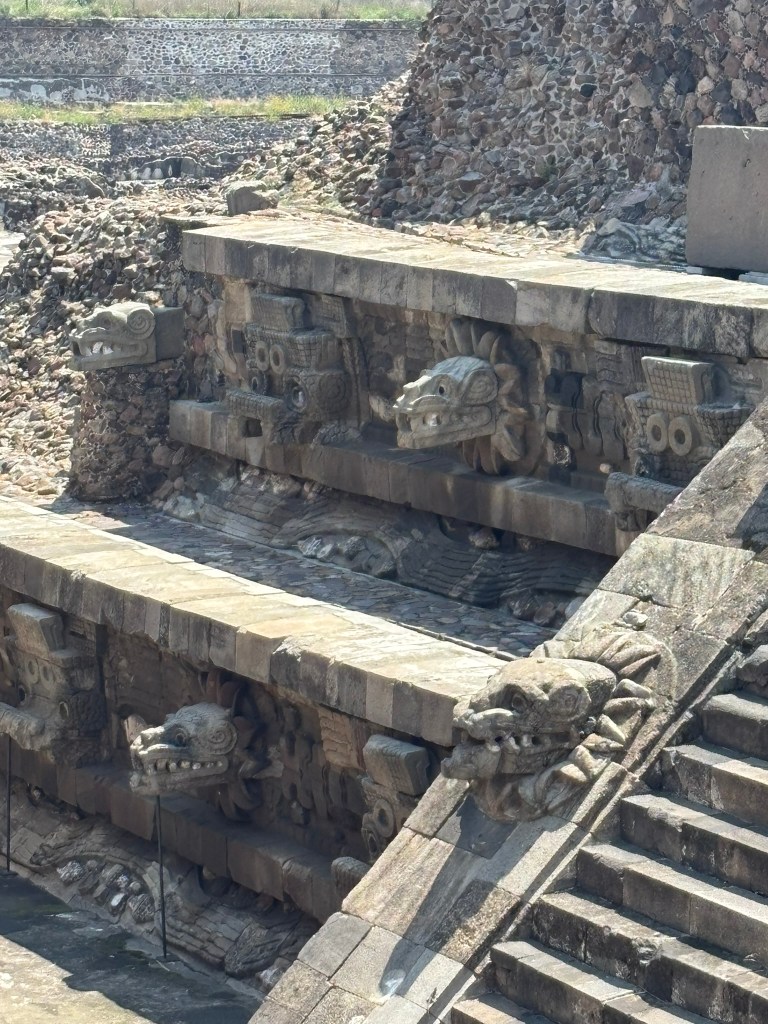
The Architecture Built in the iconic Mesoamerican talud-tablero (slope-and-panel) style, the pyramid’s facade is adorned with dozens of three-dimensional stone carvings that would have been painted in vivid polychrome colorsโ€”reds, blues, greens, and yellows gleaming under the highland sun.

The Imagery Alternating sculpted heads jut dramatically from the walls, depicting the undulating Feathered Serpent (later known to the Aztecs as Quetzalcรณatl) navigating among seashells and marine motifs. These are paired with enigmatic, goggle-eyed visages, often associated with the rain and warfare deity Tlalocโ€”though some scholars now believe they may represent an earlier, primordial crocodilian creature or even a war-serpent headdress.
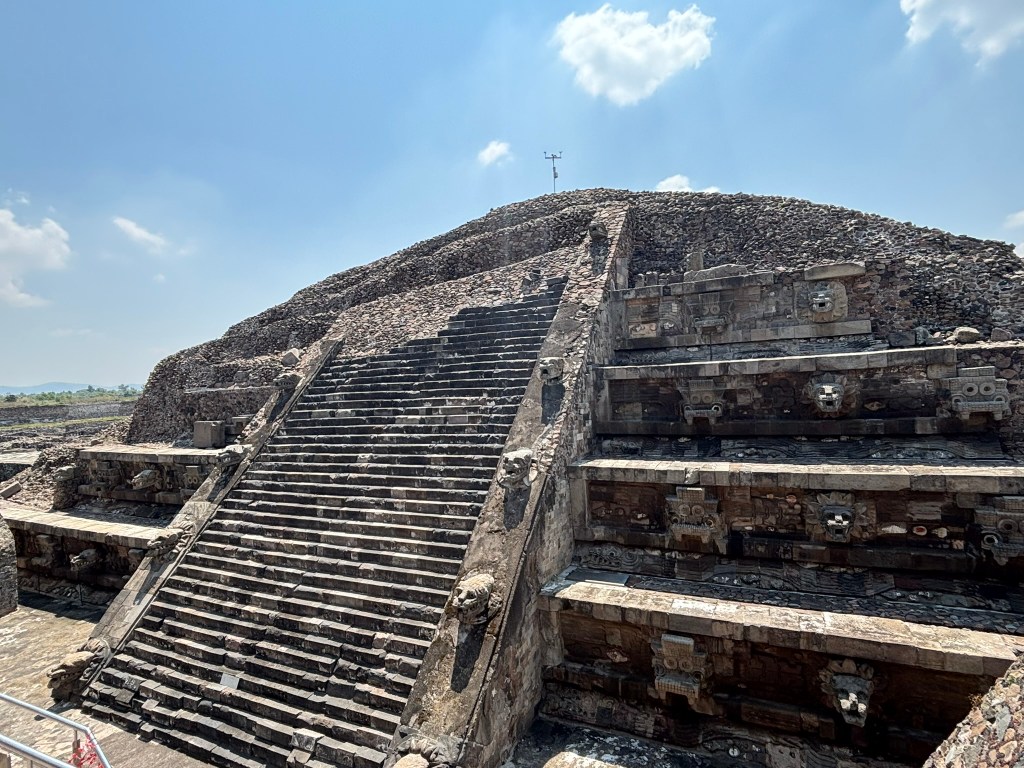
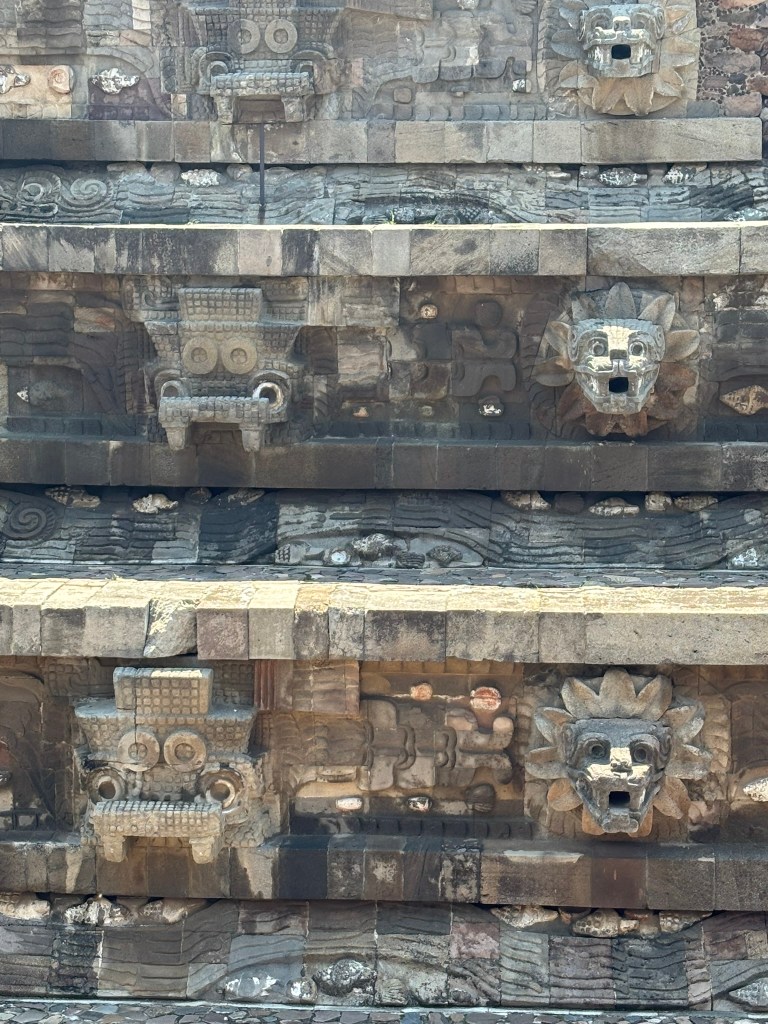
Pyramid of the Feathered Serpent is a good place to get panoramic photos of the complex with sun and moon pyramids
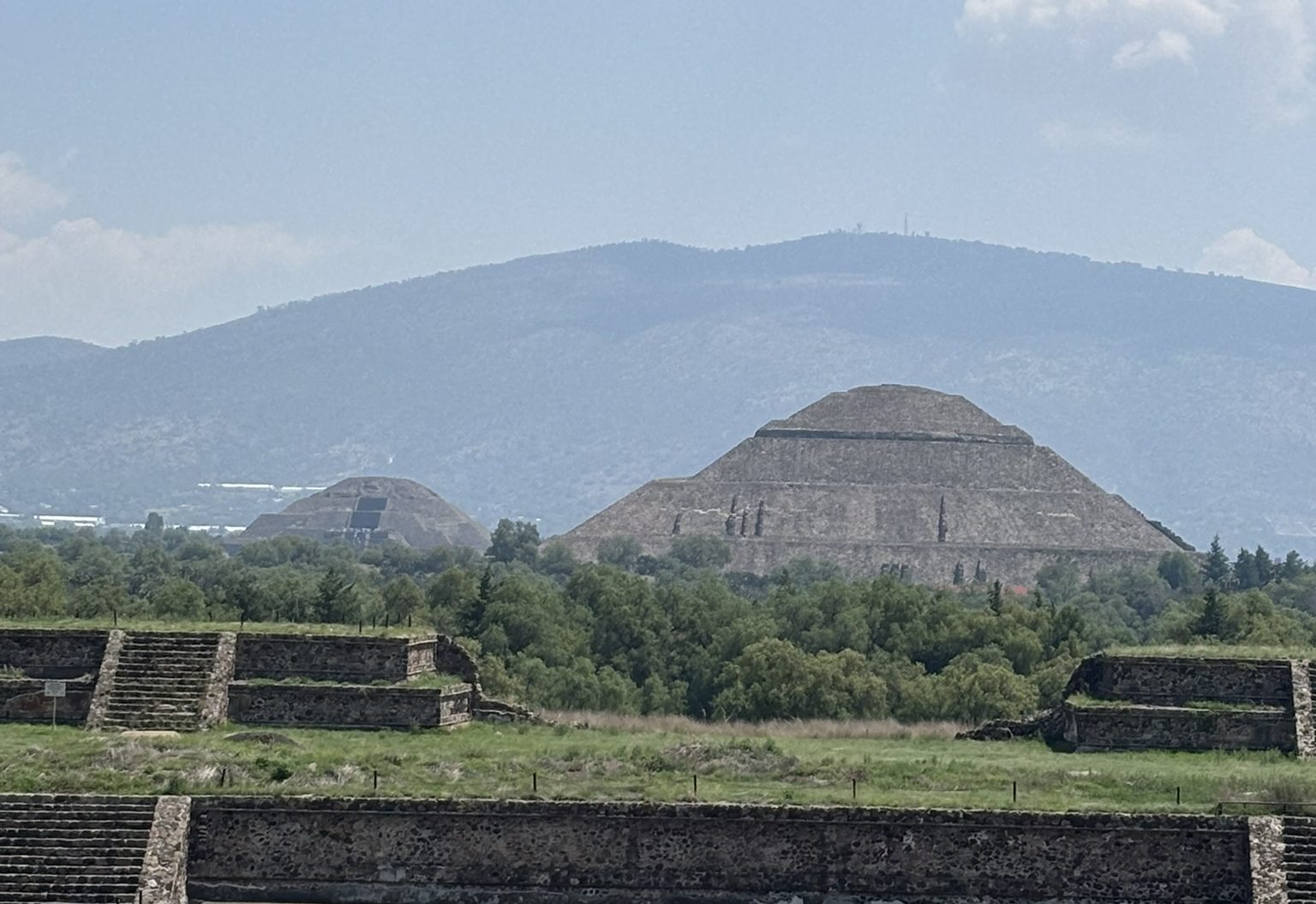
The Dark History of The Temple of the Feathered Serpent (La Ciudadela)

Archaeologists discovered mass graves of over 260 sacrificed individuals buried beneath the foundations, arranged in patterns corresponding to the Mesoamerican calendar. Most were young adult males, many with their hands bound behind their backs, accompanied by obsidian blades, shell ornaments, and jaw bones of sacrificial victims. This grim discovery suggests the grand temple served as the epicenter of military power and state-sanctioned rituals designed to legitimize a new ruling dynasty.
2. The Pyramid of the Sun

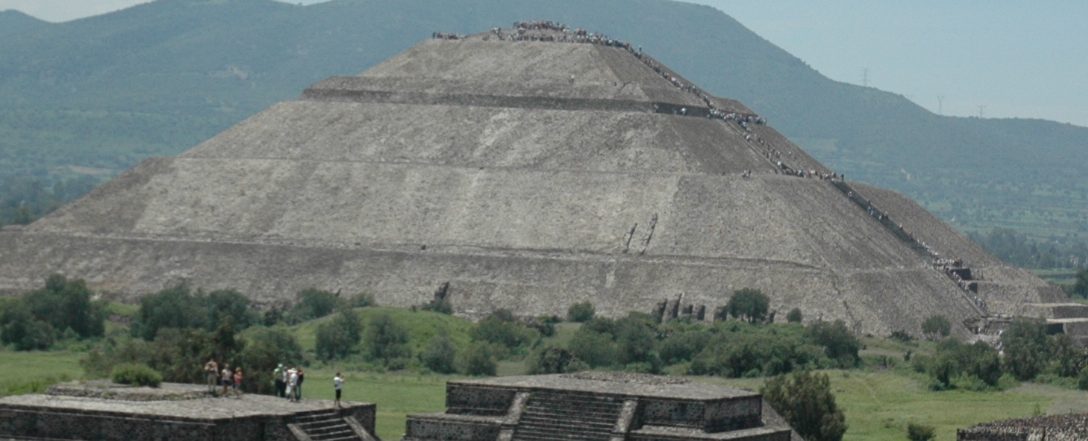
Positioned halfway down the Avenue of the Dead near Gate 2 and Gate 5, the Pyramid of the Sun is the undisputed giant of Teotihuacรกn. It ranks as one of the largest ancient structures in the Western Hemisphereโ€”and the third-largest pyramid on Earth by volume.
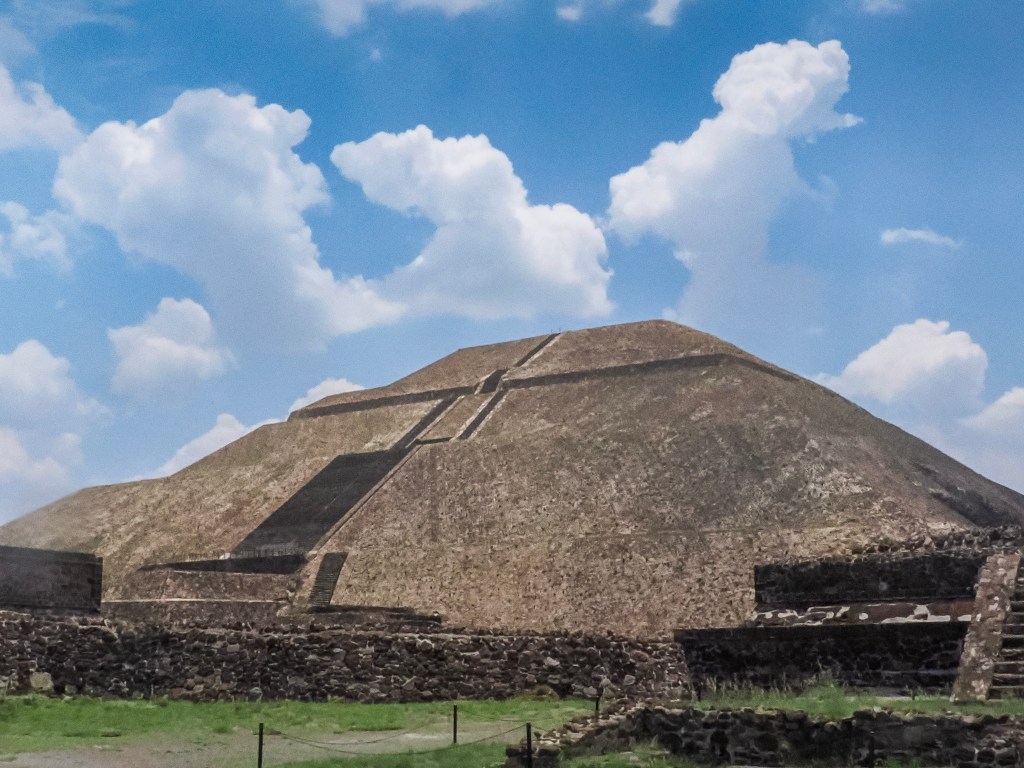
The Dimensions Constructed around 200 A.D. using millions of tons of hand-quarried volcanic stone (primarily tezontle) and compacted earth, the pyramid features a massive footprint measuring roughly 230 meters (750 feet) on each side and towering over 65 meters (213 feet) into the sky. An estimated 10,000 workers labored for decades to complete it.

The Cosmic Purpose Oriented perfectly westward to align with the setting sun on two specific daysโ€”August 12 and April 29โ€”the pyramid marks the beginning of the agricultural cycle in the Mesoamerican calendar. It was originally covered in smooth lime plaster and painted in brilliant, vibrant reds, creating a monument that would have been visible for miles across the valley floor.
The Hidden Tunnels

In 1971, archaeologists discovered a natural clover-shaped cave system stretching directly beneath the center of the pyramid, accessed by a 100-meter-long tunnel. This discovery was groundbreaking: it indicated the entire structure was intentionally built over a sacred primordial site. In Mesoamerican cosmology, caves were portals to the underworld, birthplaces of humanity, and sources of life-giving water. The pyramid, it seems, was designed to mark this axis mundiโ€”the cosmic center of the universe.

Since 2020, visitors are no longer allowed to climb the Sun Pyramid, which was permitted in 2008 (my first visit to the pyramids). This significant policy change arose from concerns about the safety and preservation of the ancient structure, as increasing foot traffic was causing wear and tear on the monument. Prior to the restriction, many tourists enjoyed the exhilarating experience of ascending the pyramid to take in breathtaking views of the surrounding area and to appreciate the site’s historical significance. Now, while visitors can still explore the base of the pyramid and learn about its rich history through guided tours, the lack of access to the summit has sparked discussions among both tourists and local historians about the balance between tourism and conservation.
3. The Pyramid of the Moon

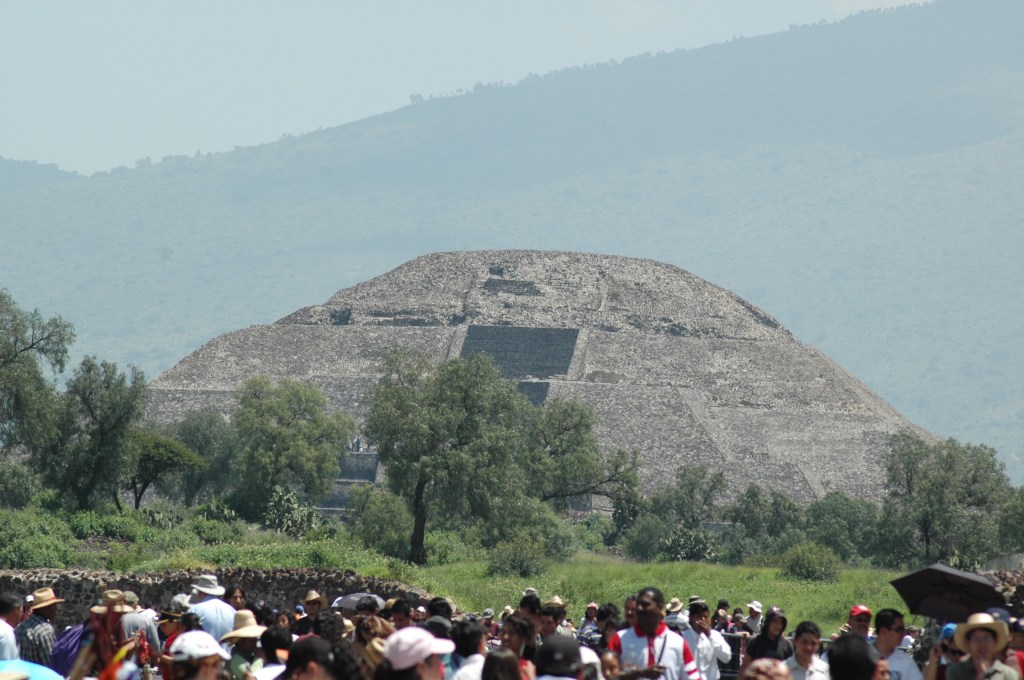
Anchoring the far northern terminus of the Avenue of the Dead near Gate 3 and Gate 4, the Pyramid of the Moon serves as the visual climax of the entire city layout.

The Visual Illusion

Although it stands shorter than the Pyramid of the Sun at 43 meters (141 feet) tall, it appears to be the exact same height because it was strategically built on naturally higher ground. Its slope perfectly mirrors the silhouette of Cerro Gordo, the sacred mountain rising directly behind itโ€”a deliberate architectural choice that unified the built environment with the natural landscape in a way that still astonishes visitors today.
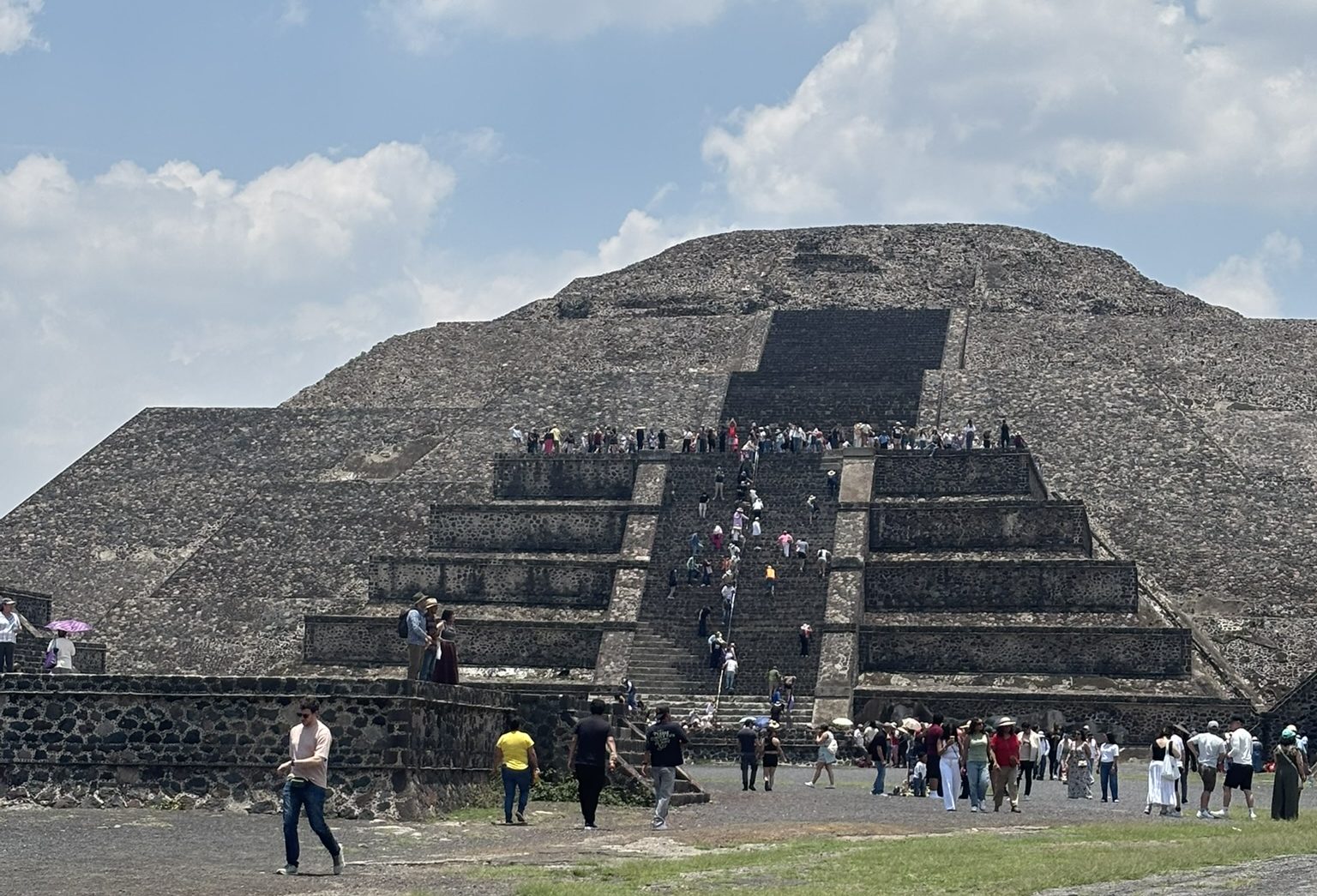
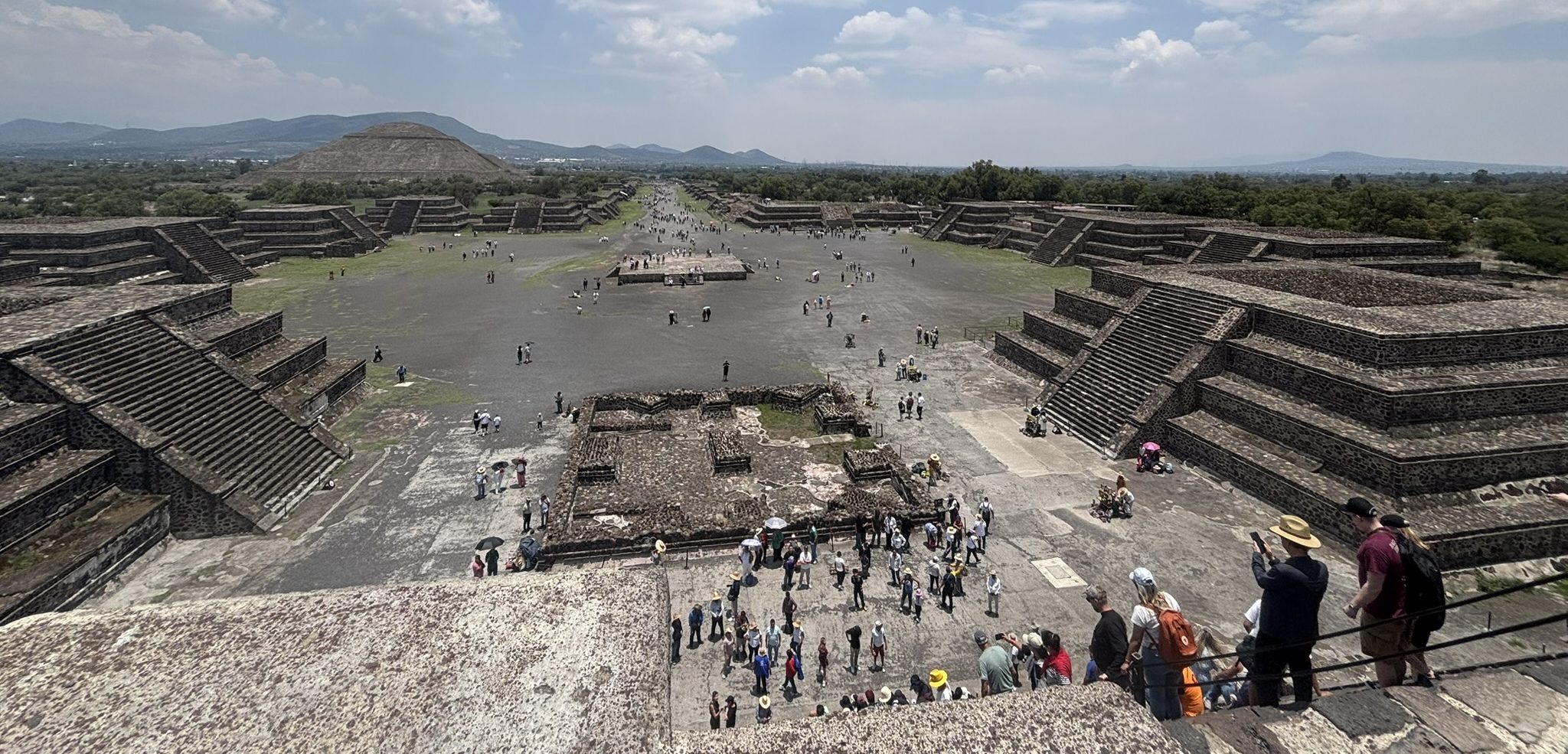
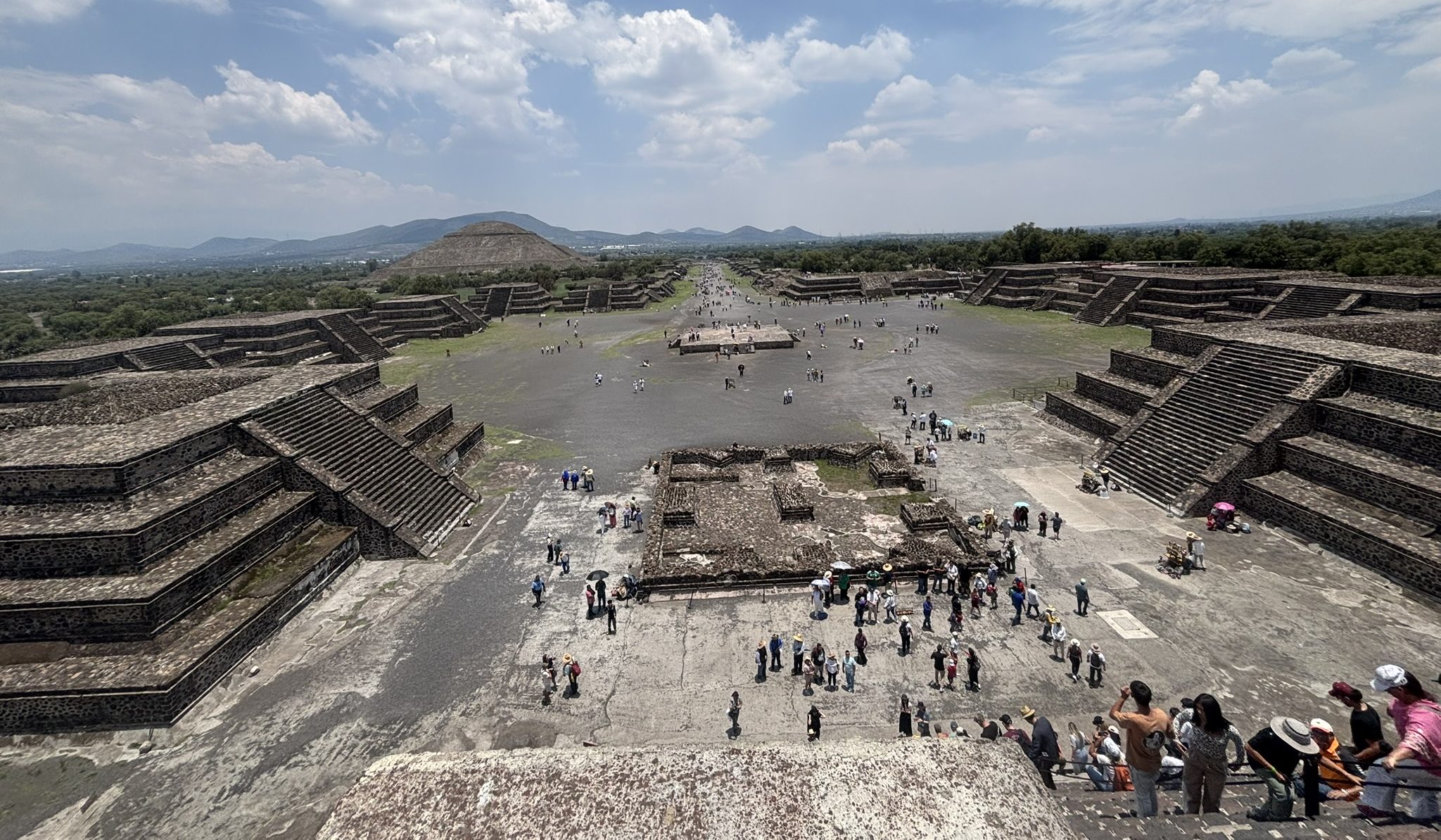
The Plaza of the Moon The pyramid faces a grand, symmetrical plaza surrounded by 12 smaller temple platforms arranged in a U-shape. This public arena was designed for highly orchestrated theatrical and religious ceremonies, with the ruling elite performing rituals visible to thousands of assembled citizens.
The Sacred Sacrifices Excavations inside the multi-layered interior walls have revealed tombs containing sacrificed animalsโ€”jaguars, pumas, wolves, eagles, and rattlesnakesโ€”alongside bound human captives, some of foreign origin. These dedicatory offerings, deposited during successive construction phases between 200 and 450 A.D., signify the temple’s role in celebrating state triumphs, foreign conquests, and cosmic renewal ceremonies.
You can climb halfway to the top of Moon Pyramid, and you’ll enjoy a panoramic view of the entire valley and archaeological site.
Beyond the Pyramids: What Else to See

The Palace of Quetzalpapรกlotl

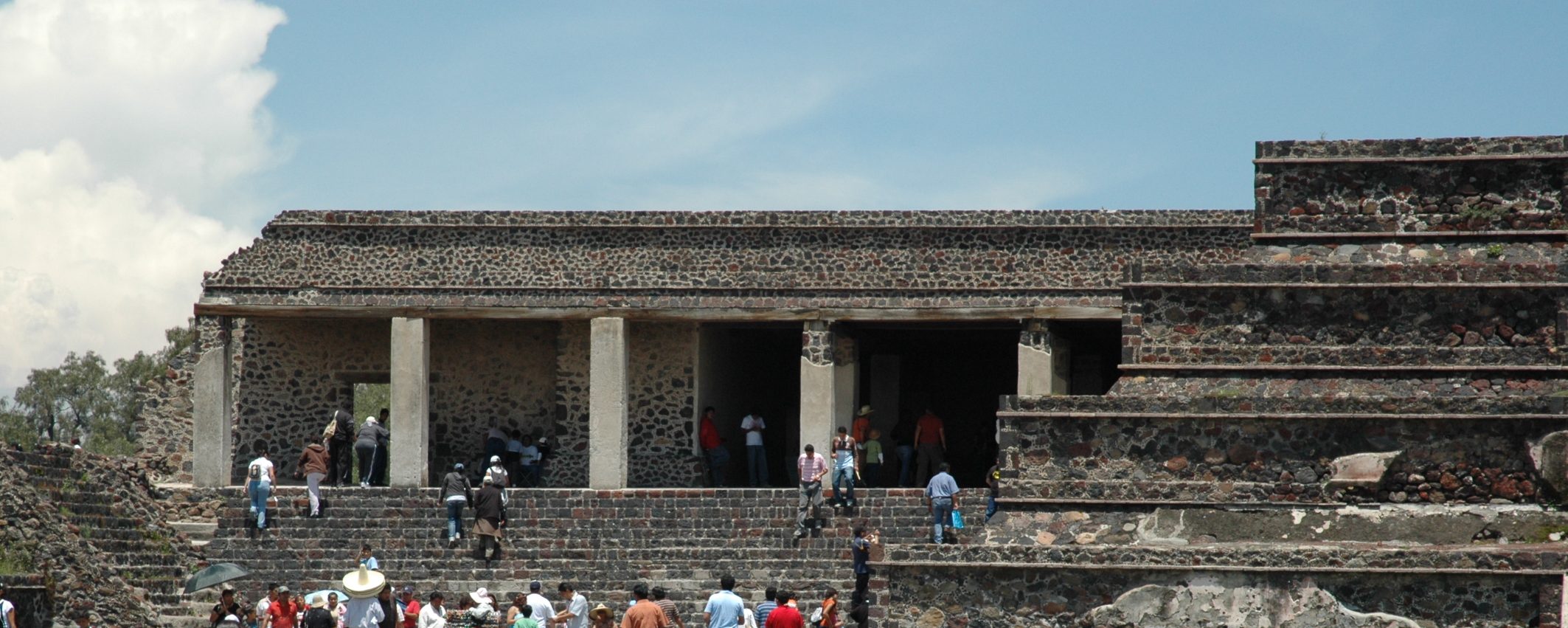
Located just southwest of the Plaza of the Moon, this reconstructed palace complex offers a glimpse into elite residential life. Its courtyard features intricately carved pillars depicting the quetzal-butterfly (a mythological creature combining bird and insect), with traces of original pigment still visible. The adjoining Palace of the Jaguars contains well-preserved murals of feathered jaguars blowing conch shell trumpets.
Superimposed buildings

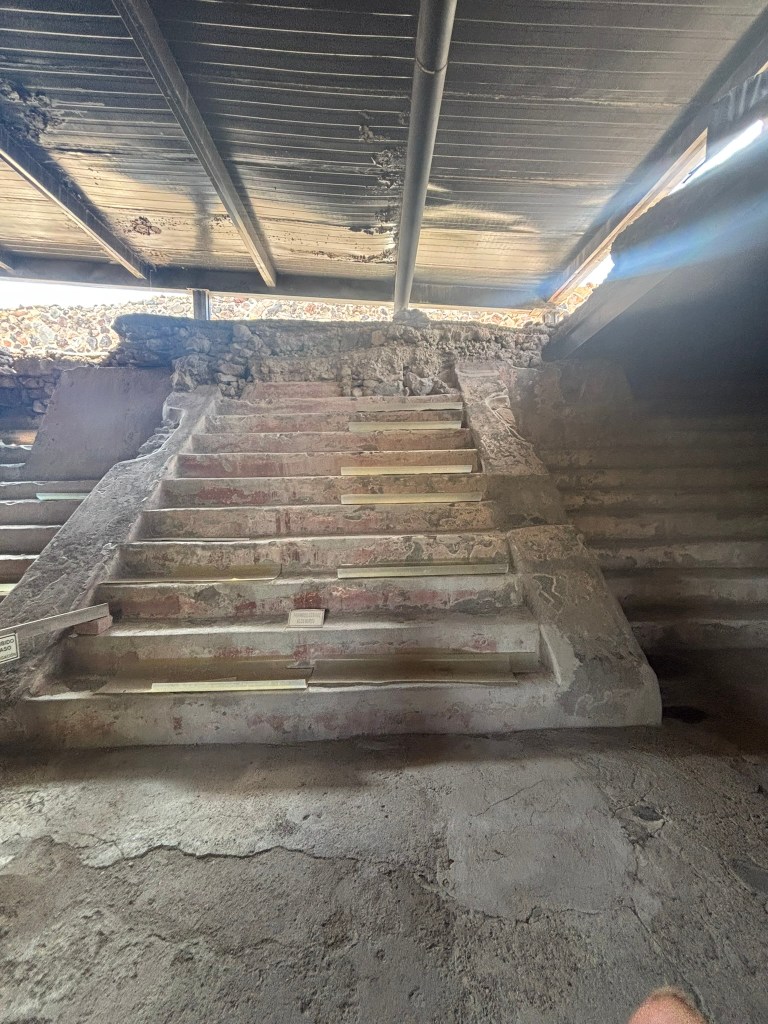
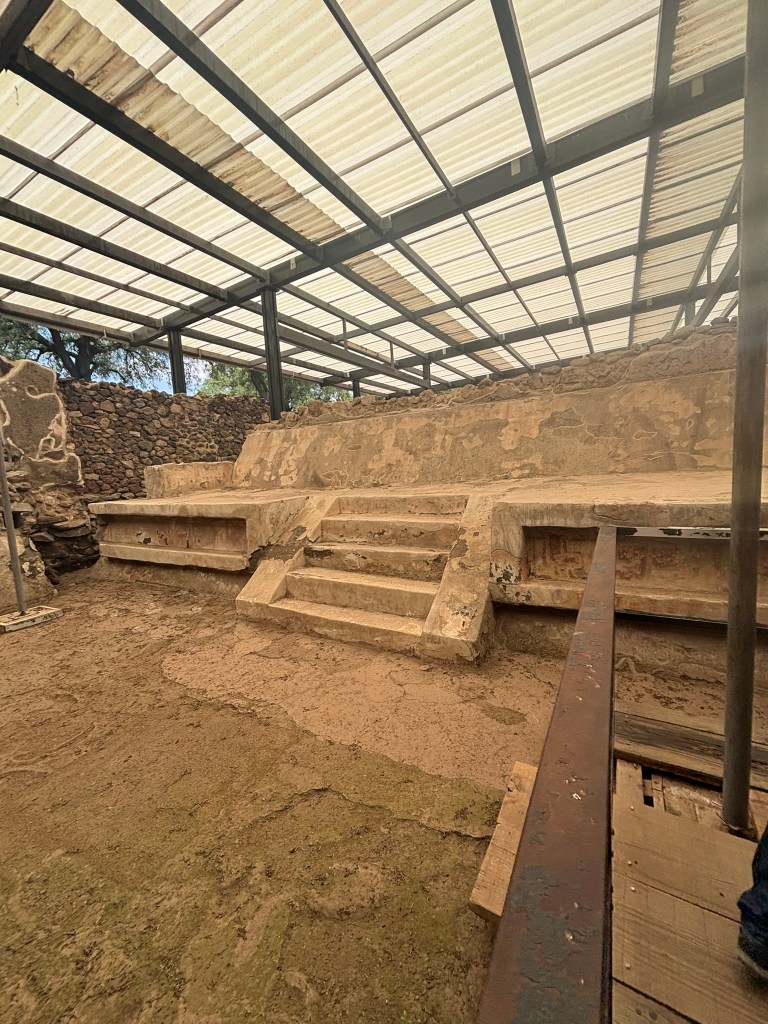
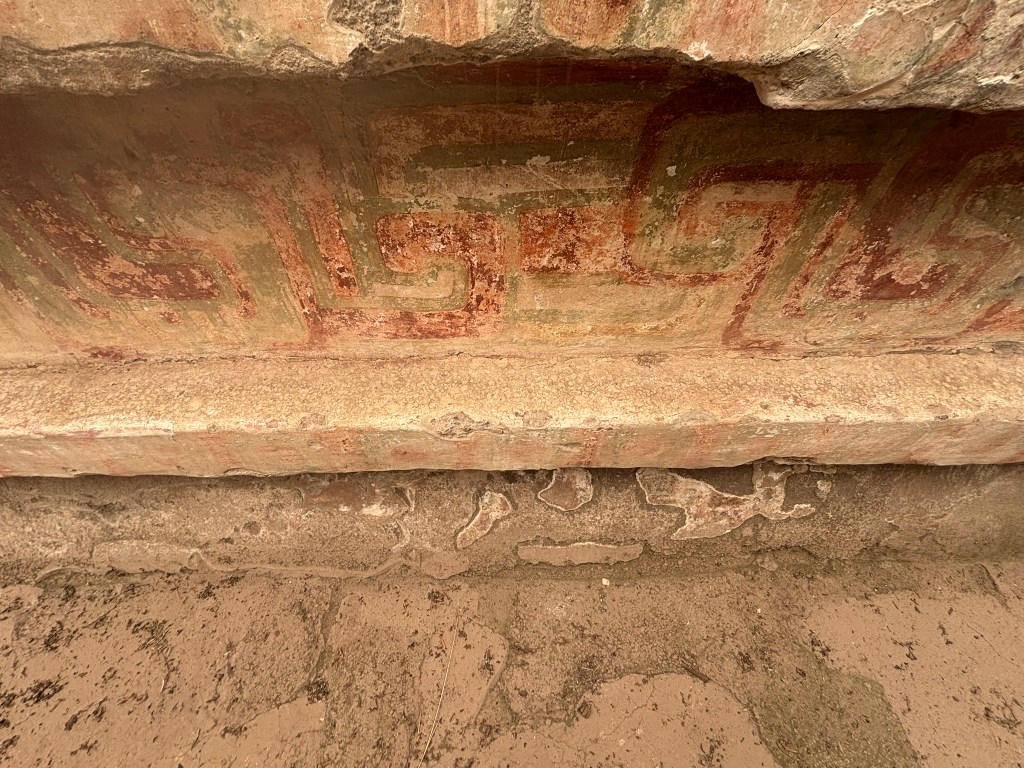
Another fascinating stop along the Avenue of the Dead is the complex known as the Superimposed Buildings, where archaeologists uncovered several layers of construction from different periods of occupation. Within this area lies the North Facade of the Painted Platform, where traces of murals still survive on stairways, moldings, and walls. These faded red and green geometric motifs, circular forms, and floral designs reveal how richly painted even exterior architectural surfaces once were. The layered architecture here is especially revealing, because it shows how Teotihuacan constantly rebuilt, expanded, and reshaped its ceremonial spaces over time.
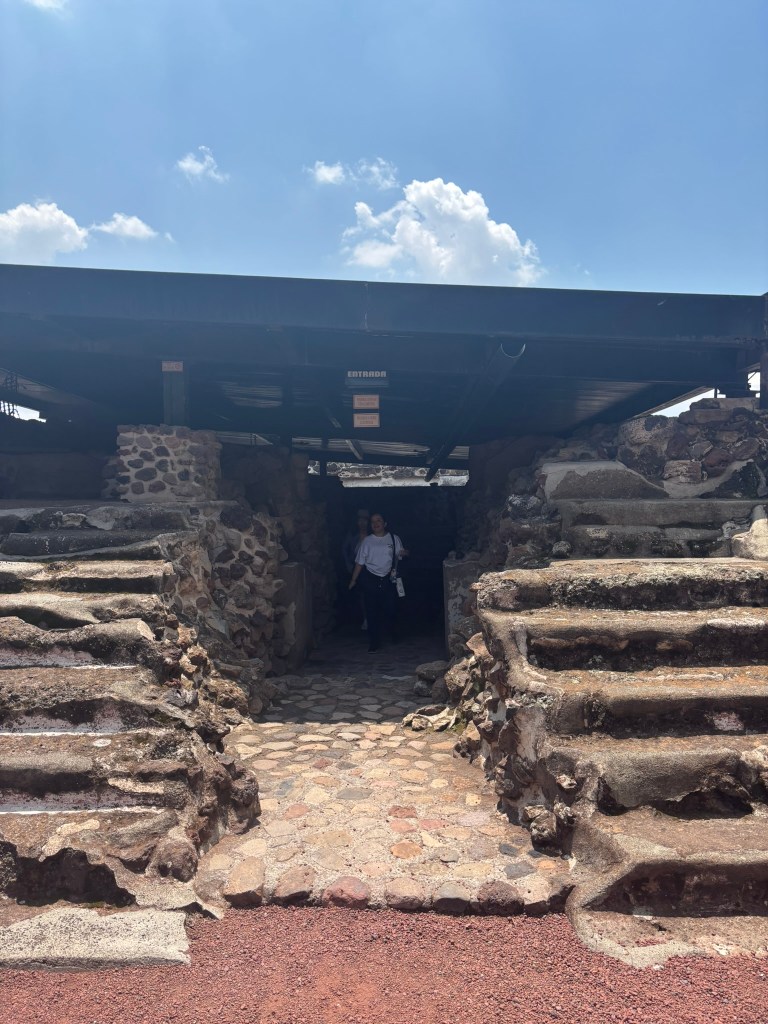
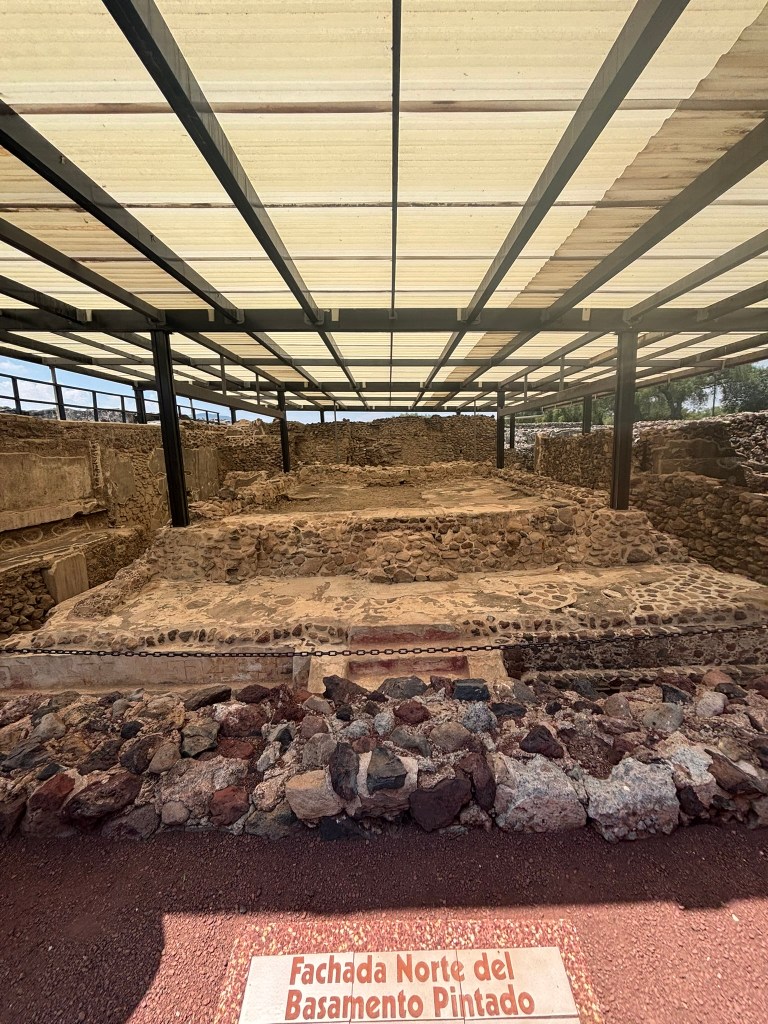
Puma Mural

As you continue walking toward the Pyramid of the Moon, keep an eye out for the remarkable Puma Mural on the east side of the Avenue of the Dead. Described on-site as the largest mural yet found at Teotihuacan, it depicts a puma rather than a jaguar, identified by the absence of the black spots that would mark a jaguar’s coat. With extended claws, a long tail, and diagonal bands of red, white, and blue beneath its legs, the animal appears to be crossing a rushing current. According to the site’s interpretation, the puma may have been associated with the sun in Teotihuacan’s urban cosmogram, while the green circles along the lower frame may symbolize “precious liquid.” Together with the nearby painted platforms and layered buildings, the mural shows how deeply color, sacred meaning, and architectural symbolism were woven into the city’s ceremonial core.
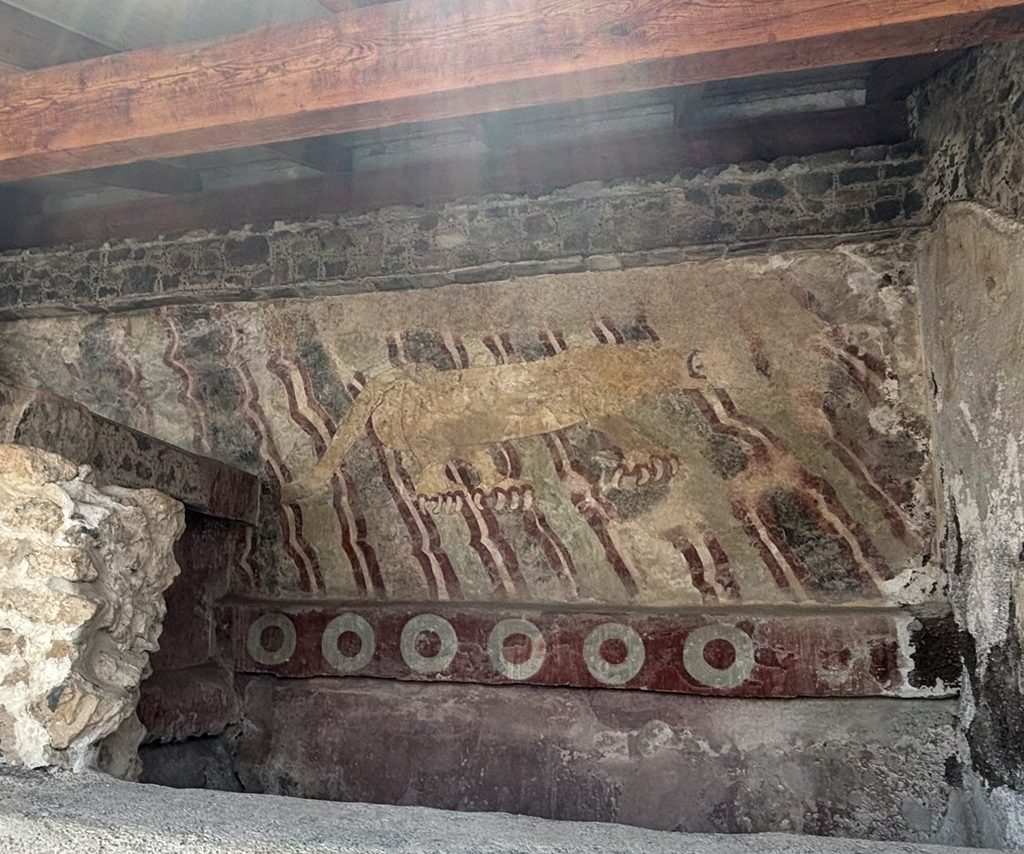
The remains of murals across the site make one thing clear: Teotihuacan was once a city saturated with color. Walls, stairways, platforms, and inner chambers were not simply structural elements – they were active surfaces of meaning, turning architecture itself into a form of visual storytelling.

The Residential Quarters: Life Beyond Ceremony

One of the most remarkable things about Teotihuacan is that it was not only a ceremonial center – it was also a highly organized city built for daily life. Its residential quarters were arranged in large apartment-style compounds that housed families, artisans, merchants, and perhaps communities organized by ethnicity, occupation, or social rank.

These compounds were often built around central courtyards and included living spaces, altars, drainage systems, storage areas, and work zones. Some were decorated with murals and architectural details that suggest domestic life was closely intertwined with ritual and identity. Archaeologists have also found evidence of workshops within these compounds, showing that many residents lived and worked in the same spaces.

This urban layout reveals a surprisingly sophisticated model of city planning. Teotihuacan was not a place of scattered huts overshadowed by temples; it was a dense, structured metropolis where everyday life unfolded within an environment shaped by religion, craftsmanship, and social order.

The Mystery of Teotihuacan Funerary Masks

Among the most haunting objects associated with Teotihuacan are its funerary masks, sometimes called death masks. These carved stone faces, often inlaid with turquoise, shell, obsidian, and other precious materials, are among the most striking artifacts from the city.
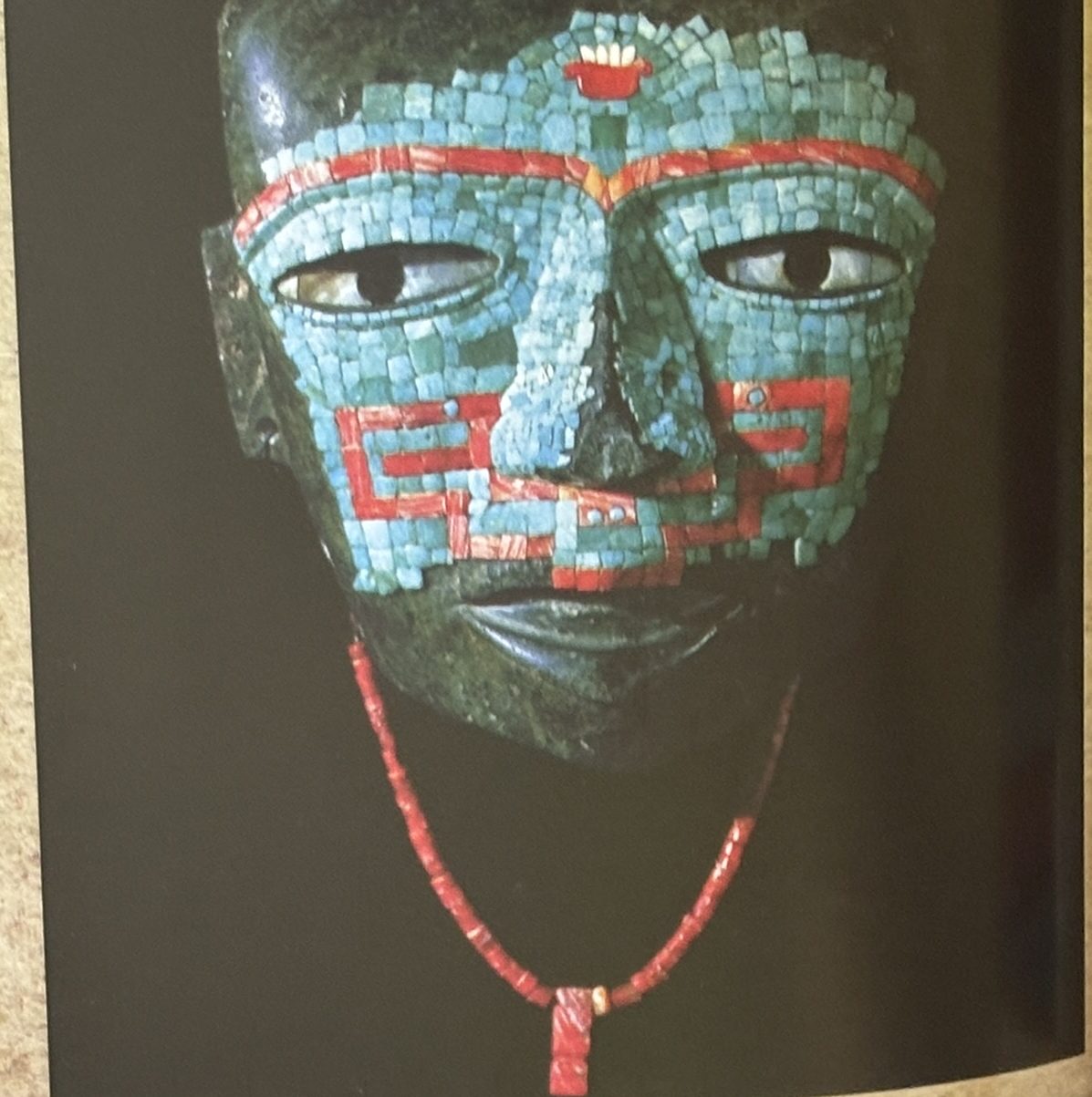
They were likely not realistic portraits of specific people. Instead, they seem to have served ritual and symbolic purposes tied to transformation, sacred identity, and the journey between the human world and the divine realm. Many have been found in burial or offering contexts, suggesting they may have accompanied elite individuals into the afterlife or played a role in ancestor veneration.

Their smooth, idealized features tell us something important about Teotihuacan itself. Unlike cultures that celebrated named rulers through portrait sculpture, Teotihuacan appears to have emphasized collective sacred power over individual glorification. These masks are beautiful, mysterious, and deeply revealing: they suggest a civilization preoccupied with ritual, sacrifice, spiritual protection, and the unseen forces that shaped life and death.

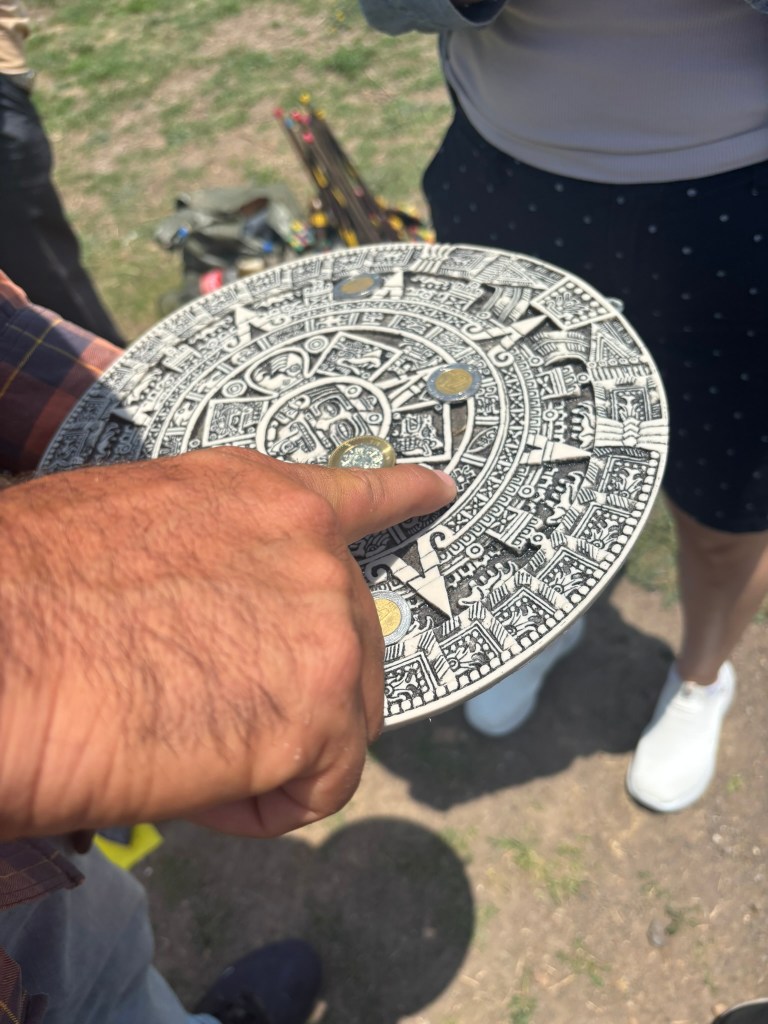
You can purchase funerary masks from the vendors along the Avenue of the Dead. I have twoโ€”one that I bought in 2008 and a new one from this visit. They make for great souvenirs from the pyramids.
The Site Museums

Two museums bookend your visit:

  • The Teotihuacรกn Site Museum (near Gate 5) houses artifacts recovered from decades of excavation, including obsidian tools, ceramic figurines, and a remarkable 1:1000 scale model of the city at its peak
  • The Beatriz de la Fuente Mural Museum displays actual murals removed from excavated structures, preserved in climate-controlled conditions

The Great Mystery: What Happened to Teotihuacรกn?

Around 550โ€“650 A.D., the great city met a violent endโ€”and the circumstances remain one of archaeology’s most tantalizing cold cases. Several theories compete to explain the collapse:

Internal Revolt

Evidence suggests the city’s ceremonial center was deliberately burned and destroyedโ€”but only specific buildings associated with the ruling elite were targeted. Residential neighborhoods were largely spared. This selective destruction points to an internal uprising, perhaps by oppressed citizens or rival factions overthrowing a dynasty that had held power for centuries.

Environmental Catastrophe

Pollen analysis and climate data indicate that severe droughts struck central Mexico during the 6th century, coinciding with the city’s decline. Deforestation to fuel lime plaster production may have accelerated soil erosion and water shortages. A stressed population facing crop failures would have been primed for social upheaval.

Foreign Invasion

Some researchers propose that external enemiesโ€”possibly rising powers from the Gulf Coast or western Mexicoโ€”sacked the city. However, there is limited evidence of foreign military occupation, making this theory less widely accepted.

Volcanic Disruption

The massive eruption of Ilopango in present-day El Salvador around 535 A.D. triggered a volcanic winter that disrupted agriculture across Mesoamerica. Combined with local environmental pressures, this regional catastrophe may have delivered a final blow to an already weakened state.

The most likely scenario? A convergence of all these factorsโ€”environmental stress, resource depletion, social inequality, and political instabilityโ€”creating a perfect storm that brought down one of the ancient world’s greatest civilizations in a fiery internal revolution.

What we know for certain is haunting: after the collapse, the city was never reoccupied as a living metropolis. It became a pilgrimage site, a place of reverence and mystery, visited by the Toltecs and later the Aztecs, who incorporated its gods and symbols into their own traditions. The Aztec emperor Moctezuma himself made pilgrimages here to honor the old gods.

Essential Visitor Logistics (2026)

CategoryDetails
HoursOpen 365 days a year, 8:00 AM โ€“ 5:00 PM (last entry 4:30 PM)
General Admission$210 MXN for international visitors / $105 MXN for Mexican nationals
Sunday EntryFree for Mexican citizens and legal residents with valid official ID
Climbing AccessUpper stairs of the main pyramids currently restricted for preservation
Getting ThereAutobuses Teotihuacรกn depart every 15 minutes from Mexico City’s Terminal del Norte (1-hour ride, ~$60 MXN each way)
Best Time to VisitArrive at opening (8:00 AM) to beat crowds and midday heat; weekdays are significantly less crowded than weekends
What to BringSunscreen, hat, water, comfortable walking shoesโ€”the site spans over 2 square kilometers with minimal shade

Final Thoughts

Teotihuacรกn is more than an archaeological siteโ€”it’s a window into a vanished world whose builders remain anonymous yet whose influence echoed across Mesoamerica for a millennium. Standing atop the Plaza of the Moon, gazing south along the Avenue of the Dead as the morning sun illuminates the Pyramid of the Sun, you’ll understand why the Aztecs believed only gods could have built such a place.

The city’s original inhabitants may be lost to history, but their vision endures in stone. And the mysteries they left behindโ€”who they were, what they believed, and why their civilization ended so abruptlyโ€”continue to draw archaeologists, historians, and travelers seeking to understand one of humanity’s most enigmatic achievements.

By the time you finish seeing all the important sites at the pyramids, you will be very hungry. The best place to get food is La Gruta restaurant, close to Gate 5. This is a unique cave restaurant that is set in an underground cave and serves great Mexican food and drinks
Layers of History: Why Templo Mayor is the Most Mind-Blowing Stop in Mexico City

Imagine walking down a busy street in modern Mexico City and discovering the heart of the Aztec Empire. Visiting the Templo Mayor is more than stop in Zocalo. itโ€™s a trip through history, myths, and amazing archaeological finds. As you get closer to the ruins, the tall buildings and detailed carvings tell stories from long ago, highlighting a civilization that honored many gods and held important ceremonies.

As you explore, you might feel a deep respect for the spirits of ancestors watching over the ruins. The Templo Mayor reminds us of the richness and complexity of Mesoamerican cultures, sparking curiosity that goes beyond time and place. You leave not just with a greater appreciation for Mexico Cityโ€™s history, but with a better understanding of how the past influences todayโ€™s lively culture.

  1. ๐Ÿ›๏ธ Practical Guide for Your Visit
  2. From Imperial Capital to Hidden Ruins
  3. The Electric Discovery That Changed Everything
  4. Visualizing the Ancient Valley
  5. A Metropolis Built on Water
  6. Recreating the Sacred Precinct
  7. Stepping Onto the Sacred Grounds
  8. What to Expect When You Visit Today
  9. ๐ŸŒŸ The Verdict: Why It Can’t Be Missed

๐Ÿ›๏ธ Practical Guide for Your Visit

To ensure your journey into the Aztec past goes seamlessly, keep these essential travel details in mind:

  • Location: Right in the heart of the Centro Histรณrico, located at Seminario 8, immediately northeast of the Zรณcalo main plaza and right next to the Metropolitan Cathedral.
  • How to Get There: Take the Mexico City Metro Line 2 directly to the Zรณcalo/Tenochtitlan station. The museum entrance is just a brief walk from the exit.
  • Hours: Open Tuesday through Sunday from 9:00 AM to 5:00 PM. The site is strictly closed on Mondays.
  • Admission Fees: General entry is 95 MXN (approximately $5.50 USD), which grants access to both the open-air ruins and the indoor museum rooms. It is completely free for children under 13, students, teachers, and senior citizens with valid IDs.
  • Pro-Travel Tip: Avoid visiting on Sundays if you want to dodge massive crowds; Sunday is the free admission day for Mexican residents and expats.
  • Security & Baggage: You must clear a security checkpoint upon entry. Large bags, backpacks, food, and water bottles are not allowed into the exhibition areas. You can use the museum’s secure on-site baggage locker service for free to hold your items while you tour.
  • What to Wear: The first half of the tour takes place completely outdoors on elevated metal and wood boardwalks. Wear comfortable walking shoes, a hat, and sunscreen, as there is very little shade over the ruins before you enter the air-conditioned museum.

From Imperial Capital to Hidden Ruins

In 1325, the Mexica (Aztec) people founded their capital, Tenochtitlan, on an island in the middle of Lake Texcoco (Now Mexico City). At its center stood the Templo Mayorโ€”the literal and spiritual core of their universe.

After the Spanish Conquest in 1521, the temple was destroyed. The conquistadors used its monumental stones to build the massive Metropolitan Cathedral that still stands next to the site today. For centuries, the remains of the Aztec empire lay completely buried and forgotten beneath the growing capital of New Spain.

The Electric Discovery That Changed Everything

The temple stayed hidden until 1978, when a crew of electrical workers digging near the city’s main plaza struck something hard. It was a massive, finely carved stone monolith depicting the dismembered goddess Coyolxauhqui (Bells-Her-Cheeks). Finding the monument pinpointed the exact, long-lost location of the Templo Mayor, the main religious and political center of the Aztec capital, Tenochtitlan. This discovery subsequently launched one of Mexico’s largest and most significant archaeological excavation projects.

According to myth, her brotherโ€”the patron god Huitzilopochtliโ€”killed her when she attempted to assassinate their mother. This single, accidental discovery sparked a massive excavation, revealing that the grand Aztec temple was waiting just beneath the pavement.

Today, visitors can view the original monolith at the on-site Museo del Templo Mayor, which stands immediately adjacent to the open-air archaeological ruins where it was first found

Visualizing the Ancient Valley

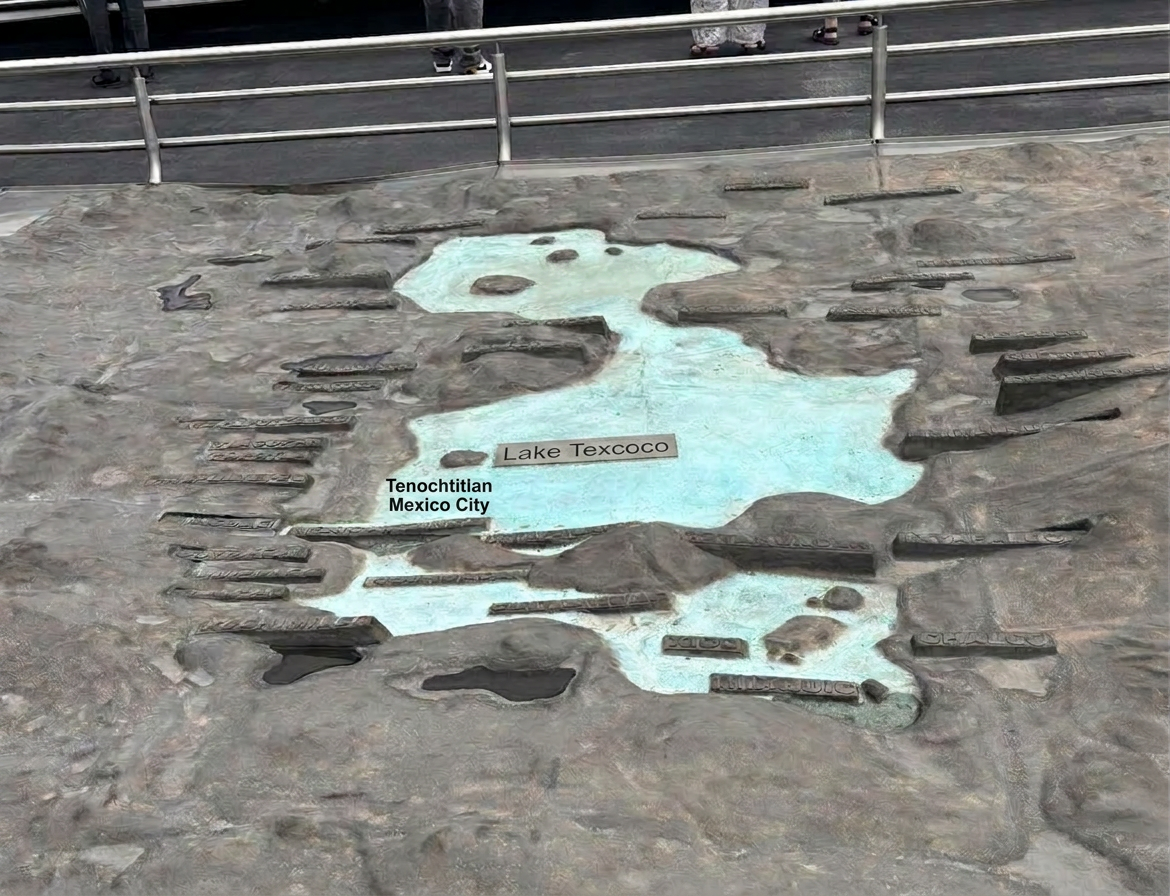
Before you even step into the ruins, your visit begins with an incredible perspective shift. Out on the viewing platforms, you will encounter a large topographical scale model that recreates the ancient Valley of Mexico and Mexico City.

The model highlights the vast turquoise expanse of the historical Lake Texcoco system, contrasting sharply against the surrounding mountainous terrain. Looking at this map, you can clearly see how Tenochtitlan was meticulously engineered right out of the water, connected to the mainland only by narrow causeways. It serves as a powerful visual reminder of how drastically this geography has changed to become the concrete metropolis you are standing in today.

A Metropolis Built on Water

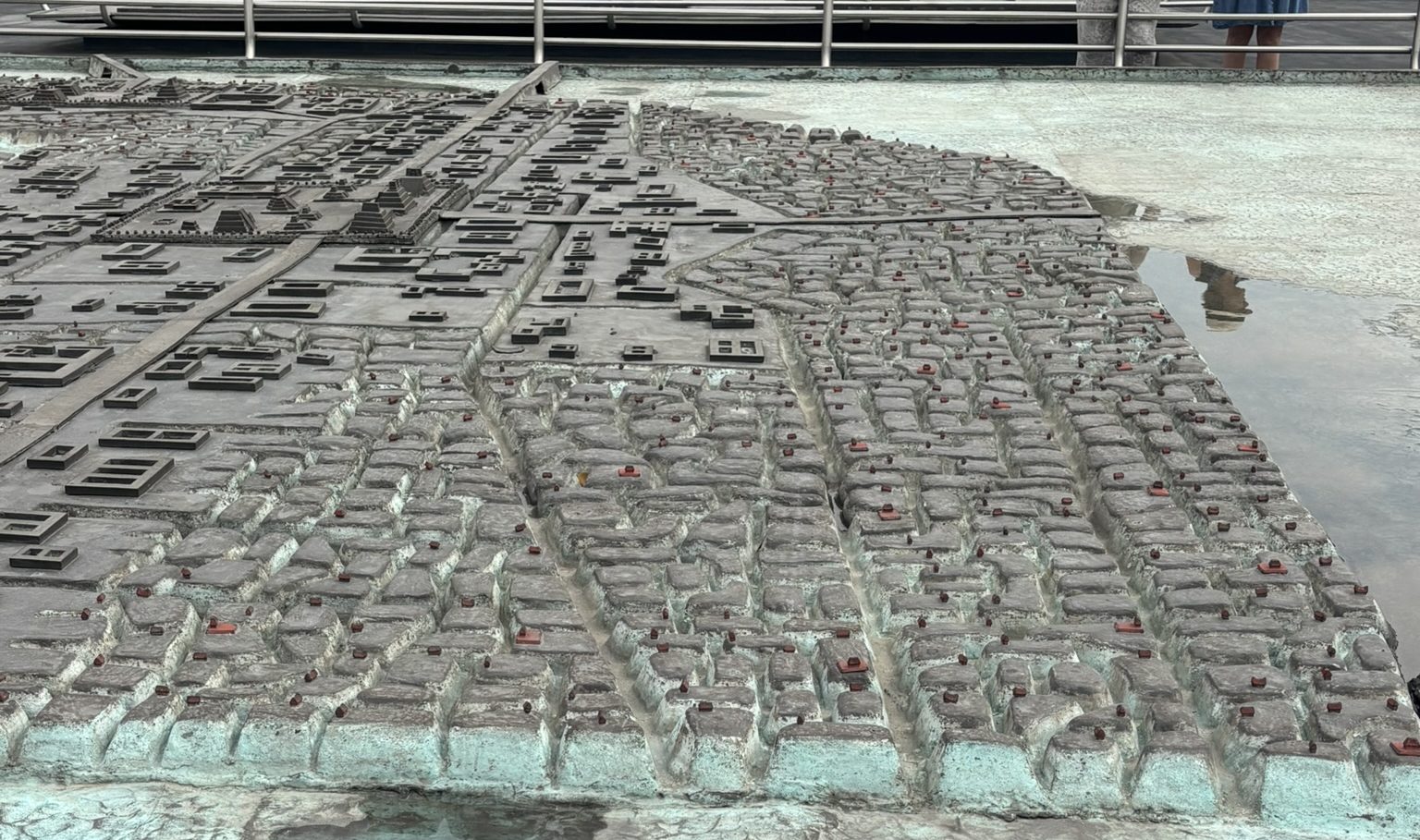
Getting a closer look at the city layout on the scale model reveals the sheer brilliance of Aztec urban planning. The city wasn’t just a random cluster of buildings; it was a highly organized, dense grid of residential neighborhoods (calpullis) stretching across the water.

In this detailed view, you can see how the streets were a combination of packed earth walkways and turquoise water canals. These canals acted as the main highways of Tenochtitlan, allowing thousands of canoes to navigate daily between homes, markets, and agricultural plots. Standing there and comparing this highly advanced Venice-like water city to the modern traffic of Mexico City is an unforgettable experience.

What Happened to the Lakes?

  • Spanish Siege (1521): Conquistadors intentionally destroyed Aztec floodgates and filled canals with debris to build standard European roads.
  • The Great Drainage (1607โ€“1900s): To stop catastrophic colonial flooding, engineers built massive tunnels to permanently divert water out of the mountain valley.
  • The Concrete Overhaul: By the mid-20th century, the final lakebeds were completely drained to pave the way for urban mega-expansion.

The Sinking Modern Legacy
Because modern Mexico City sits on this soft, empty clay lakebed, the historic center is actively sinkingโ€”dropping up to 10 meters (33 feet) over the past century!

Where to See the Canals Today

  • Destination: Xochimilco (Southern Mexico City)
  • What it is: The last remaining UNESCO-protected network of original Aztec canals and chinampas (floating gardens).
  • The Experience: Rent a vibrant, flat-bottomed wooden boat called a trajinera to cruise the historic waterways.

Recreating the Sacred Precinct

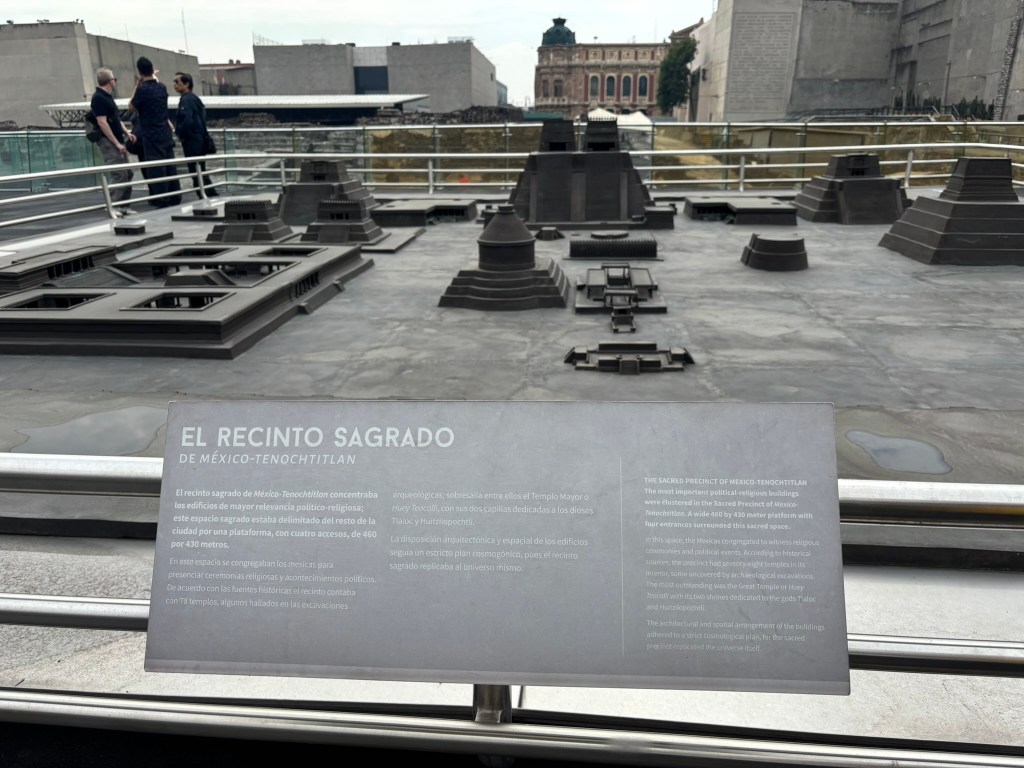
As you continue along the outdoor walkways, you will come across another fascinating display: a detailed architectural model of the Sacred Precinct (El Recinto Sagrado). This dark, geometric miniature brings the core of the ancient city to life right before your eyes.

Historical sources note that this entire sacred space was an immense 460 by 430-meter platform enclosed from the rest of the city, featuring four main entrances. The precinct held around 78 temples and religious structures, laid out according to a strict cosmological plan meant to replicate the universe itself. Towering over the model is the main Templo Mayor (Huey Teocalli), crowned by its distinctive twin shrines dedicated to the rain god, Tlaloc, and the patron war god, Huitzilopochtli.

Stepping Onto the Sacred Grounds

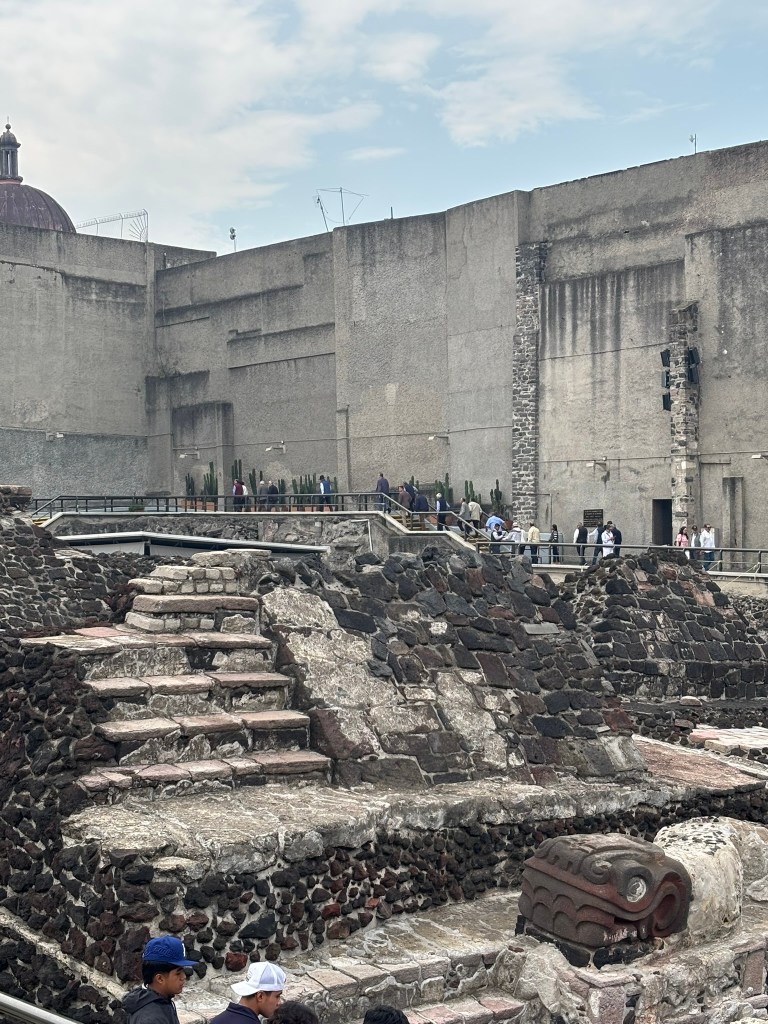
Moving past the models, you finally step onto the raised walkways directly over the excavated ruins. The physical reality of the site is breathtaking. You are confronted with steep, layered stone staircases built primarily out of dark, porous reddish-black tezontle (volcanic rock) and covered in stucco.

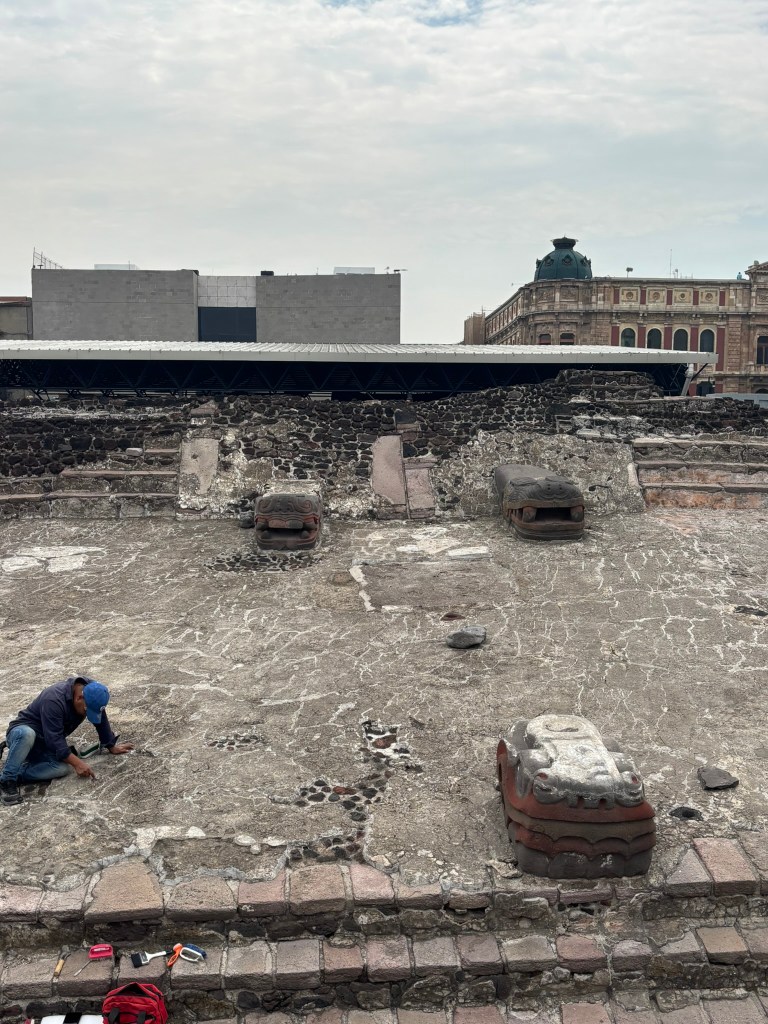
Guarding the base of these ancient structures are massive, masterfully carved stone serpent heads. In Mexica culture, serpents were deeply sacred, representing the earth, fertility, and the heavens. Seeing these formidable carvings resting exactly where Aztec priests once stoodโ€”juxtaposed against the towering concrete walls and colonial domes of modern Mexico City right behind themโ€”is a surreal visual clash of two entirely different worlds.

Serpent imagery was central to Aztec spirituality, but it triggered immediate, severe friction with the Spanish due to deep cultural misunderstandings.

The Christian Association with Satan

In Christian theology and the Bible, the serpent is the ultimate symbol of evil, deception, and Satan (tempting Eve in the Garden of Eden). When the Spanish arrived in Tenochtitlan and saw massive stone carvings of feathered and fire serpents adorning every temple wall and staircase, they did not see art or cultural symbols; they believed they had walked into a kingdom openly worshipping the Devil

What to Expect When You Visit Today

Today, you can walk directly through the open-air archaeological zone on raised platforms, viewing the surviving foundations of the temple layers.

Right next to the ruins is the onsite Templo Mayor Museum. It is packed with exquisitely crafted objects found during the excavations, including shell mosaics, monumental stone sculptures, and colorful ceramics.

The crown jewel of the collection is the recent discovery of the Tlaltecuhtli monolith. This earth deity carving is the largest Mexica monolith ever found, and seeing its scale in person is worth the trip alone.

๐ŸŒŸ The Verdict: Why It Can’t Be Missed

Templo Mayor is a striking reminder that history is never truly erasedโ€”it simply waits beneath the surface. Walking through this active archaeological wonder, sandwiched between a centuries-old Spanish cathedral and a bustling modern capital, offers a humbling perspective on the passage of time. It is a rare chance to look directly down into the bedrock of Mexican identity and witness history being reclaimed, one volcanic stone at beveled stone. If you want to understand the true, raw soul of Mexico City, your journey has to begin right here at its ancient core.


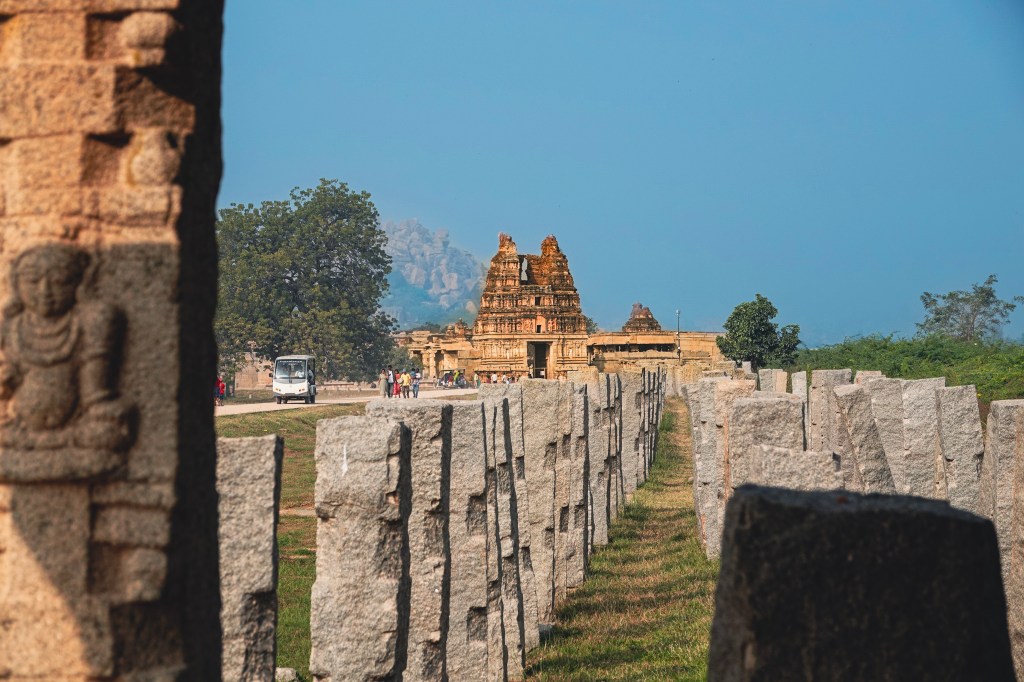
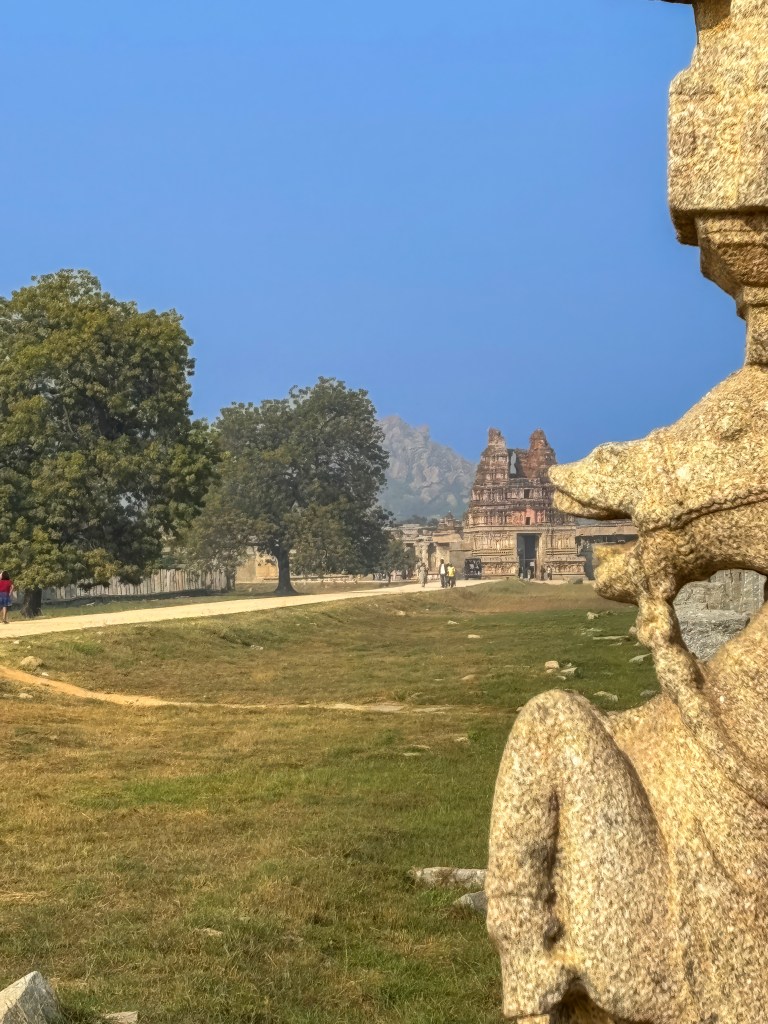
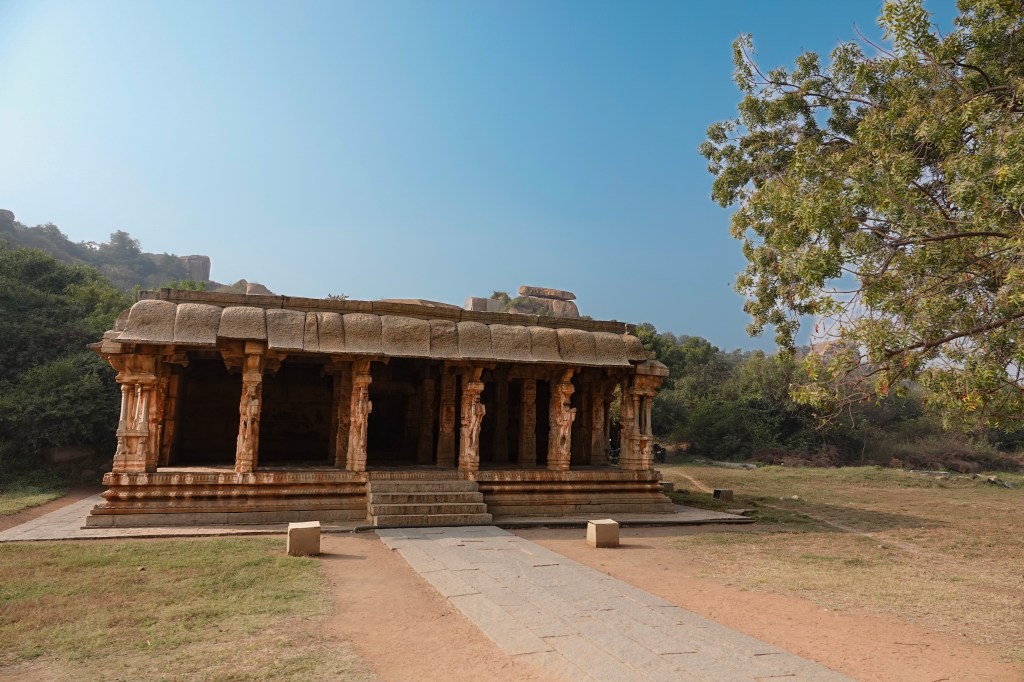
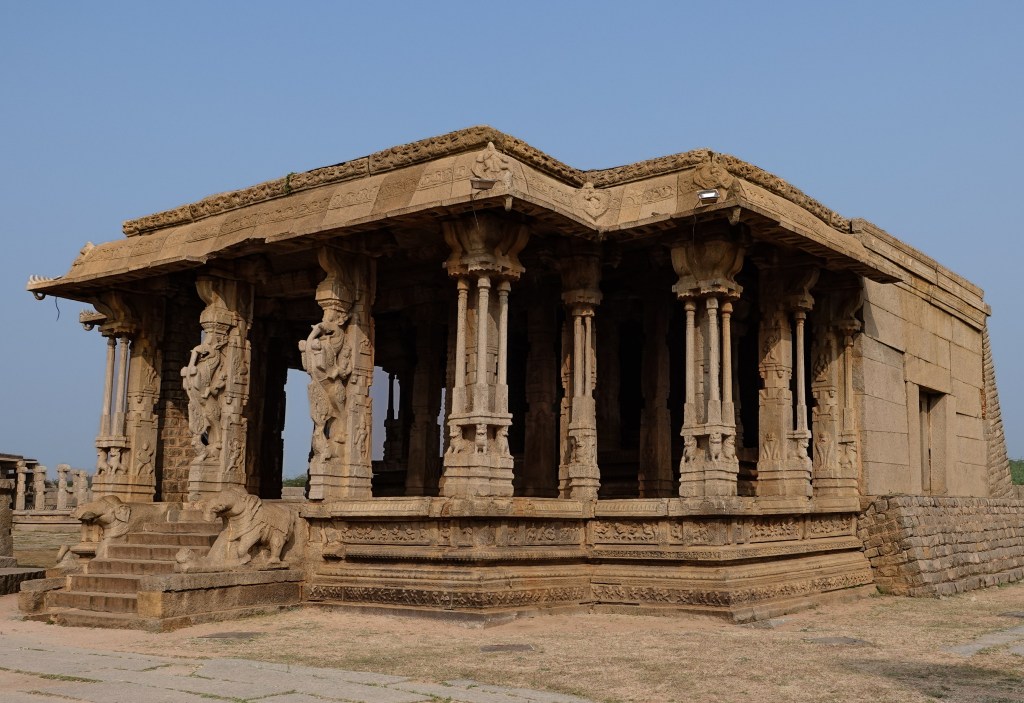
Hampi the city lost of Splendor- Spending 4 days in Hampi and the surrounding areas

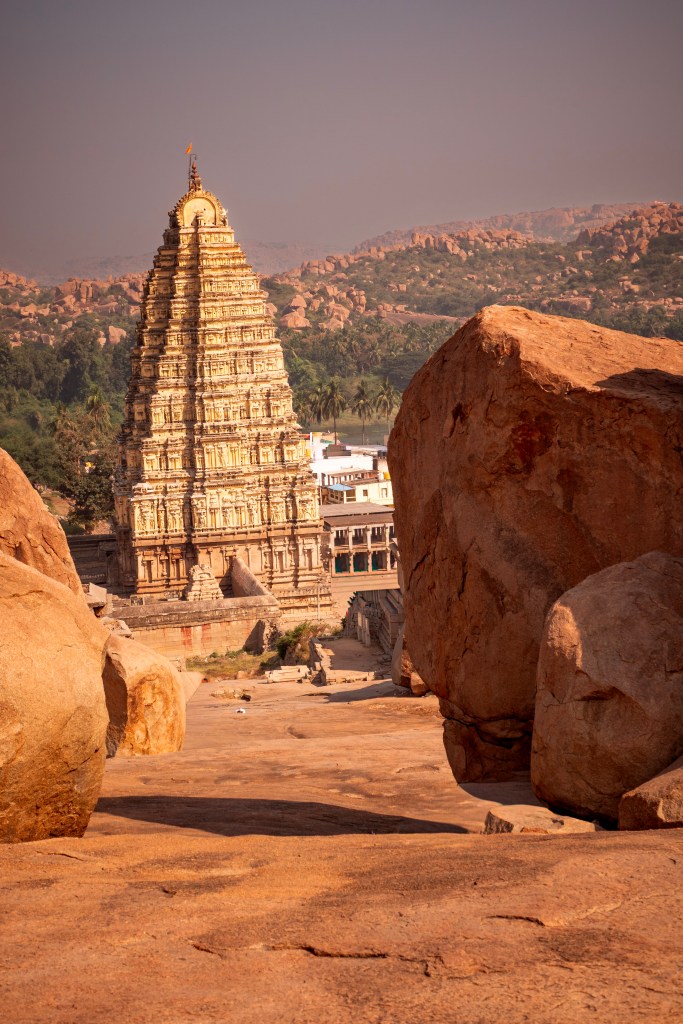
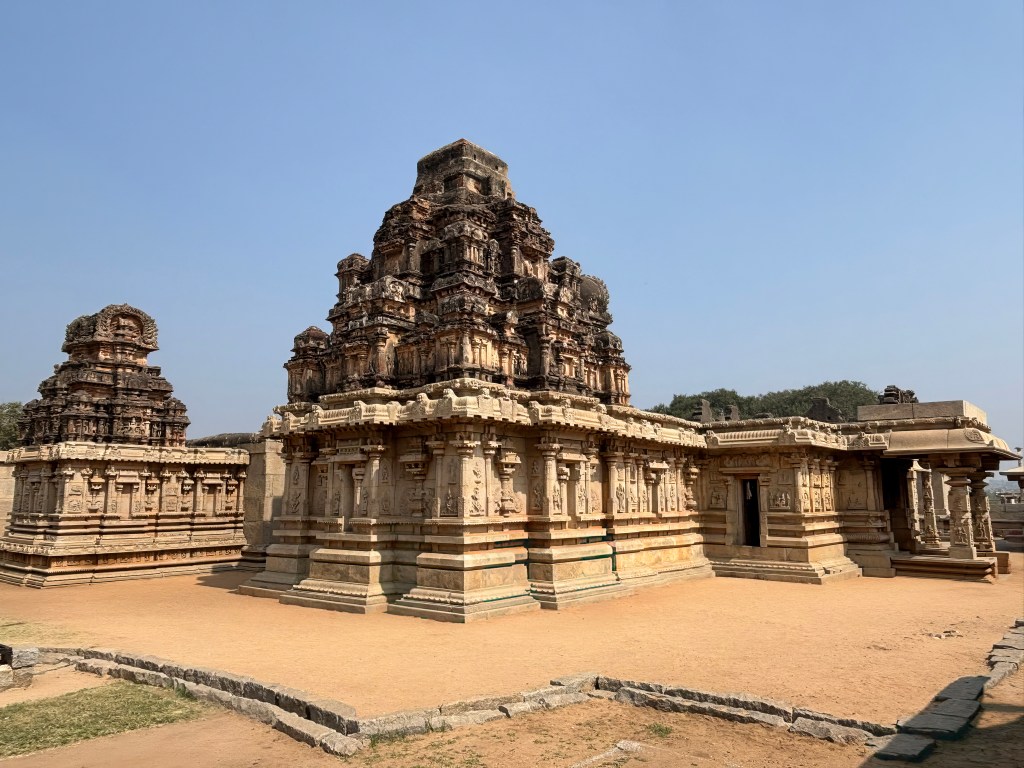
Hampi, a mesmerizing UNESCO World Heritage Site in Karnataka is a blend of surreal boulder-strewn landscapes and ancient history. Once the thriving capital of the 14th-century Vijayanagara Empire, it was one of the world’s largest cities. This was before its devastating fall in 1565. I grew up in this part of the country. I had often heard the ruins somberly called “Halu Hampi” (literally “Ruined Hampi” or “Destroyed Hampi” in the local language). This term shows the city’s tragic transformation. It changed from a “City of Victory” to a sprawling “City of Ruins.” This change followed its six-month pillage by the Deccan Sultanates. Today, you can wander through the remnants of once-grand bazaars. You can witness the iconic Stone Chariot at the Vitthala Temple. You can explore the active Virupaksha Temple. All of these stand as hauntingly beautiful testaments to a lost golden age.

  1. Quick Architectural Glossary: Vijayanagara Temples
  2. Our Itinerary
    1. Virupaksa Trail
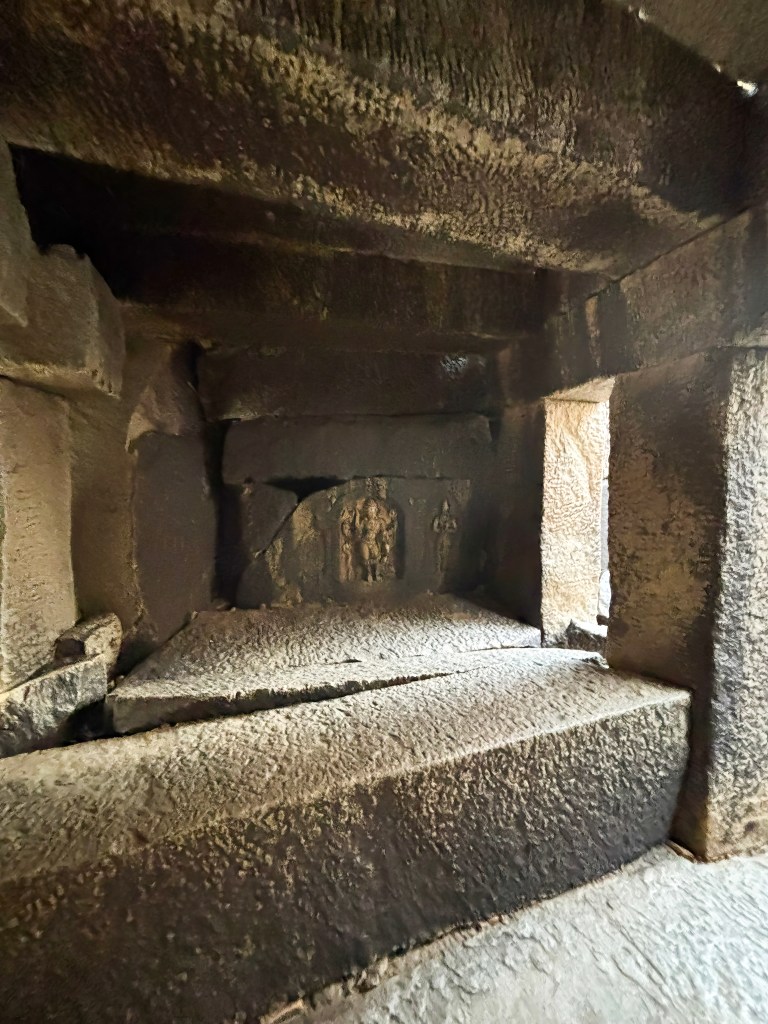
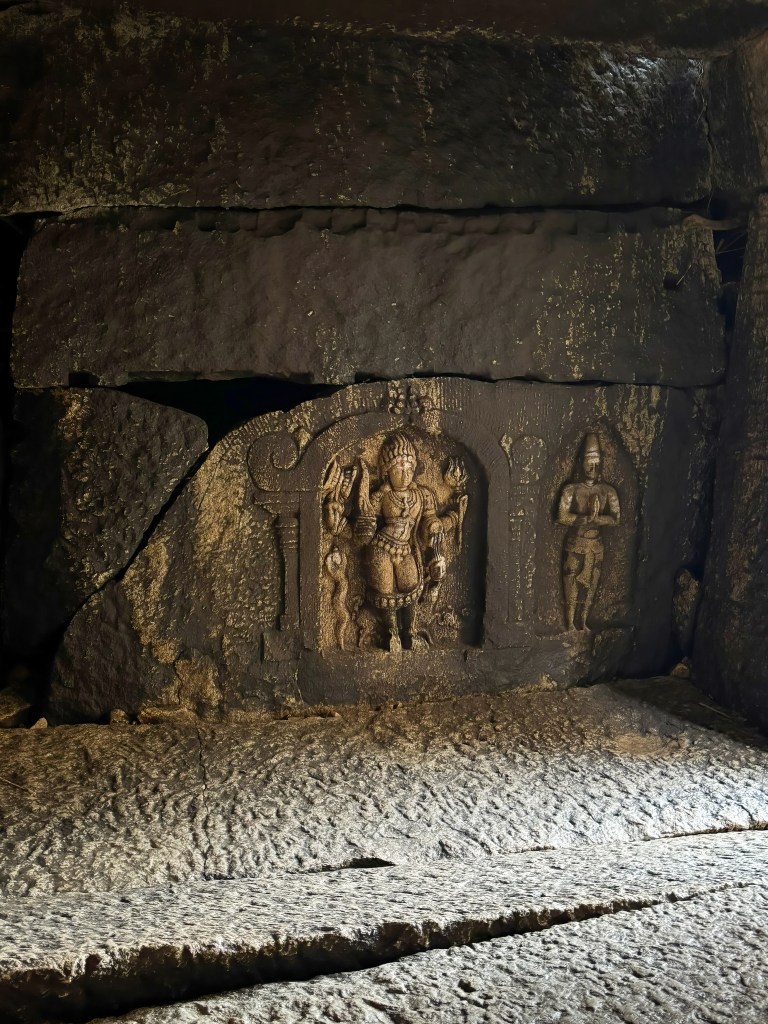
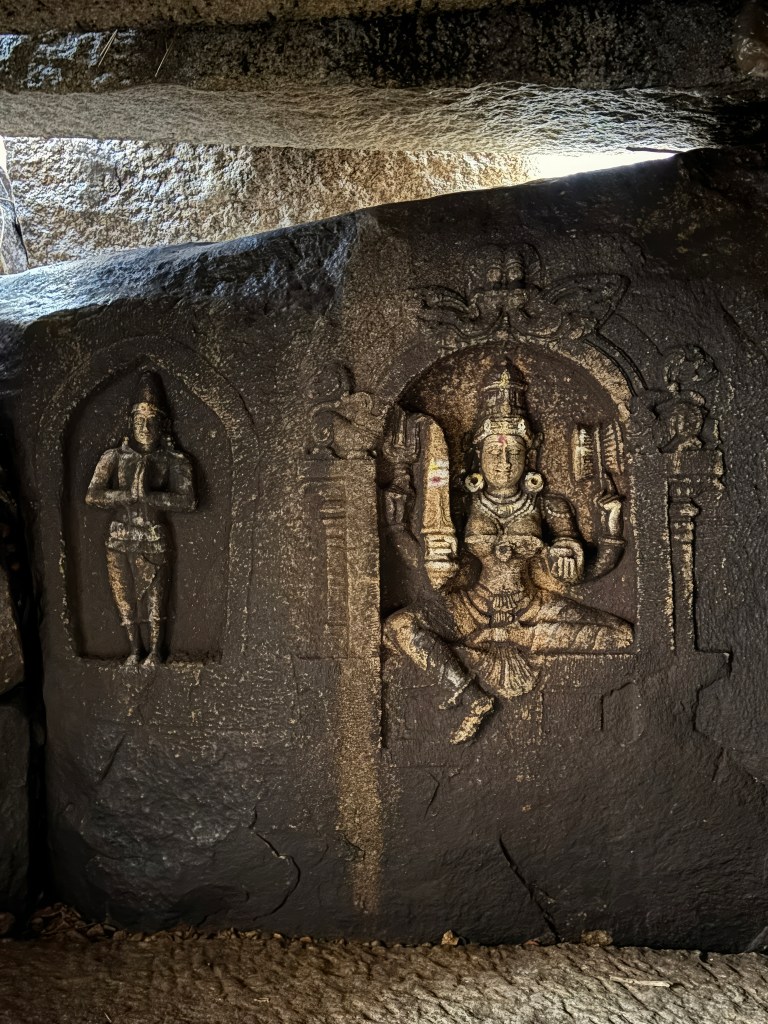
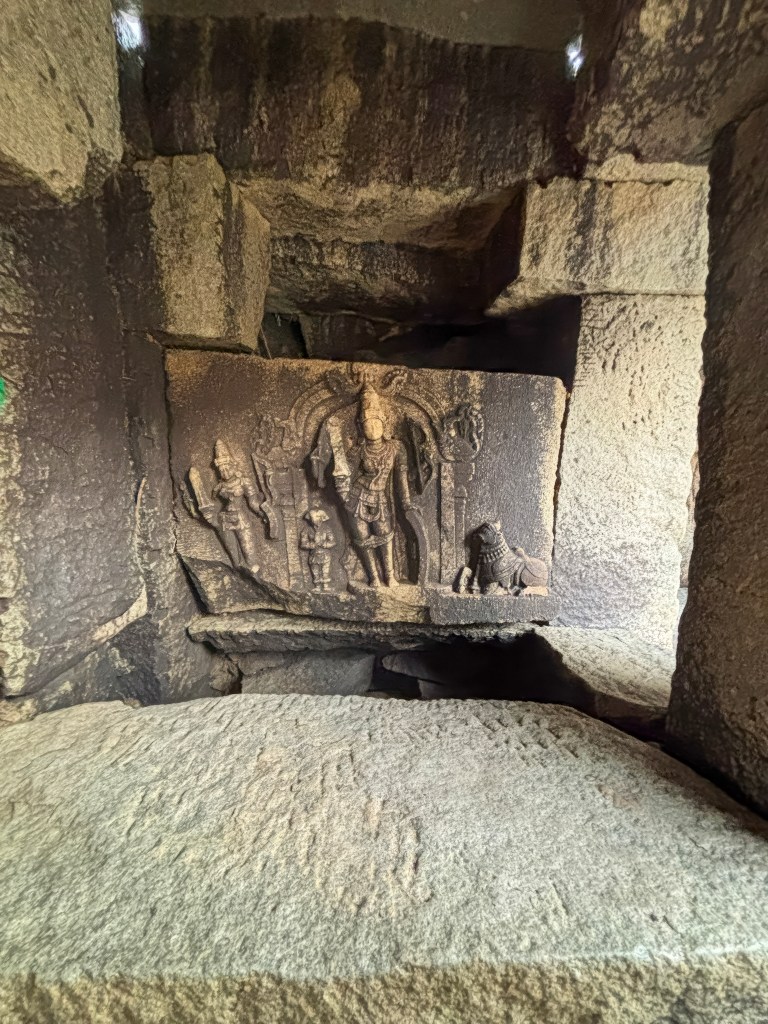
      1. Urga Narasimha / Lakshmi Narasimha temple and Badava Linga
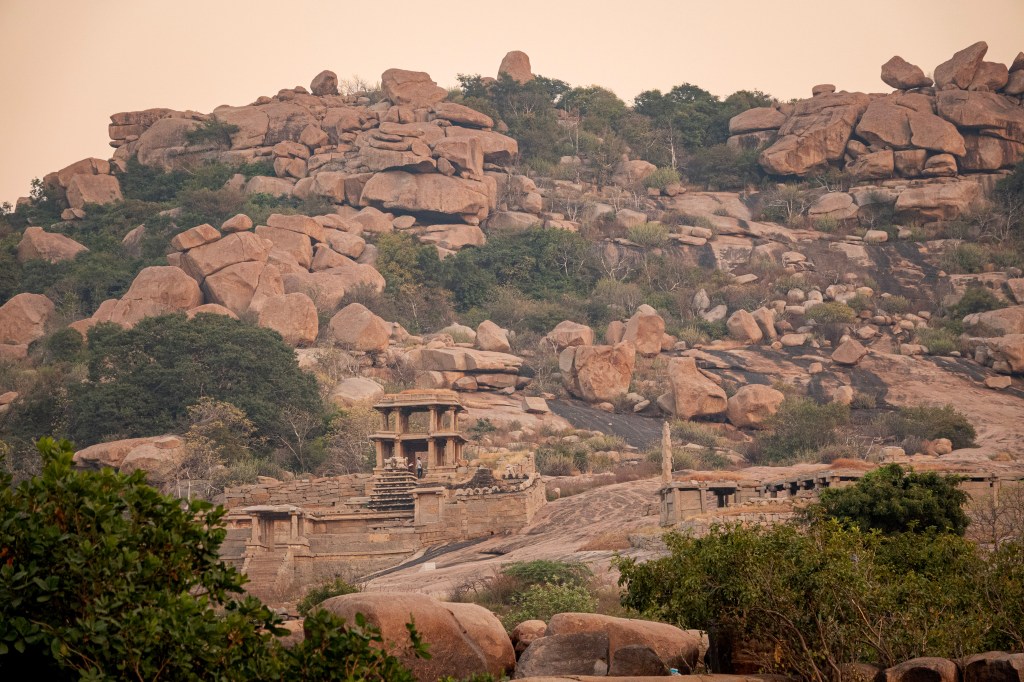
      2. Sasivekalu and Kadalekalu Ganesha
      3. Hemakuta hill
      4. Virupaksha Temple
      5. Sri Krishna temple
    2. Thungabhadra Trail
    3. Vittala Trail
    4. Raya Trail
      1. Hazara Rama temple
    5. ANEGUNDI TRAIL
    6. Geology of Hampi: An Ancient Landscape Sculpted by Time
      1. A Foundation Older Than Time
      2. The Deccan Traps Connection
      3. Inselbergs: Hampiโ€™s Signature Land forms
      4. A Landscape Shaped by Nature and Culture
      5. A Geological Backdrop to an Empire
    7. Final thoughts

Quick Architectural Glossary: Vijayanagara Temples

Gopura

The monumental gateway tower marking the entrance to a temple complex. Usually built of stone at the base and brick above, often decorated with stucco figures.

Mandapa

A pillared hall used for gatherings, rituals, and processions.

  • Open mandapa: airy, columned pavilion.
  • Enclosed mandapa: walled hall with doorways and side porches.

Sanctuary / Garbhagriha

The innermost chamber housing the main deity. Usually small, dark, and accessed through a series of mandapas.

Pradakshina Patha

The circumambulatory passage around the sanctuary, sometimes unlit, used for ritual clockwise movement.

Kuta Roof

A squareโ€‘toโ€‘domed roof form used in South Indian temple architecture. In Hampi, it appears on smaller shrines and early structures like the Durgadevi shrine.

Shikhara / Vimana

The tower above the sanctuary.

  • Dravida vimana: stepped, pyramidal tower typical of the south.
  • Brick shikhara: often seen in Vijayanagara temples, decorated with plaster sculptures.

Bazaar Street

A long, colonnaded avenue aligned with major temples, once lined with shops and festival pavilions. Krishna Temple and Virupaksha both have prominent bazaar streets.

Colonnade

A row of stone pillars supporting a roof or canopy. In Hampi, colonnades frame bazaar streets, temple tanks, and enclosure walls.

Tank / Pushkarini

A sacred water reservoir associated with ritual bathing and temple ceremonies. Often surrounded by pillared corridors and pavilions.

Inscribed Slab

A stone record set up by kings or patrons, documenting victories, donations, or temple endowments. The Krishna Temple inscription of Krishnadevaraya is a key example.

Peripheral Shrines

Small subsidiary temples placed along the inner corners or walls of a larger complex, dedicated to attendant deities or guardian figures.

Outer Enclosure

The larger walled compound surrounding the main temple. In the Krishna Temple, this includes a unique sixโ€‘domed granary structure.

Stucco Sculpture

Plaster figures applied to brick towers, often depicting deities, dancers, warriors, or mythological scenes. Many Vijayanagara gopuras once had elaborate stucco decoration.

Our Itinerary

The entire city of Hampi is indeed huge. Itโ€™s possible to wander around the suburbs of the city for hours without bumping into anyone else. Seeing everything in Hampi would take several days. However, two to three days are enough to see the major monuments without it being repetitive. We saw Hampi in 4 segments with our guide. I will blog about each segment and its key monuments separately. Here is how we divided our itinerary of Hampi

Virupaksa Trail

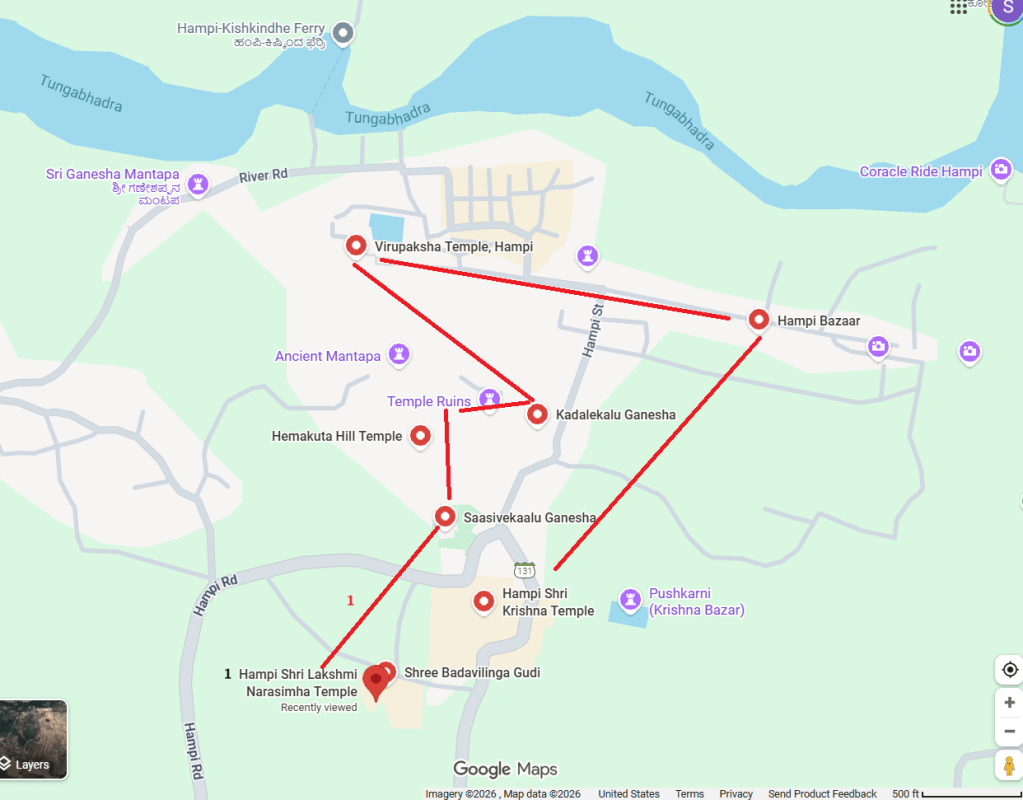
This trail includes Virupaksha Temple, Hampi Bazaar, and Manmantha Tank. Other sites are Kampilaraya Temple, Sasivekalu Ganesha, and Kadalekalu Ganesha. The trail also covers the Krishna Temple, Lakshmi Narasimha, and the Badavi Linga. All of these are close together and can be done in 3-4 hours. We started at the Shri Lakshmi Nagashima temple and finished at the Krishna temple.

Here are more details and my commentary on each of these monuments, along with some photographs

Urga Narasimha / Lakshmi Narasimha temple and Badava Linga

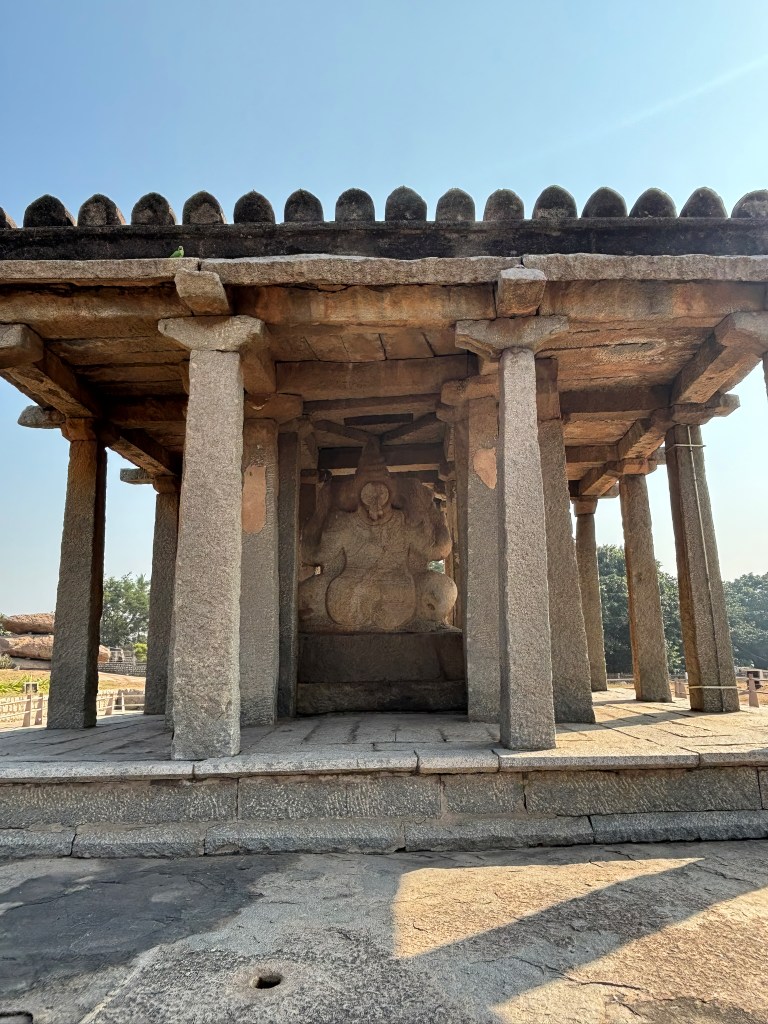
Sasivekalu and Kadalekalu Ganesha

Hemakuta hill

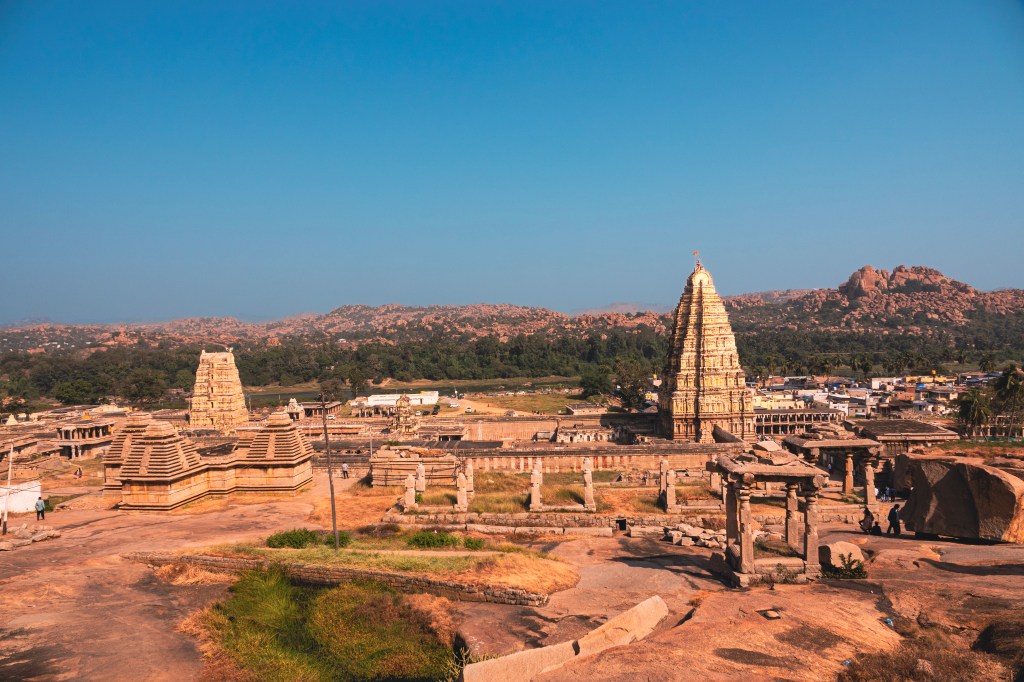
Virupaksha Temple

Sri Krishna temple

Thungabhadra Trail

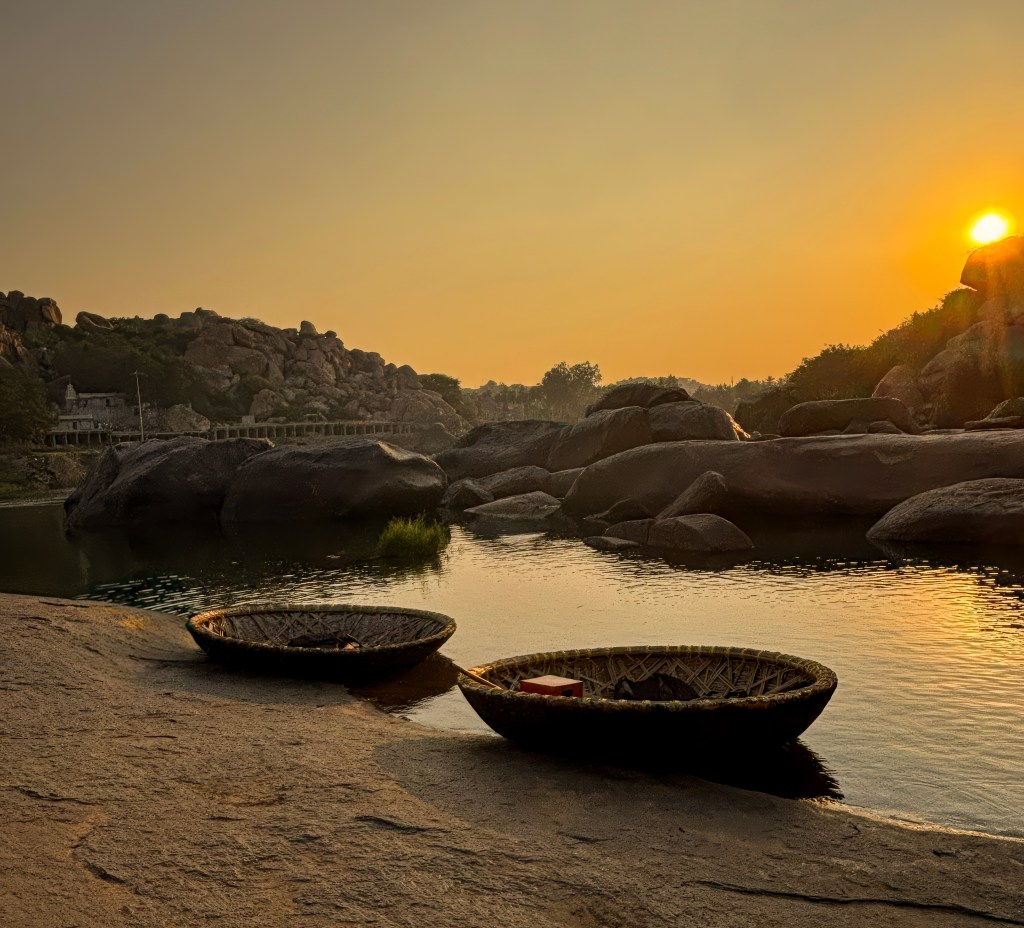
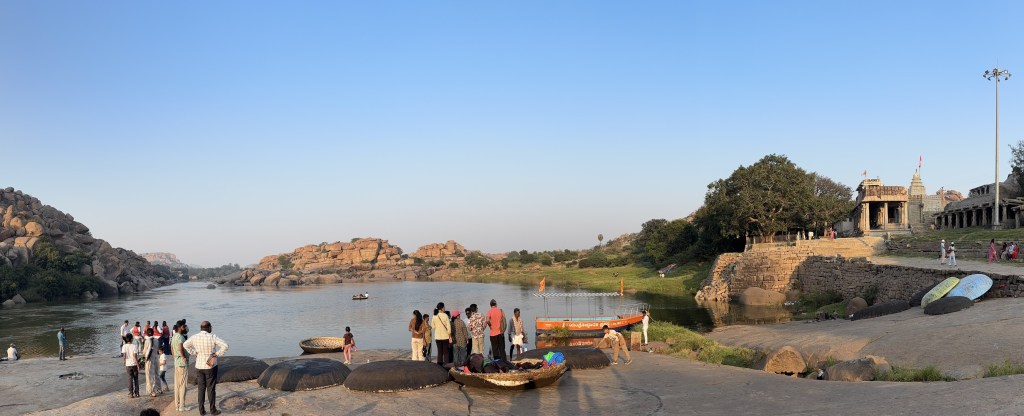
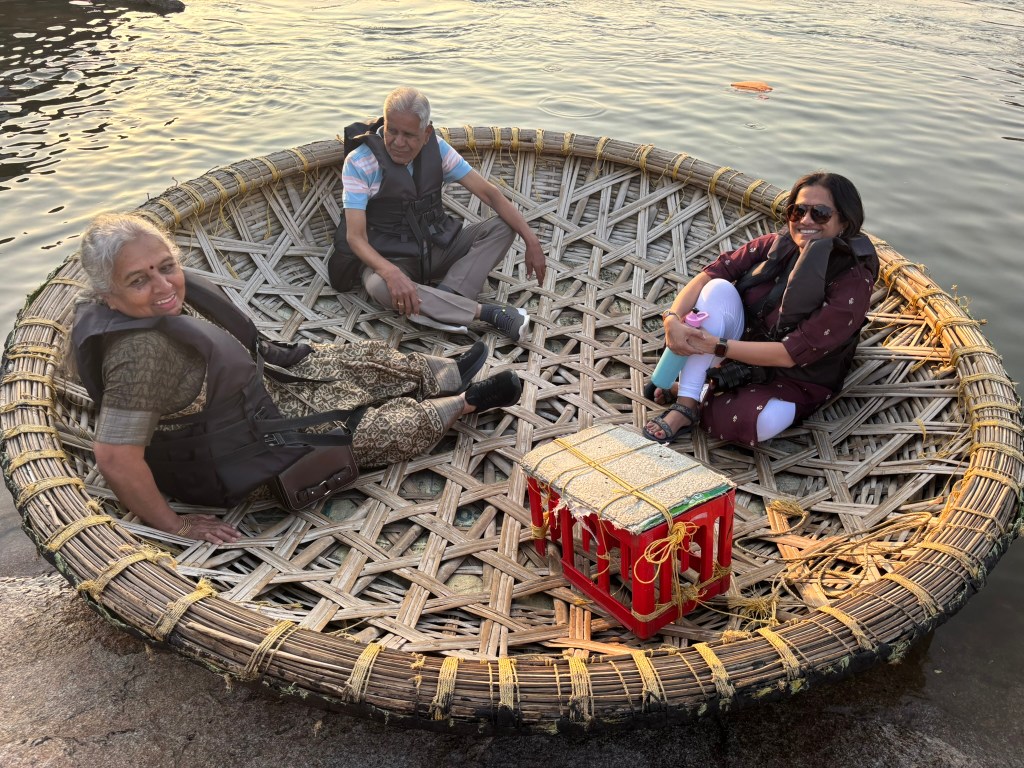
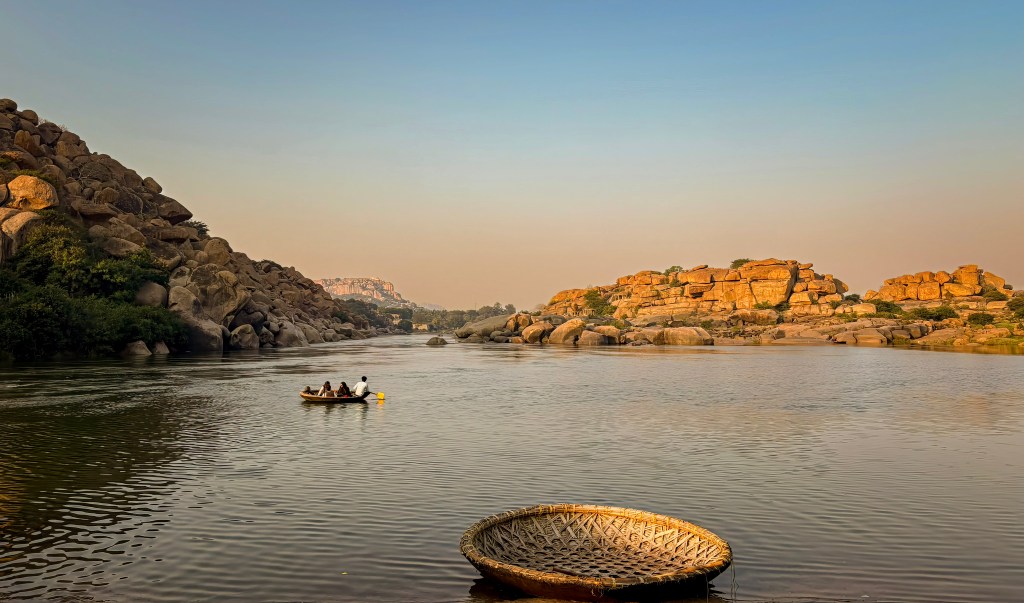
After the morning visit to Virupaksha trail, we took a much-needed break and had lunch. We headed back out around 3.30 PM to start our evening itinerary at Chakra Thirtha. We visited the riverside ruins and took a coracle ride. This was the highlight for me on this trip.

Vittala Trail

Walk through the ancient market and temples of Vithalapura โ€“ a Hampi suburb known for the famous Vijaya Vithala temple that houses the renowned

Stone Chariot and musical pillared mantapa.

โ€‹

Monuments Covered: Gejja Mantapa, Kudure Gombe Mantapa, Vithalapura Bazaar, Kalyani, Vijaya Vithala Temple

Raya Trail

This trail takes you back 500 years to the life and times of the Rayas or Kings of the Vijayanagara Empire. Learn about their lifestyle, culture, social and political lives while you gaze upon the royal cityโ€™s magnificent architecture.

Monuments Covered: Devarayaโ€™s Palace, Royal Mint, Audience Hall, Secret Chamber, Stepped Tank, Mahanavami Dibba (Great Platform), Hazara Rama Temple, Queenโ€˜s Bath & Palaces, and Elephant Stables

Hazara Rama temple

ANEGUNDI TRAIL

Venture across the Tungabhadra River to where the story of Hampi first began. Discover fortified villages and medieval forts. Explore sacred lakes and ancient temples. Experience a mesmerizing landscape of paddy fields and rock formations dating back 2.5 billion years.

Geology of Hampi: An Ancient Landscape Sculpted by Time

Hampiโ€™s landscape looks almost mythical at first sight. Endless piles of rounded boulders are balanced impossibly on one another. They stretch across farmlands and river valleys like the remnants of a forgotten world. Yet the true story of this terrain is even more astonishing, rooted in billions of years of Earthโ€™s geological history.

A Foundation Older Than Time

Hampi sits atop the Dharwar Craton. It is one of the oldest and most stable pieces of continental crust on the planet. It was formed between 3.6 and 2.5 billion years ago. This ancient foundation underlies parts of Karnataka, Goa, and Andhra Pradesh. It provides the bedrock upon which Hampiโ€™s granite hills stand.

The Deccan Traps Connection

Geographically, the region lies on the broader Deccan Traps, one of the worldโ€™s largest volcanic provinces. These traps were created around 66 million years ago. At that time, the Indian Plate drifted over the Rรฉunion hotspot. This movement produced vast layers of basalt that cooled into stepโ€‘like formations. The term โ€œtrapsโ€ itself comes from the Swedish word for โ€œstairs.โ€

Inselbergs: Hampiโ€™s Signature Land forms

Despite the volcanic origins of the Deccan Traps, Hampiโ€™s dramatic boulder hills are not volcanic cones or remnants of eruptions. Instead, they are inselbergs โ€” โ€œisland mountainsโ€ formed through deep, prolonged weathering of granite. Over tens of thousands of years, rainwater seeped into cracks in the rock, breaking it down from within.

  • Corestones (rounded granite blocks) remained intact.
  • Grus (weathered material) eroded away.
  • What remained were the surreal piles of rounded boulders we see today.

This slow sculpting created the balancing rocks, tors, koppies, and nubbins that define Hampiโ€™s skyline. These formations look precarious, but they have stood for millennia.

A Landscape Shaped by Nature and Culture

While inselbergs elsewhere are often remote and untouched, Hampiโ€™s have been part of human life for thousands of years.

  • Iron Age settlements used the runoff from these hills for farming.
  • Pastoral communities grazed animals here, enriching the soil with seedโ€‘rich droppings.
  • Temples, shrines, and hill forts were built atop the granite outcrops.
  • Vijayanagara architects quarried local stone to build their empireโ€™s monuments.

This interplay of geology and culture makes Hampi unique: a place where natural history and human history are inseparable.

A Geological Backdrop to an Empire

The Vijayanagara Empire chose Hampi as its capital in the 14th century for several reasons. It wasnโ€™t solely for its sacred associations. The fertile river valley was also a factor. The inselbergs provided natural fortification, strategic vantage points, and an endless supply of building material. The same granite that weathered into ancient boulders became the pillars, mandapas, and chariots of Hampiโ€™s architectural wonders.

Hampiโ€™s geology is not just a backdrop. It is the silent architect of the regionโ€™s culture, mythology, biodiversity, and imperial legacy.

Final thoughts

Hampi is worth visiting if you love history and architecture. I didn’t expect to fall in love with Hampi, but I walked away with 500+ photographs and memories. I can’t wait to go back and explore more.

Hampi Itinerary: Sacred Trails, Ancient Kingdoms & River Magic

Our itinerary was 4 days, covering Hampi, Badami, Aihole, and Pattadakal. We made Hampi our base and stayed at Evolve Back, Hampi. The hotel is one of the best in terms of accommodation, food, and service. My review of Evolve back will be a separate blog post.

  1. Arrival: Night Train to Hospet
  2. ๐ŸŒ… Morning: Virupaksha Trail (4โ€“5 hours)
  3. ๐ŸŒ‡ Evening: Tungabhadra Trek + Coracle Ride at Sunset
  4. ๐ŸŒ„ Morning: Vittala Trail
  5. ๐Ÿฐ Evening: Raya Trail (3-4 hours)
  6. ๐ŸŒ… Morning: Sunrise Hike to Anjanadri Hill
  7. ๐Ÿงต Late Morning: Banana Silk Saree Shopping in Anegundi
  8. ๐Ÿš† Afternoon: Departure from Hospet
  9. Suggested Itinerary:1,2, and 3-day in Hampi

Arrival: Night Train to Hospet

We boarded the Hampi Express from Bengaluru. We reached Hospet at 7AM. A car and driver from Evolve Back, Hampi were there to pick us up. After a scenic 30โ€‘minute drive through banana plantations and boulder hills, we arrived at the resort. The resort is a luxurious homage to Vijayanagara architecture. All the excursions were arranged with the hotel and the driver, and were pulled off perfectly by the hotel staff. We had a guide at each experience. They told us about the history. They also helped us take the perfect photos.

Day 1 โ€” Virupaksha Trail & Tungabhadra Sunset

๐ŸŒ… Morning: Virupaksha Trail (4โ€“5 hours)

A perfect introduction to Hampiโ€™s sacred core โ€” mythology, early temple architecture, and sweeping boulder views.

Stops include:

  • Ugra Narasimha โ€” the fierce monolith of Vishnu
  • Hemakuta Hill โ€” scattered shrines and panoramic views
  • Krishna Temple โ€” elegant Vijayanagara carvings
  • Sasivekalu Ganesha โ€” mustardโ€‘seed Ganesha
  • Kadalekalu Ganesha โ€” peanutโ€‘shaped Ganesha carved from a single boulder
  • Virupaksha Temple โ€” Hampiโ€™s living temple, active since the 7th century

This trail sets the tone for Hampi โ€” a landscape where geology, devotion, and empire intertwine.

๐ŸŒ‡ Evening: Tungabhadra Trek + Coracle Ride at Sunset

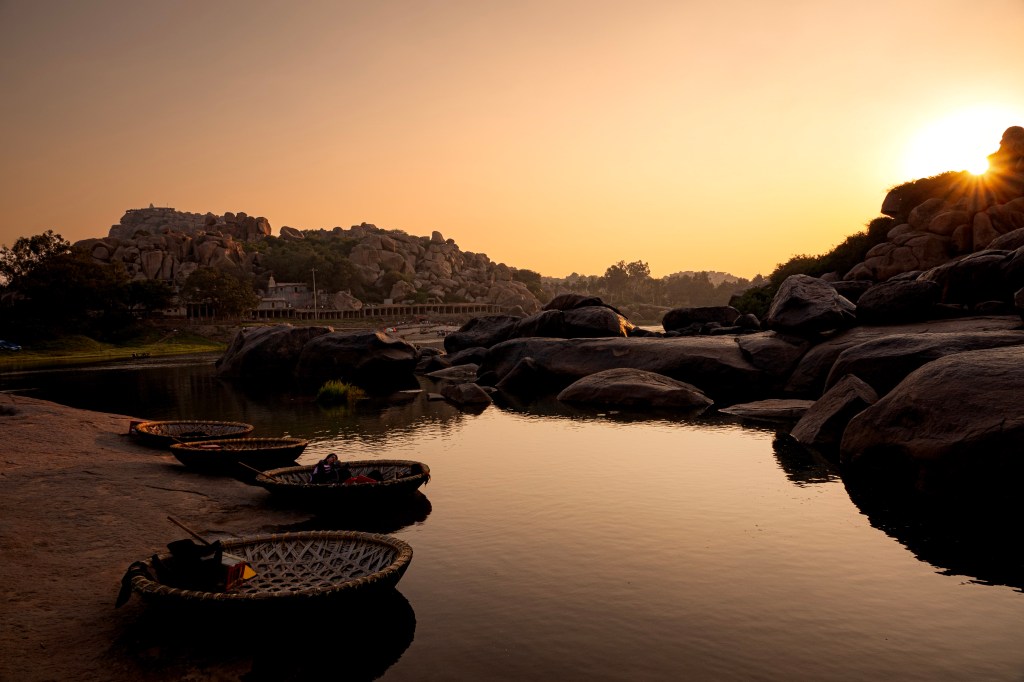
A gentle riverside walk that reveals Hampiโ€™s quieter, more contemplative side. This was our favorite experience, and I would highly recommend doing a coracle ride at sunset

Highlights:

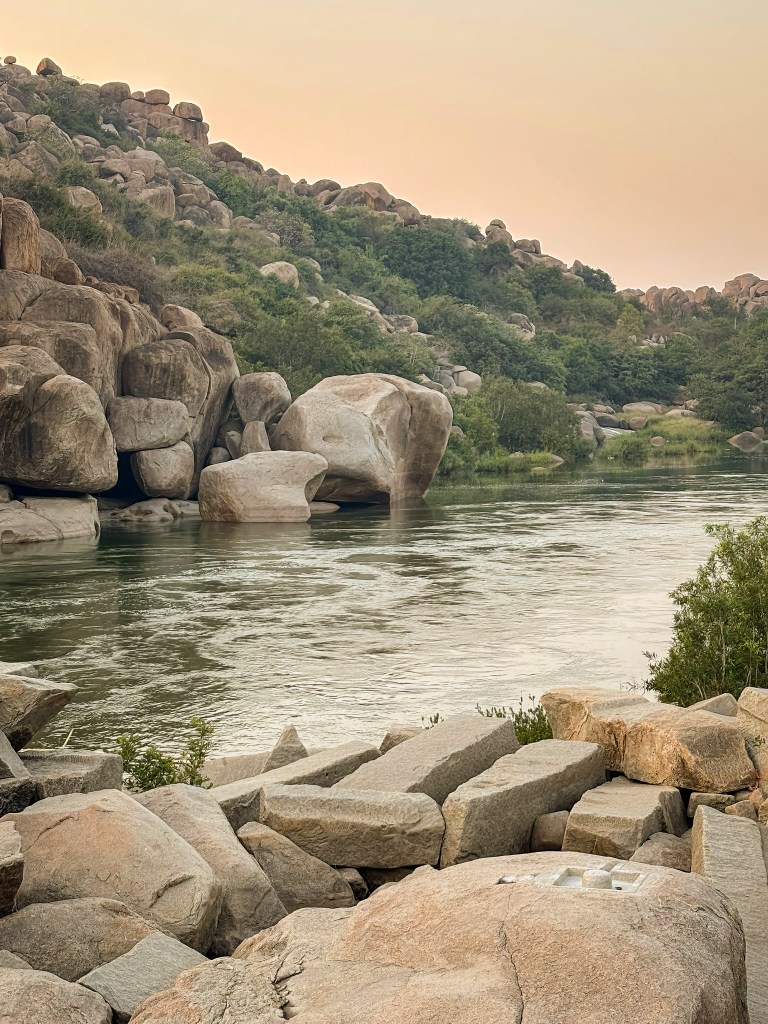
  • Coracle ride at sunset โ€” drifting past boulders glowing gold
  • Kotilinga Temple โ€” a riverside shrine carved directly into rock
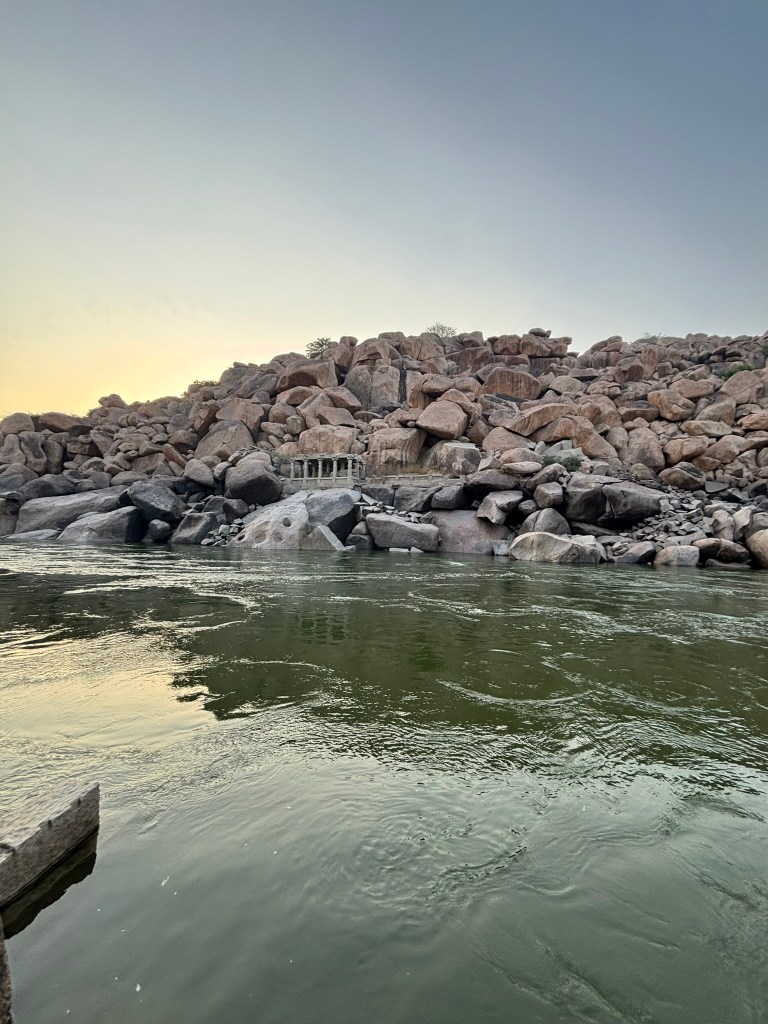
  • Riverside ruins โ€” pavilions, carvings, and ancient steps leading into the water

The river feels almost mythical at dusk โ€” a perfect ending to your first day.

Day 2 โ€” Day Trip to Badami, Pattadakal & Aihole (12 hours)

A full-day excursion into the cradle of Chalukyan architecture. This journey includes rock-cut caves, early temple experiments, and UNESCO-listed masterpieces. We left Hampi at 6AM and were back at the resort by 6PM. A long day, but really worth it. If you can afford a 5 day Itinerary, plan to do this visit on day 4. Stay overnight at Badami and continue the visit on day 5.

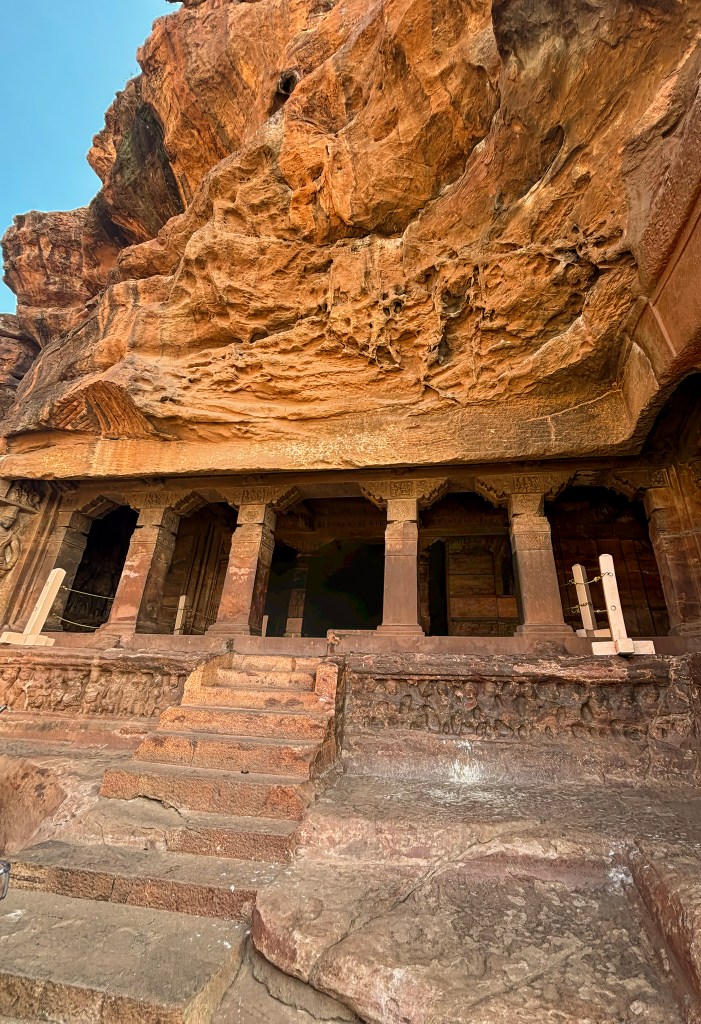
๐Ÿชจ Badami

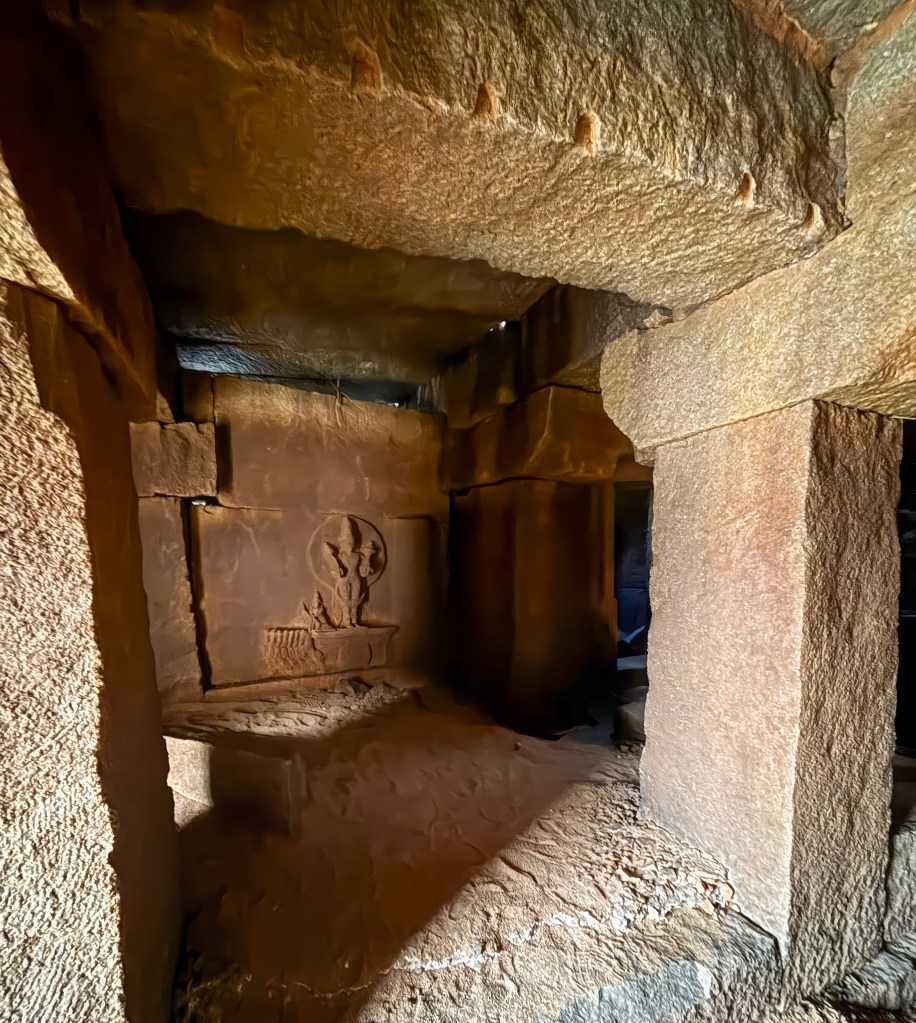
  • Cave temples carved into red sandstone cliffs
  • Sculptures of Vishnu, Shiva, and Jain Tirthankaras
  • Agastya Lake shimmering below the cliffs

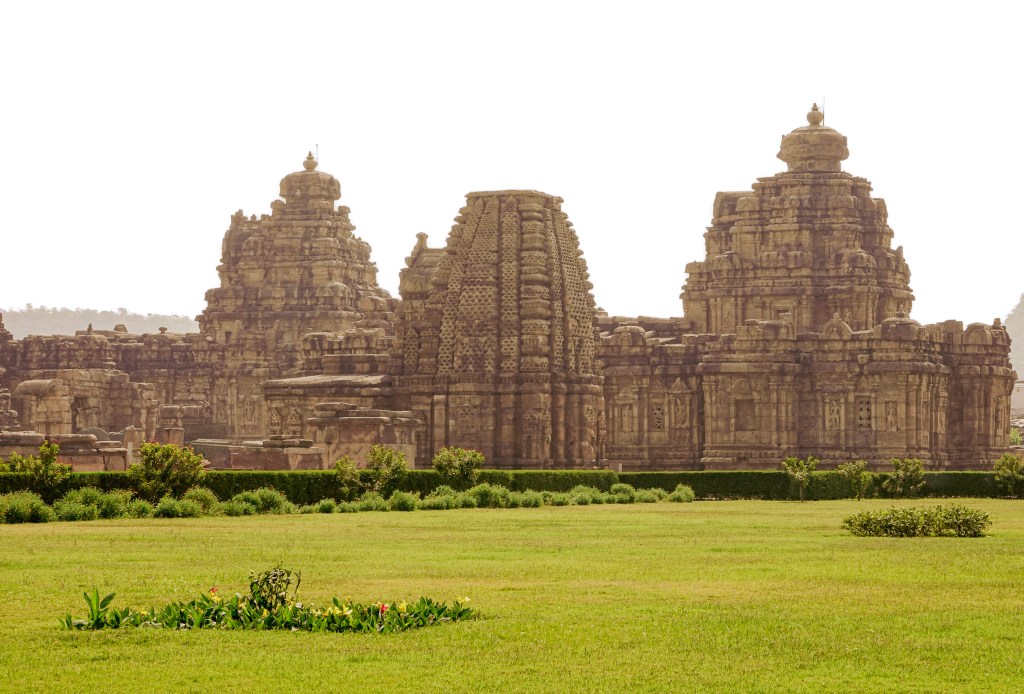
๐Ÿ›• Pattadakal (UNESCO World Heritage Site)

  • A harmonious blend of Dravidian & Nagara styles
  • Virupaksha Temple, Mallikarjuna Temple, and more

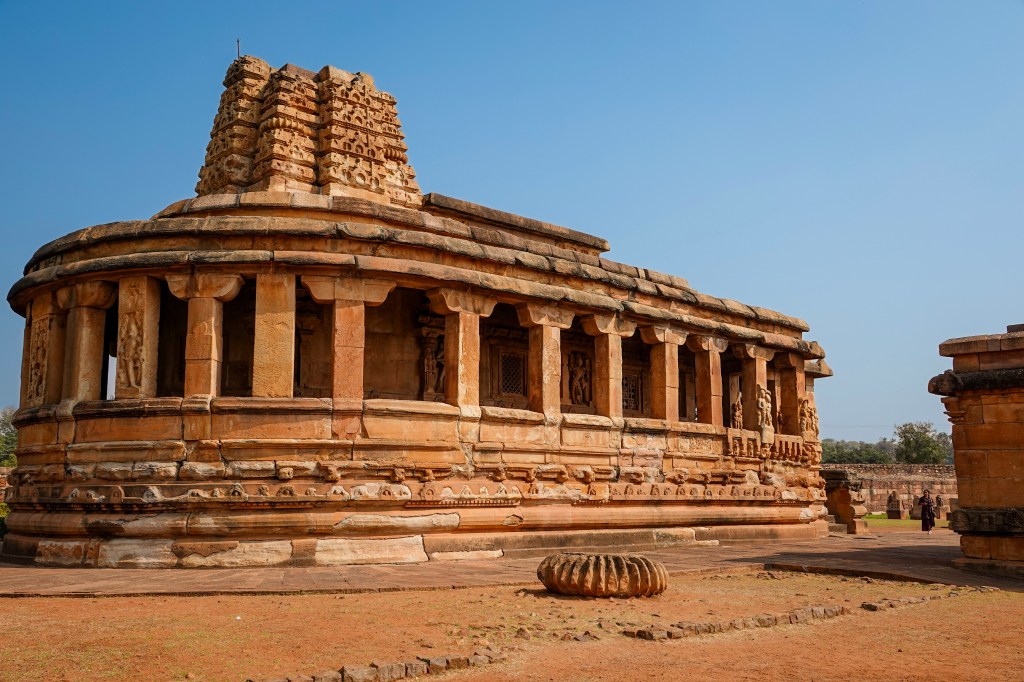
๐Ÿ›๏ธ Aihole

  • Known as the โ€œCradle of Indian Temple Architectureโ€
  • Durga Temple, Lad Khan Temple, and dozens of early experiments in stone

You return to Evolve Back by evening, carrying with you the story of how temple architecture evolved before reaching its zenith in Hampi.

Day 3 โ€” Vittala Trail and Raya Trail(3-4 hours)

๐ŸŒ„ Morning: Vittala Trail

A deep dive into the architectural brilliance of the Vijayanagara Empire.

Stops include:

  • Vittala Temple โ€” the empireโ€™s finest monument
  • Stone Chariot โ€” Hampiโ€™s most iconic structure
  • Musical Pillars โ€” resonant columns carved from single stones
  • Riverside walk โ€” mandapas, carvings, and quiet river views

This trail is a photographerโ€™s dream โ€” long corridors, ornate carvings, and the river shimmering nearby.

๐Ÿฐ Evening: Raya Trail (3-4 hours)

Explore the imperial heart of the Vijayanagara capital.

Stops include:

  • Royal Enclosure โ€” Mahanavami Dibba, Stepped Tank
  • Queenโ€™s Bath โ€” Indoโ€‘Islamic elegance
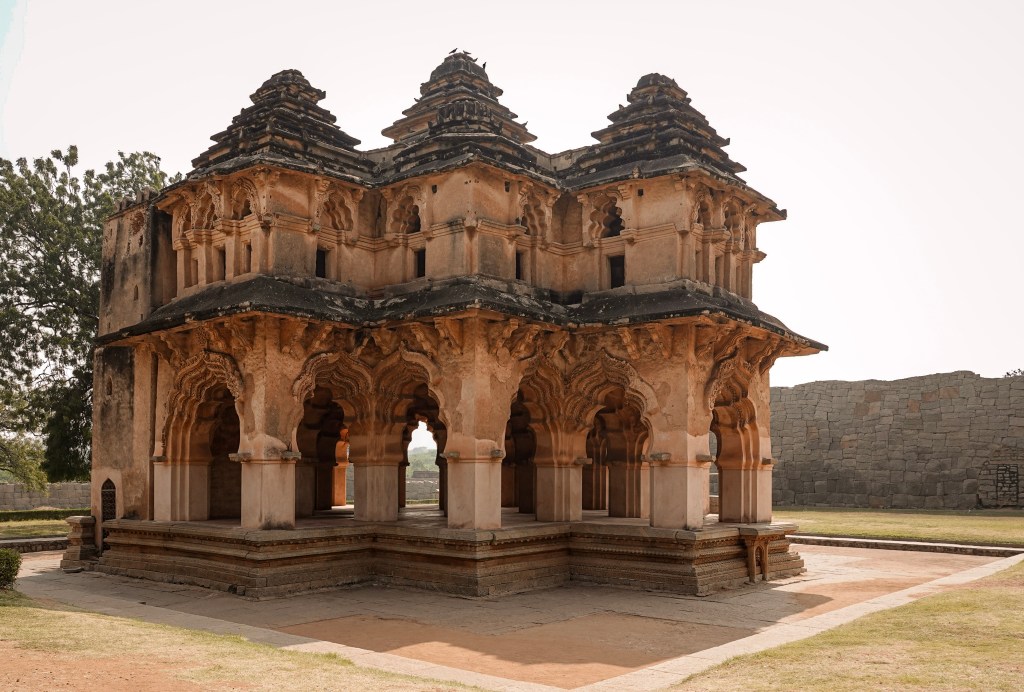
  • Lotus Mahal โ€” delicate arches and domes
  • Hazara Rama Temple โ€” Ramayana carved in stone

This trail reveals the administrative, ceremonial, and residential world of the Vijayanagara royals.

Day 4 โ€” Anjanadri Sunrise, Banana Silk Shopping & Departure

๐ŸŒ… Morning: Sunrise Hike to Anjanadri Hill

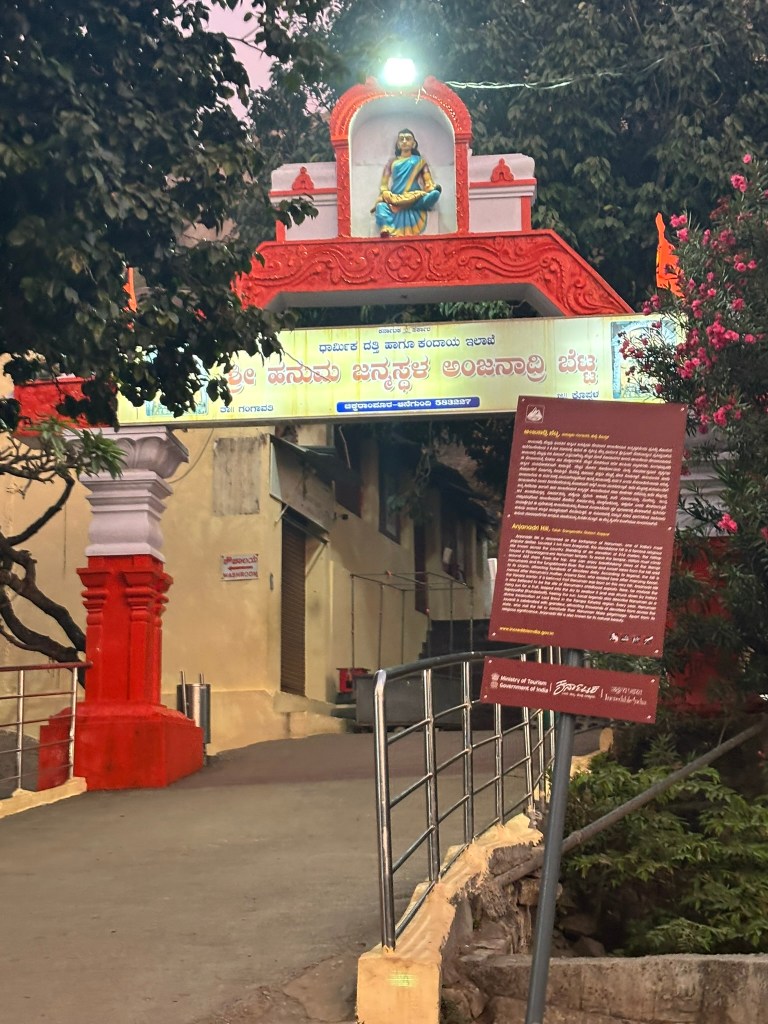
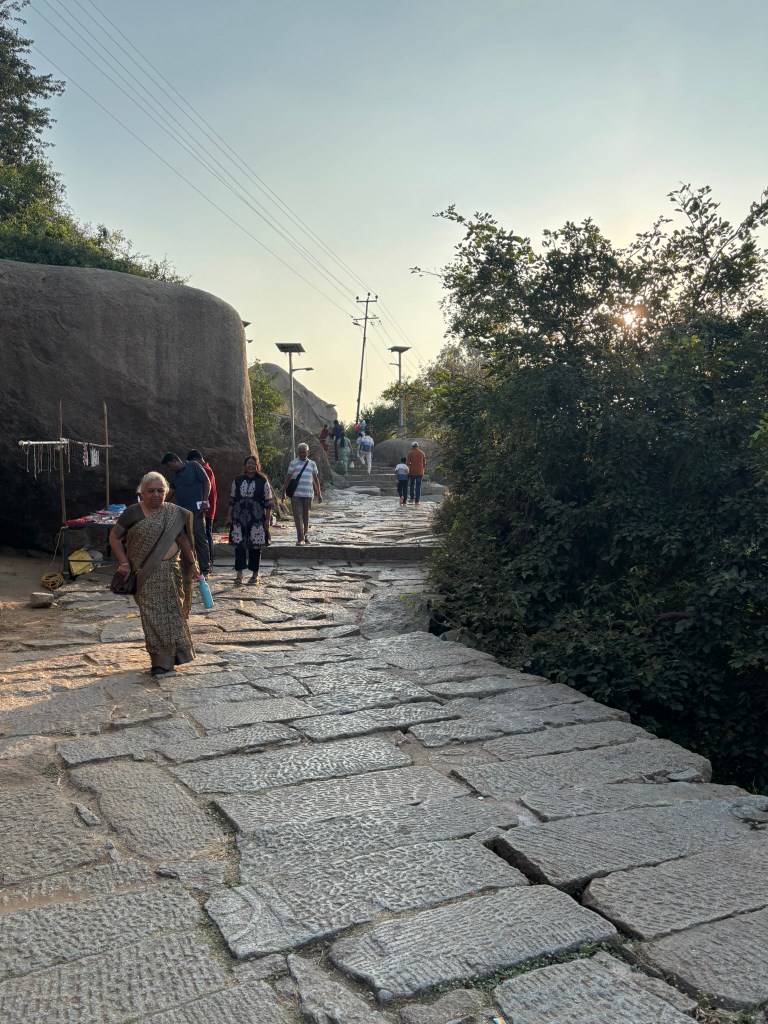
Cross to Anegundi before dawn and climb 570+ steps to the birthplace of Lord Hanuman.

At the summit:

  • A 16thโ€‘century Hanuman temple
  • Shrines to Rama and Sita
  • A breathtaking 360ยฐ view of Hampiโ€™s boulder landscape

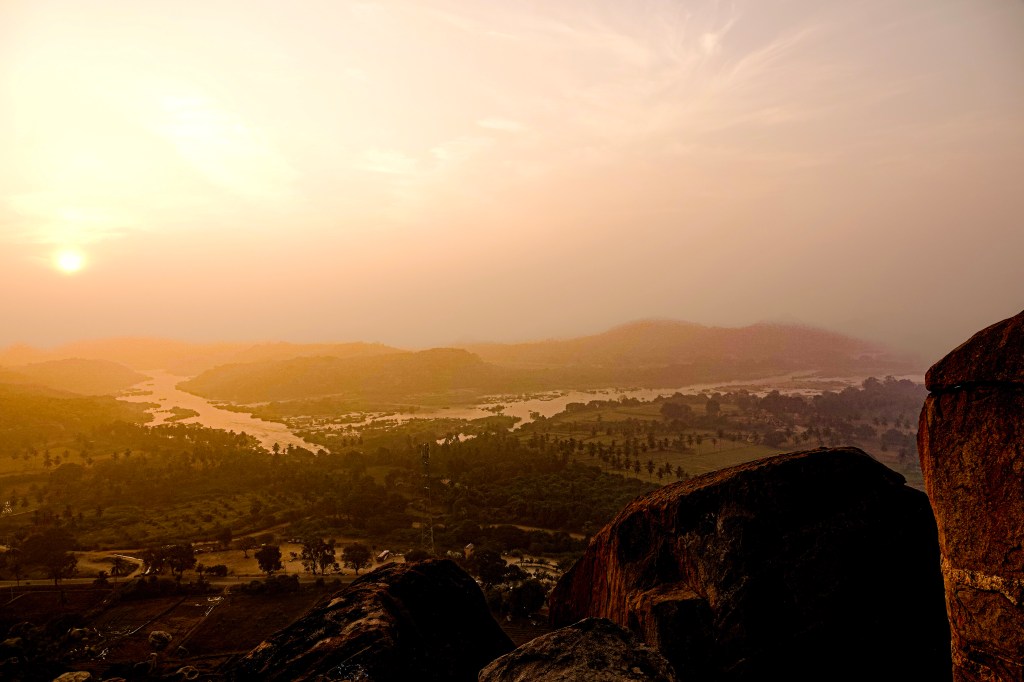
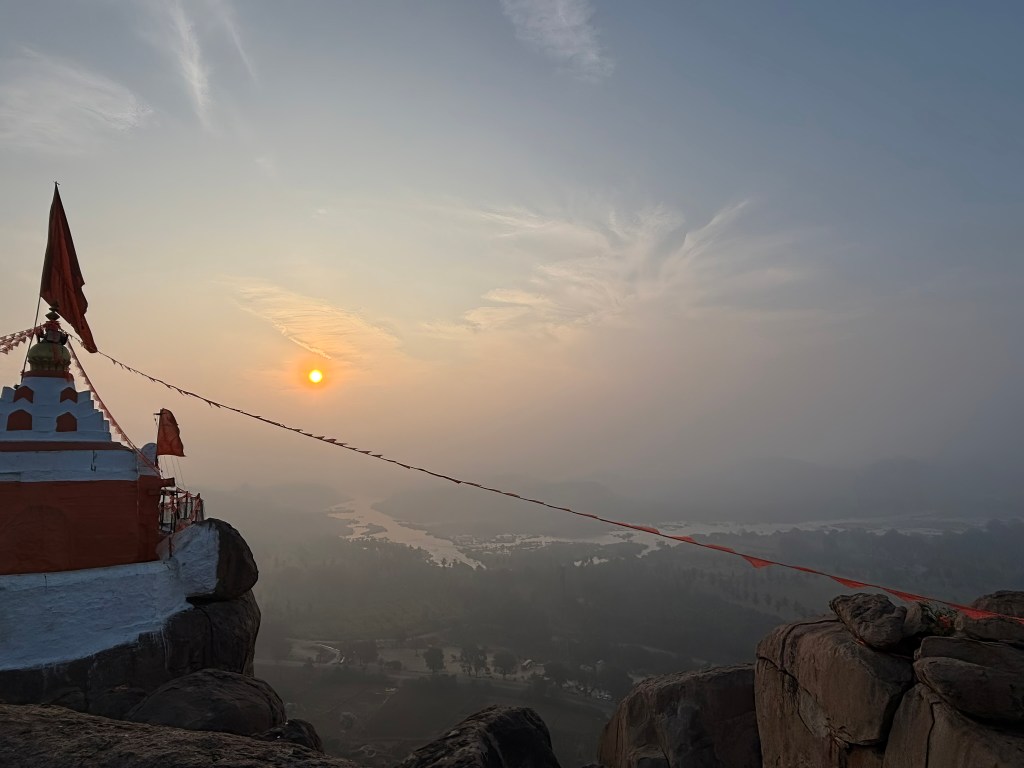
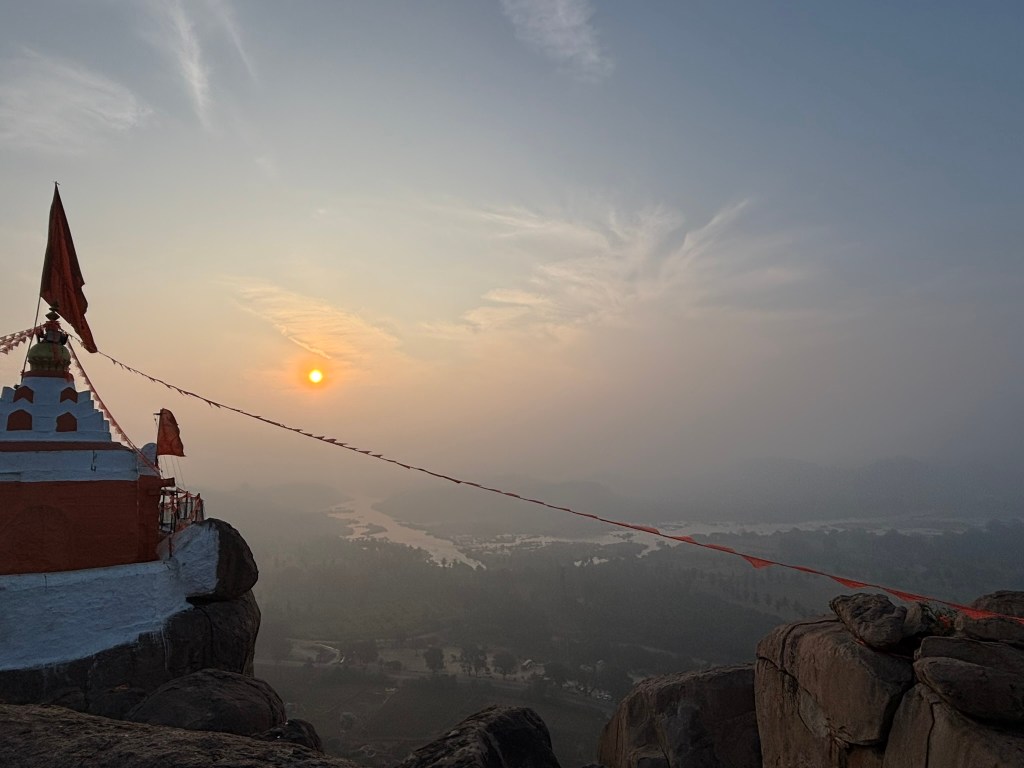
The sunrise here is supposed to be unforgettable. The granite hills turn pink and gold. Below, the Tungabhadra glimmers. We had a foggy morning and did not get to fully appreciate the landscape

๐Ÿงต Late Morning: Banana Silk Saree Shopping in Anegundi

Anegundi is known for its bananaโ€‘fibre weaving tradition, revived by local womenโ€™s collectives.

  • Shop for banana silk sarees, stoles, and handcrafted textiles
  • Meet artisans and learn about the weaving process

๐Ÿš† Afternoon: Departure from Hospet

We took 2.30 PM train back to Bengaluru, carrying with us the stories of empires, epics, rivers, and rocks that shaped Hampi.

Suggested Itinerary:1,2, and 3-day in Hampi

1 day Itinerary- If you just have 1 day to spend in Hampi, this is my suggestion. It will be a long day with an early-morning start. You can hit all the must visit spots, and get an idea of what Hampi has to offer. I believe Hemakuta Hill and Vitalla temple are must-do. Don’t miss Hazara Rama temple either. The Royal enclosure is also essential, as well as the Coracle (Teppa) ride in Hampi.

Start the day at Hema Kuta hill and visit Virupaksha temple. Then visit Vitalla temple. In the afternoon, visit the Royal enclosure and Hazara Rama temple. End the day with a coracle ride at sunset from Chakra Thirtha.

2 day Itinerary- Same places, but much more relaxed, and you linger at various spots

3 Day itinerary – This will give you enough time to enjoy the various spots. You can also add Anegunddi and Anjanadri hill to the mix.

Anjanadri Hill & Anegundi: A Journey Through Myth, Memory, and Timeless Landscapes

Visiting Anjanadri Hill and the ancient village of Anegundi is like stepping into a living epic. The Ramayana breathes through the hills. The Vijayanagara Empire whispers through fort walls. The Tungabhadra River carries centuries of stories in its gentle curves. We visited Anjanadri Hill for sunrise. It was a foggy morning, and visibility wasn’t that great. Still, we enjoyed the hike and visiting the temple.

  1. Anjanadri Hill: Birthplace of Lord Hanuman
    1. The Climb
    2. The Temple at the Peak
    3. The View
  2. Anegundi: The Ancient Heart of Kishkindha
  3. A Legacy Older Than Empires
  4. Gagan Mahal: Where the Royals Took Refuge
  5. A Geological Wonder: One of the Oldest Plateaus on Earth
    1. Prehistoric Traces
  6. Pampa Sarovara: A Sacred Lake of the Ramayana

Anjanadri Hill: Birthplace of Lord Hanuman

Rising above the boulder-strewn plains of Anegundi, Anjanadri Hill is one of the most sacred sites in the Ramayana trail. The hill is believed to be the birthplace of Lord Hanuman. It is named after his mother, Anjana, and has been a pilgrimage site for centuries.

The Climb

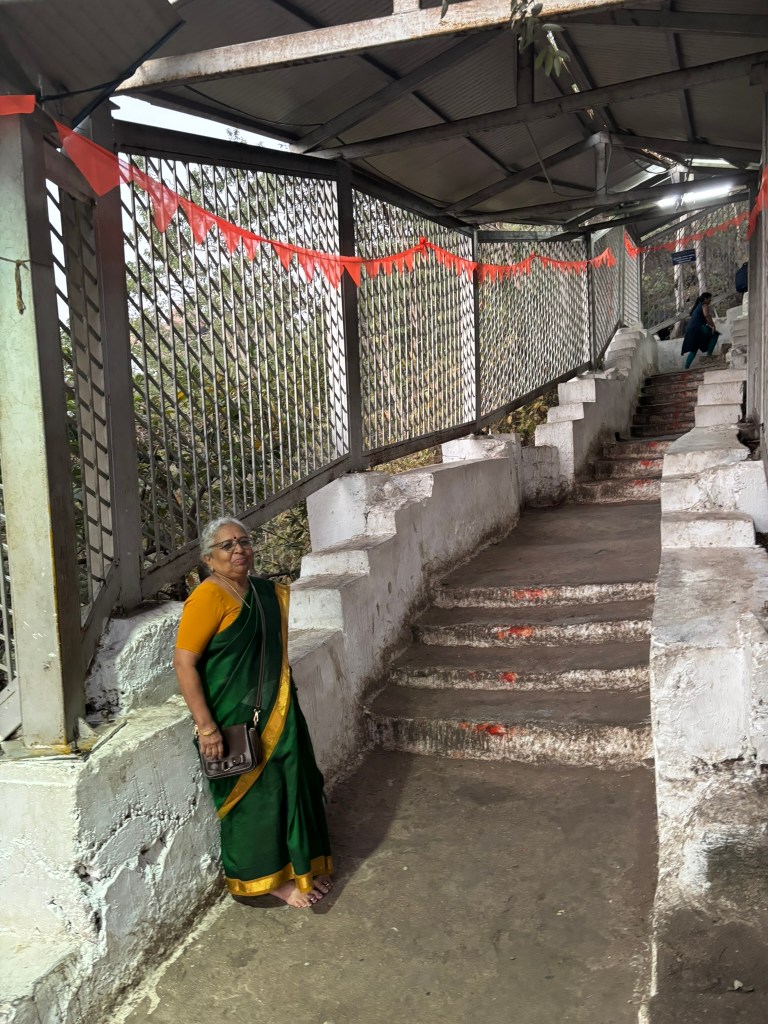
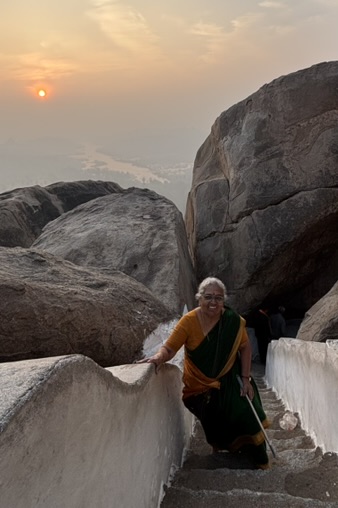
Reaching the summit means ascending 570+ steep steps, but the journey is part of the experience. As you climb, the world opens up around you. You see paddy fields glowing in the sun. Coconut groves sway in the breeze. The Tungabhadra River shimmers like a silver ribbon. Pilgrims chant Hanumanโ€™s name, bells ring softly in the wind, and the granite landscape glows in warm hues.

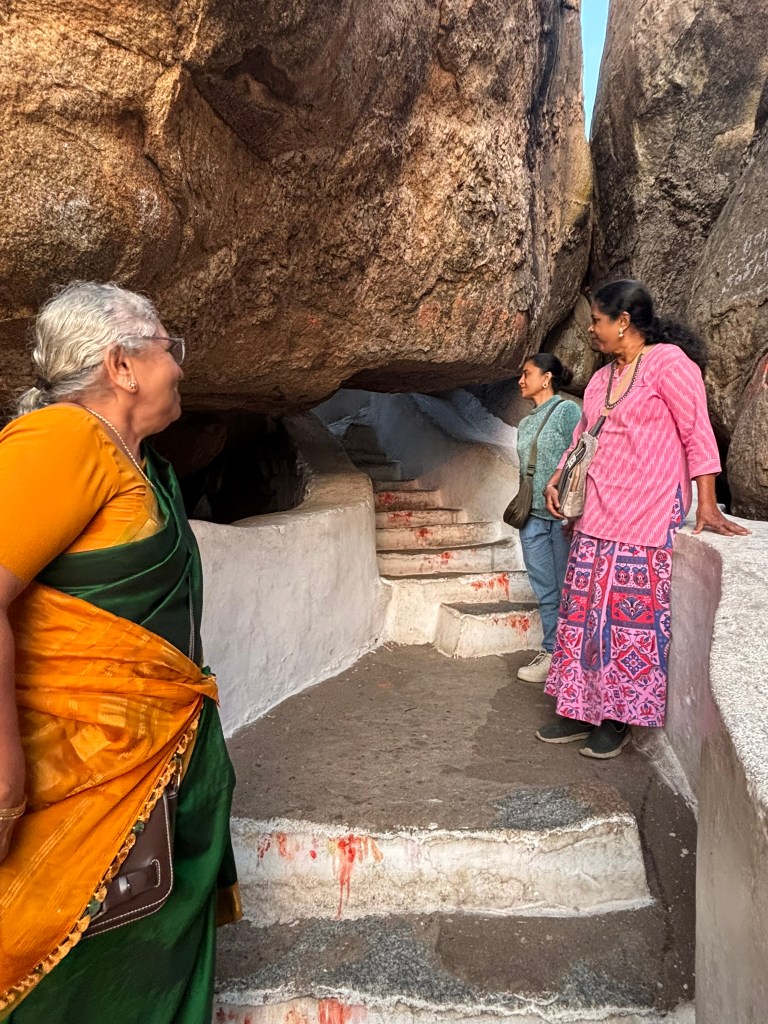
Halfway through, you need to bend to go under the boulders

The Temple at the Peak

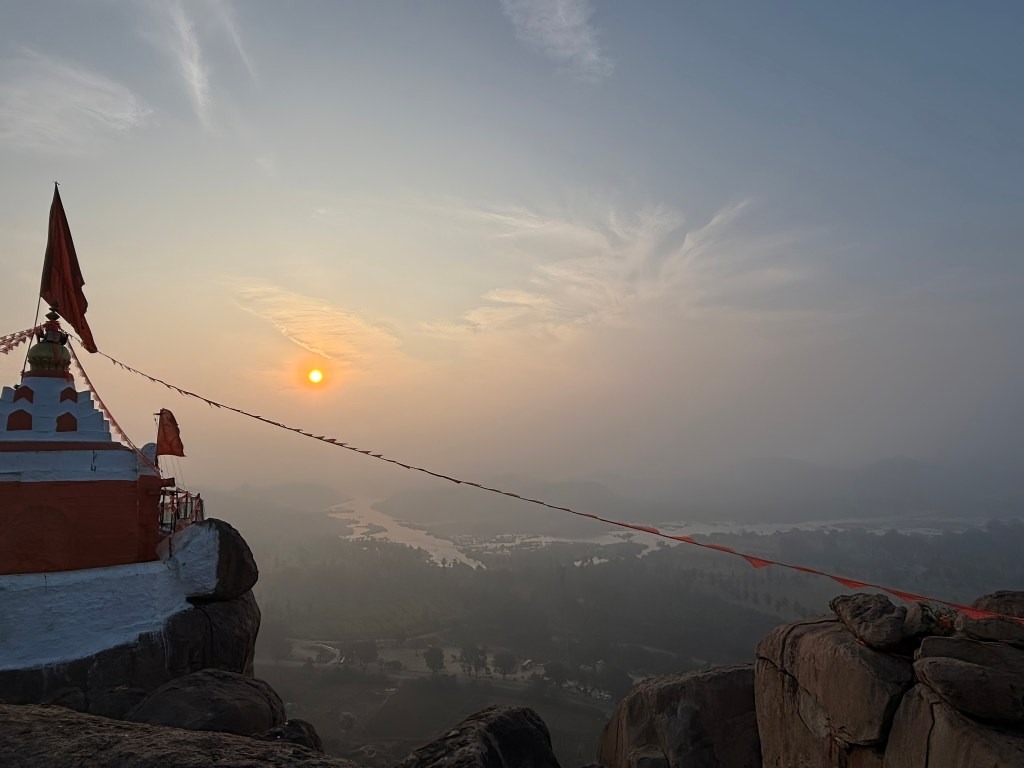
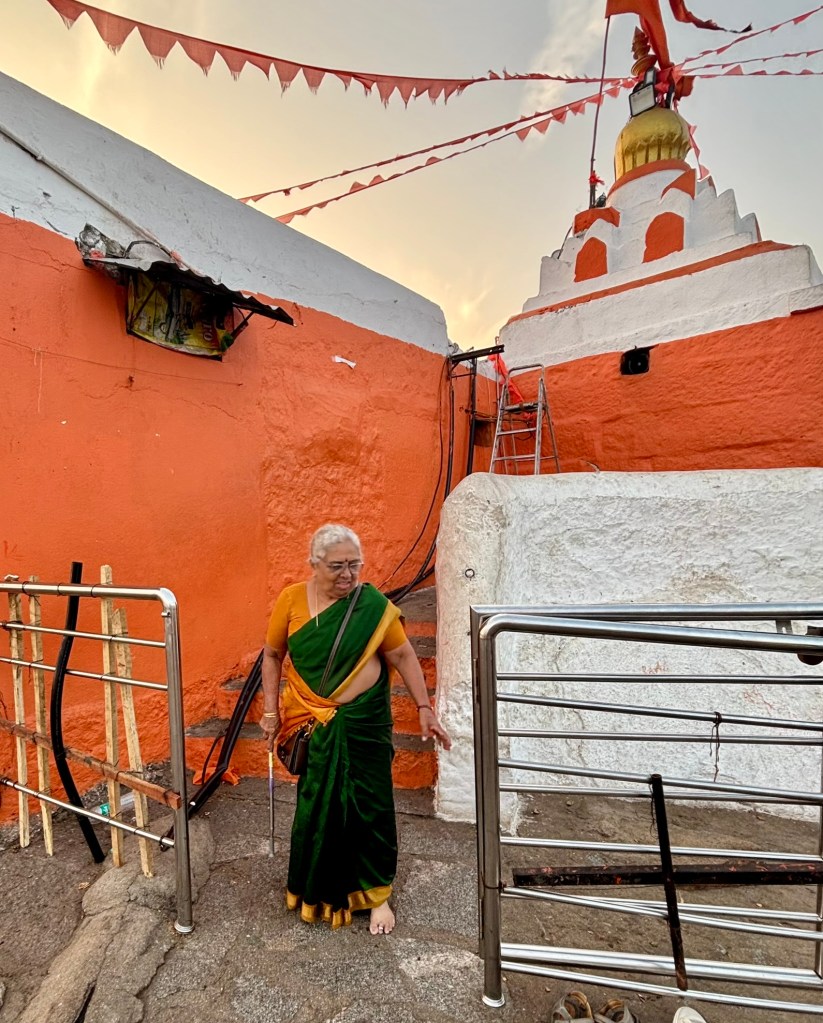
At the top stands a 16th-century white-washed temple, simple yet powerful in its presence.

  • A rock-carved idol of Hanuman forms the sanctum.
  • Shrines dedicated to Rama and Sita stand nearby.
  • Saffron flags flutter against the sky, adding to the spiritual energy of the place.

The View

From the summit, you get a 360-degree panorama of Hampiโ€™s ruins. You can also see banana plantations and the surreal boulder hills that define this UNESCO World Heritage Site. Sunrise and sunset here are unforgettableโ€”moments when the land feels suspended between myth and reality. Unfortunately, the day we went up the hill, it was very foggy to truly appreciate the scene before us.

Anegundi: The Ancient Heart of Kishkindha

Across the river from Hampi lies Anegundi. It is a village older than Hampi. Anegundi is believed to be the cradle of Kishkindha, the monkey kingdom of Vali and Sugriva. This is where mythology, geology, and royal history converge in a landscape that feels untouched by time.

A Legacy Older Than Empires

Anegundiโ€™s history stretches back to the 3rd century BCE, when it was part of the Ashoka Empire. Over the centuries, it saw the rise of the Satavahanas, Kadambas, Chalukyas, Rashtrakutas, and other royal dynasties that ruled Hampi and the surrounding area . By the 10th century, it became a fortified settlement. Later, it served as the mother city of the Vijayanagara Empire.

Even today, the 19th generation of Krishnadevarayaโ€™s descendants lives here, keeping the royal lineage alive.

We didn’t have time to explore Anegundi, but if you do, the following places are worth visiting.

Gagan Mahal: Where the Royals Took Refuge

In the heart of Anegundi stands Gagan Mahal, the 16th-century palace that once housed the royal family during turbulent times. Painted in a warm yellow-ochre hue, the palace blends Indo-Islamic architecture with vernacular charm.

  • Four slender towers rise above its faรงade.
  • Arched windows and carved balconies overlook the village.
  • A central pool and ancient drainage system reveal ingenious cooling techniques.

Walking through its halls, you can almost hear the echoes of queens, ministers, and royal children who once lived here.

A Geological Wonder: One of the Oldest Plateaus on Earth

Anegundi sits on a plateau believed to be over four billion years old, making it one of the oldest exposed geological formations on Earth. Its landscapeโ€”endless boulders, wind-sculpted hills, and ancient rock sheltersโ€”feels primordial.

Prehistoric Traces

  • Maurya Mane reveals early settlement patterns.
  • Onake Kindi showcases prehistoric rock paintings and engravings.

These sites add archaeological depth to a region already rich in myth and history.

Vernacular Architecture That Still Breathes

A walk through Anegundiโ€™s narrow lanes is a walk through living heritage.

  • Homes have two-foot-thick stone walls that keep interiors cool.
  • Carved wooden doors show motifs passed down through generations.
  • Skylights, pillared verandahs, and flat terraces show a design language shaped by climate and craft.

This is architecture that isnโ€™t preserved in museumsโ€”it is lived in, cherished, and passed on.

Anegundi Fort: Echoes of a Warrior Past

Within the ancient fort walls lie the Durga Temple and the Ganesha Cave Temple, both steeped in centuries of worship. Local lore says Vijayanagara kings sought blessings here before going to war.

Walking through the fortโ€™s gateways, you feel the weight of historyโ€”soldiers marching, priests chanting, kings preparing for battle.

Pampa Sarovara: A Sacred Lake of the Ramayana

One of Anegundiโ€™s most sacred sites is Pampa Sarovara, one of the five holy lakes in Hindu tradition. This is believed to be where Shabari met Lord Rama, offering him berries with pure devotion.

The lake, surrounded by hills and shrines, feels serene and timelessโ€”a place where mythology feels close enough to touch.

The Revival of Anegundi

Anegundi is not just a relic of the pastโ€”it is a thriving example of sustainable rural tourism.

  • Organic farming initiatives
  • Performing arts education
  • Revival of banana-fibre crafts
  • Adventure activities around Sanapur Lake

Much of this transformation is led by The Kishkinda Trust, which has helped preserve Anegundiโ€™s heritage while empowering local communities.

As the sun sets over the ancient plateau, Anegundi glows in shades of gold. Its temples, boulders, and riverbanks illuminate like a living chronicle of Indiaโ€™s past.
Hazara Rama Temple: The Storybook Heart of Hampiโ€™s Royal Centre

A few metres south of the Zenana Enclosure, along an unpaved stretch of road that still carries the quiet hum of history, stands one of the most extraordinary monuments in the Royal Centreโ€”the Hazara Rama Temple, or the โ€œTemple of a Thousand Ramas.โ€ Though modest in scale compared to Hampiโ€™s grander shrines, this temple was the royal chapel of the Vijayanagara kings, a sacred space where mythology, statecraft, and devotion intertwined.

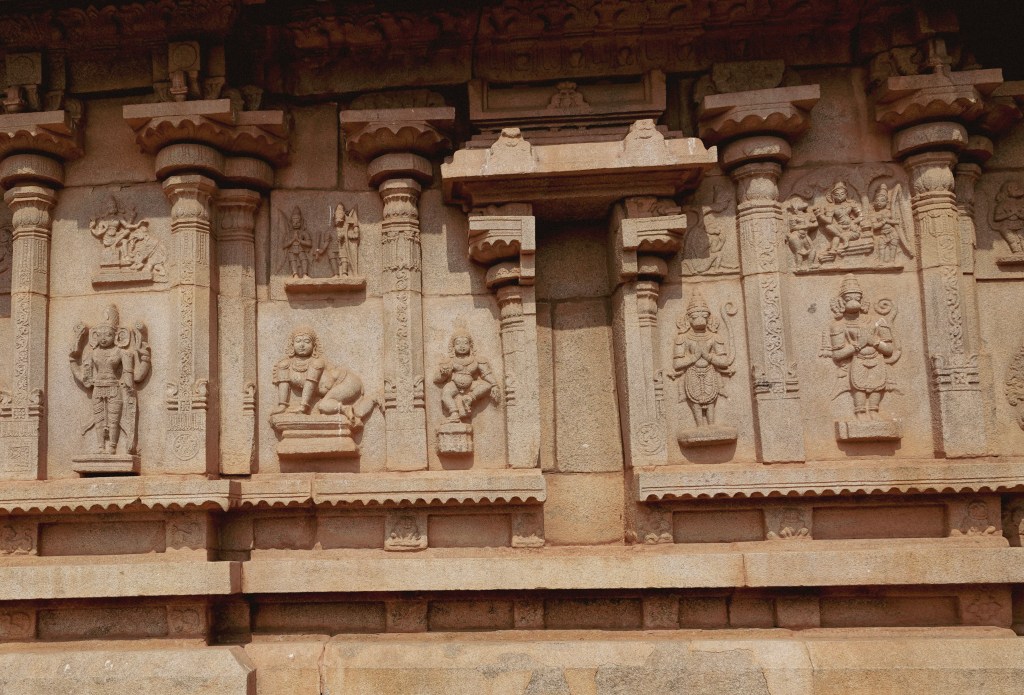
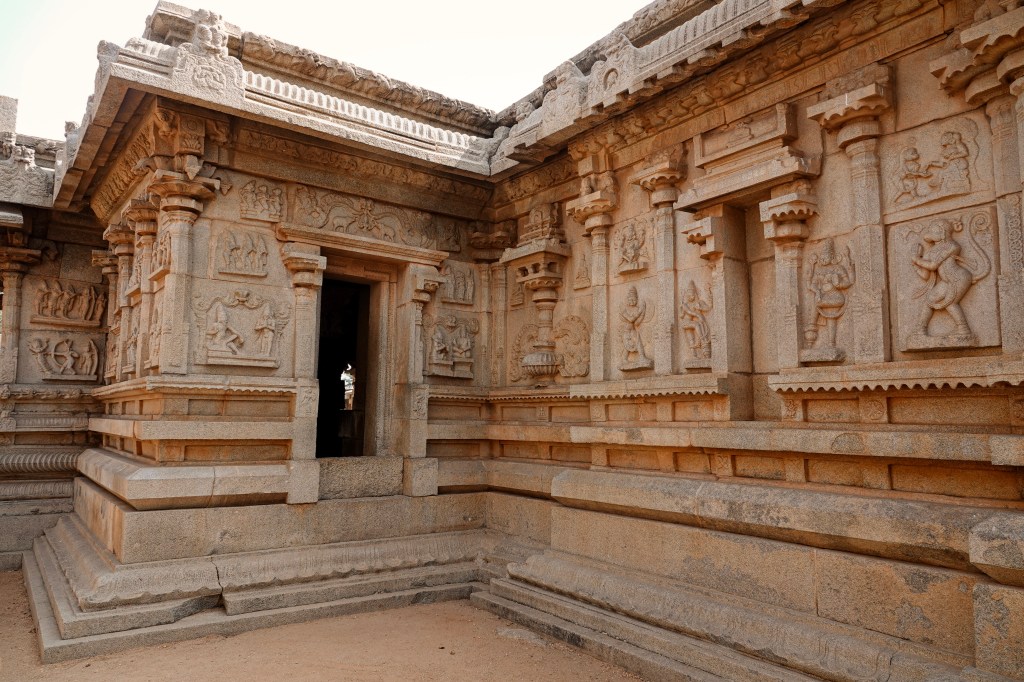
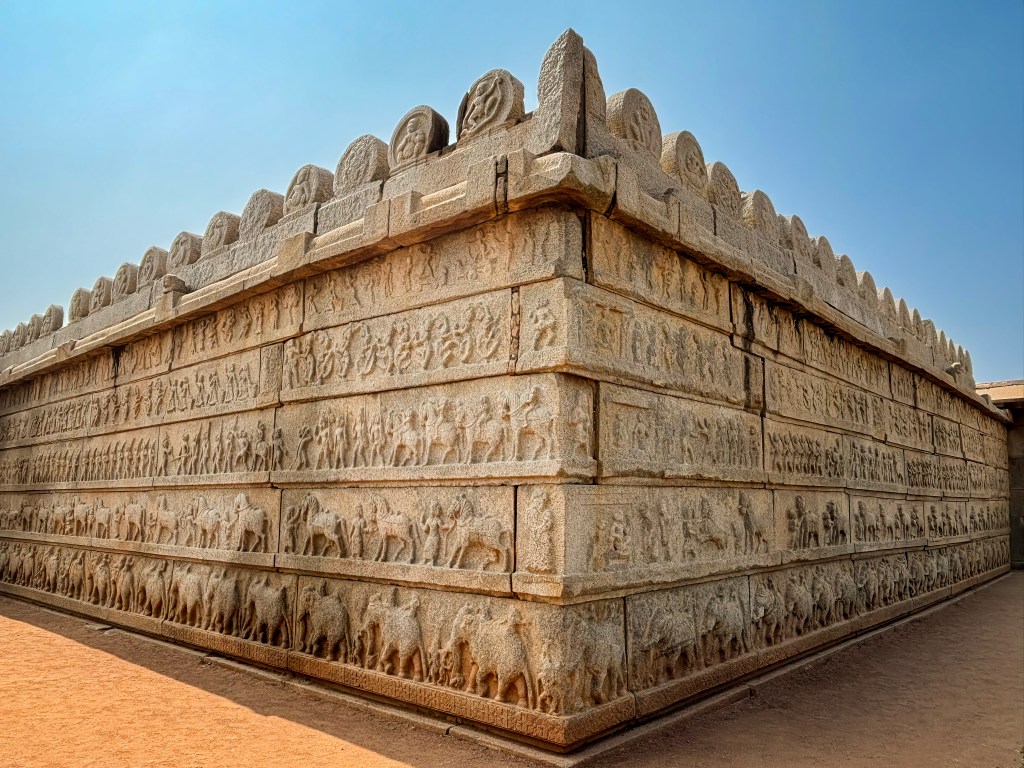
Consecrated in the early 15th century by Devaraya I, the temple is a masterpiece of narrative sculpture. Its outer compound walls are wrapped in long, continuous friezesโ€”almost like ancient graphic novelsโ€”depicting royal processions, military regiments, elephants, horses led by Muslim attendants, dancers, musicians, and scenes from the exuberant Vasantotsava festival. Each figure is carved with such individuality that no two animals or soldiers look alike. These processions all move toward seated kings, mirroring the descriptions of the Mahanavami festival found in contemporary chronicles. Standing before these walls, you feel as though youโ€™re watching the empire come alive in stone.

Entering through the eastern gatewayโ€”simple, pavilion-like, and towerlessโ€”youโ€™re greeted by fierce carvings of Bhairava and Mahishasuramardini on the columns. To your right, the inner walls continue the storytelling with beautifully preserved Ramayana panels, arranged to be read from left to right and bottom to top. Itโ€™s rare to find such a clear, intentional narrative sequence in temple art, and it makes the Hazara Rama Temple feel almost like a sacred library.

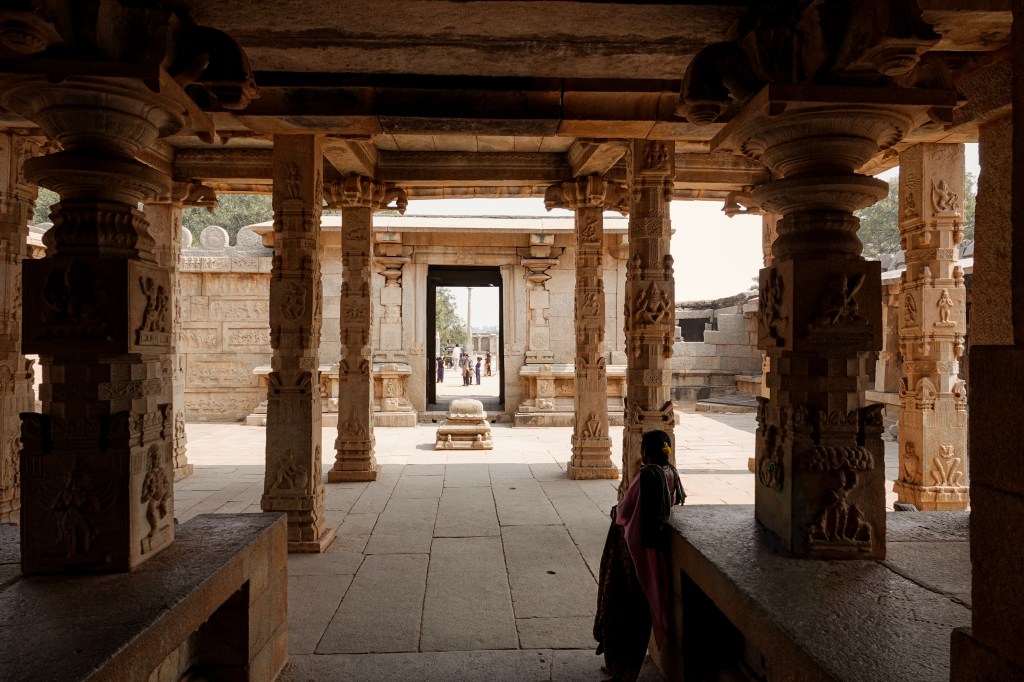
At the heart of the complex stands the main shrine, approached through a 16thโ€‘century open mandapa whose brick parapet once shimmered with plaster sculptures of gods and royal patrons. The original closed mandapa behind it features squat pillars topped with double capitalsโ€”classic Vijayanagara design. A Sanskrit inscription near the doorway proclaims that Devaraya I was protected by Goddess Pampa, linking the kingโ€™s authority to the sacred landscape of Hampi.

The mandapa walls are the true highlight: 108 Ramayana scenes carved in three tiers, unfolding clockwise around the hall. The story begins with Valmiki narrating the epic and Dasharathaโ€™s fire sacrifice, and ends with Ramaโ€™s coronation at Ayodhya. Key moments are placed at corners and doorwaysโ€”Ravana transforming from a mendicant into a tenโ€‘headed demon, Hanuman leaping across the ocean, and Sita offering her hairโ€‘jewel to Hanuman. These carvings are intimate, expressive, and astonishingly detailed, making the temple one of the finest Ramayana storytelling sites in India.

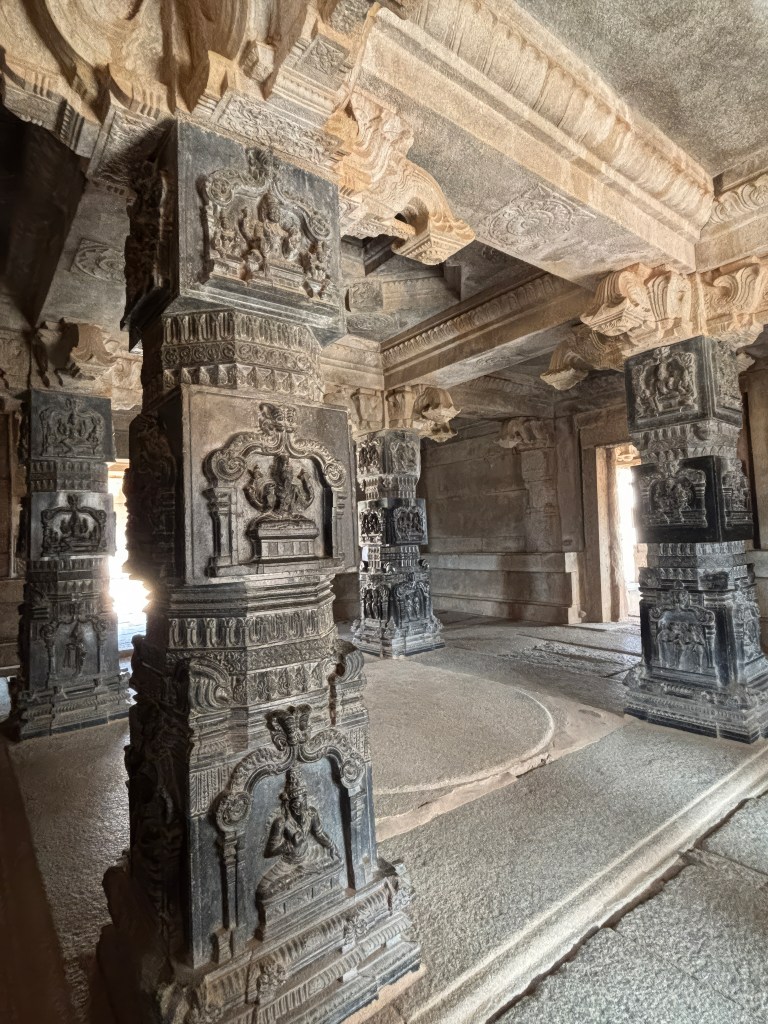
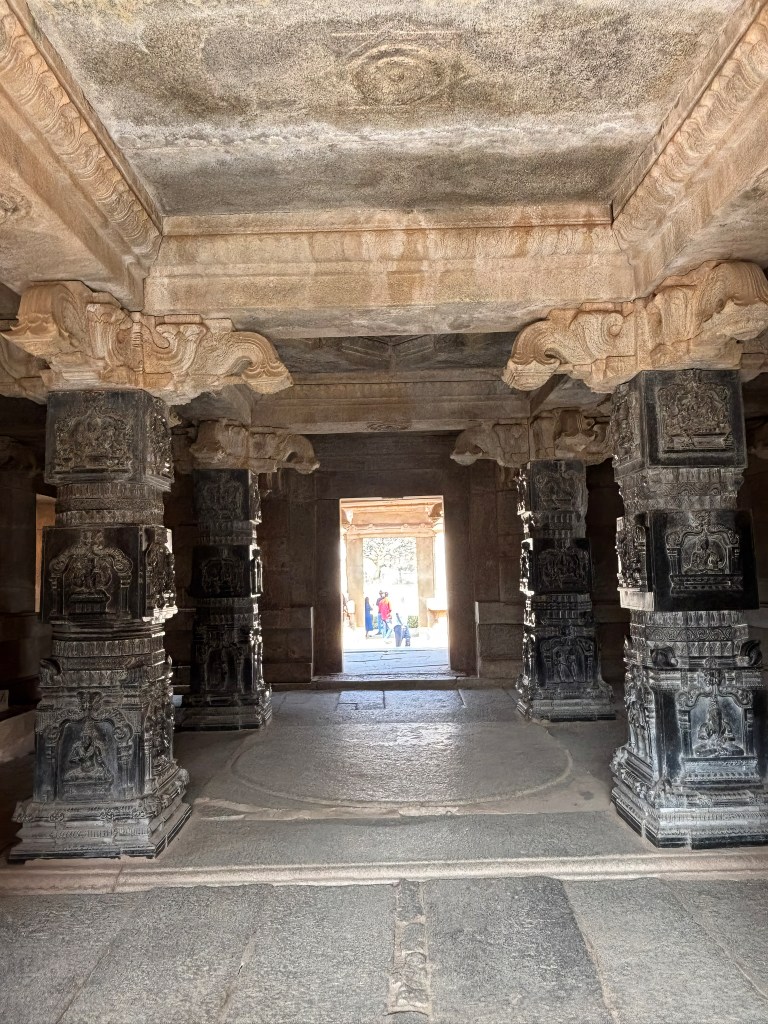
Inside, the mandapa is more restrained, but four polished dolerite columns stand like sentinels, each covered with intricate carvings of the 24 aspects of Vishnu. The sanctuary itself is empty now, save for a pedestal with three holesโ€”once anchoring the images of Rama, Lakshmana, and Sita that have long since disappeared.

Within the compound is a second, smaller temple with twin sanctuaries, likely dedicated to Narasimha and Lakshmi. Its brick towers, with kuta and shala roofs, are better preserved than the main shrineโ€™s, and its walls carry additional Ramayana and Narasimha reliefs. A 16thโ€‘century mandapa and hall were later added, partially obscuring some of the original carvings.

What makes the Hazara Rama Temple even more remarkable is its alignment with the surrounding sacred landscape. Stand in the center of the mandapa and look northโ€”youโ€™ll see Matanga Hill, a site tied to the Ramayana. Look east, and Malyavanta Hill frames the doorway, another hill steeped in epic lore. These alignments were intentional, reinforcing the templeโ€™s role as the symbolic and spiritual axis of the royal city.

Visiting the Hazara Rama Temple is like stepping into a living manuscriptโ€”one where stone becomes storytelling, mythology becomes memory, and the royal past of Vijayanagara unfolds in scenes so vivid they seem ready to move.

Hampi royal quatres Exploring the Royal Heart of Hampi: Zenana Enclosure, Queenโ€™s Bath, Lotus Mahal, Elephant Stables & Mahanavami Dibba

Walking into the Royal Centre of Hampi feels like stepping into the private world of the Vijayanagara kingsโ€”a world of power, ceremony, elegance, and architectural experimentation. While the temples of Hampi speak of devotion, the royal centre reveals how the empire lived, governed, celebrated, and showcased its grandeur. The Zenana Enclosure, often misunderstood as the womenโ€™s quarters, is the perfect starting point for this journey.

  1. Queenโ€™s Bath: A Royal Spa in Ruins
  2. Zenana Enclosure: A Royal Retreat, Not a Womenโ€™s Quarters
  3. Lotus Mahal: The Jewel of the Enclosure
  4. Watchtowers & Hidden Corners
  5. Elephant Stables: Grandeur for the Empireโ€™s Gentle Giants
  6. The Parade Ground & Martial Court
  7. Mahanavami Dibba: The Empireโ€™s Grand Stage
  8. The Stepped Tank: Geometry, Grace, and the Genius of Vijayanagara Engineering
  9. A Walk Through Power, Beauty & Imagination

Queenโ€™s Bath: A Royal Spa in Ruins

We started our day’s trip at Queen’s Bath and continued to the royal enclosure and lotus mahal area and ended our journey at Hazara Rama temple (which will be covered in a separate blog). If you’re short on time, then I would suggest visiting Queen’s Bath, Lotus Mahal, and Stepwell from this area.

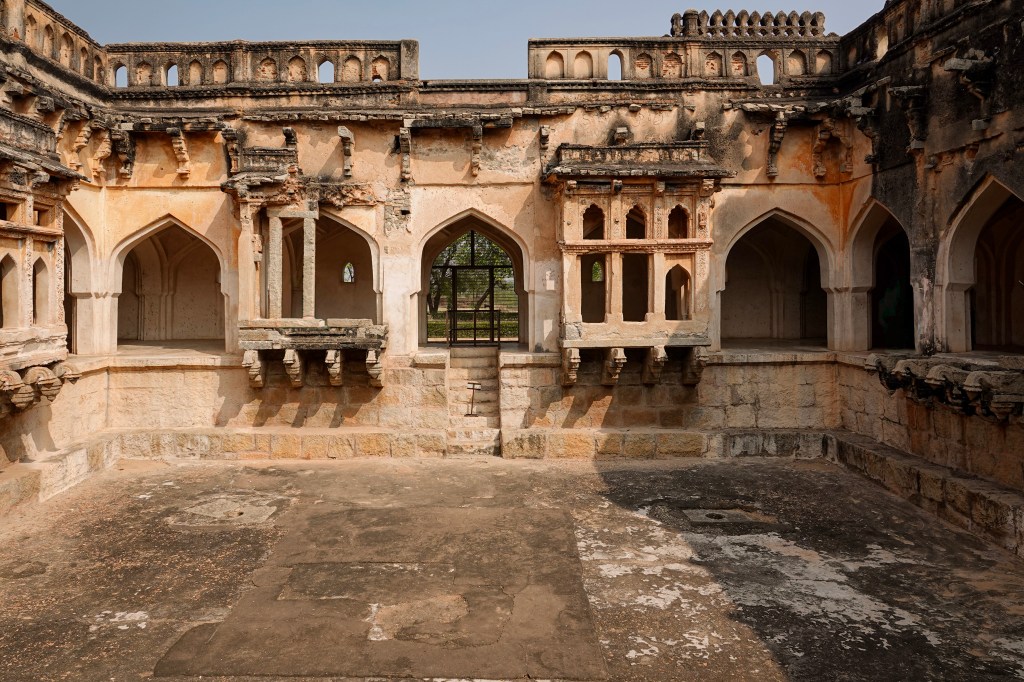
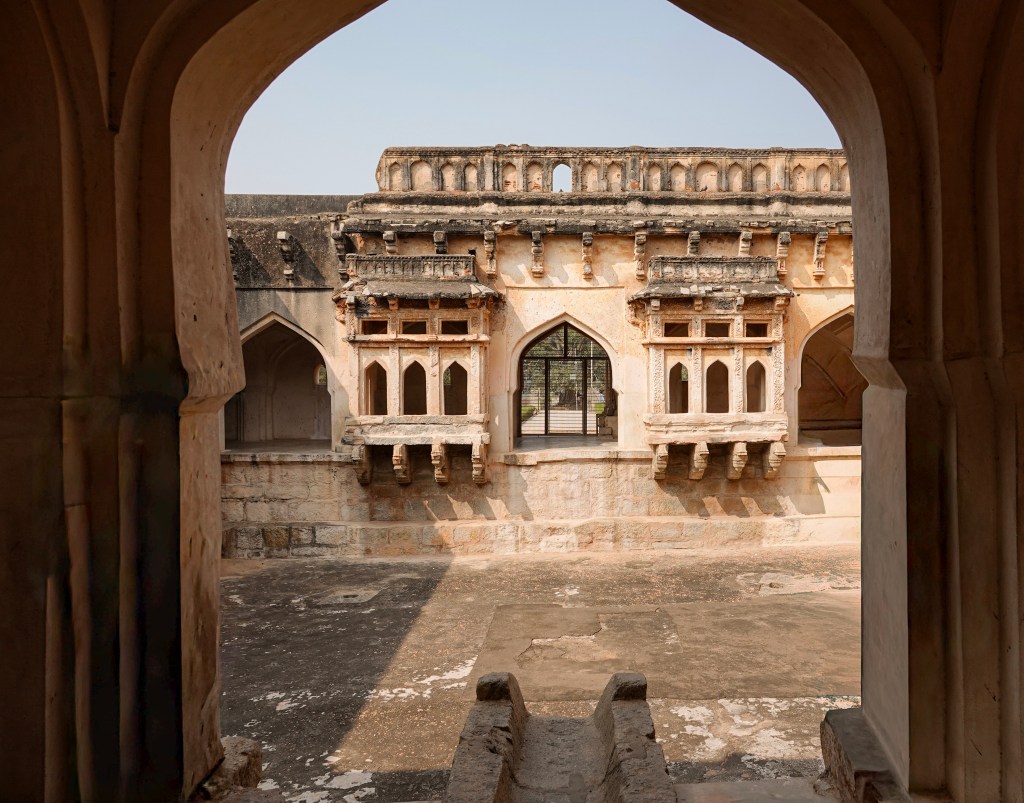
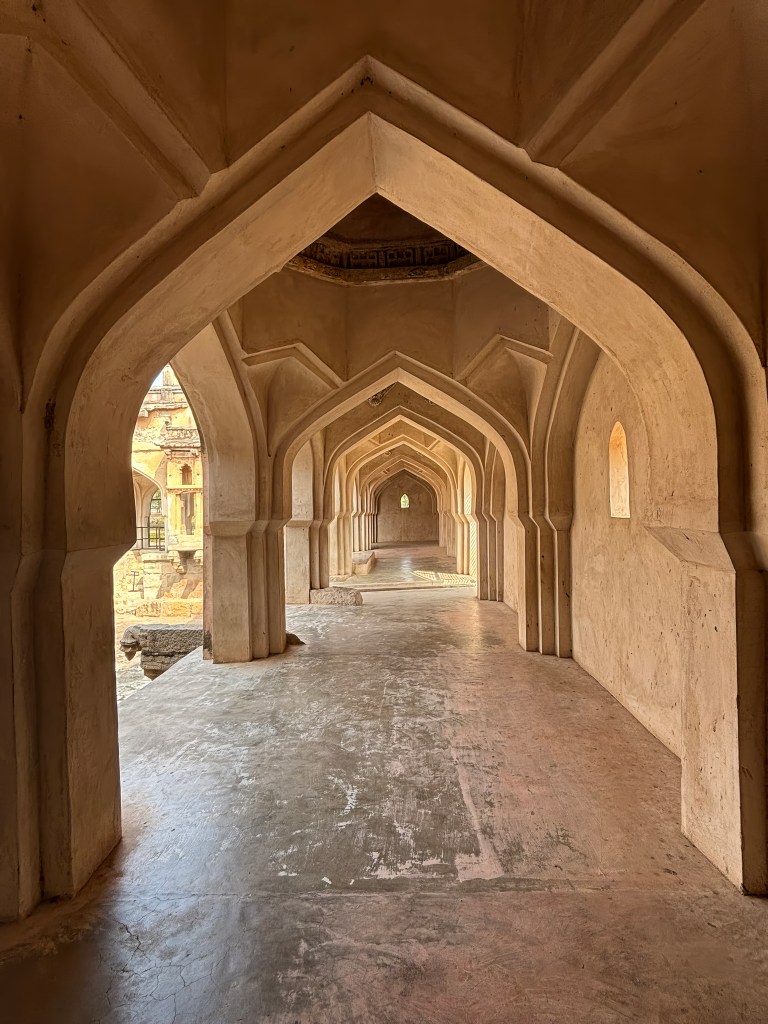
Despite its romantic name, the Queenโ€™s Bath was likely never an exclusive bathing space for royal women. Instead, it functioned as a refined pleasure pavilion for male courtiers and their companionsโ€”a social and recreational space rather than a secluded retreat. From the outside, the structure appears almost austere, with plain, unadorned walls that give little hint of the elegance within. Step inside, however, and the atmosphere transforms. A graceful arcaded corridor wraps around a large square pool, its ceilings decorated with ornate vaults of varying designs. Delicate balconies with arched windows once projected over the water, their plasterwork now lost to time but still easy to imagine in their original finery. Historical watercolours show that the bath once had towers rising above the roofline, adding to its architectural drama. Surrounding the pavilion is a water channel that once fed the pool, and not far away lie the remnants of a collapsed aqueductโ€”part of the sophisticated hydraulic system that supplied the entire royal centre. Even in its ruined state, the Queenโ€™s Bath captures the leisurely grace of courtly life and the Vijayanagara empireโ€™s mastery of water architecture

Zenana Enclosure: A Royal Retreat, Not a Womenโ€™s Quarters

Despite its name, the Zenana Enclosure was unlikely to have housed royal women. Its proximity to the elephant stables and the parade grounds suggests a more administrative or ceremonial functionโ€”perhaps used by commanders or the king himself. The enclosure is a large, highโ€‘walled quadrangle built with beautifully jointed granite blocks that taper elegantly toward the top. As you walk through its quiet interior, youโ€™ll notice how the space is dotted with structures of different styles, each revealing a different layer of Vijayanagara courtly life.
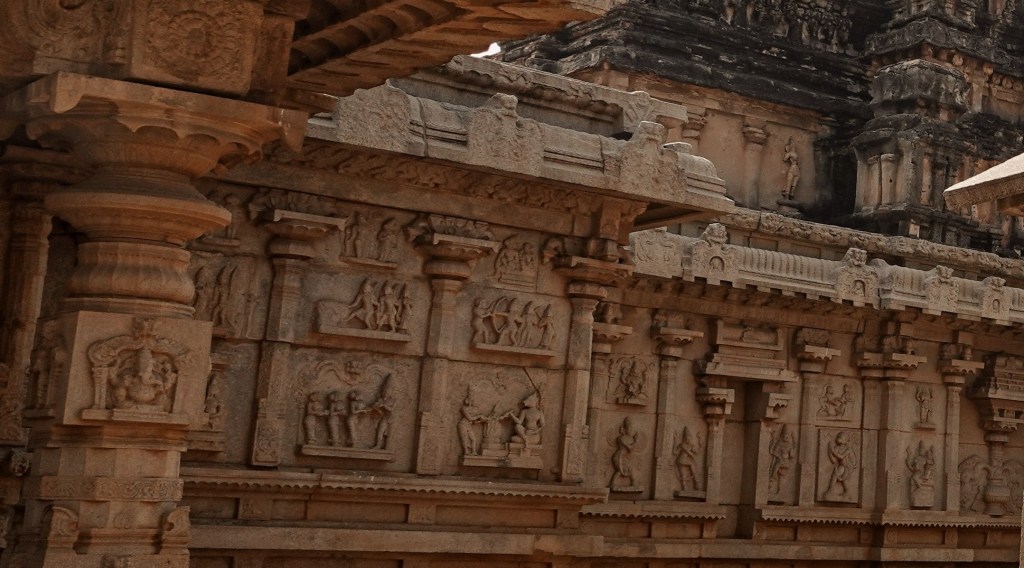
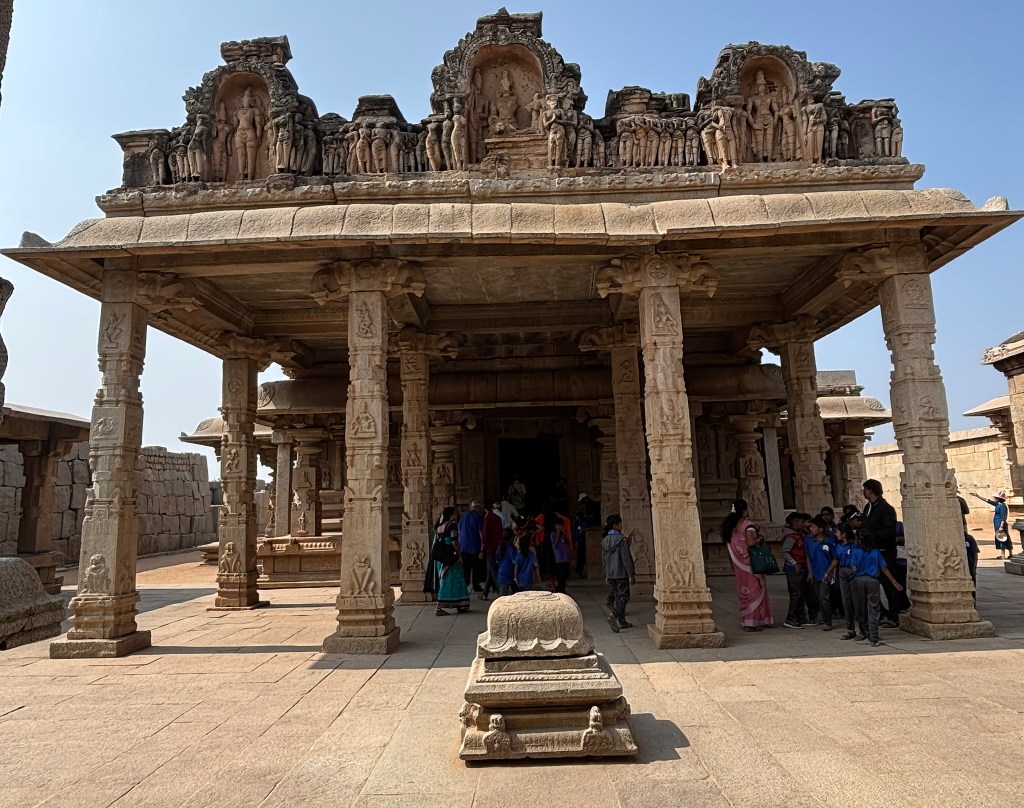
To the north stands a long, vaulted hallโ€”plain on the outside except for tiny ventilation holes. It may once have been an armoury, treasury, or even a gymnasium where courtiers trained. Its doubleโ€‘curved eaves, nagaโ€‘hood rafters, and perforated parapet show how even utilitarian buildings were crafted with artistic flair.

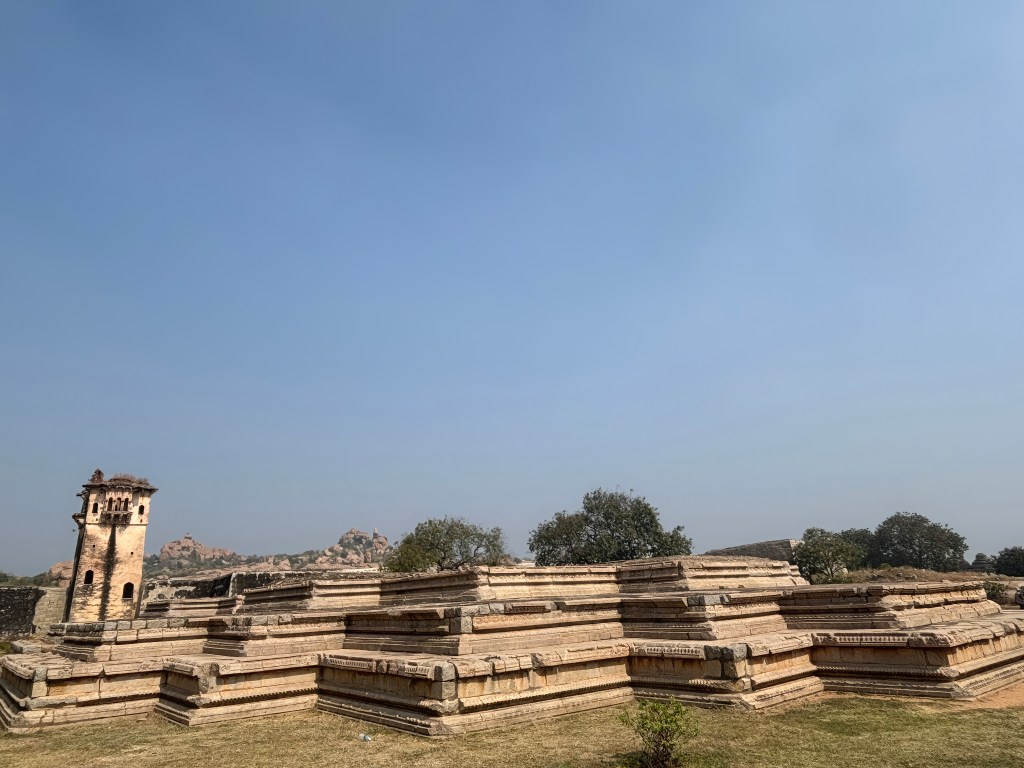
Nearby are the excavated remains of two palaces. One sits on an ornate tripleโ€‘layered basement; the other is set within a rectangular pool, its base carved with charming boating scenes. These ruins hint at the refined lifestyle and architectural experimentation that defined the Vijayanagara court.

Lotus Mahal: The Jewel of the Enclosure

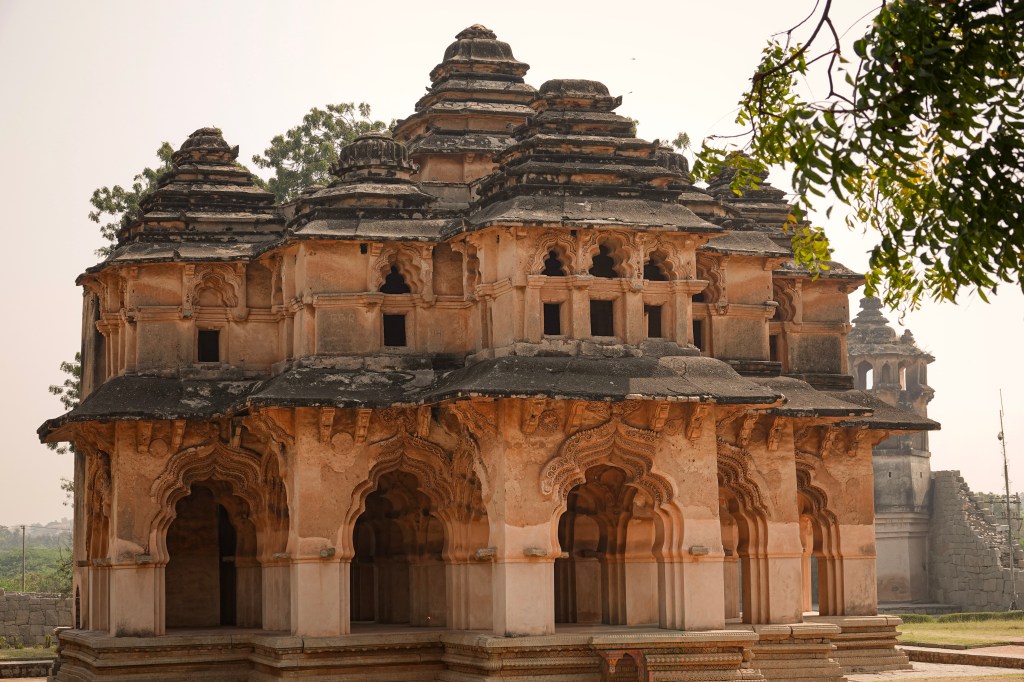
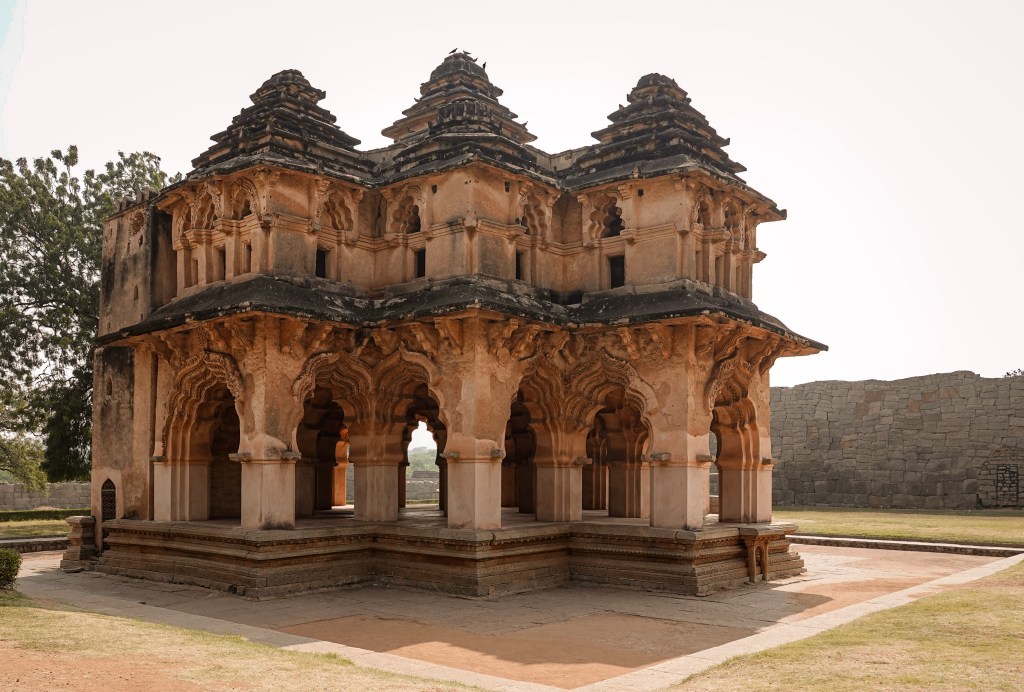
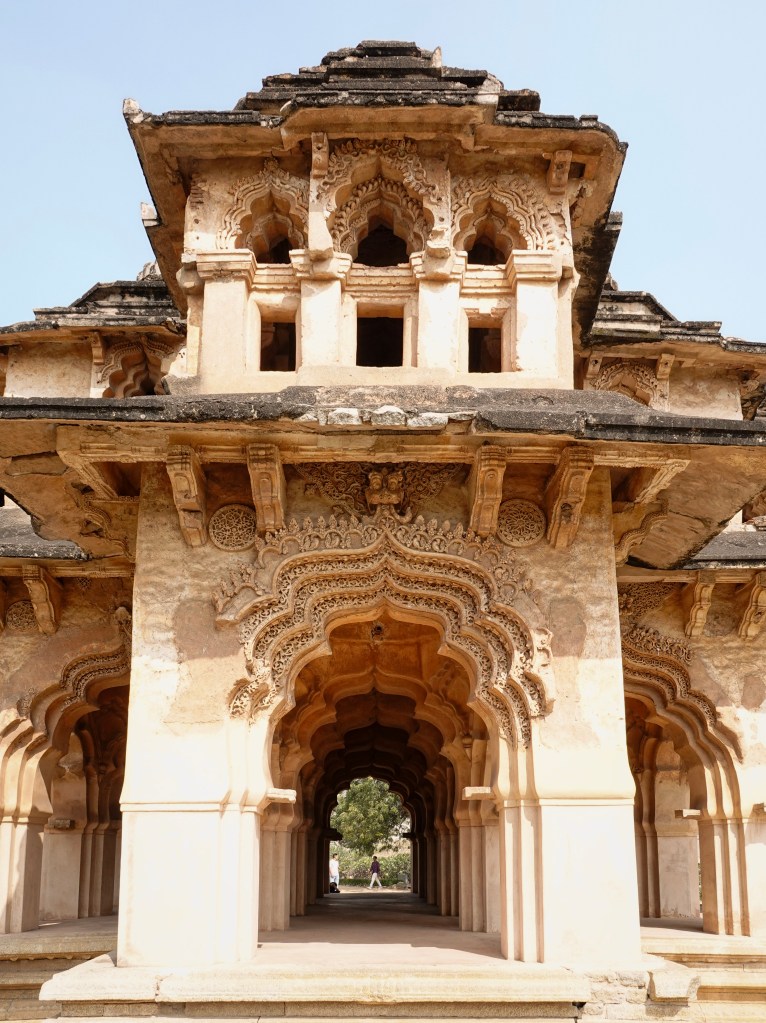
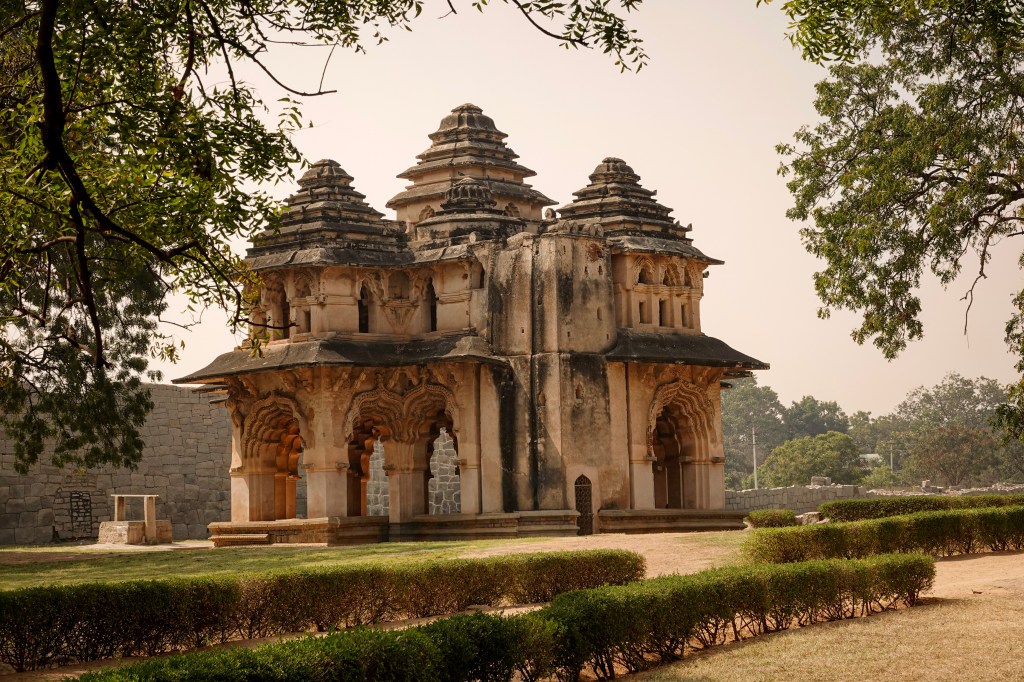
The Lotus Mahal is the star of the Zenana Enclosureโ€”a graceful, airy pavilion that blends temple architecture with Indoโ€‘Islamic design. Its name may be romantic, but its purpose was likely practical: a council chamber or meeting hall, as shown in an 18thโ€‘century map.

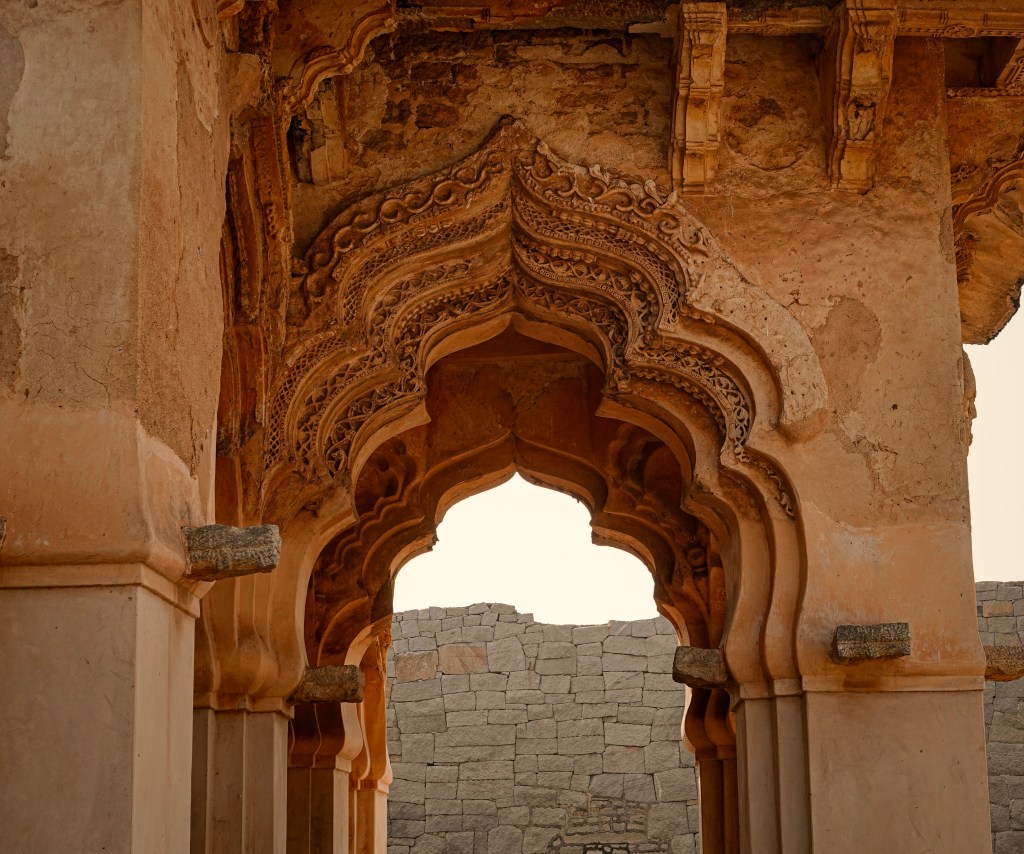
The structure sits on a square, mandalaโ€‘like plan with symmetrical projections on all four sides. The stone basement, doubleโ€‘curved eaves, and pyramidal towers echo Dravidian temple architecture, while the lobed arches, plaster ornamentation, and domed ceilings reflect Sultanate influences. This fusion creates a building that feels both delicate and dignified, a perfect example of Vijayanagaraโ€™s inventive courtly style.

Climb the awkward little staircase tower attached to one corner, and you can almost imagine the upper chamber once filled with ministers, scribes, and royal advisors.

Watchtowers & Hidden Corners

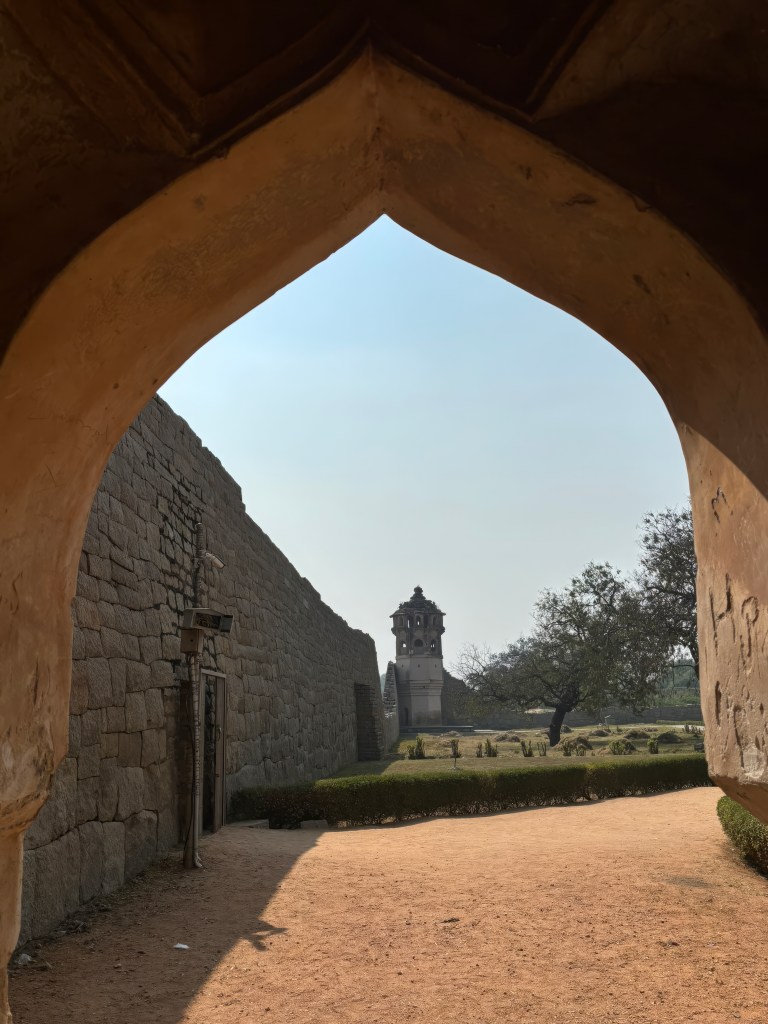
Three watchtowersโ€”two intact, one partly ruinedโ€”stand guard along the enclosure walls. Like the Lotus Mahal, they mix templeโ€‘style eaves with Islamic arches and domes. Their presence reinforces the idea that this was a protected administrative zone rather than a secluded womenโ€™s space.

Scattered around the enclosure are the remains of a granary, a deep water tank, and foundations of smaller internal compounds. Each fragment adds another brushstroke to the picture of a bustling royal precinct.

Elephant Stables: Grandeur for the Empireโ€™s Gentle Giants

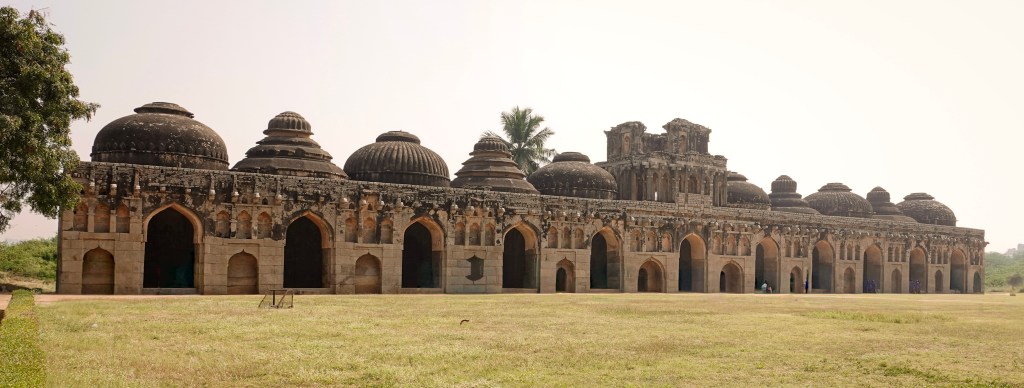
Step out of the Zenana Enclosure through a modest eastern doorway, and the landscape opens into a vast parade ground. On the far side stands one of Hampiโ€™s most iconic structures: the Elephant Stables.

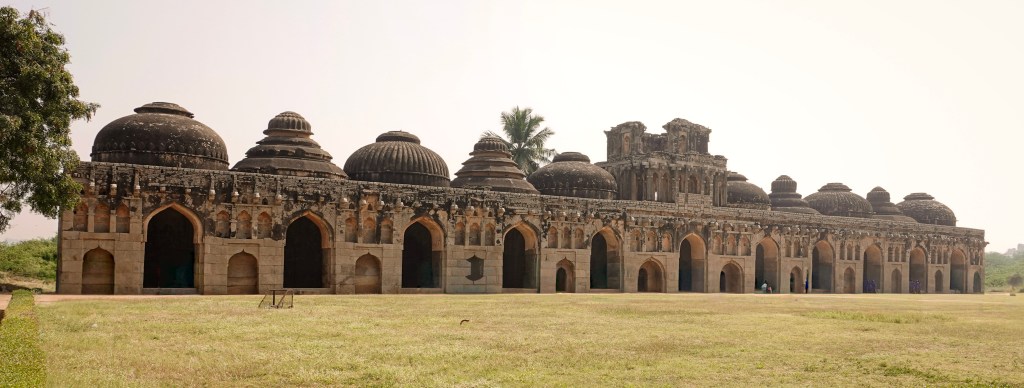
This long, majestic row of eleven chambers once housed the royal elephantsโ€”each chamber large enough for two animals. The alternating domes and twelveโ€‘sided vaults create a rhythmic skyline, while the central raised pavilion (now missing its tower) may have been used by musicians during royal processions.

The stables are a masterclass in symmetry, scale, and Indoโ€‘Islamic fusion. Standing before them, itโ€™s easy to imagine the thunder of elephants, the beat of drums, and the spectacle of royal parades.

The Parade Ground & Martial Court

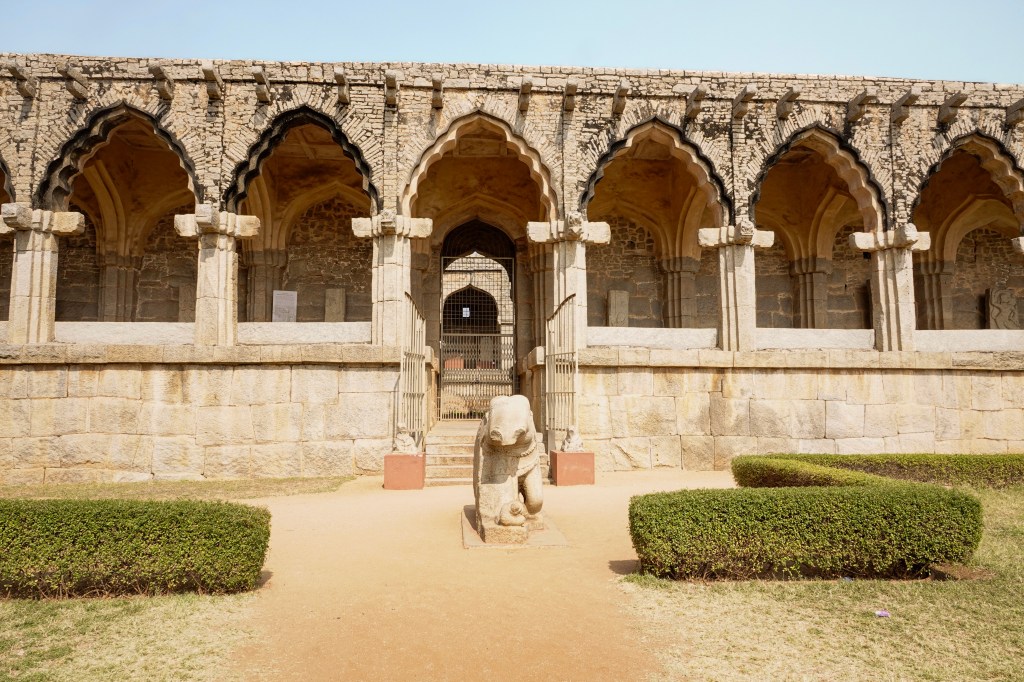
North of the stables is another impressive structure: a long gallery with eleven pointed arches. This elevated platform likely served as a grandstand for watching parades, martial sports, and animal displays. Its interior courtyardโ€”open to the sky and surrounded by arcadesโ€”mirrors the vaulted hall inside the Zenana Enclosure, suggesting a shared architectural vocabulary.

The west side of the parade ground holds the ruins of a twoโ€‘storey gateway with massive elephant balustrades lying nearby. Rubble on the north and south edges hints at additional service buildings that once supported the royal retinue.

Mahanavami Dibba: The Empireโ€™s Grand Stage

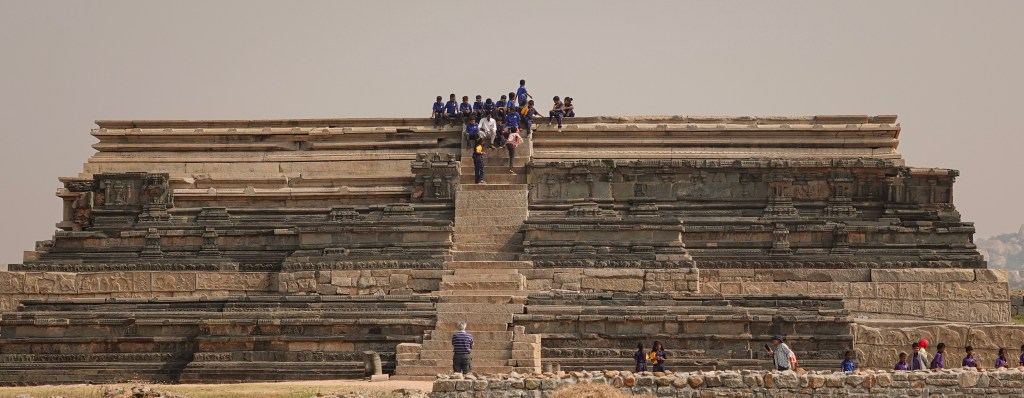
Further south lies the most dramatic structure in the Royal Centre: the Mahanavami Dibba, a massive, multiโ€‘tiered platform used for royal ceremonies, festivals, and public displays of power.

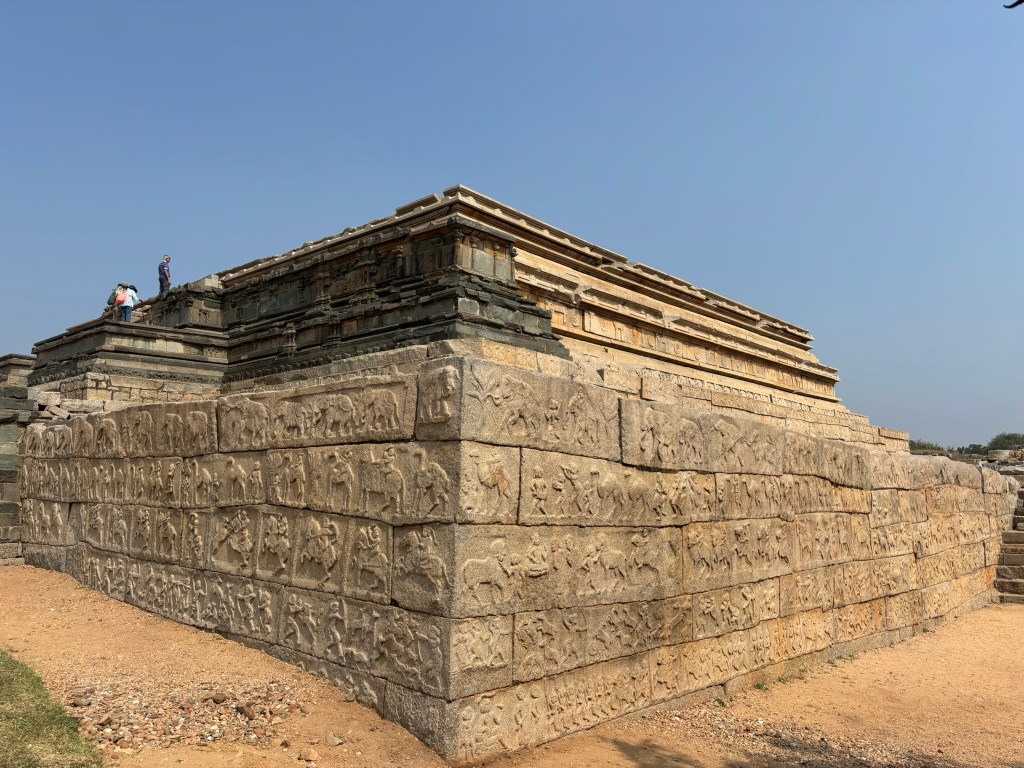
The lower granite tiers date back to the 14th century and are carved with lively scenesโ€”kings receiving visitors, wrestling matches, hunting expeditions, dancers, musicians, and even foreign envoys with pointed hats. Elephants, horses, camels, and mythical creatures parade across the stone, capturing the cosmopolitan energy of the Vijayanagara empire.

Climb the double staircase to the top, and youโ€™ll stand where the king once presided over the grand Mahanavami festival, watching processions, sacrifices, and performances unfold below. The view from the summit offers a sweeping panorama of the royal centreโ€”palaces, tanks, gateways, and the rugged boulder hills beyond.

The Stepped Tank: Geometry, Grace, and the Genius of Vijayanagara Engineering

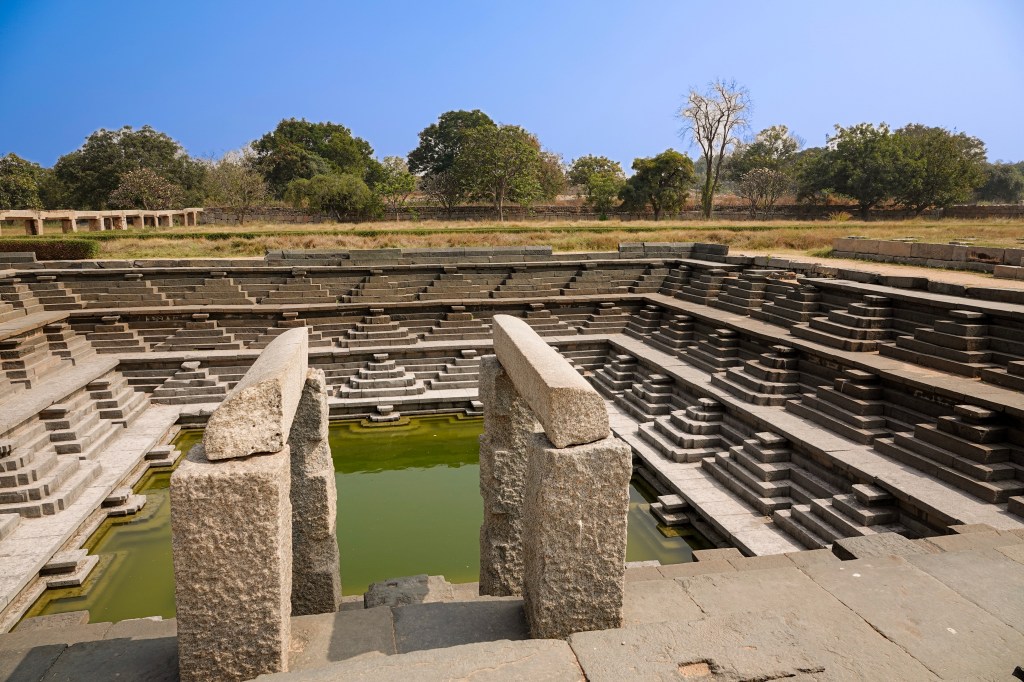
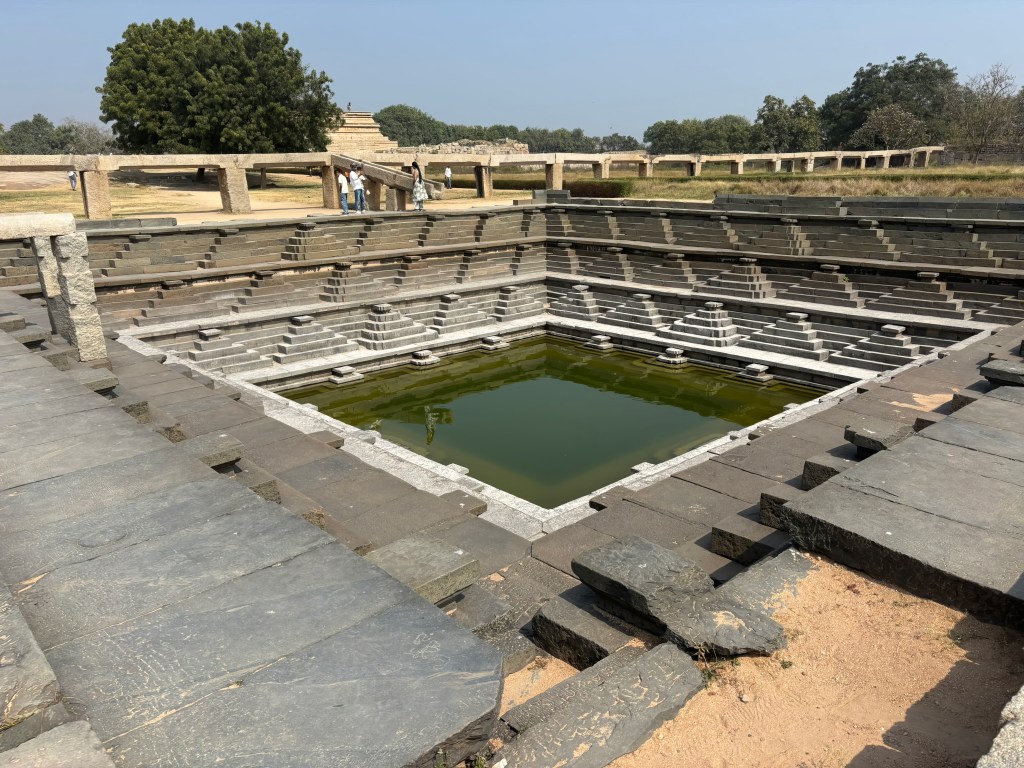
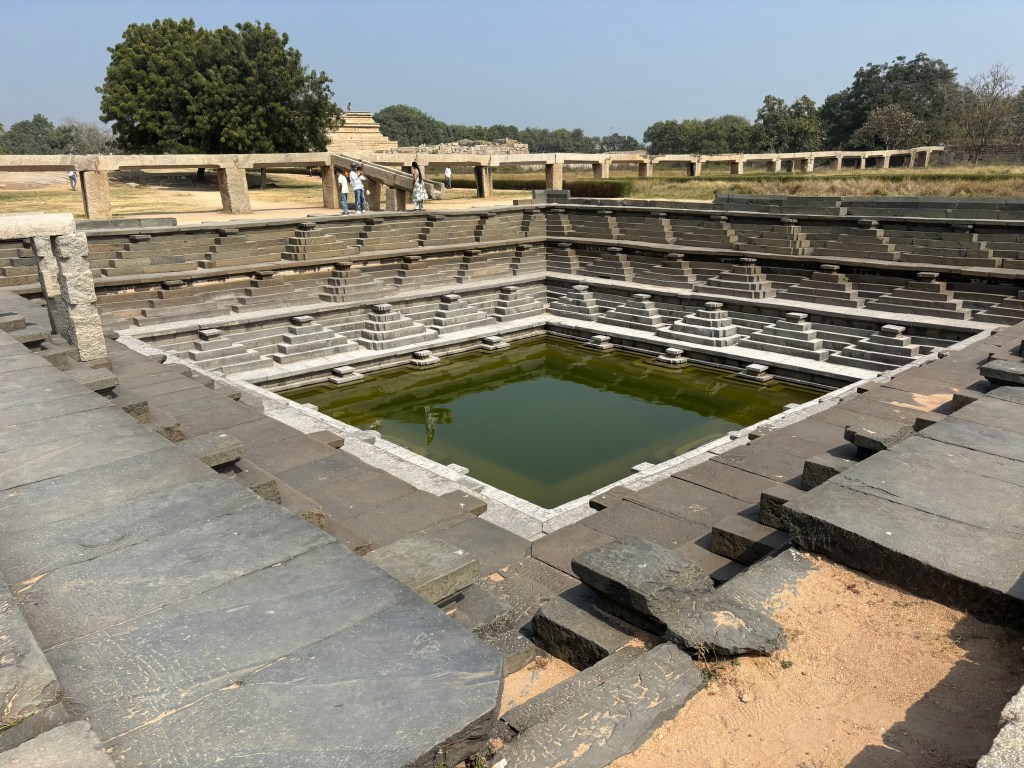
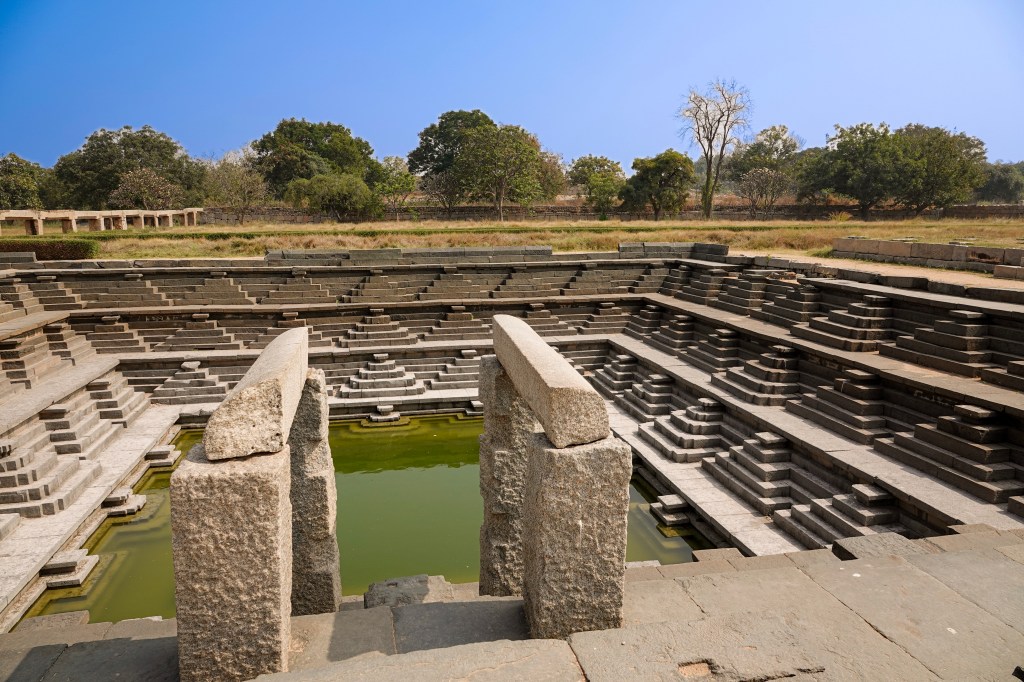
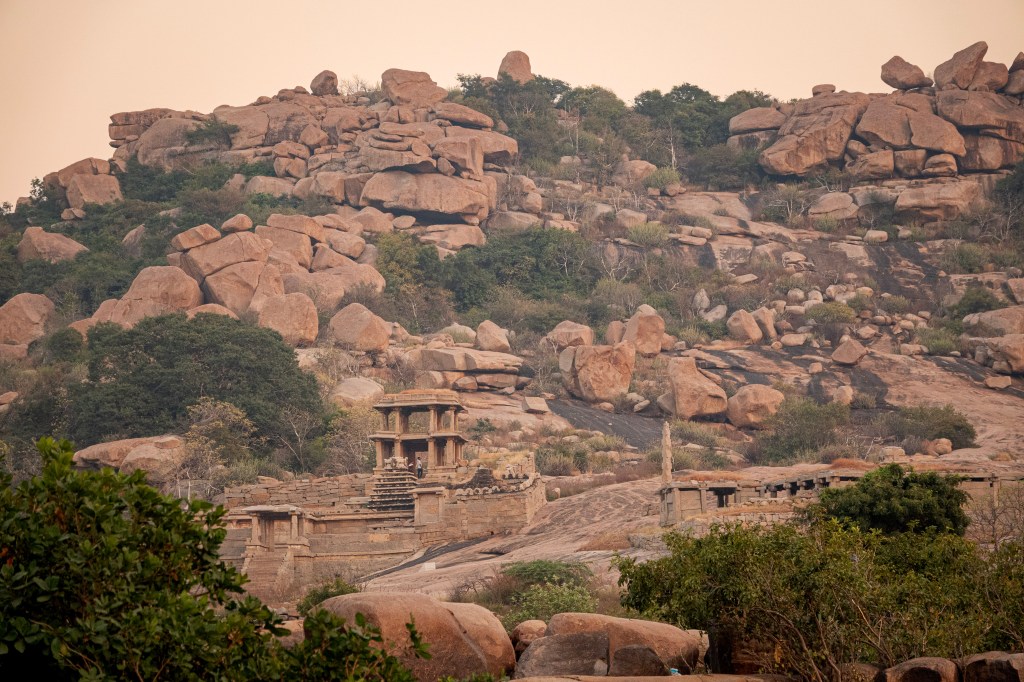
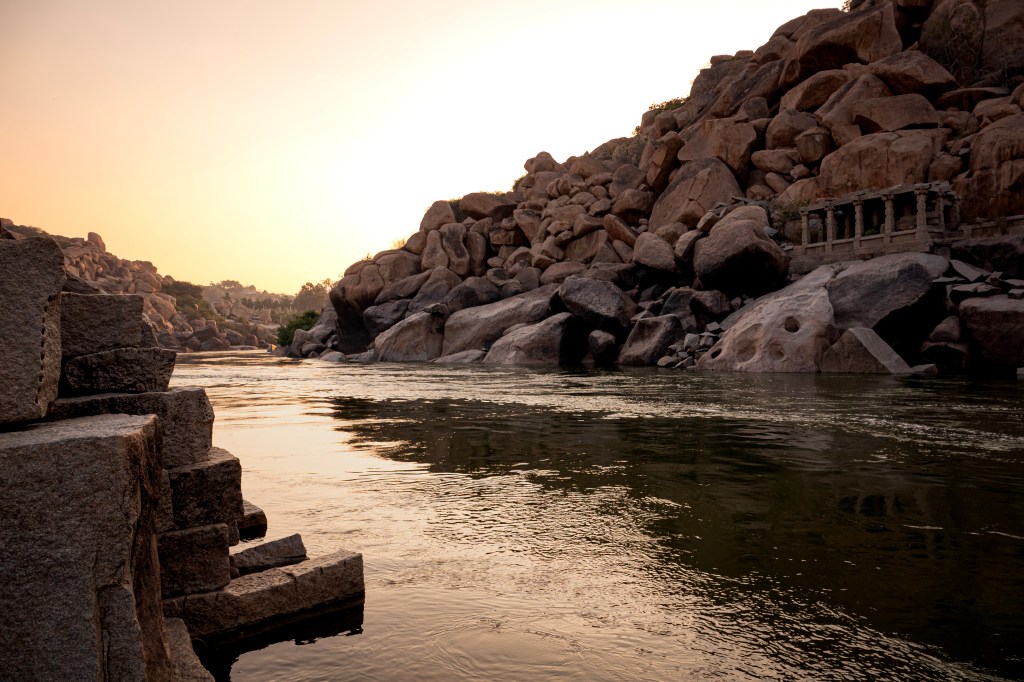
Tucked within the royal quarters is one of Hampiโ€™s most mesmerizing structuresโ€”a perfectly proportioned stepped tank that feels like a piece of sacred geometry carved into the earth. Its crisp, symmetrical tiers descend in a rhythmic pattern toward a pool of still green water, creating a play of light and shadow that shifts with every passing hour. Unlike the massive public tanks found elsewhere in the city, this one was clearly meant for the royal household, fed by an intricate network of stone aqueducts that once carried water from distant sources. Standing at its edge, framed by the tall stone pillars that guard its entrance, you can almost imagine the quiet rituals, the ceremonial ablutions, and the everyday rhythms of palace life that once unfolded here. The tankโ€™s precision and elegance reveal not just engineering brilliance but an aesthetic sensibility that valued harmony, balance, and beauty in even the most functional spaces.
A Walk Through Power, Beauty & Imagination

Visiting the Zenana Enclosure and its surrounding monuments is like walking through the architectural imagination of the Vijayanagara empire. Each structureโ€”whether a palace basement, a watchtower, a stable, or a ceremonial platformโ€”reveals a different facet of royal life. Together, they form a vivid portrait of a kingdom that valued beauty, strength, innovation, and spectacle.

The Majestic Stone Chariot and Musical Pillars of Hampi

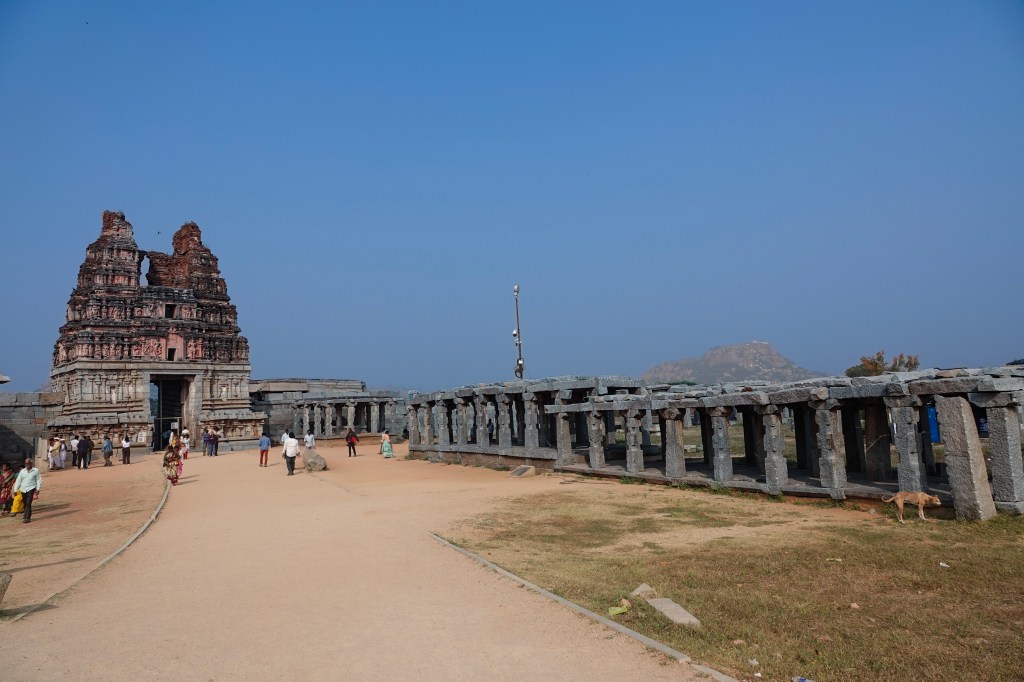
Some monuments are impressive, but Vitthala Temple truly captivates. If you have just a few hours in Hampi, this is the must-see spot. The temple embodies what Hampi represents and showcases remarkable Vijayanagar architecture.

Pushkarani and Horse mantapa

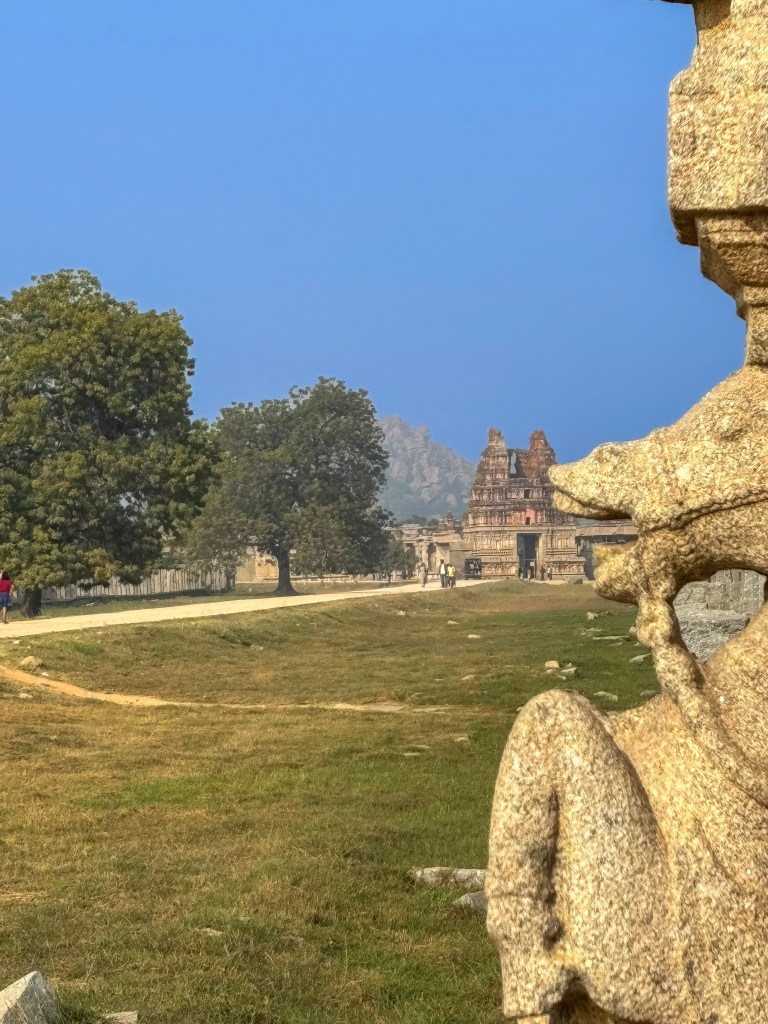
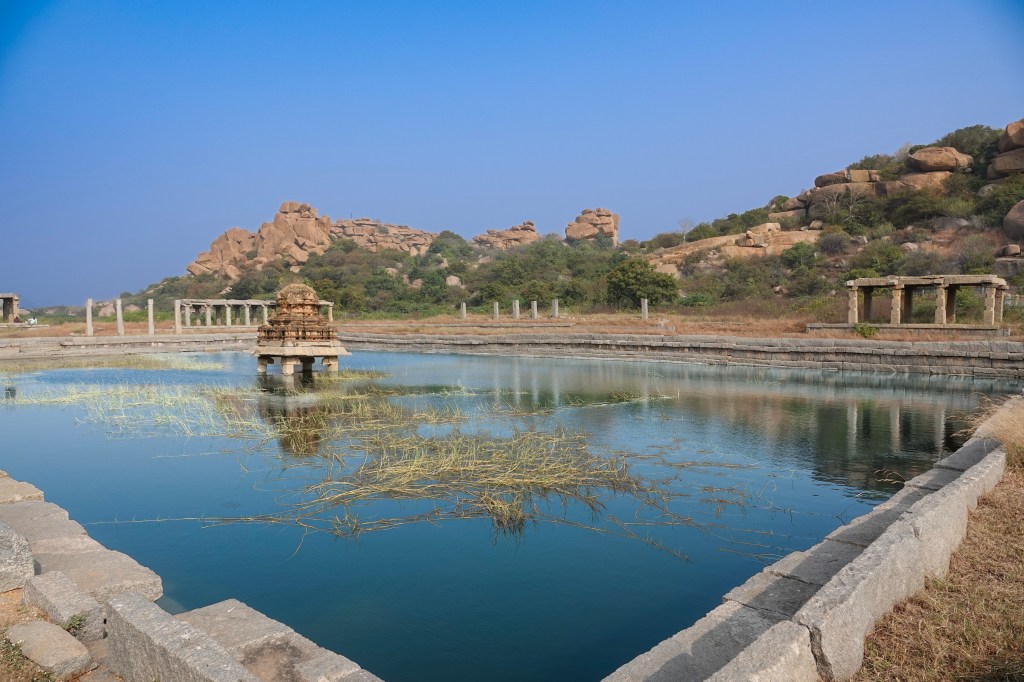
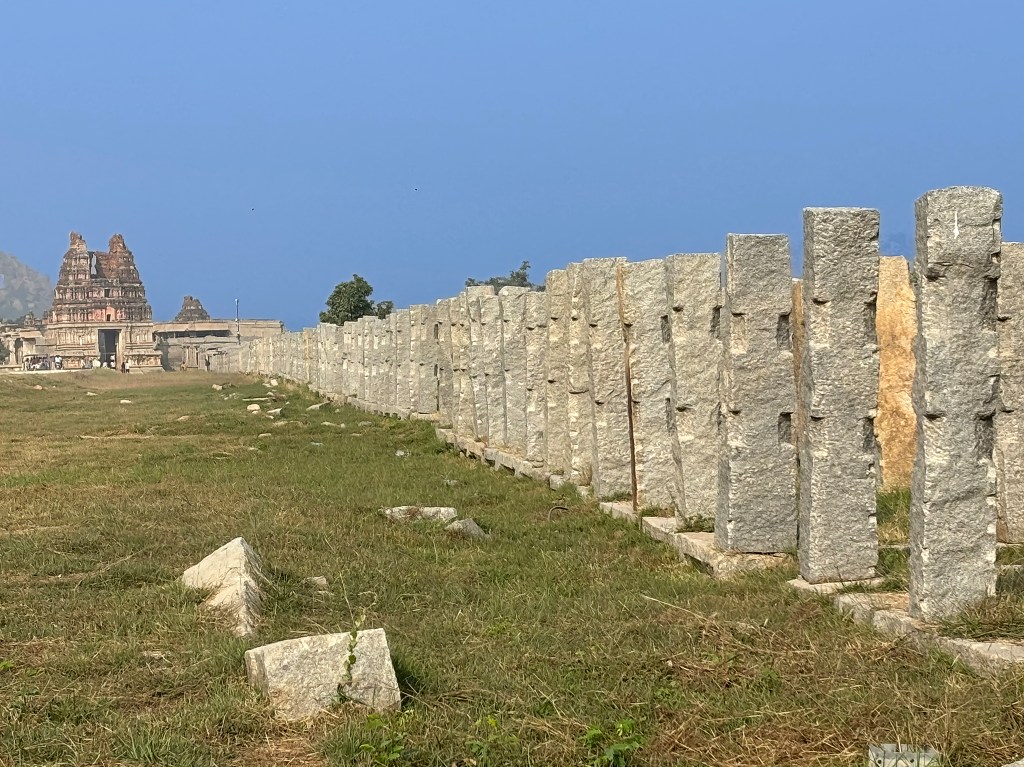
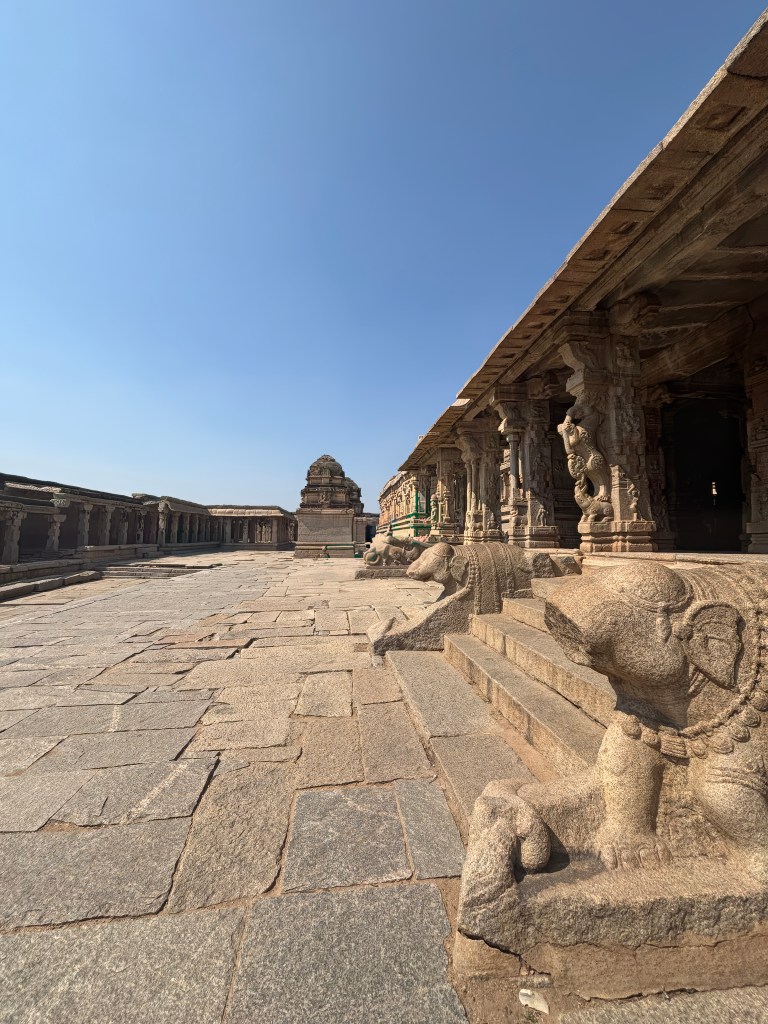
On the walk toward the Vijaya Vittala Temple, the landscape quietly opens up to one of Hampiโ€™s most graceful water monumentsโ€”the Vittala Pushkarani. Tucked beside the northern stretch of the Vittala Bazaar, this stoneโ€‘stepped tank once anchored the ritual life of the temple and its bustling marketplace. Built during the height of the Vijayanagara Empire, it features a delicate central mantapa rising from the water, a signature of sacred reservoirs across the region.

Pushkarani is a good place to take panoramic photos of temple and surrounding areas.

A little before the road bends toward the grand Vijaya Vittala Temple, the Kuduregombe Mantapa appears like a quiet sentinel of the past. This threeโ€‘sided pillared pavilion, built during the Vijayanagara Empire, takes its name from the striking horseโ€‘rider sculptures carved onto its front pillarsโ€”kudure meaning horse and gombe meaning doll or figure. . Though its original purpose remains a mystery, its strategic placement along this ceremonial route hints at a role in the vibrant temple life that once animated these streets.

A Temple Wrapped in Mystery and Majesty

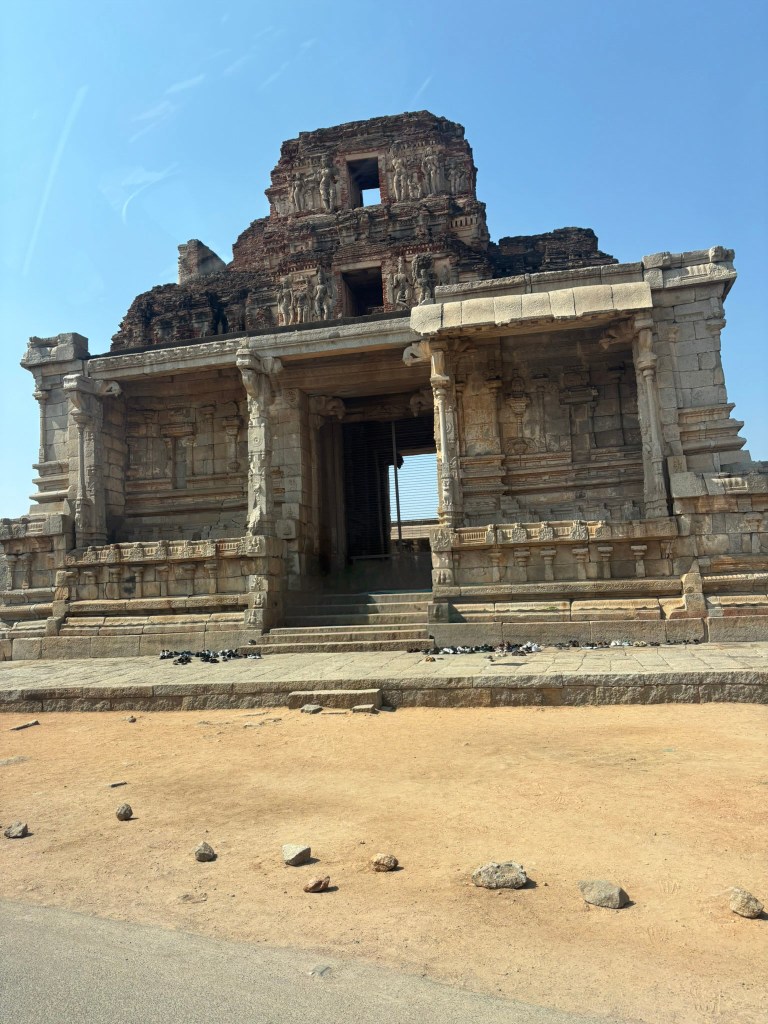
Unlike many Vijayanagara monuments, the Vitthala Templeโ€™s earliest history is surprisingly elusive. No inscription tells us who commissioned it or why. What we do know is that successive rulers expanded it. These include emperors, queens, commanders, and courtiers. They continued to embellish it through the 16th century.

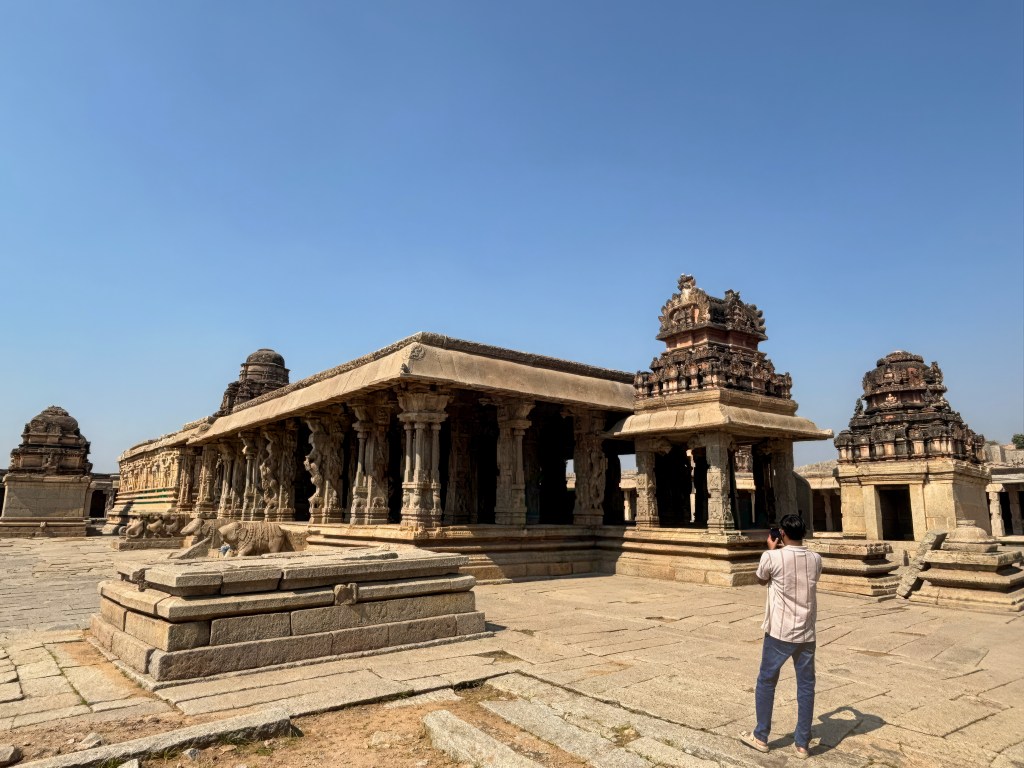
The temple sits within a vast rectangular courtyard, framed by three gopuras. Two of theseโ€”on the east and northโ€”were built in 1513 CE by the queens of Krishnadevaraya. He was one of the empireโ€™s most celebrated rulers. The southern gopura, more ornate and later in date, completes the triad.

Inside, the temple unfolds in layers:

  • A restored enclosed mandapa leading to a sanctuary (now empty, its ceiling charred from the fires of 1565).
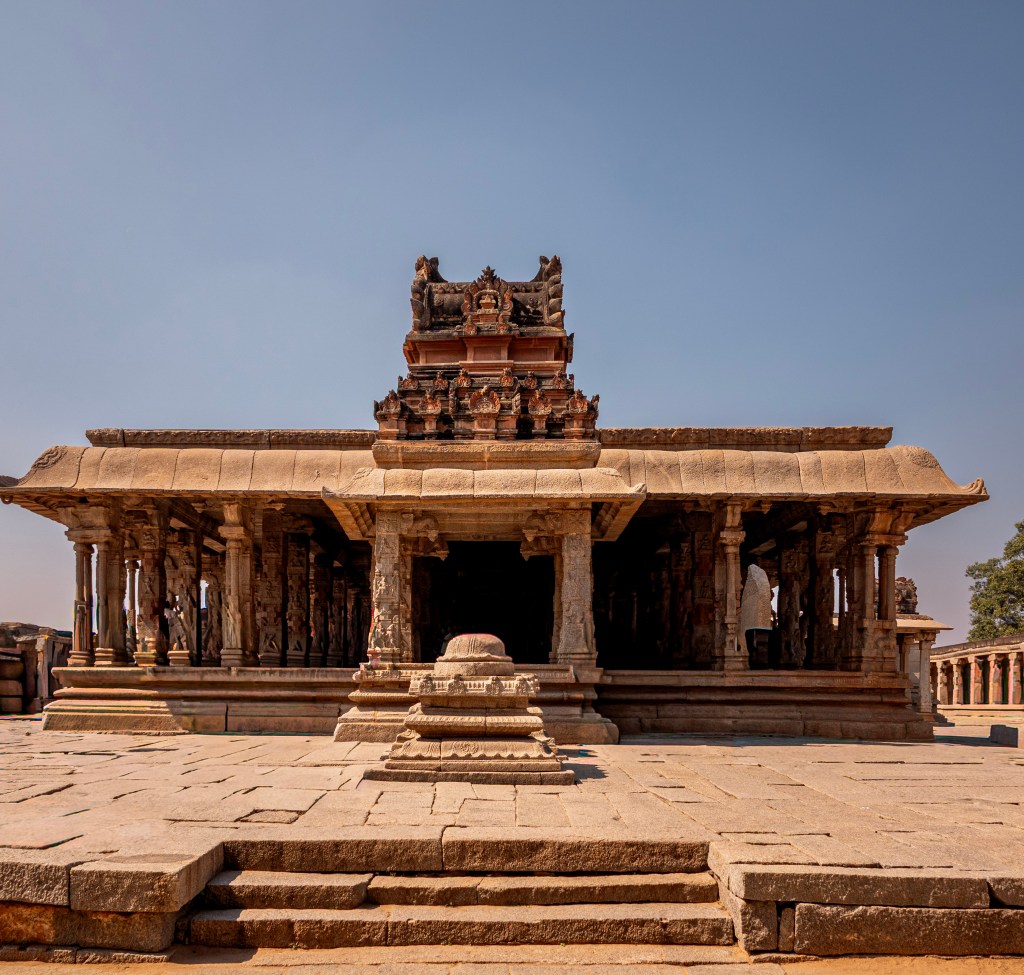
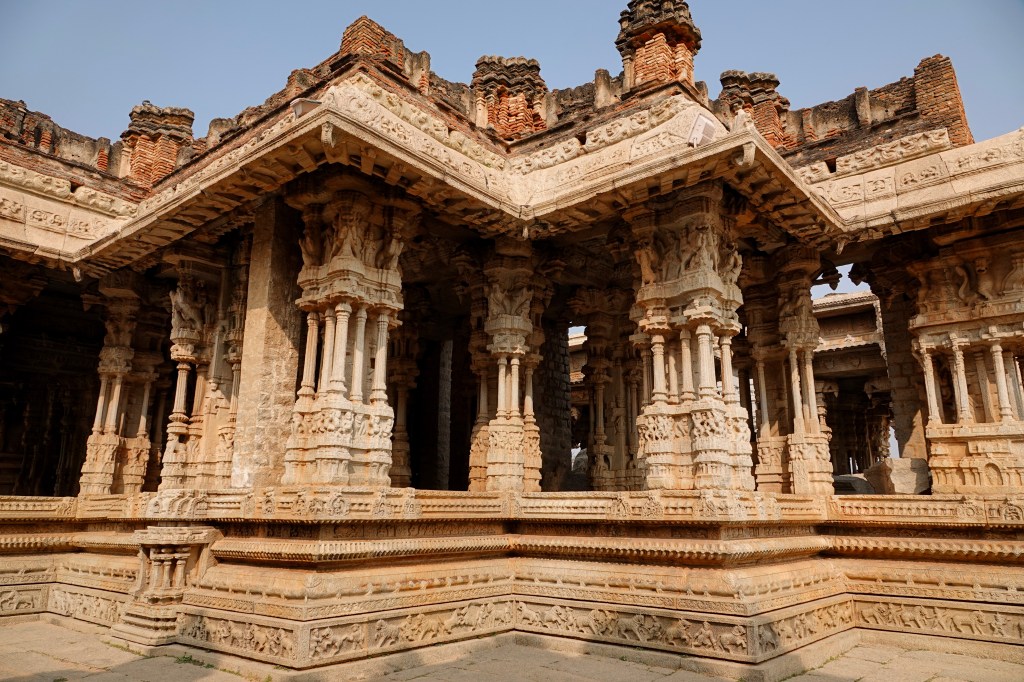
  • A 1554 CE open mandapa was added by a military commander of Emperor Sadashiva. It showcases some of the most intricate stonework in South India.
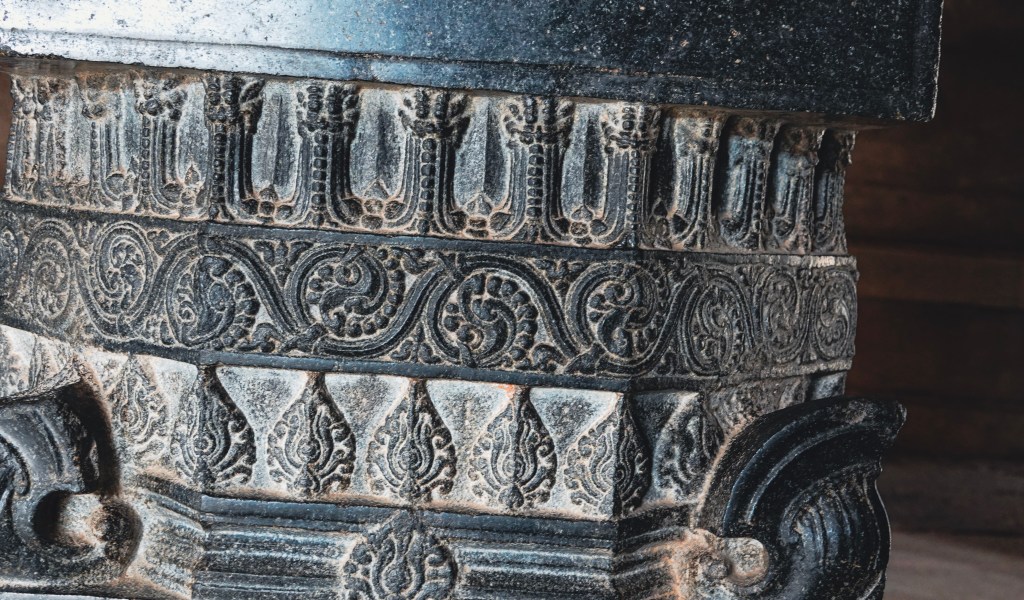
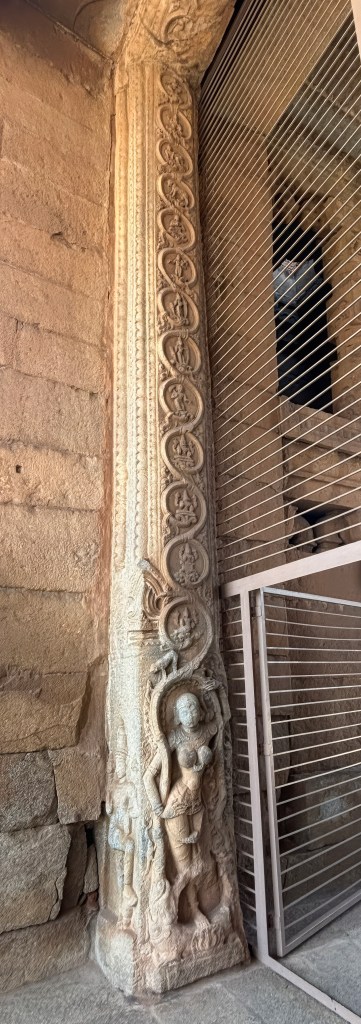
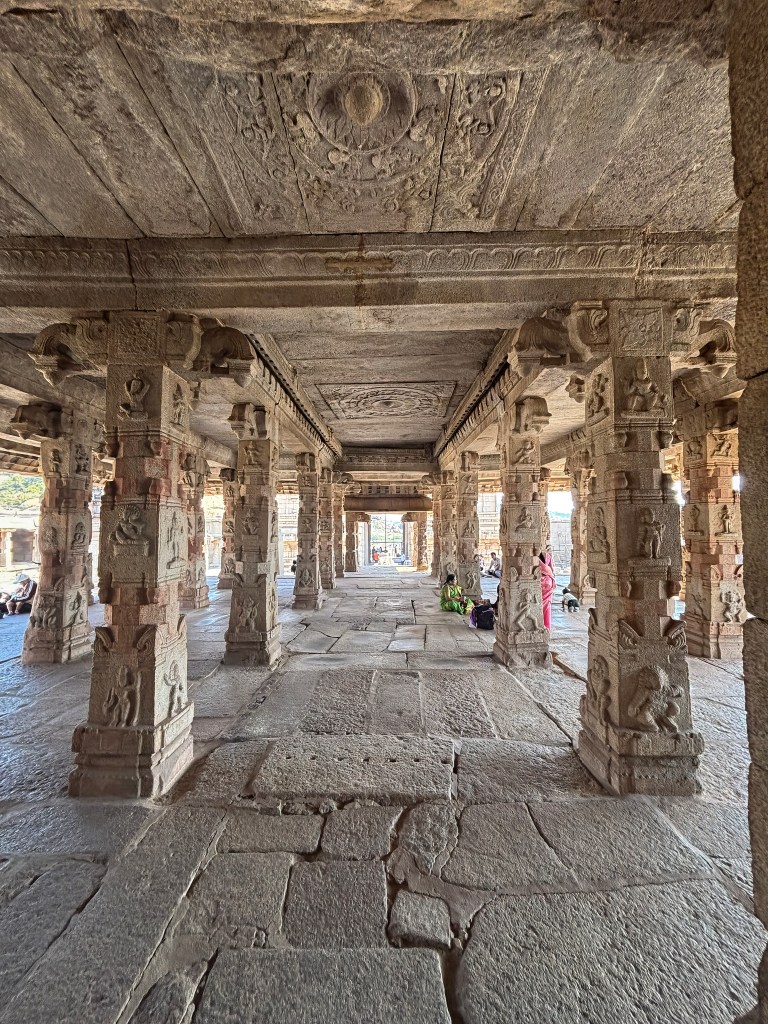
  • Four spacious halls are supported by piers. These piers are carved from single granite blocks. Each pier is a sculptural marvel of yalis, musicians, warriors, and mythic beings.

The Stone Chariot: Hampiโ€™s Crown Jewel

If Hampi had a single emblem, it would be this.

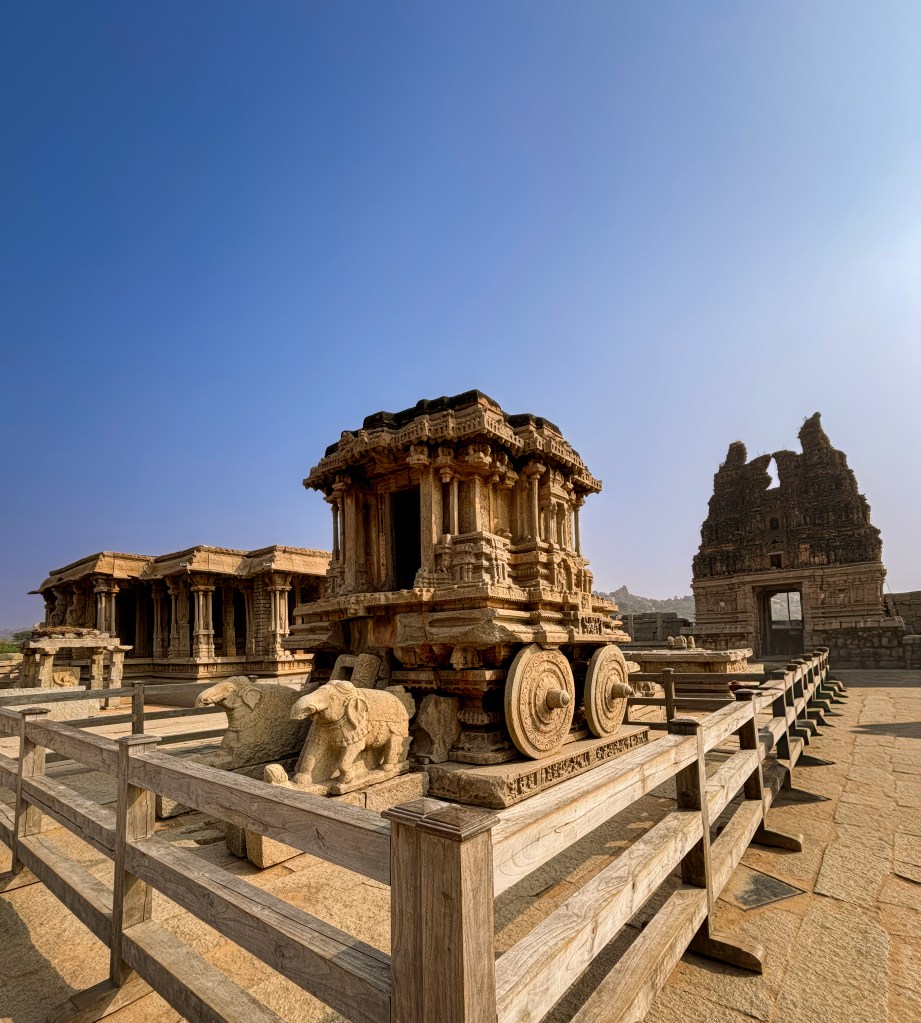
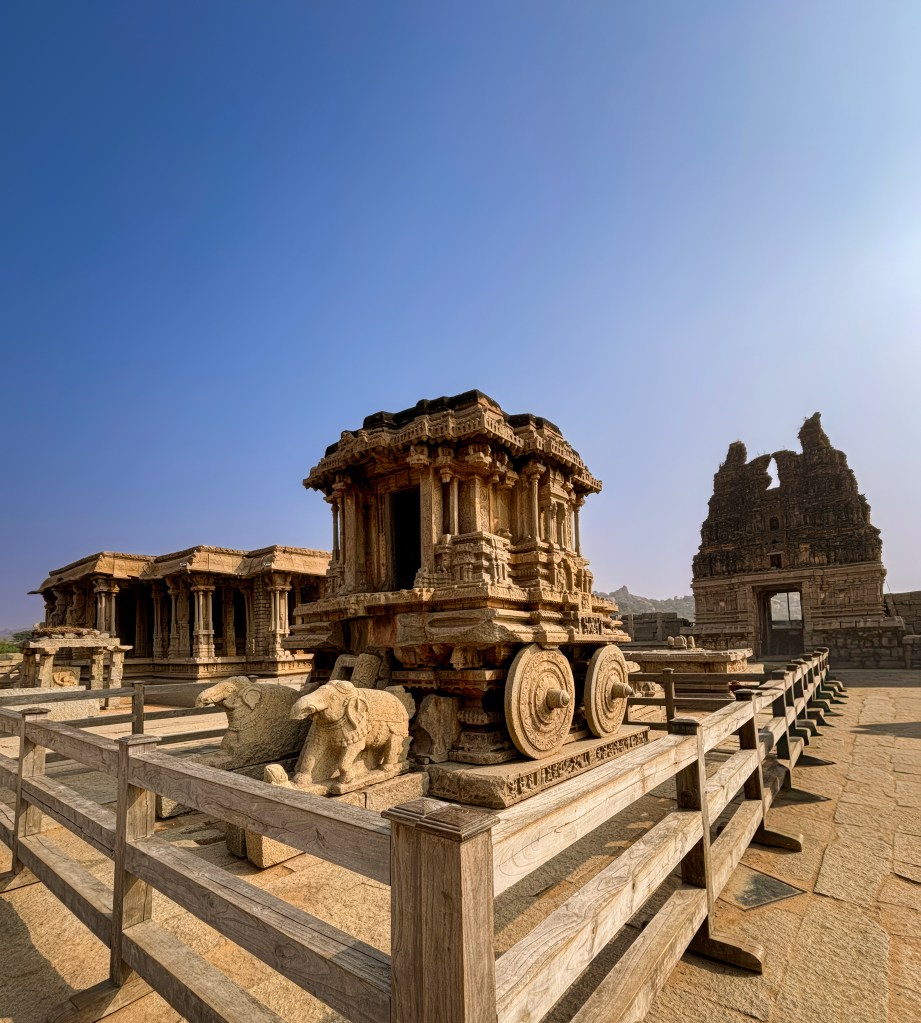
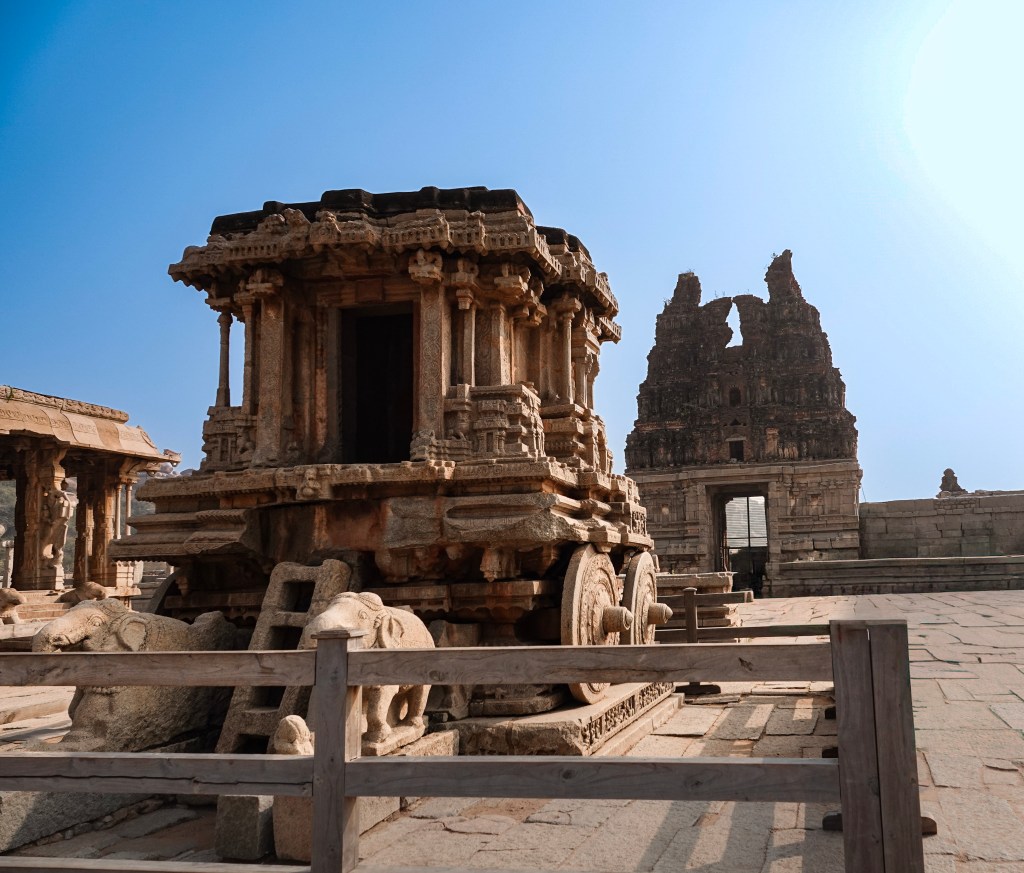
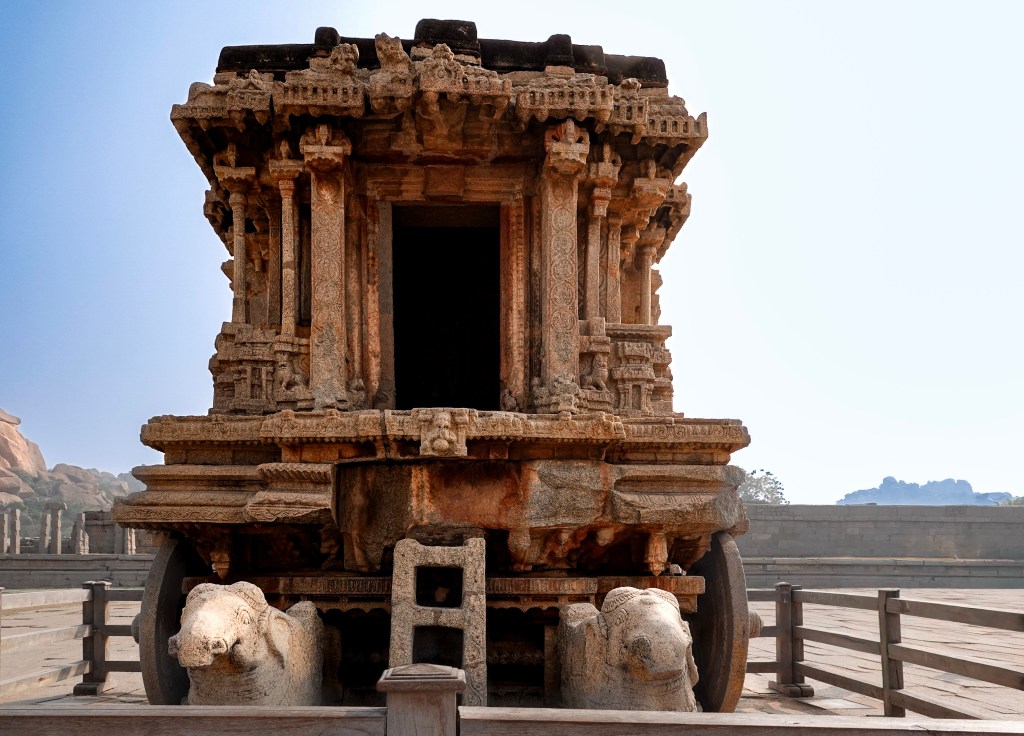
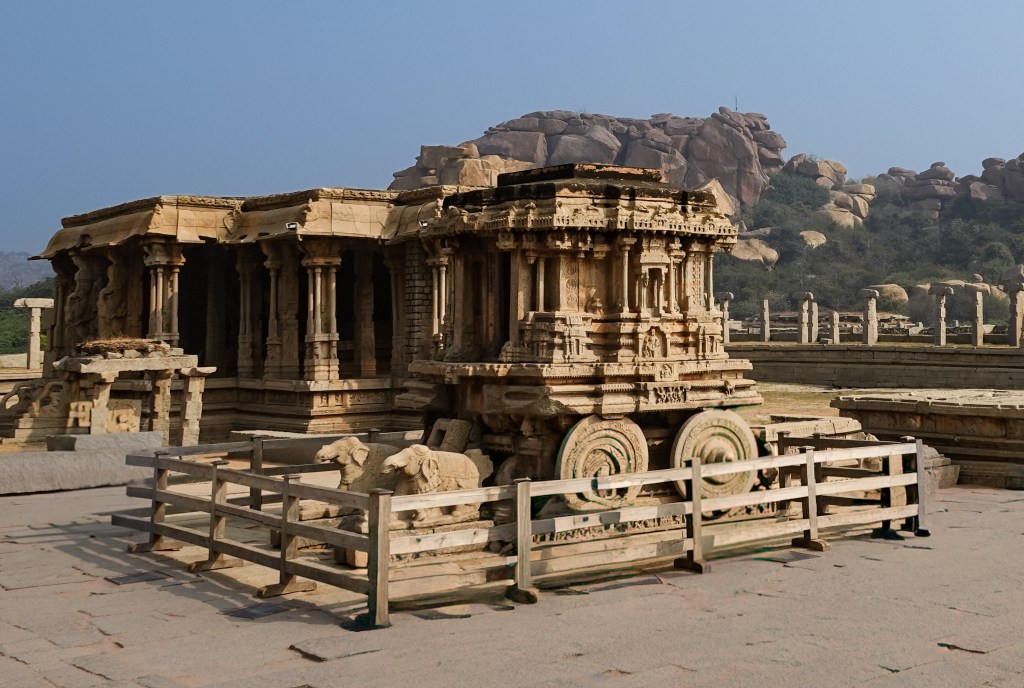
The Stone Chariot, dedicated to Garuda (the divine mount of Vishnu), stands proudly in front of the temple. Its image graces the โ‚น50 currency note, a testament to its national significance.

Commissioned during the reign of Deva Raya II, the chariot was inspired by the iconic Sun Temple at Konark. Though damaged during the empireโ€™s fall, it remains breathtaking:

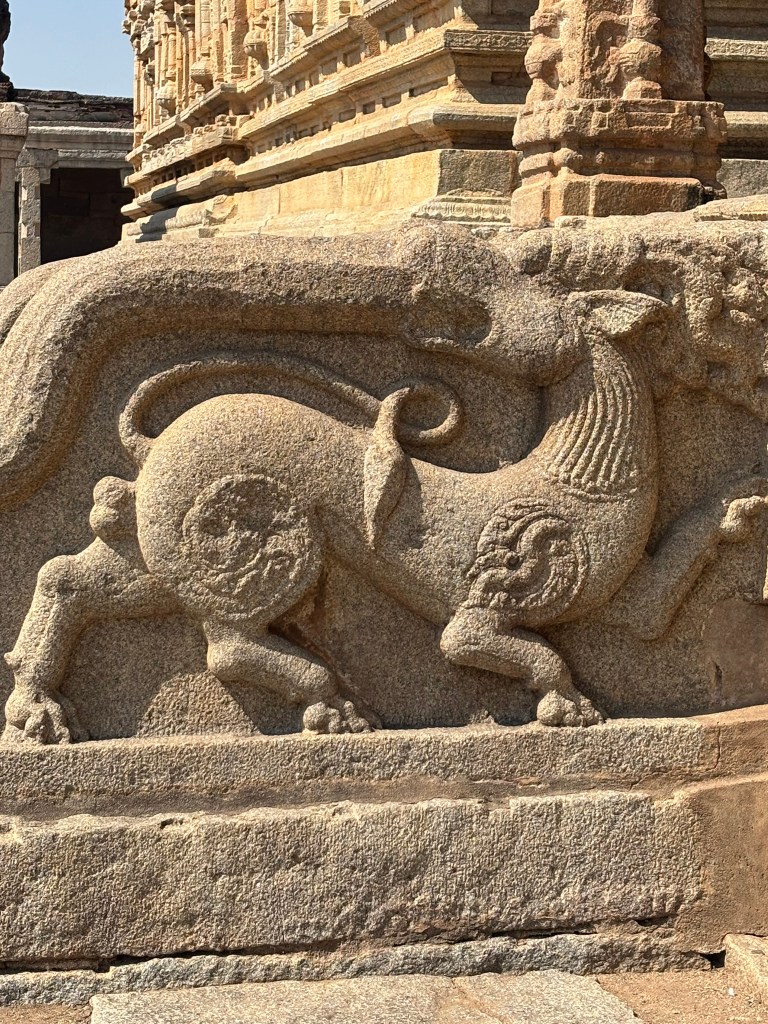
  • Two massive elephants guard the front (originally horsesโ€”look closely and youโ€™ll still see their carved tails).
  • The wheels, though fixed, are carved with astonishing precision.
  • The shrine above once carried a brick tower, visible in 19th-century photographs but removed during colonial-era repairs.

Architectural historiansโ€”from James Fergusson to George Michellโ€”have celebrated this chariot as one of Indiaโ€™s finest sculptural achievements.

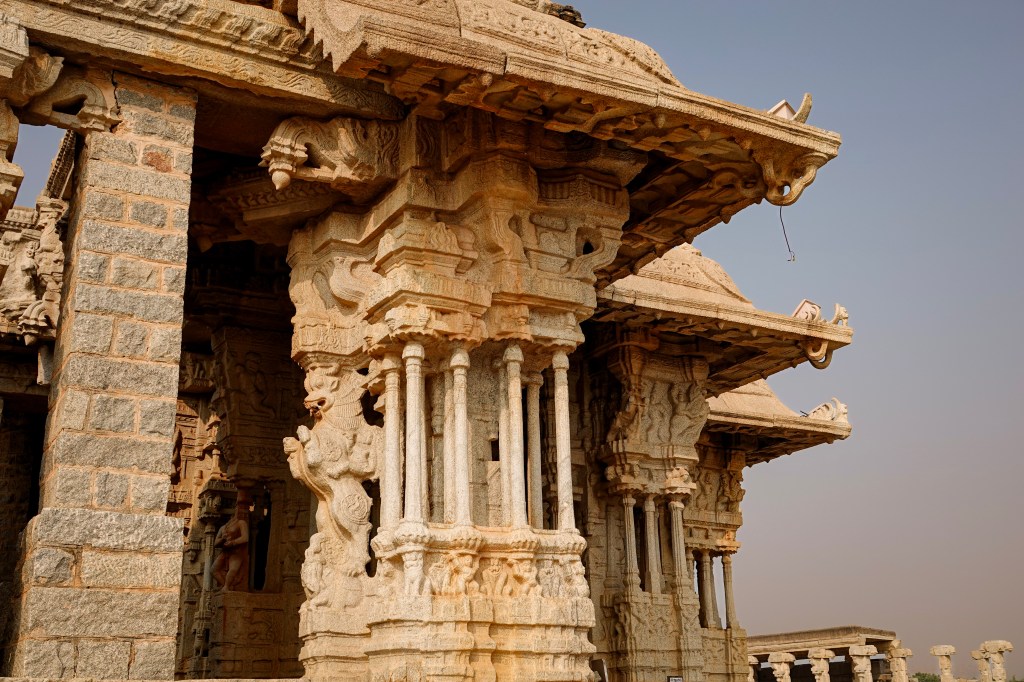
A Symphony in Stone: The Musical Pillars

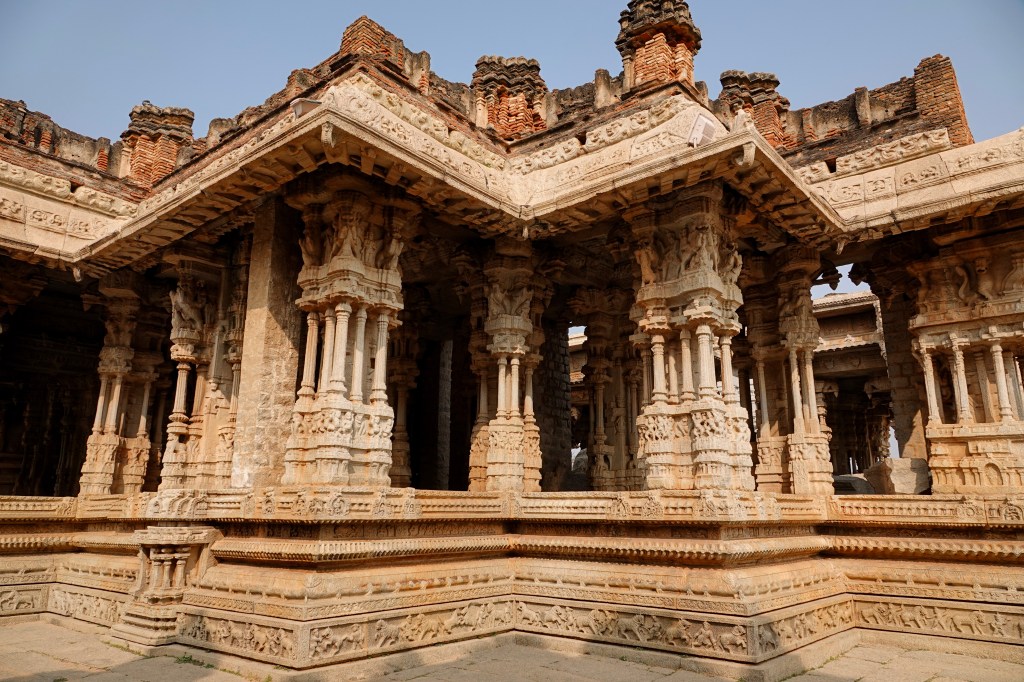
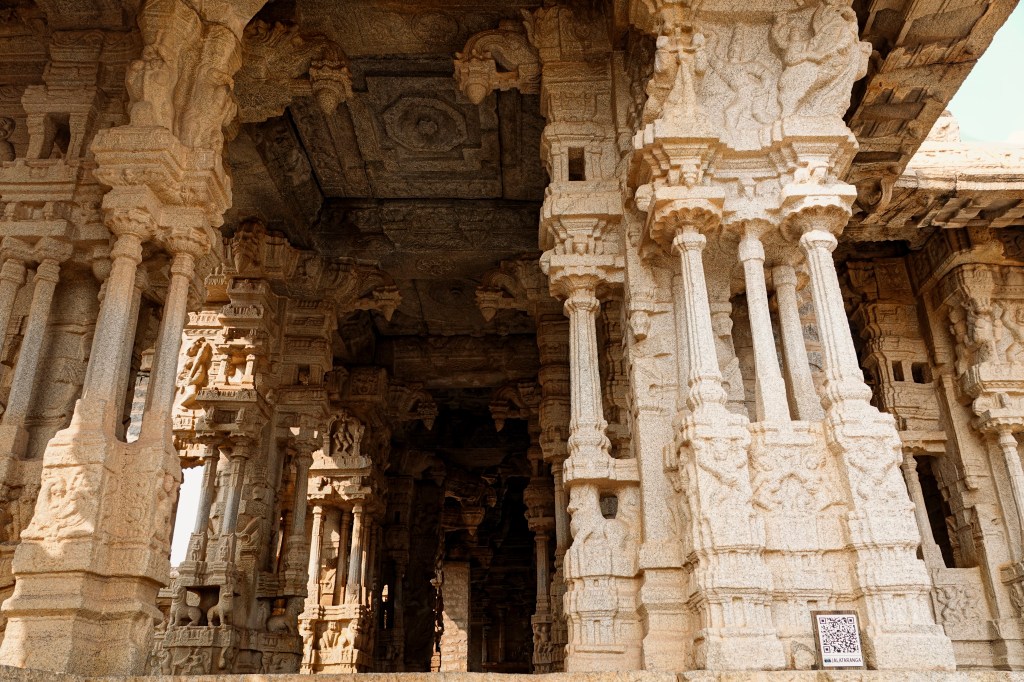
Step into the open mandapa, and youโ€™ll encounter the legendary 56 musical pillarsโ€”the SaReGaMa pillars.

Each main pillar is surrounded by seven slender colonettes. When tapped lightly, these emit resonant tones. Contrary to popular belief, they do not form a full musical scale, but their acoustic magic is undeniable. Even the British, captivated by this phenomenon, attempted to study and โ€œdecodeโ€ the pillars during the colonial period. When I visited this place about 30 years ago, guides were allowed to show how the music pillars worked, but since then, the entire hall has been off-limits to visitors. Now you can use the QR codes to hear the music each pillar can make.

Walking the Ancient Path Along the Tungabhadra

After exploring the mandapas, musical pillars, and the iconic Stone Chariot, the journey continues along a serene footpath that runs parallel to the Tungabhadra River. This trail once connected the sacred heart of Vitthalapura with the riverbanks, and even today it feels like stepping into a quiet corridor of history.

As you leave the Vitthala Temple complex, you pass through a double-storeyed pavilion-like gatewayโ€”a structure that once marked an important threshold in the sacred geography of Hampi. Just before this gateway stands one of the most intriguing relics of royal ritual: the Kingsโ€™ Balance.

The Kingsโ€™ Balance: A Ritual of Generosity and Power

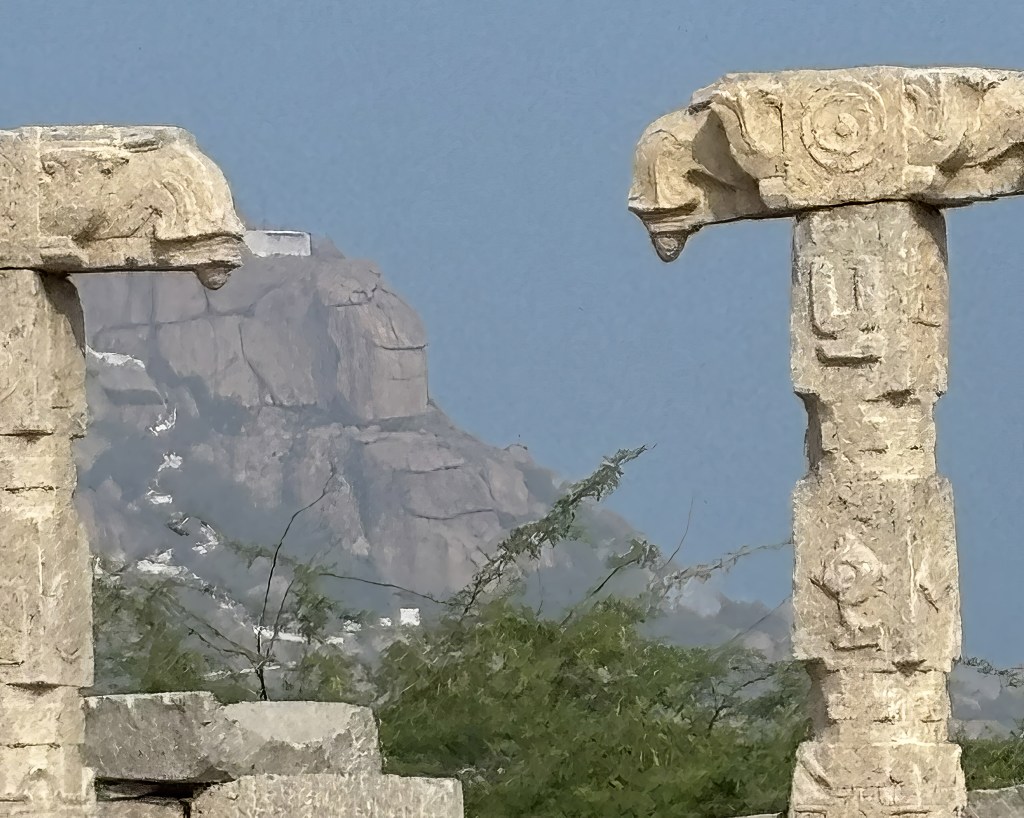
The Kingsโ€™ Balance (Tulapurusha Dana) is a simple yet powerful structureโ€”two tall stone posts connected by a lintel, with a stone ring designed to hold a metal chain. According to tradition, the Vijayanagara emperors would stand on one side of the balance and be weighed against gold, grain, or precious stones. The offerings were then distributed to temple brahmins and the needy.

Whether every emperor actually performed this ritual remains a matter of debate, but the symbolism is unmistakable: a kingโ€™s worth measured not in power, but in generosity.

Standing here, with the river murmuring nearby and the ruins glowing in the sun, itโ€™s easy to imagine the grandeur of those ceremoniesโ€”the crowds, the chants, the shimmering offerings, and the deep sense of devotion that shaped life in Vijayanagara.

Purandara Mantapa and the Ancient Aqueduct: Echoes of Devotion and Engineering

As the riverside path continues, the landscape opens into a quiet clearing where the Purandara Mantapa standsโ€”a simple yet deeply evocative pavilion overlooking the Tungabhadra. This spot is closely associated with Purandara Dasa, the 16thโ€‘century saintโ€‘composer often hailed as the โ€œFather of Carnatic Music.โ€ Local tradition holds that he composed many of his devotional songs right here, seated by the river, his melodies carried by the breeze across the sacred centre of Hampi.

A little further along, youโ€™ll encounter the remains of an ancient aqueduct, a remarkable example of Vijayanagara engineering. Built to channel water from the river to nearby temples, tanks, and residential quarters, this stone-lined structure once formed part of an intricate hydraulic network that sustained life in the capital. Though now broken in places, the aqueduct still reveals the precision and planning that defined the empireโ€”its elevated channels, carved supports, and carefully graded slopes silently narrating a story of innovation and urban sophistication.

Final thoughts

Visiting the Vijaya Vittala Temple feels less like touring a monument and more like stepping into a living memory of the Vijayanagara Empire. Every carved pillar, every quiet mandapa, every stretch of the ancient bazaar road whispers stories of devotion, artistry, and a city that once pulsed with life. The walk itselfโ€”past the Kuduregombe Mantapa, the serene Pushkarani, and the boulderโ€‘studded landscapeโ€”builds a sense of anticipation that the templeโ€™s iconic Stone Chariot and musical pillars then reward in full. Even in silence, the complex hums with an energy that lingers long after you leave. Itโ€™s the kind of place that stays with you, not just as a photograph, but as a feelingโ€”of wonder, of history, and of being momentarily connected to something timeless.

Off the beaten path in Hampi- Chakra Thirtha, Coracle ride and riverside temple ruins

There are places in Hampi where history feels loudโ€”grand mandapas, towering gopuras, bazaars that once echoed with royal processions. And then there are places where history whispers. Chakratirtha is a rare spot. Mythology, river, stone, and silence unite in a way that feels almost otherworldly.

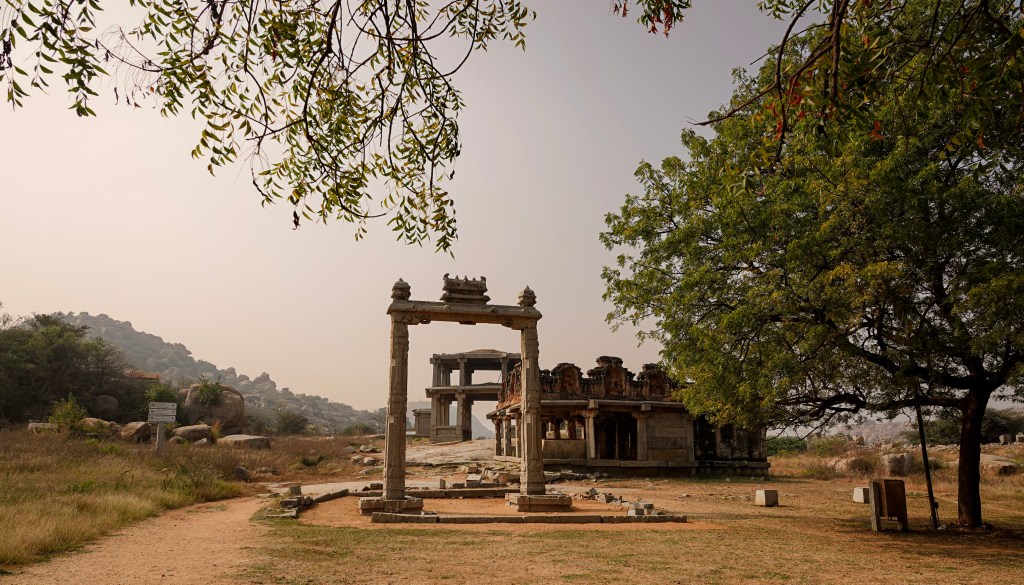
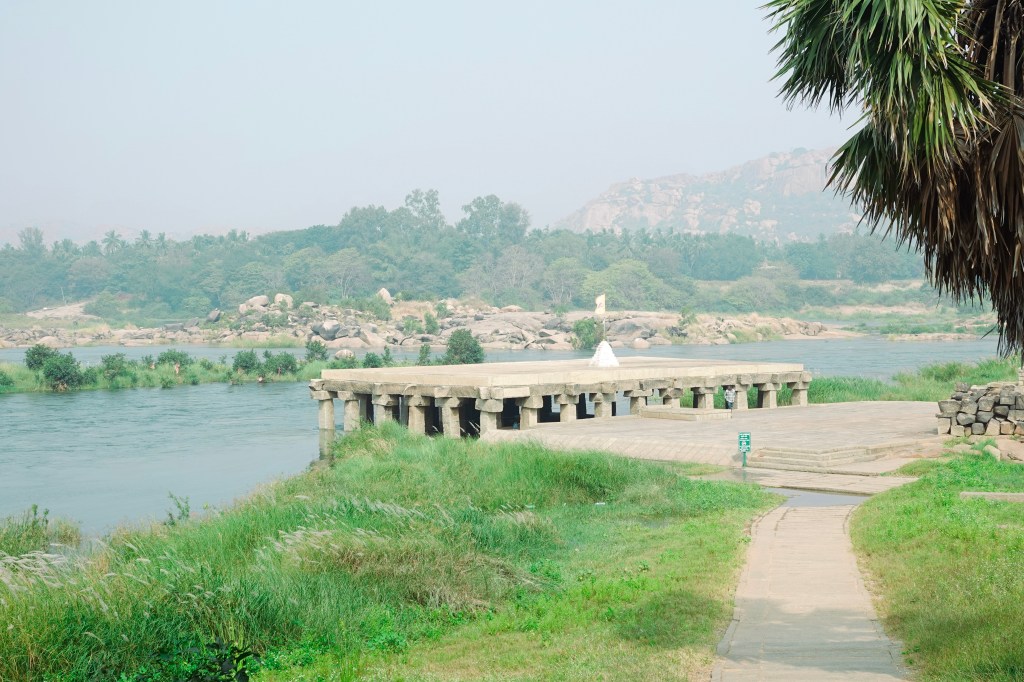
The coracle ride and a visit to the river ruins weren’t part of our itinerary. Nevertheless, they turned out to be among our best experiences. I highly suggest taking a guided tour of the ruins, as there are no markings or directions. Also, we rented the entire theppa, which made it easier to do what we wanted. Sunset is the best time for this visit

  1. Chakratirtha Where the River Swirls with Legends
  2. Setting Off on the Coracle: A Journey Into Stillness
  3. Stopping at the Secret Shrines Along the River
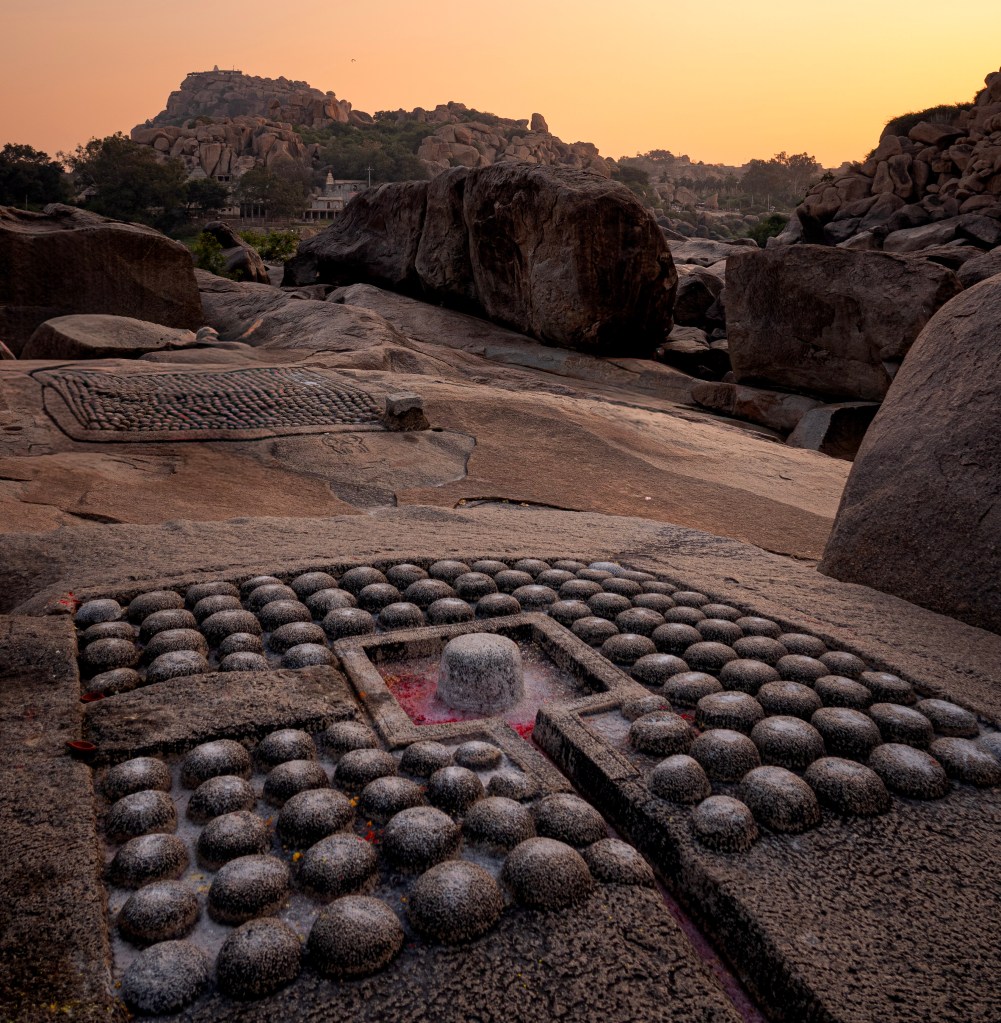
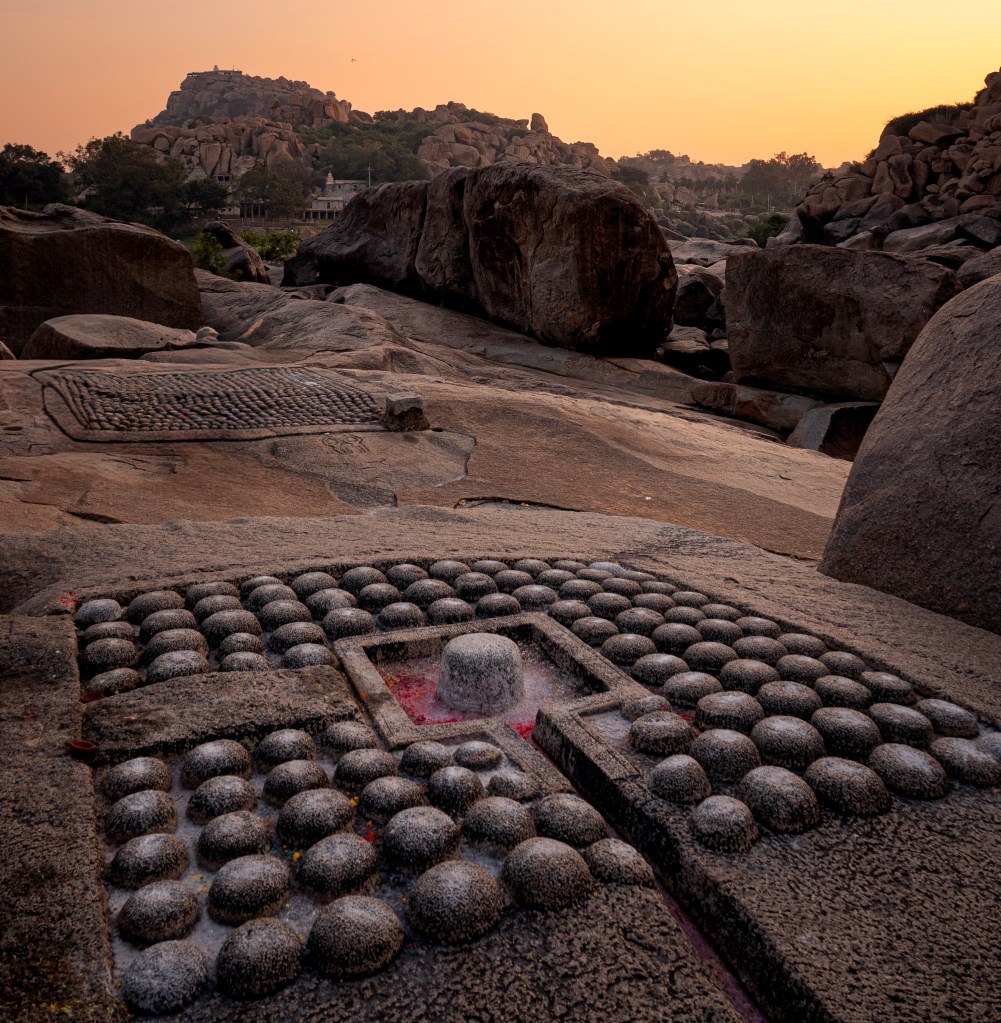
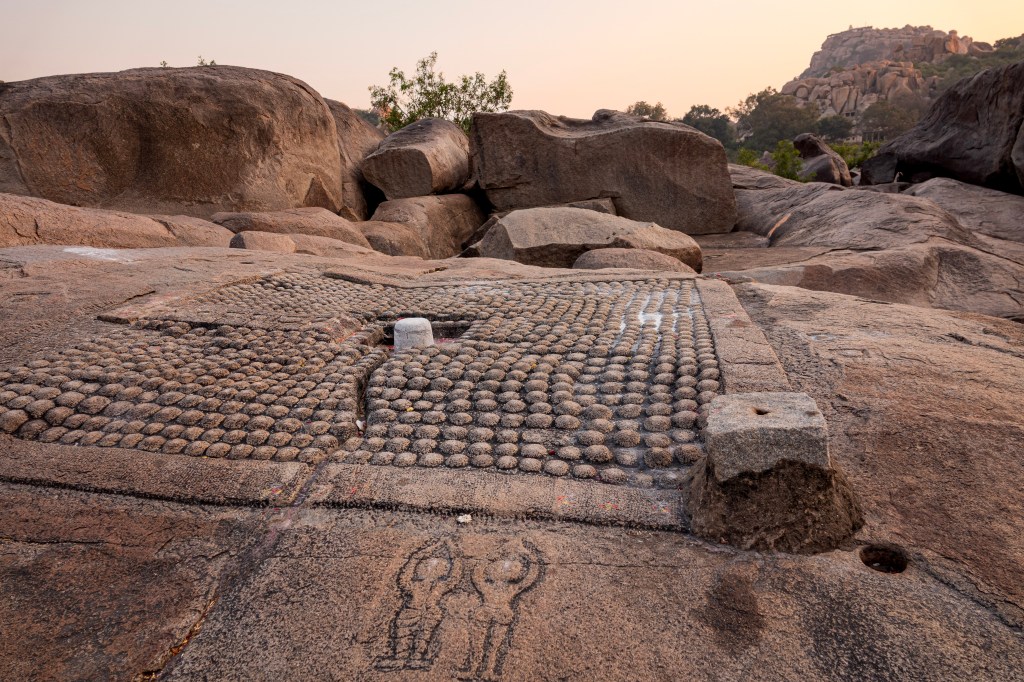
    1. ๐Ÿ•‰๏ธ Sahasralinga: A Thousand Lingas in Stone
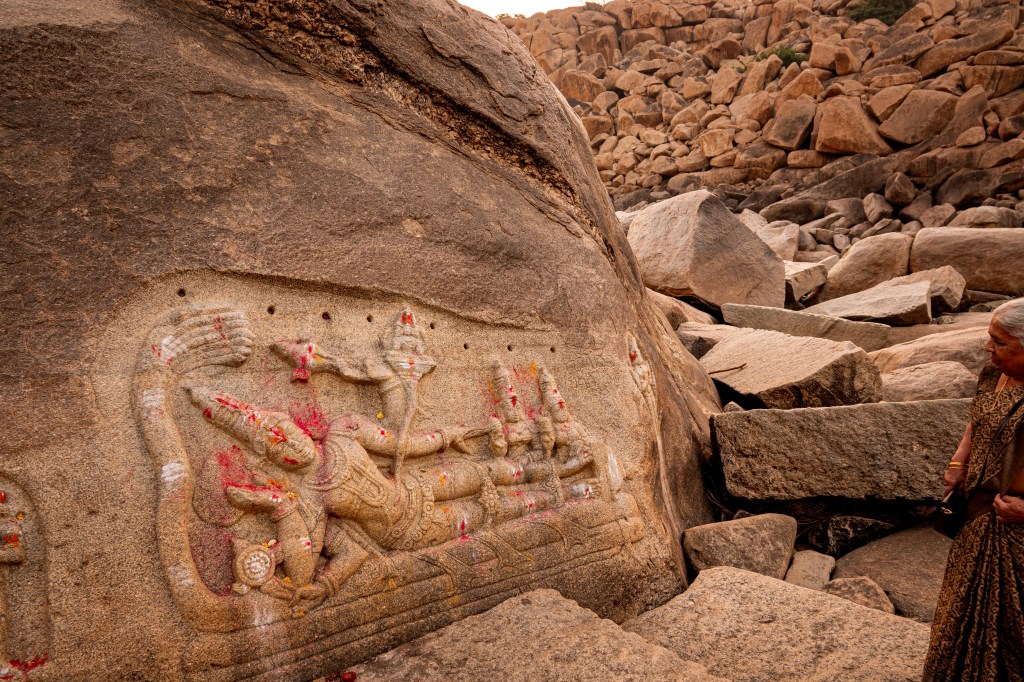
    2. ๐Ÿ›Œ Anantasayana: Vishnu in Eternal Repose
  4. Other river ruins worth visiting
  5. Narasimha Temple: A Quiet Shrine Revealed by the River
  6. The Kampabhupa Pathway: Echoes of Ancient Pilgrims
  7. Final thoughts

Chakratirtha Where the River Swirls with Legends

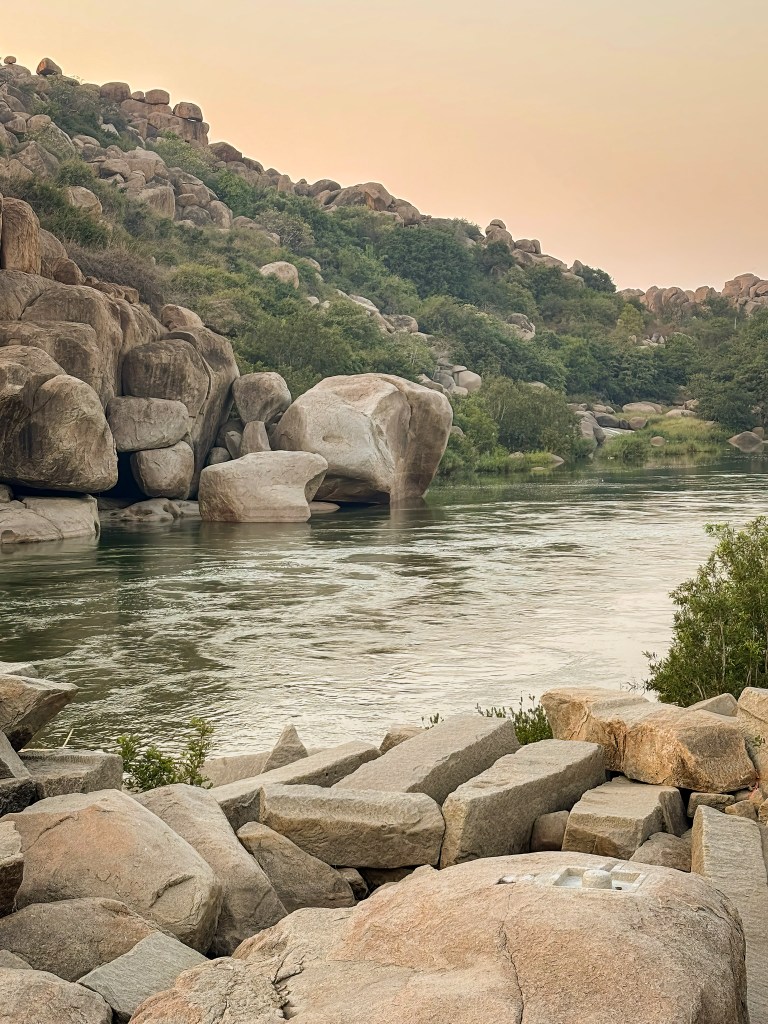
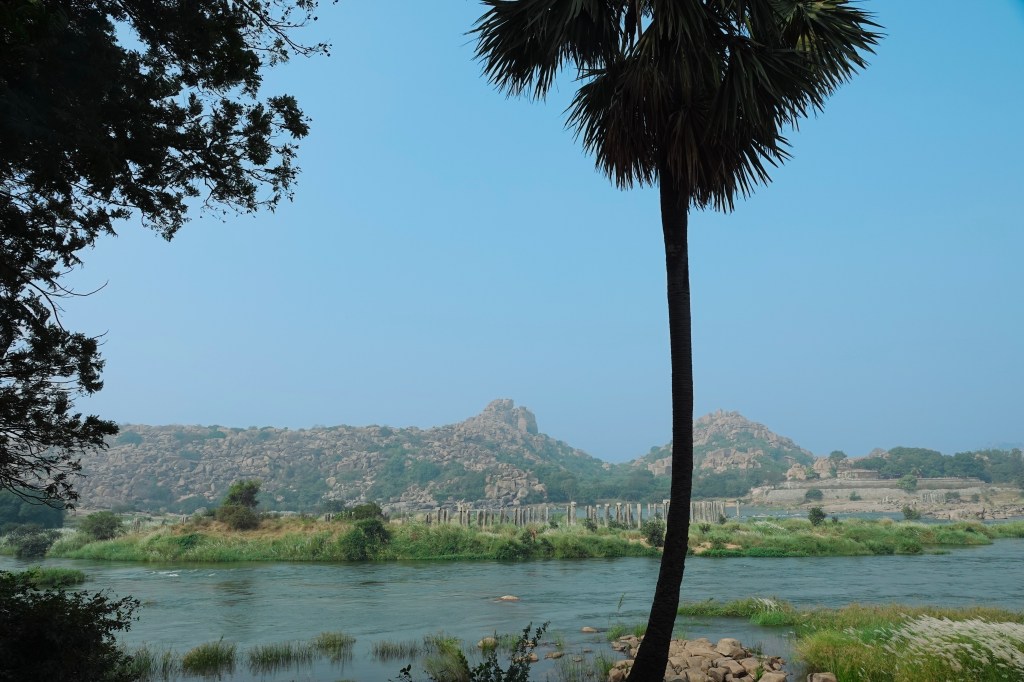
Chakratirthaโ€”literally โ€œthe sacred water body that swirlsโ€โ€”sits at the valley point between Matanga Hill and Rishyamukha Hill. Here, the Tungabhadra narrows, bends, and gathers force, creating a natural whirlpool that locals believe carries divine imprints. On auspicious days, pilgrims report seeing the forms of Rama, Sita, and Lakshmana in the swirling waters.

This is also the spot where, according to legend, Lord Shiva handed the Sudarshana Chakra to Lord Vishnu. The river, ever in motion, is said to echo that cosmic exchange.

Pilgrims still take a holy dip here before climbing the steps to the Kodandarama Templeโ€”a shrine carved into a massive boulder. At the Kodandarama temple, Rama stands with a bow in hand. Sita is to his left. Lakshmana and Hanuman are by his side. The nearby ancient pavilions are weathered yet dignified. They have sheltered generations of devotees. People have paused here to rest or pray. Others have simply breathed in the place’s sanctity.

Setting Off on the Coracle: A Journey Into Stillness

From the flat rocky bankโ€”etched with Shiva lingas, footprints, and devotional carvingsโ€”youโ€™ll spot coracles drying in the sun. These round bamboo boats, tarโ€‘coated and impossibly light, are your gateway to one of Hampiโ€™s most serene experiences.

Thereโ€™s no motor, no rushโ€”just the rhythmic dip of the oar and the soft lap of water against bamboo. Itโ€™s the kind of silence that makes you notice everything. You see the shimmer of weeds drifting downstream. You notice the play of light on boulders. You hear the faint echo of temple bells carried by the wind.

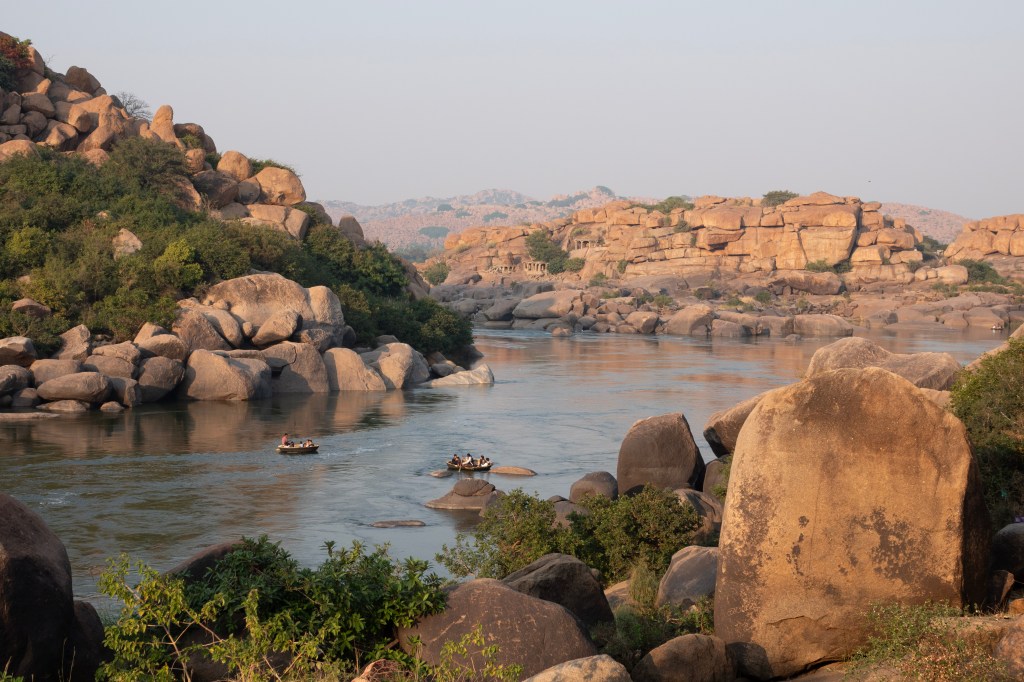
A coracle ride at Chakra Tirtha is one of Hampi’s most iconic experiences, blending ancient transportation with spiritual sightseeing. Locally known as Teppa or Dongi, these circular boats have glided across the Tungabhadra River for centuries

The Chakra Tirtha Experience

The ride at Chakra Tirtha is highly scenic. It navigates a narrow, boulder-strewn stretch of the river.

  • Key Highlights: Rides typically pass the Anantashayana Vishnu carving. It features a massive reclining Vishnu relief. You will see the Sahasra Linga, comprising 1,008 Shiva Lingas carved into a single rock bed. The rides also showcase diverse riverside ruins.
  • Cost & Duration: A 30-minute ride typically costs โ‚น500 per person. A full-hour ride (covering more ruins and islands) costs โ‚น800 to โ‚น1,000. We hired the entire coracle for 3 of us. We paid approximately โ‚น6000 per hour. It was a more intimate guided tour with the boatman. I was pleasantly surprised to see life jackets being provided for this ride.
  • The “Spin”: For an adventurous touch, boatmen often give the coracle a high-speed spin in the water upon demand. 

History of the Theppa or Coracle

The coracle is one of the world’s oldest boat designs, used for over 2,000 years for fishing

  • Ancient Origins: In the 16th century, the Portuguese traveler Domingo Paes marveled at these “round basket-boats.” He noted their ability to carry up to 20 people.
  • Strategic Design: The circular, bowl-like shape was perfected for Hampi’s unique environment. It allows the boat to run aground. This prevents capsizing, making it ideal for the river’s strong currents and shallow, rocky beds.
  • Traditional Construction:
    • Frame: A lattice of split bamboo or willow shoots.
    • Skin: Historically made of animal hides (bullock or horse), modern coracles now use heavy-duty plastic or PVC sheets.
    • Waterproofing: The exterior is coated with bitumen (tar) or resin to guarantee total water tightness.
  • Legacy: During the Vijayanagar Empire, they were vital for transporting grains, construction materials for temples, and ferrying pilgrims to holy sites

Stopping at the Secret Shrines Along the River

The beauty of the Chakratirtha coracle ride is that it doesnโ€™t just take you across the river. It takes you into Hampiโ€™s hidden spiritual landscape.

๐Ÿ•‰๏ธ Sahasralinga: A Thousand Lingas in Stone

You glide a short distance downstream and come to a quiet stretch of riverbank. Our coracle stopped here. We were guided towards the hidden temples. The first of these is Sahasra Linga or Koti linga. Reaching this location required some boulder-hopping, and there is no clear direction. I don’t think we would have found this place without our boatman leading the way.

Sahasra Linga is a significant rock-cut site. It features two primary groups of lingas: one set of 108 and a larger, symmetrical grid of 1,008.

Location & Access

  • Proximity: It is located a short distance (approx. 400โ€“500 meters) east of the Chakra Tirtha bathing ghat, along the southern bank of the Tungabhadra River.
  • Accessibility: Reaching the site by land requires a challenging trek over uneven boulders.
  • Visibility: The carvings are best viewed during the dry season (December to May). River levels are low during this time. Many carvings can become submerged during the monsoon.

Why were lingas carved into the rock bed? I wasn’t able to find a clear answer to the origin of these remarkable carvings. Some researchers suggest that the carvings date back to the Vijayanagara Empire. These intricate designs were likely meant for worship and reflection in an open-air sanctuary. The second theory is that these lingas might have been crafted by devotees. They could have created them as a form of devotion and reverence. Additionally, our guide mentioned that a sage created these carvings. He wanted to offer a convenient alternative for worshipers who could not visit the famous Koti Lingas spread across Hampi.

Symbolism: The number 1,008 is spiritually significant, corresponding to the Shiva Sahasranama (the thousand names of Lord Shiva).

๐Ÿ›Œ Anantasayana: Vishnu in Eternal Repose

Further along the river, tucked between boulders and half-hidden by the landscape, is one of Hampiโ€™s most peaceful carvings. It is Anantasayana, the reclining Vishnu.

Here, Vishnu rests on the serpent Adishesha, eyes half-closed, the world held in balance by his cosmic sleep. The carving is weathered, softened by centuries of wind and water, but its serenity is unmistakable.

Thereโ€™s something profoundly calming about arriving here by coracle. You step onto the warm rock. The river flows quietly behind you. Suddenly, the entire scene feels like a meditation.

Other river ruins worth visiting

There are also a few other ruins that are worth visiting. One of them is a small sanctuary accessible by crawling under a boulder.

Several gods, including Surya riding on his chariot, are carved into the rock here. You can also see a pavilion built for devotees on the riverbank. Another noteworthy sight is a rock that strikingly resembles an elephant. This natural marvel has captured the imagination of many. Our guide mentioned that the coracle operators, when water levels are low, take passengers under the majestic Elephant Rock. This provides a unique perspective on this ancient marvel. During the monsoon season, though, the temple and its carvings are submerged. It only emerges again with the changing tides and seasons.

Narasimha Temple: A Quiet Shrine Revealed by the River

You can also visit the Narashimha temple on the same coracle ride. We ran out of time and couldn’t visit the temple. A short walk takes you through scattered boulders and ancient stone steps. They lead you to the temple. Its weathered facade blends seamlessly into the rocky hillside. The temple is a multi-story structure with characteristic Vijayanagara-style pillars. It has three sanctums originally dedicated to different forms of Vishnu: Venugopala, Lakshminarasimha, and Vishnu-Purushottama.

The Kampabhupa Pathway: Echoes of Ancient Pilgrims

As you return toward Chakratirtha, you may notice the broad stone pathway running along the riverโ€”the Kampabhupa Pathway. Built in the 14th century by Kampabhupa, son of Vira Harihara Raya, this ancient route once connected Virupaksha Bazaar to the sacred riverbank and onward to Vittalapura.

During high waters, the path disappears completely, as if the river reclaims it for a while. But when visible, itโ€™s a beautiful reminder of the pilgrims who walked this very stretch centuries before you floated past in a coracle.

Final thoughts

A coracle ride at Chakratirtha isnโ€™t just a river crossingโ€”itโ€™s a slow unfolding of Hampiโ€™s quieter stories. The sacred whirlpool, the Kodandarama Temple, the secret shrines of Sahasralinga and Anantasayana, the ancient pavilions and pathwaysโ€ฆ each stop feels like a page from a living epic.

By the time you return to the rocky bank, the sun warm on your shoulders and the riverโ€™s rhythm still in your body, you realize this journey has left its own swirl within youโ€”gentle, sacred, unforgettable.

Krishna Temple, Hampi โ€” A Royal Monument of Victory and DevotionKrishna Temple

Traveling south from the Virupaksha complex, the road leads to Kamalapura. The landscape then opens into Krishnapura, another historic quarter of Hampiโ€™s sacred center. At its heart stands the Krishna Temple. It is a grand monument commissioned in 1515 CE by the Vijayanagara emperor Krishnadevaraya. This was to commemorate his celebrated victory over the Gajapati rulers of Orissa. The temple once housed a granite icon of the infant Krishna. This icon was seized from the fort at Udayagiri during this campaign. It is now preserved at theย Government State Museum in Chennai.

A Temple Anchored in its Urban Landscape

Like other major shrines in Hampi, the Krishna Temple is aligned with a broad bazaar street extending eastward. Today, this street sits at a lower level than the temple itself. Its colonnades are partly engulfed by fields of sugarcane and banana plantations. This setting creates a striking contrast between cultivated greenery and monumental stone.

A few metres north of the bazaar lies a rectangular tank. It is framed by additional colonnades and crowned by a small pavilion that rises from the water. This tank is nestled beneath a rocky overhang. It forms one of the most picturesque corners of the complex. If you have time, this is a good place get some nice photos.

The Grand Gopura: A Royal Statement

The eastern entrance gopura immediately announces the templeโ€™s royal origins. Though now dilapidated, its frontal portico remains impressive for the sheer height of its granite columns. These columns were recently reset during conservation efforts. Above them rises the brick superstructure, only partially preserved, but still bearing traces of plaster sculptures. Among these are battle scenes on the western face. These scenes possibly depict Krishnadevarayaโ€™s Orissa campaign. Later renovations have simplified many of the original figures.

Within the gopura passageway, the doorway jambs are carved with elegant maidens entwined with creepers. A charming hareโ€‘inโ€‘theโ€‘moon motif appears between nagas on the underside of one lintel. This is a delightful detail easily missed by hurried visitors.

Inside the Temple: Mandapas, Shrines, and Royal Inscriptions

A large inscription slab stands at the centre of the walled compound. Krishnadevaraya himself set it up. It records his military exploits and benefactions. The carving is somewhat hastily executed, but the monument remains a valuable historical record of the emperorโ€™s reign.

The temple layout follows the classic Vijayanagara sequence:

  • a 25โ€‘bay open mandapa,
  • an enclosed nineโ€‘bay mandapa with side porches,
  • and a towered sanctuary surrounded by an unlit circumambulatory passage.

Minor shrines occupy the outer corners of the enclosure. A doubleโ€‘sanctuaried goddess temple stands to the north. It adds to the ritual complexity of the site.

Layers of Construction and Adaptation

Along the inner perimeter is a continuous colonnade. It is interrupted on the south side by a passageway. This leads to an earlier pavilionโ€‘like gateway. This older structure became part of the Krishna Temple complex. It was crowned with a brick tower. This illustrates the Vijayanagara habit of integrating preโ€‘existing buildings into new architectural schemes.

Beyond this lies an outer-walled enclosure, where a curious sixโ€‘domed structure stands. The building is built of rubble coated in plaster. It has internal arches and steps leading to the roof. The building features holes in the domes. These are clear evidence that it once served as a granary. Its presence highlights the temple’s significance as a sacred space. It also emphasizes its role as a center of economic and administrative activity.

Final Thoughts on the Krishna Temple

The Krishna Temple is one of those places in Hampi where layers of history feel unusually close to the surface. You sense Krishnadevarayaโ€™s ambition in the soaring gopura. You also feel the devotional pulse that once centered around the nowโ€‘empty sanctuary. Even in its ruined state, the complex carries the unmistakable imprint of royal patronage. It is a temple built not only for worship. It commemorates a moment of triumph that shaped the empireโ€™s identity.