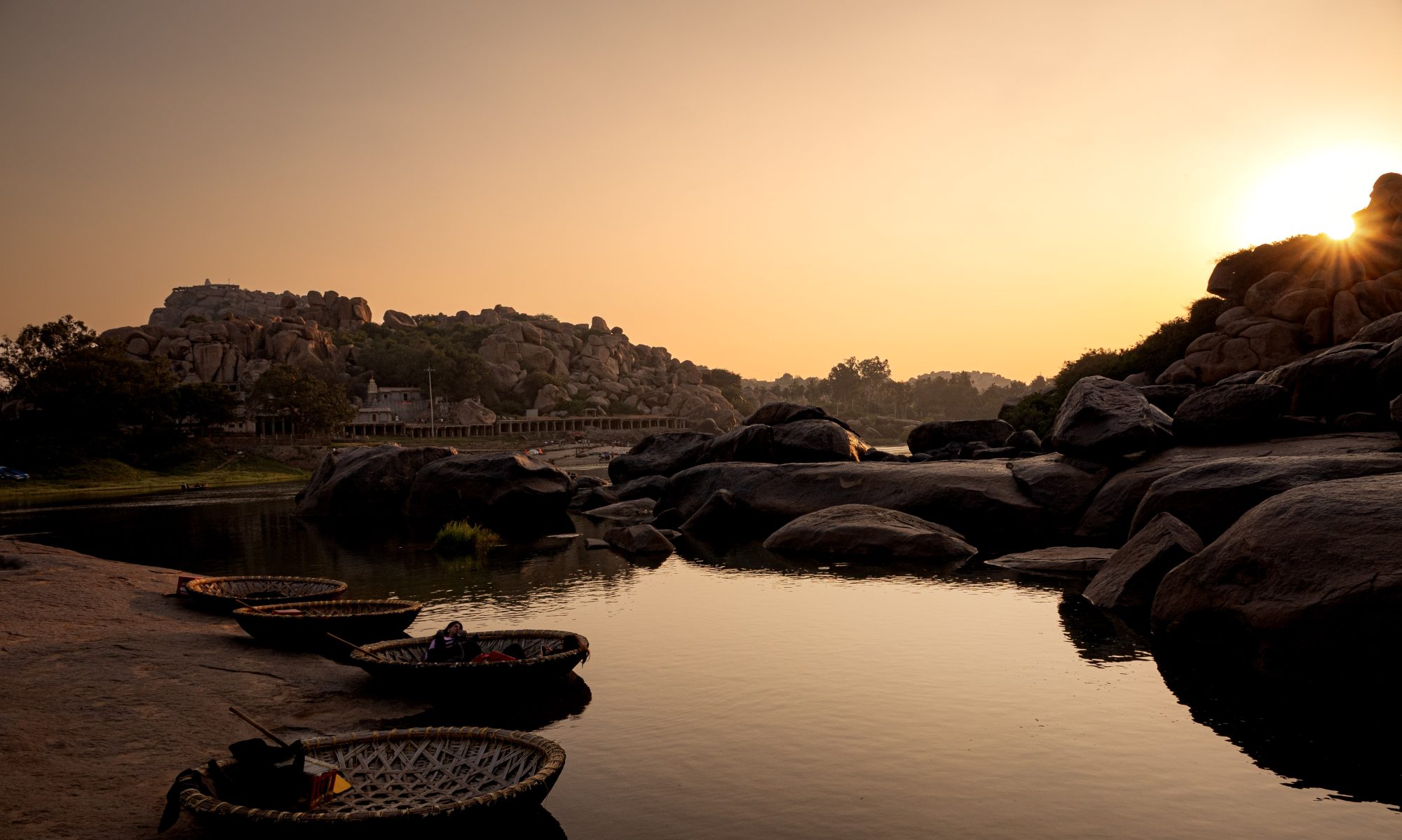
Hemakuta Hill is one of Hampi’s most quietly enchanting landscapes. It’s a place where mythology, early temple architecture, and sweeping granite vistas come together. Rising gently above the Virupaksha Temple complex, this hill holds some of the region’s oldest shrines.
A Sacred Hill of Gold and Fire
Local folklore gives Hemakuta its luminous name. According to mythology, Lord Shiva performed penance on this very hill long ago. This was before he agreed to marry Pampa, who is often identified with Parvati. She was a local goddess whose devotion moved him deeply. When Shiva finally consented to the marriage, it rained gold on the hill. Since hema means gold in Sanskrit, the place became known as Hemakuta, the “Hill of Gold.”
Another legend adds a dramatic layer to this sacred landscape. Kama, the god of love, once tried to distract Shiva from his penance. He wanted to help Pampa win Shiva’s affection. Enraged, Shiva opened his third eye and reduced Kama to ashes right here on Hemakuta. When Kama’s wife Rathi pleaded for mercy, Shiva relented — restoring Kama, but only in spirit, not in physical form. This myth of destruction, compassion, and rebirth deepened Hemakuta’s association with Shiva. It inspired generations to build shrines to him across the hill.
Walking Through Early Vijayanagara History
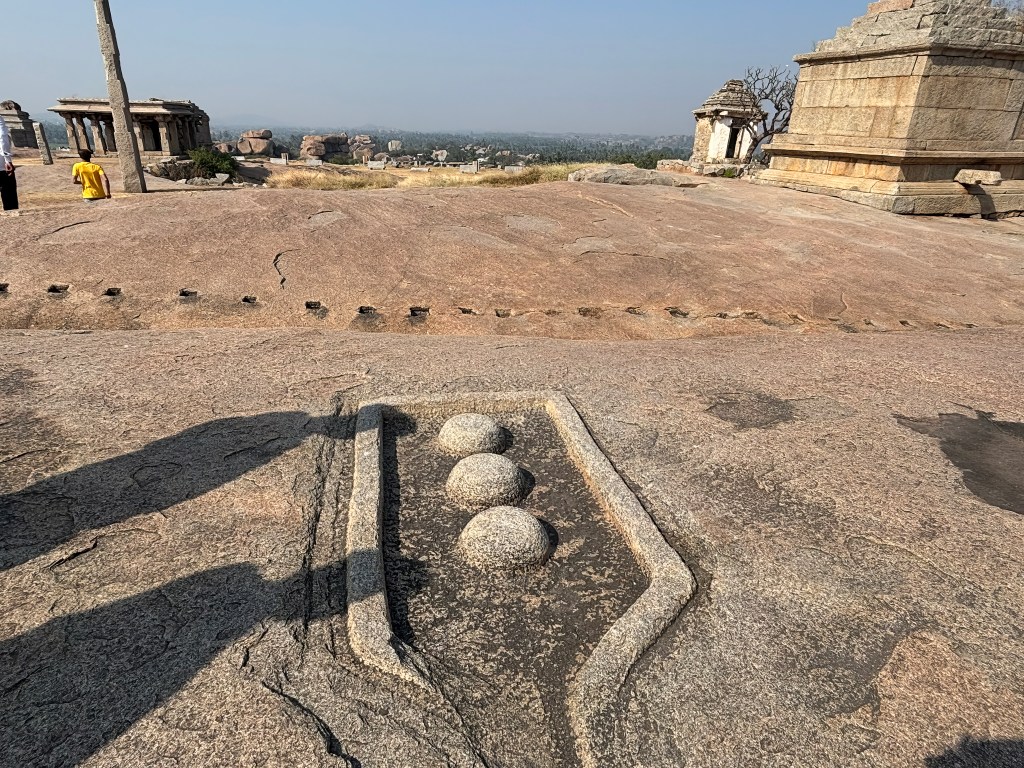
A modest 15th‑century gopura entrance on the western side marks the beginning of the Hemakuta complex. It opens into a fortified zone of small shrines. These shrines are some of the best-preserved examples of pre‑ and early‑Vijayanagara architecture. These temples sit dramatically on a sloping granite shelf.
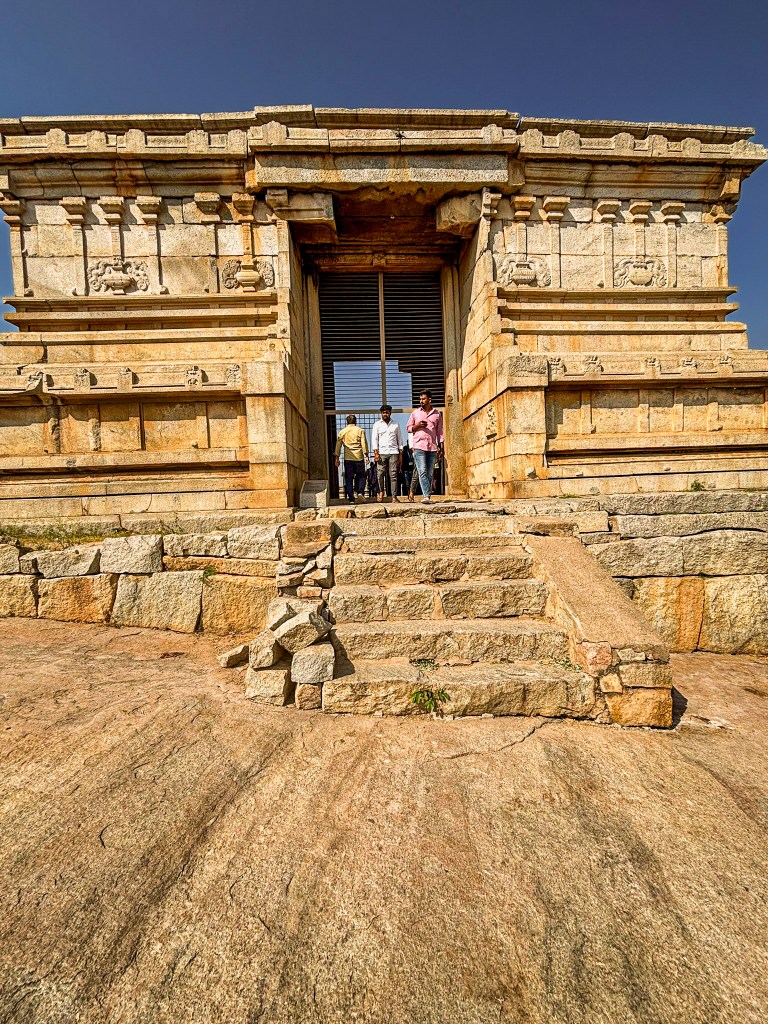
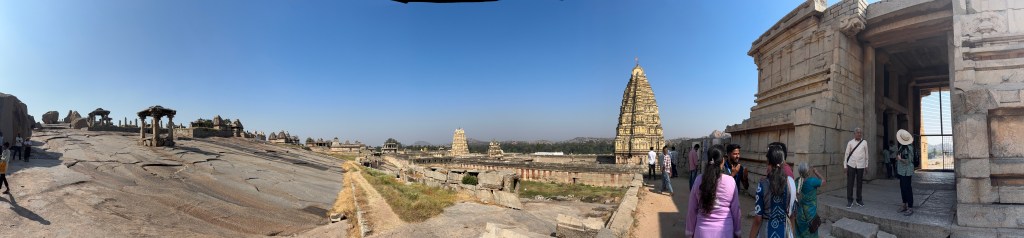
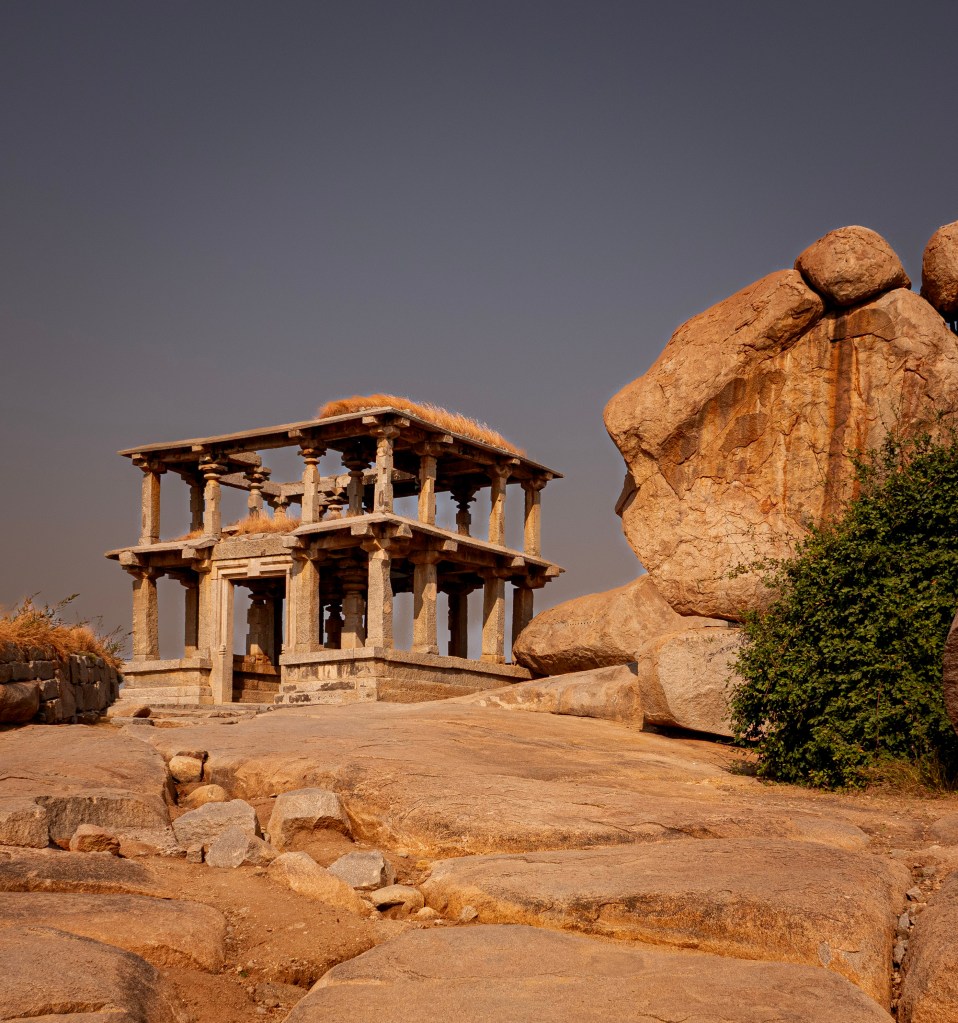
Centuries ago, a processional path connected the Tungabhadra River to the Virupaksha shrine. It then climbed through a series of pavilion-like gateways to the summit of Hemakuta. When Krishnadevaraya expanded the Virupaksha complex in the early 1500s, this ancient route was severed. The gateways persist, including a striking double-storeyed pavilion near the top. This pavilion offers panoramic views of the Tungabhadra valley.
Architecture of the Hemakuta Group of Temples
The architecture of the Hemakuta temples is unlike anything else in Hampi. They are deeply rooted in the Deccan traditions of the 13th and 14th centuries. Their clean lines and minimal ornamentation often lead visitors to mistake them for Jain temples.
Most of the temples here are compact, triple‑chambered structures crowned with pyramid‑like granite roofs. On the northern side of the hill, several shrines follow the Trikutachala style. Three sanctums are placed perpendicular to one another. They all open into a shared central hall. This layout creates a sense of balance and quiet symmetry, perfectly suited to the contemplative atmosphere of the hill.
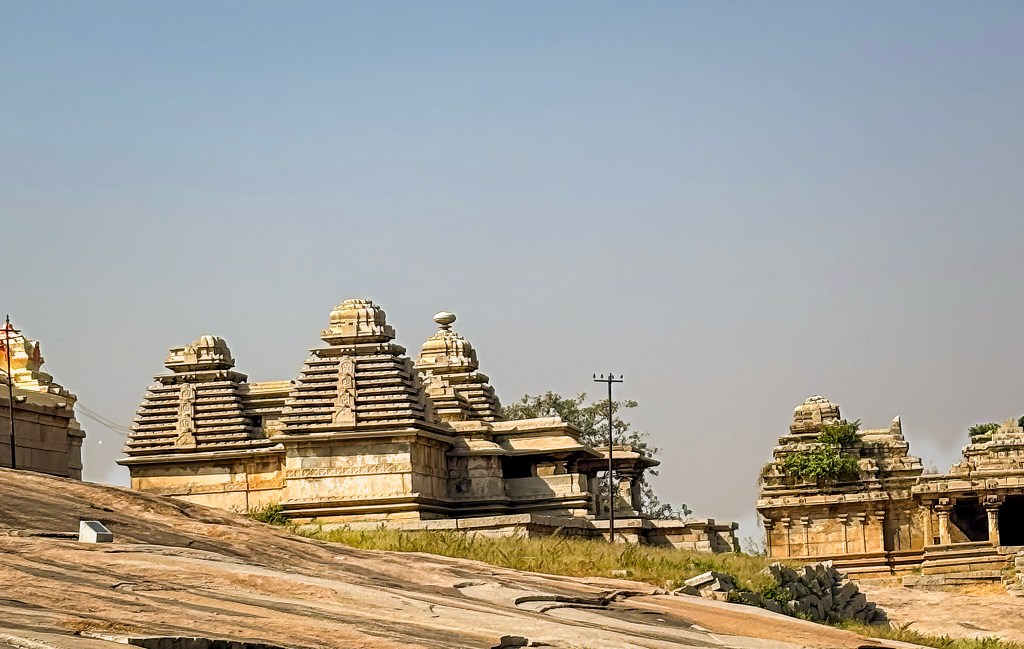
The outer walls are almost entirely plain. A delicate horizontal chain of floral motifs is the only interruption. It wraps around the structures. Other signature features include fluted foundations. The curved eaves gently overhang the walls. These details soften the granite’s stark geometry.
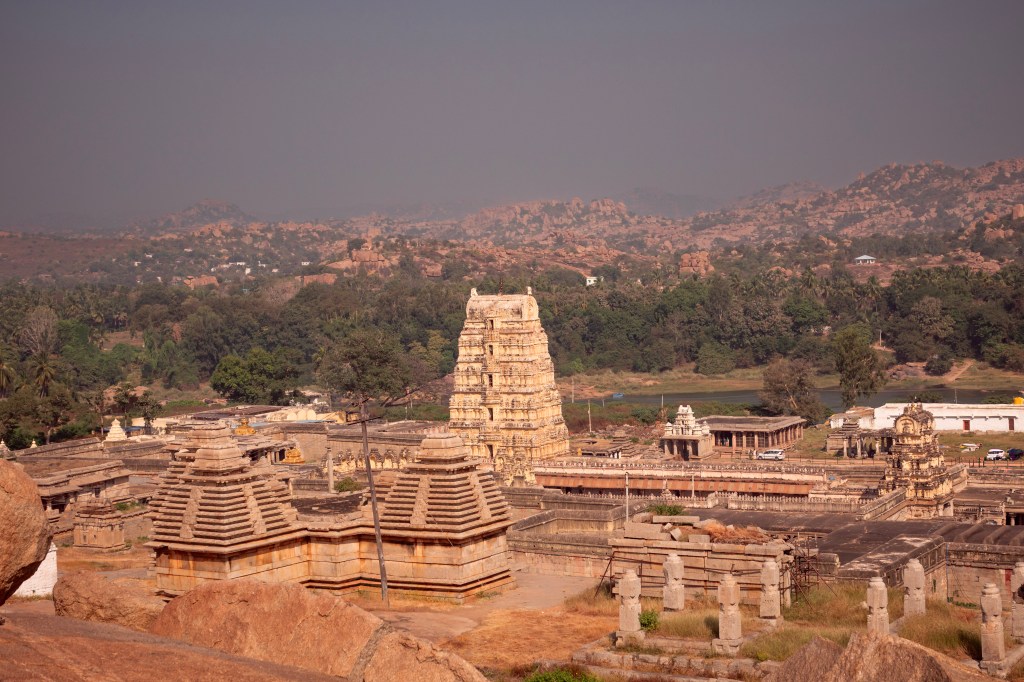
As you wander across the hilltop, you’ll encounter dozens of such shrines, scattered across the undulating sheet of rock. The largest and most elaborate clusters lie on the northern slope, facing the Virupaksha Temple complex. These are among the oldest surviving temples in Hampi, predating the Vijayanagara Empire itself.
Sacred Corners and Hidden Gems
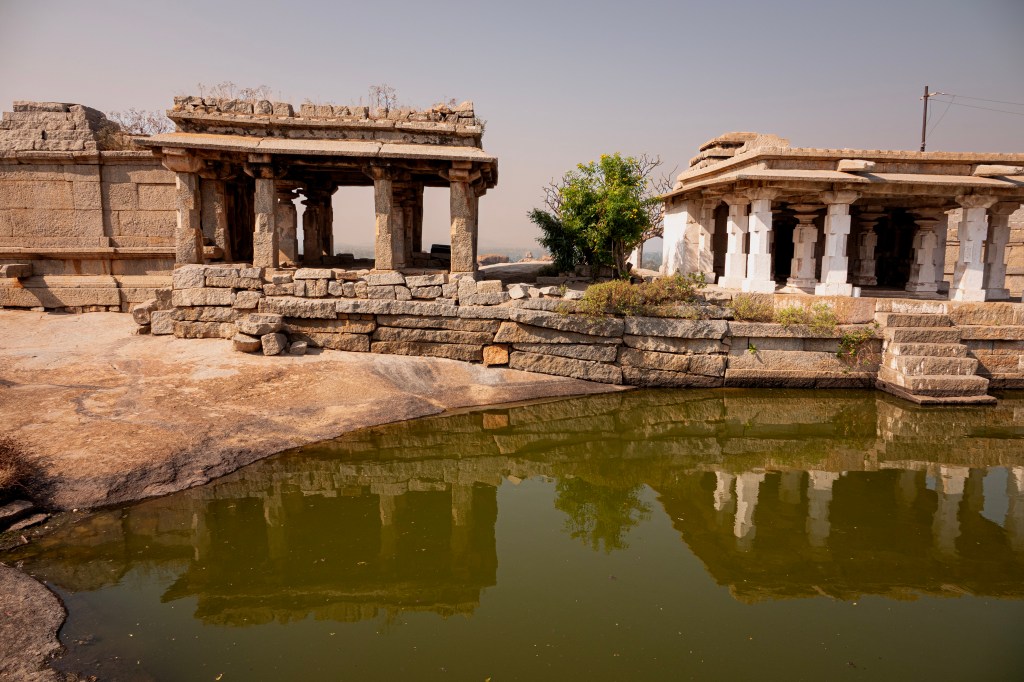
Further south, the landscape shifts. A small pond is next to a shrine known as the Mula Virupaksha Temple. This shrine is believed to be older than the grand Virupaksha Temple below. Its whitewashed hall features cubical pillars typical of pre‑Vijayanagara design. The porch opens directly onto the water. This is one of the few shrines on Hemakuta Hill that remains actively worshipped.
Just behind it stands a tiny chamber-like shrine with a pyramid roof, housing an image of Hanuman. This quiet corner is one of the best spots to watch a Hampi sunrise or sunset.
As you continue southward, the hill offers a natural balcony. It overlooks the Krishna Temple and Sasivekalu Ganesha. You can also see the twin monuments of Lakshminarasimha and Badavilinga. Here you’ll also find the two‑storeyed southern gateway, another remnant of the ancient processional path. Several temples in this area feature tall monolithic lamp posts, standing like silent sentinels before the shrines.
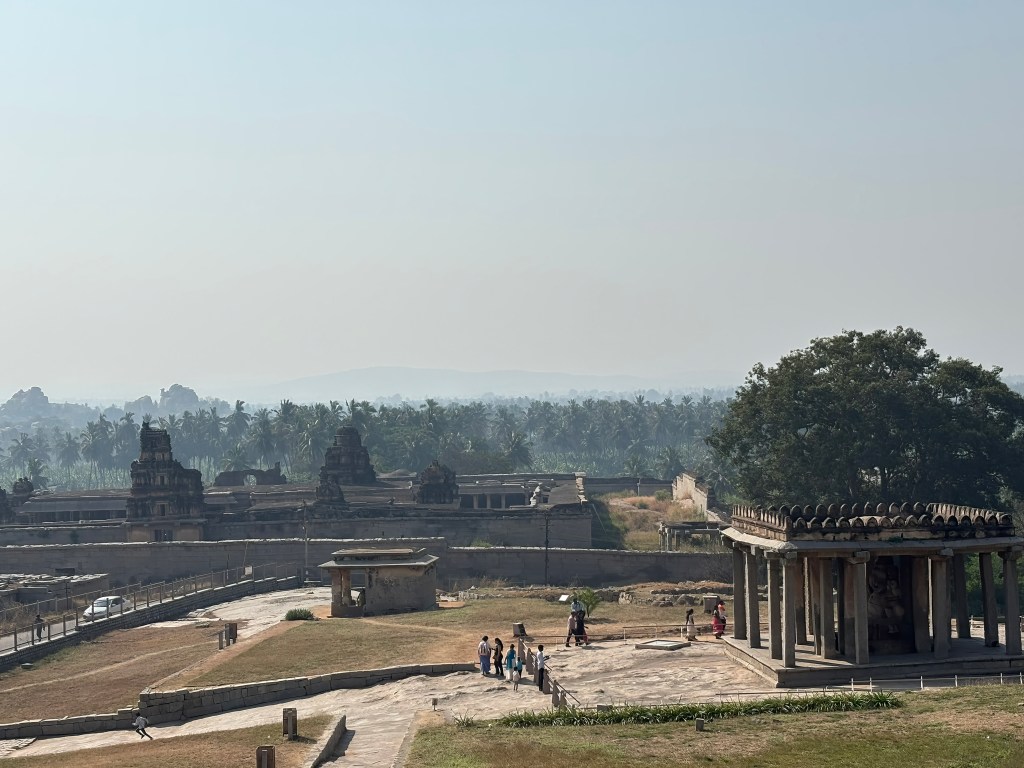
The entire hill is encircled by an ancient fortification wall. It is now broken in places but still traceable along the granite’s contours. It hints at the strategic and sacred importance Hemakuta once held.
A Hill That Holds Its Stories Lightly
Despite being at the very heart of Hampi, Hemakuta Hill feels surprisingly serene. You can easily spend hours wandering its slopes. Discover shrines tucked between boulders. Absorb the quiet stories etched into every surface.
Hemakuta is not a place of spectacle — it is a place of origins. It is a hill where gods once walked. Kings once prayed there. The earliest architectural whispers of Vijayanagara still linger in the wind.
 Peaks to Palaces
One Reply to “”