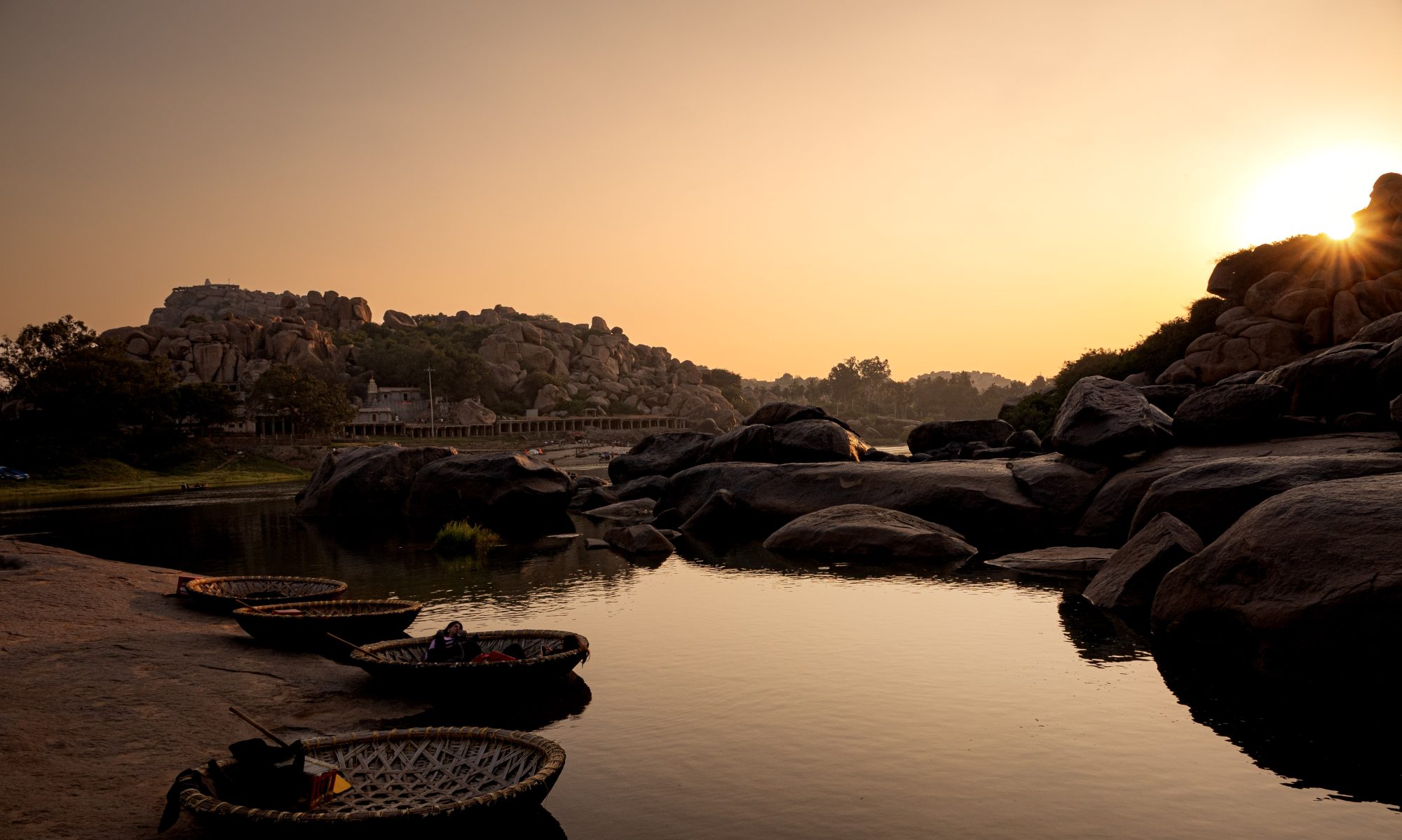
The Sasivekalu and Kadalekalu Ganesha temples are two of Hampi’s most significant monolithic shrines. They are located on the slopes of Hemakuta Hill. Both statues are carved from single granite boulders and exemplify the classical Vijayanagara architectural style.

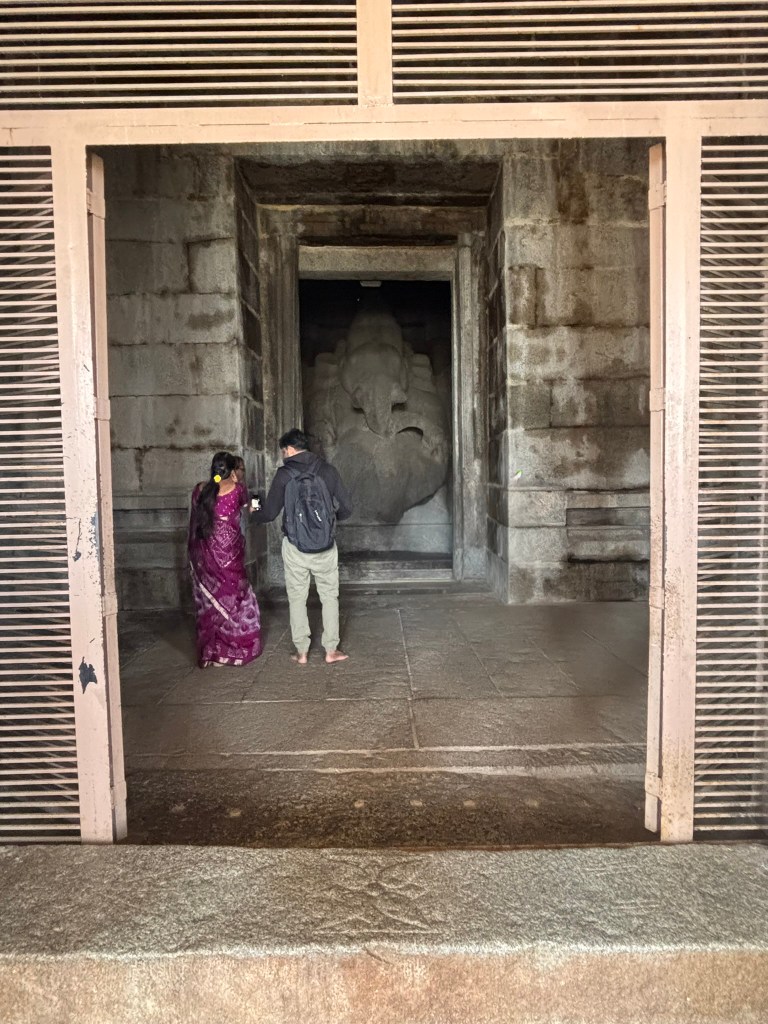
Sasivekalu Ganesha- Meaning Mustard seed Ganesha. Legend has it that it was commissioned by a mustard seed seller and hence the name. Walk behind the open pavilion to see a female form representing the mother of Ganesha.
- Physicality: Stands 2.4 meters (8 feet) tall.
- Iconography: Depicts Ganesha with a snake tied around his belly to prevent it from bursting after a large meal. He is seated in a half-lotus posture with four arms holding a goad, noose, broken tusk, and modak. A unique feature on the back depicts a giant hand, suggesting Ganesha is sitting in the lap of his mother, Goddess Parvati.
- Structure: Housed in an open, 16-pillared mandapa (pavilion) with a brick and mortar roof in the Indo-Saracenic style.
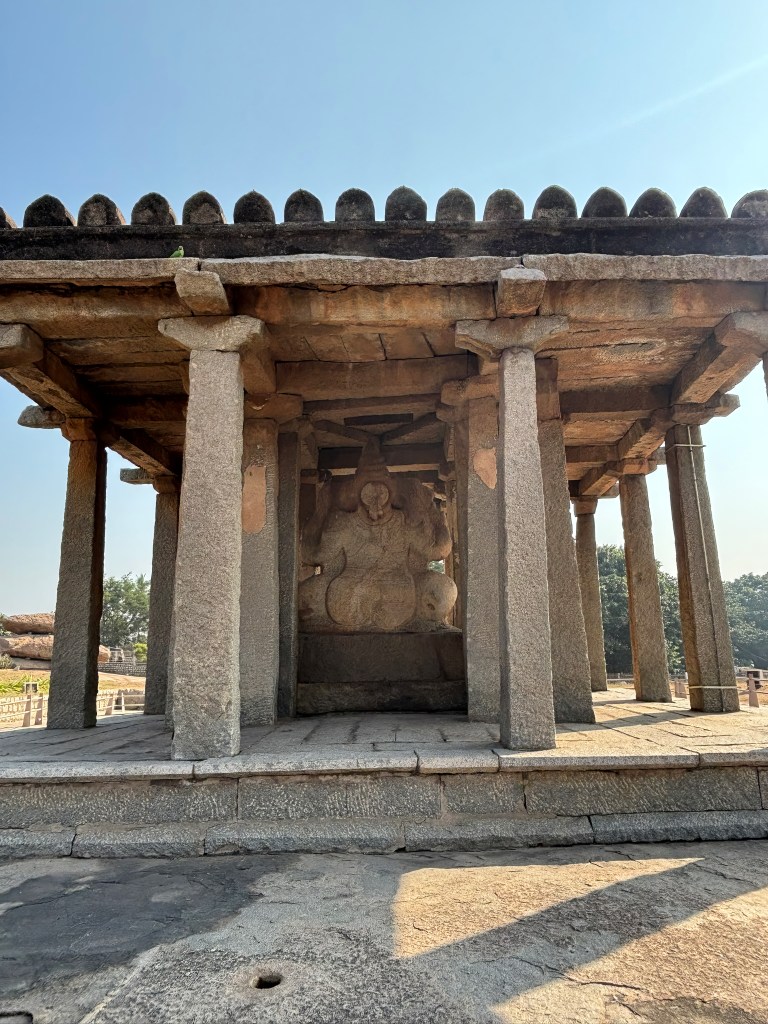
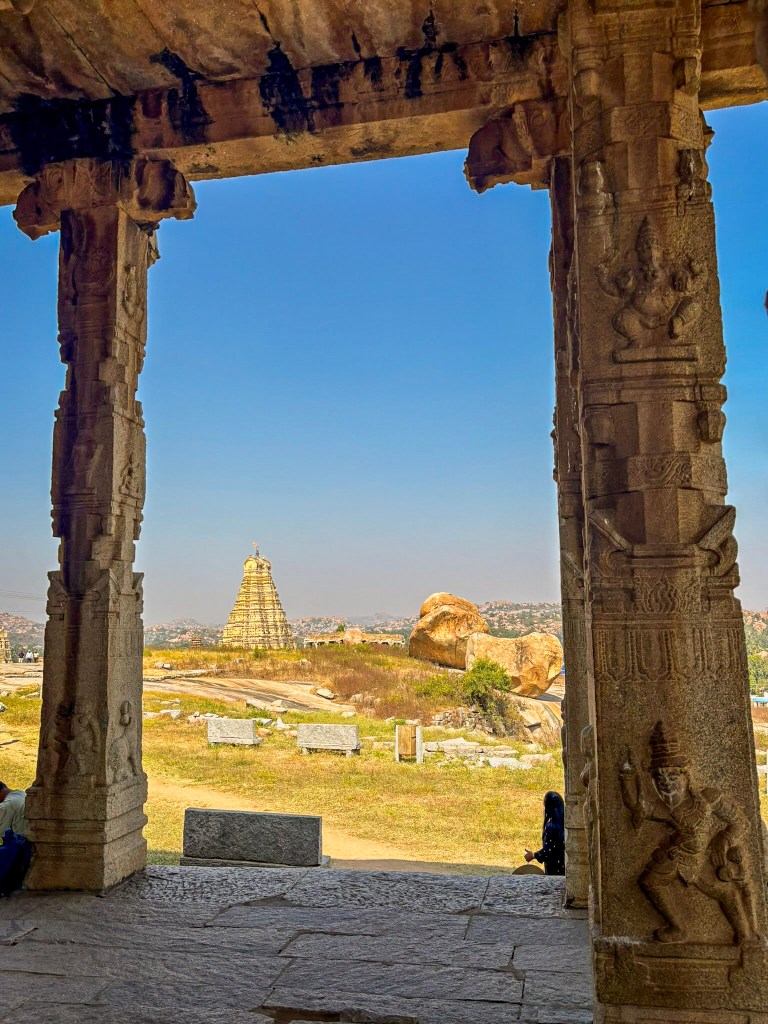
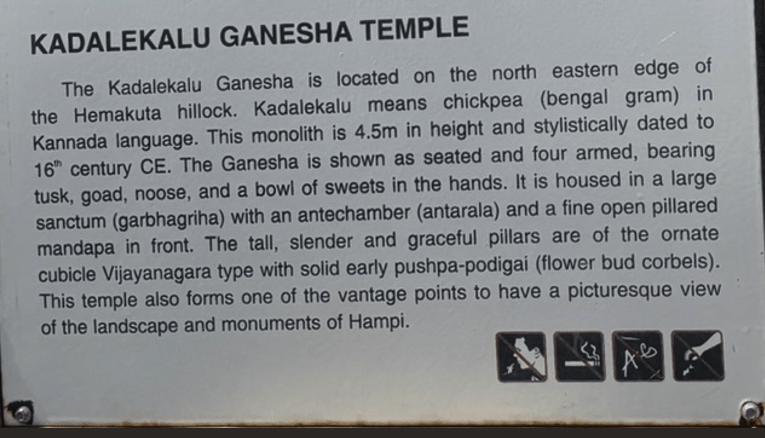
Kadalekalu Ganesha– Meaning Bengal gram Ganesh due to the belly resemblance to Bengal Gram. The open mandapa of this temple has some great views of the surrounding area of Hampi
- Physicality: Significantly larger at 4.5 meters (15 feet) tall.
- Iconography: Named for its belly’s resemblance to a Bengal gram (Kadalekalu).
- Structure: Features a formal temple layout with a large sanctum (garbhagriha) and an open-pillared mandapa with unusually tall, slender granite pillars adorned with intricate mythological carvings

Final Thoughts
Standing before the Sasivekalu and Kadalekalu Ganesha statues, it’s impossible not to feel the quiet power that defines Hampi. These monolithic forms are one modest and intimate, and the other towering and majestic. They capture the spirit of a city that once pulsed with royal ambition and artistic brilliance. What moved me most was how effortlessly Hampi blends myth and landscape, history and humanity. A mustard-seed seller commissioning a deity, a mother’s presence carved subtly into stone, a belly shaped like a Bengal gram—these details remind you that even in an imperial capital, ordinary lives and tender stories shaped the sacred,
 Peaks to Palaces
One Reply to “”