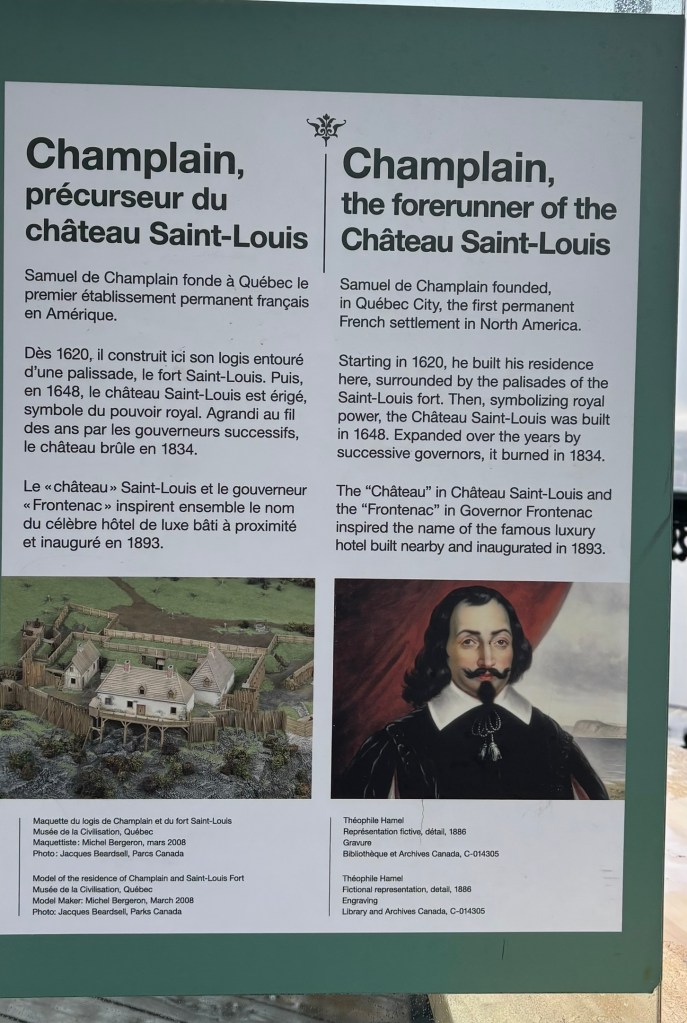
Staying at Château Frontenac: Inside Quebec City’s Iconic Castle Hotel

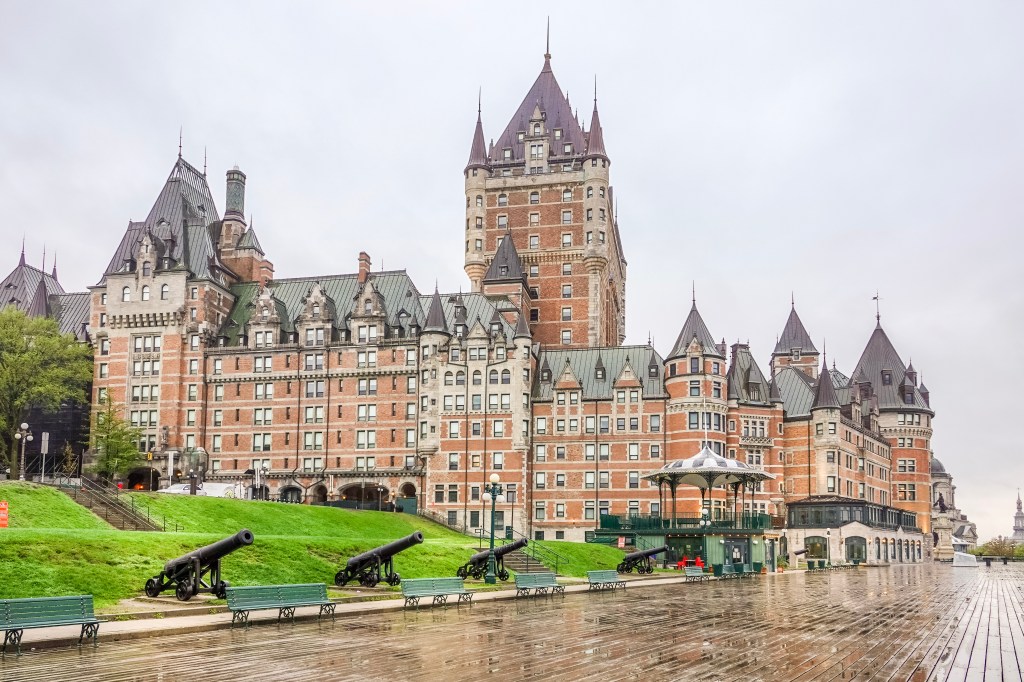
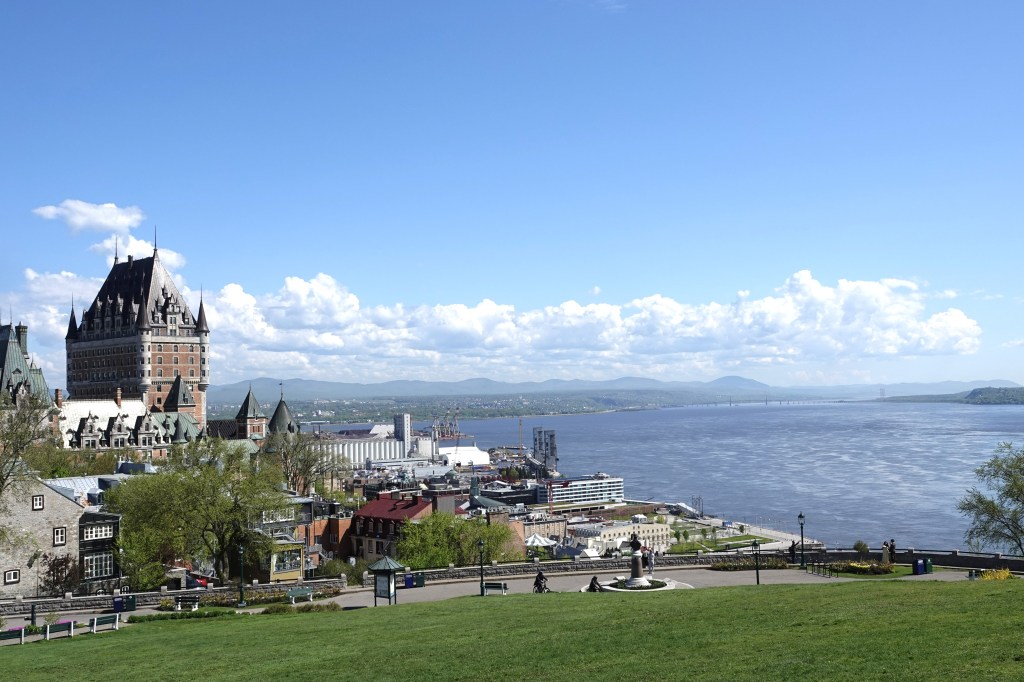
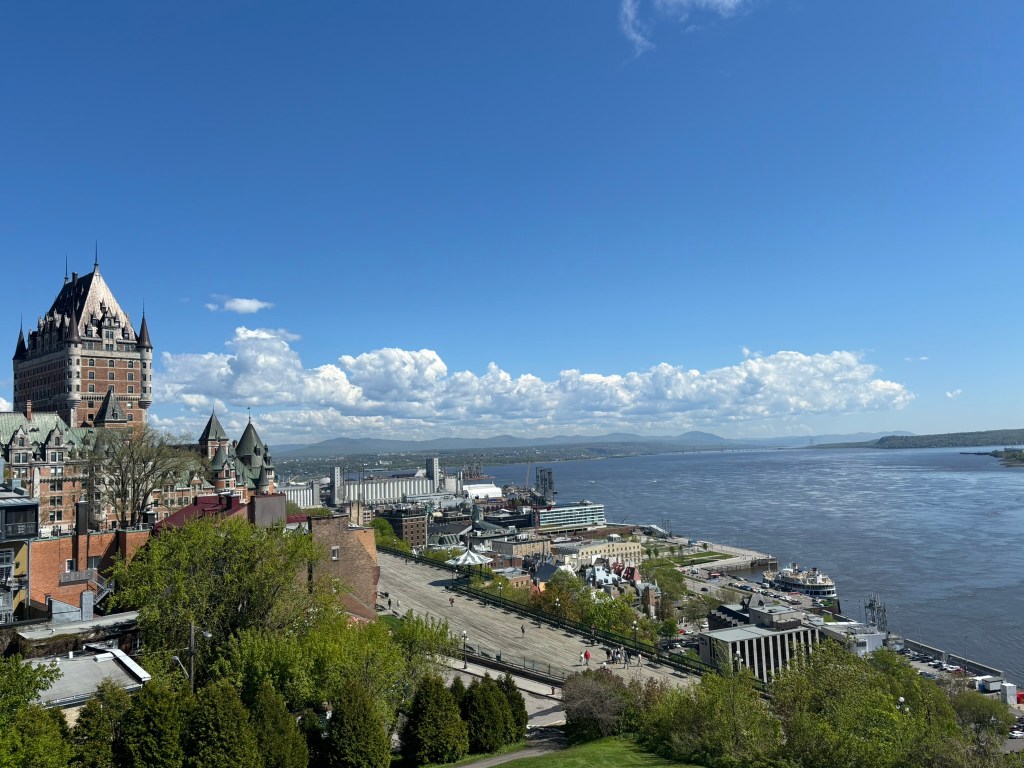
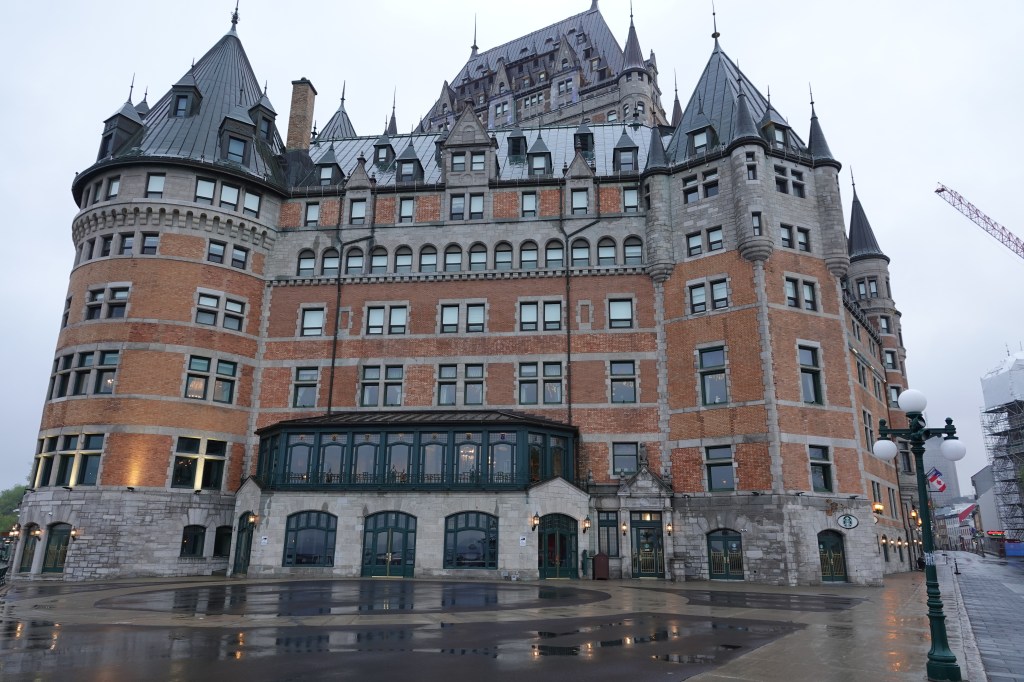
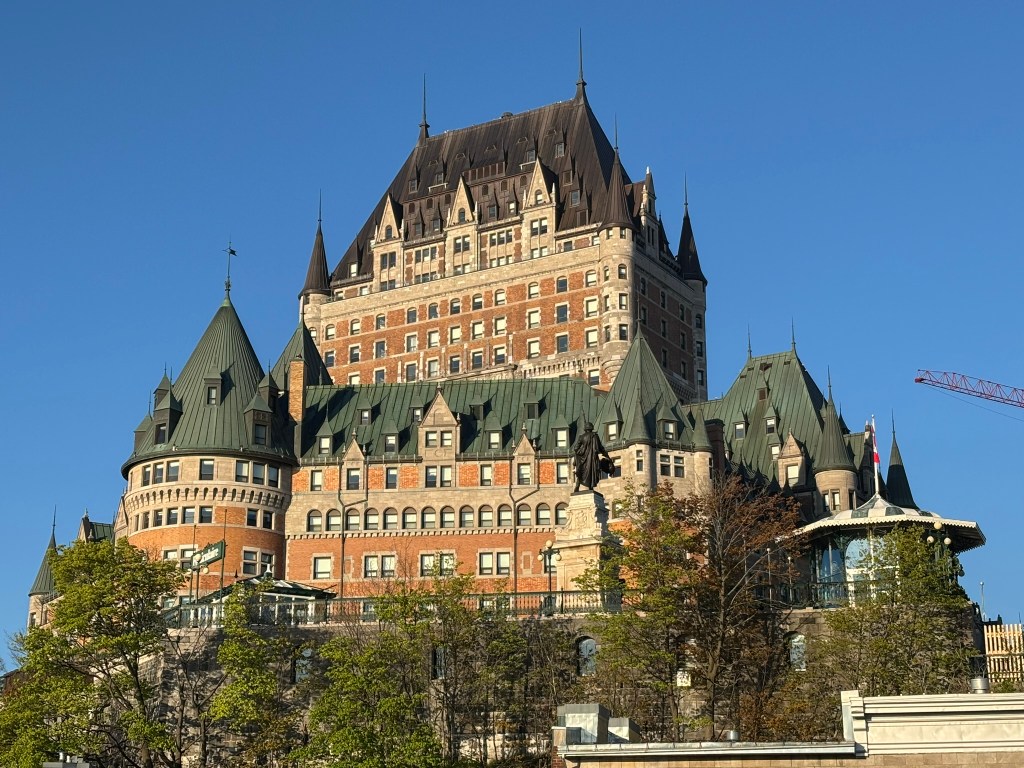
Some hotels are simply places to sleep, and others become part of the trip itself. Fairmont Le Château Frontenac is one of those rare hotels that feels inseparable from the destination. Perched above the St. Lawrence River in the heart of Old Quebec, the hotel looks like a castle from the outside and carries that same sense of grandeur inside, with historic architecture, polished service, elegant rooms, and dining spaces that invite you to slow down and enjoy the setting. It is considered one of the most photographed hotels in the world.

A stay here is ideal for travelers who want to be close to Quebec City’s most atmospheric streets while also experiencing one of Canada’s most iconic hotels. From the moment you arrive, the property feels special: old-world details, dramatic public spaces, and the feeling that you are staying somewhere with a real story behind it. We stayed here 2 nights in May of 2025, right before the peak tourist season began.

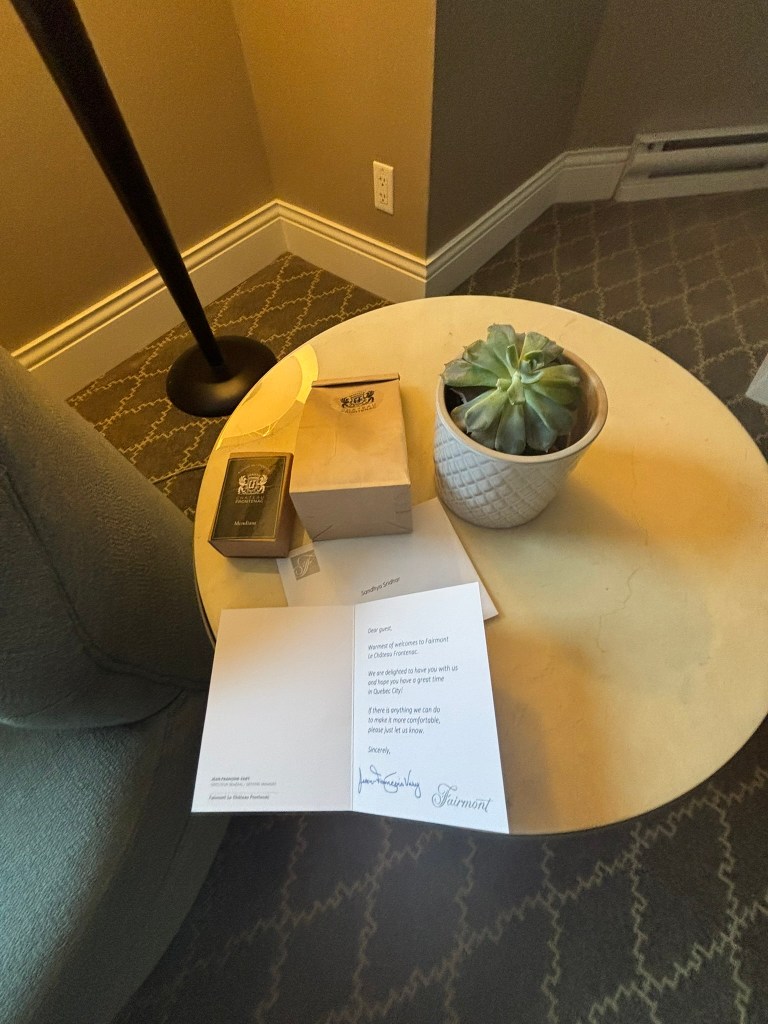
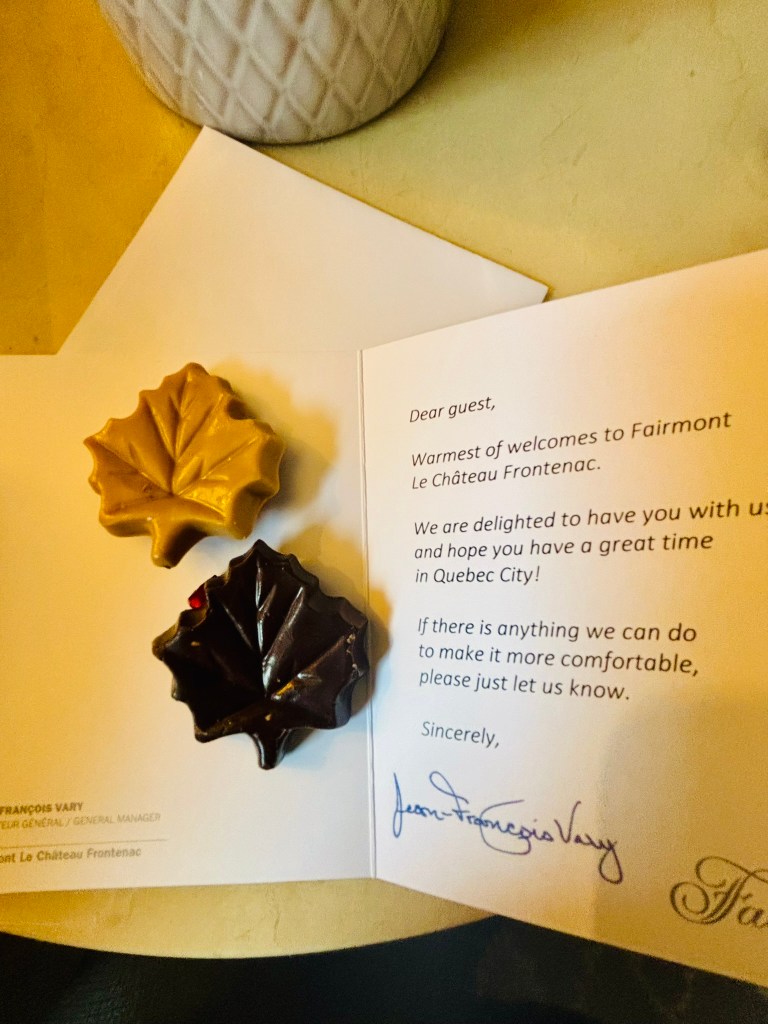
I booked a stay at Château Frontenac with my Chase Sapphire points and was surprised at check-in when they upgraded me to a nicer room. The Chase Sapphire perk also included breakfast for two and a $130 CAD credit to use at on-site restaurants or the spa.

The Rooms

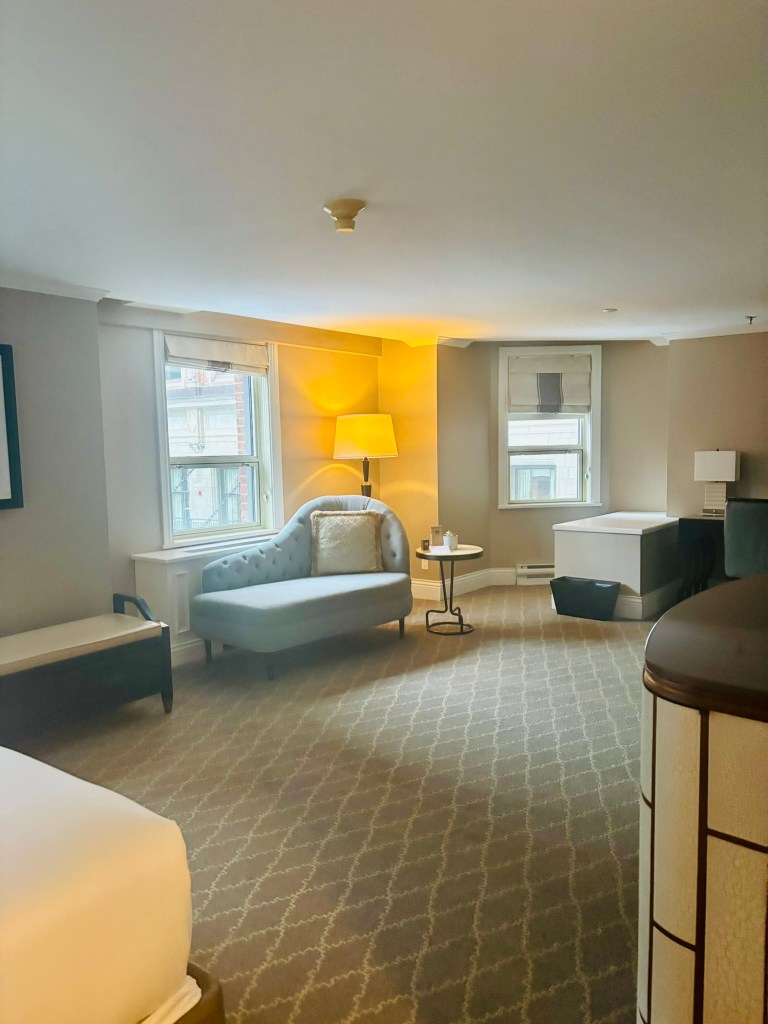
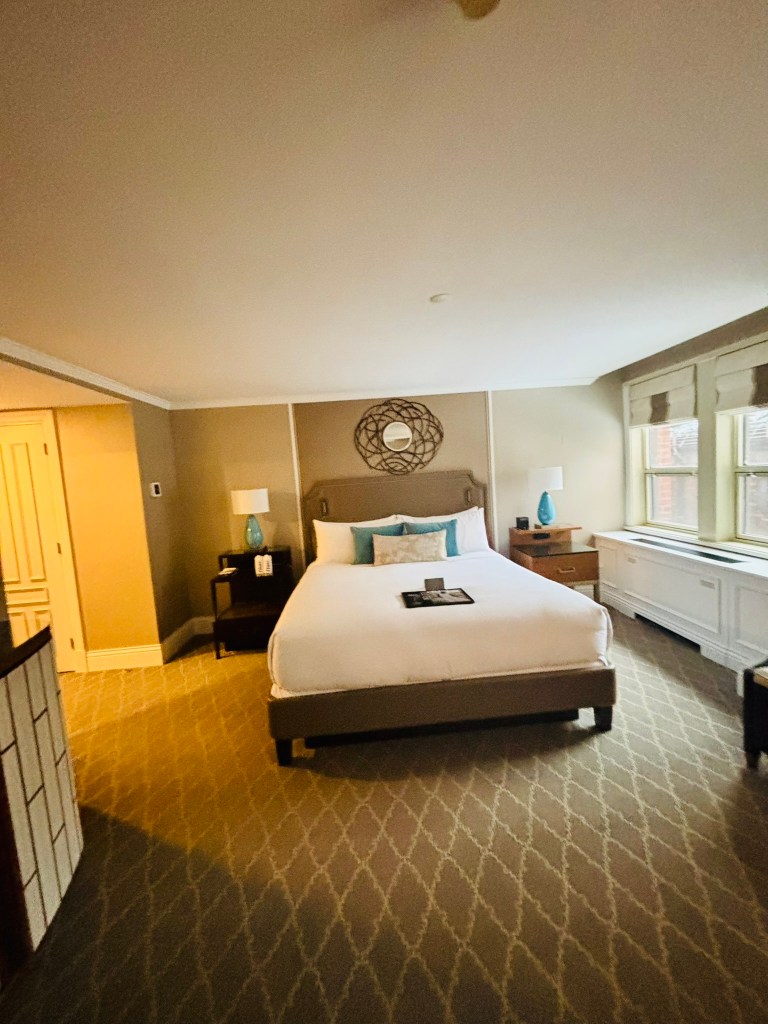
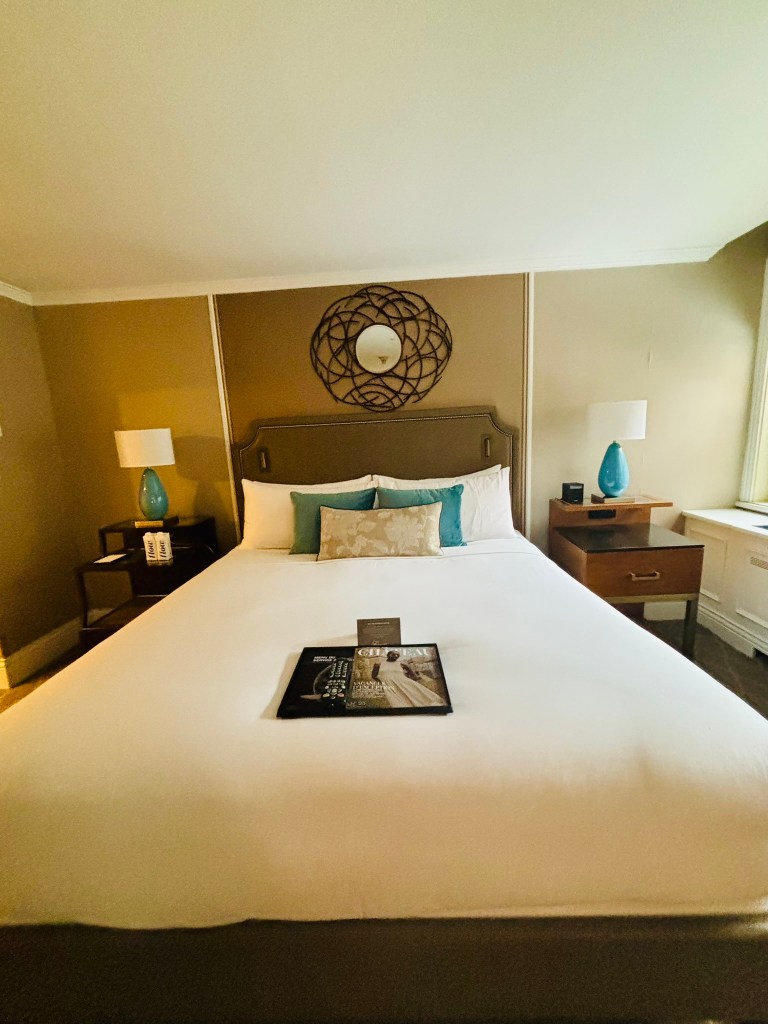
The rooms at Château Frontenac blend classic luxury with the comfort of a modern hotel stay. Because the property is historic, rooms can vary in size and layout, which adds to the character. Some rooms offer sweeping views of the St. Lawrence River, Old Quebec, or the hotel’s famous rooftops, while others feel tucked into the building’s older architectural footprint. My room had a view of the hotel’s rooftops and opened onto the courtyard.

A Brief History of Château Frontenac

Fairmont Le Château Frontenac opened in 1893 as one of the grand railway hotels built by the Canadian Pacific Railway. These hotels were designed to encourage luxury travel across Canada, giving passengers impressive places to stay in major destinations. Chateau Frontenac quickly became one of the most famous of them all.

The hotel was named for Louis de Buade, Count of Frontenac, a 17th-century governor of New France. Its architecture draws inspiration from French chateaux, with steep copper roofs, turrets, dormer windows, and a dramatic skyline that makes the building instantly recognizable.

Over the years, the hotel has welcomed royalty, political leaders, celebrities, and travelers from around the world. It also played a role in world history during the Quebec Conferences of World War II, when Allied leaders met in Quebec City to discuss military strategy. That layered history gives the hotel a depth that goes beyond its beautiful exterior.

Today, Château Frontenac remains one of the most photographed hotels in the world and a defining symbol of Quebec City.

Location in Old Quebec

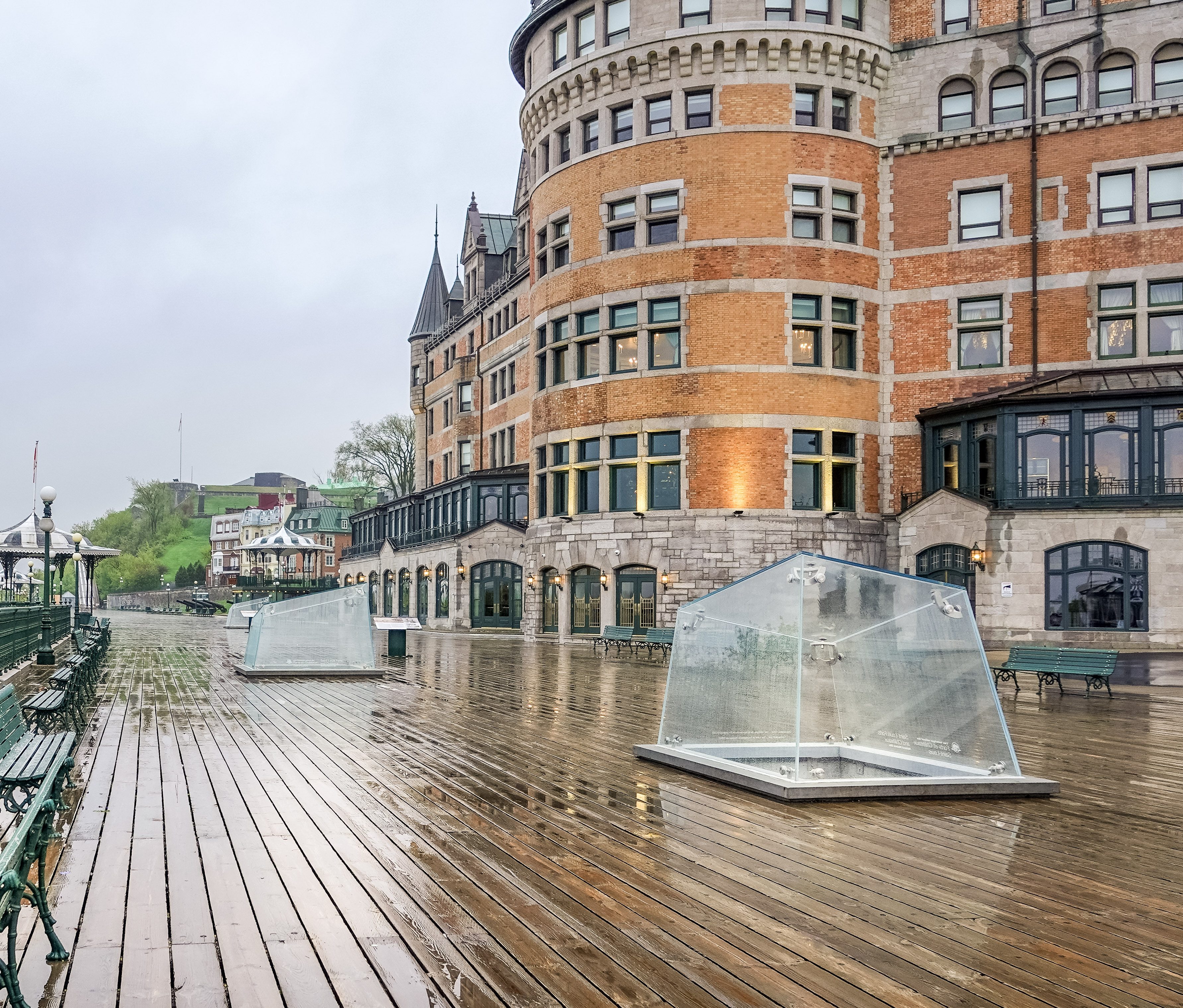
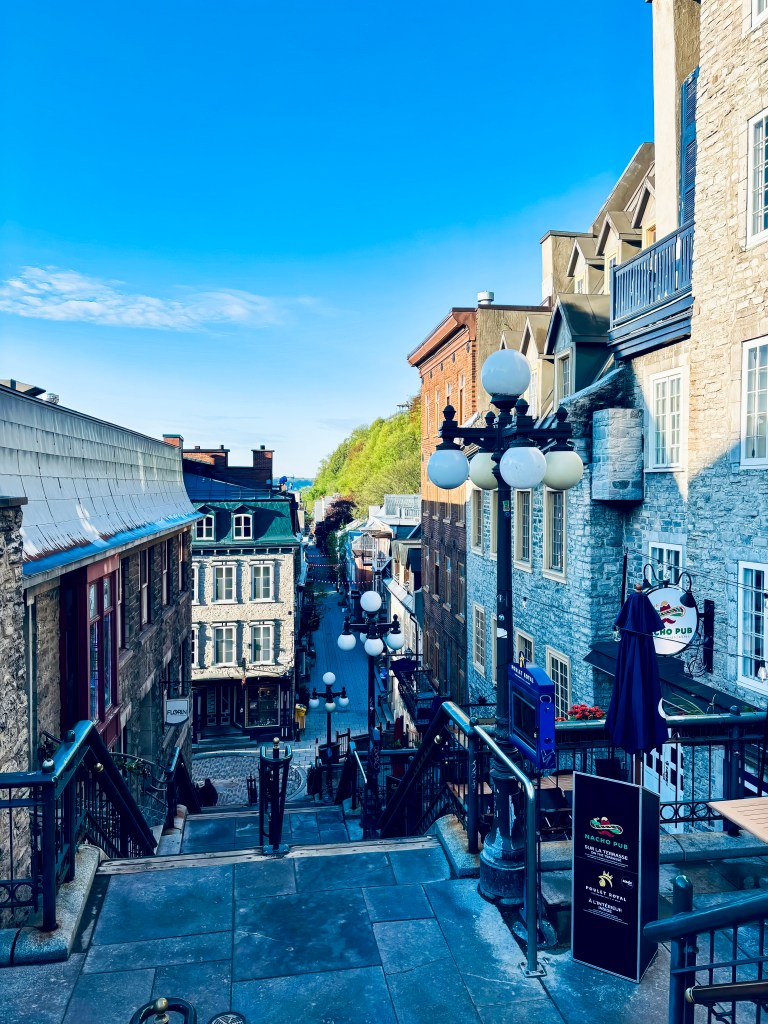
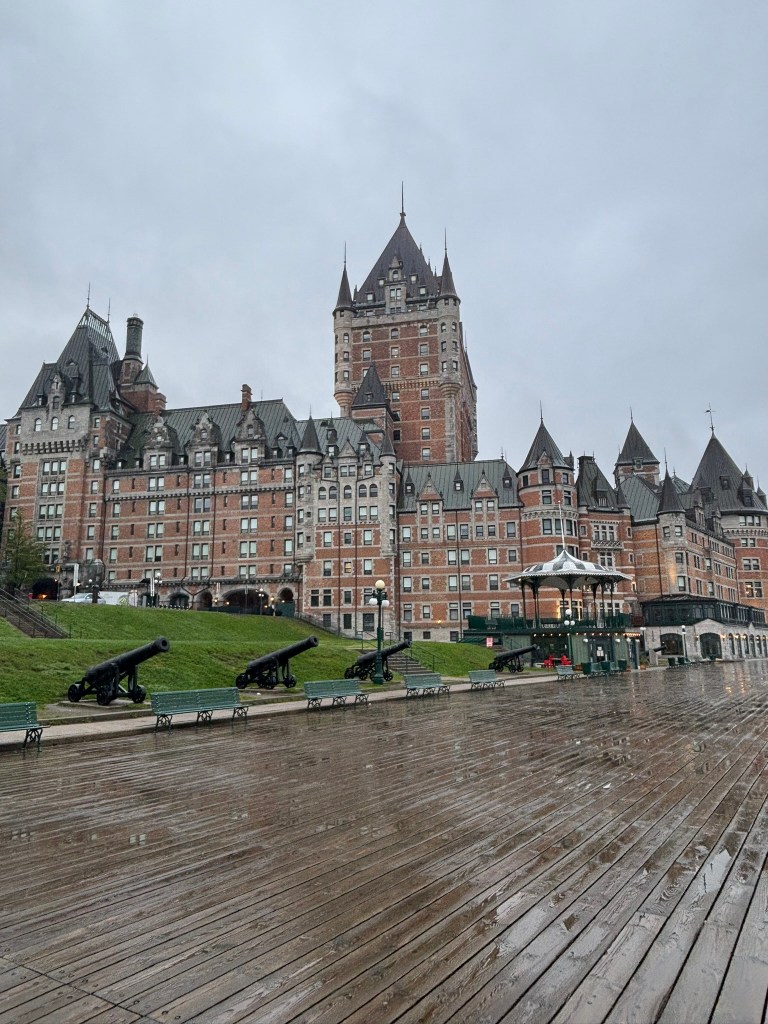
One of the best reasons to stay at Château Frontenac is the location. The hotel sits directly beside Terrasse Dufferin, a scenic boardwalk overlooking the St. Lawrence River. From there, you can easily walk to many of Old Quebec’s most beloved sights.

Nearby highlights include:

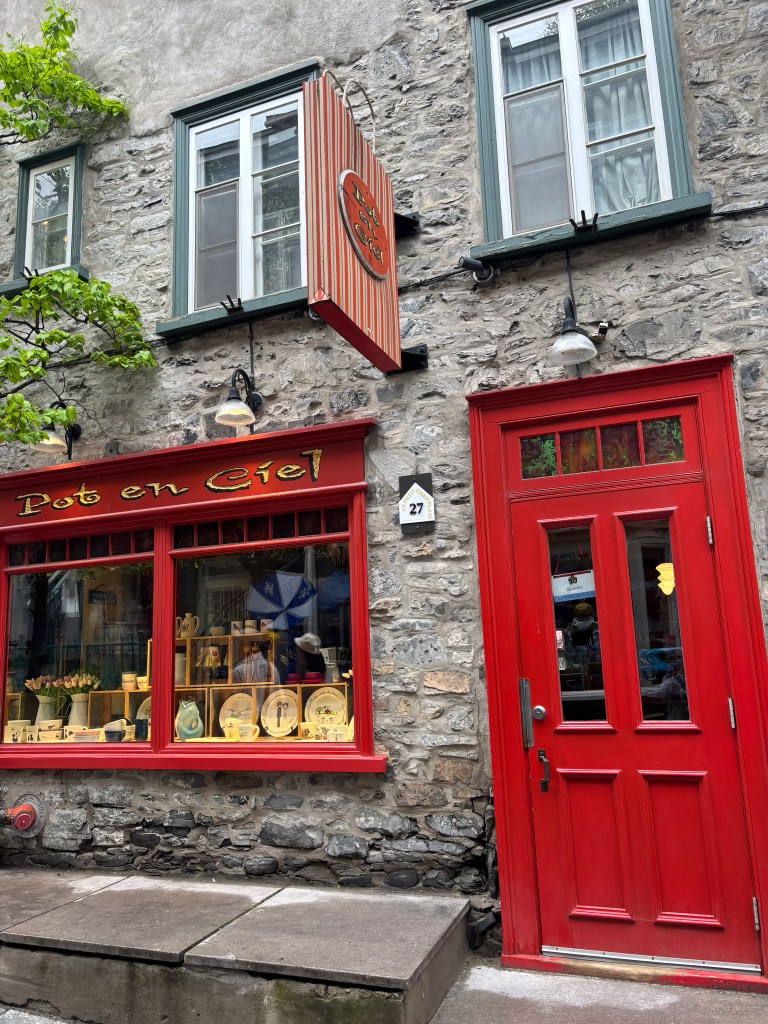
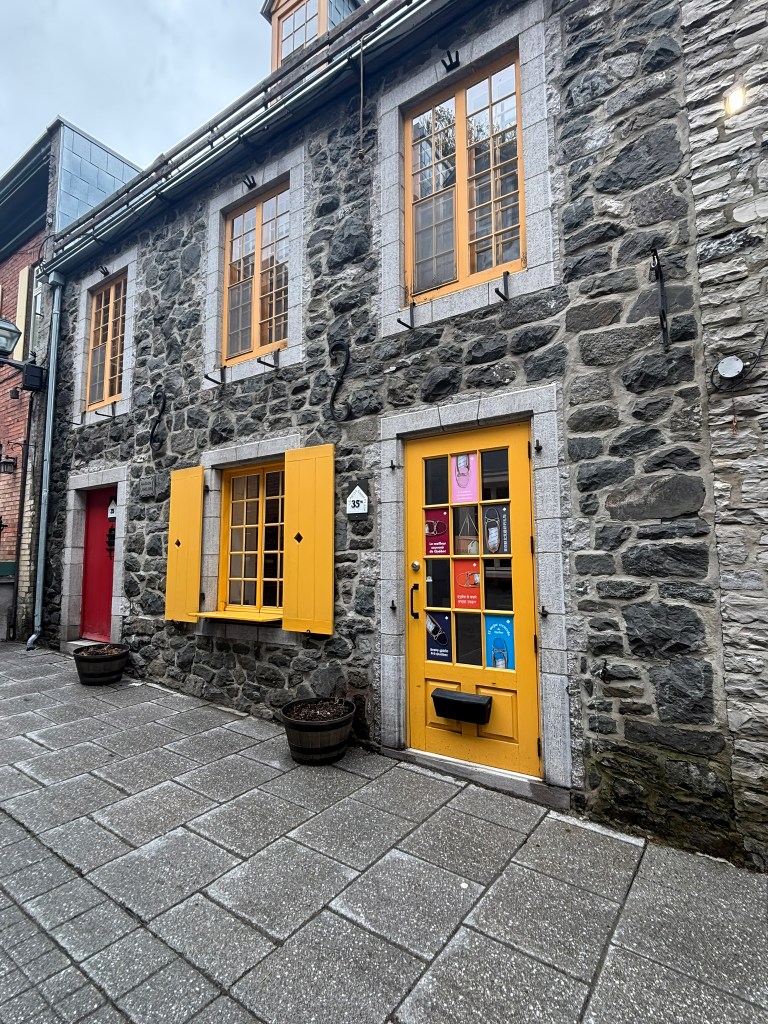
  • Quartier Petit Champlain, one of the prettiest areas in the city, filled with boutiques, restaurants, and historic charm.
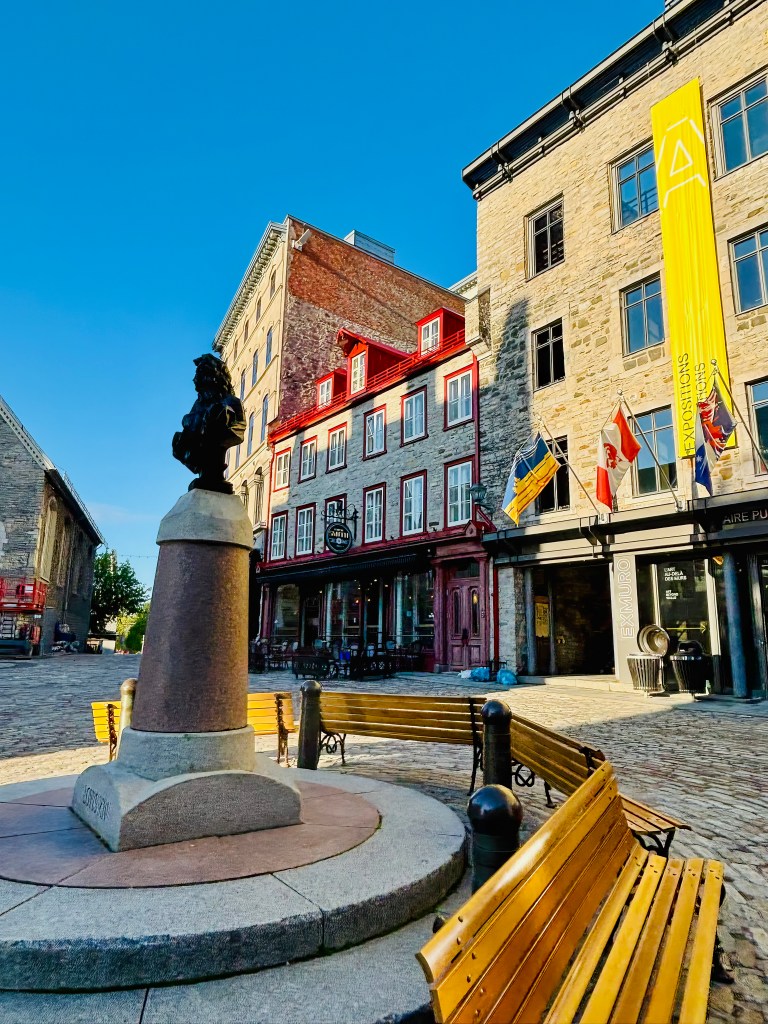
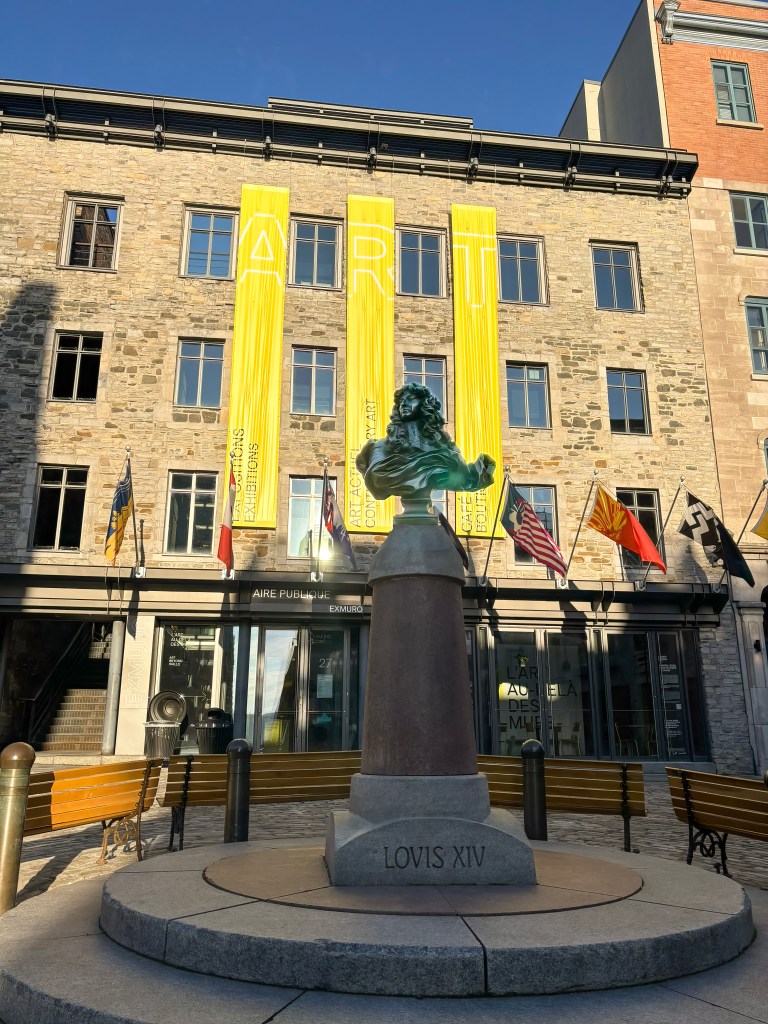
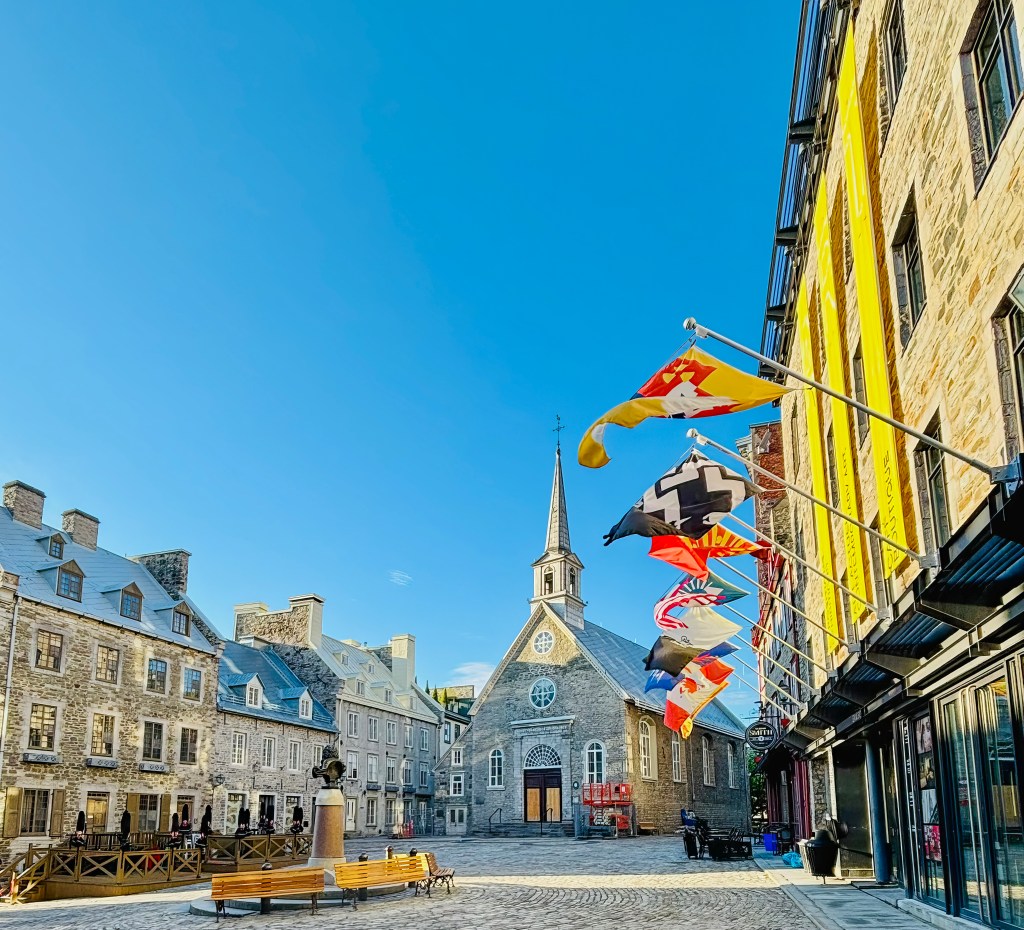
  • Place Royale, a beautiful square tied to the early history of Quebec City.
  • Notre-Dame de Quebec Basilica-Cathedral, one of the oldest Catholic parish churches in North America.
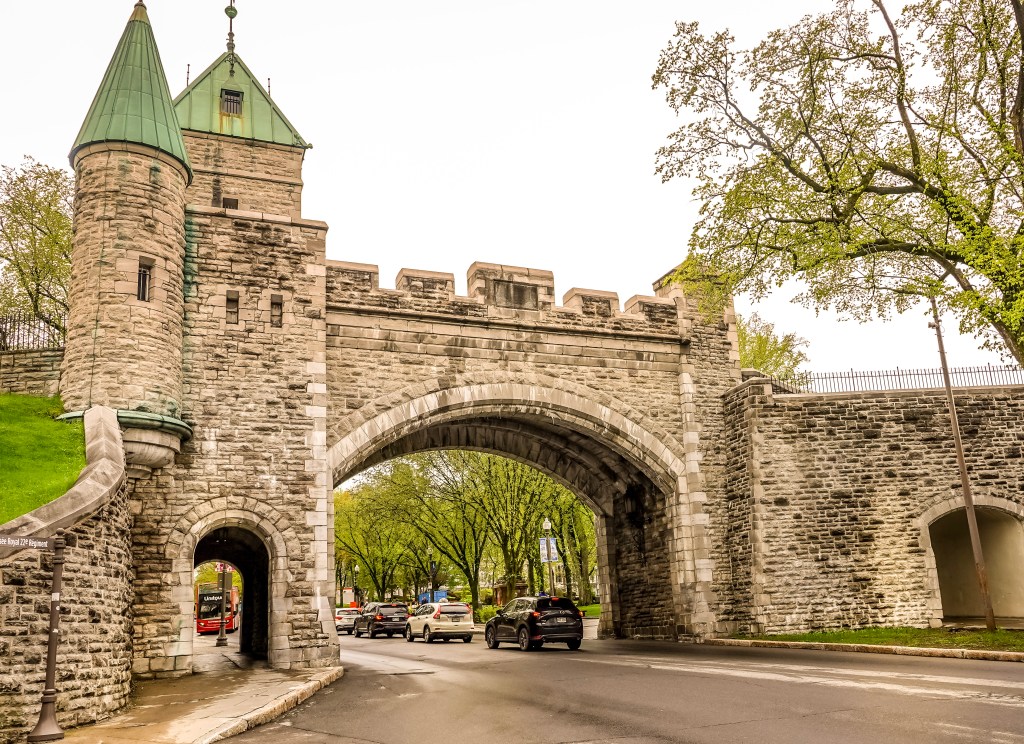
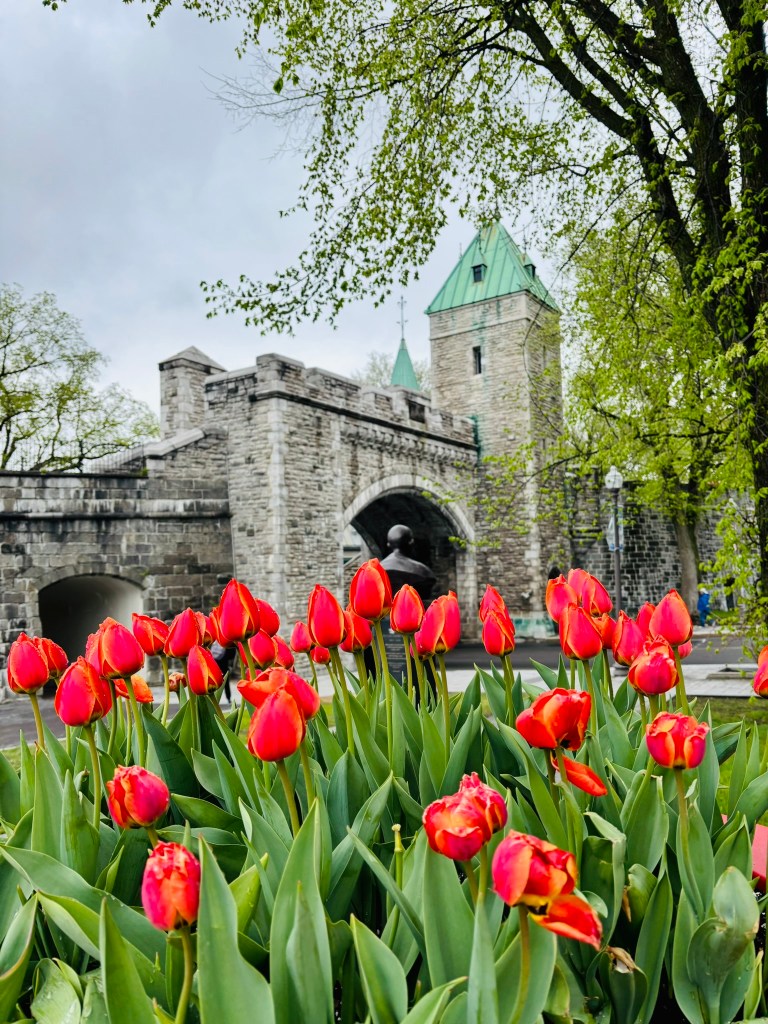
  • The city walls and gates, which help make Old Quebec feel so distinctive.
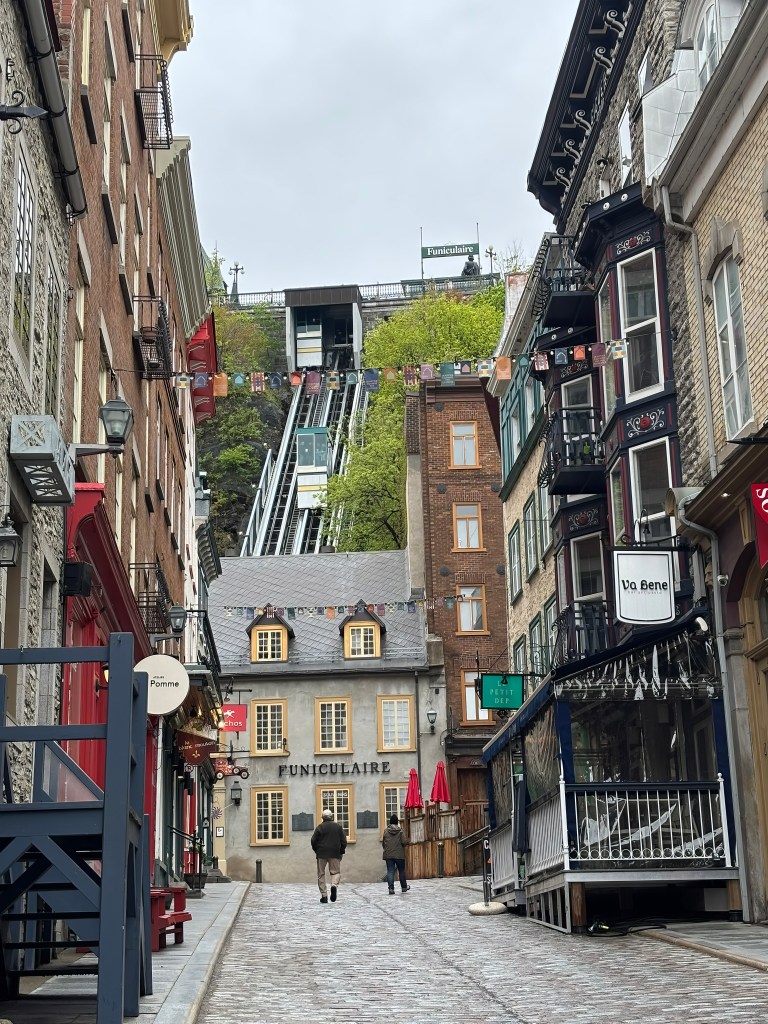
  • The funicular, which connects the upper town near the hotel with the lower town below.

The convenience is hard to overstate. You can explore in the morning, return to the hotel to rest, head back out for dinner, and still feel as if the hotel itself is part of the sightseeing experience.

Restaurants, Breakfast, and Drinks

Dining is one of the best parts of staying at Fairmont Le Chateau Frontenac, because the hotel has several different restaurants and bar spaces, each with its own mood. You can make the stay feel relaxed and casual, elegant and romantic, or centered on cocktails and views, all without ever leaving the building.

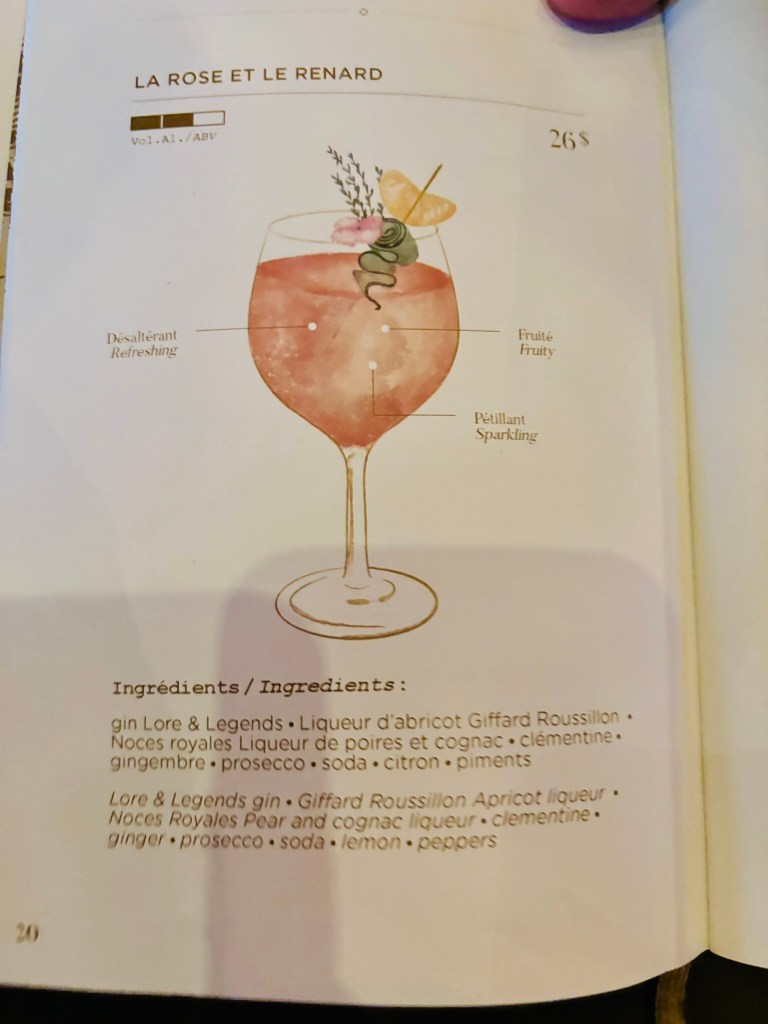
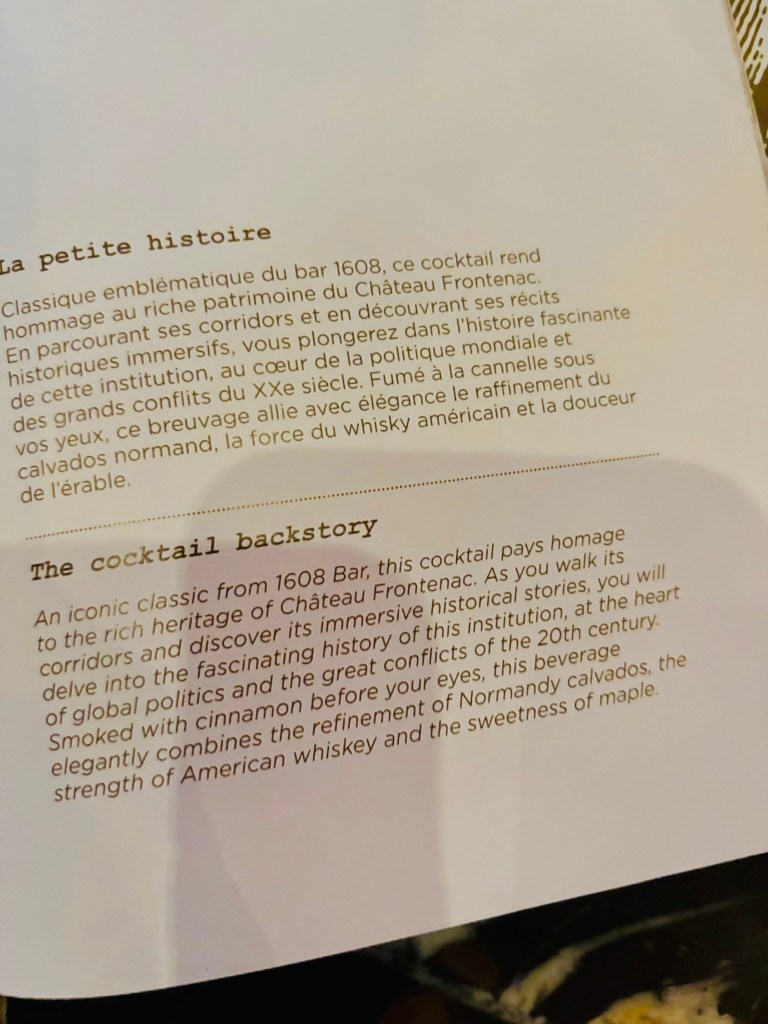
1608 Wine & Cheese Bar is one of the most memorable places in the hotel for a drink. The cocktail menu itself has a clever framing — Bar 1608 sits in a circular room that was originally the château’s drawing/writing room, and the whole cocktail list is built around books that inspired each drink.

What to Order

The cocktail list itself is a story in its own right — the menu literally pairs each drink with the book that inspired it, tucked into what was once the Château’s private drawing and writing room. A few worth seeking out:

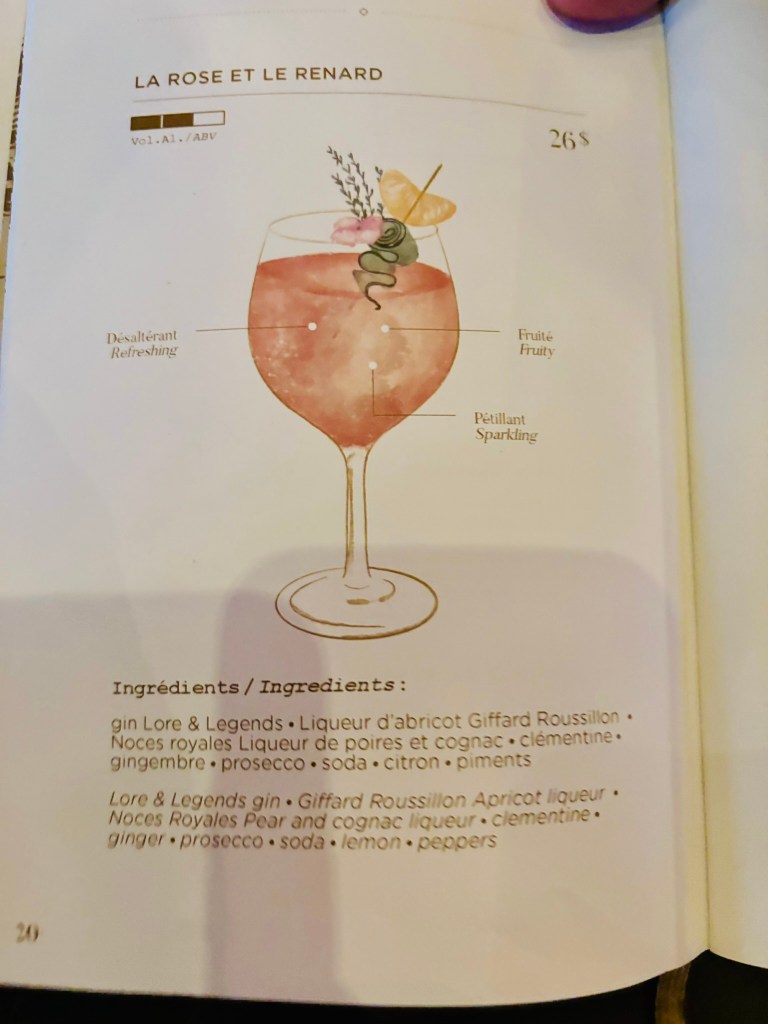
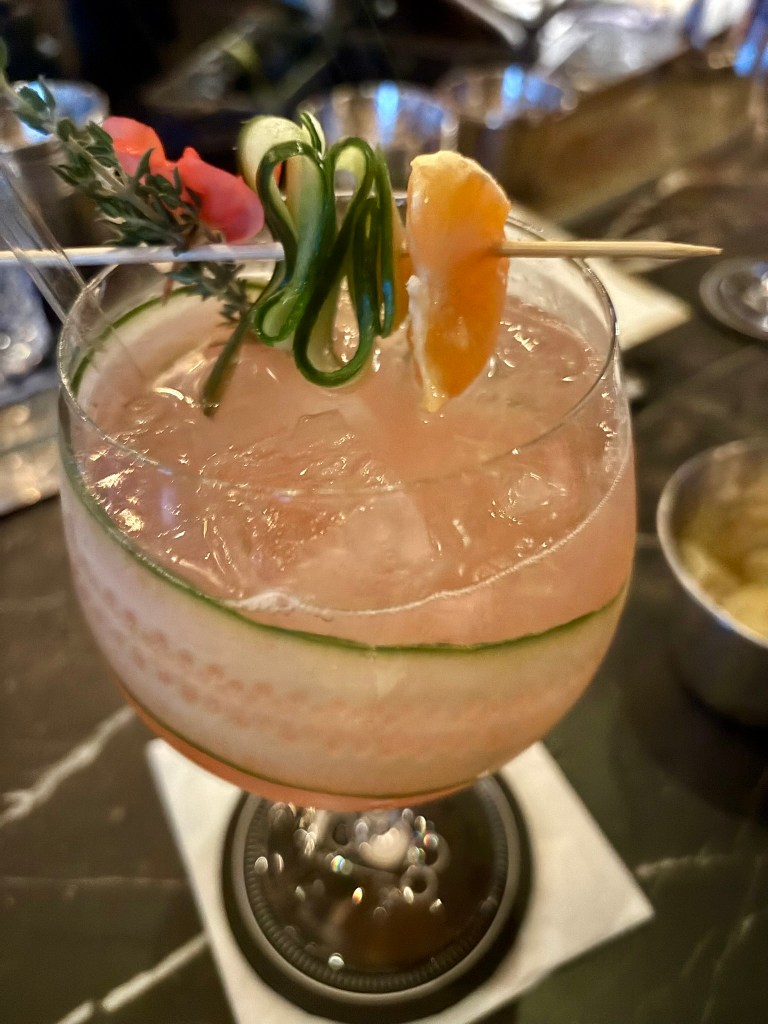
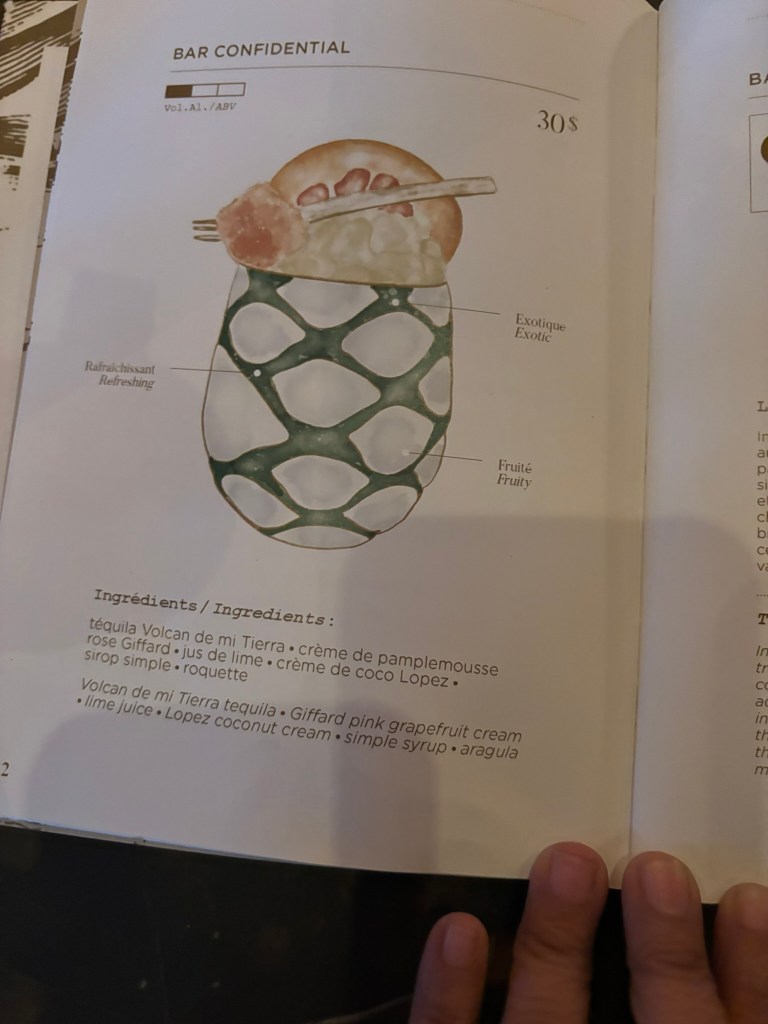
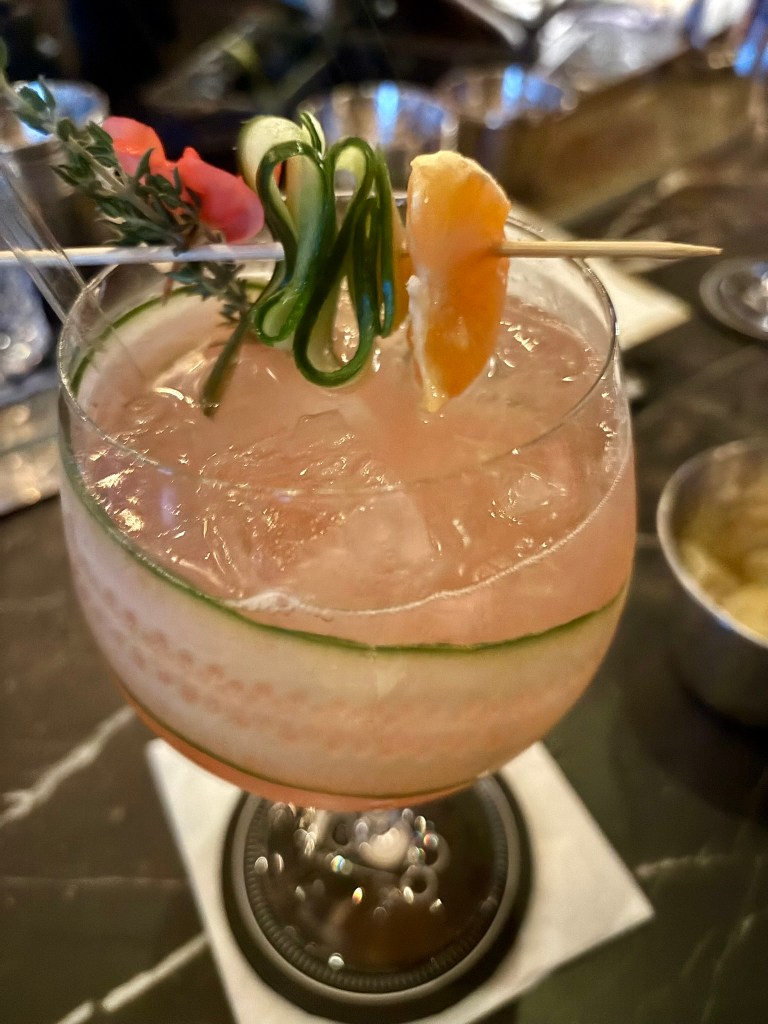
If you want a taste of the bar’s playful side, the tequila-based cocktail inspired by Anthony Bourdain’s Kitchen Confidential is hard to beat — Volcan de mi Tierra tequila, pink grapefruit, lime, coconut cream, and a surprising pop of arugula, garnished with grapefruit and cucumber. For something lighter and more floral, look for the cocktail built on mandarin, cucumber, and rose, inspired by The Little Prince — it arrives dressed with a curl of cucumber ribbon and fresh thyme, as pretty as it is refreshing.

For a nightcap with a bit more weight, order the 1943. Named for the year the Château hosted the Quebec Conference during WWII, it’s the bar’s signature classic: a Château Frontenac edition of Maker’s Mark and Calvados Boulard XO, rounded out with brown-butter angostura and a cinnamon-and-star-anise maple gum, finished tableside with a curl of cinnamon smoke. It’s the kind of drink that makes the place’s history feel like it’s in the glass with you.

Champlain Restaurant is the hotel’s signature fine-dining restaurant. It is the most refined option inside the property, with an elegant atmosphere and a menu that often highlights Quebec ingredients, seasonal produce, and polished presentation. This is the place to choose for a special dinner, anniversary meal, or a more elevated night out during your stay.

We ate here on the last night before our departure. We reserved the table through the concierge and were able to use the remaining $130 CAD from the Chase Sapphire Rewards.

Le Sam Bistro offers a slightly more relaxed but still stylish experience. It is a great choice for lunch, dinner, or drinks when you want something lively and comfortable rather than formal. The setting feels modern and social, and it works well for travelers who want to enjoy the hotel’s atmosphere without committing to a full fine-dining evening.

Breakfast at Place Dufferin

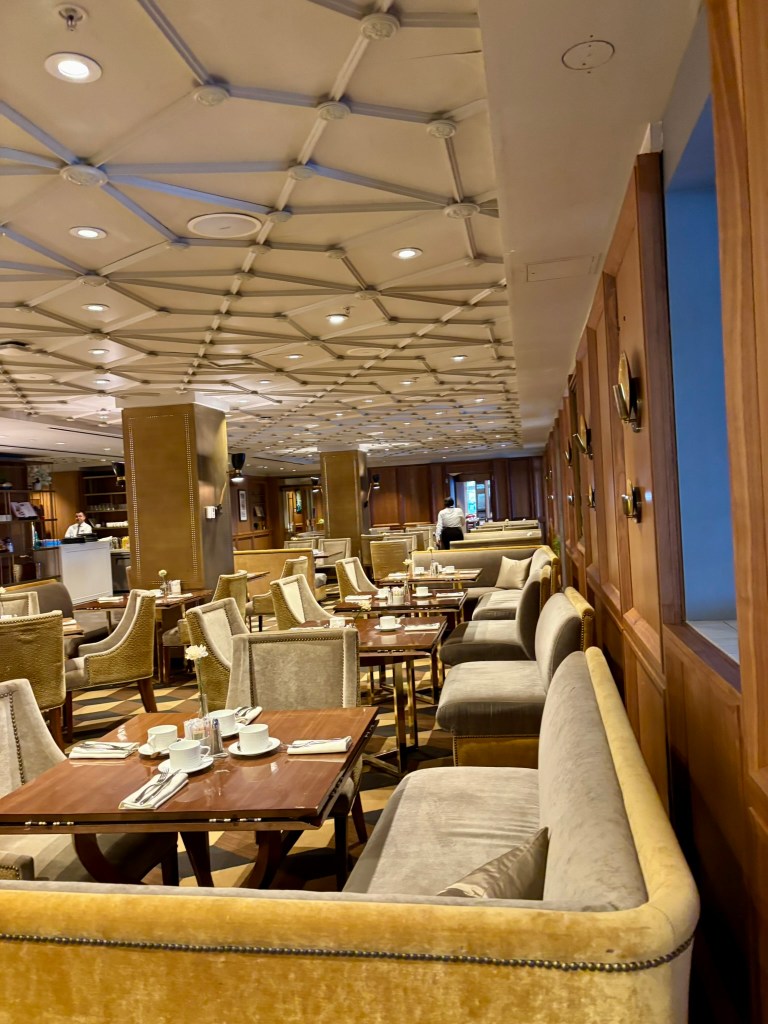
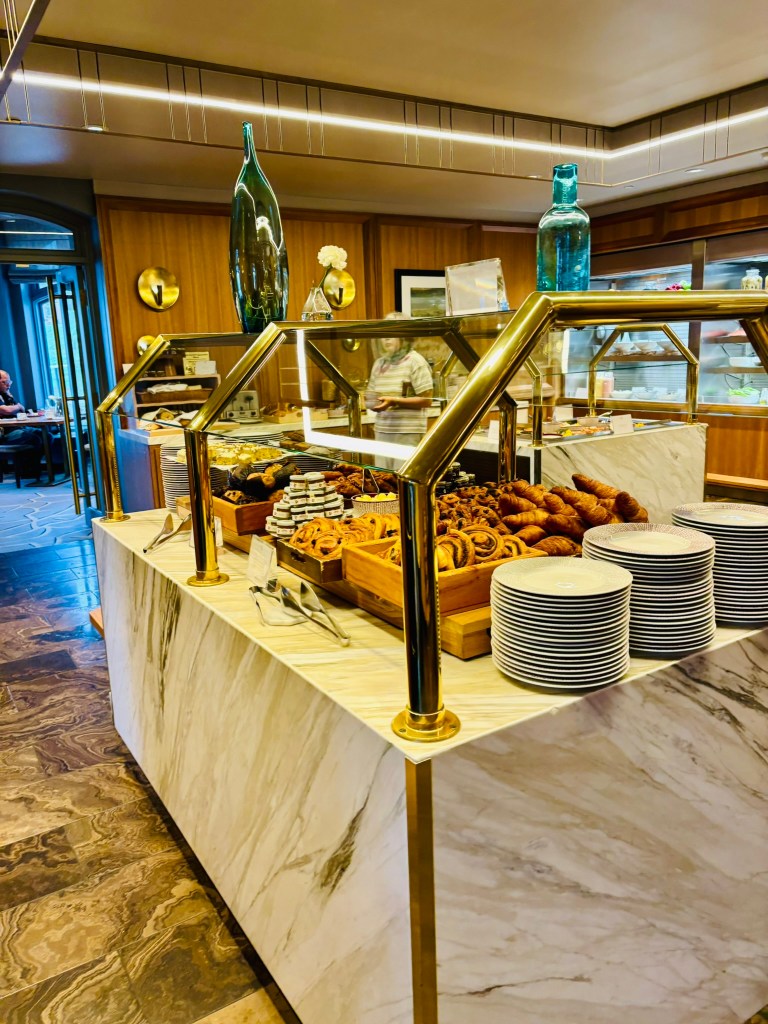
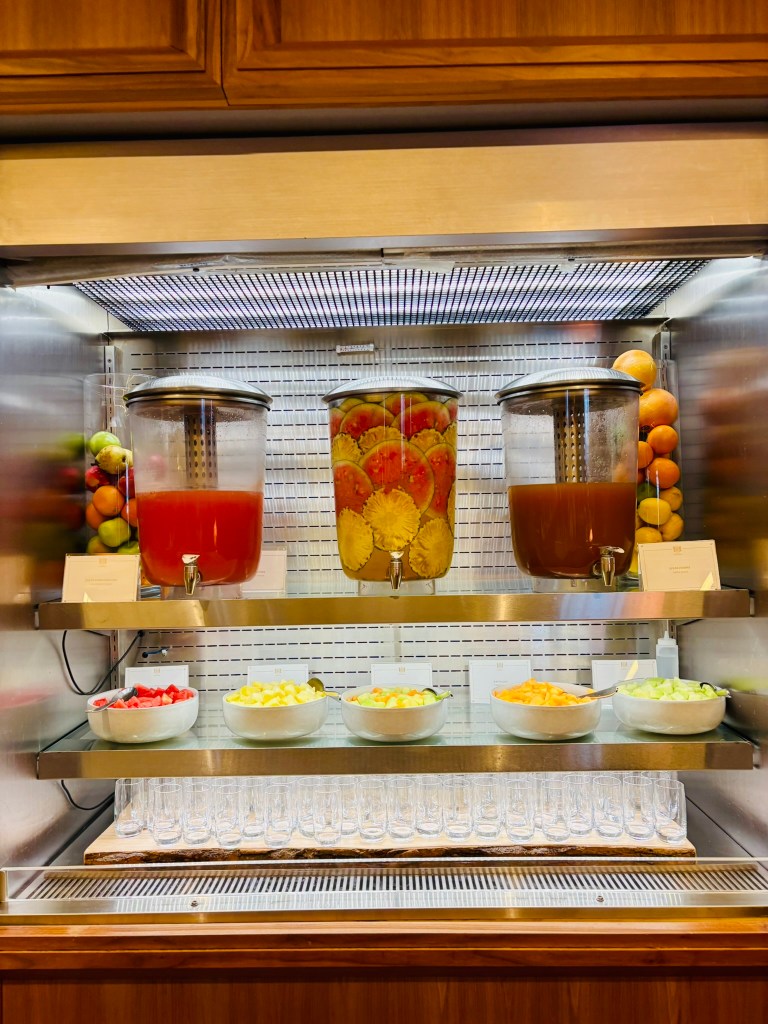
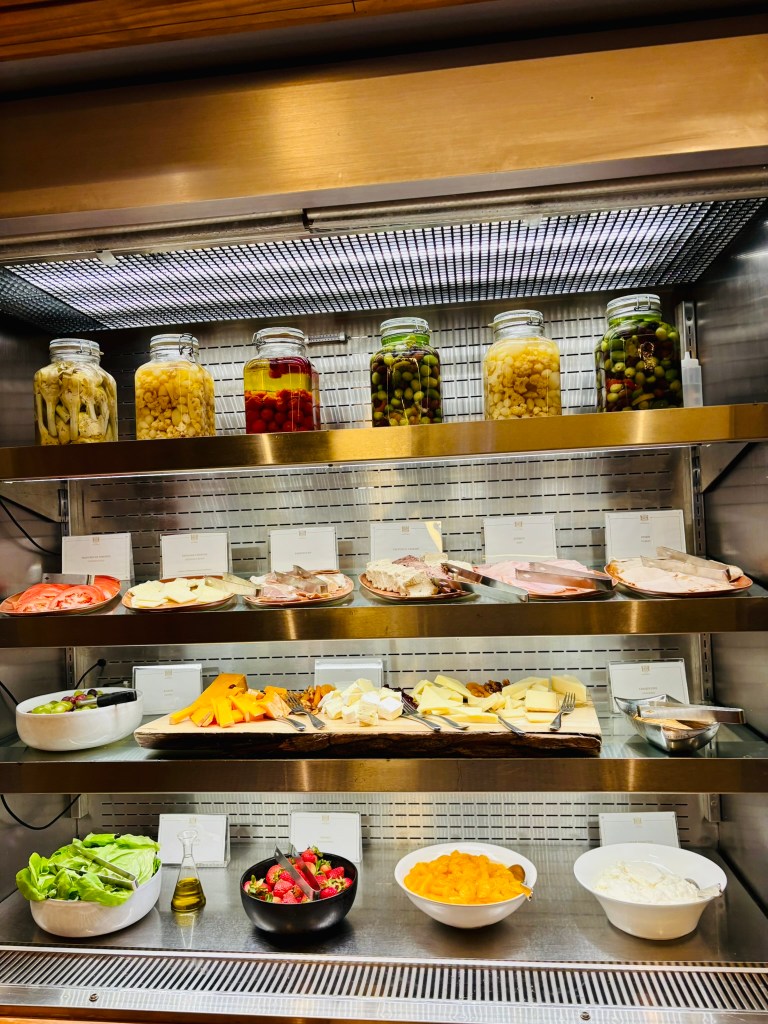
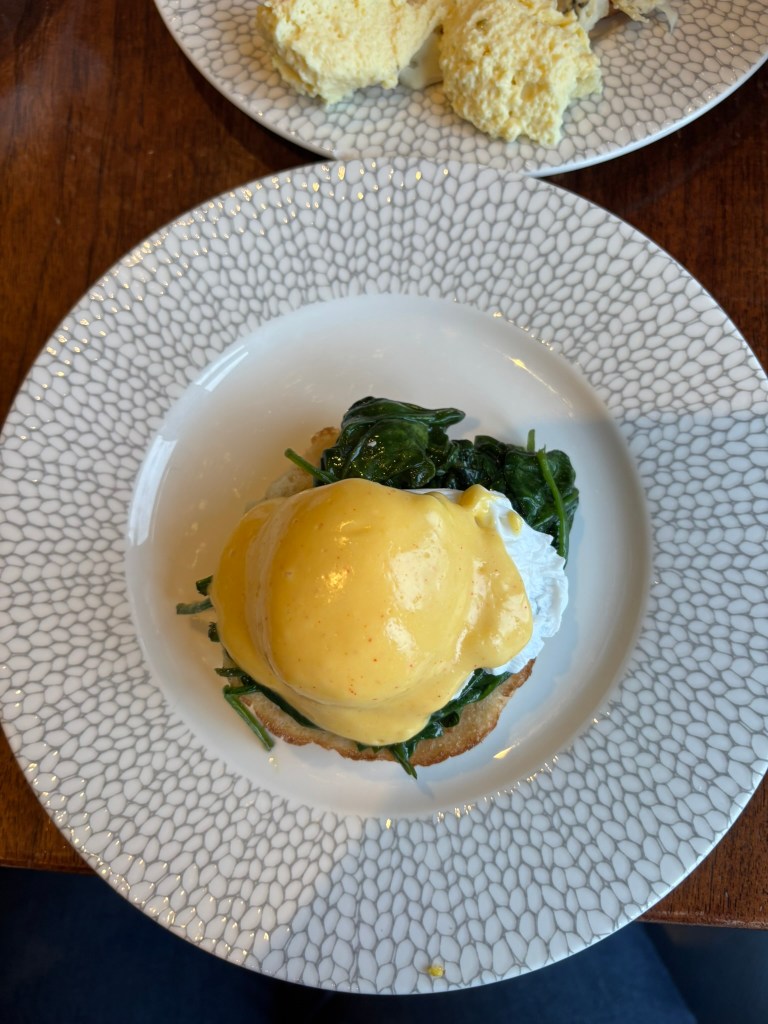
Breakfast at the Château happens at Place Dufferin, and it’s worth waking up early for. The room itself sets the tone — a bright, elegant space on the Dufferin Terrace level, with plush blue-and-gold seating, warm brass fixtures, and large windows overlooking the St. Lawrence River. The buffet spread is genuinely impressive: a full pastry station piled with croissants, pains au chocolat, and cinnamon rolls, a chilled case stocked with charcuterie, cheeses, marinated vegetables, and fresh fruit, and a juice bar with fresh-cut watermelon, pineapple, and melon alongside a rotation of fresh-pressed juices. Made-to-order egg dishes are also included in the breakfast. I ordered the eggs Benedict, served on a golden English muffin with sautéed spinach, a perfectly poached egg, and a generous pour of hollandaise, which was some of the best I’ve had. Breakfast at Place Dufferin is the kind of unhurried, room-with-a-view start to the day that makes staying at the Château feel special before you’ve even left the hotel.

The rooms are comfortable, the dining is memorable, and the history is everywhere. For a first visit to Quebec City, a romantic getaway, or a special occasion, Château Frontenac delivers the kind of stay that feels woven into the destination itself.

What Makes the Stay Special

The magic of Château Frontenac is not only in the rooms, the food, or the history. It is in how all of those things come together. You are staying in a landmark, eating breakfast under warm lights and polished brass, sipping cocktails in a historic hotel, and stepping outside into one of the most charming cities in North America.

Highlights of the stay include:

  • Iconic architecture: The hotel is one of Quebec City’s most recognizable landmarks.
  • Historic atmosphere: Every public space feels connected to the building’s long story.
  • Comfortable rooms: The rooms offer a restful retreat after busy days of sightseeing.
  • Excellent location: Old Quebec’s main attractions are within easy walking distance.
  • Memorable dining: Breakfast, cocktails, and hotel restaurants add to the sense of occasion.
  • Romantic setting: The property is especially well suited for couples, celebrations, and special trips.

Final Thoughts

Staying at Fairmont Le Château Frontenac is about more than booking a hotel room. It is about waking up inside a Quebec City landmark, starting the day with pastries and coffee, wandering through centuries-old streets, and returning in the evening for a cocktail in a setting that feels timeless.

Visit Quebec City: A French Fairytale in the Heart of North America

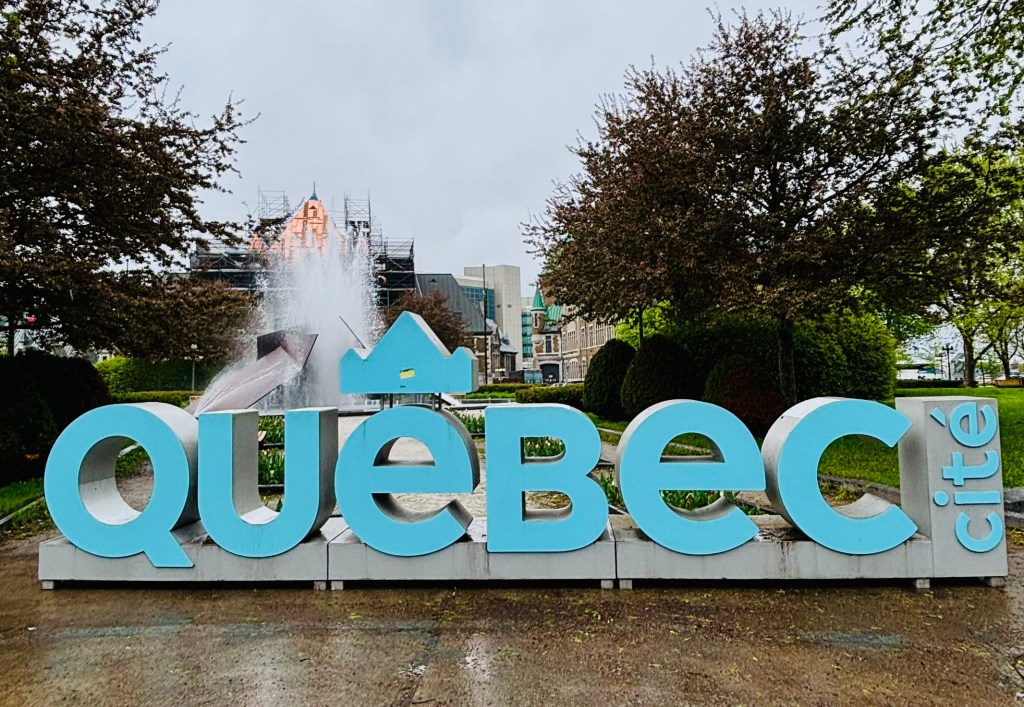
There are cities you visit for a weekend, and then there are cities that make you feel as though you have stepped through a doorway into another century. Quebec City belongs firmly in the second category. With its cobblestone lanes, fortified walls, church spires, French street signs, and the grand silhouette of Fairmont Le Château Frontenac rising above the St. Lawrence River, Quebec City feels less like a typical North American getaway and more like a European storybook brought to life.

For travelers who love history, architecture, culture, and a touch of old-world elegance, Quebec City is one of the most rewarding destinations on the continent. It is romantic without trying too hard, historic without feeling frozen in time, and proudly French in a way that makes it unlike anywhere else in North America.

A City That Feels Like Europe Without Leaving North America

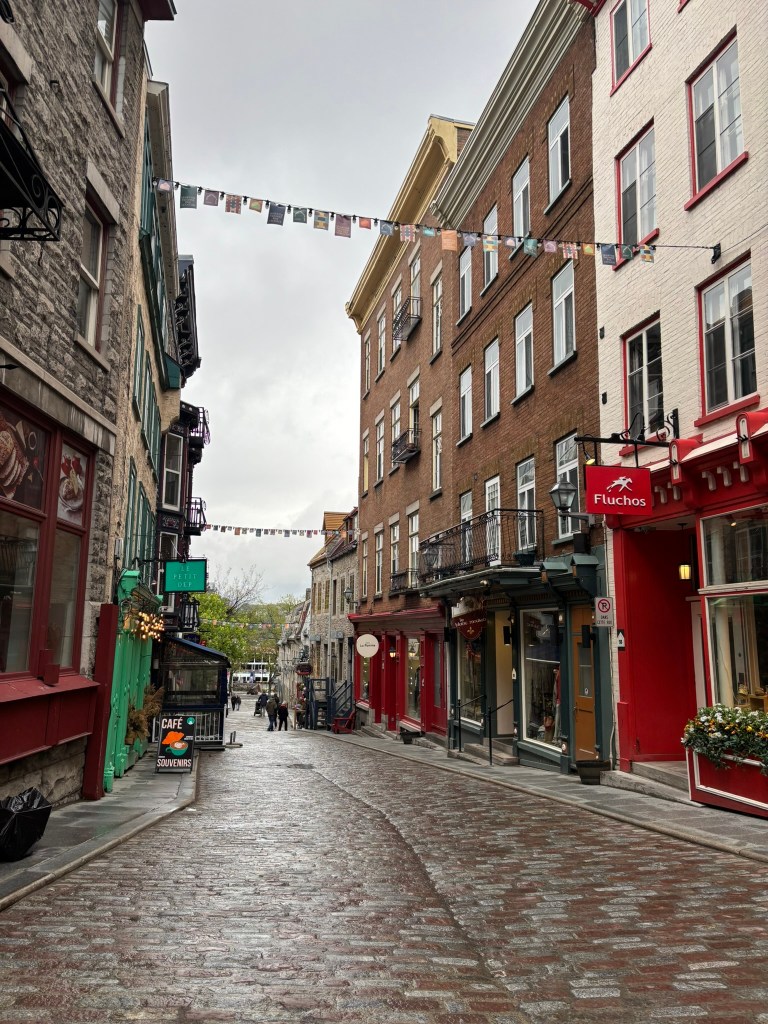
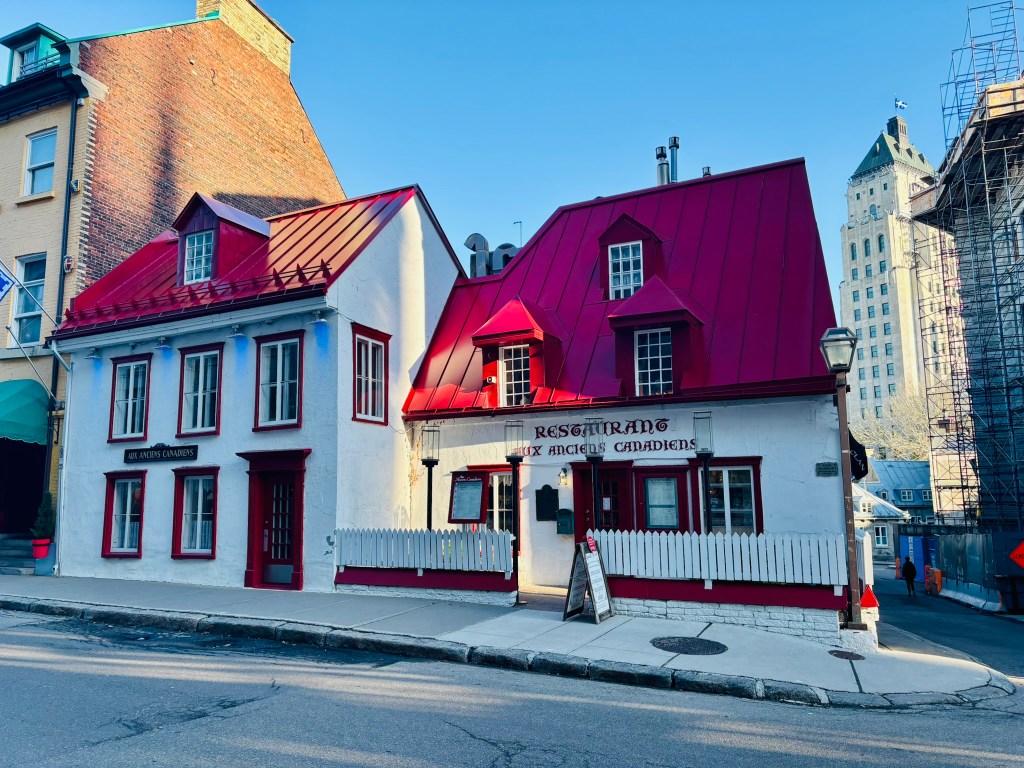
The first thing we noticed about Quebec City is its atmosphere. Inside the walls of Old Quebec, narrow streets curve past stone houses, flower-filled windows, small cafes, boutiques, and centuries-old churches. Musicians play in public squares, horse-drawn carriages pass under old gates, and the smell of fresh pastries drifts from bakeries.

Old Quebec is the only remaining fortified city north of Mexico, and its historic district is a UNESCO World Heritage Site. Walking through it feels wonderfully cinematic. The city has the charm of France, the drama of a cliffside fortress, and the warmth of a deeply lived-in Canadian capital.

Unlike destinations that rely on one or two major landmarks, Quebec City rewards wandering. Every street seems to lead to a terrace, a hidden courtyard, a river view, or a cafe that invites you to slow down. We walked about 30,000 steps every day and felt like we had just scratched the surface what this city has to offer.

A Brief History of Quebec City

Quebec City was founded in 1608 by French explorer Samuel de Champlain, making it one of the oldest European settlements in North America. Its location above the narrowing of the St. Lawrence River gave it enormous strategic value. In fact, the name “Quebec” comes from an Algonquin word often understood to mean “where the river narrows.”

For more than a century, Quebec served as the heart of New France, the French colonial empire in North America. From here, French influence spread across vast territories through fur trading networks, Catholic missions, military alliances, and river routes that reached deep into the continent.

The city’s dramatic history reached a turning point in 1759, during the Battle of the Plains of Abraham, when British forces defeated the French just outside the city walls. This battle helped shift control of Canada from France to Britain, but it did not erase the French identity of Quebec. Instead, it set the stage for one of the most fascinating cultural stories in North America: how a French-speaking society preserved its language, religion, laws, and traditions under British rule.

How Quebec Stayed French in North America

One of the most remarkable things about Quebec City is that it remained deeply French despite being surrounded by an overwhelmingly English-speaking continent. That survival was not accidental. It was shaped by history, geography, law, religion, and cultural determination.

After Britain gained control of New France, the British authorities eventually recognized that governing Quebec successfully meant allowing its French-speaking Catholic population to preserve key parts of its identity. The Quebec Act of 1774 was especially important because it allowed French civil law to continue in private matters and protected the free practice of Catholicism. This helped French language and culture remain rooted in daily life.

Geography also mattered. Quebec’s communities were concentrated along the St. Lawrence River, where families, parishes, and local institutions helped preserve traditions across generations. The Catholic Church played a major role for centuries, operating schools, hospitals, and community life in French. Over time, French became not only a language of heritage, but a defining symbol of identity.

In the 20th century, especially during and after the Quiet Revolution of the 1960s, Quebec modernized rapidly while also strengthening its commitment to protecting French language and culture. Today, French remains the official language of Quebec, and Quebec City is one of the best places to experience that living heritage. This is not a themed version of France. It is a distinct North American French culture with its own accent, cuisine, traditions, humor, and pride.

That is what makes Quebec City so special: it is not a replica of Europe. It is something rarer – a French-speaking city that evolved on its own terms in the heart of North America.

Fairmont Le Château Frontenac

No building defines Quebec City quite like Fairmont Le Château Frontenac. Perched high above the St. Lawrence River, this grand hotel looks like a castle from a dream. Its copper roofs, turrets, stone facade, and commanding position make it one of the most photographed hotels in the world.

Opened in 1893 by the Canadian Pacific Railway, Château Frontenac was part of a series of grand railway hotels designed to encourage luxury travel across Canada. More than a place to sleep, it became a symbol of Quebec City itself. Over the years, it has hosted royalty, political leaders, celebrities, and travelers drawn to its historic glamour.

Staying here is an experience in itself. The hotel places you directly in the heart of Old Quebec, steps from the Dufferin Terrace, the city walls, historic churches, restaurants, museums, and river viewpoints. Wake up early and you can walk the terrace before the crowds arrive. Return at night and the illuminated hotel feels almost theatrical against the dark sky.

Even if you do not stay overnight, it is worth visiting the lobby, enjoying a drink, booking afternoon tea, or taking a guided tour to learn about the hotel’s history.

What to See in Old Quebec

Old Quebec is divided into the Upper Town and Lower Town, both worth exploring slowly.

In the Upper Town, you will find the Château Frontenac, Dufferin Terrace, the city walls, the Citadelle, Notre-Dame de Québec Basilica-Cathedral, and sweeping views over the St. Lawrence River. This is the grand, fortified side of the city, full of military history and dramatic viewpoints.

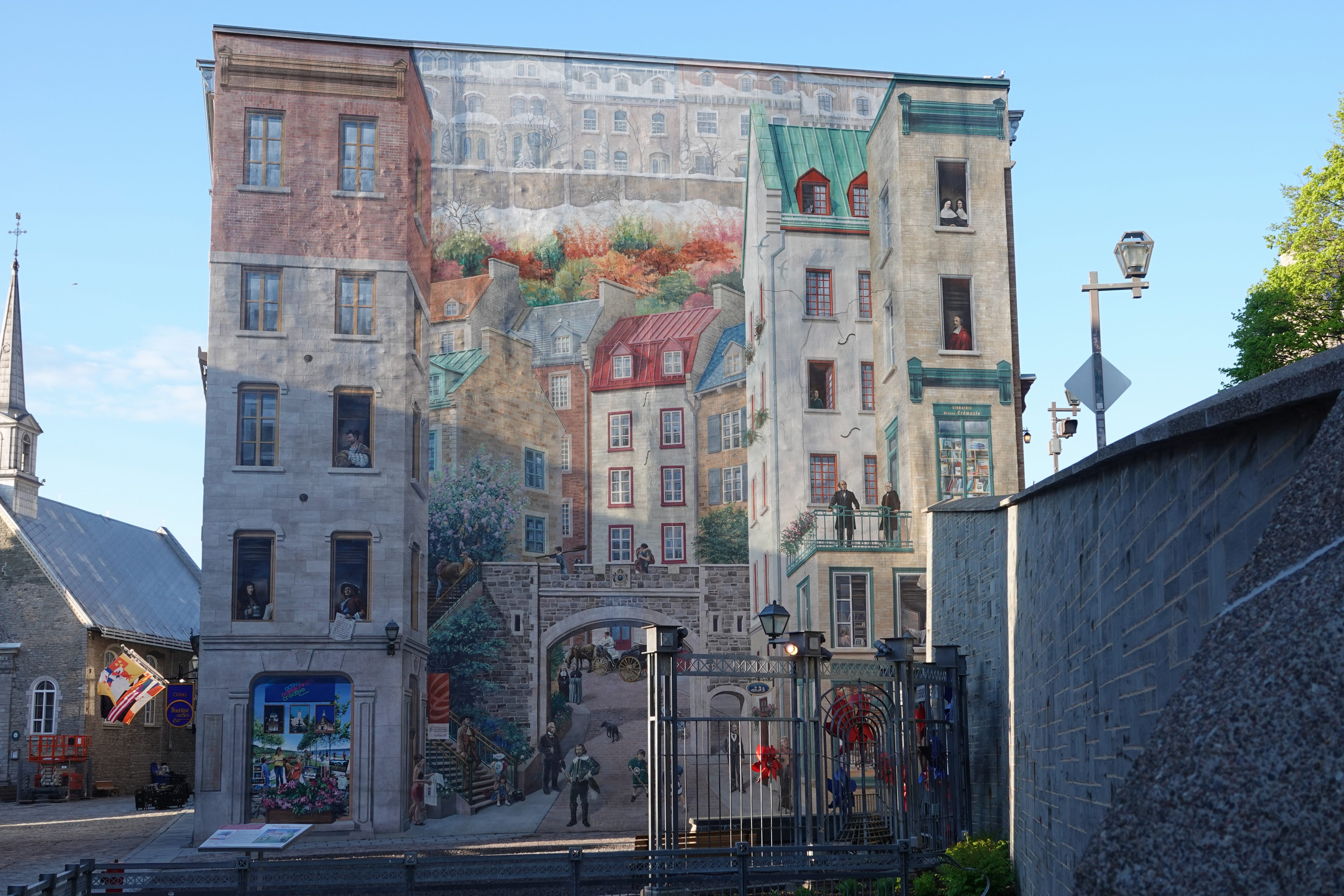
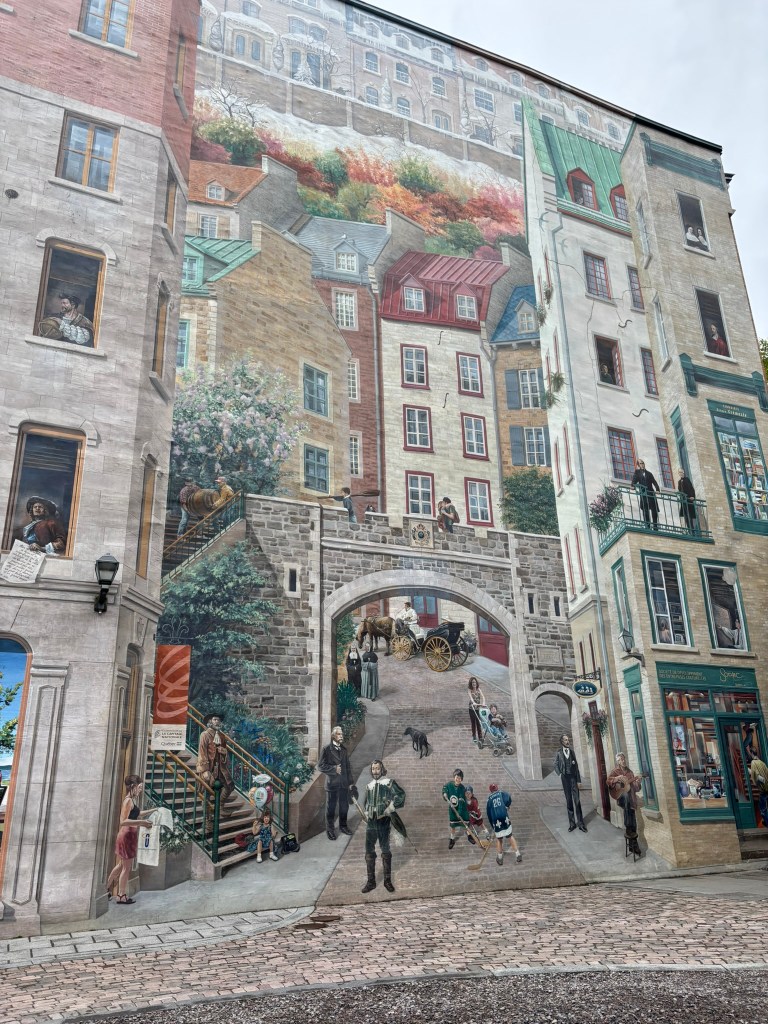
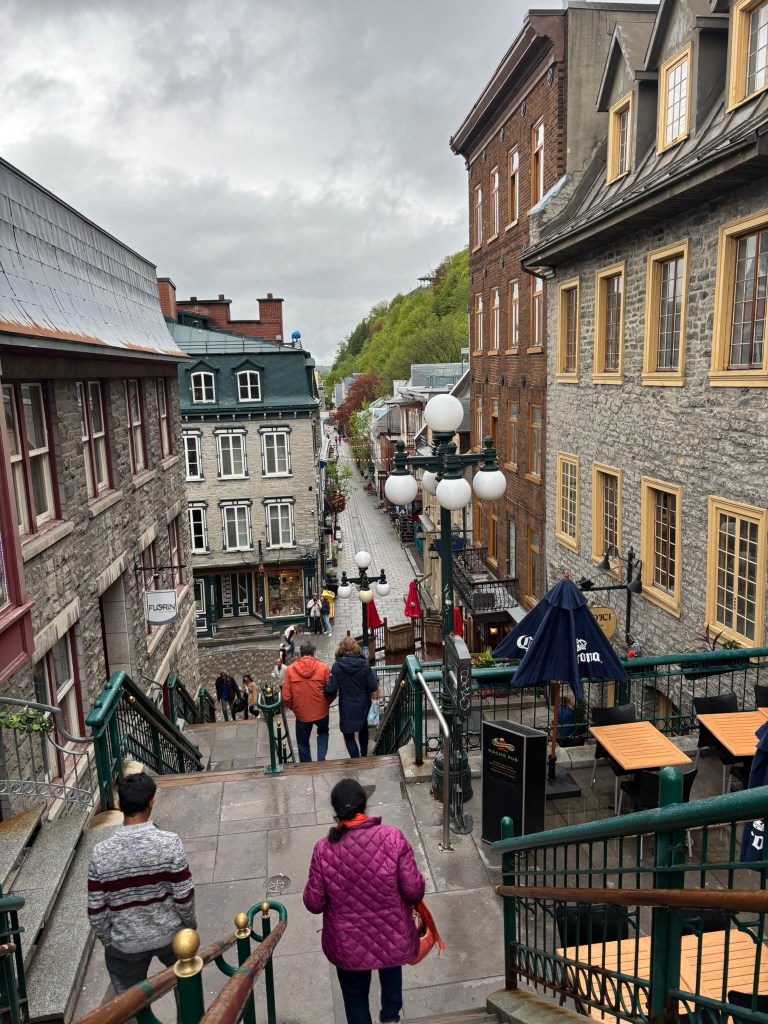
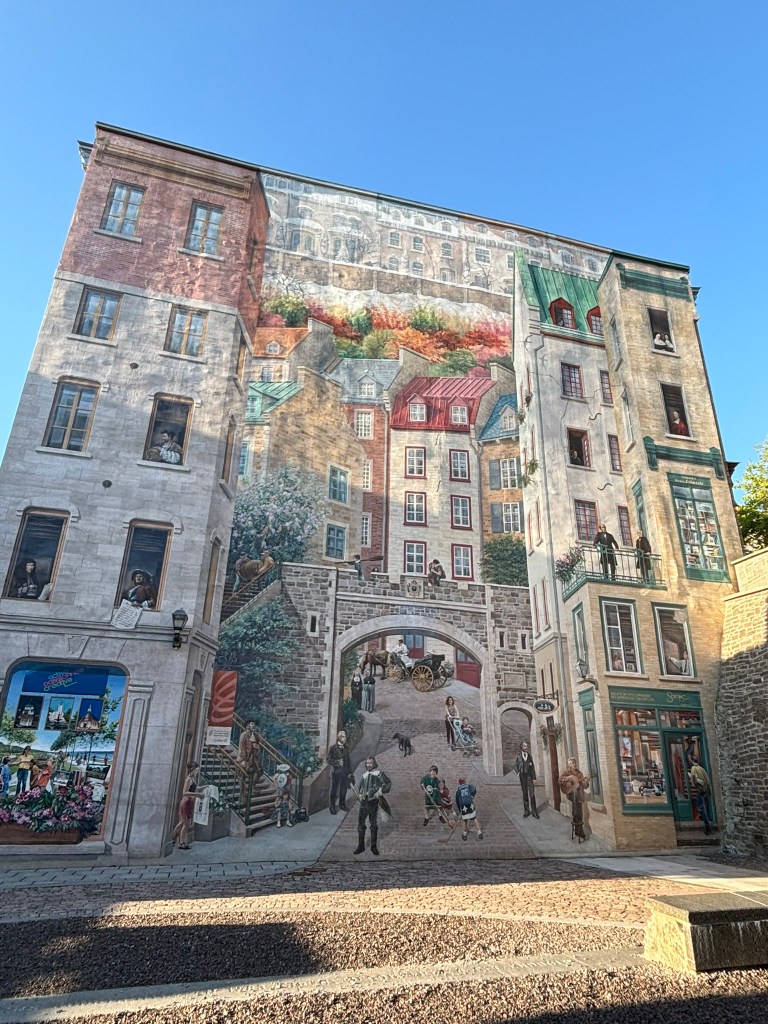
Lower Town feels more intimate and atmospheric. The streets around Place Royale and Rue du Petit-Champlain are among the most beautiful in Canada, with stone buildings, boutiques, cafes, murals, and seasonal decorations. This area is especially magical in winter, but it is charming year-round.

A few highlights include:

PlaceWhy Visit
Dufferin TerracePanoramic river views and the best stroll beside Château Frontenac
Rue du Petit-ChamplainOne of the prettiest shopping streets in North America
Place RoyaleHistoric square tied to the earliest French settlement
Notre-Dame de QuébecOne of the oldest Catholic cathedral sites in North America
The CitadelleStar-shaped fortress with military history and city views
Old City WallsA rare chance to walk through a fortified North American city

A City Made for Slow Travel

Quebec City is not a place to rush. Its beauty is in the details: blue shutters against stone walls, French conversations floating from cafe terraces, street performers in public squares, old cannons facing the river, and warm lights glowing through restaurant windows.

Food is a major part of the experience. Try poutine, tourtière, maple desserts, local cheeses, French pastries, and Quebecois comfort food. The city also has an excellent fine dining scene, along with cozy bistros that feel perfect after a day of exploring.

Seasonally, Quebec City offers completely different moods. In summer, terraces and festivals fill the streets. In autumn, the surrounding landscapes turn gold and red. In winter, snow transforms Old Quebec into one of the most magical cold-weather destinations in North America, especially during the famous Quebec Winter Carnival.

Easy Day Trips from Quebec City

If you have extra time, the region around Quebec City is just as rewarding.

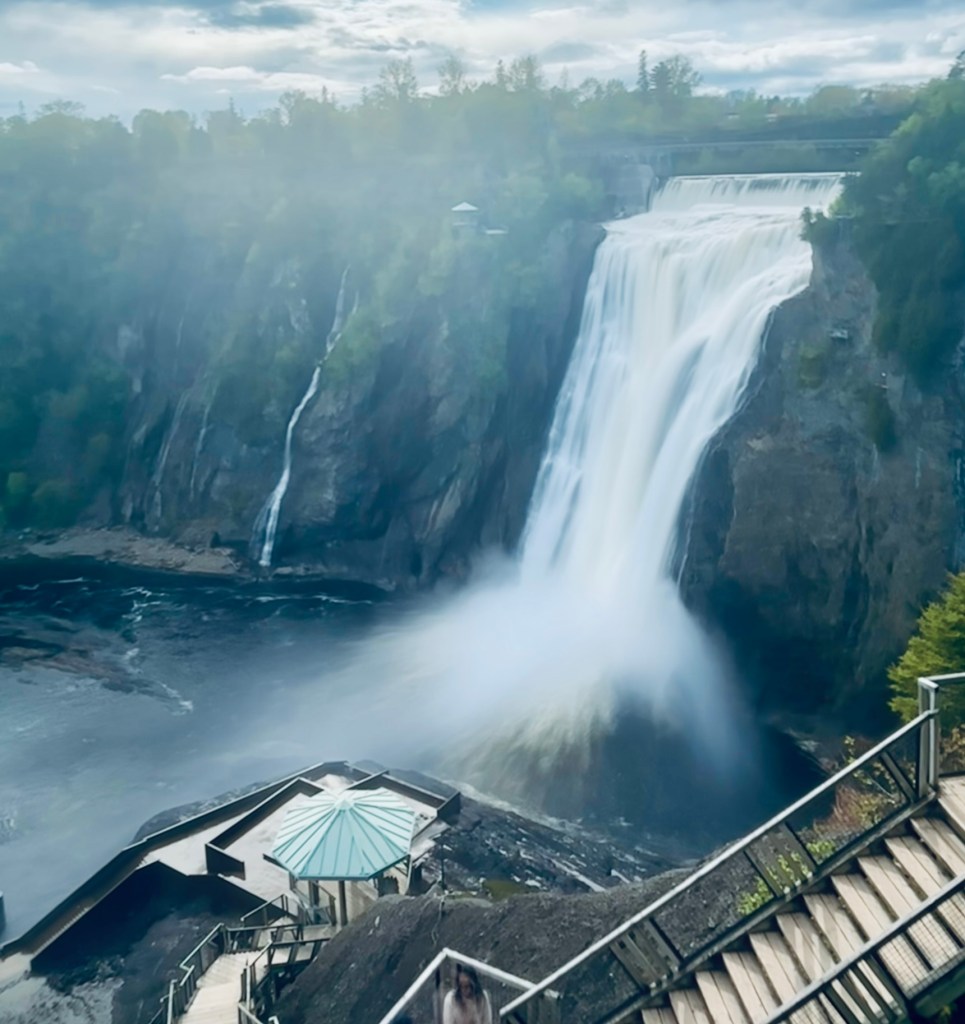
Montmorency Falls is only a short drive from the city and stands even taller than Niagara Falls. Île d’Orléans offers countryside charm, wineries, farms, bakeries, and river views. Sainte-Anne-de-Beaupré Basilica is one of Canada’s most important pilgrimage sites and features impressive architecture and religious art.

These nearby escapes make Quebec City ideal for a long weekend or a slower four- to five-day itinerary. We spent 2 days in Quebec City and felt like 3 days would have been ideal, especially to enjoy at a slower pace.

Why Quebec City Belongs on Your Travel List

Quebec City is one of the rare destinations that feels both accessible and transporting. It gives visitors the romance of Europe, the depth of North American history, and a living French culture that has endured for centuries.

Come for the cobblestones and castle-like skyline. Stay for the food, the language, the river views, the music, the old walls, and the feeling that you have stepped into a place where history is still present in everyday life.

Lake Louise Adventures: Hiking, Canoeing, and More

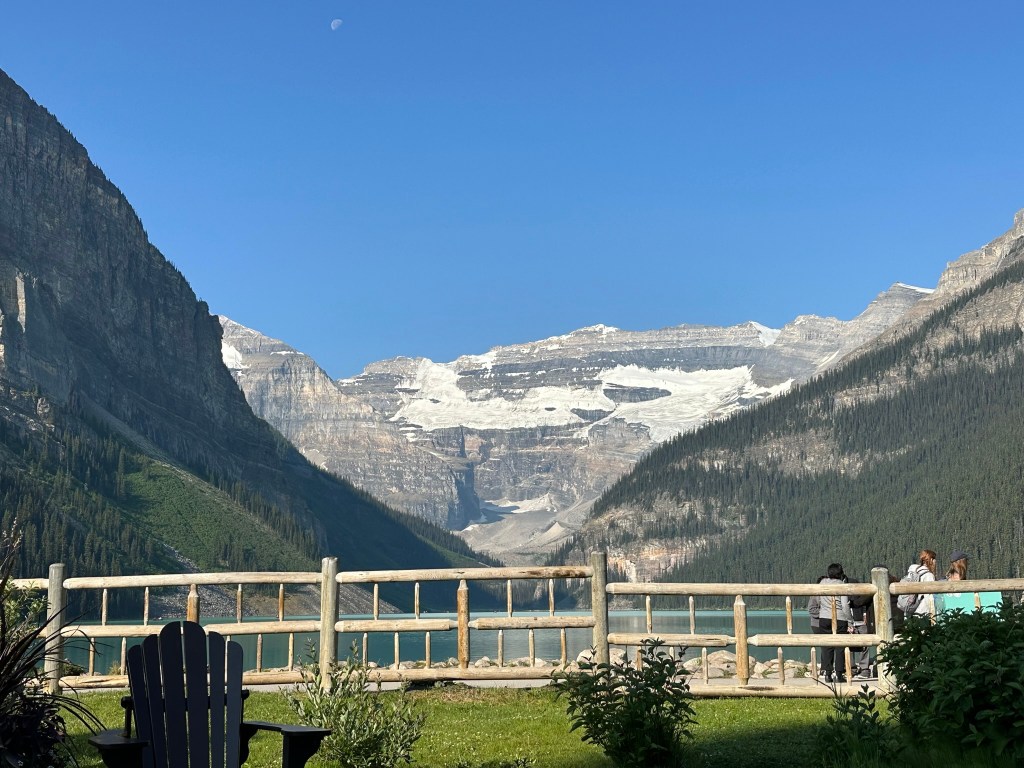
Lake Louise is a stunning alpine lake located in Banff National Park, Alberta, Canada. It is famous for its surreal turquoise waters. These waters are fed by Victoria Glacier. It’s surrounded by towering peaks like Mount Victoria and Mount Whyte, making it one of the most iconic and photographed spots in the Canadian Rockies

Lake Louise is packed with unforgettable experiences—whether you’re chasing adventure, serenity, or postcard-perfect views. Here’s a curated list of must-do activities based on top-rated local spots:

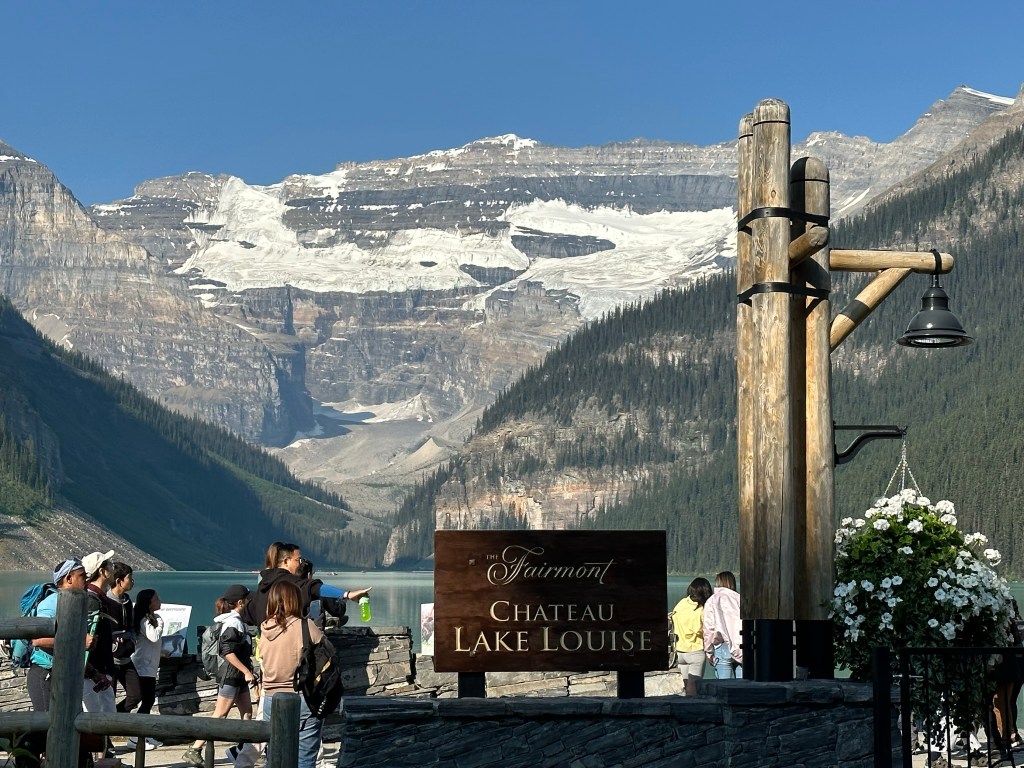
  1. 🏨 Fairmont Chateau Lake Louise
  2. 🛶 Explore Lake Louise Lake shore
    1. Rental Information
    2. Important Details
    3. Special Experiences
  3. 🥾 Hike Fairview Lookout
  4. 🥾 Hike to Lake Agnes Tea House
    1. 🚶‍♂️ Lake Agnes Tea House Hike Highlights
    2. 🌄 What You’ll Experience
    3. 🧠 Pro Tips
  5. Additional Stops- Big and Little Beehive
  6. Alternative way to reach Lake Agnes and the tea house- Horse Back riding
    1. Booking and Requirements
  7. 🥾 Hike to The Plain of Six Glaciers and the Tea House
    1. Overview of the Hike
    2. Trail Highlights

🏨 Fairmont Chateau Lake Louise

Stay or visit this iconic lakeside hotel for luxury, history, and unbeatable views. Try a cocktail class or indulge in afternoon high tea overlooking the lake

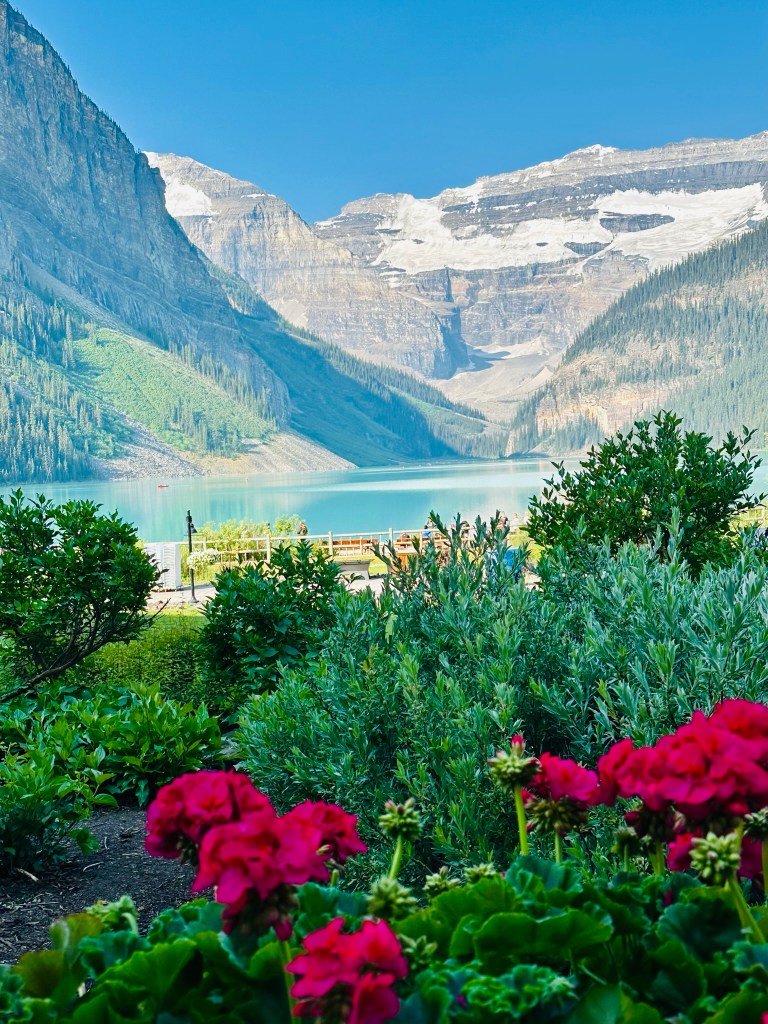
The Fairmont Château Lake Louise began as a one-story log cabin with two bedrooms in 1890. Since then, it has transformed into a grand five-star hotel with a European alpine style. It attracts royalty, celebrities, and guests from around the world, serving as a luxury destination for adventurers and romantics. The hotel offers 539 rooms and 7 restaurants. You don’t need to stay at the hotel to enjoy the property, which features a beautiful garden. Afternoon high tea is popular and can be booked here. You can also have lunch or dinner at one of the on-site restaurants. We got coffee from one of the restaurants and sat in one of the many rocking chairs in the garden and appreciated the million-dollar view.

🛶 Explore Lake Louise Lake shore

  • Rent a canoe and paddle across the turquoise waters
  • Walk the Lakeshore Trail for easy access to stunning vistas

You can rent a canoe at Lake Louise from the Fairmont Chateau’s Boathouse. Rentals run daily from 8:30 AM to 8:00 PM during the summer season.

Rental Information

  • Location: Canoe rentals are available at the Boathouse. It is located on the west shore of Lake Louise. The Boathouse is operated by Fairmont Chateau Lake Louise.
  • Rental Rates:
    • For the Public: $170 CAD per hour / $160 CAD for a half-hour (+ tax).
    • For Hotel Guests: $110 CAD per hour / $100 CAD for a half-hour (+ tax).
    • Voyageur Canoe Experience: $70 CAD per adult and $30 CAD for youth for hotel guests. For non-hotel guests, it is $85 CAD per adult and $40 CAD for youth.
  • Capacity: Each canoe can accommodate up to three adults or two adults and two small children (under 55 lbs each). At least one person in the canoe must be 16 or older to rent.

Important Details

  • Reservations: Canoes are rented on a first-come, first-served basis, so reservations are not accepted. Expect longer wait times during peak summer months.
  • Hours of Operation: Typically open from 8:30 AM to 8:00 PM, with hours varying based on seasonal conditions. Confirm current hours before your visit, as they change throughout the summer 

Special Experiences

  • Sunrise Canoe Experience: Guests of the Fairmont can enjoy a unique sunrise canoe experience. This allows for a quieter paddle before the crowds arrive. Reservations for this need booking by 10 PM the day before.
  • Guided Group Canoeing: The Voyageur Canoe Experience allows guests to paddle in a larger canoe with a guide. The guide shares local history and wildlife information.

🥾 Hike Fairview Lookout

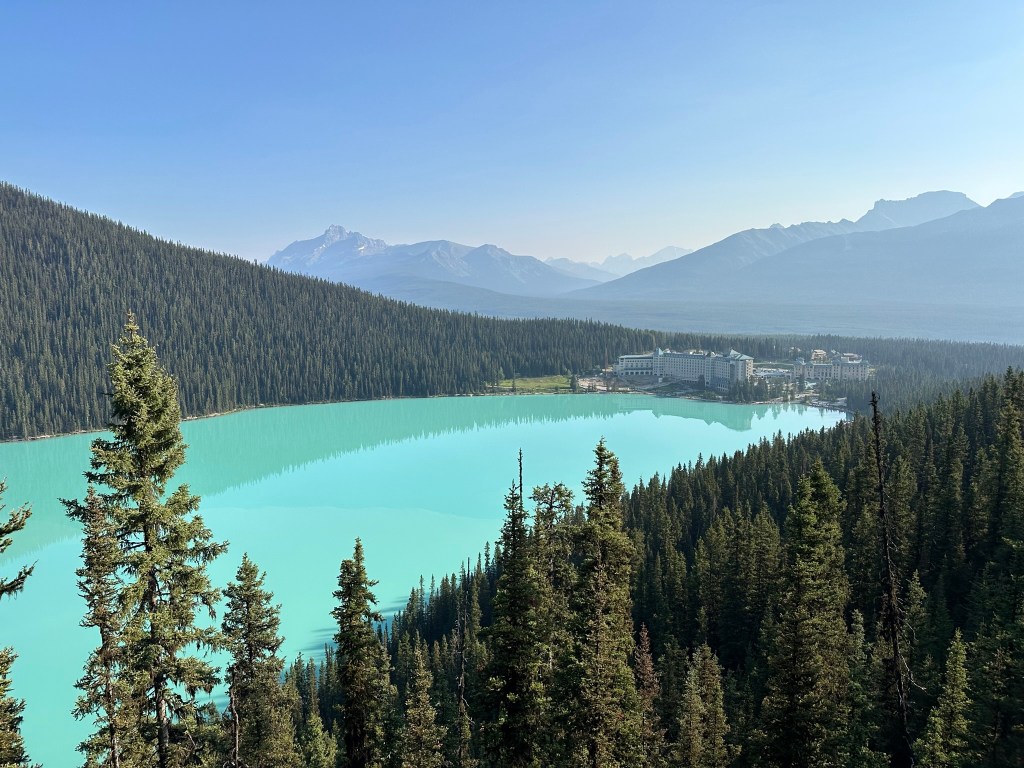
  • Short hike with a big payoff: elevated views of Lake Louise and the Chateau. This was suggested to us by our Radventures and turned out to be one of our favorite hikes.

Trail overview

Trail Length: ~2 km round trip

Elevation Gain: ~170 meters

Difficulty: Easy to moderate

Duration: 30–60 minutes

🌲 What to Expect

The trail starts near the Lake Louise lake shore and winds through a dense forest. Ends at a wooden viewing platform perched above the lake, offering postcard-perfect views of the turquoise waters and surrounding peaks. This hike is excellent for families. It is also perfect if you are short on time. You can still get a view of the hotel and lake from a vantage point.

🥾 Hike to Lake Agnes Tea House

You’re in for a classic Banff adventure! Starting at Lake Louise, you’ll be greeted by its surreal turquoise waters backed by Victoria Glacier and the towering peaks of Mount Victoria and Mount Whyte. From there, the hike to the Lake Agnes Tea House is a scenic and rewarding journey. The Lake Agnes hike is a picturesque and moderately challenging trek in Banff National Park. It leads to the historic Lake Agnes Tea House and offers stunning views of alpine scenery.

🚶‍♂️ Lake Agnes Tea House Hike Highlights

  • Trailhead: Begins at Lake Louise lakeshore
  • Distance: ~7.6 km round trip
  • Elevation Gain: ~433 m
  • Duration: 2–4 hours
  • Difficulty: Easy to moderate
  • Season: June to mid-October (when the tea house is open)

🌄 What You’ll Experience

You’ll follow a well-maintained path that gradually ascends through lush forests and alongside beautiful lakes.

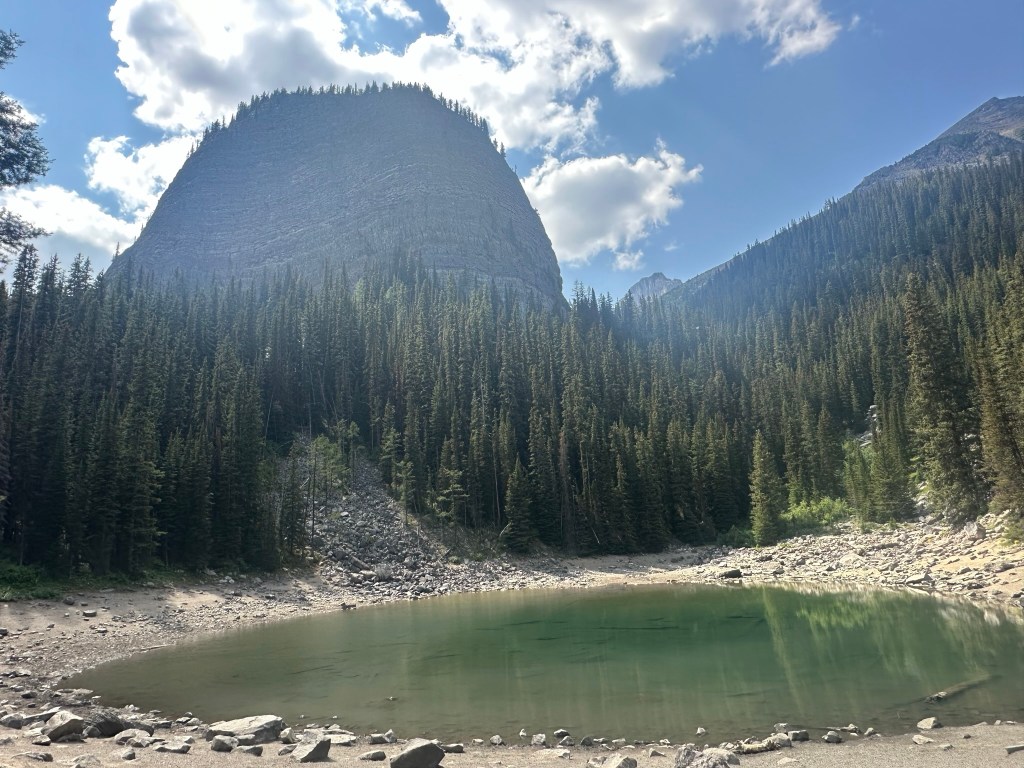
  • First Stop – Mirror Lake: After 1.7 km, you’ll come across Mirror Lake, a great place to rest with views of the Big Beehive mountain above.


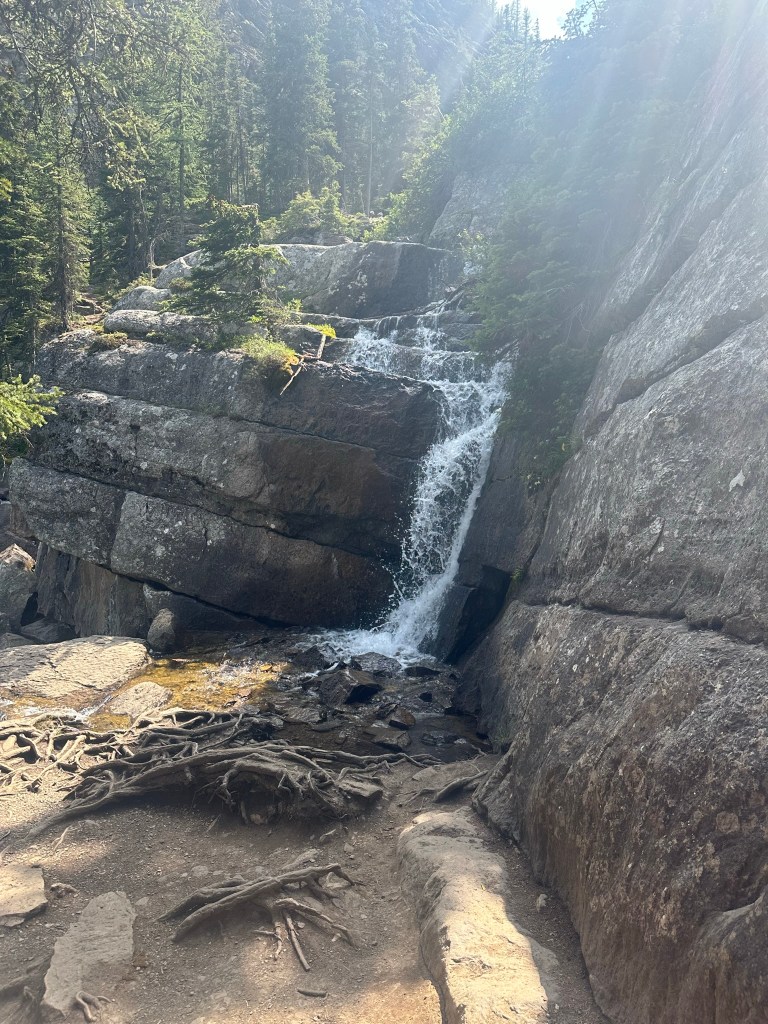
Second Stop – Waterfall: Just before the final ascent through the stairs, there is a small waterfall.

Third Stop- Lake Agnes

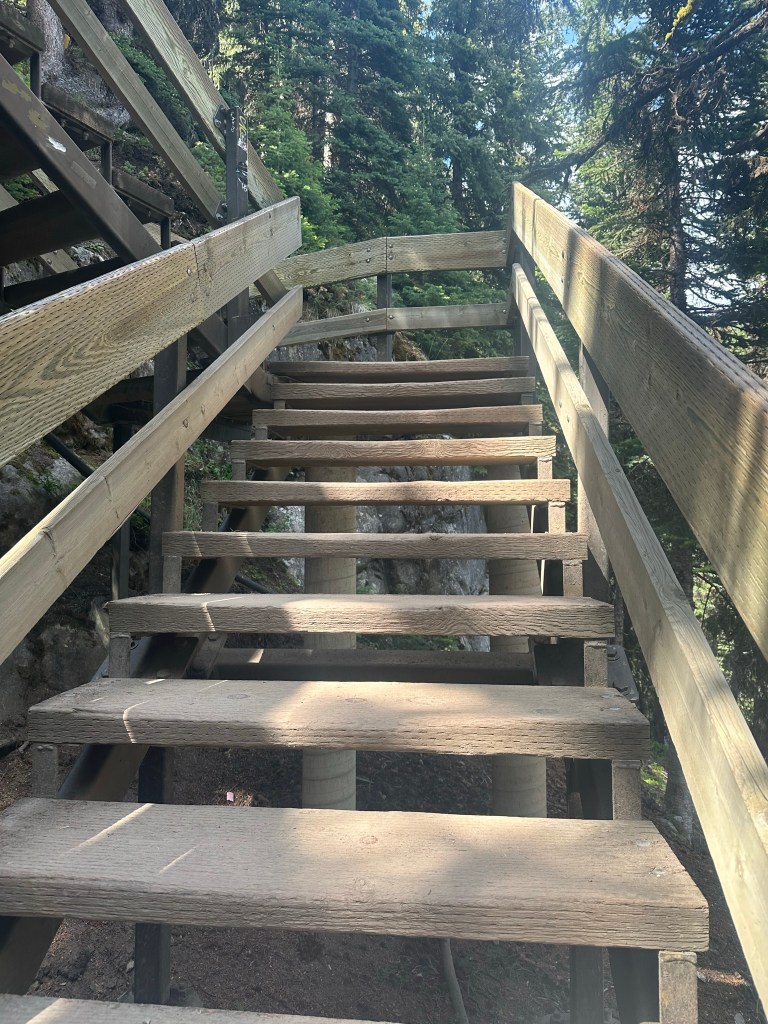
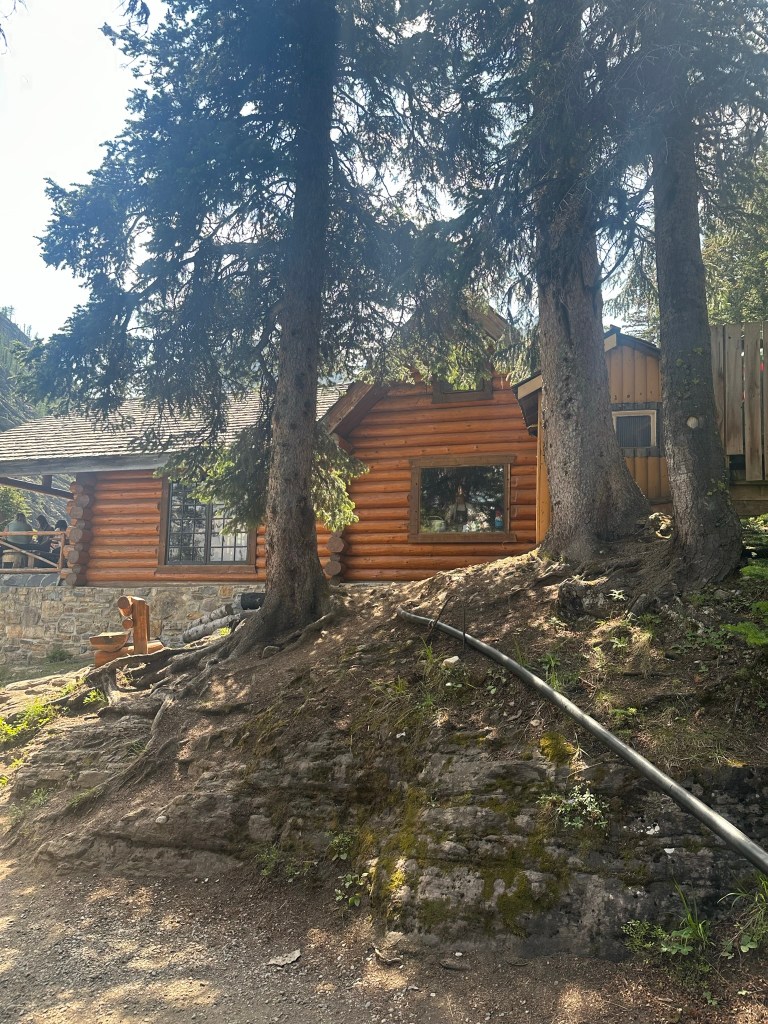
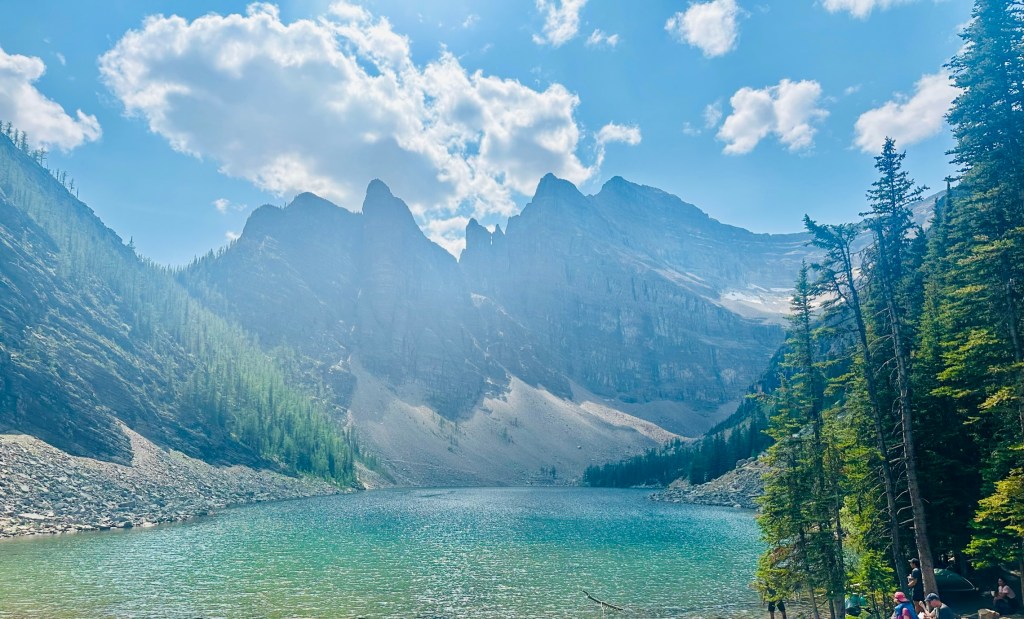
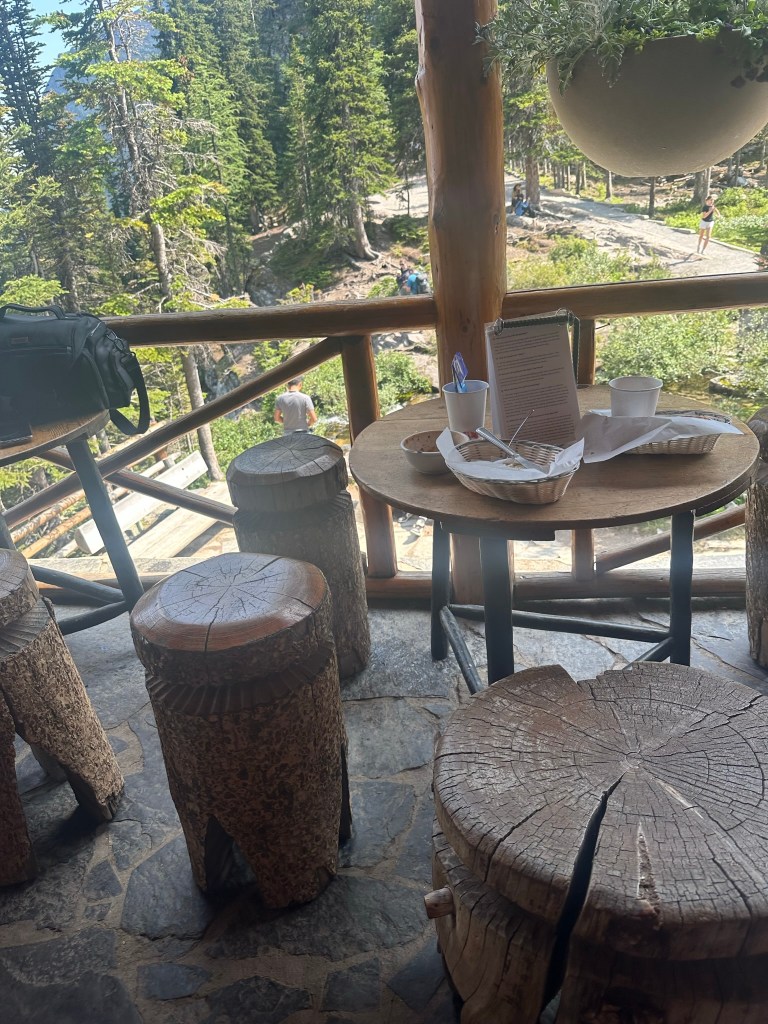
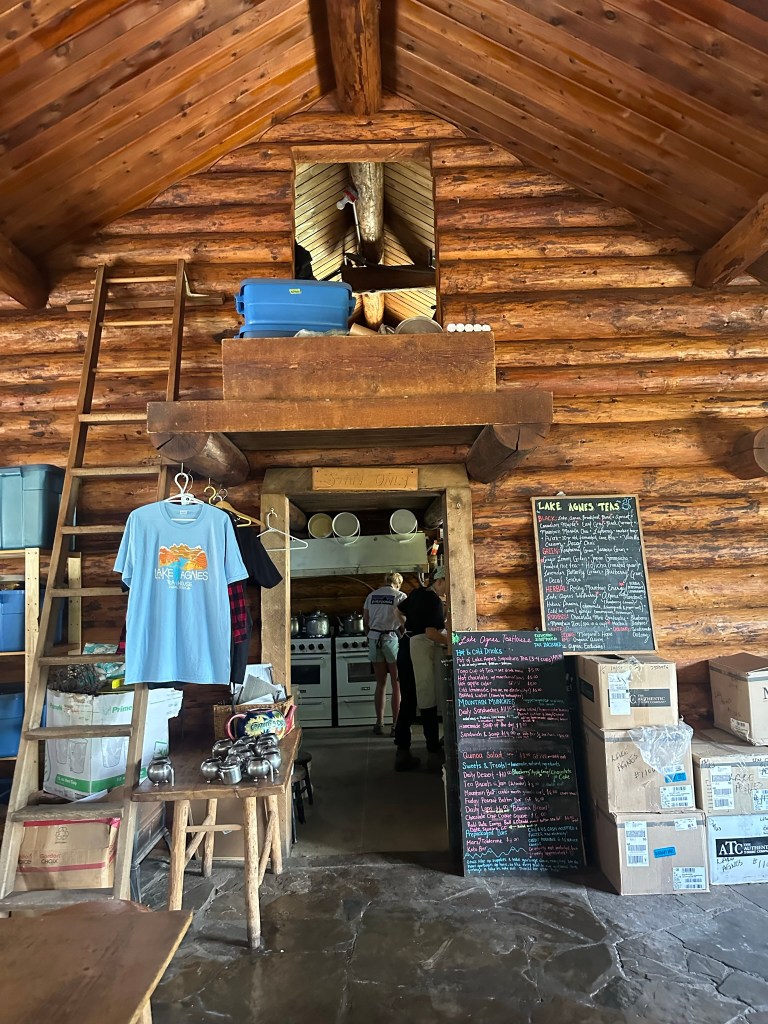
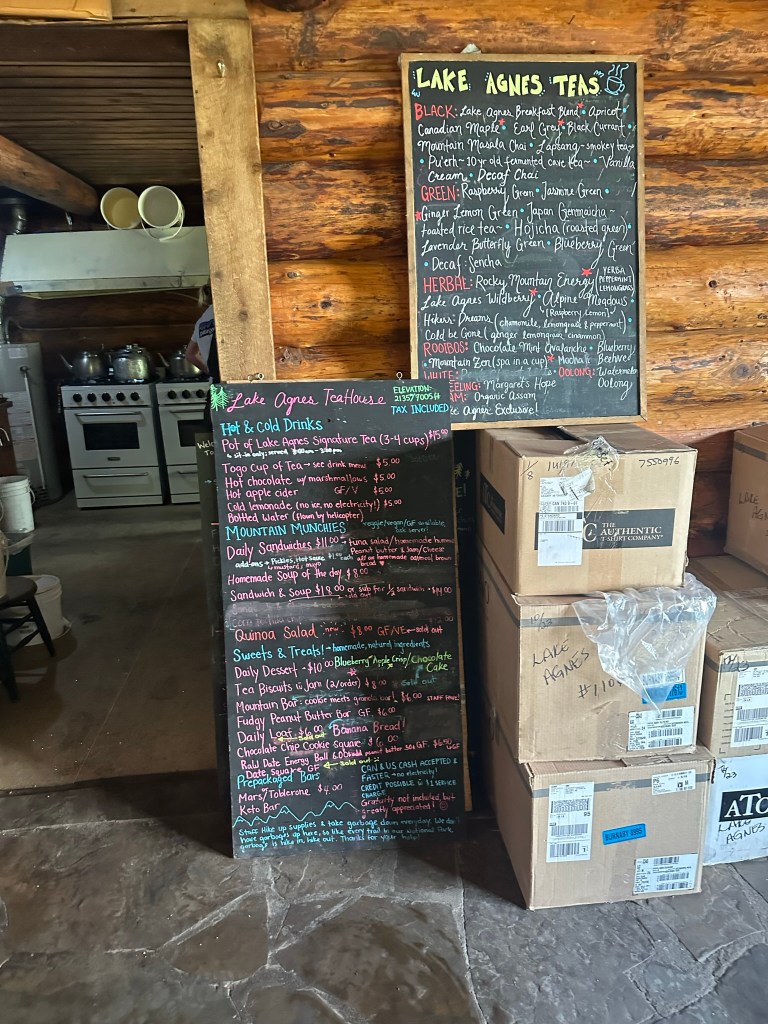
Continuing on, the stairs lead to Lake Agnes, where the iconic tea house awaits. The location of the Tea house couldn’t be any better, and it has been operational since 1901. The tea hose serves various types of teas and baked goods. It is a charming little place to rest and enjoy the natural beauty that surrounds it.


🍵 Lake Agnes Tea House

  • Built in 1901, serving over 100 types of loose-leaf tea, homemade soups, and fresh baked goods
  • Open daily 8 am–5 pm, cash preferred (CAD or USD)
  • No electricity or running water—staff hike supplies up daily!

🧠 Pro Tips

  • Arrive early to beat the crowds and snag a seat at the tea house
  • Bring cash, layers, and bear spray
  • Use restrooms at Lake Louise before starting—there are only two composting toilets at the top

Additional StopsBig and Little Beehive

  • Fork in the Trail: At Mirror Lake, hikers have a decision to make. They can detour to the Little Beehive. Alternatively, they can continue to Lake Agnes. It’s suggested to go to Lake Agnes first, then tackle the Little Beehive as an extension. We were too tired to do little beehive and skipped it.
  • From Lake Agnes to Big Beehive: After visiting the tea house, continue along Lake Agnes. Then, take the ascent via switchbacks to reach the Big Beehive summit. The view of both Lake Agnes and Lake Louie is incredible from Big Beehive. We did not make it to big Beehive

Alternative way to reach Lake Agnes and the tea houseHorse Back riding

Horseback riding to Lake Agnes is another choice if you want to try horseback riding. It’s a great way to reach Lake Agnes if you can’t hike. You can check out the options here.

Booking and Requirements

  • Rider Requirements: Most ride operators require riders to be at least 8 years old. Riders must also be of a minimum height, usually around 52 inches. Weight limits might apply (commonly 250 lbs) 
  • Booking: Reservations are recommended, especially during peak season. Various tour operators like Brewster Adventures offer different horseback riding packages. These include the Lake Agnes ride. There are options to combine it with other trails such as the Plain of Six Glaciers.
  • Make sure to check the schedule for departure times. Typically, rides to Lake Agnes are offered around 9:00 am and 1:00 pm, but it is best to confirm directly with the tour operators

🥾 Hike to The Plain of Six Glaciers and the Tea House

Another iconic hike around Lake Louise is in the Plain of the Six Glaciers. Just like Lake Agnes hike, there is a historical Tea house that awaits at the top.

Overview of the Hike

Trail Highlights

  • Start your hike at the Fairmont Chateau Lake Louise, walking along the scenic Lake Louise shoreline trail. This relatively flat section provides breathtaking views of the lake and surrounding mountains.
  • After about 2.5 miles( 4 Km), the trail transitions from the lakeside boardwalk to a more rugged path. It climbs through a forested area into an open amphitheater. This amphitheater is filled with glacial features.
  • The hike culminates at the Plain of Six Glaciers Tea House. This charming establishment dates back to 1927 and has no electricity. It serves light meals and beverages. Visitors can enjoy spectacular views of glaciers and the surrounding peaks while taking a break at the tea house. Remember to bring cash, as it is the preferred method of payment.
  • For those wanting to extend their hike, a short trail leads to the Abbot Pass viewpoint, offering breathtaking views of multiple glaciers

Best Times and Tips for Moraine Lake Visit

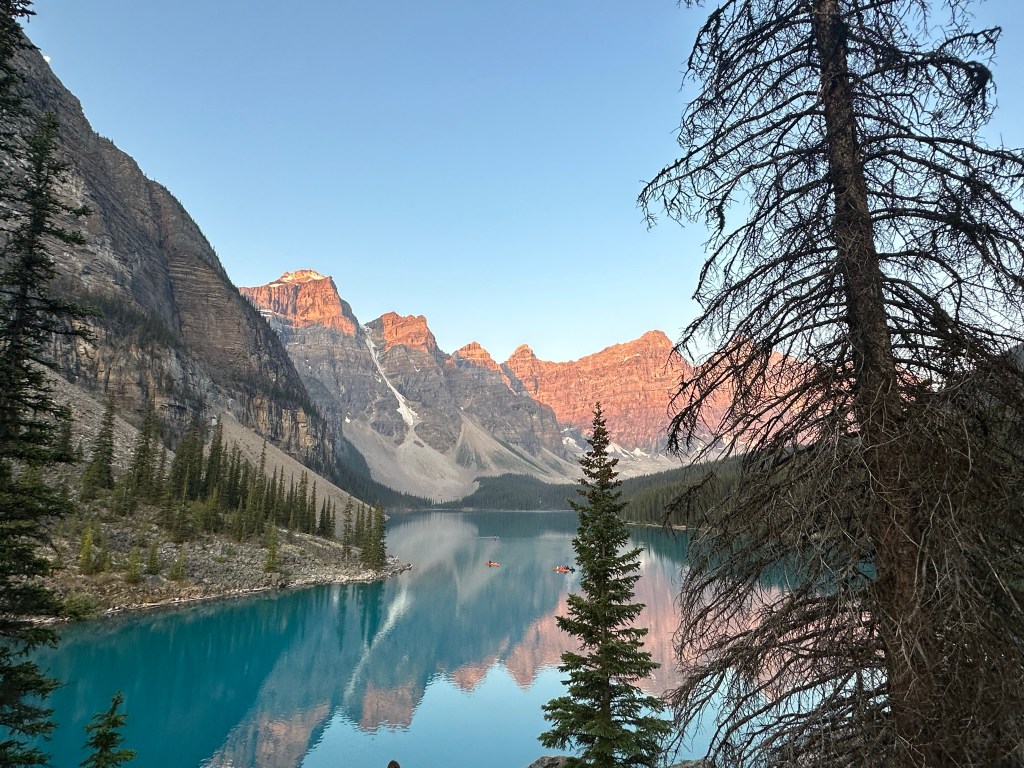
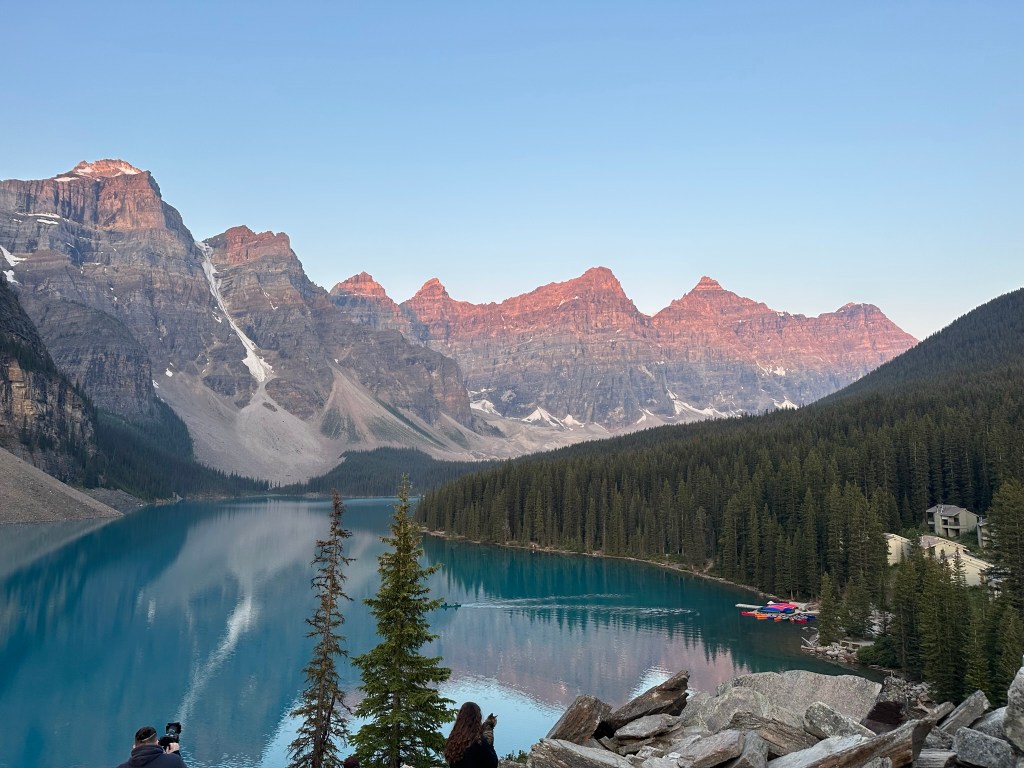
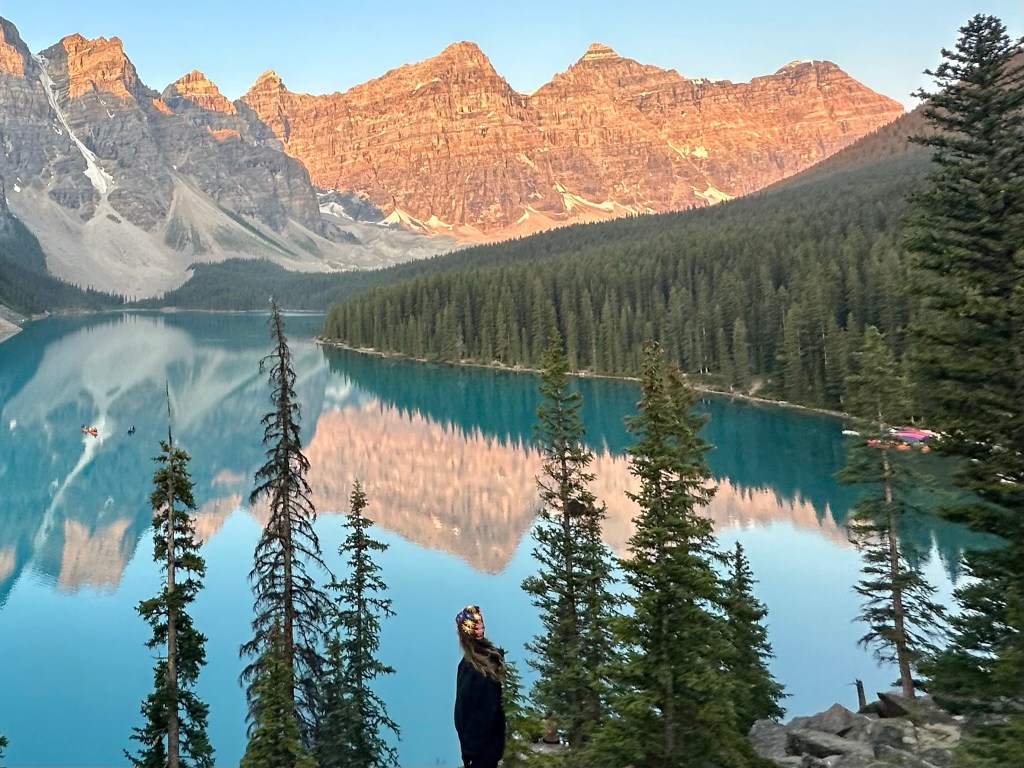
Moraine Lake is one of the crown jewels of Banff National Park. It captivates visitors with its stunning turquoise waters. Visiting it is truly a bucket-list experience that offers breathtaking views and unparalleled natural beauty. I had this on my bucket list for at least the last 20 years. I eagerly dreamed of the day I would stand at its shores. Finally, I got to see it in person. The moment I arrived, I was awestruck by the vibrancy of the lake’s color. The lake’s color changes throughout the day, reflecting the surrounding peaks and the bright blue sky above. Yet, due to its overwhelming popularity and fragile environment, getting there requires careful planning. Since 2023, all personal vehicles have been banned from Moraine Lake. You need to plan alternative ways to reach the lake. Keep reading to explore all the options to see the majestic Moraine Lake and our personal experience.

  1. How to reach Moraine Lake
  2. Best time to visit
  3. Must-do activities
  4. Shuttle Services to Lake Moraine
  5. Our personal experience with Moraine Lake Shuttles
  6. Final thoughts

How to reach Moraine Lake

🚐 No personal vehicles allowedMoraine Lake Road is closed to personal vehicles year-round. The only ways to access the lake are:

  • Parks Canada shuttle (runs June 1 to October 13, every 30 minutes from 6:30 am to 6 pm)
  • Roam Public Transit Super Pass (includes access to the Lake Connector shuttle)
  • Licensed commercial tour operators – More on this below
  • Biking or hiking (for the adventurous!)
  • Guests of Moraine Lake Lodge or those with accessible parking placards

Best time to visit

  • Mid-June to late September: From mid-October to late May, the Moraine Lake road is completely closed to vehicles due to avalanche risk and heavy snow
  • Early morning or evening for fewer crowds and magical lighting

Must-do activities

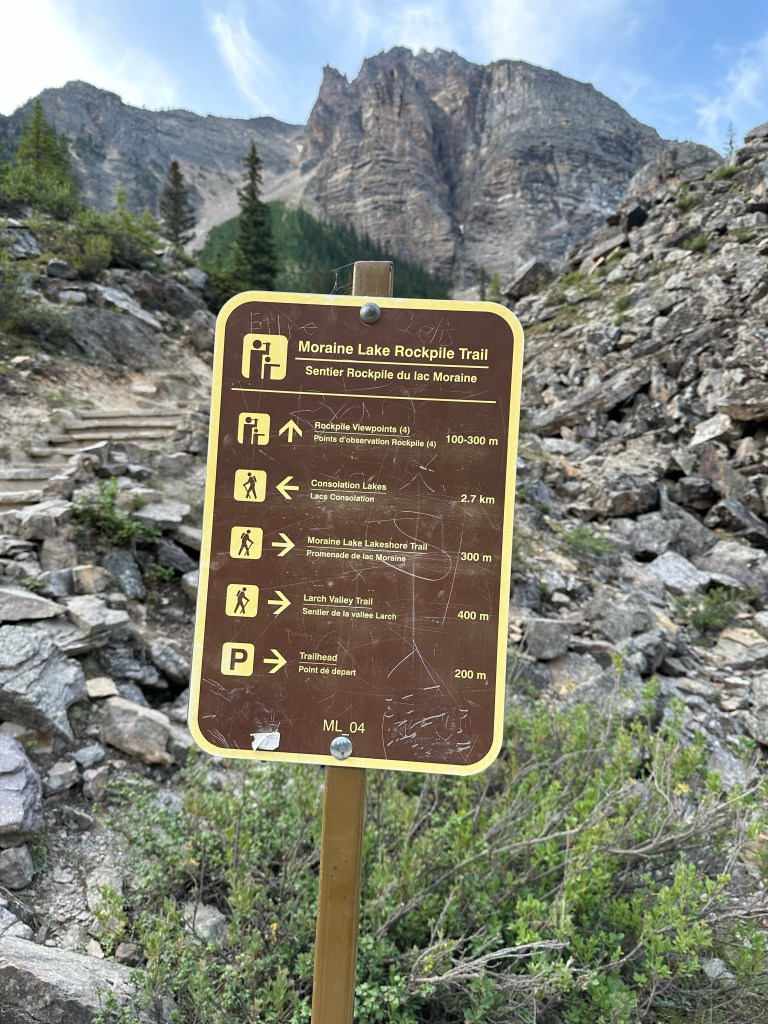
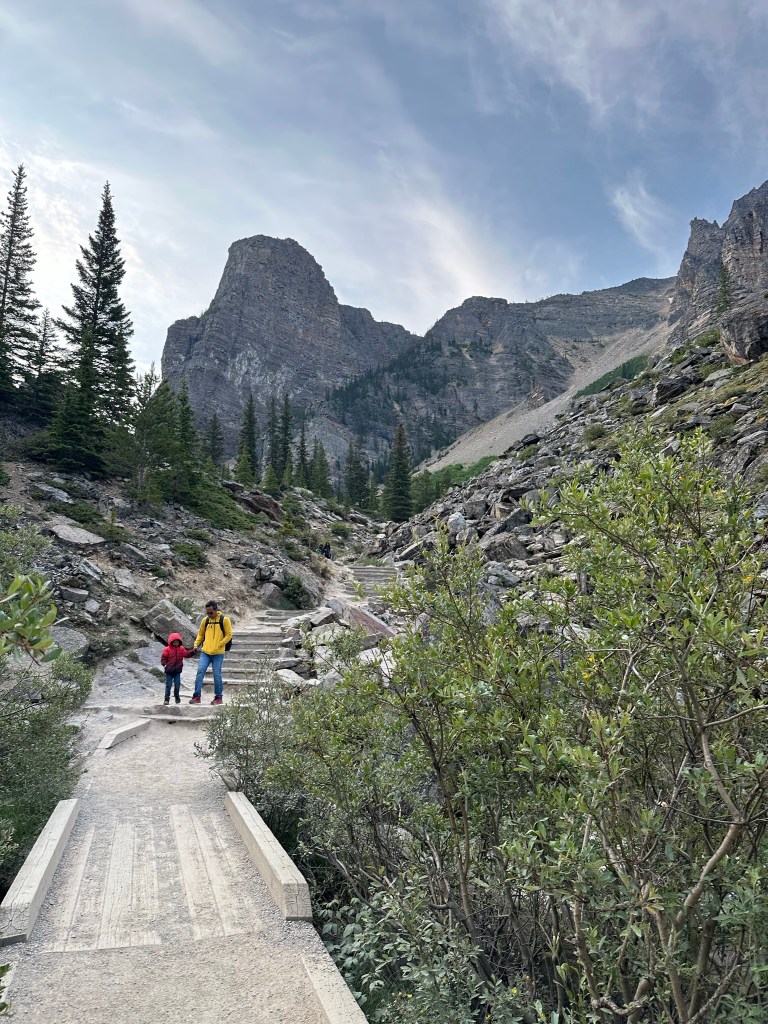
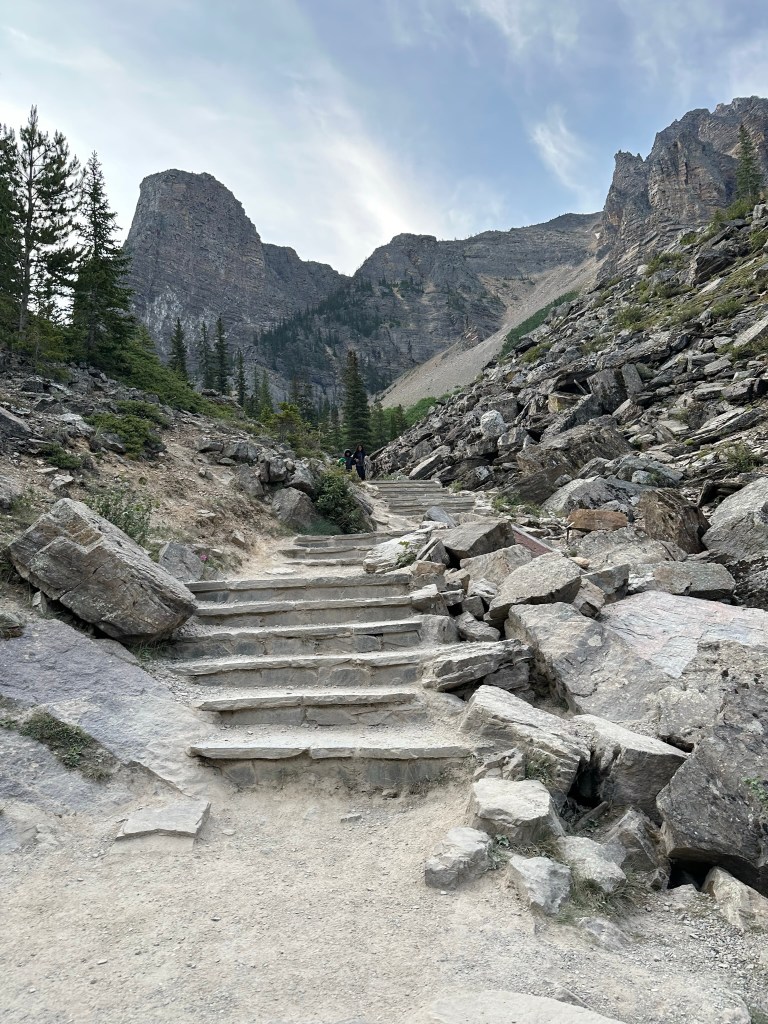
  • Hike the Rockpile Trail for the famous “Twenty Dollar View”
  • Rent a canoe and paddle across glacier-fed waters
  • Explore nearby trails like Larch Valley or Consolation Lakes

Shuttle Services to Lake Moraine

🚌 To reach Moraine Lake, several licensed commercial operators offer shuttle services from Banff, Lake Louise, and surrounding areas. Here’s a roundup of the most popular and reliable ones.

Pro tip:

Park canada shuttle is the cheapest/Budget way to reach Lake Moraine

🎟️ Reservations required Shuttle seats sell out fast—especially early morning slots. Parks Canada releases 40% of seats in April, and the remaining 48 hours before departure

🚐 Licensed Shuttle Operators

OperatorDeparture LocationsHighlights
Parks Canada ShuttleLake Louise Park & RideFrequent service consists of the Lake Connector shuttle
Moraine Lake Bus CompanyLake Louise Village & Summer GondolaSunrise shuttles, flexible booking, pet-friendly
Fairview LimousineLake Louise InnLuxury limos, hourly shuttles, sunrise access
RadventuresBanff & Lake LouiseGuided sunrise tours, small groups, photo tips
Ten Peaks Shuttles & ToursBanff, Bow Valley Parkway, Lake LouiseSunrise tours, wildlife viewing, hotel pickups
Mountain Park TransportationBanff townCombo tours to Moraine Lake & Lake Louise
Via Via Moraine Lake ShuttleBanff, Canmore, Harvie Heights, Lake LouiseExtended stays, hotel pickups, hot drinks & blankets

🗓️ Season: Most shuttles operate June 1 to October 13, with sunrise options starting as early as 4 am.

🐾 Pet Policy: Fairview and Moraine Lake Bus Company allow pets (some restrictions apply). Service animals are welcome across all services.

Our personal experience with Moraine Lake Shuttles

We used both Radventures and Fairview Limousine to visit Lake Moraine. Since Lake Moraine had been on my bucket list for such a long time, I didn’t want to take any chances and wait until the last day of our trip for our sunrise shuttle to Lake Moraine in case the weather wasn’t cooperating, as I’ve heard so much about its stunning beauty. To ensure we experienced the breathtaking views, I decided to plan ahead. We stayed at Lake Louise Inn, which was a perfect choice, given its proximity to all the amazing attractions. Fairview Limousine operates out of the Lake Louise Inn, making it incredibly convenient for us. When I found out they had availability for the next morning, I took a solo trip to Lake Moraine on day 1. I embraced the quiet morning solitude. It made the experience even more magical. We also used Fairview to visit Lake Louise for our afternoon hike to Lake Agnes. We truly had the best experience with them. Their drivers were friendly and knowledgeable. They added incredibly valuable insights about the area along the way. One of the great things about Fairview Limousine buses is that they allow dogs, including large dogs.
🌄 Radventures offers some of the most sought-after guided experiences to Moraine Lake and Lake Louise, perfect for catching golden-hour magic or exploring Banff’s alpine beauty without the crowds. We did the Moraine Lake Sunrise and Lake Louise golden hour adventure.

Here are a few standout tours:

🧭 Moraine Lake Sunrise & Lake Louise Golden Hour Adventure

  • Duration: 7 hours
  • Highlights: Exclusive sunrise access to Moraine Lake, hot drinks, photography-trained guides, and a peaceful visit to Lake Louise before peak hours
  • Price: From CAD $269 per person

🌅 Moraine Lake & Lake Louise Sunset Wildlife Adventure

  • Duration: 5 hours
  • Highlights: Golden hour at Moraine Lake, sunset at Lake Louise, and a wildlife safari along Bow Valley Parkway with a 95% sighting success rate
  • Price: From CAD $209 per person

🏞️ Best of Banff National Park Adventure

  • Duration: 8 hours
  • Highlights: Full-day tour of Moraine Lake, Lake Louise, and other scenic stops like Vermilion Lakes and Mount Norquay
  • Price: From CAD $269 per person

All tours include small group sizes, expert local guides, and comfy transport. You’ll get insider tips, storytelling, and plenty of time to explore or take photos.

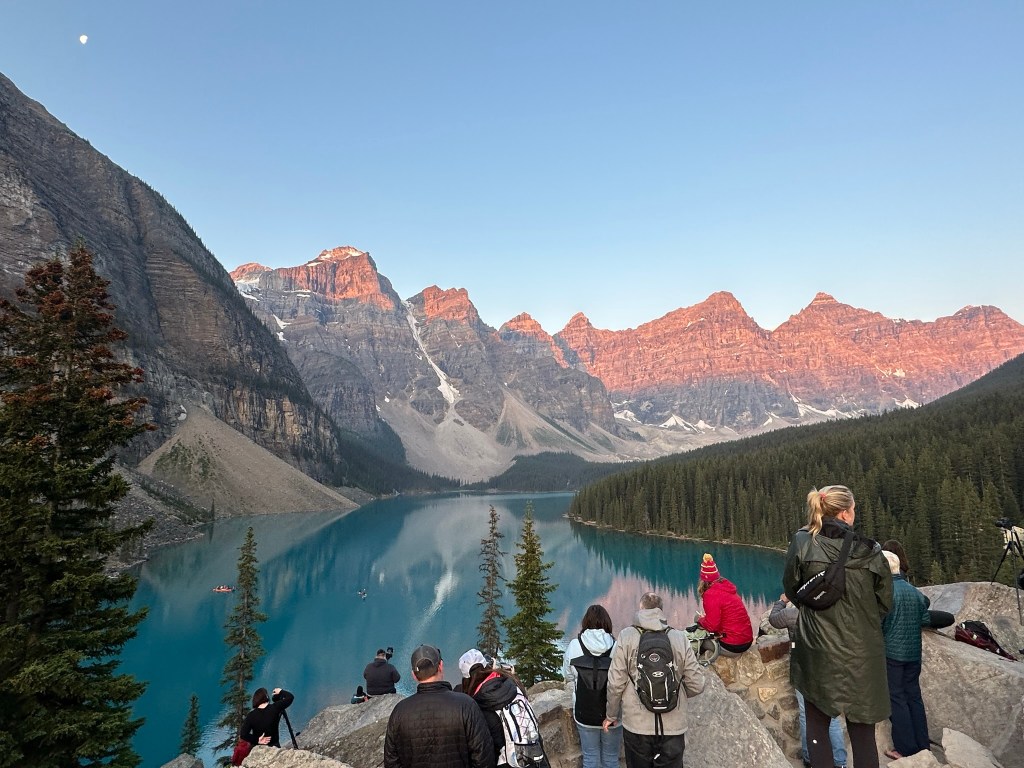
We were picked up at 4:45 AM from the Lake Louise village and arrived at Lake Moraine by 5:15 AM. We spent the next hour drinking coffee and waiting for sunrise at one of the 3 viewpoints on the rock pile.

🚐 Fairview Limousine and Shuttle Services is Lake Louise’s only locally based transportation company. They’ve built a stellar reputation for getting visitors to Moraine Lake and Lake Louise with ease and style.

🌅 What they offer:

  • Sunrise shuttles to Moraine Lake (arrive ~1 hour before sunrise)
  • Hourly shuttles to Moraine Lake and Lake Louise throughout the day
  • Connector shuttle between the two lakes (8 times daily)
  • Private charters for weddings, airport transfers, and sightseeing
  • Luxury limousine service with leather seating, ice bar, and entertainment system
  • Pet-friendly rides (even large dogs are welcome!)

📍 Departure Point: Lake Louise Inn 🕒 Operating Hours: Daily from 7:15 am to 6:30 pm (varies by season) 💰 Pricing:

  • Moraine Lake: ~$35 CAD
  • Lake Louise: ~$25 CAD
  • Sunrise Shuttle: ~$75 CAD
  • Combo tickets and group discounts available

Fairview is a fantastic alternative to Parks Canada shuttles—especially if you’re staying in Lake Louise Village or want more flexibility. We had an incredible experience with Fairview Limousine. We took it twice, once to visit Lake Moraine and again to visit Lake Louise. On our way back, the bus was full and we couldn’t get on until next shuttle which was an hour later. The driver of the earlier shuttle called the main desk, and they sent us a car to pick us up without any additional charges.

Final thoughts

At first, planning a trip to Lake Moraine seems like a lot. Nevertheless, it is not difficult once you know which shuttle to use. We prefer convenience and found Fairview Limousine worked best with our location and schedule. Sunrise is definitely a better time to go, but if you can’t make it to the sunrise, any other time still works as well, and the color and beauty of the lake can still be admired throughout the day.

On the flip side, the sunrise is very crowded, and the photo below shows the behind-the-scenes crowd. Be prepared with lots of patience and good humor.

Your Itinerary for Canadian Rockies National Parks

Photo from Dirty Shoes and Epic Views blog

  1. National Parks of the Canadian Rockies
  2. Our Itinerary
  3. Download Itinerary
  4. Our itinerary details

National Parks of the Canadian Rockies

Talk about a trifecta of national parks to visit….

🌍 Into the Wild Beauty of the Canadian Rockies

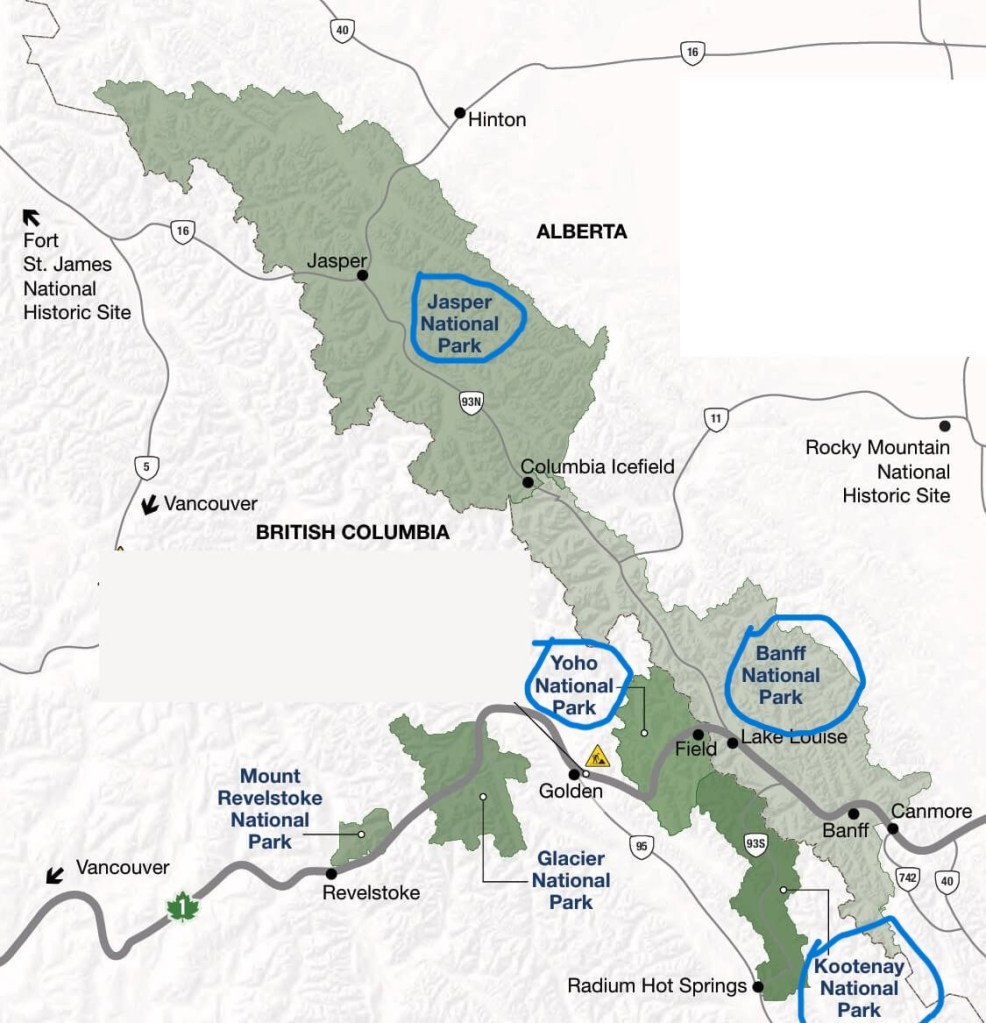
If you’ve ever dreamed of stepping into a postcard, the Canadian Rockies are where that vision comes to life. Straddling the provinces of Alberta and British Columbia, this mountain wonderland is breathtaking. It is home to some of the most jaw-dropping natural beauty on Earth. At the heart of it all are three iconic national parks: Banff, Yoho, and Jasper. Each park offers its own flavor of adventure, tranquility, and untamed charm.

🏞️ Banff is where it all began: Canada’s first national park, and a global symbol of alpine beauty.

🌄 Lake Louise & Moraine Lake Technically within Banff, but worth highlighting on their own. These iconic lakes are must-sees for their surreal colors and dramatic mountain backdrops. Sunrise at Moraine Lake? Pure magic.

💦 Yoho may be smaller, but don’t let size fool you. This hidden gem features towering waterfalls, Tranquil lakes, and ancient fossils.

To read more about spending a day a Yoho National Park, click here

🌌 Jasper, the wildest of the trio, beckons those looking to get off the beaten path. Jasper boasts vast backcountry and an abundance of wildlife. Its skies are so dark they’ve been named a dark-sky preserve.

If you are already exploring Banff and the surrounding areas and have more days to spend, here are a few other noteworthy National Parks and hidden gems to add to your itinerary

🧭 Kootenay National Park– Just south of Yoho, Kootenay offers a quieter experience. It is less traveled with dramatic canyons. You can find hot springs and colorful mineral pools. Don’t miss Marble Canyon or the steamy Radium Hot Springs for a relaxing soak after your hikes.

🏔️ Icefields Parkway– This legendary highway connects Banff and Jasper and is a destination in itself. Along the way, you’ll pass glaciers, turquoise lakes, and epic viewpoints like Peyto Lake and the Columbia Icefield. It’s one of the most scenic drives in the world.

🌲 Canmore, Located just outside Banff National Park, is a charming mountain town. It has a laid-back vibe and great food. You can access beautiful hikes like Ha Ling Peak and Grassi Lakes. It’s perfect for travelers who want a less touristy base.

🛶 Waterton Lakes National Park A bit farther south, this lesser-known park borders Montana’s Glacier National Park. It’s a UNESCO World Heritage Site, boasting stunning lakes, wildflower-filled meadows, and a peaceful, off-the-beaten-path ambiance.

Our Itinerary

What we did: Spent 3 days in Lake Louise Village and did hikes, canoeing, and drove the Icefields Parkway.

Where we stayed: Lake Louise Inn

Days 1 and 5: Travel Days

Day 2: Explore Yoho National Park and Johnston Canyon

Day 3: Drive the Icefields Parkway. Stop at various viewpoints like Lake Peyto, Mistaya Canyon, and the Columbia Icefields. Visit the Athabasca Glacier. Evening -explore Banff downtown

Day 4: Sunrise visit to Lake Moraine with Radventures. Afternoon visit to Lake Louise with Fairview Limousine and hike to Lake Agnes Tea House

Download Itinerary

Download our entire itinerary by clicking here.

Our itinerary details

Ultimate Guide to Icefields Parkway: Scenic Stops & Highlights

Prepare to be swept away by the unparalleled beauty of the Canadian Rockies! The Icefields Parkway connects Lake Louise and Jasper. It is widely regarded as one of the most scenic drives in the world. Imagine towering mountains, glistening glaciers, vibrant blue lakes, and cascading waterfalls unfolding before your eyes with every turn. This post is your guide to experiencing the very best of this incredible journey.

Pro tip: Download the Guidealong app for Canadian Rockies tours. This app provides a delightful narration of the various viewpoints. It ensures that you won’t miss any of the fantastic sights along the way.
  1. Icefields Parkway Stops from Lake Louise:
    1. Herbert Lake 
    2. Hector Lake
    3. Crowfoot Glacier Viewpoint and Bow Lake Viewpoint
    4. Bow Lake
    5. Peyto Lake and Bow Summit
    6. Waterfowl Lakes and Chephren Lake
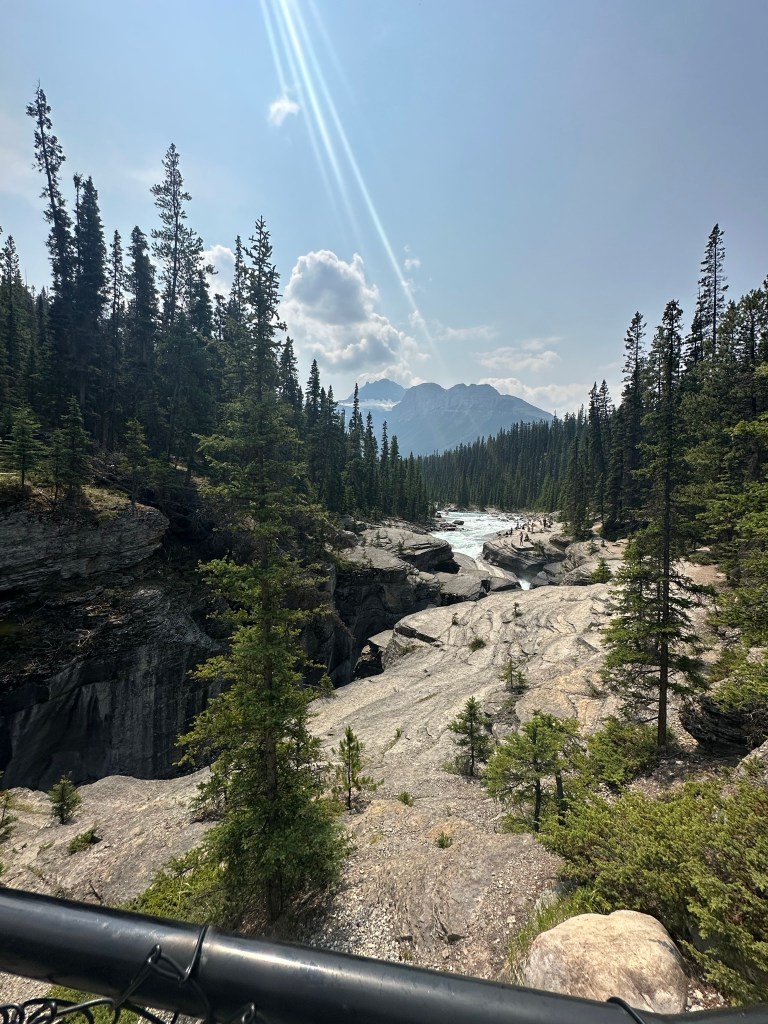
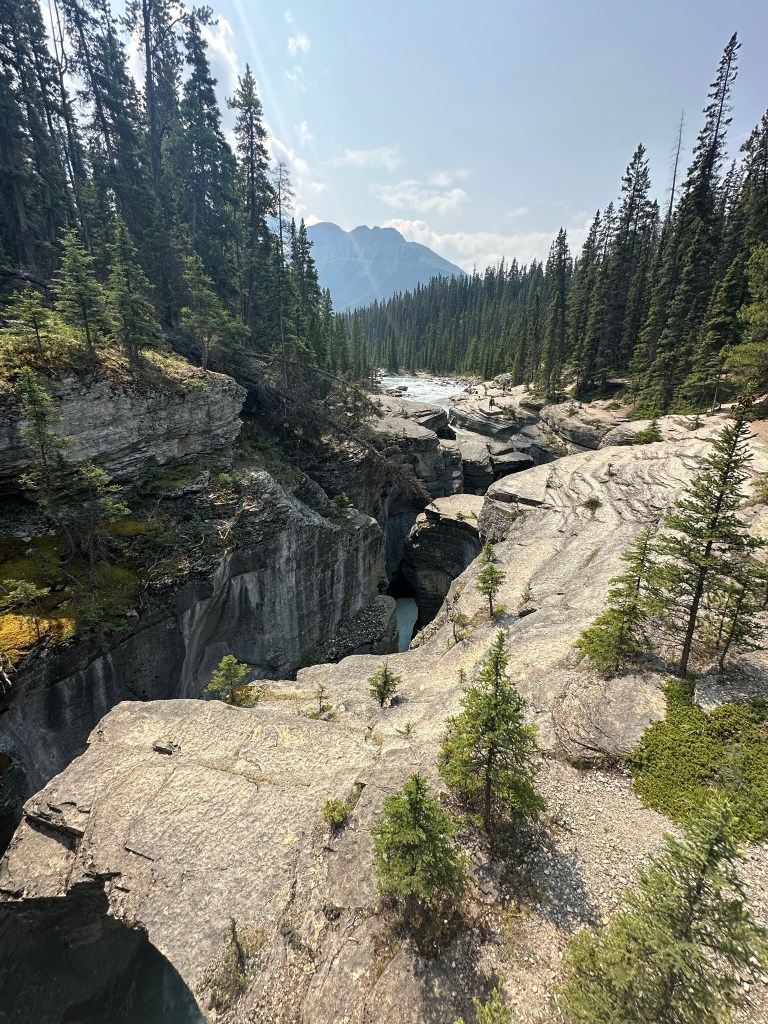
    7. Mistaya Canyon
    8. Saskatchewan River Crossing
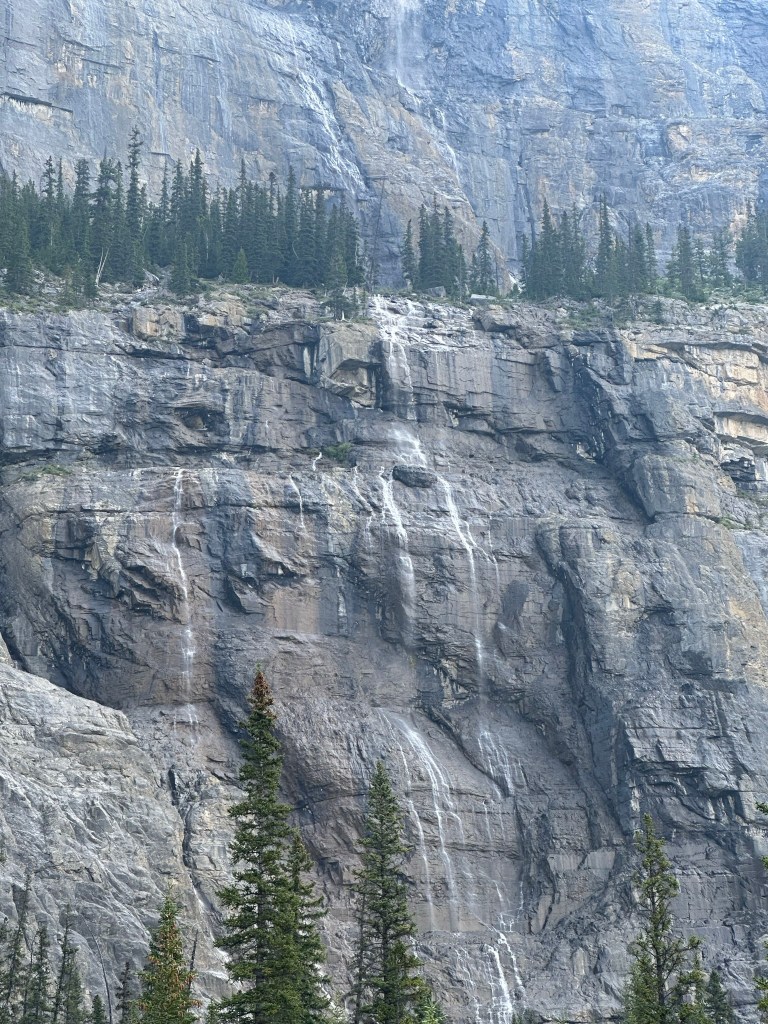
    9. Weeping Wall
    10. Icefields Parkway Viewpoint, Bridal Veil Falls, Panther Falls
    11. Parker Ridge
    12. Tangle Creek Falls
    13. Stutfield Glacier Viewpoint
    14. Beauty Creek to Stanley Falls
    15. Sunwapta Falls
    16. Goats & Glacier Lookout/Viewpoint
    17. Athabasca Falls
    18. Horseshoe Lake
    19. Valley of the Five Lakes
  2. Final thoughts

Icefields Parkway Stops from Lake Louise:

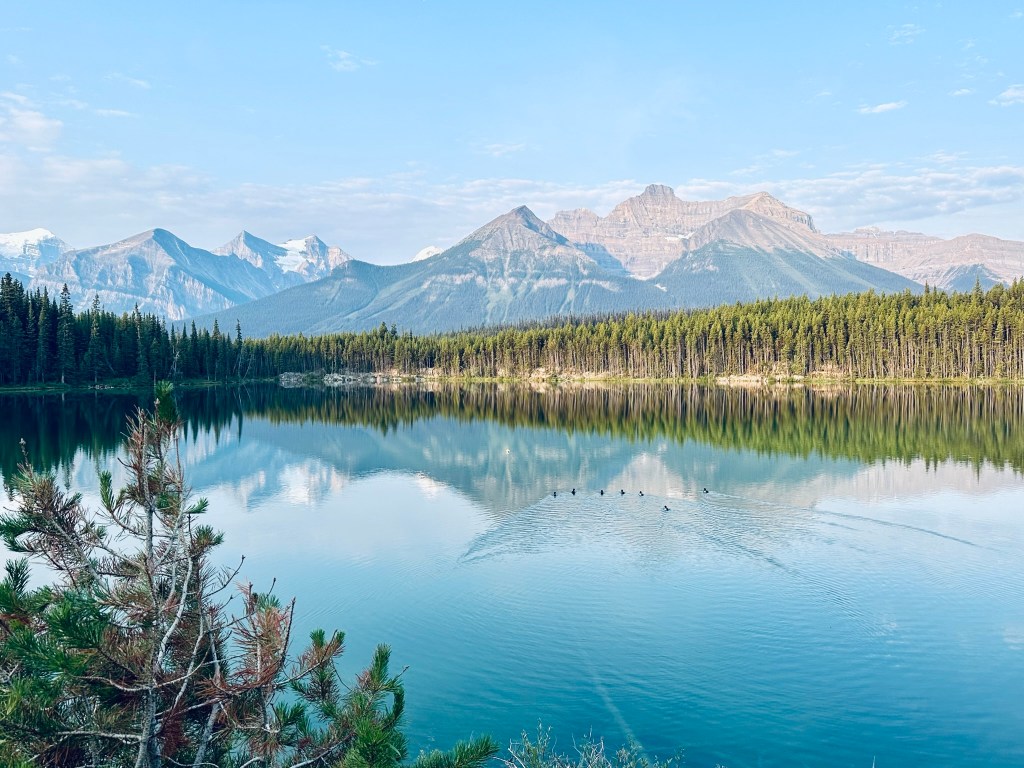
Herbert Lake 

Location: 7km from Lake Louise/226km from Jasper

  • Features: Small lake, short 1-mile loop trail around the lake. Known as a photographer’s favorite for its reflection of the peaks, including Mount Temple.
  • Parking: Parking lot on the west side.

Herbert Lake is an easy stop on the Icefields Parkway. The photos I took here are some of my favorite pictures from the trip.

Hector Lake

 Location : 23km from Lake Louise/211km from Jasper

  • Features: Largest lake in Banff National Park, partially obstructed viewing area off the west side.
  • Activities: Hike to the lake (2.8 miles, 390 ft elevation gain).
  • We did not stop here.

Crowfoot Glacier Viewpoint and Bow Lake Viewpoint

Location: 32 Km from Lake Louise/ 194 Km from Jasper

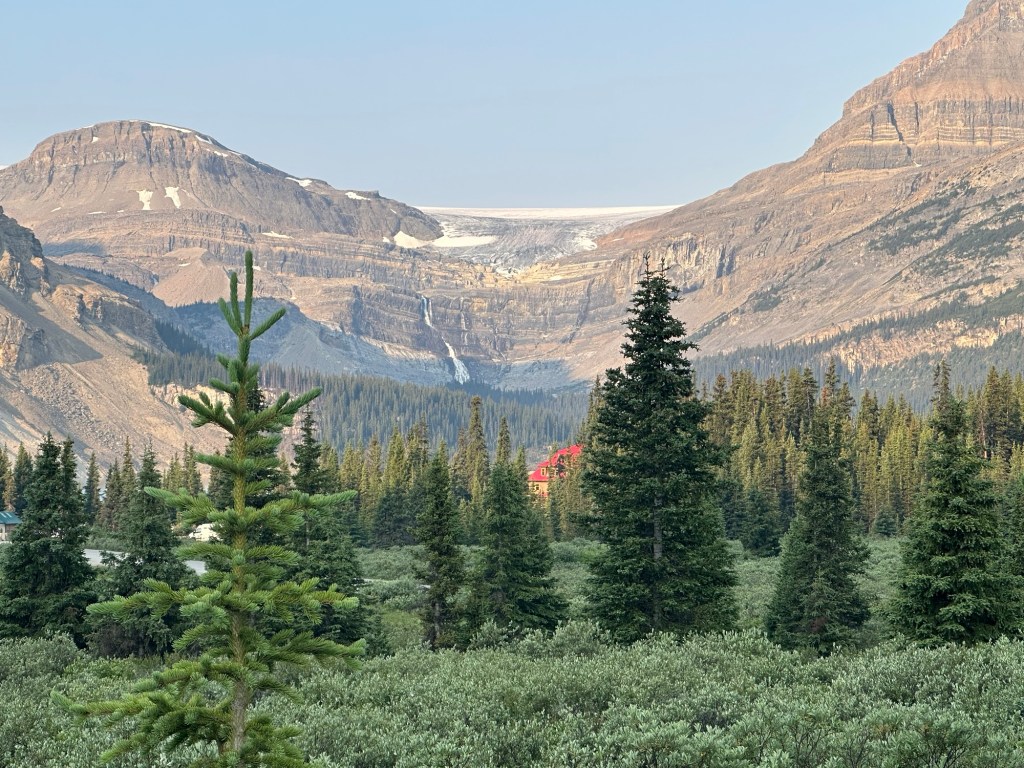
  • Features: Viewpoint to see the Crowfoot Glacier, Bow Lake, and surrounding mountains.
    It offers a scenic vista of the glacier, which is named for its three “toes” that once resembled a crow’s foot. The viewpoint is a roadside pull-off, making it easily accessible for visitors driving along the Icefields Parkway. 
    Its a beautiful viewpoint that doesn’t require much hiking and worth the stop.

Bow Lake

Location: 37km from Lake Louise/194km from Jasper

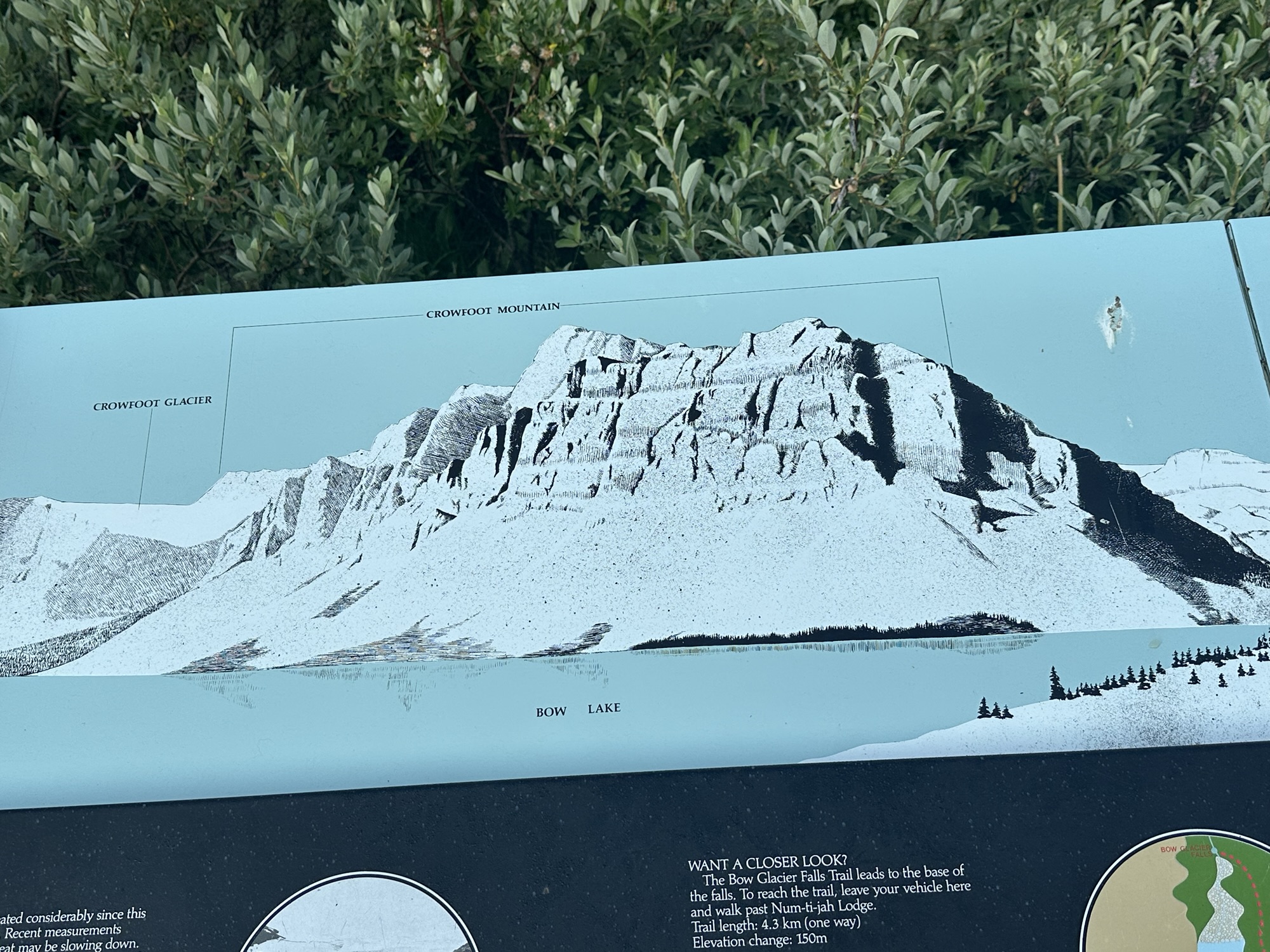
  • Features: Offers views of the Wapta Icefield, Bow Glacier, and Crowfoot Glacier. Road on the west side leads to Num Ti Jah Lodge (small snacks available).
  • Activities: Hike to Bow Falls (5.5 miles out and back, 925 ft elevation gain), moderate hike with stairs (poles recommended). You can enjoy activities like canoeing and stand-up paddleboarding on the lake.

We stopped at the viewpoint to take in the towering mountains and the beautiful lake. There is an information panel in the parking lot that shows various views you can see from the spot.

Peyto Lake and Bow Summit

 Location: 45km from Lake Louise/188km from Jasper

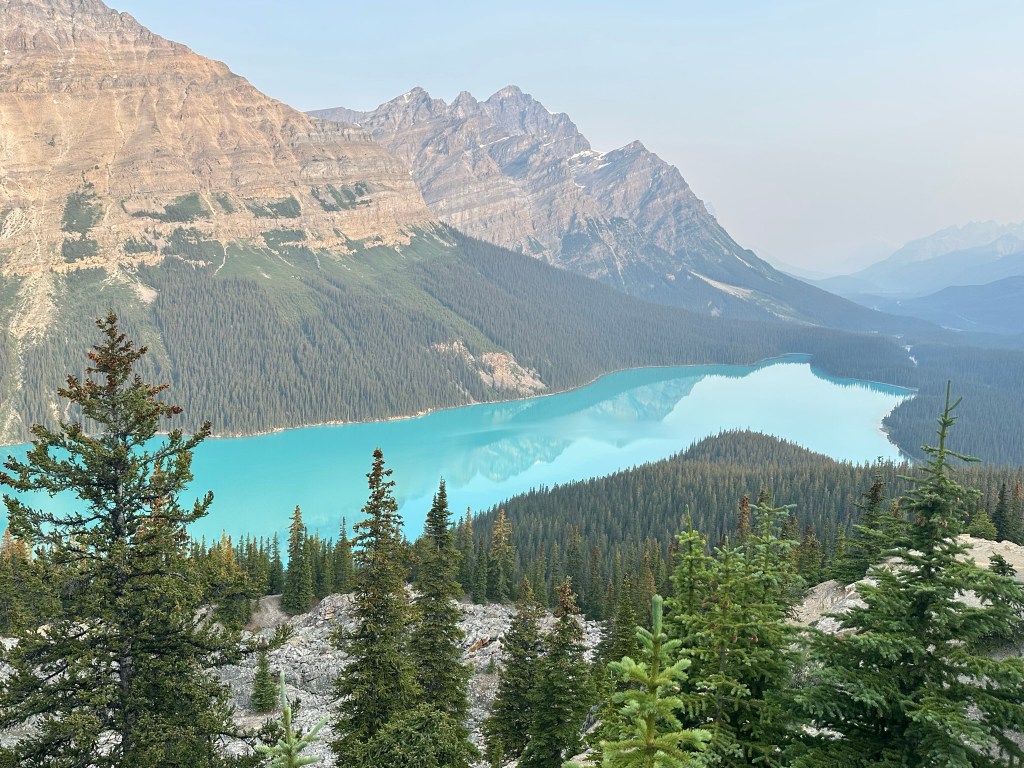
  • Features: Highest elevation point, beautiful lake (especially on a sunny day), known for its unique turquoise color. Expect a busy area.
  • Activities: 2km walk from the parking lot to the viewpoint platform, then trails to the upper ridge

This is one of the best viewpoints on the IceFields parkway and we stopped here on our way out around 7.30AM and again on the way back in the afternoon. The parking lot can get busy, but we didn’t have any issues getting parking early in the morning or late in the afternoon. There is a main trail that leads to the popular viewpoint. There is supposed to be another trail that leads to a closer view, but we couldn’t find it.

Waterfowl Lakes and Chephren Lake

Location: 60km from Lake Louise/174km from Jasper

  • Features: Less crowded lakes compared to other Banff lakes, providing a more serene and tranquil experience for visitors. A viewpoint is available past the FCFS campground, offering stunning panoramic views that are perfect for photography and relaxation.
  • Activities: Chephren Lake Hike- 5 miles round trip, 833 ft elevation gain (mostly at the beginning).

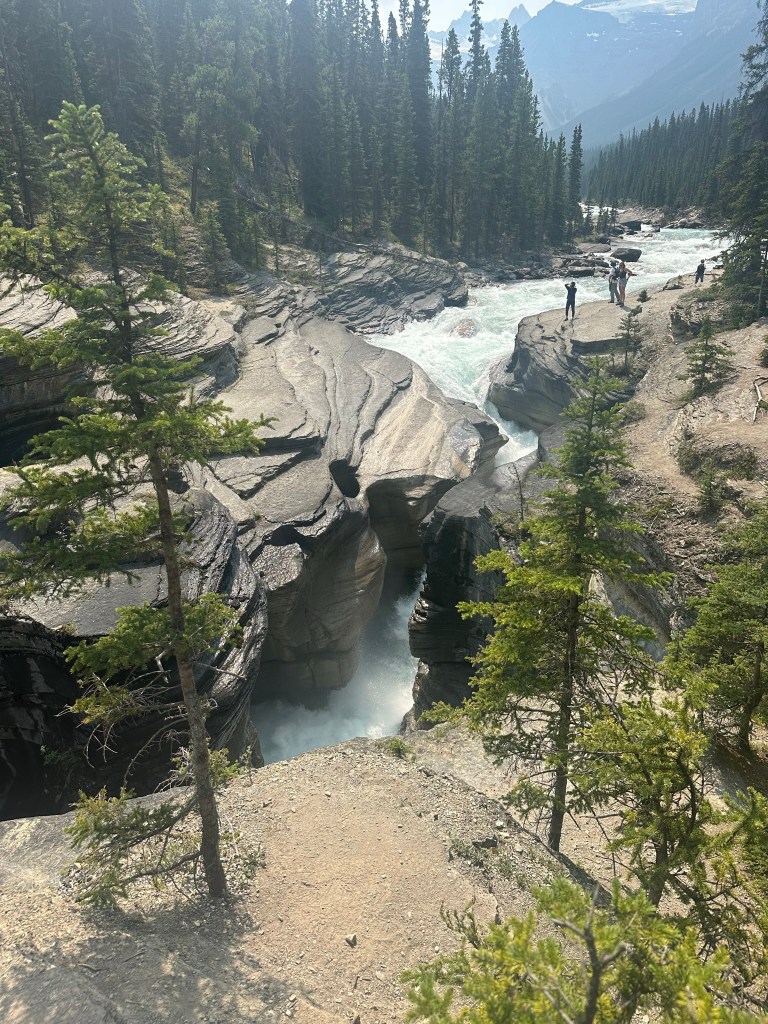
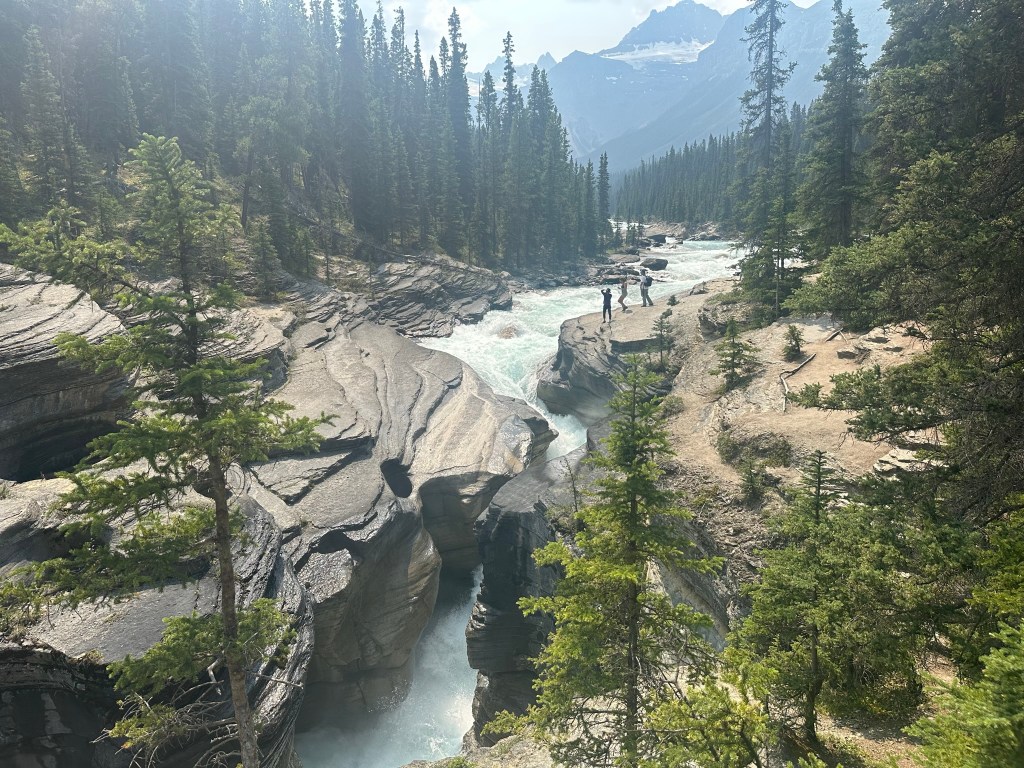
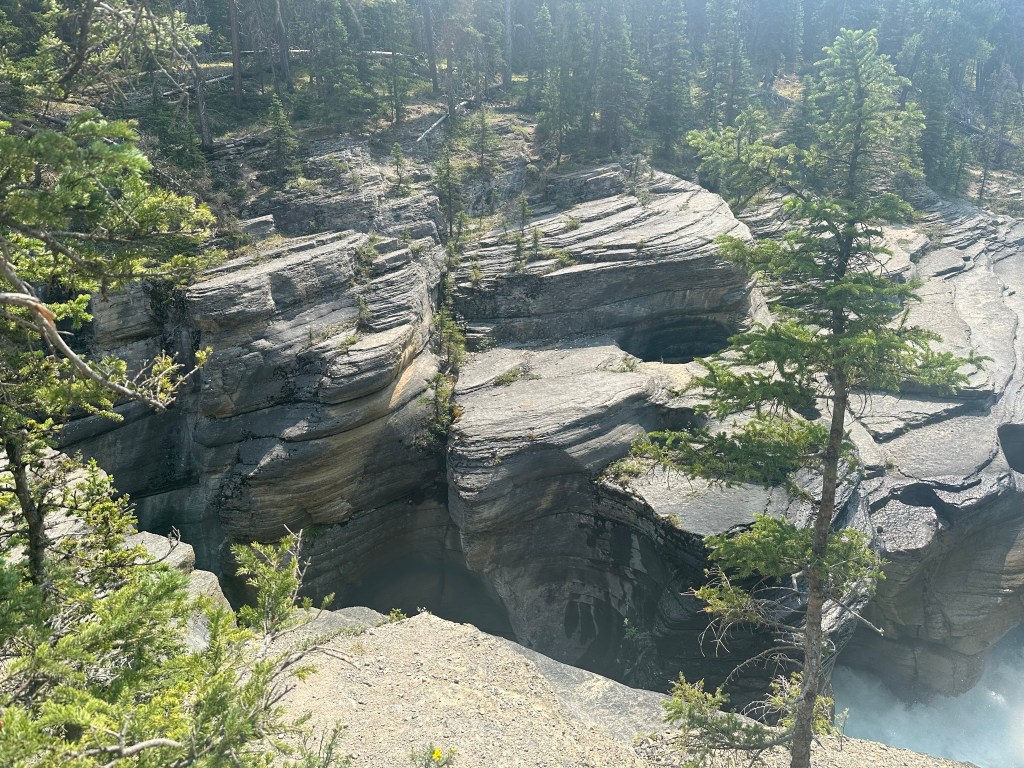
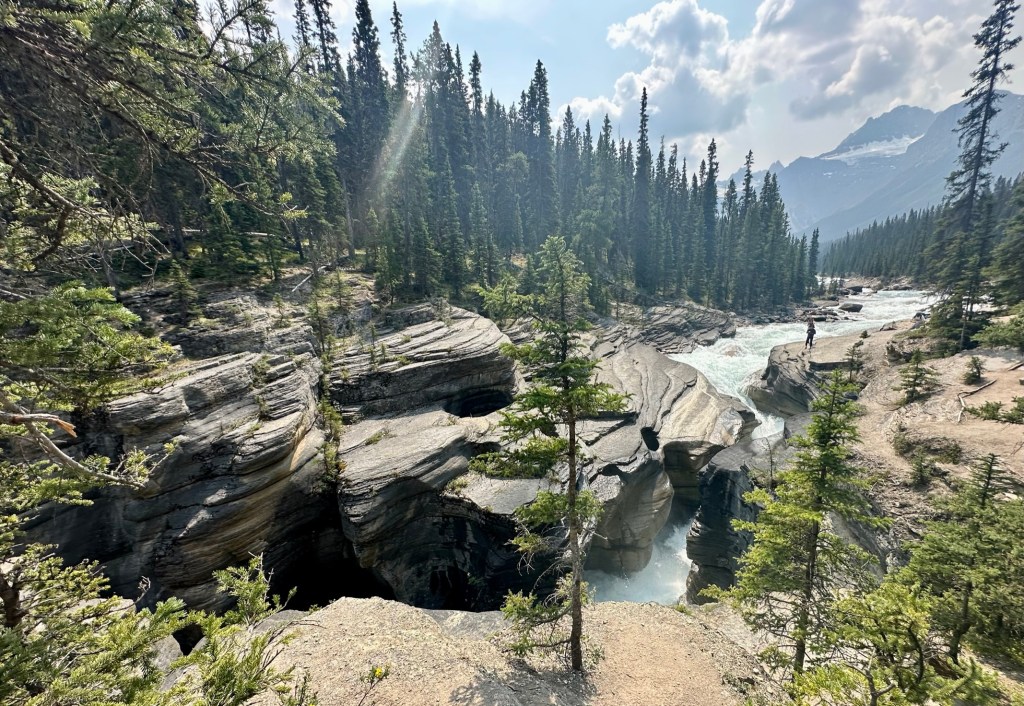
Mistaya Canyon

 Location : 75km from Lake Louise/158km from Jasper

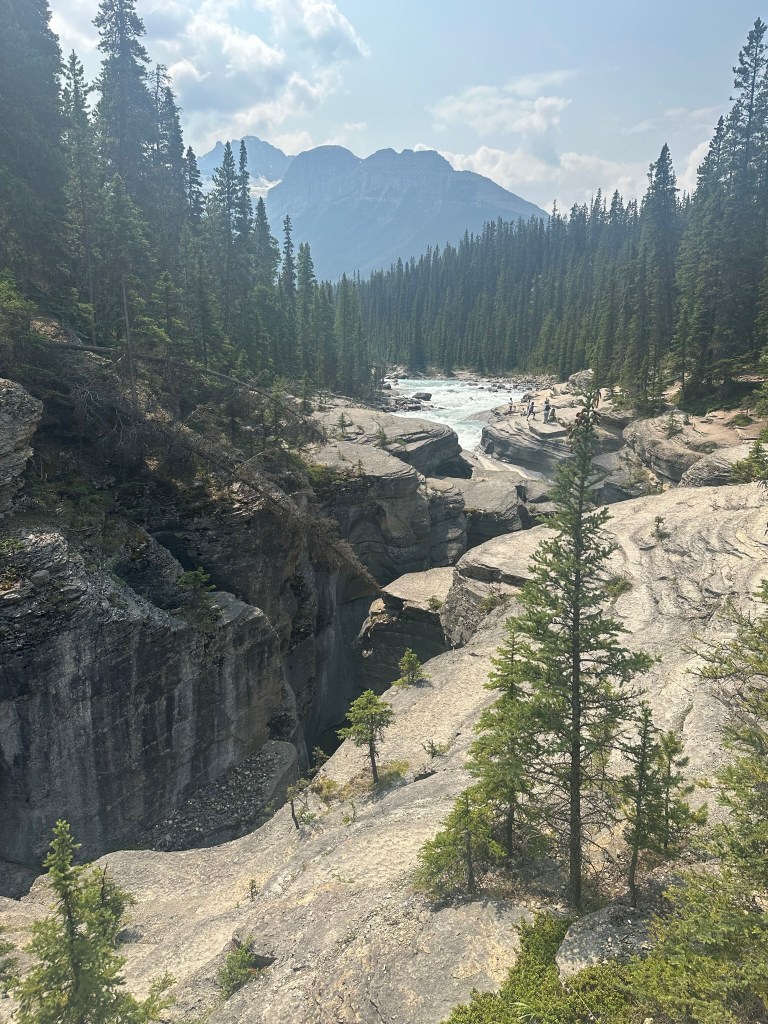
  • Features: Popular spot, reachable by a short trail with a scenic observation bridge. Visitors often notice the river’s erosion. This natural phenomenon led to the remarkable formation of the canyon.
  • Activities: Mistaya Canyon Waterfall hike (0.7 miles, 193 ft elevation out and back).
  • Parking: A pull-out area is available on the west side, but parking is limited
  • We stopped here on the way back from the Athabasca Glacier walk.

Saskatchewan River Crossing

 Location: 80km from Lake Louise/153km from Jasper

  • Features: Only stop on the Icefields Parkway if you need gas or food. We stopped and got coffee. The store has lots of postcards and T-shirts.

Weeping Wall

 Location: 109km from Lake Louise/125km from Jasper)

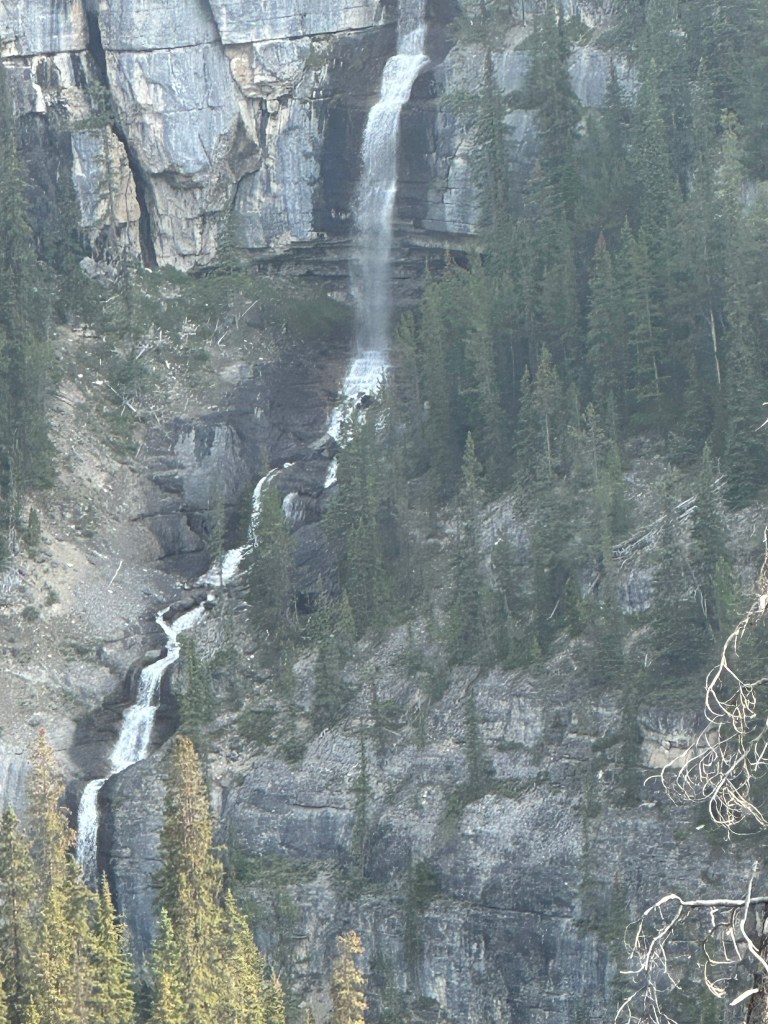
  • Features: Unique location where water comes through the mountains. Reviews mention it looking like “tears” falling down the hill. Best seen during the spring melt. It wasn’t awe-inspiring when we saw it in July
  • Parking: Parking on the west side. The view is off to the right. You can see it without leaving your car.

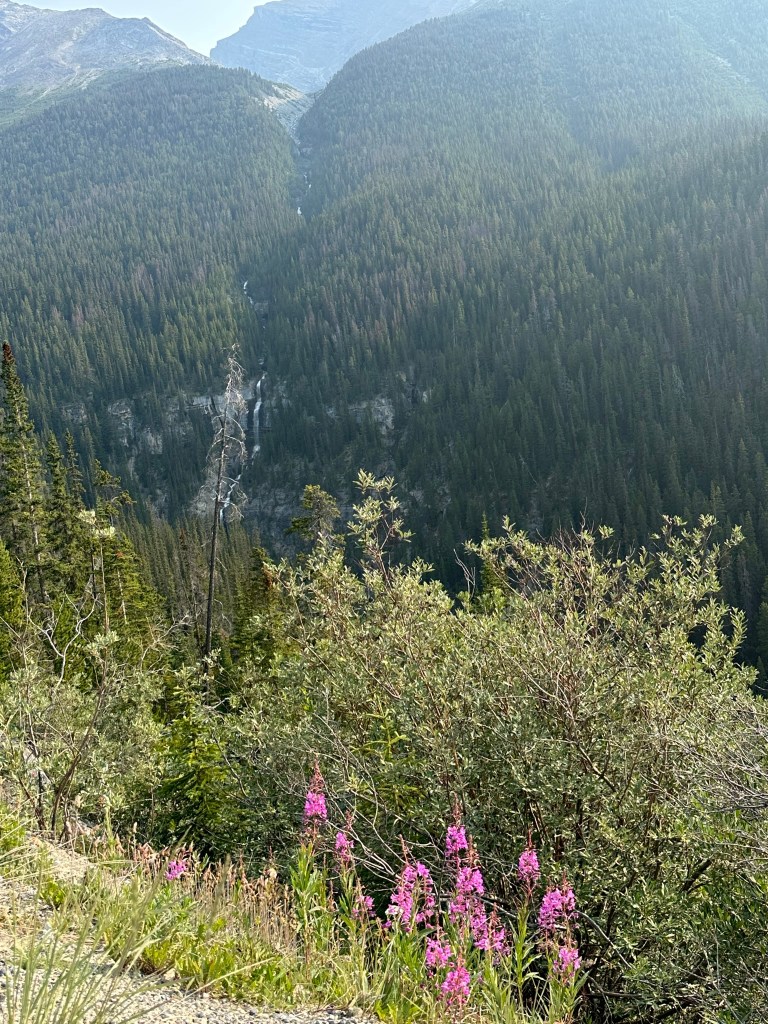
Icefields Parkway Viewpoint, Bridal Veil Falls, Panther Falls

 Location: 116km from Lake Louise/118km from Jasper

  • Features: Two pull-outs on the east side after the Big Bend. The first provides a view looking back at the Parkway and Bridal Veil Falls.
  • Activities: Panther Falls Trail-0.8 miles out and back, 232 ft elevation gain. Reviews suggest turning around at Panther Falls (a 0.6-mile round-trip hike) as the view of Bridal Veil Falls is the same from the pull-out.
  • We couldn’t find the entrance to Panther Creek Trail and didn’t go on the trail

Parker Ridge

 Location: 121km from Lake Louise/112 km from Jasper

  • Features: Highly recommended hike along the Parkway. The trail is 2.7 km (one-way) with 305 m of elevation gain.
  • Parking: Parking lot on the west/south side for the trailhead.
  • We didn’t go on this trial as we had 10.30 slot for the Columbia Icefields visit, but this is on my bucket list to visit next time we are in Banff

Columbia Ice Field tour, and the toe of the Athabasca Glacier

Location: 130km from Lake Louise/103km from Jasper

The toe of Athabasca Glacier hike:

  • Right after the information center, turn left on Snocoach Rd, then right onto Glacier Road
  • Toe of the Glacier Trail: 0.9 miles, 200 ft.

Columbia Icefields tour:

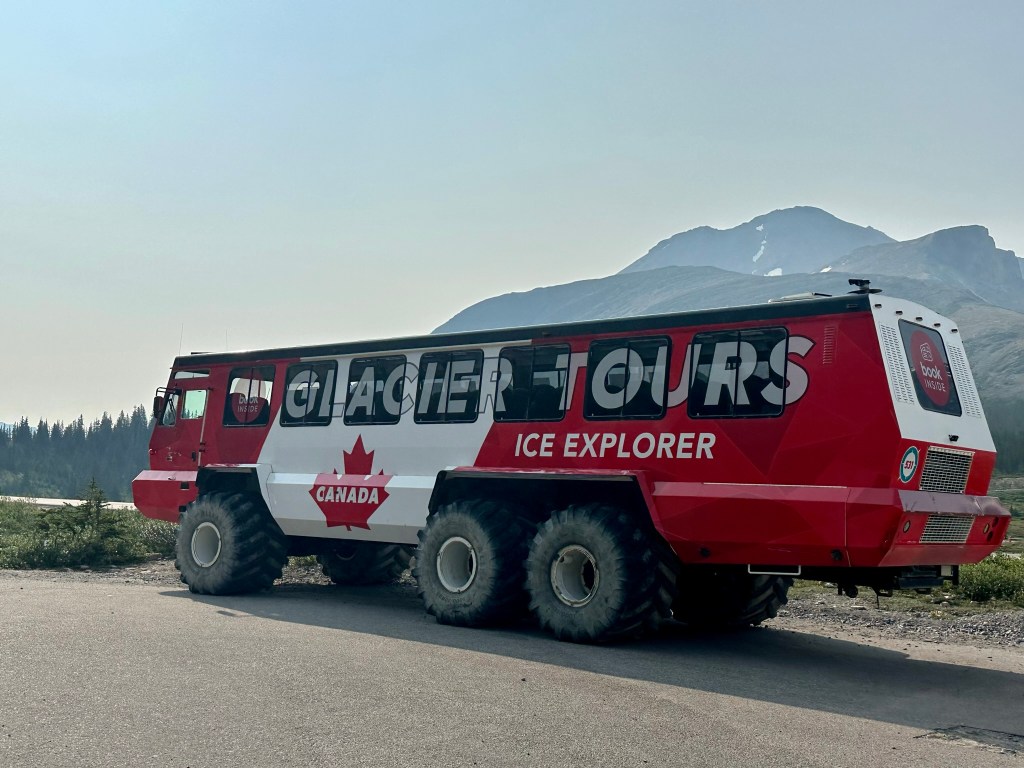
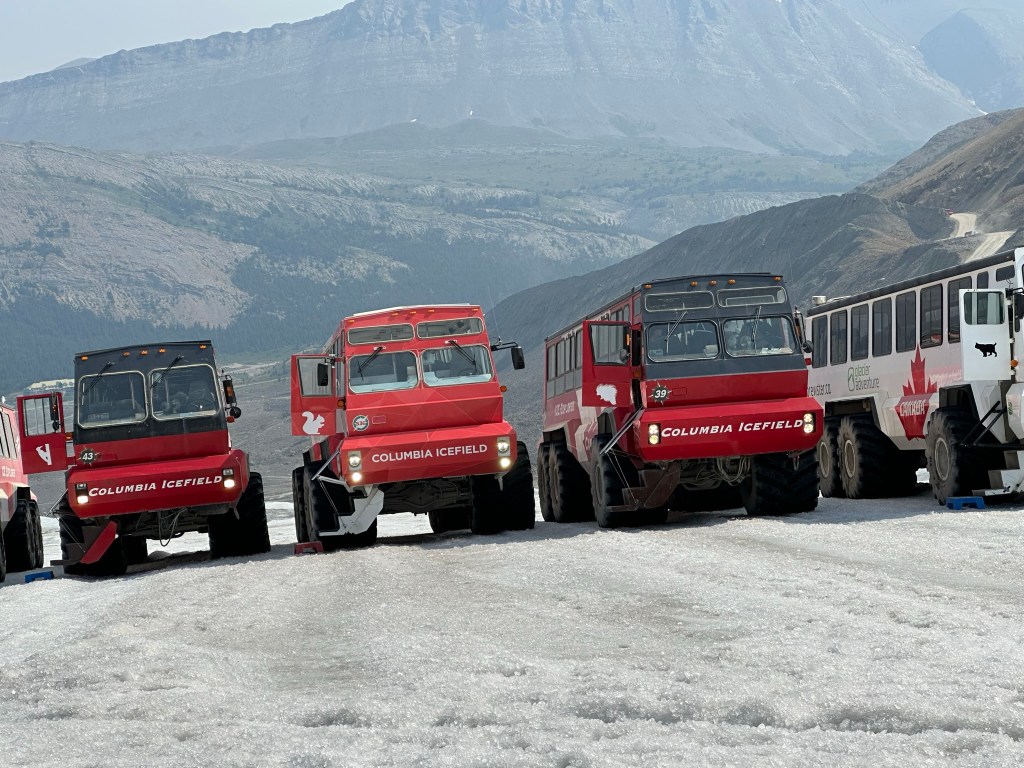
A Columbia Icefield tour includes an Ice Explorer ride on the Athabasca Glacier and a visit to the Columbia Icefield Skywalk, providing unique views of the glacier. Tours start from the Columbia Icefield Discovery Center.

Key features of the tour:

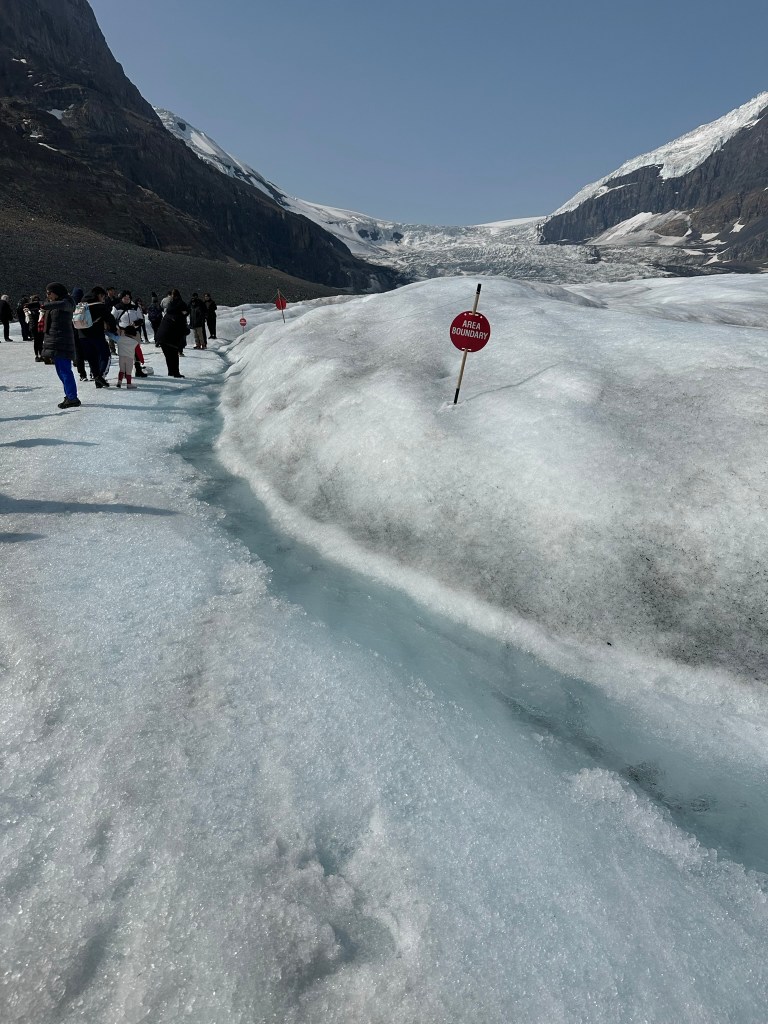
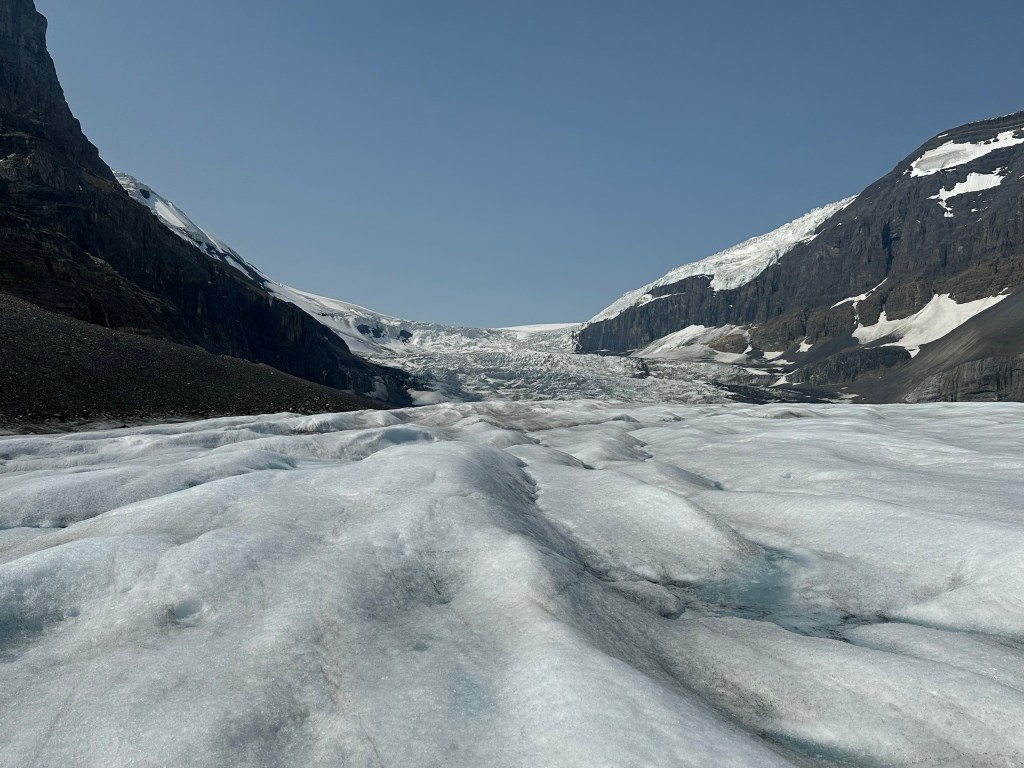
  • Ice Explorer Ride: You’ll travel on a specially designed, all-terrain vehicle. This vehicle takes you onto the Athabasca Glacier. The glacier is one of the six principal “toes” of the Columbia Icefields. 
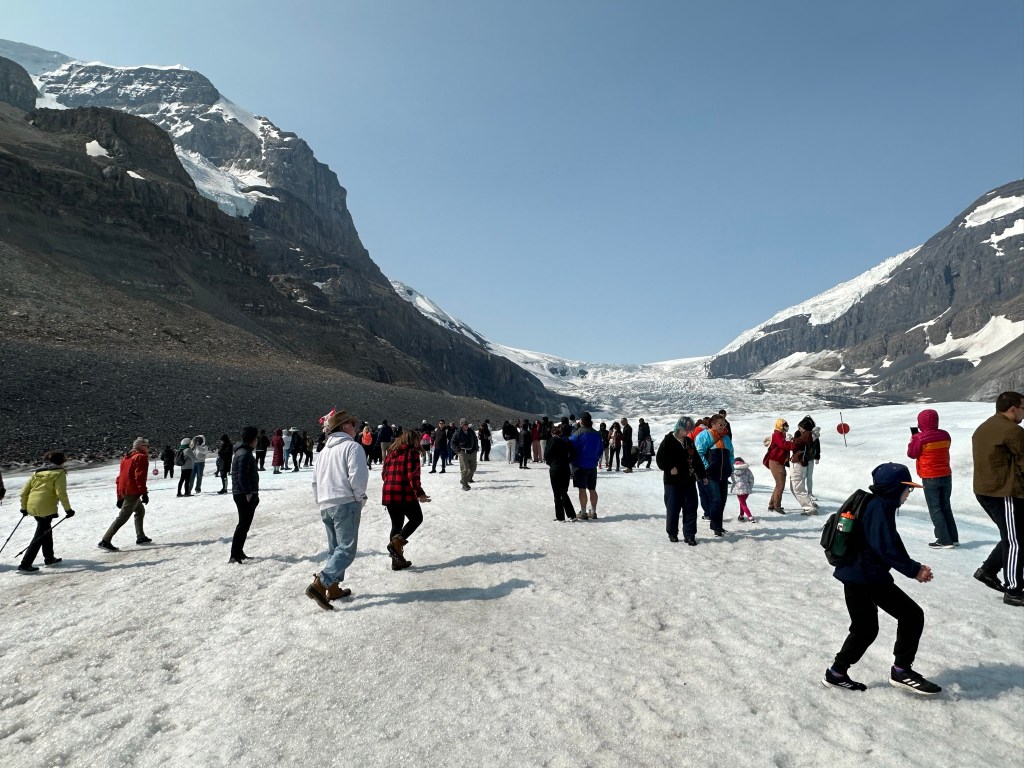
  • Glacier Walk:You’ll have the opportunity to disembark and walk on the glacier. You can feel the ancient ice. You might even fill your water bottle with meltwater. 
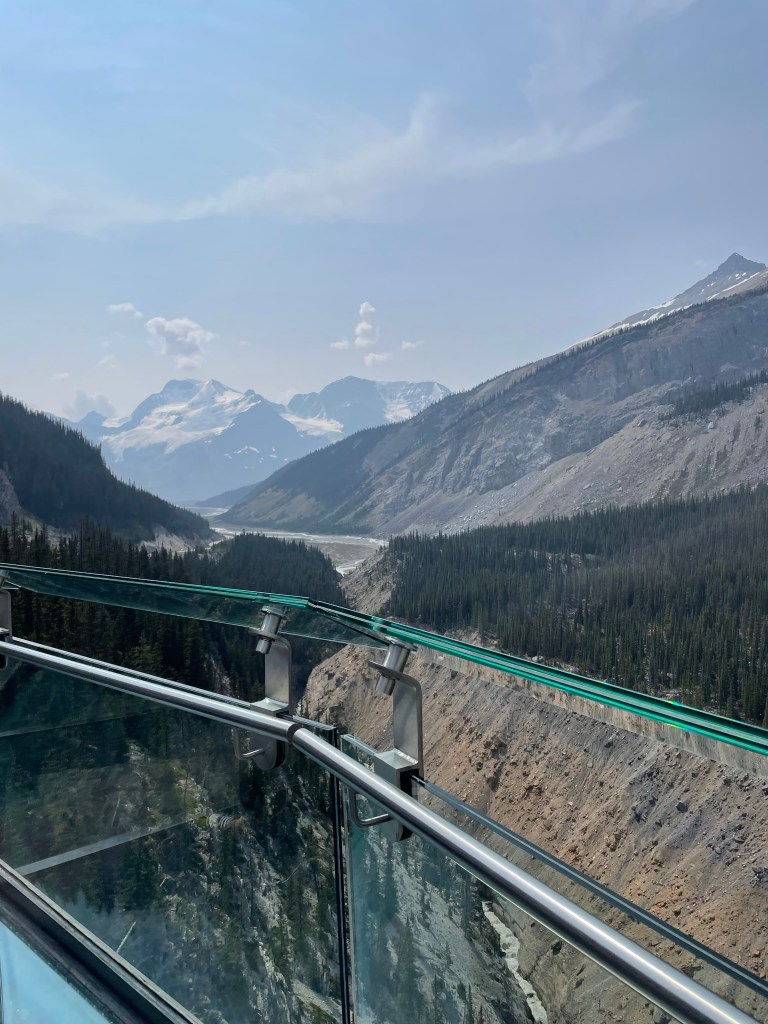
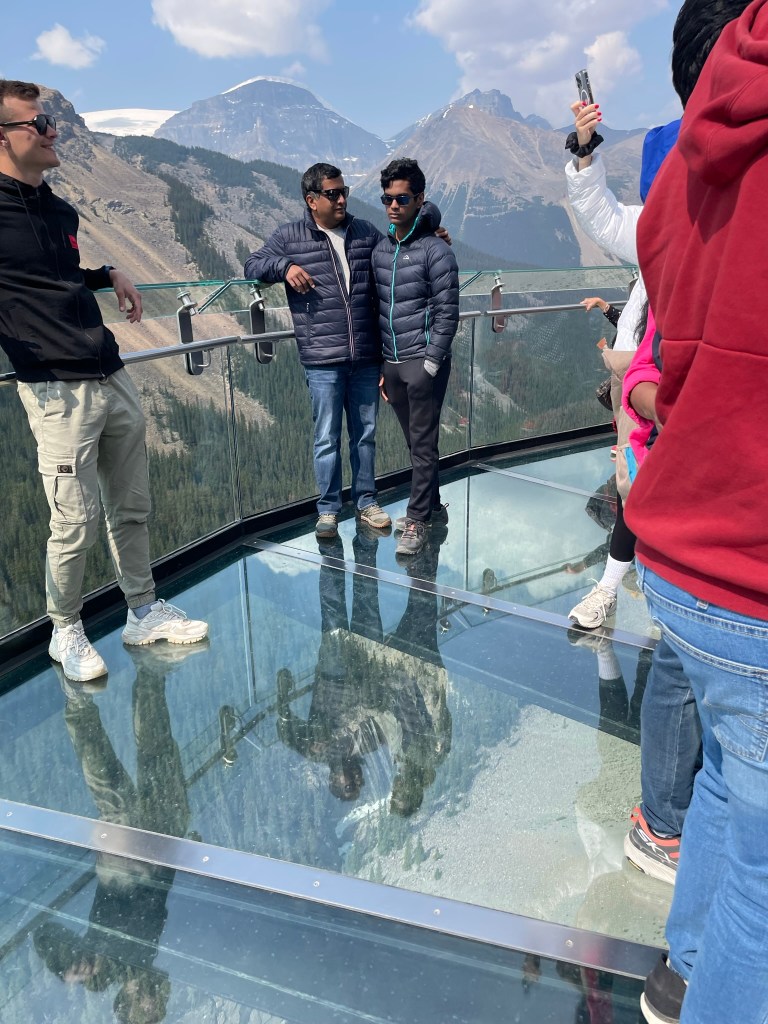
  • Columbia Icefield Skywalk:This glass-floored walkway offers stunning views of the Sunwapta Valley. It gives breathtaking views of the surrounding glaciers. The structure is suspended 918 feet above the valley floor. 
  • Informative Commentary:Guides offer insights into the geology, history, and environmental changes of the Columbia Icefields. 

Tour Details:

  • Tours leave often throughout the day from the Columbia Icefield Discovery Centre
  • The experience typically lasts 2.5 to 3 hours. 
  • Warm clothing and waterproof shoes are recommended due to potentially cold and windy conditions on the glacier. 
  • Consider booking in advance, especially during peak season.  You can buy tickets here.

We didn’t like the skywalk as much and felt like it was a waste of time. If we do this again, we would choose the toe of the glacier as our destination. Alternatively, we might consider a guided ice walk, such as this one.

We had lunch at the restaurant in the Columbia Icefield’s visitor center and drove back to Lake Louise village.

There are additional stops along the Icefields Parkway from the Columbia Visitor Center. These stops are worth visiting on the way to Jasper if you decide to continue. We hope to return and stop at the remaining stops along the way to Jasper.

Tangle Creek Falls

 Location: 135km from Lake Louise/96km from Jasper

  • Features: Multi-tiered waterfall right beside the highway, beautiful and easily accessible.
  • Parking: Parking on the west side. 

Stutfield Glacier Viewpoint

 Location: 139km from Lake Louise/95km from Jasper

  • Features: Offers views of mountains and glaciers.
  • Parking: Parking loop off the west side.

Beauty Creek to Stanley Falls

 Location : 145km from Lake Louise/89km from Jasper

  • Features: Unofficial Parks Canada trail, 2.4 miles (out and back). The hike features a narrow canyon with eight waterfalls.
  • Trail Details: Starts flat, then climbs a short, steep hill. The trail follows Beauty Creek and passes multiple waterfalls before reaching Stanley Falls.
  • Finding the Trailhead: Unmarked pull-out on the east side of the road (sign in the lot). It’s about 0.5km south of the Beauty Creek Hostel.

Sunwapta Falls

 Location 179km from Lake Louise/56km from Jasper

  • Features:  Very popular stop. Picturesque waterfalls originate from the Athabasca Glacier. The upper falls are easily accessible near the parking lot.
  • Activities: Hike to the upper and lower falls (2 miles, 469 ft elevation gain). The trail to the lower falls involves a downhill slope and some roots.
  • Access: Turn at the Sunwapta Falls Lodge (road off the west side) to reach the parking lot.

Goats & Glacier Lookout/Viewpoint

 Location : 194km from Lake Louise/38km from Jasper

  • Features: Quick and rewarding stop with stunning views of hanging glaciers, rugged peaks, and the Athabasca River.
  • You might spot mountain goats here.
  • Activities: Short walking loop (0.2 miles, no elevation) off the west side.

Athabasca Falls

 Location :202km from Lake Louise/32.5km from Jasper

  • Features: A popular stop on the way to Jasper; a powerful waterfall with a large volume of water.
  • Activities: Short, paved walk with stunning views (0.6 miles, 82 ft elevation gain). Trails and viewpoints offer you the opportunity to view the falls from various angles. You can also descend to the river. Consider exploring the trail network, which includes a bridge, a pothole, and ends at the river.
  • Access: Turn onto Highway 93A off the west side; the parking lot will be on your left.

Horseshoe Lake

 Location : 205km from Lake Louise/28km from Jasper

  • Features: Small lake off the east side, known for cliff jumping. The lake is right beside the highway, with ledges overlooking the water.
  • Parking: Small parking area.
  • Note: It can get busy, and parking can be challenging.

Valley of the Five Lakes

 Location: 223km from Lake Louise/10.5km from Jasper

  • Features: This popular hike features five clear lakes with unique shades of blue and green. The trail is wide and relatively easy, with some elevation changes.
  • Activities: 4.5 km loop trail. The trail passes through a forest, crosses a boardwalk, and follows a ridge with views of the lakes. Viewing benches and Parks Canada Red Chairs are along the trail.
  • Access: Located just under 9 km south of Jasper along the Icefields Parkway.

Final thoughts

The Icefields Parkway is considered one of the most beautiful drives in the world, and definitely lives up to the hype. We started around 6.30 AM from Lake Louise Inn and had the highway pretty much to ourselves for the first couple of hours. We also saw a few bears and other animals along the way. If you have, this is worthwhile to add to your itinerary, and try to drive as far as possible and stop along the way. For our itinerary, we were back in Lake Louise by 3 PM, making it a great day trip.