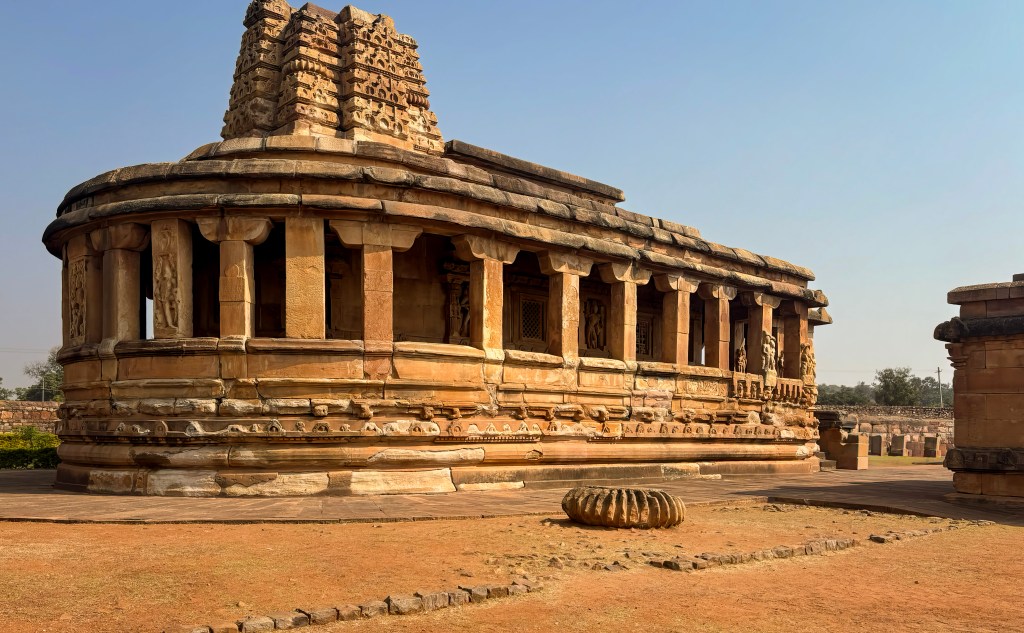
Durga temple in Aihole is the largest and most richly embellished Hindu monument in town. The name Durga is misleading. It implies a temple built for Goddess Durga. However, the temple was originally dedicated to the Surya-Sun god. It was constructed in the early 8th century. Later, it became known as Durga when a stone rubble or Durg (fortified lookout) was built on its roof. The Durg has been removed since then, but the name stuck.
Architecture of Durga Temple
The unique character of the Durga temple is its horseshoe-shaped (apsidal-ended) form. This is an unusual feature for a Hindu temple. Aihole is considered an experimental lab for temple architecture. This temple was inspired by the Buddhist rock-cut Chaitya halls from the 2nd century.
Iconography of Durga Temple, Aihole
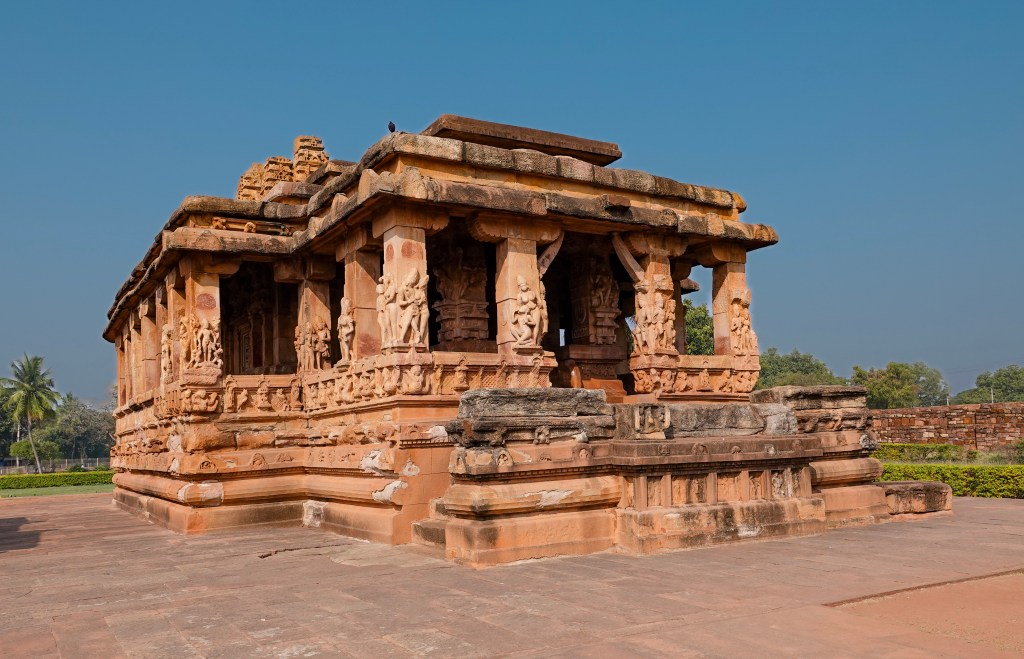
The Durga Temple features some of the most elaborate relief panels in the Aihole complex.
- Deities: Carvings display a mix of Vedic gods and goddesses. Major artworks depict Vishnu, Shiva, and Surya. Surya is the Sun god, to whom the temple was likely originally dedicated. They also depict Durga as Mahishasuramardini, slaying the buffalo demon.
- Narrative Friezes: The base of the porch and mandapas contain narrative scenes, including episodes from the Hindu epic the Ramayana.
- Symbolism and Daily Life: Pillars at the entrance and within the porch are carved with ornamental reliefs. These include dvarapalas (guardian figures) and scenes of mithuna (amorous couples). This artistry reflects a blend of sacred and secular life. The ceiling once housed carved panels, some of which are now in the National Museum, New Delhi
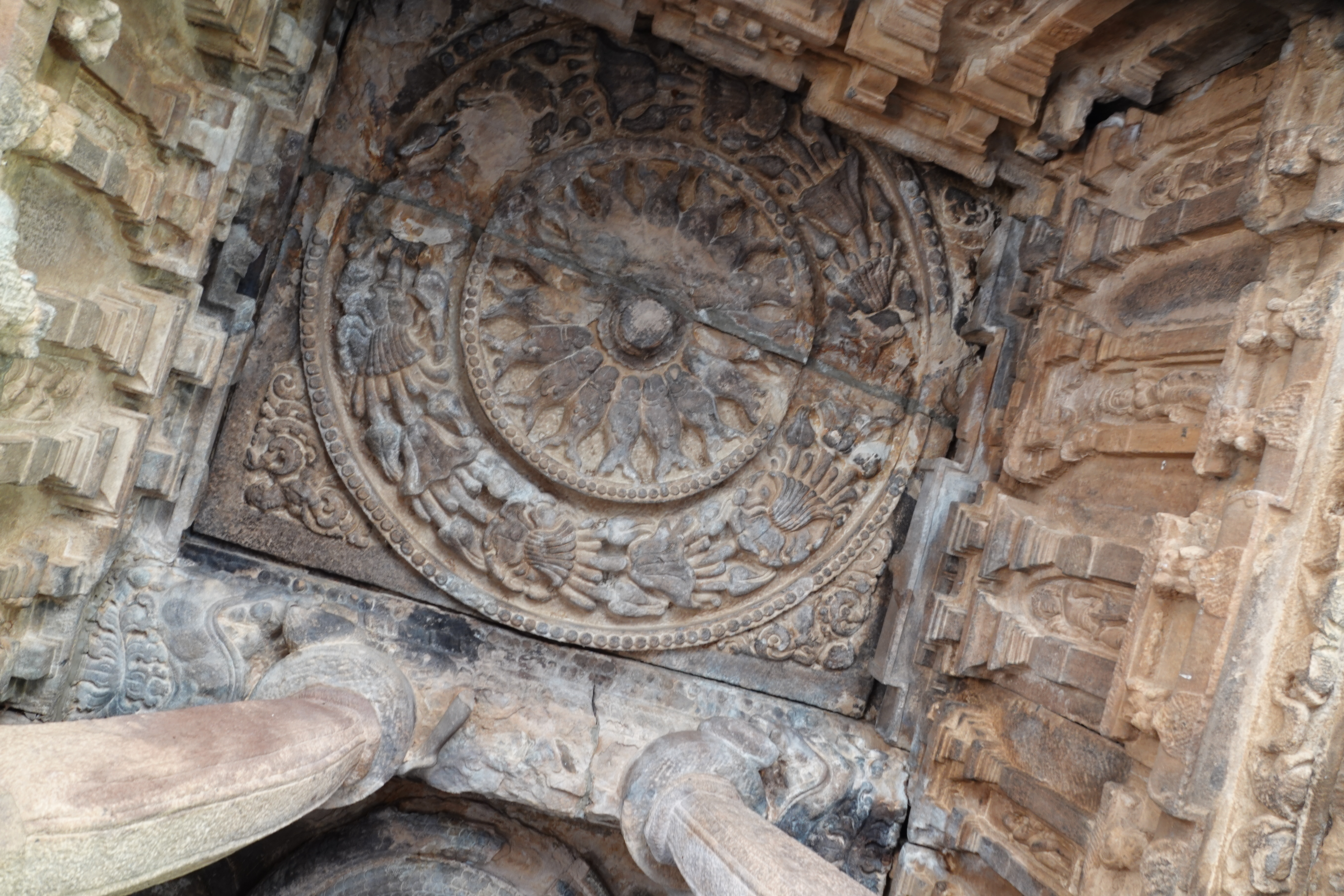
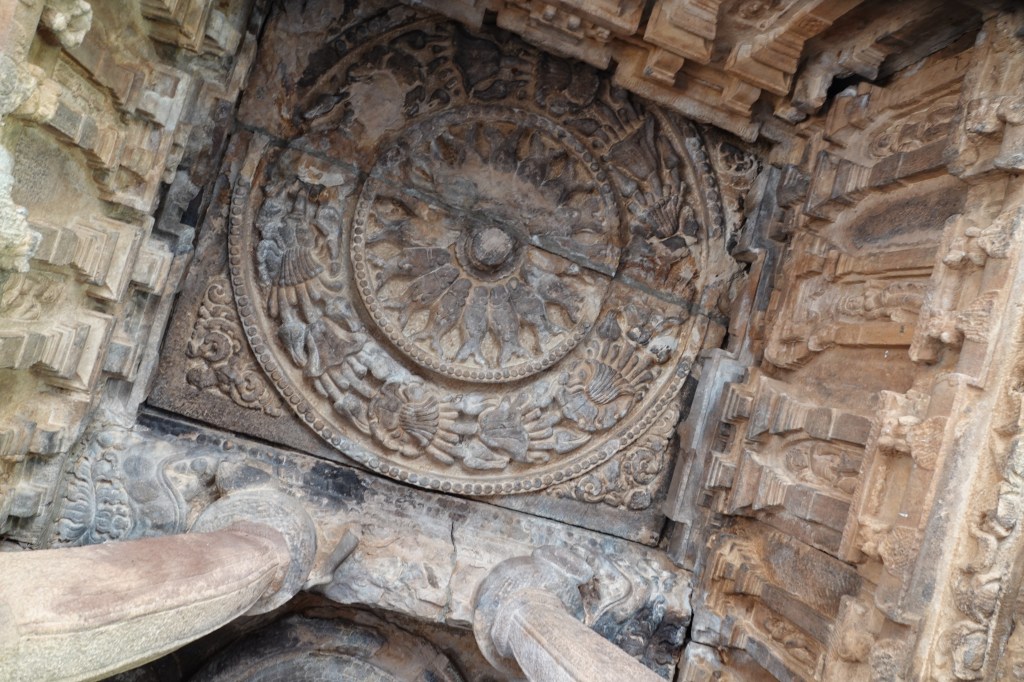
- Ceiling: Don’t forget to look up. The carvings on the ceilings of the Mukha Mandapa conform to the Dravida architecture style
Devakoshtas and Jālandharas or the perforated windows
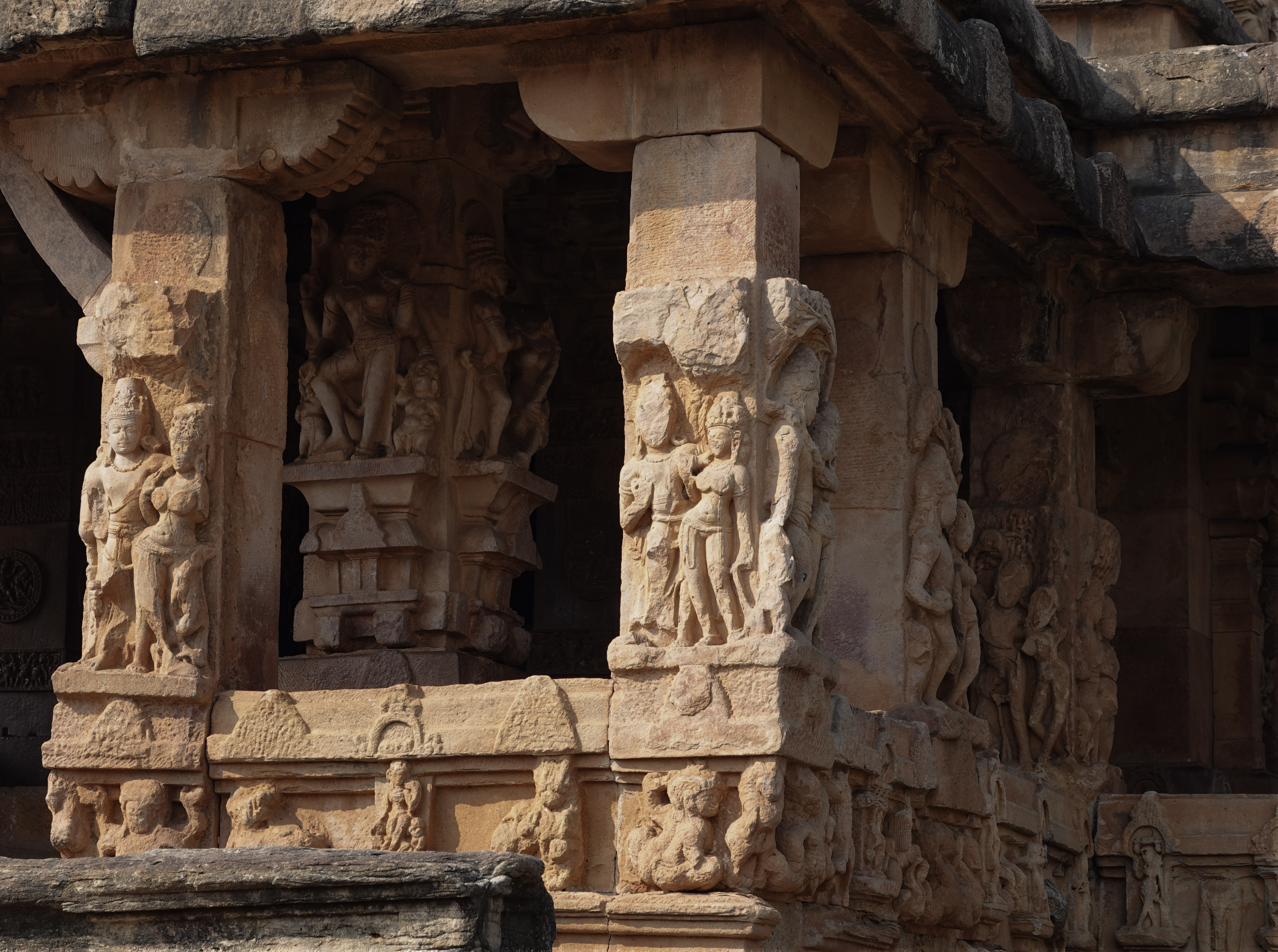
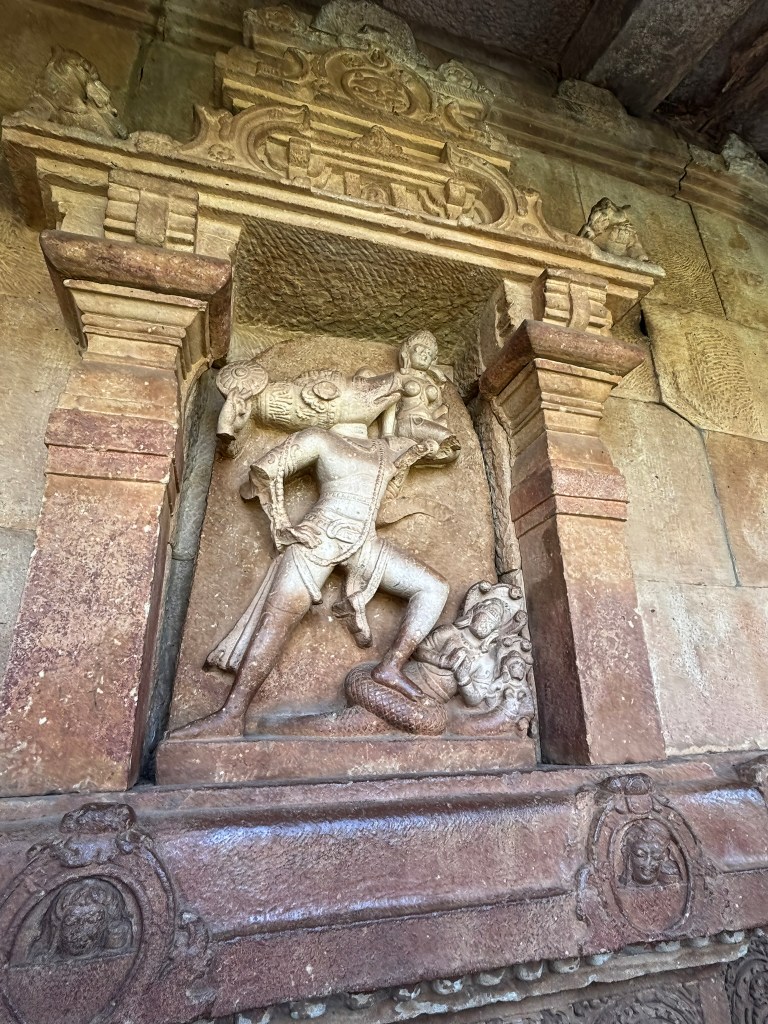
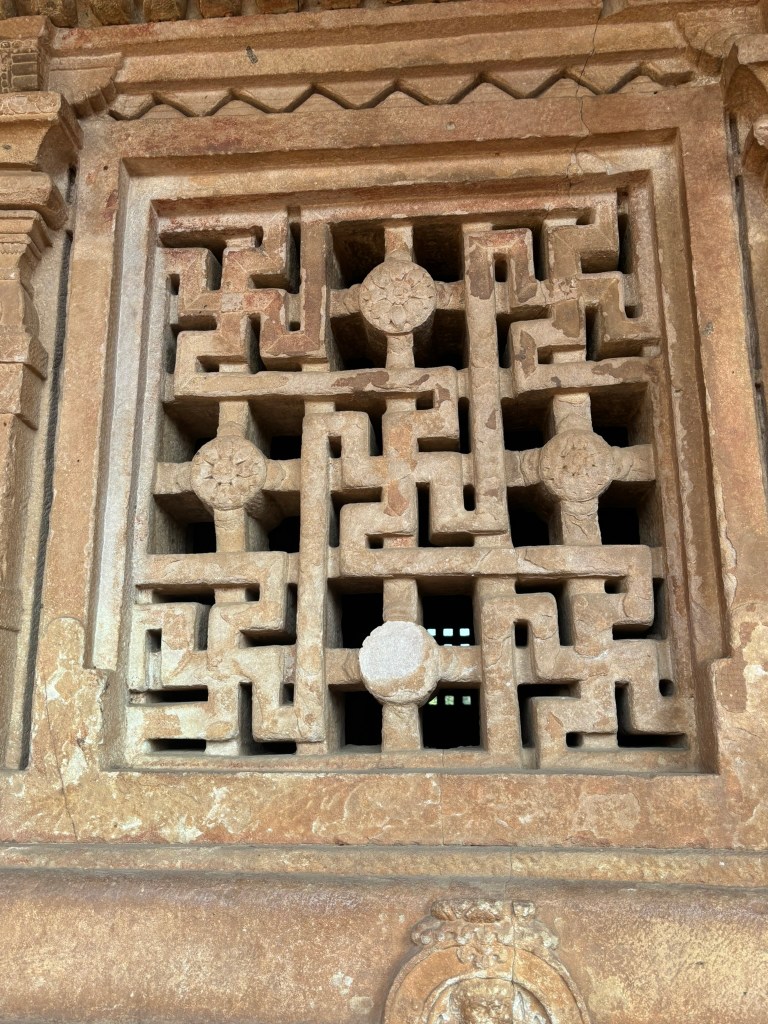
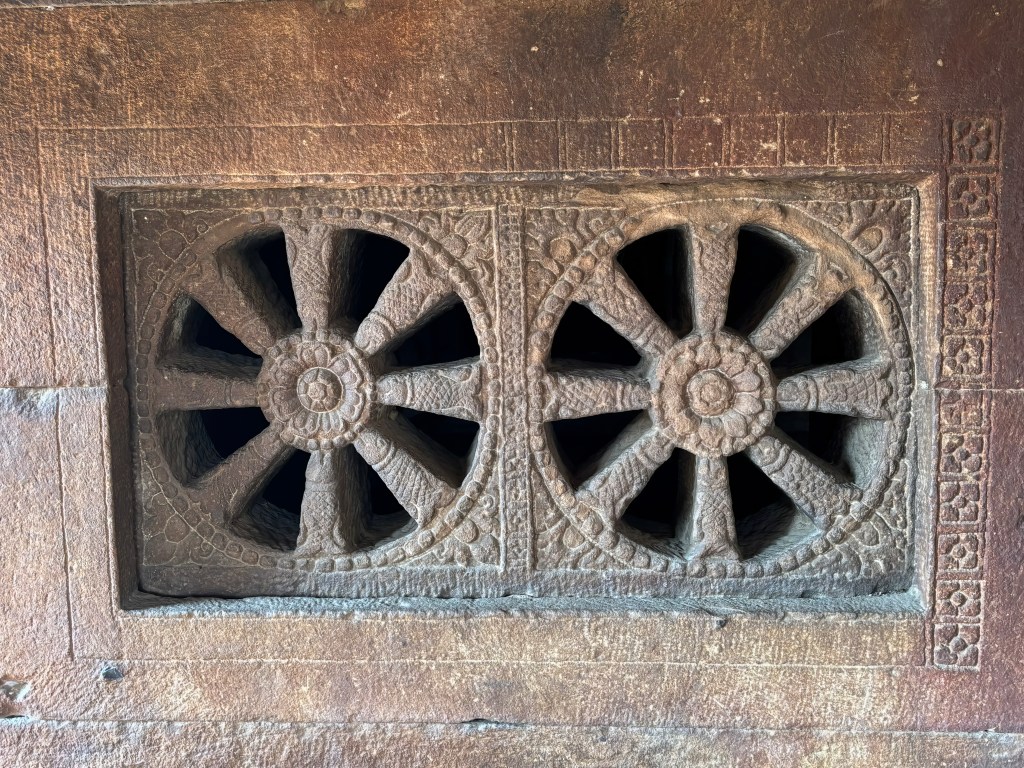
After climbing somewhat steep steps of the Durga Temple, please make time to go around the colonnaded veranda before going into the main sanctuary. The walls of the veranda have alternating perforated windows (Jalandharas) and Devokashtas. The carved panels of Devokashtas are among the greatest master pieces of early Chalukya art. In a clockwise direction, you can see Shiva with Nandi, lion-headed Narasinha, Vishnu flying on Garuda, Varaha, and Harihara. I took only photos of Shiva with Nandi and Varaha, but these should give you a good idea of the details found in these panels.

Alternating with the panels are the perforated windows, which let air and light into the inner sanctuary. There are various designs, including wheels with fish spokes. There are also Swastika signs with lotus. The Swastika is considered sacred in Hinduism, Buddhism, and the Jain faith.

Scriptures in Stone: Ramayana Scenes in the Carvings
Another thing to notice as you walk around the veranda is that the Narrative bas-reliefs are found on the plinth (base) . They depict various episodes from the Hindu epic the Ramayana.
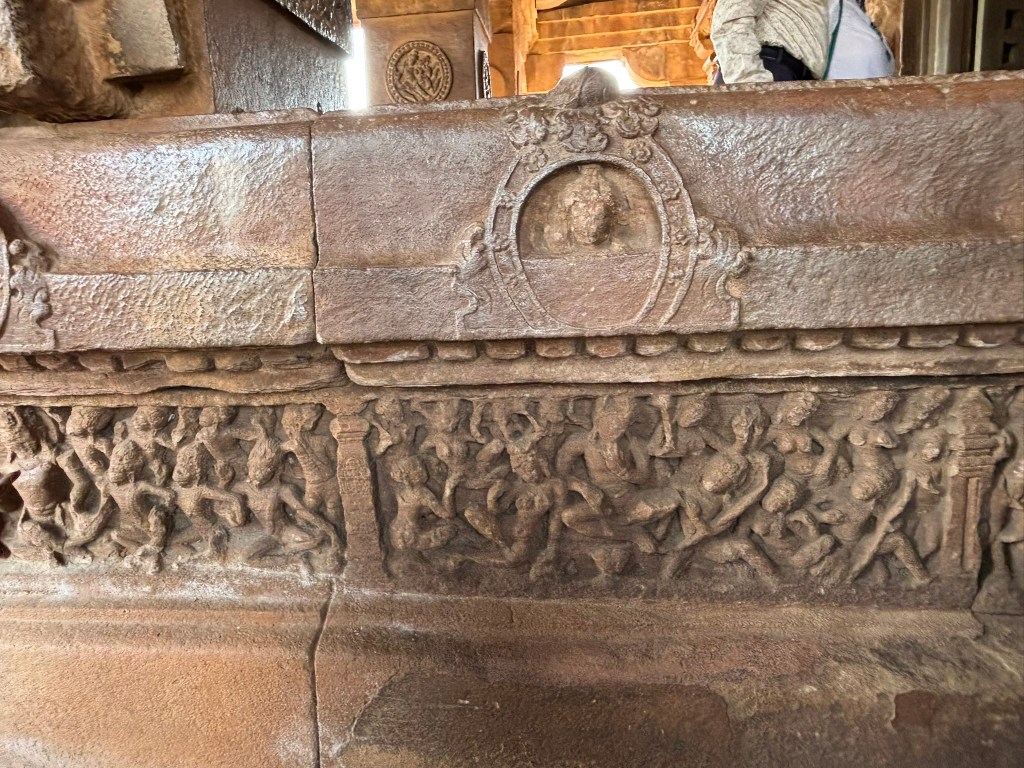

The panels along the base of the temple were intended to be read sequentially. This was meant to occur as a devotee performed the ritual circumambulation (pradakshina) around the shrine. They feature a continuous narrative style, similar to a comic strip, to tell the sacred story visually.
Specific scenes found in these friezes at the Durga Temple include:
- Crossing the River: One identifiable scene shows Rama, Sita, and Lakshmana in a boat. They are crossing a river at the beginning of their exile.
- The Monkey Army: Other panels, such as the one pictured, depict the march of the Vanar Sena (monkey army). King Sugriva and the general Hanuman lead this army. They aided Rama in the search for Sita. They also participated in the battle against the demon king Ravana.
- Other Episodes: The entire frieze includes other key moments from the epic. These moments include the abduction of Sita by Ravana and the ensuing battles.
These intricate carvings are prime examples of Early Chalukyan art from the 7th-8th centuries CE. This art blended mythological storytelling with detailed sculptural craftsmanship.
Garbhagruha or main sanctuary
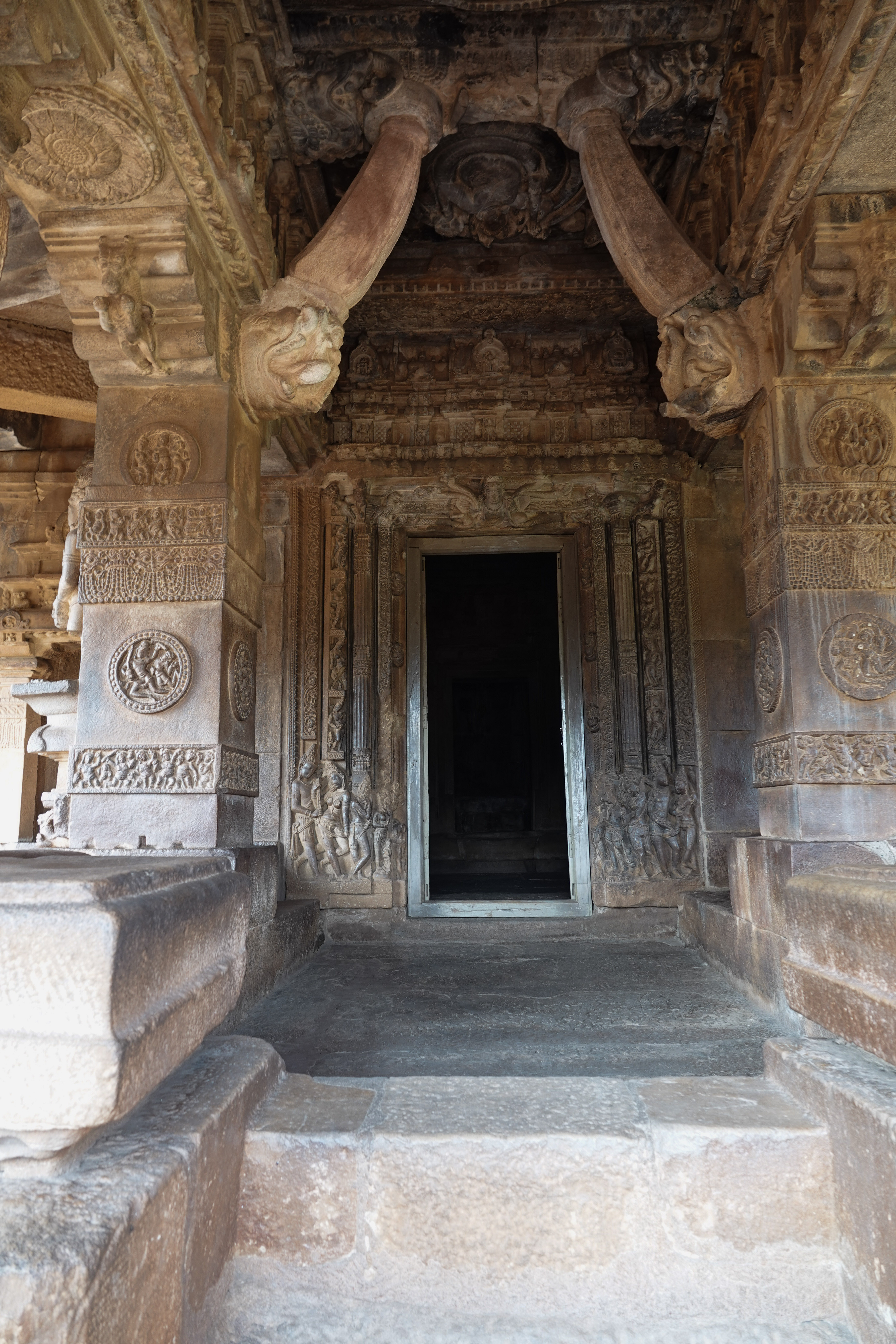
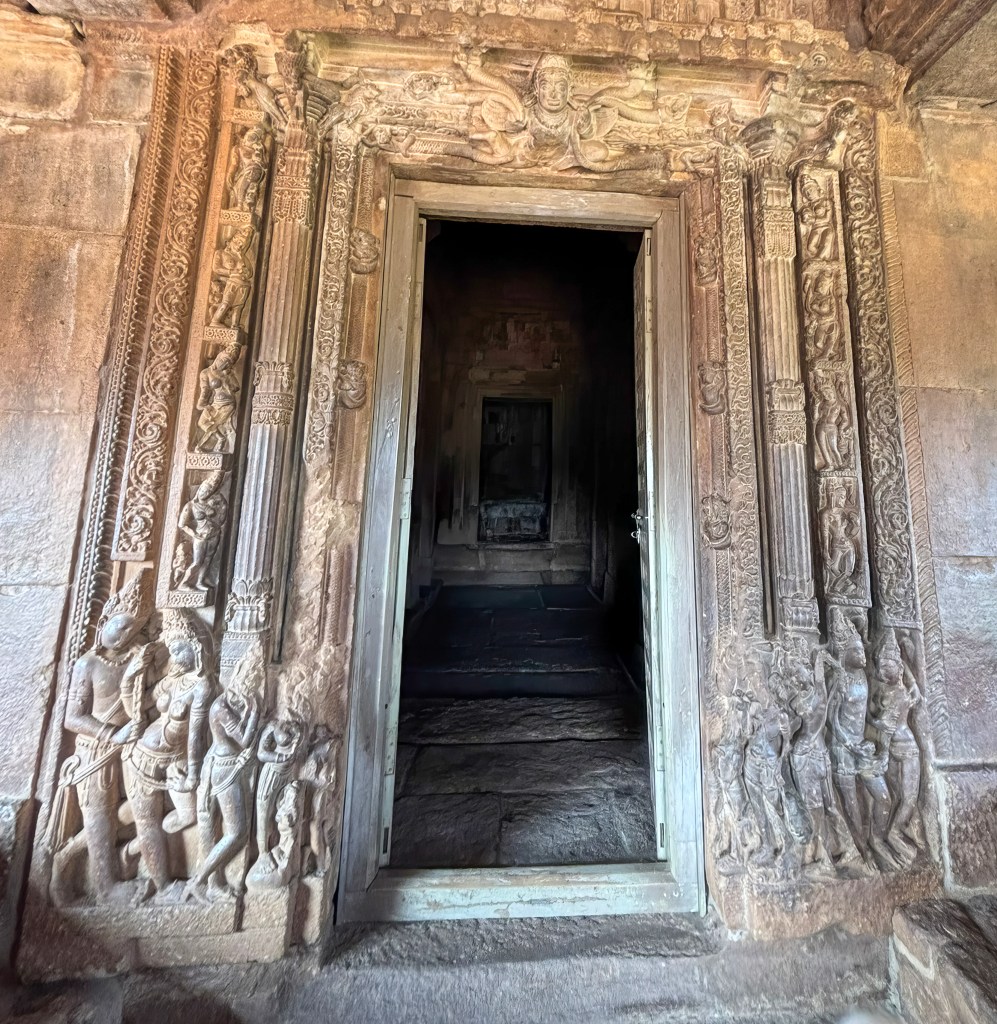
The doorway of the Durga Temple in Aihole is an exquisite example of Early Chalukyan architecture, renowned for its rich and detailed carvings.
Architectural Features
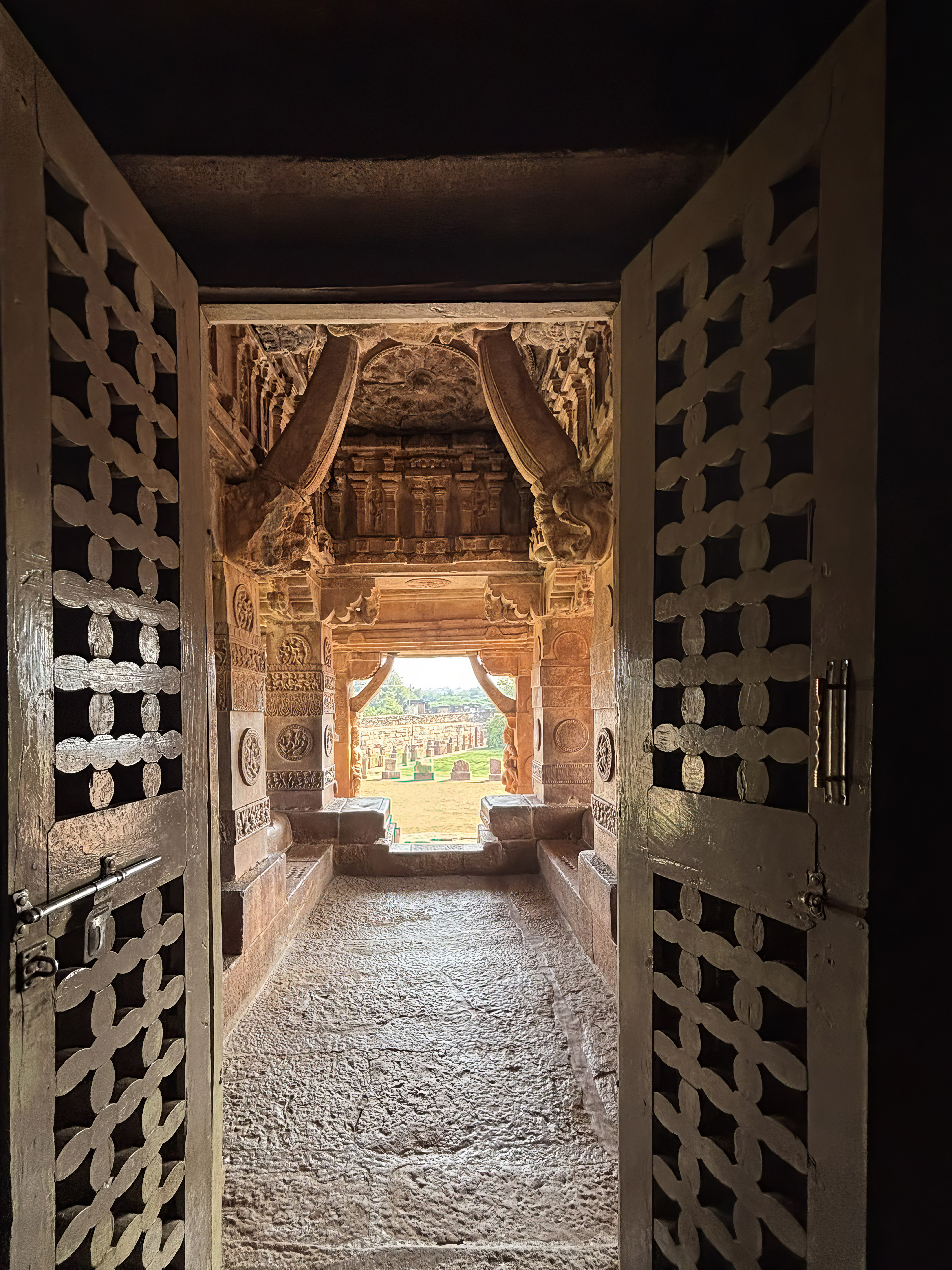
- Dvarabandha: The entrance (dvarabandha) leads into the sabhamantapa (congregation hall) and eventually the garbhagriha (inner sanctum).
- Multiple Frames: The door frame is intricately carved with five vertical bands (dwarashakhas), each featuring unique motifs.
- River Goddesses: At the base of the entrance, you can see carvings of the river goddesses Ganga (on her vehicle, the makara, on the right) and Yamuna (on a tortoise, on the left).
- Garuda on Lintel: Carved into the lintel (the beam above the door) is a figure of Garuda, the mythical eagle vehicle of Lord Vishnu, depicted clasping nagas (serpents with human heads) in his hands. The central naga on the left has seven serpent heads, identifying him as the Nagaraja, or king of serpents.
- Carved Pillars: The surrounding pillars and pilasters are adorned with various bas-reliefs, including mithuna (amorous couples), male musicians, and a series of female figures (apsaras).
- Ceiling Reliefs: Just before the entrance in the mukhamantapa (porch) ceiling are two notable bas-reliefs: the Matsya Chakra (Fish Wheel) and a coiled Nagaraja, both likely inspired by earlier carvings in the Badami caves.

This intricate doorway, with its blend of religious and everyday life imagery, serves as a transition from the outer world to the sacred space of the temple
Final thoughts
Visiting the Durga Temple in Aihole feels like stepping into a living museum of early Chalukyan creativity. This beautifully preserved 7th–8th century does not have a idol yet the aura inside is unmistakably divine. The temple’s apsidal (horseshoe‑shaped) layout, pillared corridors, and richly carved devakoshtas make it one of Aihole’s most iconic structures. As you walk through the colonnaded passage, you’ll meet exquisite sculptures of Durga as Mahishasuramardini. You will also encounter sculptures of Harihara, Varaha, Narasimha, Shiva with Nandi, and Vishnu on Garuda. Each niche tells a vivid story in stone. The carvings remain astonishingly crisp, offering a rare chance to admire early temple art up close. The Durga Temple is compact, atmospheric, and architecturally unique. It is a must-visit stop for anyone exploring Aihole’s role as the cradle of Indian temple architecture.
 Peaks to Palaces