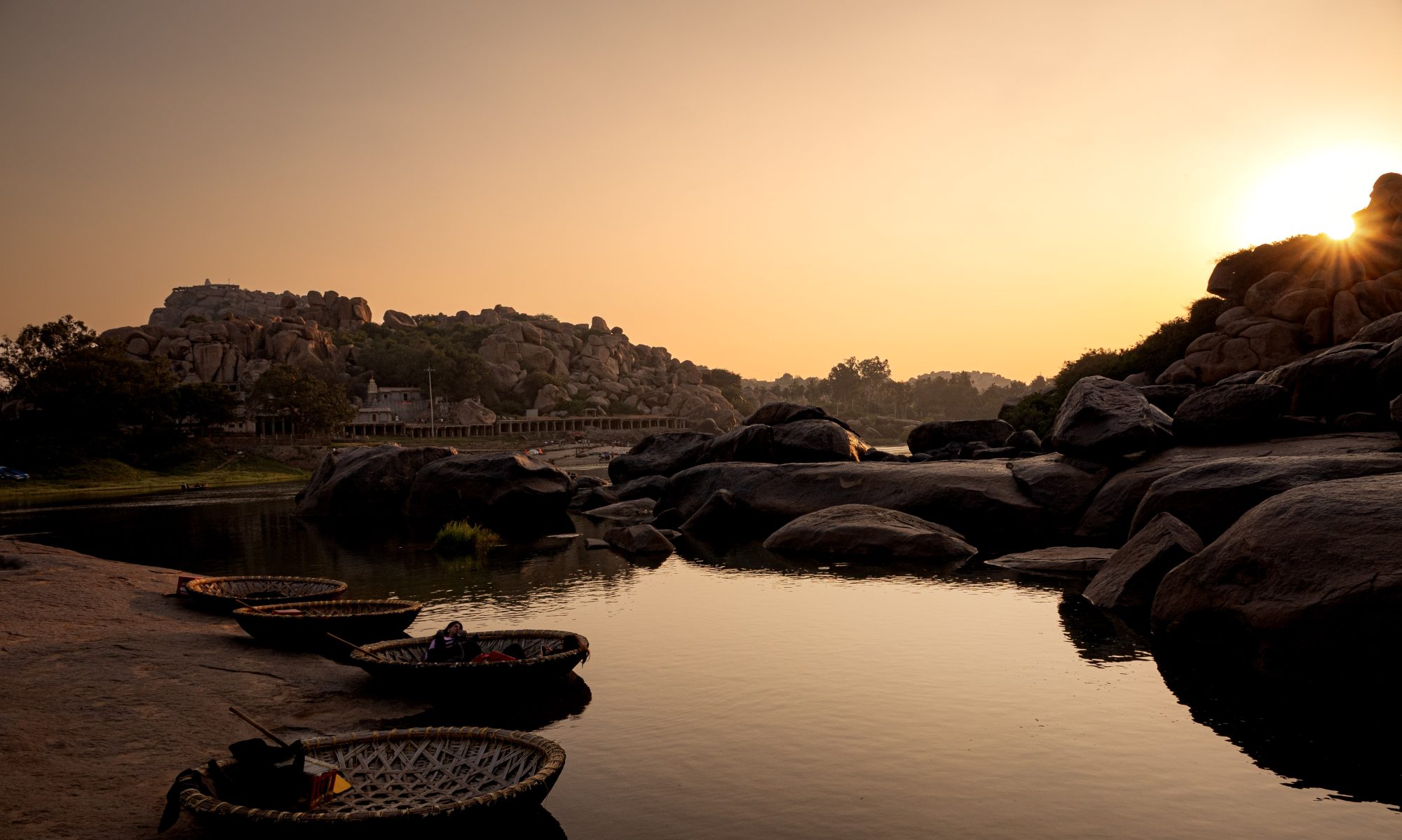
We visited Aihole as part of our Badami, Pattadakal, and Aihole trip. All three sites are included in a UNESCO World Heritage site. Surrounded by red sandstone in Karnataka, India, Aihole is known for its rich history. Often referred to as the birthplace of Indian temple architecture, this small town features over 125 shrines built between the 4th and 12th centuries. Each shrine represents a part of the Chalukyan architectural journey. Our guide introduced us to Aihole, referred to as the “lab for temple design,” where temple concepts were tested before being refined in Pattadakal and Badami. Together, Badami, Pattadakal, and Aihole are central to Chalukyan heritage. Aihole was the workshop, Badami served as the royal capital in sandstone cliffs, and Pattadakal acted as the grand stage for these architectural achievements. These towns are close to one another, making them perfect for a day trip.
 Historical Background
Aihole was originally known as **Ayyavole**, which means “village of monks” in old Kannada. The town is stategically located on the banks of Malaprabha river . The Chalukyas of Badami were the main patrons of the temples at Aihole. They ruled much of South India from their capital at Badami (formerly Vatapi), just 30 km away.
Badami Chalukyas (543–753 AD)
- Origin: Established by Pulakeshin I in 543 AD, with its capital at Badami (formerly Vatapi) in present-day Karnataka.
- Achievements: Known for their contributions to art and architecture, particularly the rock-cut cave temples of Badami and the structural temples at Pattadakal and Aihole, which are considered cradles of Hindu temple architecture.
- Notable Rulers: Pulakeshin II, who expanded the empire and defeated the Harsha of Kanauj, is among the most notable rulers. His encounters with the Pallavas, particularly the defeat against Narasimhavarman I, marked the dynasty’s decline.
Cultural Contribution of Chalukyas
The Badami Chalukyas were instrumental in developing the Deccan style of architecture and patronized Sanskrit and Kannada literature.
- Carvings and Sculptures: Chalukyan temples are adorned with intricate carvings and sculptures depicting deities, mythological scenes, and everyday life.
- Shikharas and Vimanas: The shikharas (towers) of Chalukyan temples often feature intricate details and provide a distinctive silhouette. The vimanas, especially in the Dravidian style, are characterised by pyramidal structures.
- Mandapas: Temples typically have mandapas (pillared halls) with elaborately carved pillars, showcasing a high level of craftsmanship.
- Deity Sculptures: Chalukyan temples are known for their sculpted images of deities, with intricate details in jewellery, clothing, and expressions.
- Best examples of Chalukya Architecture: Cave Temples at Badami, Pattadakal-Virupaksha Temple, Mallikarjuna Temple, and others; Aihole (the cradle of Indian architecture); The Lad Khan Temple, Durga Temple, and Ravanaphadi Cave; Lakkundi-Kasivisvesvara Temple; Dravidian Influence: The Mahadeva Temple at Itagi.
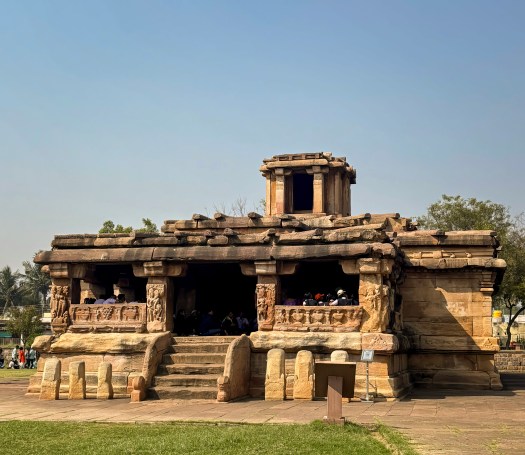
Did you know? Until recent cleaning by the Archaeological Survey of India, houses has built up to and even extended into these historical temples. This is the reason behind many temples in Aihole having unusual names, like Lad Khan temple – a Hindu temple named after an Islamic inhabitant who lived and used this temple as his house.
📍 Must‑Visit Spots
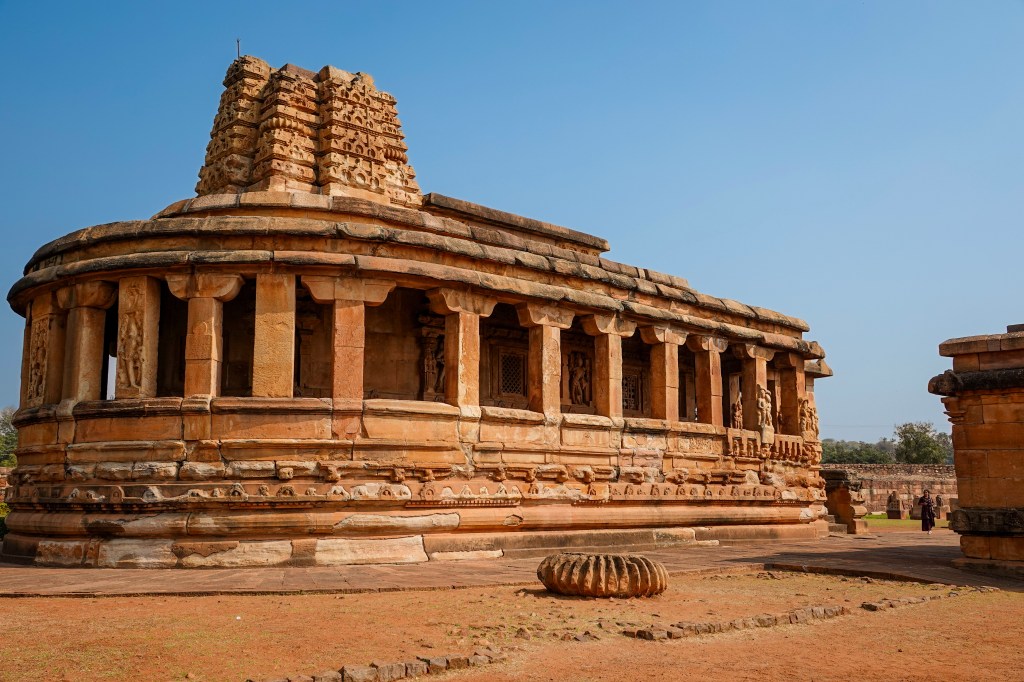
- Durga temple complex with Durga Temple – Famous for its apsidal (horseshoe‑shaped) design and sculpted friezes. Lad Khan Temple – One of the earliest stone temples in India. It showcases the transition from wooden prototypes to enduring stone.
- Meguti Jain Temple – Perched on a hill with inscriptions that help date Chalukyan history.
- Ravana Phadi Cave – A rock‑cut shrine with expressive Shiva carvings.
- Huchappayya Matha & Hucchimalli Temple – Early experiments in temple form and ornamentation.
- Archaeological Museum – A small but insightful collection of sculptures and inscriptions.
🧭 How to Explore
- Most major temples are within walking distance of each other.
- Early mornings and late afternoons offer the best light for photography.
- Combine Aihole with Badami and Pattadakal for a full Chalukyan heritage circuit.
🧡 Who Will Love Aihole
- Architecture lovers
- History enthusiasts
- Slow travelers
- Families looking for an easy, educational outing
- Photographers chasing warm sandstone textures and quiet landscapes
Durga complex
We started off the visit in the Durga complex, which has a ticketed entry. We spent about 90-120 minutes walking through various temples and appreciating their historical significance. We visited the following temples at the Durga complex. I especially loved the unique architecture of the Durga temple and took tons of photos, especially from the back side. Click on the links to read more about each temple. Here are the must-do activities and unique features to observe at each of the temples and the step-well in the Aihole complex:
- Durga Temple– Most unique temple with its horse-shoe architecture
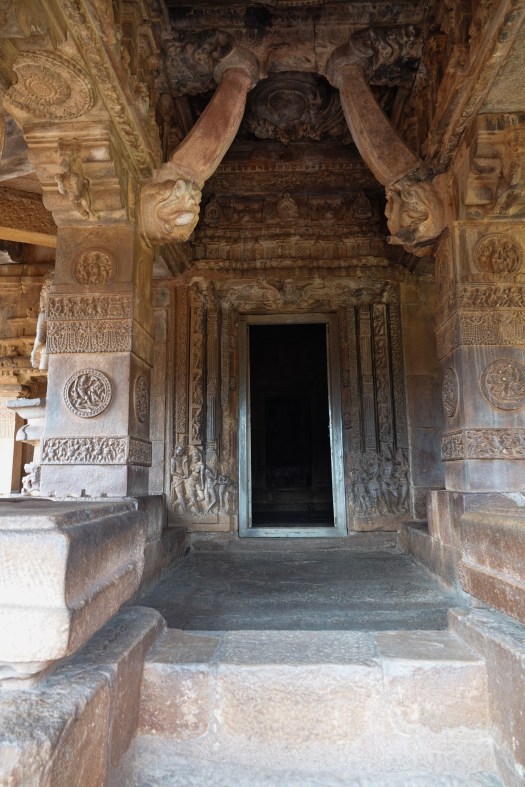
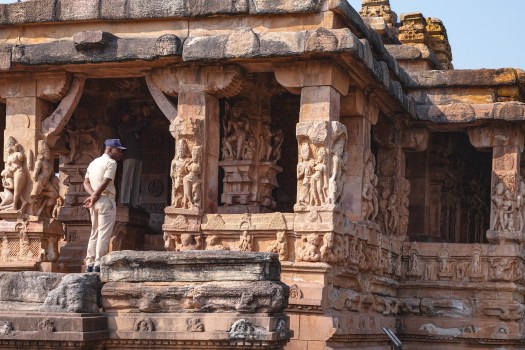
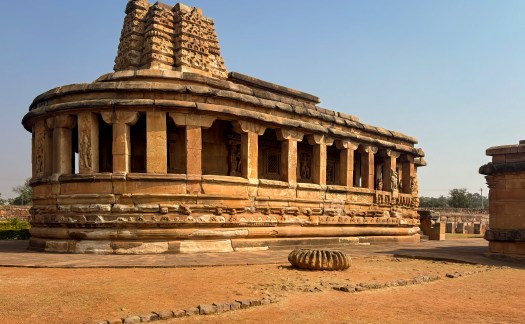
- Observe the unique architecture: This temple is a prime example of experimental Chalukyan architecture, notable for its apsidal or horse-shoe shape that resembles a Buddhist Chaitya hall or the hind part of an elephant (Gajaprishtha).
- Walk the pillared corridor (pradakshina patha): The temple features a unique ambulatory path running around the inner shrine, lined with pillars and niches containing intricate high-relief sculptures of various Hindu gods and goddesses, including Narasimha, Varaha, Mahishasura Mardini, and Shiva leaning on Nandi.
- Admire the detailed carvings: Look for the exquisite seven-headed serpent carved on the ceiling at the entrance to the inner shrine and the rich sculptural panels throughout the temple walls and pillars.
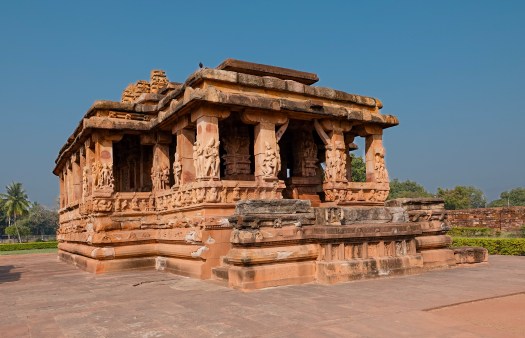
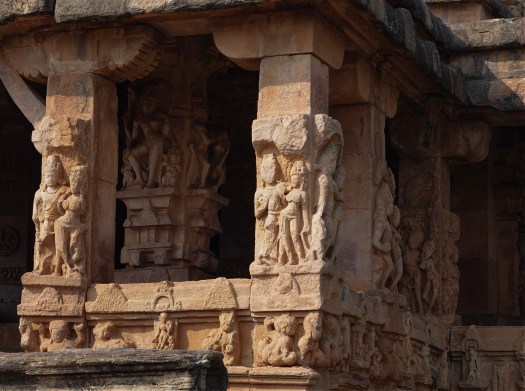
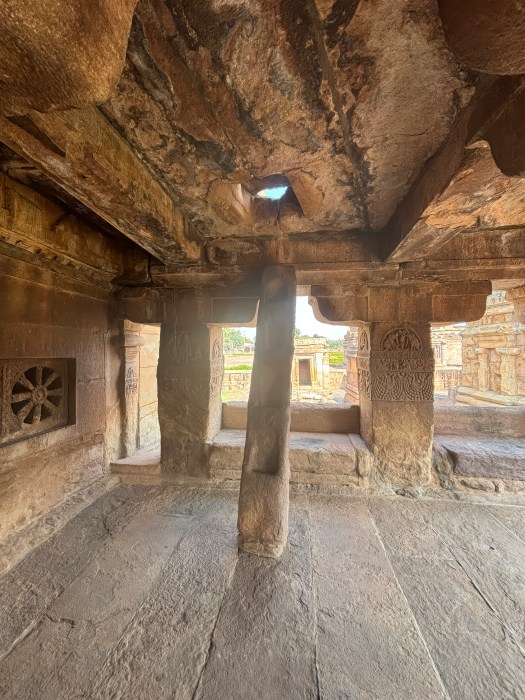
- Ladkhan temple/ Chalukya Shiva Temple– click the link to read more about how a Hindu temple got an Islamic name
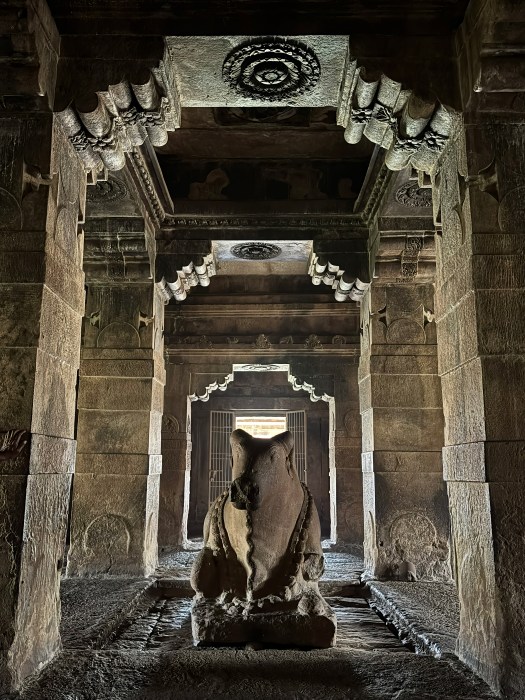
- Appreciate its ancient structure: Dating to around the 5th century, it is one of the oldest temples in Aihole and is significant for its flat roof and mandapa style, showing an early adaptation of wood construction techniques into stone.Explore the inner halls: The temple’s interior is laid out with large, plain pillars arranged to form two concentric squares, and features beautiful lattice-work windows.Spot the Nandi statue: A large Nandi (Shiva’s bull) statue is prominently placed in the center of the main assembly hall (sabha-mandapa) facing the inner sanctum.
- Suryanarayan Temple
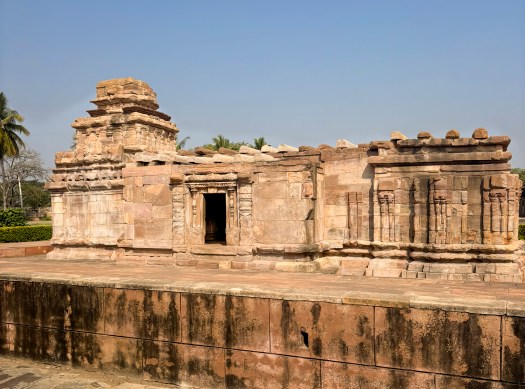
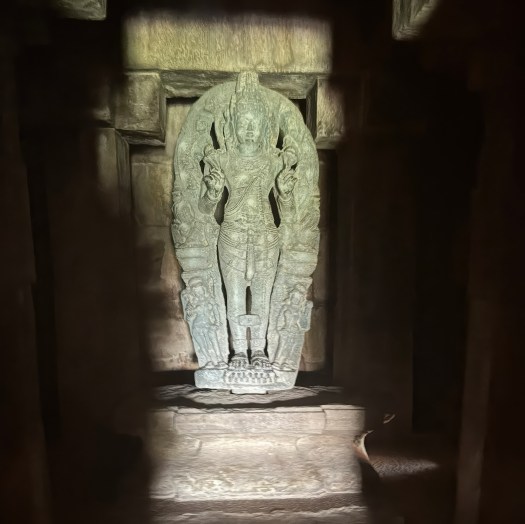
- View the idol of Surya: Don’t miss the prominent idol of the sun god Surya with his two hands bearing lotuses, standing within an ornate cut-out frame. Also, observe the idol of his wives-Sandhya and Usha at his side.
- Note the Nagara-style shikhara: Observe the partially preserved North Indian style curvilinear tower above the sanctum.
- Guadargudi
- Examine the early design: Believed to be older than the Ladkhan temple, observe its basic, open rectangular structure with a colonnaded veranda, built on an elevated platform slightly below the current ground level of the complex.
- Look for carvings: Check the outer walls for decorative kalasha (water pot) motifs.
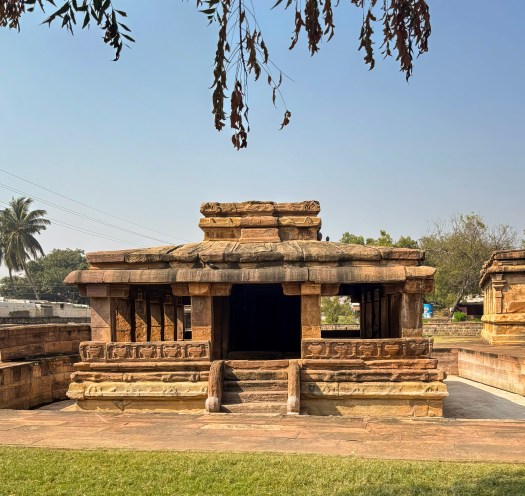
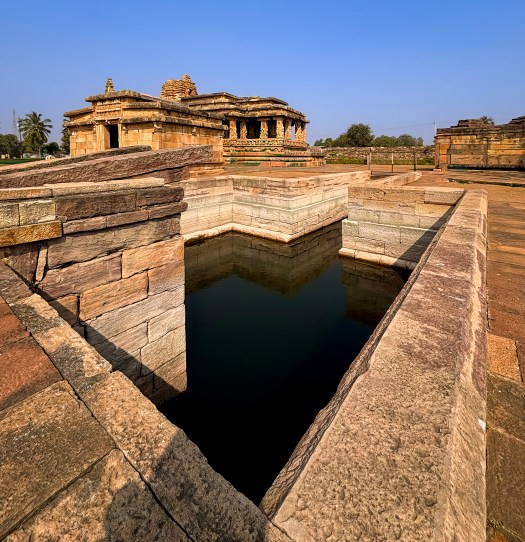
- Chakragudi. This contrasts with the unique apsidal (semi-circular) plan of the nearby main Durga temple.
- Study the preserved shikhara: The most notable feature is its well-preserved 7th or 8th century Nagara-style tower, a contrast to the unique plan of the nearby Durga temple.
- Observe the doorway: The doorway to the sanctum has a carving of Garuda, the vehicle of Lord Vishnu, holding two snakes.
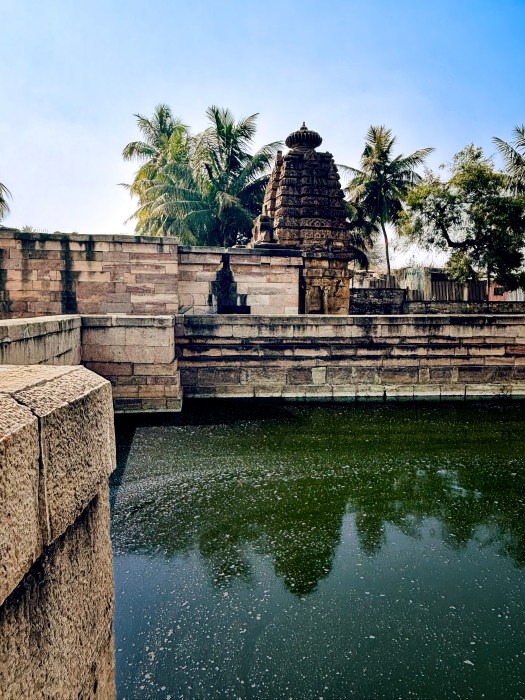
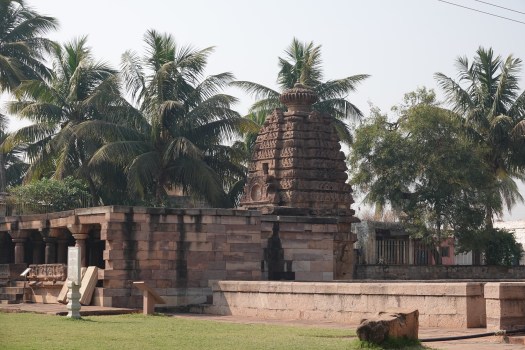
- Badigargudi- Look for the specific phamsana (pyramidal) style tower with ornate kudus (arch-like motifs) in the middle.
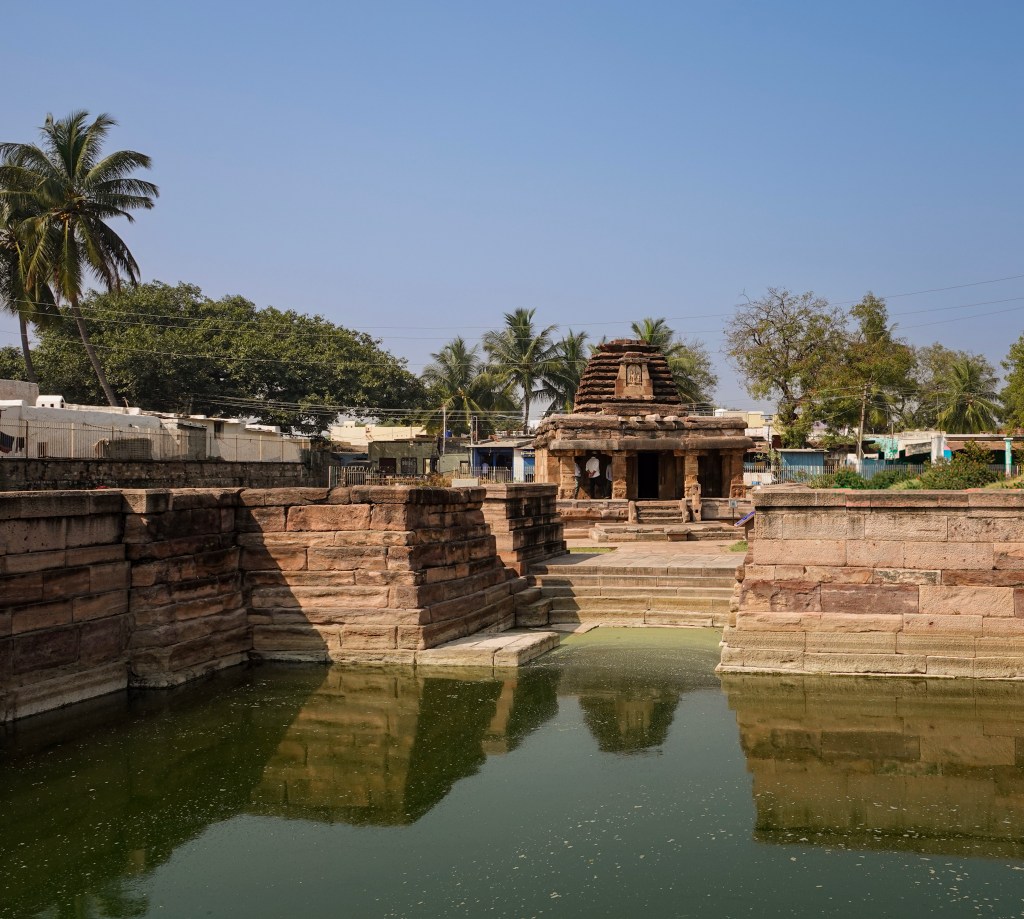
Due to a lack of time, we didn’t visit other sites, including the Cave temples. If you have more time in Aihole, I would definitely suggest spending half a day exploring all that Aihole has to offer. Most tourists visit only the Durga complex, which gives you a good understanding of Chalukya-style temple architecture. I am hoping to return to this area and explore some of the other, less-visited temple complexes of Aihole.
To experience the architectural evolution of the first capital of the Early Chalukyas, start your journey at the iconic Durga Temple complex, the most prominent cluster in Aihole. This ticketed area, maintained by the Archaeological Survey of India, houses the famous Durga Temple—a rare example of an apsidal, sandhara plan—alongside the Aihole Archaeological Museum. The village landscape is dotted with 12 structural temples and several cave shrines, including the Shiva-dedicated Ravanphadi cave and the Meena Basadi cave, whose inclusion of a sukhanasi (vestibule) marked a major step toward future temple forms. On the slopes of Meguti hill, you will find a unique two-story structure where the garbhagrihas are excavated into the rock while the front veranda is built. As you explore, you’ll notice the technical progression from the simple mundamala shikhara of the Konti gudi, Ladkhan, and Gaudaragudi temples to the more developed Rekha-prasada towers of the Huchhimalli and Huchhapayya temples. Innovations continue at the Meguti temple, which features a pradakshina patha (circumambulation path), and the Mallikarjuna and Galaganatha groups, which represent the specialized Kadamba-Early Chalukya shikhara. While the Nagnath temple at Nagral showcases a Dravidian shikhara, Temple 33 in the Veniyar group introduces the trikutachala (triple-shrine) form that later defined the Rashtrakuta period. This extensive experimentation at Aihole paved the way for the more definite architectural forms seen in Badami and the UNESCO World Heritage site of Pattadakal.
Final thoughts
As the first capital of the Early Chalukyas, Aihole serves as a grand “cradle of Indian architecture,” where centuries of experimentation paved the way for the masterpieces of Badami and the UNESCO World Heritage site of Pattadakal. From the unique apsidal design of the Durga Temple and the rock-cut precision of the Ravanphadi cave to the pioneering trikutachala and Rekha-prasada towers, the village offers an unparalleled timeline of structural evolution. Whether you are marvelling at the prehistoric Megalithic Dolmens or finding solitude in the isolated Galaganatha and Ramalinga clusters, a visit to Aihole is a journey through the very soul of ancient craftsmanship. No exploration of Karnataka’s heritage is complete without witnessing these 12 structural temples and sacred caves, which remain a testament to the creative transition from simple rock excavations to the definitive temple forms that would define South Indian history
 Peaks to Palaces