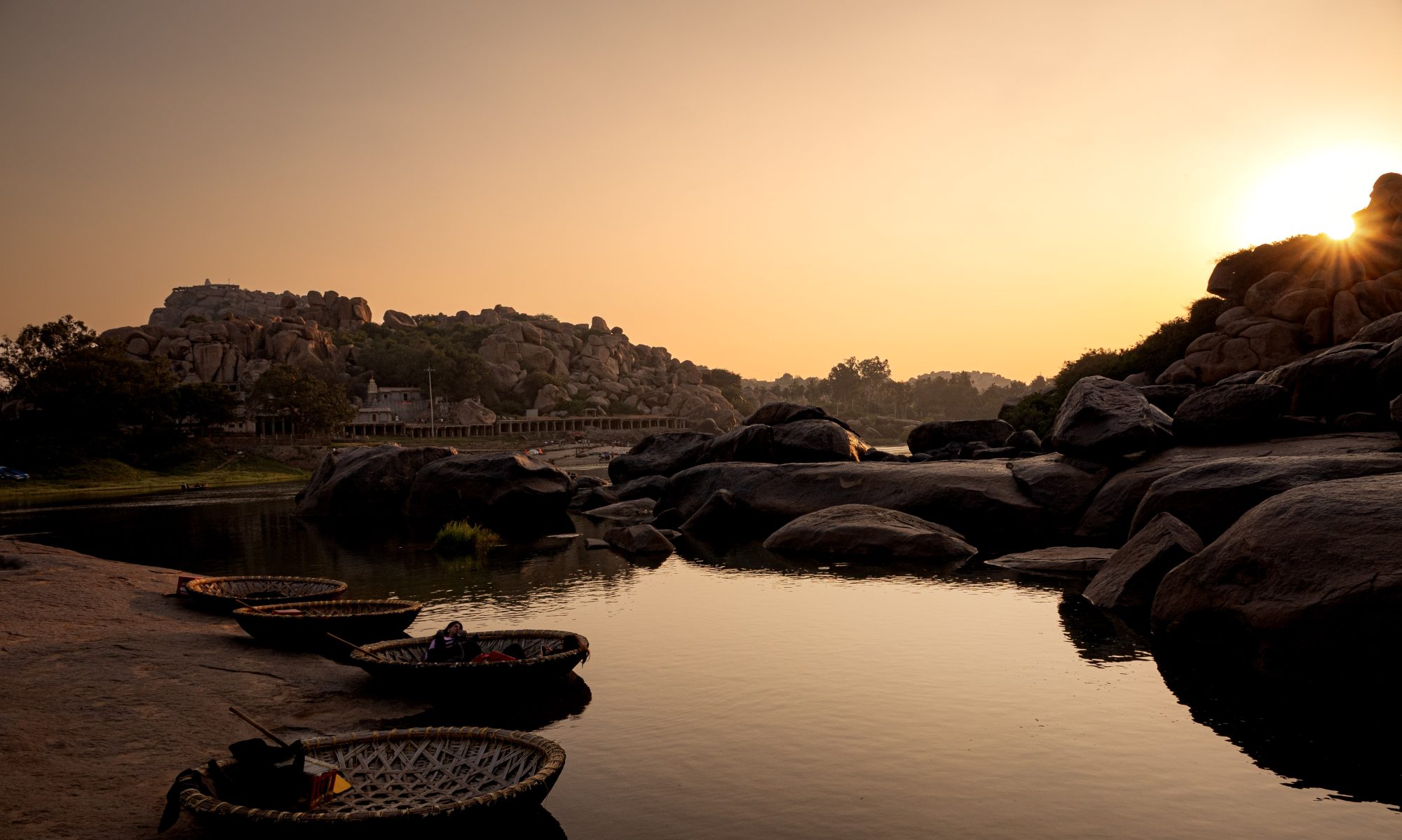
A few metres south of the Zenana Enclosure, along an unpaved stretch of road that still carries the quiet hum of history, stands one of the most extraordinary monuments in the Royal Centre—the Hazara Rama Temple, or the “Temple of a Thousand Ramas.” Though modest in scale compared to Hampi’s grander shrines, this temple was the royal chapel of the Vijayanagara kings, a sacred space where mythology, statecraft, and devotion intertwined.
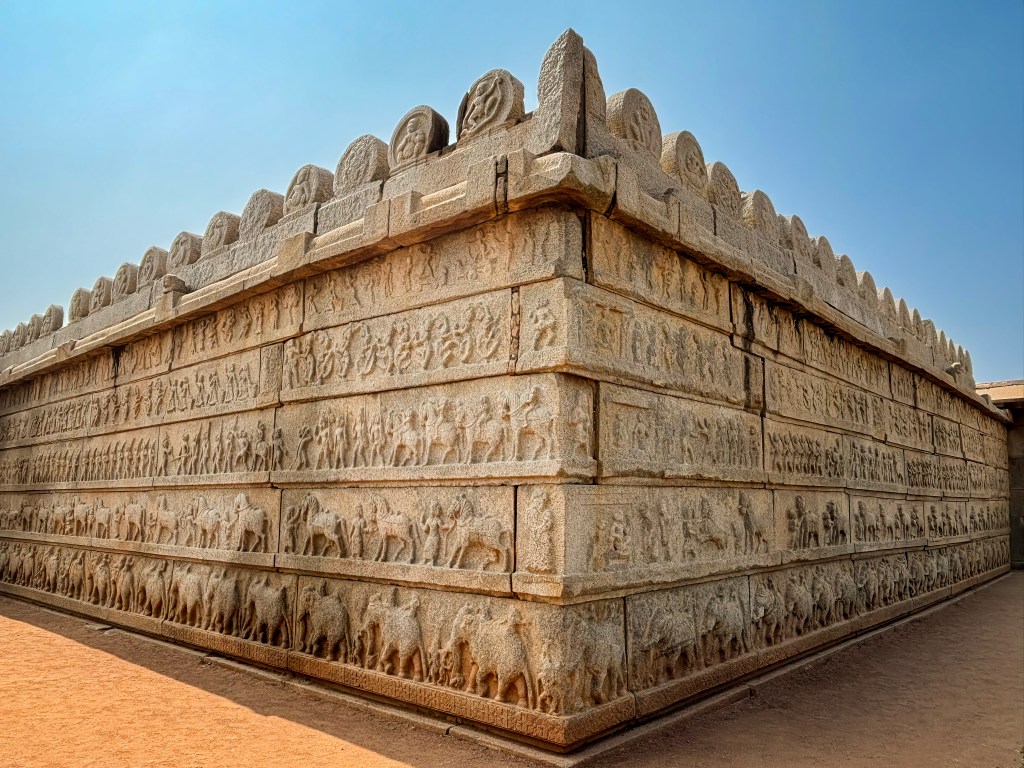
Consecrated in the early 15th century by Devaraya I, the temple is a masterpiece of narrative sculpture. Its outer compound walls are wrapped in long, continuous friezes—almost like ancient graphic novels—depicting royal processions, military regiments, elephants, horses led by Muslim attendants, dancers, musicians, and scenes from the exuberant Vasantotsava festival. Each figure is carved with such individuality that no two animals or soldiers look alike. These processions all move toward seated kings, mirroring the descriptions of the Mahanavami festival found in contemporary chronicles. Standing before these walls, you feel as though you’re watching the empire come alive in stone.
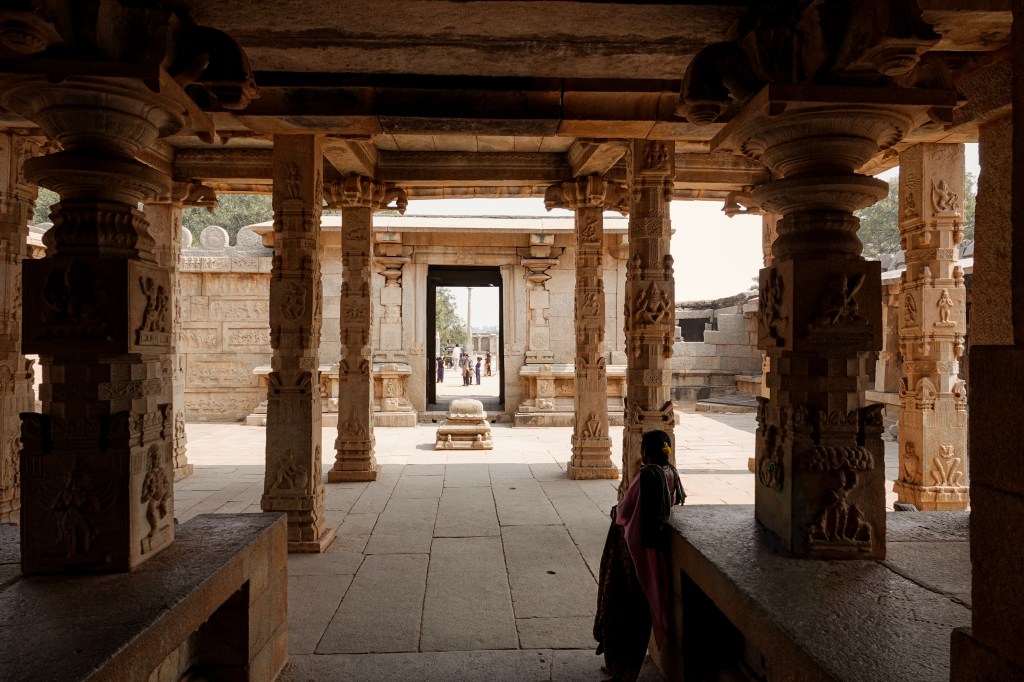
Entering through the eastern gateway—simple, pavilion-like, and towerless—you’re greeted by fierce carvings of Bhairava and Mahishasuramardini on the columns. To your right, the inner walls continue the storytelling with beautifully preserved Ramayana panels, arranged to be read from left to right and bottom to top. It’s rare to find such a clear, intentional narrative sequence in temple art, and it makes the Hazara Rama Temple feel almost like a sacred library.
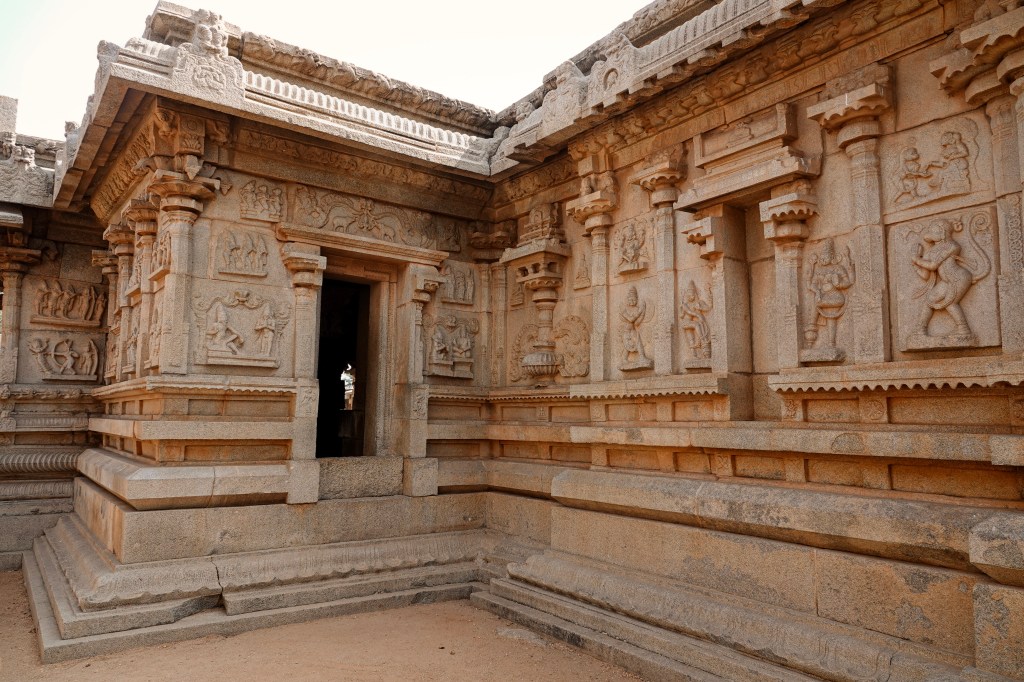
At the heart of the complex stands the main shrine, approached through a 16th‑century open mandapa whose brick parapet once shimmered with plaster sculptures of gods and royal patrons. The original closed mandapa behind it features squat pillars topped with double capitals—classic Vijayanagara design. A Sanskrit inscription near the doorway proclaims that Devaraya I was protected by Goddess Pampa, linking the king’s authority to the sacred landscape of Hampi.
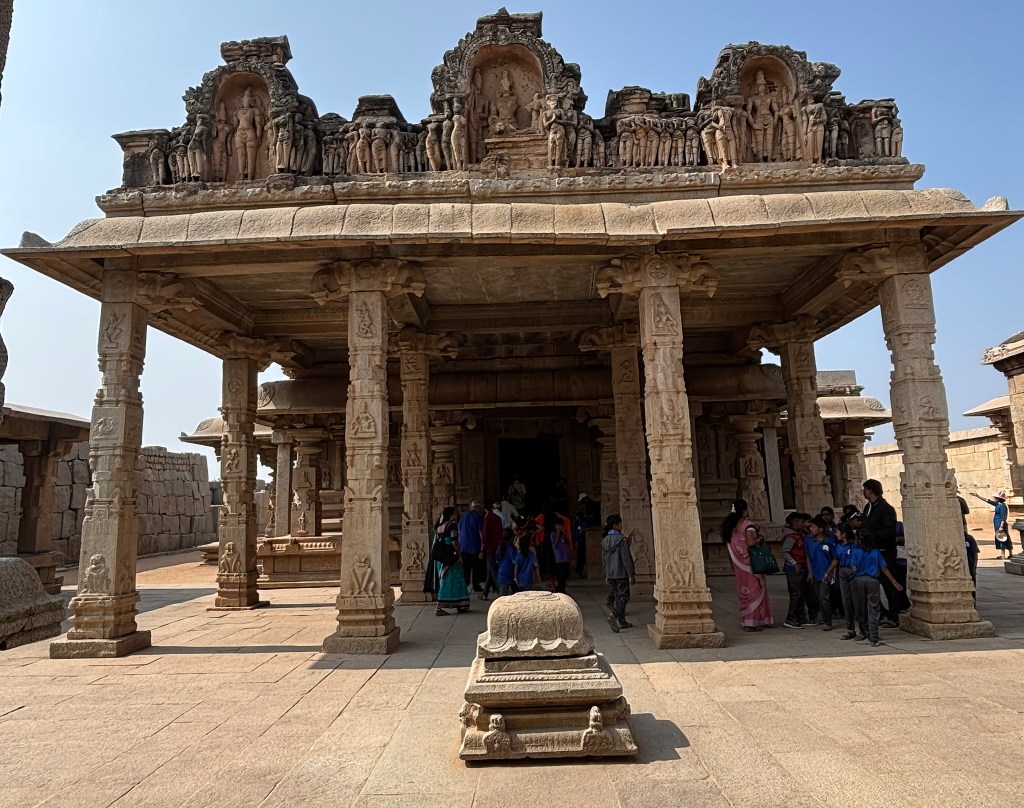
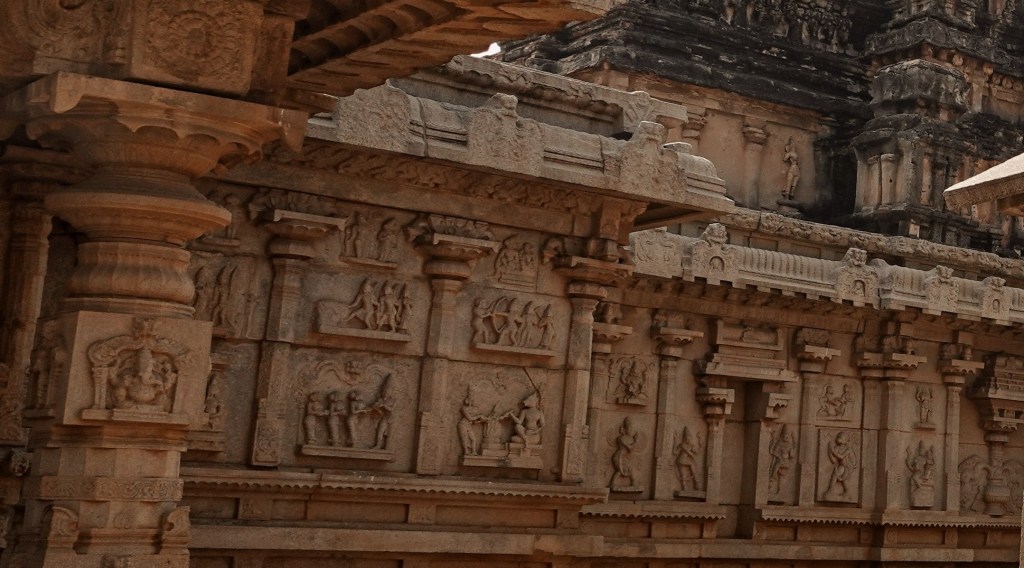
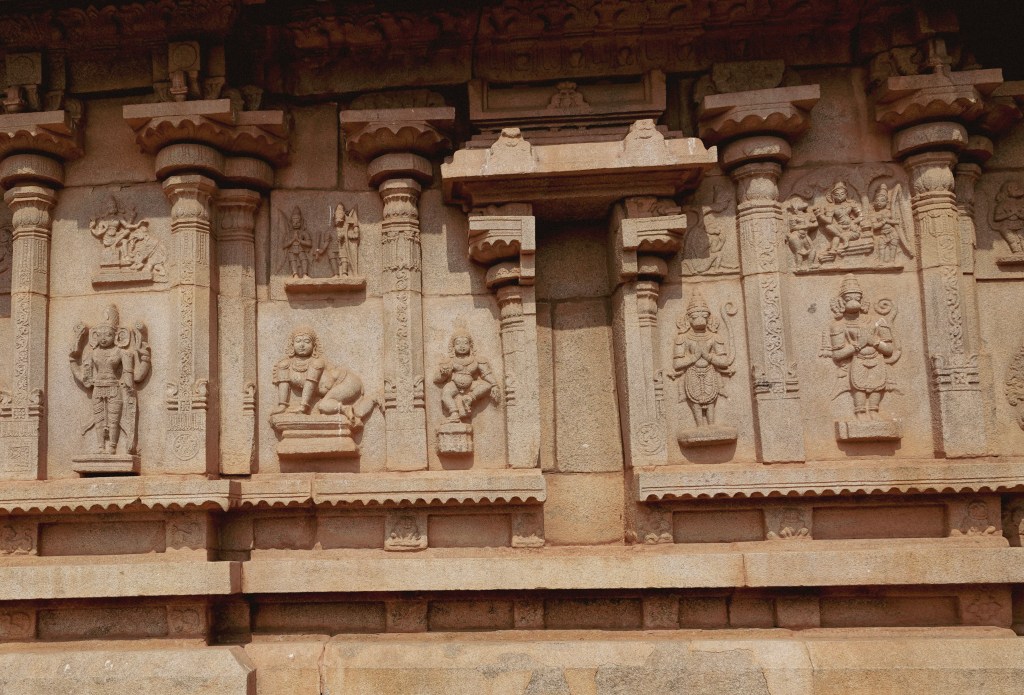
The mandapa walls are the true highlight: 108 Ramayana scenes carved in three tiers, unfolding clockwise around the hall. The story begins with Valmiki narrating the epic and Dasharatha’s fire sacrifice, and ends with Rama’s coronation at Ayodhya. Key moments are placed at corners and doorways—Ravana transforming from a mendicant into a ten‑headed demon, Hanuman leaping across the ocean, and Sita offering her hair‑jewel to Hanuman. These carvings are intimate, expressive, and astonishingly detailed, making the temple one of the finest Ramayana storytelling sites in India.
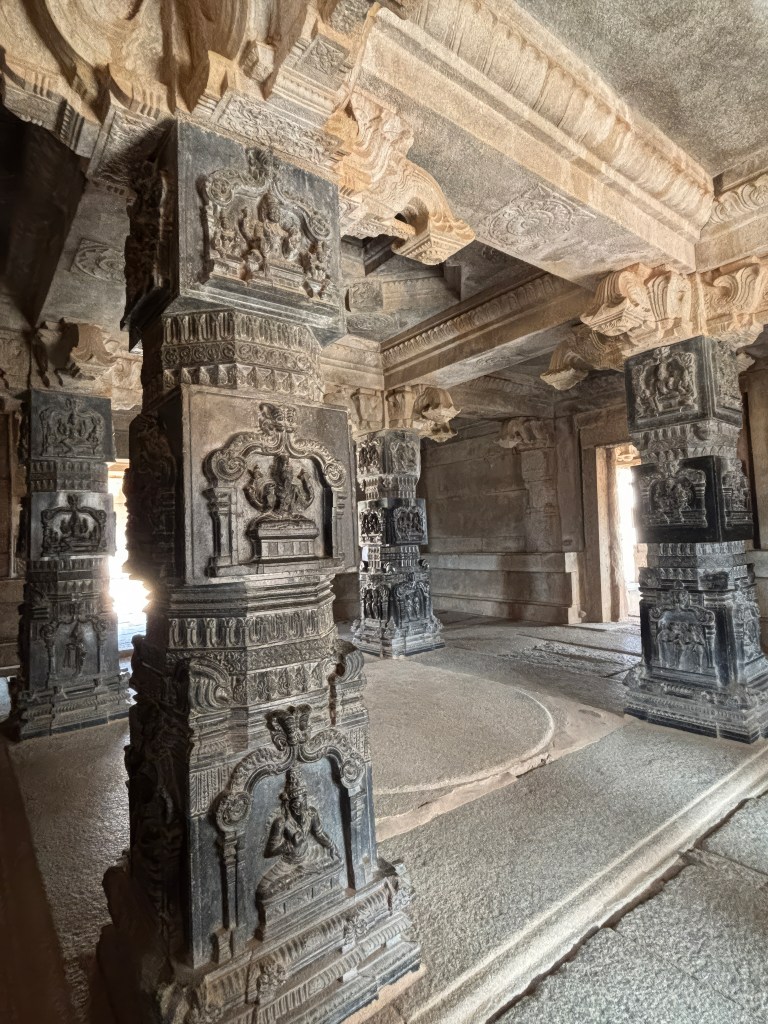
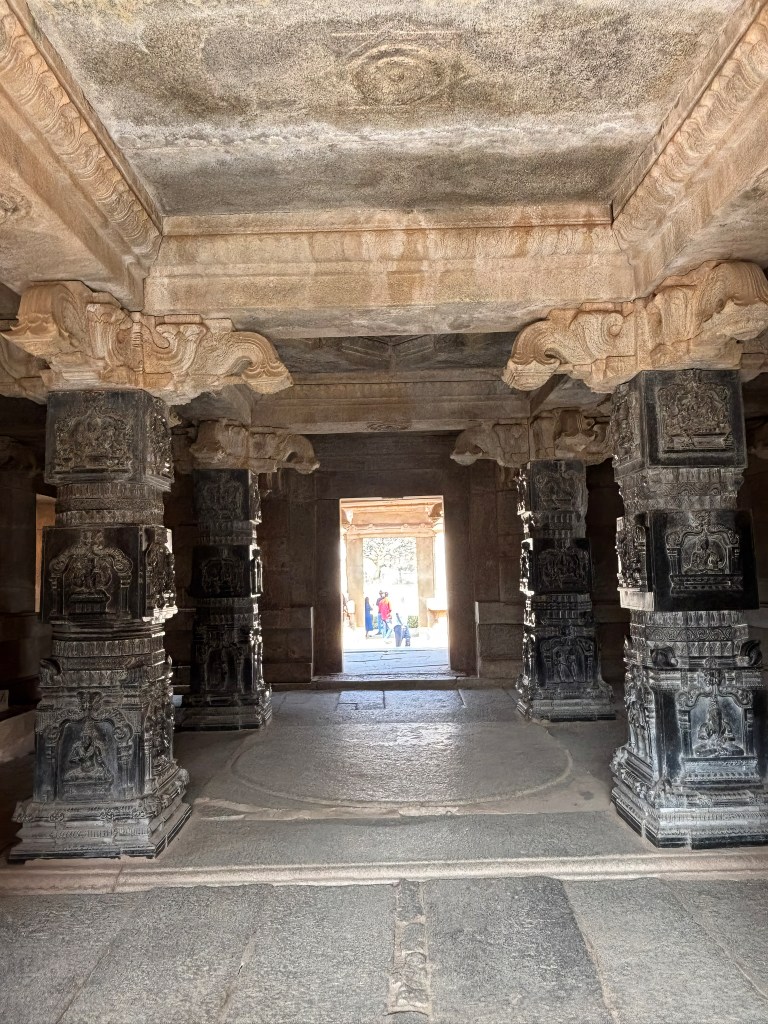
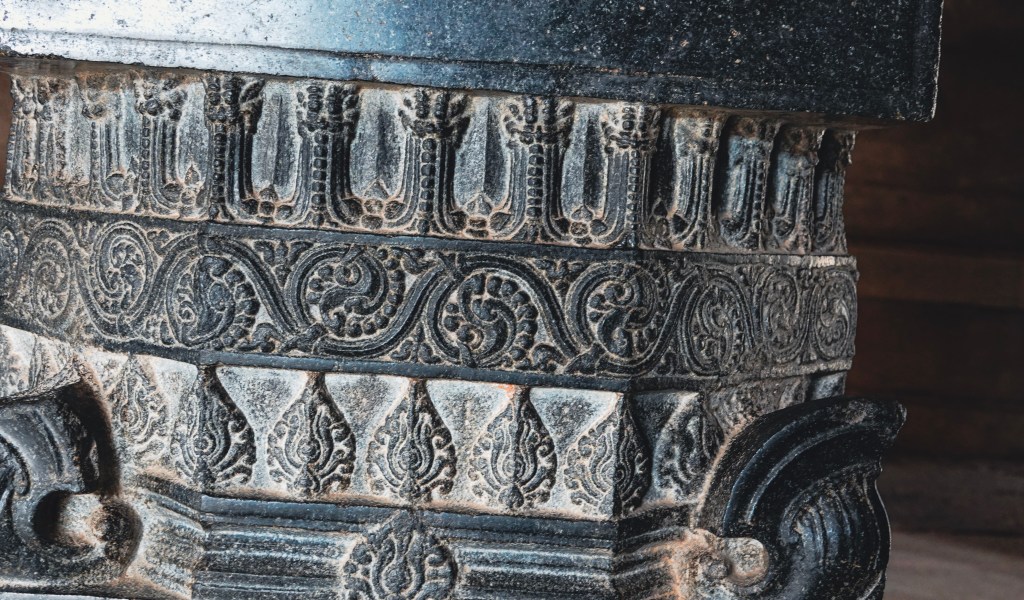
Inside, the mandapa is more restrained, but four polished dolerite columns stand like sentinels, each covered with intricate carvings of the 24 aspects of Vishnu. The sanctuary itself is empty now, save for a pedestal with three holes—once anchoring the images of Rama, Lakshmana, and Sita that have long since disappeared.
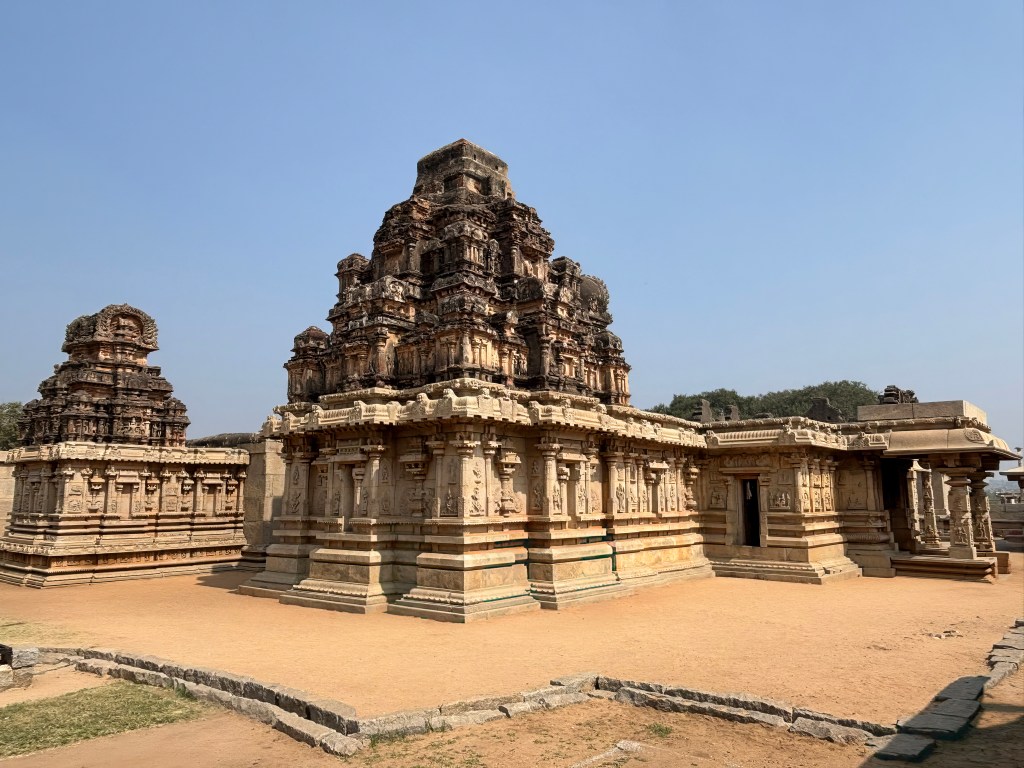
Within the compound is a second, smaller temple with twin sanctuaries, likely dedicated to Narasimha and Lakshmi. Its brick towers, with kuta and shala roofs, are better preserved than the main shrine’s, and its walls carry additional Ramayana and Narasimha reliefs. A 16th‑century mandapa and hall were later added, partially obscuring some of the original carvings.
What makes the Hazara Rama Temple even more remarkable is its alignment with the surrounding sacred landscape. Stand in the center of the mandapa and look north—you’ll see Matanga Hill, a site tied to the Ramayana. Look east, and Malyavanta Hill frames the doorway, another hill steeped in epic lore. These alignments were intentional, reinforcing the temple’s role as the symbolic and spiritual axis of the royal city.
Visiting the Hazara Rama Temple is like stepping into a living manuscript—one where stone becomes storytelling, mythology becomes memory, and the royal past of Vijayanagara unfolds in scenes so vivid they seem ready to move.
 Peaks to Palaces