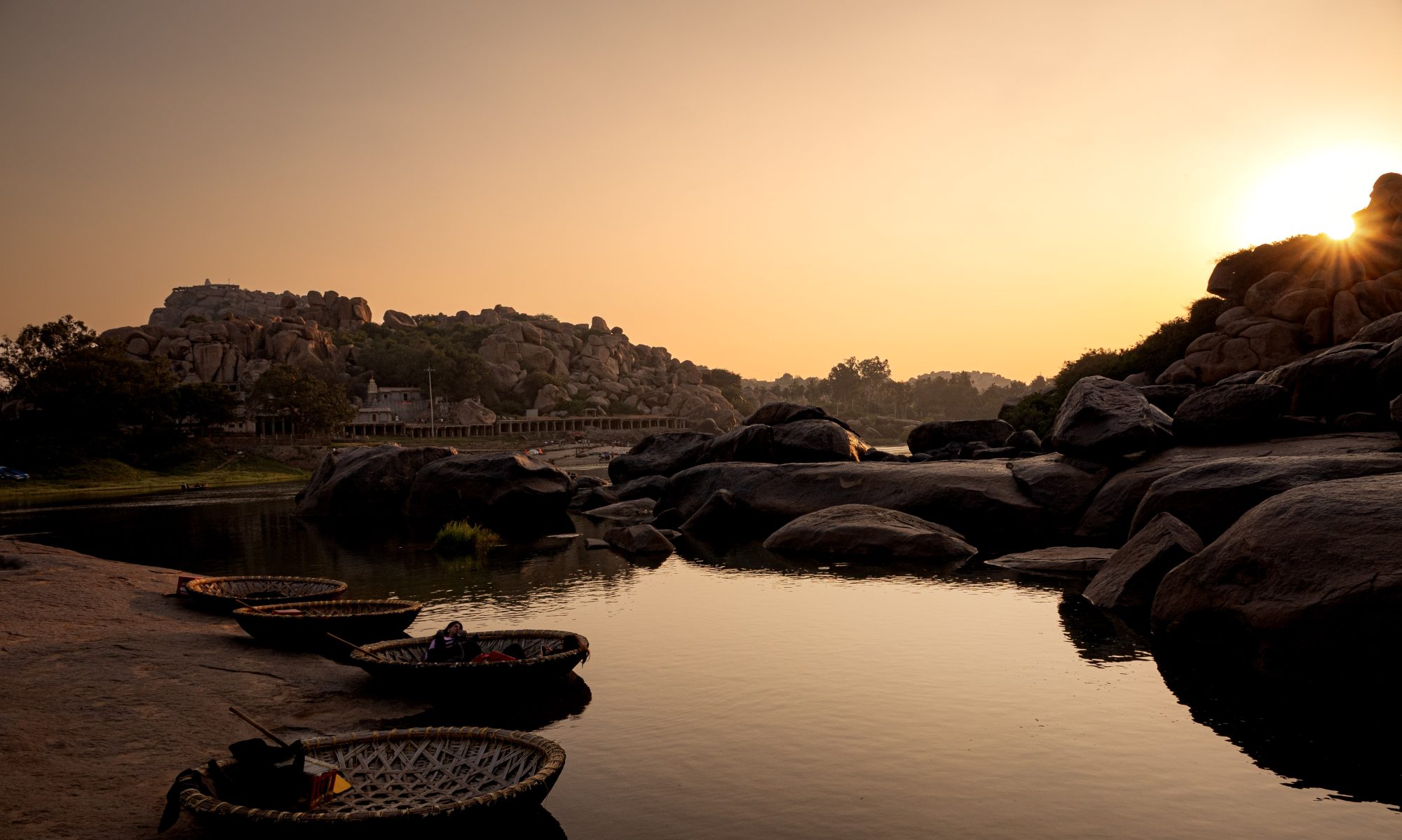
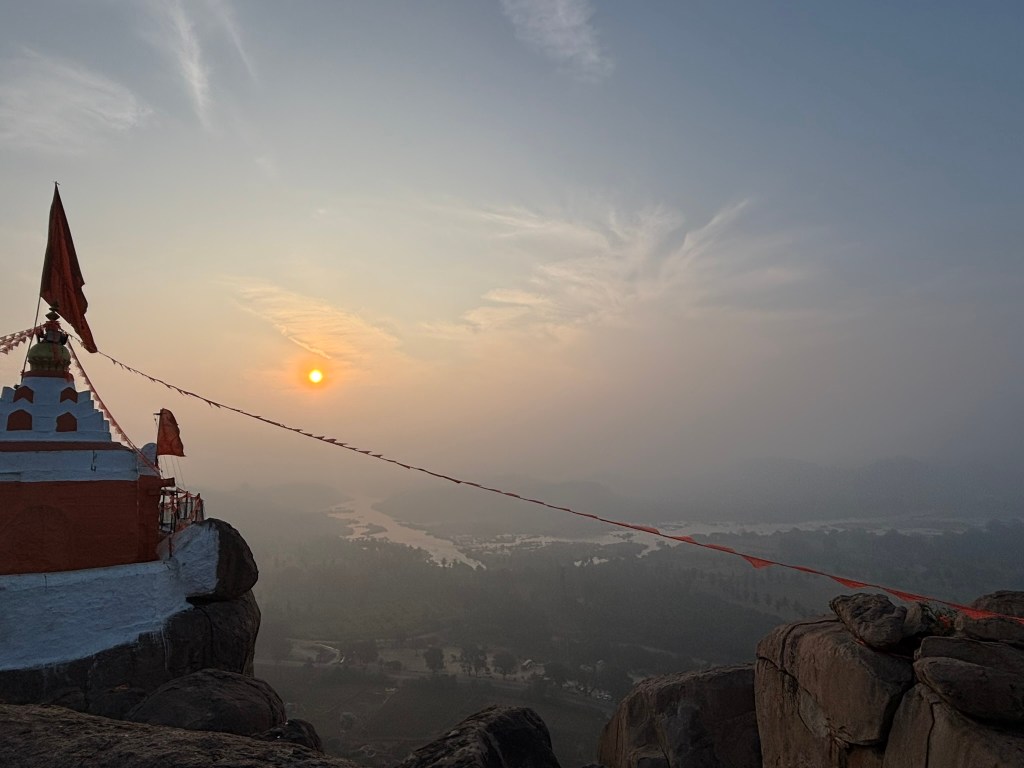
Visiting Anjanadri Hill and the ancient village of Anegundi is like stepping into a living epic. The Ramayana breathes through the hills. The Vijayanagara Empire whispers through fort walls. The Tungabhadra River carries centuries of stories in its gentle curves. We visited Anjanadri Hill for sunrise. It was a foggy morning, and visibility wasn’t that great. Still, we enjoyed the hike and visiting the temple.
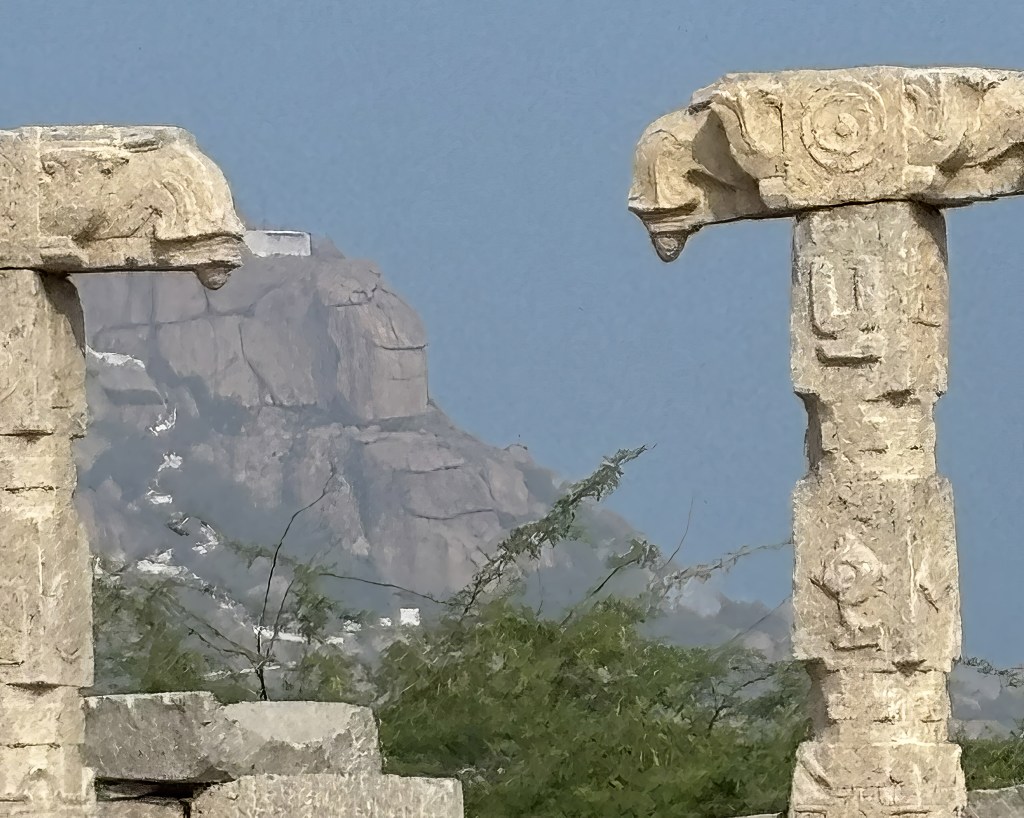
- Anjanadri Hill: Birthplace of Lord Hanuman
- Anegundi: The Ancient Heart of Kishkindha
- A Legacy Older Than Empires
- Gagan Mahal: Where the Royals Took Refuge
- A Geological Wonder: One of the Oldest Plateaus on Earth
- Pampa Sarovara: A Sacred Lake of the Ramayana
Anjanadri Hill: Birthplace of Lord Hanuman
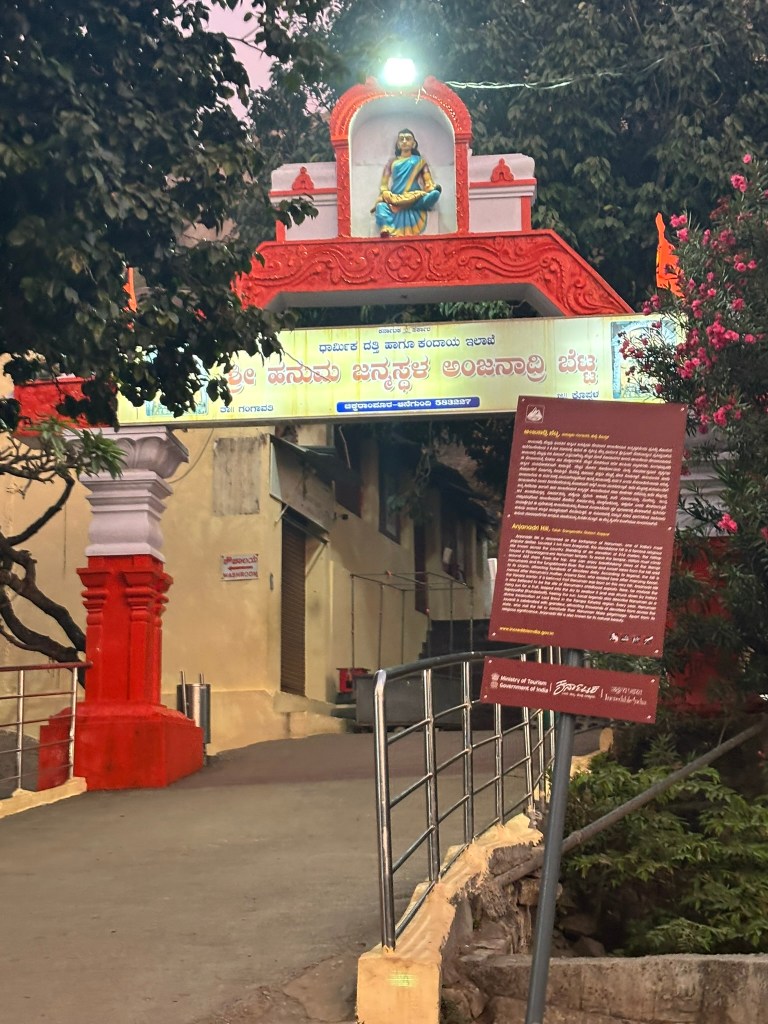
Rising above the boulder-strewn plains of Anegundi, Anjanadri Hill is one of the most sacred sites in the Ramayana trail. The hill is believed to be the birthplace of Lord Hanuman. It is named after his mother, Anjana, and has been a pilgrimage site for centuries.
The Climb
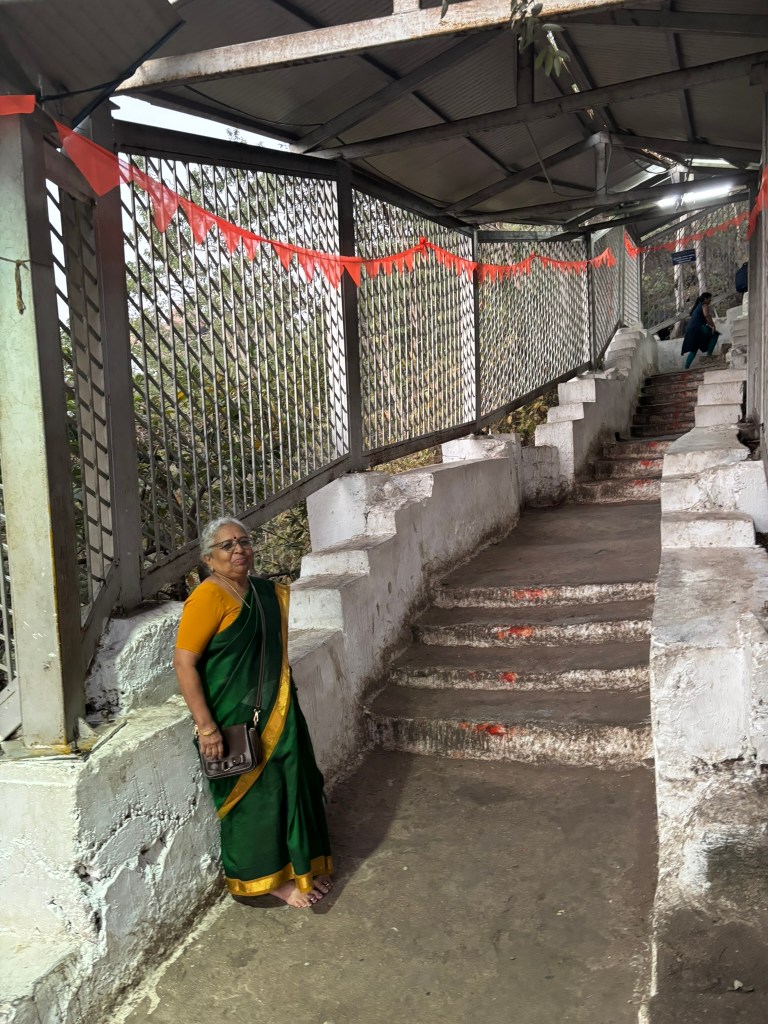
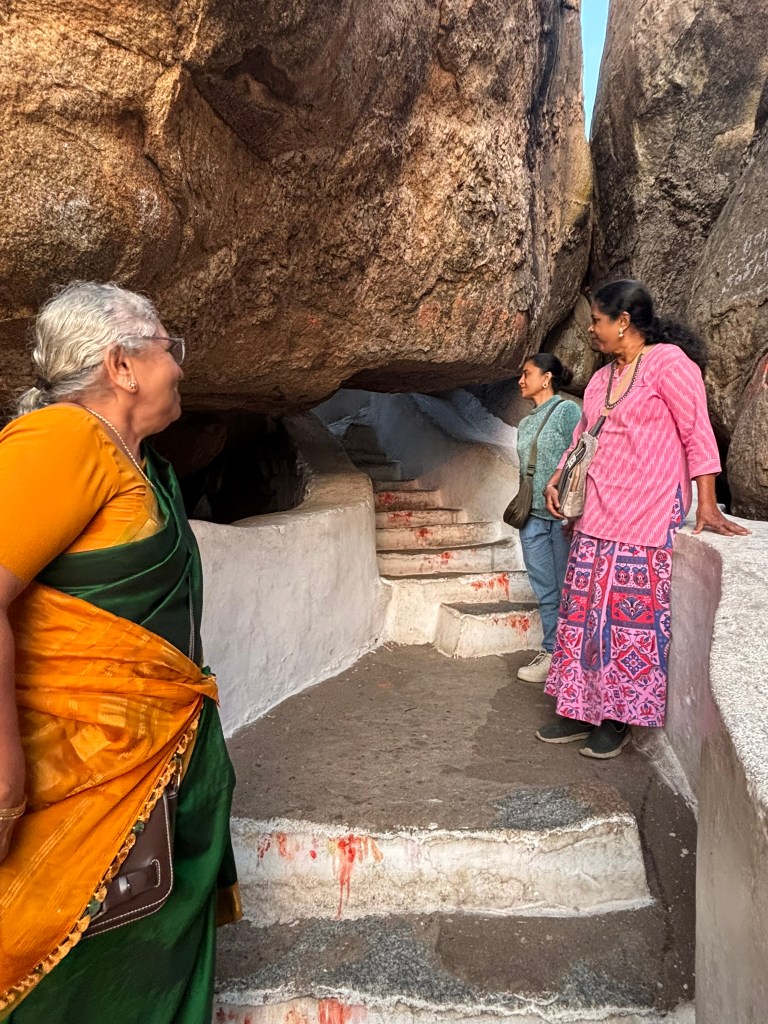
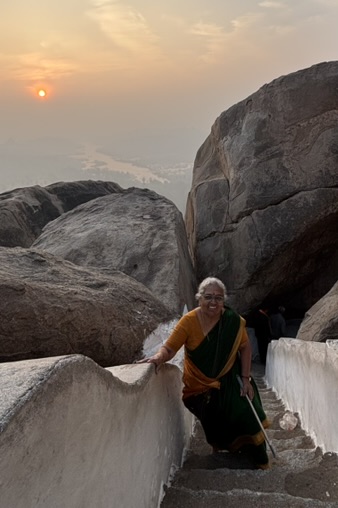
Reaching the summit means ascending 570+ steep steps, but the journey is part of the experience. As you climb, the world opens up around you. You see paddy fields glowing in the sun. Coconut groves sway in the breeze. The Tungabhadra River shimmers like a silver ribbon. Pilgrims chant Hanuman’s name, bells ring softly in the wind, and the granite landscape glows in warm hues.
The Temple at the Peak
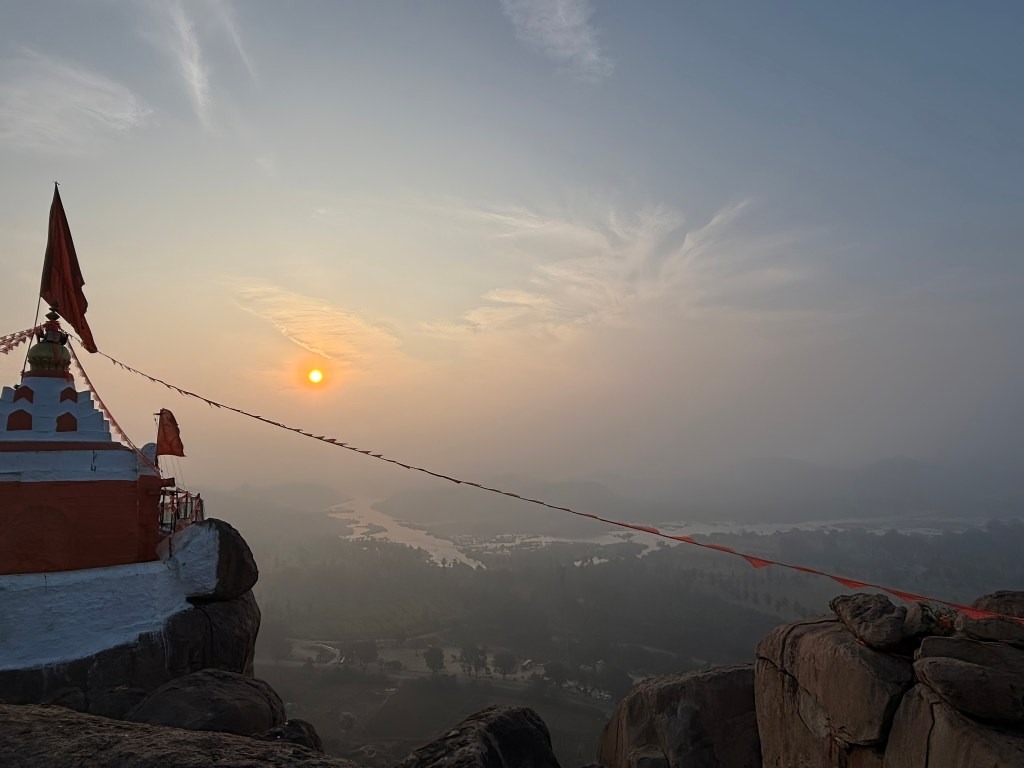
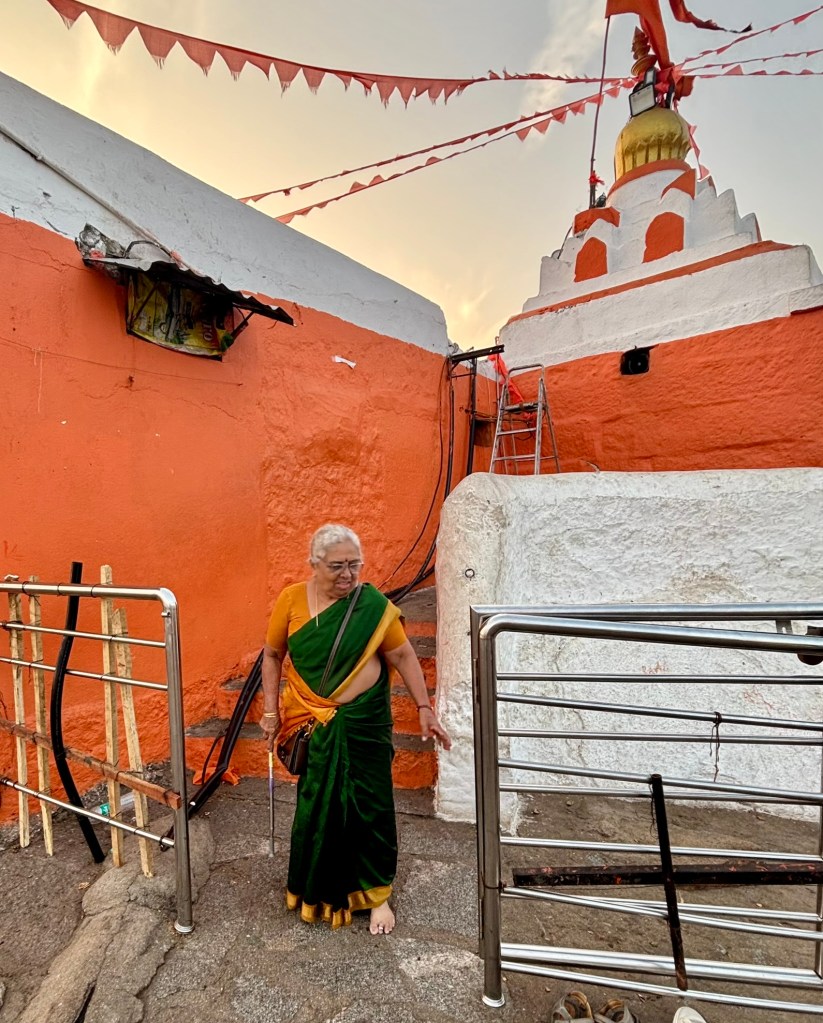
At the top stands a 16th-century white-washed temple, simple yet powerful in its presence.
- A rock-carved idol of Hanuman forms the sanctum.
- Shrines dedicated to Rama and Sita stand nearby.
- Saffron flags flutter against the sky, adding to the spiritual energy of the place.
The View
From the summit, you get a 360-degree panorama of Hampi’s ruins. You can also see banana plantations and the surreal boulder hills that define this UNESCO World Heritage Site. Sunrise and sunset here are unforgettable—moments when the land feels suspended between myth and reality. Unfortunately, the day we went up the hill, it was very foggy to truly appreciate the scene before us.
Anegundi: The Ancient Heart of Kishkindha
Across the river from Hampi lies Anegundi. It is a village older than Hampi. Anegundi is believed to be the cradle of Kishkindha, the monkey kingdom of Vali and Sugriva. This is where mythology, geology, and royal history converge in a landscape that feels untouched by time.
A Legacy Older Than Empires
Anegundi’s history stretches back to the 3rd century BCE, when it was part of the Ashoka Empire. Over the centuries, it saw the rise of the Satavahanas, Kadambas, Chalukyas, Rashtrakutas, and other royal dynasties that ruled Hampi and the surrounding area . By the 10th century, it became a fortified settlement. Later, it served as the mother city of the Vijayanagara Empire.
Even today, the 19th generation of Krishnadevaraya’s descendants lives here, keeping the royal lineage alive.
We didn’t have time to explore Anegundi, but if you do, the following places are worth visiting.
Gagan Mahal: Where the Royals Took Refuge
In the heart of Anegundi stands Gagan Mahal, the 16th-century palace that once housed the royal family during turbulent times. Painted in a warm yellow-ochre hue, the palace blends Indo-Islamic architecture with vernacular charm.
- Four slender towers rise above its façade.
- Arched windows and carved balconies overlook the village.
- A central pool and ancient drainage system reveal ingenious cooling techniques.
Walking through its halls, you can almost hear the echoes of queens, ministers, and royal children who once lived here.
A Geological Wonder: One of the Oldest Plateaus on Earth
Anegundi sits on a plateau believed to be over four billion years old, making it one of the oldest exposed geological formations on Earth. Its landscape—endless boulders, wind-sculpted hills, and ancient rock shelters—feels primordial.
Prehistoric Traces
- Maurya Mane reveals early settlement patterns.
- Onake Kindi showcases prehistoric rock paintings and engravings.
These sites add archaeological depth to a region already rich in myth and history.
Vernacular Architecture That Still Breathes
A walk through Anegundi’s narrow lanes is a walk through living heritage.
- Homes have two-foot-thick stone walls that keep interiors cool.
- Carved wooden doors show motifs passed down through generations.
- Skylights, pillared verandahs, and flat terraces show a design language shaped by climate and craft.
This is architecture that isn’t preserved in museums—it is lived in, cherished, and passed on.
Anegundi Fort: Echoes of a Warrior Past
Within the ancient fort walls lie the Durga Temple and the Ganesha Cave Temple, both steeped in centuries of worship. Local lore says Vijayanagara kings sought blessings here before going to war.
Walking through the fort’s gateways, you feel the weight of history—soldiers marching, priests chanting, kings preparing for battle.
Pampa Sarovara: A Sacred Lake of the Ramayana
One of Anegundi’s most sacred sites is Pampa Sarovara, one of the five holy lakes in Hindu tradition. This is believed to be where Shabari met Lord Rama, offering him berries with pure devotion.
The lake, surrounded by hills and shrines, feels serene and timeless—a place where mythology feels close enough to touch.
The Revival of Anegundi
Anegundi is not just a relic of the past—it is a thriving example of sustainable rural tourism.
- Organic farming initiatives
- Performing arts education
- Revival of banana-fibre crafts
- Adventure activities around Sanapur Lake
Much of this transformation is led by The Kishkinda Trust, which has helped preserve Anegundi’s heritage while empowering local communities.
As the sun sets over the ancient plateau, Anegundi glows in shades of gold. Its temples, boulders, and riverbanks illuminate like a living chronicle of India’s past.
 Peaks to Palaces
One Reply to “”