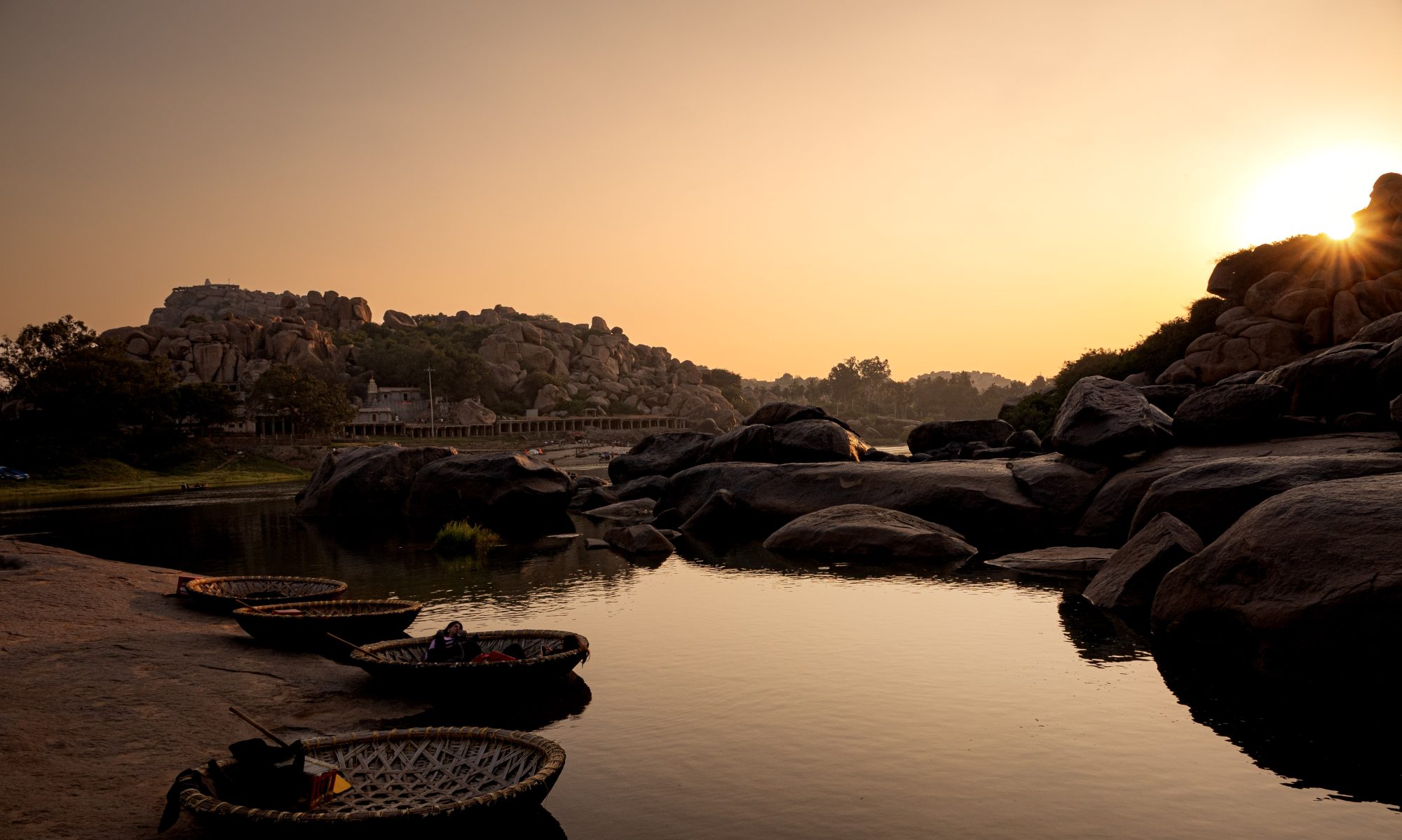
Some monuments are impressive, but Vitthala Temple truly captivates. If you have just a few hours in Hampi, this is the must-see spot. The temple embodies what Hampi represents and showcases remarkable Vijayanagar architecture.
Pushkarani and Horse mantapa
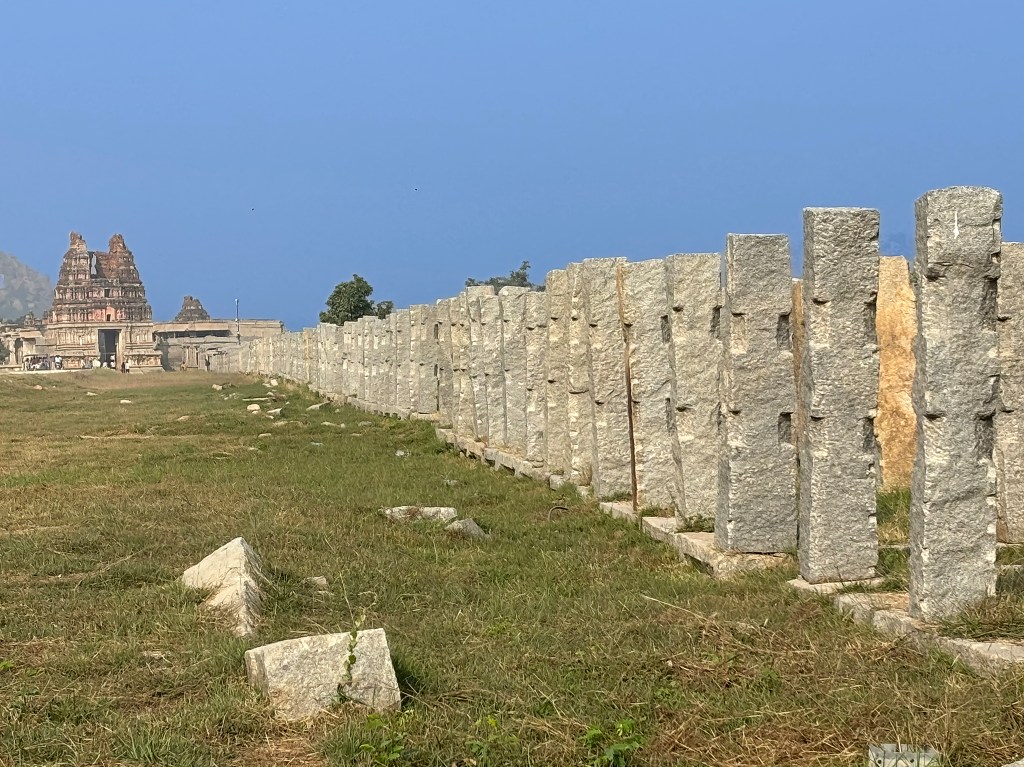
On the walk toward the Vijaya Vittala Temple, the landscape quietly opens up to one of Hampi’s most graceful water monuments—the Vittala Pushkarani. Tucked beside the northern stretch of the Vittala Bazaar, this stone‑stepped tank once anchored the ritual life of the temple and its bustling marketplace. Built during the height of the Vijayanagara Empire, it features a delicate central mantapa rising from the water, a signature of sacred reservoirs across the region.
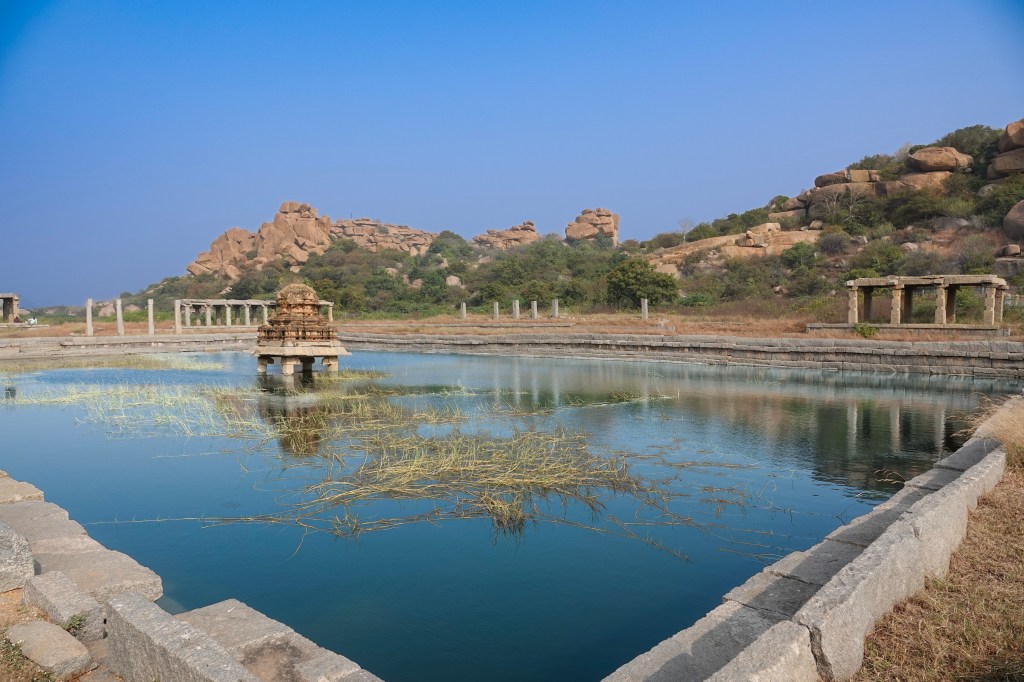
Pushkarani is a good place to take panoramic photos of temple and surrounding areas.
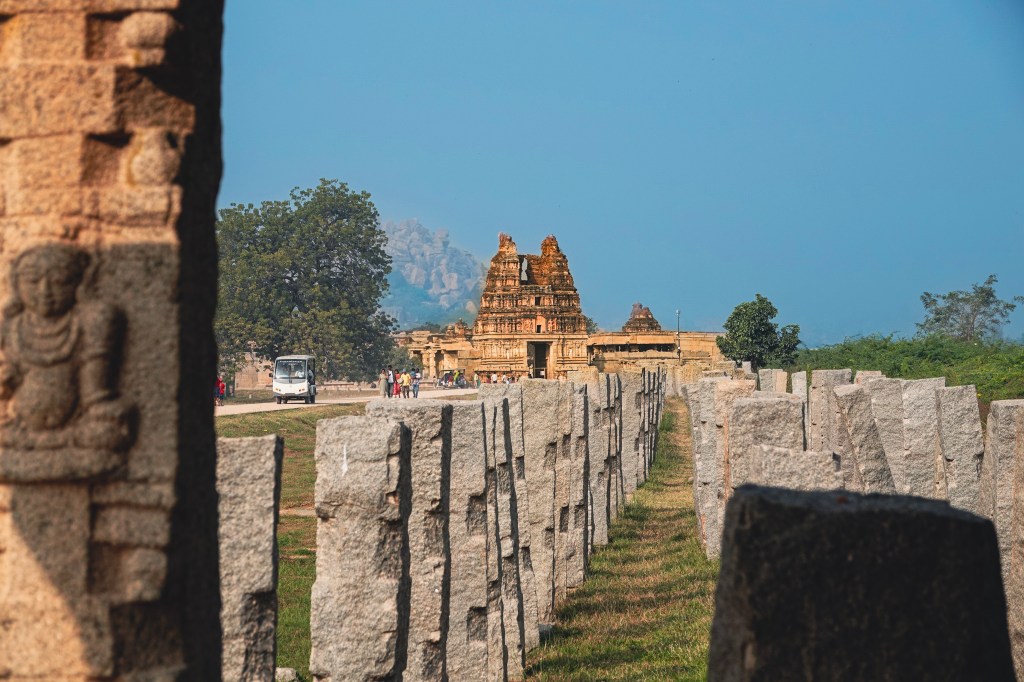
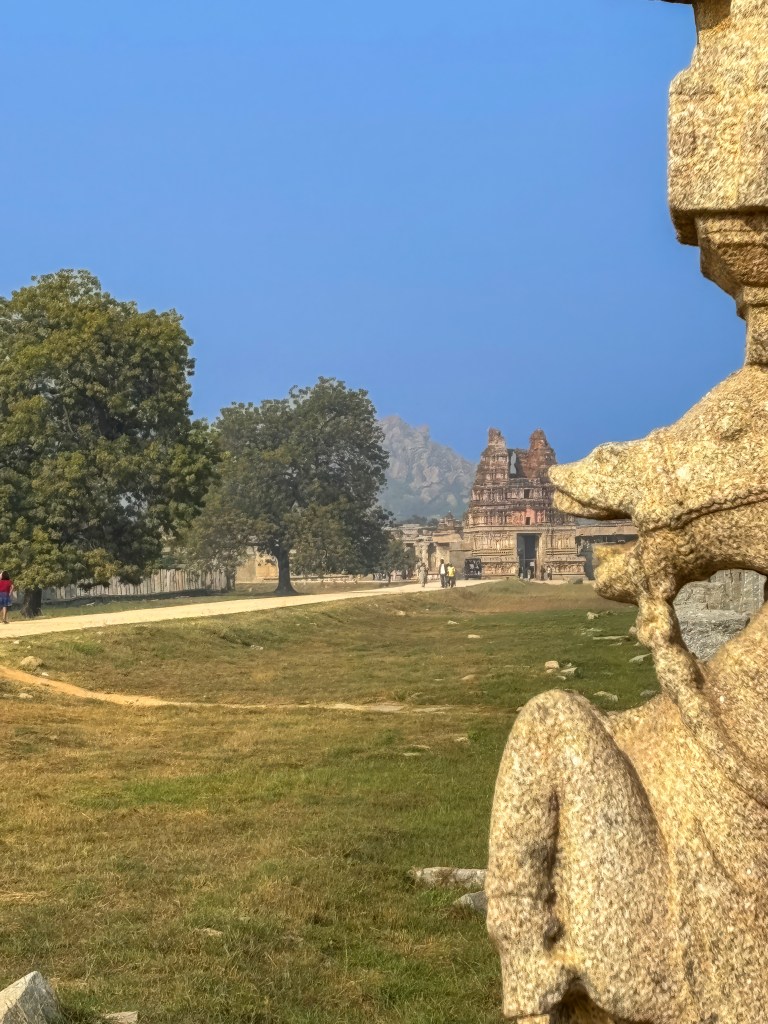
A little before the road bends toward the grand Vijaya Vittala Temple, the Kuduregombe Mantapa appears like a quiet sentinel of the past. This three‑sided pillared pavilion, built during the Vijayanagara Empire, takes its name from the striking horse‑rider sculptures carved onto its front pillars—kudure meaning horse and gombe meaning doll or figure. . Though its original purpose remains a mystery, its strategic placement along this ceremonial route hints at a role in the vibrant temple life that once animated these streets.
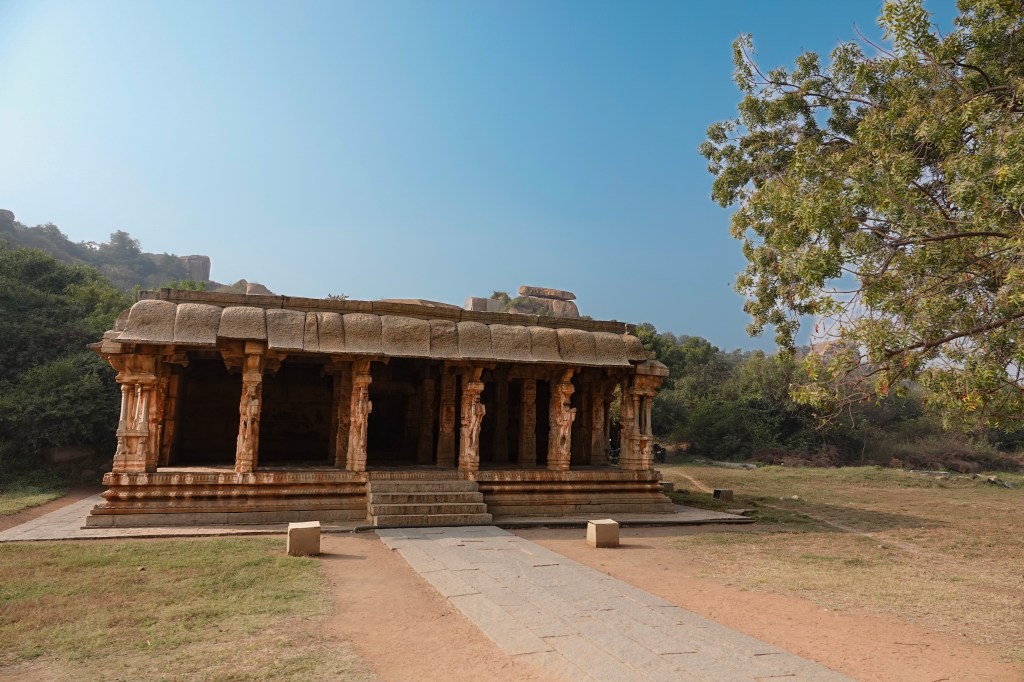
A Temple Wrapped in Mystery and Majesty
Unlike many Vijayanagara monuments, the Vitthala Temple’s earliest history is surprisingly elusive. No inscription tells us who commissioned it or why. What we do know is that successive rulers expanded it. These include emperors, queens, commanders, and courtiers. They continued to embellish it through the 16th century.
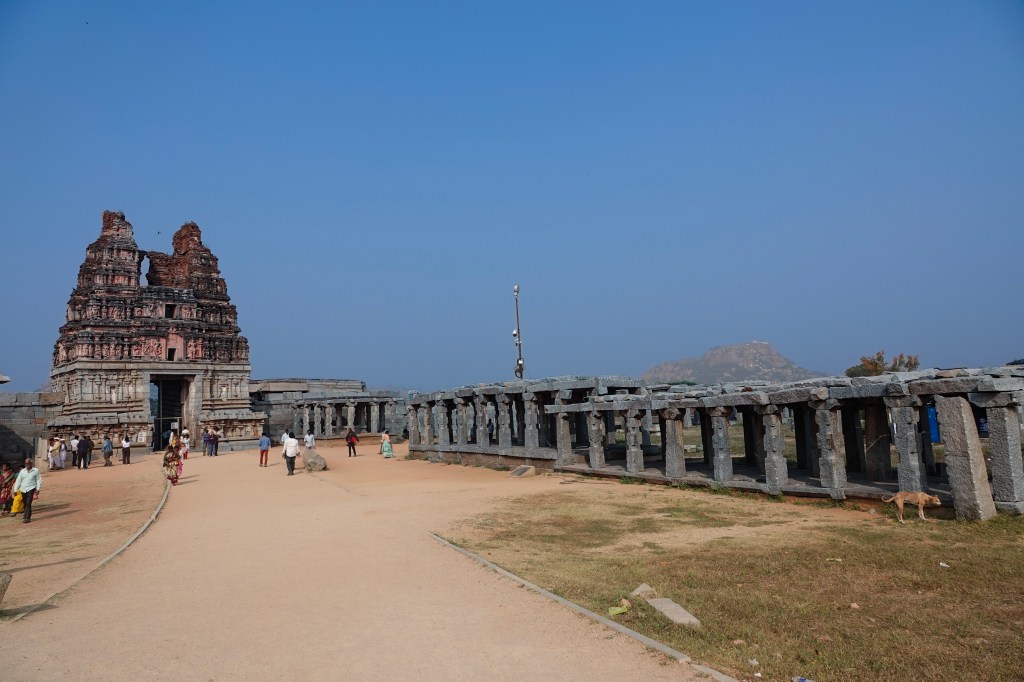
The temple sits within a vast rectangular courtyard, framed by three gopuras. Two of these—on the east and north—were built in 1513 CE by the queens of Krishnadevaraya. He was one of the empire’s most celebrated rulers. The southern gopura, more ornate and later in date, completes the triad.
Inside, the temple unfolds in layers:
- A restored enclosed mandapa leading to a sanctuary (now empty, its ceiling charred from the fires of 1565).
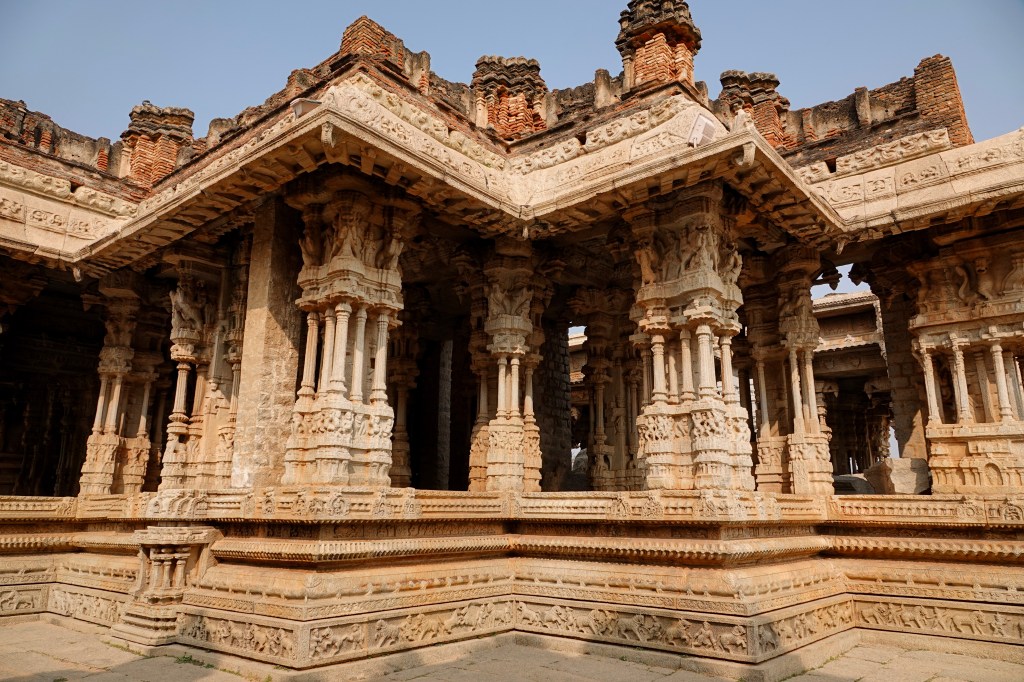
- A 1554 CE open mandapa was added by a military commander of Emperor Sadashiva. It showcases some of the most intricate stonework in South India.
- Four spacious halls are supported by piers. These piers are carved from single granite blocks. Each pier is a sculptural marvel of yalis, musicians, warriors, and mythic beings.
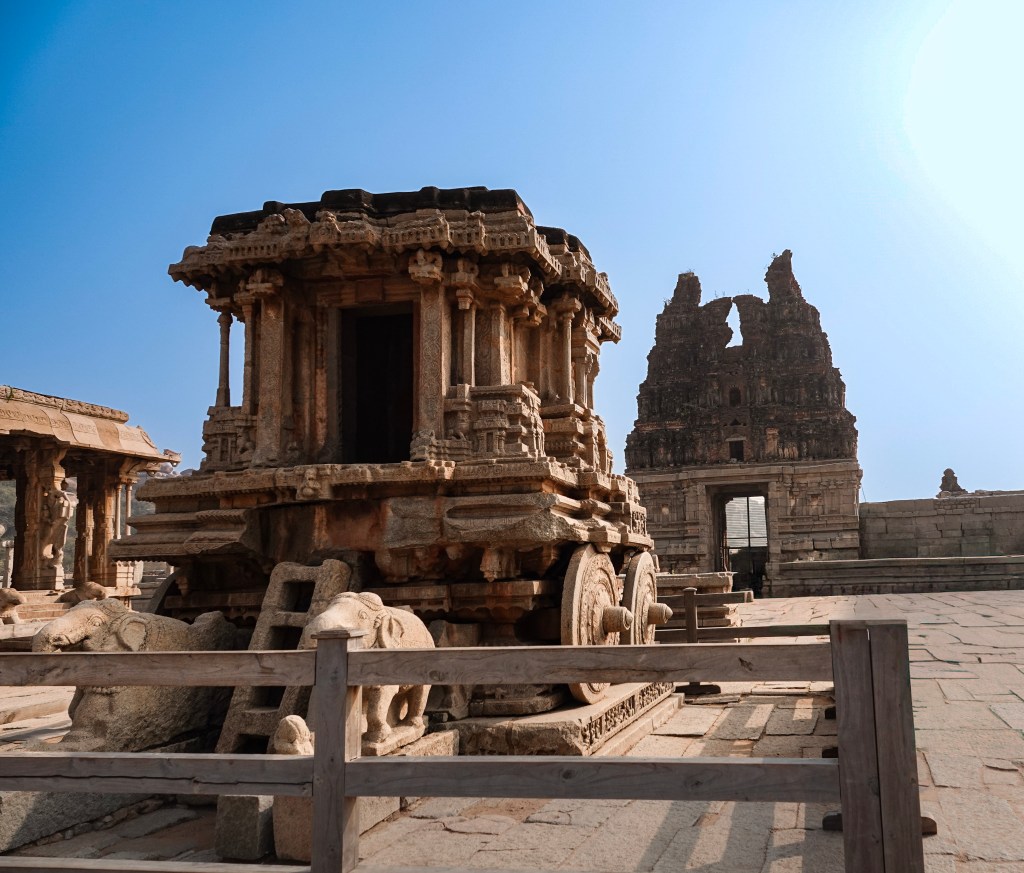
The Stone Chariot: Hampi’s Crown Jewel
If Hampi had a single emblem, it would be this.
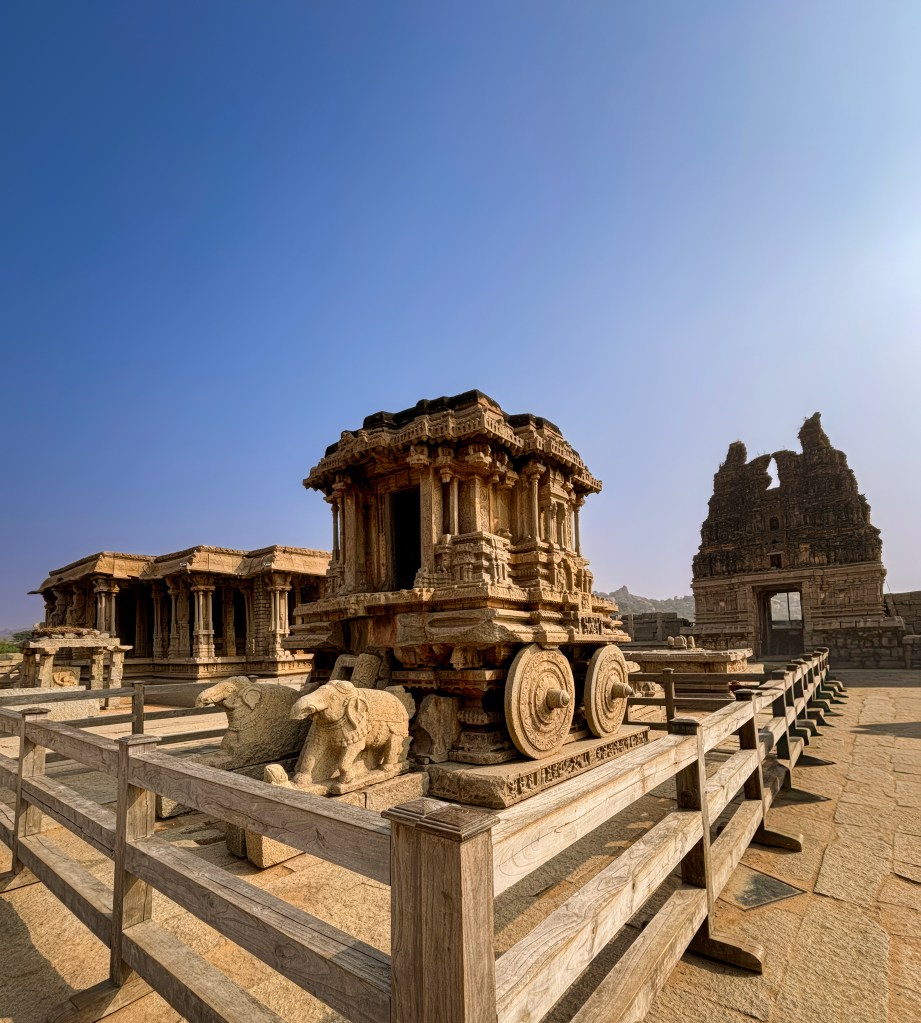
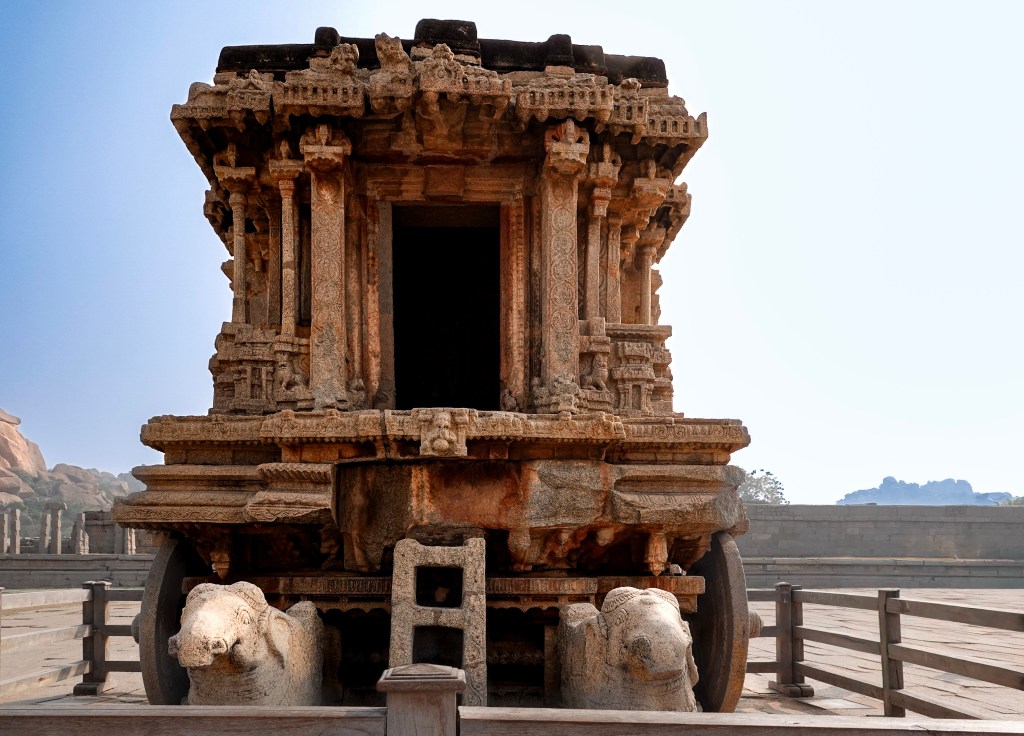
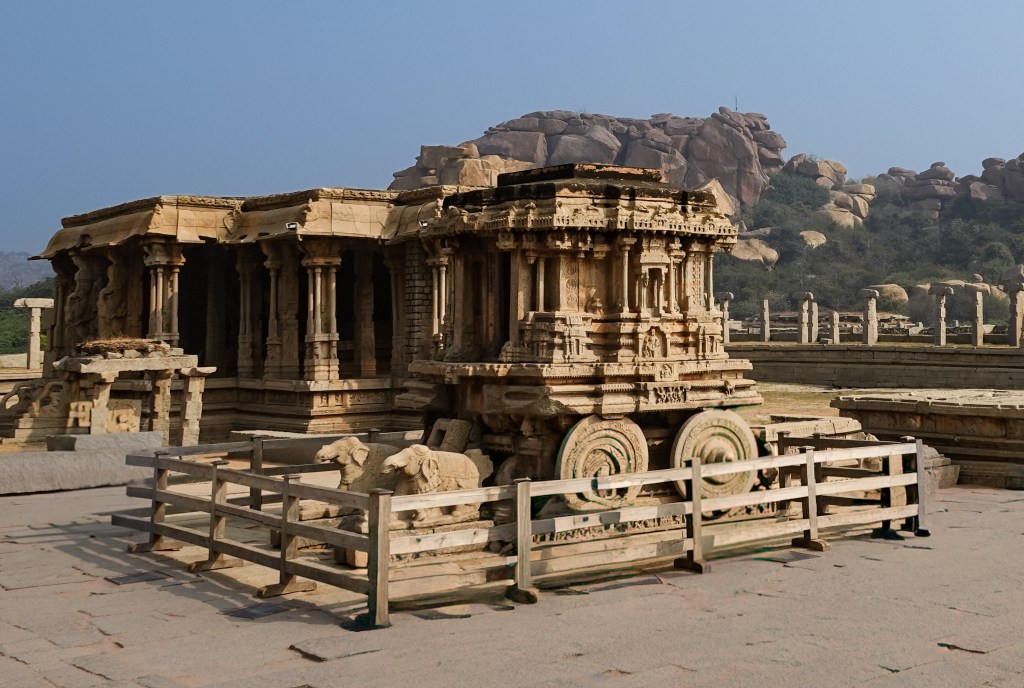
The Stone Chariot, dedicated to Garuda (the divine mount of Vishnu), stands proudly in front of the temple. Its image graces the ₹50 currency note, a testament to its national significance.
Commissioned during the reign of Deva Raya II, the chariot was inspired by the iconic Sun Temple at Konark. Though damaged during the empire’s fall, it remains breathtaking:
- Two massive elephants guard the front (originally horses—look closely and you’ll still see their carved tails).
- The wheels, though fixed, are carved with astonishing precision.
- The shrine above once carried a brick tower, visible in 19th-century photographs but removed during colonial-era repairs.
Architectural historians—from James Fergusson to George Michell—have celebrated this chariot as one of India’s finest sculptural achievements.
A Symphony in Stone: The Musical Pillars
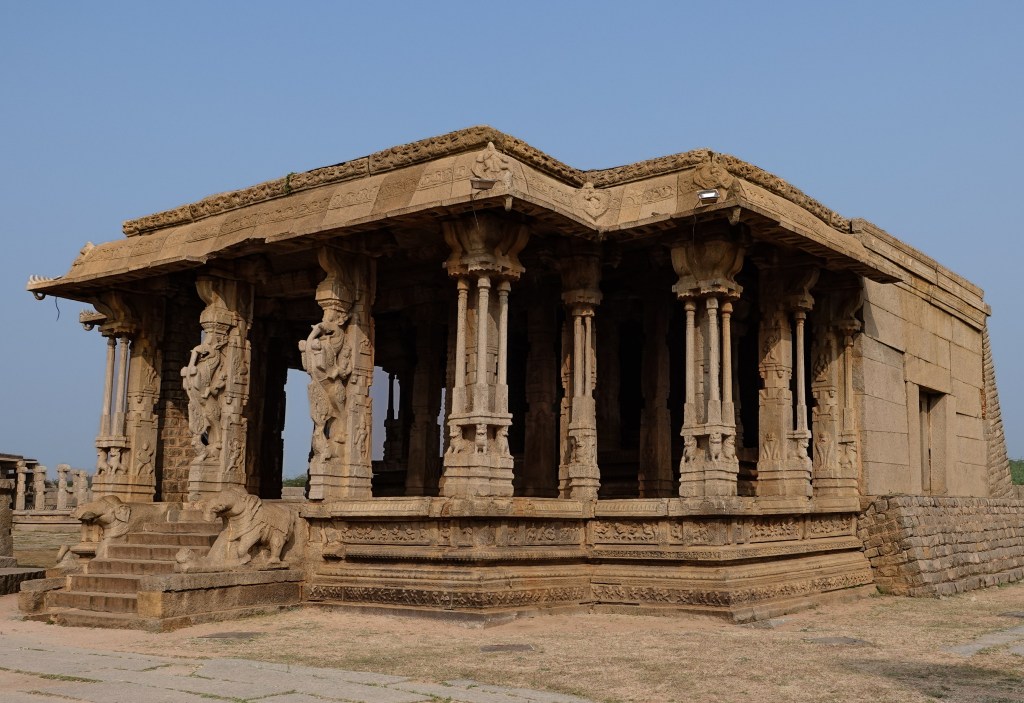
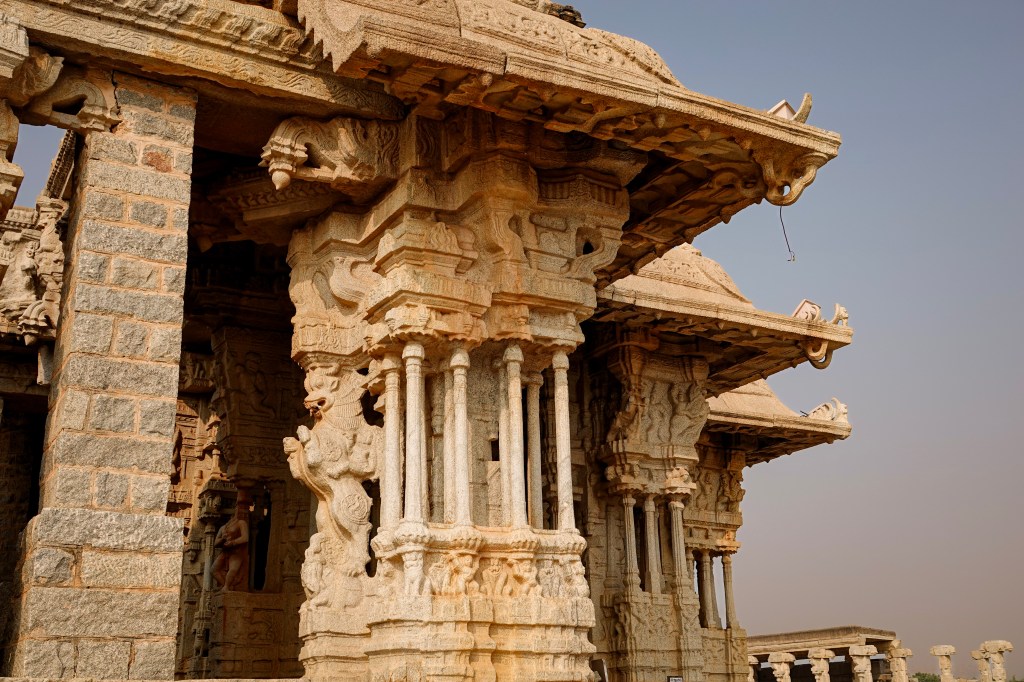
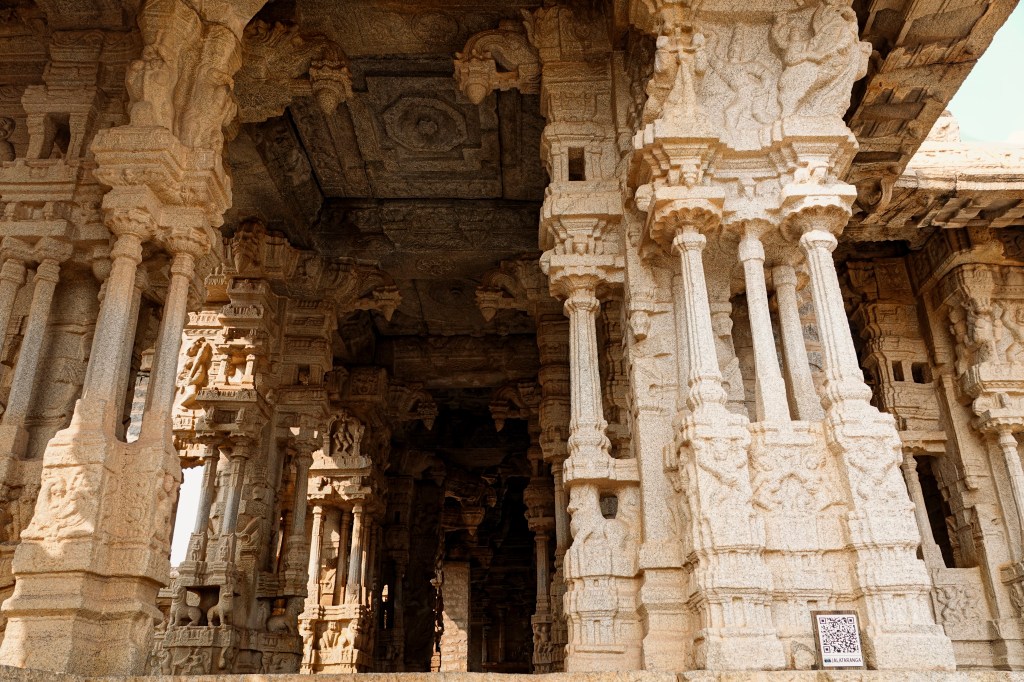
Step into the open mandapa, and you’ll encounter the legendary 56 musical pillars—the SaReGaMa pillars.
Each main pillar is surrounded by seven slender colonettes. When tapped lightly, these emit resonant tones. Contrary to popular belief, they do not form a full musical scale, but their acoustic magic is undeniable. Even the British, captivated by this phenomenon, attempted to study and “decode” the pillars during the colonial period. When I visited this place about 30 years ago, guides were allowed to show how the music pillars worked, but since then, the entire hall has been off-limits to visitors. Now you can use the QR codes to hear the music each pillar can make.
Walking the Ancient Path Along the Tungabhadra
After exploring the mandapas, musical pillars, and the iconic Stone Chariot, the journey continues along a serene footpath that runs parallel to the Tungabhadra River. This trail once connected the sacred heart of Vitthalapura with the riverbanks, and even today it feels like stepping into a quiet corridor of history.
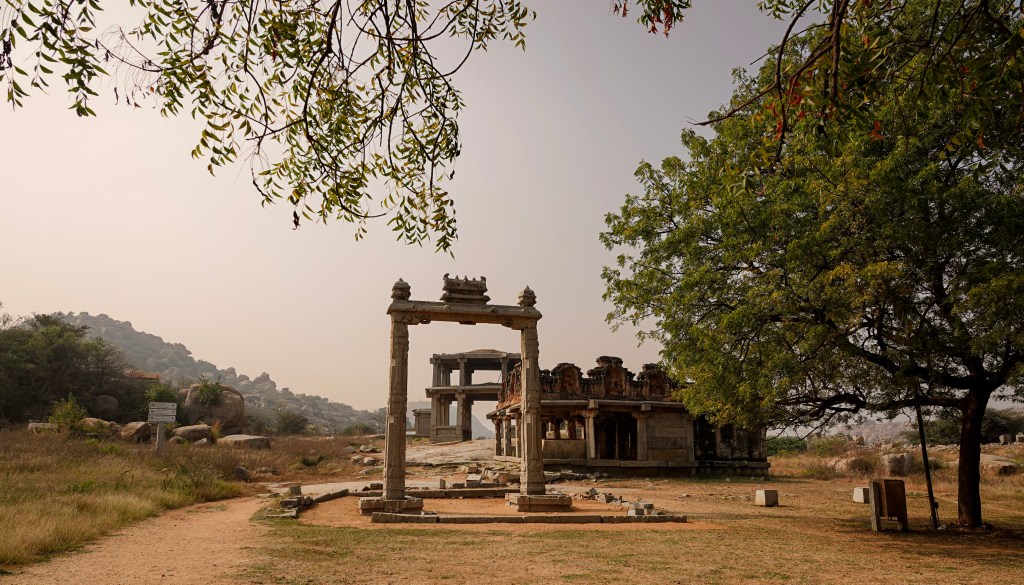
As you leave the Vitthala Temple complex, you pass through a double-storeyed pavilion-like gateway—a structure that once marked an important threshold in the sacred geography of Hampi. Just before this gateway stands one of the most intriguing relics of royal ritual: the Kings’ Balance.
The Kings’ Balance: A Ritual of Generosity and Power
The Kings’ Balance (Tulapurusha Dana) is a simple yet powerful structure—two tall stone posts connected by a lintel, with a stone ring designed to hold a metal chain. According to tradition, the Vijayanagara emperors would stand on one side of the balance and be weighed against gold, grain, or precious stones. The offerings were then distributed to temple brahmins and the needy.
Whether every emperor actually performed this ritual remains a matter of debate, but the symbolism is unmistakable: a king’s worth measured not in power, but in generosity.
Standing here, with the river murmuring nearby and the ruins glowing in the sun, it’s easy to imagine the grandeur of those ceremonies—the crowds, the chants, the shimmering offerings, and the deep sense of devotion that shaped life in Vijayanagara.
Purandara Mantapa and the Ancient Aqueduct: Echoes of Devotion and Engineering
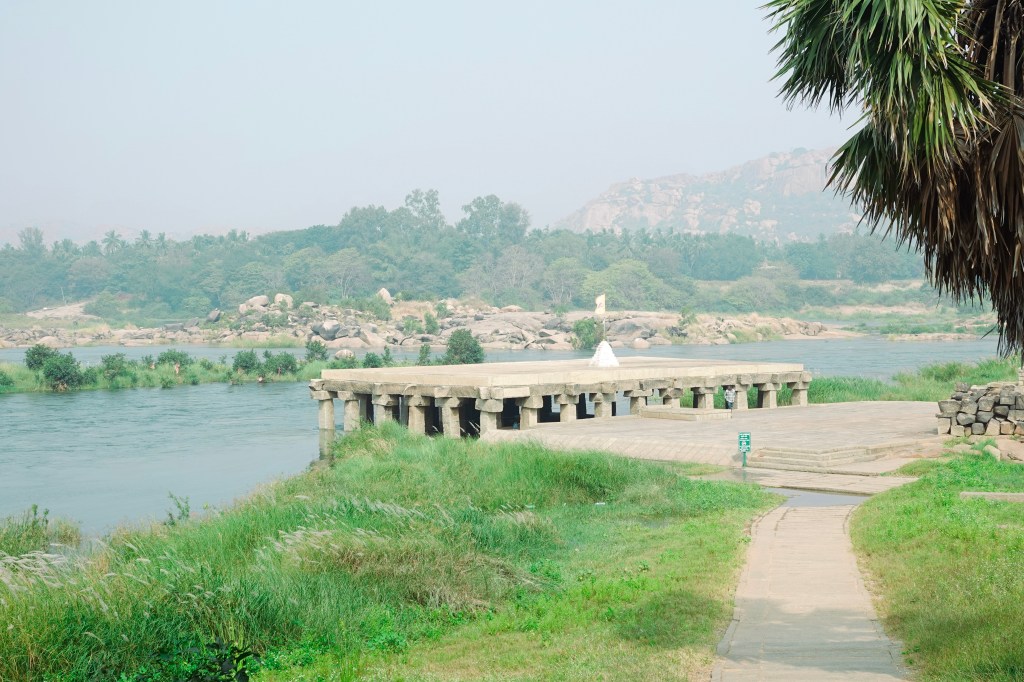
As the riverside path continues, the landscape opens into a quiet clearing where the Purandara Mantapa stands—a simple yet deeply evocative pavilion overlooking the Tungabhadra. This spot is closely associated with Purandara Dasa, the 16th‑century saint‑composer often hailed as the “Father of Carnatic Music.” Local tradition holds that he composed many of his devotional songs right here, seated by the river, his melodies carried by the breeze across the sacred centre of Hampi.
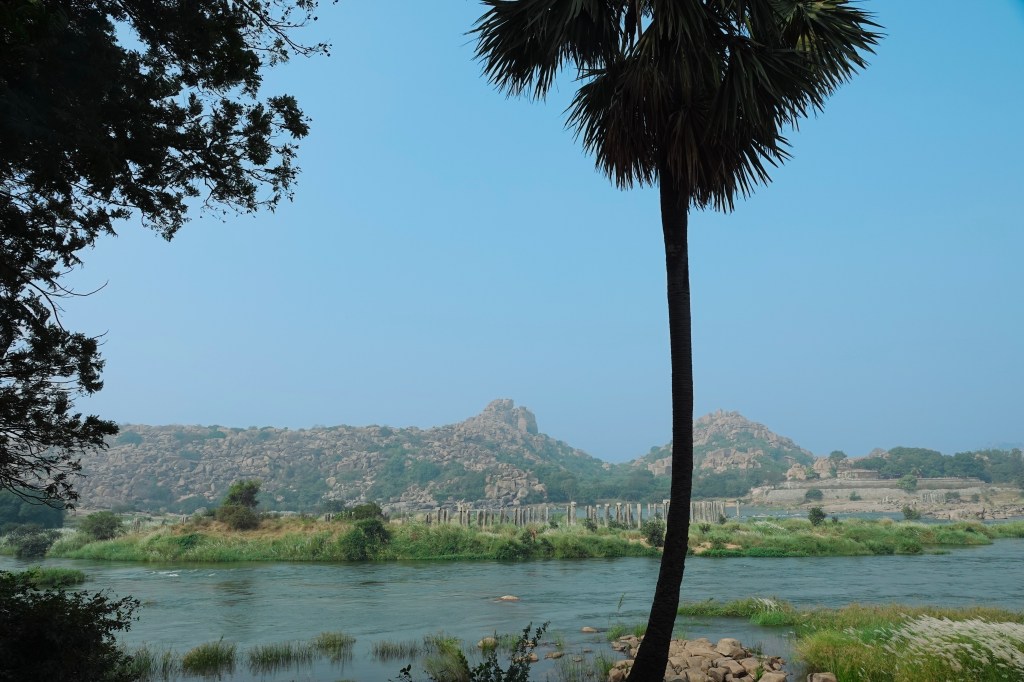
A little further along, you’ll encounter the remains of an ancient aqueduct, a remarkable example of Vijayanagara engineering. Built to channel water from the river to nearby temples, tanks, and residential quarters, this stone-lined structure once formed part of an intricate hydraulic network that sustained life in the capital. Though now broken in places, the aqueduct still reveals the precision and planning that defined the empire—its elevated channels, carved supports, and carefully graded slopes silently narrating a story of innovation and urban sophistication.
Final thoughts
Visiting the Vijaya Vittala Temple feels less like touring a monument and more like stepping into a living memory of the Vijayanagara Empire. Every carved pillar, every quiet mandapa, every stretch of the ancient bazaar road whispers stories of devotion, artistry, and a city that once pulsed with life. The walk itself—past the Kuduregombe Mantapa, the serene Pushkarani, and the boulder‑studded landscape—builds a sense of anticipation that the temple’s iconic Stone Chariot and musical pillars then reward in full. Even in silence, the complex hums with an energy that lingers long after you leave. It’s the kind of place that stays with you, not just as a photograph, but as a feeling—of wonder, of history, and of being momentarily connected to something timeless.
 Peaks to Palaces
One Reply to “”