
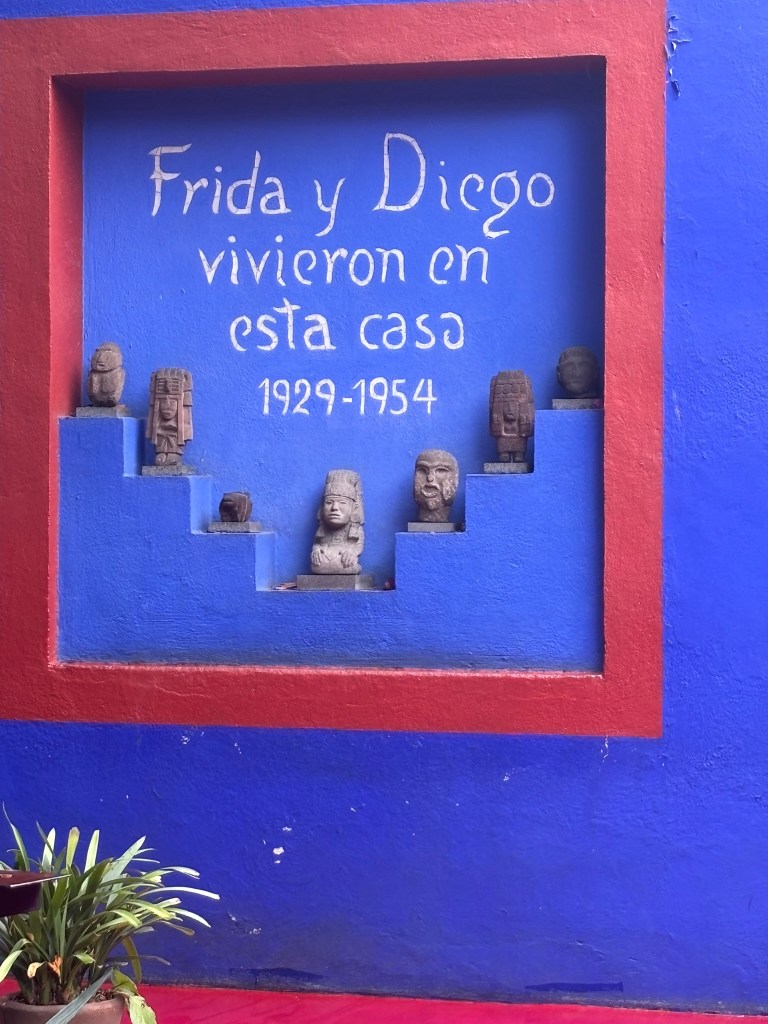
Preparing for an upcoming business trip to Mexico City, I reached out to my local Mexican colleagues for recommendations on how to spend my free time. One coworker—a self-proclaimed, ultimate Frida superfan whose Zoom background always features the artist and whose dog is even named Frida—offered a critical piece of advice: book tickets to La Casa Azul (The Frida Kahlo Museum) immediately. Because the historic home operates strictly on timed entry, tickets routinely sell out weeks in advance and cannot be purchased at the gate. This should tell you how popular Frida Kahlo is in Mexico City, and visiting Casa Azul should be on your must-do list.
- Practical Information
- 📜 The Roots of the Blue House: A Sanctuary Bought by Love and Debt
- 🏛️ Inside the Blue Walls: Must-See Highlights of Casa Azul
- Final Thoughts: The Eternal Blue Sanctuary
- Architecture as a Marriage Map: Two Houses, One Bridge
Practical Information
To visit La Casa Azul (The Frida Kahlo Museum), you must plan ahead, as tickets are not sold at the physical ticket window and usually sell out weeks in advance. The museum uses a strict timed-entry system to regulate crowds and protect the historic structure.
🎟️ How to Buy Tickets
- Official Online Portal: Book directly through the Official Frida Kahlo Ticket Site.
- Self-Service Kiosk: If you are already in the Coyoacán neighborhood, you can purchase tickets via the digital kiosk at the museum’s gift shop showroom at Londres 234
- Backup Option: If official slots are sold out, your best alternative is to book an organized day tour through reputable third-party platforms like Tourscanner or Evendo, which often bundle museum entry with local neighborhood tours. I bought my tickets via Viator for this tour. I requested a 3 PM tour, but got 4.15 PM option, which worked out just fine. It says it’s a skip-the-line tour, but you will still have to stand in line at your timed entry.
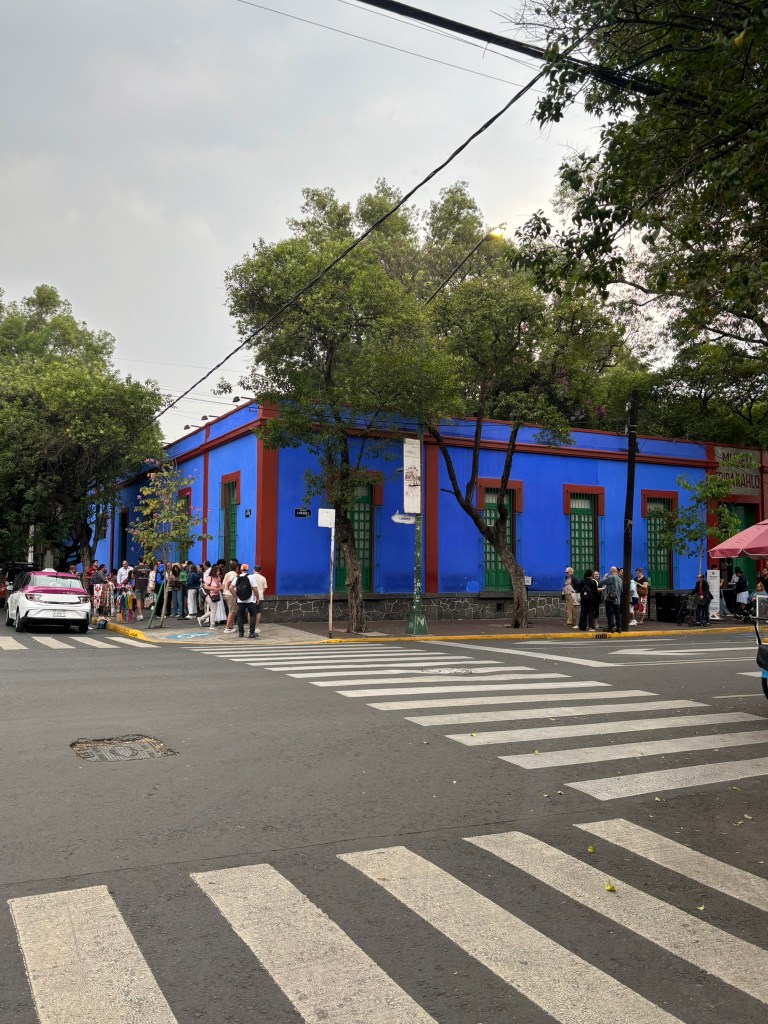
*** Pro tip: Traffic in Mexico City is unpredictable, and tickets have a 15-minute grace period. If you show up 30 min late to the museum, you won’t be let in. Plan to be in the timed lane at least 10-15 min before your assigned time.
💰 Ticket Pricing & Inclusions
Every ticket includes a complimentary general admission pass to the nearby Diego Rivera Anahuacalli Museum, located a short taxi ride away in south Coyoacán. [1, 2]
| Ticket Type [, 2, 3, 4] | Price (MXN) | Approx. USD | Notes |
|---|---|---|---|
| Foreign Adults | $320 MXN | ~$18 USD | General admission |
| Mexican Nationals | $160 MXN | ~$9 USD | Must present a valid Mexican ID |
| Students / Teachers | $60 MXN | ~$3.50 USD | Requires a physical ID at the door |
| Seniors (60+) & Kids (6–12) | $30 MXN | ~$1.75 USD | Discounted rate |
| Children Under 6 / Disabled | Free | Free | Ticket booking still required |
Note: General admission now includes permission to take non-flash photos with mobile devices for personal use
🕒 Hours & Best Time to Visit
- Monday: Closed.
- Wednesday: Open from 11:00 AM to 6:00 PM.
- Tue, Thu, Fri, Sat, Sun: Open from 10:00 AM to 6:00 PM. [1]
Pro-Tip: Aim for an early morning weekday slot (Tuesday or Thursday) right at opening. Weekends are incredibly crowded, and even with a timed ticket, you may still wait 15–30 minutes in the entry queue outside the blue walls.
📍 Location & Getting There
The museum is located at Londres 247, Del Carmen, Coyoacán. Because Coyoacán features beautiful, narrow colonial streets, traffic can be heavy. Taking an Uber or a radio taxi directly to the entrance is highly recommended for safety and convenience, especially if you are traveling from the downtown center
📜 The Roots of the Blue House: A Sanctuary Bought by Love and Debt
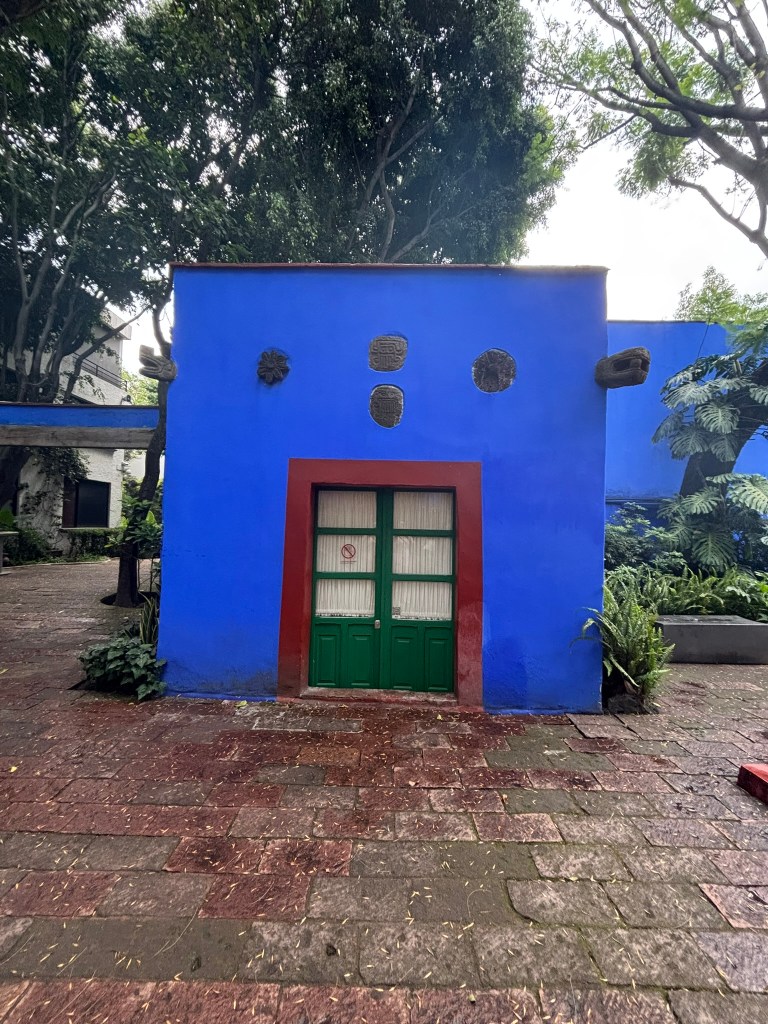
Long before it became a vibrant cobalt monument to radical art, La Casa Azul was built in 1904 by Frida’s father, Guillermo Kahlo, a German-Hungarian immigrant and photographer. It was within these original, pale stucco walls that Frida was born in 1907. However, the family’s financial stability disintegrated following the 1910 Mexican Revolution and the astronomical medical bills tied to Frida’s childhood polio and her catastrophic 1925 bus accident. Deeply in debt, the Kahlos were on the verge of losing their heavily mortgaged family home. Enter Diego Rivera. When he married Frida in 1929, one of his first acts of devotion was to step in and pay off the entire family mortgage, legally placing the property deed exclusively under Frida’s name to ensure her financial security. In the 1940s, the couple moved back into the home permanently, transforming it into the fortress we see today: they painted the exterior walls a brilliant cobalt blue to ward off evil spirits, added volcanic stone extensions, and built the lush, walled courtyard to shield a fragile Frida from the outside world.
🏛️ Inside the Blue Walls: Must-See Highlights of Casa Azul
Casa Azul is not a sterile gallery; it is an intimate, frozen-in-time sanctuary where Frida’s physical pain and creative triumph echo in every room. As you move through the cobalt-blue compound, ensure you slow down for these essential, deeply personal spaces:
A Final Toast to Life
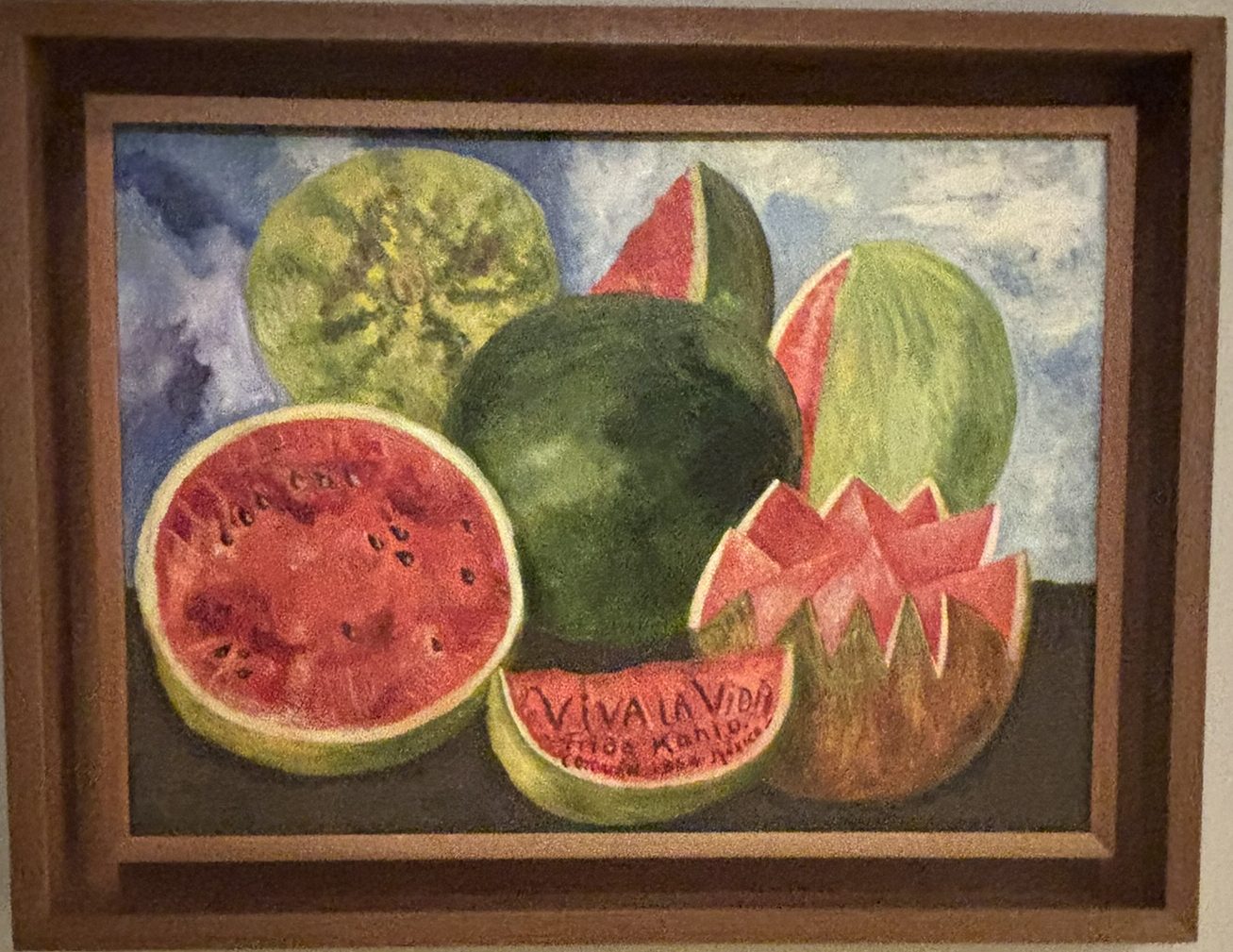
Painted just eight days before her death at age 47, this vibrant oil-on-masonite still life serves as a poetic, defiant farewell from an artist who endured a lifetime of physical agony and emotional turmoil. Instead of a somber self-portrait, Kahlo chose a group of rich, sun-ripened watermelons—a fruit deeply intertwined with Mexican Día de los Muertos (Day of the Dead) traditions, symbolizing the delicate boundary between life and death. As you stand before the original frame on the first floor of casa Azul, the stark contrast between the bright, blood-red pulp and the dark, shadowy background feels incredibly intimate. Carved directly into the central slice are the triumphant words, “Viva la Vida” (Long Live Life), a breathtaking testament to her resilient spirit and an unforgettable highlight for any traveler seeking the true heart of Mexican modern art.
The Traditional Mexican Kitchen
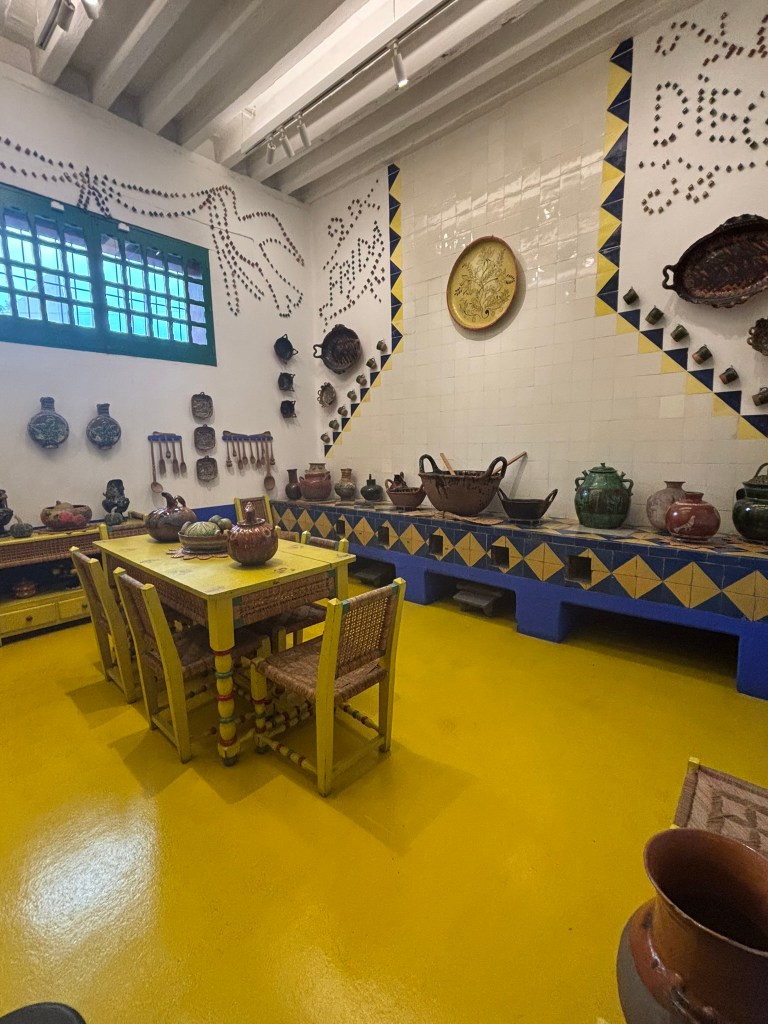
Located on the museum’s first floor, the vibrant kitchen is not to be missed.
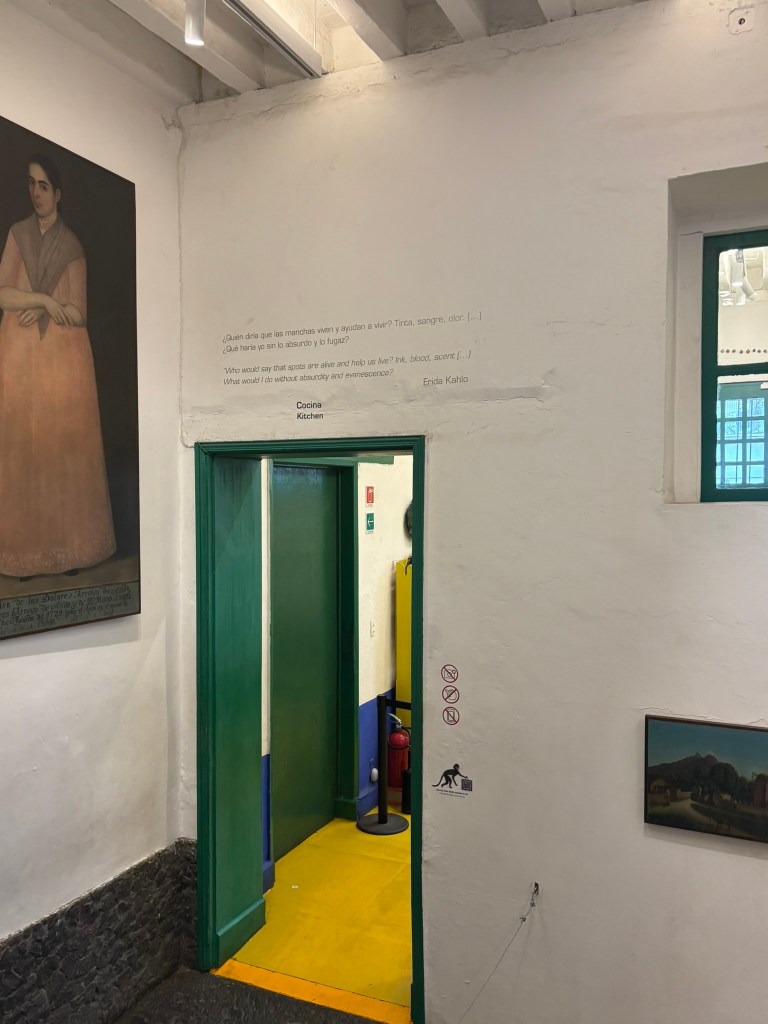
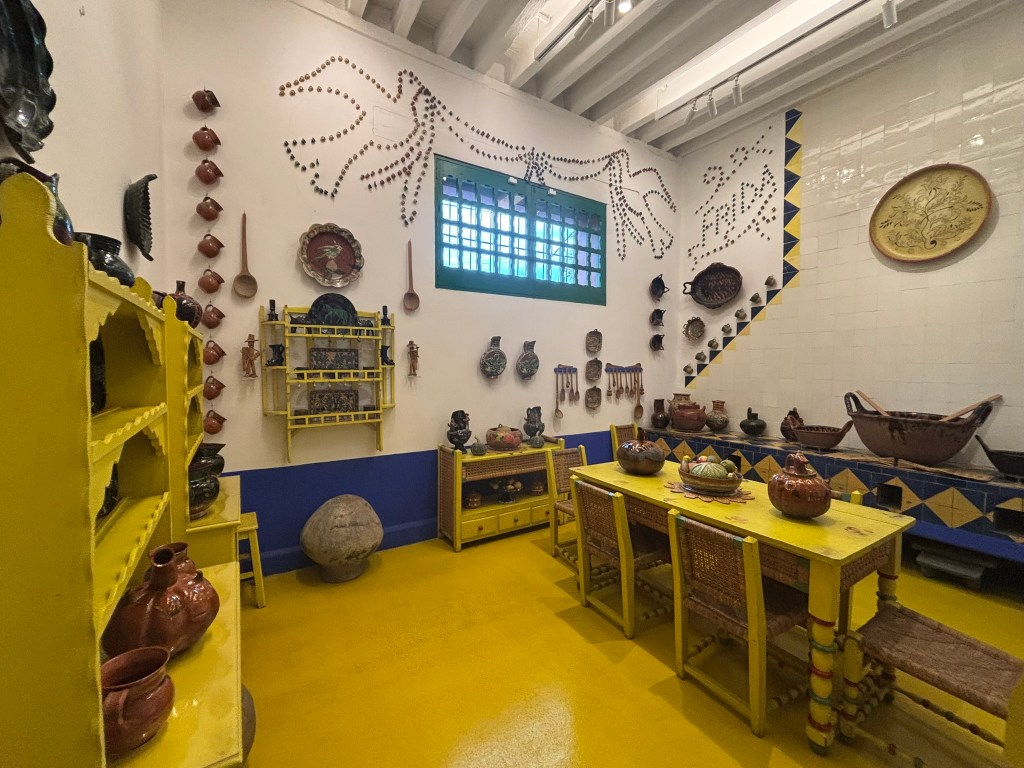
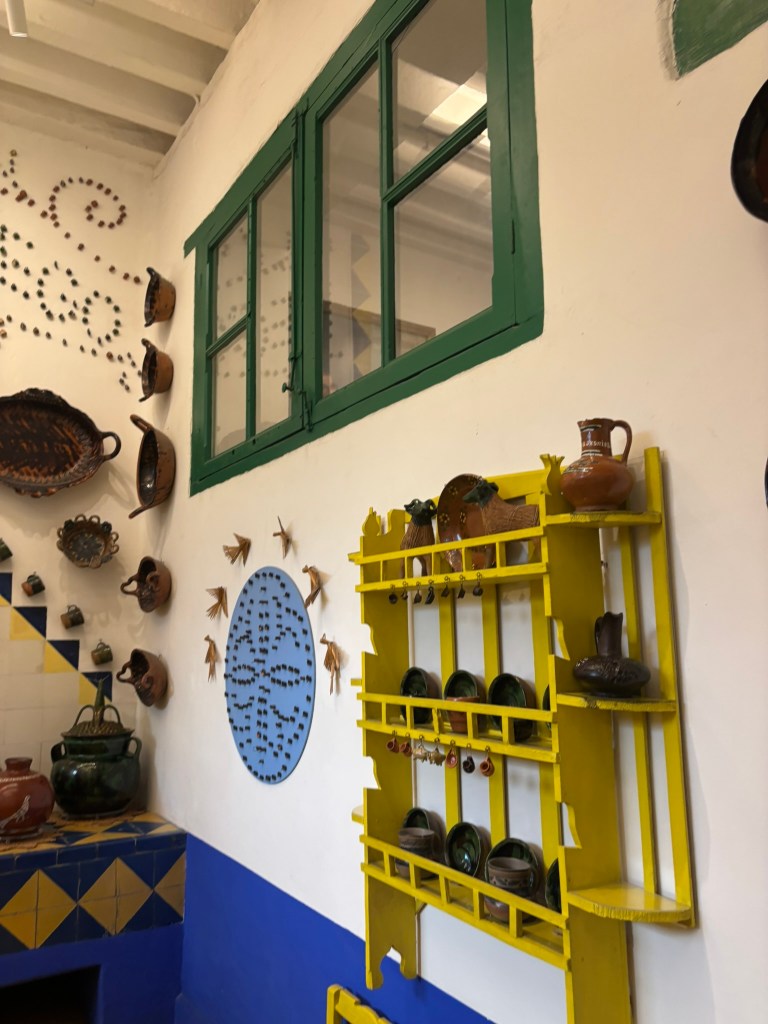
A vibrant explosion of sunflower yellow and cobalt blue, this stunning space reflects Frida and Diego’s fierce, daily commitment to Mexicanidad. Rather than adopting modern, Europeanized appliances of the 1940s, Frida kept her home intentionally rustic, utilizing a traditional Mexican colonial-style kitchen equipped with classic tiled stoves (fogones) fueled by charcoal. The walls are a curated museum of folk art, lined with traditional brown earthenware cazuelas and jars. Look closely above the tile line: Frida meticulously arranged tiny, miniature clay pots to spell out “Frida” and “Diego” on either side of the room, flanked by clay doves—a touching, domestic testament to their intertwined lives.
The Light-Filled Art Studio
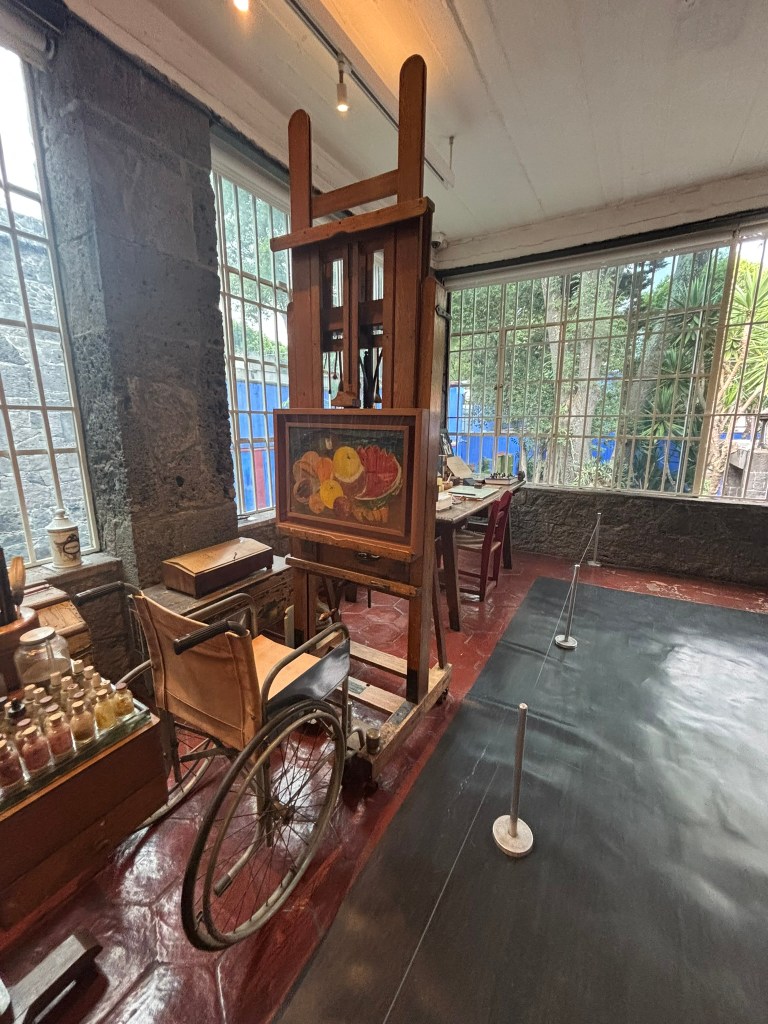
After visiting the bright kitchen, you will go upstairs to Firda’s art studio.
This stunning, high-ceilinged room remains precisely as Frida left it, serving as a powerful monument to her creative willpower. Though it feels seamlessly integrated today, this entire wing was a later 1944 addition. Funded by Diego Rivera and designed by their brilliant architect friend Juan O’Gorman, it was constructed out of dark local volcanic stone to honor Mexico’s pre-Hispanic heritage. Inside, Frida’s wheelchair sits parked directly in front of her easel, flanked by her original paintbrushes, jars of raw pigment, and a half-squeezed tube of paint. Towering, expansive windows look out over the lush, tropical courtyard, flooding the space with the exact high-altitude sunlight she relied on to weave her pain into timeless masterpieces.
The Dual Sanctuaries: Frida’s Two Bedrooms
Stepping directly off the art studio brings you into the most intimate corner of the house: Frida’s two interconnected bedrooms. Because her physical state dictated her daily life, she maintained distinct “daytime” and “nighttime” beds. Together, these rooms offer a profoundly raw look at how she turned physical confinement into an artistic triumph, filled with tiny details that demand your close attention
Confined to her bed for months following her catastrophic bus accident and subsequent spinal surgeries, Frida refused to stop painting.
The Daytime Bedroom: Bathed in sunlight, this room features the simple bed where Frida spent agonizing months recovering from spinal surgeries.
The Canopy Mirror: Looking closely at the dark wooden frame above the pillow, you can clearly see the large rectangular mirror built into the canopy’s underside. This is the exact glass her mother installed, which allowed Frida to paint her soul through self-portraiture while completely immobilized.
The Death Mask: Resting prominently on the pillow is Frida’s bronze death mask, sculpted shortly after she passed away in this very house in 1954. It is draped in her iconic striped Mexican rebozo (shawl), serving as a poignant, haunting focal point for visitors.
The Surrounding Details: On the wall beside her bed hangs an intimate oil painting, and her personal bookshelf rests just within arm’s reach on the adjacent wall—reminders of how she turned a space of intense physical confinement into a rich intellectual and creative universe.
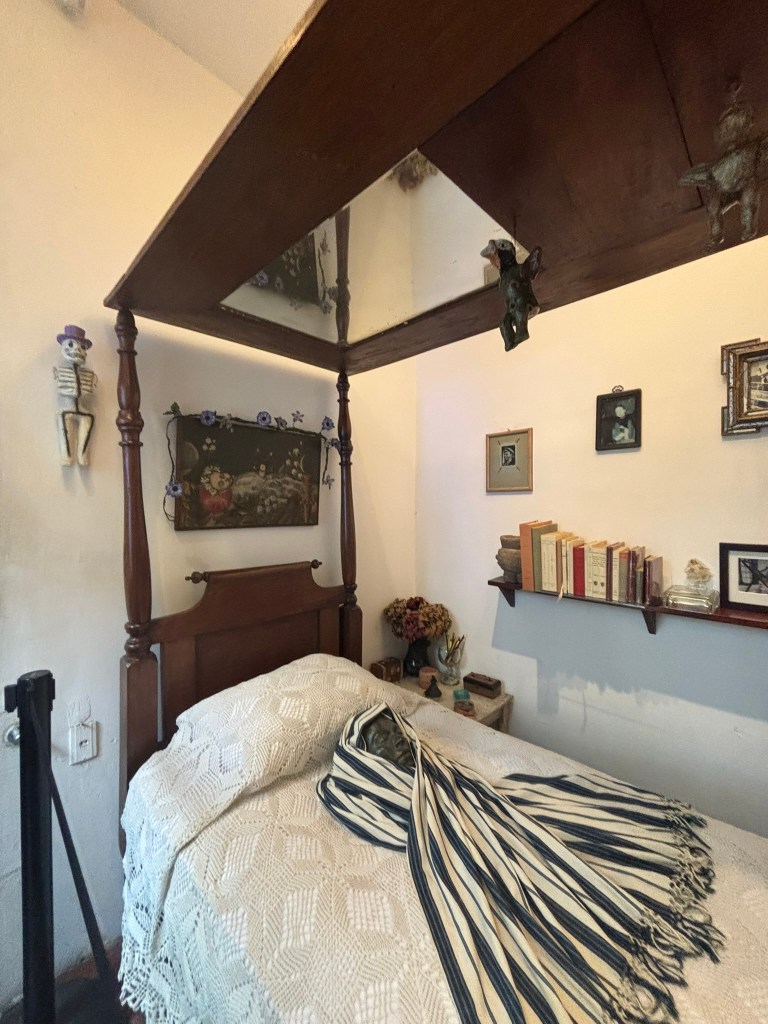
The Nighttime Bedroom: A darker, more enclosed space designed for rest, this room holds a deeper psychological weight.
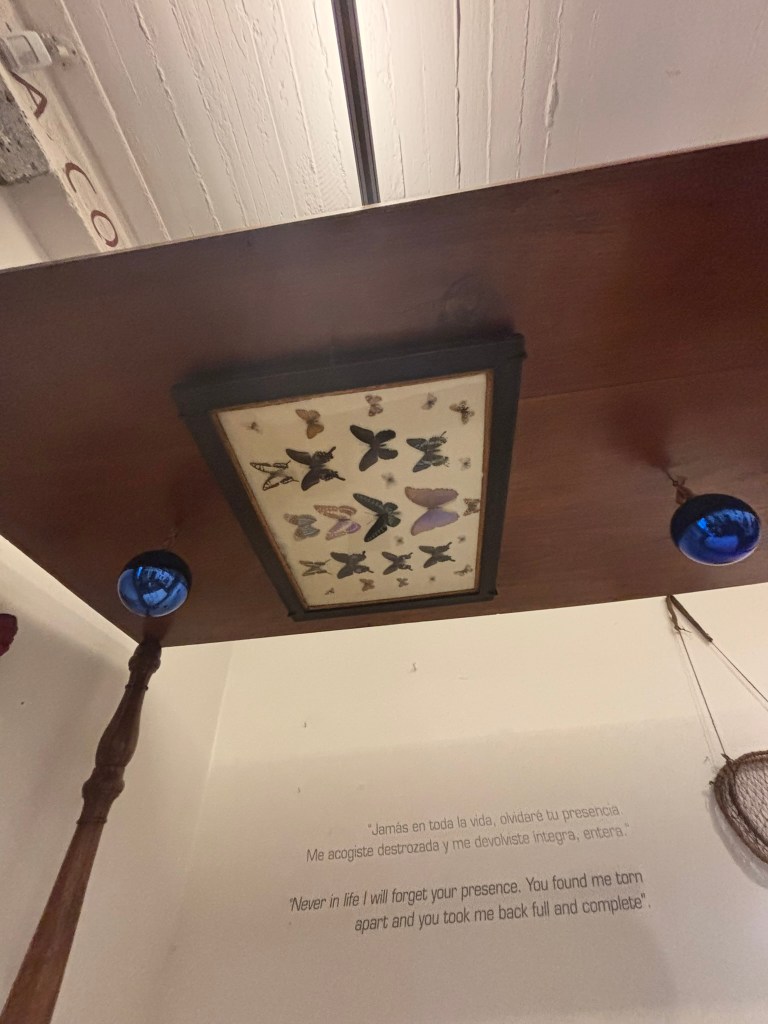
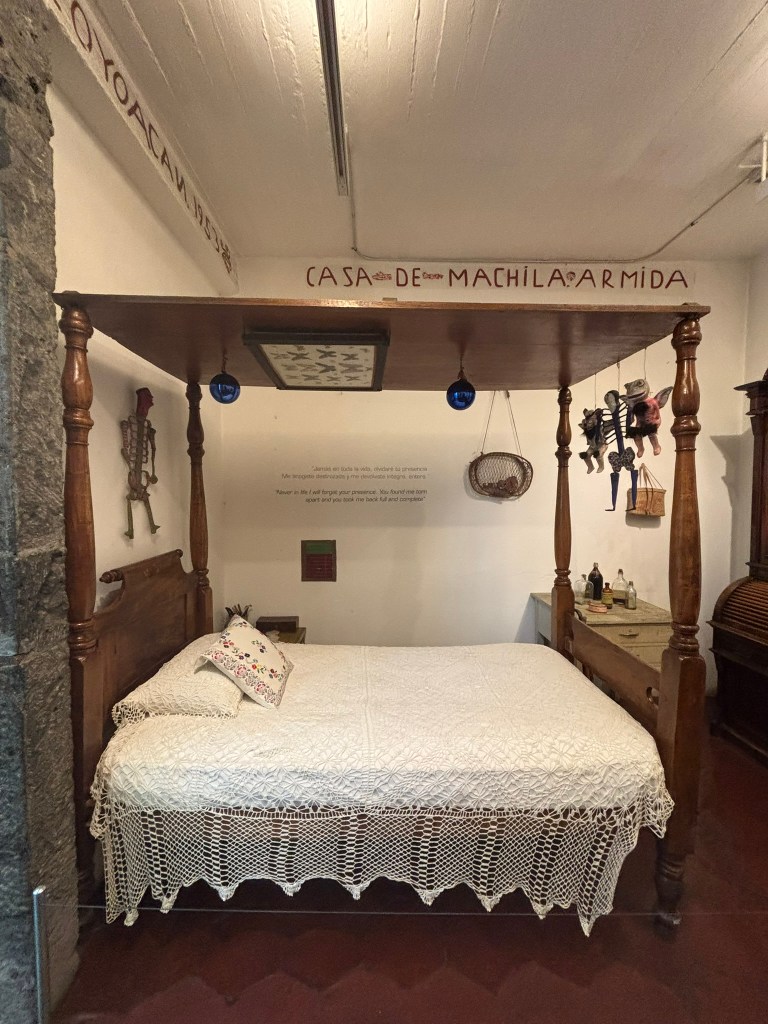
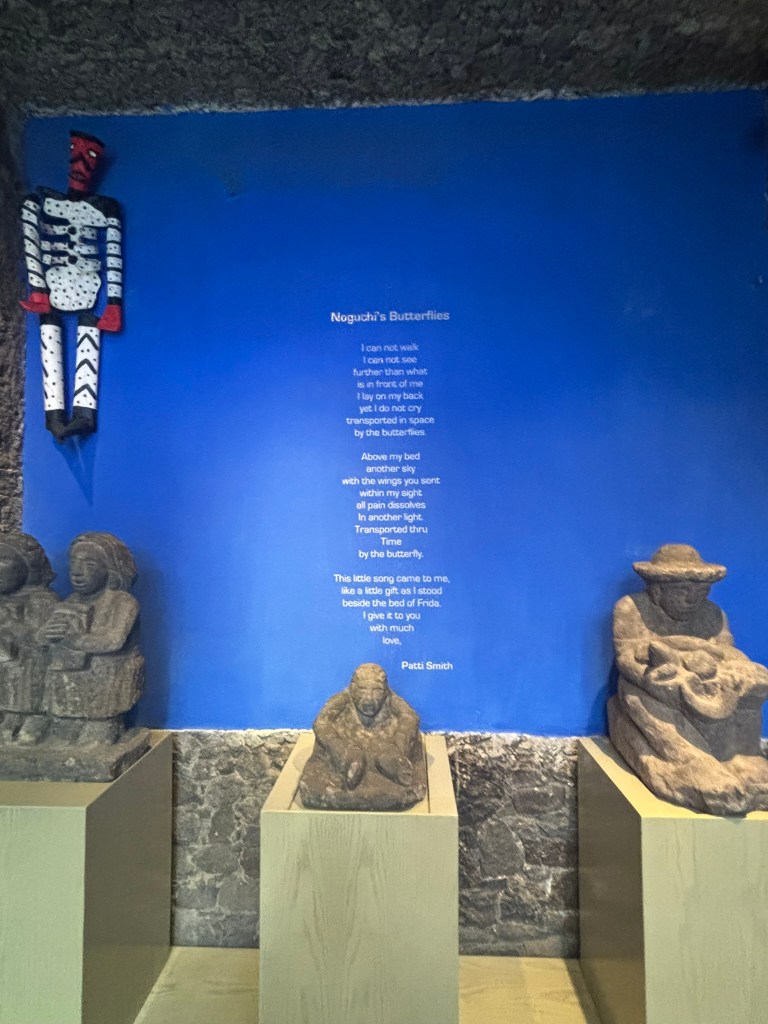
When you enter the nighttime bedroom just off the daybed, don’t forget to pay attention to the canopy of the bed and the quote on the wall
Looking up from eternity: The underside of Frida’s canopy night bed holds a framed butterfly collection gifted to her by her lover, sculptor Isamu Noguchi
- The Butterfly Collection: Mounted directly into the wood where the mirror used to be is a framed collection of dead butterflies. This was a gift from the famous Japanese-American sculptor Isamu Noguchi, with whom Frida had a passionate, intense love affair in the late 1930s.
- The Symbolism: Metamorphosis, fragility, and beauty emerging from a state of confinement—the butterflies are a flawless mirror of Frida’s own existence. Lying immobilized on her back, staring up at creatures that broke free of their cocoons, she found a visual escape from her broken bones.
- The Emotional Friction: The bittersweet irony of this space is staggering. While the room houses the frog urn dedicated to Diego, and the wall features a quote praising how love made her “whole,” her very canopy holds a permanent token from another man who loved her deeply. It encapsulates the dizzying, overlapping layers of her romantic life.
The Frog Urn and Her Nighttime Bedroom: In her nighttime bedroom, sitting quietly on her dresser, rests the pre-Columbian, frog-shaped ceramic urn containing Frida’s ashes. Staring at it next to her simple bed offers a profoundly moving finality to her turbulent love story with Diego.
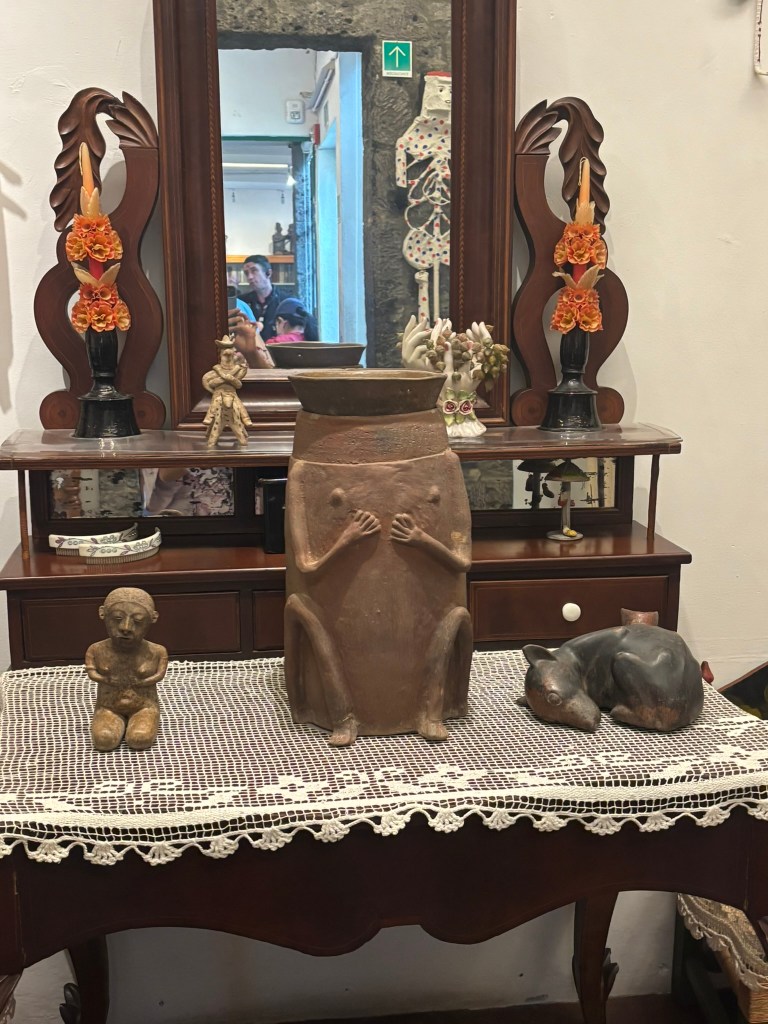
Toad-Frog: Diego Rivera was a heavyset man with large, bulging eyes. Rather than taking offense to his unusual looks, he fully embraced them and frequently drew himself as a frog. Throughout their volatile marriage, Frida affectionately used the toad-frog nickname for him.
Pre-Columbian Passion: The vessel itself is an authentic pre-Hispanic ceramic artifact. Both Frida and Diego were passionate collectors of ancient Indigenous artifacts, viewing them as symbols of pride in Mexico’s roots.
A Pact of Eternal Love: Before her death in 1954, Frida personally requested that her remains be placed inside this specific frog artifact. The couple originally intended for their ashes to be mixed together inside this urn forever.
The Secret Wardrobe: “Appearances Can Be Deceiving”
For half a century, a heavy silence hung over a private bathroom at the back of Casa Azul. Before his death in 1957, Diego Rivera left strict instructions to keep Frida’s most intimate personal closets sealed. That lock was maintained for decades until the room was finally opened in 2004, revealing a time capsule of over 300 highly personal artifacts. Today, those items form the permanent exhibition “Appearances Can Be Deceiving” (Las Apariencias Engañan).
The room is a profound study of how Frida constructed her public identity, masterfully balancing tradition, disability, and political armor. On display are her legendary, floor-length Tehuana skirts, which she meticulously stylized with indigenous jewelry and woven rebozos to distract from her asymmetrical, polio-weakened lower body. But it is the medical items that truly leave visitors speechless: her hand-painted plaster corsets adorned with revolutionary hammer-and-sickle motifs, her heavy steel spinal braces, and her right prosthetic leg, which she defiantly encased in a bright red leather boot embroidered with Chinese silk threads and accented with tiny dangling bells. It is the ultimate testament to a woman who refused to hide her scars, choosing instead to style them into a visual masterpiece of sheer defiance
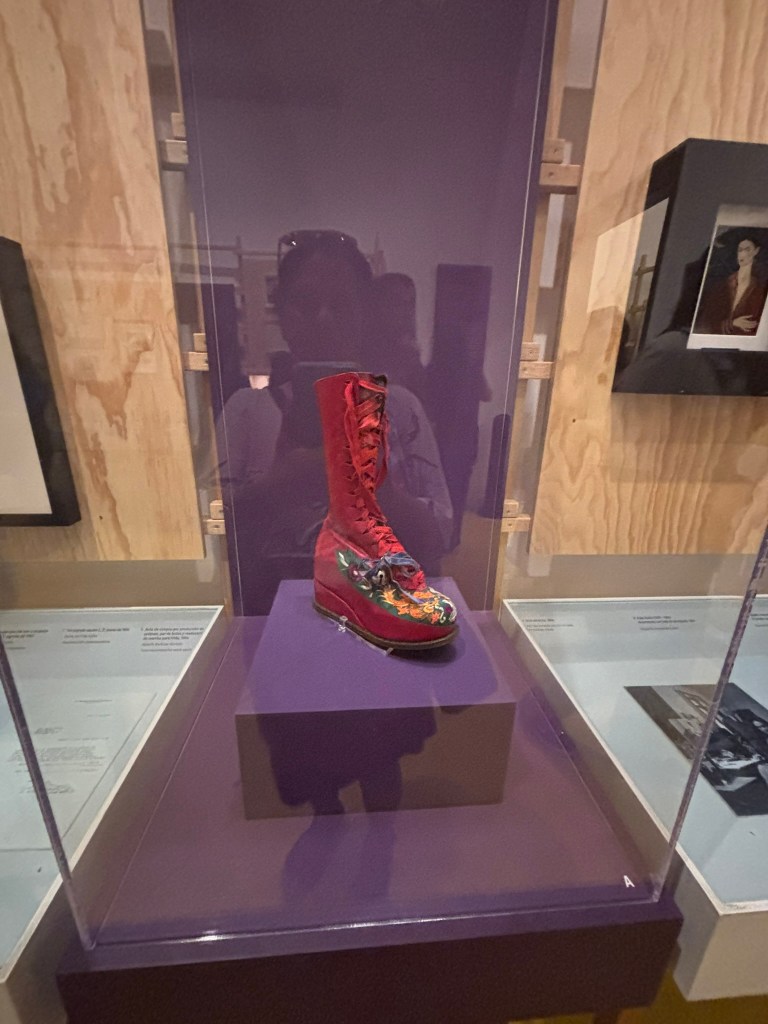

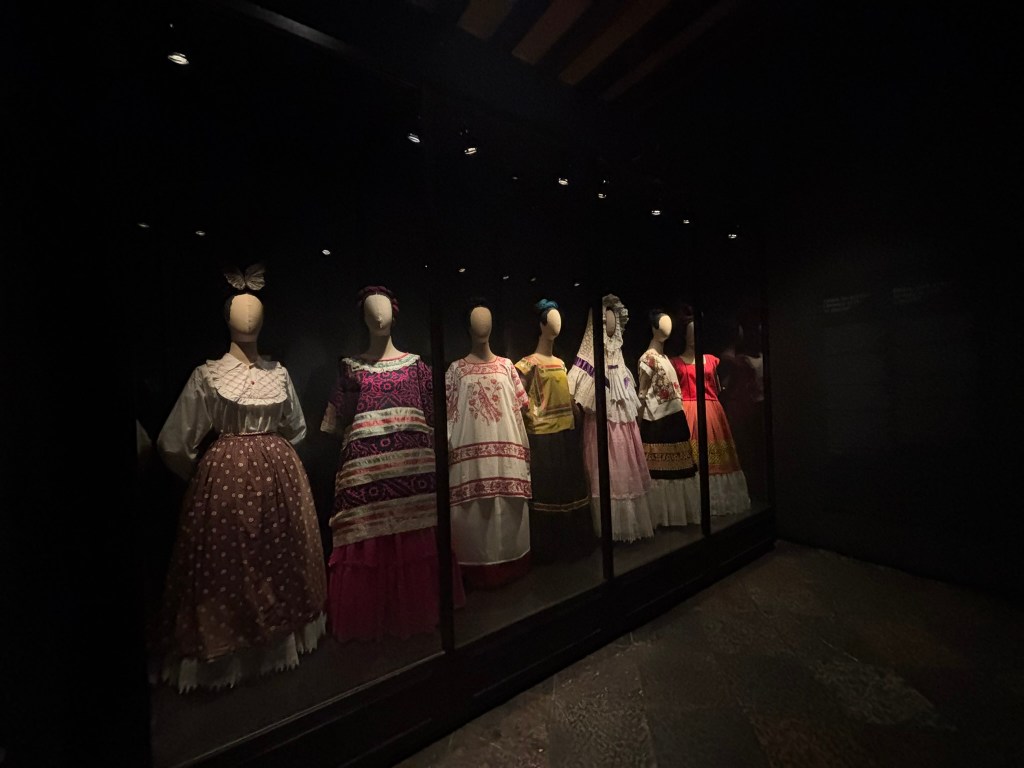
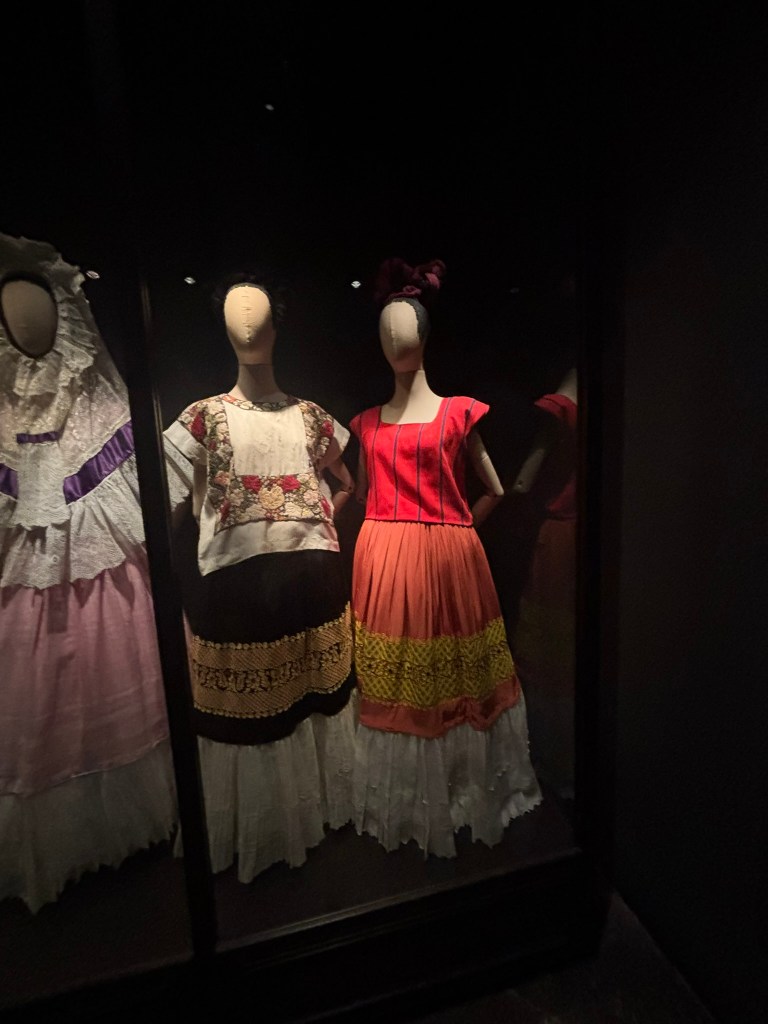
Where to find the Wardrobe Gallery: Frida’s wardrobe and other items are housed in a dedicated, climate-controlled gallery wing on the museum grounds outside the main house. The collection was originally found locked away inside the private bathroom directly adjacent to Frida’s bedroom.
The Pyramidal Courtyard Garden
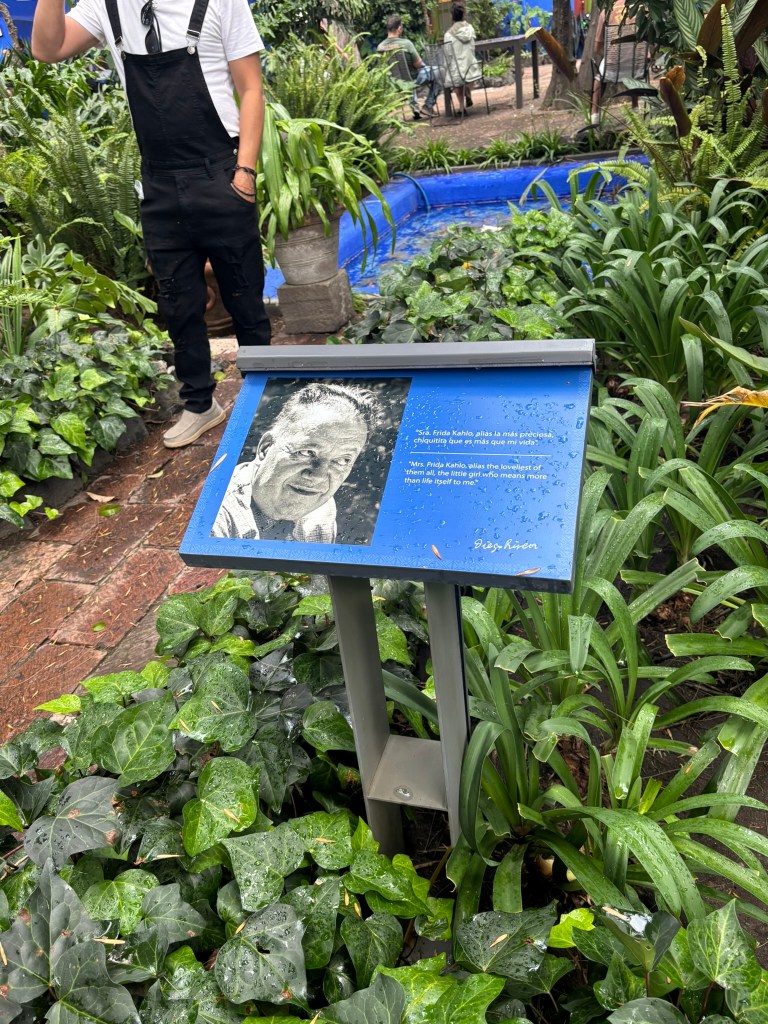
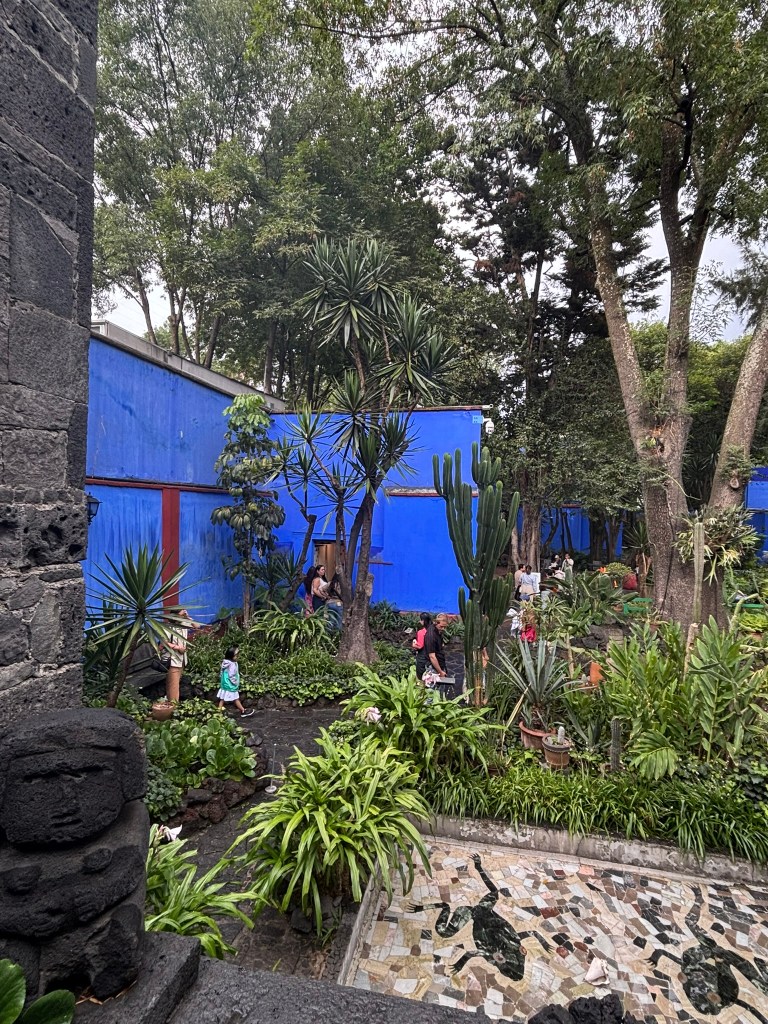
The lush, tropical central patio acts as the lungs of Casa Azul. It features a stepped, miniature stepped pyramid built by Rivera to display their joint collection of pre-Columbian idols. Walking through the monstera leaves and volcanic rock paths feels like stepping directly into one of Frida’s fertile, nature-filled canvases.
Final Thoughts: The Eternal Blue Sanctuary
To step out of La Casa Azul and back into the bustling streets of Coyoacán is to realize that you haven’t just visited a museum—you have witnessed a resurrection. For decades, the world treated Frida Kahlo as a tragic moon orbiting Diego Rivera’s massive, mural-painted sun. But history has corrected its lens. Walking through the Blue House reveals the ultimate triumph of her life: she did not survive Diego’s crushing psychological weight by conforming to his world; she built an entirely independent universe of her own.
Casa Azul was both Frida’s womb and her fortress. It was the place where she suffered her greatest physical torments, yet it is also where she forged her unshakeable artistic and political identity. Every yellow floorboard, every cobalt wall, and every tiny clay pot spelling out their names serves as a reminder that she transformed her pain into a visual armor of pure defiance. Diego paid off the mortgage, but Frida gave the house its soul. Today, while Rivera’s massive murals stand as magnificent monuments to a historical era, it is Frida’s intimate, raw, and fiercely authentic world inside the Blue House that continues to capture, heal, and inspire the global imagination.
Architecture as a Marriage Map: Two Houses, One Bridge
You can further continue Frida and Diego’s journey by visiting the twin houses in the San Ángel neighborhood. I didn’t get a chance to go inside these two houses, but I was dropped off by Uber in front of one of them when I went for dinner with my co-workers at San Ángel Inn. On a side note, San Angel Inn is historic in its own right. It is world-renowned for its high-end, traditional Mexican gastronomy. Its signature Pechuga de Pollo en Mole Poblano and ultra-classic, silver-shaker margaritas are legendary components of a traditional Mexico City sobremesa.
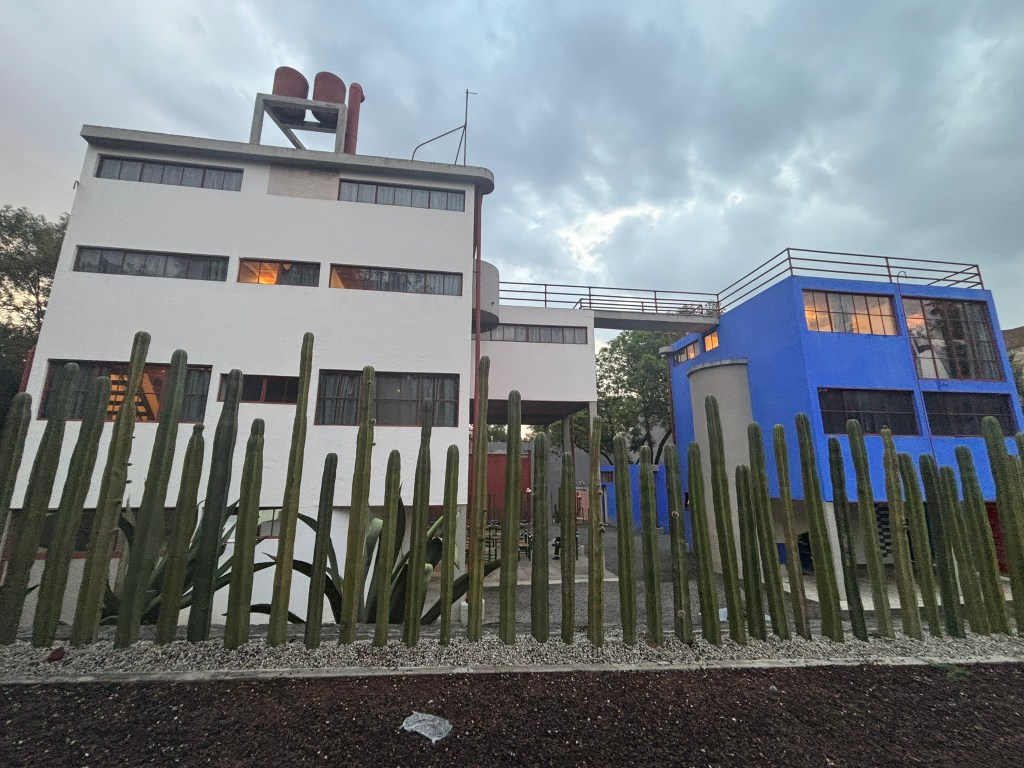
The San Ángel property is not a single home, but two completely separate, free-standing concrete towers connected only by a narrow, high-altitude rooftop footbridge. It serves as a literal, physical manifestation of their radical marital contract: absolute creative and personal independence, yet total connectivity.
- Diego’s Studio (The Rust-Red Tower): Towering, aggressive, and painted a deep volcanic red, Diego’s workspace is massive. It features soaring, double-height saw-tooth factory windows designed to flood his canvas with uniform northern light. Here, surrounded by massive papier-mâché Judas skeletons and pre-Columbian idols, he painted his towering historical commissions.
- Frida’s Studio (The Cobalt Blue Cube): Smaller, intensely private, and painted the exact cobalt blue of her childhood home, Frida’s house sits adjacent to his, raised on minimalist concrete stilts (pilotis). This architectural isolation was intentional; it was within this blue cube that she painted The Two Fridas and What the Water Gave Me—masterworks born from her profound inner solitude.
- The Bridge: The thin, unreinforced concrete bridge stretching between the two roofs represents the fragile, volatile link between them. It was a physical doorway they could lock from either side when the infidelities and psychological warfare became too much to bear, allowing them to remain completely separate while remaining entirely bound to one another.


One Reply to “”