
Preparing for an upcoming business trip to Mexico City, I reached out to my local Mexican colleagues for recommendations on how to spend my free time. One coworker—a self-proclaimed, ultimate Frida superfan whose Zoom background always features the artist and whose dog is even named Frida—offered a critical piece of advice: book tickets to La Casa Azul (The Frida Kahlo Museum) immediately. Because the historic home operates strictly on timed entry, tickets routinely sell out weeks in advance and cannot be purchased at the gate.
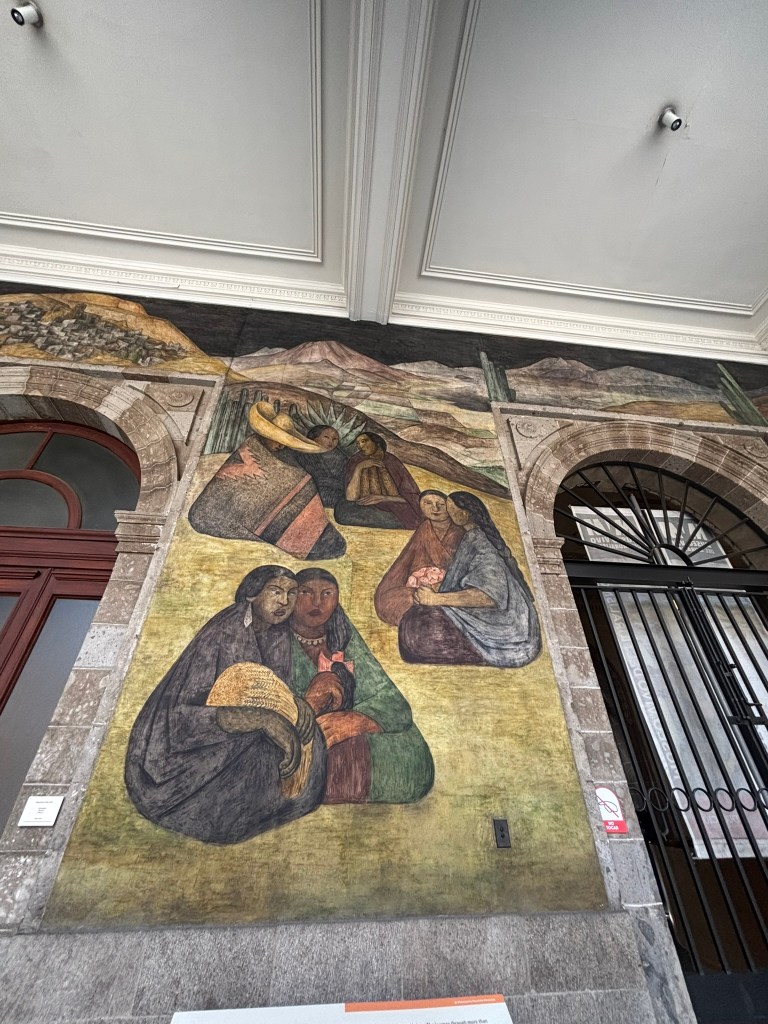
Her warning highlights a broader cultural reality of the capital. It is virtually impossible to navigate Mexico City without running into the massive legacy of this artistic power couple. From Diego Rivera’s monumental public frescoes gracing historic government buildings to contemporary street art reinterpreting Frida’s iconic image, their radical love story and creative genius are permanently woven into the very fabric of the city.
Tracing Frida Kahlo and Diego Rivera across Mexico City
This omnipresent cultural footprint is the modern echo of a profound historical shift. For decades, the global art world viewed Frida Kahlo as little more than a colorful footnote—the eccentric, fragile wife of Diego Rivera, the monolithic giant of Mexican Muralism whose towering political frescoes literally reshaped the walls of post-revolutionary Mexico City. But history has a brilliant way of correcting its focus. Today, while Diego’s massive public murals remain celebrated historical masterworks, it is Frida’s deeply intimate, painfully raw, and fiercely independent universe that captures the global imagination, transforming her face into an international icon of resilience, feminism, and style.
To truly understand this volatile, creative collision, you cannot just look at prints in a book—you have to experience Mexico City itself. The city’s distinct geography, its clanging morning street noises, and the high-altitude sunlight filtering through ancient trees are completely inseparable from their art. Traveling through the capital today offers a physical, three-dimensional map of their romance, their battles, and the ultimate architectural evolution of how Frida stepped out from Diego’s shadow to build a legacy that completely surpassed his fame.
1. La Casa Azul: The Cradle and Citadel of Frida’s Universe
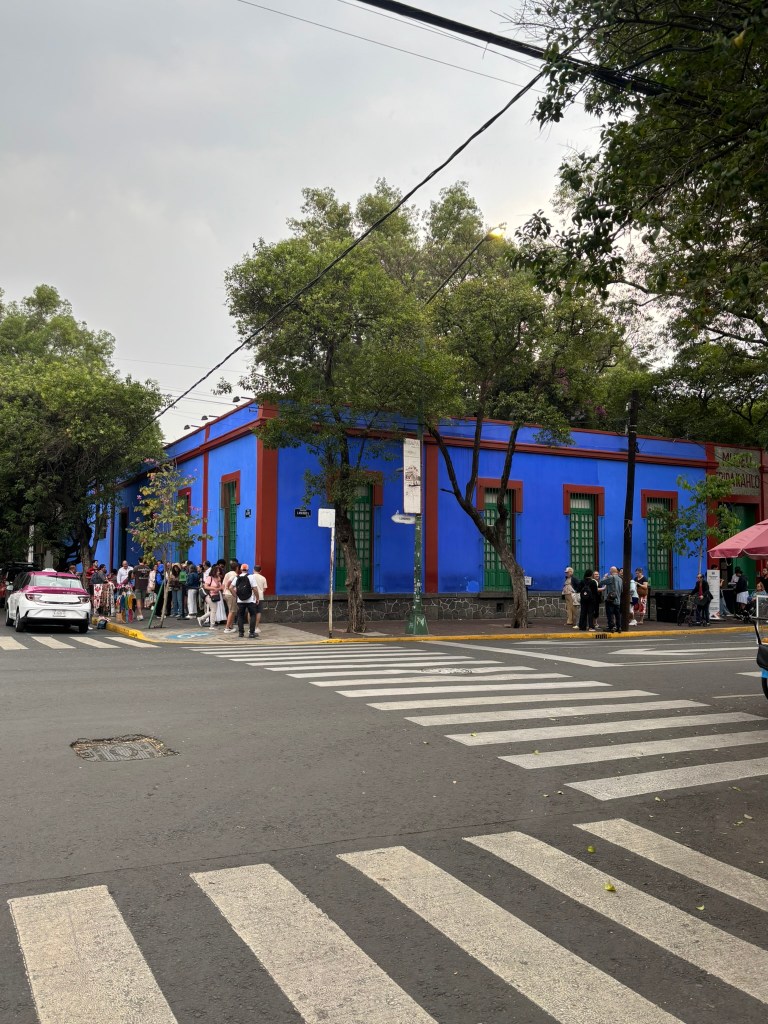
My journey began where Frida’s life started and ended: La Casa Azul (The Blue House). Located in the quiet, cobblestoned southern neighborhood of Coyoacán, a visit here feels like stepping entirely out of the hyper-modern rush of central Mexico City and back into a slower, deeply traditional era.
While Diego was busy painting the world outside on grand government walls downtown, Frida was confined to this brilliant cobalt-blue fortress. Stricken by polio as a child and later impaled in a catastrophic bus accident at age 18, her physical world was agonizingly small.
Step inside her preserved day-and-night bedroom. Positioned directly over her day bed is the mirror her mother installed so Frida could paint her own image while pinned to a plaster body cast. This room proves why her legacy has outlasted Diego’s: while Diego painted the external, fleeting politics of a nation, Frida turned her vision inward. She mined the universal depths of human suffering, identity, and heartbreak—themes that remain timeless and accessible to any traveler who walks through these doors today.
To read more about my visit to Casa Azul and what to see inside, check out this post
2. The Twin Houses of San Ángel: Architecture of Fragile Independence
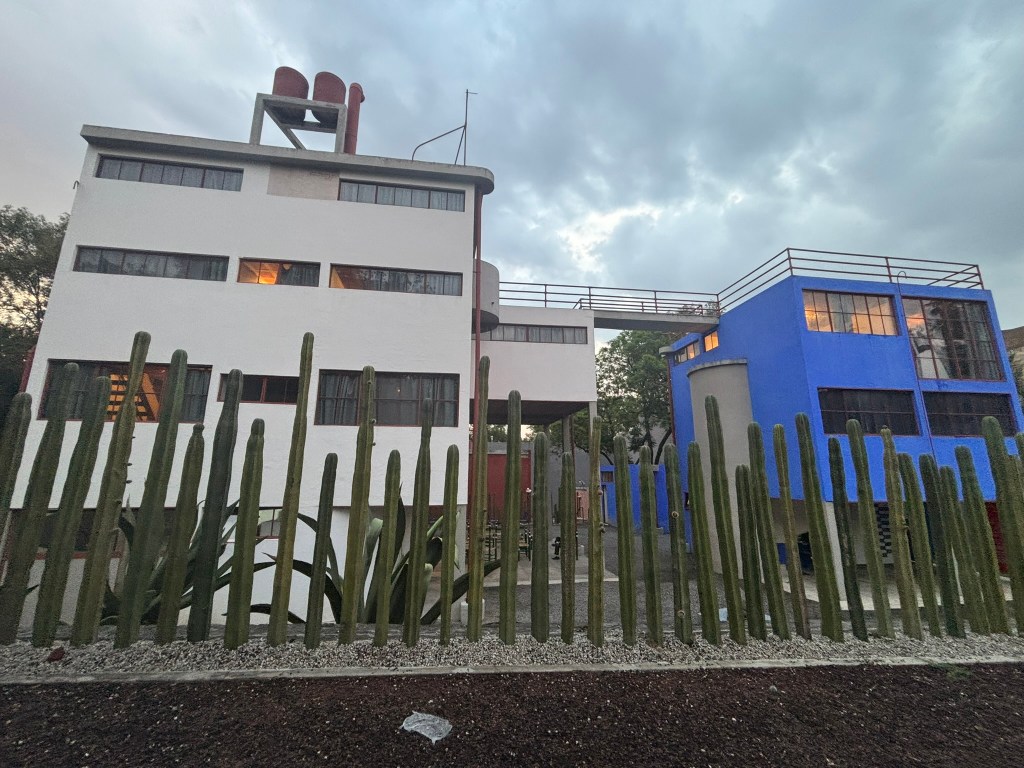
To understand the volatile shift in their power dynamic, leave Coyoacán and take a short, leafy drive 15 minutes west to the Museo Casa Estudio Diego Rivera y Frida Kahlo in the affluent neighborhood of San Ángel. Designed by pioneering functionalist architect Juan O’Gorman in 1931, this site consists of two separate, stark concrete houses connected only by a narrow, fragile rooftop bridge.
The architecture perfectly mirrors their relationship:
- Diego’s House: Massive, terracotta-colored, and boasts towering floor-to-ceiling industrial windows designed to flood his enormous canvases with light. It screams dominance and public ambition.
- Frida’S House: Smaller, painted in her signature intense cobalt blue, served as her private sanctuary.
The single bridge connecting the roofs symbolizes their codependency and their need for absolute separation. It was here, in her own space, that Frida began producing works that rejected Diego’s traditional, grand style and asserted her own surreal, raw artistic voice.
3. Painting the Pain: Decoding Frida’s Critical Masterpieces
While exploring these spaces, you will gain a deeper appreciation for the masterpieces she painted during her years split between San Ángel and Coyoacán. Three critical works define her artistic triumph over Diego’s style:
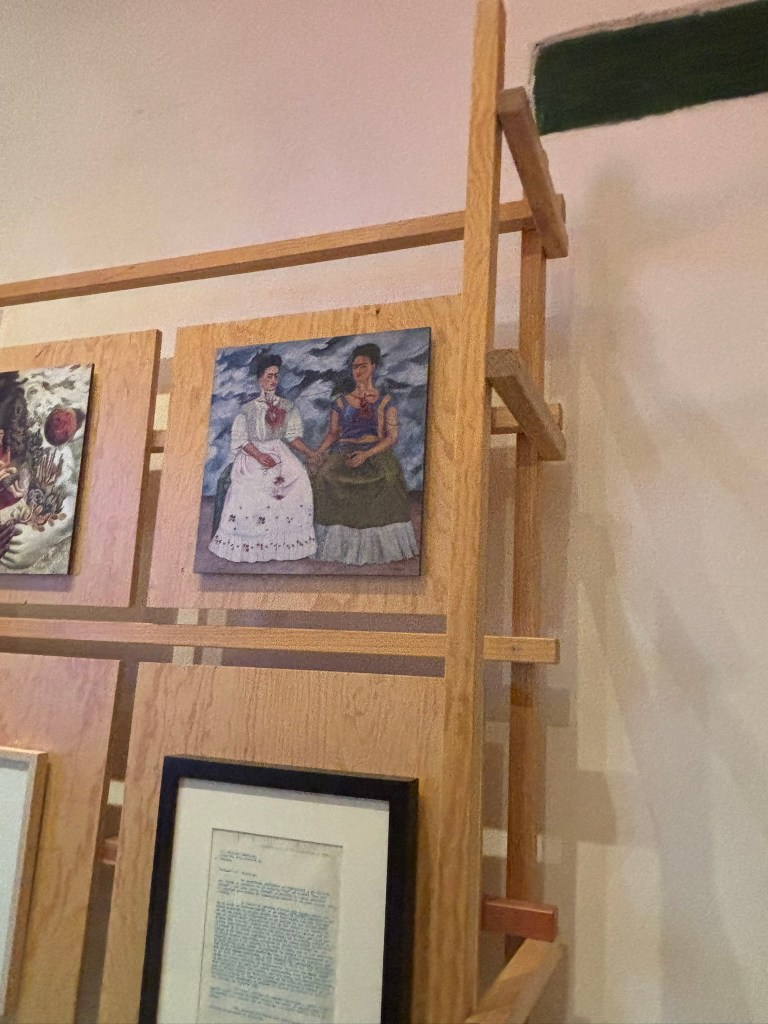
- The Two Fridas (Las dos Fridas, 1939): Painted during her divorce from Diego, this large-scale canvas shows two versions of herself holding hands, their hearts exposed and connected by a single, bleeding vein. One Frida wears a traditional European dress (the version Diego rejected); the other wears a Tehuana costume (the version Diego loved).
- The Broken Column (La columna rota, 1944): A brutal masterpiece where her torso is split open to reveal a crumbling, iconic ionic column replacing her spine. Her flesh is pierced with dozens of nails, yet her eyes look straight forward with fierce defiance.
- Henry Ford Hospital (1932): Painted after a devastating miscarriage in Detroit, this raw, surrealist sheet-metal painting broke all art world taboos by depicting the visceral reality of female trauma and reproductive grief—a subject Diego’s heroic public murals never could have touched.
4. The Ghost of Carlos: Diego’s Childhood Trauma and the Sabotage of Women
To fully understand the chaotic, pathologically unfaithful man Frida loved, one must look beneath Diego’s massive bravado to a profound childhood wound. Born a fraternal twin, Diego watched his brother, Carlos María, die at just fourteen months old—a tragedy that threw his mother into deep, prolonged grief and left young Diego under the constant, suffocating fear that he would be next. This early brushing with death left Diego with an insatiable, almost manic appetite for consumption—of food, of space, and crucially, of women.
Art became his survival mechanism; his parents famously lined his childhood walls with blackboards to keep him from drawing on the furniture, anchoring his lifelong identity to the act of conquering empty wall space. Yet the ghost of his twin haunted his work, physically manifesting as a recurring motif in major frescoes such as Dream of a Sunday Afternoon in Alameda Park.
Psychologically, this unresolved trauma twisted his adult relationships into a pattern of compulsive emotional sabotage. He treated women less like equal partners and more like life-giving muses to be consumed, dominated, and abandoned before they could abandon him—a toxic cycle of narcissistic protection that subjected Frida, and nearly every woman before her, to relentless emotional cruelty.
Faced with a partner who consumed everything and everyone in his path, Frida had to construct an entirely new version of herself just to survive the marriage. She needed an armor that could withstand both her failing physical body and Diego’s crushing psychological weight.
5. The Armor of Identity: Frida’s Personal Style as Radical Art
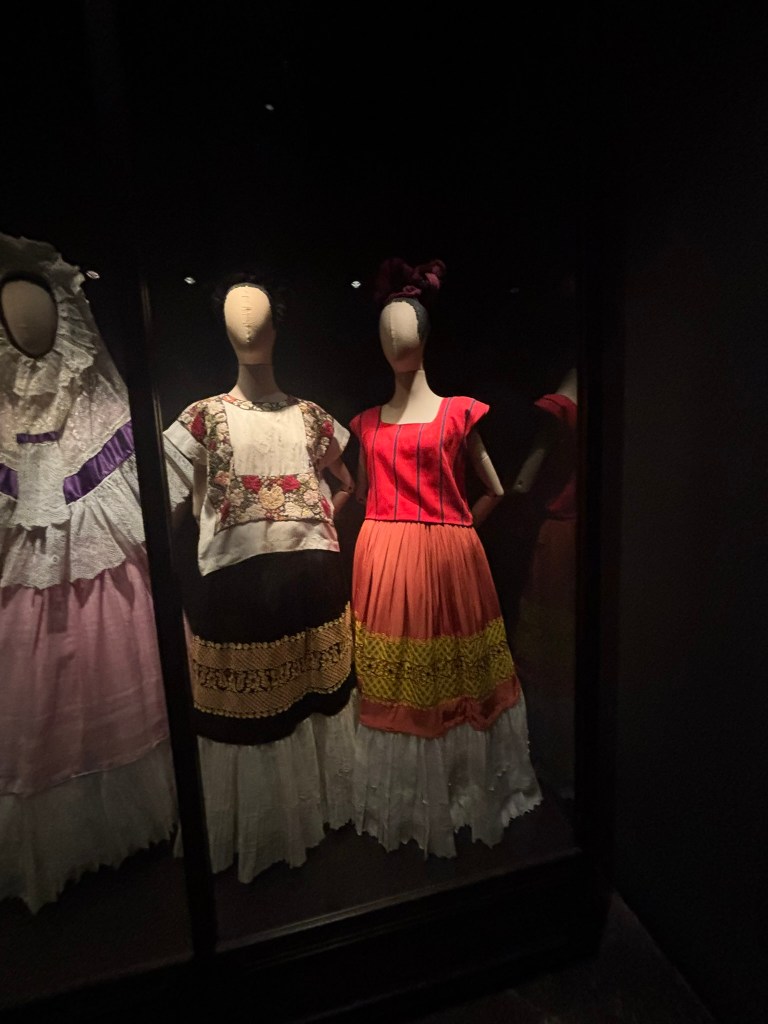
Frida did not just paint her identity; she wore it as a political shield and a personal declaration of independence. In an era when upper-class Mexican women aspired to wear sophisticated, delicate European fashions, Frida deliberately adopted the heavy, traditional dress of the matriarchal Tehuantepec region of Oaxaca.
This wardrobe, which you can see beautifully exhibited in the rotating fashion galleries at La Casa Azul, served two vital purposes:
- Physical Armor: The long, flowing skirts hid her withered right leg, while the loose, boxy huipil blouses perfectly concealed the bulky medical back braces she wore daily.
- Cultural Defiance: It was a radical rejection of Western colonialism. By crowning herself with heavy braided yarn, fresh marigolds, and massive pre-Columbian jade necklaces, she transformed her body into a walking canvas of Mexican indigenous pride.
6. The Ultimate Eclipse: Why Frida Outshone the Giant
Diego Rivera spent his life painting for the masses, yet his murals are firmly rooted in the specific political propaganda of early 20th-century Marxism. To fully comprehend his work, you need a history textbook.
To understand Frida, you only need a heart.
Frida’s fame ultimately eclipsed Diego’s because her work deals with the timeless, unvarnished human condition: loneliness, physical agony, toxic love, betrayal, and the unyielding strength to survive. Diego painted the history of Mexico on grand concrete walls, but Frida painted the history of the human soul on small, intimate panels. When you leave the bright blue walls of Coyoacán and venture back out into the roar of modern Mexico City, you realize that the giant wasn’t the man standing on the high scaffolding—it was the woman painting from her bed, staring directly into her own reflection.

