
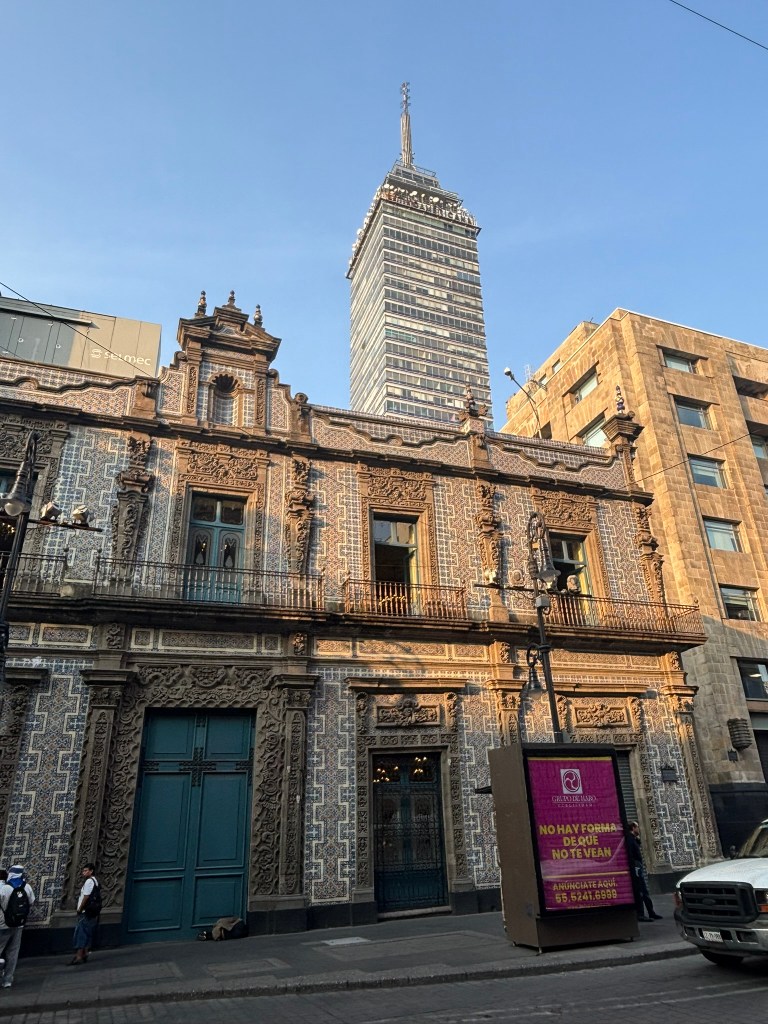
Tucked away along the bustling, stone-paved corridor of Avenida Francisco I. Madero in Mexico City’s Centro Histórico sits one of the world’s most spectacular historic buildings: La Casa de los Azulejos (The House of Blue Tiles).
While millions of travelers walk past its shimmering, iridescent facade every year, few realize that stepping through its doors is like entering a living time capsule of Mexican history, world-class art, and culinary tradition. Here is everything you need to know to photograph, explore, and experience this architectural wonder.
- From Aristocratic Palace to Tile-Clad Legend
- 🗼 The French Influence and Porfirian Elegance
- 🦚 The Elegant Courtyard and the Lost Peacock Mural
- 🎨 The Hidden Staircase Mural: José Clemente Orozco
- 🍳 Dining in History: The Sanborns Restaurant
- 📍 Visitor Information
From Aristocratic Palace to Tile-Clad Legend
The building’s origins date back to the late 16th century when it served as a grand residence for the Counts of the Valley of Orizaba. However, it wasn’t until 1737 that the mansion received its iconic, head-turning transformation.
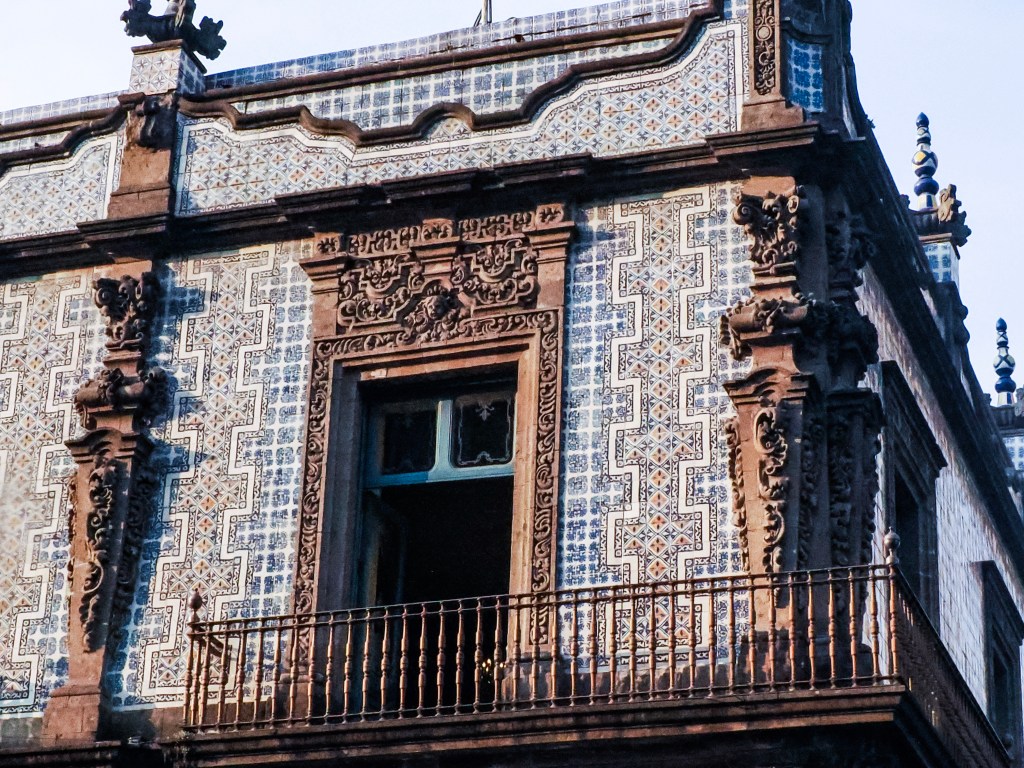
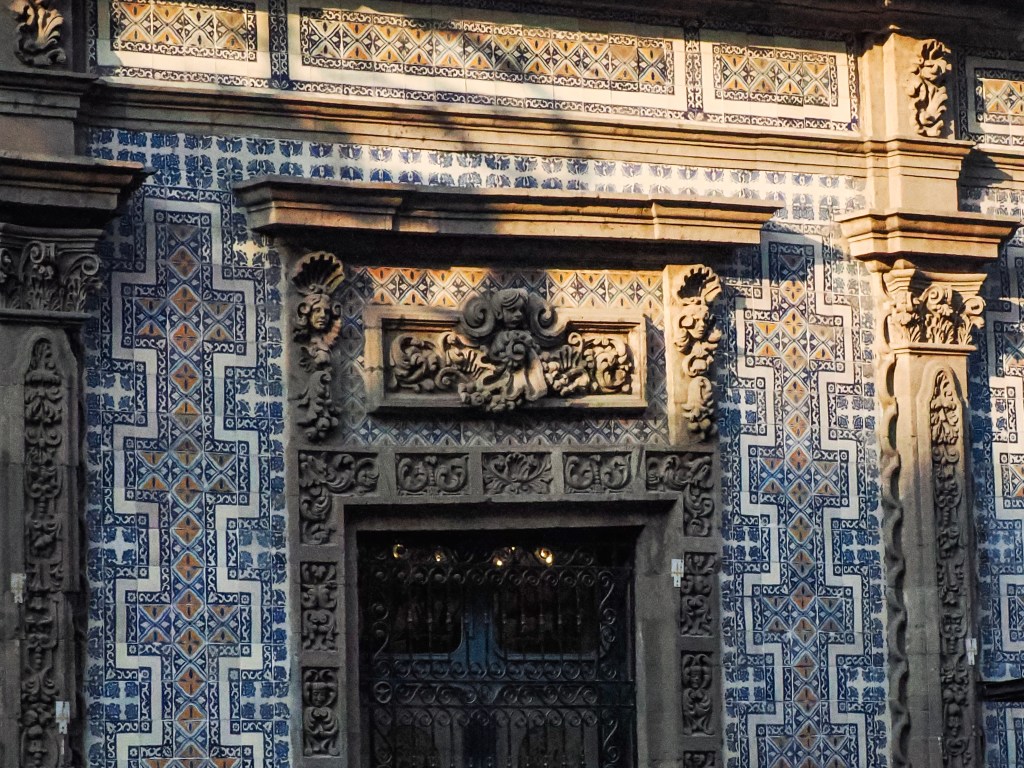
According to local folklore, the son of the count was quite a reckless youth. Frustrated by his son’s lack of ambition, the count famously declared, “My son, you will never build a house of tiles,”—a colonial-era idiom meaning he would never amount to anything. Taking the insult as a challenge, the young heir turned his life around, inherited the property, and covered the entire outer facade in thousands of hand-painted, blue-and-white glazed Talavera tiles imported from Puebla.
The resulting design is an exquisite example of New Spanish Baroque architecture, where the cool, geometric repetition of the glazed tiles contrasts beautifully with the heavily carved, dark volcanic stone frame around the windows and balconies
🗼 The French Influence and Porfirian Elegance
In the late 19th and early 20th centuries, Mexico underwent a profound cultural shift during the regime of President Porfirio Díaz. Díaz was famously obsessed with French architecture, fashion, and cuisine, sparking a nationwide movement to “Europeanize” the capital.
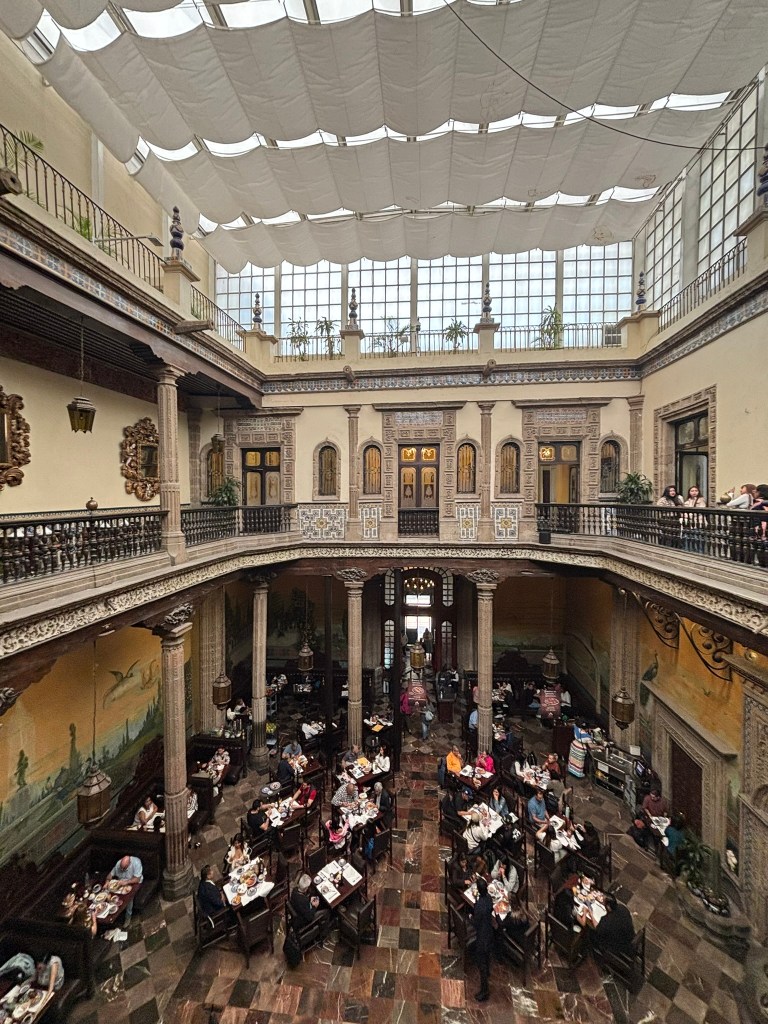
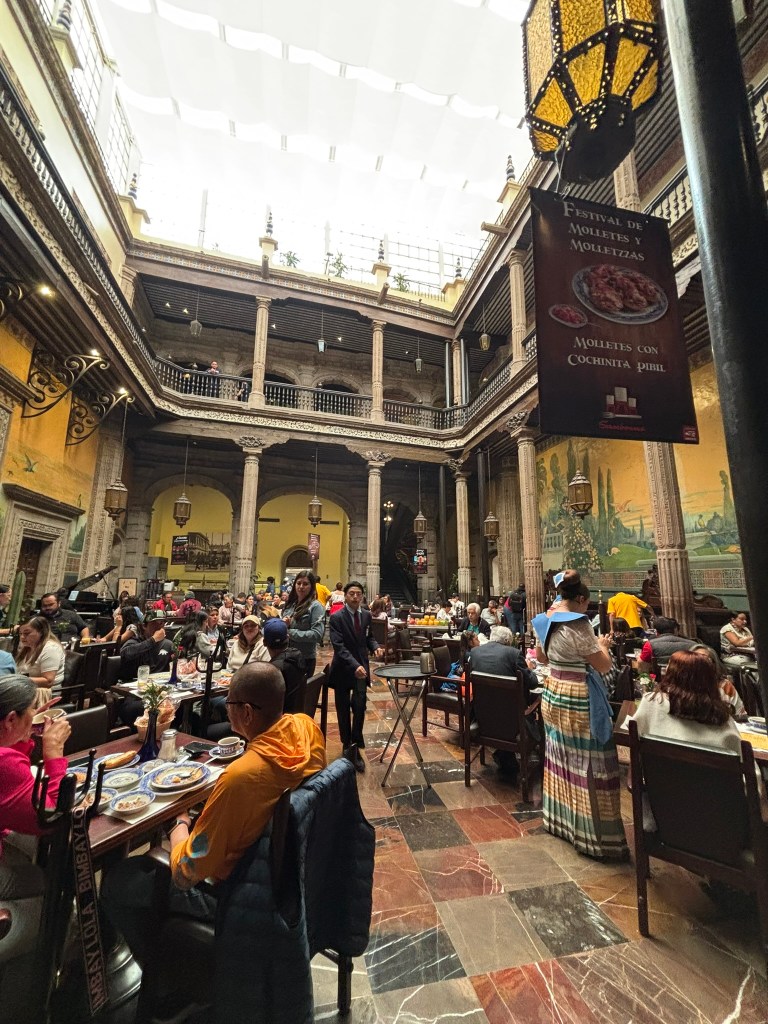
The House of Blue Tiles quickly became a central hub for this Francophile transformation. The building was leased to the elite Jockey Club, an ultra-exclusive playground for Mexico City’s wealthy, French-educated aristocracy. During this era, the central open-air patio was enclosed with a magnificent Art Nouveau stained-glass and iron canopy overhead, mirroring the grand shopping arcades of Paris.
Walking into the space today, that unmistakable Belle Époque flair remains intact. Crystal chandeliers hang from the high ceilings, classical French-style columns support the upper loggias, and an air of old-world European elegance seamlessly blends with the building’s original Mexican structure.
🦚 The Elegant Courtyard and the Lost Peacock Mural
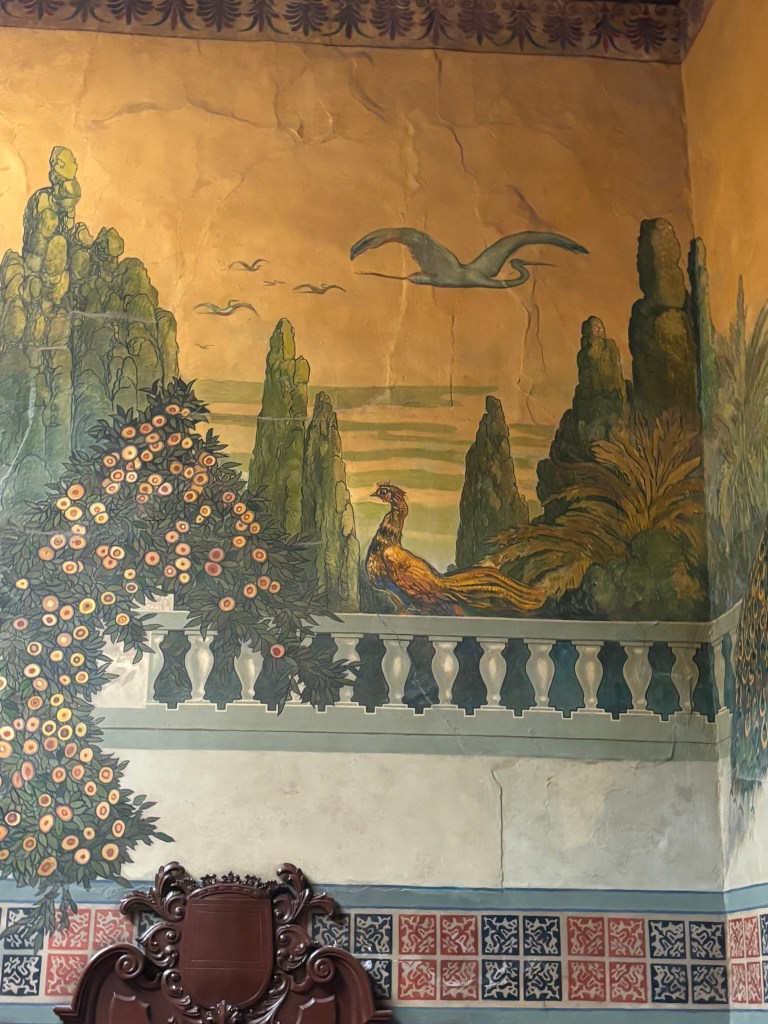
Before you even reach the upper stairs, your eyes will be drawn to the perimeter walls surrounding the central dining patio. Covering these high panels is a beautiful, expansive mural featuring lush, stylized foliage and towering peacocks.
Often overshadowed by the heavier political art of the post-revolutionary era, this decorative mural is a rare, preserved example of early 20th-century European romanticism in Mexico City. The soft pastel tones and whimsical layout mimic classical French and art nouveau wall tapestries. It was specifically commissioned during the building’s transition into a luxury social club to add a sense of serene, palatial garden opulence to the enclosed indoor dining space.
🎨 The Hidden Staircase Mural: José Clemente Orozco
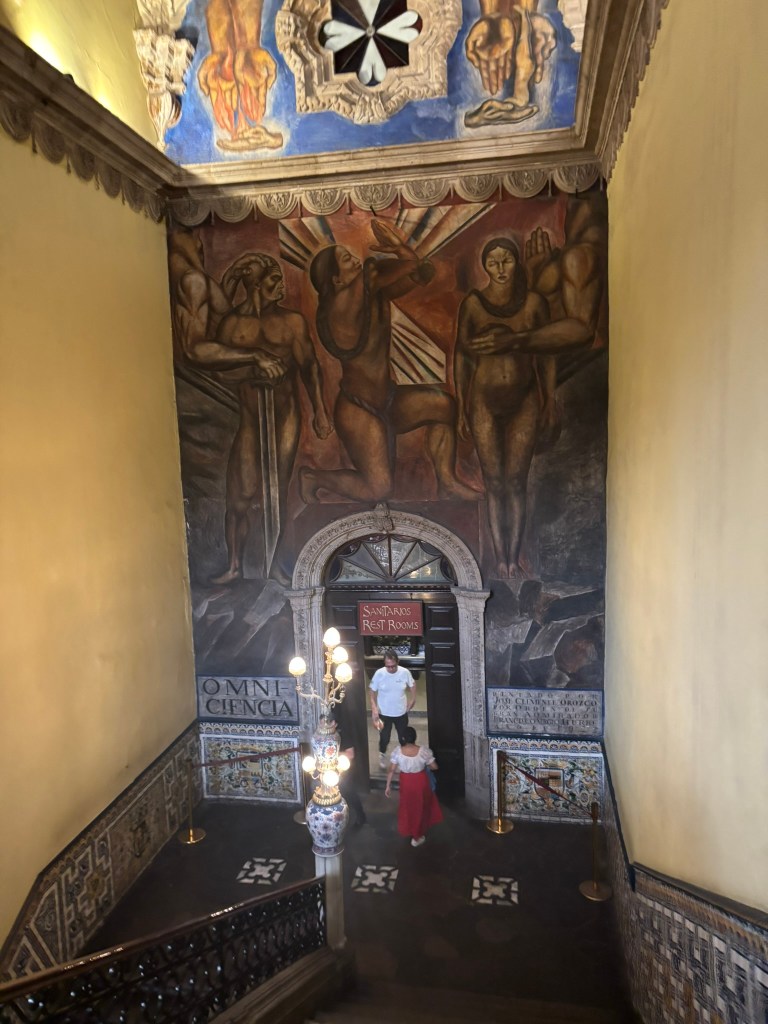
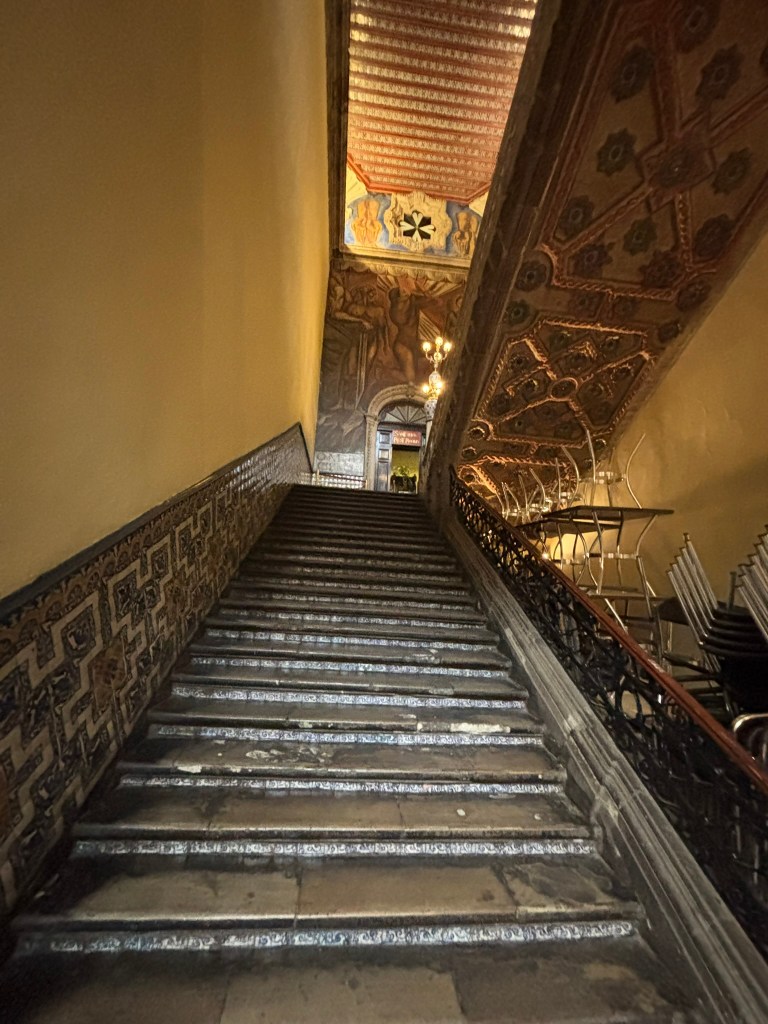
While the courtyard celebrates decorative elegance, the interior staircase holds a monumental piece of Mexico’s post-revolutionary identity.
In 1925, the owner of the property commissioned legendary Mexican muralist José Clemente Orozco to paint the towering walls of the main stairwell. The result is “Omnisciencia” (Omniscience), a powerful, dramatic artwork rendered in Orozco’s characteristically bold, expressionistic style. The mural depicts allegorical figures exploring themes of human knowledge, spiritual awakening, and the feminine creative force.
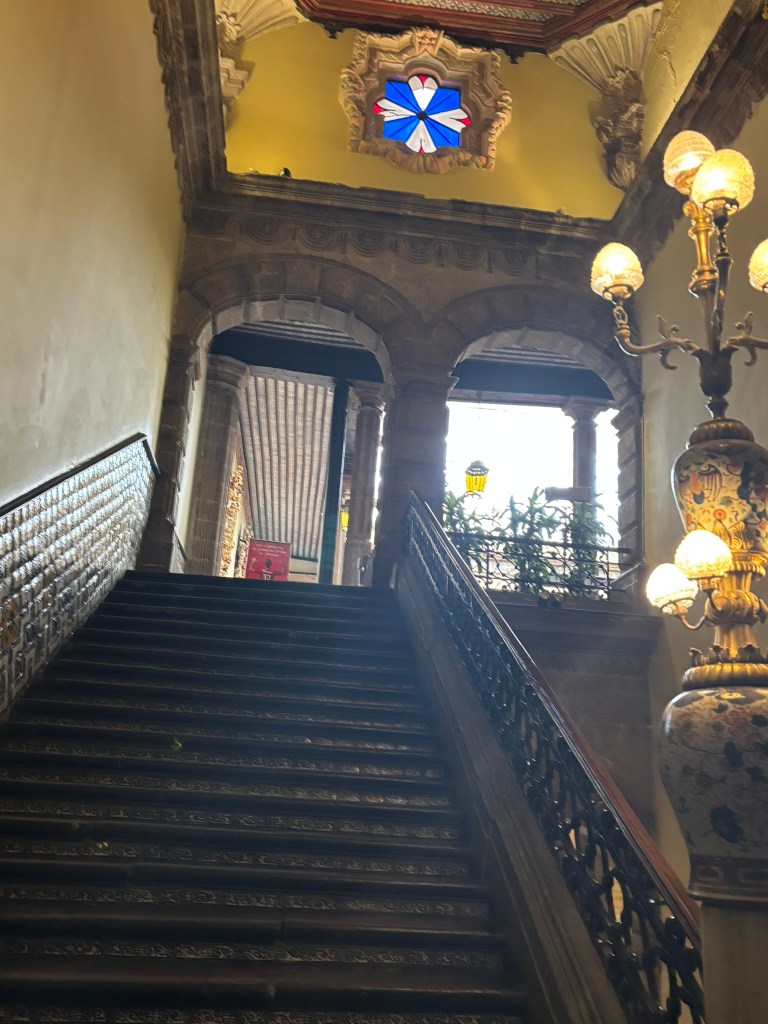
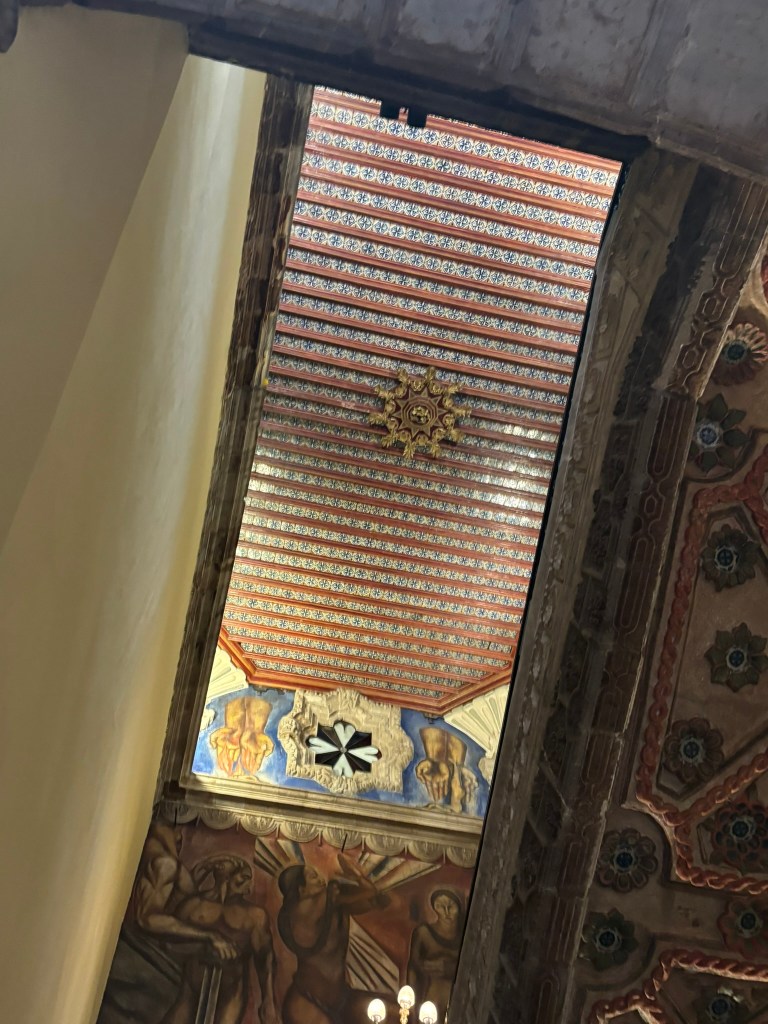
📸 Pro Photo Tip for the Mural:
- Walk up to the mid-landing of the staircase to capture a straight-on shot .
- Look up to frame the contrast between Orozco’s heavy, emotional modern strokes and the surrounding, delicate 18th-century stone archways.
🍳 Dining in History: The Sanborns Restaurant
Today, the building is famously occupied by Sanborns, a classic Mexican department store and diner chain that has preserved the property since 1919.
The main dining room sits directly under the spectacular, glass-roofed Moorish patio, surrounded by the stone fountain and the peacock murals. Sitting here for a meal is an absolute must-do itinerary item for any visitor to the historic center. It is a bustling, uniquely Mexican experience where waitresses dressed in traditional folk attire serve comforting local dishes to a mix of reading locals, business executives, and international travelers.
📍 Visitor Information
- Address: Av. Francisco I. Madero 4, Centro Histórico, Mexico City .
- Best Time to Photograph the Facade: Visit at 7:00 AM during our recommended [Sunrise Walking Itinerary]. The soft morning light avoids casting harsh, distracting shadows from the overhead wires, and the lack of crowds lets you stand back across the street to capture the full length of the tiled exterior
- Admission: Completely free to walk inside, view the murals, and browse the architecture.

