Rising majestically from the high valley floor just 30 miles northeast of Mexico City, the ancient metropolis of Teotihuacán stands as one of the most awe-inspiring archaeological wonders of the ancient world. Flourishing between 100 B.C. and 650 A.D., this massive UNESCO World Heritage site was once home to over 150,000 residents—making it the largest city in the pre-Columbian Americas and one of the largest cities anywhere on Earth at its peak.
Centuries after its mysterious collapse, the Aztecs discovered the empty stone city and named it Teotihuacán—”the place where men become gods.” They believed the structures were so monumental that only divine beings could have built them.
Today, walking down its central axis, the Avenue of the Dead, transports travelers back in time to an era when this metropolis controlled trade routes stretching from the Gulf Coast to Guatemala. To help you navigate this massive open-air museum, here is a detailed breakdown of the legendary structures that anchor the complex—plus the mysteries that still haunt its empty streets.
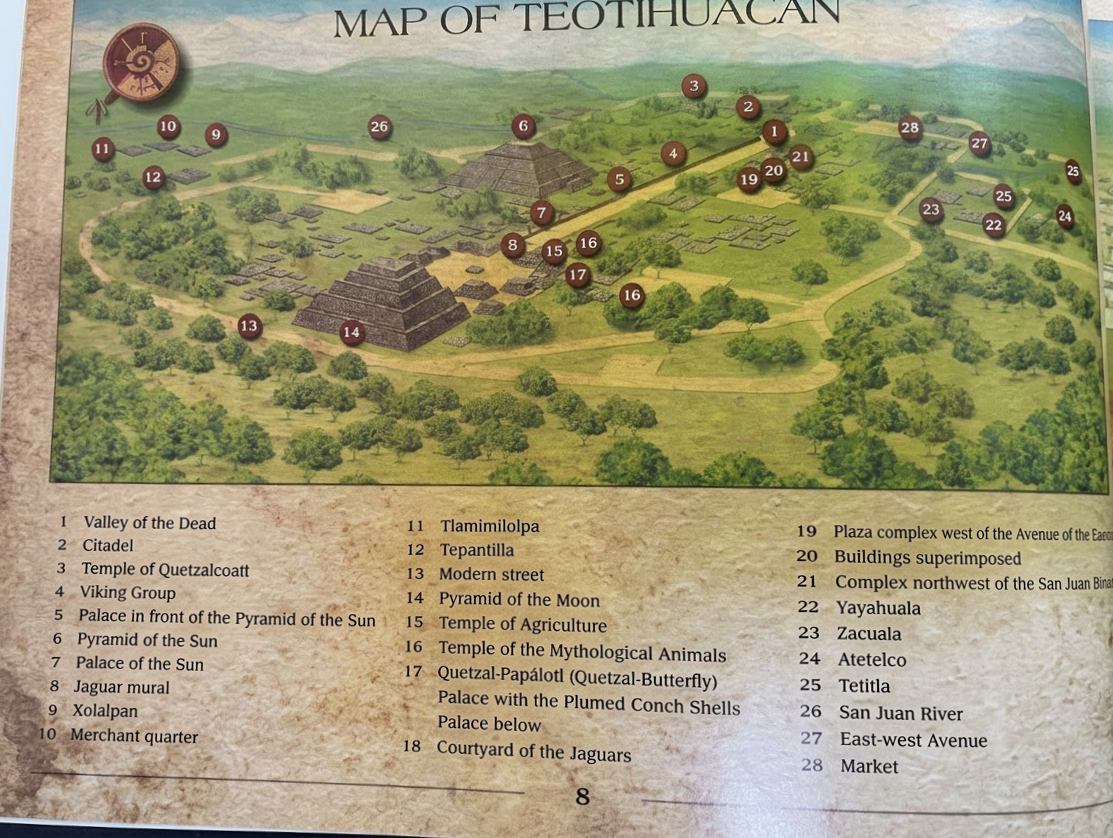
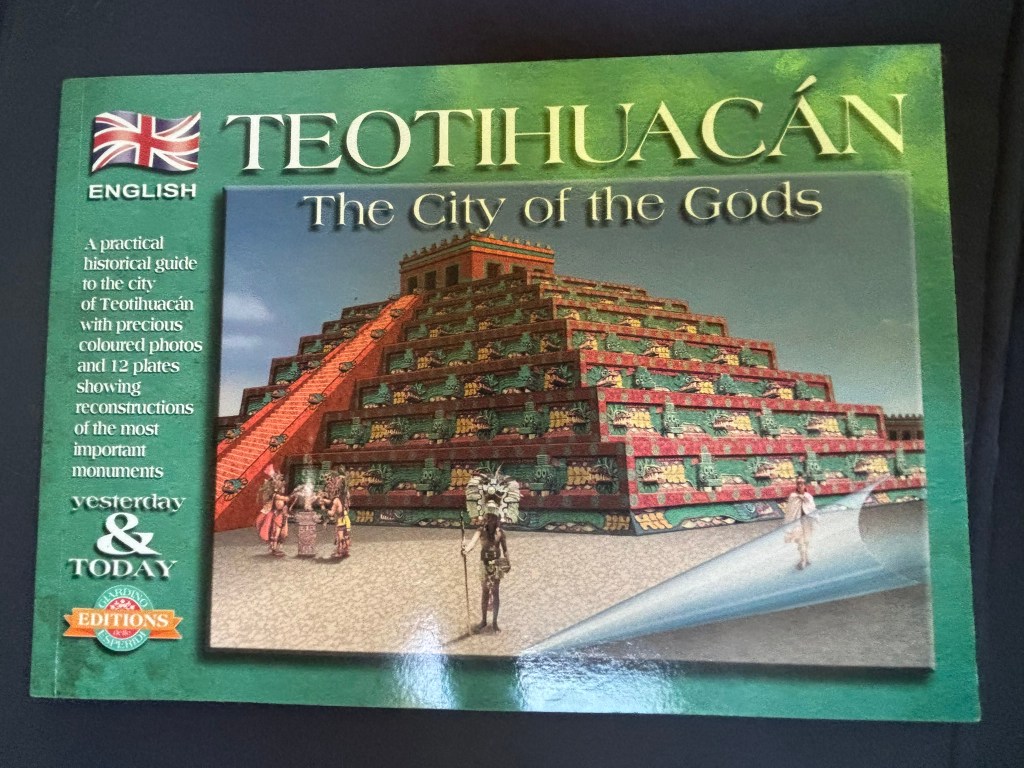
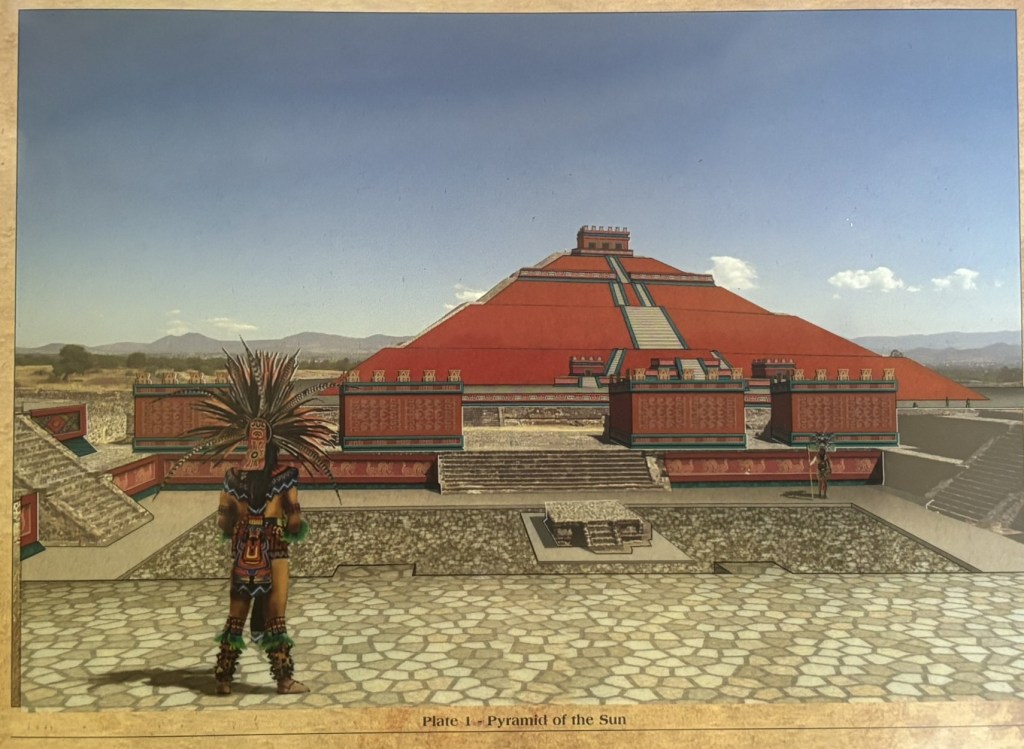
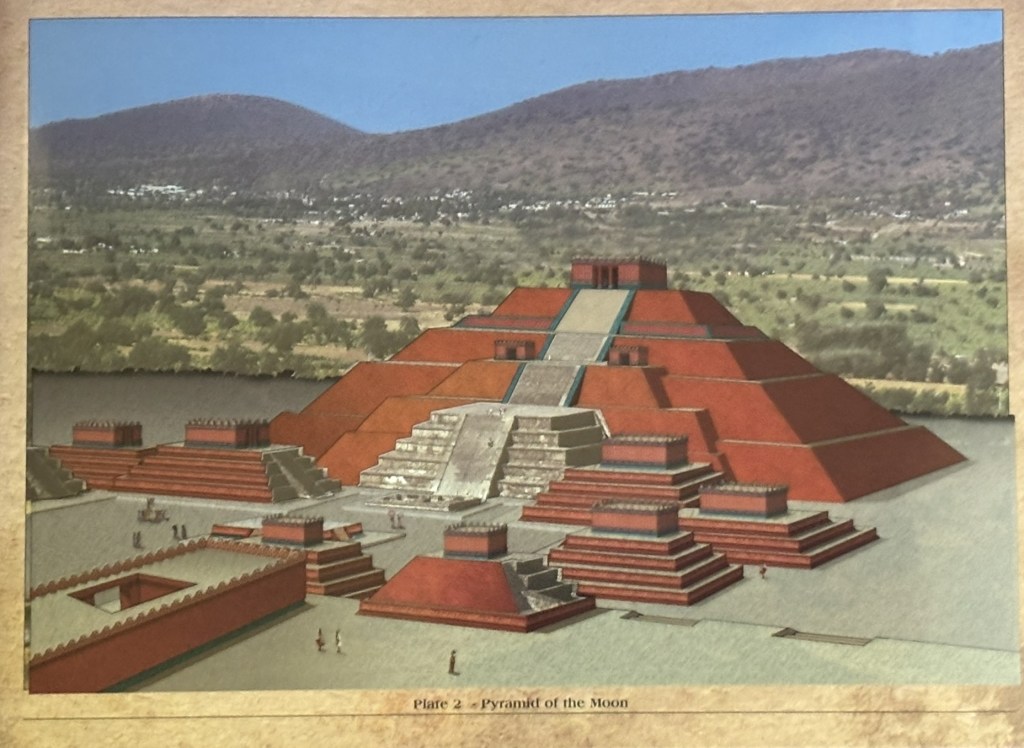
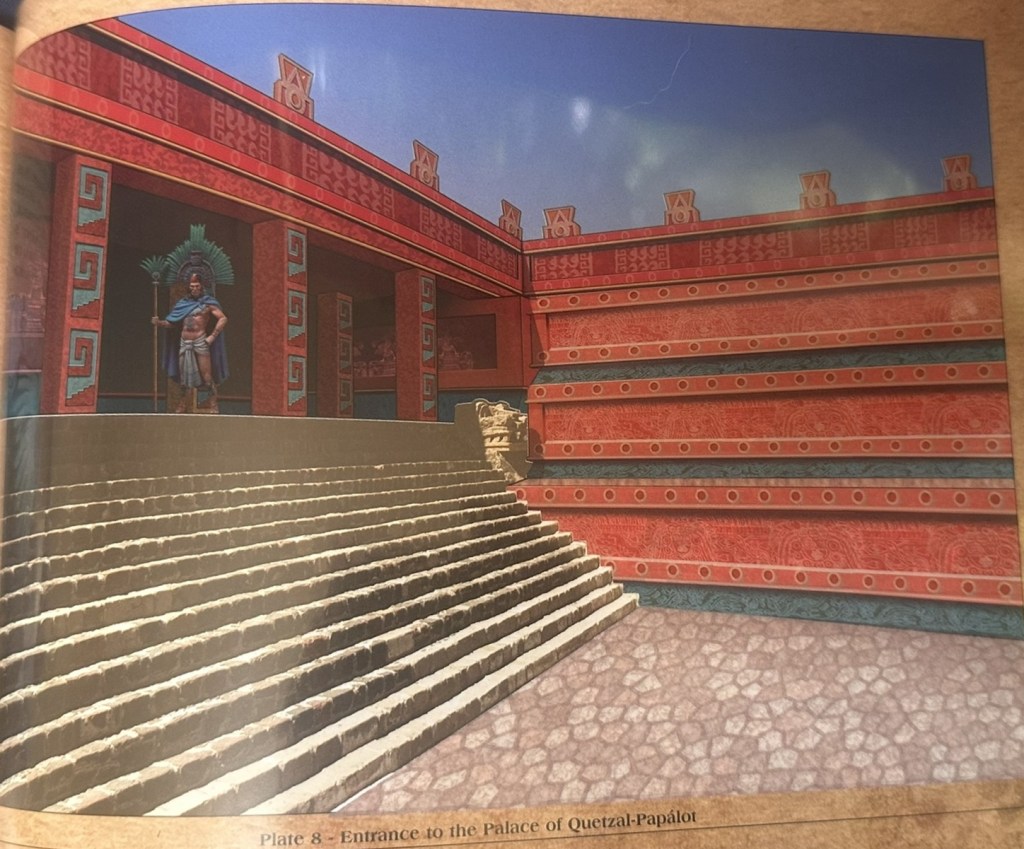
Pro-tip: Before exploring the pyramids, be sure to visit the Museum of Anthropology in Mexico City. This visit will provide you with essential historical context, enhancing your understanding of the pyramids’ importance and the significance of various structures. The book shown below can be purchased at the Anthropology museum and shows how various structures looked and the significance of each. Alternatively, consider hiring a knowledgeable guide at the pyramids to gain invaluable insights into the historical relevance of this remarkable site.
- A Brief History of Teotihuacan- A Civilization Without a Name
- The Avenue of the Dead: The City’s Ceremonial Spine
- The Three Legendary Pyramids
- Beyond the Pyramids: What Else to See
- The Residential Quarters: Life Beyond Ceremony
- The Mystery of Teotihuacan Funerary Masks
- The Site Museums
- The Great Mystery: What Happened to Teotihuacán?
- Essential Visitor Logistics (2026)
- Final Thoughts
A Brief History of Teotihuacan– A Civilization Without a Name
Teotihuacan emerged in the Basin of Mexico around the first century B.C. and grew rapidly over the following centuries into one of the largest and most influential cities in the ancient world. At its height – likely around 450 A.D. – it may have housed between 150,000 and 200,000 people, making it not only the largest city in the pre-Columbian Americas but also a major cosmopolitan center whose influence reached far beyond central Mexico through trade, religion, military presence, and artistic exchange.
Although the city is known today by the Aztec name Teotihuacan, its original inhabitants left behind no clearly deciphered written history, no recorded royal biographies, and no confirmed original name for the city, which means we still do not know exactly what its people called themselves, what language they primarily spoke, or how they identified ethnically. What archaeology has revealed, however, is extraordinary: a highly organized urban civilization with a carefully planned grid layout, apartment-style residential compounds, distinct ethnic neighborhoods that likely included Zapotec, Maya, and Gulf Coast migrants, advanced engineering such as citywide drainage systems and the deliberate rerouting of the San Juan River, and a cultural legacy that shaped art, architecture, religion, and politics across Mesoamerica for centuries.
Even after decades of excavation, Teotihuacan remains as compelling for what is still unknown as for what has already been uncovered – a monumental city that continues to feel less like a closed historical chapter and more like an enduring and magnificent puzzle.
The Avenue of the Dead: The City’s Ceremonial Spine
The Avenue of the Dead is the grand ceremonial road that runs through the heart of Teotihuacan, linking its most important plazas, pyramids, and architectural complexes. The name comes from later Nahua peoples, who believed the ruins lining the road were burial mounds. In reality, the avenue served as the structural and symbolic backbone of the city, organizing the surrounding streets, squares, and multi-family residential compounds. Stretching for almost 5 kilometers and measuring roughly 50 meters wide, it was the main axis of urban and ceremonial life – a place walked by residents, pilgrims, traders, and visiting elites alike.
It may also have served as a major processional route, reinforcing Teotihuacan’s importance as a religious, political, and economic center. One of the most memorable experiences here is acoustic rather than visual: many visitors stop in the middle of the avenue and clap, only to hear the sound bounce back in a strange, sharp chirping echo. Some describe it as a quack, others as a birdlike call. The effect likely comes from the stepped architecture of the surrounding pyramids and platforms, which scatter sound waves in unusual ways. Whether intentional or accidental, it adds to the feeling that Teotihuacan was designed not just to impress the eye, but to shape the entire sensory experience of ritual space.
The Three Legendary Pyramids
1. The Temple of the Feathered Serpent (La Ciudadela)
Located at the southern end near Gate 1, the Temple of the Feathered Serpent sits inside a massive, sunken courtyard known as La Ciudadela (The Citadel). While smaller than its northern neighbors, this pyramid is the most intricately decorated and politically significant structure on the site.
The Architecture Built in the iconic Mesoamerican talud-tablero (slope-and-panel) style, the pyramid’s facade is adorned with dozens of three-dimensional stone carvings that would have been painted in vivid polychrome colors—reds, blues, greens, and yellows gleaming under the highland sun.
The Imagery Alternating sculpted heads jut dramatically from the walls, depicting the undulating Feathered Serpent (later known to the Aztecs as Quetzalcóatl) navigating among seashells and marine motifs. These are paired with enigmatic, goggle-eyed visages, often associated with the rain and warfare deity Tlaloc—though some scholars now believe they may represent an earlier, primordial crocodilian creature or even a war-serpent headdress.
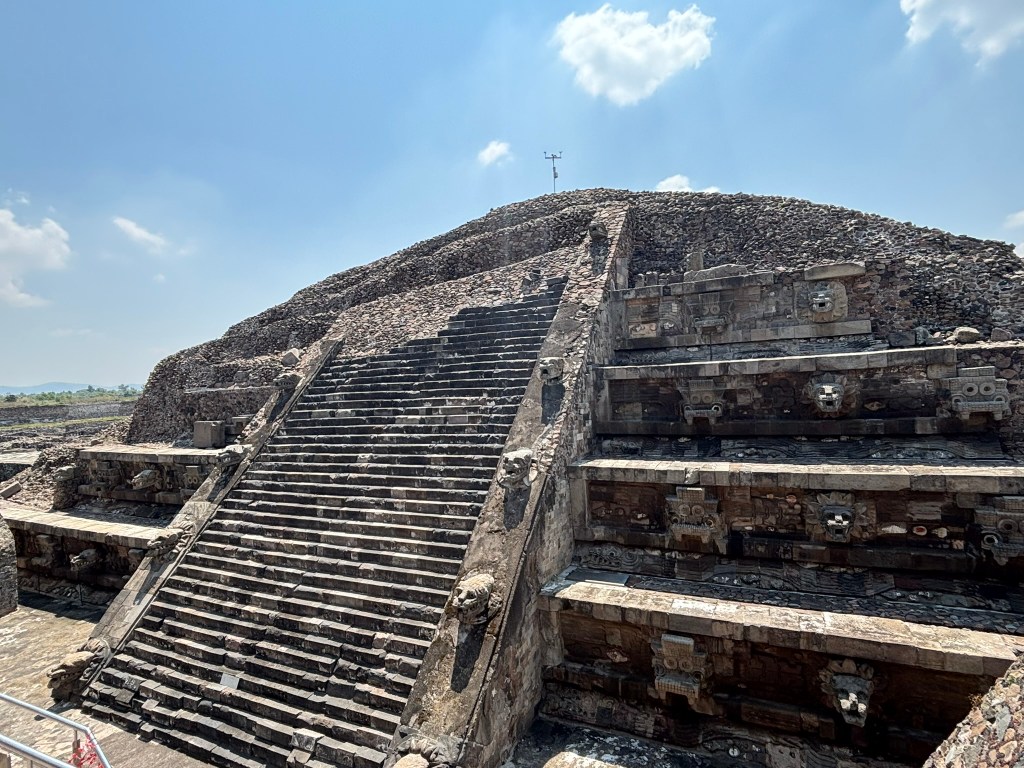
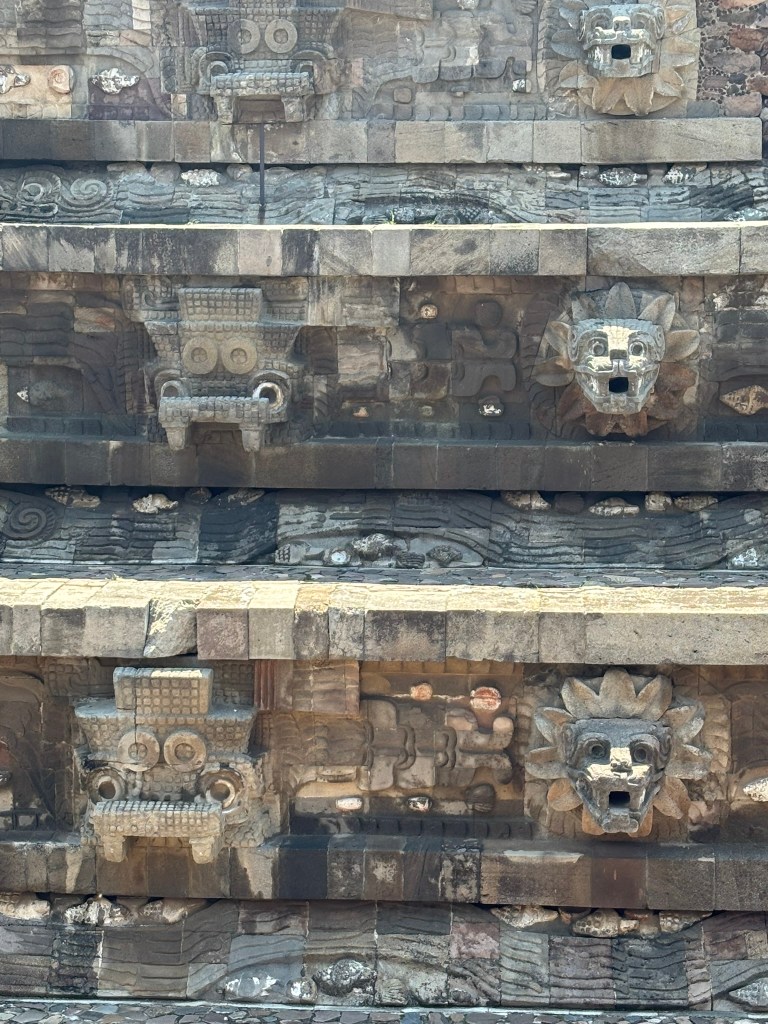
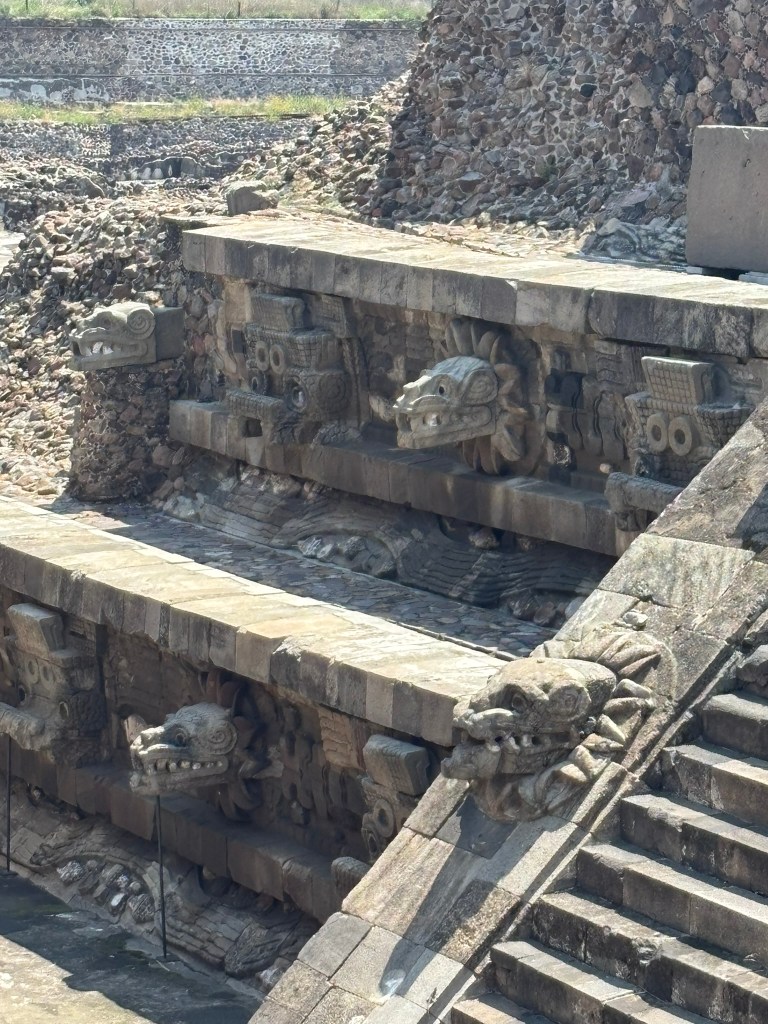
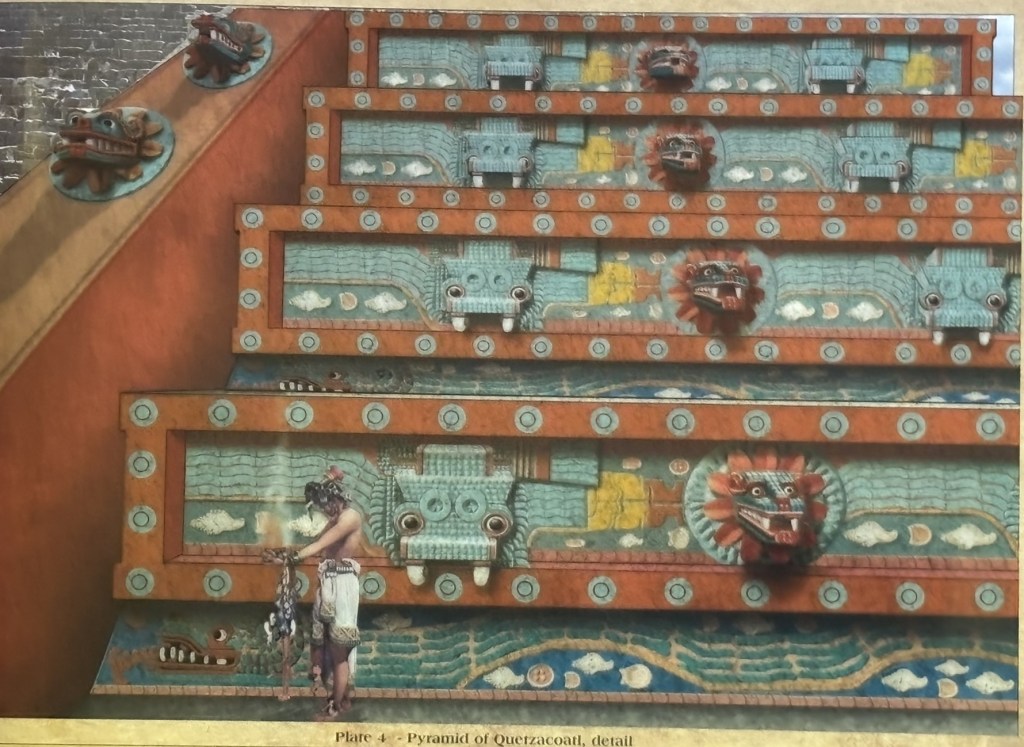
Pyramid of the Feathered Serpent is a good place to get panoramic photos of the complex with sun and moon pyramids
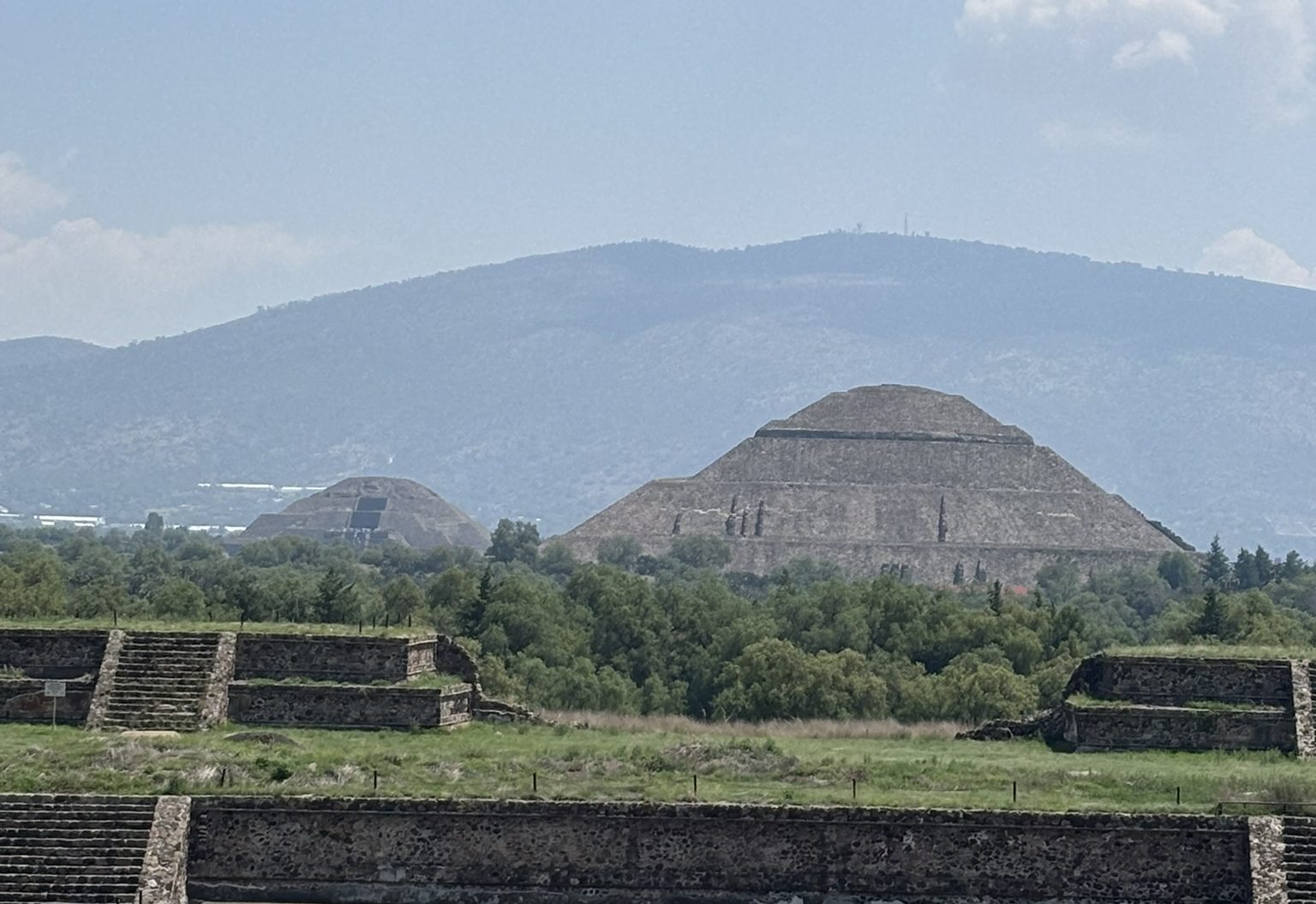
The Dark History of The Temple of the Feathered Serpent (La Ciudadela)
Archaeologists discovered mass graves of over 260 sacrificed individuals buried beneath the foundations, arranged in patterns corresponding to the Mesoamerican calendar. Most were young adult males, many with their hands bound behind their backs, accompanied by obsidian blades, shell ornaments, and jaw bones of sacrificial victims. This grim discovery suggests the grand temple served as the epicenter of military power and state-sanctioned rituals designed to legitimize a new ruling dynasty.
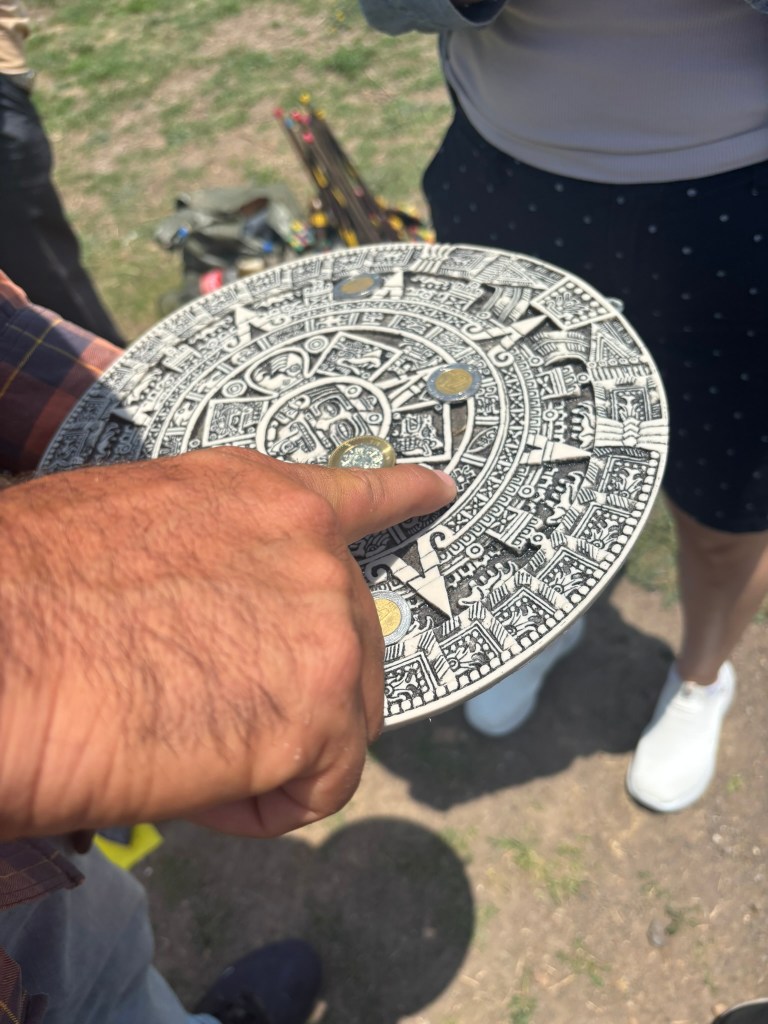
2. The Pyramid of the Sun
Positioned halfway down the Avenue of the Dead near Gate 2 and Gate 5, the Pyramid of the Sun is the undisputed giant of Teotihuacán. It ranks as one of the largest ancient structures in the Western Hemisphere—and the third-largest pyramid on Earth by volume.
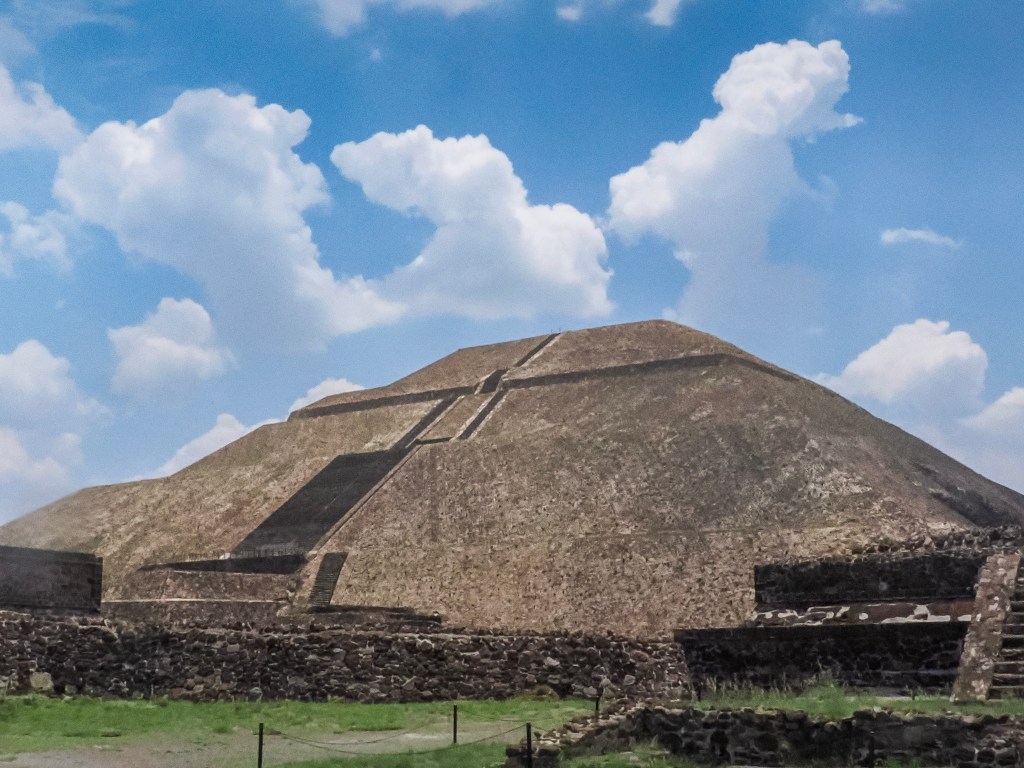
The Dimensions Constructed around 200 A.D. using millions of tons of hand-quarried volcanic stone (primarily tezontle) and compacted earth, the pyramid features a massive footprint measuring roughly 230 meters (750 feet) on each side and towering over 65 meters (213 feet) into the sky. An estimated 10,000 workers labored for decades to complete it.
The Cosmic Purpose Oriented perfectly westward to align with the setting sun on two specific days—August 12 and April 29—the pyramid marks the beginning of the agricultural cycle in the Mesoamerican calendar. It was originally covered in smooth lime plaster and painted in brilliant, vibrant reds, creating a monument that would have been visible for miles across the valley floor.
The Hidden Tunnels
In 1971, archaeologists discovered a natural clover-shaped cave system stretching directly beneath the center of the pyramid, accessed by a 100-meter-long tunnel. This discovery was groundbreaking: it indicated the entire structure was intentionally built over a sacred primordial site. In Mesoamerican cosmology, caves were portals to the underworld, birthplaces of humanity, and sources of life-giving water. The pyramid, it seems, was designed to mark this axis mundi—the cosmic center of the universe.
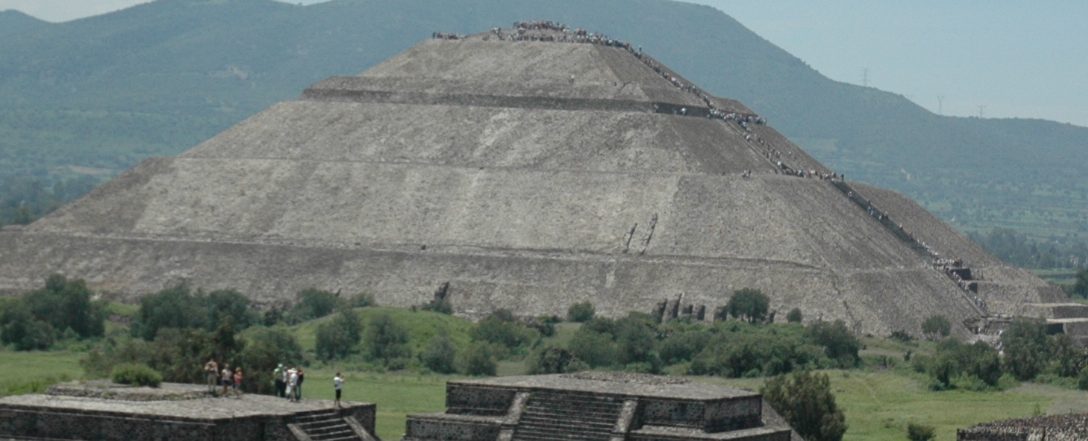
Since 2020, visitors are no longer allowed to climb the Sun Pyramid, which was permitted in 2008 (my first visit to the pyramids). This significant policy change arose from concerns about the safety and preservation of the ancient structure, as increasing foot traffic was causing wear and tear on the monument. Prior to the restriction, many tourists enjoyed the exhilarating experience of ascending the pyramid to take in breathtaking views of the surrounding area and to appreciate the site’s historical significance. Now, while visitors can still explore the base of the pyramid and learn about its rich history through guided tours, the lack of access to the summit has sparked discussions among both tourists and local historians about the balance between tourism and conservation.
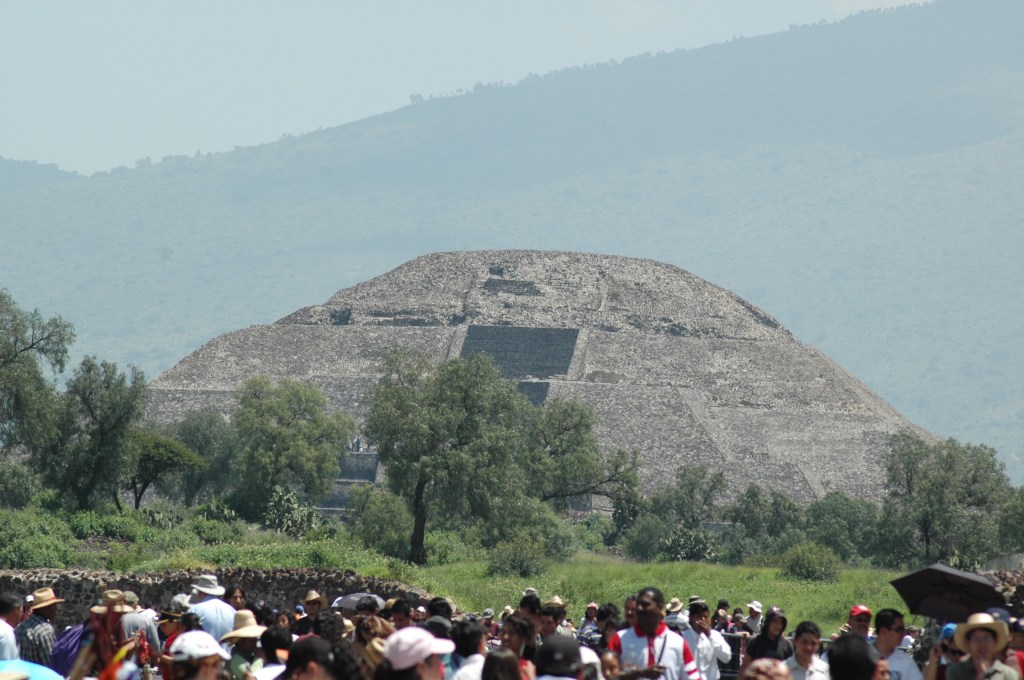
3. The Pyramid of the Moon
Anchoring the far northern terminus of the Avenue of the Dead near Gate 3 and Gate 4, the Pyramid of the Moon serves as the visual climax of the entire city layout.
The Visual Illusion
Although it stands shorter than the Pyramid of the Sun at 43 meters (141 feet) tall, it appears to be the exact same height because it was strategically built on naturally higher ground. Its slope perfectly mirrors the silhouette of Cerro Gordo, the sacred mountain rising directly behind it—a deliberate architectural choice that unified the built environment with the natural landscape in a way that still astonishes visitors today.
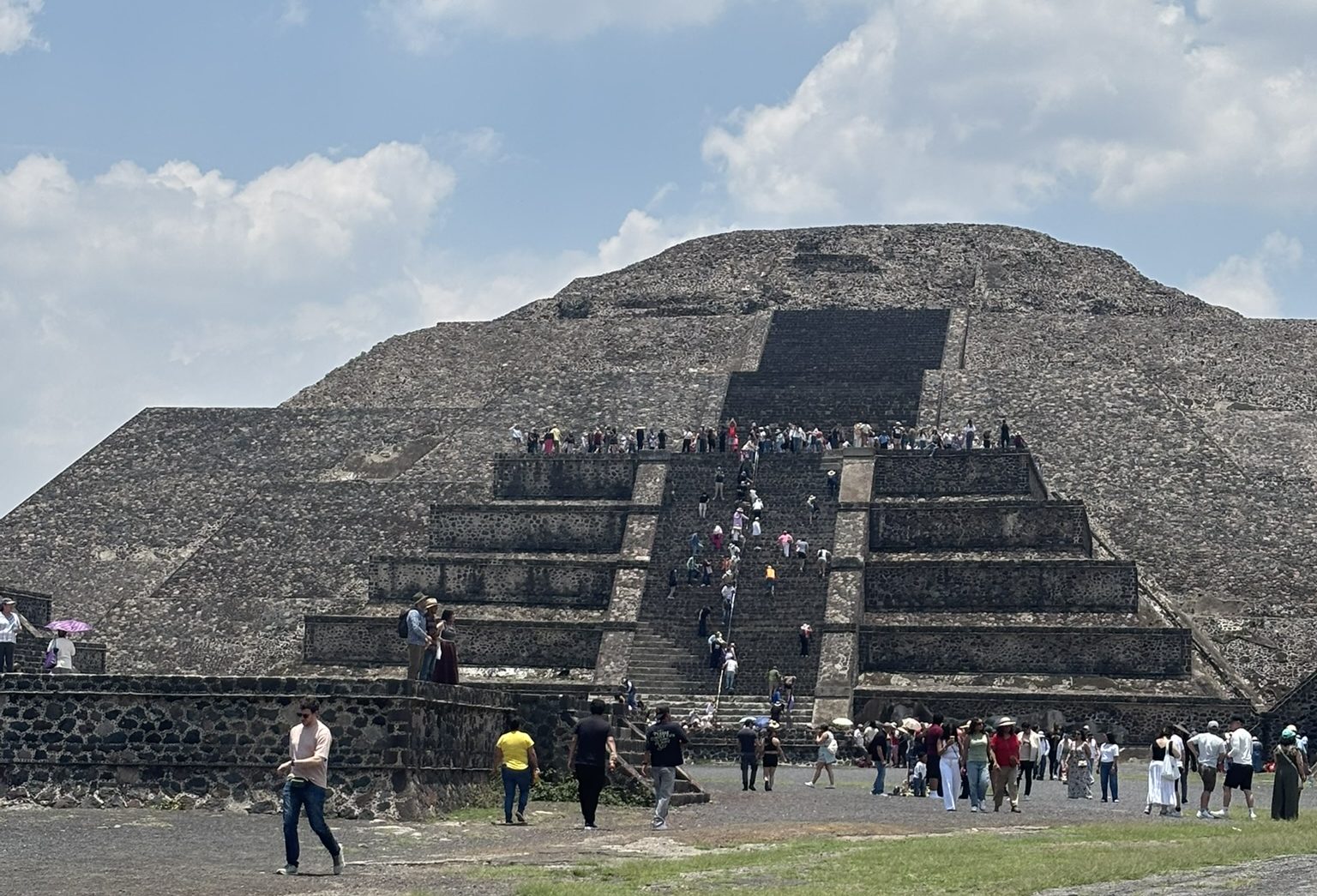
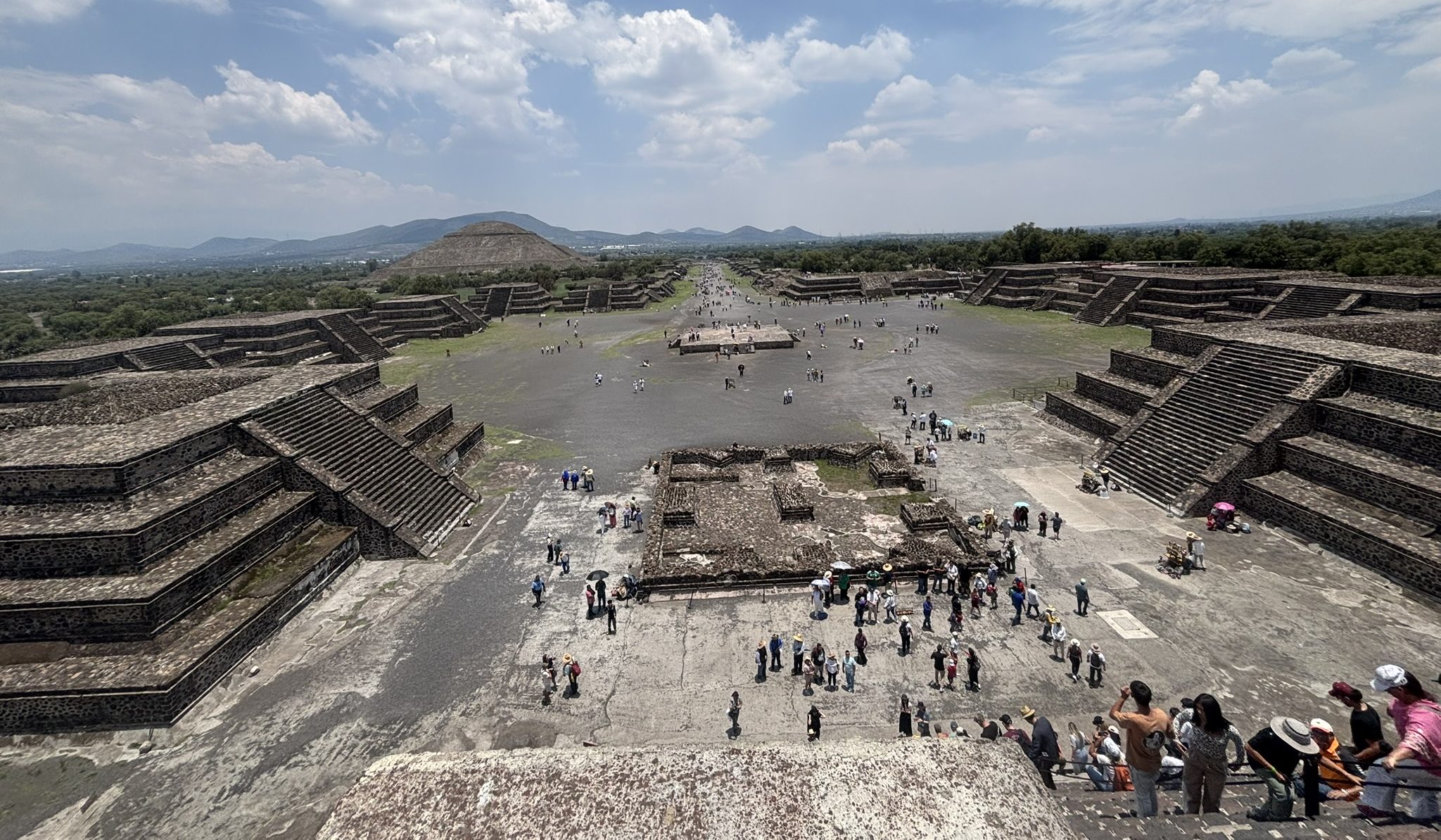
The Plaza of the Moon The pyramid faces a grand, symmetrical plaza surrounded by 12 smaller temple platforms arranged in a U-shape. This public arena was designed for highly orchestrated theatrical and religious ceremonies, with the ruling elite performing rituals visible to thousands of assembled citizens.
The Sacred Sacrifices Excavations inside the multi-layered interior walls have revealed tombs containing sacrificed animals—jaguars, pumas, wolves, eagles, and rattlesnakes—alongside bound human captives, some of foreign origin. These dedicatory offerings, deposited during successive construction phases between 200 and 450 A.D., signify the temple’s role in celebrating state triumphs, foreign conquests, and cosmic renewal ceremonies.
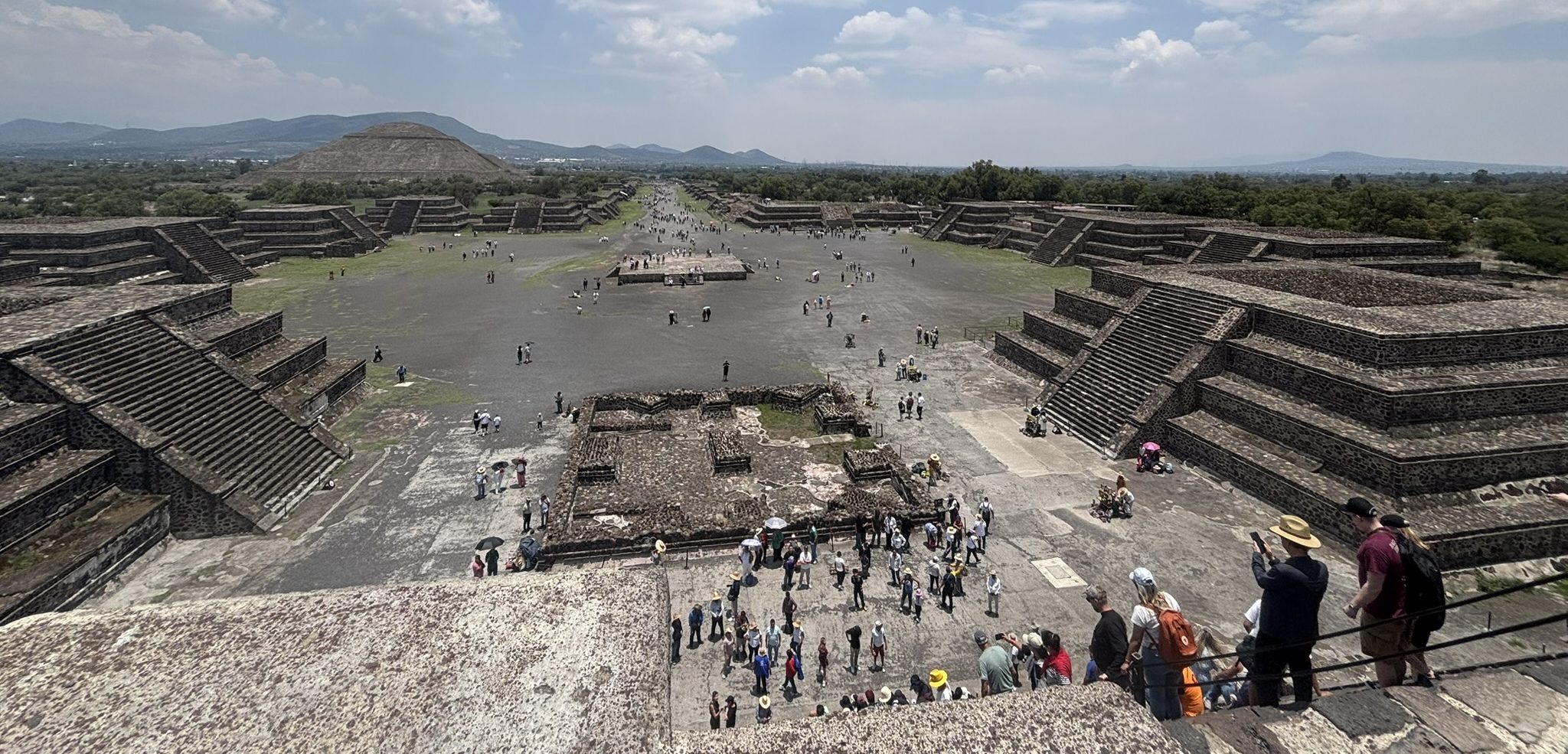
You can climb halfway to the top of Moon Pyramid, and you’ll enjoy a panoramic view of the entire valley and archaeological site.
Beyond the Pyramids: What Else to See
The Palace of Quetzalpapálotl
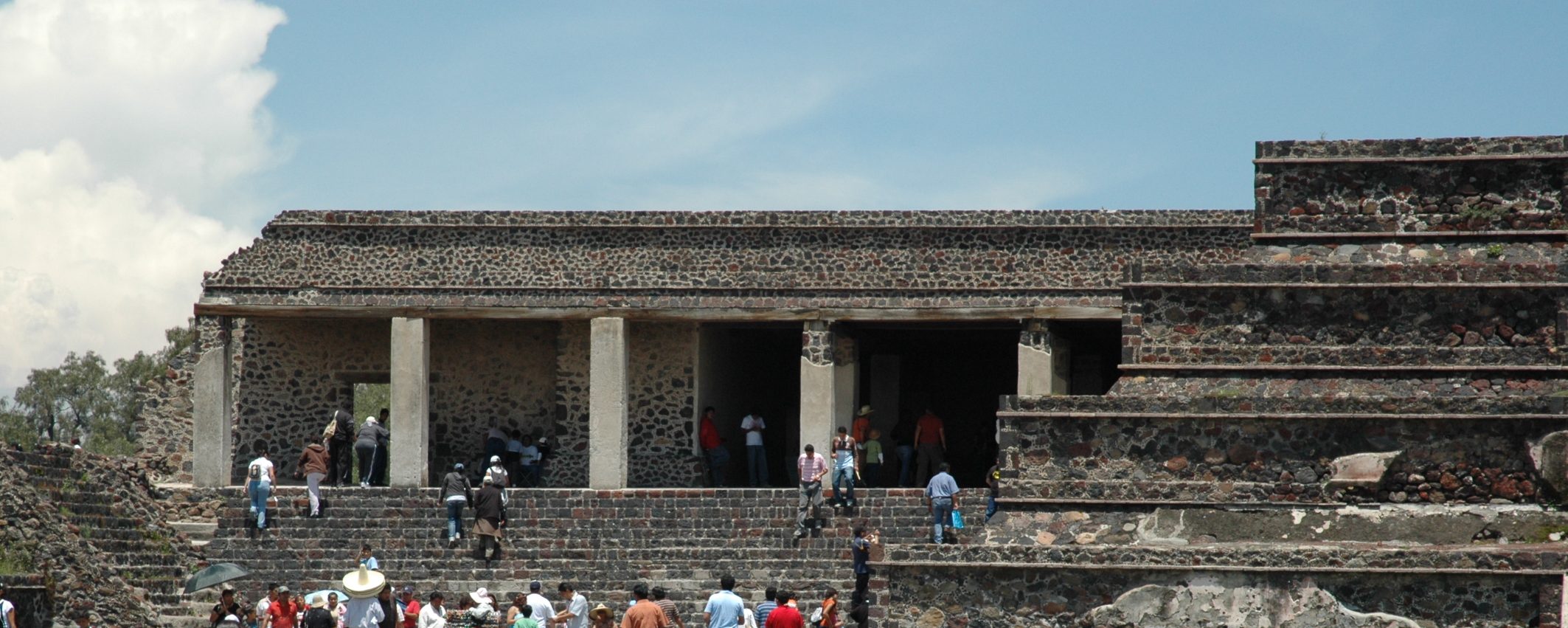
Located just southwest of the Plaza of the Moon, this reconstructed palace complex offers a glimpse into elite residential life. Its courtyard features intricately carved pillars depicting the quetzal-butterfly (a mythological creature combining bird and insect), with traces of original pigment still visible. The adjoining Palace of the Jaguars contains well-preserved murals of feathered jaguars blowing conch shell trumpets.
Superimposed buildings
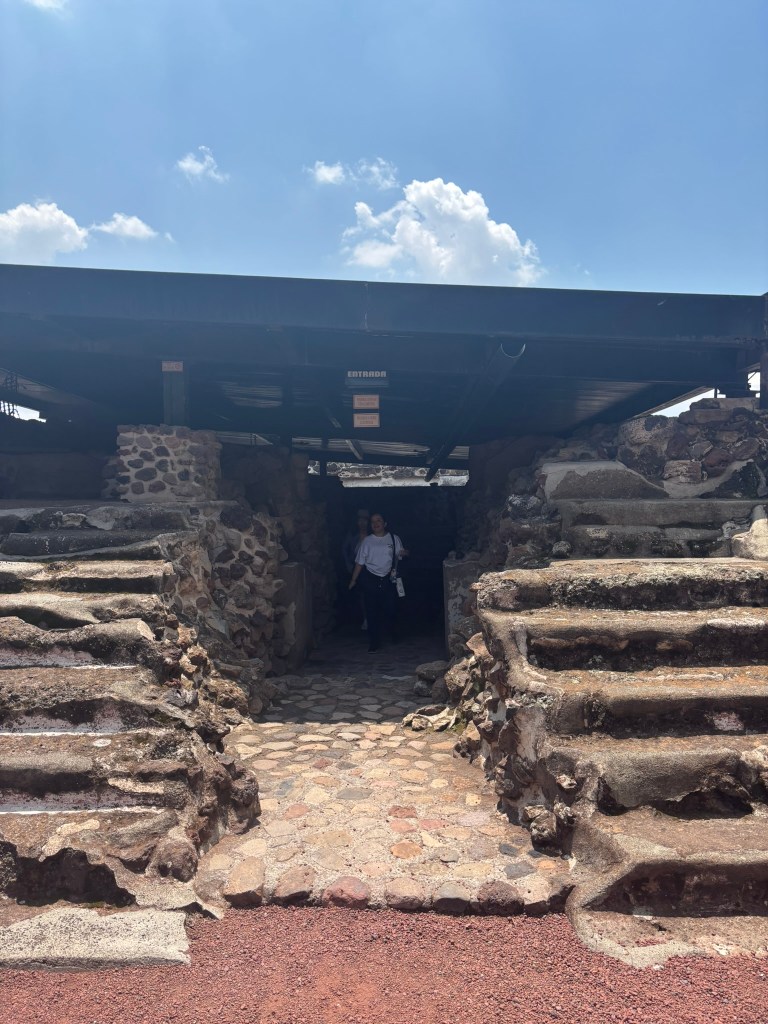
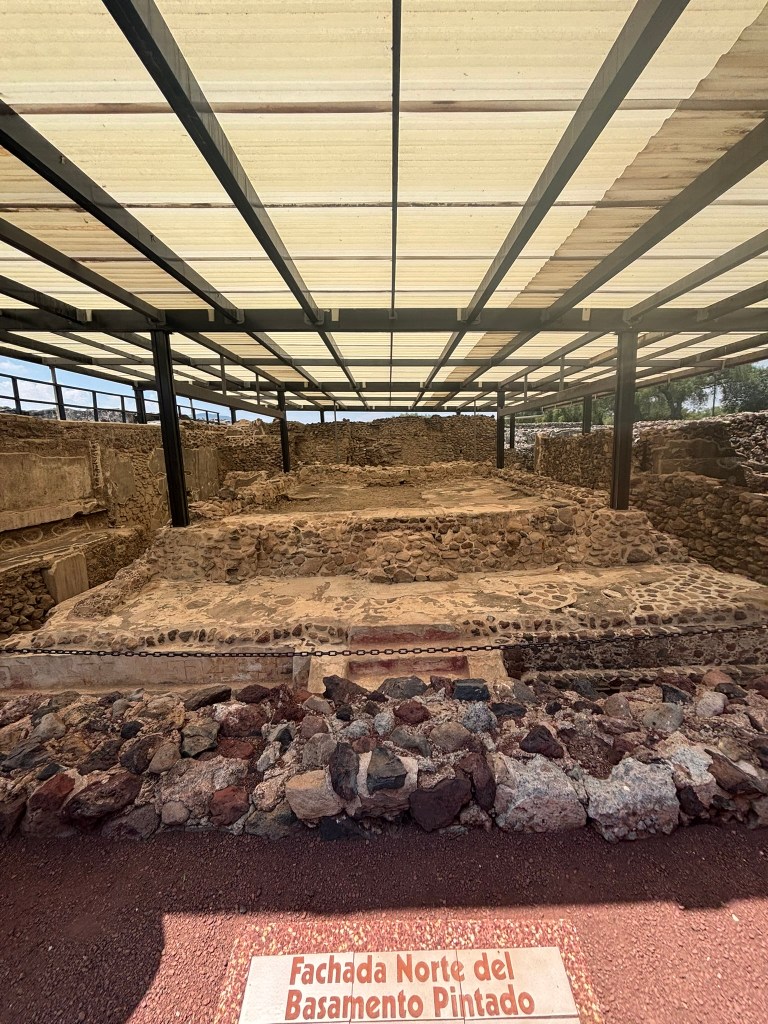
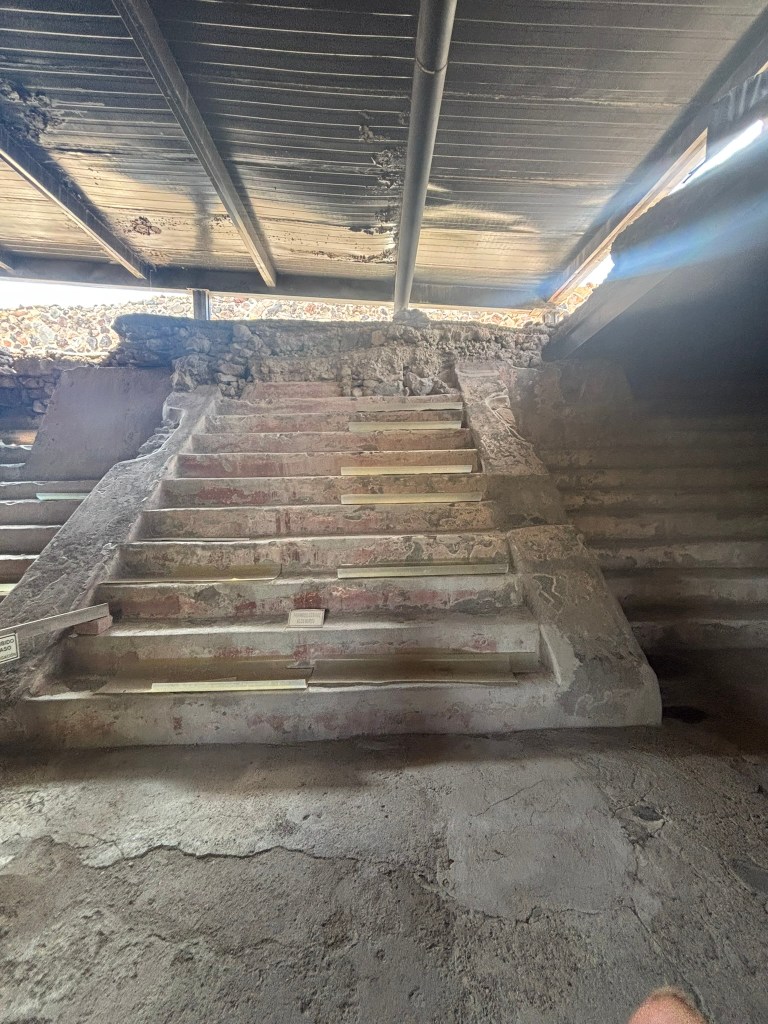
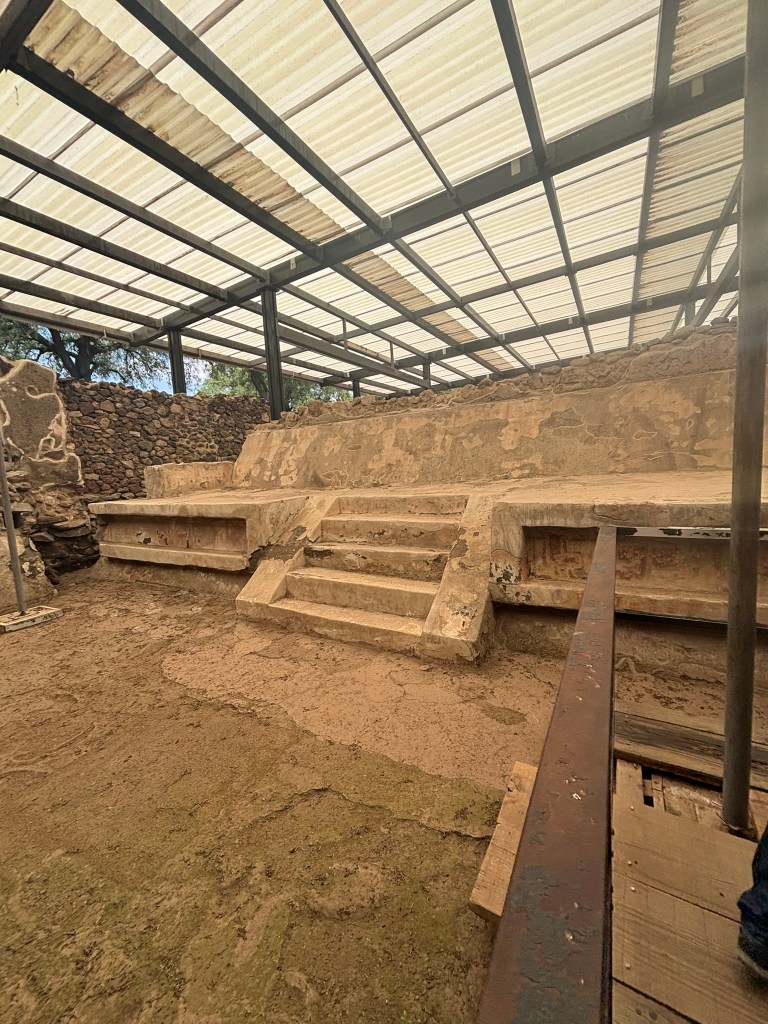
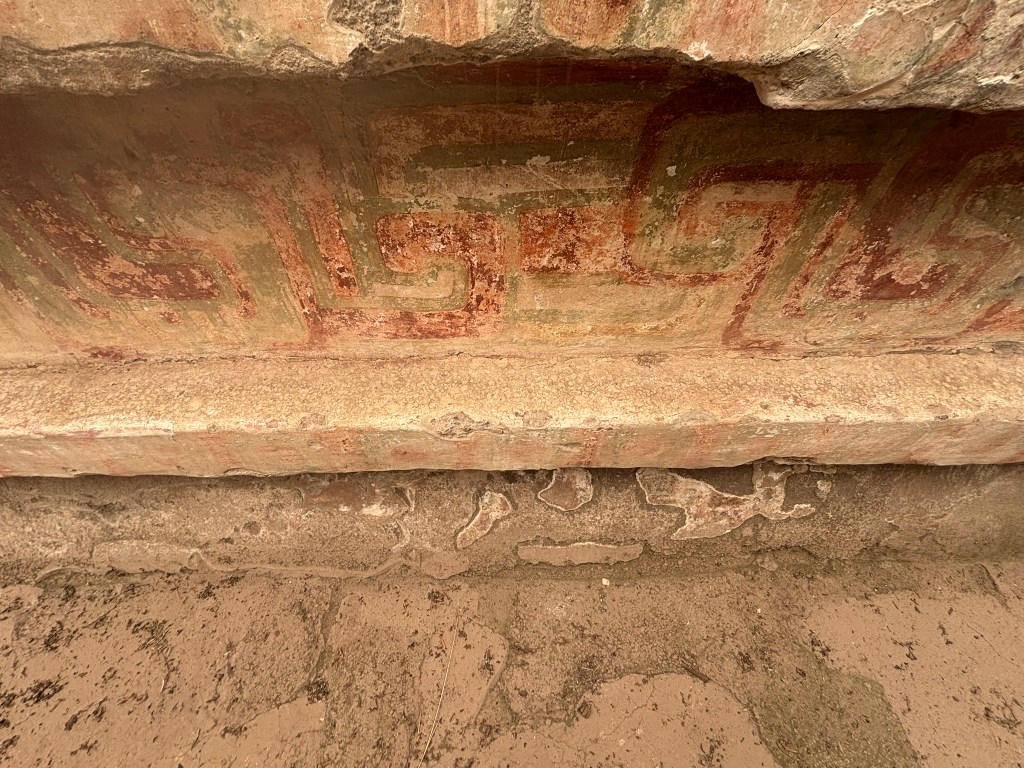
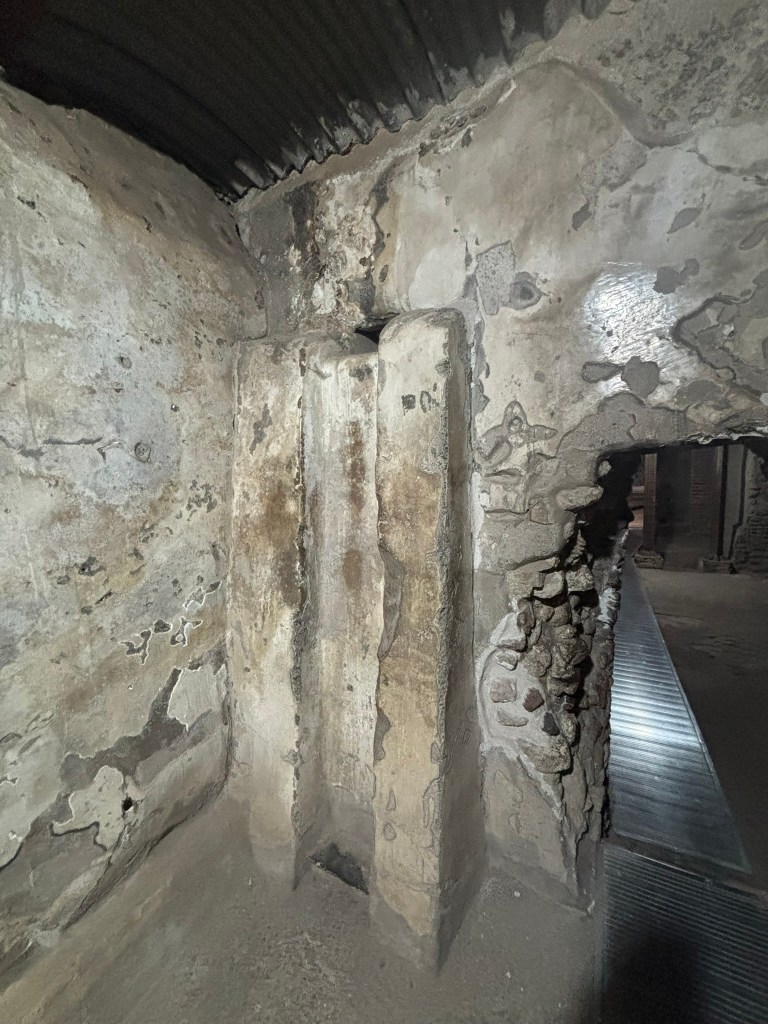
Another fascinating stop along the Avenue of the Dead is the complex known as the Superimposed Buildings, where archaeologists uncovered several layers of construction from different periods of occupation. Within this area lies the North Facade of the Painted Platform, where traces of murals still survive on stairways, moldings, and walls. These faded red and green geometric motifs, circular forms, and floral designs reveal how richly painted even exterior architectural surfaces once were. The layered architecture here is especially revealing, because it shows how Teotihuacan constantly rebuilt, expanded, and reshaped its ceremonial spaces over time.
Puma Mural
As you continue walking toward the Pyramid of the Moon, keep an eye out for the remarkable Puma Mural on the east side of the Avenue of the Dead. Described on-site as the largest mural yet found at Teotihuacan, it depicts a puma rather than a jaguar, identified by the absence of the black spots that would mark a jaguar’s coat. With extended claws, a long tail, and diagonal bands of red, white, and blue beneath its legs, the animal appears to be crossing a rushing current. According to the site’s interpretation, the puma may have been associated with the sun in Teotihuacan’s urban cosmogram, while the green circles along the lower frame may symbolize “precious liquid.” Together with the nearby painted platforms and layered buildings, the mural shows how deeply color, sacred meaning, and architectural symbolism were woven into the city’s ceremonial core.
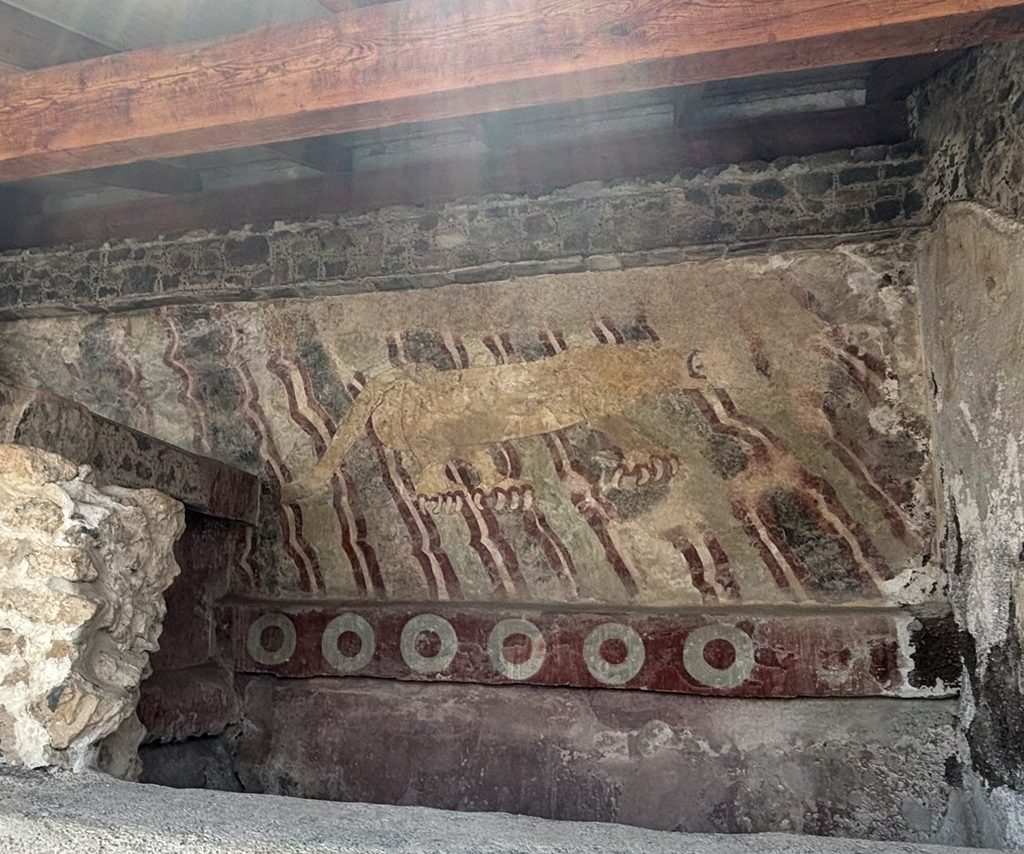
The remains of murals across the site make one thing clear: Teotihuacan was once a city saturated with color. Walls, stairways, platforms, and inner chambers were not simply structural elements – they were active surfaces of meaning, turning architecture itself into a form of visual storytelling.
The Residential Quarters: Life Beyond Ceremony
One of the most remarkable things about Teotihuacan is that it was not only a ceremonial center – it was also a highly organized city built for daily life. Its residential quarters were arranged in large apartment-style compounds that housed families, artisans, merchants, and perhaps communities organized by ethnicity, occupation, or social rank.
These compounds were often built around central courtyards and included living spaces, altars, drainage systems, storage areas, and work zones. Some were decorated with murals and architectural details that suggest domestic life was closely intertwined with ritual and identity. Archaeologists have also found evidence of workshops within these compounds, showing that many residents lived and worked in the same spaces.
This urban layout reveals a surprisingly sophisticated model of city planning. Teotihuacan was not a place of scattered huts overshadowed by temples; it was a dense, structured metropolis where everyday life unfolded within an environment shaped by religion, craftsmanship, and social order.
The Mystery of Teotihuacan Funerary Masks
Among the most haunting objects associated with Teotihuacan are its funerary masks, sometimes called death masks. These carved stone faces, often inlaid with turquoise, shell, obsidian, and other precious materials, are among the most striking artifacts from the city.
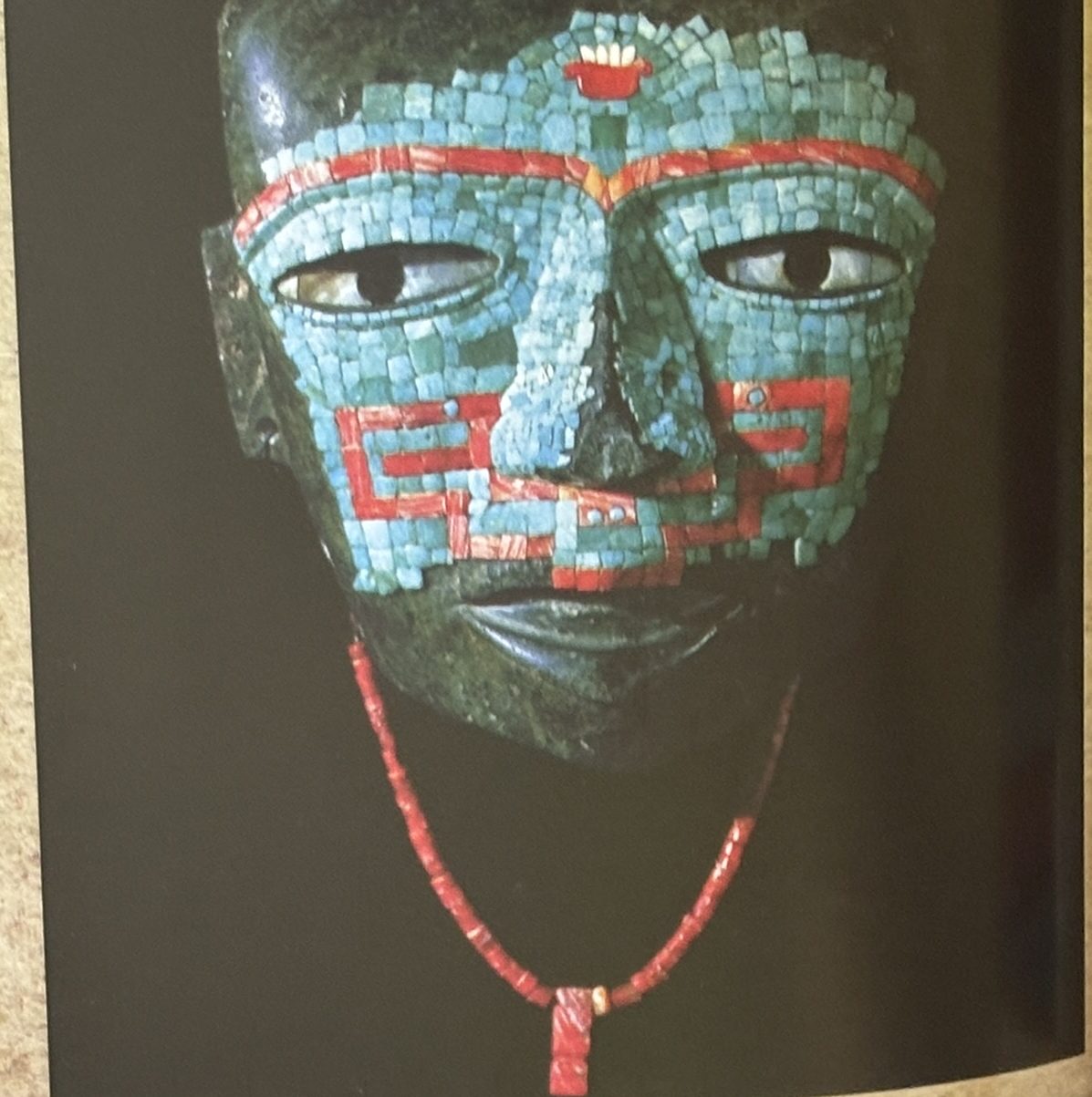
They were likely not realistic portraits of specific people. Instead, they seem to have served ritual and symbolic purposes tied to transformation, sacred identity, and the journey between the human world and the divine realm. Many have been found in burial or offering contexts, suggesting they may have accompanied elite individuals into the afterlife or played a role in ancestor veneration.
Their smooth, idealized features tell us something important about Teotihuacan itself. Unlike cultures that celebrated named rulers through portrait sculpture, Teotihuacan appears to have emphasized collective sacred power over individual glorification. These masks are beautiful, mysterious, and deeply revealing: they suggest a civilization preoccupied with ritual, sacrifice, spiritual protection, and the unseen forces that shaped life and death.
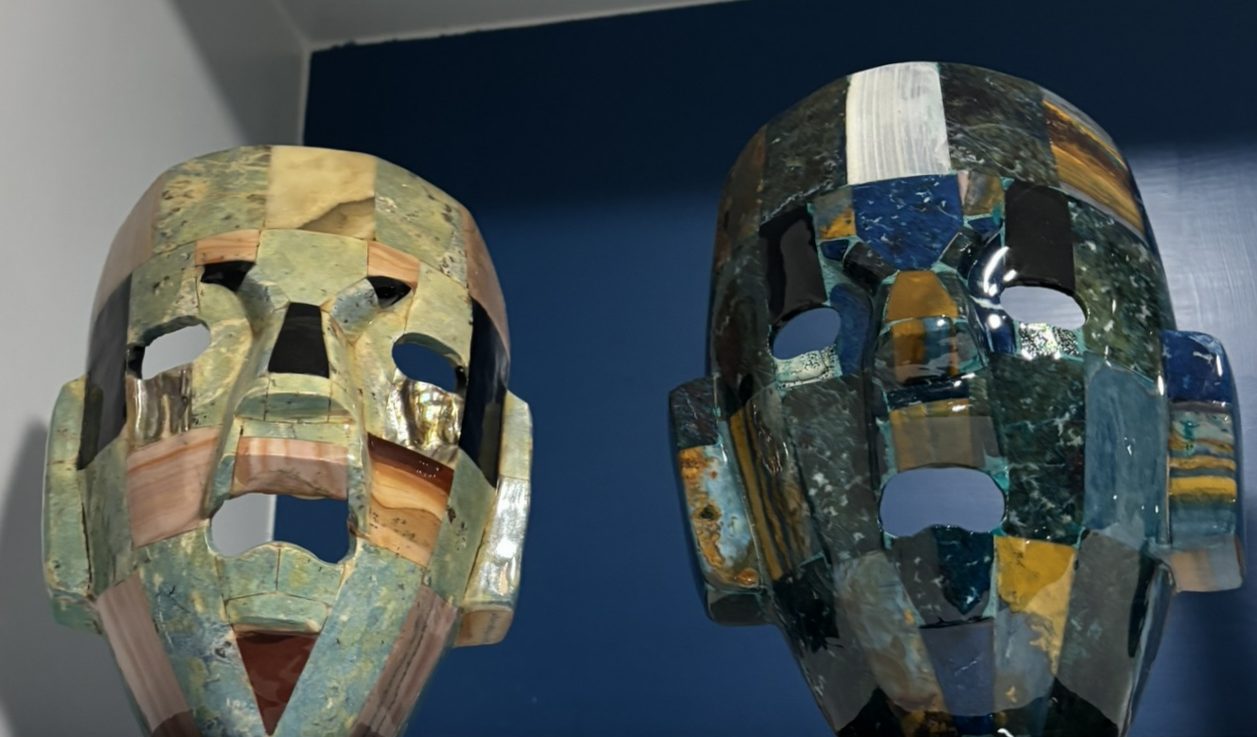
You can purchase funerary masks from the vendors along the Avenue of the Dead. I have two—one that I bought in 2008 and a new one from this visit. They make for great souvenirs from the pyramids.
The Site Museums
Two museums bookend your visit:
- The Teotihuacán Site Museum (near Gate 5) houses artifacts recovered from decades of excavation, including obsidian tools, ceramic figurines, and a remarkable 1:1000 scale model of the city at its peak
- The Beatriz de la Fuente Mural Museum displays actual murals removed from excavated structures, preserved in climate-controlled conditions
The Great Mystery: What Happened to Teotihuacán?
Around 550–650 A.D., the great city met a violent end—and the circumstances remain one of archaeology’s most tantalizing cold cases. Several theories compete to explain the collapse:
Internal Revolt
Evidence suggests the city’s ceremonial center was deliberately burned and destroyed—but only specific buildings associated with the ruling elite were targeted. Residential neighborhoods were largely spared. This selective destruction points to an internal uprising, perhaps by oppressed citizens or rival factions overthrowing a dynasty that had held power for centuries.
Environmental Catastrophe
Pollen analysis and climate data indicate that severe droughts struck central Mexico during the 6th century, coinciding with the city’s decline. Deforestation to fuel lime plaster production may have accelerated soil erosion and water shortages. A stressed population facing crop failures would have been primed for social upheaval.
Foreign Invasion
Some researchers propose that external enemies—possibly rising powers from the Gulf Coast or western Mexico—sacked the city. However, there is limited evidence of foreign military occupation, making this theory less widely accepted.
Volcanic Disruption
The massive eruption of Ilopango in present-day El Salvador around 535 A.D. triggered a volcanic winter that disrupted agriculture across Mesoamerica. Combined with local environmental pressures, this regional catastrophe may have delivered a final blow to an already weakened state.
The most likely scenario? A convergence of all these factors—environmental stress, resource depletion, social inequality, and political instability—creating a perfect storm that brought down one of the ancient world’s greatest civilizations in a fiery internal revolution.
What we know for certain is haunting: after the collapse, the city was never reoccupied as a living metropolis. It became a pilgrimage site, a place of reverence and mystery, visited by the Toltecs and later the Aztecs, who incorporated its gods and symbols into their own traditions. The Aztec emperor Moctezuma himself made pilgrimages here to honor the old gods.
Essential Visitor Logistics (2026)
| Category | Details |
|---|---|
| Hours | Open 365 days a year, 8:00 AM – 5:00 PM (last entry 4:30 PM) |
| General Admission | $210 MXN for international visitors / $105 MXN for Mexican nationals |
| Sunday Entry | Free for Mexican citizens and legal residents with valid official ID |
| Climbing Access | Upper stairs of the main pyramids currently restricted for preservation |
| Getting There | Autobuses Teotihuacán depart every 15 minutes from Mexico City’s Terminal del Norte (1-hour ride, ~$60 MXN each way) |
| Best Time to Visit | Arrive at opening (8:00 AM) to beat crowds and midday heat; weekdays are significantly less crowded than weekends |
| What to Bring | Sunscreen, hat, water, comfortable walking shoes—the site spans over 2 square kilometers with minimal shade |
Final Thoughts
Teotihuacán is more than an archaeological site—it’s a window into a vanished world whose builders remain anonymous yet whose influence echoed across Mesoamerica for a millennium. Standing atop the Plaza of the Moon, gazing south along the Avenue of the Dead as the morning sun illuminates the Pyramid of the Sun, you’ll understand why the Aztecs believed only gods could have built such a place.
The city’s original inhabitants may be lost to history, but their vision endures in stone. And the mysteries they left behind—who they were, what they believed, and why their civilization ended so abruptly—continue to draw archaeologists, historians, and travelers seeking to understand one of humanity’s most enigmatic achievements.
By the time you finish seeing all the important sites at the pyramids, you will be very hungry. The best place to get food is La Gruta restaurant, close to Gate 5. This is a unique cave restaurant that is set in an underground cave and serves great Mexican food and drinks

