Imagine walking down a busy street in modern Mexico City and discovering the heart of the Aztec Empire. Visiting the Templo Mayor is more than stop in Zocalo. it’s a trip through history, myths, and amazing archaeological finds. As you get closer to the ruins, the tall buildings and detailed carvings tell stories from long ago, highlighting a civilization that honored many gods and held important ceremonies.
As you explore, you might feel a deep respect for the spirits of ancestors watching over the ruins. The Templo Mayor reminds us of the richness and complexity of Mesoamerican cultures, sparking curiosity that goes beyond time and place. You leave not just with a greater appreciation for Mexico City’s history, but with a better understanding of how the past influences today’s lively culture.
- 🏛️ Practical Guide for Your Visit
- From Imperial Capital to Hidden Ruins
- The Electric Discovery That Changed Everything
- Visualizing the Ancient Valley
- A Metropolis Built on Water
- Recreating the Sacred Precinct
- Stepping Onto the Sacred Grounds
- What to Expect When You Visit Today
- 🌟 The Verdict: Why It Can’t Be Missed
🏛️ Practical Guide for Your Visit
To ensure your journey into the Aztec past goes seamlessly, keep these essential travel details in mind:
- Location: Right in the heart of the Centro Histórico, located at Seminario 8, immediately northeast of the Zócalo main plaza and right next to the Metropolitan Cathedral.
- How to Get There: Take the Mexico City Metro Line 2 directly to the Zócalo/Tenochtitlan station. The museum entrance is just a brief walk from the exit.
- Hours: Open Tuesday through Sunday from 9:00 AM to 5:00 PM. The site is strictly closed on Mondays.
- Admission Fees: General entry is 95 MXN (approximately $5.50 USD), which grants access to both the open-air ruins and the indoor museum rooms. It is completely free for children under 13, students, teachers, and senior citizens with valid IDs.
- Pro-Travel Tip: Avoid visiting on Sundays if you want to dodge massive crowds; Sunday is the free admission day for Mexican residents and expats.
- Security & Baggage: You must clear a security checkpoint upon entry. Large bags, backpacks, food, and water bottles are not allowed into the exhibition areas. You can use the museum’s secure on-site baggage locker service for free to hold your items while you tour.
- What to Wear: The first half of the tour takes place completely outdoors on elevated metal and wood boardwalks. Wear comfortable walking shoes, a hat, and sunscreen, as there is very little shade over the ruins before you enter the air-conditioned museum.
From Imperial Capital to Hidden Ruins
In 1325, the Mexica (Aztec) people founded their capital, Tenochtitlan, on an island in the middle of Lake Texcoco (Now Mexico City). At its center stood the Templo Mayor—the literal and spiritual core of their universe.
After the Spanish Conquest in 1521, the temple was destroyed. The conquistadors used its monumental stones to build the massive Metropolitan Cathedral that still stands next to the site today. For centuries, the remains of the Aztec empire lay completely buried and forgotten beneath the growing capital of New Spain.
The Electric Discovery That Changed Everything
The temple stayed hidden until 1978, when a crew of electrical workers digging near the city’s main plaza struck something hard. It was a massive, finely carved stone monolith depicting the dismembered goddess Coyolxauhqui (Bells-Her-Cheeks). Finding the monument pinpointed the exact, long-lost location of the Templo Mayor, the main religious and political center of the Aztec capital, Tenochtitlan. This discovery subsequently launched one of Mexico’s largest and most significant archaeological excavation projects.
According to myth, her brother—the patron god Huitzilopochtli—killed her when she attempted to assassinate their mother. This single, accidental discovery sparked a massive excavation, revealing that the grand Aztec temple was waiting just beneath the pavement.
Today, visitors can view the original monolith at the on-site Museo del Templo Mayor, which stands immediately adjacent to the open-air archaeological ruins where it was first found
Visualizing the Ancient Valley
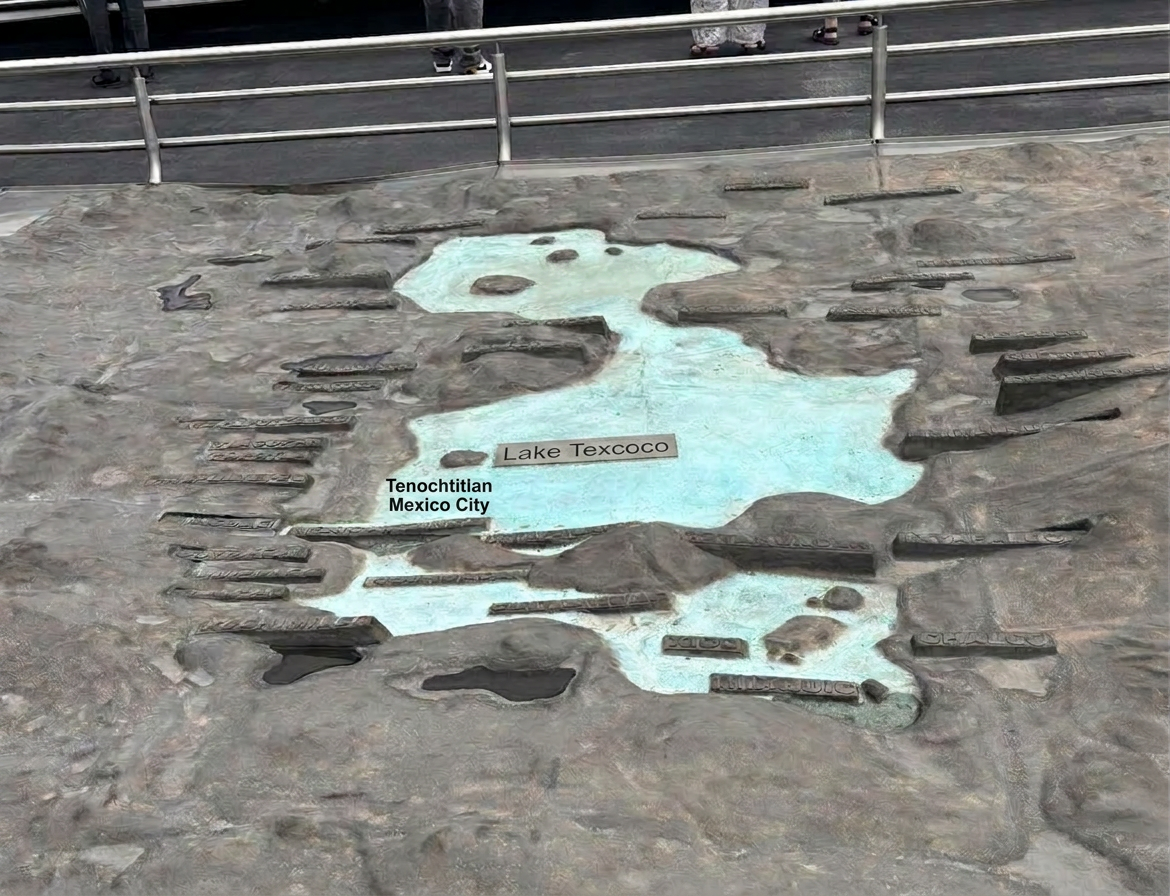
Before you even step into the ruins, your visit begins with an incredible perspective shift. Out on the viewing platforms, you will encounter a large topographical scale model that recreates the ancient Valley of Mexico and Mexico City.
The model highlights the vast turquoise expanse of the historical Lake Texcoco system, contrasting sharply against the surrounding mountainous terrain. Looking at this map, you can clearly see how Tenochtitlan was meticulously engineered right out of the water, connected to the mainland only by narrow causeways. It serves as a powerful visual reminder of how drastically this geography has changed to become the concrete metropolis you are standing in today.
A Metropolis Built on Water
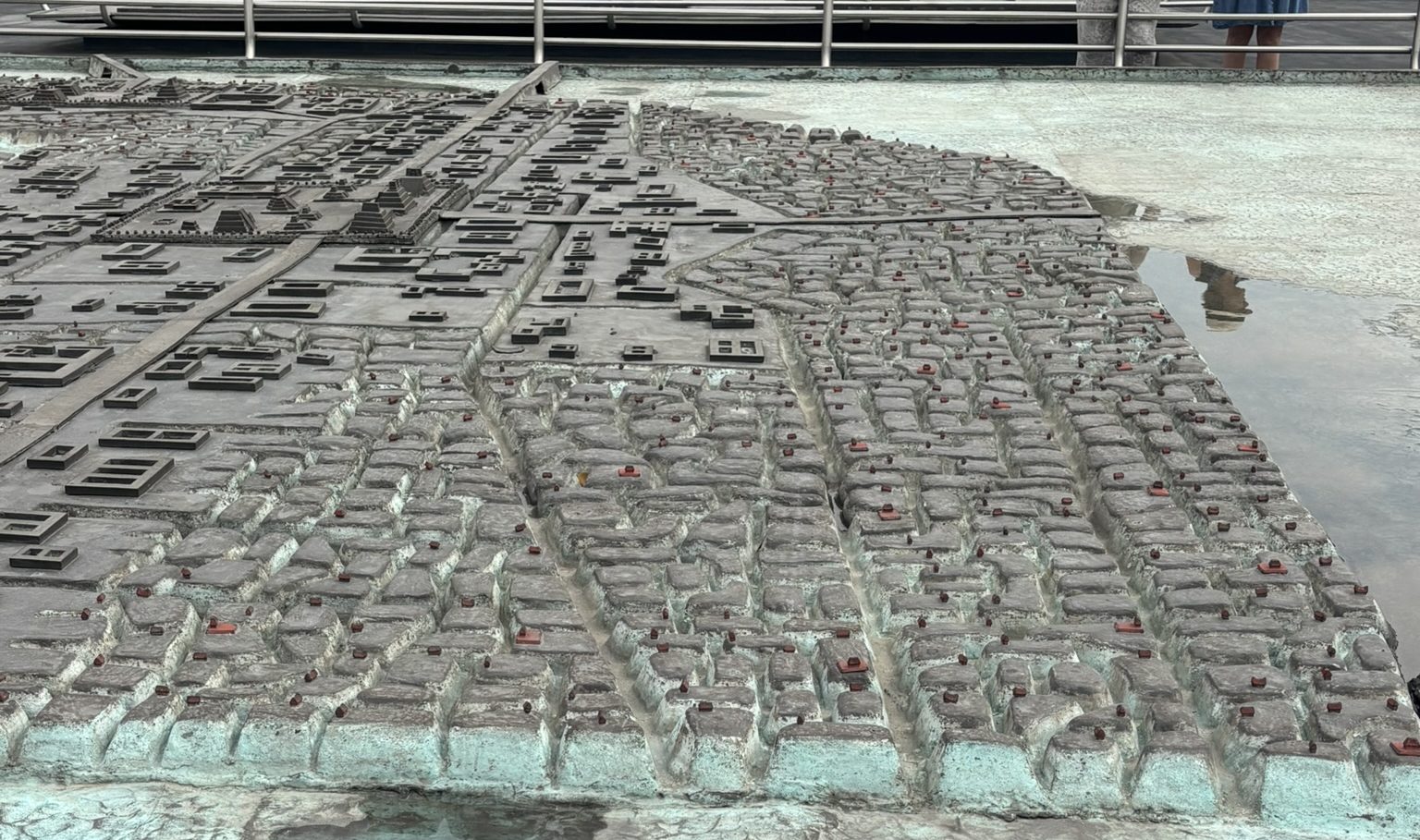
Getting a closer look at the city layout on the scale model reveals the sheer brilliance of Aztec urban planning. The city wasn’t just a random cluster of buildings; it was a highly organized, dense grid of residential neighborhoods (calpullis) stretching across the water.
In this detailed view, you can see how the streets were a combination of packed earth walkways and turquoise water canals. These canals acted as the main highways of Tenochtitlan, allowing thousands of canoes to navigate daily between homes, markets, and agricultural plots. Standing there and comparing this highly advanced Venice-like water city to the modern traffic of Mexico City is an unforgettable experience.
What Happened to the Lakes?
- Spanish Siege (1521): Conquistadors intentionally destroyed Aztec floodgates and filled canals with debris to build standard European roads.
- The Great Drainage (1607–1900s): To stop catastrophic colonial flooding, engineers built massive tunnels to permanently divert water out of the mountain valley.
- The Concrete Overhaul: By the mid-20th century, the final lakebeds were completely drained to pave the way for urban mega-expansion.
The Sinking Modern Legacy
Because modern Mexico City sits on this soft, empty clay lakebed, the historic center is actively sinking—dropping up to 10 meters (33 feet) over the past century!
Where to See the Canals Today
- Destination: Xochimilco (Southern Mexico City)
- What it is: The last remaining UNESCO-protected network of original Aztec canals and chinampas (floating gardens).
- The Experience: Rent a vibrant, flat-bottomed wooden boat called a trajinera to cruise the historic waterways.
Recreating the Sacred Precinct
As you continue along the outdoor walkways, you will come across another fascinating display: a detailed architectural model of the Sacred Precinct (El Recinto Sagrado). This dark, geometric miniature brings the core of the ancient city to life right before your eyes.
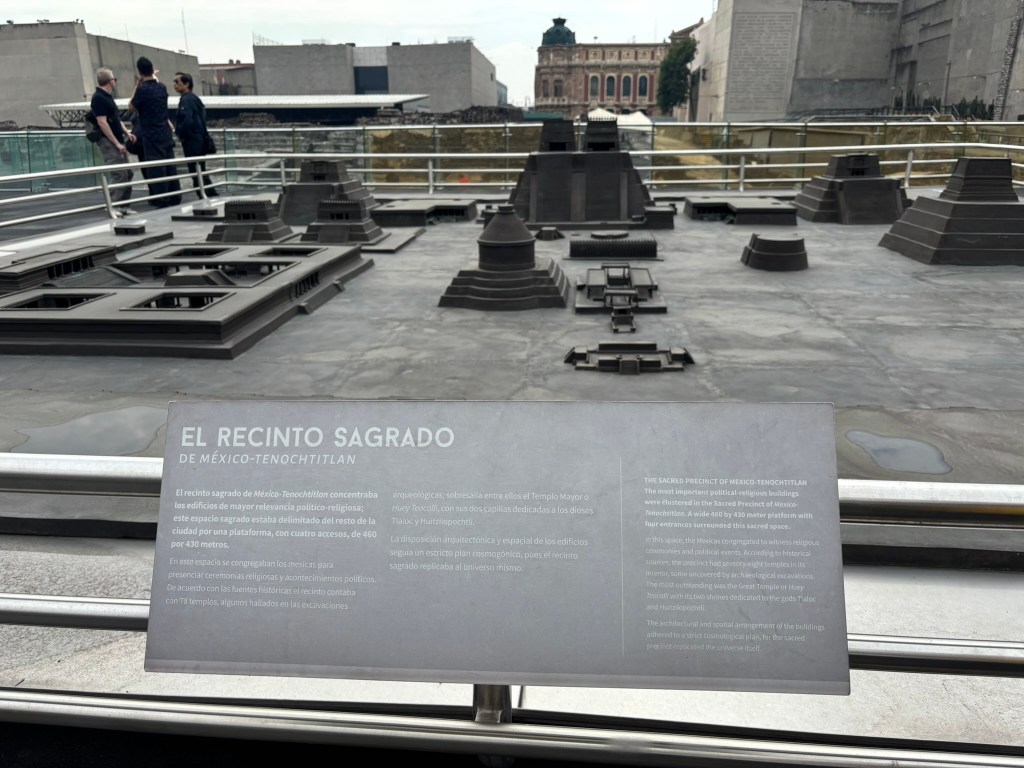
Historical sources note that this entire sacred space was an immense 460 by 430-meter platform enclosed from the rest of the city, featuring four main entrances. The precinct held around 78 temples and religious structures, laid out according to a strict cosmological plan meant to replicate the universe itself. Towering over the model is the main Templo Mayor (Huey Teocalli), crowned by its distinctive twin shrines dedicated to the rain god, Tlaloc, and the patron war god, Huitzilopochtli.
Stepping Onto the Sacred Grounds
Moving past the models, you finally step onto the raised walkways directly over the excavated ruins. The physical reality of the site is breathtaking. You are confronted with steep, layered stone staircases built primarily out of dark, porous reddish-black tezontle (volcanic rock) and covered in stucco.
Guarding the base of these ancient structures are massive, masterfully carved stone serpent heads. In Mexica culture, serpents were deeply sacred, representing the earth, fertility, and the heavens. Seeing these formidable carvings resting exactly where Aztec priests once stood—juxtaposed against the towering concrete walls and colonial domes of modern Mexico City right behind them—is a surreal visual clash of two entirely different worlds.
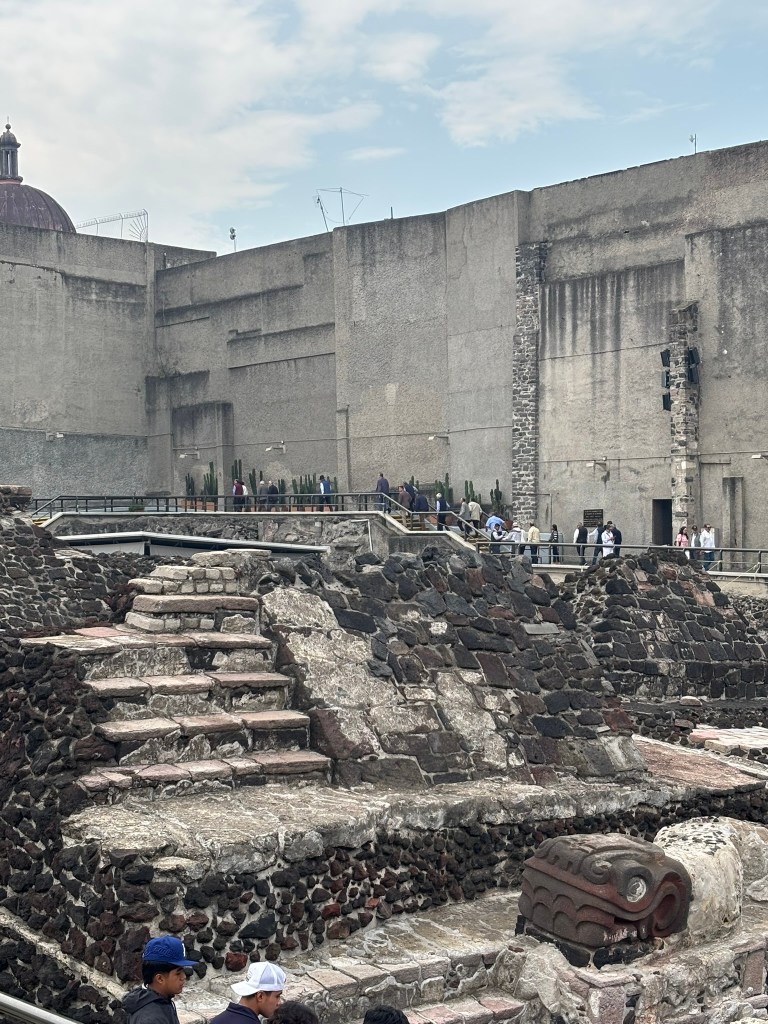
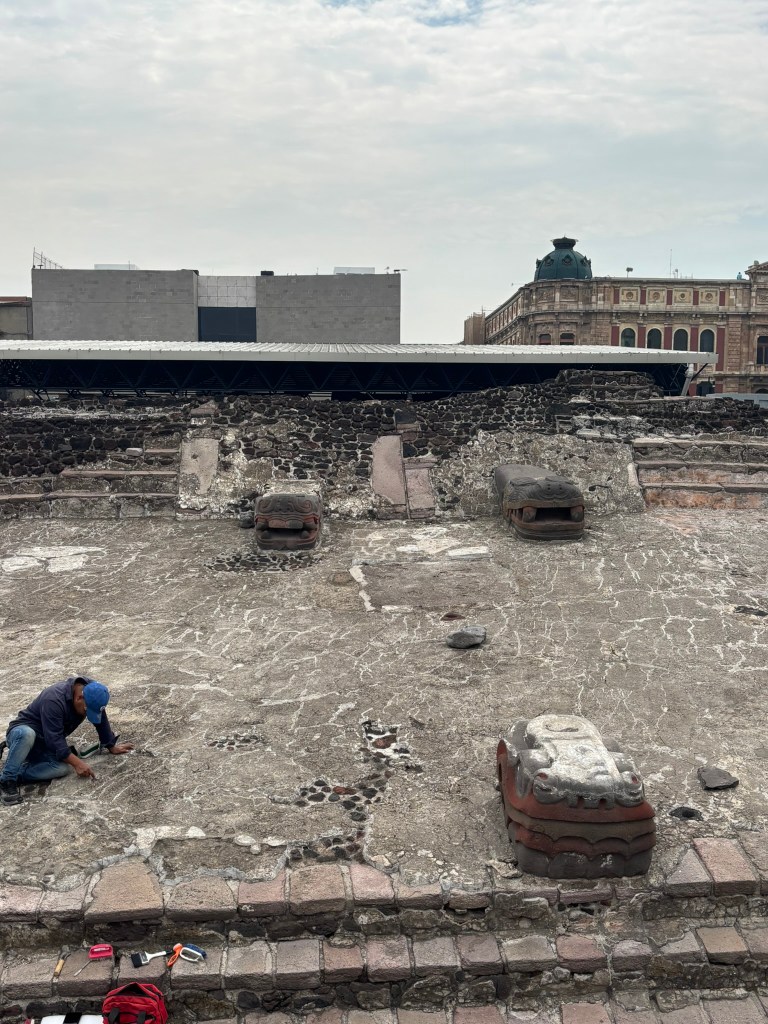
Serpent imagery was central to Aztec spirituality, but it triggered immediate, severe friction with the Spanish due to deep cultural misunderstandings.
The Christian Association with Satan
In Christian theology and the Bible, the serpent is the ultimate symbol of evil, deception, and Satan (tempting Eve in the Garden of Eden). When the Spanish arrived in Tenochtitlan and saw massive stone carvings of feathered and fire serpents adorning every temple wall and staircase, they did not see art or cultural symbols; they believed they had walked into a kingdom openly worshipping the Devil
What to Expect When You Visit Today
Today, you can walk directly through the open-air archaeological zone on raised platforms, viewing the surviving foundations of the temple layers.
Right next to the ruins is the onsite Templo Mayor Museum. It is packed with exquisitely crafted objects found during the excavations, including shell mosaics, monumental stone sculptures, and colorful ceramics.
The crown jewel of the collection is the recent discovery of the Tlaltecuhtli monolith. This earth deity carving is the largest Mexica monolith ever found, and seeing its scale in person is worth the trip alone.
🌟 The Verdict: Why It Can’t Be Missed
Templo Mayor is a striking reminder that history is never truly erased—it simply waits beneath the surface. Walking through this active archaeological wonder, sandwiched between a centuries-old Spanish cathedral and a bustling modern capital, offers a humbling perspective on the passage of time. It is a rare chance to look directly down into the bedrock of Mexican identity and witness history being reclaimed, one volcanic stone at beveled stone. If you want to understand the true, raw soul of Mexico City, your journey has to begin right here at its ancient core.

