Our final day on the cruise brought us to Ísafjörður — another gorgeous day of weather and, once again, a town that felt like the quintessential slice of Iceland.
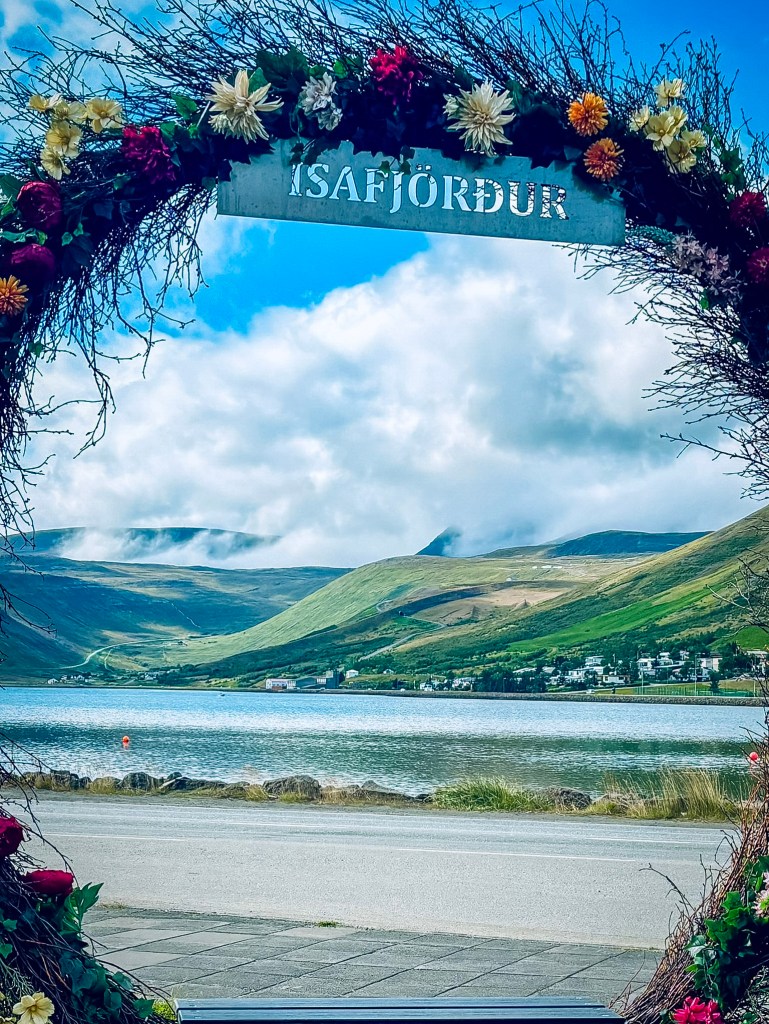
Right near the harbor, a flower-and-branch arch spelling out “ISAFJÖRÐUR” frames the view straight down the fjord toward the mountains — a popular photo stop for arriving passengers. I couldn’t track down a specific artist or designer credited for this one; it looks like a seasonal installation put up for the tourist season rather than a permanent public artwork (unlike the town’s well-known Whalebone Arch over in Jónsgarður Park, made from the jawbones of a blue whale). Either way, it’s a nice frame for that first look at the fjord and the mountains rising straight out of the water.
About Ísafjörður
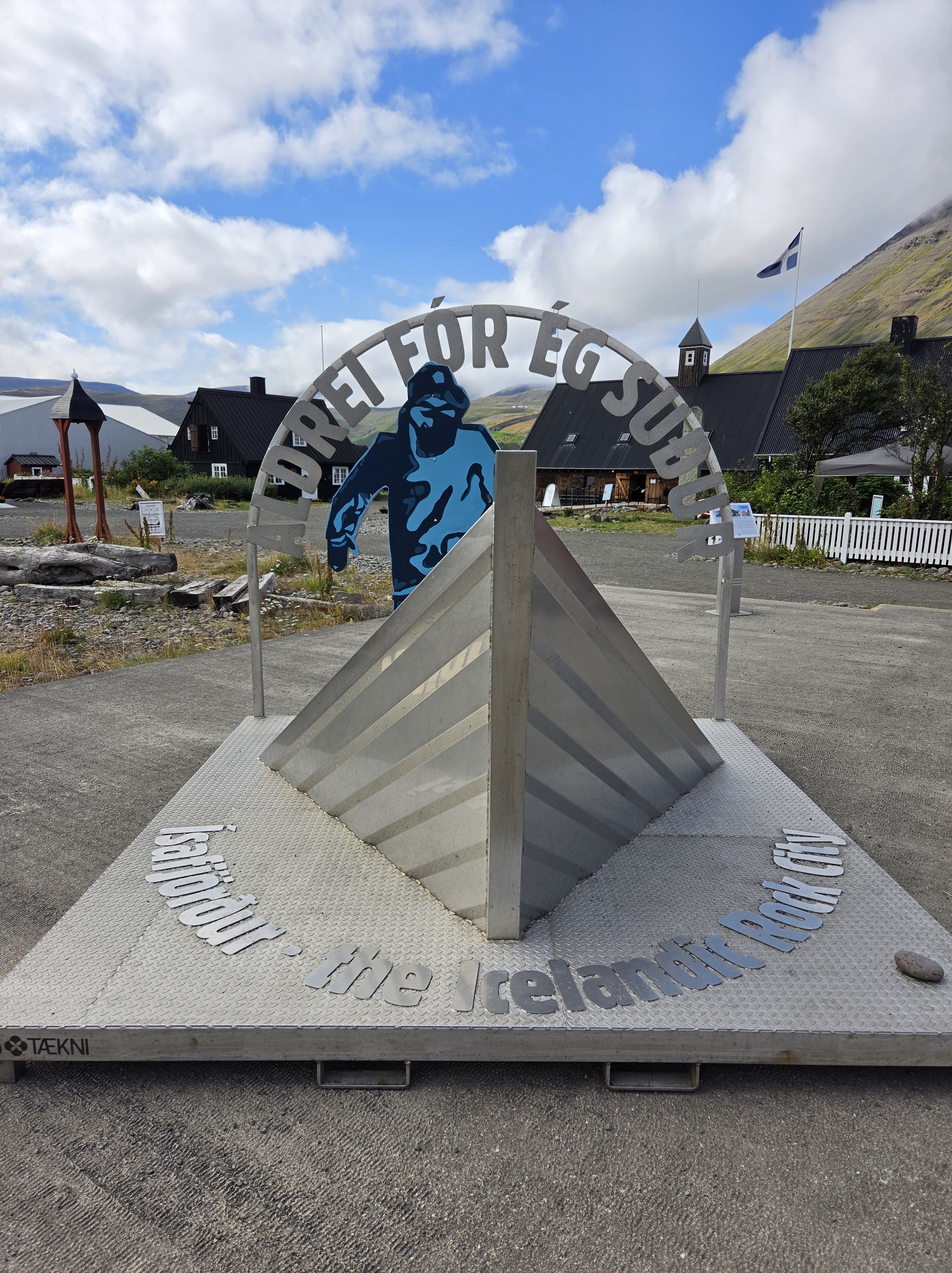
Nestled within the Skutulsfjörður fjord, Ísafjörður is the largest settlement in the Westfjords, with a population of just 2,744. Each year, the town punches well above its weight, drawing thousands of visitors for the Aldrei fór ég suður music festival, founded by Icelandic musician Mugison and his father.
The area has deep roots. According to Landnámabók (the Book of Settlements), Helgi Hrólfsson first settled Skutulsfjörður in the 9th century, with merchants arriving in 1569. Ísafjörður became the principal trading port in the Westfjords during the peak years of the Danish trade monopoly—back when the community was still known as Eyrarhreppur.
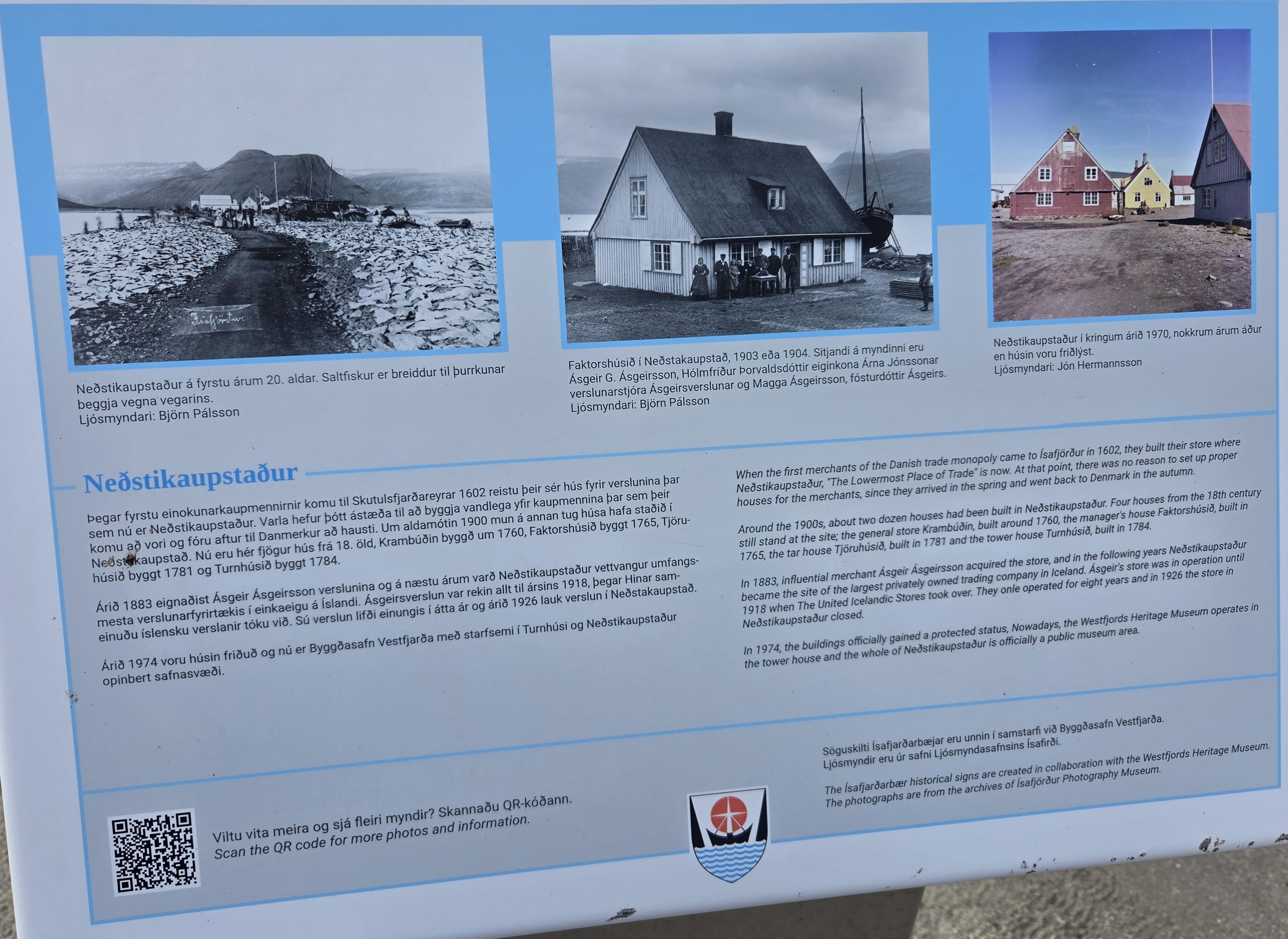
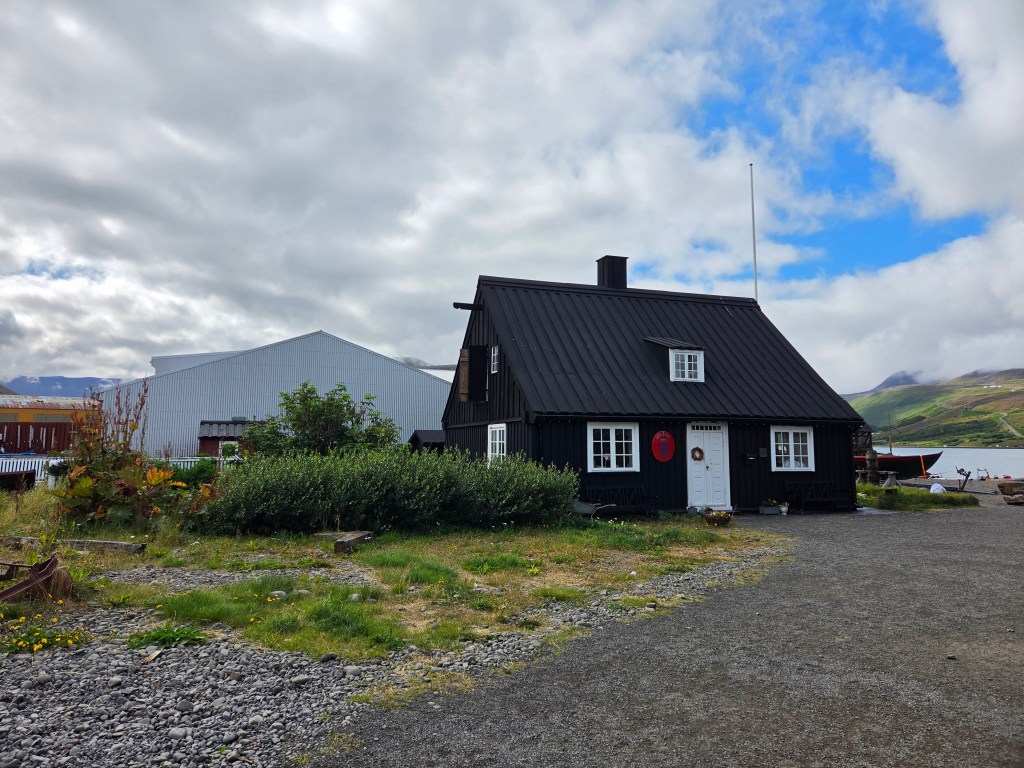
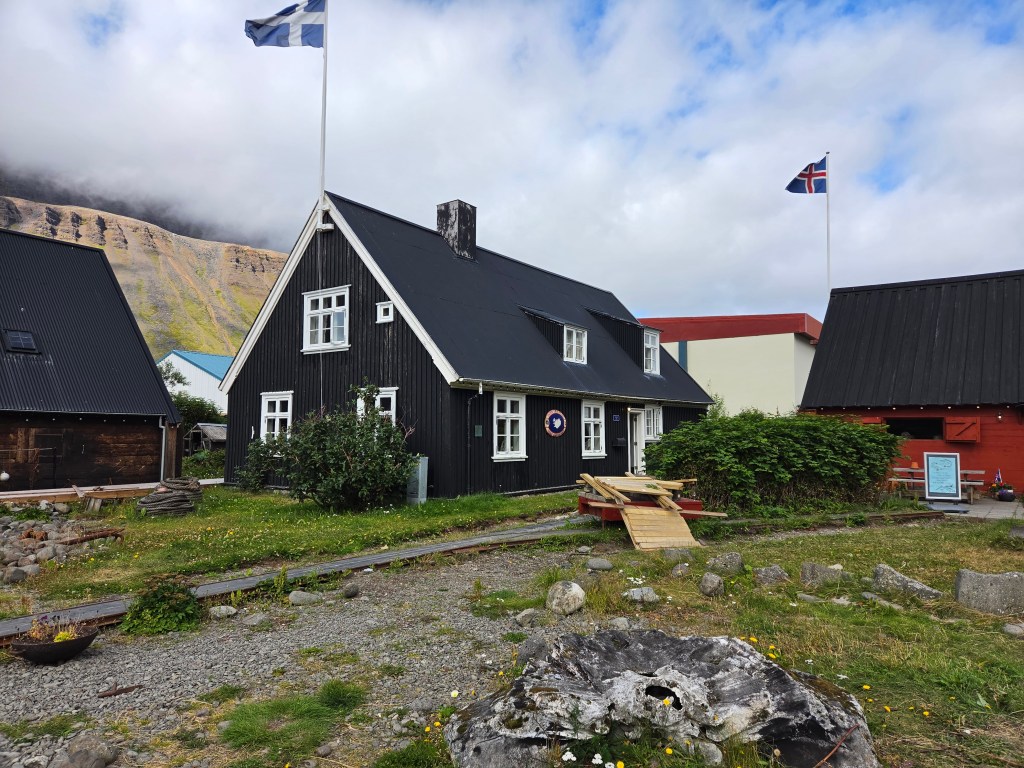
Right by the harbor sits Neðstikaupstaður, one of the oldest clusters of timber houses in Iceland. Most of the buildings are protected and date from 1757–1784, with Krambúðin standing as the oldest of the group. One of these historic houses, Turnhúsið, now houses the Westfjords Heritage Museum, offering a window into the region’s maritime and cultural history.
The town has also produced its share of notable Icelanders, including musician Helgi Björnsson, former president Ólafur Ragnar Grímsson, and Bishop of Iceland Agnes M. Sigurðardóttir.
Puffins Over Waterfalls: Choosing Vigur Island
Our original plan for the day was a 3.5-hour sightseeing tour to Dynjandi Waterfall — the dramatic “bridal veil” of the Westfjords. But a couple of nights before, while browsing Viator, I stumbled on a puffin tour to Vigur Island instead, and that changed our plans.
We’d missed out on seeing puffins back at Heimaey, so with a tight schedule and only one excursion to choose, Vigur Island won out. It’s a 3-hour round trip, home to around 100,000 puffins, Iceland’s only windmill, and Europe’s smallest post office — and it deserves its own post entirely.
If you have more time in port than we did, you could realistically do both Dynjandi Waterfall and Vigur Island in the same day. For us, choosing one over the other worked out well, since the 3-hour tour still left plenty of time to walk around Ísafjörður afterward.
Walking Around Ísafjörður
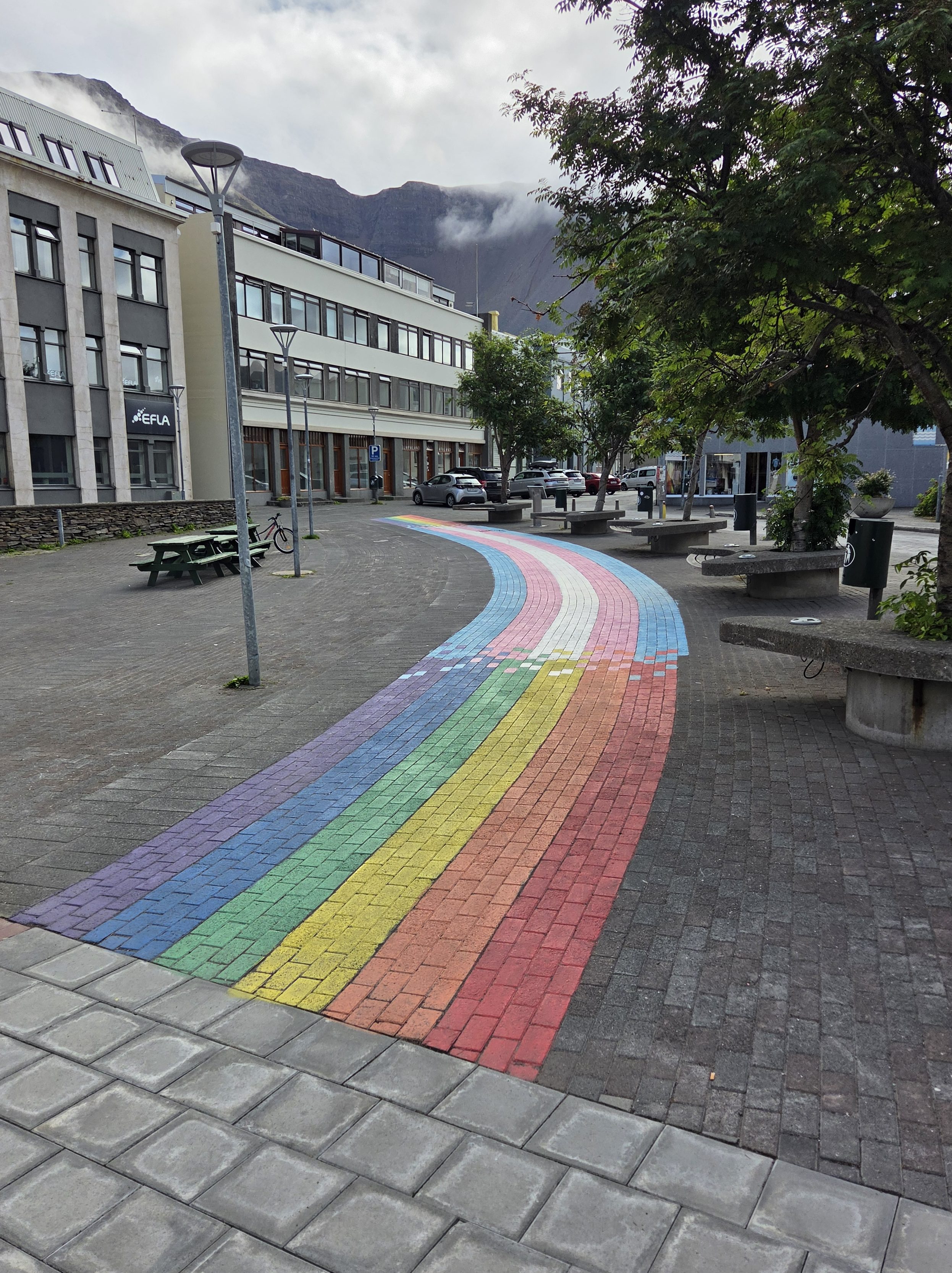
After we got back from the puffin tour, we spent the rest of our time exploring the town on foot — easily done in an hour or two, and a nice, relaxed way to close out the trip.
Highlights worth looking out for:
- Neðstikaupstaður (the Old Town): The historic harbor district, lined with colorful timber trading houses and restored warehouses dating back to the 18th century. It’s compact, walkable, and full of small details — carved doorframes, old signage, and weathered wood — that tell the story of the town’s trading past.
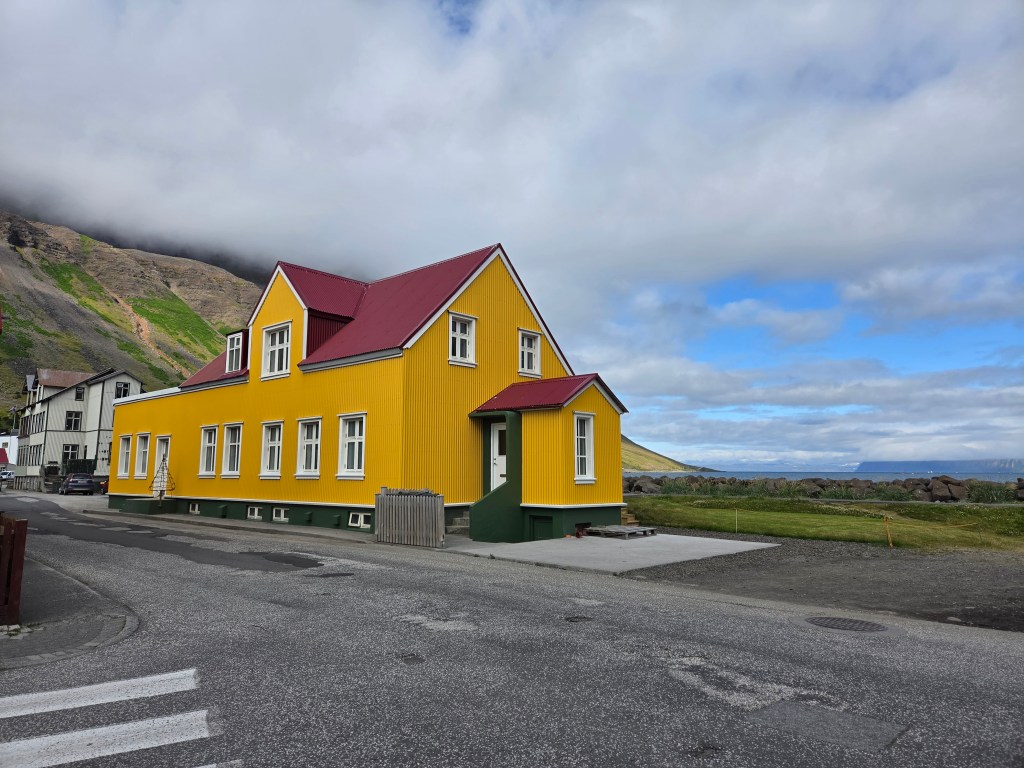
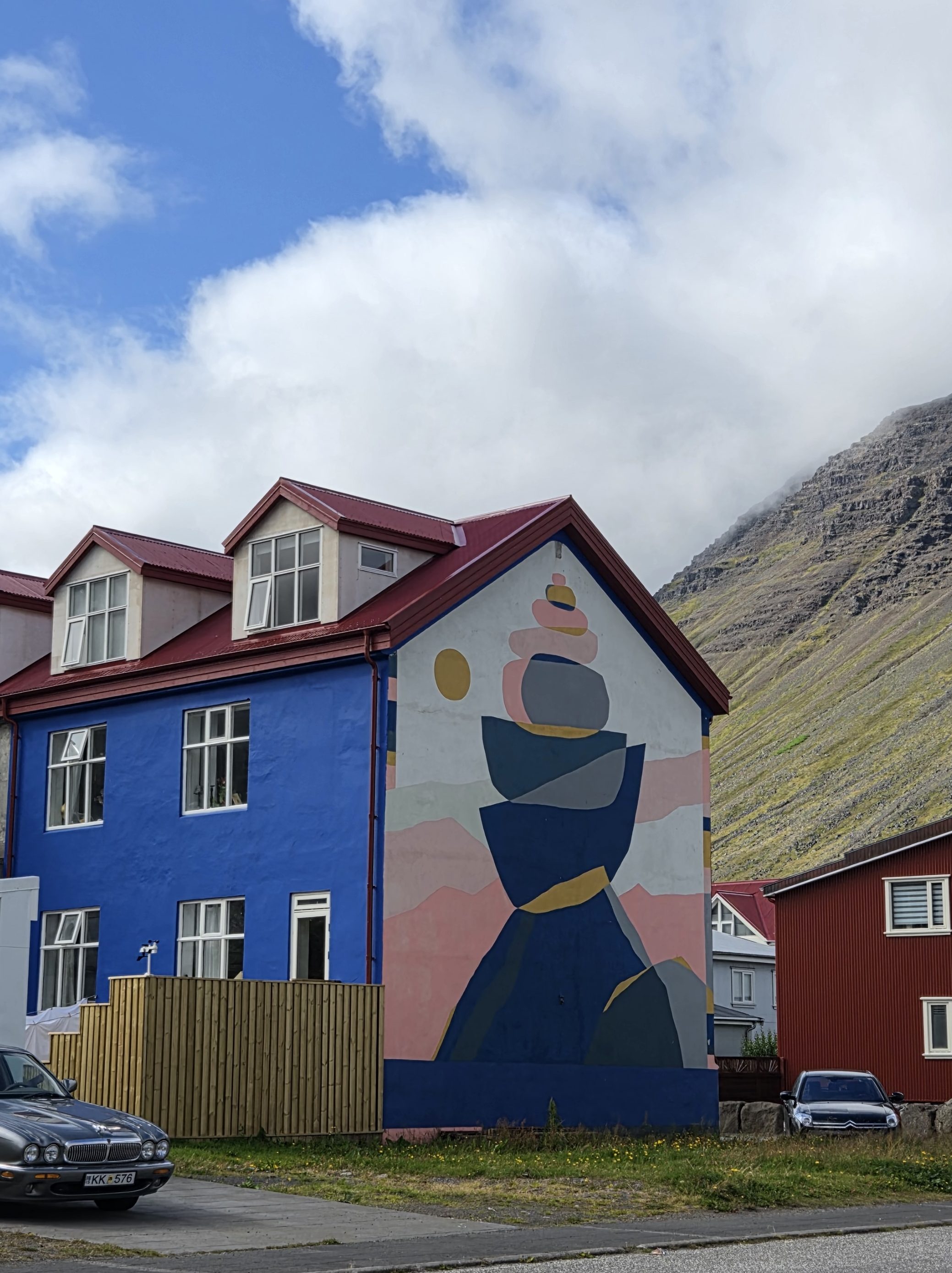
- Colorful houses: Beyond Neðstikaupstaður, the brightly painted homes throughout town make for some of the most photogenic streets in the Westfjords.
- Bookstores: Ísafjörður has a genuine literary streak for such a small town — worth popping into one of the local bookshops for a browse, even if just to see what an Icelandic small-town bookstore looks like.
- The Westfjords Heritage Museum: Housed in Turnhúsið, one of the oldest buildings in the cluster, with exhibits on the region’s fishing and maritime heritage.
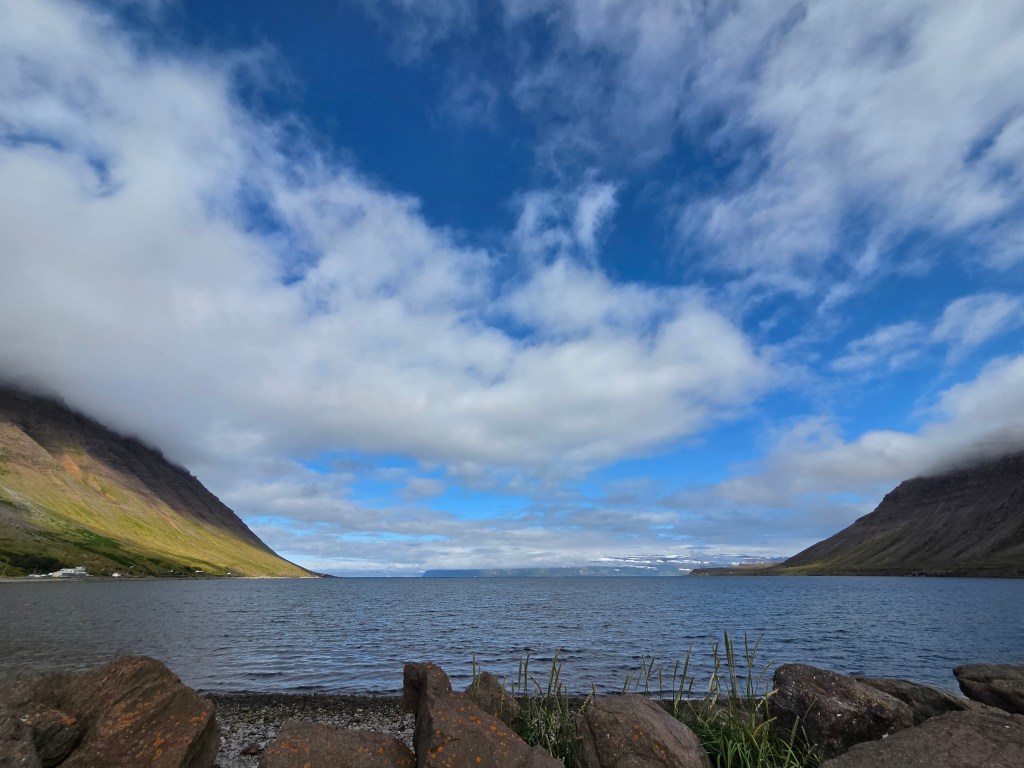
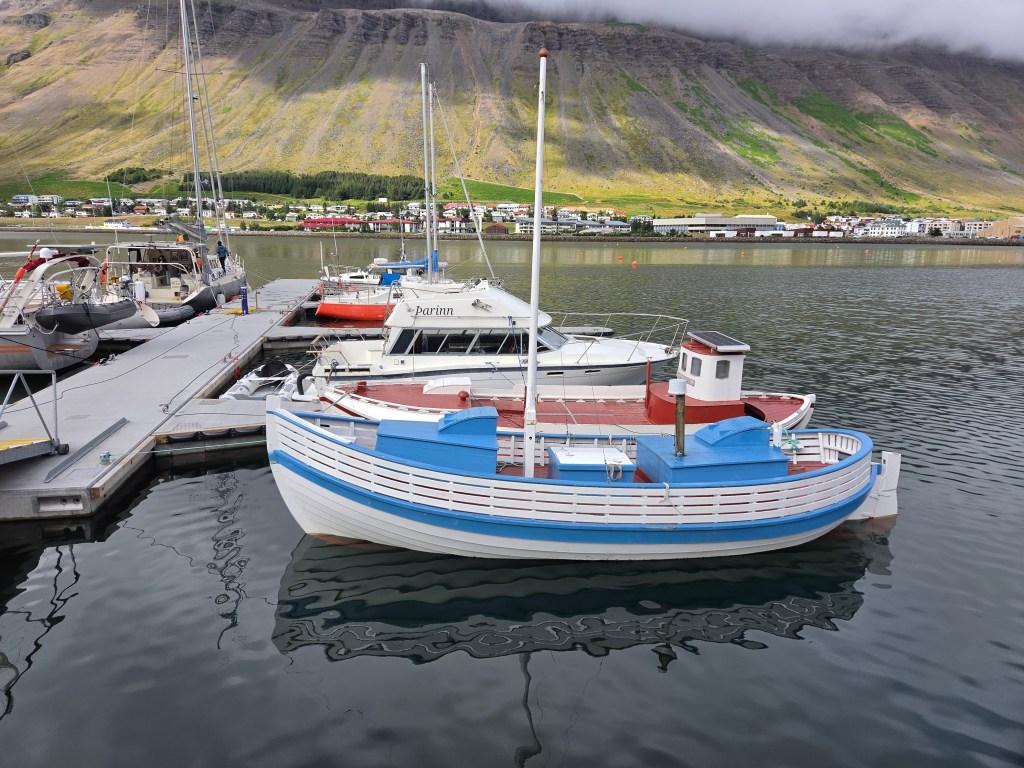
- The harbor: A good spot to see fishing boats framed against the fjord and the steep, flat-topped mountains that rise straight out of the water.
If You Have More Time: Dynjandi Waterfall or the Troll’s Throne Hike
Since we only had one excursion slot to fill, we went with Vigur Island — but Ísafjörður has at least two other classic options worth considering if your schedule allows. The first is the original plan we passed on: Dynjandi Waterfall, often called the most beautiful waterfall in the Westfjords. It’s a roughly 3.5–4 hour round-trip excursion from town, tumbling down a 100-meter rocky scarp in a series of tiered, fan-shaped cascades — the kind of “bridal veil” waterfall that looks almost too perfect to be real.
The second option is much closer to town and takes far less time: the hike up to Naustahvilft, better known as the Troll’s Throne (or Troll’s Seat). It’s a short but steep climb — about 170–190 meters of elevation gain, doable in well under an hour round trip — up to a dramatic, chair-shaped hollow carved into the mountainside above the fjord. Local legend says a giant troll, rushing home before sunrise, sat down here to rest her aching feet, and her weight left the seat-shaped imprint in the rock. Geologically, it’s actually a glacially carved hanging valley, but the folklore version is more fun to tell. From the seat itself, you get a sweeping panorama over Ísafjörður, the harbor, and the fjord — reportedly one of the best views in town, and a nice option if you want a quick hike rather than a half-day boat trip or drive. Next time, I’d love to squeeze in the Troll’s Throne on top of everything else — it looks like the kind of short, dramatic hike that’s easy to regret skipping
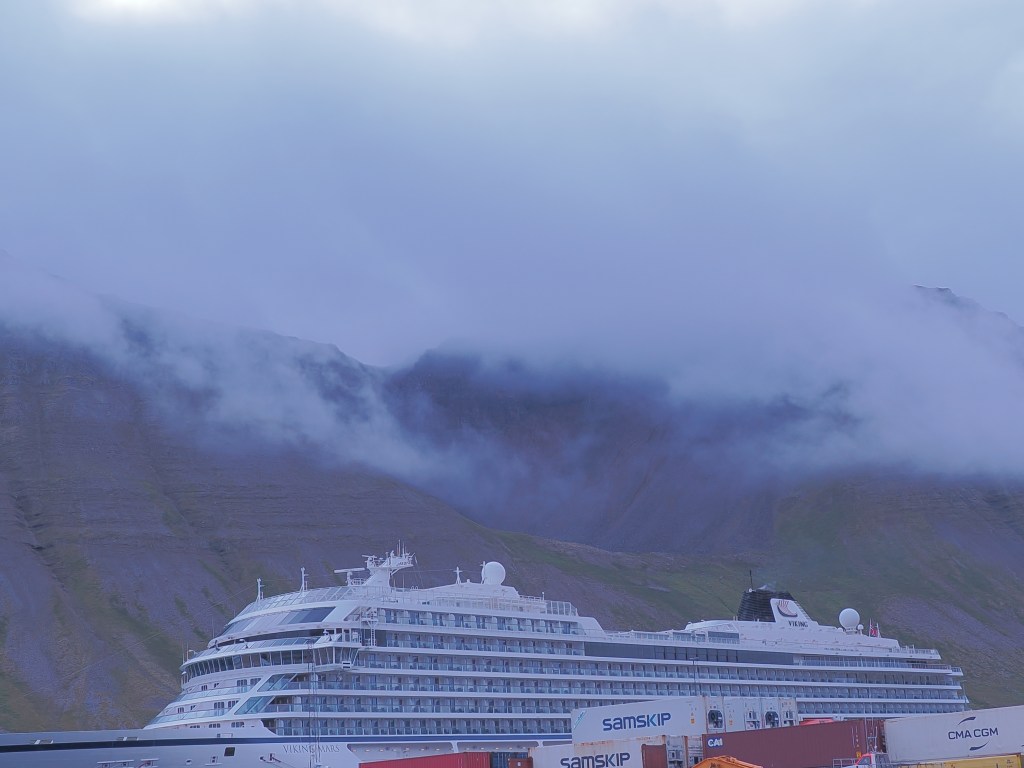
It was a slow, easy way to end the cruise — puffins in the morning, colorful old timber streets in the afternoon, and one last look at the Westfjords before heading back to the ship.
 Peaks to Palaces
One Reply to “”