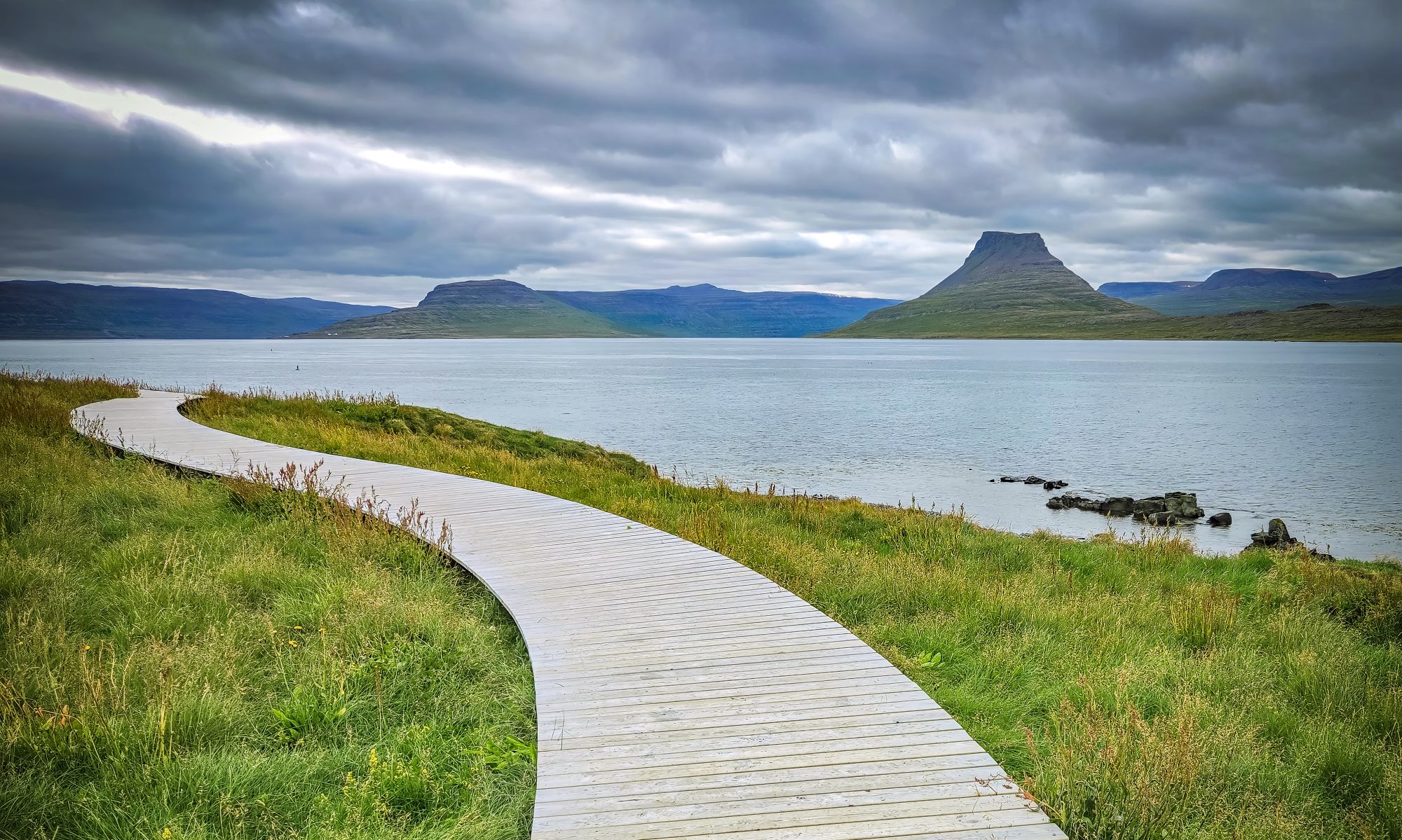
If you’ve ever wanted to walk through what looks like the ruins of a giant’s fortress, Dimmuborgir will feel like it was built for exactly that daydream. This otherworldly field of jagged black lava towers near Lake Mývatn is one of the strangest, most photogenic landscapes in Iceland—and it comes with a story as dramatic as the rock formations themselves.
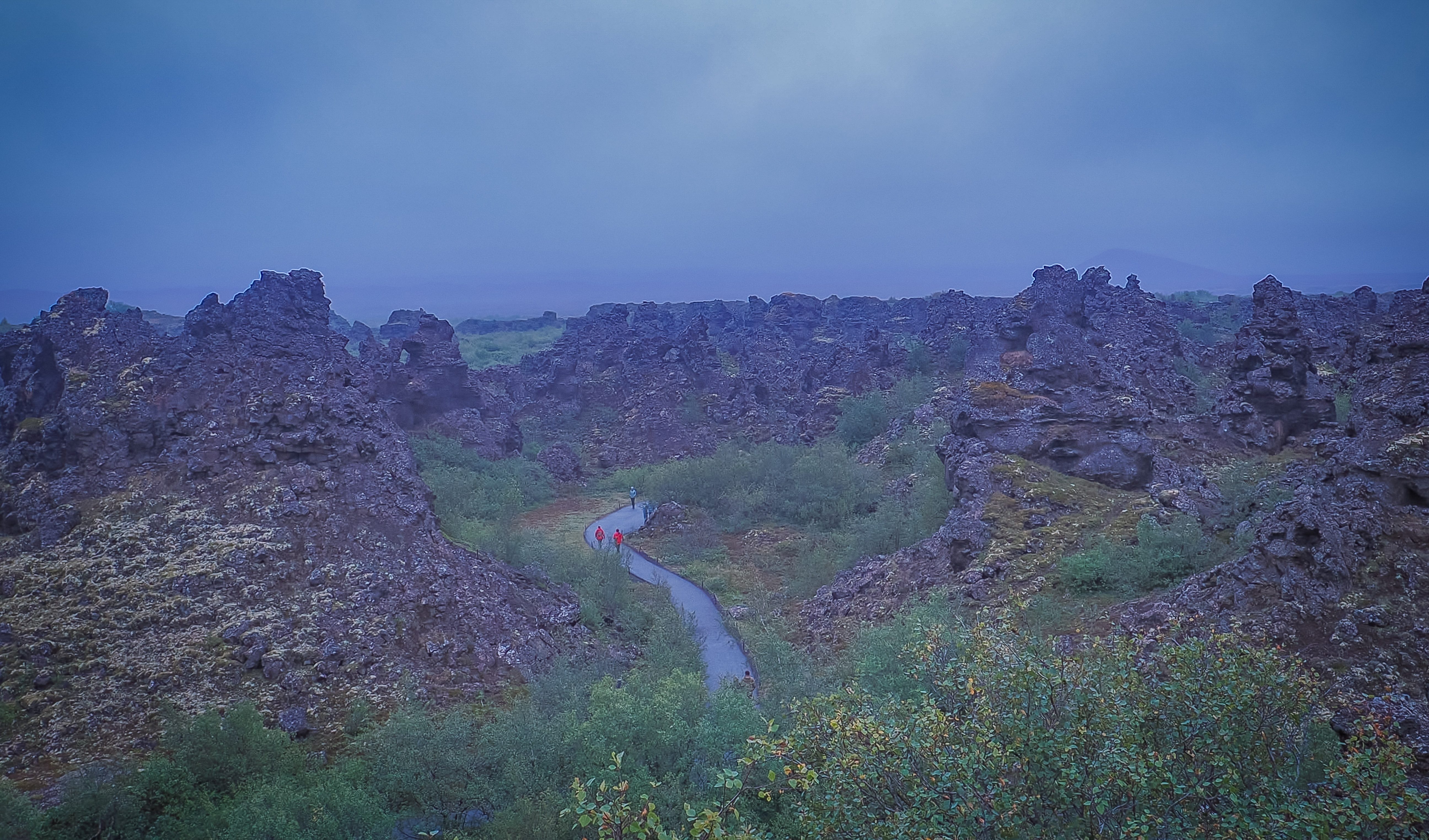
What Is Dimmuborgir?
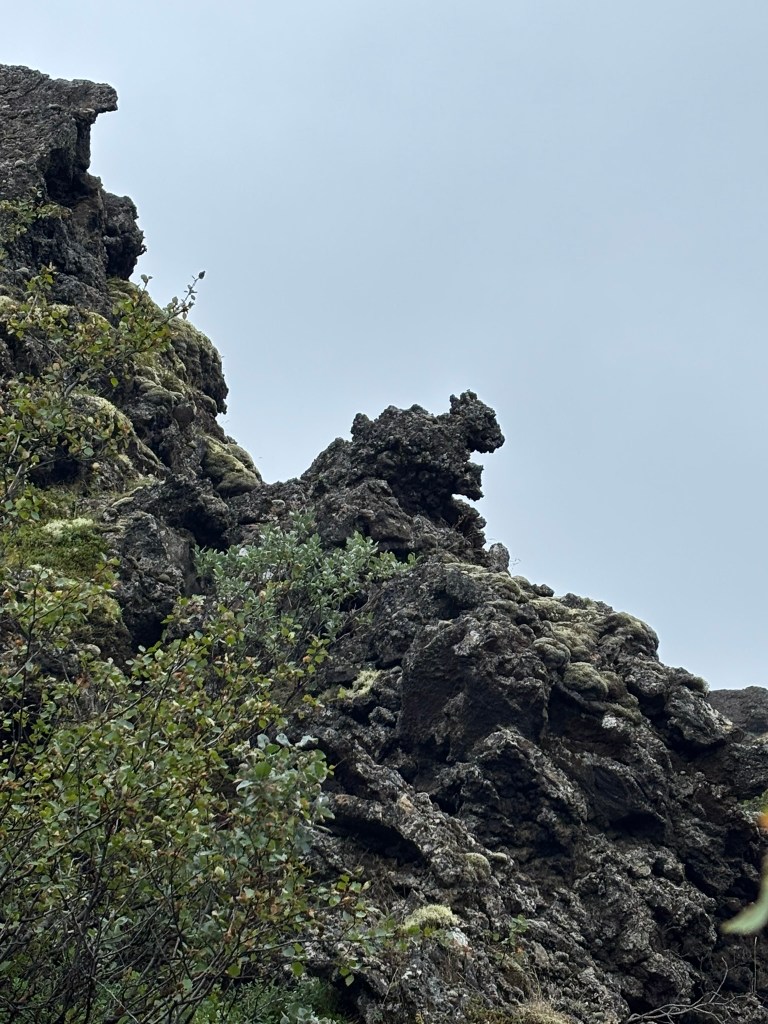
Dimmuborgir means “Dark Castles” or “Dark Fortress” in Icelandic, and one look at the place tells you why. Instead of the smooth, rolling lava fields you’ll find elsewhere in the country, Dimmuborgir is a maze of hollow pillars, twisted arches, and jagged spires that rise up to 20 meters (65 feet) into the sky — looking far more like the crumbling battlements of an ancient castle than a natural rock formation.
It’s no surprise the site has worked its way into Icelandic folklore. Dimmuborgir is said to be the home of Grýla, the child-eating troll of Icelandic Christmas tradition, along with her husband Leppalúði and their mischievous sons, the thirteen Yule Lads. Rather than a jolly Santa Claus figure, Icelandic kids grow up with these unsettling characters supposedly lurking in the lava just outside town — which makes wandering through Dimmuborgir’s twisted pillars and hidden caves feel a little eerier once you know the backstory.
Fantasy fans will recognize the landscape from another world entirely: Dimmuborgir served as the filming location for Mance Rayder’s Wildling army camp in Game of Thrones Season 3, and the same lava field also doubled as the site of Samwell Tarly and Lord Commander Mormont’s White Walker attack. The scenes were shot in deep winter snow, so if you want the full “Beyond the Wall” effect, a winter visit gets you close to what the cameras captured. It’s a short drive from Grjótagjá, the small lava cave used as Jon Snow and Ygritte’s cave scene, so the two make an easy pairing for anyone chasing GoT filming spots around Mývatn.
How Dimmuborgir Was Formed
The formations at Dimmuborgir aren’t the result of erosion or wind, like most dramatic rock landscapes — they were created almost instantly, geologically speaking, around 2,300 years ago.
Here’s what happened: a massive lava flow spread across the area and rolled directly over a small lake or wetland. As the molten lava crept over the water, the water beneath it flash-boiled into steam. That trapped steam pushed upward through the lava, forcing its way out through narrow channels — similar to how straws poke through wet cement before it sets. As the steam escaped, it left behind hollow chimneys and pillars of hardened lava rising up out of the flow.
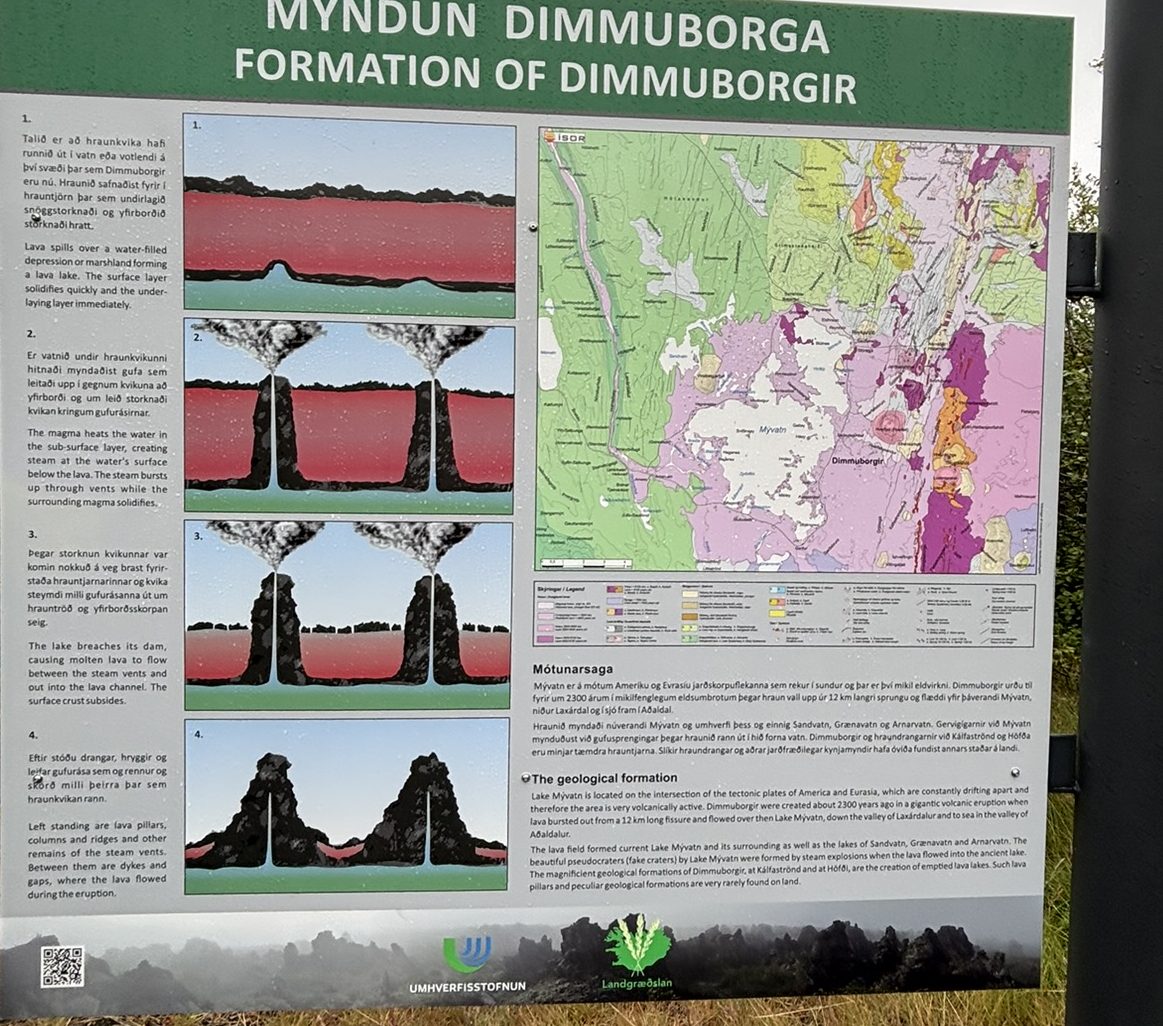
When the main body of lava eventually drained away or cooled and partially collapsed, it exposed this strange skeleton of towers, arches, and caves that had formed around the escaping steam. The result is the twisted, castle-like landscape you can walk through today — a rare, dramatic record of steam and lava colliding in real time.
What Not to Miss When Visiting
- Kirkjan (The Church) — the single most famous formation in Dimmuborgir: a massive natural lava arch large enough to walk straight through, shaped uncannily like a Gothic church doorway. It is about 1 Km from the starting point and we didn’t make it all the way to this point
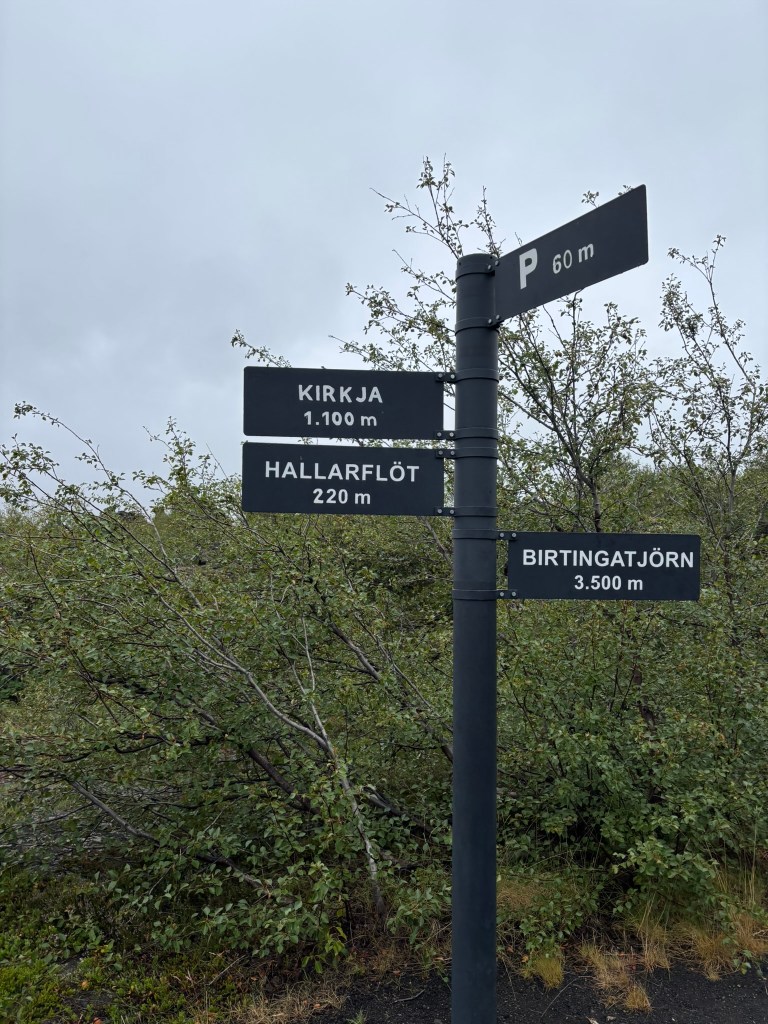
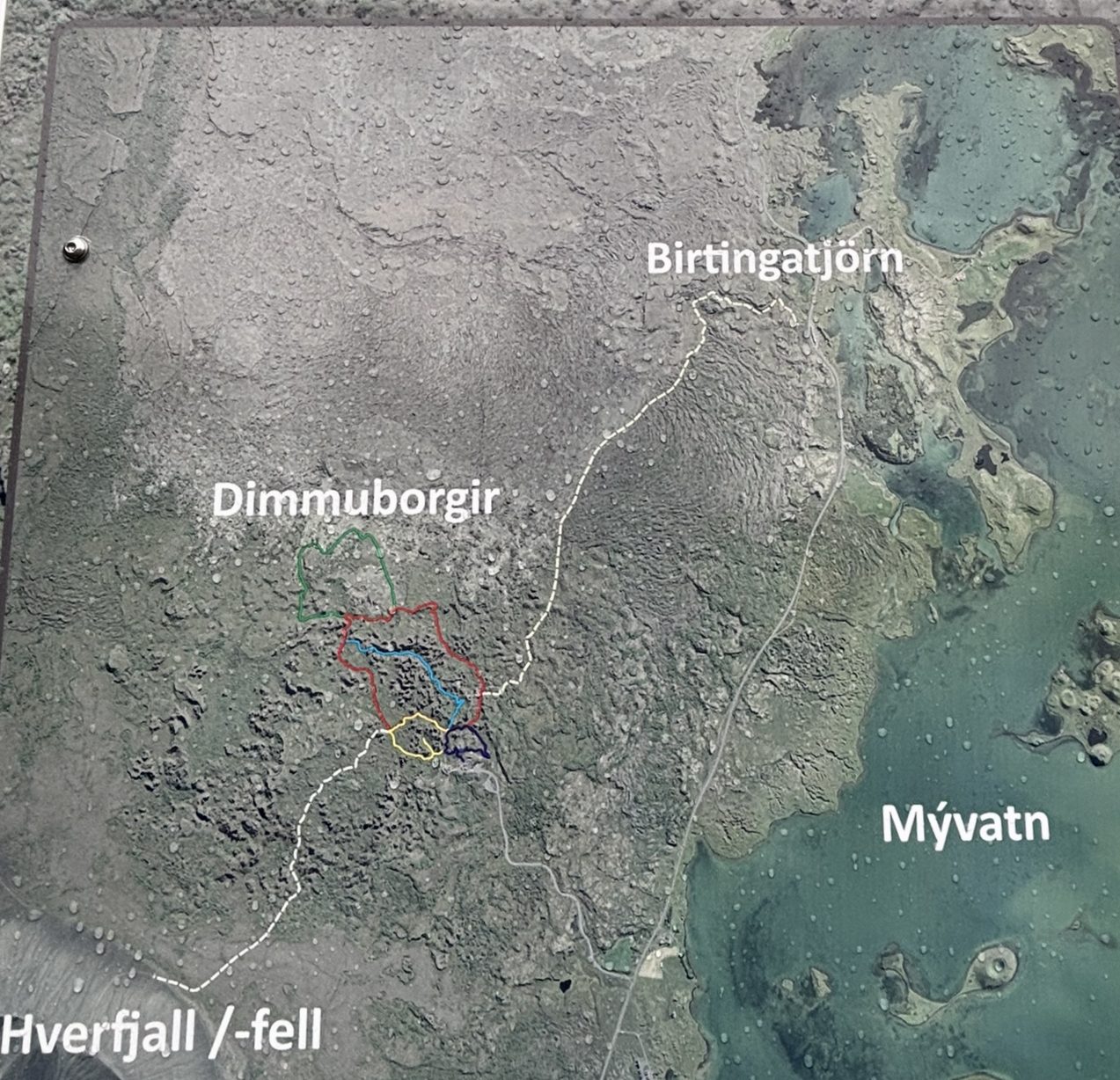
- The marked trail loops — there’s a short ~20-minute loop for a quick visit, and a longer ~1-hour loop that winds deeper into the maze of towers. If you have the time, take the longer one — it’s where the landscape gets genuinely eerie and beautiful.
- Hallarflöt — a much shorter detour, only about 220 m off the main path
- The birch woodland pockets — small patches of stunted, wind-bent birch trees growing straight out of the black lava, an unusual and striking contrast worth slowing down for
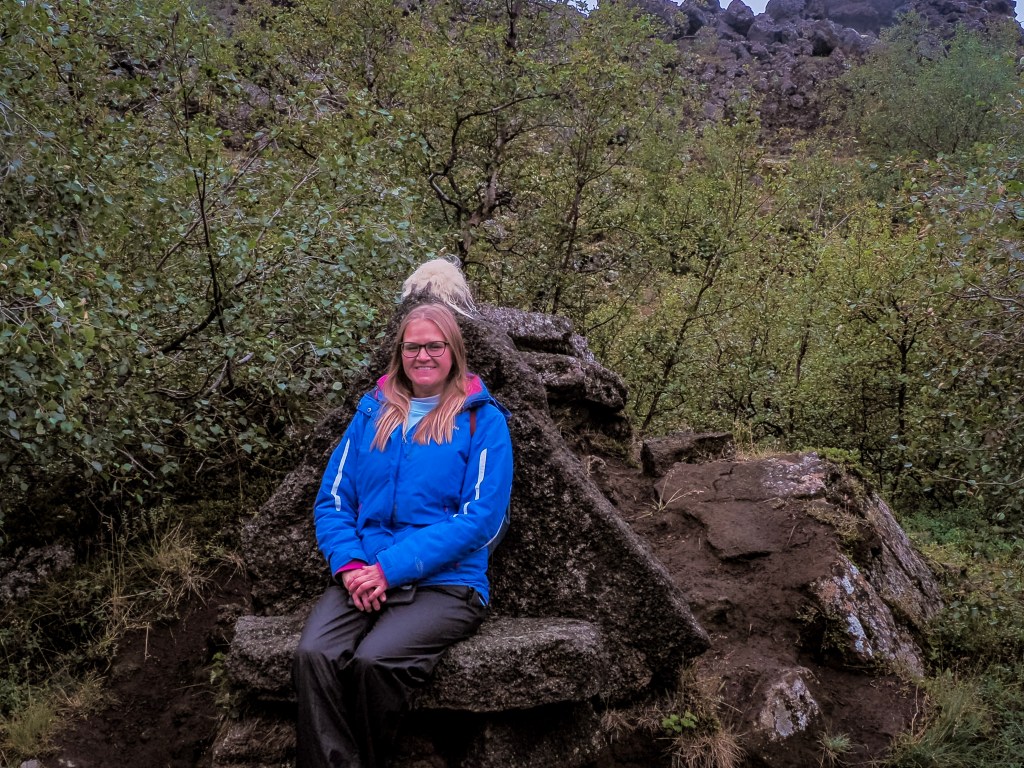
Hallarflöt is one of the smaller, quieter clearings within the lava field — a natural meadow tucked among the rock formations, ringed by birch scrub. It’s an easy, short detour if you’re already on the main loop, and one of the more peaceful spots to stop for a photo away from the busier arches. Look out for oddly shaped rock “seats” and ledges worn smooth enough to perch on — it’s a favorite low-key photo spot for visitors making their way through the maze.
If you’re planning your route, the signposts make it easy to string together a loop hitting Hallarflöt, Kirkja, and back to the car park in under an hour, or extend it out to Birtingatjörn if you want more time among the lava towers.
Golden hour light — visit early morning or evening if you can. Low, angled sunlight throws long shadows between the pillars and makes the whole site feel even more dramatic for photos.
These are some of my favorite shots from the area. The restrooms and gift shop give you a panoramic view of the valley.
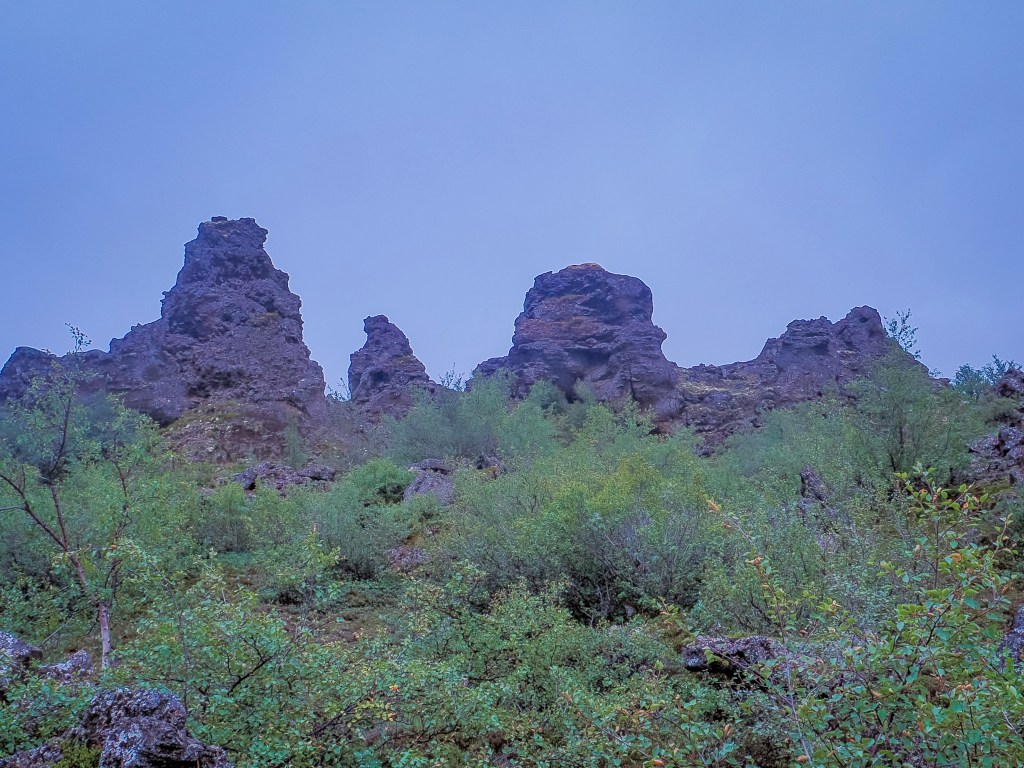
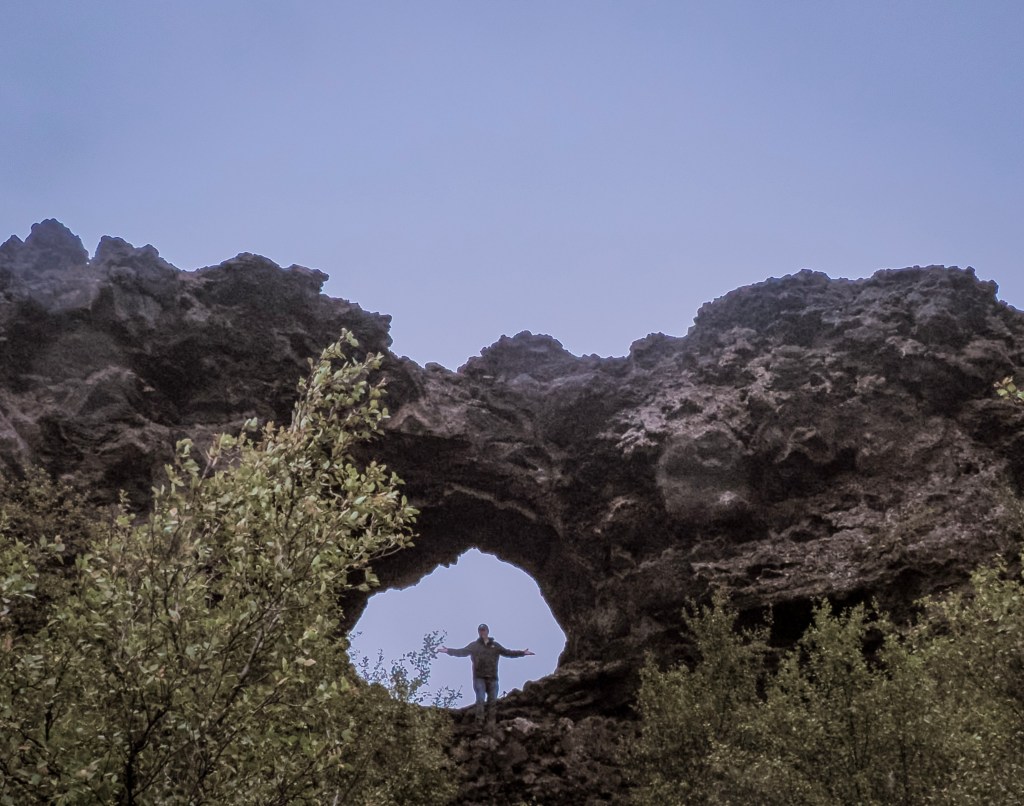
Dimmuborgir pairs naturally with Hverfjall crater, just 5 km away, so most visitors combine the two into a single stop on their way around Mývatn or the wider Diamond Circle route.
Parking Fee at Dimmuborgir
Unlike some of the free stops around Mývatn, Dimmuborgir now charges a parking fee of 1,000 ISK per car at the trailhead. There’s no separate entrance fee to walk the trails — the parking fee is the only cost to visit. Look for a payment sign, QR code, or attendant at the car park, and pay before you head off on the trail; paying after the fact typically comes with a penalty.
Quick tip: parking fees have become increasingly common across Iceland’s most popular natural sites in recent years, so it’s a good habit to assume payment is required and check for signage at any managed car park before walking away.

