
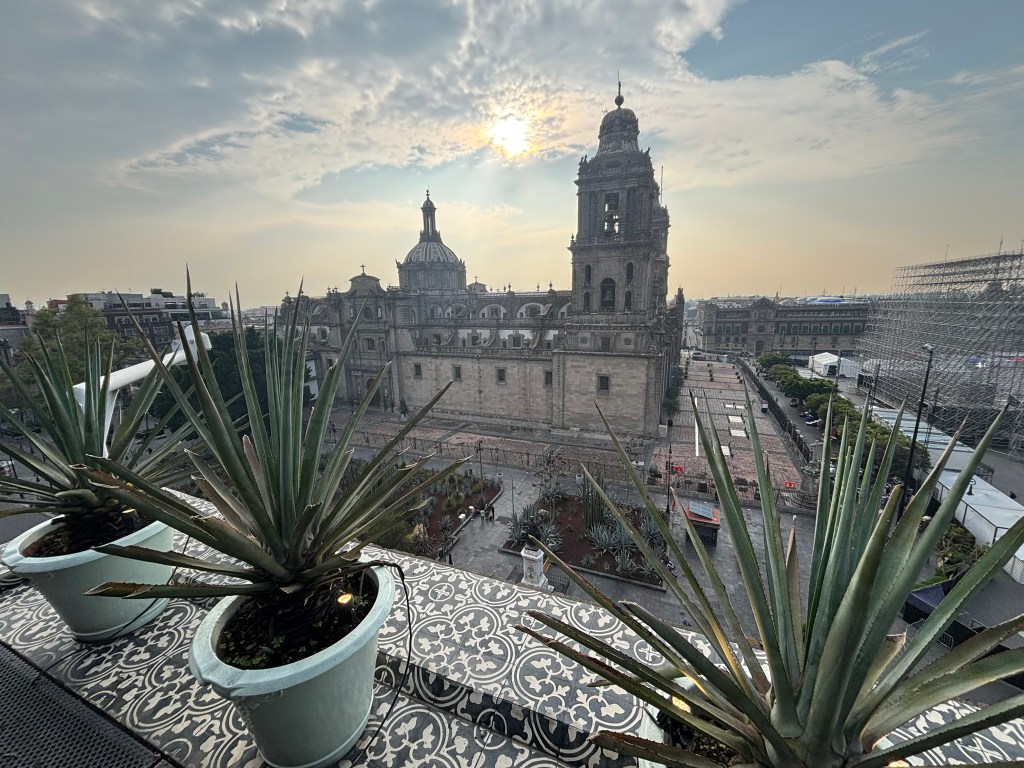
Rising like a stone titan over the northern edge of the historic Zócalo, the Mexico City Metropolitan Cathedral (Catedral Metropolitana) is not just an architectural marvel—it is the raw, beating heart of Mexican history. As the oldest and largest cathedral in Latin America, it has towering twin bell towers and a massive stone facade that has borne witness to nearly five centuries of conquest, rebellion, and spiritual devotion. To step through its heavy wooden doors is to walk through a literal timeline of a nation in transition.
The Dark History: Recycled Aztec Stones
The cathedral is a physical manifestation of Spanish colonial imposition. Following the fall of Tenochtitlan, Spanish conquistador Hernán Cortés ordered the construction of a grand church to anchor the new colonial capital. Built between 1573 and 1813, the cathedral was deliberately erected directly atop the sacred Aztec precinct adjacent to the Templo Mayor.
To hammer home the spiritual conquest, the Spanish pulled down the surrounding Aztec pyramids, utilizing those exact, hand-carved ancient stone blocks to lay the cathedral’s massive foundations. If you look closely at some of the older exterior walls today, you are looking at the very stones that once formed the temples of Aztec gods.
Because construction spanned nearly 250 years, the building serves as a living museum of architectural evolution. It is a stunning crossroad of styles, shifting seamlessly from its deep Gothic foundations into heavily ornate Baroque facades, and finally culminating in a majestic Neoclassical dome designed by renowned architect Manuel Tolsá.
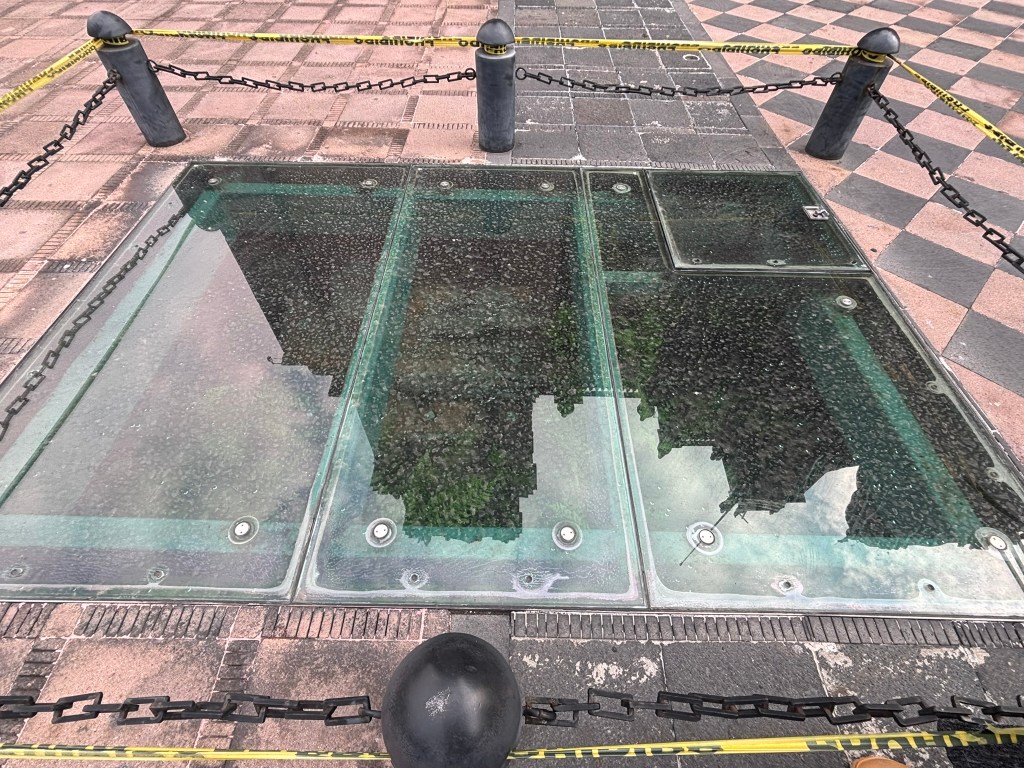
Windows into the past: Glass panels embedded in the stone plaza outside the Metropolitan Cathedral reveal the original Aztec foundations lying directly beneath the building. It is a stunning visual reminder of the literal layers of history making up the heart of Mexico City.
Practical Information for Visitors
Planning a visit to the spiritual heart of Centro Histórico is straightforward, but a few local tips will make your experience seamless:
- Getting There: Take the Metro Blue Line directly to the Zócalo station. The cathedral sits right outside the station exit gates on the main plaza.
- Hours: Open daily from 9:00 AM to 5:30 PM.
- Admission: Entry to the main nave and side chapels is entirely free. However, checking out the rooftop views or taking a guided bell tower tour requires a small ticket fee paid inside (approx. $100 MXN / $6 USD).
- Visitor Rules: Non-flash photography is fully permitted for personal use. Because it remains an active house of worship, dress respectfully (avoid overly revealing clothing) and maintain a quiet demeanor during ongoing religious service
The Exterior Architecture and Towering Facades
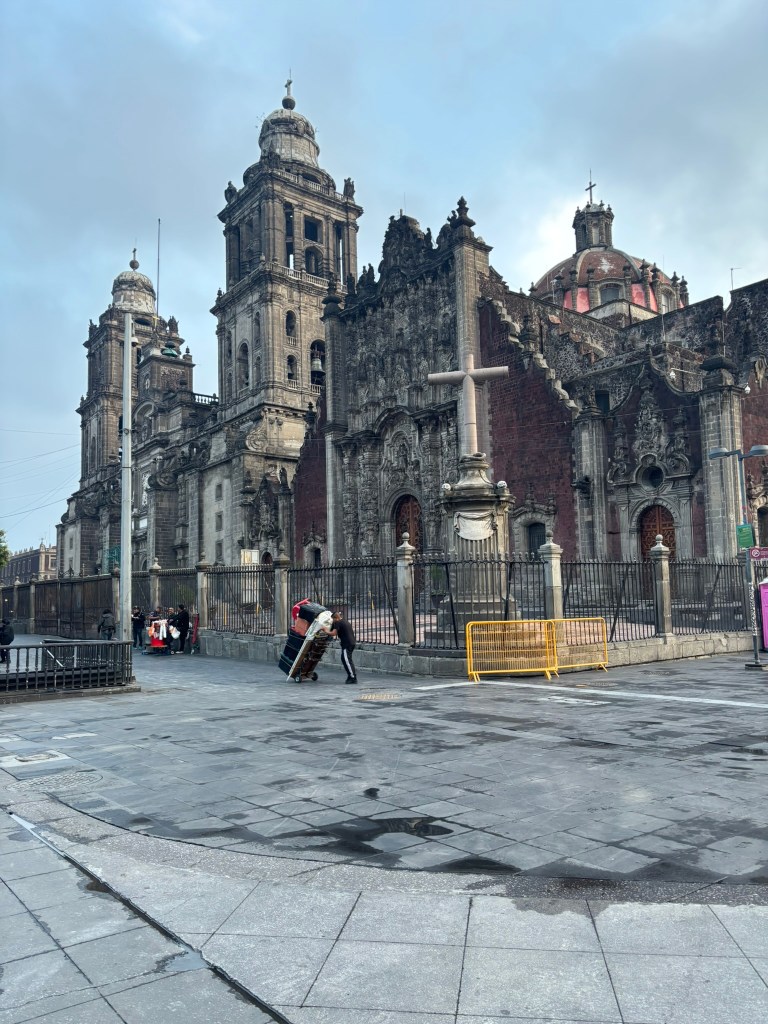
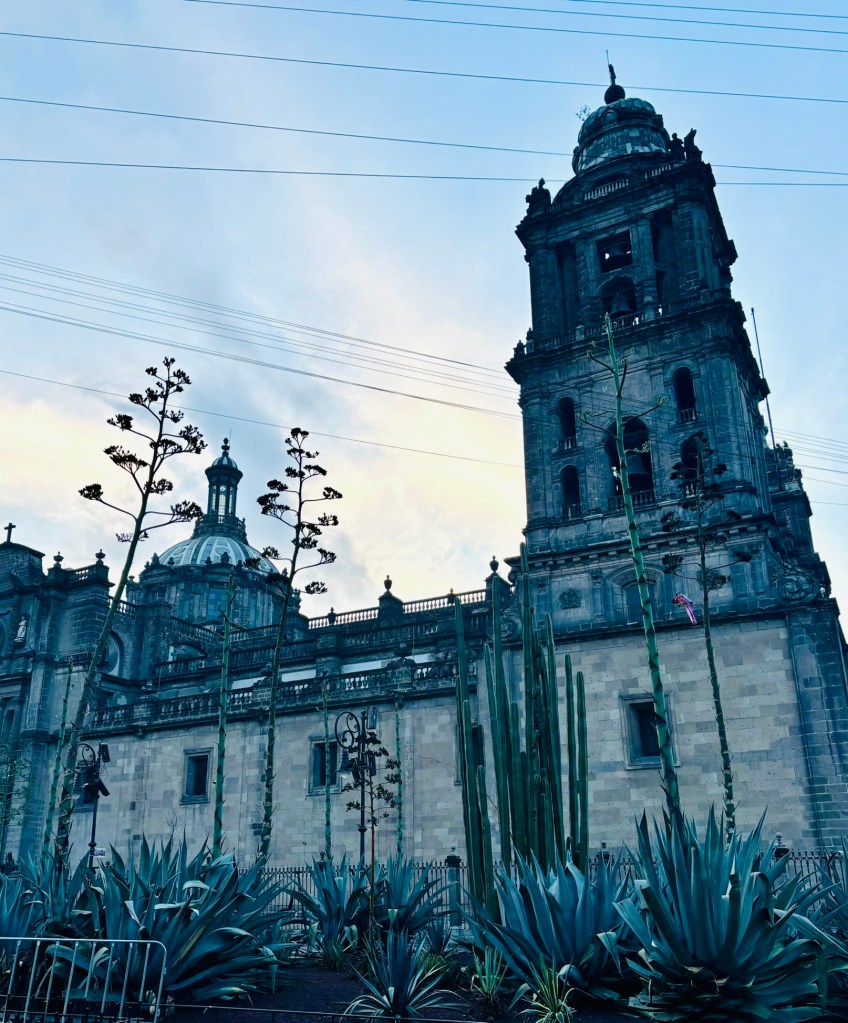
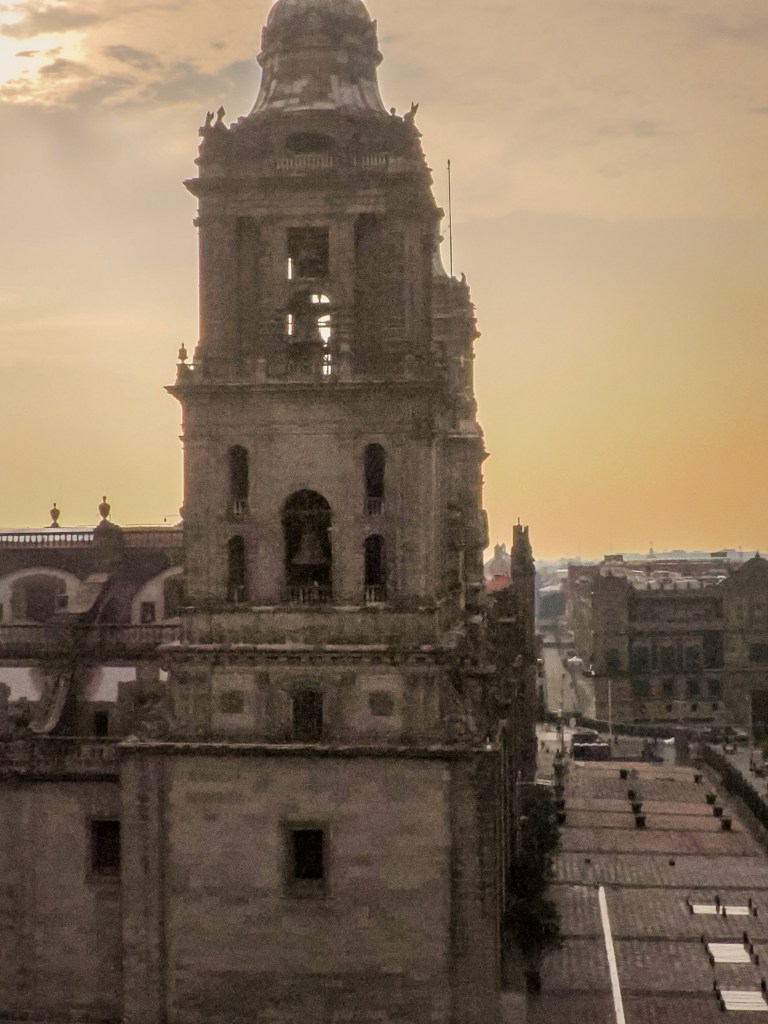
When viewed from the open expanse of the Zócalo, the cathedral’s exterior presents a block-wide stone tapestry that dominates the city’s northern horizon. The primary visual anchor of this massive facade is the pair of towering twin bell towers, which soar nearly 220 feet (67 meters) into the sky. Designed in a restrained Neoclassical style by architect Manuel Tolsá, these multi-tiered gray limestone structures feature stately columns, rhythmic arches, and distinct, bell-shaped caps topped with stone spheres.
Housed within these open-air belfries are more than 30 historic bronze bells—including the massive, 13-ton Santa María de la Guadalupe—which have rung out over the valley for centuries. These solid, geometric towers stand in sharp, dramatic contrast to the attached Sagrario Metropolitano (Metropolitan Tabernacle) directly to the right. While the main cathedral is wrapped in smooth, gray limestone, the tabernacle’s exterior walls are built from a porous, deep-red volcanic rock called tezontle, acting as a vibrant canvas for the central portal’s dizzying, hyper-intricate white limestone (chiluca) carvings. Framed by highly decorated estípite columns (inverted, tapered pyramids) and heavy, relief-carved wooden doors, this Ultra-Baroque facade mimics a magnificent church altarpiece brought outdoors, rising majestically above a geometric, checkerboard-paved stone courtyard.
The View from Above
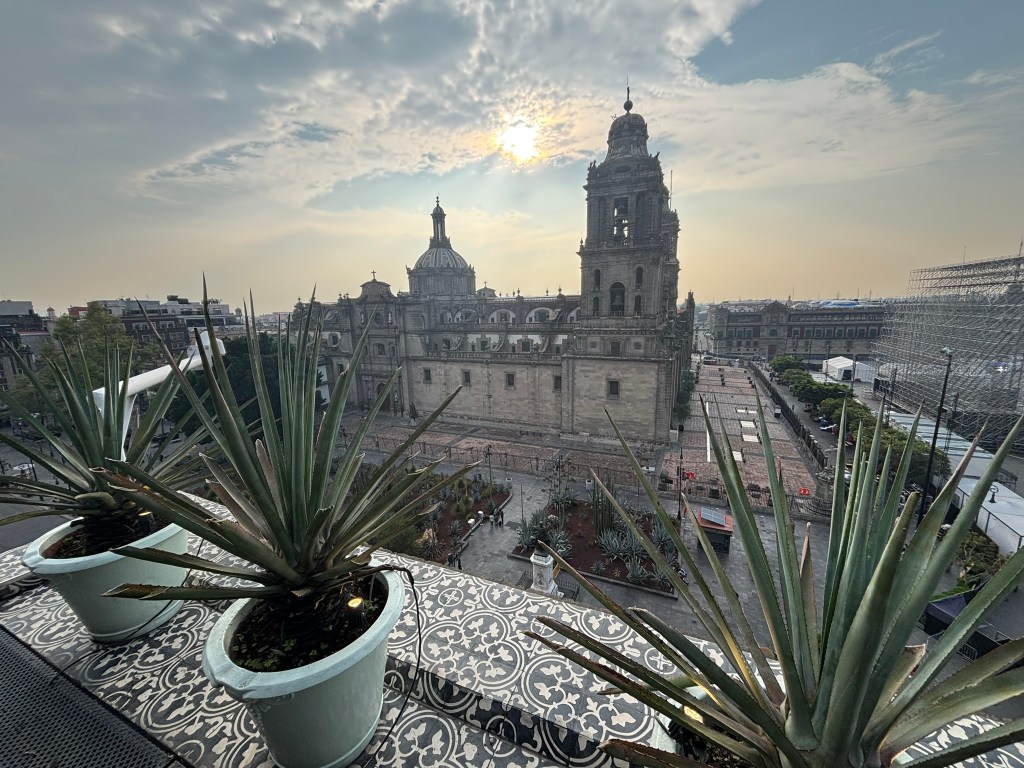
Ascending to a nearby rooftop terrace reveals an entirely different, three-dimensional world. From above, the rigid flat lines of the plaza disappear, replaced by a sweeping landscape of Manuel Tolsá’s grand Neoclassical dome capped with a lantern. Looking down from a birds-eye vantage point, framed beautifully by potted agaves and native organ pipe cacti, the cathedral transforms into an intricate maze of rolling stone vaults, ornate lanterns, and balustrades. I took the photo from the rooftop restaurant at Hotel Zocalo Central.
🏛️ What to See from the Inside: Interior Highlights
The interior of the cathedral is a soaring, cavernous expanse of stone, wood, and gold. As you wander down the monumental central nave, make sure to seek out these essential features:
The Altar of Forgiveness (Altar de Perdón)
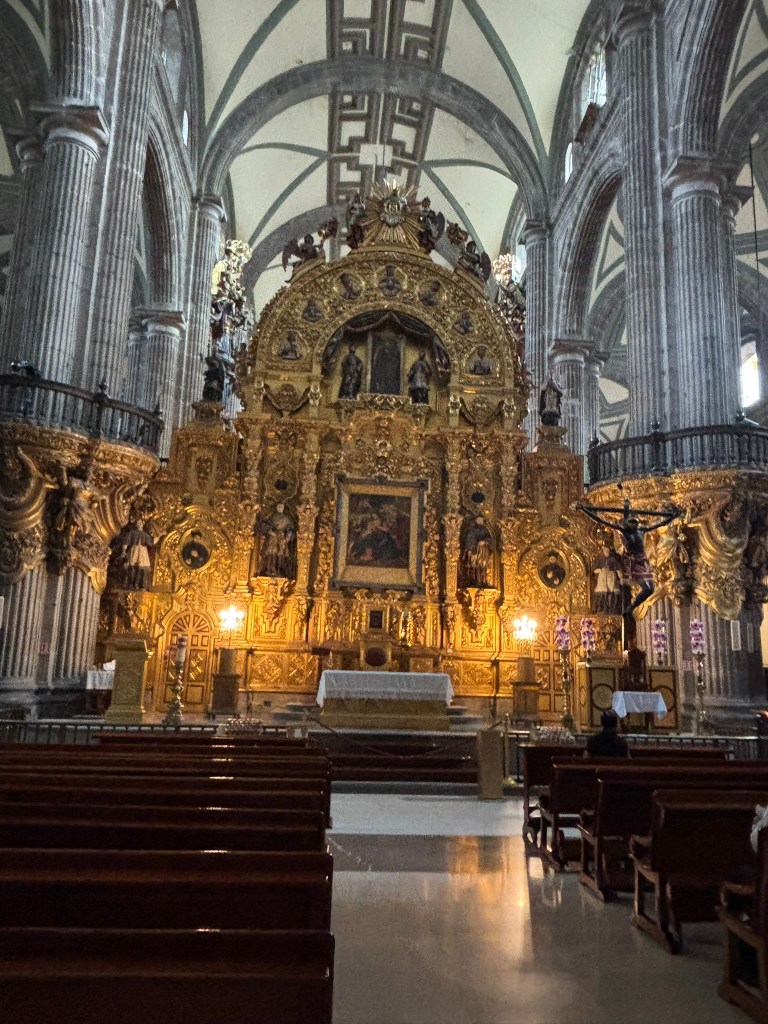
Positioned right inside the central entrance doors, this beautifully carved altar greets visitors immediately. It features an immense gold-leaf altarpiece and houses a dark-colored crucifix called Señor del Veneno (Lord of the Poison). Local folklore claims the crucifix miraculously turned pitch-black after absorbing a lethal dose of poison from the lips of a holy clergyman targeted by an assassin.
The 14 Side Chapels
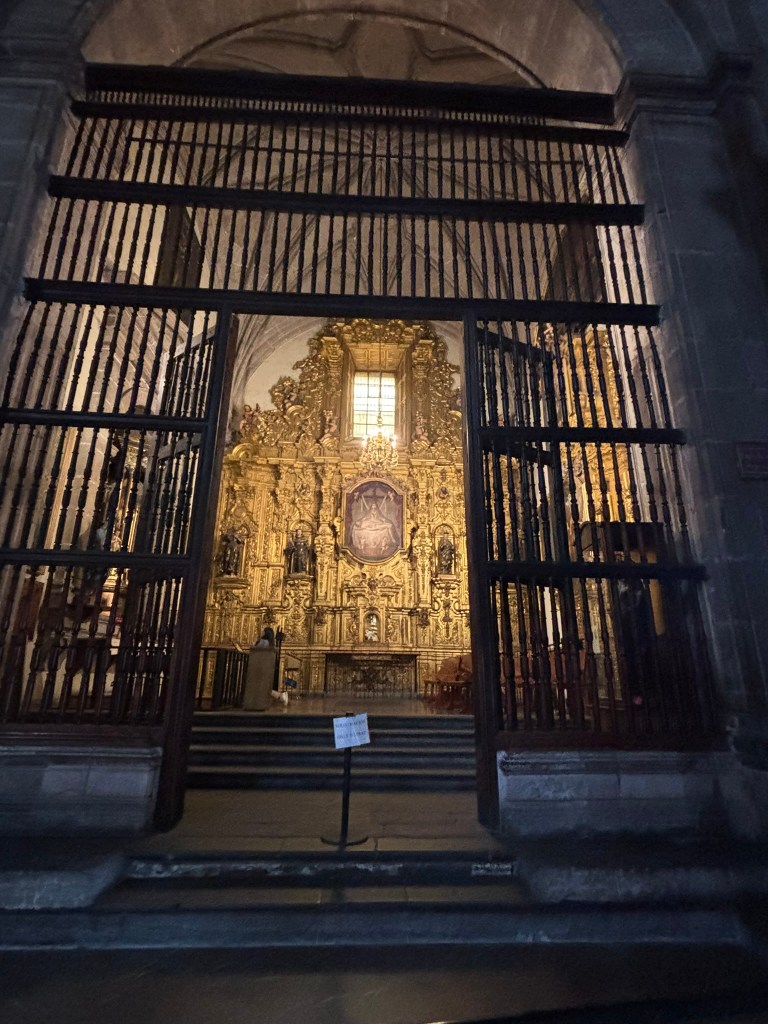
Flanking the monumental nave are 14 distinct chapels, each sponsored by colonial guilds and dedicated to different saints. Peering through their towering wrought-iron gates (rejas) reveals independent, gold-drenched sanctuaries filled with historic colonial retablos and religious iconography that function as private vaults of historical art.
The Vaulted Nave and Historic Organs
Walking down the central perimeter aisle reveals the building’s immense structural mastery. Massive fluted stone columns march down the length of the hall, rising up into soaring, elegant ribbed cross-vaults. Interspersed along the ceiling are grand circular domes that drop natural shafts of dramatic sunlight straight down onto the polished stone floor.
Mounted along the choir galleries stand the cathedral’s two legendary 18th-century pipe organs. These instruments are encased in heavily carved, gilded woodwork that erupts from the stone pillars, featuring a dramatic fan of horizontal trumpet pipes (trompetería) designed to fire sound directly over the congregation.
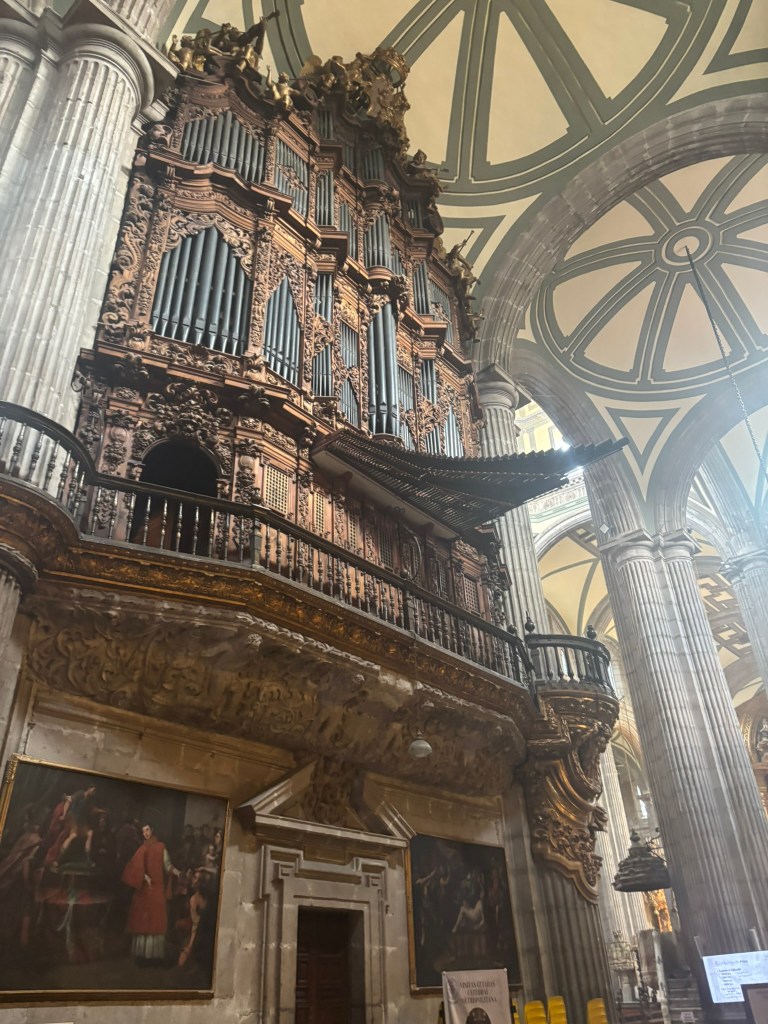
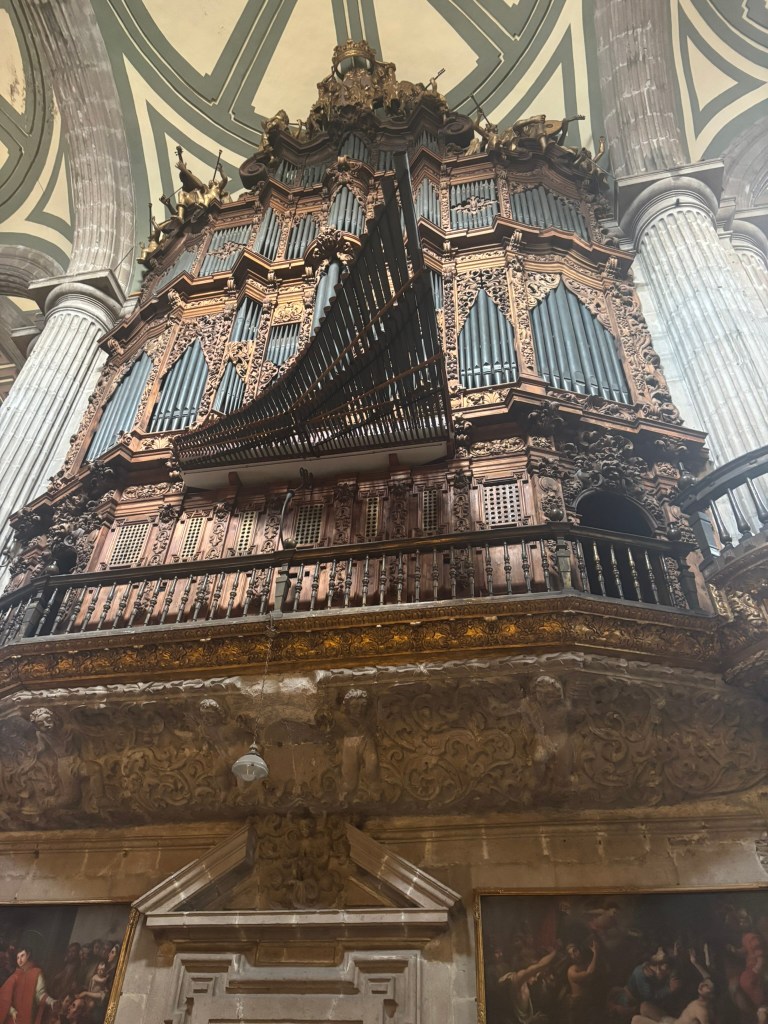
Grandeur from within: Looking down the side aisle of the cathedral’s interior. Soaring fluted stone columns branch out into elegant ribbed cross-vaults, while natural light streams down from the high dome windows to illuminate the historic pipe organs on the left.[IMAGE: CLOSE-UP OF THE SPANISH COLONIAL PIPE ORGAN]
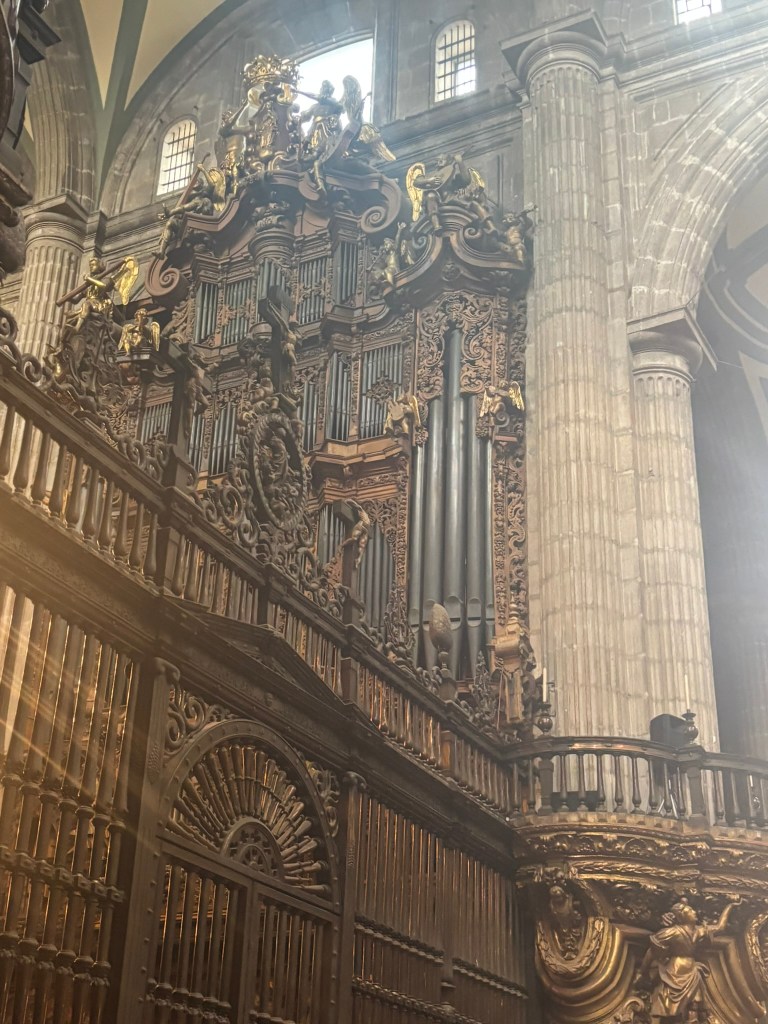
A wall of sound: A close-up view of one of the cathedral’s historic 18th-century pipe organs. The intricate, gilded Baroque woodwork frames a dramatic fan of horizontal trumpet pipes projecting directly out into the grand stone nave.
The Sinking Foundation Pendulum
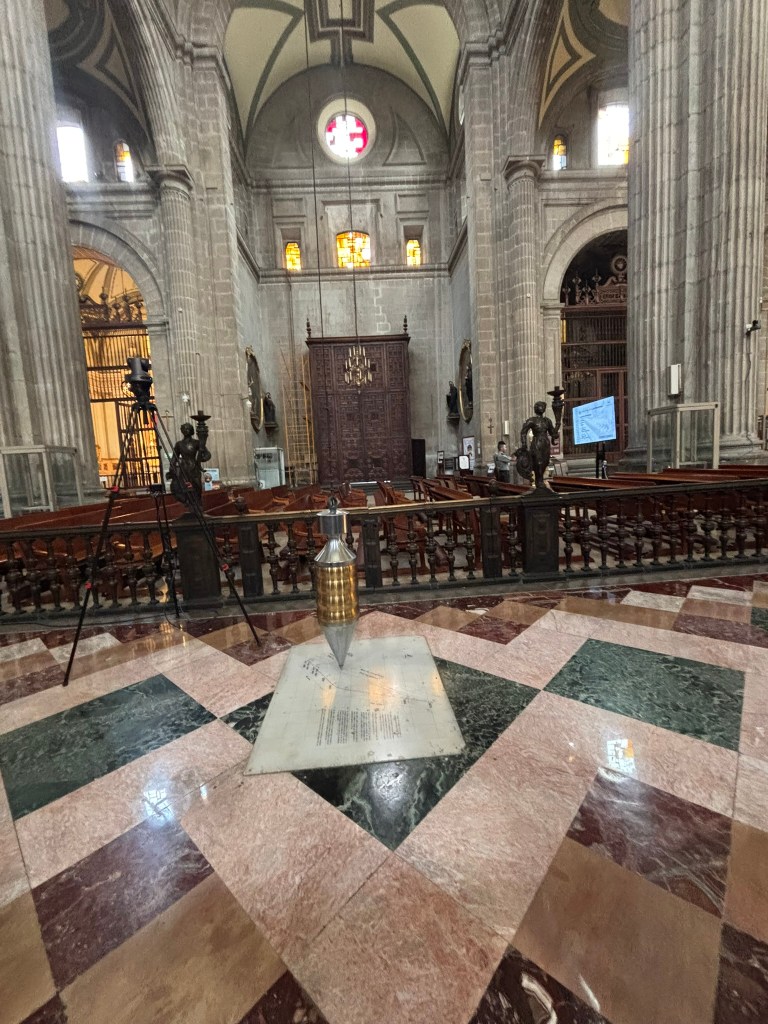
Look toward the center of the nave floor to find a fascinating modern addition—a massive brass pendulum suspended by a long cable from the cathedral ceiling. Because the complex was constructed on the soft, clay-heavy lakebed of ancient Lake Texcoco, the colossal stone structures have spent centuries unevenly sinking into the earth. This pendulum was installed over a calibrated tracking diagram to chart the building’s shifting tilt in real time, serving as a testament to the massive engineering rescue projects of the late 20th century.
As your camera tilts upward to photograph the high vaulted ceilings, you will notice an intense structural network of massive steel cables stretching horizontally across the stone arches of the nave. These tension rods are a visible reminder of the cathedral’s fight against gravity and mud.
As you walk through the cathedral, you can also feel the ground sloping in one direction or the other. This is because different parts of the heavy stone structure began sinking at vastly different rates. The central nave began bowing outward, causing severe structural fracturing that threatened to split the roof down the middle.
During the historic 1990s engineering rescue project, engineers did not just stabilize the ground below using underpinning shafts; they also wrapped the cathedral’s upper skeleton in an invisible “corset.” These high-tensile steel cables were carefully bored through the massive stone columns and tensioned to literally pull the leaning walls back inward, locking the shifting arches together. For photographers, these stark, industrial steel lines provide a fascinating, raw contrast cutting directly through the historic 18th-century stone design.
The Altar of the Kings (Altar de los Reyes)
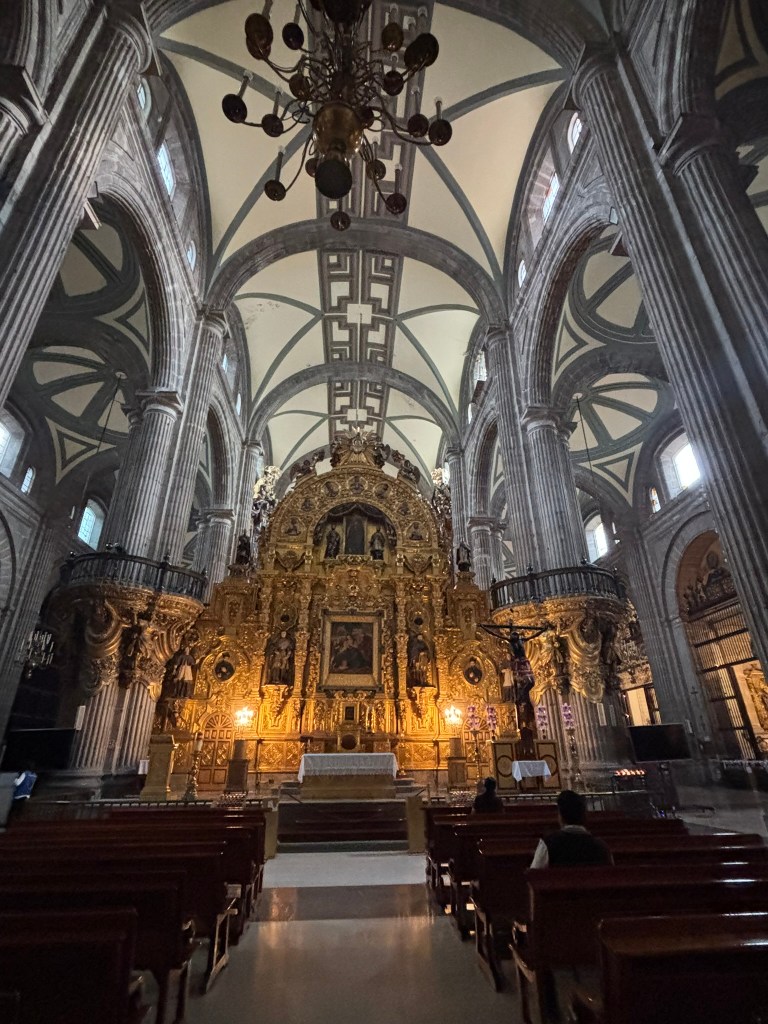
Located at the very back of the apse, this breathtaking 18th-century altarpiece is the definitive crown jewel of the cathedral complex. Towering toward the ribbed ceiling like a golden wall, the entire structure is blanketed in shimmering gold leaf and executed in the hyper-intricate Churrigueresque style. It frames a stunning central liturgical stage adorned with the Mexican and Vatican flags, surrounded by rows of beautifully framed, dark colonial oil paintings that depict biblical narratives, kings, and saints.
The Tomb of Emperor Agustín de Iturbide
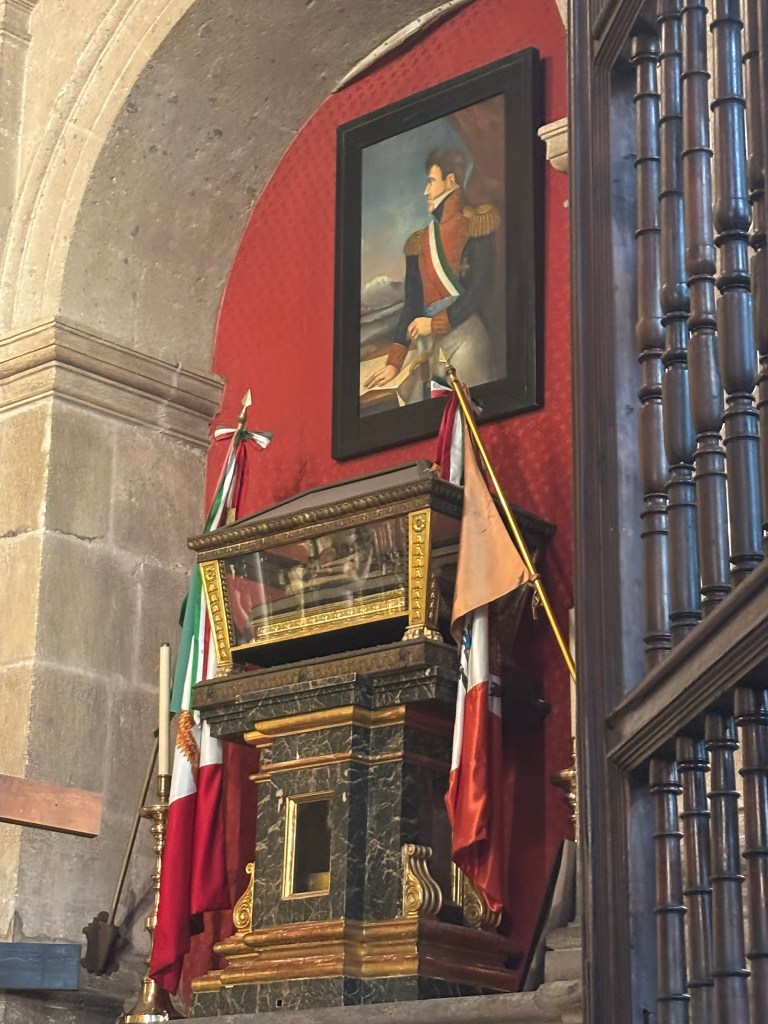
Located within the Chapel of San Felipe de Jesús, this corner contains a deeply significant chapter of Mexico’s political history. It houses the glass-and-gilded-bronze reliquary containing the remains of Agustín de Iturbide (Emperor Agustín I). Directly beneath his crystal urn, the green-and-gold marble pedestal permanently holds another national relic—the preserved heart of Mexican President Anastasio Bustamante, placed here, according to his final wish in 1853, to rest beside his commander.
Final Thoughts: A Monument of Defiance and Endurance
To stand in the center of the Metropolitan Cathedral complex is to feel the sheer weight of Mexico City’s layered identity. It is a place where two empires collided, leaving behind a structure that is equal parts beautiful and tragic. It is an architectural marvel that refused to collapse into the ancient lakebed beneath it, mirroring the unshakeable endurance of the city itself. Surrounded by the ringing of its historic bells and the faint scent of incense, you realize this isn’t just a monument to the past—it is a living, breathing testament to the capital’s soul.

