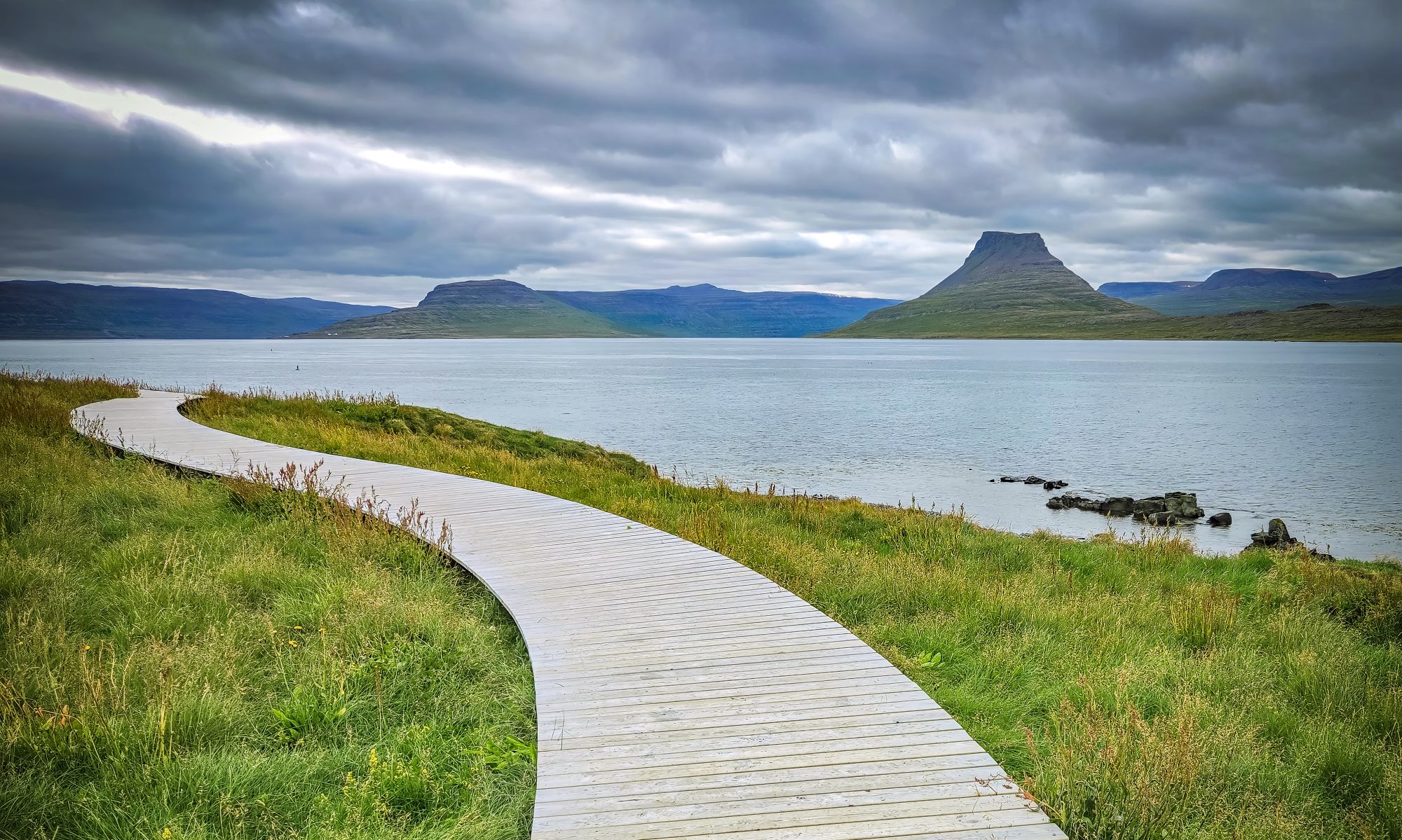
Of everything I saw in Iceland, this is the moment that made me go “WOW” — the glacial lagoon at Jökulsárlón.
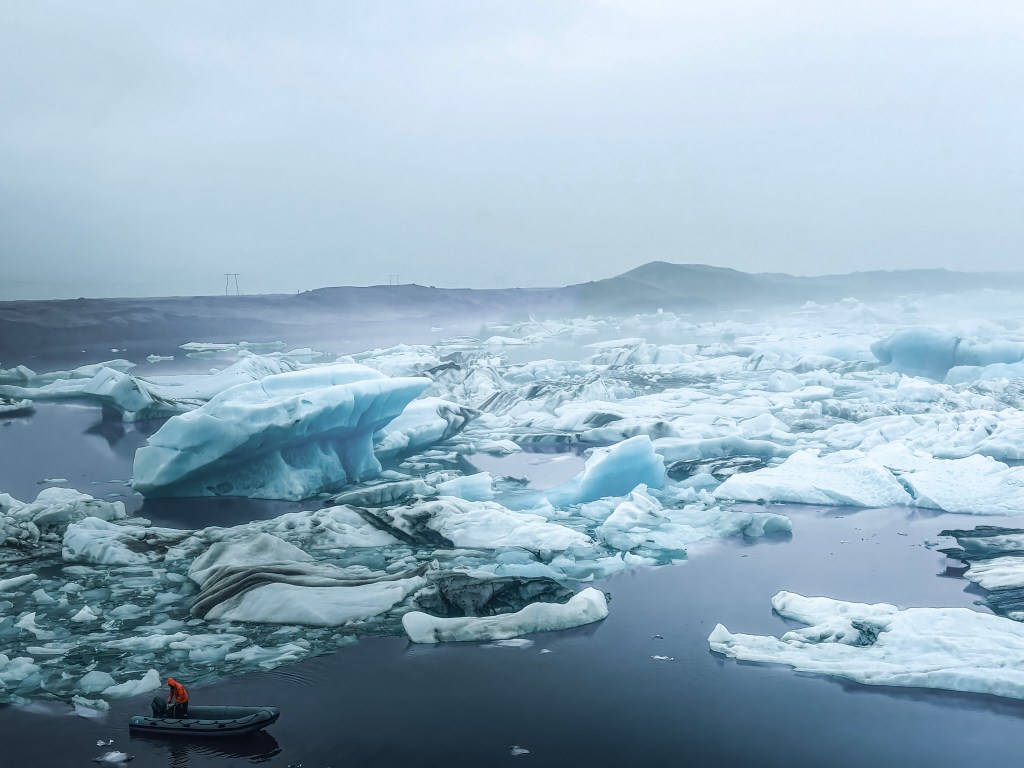
By the time we got to Glacial Lagoon, we’d already had a few days of big Icelandic moments. A South Coast tour had checked off waterfalls and black sand beaches. We’d been out whale watching. We’d sailed toward Heimaey hoping to see puffins, but the weather had other plans — the boat never docked, and we spent the whole day out at sea instead, puffin-less. So when the day came to visit the glacial lagoon from Djúpivogur, I wasn’t expecting much. It started raining before we’d even left, and I’d more or less made peace with a quiet, gray day.
Then we arrived, and I honestly couldn’t believe what I was looking at.
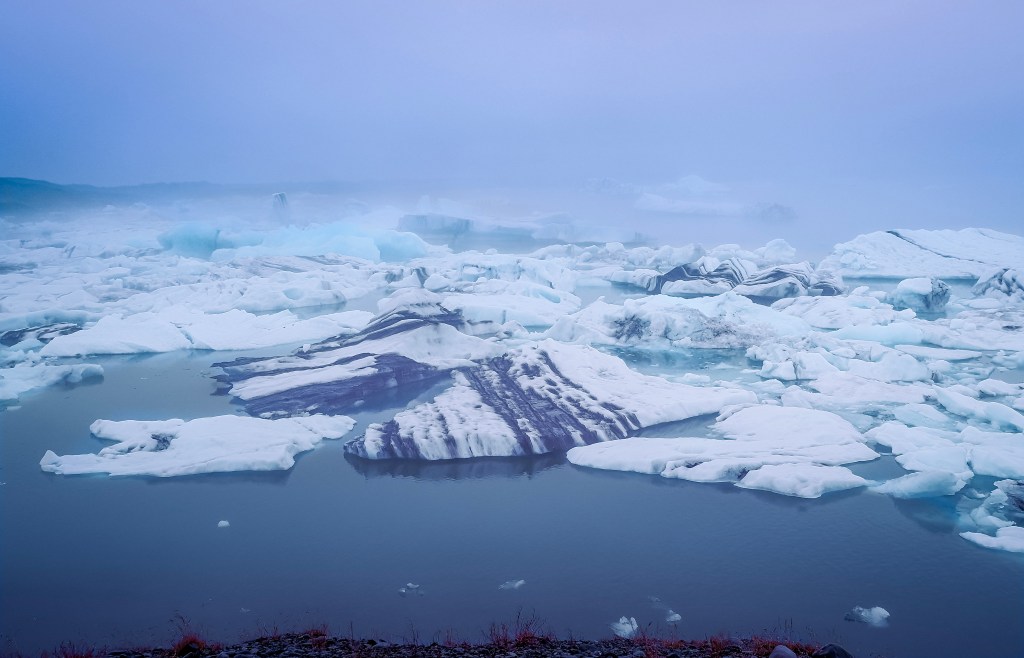
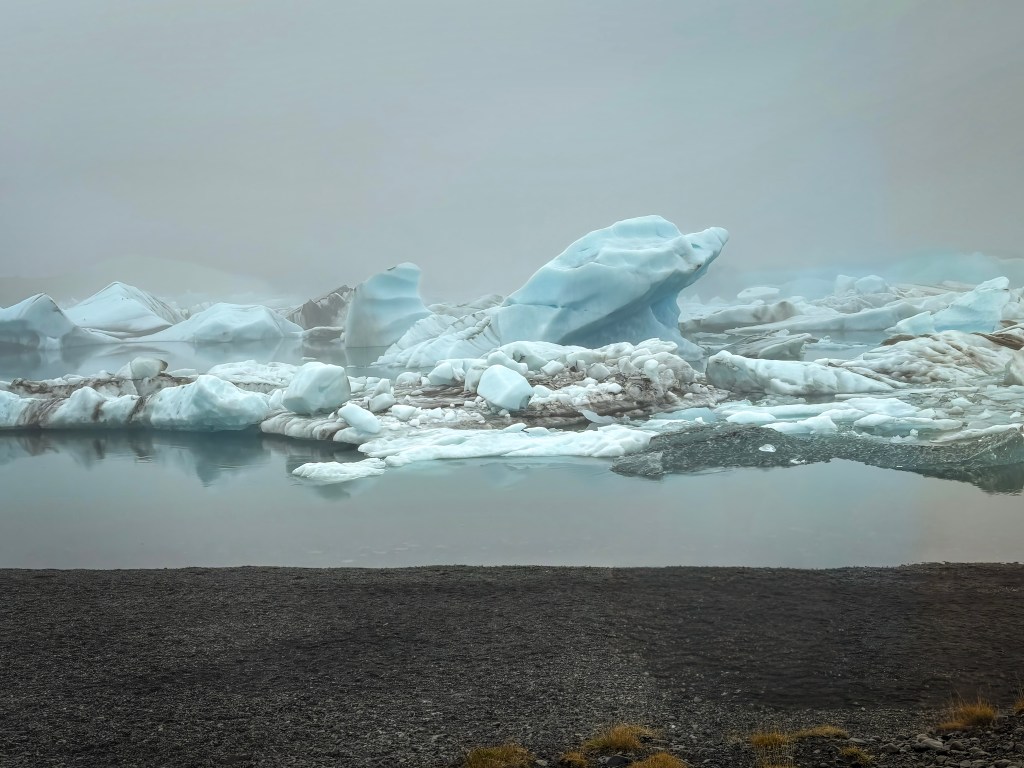
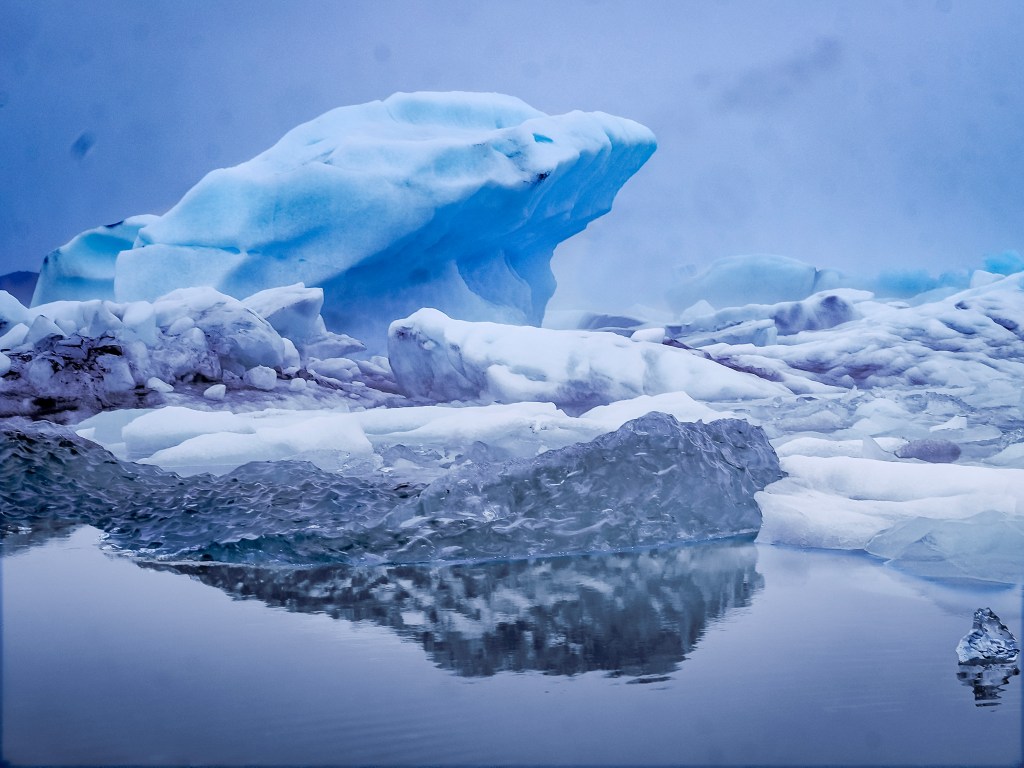
I’d seen glaciers before. I’d even walked on the Athabasca Glacier in Banff, so it wasn’t as if ice was new to me. But this was something else entirely. It wasn’t one solid sheet of ice to walk across — it was hundreds of broken chunks, scattered across a still, dark lagoon, each one catching light in a different way. Some were nearly clear, some a deep glacial blue, some streaked black and white where volcanic ash and sediment had been folded into the ice over centuries. The volcanic landscape doesn’t just sit near the lagoon — it shapes it, staining the ice with these strange, striped patterns you won’t see anywhere else.
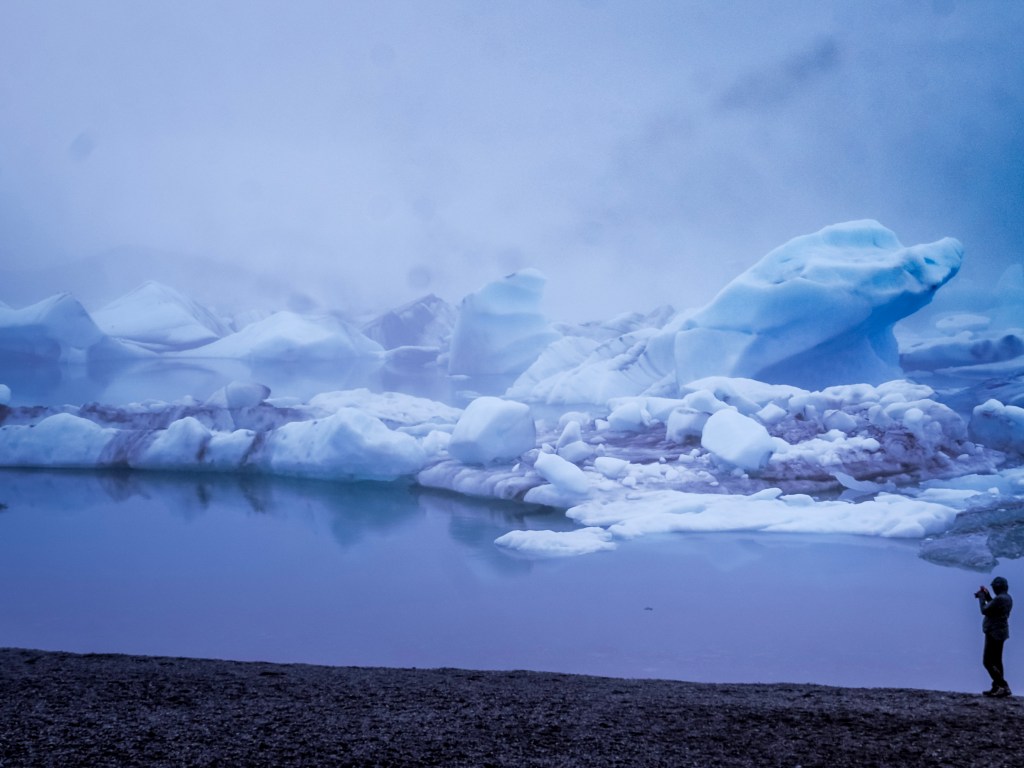
Diamond Beach
And then there’s Diamond Beach, the black sand shoreline just across Route 1 from the lagoon, where the current carries smaller iceberg chunks out to sea and the waves wash them back onto the sand. Against the black volcanic sand, the ice looks exactly like scattered diamonds — hence the name. If you want to actually see a beach full of them, timing matters: go at low tide. At high tide, a lot of that ice gets pulled back out or covered, and you’re left with far fewer “diamonds” on the sand.
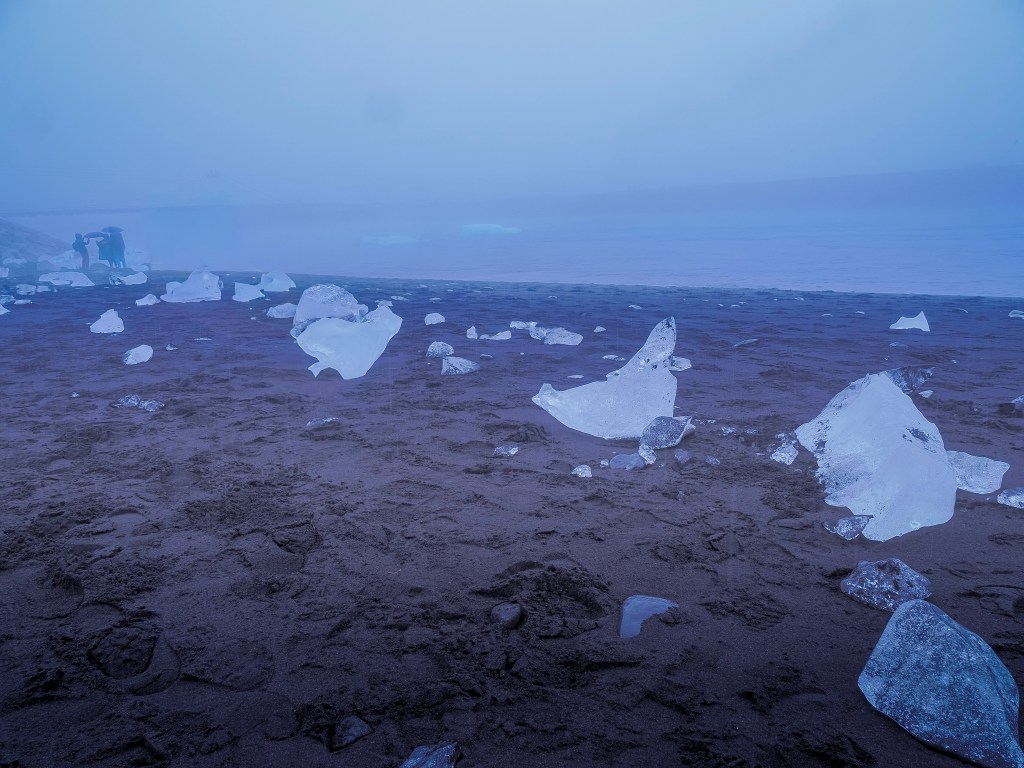
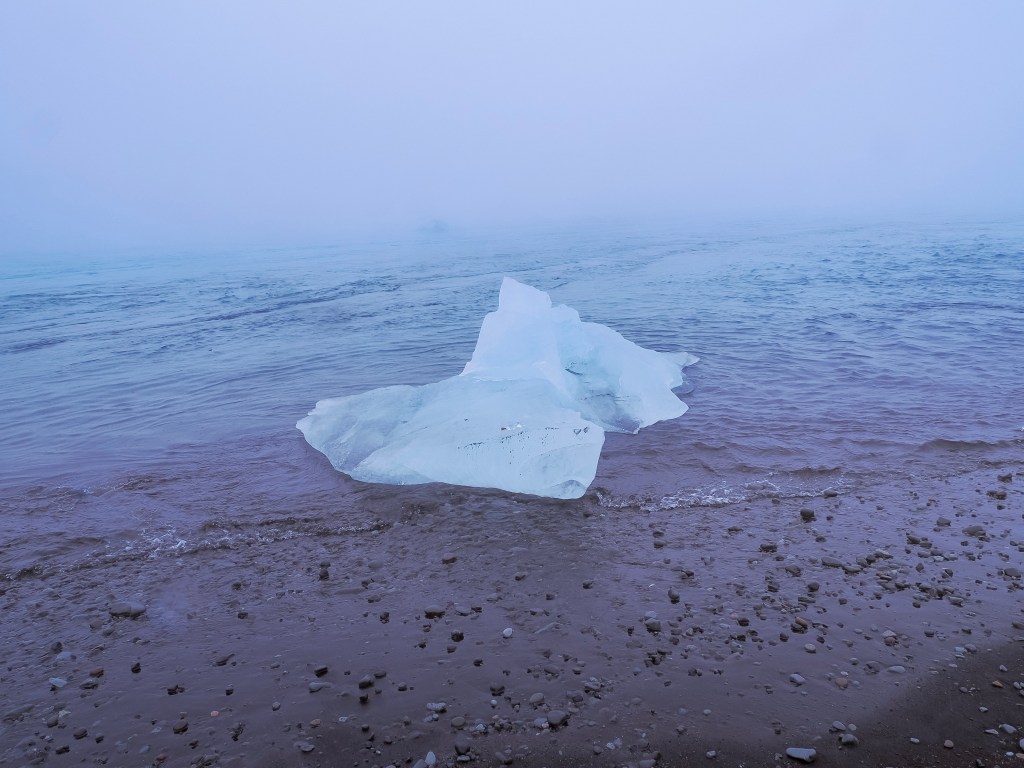
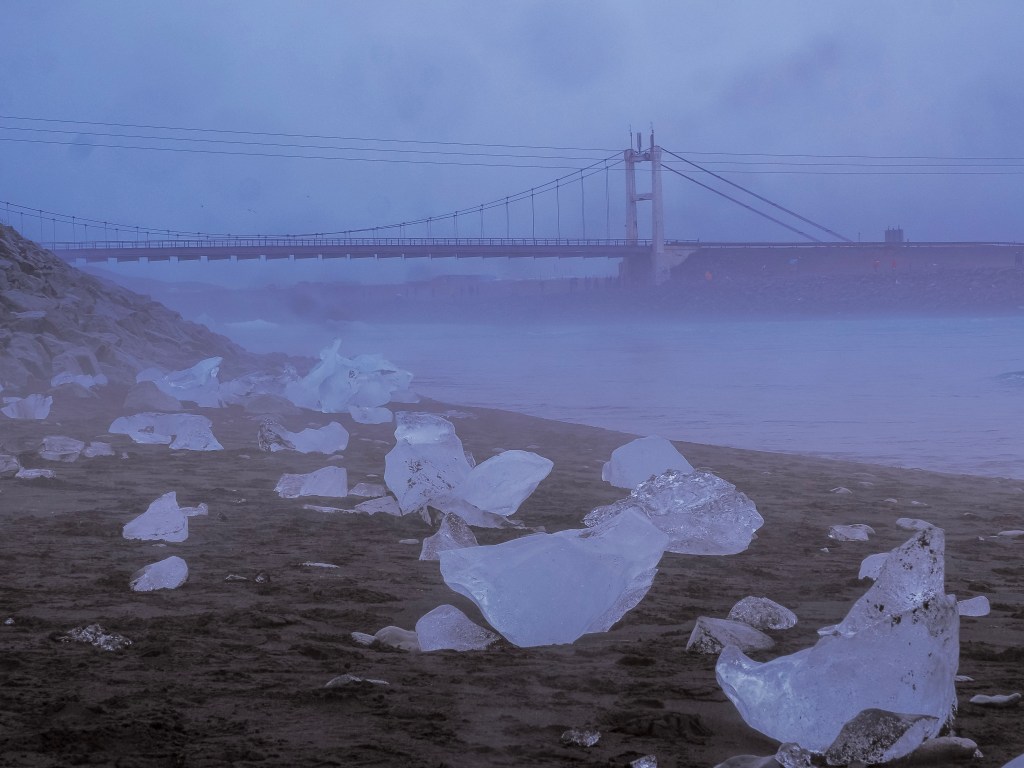
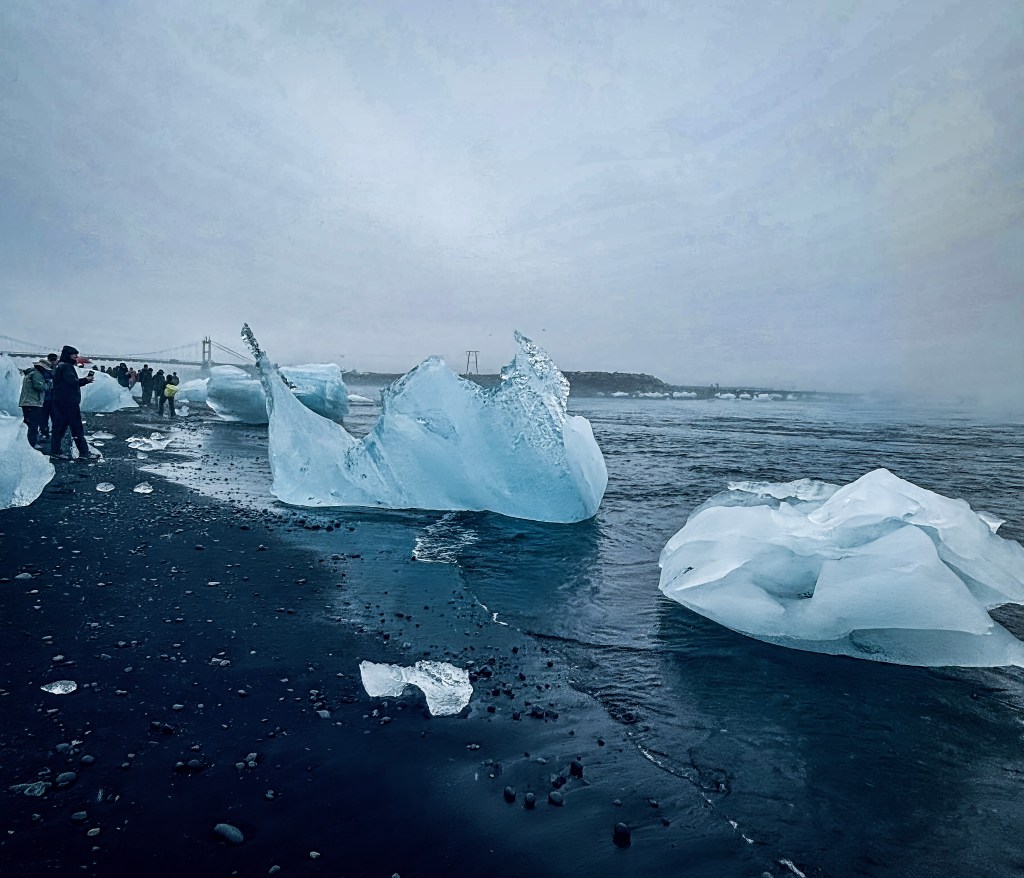
What stuck with me most, though, was how the rain made it better, not worse. The gray sky flattened the light just enough that the blues in the ice seemed to glow from within instead of glaring in the sun. It felt less like a postcard and more like standing somewhere that wasn’t entirely real. Surreal is overused, but I don’t have a better word for it.
Visiting the Glacial Lagoon from Reykjavík
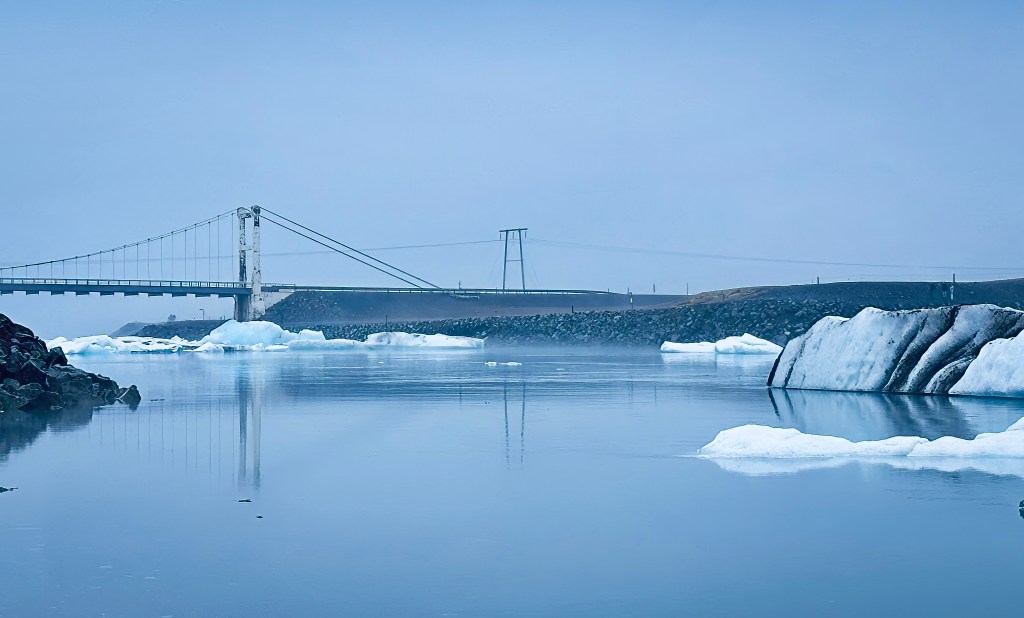
Jökulsárlón sits in southeast Iceland, right on the Ring Road (Route 1), inside Vatnajökull National Park — fed by the Breiðamerkurjökull glacier, part of Vatnajökull, Europe’s largest ice cap. It’s about 378 km (roughly 240 miles) east of Reykjavík, a drive of around 4.5 to 5 hours on the Ring Road, and the distance means it’s not really a there-and-back-in-a-day trip from the capital.
Getting there:
- Self-drive: Leave central Reykjavík on Route 49, merge onto Route 1 heading southeast, and stay on it for around 375 km until you see the signposted turn for the lagoon, which leads straight into the car park. The drive itself is one of Iceland’s best, passing Seljalandsfoss, Skógafoss, the Vík black sand coast, and Skaftafell along the way.
- Guided tour: Most visitors combine it with a South Coast day tour from Reykjavík, or see it as part of a full Ring Road circuit. Since we came in from Djúpivogur on the east side, we approached from the opposite direction — a good reminder that the lagoon works as a stop whether you’re circling the Ring Road clockwise or counter-clockwise.
- Public transport: There’s no public bus service to Jökulsárlón — it’s only reachable by car or organized tour.
Once you’re there:
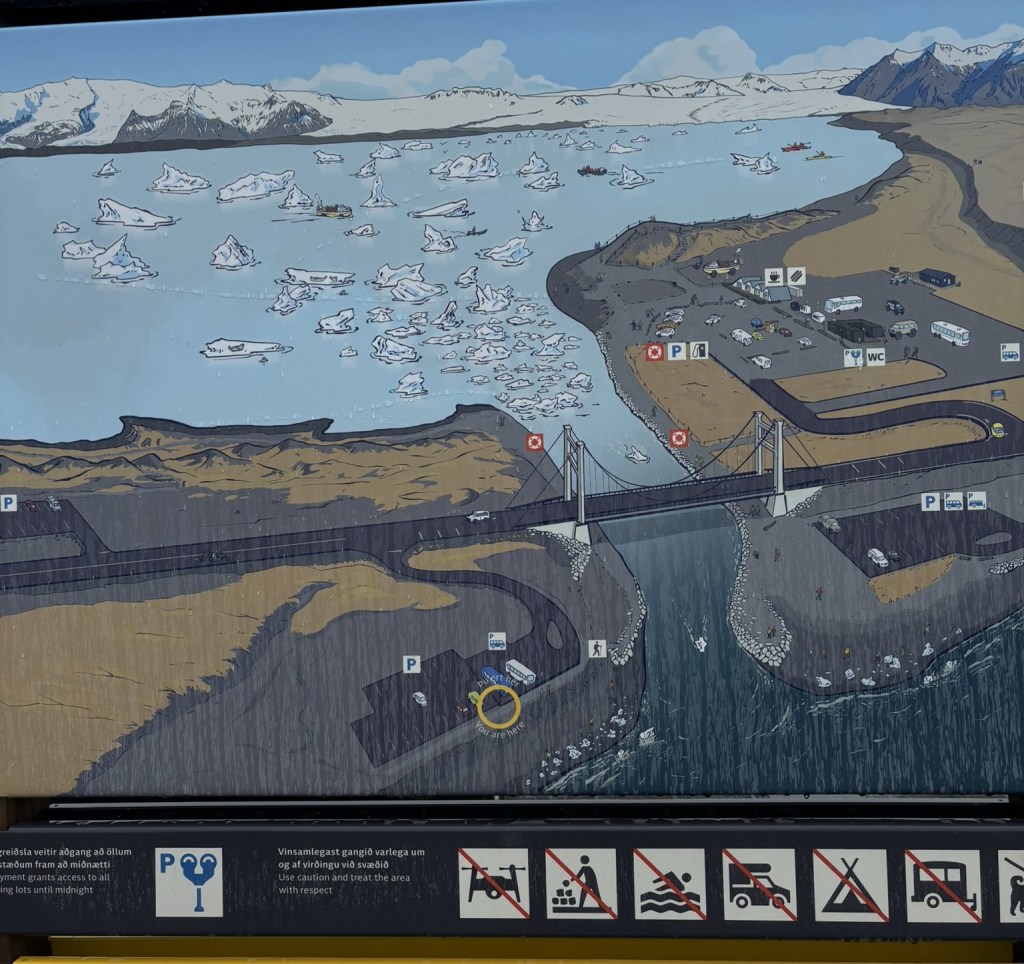
- The lagoon itself is free to walk along, and you don’t need to book anything to see the icebergs from shore. Boat tours (amphibious trucks or Zodiacs) run seasonally and get you out among the ice for a closer look, with the option to sail right up near the icebergs.
- Diamond Beach is a two-minute walk or drive across Route 1 from the lagoon car park. Check the tide times before you go — low tide is when the most ice piles up on the sand.
- A minimum visit is about 1.5 hours for the lagoon and Diamond Beach together; budget 2.5–3 hours if you want a boat tour too, and closer to 4 if you’re stopping for food at the small café by the car park.
- Stay well back from the water’s edge — waves can arrive without warning on these beaches, and the ice can shift suddenly.
When to go: The lagoon is worth visiting any time of year. Summer brings boat tours and long daylight; winter brings the chance to pair it with ice cave tours and a shot at the northern lights. We went when the weather wasn’t cooperating at all, and it still turned out to be one of the best days of the whole trip. If the forecast looks gray, don’t let that stop you — it might just make the ice glow a little bluer.
What makes Jökulsárlón and Diamond Beach so unique? I got curious about why I’d never seen anything like it before, even at other glaciers — and it turns out the lagoon is rarer than it looks. Unlike most glacial lakes, which are landlocked and just sit there melting, Jökulsárlón connects to the Atlantic through a short tidal channel, so seawater actually mixes with the meltwater and the tides push in and out every day. That connection is the whole reason Diamond Beach exists at all: icebergs don’t just melt in place; they drift toward the sea, ground near the channel mouth, and eventually break through, where the waves wash the smaller pieces back onto the black sand next door. Landlocked lakes have nowhere for the ice to go, so there’s no “beach” stage anywhere else. Add in the fact that the lagoon is Iceland’s deepest lake at nearly 250 meters, letting massive icebergs — some over a thousand years old — float freely instead of grounding out, and that the black-and-white streaks in the ice are volcanic ash compressed into the glacier over centuries, and you get a combination of tidal lagoon, volcanic terrain, and an exposed coastline that barely exists anywhere else on Earth. It also helps that the whole thing is young: a century ago none of this existed, and the lagoon has quadrupled in size since the 1970s as the glacier keeps retreating, so you’re really watching a landscape still in the middle of forming itself.


One Reply to “”