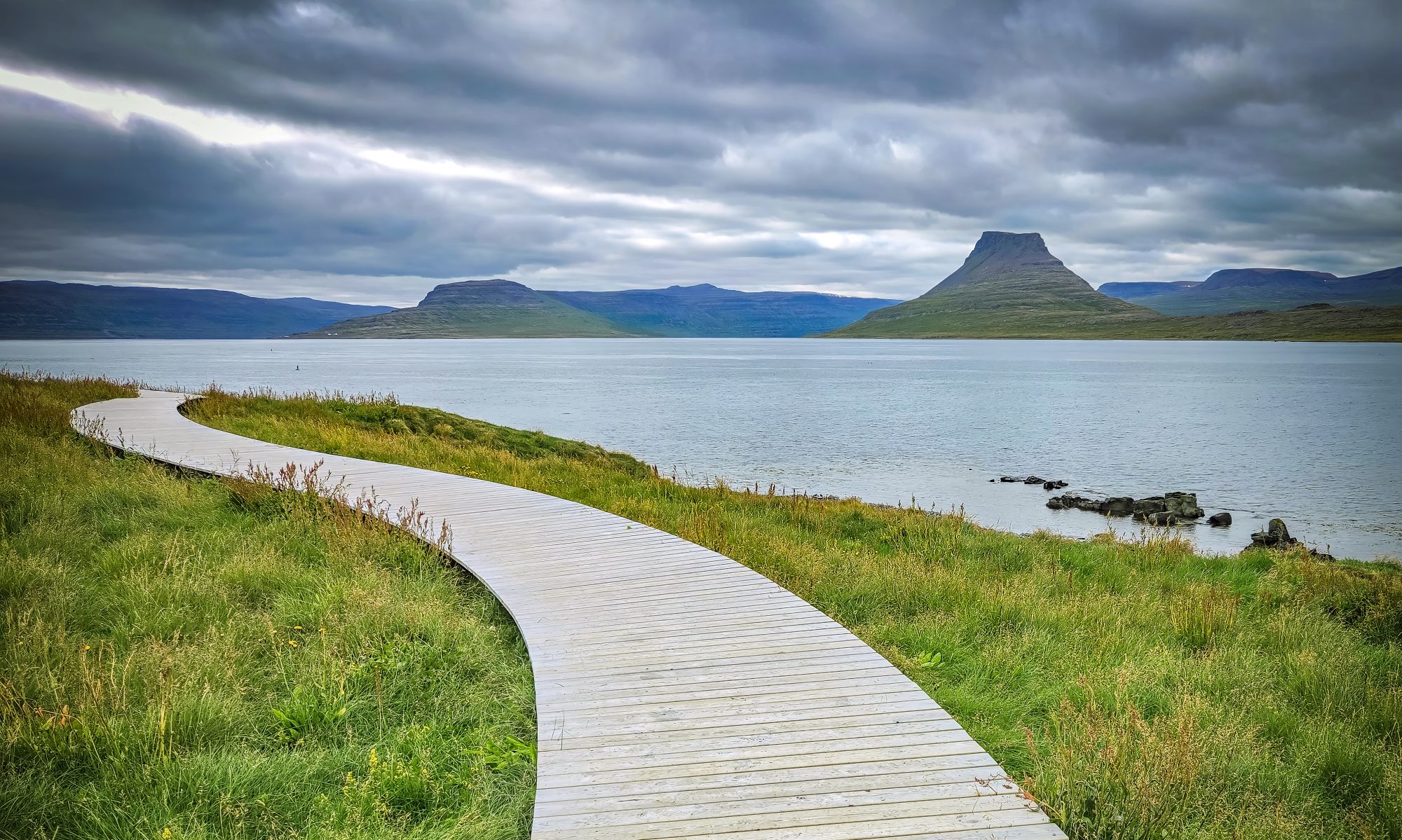
Picture a landscape so strange it looks like it belongs on another planet — steaming vents hissing out of blood-red earth, lava towers rising from still blue water, and craters scattered across the ground like giant footprints.
That’s Mývatn.
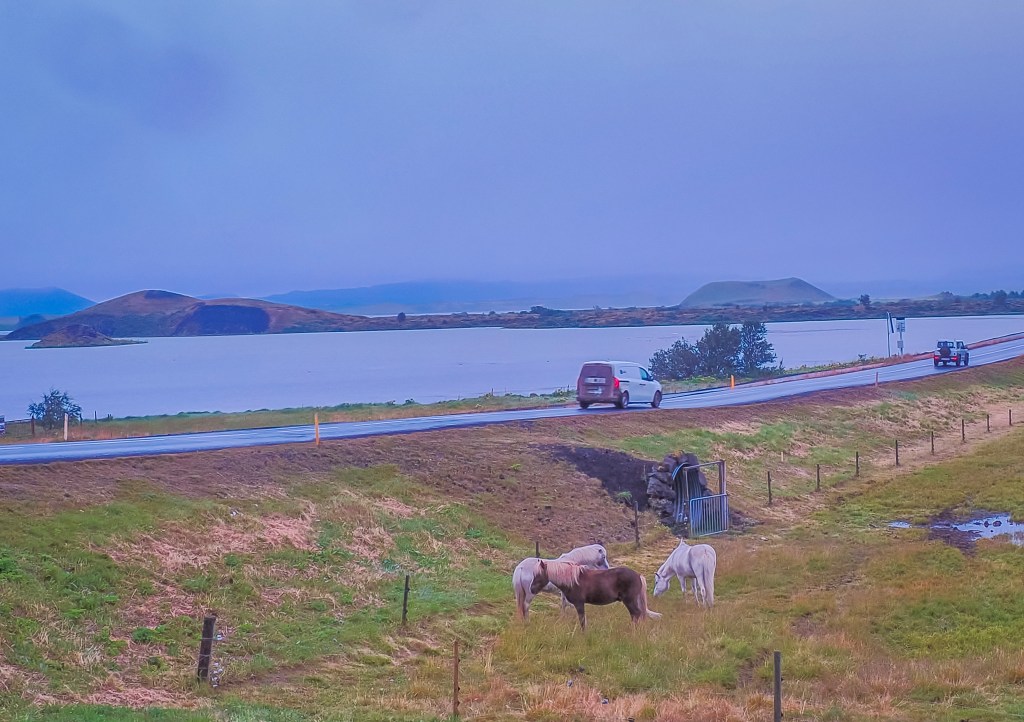
Mývatn means “midge lake” — it’s known (and sometimes notorious) for its swarms of midges in summer, which in turn support one of the richest bird populations in Iceland, especially ducks. The day we visited, it was rainy, and we didn’t deal with midges, but people suggest bringing head/face nets to protect against them.
If the glacial lagoon was Iceland showing off its ice, Lake Mývatn was Iceland showing off everything underneath it. It was another rainy day — the second time on this trip that gray skies rolled in right before we reached somewhere completely unique — and by now I was starting to notice the pattern. We reached the area as a shore excursion off our cruise, docked in Akureyri, and the tour packed in Goðafoss, Dimmuborgir, Námaskarð (Hverir), Lake Mývatn itself, and the Skútustaðagígar pseudo-craters — all in one day. It’s a strange, fitting itinerary, because Mývatn isn’t really one attraction; it’s a whole landscape shaped by fire, water, and steam, and by the end of the day we’d basically toured the geology textbook version of how Iceland was built.
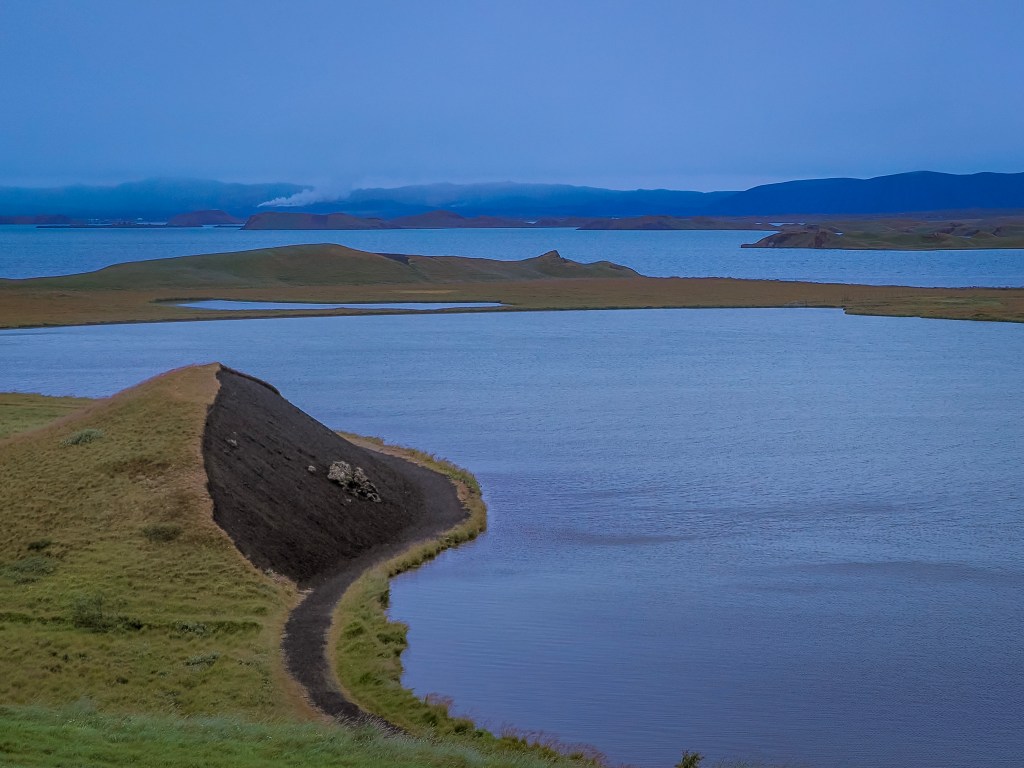
Tucked into northern Iceland, this shallow volcanic lake and its surrounding badlands feel like the country’s best-kept secret. Formed by a massive lava eruption over two thousand years ago, Mývatn is ringed by pseudocraters, black lava fields, bubbling mud pots, and geothermal baths that rival Iceland’s more famous hot spots. Add in some of the richest birdlife in the country, a real chance of catching the Northern Lights, and a landscape so alien it stood in for another world on screen, and you’ve got a destination that rewards anyone willing to go a little further north.
A few highlights
- Location: In the Skútustaðahreppur area of North Iceland, near the town of Akureyri.
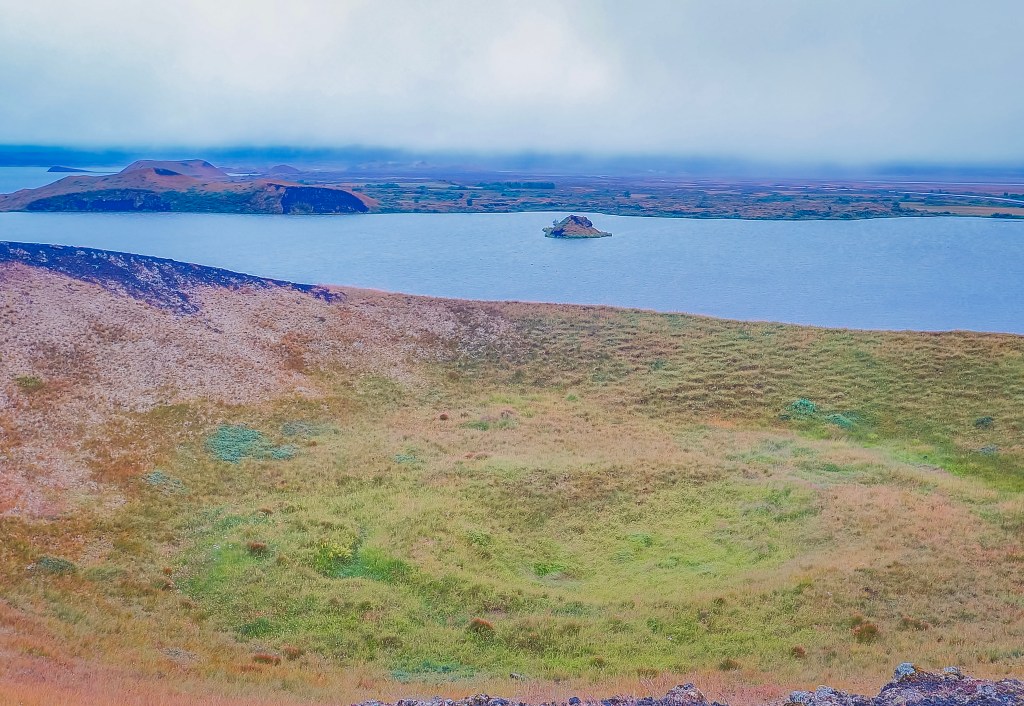
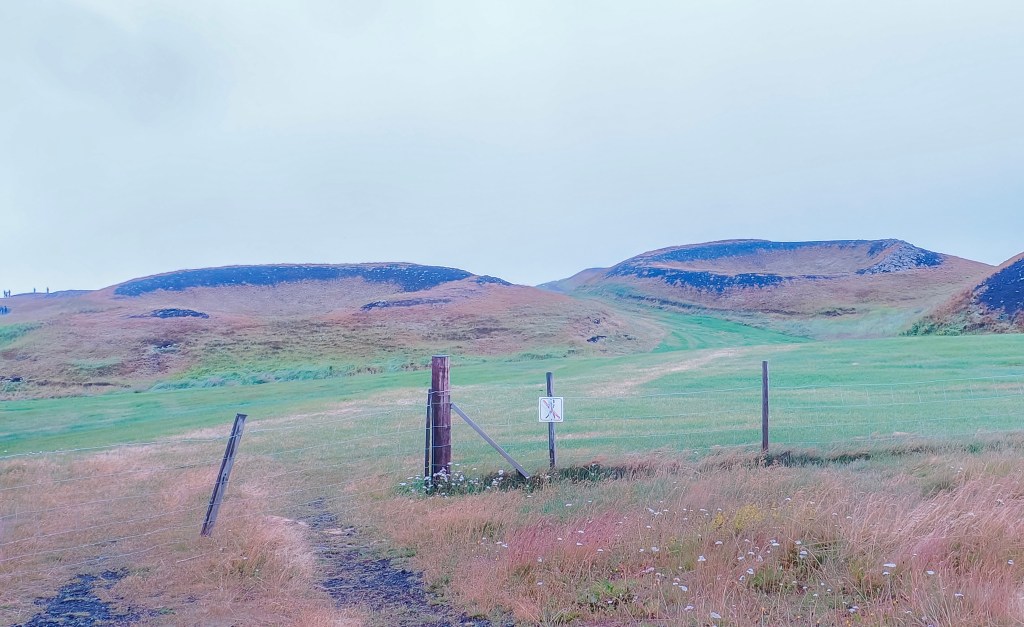
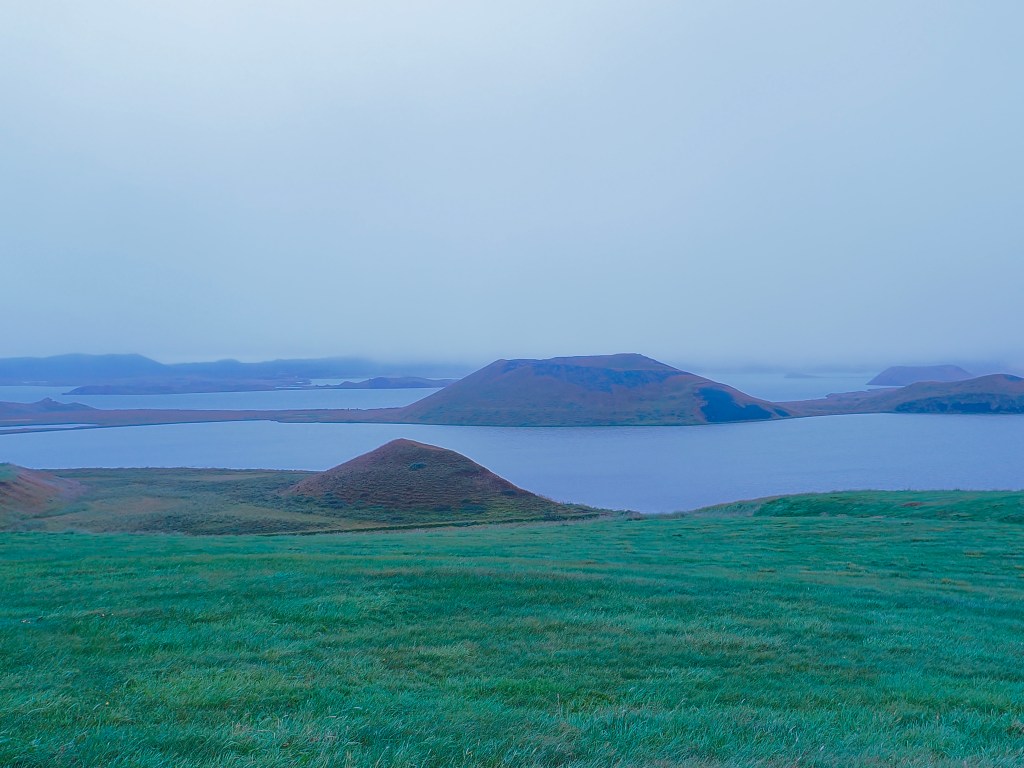
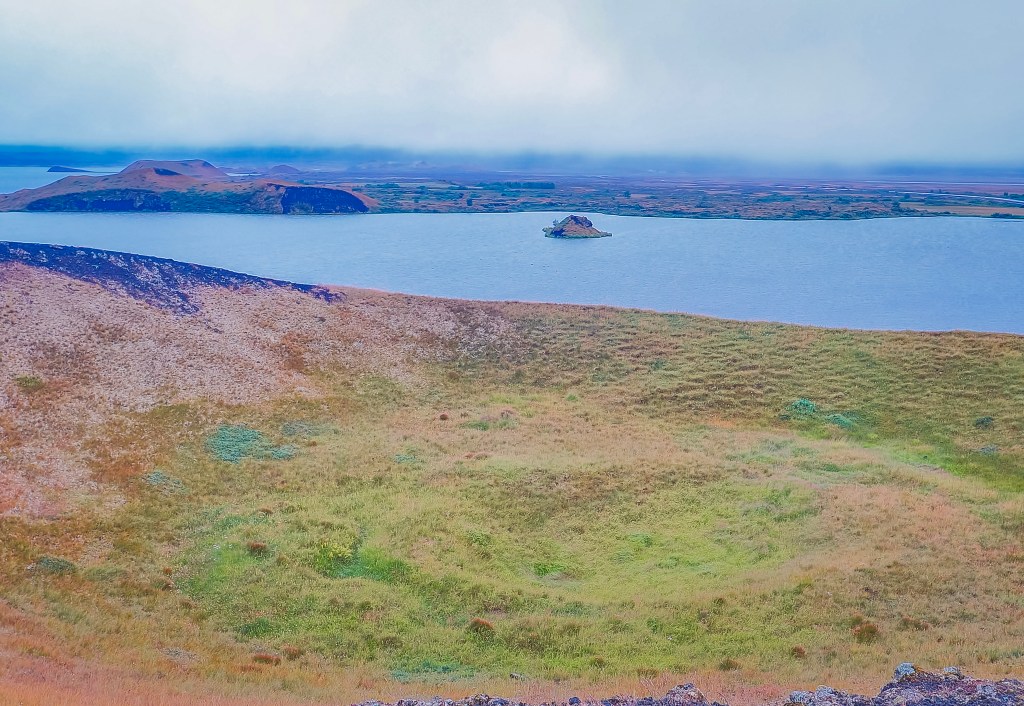
- Volcanic origin: The lake formed about 2,300 years ago from a large basaltic lava eruption. It’s shallow and famous for its unusual landscape of pseudocraters (volcanic-looking mounds formed by steam explosions, not actual volcanoes) and lava pillars.
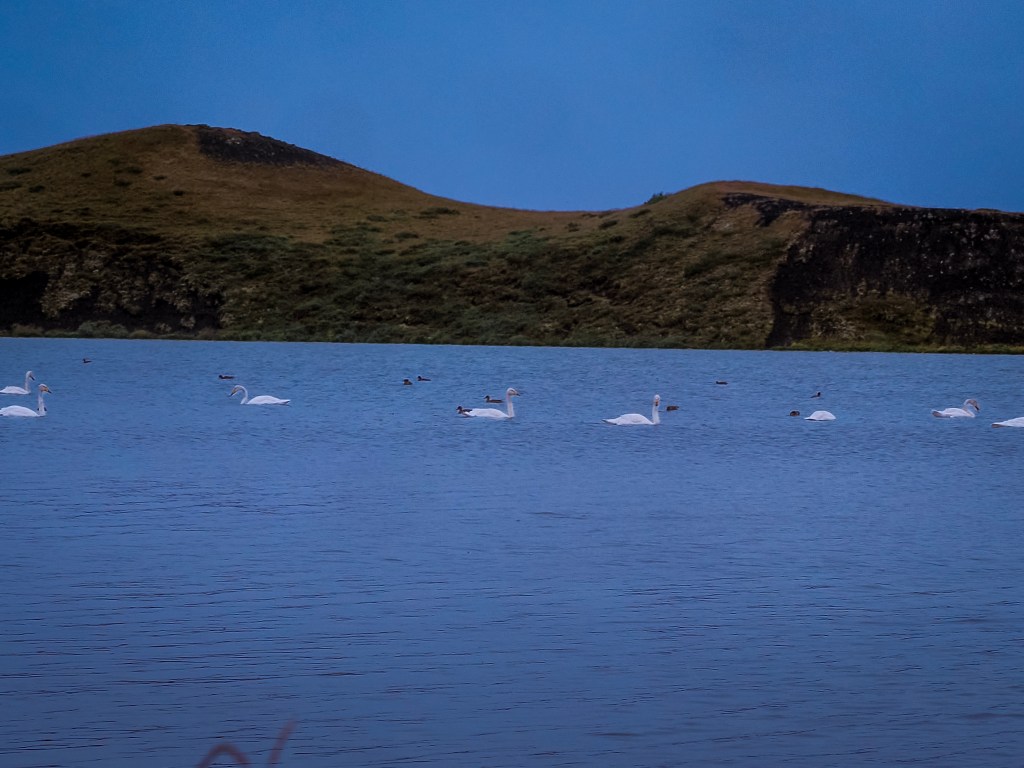
- Wildlife: Mývatn means “midge lake” — it’s known (and sometimes notorious) for its swarms of midges in summer, which in turn support one of the richest bird populations in Iceland, especially ducks.
- Geothermal activity: The whole region sits on the Krafla volcanic system, so there are many hot springs, mud pots, and steam vents nearby.
Best time to visit
- Summer (June–August): Warmest weather, near-endless daylight, all roads open — but also peak midge season (bring a head net, seriously) and more tourists. The day we visited in mid-August, it was raining, and we didn’t see any midges.
- Winter (Nov–March): Fewer bugs, chance of Northern Lights over the lake, and the Nature Baths feel incredible in the cold. Downside: shorter days and some roads/trails can be icy or closed.
- Shoulder season (May or September): Good middle ground — decent light, thinner crowds, midges mostly dormant.
Things to do around the lake
- Mývatn Nature Baths – geothermal spa with lake views, much less crowded than the Blue Lagoon.
- Dimmuborgir – easy walking trails through eerie lava rock formations.
- Hverfjall – short, steep hike up a huge volcanic crater with panoramic views.
- Krafla & Víti crater – active geothermal area with a striking blue-green crater lake.
- Námaskarð (Hverir) – bubbling mud pots and steaming vents, otherworldly and easy to access.
- Höfði – peaceful lakeside park, good for birdwatching and photos of the pseudocraters.
- Grjótagjá – a small lava cave with a geothermal pool (yes, the Game of Thrones cave).
How to Spend a Day or Two on the Diamond Circle
You can also visit Mývatn as part of the Diamond Circle. Set your alarm early, because this is the day you’ll be talking about for years.
Base yourself in Mývatn or Akureyri and start the morning with a short drive to Goðafoss, the “Waterfall of the Gods.” You can also do this trip the other way around and end at Goðafoss. If you start with Goðafoss, arrive before 8 a.m., and there’s a good chance you’ll have the thundering, horseshoe-shaped falls almost entirely to yourself — just you, the roar of the water, and the low morning light catching the spray ( We did this as the last stop on our trip, and it was busy with lots of people)
From there, point the car north toward Húsavík, Iceland’s whale-watching capital. If you’ve got the extra hours to spare, this is worth building your whole day around: humpbacks, minke whales, and white-beaked dolphins all frequent these waters, and a boat tour here rivals anything you’ll find further south. Even if you skip the boat, the harbor town itself is worth a wander and a coffee before you push on.
Next stop is Ásbyrgi Canyon, a huge, forested, horseshoe-shaped gorge that feels like it doesn’t belong in Iceland at all. Legend says it’s the hoofprint of Sleipnir, Odin’s eight-legged horse — and honestly, standing at the base of those sheer cliff walls, it’s easy to believe. It’s an easy, flat walk, which makes it a perfect lunch-stop detour.
Then comes the main event: Dettifoss, Europe’s most powerful waterfall. Nothing quite prepares you for the sound of it — a deep, constant roar you feel in your chest before you even see the falls. The east-side viewpoint gets you closer to the action (though the gravel road takes some patience), while the west side is paved and a bit more forgiving if you’re short on time. We skipped this one on our trip because we were really waterfall-ed out by then. We had seen 7-8 waterfalls at various stops within Iceland and didn’t want to spend time seeing yet another waterfall.
By mid-afternoon, swing through Hverir, also known as Námaskarð — a stretch of land so barren and sulfurous it looks like it was lifted straight off another planet. Mud pots gurgle, steam hisses out of the ground, and the smell of sulfur hangs in the air. It’s strange, a little unsettling, and completely unforgettable. If you have been to Yellowstone, this might not impress you much, but still a good place to stop
Save the best for last: end your loop back at Mývatn with a soak in the Nature Baths, milky-blue geothermal water steaming against the evening sky. After a day of waterfalls, whales, canyons, and craters, there’s no better way to let it all sink in.
Know before you go: this route covers 250–300 km of driving, so if you have two days rather than one, split it in half — Goðafoss and Húsavík on day one, the rest on day two. Either way, the Diamond Circle delivers more raw, varied Icelandic landscape in a single loop than almost anywhere else in the country.
For Game of Thrones Fans
If the landscape around Mývatn feels strangely familiar, that’s because you’ve probably seen it before — just with more snow and a few White Walkers thrown in. The area was a favorite filming location for Game of Thrones, and two spots are must-visits for fans:
- Grjótagjá — a small lava cave hiding a striking blue geothermal spring, best known as the setting for Jon Snow and Ygritte’s cave scene. Swimming is no longer allowed since the water temperature became unpredictable, but you can still peer inside and admire the steaming water and lava walls.
- Dimmuborgir — the dramatic lava field just south of the lake, which stood in for Mance Rayder’s Wildling army camp beyond the Wall. We’ve got a full guide to Dimmuborgir’s formation, folklore, and parking fees if you want to dig deeper before you go.
The two sites sit just a few kilometers apart, so it’s easy to knock them both out in under an hour if you’re building a GoT-themed detour into your Mývatn day.
Visiting Lake Mývatn & the Diamond Circle
Mývatn sits in North Iceland, about 480–500 km from Reykjavík — this is not a day trip from the capital, so plan for either a multi-day North Iceland trip or a stop on a full Ring Road loop.
Getting there from Reykjavík:
- Self-drive: Take the Ring Road (Route 1) north — roughly 6–7 hours of driving, one of Iceland’s classic long hauls. Akureyri makes a natural overnight stop, sitting about 6 hours from Reykjavík and just an hour from Mývatn.
- Fly + drive: The faster option — a roughly 45-minute domestic flight from Reykjavík to Akureyri, then rent a car for the last hour to Mývatn. This is the route we effectively mirrored, since we arrived by ship into Akureyri rather than driving up.
- Bus: Possible but slow — around 8–9 hours via Strætó, with a change in Akureyri.
Getting around once you’re in the area:
- If arriving via Akureyri (by ship, flight, or drive), most of the Diamond Circle sites — Goðafoss, Dimmuborgir, Hverir, Mývatn, and Skútustaðagígar — can be covered in a single well-paced day, either self-driven or with a guided day tour, which is exactly the format our shore excursion used.
- Goðafoss sits right along the main road between Akureyri and Mývatn, making it a natural first or last stop.
- Dimmuborgir, Hverir, and Skútustaðagígar all cluster close together near Reykjahlíð, the small village that serves as the area’s hub for fuel, food, and lodging.
- Wear closed shoes with good grip at Hverir — the terrain is uneven, and the ground can be genuinely hot in spots. Stick to marked paths everywhere in the geothermal areas.
- If you have time, the Mývatn Nature Baths (sometimes called the “Blue Lagoon of the North”) make a good way to end the day — geothermal soaking with volcanic views, usually less crowded than the original Blue Lagoon.


One Reply to “”