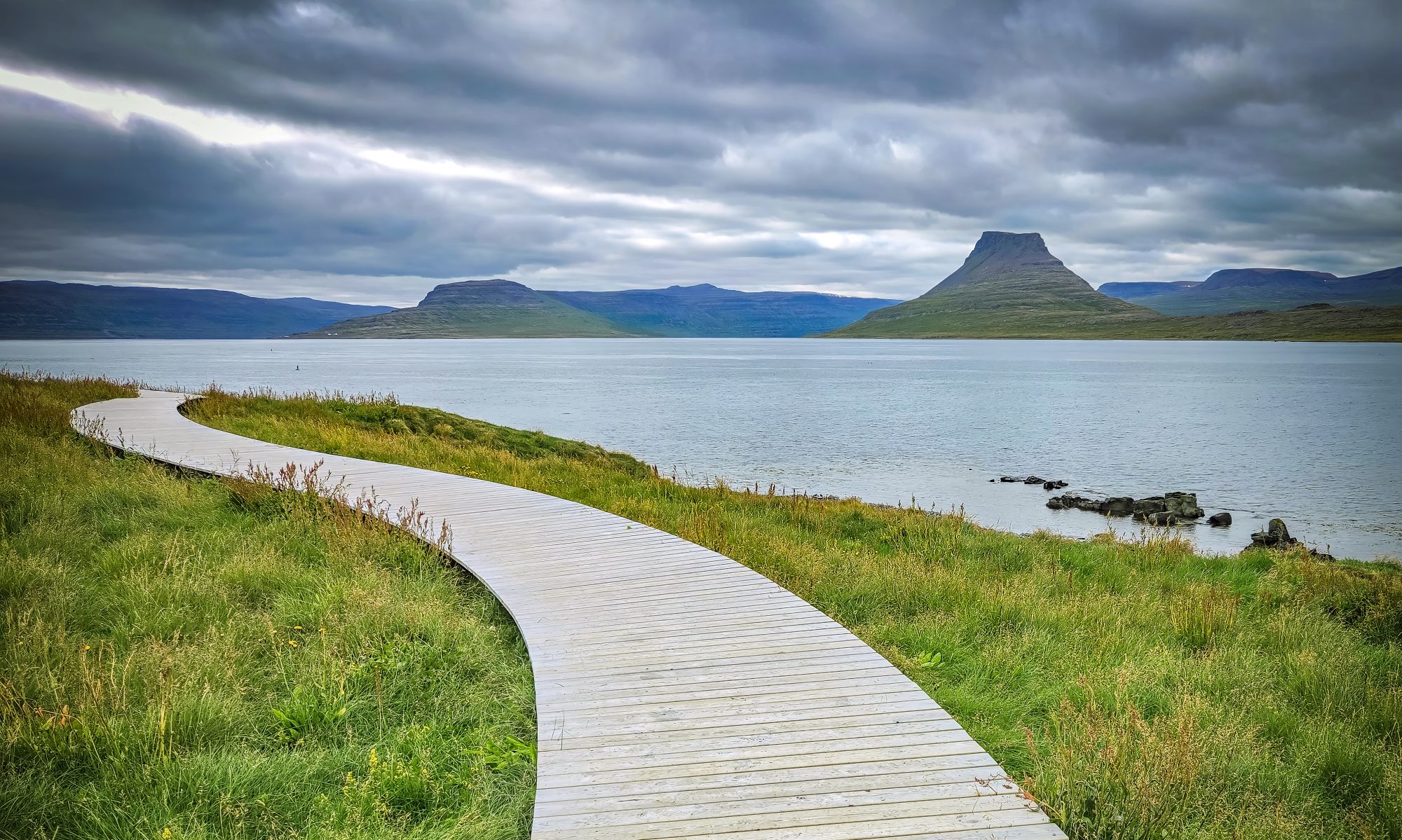
Seyðisfjörður is the Most Photographed Town in East Iceland, and there is a reason for it.
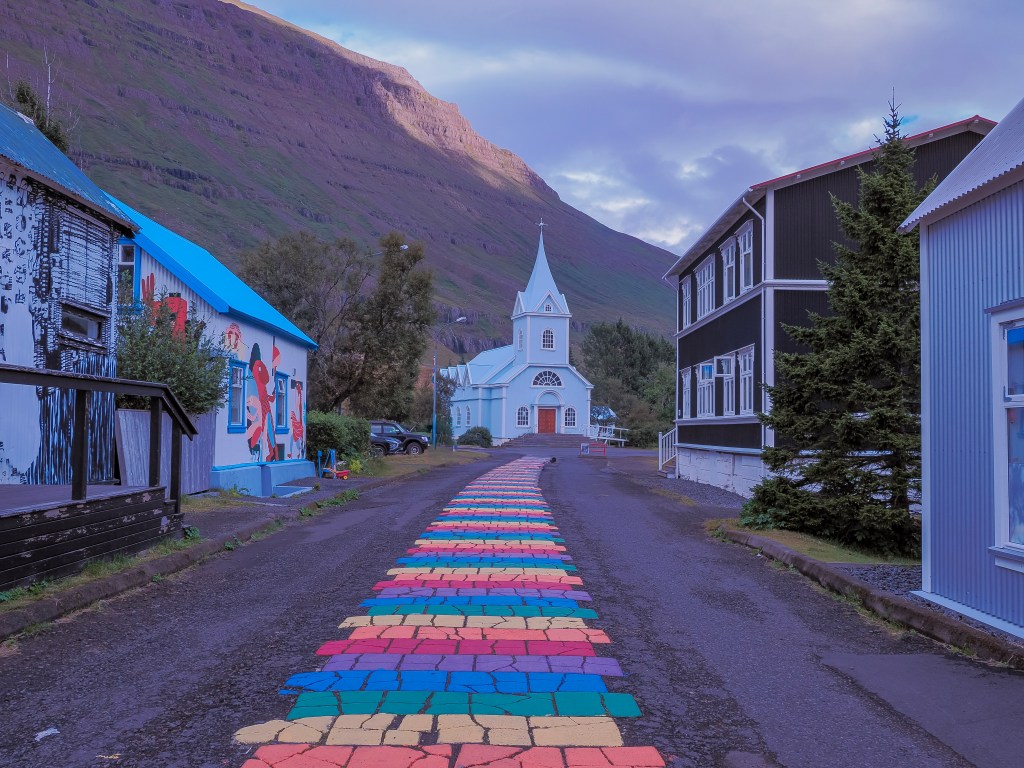
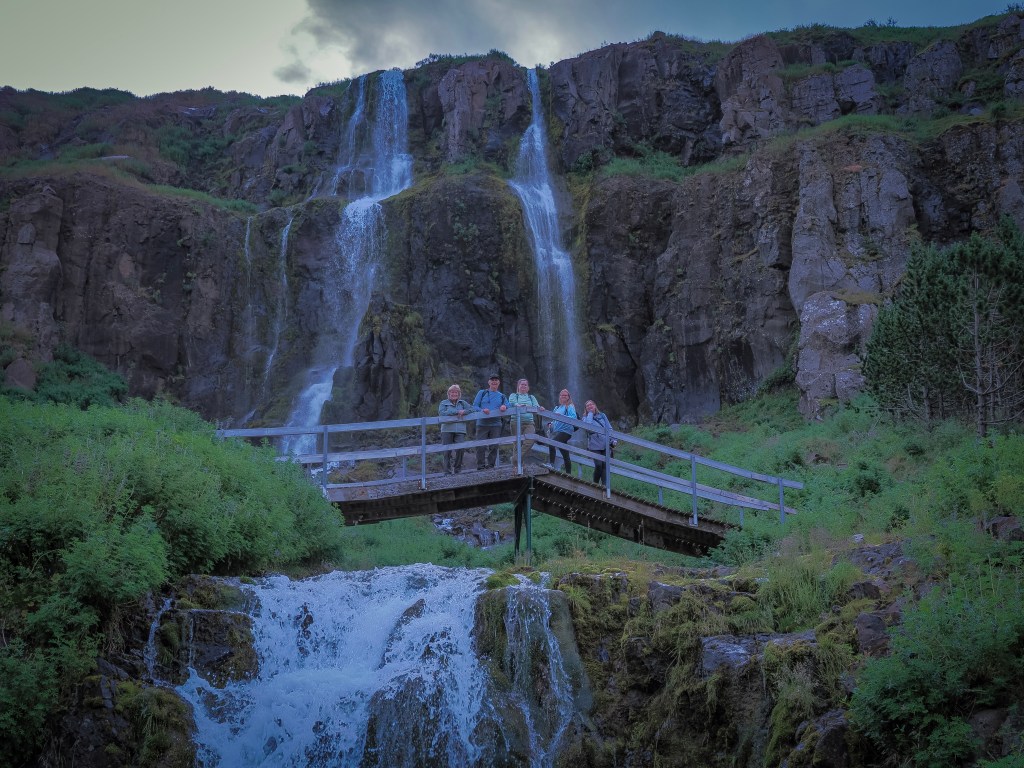
After two rainy days in a row, Seyðisfjörður finally gave us sun — and it turned out to be the perfect town for it. We woke up to the ship easing into the fjord, and the first thing that hit me wasn’t the colorful houses or the church everyone talks about; it was the waterfall. There’s a huge one sitting right above the town, practically part of the skyline, tumbling down the mountainside as if it’s built into the place. Waking up to that view, after grey skies at the glacial lagoon and again at Mývatn, felt like Iceland had finally decided to show us its bright side.
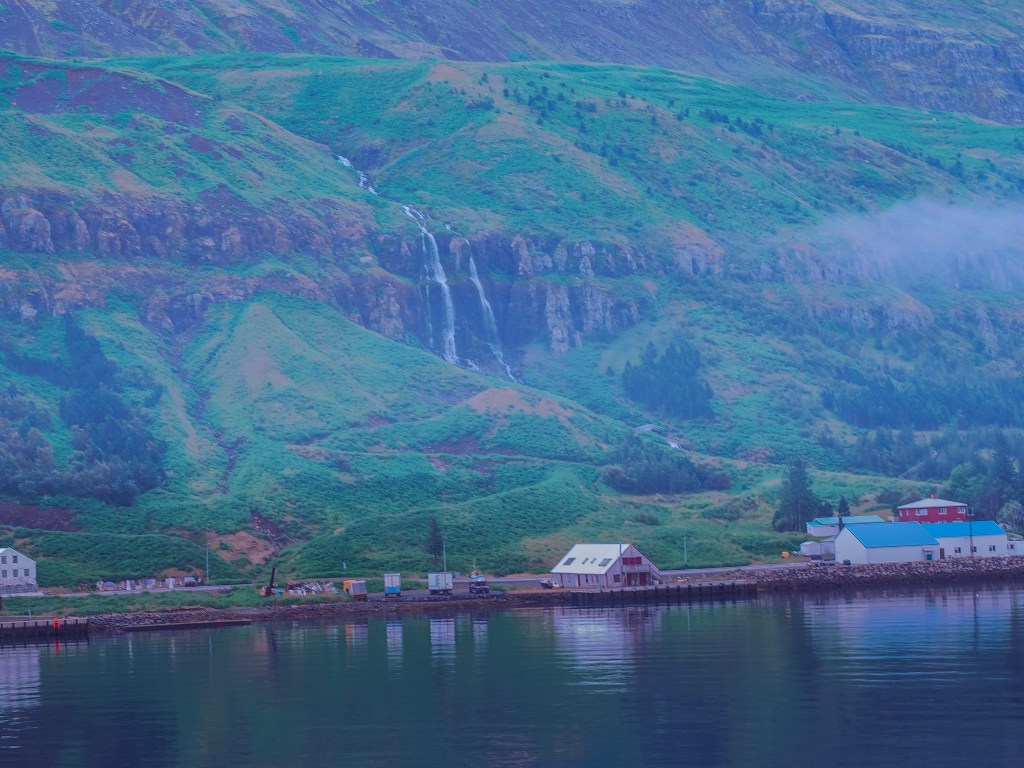
We got off on the first tender so we’d have the town mostly to ourselves before the crowds came ashore, and just wandered. Seyðisfjörður is small enough that “wandering” is basically the whole itinerary — it’s a town of roughly 676 people tucked at the end of a fjord, ringed by steep mountains, and every direction you look has either colorful timber houses, cascading water, or both.
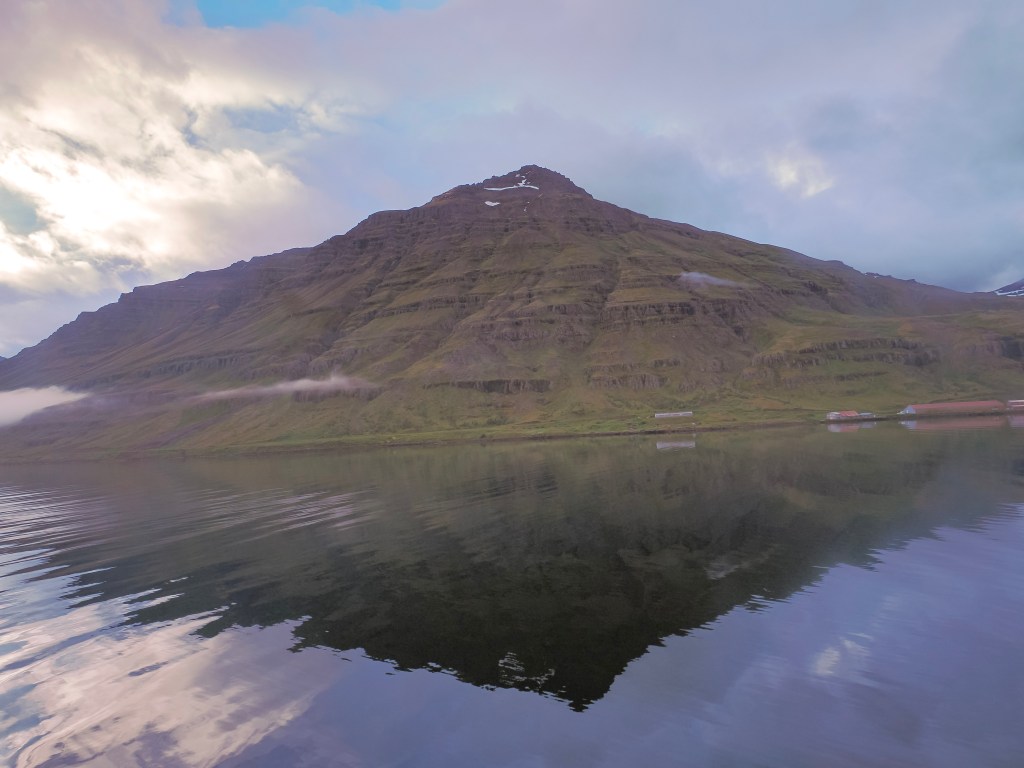
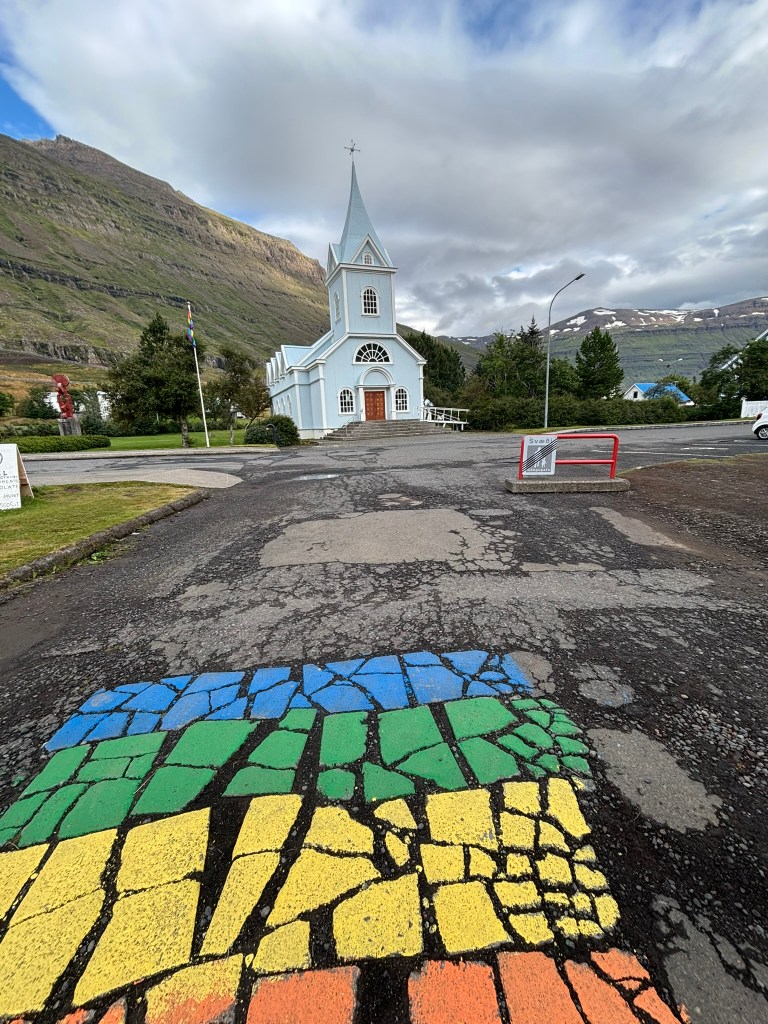
Rainbow Street and the Blue Church
This is the image everyone has of Seyðisfjörður before they’ve even been there — a street painted in rainbow stripes leading straight up to a vivid blue church. The church itself was actually built in Norway back in 1894 and shipped to Iceland in pieces, which explains the distinctly Norwegian-style timber architecture that runs through the whole town. The rainbow street below it (officially Norðurgata) was painted as a community project and has become the town’s unofficial symbol. Getting there early on the first tender paid off — by the time we looped back through later, the street was noticeably busier.
The Ferry Town
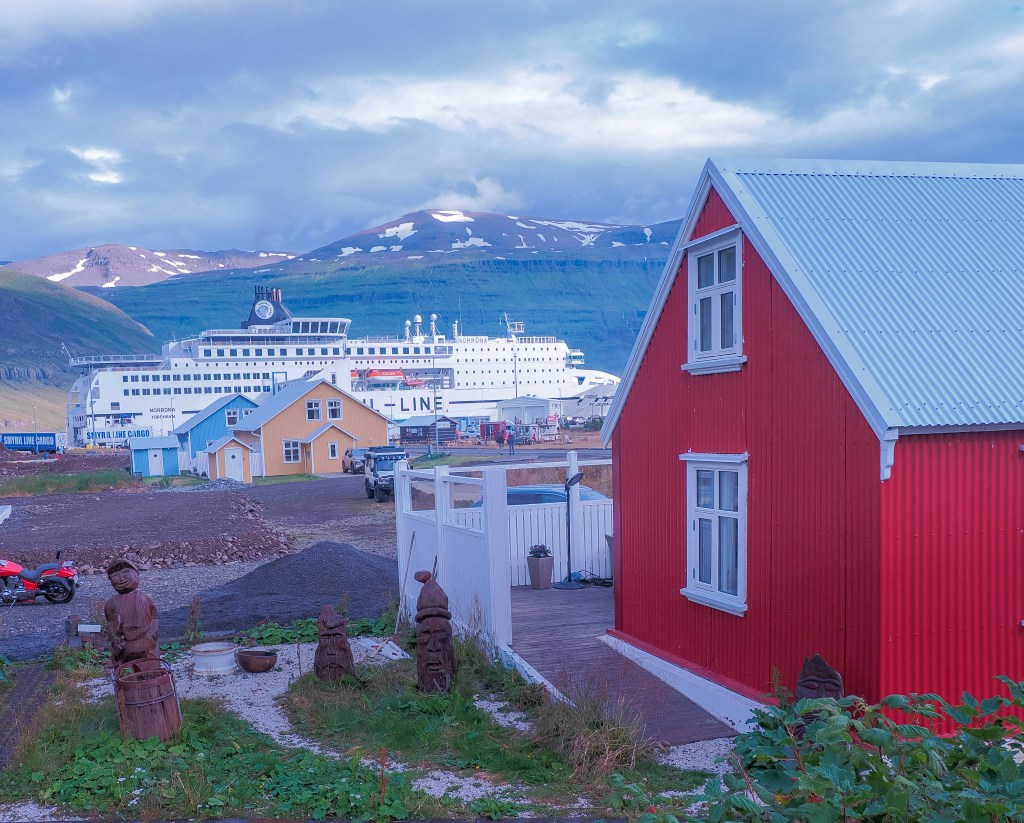
Wandering further along the harbor, we noticed a long line of RVs rolling off a large ship docked nearby, and it took us a minute to place it — Seyðisfjörður is the arrival port for the Smyril Line’s Norröna ferry, which connects Iceland to the Faroe Islands and Denmark. It’s the only sea link between Iceland and mainland Europe, so for a lot of travelers with their own vehicles, this sleepy little fjord town is their actual entry point into the country. Watching a ferry’s worth of camper vans unload right into this tiny, colorful village was a strange, fun contrast — modern road trips pouring into a town that looks like it hasn’t changed in a century.
There’s a bit of irony in arriving here by cruise ship, too: after years of large ships bringing waves of day-trippers into such a small harbor, Seyðisfjörður became the first town in Iceland to put limits on cruise tourism, capping how many visitors could come ashore at once to keep the town from being overwhelmed. Taking the first tender in suddenly felt like good timing, not just preference.
A Fjord With a Long Memory
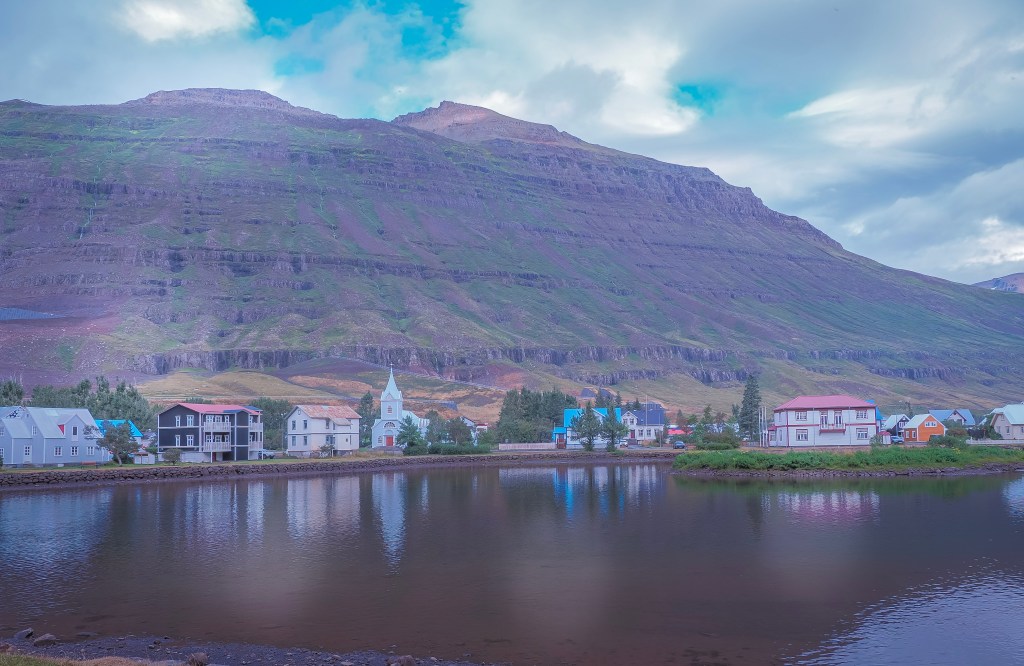
For a town this small, Seyðisfjörður carries a surprising amount of history. Archaeologists have dated the remains of an old farmstead here to the 10th century, with even older burial finds pointing to settlement in the 800s—making this one of the earliest-inhabited corners of Iceland, according to legend, first claimed by a settler named Bjólfur, after whom the mountain looming over the town is named. The town itself didn’t really take shape until the mid-1800s, when Norwegian herring fishermen settled the fjord, which explains why so much of the architecture still looks transplanted from Norway rather than native Icelandic. A Norwegian-born merchant named Otto Wathne became something of a local legend in that era, and the town still has a monument to him. The fjord’s naturally sheltered harbor also meant it was often first in line for new technology — Iceland’s first telephone line reportedly ran through here before reaching the rest of the country — and during World War II, the town served as one of the Allies’ main bases in Iceland.
More recently, in December 2020, Seyðisfjörður was hit by a series of landslides — including the largest ever recorded to strike an urban area in Iceland. No one was killed, but over a dozen buildings were destroyed, some historic timber houses among them, and the town was cut off for a time while it recovered. Walking those same streets in the sun, it was hard to picture, but it added a layer of resilience to a town that already felt like it punched above its weight.
Around Town
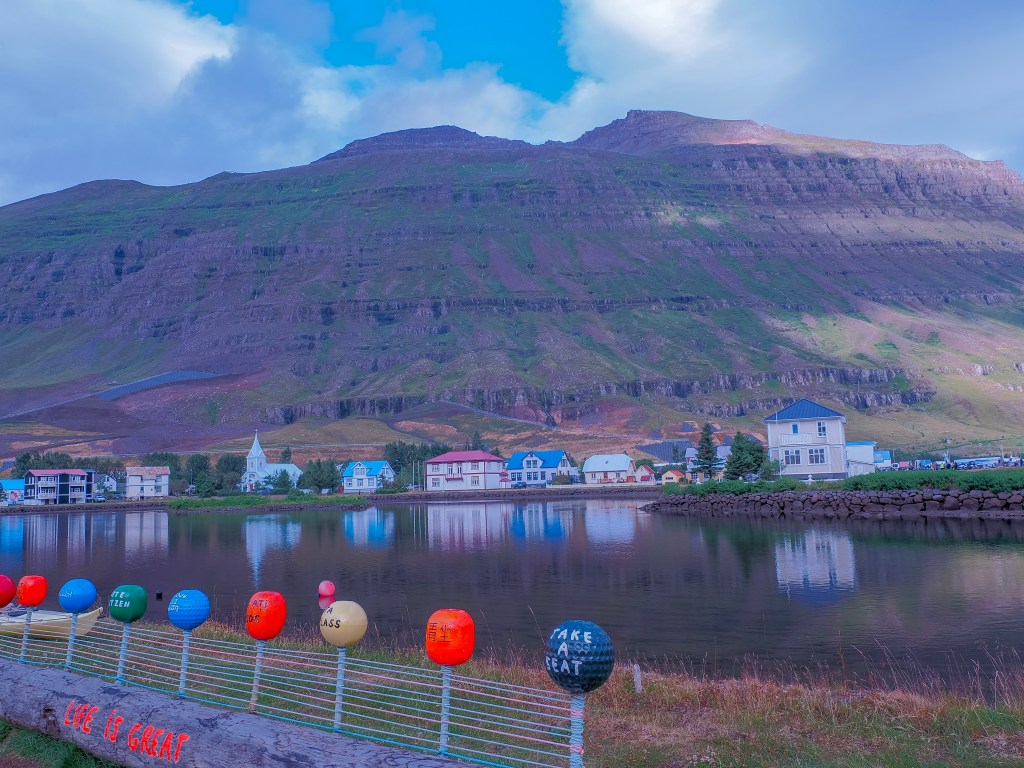
Beyond the church and the street, Seyðisfjörður has a genuine creative pulse. The Skaftfell Art Center anchors the town’s art scene, and out along the water there’s the Tvísöngur sound sculpture — a set of five interconnected concrete domes designed around Iceland’s tradition of five-tone harmony, each dome resonating with a different note when you stand inside it. There are a couple of other public art pieces worth hunting down too: a sculpture marking the laying of Iceland’s first undersea telegraph cable in 1906, which effectively connected the country to the rest of the world for the first time, and another piece the town commissioned as a gift to itself for its 100th anniversary back in 1995. The whole town has apparently been a filming location too, including a scene from The Secret Life of Walter Mitty, which honestly checks out — it does have that “too picturesque to be real” quality on camera.
The Waterfall Behind Town
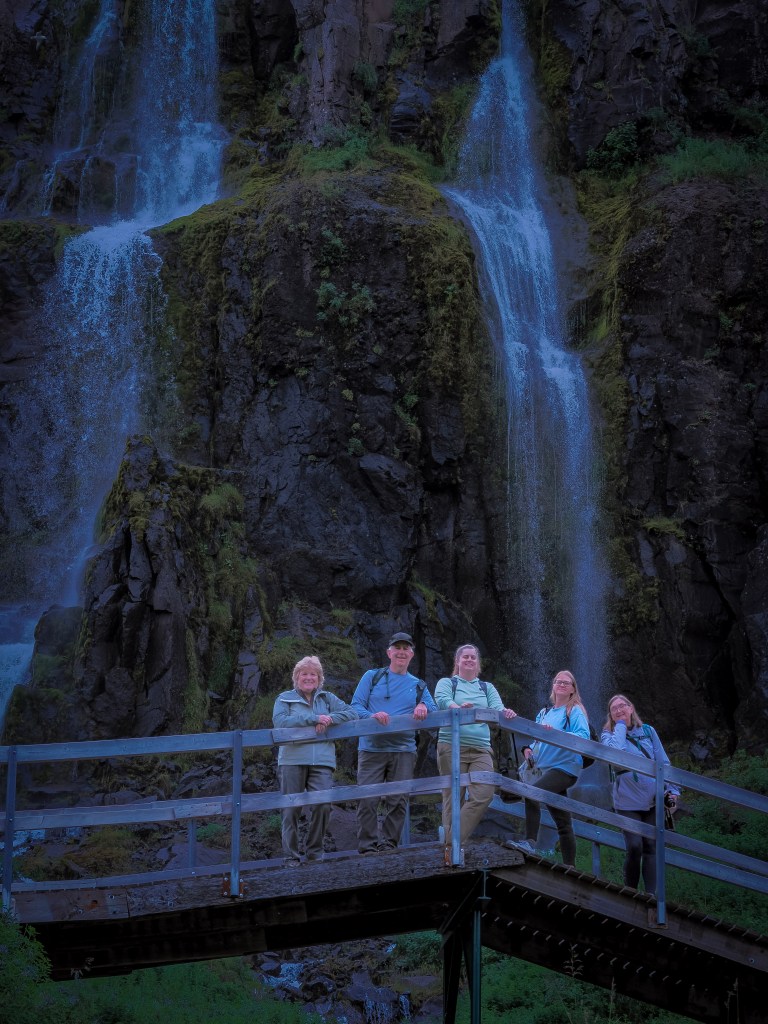
That waterfall we spotted from the ship has a name — Búðarárfoss —, and it’s an easy 5-to-10-minute walk up from the town center, with a great view back down over the harbor and the rainbow street from above. For anyone with more time, a longer trail follows the Fjarðará River upstream through a small forested stretch, passing several more falls (the river reportedly has around 25 of them scattered along its length) on the way to the larger Gufufoss waterfall further up the valley.
From Seyðisfjörður: Stuðlagil Canyon
After an hour of roaming the town, we booked a Viator day tour out to Stuðlagil Canyon and its waterfalls — one of East Iceland’s most striking natural sites, and dramatic enough that it deserves its own post. We used this Viator tour from Seyðisfjörður to Stuðlagil Canyon
Things to Do Around Seyðisfjörður
If you have more time here than a short shore excursion, this little fjord town has more range than it first lets on:
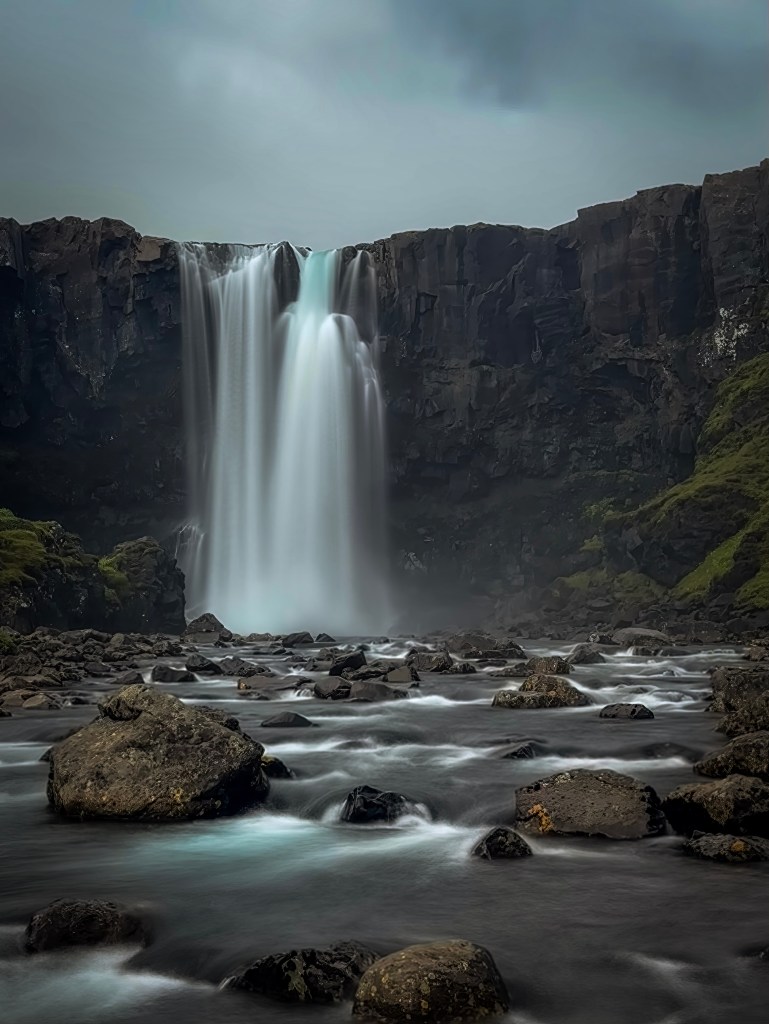
- Visit Gufufoss– Situated on the outskirts of Seyðisfjörður, Gufufoss stands 88ft tall. It gets its name from the Icelandic “gufu”, meaning steam, referring to the water spray caused by the plunging falls. We visited as part of this Viator tour on our way to Studlagil Canyon.
- Walk the Fossastígur trail — an easy riverside path from town leading up through forest toward Fjarðarsel, home to Iceland’s oldest still-operating power plant (1913), with berries lining the trail in late summer.
- Hike Vestdalur valley — a longer trail past waterfalls and up to a small lake, known for plant life you won’t see elsewhere in the area; a longer route continues on toward the neighboring Borgarfjörður valley.
- Climb one of the peaks flanking the fjord — Mt. Bjólfur (1,085 m) to the west and Strandartindur (1,010 m) to the east are the two most prominent summits, and the local hiking club has set up logbook boxes on seven surrounding peaks as part of a self-guided “Mountain Club” challenge, complete with a punch-card map available from the tourist information center.
- Follow the trail toward Gullþúfa — starting from Sörlastaðir along the Sörlastaðaá river, this route climbs to the highest point south of town.
- Visit Skaftfell Bistro — housed in the same building as the art center, and a good stop for a meal with a side of local art.
- Cool off (or warm up) at the pool — the town has a public swimming pool and hot tubs on Suðurgata, plus a nine-hole golf course at Hagavöllur for anyone traveling with clubs.
- Time it for the LungA Arts Festival — if you’re visiting in July, this international arts festival takes over the town for a week and draws artists from all over.
- Take a day trip further afield — Stuðlagil Canyon and the Vök Baths near Egilsstaðir are both popular longer excursions from Seyðisfjörður, and in winter, East Iceland’s valleys are one of the only places in the country where wild reindeer still roam.
- Drive (or admire) the Fjarðarheiði mountain pass — Route 93 between Egilsstaðir and Seyðisfjörður climbs to around 600–630 meters and is considered one of Iceland’s most scenic drives, with waterfalls cascading on both sides of the descent into town.
Getting to Seyðisfjörður
Most visitors arrive one of two ways:
- By road: Seyðisfjörður sits 27 km (about 30 minutes) from Egilsstaðir via Route 93, over the Fjarðarheiði pass. It’s a spectacular drive, but check the road.is in winter — the pass can close in bad weather.
- By sea: Besides cruise ship tenders like ours, this is the only Icelandic port served by an international ferry — the Smyril Line’s Norröna, arriving weekly from Tórshavn (Faroe Islands) and Hirtshals (Denmark), a popular option for travelers bringing their own car or RV into Iceland.
There’s no direct bus service into town from outside East Iceland — Egilsstaðir is the regional hub for buses and flights, with a short taxi or drive from there.
Whatever brings you here, give the town at least a couple of unhurried hours. The whole point of Seyðisfjörður seems to be slowing down enough to actually look at it.


One Reply to “”