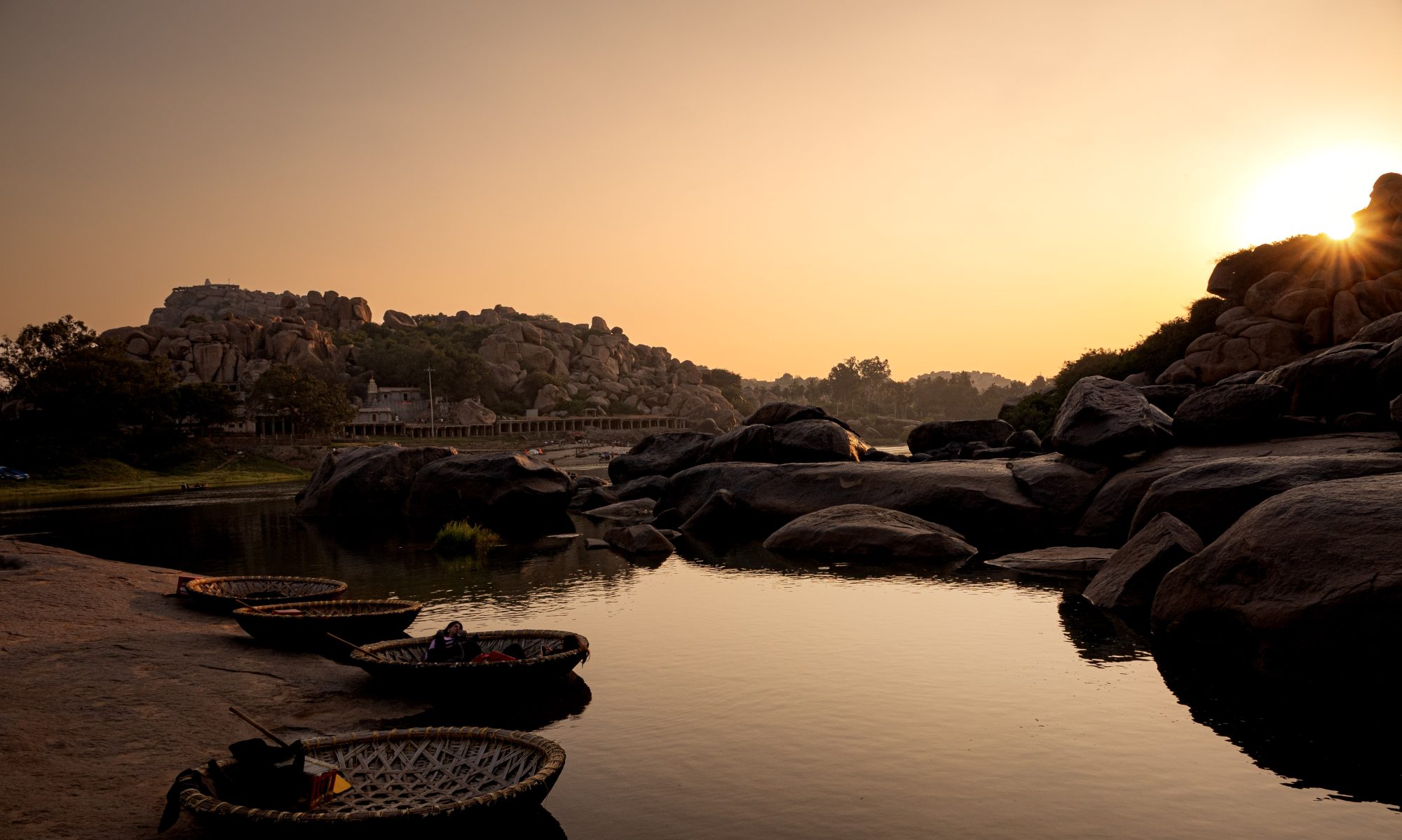
Our second day in Iceland began with an early start from Reykjavik, and honestly, I couldn’t wait. We’d heard so much about the South Coast — that mesmerizing stretch where rugged coastlines meet towering glaciers, thundering waterfalls, and black sand beaches — and I was ready to see it all for myself. Looking back, this ended up being one of my favorite days of the entire trip. We took this tour with Arctic Adventures.
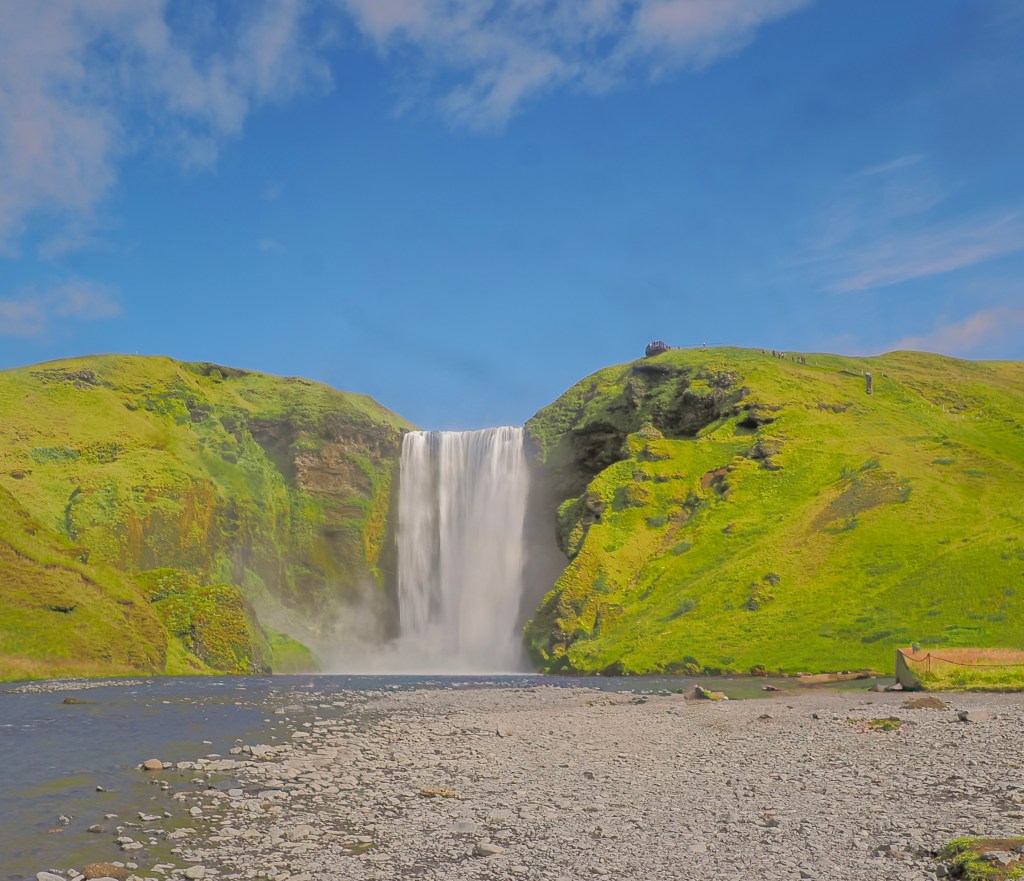
Skógafoss: Nature’s Raw Power
We stopped first at Skógafoss, and this waterfall was pure, thundering power. Watching 60 meters of water plummet over the cliff’s edge was genuinely awe-inspiring — the roar was constant, and the perpetual mist drifted over everything nearby. A staircase climbs to the top, and if you have time, I would definitely suggest going up to see the waterfall up close. Standing at the base first, though, feeling the force of it in my chest, was the real highlight. It’s one thing to see a waterfall in photos; it’s another to feel it.
Skógafoss is a Game of Thrones filming location! It appears in the Season 8 premiere, where Jon Snow and Daenerys Targaryen land near the base of the waterfall during their dragon flight and share a quiet moment together. The thunderous 60-meter cascade framed their romantic moment, making it a fan-favorite filming location. It’s also shown up in other productions — Thor: The Dark World and History Channel’s Vikings
Sólheimajökull: Ice That Feels Alive
If I had to pick one favorite moment from the day, it might be our stop at Sólheimajökull, a glacier tongue reaching out from Iceland’s massive Vatnajökull Glacier. Nothing quite prepares you for the otherworldly blue hues of the ice or the intricate crevasses carved into it over time. Standing there, surrounded by this frozen, rugged landscape, I felt like I’d stepped into another world entirely — one that’s constantly shifting and reshaping itself. It really put into perspective just how dynamic and alive Iceland’s glacial landscapes still are.
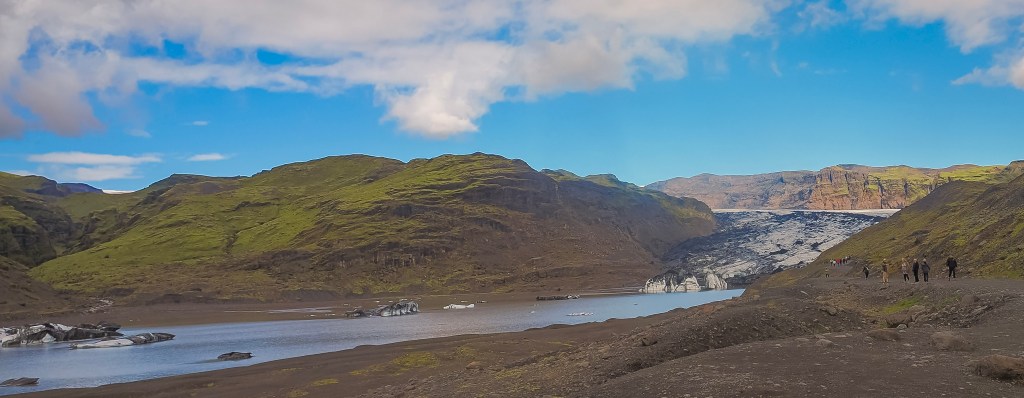
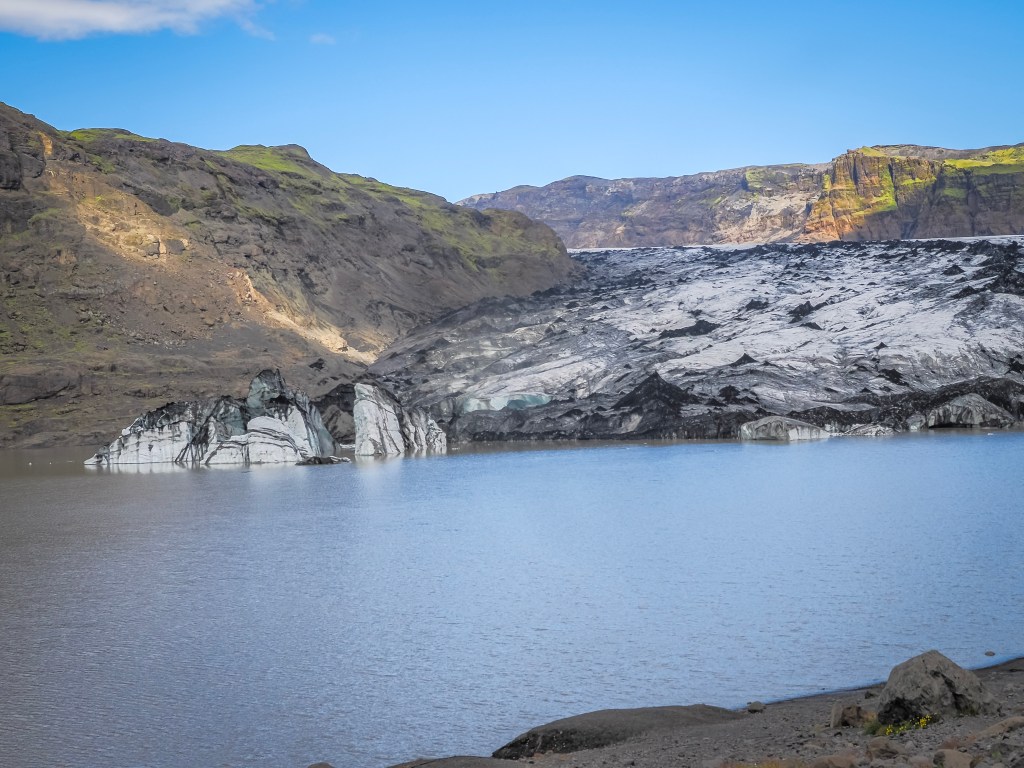
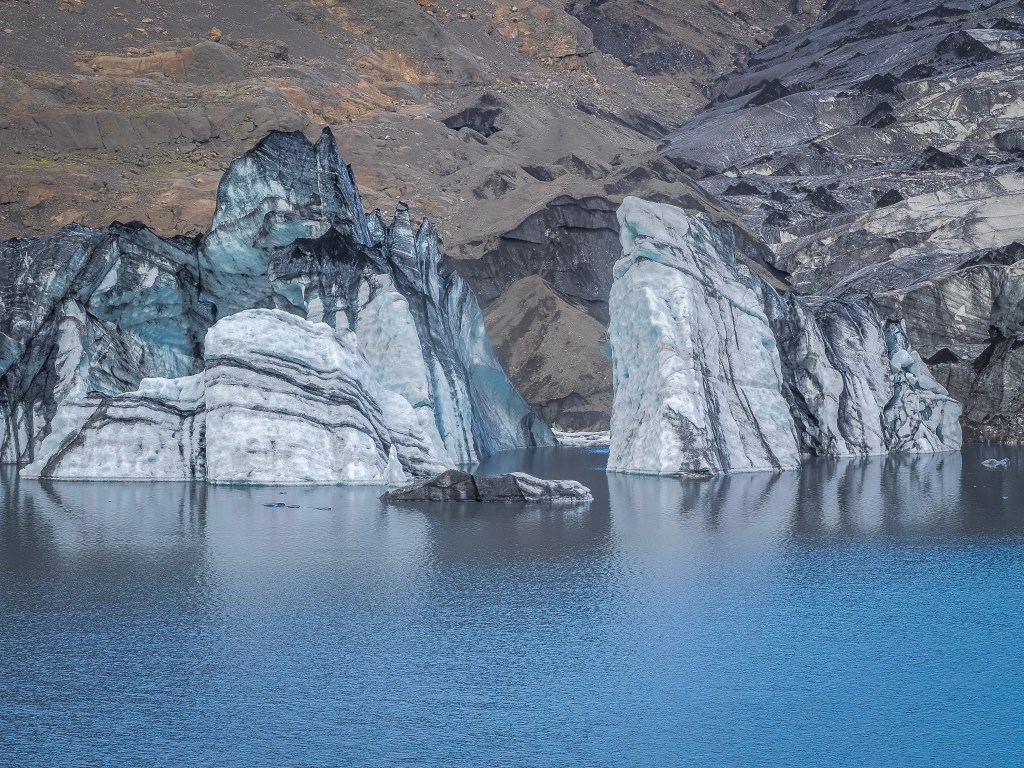
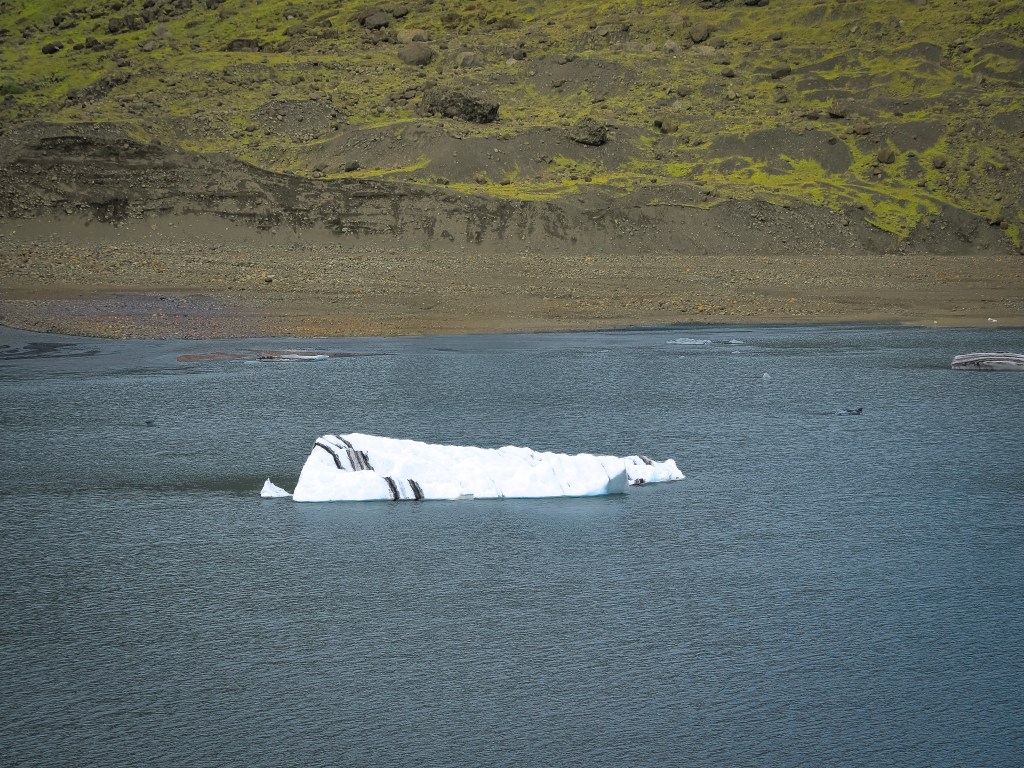
I have seen a few other glaciers, but this one stood out for me because of the black-and-white striped ice chunks. These dark layers form when volcanic eruptions dust the glacier’s surface with ash, which then gets buried under subsequent snowfall—each stripe a frozen record of Iceland’s volcanic past. Calved from the retreating glacier and set loose to drift and melt, this small iceberg is a quiet, sobering reminder of just how fast this landscape is changing.
Vík: A Village on the Edge of the World
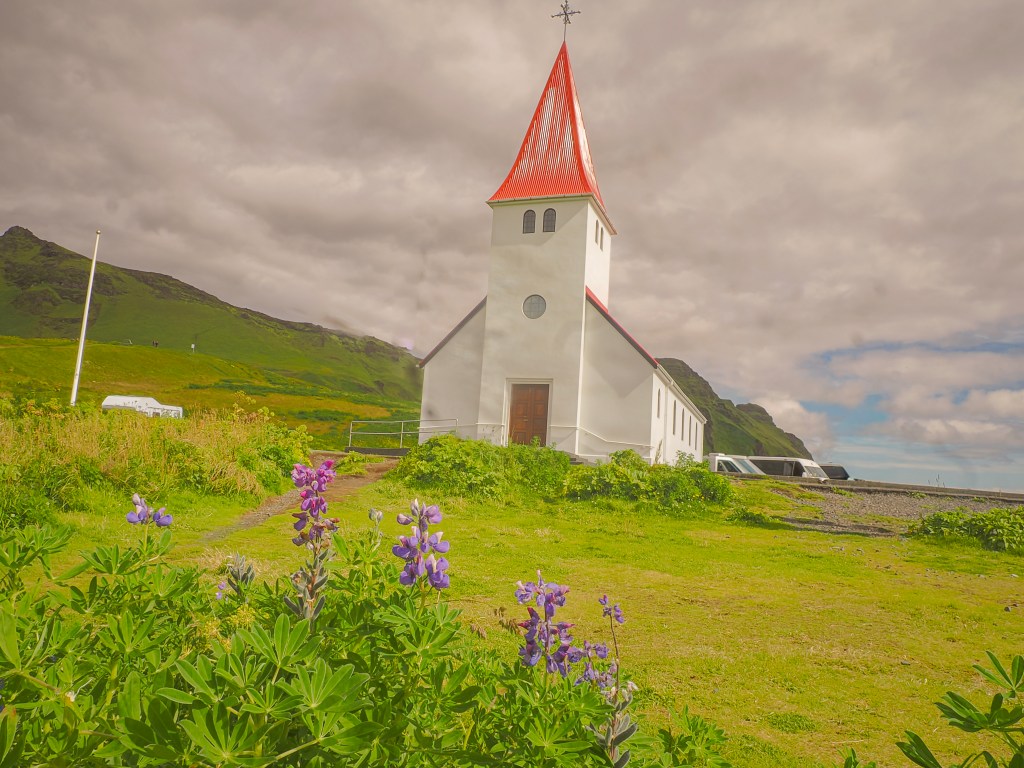
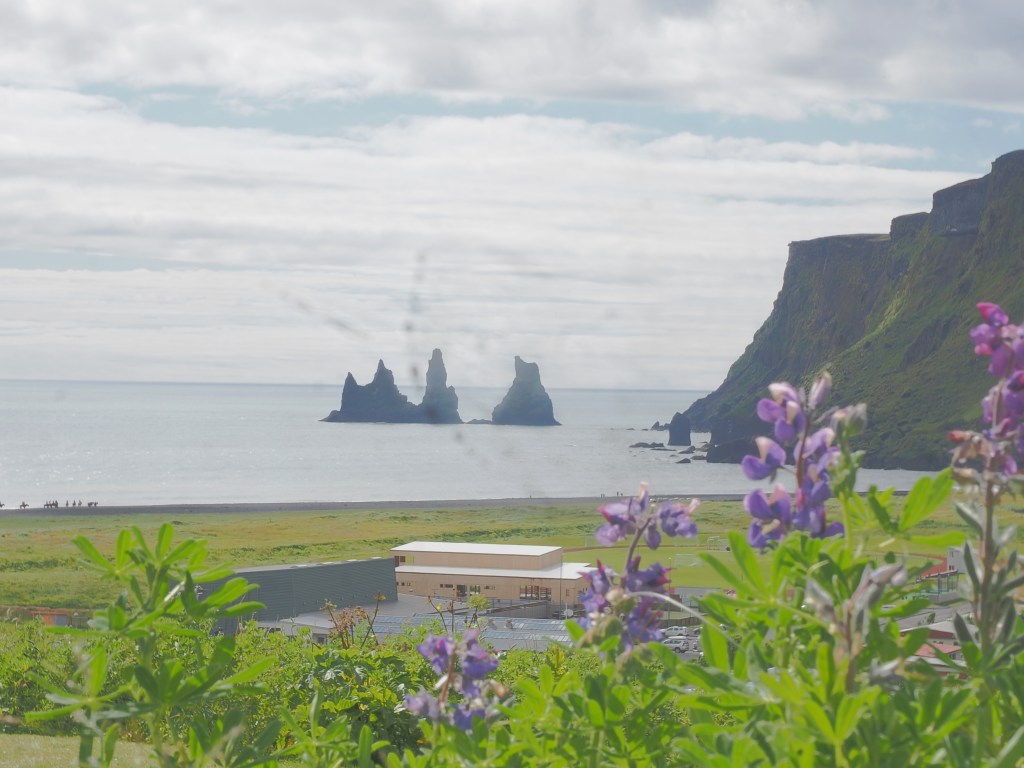
Continuing east, we arrived in Vík í Mýrdal, a small, charming village that somehow feels both cozy and dramatic at the same time. Its black-sand beaches and the iconic Reynisdrangar sea stacks stretch along the coastline, while a quaint little church sits perched on a hill above the village, watching over everything below.
A very popular food truck makes crepes in the town center. A long line of people stood in front of it. We didn’t have time to stop, but it would have been a great lunch stop.
Reynisfjara: The Black Sand Beach
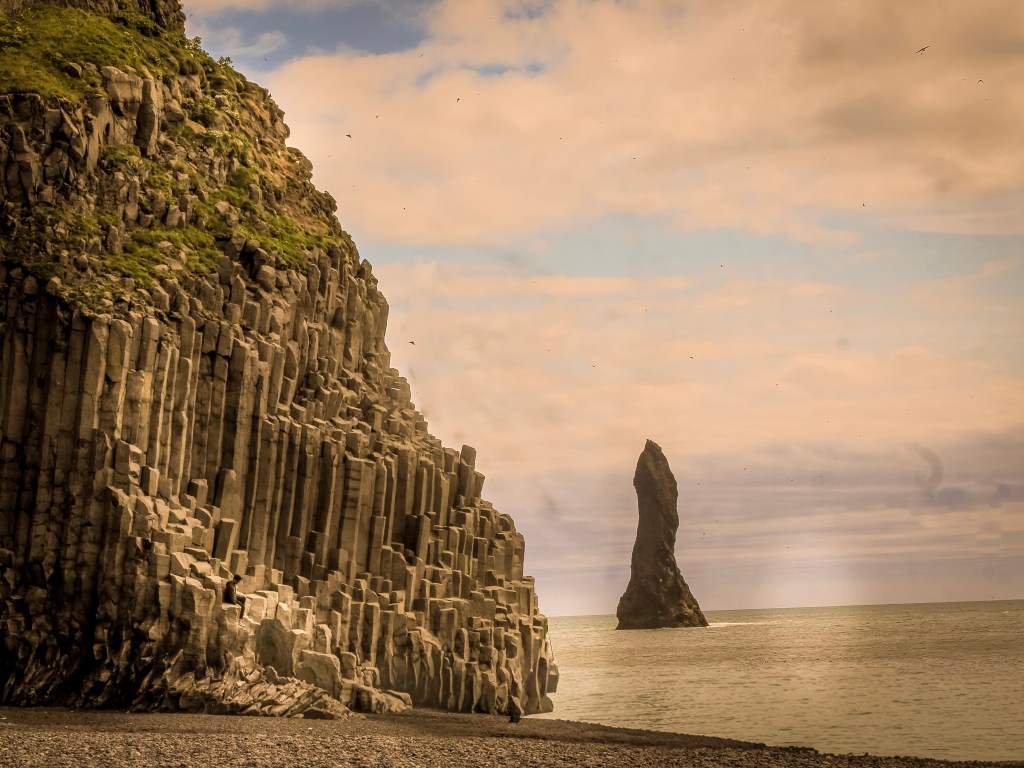
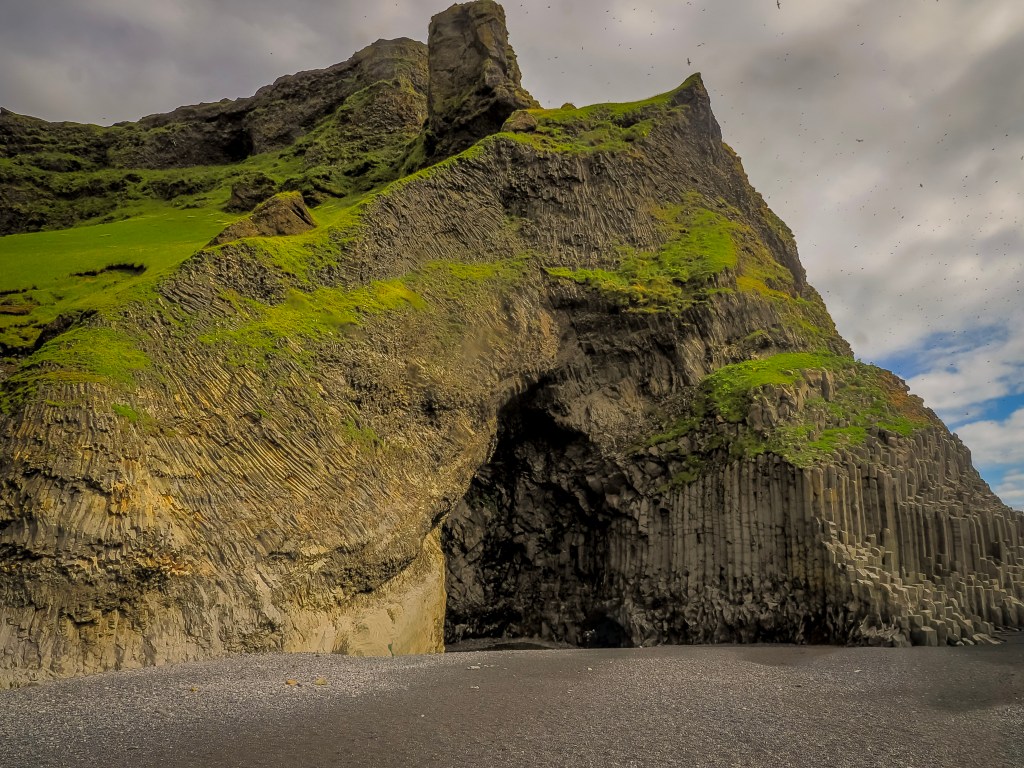
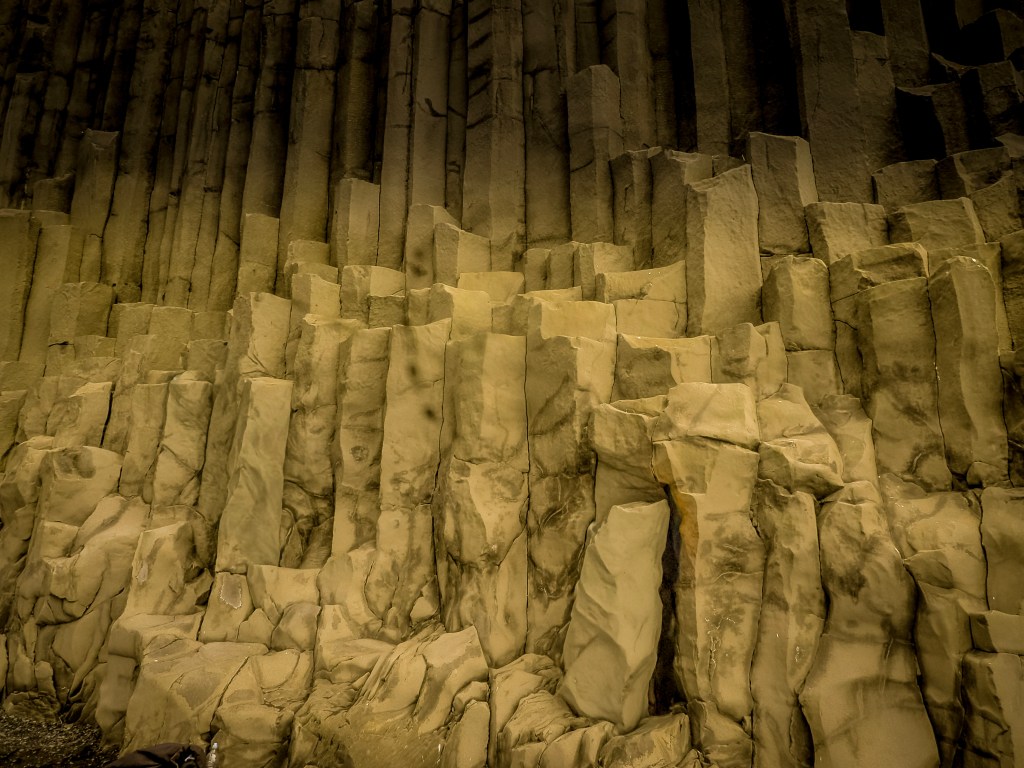
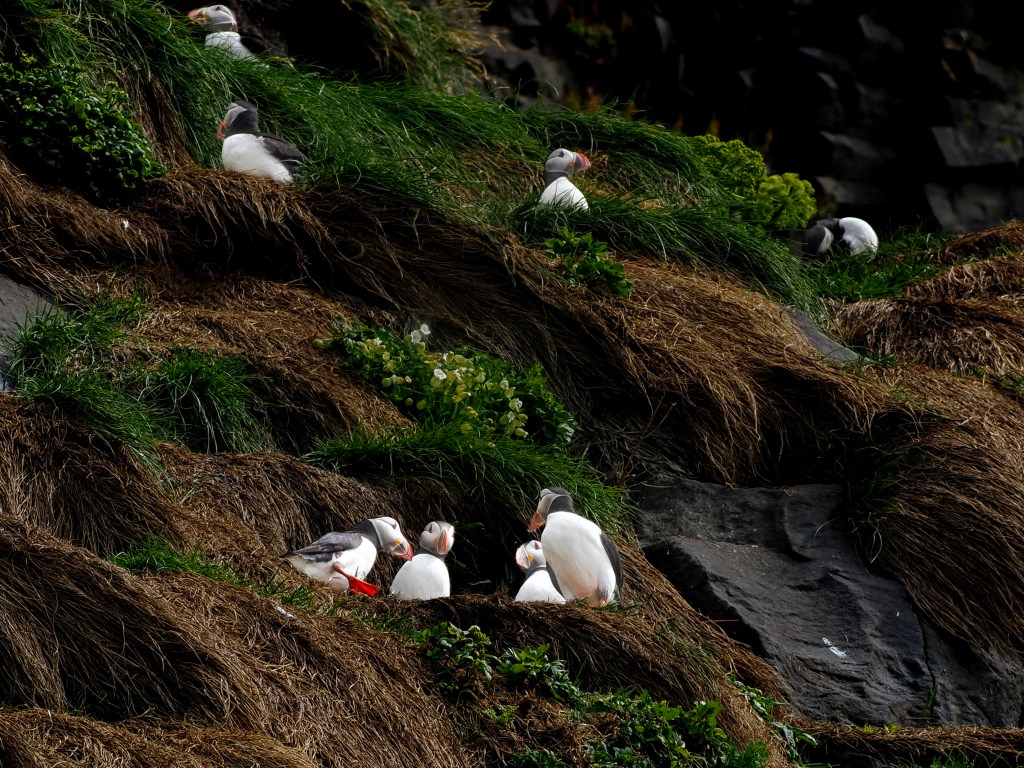
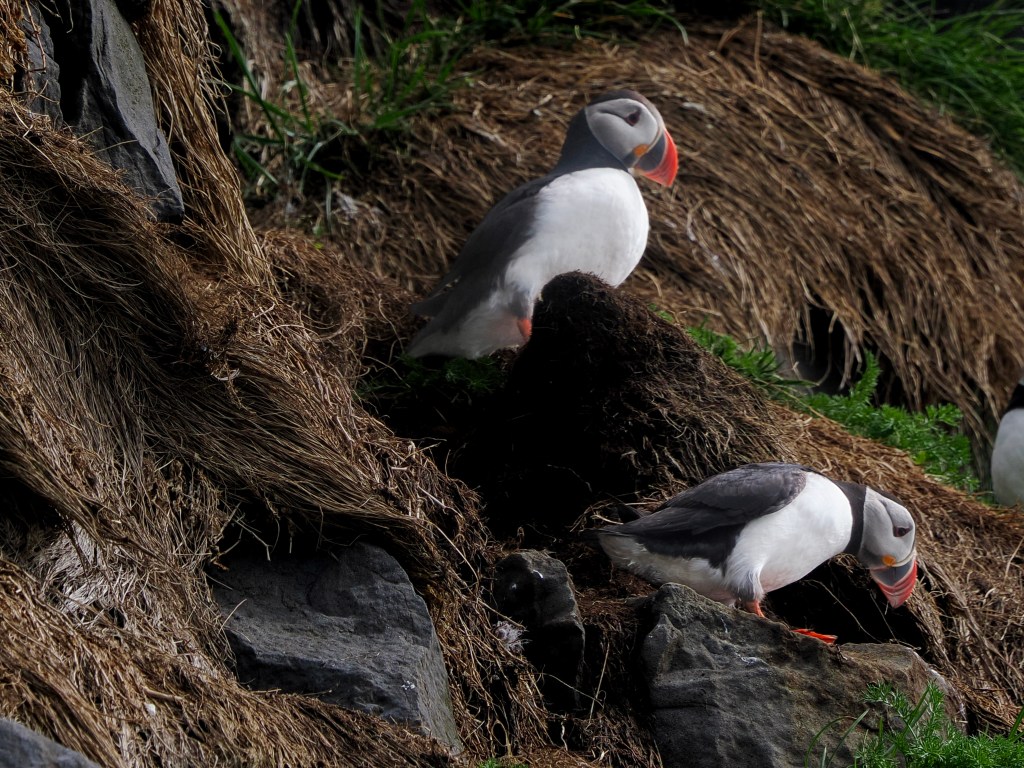
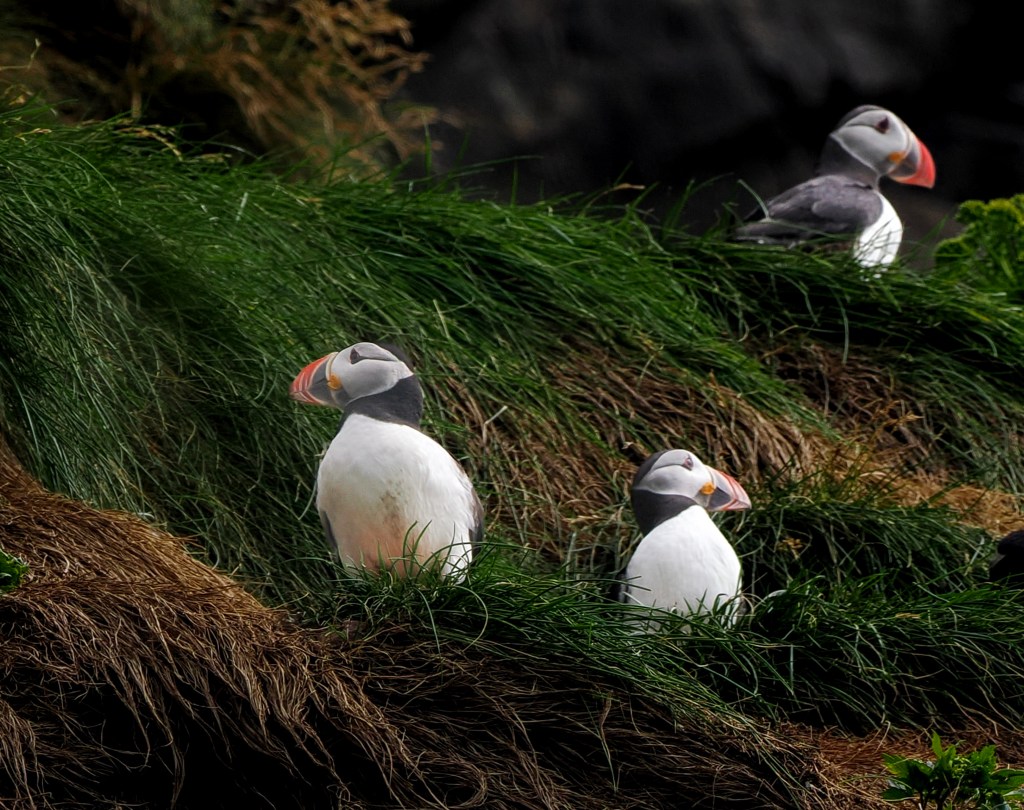
Continuing west, we arrived at Reynisfjara, Iceland’s famous black sand beach, framed by dramatic basalt columns and the striking Reynisdrangar sea stacks rising straight out of the ocean. The contrast of the dark sand against the crashing white waves felt almost otherworldly — beautiful in a way that was slightly haunting. This is where we saw our first puffins. Right above the basalt columns, there were tons of Puffins, flying in and out of the sea. I spent way too much time taking photos of puffins rather than admiring the black sand beach.
Mýrdalsjökull Ice cap
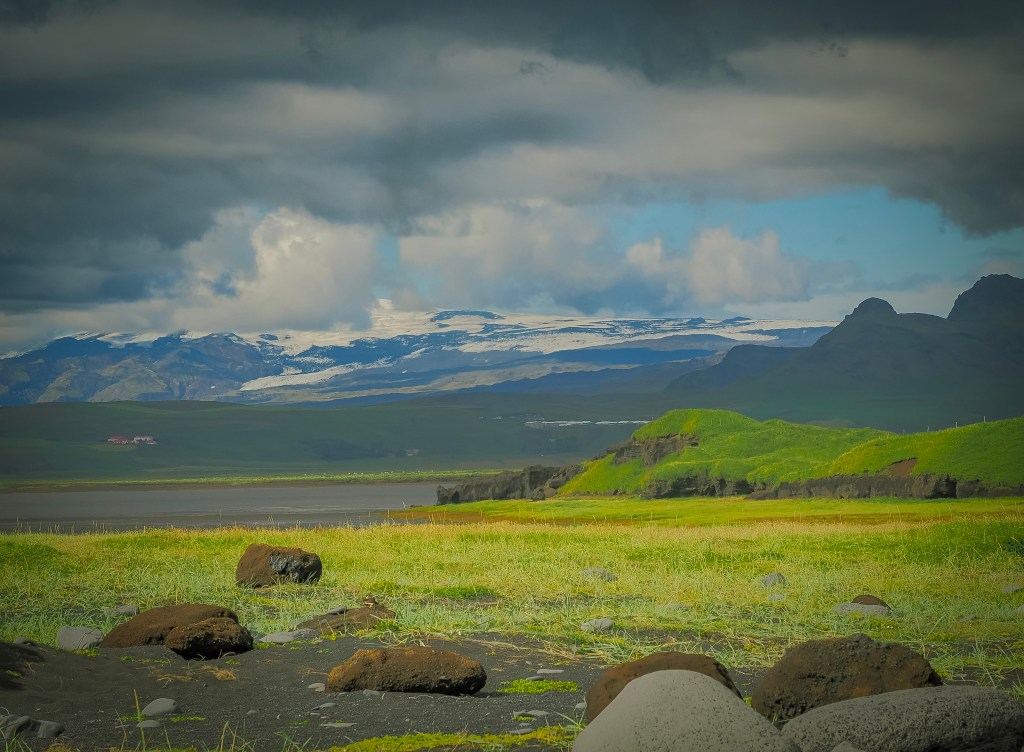
Black sand beach of Vik where I captured one of my favorite photographs of the trip: two distant glaciers visible from the beach, their snow-capped peaks glowing beneath a moody, storm-streaked sky. It’s a shot I keep coming back to.
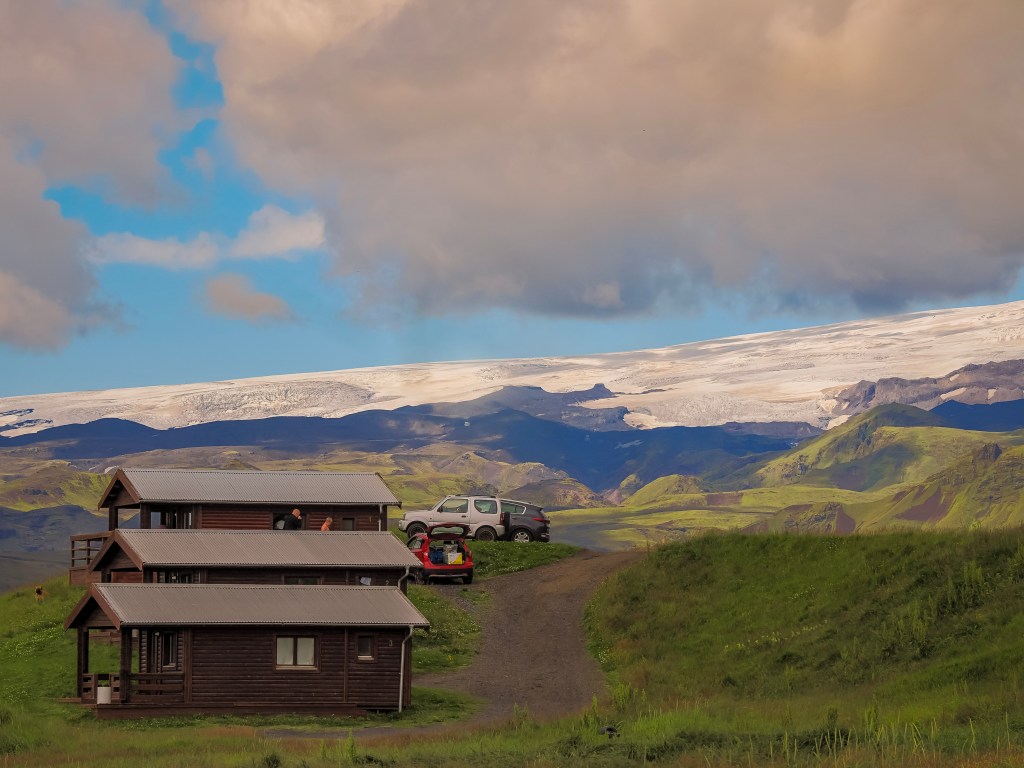
The 2 glaciers include Mýrdalsjökull, the ice cap hiding the notoriously active Katla volcano beneath its surface, and, further along the coast, glimpses of Eyjafjallajökull, whose 2010 eruption famously grounded flights across Europe. In one shot, dramatic storm clouds part just enough to let sunlight catch the glacier’s edge above green hills and a quiet lagoon, while in the other, warm evening light bathes the same icy ridge behind a small cluster of wooden cabins. Seeing these two glacier-capped volcanoes side by side, so close to the shoreline yet holding such destructive power beneath their calm white surfaces, is a striking reminder that in Iceland, ice and fire are never far apart.
Seljalandsfoss: Walking Behind a Waterfall
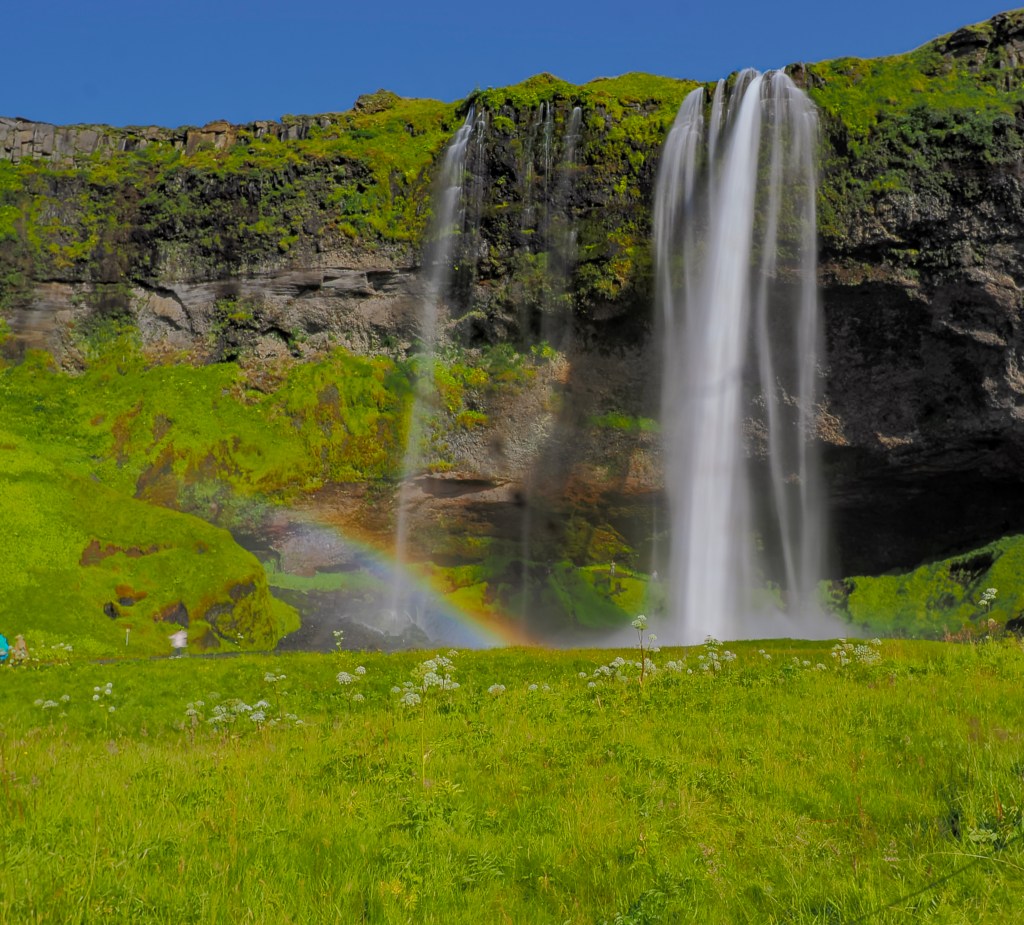
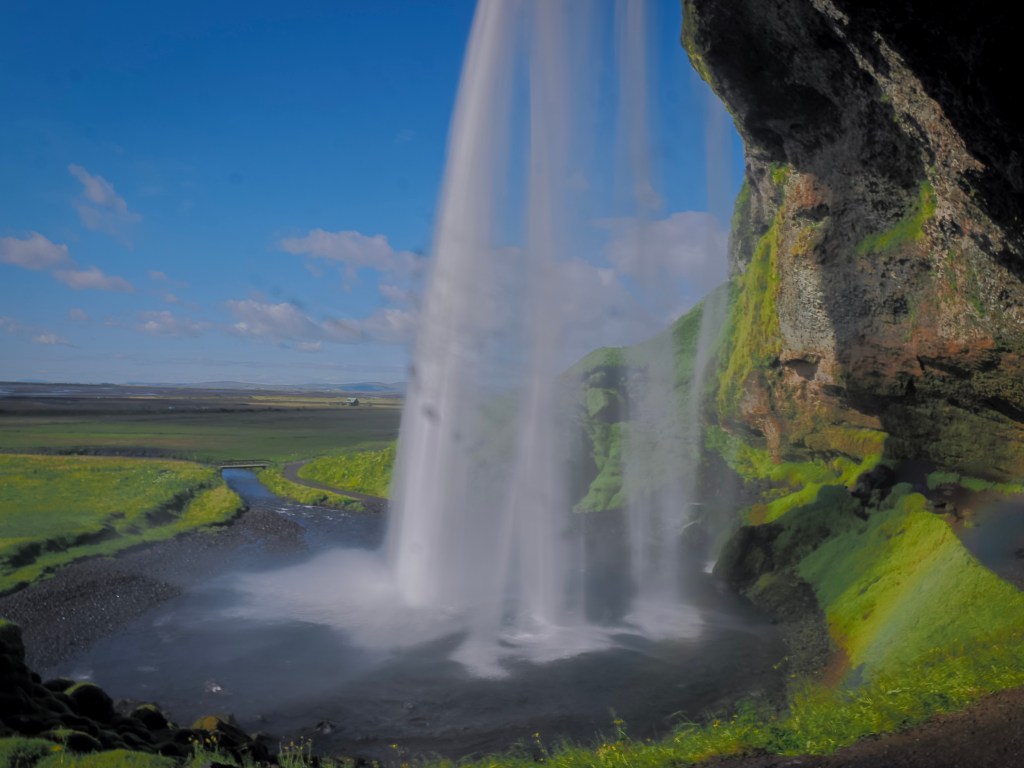
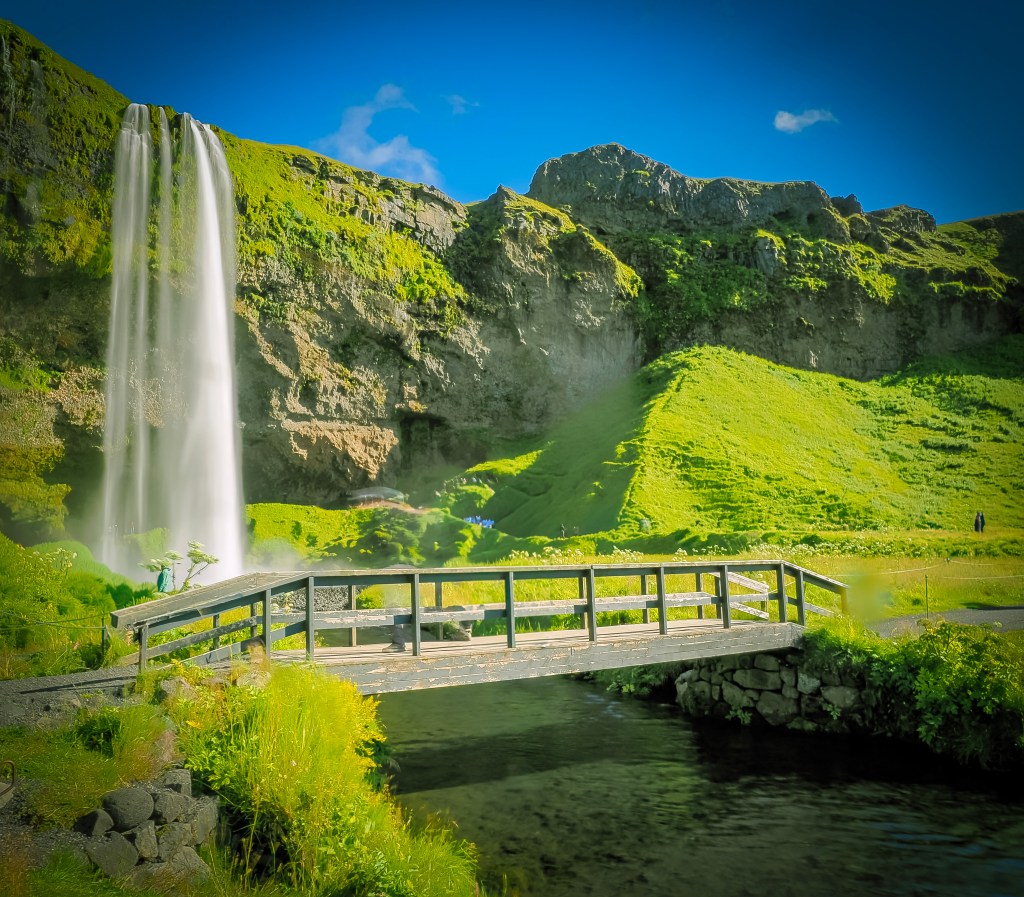
We ended the day at Seljalandsfoss because our guide warned we might get a bit wet, and it is better to do this waterfall last. There’s something almost magical about this waterfall — you can actually walk behind the cascading water, which gave me one of the most immersive experiences I’ve ever had with nature. The mist hung constantly in the air, and on a sunny afternoon like ours, it painted little rainbows that seemed to appear and vanish as we moved. I remember standing behind that curtain of water, looking out at the world through it, and just feeling completely present in the moment.
Final Thoughts
Driving back toward Reykjavik that evening, I remember feeling genuinely overwhelmed — in the best way — by how much beauty we’d packed into a single day. Iceland’s South Coast isn’t just a collection of pretty stops; it’s a journey through landscapes that feel ancient and ever-changing all at once. If you’re planning a trip to Iceland, do not skip this drive. Just be ready to stop every few minutes for photos — trust me, you’ll need to.
 Peaks to Palaces