Planning to see oilbirds in Trinidad? Here’s my first-person guide to the Dunston Cave colony at Asa Wright Nature Center, why you need a multi-day stay, and what to expect.
I’ve seen a lot of birds on my travels, but none quite like the oilbird. Weird, loud, nocturnal, and fruit-eating, it is the kind of creature that makes you wonder why evolution got so creative. Here’s how I got to see the colony at the Asa Wright Nature Center in Trinidad’s Northern Range, and everything I’d tell a friend before they go.
What Is an Oilbird (and Why the Strange Name)?
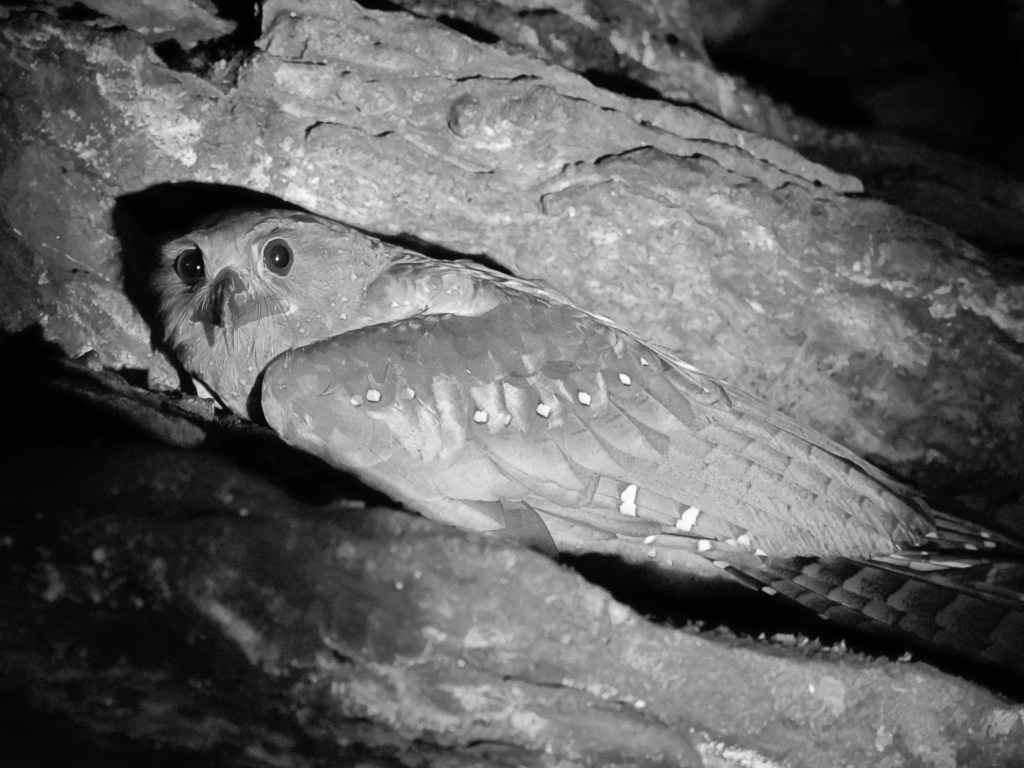
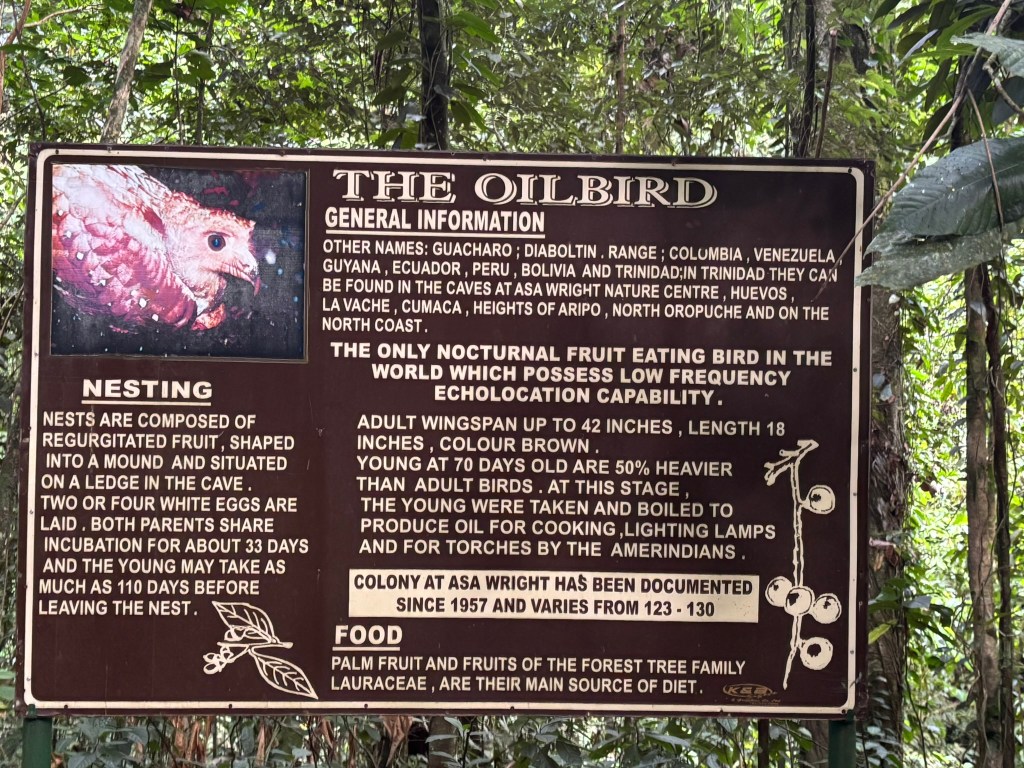
The oilbird, also called the guacharo or, in Trinidad, the diablotin (“little devil”), is a large brown bird with a wingspan of up to about 42 inches and a body length of around 18 inches. Its scientific name is Steatornis caripensis, and its range stretches across Colombia, Venezuela, Guyana, Ecuador, Peru, Bolivia and Trinidad.
The name comes from a grim bit of history. In 1799, the scientist Alexander von Humboldt documented how Venezuelan Indians and monks were collecting the extremely fat young chicks from their nests and boiling them down for cooking oil and torch fuel. At around 70 days old, the chicks can be 50 percent heavier than their parents. Amerindian peoples also used the rendered oil for lamps. Today, Trinidad has at least five oilbird colonies, and every one is protected by law.
Why You Need to Stay at Least 3 Days
Here’s the practical part that surprised me: you can’t just turn up and wander into the cave. The oilbirds are reclusive, and to avoid disturbing them, the caves can only be visited with a guide from the nature centre. Access is built around guests staying at the property, so I planned a stay of at least three days. That gave me time to settle in, join the guided walks, and get a slot for the cave visit without rushing.
My tip: book your stay well ahead and ask about the cave visit when you reserve. Three nights also lets you enjoy the rest of the centre’s rainforest birdlife, which is a bonus you won’t regret.
The Walk to Dunston Cave
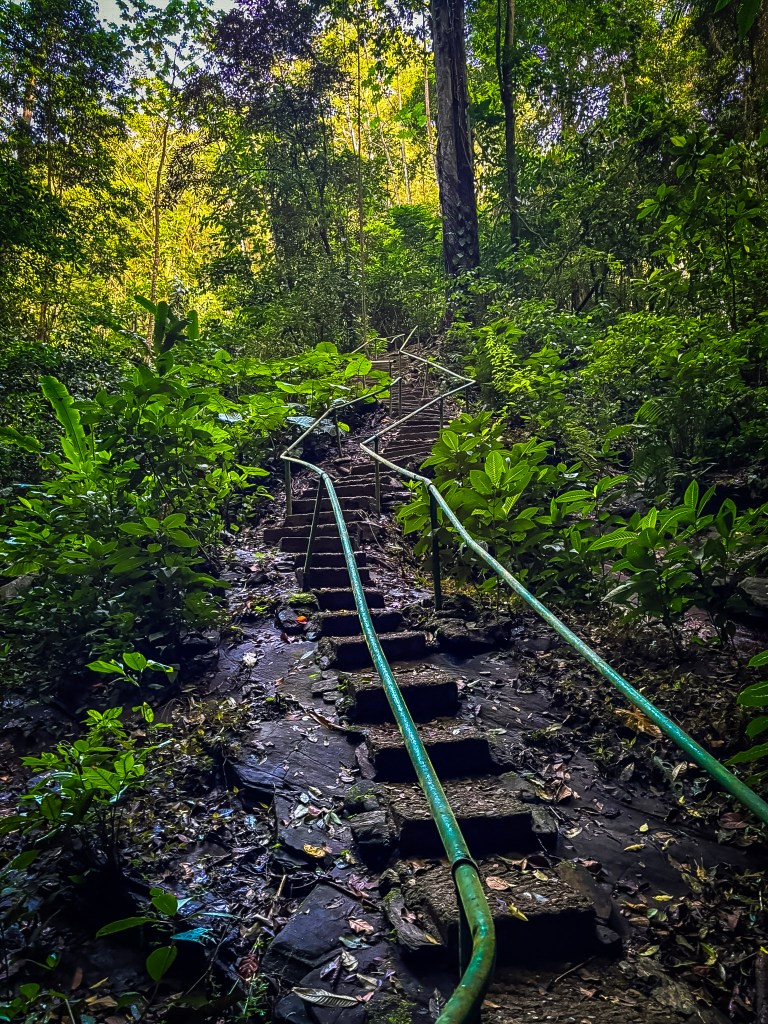
After a short orientation from our guide, we set off along the forest trail. Our guide first asked us to change into shoes that could get wet, and the walk that followed was beautiful. The rainforest around Asa Wright is dense and green, dripping with leaves the size of dinner plates, and the air gets cooler and damper as you approach the cave. Our guide explained the rules: stay quiet, keep lights low, and respect the birds. This is a working breeding colony, not a show.
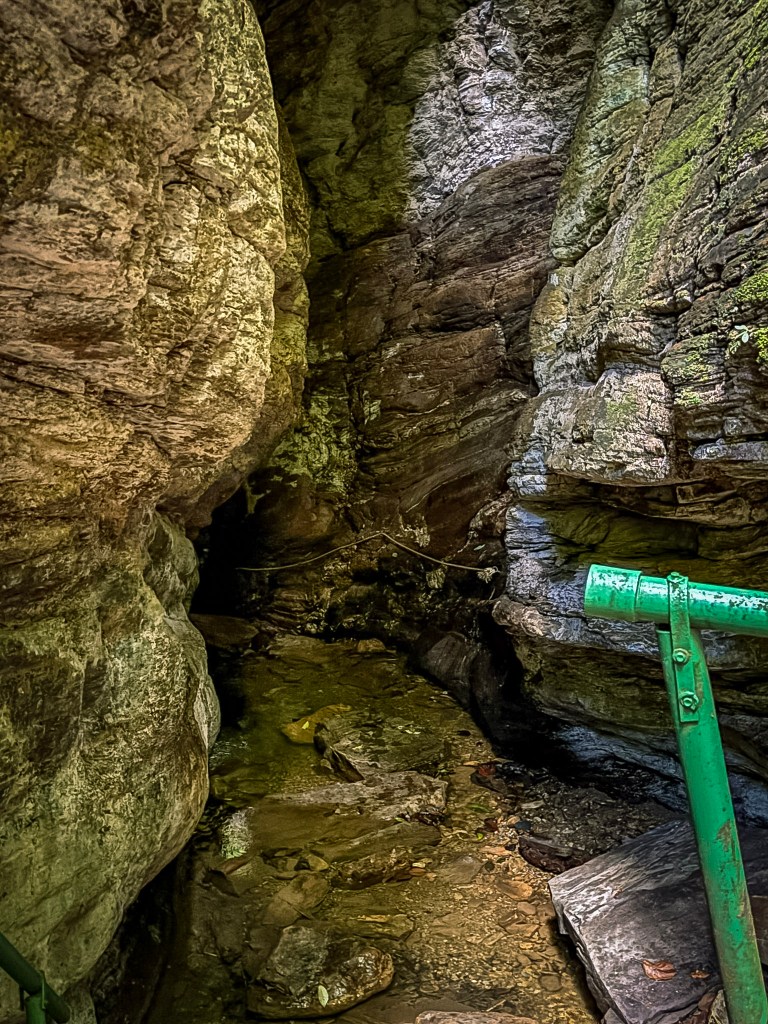
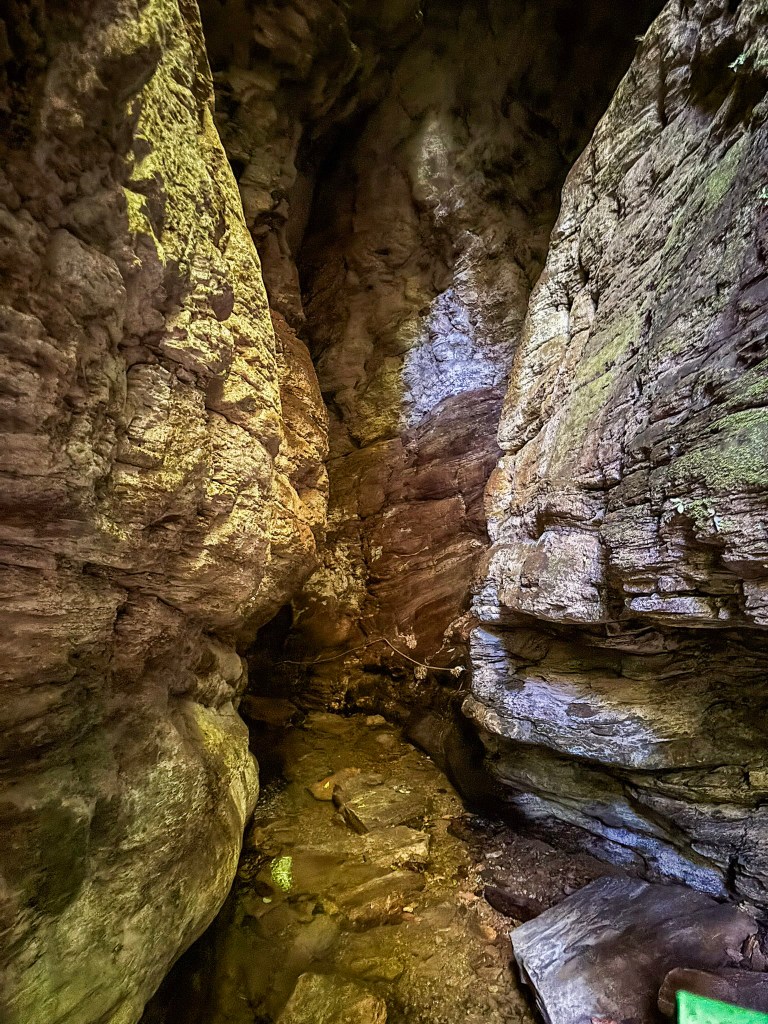
Coming Face to Face with the Colony
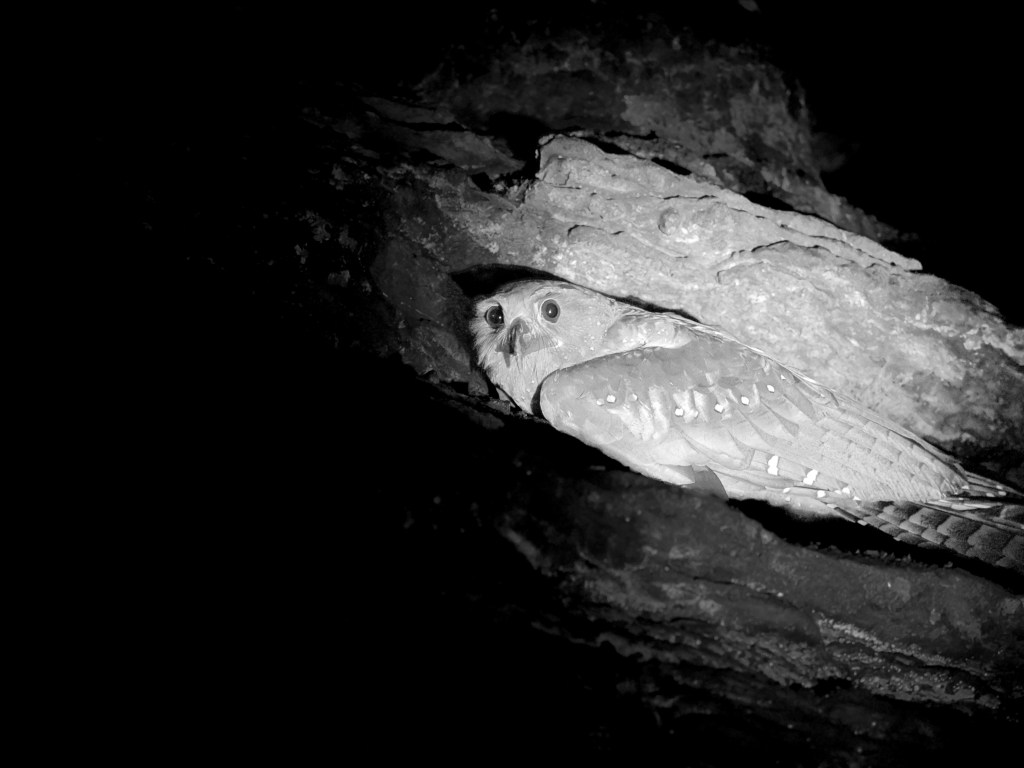
Nothing quite prepares you for it. Our guide used a red light to illuminate the birds, and in that dim glow I could see them sitting on ledges in the rock, strange-looking with hooked beaks and big dark eyes. The sign at the centre says the colony has been documented since 1957 and varies from about 123 to 130 birds, though I’ve also seen figures of 150 or more quoted for the cave, so numbers clearly shift over time.
The nests were fascinating. They’re built mostly from regurgitated fruit, shaped into low mounds on cave ledges, and reused year after year. I could see the piles of fruit the birds had collected the night before. Females lay two to four white eggs, and both parents share incubation for about 33 days. The young are slow to develop and may stay in the nest for 110 days or more.
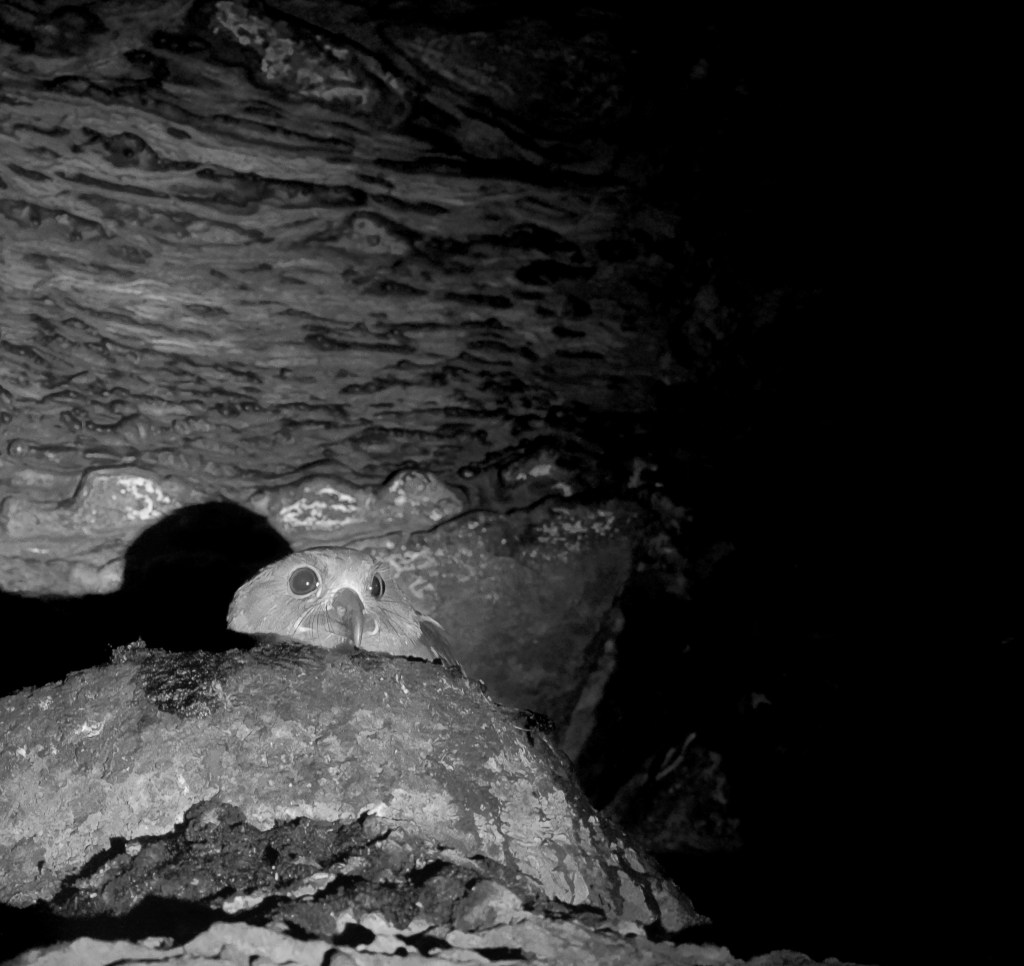
If the birds get disturbed, they let you know. Oilbirds scream, snarl and chuck in a way that sounds like a nightmare soundtrack, and the screams are truly ear-piercing. If I hadn’t known about the birds and had wandered into that dark cave on my own, I would have been scared to death, and I now understand how the bird earned its nickname, the little devil. It’s easy to see why Amerindians called them guacharos, “the ones that wail and mourn,” and why Trinidadians settled on diablotin. Watch the vidoe I took inside as we entered and you can hear the screams of the birds.
Because the birds are so easily disturbed, we didn’t stay long. I quickly took a couple of photos in the red light, and then we headed back out and left the colony in peace.
Fruit-Eating Birds That Use Echolocation
This is the part that blew my mind. Oilbirds are the only nocturnal fruit-eating birds in the world, and they also use low-frequency echolocation to find their way through the dark, much like bats. They can detect an object about eight inches across in total blackness. They aren’t blind either: their eyes are well adapted for low light, and they use sight whenever there’s enough of it.
At dusk they leave the cave to forage, mainly on palm fruits and the fruits of trees in the laurel family, and they may travel many miles in a night to feed. Then they return to the cave before daylight. It’s a very different life from the daytime birds I’m used to.
Practical Tips for Your Visit
- Go with the guide. It’s required, and it protects the birds.
- Stay at least three days so you can secure a cave visit around the guided schedule.
- Keep noise and light to a minimum. Silence is your best camera accessory.
- Bring sturdy shoes and rain gear. The trails are humid and can be slippery.
- Be patient. Let your eyes adjust to the dim light and you’ll see far more.
Final Thoughts
Seeing the oilbirds at Asa Wright was one of the most memorable wildlife experiences I’ve had. The birds are odd, noisy, and absolutely unforgettable, and the setting in Trinidad’s Northern Range makes the whole experience feel like a step back in time. If you’re planning a trip to Trinidad and you love nature, put Dunston Cave at the very top of your list.

