
I came to Trinidad for business and ended up with a memory card full of birds. Over three days at Asa Wright Nature Center, I barely had to chase anything. Most of these photos came from the veranda, a coffee or rum punch within reach, and a forest that kept putting on a show.
The Hummingbirds: 15 Feeders, Hundreds of Birds
Below the veranda hang 15 feeders, and the buzzing never stops. Over three days, I photographed dozens of different kinds of hummingbirds. Here are a few of my favorites.
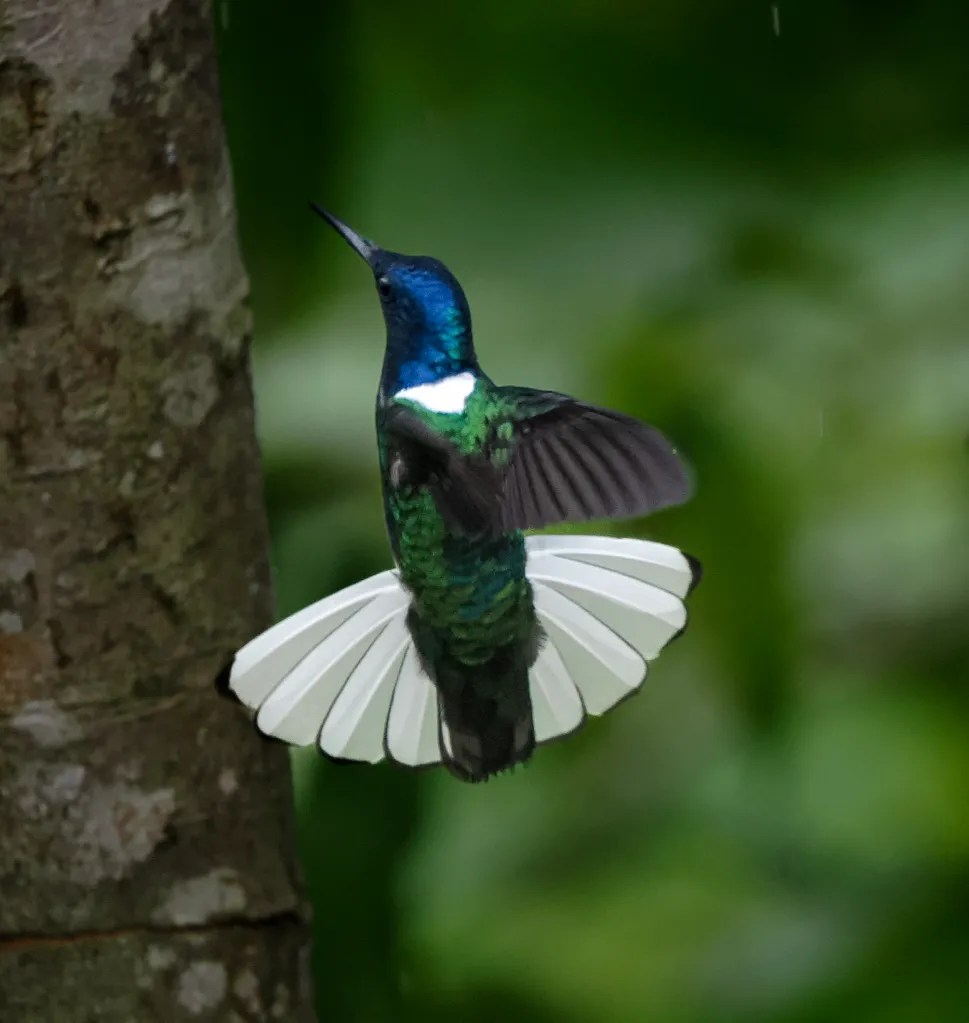
The Lesson I Learned: Be Patient
At first glance, the feeders belong to one species. White-necked Jacobins dominate, swarming the perches and chasing everything else away. If you leave after ten minutes, you’ll think that’s all there is.
Don’t leave. Sit still, keep your camera ready, and wait. Between the jacobin dogfights, the rarer birds slip in: the hermits, the starthroat, the violetear. By day three I could tell most of them apart at a glance, which I couldn’t have done without the center’s naturalist guides. They were incredibly helpful, naming every bird I pointed my lens at.
The White-necked Jacobin: Three Looks at One Species
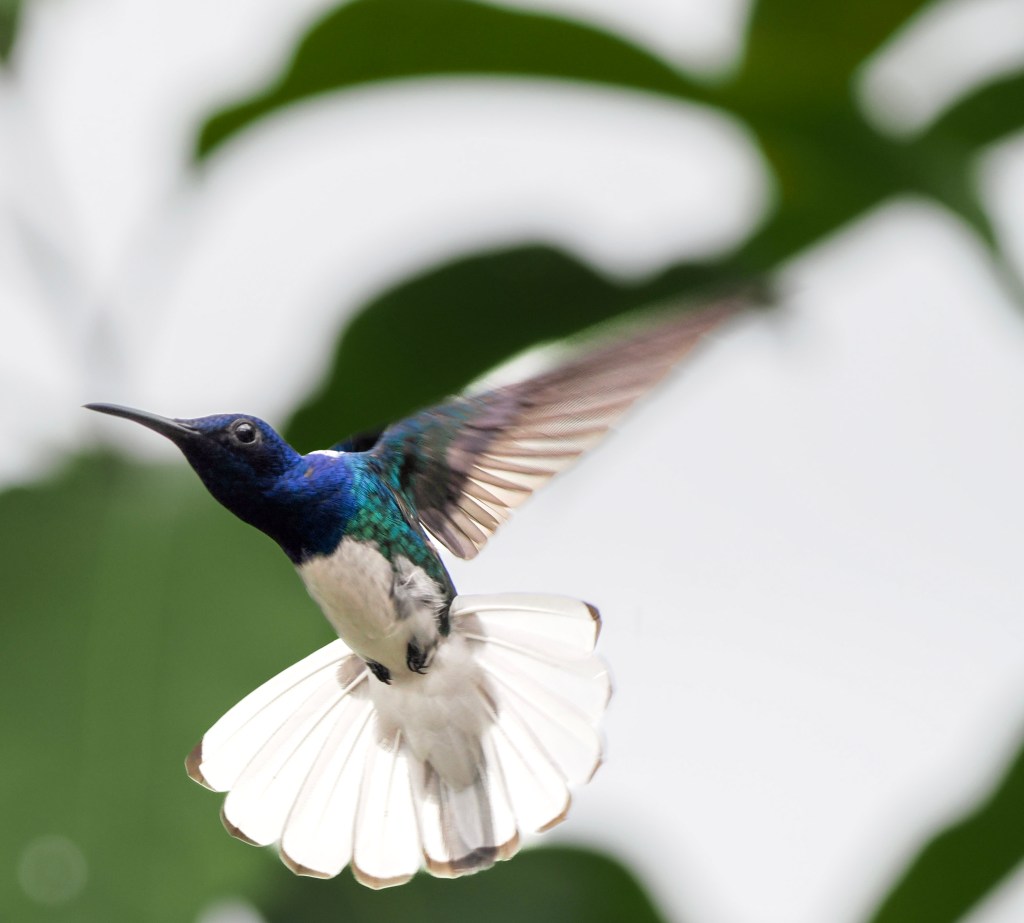
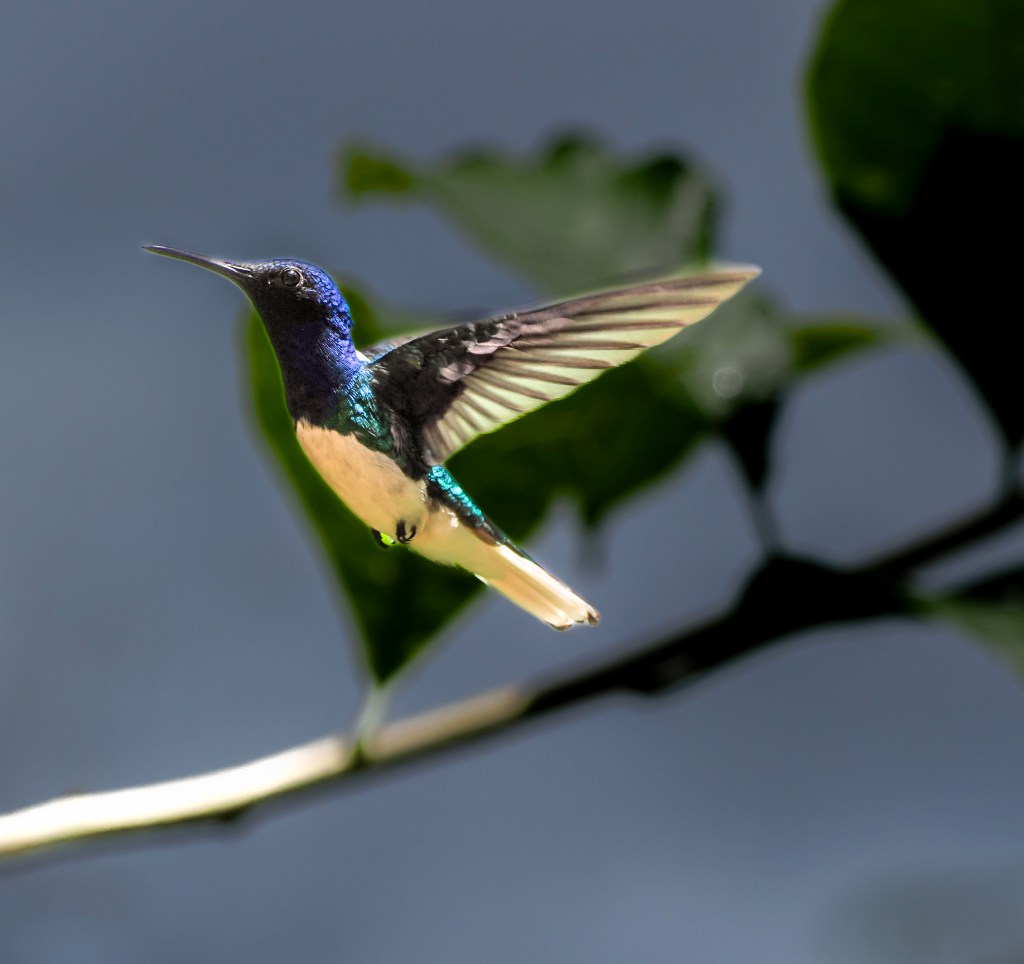
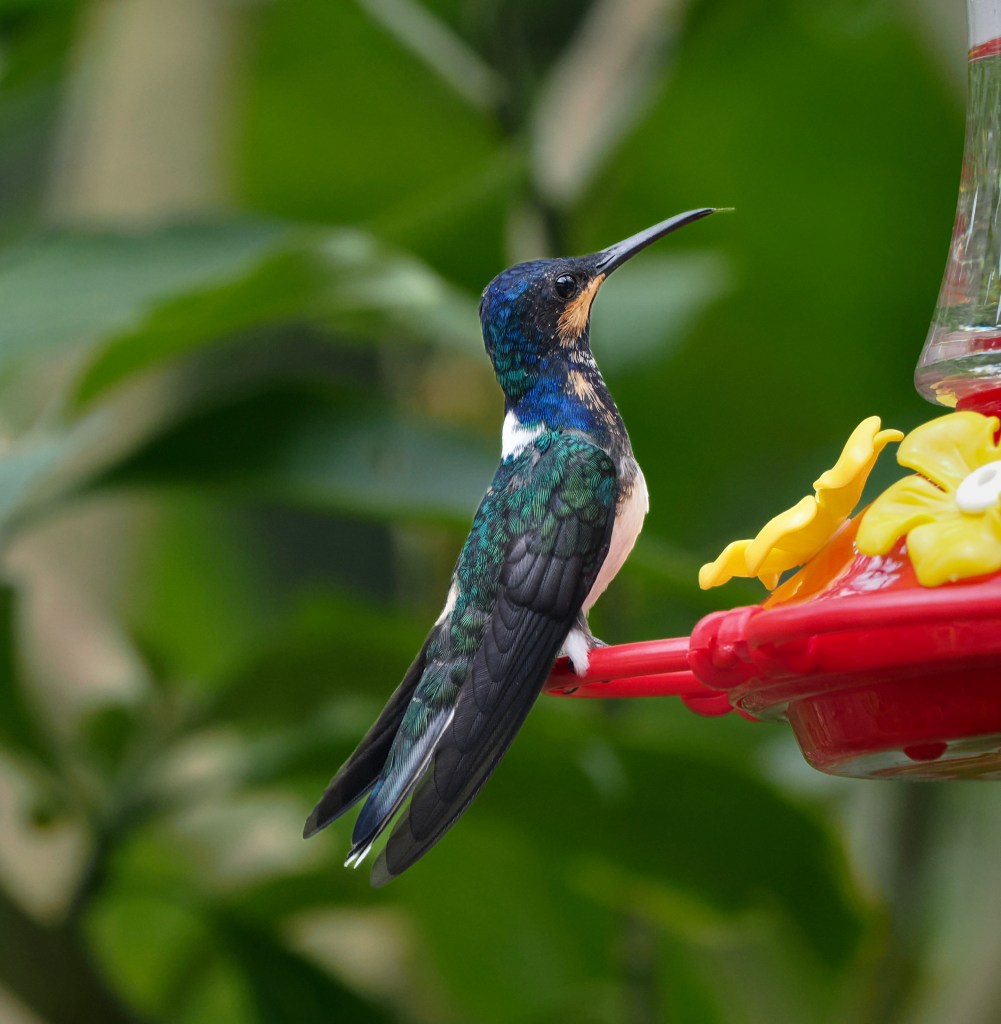
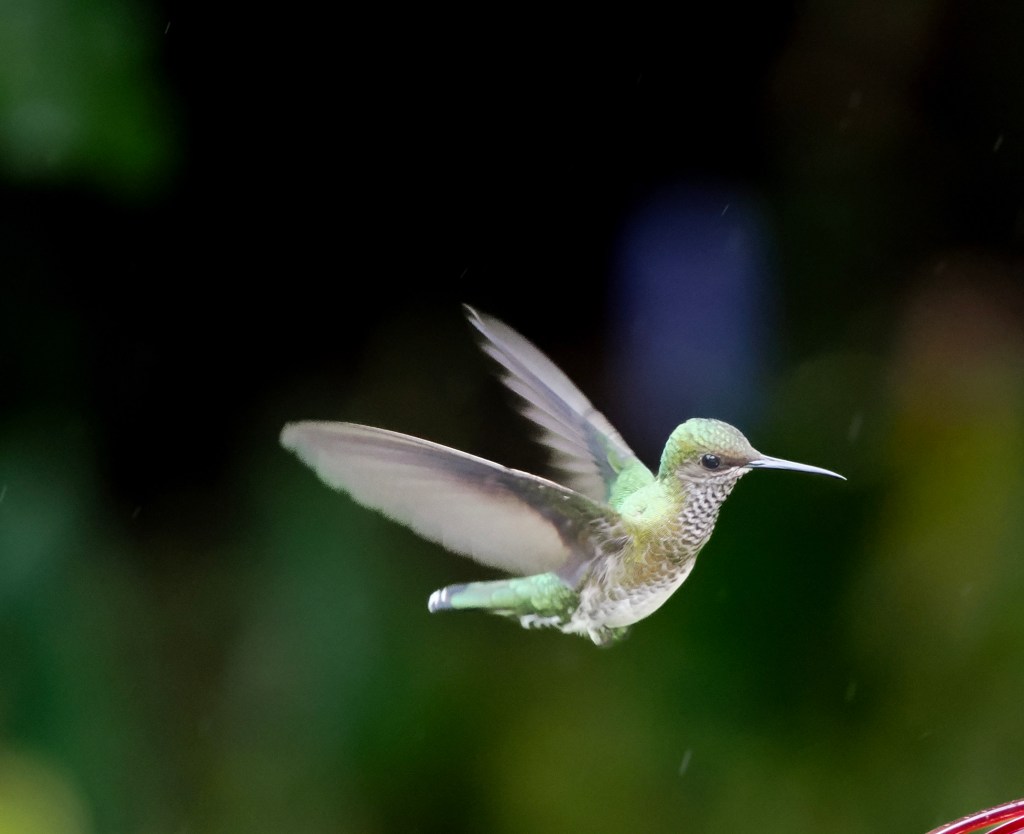
The jacobin is the face of Asa Wright’s feeders. I took 100s of photos of these and captured three different plumages.
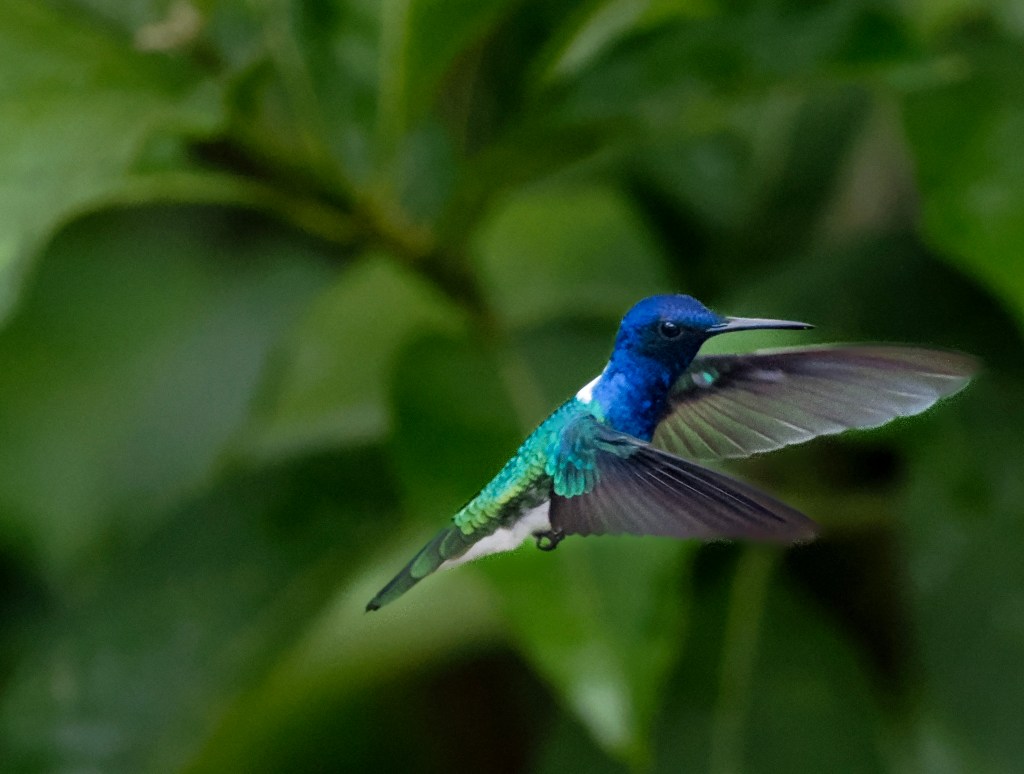
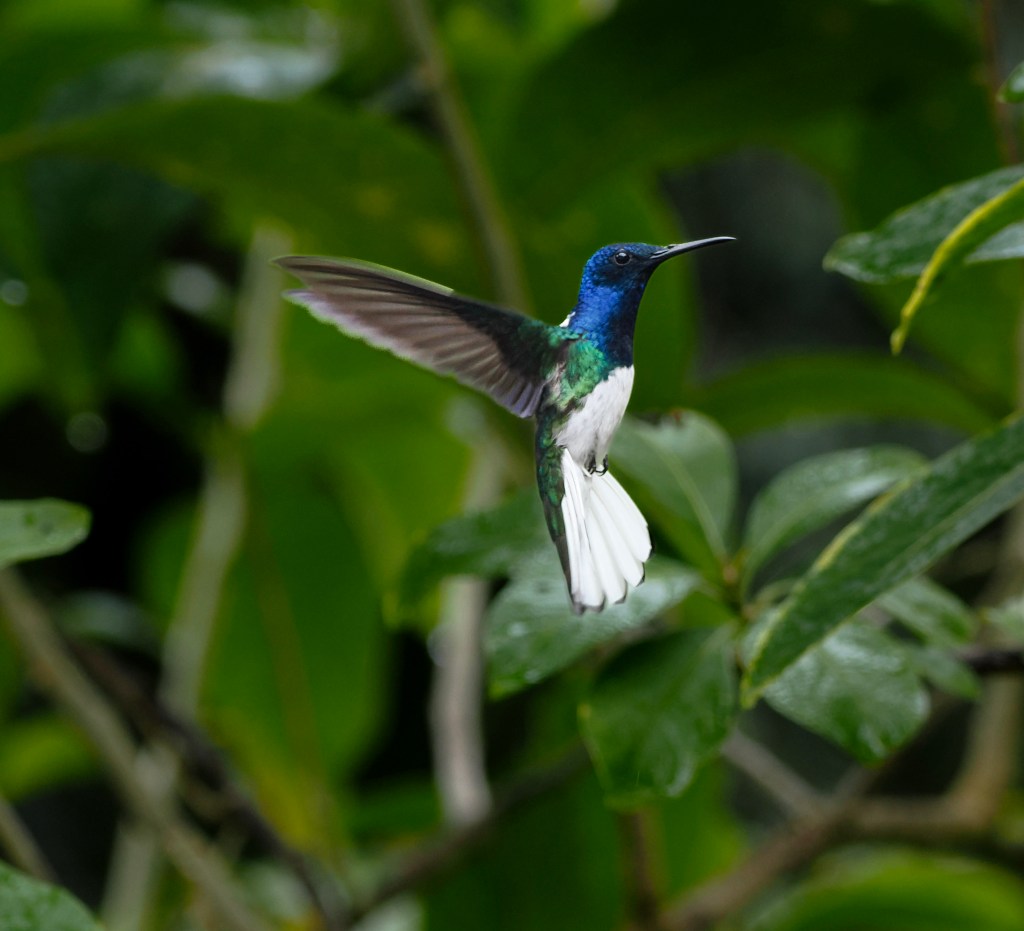
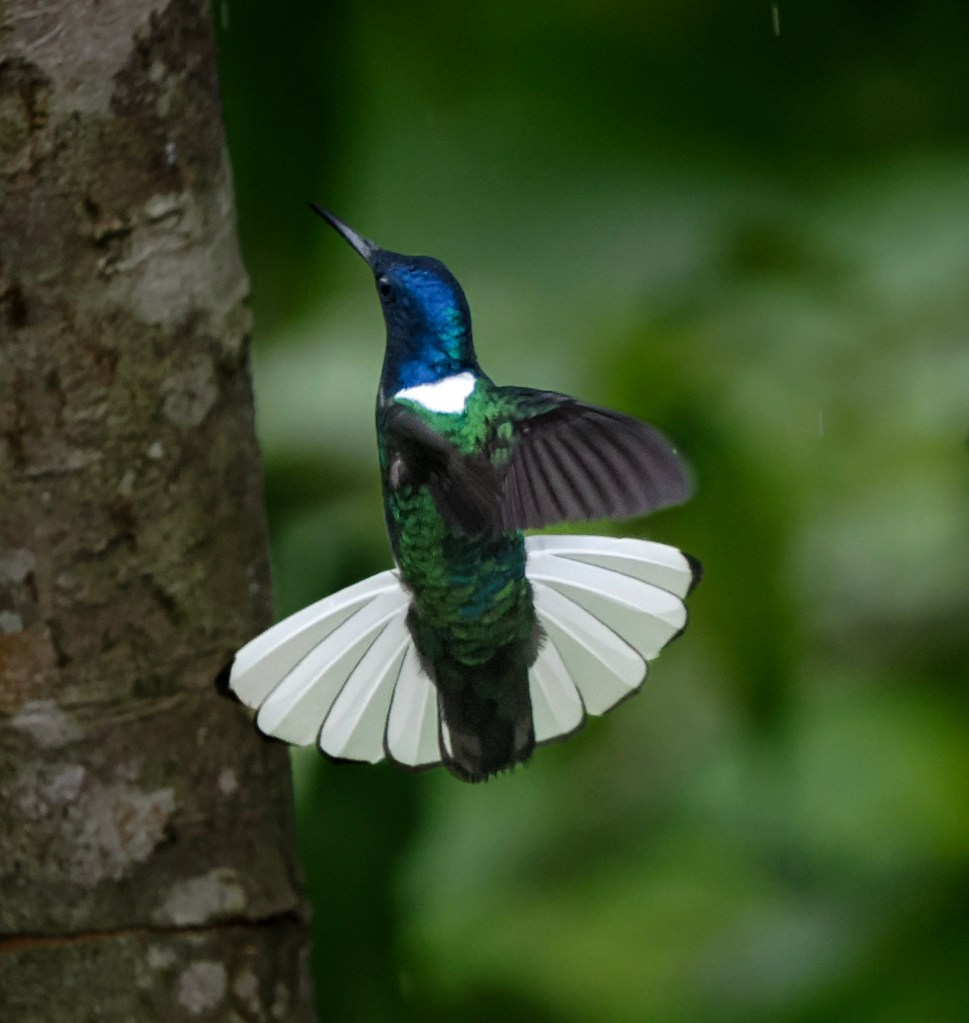
Male White-necked Jacobin. This is my best shot of the trip. He hovers with his tail fanned into a white spread, and his deep blue head, white throat patch, and emerald back glow against the green forest.
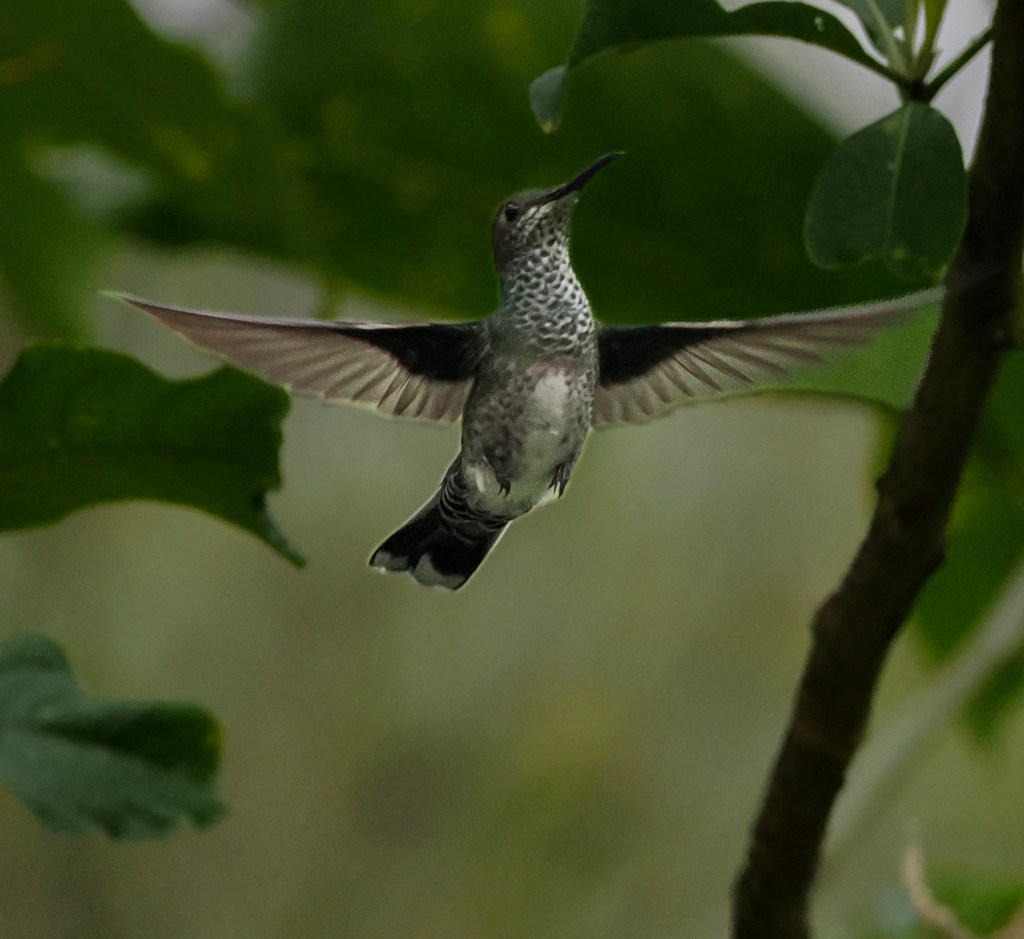
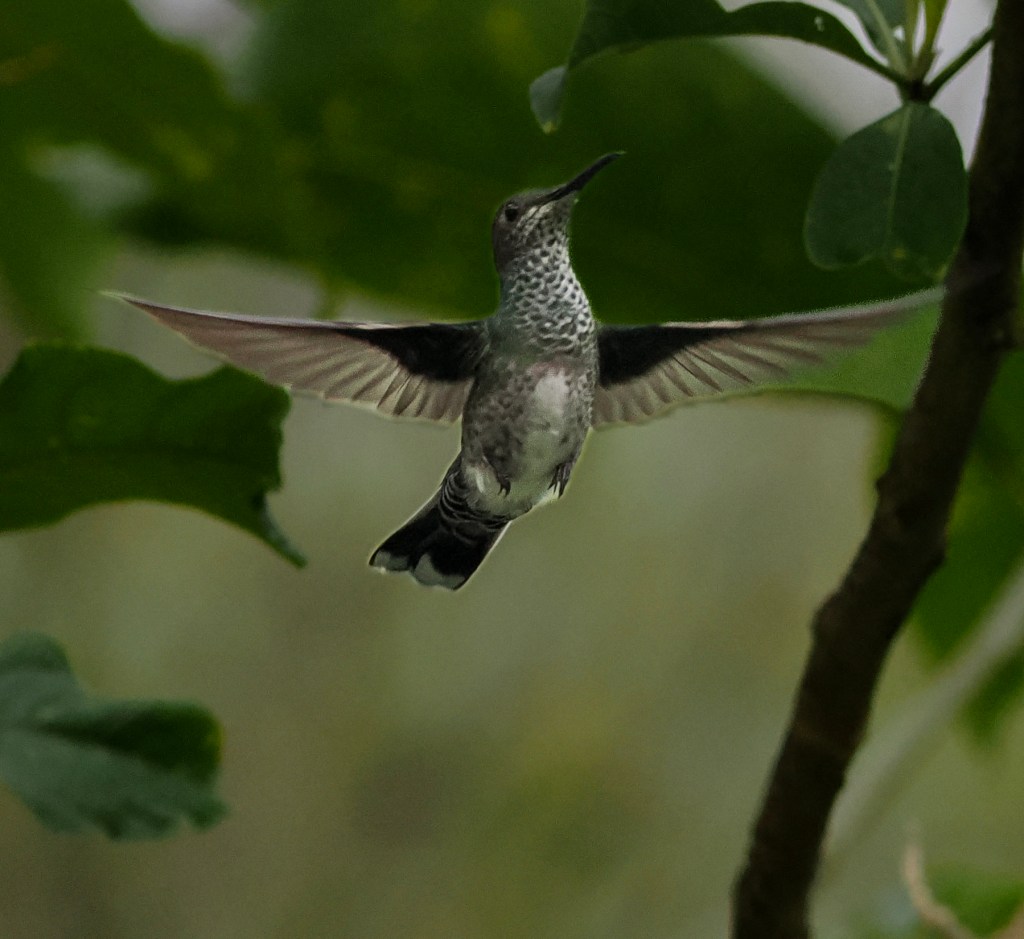
Female White-necked Jacobin. She looks nothing like the male. She is greyish-green with a heavily spotted throat, a pale belly, and a tail tipped in white, and she is easy to mistake for a different species at first.
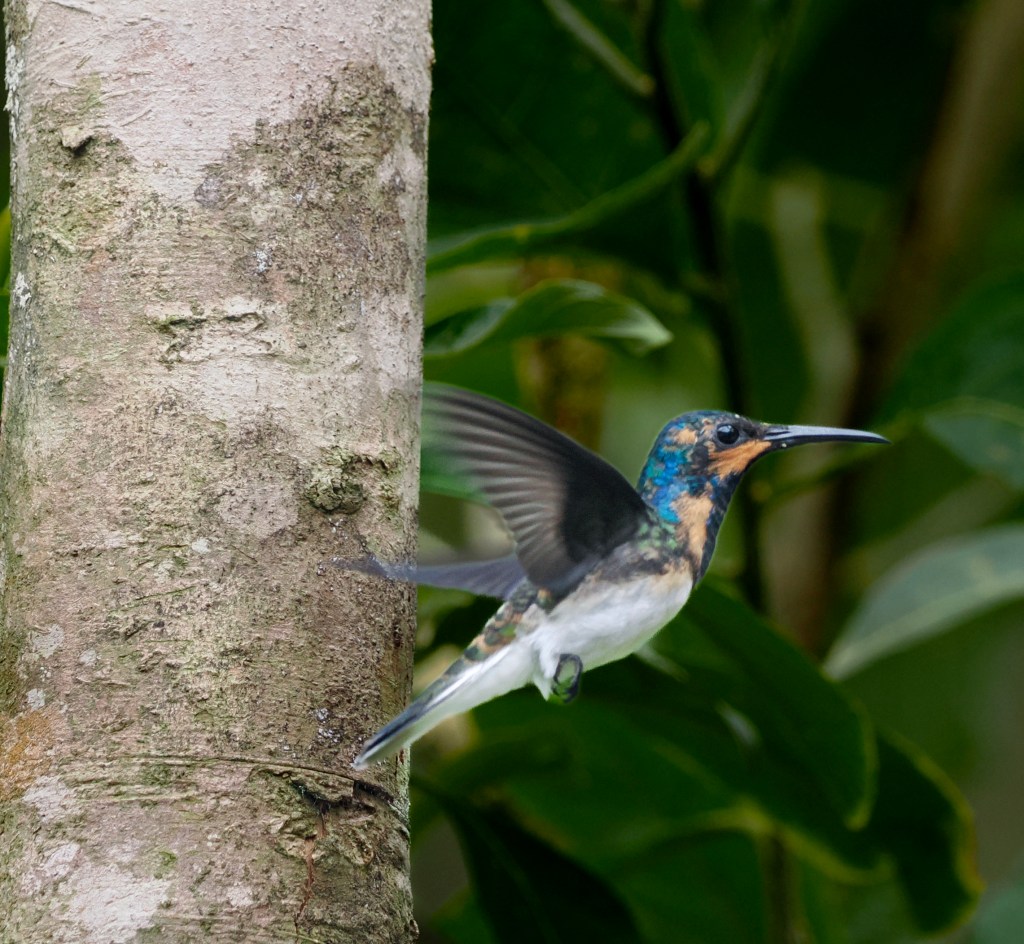
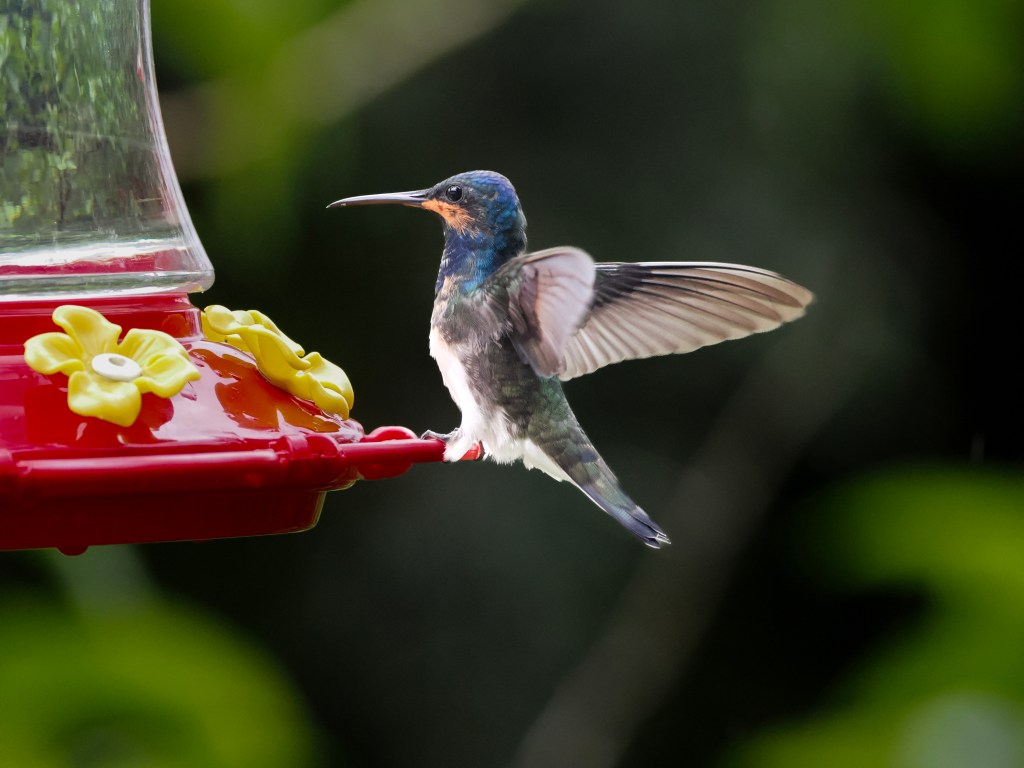
Juvenile White-necked Jacobin. The young male is a patchwork of blue head feathers, buff-orange throat patches, a clean white belly, and scattered green. He is still growing into his adult look.
The Hermits: The Reward for Patience
Hermits are quieter, browner, and harder to photograph than the jacobins, with long curved bills and a habit of darting in and out.
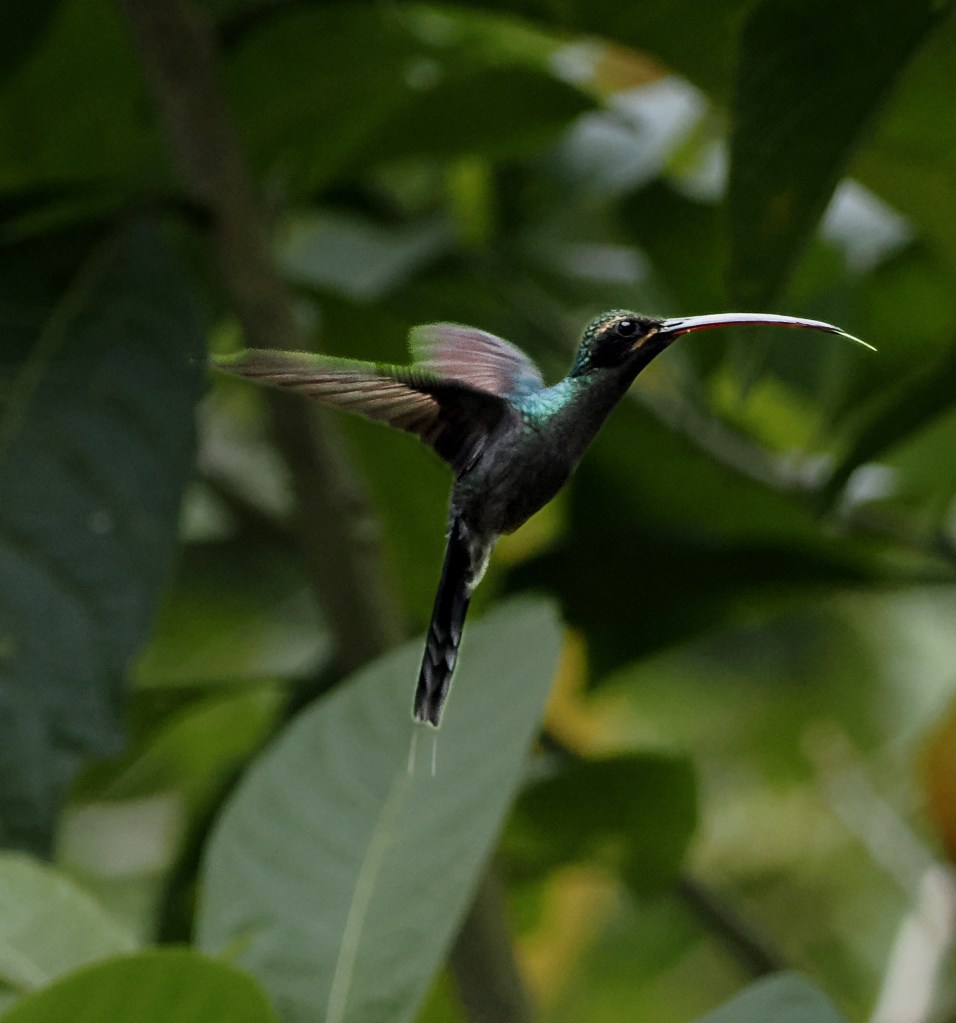
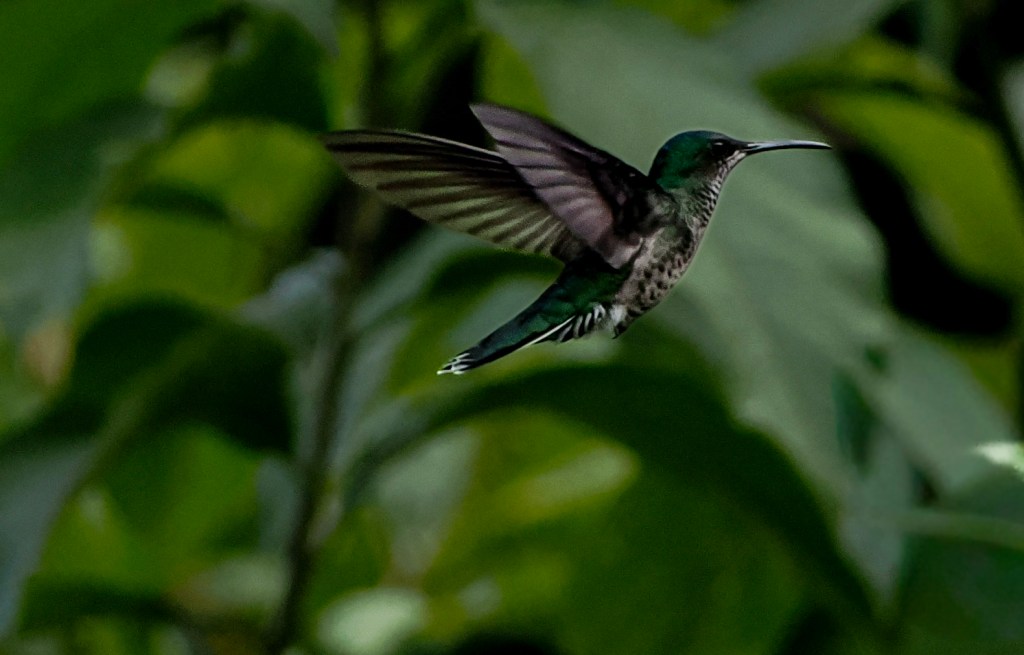
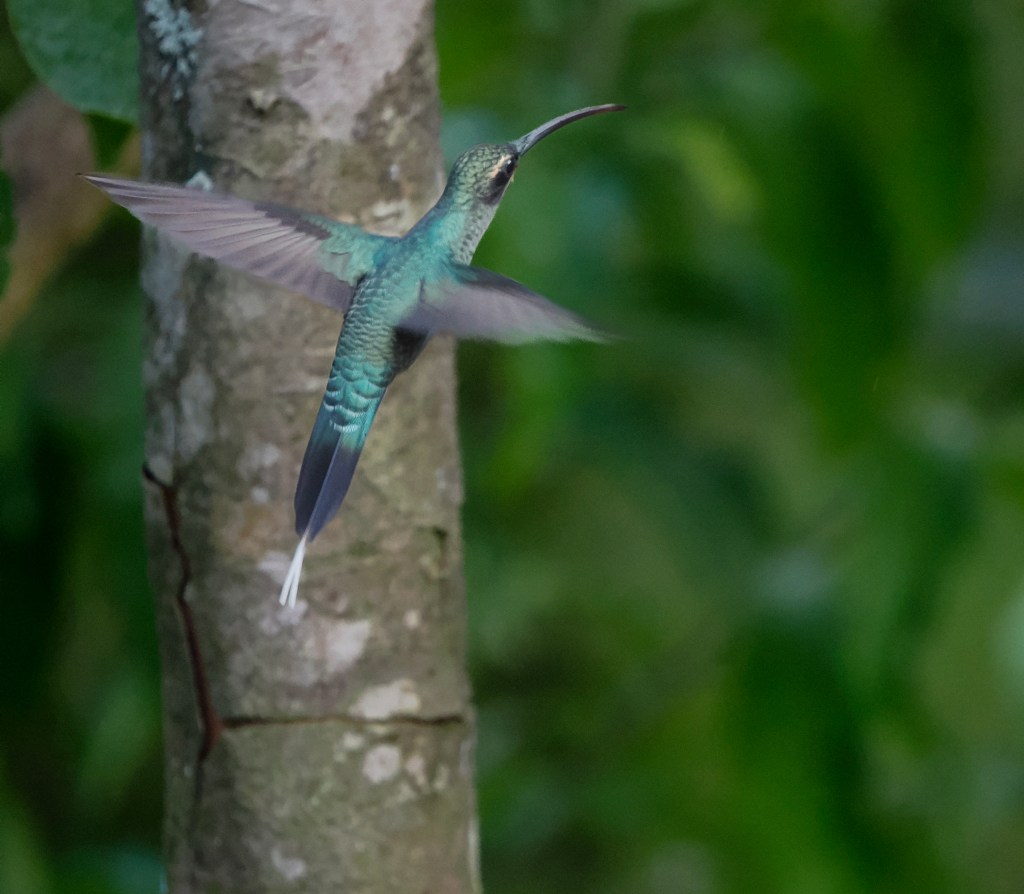
Green Hermit. t. Mine hovered in dim forest light, showing a long, curved bill with a red base, a dark body, and a long, dark tail.
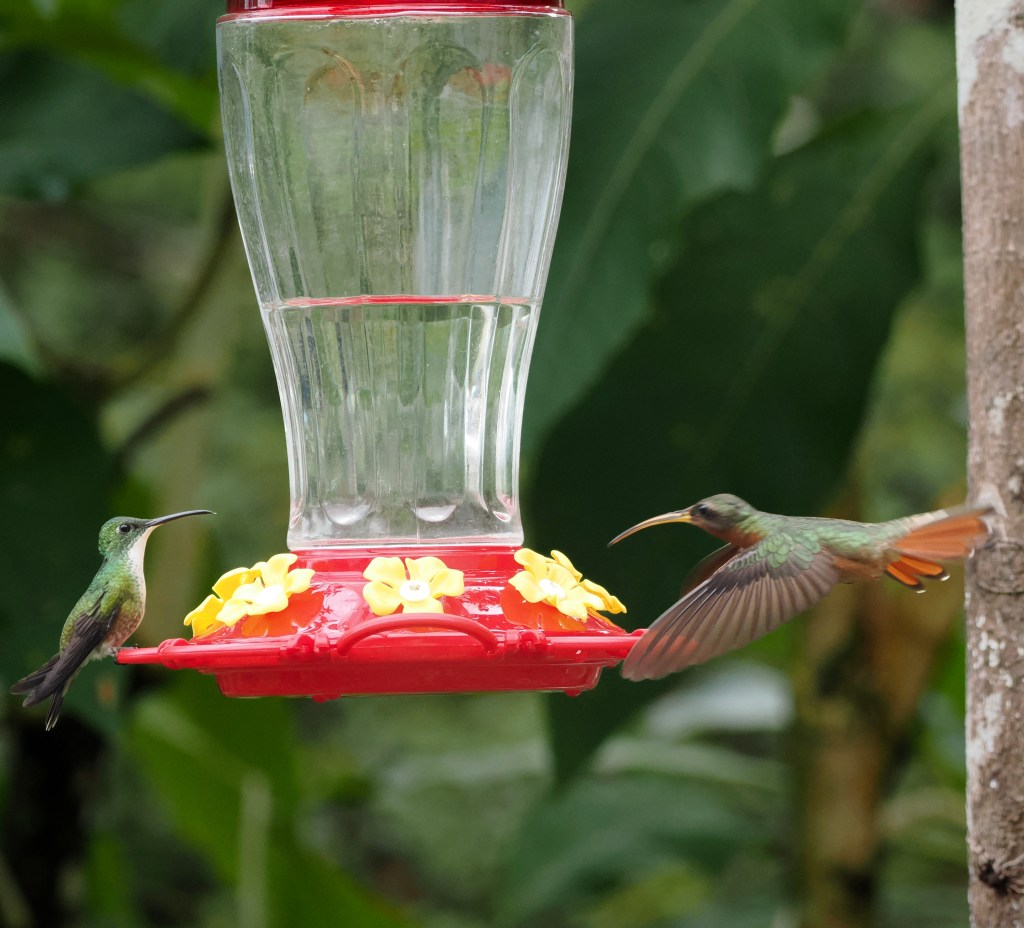
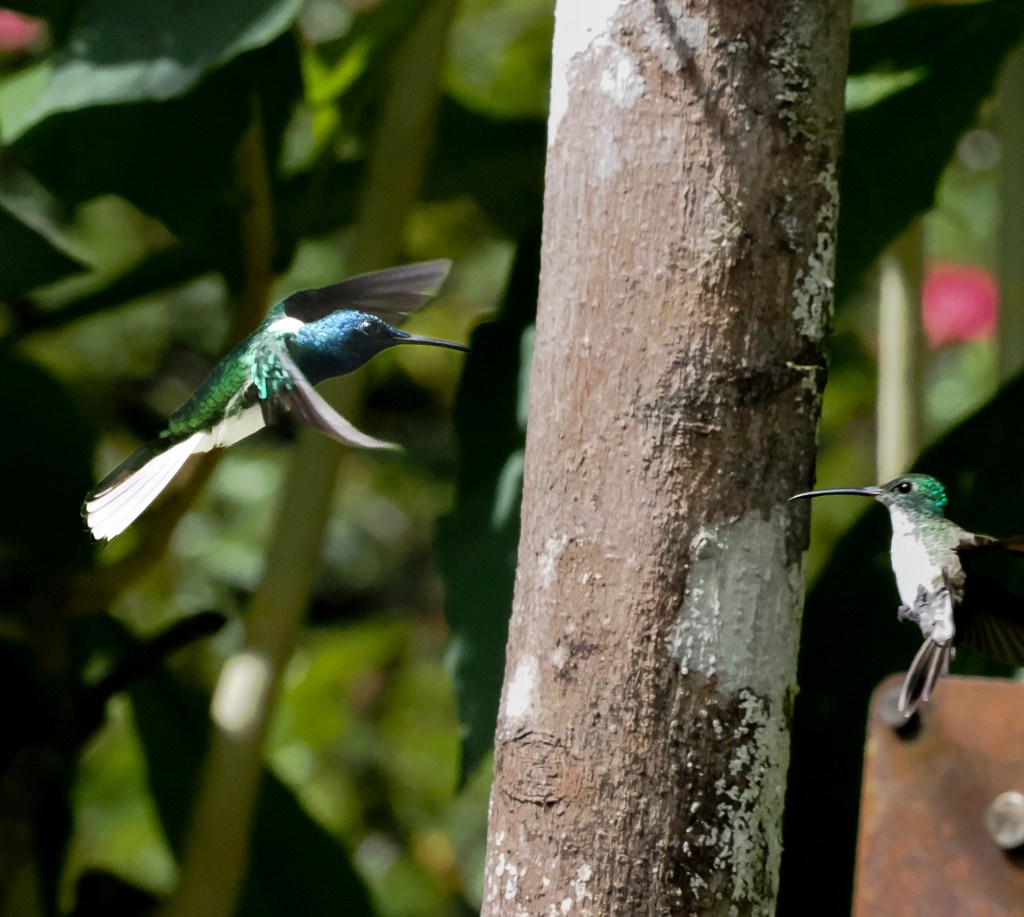
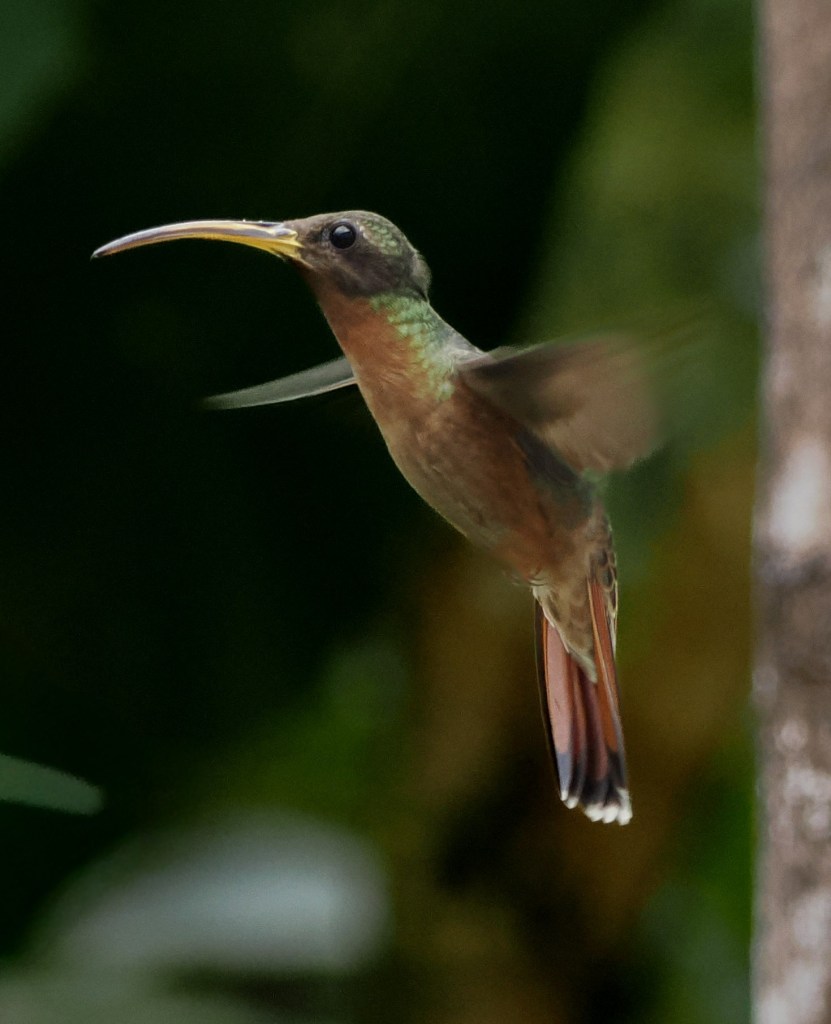
Rufous-breasted Hermit. I caught one in mid-flight at a feeder, bill curved like a sickle and its orange tail flared, while a White-chested Emerald watched from the perch.
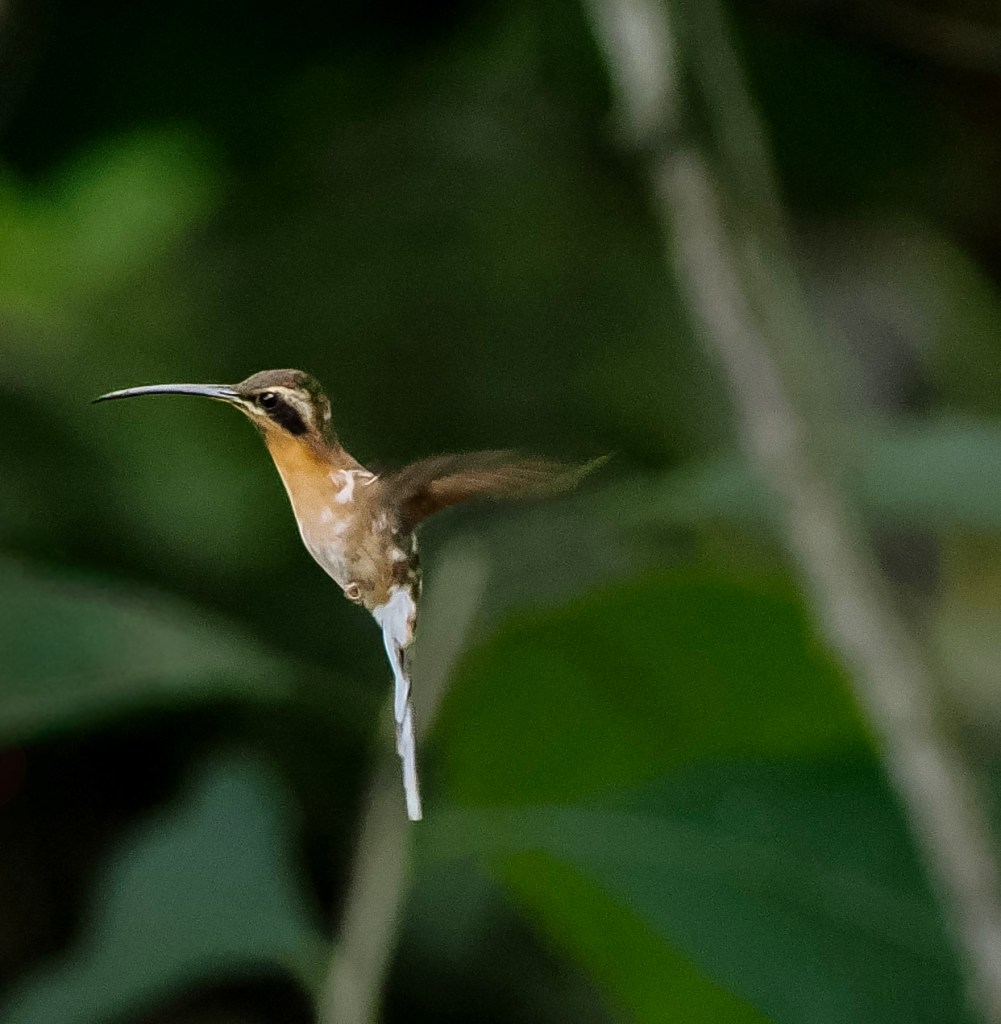
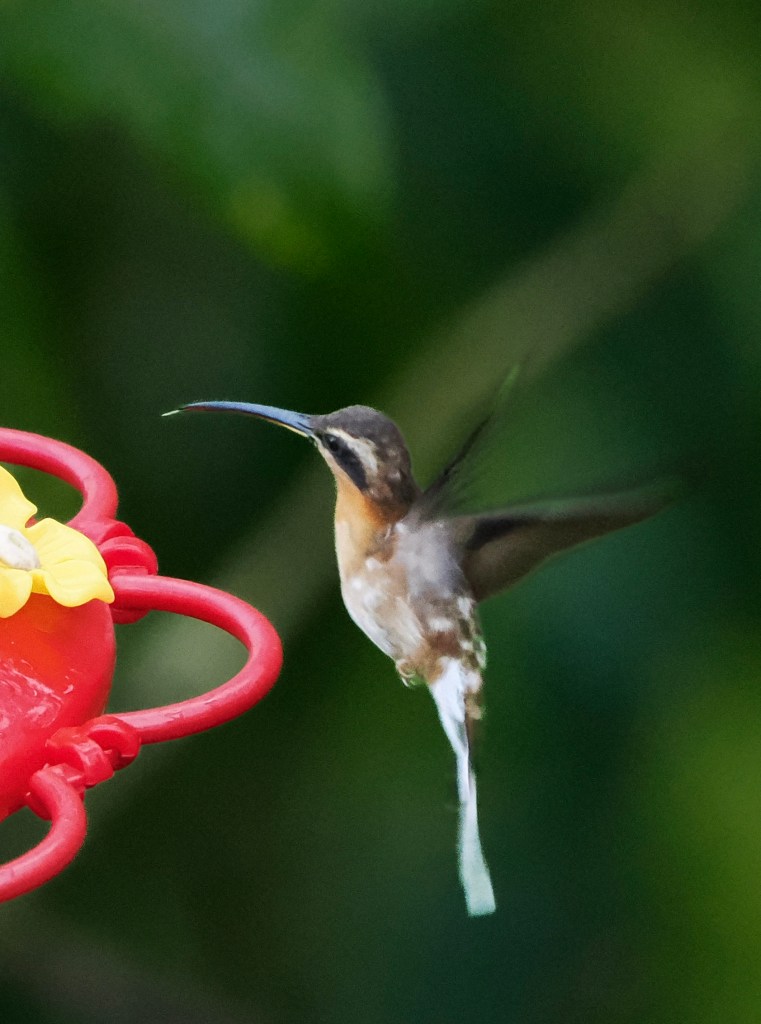
Little Hermit. Small and delicate, with a buff throat, a dark mask, and a white-centered tail. It was the hardest of the hermits to photograph because it never held still.
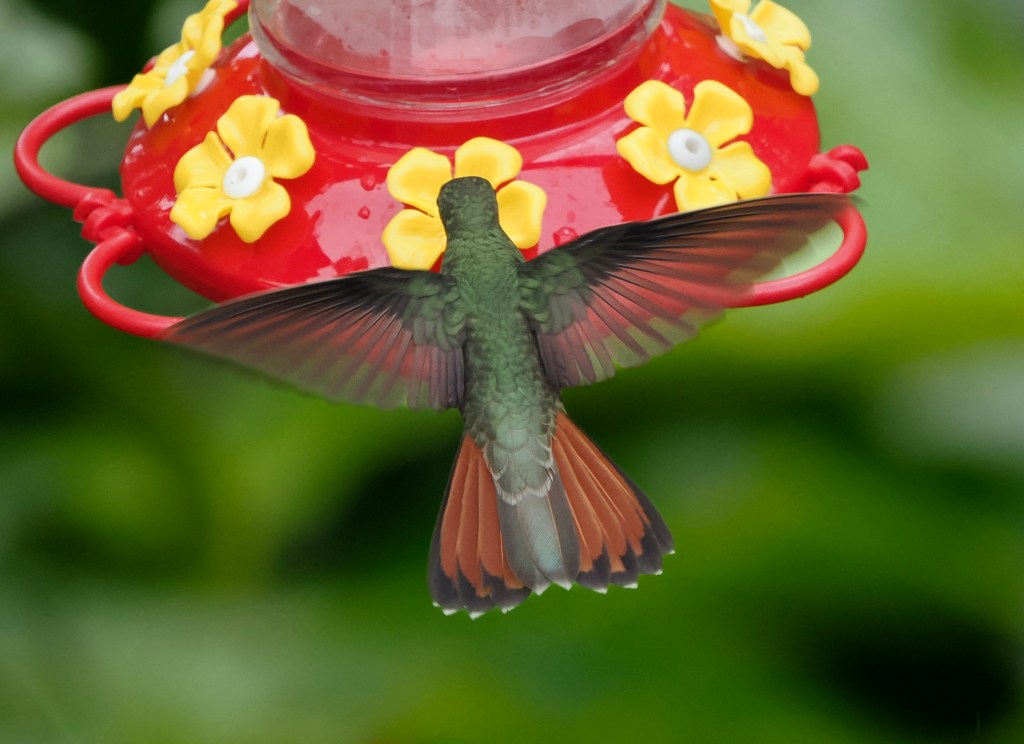
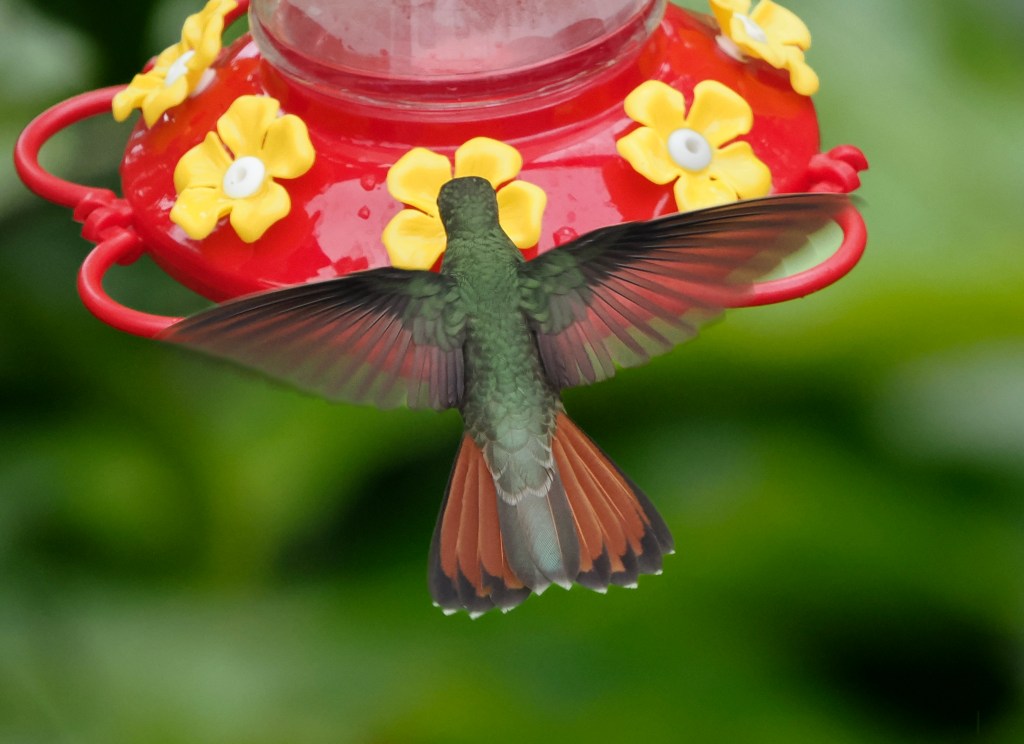
Rufous-tailed Hummingbird. I got a shot of this one from behind at a feeder, wings spread and a rust-colored tail fanned open like a skirt.
The Showstoppers
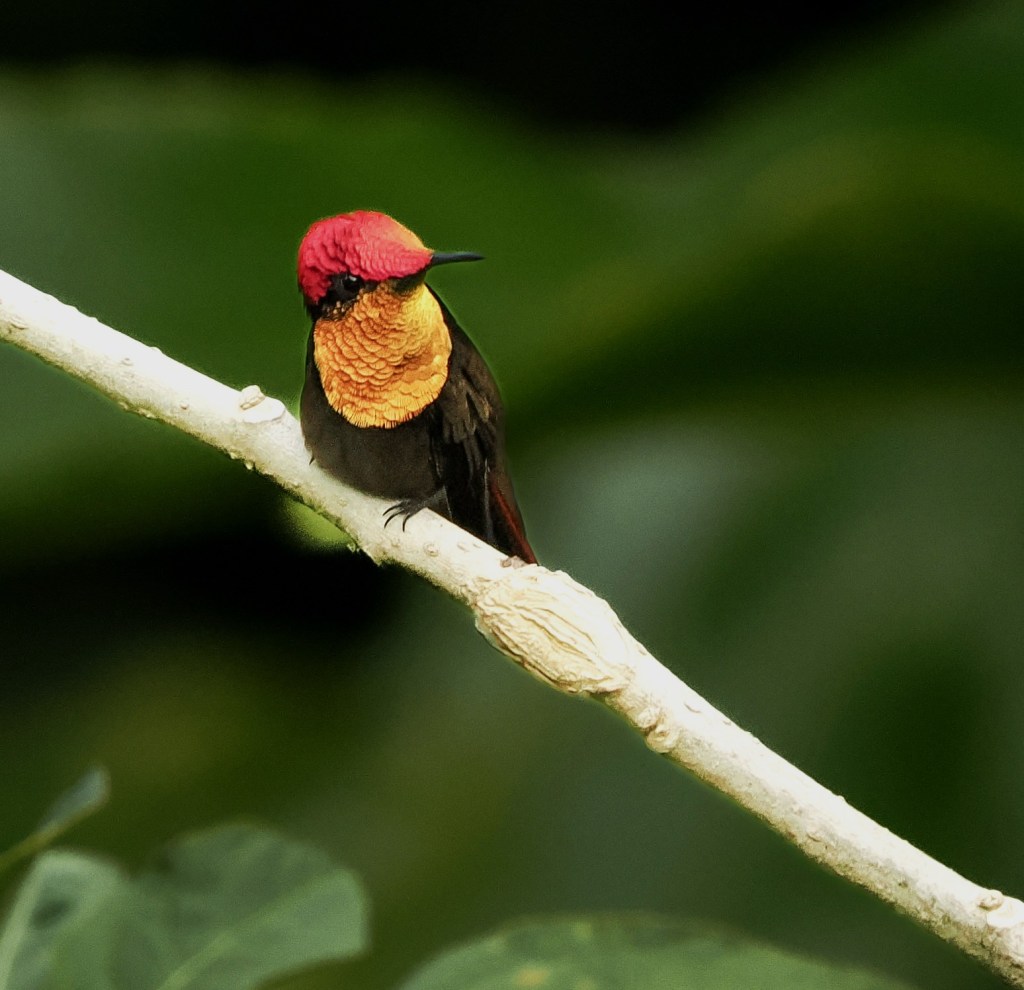
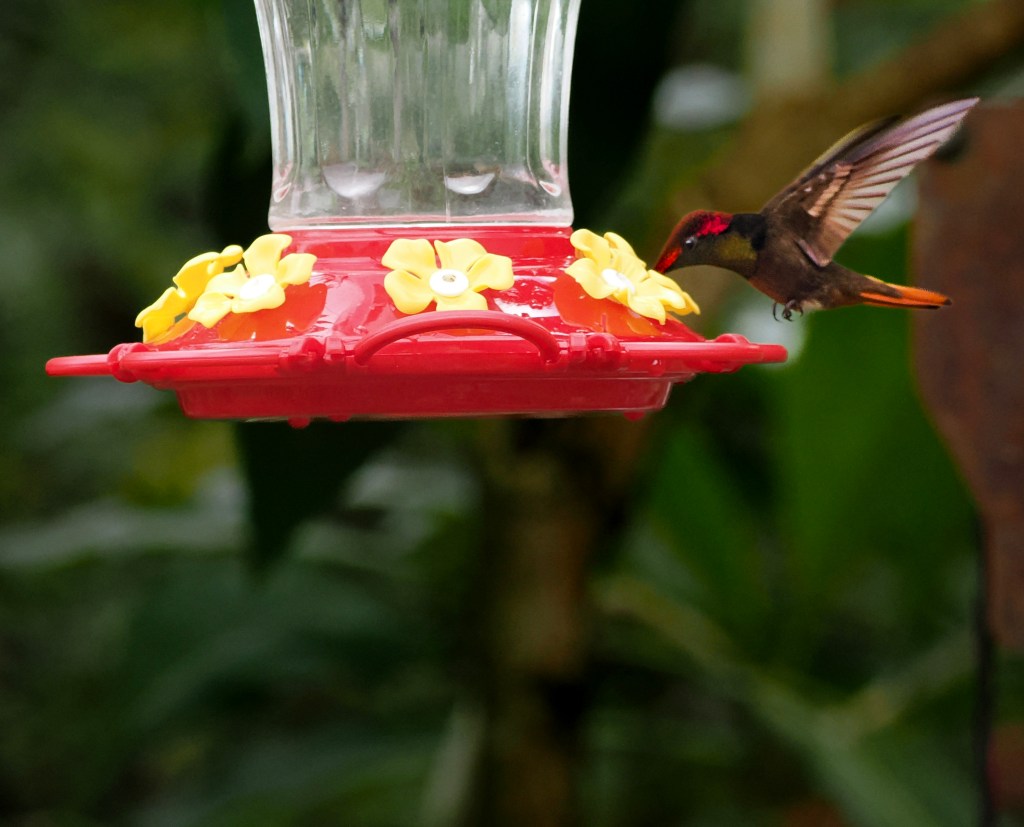
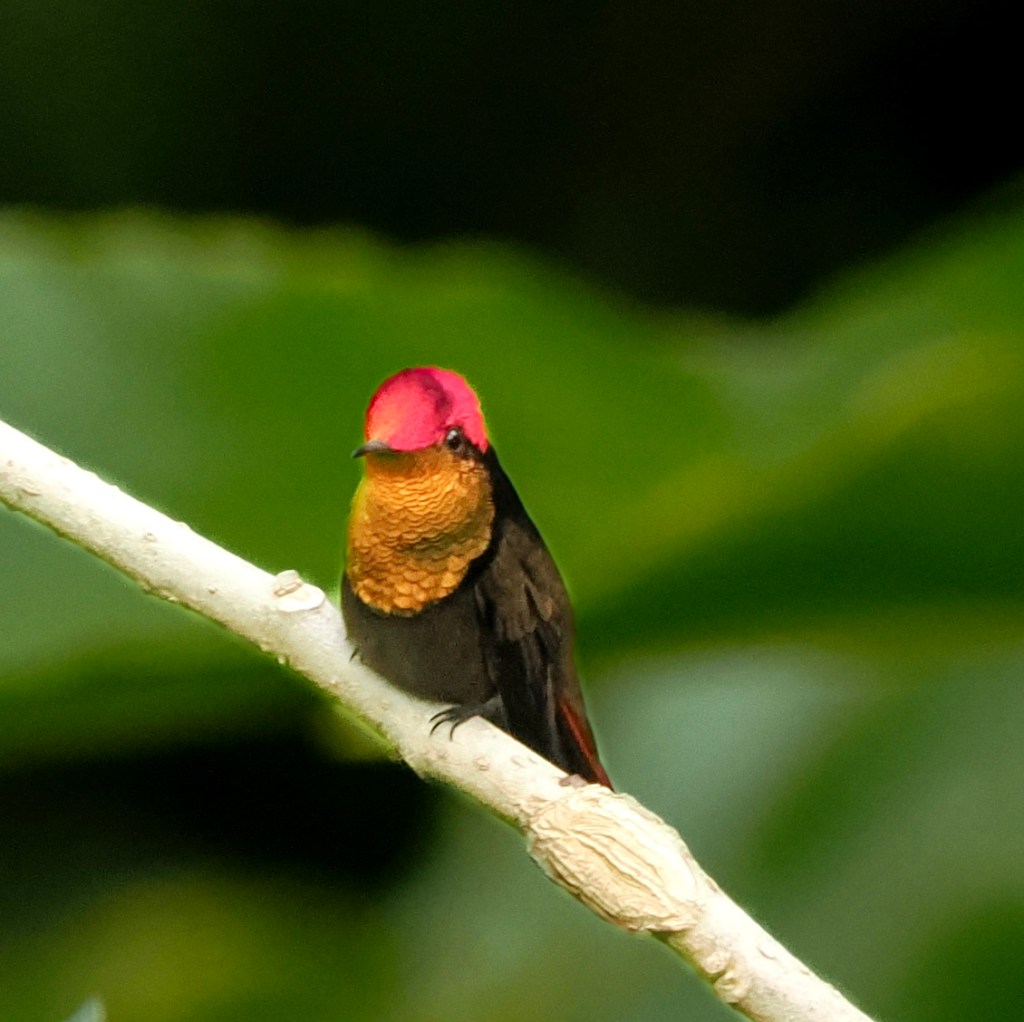
Ruby-topaz Hummingbird. This was the one that got away, sort of. I never managed a good flight shot with its tail spread. I did photograph it perched on a branch, and it is still unforgettable: a ruby-red crown, a golden-orange throat, and a dark body, like a tiny jewel.
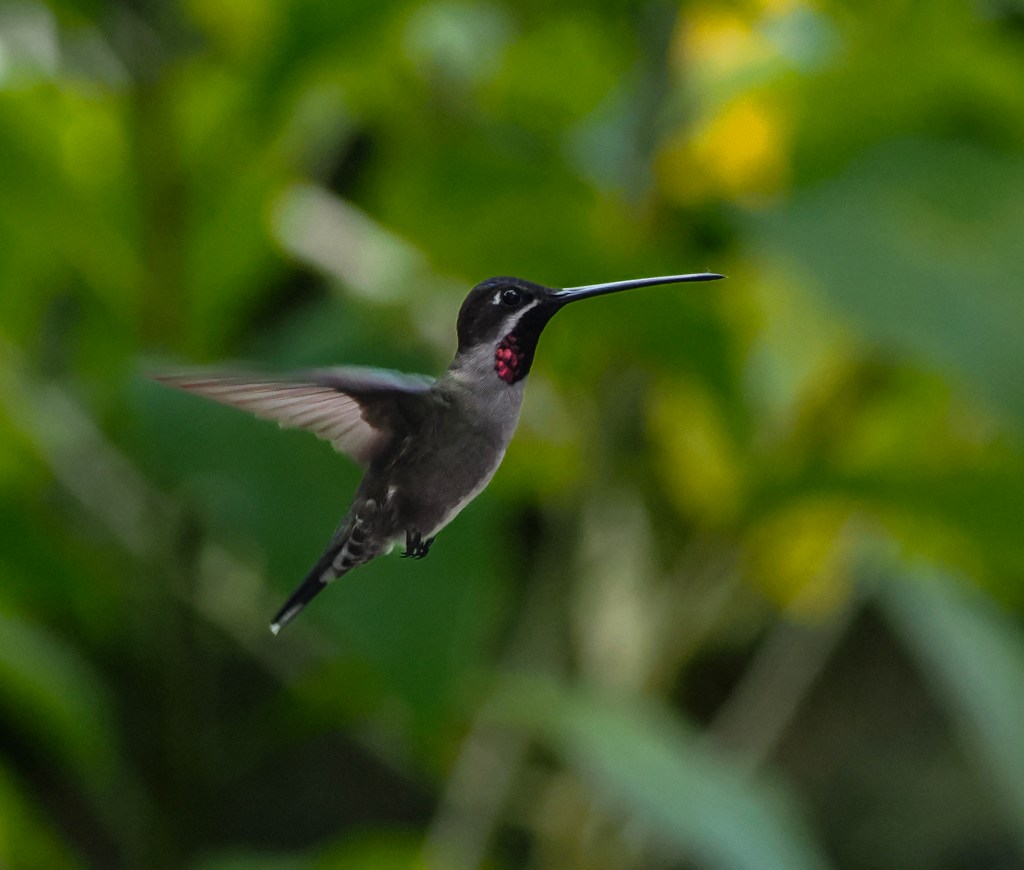
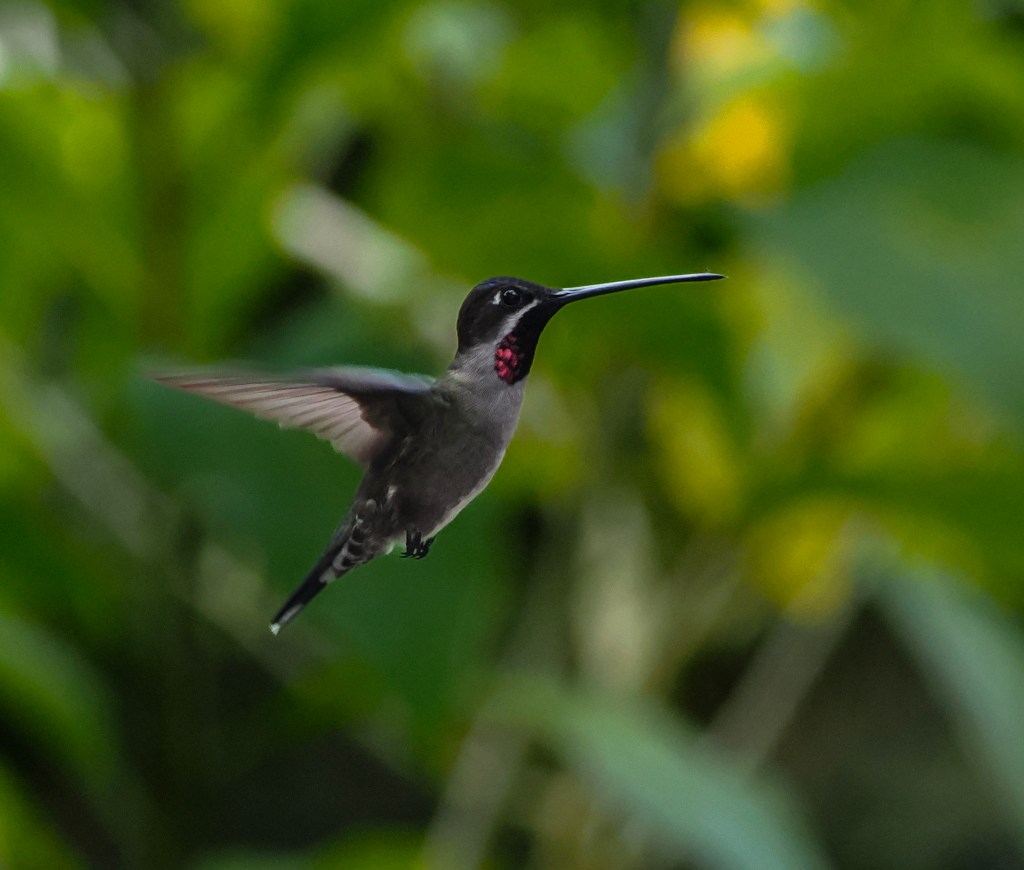
Long-billed Starthroat. A male in flight with a magenta-red throat patch, a bold white stripe behind the eye, and a long, straight bill, hence the name. The throat looks dull until the light catches it, then flashes red.
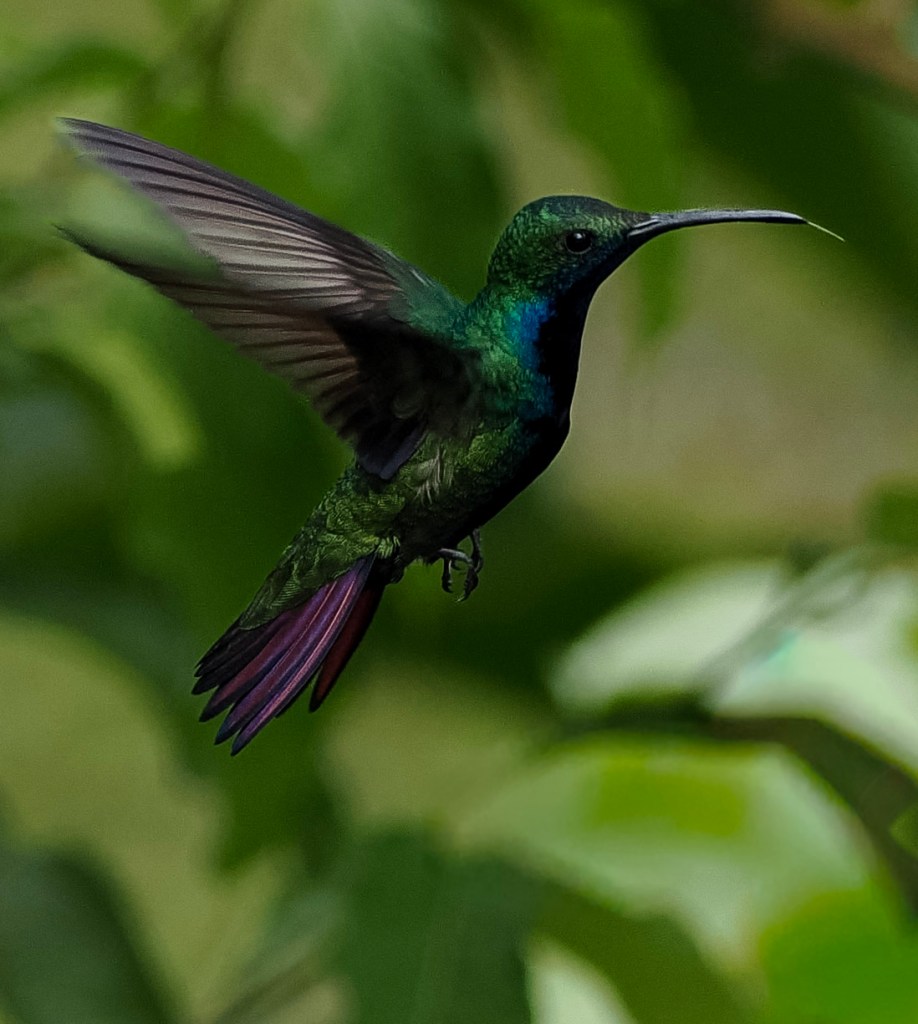
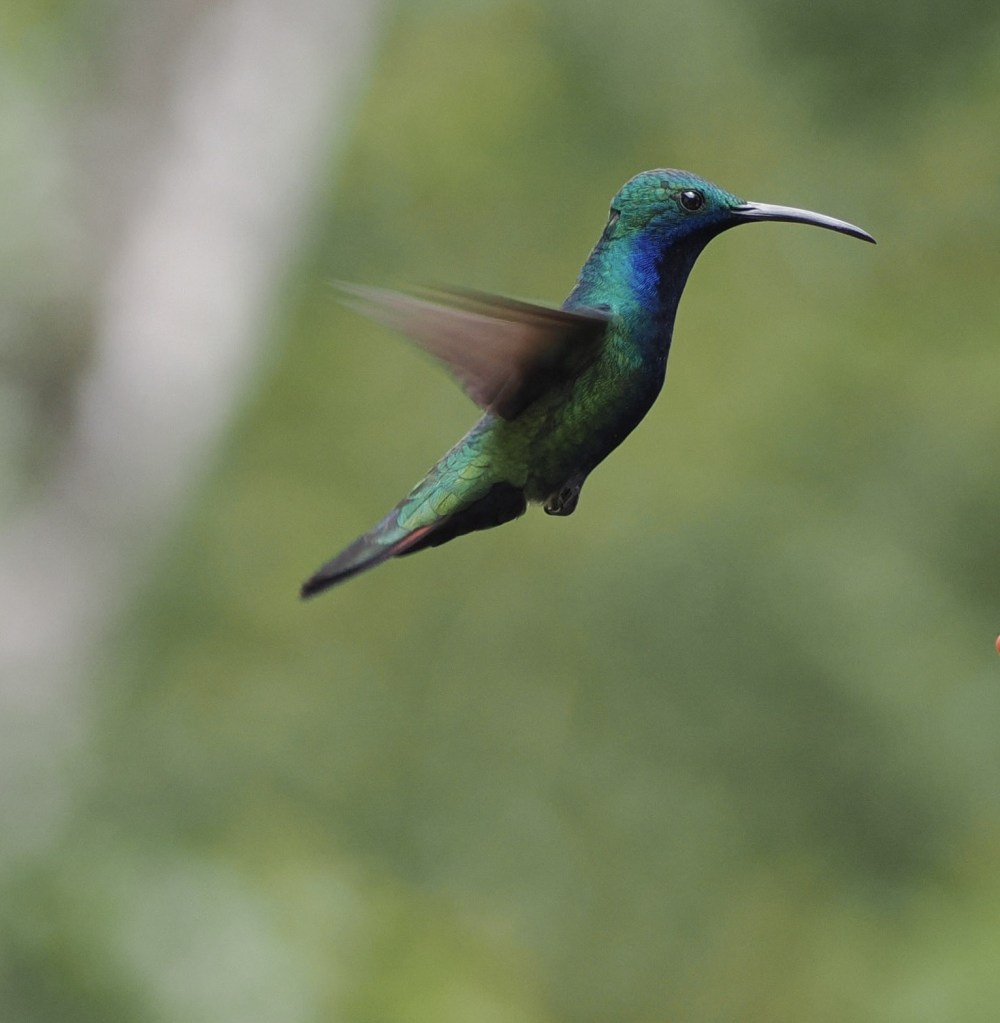
Black-throated Mango. My photo shows a long curved bill, a blue patch against a black throat, and a purple tail.
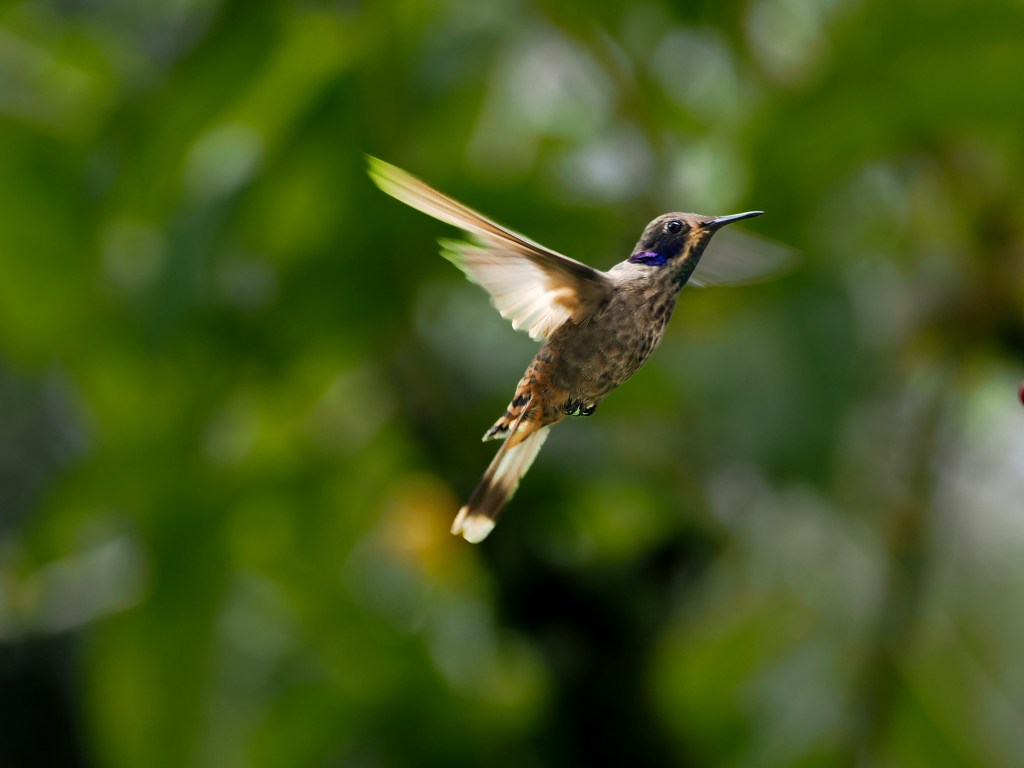
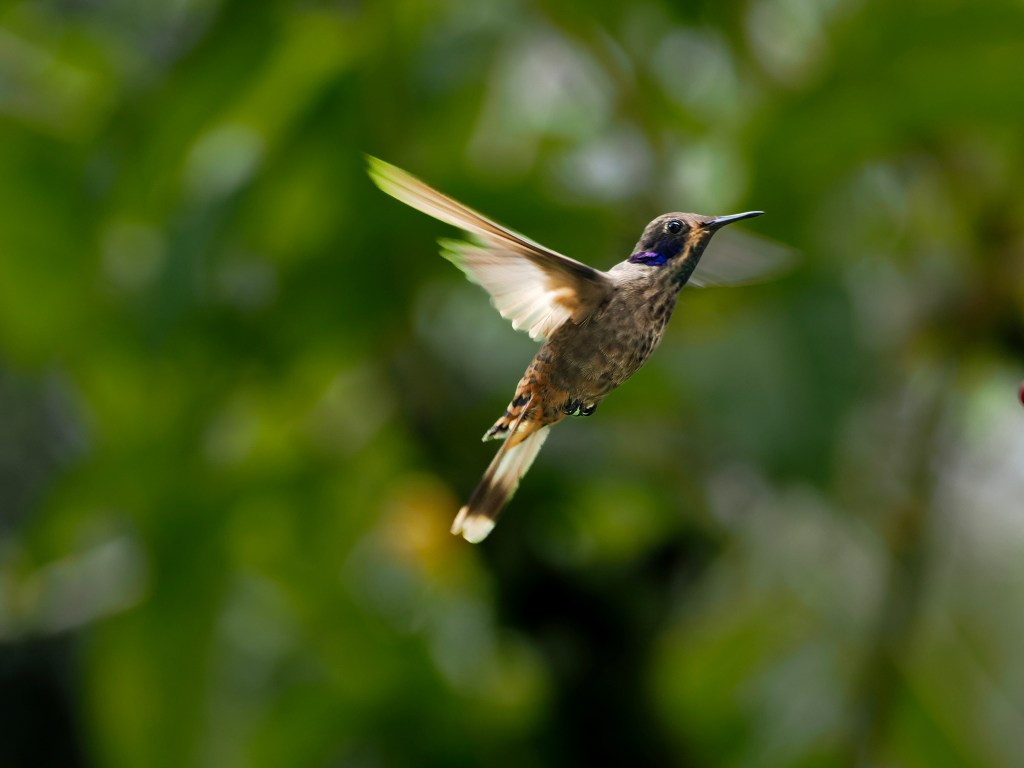
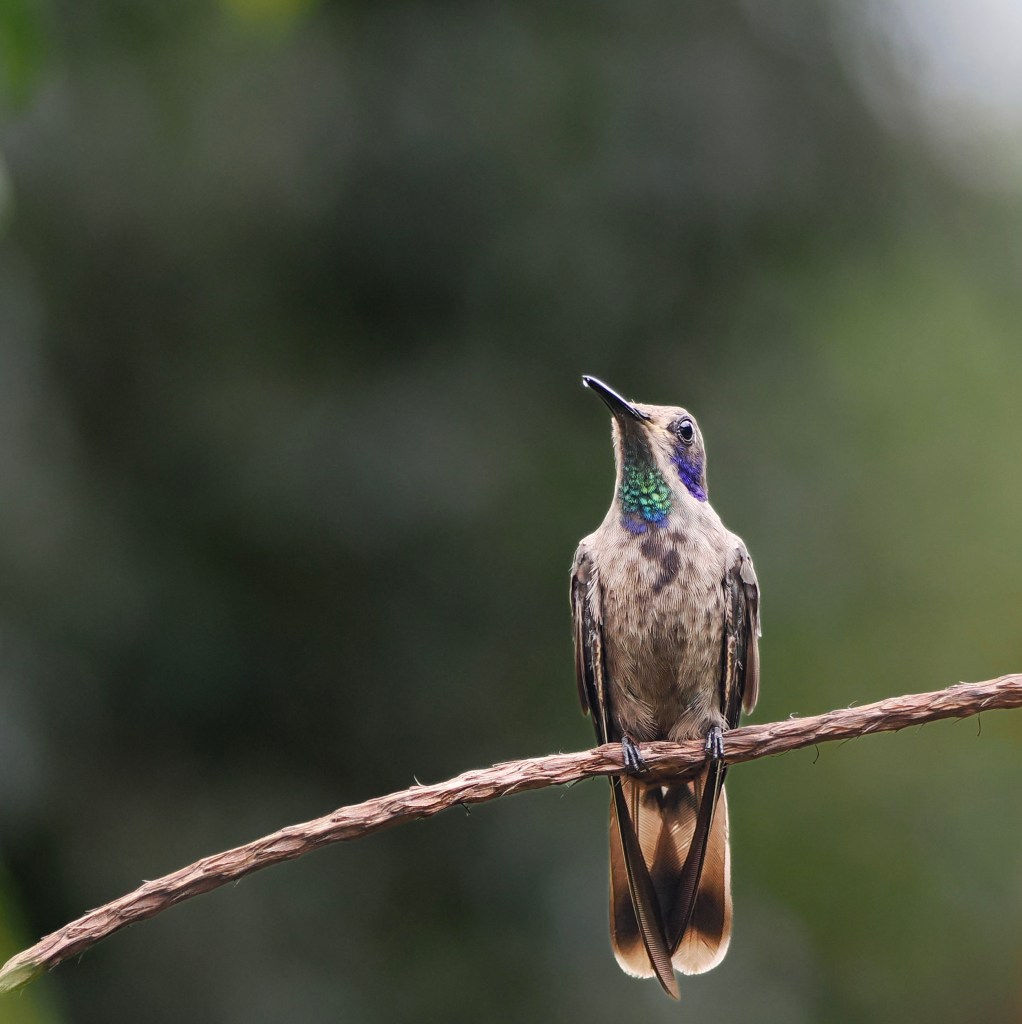
Brown Violetear. The quiet one. It is mostly soft brown and mottled, but a violet “ear” patch and a flash of green at the throat catch the light. I photographed it both in flight and perched calmly on a vine.
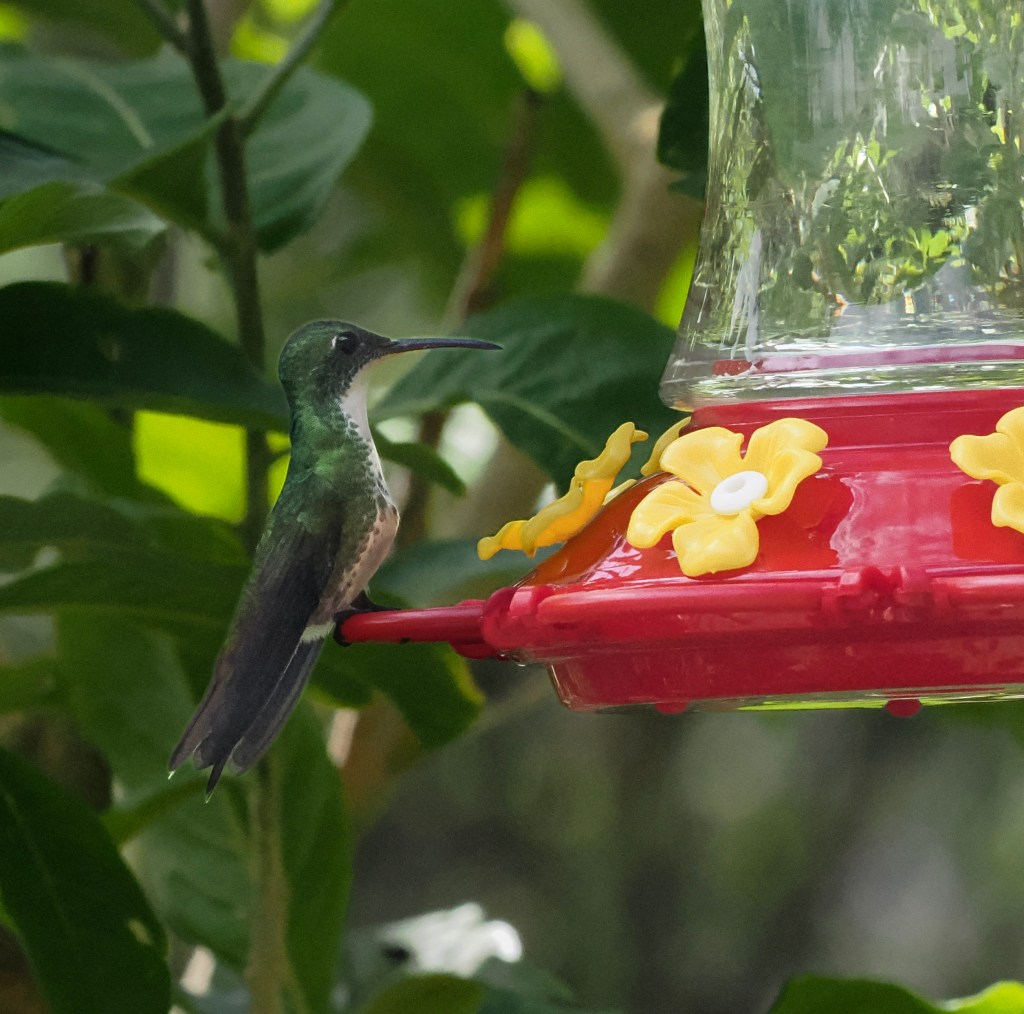
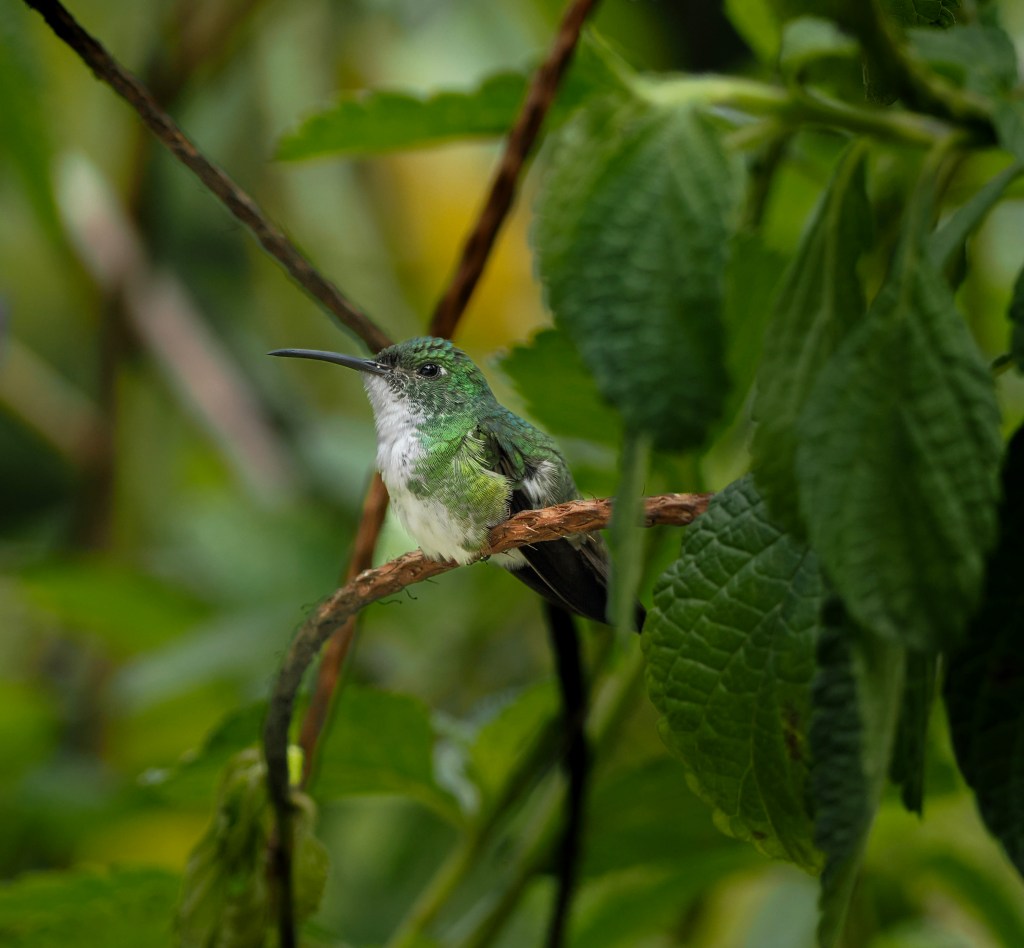
White-chested Emerald. A small, elegant green hummingbird with a clean white throat and chest. I photographed it perched on a branch.
The Rare One That Never Came to the Feeders: Tufted Coquette
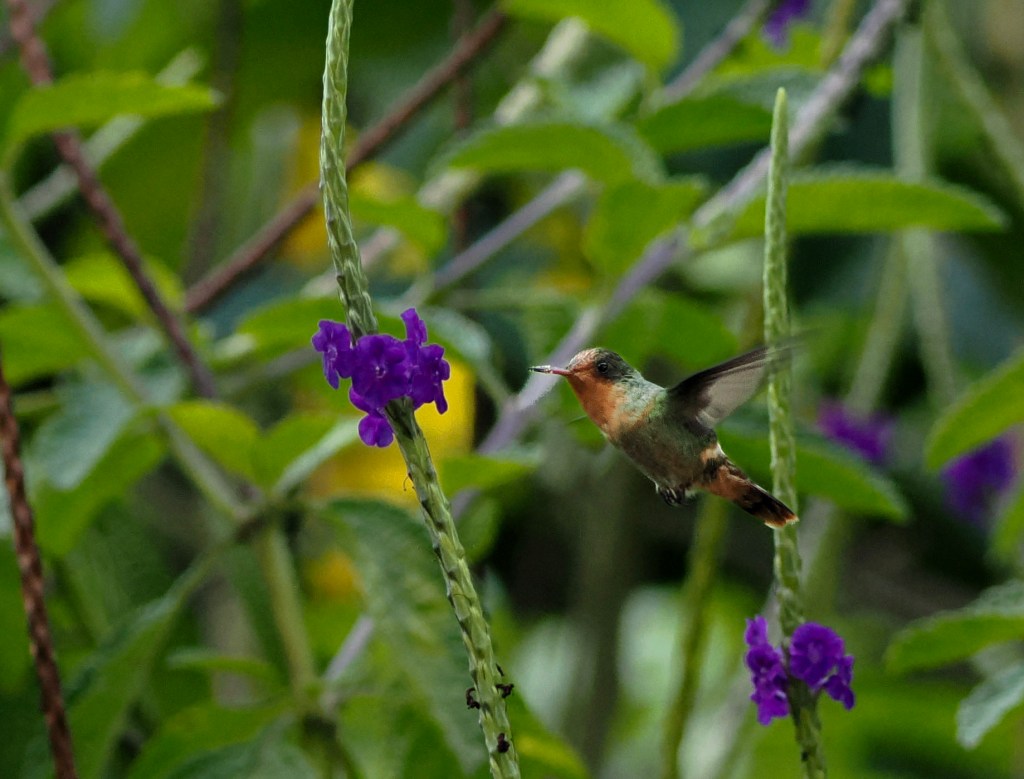
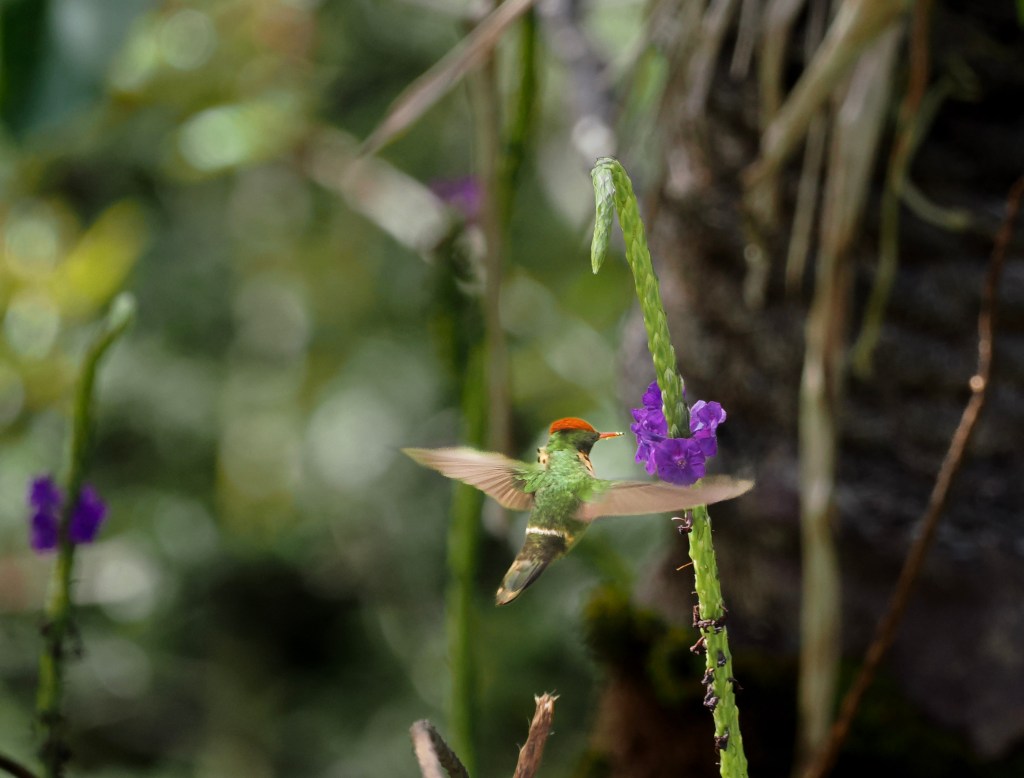
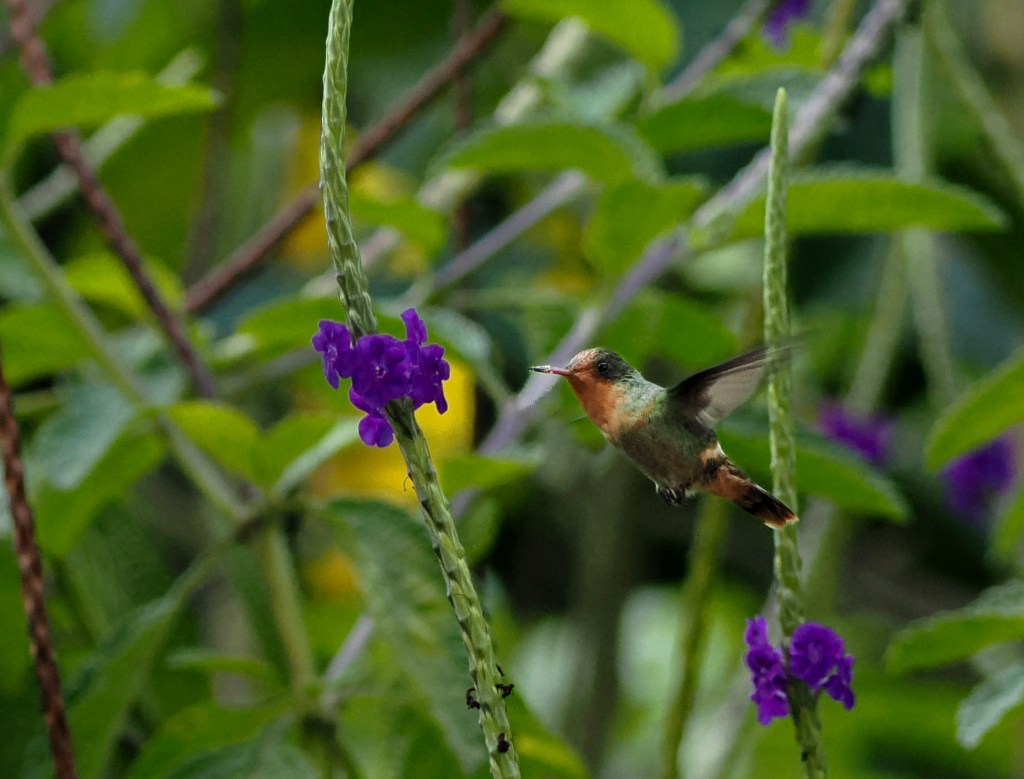
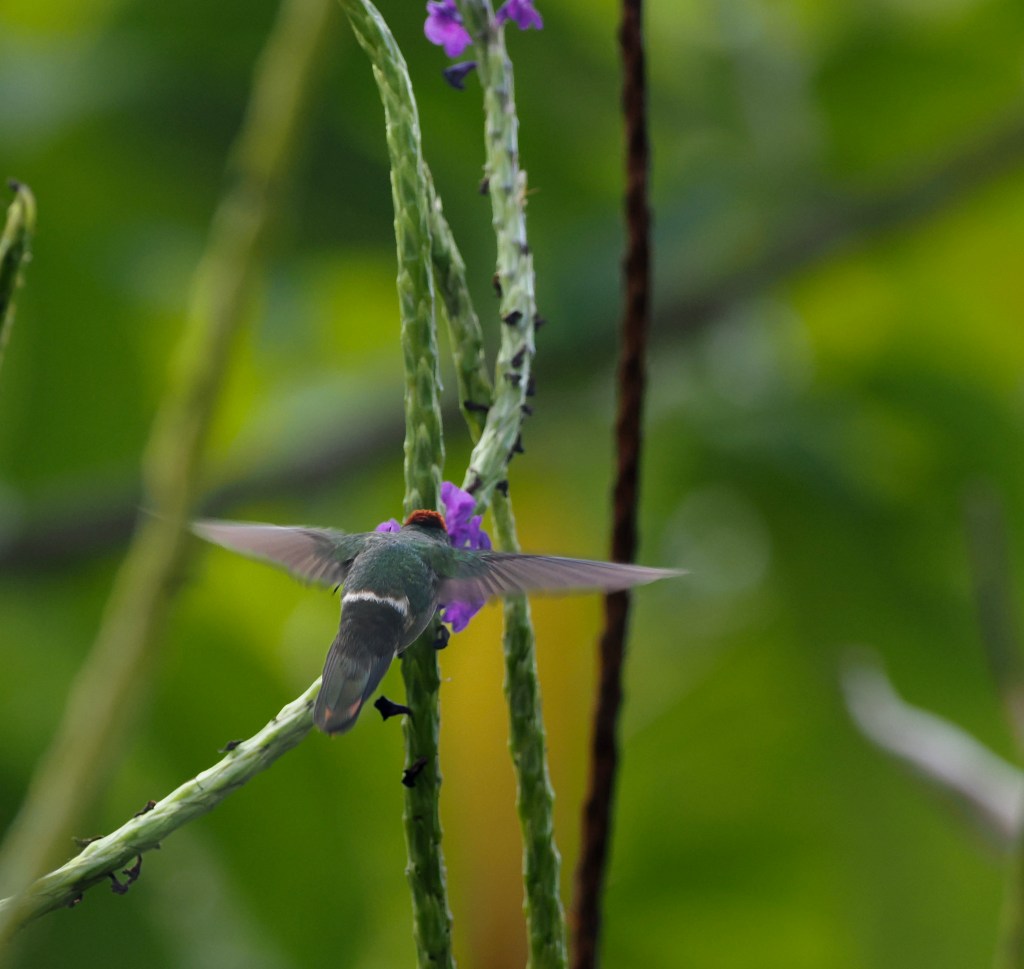
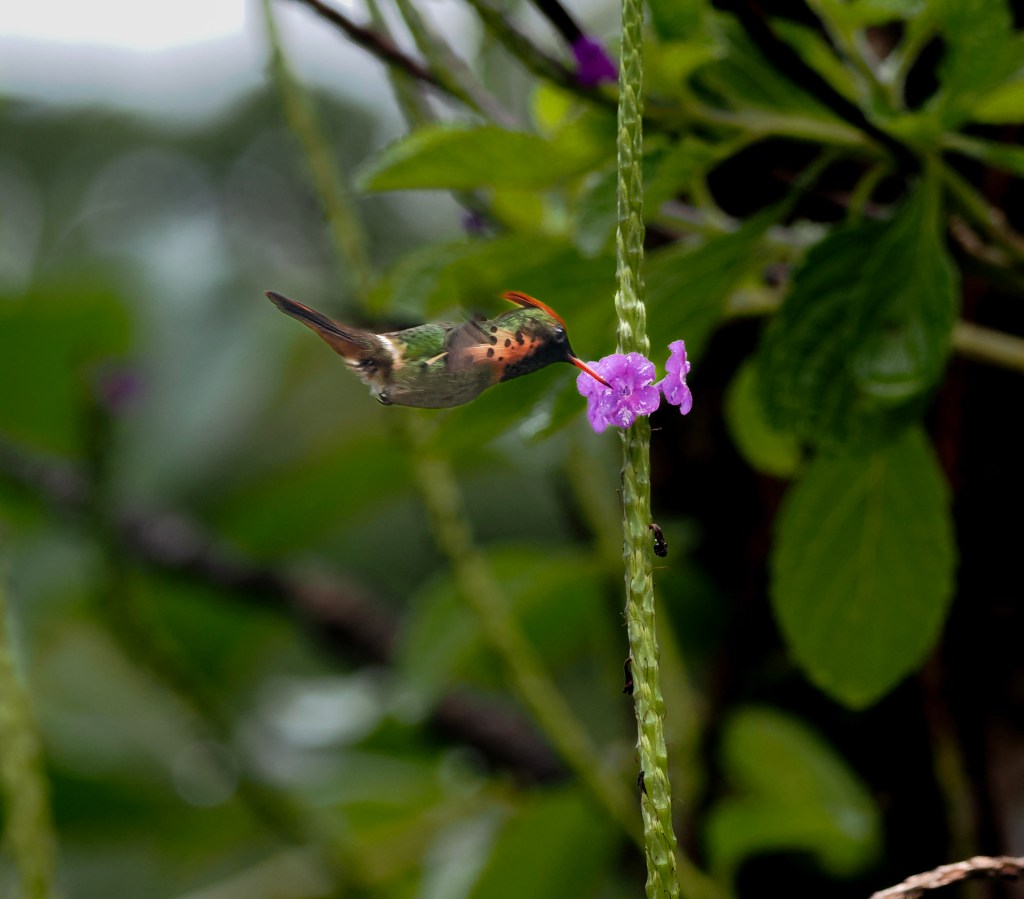
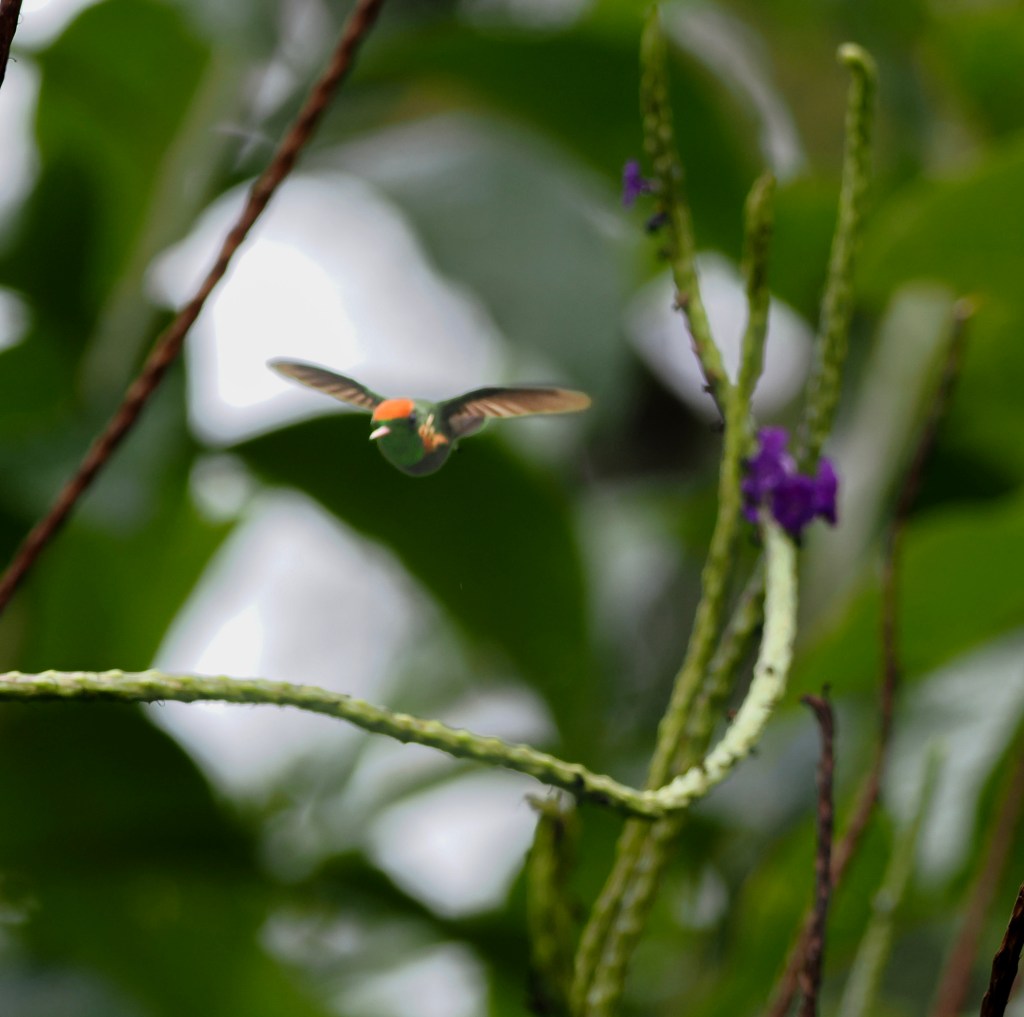
The Tufted Coquette is one of the rarest hummingbirds you can see at Asa Wright, and it never visited the feeders. I found it hovering at the purple flowers growing near them. It is tiny, with an orange face and throat and a rusty tail, and I was lucky to be watching the flowers at the right moment. It’s a good reminder to look beyond the feeders: the garden flowers have visitors too.
The Fruit Feeders: Color on Every Plate
The banana feeders were just as busy:
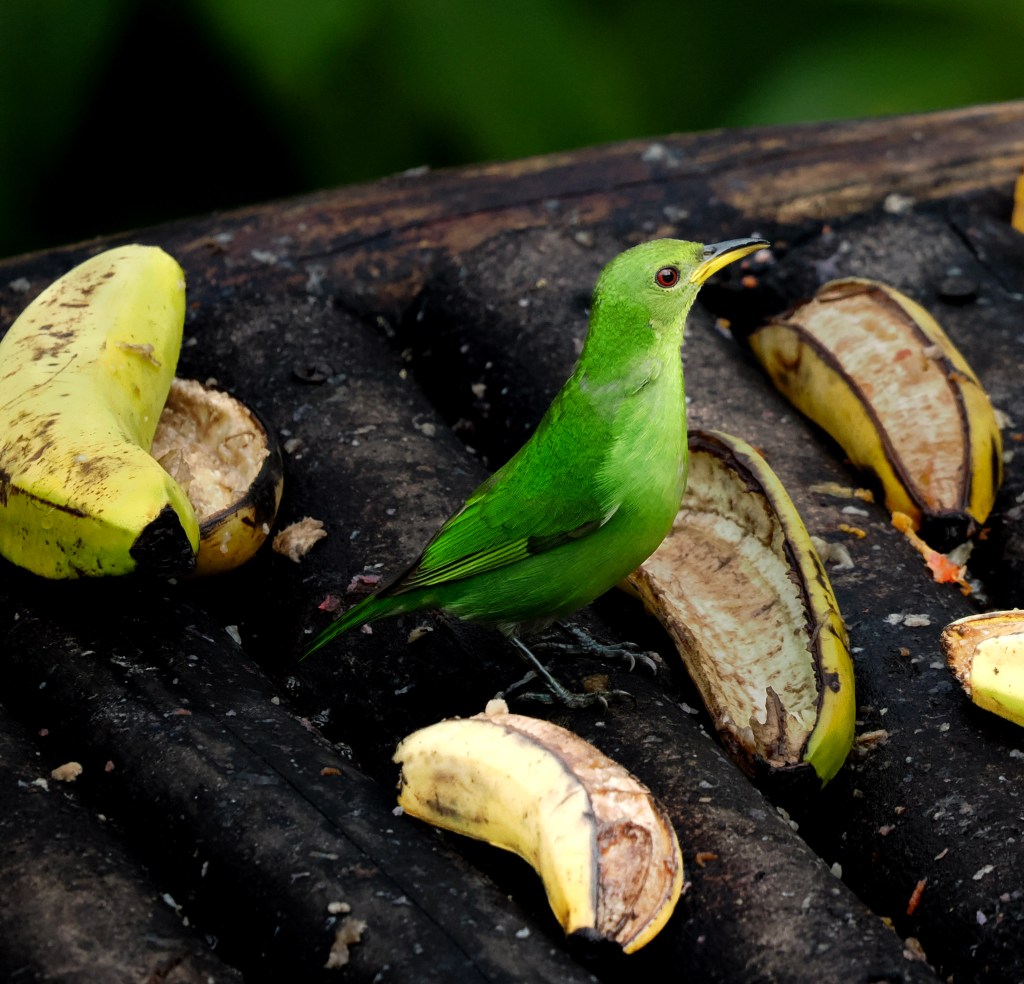
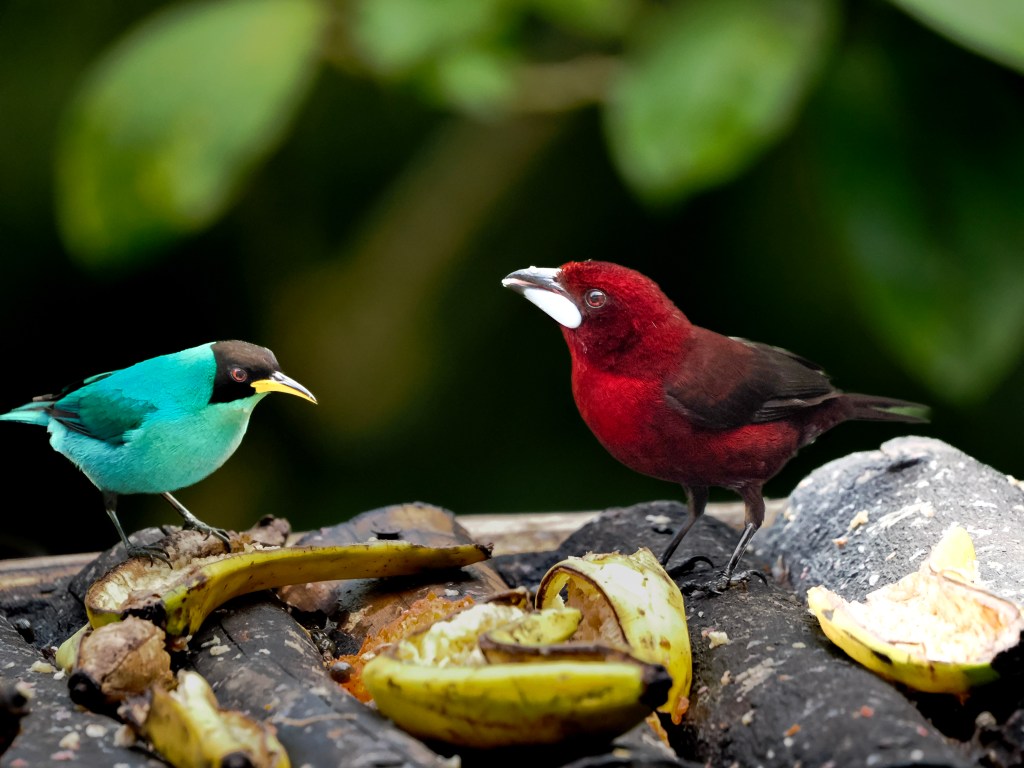
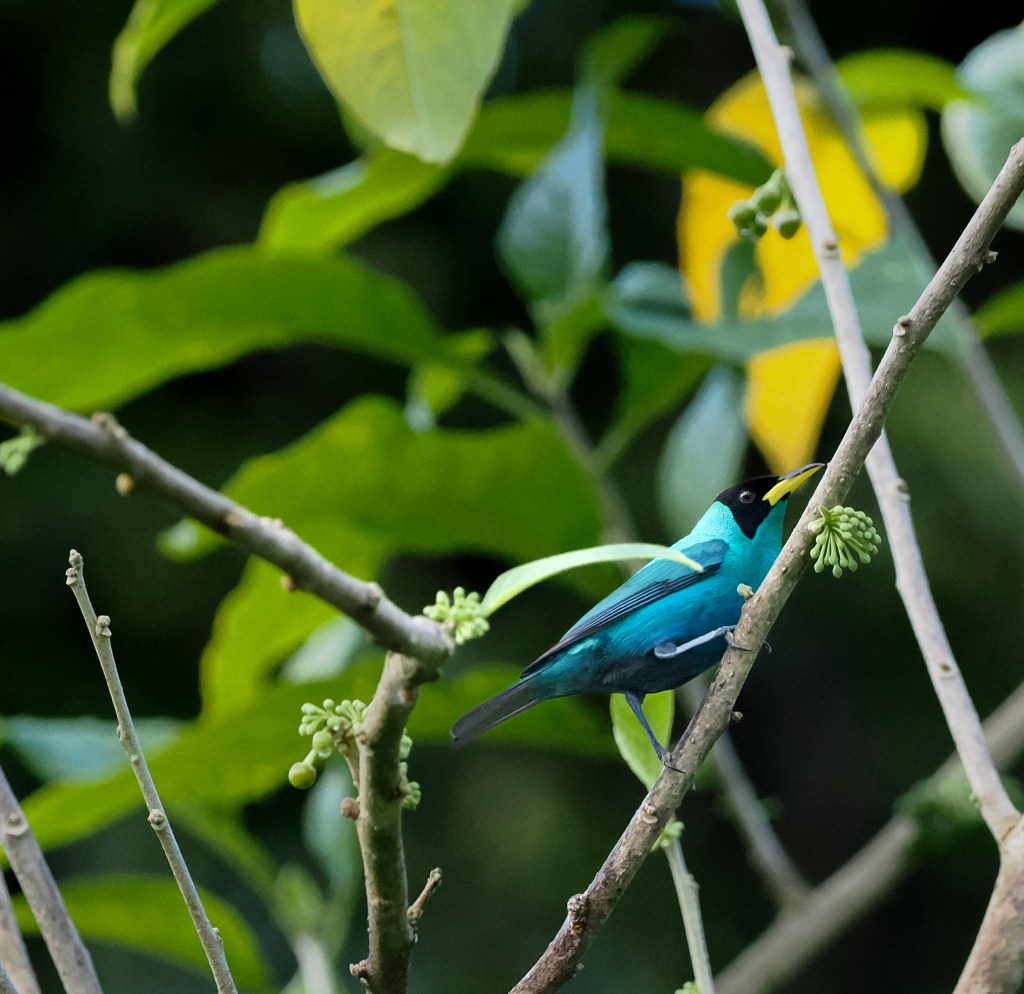
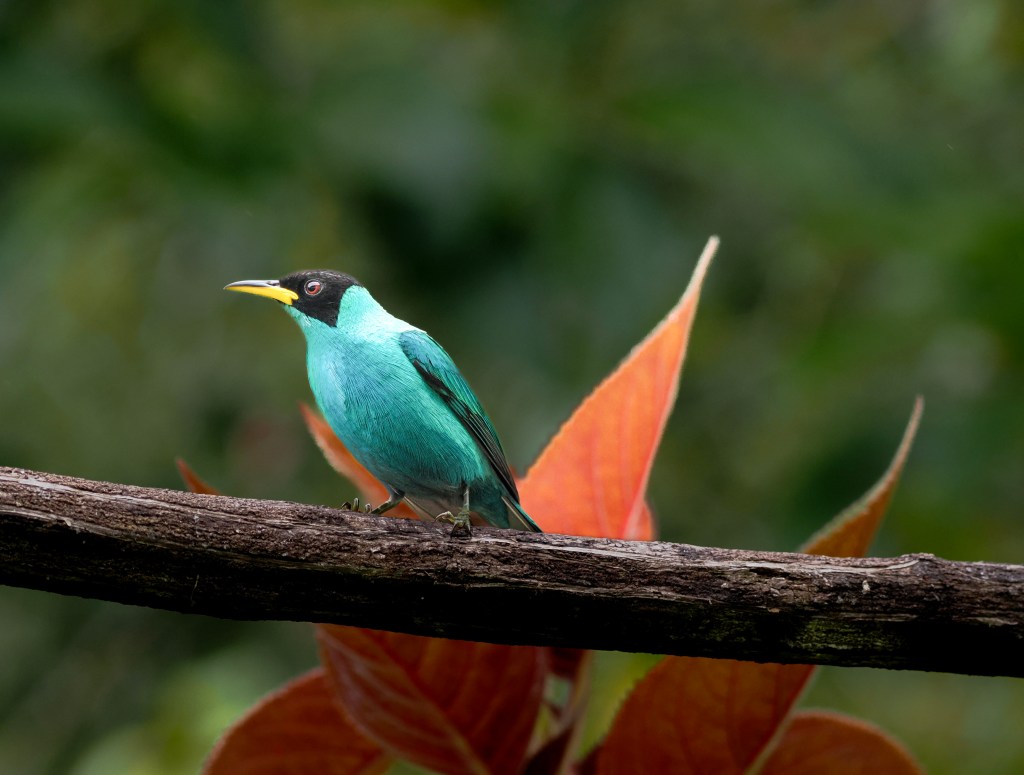
- Green Honeycreeper: the male is turquoise with a black hood and yellow bill. The female is leaf green.
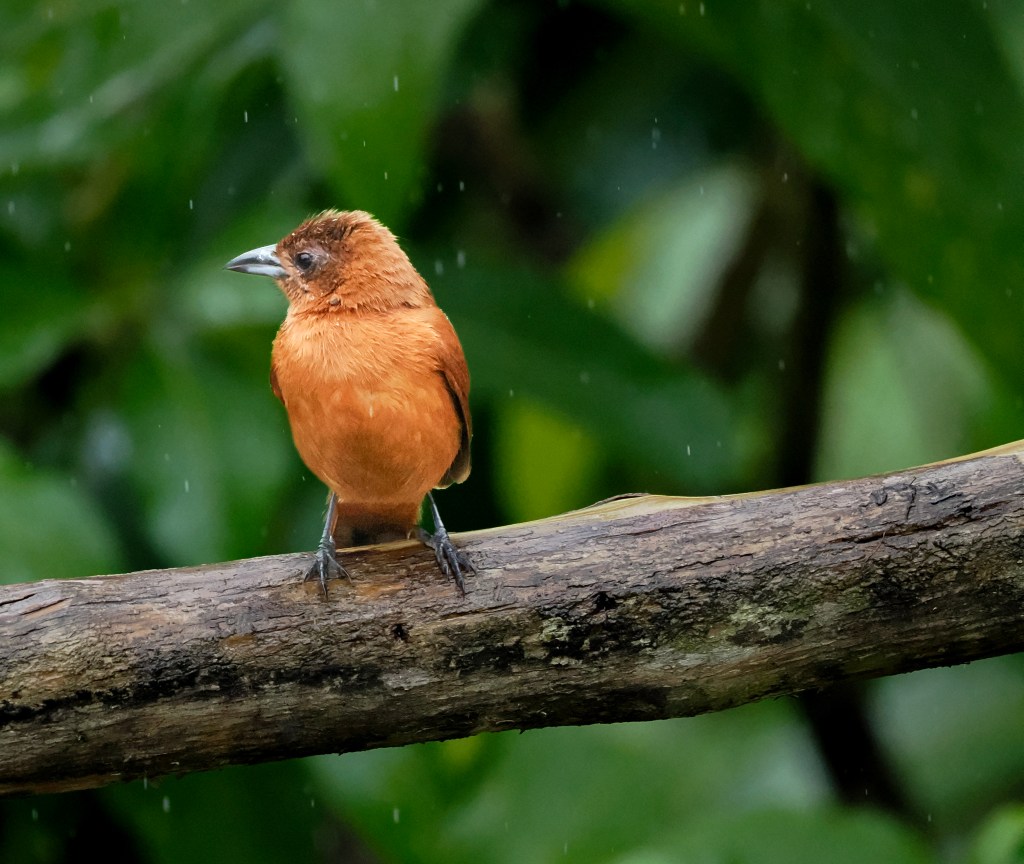
- Silver-beaked Tanager: a deep crimson bird with a silvery bill, shown here facing off with a honeycreeper.
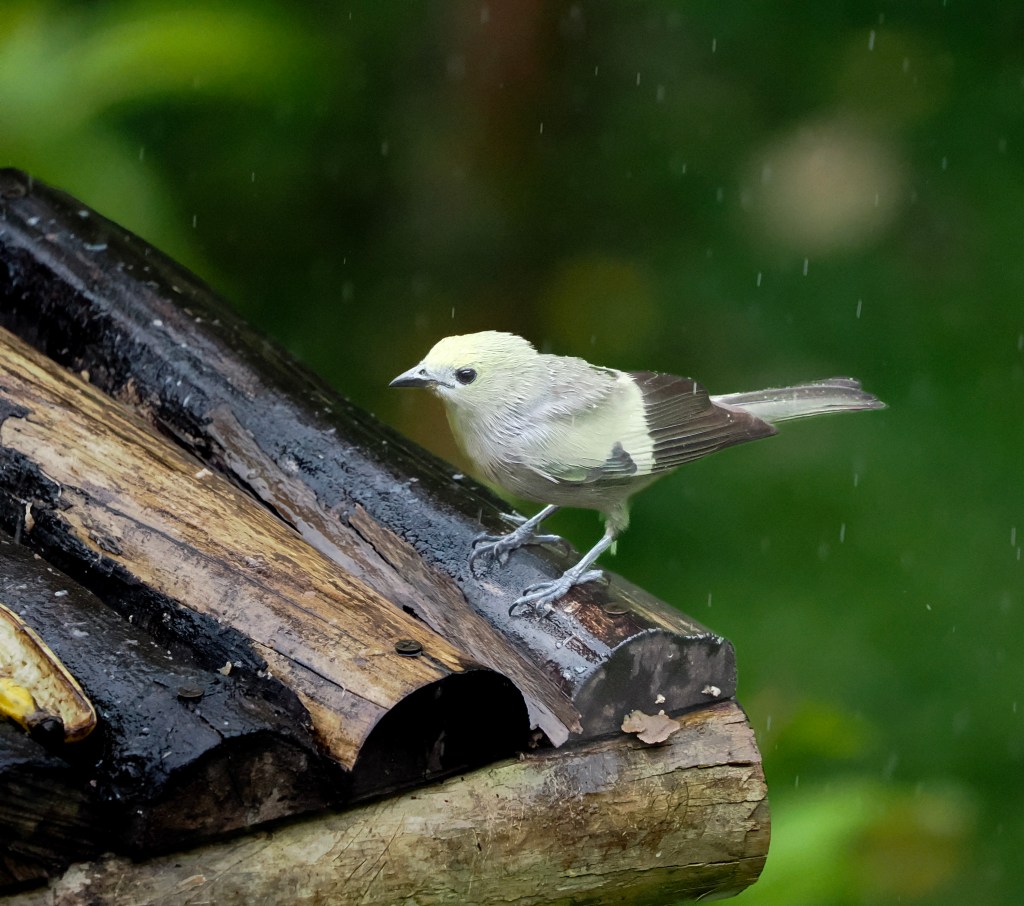
- Palm Tanager: I caught one perched on a wet log in the rain.
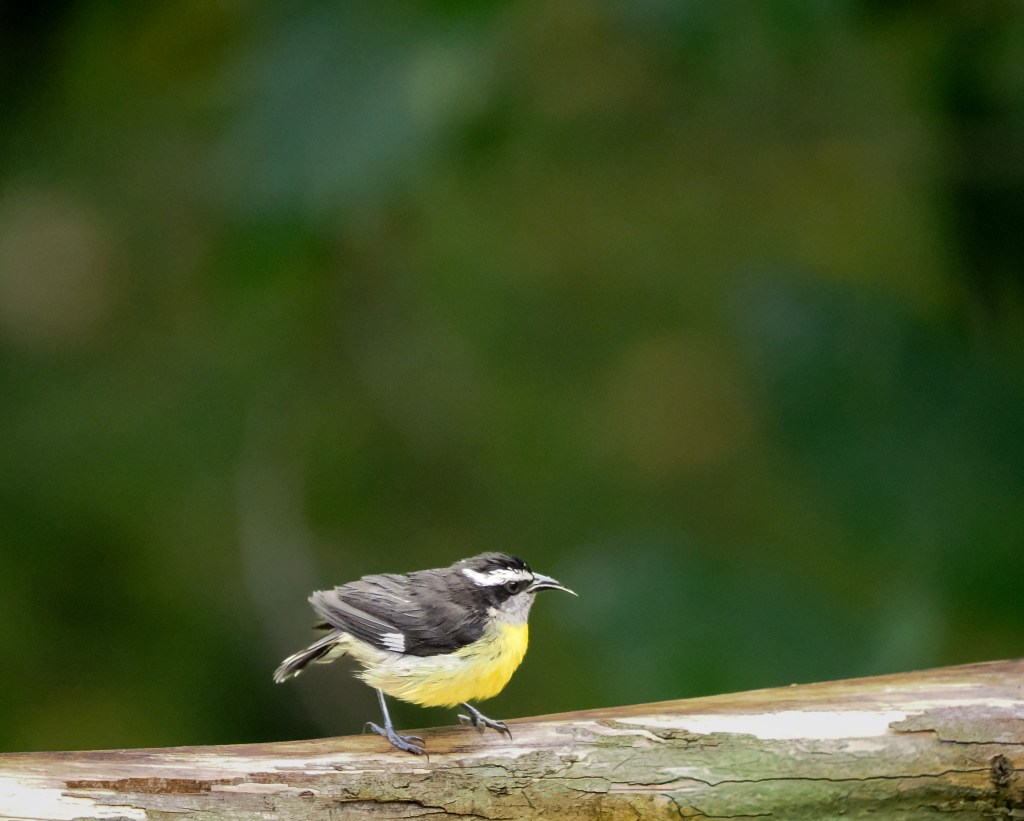
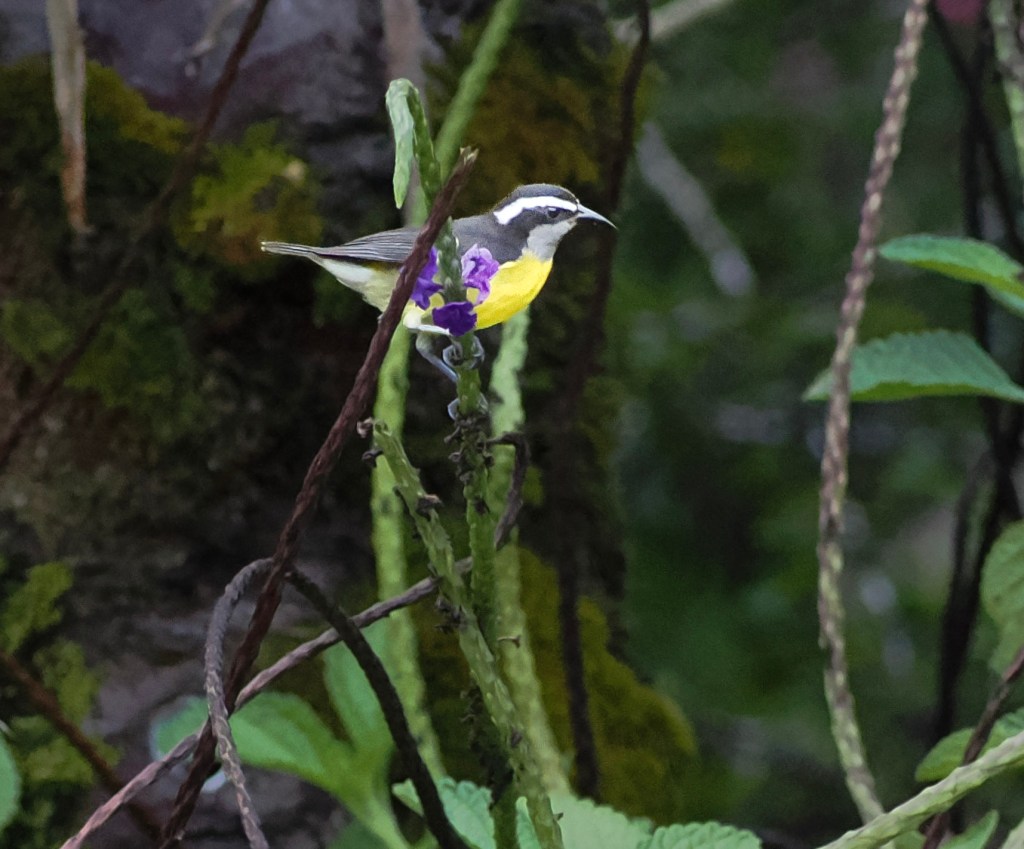
- Bananaquit: tiny, yellow-bellied, and bold. It visits the feeders and the purple flowers around the veranda.
- Crested Oropendola: it came face to face with my lens, banana on its bill, blue eyes blazing. It was my favorite performer. When the males call, they swing forward on the perch like a pendulum.
Forest Birds from the Veranda and Trails
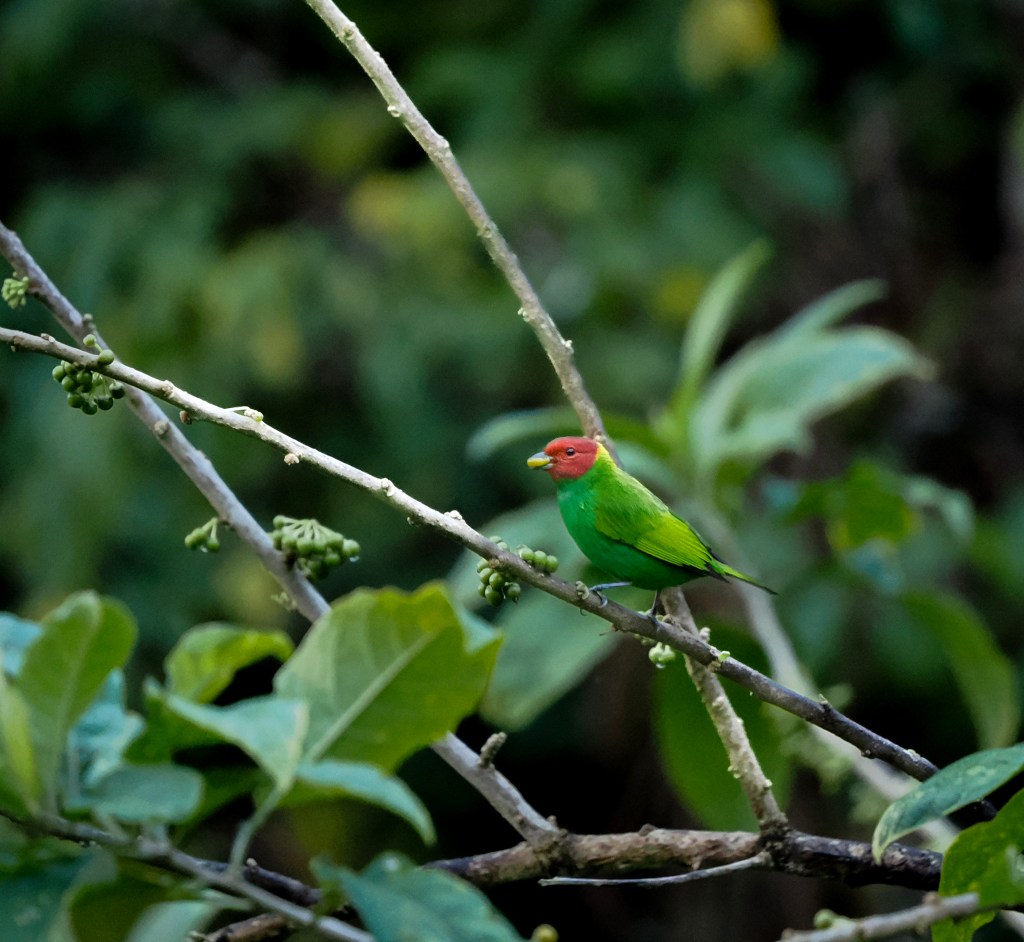
- Bay-headed Tanager: a green body with a rusty-red head, perched in the fruiting trees.
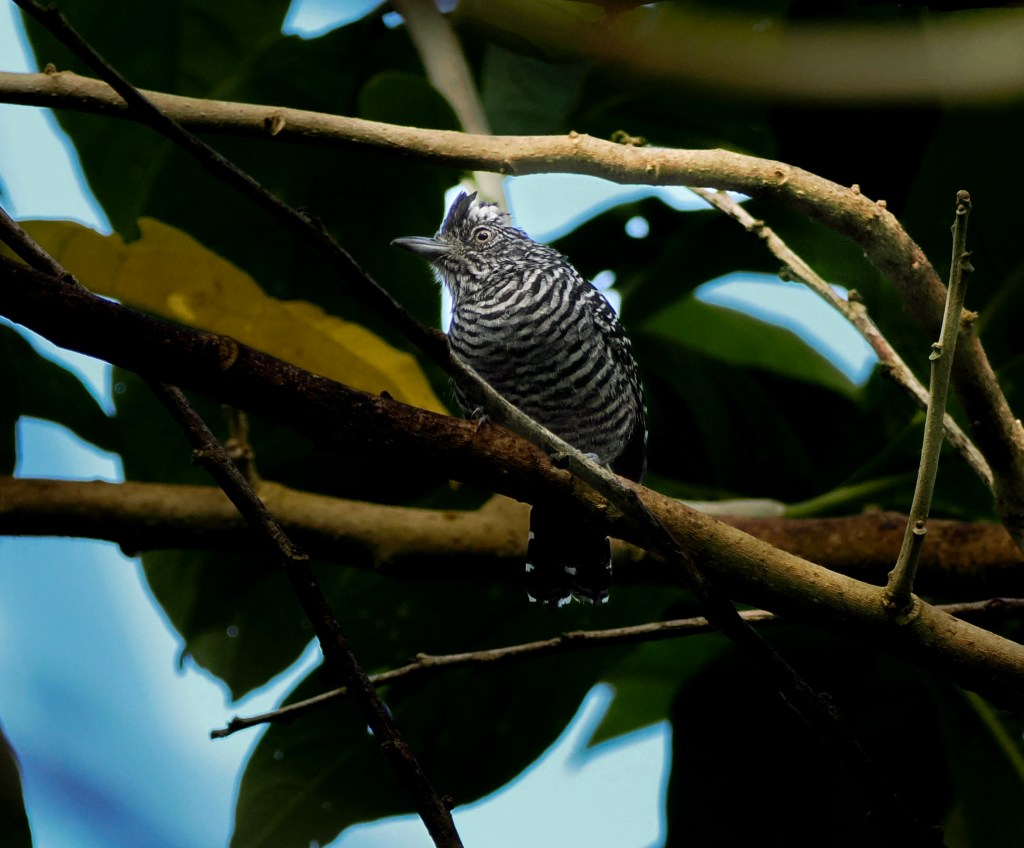
- Barred Antshrike: black-and-white stripes and a little crest, hiding in the foliage.
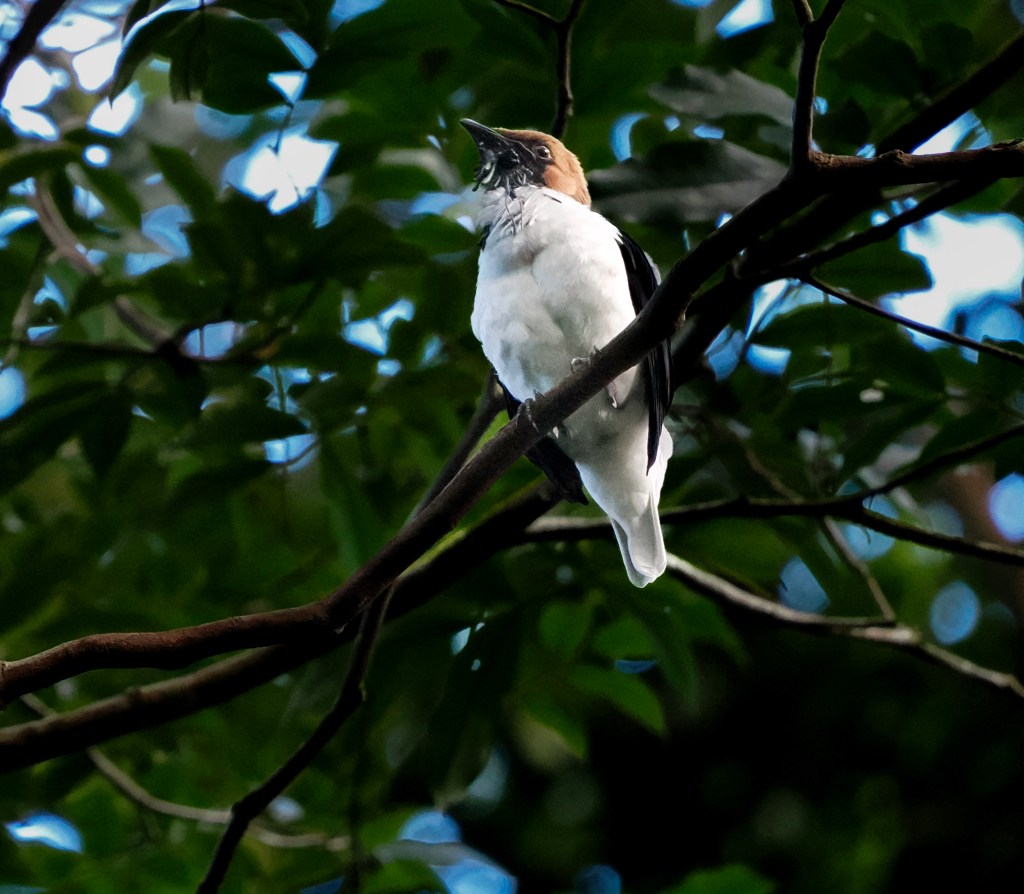
- Bearded Bellbird (the “anvil bird”): a brown head, a white body, and a black beard of wattles. Its call sounds like a hammer striking an anvil. Birdingplaces notes the bellbird can often be seen from the veranda.
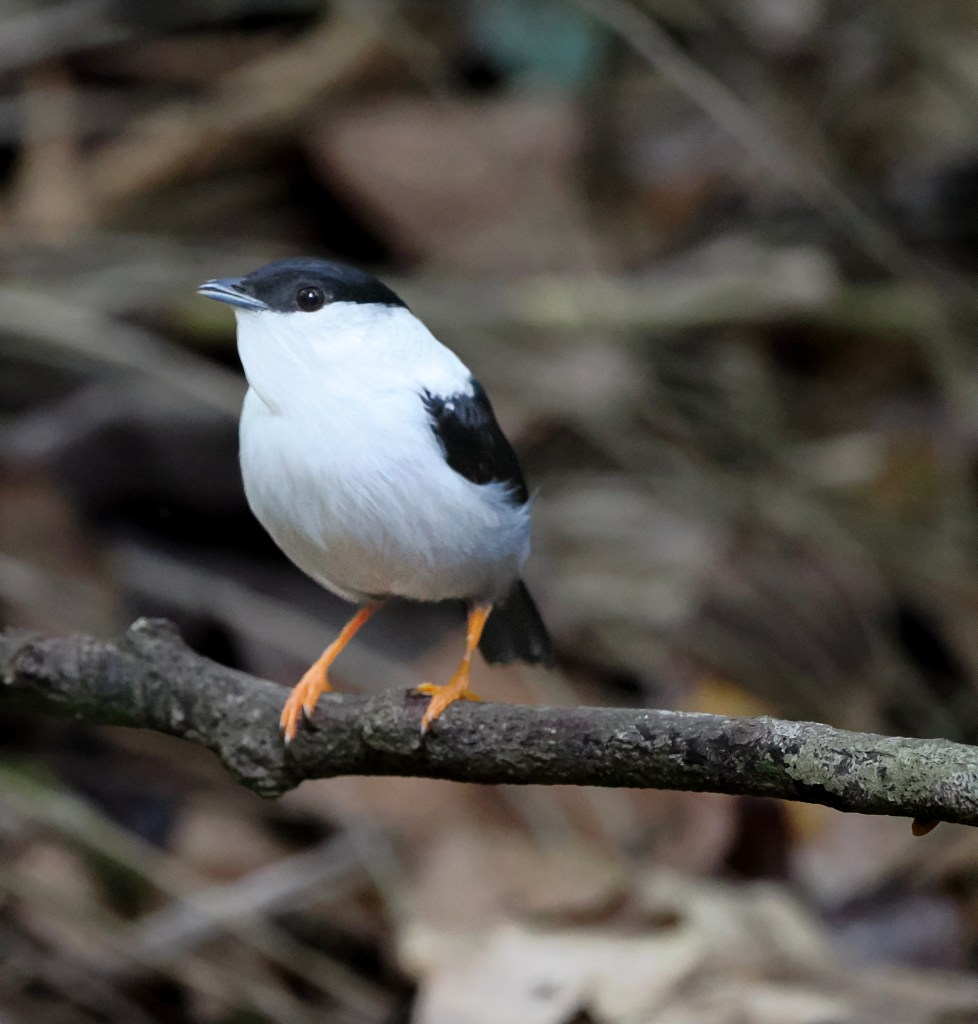
- White-bearded Manakin: a black cap, a white body, and orange legs. I love how the male tidies his display area to impress the female, like a tiny landscaper trying to win a date.
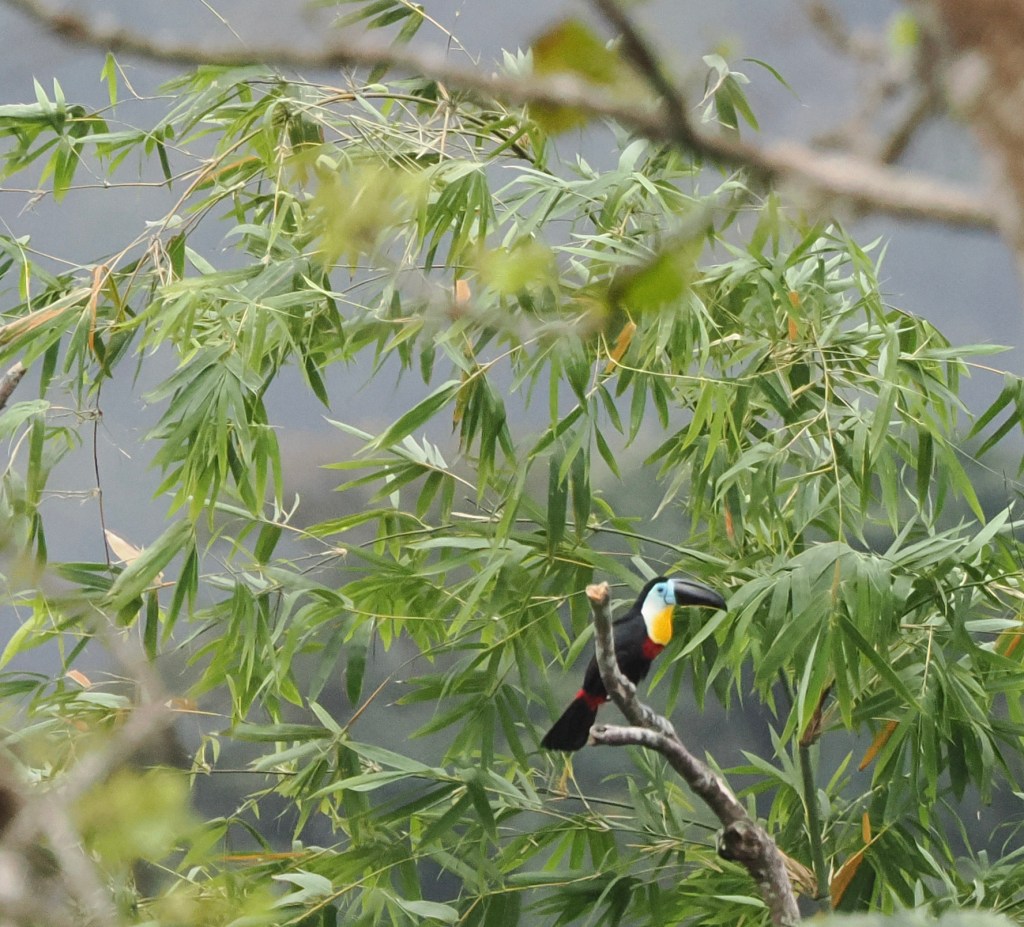
- Channel-billed Toucan: perched on a bare branch against the misty hills, with pale blue skin around the eye and an orange-yellow breast.
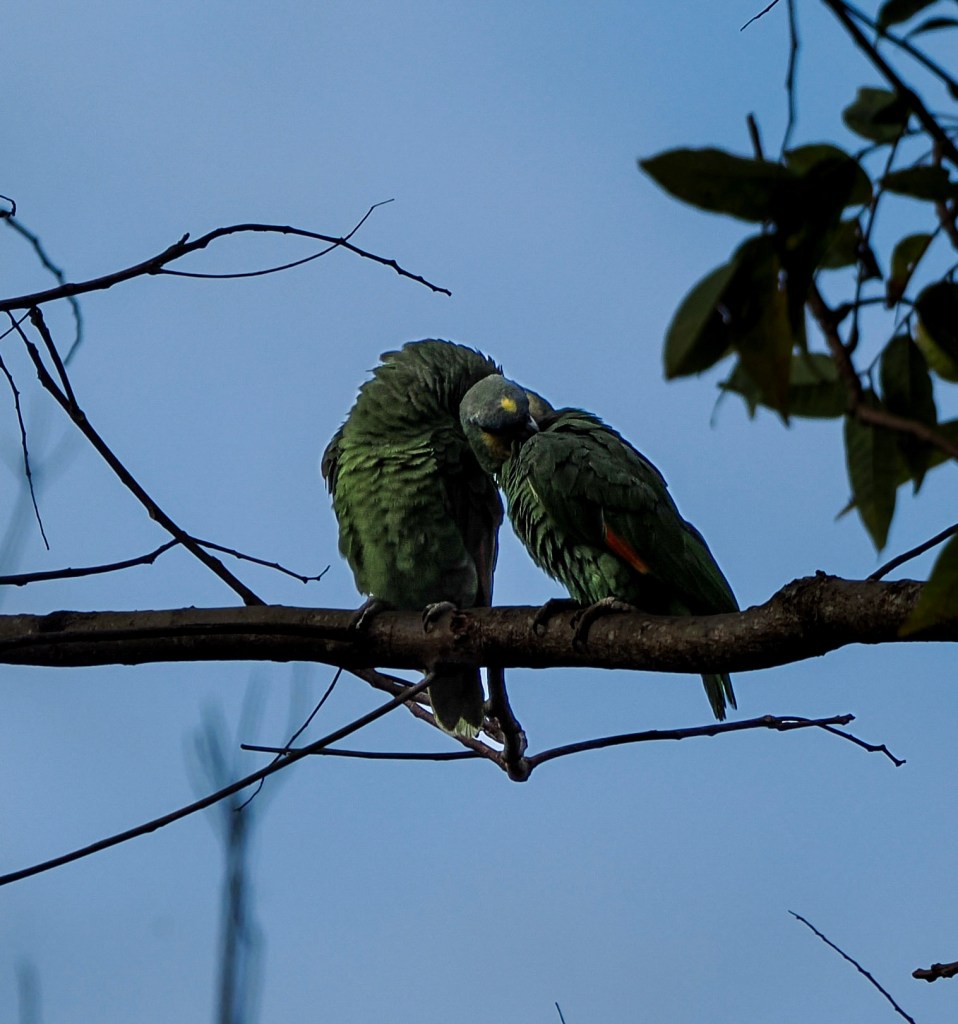
- Orange-winged Parrot: a pair preening each other at dusk, with a flash of orange on the wing.
The Oilbirds
And yes, I saw the oilbirds. They are nocturnal fruit-eaters that navigate in the dark by echolocation, which is rare among birds. Asa Wright is one of the best-known places in the world to see them. The trail to the roost requires a guide, which is a good thing, because guides know how to approach without disturbing them. Seeing one peering out of its rocky roost was worth the trip on its own.
Why Asa Wright Is So Good for Birding
- The veranda is the show. You can see more from one chair than on a long trail.
- The in-house guides are excellent. The morning walk led to species I would have walked past on my own.
- The habitats are varied. The rainforest, garden, feeders, and nearby Caroni Swamp each add different birds to your list.
- The setting is remarkable. It’s quiet and tucked away, yet only 45 to 60 minutes from Piarco Airport.
Tips for Photographing Birds at Asa Wright
- Use a fast shutter speed for hummingbirds, around 1/2000s or faster, to freeze the wings. If you want a little wing blur, as in the mango shot, slow down a bit.
- Expect rain and low light. A fast lens or higher ISO helps.
- Bring a long lens, but the feeders put many birds within reach of a standard zoom.
- Sit still. The best shots came after I stopped moving.
- Ask the guides where the bellbirds and manakins are calling that day.
Final Thoughts
I came to Trinidad for business and left with some of my best travel memories. Asa Wright gave me a quiet, beautiful base, helpful people, great food, and about two dozen species photographed without ever leaving the grounds. If you’re headed to Trinidad, even for work, carve out a few days here


One Reply to “”