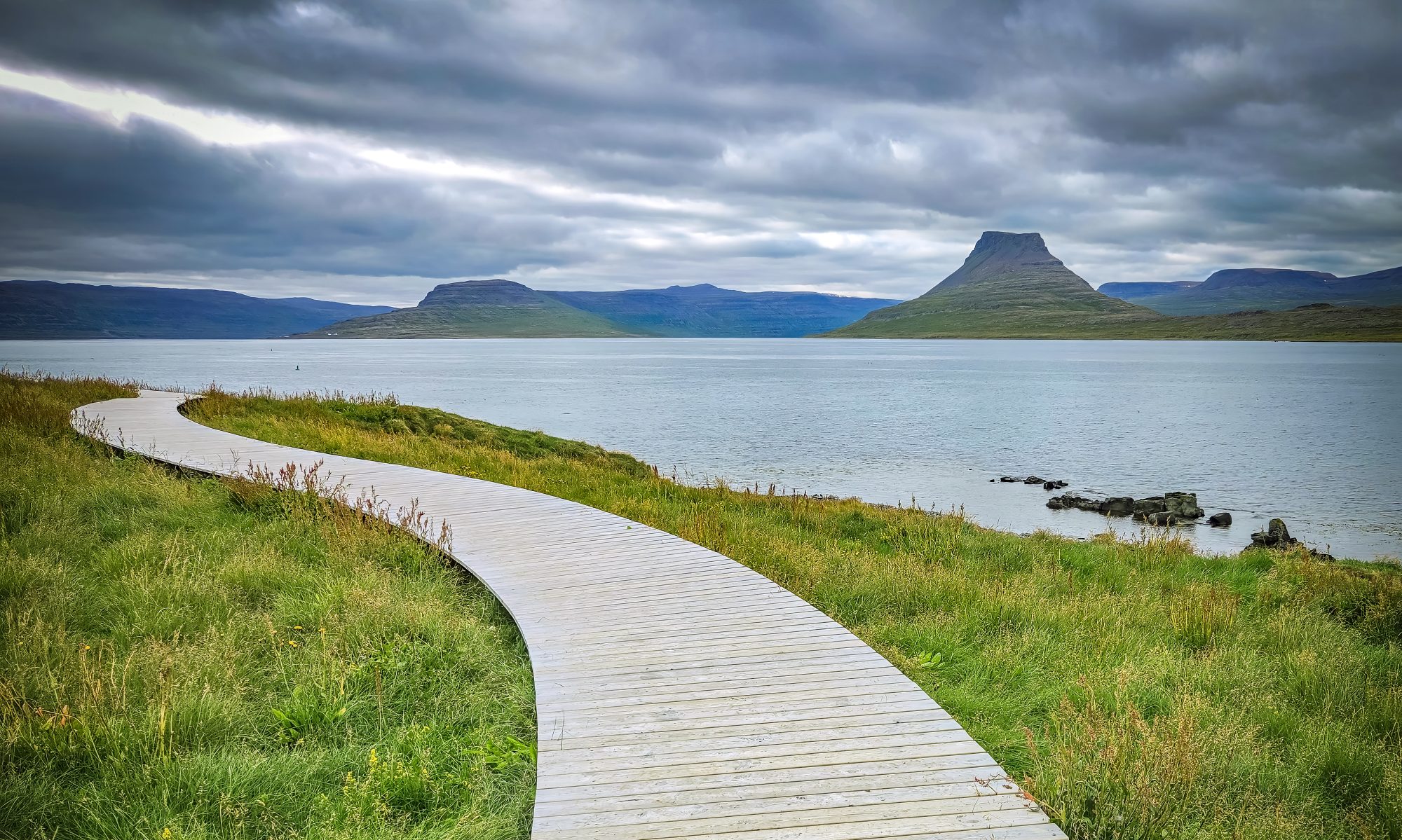
Staying at Asa Wright: Why I Traded My Business Hotel for a Rainforest Veranda

When I learned my work was sending me to Trinidad, I assumed the trip would be all conference rooms and airport transfers. Then I did what I always do before travel and went down a research rabbit hole. Within an hour, I learned that Trinidad is one of the best birding destinations in the Caribbean, and one name kept coming up: Asa Wright Nature Centre. Trinidad overall surprised me in a good way. It had never been on my travel list, but now I think it deserves more than 3 days to explore the rest of the island.
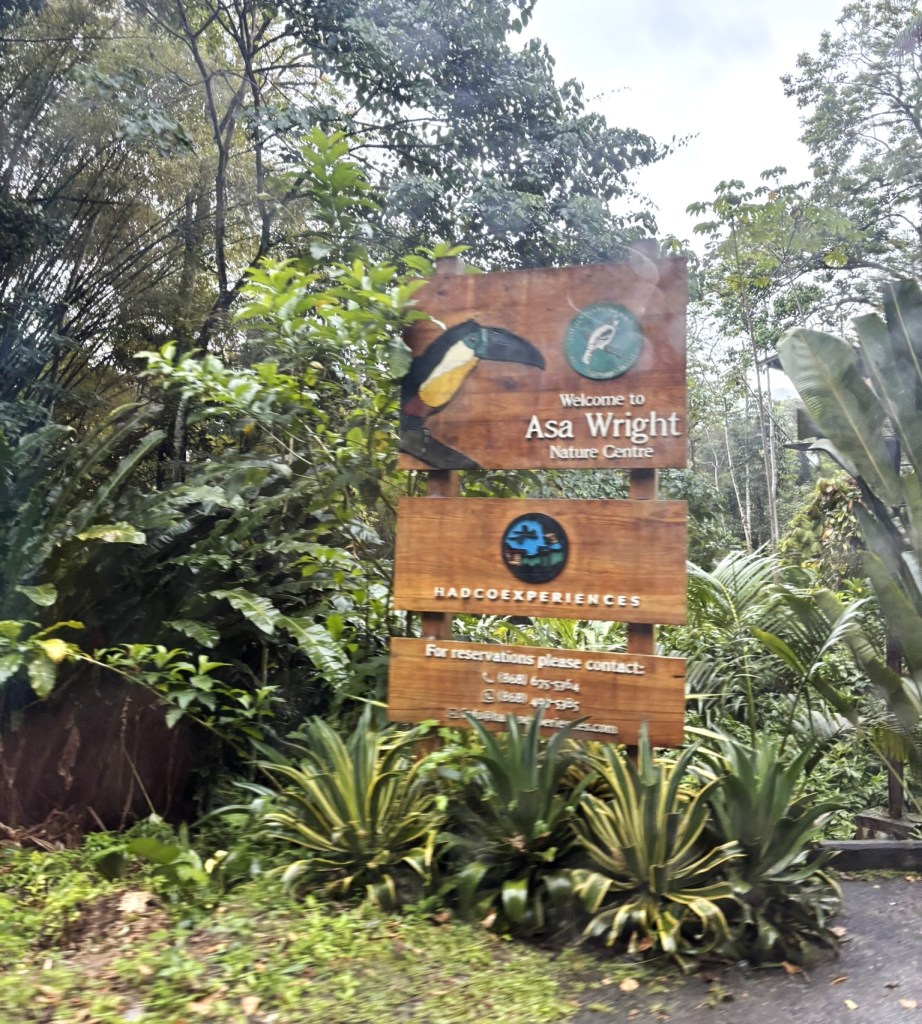
Why I Chose Asa Wright

Trinidad sits just off the coast of Venezuela, so its birdlife is far richer than you’d expect from such a small island. It has South American species alongside Caribbean ones, packed into a compact space. I wanted a base where the birds came to me, and Asa Wright looked like exactly that.

What sealed it was the history. The centre grew out of a former cocoa, coffee and citrus estate in the Arima Valley, where a woman named Asa Wright made her home and welcomed visiting naturalists. It later became a nature centre and sanctuary, protecting a large stretch of rainforest. I love places with a story, and this one began with hospitality and a love of nature. That felt right for a place I’d be sleeping.

I reached out to the team, and they were wonderful. They helped organize my whole stay, including pickup from Port of Spain’s Piarco airport and a drop-off at my Port of Spain business hotel at the end. For a solo traveler juggling work, that kind of help was a huge relief.

I chose three days for one big reason: the oilbirds. They were at the top of my wish list, and I wanted enough time to see them without rushing.

The Drive: Winding Roads and a Sudden Silence

The drive was half the fun. We left the airport and soon began climbing winding mountain roads through thick green hills. I couldn’t believe it: no more than 45 to 60 minutes from the airport, and the world had gone quiet. Traffic and noise were replaced by birdsong, cool air, and a sense of being tucked away in the forest.

Arrival: Rum Punch and 15 Hummingbird Feeders

I was welcomed with a rum punch and led to the famous veranda. I sat down, looked out, and that was it. I was sold.
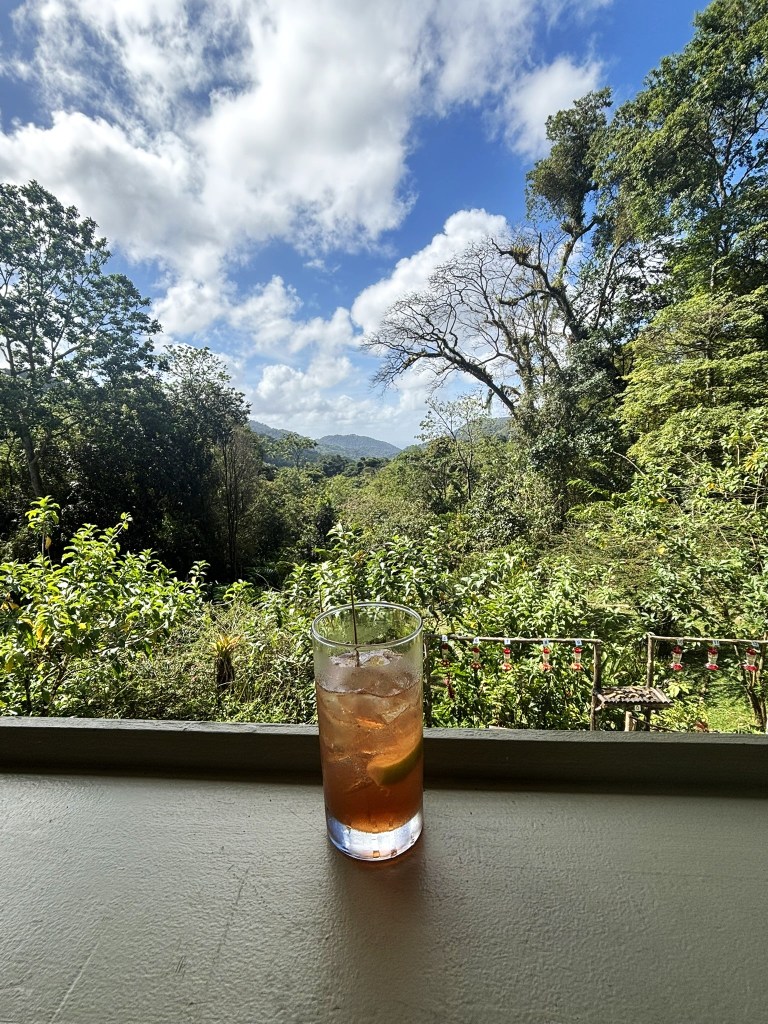
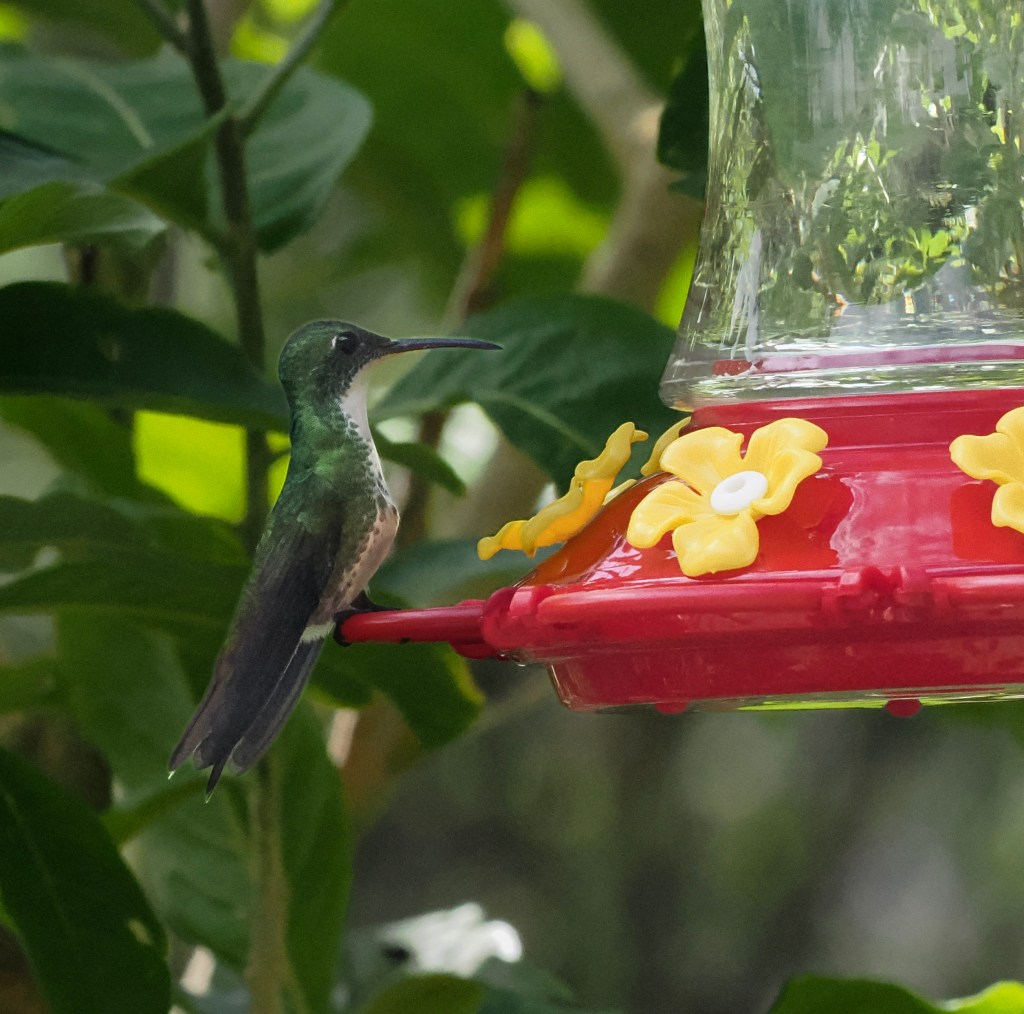
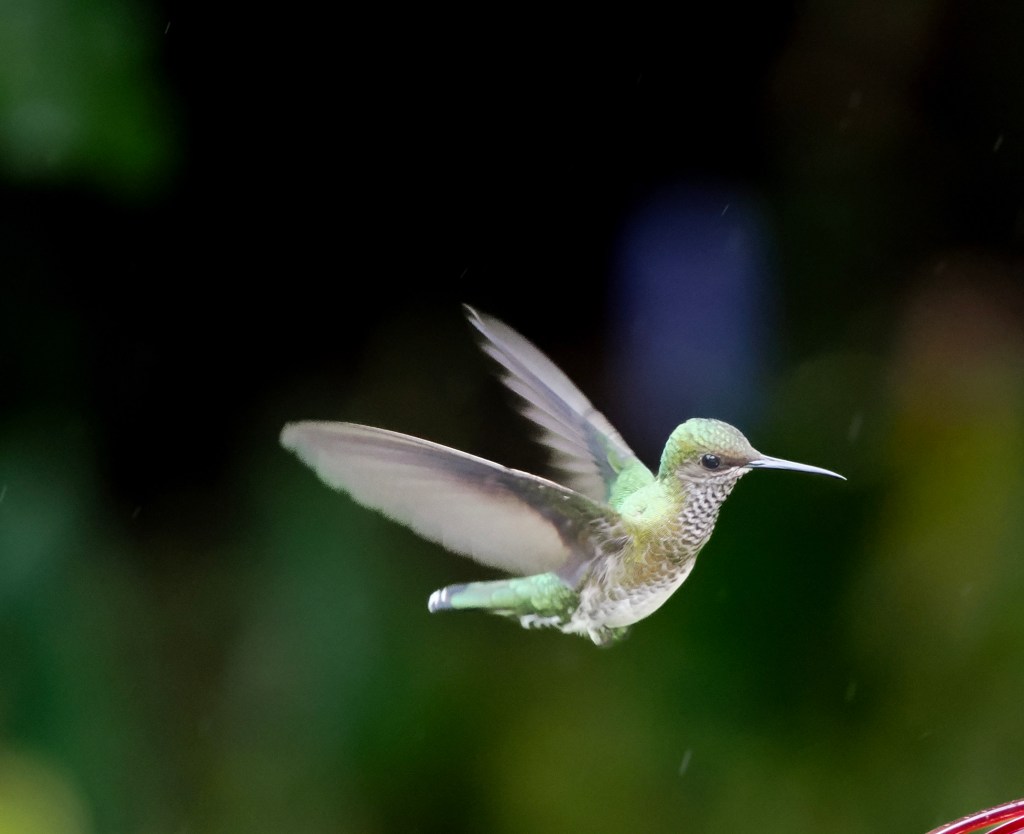
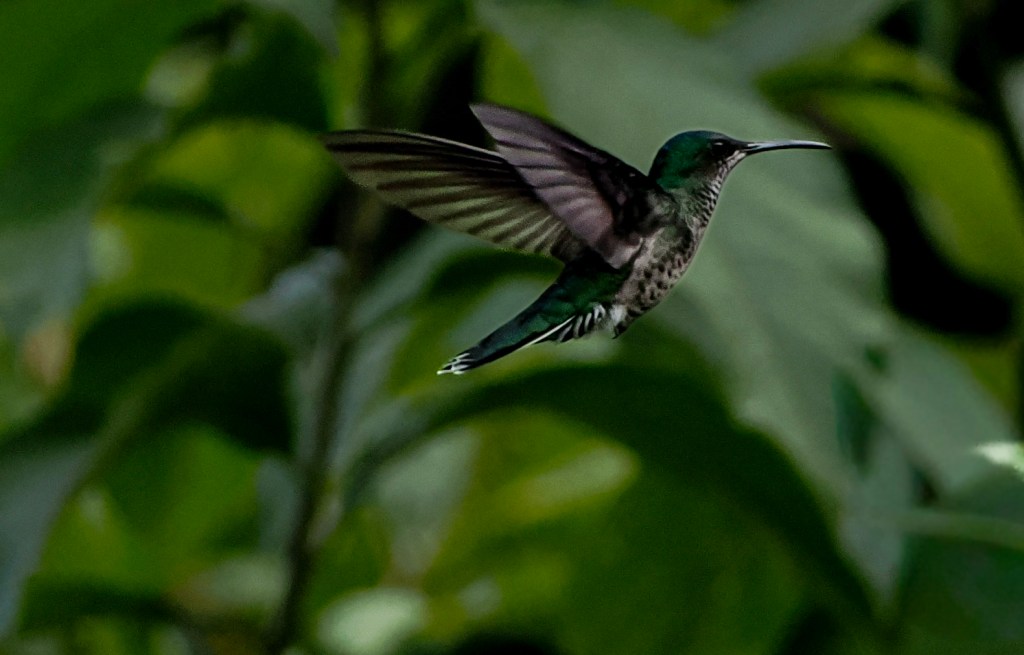
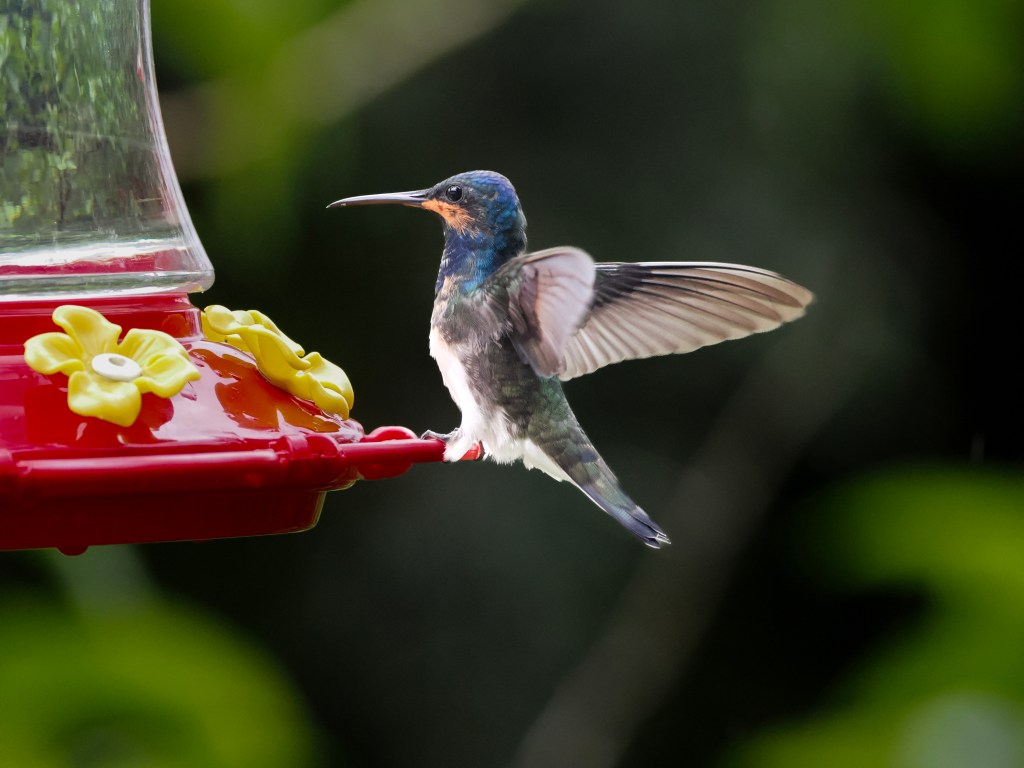
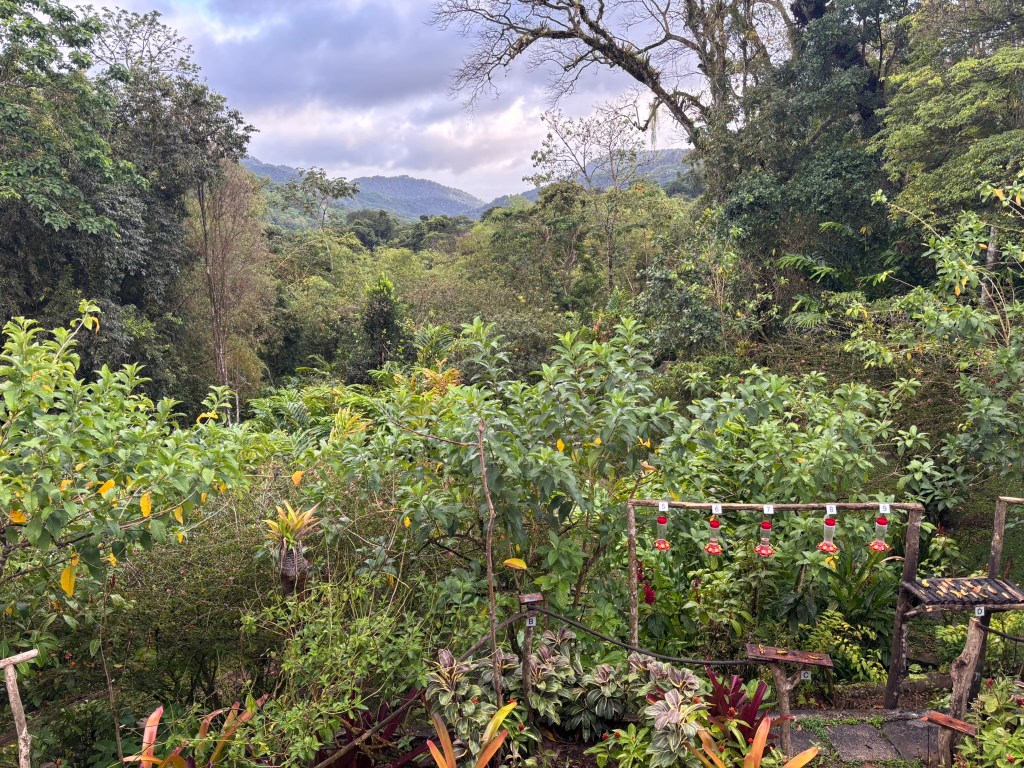
Below the veranda hung 15 hummingbird feeders, and hundreds of birds hummed around them at a time. The air buzzed with tiny wings, iridescent flashes, and endless squabbling over perches. I counted dozens of different kinds of hummingbirds during my stay and took hundreds of photos. My memory card filled up quickly.
I will also admit that I had way too many rum punches. In my defense, the veranda is a very hard place to leave.

The Veranda Is the Show

I’d planned my days around walks and tours, but the best birding often happened without moving at all. If you sit on that veranda with coffee, a camera, and a little patience, the forest puts on a full performance.

My favorite performer was the crested oropendola. The male makes a dramatic, gurgling call and swings forward on its perch like a pendulum. I could have watched it all day.
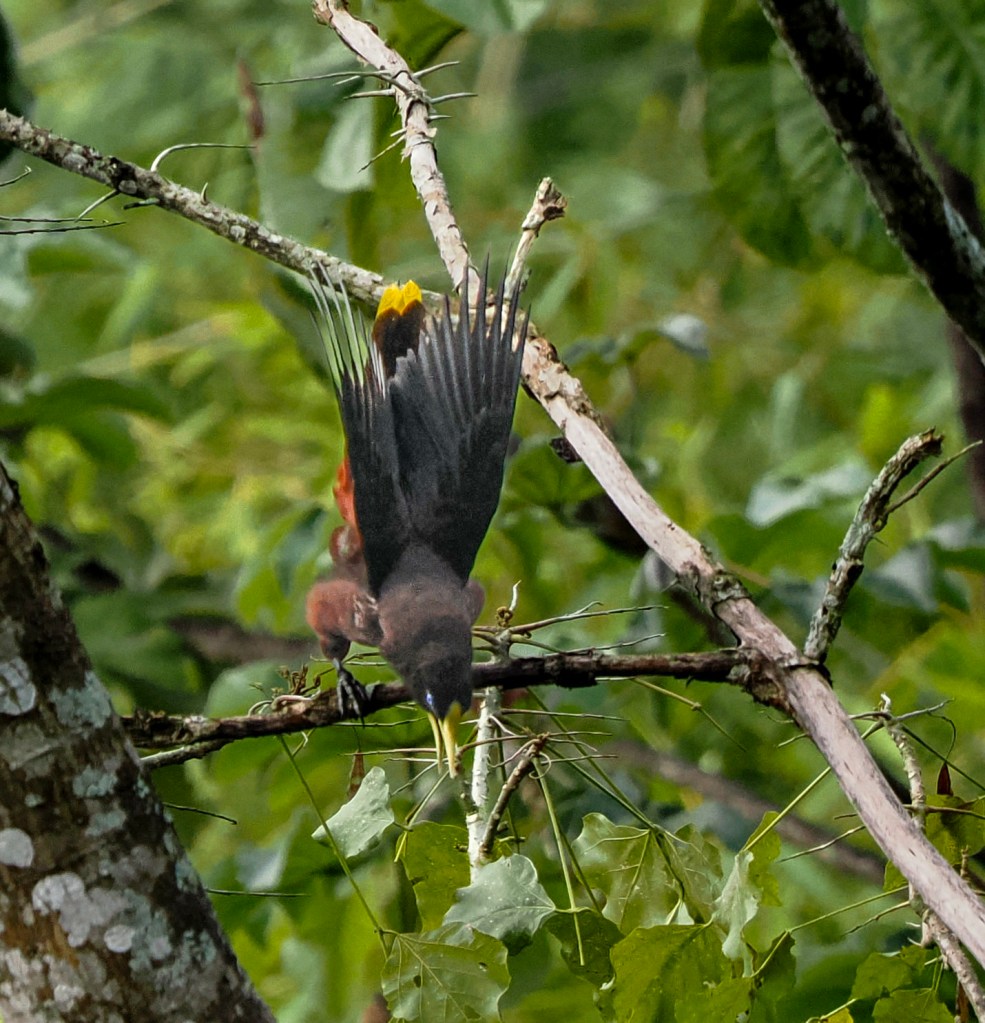
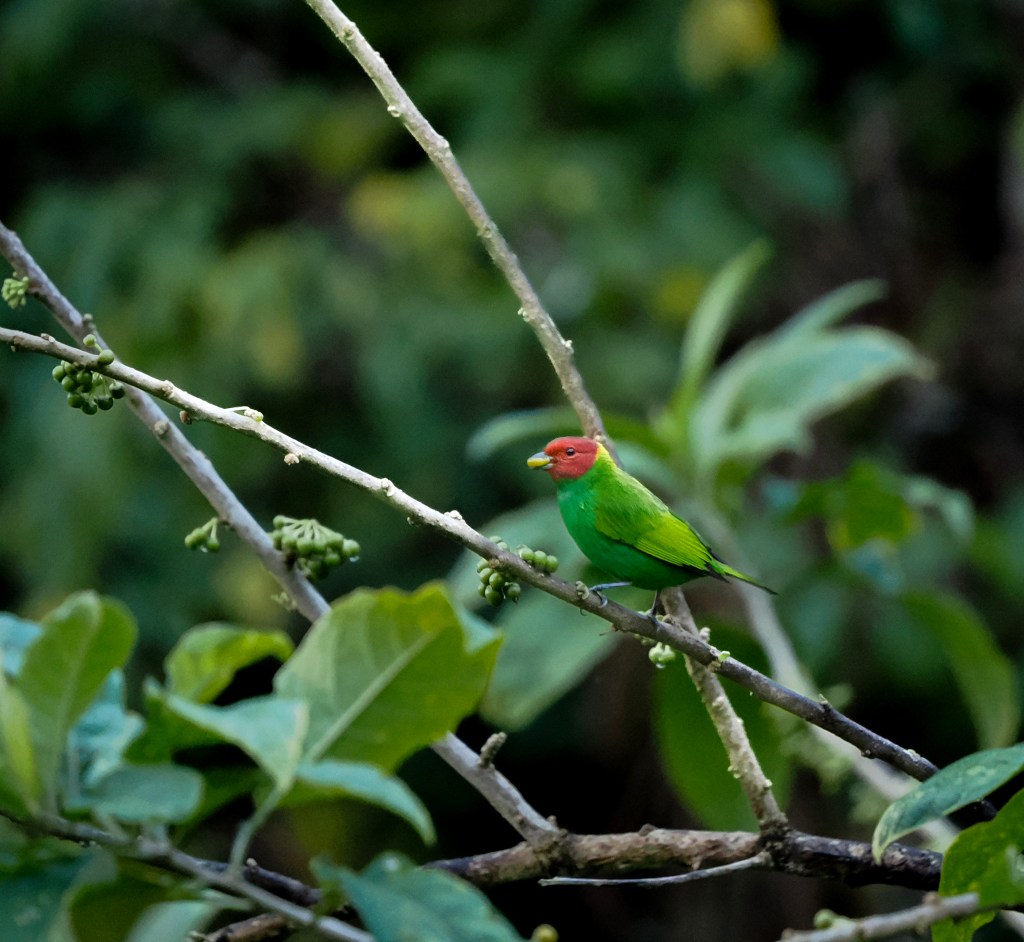
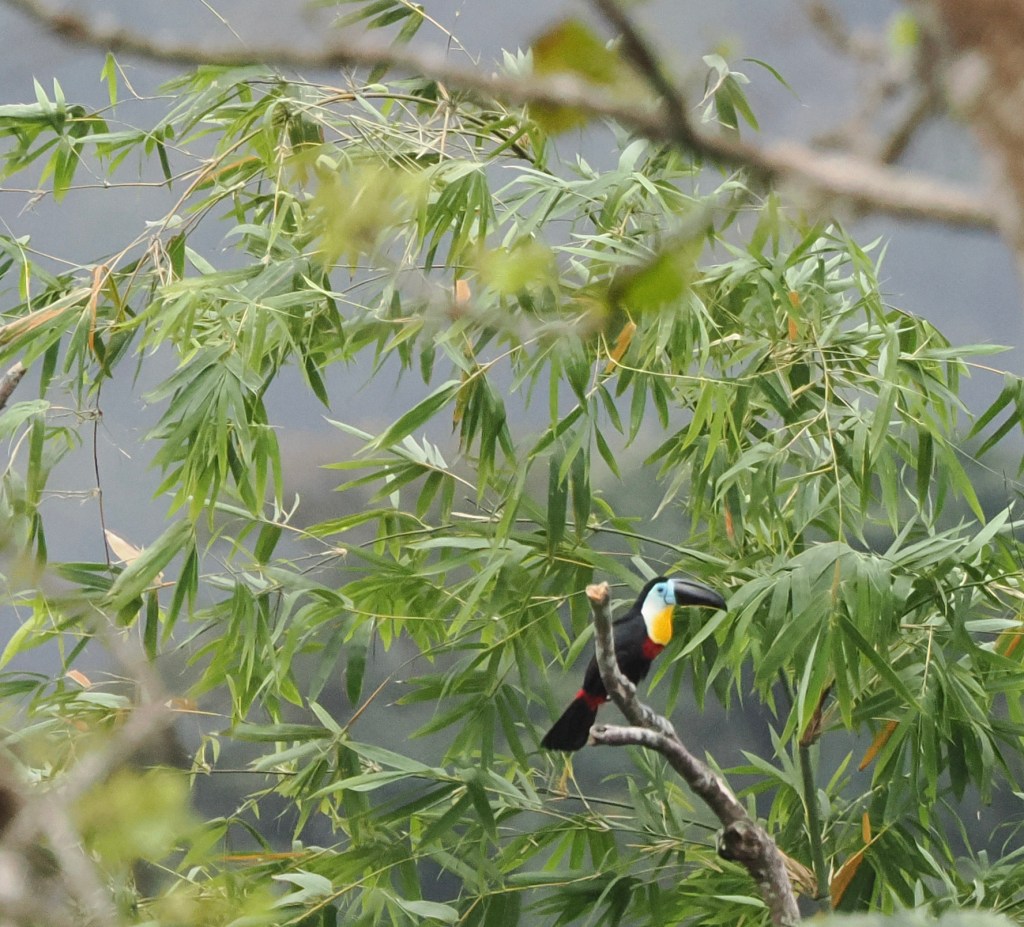
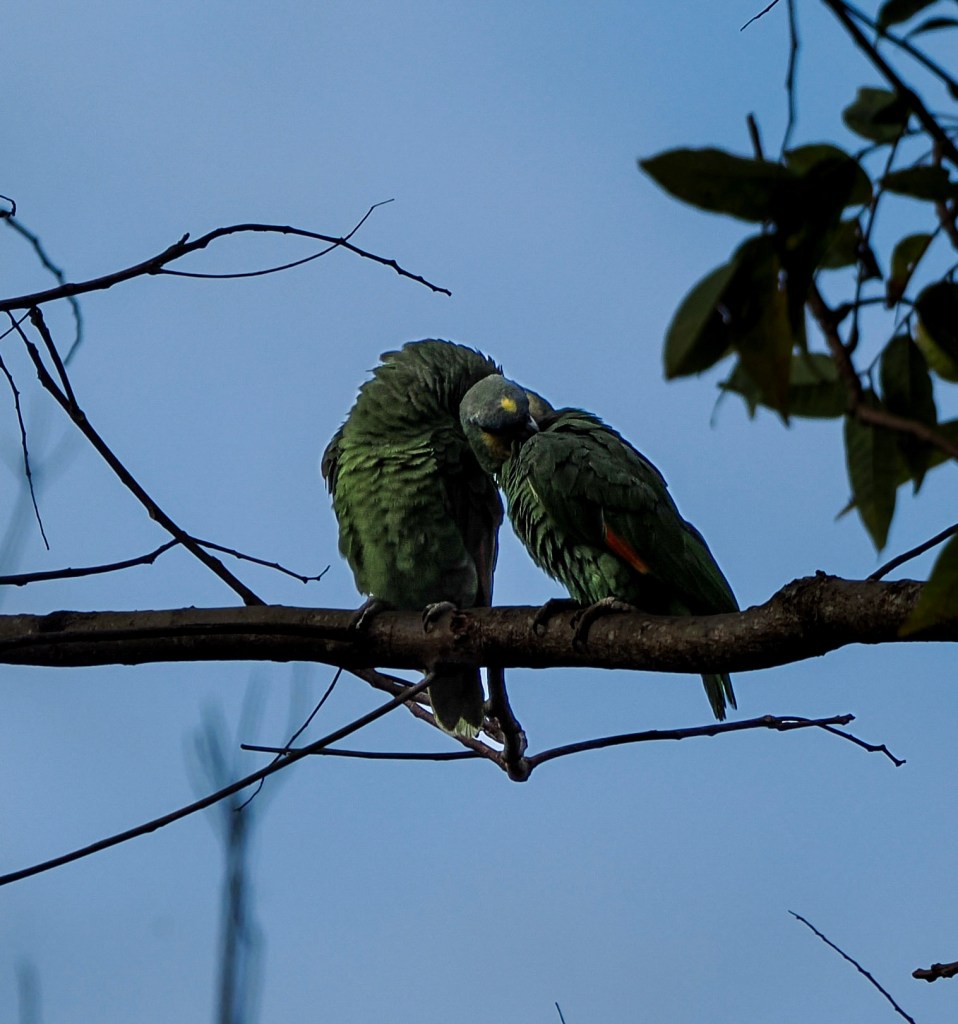
Other visitors included bay-headed tanagers, toucans, parrots, and many more. Even a non-birder would get hooked here.

More about birds of Asa Wright Center here

Bellbirds and Manakins: Two Very Different Courtships

Two sightings stood out.

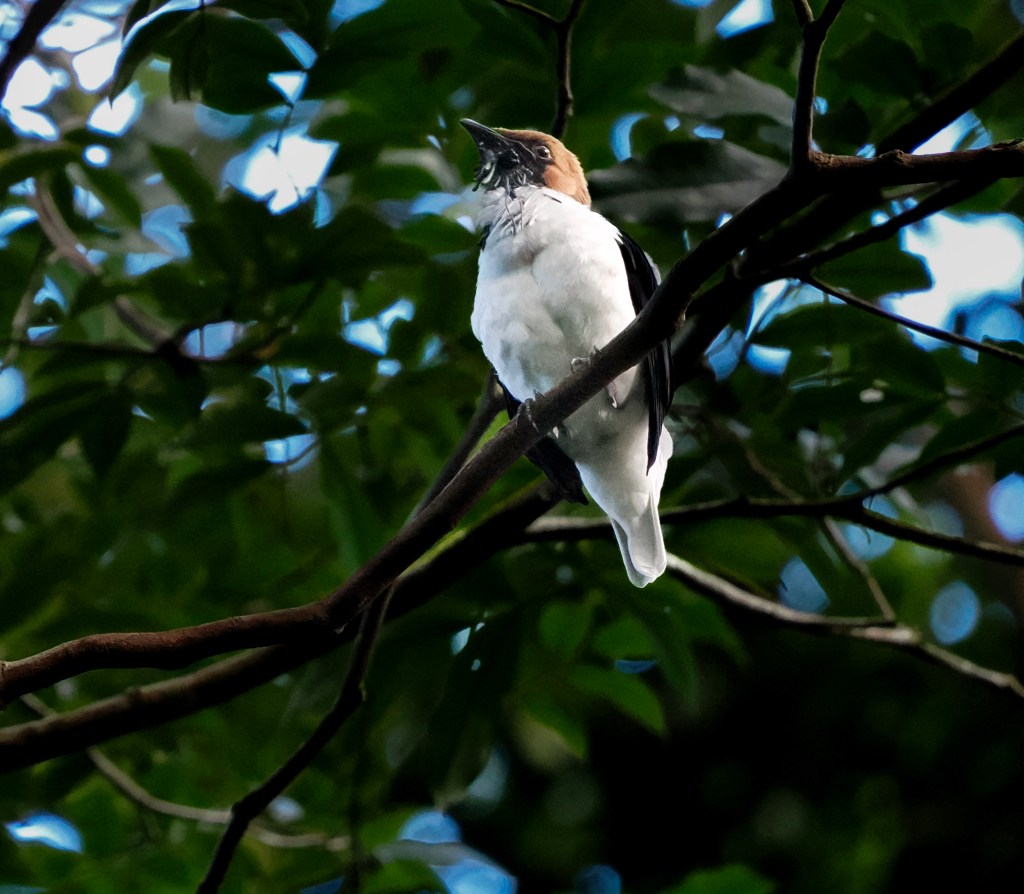
The bearded bellbird (the “anvil bird”) has a call that sounds like a hammer striking metal, which is how it got its nickname. It rings through the forest, and it was a thrill to finally put a face to the sound.
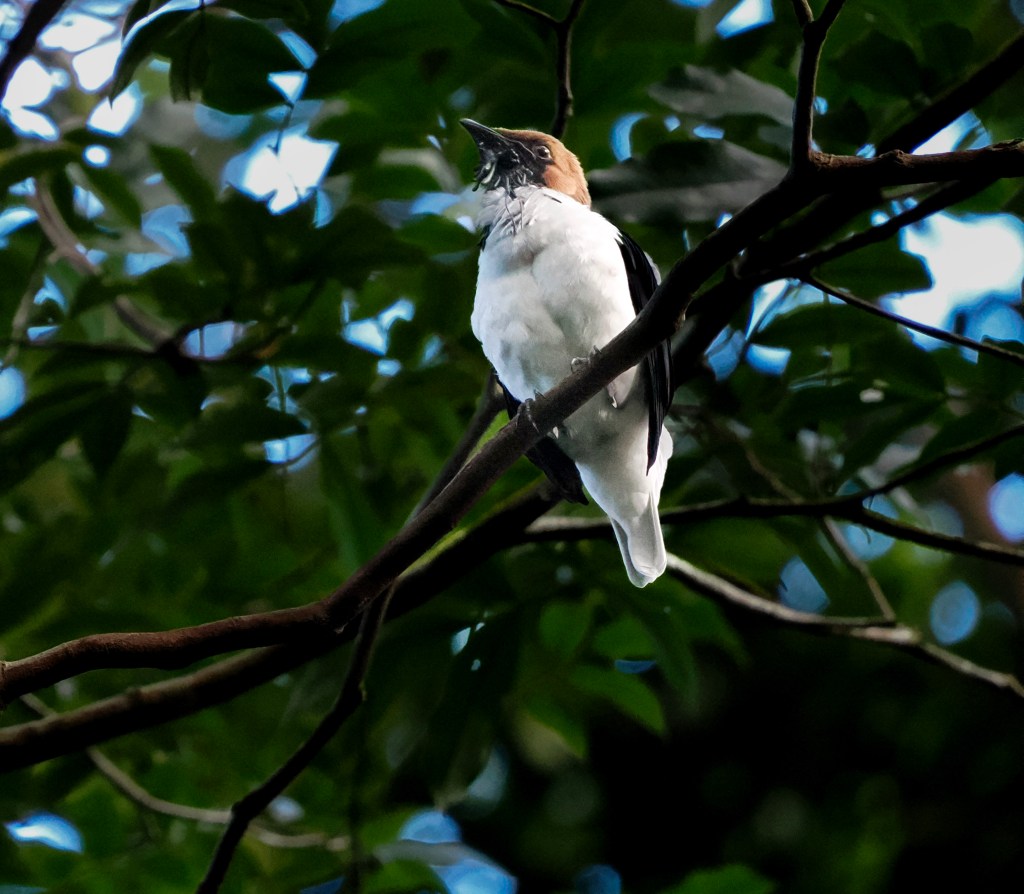
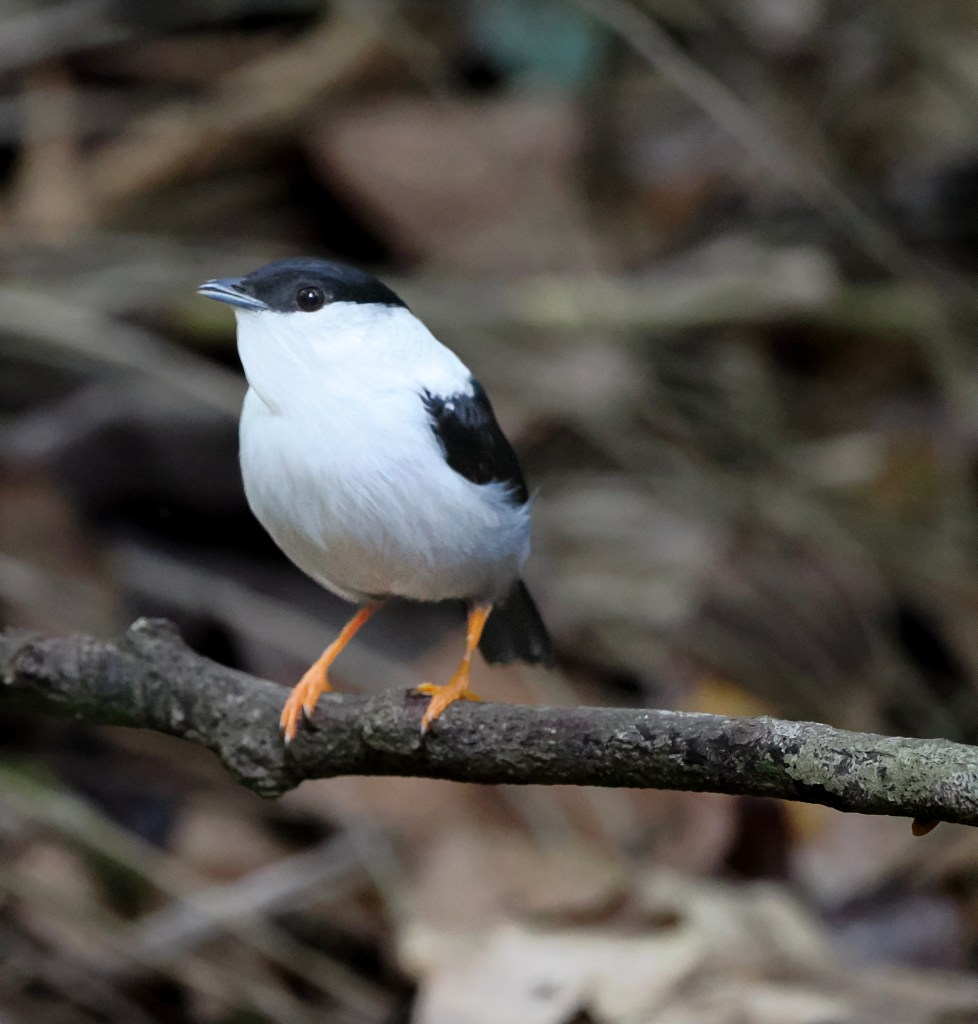
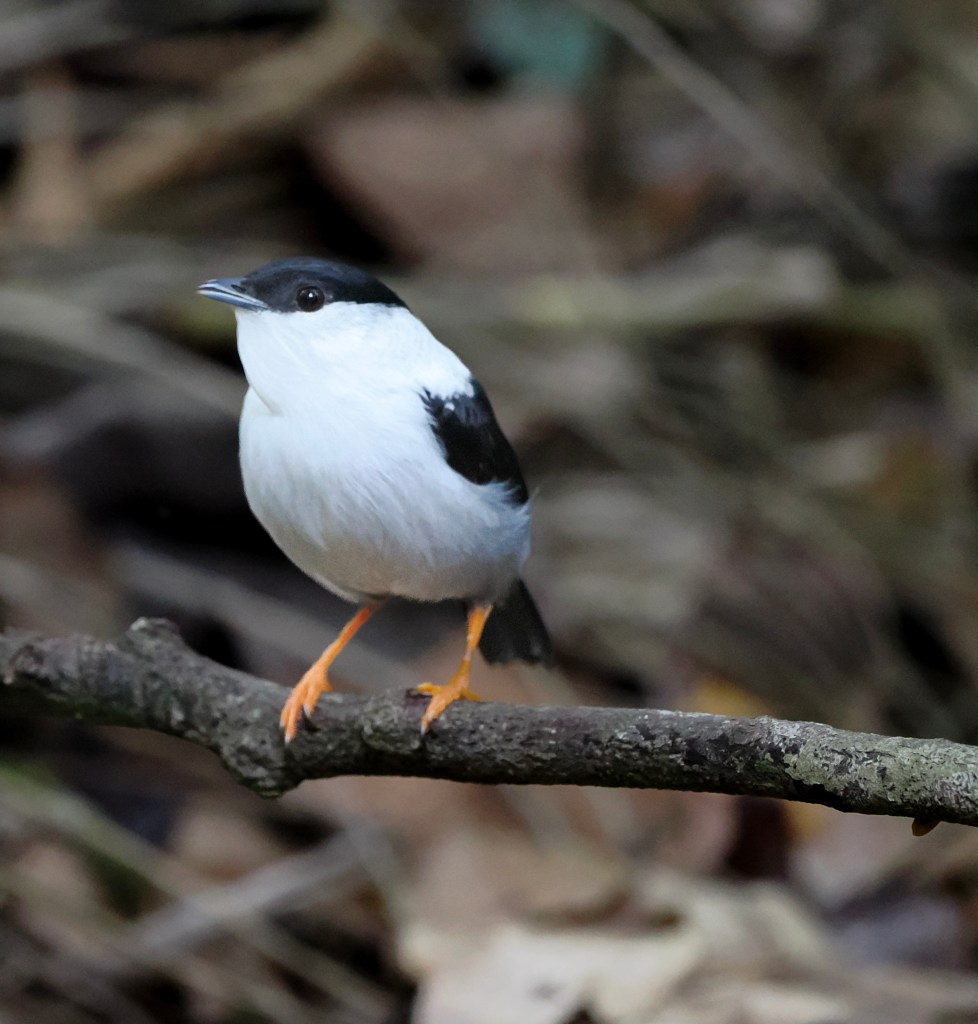
The white-bearded manakin was my other highlight. The males gather at display sites and work to impress the females. What I loved most is that the male clears and tidies his display area, like a tiny landscaper trying to win a date. Both species have such unusual ways of attracting a mate, and I found myself rooting for the manakin.
Seeing the Oilbirds

And yes, I saw the oilbirds, the reason for my three-day stay. These nocturnal fruit-eating birds roost in caves and find their way in the dark by echolocation, which is rare among birds. Seeing them in person was worth the trip on its own.

I have written a separate blog post for visiting the oilbirds, and you can read more here

Beyond the Veranda: Walks and a Day Trip

  • Morning birding walk: I joined a walk with the in-house birding expert. Guides here know the calls, the habits, and exactly where to look. I saw far more with them than I ever would have on my own.
  • Caroni Swamp day trip: I arranged a day trip to the Caroni Swamp, which offered a nice habitat change from the mountain rainforest and added a completely different set of birds to my list. More about Caroni Swamp visit here

The Room

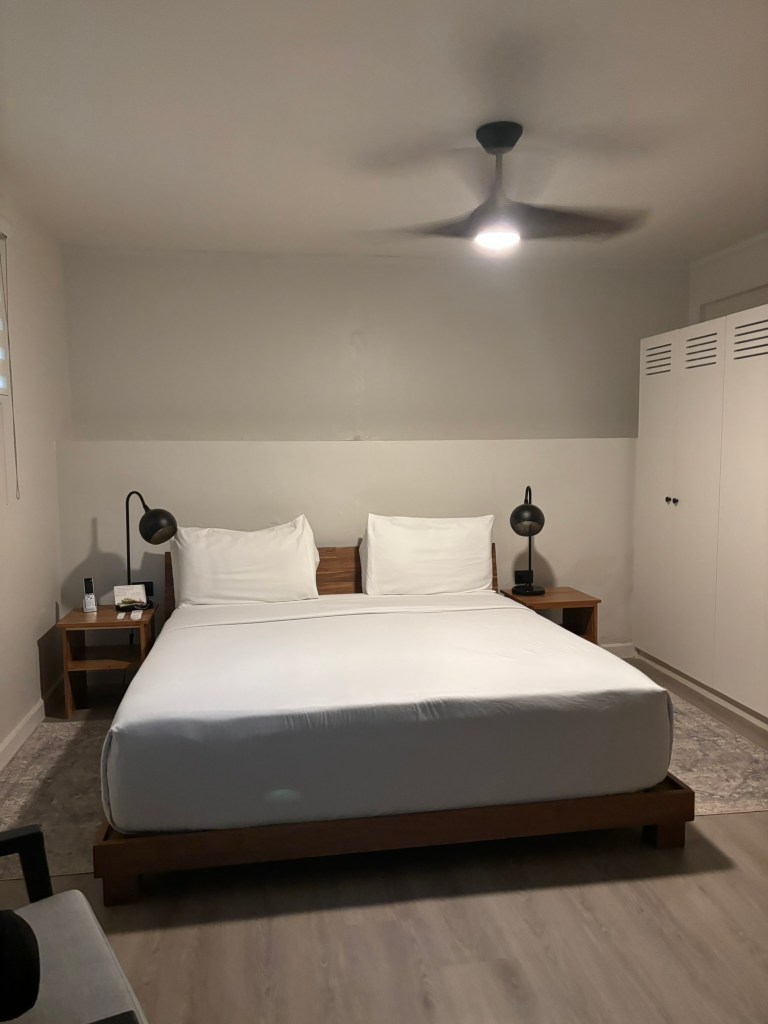
My room was lovely: comfortable, peaceful, and with garden views. After a long day outside, it was a quiet place to rest and listen to the forest. Don’t expect a luxury resort, though. The charm is the setting: a nature lodge in the middle of a rainforest. I stayed in one of their nest accomidation. You can check out other available types of rooms here
The Grounds

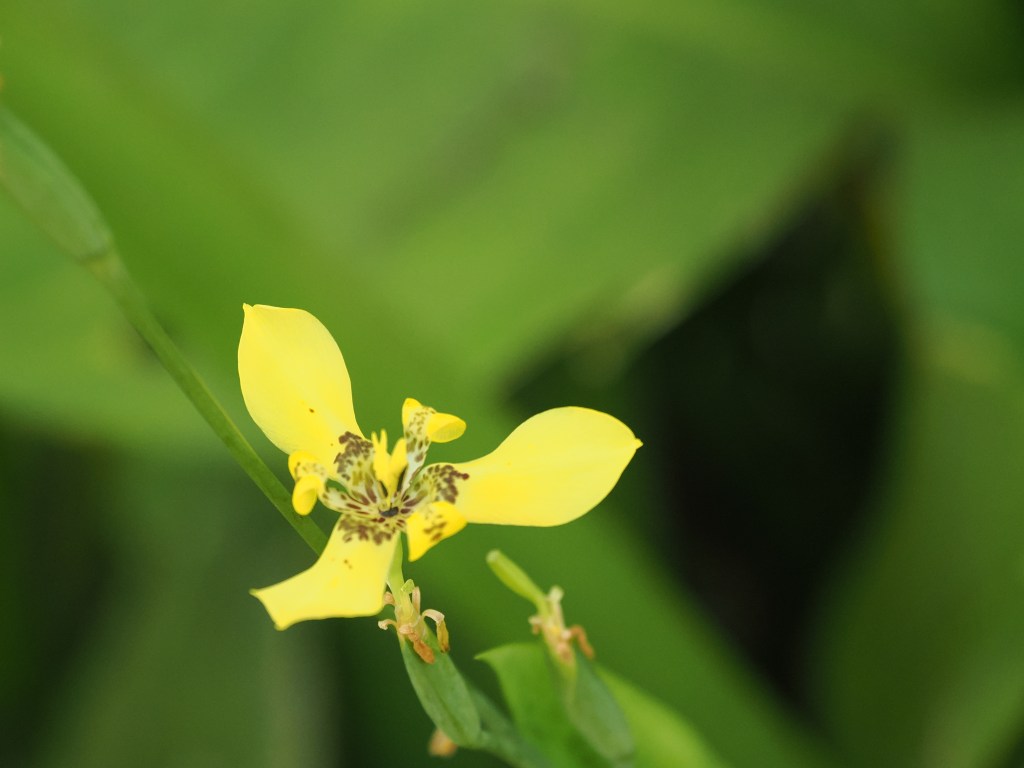
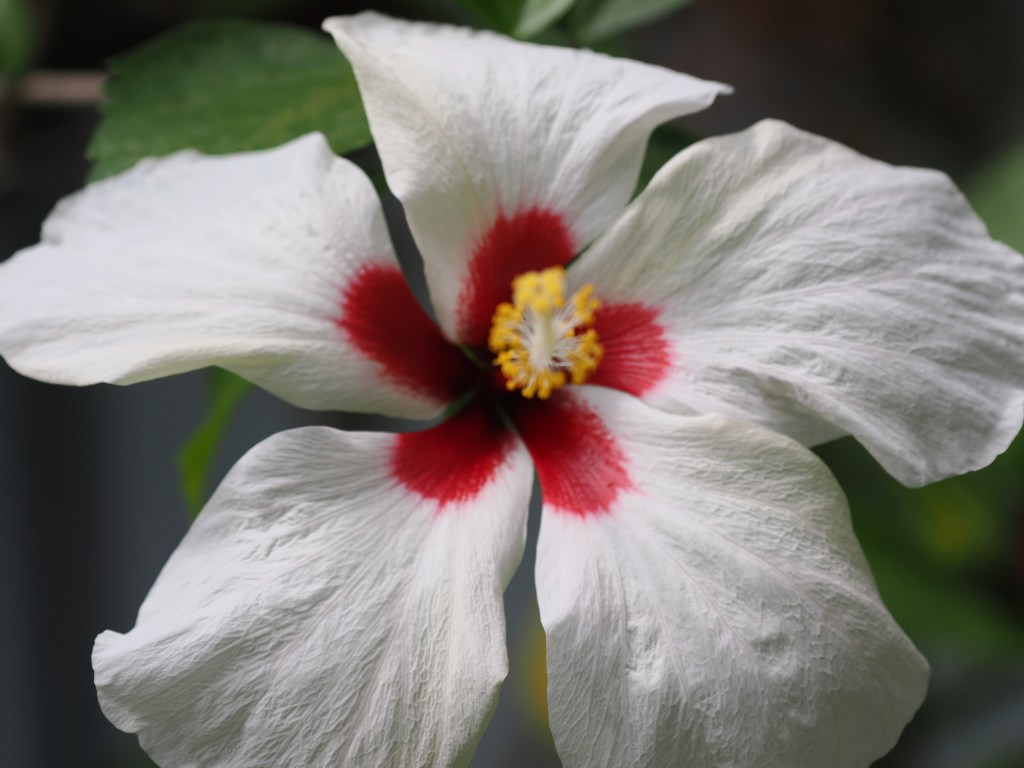
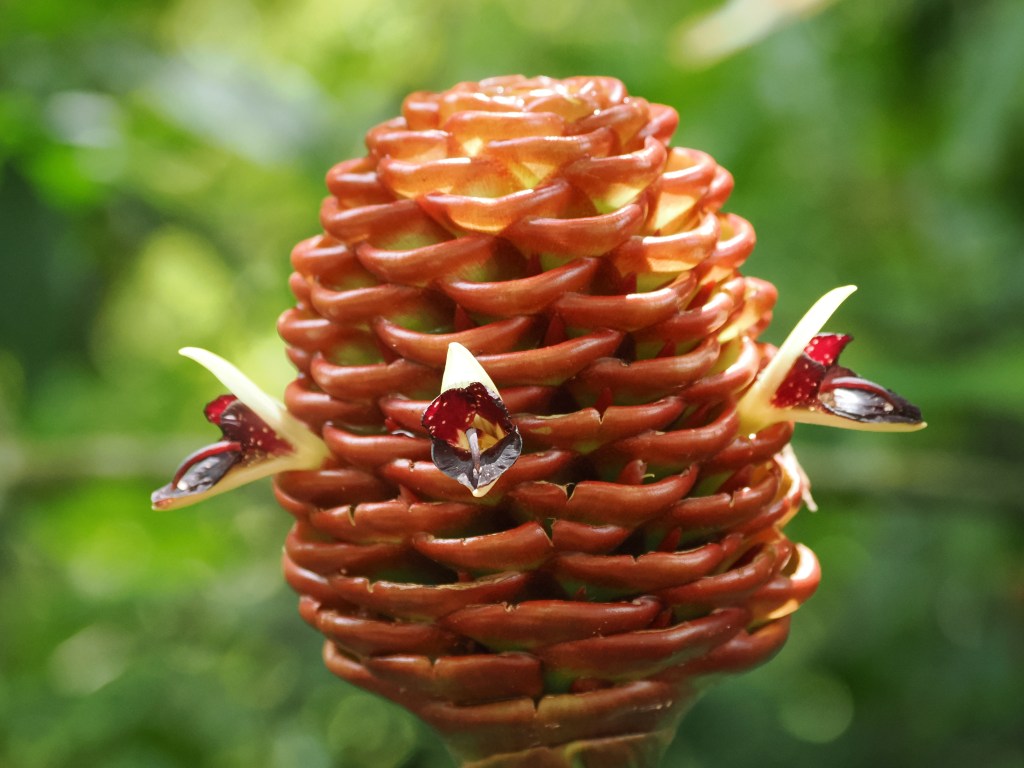
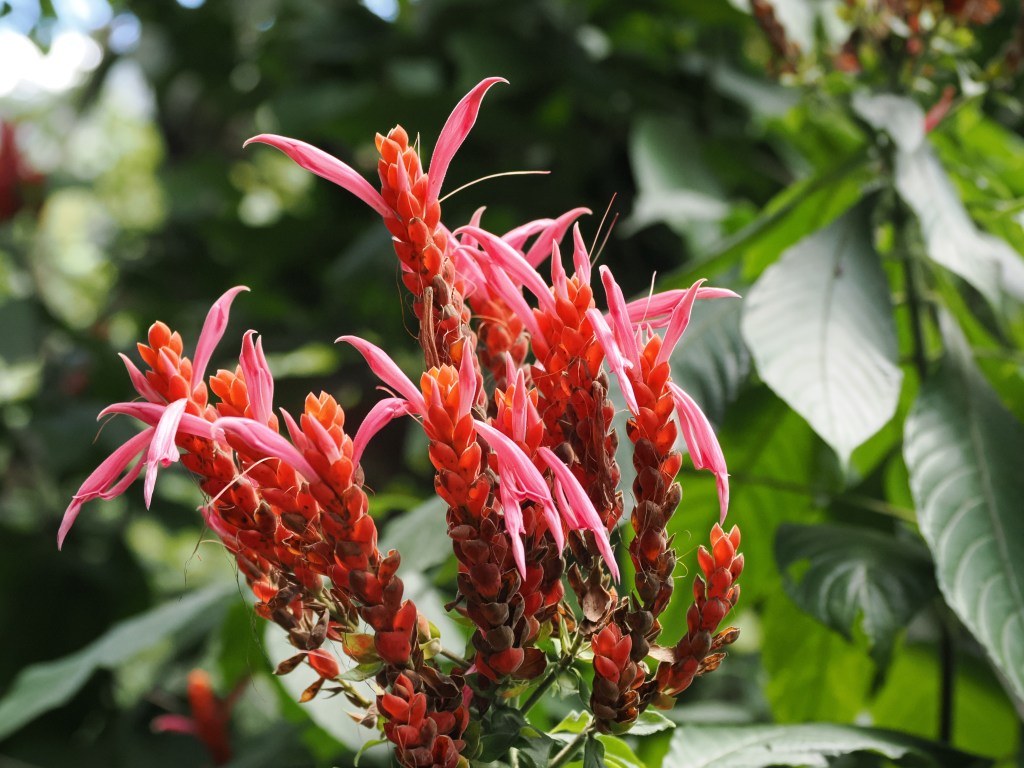
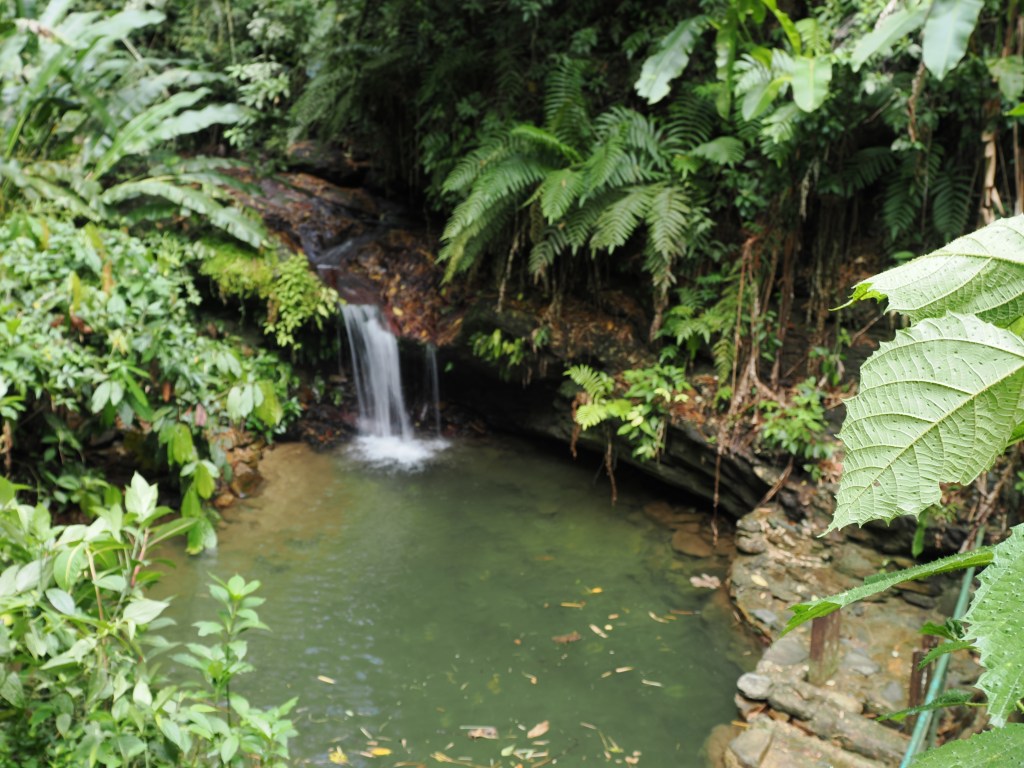
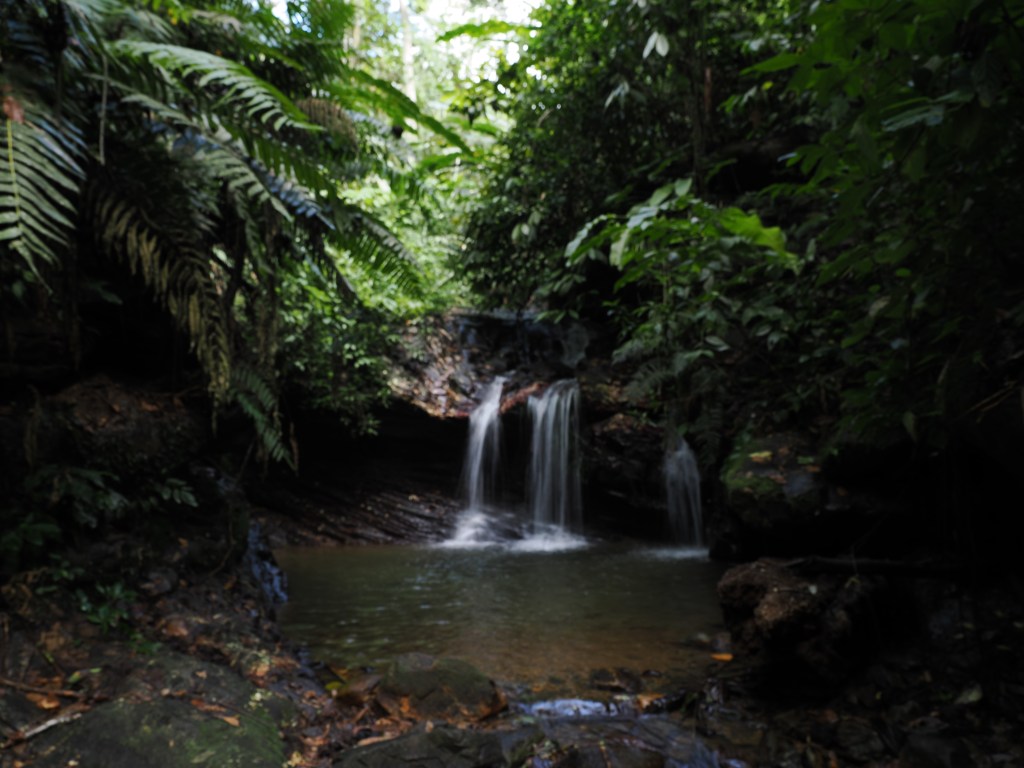
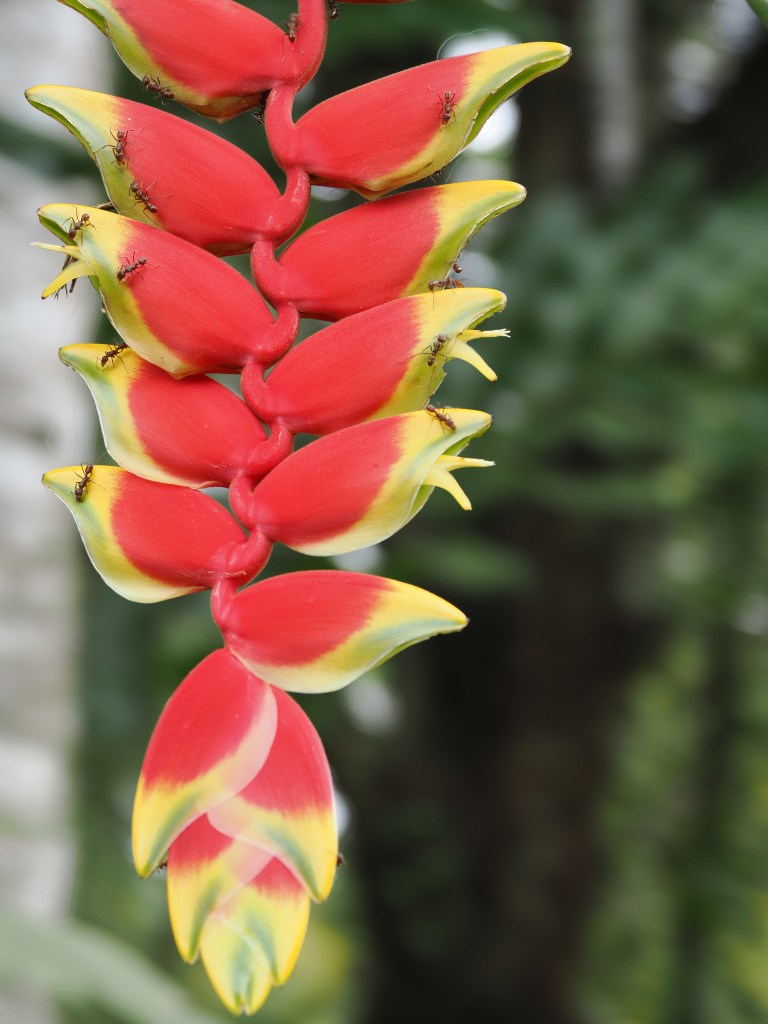
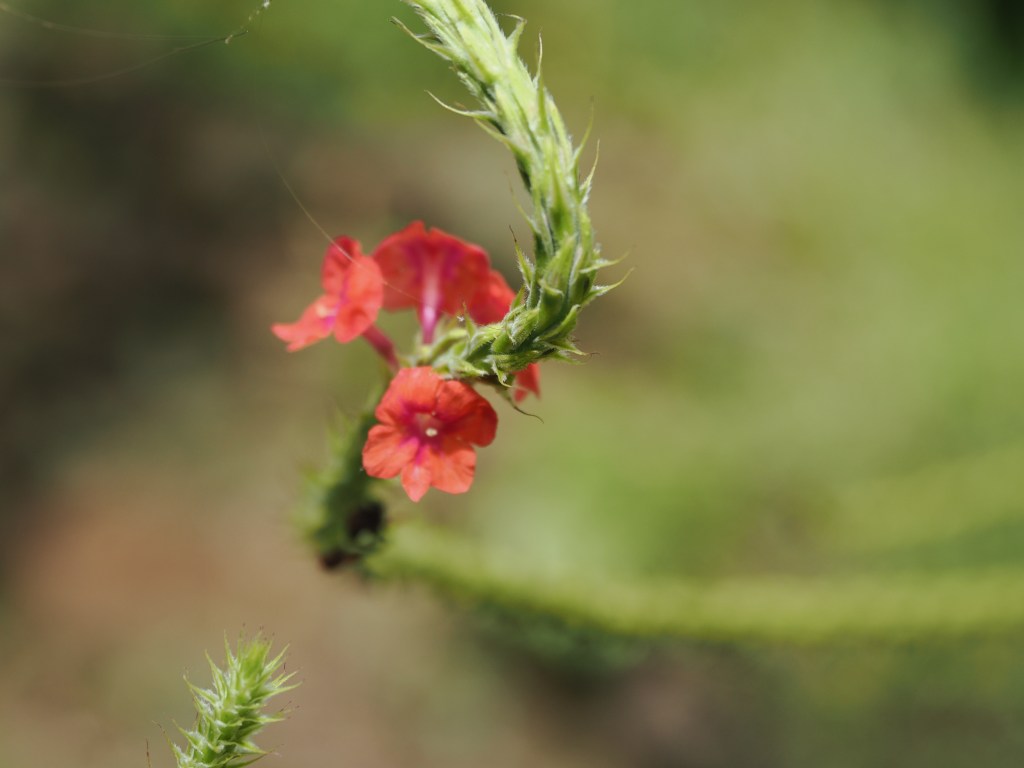
The grounds are beautiful. There are a couple of waterfalls and wide varieties of flowers along the trails. Even when I wasn’t looking for birds, it was a joy to wander. You can also swim in the waterfalls and surrounding area.
Food: Four Meals a Day

My stay included breakfast, lunch, dinner, and high tea. After a morning walk, a good meal tastes even better, and the afternoon tea on the veranda became one of my favorite rituals. (Add details about your favorite dishes and any Trinidadian specialties here.)

Tips for Visiting Asa Wright

  • Book early. Reach out to the team ahead of time, especially if you want transfers and guided activities arranged.
  • Stay at least three days. That gave me time for the oilbirds, the walks, and a day trip without feeling rushed.
  • Bring a long lens, but don’t stress if you don’t have one. The feeders put hummingbirds close enough for great photos.
  • Pack for the tropics. Bring light layers, a rain jacket, comfortable shoes, and insect repellent.
  • Take it slow. The best birding often comes from sitting still.
  • Pace the rum punch. Learn from my mistakes.

Final Thoughts

Asa Wright was one of the best birding lodges I have been to, offering a truly immersive experience in nature, where the tranquility of the surrounding rainforest and the melodious calls of exotic birds created a magical atmosphere that captivated my senses; I can’t wait to go back and spend more time exploring the diverse trails, learning more about the vibrant wildlife, and soaking in the breathtaking views that this remarkable location has to offer.
The Birds of Asa Wright: A Photo Journal from the Veranda

I came to Trinidad for business and ended up with a memory card full of birds. Over three days at Asa Wright Nature Center, I barely had to chase anything. Most of these photos came from the veranda, a coffee or rum punch within reach, and a forest that kept putting on a show.

The Hummingbirds: 15 Feeders, Hundreds of Birds

Below the veranda hang 15 feeders, and the buzzing never stops. Over three days, I photographed dozens of different kinds of hummingbirds. Here are a few of my favorites.

The Lesson I Learned: Be Patient

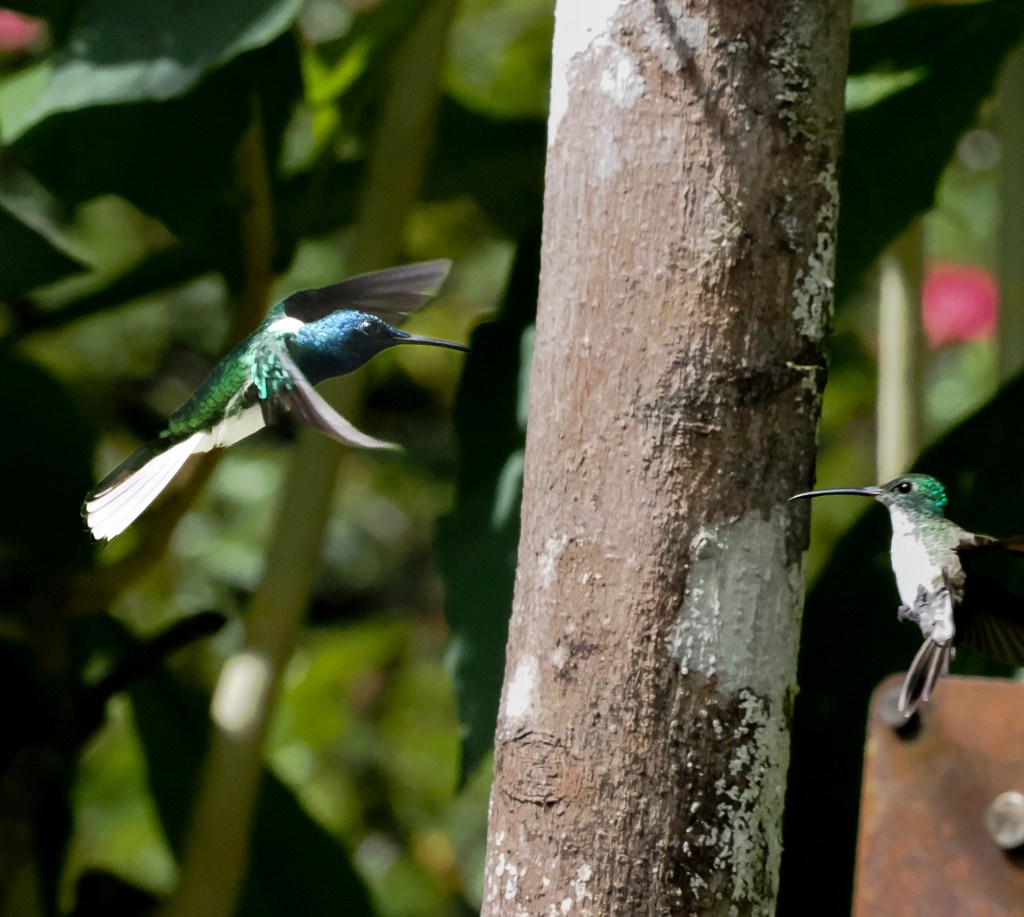
At first glance, the feeders belong to one species. White-necked Jacobins dominate, swarming the perches and chasing everything else away. If you leave after ten minutes, you’ll think that’s all there is.

Don’t leave. Sit still, keep your camera ready, and wait. Between the jacobin dogfights, the rarer birds slip in: the hermits, the starthroat, the violetear. By day three I could tell most of them apart at a glance, which I couldn’t have done without the center’s naturalist guides. They were incredibly helpful, naming every bird I pointed my lens at.

The White-necked Jacobin: Three Looks at One Species

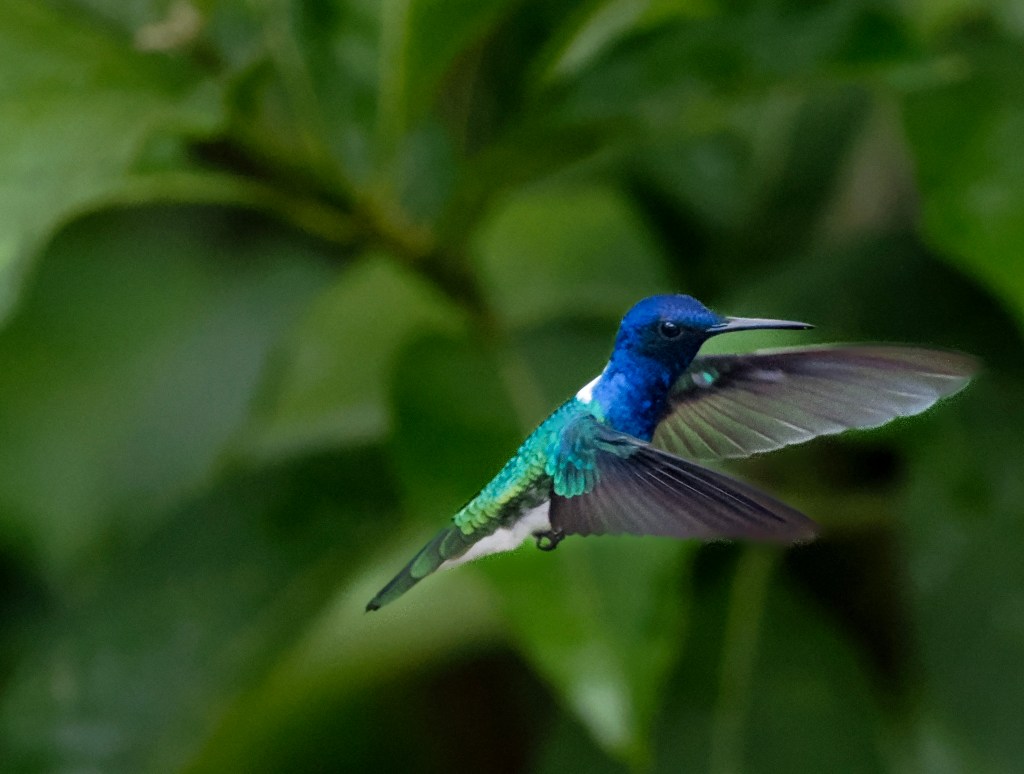
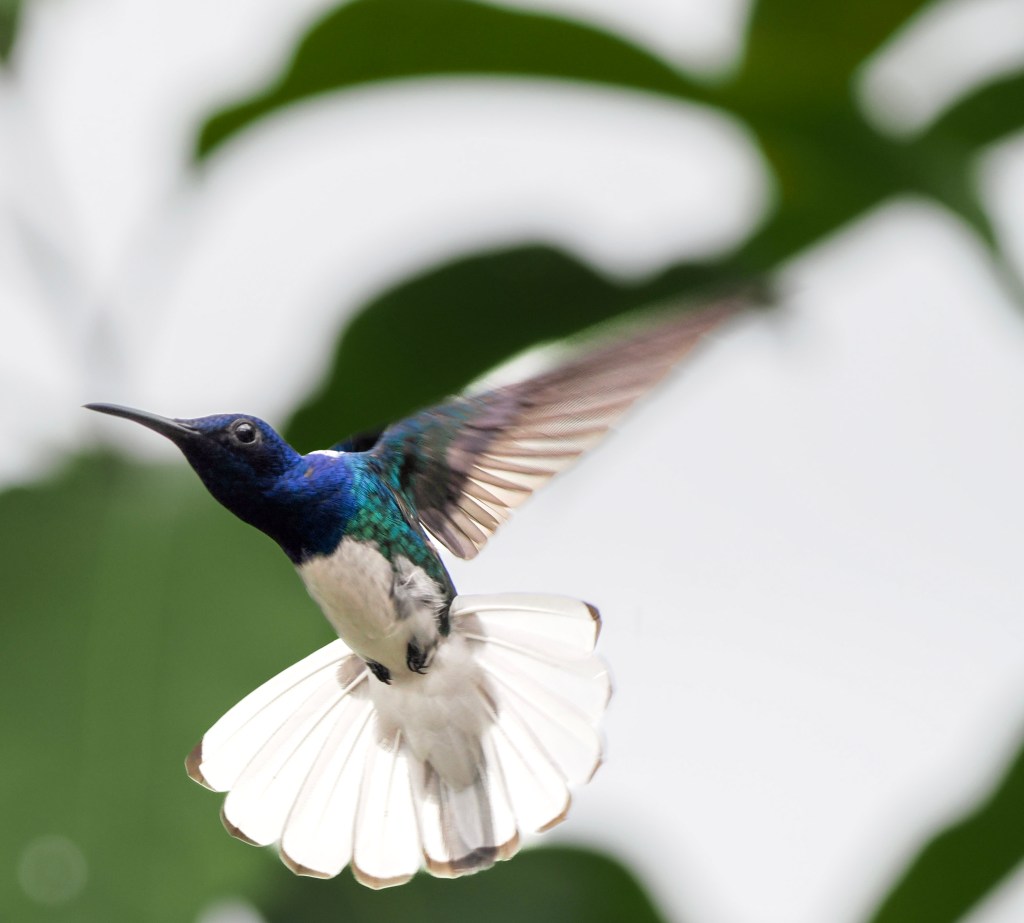
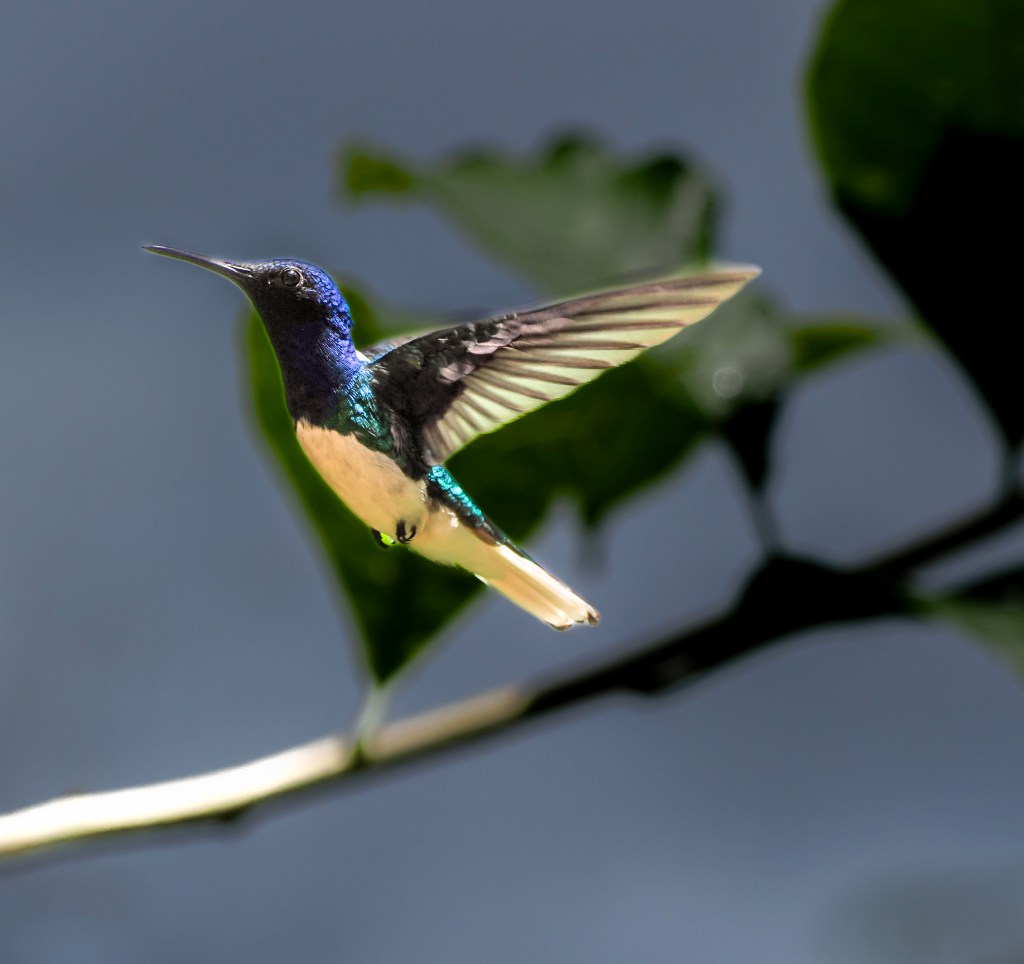
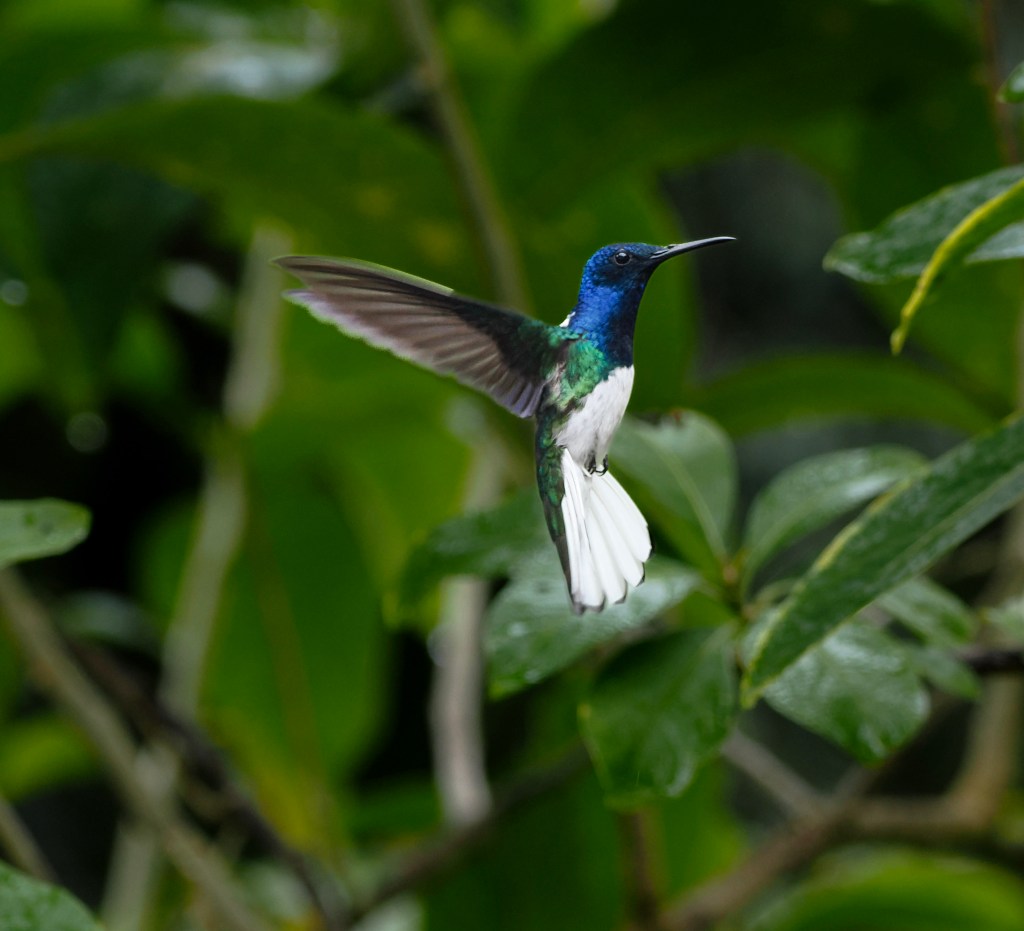
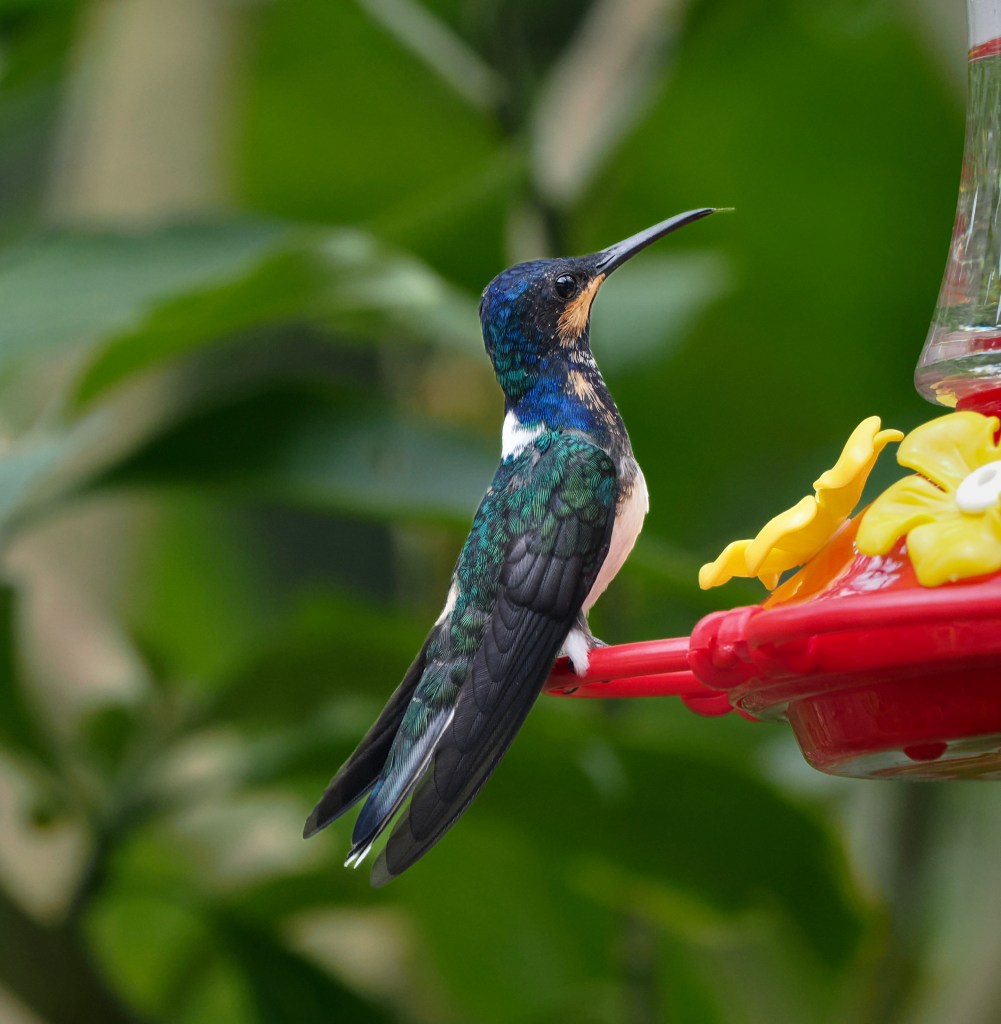
The jacobin is the face of Asa Wright’s feeders. I took 100s of photos of these and captured three different plumages.

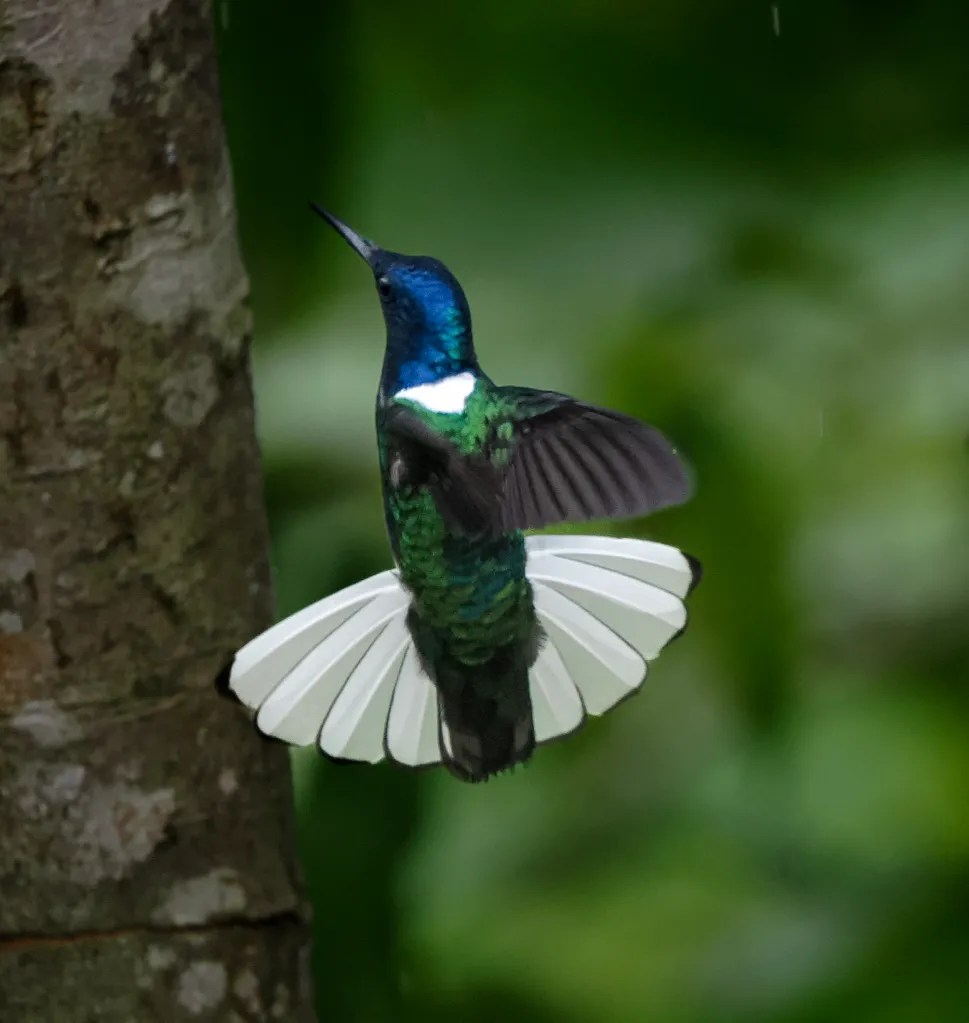
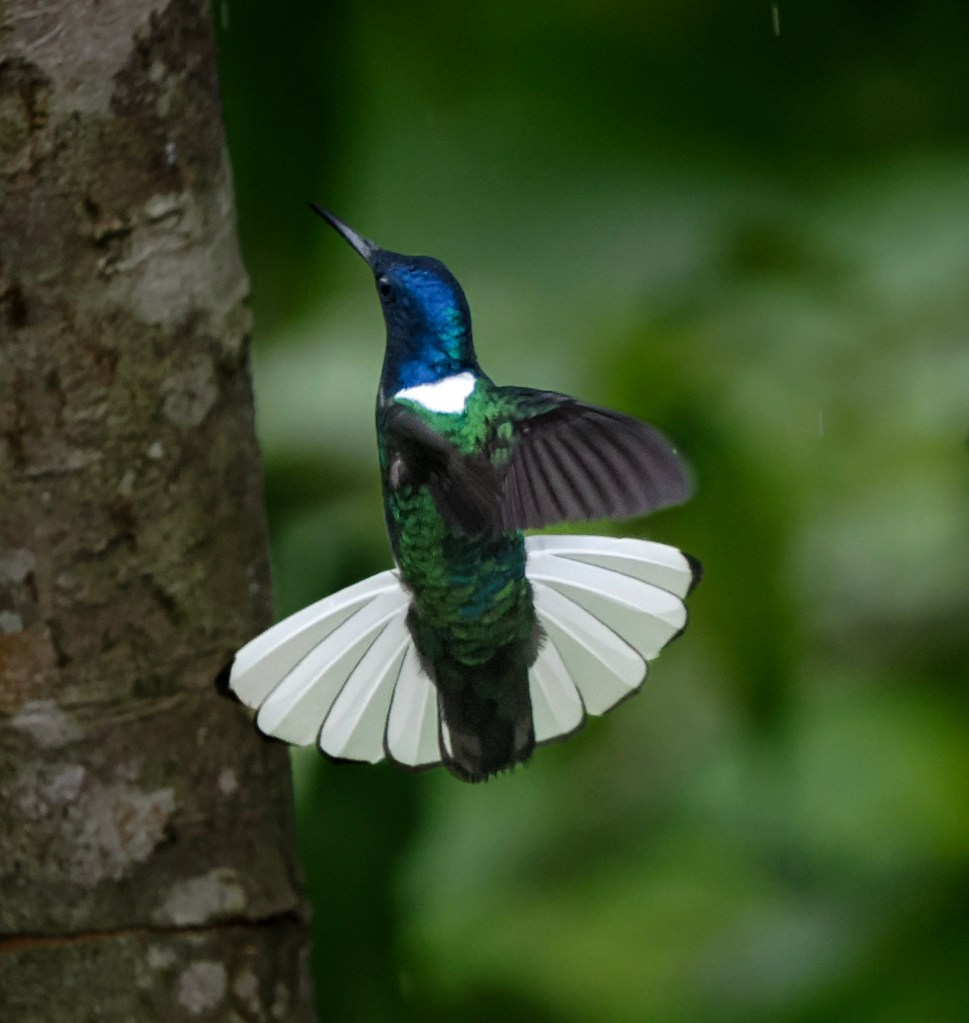
Male White-necked Jacobin. This is my best shot of the trip. He hovers with his tail fanned into a white spread, and his deep blue head, white throat patch, and emerald back glow against the green forest.

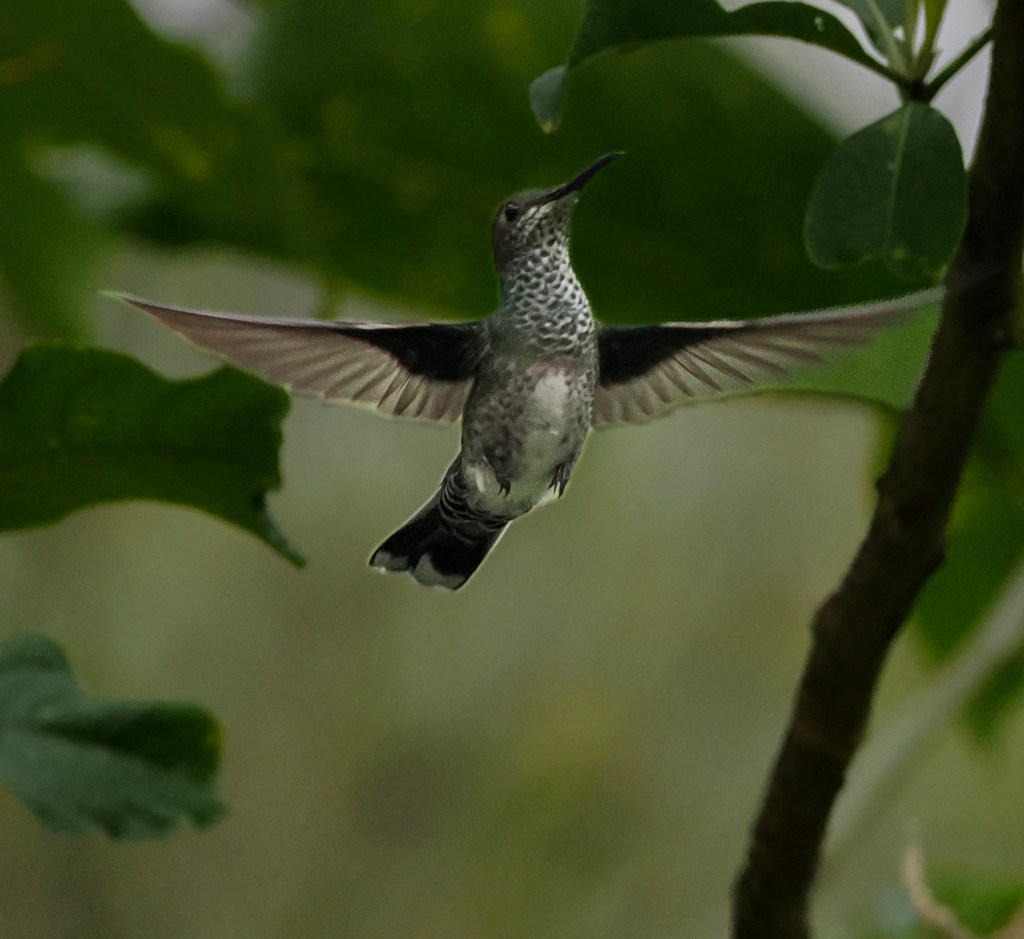
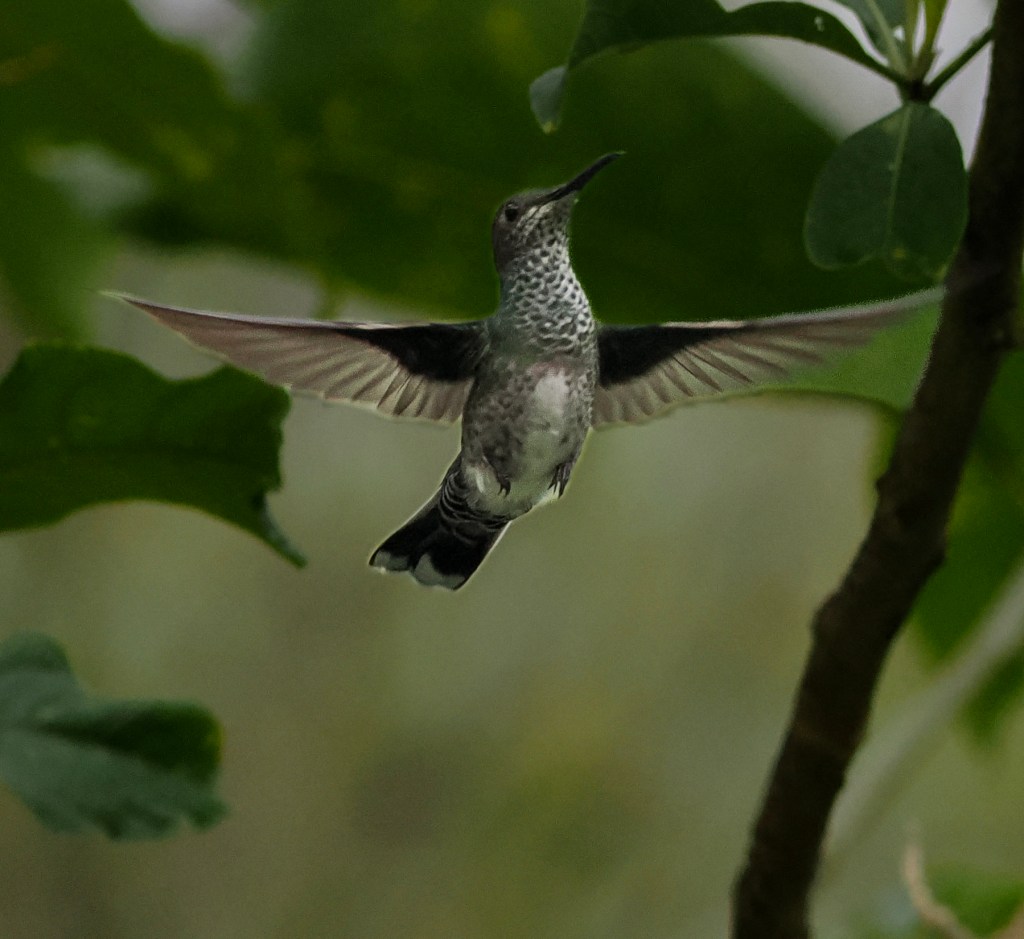
Female White-necked Jacobin. She looks nothing like the male. She is greyish-green with a heavily spotted throat, a pale belly, and a tail tipped in white, and she is easy to mistake for a different species at first.

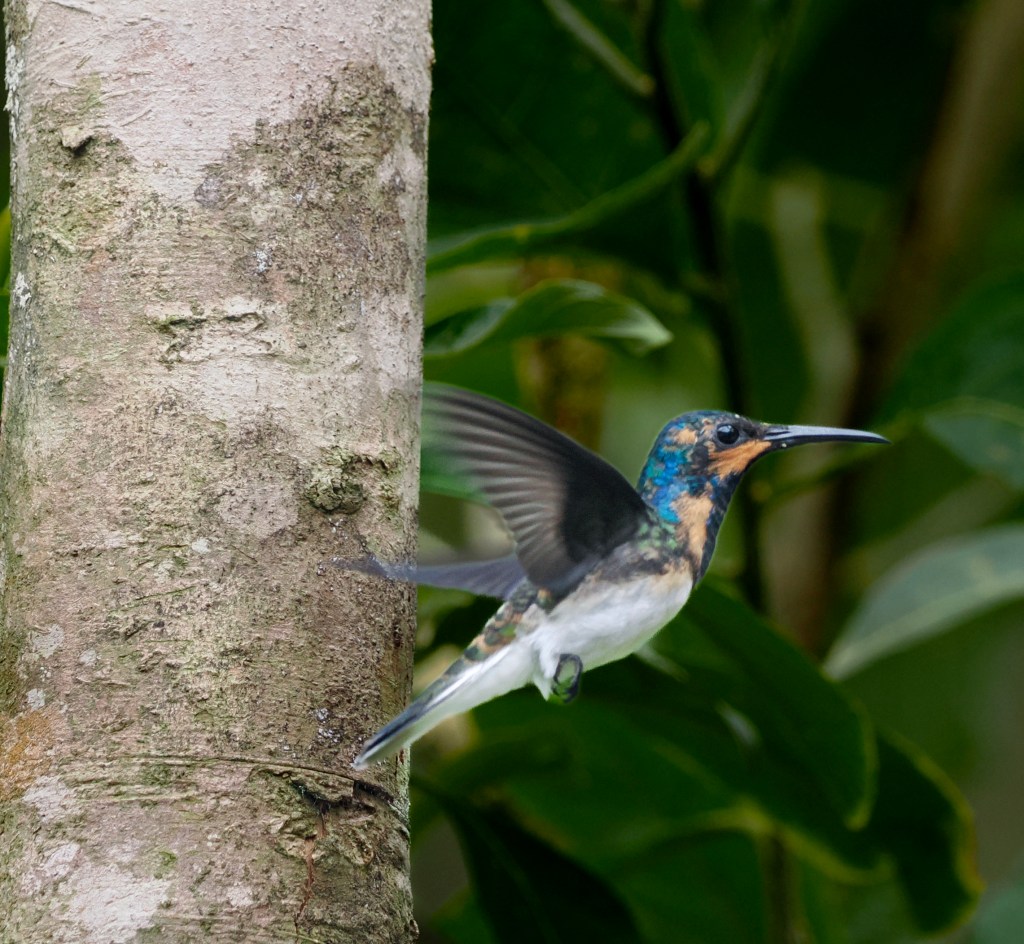
Juvenile White-necked Jacobin. The young male is a patchwork of blue head feathers, buff-orange throat patches, a clean white belly, and scattered green. He is still growing into his adult look.

The Hermits: The Reward for Patience

Hermits are quieter, browner, and harder to photograph than the jacobins, with long curved bills and a habit of darting in and out.

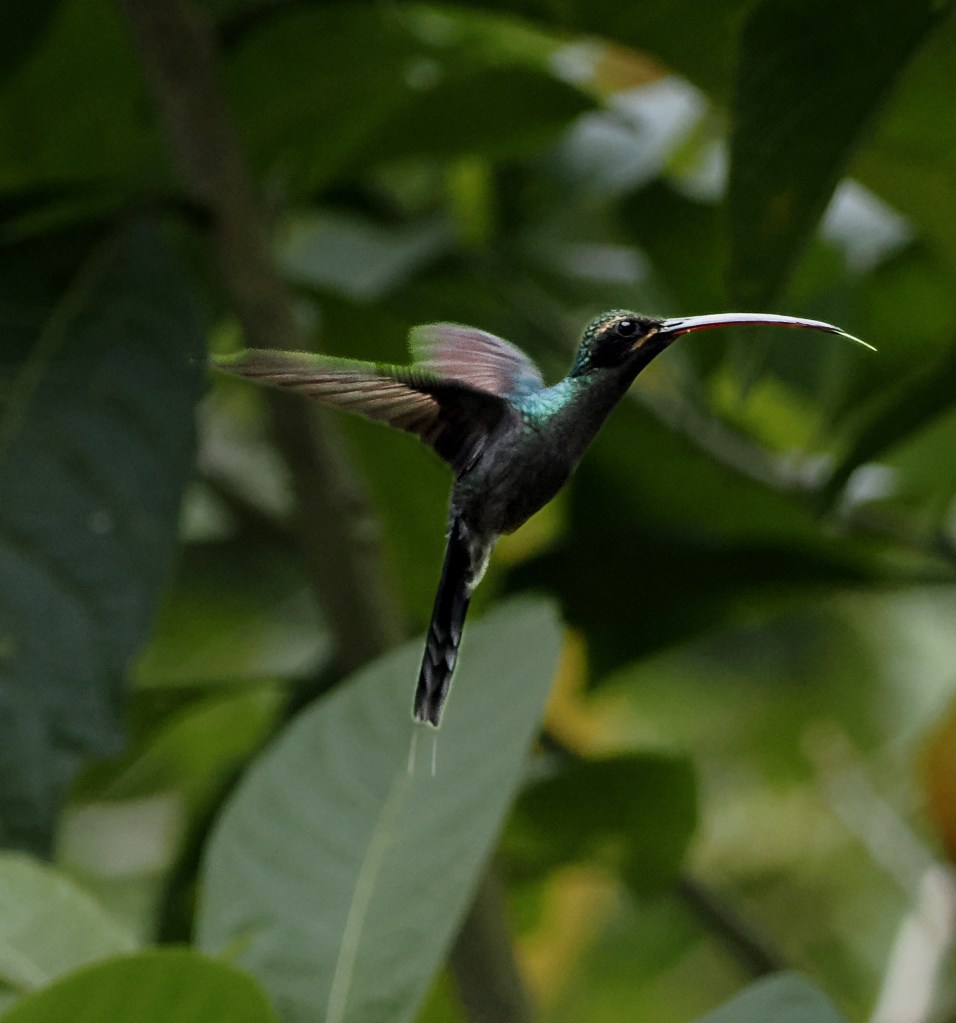
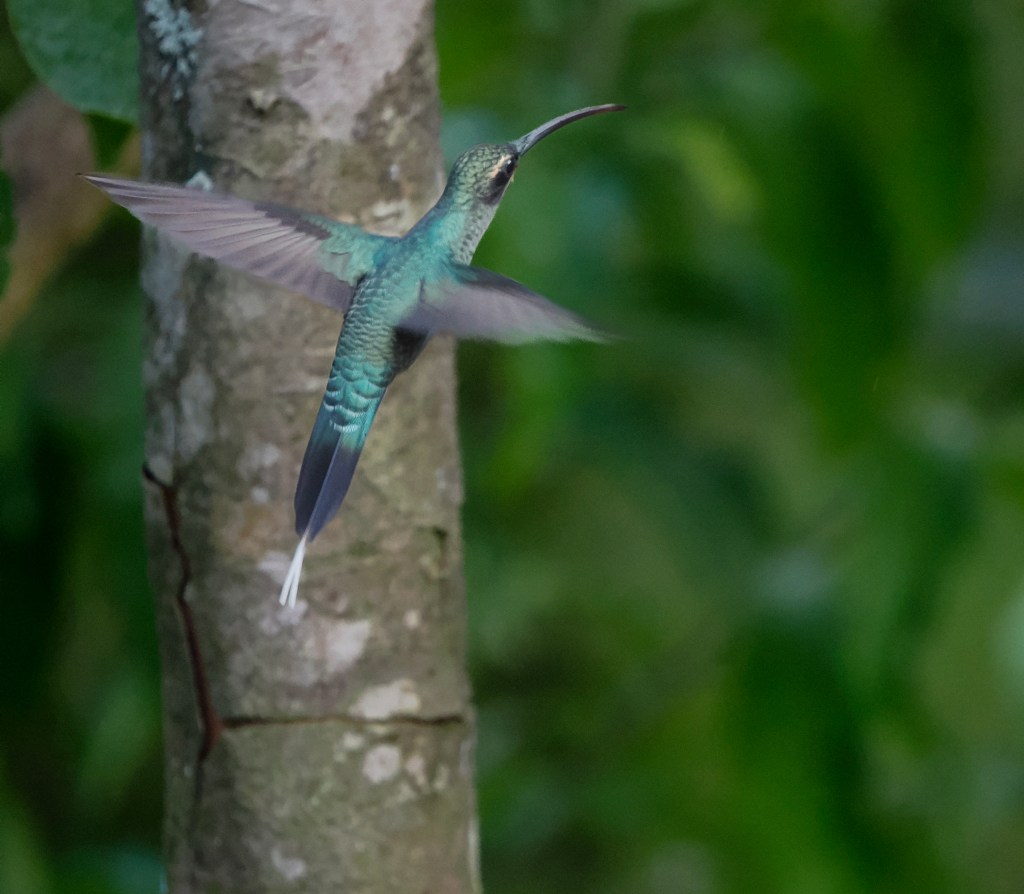
Green Hermit. t. Mine hovered in dim forest light, showing a long, curved bill with a red base, a dark body, and a long, dark tail.

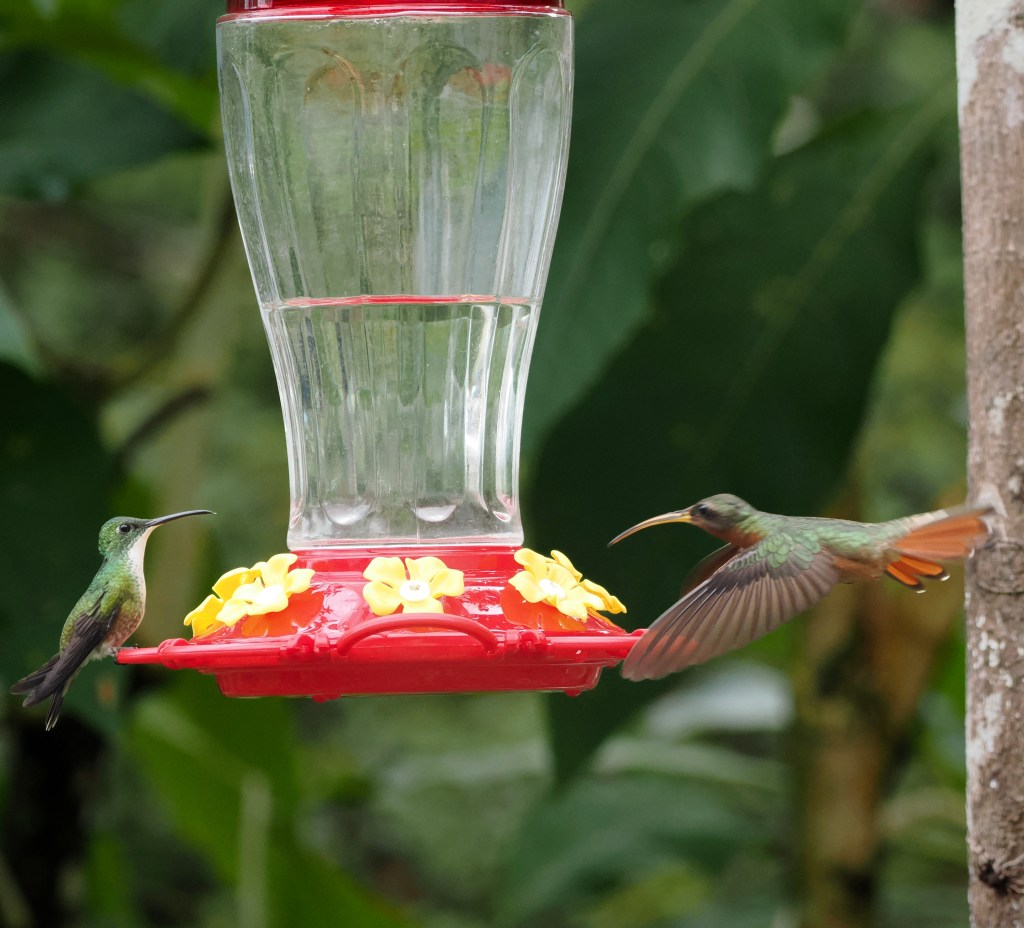
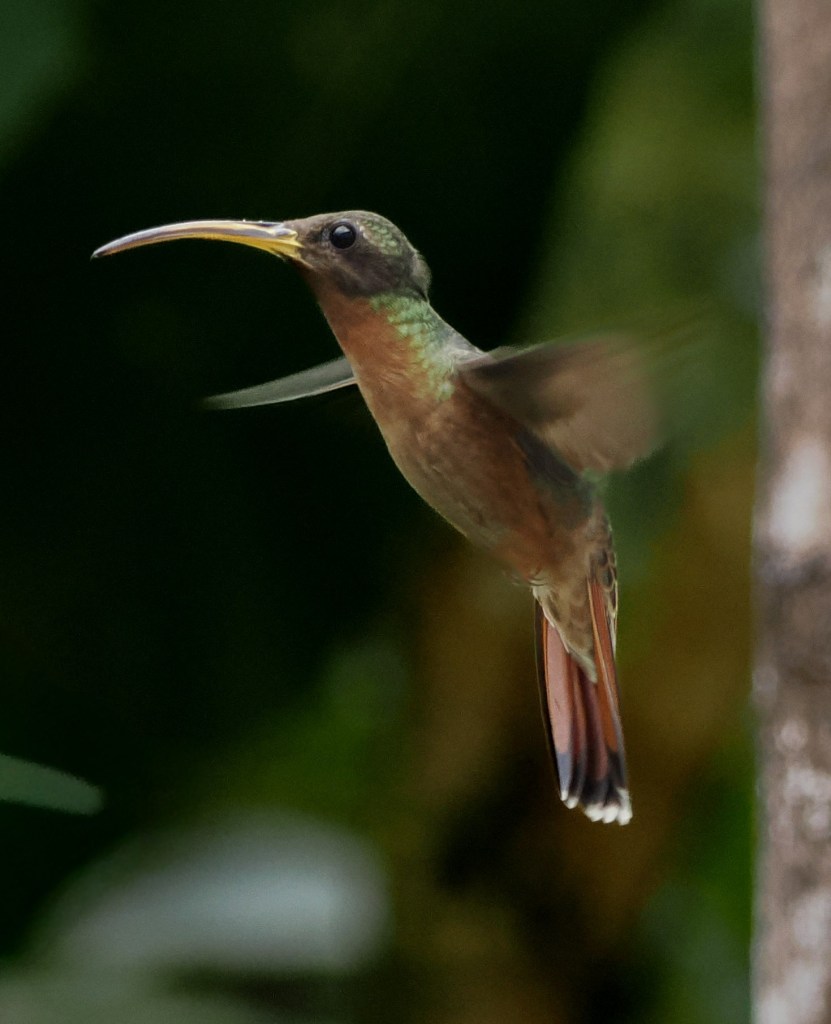
Rufous-breasted Hermit. I caught one in mid-flight at a feeder, bill curved like a sickle and its orange tail flared, while a White-chested Emerald watched from the perch.

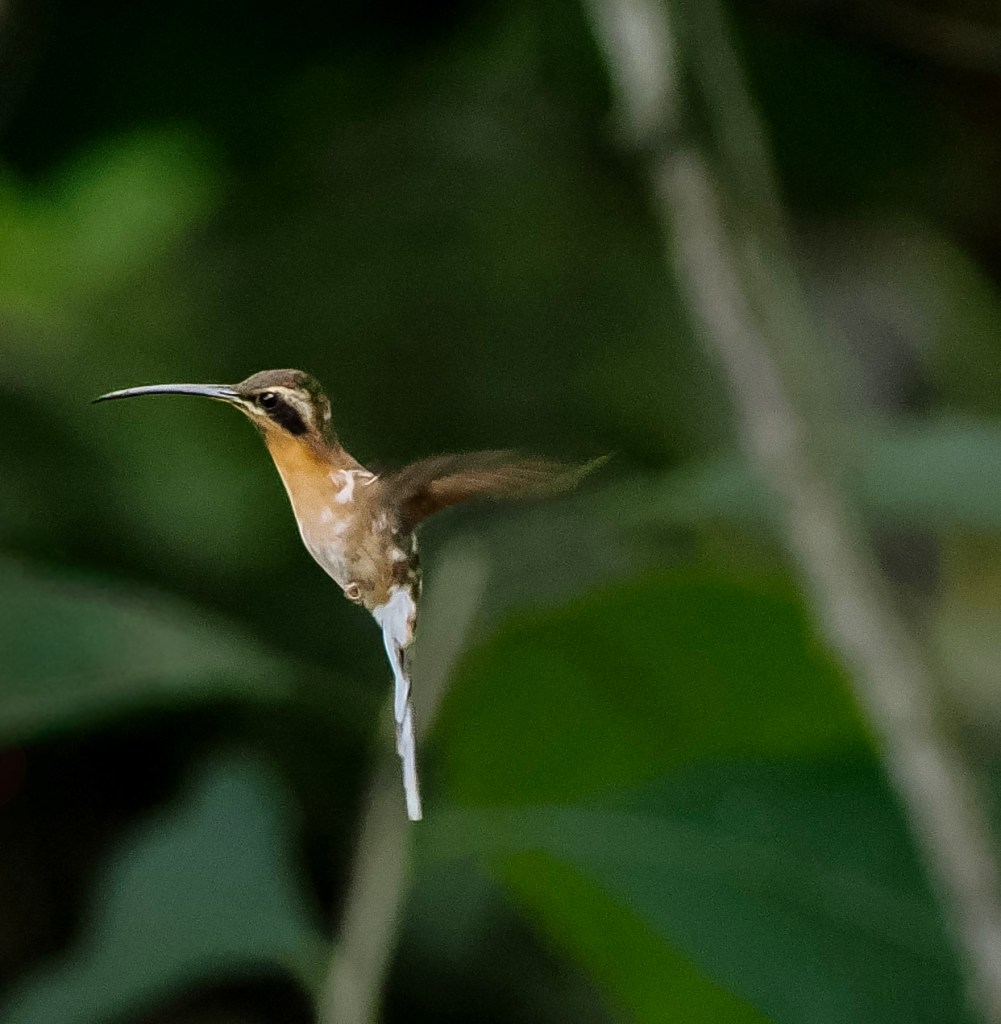
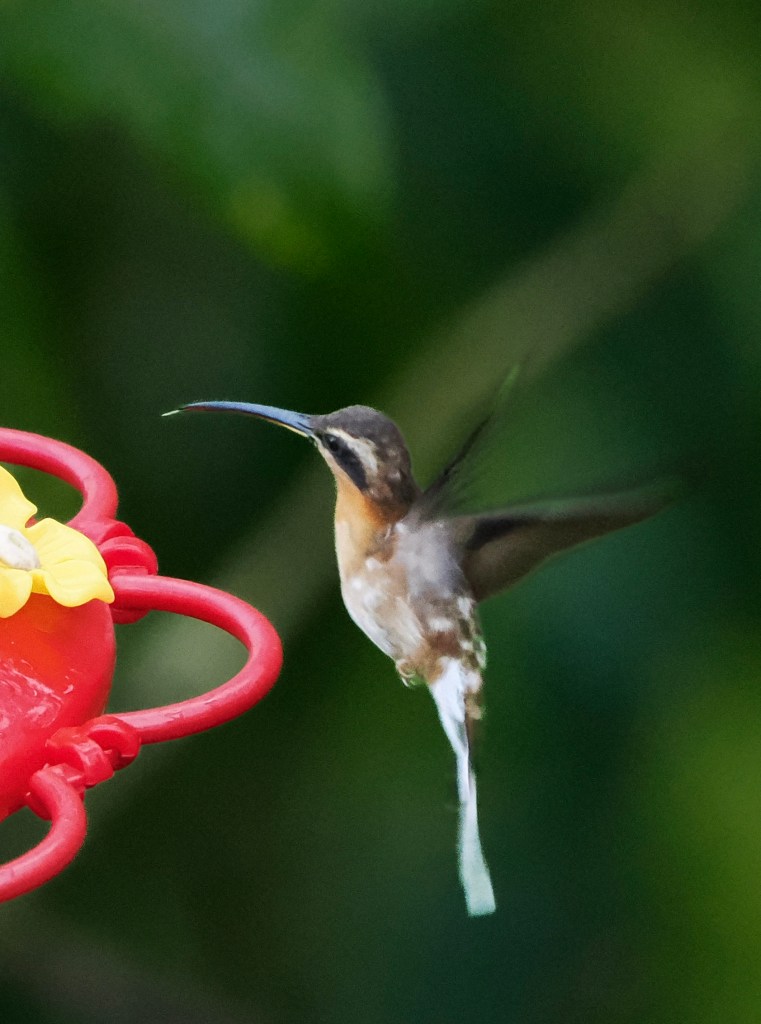
Little Hermit. Small and delicate, with a buff throat, a dark mask, and a white-centered tail. It was the hardest of the hermits to photograph because it never held still.

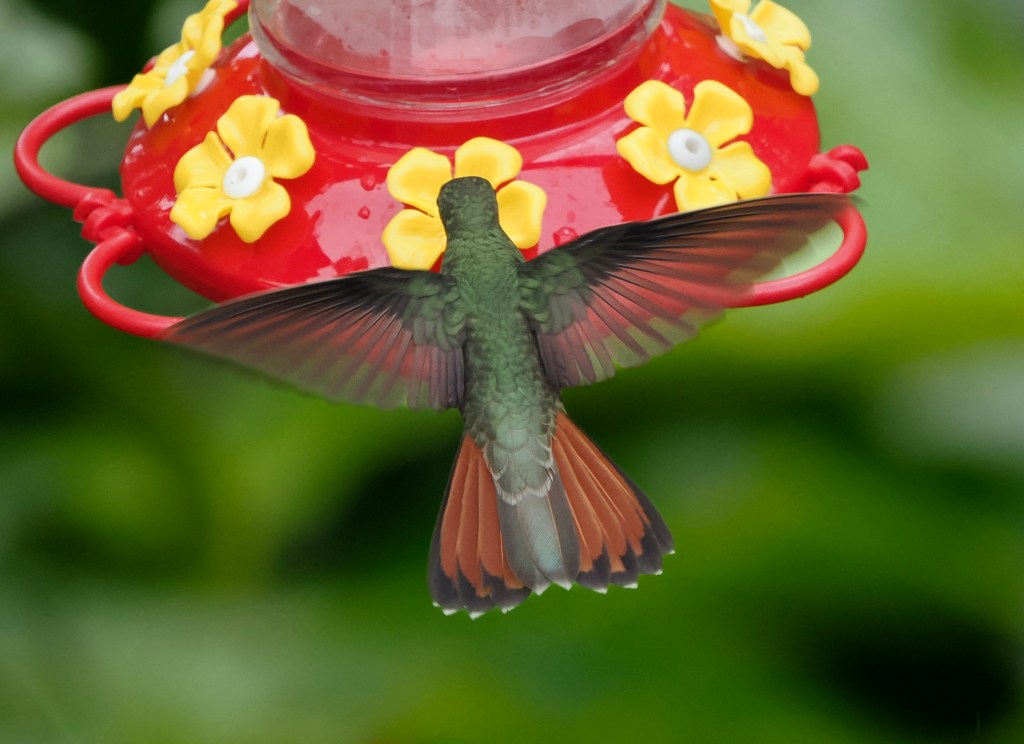
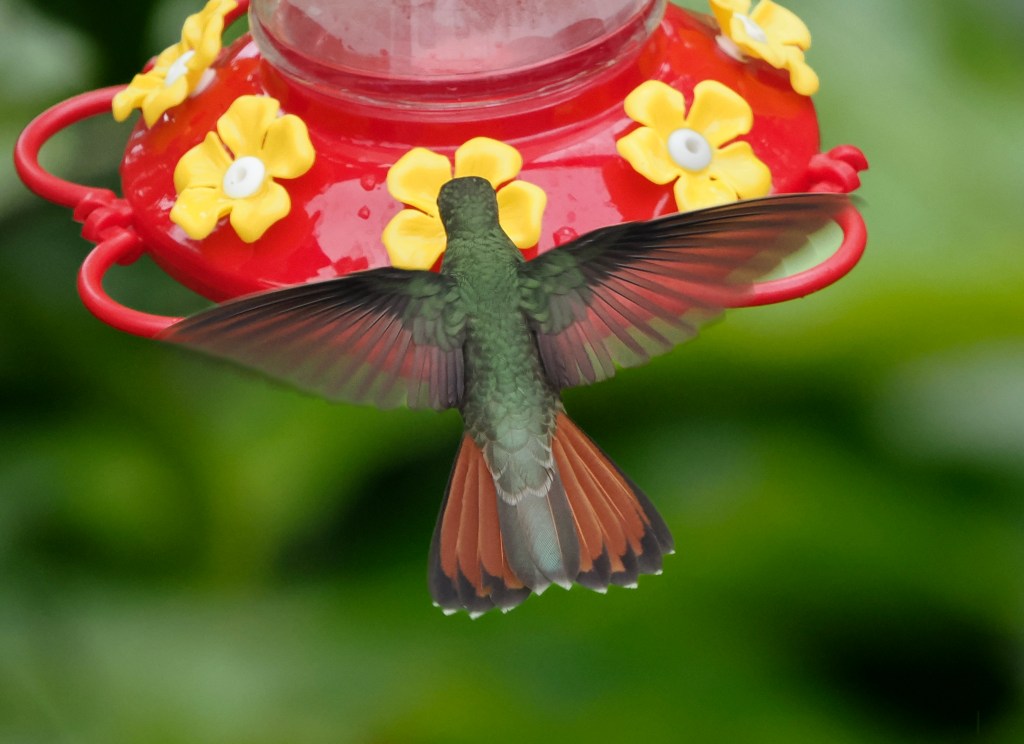
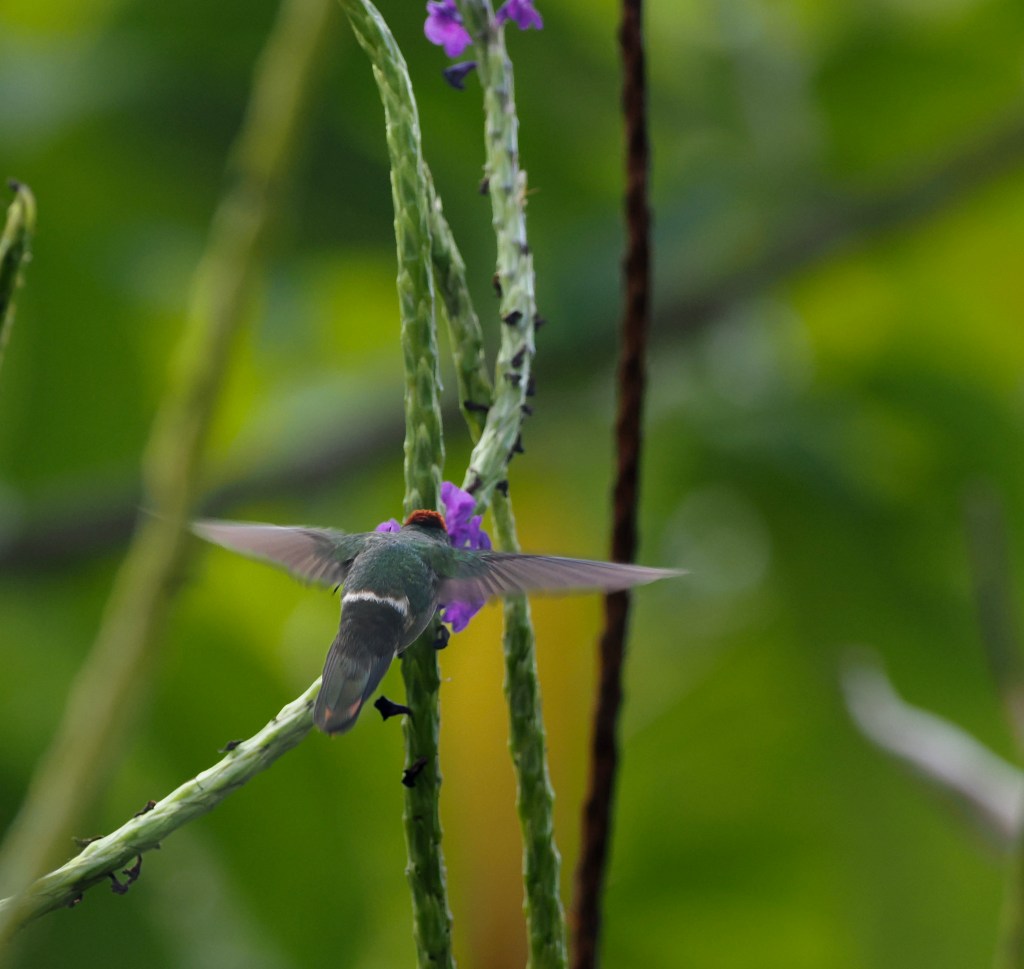
Rufous-tailed Hummingbird. I got a shot of this one from behind at a feeder, wings spread and a rust-colored tail fanned open like a skirt.

The Showstoppers

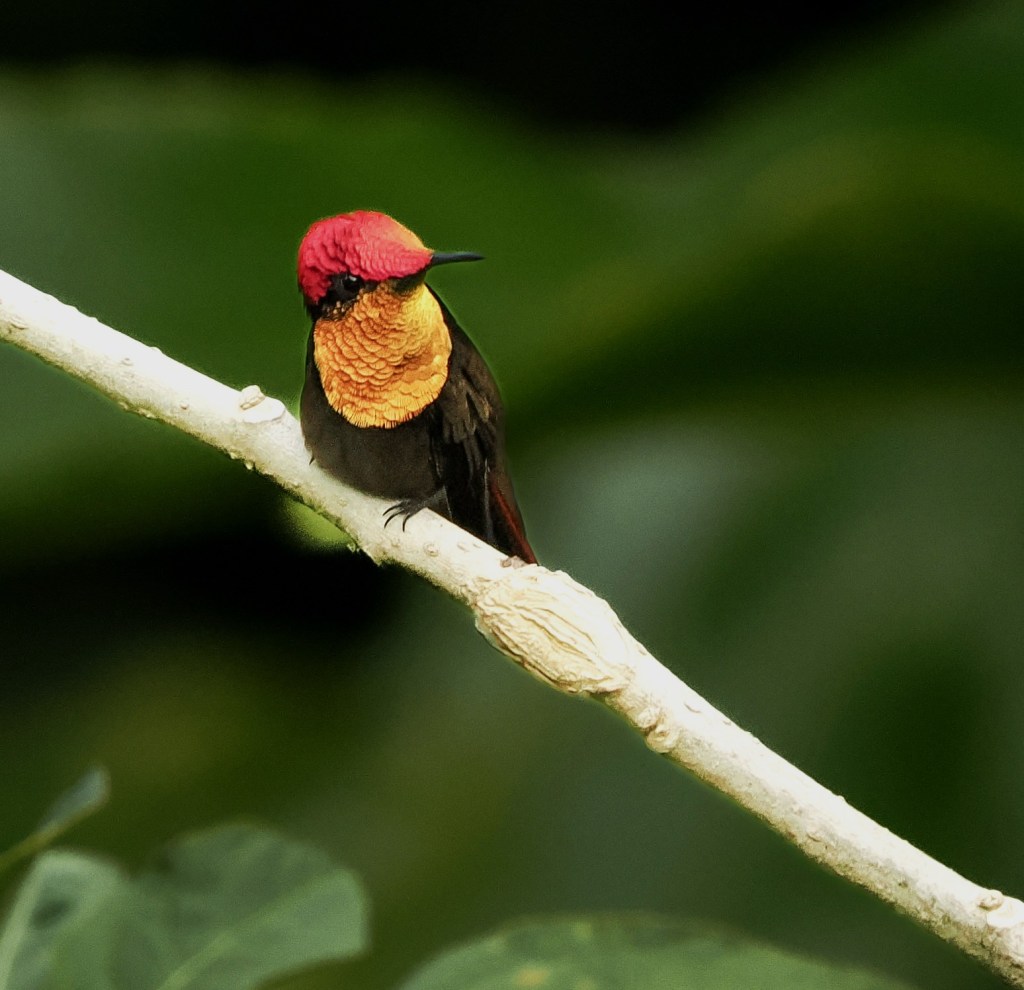
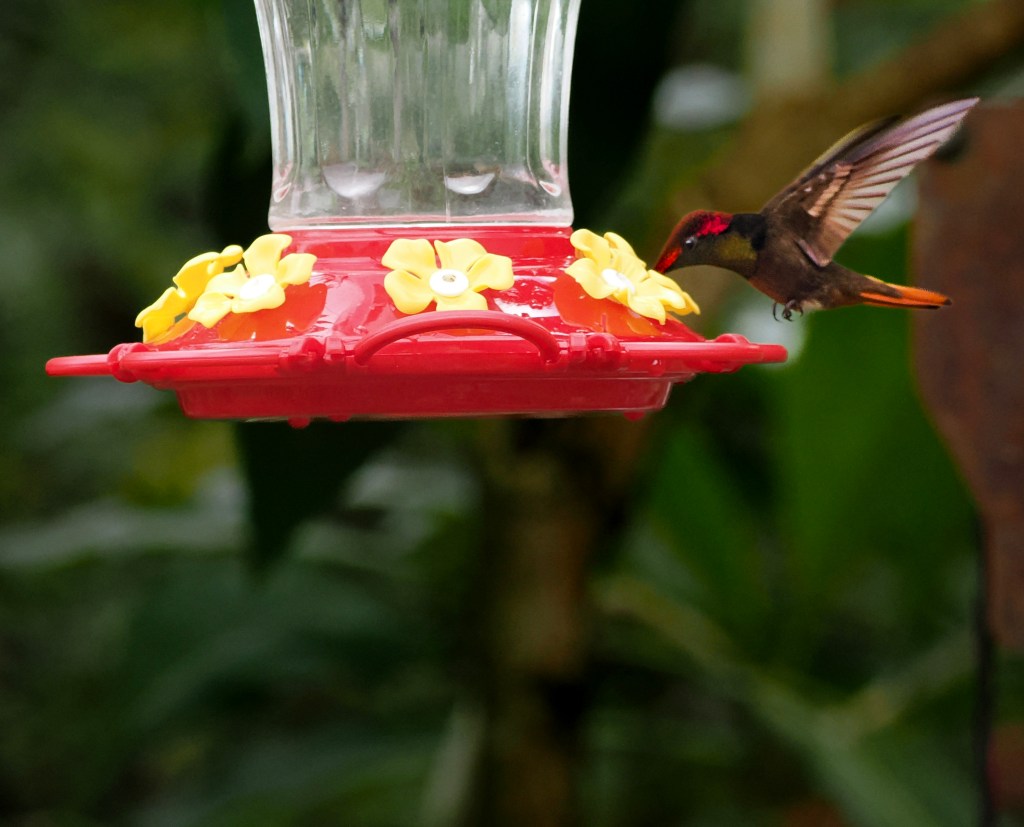
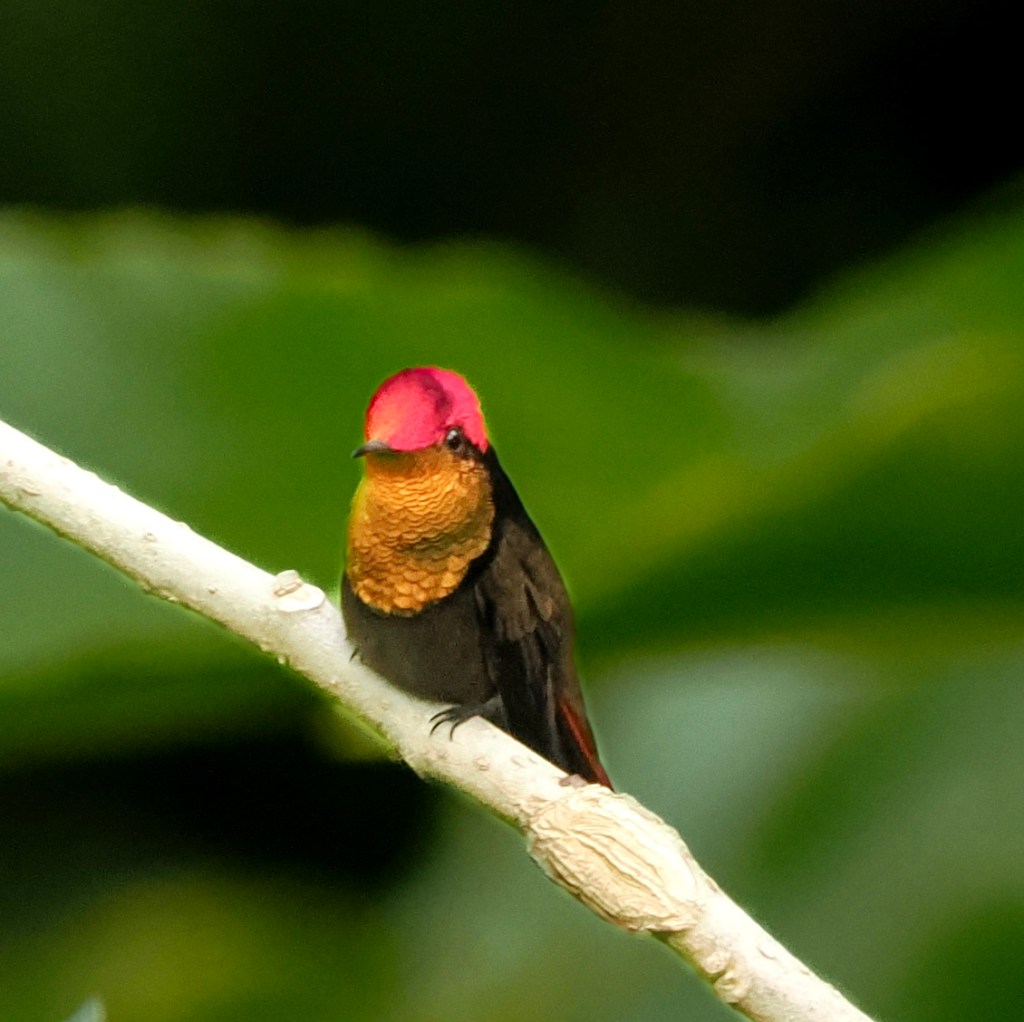
Ruby-topaz Hummingbird. This was the one that got away, sort of. I never managed a good flight shot with its tail spread. I did photograph it perched on a branch, and it is still unforgettable: a ruby-red crown, a golden-orange throat, and a dark body, like a tiny jewel.

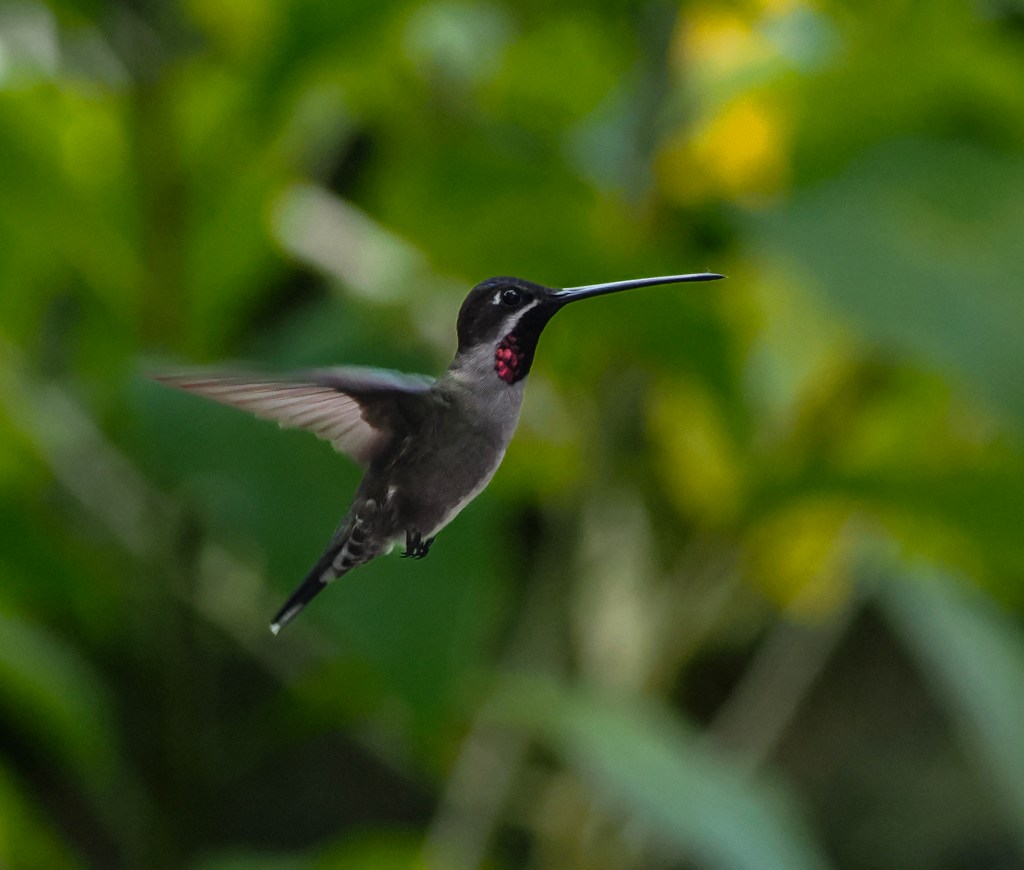
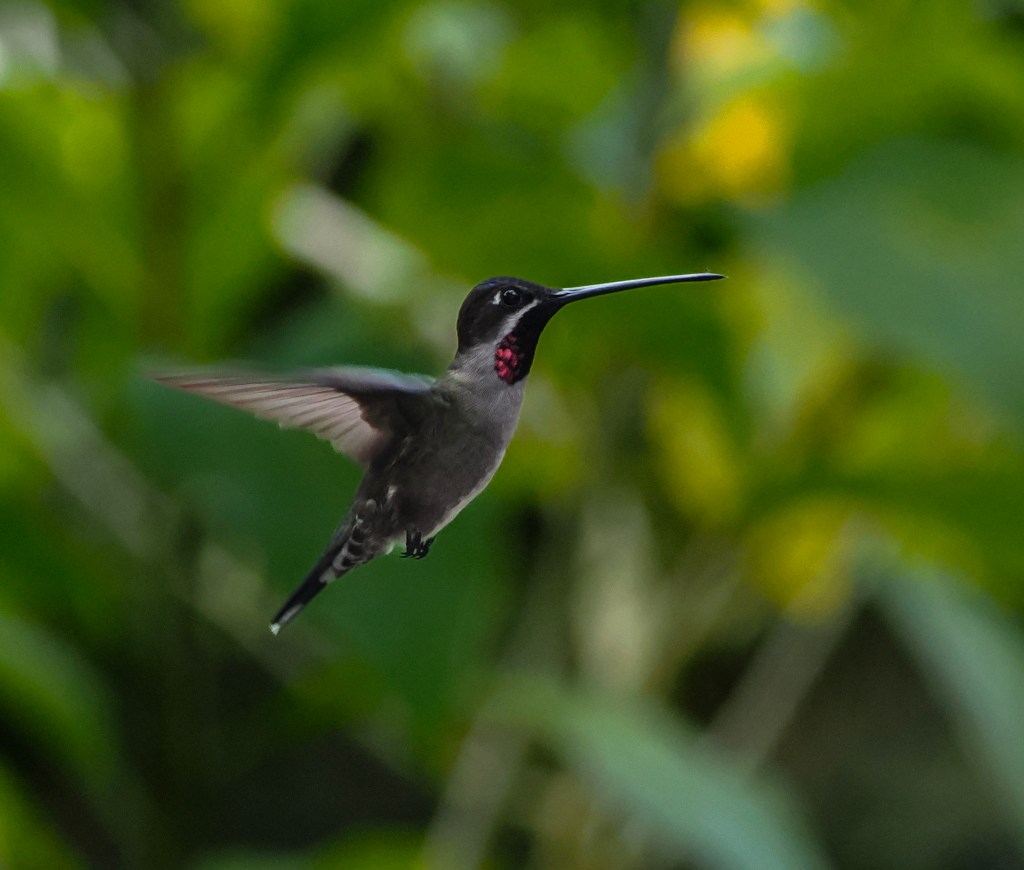
Long-billed Starthroat. A male in flight with a magenta-red throat patch, a bold white stripe behind the eye, and a long, straight bill, hence the name. The throat looks dull until the light catches it, then flashes red.

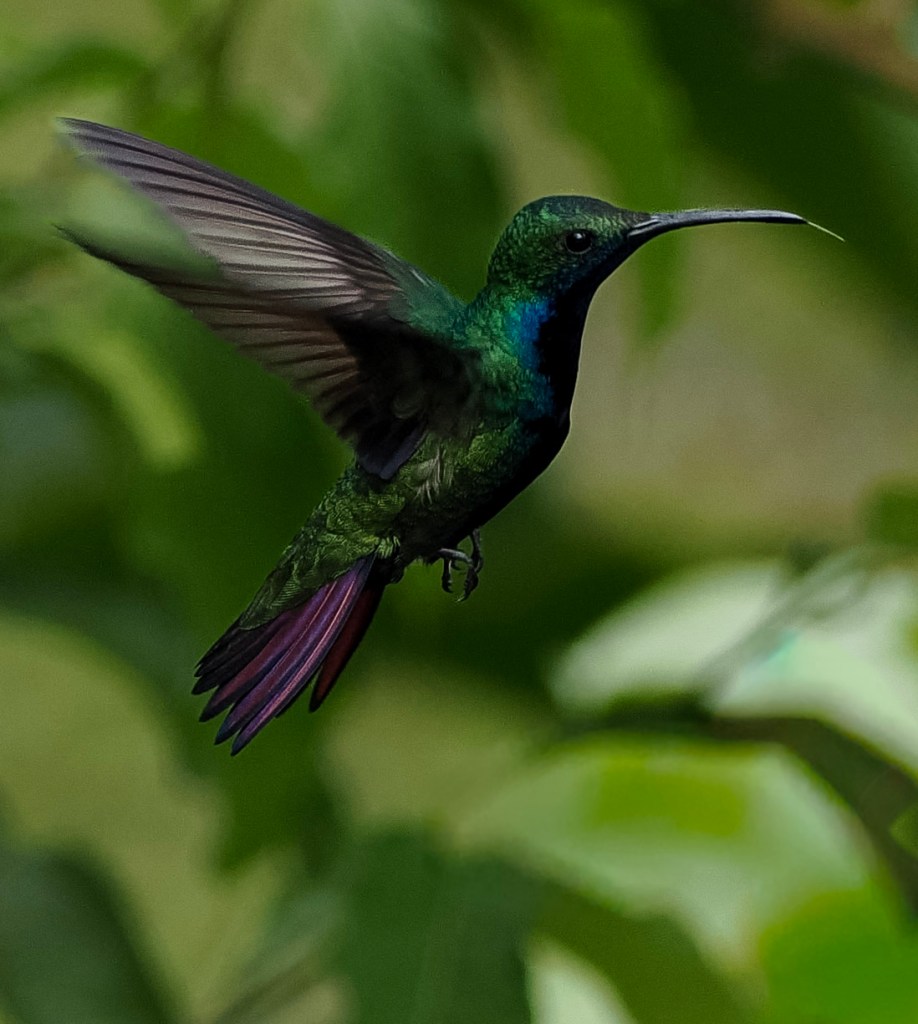
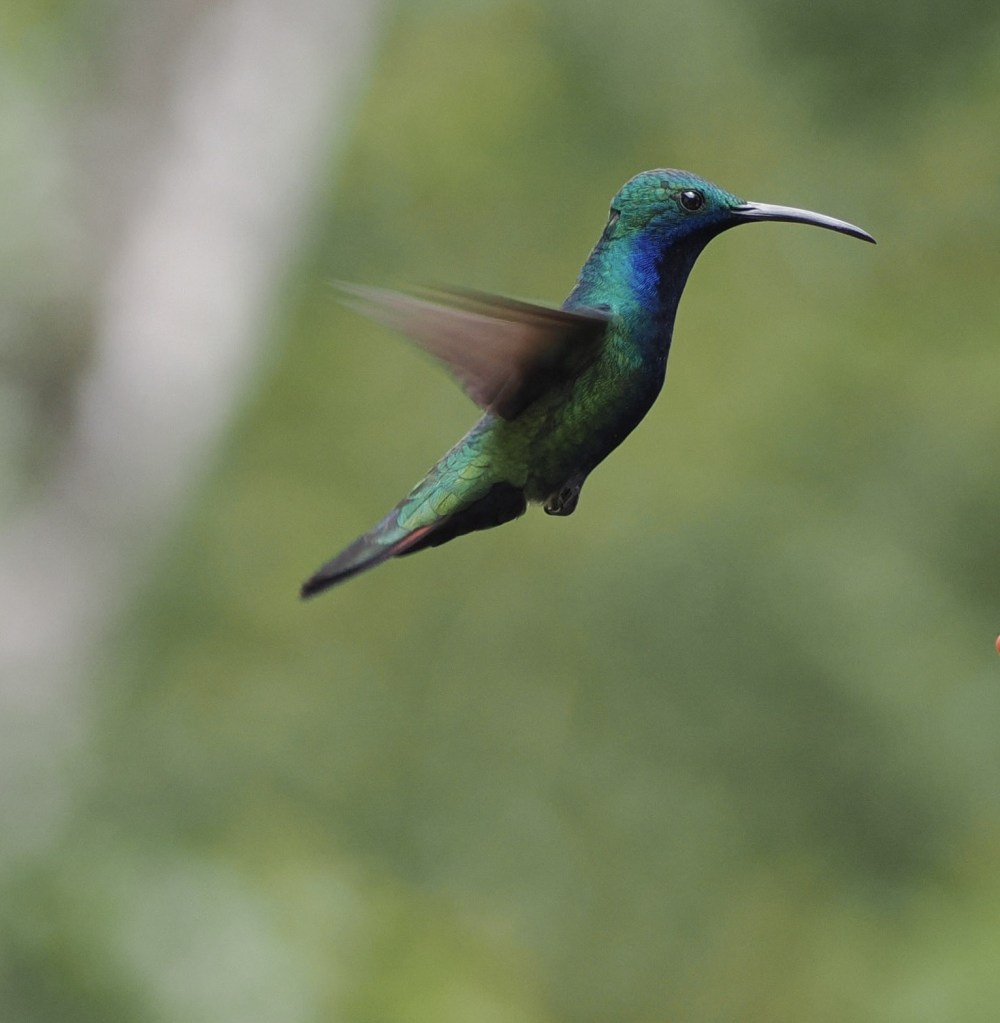
Black-throated Mango. My photo shows a long curved bill, a blue patch against a black throat, and a purple tail.

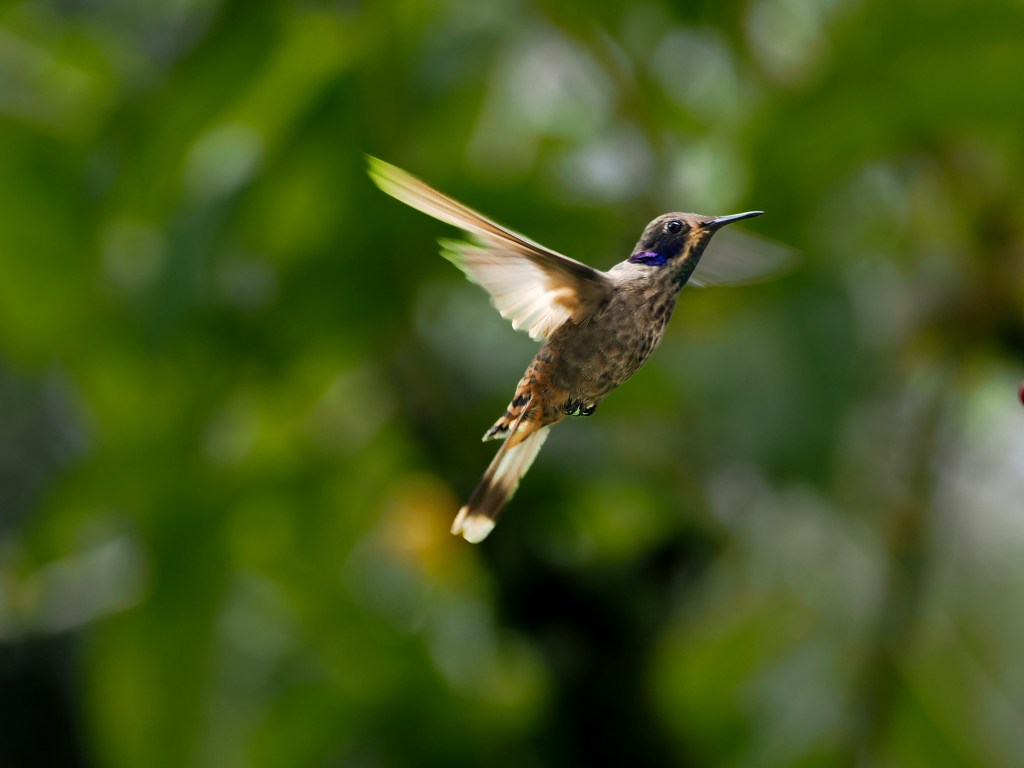
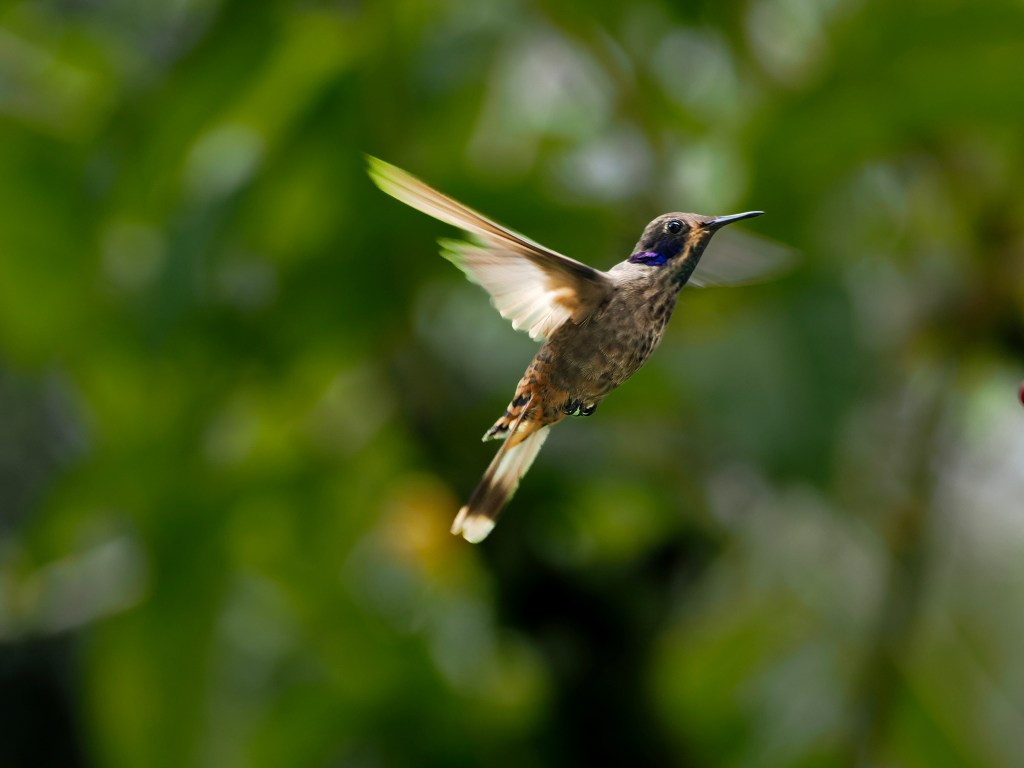
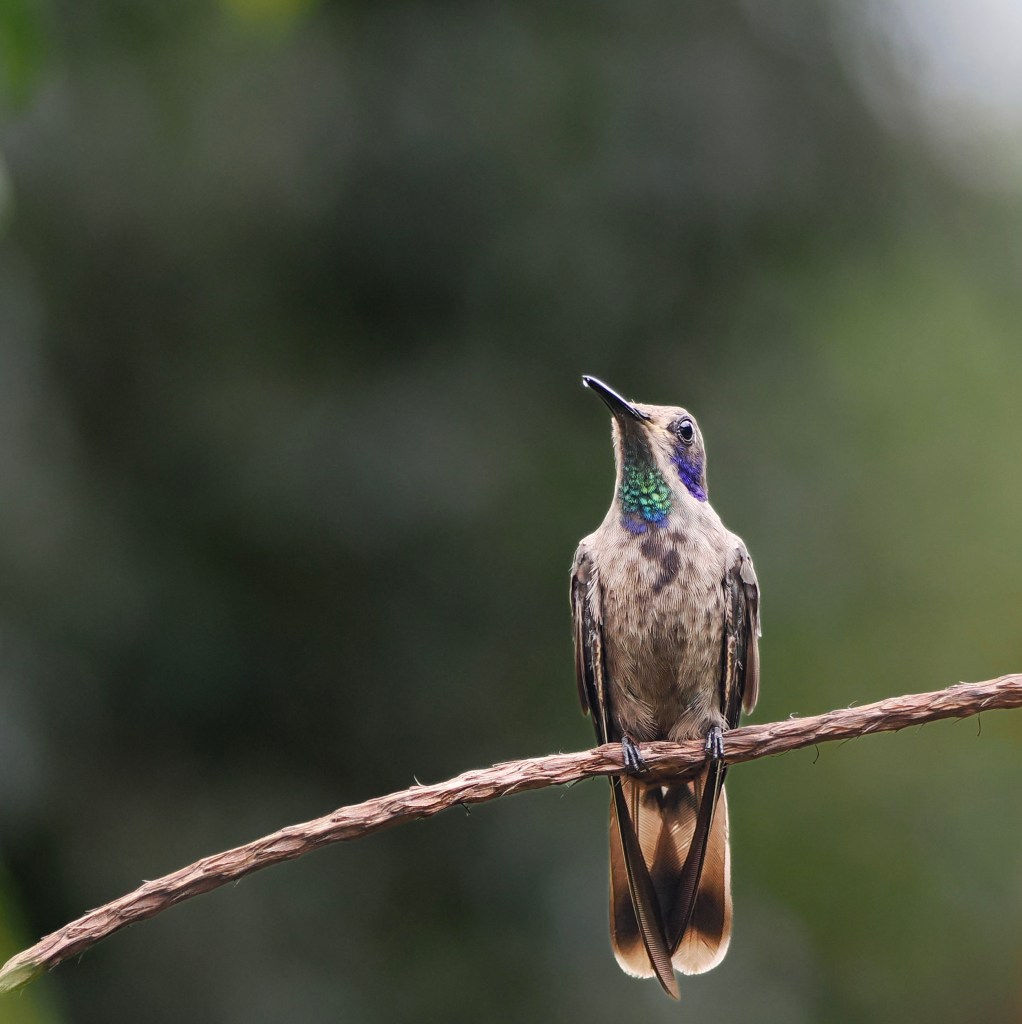
Brown Violetear. The quiet one. It is mostly soft brown and mottled, but a violet “ear” patch and a flash of green at the throat catch the light. I photographed it both in flight and perched calmly on a vine.

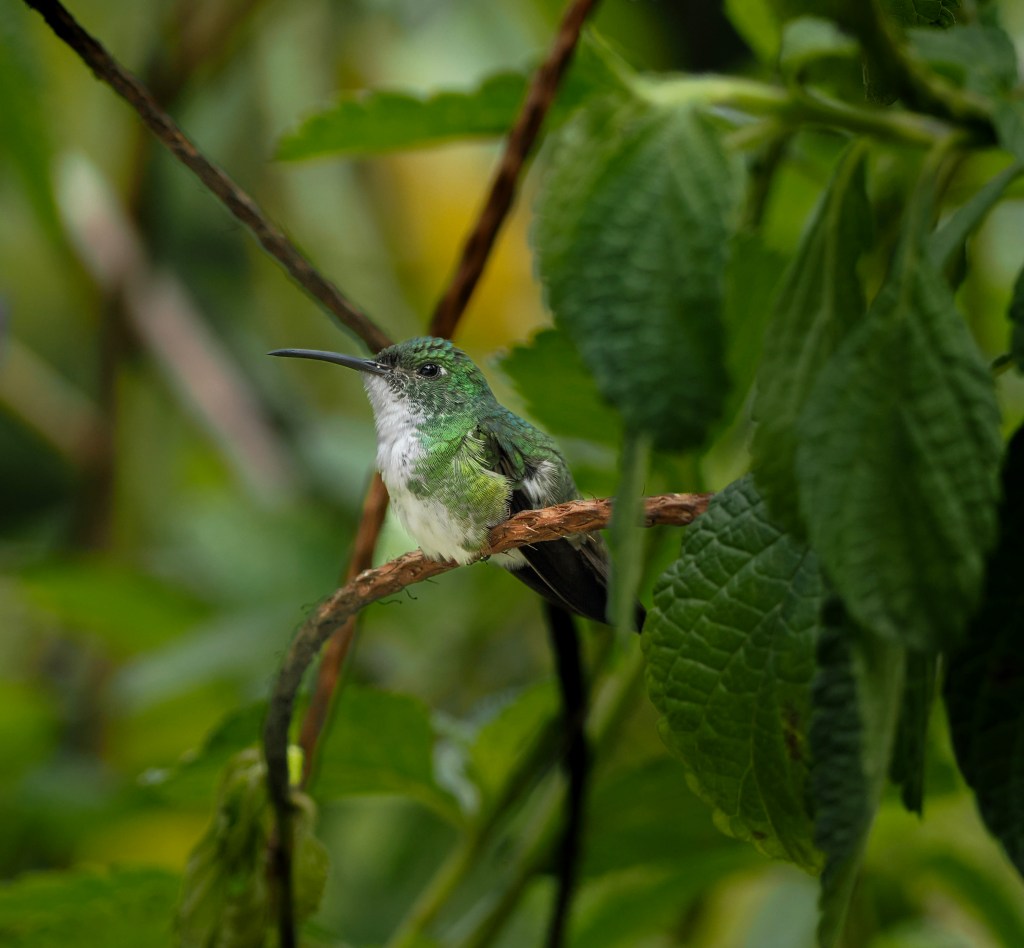
White-chested Emerald. A small, elegant green hummingbird with a clean white throat and chest. I photographed it perched on a branch.

The Rare One That Never Came to the Feeders: Tufted Coquette

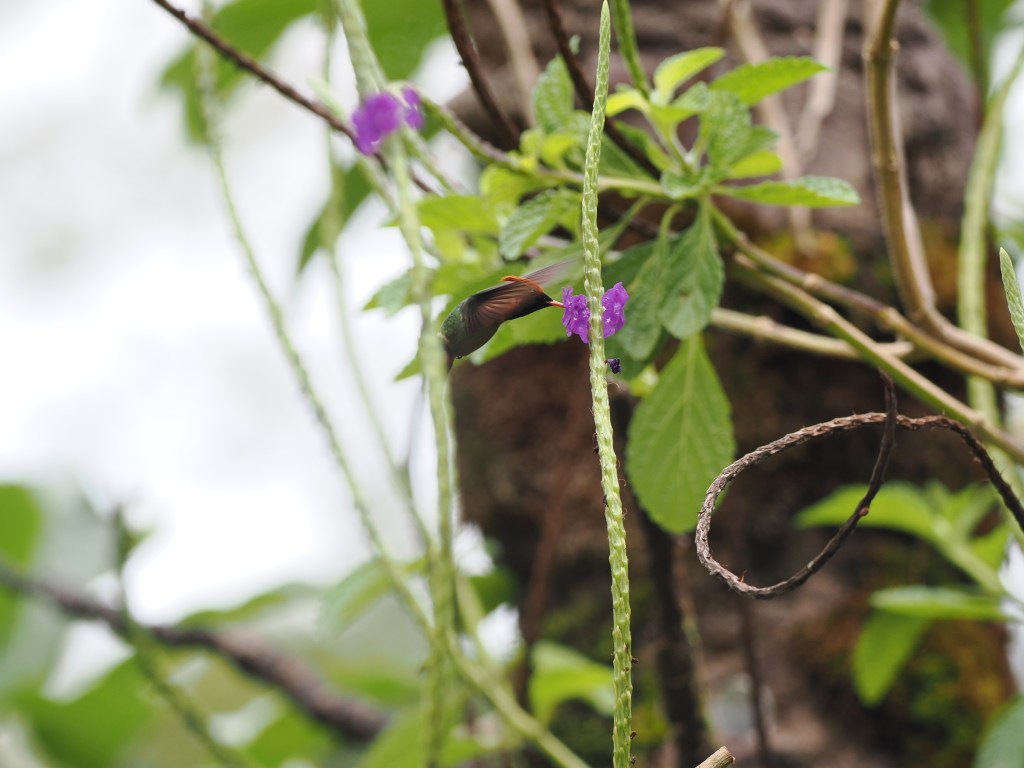
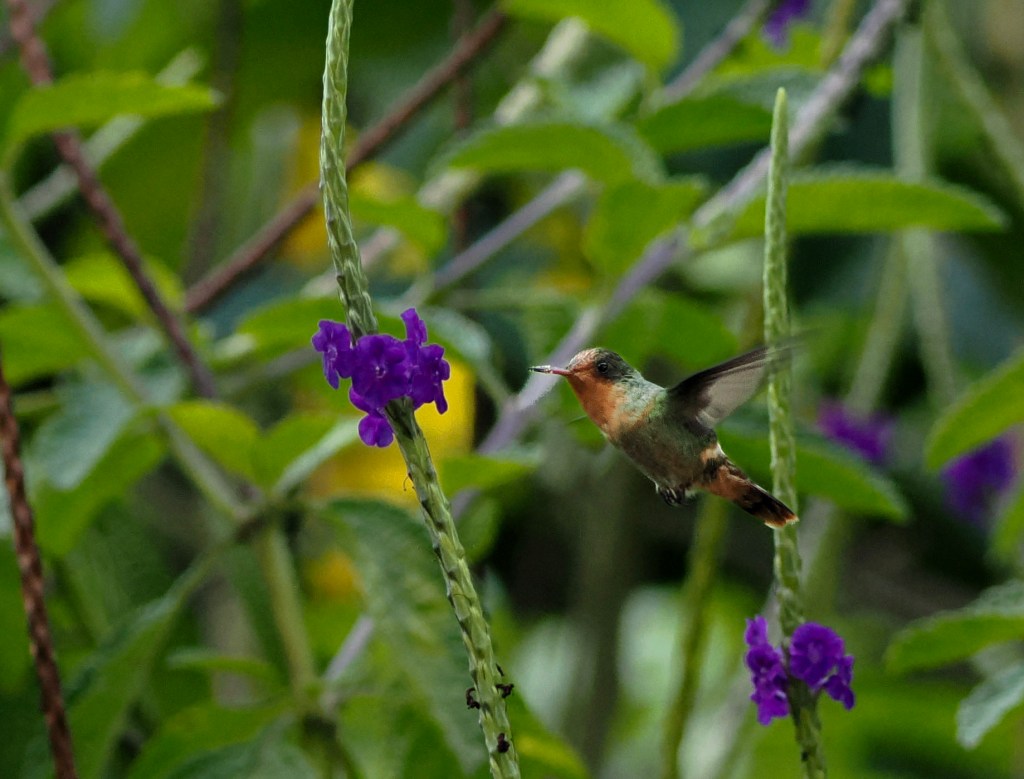
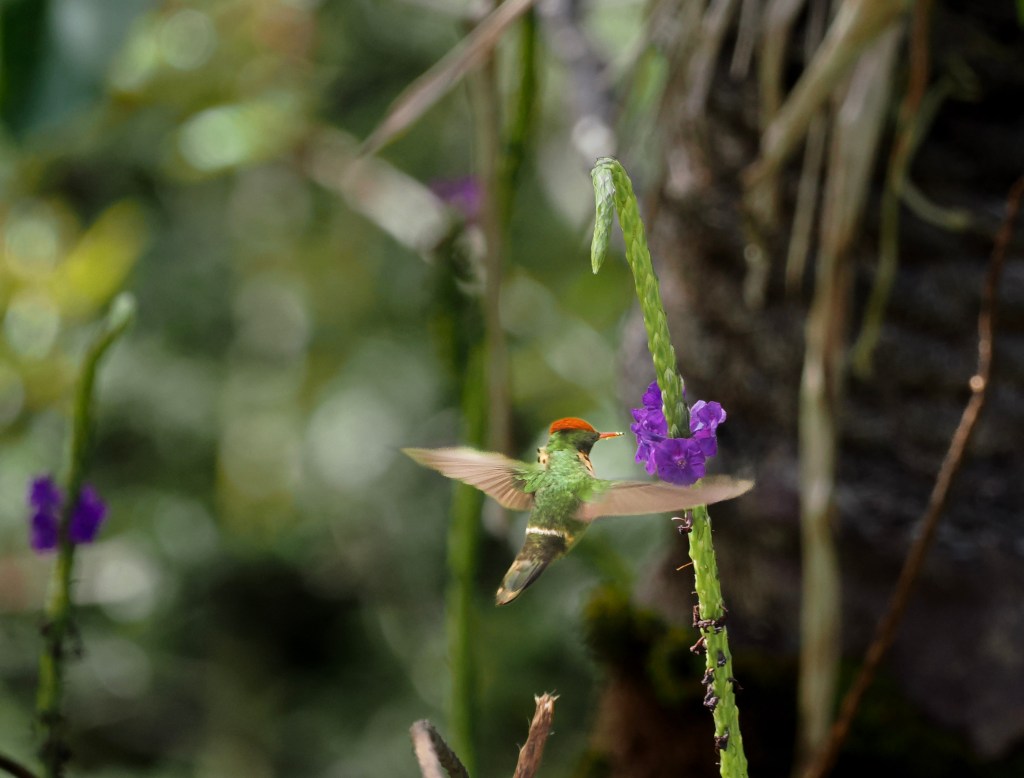
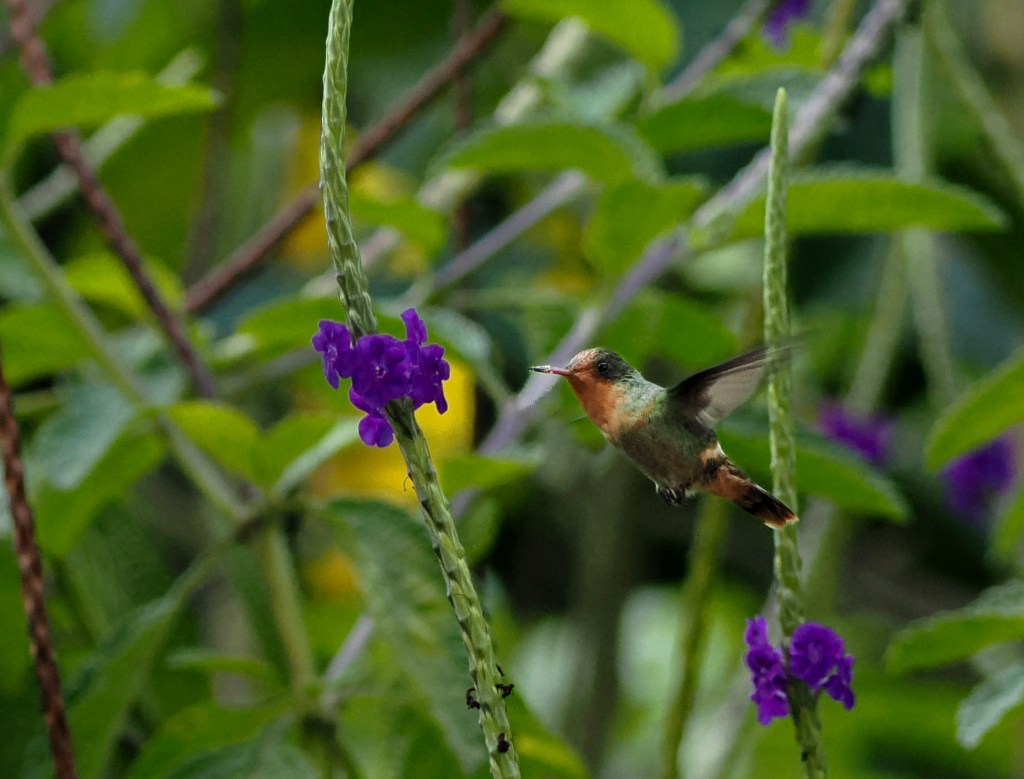
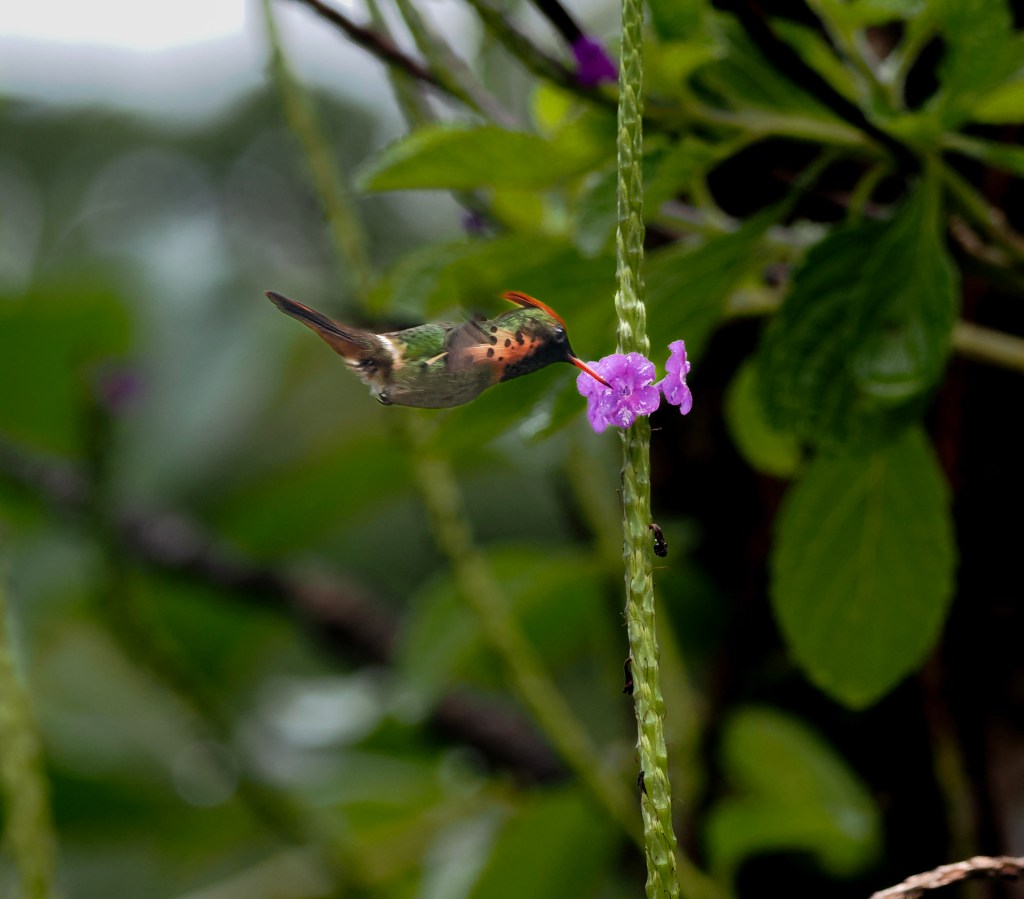
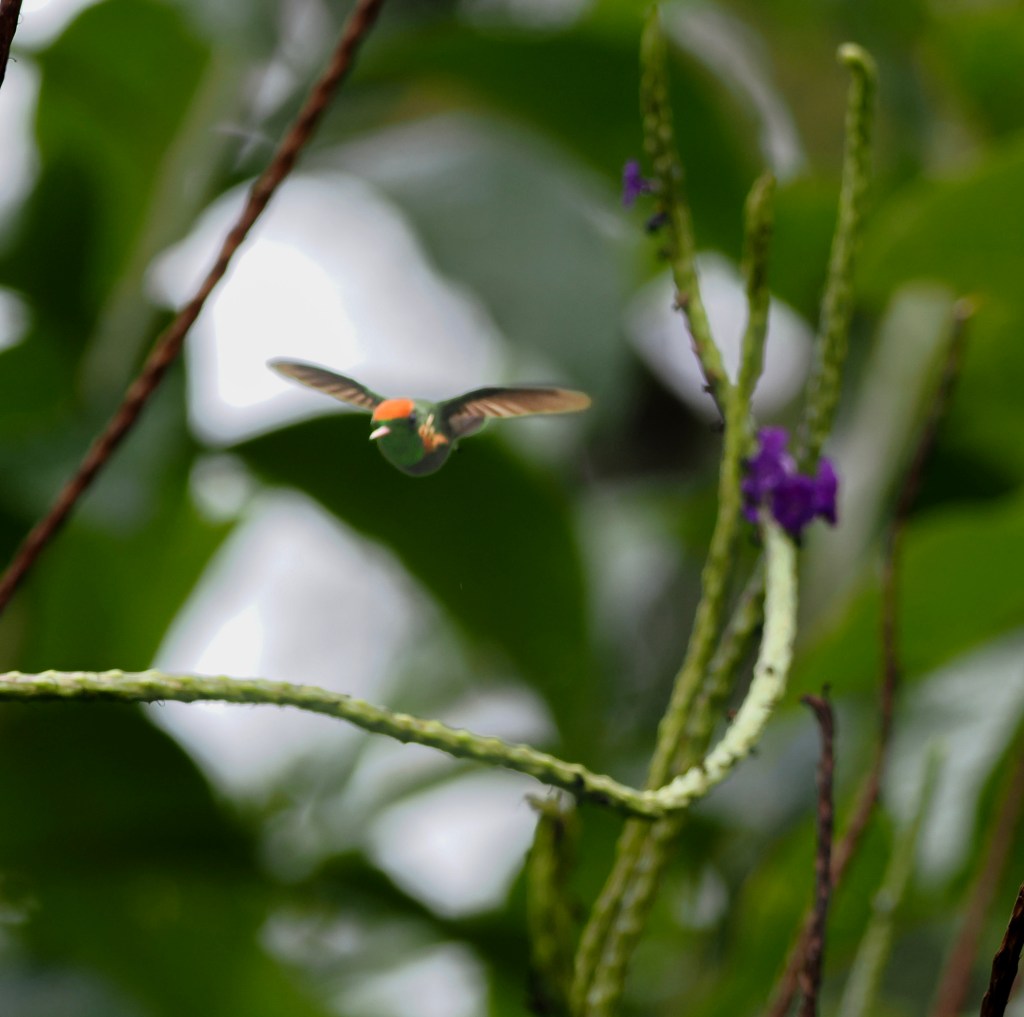
The Tufted Coquette is one of the rarest hummingbirds you can see at Asa Wright, and it never visited the feeders. I found it hovering at the purple flowers growing near them. It is tiny, with an orange face and throat and a rusty tail, and I was lucky to be watching the flowers at the right moment. It’s a good reminder to look beyond the feeders: the garden flowers have visitors too.

The Fruit Feeders: Color on Every Plate

The banana feeders were just as busy:

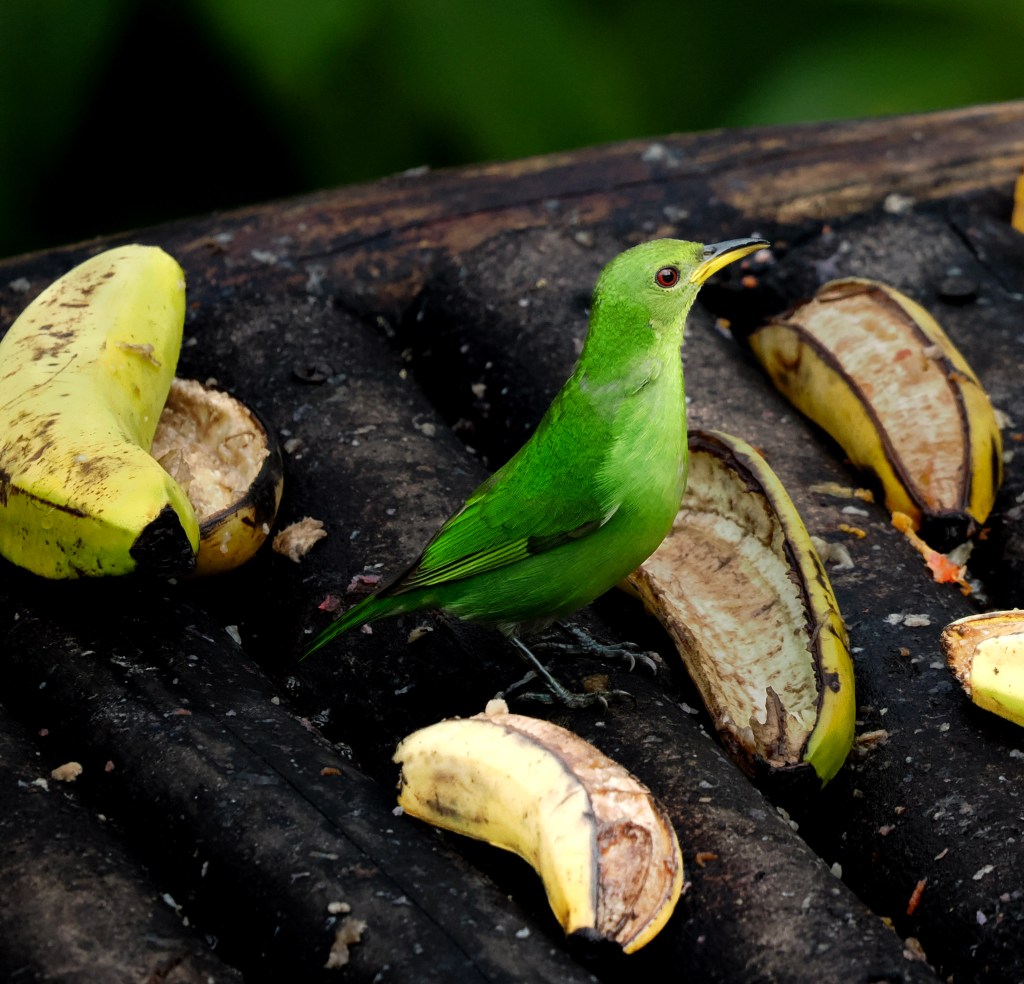
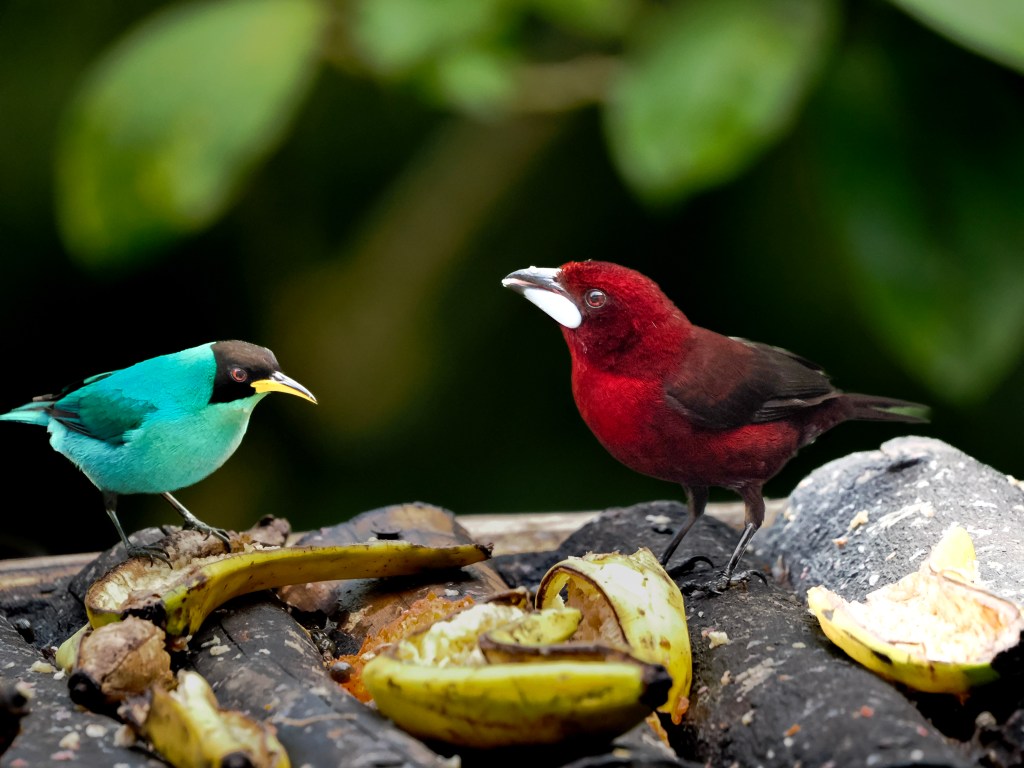
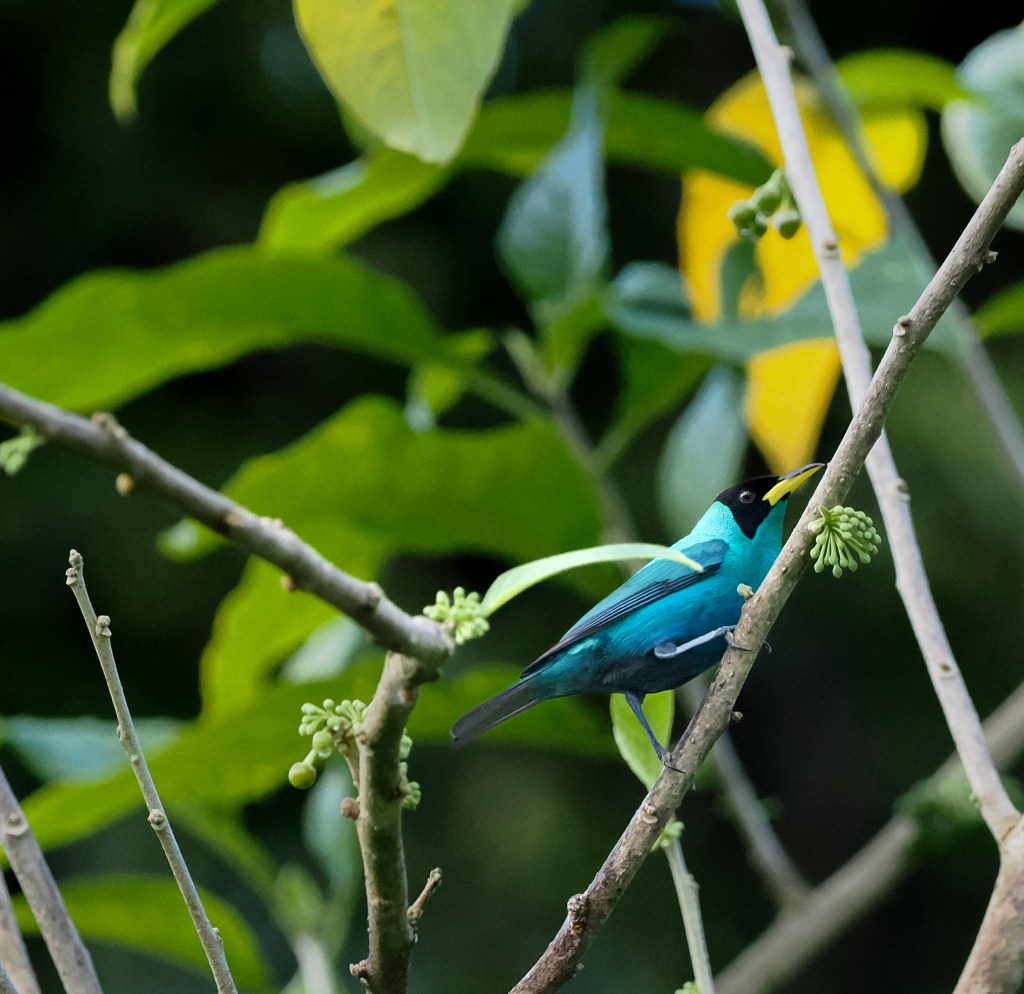
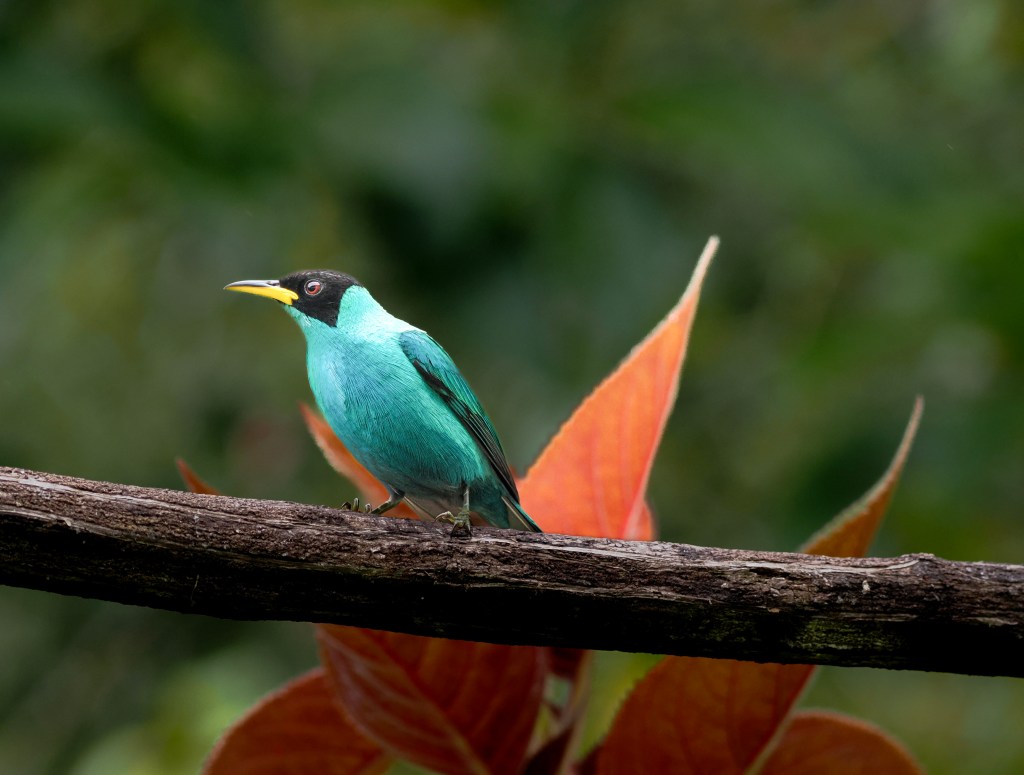
  • Green Honeycreeper: the male is turquoise with a black hood and yellow bill. The female is leaf green.
  • Silver-beaked Tanager: a deep crimson bird with a silvery bill, shown here facing off with a honeycreeper.
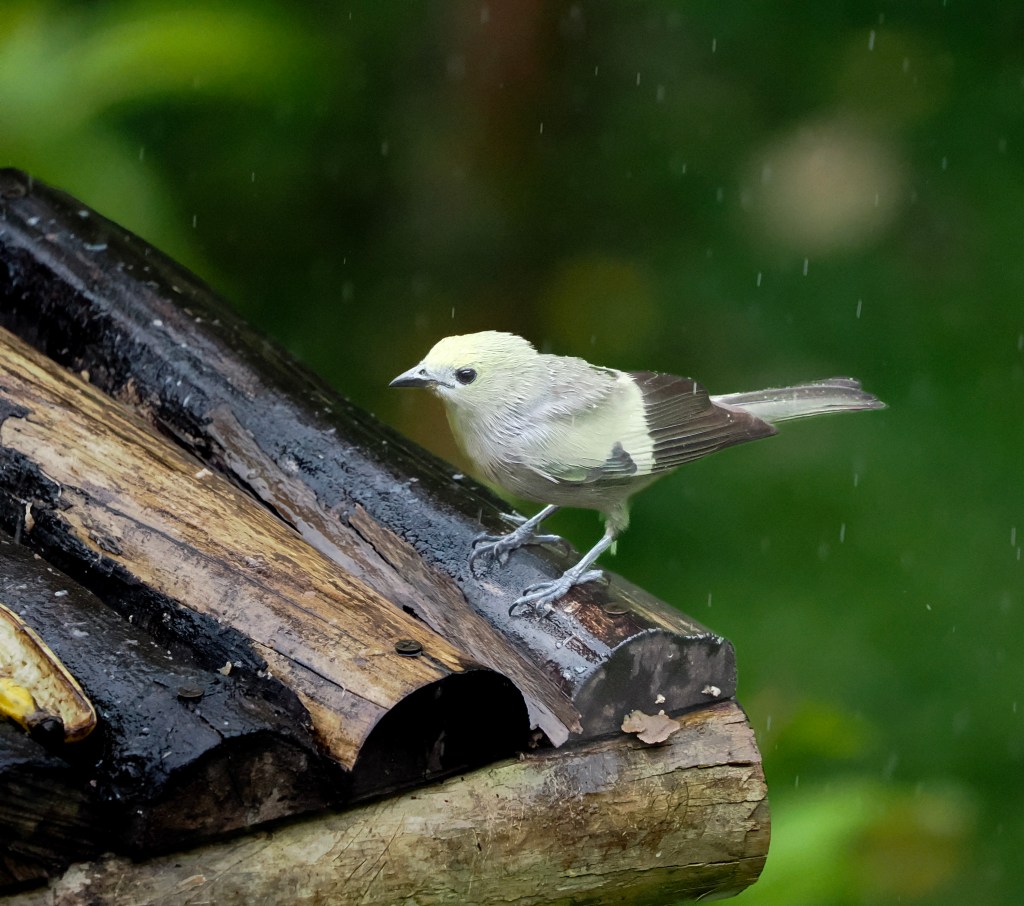
  • Palm Tanager: I caught one perched on a wet log in the rain.
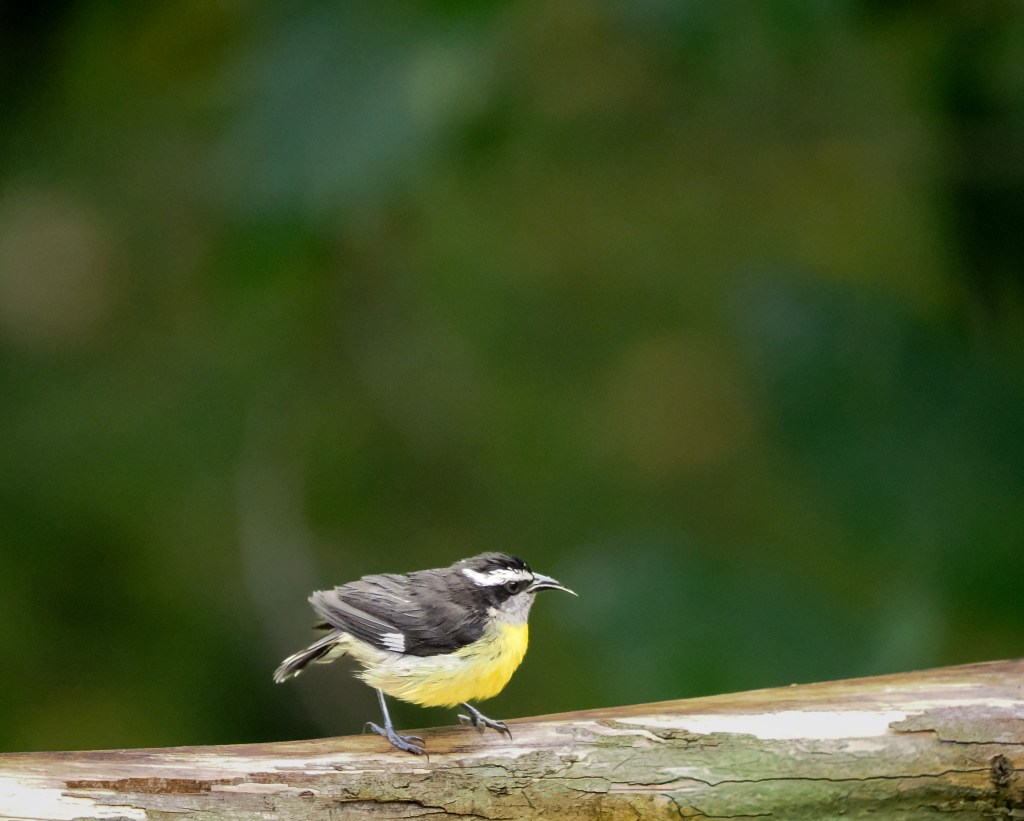
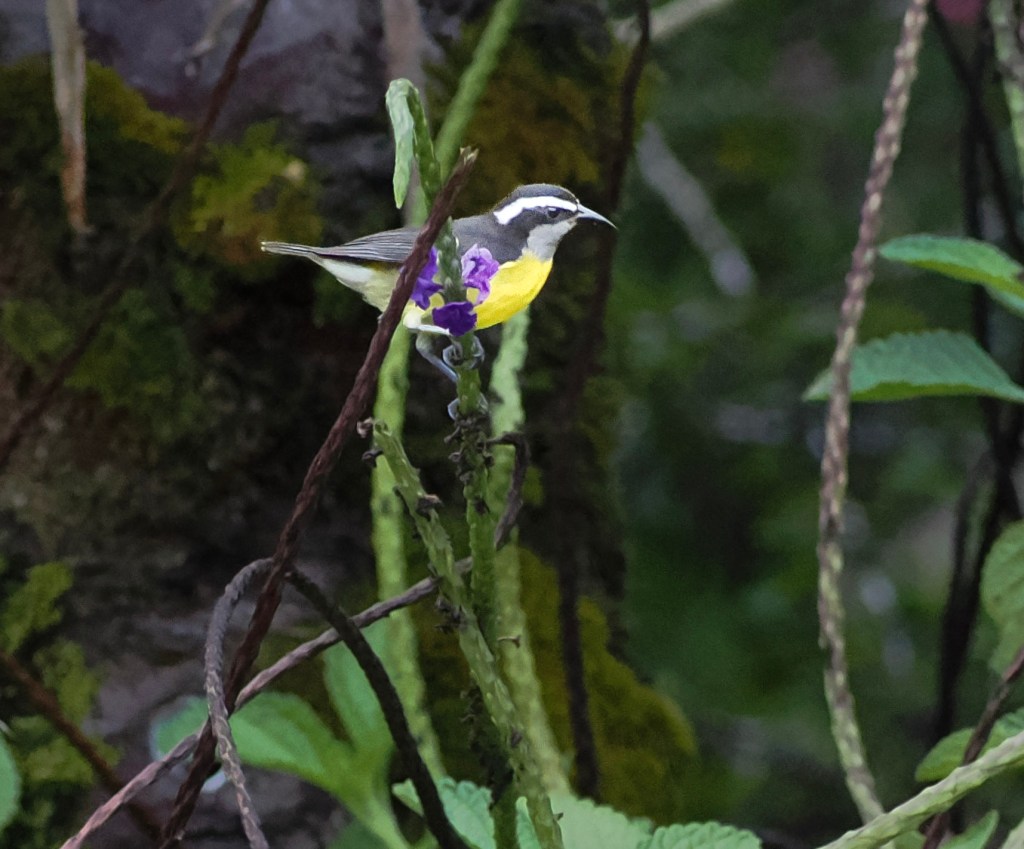
  • Bananaquit: tiny, yellow-bellied, and bold. It visits the feeders and the purple flowers around the veranda.
  • Crested Oropendola: it came face to face with my lens, banana on its bill, blue eyes blazing. It was my favorite performer. When the males call, they swing forward on the perch like a pendulum.
Forest Birds from the Veranda and Trails

  • Bay-headed Tanager: a green body with a rusty-red head, perched in the fruiting trees.
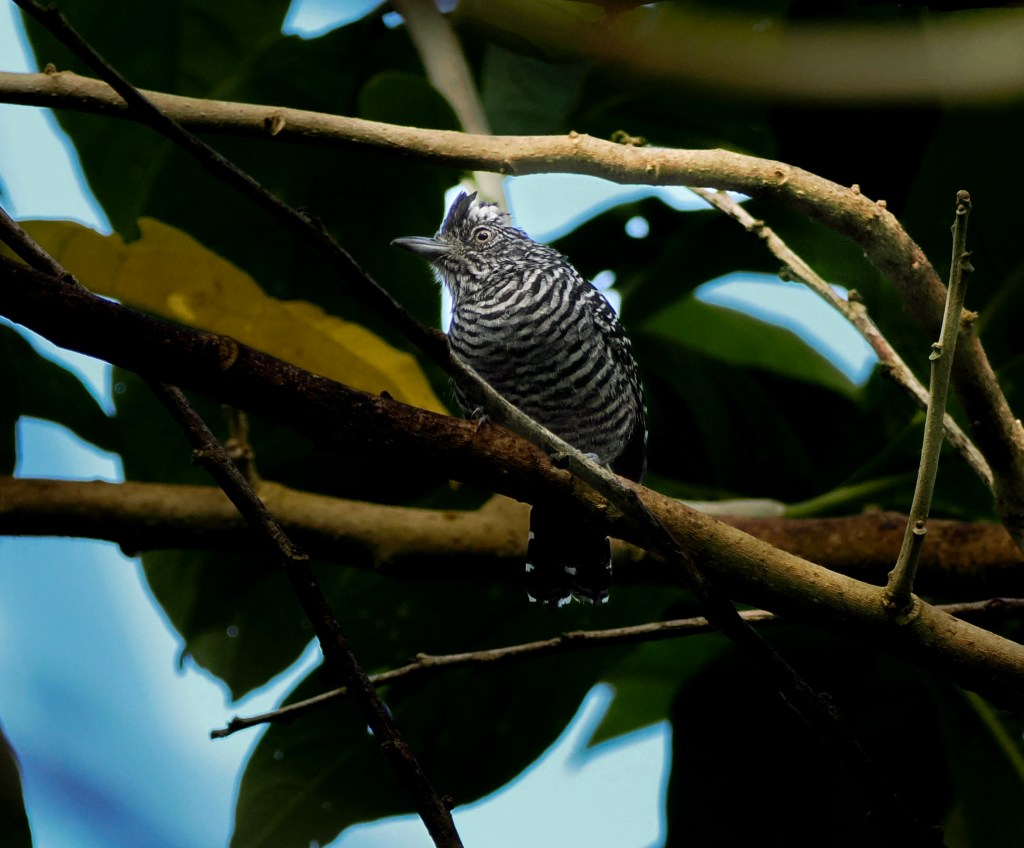
  • Barred Antshrike: black-and-white stripes and a little crest, hiding in the foliage.
  • Bearded Bellbird (the “anvil bird”): a brown head, a white body, and a black beard of wattles. Its call sounds like a hammer striking an anvil. Birdingplaces notes the bellbird can often be seen from the veranda.
  • White-bearded Manakin: a black cap, a white body, and orange legs. I love how the male tidies his display area to impress the female, like a tiny landscaper trying to win a date.
  • Channel-billed Toucan: perched on a bare branch against the misty hills, with pale blue skin around the eye and an orange-yellow breast.
  • Orange-winged Parrot: a pair preening each other at dusk, with a flash of orange on the wing.

The Oilbirds

And yes, I saw the oilbirds. They are nocturnal fruit-eaters that navigate in the dark by echolocation, which is rare among birds. Asa Wright is one of the best-known places in the world to see them. The trail to the roost requires a guide, which is a good thing, because guides know how to approach without disturbing them. Seeing one peering out of its rocky roost was worth the trip on its own.

Why Asa Wright Is So Good for Birding

  • The veranda is the show. You can see more from one chair than on a long trail.
  • The in-house guides are excellent. The morning walk led to species I would have walked past on my own.
  • The habitats are varied. The rainforest, garden, feeders, and nearby Caroni Swamp each add different birds to your list.
  • The setting is remarkable. It’s quiet and tucked away, yet only 45 to 60 minutes from Piarco Airport.

Tips for Photographing Birds at Asa Wright

  • Use a fast shutter speed for hummingbirds, around 1/2000s or faster, to freeze the wings. If you want a little wing blur, as in the mango shot, slow down a bit.
  • Expect rain and low light. A fast lens or higher ISO helps.
  • Bring a long lens, but the feeders put many birds within reach of a standard zoom.
  • Sit still. The best shots came after I stopped moving.
  • Ask the guides where the bellbirds and manakins are calling that day.

Final Thoughts

I came to Trinidad for business and left with some of my best travel memories. Asa Wright gave me a quiet, beautiful base, helpful people, great food, and about two dozen species photographed without ever leaving the grounds. If you’re headed to Trinidad, even for work, carve out a few days here