Staying at Asa Wright: Why I Traded My Business Hotel for a Rainforest Veranda

When I learned my work was sending me to Trinidad, I assumed the trip would be all conference rooms and airport transfers. Then I did what I always do before travel and went down a research rabbit hole. Within an hour, I learned that Trinidad is one of the best birding destinations in the Caribbean, and one name kept coming up: Asa Wright Nature Centre. Trinidad overall surprised me in a good way. It had never been on my travel list, but now I think it deserves more than 3 days to explore the rest of the island.
Why I Chose Asa Wright

Trinidad sits just off the coast of Venezuela, so its birdlife is far richer than you’d expect from such a small island. It has South American species alongside Caribbean ones, packed into a compact space. I wanted a base where the birds came to me, and Asa Wright looked like exactly that.

What sealed it was the history. The centre grew out of a former cocoa, coffee and citrus estate in the Arima Valley, where a woman named Asa Wright made her home and welcomed visiting naturalists. It later became a nature centre and sanctuary, protecting a large stretch of rainforest. I love places with a story, and this one began with hospitality and a love of nature. That felt right for a place I’d be sleeping.

I reached out to the team, and they were wonderful. They helped organize my whole stay, including pickup from Port of Spain’s Piarco airport and a drop-off at my Port of Spain business hotel at the end. For a solo traveler juggling work, that kind of help was a huge relief.

I chose three days for one big reason: the oilbirds. They were at the top of my wish list, and I wanted enough time to see them without rushing.

The Drive: Winding Roads and a Sudden Silence

The drive was half the fun. We left the airport and soon began climbing winding mountain roads through thick green hills. I couldn’t believe it: no more than 45 to 60 minutes from the airport, and the world had gone quiet. Traffic and noise were replaced by birdsong, cool air, and a sense of being tucked away in the forest.

Arrival: Rum Punch and 15 Hummingbird Feeders

I was welcomed with a rum punch and led to the famous veranda. I sat down, looked out, and that was it. I was sold.
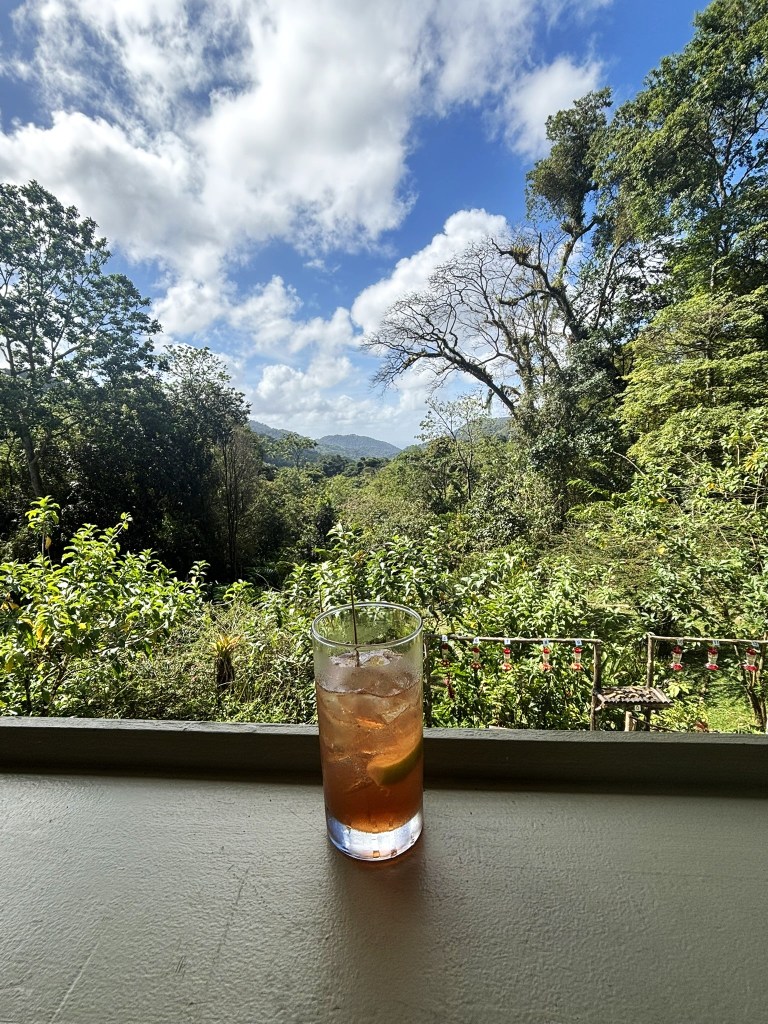
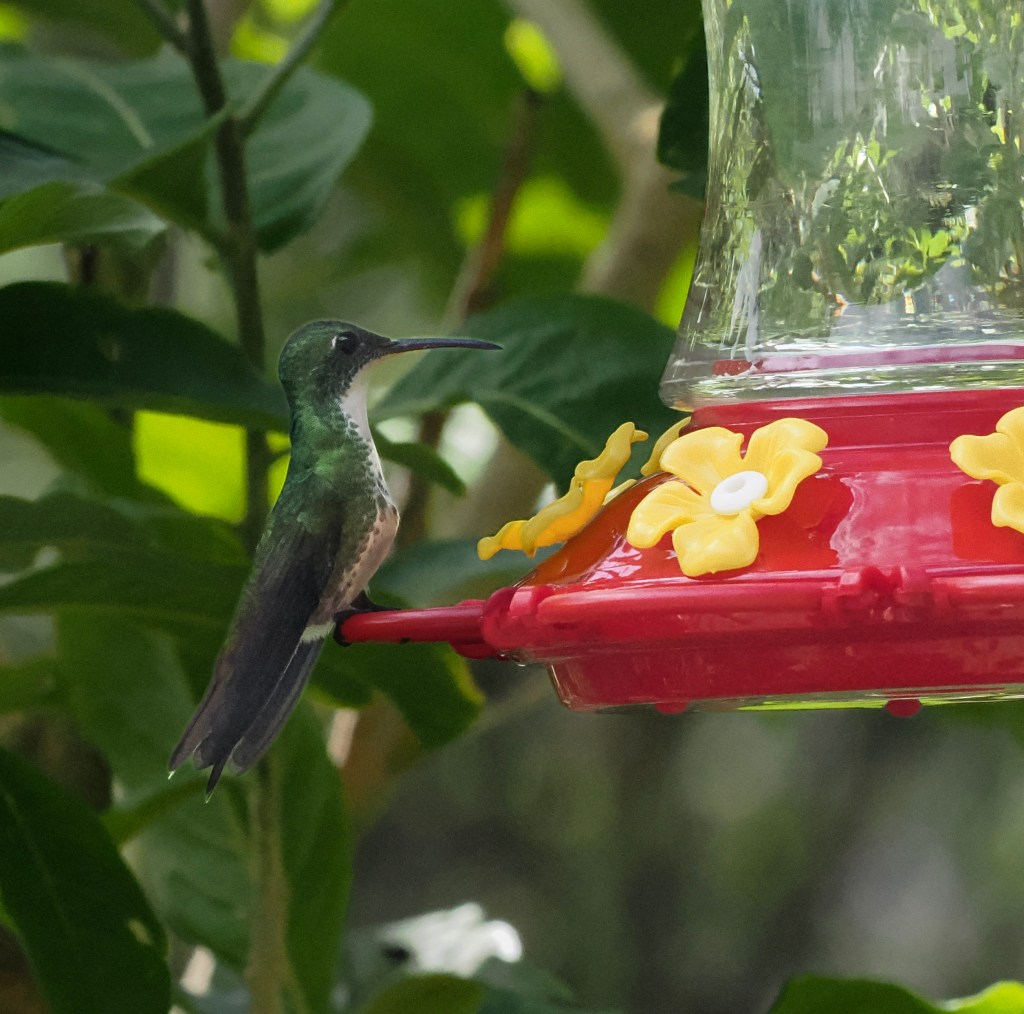
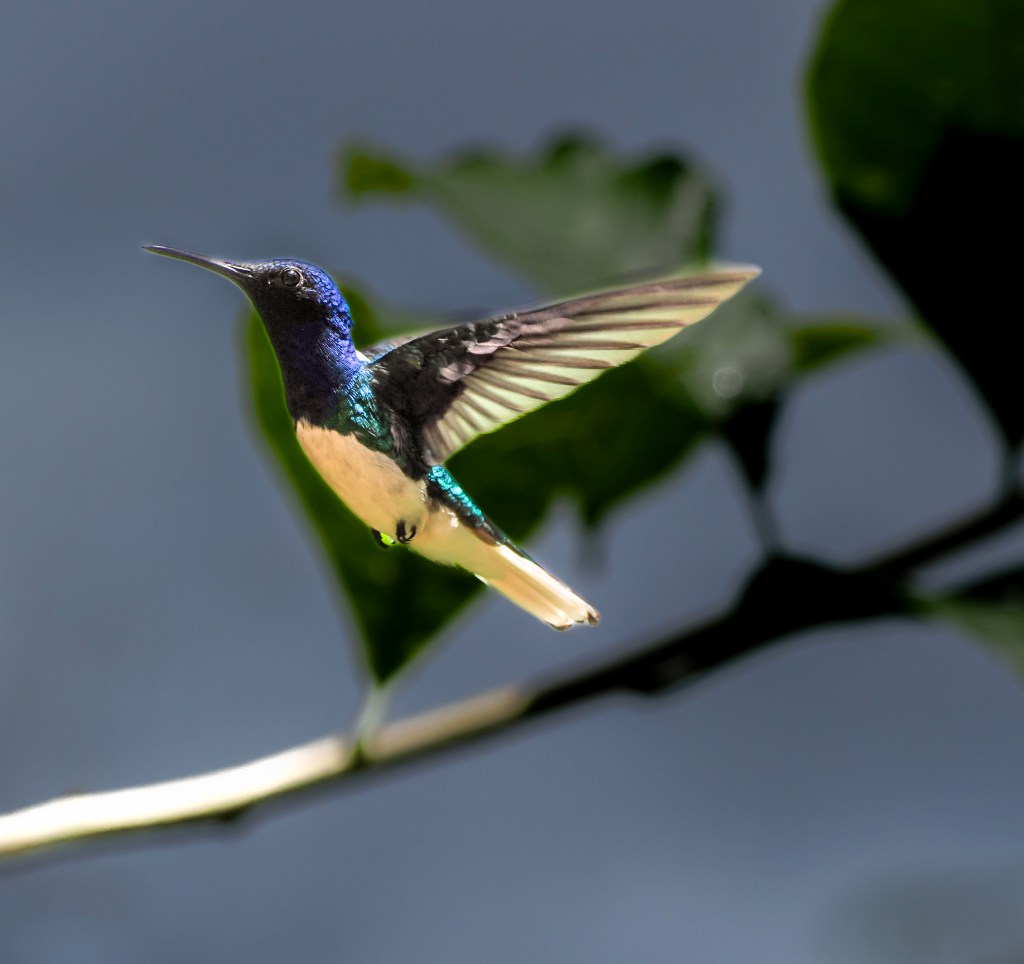
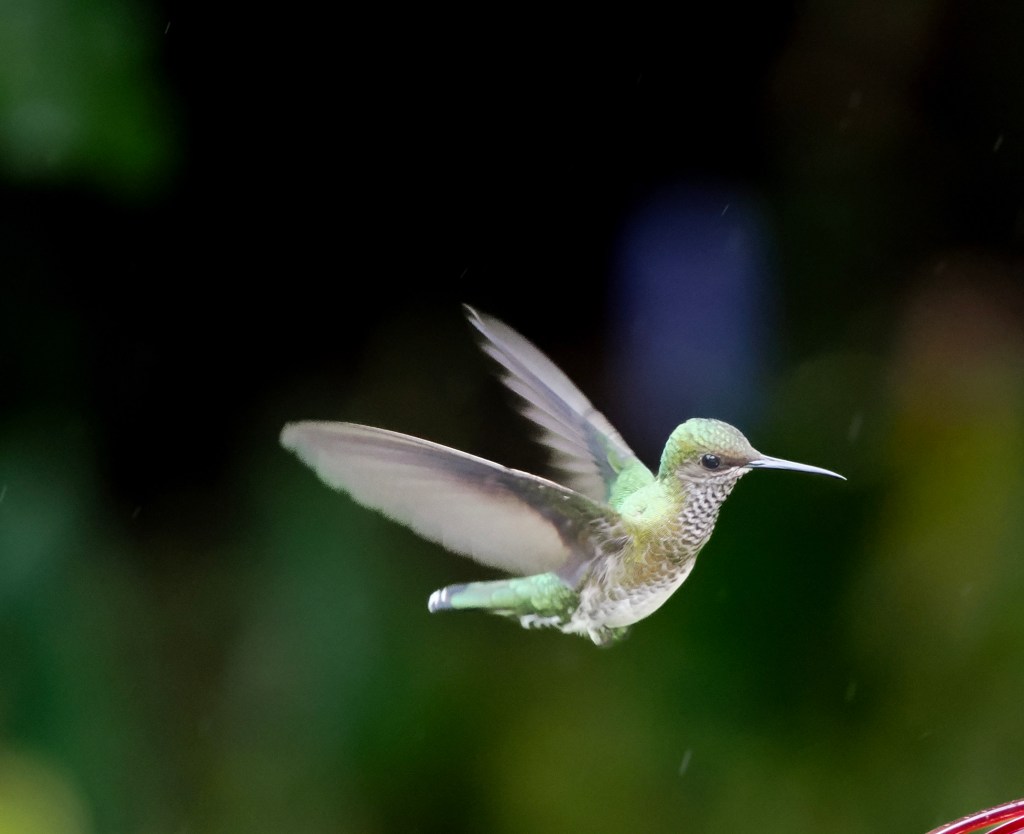
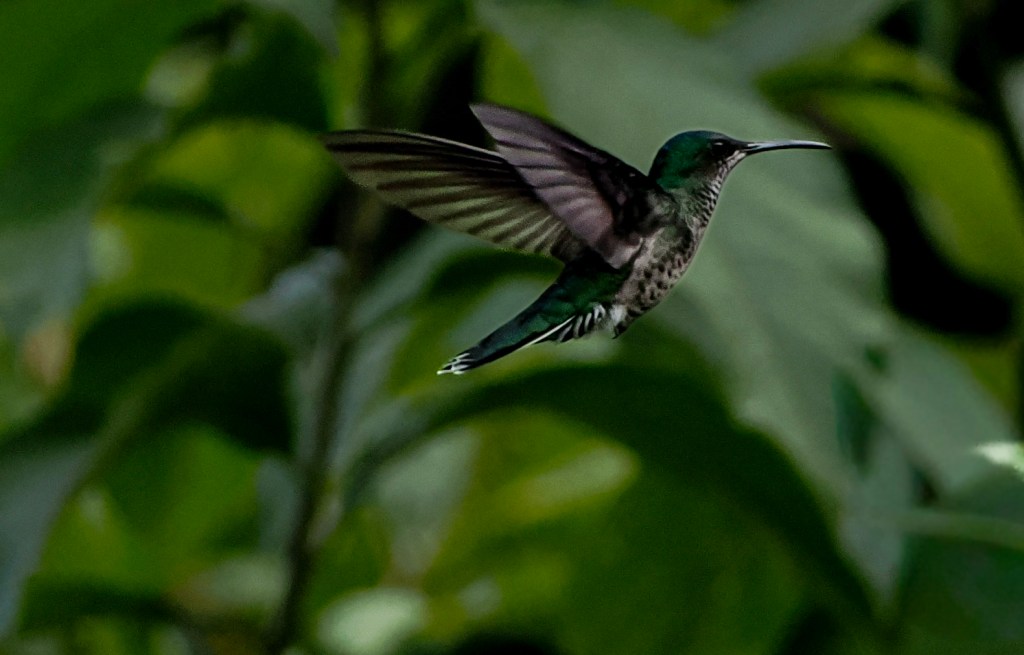
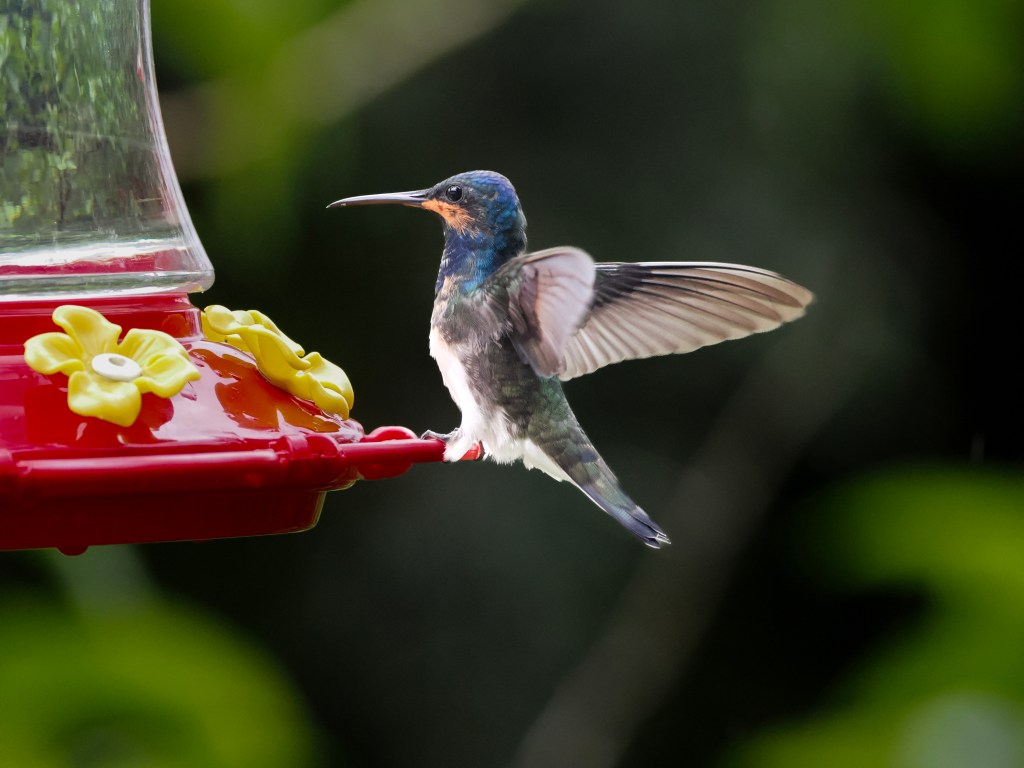
Below the veranda hung 15 hummingbird feeders, and hundreds of birds hummed around them at a time. The air buzzed with tiny wings, iridescent flashes, and endless squabbling over perches. I counted dozens of different kinds of hummingbirds during my stay and took hundreds of photos. My memory card filled up quickly.
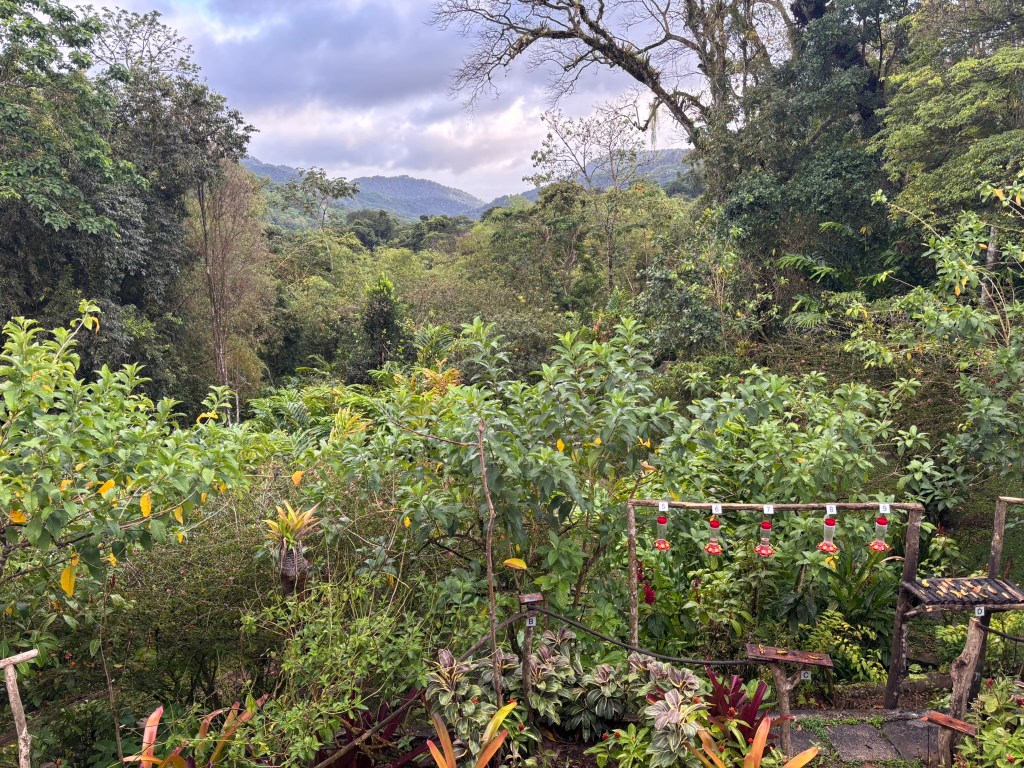
I will also admit that I had way too many rum punches. In my defense, the veranda is a very hard place to leave.

The Veranda Is the Show

I’d planned my days around walks and tours, but the best birding often happened without moving at all. If you sit on that veranda with coffee, a camera, and a little patience, the forest puts on a full performance.

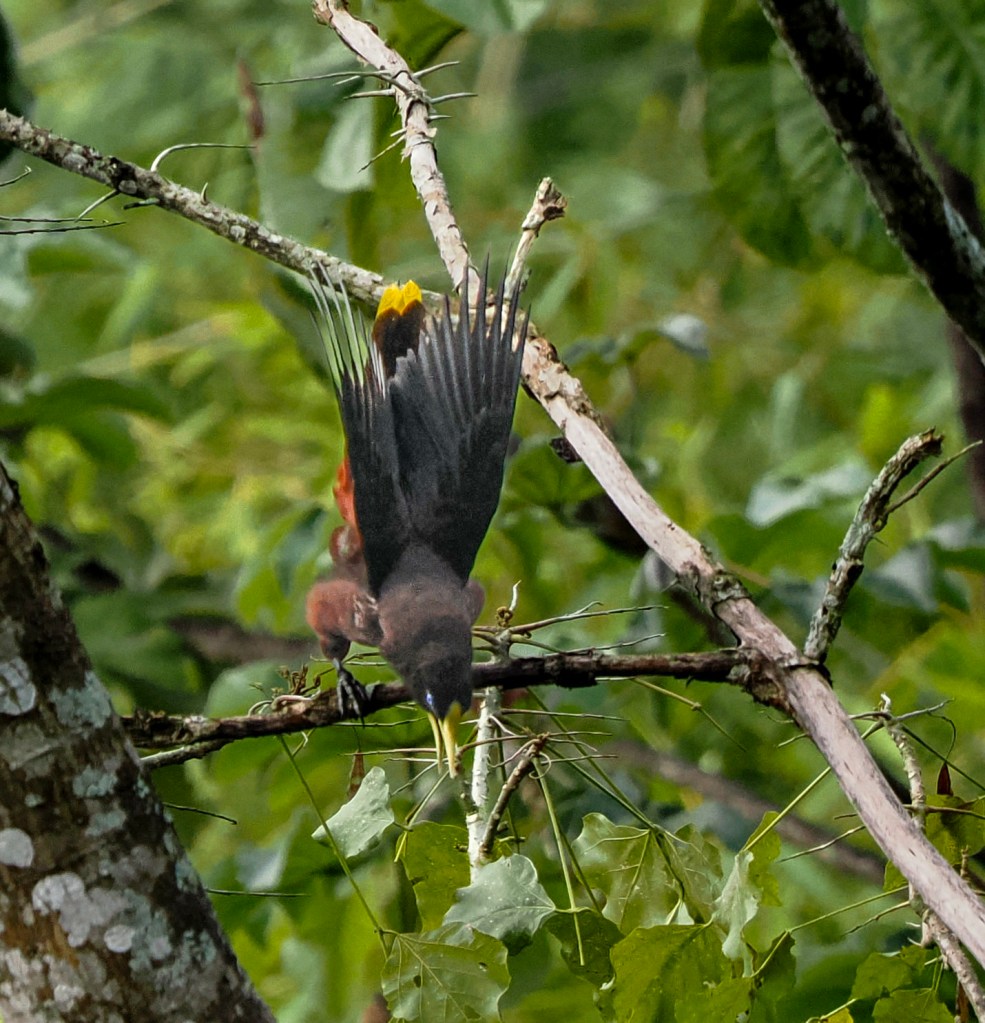
My favorite performer was the crested oropendola. The male makes a dramatic, gurgling call and swings forward on its perch like a pendulum. I could have watched it all day.
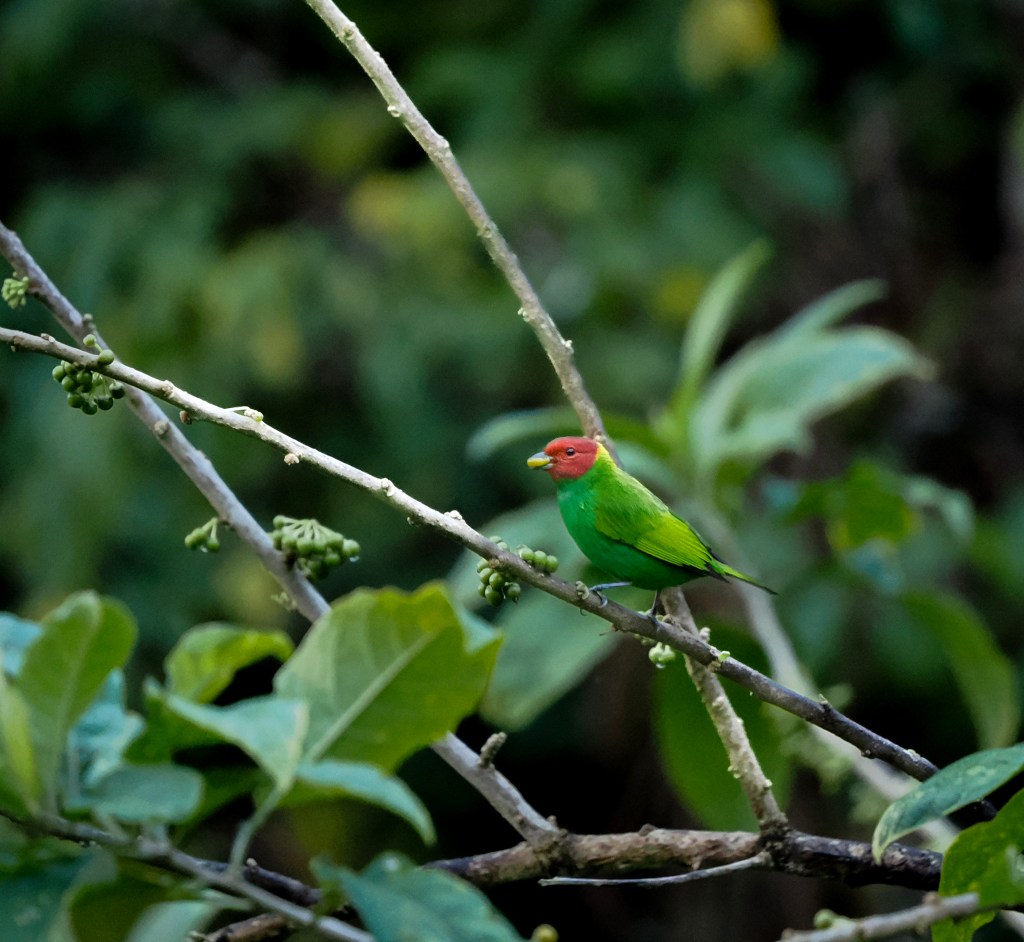
Other visitors included bay-headed tanagers, toucans, parrots, and many more. Even a non-birder would get hooked here.

More about birds of Asa Wright Center here

Bellbirds and Manakins: Two Very Different Courtships

Two sightings stood out.

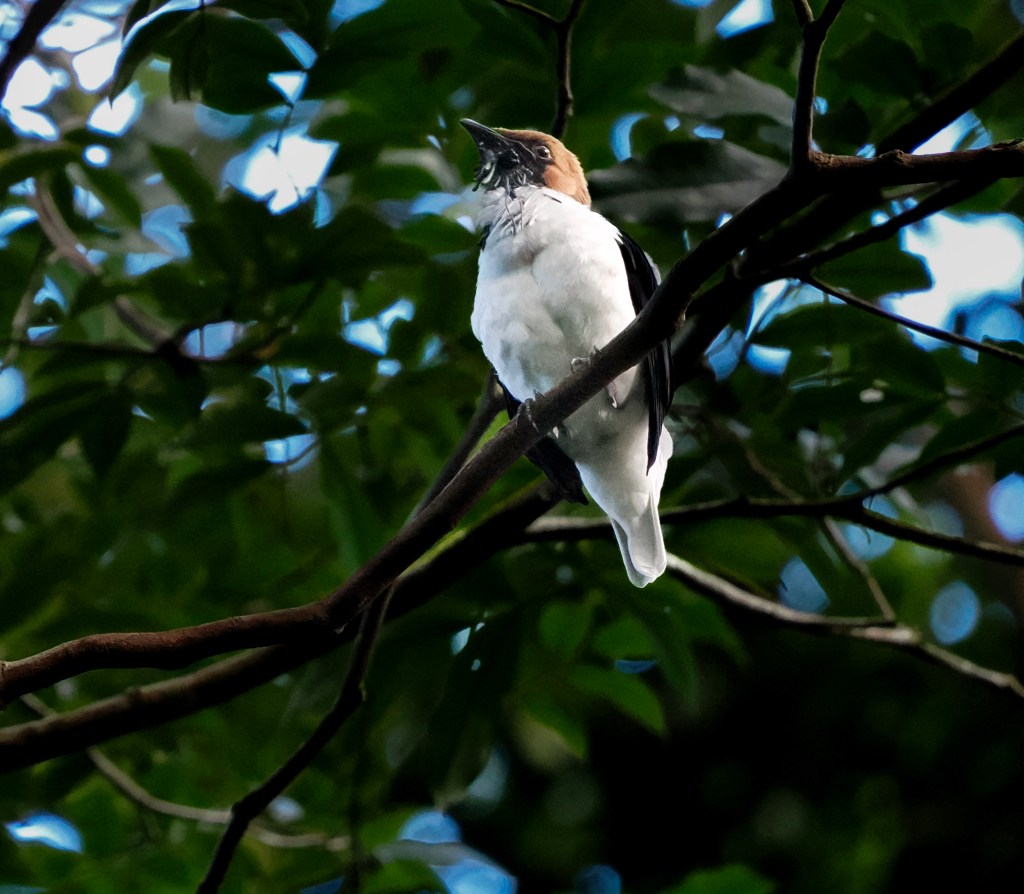
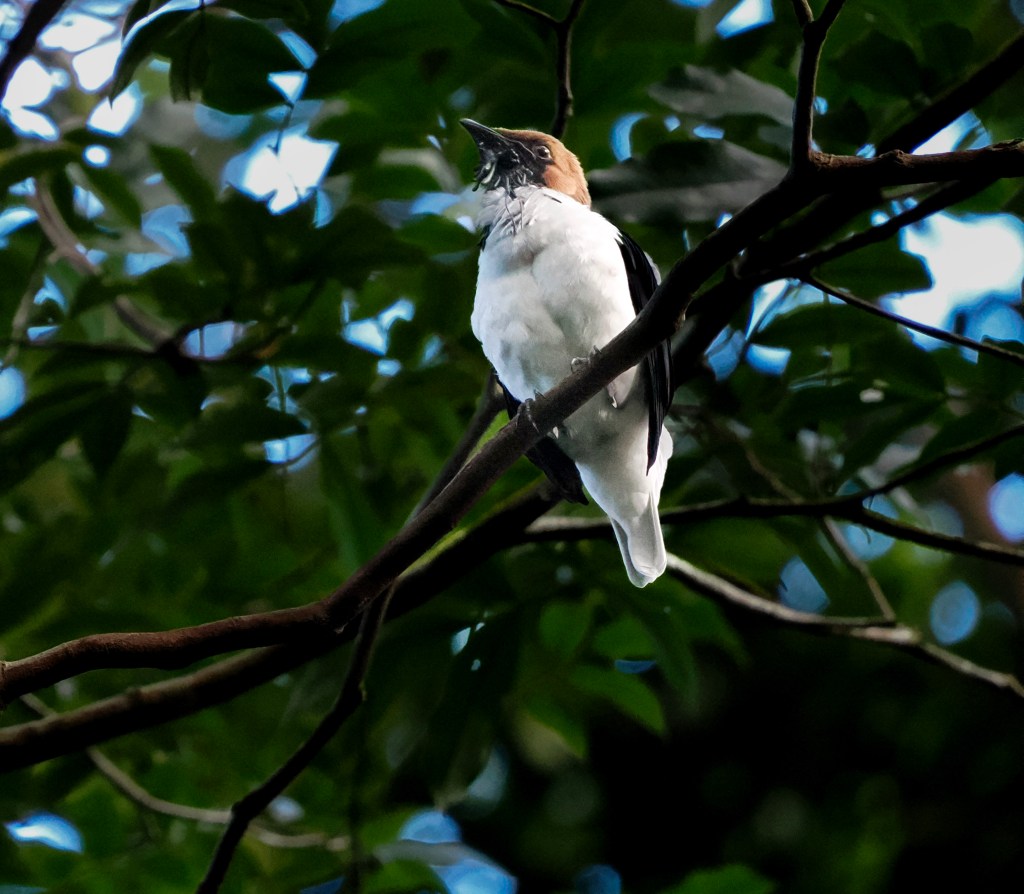
The bearded bellbird (the “anvil bird”) has a call that sounds like a hammer striking metal, which is how it got its nickname. It rings through the forest, and it was a thrill to finally put a face to the sound.
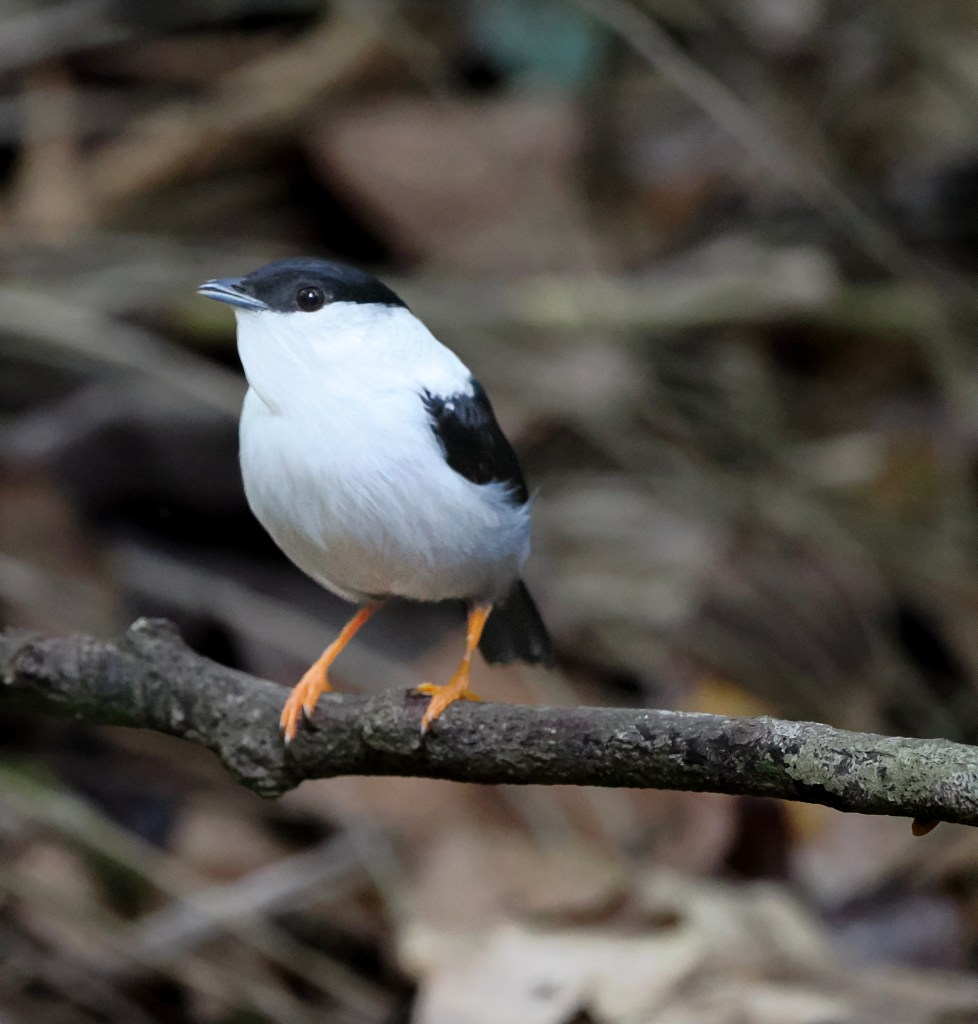
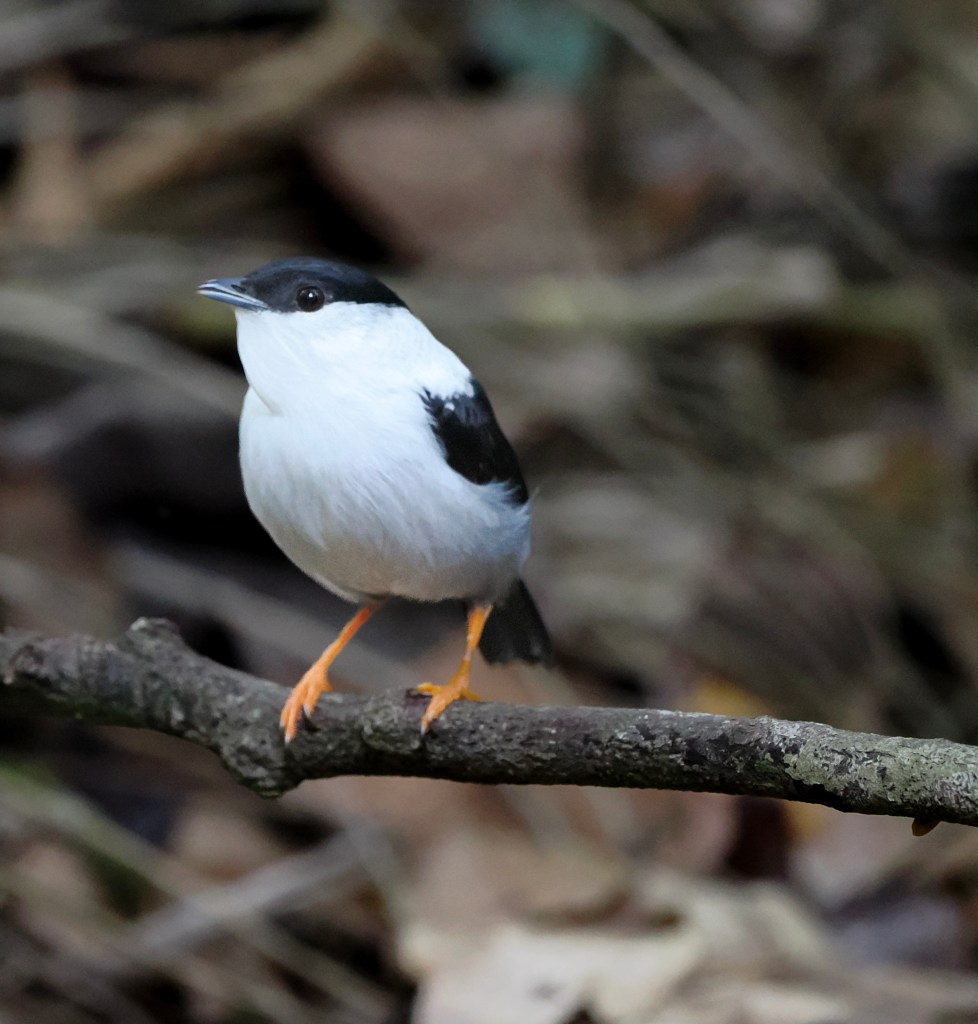
The white-bearded manakin was my other highlight. The males gather at display sites and work to impress the females. What I loved most is that the male clears and tidies his display area, like a tiny landscaper trying to win a date. Both species have such unusual ways of attracting a mate, and I found myself rooting for the manakin.
Seeing the Oilbirds

And yes, I saw the oilbirds, the reason for my three-day stay. These nocturnal fruit-eating birds roost in caves and find their way in the dark by echolocation, which is rare among birds. Seeing them in person was worth the trip on its own.

I have written a separate blog post for visiting the oilbirds, and you can read more here

Beyond the Veranda: Walks and a Day Trip

  • Morning birding walk: I joined a walk with the in-house birding expert. Guides here know the calls, the habits, and exactly where to look. I saw far more with them than I ever would have on my own.
  • Caroni Swamp day trip: I arranged a day trip to the Caroni Swamp, which offered a nice habitat change from the mountain rainforest and added a completely different set of birds to my list. More about Caroni Swamp visit here

The Room

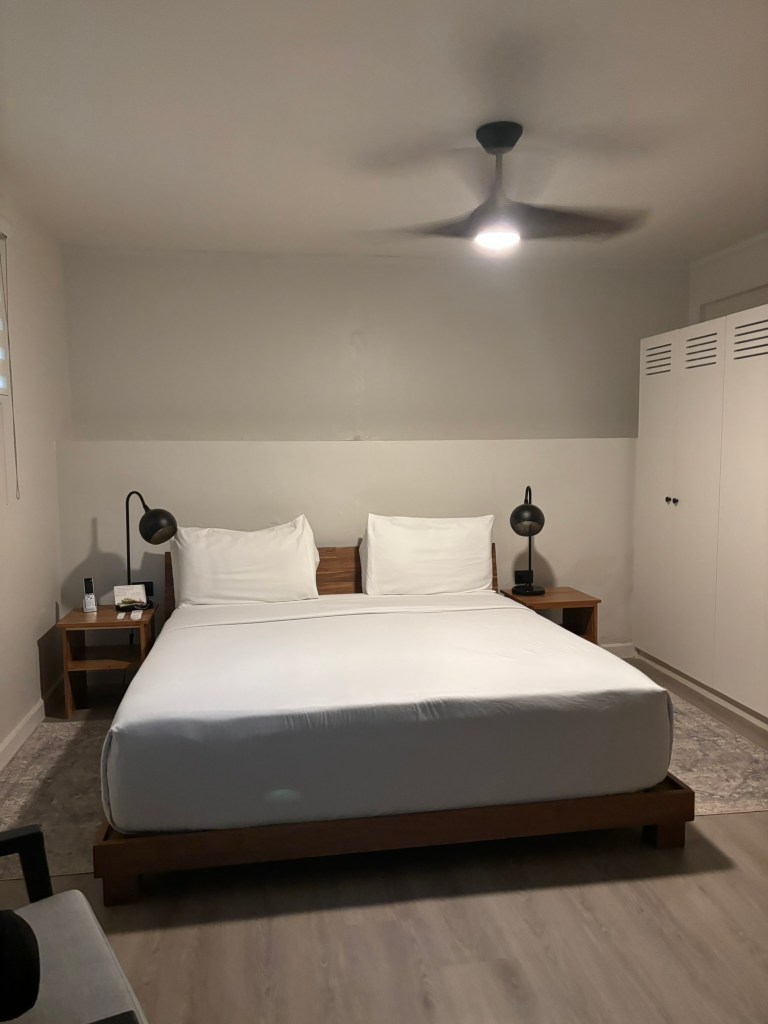
My room was lovely: comfortable, peaceful, and with garden views. After a long day outside, it was a quiet place to rest and listen to the forest. Don’t expect a luxury resort, though. The charm is the setting: a nature lodge in the middle of a rainforest. I stayed in one of their nest accomidation. You can check out other available types of rooms here
The Grounds

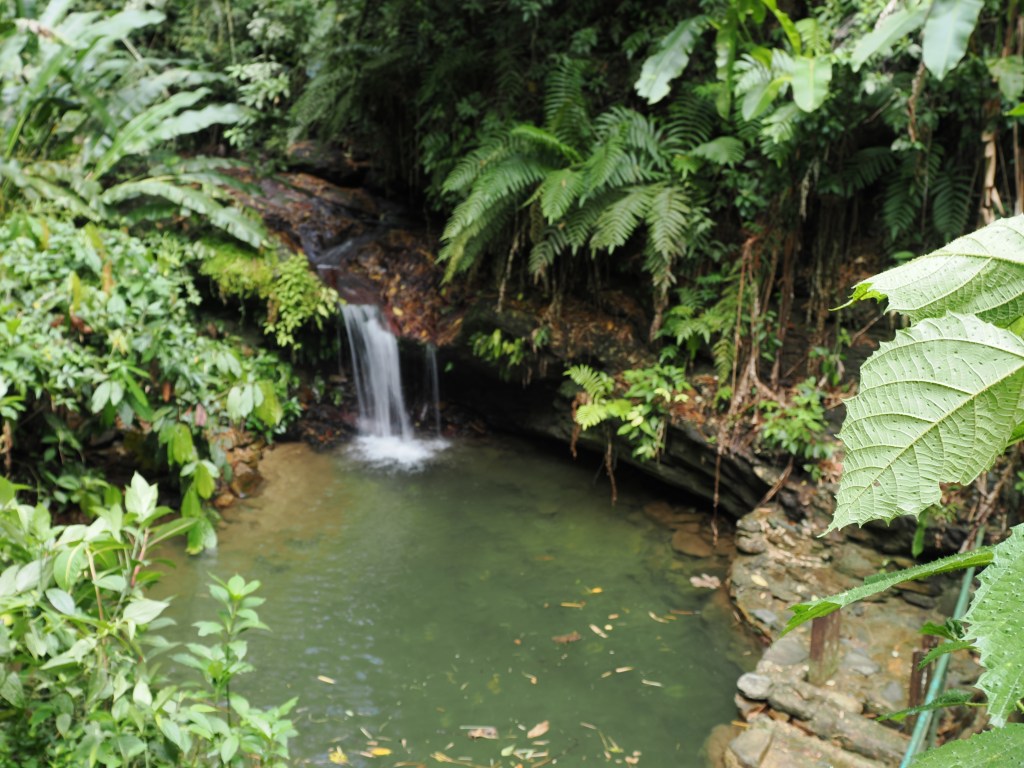
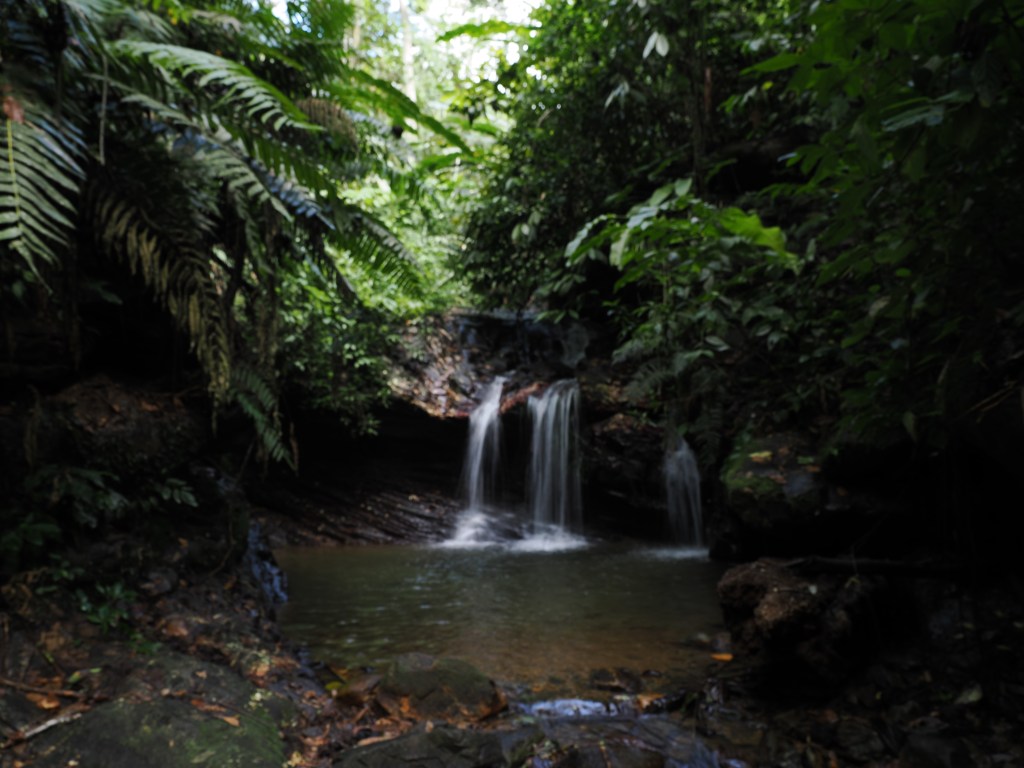
The grounds are beautiful. There are a couple of waterfalls and wide varieties of flowers along the trails. Even when I wasn’t looking for birds, it was a joy to wander. You can also swim in the waterfalls and surrounding area.
Food: Four Meals a Day

My stay included breakfast, lunch, dinner, and high tea. After a morning walk, a good meal tastes even better, and the afternoon tea on the veranda became one of my favorite rituals. (Add details about your favorite dishes and any Trinidadian specialties here.)

Tips for Visiting Asa Wright

  • Book early. Reach out to the team ahead of time, especially if you want transfers and guided activities arranged.
  • Stay at least three days. That gave me time for the oilbirds, the walks, and a day trip without feeling rushed.
  • Bring a long lens, but don’t stress if you don’t have one. The feeders put hummingbirds close enough for great photos.
  • Pack for the tropics. Bring light layers, a rain jacket, comfortable shoes, and insect repellent.
  • Take it slow. The best birding often comes from sitting still.
  • Pace the rum punch. Learn from my mistakes.

Final Thoughts

Asa Wright was one of the best birding lodges I have been to, offering a truly immersive experience in nature, where the tranquility of the surrounding rainforest and the melodious calls of exotic birds created a magical atmosphere that captivated my senses; I can’t wait to go back and spend more time exploring the diverse trails, learning more about the vibrant wildlife, and soaking in the breathtaking views that this remarkable location has to offer.
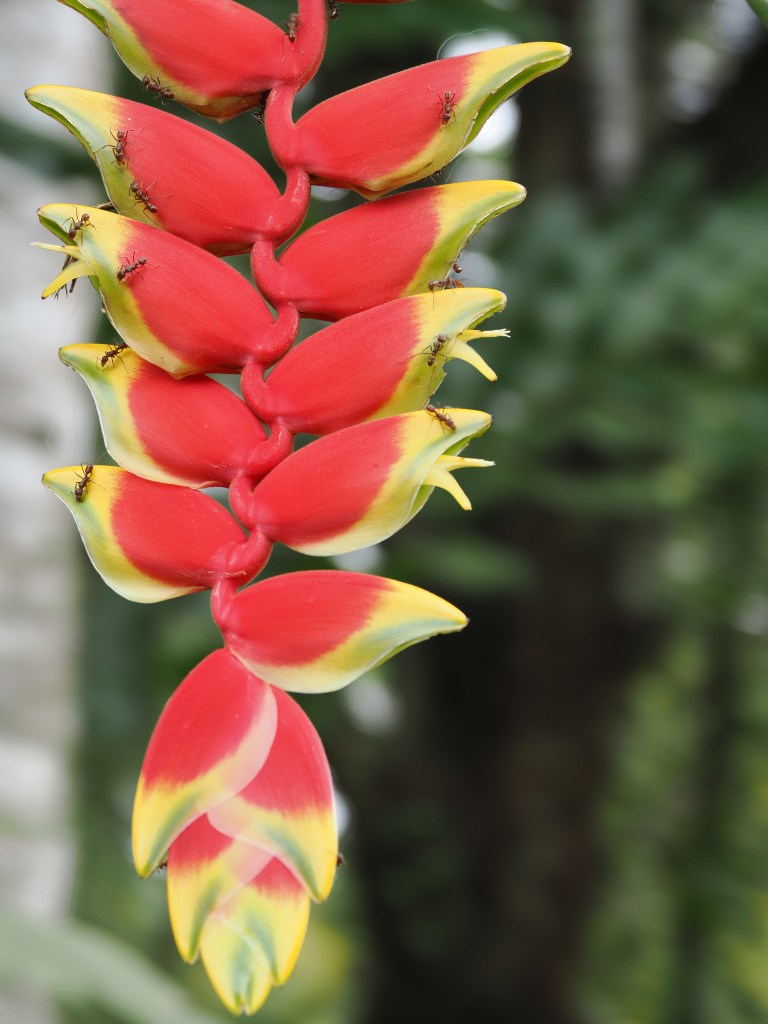
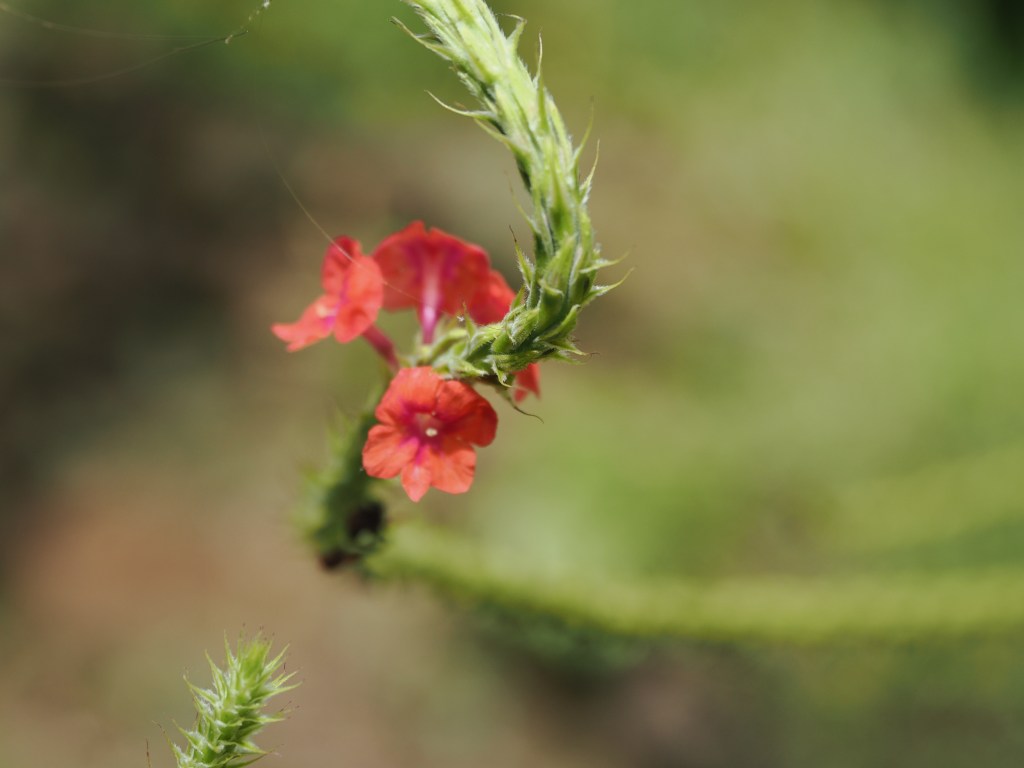
The Birds of Asa Wright: A Photo Journal from the Veranda

I came to Trinidad for business and ended up with a memory card full of birds. Over three days at Asa Wright Nature Center, I barely had to chase anything. Most of these photos came from the veranda, a coffee or rum punch within reach, and a forest that kept putting on a show.

The Hummingbirds: 15 Feeders, Hundreds of Birds

Below the veranda hang 15 feeders, and the buzzing never stops. Over three days, I photographed dozens of different kinds of hummingbirds. Here are a few of my favorites.

The Lesson I Learned: Be Patient

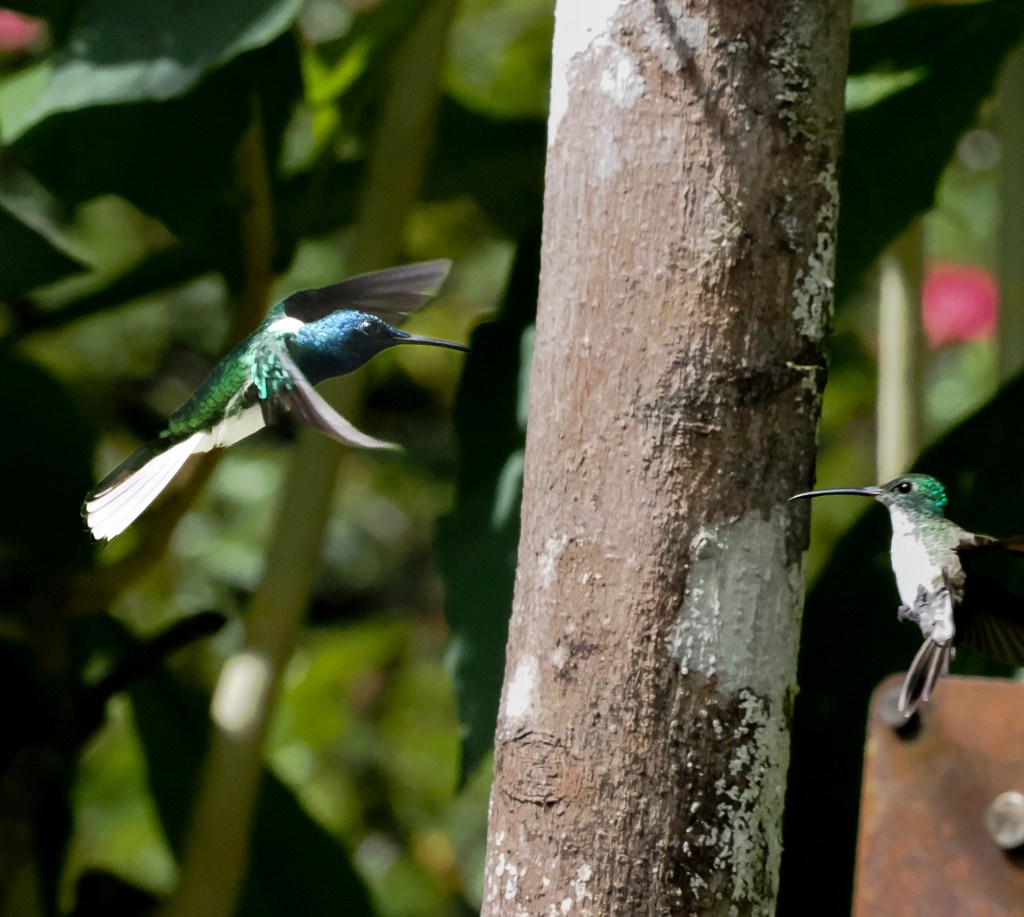
At first glance, the feeders belong to one species. White-necked Jacobins dominate, swarming the perches and chasing everything else away. If you leave after ten minutes, you’ll think that’s all there is.

Don’t leave. Sit still, keep your camera ready, and wait. Between the jacobin dogfights, the rarer birds slip in: the hermits, the starthroat, the violetear. By day three I could tell most of them apart at a glance, which I couldn’t have done without the center’s naturalist guides. They were incredibly helpful, naming every bird I pointed my lens at.

The White-necked Jacobin: Three Looks at One Species

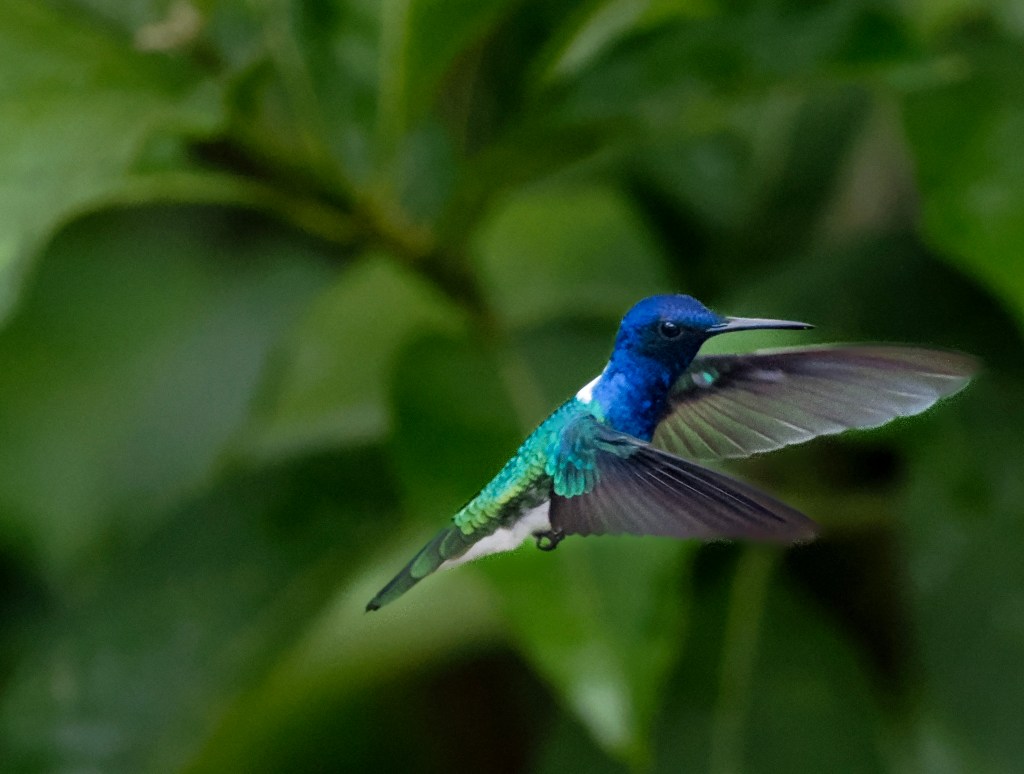
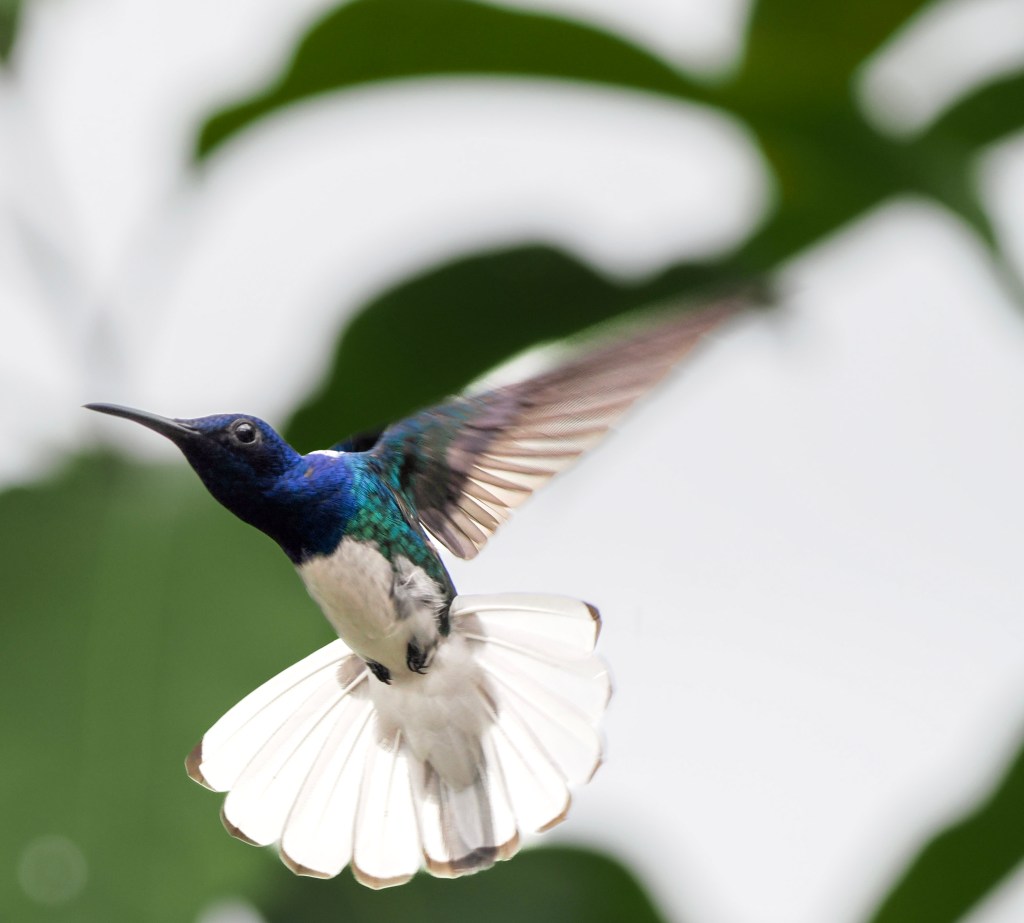
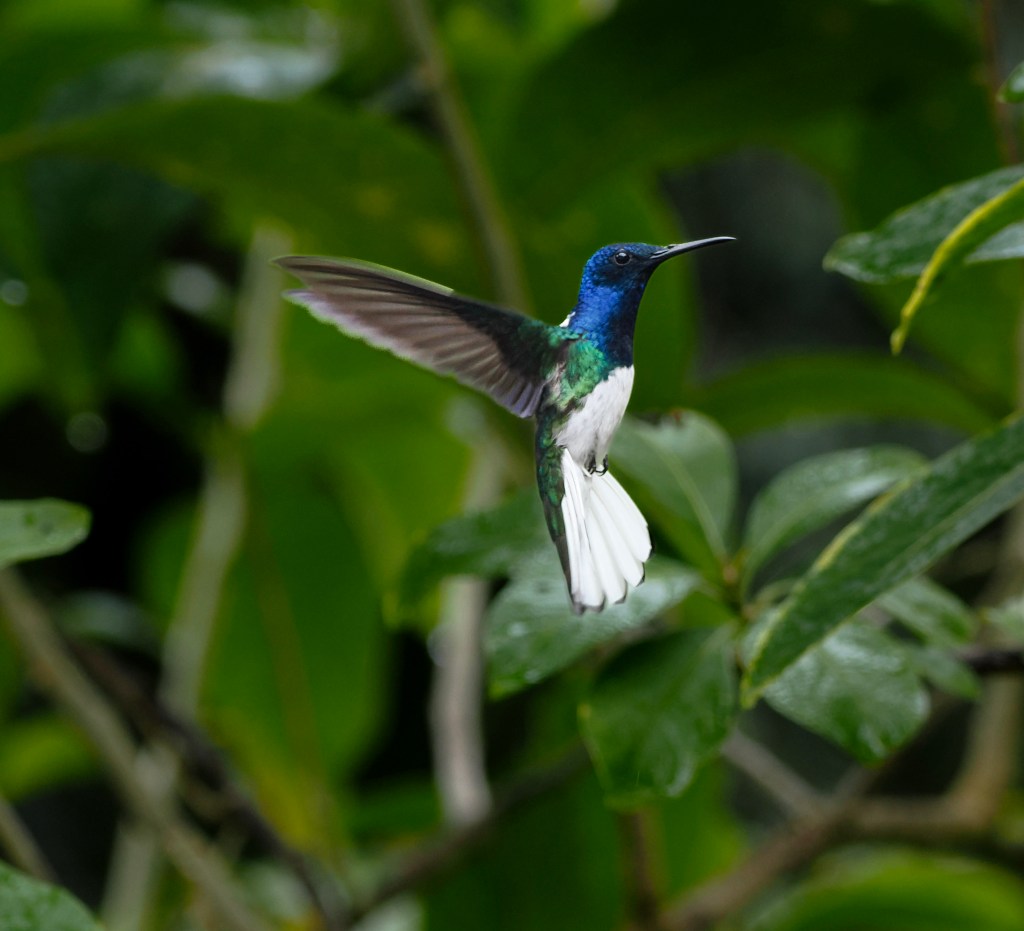
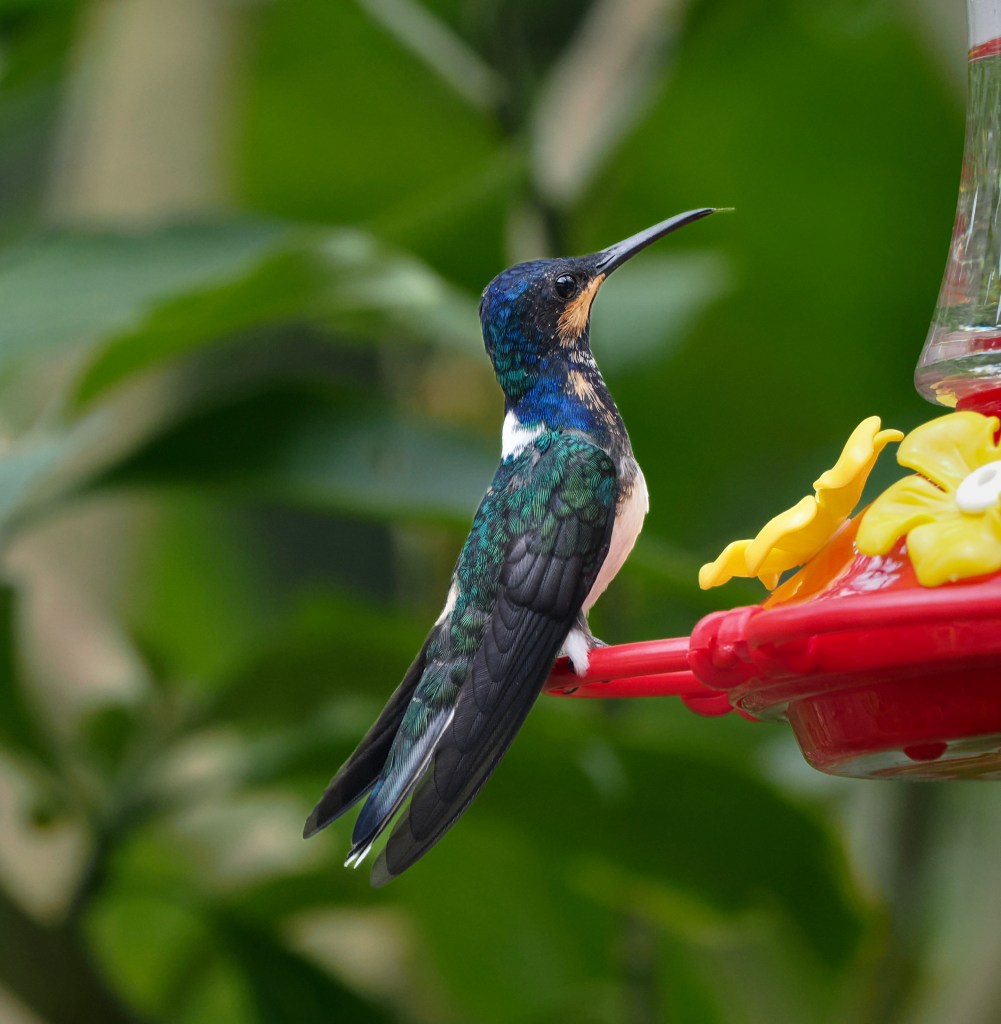
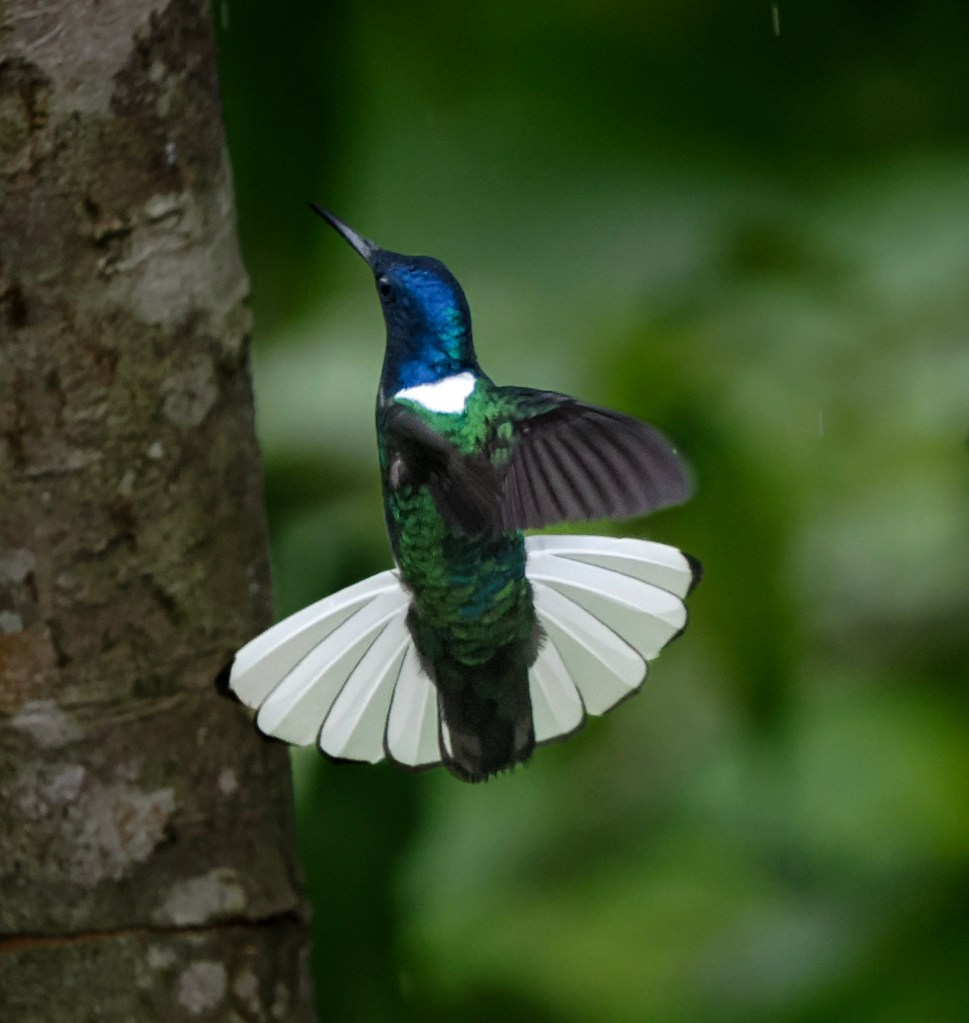
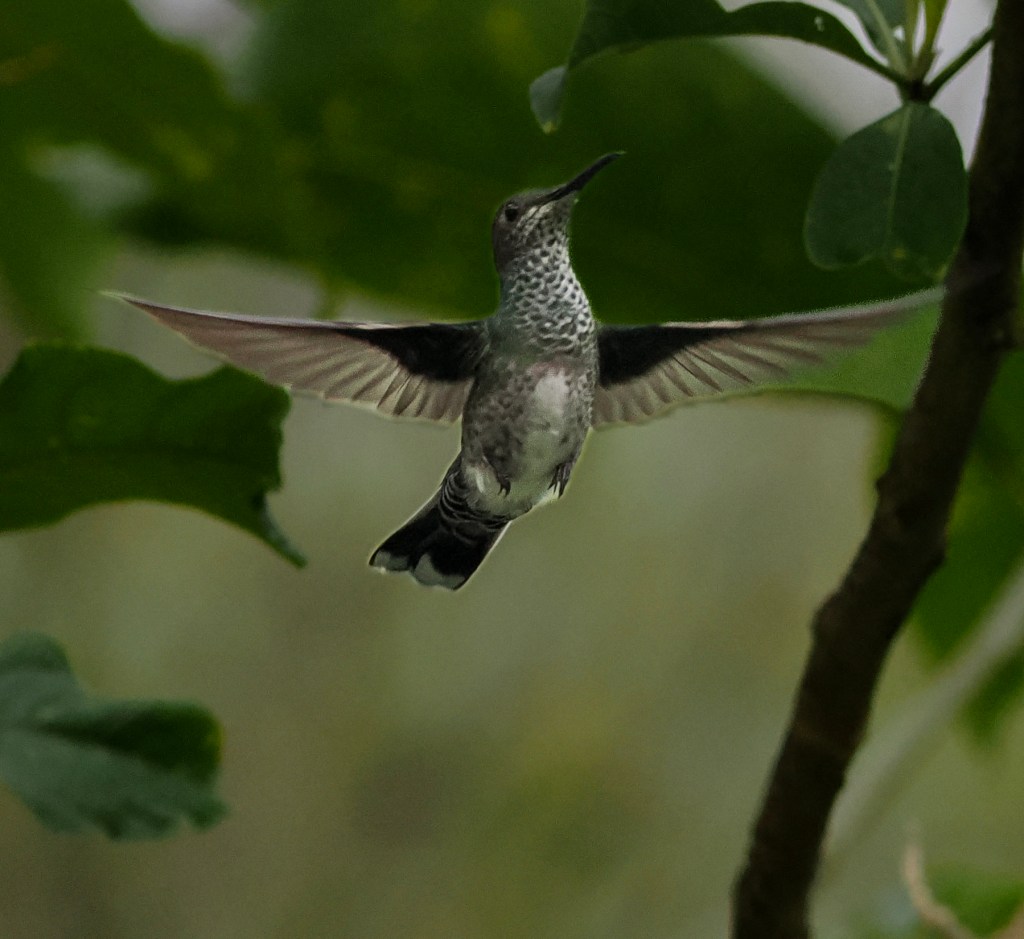
The jacobin is the face of Asa Wright’s feeders. I took 100s of photos of these and captured three different plumages.

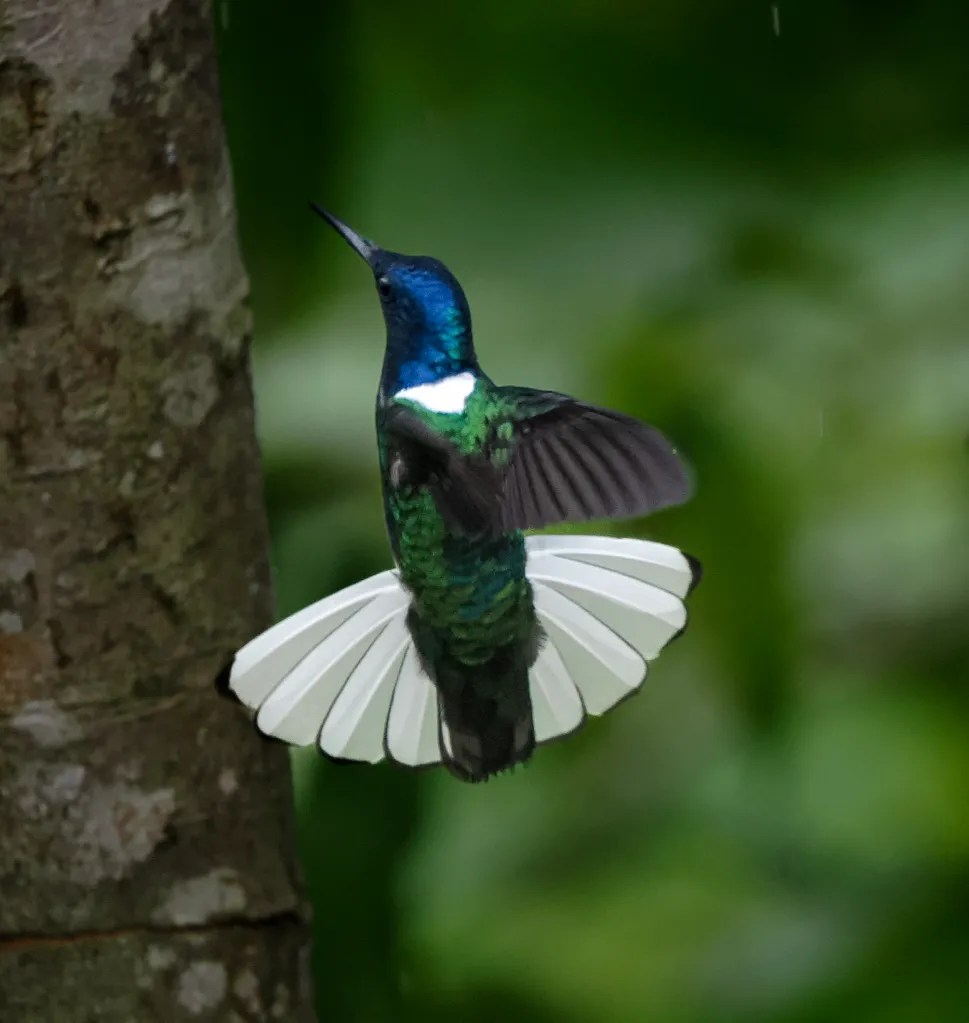
Male White-necked Jacobin. This is my best shot of the trip. He hovers with his tail fanned into a white spread, and his deep blue head, white throat patch, and emerald back glow against the green forest.

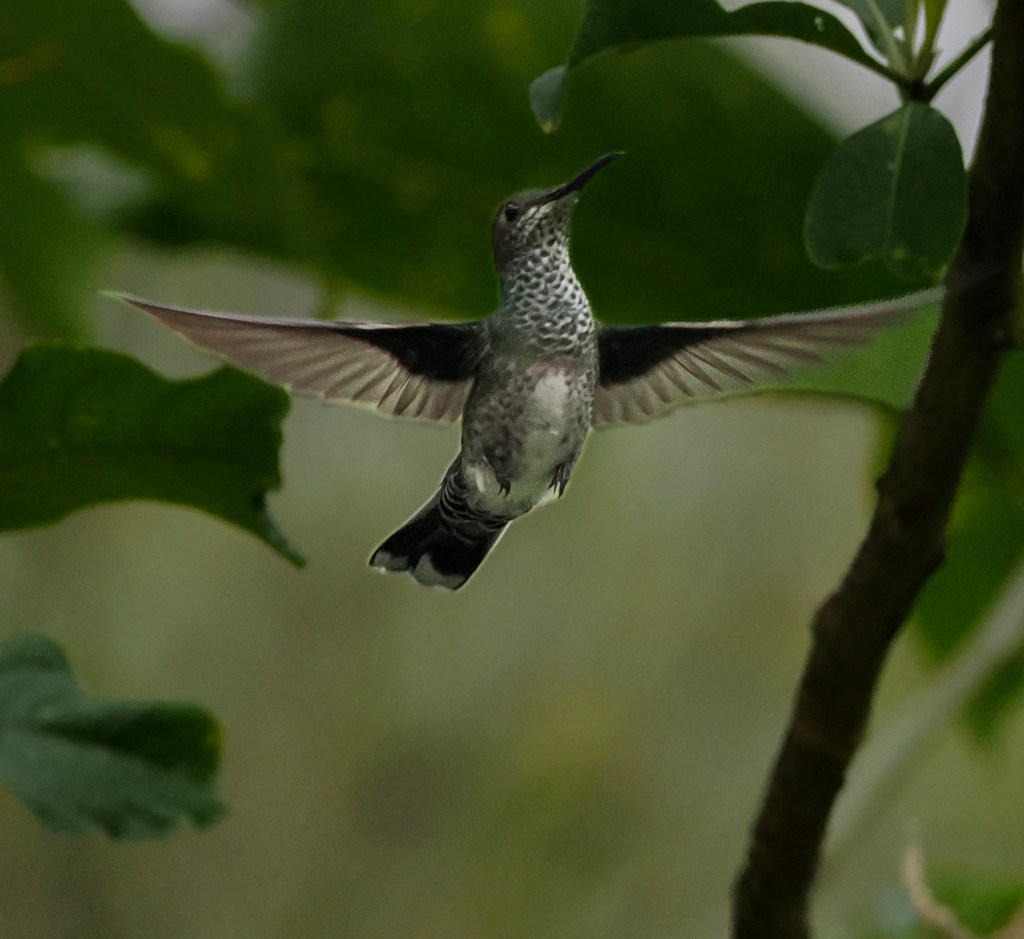
Female White-necked Jacobin. She looks nothing like the male. She is greyish-green with a heavily spotted throat, a pale belly, and a tail tipped in white, and she is easy to mistake for a different species at first.

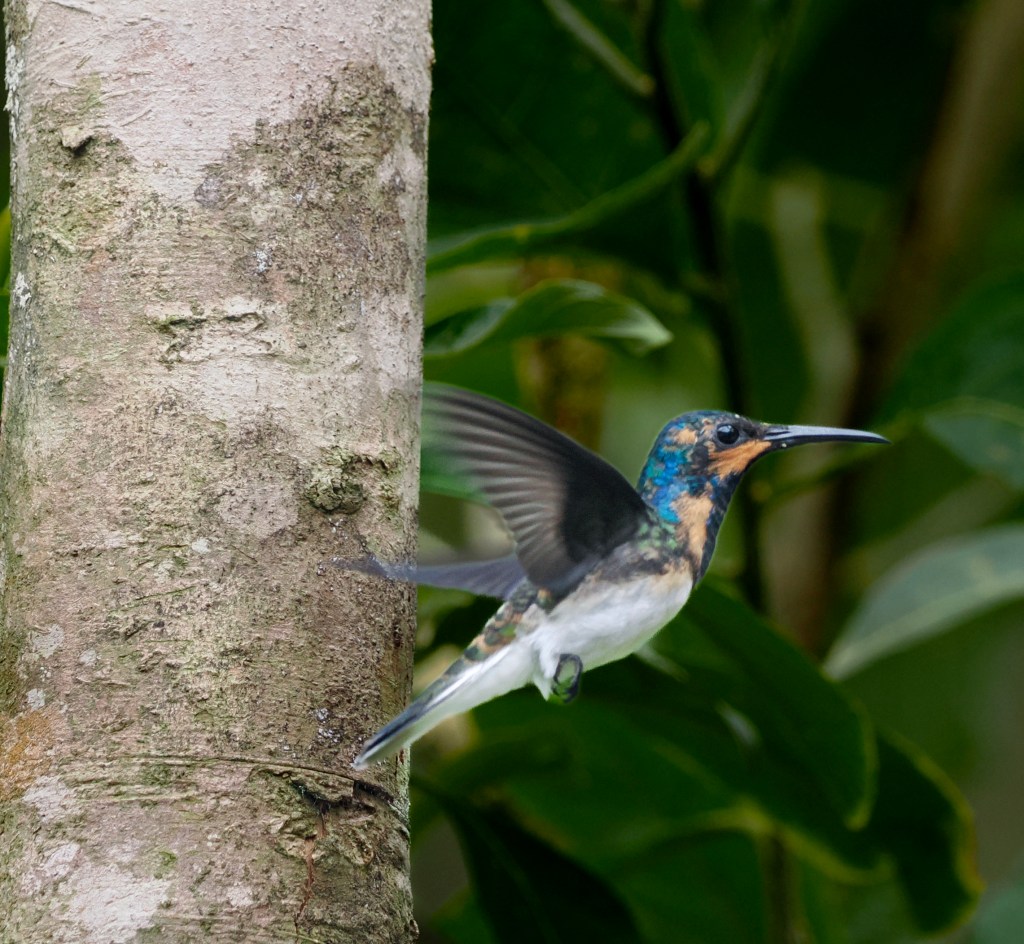
Juvenile White-necked Jacobin. The young male is a patchwork of blue head feathers, buff-orange throat patches, a clean white belly, and scattered green. He is still growing into his adult look.

The Hermits: The Reward for Patience

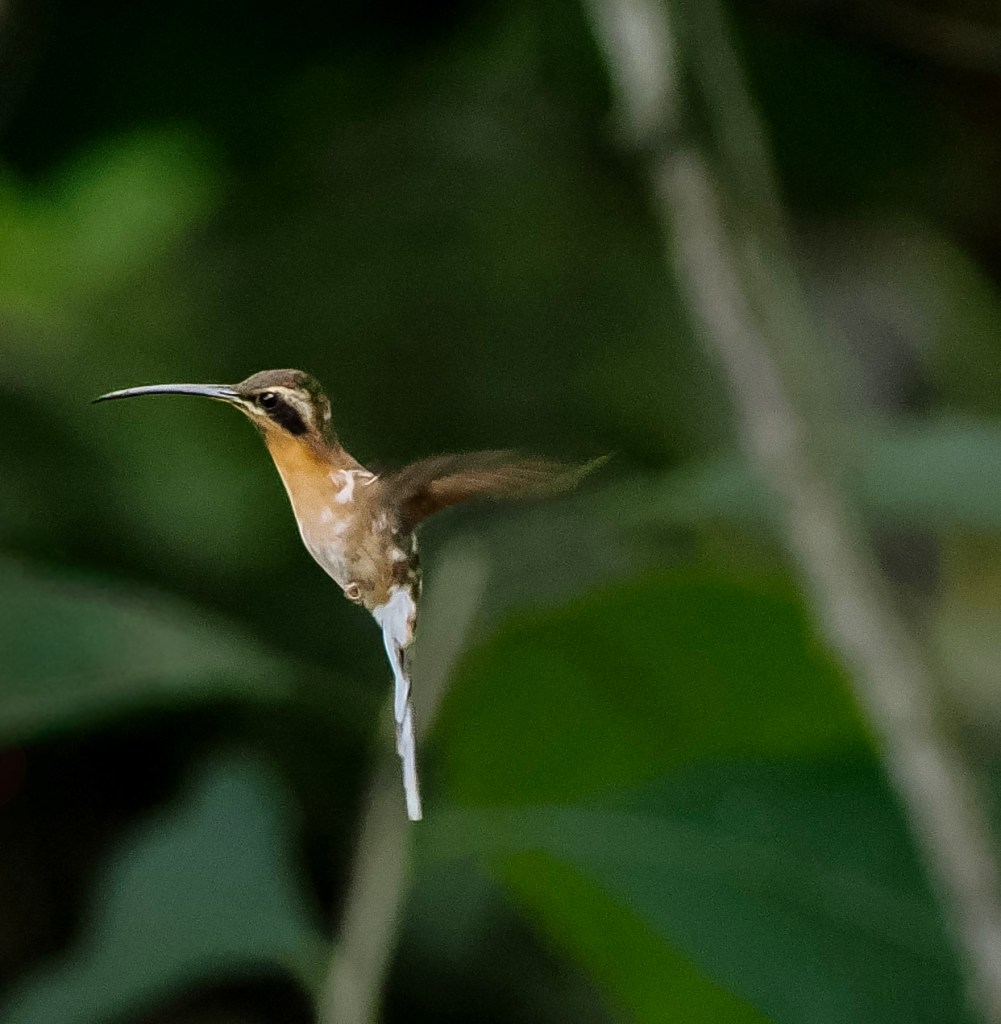
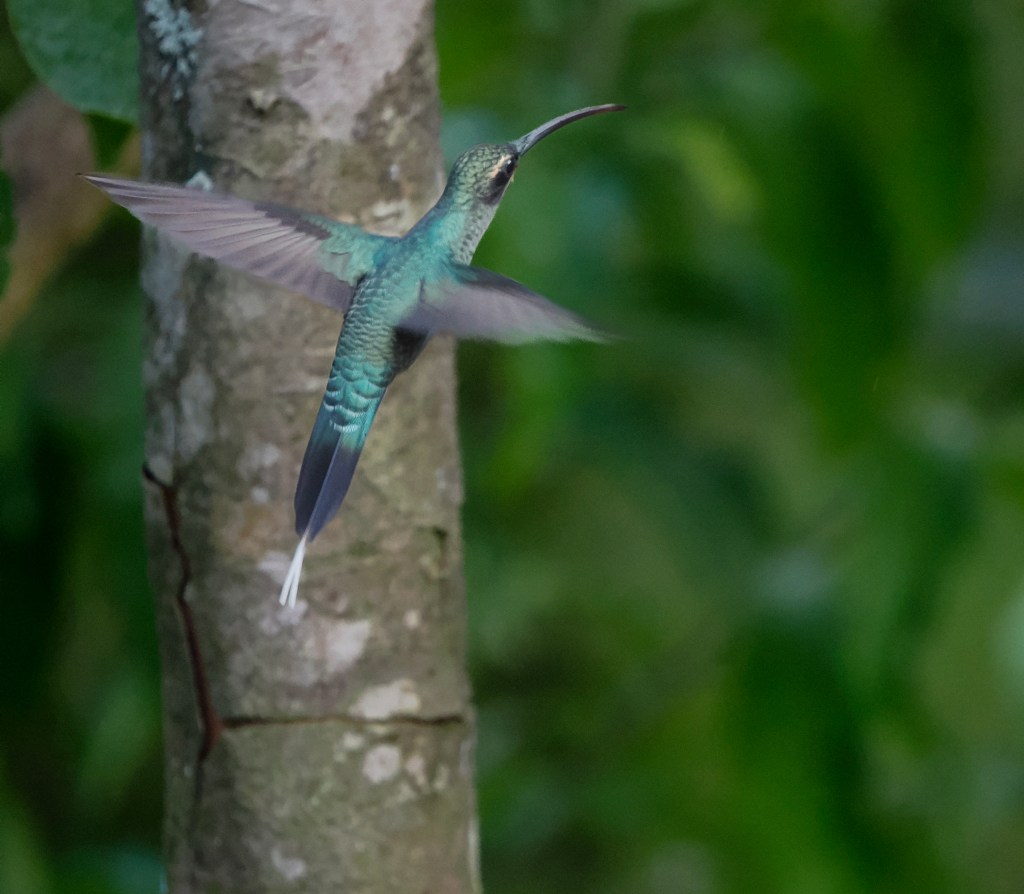
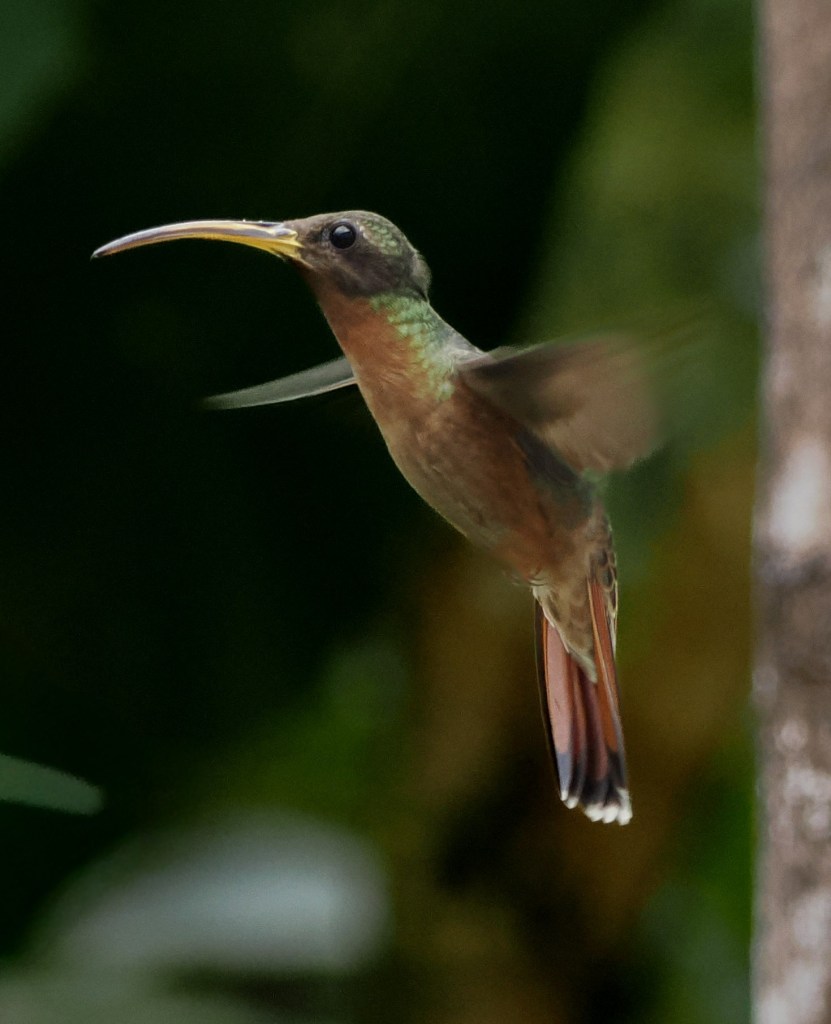
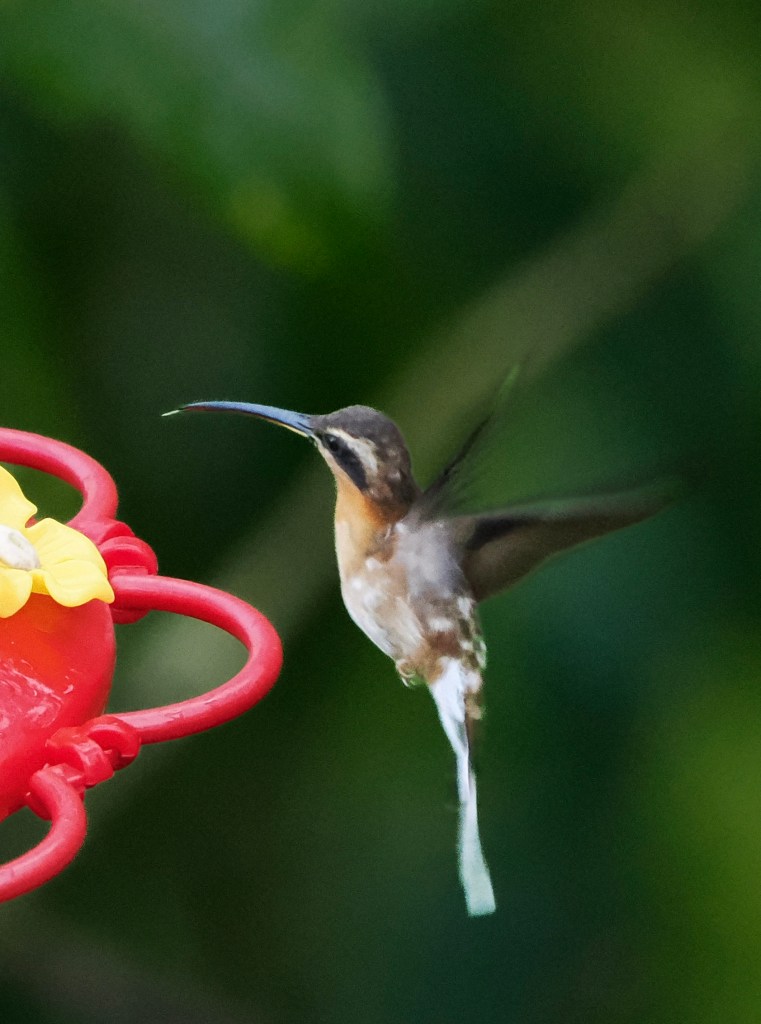
Hermits are quieter, browner, and harder to photograph than the jacobins, with long curved bills and a habit of darting in and out.

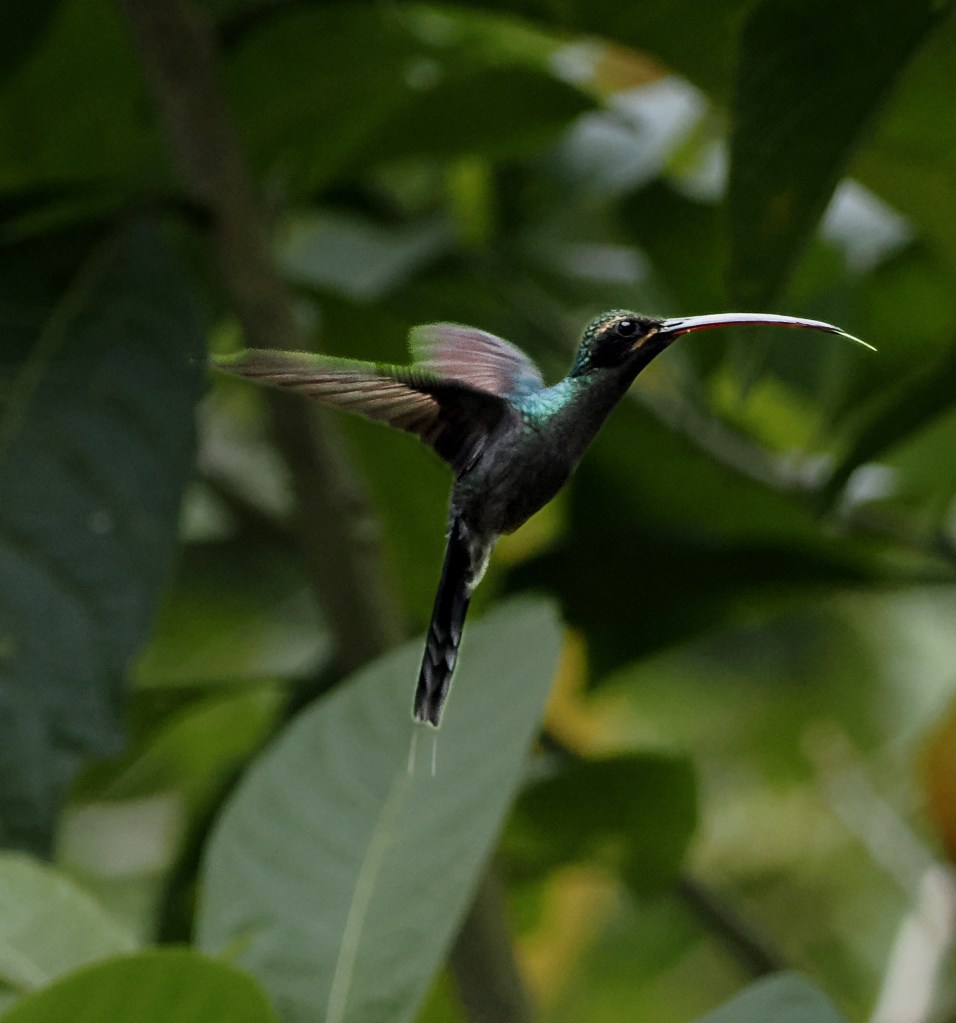
Green Hermit. t. Mine hovered in dim forest light, showing a long, curved bill with a red base, a dark body, and a long, dark tail.

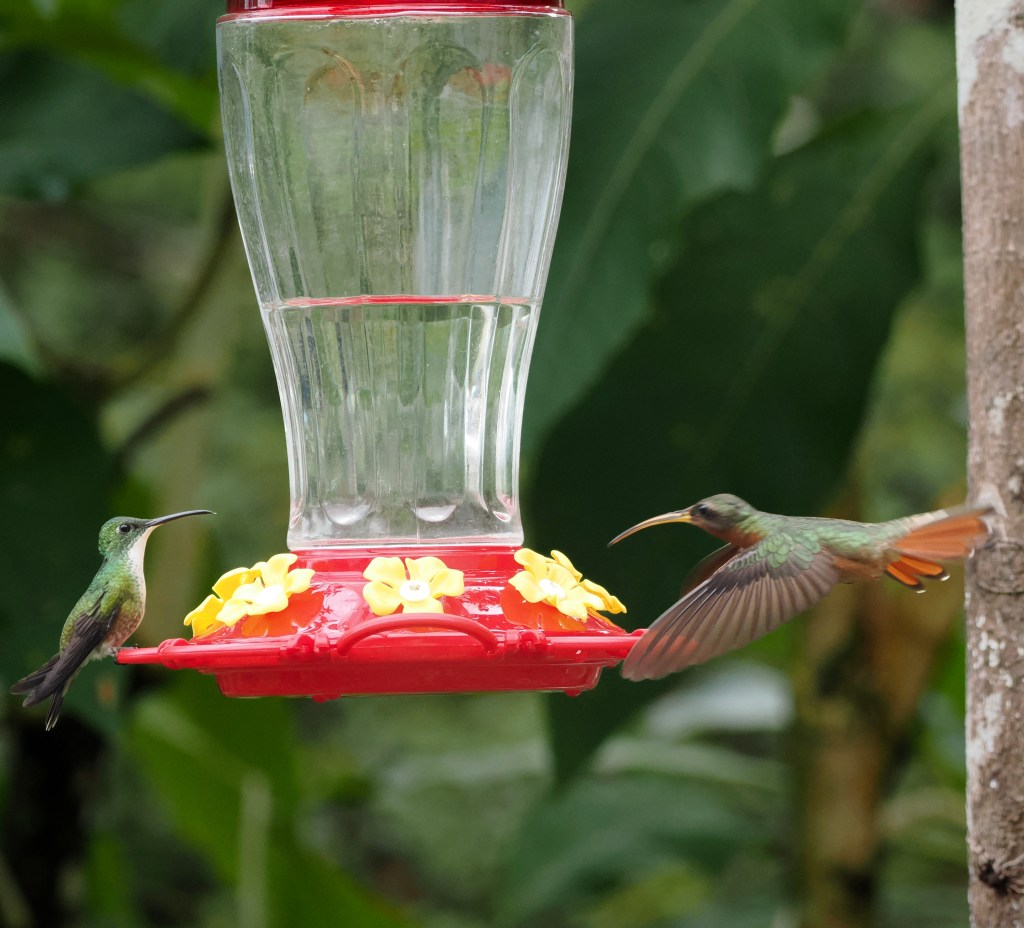
Rufous-breasted Hermit. I caught one in mid-flight at a feeder, bill curved like a sickle and its orange tail flared, while a White-chested Emerald watched from the perch.

Little Hermit. Small and delicate, with a buff throat, a dark mask, and a white-centered tail. It was the hardest of the hermits to photograph because it never held still.

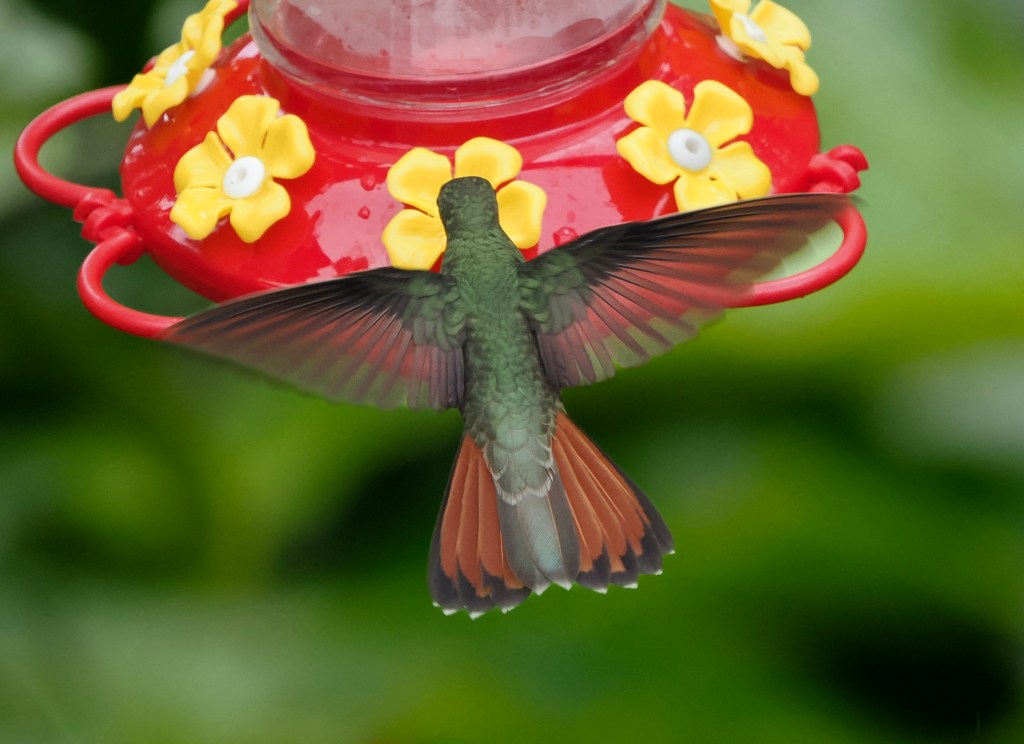
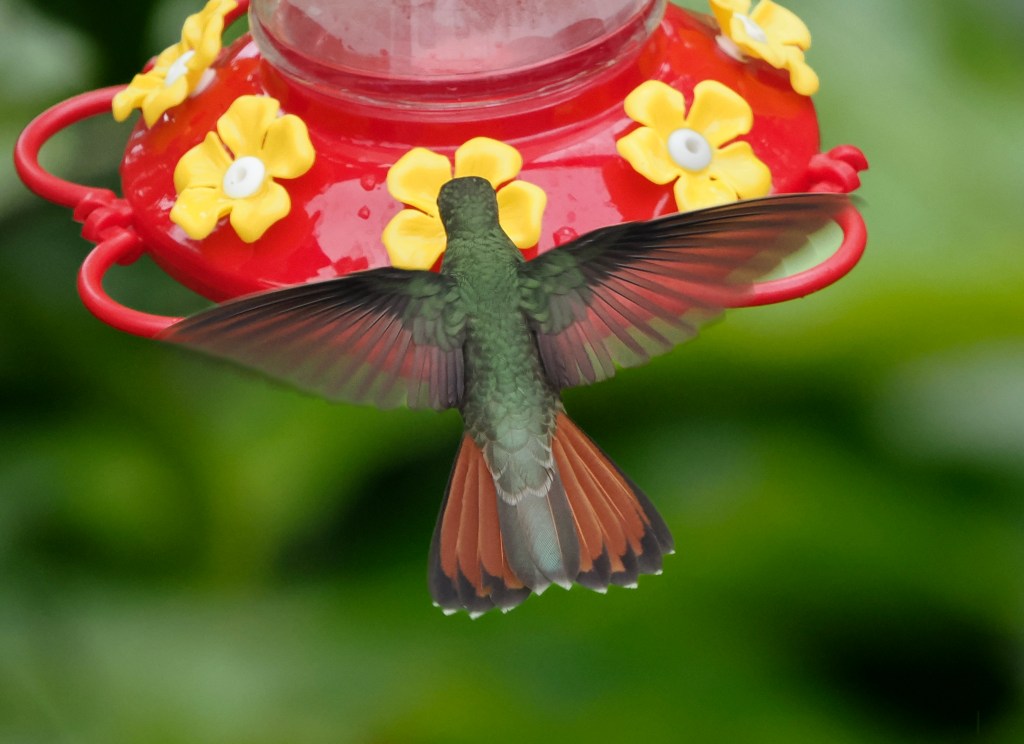
Rufous-tailed Hummingbird. I got a shot of this one from behind at a feeder, wings spread and a rust-colored tail fanned open like a skirt.

The Showstoppers

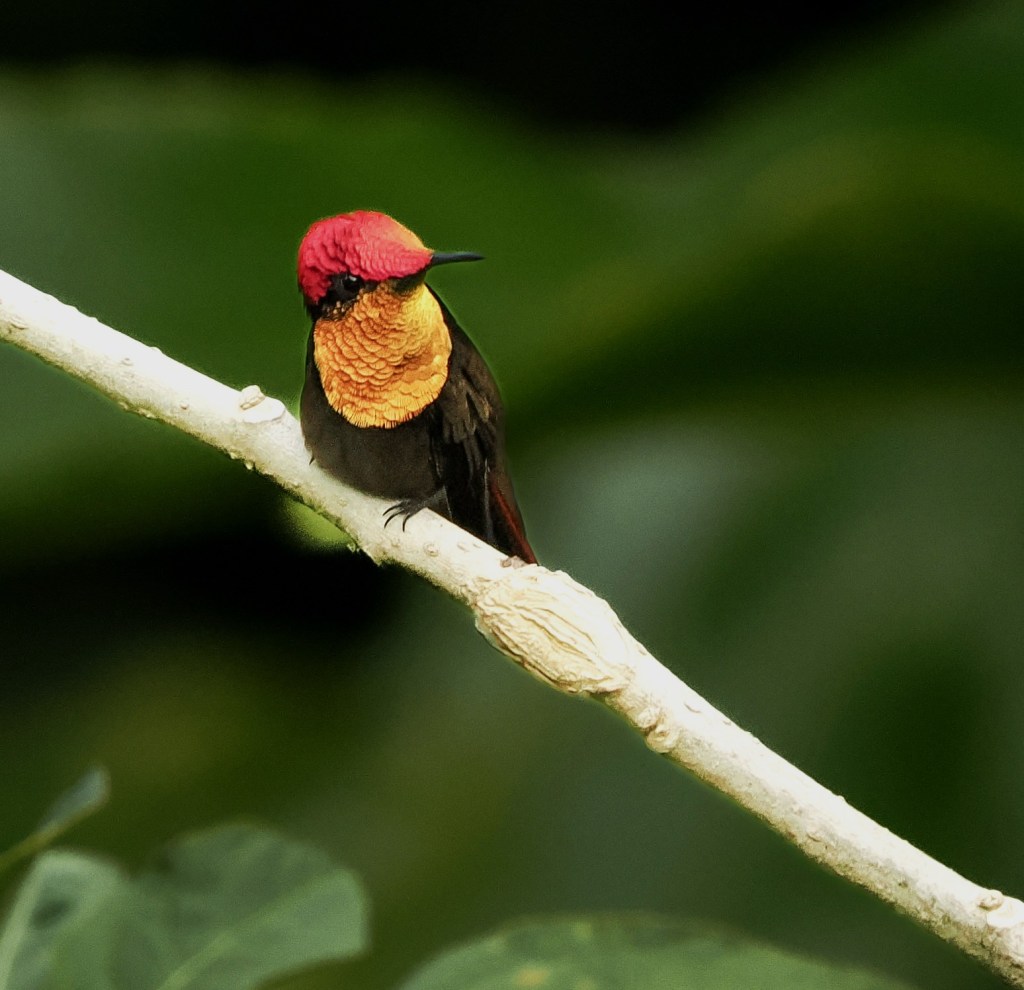
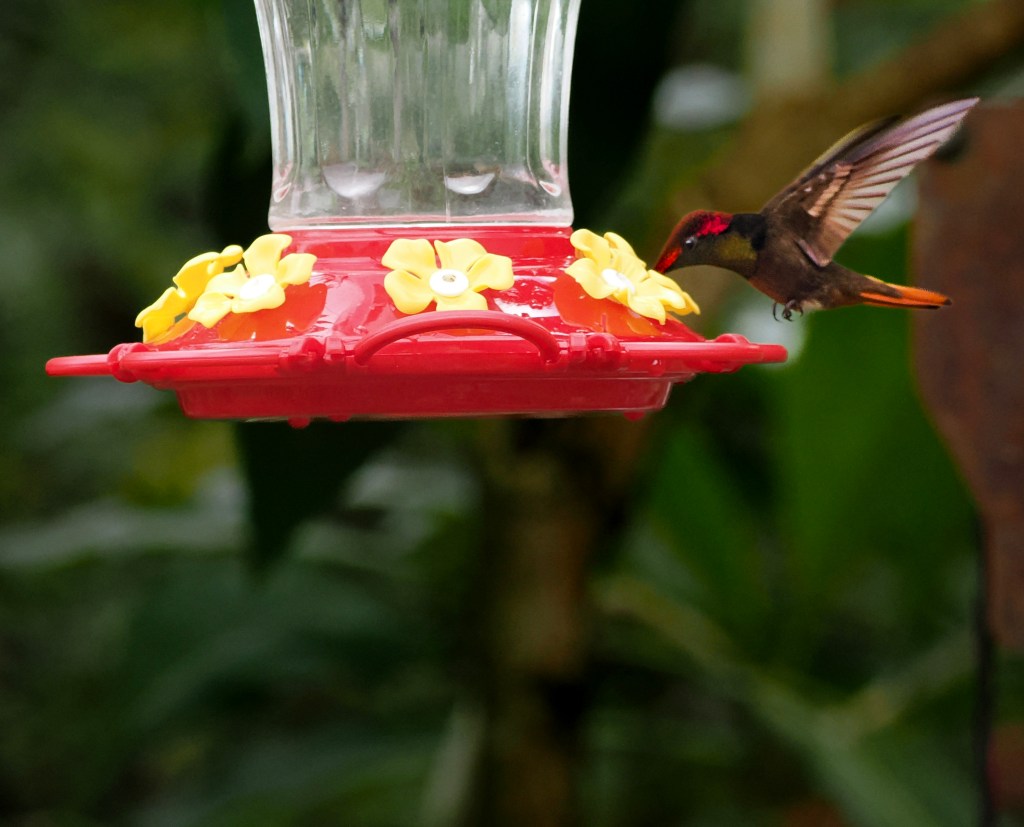
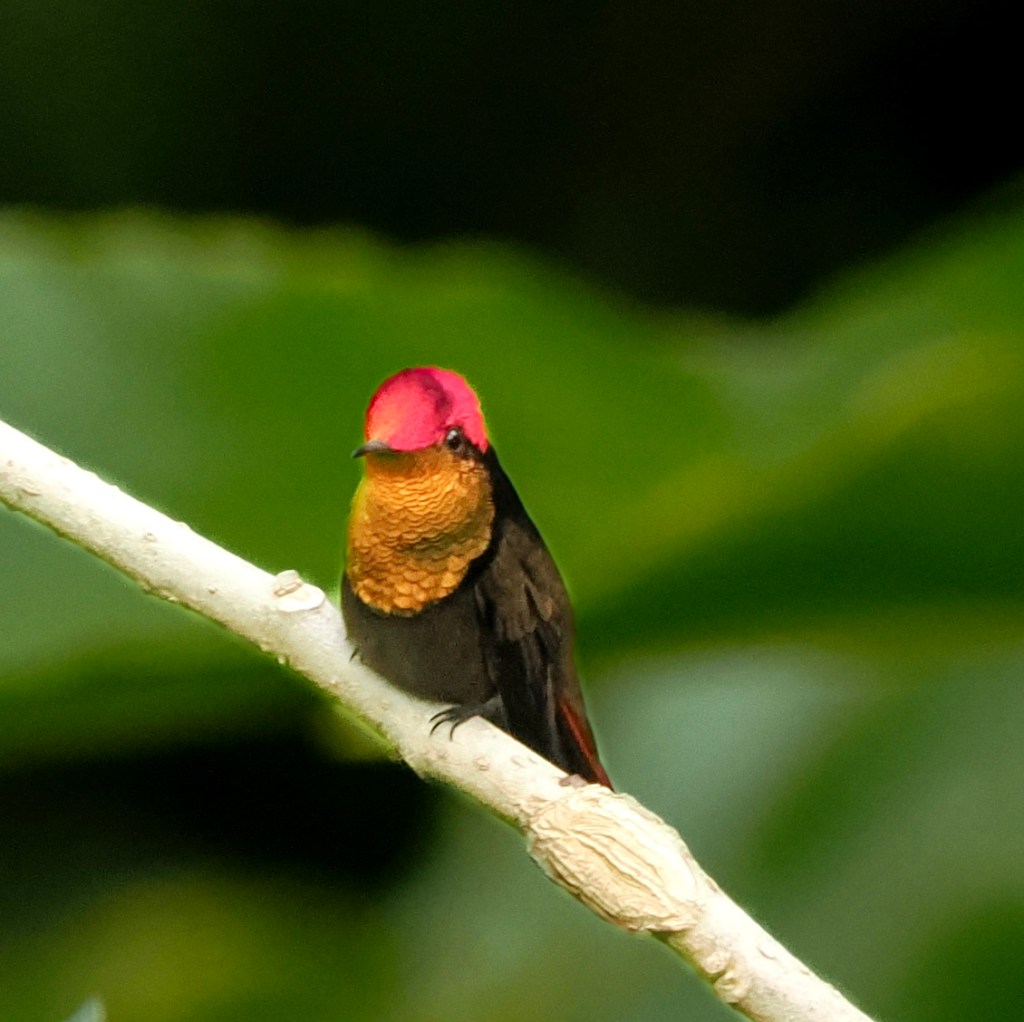
Ruby-topaz Hummingbird. This was the one that got away, sort of. I never managed a good flight shot with its tail spread. I did photograph it perched on a branch, and it is still unforgettable: a ruby-red crown, a golden-orange throat, and a dark body, like a tiny jewel.

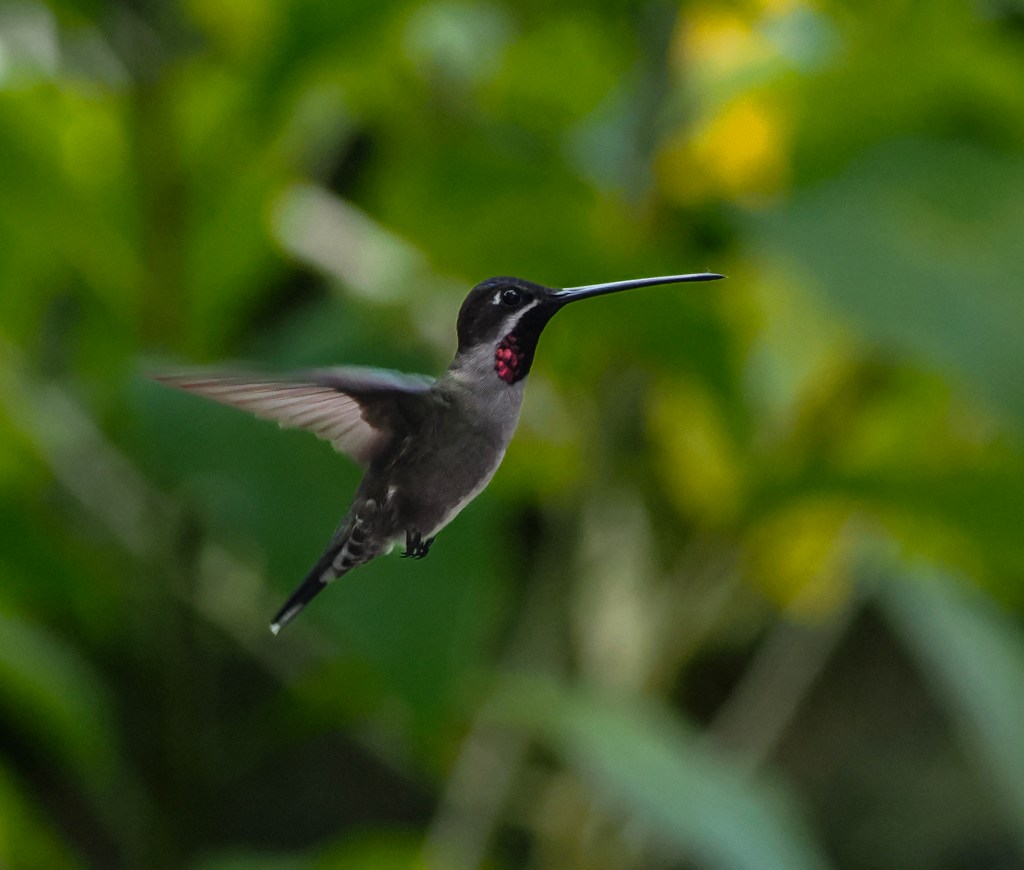
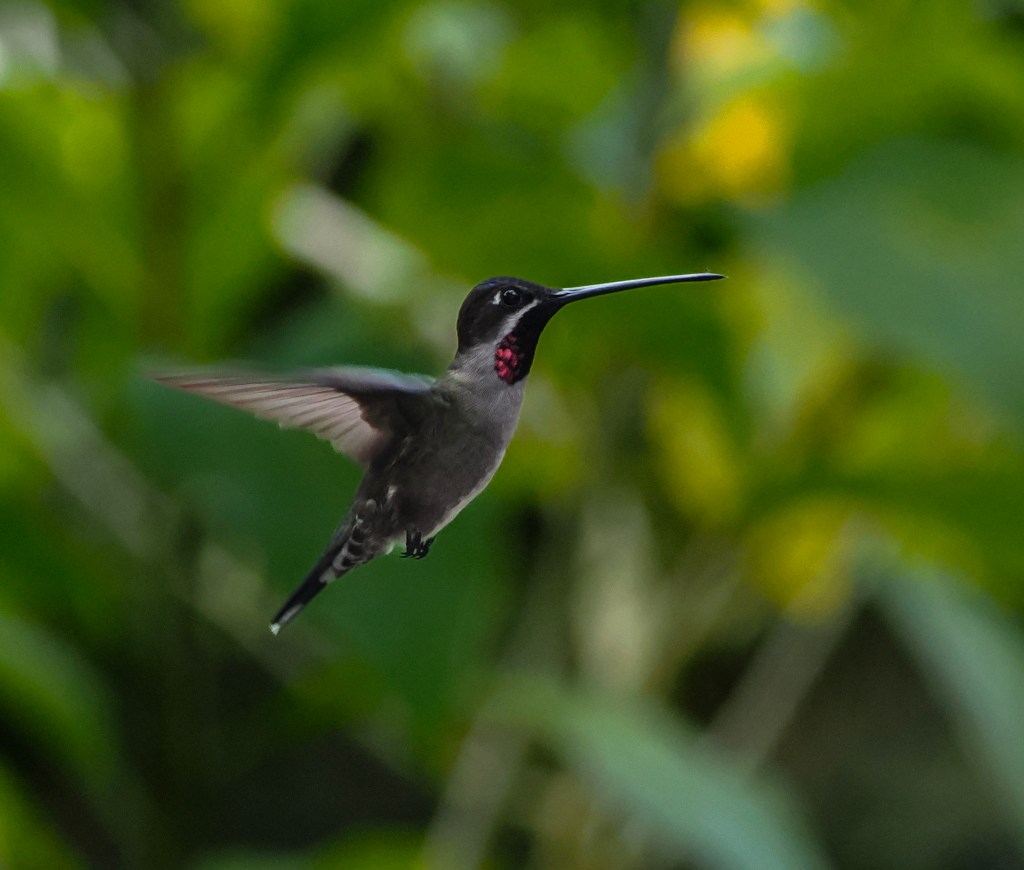
Long-billed Starthroat. A male in flight with a magenta-red throat patch, a bold white stripe behind the eye, and a long, straight bill, hence the name. The throat looks dull until the light catches it, then flashes red.

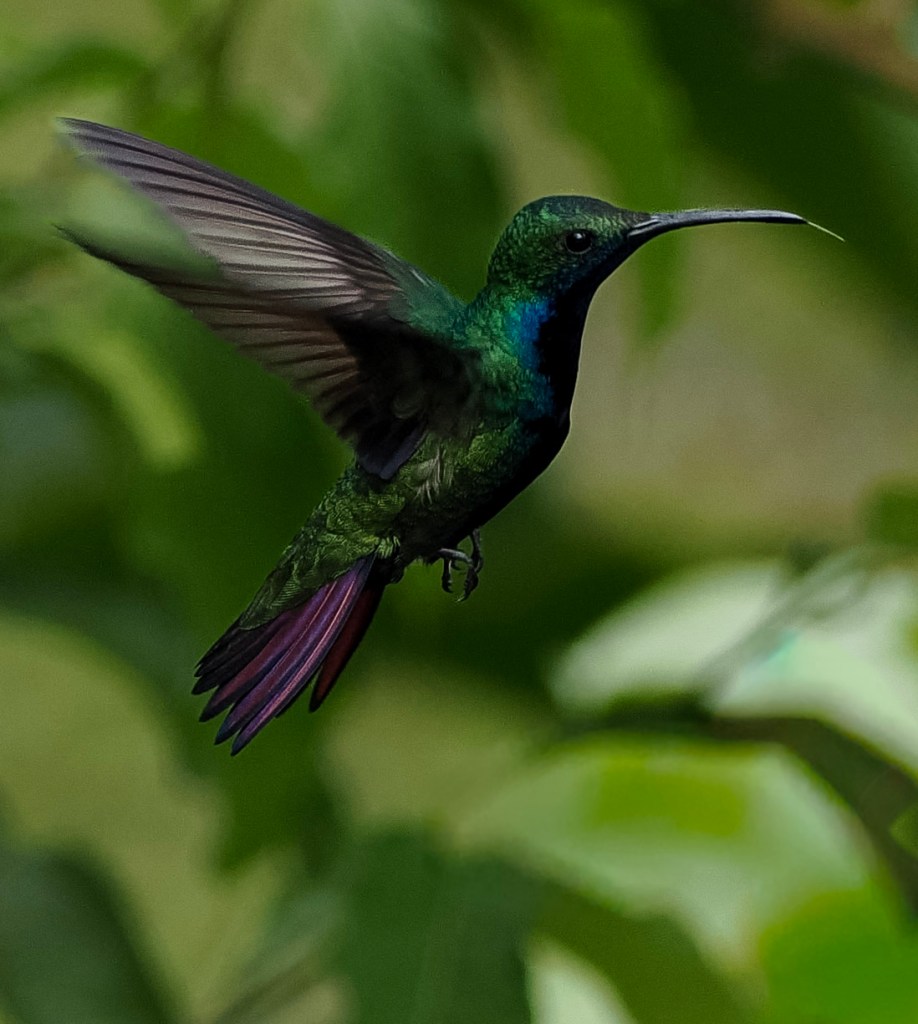
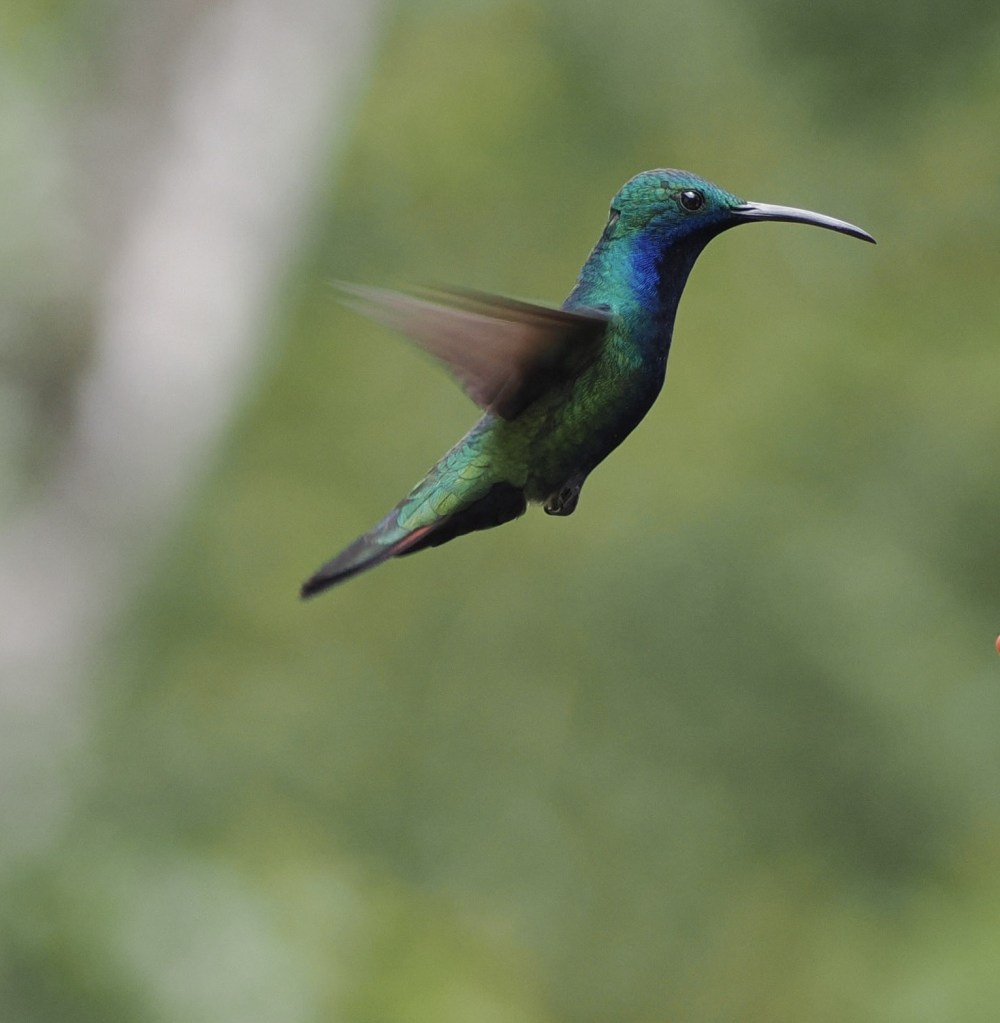
Black-throated Mango. My photo shows a long curved bill, a blue patch against a black throat, and a purple tail.

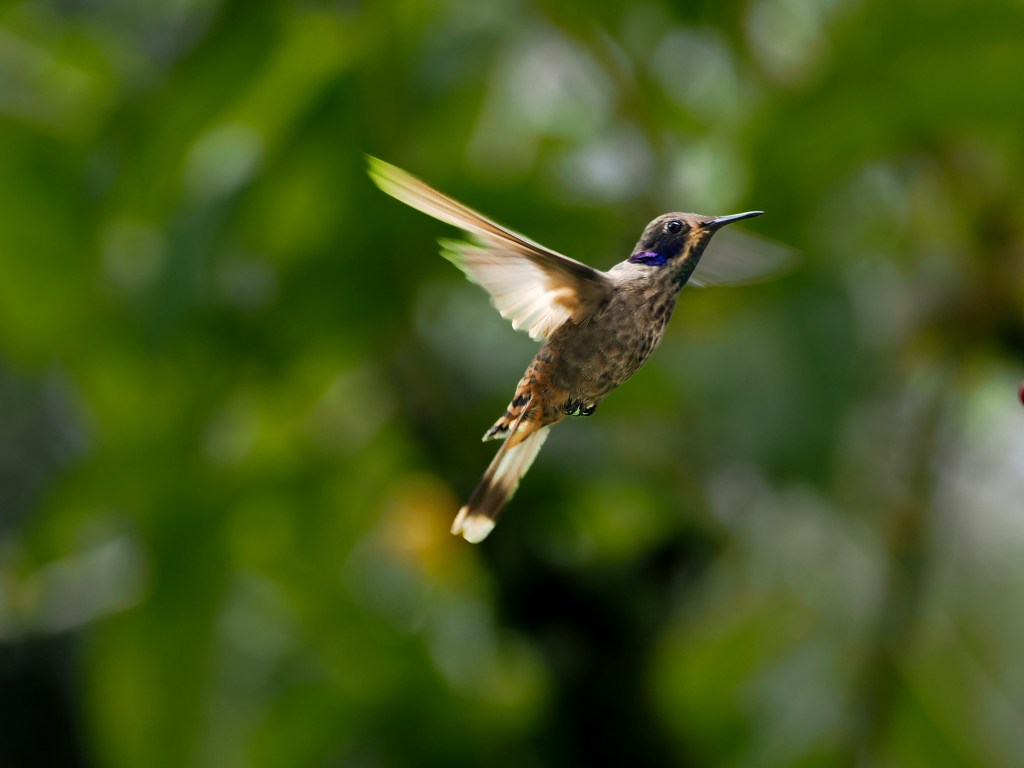
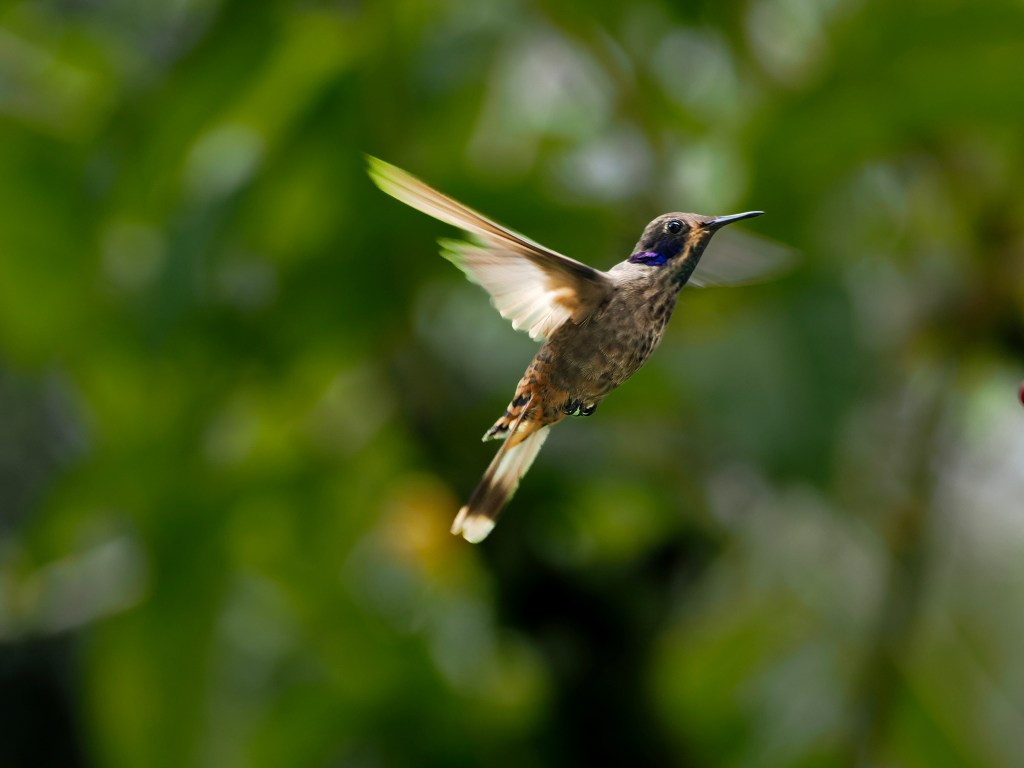
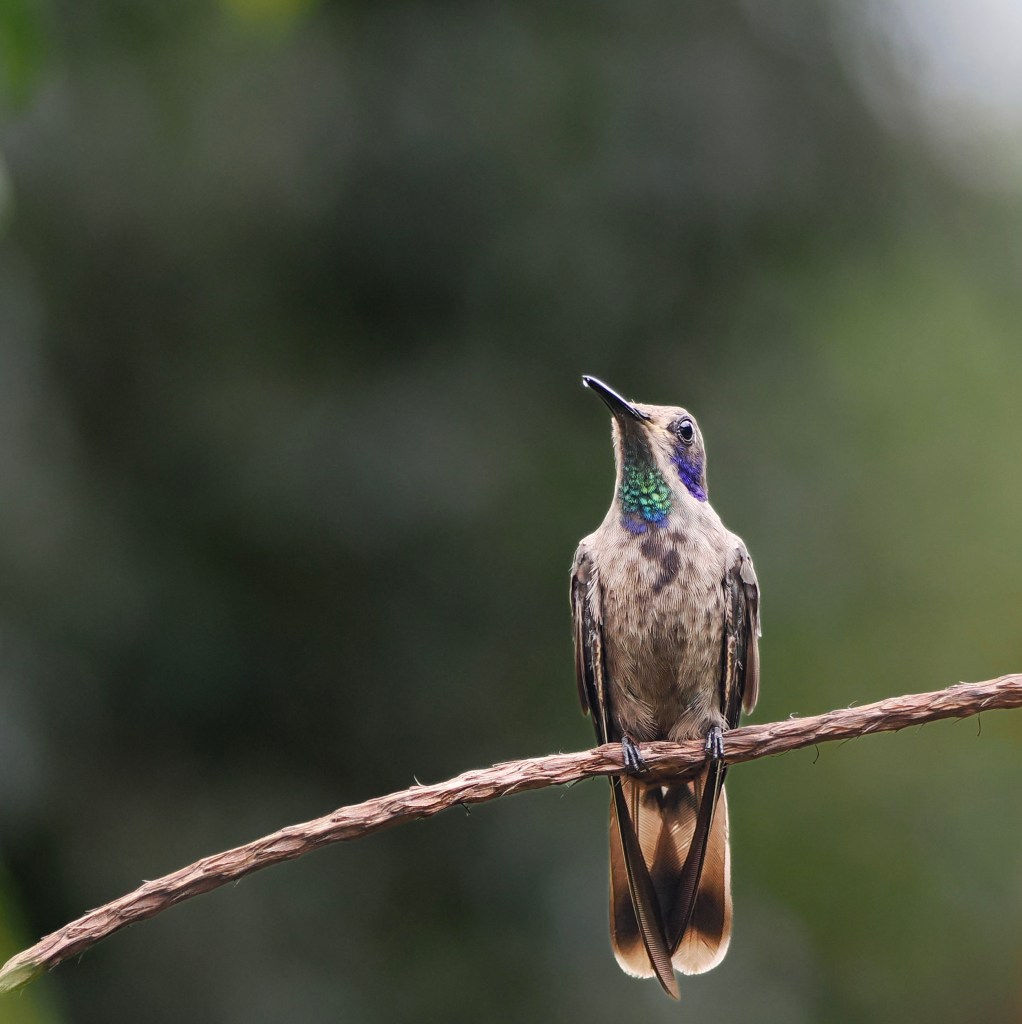
Brown Violetear. The quiet one. It is mostly soft brown and mottled, but a violet “ear” patch and a flash of green at the throat catch the light. I photographed it both in flight and perched calmly on a vine.

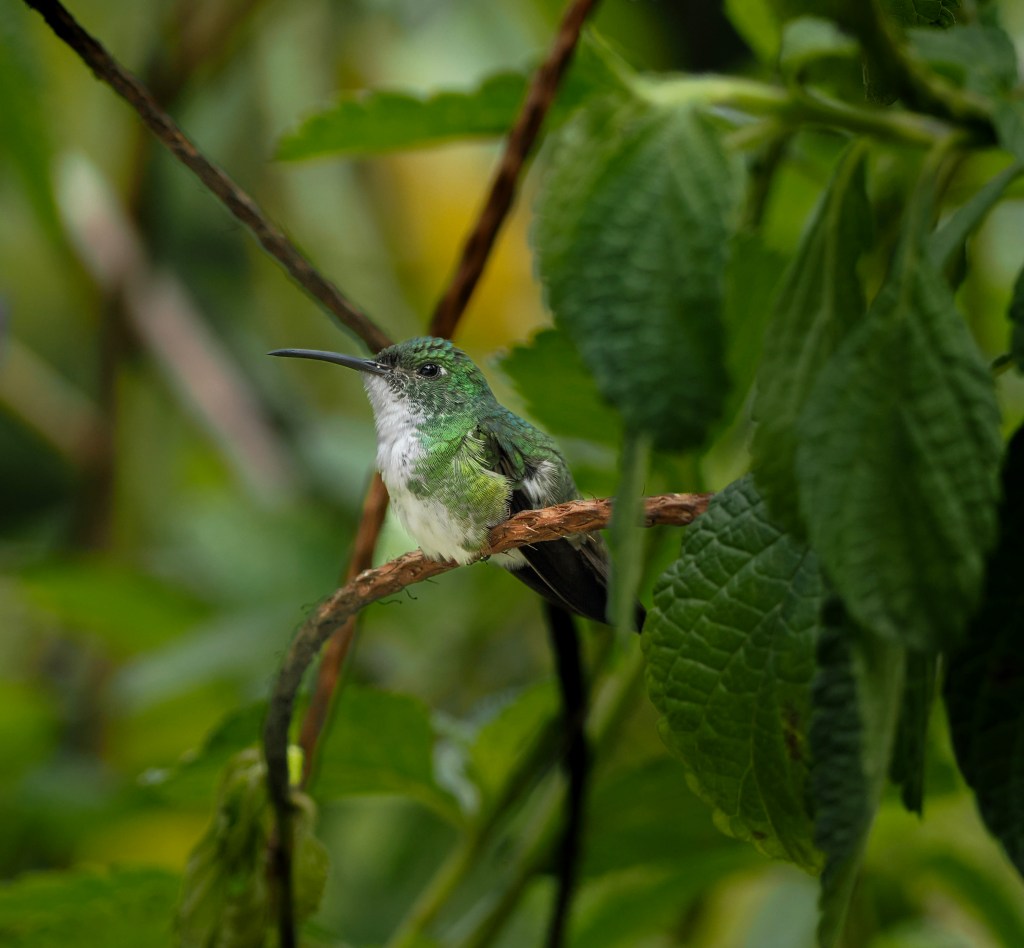
White-chested Emerald. A small, elegant green hummingbird with a clean white throat and chest. I photographed it perched on a branch.

The Rare One That Never Came to the Feeders: Tufted Coquette

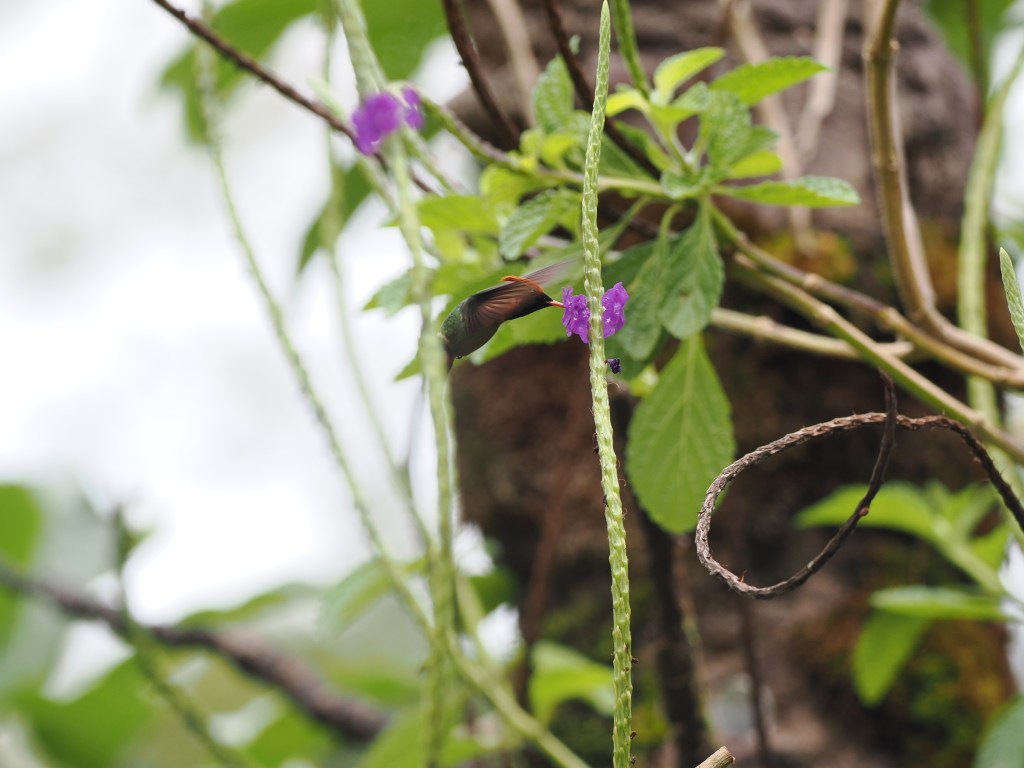
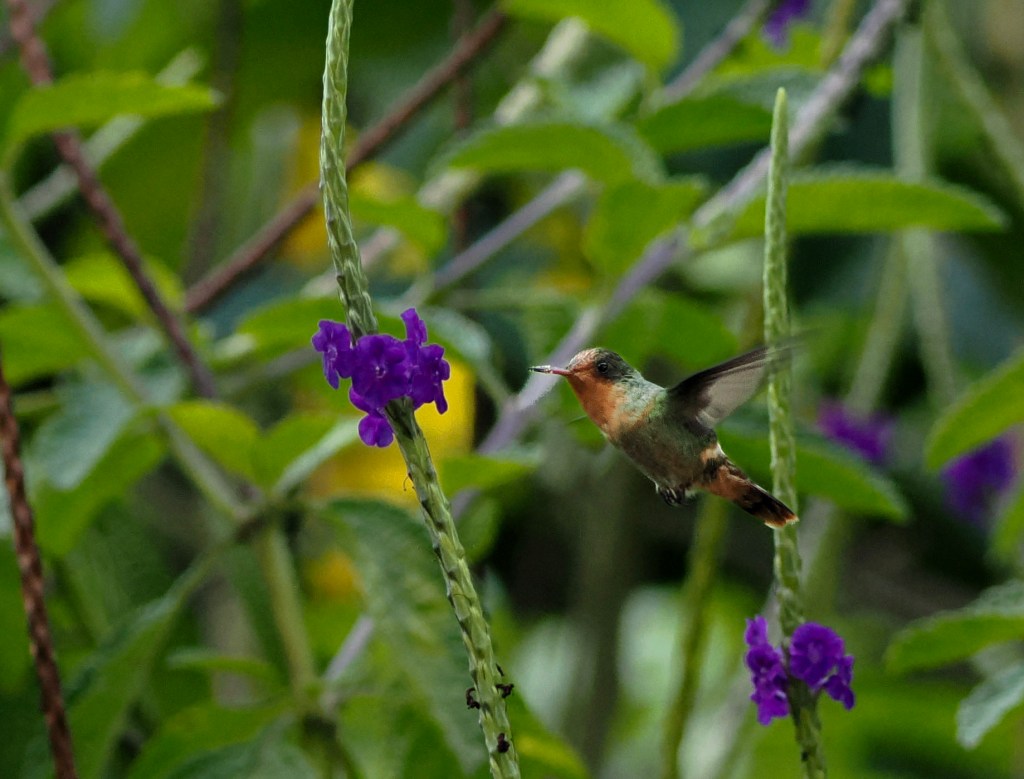
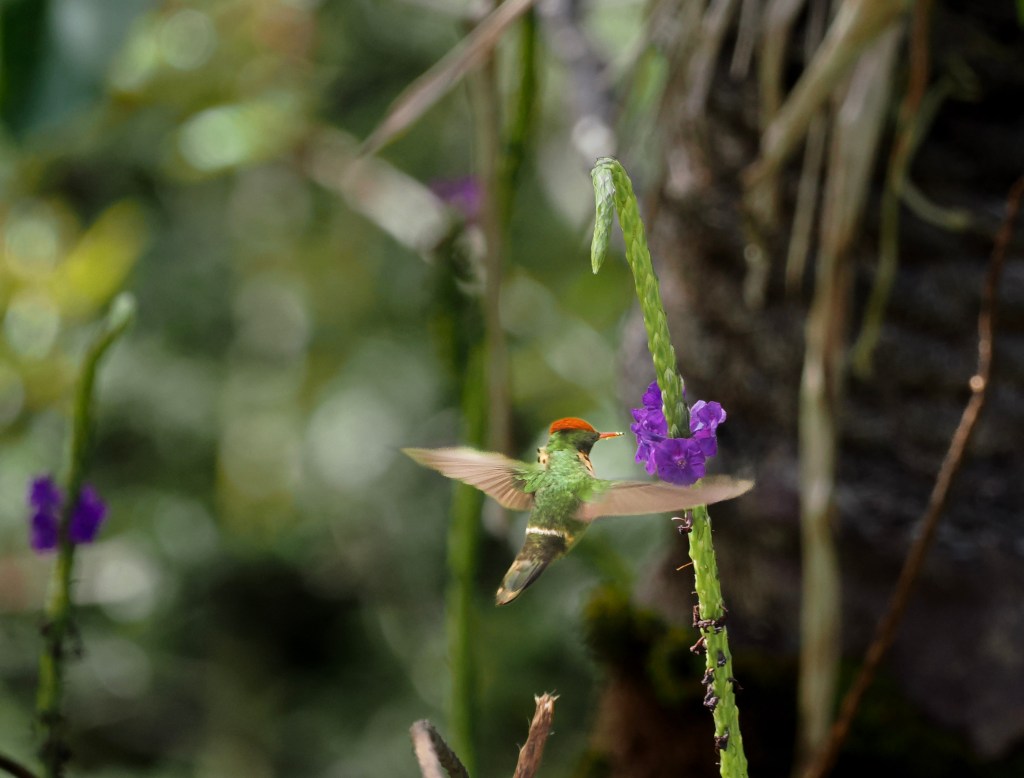
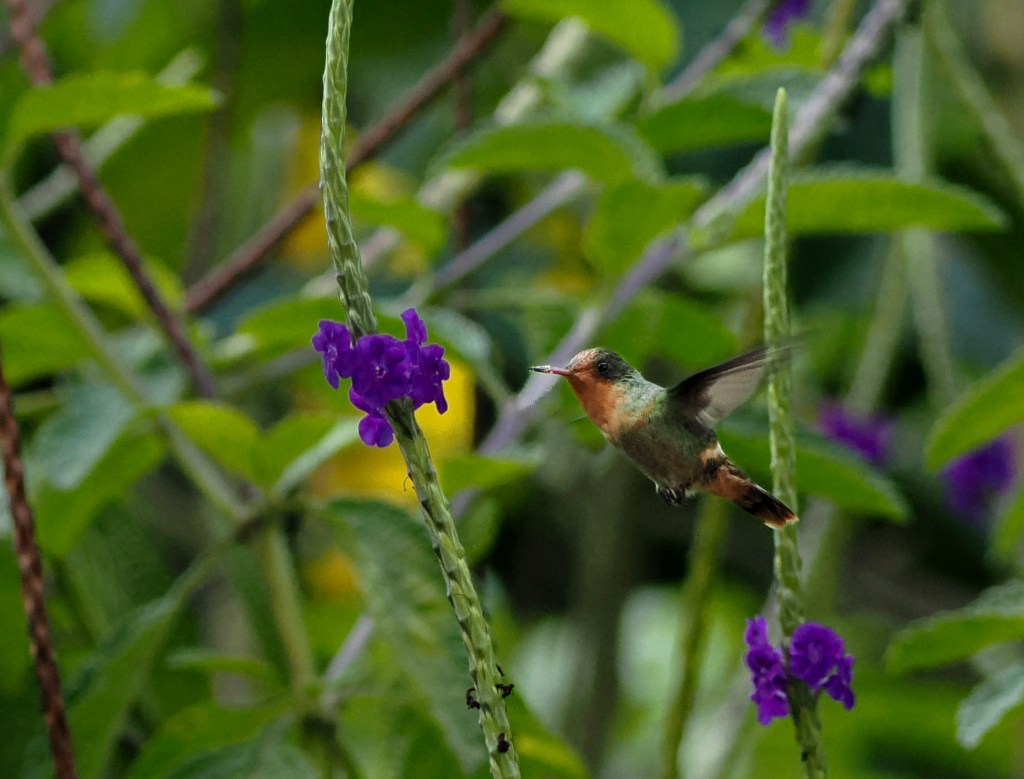
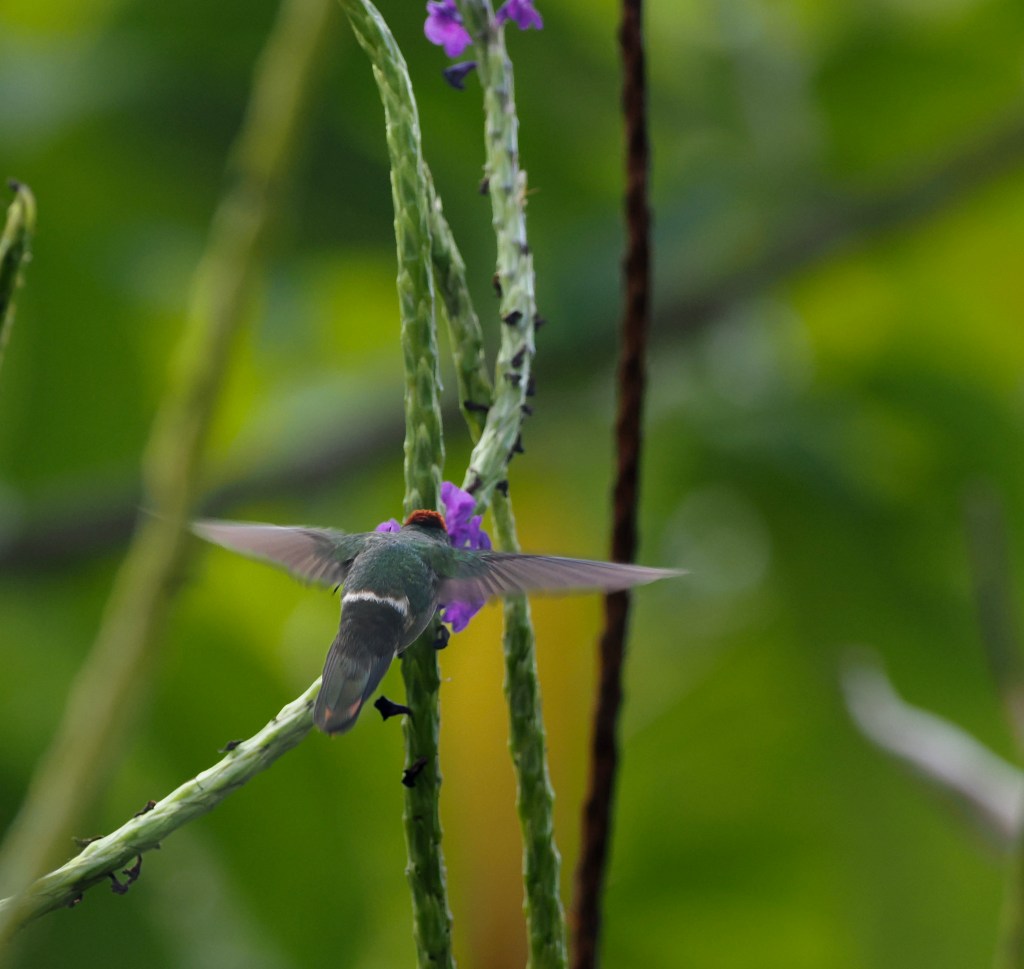
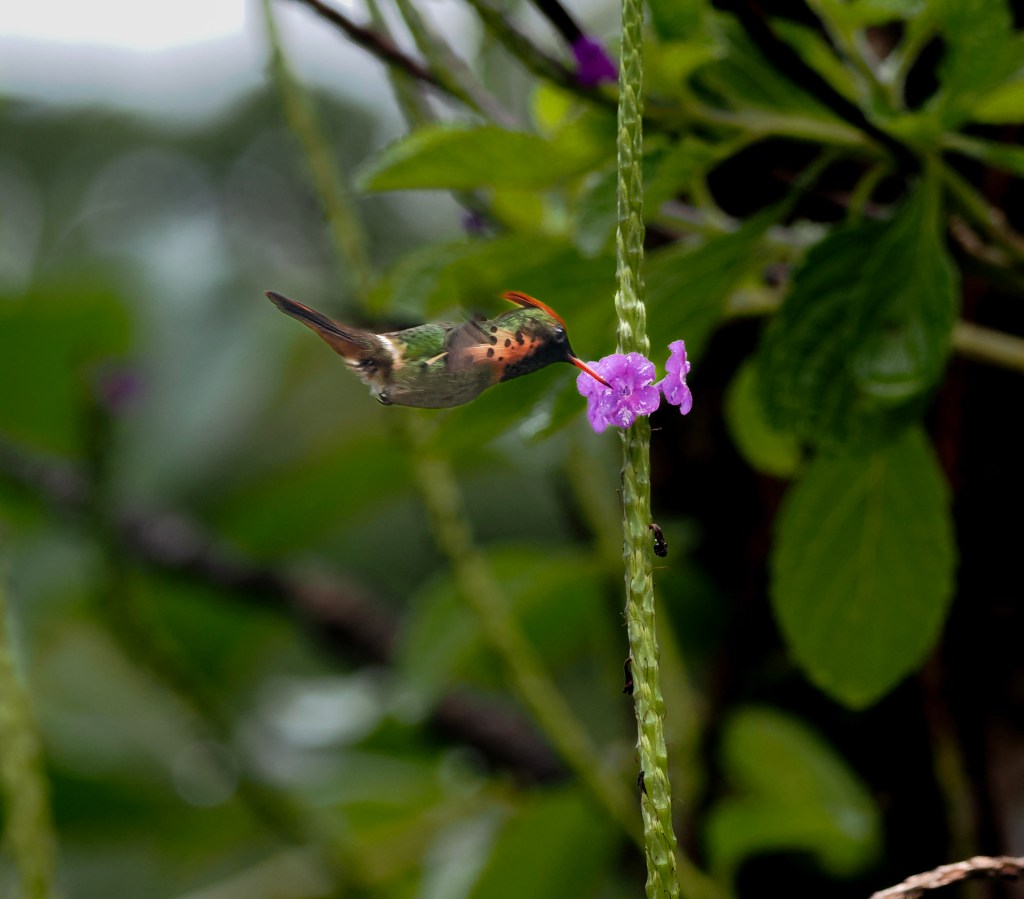
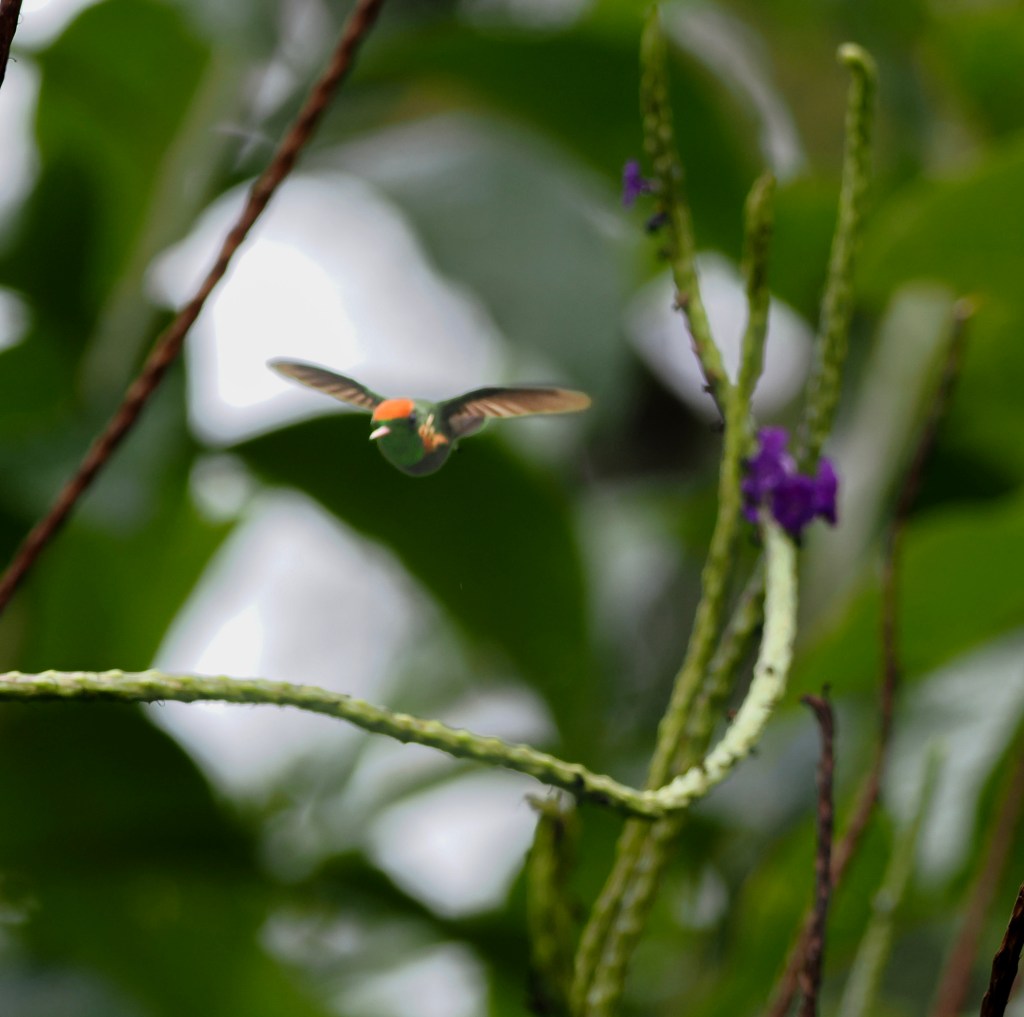
The Tufted Coquette is one of the rarest hummingbirds you can see at Asa Wright, and it never visited the feeders. I found it hovering at the purple flowers growing near them. It is tiny, with an orange face and throat and a rusty tail, and I was lucky to be watching the flowers at the right moment. It’s a good reminder to look beyond the feeders: the garden flowers have visitors too.

The Fruit Feeders: Color on Every Plate

The banana feeders were just as busy:

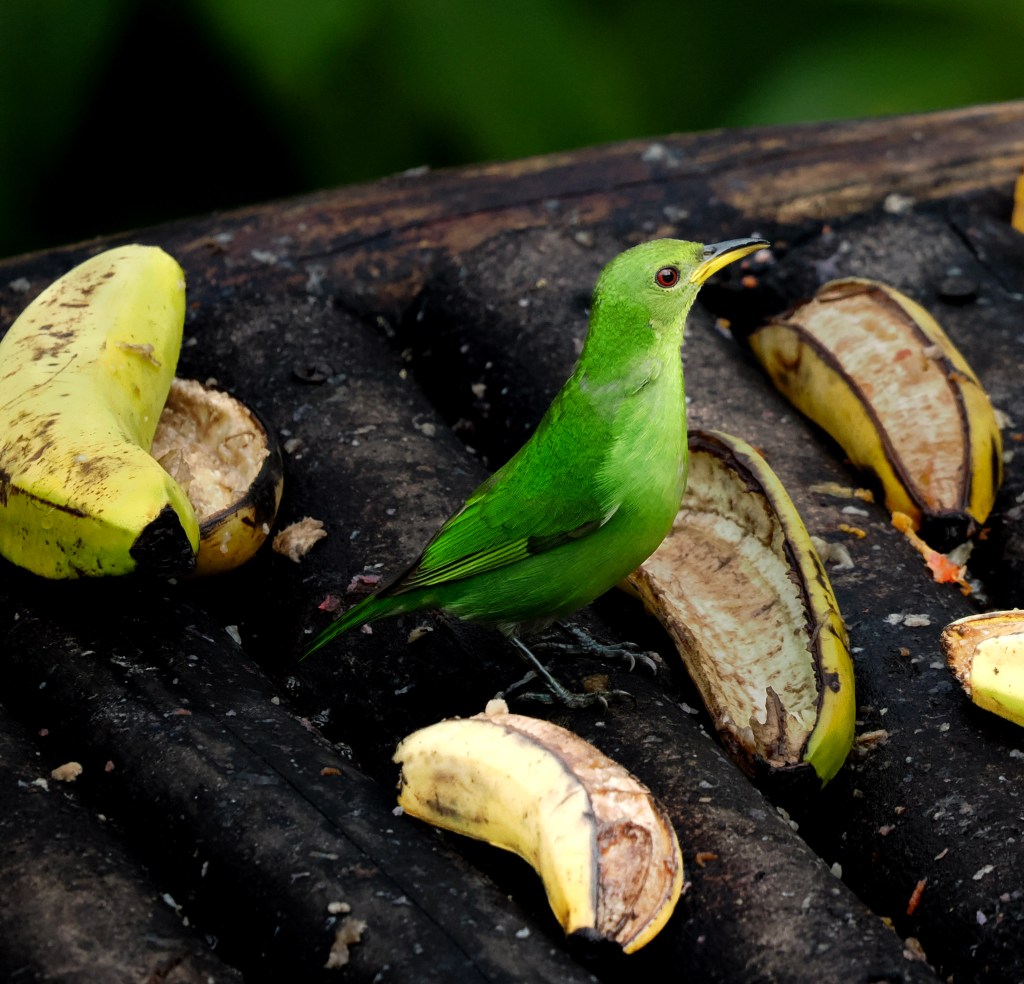
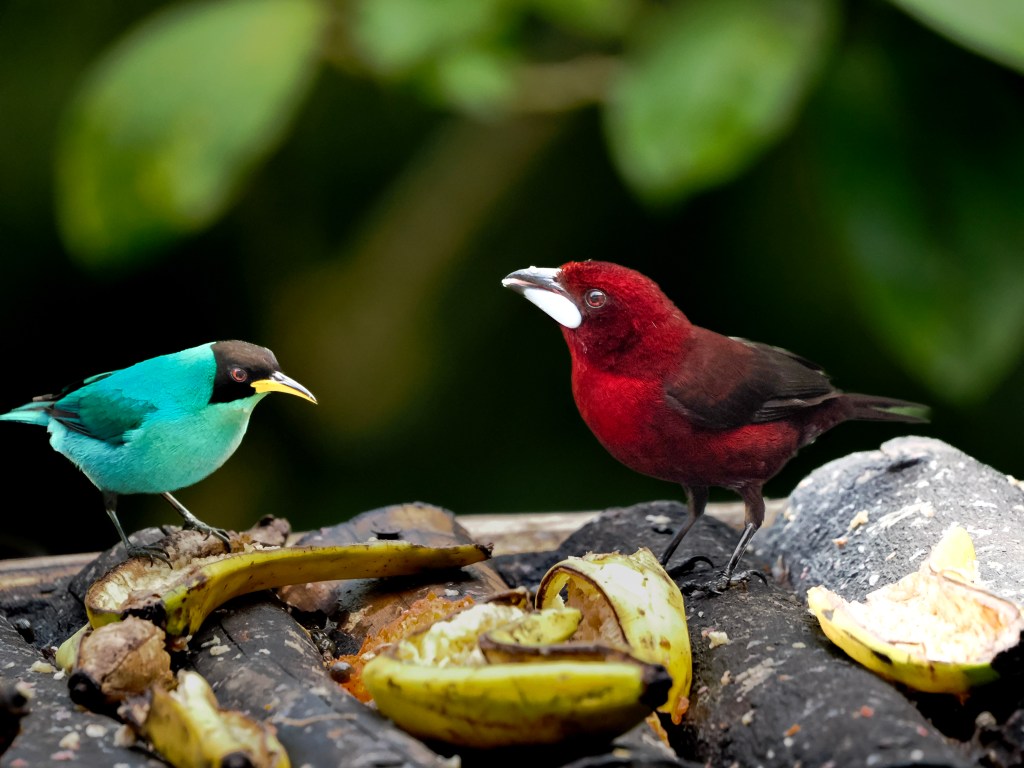
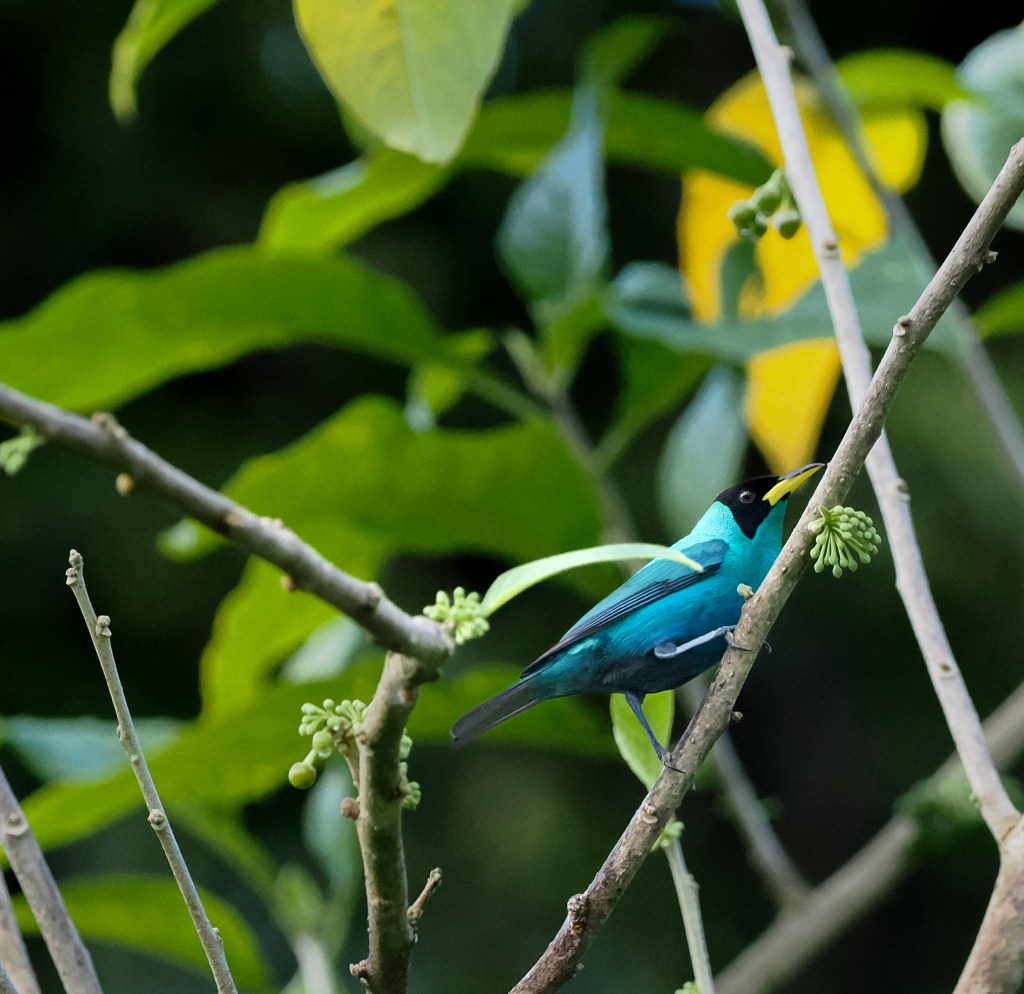
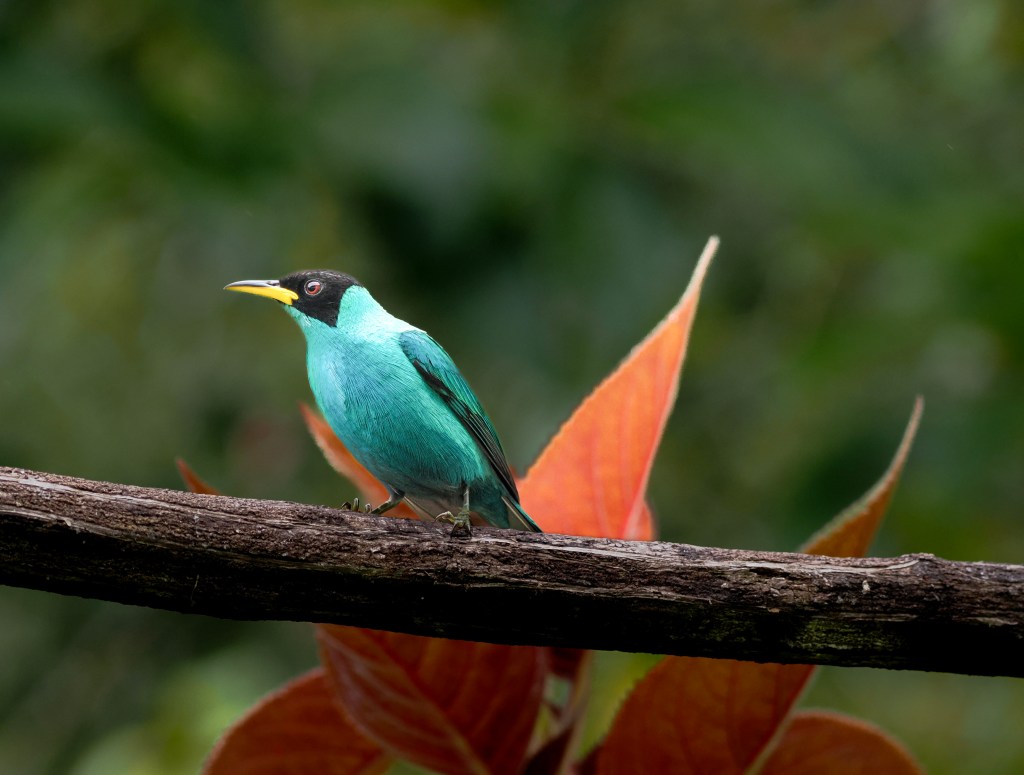
  • Green Honeycreeper: the male is turquoise with a black hood and yellow bill. The female is leaf green.
  • Silver-beaked Tanager: a deep crimson bird with a silvery bill, shown here facing off with a honeycreeper.
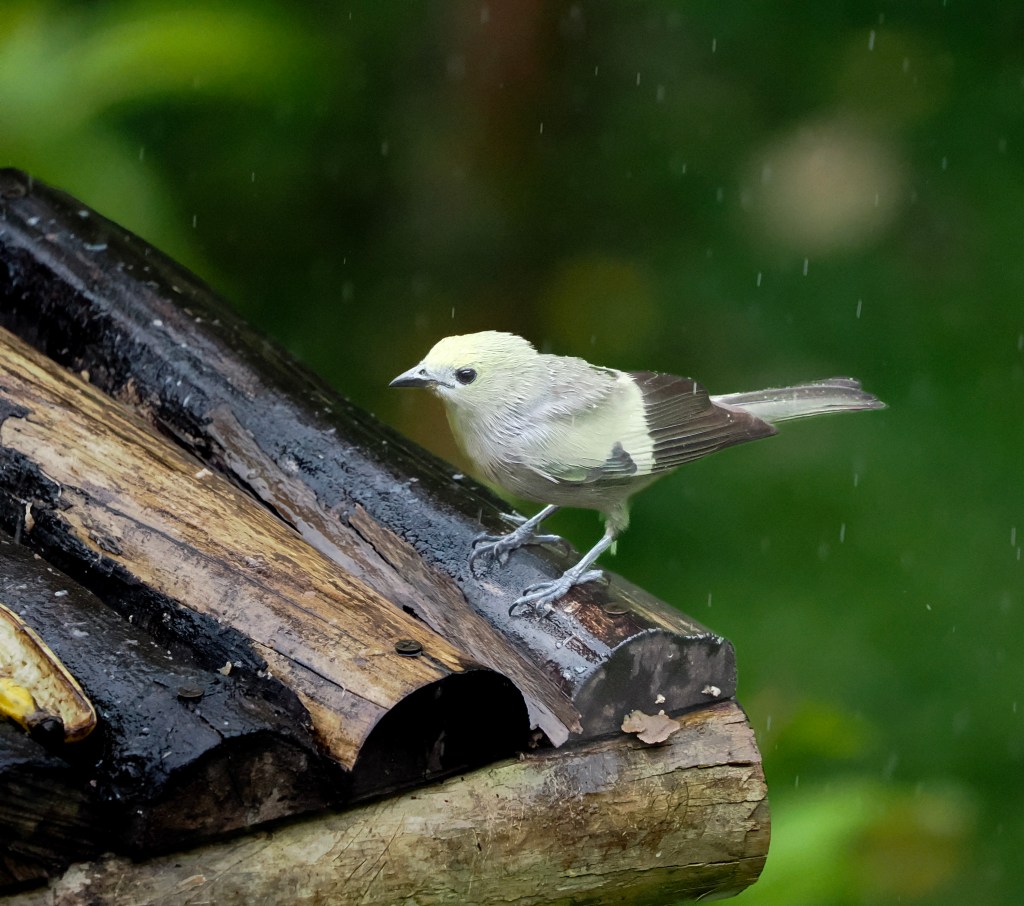
  • Palm Tanager: I caught one perched on a wet log in the rain.
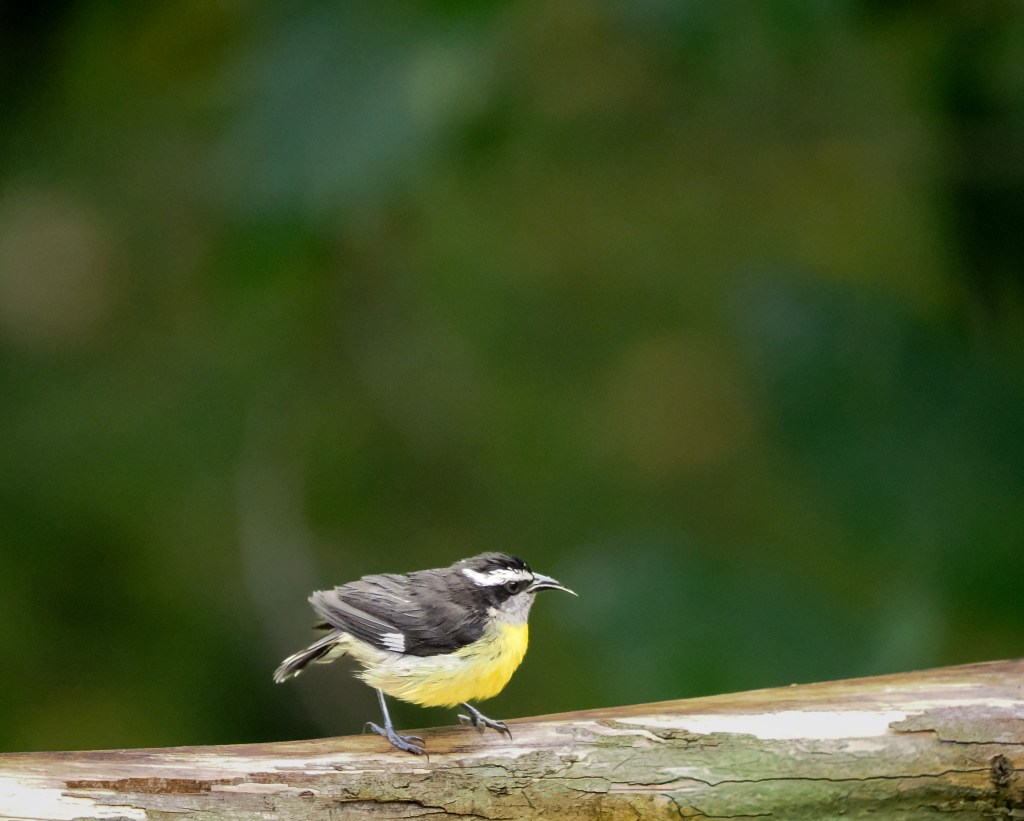
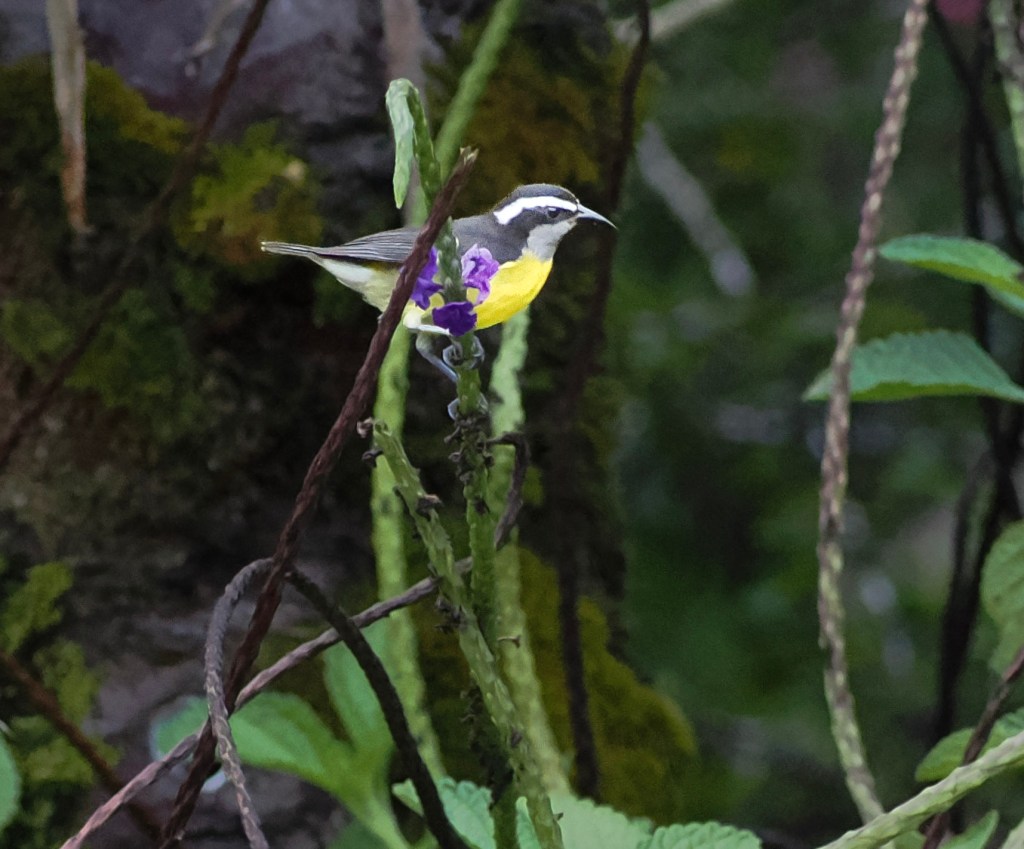
  • Bananaquit: tiny, yellow-bellied, and bold. It visits the feeders and the purple flowers around the veranda.
  • Crested Oropendola: it came face to face with my lens, banana on its bill, blue eyes blazing. It was my favorite performer. When the males call, they swing forward on the perch like a pendulum.
Forest Birds from the Veranda and Trails

  • Bay-headed Tanager: a green body with a rusty-red head, perched in the fruiting trees.
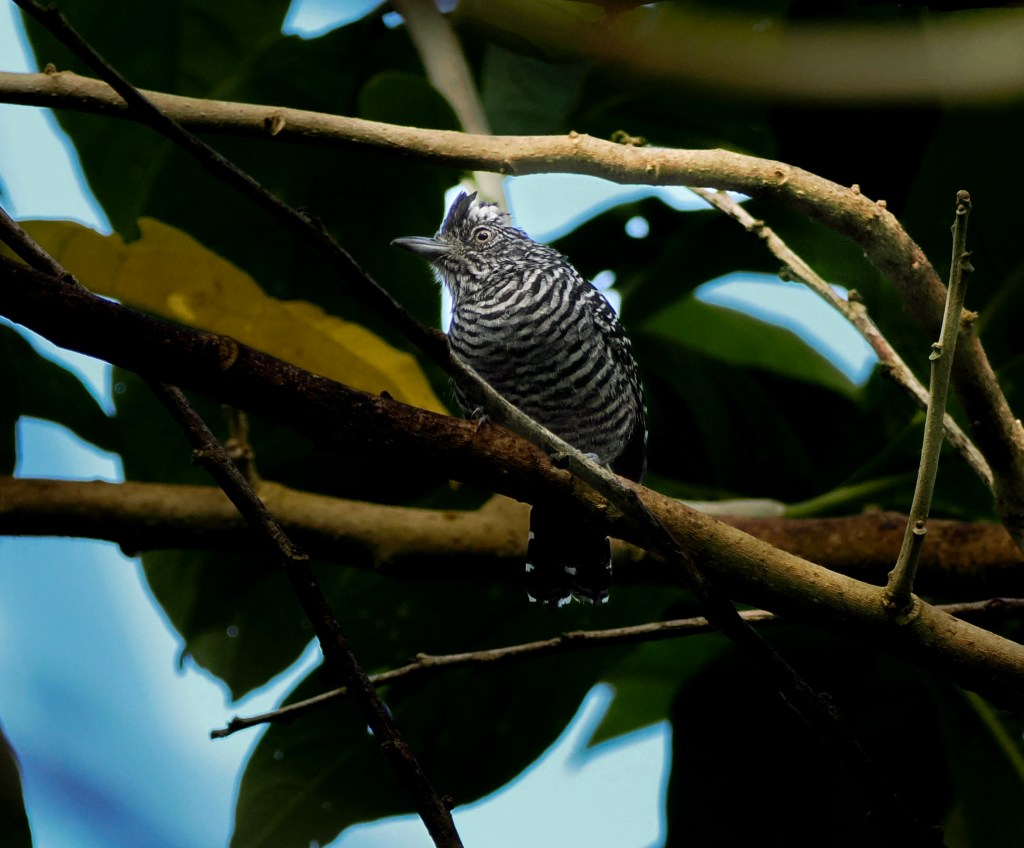
  • Barred Antshrike: black-and-white stripes and a little crest, hiding in the foliage.
  • Bearded Bellbird (the “anvil bird”): a brown head, a white body, and a black beard of wattles. Its call sounds like a hammer striking an anvil. Birdingplaces notes the bellbird can often be seen from the veranda.
  • White-bearded Manakin: a black cap, a white body, and orange legs. I love how the male tidies his display area to impress the female, like a tiny landscaper trying to win a date.
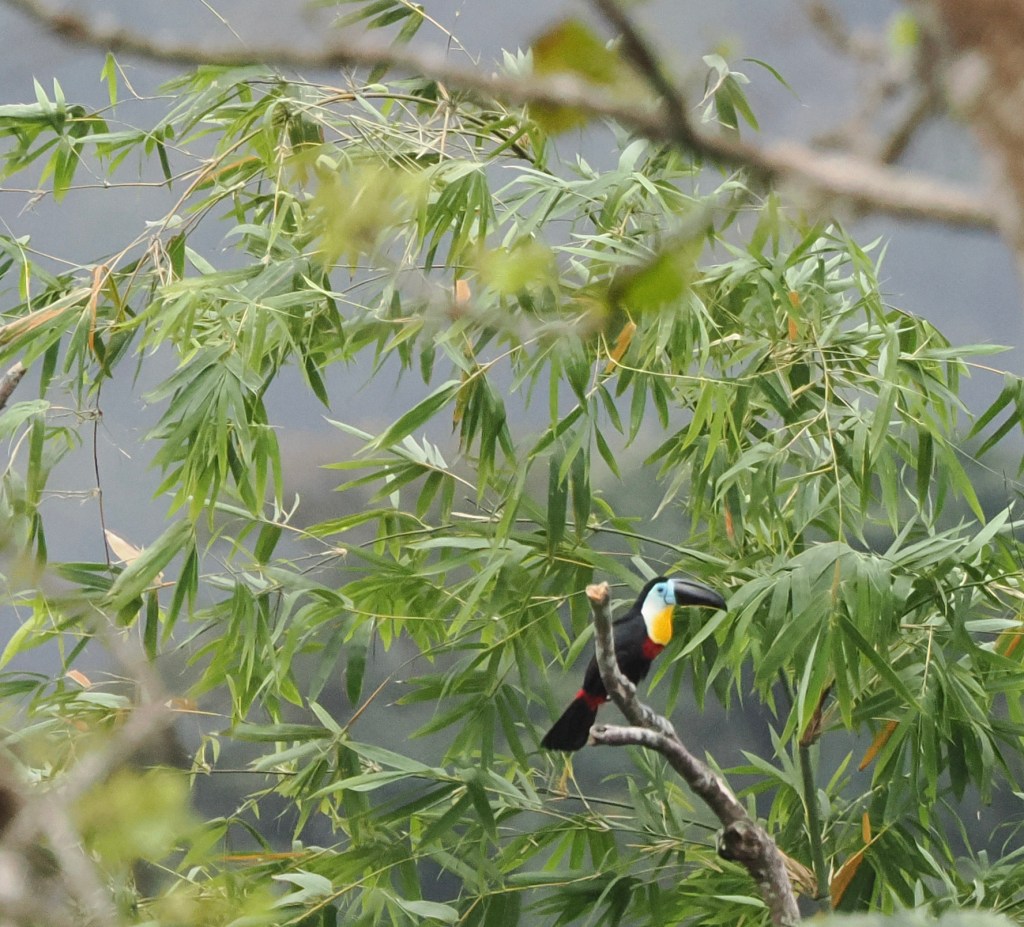
  • Channel-billed Toucan: perched on a bare branch against the misty hills, with pale blue skin around the eye and an orange-yellow breast.
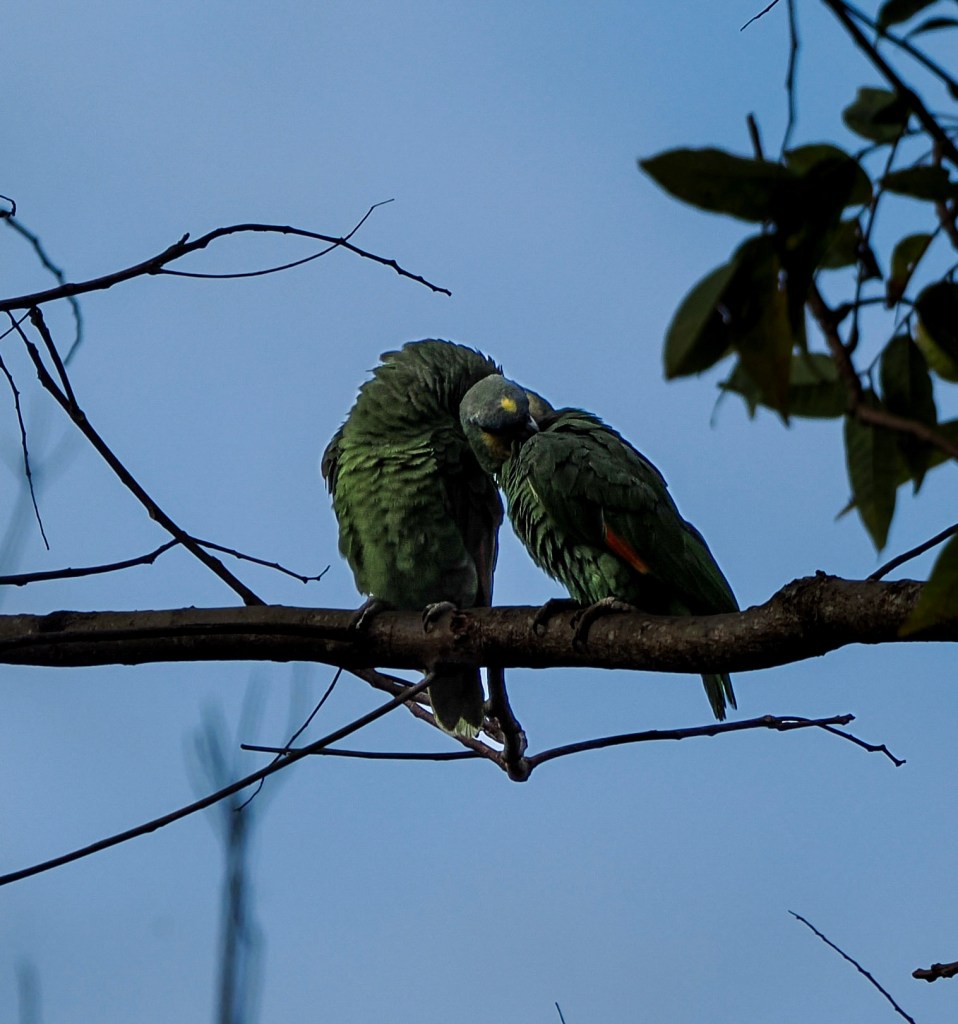
  • Orange-winged Parrot: a pair preening each other at dusk, with a flash of orange on the wing.

The Oilbirds

And yes, I saw the oilbirds. They are nocturnal fruit-eaters that navigate in the dark by echolocation, which is rare among birds. Asa Wright is one of the best-known places in the world to see them. The trail to the roost requires a guide, which is a good thing, because guides know how to approach without disturbing them. Seeing one peering out of its rocky roost was worth the trip on its own.

Why Asa Wright Is So Good for Birding

  • The veranda is the show. You can see more from one chair than on a long trail.
  • The in-house guides are excellent. The morning walk led to species I would have walked past on my own.
  • The habitats are varied. The rainforest, garden, feeders, and nearby Caroni Swamp each add different birds to your list.
  • The setting is remarkable. It’s quiet and tucked away, yet only 45 to 60 minutes from Piarco Airport.

Tips for Photographing Birds at Asa Wright

  • Use a fast shutter speed for hummingbirds, around 1/2000s or faster, to freeze the wings. If you want a little wing blur, as in the mango shot, slow down a bit.
  • Expect rain and low light. A fast lens or higher ISO helps.
  • Bring a long lens, but the feeders put many birds within reach of a standard zoom.
  • Sit still. The best shots came after I stopped moving.
  • Ask the guides where the bellbirds and manakins are calling that day.

Final Thoughts

I came to Trinidad for business and left with some of my best travel memories. Asa Wright gave me a quiet, beautiful base, helpful people, great food, and about two dozen species photographed without ever leaving the grounds. If you’re headed to Trinidad, even for work, carve out a few days here

Waved Albatross of Española: A Once‑in‑a‑Lifetime Wildlife Encounter

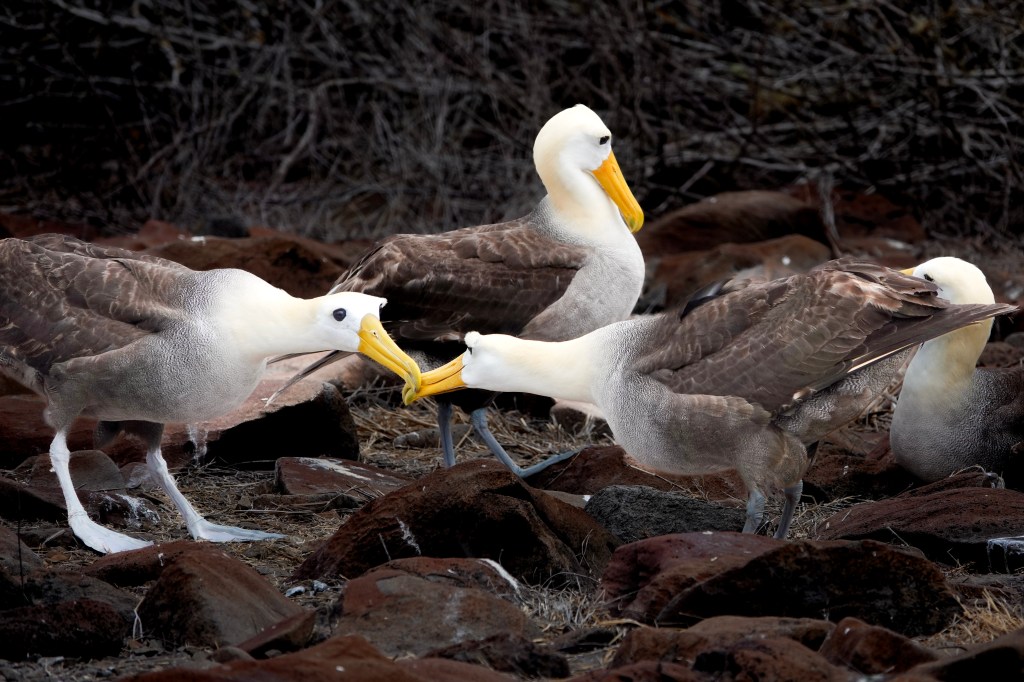
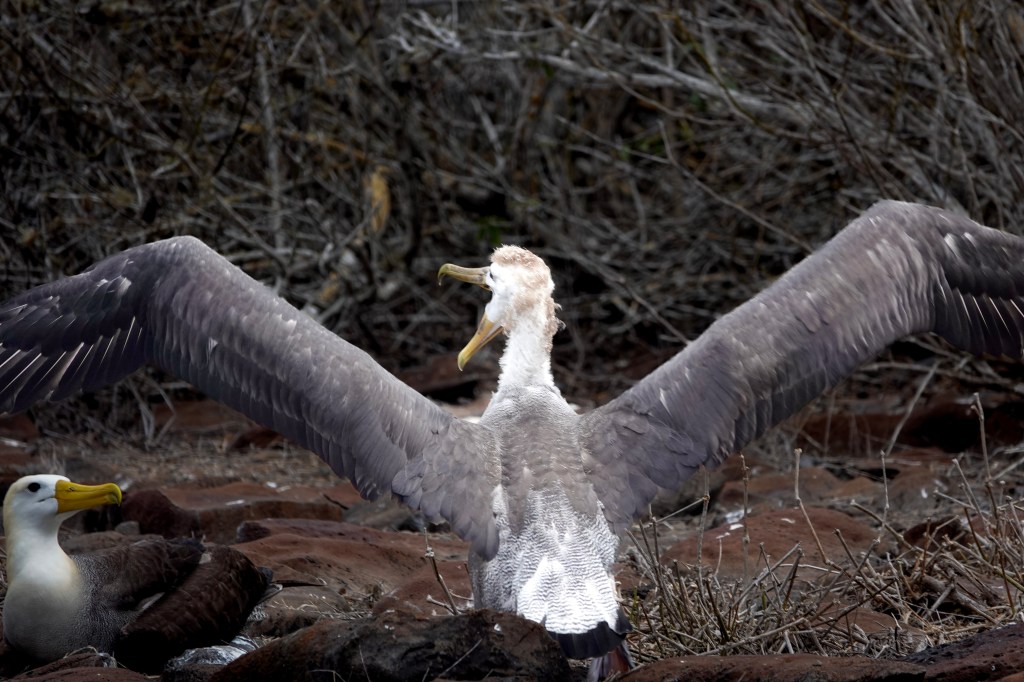
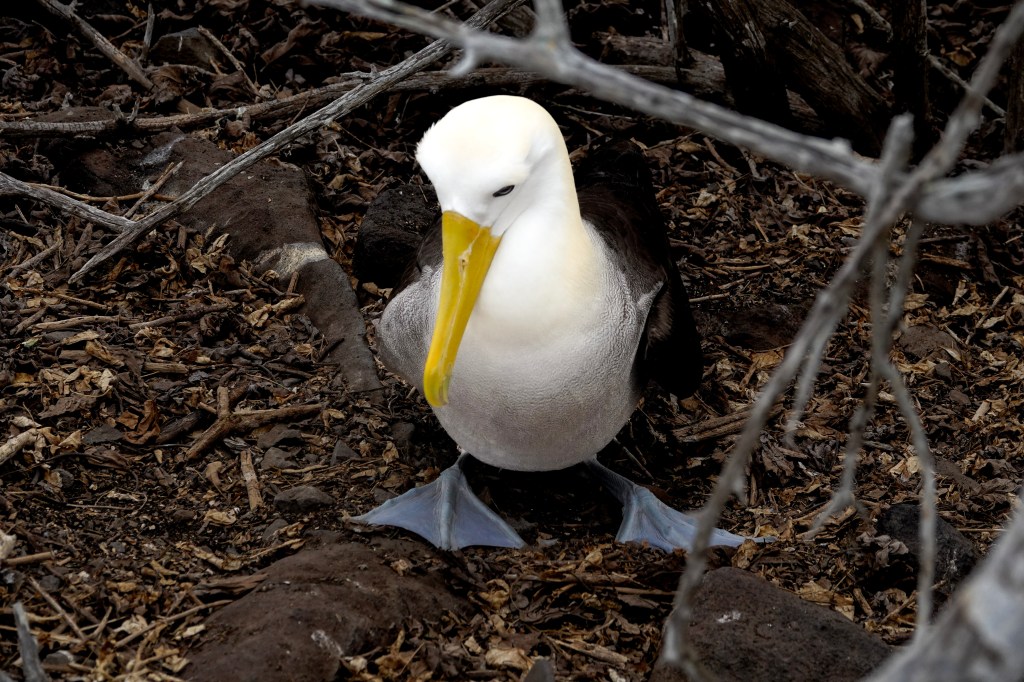
Visit the Galápagos island of Española between December to April, and you may witness one of the most extraordinary courtship rituals in the natural world. Each spring, nearly the entire global population of waved albatrosses—tens of thousands of birds—returns to this remote island to reunite with lifelong partners, raise a single chick, and perform a mating dance so intricate and theatrical that it feels choreographed by nature itself. With wingspans stretching up to eight feet, these are the largest birds in the Galápagos, yet their grace in the air contrasts beautifully with their endearing awkwardness on land. For travelers, seeing them here—on the only major breeding ground they have left—is nothing short of magical.

A Date With the Albatross: When to Plan Your Trip

The waved albatrosses follow a strict seasonal rhythm, and timing your visit is essential.

  • Late March – April (Arrival): The birds return to their only major breeding site on Española Island. Males typically arrive first to claim nesting spots, followed shortly by females.
  • April – June (Courtship & Egg Laying): This is the peak time to witness their famous courtship dance, which involves bill-clapping, bowing, and honking. Most eggs are laid during this window.
  • June – August (Incubation): Parents take turns incubating a single large egg for about two months. You can see many birds sitting on nests during this time.
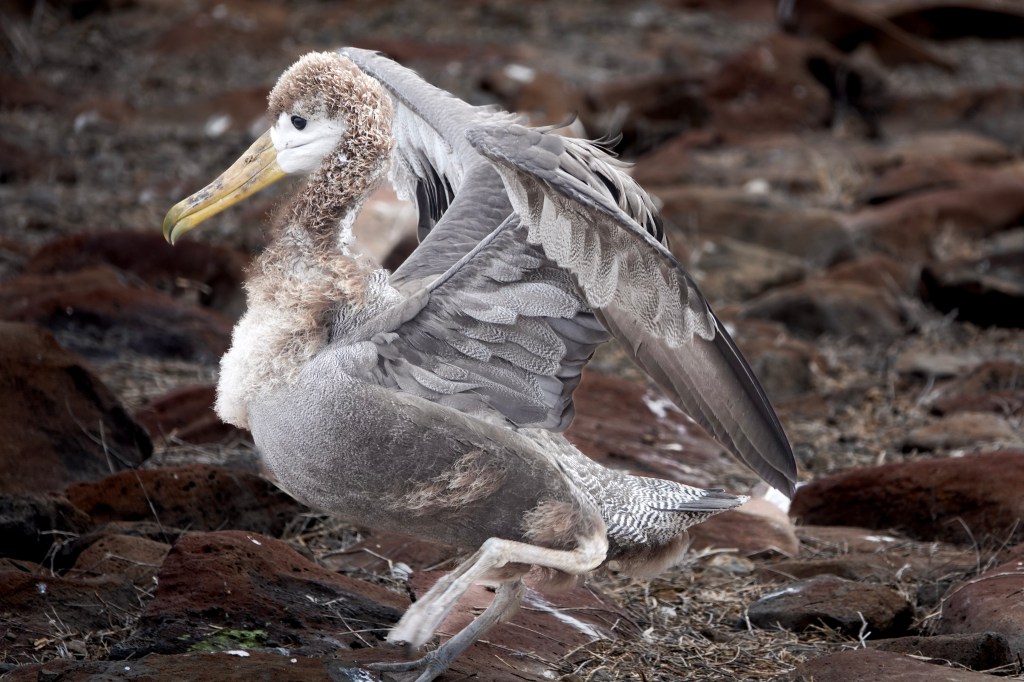
  • August – November (Chick Rearing): Chicks hatch and are fed a nutrient-rich oily substance by their parents. By late in this period, large, fluffy, brown chicks are visible across the colony.
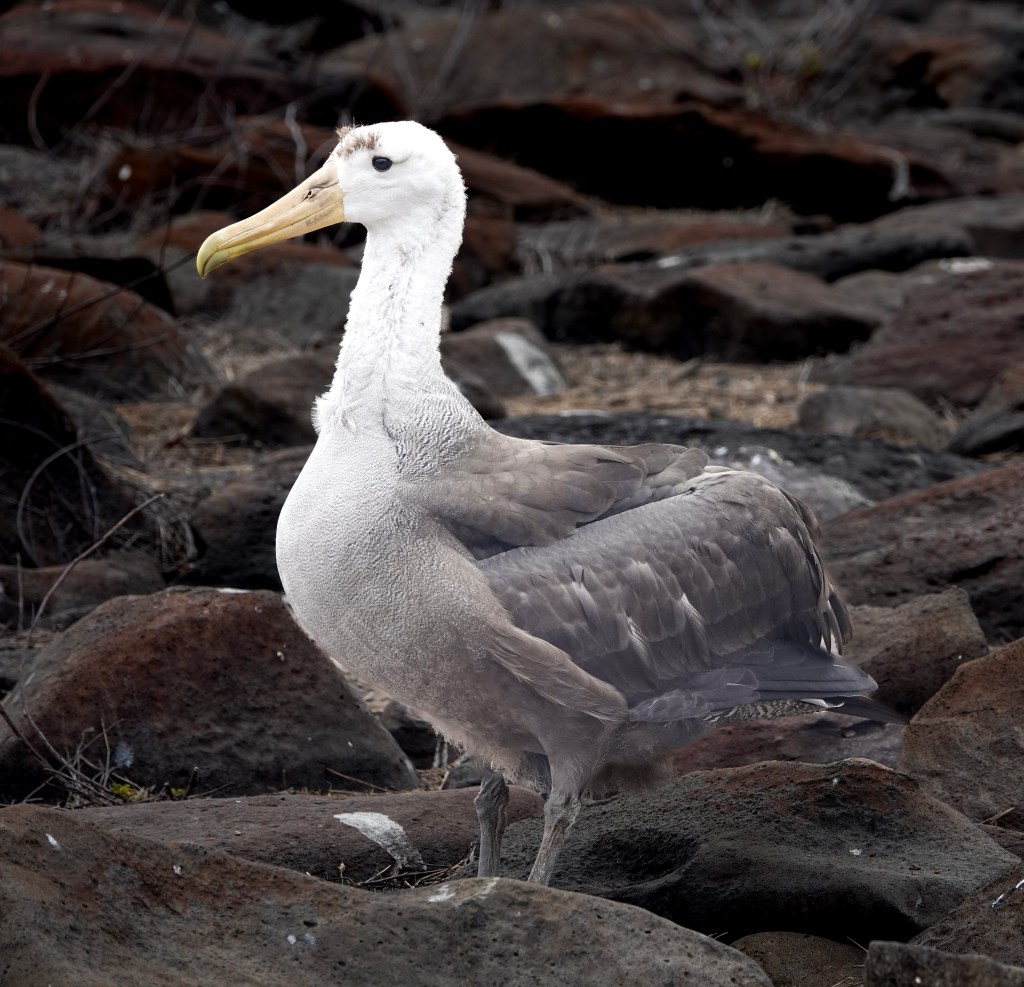
  • December – early January (Fledging & Departure): Young birds take their first flights, often wobbling to the cliffs for take-off. By mid-January, the colony is usually deserted as they head to the coasts of Ecuador and Peru

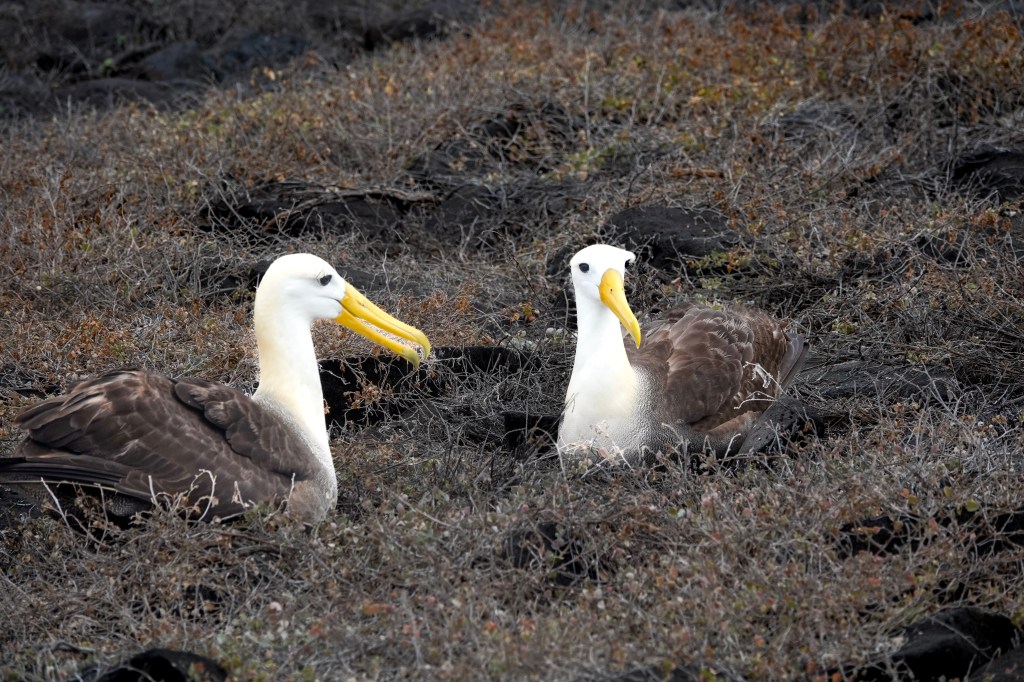
We were at the Waved Albatross nests on Española Island (specifically at Punta Suarez) at the end of December. We not only saw the young chicks learning to fly, but also saw the courtship dance (Vidoe below)

Choosing the Right Cruise: Why an Eastern Itinerary Matters

Because waved albatrosses breed only on Española Island, your cruise route determines whether you’ll see them at all.

The landing at Punta Suárez is rugged and dramatic, with blowholes, cliffs, and colonies of seabirds swirling overhead. But nothing prepares you for the moment you see your first albatross waddling across the lava rock, its oversized bill and blue‑tinted feet giving it a charmingly awkward elegance.

Meet the Waved Albatross: The Ocean’s Master Glider

The waved albatross (Phoebastria irrorata) is a study in contrasts—both powerful and delicate, comical and majestic.

  • Wingspan: Up to 2.5 meters (8 feet), the largest in the Galápagos
  • Appearance: White head with a creamy yellow crown and neck, chestnut‑brown body, white underwings, and a long, dull‑yellow bill
  • Namesake: The subtle wave‑like pattern on the adults’ wings
  • Lifestyle: Exceptional gliders, spending years at sea without touching land
  • Diet: Fish, squid, and invertebrates—often scavenged near fishing boats or stolen from boobies

Despite their size, they move with surprising grace in the air, riding ocean winds for hours without flapping. On land, however, they transform into endearing, slightly clumsy characters—true to the Spanish root of “bobo,” meaning “foolish,” a name shared with their booby neighbors.

The Courtship Dance: One of Nature’s Most Theatrical Rituals

If there is one wildlife behavior that defines the waved albatross, it is their courtship dance—a ritual so intricate and expressive that it feels choreographed.

Pairs face each other, leaving just enough space to stretch their long necks. Then the performance begins:

  • Bill circling
  • Bill clacking
  • Hollow wooden tapping sounds
  • Exaggerated head sways
  • Honking
  • Bowing
  • A waddle that borders on comedic
  • And the occasional cow‑like “moo”

For new pairs or those that failed to breed the previous year, the dance can last hours—sometimes days. It is a test of compatibility, trust, and lifelong partnership.

Because waved albatrosses are monogamous, this ritual is not just courtship—it is a reaffirmation of a bond that may last decades.

Life on Española: Nesting, Parenting, and the Long Journey Ahead

Once bonded, the pair lays a single egg directly on bare ground. They take turns incubating it for nearly two months. After hatching:

  • Chicks join “nursery groups” while parents forage
  • Adults return to feed them a nutrient‑rich oily liquid
  • Young albatrosses fledge at around 5.5 months
  • They then spend up to six years at sea before returning to Española to find a mate

With only one chick per year and threats from fishing, pollution, and habitat changes, the species remains vulnerable—making every successful breeding season a triumph.

Why Española Is the Only Place to See Them

Nearly the entire global population—estimated at 50,000–70,000 individuals—returns to Española each year. A tiny secondary colony exists on Isla de la Plata off mainland Ecuador, but with fewer than 20 breeding pairs, Española remains the heart of the species.

This exclusivity makes your visit feel even more special. You’re not just seeing a bird—you’re witnessing a species in its ancestral home, performing rituals unchanged for millennia.

Final Thoughts: A Wildlife Encounter Worth Crossing Oceans For

Standing on the cliffs of Española, watching thousands of waved albatrosses reunite, dance, nest, and soar, you feel the pulse of the Galápagos in its purest form. It’s a reminder of how fragile and extraordinary these islands are—and why they continue to inspire travelers, naturalists, and storytellers alike.

If your Galápagos journey is about connection, wonder, and witnessing nature at its most theatrical, then timing your trip to meet the waved albatross is an experience you’ll never forget.

Punta Pitt Wildlife Guide: Home of the Red‑, Blue‑, and Nazca Boobies

Boobies—named after the Spanish word bobo—meaning “clumsy”—boobies earned their name from their slightly awkward, waddling gait on land. The Galapagos Islands are home to three different species of boobies, which include the blue-footed, red-footed, and Nazca boobies. Each species possesses its own remarkable traits and behaviors, making them a highlight for wildlife enthusiasts. Their unique coloring not only helps in distinguishing between the species but also plays a role in courtship displays, where vivid colors attract mates and signify health. Observing these dazzling birds in their natural habitat provides a rare glimpse into their daily lives, from their fascinating mating rituals to their playful interactions with one another. It is well worth the journey to the Enchanted Isles of the Galapagos to witness these fascinating and captivating species found throughout the archipelago, which bring vibrancy and life to the rugged landscapes, enhancing the overall allure of this UNESCO World Heritage site.

Punta Pitt, located on San Cristóbal Island, is an iconic destination in the Galápagos, known for being the only place where you can observe all three species of boobies: the blue-footed booby, the red-footed booby, and the Nazca booby. This site, with its unique biodiversity and stunning landscapes, attracts nature and wildlife enthusiasts, making it a must-see stop for anyone visiting the archipelago.

The Three Boobies of Punta Pitt

Because of its unique geographical location and abundant food supply, these species coexist without competition, each utilizing a different nesting niche

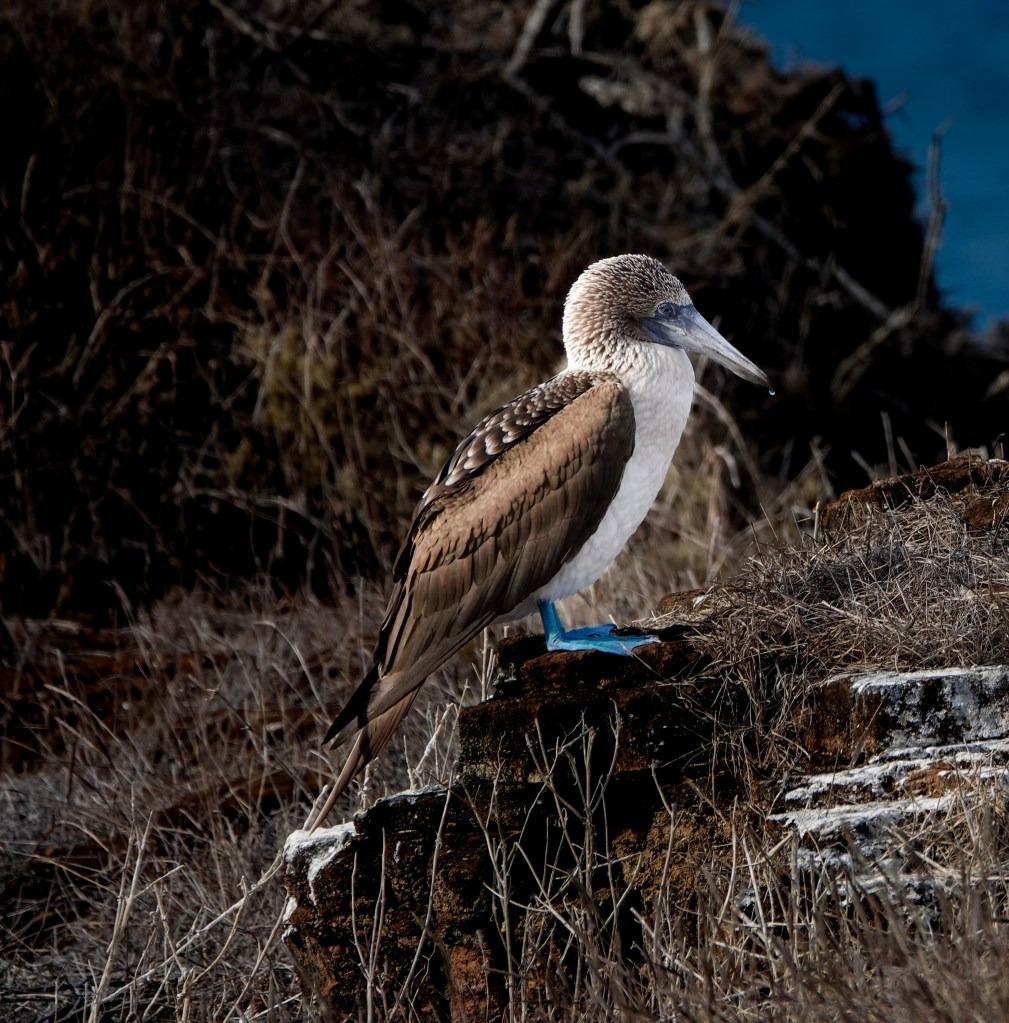
  • Blue-footed Boobies: Typically nest further inland on the ground, away from the cliffs.
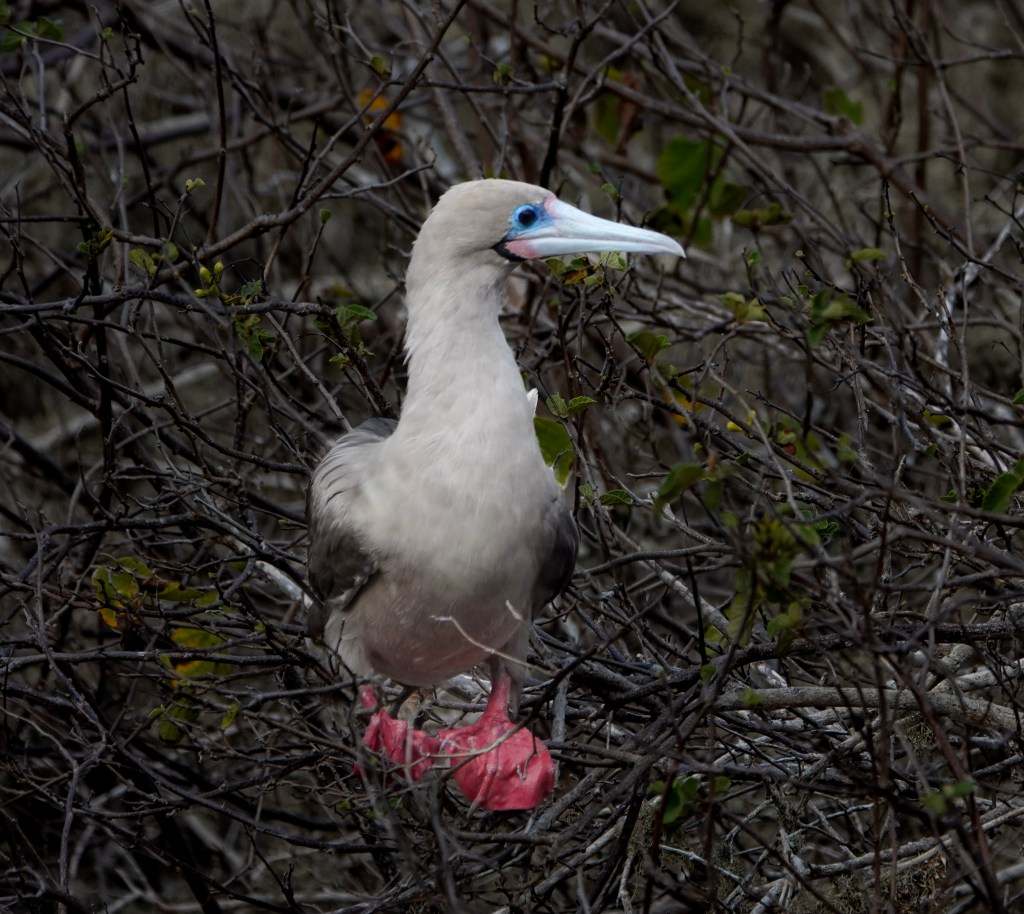
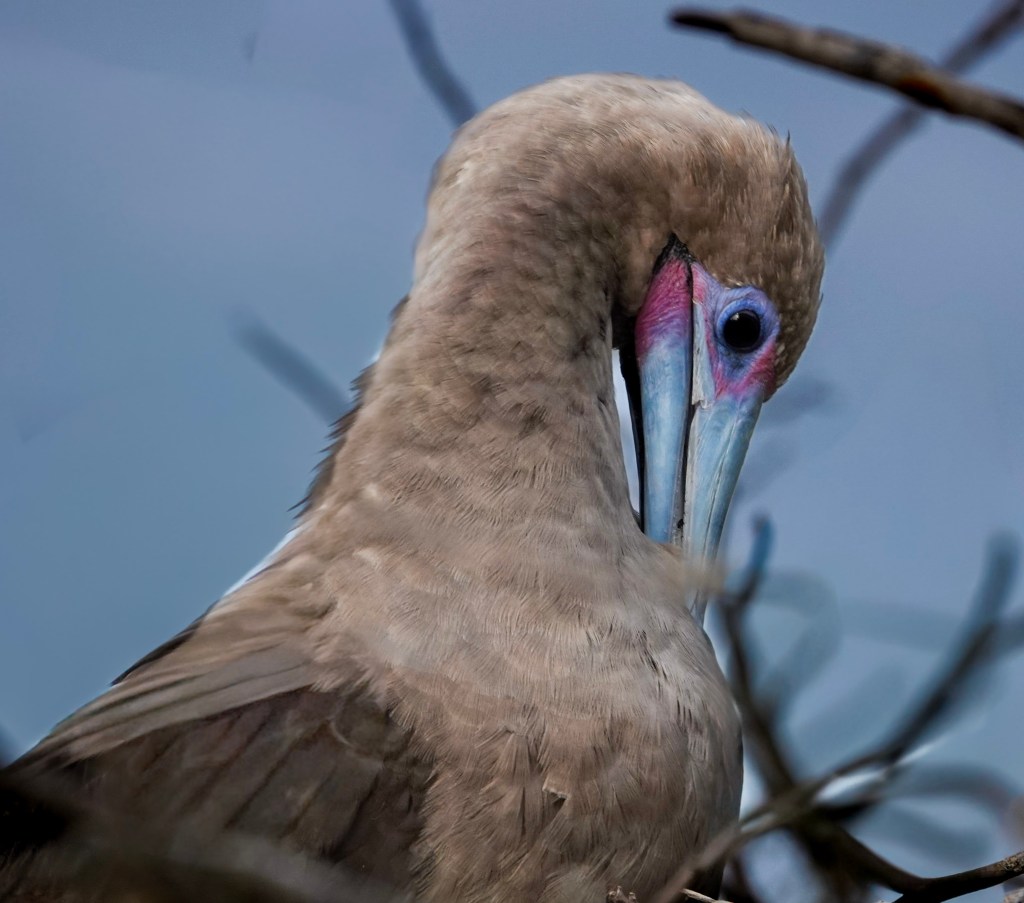
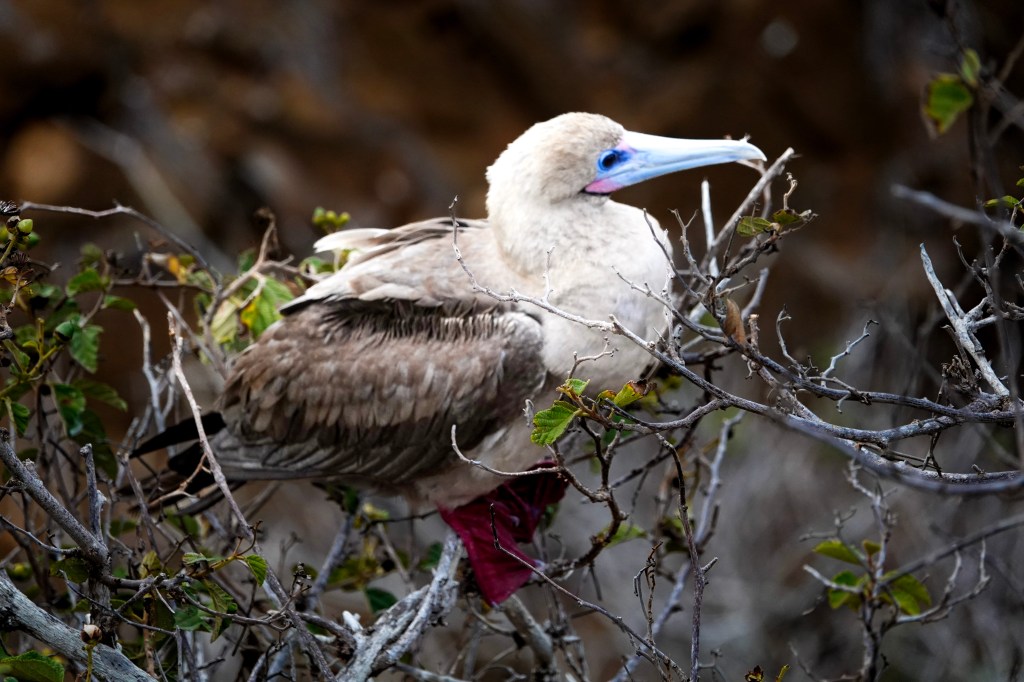
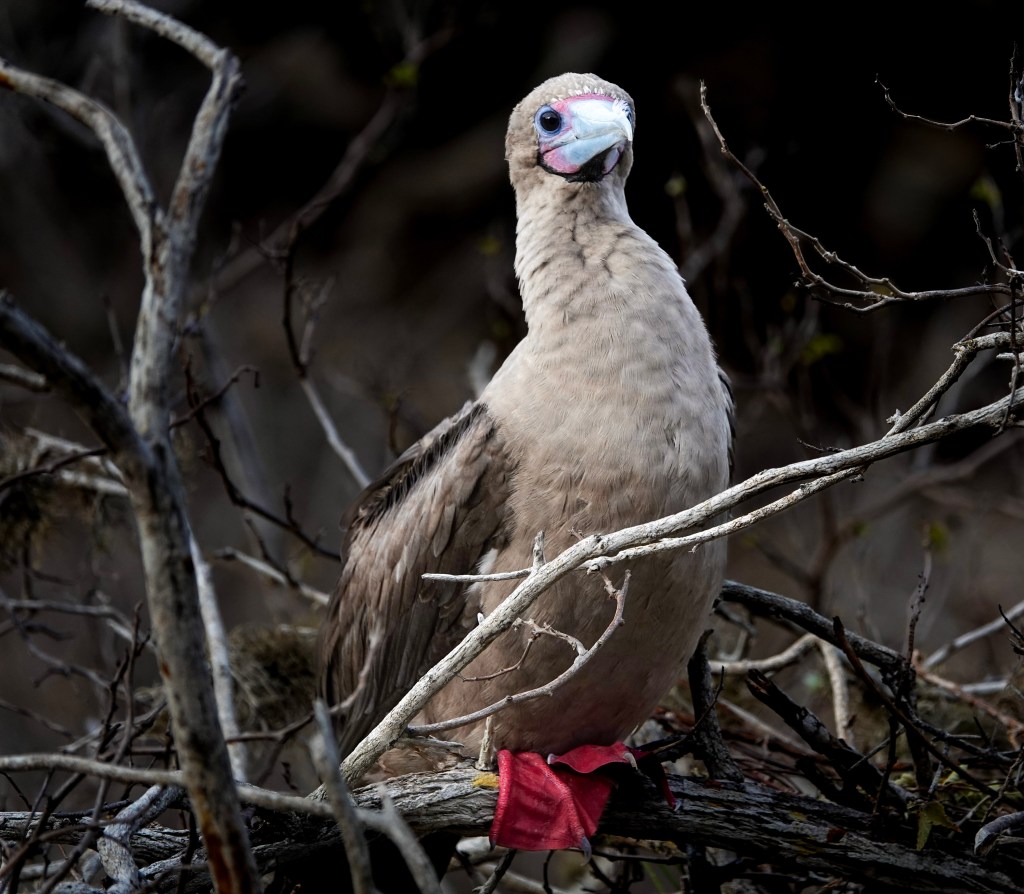
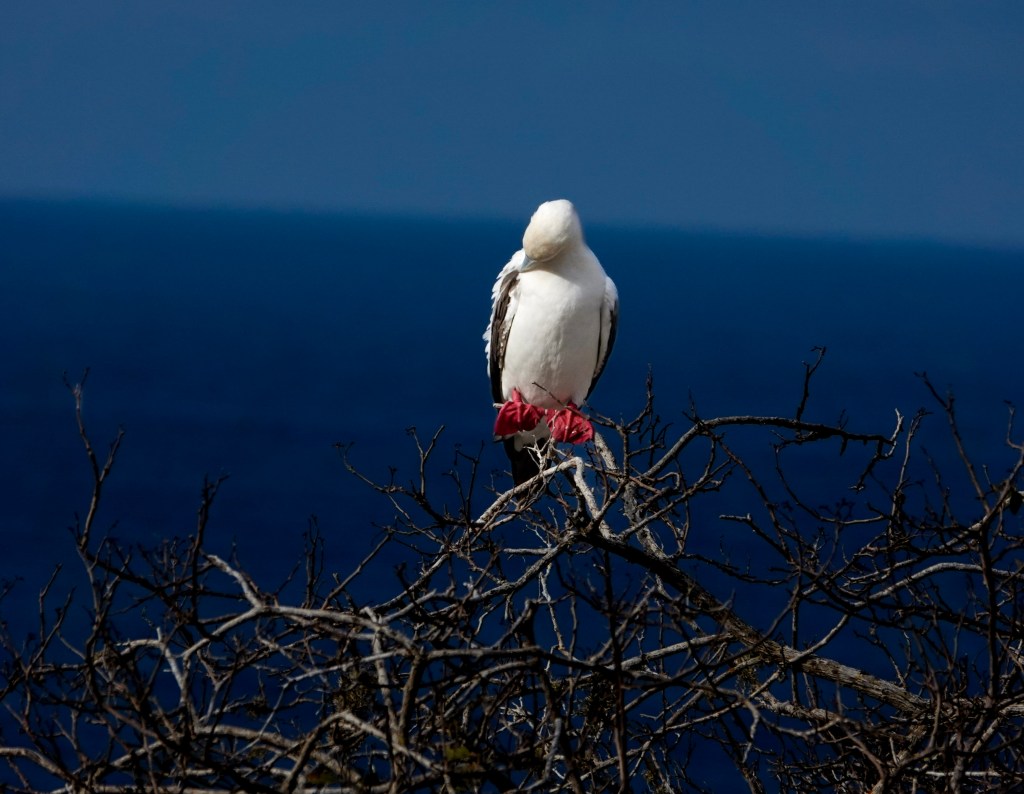
  • Red-footed Boobies: The rarest of the three in the archipelago, they are uniquely distinguished by their ability to nest in trees and shrubs, such as Palo Santo.
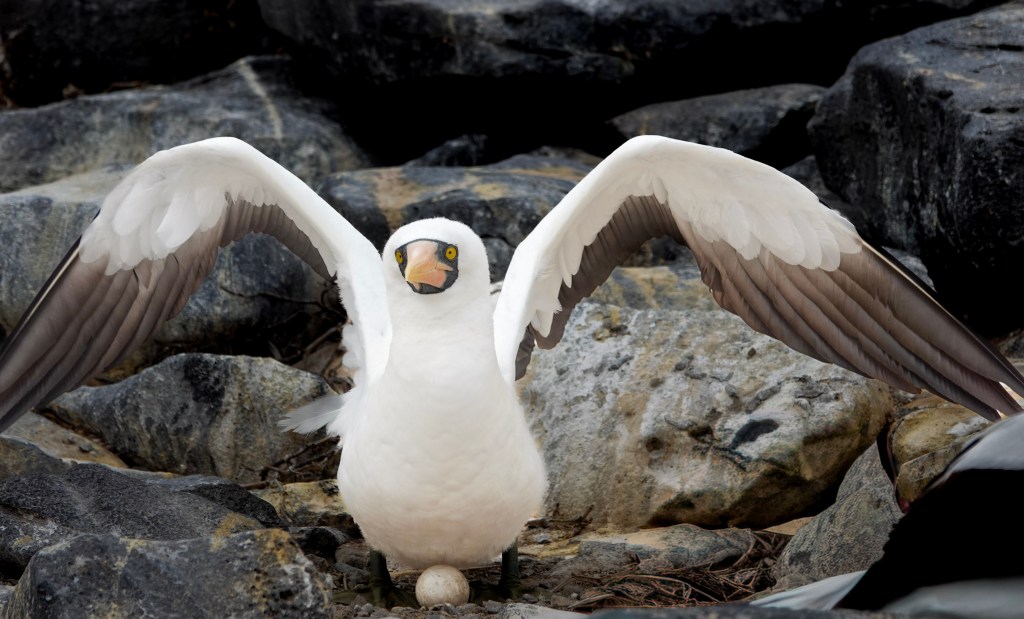
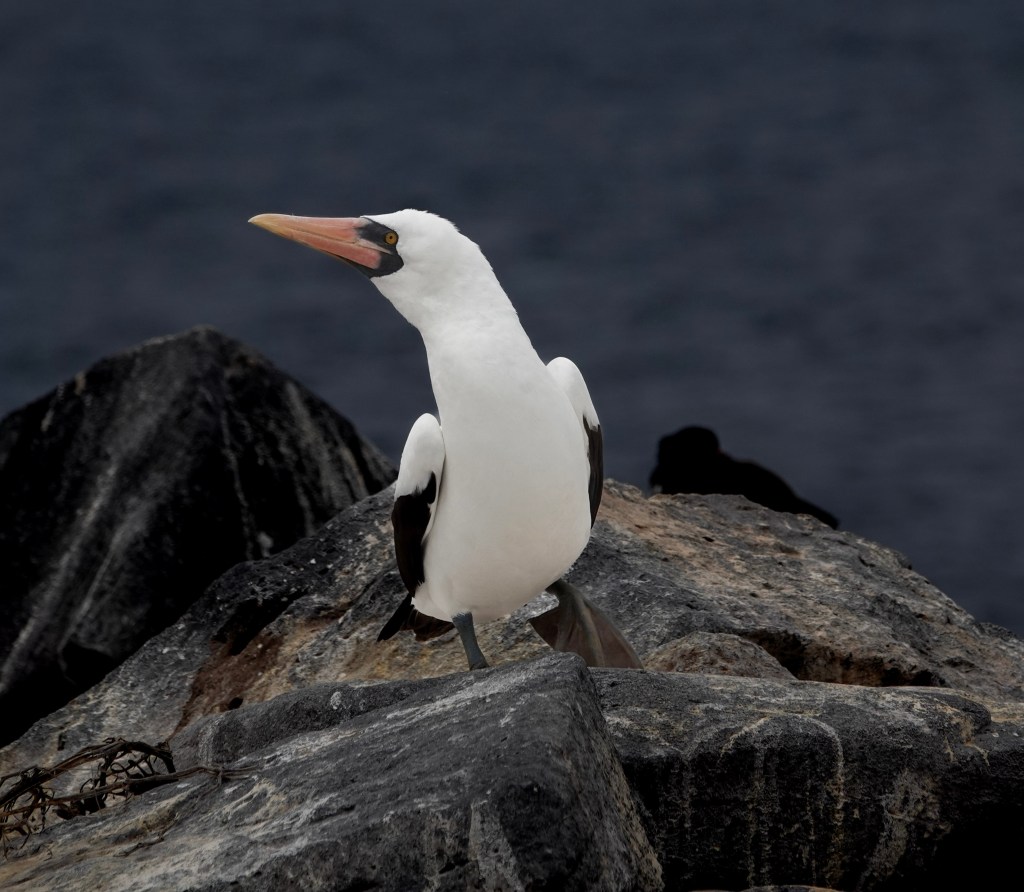
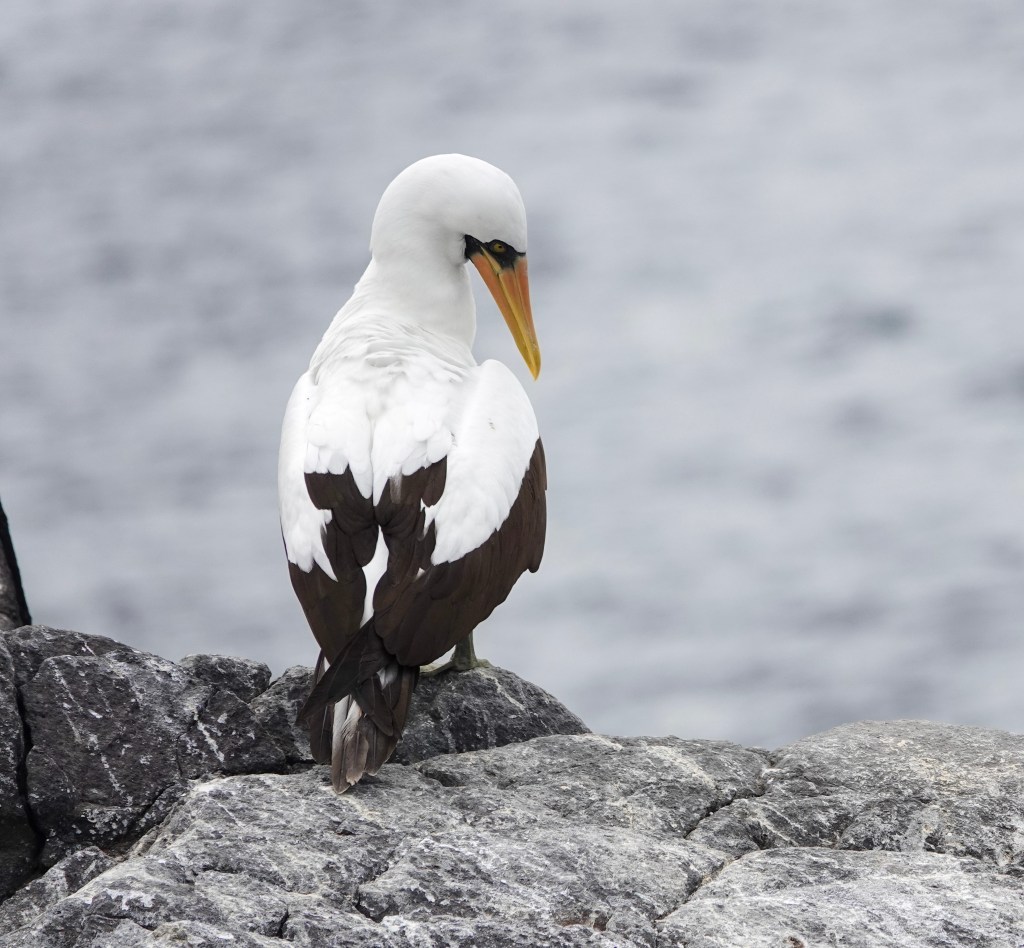
  • Nazca Boobies: Also known as Masked Boobies, they prefer nesting directly along the cliff edges

Visiting Punta Pitt

How to Get There: You can visit via a Galápagos cruise or a day tour departing from Puerto Baquerizo Moreno on San Cristóbal. The boat ride takes approximately 1.5 to 2 hours each way. The cruise we were on had a planned stop at Punta Pitt in the late afternoon, when the birds were returning home after a day at sea. We got to see all 3 bobbies here, but the red-footed booby was definitely the highlight.

  • The Experience: Most tours involve a wet landing on an “olivine” beach (greenish-tinted sand) inhabited by a bachelor colony of sea lions. From there, you’ll hike a steep, rocky trail (approx. 1.5–2 hours) to reach the clifftop nesting sites.
  • Best Time to Visit: While wildlife is present year-round, June to November is generally the best period to see booby mating displays and peak nesting activity. 

Red Footed Bobby (Sula sula)

The red-footed booby is the tiniest of the boobies found on Galapagos, and it quickly proves that the nickname only tells half the story. The smallest of the Galápagos boobies is also the most agile: capable of soaring more than 90 miles over open ocean, diving up to 130 feet for fish, and using its vivid red webbed feet to propel itself underwater with surprising speed. Unlike most web-footed birds, red-footed boobies perch in trees and shrubs, giving them a unique silhouette against the island vegetation. Travelers can spot them at Punta Pitt on San Cristóbal and in large colonies on Genovesa Island, two of the best wildlife-viewing sites in the archipelago.

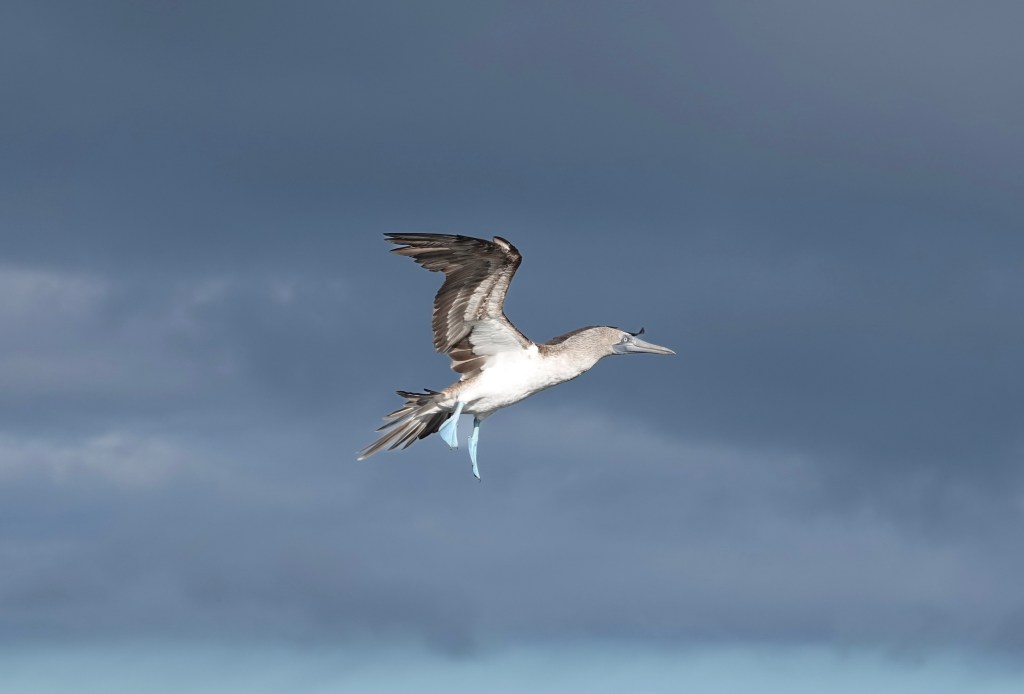
Blue footed Booby (Sula nebouxii)

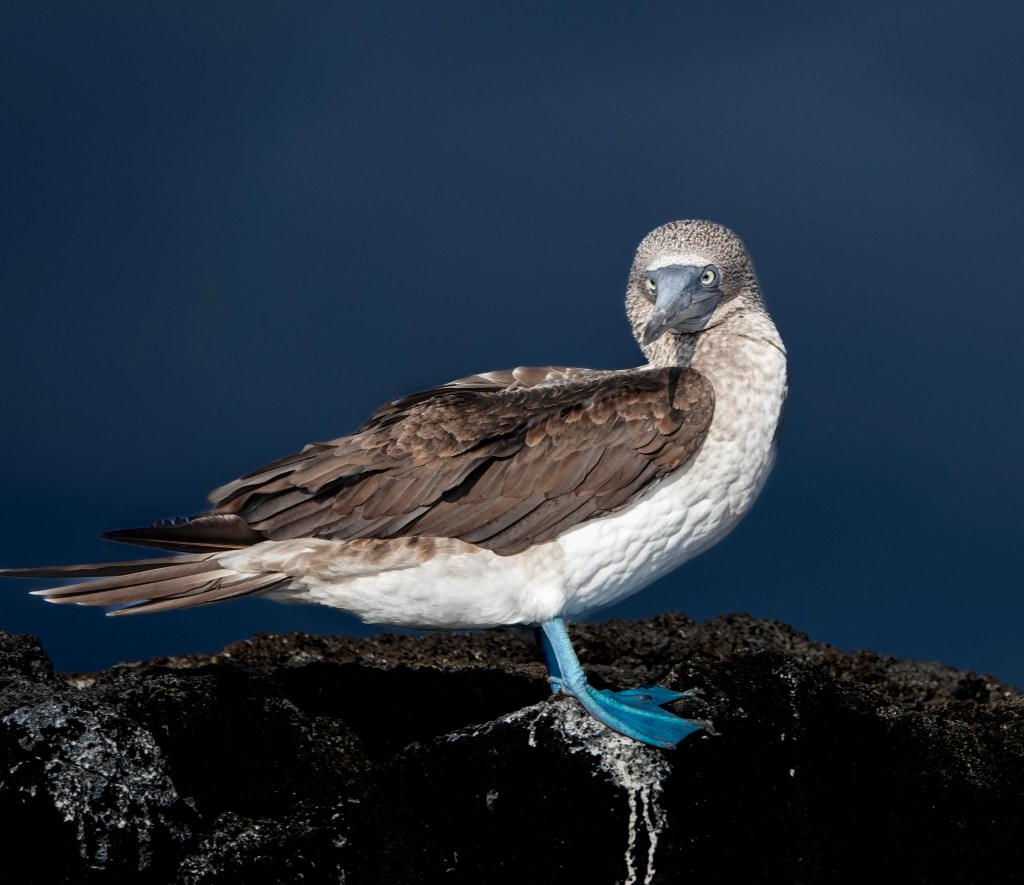
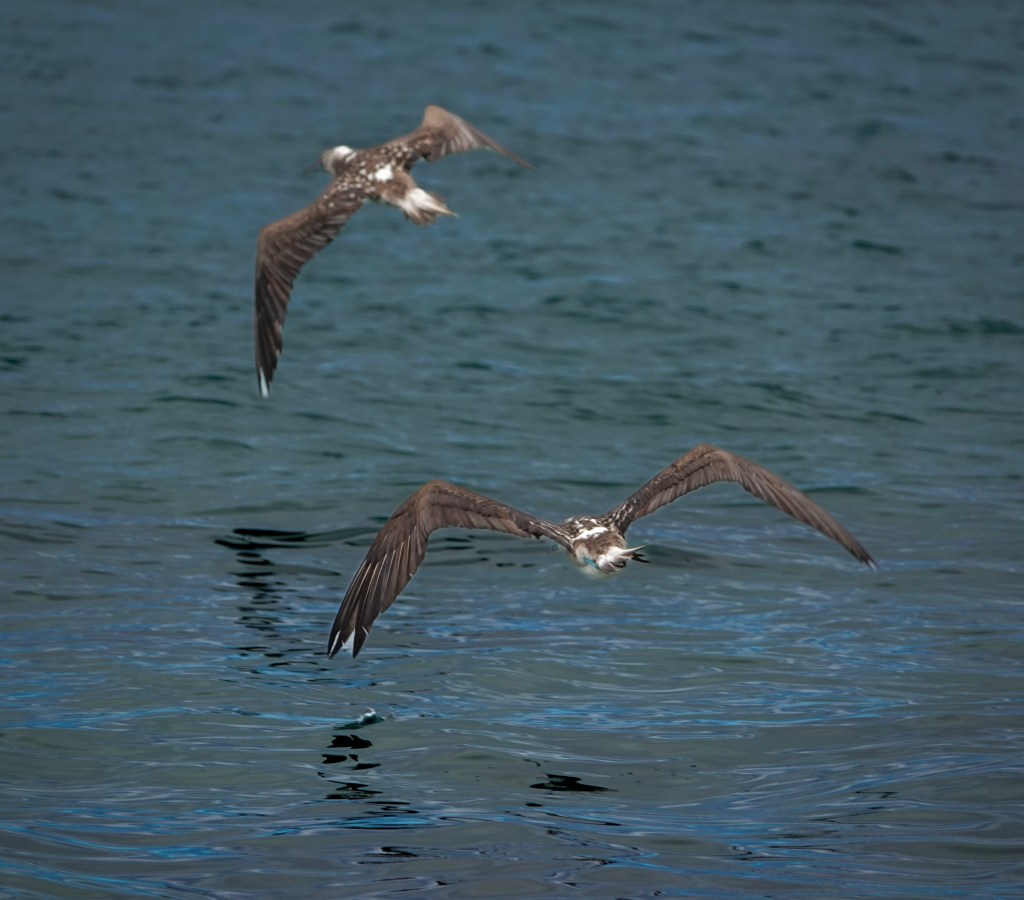
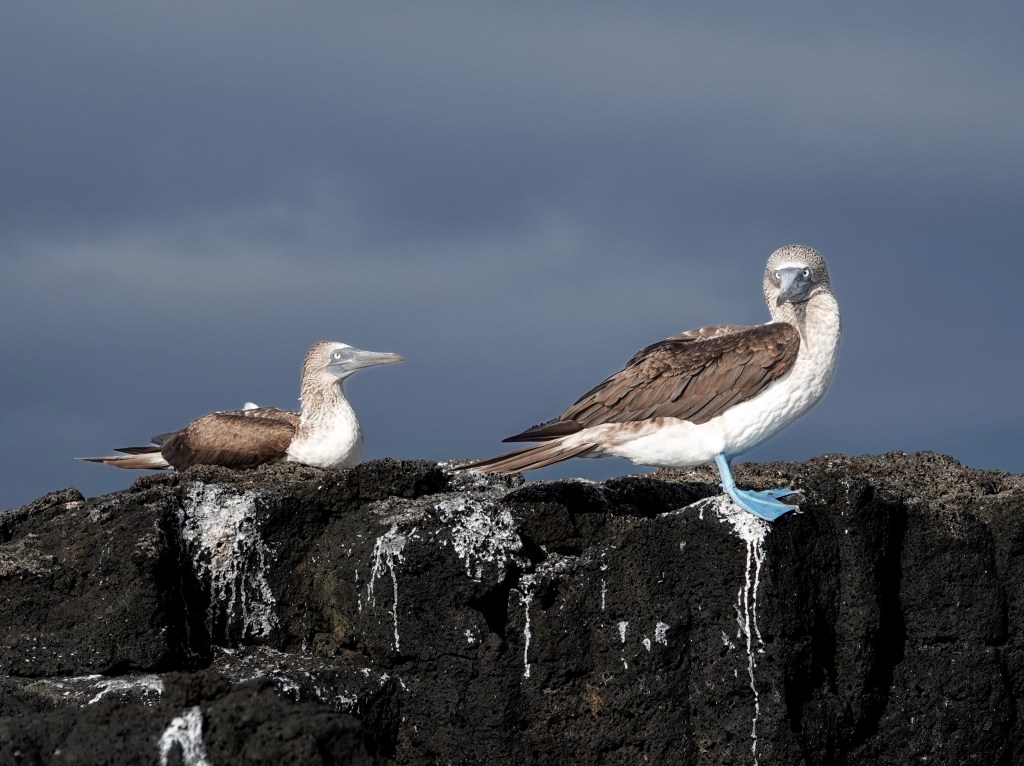
The most iconic of the trio, the blue-footed booby also carries the “bobo” name thanks to its comical walk—but its brilliant turquoise feet are anything but silly. Their color comes from a carotenoid-rich diet, and during courtship, those feet become the star of an elaborate mating dance. Males lift each foot in an exaggerated strut, showing off their brightest blues; females respond by mirroring the steps, followed by bill clacking and whistles if they approve. Beyond their charm, blue-footed boobies are extraordinary hunters, spotting fish from high above and plunging into the water at speeds approaching 60 mph. Because they have no natural predators in the Galápagos, they’re wonderfully unbothered by humans and can be seen on nearly every major island—a delight for photographers and wildlife lovers alike.

Nazca Booby (Sula granti)

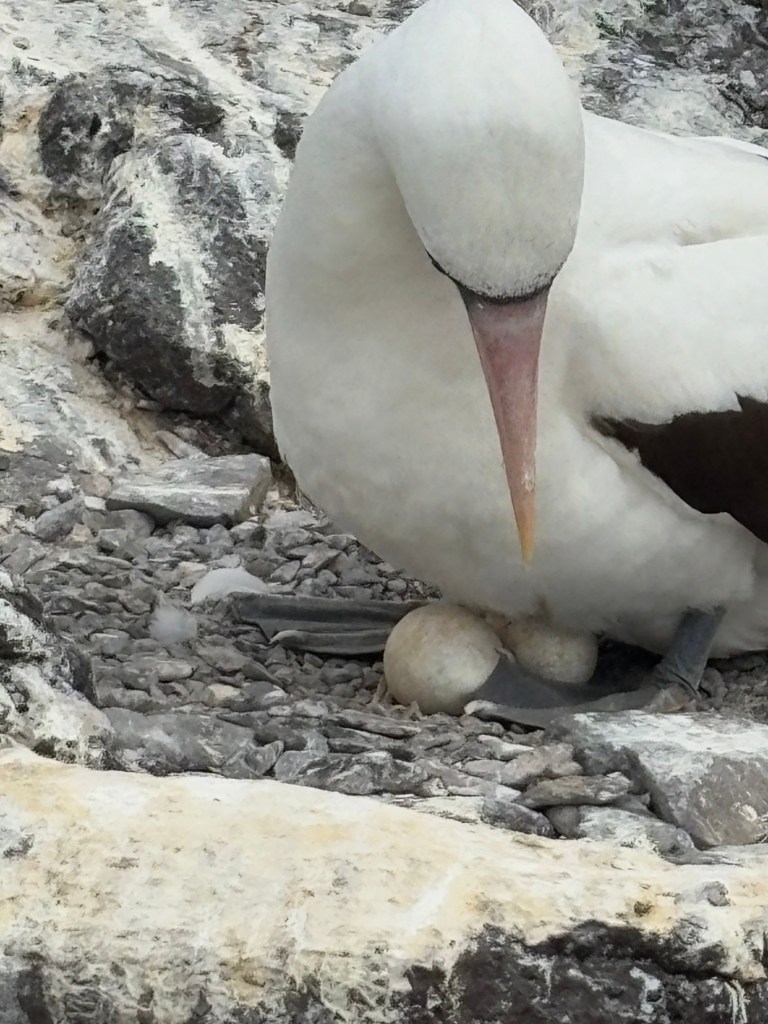
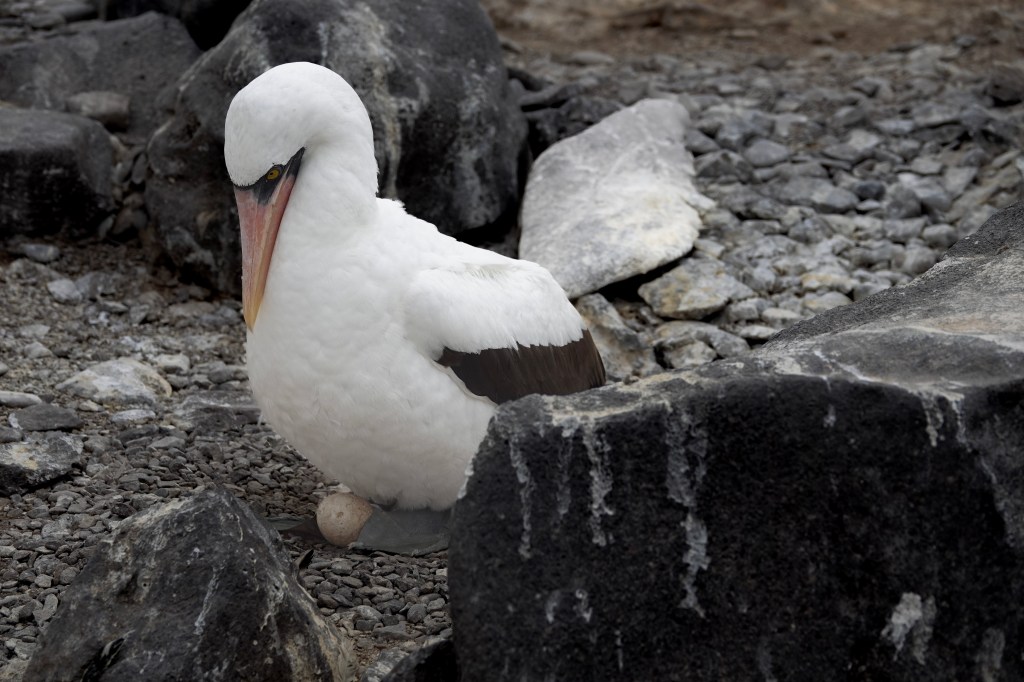
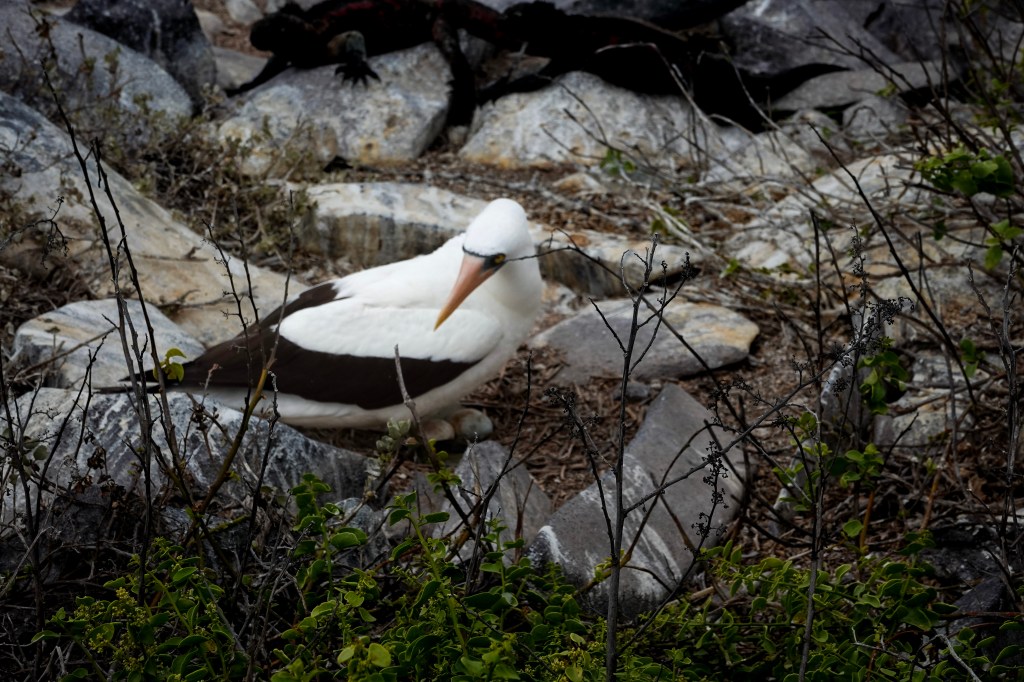
The largest of the Galápagos boobies, the Nazca booby also inherited the “bobo” nickname for its land-bound awkwardness, though its sleek white plumage, orange bill, and black-tipped wings give it a striking, almost regal presence. This species is best known for a dramatic behavior called obligate siblicide: parents lay two eggs, but only the stronger chick survives, ensuring that enough resources are available for one healthy fledgling. Despite this harsh strategy, Nazca boobies are captivating to watch as they glide effortlessly over the ocean and nest in dense colonies along the cliffs. They are most commonly seen on Punt Pitt, Genovesa Island, and Española Island, where visitors can observe their nesting sites up close along marked trails.

Final thoughts

In a place as wild and wondrous as the Galápagos, the boobies embody everything that makes these islands unforgettable—quirky charm, fearless curiosity, and evolutionary brilliance on full display. Whether it’s the red-footed booby perched improbably in a shrub, the blue-footed booby performing its turquoise‑footed dance, or the regal Nazca booby guarding its cliffside nest, each species offers a glimpse into the archipelago’s untamed spirit. Spotting even one is a delight but encountering all three feels like a true Galápagos rite of passage. For travelers who come seeking wildlife encounters found nowhere else on Earth, the boobies are a joyful reminder of why these Enchanted Isles continue to inspire wonder long after the journey ends.